
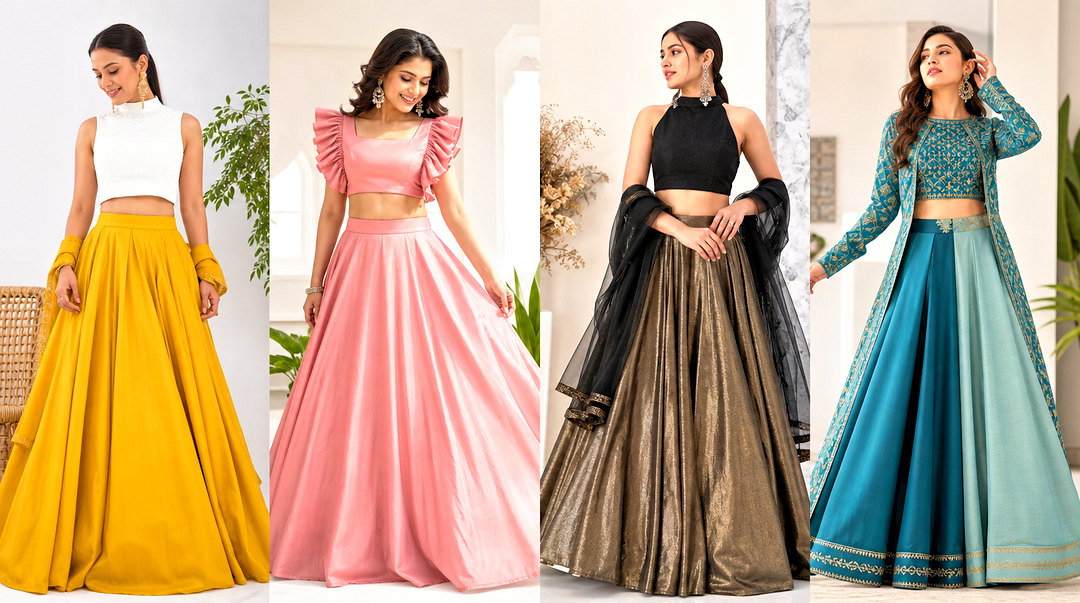
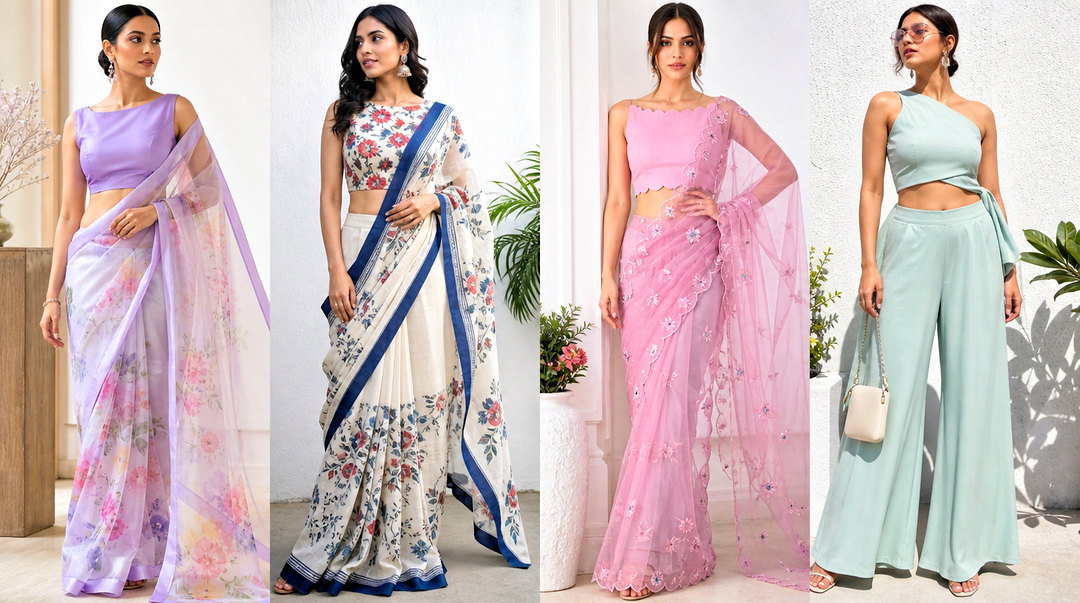
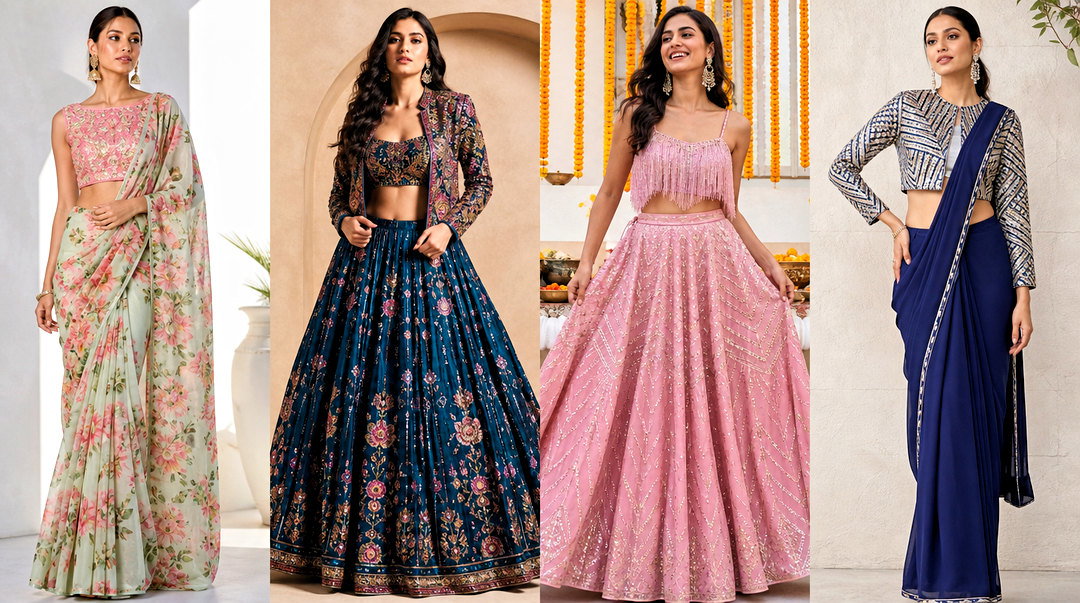
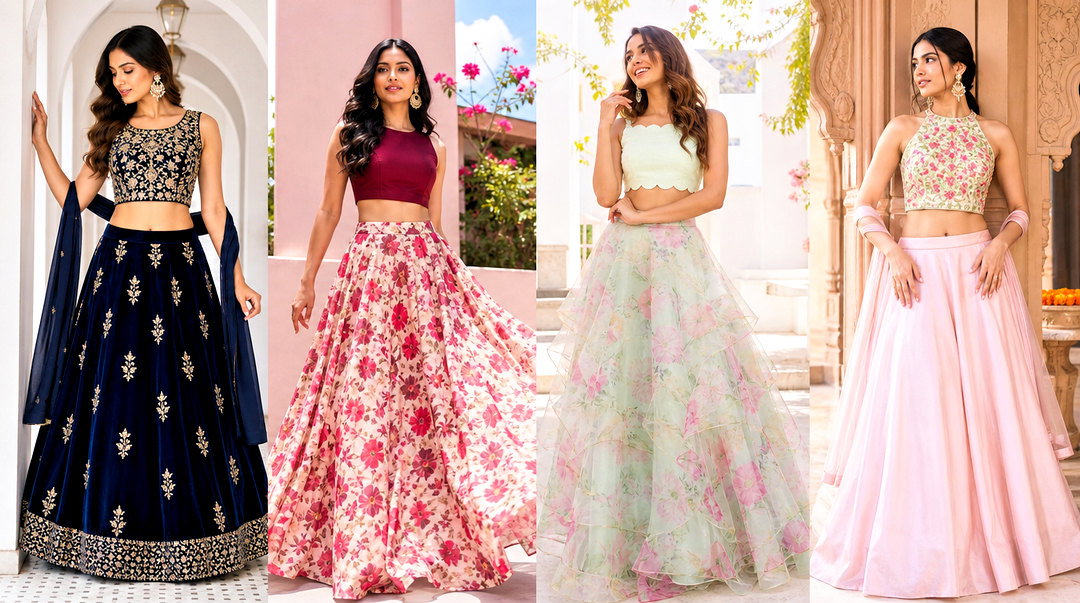
The crop top decides how a lehenga sits, moves and feels by the end of a long function. It has to suit the skirt's volume and embroidery, survive hours of sitting and dancing, and still look right in the family photos. Below are fifty designs, from sculpted corsets and deep V-necks to sheer sleeves, mirror work, zardozi and chikankari, styled for weddings, receptions, sangeets and festive lunches. Each one comes with the skirt, dupatta, jewelry and shoes I'd put with it, and a note on the fitting detail that tends to go wrong.

Three Fittings for a Lehenga Blouse
Most blouse problems I see at weddings come from a single rushed fitting. A crop blouse sits close to the body with little room to forgive, so I plan three visits to the tailor and leave real time between them.
- First fitting, in plain fabric or the lining: check the neckline depth, bust support and where the hem lands on the skirt waistband. This is the cheap moment to change your mind.
- Second fitting, with the embroidery or embellishment done: heavy work adds weight and stiffness, and a blouse that fitted in plain fabric can now pull or gape.
- Final fitting, with the skirt, the bra you'll wear and your shoes: walk, sit, lift your arms and do a few dance steps in front of a mirror.
Ask the tailor to leave extra seam allowance at the sides and back. It costs nothing now and lets the blouse be let out later, which matters when you plan to rewear it at other weddings. Hooks look traditional, but a concealed zip with a hook at the top is quicker and holds its line better through a long night.
1. Sweetheart Neck Crop Top Lehenga
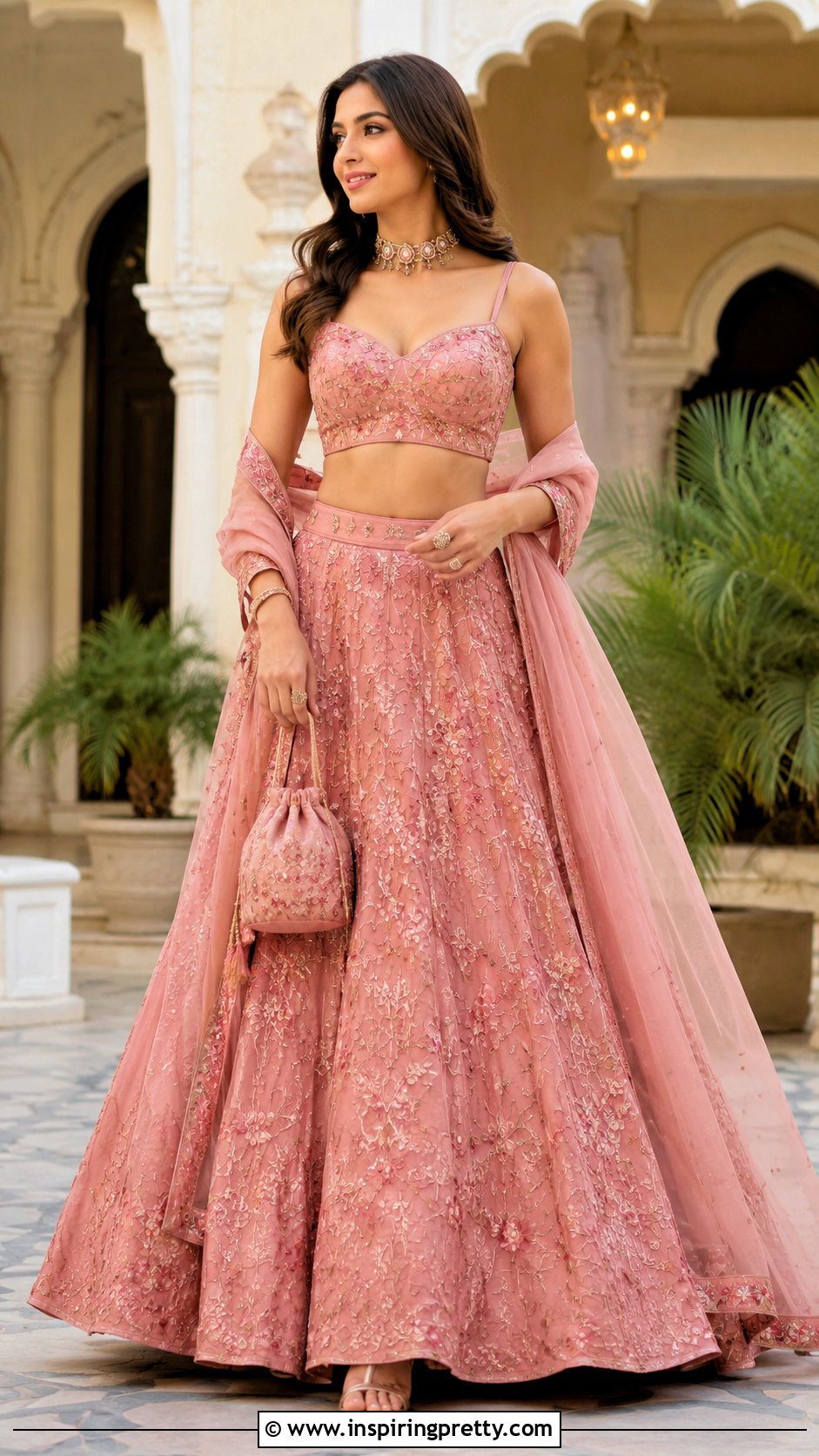
A sweetheart-neck crop top gives an embroidered lehenga soft structure without looking bridal. Raw silk or satin with tonal threadwork at the neckline and hem is my pick, over a high-waisted, gently flared skirt. The curves of a sweetheart only hold with hidden cups, wide straps and a firm lining, so I ask for all three. A light organza dupatta with a narrow border keeps the neckline in view. Choker, small earrings, metallic block heels and a compact potli finish it for a guest or bridesmaid.
2. Square Neck Mirror Work Crop Top Lehenga
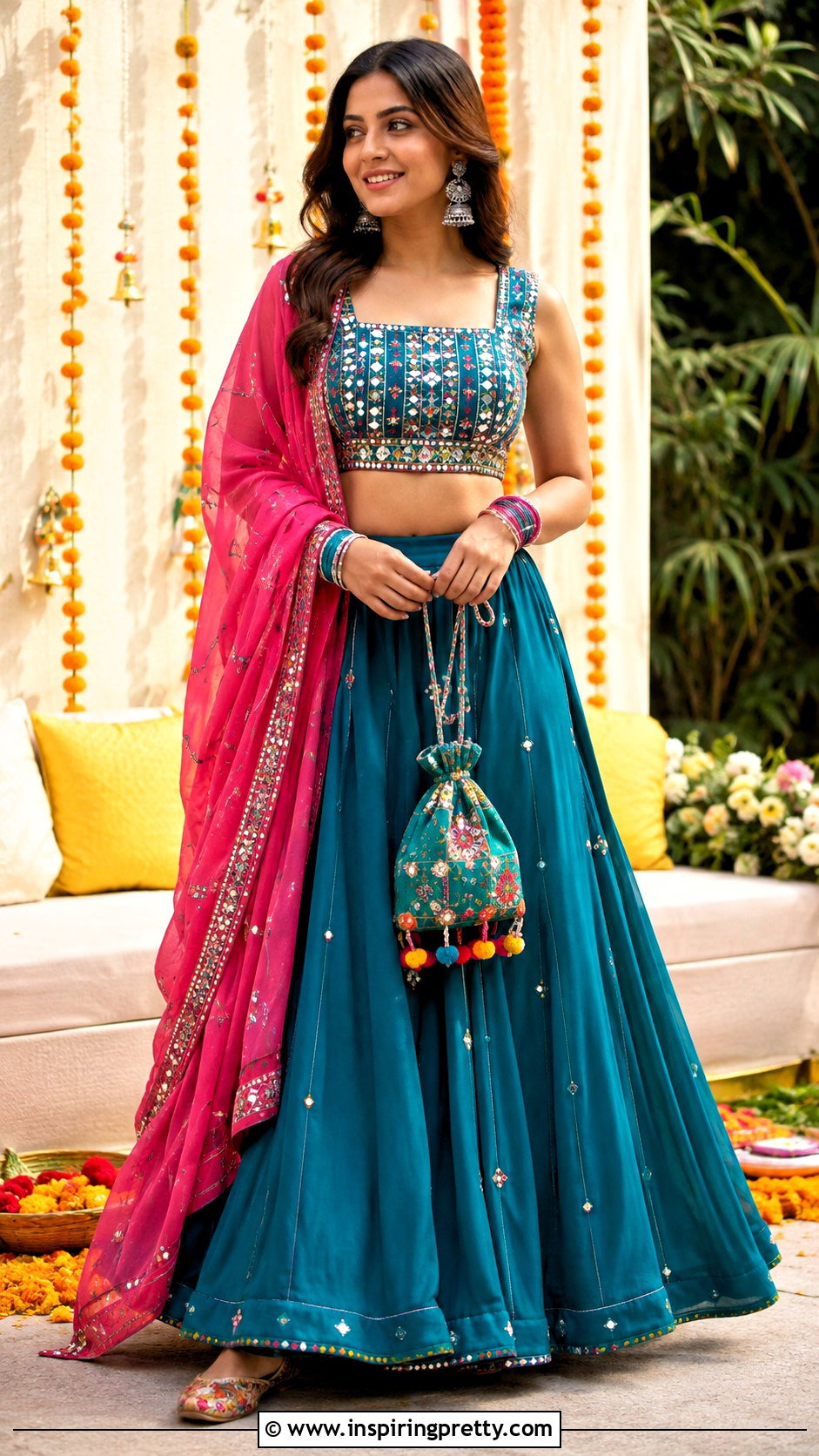
Mirror work catches every light at a mehndi or garba, and on a square neck it frames the collarbone neatly. I check two things: the mirrors should be spread evenly over the bodice, not clustered at the neck, and their edges must be fully bound, because raw mirror edges scratch the inner arm after an hour of dancing. A flowing georgette skirt in fuchsia, teal or emerald, a dupatta over one shoulder, silver jhumkas and embroidered juttis. Keep the necklace delicate.
3. Deep V-Neck Sequin Crop Top Lehenga
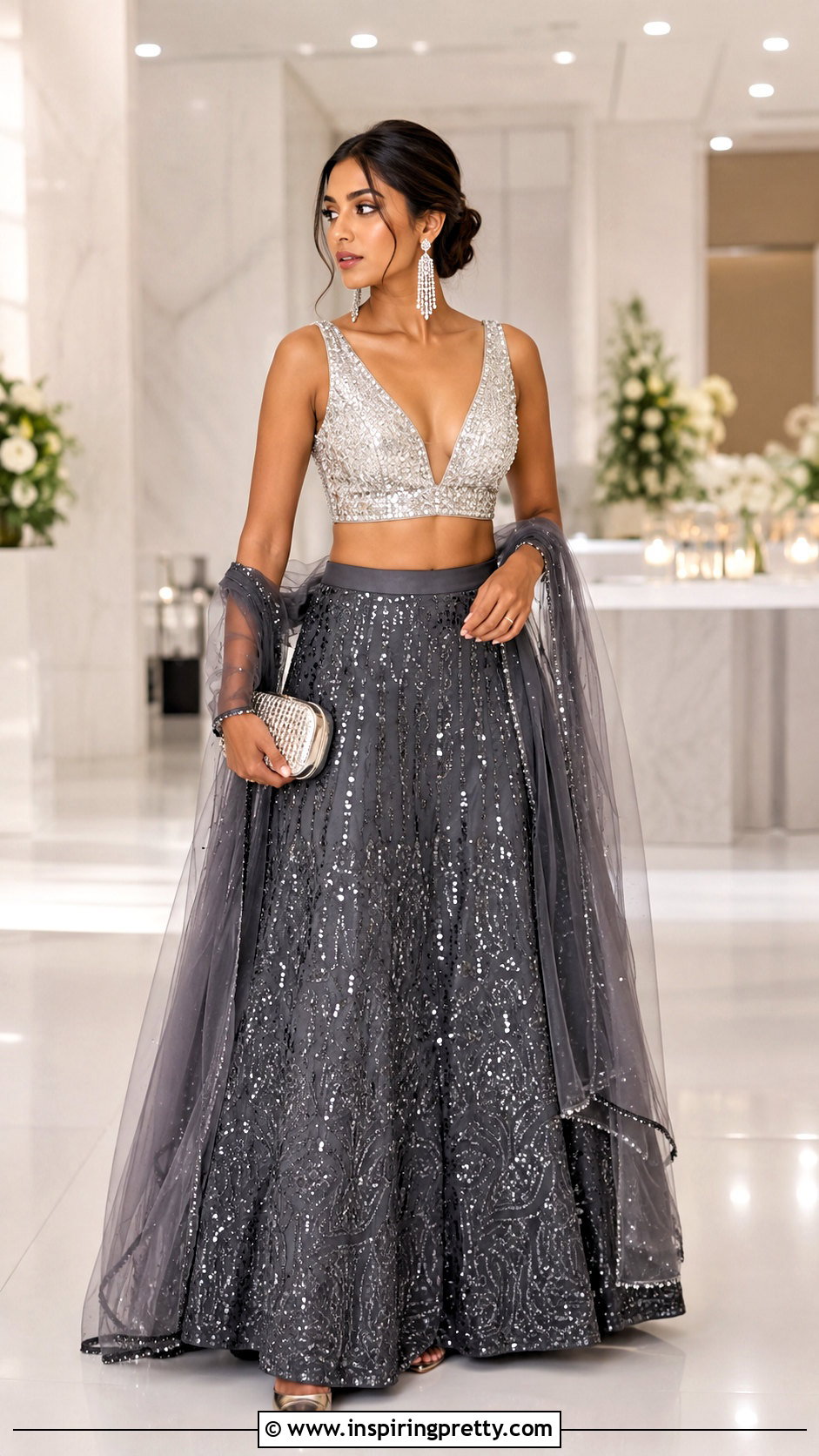
A deep V sequin top turns a plain lehenga into a reception outfit. The V is only as good as its construction: a full lining, firm side panels and, if you want it, a mesh modesty insert. Silver sequins over a charcoal, navy or plum skirt look sleek. Attach the net dupatta at one shoulder so your hands stay free. Crystal earrings and a cuff, but no big necklace competing with the V. Unlined sequins scratch at the underarm, so run a finger along the inside seams before buying.
4. Boat Neck Silk Crop Top Lehenga
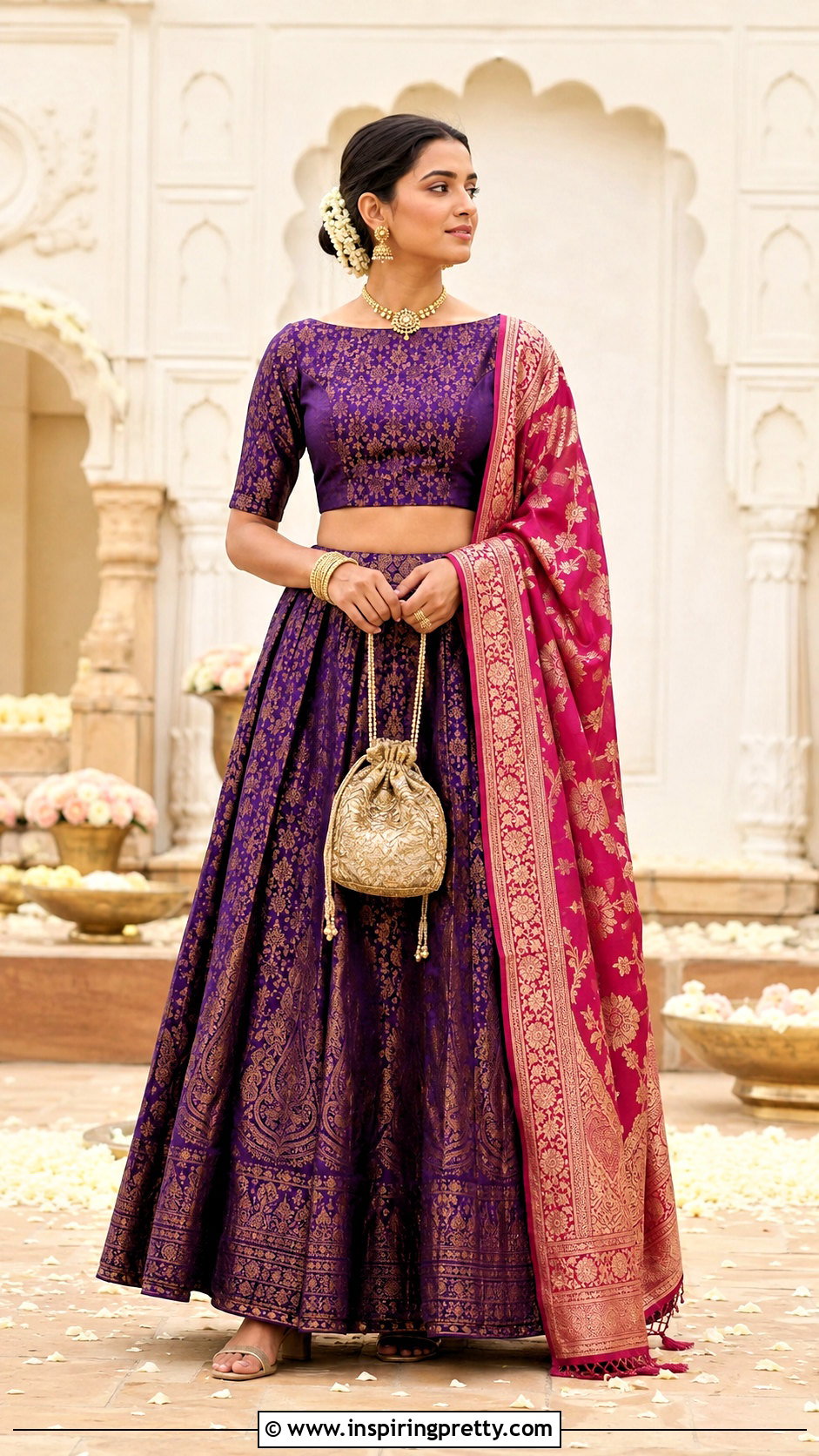
A boat-neck silk crop top covers the shoulders while showing off the collarbone, which makes it a reliable choice for family ceremonies. I like raw silk with elbow sleeves over a Banarasi or brocade skirt in a related shade. Boat necks slide off the shoulder if they're cut wide, so the tailor should take the neck measurement with your arms down and again with them raised. A slightly deeper back makes it easier to get on. Short gold necklace, bangles, potli and low block heels.
5. High Neck Sheer Sleeve Crop Top Lehenga
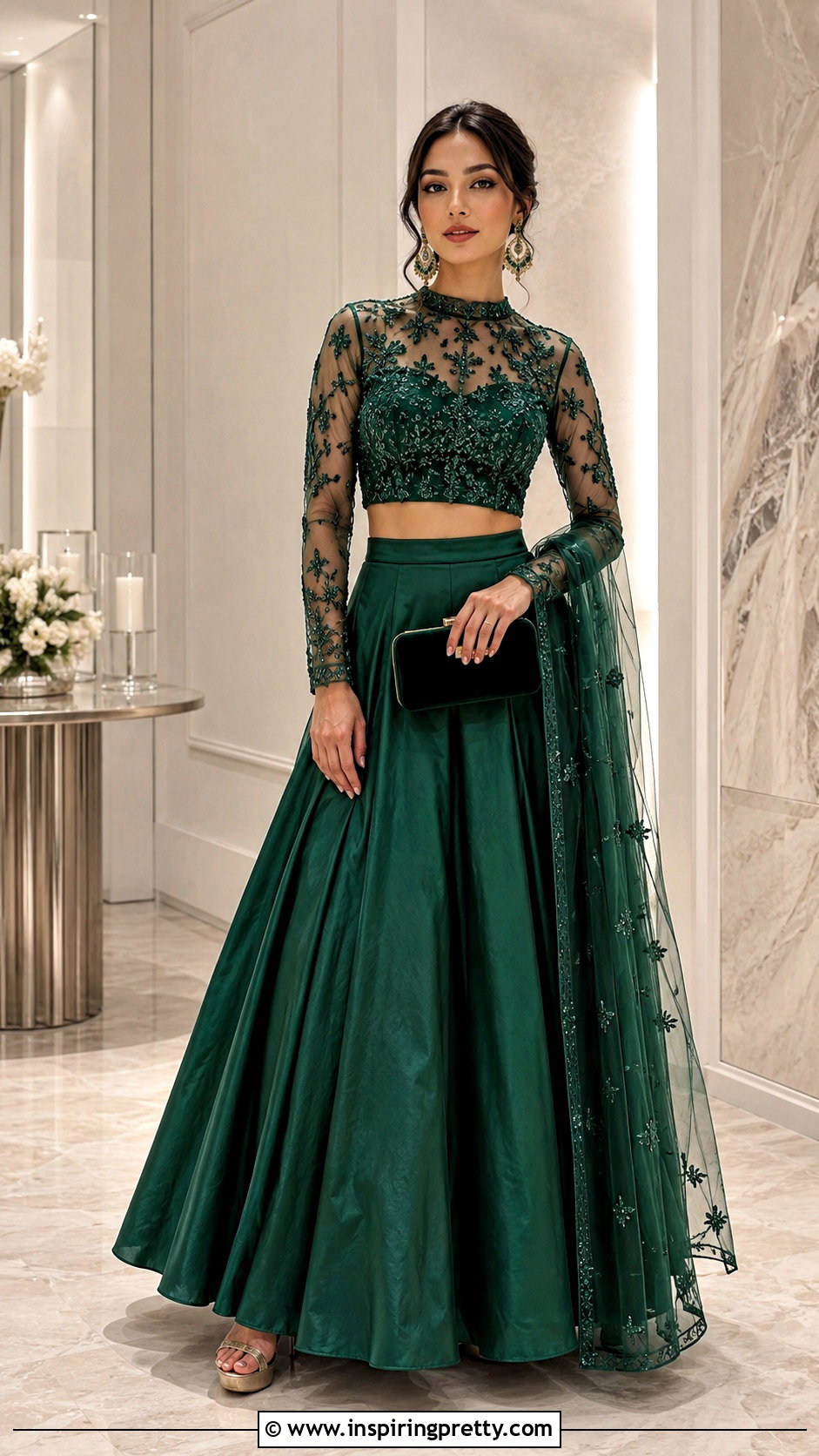
Sheer sleeves and a high neck give coverage that still feels light. Embroidered net for the sleeves and upper yoke, opaque silk or crepe across the bodice. With a jewel-tone lehenga in emerald, sapphire or maroon, it's an evening and winter look. The neckline is the jewelry, so skip the necklace and wear statement earrings with hair up. Net sleeves can itch where embroidery backs onto skin, so ask for the motifs to be backed with soft fabric.
6. Corset Crop Top Lehenga
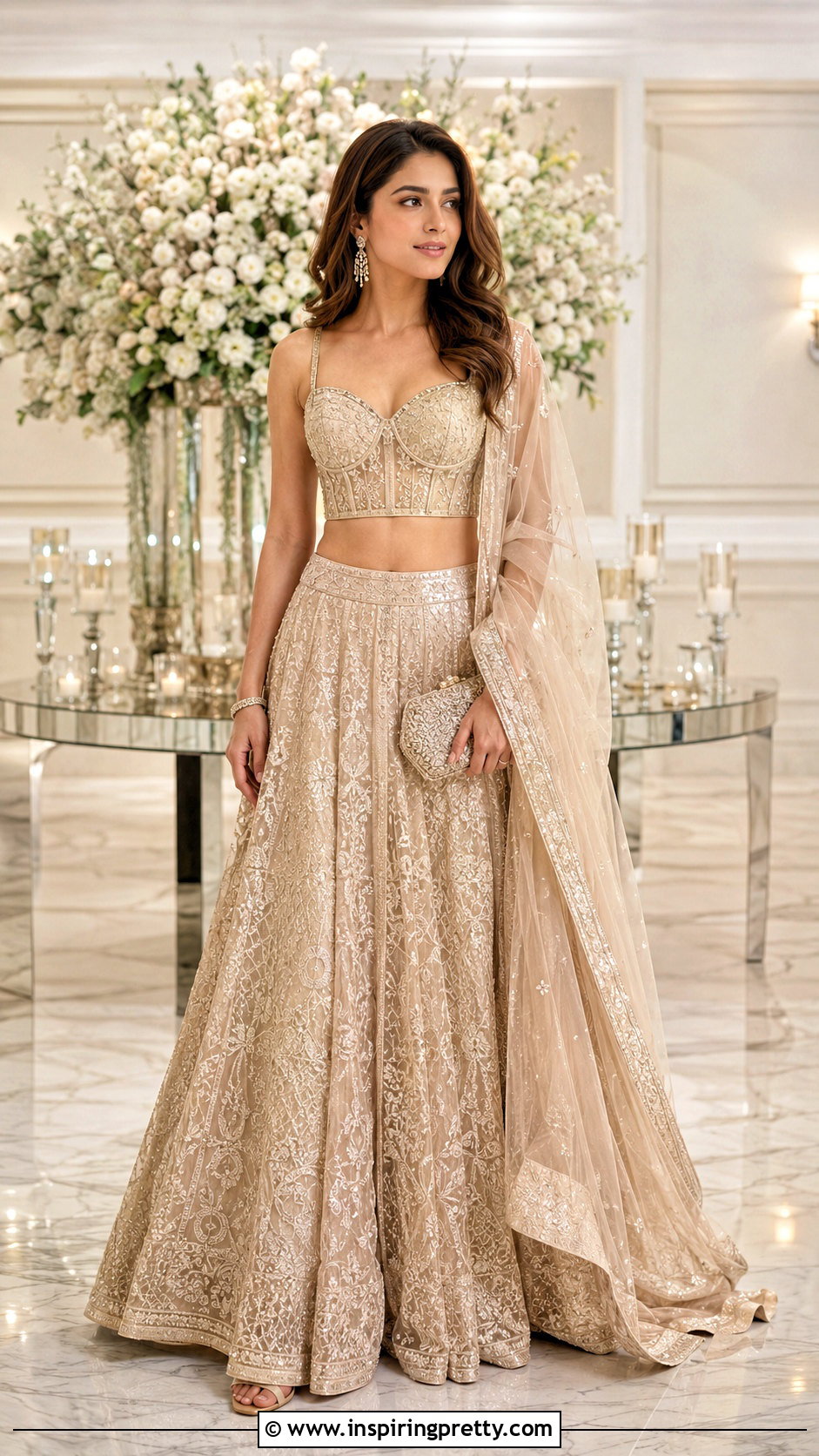
A corset top gives the most defined waist of any lehenga blouse, and the best ones are not tight at all. I look for flexible boning, a smooth lining and a back closure you can actually reach, or a side zip. Too tight and you won't eat at the reception. Champagne, dusty rose or ivory over a skirt with controlled volume. The skirt waistband should sit just under the corset point without bunching. A sheer dupatta over one shoulder softens the structure.
7. Off Shoulder Crop Top Lehenga
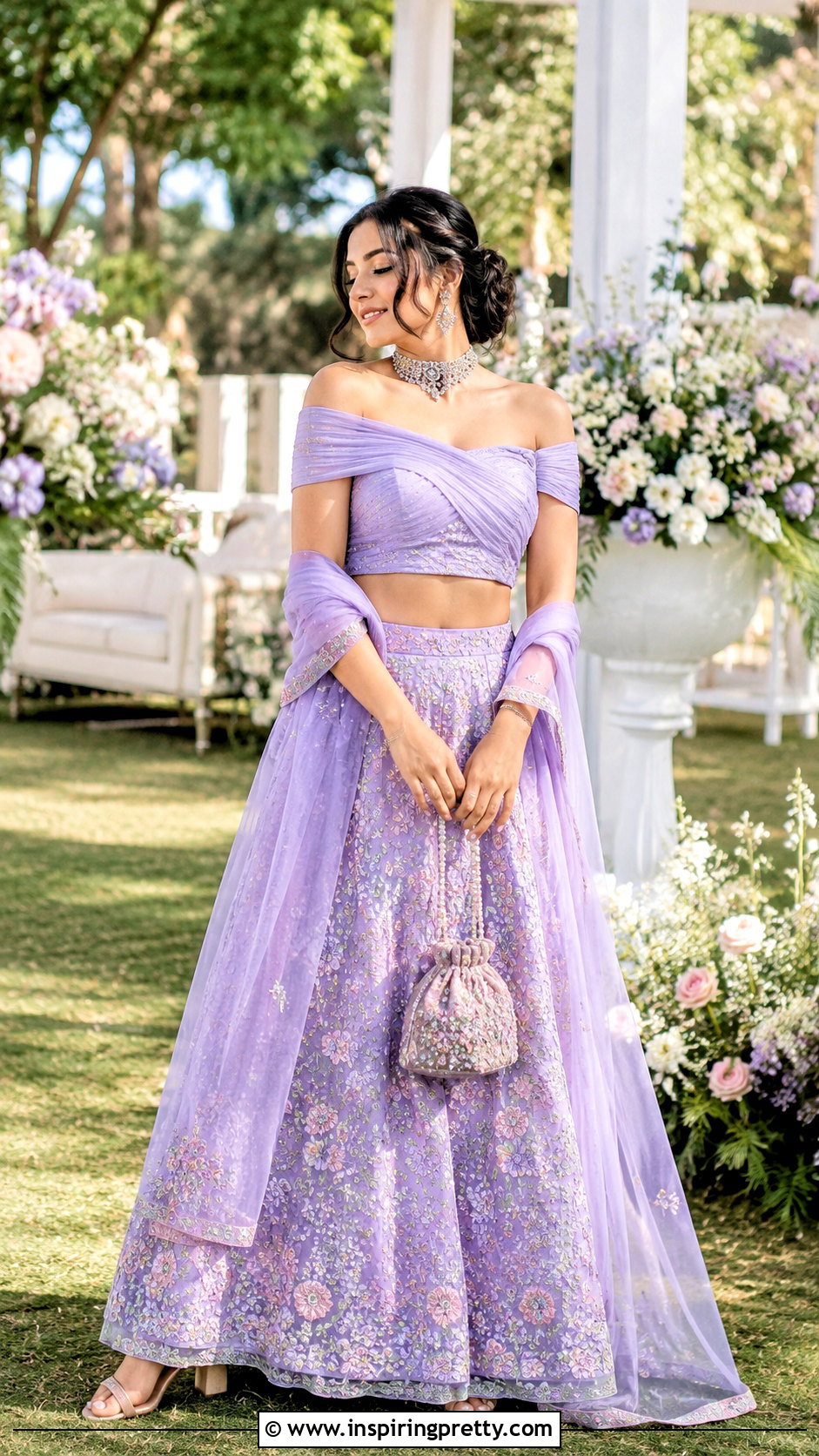
Off-shoulder blouses are lovely in photos and the hardest to keep in place through a dance. They need a firm elastic band or silicone gripper inside, and a strapless bra that fits properly. Drape the dupatta around the elbows or attach it at the back, never over the neckline. A floral or embroidered high-waisted skirt balances the bare shoulders. Pastels for daytime, burgundy or navy for evening, and hair down or in a low bun.
8. One Shoulder Crop Top Lehenga
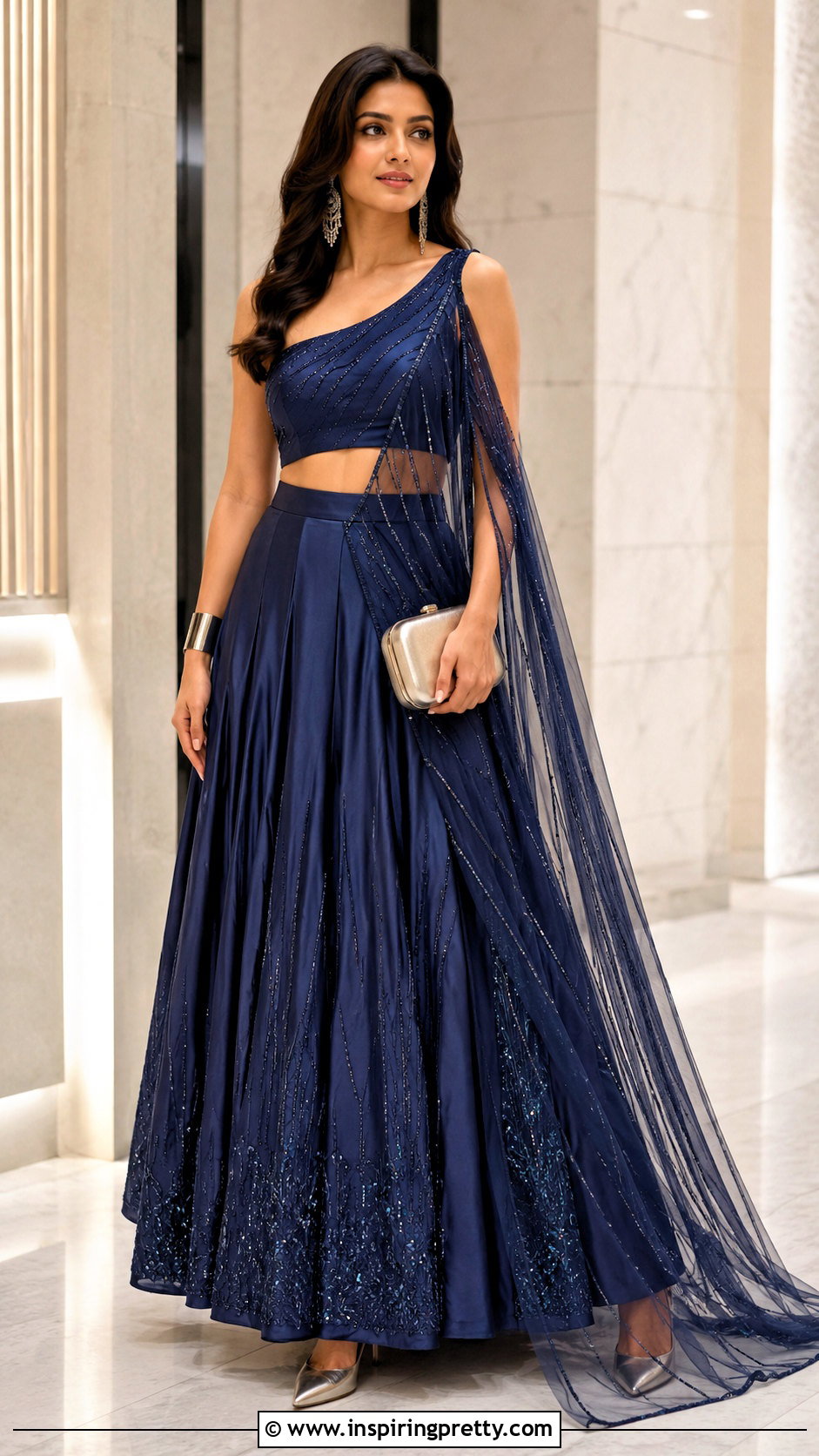
One-shoulder blouses make a lehenga look like cocktail wear. I prefer one wide shoulder panel to a thin strap, because it takes the weight of the bodice comfortably. A plain satin, crepe or georgette skirt lets the diagonal line show. Attach the dupatta at the bare shoulder's opposite side and at the waist so it continues the angle. Long earrings, no necklace, and a sleek ponytail.
9. Halter Neck Crop Top Lehenga
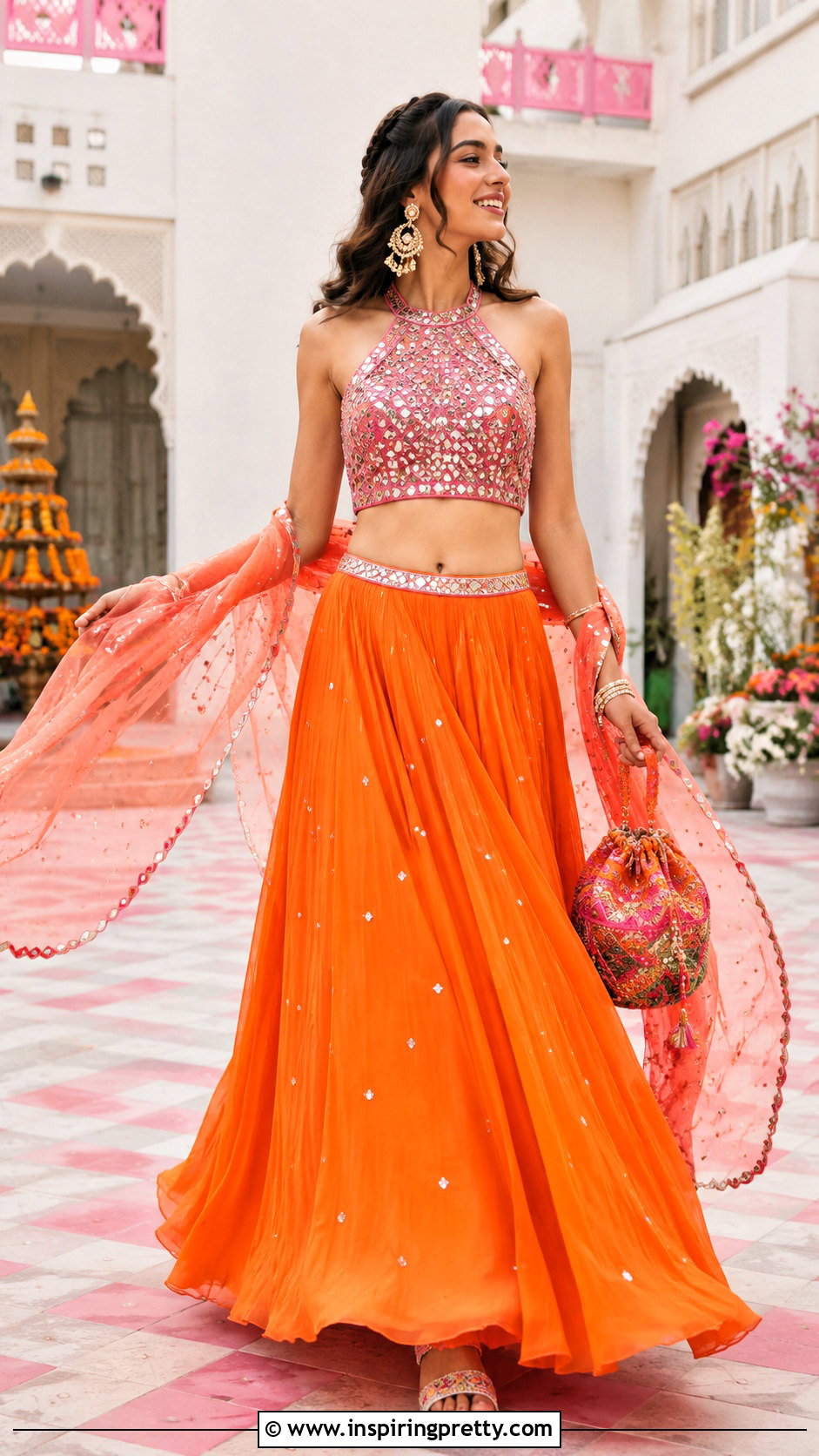
A halter is cool and freeing at a summer mehndi, and it suits broad shoulders well because the cut draws the eye inward. I want a wide neck band and a secure back closure, since a heavy embellished bodice hanging from a thin halter tie pulls on the neck. Chiffon or georgette skirt, dupatta draped behind the arms, chandelier earrings and an updo to show the neckline.
10. Scoop Neck Crop Top Lehenga
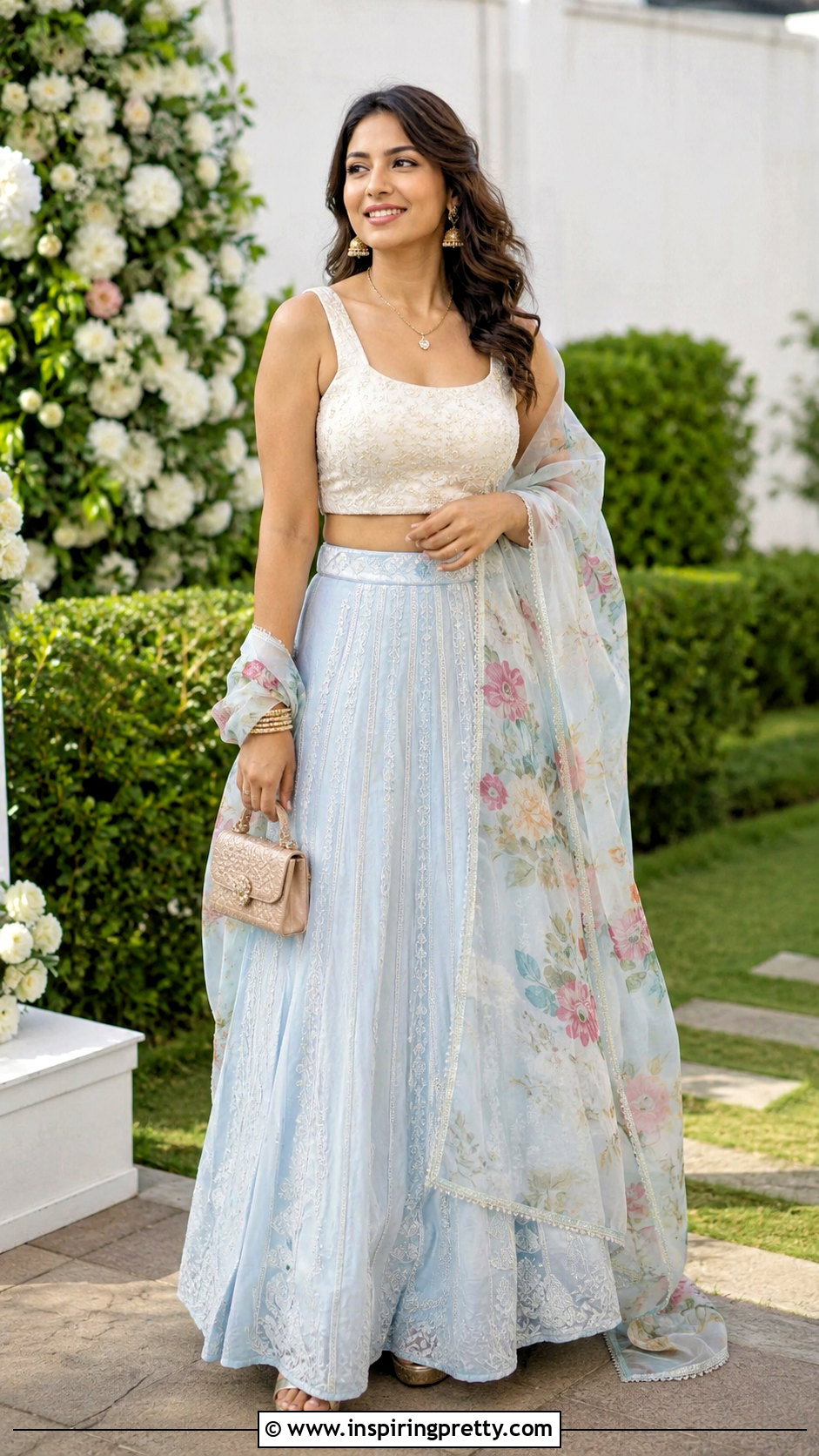
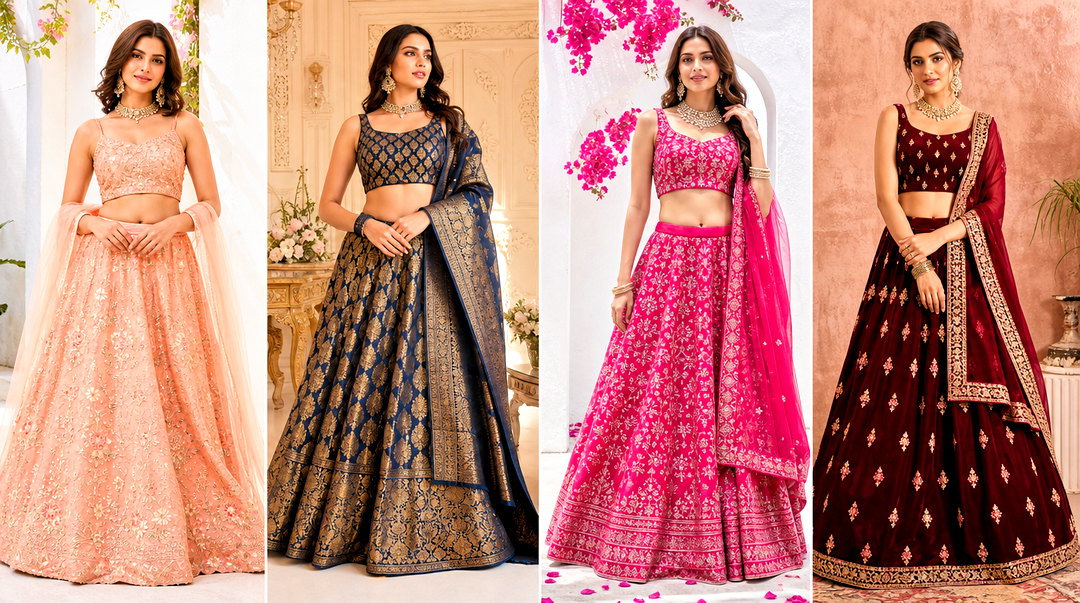
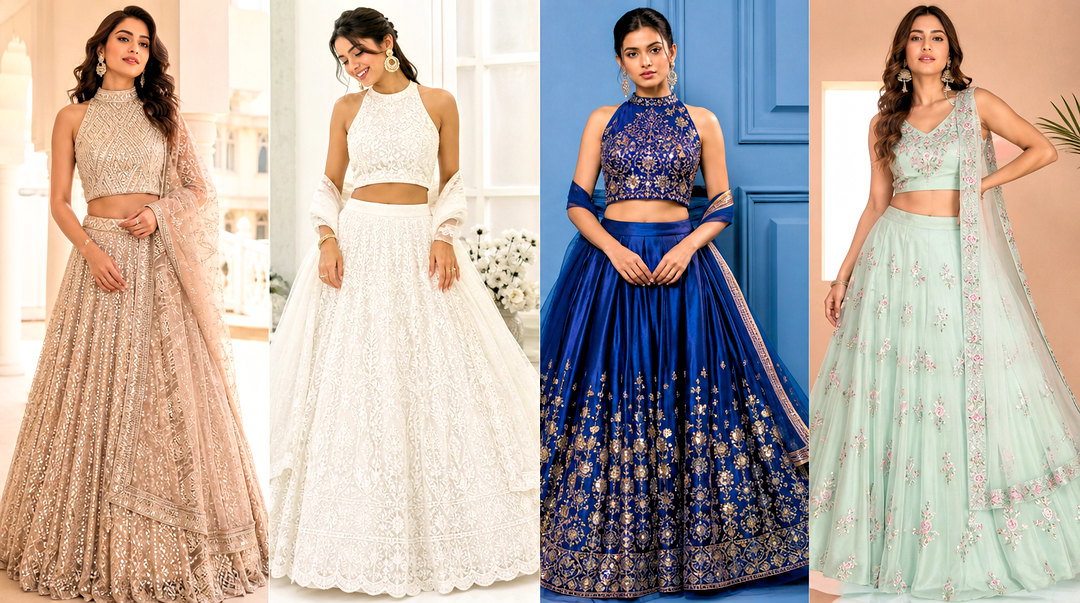
Scoop necks are the easiest blouse to rewear, with a sari or with palazzos, which is why I suggest them to guests who want value from the outfit. Keep the curve moderate. An embroidered scoop balances a plain satin skirt; a plain silk scoop calms a heavily worked lehenga. A delicate pendant should follow the line of the neck, not sit across it. Printed organza dupatta for movement.
11. U-Neck Zardozi Crop Top Lehenga
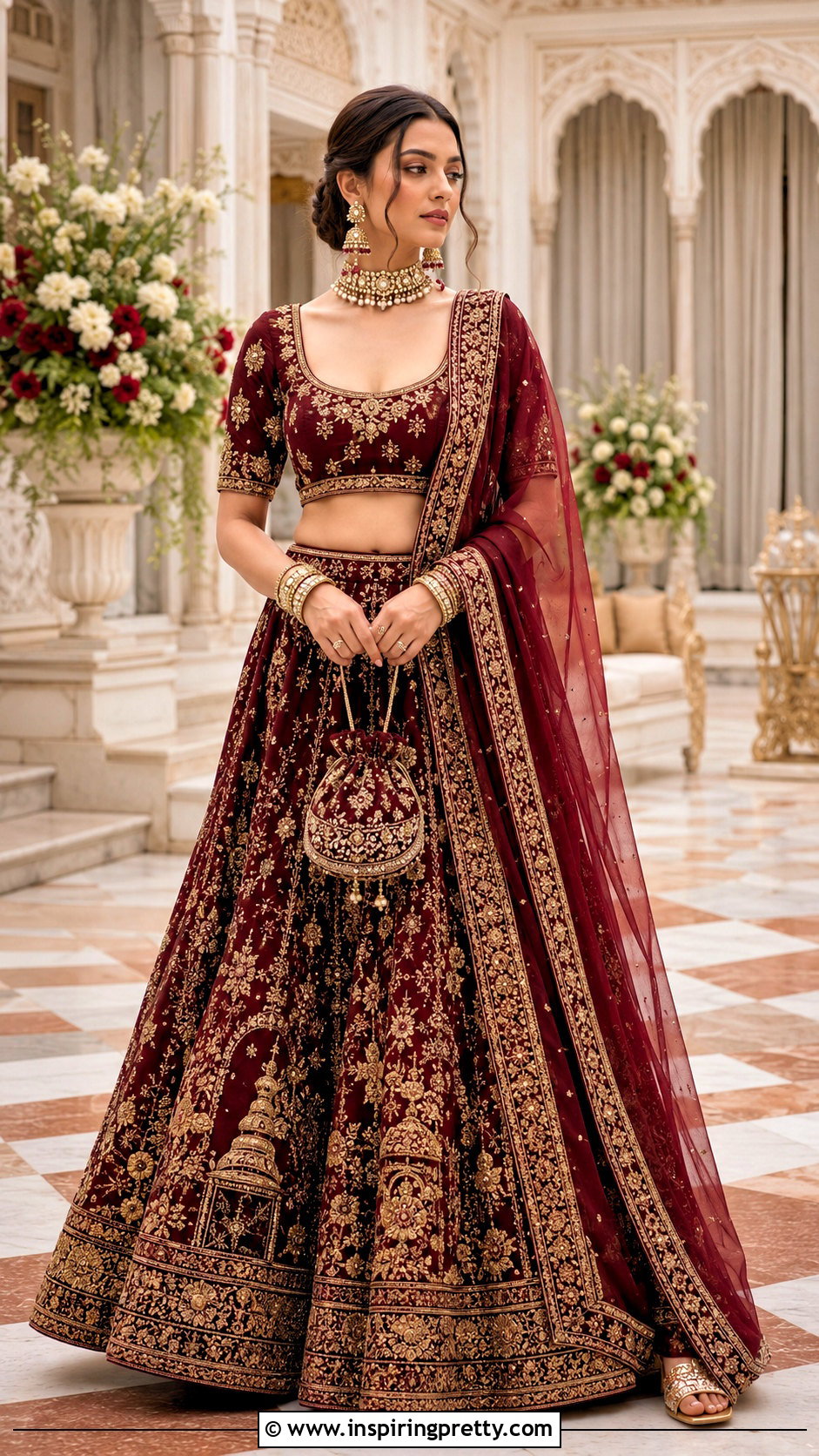
Zardozi on a U-neck gives a rich, traditional look without a complicated cut. Silk or velvet base, embroidery around the neck, sleeves and hem. Metal thread embroidery is heavy and stiff, so the blouse needs a cotton lining underneath to keep it from rubbing. Pair it with a skirt that repeats the motifs and a broad border, plus a sheer dupatta with small accents. A classic choker sits well in a medium-depth U.
12. Round Neck Embroidered Crop Top Lehenga
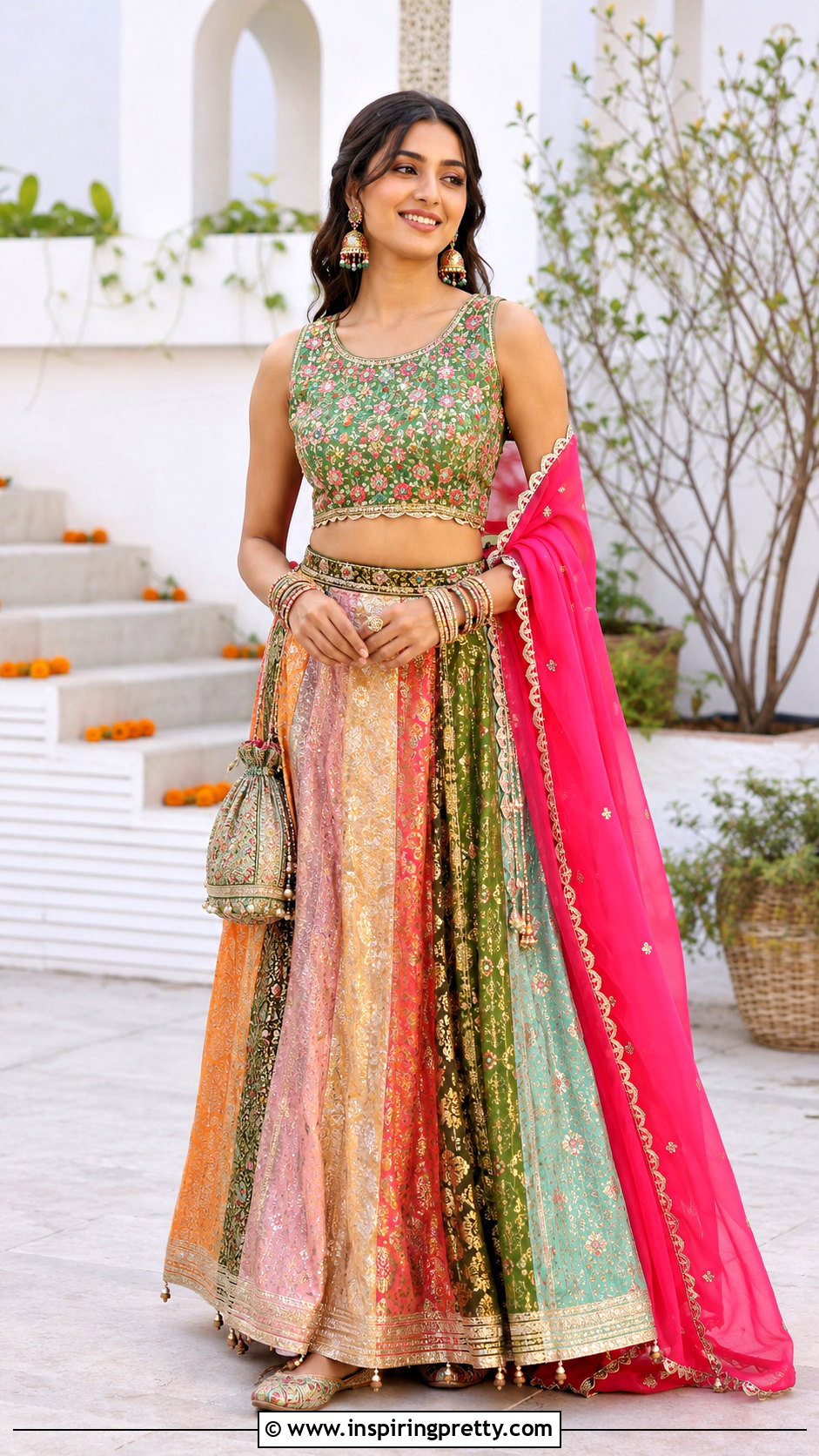
A round neck is the simplest base for a colorful embroidered lehenga. Short or elbow sleeves, a neckline that doesn't choke, and small sequins or thread embroidery for interest. With a paneled lehenga, use a contrasting dupatta over one shoulder. If the neckline itself is ornate, skip the pendant. It's another blouse that works later with a sari or sharara.
13. Keyhole Neck Crop Top Lehenga
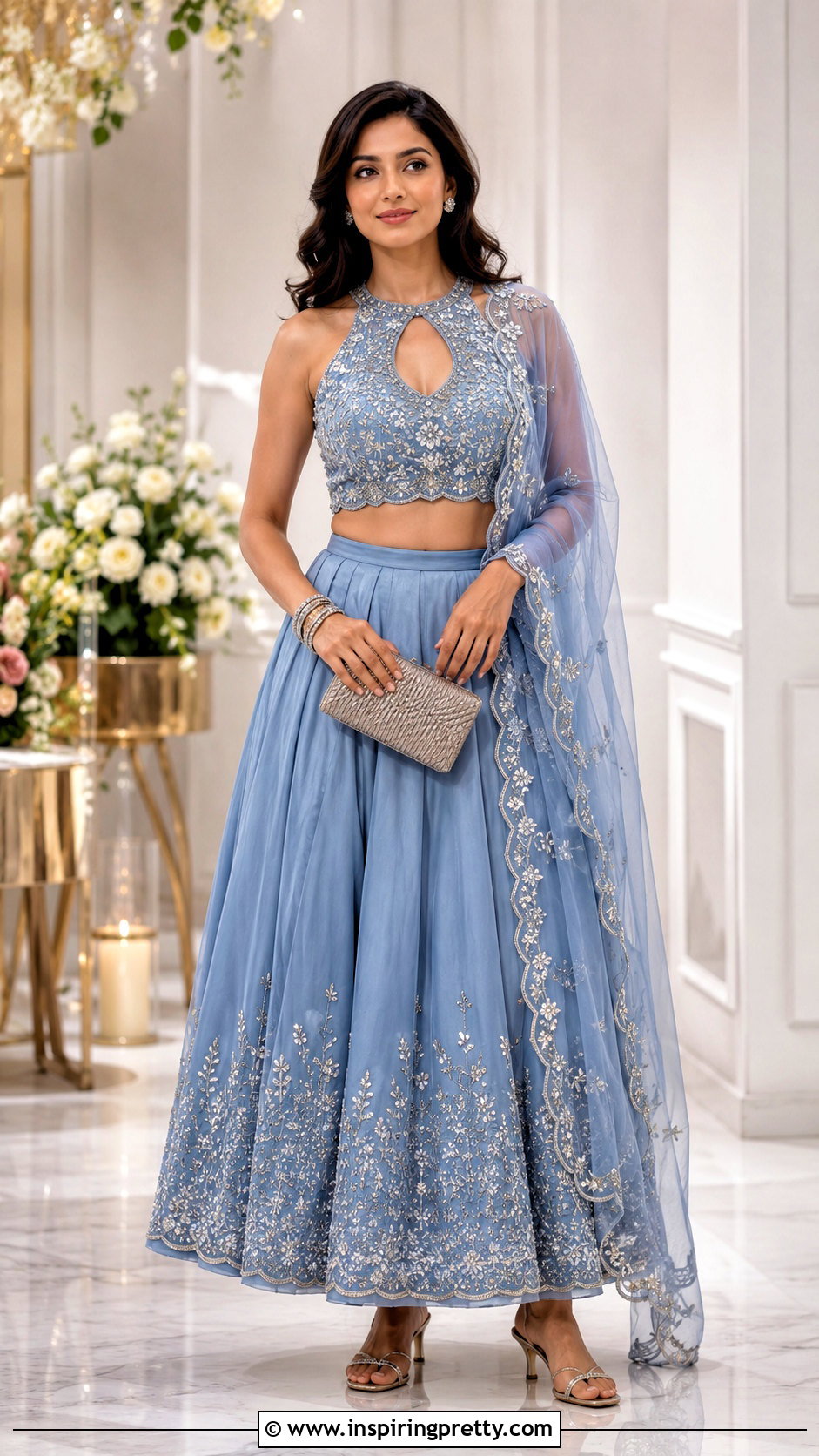
A keyhole adds one small detail at the neck while keeping coverage high. Teardrop, round or a slim vertical slit, closed with a hook or a decorative button. The hook must hold; a keyhole that pops open when you sit is a common fitting complaint. An embroidered top over a solid skirt in the same color family looks clean. Pin a scalloped dupatta at the shoulder and keep necklaces off.
14. Scalloped Neck Crop Top Lehenga
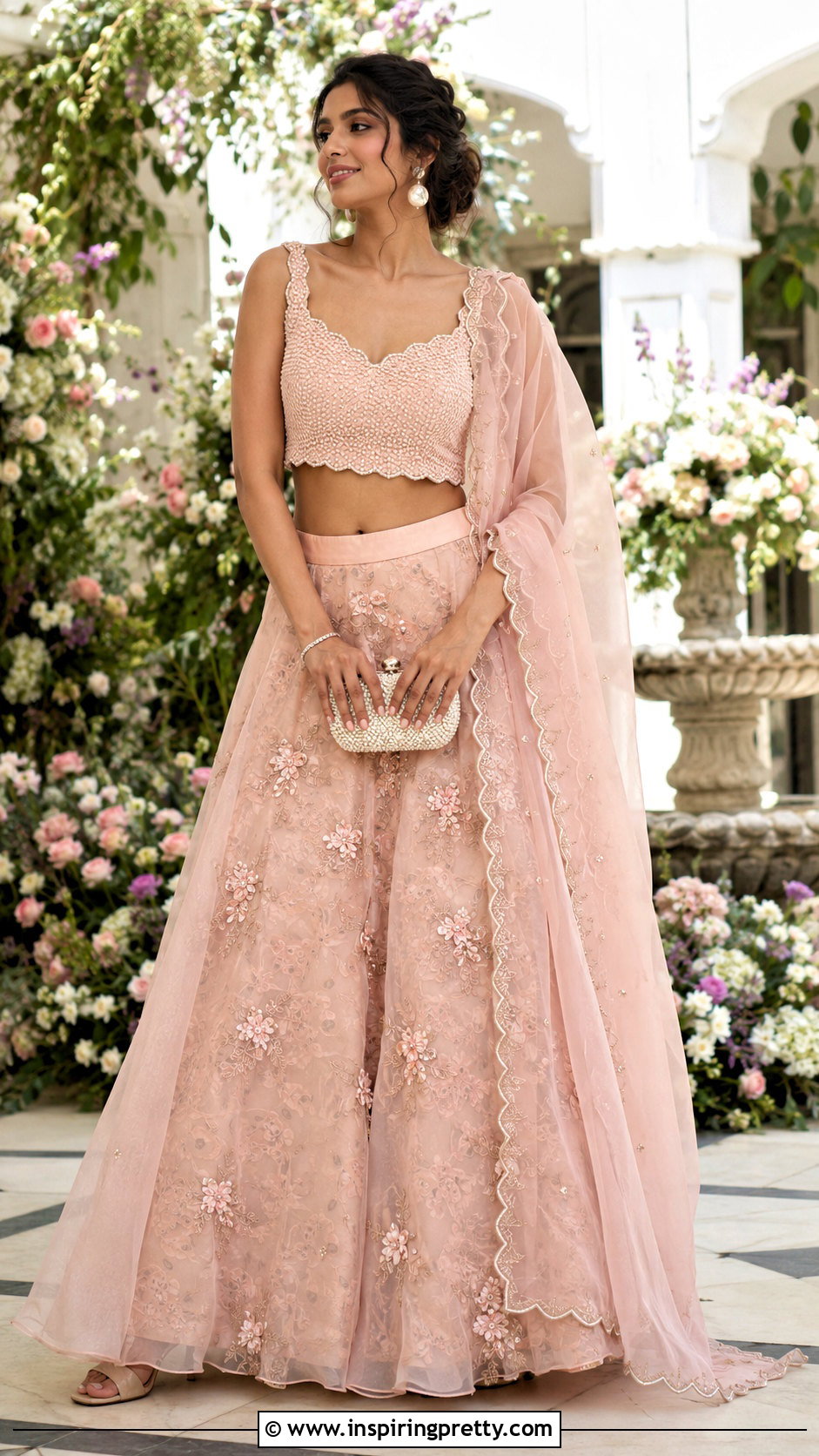
Scallops look soft only if each curve is the same size, so check symmetry at the neckline. Pearls, piping or delicate embroidery finish the edge, and a stiff lining keeps every scallop from flipping out. Repeat the scalloped edge on the skirt border or dupatta. Organza or silk skirt, pearl earrings and kitten heels or embroidered flats. Lovely for engagements and daytime weddings.
15. Puff Sleeve Crop Top Lehenga
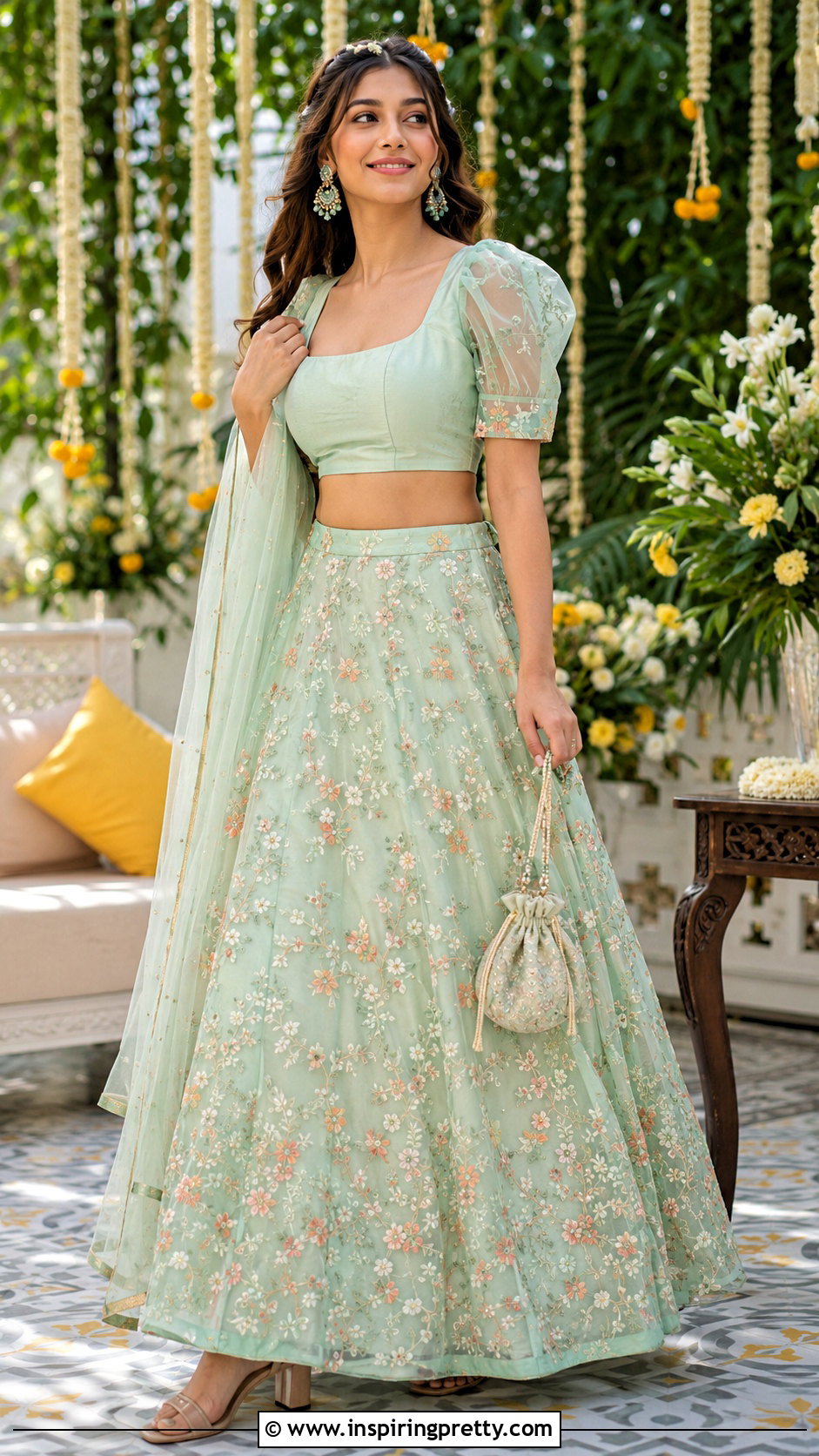
Puff sleeves add shape, so keep the bodice streamlined. Gathered puffs ending above the elbow are the easiest to wear; long sheer puffs with fitted cuffs are more dramatic. An open neckline, square or sweetheart, balances the volume. Soft fabric gives a natural puff; very stiff organza can look boxy. Plain or lightly embroidered skirt and a narrow dupatta over one arm.
16. Full Sleeve Net Crop Top Lehenga
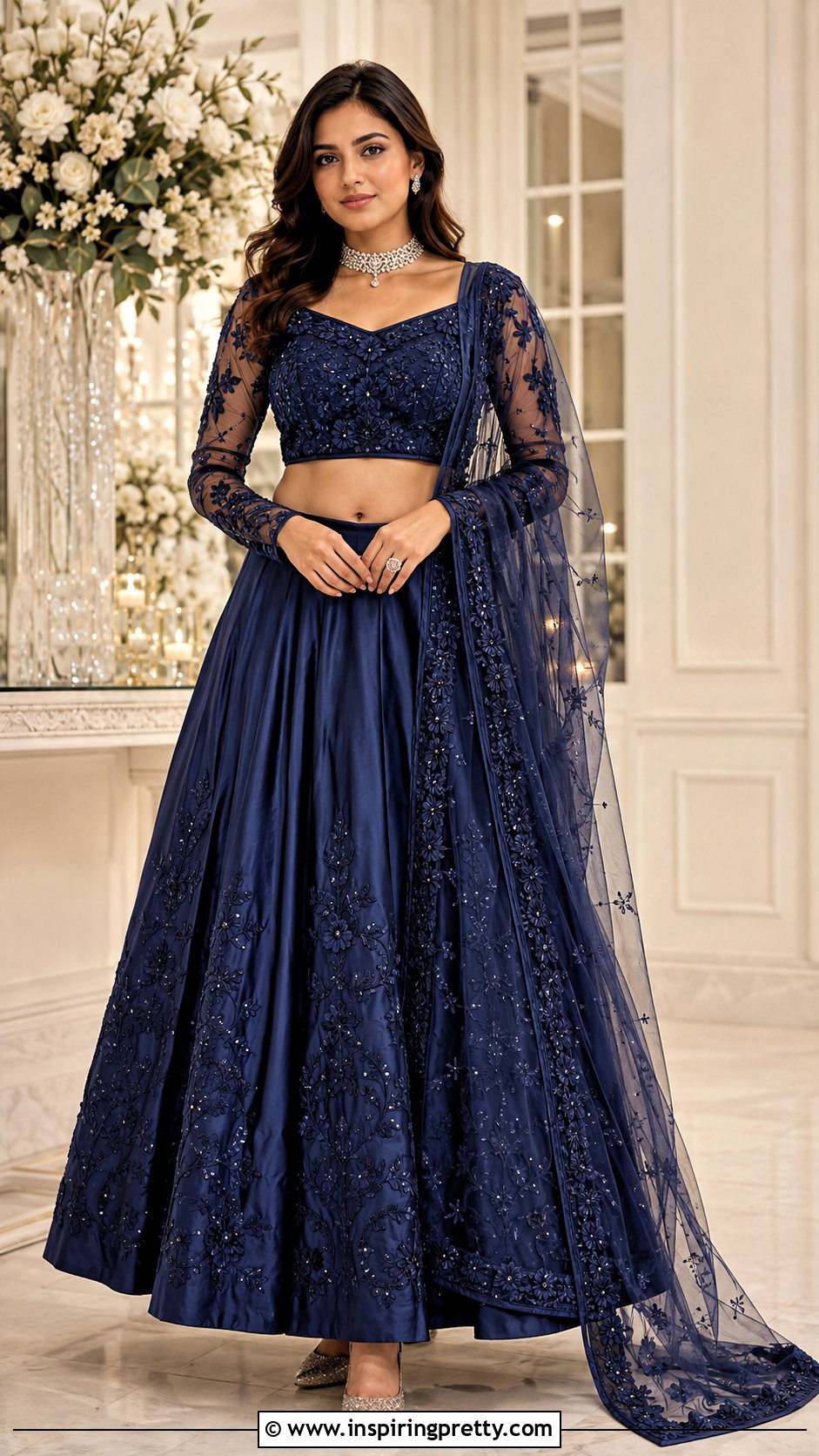
Full net sleeves cover the arms while keeping the blouse light. I choose net close to your skin tone, or matched to the bodice, with small motifs spaced out. The armholes must allow you to lift your arms; tight net sleeves rip at the underarm seam when you dance. Silk, velvet or georgette skirt repeating the sleeve details. Choker and closed-toe heels for a formal evening.
17. Three Quarter Sleeve Crop Top Lehenga
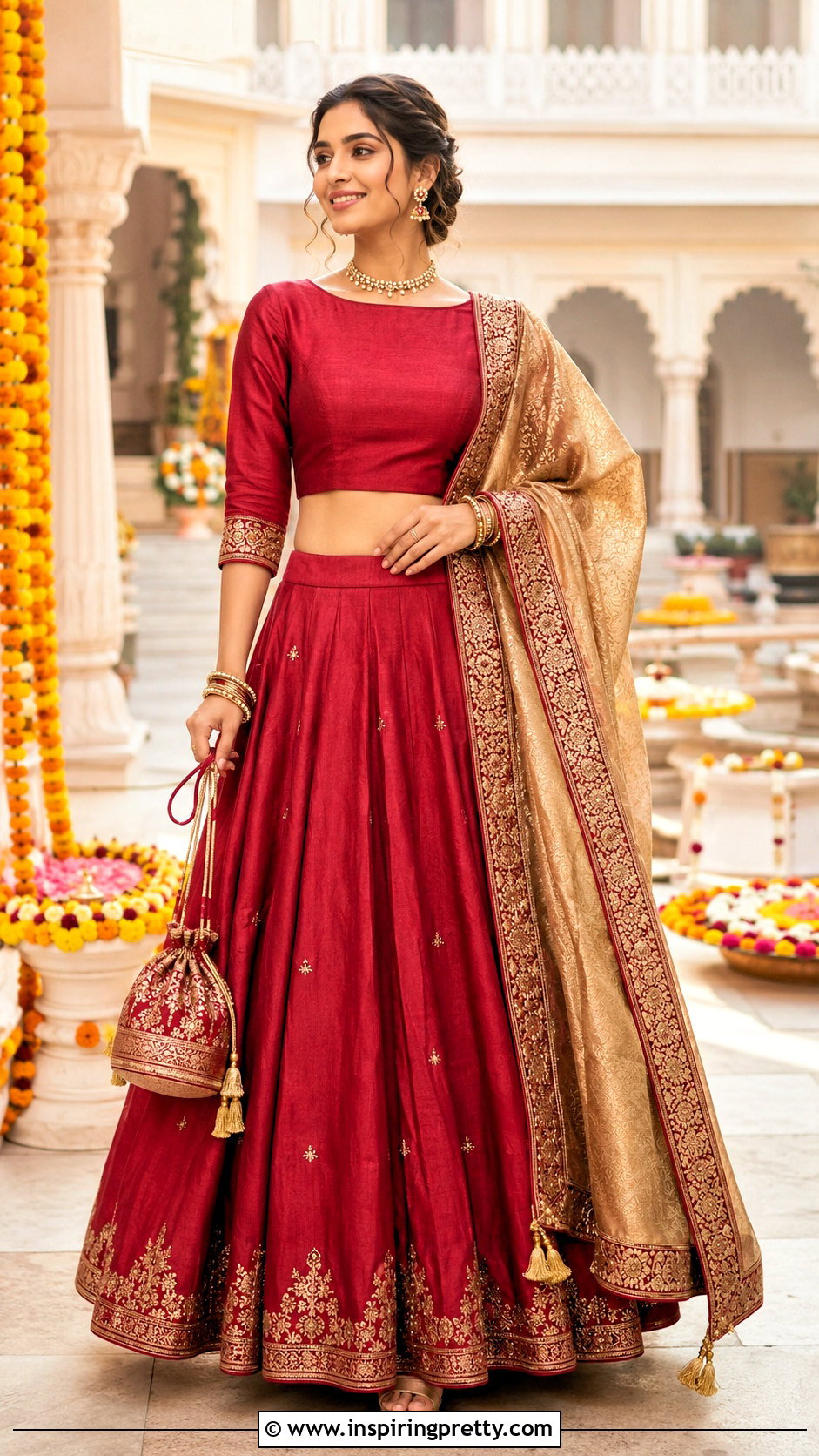
Three-quarter sleeves are the blouse I recommend most to guests who'll be at a wedding from morning to night. They cover the upper arm and still let you eat and greet. A small embroidered or scalloped cuff finishes them. Pair with raw silk for a ceremony, georgette for a party. Keep the skirt waistband high and smooth under the top. Bangles on one wrist so they don't fight the cuff.
18. Cap Sleeve Crop Top Lehenga
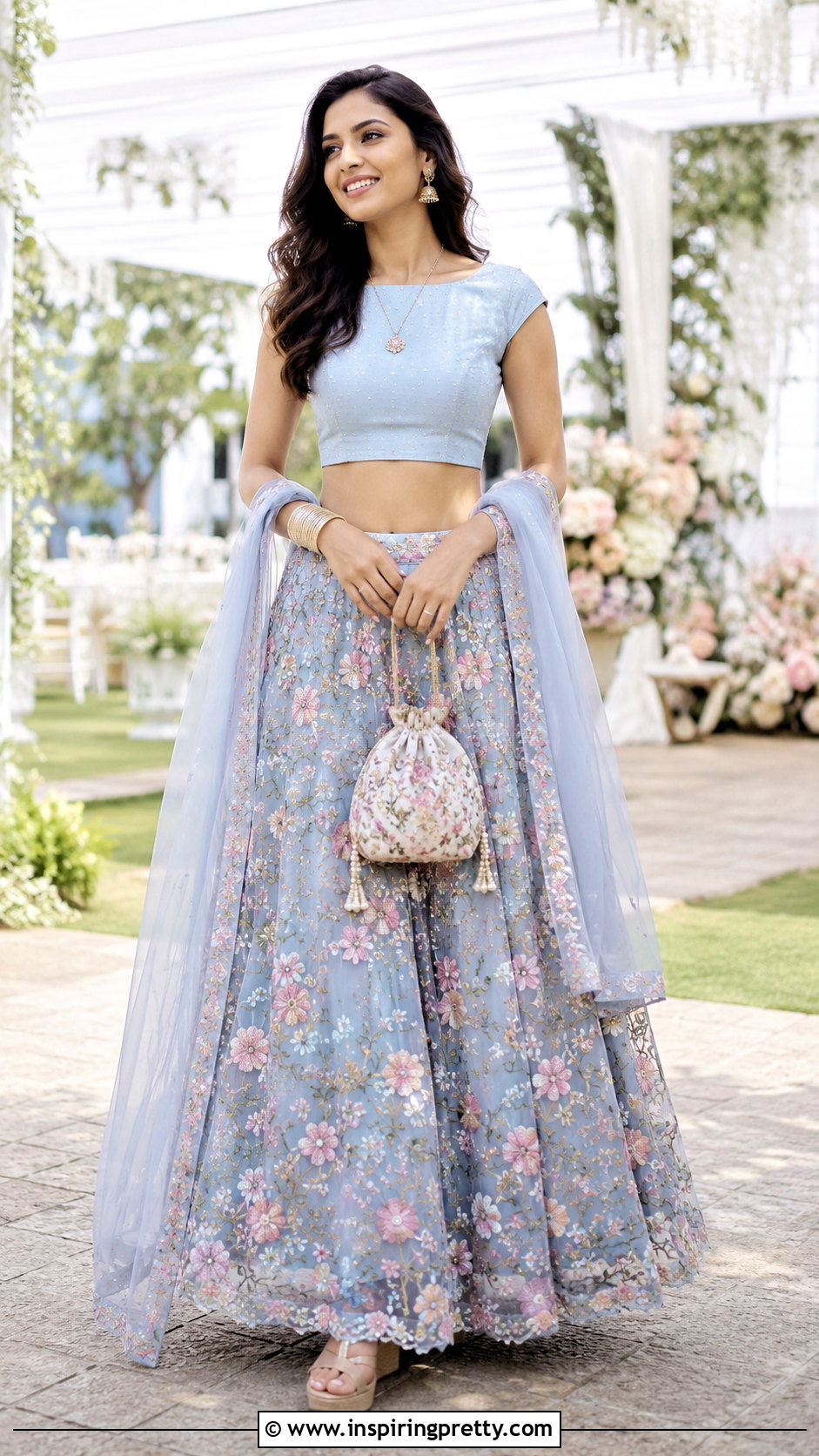
Cap sleeves sit just over the shoulder, giving a little coverage with the feel of a sleeveless blouse. They should never cut into the upper arm; ask the tailor for ease in the sleeve. A floral or printed lightweight lehenga and chiffon dupatta keep it fresh for daytime. Peach, mint or powder blue in the day, emerald or ruby for evening.
19. Bell Sleeve Crop Top Lehenga
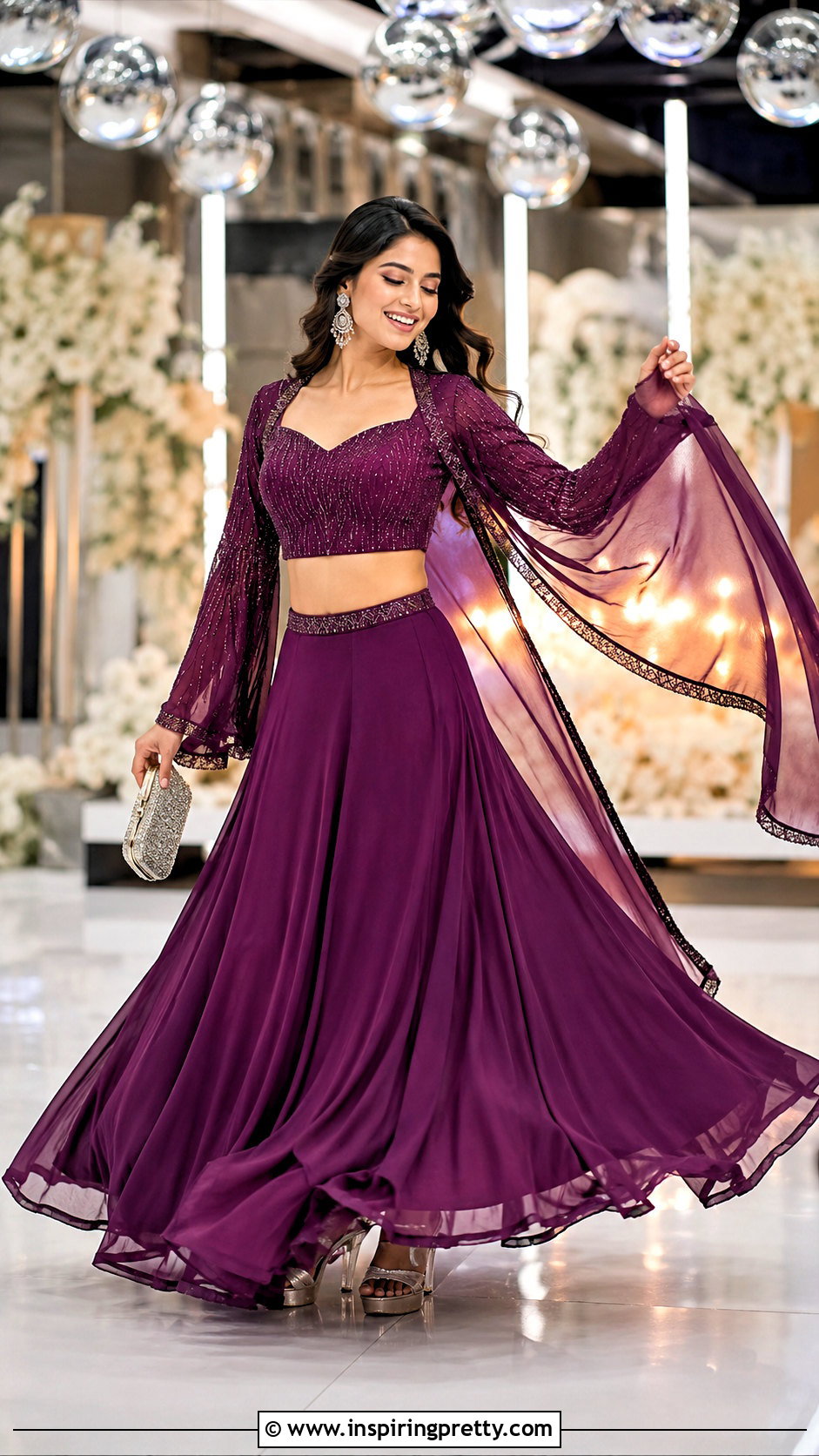
Bell sleeves swing when you dance, which is why I like them at a sangeet. They should stay fitted above the elbow and flare gently below. Georgette, chiffon or soft net; heavier fabric turns the bell bulky. A dupatta over the shoulder hides the sleeves, so attach it at the back or tuck it at one side. Leave the wrists bare of bangles, since they snag the flare.
20. Ruffle Sleeve Crop Top Lehenga
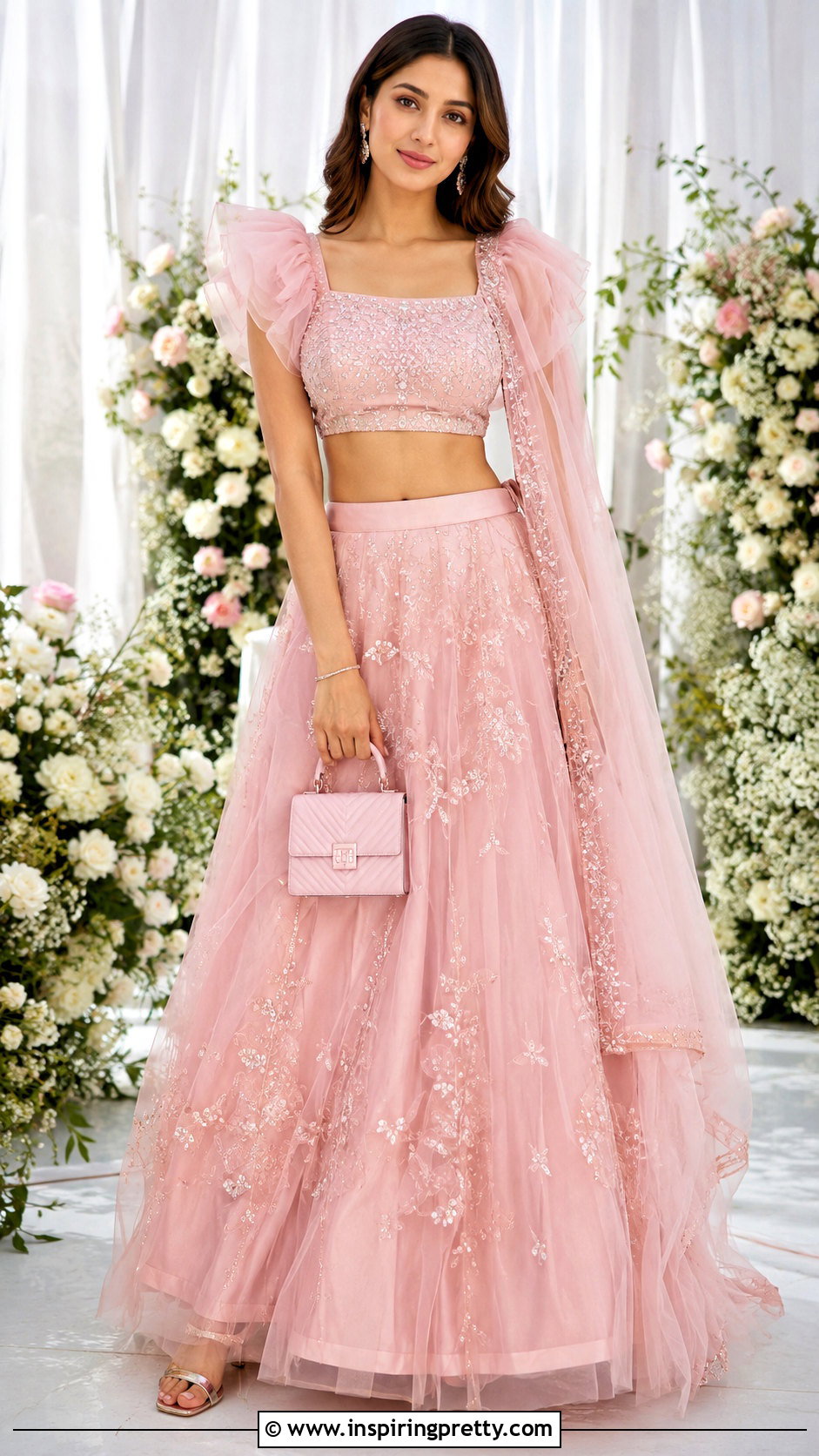
Ruffled sleeves are playful, but one or two controlled layers look grown-up while oversized ruffles swamp the shoulders. A fitted bodice and open neckline keep the balance. Smooth satin, organza or georgette skirt, and a narrow dupatta worn from the back so the ruffles stay visible. Pastels in daylight, darker shades with a few sequins at night.
21. Cold Shoulder Crop Top Lehenga
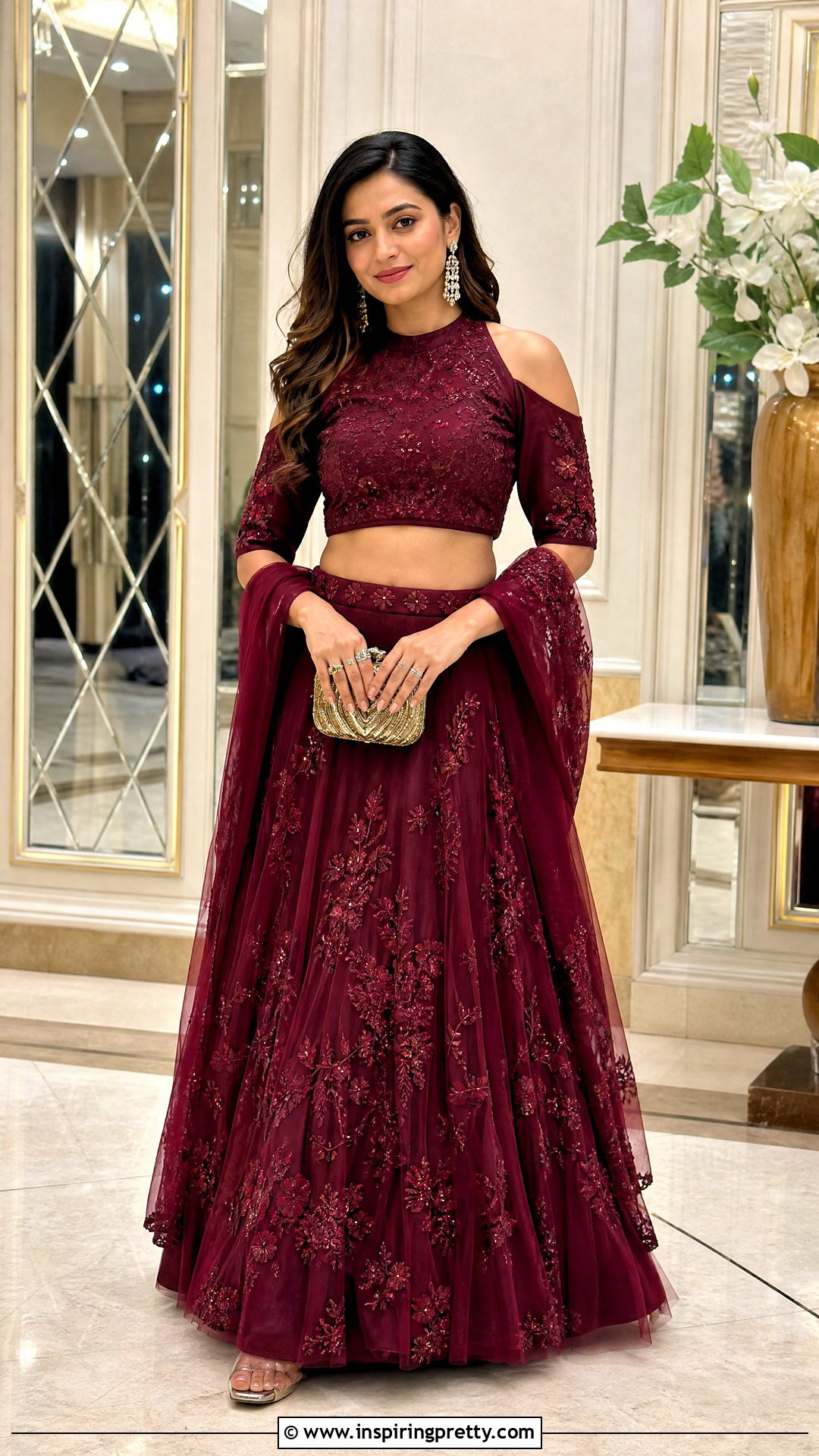
Cold-shoulder cutouts give a little skin with plenty of coverage. The cutouts must sit right on the shoulder; when they're placed wrong they pull open into an odd shape as you raise your arm. A simple flared skirt keeps them the focus. Carry the dupatta over a forearm or attach it at the back. Test the armholes by dancing in the trial.
22. Cape Sleeve Crop Top Lehenga
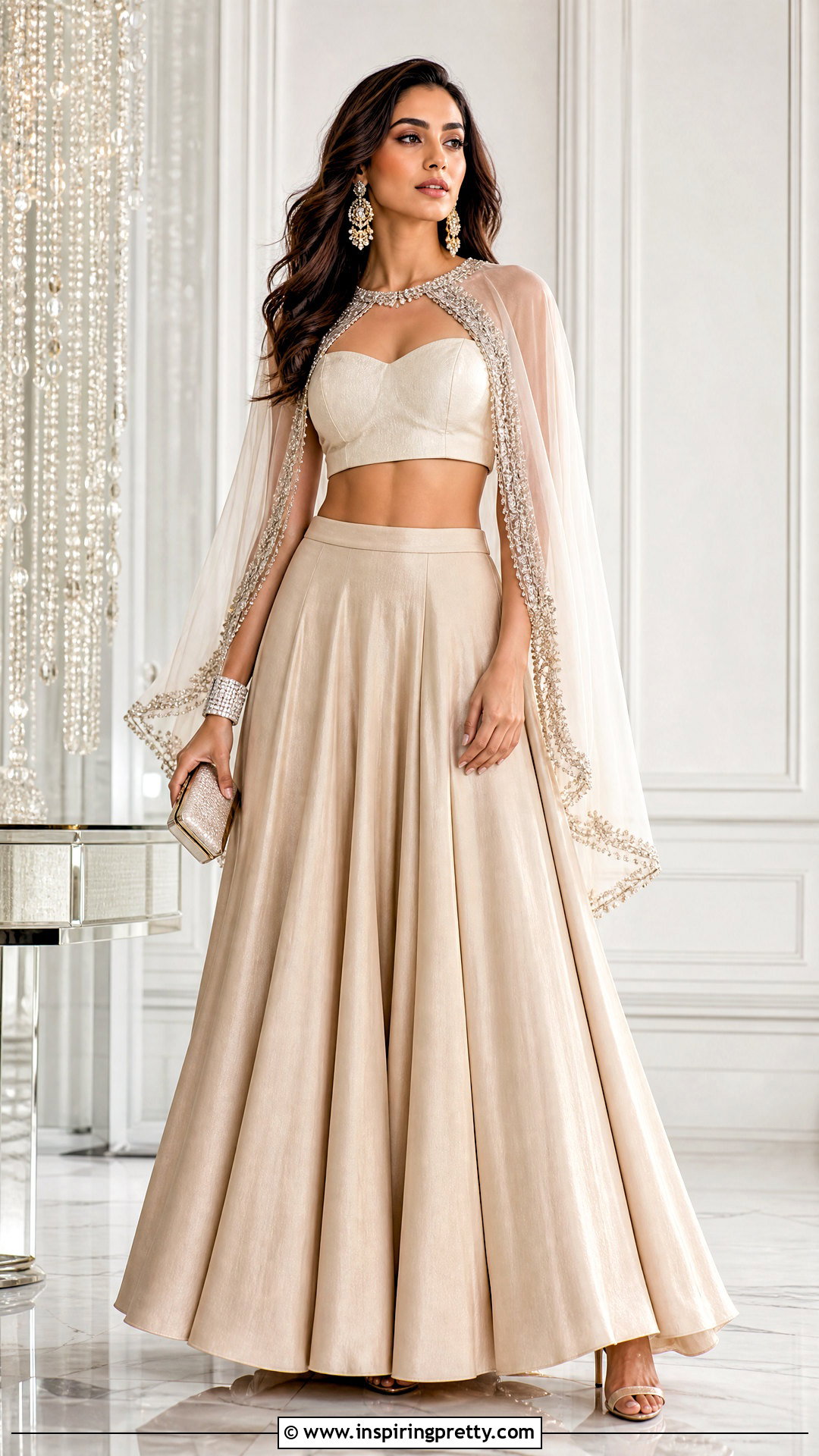
A cape sleeve replaces the dupatta, which is useful if you hate managing one all night. Sheer fabric from shoulder to elbow or wrist over a fitted crop, with a simple satin or crepe skirt. Embroidered or crystal edges define the cape. Long necklaces tangle in the sheer fabric, so earrings and a cuff instead. A detachable cape lets you wear the blouse again in other ways.
23. Jacket Crop Top Lehenga
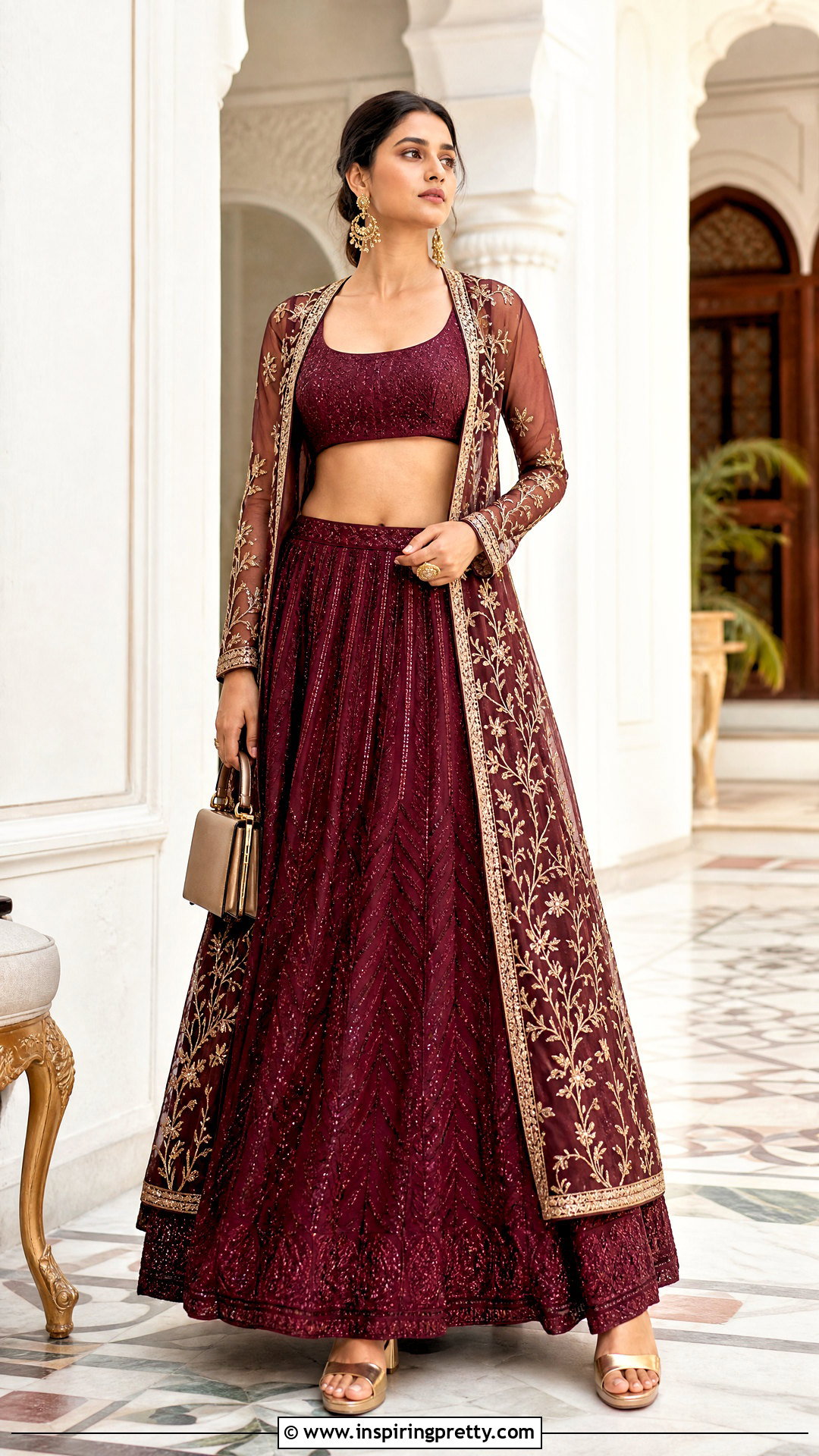
A long jacket over a crop top and lehenga gives grandeur and adjustable coverage, especially for winter weddings. Net, silk, velvet or organza, left open to show the waistband or closed at the neck for formality. If the jacket is heavily embroidered, the skirt should be quieter. You can skip the dupatta, and taking the jacket off later gives you a second look for the dance floor.
24. Peplum Crop Top Lehenga
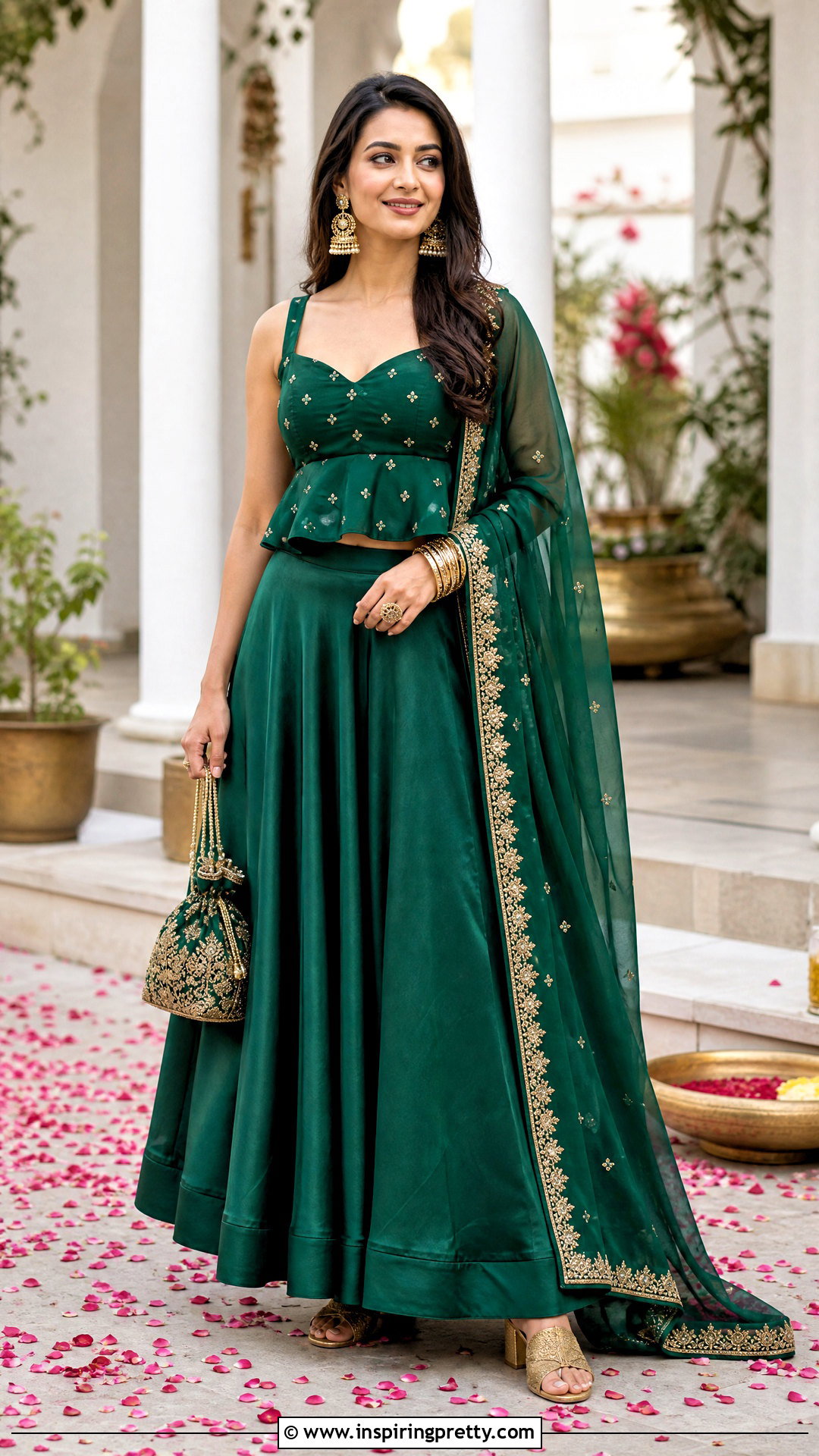
A short peplum covers the waistband and suits anyone who'd rather not show the midriff. The flare should start at the natural waist. Raw silk, brocade or structured crepe hold the peplum crisp; georgette gives a softer drape. Put the embellishment on either the top or the skirt, not both. A lightly scalloped peplum hem adds detail without fuss.
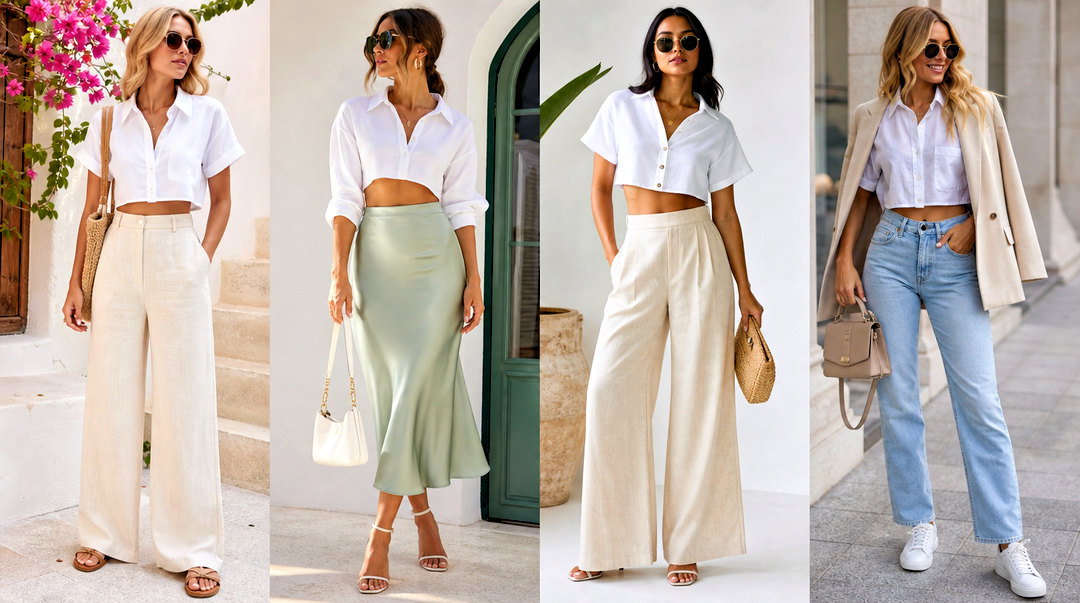
25. Wrap Crop Top Lehenga
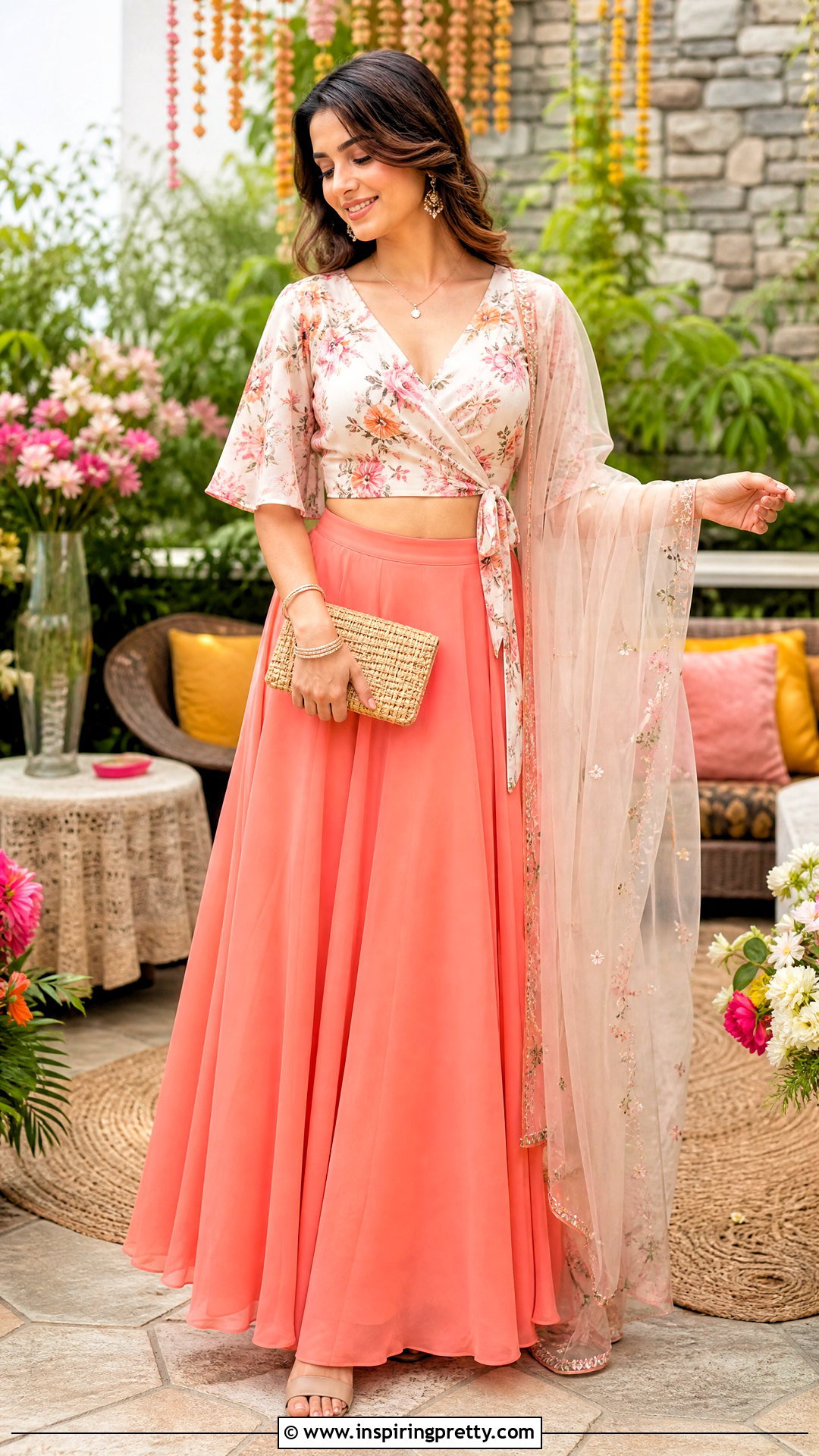
A wrap blouse forms diagonal lines and feels relaxed for a mehndi or festive lunch. I insist on a faux wrap with hidden hooks, because a real tie-wrap opens when you sit on the floor or dance. Embroidery along the wrap edge links it to the skirt border. Three-quarter or flutter sleeves make it easy to wear. Check that the neckline stays flat in every position.
26. Knotted Crop Top Lehenga
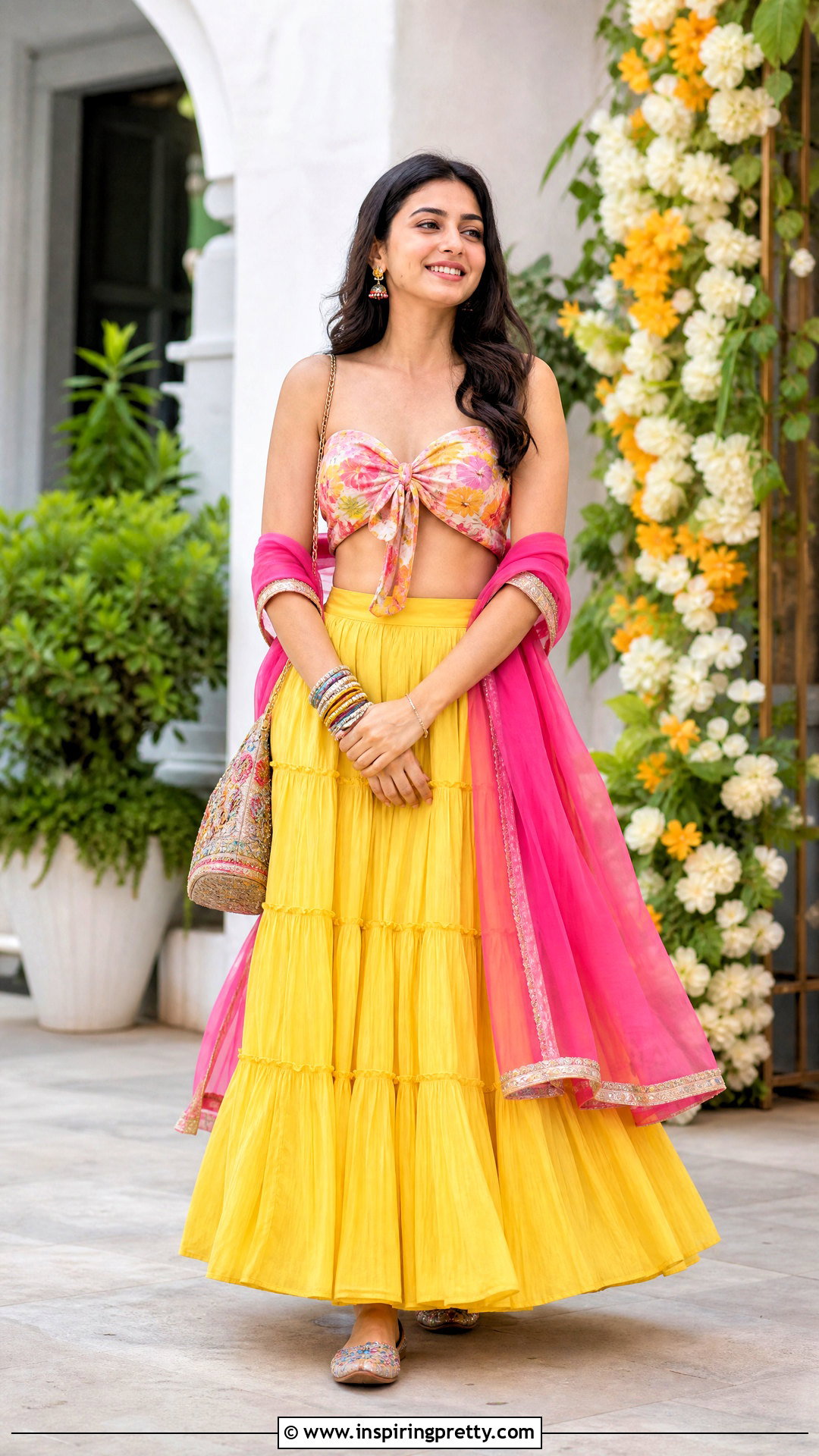
A knotted blouse gives a lighter Indo-Western feel for mehndis and house functions. Choose a fixed, stitched knot; a real knot loosens and shifts. Pair with a printed or tiered skirt in cotton silk or georgette. The dupatta is optional at informal events. Hoops or small jhumkas, bangles and embroidered flats. Floral prints keep it tied to tradition.
27. Asymmetric Crop Top Lehenga
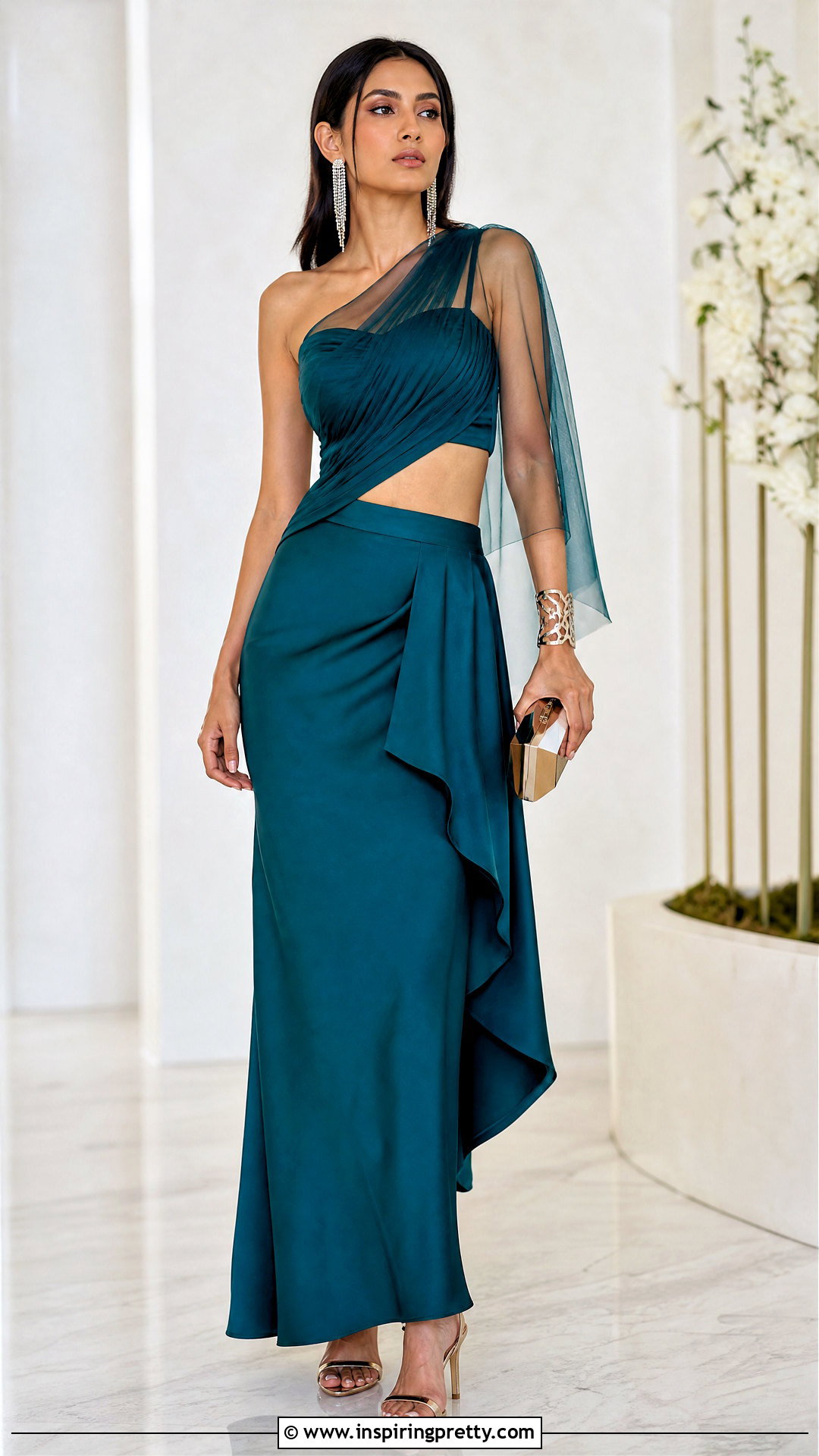
An asymmetric blouse brings movement with a diagonal neckline, uneven hem or one draped panel. A plain high-waisted skirt keeps the shape readable: crepe for sleek, embroidered organza for softer. Instead of a regular dupatta, attach a sheer panel at one shoulder. One or two colors only. It's for receptions and sangeets where the choli can be modern.
28. Draped Crop Top Lehenga
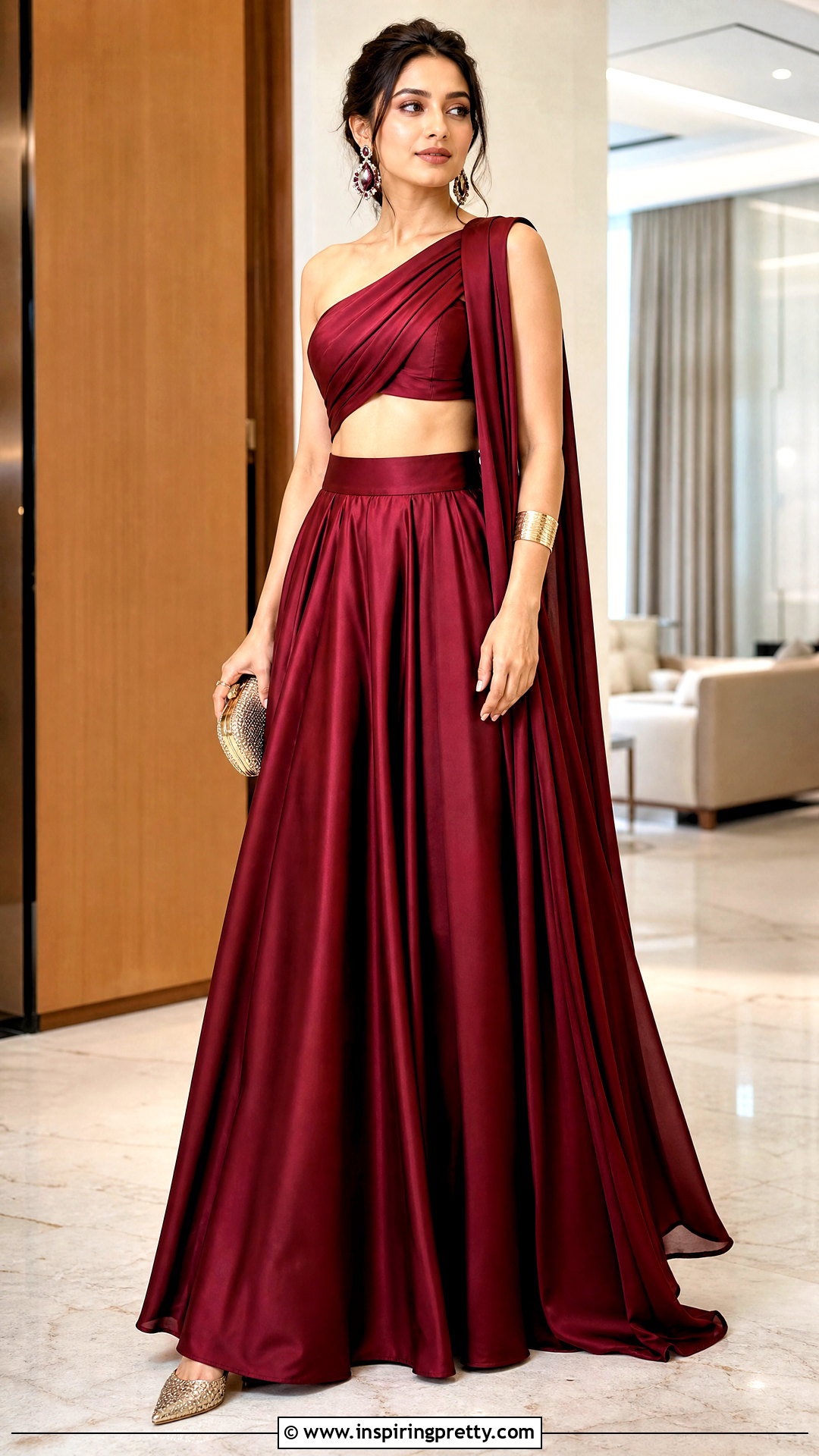
A draped blouse borrows the softness of a sari pallu. A fitted inner bodice holds fabric gathered across one shoulder or wrapped across the torso. The drape needs to be tacked down inside in several places, or it slides as you move. A sleek satin or crepe skirt, no separate dupatta needed if there's a shoulder panel. Tonal colors make a column; a contrasting drape adds definition.
29. Layered Crop Top Lehenga
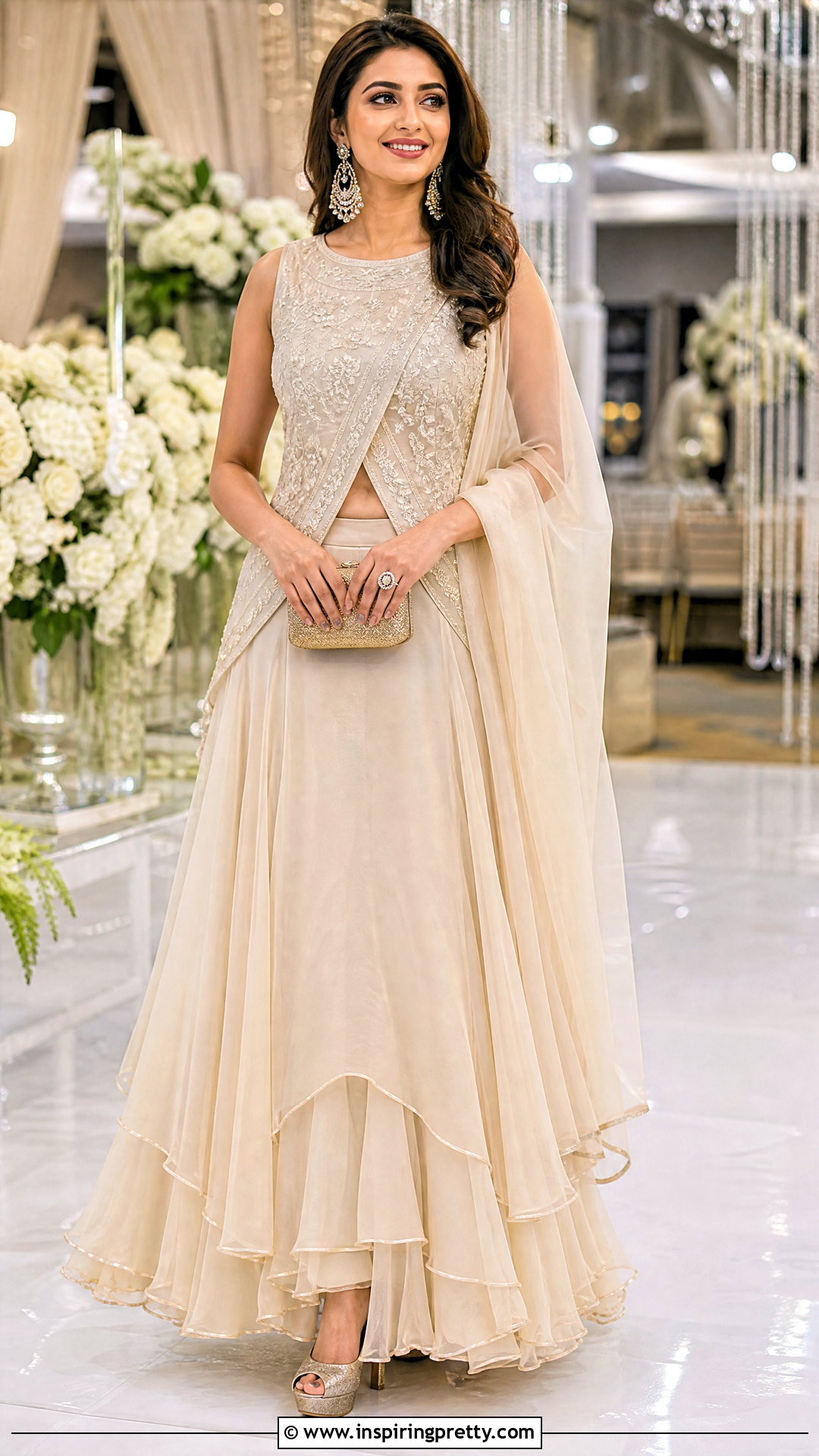
Layered blouses use overlapping panels or a short overlay for depth, so the fabrics must be light: chiffon, georgette or net. Heavy layers add bulk right at the bust. Pair with a clean skirt in the same color family and repeat the trim. Don't stack heavy embellishment on top of the layers; let texture be the detail. It photographs well for coordinated bridesmaid groups.
30. Fringe Crop Top Lehenga
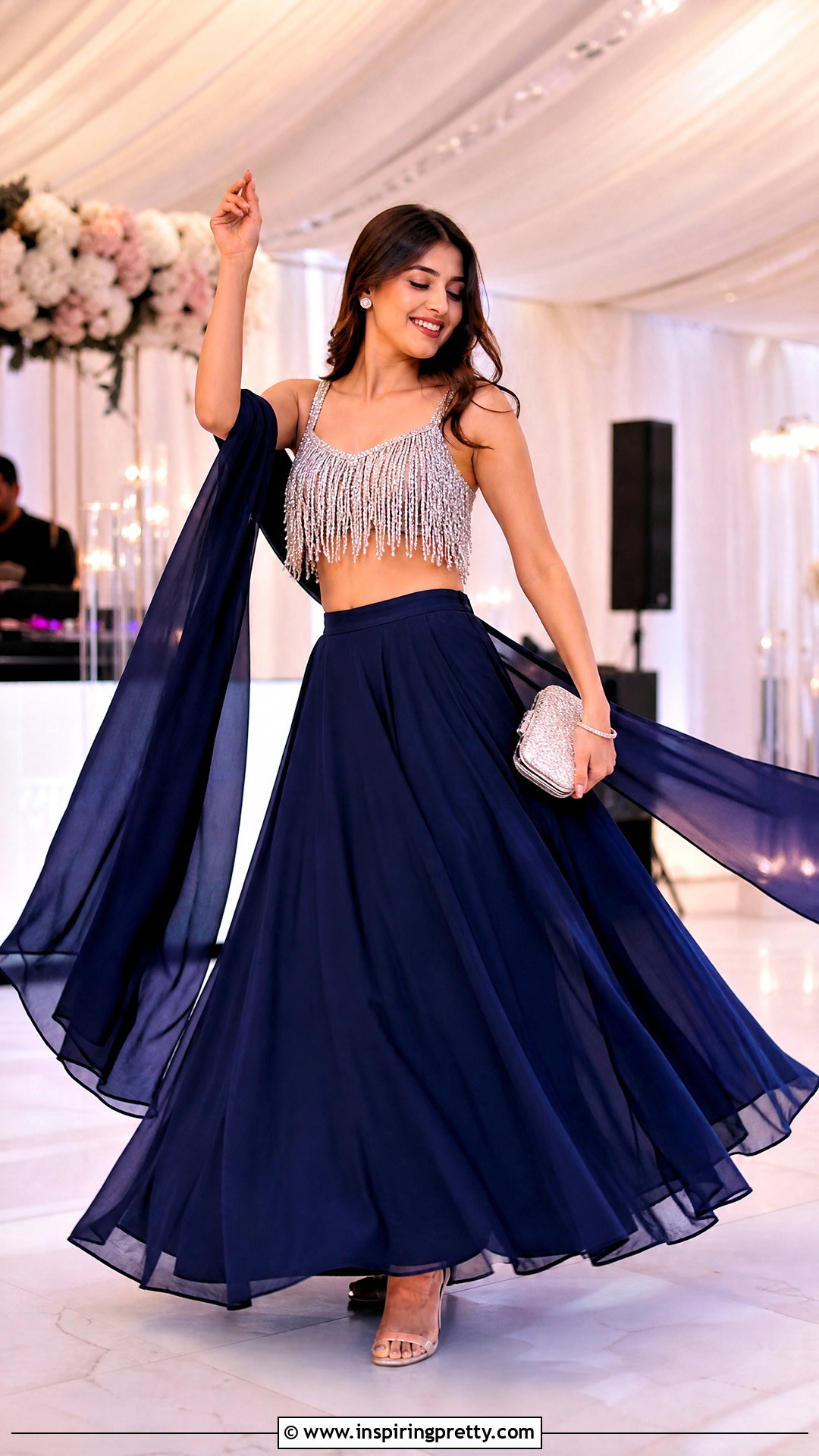
Fringe is made for dancing. I keep it to the hem, sleeves or neckline, short and beaded or sequined, never covering the whole bodice. A plain flared skirt keeps it from looking crowded. Test the fringe against your jewelry and the skirt embroidery in the trial, because beaded fringe hooks onto both. Stud earrings, a wristlet bag and supportive block heels.
31. Tassel Crop Top Lehenga
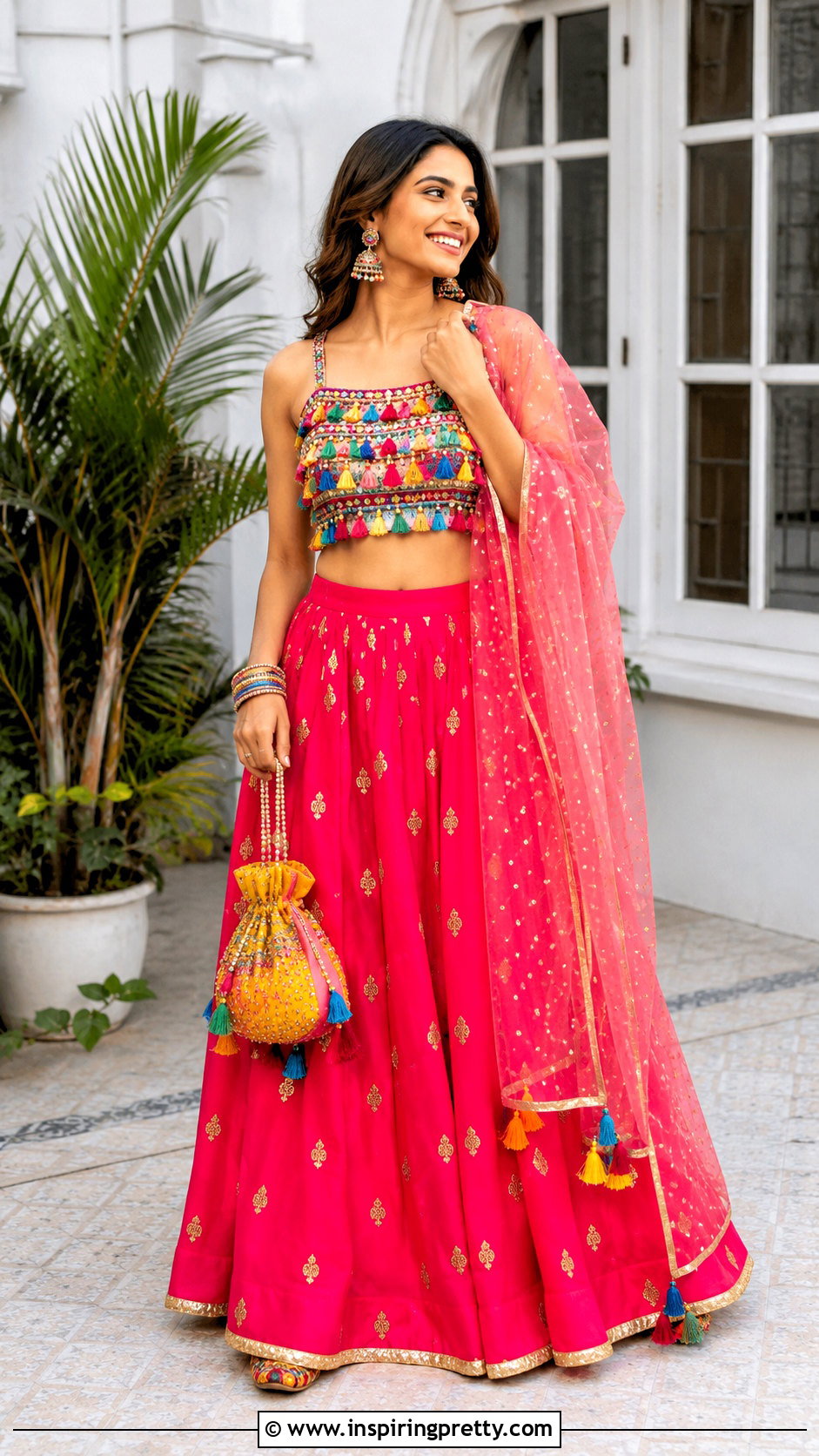
Tassels add swing at the sleeves, back or hem. Small, color-matched tassels look neat; big ones feel heavy and bump against chairs. If they hang from a back tie, set them high enough that you're not sitting on them. Repeat two or three tassel colors in the skirt border or dupatta corners. Bright pink, orange and turquoise for haldi and garba; ivory and gold for something quieter.
32. Mirror Work Crop Top Lehenga
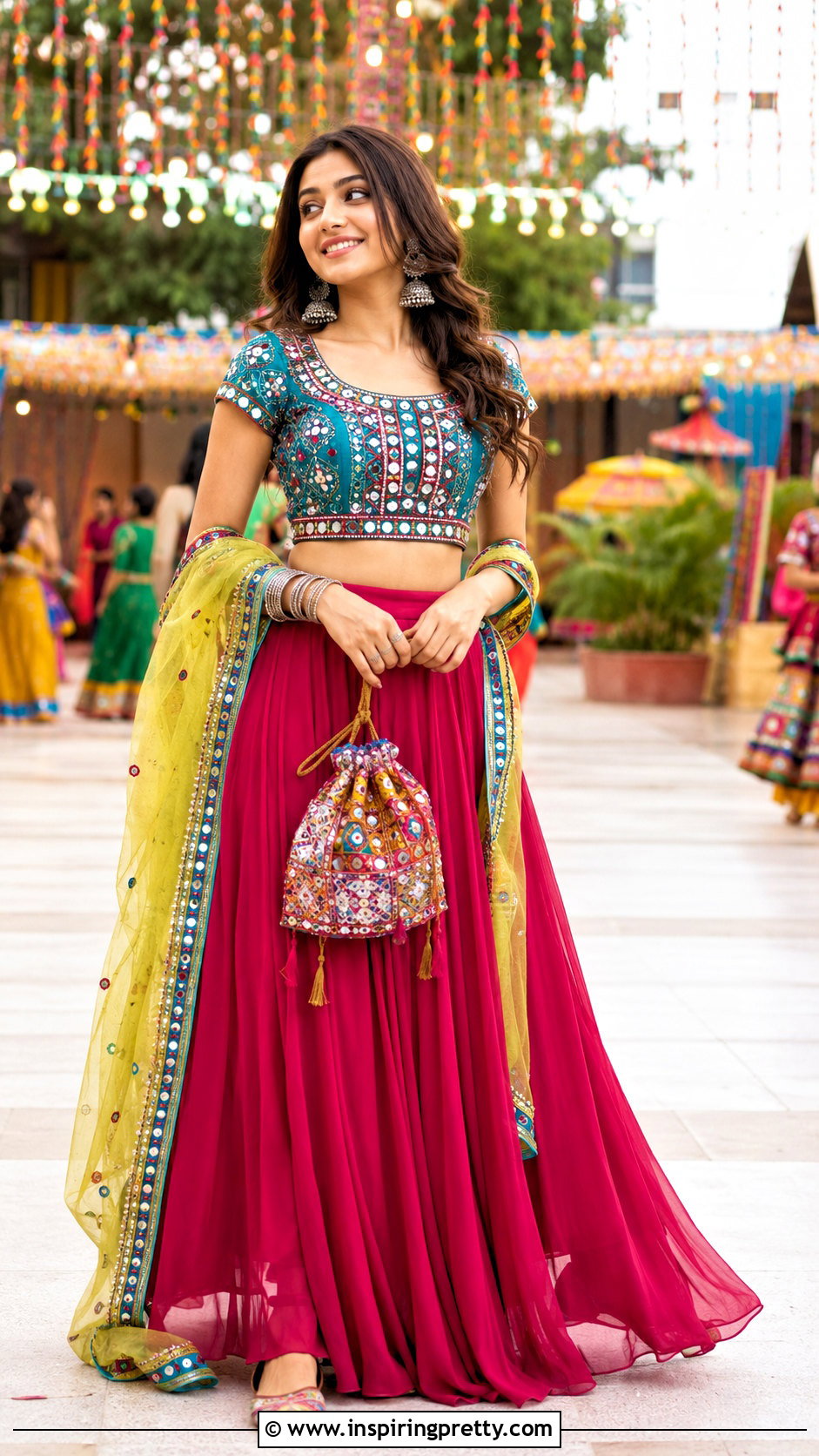
A heavily mirrored blouse needs a calm skirt: solid georgette or cotton silk with a narrow matching border. Mirrors must be securely finished, the lining should be cotton, and the armholes bound softly. A contrasting sheer dupatta brightens it. Oxidized earrings and stacked bangles; a heavy necklace can catch on the mirrors. Dance in it at the final fitting.
33. Chikankari Crop Top Lehenga
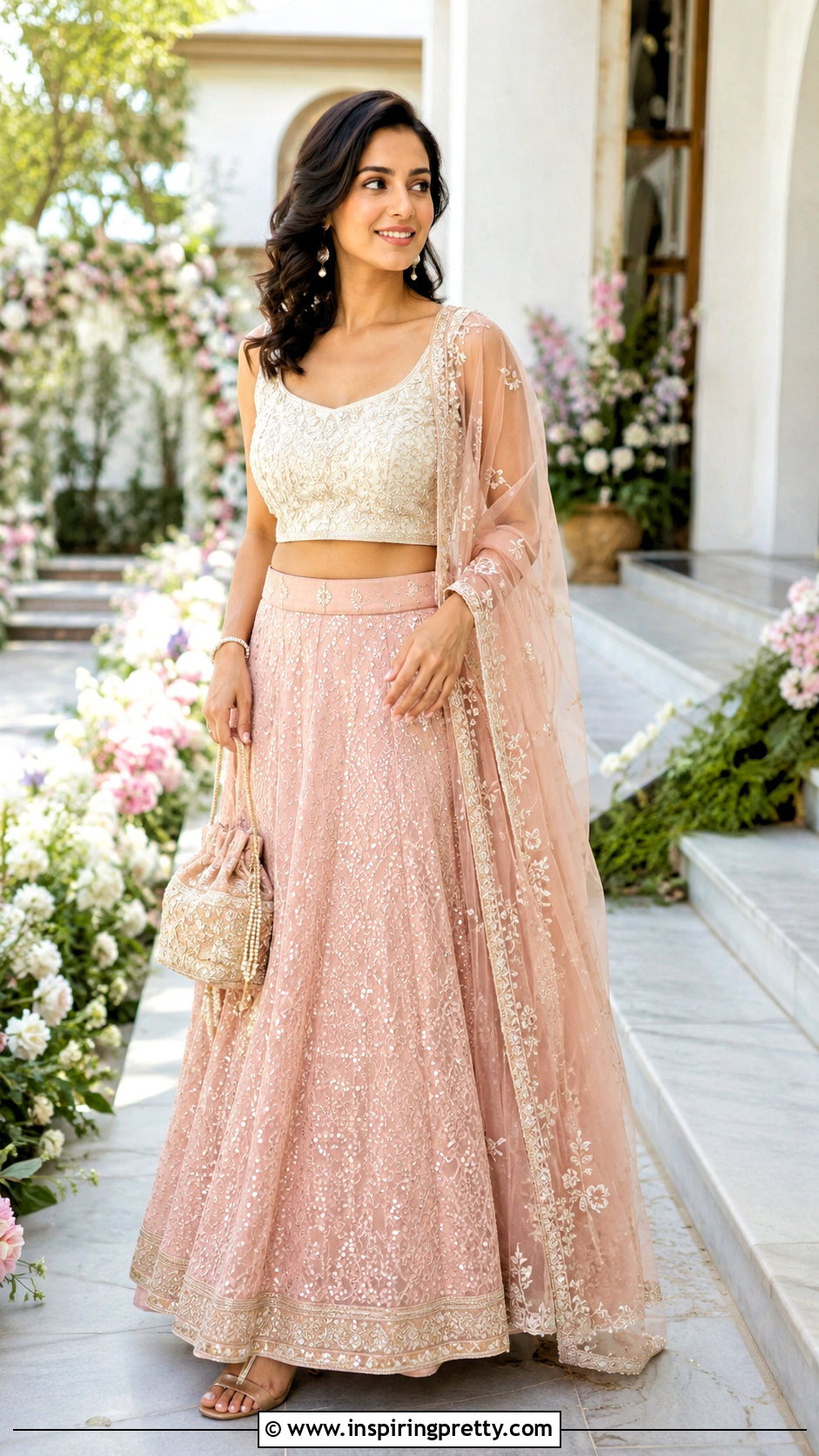
A chikankari crop top suits daytime weddings and lunches with its fine white-on-pastel handwork. Cotton, georgette or organza in ivory, blush, mint or powder blue. A tonal skirt with light sequins or a lace border and a matching sheer dupatta. Chikankari on georgette is sheer, so a contrasting lining both shows off the stitches and gives coverage. Pearl earrings and juttis or kitten heels.
34. Gota Patti Crop Top Lehenga
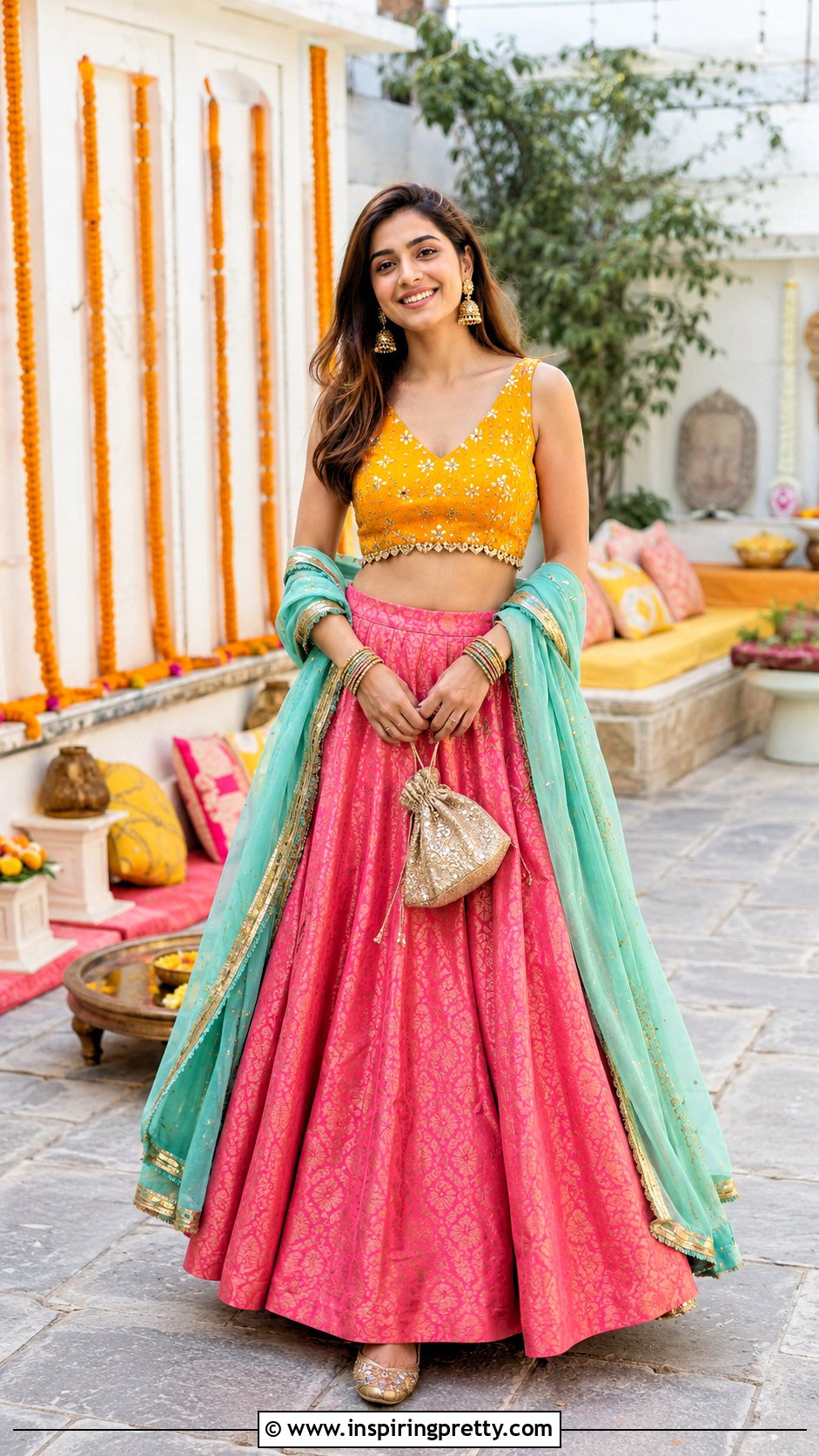
A gota patti crop top gives a bright, metallic shine at a fraction of the weight of beadwork. Silk, georgette or cotton silk in marigold, pink or green, with a skirt carrying matching borders. Keep the neckline simple so the appliqué stays organized. Gota edges can be scratchy on cheaper pieces; smooth, well-stitched work is what you want for long events. Jhumkas, bangles and embellished juttis.
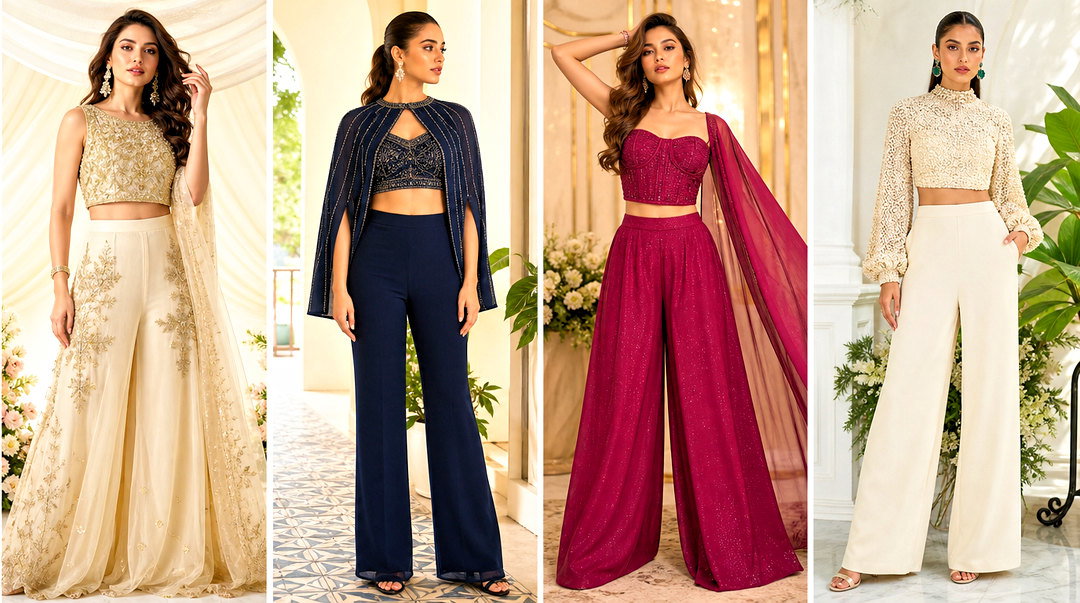
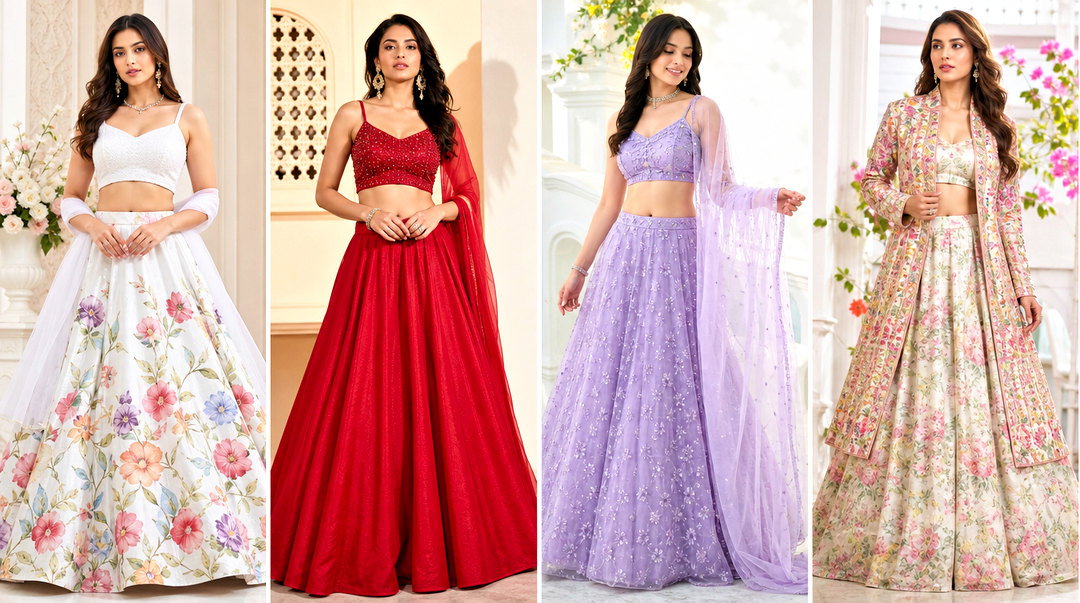
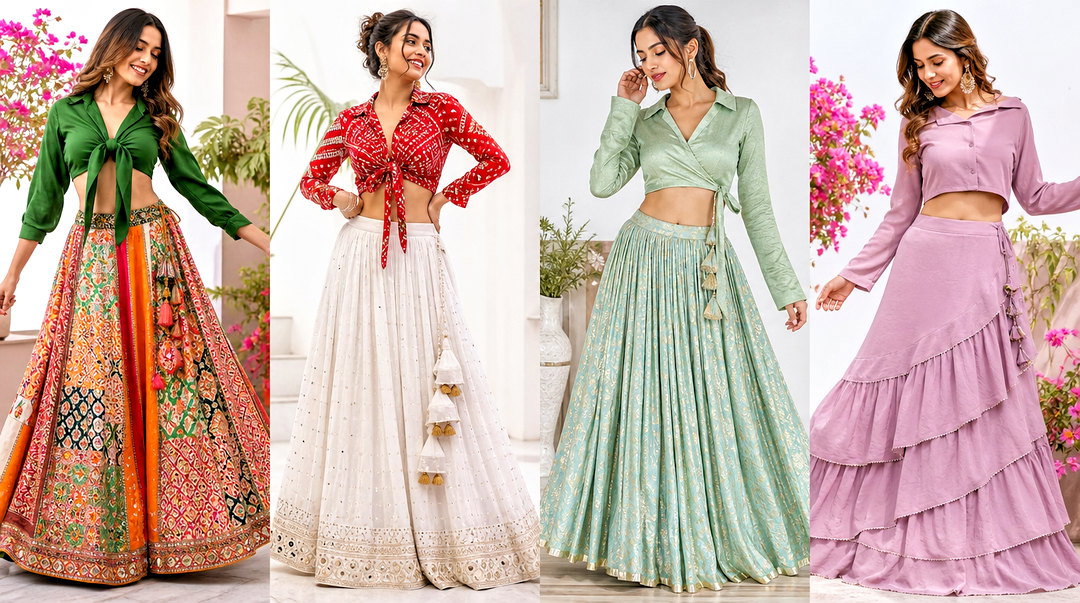
35. Zardozi Crop Top Lehenga
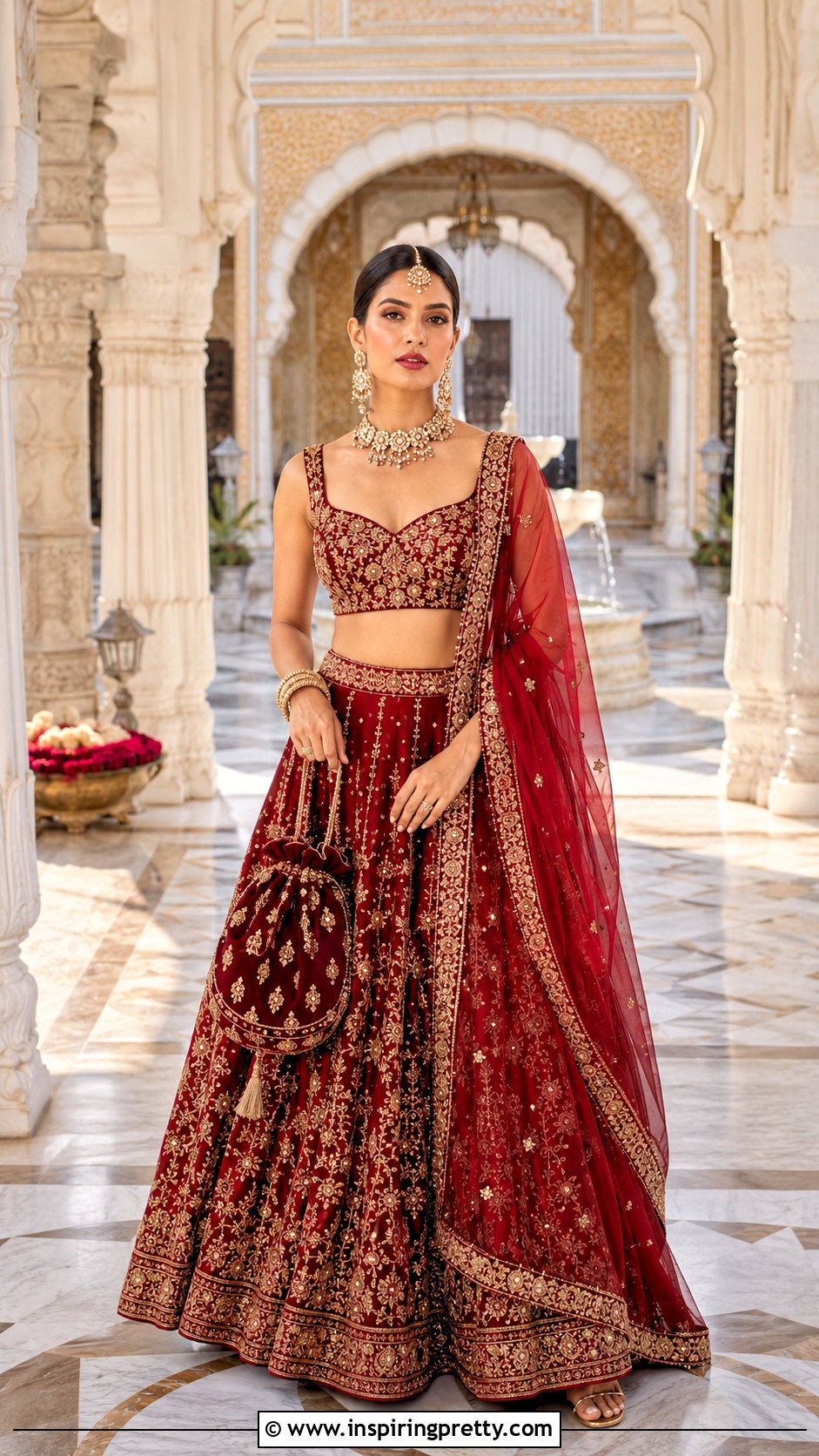
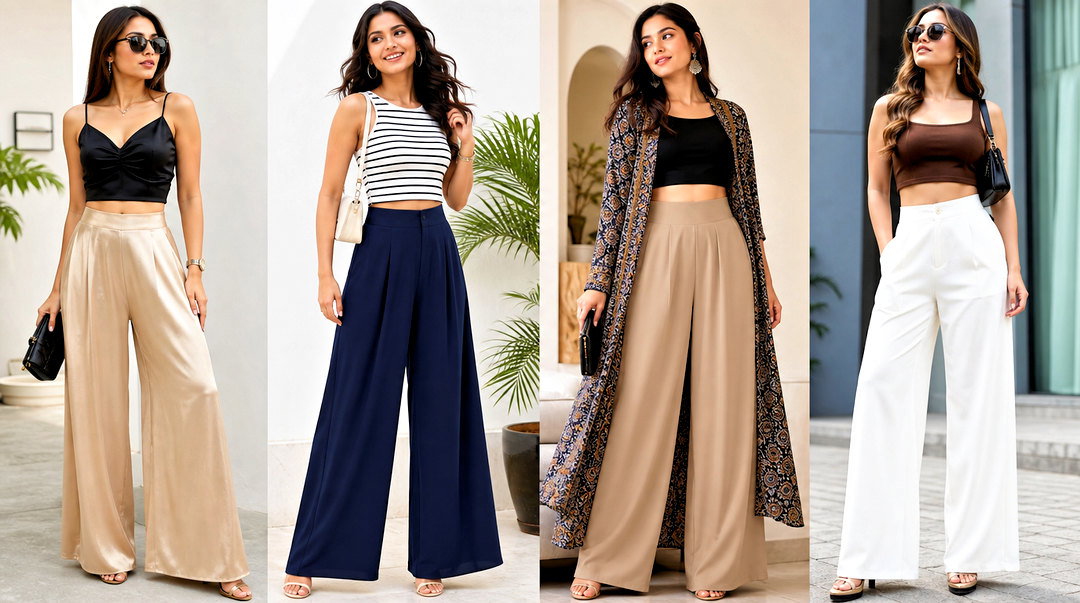
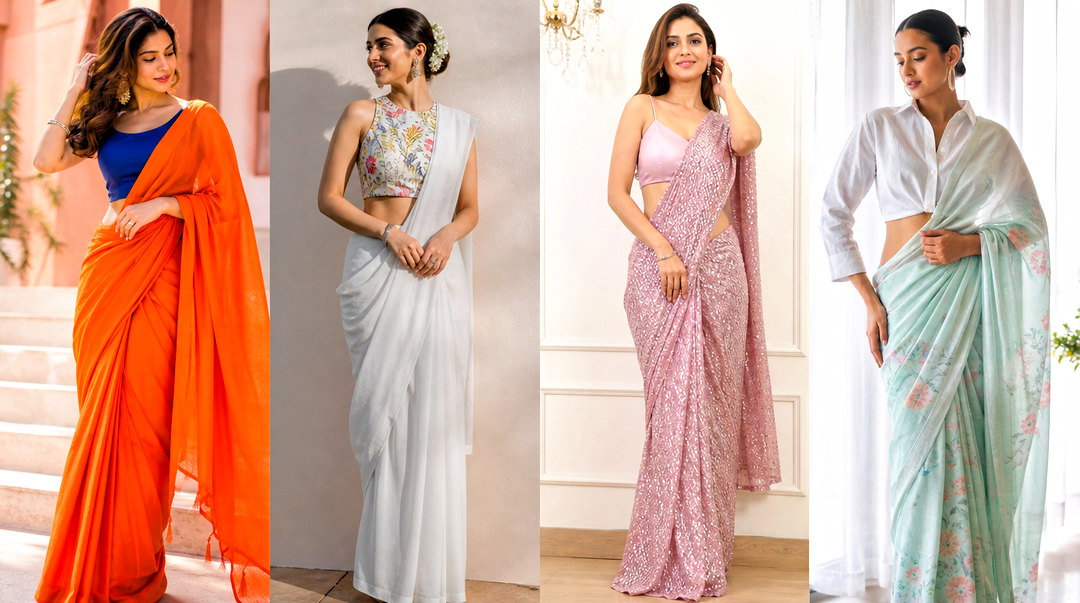
Dense zardozi is the most formal choice, for ceremonies and bridal functions. Structured silk or velvet with metal embroidery at the neck, sleeves and waist. The skirt repeats the motifs at the hem rather than everywhere. Heavy metalwork gets hot, so the lining should breathe; cotton is kinder than polyester. A plain net dupatta with a border softens the weight. Maroon, emerald or navy.
36. Thread Embroidery Crop Top Lehenga
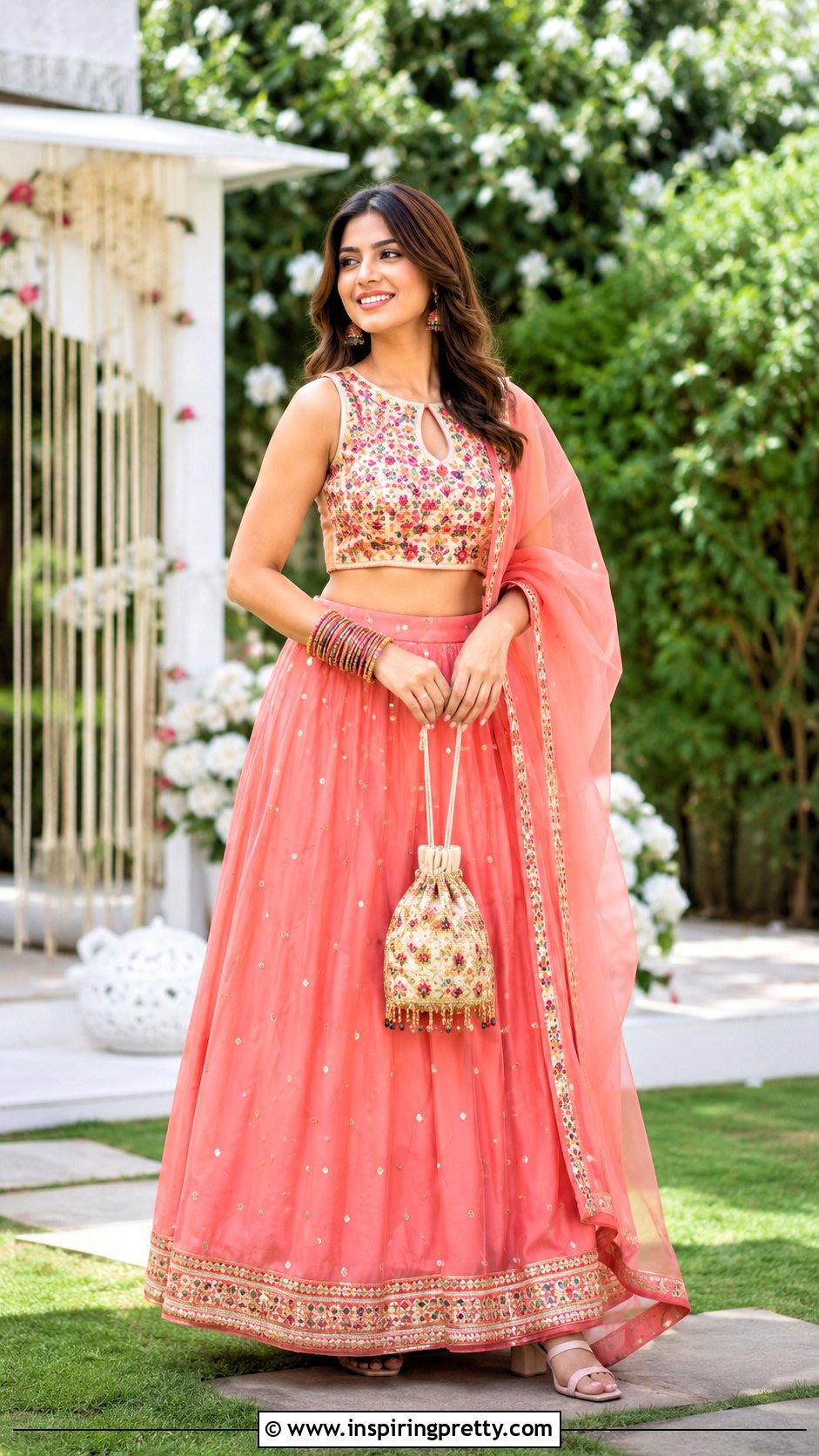
Colored thread embroidery feels festive without metal shine, and it's lighter and softer to wear. Floral, geometric or vine motifs in colors that repeat the skirt and dupatta. Put the heavy embroidery on either the top or the skirt. Cotton silk, raw silk or georgette work as bases. A scoop, square or sweetheart neck is easy to accessorize. Tonal thread looks subtle, contrast thread brighter.
37. Pearl Crop Top Lehenga
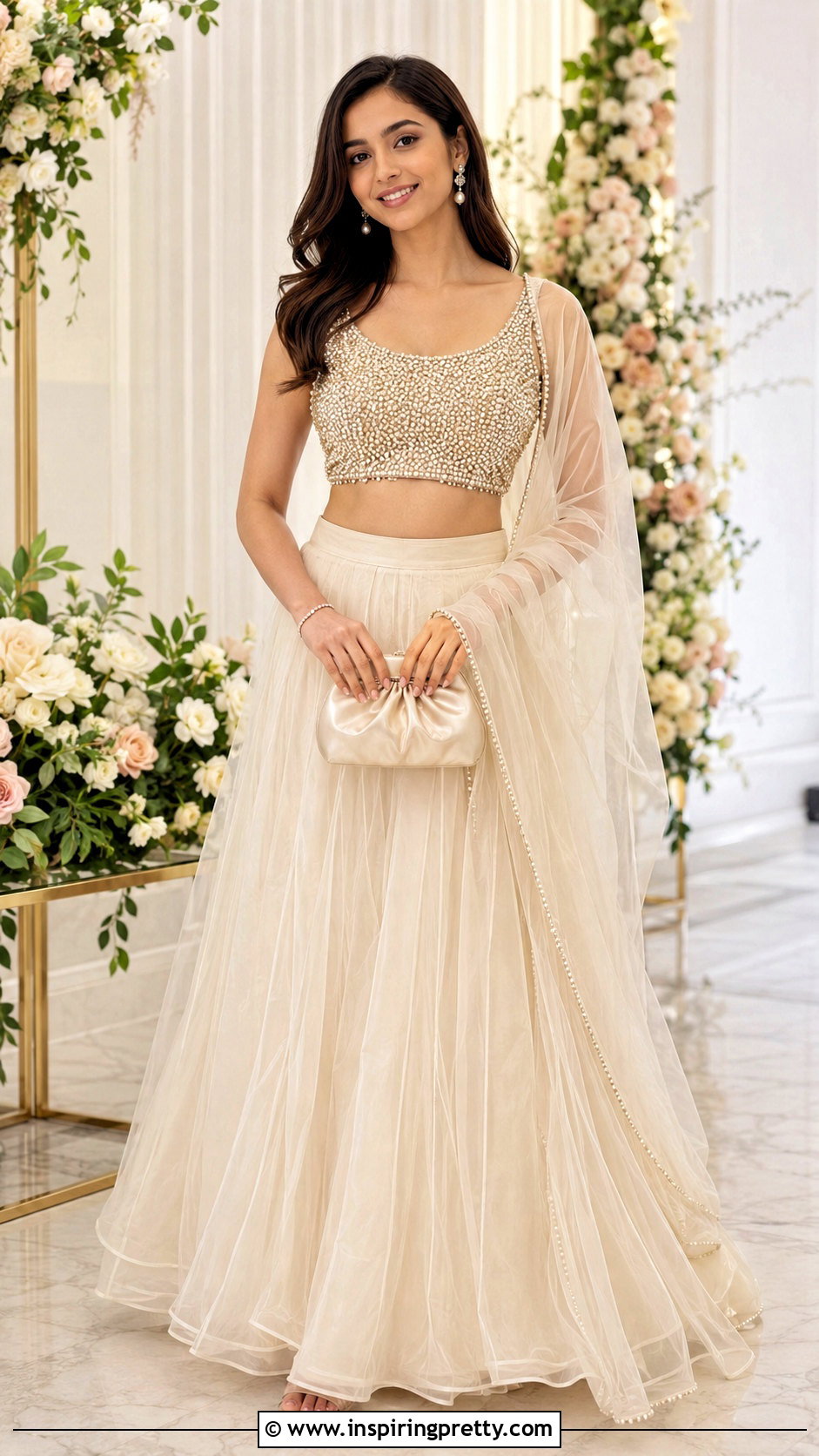
Pearls give a soft glow for engagements and day weddings. Small pearls along the neckline, straps or sleeves look refined; a fully pearled bodice is heavy. Ivory, blush, champagne or powder blue skirt in satin, organza or net, with a pearl-edged dupatta. Pearl studs and a satin clutch. Hand-stitched pearls stay put far better than glued ones, which drop off on the dance floor.
38. Sequin Crop Top Lehenga
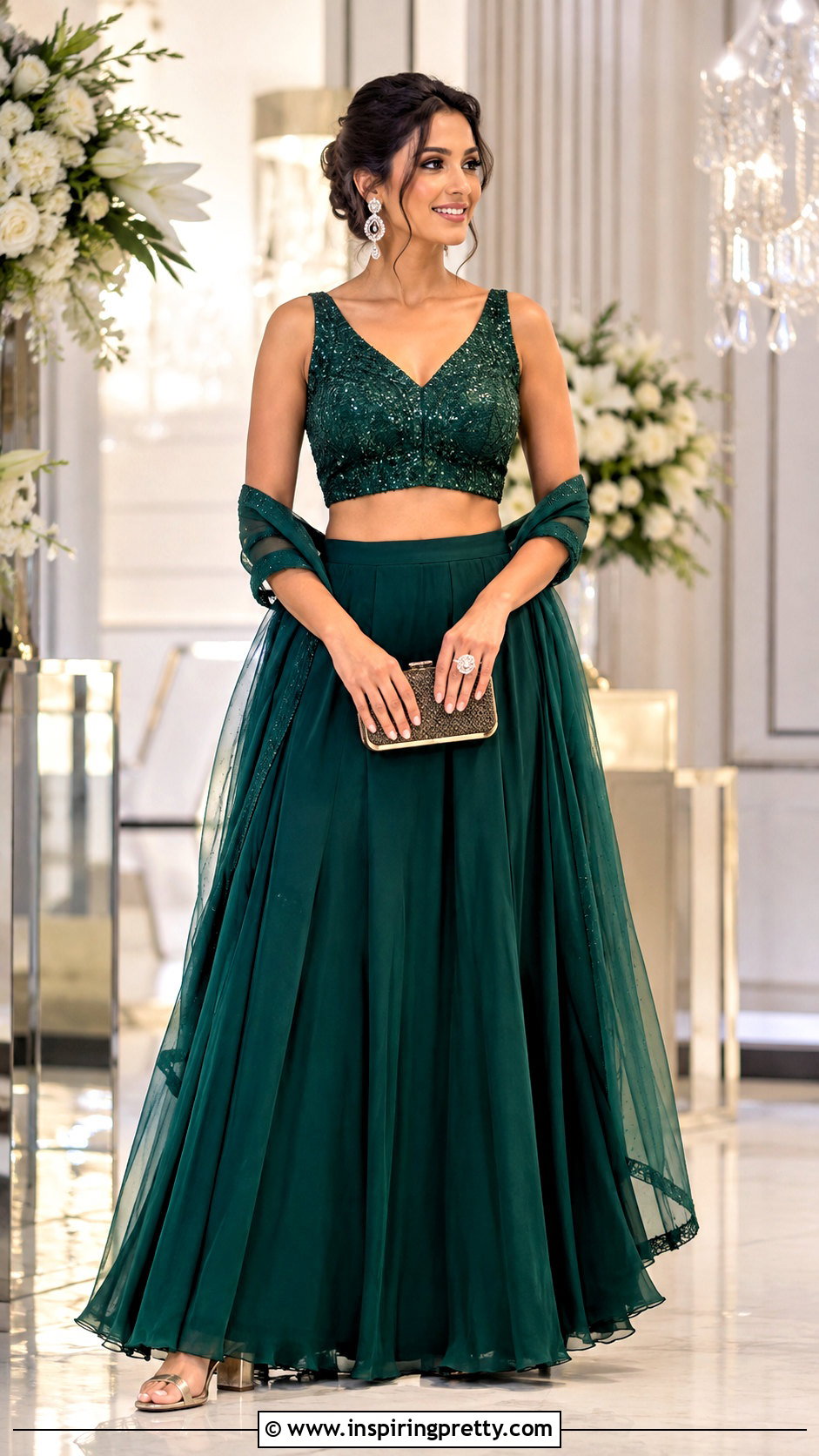
A sequin blouse anchors an evening lehenga. Matte, tonal or small sequins look more refined, especially if the skirt is embellished too. A plain satin or chiffon skirt in navy, plum or charcoal and a net dupatta behind the shoulders. One sparkling accessory is enough. A fitted lining and smooth armholes matter more here than anywhere, since sequins scratch.
39. Velvet Crop Top Lehenga
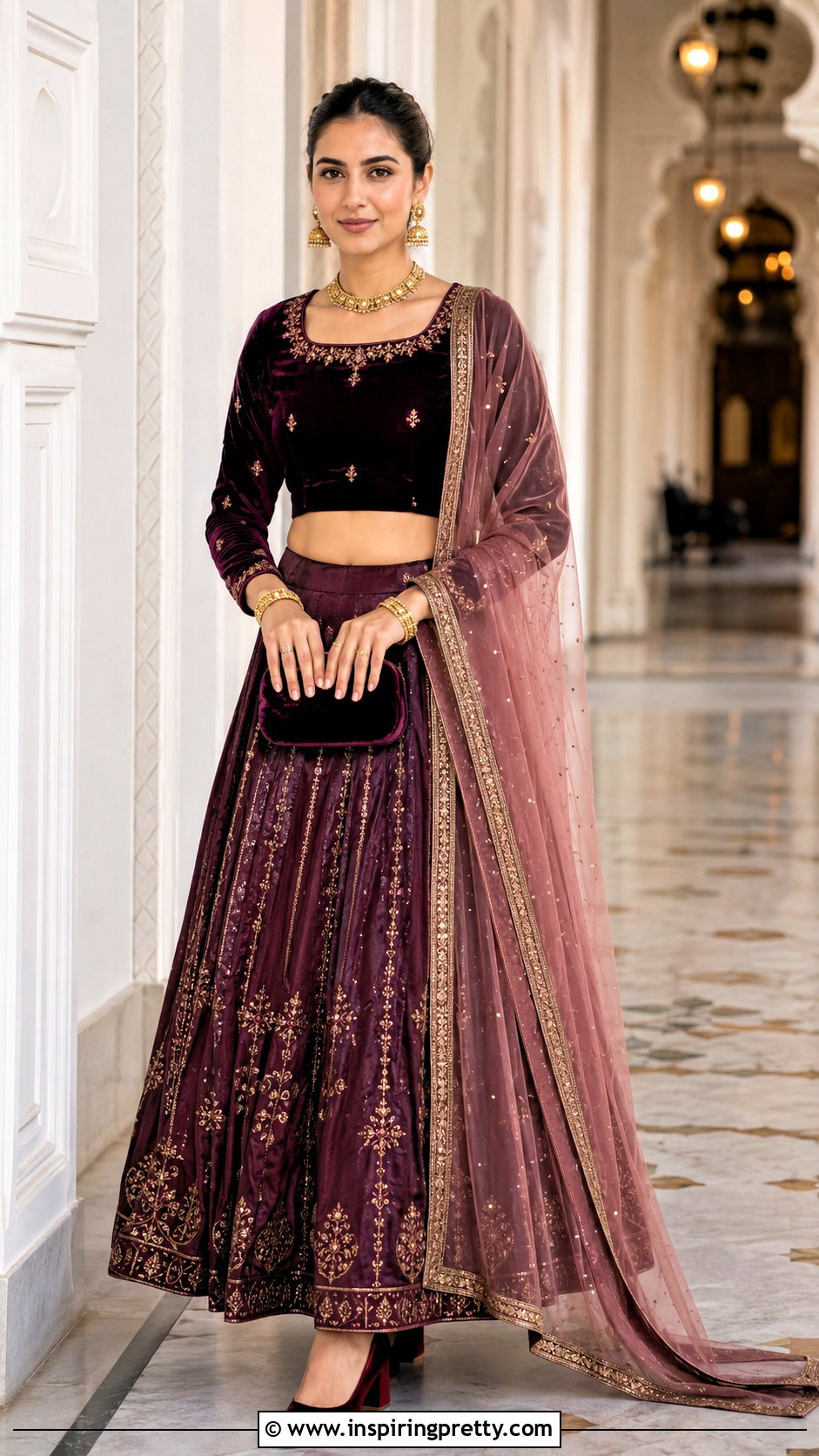
A velvet crop top adds depth for winter weddings and evening ceremonies. Structured sweetheart, square or boat neck with restrained gold embroidery. A silk or brocade skirt with movement balances the dense pile. Velvet is warm and heavy, so a light net dupatta keeps the whole outfit from overheating you indoors. Emerald, maroon, plum or deep teal with antique gold.
40. Brocade Crop Top Lehenga
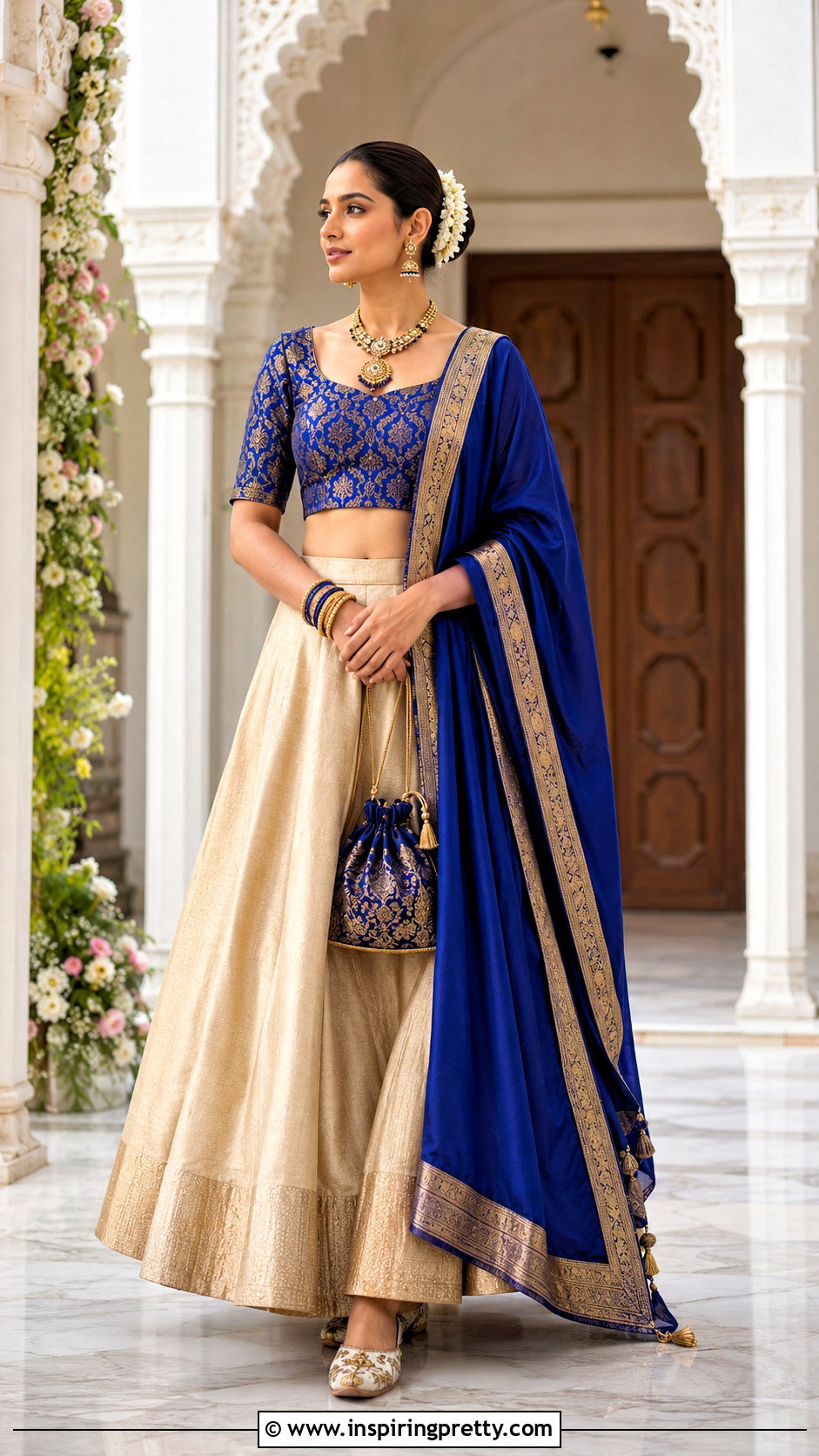
Brocade carries its pattern in the weave, so it needs no extra embellishment. Pair it with a plain raw-silk skirt, or the same brocade for a formal set. Simple necklines let the pattern show. Brocade has no stretch and frays readily at seams, so ask for a soft lining and generous seam allowance for future alterations. Temple jewelry and jhumkas.
41. Raw Silk Crop Top Lehenga
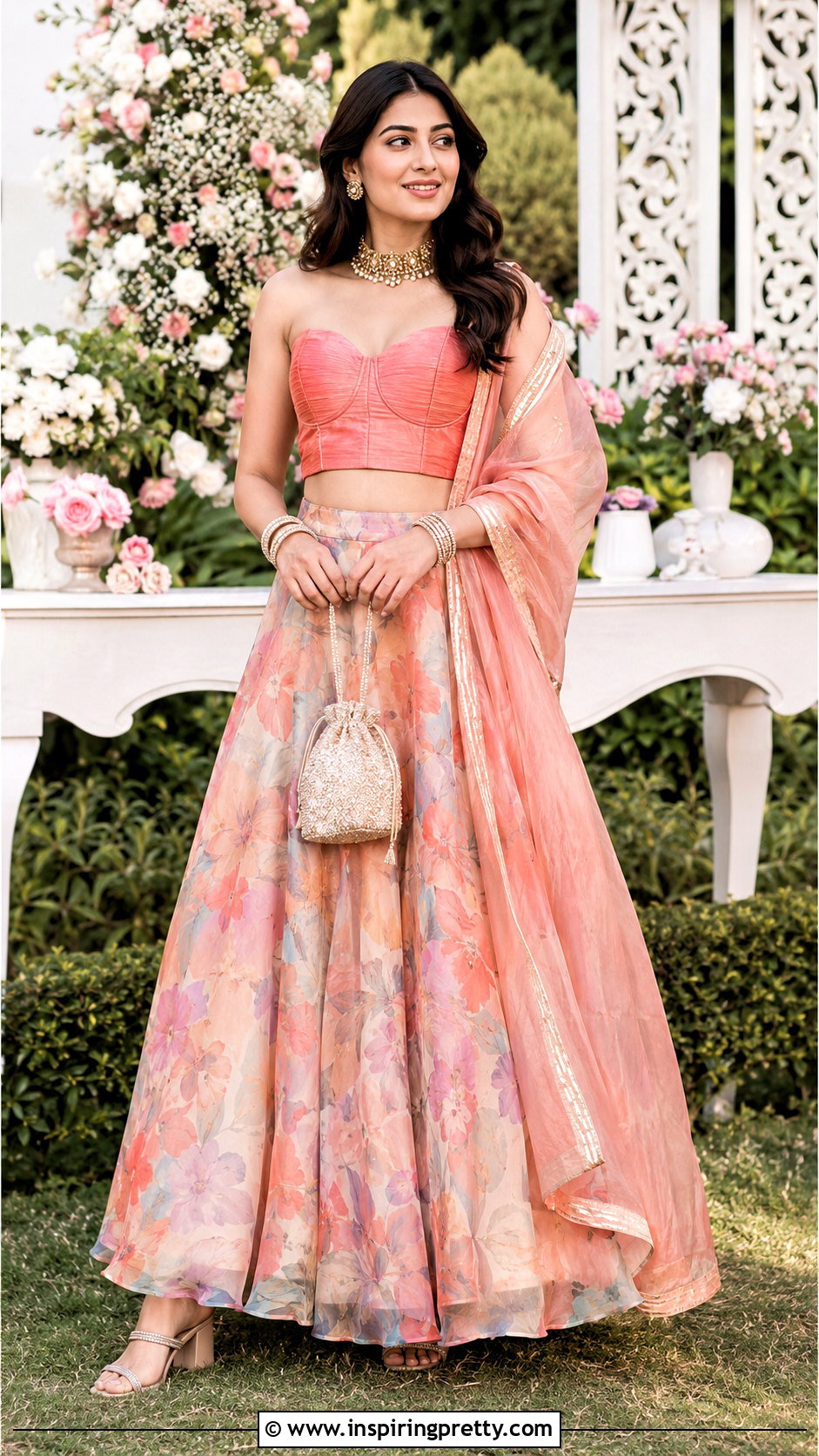
Raw silk is crisp with a natural slub, which is why it suits princess seams and clean necklines. It also holds its shape, so the tailoring must be accurate at bust, waist and armhole; there's no drape to hide mistakes. Pair with a printed organza or embroidered silk skirt, or contrasting brocade. A light dupatta adds movement. Rich colors at night, ivory and pastels for day.
42. Organza Crop Top Lehenga
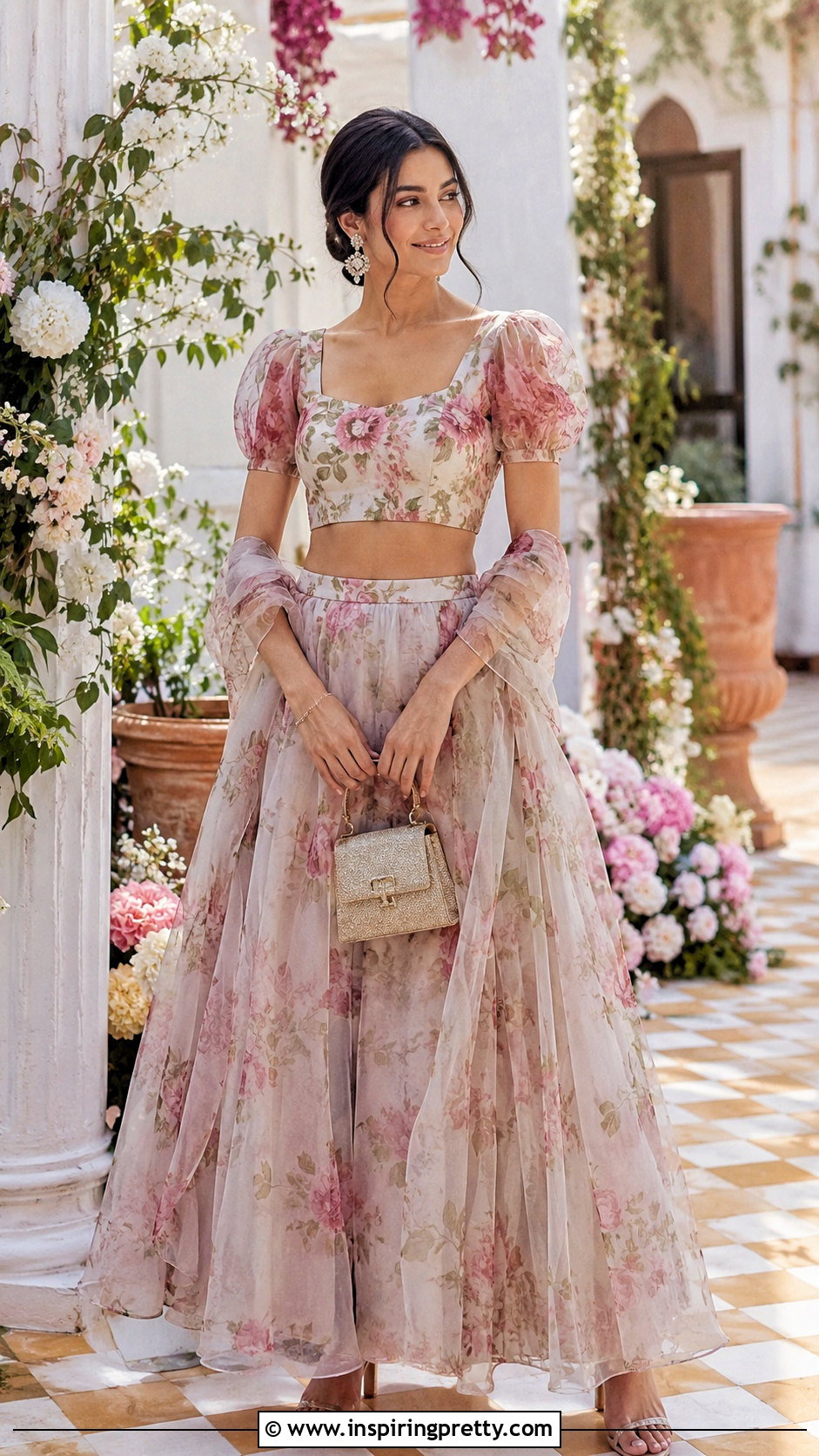
Organza looks airy but it's crisp and scratchy against skin, so a sheer organza overlay needs an opaque, soft-lined bodice underneath. Puff sleeves or a floral overlay work well. Pair with a flowing organza skirt and only a very light dupatta, since organza on organza adds volume fast. Pastel florals for day, black or navy for night. Ask for French or bound inner seams.
43. Georgette Crop Top Lehenga
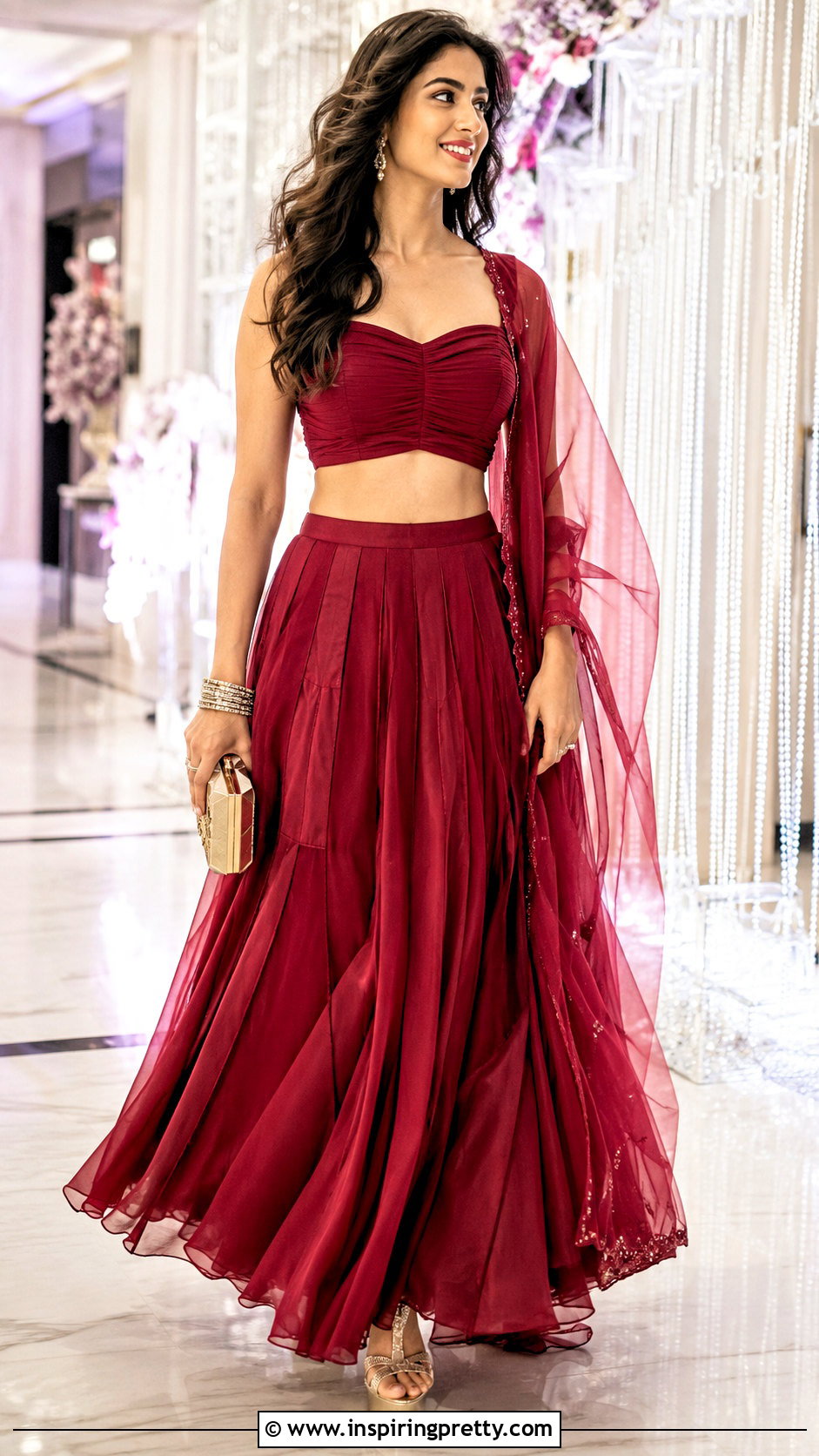
Georgette moves with you, which makes it ideal for sangeets and destination weddings. Draped, ruched or lightly sequined top with a reliable lining, and a paneled georgette skirt. Pin the dupatta at the shoulder and waist for dancing. Light fabric strains at stress points, so reinforced stitching at the zip, shoulders and waistband is worth asking for.
44. Floral Print Crop Top Lehenga
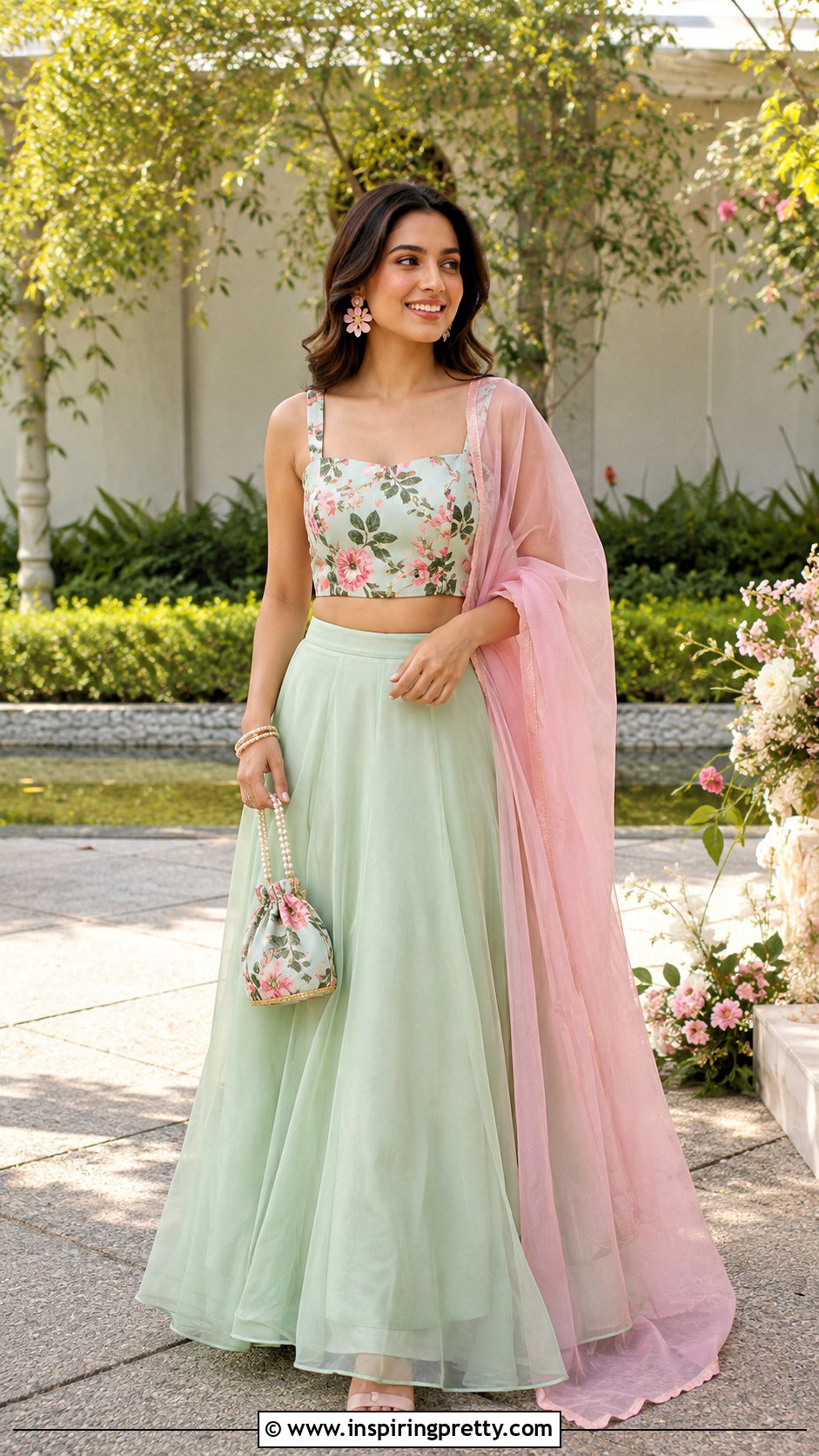
A floral print blouse is fresh for mehndi and daytime functions. Pick a print with two or three main colors, then repeat one in the skirt and another in the dupatta. Sweetheart, square or short-sleeve fitted top with a flared organza or georgette skirt. Limit embroidery to the neckline or border so it doesn't fight the print. A solid waistband ties top and skirt together.
45. Bandhani Crop Top Lehenga
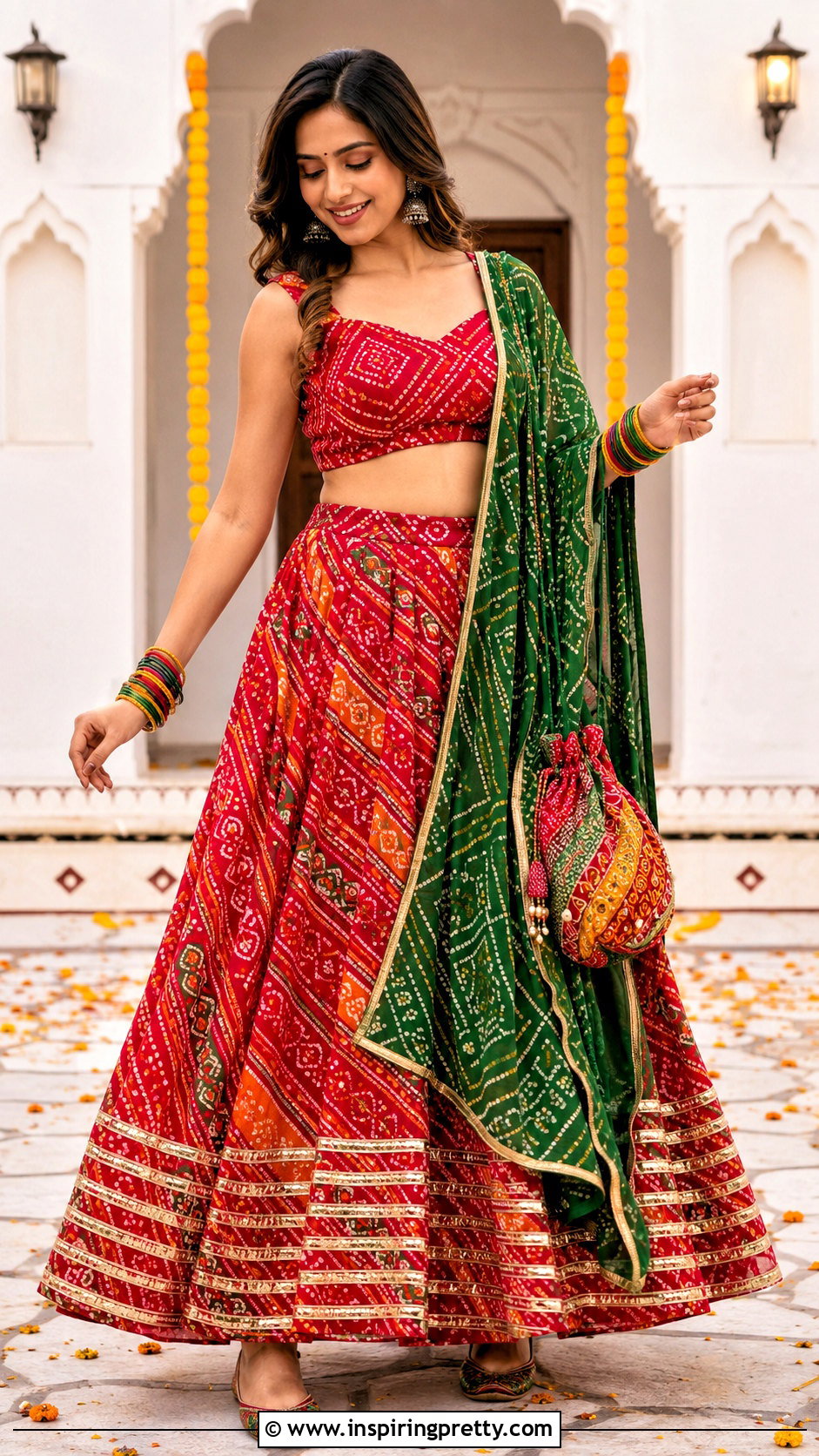
A Bandhani crop top brings tie-dye dots and color to garba and mehndi. Pair it with a solid flared skirt, or a matching Bandhani skirt for a bolder look with a plain dupatta. Gota or mirror borders add shine. Bandhani dyes can bleed, so dry clean or wash it alone in cold water. Oxidized jhumkas and colorful bangles suit it best.
46. Metallic Crop Top Lehenga
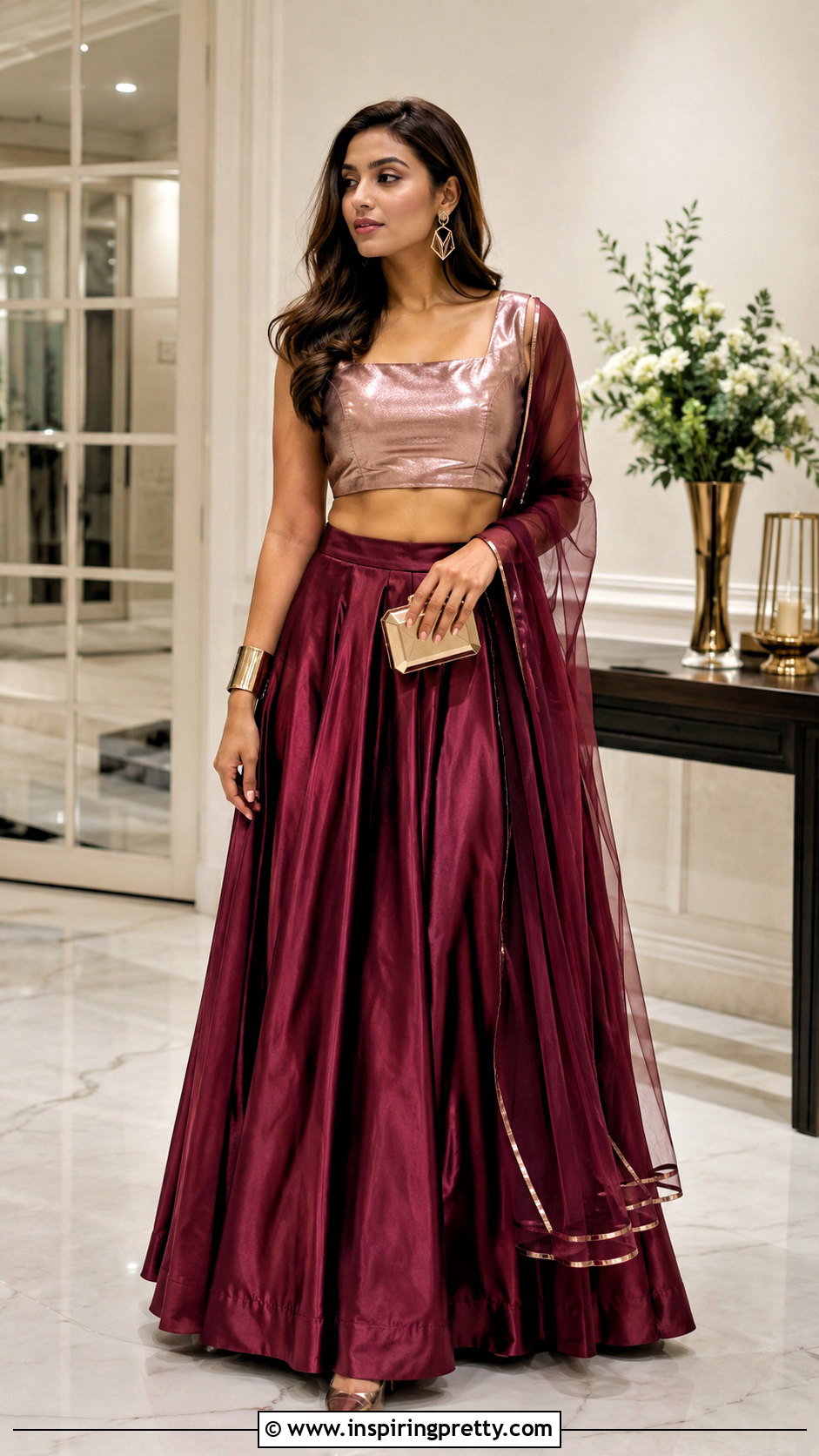
A metallic blouse is the modern route for receptions and cocktail sangeets. Silver, pewter, champagne or muted gold fabric, smooth lining, clean construction. A solid satin or crepe skirt in black, navy or burgundy, or a matching metallic. Lamé-type fabrics crease and show wear at the folds, so store the blouse flat or rolled. Geometric earrings and pointed heels; the fabric does the rest.
47. Monochrome Crop Top Lehenga
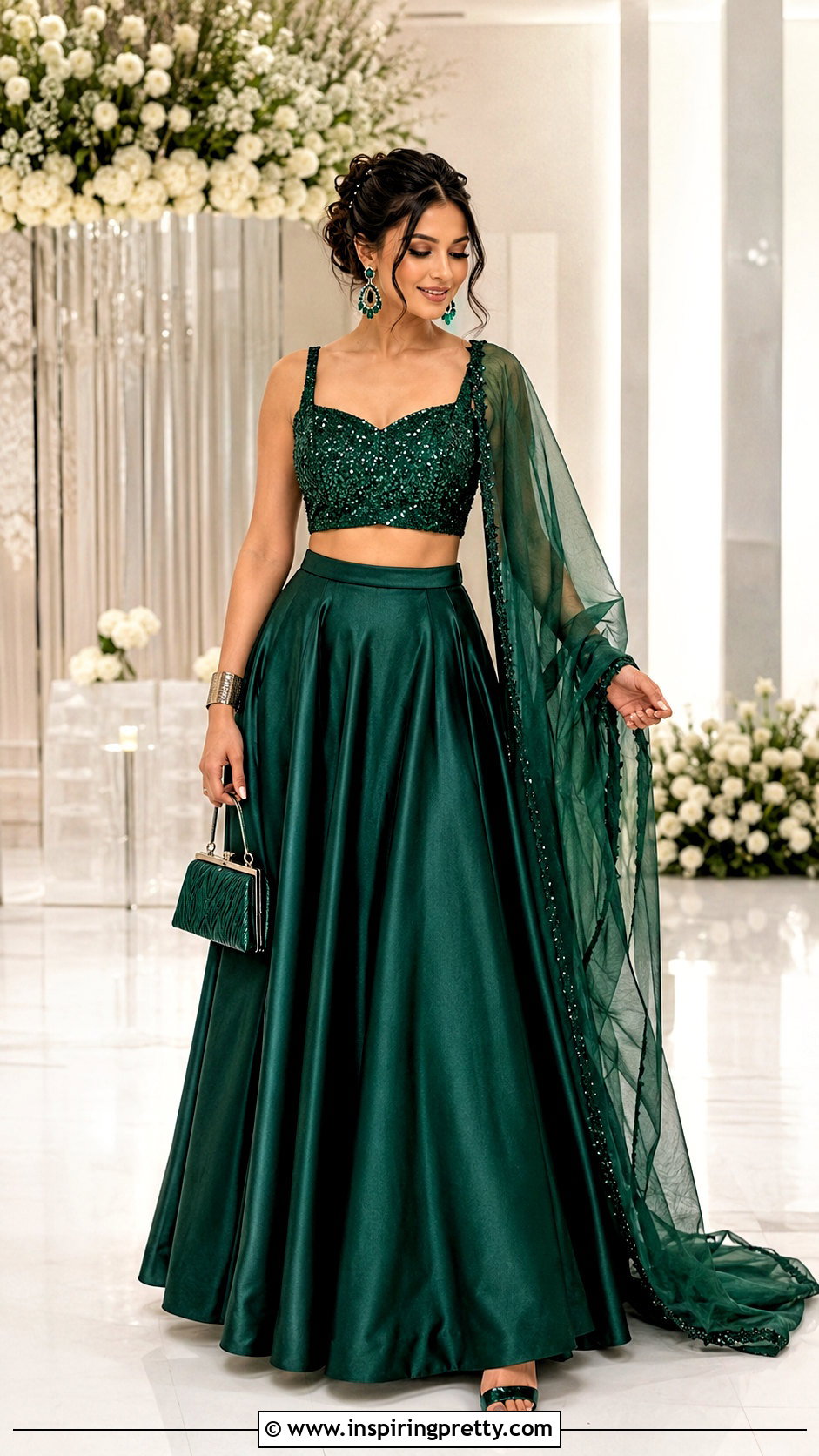
One color from blouse to dupatta makes a long, unbroken line. Mixing textures within that shade, say a sequin top, satin skirt and organza dupatta, keeps it from looking flat. Emerald, burgundy, navy or blush. Fabrics dyed separately rarely match exactly, so compare them in the same light before stitching. Jewelry in one metal tone.
48. Contrast Crop Top Lehenga
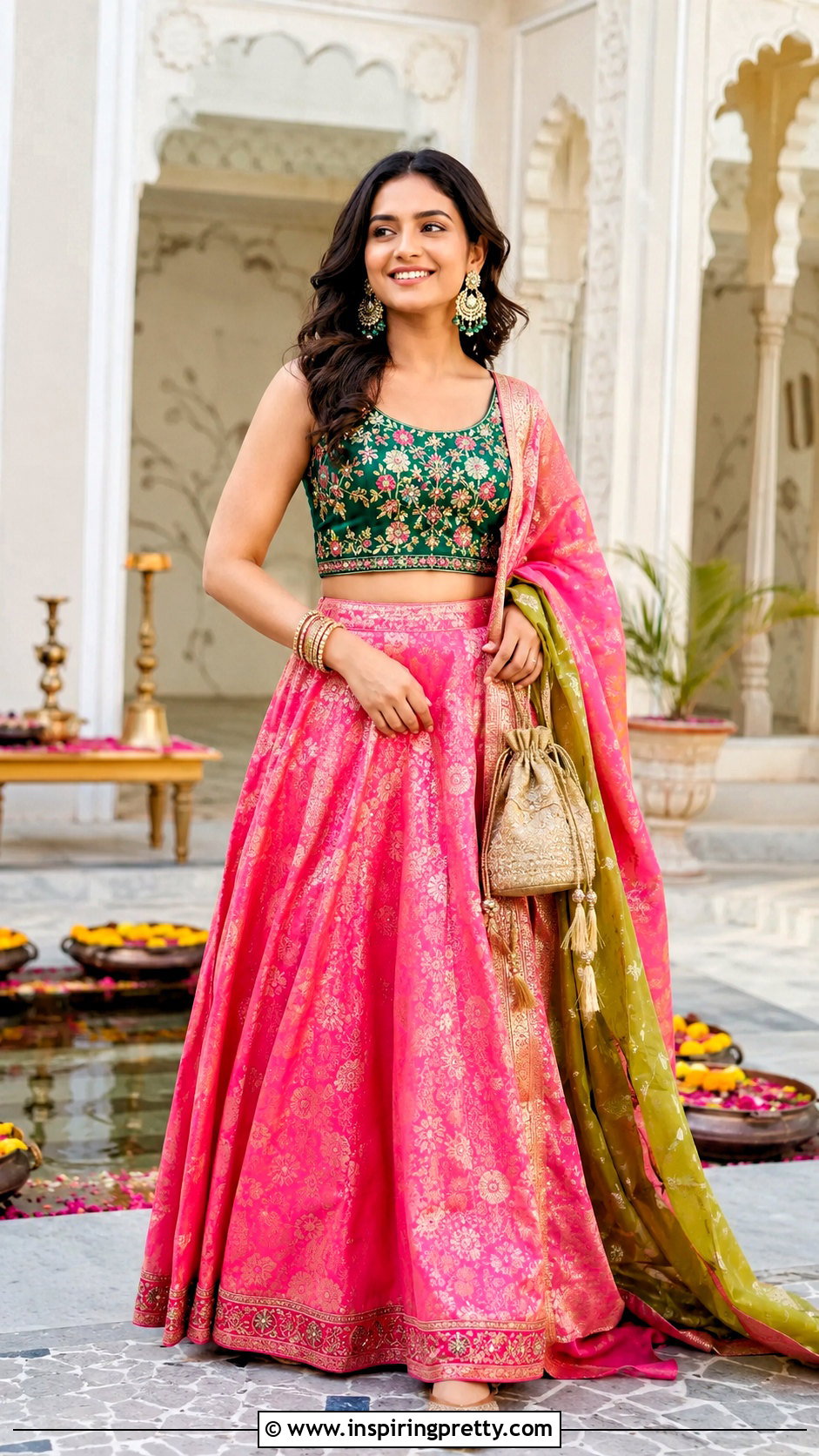
A contrast blouse is the easiest way to rewear a lehenga skirt you already own. Link the two colors through embroidery, border or a printed dupatta that carries both: emerald with pink, navy with mustard, maroon with ivory. Pair a heavily embellished top with a plain skirt. Contrasting colors change under warm lamps, so hold them together in daylight and indoor light before the tailor cuts.
49. Structured Plus Size Crop Top Lehenga
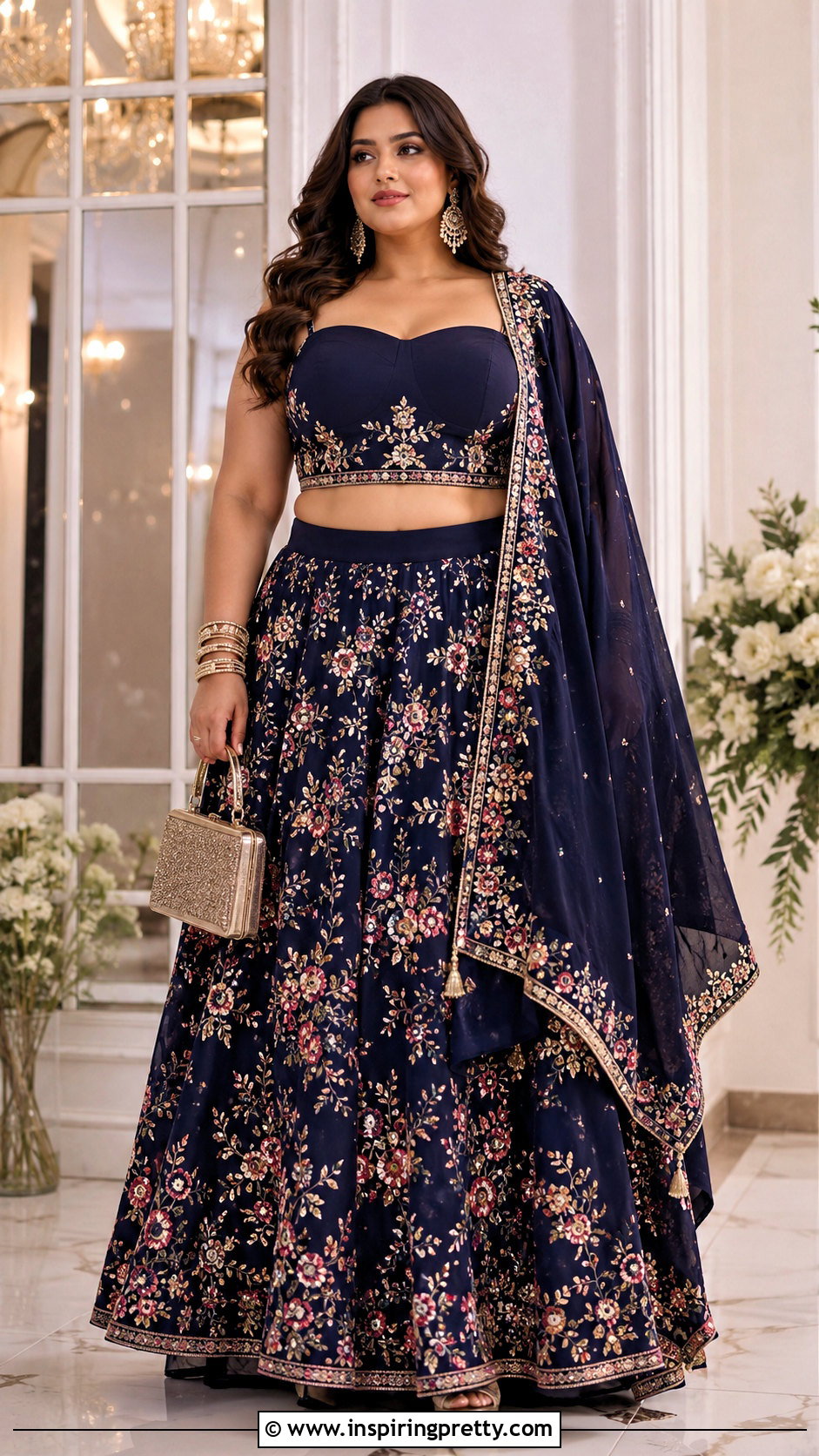
A structured crop blouse gives a plus-size lehenga outfit support and a clean shape without extra fabric. I want wide straps, built-in cups, princess seams, a firm lining and a comfortable waist band. A V, sweetheart or square neck frames jewelry. The skirt should skim the hip before flaring. Fit to comfort, never to a size label, and ask for a trial blouse in plain fabric before the embroidery goes on.
50. Modest Longline Crop Top Lehenga
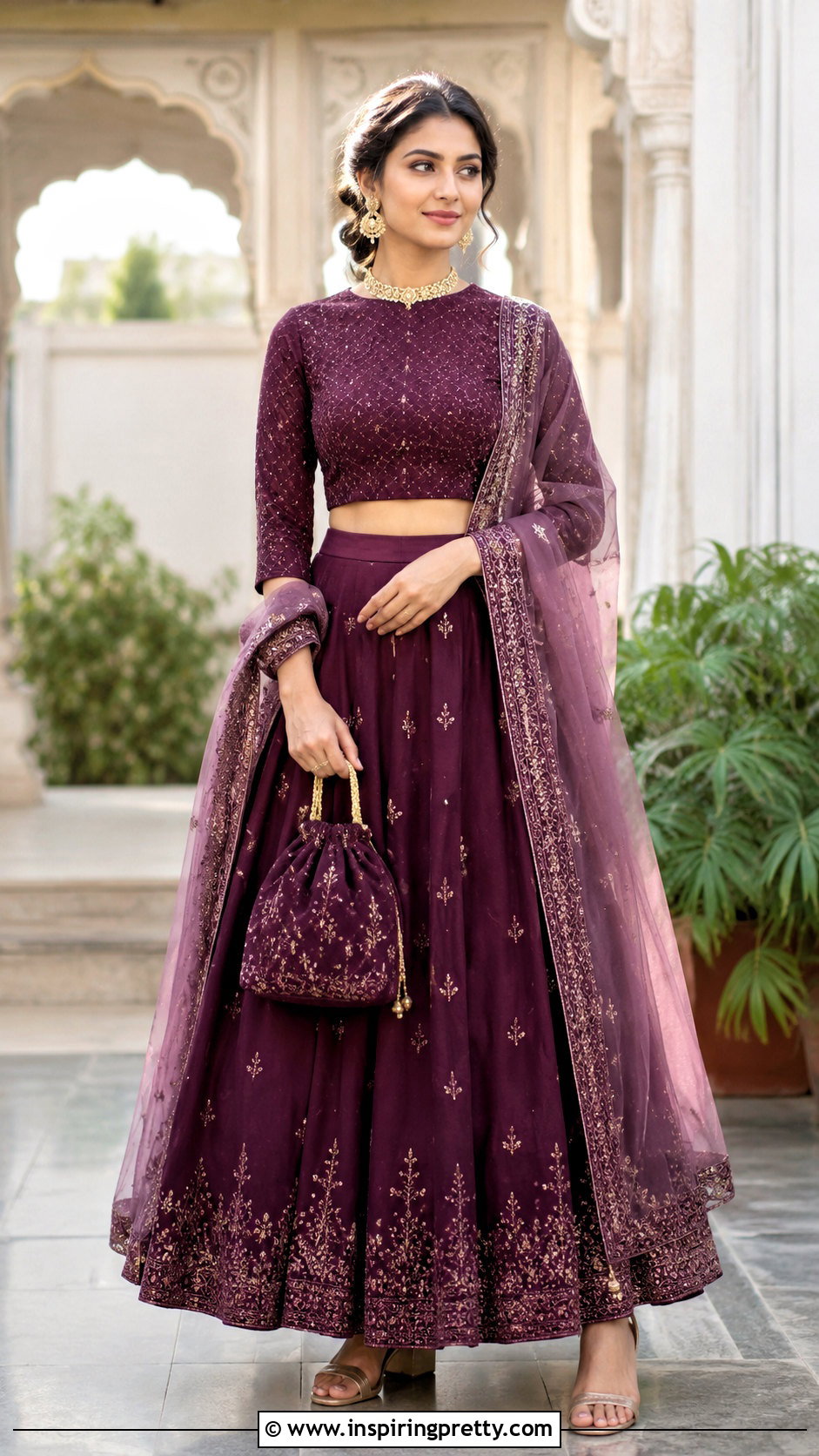
A longline blouse ends near the waistband, so it covers the midriff for anyone who'd rather not show it, whether for comfort or family expectations. High neck, modest V or round neck, with three-quarter or full sleeves. A flowing A-line skirt and a dupatta over one shoulder or across the front. Tonal embroidery blends the longer top into the skirt. A side or back zip makes a fitted longline much easier to get into.
Dancing at the Sangeet Without Losing the Dupatta
A lehenga with a full can-can skirt and a heavy border carries a lot of weight at the waist. When that weight sits on a narrow drawstring, it drags the skirt down and opens the gap under the blouse as you move. I always ask for a wider waistband, or a hook-and-zip closure instead of a string, on any skirt meant for dancing.
- Pin the dupatta in two places, at the shoulder and at the opposite hip, using small safety pins pushed through the blouse lining so they don't show.
- Choose block heels or embroidered flats with a cushioned sole. Stilettos sink into lawns and wear you out on hard floors.
- Carry a small kit in the potli: safety pins, fashion tape and a spare hook or two.
- If the skirt drags, have the tailor hem it to clear your chosen shoes by a finger's width, not to the floor.
Sit, Walk and Dance in It Before the Day
Neckline, fabric, sleeves and embroidery together decide how a lehenga outfit looks, and fit decides whether you enjoy wearing it. Start with the occasion, the weather and how much you'll move. Balance an embellished blouse with a plainer skirt, or the other way round, and let the dupatta, shoes and jewelry finish rather than fight the clothes. Most of all, wear the full outfit at home for an hour: stand, sit on the floor, walk up stairs and dance. Anything that pinches then will hurt by midnight.
Related posts:


Leave a Reply