
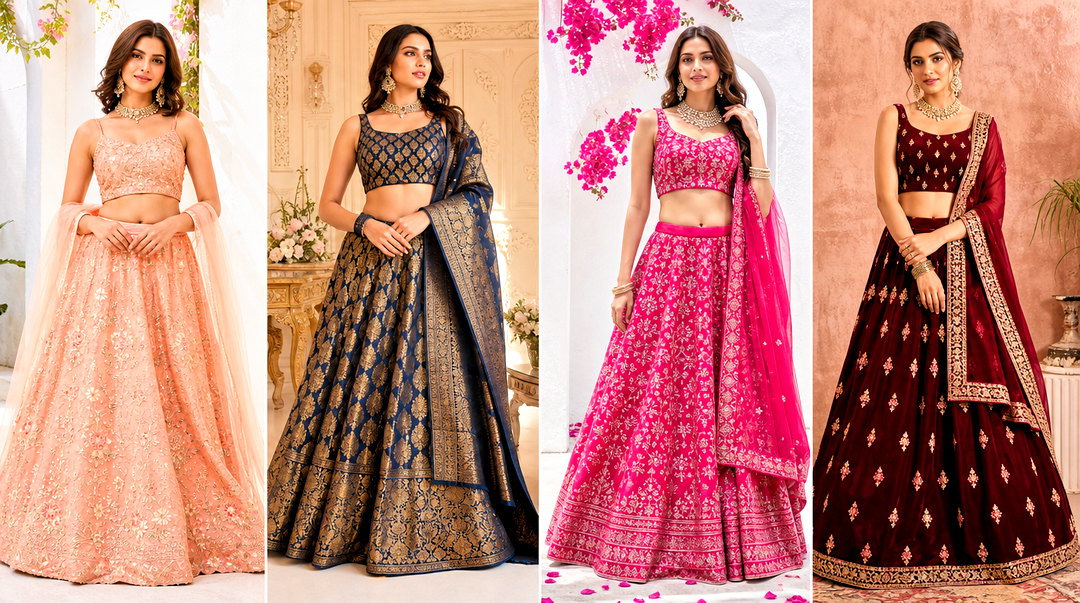
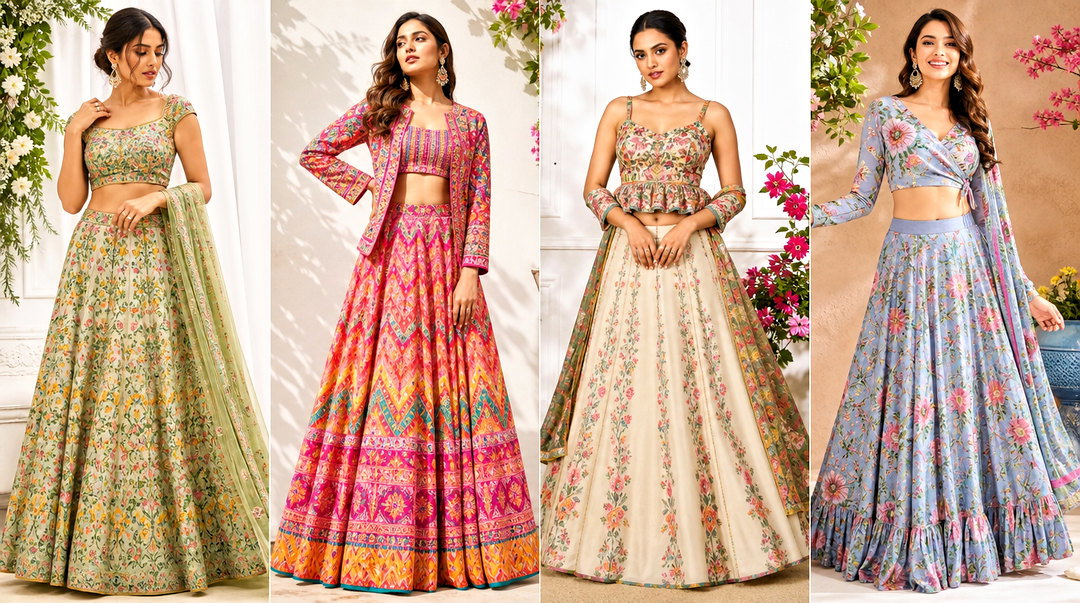
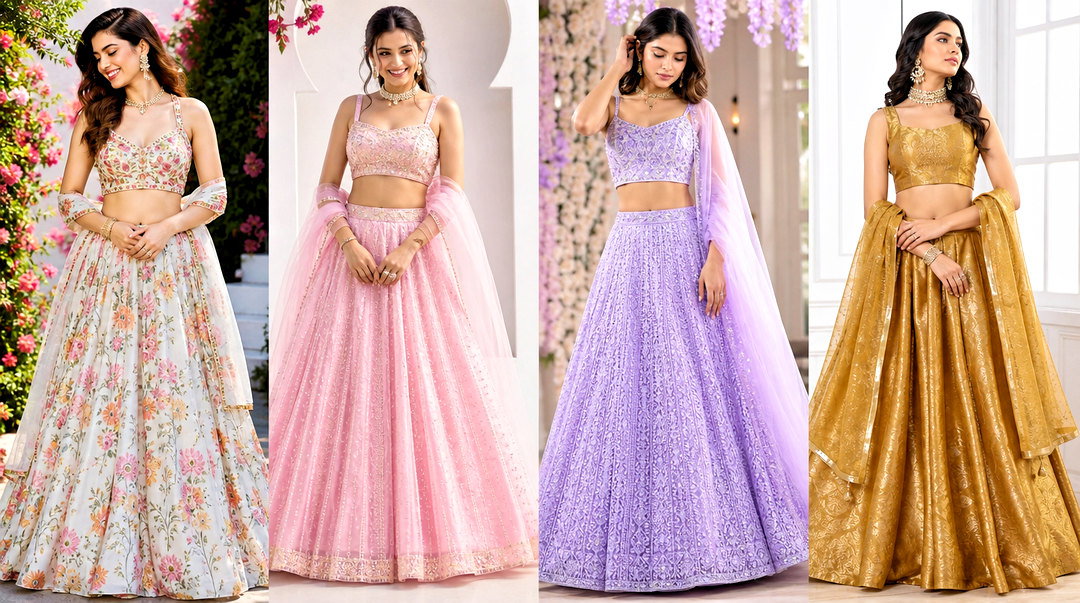
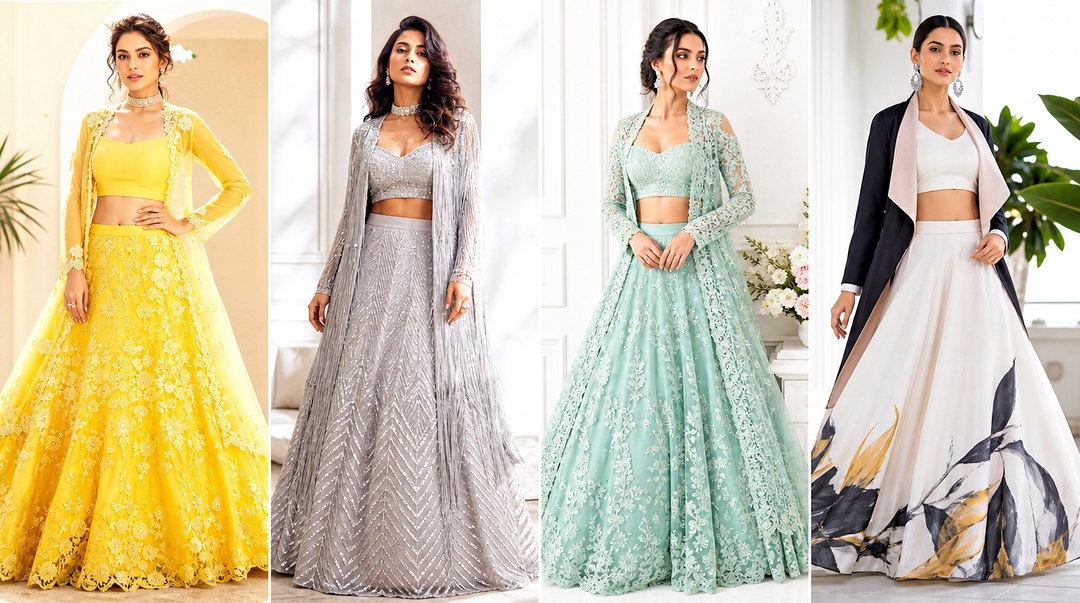
A crop top lehenga is really two separates pretending to be one outfit, and that's exactly why I keep steering wedding guests toward it. The new models below range from modern blouse shapes like corsets, capes and jackets to mirror work, printed sets and heavy silks. What I like most is the afterlife: the blouse can go with a saree later, and the skirt with a plain shirt at a festival. The right model depends on which function you're dressing for and how much you'll be moving, so I've added notes on fit and fabric to each look.

How Much Midriff a Crop Lehenga Really Shows
The gap between blouse and skirt is the first thing I settle, because it changes with every model on this list. Most crop lehengas are cut so the skirt sits at the natural waist, which leaves a strip of skin a few fingers wide when you stand. Sit down and that strip grows, since the skirt drops slightly and the blouse rides up.
If your family prefers less skin, there are easy fixes that keep the style intact:
- Ask the tailor to lengthen the blouse until it meets the waistband, or add a short peplum.
- Wear the skirt higher, at the narrowest part of your waist, instead of down on the hip.
- Drape the dupatta across the front during the ceremony and move it to one shoulder for the party.
For a sangeet or reception, a slightly wider gap is normal and looks intentional. The one thing I hold firm on is a level blouse hem all the way round. A hem that dips at the back reads as a fitting mistake in every photo taken from behind.
1. Floral Print Crop Top Lehenga
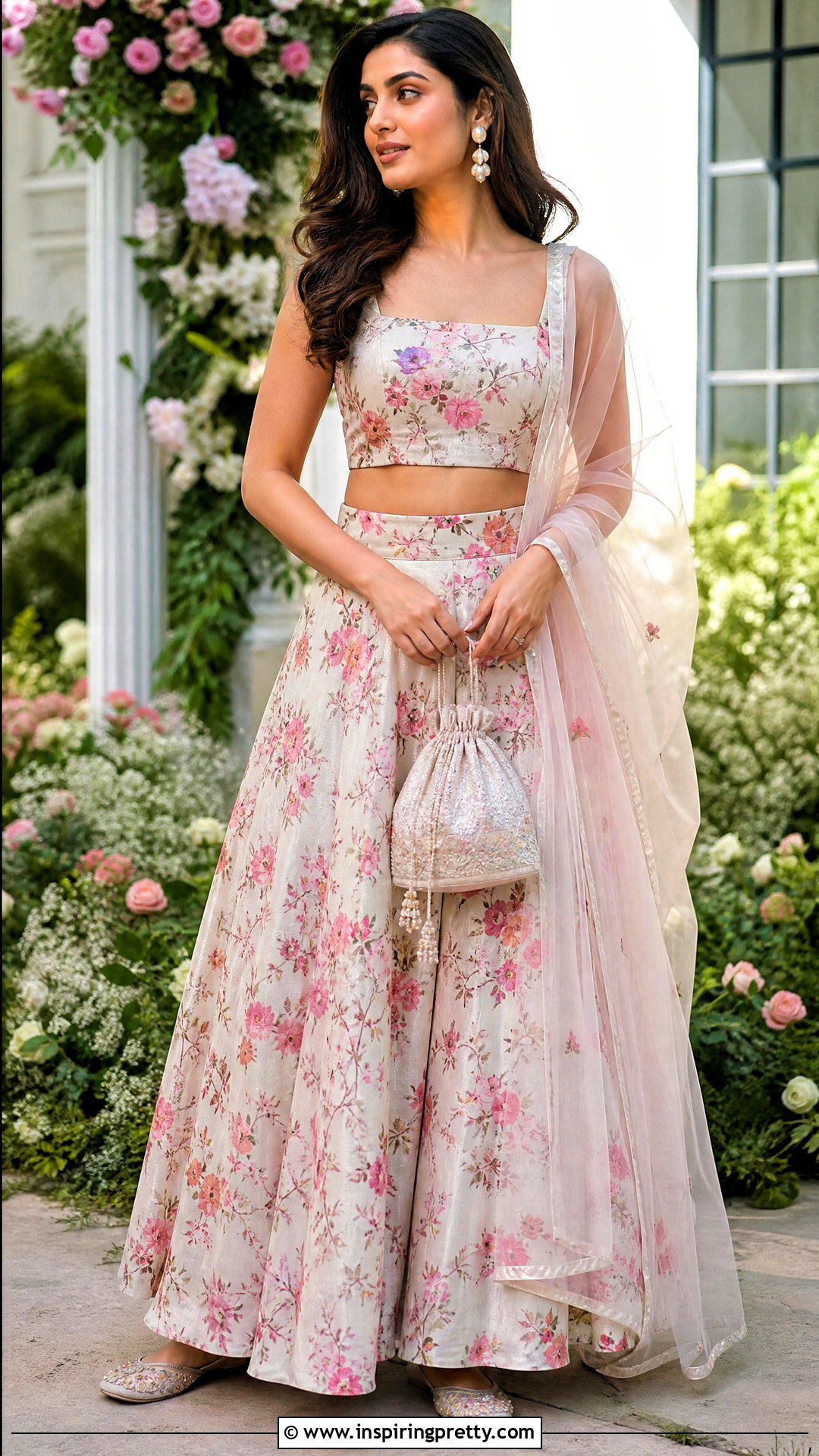
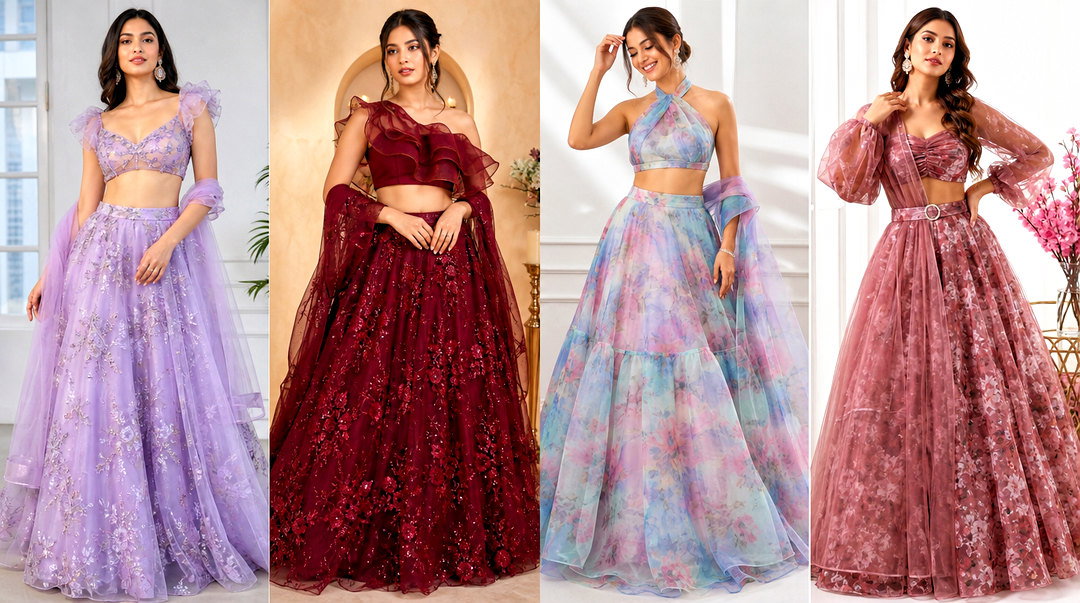
Print does the job embroidery would otherwise do, which keeps a floral set light enough for a hot afternoon mehendi. I pair a square or scoop neck with a high-waisted skirt that flares gently, so the flowers don't balloon out at the hip. Scale matters more than people expect. Big watercolor blooms read from across a lawn, while small prints look delicate up close but blur in photos. A sheer organza dupatta with a narrow border makes it traditional; leave it at home for a casual lunch. I keep jewelry to pearl drops and a few slim bangles so nothing fights the print.
2. Sequin Crop Top Lehenga
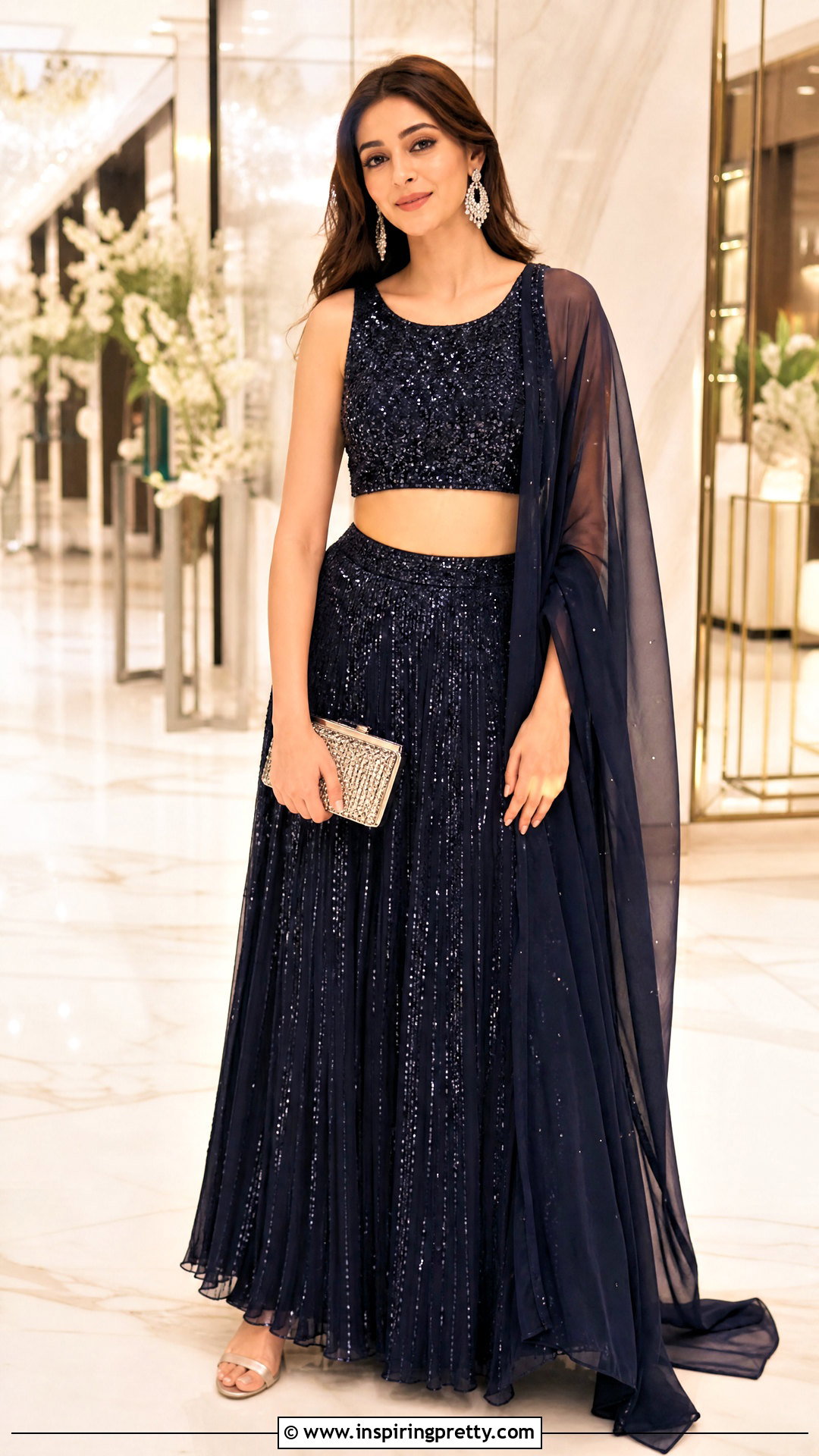
Sequins are for after sunset, when the lights can catch them. I look for a sleeveless top with the sequin work spread evenly, because heavy patches pull the blouse forward and make the neckline gape. A georgette or net skirt underneath keeps the overall weight down. Check the inside seams before you buy: sequins stitched across the armhole scratch the inner arm within an hour of dancing. Stick to one color, navy or champagne for instance, add crystal earrings and metallic heels, and skip the heavy necklace if the neckline is already worked. The dupatta can go over one shoulder or stay home.
3. Mirror Work Crop Top Lehenga
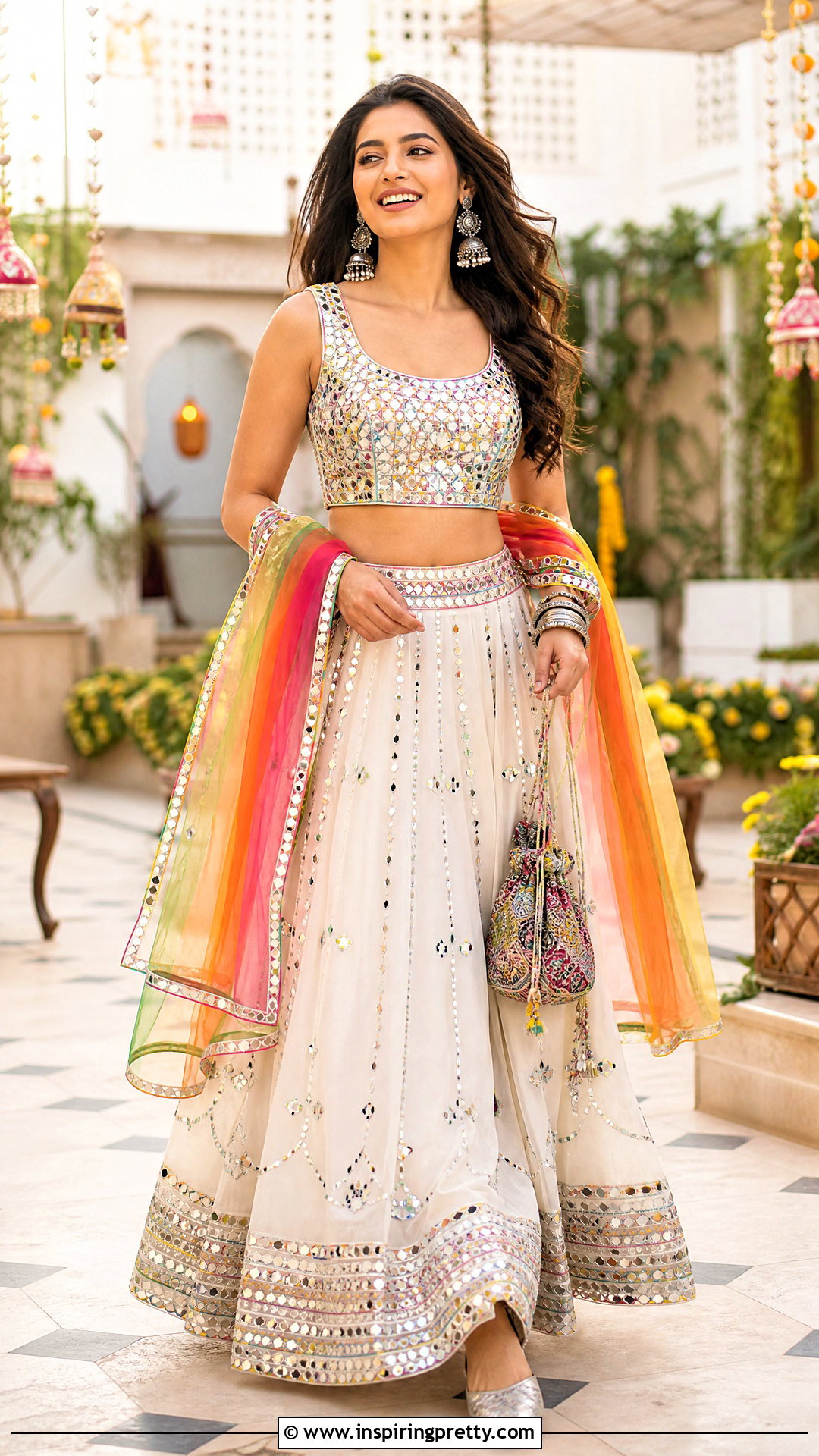
Mirror work gives shine through movement rather than metallic thread, which is why it suits garba nights so well. I steer people toward a fitted blouse with mirror detailing at the neckline and sleeves, with the skirt repeating it in spaced motifs instead of solid panels. Solid panels get heavy fast, and real glass mirrors add noticeable weight to a flared hem. A bandhani or chiffon dupatta softens the sparkle. Oxidized silver earrings and stacked bangles suit the folk feel, and I'd wear juttis over heels if you plan to dance.
4. Cape Sleeve Crop Top Lehenga
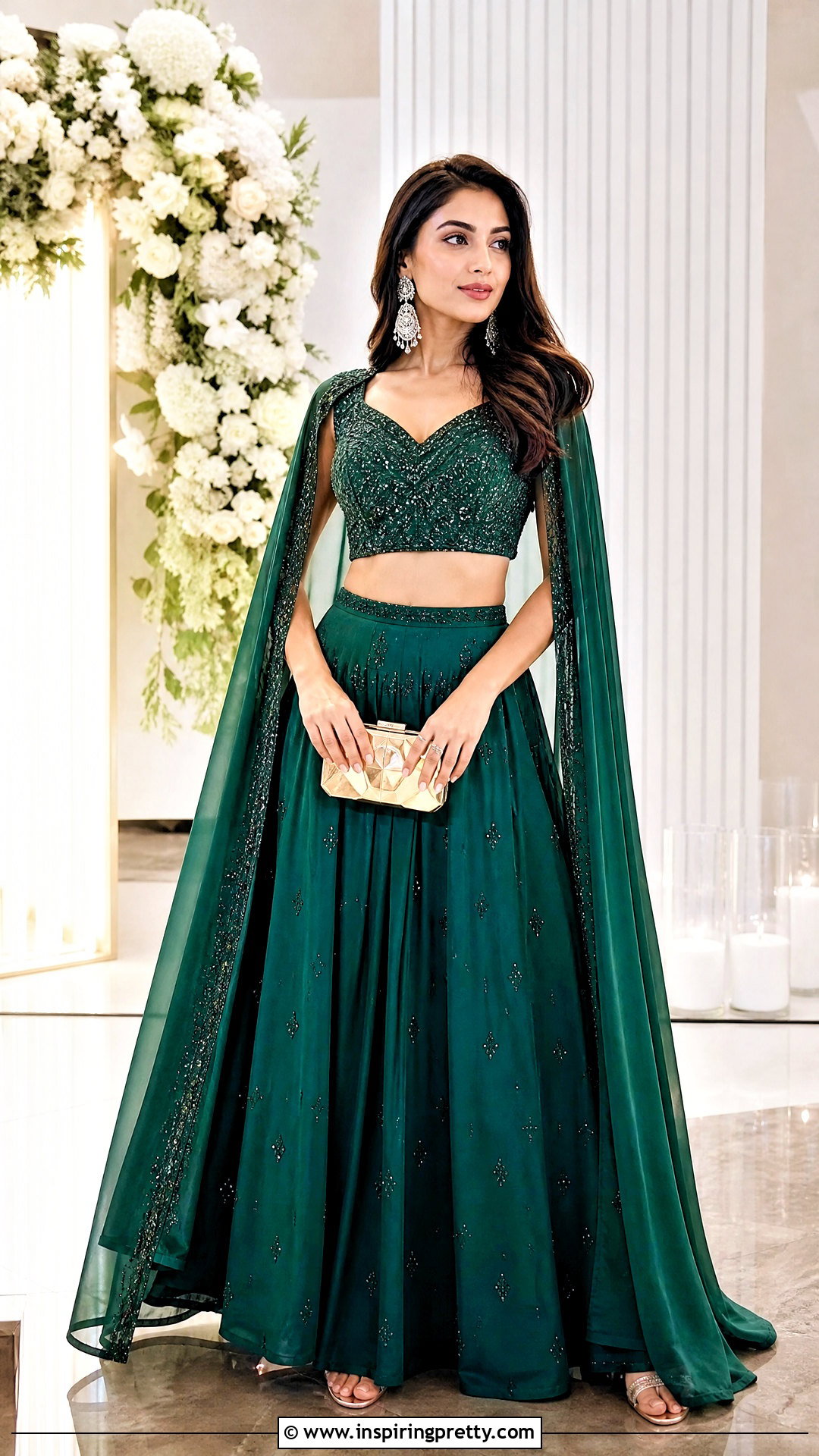
The cape replaces the dupatta, so I tell people not to wear both. It can fall from the shoulders, fasten at the neckline or hang from the back of the blouse, and each version moves differently when you walk. Chiffon and georgette capes float. A net cape holds its shape better but can scratch bare arms by the end of the evening. Keep the skirt a clean A-line so the top half gets the attention, and let statement earrings, a compact clutch and metallic sandals do the rest. It's a smart choice for receptions if you want arm coverage without committing to sleeves.
5. Jacket Crop Top Lehenga
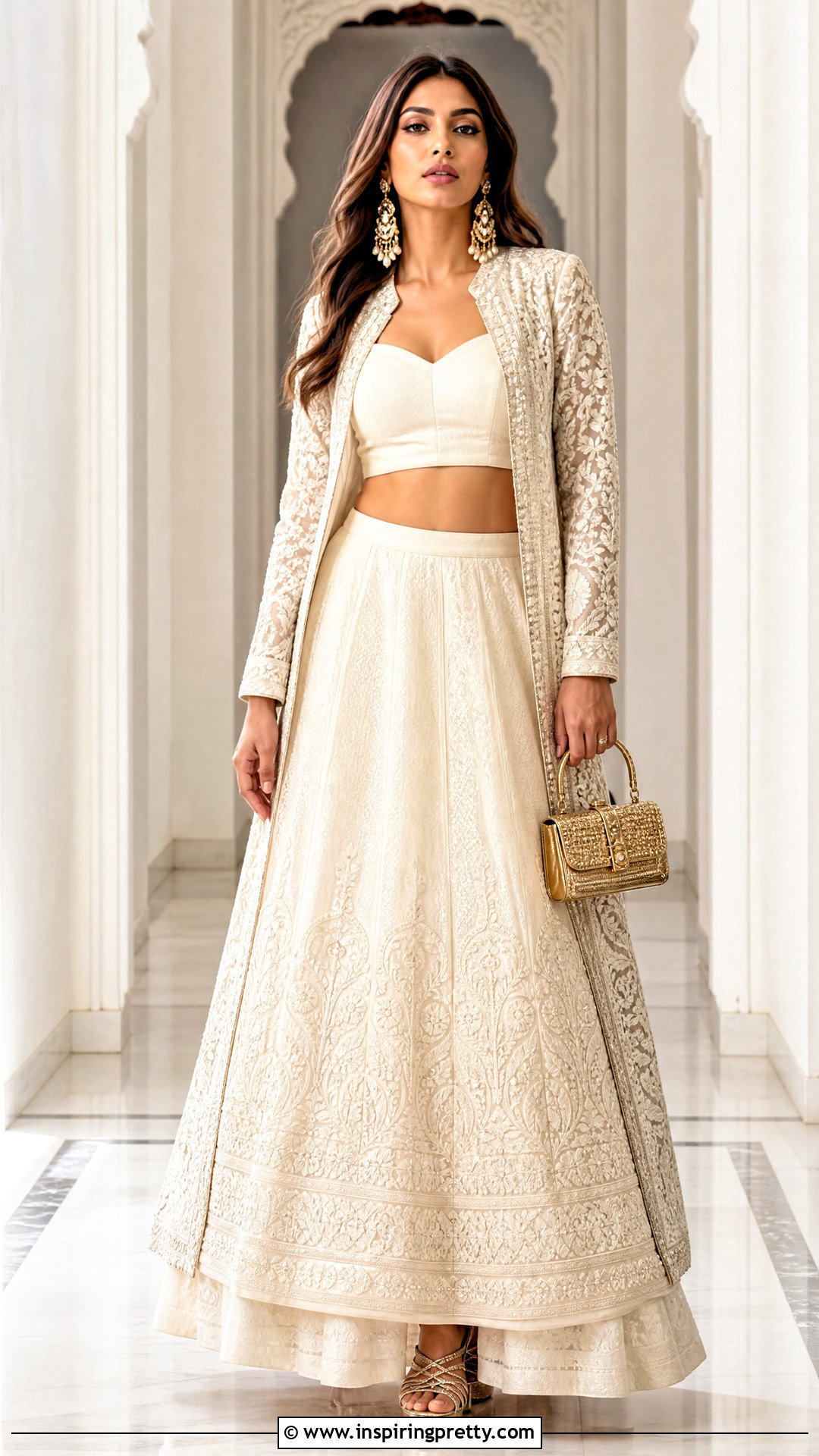
I reach for a jacket set when the wedding is in winter or the hall is air-conditioned to the point of chill. Underneath goes a simple fitted crop top and a matching flared skirt, and the jacket stays open so the blouse still shows. Length changes the mood completely. Floor-length reads formal and adds height; waist-length feels younger and lets you dance without stepping on it. Since the jacket already adds coverage, a dupatta usually just gets in the way. Chandelier earrings and heeled sandals finish it. Go lighter on embroidery for daytime and save the rich threadwork for night.
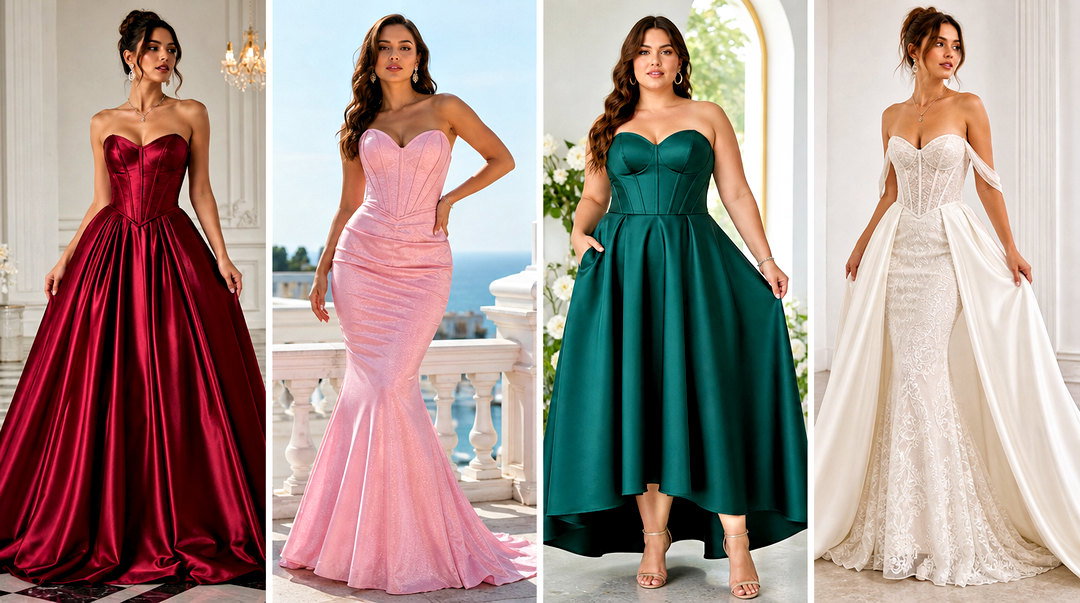
6. Corset Crop Top Lehenga
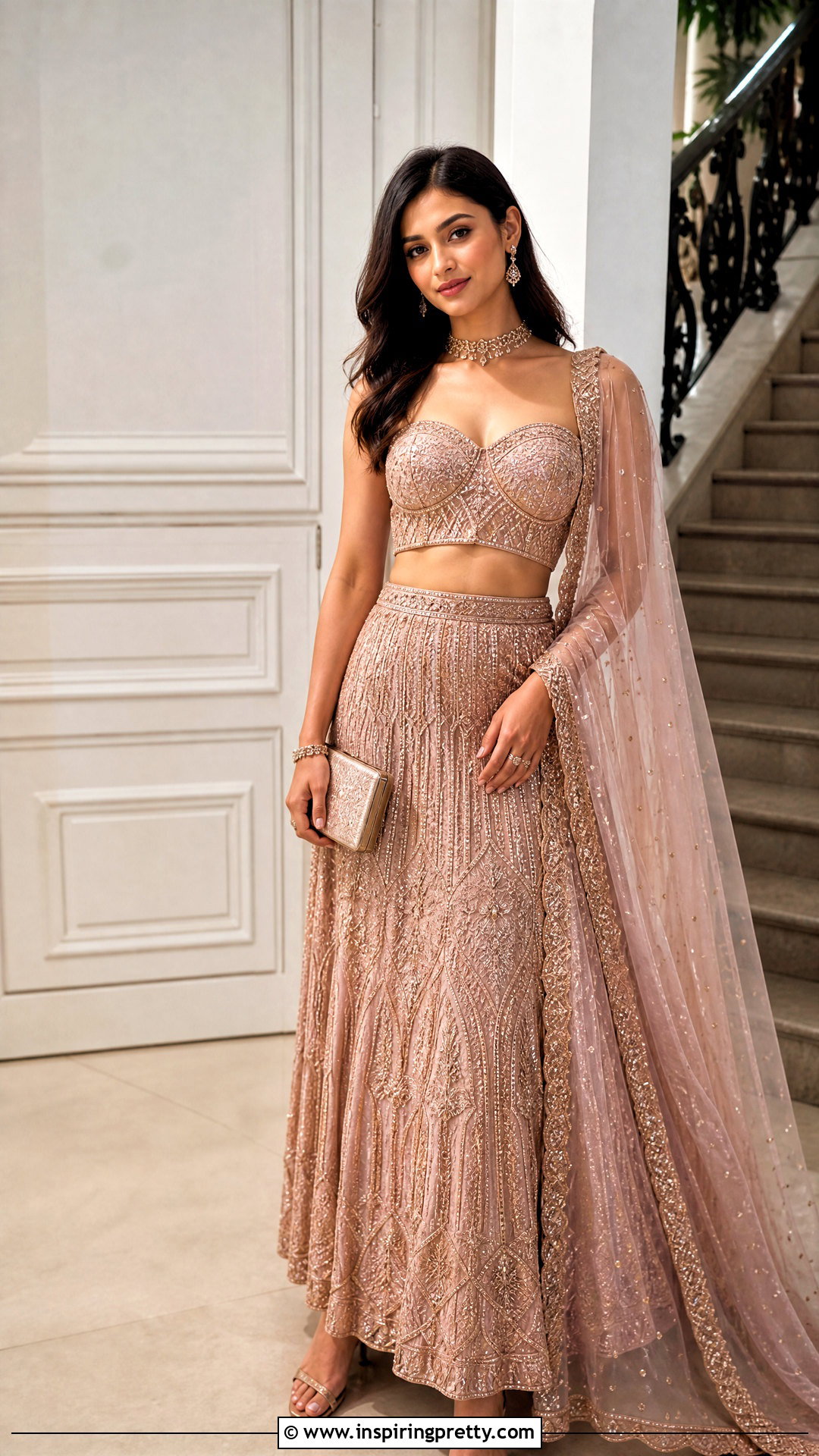
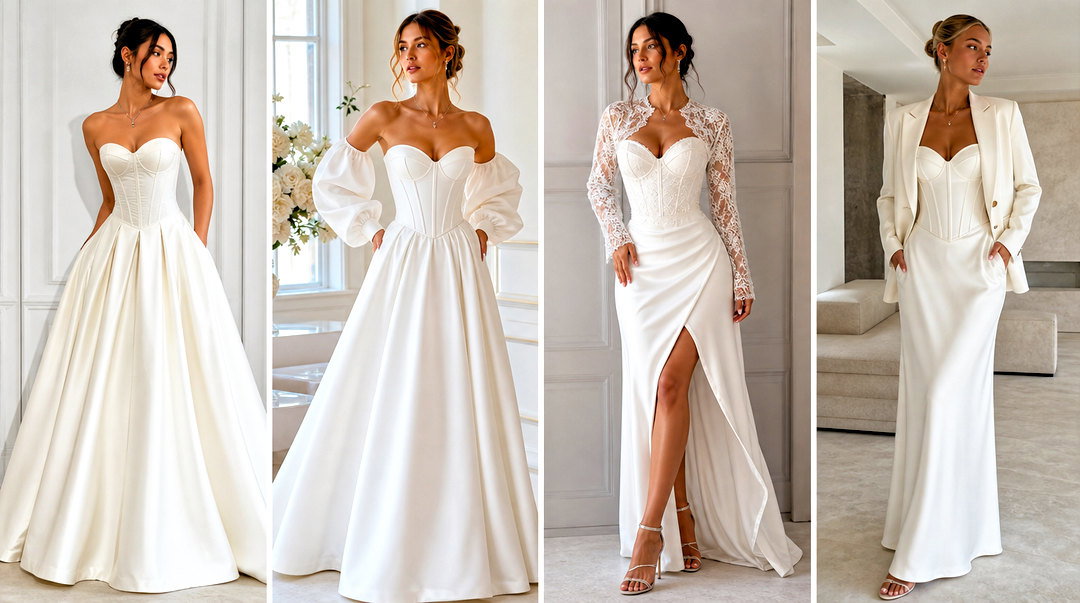
A corset blouse lives or dies by its boning. At a fitting I press along the seams: flexible boning bends with you when you sit, while cheap plastic strips start poking out at the top edge by the end of the night. A sweetheart, straight, or gently curved neckline frames the shoulders, and a high-waisted lehenga with matching embroidery ties the two pieces together. Drape a soft net dupatta from one shoulder so the shape stays visible. Keep the skirt moderately full. A huge can-can makes the corset look tiny and stiff.
7. Off Shoulder Crop Top Lehenga
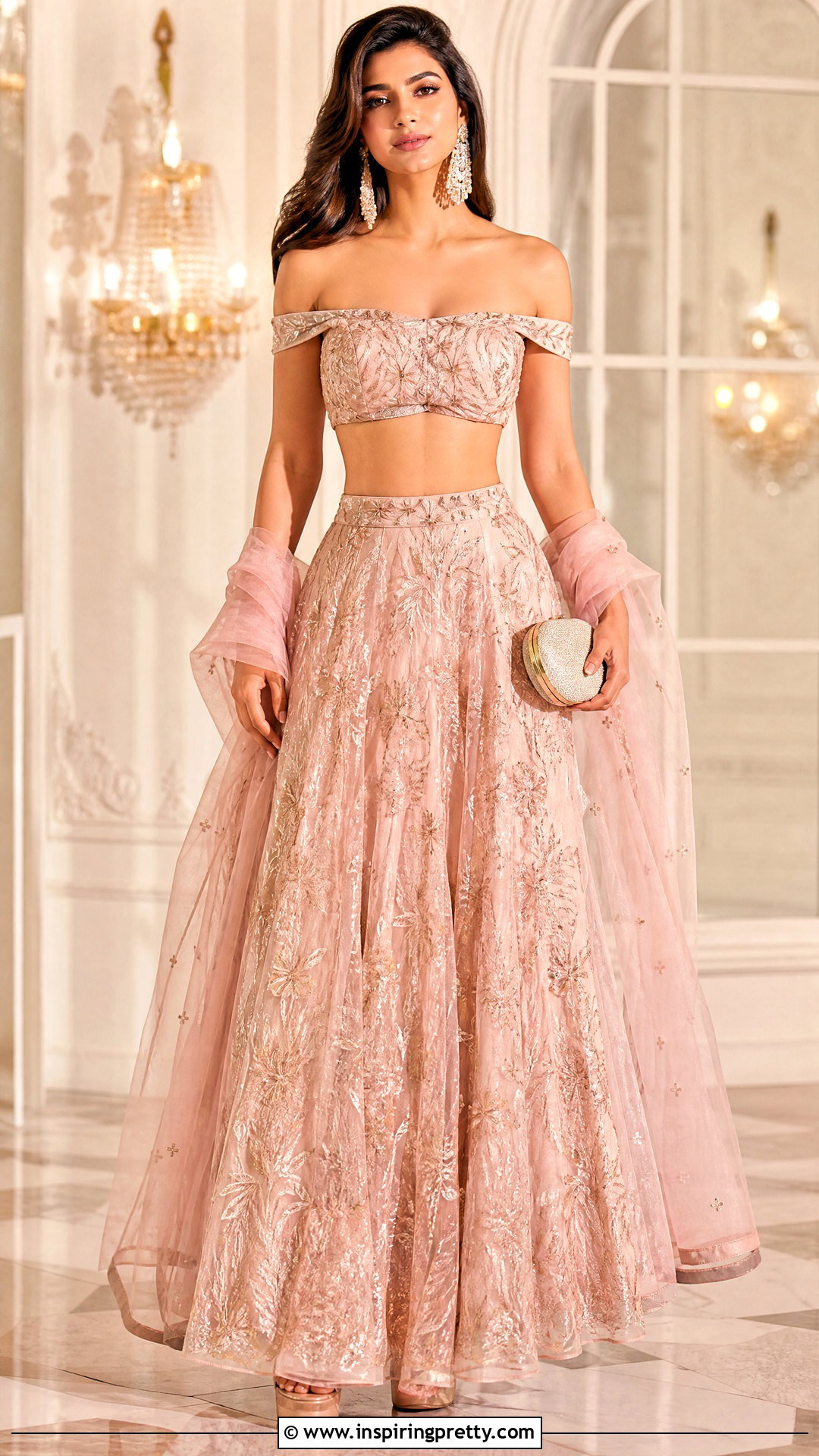
Off-shoulder blouses slip, so the first thing I check is the elastic or silicone gripper inside the neckline. Without it, you'll spend the reception tugging the top back up. Choose one with proper lining and enough ease in the arm to lift a plate or hug a cousin. A high-rise skirt balances the open neckline. Shoulder-grazing earrings, no necklace, a small clutch and platform heels keep it clean. If you want a dupatta, rest it across the arms instead of the bodice. I'd pass on this model for a temple ceremony where bare shoulders may not be welcome.
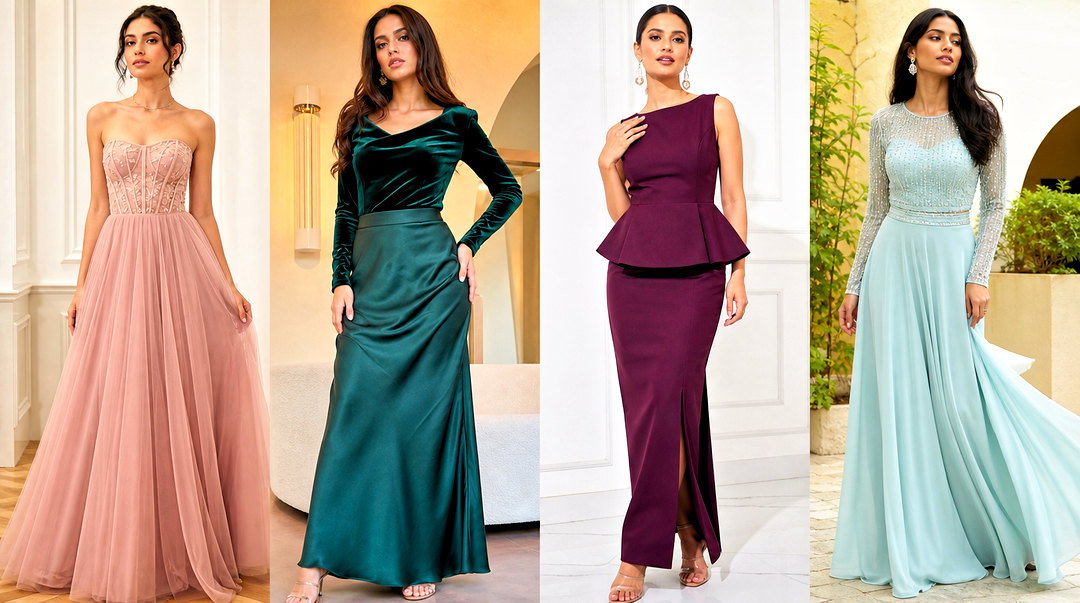
8. One Shoulder Crop Top Lehenga
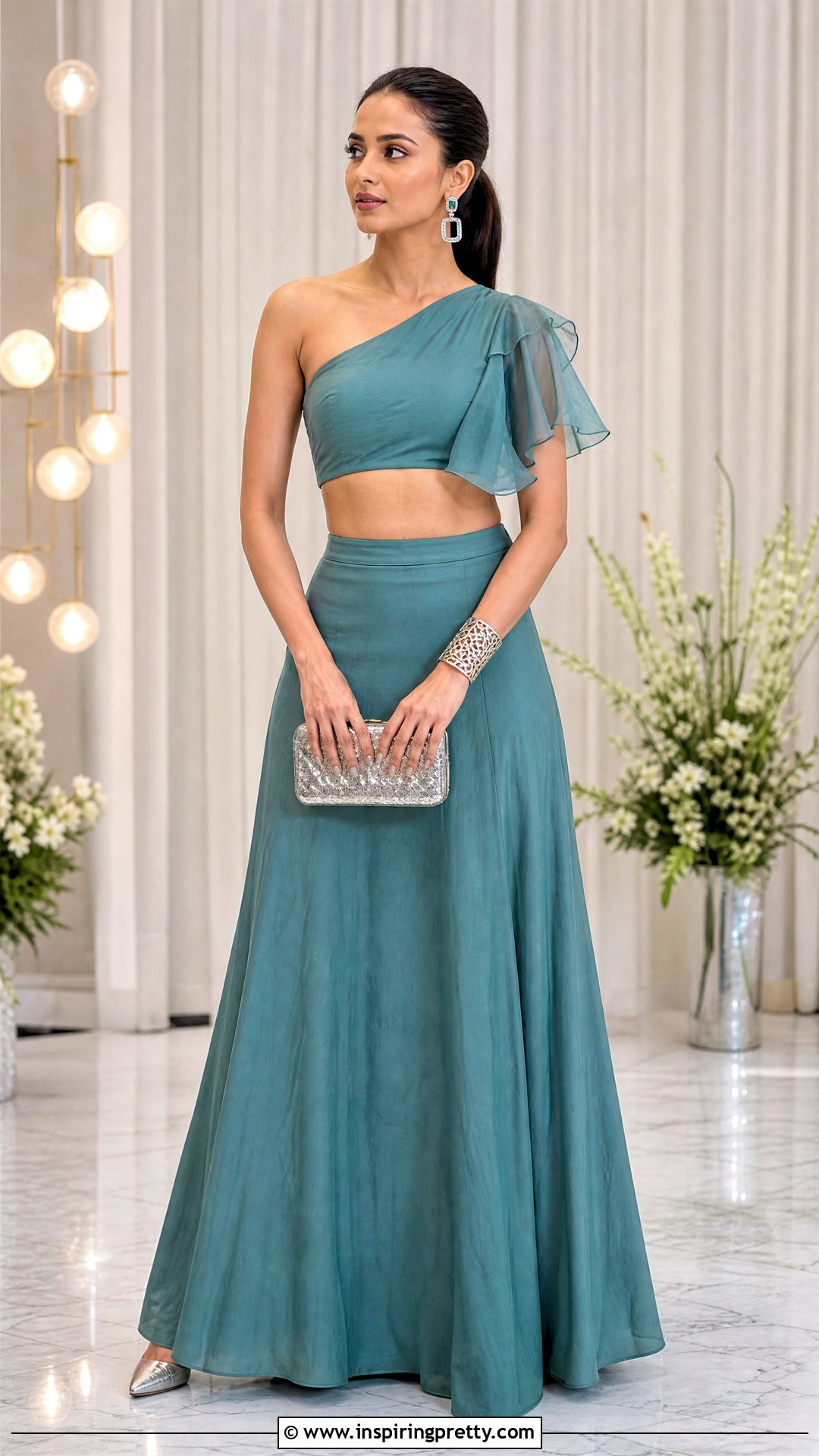
Asymmetry makes a plain lehenga look designed. The blouse can have one fitted sleeve, a ruffled shoulder or a soft draped panel, and the drape is the most forgiving if you're unsure. With only one strap holding everything, the fit at the bust and side seam has to be snug, so I always ask for a fitting with both arms raised. Keep the skirt streamlined and the waistband high. One cuff and medium drop earrings are enough. Leave out a conventional dupatta, since it covers the very line you chose, and wear your hair sleek or swept to the bare side.
9. Halter Neck Crop Top Lehenga
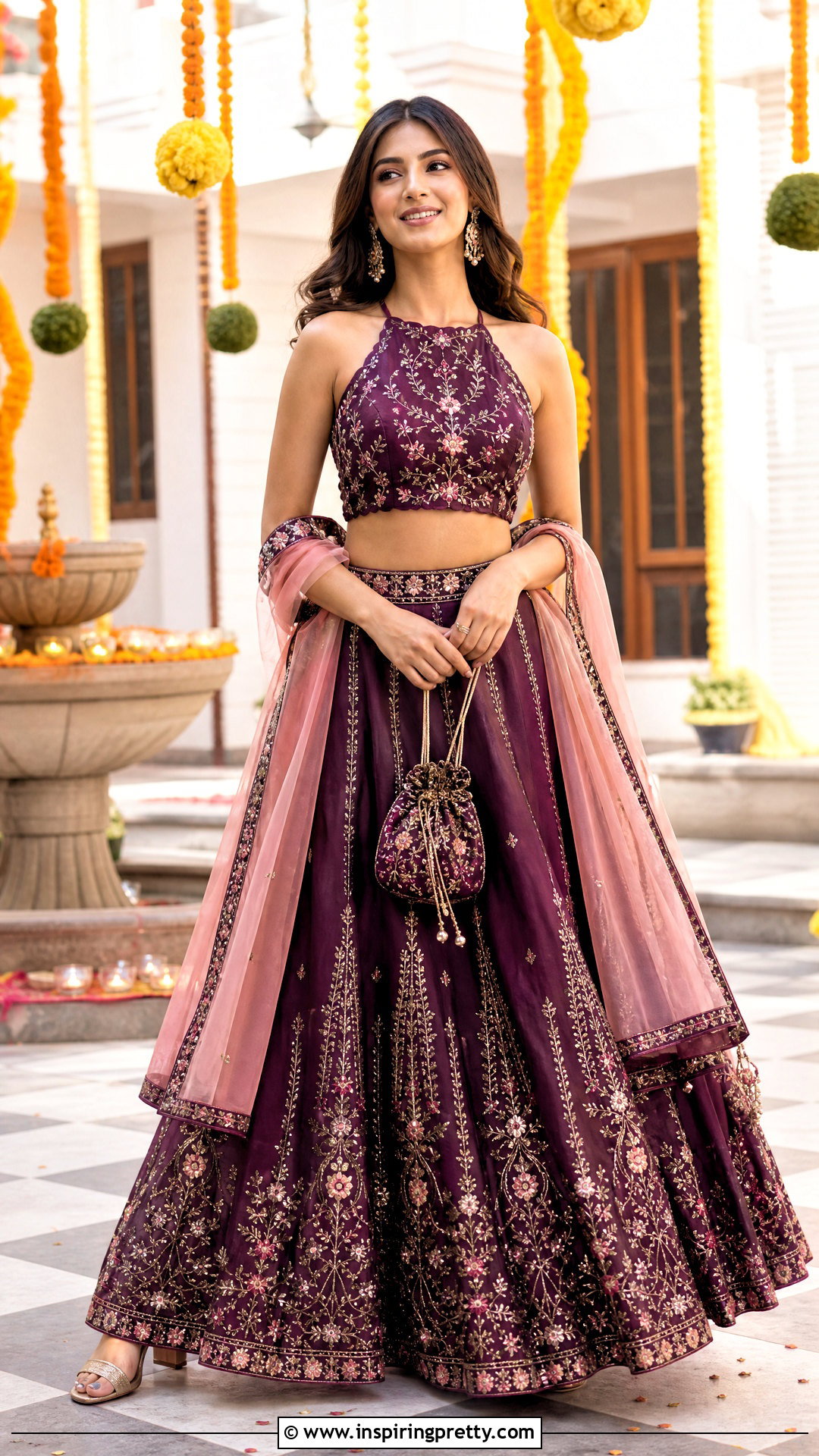
A halter feels secure in a way strapless and off-shoulder tops don't, because the neck carries the weight. It shows off the shoulders and arms; on very broad shoulders I'd pick a wider-set strap so the cut doesn't exaggerate them. Pair a fitted halter blouse with a high-waisted A-line or circular skirt in the same fabric. Embroidery around the neckline already acts as jewelry, so medium hoops or a bracelet will do. If the back is open, test the ties before the event. Halter knots loosen as the night goes on, and a hidden hook takes the strain off your neck. It's a fun pick for sangeet and mehendi.
10. Full Sleeve Crop Top Lehenga
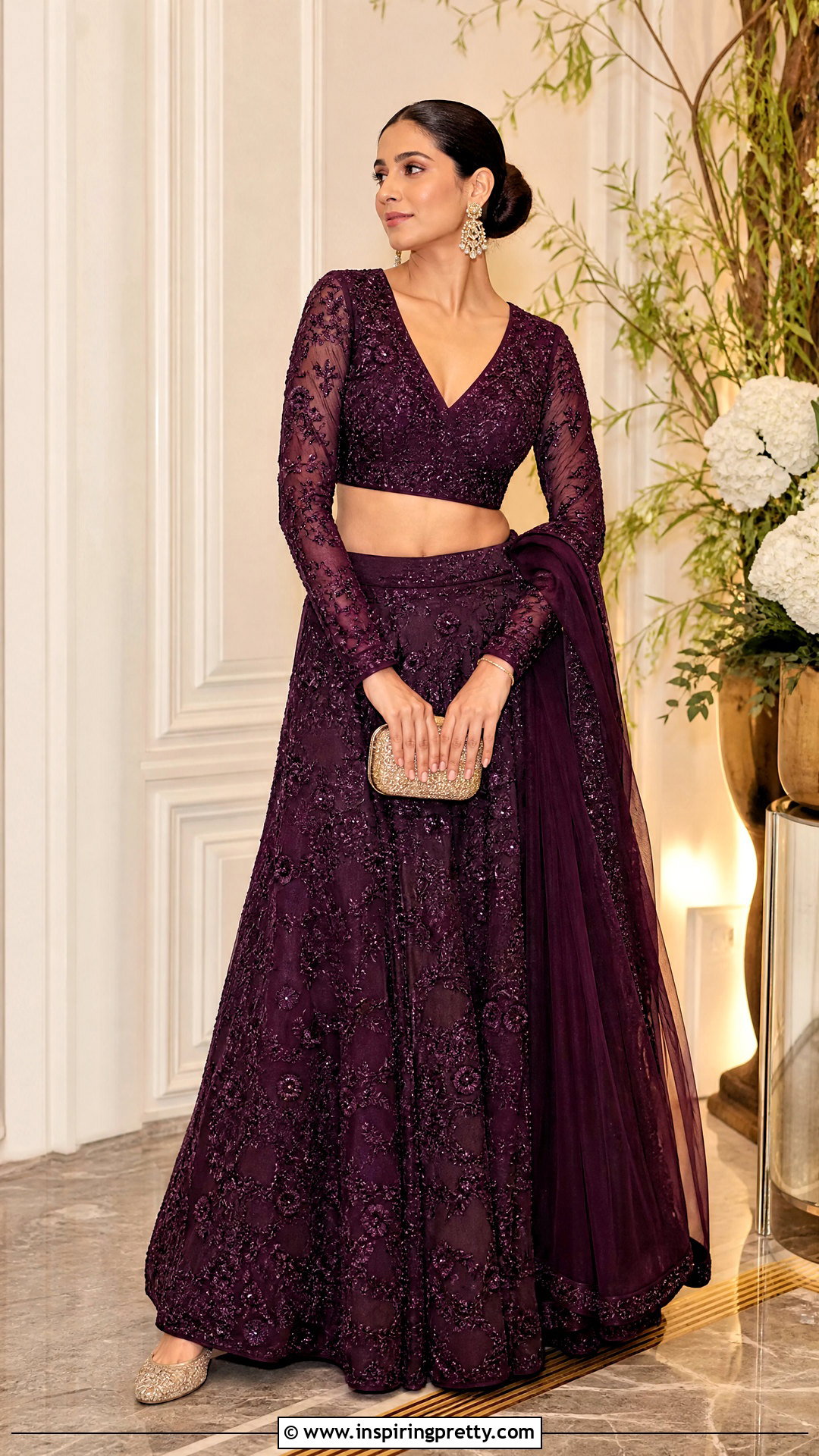
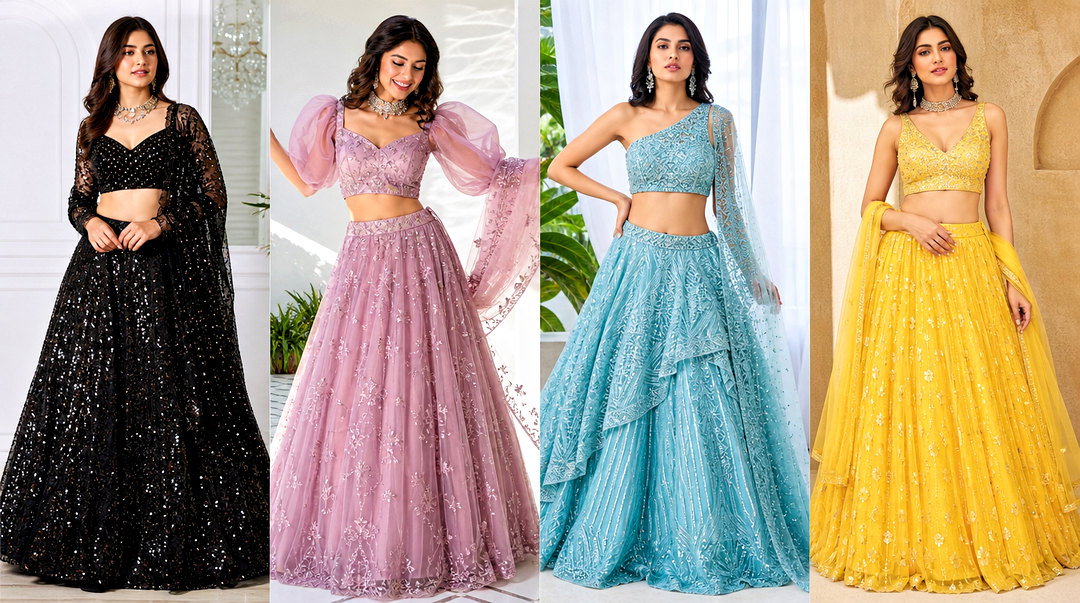
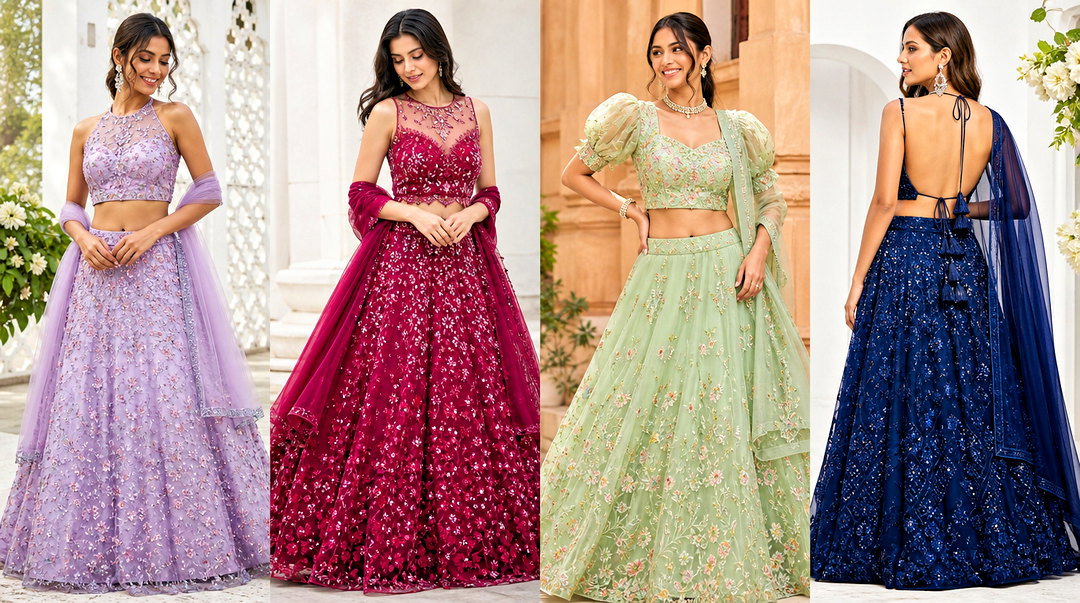
Full sleeves give coverage while the crop still marks the waist, a good compromise for more conservative families. Sheer embroidered sleeves look airy; opaque silk feels richer and warmer. The catch is the armhole. Fitted long sleeves restrict reaching up unless the tailor cuts a higher armhole, so raise your arms before you approve the blouse. Open the neckline with a V, boat or square shape so the top half doesn't look closed in. A low bun and medium earrings suit it, and I'd only add a dupatta when the sleeves are plain. Jewel tones for evening, softer shades in daylight.
11. Puff Sleeve Crop Top Lehenga
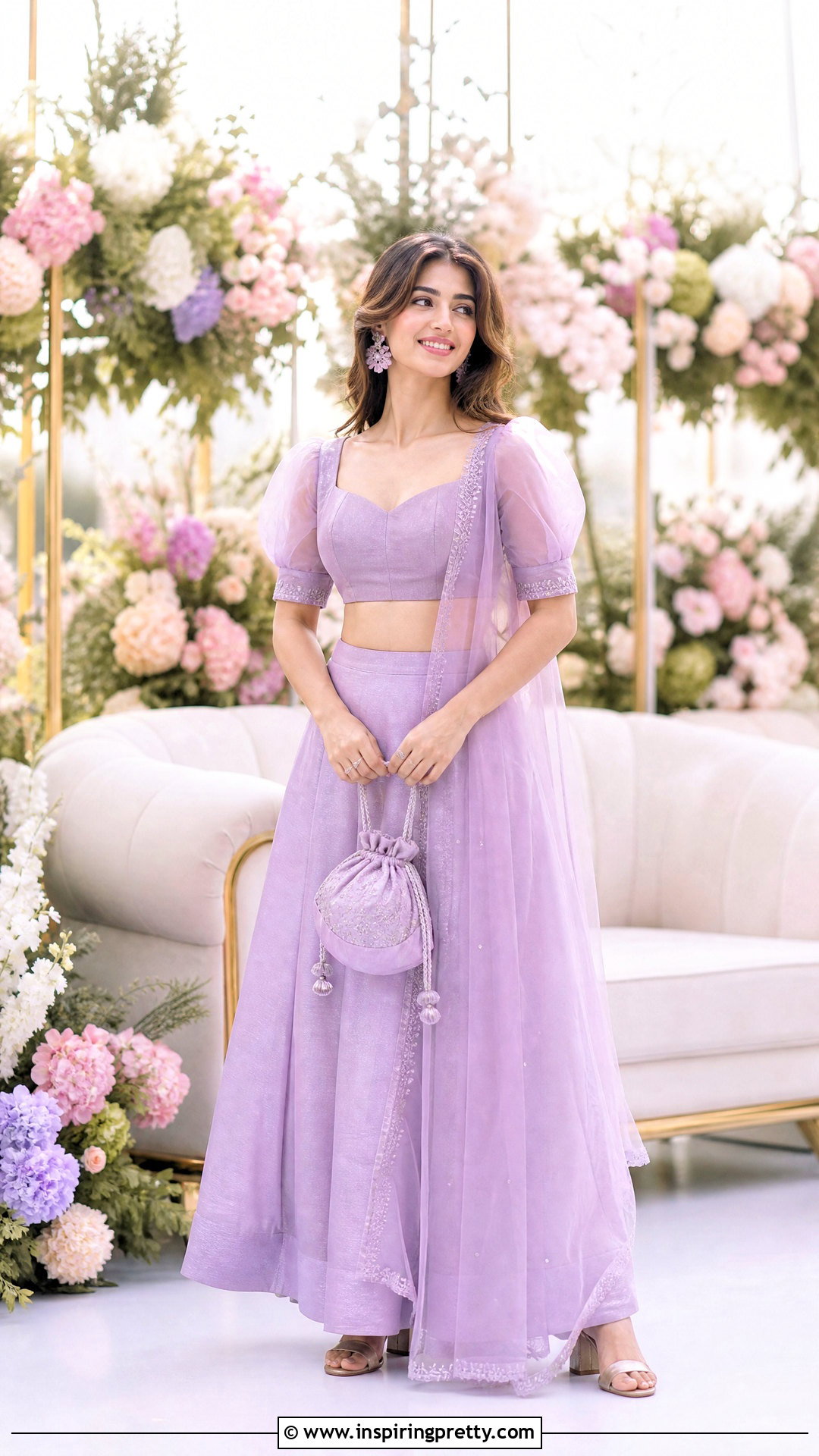
Puff sleeves need restraint. The wearable version has volume at the shoulder and narrows by the elbow or wrist; full balloon sleeves tend to swallow a petite frame. Organza holds a crisp puff but crushes against a car seat on the way to the venue, while silk gives a heavier, more structured shape. Pair the top with a simple high-waisted skirt. With a wide neckline and decorated sleeves, I'd skip a heavy necklace and drape a narrow dupatta from one shoulder only. Small statement earrings and a neat bun keep your face clear of all that volume.
12. Peplum Crop Top Lehenga
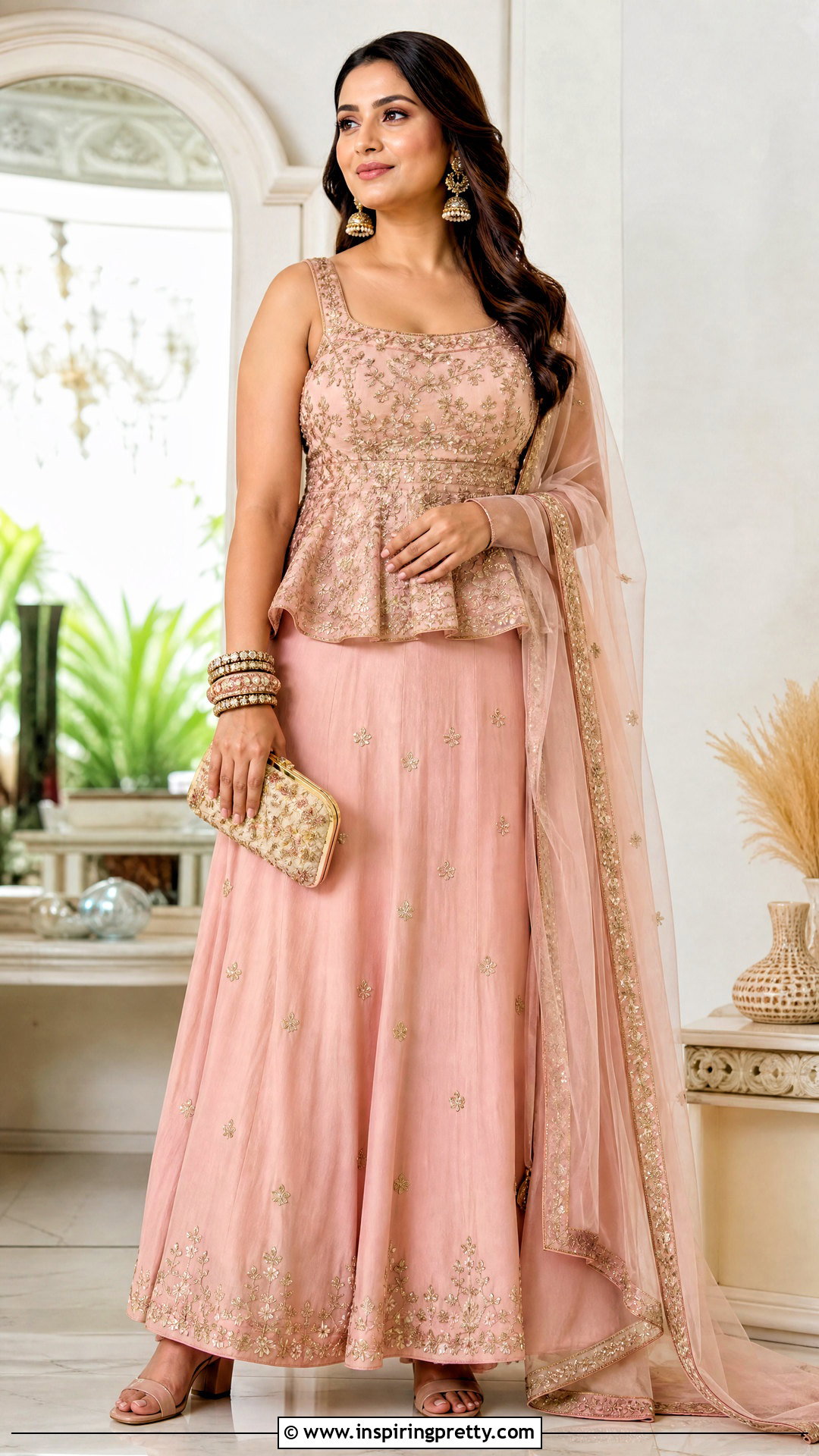
A peplum crop top lehenga is my usual answer for guests who want less midriff on show. The top fits closely through the bust and flares into a short frill near the natural waist. Where it goes wrong is the skirt: if the lehenga is also gathered at the waistband, the two flares stack and add bulk right where you didn't want it. Choose an A-line skirt that starts smooth beneath the peplum. Thread embroidery, mirror accents and prints all sit well on the flare. Jhumkas, stacked bangles and block heels keep it traditional, and a light dupatta can be pinned to one shoulder.
13. Ruffle Crop Top Lehenga
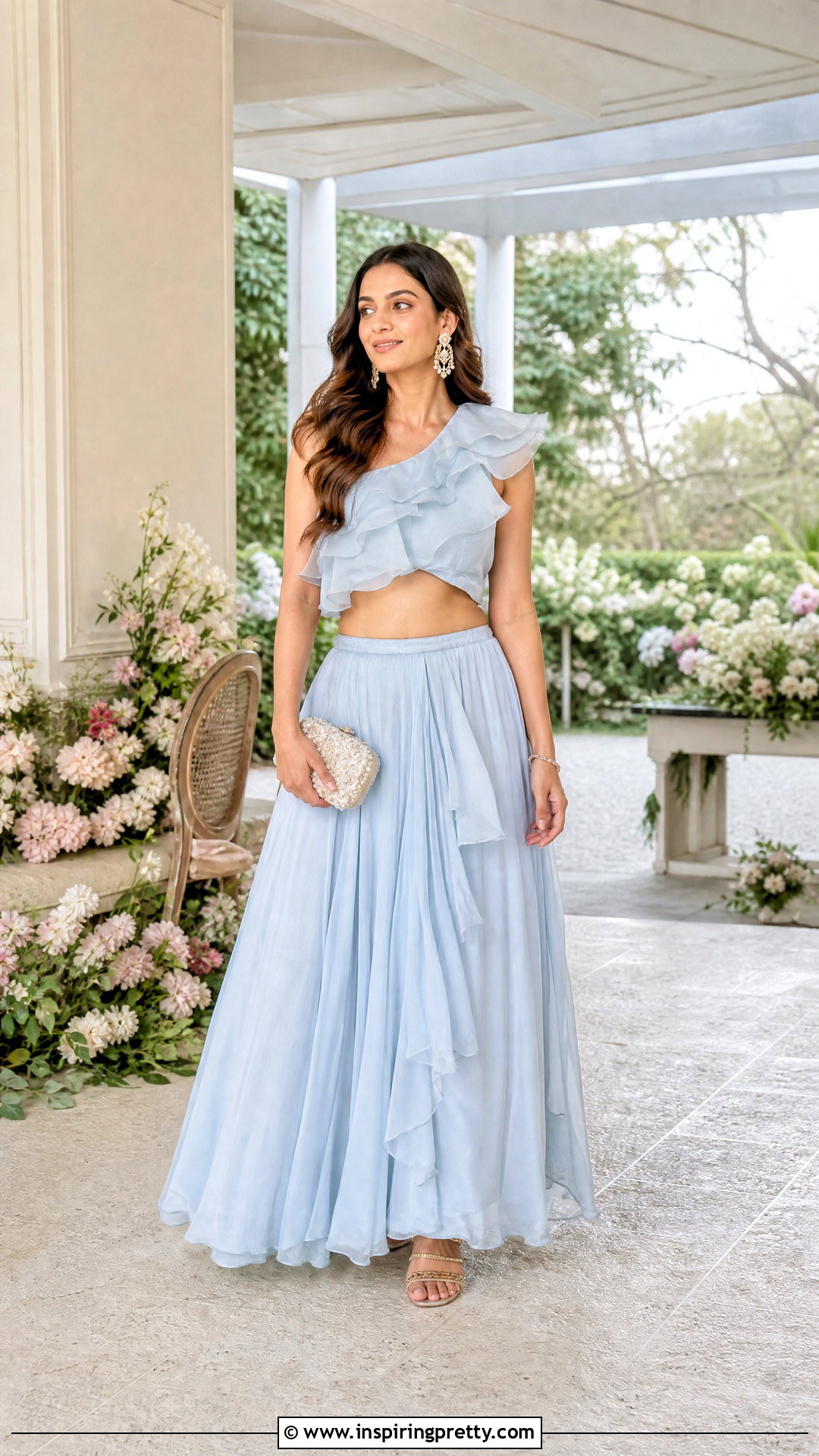
Ruffles move when you move, so they bring life to a set without heavy embellishment. Pick one place for the ruffle rather than piling it on the shoulder, neckline and sleeves at once. A flowing georgette or organza skirt continues the light mood, and coordinated colors stop the texture from turning busy. In my experience stiff net ruffles flatten after a few hours of hugging, while georgette ruffles bounce back. If the blouse already has a draped ruffle, leave the dupatta out. Delicate earrings, strappy heels and loose waves or a high ponytail finish it.
14. Draped Crop Top Lehenga
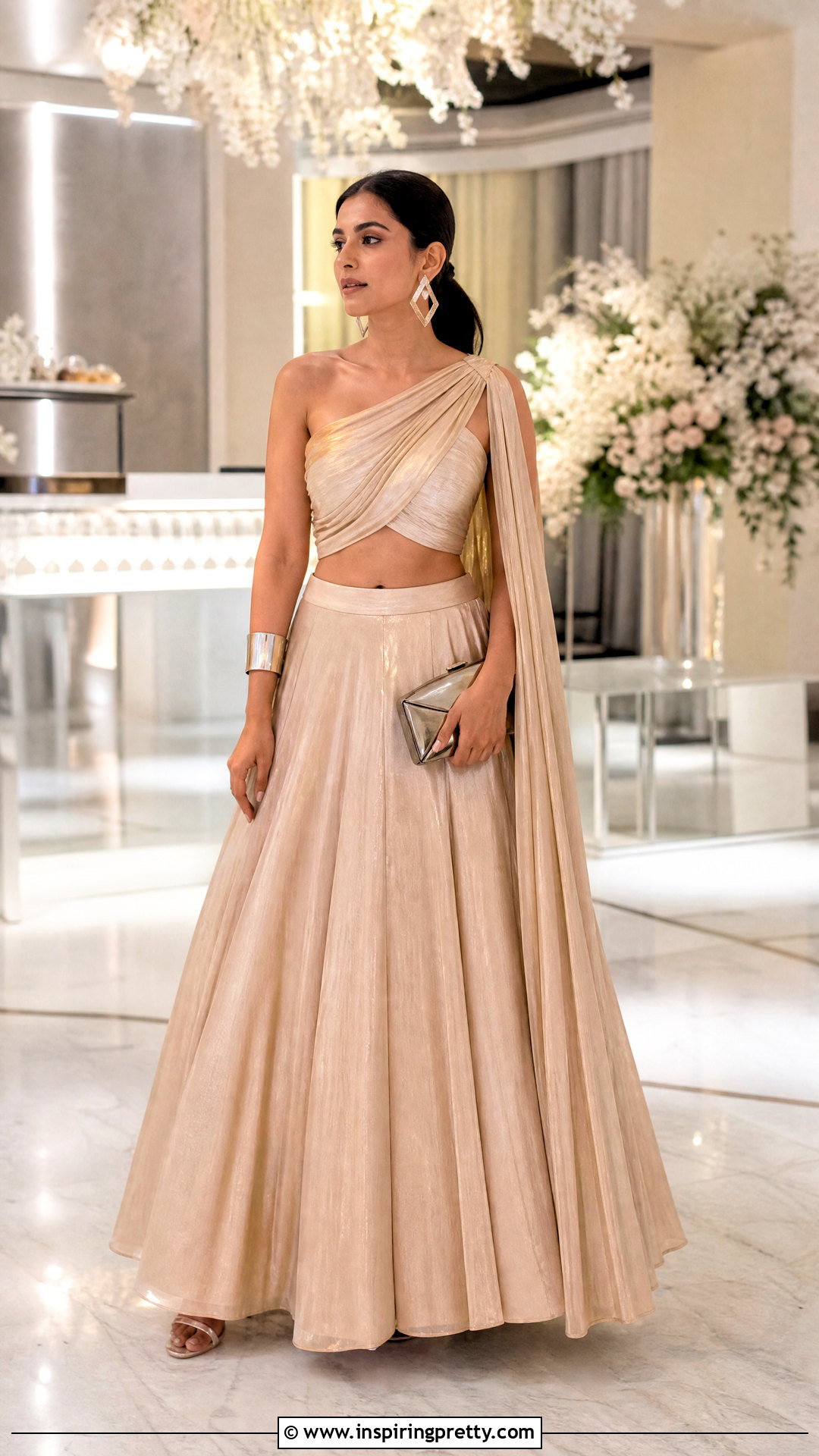
This is the low-maintenance pick. The drape is sewn in, so you get the look of a styled dupatta without re-pinning it every twenty minutes. Fabric might cross the bodice, fall from one shoulder or extend into a side panel. Soft georgette, chiffon and satin form proper folds, whereas stiff fabric just sticks out. I pair it with a clean circular skirt and keep jewelry to geometric earrings and a cuff, since the drape already reads as an accessory. A low ponytail keeps the neckline in view. I recommend it for receptions where you'd rather eat and talk than fuss with fabric.
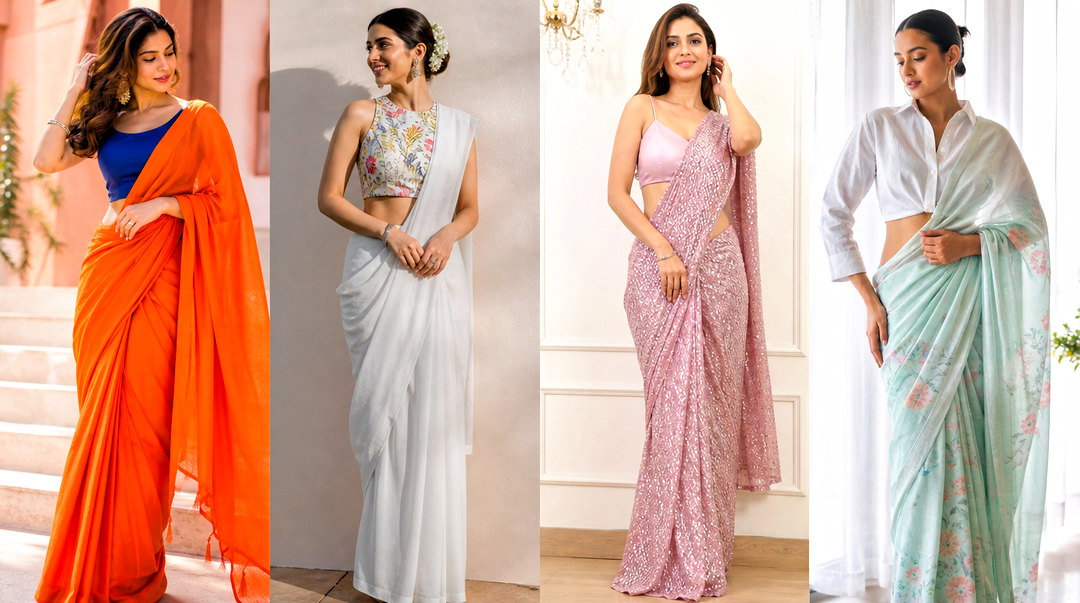
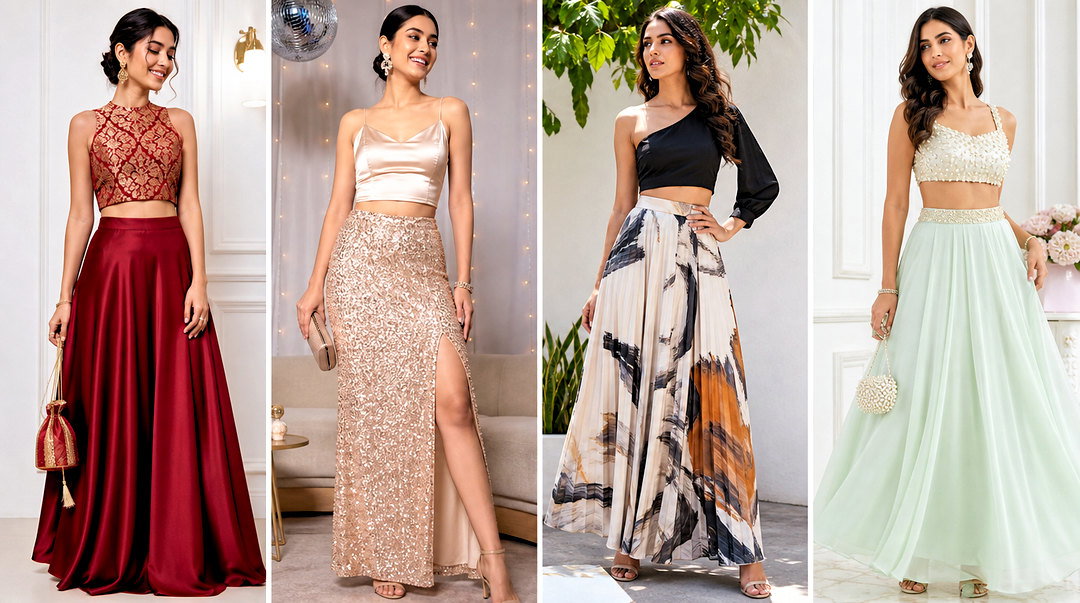
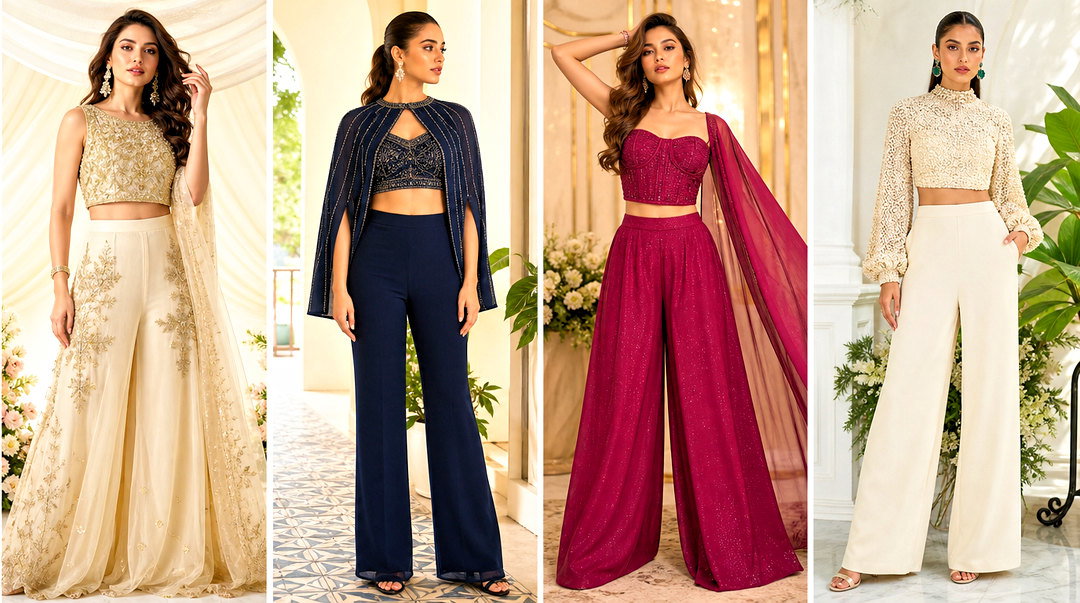
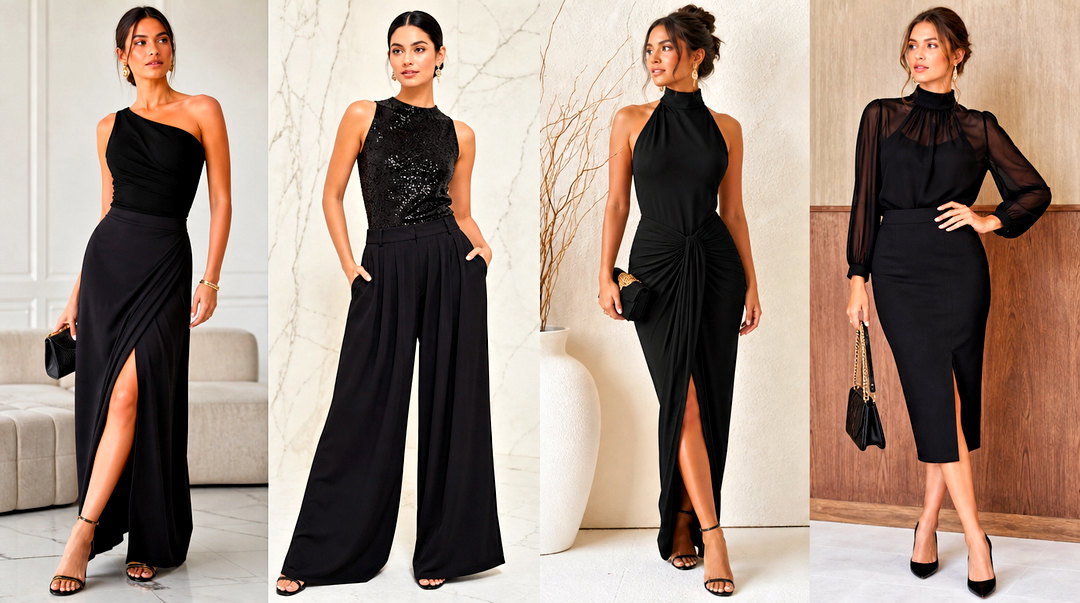
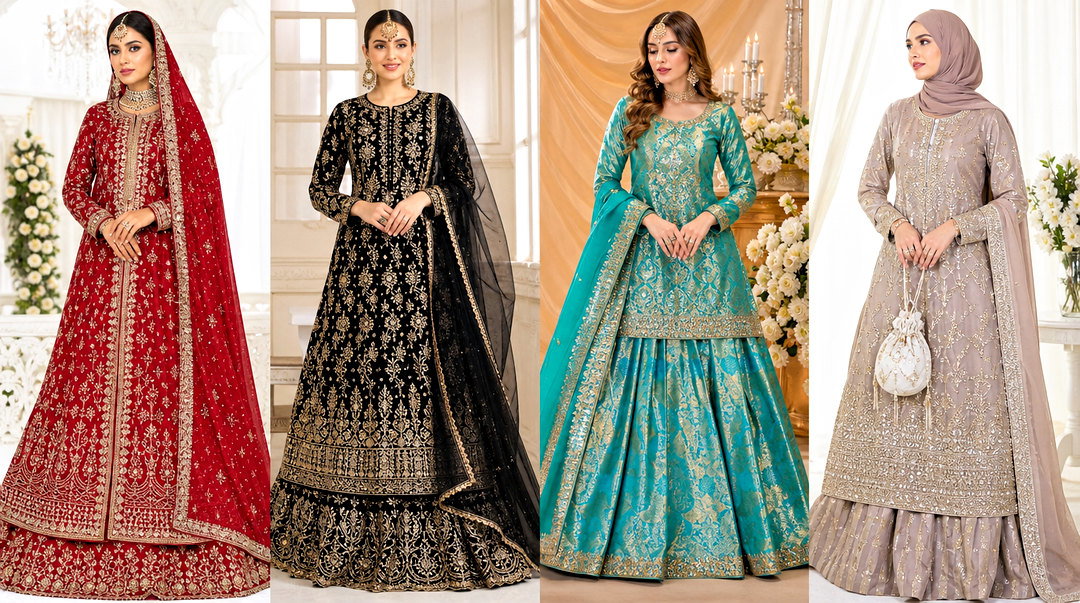
15. Banarasi Silk Crop Top Lehenga
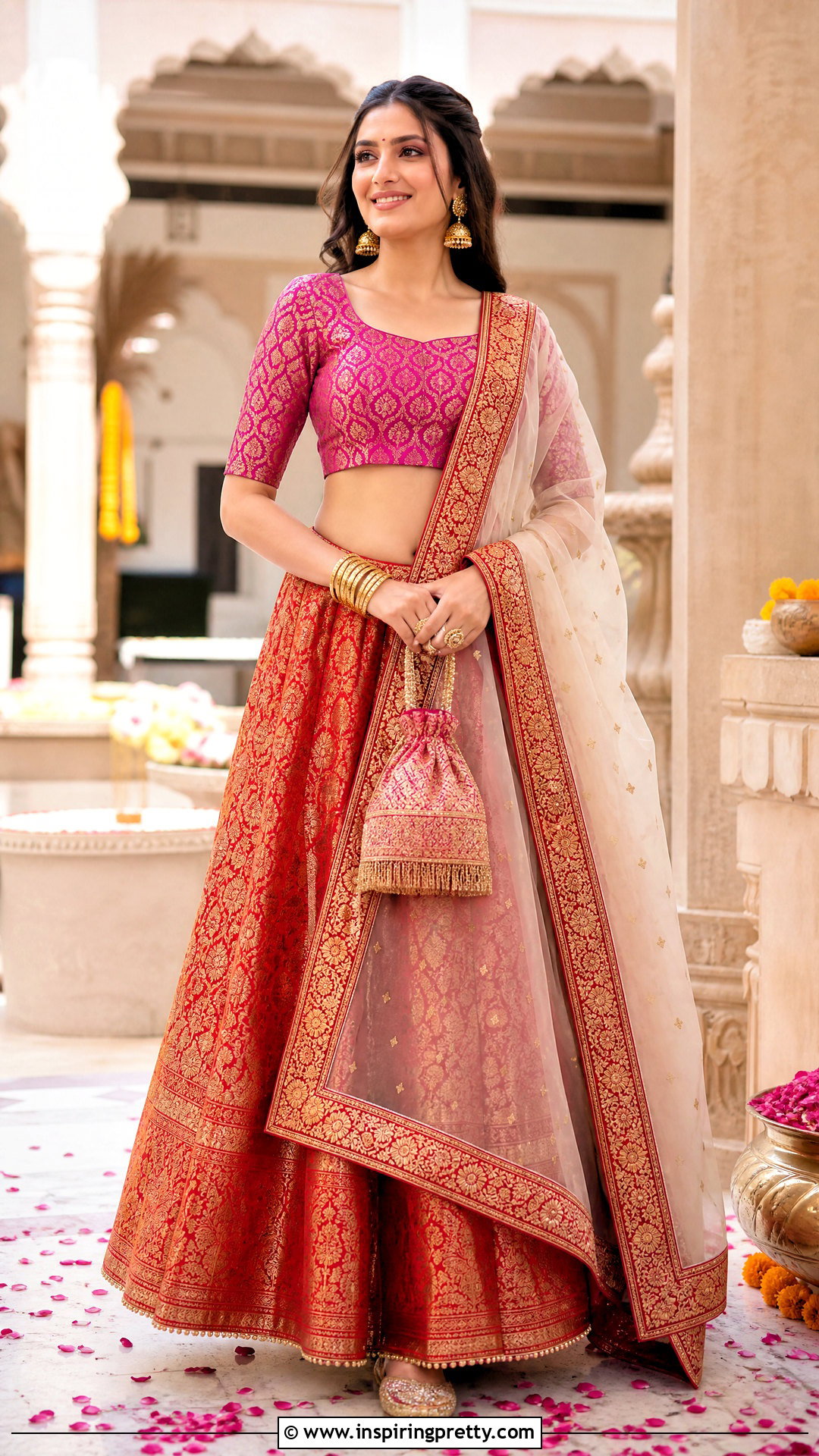
Banarasi silk carries so much woven detail that the blouse should stay simple. I pair a brocade skirt with a fitted crop top in matching silk or a solid color pulled from the motif, with short or elbow sleeves. Brocade is stiff, and the waistband seam can feel rough on bare skin, so ask for a soft lining band inside. Add a light silk or organza dupatta with a woven border, jhumkas, classic bangles and embroidered juttis. Red, magenta and green with gold always read festive. Store the skirt loosely folded in muslin; sharp creases in zari can crack the metallic threads over time.
16. Velvet Crop Top Lehenga
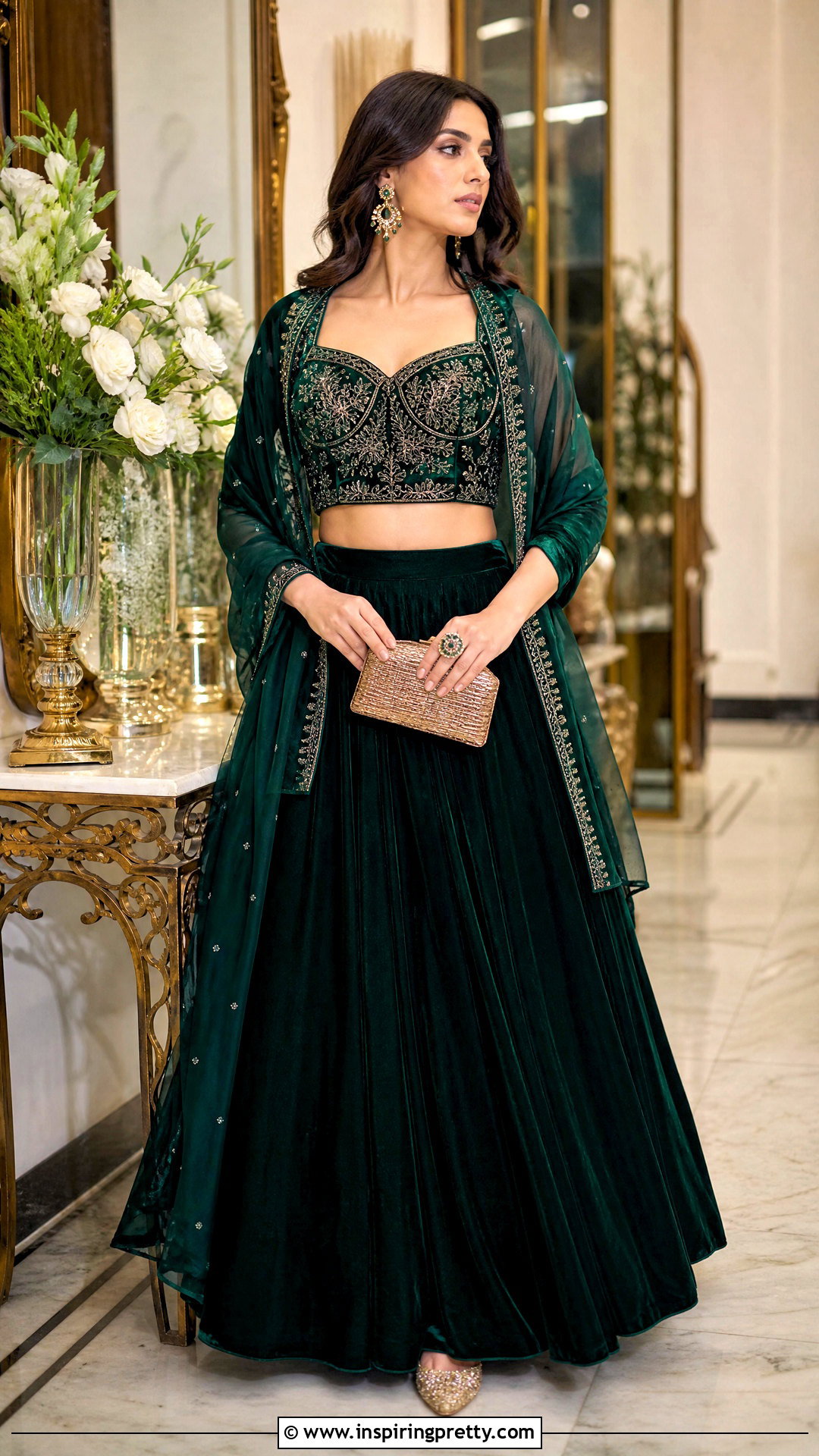
Velvet is for winter weddings and night functions. At an outdoor summer afternoon it's simply too hot. Choose a structured velvet blouse and pair it with a matching skirt, or with a lighter silk lehenga if you want less weight. Embroidery placed at the neckline, waist and hem looks more refined than covering every inch. Velvet also marks easily: the pile crushes where you sit, so steam it from the back rather than ironing it flat. A sheer net dupatta lifts the heaviness, and antique-finish earrings with closed-toe heels suit the depth of maroon, bottle green or midnight blue.
17. Organza Crop Top Lehenga
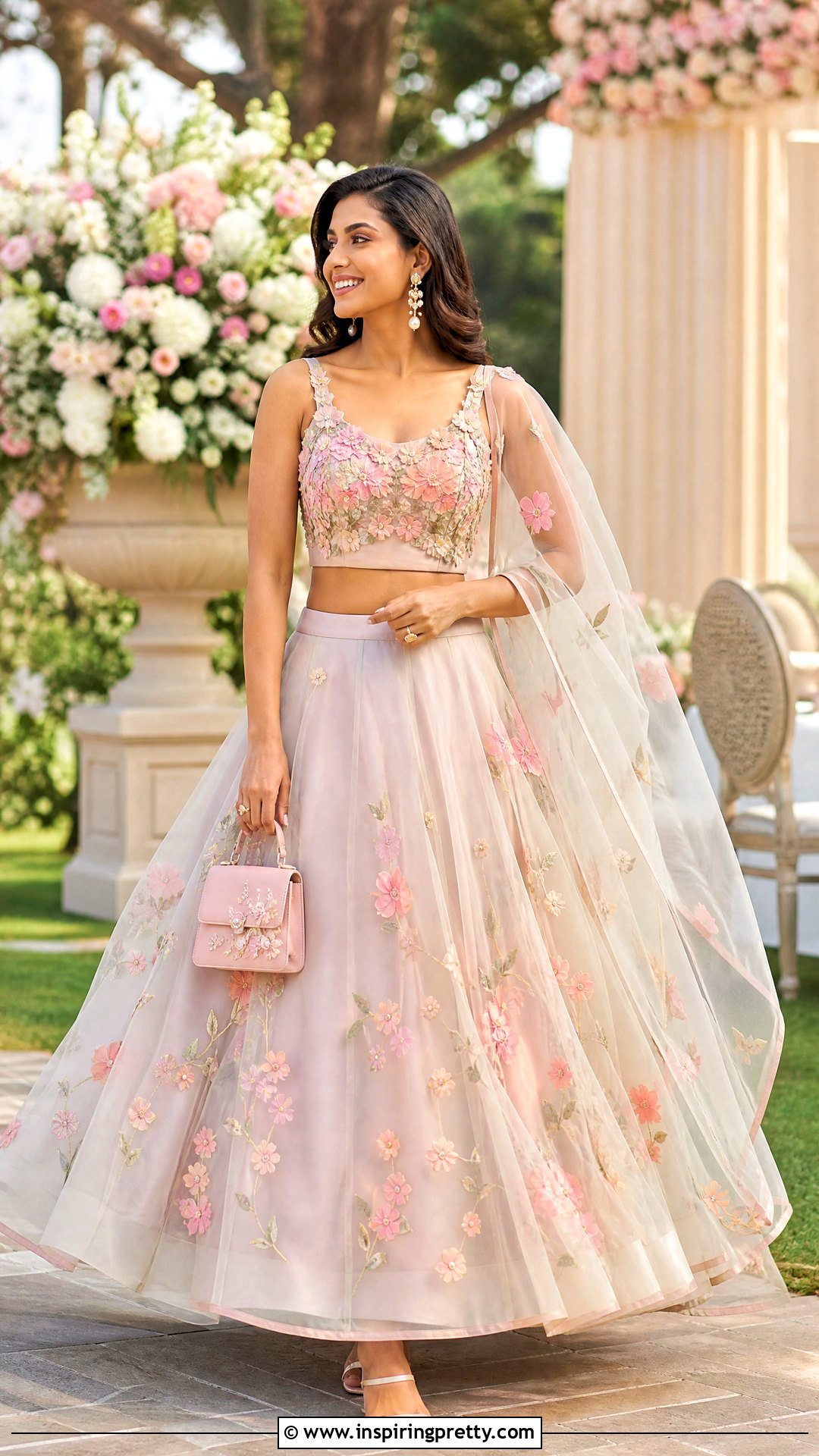
Organza photographs crisp because it holds its own shape, which also means you rarely need extra can-can underneath. A softly structured blouse goes with a full organza skirt in florals, appliqué or spaced embroidery. My non-negotiable is lining. Raw organza is scratchy, and a skirt without a smooth inner layer will rub your legs all day. A matching sheer dupatta softens the look, though the set stands on its own without one. Pearl earrings, a pastel bag and low block heels suit a daytime wedding or garden lunch, with soft curls or a half-up style.
18. Georgette Crop Top Lehenga
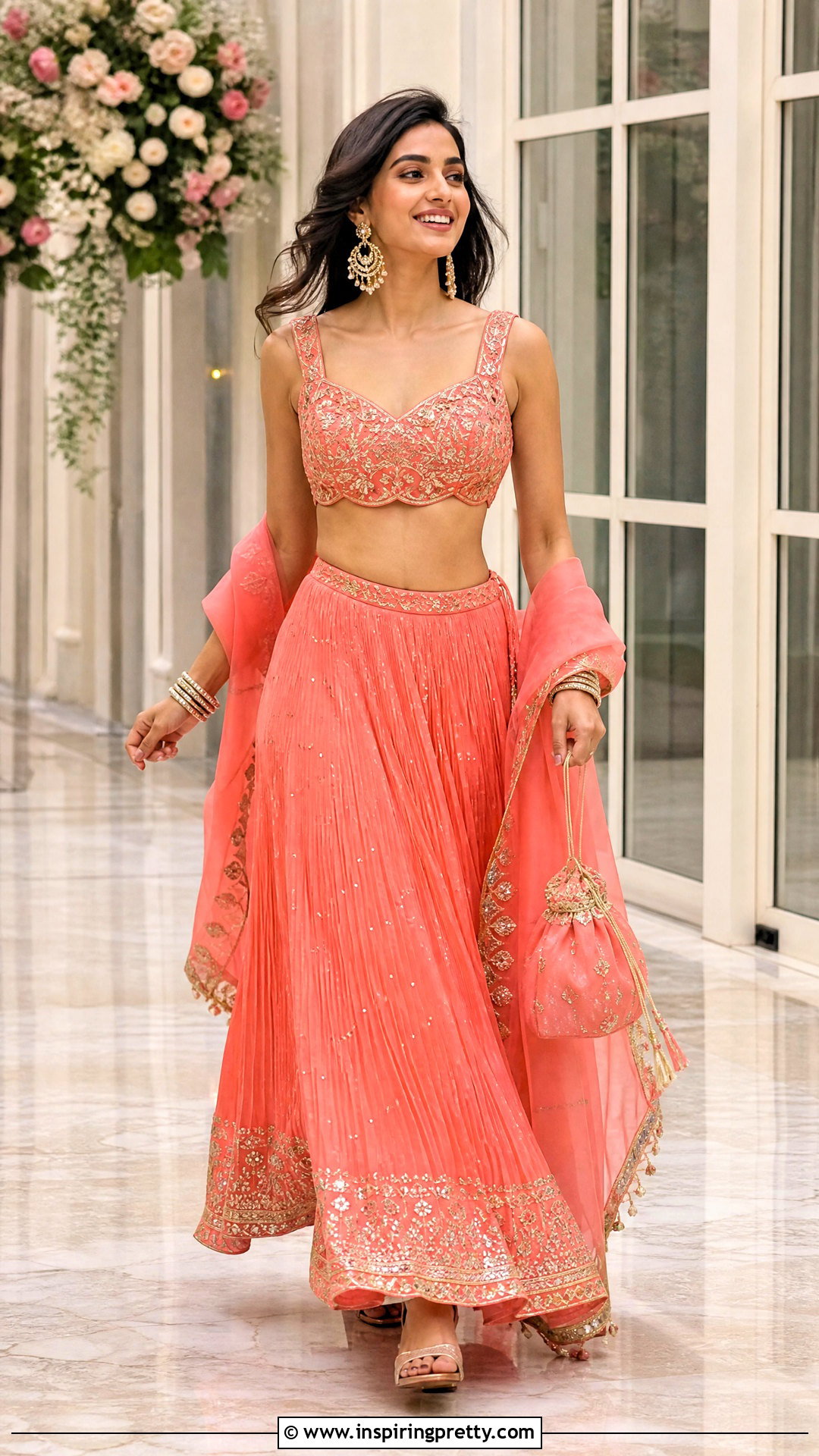
If the celebration runs from afternoon into the night, georgette is the fabric I'd trust. It's light, it drapes, and it doesn't crease the way silk or organza does after a long car ride. A fitted embroidered blouse with a skirt that falls straight from the waist keeps the line fluid, and vertical panels or fine threadwork add detail without stiffness. Georgette is slightly sheer, so check the skirt lining in daylight beforehand. Add a dupatta only if you want the coverage. For dancing at a sangeet or a warm destination wedding, I'd choose long earrings and cushioned block heels.
19. Satin Crop Top Lehenga
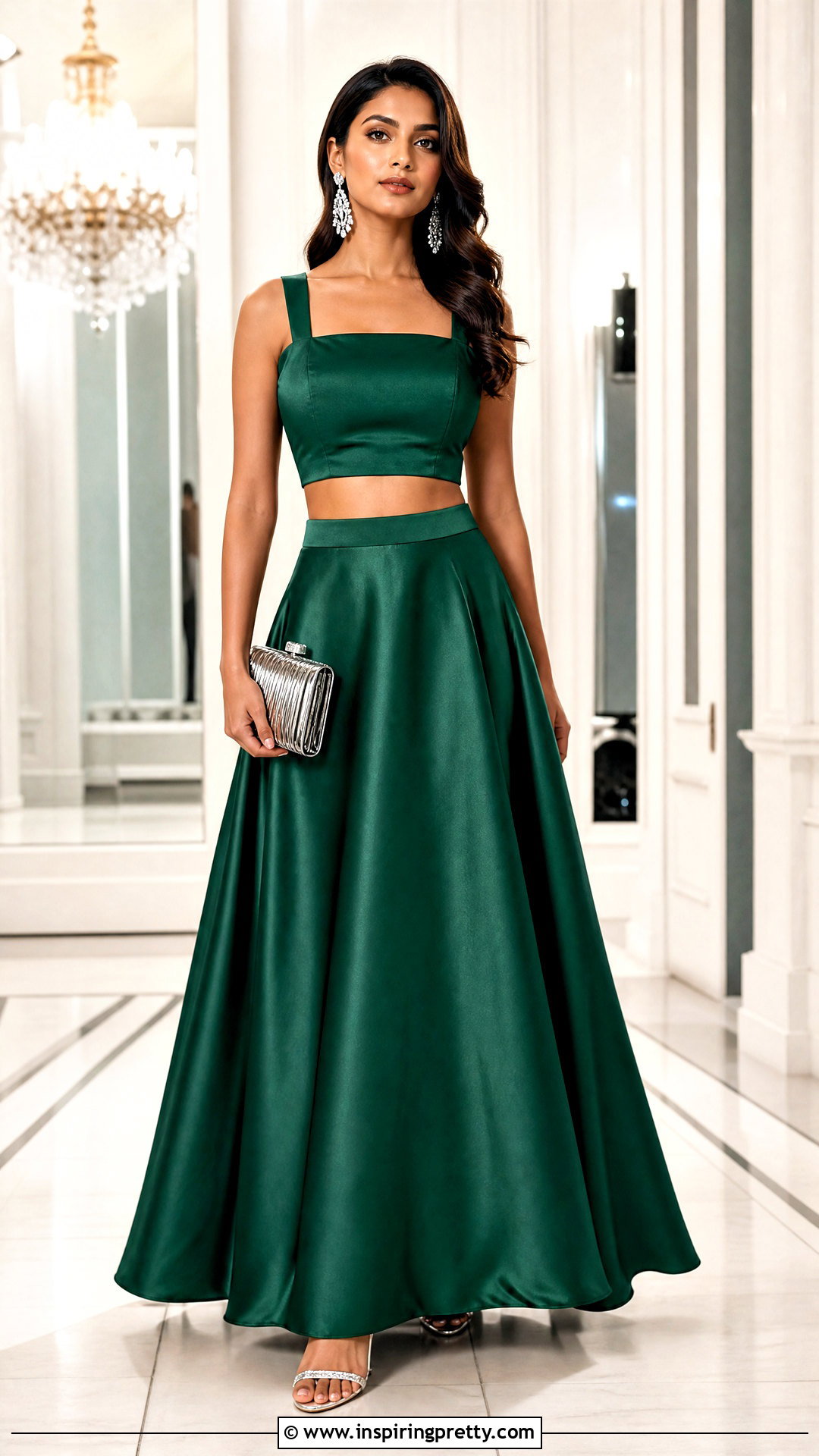
Satin looks sleek and modern, and it's also the least forgiving fabric here. It shows every crease, water drop and sweat mark, so I steam the skirt just before leaving and tell people to blot spills, never rub them. A structured blouse with a square, cowl or asymmetric neckline pairs with a bias-cut or moderately flared satin skirt. One shade, emerald or navy say, lets the sheen do its job, and embroidery belongs only at the neckline or waistband. Crystal earrings and slim metallic heels finish it. A draped blouse rarely needs a dupatta on top.
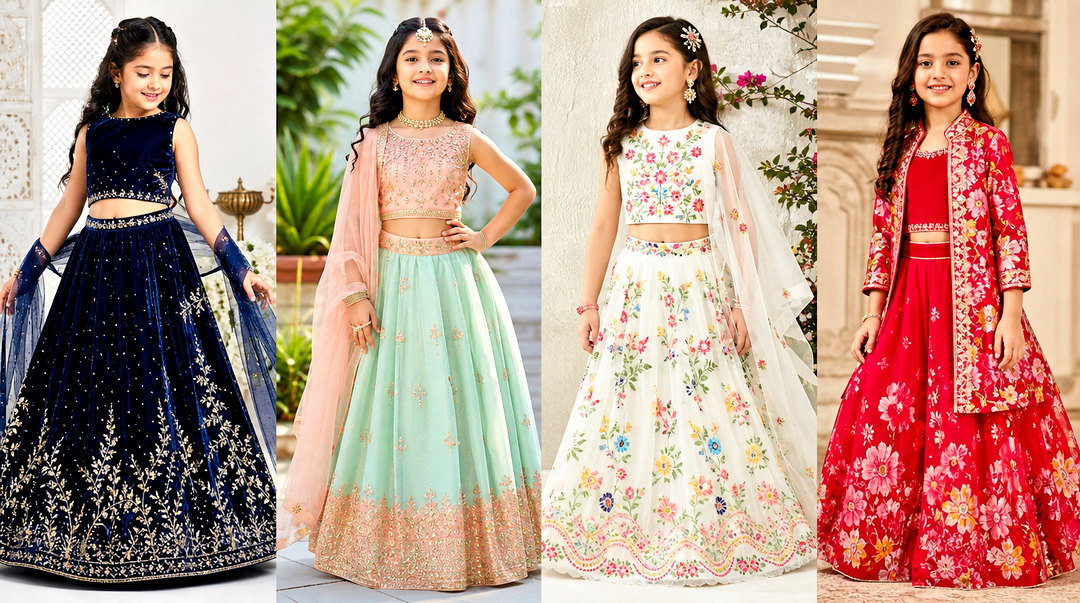
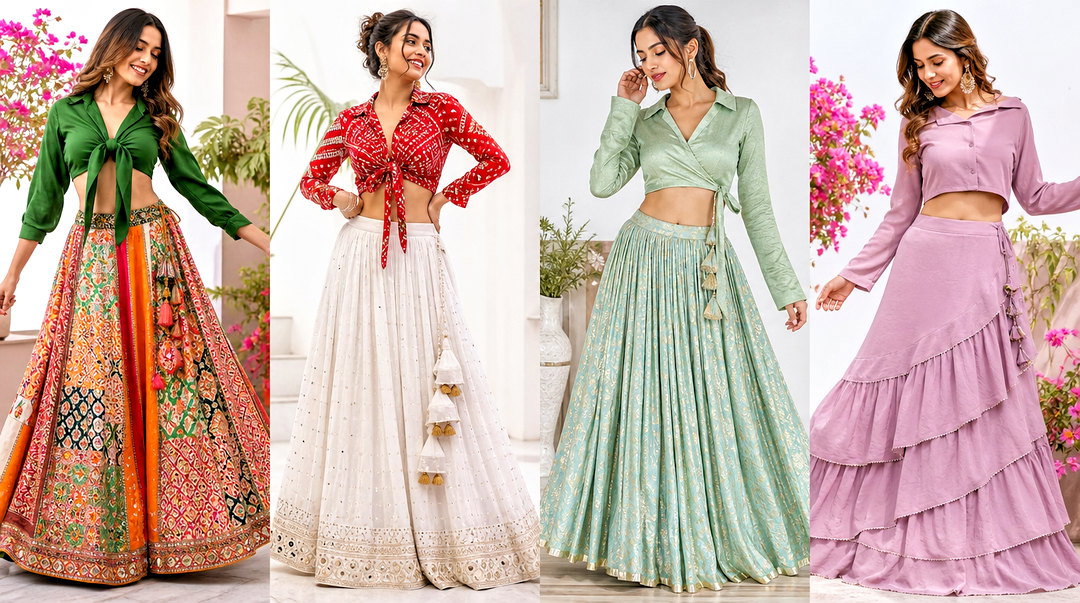
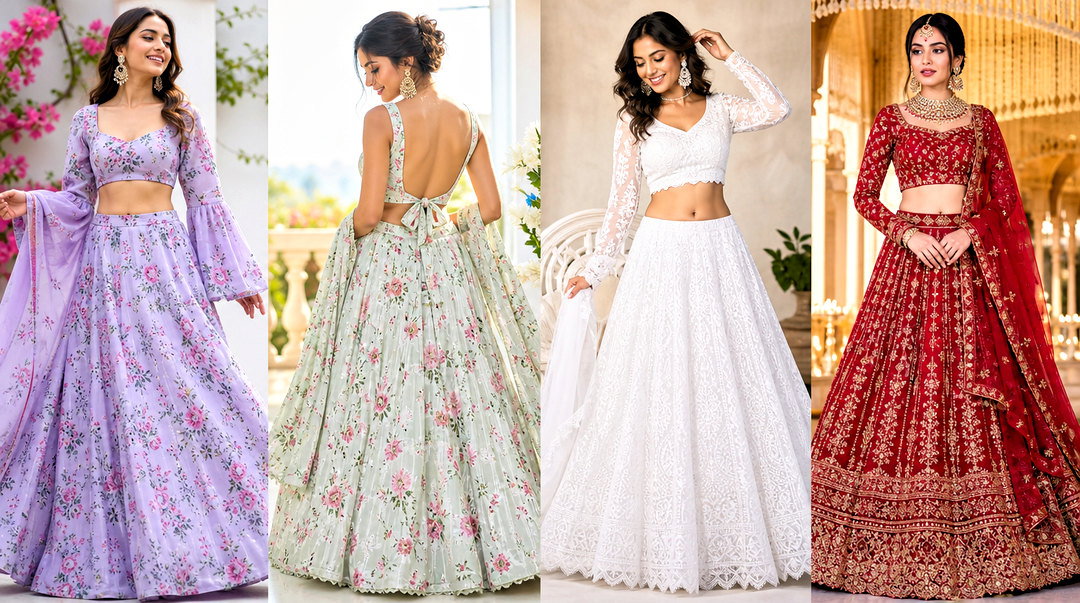
20. Monochrome Crop Top Lehenga
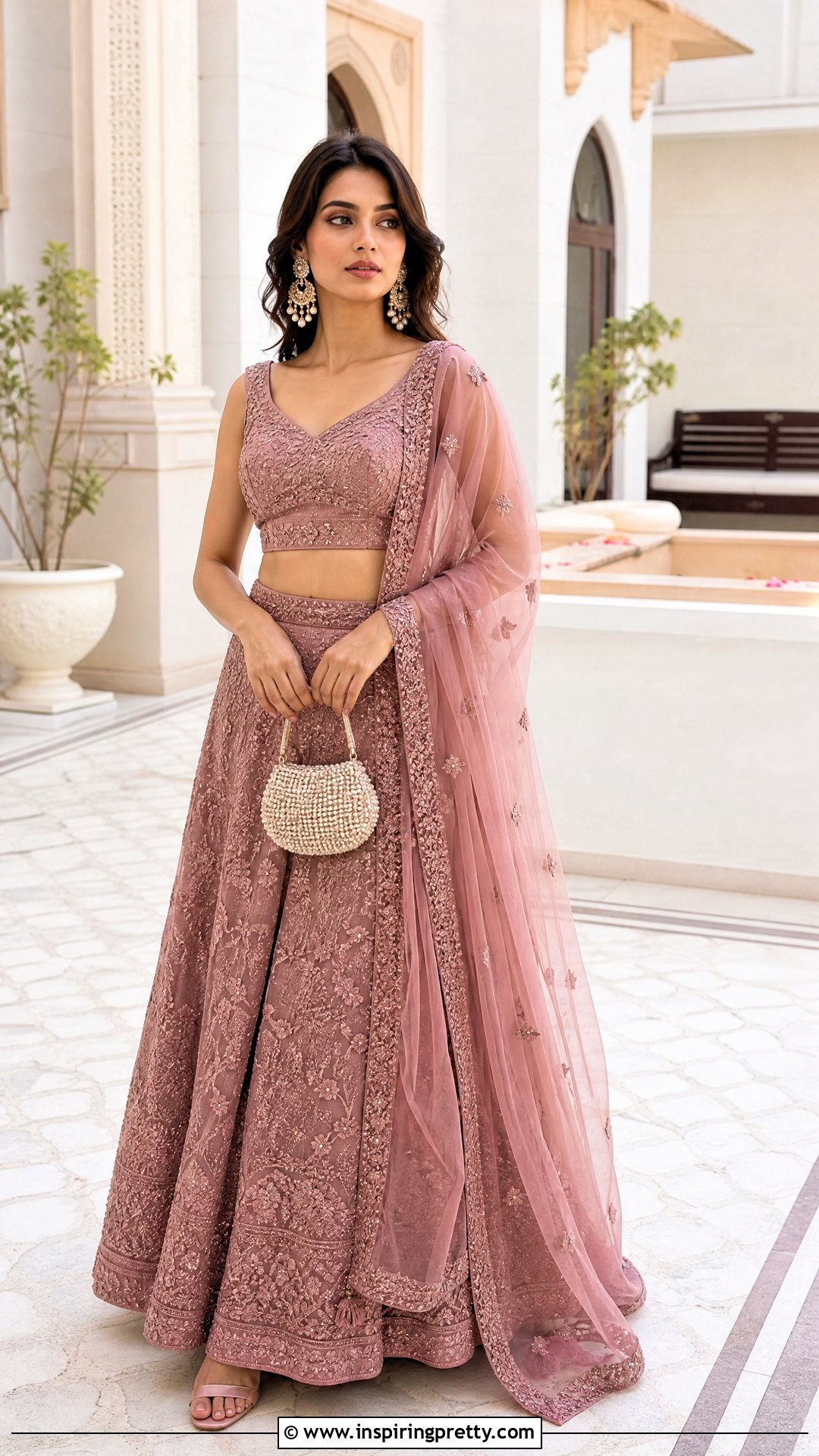
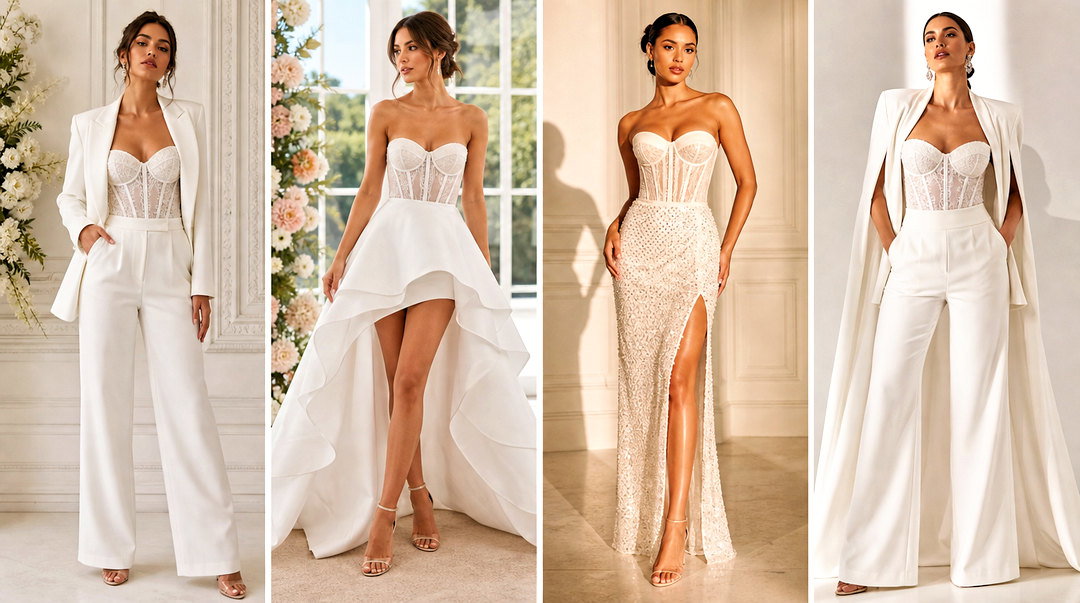
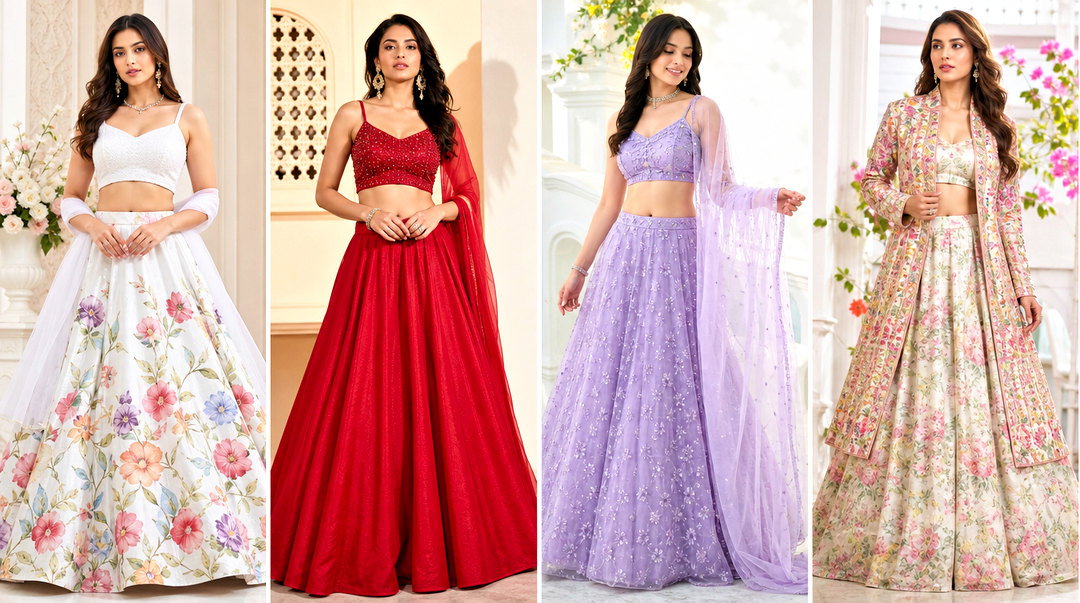
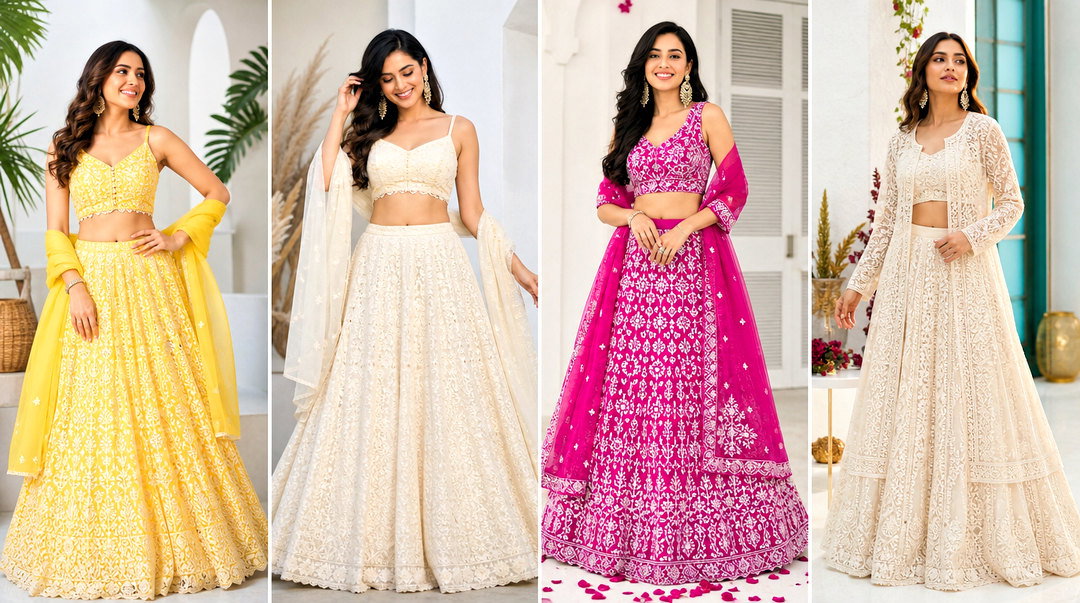
Monochrome only works when the textures differ. An embroidered blouse, a plain flowing skirt and a sheer dupatta in one color family give depth, while three flat matching fabrics look like a uniform. Sequins beside threadwork beside matte silk follows the same idea. I'll often break the single color with contrasting metallic jewelry. The long unbroken line also adds height, which is why I suggest it to petite guests. Pastels suit daytime and deep tones come out after dark. It's a sensible pick for wedding guests, bridesmaids and anyone coordinating with a group.
21. Contrast Crop Top Lehenga
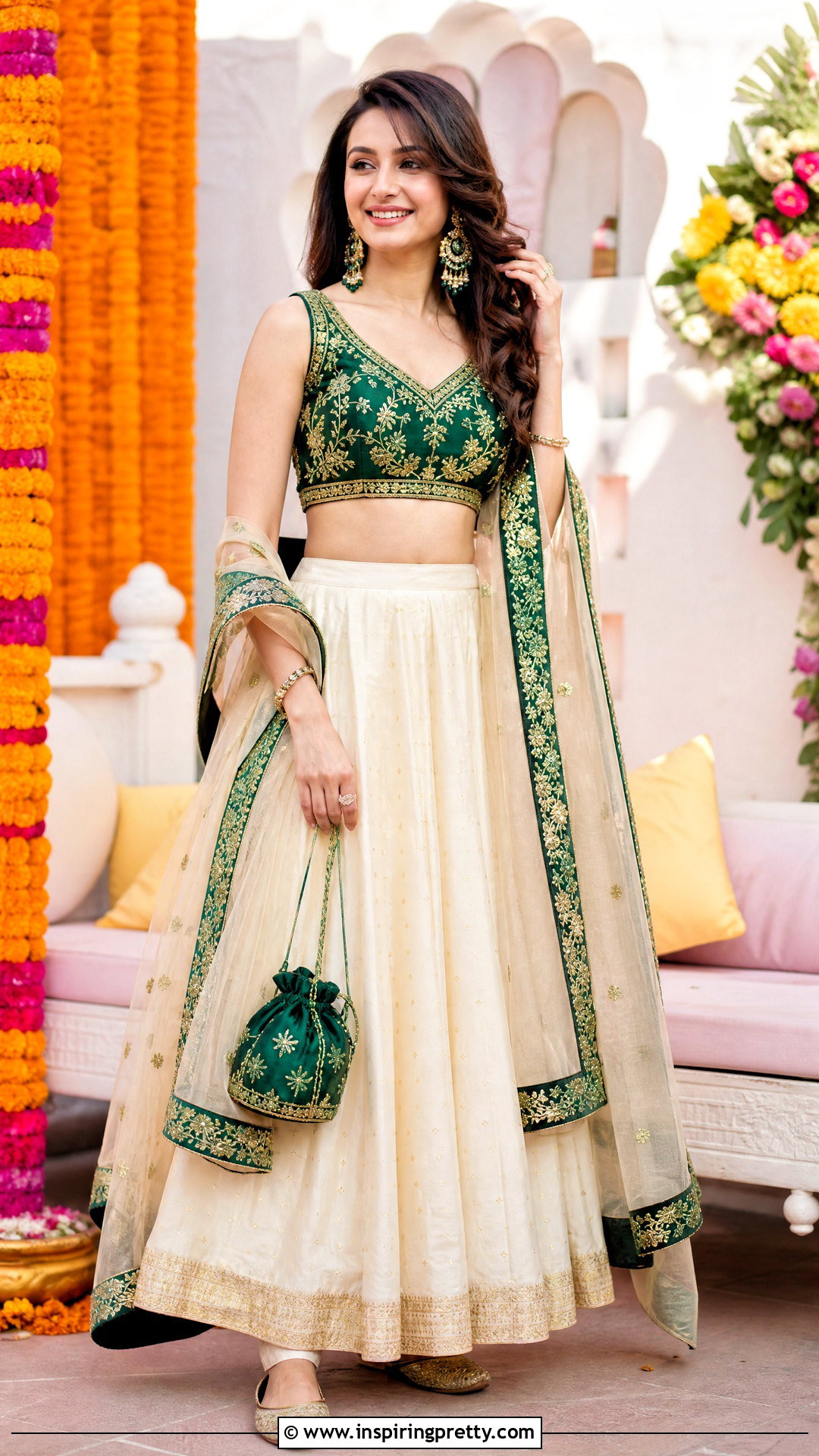
Contrast makes each piece feel distinct: an embroidered blouse over a solid lehenga, or a plain top over a printed skirt. Pink with orange, emerald with ivory and maroon with blush are pairings I see work again and again. The dupatta is the glue. Pick one whose border repeats both colors and the whole outfit suddenly looks planned. Where people go wrong is sneaking a third color in through the bag and shoes. Two main tones and one metal is the limit I stick to, and it makes a cheerful mehendi or daytime wedding outfit.
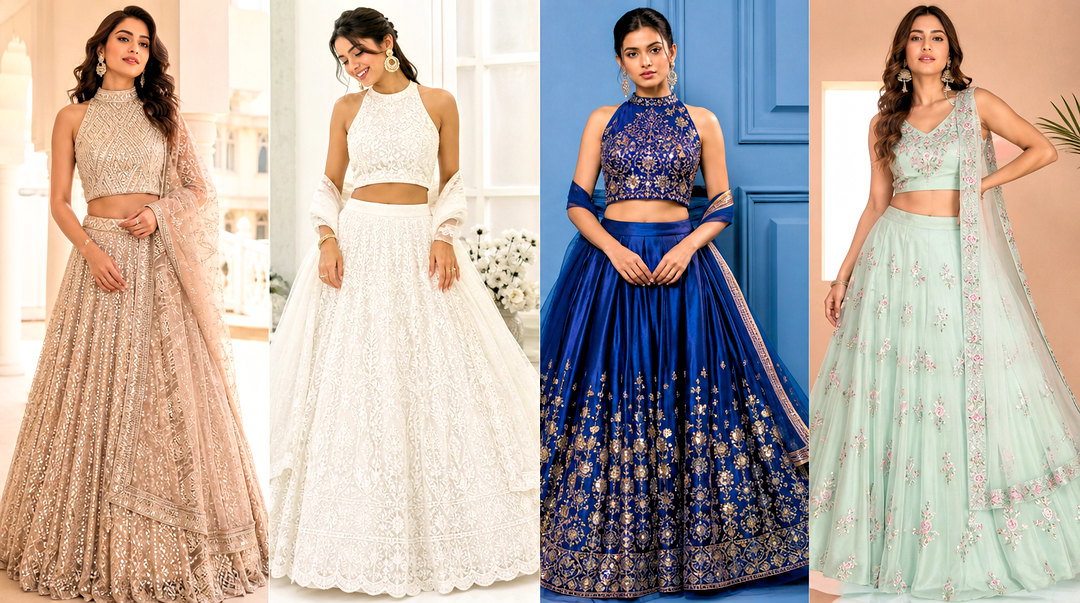
22. Pastel Crop Top Lehenga
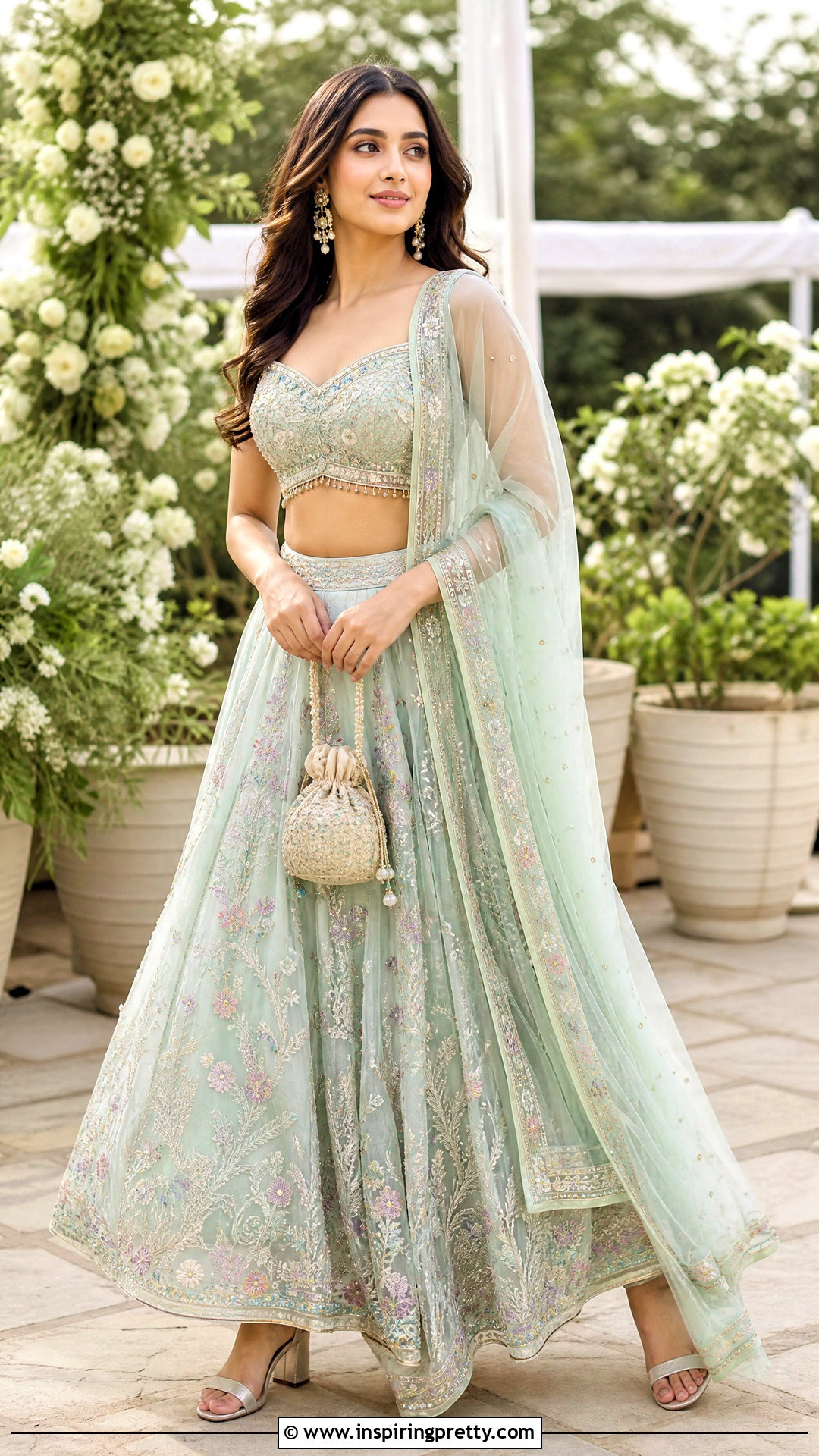
Pastels belong to daylight. Powder blue, blush and mint look fresh in the sun and slightly washed out under warm evening bulbs. I keep the blouse and skirt in one shade or two neighboring tones, and lean on pearl work or floral appliqué rather than heavy metallics, which can look harsh against soft color. Pale fabric shows makeup and turmeric instantly, so be careful anywhere near a haldi. A sheer dupatta over one shoulder, pearl earrings and nude block heels keep it light. It's an easy color story to coordinate across a group of bridesmaids, too.
23. Black Crop Top Lehenga
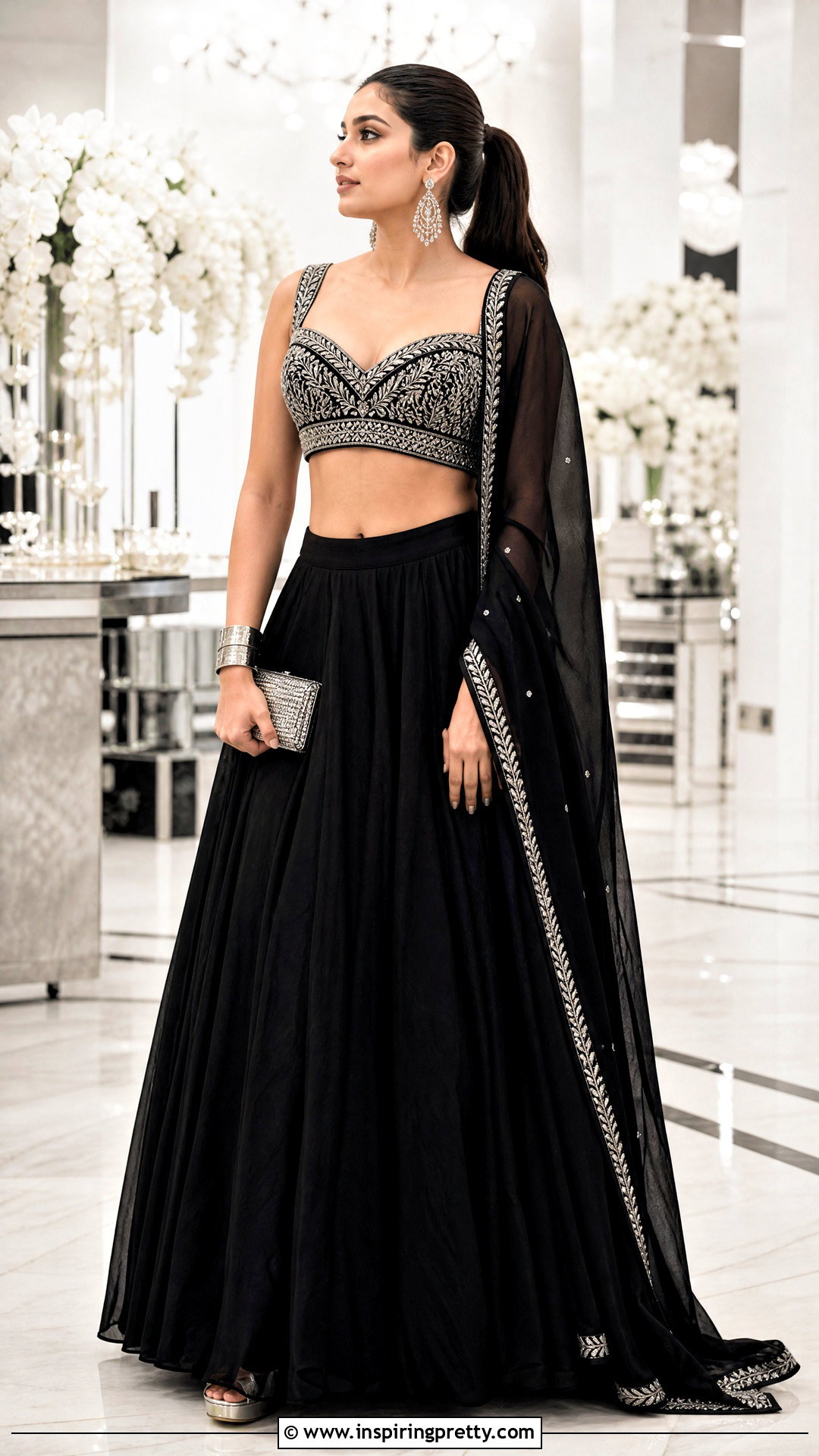
Black is bold at night and, in some families, unwelcome at a wedding, so I'd check before wearing it to a ceremony. Receptions and sangeet nights are usually the safer ground. A structured blouse with silver embroidery or tonal threadwork over a full black skirt looks rich. Black swallows embellishment in photos unless there's contrast, which is why silver or crystal detailing earns its place here. A sheer black dupatta with a narrow border adds depth. Silver earrings, a cuff and a crystal clutch are enough; skip the necklace if the neckline is worked. Lint shows on black, so carry a roller.
24. White Crop Top Lehenga
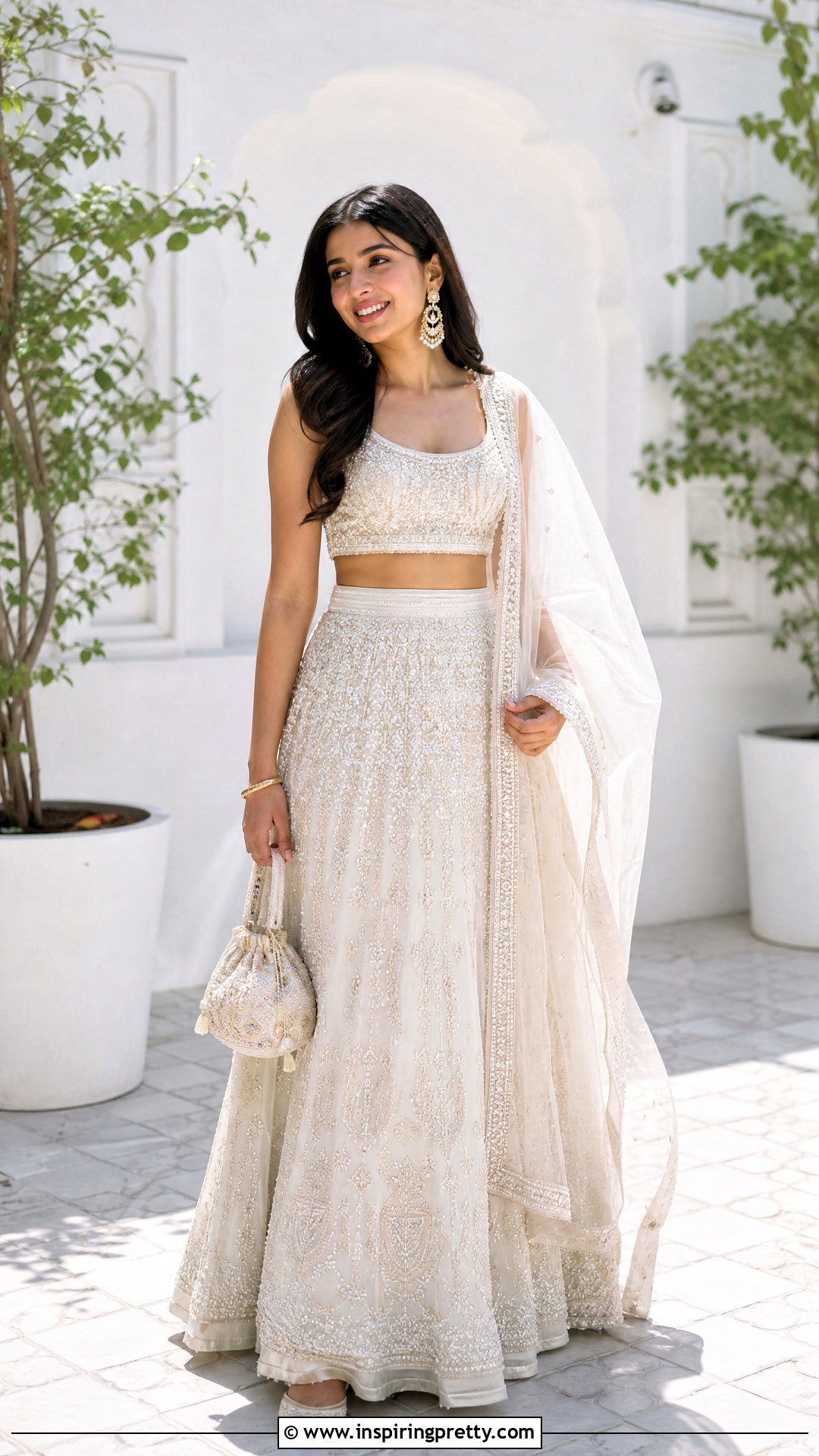
White and ivory can look fresh and festive, but this is the one color where I always tell guests to check the family's expectations first, since in some communities white is linked with mourning. If it's welcome, use texture: tonal threadwork, mirrors, pearls or a faint metallic thread keep it from looking flat. Keep the waist high and clean. A sheer dupatta with a delicate border, pearl or kundan earrings and ivory juttis work well, and one colored bracelet or bag adds a small accent. Pale fabric shows everything, so tuck stain wipes into your potli.
25. Plus Size Crop Top Lehenga
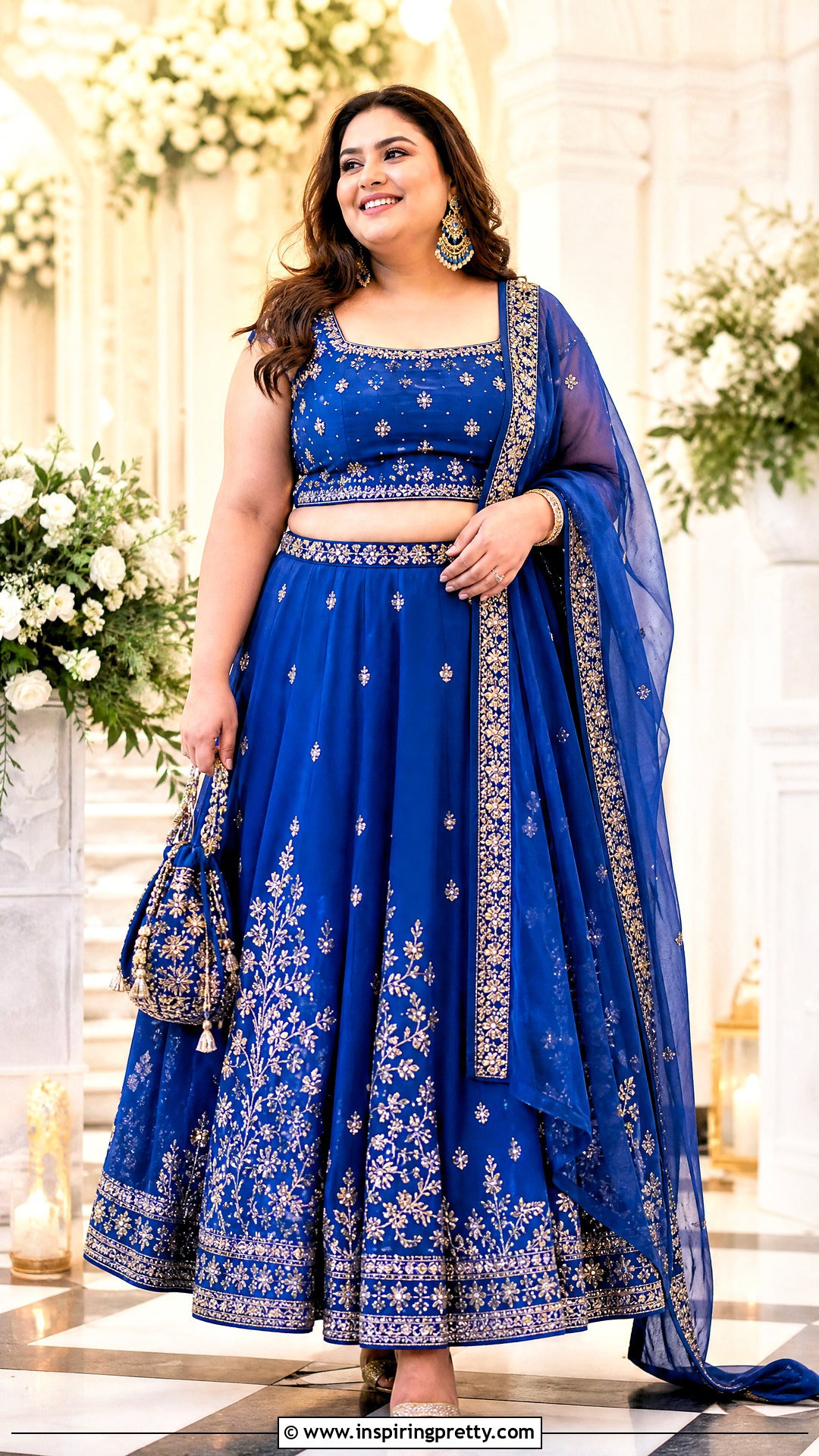
Fit beats hiding, every time. For plus-size guests I start with blouse length: it should meet the skirt waistband or show only as much skin as you like, and the band beneath the bust should be wide enough to sit flat without rolling. A square, V or structured scoop neck opens the frame. Pair it with a high-rise A-line or paneled skirt, because panels give flare without the bulk of gathering at the waist. Ask the tailor to build in proper bra cups; it makes a real difference to support over a long day. A light dupatta over one shoulder keeps the waist visible, and supportive block heels or embellished flats carry you through.
A Fitting Routine for the Blouse and Skirt
Crop lehengas are tailored close to the body, so the trial fitting matters more than the design sketch. I go through the same routine every time, and I ask people to bring the actual shoes and bra they'll wear on the day.
- Raise both arms over your head. The blouse shouldn't ride up past the bust or cut into the armhole.
- Sit on a hard chair for a couple of minutes. The waistband shouldn't dig in, and the hooks or zip should stay flat.
- Walk a few steps in your heels. The front hem should clear the floor so stairs aren't a hazard.
- Ask for spare seam allowance at the blouse side seams, so it can be let out if your measurements change before the wedding.
- Check the can-can. One soft layer is usually enough; stiff extra layers add weight and scratch.
If something feels a little tight at the trial, it will feel much worse by the fifth hour. Say so at the fitting, not on the morning of the event.
Dancing in a Two-Piece Without Readjusting Every Song
Sangeet nights test a crop lehenga harder than any ceremony. The skirt is often weighted at the hem, and that weight pulls the waistband down while you spin. A drawstring with a hook fastening holds better than a zip alone, and I tie the drawstring with a double knot before leaving the house.
Pin the dupatta at the shoulder and again at the waist with small safety pins so it can't slide off mid-step. With an off-shoulder or strapless blouse, a strip of fashion tape along the neckline is worth carrying. Ask the tailor for a pocket in the skirt seam as well. It holds your phone and a few spare pins, so you're not hunting for a clutch on the dance floor.
The Function Decides the Lehenga
Most of these looks come down to the same few checks: a blouse that stays put when you lift your arms, a waistband that lies flat, lining that doesn't scratch, and shoes you can stand in all evening. Prints and pastels carry daytime functions, while sequins, velvet and satin come out at night. Capes, jackets and drapes can take over from the dupatta if you'd rather not manage one. Let the neckline decide the jewelry, and pick the model that suits the function you're actually attending, not the one that looked best on a screen.
Related posts:


Leave a Reply