
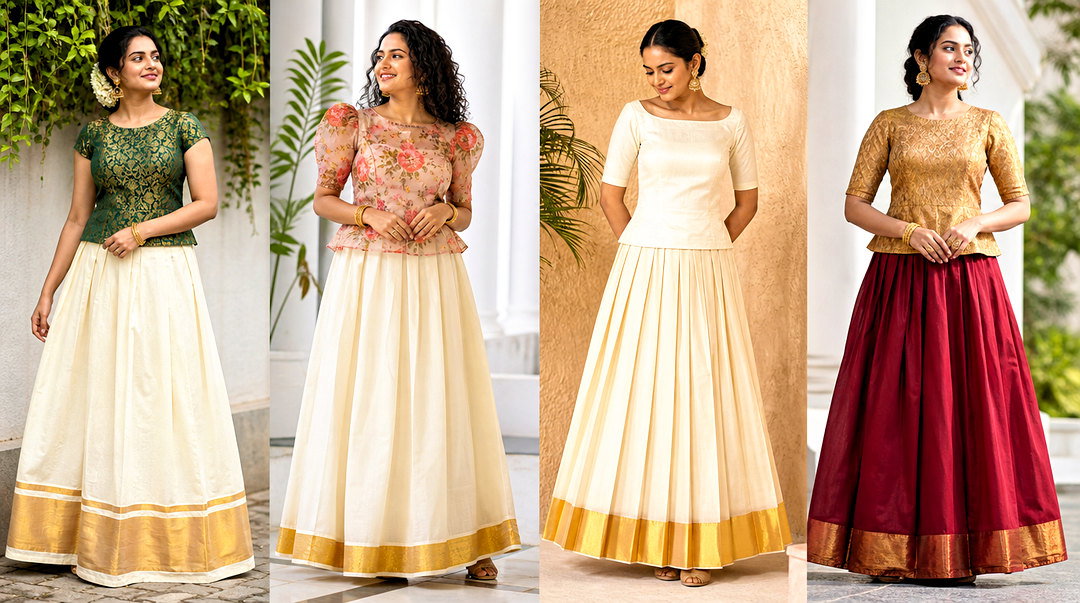
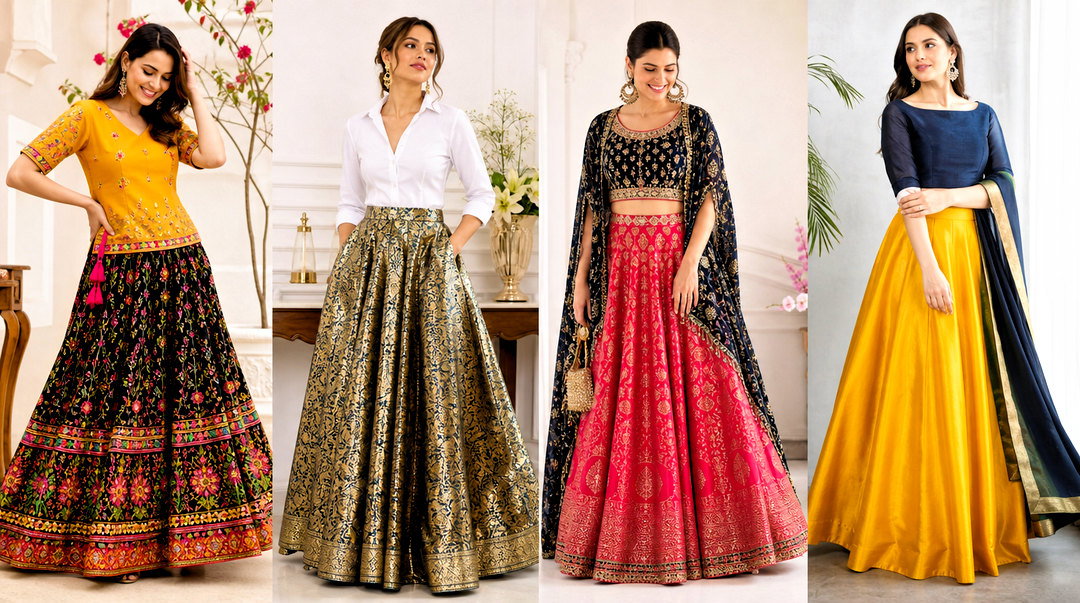
A crop top lehenga is the version of traditional Indian dressing I recommend most to guests who'll be on their feet for three functions in two days. It has no sari pleats to hold, often no dupatta to manage, and the skirt and top can be worn again separately. Keeping it simple comes down to one rule: only one piece gets the decoration. If the skirt is printed or embroidered, the top stays plain, and if both are plain, texture, earrings or a light dupatta add the interest. Below are 20 sets for a haldi, mehndi, sangeet, reception or family festival, with what I'd check on each. A secure waistband and shoes you can dance in matter as much as the color.

Fitting the Blouse and Waist Before the Function
A simple lehenga only looks simple when it fits. Most of the trouble I see at functions comes from a skirt that sits too low or a blouse that rides up, not from the colors. If you're having a set stitched or altered, these are the checks I make at the fitting.
- Decide the gap first. Some people want the top to meet the skirt; others like a few inches of skin. Tell the tailor before cutting, because the blouse length is hard to add back.
- Wear the exact shoes to the hem fitting. The skirt should just clear the floor in your heels or juttis; a hem that touches the ground gets stepped on when you dance.
- Check the closure. Drawstring waists adjust after a big meal; side zips look neater. Ask for a hook above the zip so it can't slip open.
- Raise both arms and sit on a low chair. A blouse that lifts off the skirt or pinches at the underarm needs another fitting.
- Ask about lining. Pale cotton, chikankari and georgette usually need it to stop the skirt looking see-through in sunlight.
Ready-made sets almost always need a small change at the waist or hem. Leave a week or two for alterations before the function, more during the wedding season, when tailors are busiest.
1. White Crop Top Lehenga With Floral Skirt
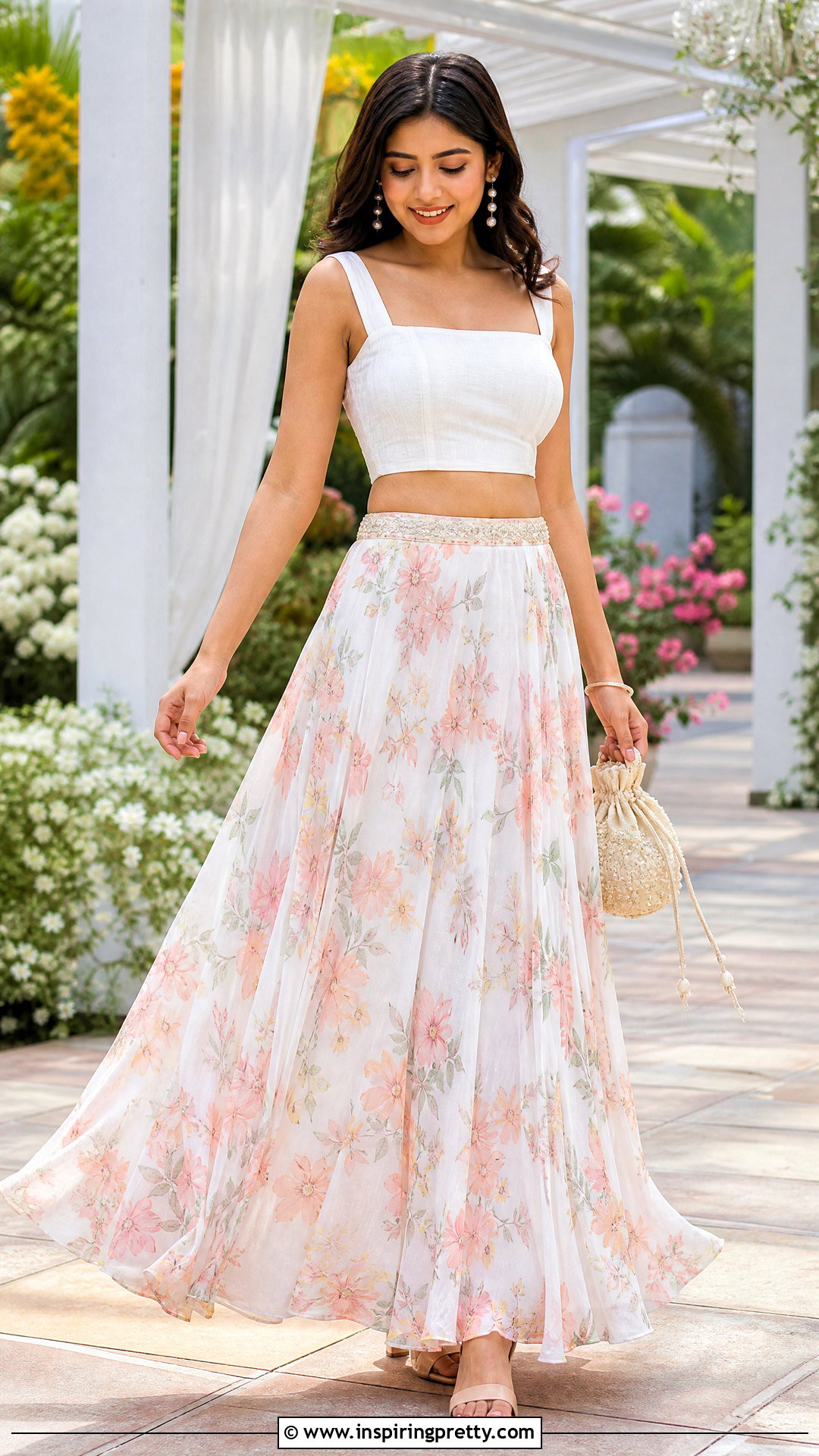
White on top with a floral skirt is light and fresh for a daytime function. I want the print to have plenty of open background, small pink, yellow or blue flowers on a pale ground, so it reads as color rather than busy pattern. A fitted cotton, crepe or raw-silk top with a square or round neck keeps it crisp. White cotton shows the bra under bright sun, so choose a lined top or wear a nude bra. Nude block heels or embroidered juttis are comfortable on lawns. Pearl studs, a slim bracelet and an ivory potli finish it; a sheer white dupatta with a narrow border is optional.
2. Pastel Pink Crop Top Lehenga
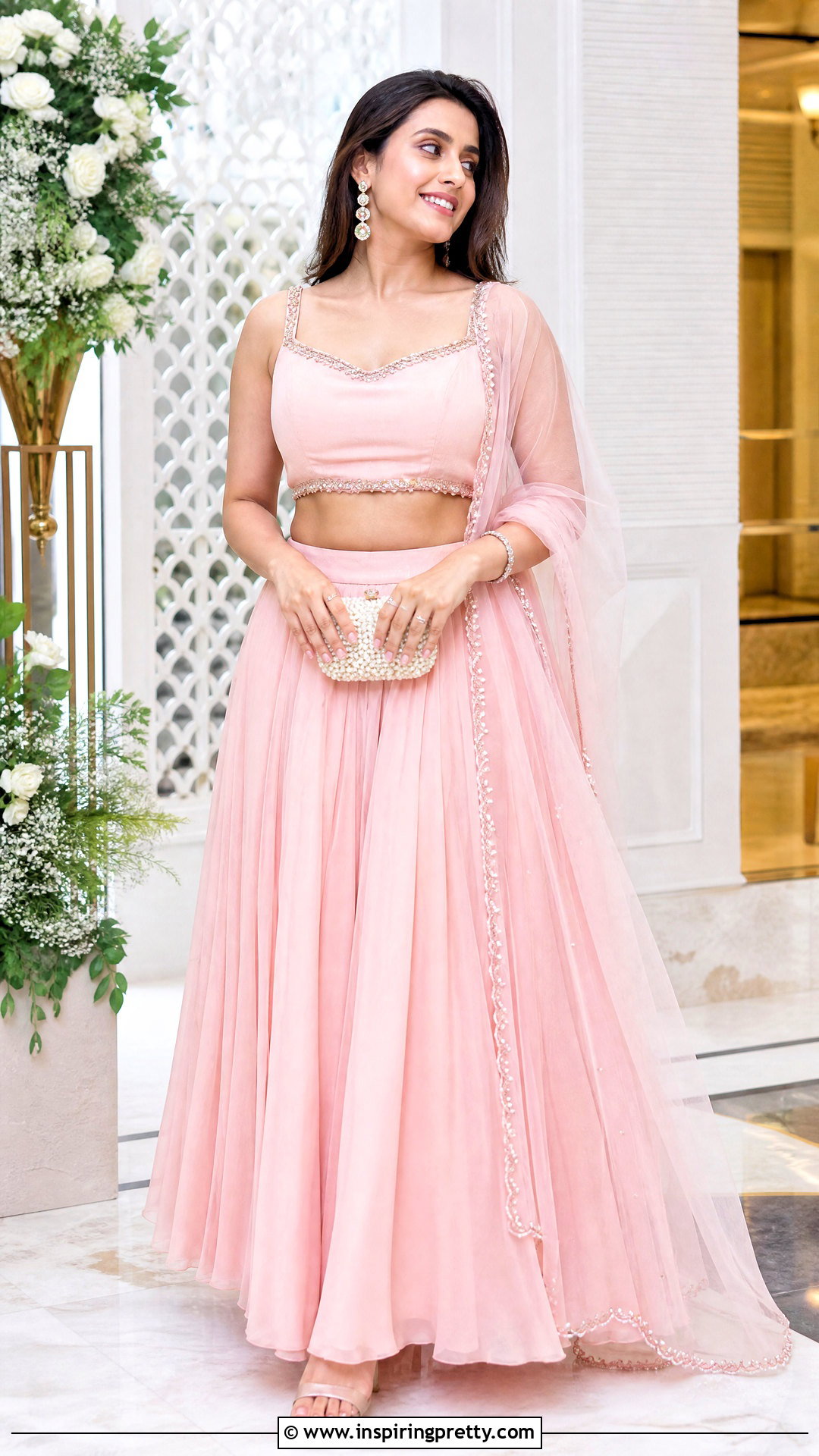
One soft pink shade from top to hem looks polished even when the fabric is simple. A sleeveless or short-sleeve top with a flowing georgette skirt in the same blush, with fine threadwork or a lightly embroidered waistband, is all it takes. Georgette is light and moves when you walk, but it creases less than silk, which helps when you travel to the venue. Drape a matching net dupatta over one shoulder and pin it at the blouse so your hands stay free for greeting people. Rose-gold sandals, small drops and a pearl clutch finish it. If you want more coverage, ask for a longer top that nearly meets the waistband.
3. Yellow Crop Top Lehenga For Haldi
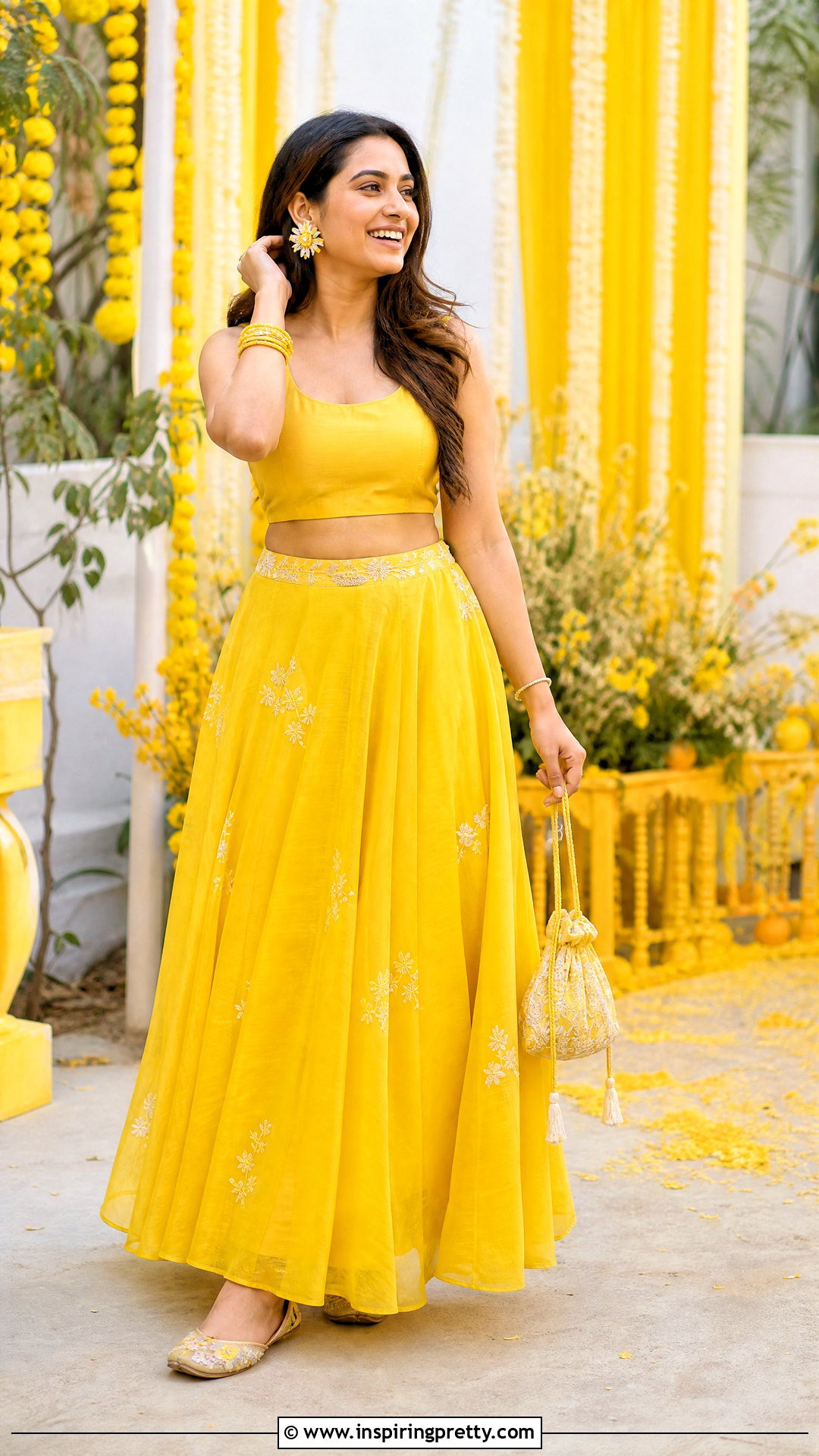
Haldi means turmeric paste flying around, so I treat the outfit as something that may get stained. That's why a simple crop top lehenga in sunny yellow cotton or chanderi suits it better than silk: turmeric marks show less on yellow and cotton washes more easily. A plain sleeveless top with a scoop neck and a skirt with a small white print, a narrow gota border or a few mirrors gives enough festive detail. Flat juttis or cushioned kolhapuris handle the dancing. Floral earrings, thin bangles and a fabric potli finish it. Skip a long dupatta, or drape a short one across both elbows.
4. Green Crop Top Lehenga For Mehndi
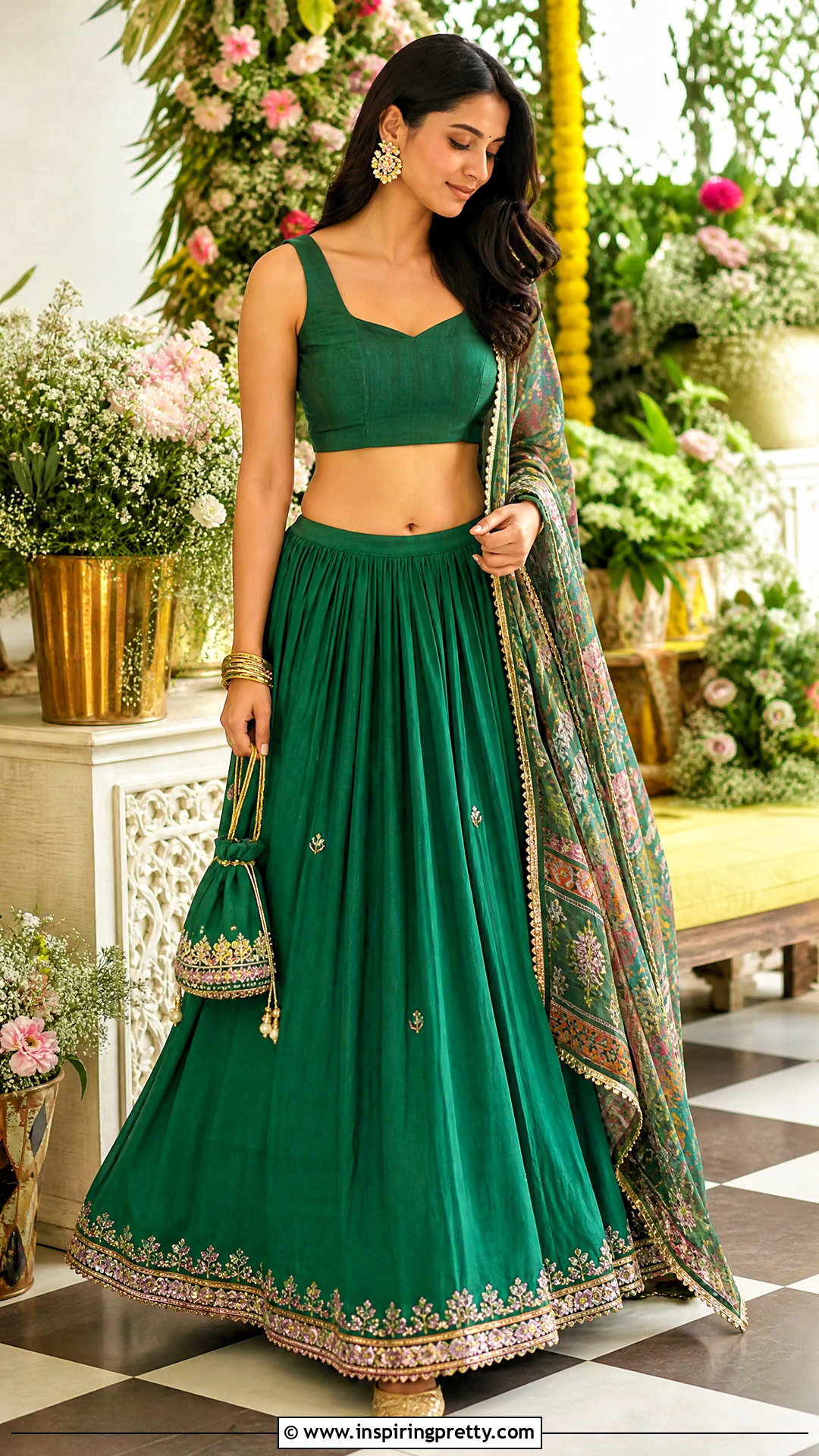
Green is the classic mehndi color, and it doesn't clash with the floral decor that fills most mehndi venues. An emerald, leaf-green or mint top with a flared lehenga embroidered only at the hem keeps it simple. Wide straps matter here because you'll be sitting with your hands out while the henna dries, and a slipping strap is hard to fix with wet mehndi. A V or sweetheart neck adds shape. Choose a skirt with a side zip and a manageable flare so you can sit on low seating. Gold juttis, floral earrings and a few thin bangles are enough; keep the bangles off until the henna is dry.
5. Blue Crop Top Lehenga With Mirror Work
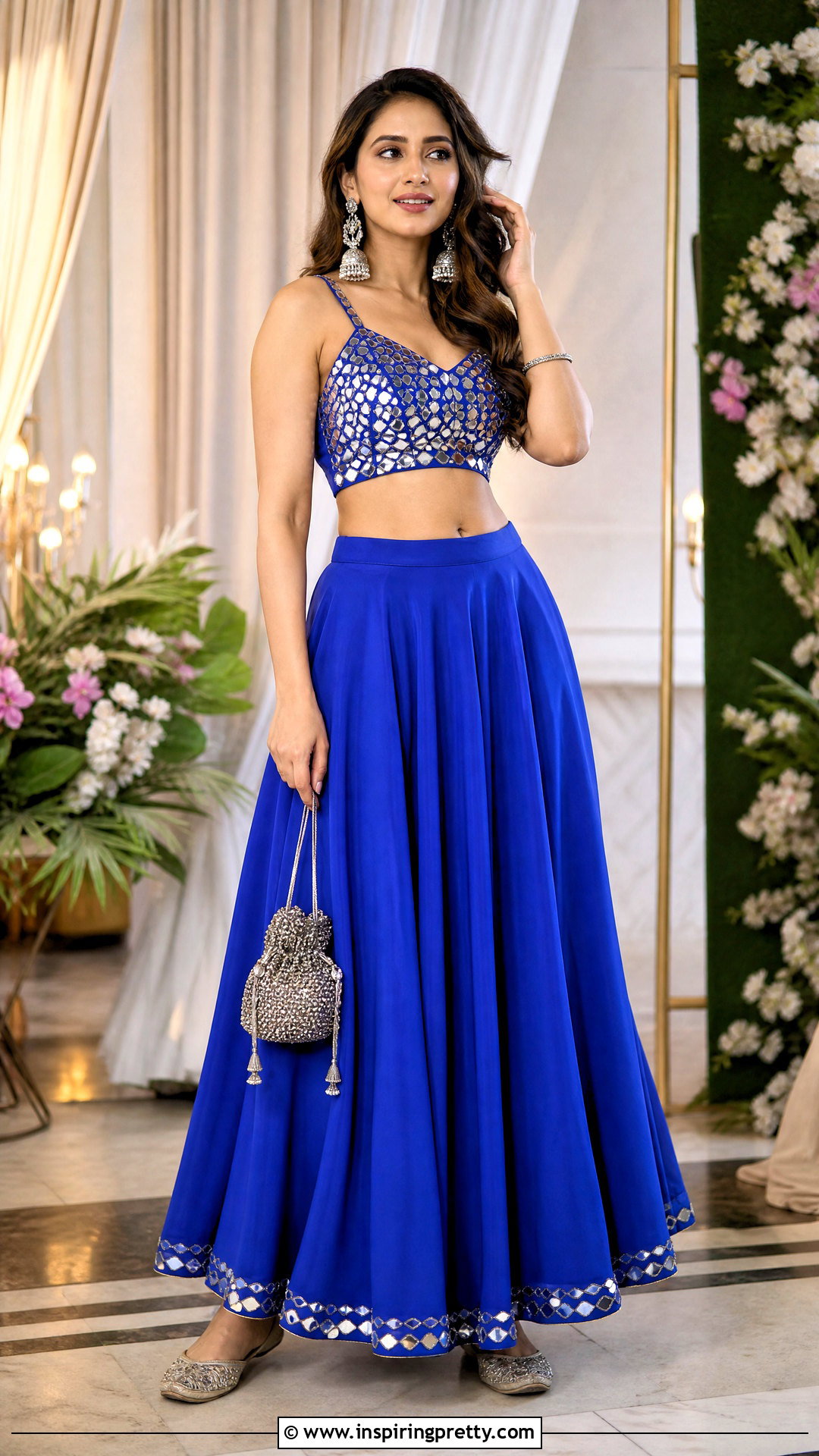
Mirror work catches stage lights, which is why I like it for a sangeet. Put the mirrors on one piece only: a fitted navy, royal or cobalt top with small, evenly spaced mirrors, and a plain matching skirt with just a narrow mirrored border. Mirror work is heavy and the edges can scratch, so look for a soft lining inside the top, and check the mirrors are stitched firmly before you dance. A back closure with hooks or a zip holds better than ties. Silver juttis, oxidized drop earrings and a metallic potli suit the blue. Leave the dupatta off for dancing, or drape a sheer one on one shoulder for photos.
6. Black Crop Top Lehenga With Sequins
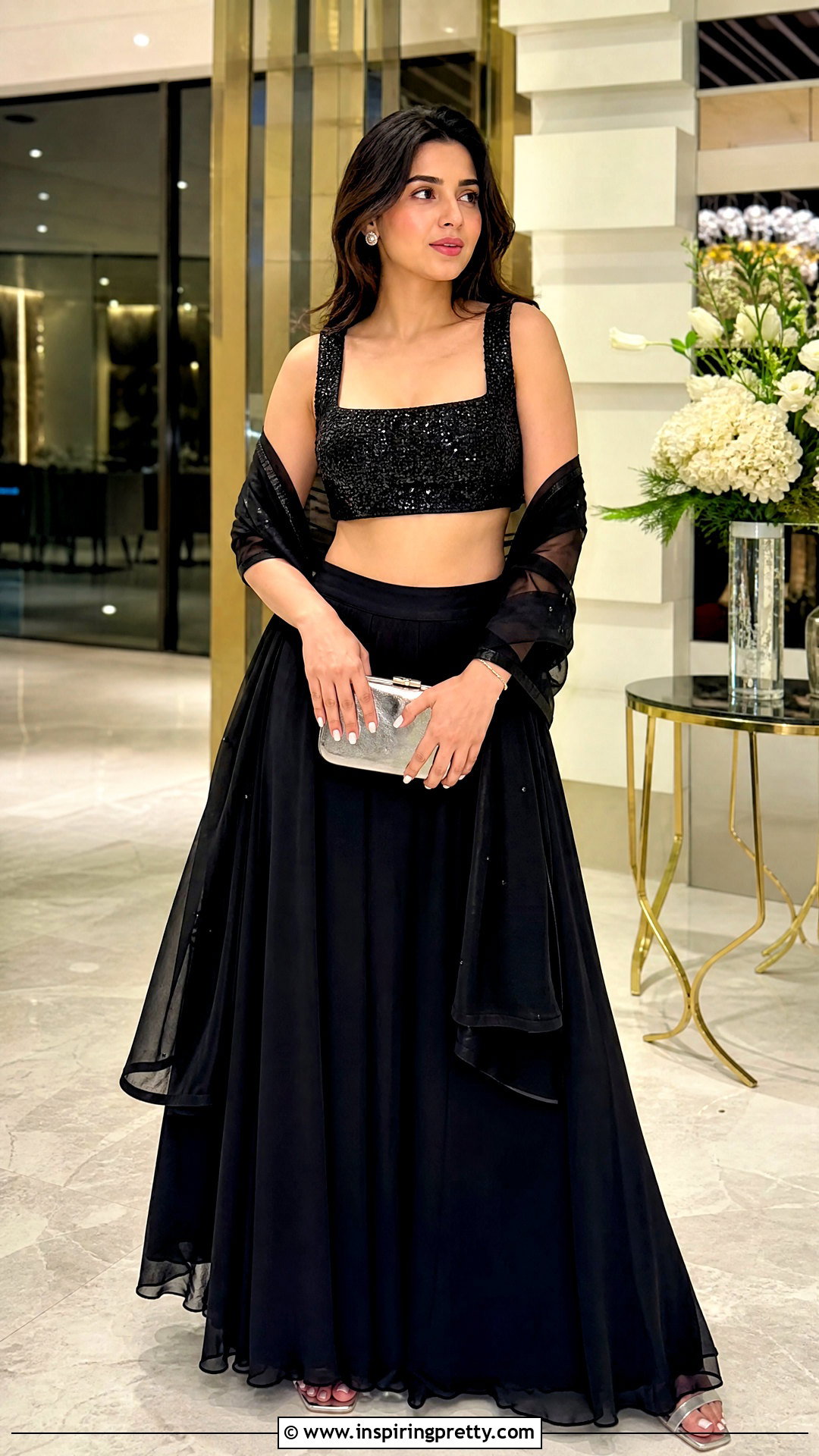
Black is the color I suggest for evening receptions and cocktail nights, but check with the family first, since some households still avoid black at weddings. A lightly sequined top with a high, square or one-shoulder neck, then a plain georgette or crepe skirt, keeps the sparkle in one place. A narrow sequin border on the skirt ties them together. Sequins scratch the inside of the arm, so choose a top with a soft lining at the armholes. Black block heels or metallic sandals, depending on how much you'll walk, crystal studs and a silver clutch finish it. A sheer black net dupatta on one arm is optional.
7. Red Crop Top Lehenga With Plain Skirt
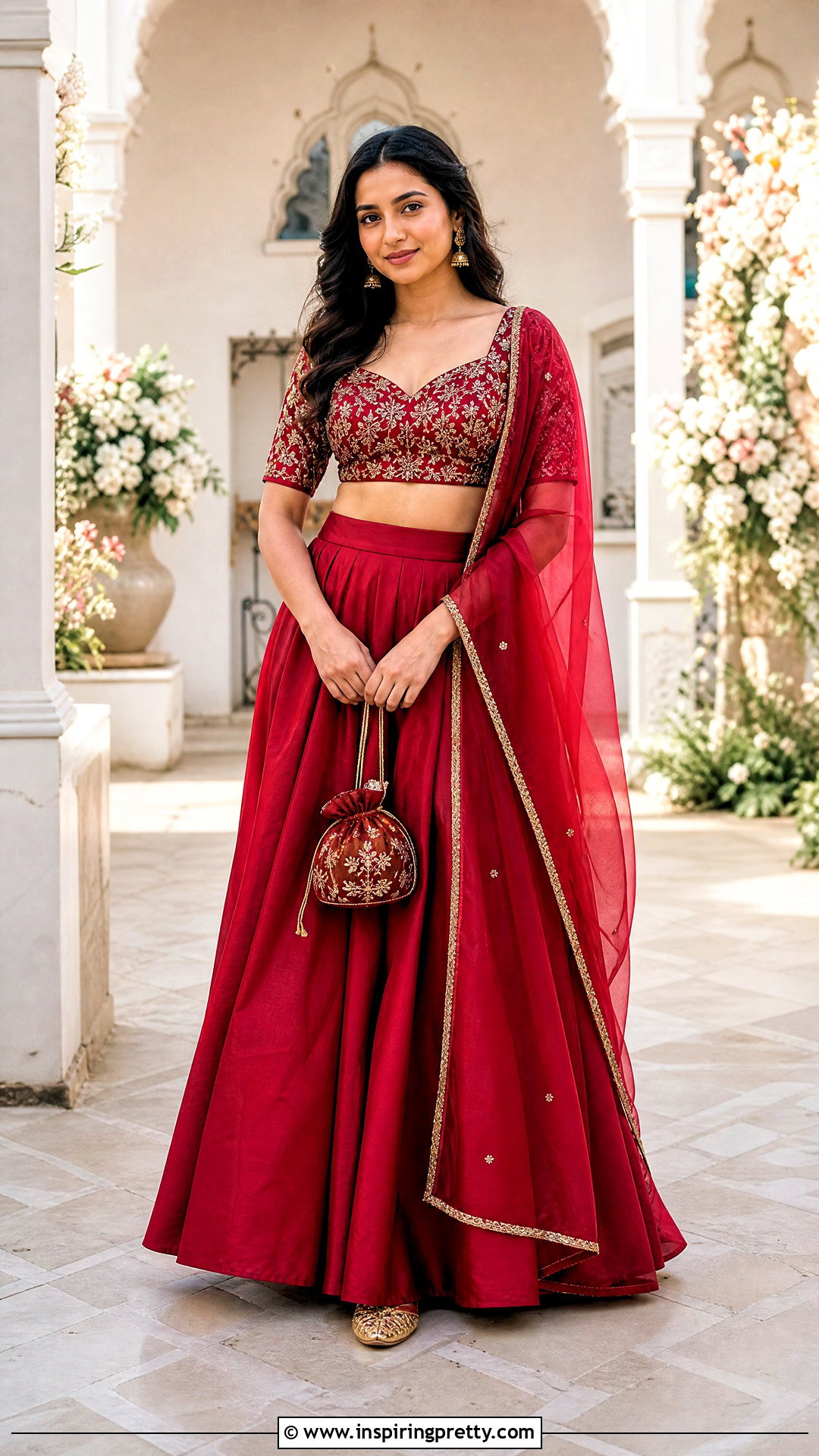
Red looks bold even when the outfit is plain, and a plain one leaves room for the color. Pair a structured embroidered crop top with a plain high-waisted skirt in red, maroon or deep crimson. Raw silk and crepe hold their shape without heavy embellishment. Red is often worn by brides, so as a guest I'd lean toward maroon or a deeper shade unless the family encourages bright red. A light organza dupatta with a thin gold border, gold juttis, small jhumkas and a compact potli finish it. Keep the blouse the only decorated piece.
8. Lavender Crop Top Lehenga With Net Dupatta
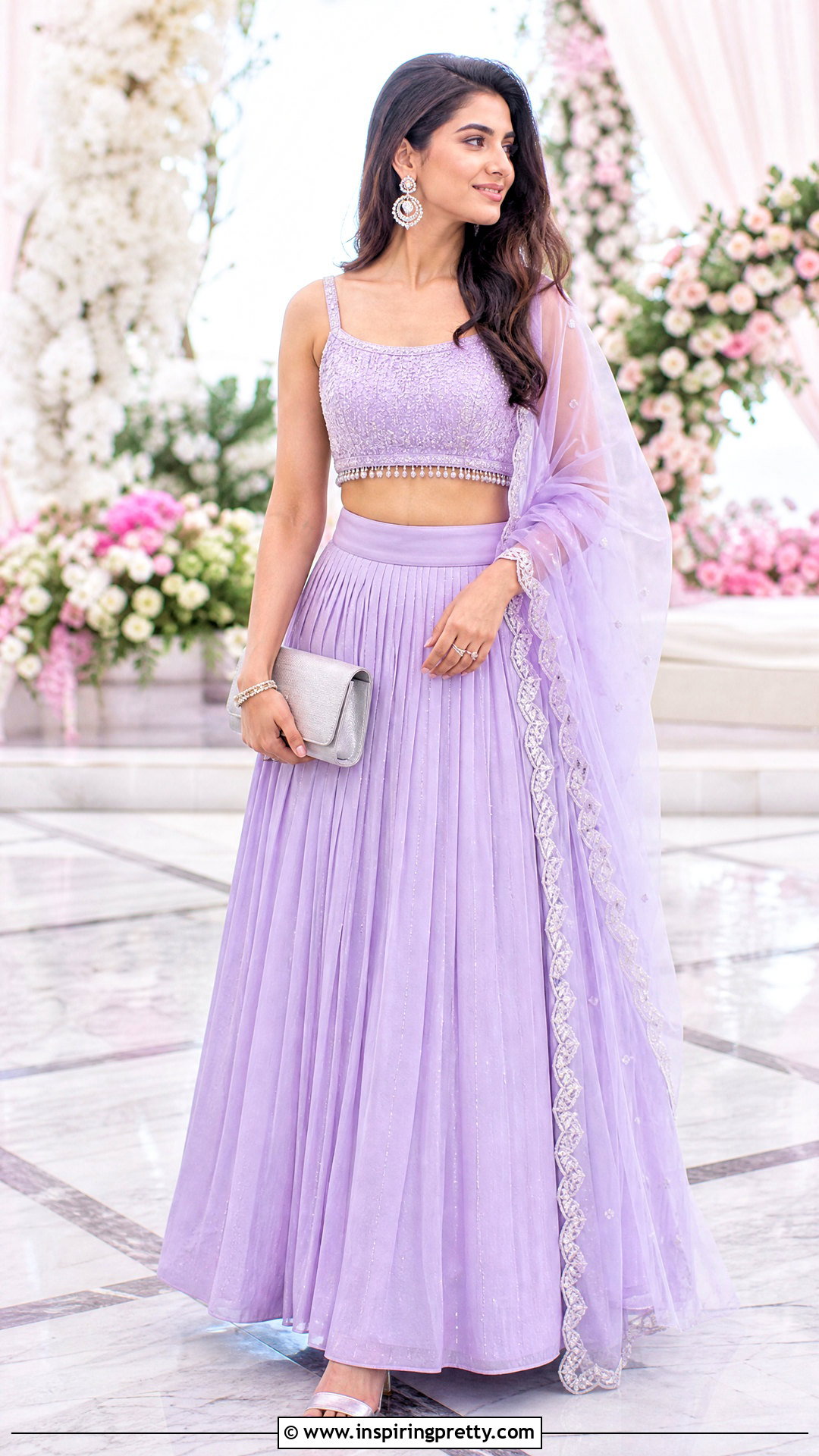
Lavender is soft and modern, and it looks good in daylight at engagement parties. A fitted top with beadwork only at the neckline and a plain or lightly pleated skirt keeps it simple. A matching net dupatta with a scalloped edge adds movement without covering the blouse. For a soft line, I'd skip a stiff can-can underneath and choose a skirt with fluid inner layers; can-can gives volume but rustles and scratches the legs over a long event. Silver heels, crystal earrings and a pale gray clutch keep the palette cool. Have the top finish close to the waistband if you want modest coverage.
9. Orange Crop Top Lehenga With Bandhani Skirt
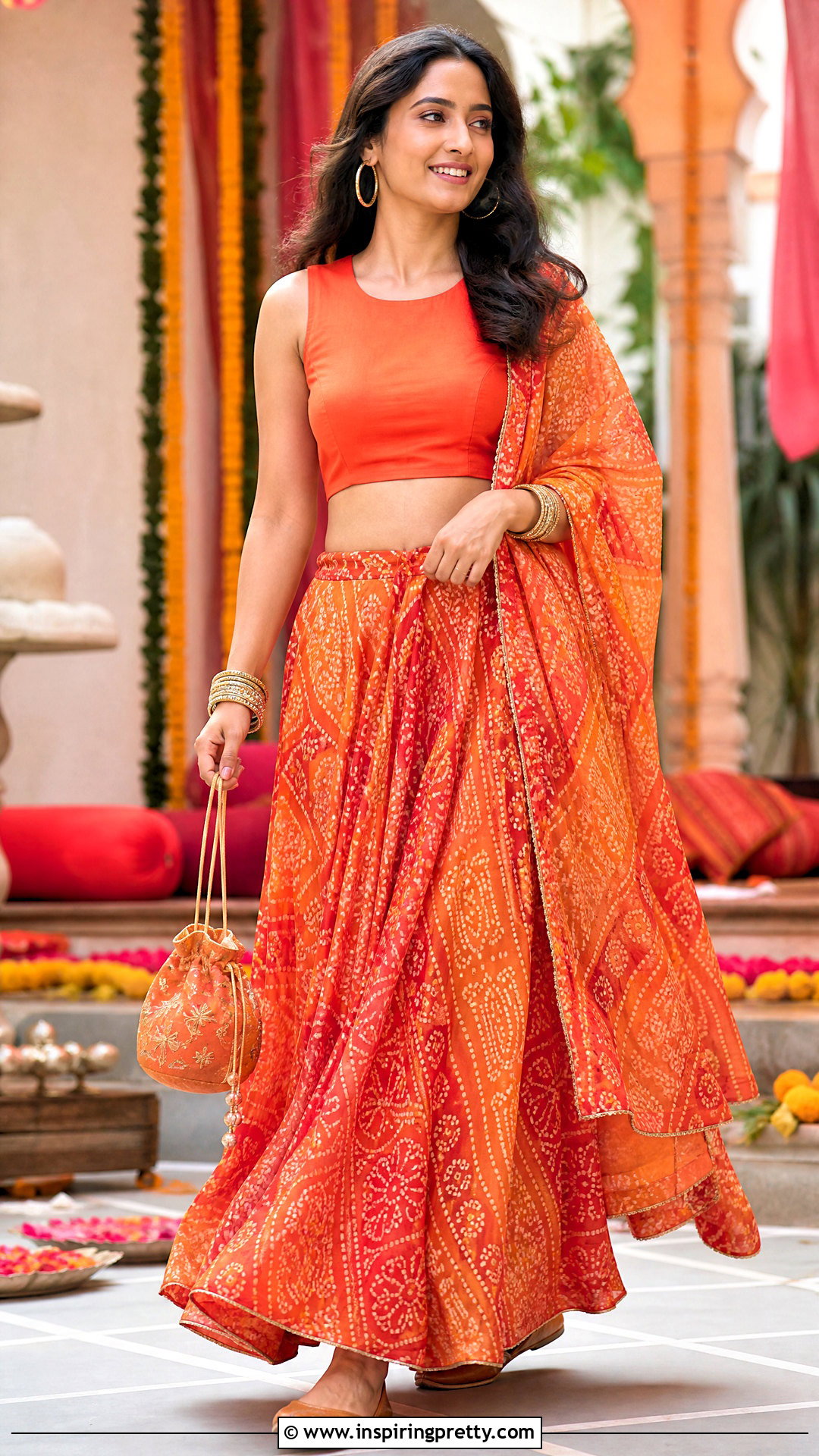
Bandhani is tie-dyed with tiny dots, and it reads festive without any embroidery. Pair a plain fitted top in orange, rust or coral with a high-waisted bandhani skirt, ideally with a red or pink border for definition. Real bandhani fabric is crinkled from the tying, and it can bleed dye in the first wash, so hand-wash it alone in cold water. Keep the top's neck and sleeves simple so the dots stay the focus. A bandhani dupatta on one shoulder is optional since the skirt is already patterned. Tan juttis, gold hoops, stacked bangles and an embroidered potli finish it. The plain top also goes with jeans later.
10. Gold Crop Top Lehenga With Cream Skirt
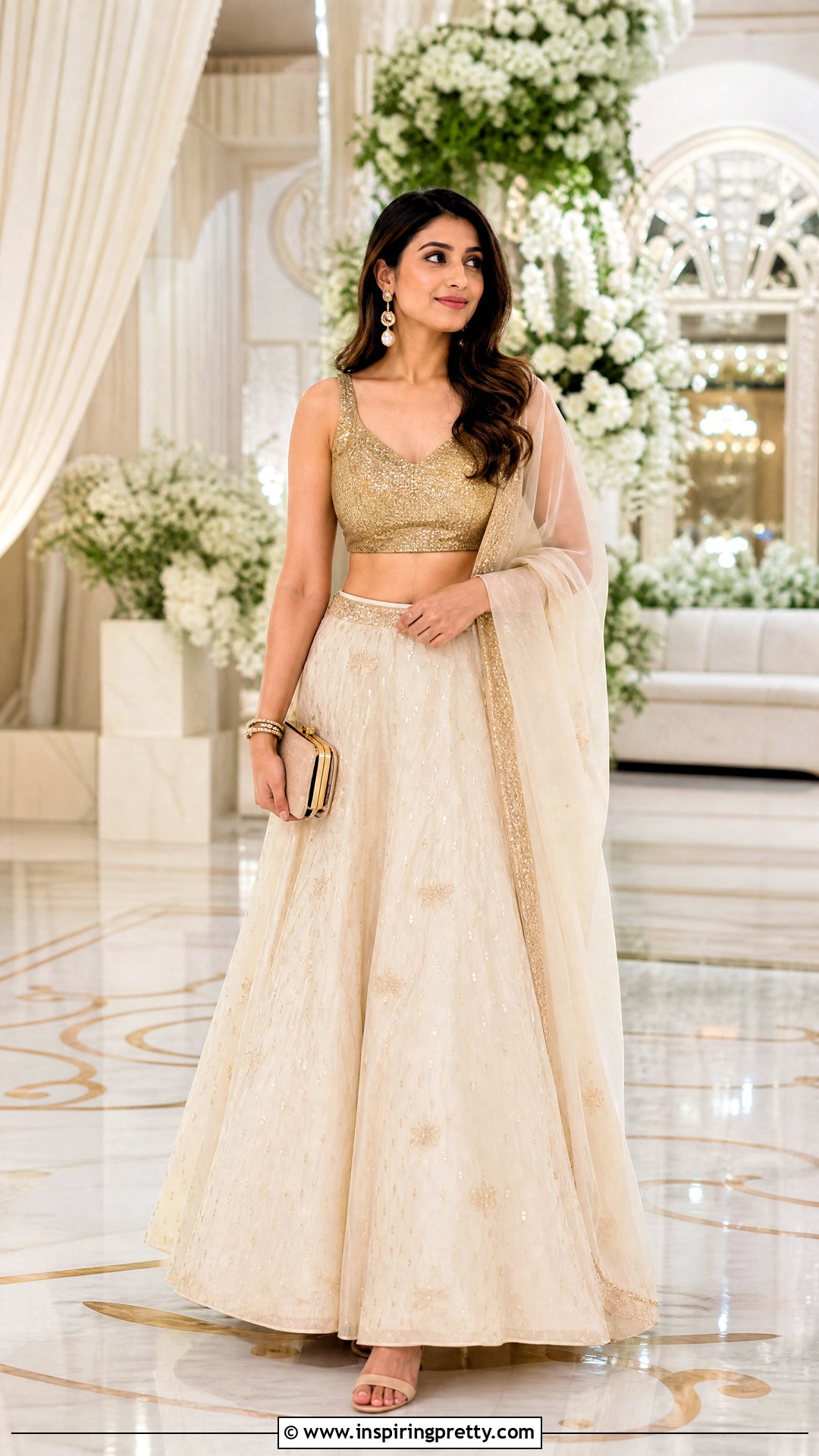
Gold with cream looks festive without bright color, which suits receptions and formal family dinners. A softly shimmering gold top with a cream, ivory or champagne skirt is the pairing. Look for woven texture, a fine border or scattered metallic motifs; full sequin coverage looks heavy against such a pale skirt. Pin a sheer cream dupatta with fine gold piping neatly at one shoulder. Cream fabric marks easily, so I'd keep makeup away from the neckline and choose a lined skirt. Neutral heels, pearl-and-gold earrings and an ivory clutch finish it. Keep the jewelry small if the top shines.
11. Printed Crop Top Lehenga Without Dupatta
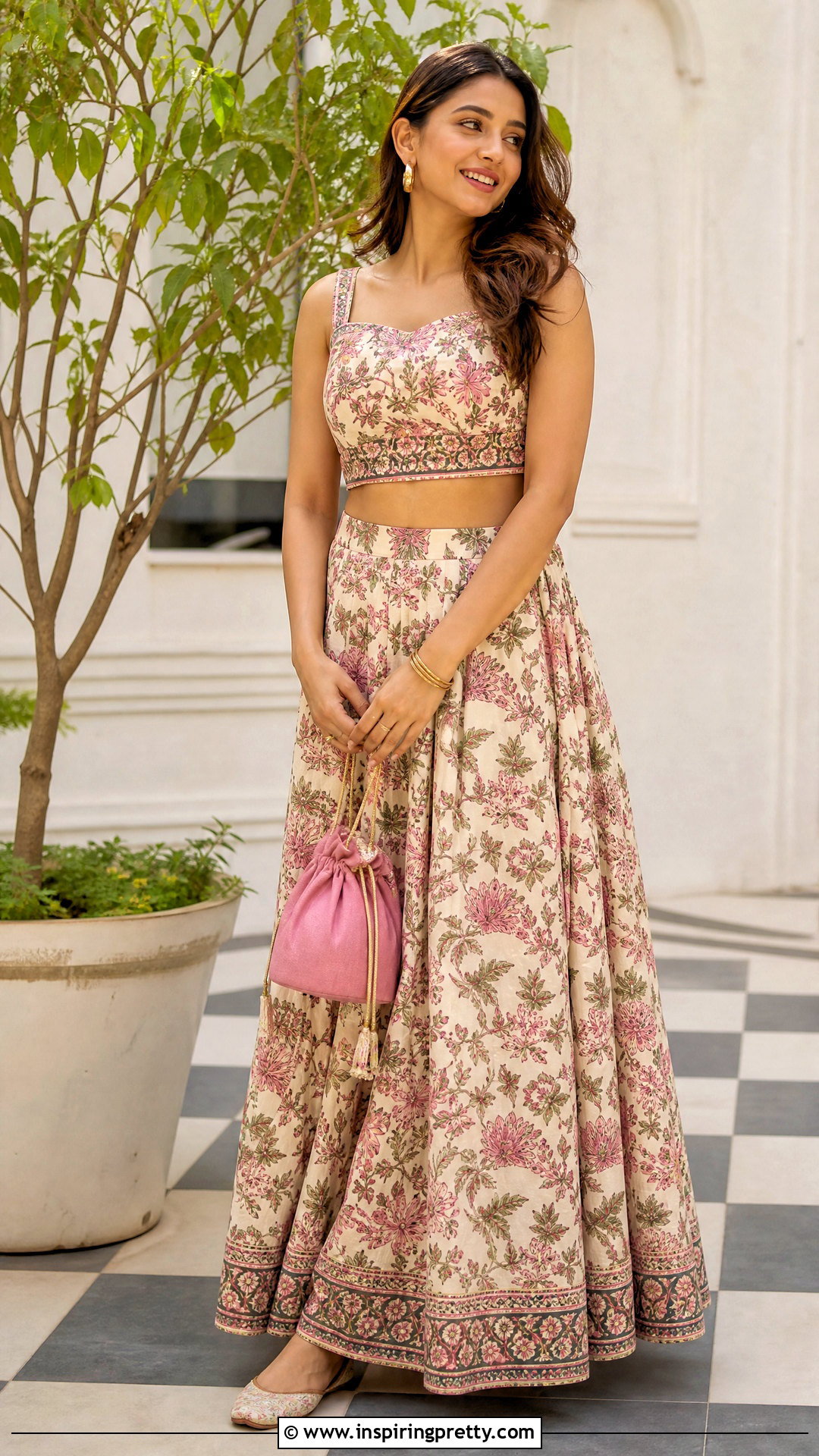
A printed set without a dupatta is the most comfortable on this list and easy to move in. A floral, geometric or block-printed set in cotton, crepe or light silk works well; block prints are hand-stamped, so small irregularities are part of the charm. Without a dupatta, the top needs to look complete on its own, so I choose wider straps, short sleeves or a modest square neck. A high-waisted skirt with moderate flare and a clean waistband keeps it light. Simple juttis, medium hoops and a solid potli in one color from the print are all it needs. It suits smaller gatherings and festive lunches.
12. Brocade Crop Top Lehenga With Solid Skirt
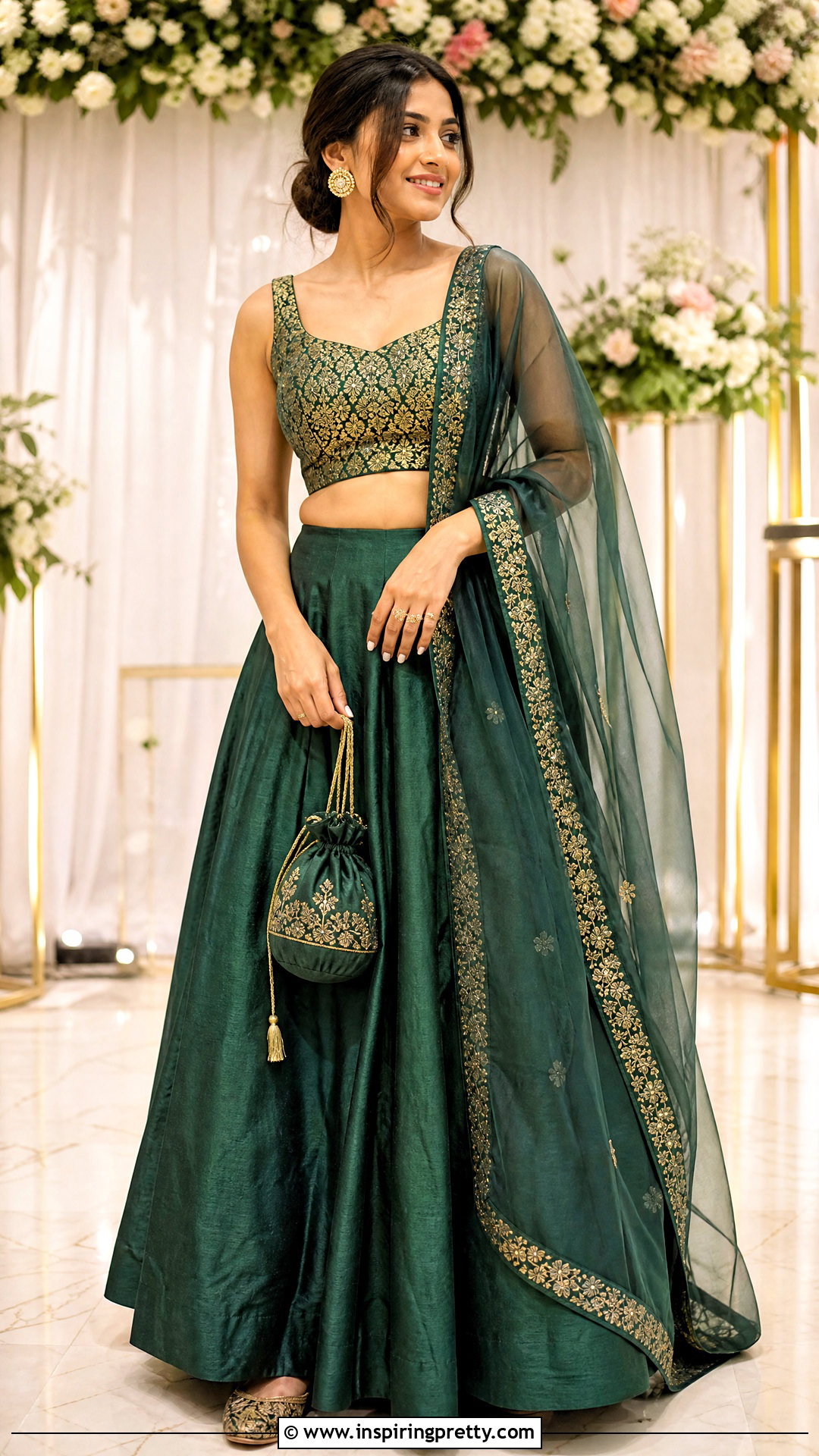
Brocade is woven with patterns in the fabric itself, so it looks rich without any embroidery. A brocade top with small motifs, paired with a solid silk or raw-silk skirt in one of the brocade's colors, is a dependable formula. Emerald with gold, navy with silver and magenta with antique gold all work. Brocade is stiff, so a well-cut top matters; it won't stretch to forgive a tight fit. Keep the skirt smooth rather than full, and add a plain organza dupatta if the event is traditional. The brocade top is also the most reusable piece here, since it pairs with a sari, palazzos or another plain lehenga.
13. Crop Top Lehenga With Long Jacket
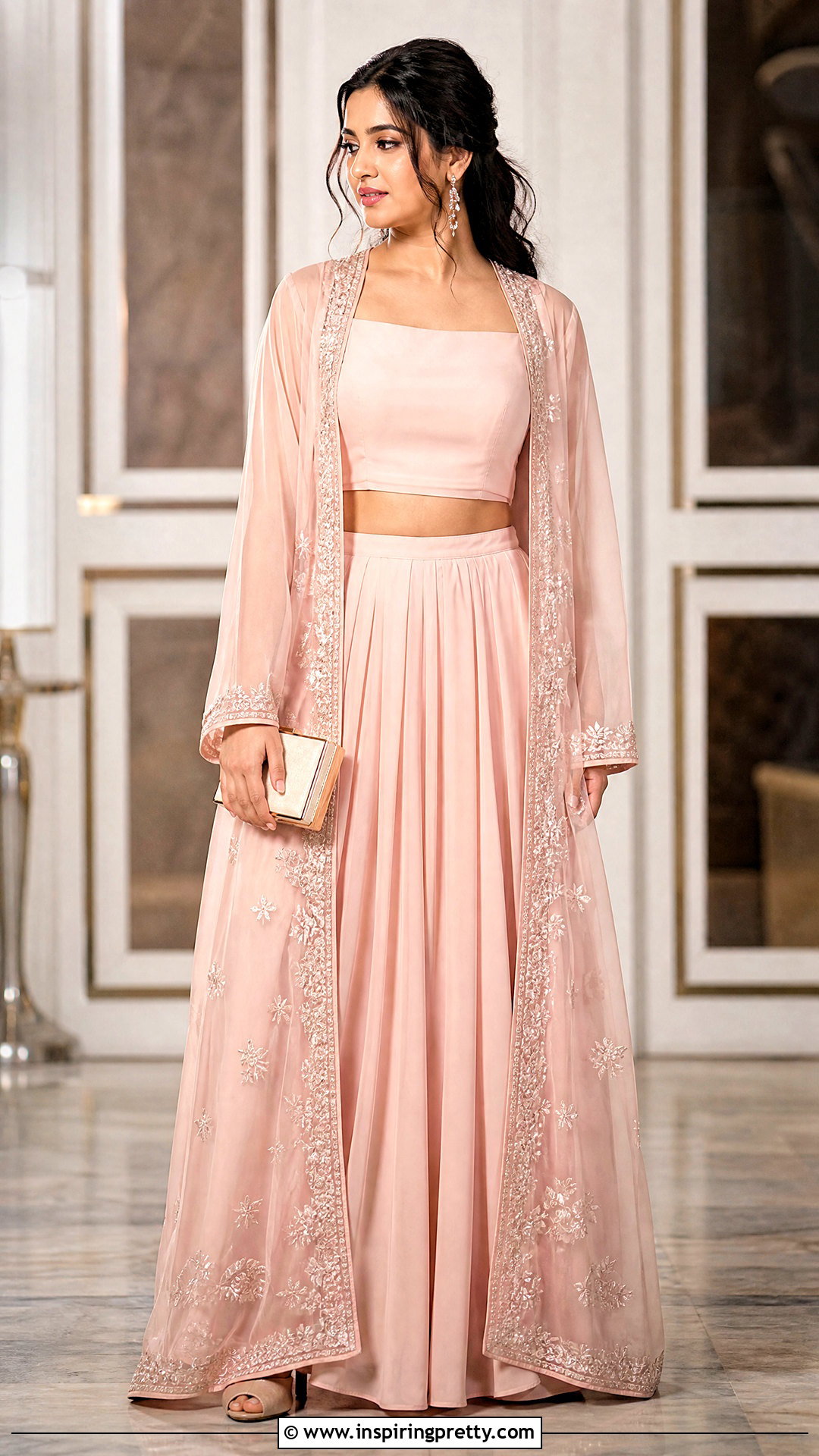
A long jacket gives a plain set an instant layered look. I start with a fitted top and a matching skirt, then add a light open-front jacket in organza, chiffon or georgette with embroidery only along the front edges and cuffs. The open front makes a long vertical line that looks taller. The jacket hem should fall close to the skirt hem; a jacket stopping at mid-calf cuts the line in half. Skip the dupatta, since the jacket gives coverage and movement. Low block heels, drop earrings and a box clutch keep it neat. It's my pick for someone who wants to dance at a sangeet without loose fabric.
14. Crop Top Lehenga With Cape
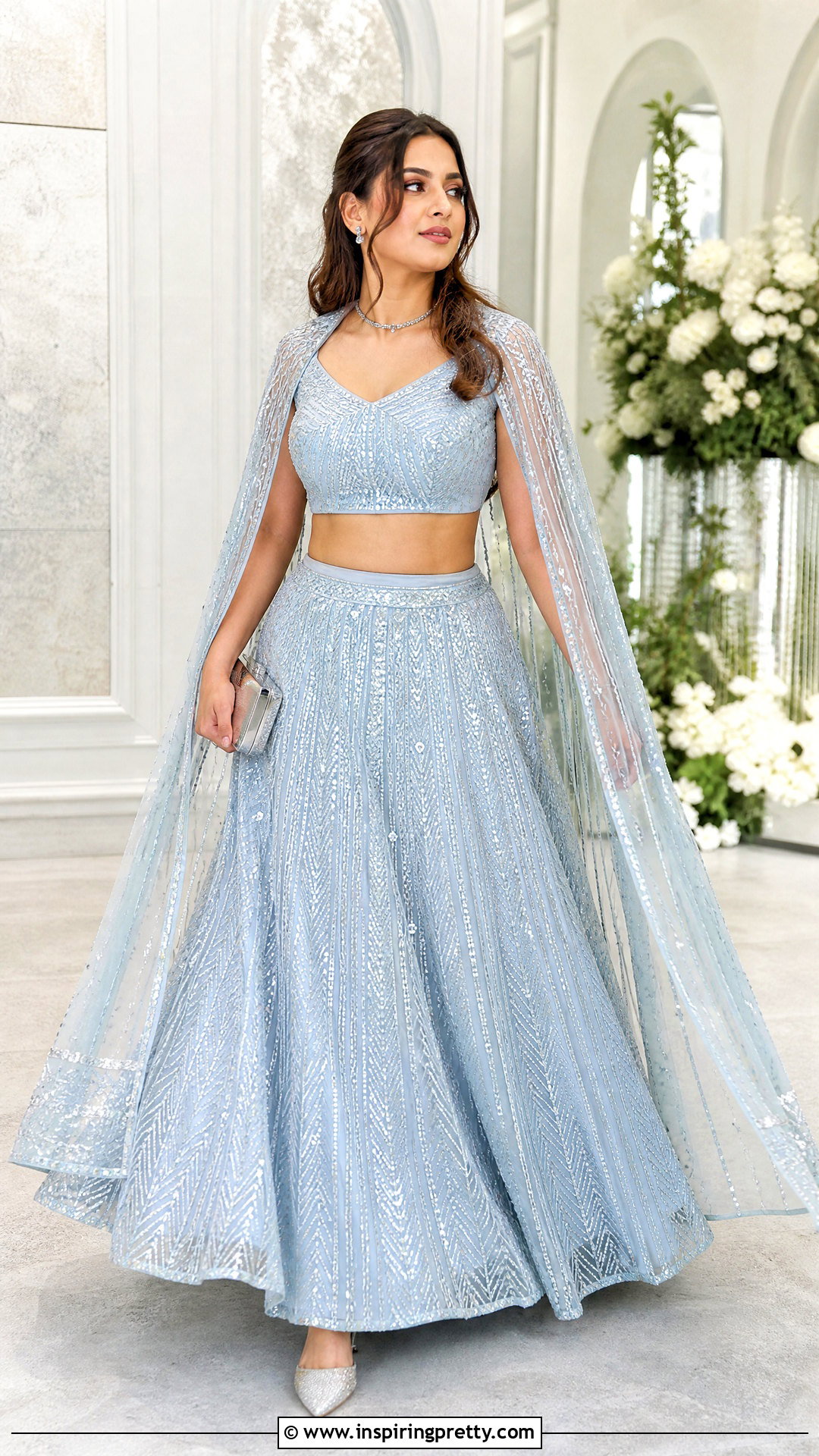
A sheer cape does what a dupatta does, adds coverage and movement, but stays put without pinning. Pair a sleeveless fitted top with a matching skirt, then add a waist-length or floor-length cape in light net or chiffon with a narrow embroidered edge or scattered beads. Keep the set underneath plain so the cape stands out. Floor-length capes can catch under your heels on stairs, so practice walking in it. Pointed flats or low heels, studs and a compact clutch finish it. Leave out the necklace if the cape has a decorated neckline.
15. One Shoulder Crop Top Lehenga
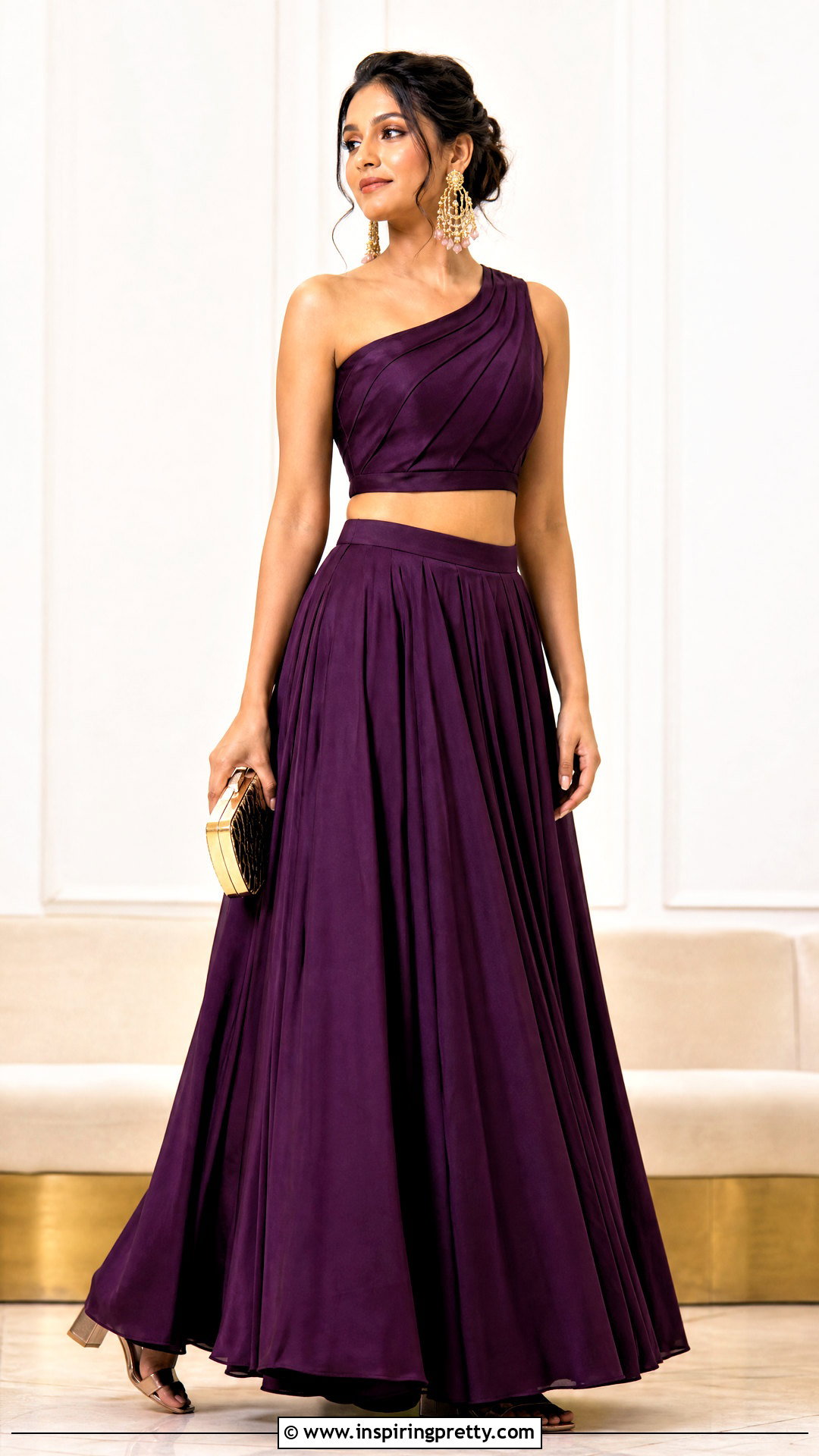
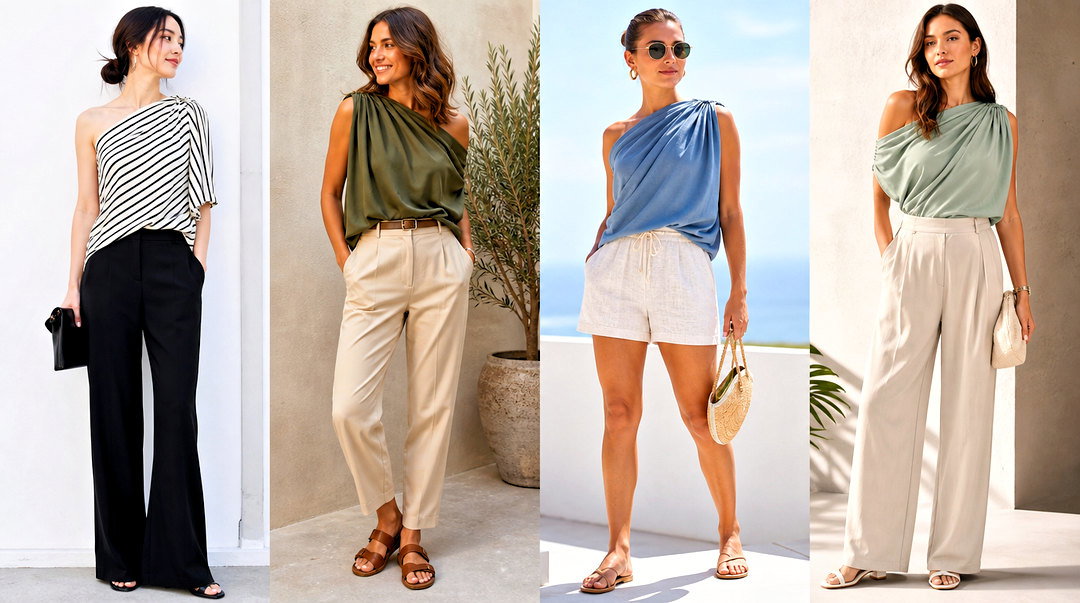
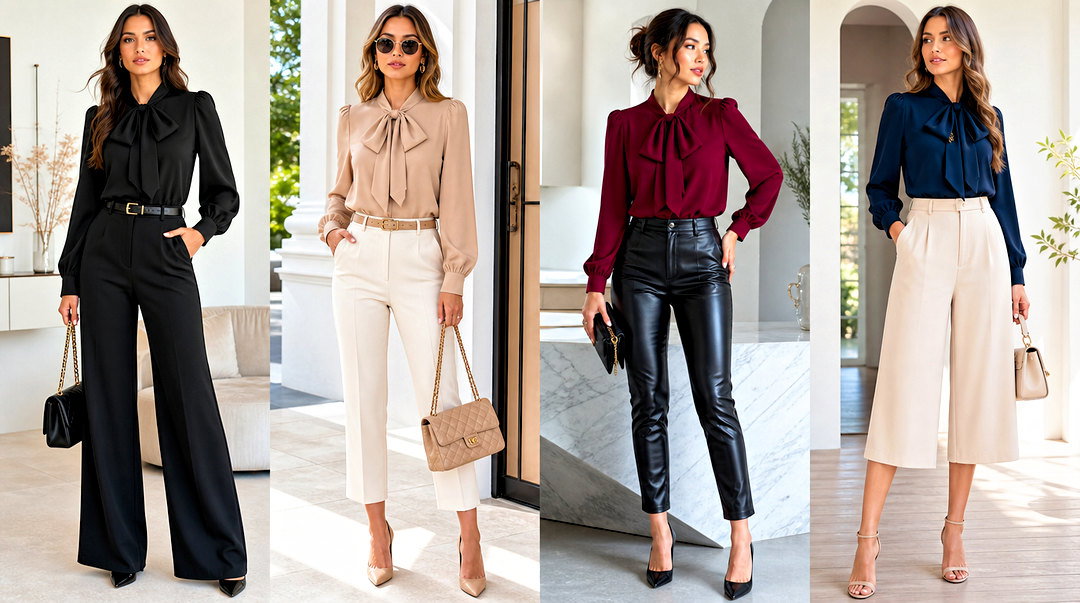
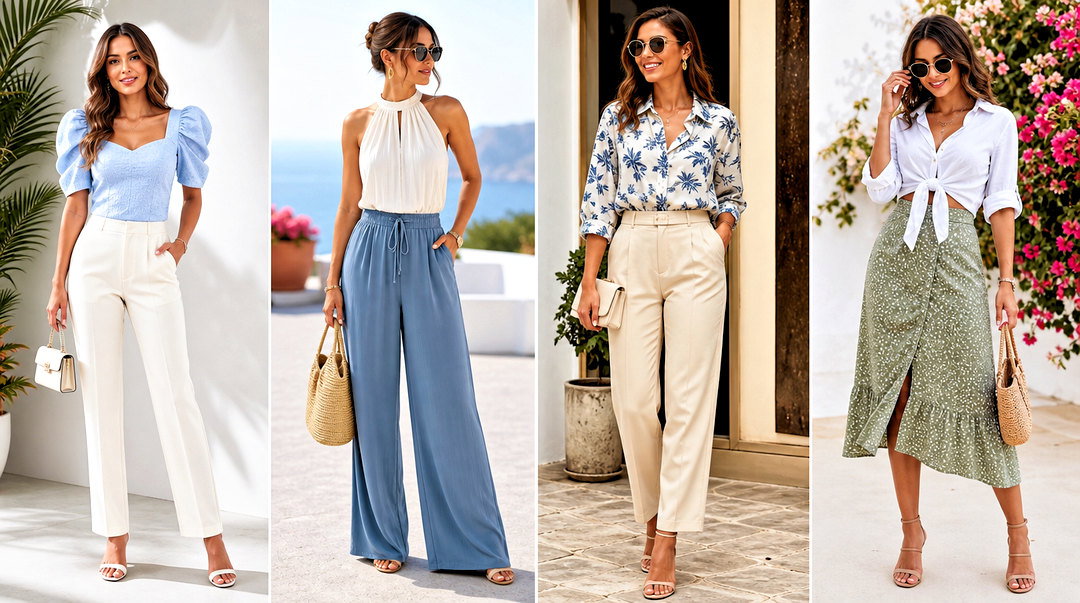
A one-shoulder top makes a lehenga feel Indo-Western, which suits receptions and modern wedding parties. Crepe, satin or raw silk in a well-fitted top, with a high-waisted skirt in the same color, keeps it clean. A softly pleated or lightly gathered skirt balances the sharp neckline without adding much volume. Skip the dupatta so the shoulder shows. Asymmetric necklines slide down when you raise your arm, so I always look for an inner elastic or silicone grip, and fashion tape holds the edge in place. Sleek block heels, statement earrings and a hard-case clutch finish it. Keep bracelets off the bare arm.
16. Full Sleeve Crop Top Lehenga
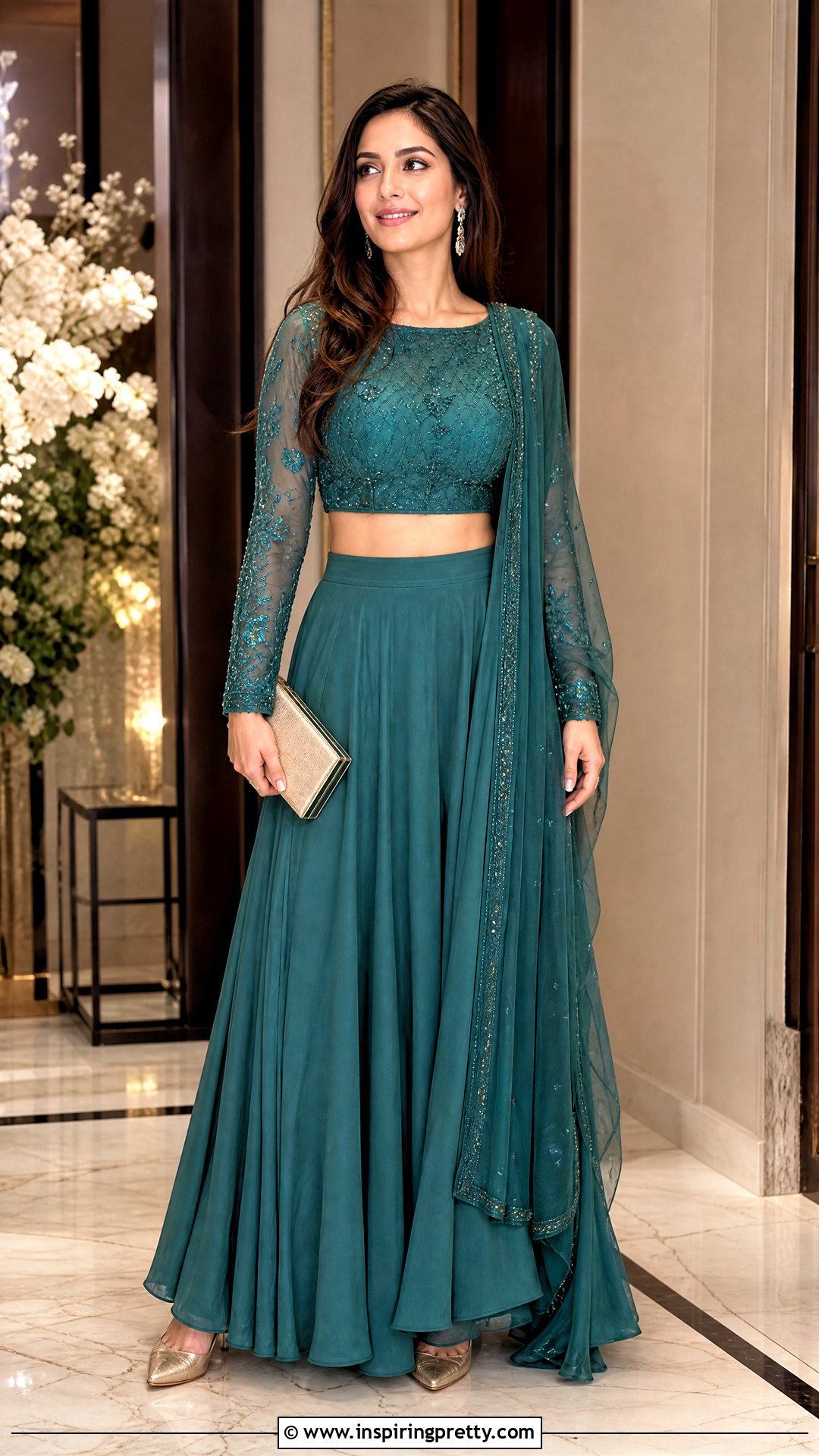
Full sleeves give the most coverage, which suits cool evenings, indoor receptions and families who prefer modest dressing. A fitted blouse with sheer, embroidered or plain sleeves and a modest round neck pairs with a fluid high-waisted skirt in georgette, silk blend or crepe. Fitted long sleeves need room to bend the elbow, so raise your arms at the fitting as if you were dancing. Deep teal, plum, navy and burgundy look rich in this shape. Pointed flats or low heels, drop earrings and a structured clutch finish it. A dupatta is optional; if you add one, keep it light and on one shoulder.
17. Ruffle Crop Top Lehenga
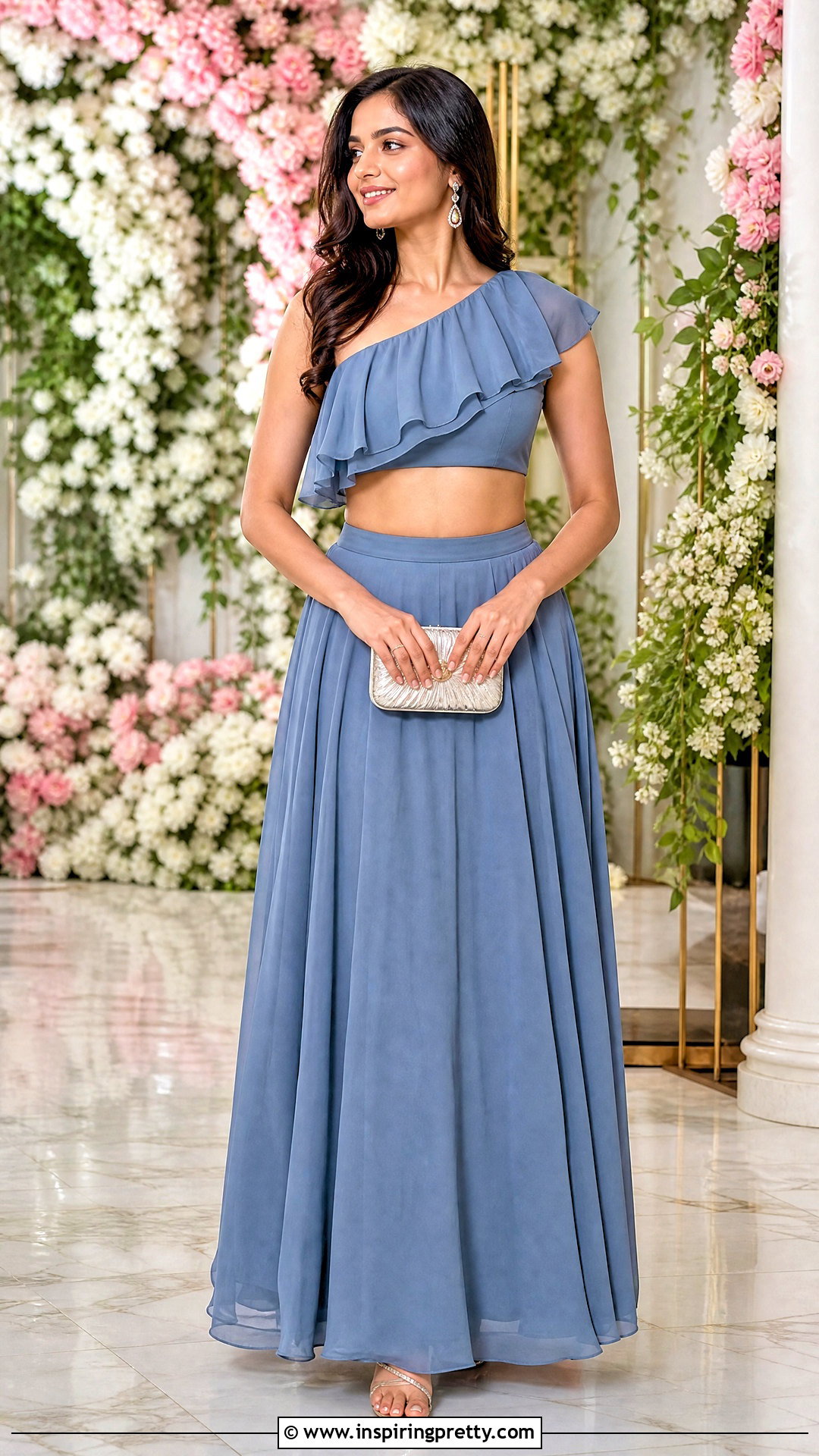
A ruffle adds movement to a plain lehenga, but I'd stick to one controlled ruffle, at the neck, the sleeves or the hem, not several. Big layered ruffles plus a full skirt overwhelm a smaller frame. Pair the top with a streamlined high-waisted skirt in georgette or crepe in the same shade. Dusty blue, peach, mint and rose suit daytime events. Georgette ruffles go limp in humidity, so steam them just before leaving. Skip the necklace so the neckline stays clear. Low metallic heels, small drops and a satin clutch finish it. A sheer dupatta over the forearms is optional; I usually leave it out.
18. Chikankari Crop Top Lehenga
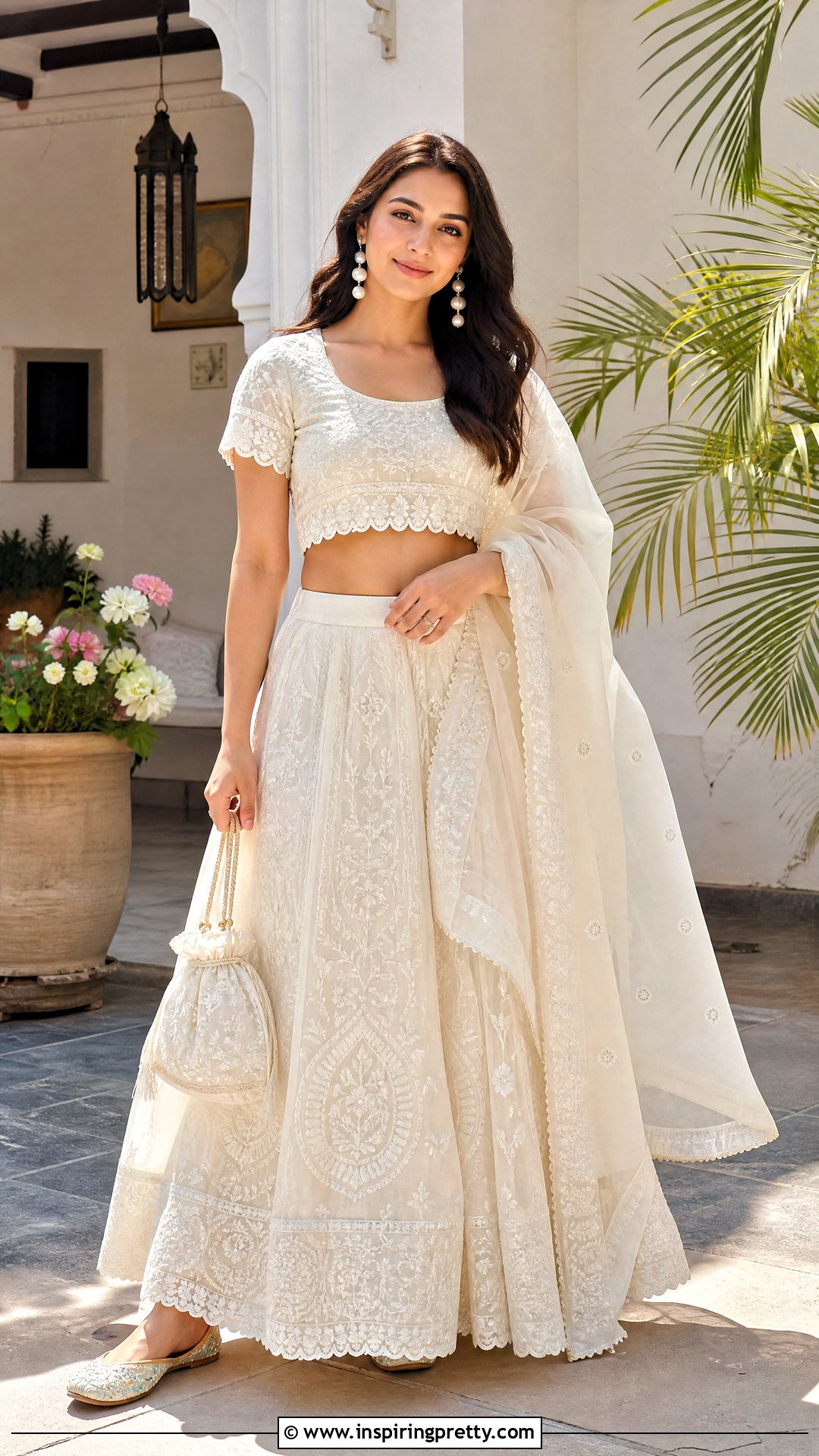
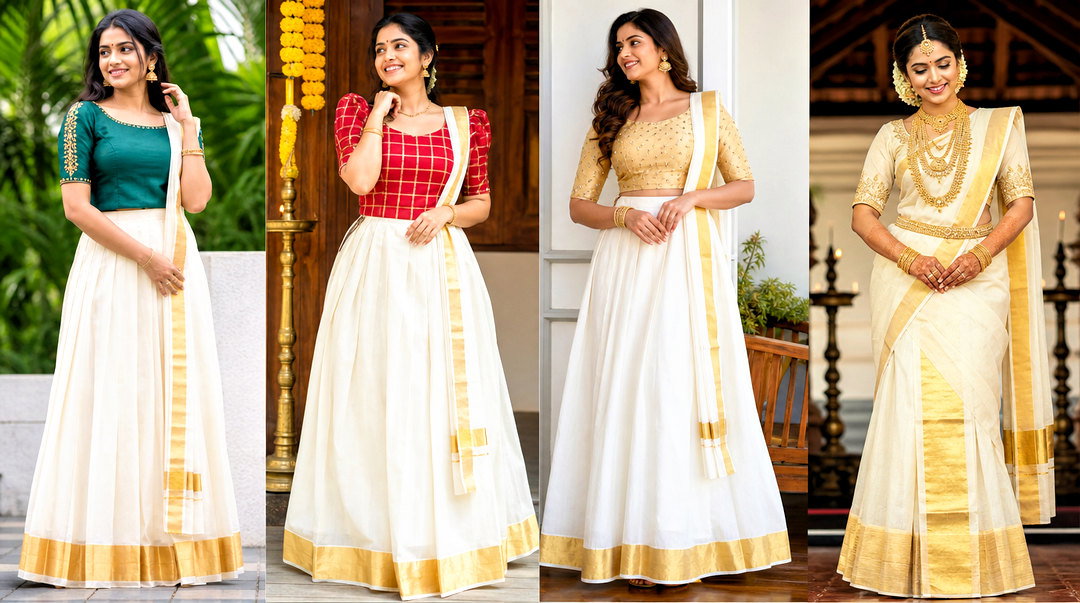
Classic chikankari embroidery is fine white-on-white hand stitching, and it gives a pale set texture without any sparkle. White, ivory, powder blue or pale yellow in breathable cotton or georgette suits daytime and hot weather best. A short-sleeve top with a modest V-neck and a skirt embroidered near the hem keeps it balanced. Thin chikankari fabric is often see-through, so the skirt needs a smooth, opaque lining, and I'd check the top against the light. Pearl earrings, embroidered juttis and a fabric potli suit the handwork. Hand-wash chikankari gently; harsh wringing pulls the stitches.
19. Satin Crop Top Lehenga With Pleated Skirt
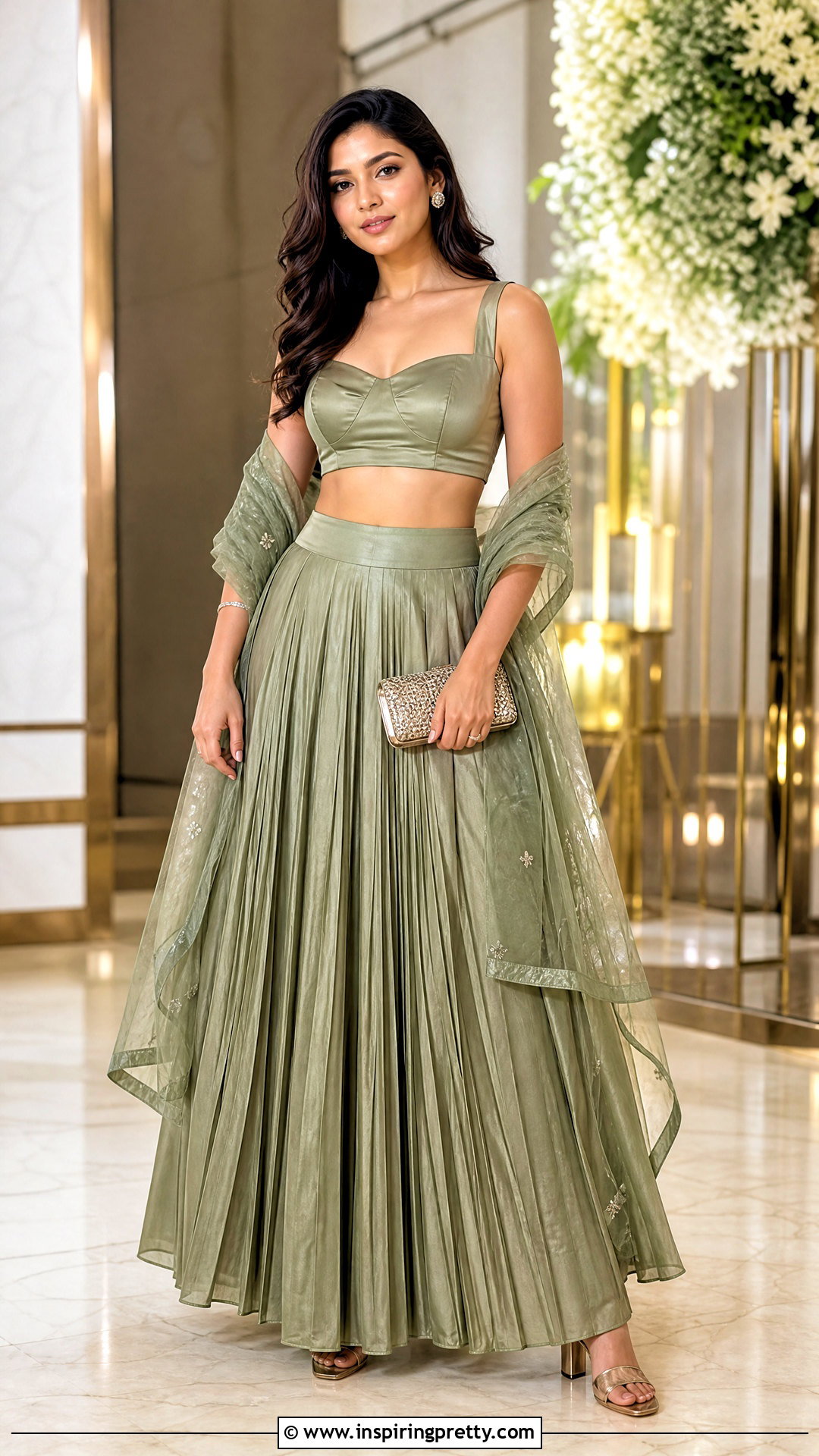
Satin gives a plain lehenga a polished finish with almost no decoration. A structured satin top with a softly pleated skirt in the same or a close shade, sage, deep blue, mauve or champagne, looks right for engagements and receptions. I prefer a soft, low-sheen satin; very shiny satin shows every wrinkle and water mark. The skirt needs enough weight or lining to hold its pleats when you walk. Satin also creases where you sit, so steam it right before leaving. Slender block heels, crystal studs and a small metallic clutch finish it. An organza dupatta with thin piping is optional.
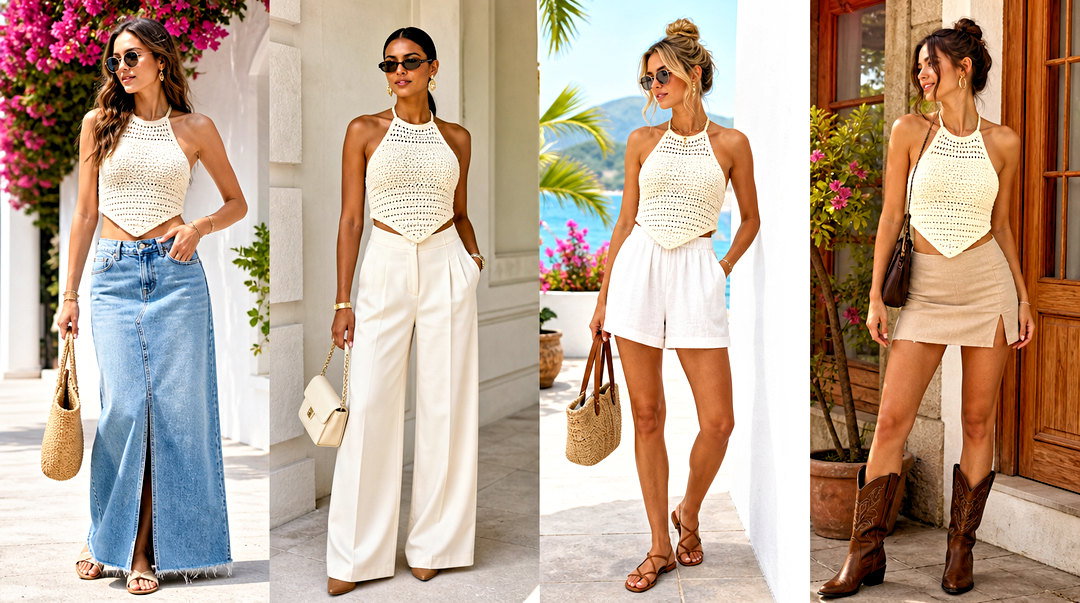
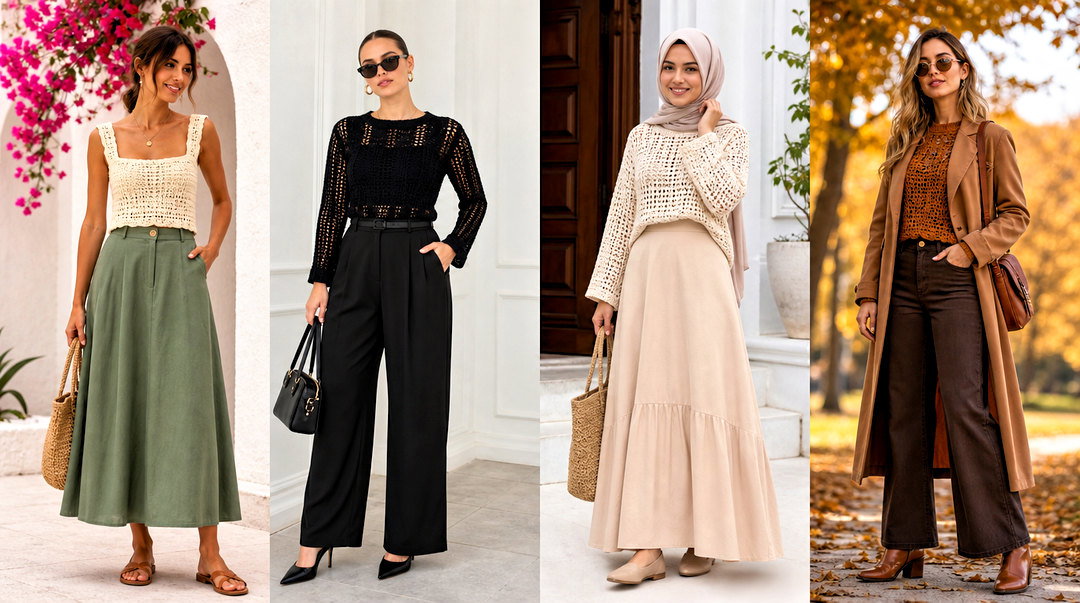
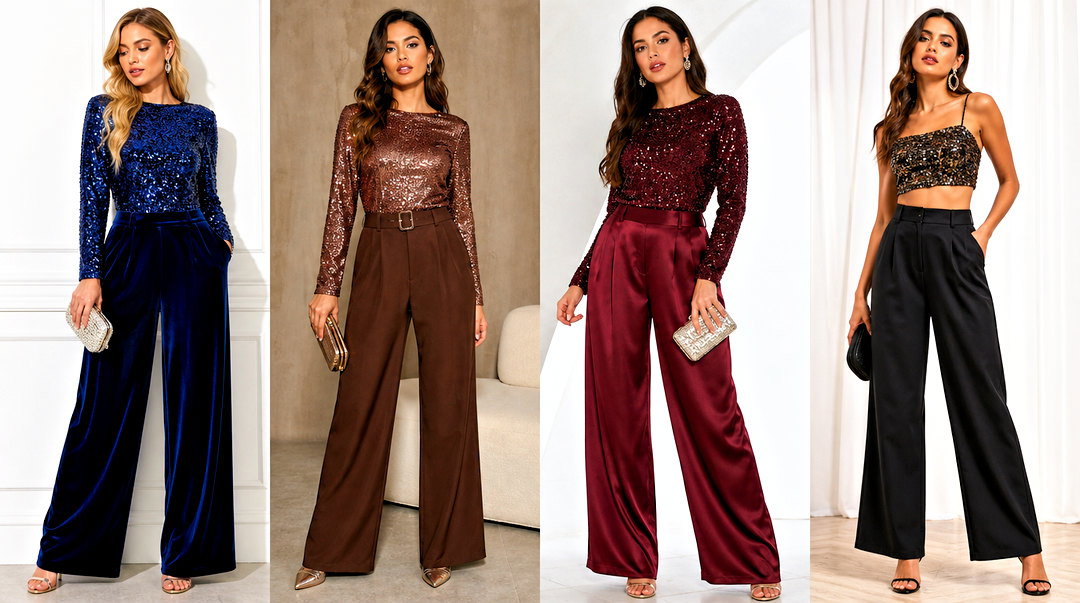
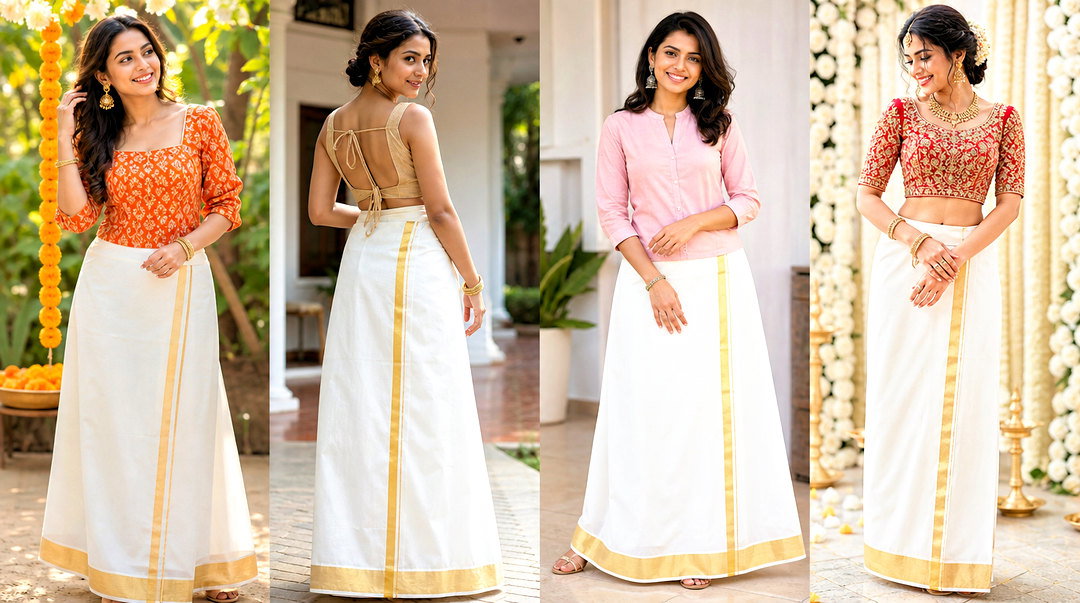
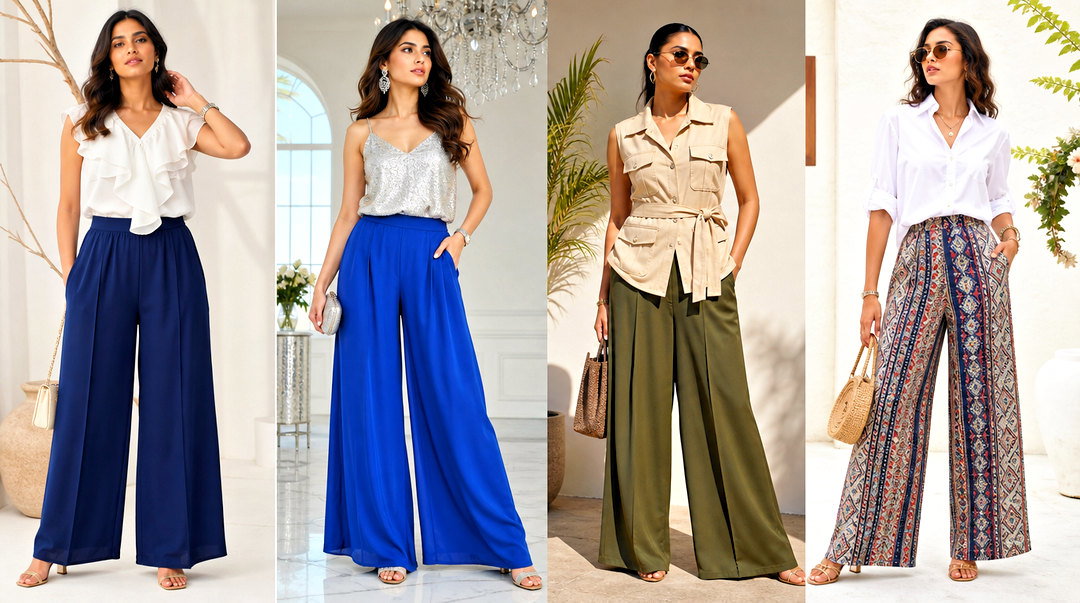
20. Contrast Crop Top Lehenga With Organza Skirt
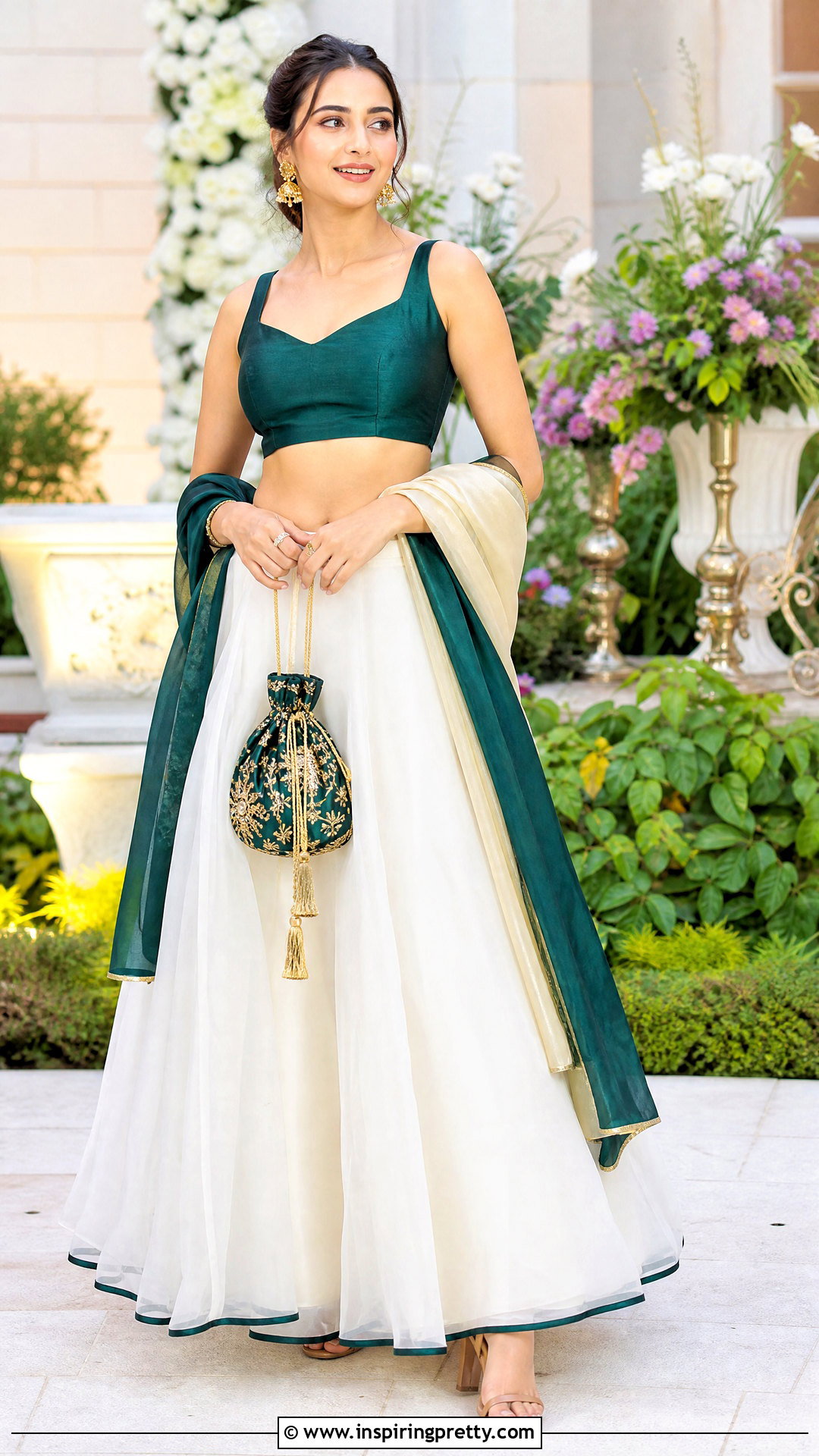
Contrast lehengas are memorable when the two colors are chosen on purpose. A fitted jewel-tone top with a light organza skirt in magenta and peach, emerald and ivory, or navy and powder blue pairs a deep shade with a lighter one from the same family. Organza is crisp and stands away from the body, so the skirt holds its shape without a can-can. Choose a clean waistband and only a narrow border. Small earrings, a two-tone potli or a dupatta with both shades link the colors. Keep shoes neutral so a third color doesn't creep in. The separates mix well with other pieces later.
Draping a Dupatta You Won't Fight All Night
Dupattas are where simple outfits start to feel like work. A loose one slips off the shoulder every time you lift a plate or hug someone. The style you choose should match what you'll be doing at the event.
- One shoulder, pinned: fold the dupatta in narrow pleats, lay it over the left shoulder and pin it to the blouse strap from the inside with a small safety pin. Best for receptions and photos.
- Across both elbows: drape it across your back and rest it in the crooks of both arms. It shows the whole blouse and is easy to take off for dancing.
- Cape style: lay it over both shoulders and pin it at each one. Good when you want coverage at a ceremony.
- Tucked at the waist: pin one end at the shoulder and tuck the other into the skirt waistband at the opposite hip. It stays put through a long mehndi.
Net and organza dupattas hold pins well; light georgette and chiffon need two pins or a small brooch because they slide. Pin through the blouse strap or seam, never through thin fabric alone, which tears. And carry a few spare safety pins in your potli; someone at every function will need one.
Simple Lehengas Still Need One Focal Point
Each set above follows the same idea: one piece carries the detail and everything else stays quiet. That might be a printed skirt, a textured blouse, a cape or an embroidered jacket. A high-waisted skirt and a top that fits well give comfortable coverage, and block heels, juttis and light accessories make a long celebration easier. Dupattas are optional; use one when it adds coverage or finishes the look, not out of habit. From bright daytime sets to evening satin and reusable separates, pick the one that suits your event, then adjust the fabric, neckline and jewelry for the day.
Related posts:



Leave a Reply