
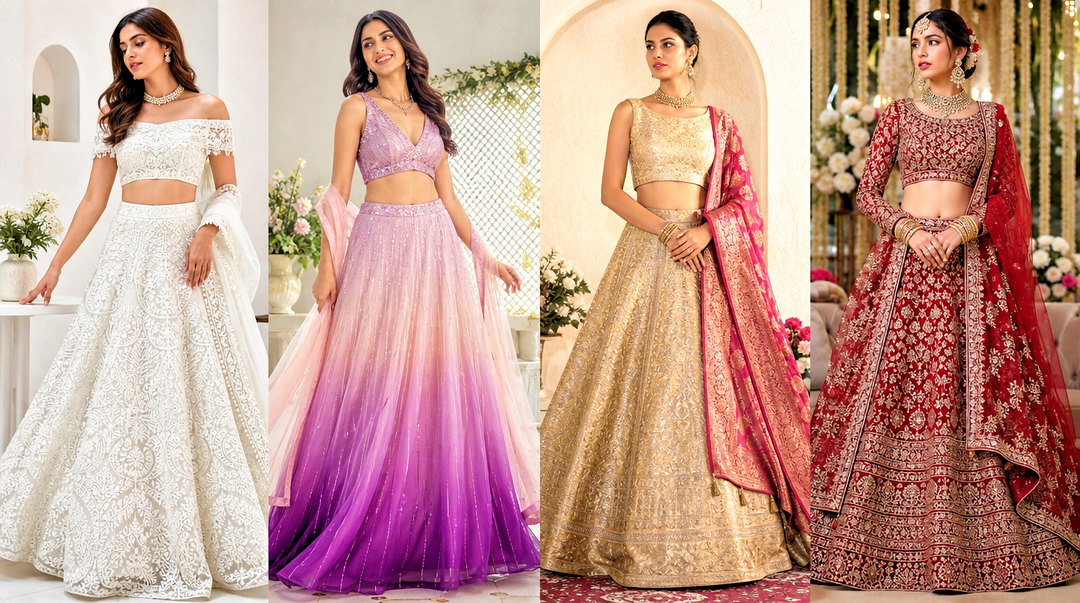
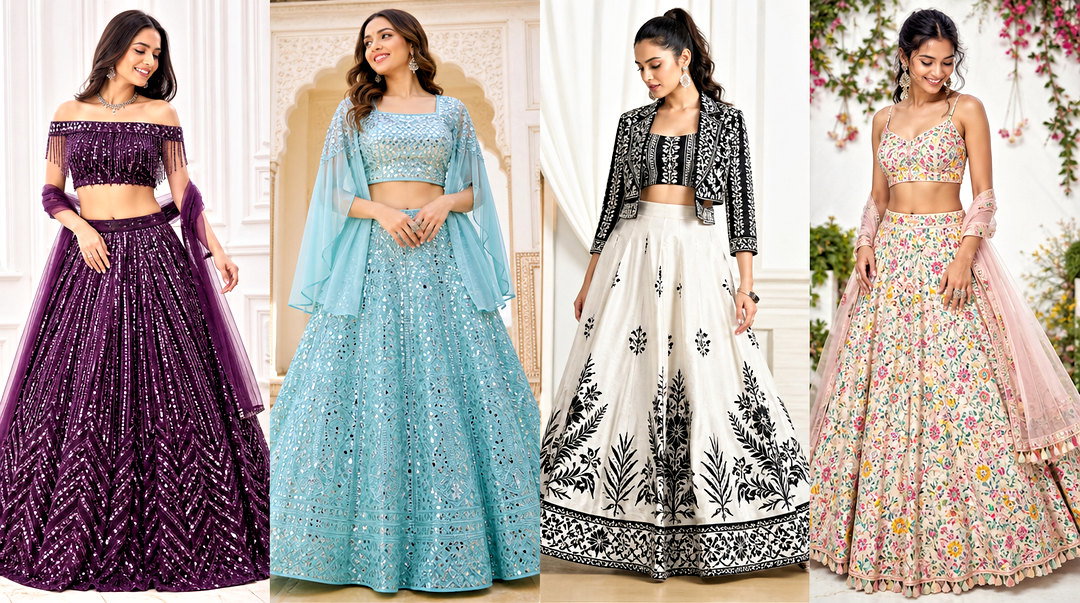
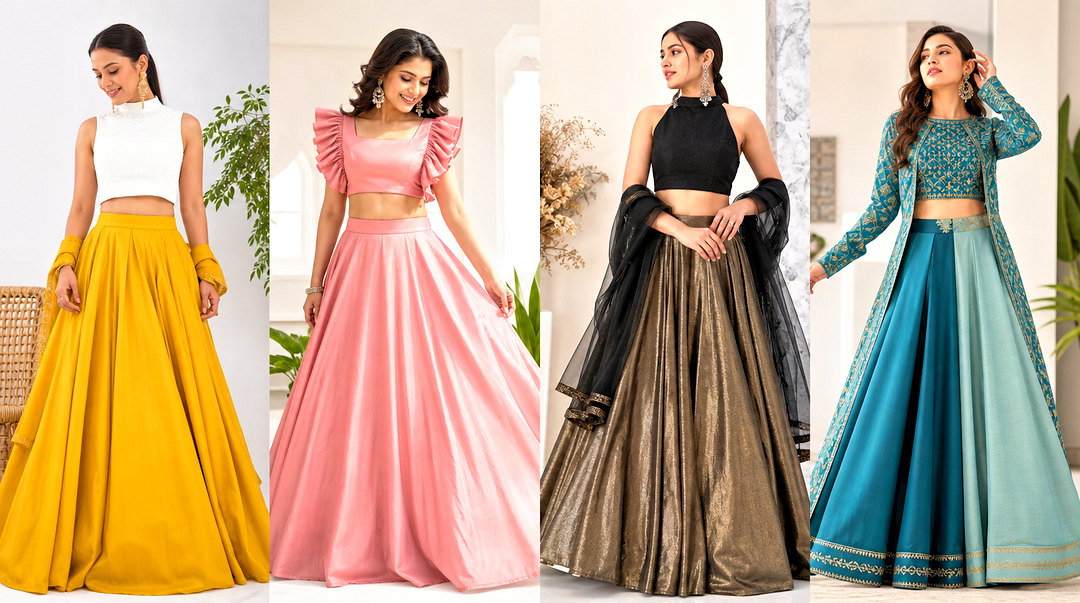
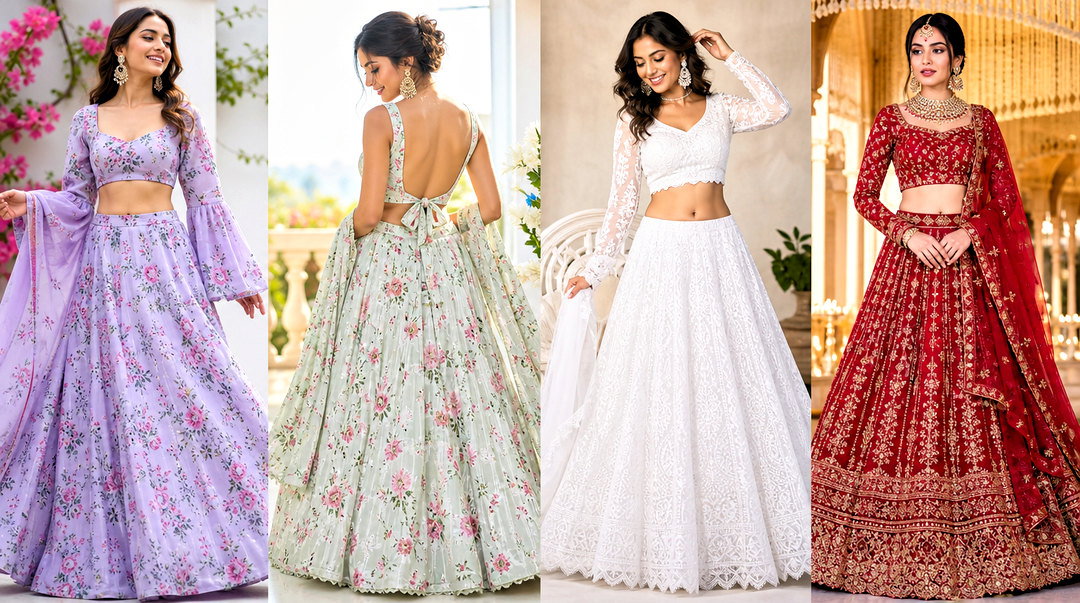
A crop top lehenga takes the full, swinging skirt of a traditional lehenga and pairs it with a blouse cut like a modern top, so you keep the movement of the old shape with a cleaner line above the waist. I reach for this two-piece often when dressing guests and bridesmaids because it can be tuned for coverage: the crop length, sleeve and neckline all change how much skin shows. Below are fifty versions, from corsets and capes to mirror work, velvet and a black reception set, with what I'd check at the fitting for each. There's something for the mehendi, the sangeet, the reception and the quieter family functions in between.

Setting the Gap Between Blouse and Skirt
Most of a crop top lehenga's fit comes down to one measurement: how much skin shows between the blouse hem and the skirt waistband. I set it at the first fitting, both standing and sitting, because the gap opens up when you sit and when you raise your arms.
- Decide where the skirt sits first. A high waist at or just above the navel leaves only a narrow strip showing.
- Measure the blouse length with your arms raised, not hanging, so the hem still meets your chosen line when you dance.
- Ask the tailor to leave extra seam allowance in the blouse side seams so it can be let out if your measurements change before the wedding.
- Wear the shoes you'll use on the day for the skirt fitting. The hem should just clear the floor in them.
If you'd rather show no skin at all, the blouse can be cut to overlap the waistband slightly, or a sheer net panel can be stitched in to join the two pieces. Both keep the two-piece look while covering the midriff.
1. Corset Crop Top Lehenga
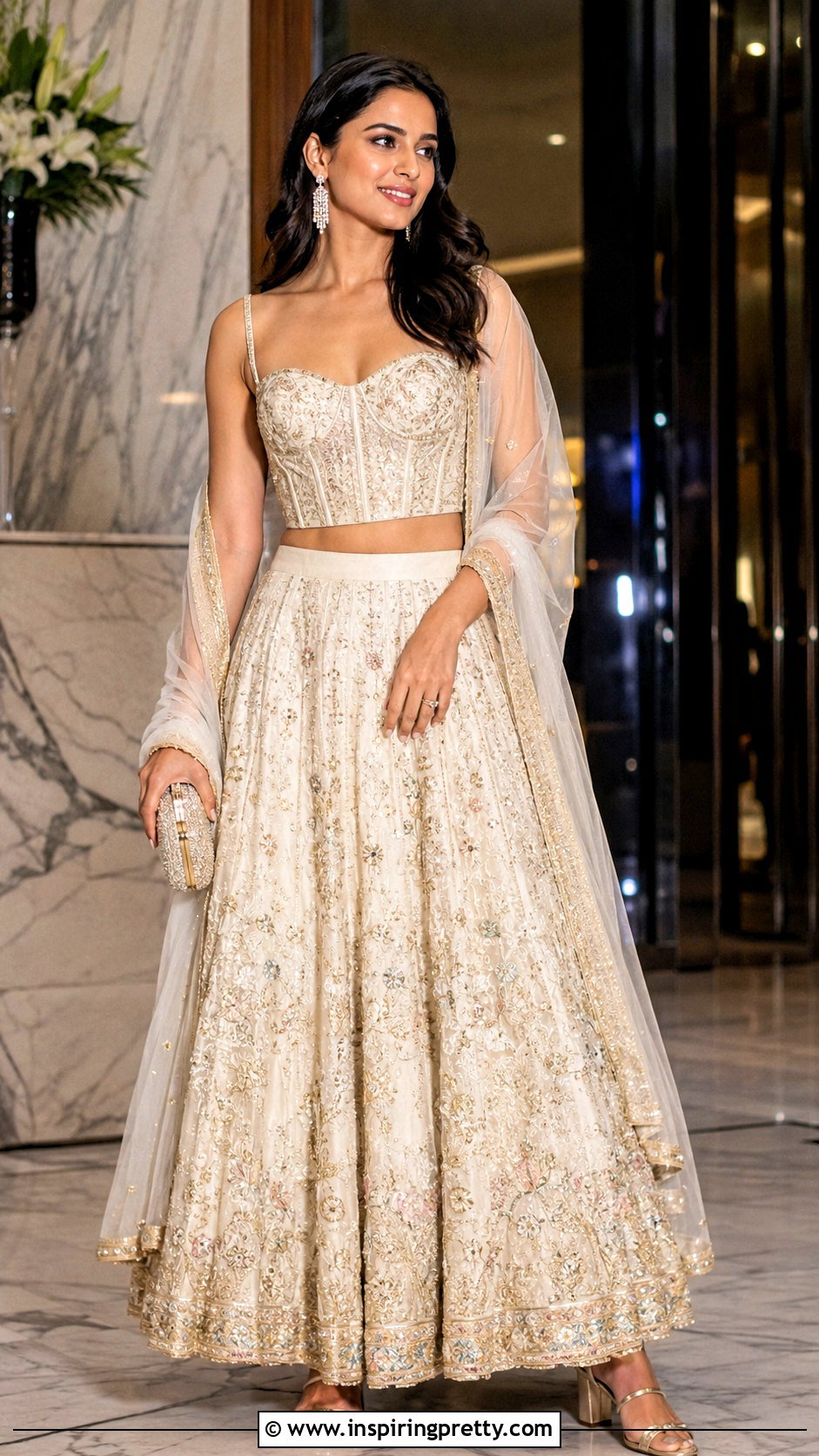
A corset top gives the lehenga a sharp waist, but only if it's built properly. I look for boning in the side and front seams and a back closure, hooks or a zip, that won't strain when you sit. Embroidery along the neckline and waist is enough decoration, because the shape does the rest. A high-waisted skirt with a soft flare balances the stiff bodice. If you want more coverage, ask for a longer corset with a gentler sweetheart neckline, and sit down during the fitting to make sure the bottom edge doesn't dig in.
2. One Shoulder Crop Top Lehenga
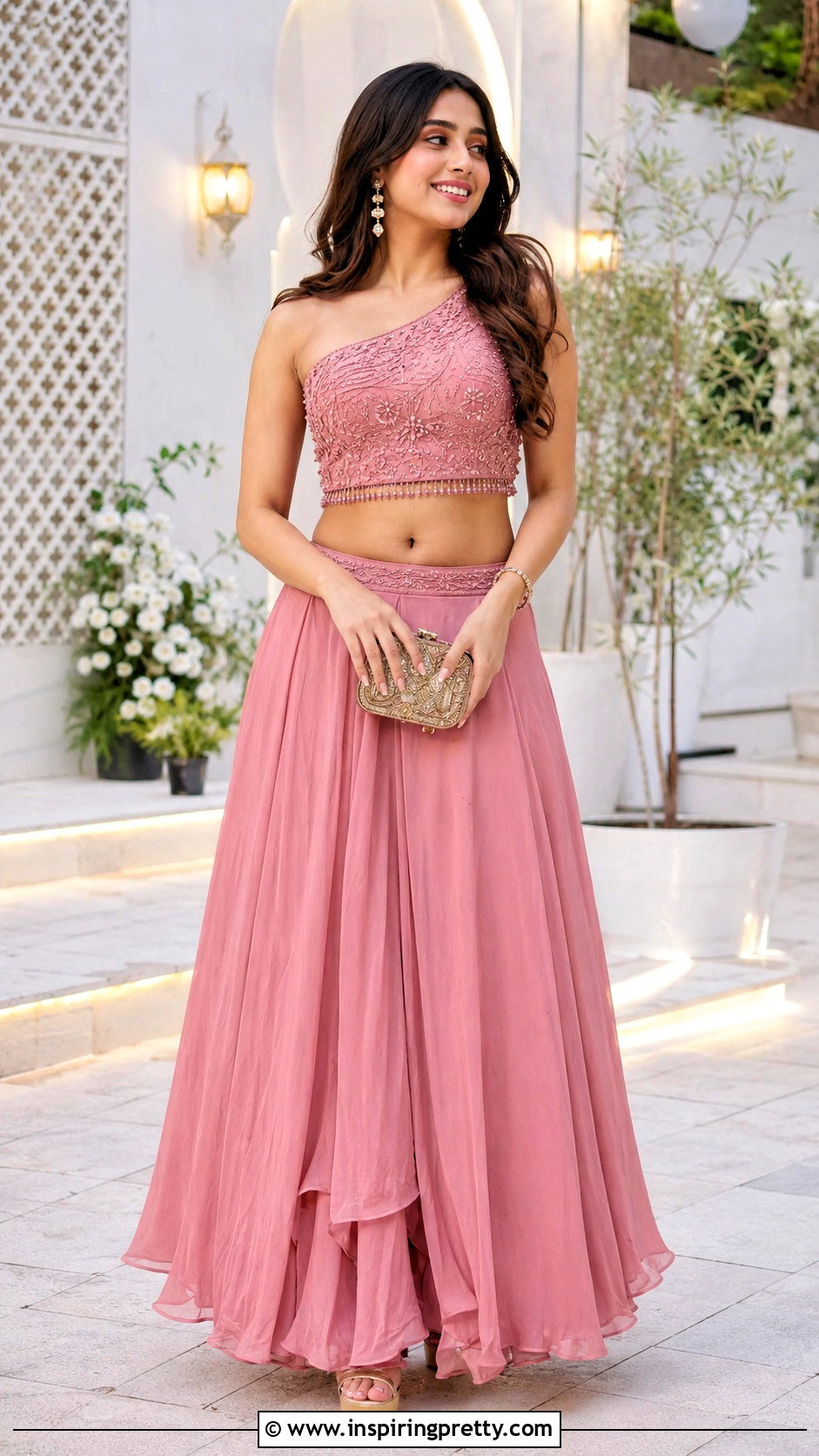
One bare shoulder is a statement on its own, so I keep everything else light: a flowing georgette or chiffon skirt, drop earrings and no necklace. The fitter's job is to make sure the single strap carries the weight without sliding. A silicone strip inside the neckline helps, and so does a firm side seam. Wear your hair low or swept to the other side so the neckline stays visible. Platform heels give height without the wobble of a stiletto on a dance floor.
3. Cape Crop Top Lehenga
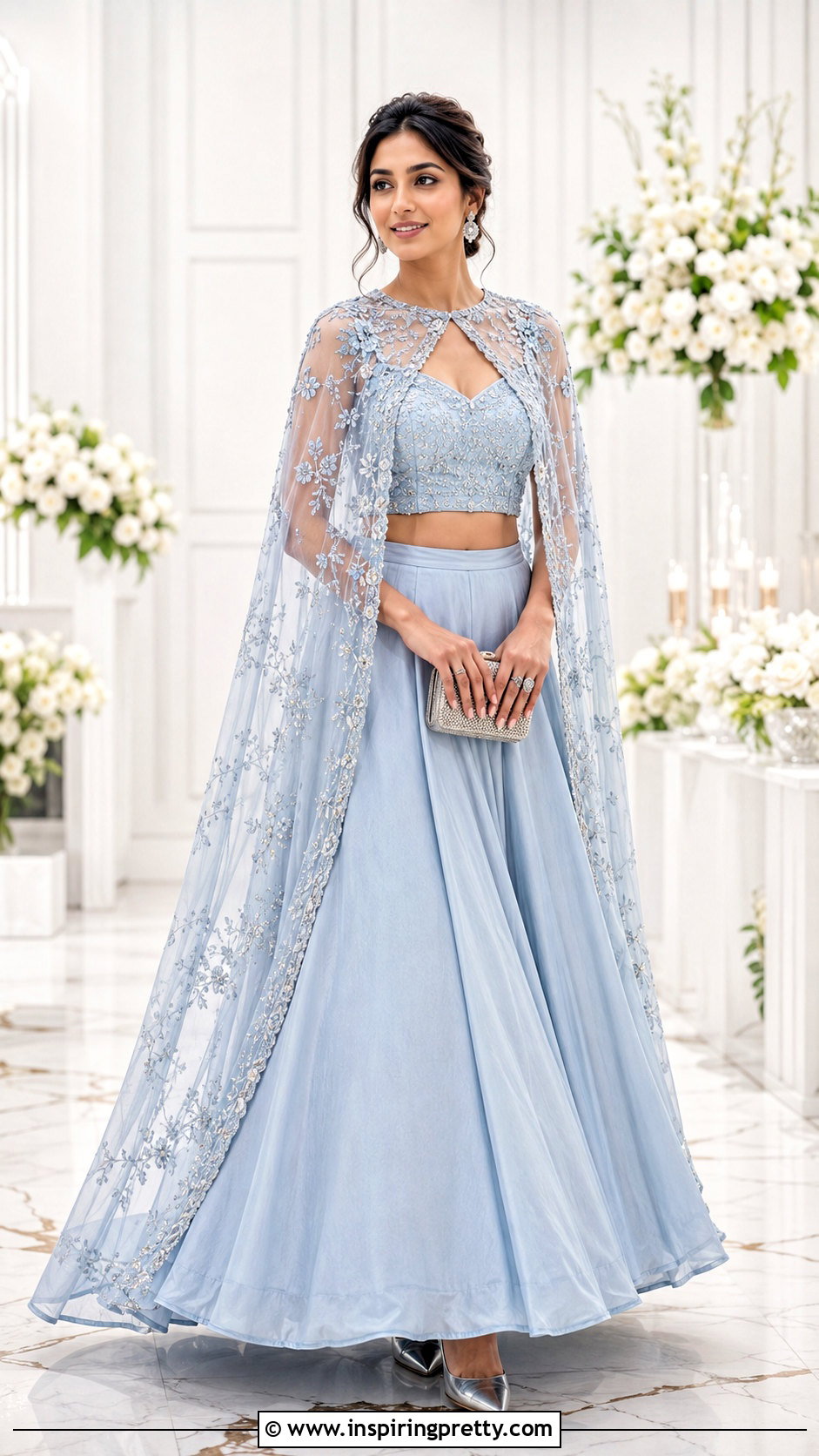
Don't want to manage a dupatta all night? A cape solves it and leaves both hands free. I'd look for a fitted inner bodice with a sheer embroidered cape falling to the waist or hip. Keep the skirt a simple circle so the outfit doesn't get too wide. Net, organza and chiffon capes move as you walk, and pearl or sequin edging finishes them. A sleek ponytail stops hair catching on the embroidery at the shoulders.
4. Jacket Crop Top Lehenga
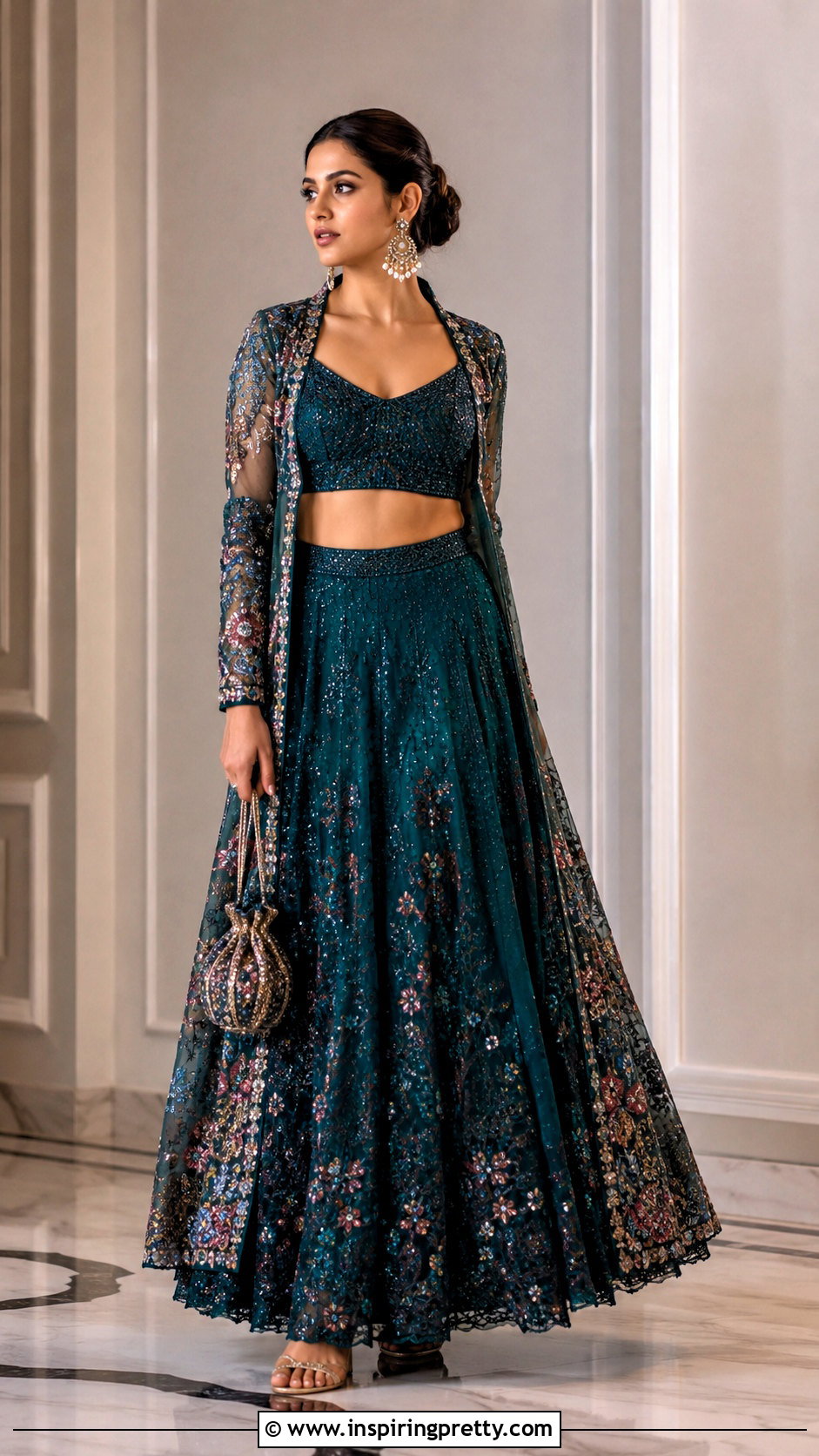
A long open jacket over a sleeveless crop top and skirt gives coverage and a dramatic line, and it replaces the dupatta. Sheer jackets keep it light; velvet or brocade makes it formal and warm, which matters at a winter wedding held outdoors. Vertical embroidery on the jacket lengthens the body. The real bonus is reuse: the jacket goes over a plain dress later, and the crop top can be paired with another skirt.
5. Peplum Crop Top Lehenga
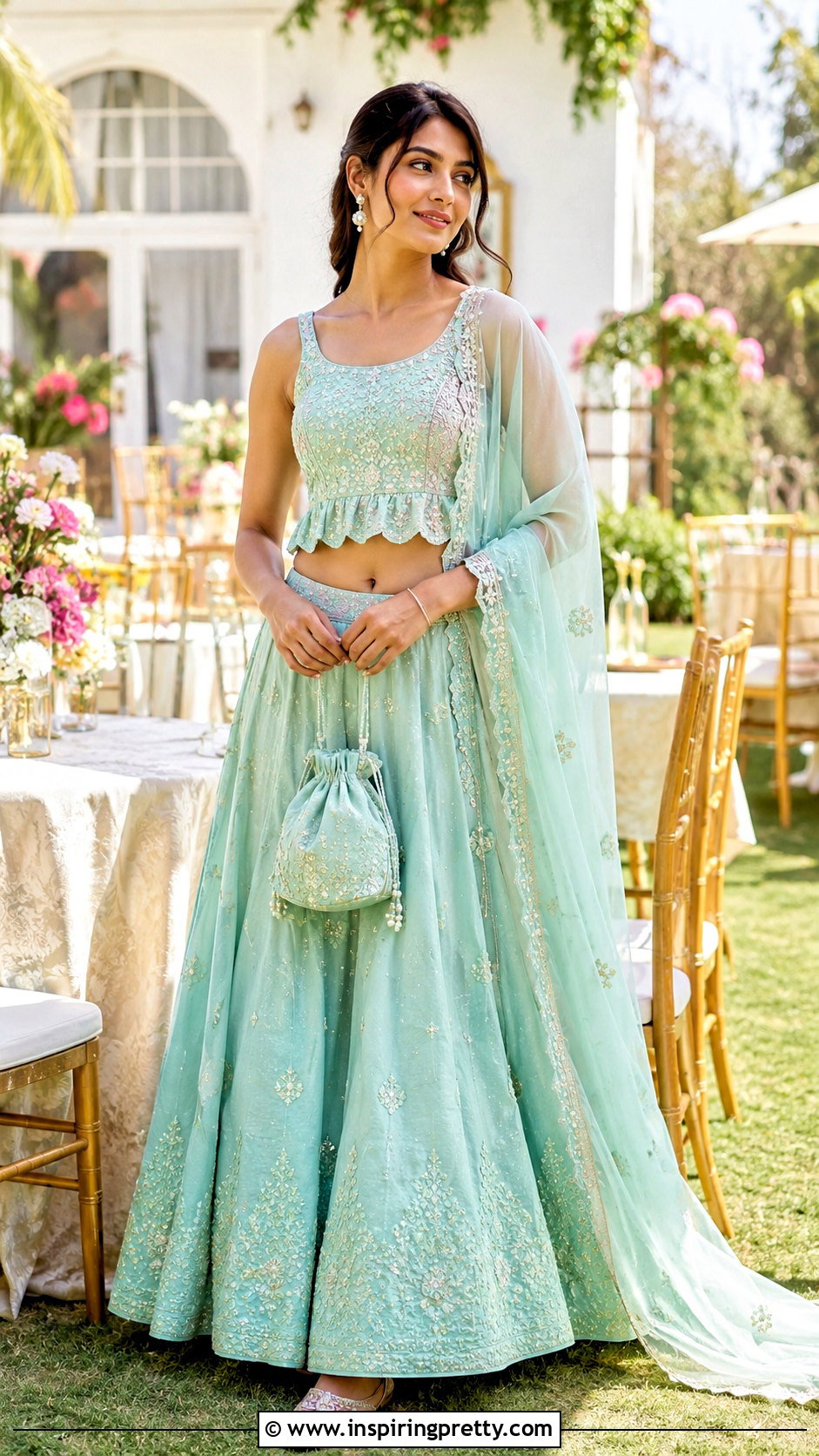
A short peplum adds a little flare at the waist and covers more of the midriff than a fitted blouse. It should end just below the skirt's waistband, not on top of a heavily embroidered one, or the middle looks crowded. Scalloped edges or small mirrors along the peplum hem give it detail. Drape a light dupatta over one shoulder rather than wrapping it at the waist, so the shape stays visible. Embroidered juttis make it easy to wear through a long daytime function.
6. Halter Neck Crop Top Lehenga
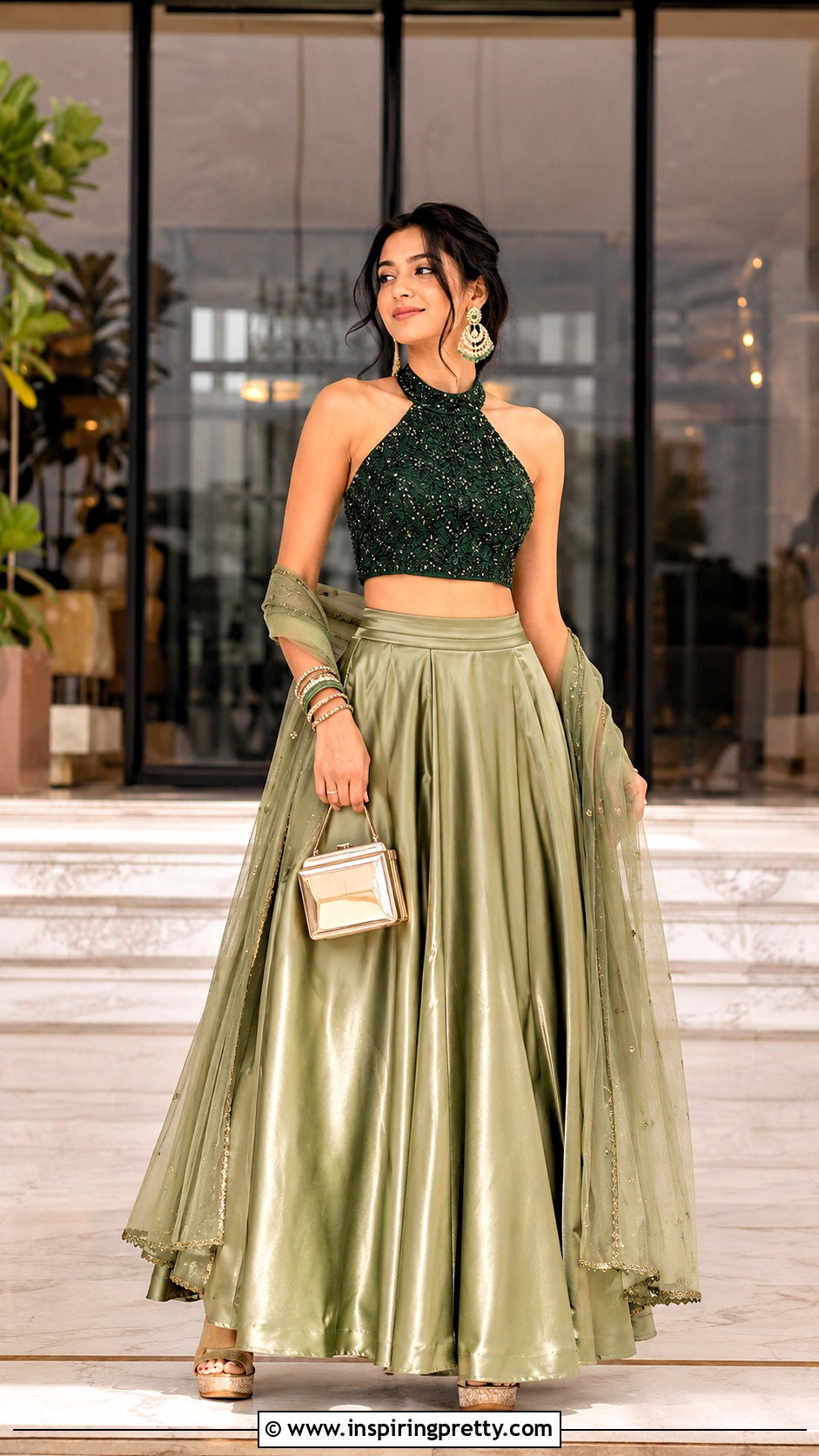
A halter neck puts the attention on the shoulders and arms, so skip the necklace and let earrings and bangles carry the jewelry. The weight of the blouse hangs from the neck strap, which gets tiring over a long evening if the bodice is heavily embroidered. I'd keep the halter light, or choose a back that's at least partly closed for support. Satin or raw silk skirts suit it, and one color top and bottom lets the cut be the feature.
7. Off Shoulder Crop Top Lehenga
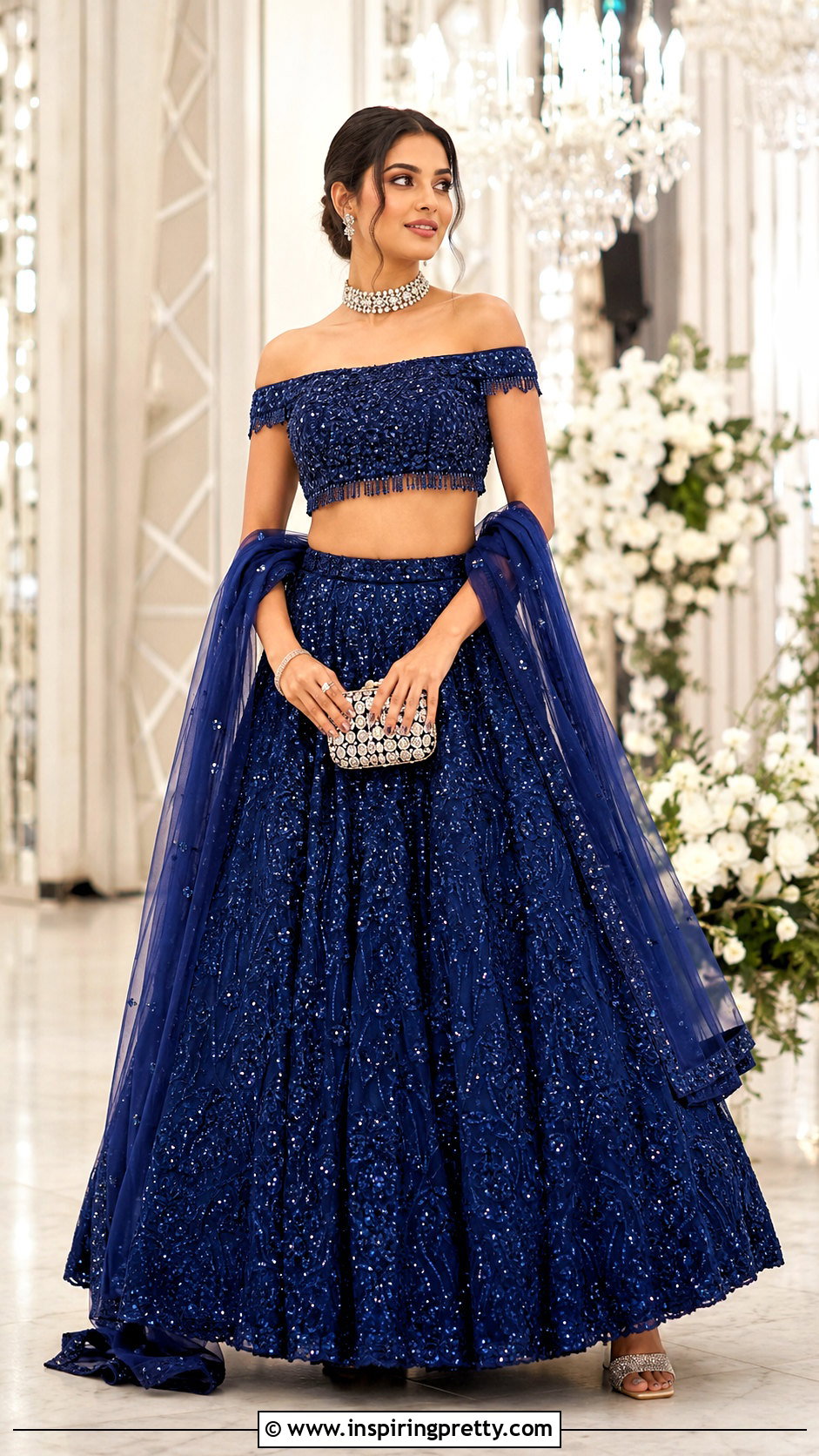
An off-shoulder blouse needs construction, not luck: an elastic or boned neckline, sleeves that hold the arm, and a fitting where you raise your arms and dance a few steps. A fitted blouse balances a full circle skirt, while a softly draped one suits a slimmer paneled lehenga. Keep the dupatta off the neckline by carrying it on the forearms or pinning it at the back. A short choker fills the open neck without crowding it.
8. High Neck Crop Top Lehenga
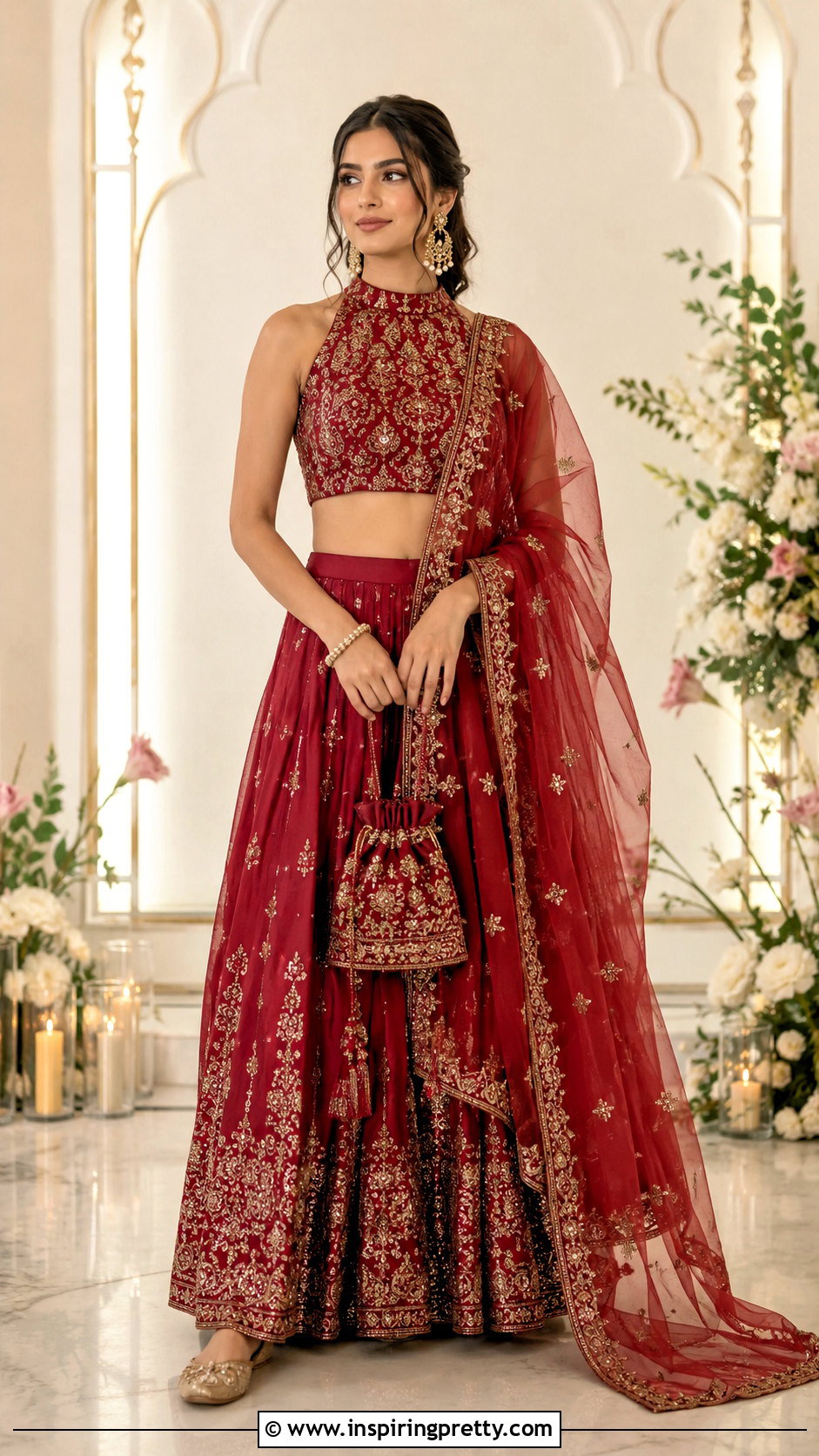
A high neck covers the chest and gives the embroiderer a whole bodice to work on. Because the neck is closed, statement earrings do the job a necklace normally would. Keep the skirt waistband simple so the top stays the focus. Silk suits formal ceremonies; georgette or crepe is lighter for dancing. Have the neckline fitted with room to swallow comfortably, since a tight high neck is miserable by hour three.
9. Full Sleeve Crop Top Lehenga
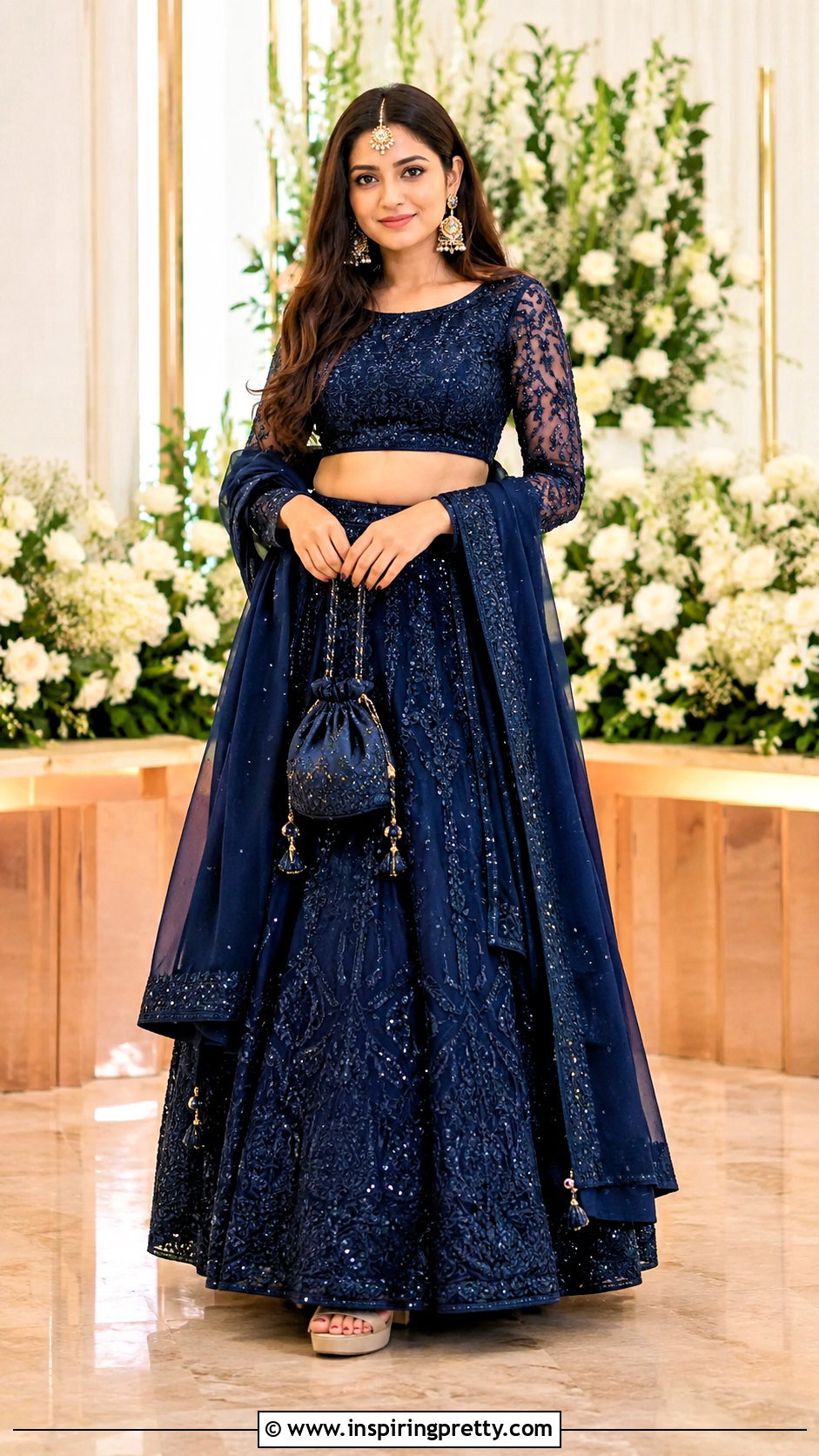
Full sleeves are my answer for cool evenings and family functions where you want coverage without looking old-fashioned. Sheer embroidered sleeves keep it light; velvet or silk sleeves feel formal and warm. Pair them with a high-rise skirt so only a narrow strip of waist shows. Keep bracelets minimal, because sleeve embroidery catches on bangles. Ask the tailor for enough ease at the elbow to lift a plate or raise your arms to dance.
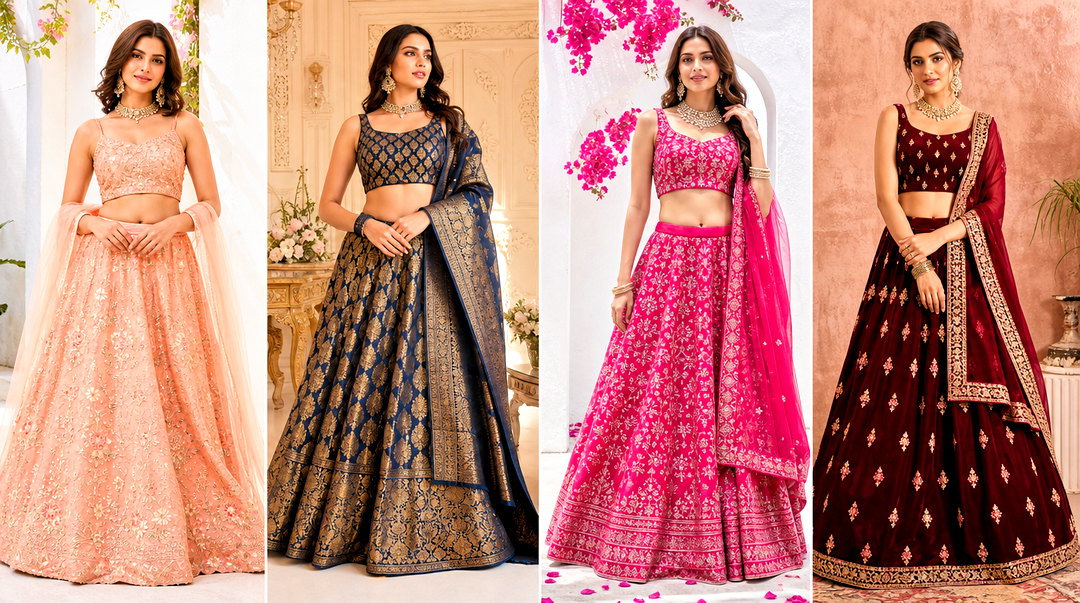
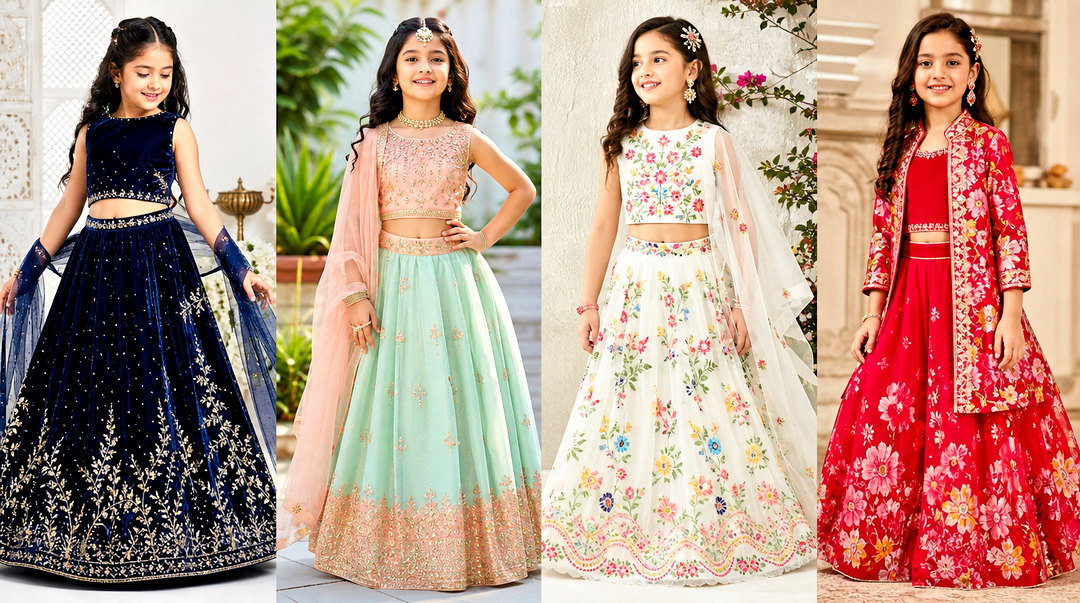
10. Puff Sleeve Crop Top Lehenga
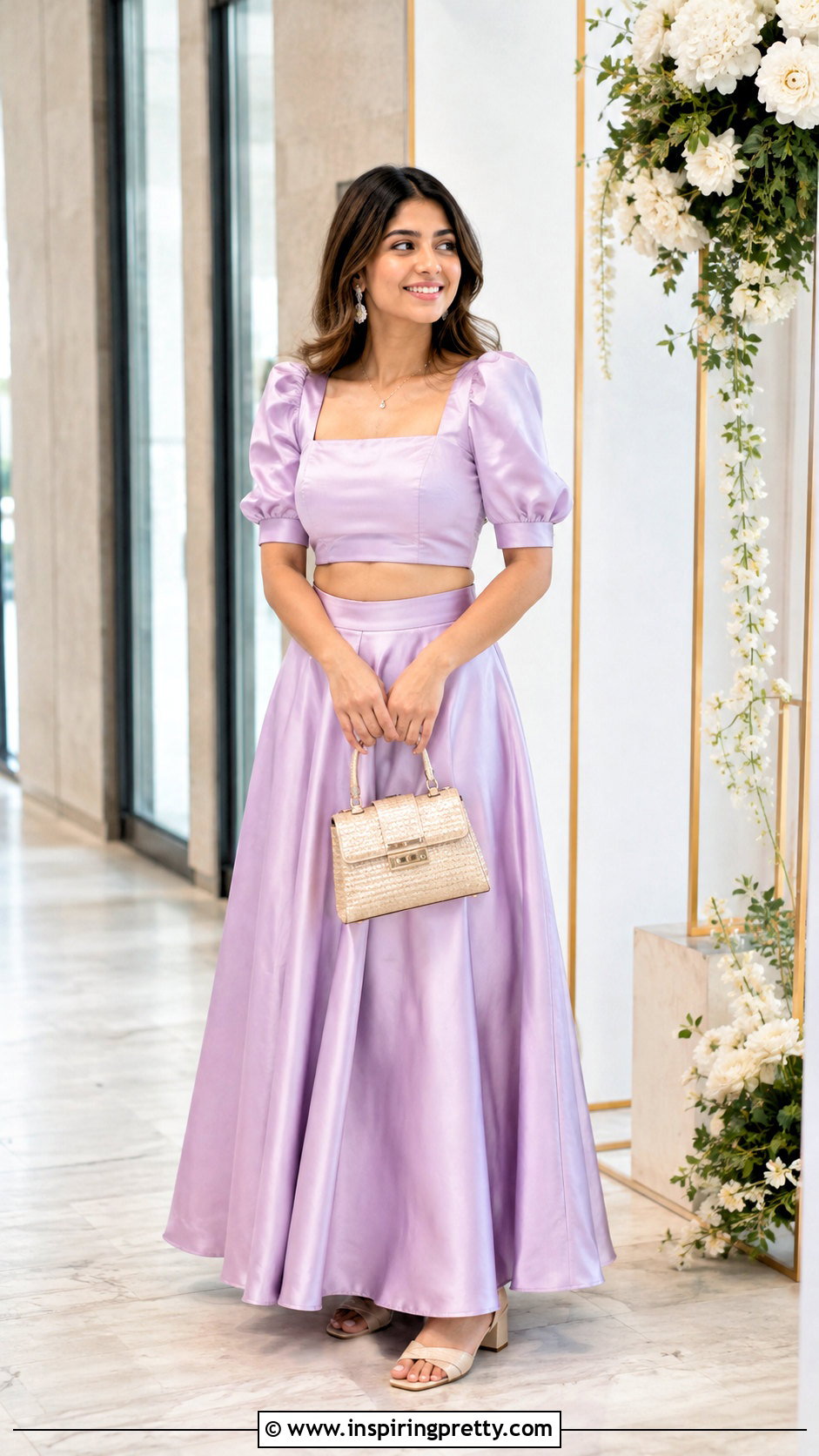
Puff sleeves add playfulness, but they also add width at the shoulder. With a full skirt, I keep the puff soft and gathered rather than huge, and if your shoulders are broad, a shorter puff keeps things in proportion. A square or sweetheart neck balances the rounded sleeve. A plain satin skirt lets the sleeve shape stand out. Low block heels keep you comfortable through a long evening.
11. Square Neck Crop Top Lehenga
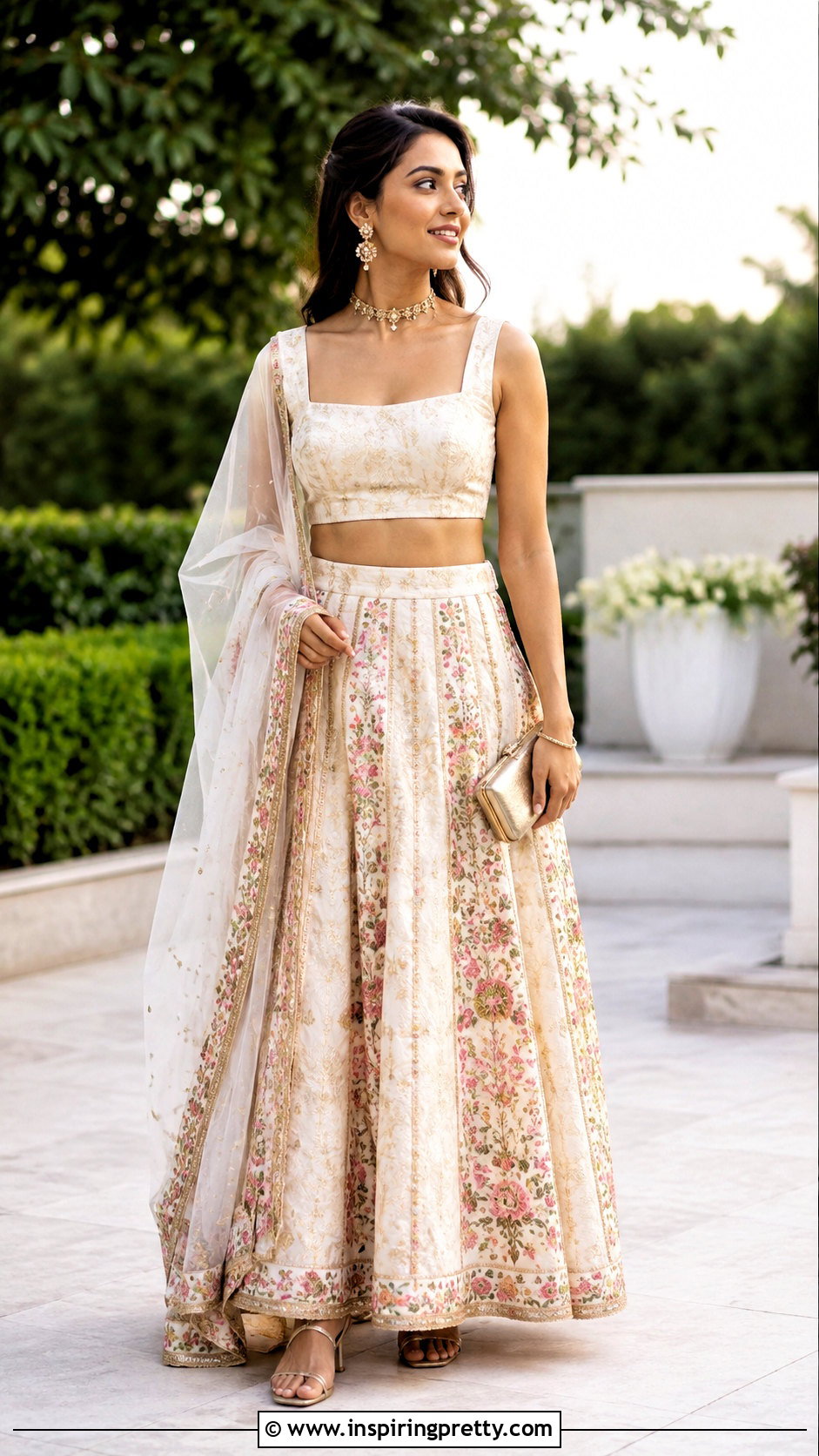
A square neck is the easiest modern neckline for a lehenga blouse. It frames the collarbones, holds a short necklace neatly and looks fresh without revealing much. Wide straps or short sleeves keep it supported. Pair it with a high-waisted skirt with vertical panels or a contrasting border, and carry the dupatta over one arm so the square stays visible. It flatters a wide range of figures, which is why it turns up so often in bridesmaid sets.
12. Sweetheart Crop Top Lehenga
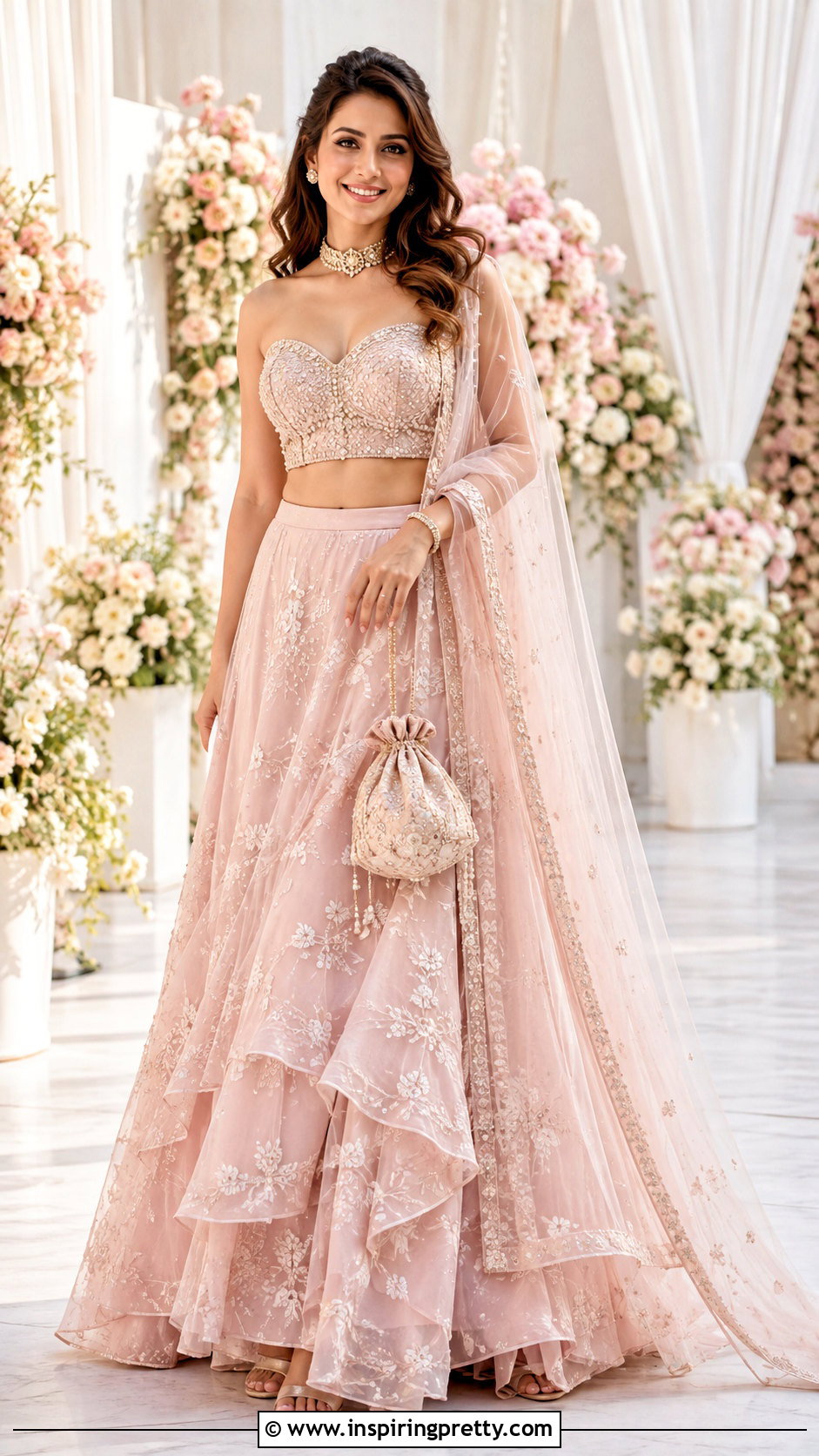
A sweetheart neckline softens a structured blouse and sits well on a fuller bust if there's enough support underneath, so I'd add straps or short sleeves rather than relying on the bodice alone. A full skirt sitting high at the natural waist completes the hourglass shape. Let tonal threadwork follow the curve of the neckline. Pin the dupatta behind one shoulder so the front stays clear. Rose, lavender and powder blue suit it at an engagement.
13. Asymmetric Crop Top Lehenga
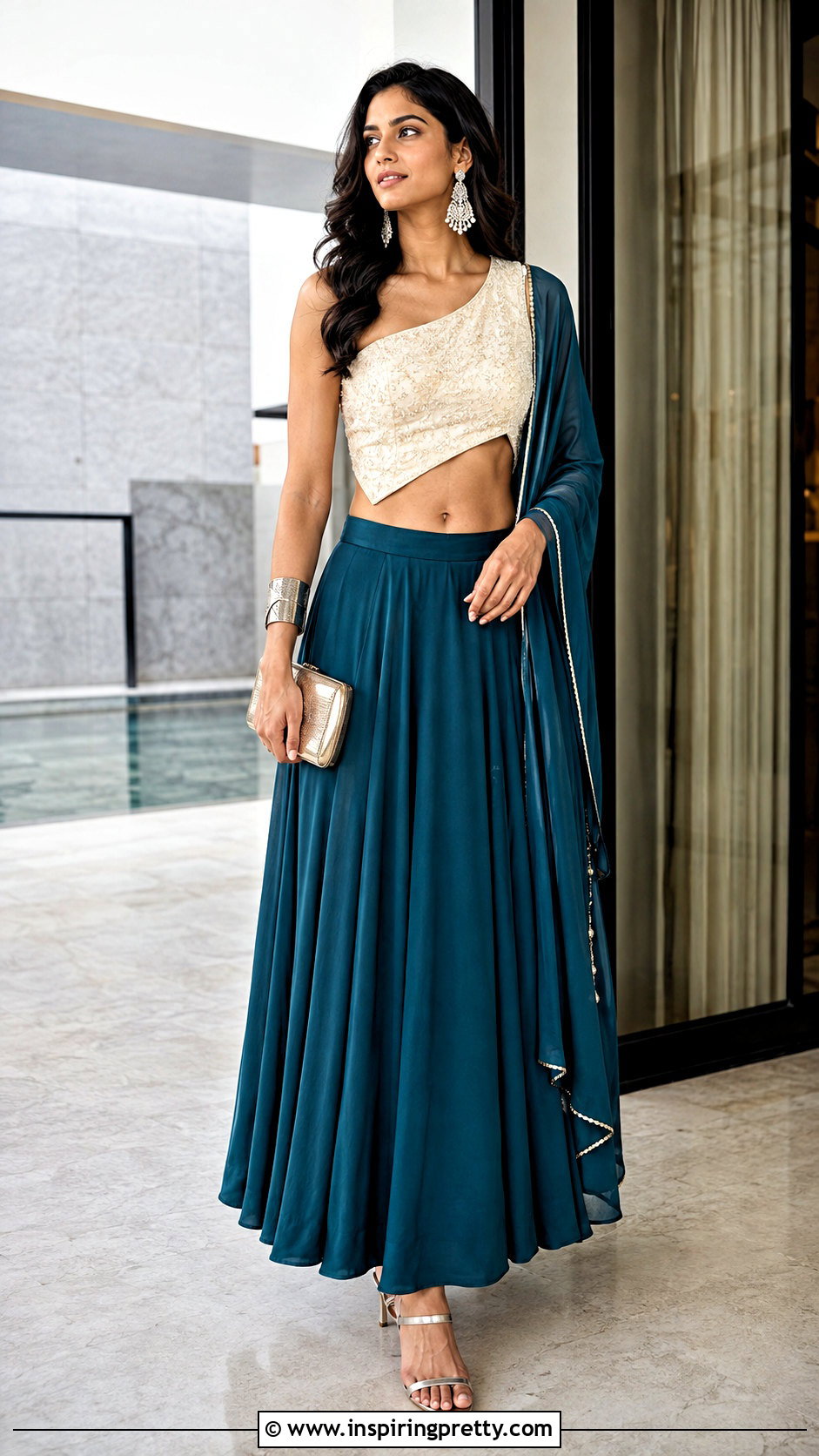
An asymmetric top, with an angled hem or one extended panel, needs a simple skirt so the cut can be seen. A plain crepe skirt makes it read as fusion; an embroidered silk skirt pulls it back toward tradition. The angled hem also lets you choose where the midriff shows. What I watch at the fitting is the longest point: it should fall smoothly over the waistband instead of folding up when you sit.
14. Draped Crop Top Lehenga
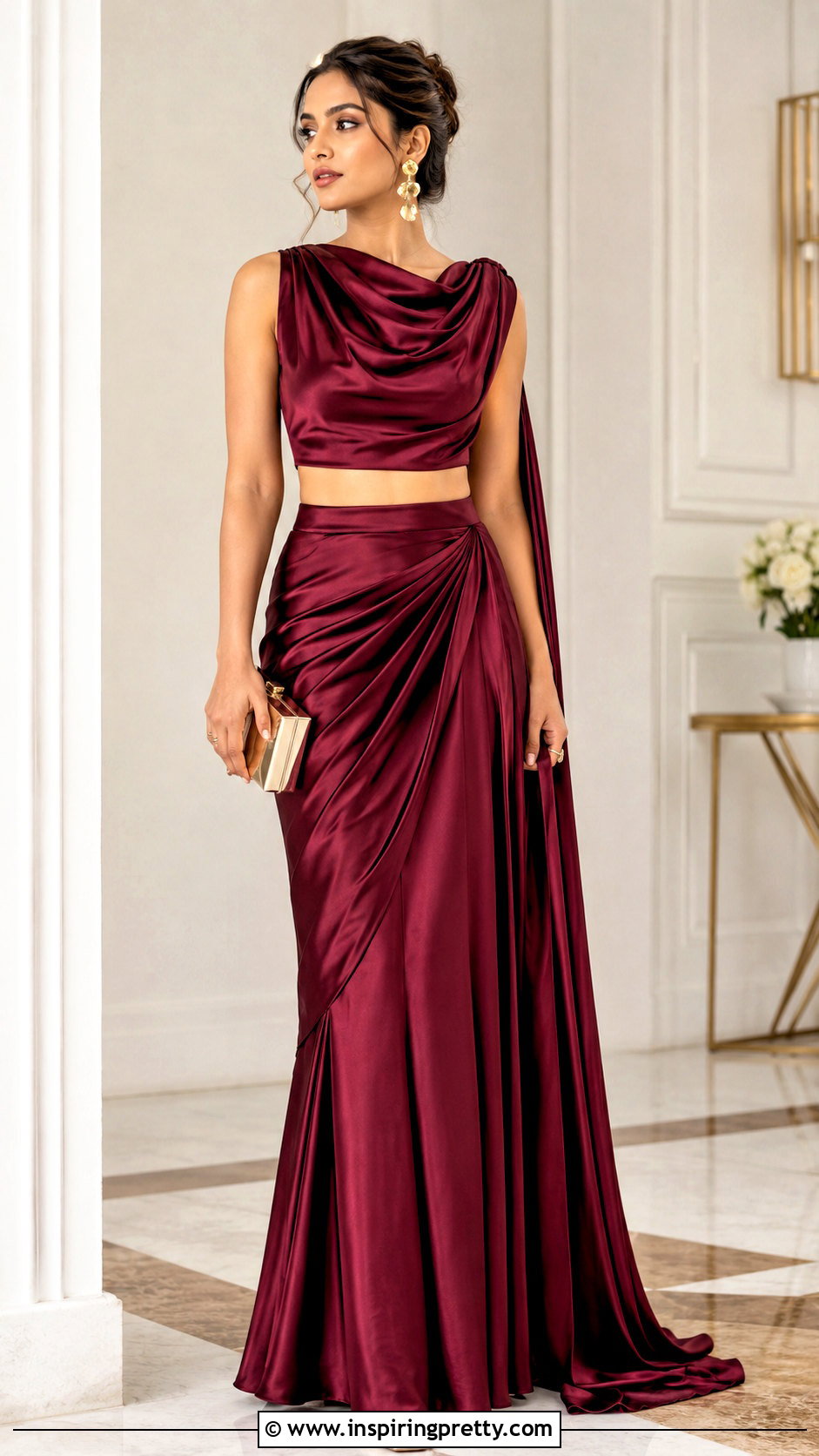
A draped top gives the look of a carefully arranged dupatta that actually stays put. Soft fabric gathered across the bodice and fixed at the shoulder or waist does the work. Satin, crepe and georgette fold well, whereas stiff silk won't. Choose a skirt fitted at the hip and flaring lower down so the outfit doesn't look loose overall. If the drape is embellished, keep the skirt plain, and the other way round.
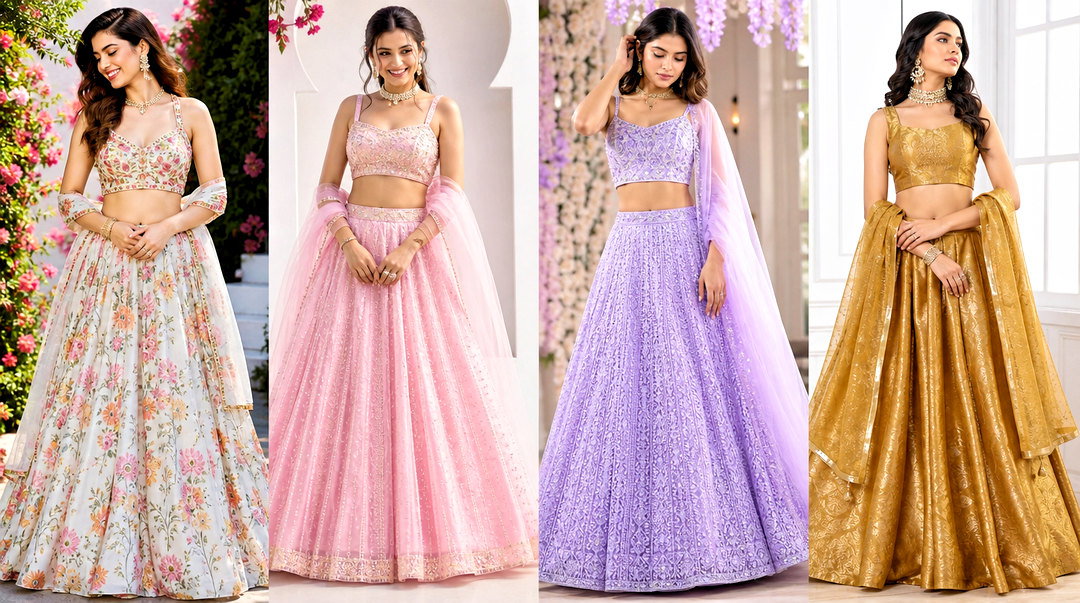
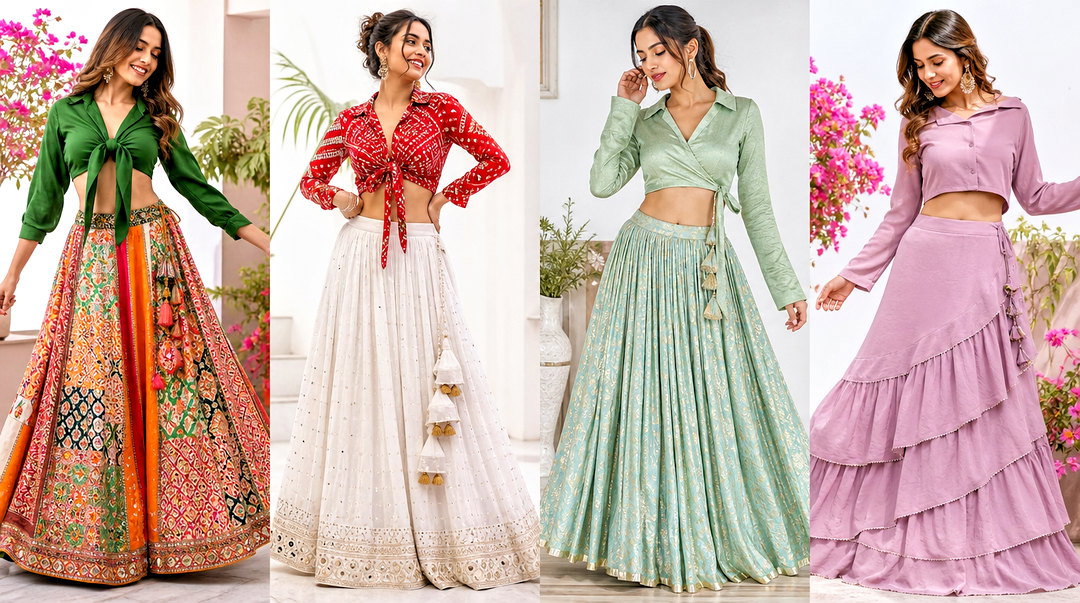
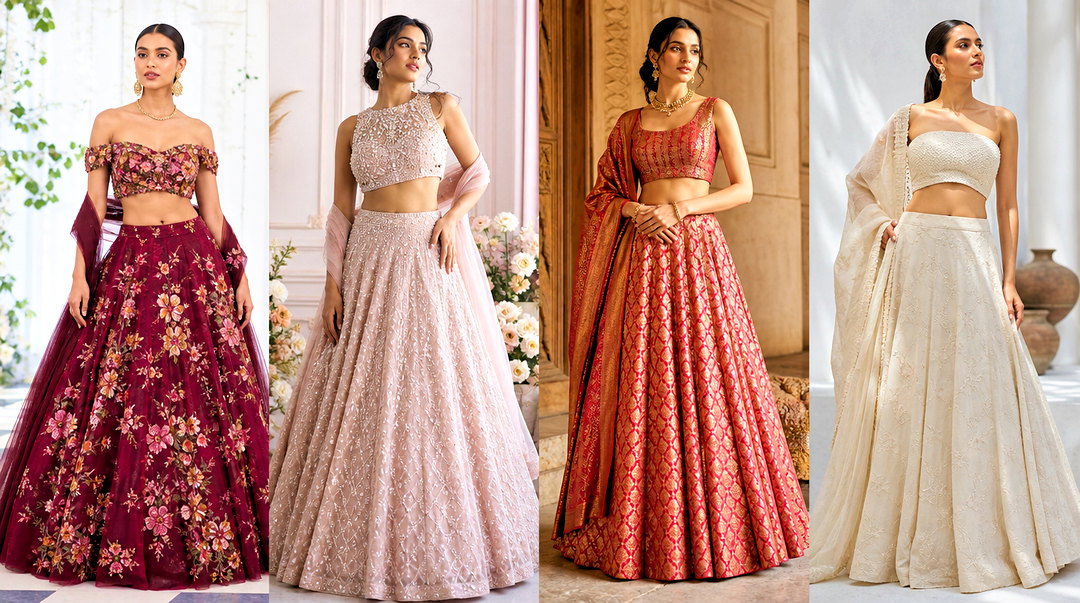
15. Ruffle Crop Top Lehenga
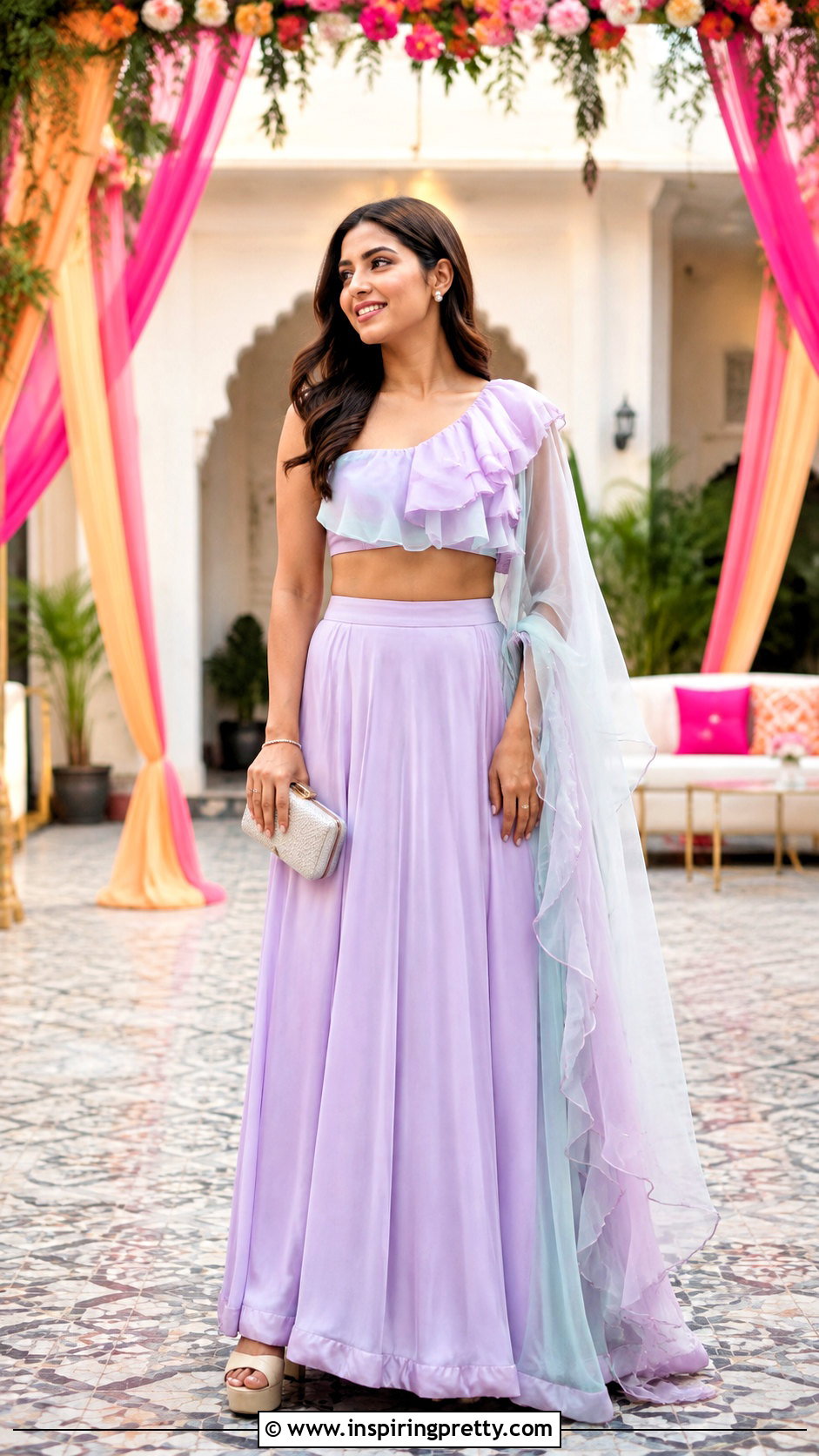
Pick one ruffled feature, the neckline, the sleeves or a cascading shoulder, and keep the skirt smooth. A ruffled top over a heavily tiered skirt adds bulk everywhere. Lightweight ruffles move well when you dance, while stiff organza ones crush when you sit and flatten in the car. Pearl studs and a small clutch are enough. Pastels suit daytime, and deeper shades suit the sangeet.
16. Fringe Crop Top Lehenga
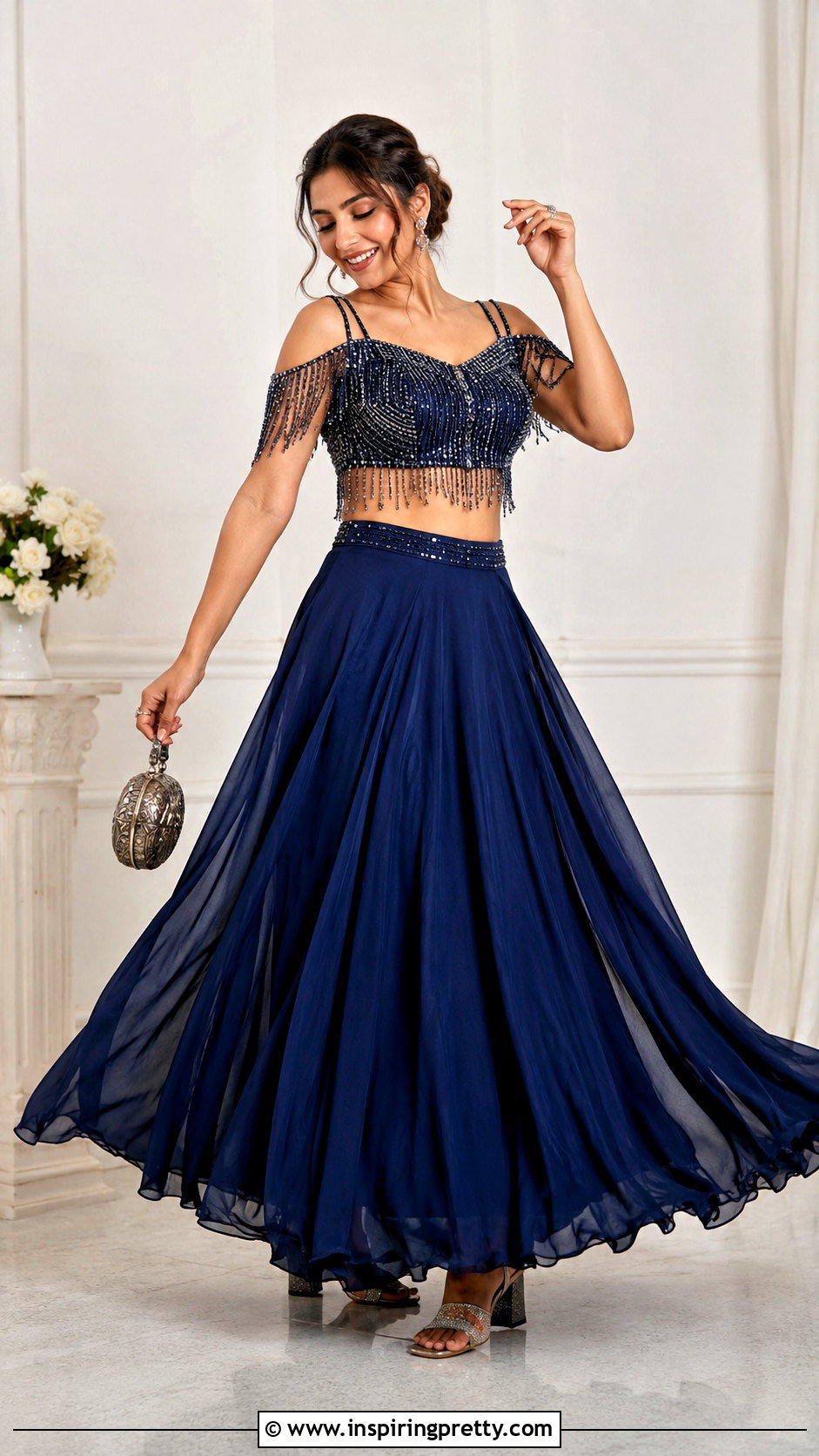
Fringe is made for dancing, since it swings with every move. Fine bead or thread fringe from the sleeves, neckline or hem works best with a simple, fluid skirt. Skip necklaces, which tangle with fringe, and keep the hair up in a sleek ponytail. Bead fringe is heavy, so notice how it feels on your shoulders after twenty minutes in the trial room. Store it flat so the strands don't knot.
17. Sequin Crop Top Lehenga
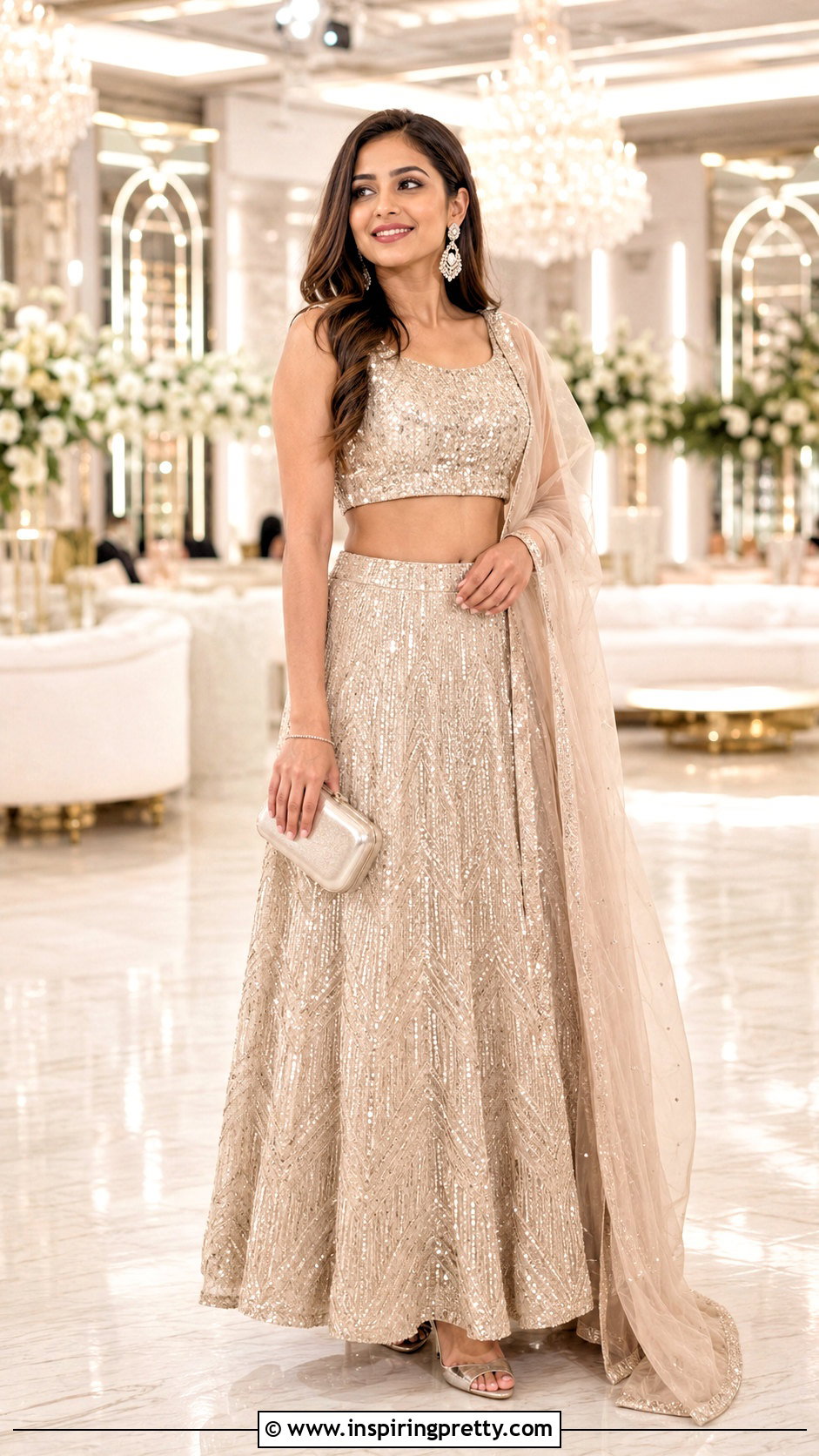
Sequins scratch the inner arm and waist unless the blouse is properly lined, so I always turn a sequin top inside out before buying. Pair a fully sequined top with a lightly embellished skirt, or spread the sequins thinly across both pieces. A plain sheer dupatta softens the shine. Keep makeup polished rather than glittery and let the clothes supply the sparkle. Midnight blue, emerald and champagne look rich under evening lighting.
18. Mirror Work Crop Top Lehenga
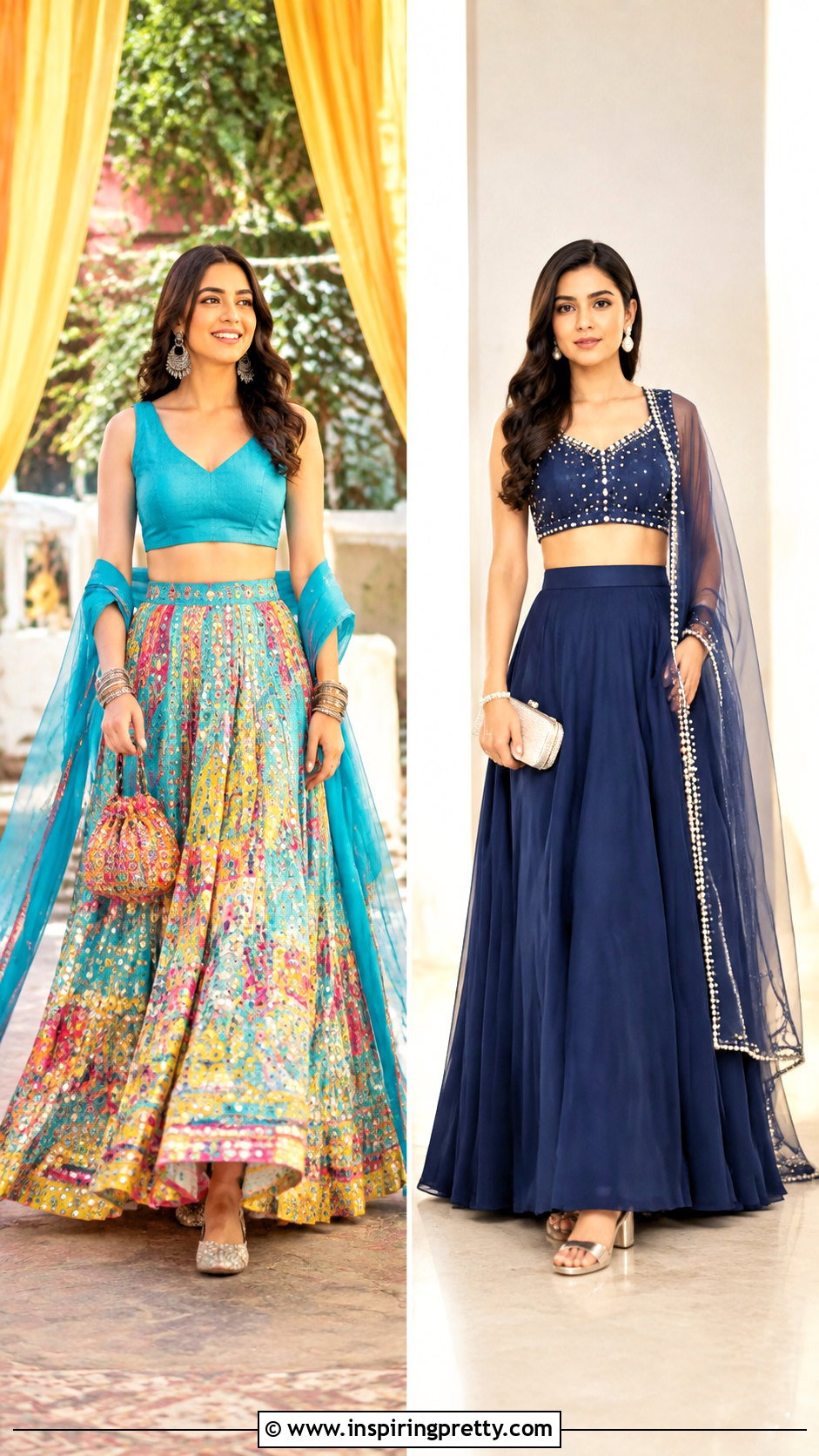
Tiny mirrors give a crop top lehenga texture and catch every bit of light at a mehendi. Spread them out: a fitted mirror-work top with a skirt carrying spaced motifs or a border looks lighter than mirrors everywhere. Run your hand along the inside of the armholes and waist, because mirror edges and the stitching around them can scratch. Oxidized silver earrings and juttis suit the craft feel, and a plain chiffon dupatta gives the eye somewhere to rest.
19. Pearl Crop Top Lehenga
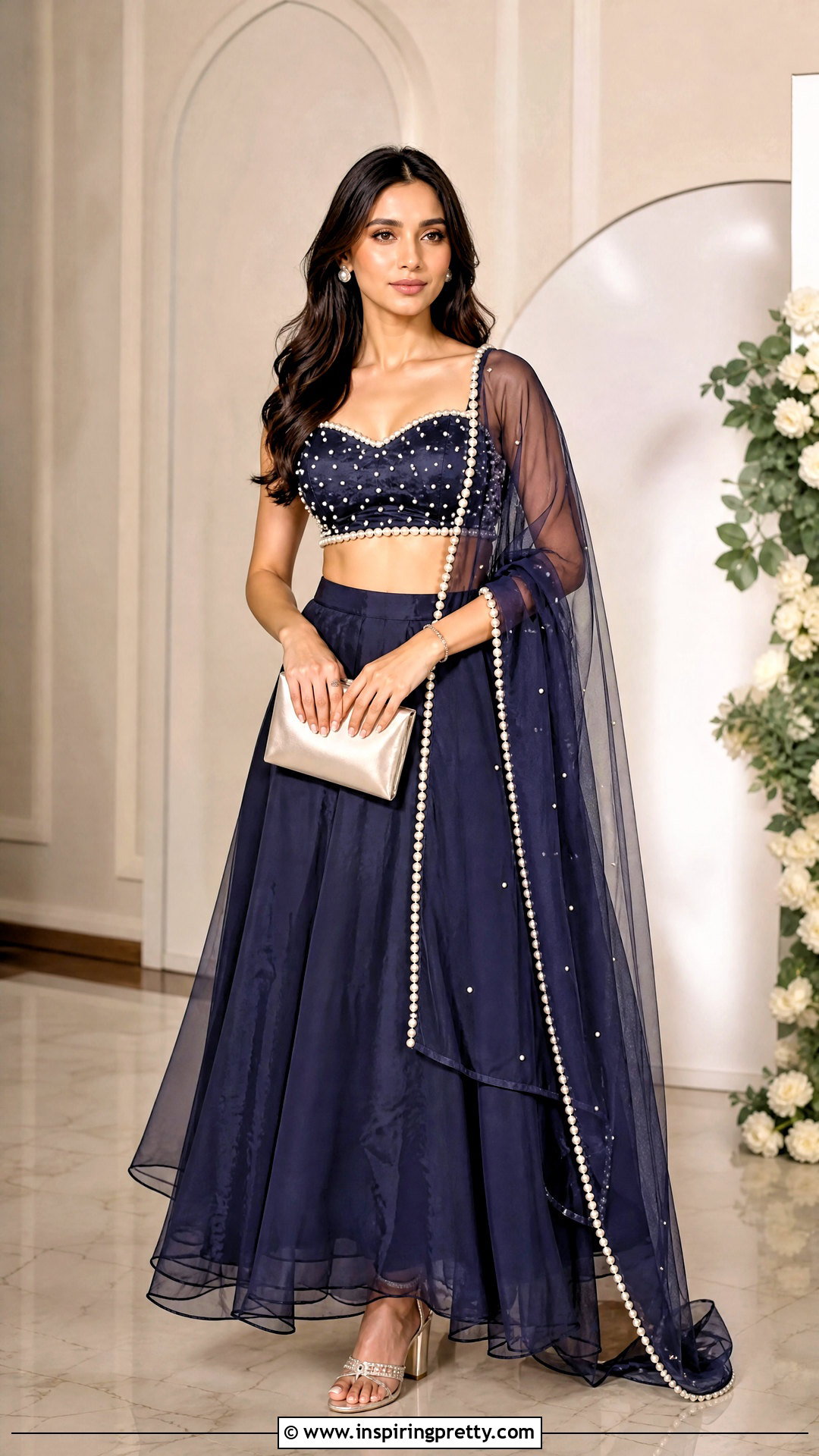
Pearl work looks delicate and formal at the same time. Scattered pearls or a beaded neckline on the blouse, with light tonal embroidery on a satin or net skirt, is the balance I like. Ivory and blush keep it soft; navy and emerald make the pearls stand out. Wear a single pearl choker or studs rather than a full matching set. Check that no beads are stitched under the arms, where they rub and come loose.
20. Floral Crop Top Lehenga
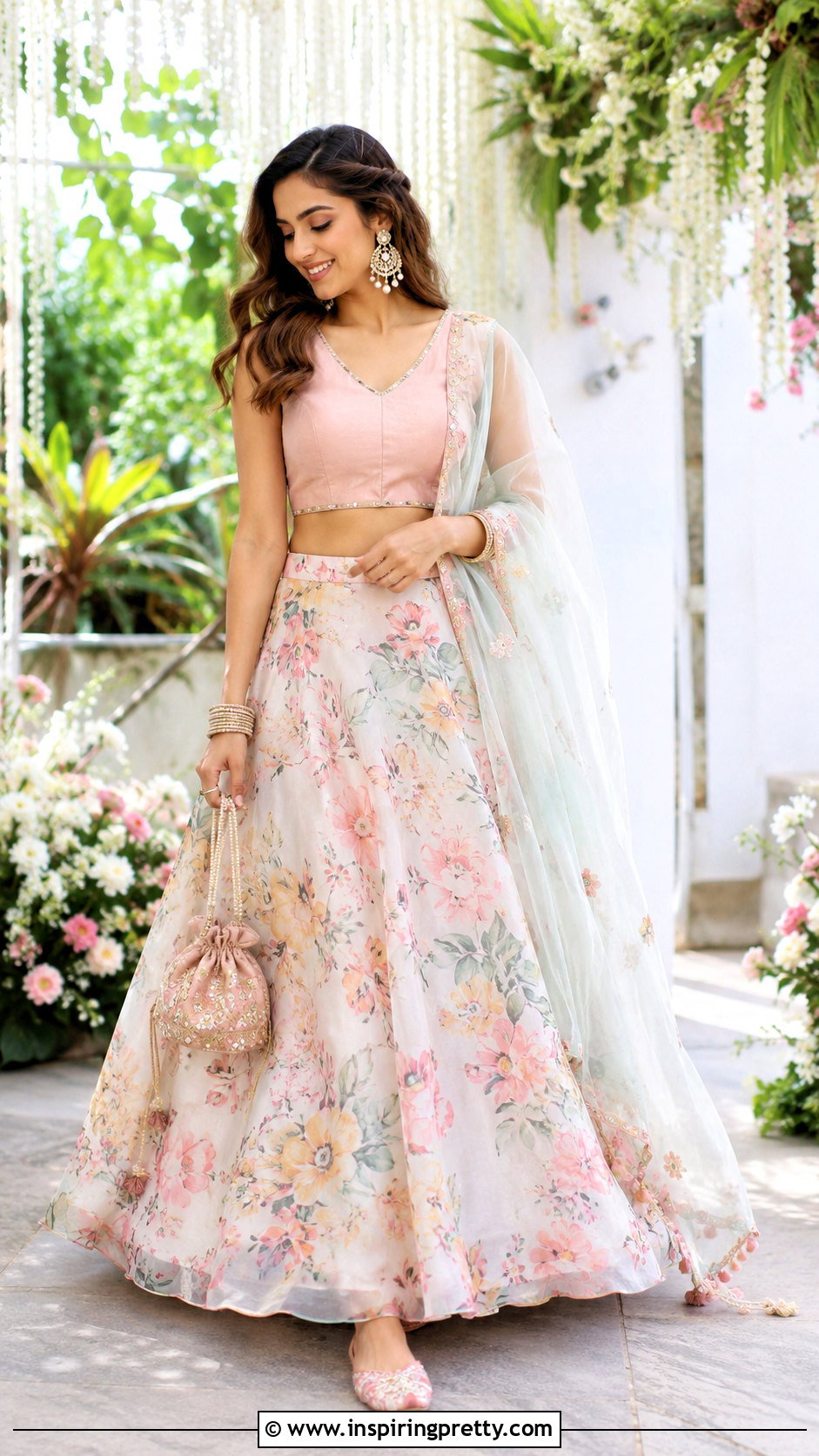
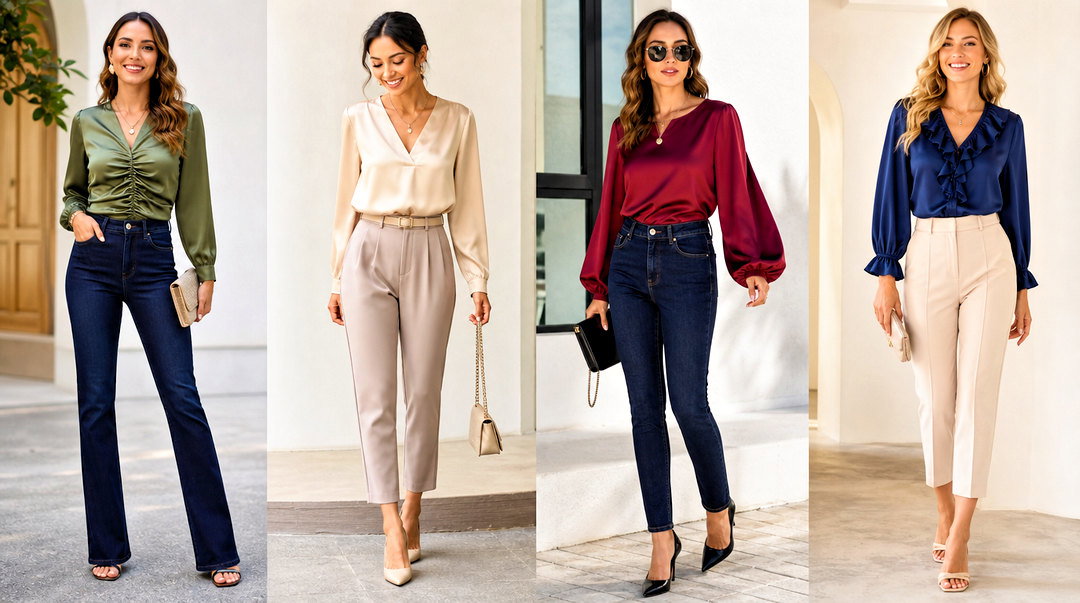
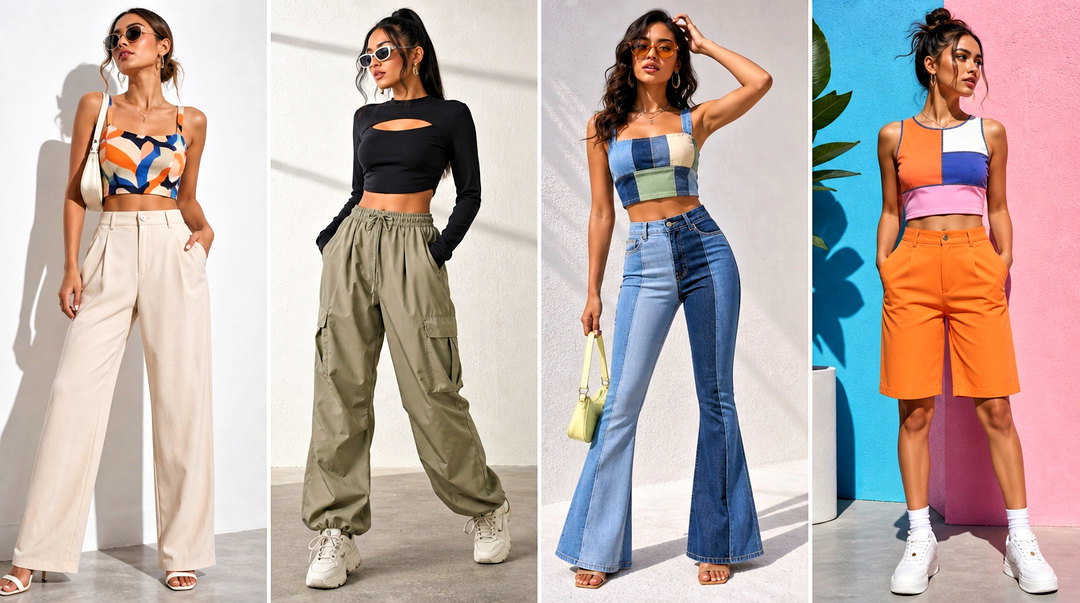
Keep one piece quiet. A printed floral skirt with a solid blouse works, and so does an embroidered floral top with a plain skirt; two busy florals together don't. Position the print carefully at the waistband and seams so motifs aren't sliced in half. A light organza dupatta and pastel juttis suit daytime. Floral jewelry is lovely at a mehendi, but a little goes a long way.
21. Organza Crop Top Lehenga
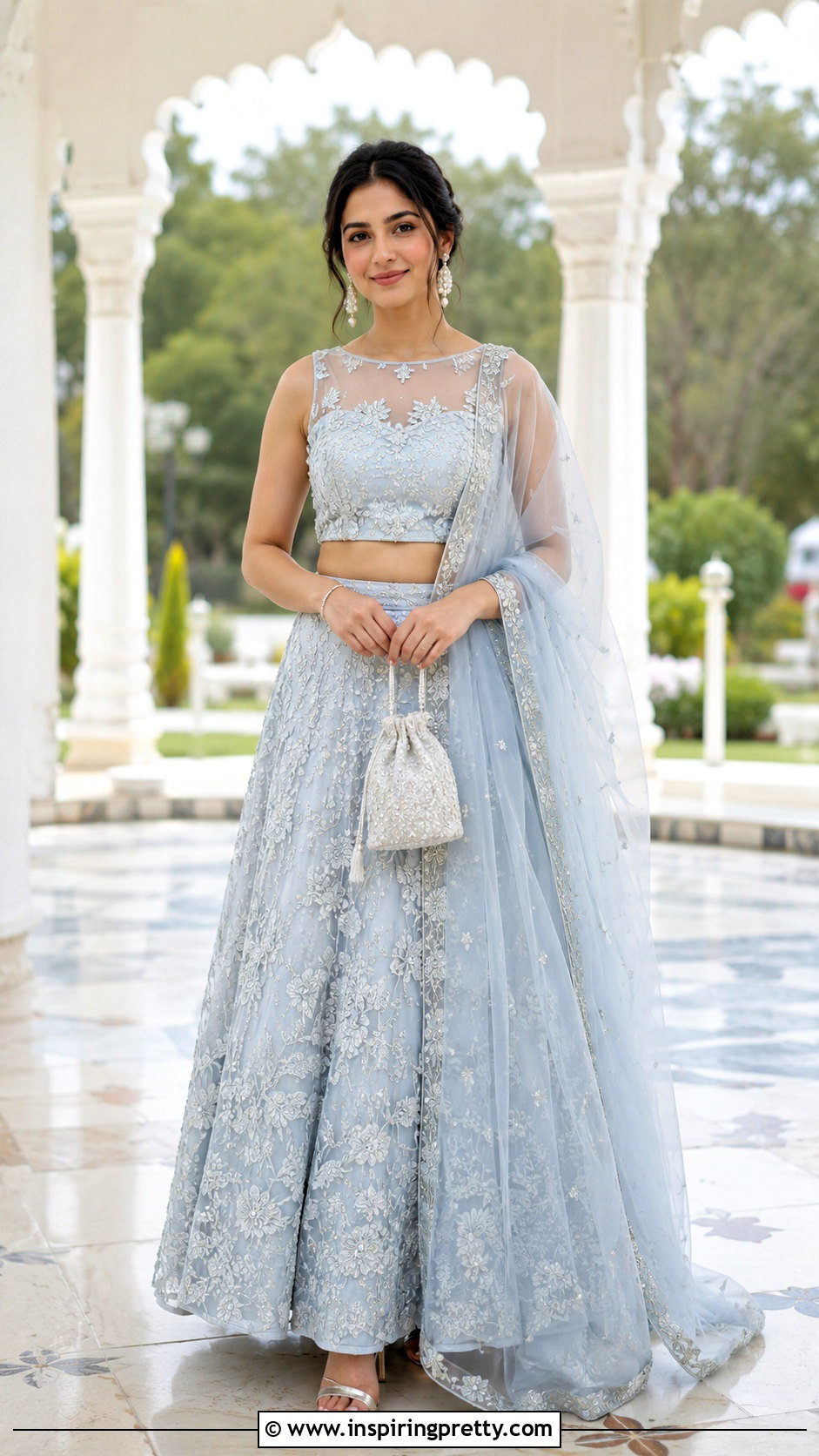
Organza is crisp and light, so it holds its shape without much weight, which makes it a good choice for daytime heat. It's also see-through, so the blouse must be lined and the skirt needs a full lining underneath. Choose a skirt with flat panels rather than dense gathers if you want a smoother waist. Pair it with a soft net or chiffon dupatta, since another stiff layer won't drape. Steam rather than iron, because a hot iron can mark it.
22. Satin Crop Top Lehenga
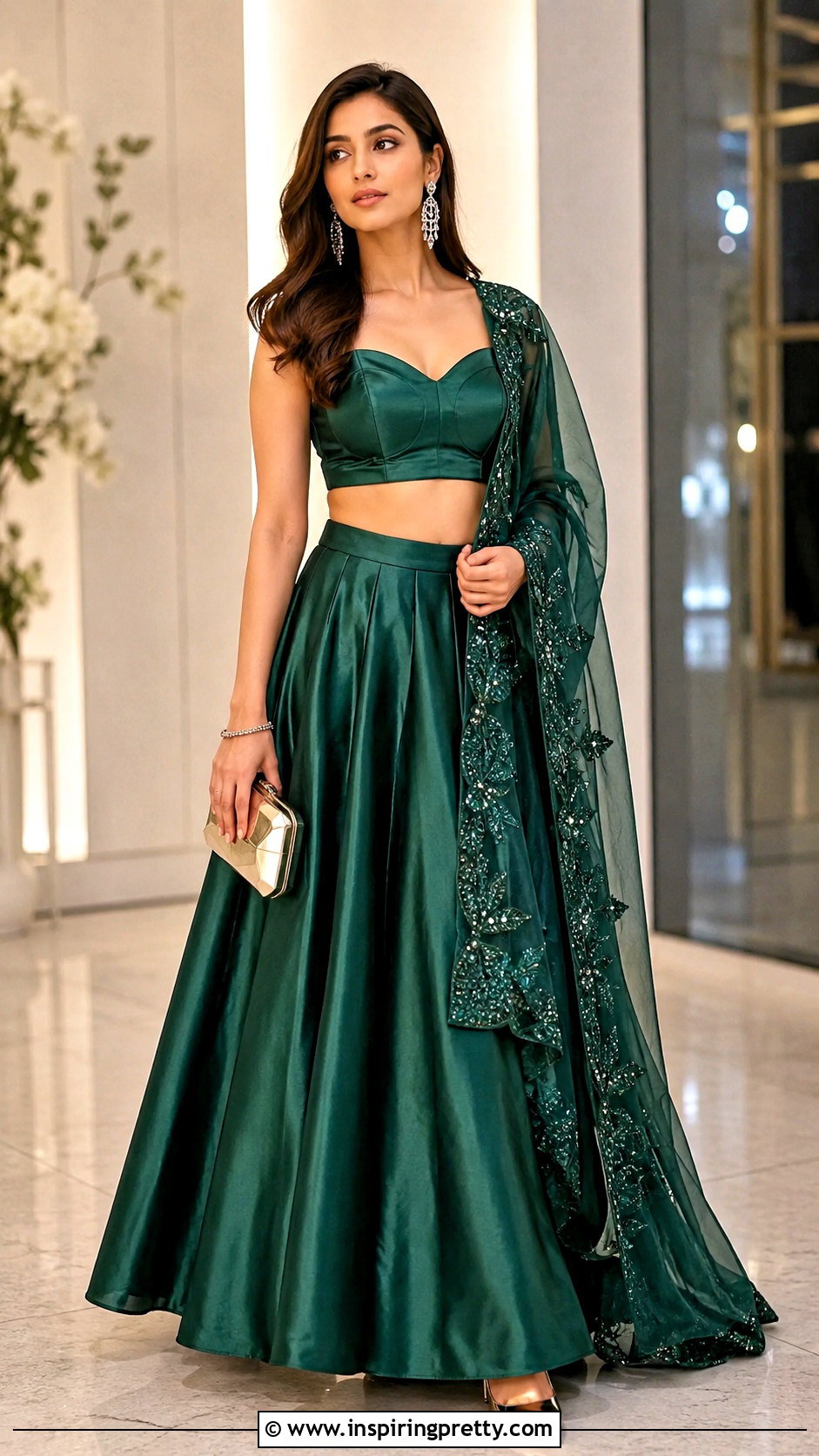
Satin shows every wrinkle and every fit problem, so tailoring matters more here than with embroidered fabrics. A bias-cut or paneled skirt moves fluidly, and a structured top keeps the set from looking like casual separates. Emerald, sapphire and bronze give a rich evening sheen. Keep embellishment to the neckline or waistband. Smooth, flat underwear is a must under satin, and dress shields help on a warm night because the fabric shows sweat.
23. Velvet Crop Top Lehenga
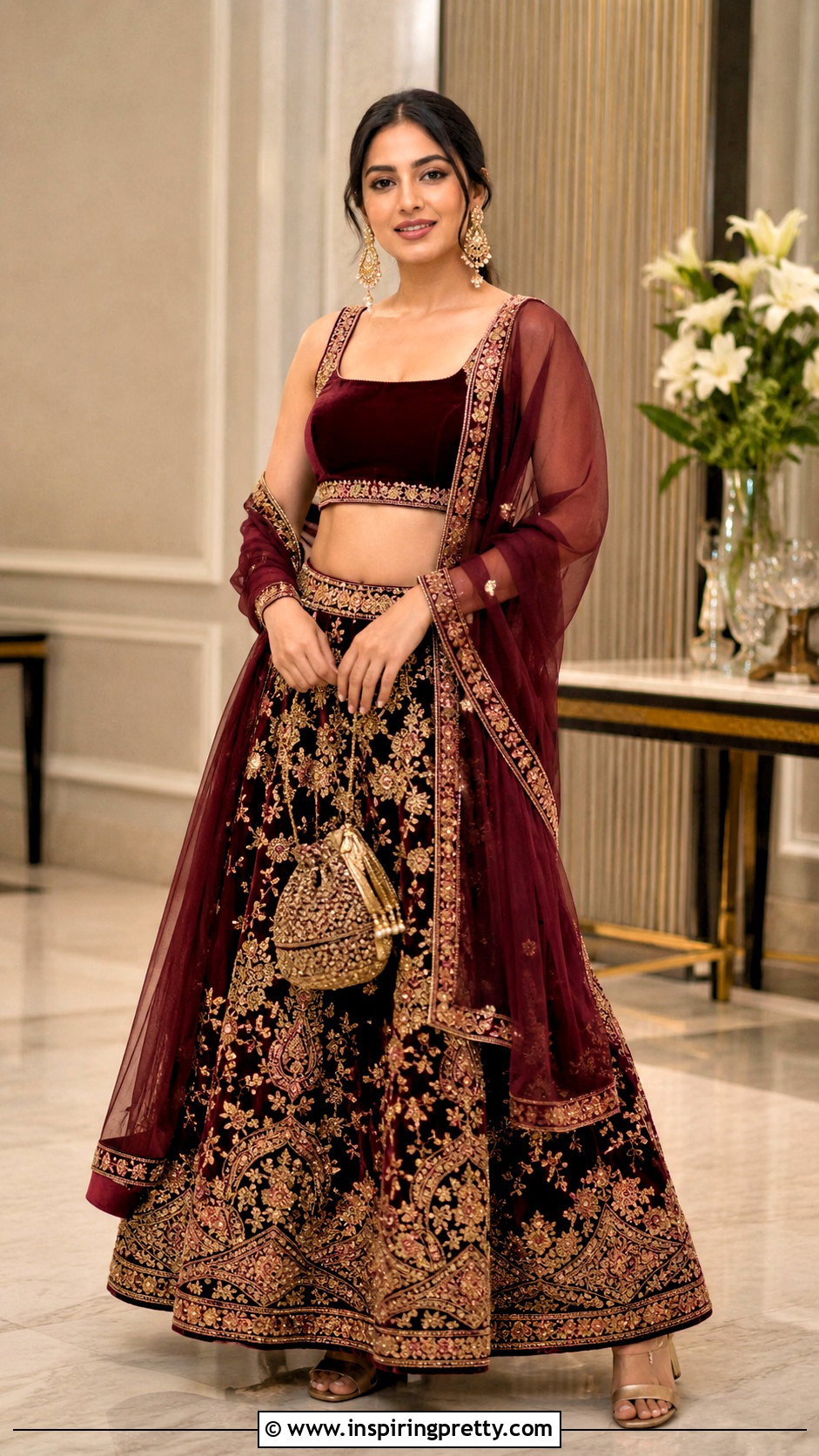
Velvet is warm and heavy, so I save it for winter evenings. A fitted velvet top with a silk or brocade skirt is easier to wear than velvet from top to bottom; if both pieces are velvet, keep the skirt's flare moderate to control the weight. Zardozi and antique gold thread look rich on it. Velvet crushes where you sit and holds the marks, so hang it with the pile facing out and steam it from the back.
24. Brocade Crop Top Lehenga
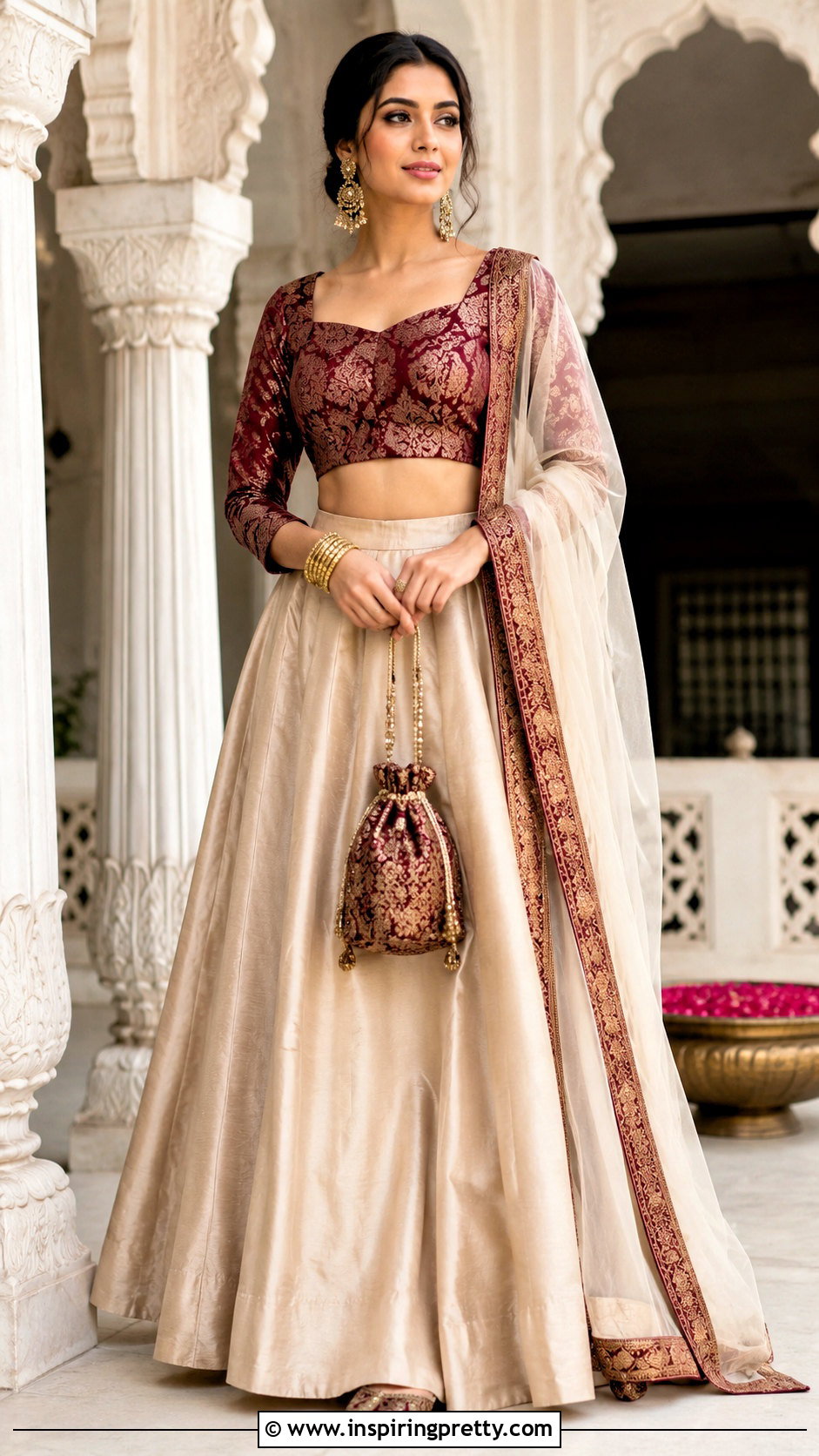
Brocade has its pattern woven in, so let only one piece carry it. A woven brocade top with a plain raw-silk skirt, or a solid top with a brocade skirt, both look considered. Large motifs need aligning at the seams and waistband, which is exactly where cheaper pieces give themselves away. A dupatta with a narrow woven border ties it together, and gold, ruby or teal suits a ceremony.
25. Chikankari Crop Top Lehenga
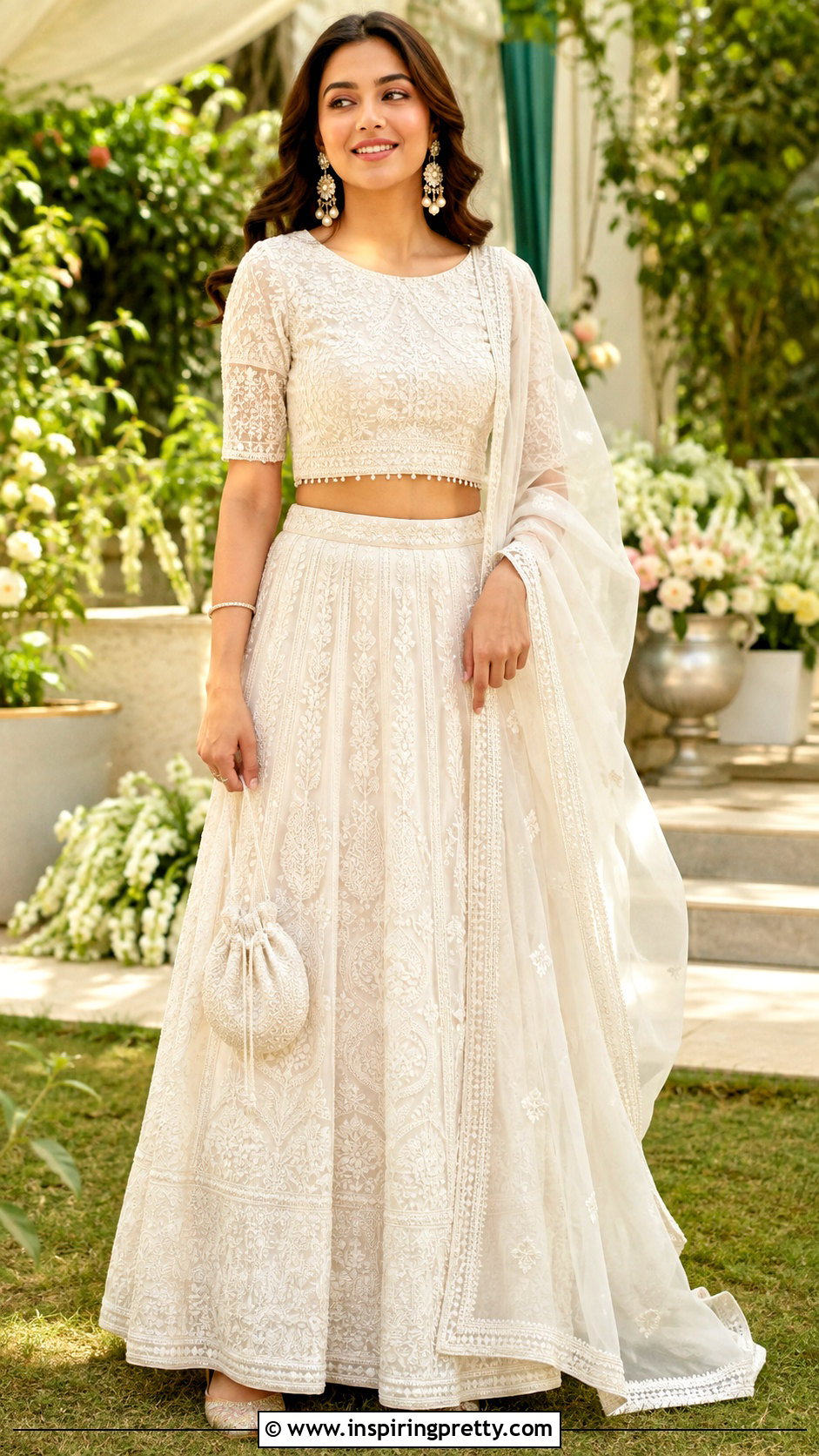
Delicate chikankari-inspired embroidery gives texture without the weight of beading, and it's one of the coolest options for a summer daytime function. Tonal sets in ivory, powder blue or mint look the most refined. A lined blouse with elbow sleeves and a flowing georgette skirt keeps it comfortable. The threadwork is fine, so avoid jewelry with sharp edges that could pull a stitch. For evening, some versions work small sequins into the embroidery.
26. Bandhani Crop Top Lehenga
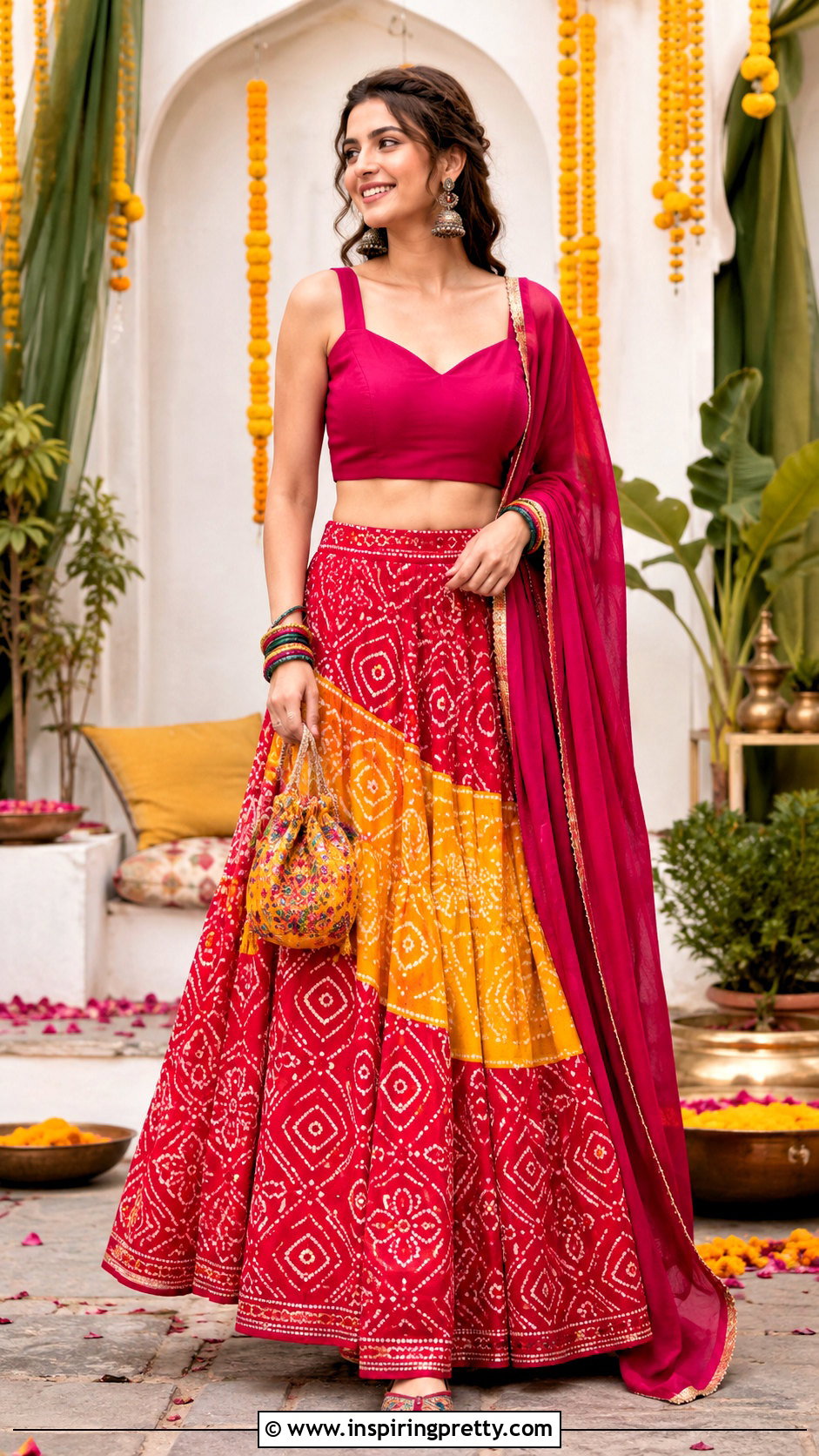
A Bandhani-inspired crop top lehenga brings tie-dyed dots and strong color to festive dressing. Pair a patterned skirt with a solid top that matches one of the smaller accent colors, or wear a full set with a plain dupatta so the pattern has room to breathe. Real tie-dye can bleed in the first wash, so dry-clean it or wash it alone in cold water. Red and yellow feel traditional; teal and coral feel fresh. It's a natural fit for garba and mehendi nights.
27. Gota Work Crop Top Lehenga
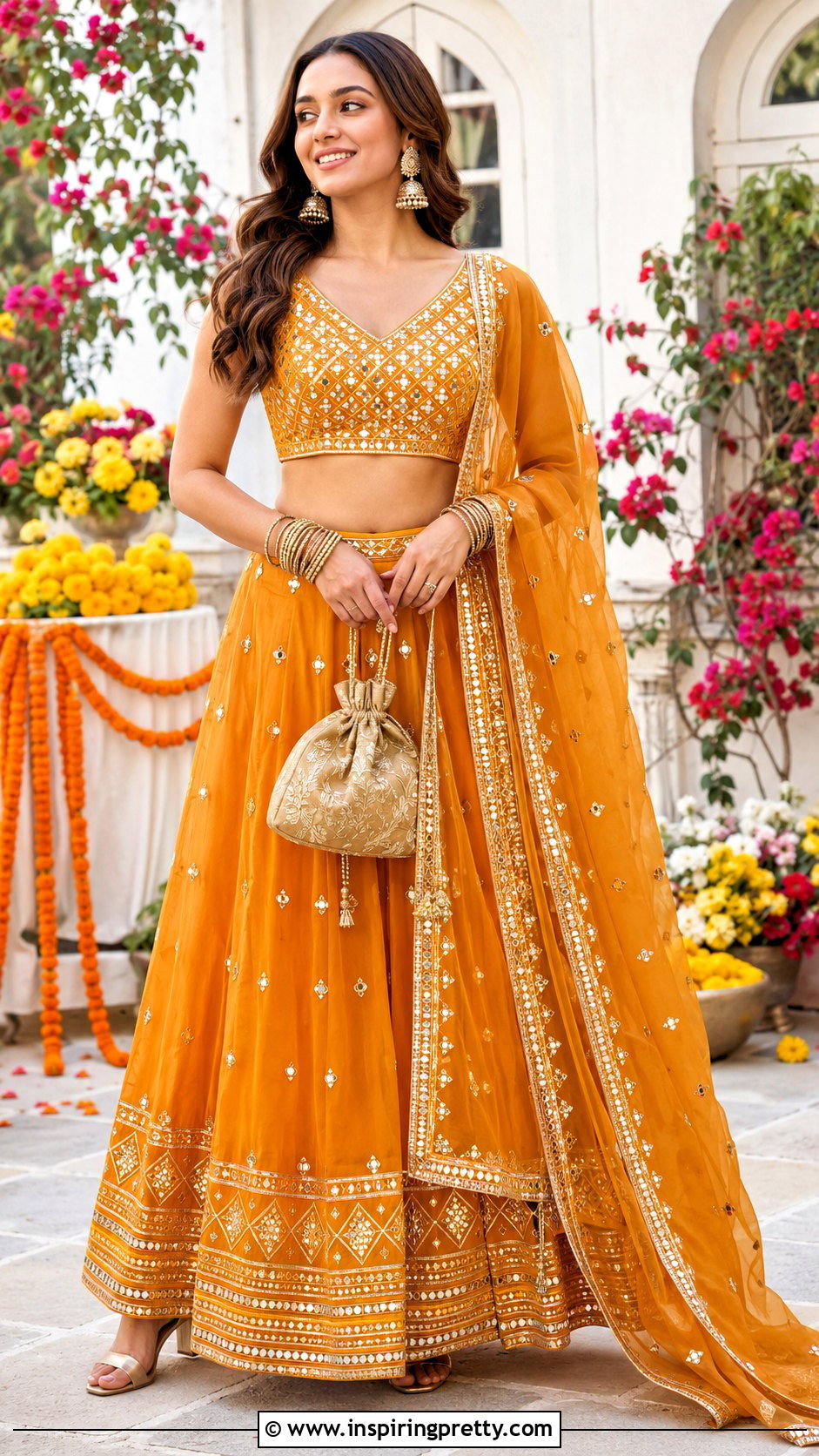
Gota is metallic ribbon work stitched onto the fabric, so it shines without crystals. Geometric gota lines on the blouse, repeated in the skirt border, tie the outfit together. A bright silk-blend or georgette base keeps it light. Gota edges can be stiff, so keep them away from the armholes and the inside of the waistband. Jhumkas and juttis suit daytime functions, and on an ivory base the whole look becomes much quieter.
28. Zardozi Crop Top Lehenga
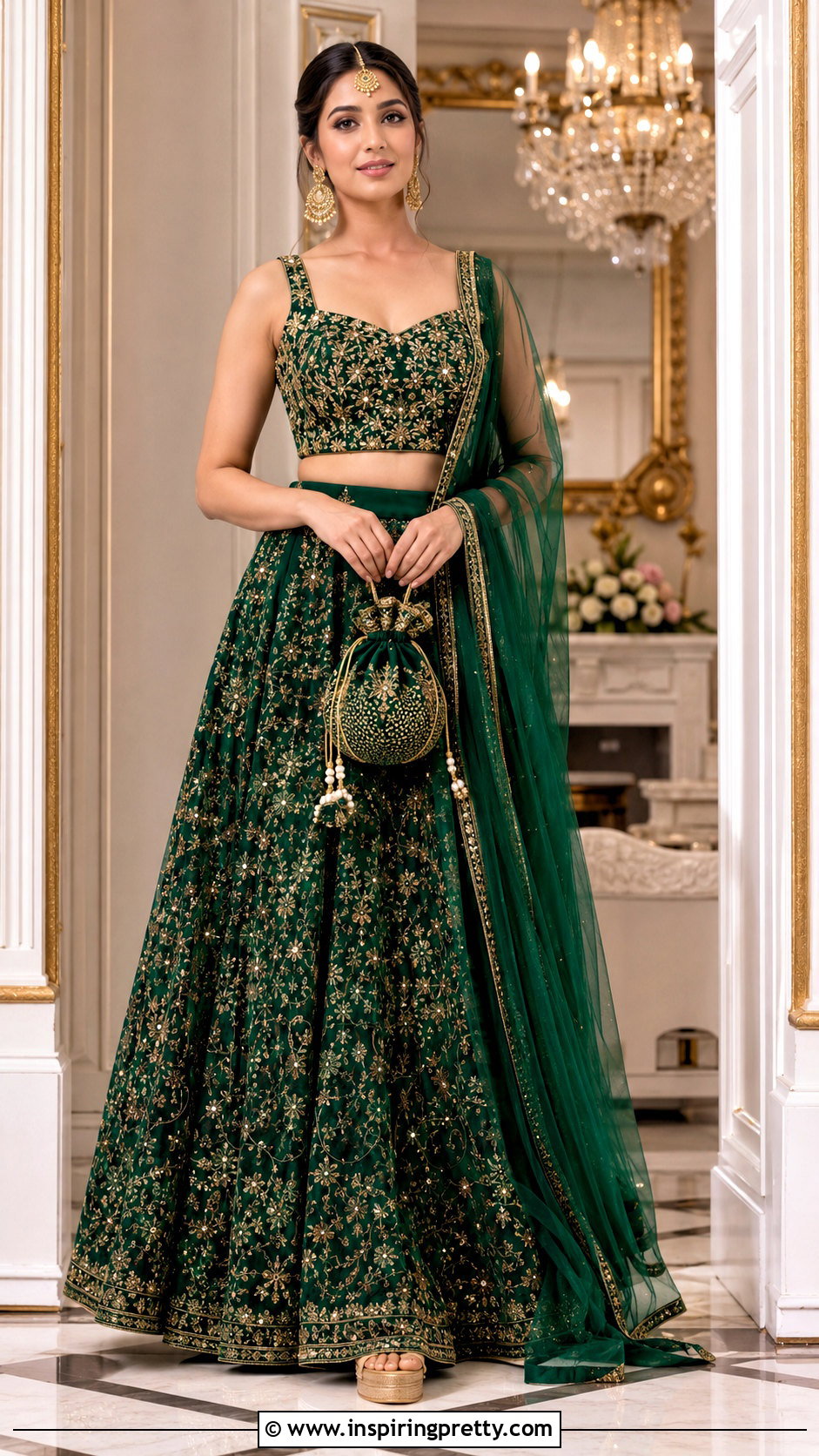
Zardozi is heavy metallic embroidery, and a fully worked lehenga can weigh far more than you'd expect. I'd place it along the neckline, waistband and skirt border rather than everywhere, and keep the dupatta plain or lightly bordered. Pick the outfit up before you buy it and picture wearing it for five hours. The blouse should be fully lined so the metal threads never touch skin. Deep red, emerald and antique gold make the classic palette.
29. Embroidered Bustier Lehenga
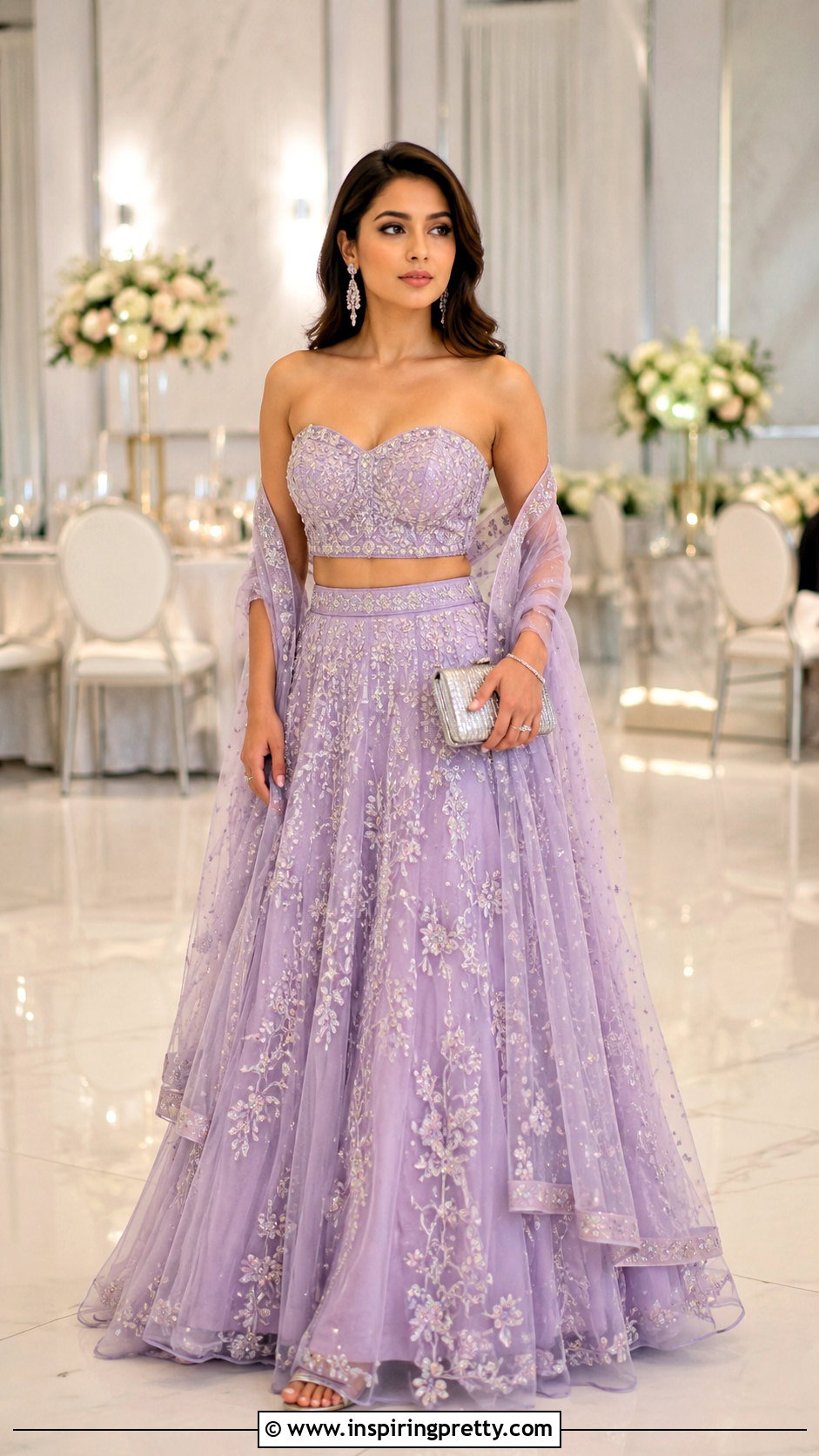
A bustier needs real structure: supportive straps, boning and a length that sits securely near the waistband. Pair it with a high-waisted tulle, organza or raw silk skirt. A detachable dupatta gives coverage for the ceremony and comes off for dancing later. Skip the big necklace over a heavily worked neckline. At the fitting, check that nothing pinches when you breathe in and nothing gapes when you lean forward.
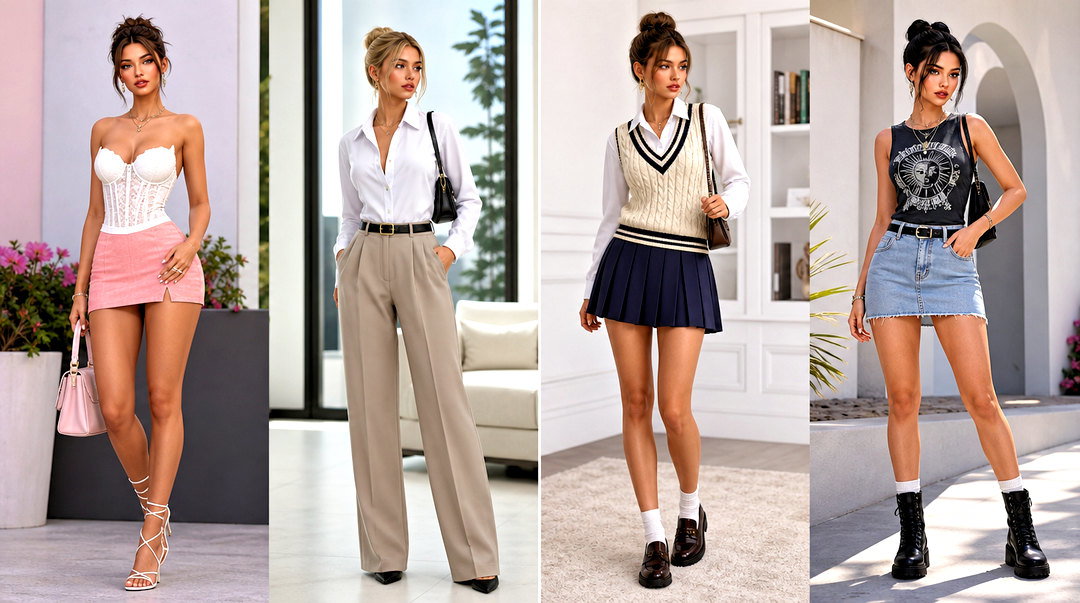
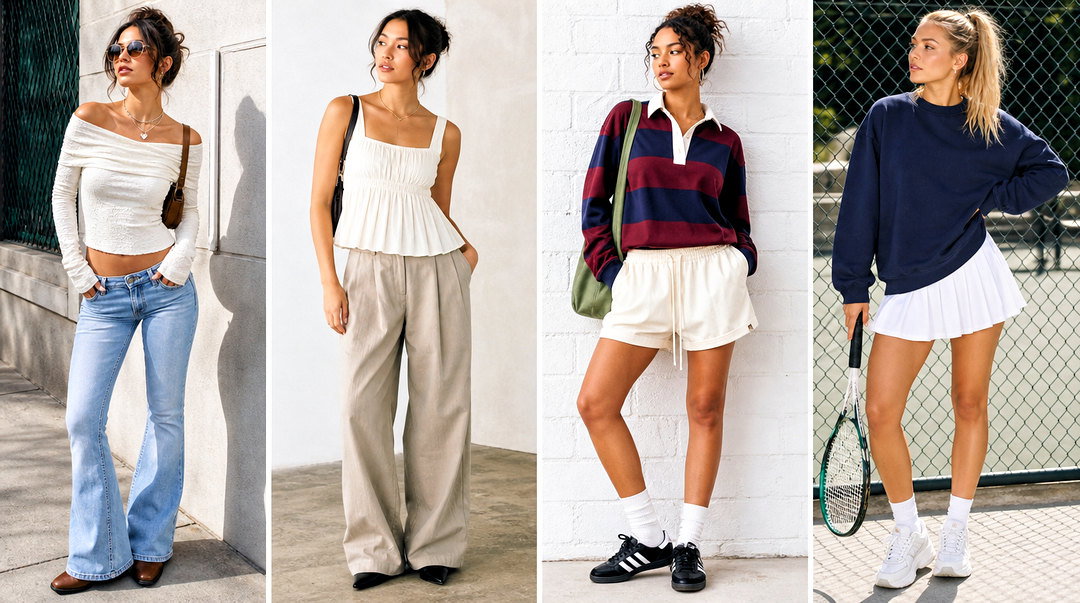
30. Bralette Crop Top Lehenga
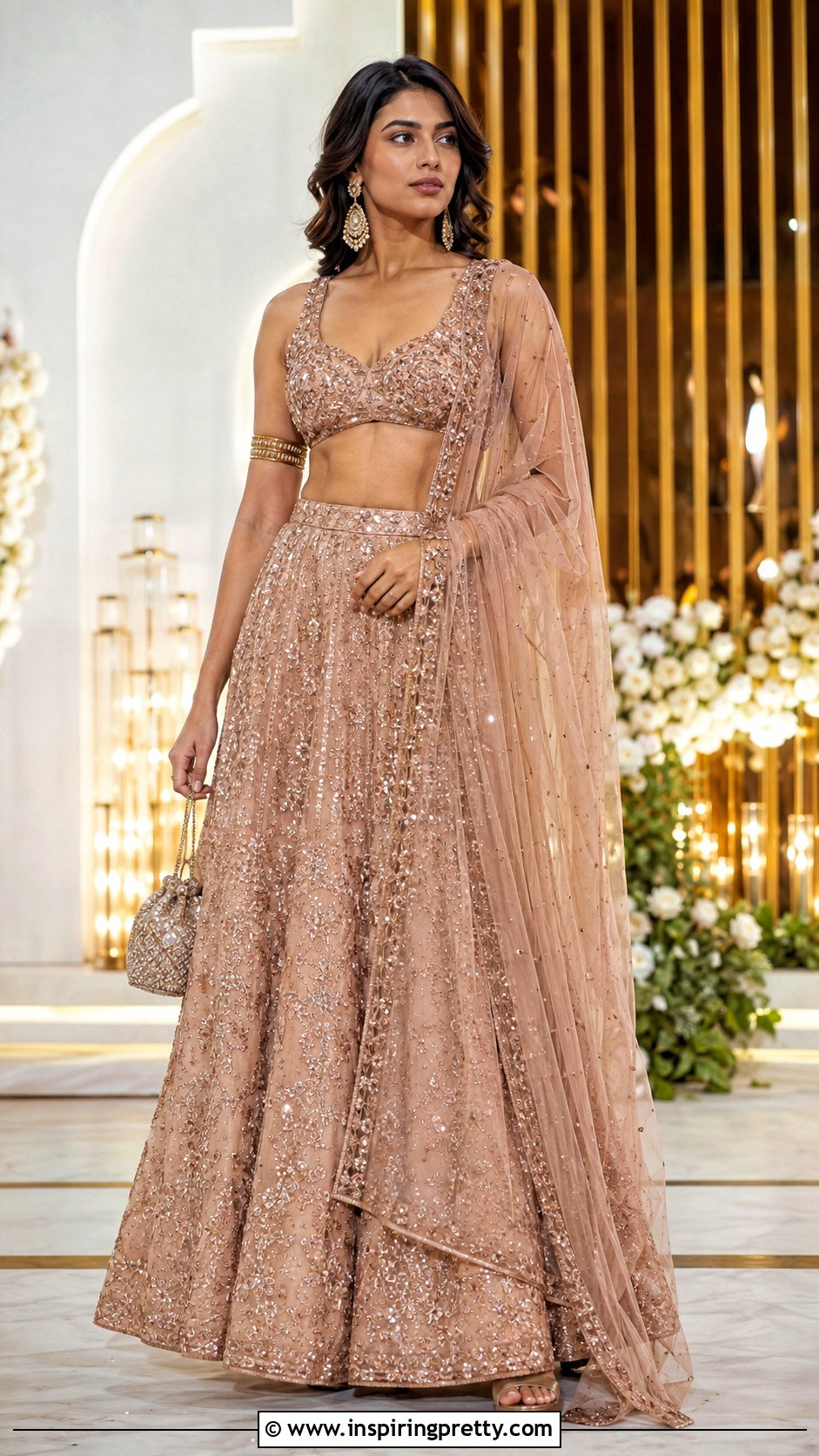
A bralette is the most open option on this list, so it's for people already comfortable with that much skin. Wide straps, proper cups and a firm underband make it supportive rather than flimsy. Balance the short top with a high-waisted skirt and a generous dupatta. A sheer cape is a good backup if you want coverage for part of the evening. It suits a sangeet or reception far better than a religious ceremony.
31. Shirt Crop Top Lehenga
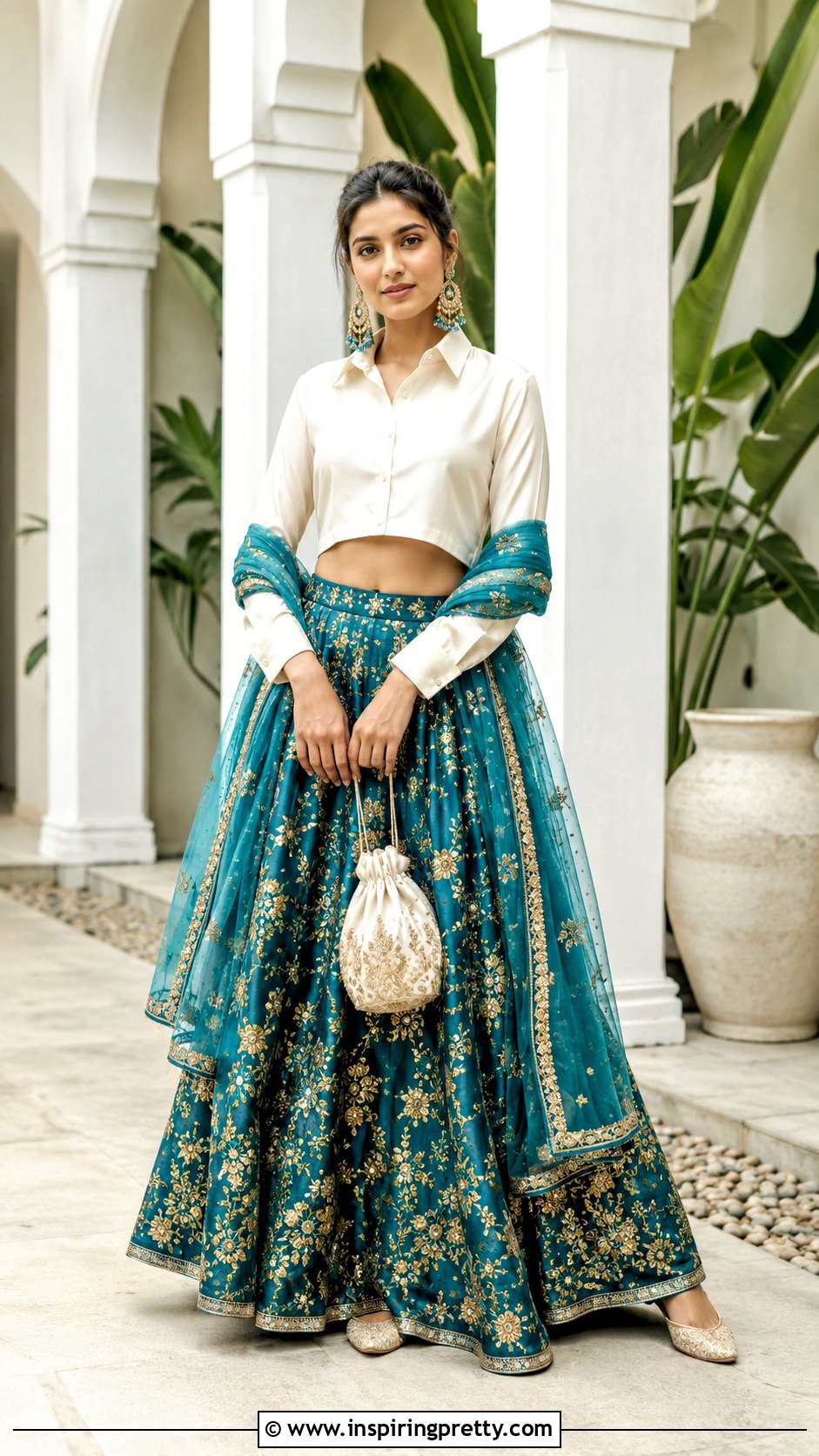
A cropped shirt is a fusion idea that works better than it sounds. A tailored silk or satin shirt ending at the waistband, worn with an embroidered skirt, looks crisp. A tied front feels relaxed, while a hidden button placket is cleaner. Traditional earrings and a potli pull it back toward festive. A plain white shirt is also a clever way to rewear a colorful heirloom skirt.
32. Collared Crop Top Lehenga
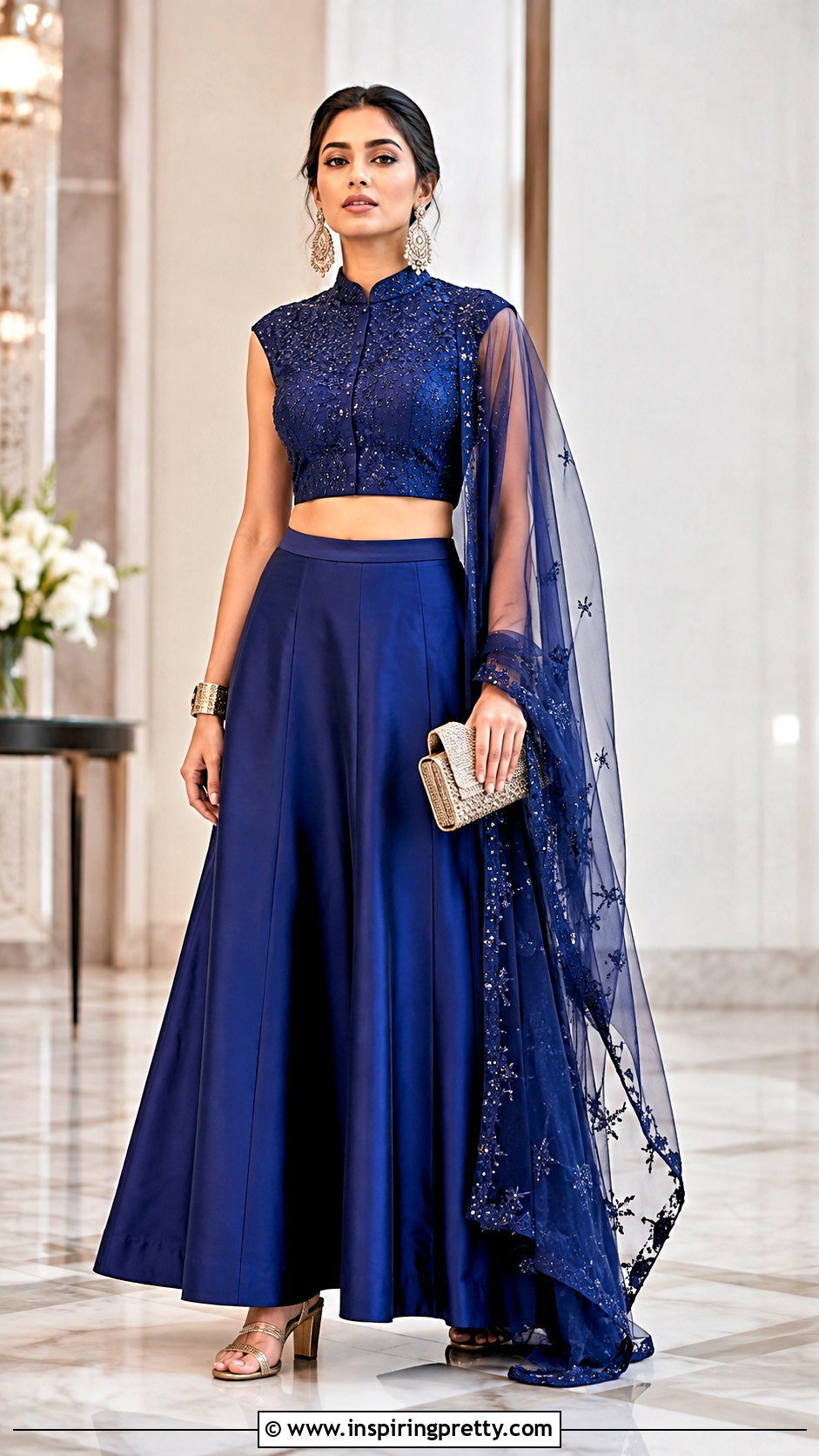
A collar covers the neckline and gives the lehenga a tailored edge. A mandarin collar reads Indo-Western, and a pointed one is sharper. Pair it with a smooth A-line or paneled skirt to keep a long vertical line. Wear statement earrings instead of a necklace, and put your hair up so the collar shows. For a ceremony, add a sheer dupatta draped from one shoulder.
33. Wrap Crop Top Lehenga
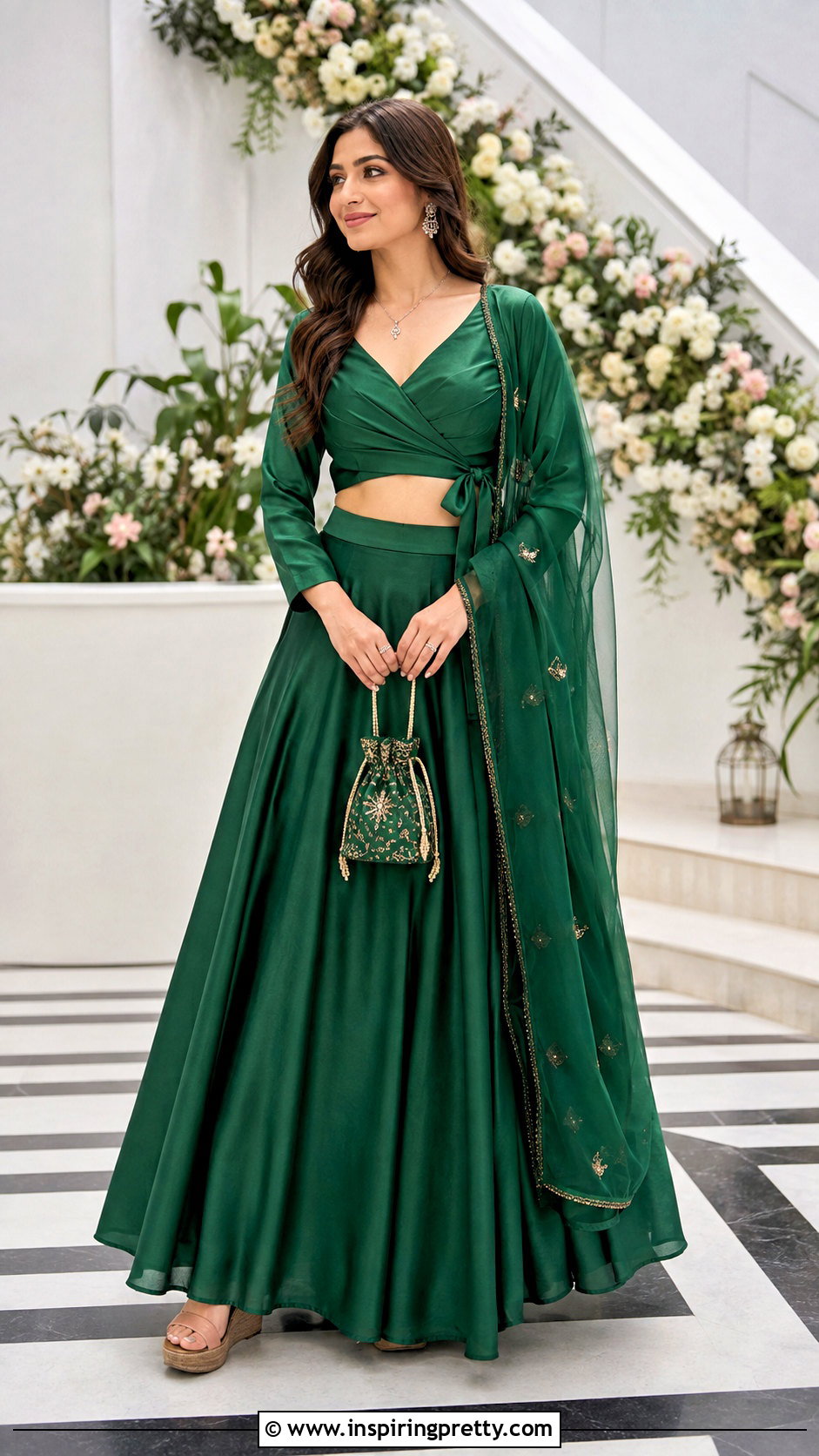
A wrap top makes a V neckline and allows some give at the waist. For dancing, I'd choose a faux wrap that's stitched closed over a real tie, which loosens as the night goes on. Pair it with a high-waisted georgette or silk skirt. The diagonal line lengthens the upper body. Check that the overlap stays flat above the waistband, especially when the top is embroidered or sequined.
34. Cutout Crop Top Lehenga
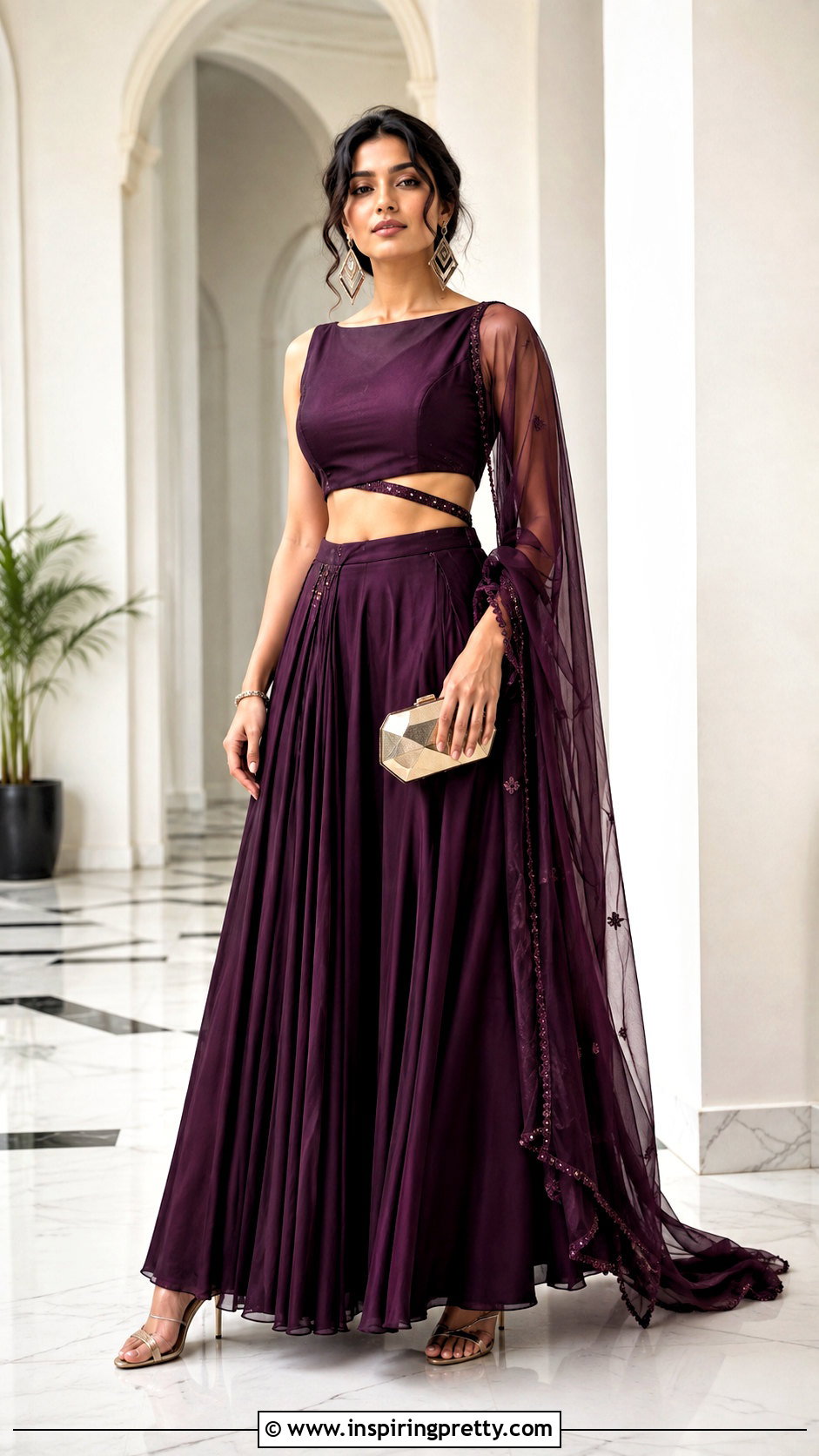
One well-placed cutout, at the waist, shoulder or back, makes a lehenga look modern without much skin showing. More than one starts competing with the embroidery. The bodice around the opening has to be firmly fitted, or the edges curl outward. Test it by sitting and raising your arms in the trial room. Embroidery around the edge of the cutout helps it keep its shape.
35. Scalloped Crop Top Lehenga
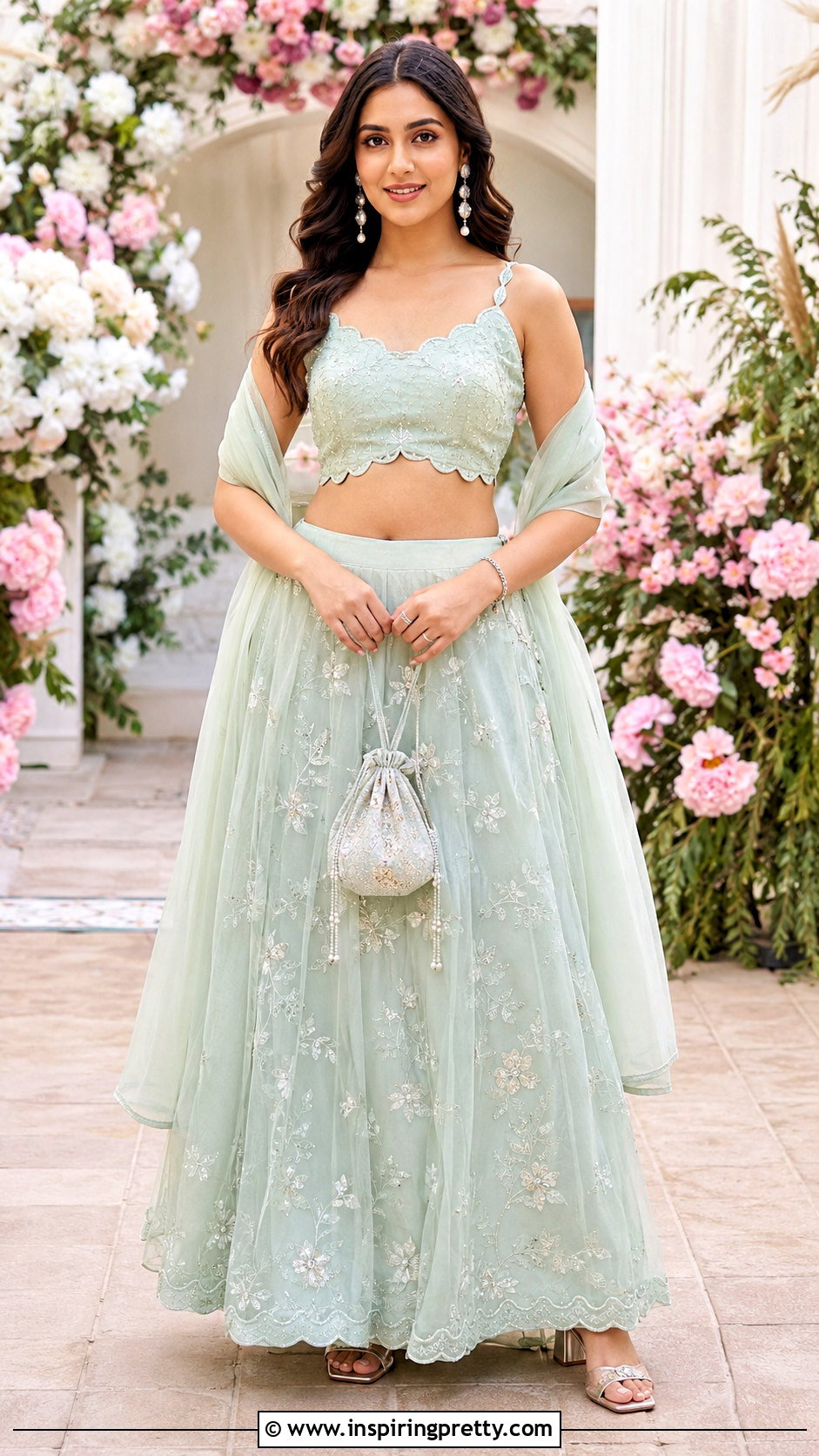
Scalloped edges add soft curves at the neckline, sleeves or hem. Pair the blouse with a lehenga that has a matching scalloped border, and limit the scallops to one or two areas so the design stays clear. Pastel organza or net is delicate for daytime, while velvet or raw silk makes the shape formal. A plain dupatta with a narrow scalloped trim ties it together. Keep the skirt waistband smooth so it doesn't fight the blouse hem.
36. Feather Trim Crop Top Lehenga
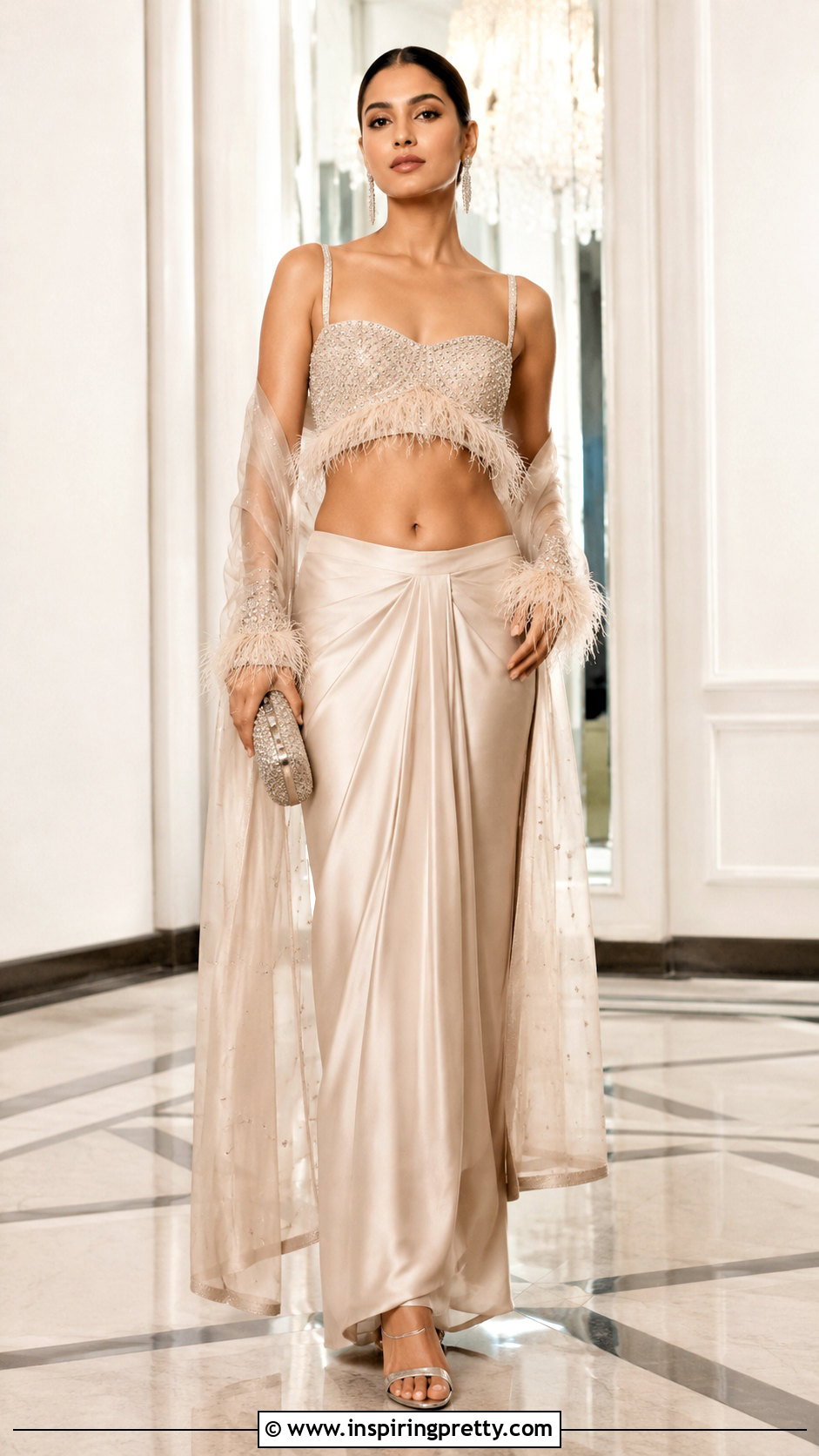
Feathers work as a controlled accent along the sleeves, neckline or hem, never all three. Pair the top with a sleek satin or crepe lehenga in the same color. Skip the dupatta or carry a plain sheer one over the arms. Wear your hair up, because loose hair tangles in the trim. Feathers shed and crush, so store the top flat in a box rather than folded into a suitcase.
37. Metallic Crop Top Lehenga
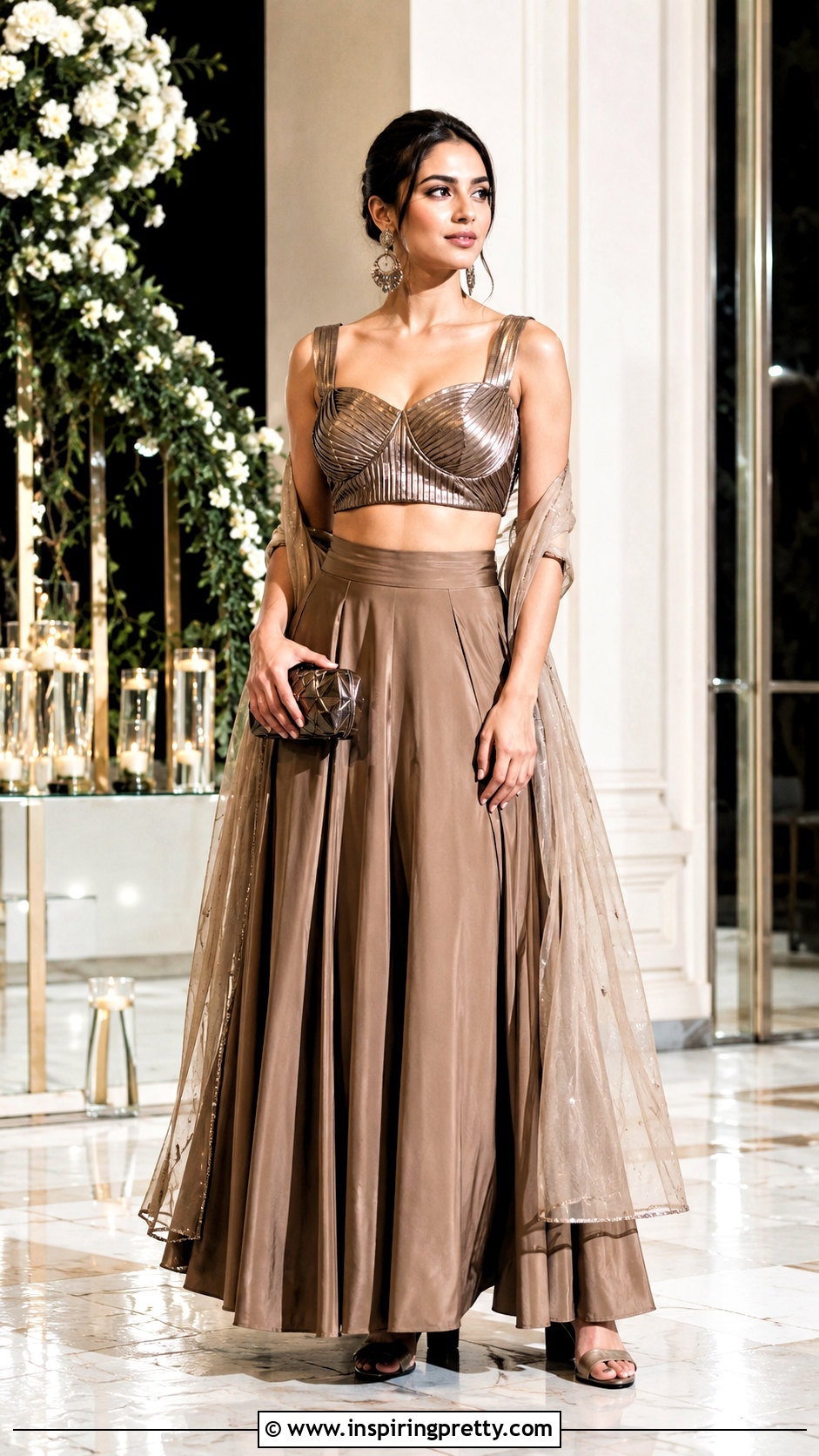
Champagne, silver and bronze metallics are easier to wear than mirror-bright foil. Pair a metallic blouse with a tonal satin skirt, or wear a matching set with a subtle texture. Stiff metallic fabric restricts the arms, so look for something soft and flexible with a lining. Don't mix several metallic tones unless one clearly leads. Keep accessories sculptural and few.
38. Black Crop Top Lehenga
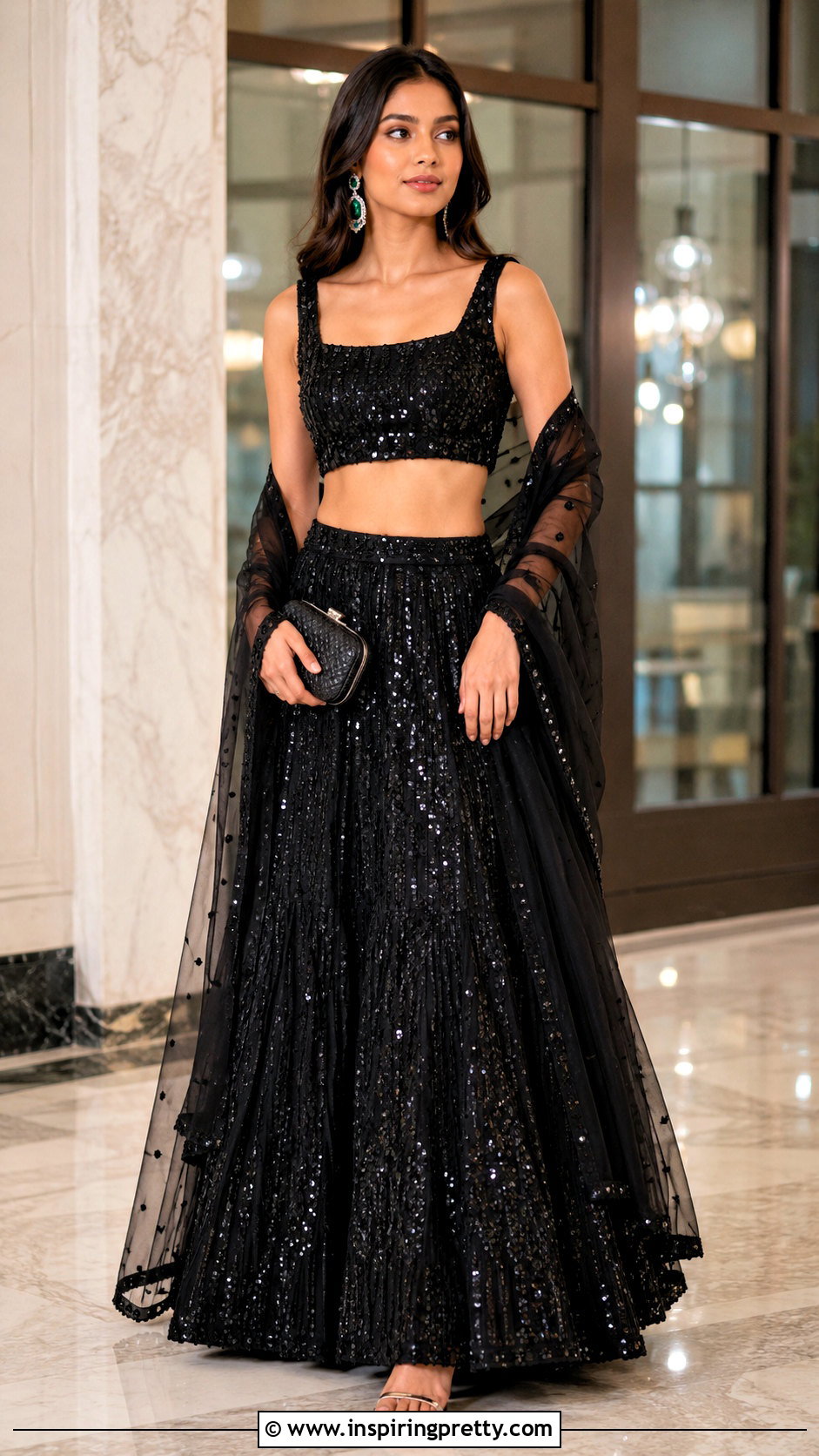
Black is dramatic and photographs with sharp, clean lines at an evening reception. Pair a fitted black blouse with a skirt carrying tonal sequins or a contrasting border, and add emerald, ruby or silver jewelry for color. Some families avoid black at weddings, so I always suggest checking with the hosts first. If you add a dupatta, sheer net keeps the blouse construction visible.
39. White Crop Top Lehenga
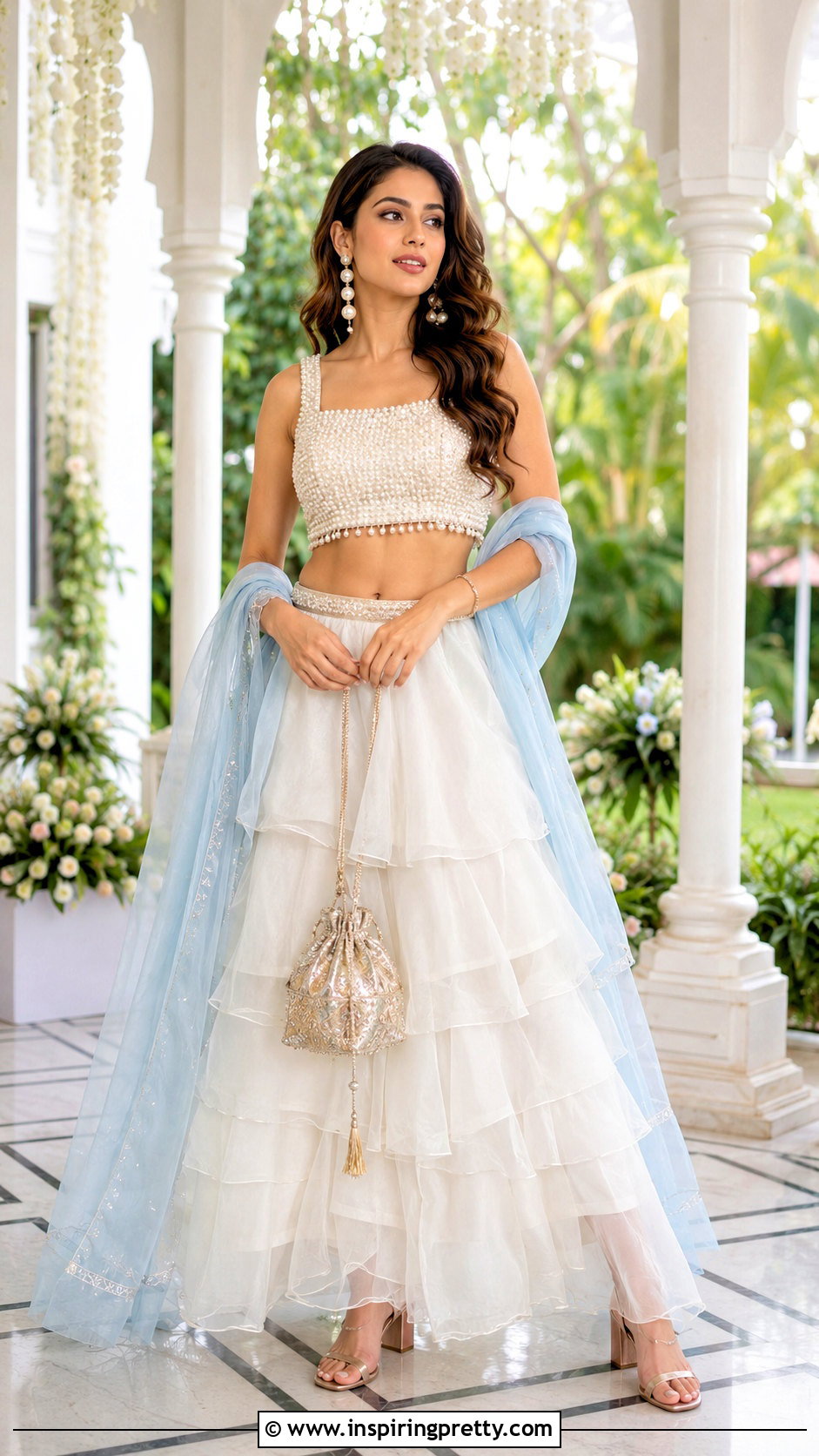
A white or ivory lehenga needs texture to stay interesting, so I mix ivory, cream, pearl and champagne for depth. Pearl work and tonal thread keep it festive, and a pastel dupatta adds a soft accent. White isn't welcome at every wedding, and in some communities it's associated with mourning, so ask the hosts before choosing it. Varied fabric finishes stop the top and skirt from blending into one flat shade.
40. Pastel Crop Top Lehenga
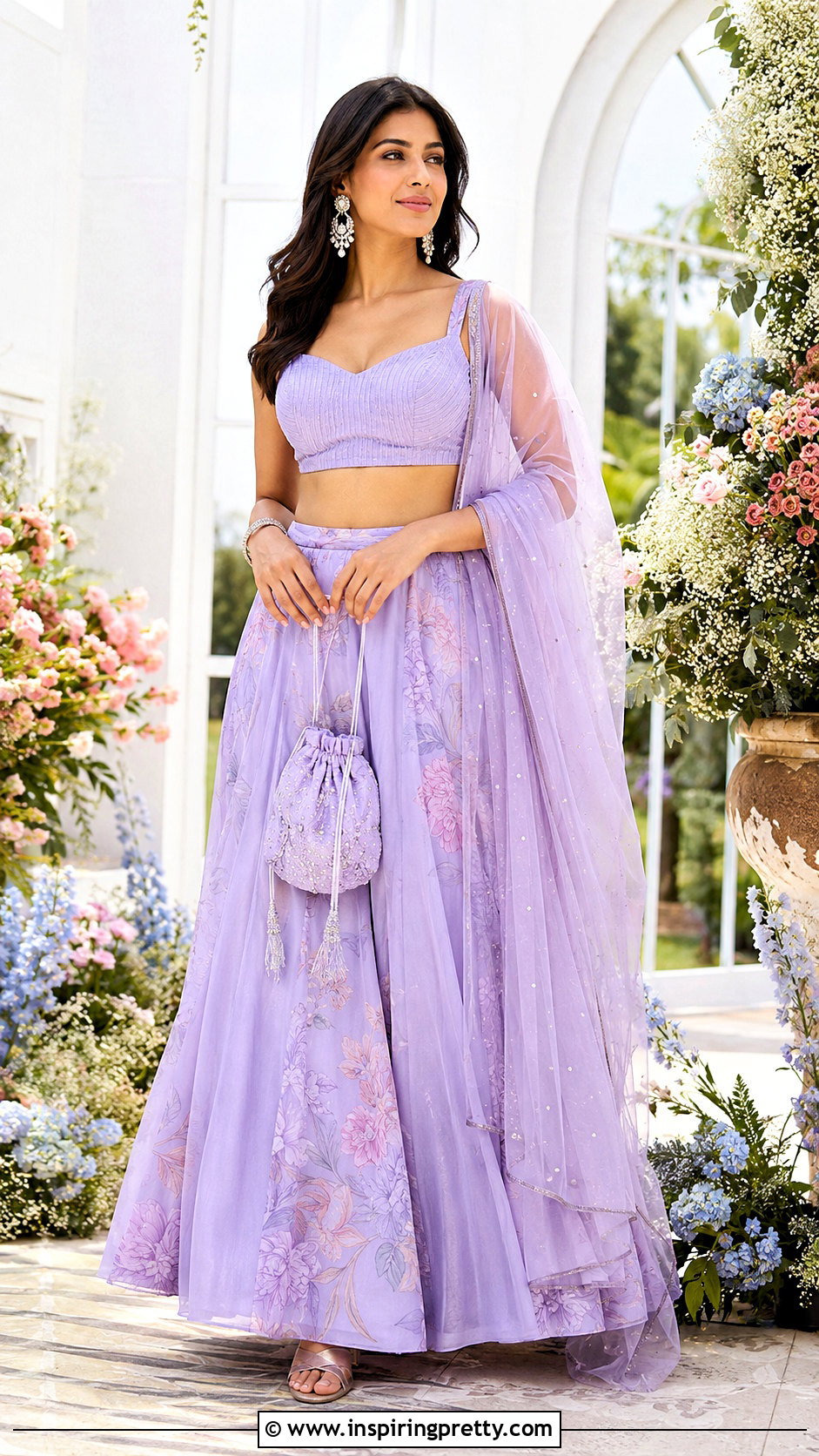
Pastels suit outdoor daytime functions, but too many pale shades together lose definition in photographs. Choose one main pastel and repeat a deeper accent in the embroidery or border so the outline shows. Silver, pearl or tonal embroidery suits lavender, mint and powder blue. A structured top with a flowing skirt keeps the soft palette from looking limp.
41. Red Crop Top Lehenga
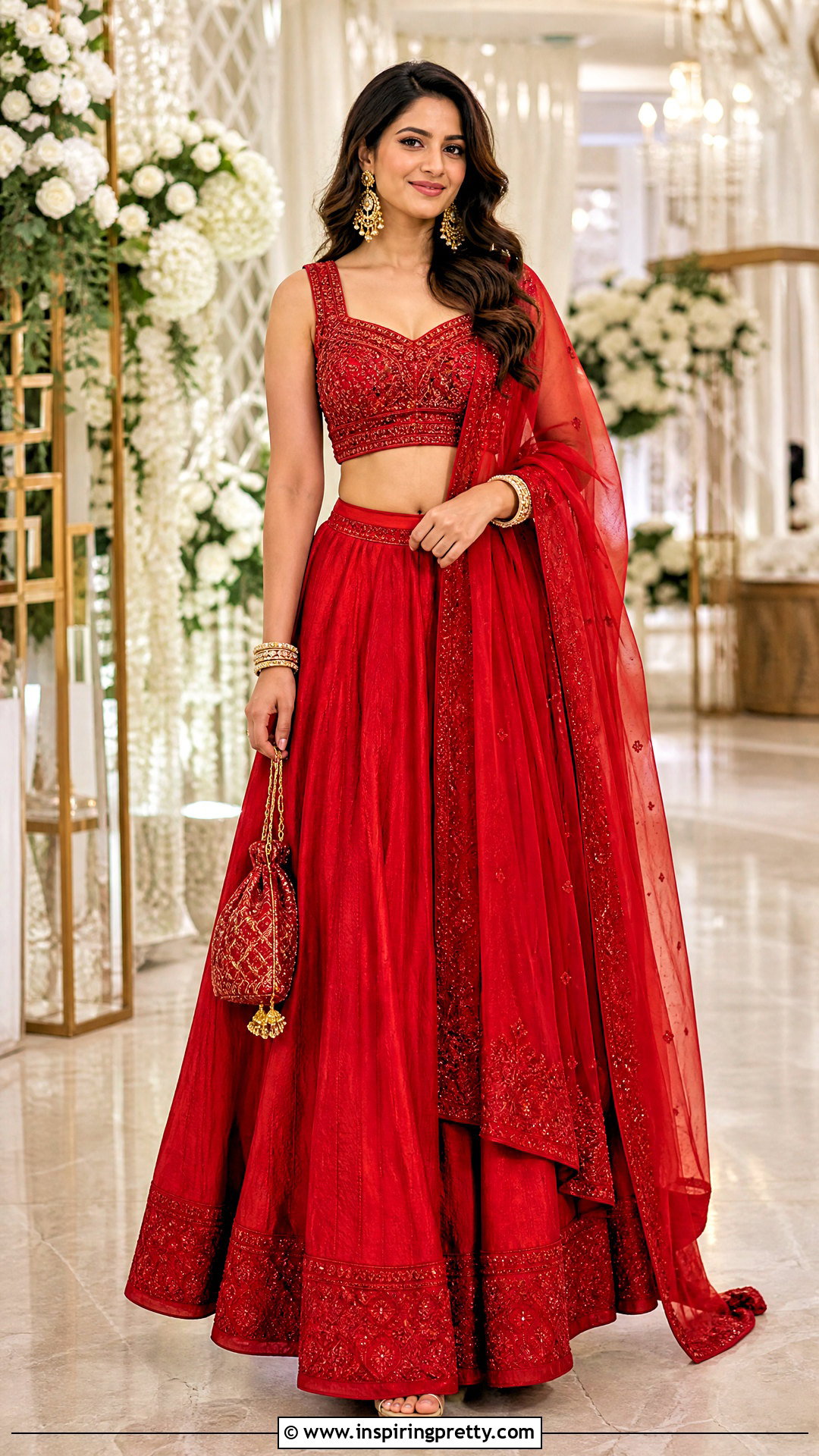
Red is the traditional celebration color, so the shade sets the mood: crimson and ruby for formal events, muted brick for a lighter function. Tonal threadwork looks cleaner than covering everything in contrasting gold. Brides can go heavier on embroidery, but guests should keep it lighter so they don't compete with the bride. Match the red undertone across all three pieces, because a cool red top with a warm red skirt looks like a mistake.
42. Emerald Green Crop Top Lehenga
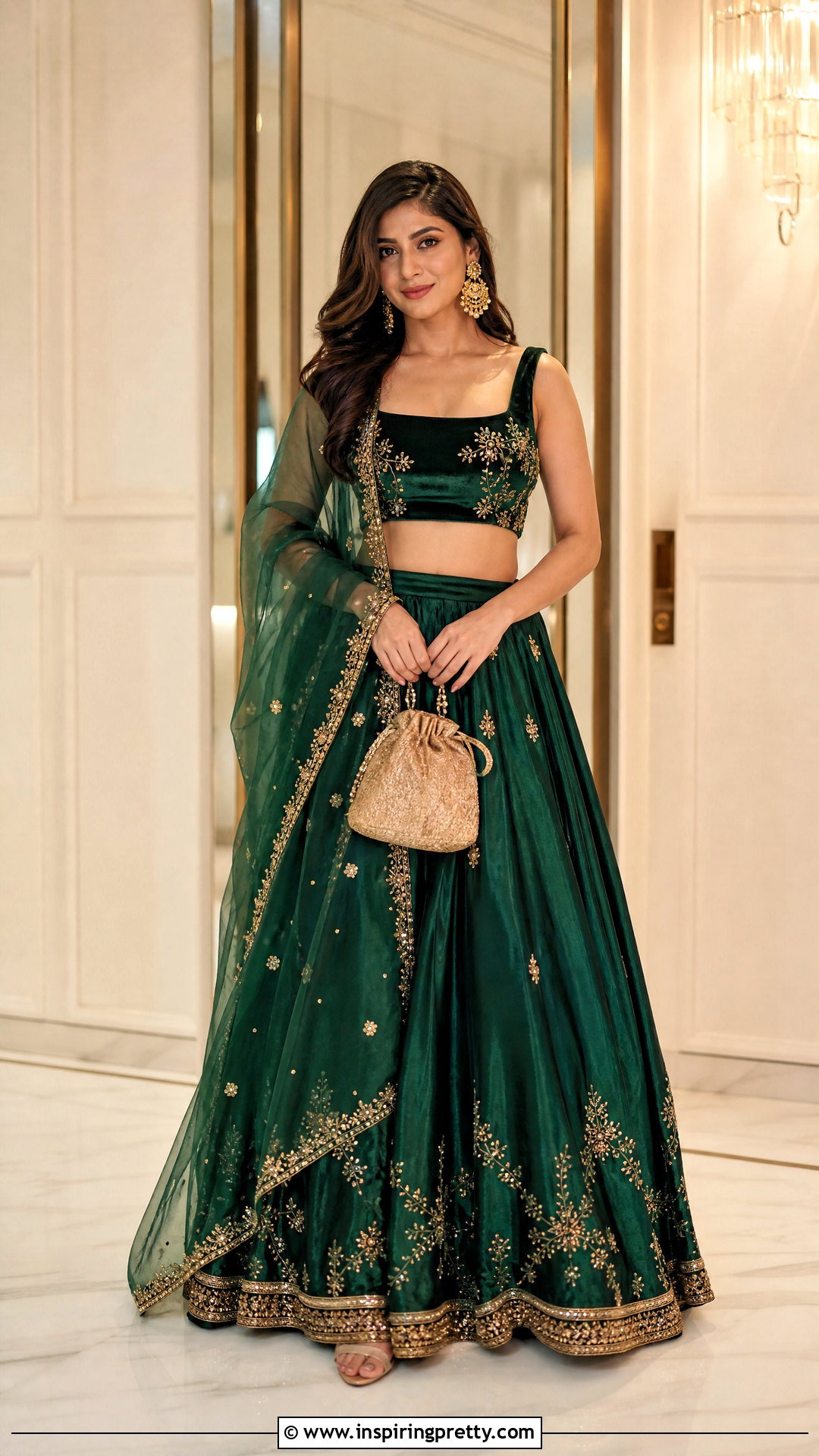
Emerald looks rich even with very little embellishment. A velvet, silk or satin top with a skirt in the same color family is the formula. Antique gold embroidery feels traditional, while silver or crystal reads contemporary. A light net dupatta softens the depth of the green. Mixing matte and lustrous fabrics stops the single color from looking flat in photographs. If the neckline is high, skip the necklace and wear a maang tikka instead.
43. Royal Blue Crop Top Lehenga
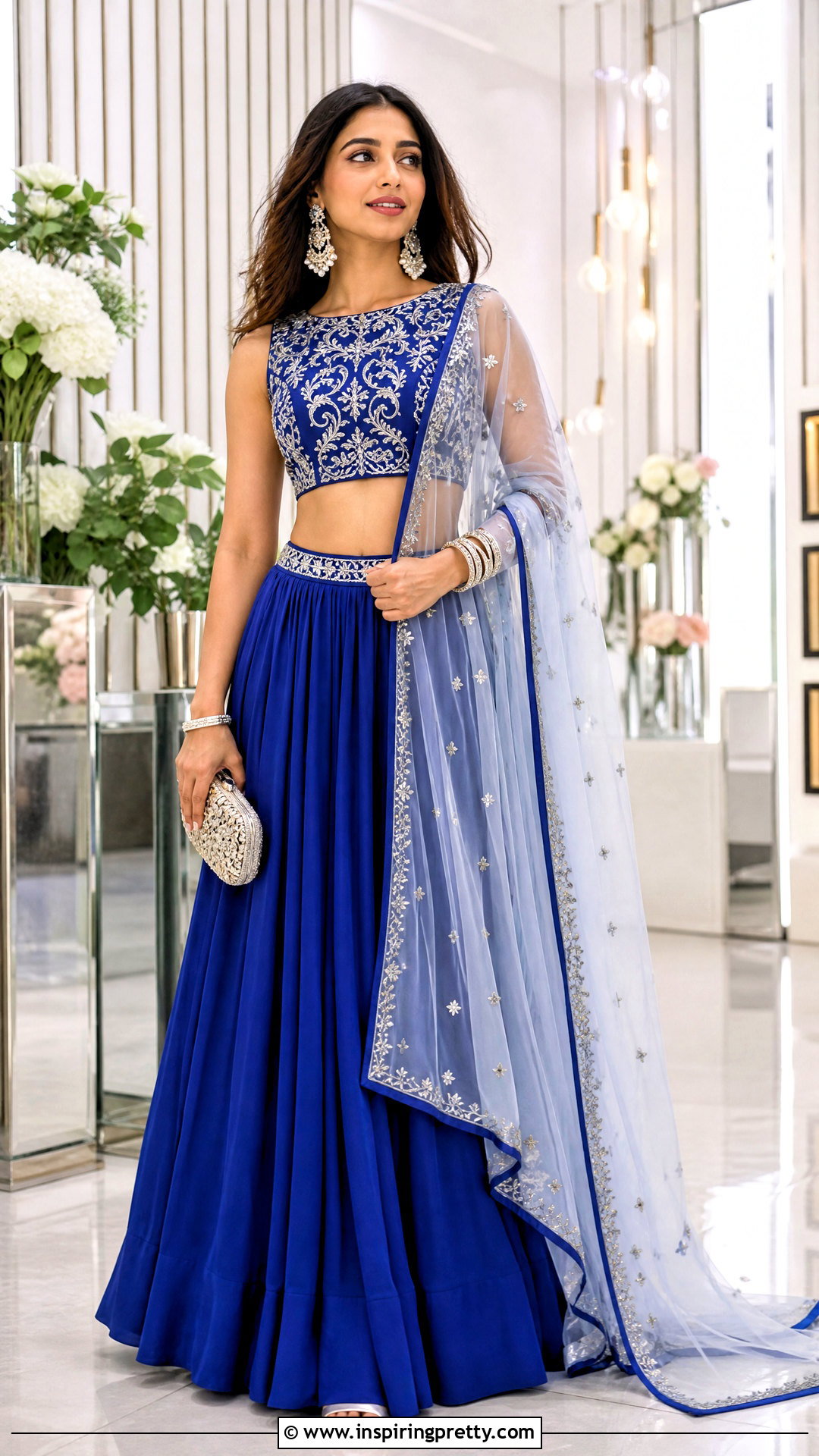
Royal blue stands out in daylight and evening light alike. Silver embroidery on a fitted blouse with a sweeping georgette or silk skirt keeps it cool-toned, and a pale blue dupatta adds gentle contrast. Blues from different fabric lots rarely match exactly, and the camera exaggerates the difference, so I compare every piece together in daylight before the final fitting. If the skirt is heavily worked, keep the top simple.
44. Yellow Crop Top Lehenga
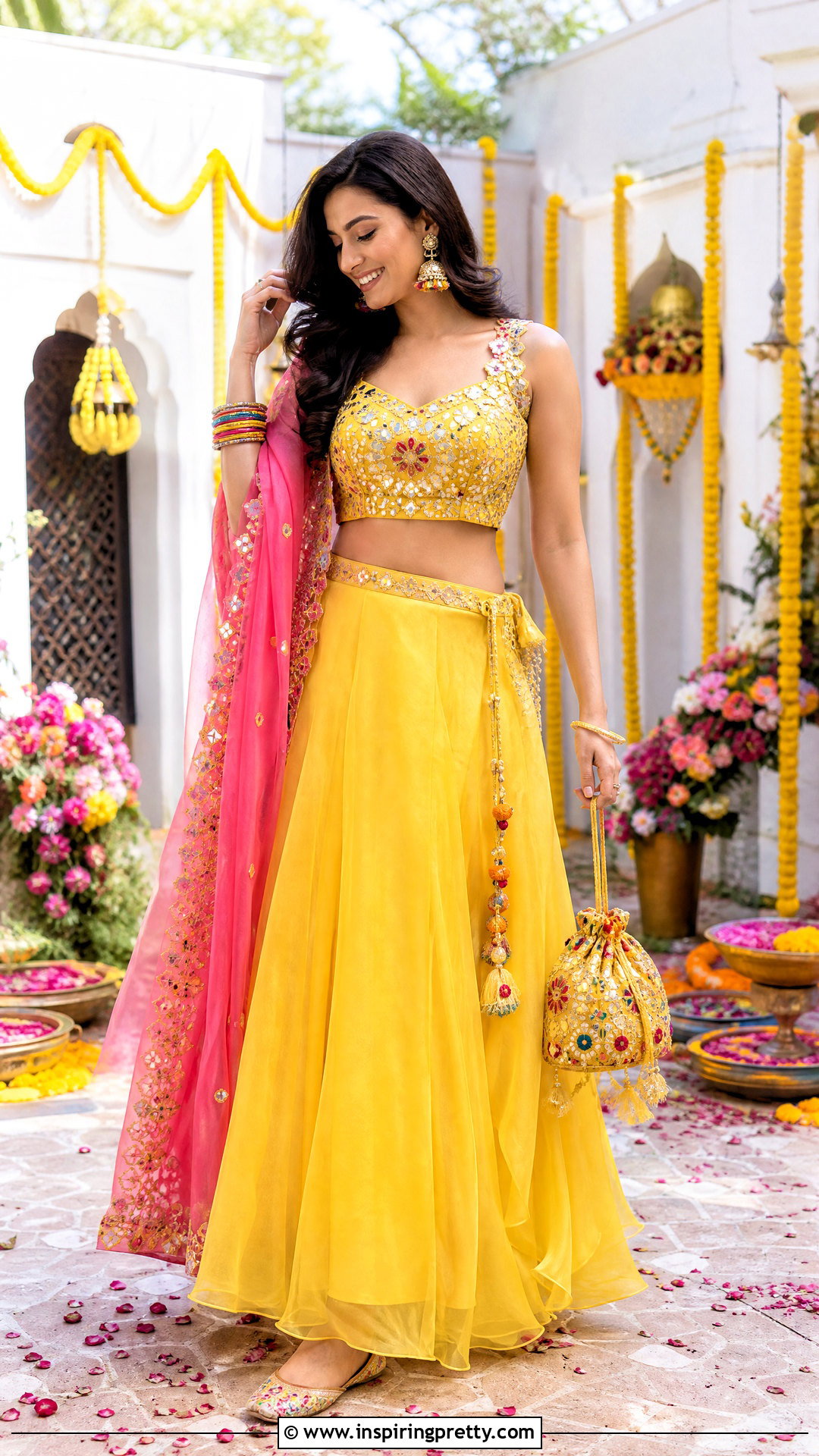
Yellow turns up at so many mehendi and haldi functions, and the shade sets the tone: mustard is earthy, marigold bright, butter yellow soft. Pair an embroidered top with a light georgette or organza skirt that moves easily. Mirror work, gota and floral thread all suit it. Yellow fabric goes sheer in strong sunlight, so make sure it's lined. A pink, green or ivory dupatta adds contrast.
45. Pink Crop Top Lehenga
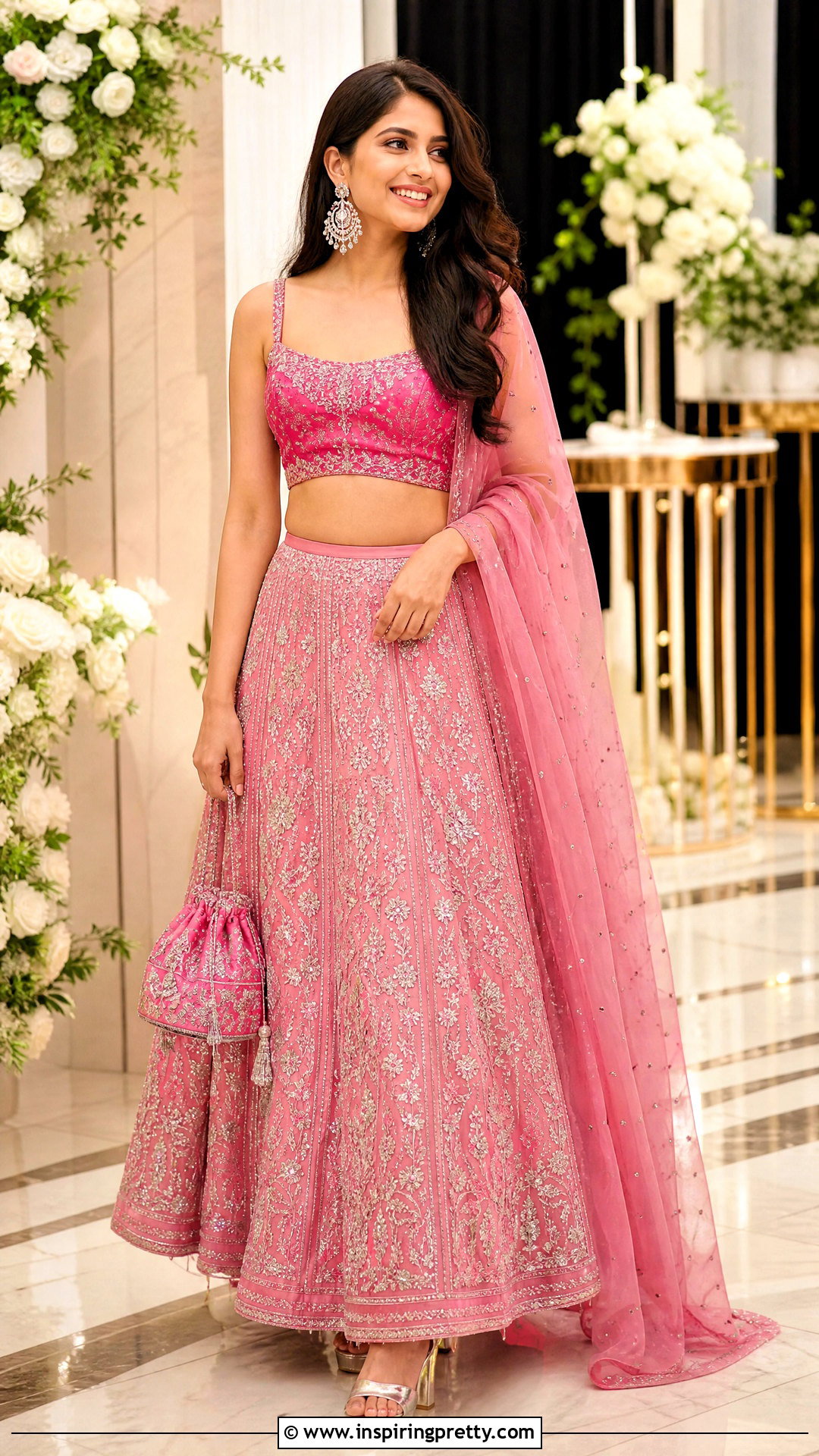
Pink ranges from playful to formal depending on the shade. Fuchsia over a lighter pink gives lively contrast, while a single rose tone looks polished. Silver embroidery suits cool pinks, and antique gold flatters coral and warm rose. If the outfit uses several shades, repeat the darkest one in the border or accessories. Bridesmaids can wear different pinks in the same silhouette and still look like a group.
46. Printed Crop Top Lehenga
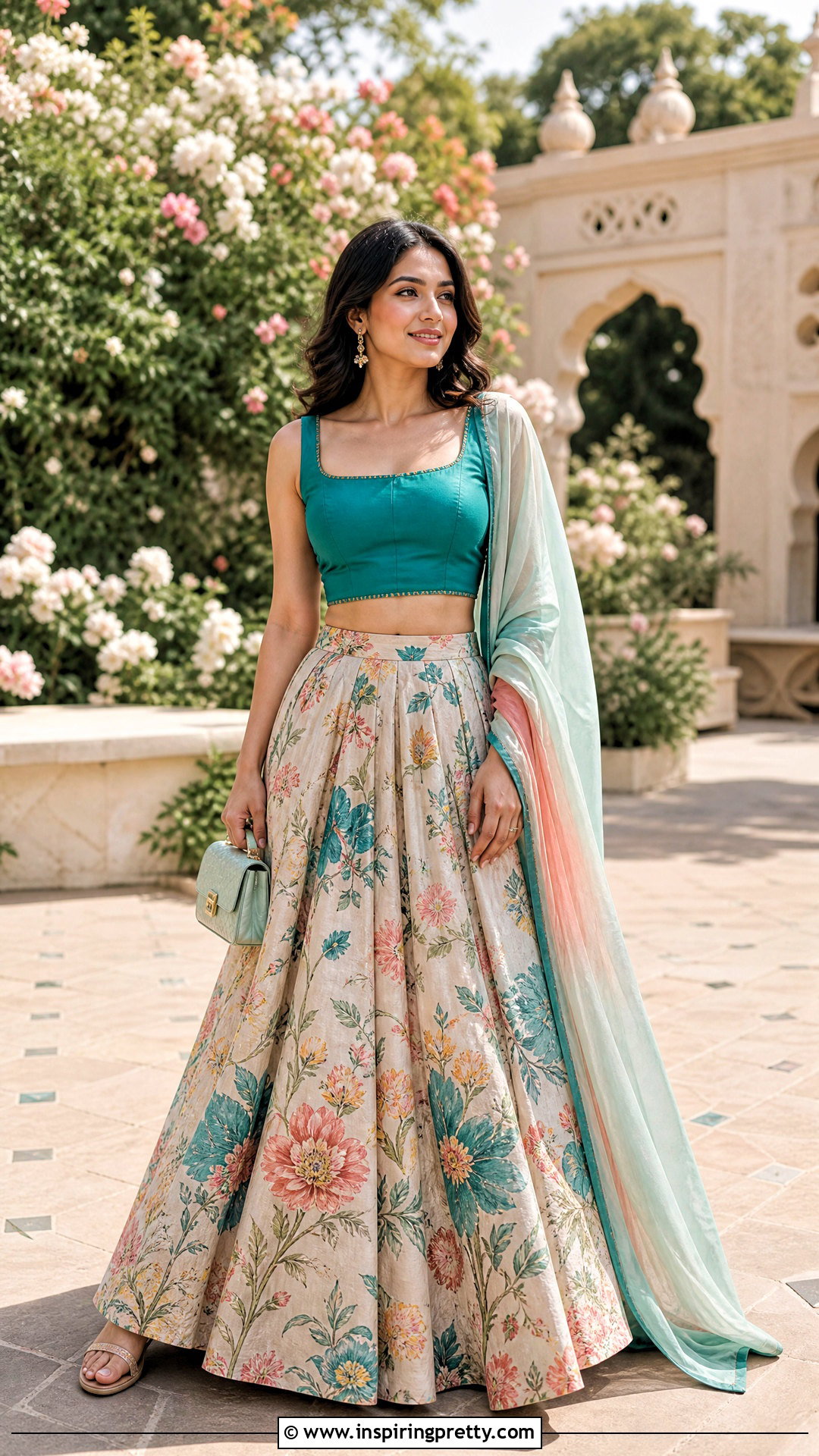
Prints give color and detail without the weight of hand embroidery, and they pack far better for a destination function. A printed skirt with a solid top is the most flexible version. A matching printed set works only if the motifs are well scaled and line up at the seams. Add a plain dupatta that repeats one color from the print, and keep jewelry simple. A defined waistband stops it from looking casual.
47. Tiered Crop Top Lehenga
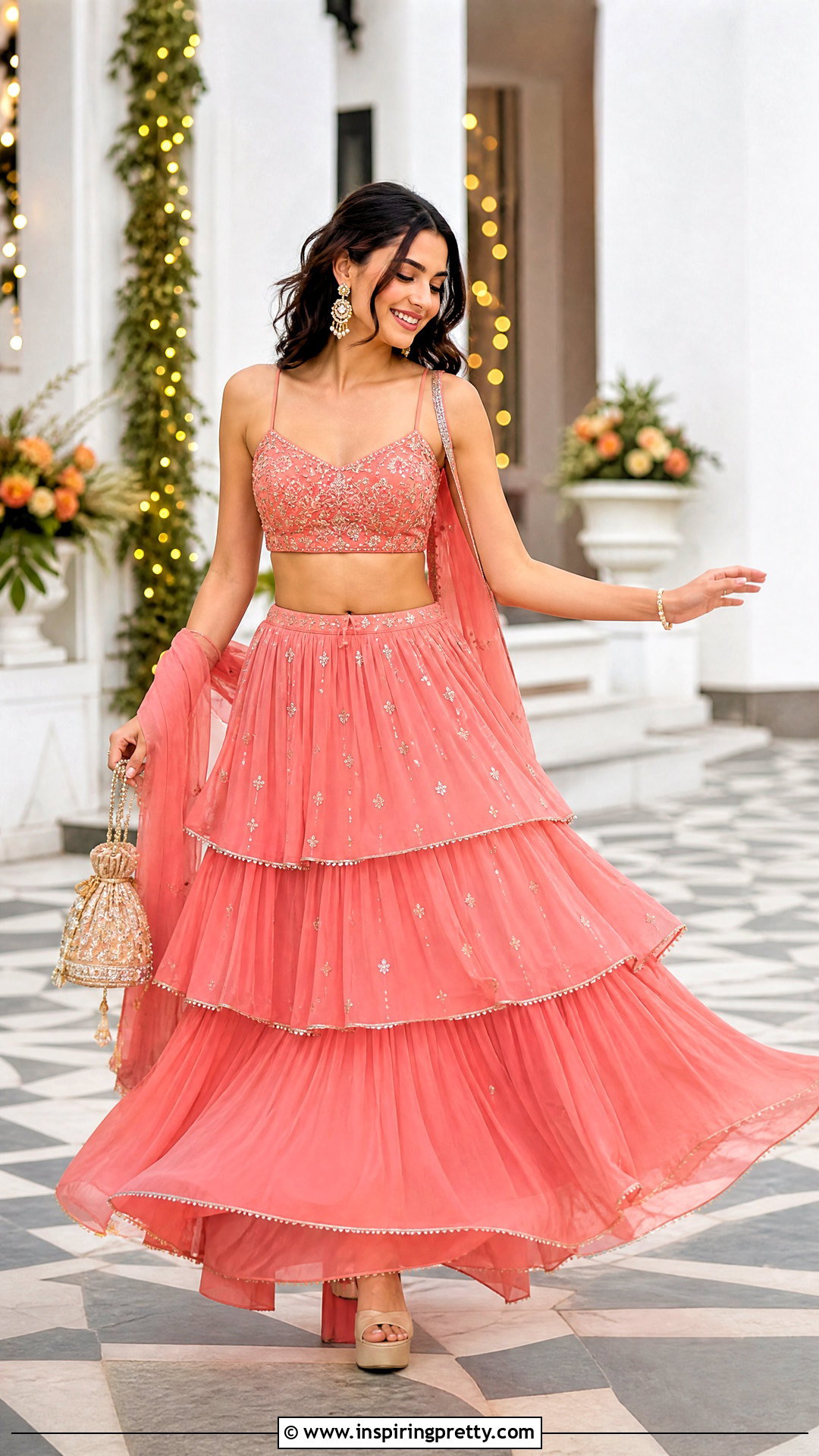
Two or three broad tiers look better than many narrow ones, which make a skirt busy. Georgette, chiffon and organza let the tiers fall softly. The waistband should lie flat so the volume starts below the waist rather than at it. Where the first tier begins also matters: lower down on the hip is usually more forgiving than a tier starting right at the waist. Keep the top simple and plan on plenty of dancing.
48. Mermaid Crop Top Lehenga
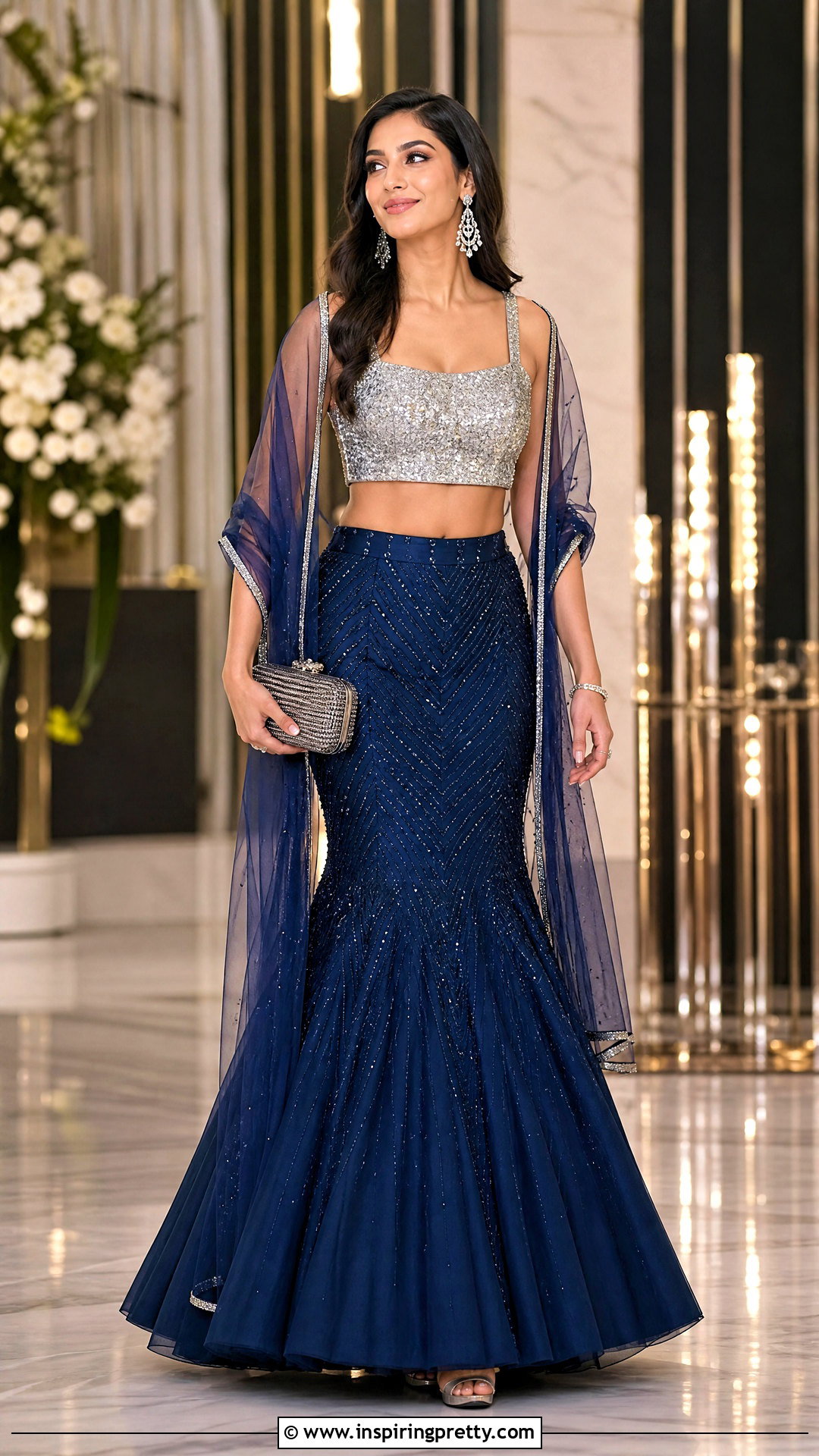
A mermaid lehenga hugs the hips and flares near the knee, so it's formal and a little restrictive. Walk, climb a step and sit in it at the fitting; if you can't do all three, the flare needs to start higher. A corset, square-neck or off-shoulder top suits the sculpted skirt, and vertical embroidery supports the long line. It's better for a reception or engagement than a sangeet, where you'll want to move.
49. A-Line Crop Top Lehenga
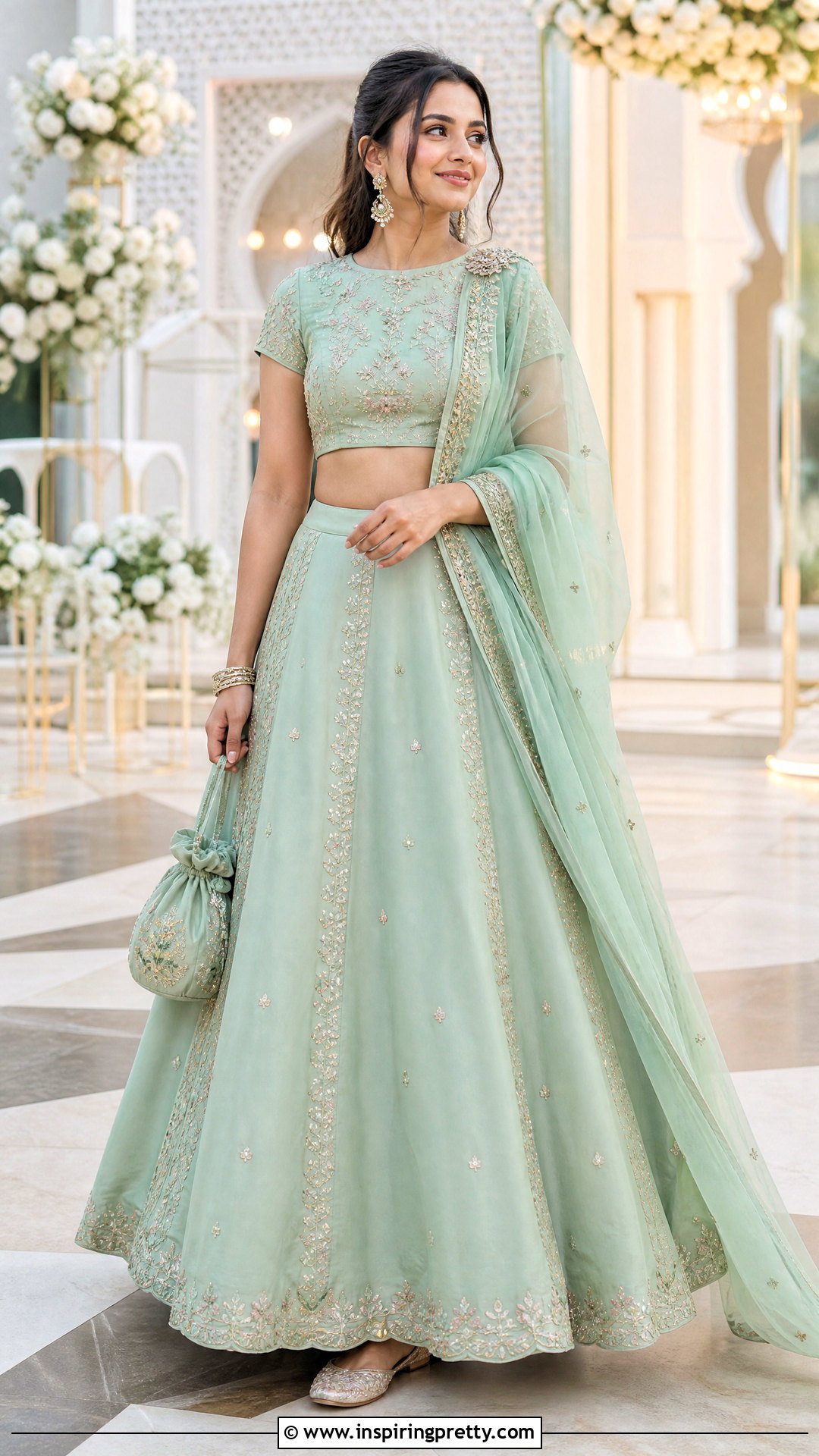
For long functions, the A-line crop top lehenga is the shape I recommend most to guests. It widens gradually from the waist without the volume of a full circle skirt, so sitting, walking and getting in and out of a car are all easier. A fitted top with a square neck or short sleeves pairs well. Vertical motifs and panel seams lengthen the silhouette, and it works in silk, georgette, organza or brocade.
50. Monochrome Crop Top Lehenga
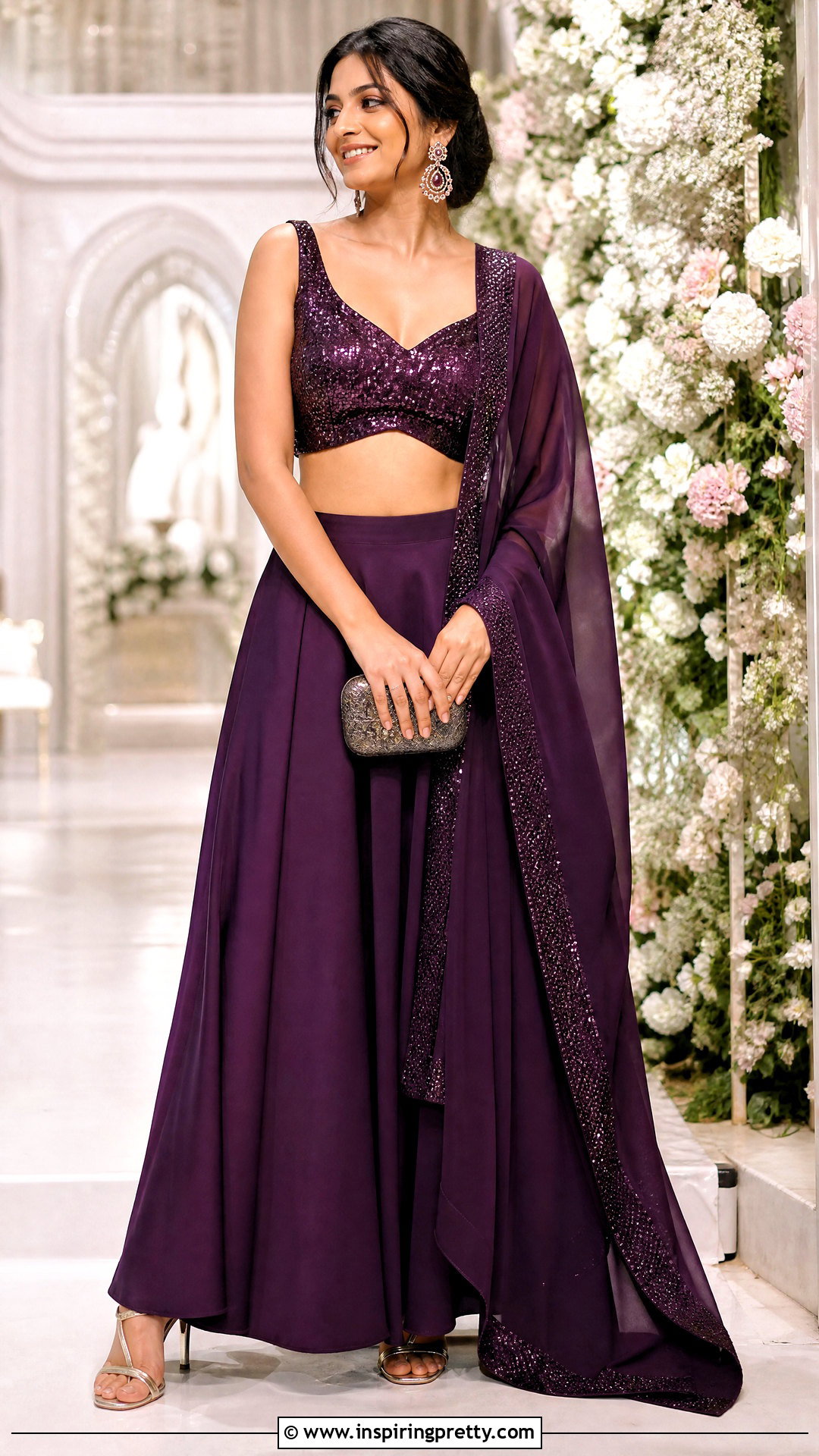
One color across blouse, skirt and dupatta makes a long, clean line, which is especially flattering on petite women. The trick is mixing textures, such as a sequined top with a matte crepe skirt, rather than matching every surface. Keep the undertone identical throughout. Jewelry in one metal keeps it calm, and a tonal dupatta with a decorative border defines the edges.
Can-Can, Weight and a Six-Hour Evening
A lehenga skirt gets much of its flare from what's underneath. Many are built with can-can, a stiff net layer stitched inside or worn as a separate petticoat. It gives volume but scratches bare legs, so I always check that it's backed with soft lining on the inside.
Weight is the other thing guests underestimate. Heavy embroidery hangs from the waistband, so a skirt with a broad, firm waistband spreads the load better than a narrow drawstring. If the outfit feels heavy in the trial room, it will feel far heavier by the end of the night. Pin the dupatta with small safety pins at the shoulder and the back of the waist so you aren't adjusting it all evening.
Why Zari Lehengas Belong in Muslin, Not Plastic
Metallic zari, gota and zardozi tarnish when they're shut in with moisture, and plastic garment bags trap it. After the event, air the outfit for a day, then wrap each piece in plain muslin or soft cotton. Fold the skirt with tissue in the folds, and refold it along different lines every few months so the embroidery doesn't crack along one crease. Keep perfume off the fabric itself and spray it on your skin before you dress.
Which Function Is It For?
The right crop top lehenga lets you sit, walk, eat and dance without thinking about your clothes. Start with the event, the coverage you want and how formal the function is. Then choose the blouse cut and fabric, get the waist position and crop length right at the fitting, and pick your shoes before the skirt is hemmed. Let one feature lead, whether that's mirror work, a cape, a corset or a strong color, and keep the dupatta manageable.
Related posts:


Leave a Reply