
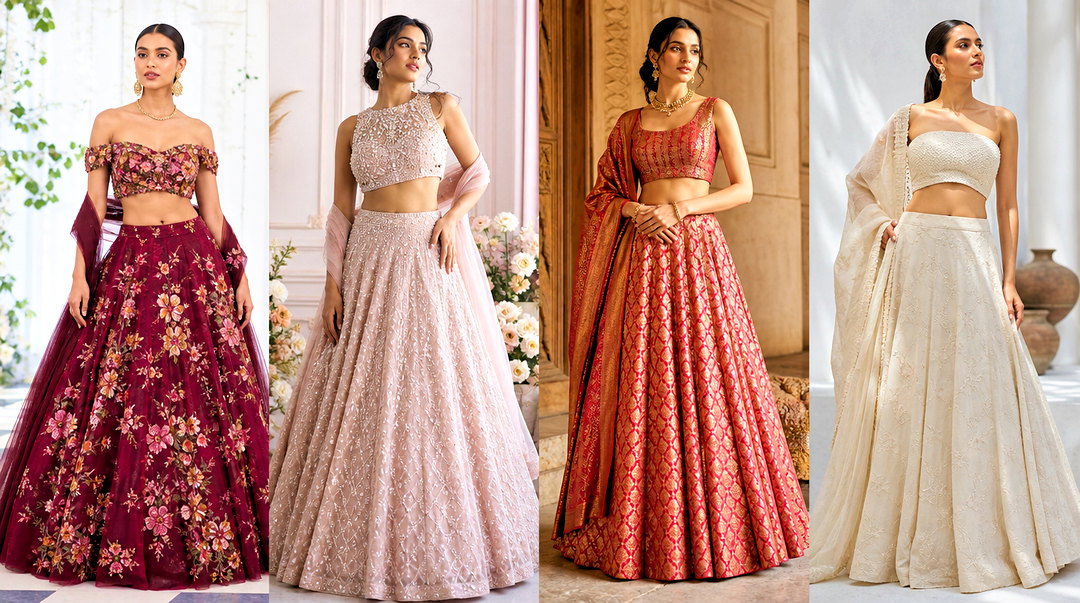
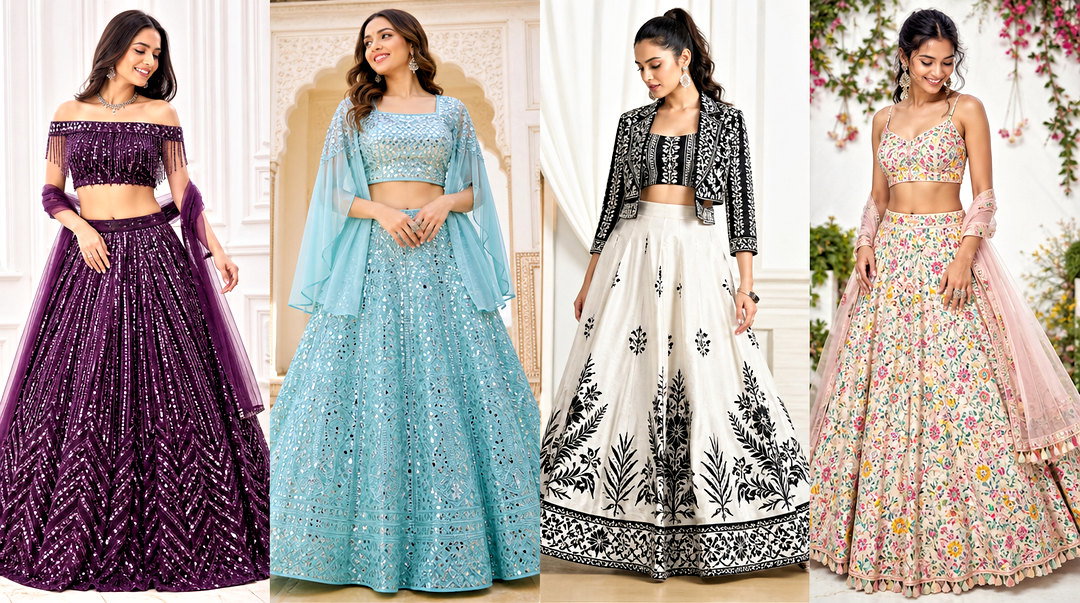
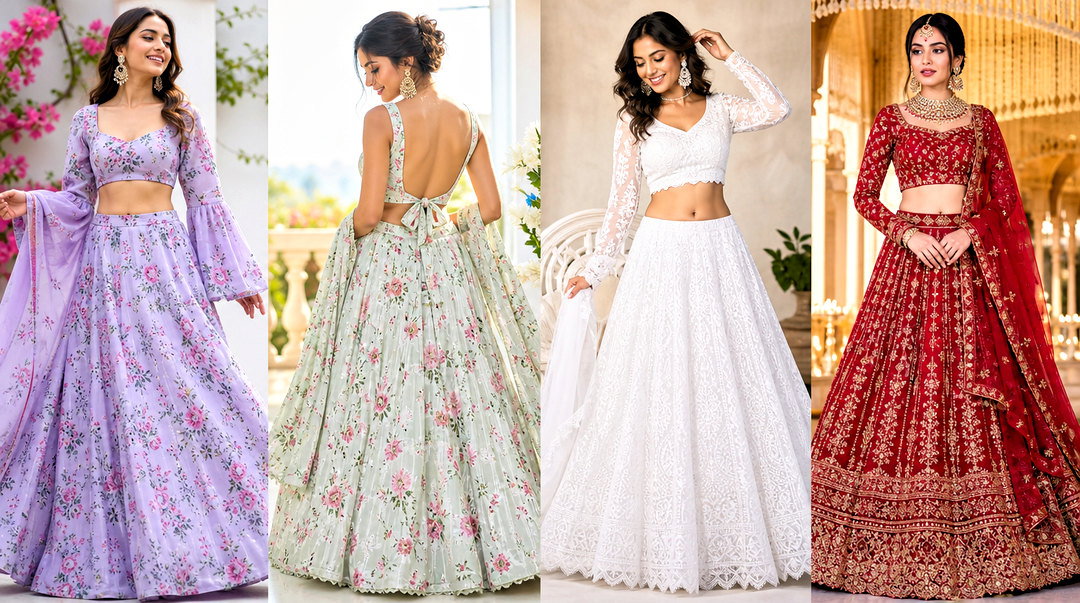
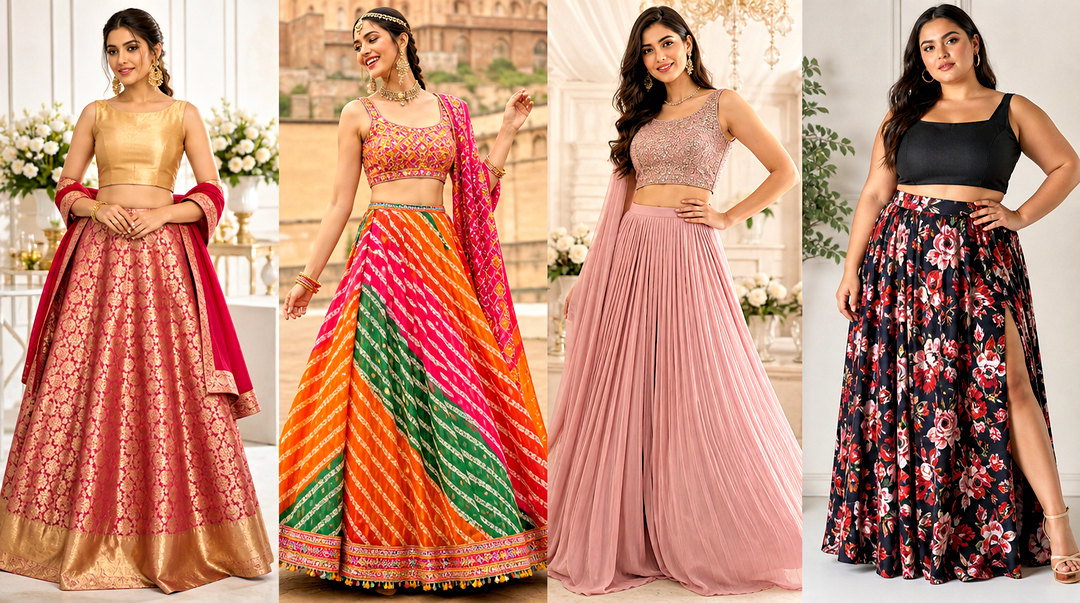
A collared crop shirt changes how a lehenga reads. The skirt keeps its volume and craft, but the top brings tailoring, and a narrow line of waist between the two. When I put these looks together, the shirt is the piece I fit first, because a shirt that rides up or gapes at the buttons ruins the whole outfit. It is also my favorite way to give an existing skirt for a wedding a second life at a sangeet, engagement or festive dinner. Crop-top lehengas pair contemporary shapes with Indian handwork and can be worn with or without a dupatta. Below are the shirt and skirt pairings I would build, from a plain white shirt to embroidered silk.

Tailoring a Collared Crop Over a Lehenga Waistband
A shirt is cut to tuck in, so a cropped shirt over a lehenga has problems a blouse never has. Most of the fixes are small tailoring jobs, and they are worth doing before the event rather than discovering at it.
- Set the lehenga first. Wear it at the height you will actually wear it on the day, usually the natural waist, then measure the shirt length to meet it or stop a finger's width above.
- Check the button line sitting down. Shirts gape between the buttons across the bust when you sit or lift your arms. A hidden press stud between buttons, or a size up taken in at the sides, fixes it.
- Add shape at the back. A boxy ready-made shirt looks unfinished over a fitted lehenga waist. Two back darts are a quick tailoring change that brings it in.
- Mind the shoulders. If the shoulder seam drops off the shoulder, the shirt will look borrowed. Sleeves can be shortened, shoulders are harder to fix, so buy for the shoulder.
Do one full rehearsal in the shoes and with the dupatta. Sit, raise your arms as if dancing, and bend forward. Anything that rides up or opens then will do the same all evening.
1. White Crop Shirt With Floral Lehenga Outfit
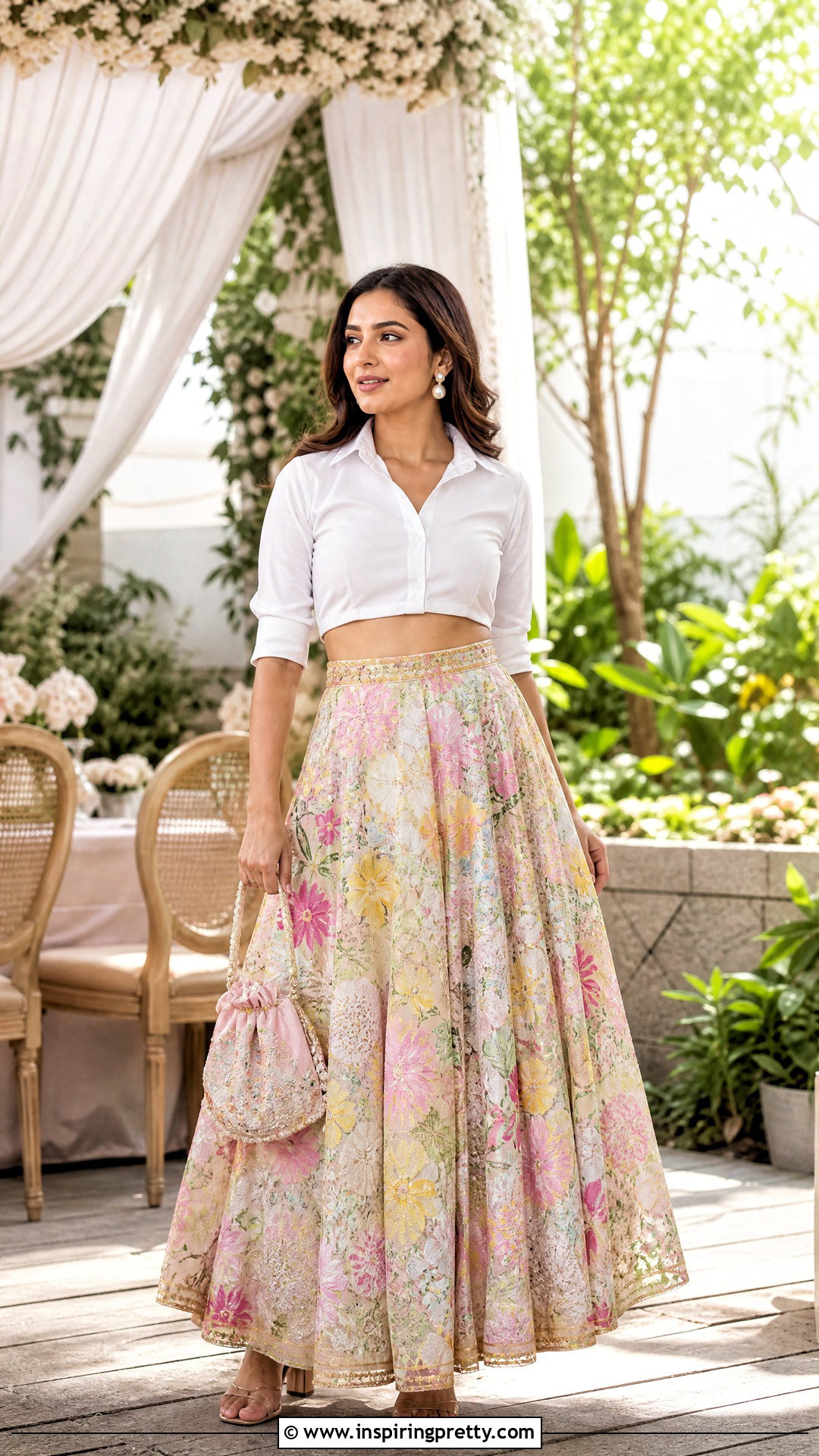
White is the safest shirt to start with, and a floral lehenga is the easiest skirt to put under it. I want a fitted crop with a pointed collar, covered buttons and sleeves stopping near the elbow. Everyday poplin looks like office wear next to a festive skirt, so I go for a cotton-silk or satin blend with a slight sheen. The skirt can be watercolor florals, fine embroidery or block-printed blooms, as long as it is high-waisted. Nude block heels or gold juttis, pearl drops, a slim bracelet and a pastel potli finish it. Collar open is relaxed; buttoned to the top is sharper. For a daytime event I leave the dupatta off entirely.
2. Black Satin Crop Shirt With Gold Lehenga Outfit
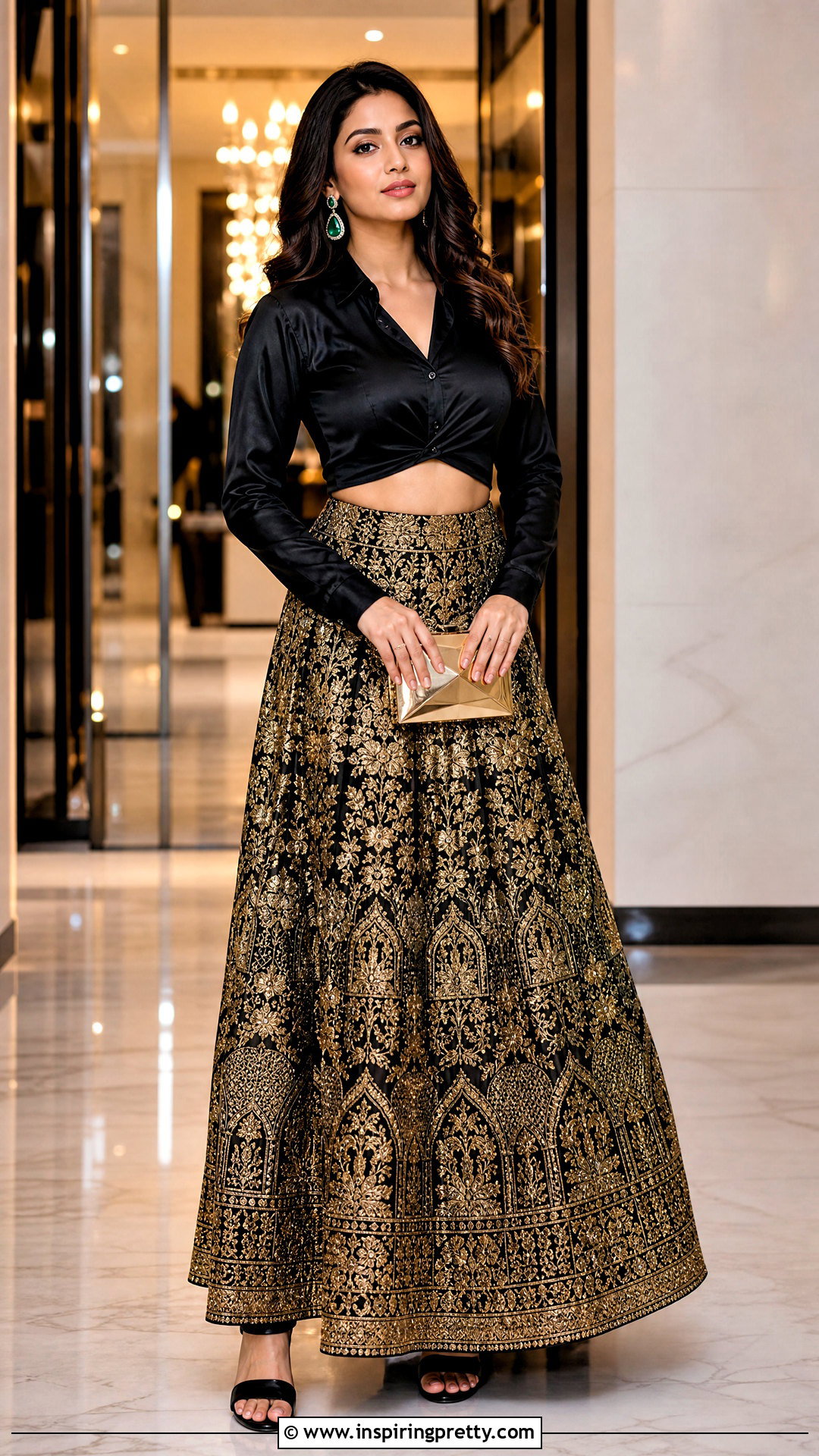
Black satin against gold is one of the strongest contrasts you can wear to an evening function. The catch with satin is that it shows every pull, so the shirt has to fit through the bust with no strain at the buttons, and long cuffed sleeves help it look tailored. A gold skirt with restrained zari or tonal sequins carries enough shine. Black or antique-gold heels and a structured metallic clutch go with it, and emerald earrings add one deep color. I put the hair in a low bun to keep the collar clear. A sheer black net dupatta with a thin gold edge over one shoulder is the only drape I would add. Save it for receptions and cocktail nights.
3. Denim Crop Shirt With Mirror Work Lehenga Outfit
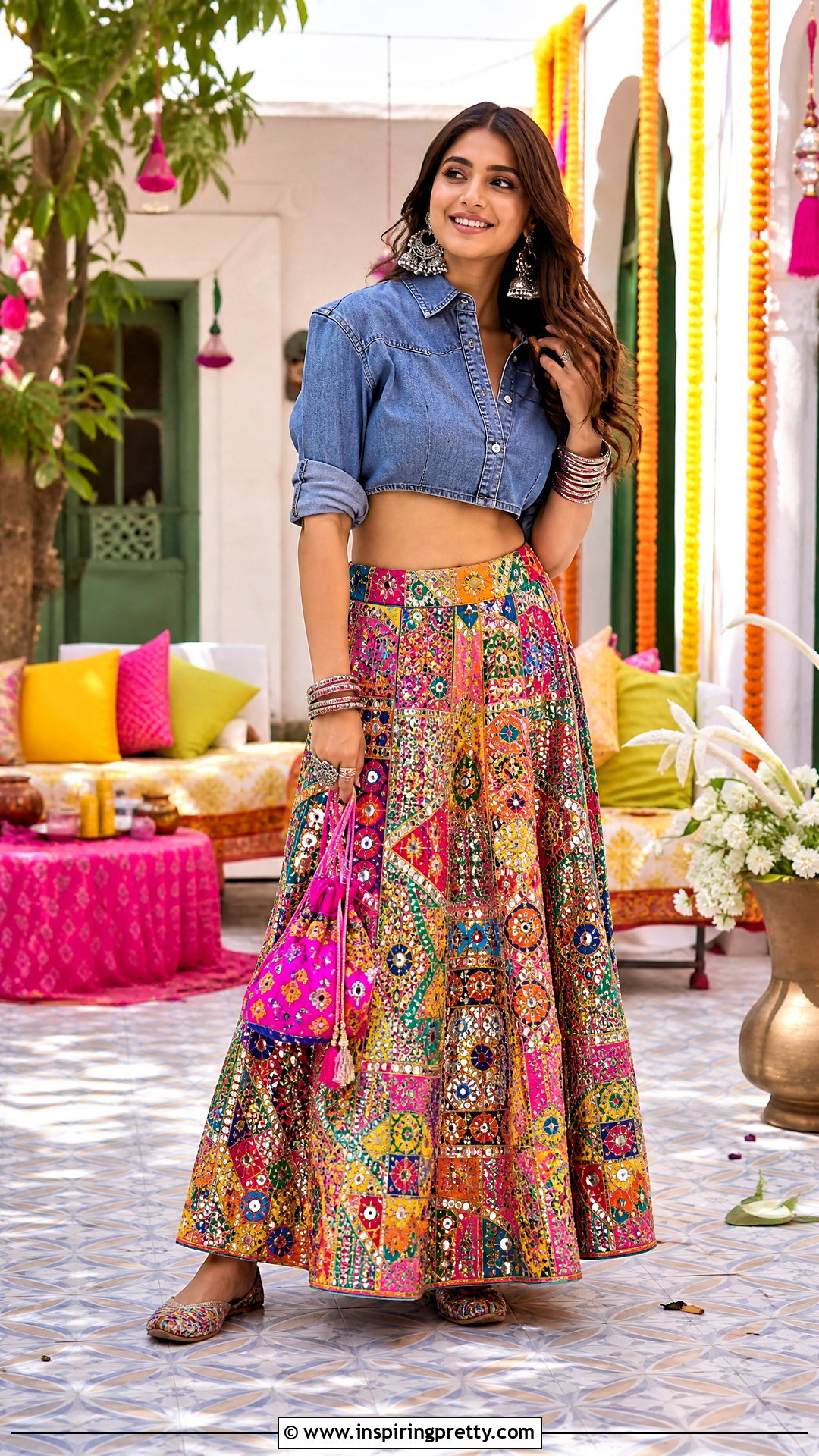
Denim over mirror work sounds like a clash, and that is exactly why it suits a younger guest at a mehendi or sangeet. I choose a soft medium-wash crop shirt with short sleeves and small metal buttons; stiff denim pokes out at the hem and does not sit flat over a lehenga waistband. Under it goes a mirror-work lehenga in pink, orange, blue or green. The plain shirt makes heavy embellishment easier to wear. Embroidered juttis, silver jhumkas, stacked bangles and a bright potli suit it, with a braid or loose waves. A heavy dupatta fights with both fabrics, so I use a plain chiffon one or none.
4. Ivory Silk Crop Shirt With Red Lehenga Outfit
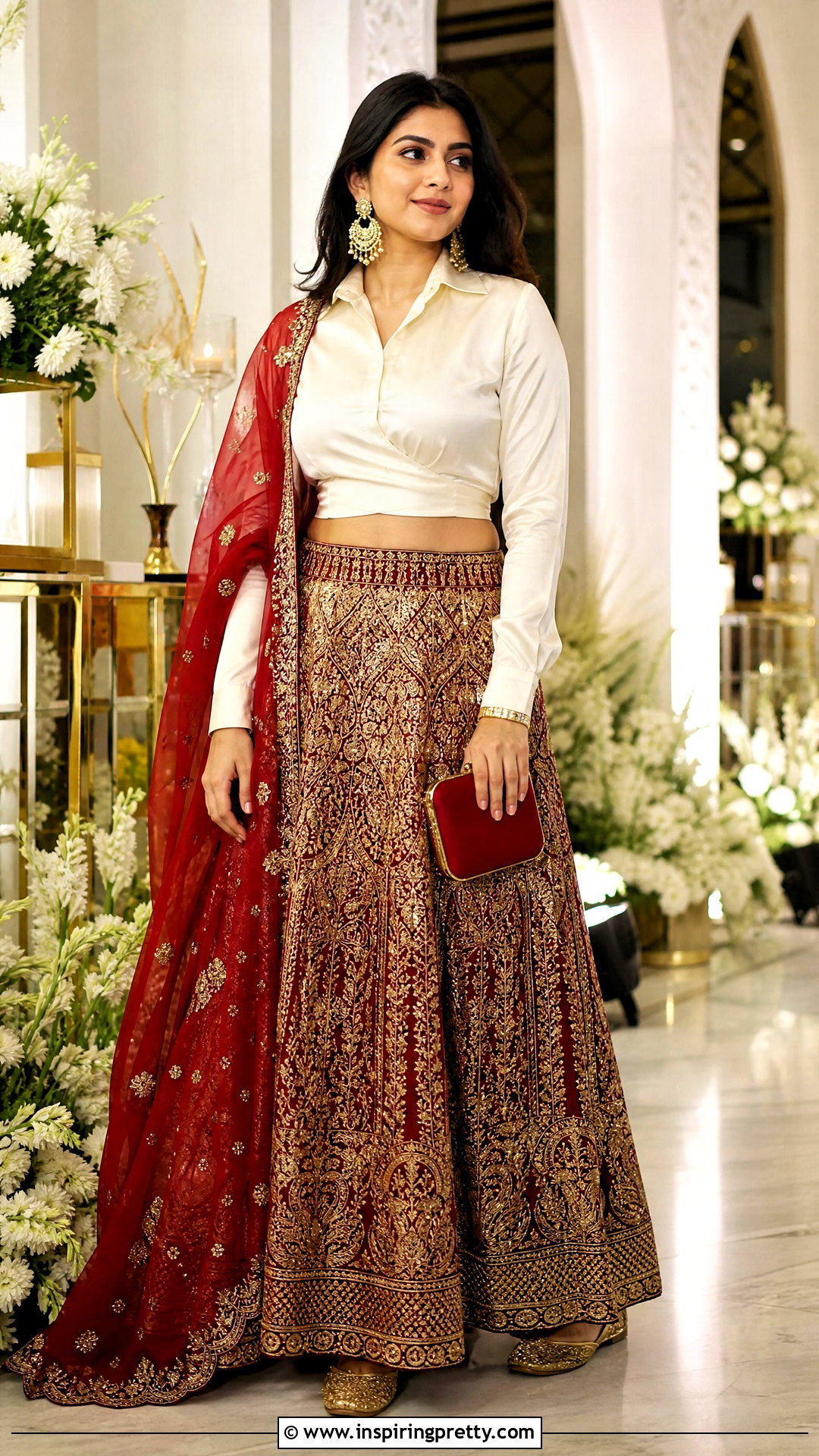
Ivory silk calms a traditional red lehenga down without making it look less like a wedding outfit. A concealed button placket keeps the front clean, and full sleeves with a gently curved hem give the shirt a finished edge. The skirt can carry gold embroidery, small motifs or an ornate border. Gold juttis and a red embroidered clutch keep the color story traditional. A heavy necklace crowds a collar, so I put the weight into kundan earrings, a ring and fine bangles instead. A sheer ivory or red dupatta draped from one shoulder to the opposite wrist finishes it. This is how I would rewear a formal red lehenga skirt.
5. Pastel Organza Crop Shirt With Tulle Lehenga Outfit
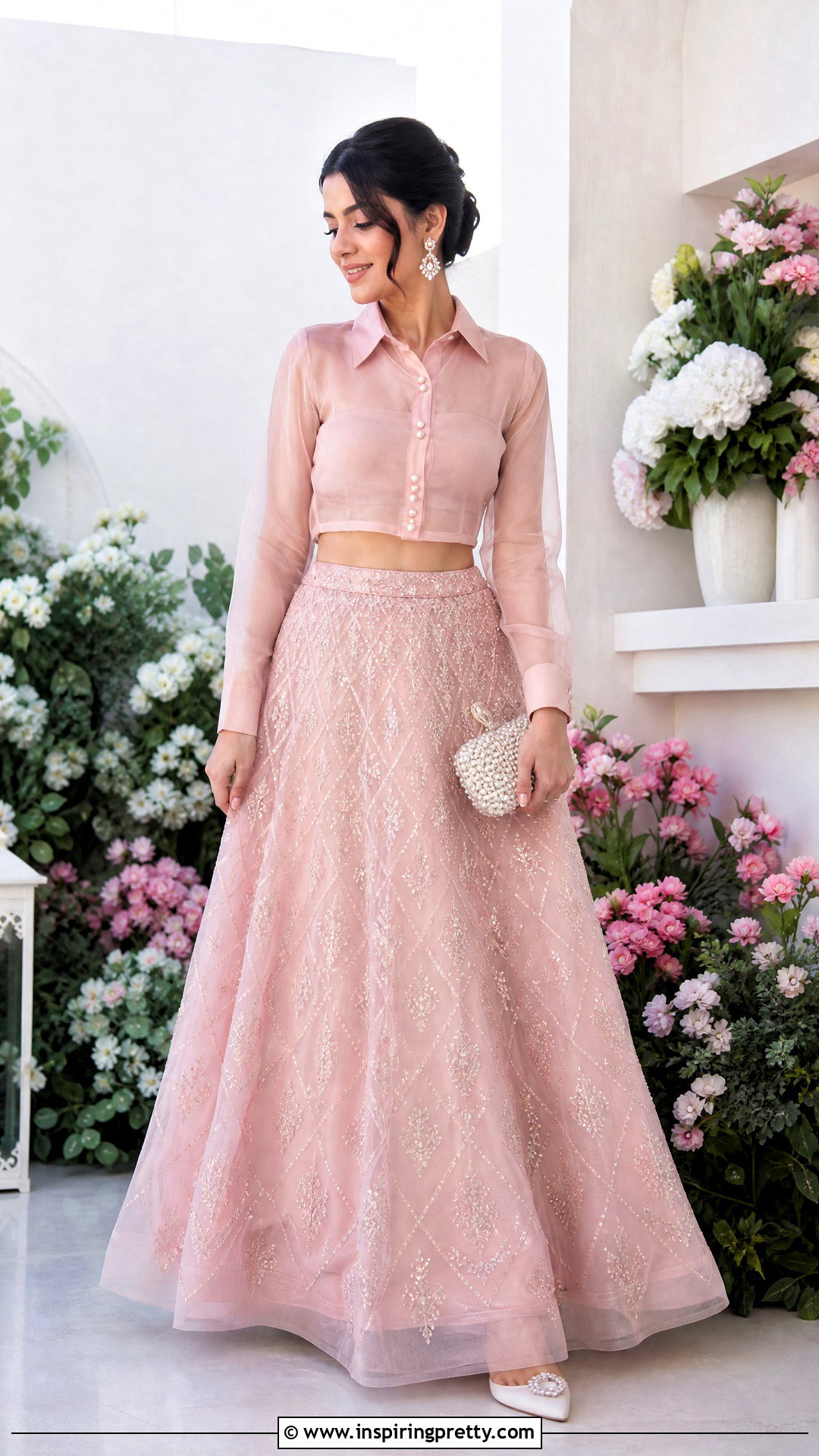
Organza and tulle are both airy, so the risk with this pairing is that the whole outfit floats with no shape. I fix that with a pastel organza crop shirt that has a lined bodice, in blush, powder blue, mint or lavender, so the sheer sleeves stay sheer and the body does not. Pearl buttons are a fine detail here. The tulle skirt can carry light sequins or floral appliqué, and a smooth, flat waistband matters, since organza already adds volume up top. Pointed embellished flats, crystal earrings, a pearl clutch and a soft updo suit an engagement or day wedding. Pin a light dupatta behind the shoulders for coverage.
6. Printed Crop Shirt With Plain Lehenga Outfit
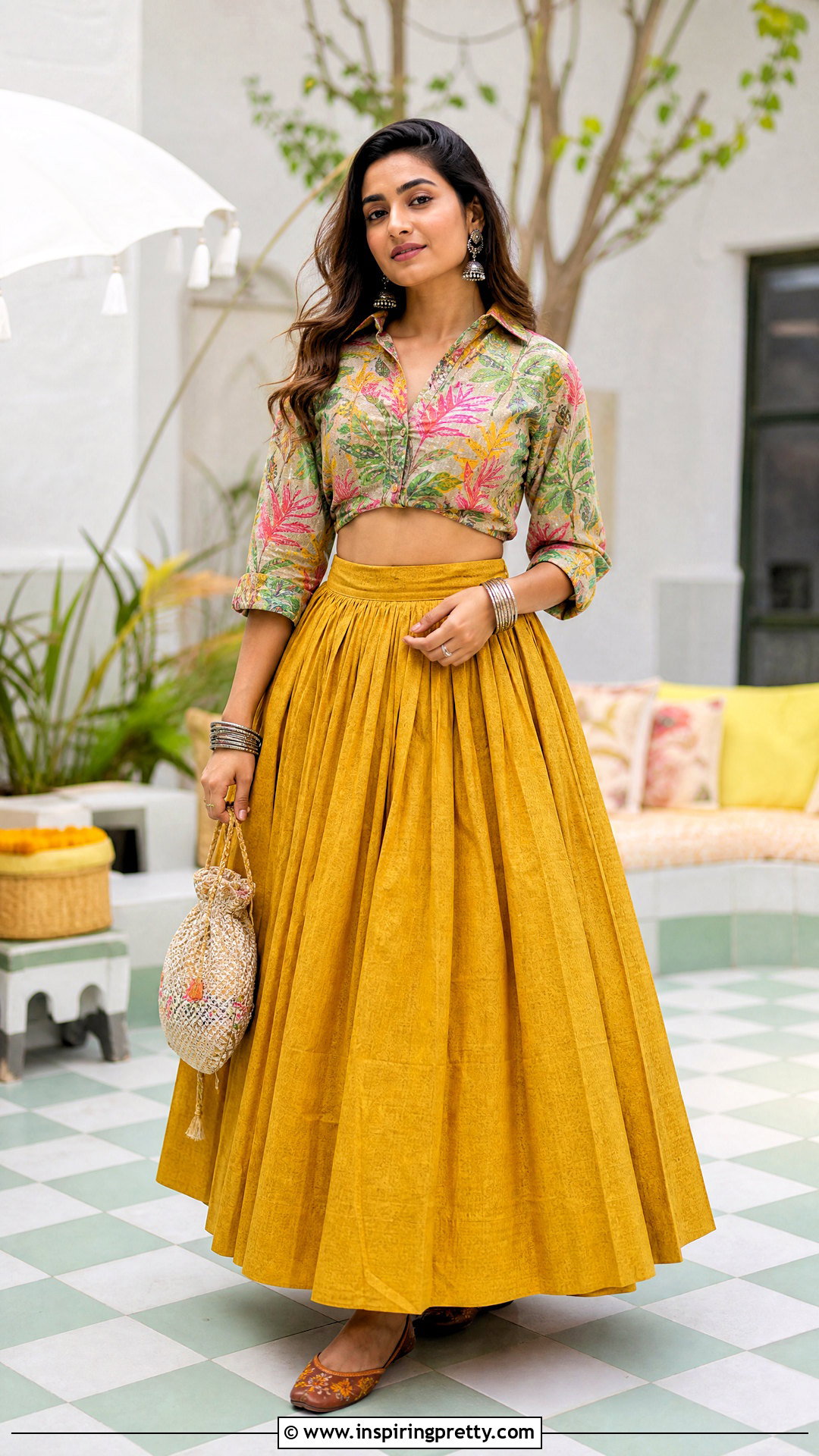
If the shirt carries the pattern, the skirt has to stay quiet. I pick a crop shirt in a botanical, geometric, paisley or block print, then pull the lehenga color from one of the smaller shades in it. A teal printed shirt over a plain mustard, navy or rust skirt is the kind of pairing I mean. Leather juttis, oxidized silver earrings and a woven potli keep it grounded. Rolling the sleeves once makes it daytime mehendi wear. A center part with a braid or low ponytail is practical for a long day. Any dupatta should be a light solid with minimal edging; a second print is one too many.
7. Embroidered Crop Shirt With Velvet Lehenga Outfit
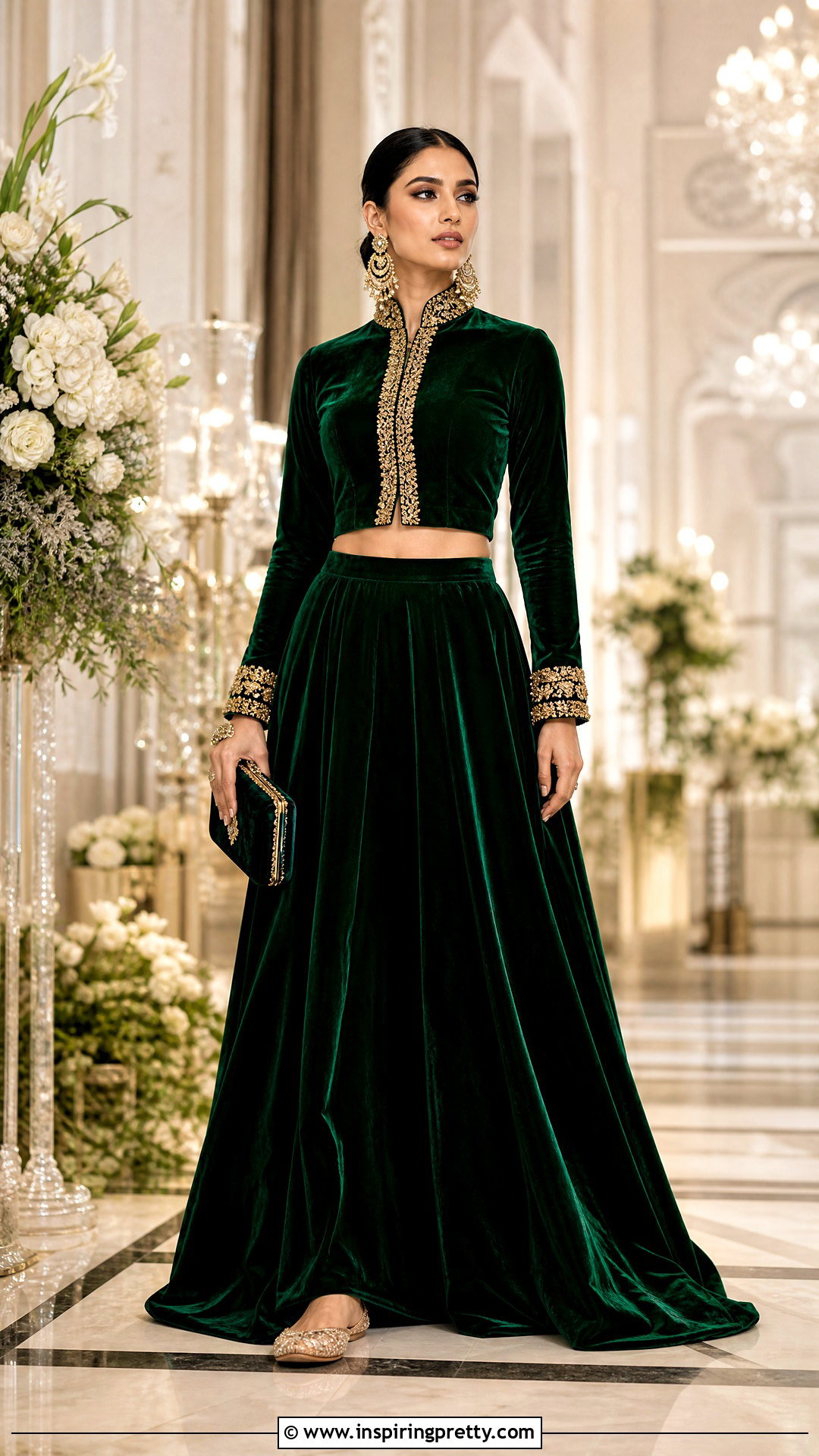
For winter weddings, the embroidered crop shirt and velvet lehenga pairing is the warmest version on this list. I keep the shirt embroidery to the collar, cuffs and placket, in wine, navy, emerald or black, and let the velvet skirt carry only restrained zari or a hem border. That placement keeps the outfit from feeling heavy top to bottom. Velvet crushes where you sit, so steam the skirt on the day and avoid folding it in a suitcase. Closed-toe heels or ornate juttis, a velvet clutch and antique-gold earrings suit it, with a sleek center-parted bun. A soft net dupatta over one arm adds coverage without hiding the collar.
8. Tie-Front Crop Shirt With Printed Lehenga Outfit
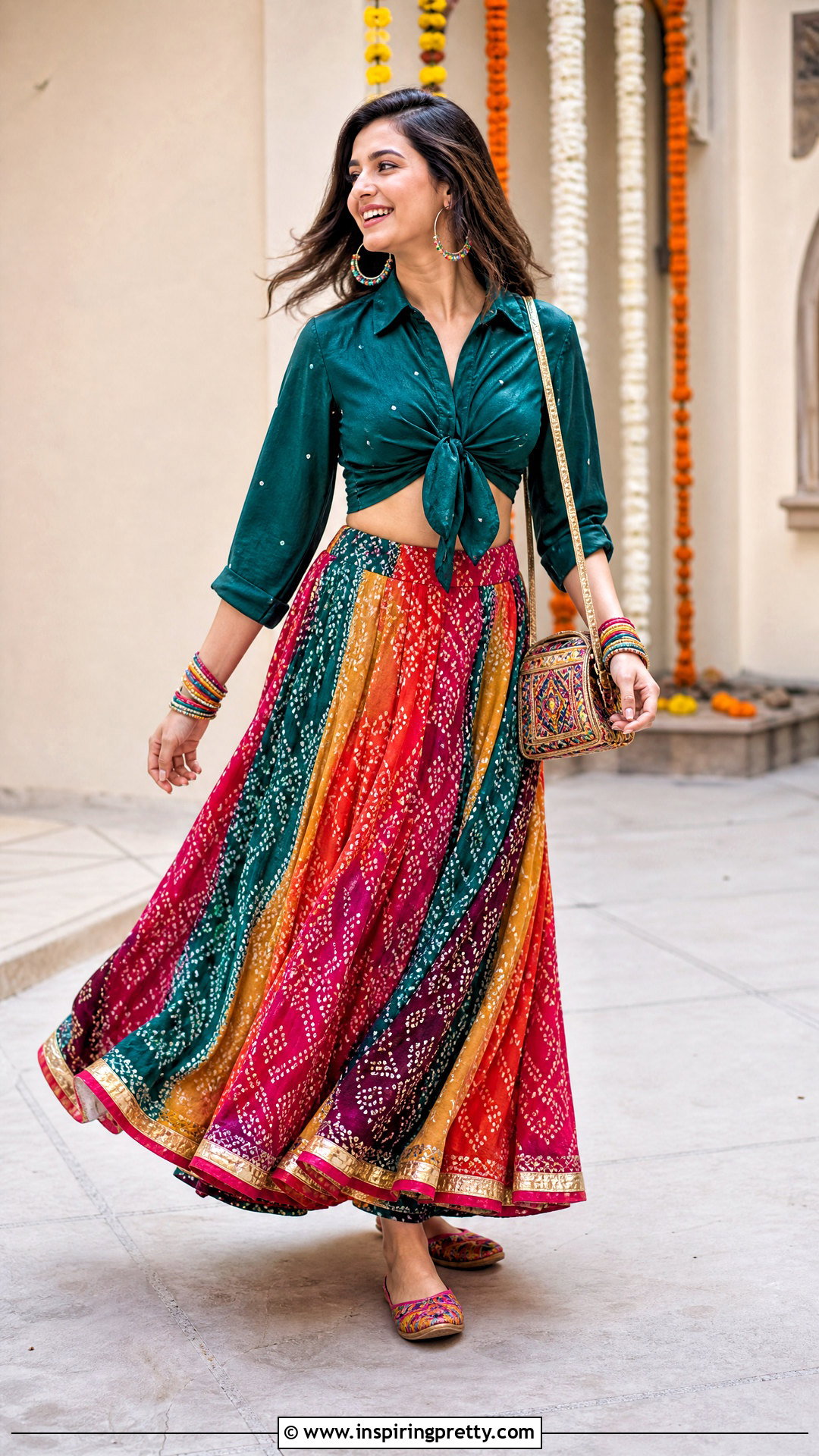
A tie-front shirt is the most relaxed shape here, and it is easy to get wrong. The knot should sit flat at the waist; a big bow adds bulk exactly where the lehenga waistband already sits. I pick a solid jewel tone or soft neutral over a floral, bandhani or geometric print skirt, and keep the lehenga high so only a narrow strip of midriff shows. Wedge sandals or embroidered flats are kind to feet at long pre-wedding functions. Medium hoops, bright bangles, a small sling bag and a loose braid suit the mood. Skip a big necklace; collar, knot and print are enough to look at.
9. Cape Sleeve Crop Shirt With Sequin Lehenga Outfit
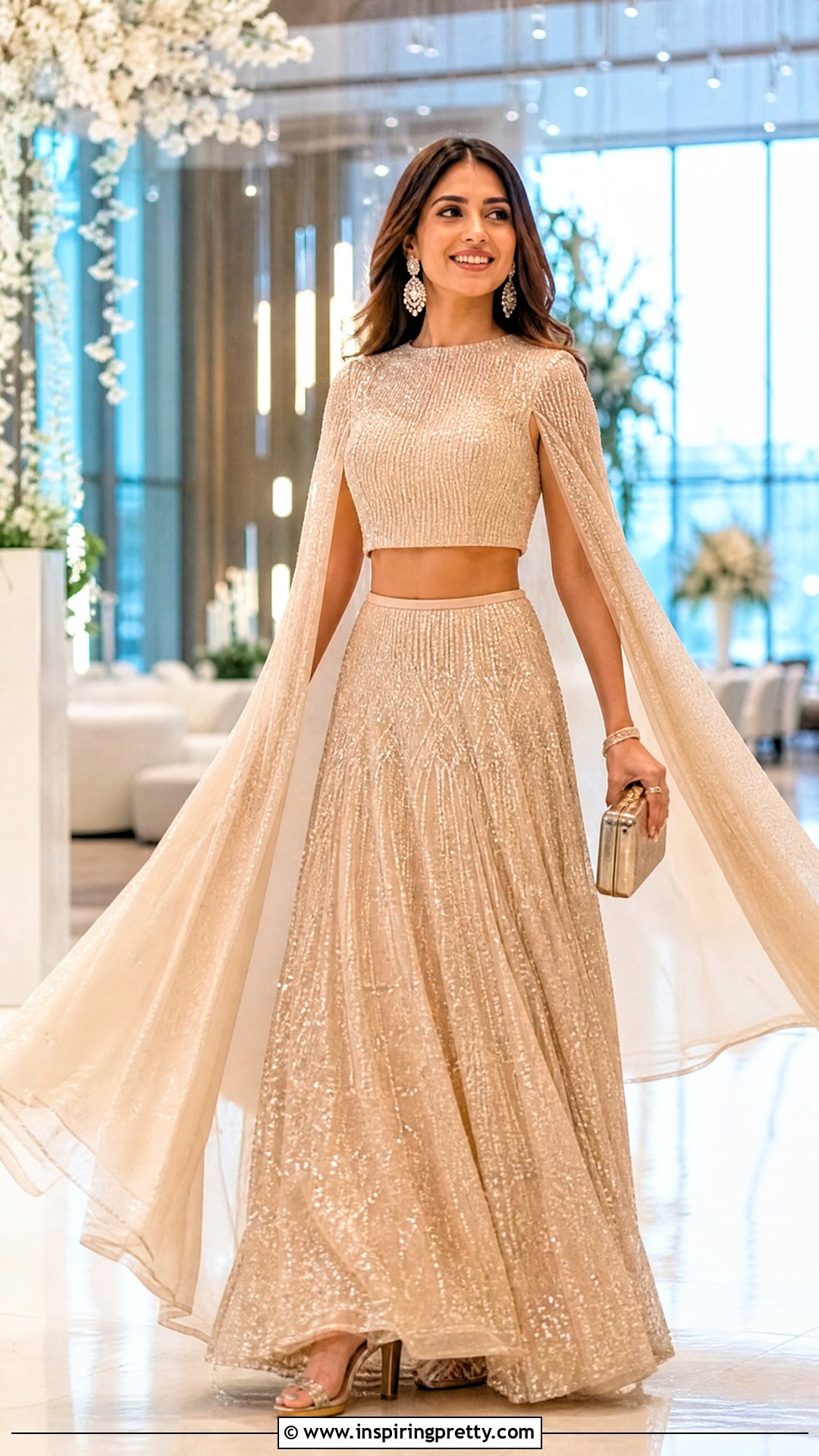
Cape sleeves give a plain shirt movement, and over a sequin skirt the effect is soft rather than flashy. I look for a neat collar, a fitted bodice and lightweight cape panels, chiffon or georgette, that fall from the shoulder without stiffness. A tonal sequin lehenga in champagne, silver, rose gold or deep blue catches the light under them. Metallic heels, crystal drops and a small box clutch finish it, and a smooth ponytail keeps the cape clear. The cape already layers the top, so I leave out the dupatta. It is a good choice for anyone who wants her upper arms covered without full sleeves.
10. Puff Sleeve Crop Shirt With Brocade Lehenga Outfit
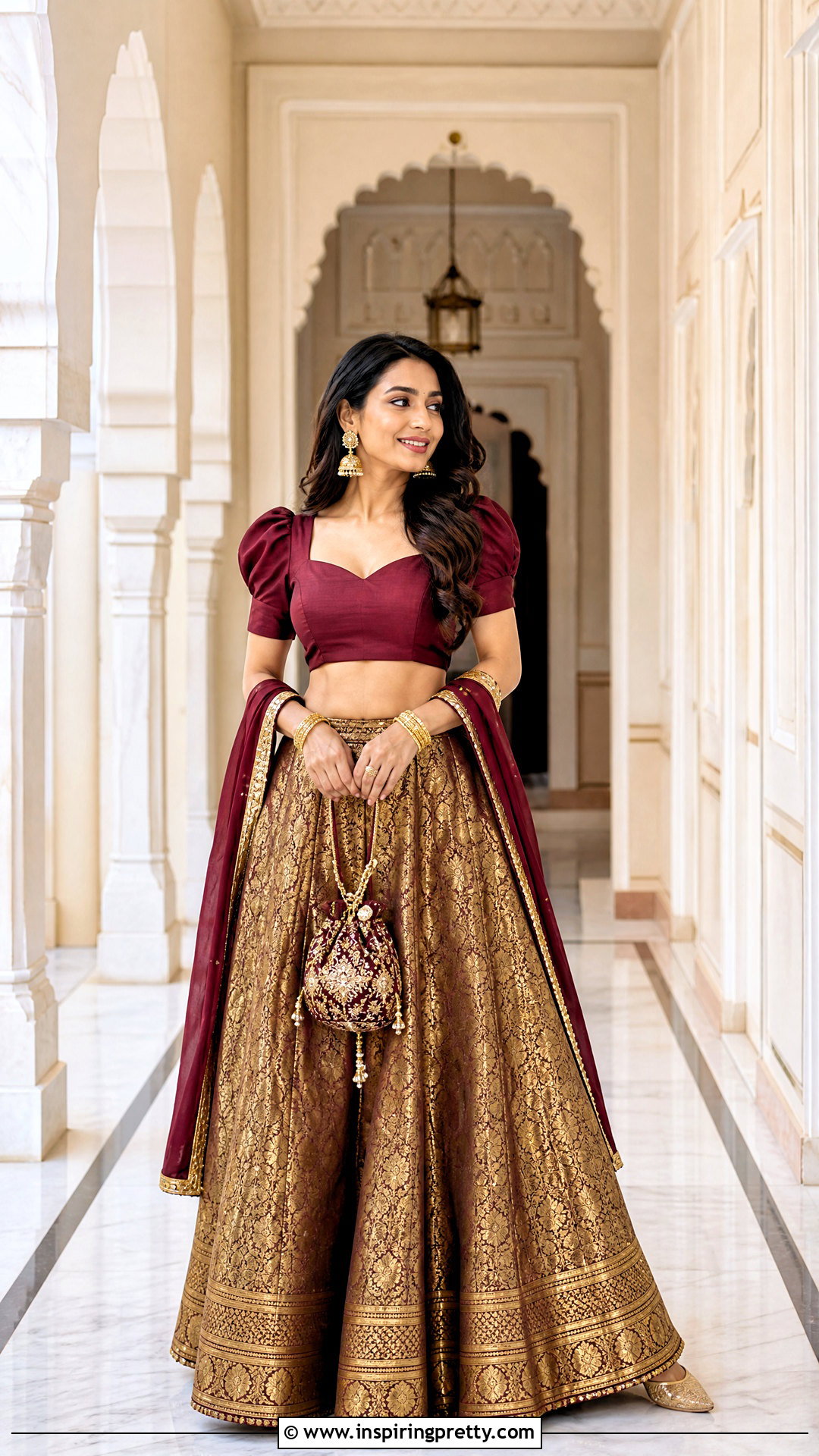
Brocade is a heavy, stiff weave, and the top over it has to hold its own without fighting it. A puff-sleeve crop shirt with gathered shoulders and fitted cuffs does that. I keep the shirt fabric matte or lightly textured so the woven gold and jewel tones in the skirt stay the main thing to look at, and I match the shirt to one of the minor shades in the weave. Classic jhumkas, gold bangles, a small potli and low block heels or juttis go with it. Hair up in a bun or half-up keeps the shoulders uncluttered. A plain organza dupatta over one shoulder makes it more traditional.
11. Striped Crop Shirt With Solid Lehenga Outfit
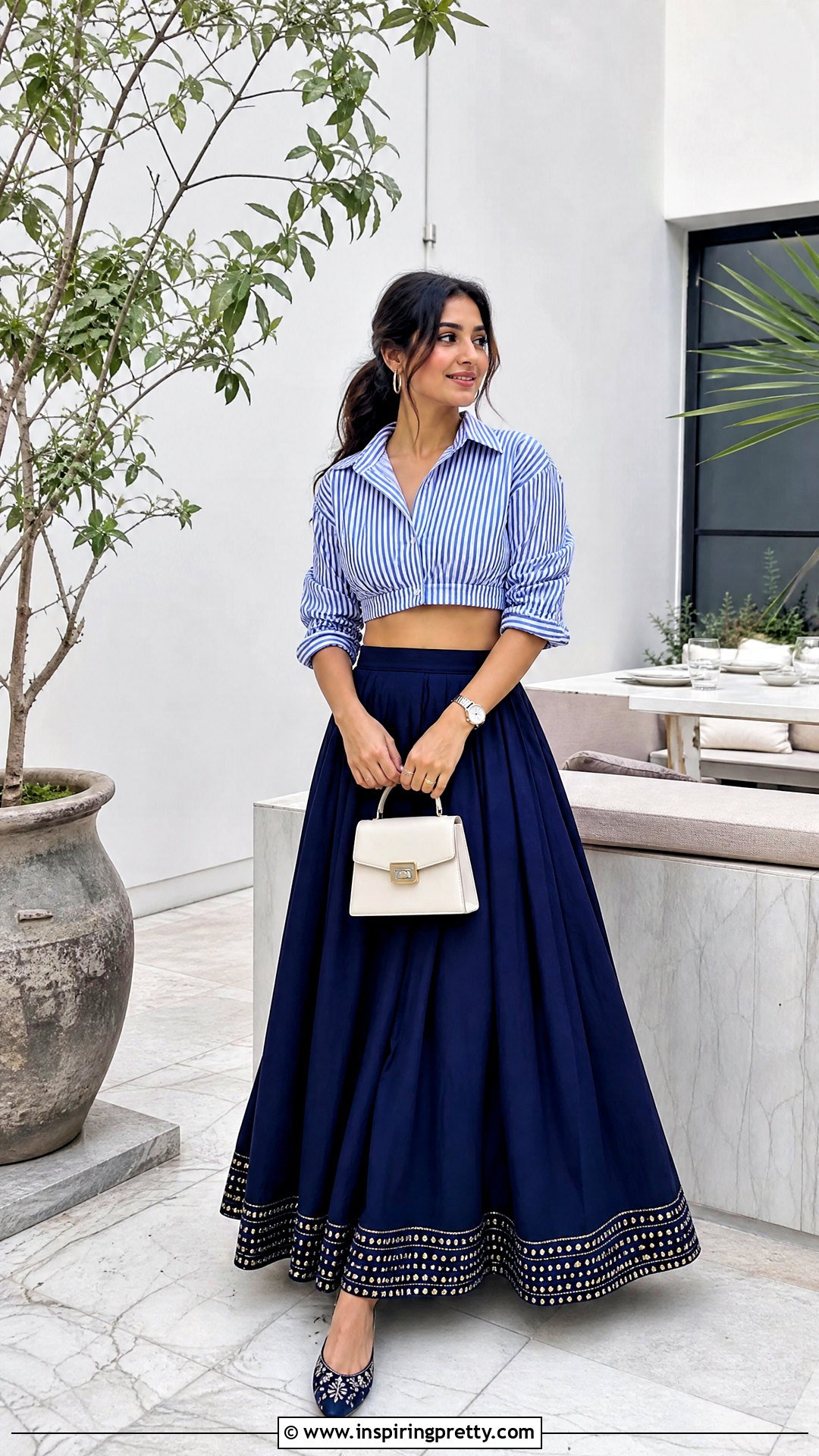
Stripes are the most office-looking print you can put on a shirt, which is why they make a striking lehenga top. I prefer narrow vertical stripes; wide ones look busy above a full skirt. Blue and white, pink and ivory or black and gold all work over a solid lehenga in one of the stripe colors. The skirt can have a textured waistband or slim border, but dense embellishment fights the stripes. Pointed flats, a structured mini bag, small hoops and a watch keep the shirt crisp. The hem should meet the waistband or tuck in smoothly. I like this for a small celebration or festive lunch.
12. Bandhani Crop Shirt With White Lehenga Outfit
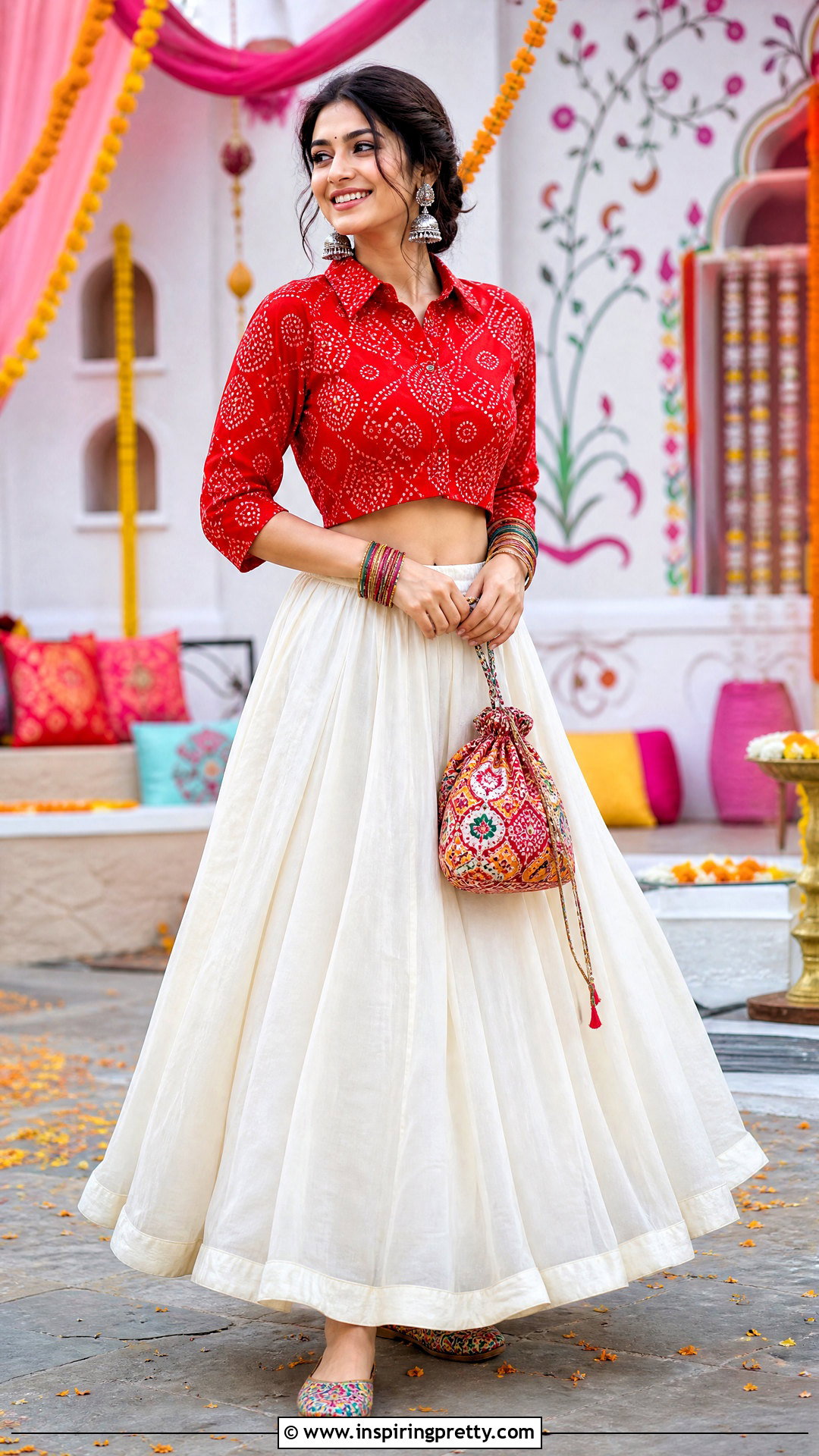
Bandhani is all tiny tied dots of color, and a white skirt gives it room. I go for a red, fuchsia, green or royal-blue bandhani crop shirt with three-quarter sleeves and gold piping, over a cotton-silk, chanderi or lightly embroidered white lehenga. Colorful juttis, oxidized jhumkas, glass bangles and a bandhani potli suit the craft. Real bandhani is dyed by hand and can bleed, so I would keep a damp shirt well away from that white skirt and never wash them together. A yellow or orange dupatta adds cheer; a plain white one is calmer. It suits a haldi or mehendi in warm weather.
13. Mirror Work Crop Shirt With Chiffon Lehenga Outfit
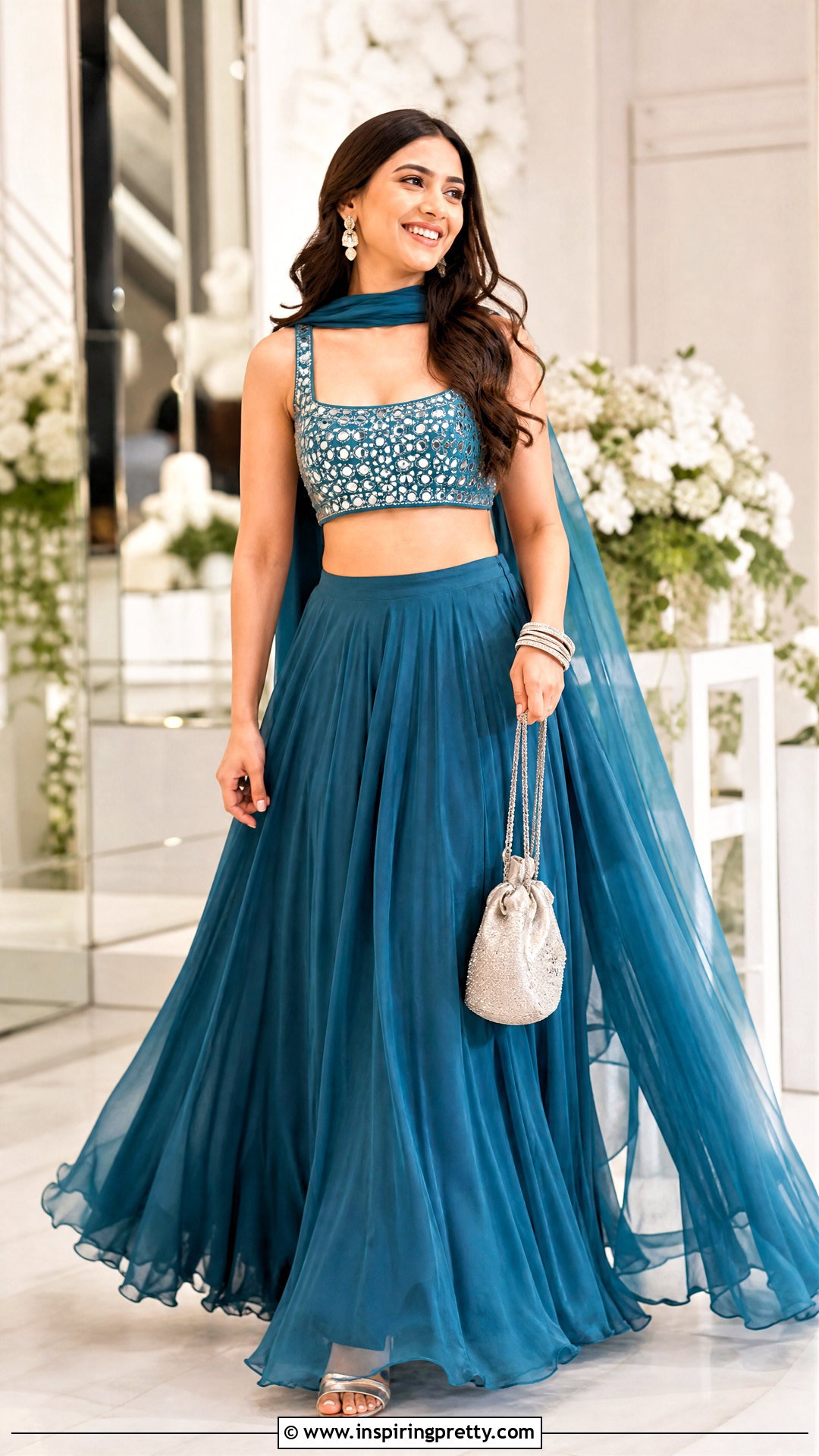
Mirror work catches every light at a sangeet, so I concentrate it on a mirror-work crop shirt and keep the skirt simple. A fitted collared top with mirrors at the shoulders, placket and cuffs, over a plain or lightly bordered chiffon lehenga in the same color, moves well when dancing. Teal, magenta, violet and emerald show the mirrors best. One thing I check is the inside of the work: rough backing behind the mirrors scratches, so a lining matters. Silver heels, a metallic potli, stacked bangles and modest drops finish it, with loose waves. A sheer chiffon dupatta from the back of one shoulder softens it.
14. Sheer Sleeve Crop Shirt With Satin Lehenga Outfit
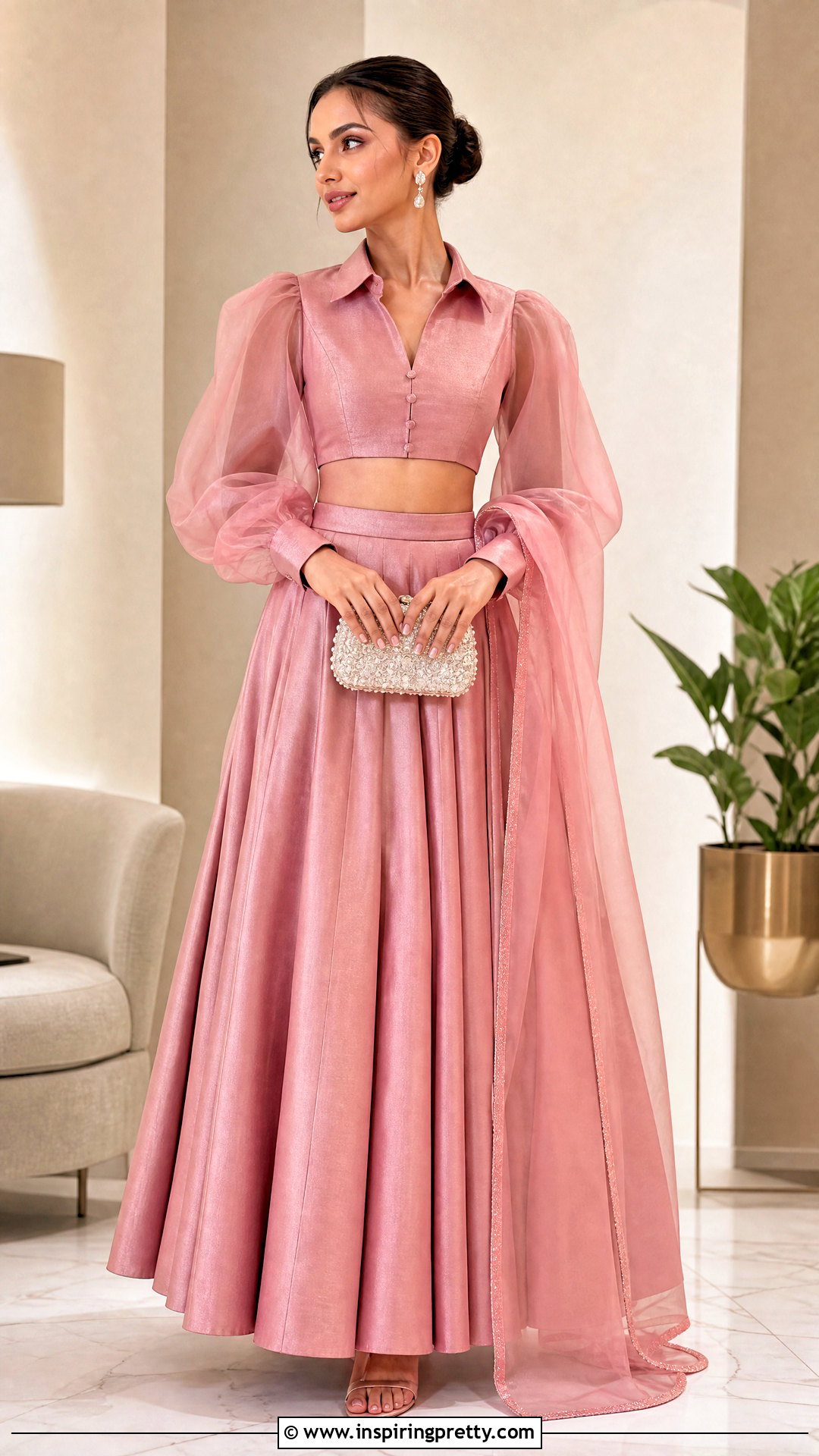
Sheer sleeves give coverage and keep a crop shirt looking light, provided the bodice itself is opaque. I want a structured collar and organza or net sleeves on a lined body, over a sleek satin lehenga in dusty rose, sage, navy or champagne. Satin shows every crease and water mark, so I carry the skirt on a hanger, not folded, and keep drinks well away. Gentle pleats and a clean waistband suit it better than heavy decoration. Tonal heels, pearl earrings, a beaded clutch and one bracelet are enough, with a low bun to show the collar. Go without a dupatta for a reception, or add a very light net drape.
15. Peplum Crop Shirt With Panelled Lehenga Outfit
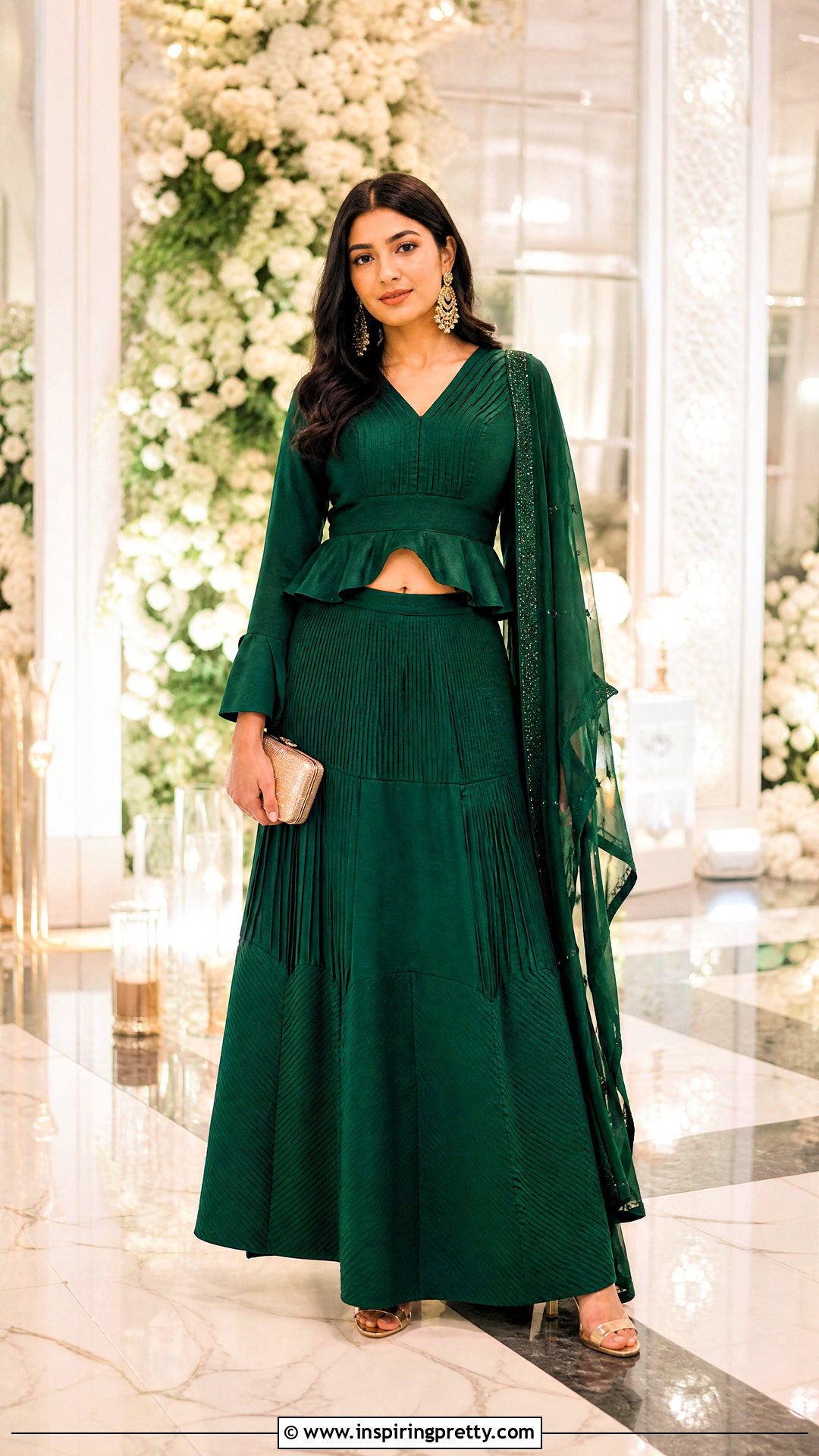
For anyone who wants less midriff showing, a short peplum shirt is my first suggestion. The flare should start just above the lehenga waistband and stay short; a long peplum fights the skirt volume and makes the hips look wider. A panelled lehenga that falls smooth over the hips and opens near the hem pairs best. I like it in one color, emerald, navy, plum or rose, for a long unbroken line. Heeled sandals, statement earrings, a structured clutch and a neat ponytail finish it. Embroidery on the collar or peplum edge adds definition. A light dupatta on one shoulder keeps the tailored shape visible.
16. Monochrome Crop Shirt Lehenga Outfit
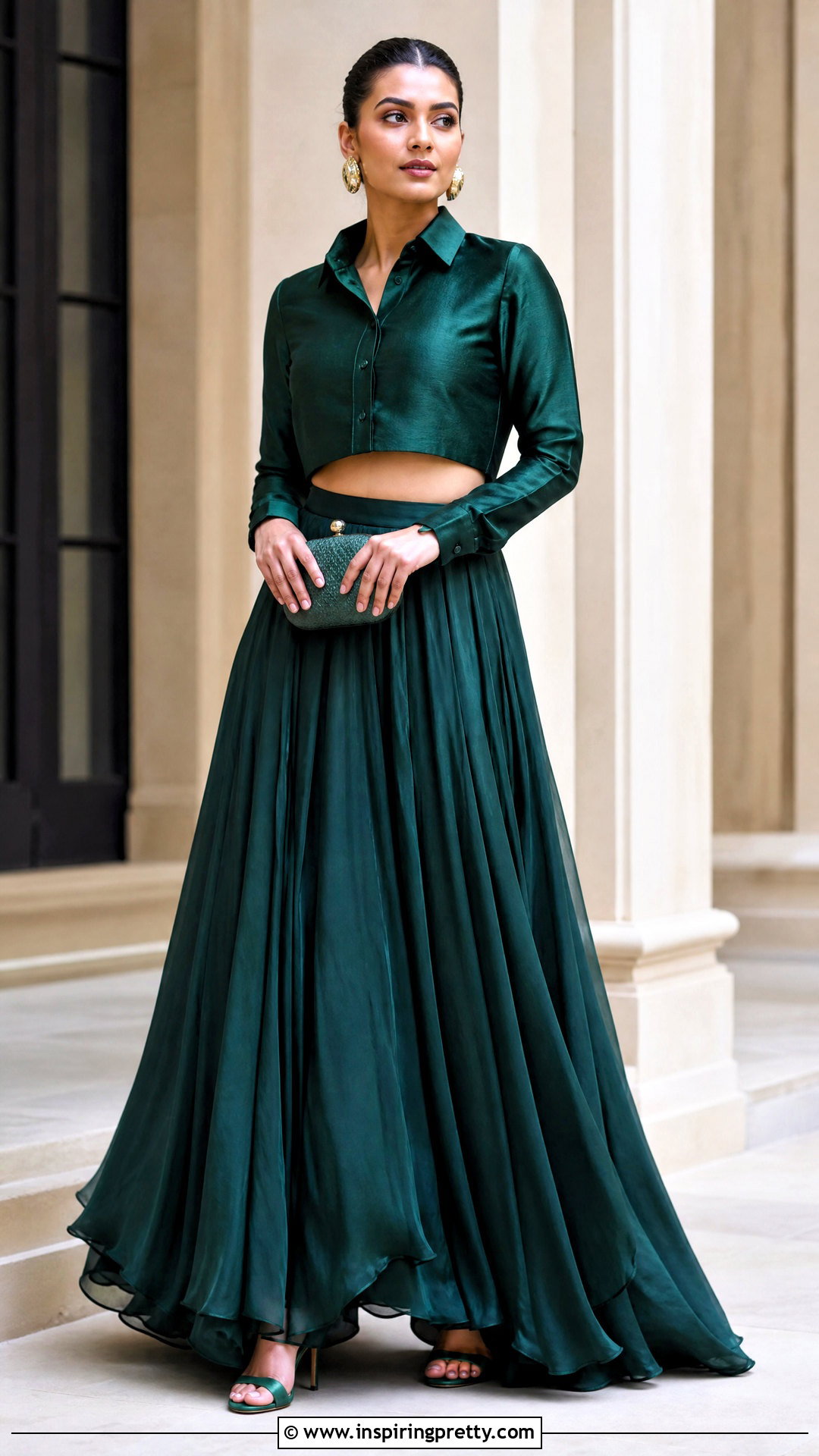
One color top to bottom is my go-to when a client wants to look polished without much jewelry. The interest has to come from texture instead: an emerald raw-silk shirt over a georgette skirt, or a blush satin shirt over an embroidered tulle lehenga. Matching heels carry the color down. Jewelry in gold, silver, pearls or colored stones is the only break I allow, and the clutch stays in a similar tone. A clean bun or smooth waves finish it. A dupatta, if worn, should be the same shade with a narrow border. Then the collar, the waistband and the swing of the skirt do the work.
17. Color Block Crop Shirt Lehenga Outfit
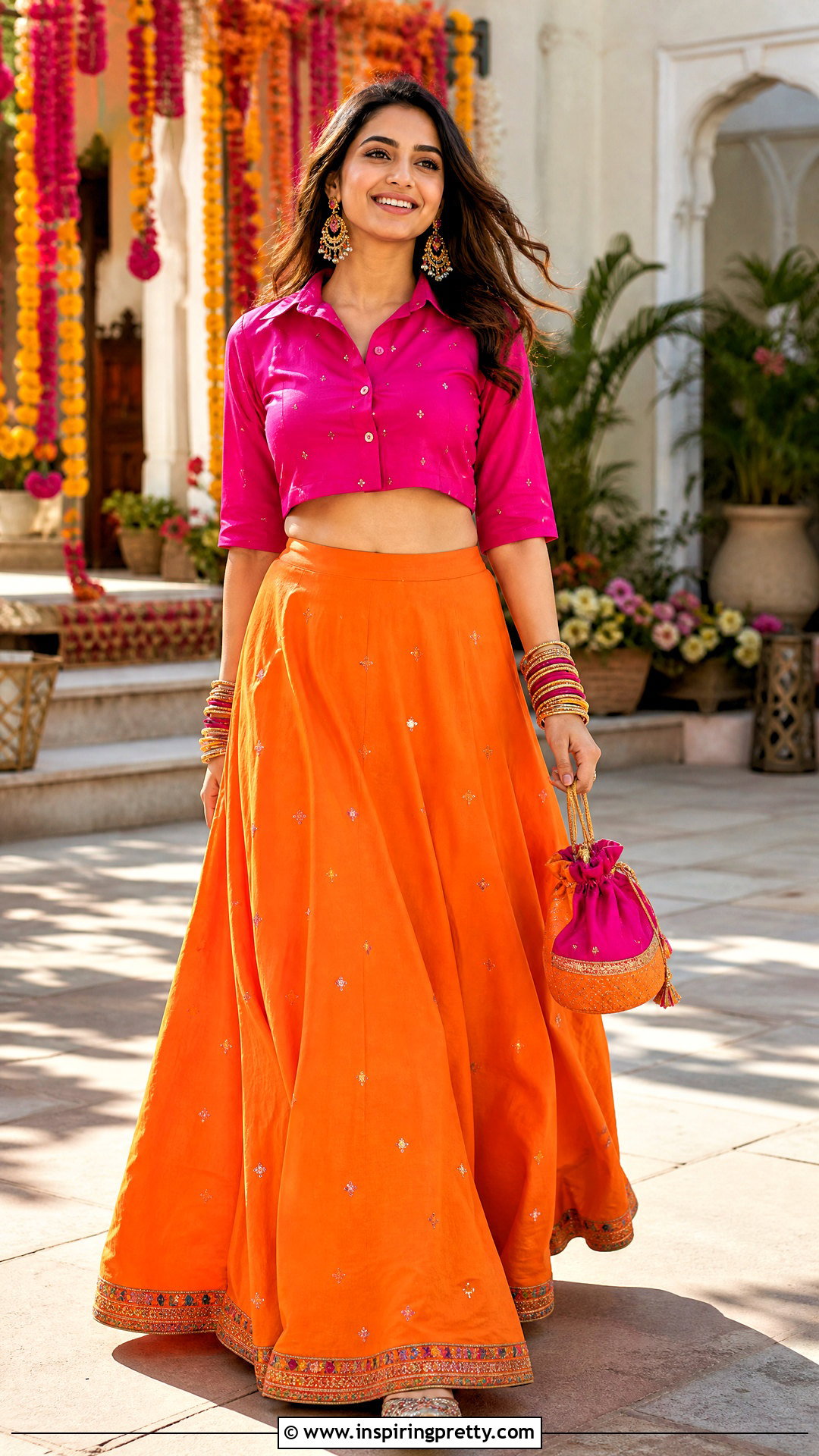
Color blocking only looks deliberate when both pieces are mostly solid. I pair fuchsia with orange, emerald with cobalt or purple with mustard, then use a narrow embroidered waistband or a potli in both colors to tie the halves together. Metallic juttis, statement earrings and stacked bangles finish it, with a sleek ponytail. The dupatta should be neutral or one of the two main shades, never a third bright. Strong colors photograph differently under warm indoor lights than in daylight, so I check them in both before the event. This one is for daytime celebrations and dance nights with colorful décor.
18. Long Sleeve Crop Shirt With Embroidered Lehenga Outfit
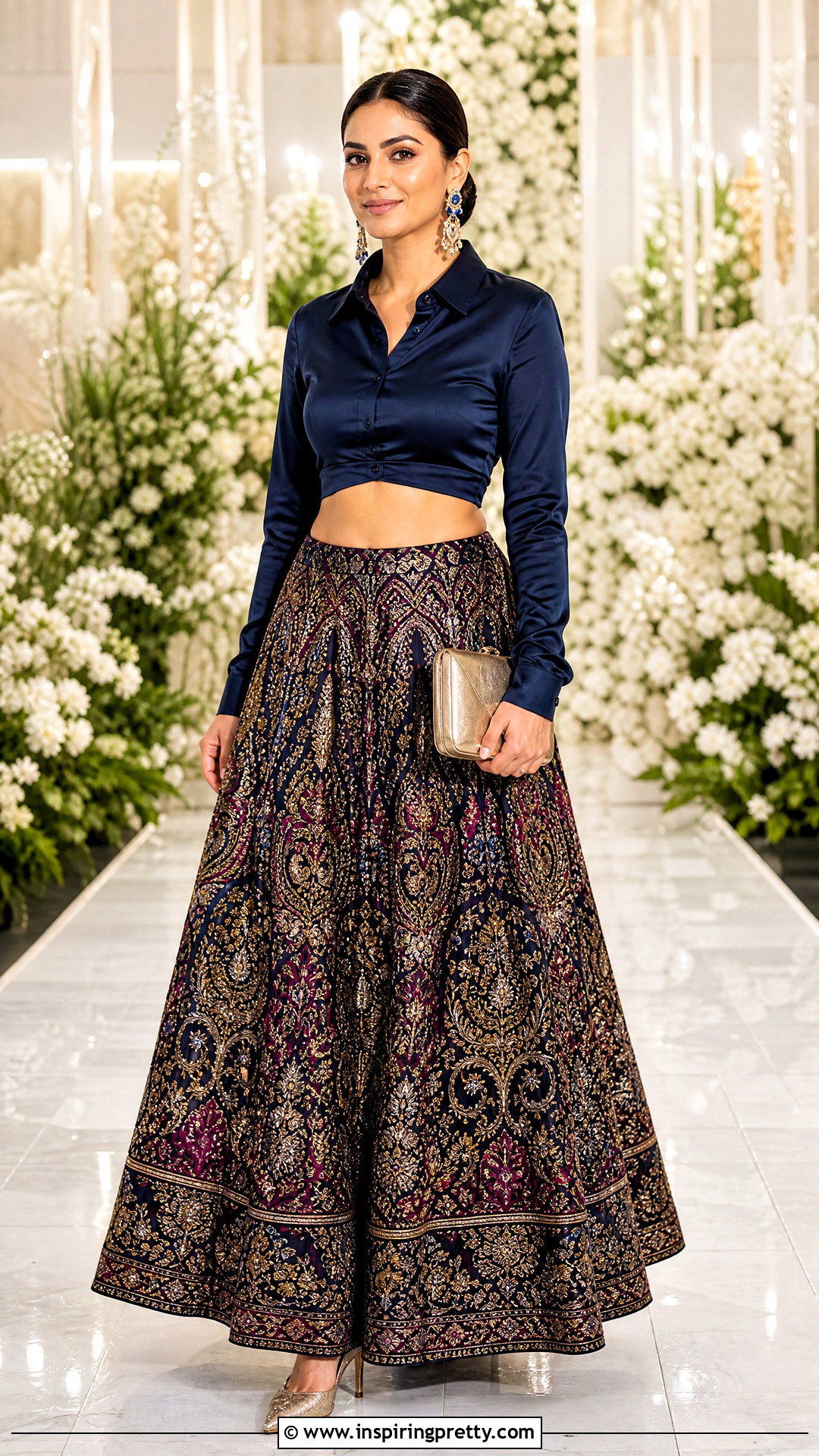
An elaborate lehenga needs a quiet top, and a long-sleeve crop shirt in plain silk, crepe or satin is about as quiet as it gets. I want a close fit, sharp cuffs and a hem near the waistband. The skirt can carry the threadwork, sequins, zari or beading. I take the shirt color from one shade in the embroidery so the two look made for each other. Pointed heels, a small clutch and drop earrings are all it needs, and the neck can stay bare or take a fine choker under the collar. A smooth low bun keeps the tailoring crisp. Full sleeves also suit guests who want their arms covered.
19. Sleeveless Crop Shirt With Ruffled Lehenga Outfit
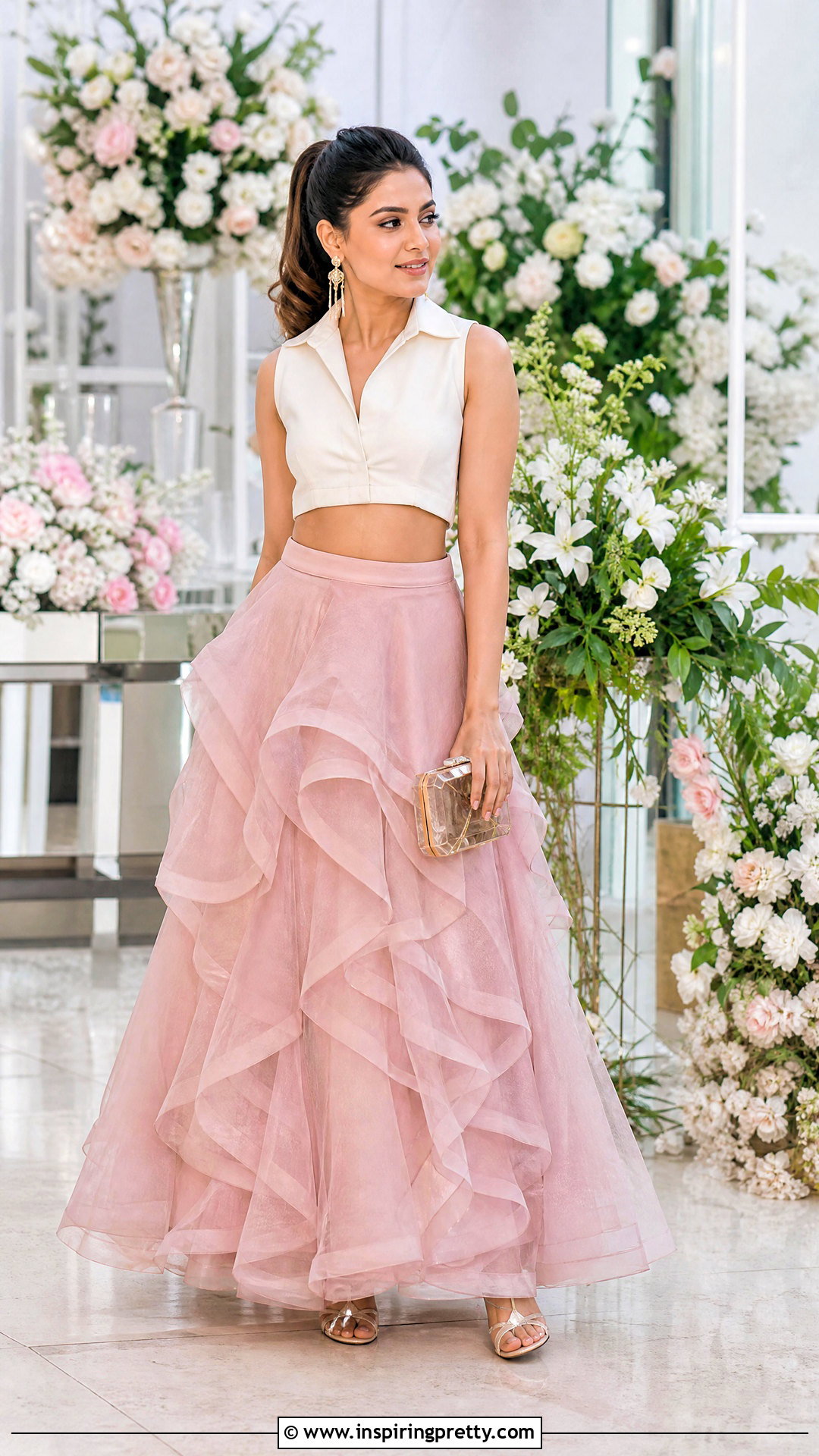
A ruffled georgette or organza skirt has so much movement that the shirt over it should be plain and close-fitting. I use a sleeveless collared crop in satin, silk or structured crepe, with clean, well-cut armholes; a loose armhole on a sleeveless shirt shows the side of the bra. A monochrome set looks sleek, a neutral top over a colored skirt more playful. Strappy heels, shoulder-grazing earrings, a small hard clutch and a high ponytail show off the shoulders. An oversized dupatta just tangles in the ruffles, so I use a narrow drape or none, which also makes walking and dancing easier.
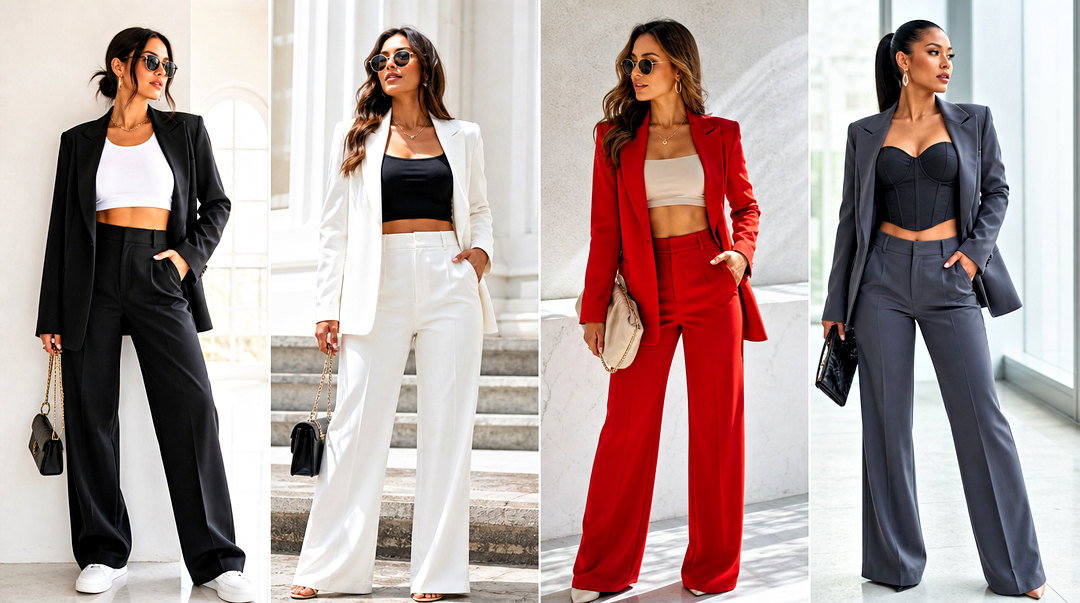
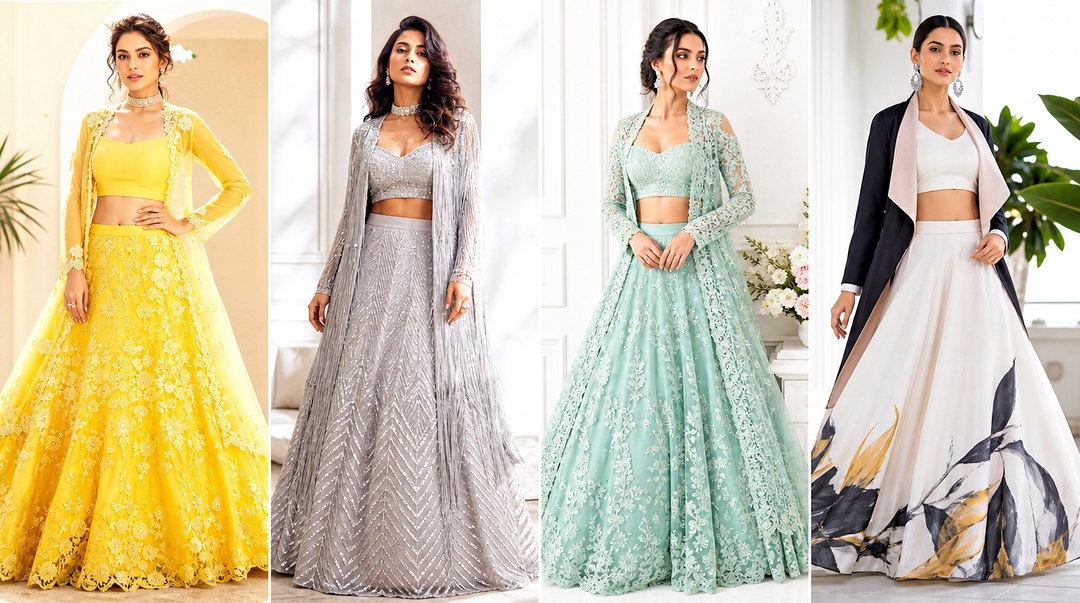
20. Embellished Collar Crop Shirt With Plain Lehenga Outfit
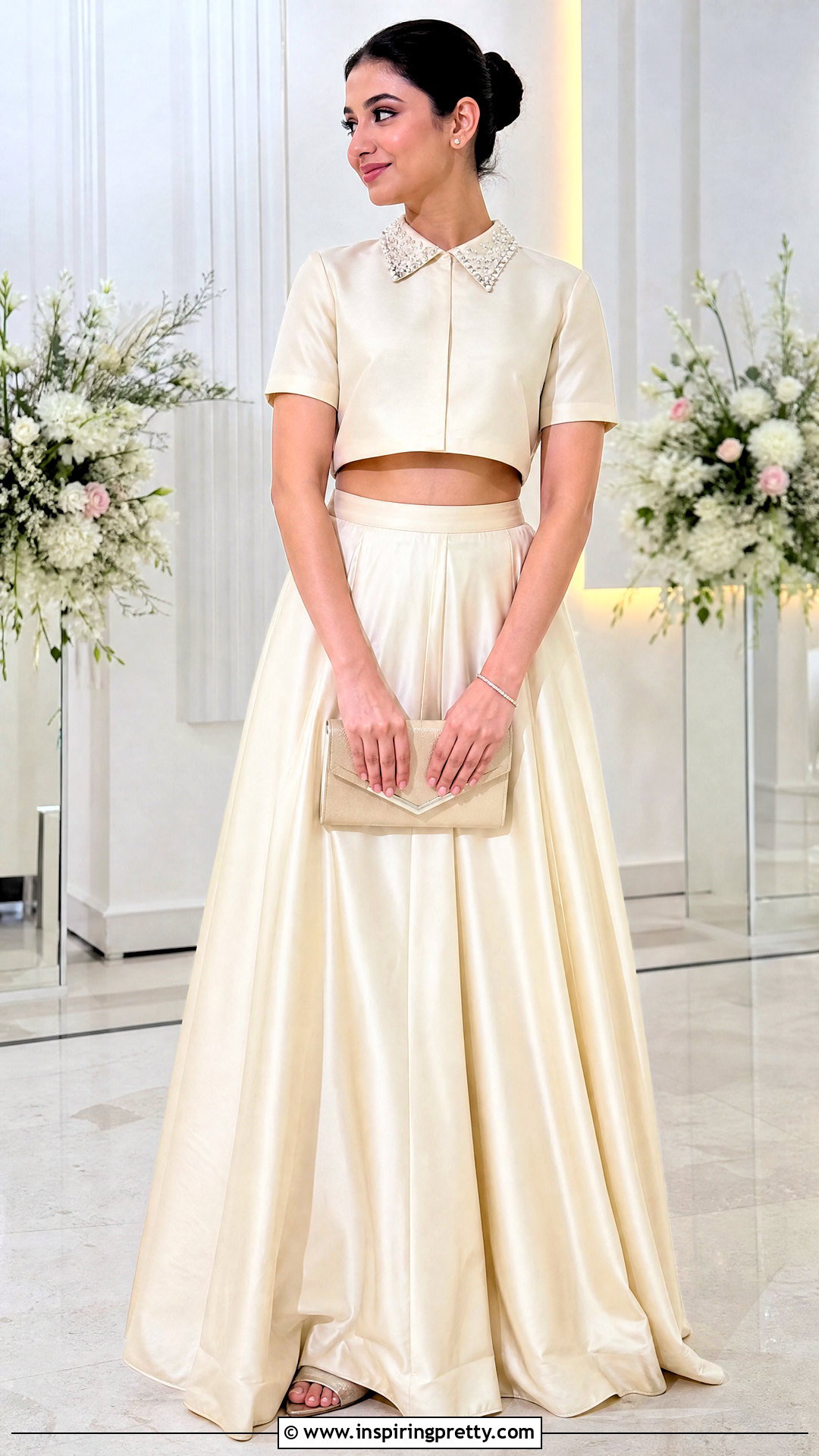
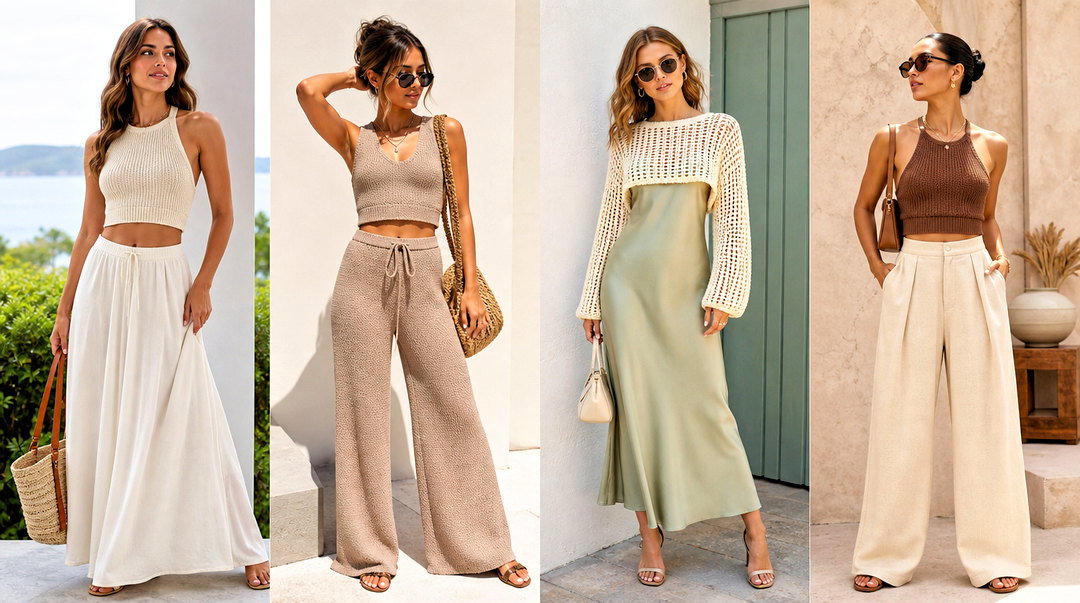
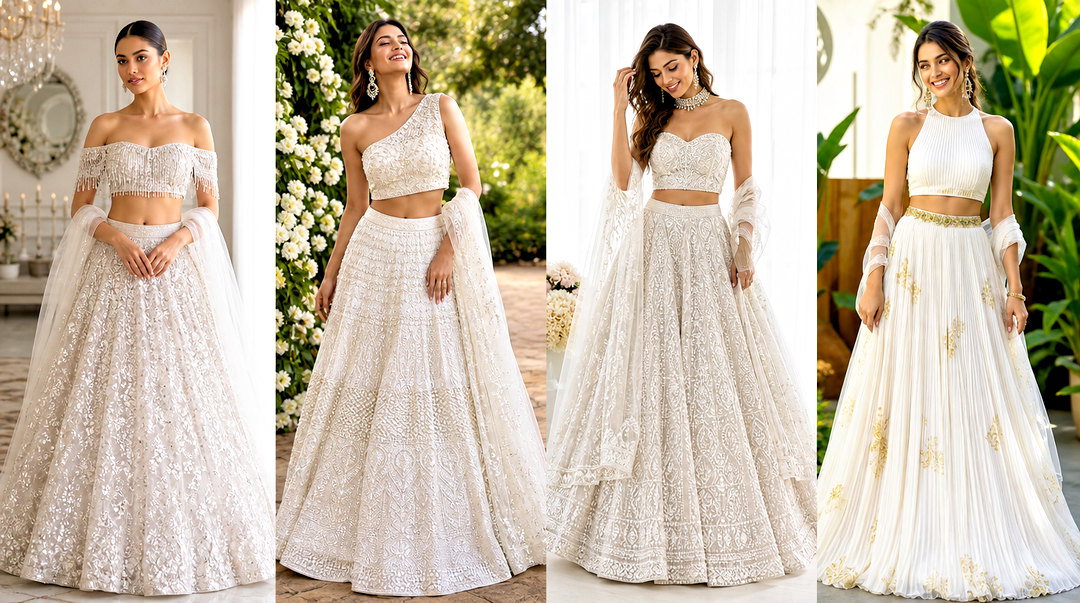
When the collar is embellished, it becomes the necklace, and I treat it that way. Beads, pearls, crystals or embroidery concentrated on the collar of a plain crop shirt, over a solid high-waisted lehenga in silk, satin, georgette or crepe, is a calm look that still reads as dressed up. I keep the skirt to a narrow hem border or tonal texture. Skip the necklace; small earrings, metallic heels, a slim bracelet and an envelope clutch are enough. Hair goes back so the collar stays visible. Heavy beading weighs down a soft collar, so I look for interfacing behind it. A sheer matching dupatta is optional.
21. Wrap Crop Shirt With Pleated Lehenga Outfit
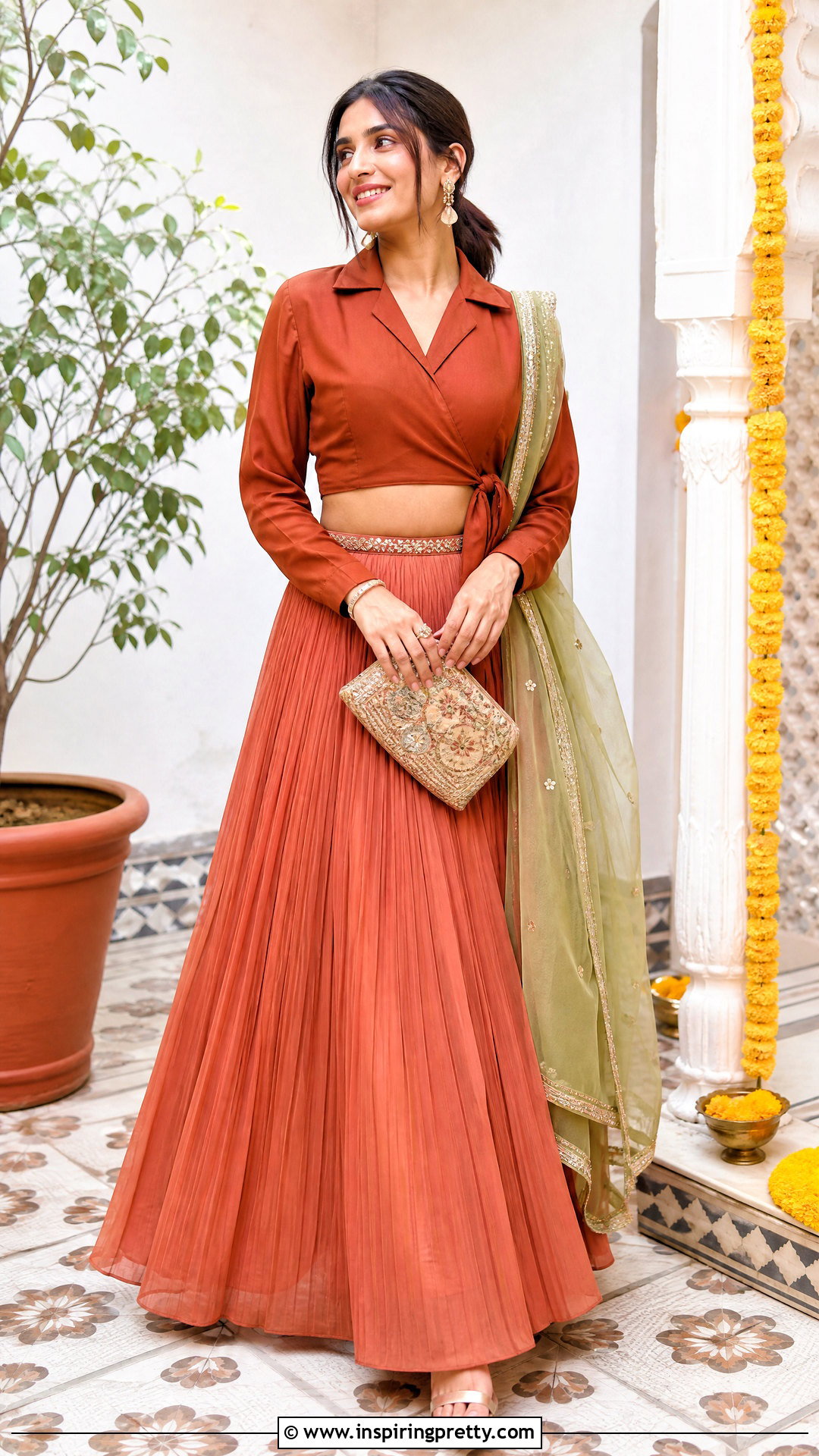
A wrap shirt adjusts to the body better than a rigid blouse, which makes it kind for long functions with a big meal. I make sure it has an internal fastening and a modest V collar, so it does not slip open when she bends or dances, and that the ties lie flat. A solid pleated skirt in chiffon, georgette or light silk keeps the lines clean. Tonal pairs like rust and terracotta, navy and blue or ivory and champagne look coordinated. Wedge or block heels, medium earrings and a soft embroidered clutch suit it, with a low ponytail or side braid. A dupatta pinned at one shoulder can fall behind.
22. Cropped Kurta Shirt With A-Line Lehenga Outfit
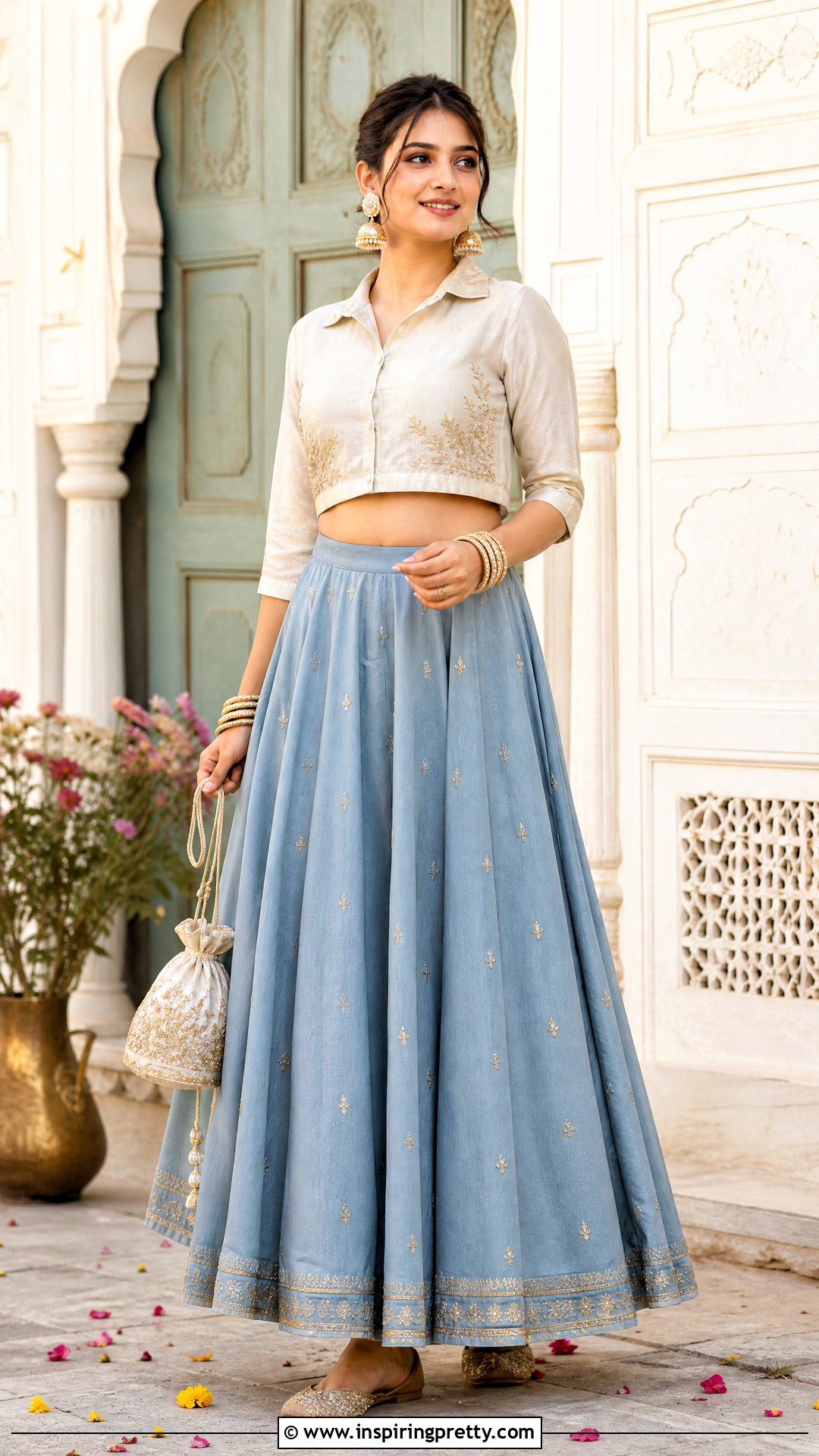
A cropped kurta shirt is the most traditional top here: a collar, side slits, three-quarter sleeves and a short button placket, cut to the waist or just over it. Over an A-line lehenga that sits smooth at the waist and widens slowly toward the hem, it covers more midriff than any crop shirt. Cotton silk, chanderi and raw silk hold the shape. I look for borders or motifs that repeat on top and skirt, so the separates look like a set. Embroidered juttis, gold earrings, slim bangles and a small potli finish it, with a center-parted low bun. Older guests and conservative family events are where I use it most.
23. Sequin Crop Shirt With Plain Black Lehenga Outfit
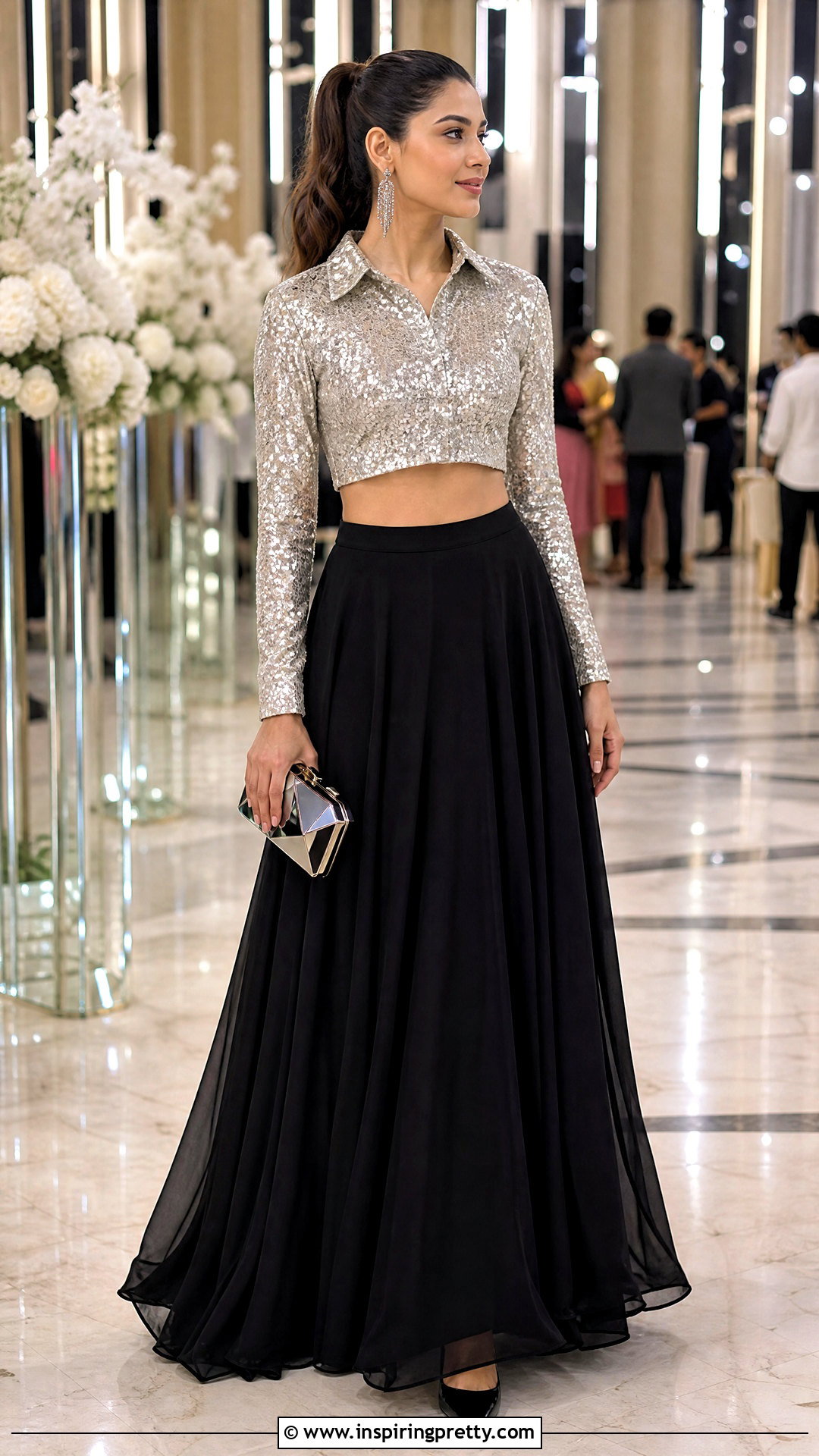
Sequins over plain black is the evening outfit I would pick for a reception with dancing. The shirt should be fully lined, because sequin backing is scratchy at the arms and neck after a few hours. A collared top in black, silver or multicolor sequins sits over a solid black georgette or satin skirt with a clean waistband and a full flare. Black pointed heels continue the line; crystal earrings and a silver clutch pick up the shine. Everything else stays minimal, with a sleek ponytail. Skip the dupatta, or use a sheer black one with a very narrow border. The black skirt is easy to rewear with other tops later.
24. Pearl Button Crop Shirt With Pastel Lehenga Outfit
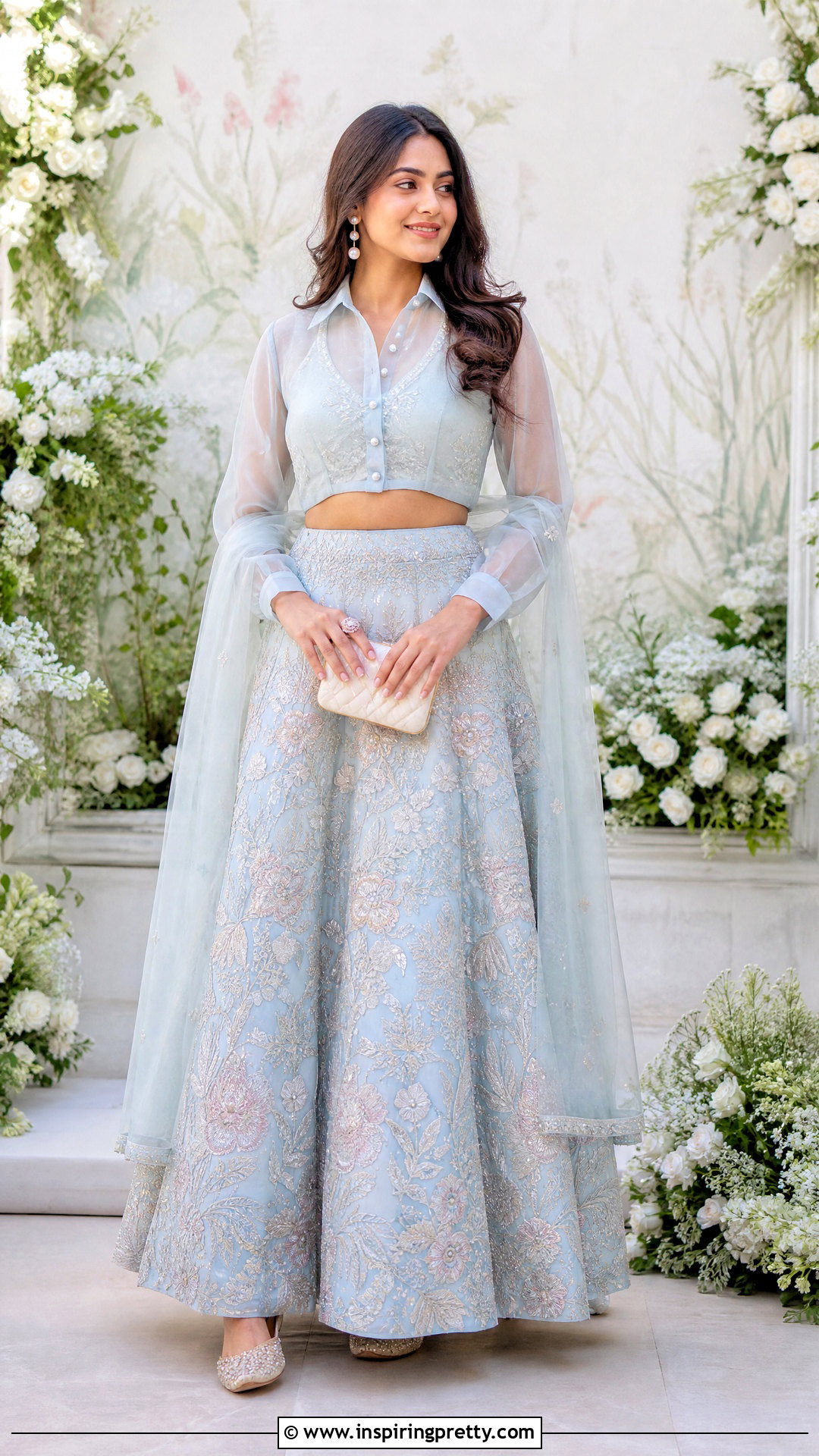
Pearl buttons are a small detail that does a lot on a pastel shirt. I choose a fitted silk or organza crop in powder blue, lilac, peach, mint or blush, over a matching high-waisted skirt with fine threadwork, scattered pearls or light floral appliqué. Pearl drops, an ivory clutch and embellished flats keep it soft. Loose waves, a half-up style or a smooth bun all suit it. I pin a sheer dupatta behind both shoulders so it falls almost like a cape. Pastels can wash out under harsh midday sun on very fair skin, so I lean toward peach or lilac rather than the palest blue for outdoor lunches.
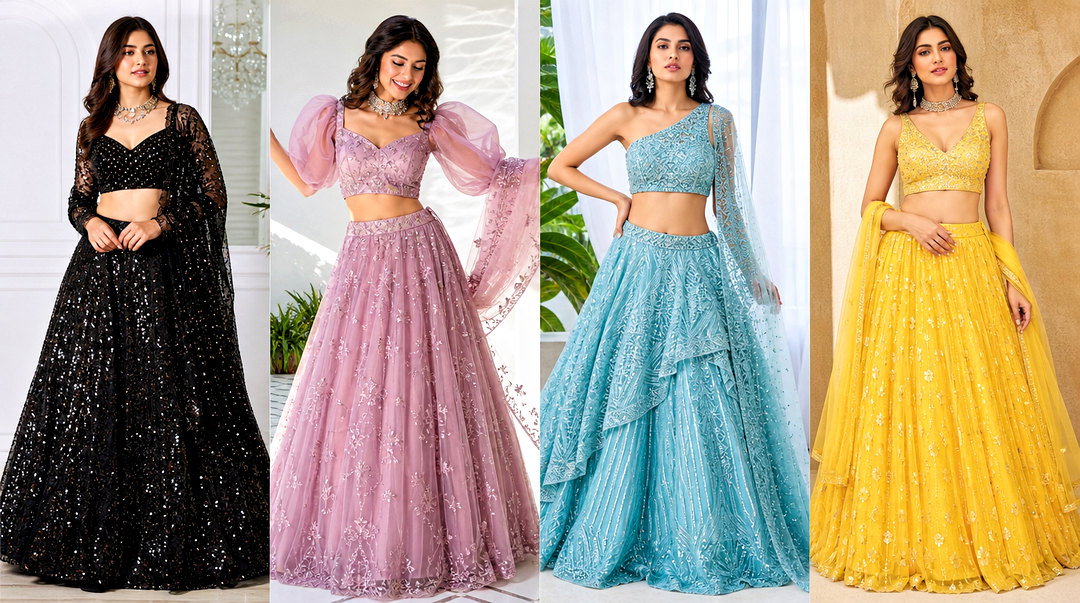
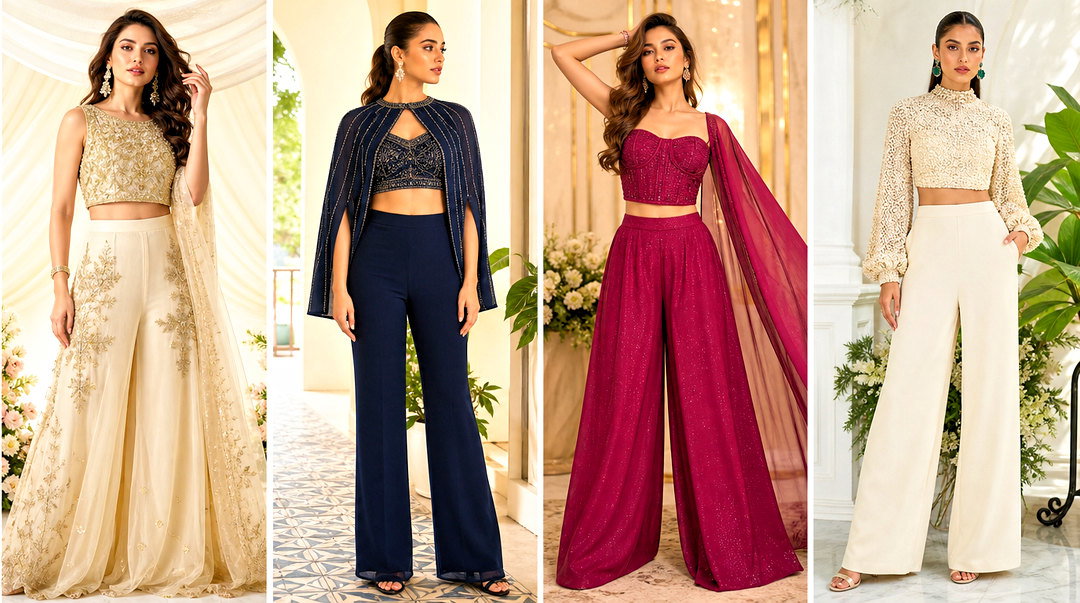
25. Asymmetric Crop Shirt With Layered Lehenga Outfit
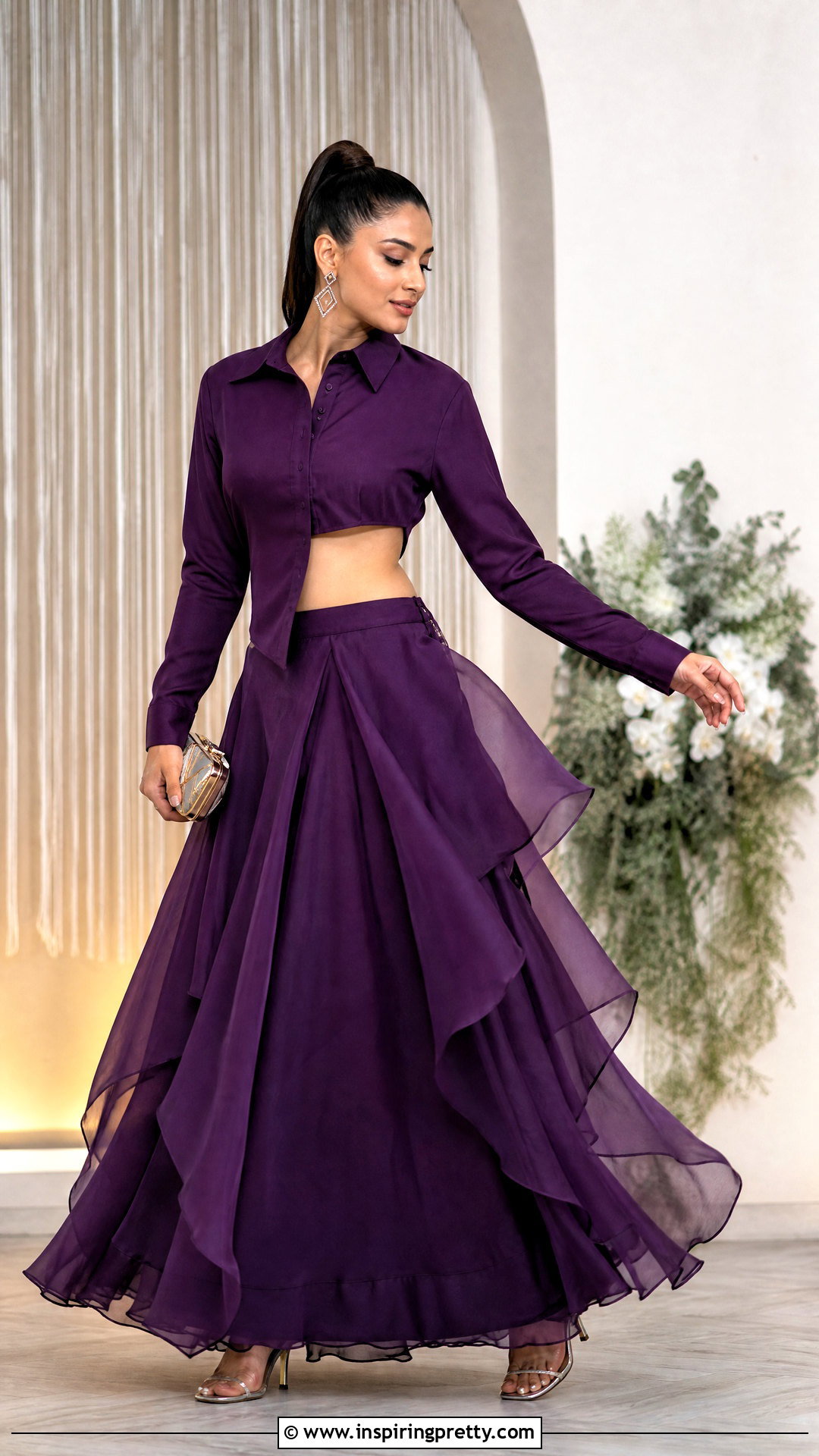
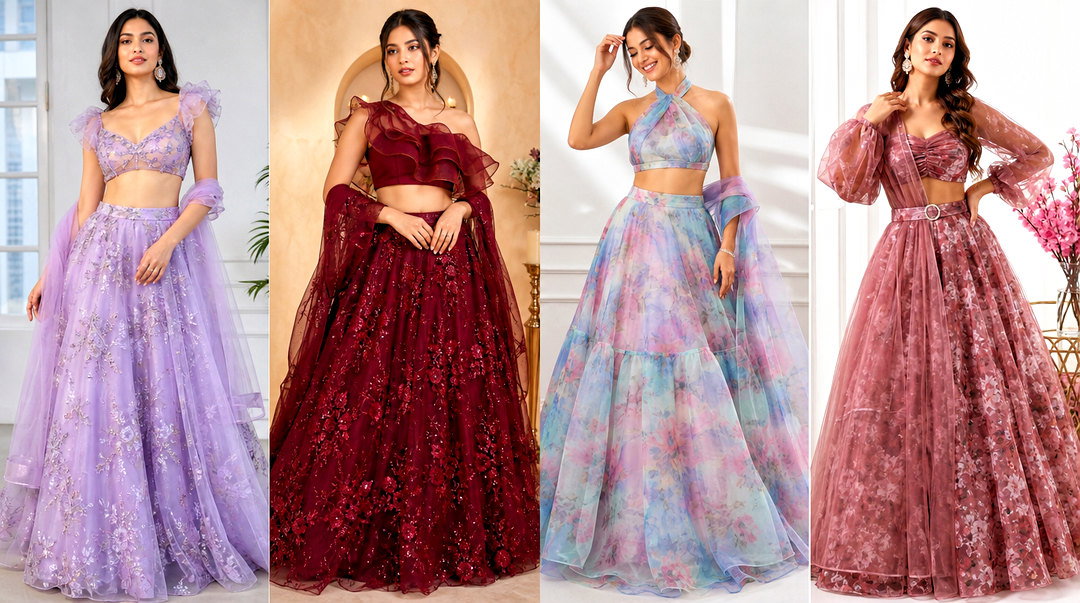
An asymmetric crop shirt is the most fashion-forward top on this list, and it only works when the waist stays defined. A diagonal hem, offset buttons or one longer panel is enough unusual detail. I pair it with a light layered skirt in organza, tulle or georgette in the same color family, so the shape of the shirt is the one talking point. Sleek heels, geometric earrings, a structured mini clutch and a high ponytail finish it. A heavy necklace or a decorated dupatta hides the cut, so I would add only a plain sheer drape behind one shoulder. It suits a reception or sangeet with a fusion dress code.
Draping a Dupatta Without Burying the Collar
The collar is what makes these outfits different from a blouse lehenga, so the classic draping methods that cover the neckline work against it. I use three drapes depending on the event.
Behind both shoulders
Pin the dupatta at the back of each shoulder seam so it falls like a light cape. The whole front of the shirt stays visible, and it is the easiest drape to dance in. A sheer net or organza dupatta suits this best.
One shoulder, pinned flat
Pleat the dupatta into a narrow strip, pin it at one shoulder seam and let it fall behind. It looks traditional enough for a ceremony and leaves the collar and placket clear.
Over the arm
For receptions, simply carry it draped over the forearms from the back. No pins, no weight on the shirt, and it comes off for dancing. Use small safety pins on the inside of the shoulder seam for any pinned drape so they never pull holes in silk or satin.
Matching Shirt Fabric to the Season and the Hour
Shirt fabric decides how long you will be comfortable. For a summer mehendi or haldi outdoors, cotton, cotton silk, chanderi and linen blends breathe and dry quickly. Satin and polyester crepe trap heat and show sweat marks, so I save them for indoor evening functions with air conditioning. Velvet, raw silk and brocade belong to winter weddings. Organza is light but does not absorb moisture, so a lining in cotton or a soft blend makes it wearable for hours. If an event runs from afternoon into night, pick the fabric for the hottest part of the day and add warmth with the dupatta.
A Plain Shirt Over a Worked Skirt, or the Reverse
A tailored shirt is one of the simplest ways to make a traditional skirt feel new. Crisp cotton, glossy satin, sheer organza, embroidered silk and soft denim each set a different mood, and the rule that holds across all of them is balance: a plain shirt over a heavily worked lehenga, or a decorated shirt over a calm one. Beyond that, I care about a high waistband, a shirt that does not pull at the buttons, shoes she can stand in for hours and jewelry that leaves the collar room. Monochrome, prints, rich textures or clean tailoring, any of these can carry a wedding, a festive evening or a family celebration.
Related posts:


Leave a Reply