
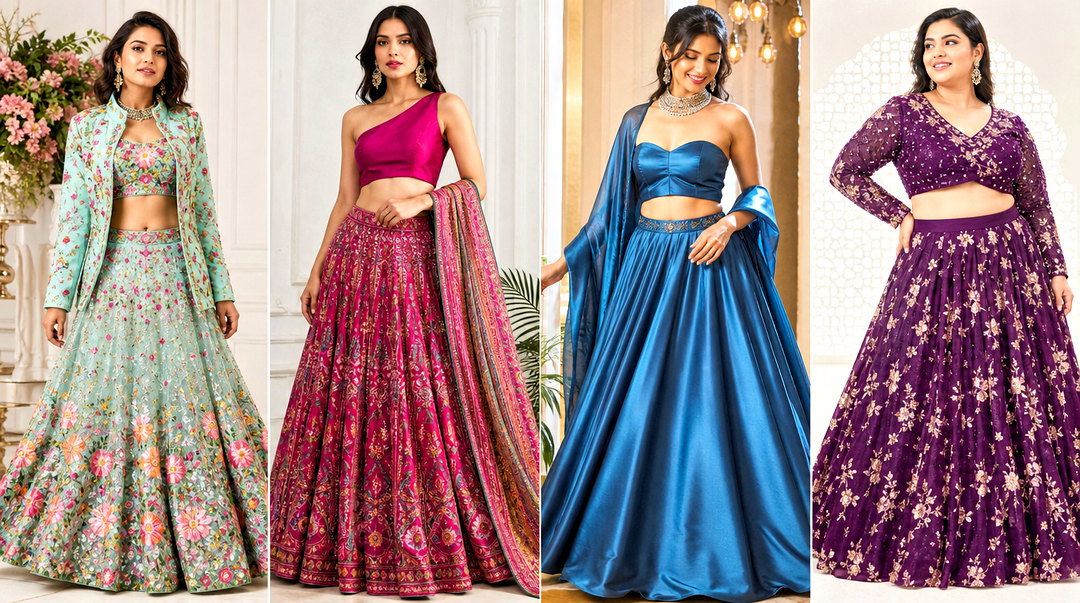
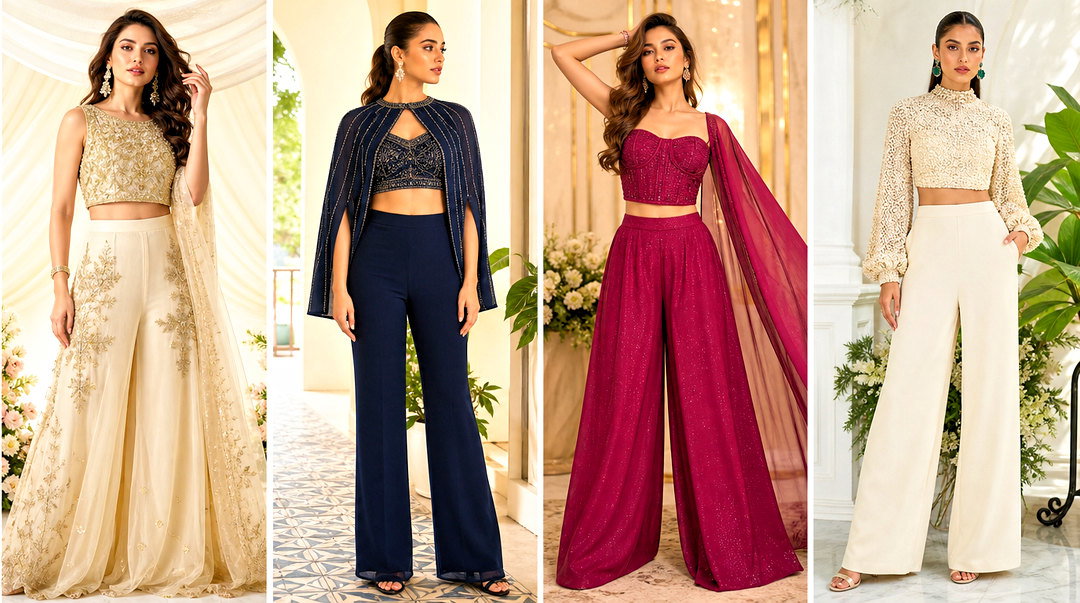
A crop top lehenga keeps the swing of traditional Indian clothing and swaps the classic choli for a shorter, cleaner blouse. In my fittings, the deciding factor is rarely the color. It's how the blouse is built, how high the skirt sits, and whether you can dance in it for four hours. The designs below cover corsets, cape sleeves, heritage weaves, mirror work and pre-draped dupattas, and for each one I've noted what to check before you commit. Sangeet, engagement, reception or a cousin's mehendi, there's something here for each function.

How High the Skirt Should Sit Under a Crop Top
A crop top lehenga is two pieces, and the space between them decides how modern or modest it feels. I settle this before color, fabric or embroidery, because it changes which blouse and skirt you can buy.
- No visible skin: a high-waisted skirt that meets the blouse hem, or a peplum that overlaps it. Best for family functions where you'd rather not think about it.
- A sliver of skin: about two or three finger-widths. This is the most common choice, and the one that looks most like the photos.
- A wider gap: pairs best with a structured blouse and a skirt that sits firmly on the natural waist, so nothing shifts when you move.
Measure while sitting, not standing. The gap grows when you sit and lift your arms, so a sliver in the mirror can become several inches at the dinner table. If you're unsure, ask the tailor for a slightly longer blouse; taking it up later is easy, adding length is not.
1. Corset Crop Top Lehenga
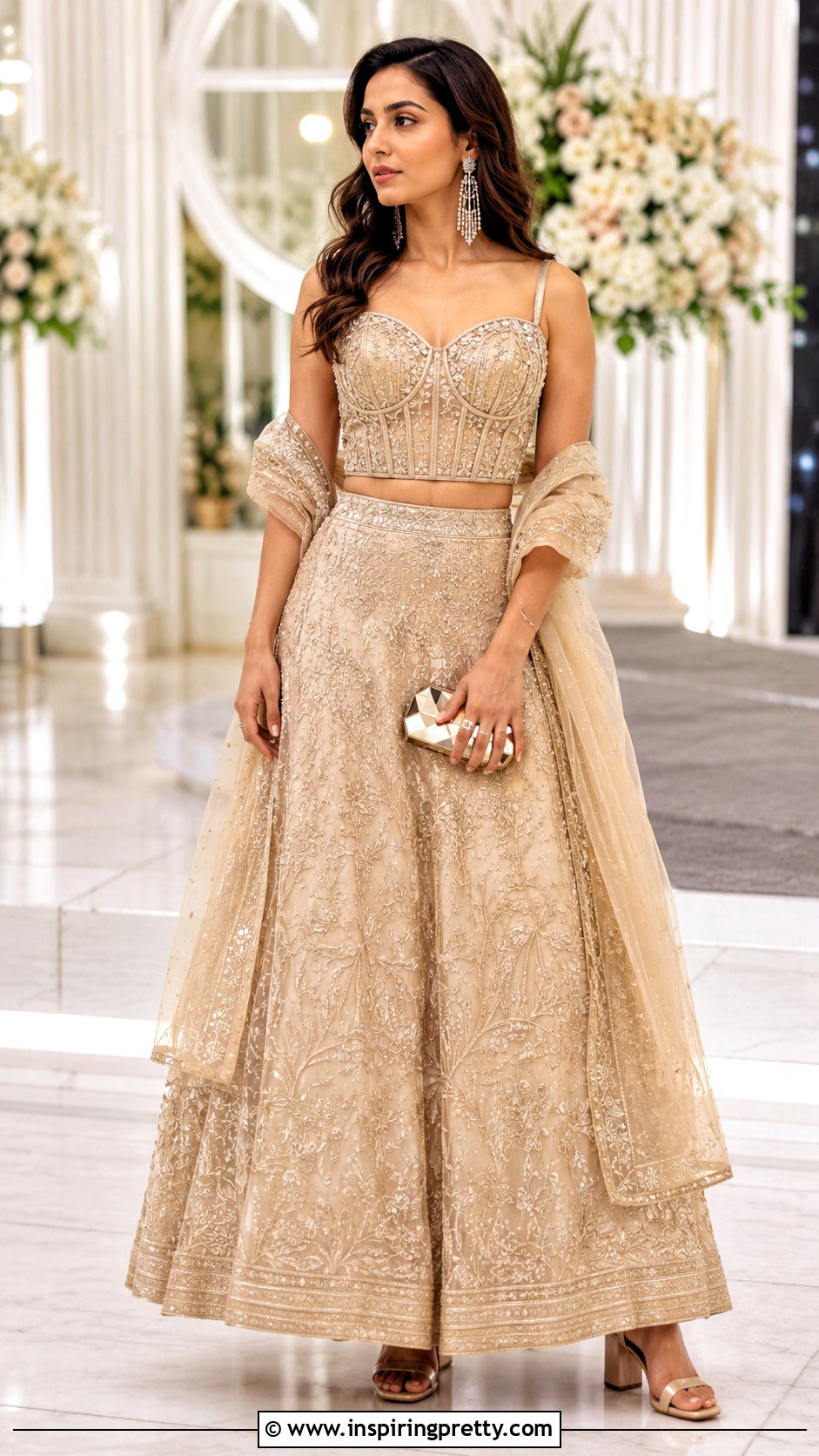
A corset top gives the lehenga a sharp, modern waist, and the construction matters more than the look on the hanger. I want a proper inner lining and light boning, with a softly curved neckline that doesn't dig in when you sit. Pair it with a high-waisted, full-flared skirt so the bodice and skirt meet with little or no gap. Champagne or midnight blue with tonal threadwork suits an engagement or reception. Keep the necklace small; the neckline is already the feature. Block heels help, because corsets and stilettos together are tiring by the second hour.
2. Cape Sleeve Crop Top Lehenga
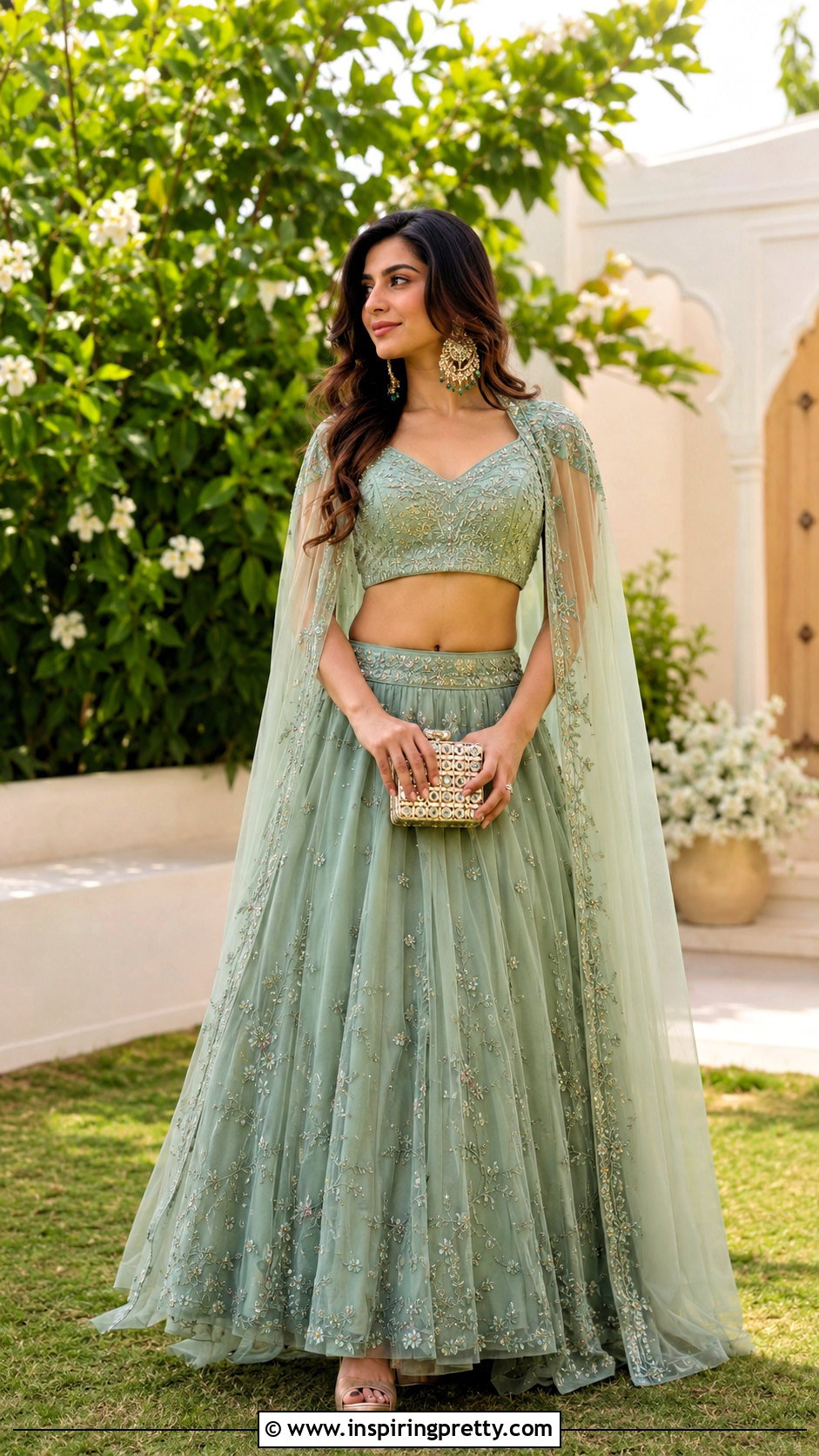
Cape sleeves give you drama and arm coverage without a dupatta to manage. Sheer or embroidered cape panels from shoulder to wrist or waist look best over a fitted blouse and a lightly worked A-line skirt. For daytime I'd choose sage or powder blue; for evening, wine or emerald with metallic work. The cape adds volume at the shoulders, so I always say no to layered necklaces here. A sleek bun keeps the cape from catching in your hair, and platform heels give you height without wobbling.
3. One Shoulder Crop Top Lehenga
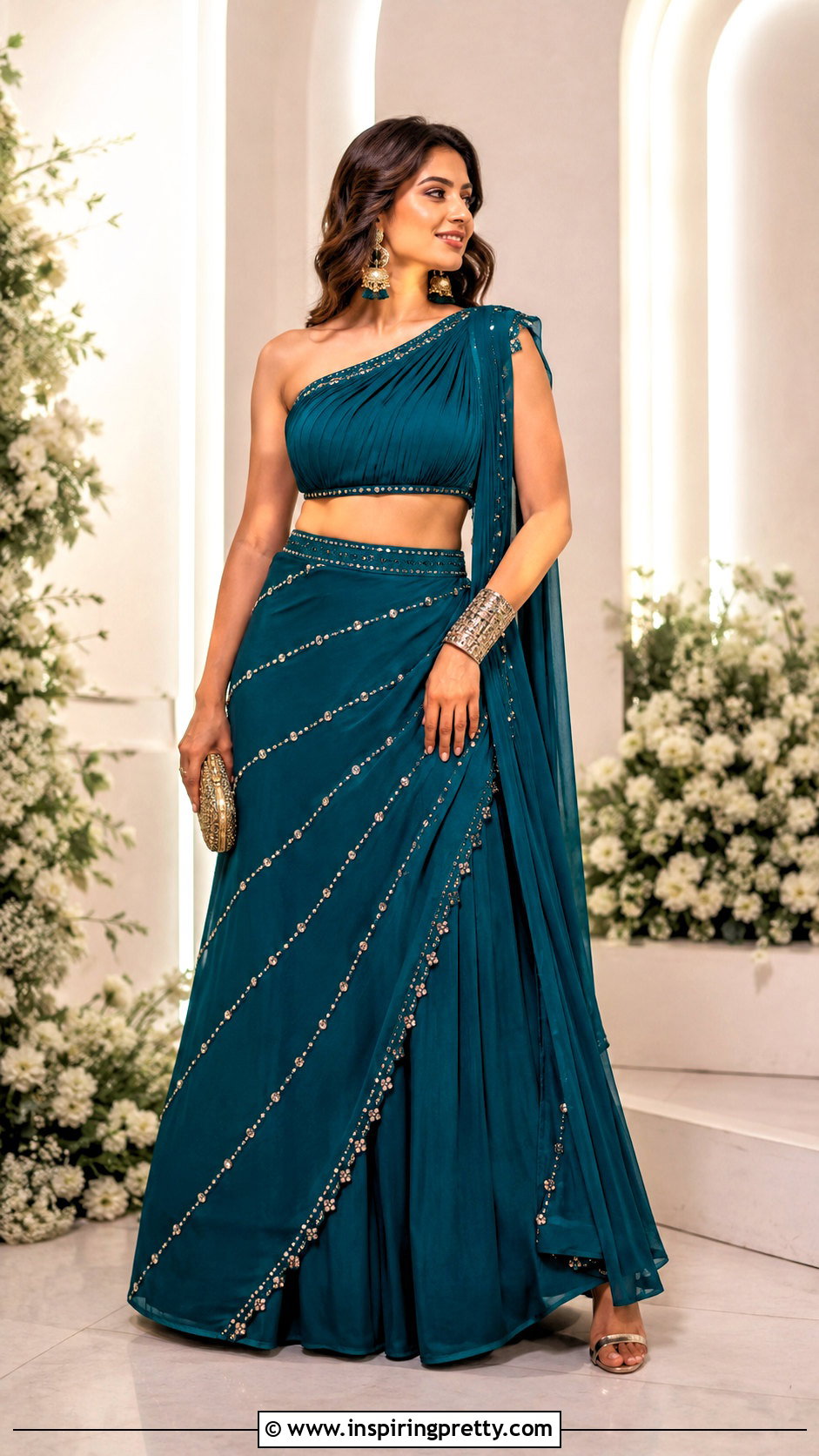
A one-shoulder top changes the whole look in one line. The risk is the strap sliding when you dance, so I look for internal support, a silicone grip strip along the neckline, and a hem long enough to stay put when you raise your arms. Pair it with a high-waisted skirt with diagonal embroidery or a narrow metallic border. A detachable shoulder drape can replace the dupatta and continue the angle. Teal or ruby works well at a sangeet. Put a cuff on the bare arm and sweep your hair to the other side.
4. Full Sleeve Crop Top Lehenga
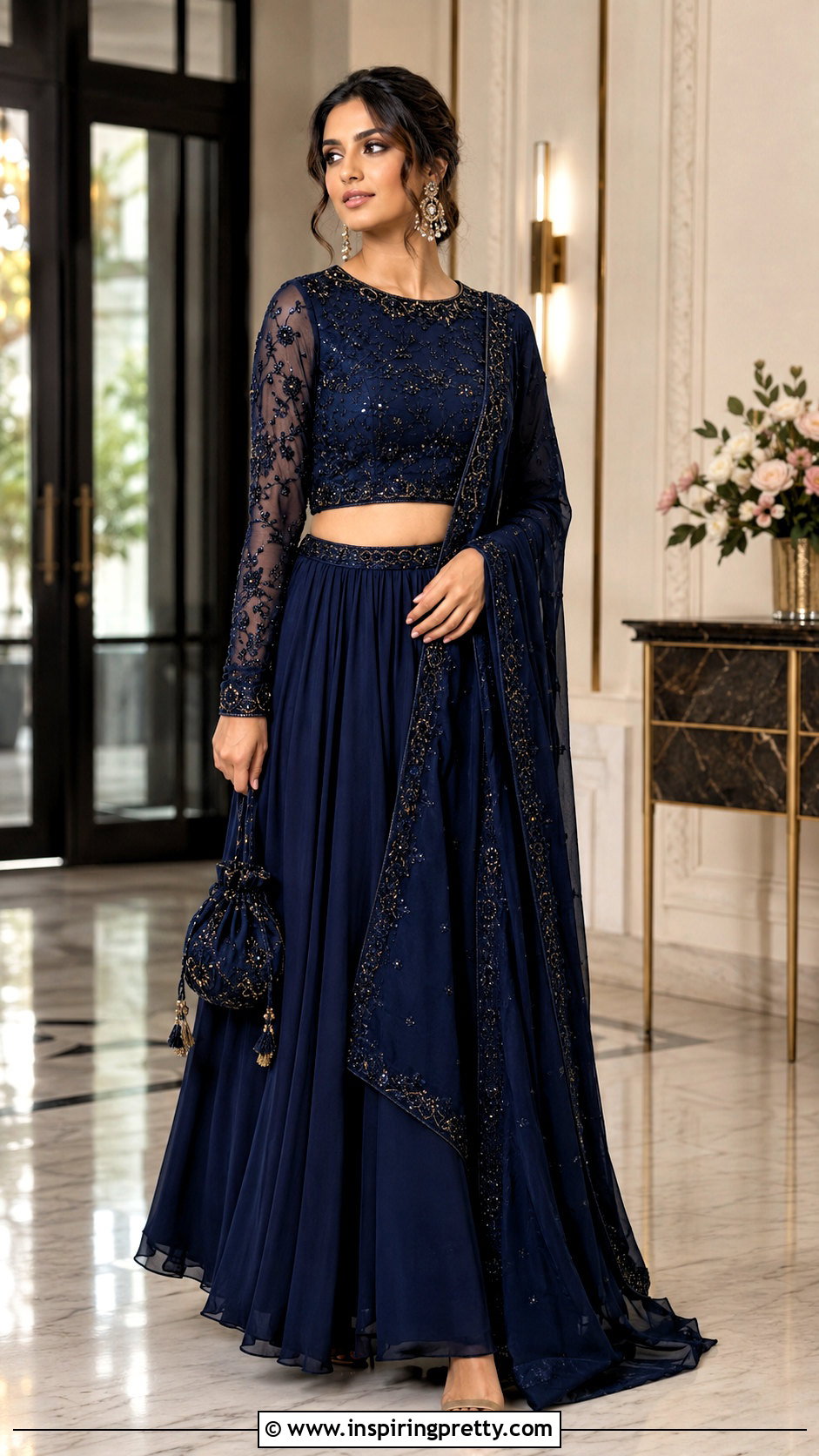
For guests who want coverage, a fitted full-sleeve crop top with a modest neckline is the answer. Sheer embroidered sleeves keep it from looking heavy. I'd pair it with georgette or organza sitting at the natural waist. A single color head to toe gives a longer line; a contrasting skirt feels more festive. Before buying, raise both arms and bend your elbows hard. Tight sleeves on a structured blouse pull the hem up and pinch at the armhole, and you'll feel it on the dance floor. It's a good choice for winter or chilly air-conditioned venues.
5. Off Shoulder Crop Top Lehenga
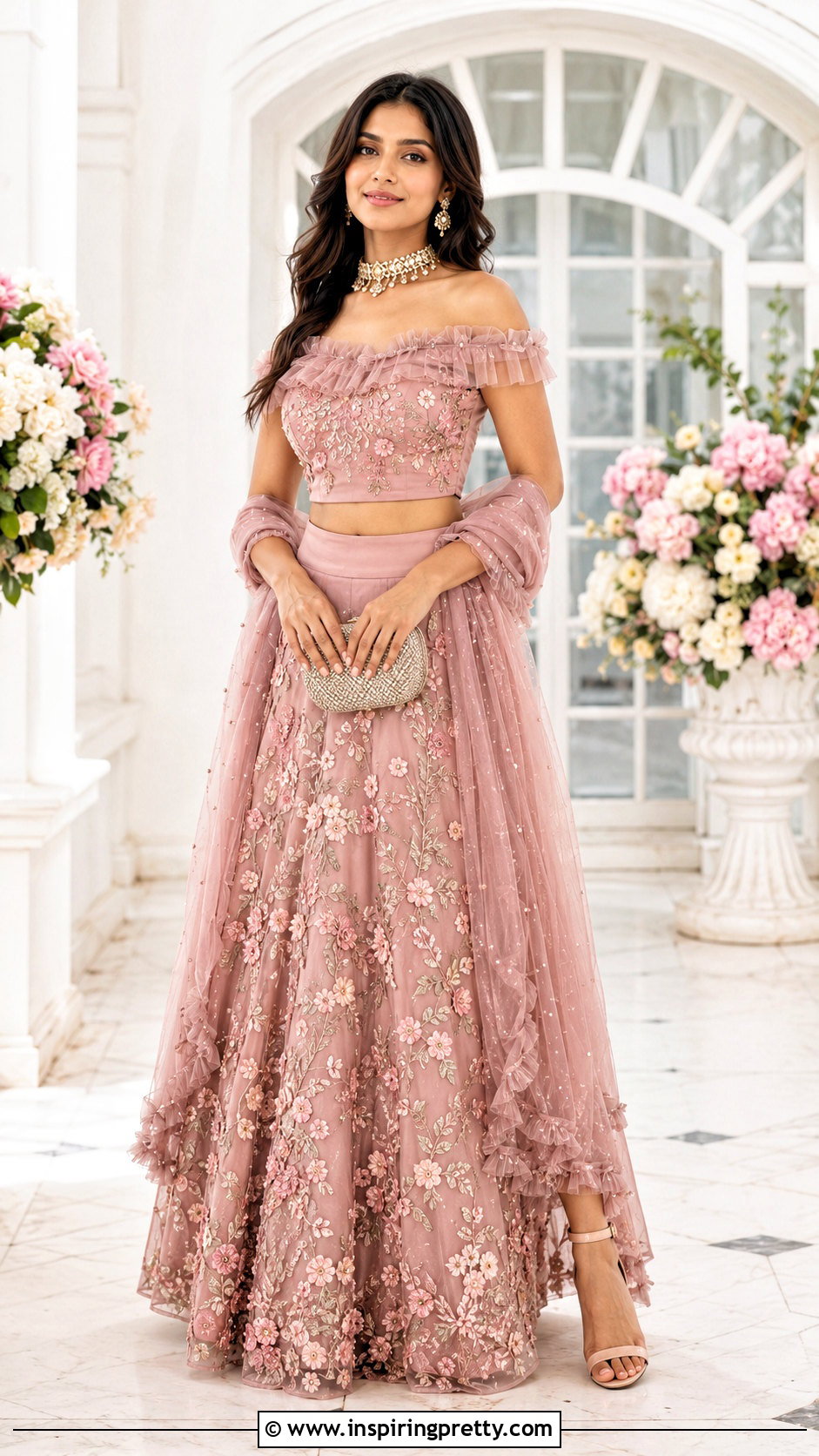
Off-shoulder tops look graceful with a full, sweeping lehenga, but only if they stay up. I insist on hidden wide straps or proper built-in support; without it, you'll spend the evening hitching the neckline. Soft ruffles or embroidered edging frame the shoulders. Wear the dupatta at the elbows or pin it at the back so it doesn't cover the neckline you chose this top for. A delicate choker sits better than a long necklace here, and loose waves keep the shoulders soft.
6. Halter Neck Crop Top Lehenga
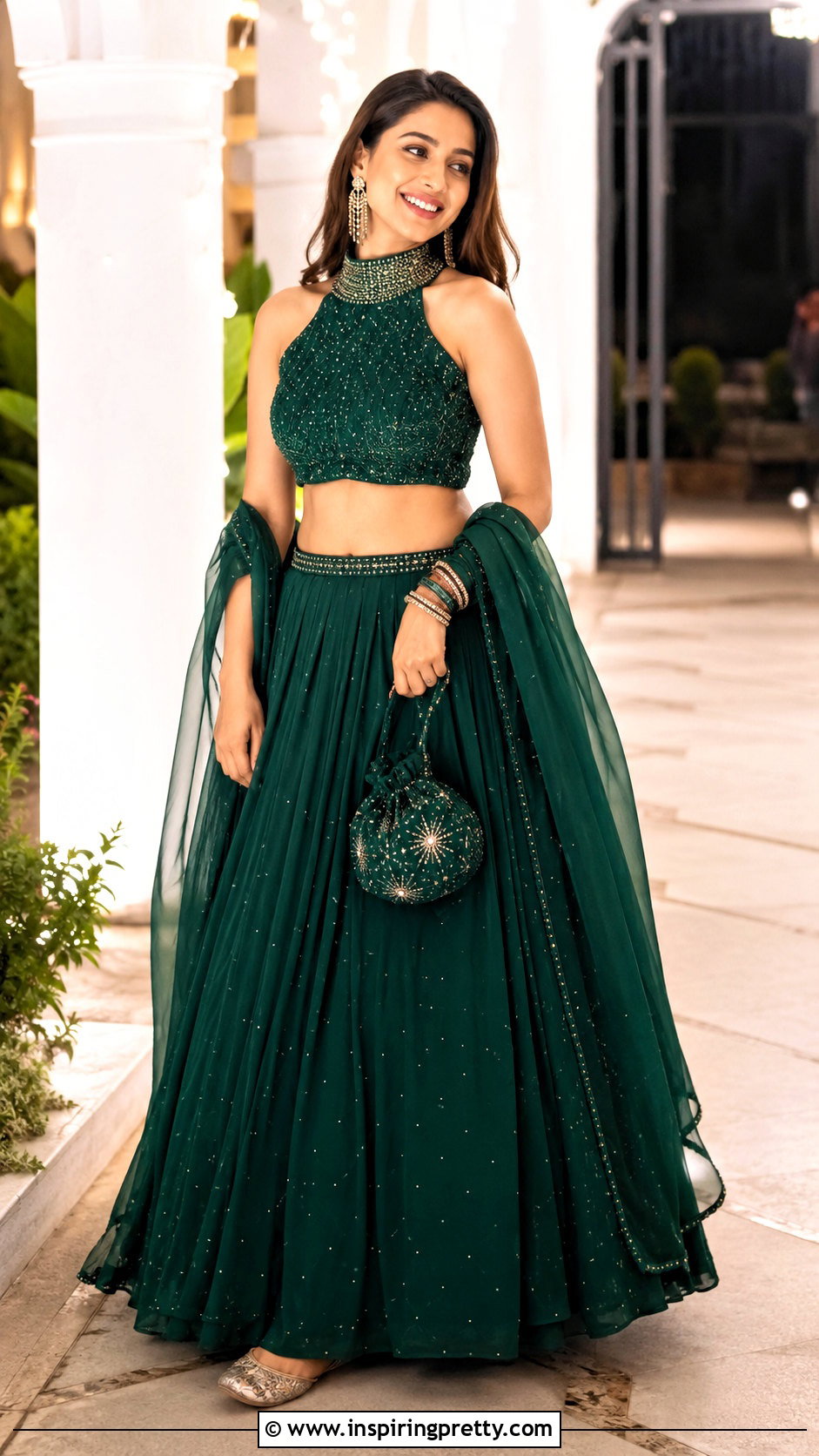
A halter neck shifts all the attention to the shoulders and works as a sleek alternative to a choli. A high-neck halter over a fluid circular skirt gives a nice contrast between structure and movement. Embroidered neckbands mean you don't need a necklace at all. Emerald or plum looks rich for evening. The detail I always check is the neck closure: a single hook at the back of the neck carries the blouse's weight all night, so it needs to be strong and the lining breathable. Wear your hair up so the neckline stays clear.
7. Peplum Crop Top Lehenga
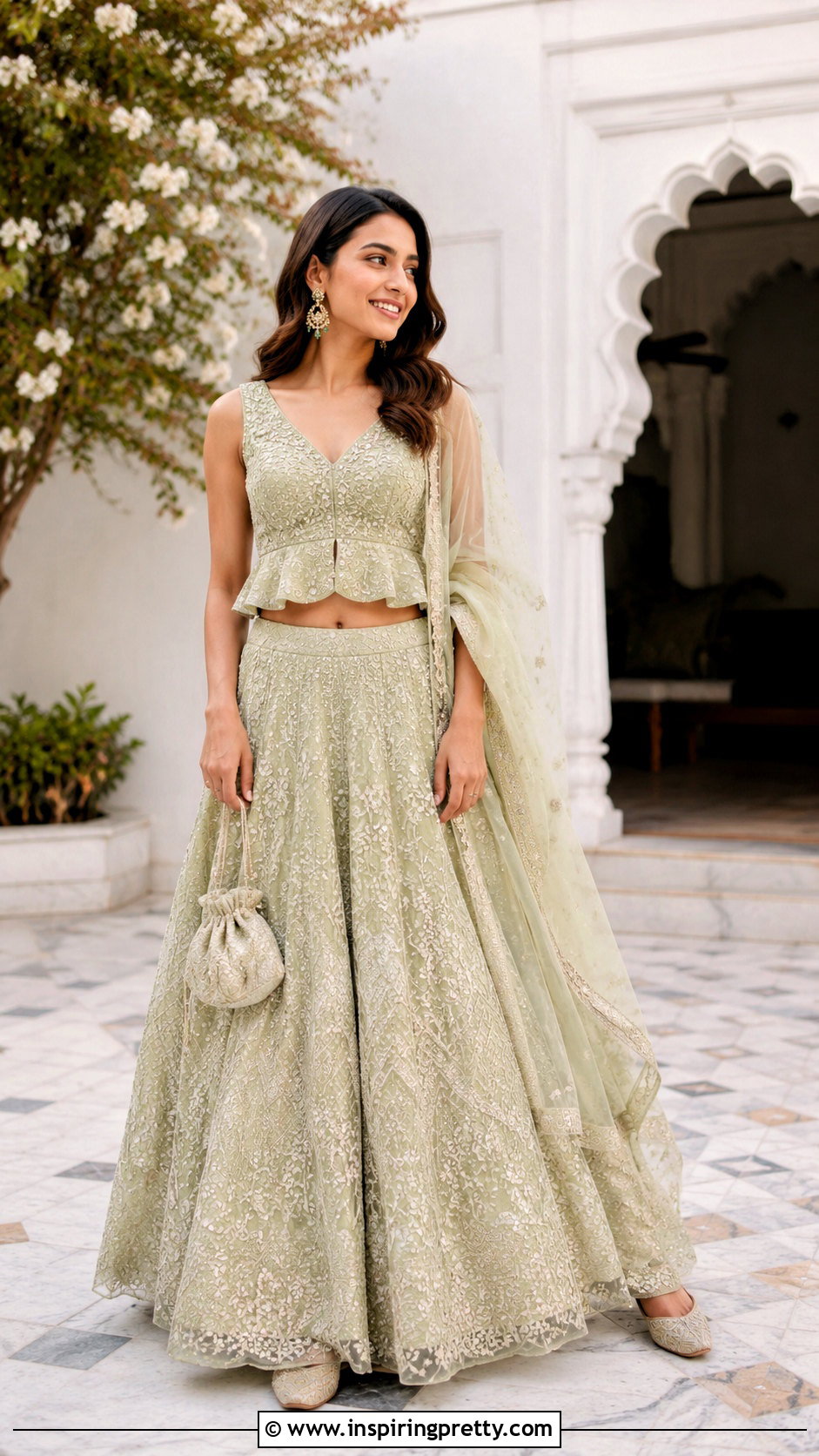
If you prefer not to show much midriff, a short peplum crop top is the gentlest option. It should fit close through the bust and flare just above the skirt waistband. A narrow peplum suits a voluminous skirt, while a softer A-line lehenga can take a wider flare. I'd keep the embroidery tone-on-tone, since two layers at the waist already look busy. Pastels like pistachio or peach suit daytime; maroon and navy suit night. Pointed juttis are comfortable and suit the shape.
8. Jacket Crop Top Lehenga
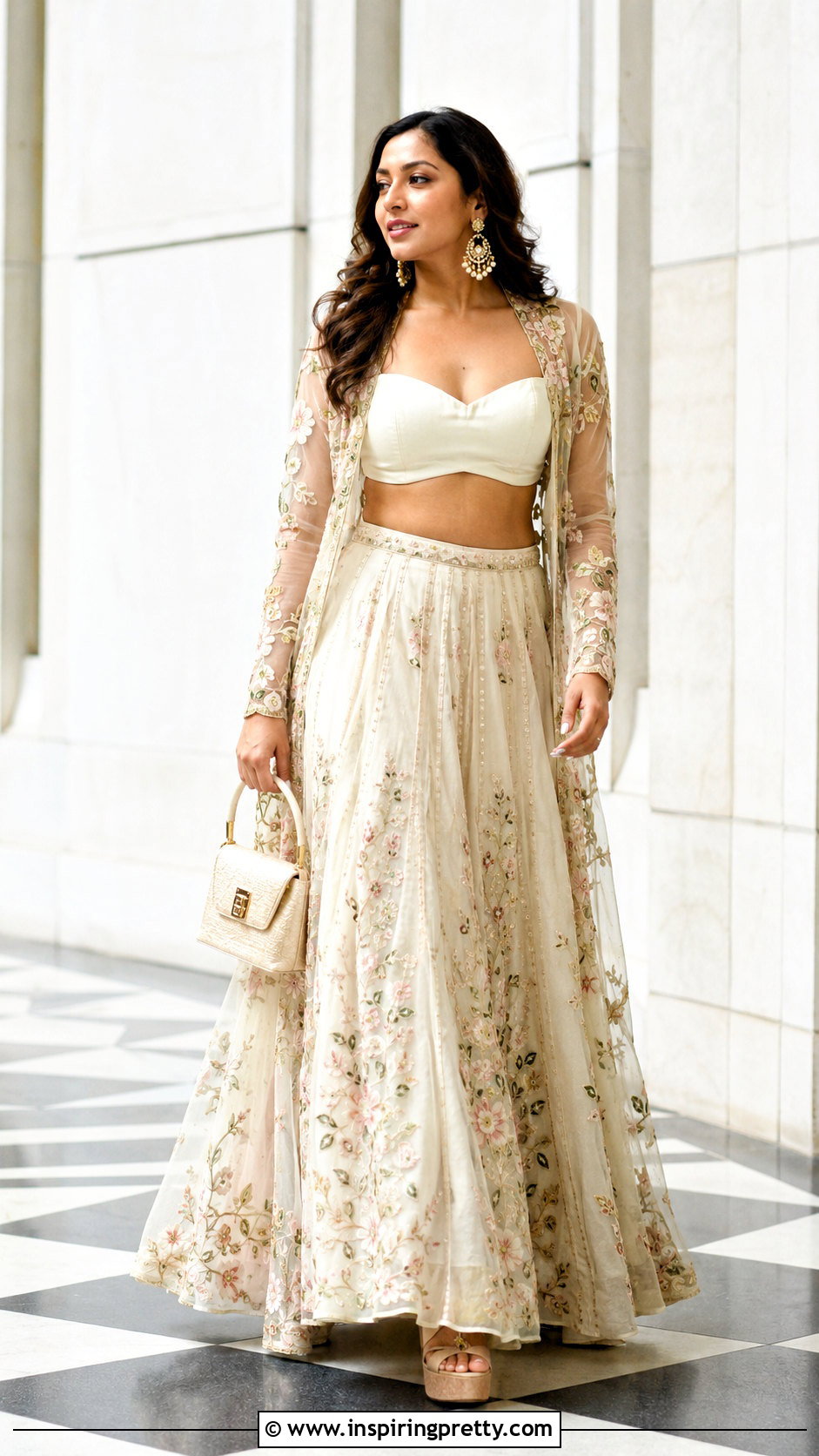
A cropped blouse, lehenga skirt and long jacket make a three-piece that earns its money, because each piece can be worn again on its own. Keep the top simple under an embroidered open-front jacket so the layers don't compete. A straight or paneled skirt keeps the outline slim. Sheer organza jackets suit warm-weather events; velvet or brocade suits cold ones. You rarely need a separate dupatta here. Wear the jacket open for dancing and belt it at the waist for photos.
9. Ruffle Skirt Crop Top Lehenga
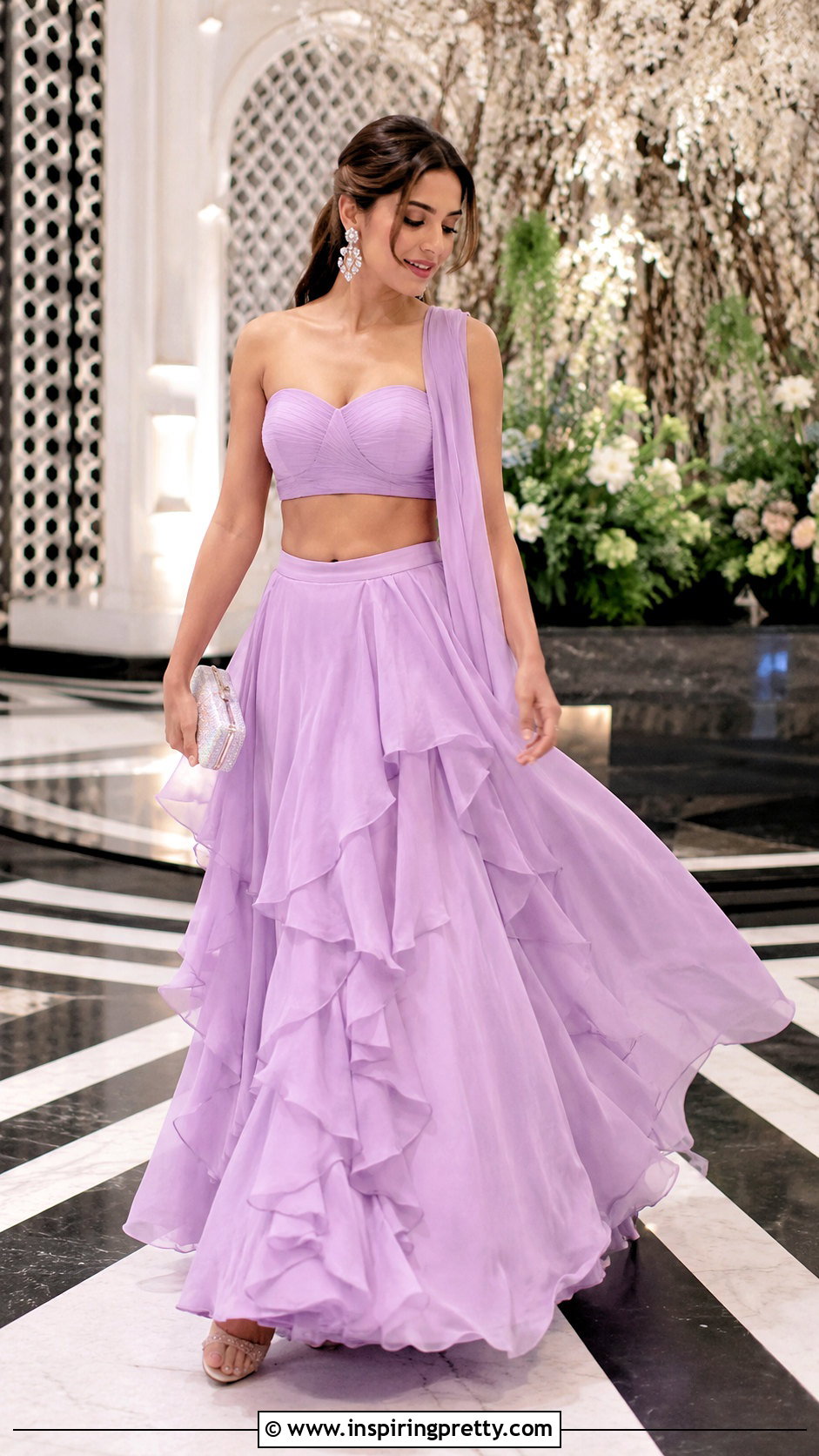
Ruffles are made for dancing because they move with every turn. The skirt should be light georgette or chiffon; heavy ruffles drag and flatten. I balance it with a clean, fitted blouse with a simple sweetheart neckline. An ombre in pink or lilac looks lively, and a single color looks more polished. Skip a bulky dupatta for a narrow shoulder drape, and keep bracelets light, since chunky bangles catch on ruffle edges and pull threads.
10. Mermaid Crop Top Lehenga
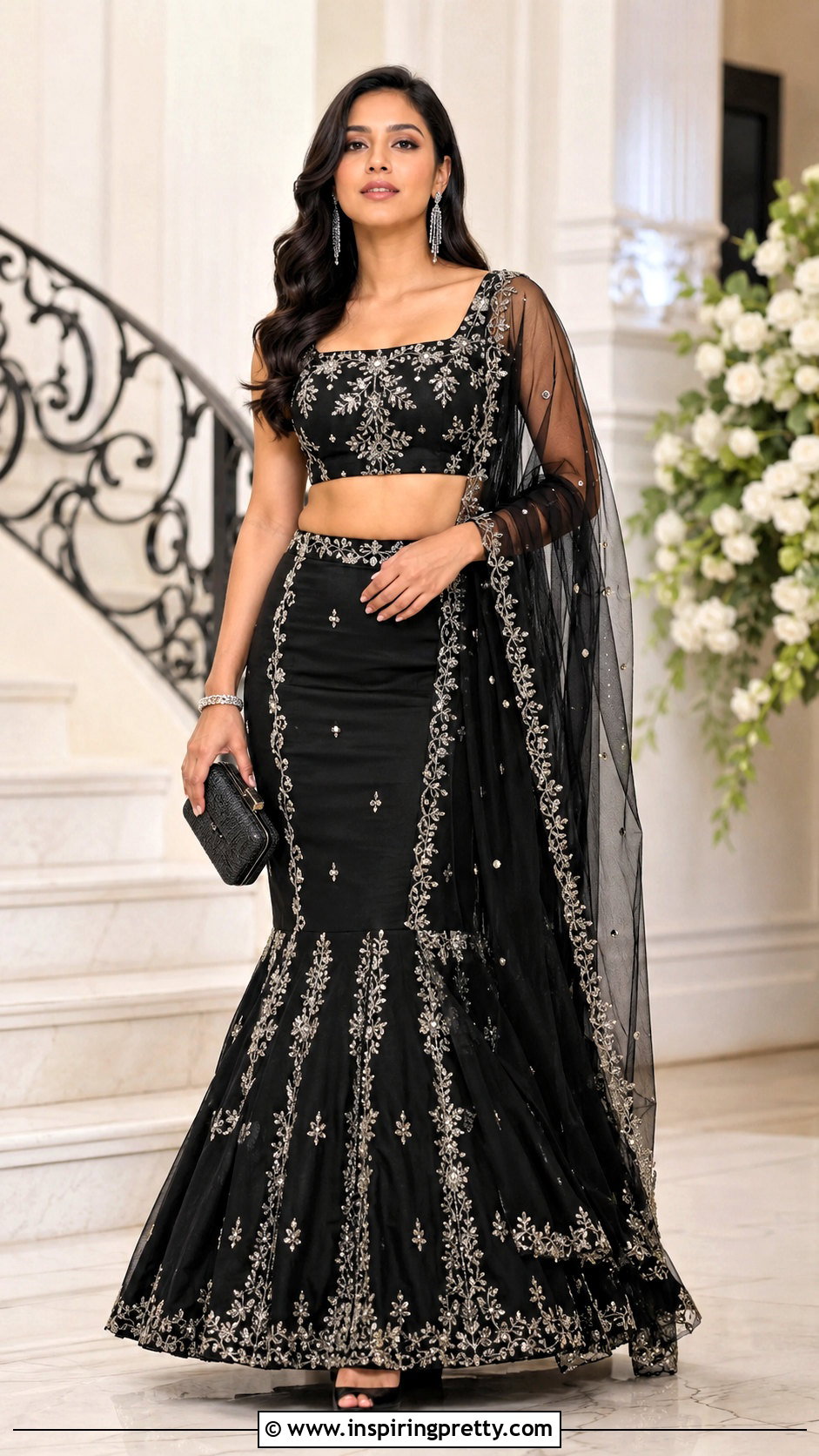
A mermaid lehenga hugs the hips and flares near the knee, so it's the most fitted option on this list and the least forgiving to walk in. I always look for a back slit or a generous lower flare, and I fit the hem with the exact shoes you'll wear; a hem that's too long under a fitted knee is a trip hazard on stairs. A structured crop top ending close to the waistband keeps the torso line smooth. Black with silver work or deep burgundy suits a formal evening. It is not the one I'd pick for a dance-heavy sangeet.
11. Floral Print Crop Top Lehenga
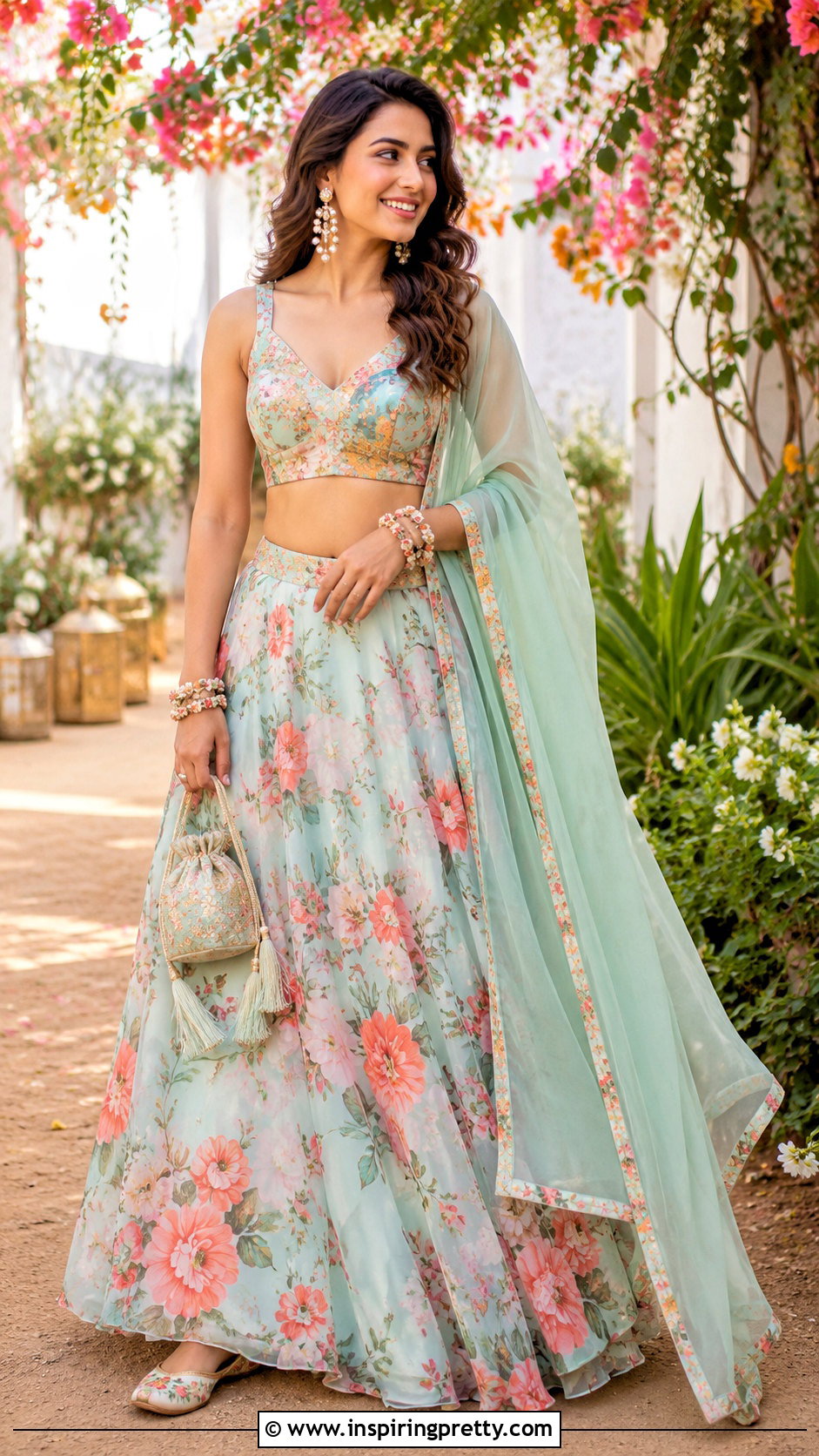
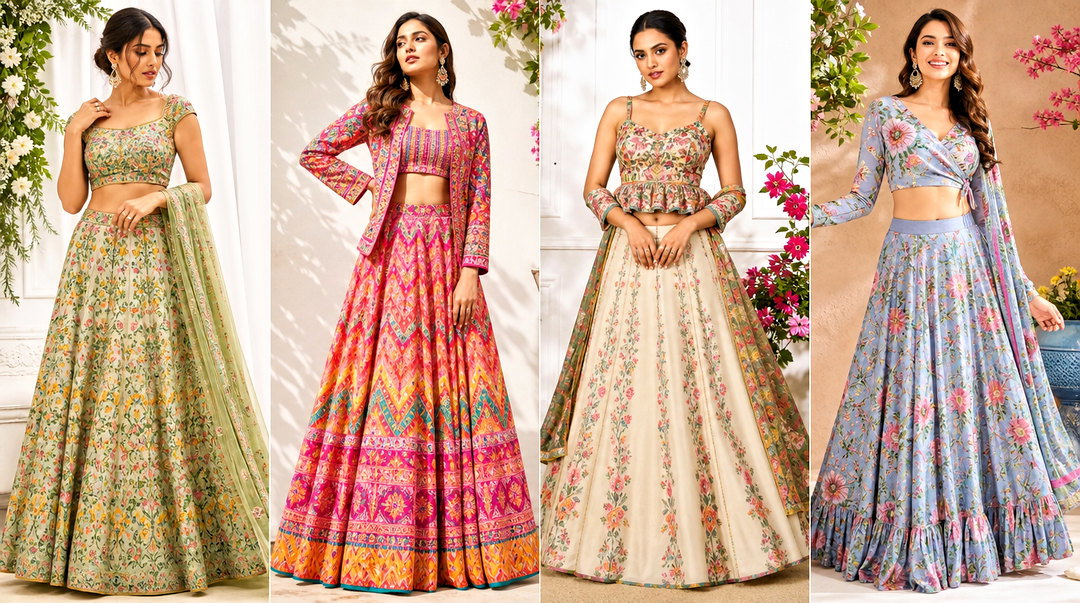
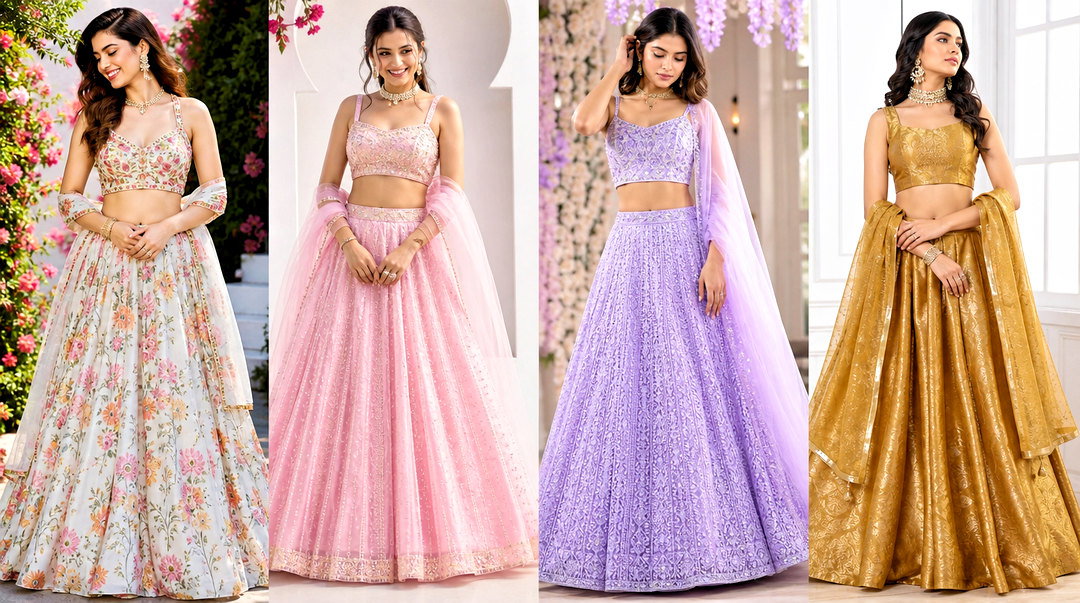
Floral prints are my first suggestion for daytime weddings and mehendi, because they look fresh in sunlight without heavy work. A matching blouse and skirt in organza, cotton silk or georgette keeps it coordinated. Small prints read subtle; big blooms read bold. A solid dupatta with a printed border calms the pattern down. Pearl or enamel earrings and comfortable juttis suit the mood. Keep extra embroidery to a minimum or the print gets lost.
12. Mirror Work Crop Top Lehenga
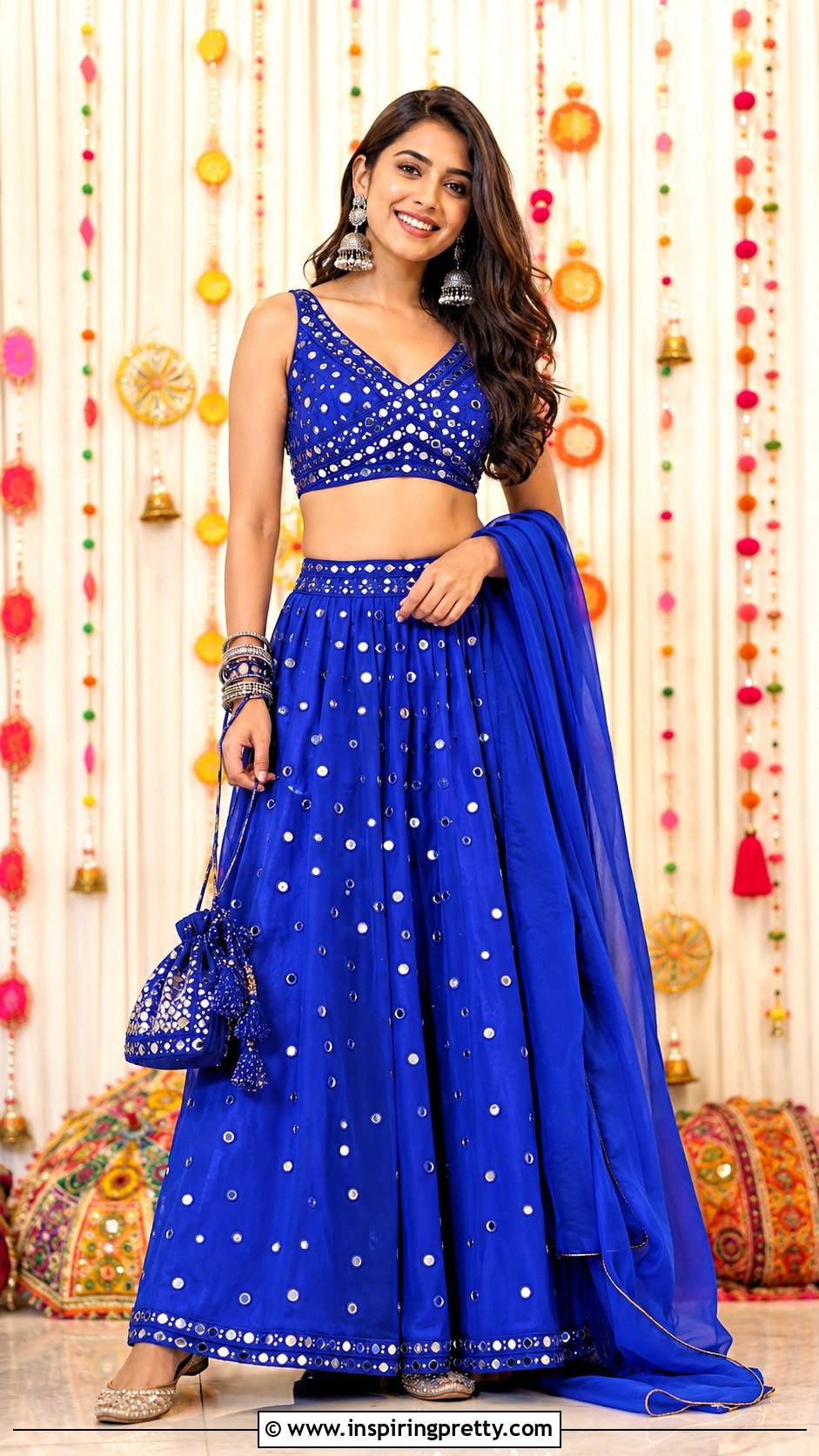
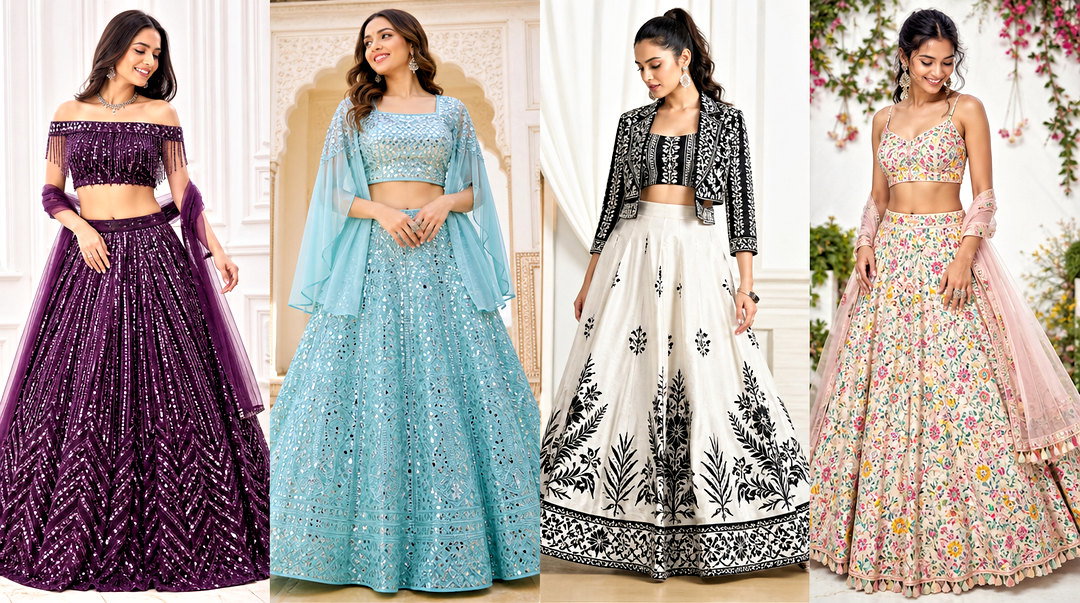
A mirror work crop top lehenga catches every light at a sangeet. I prefer evenly spaced mirrors over dense coverage; it's lighter to wear and each mirror stands out. Black with silver mirrors is bold at night, while cobalt or fuchsia suits colorful functions. The practical issue is comfort: mirror edges can scratch, so the blouse and waistband must be fully lined. Check for loose mirrors before the event and stitch them down, since they snag chiffon dupattas.
13. Sequin Crop Top Lehenga
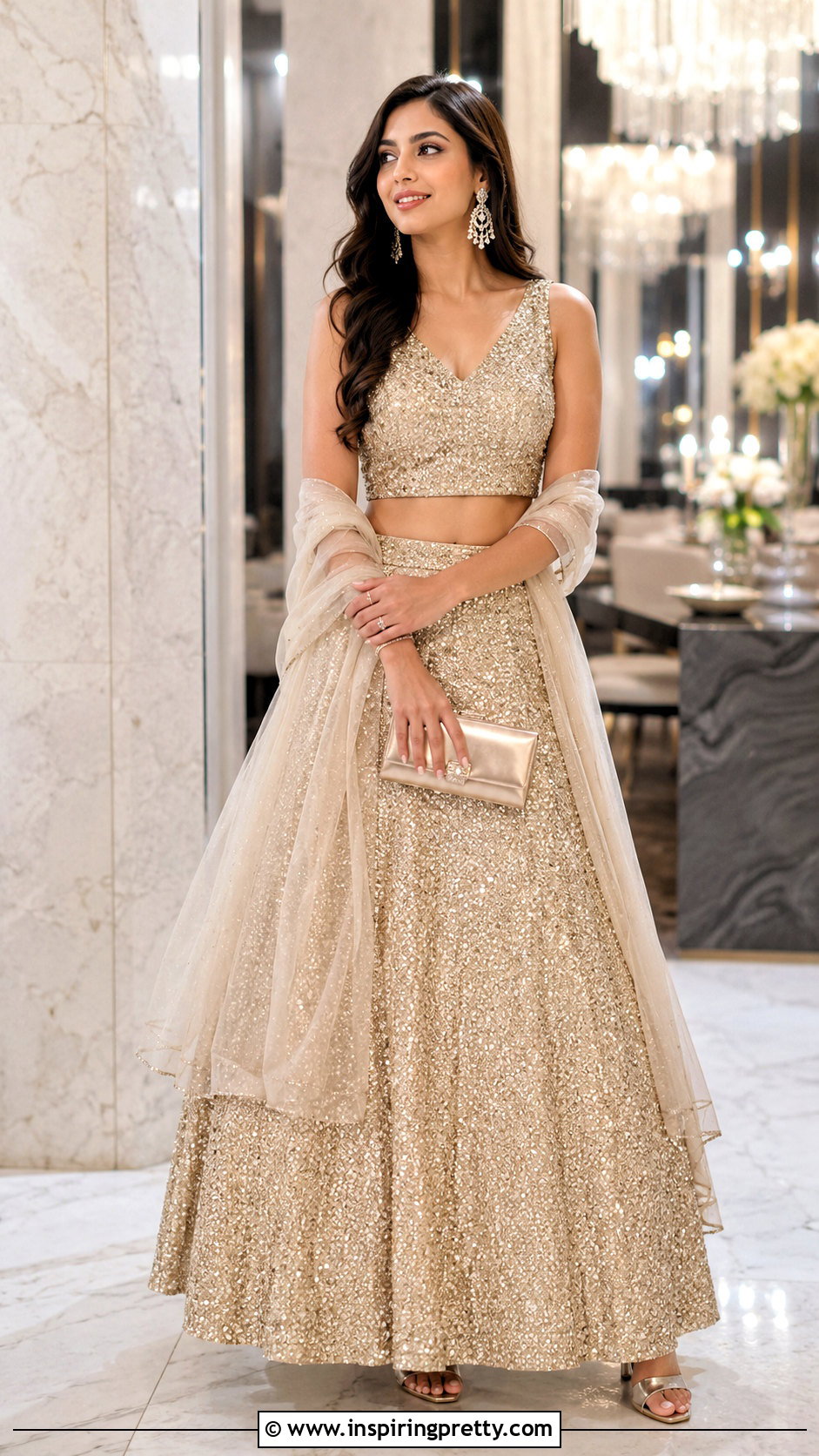
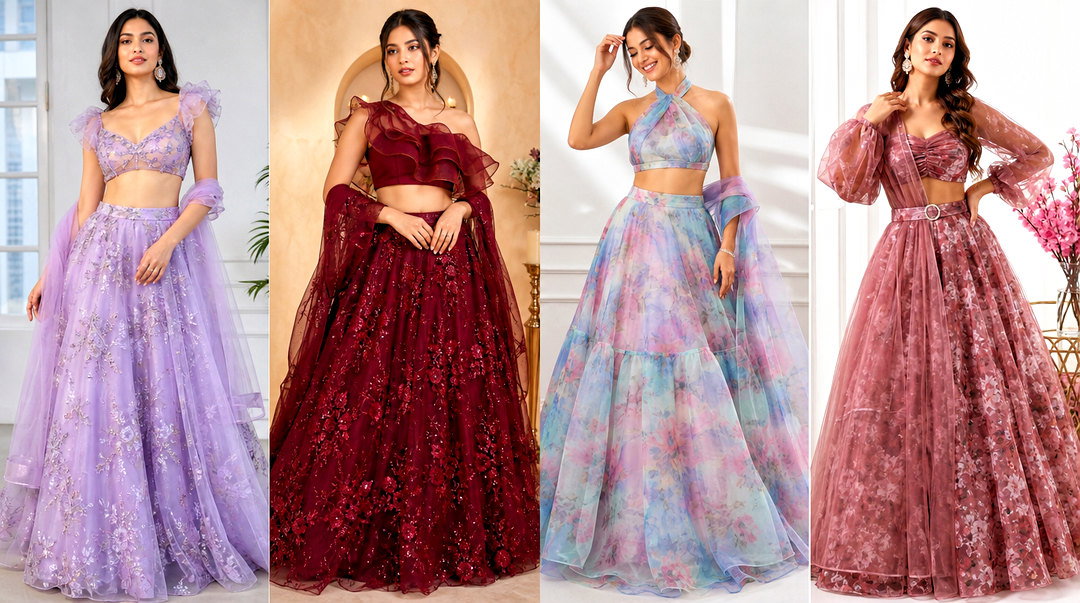
Sequins do the work of jewelry, so I keep everything else quiet. Stick to fine sequins in one color family; mixing shades of shine looks cheap under event lighting. A fitted V-neck or square-neck blouse and a softly flared skirt suit receptions in champagne or midnight blue. Add a sheer, lightly worked dupatta for tradition or skip it for an Indo-Western look. The thing I check by hand is the inside of the blouse: sequins stitched through to an unlined back will scratch your skin all night, so soft lining is a must.
14. Pearl Embellished Crop Top Lehenga
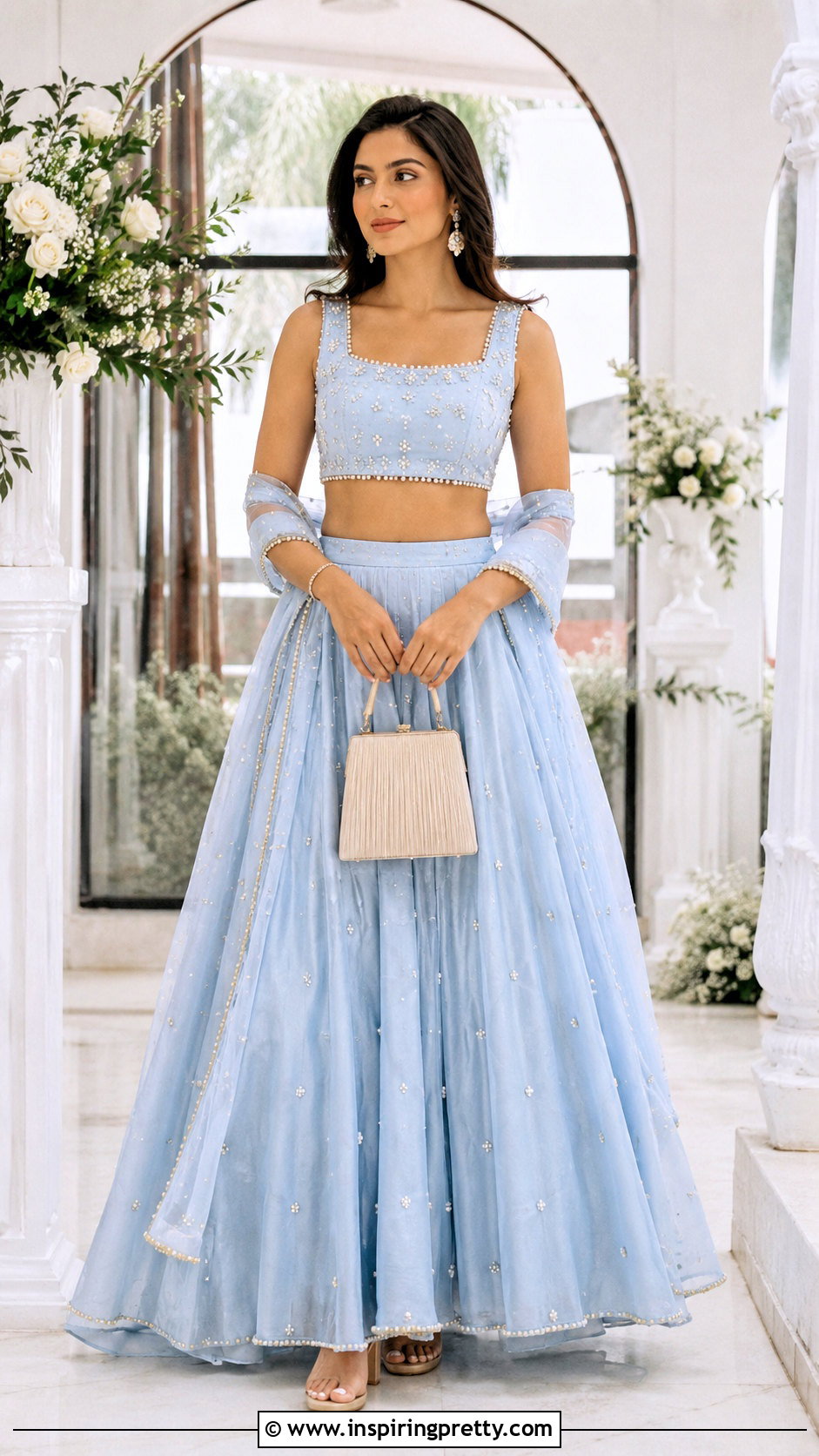
Pearl embellishment looks refined without metallic shine. A square-neck blouse with pearl clusters and a skirt with scattered pearls near the waist and hem suits ivory or blush. Pearls are heavy, though, and a lot of them pull a fine fabric out of shape, so I'd always choose selective work over full coverage and tug a few to check the stitching. Skip the big necklace if the neckline is already beaded. Small drop earrings and neutral block heels finish it.
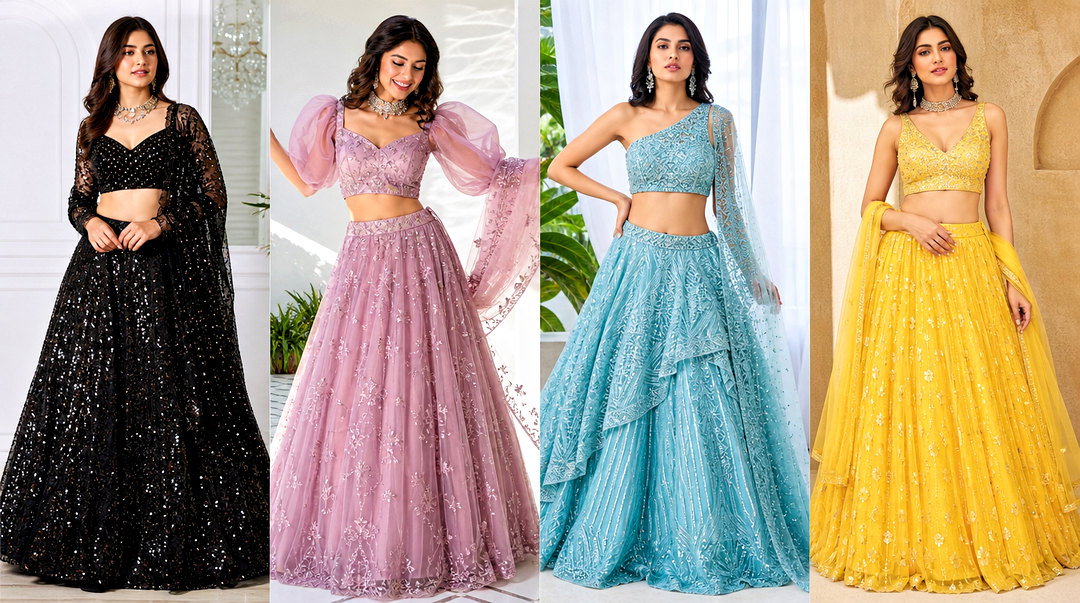
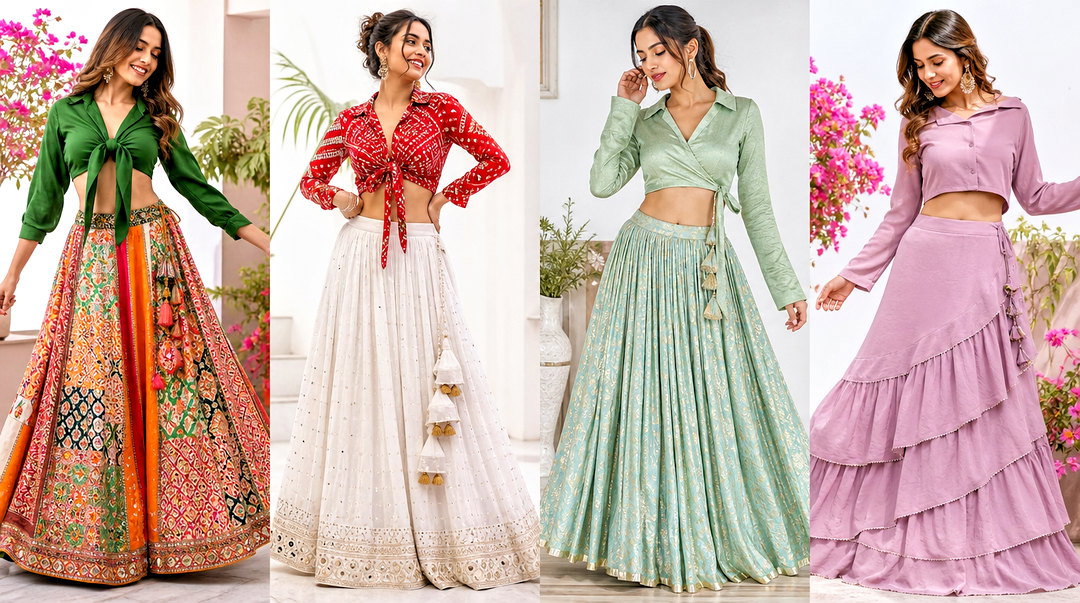
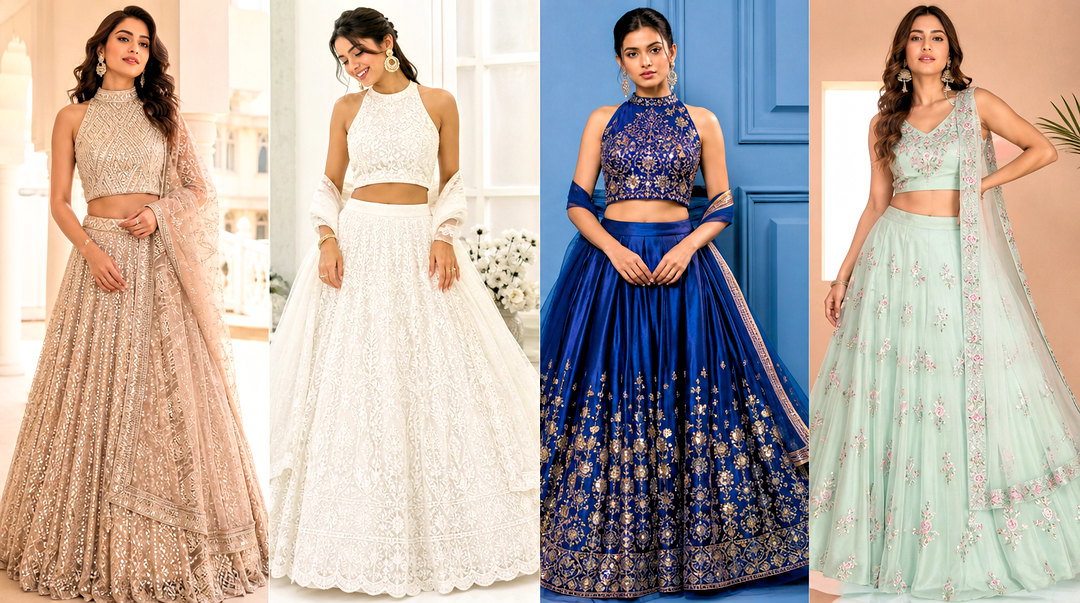
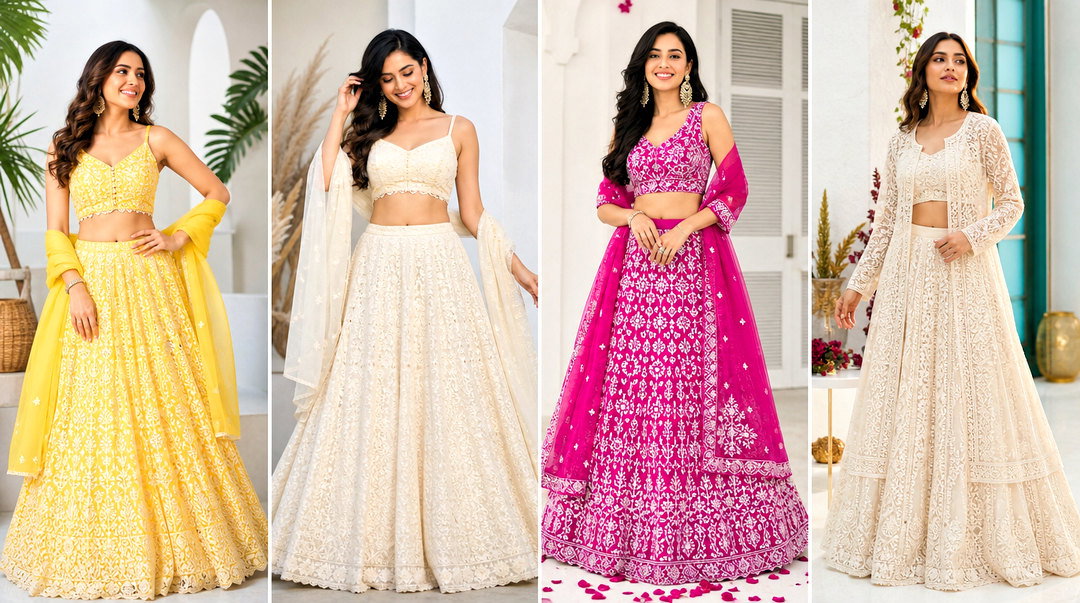
15. Banarasi Silk Crop Top Lehenga
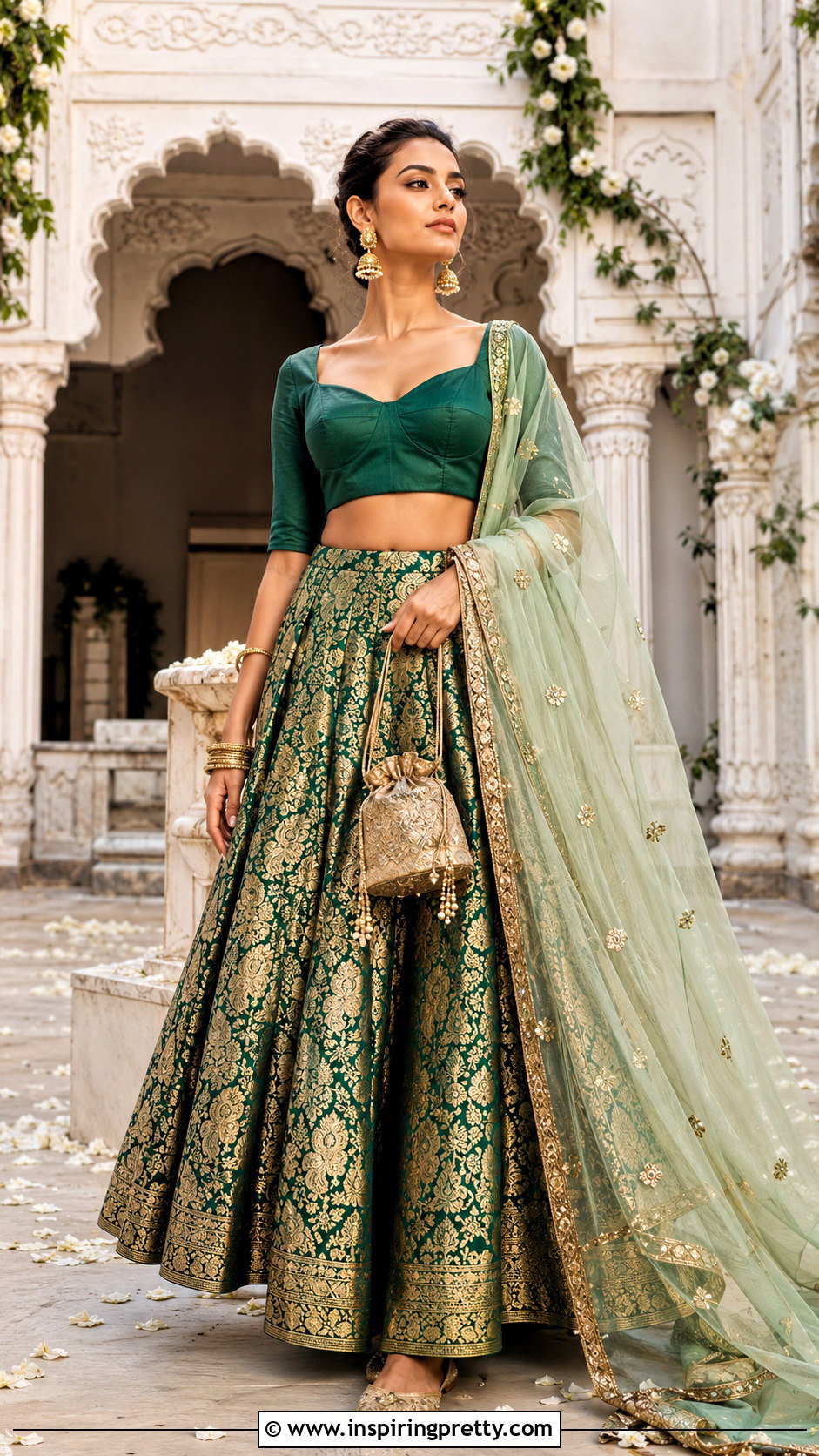
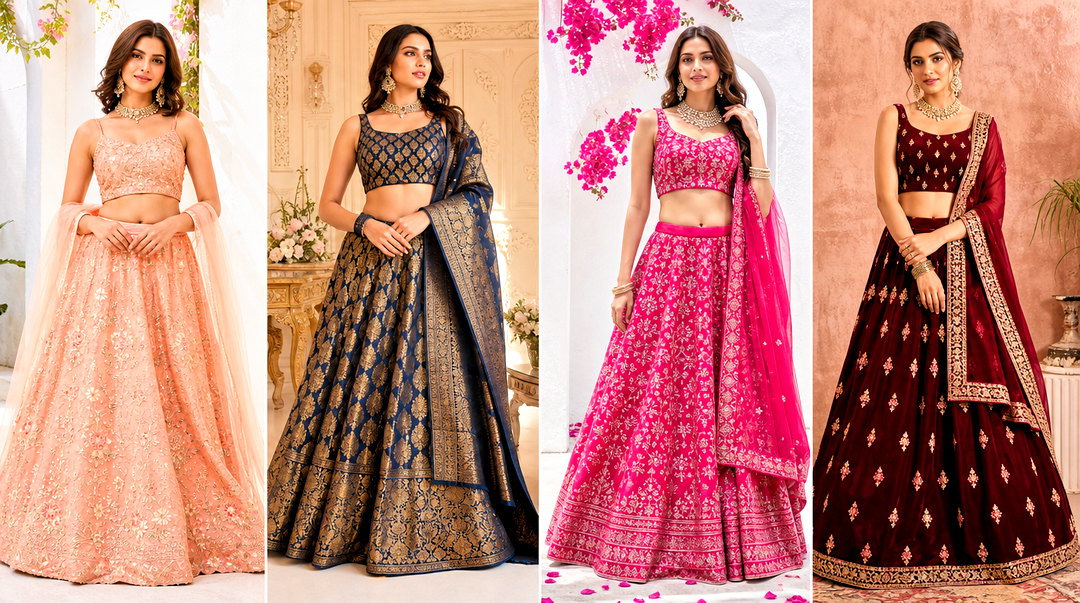
Banarasi silk brings woven texture that embroidery can't copy. I pair a structured solid blouse with a high-waisted Banarasi lehenga skirt, and keep the neckline clean so the weave stays the focus. A light organza dupatta is better than a second heavy silk layer. Emerald with antique gold or royal blue with silver are classic pairings. Silk is stiff at the waist, so ask for the pleats to be set flat at the front; extra gathers there add bulk. Jhumkas and embroidered juttis suit it.
16. Velvet Crop Top Lehenga
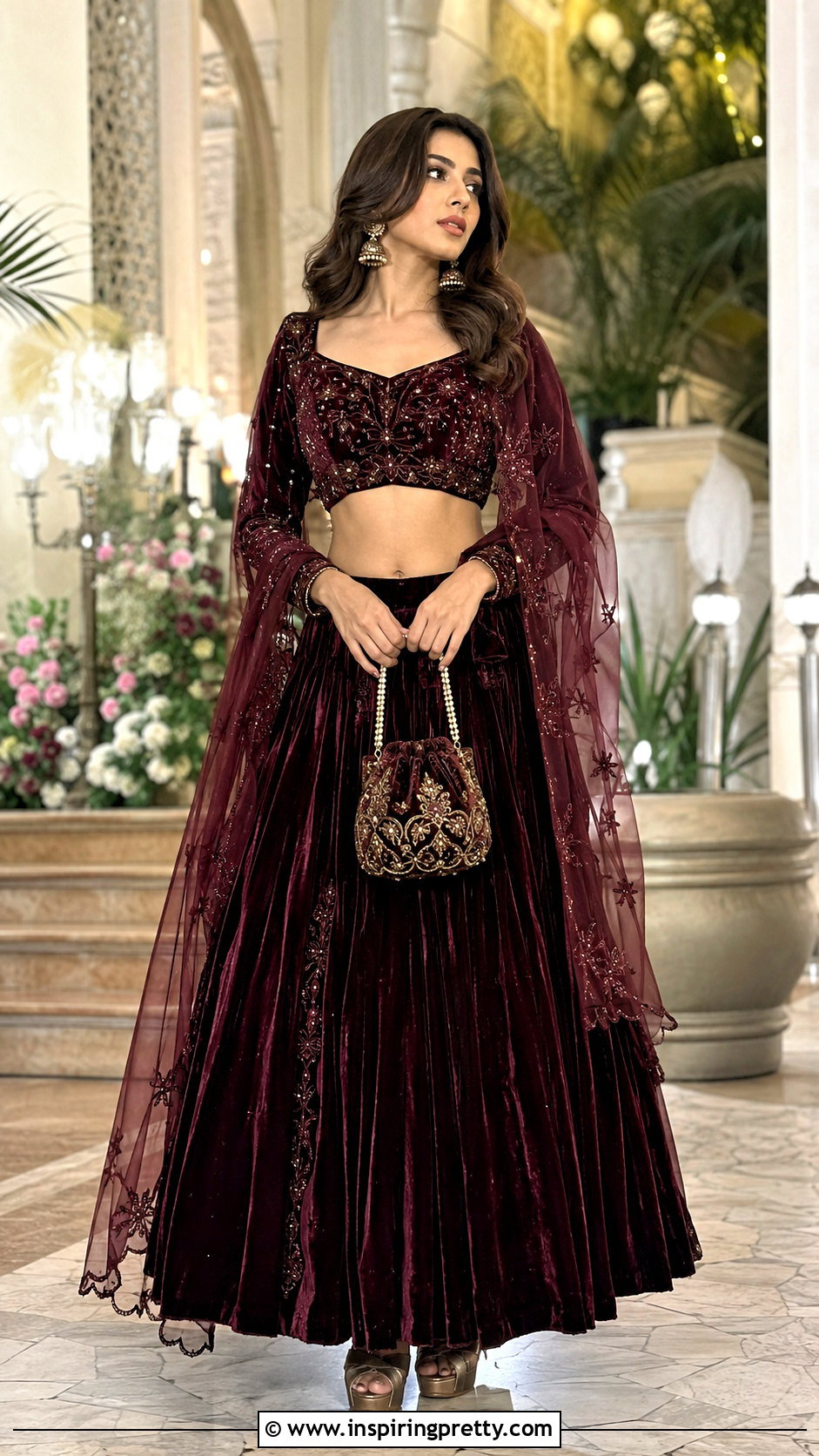
Velvet is a cold-weather fabric, and I wouldn't suggest it for a summer outdoor wedding. A fitted velvet blouse with embroidery at the neck and cuffs looks rich with a matching skirt, or lighter with a silk lehenga that cuts the weight. Maroon or forest green shows velvet's depth best. A sheer net dupatta keeps it from looking heavy. Ask about the skirt lining and cancan: too much stiff net under velvet is hot and uncomfortable if you'll be seated for a long ceremony.
17. Organza Crop Top Lehenga
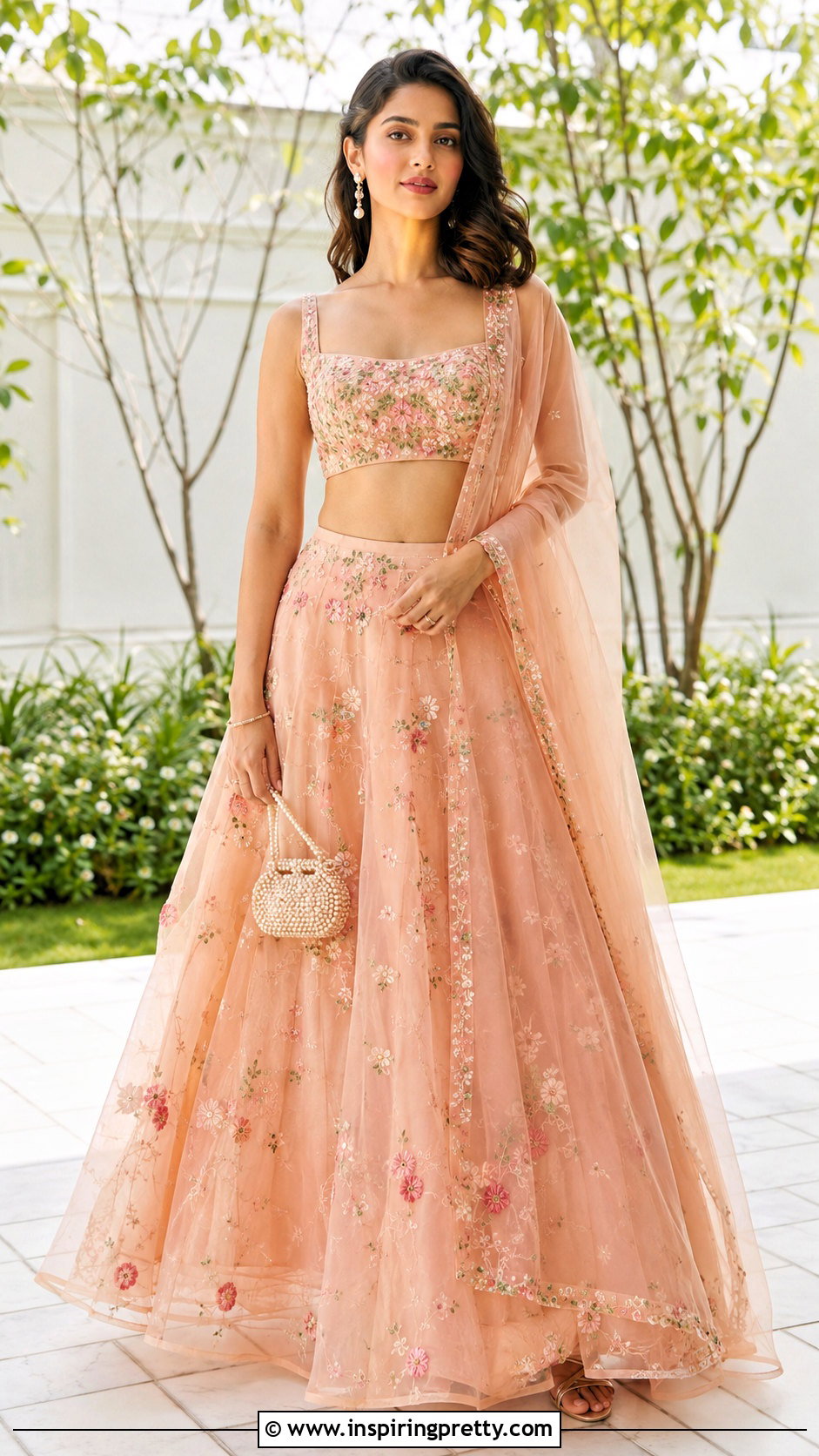
An organza crop top lehenga gives volume that feels light, which is why I like it for daytime and summer. Choose a lined top with floral embroidery or a satin base under the sheer layer. A circular skirt holds its shape without bulk. Peach or sage keeps it airy. Organza creases sharply and can feel scratchy if it's a stiff grade, so feel the fabric before you buy and avoid sitting on the skirt more than you must. Pin a narrow dupatta at one shoulder to keep the crisp outline.
18. Ivory Monochrome Crop Top Lehenga
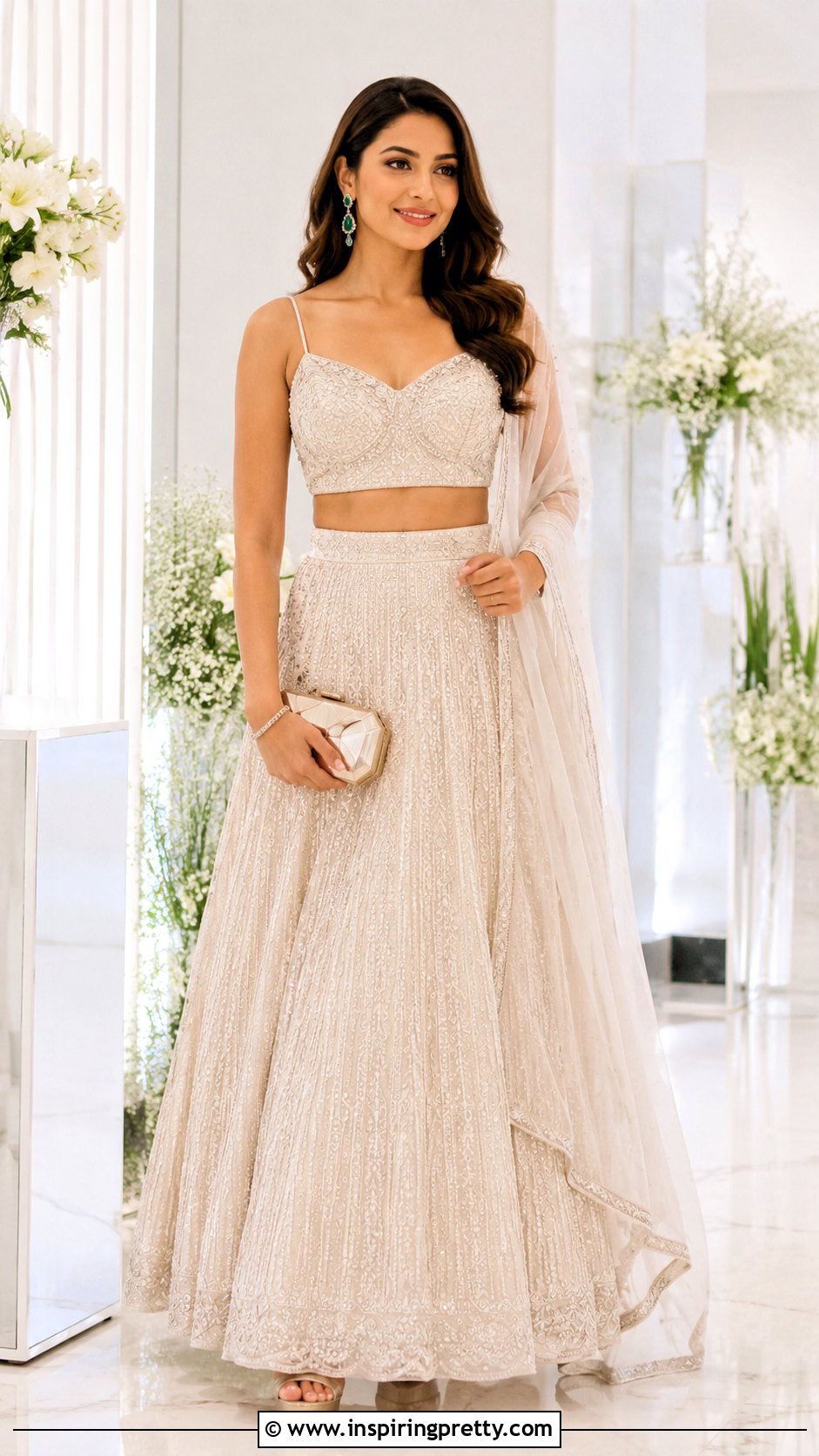
An all-ivory lehenga relies on texture instead of color. I pair a fitted blouse with a high-waisted skirt carrying tonal threadwork and a few beads or small sequins; mixing matte embroidery with a little shine is what gives it depth in photos. Pick the shade of ivory to suit your undertone, since a cool white ivory can grey out warm skin. Emerald earrings add one rich accent; pearls keep it soft. It's well suited to engagements. Do check with the family first, as some communities see head-to-toe ivory or white as wrong for a guest.
19. Color Block Crop Top Lehenga
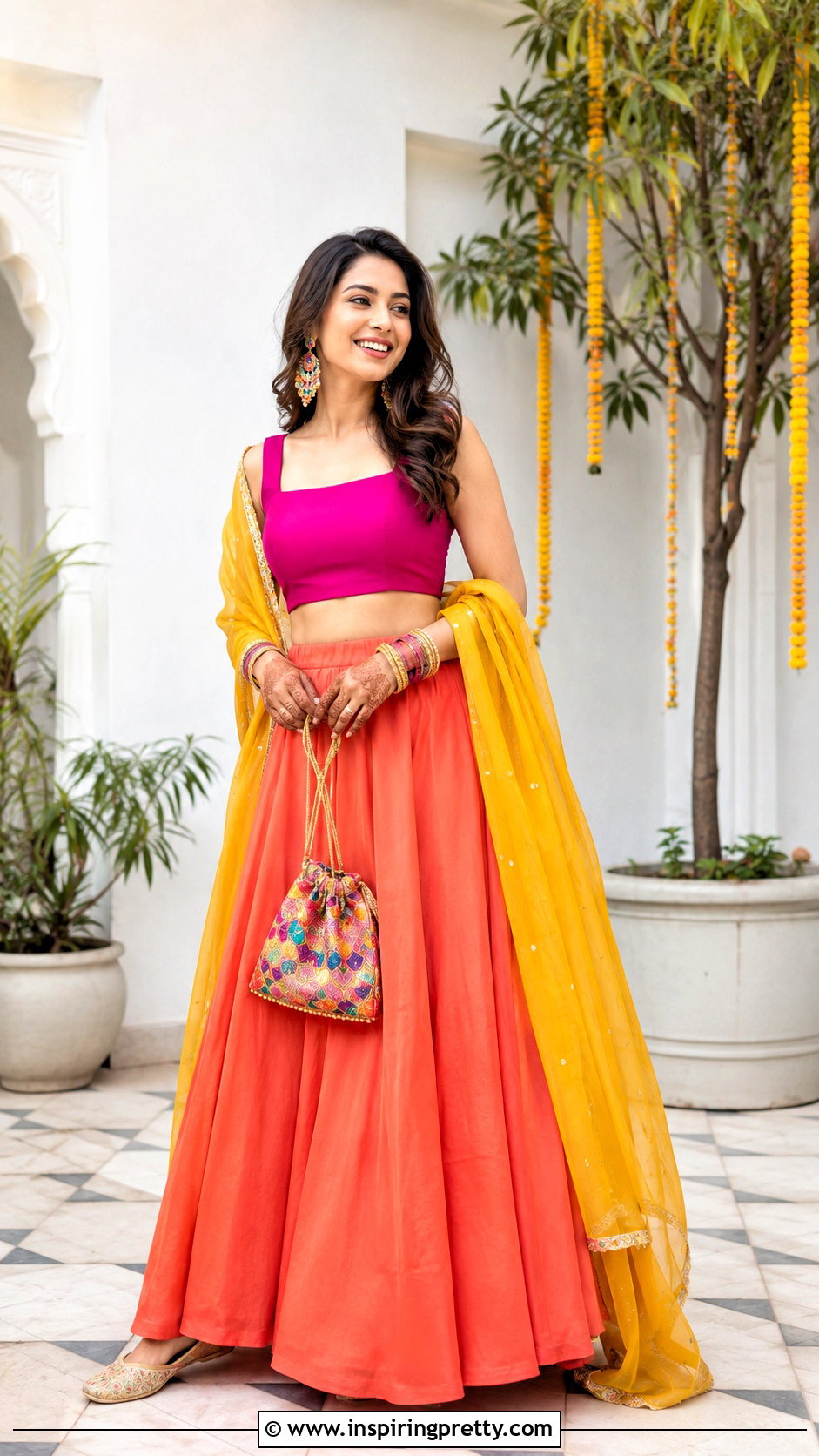
Color blocking makes an impact without dense embroidery. I'd pick two or three shades like coral with pink or teal with cobalt, putting the strongest color on the blouse, a second on the skirt and a lighter tone on the dupatta. Repeat one color in a border or bangles so the pieces read as one outfit. Keep the blouse simple, such as a square-neck sleeveless cut. It's a great mehendi or sangeet choice, and each piece pairs easily with other separates later.
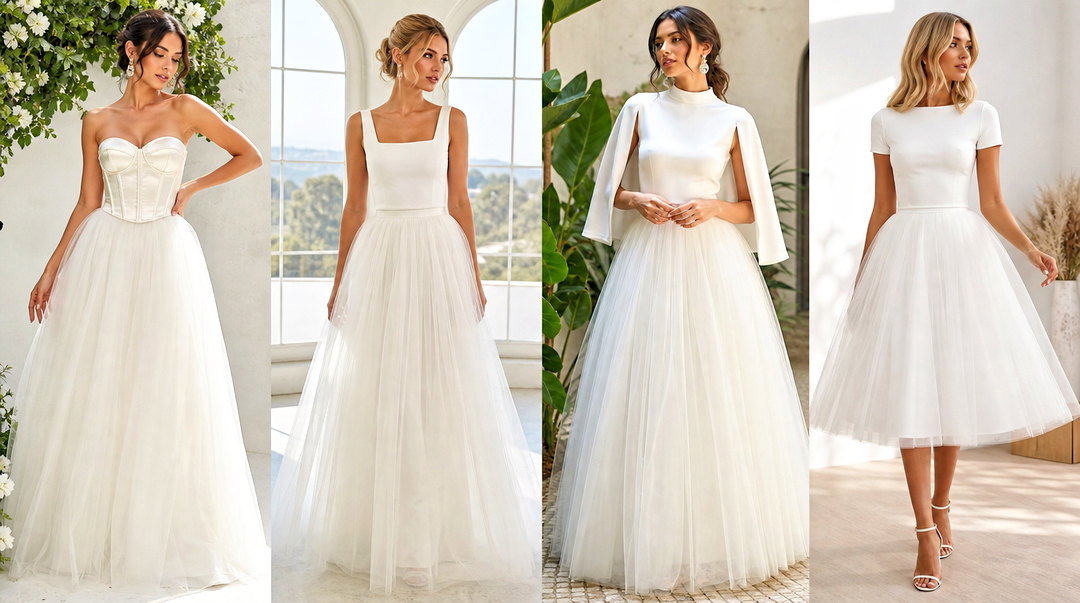
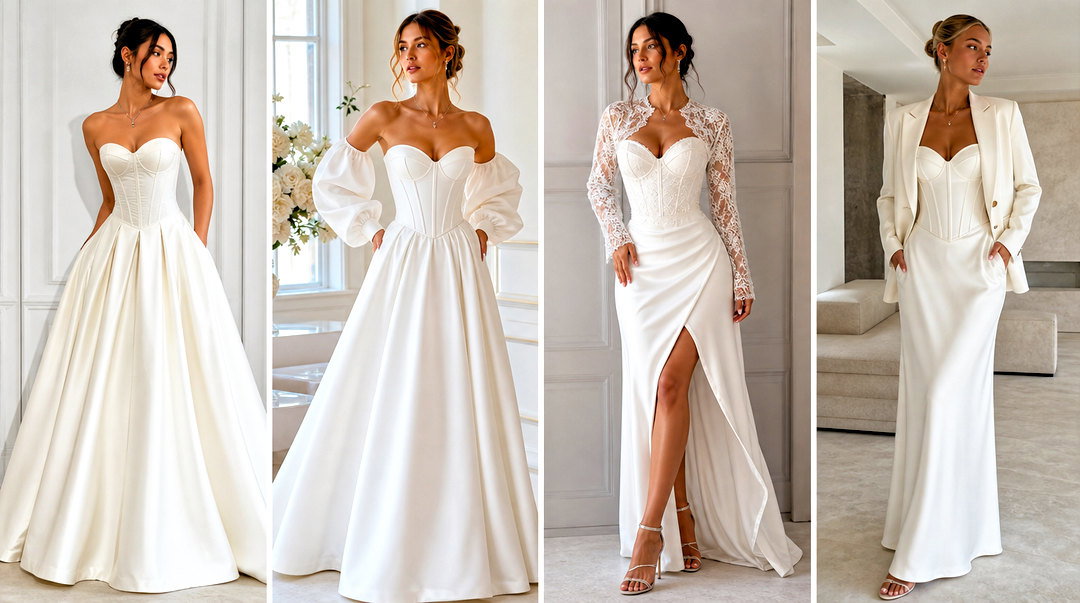
20. Pre Draped Dupatta Crop Top Lehenga
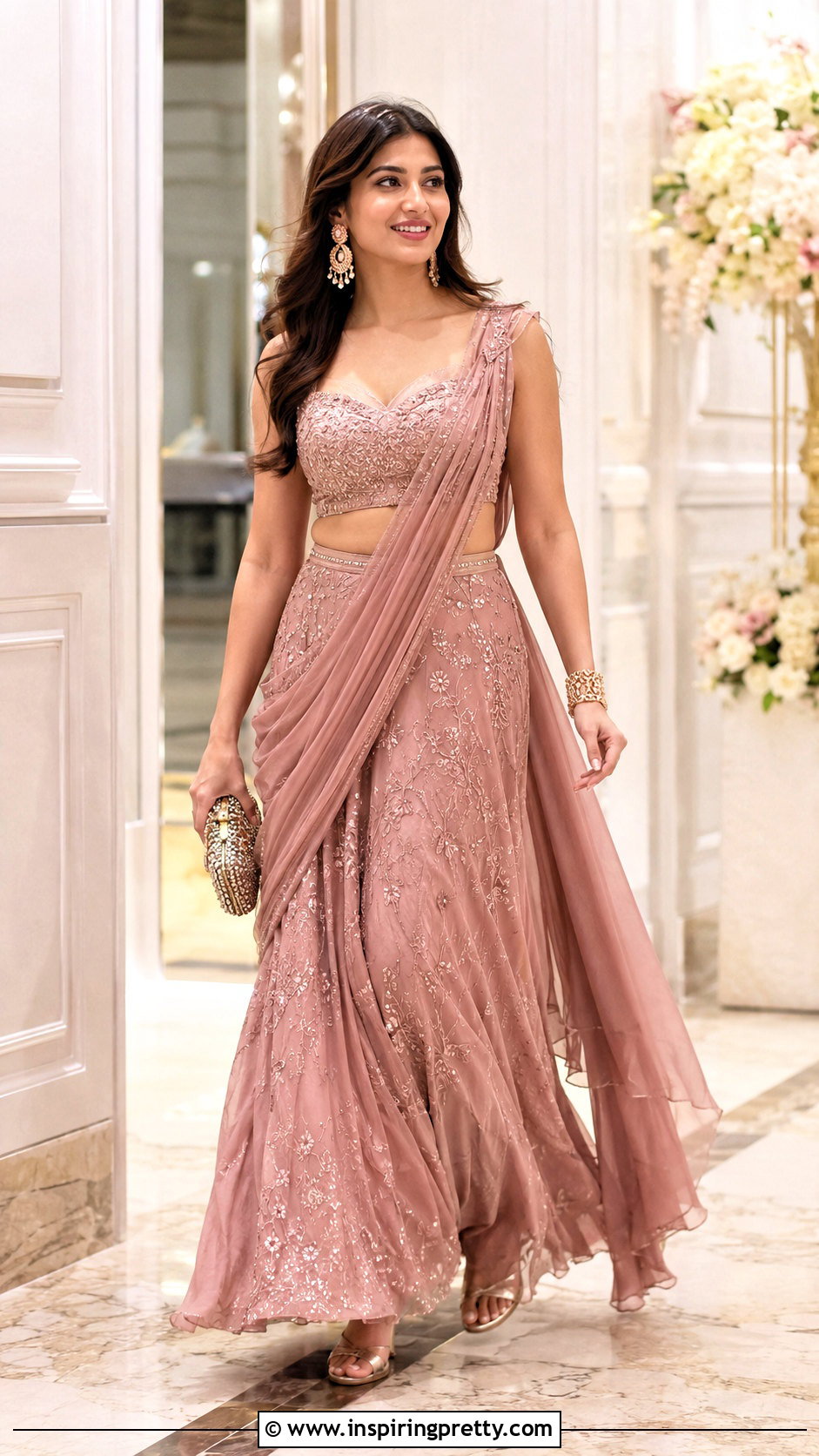
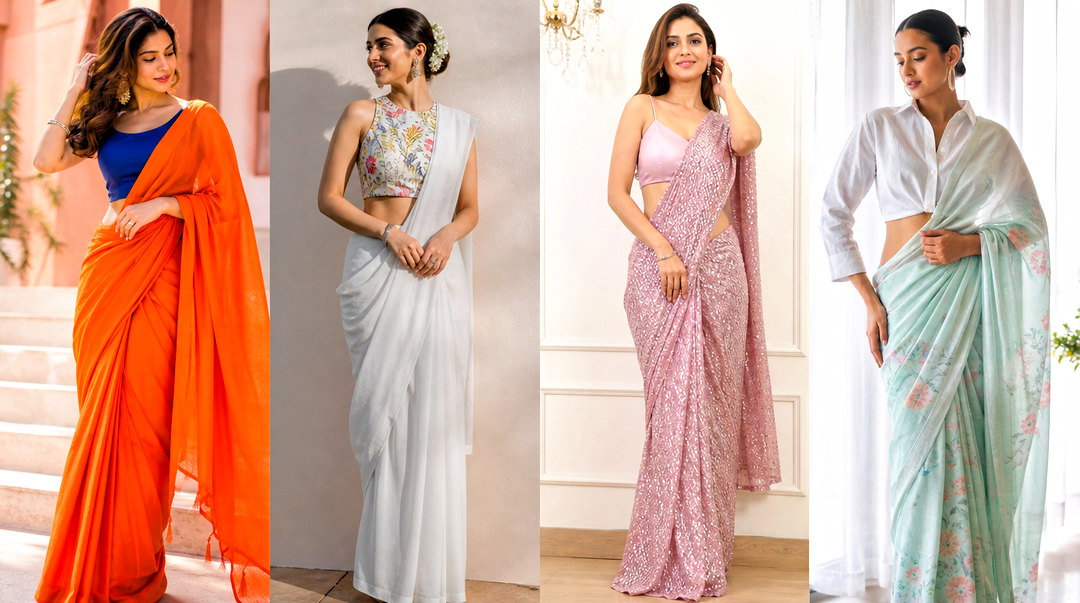
A pre-draped dupatta is the best friend of anyone who hates re-pinning all night. The drape is stitched at the shoulder, waist or back, so it stays where you placed it. A cascading side panel moves well; a shorter shoulder drape is easier for dancing. Matching or a soft contrast in chiffon both work. Before the day, walk, sit, climb stairs and lift your arms in it; I always check the attachment points under strain, because that's where they tear. A sleek hairstyle keeps the drape visible.
A Dress Rehearsal at Home
Every outfit I style for a wedding gets a full trial at least a week before. Put on the blouse, skirt, dupatta, jewelry and the actual shoes, then run through what the day will ask of you.
- Dance for a few minutes to your loudest song. Watch for straps sliding, the blouse riding up and earrings catching on the dupatta.
- Sit on a hard chair for ten minutes. Embellished waistbands dig in when you sit, and that's when you'll notice.
- Climb a few stairs holding the skirt with one hand. If you can't see your feet, the hem needs to come up.
- Use the bathroom in it. A long cancan and a pinned dupatta can turn this into a ten-minute job, so plan for it.
Keep a small kit in your clutch: safety pins, a few spare hooks, double-sided fashion tape and blotting papers. Those four things fix most problems at a wedding.
Storing an Embellished Lehenga Between Weddings
Heavy lehengas are often worn only a few times, so how you store them matters. Have it professionally cleaned rather than washed at home, especially with zari, mirrors or sequins. Wrap it in a soft cotton or muslin cloth instead of plastic, which traps moisture and can yellow fabric. Refold it along different lines every few months so the creases don't set, and keep metallic zari away from damp walls, since it tarnishes in humidity. Velvet should lie flat with tissue between the folds so the pile doesn't crush.
The Lehenga That Fits Your Function and Your Dancing
The right crop top lehenga isn't the newest design; it's the one you can wear comfortably from arrival to the last song. Structured corsets and mermaid skirts give definition, while cape sleeves, jackets and peplums give coverage. Florals and organza suit daytime; velvet, sequins and mirror work suit evening. Let your jewelry support the outfit rather than compete with it, and wear the full look at home at least once before the event. That trial run catches almost every problem while there's still time to fix it.
Related posts:


Leave a Reply