
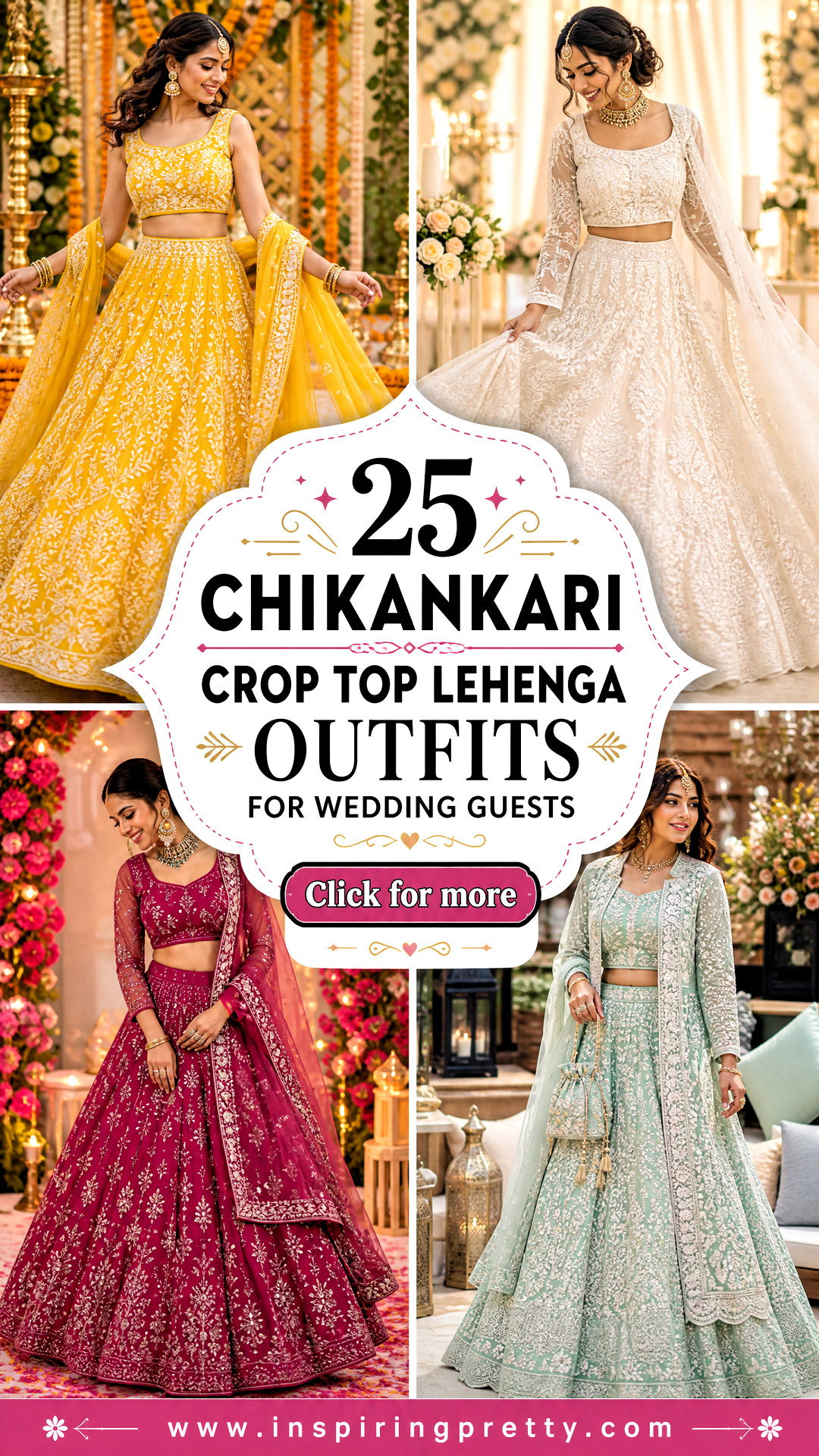
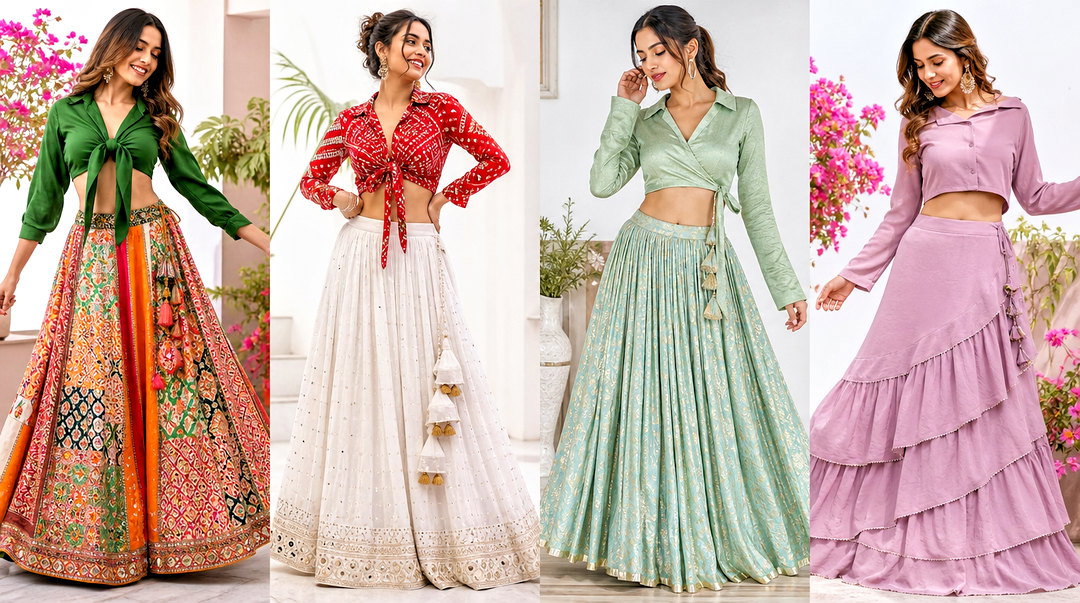
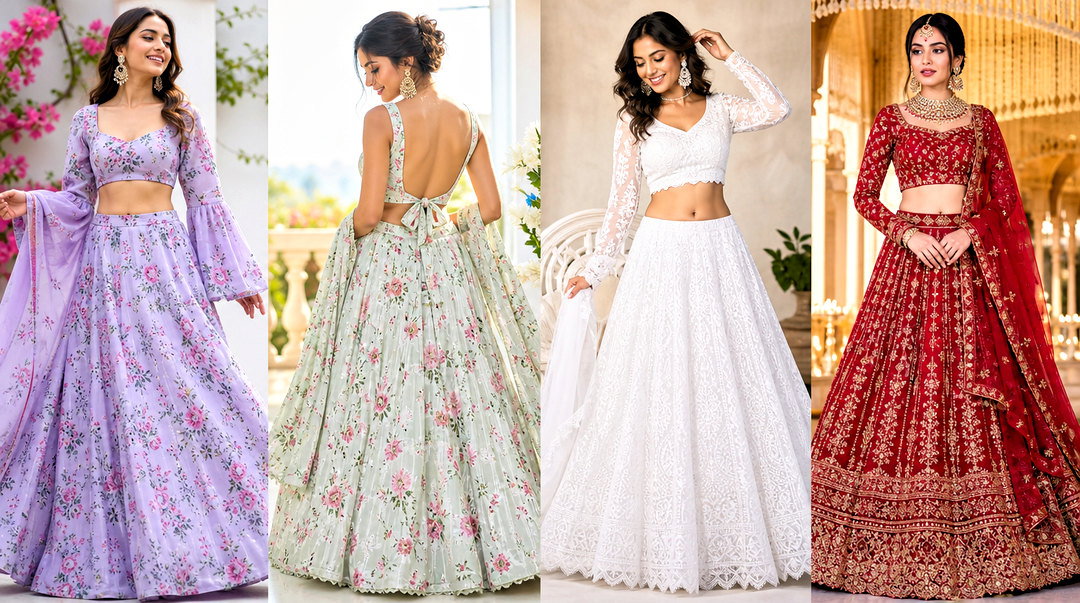
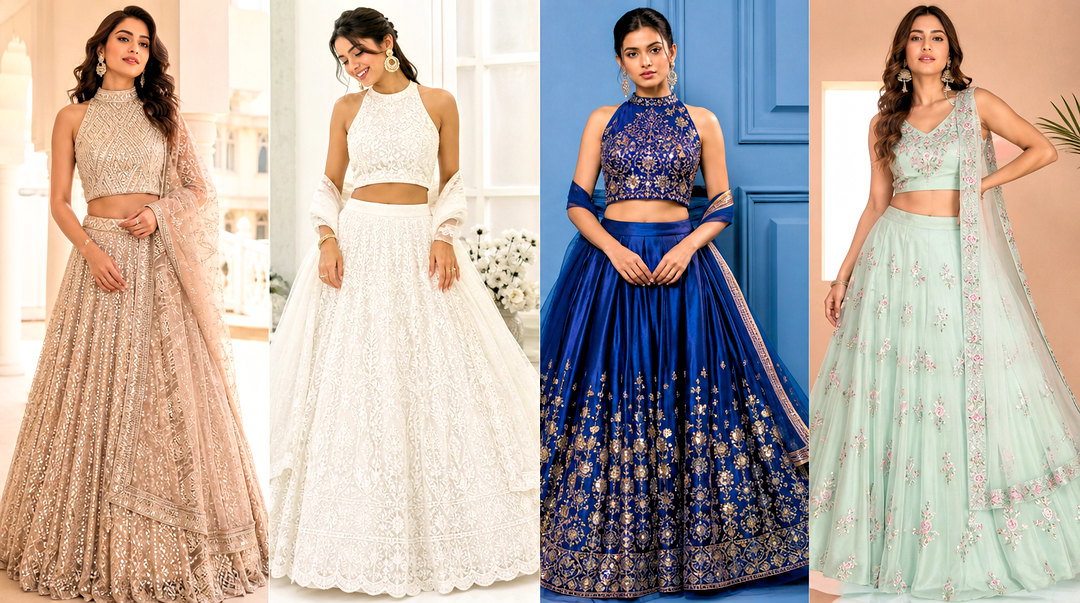
Chikankari is fine hand embroidery traditionally worked in white thread on light fabric, and it brings a quiet, textured kind of festive dressing to modern ethnic wear. A cropped blouse with a flowing lehenga gives it a younger shape than a kurta set, yet it still feels right at a wedding, mehendi, haldi or engagement. When I dress guests in it, the decisions that matter are color for the time of day, how much midriff the blouse shows, the lining, and whether the jewelry is fighting the threadwork. These 25 looks cover all of that, from ivory sets to jewel tones.
Hand-Stitched or Machine-Made Chikankari
A lot of what is sold as chikankari is machine embroidery in the same motifs. It can be pretty and it costs less, but it doesn't look or wear the same. When I'm checking a set for a client, I turn the fabric over first.
- Look at the reverse. Hand work shows small knots, thread ends and slight irregularities. Machine work looks dense and identical on every motif, often with a backing fabric.
- Check the shadow work. In true shadow stitch the thread is worked on the back, so the front shows a soft shaded outline. Hold it to the light and you'll see the crisscross behind.
- Feel the texture. Raised knot stitches on hand work feel slightly uneven under your fingertips; machine copies are flat and uniform.
- Expect faint marks on new hand pieces. The design is printed in a washable ink before stitching, and traces sometimes remain until the first wash.
Neither is wrong for a guest outfit. Just pay hand-work prices only for hand work, and expect a machine piece to feel stiffer.
1. White Chikankari Crop Top Lehenga Outfit
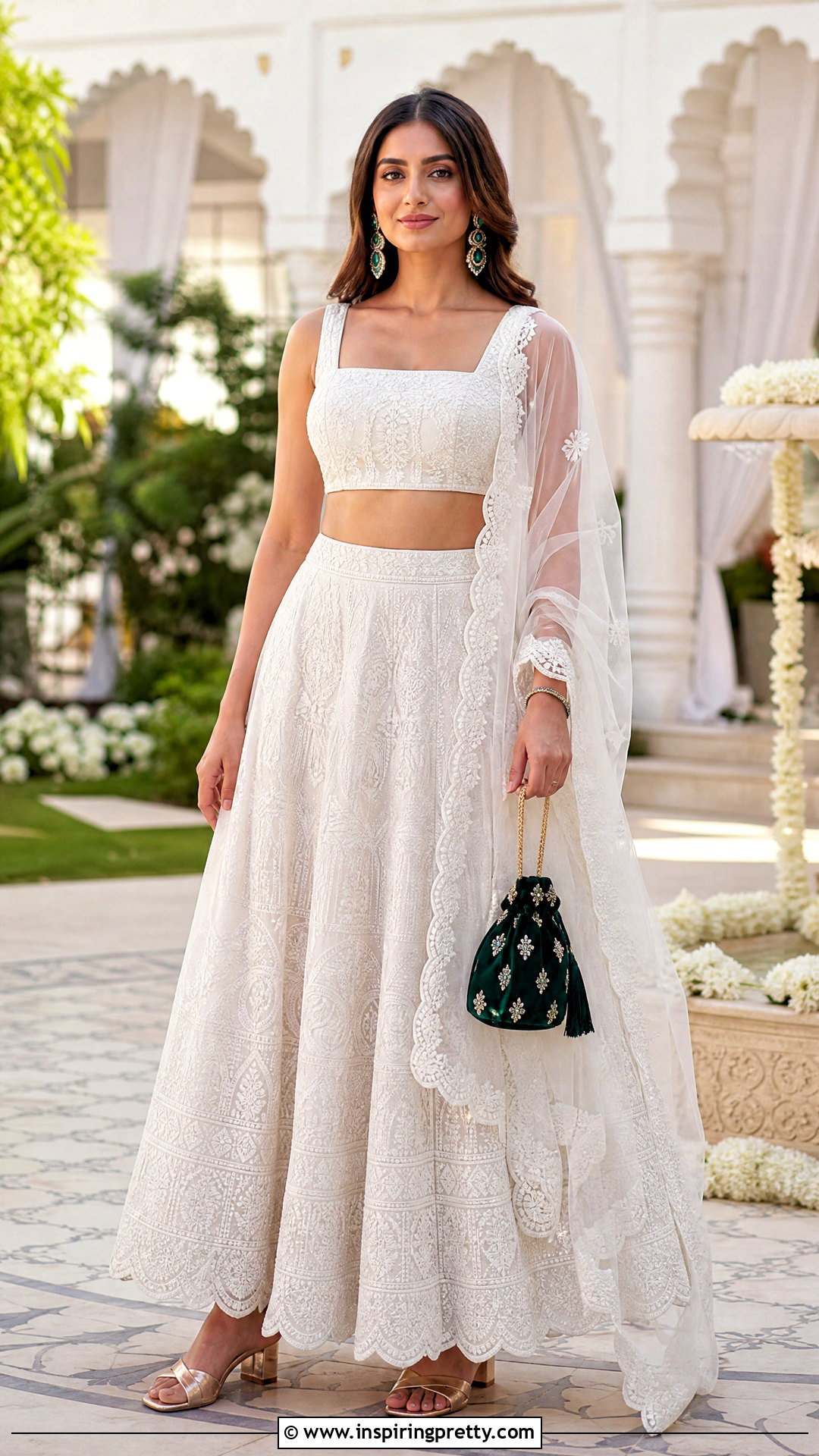
All-white chikankari is the purest version of the craft, and it's best by daylight. I'd pick a fitted square-neck blouse with elbow sleeves to balance the flare, and a high waist so the gap stays small. A sheer white dupatta with a scalloped border finishes it. Emerald earrings, a ring and a little green potli add color without touching the embroidery. Metallic block heels or embroidered juttis, soft curls and fresh makeup keep it light. White muslin and georgette are often see-through, so ask for a tonal lining before the event, not the morning of.
2. Pink Chikankari Crop Top Lehenga Outfit
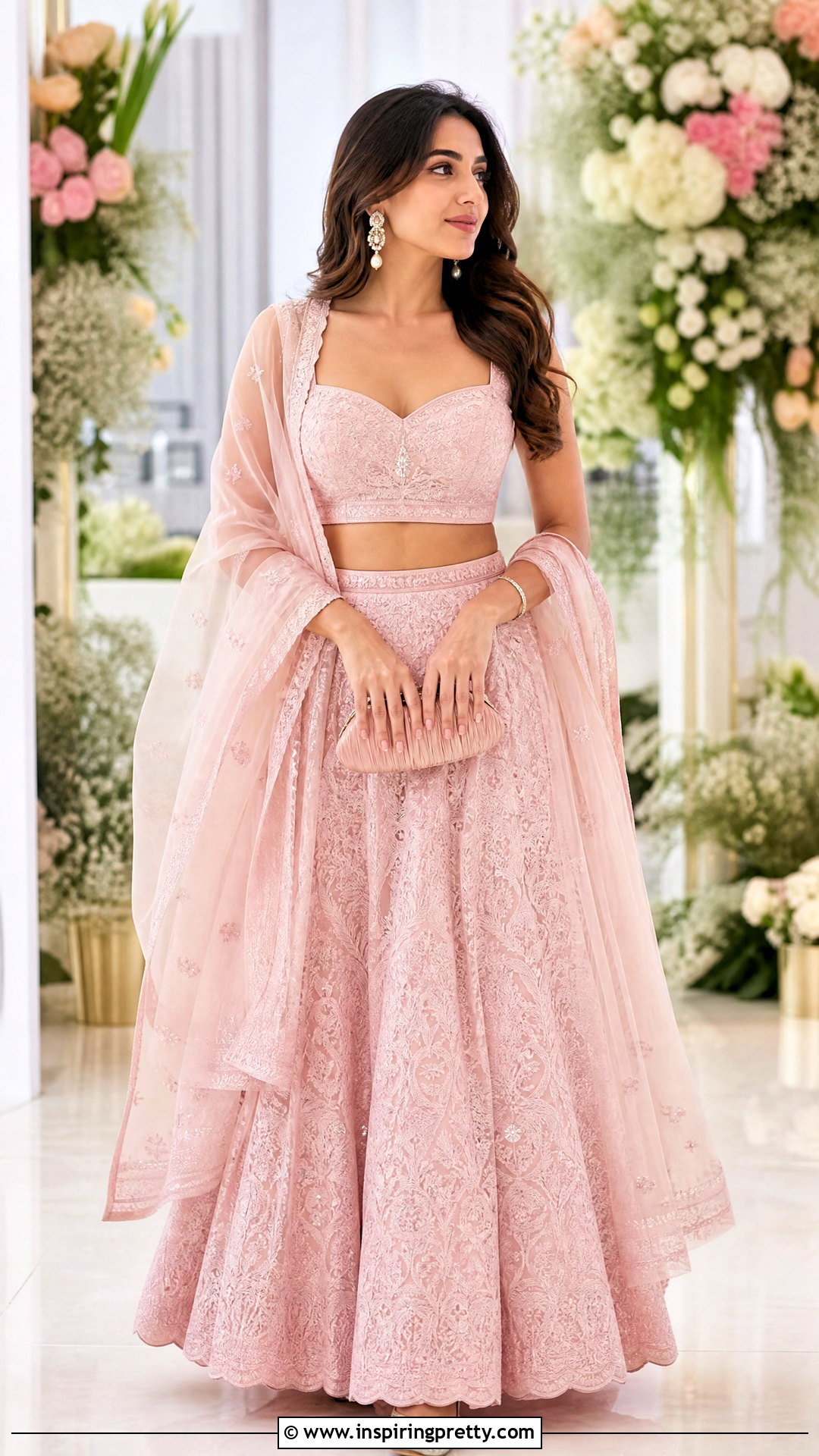
Pale pink carries well across all three pieces: blouse, skirt and a light dupatta. A sweetheart or soft curved neckline suits the color. What I check most is the blouse structure; a lined blouse with proper shoulder straps stays put through hugs and photos without feeling stiff. Pearl drops, a slim bracelet and a blush clutch are enough. Silver heels or embellished juttis suit pale threadwork. For a family wedding, drape the dupatta over one shoulder and pin it at the waist. A low bun with small flowers and a rosy lip keep it gentle.
3. Yellow Chikankari Crop Top Lehenga Outfit
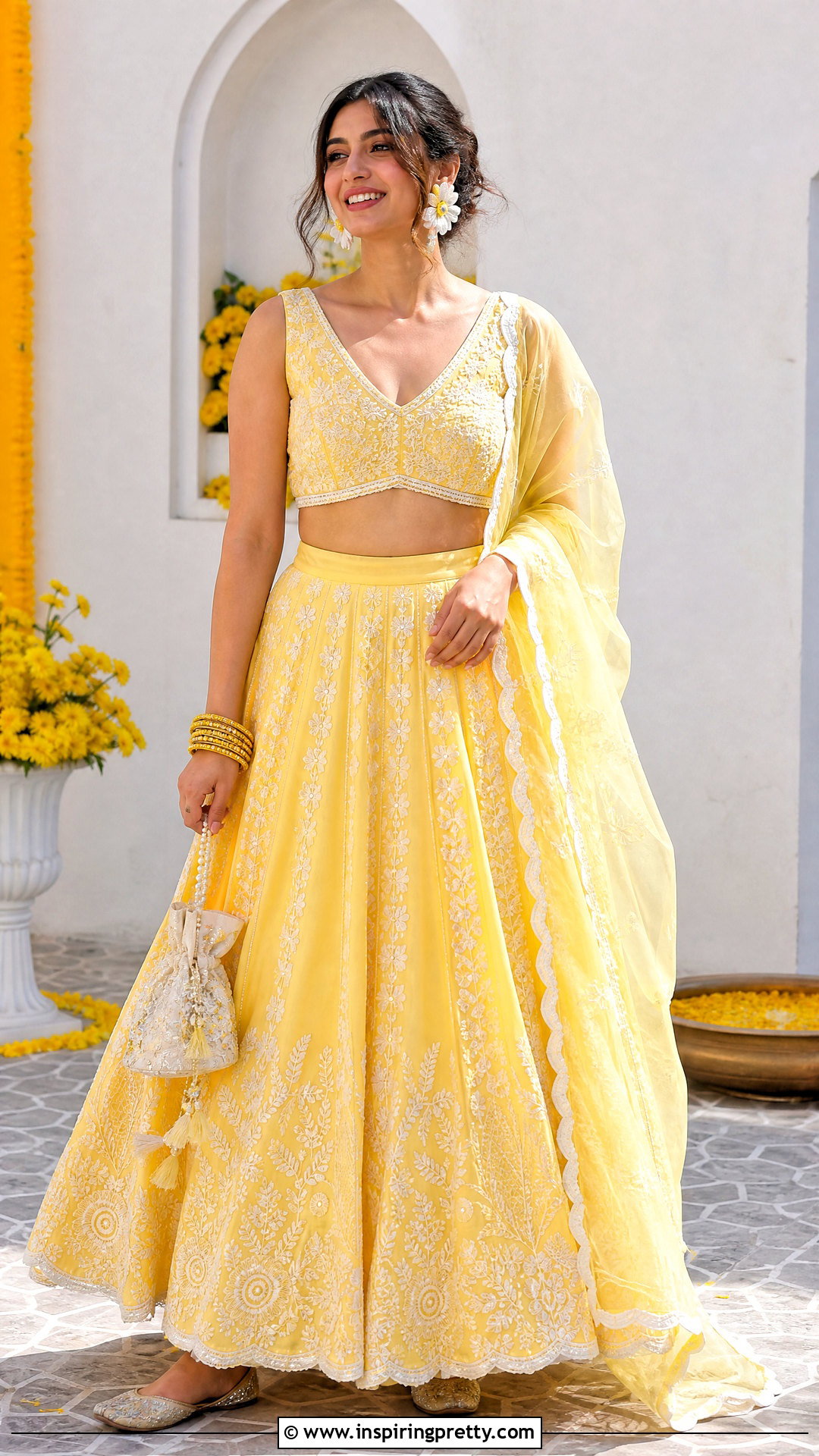
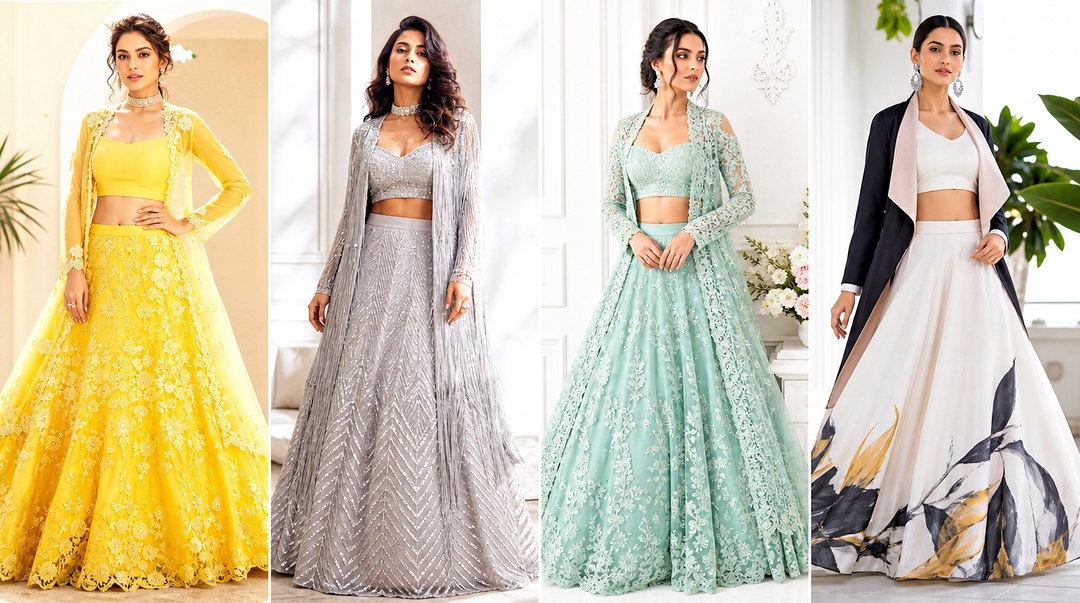
Yellow is the haldi color, and chikankari in white thread on yellow gives a crisp contrast. A sleeveless V-neck blouse with a circular high-waisted skirt keeps it light and easy to move in. The dupatta is optional here; at a haldi I often tell guests to skip it. Floral earrings, bangles, ivory juttis and a white potli tie back to the threadwork. A loose braid or textured ponytail suits the mood. Turmeric paste stains, so wear accessories you can wash and nothing you'd be heartbroken to mark.
4. Green Chikankari Crop Top Lehenga Outfit
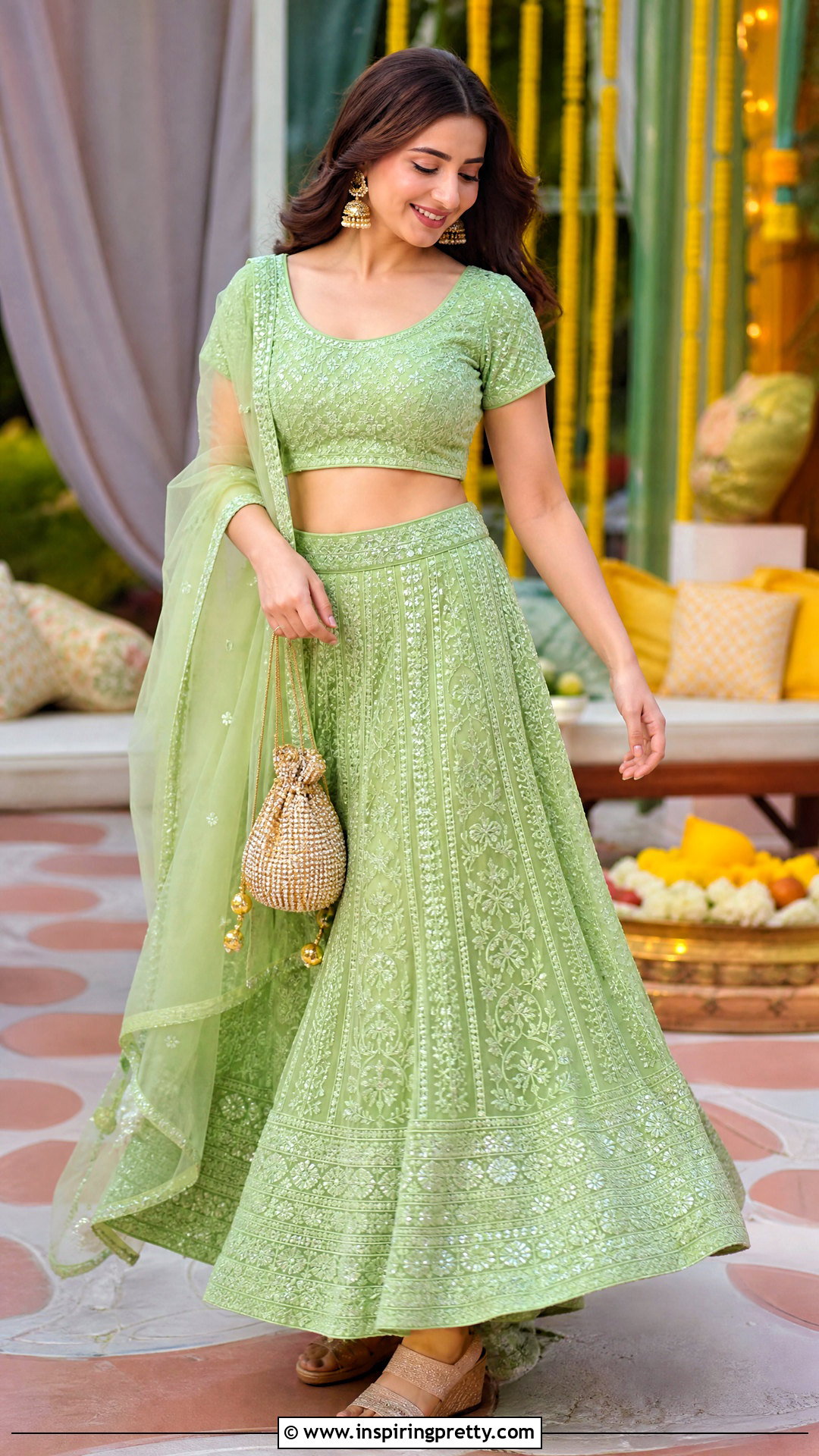
Green is a natural mehendi choice, and chikankari keeps it lighter than heavy zari would. A fitted short-sleeve blouse with a modest scoop neck pairs well with a paneled lehenga, since panels swing nicely when you walk. White or pale gold threadwork keeps the green bright. Gold jhumkas, wedge sandals and a beaded potli suit long hours on your feet. If you'll be dancing, pin the net dupatta at the shoulder and waistband. Want less midriff? Have the blouse made long enough to meet the skirt.
5. Black Chikankari Crop Top Lehenga Outfit
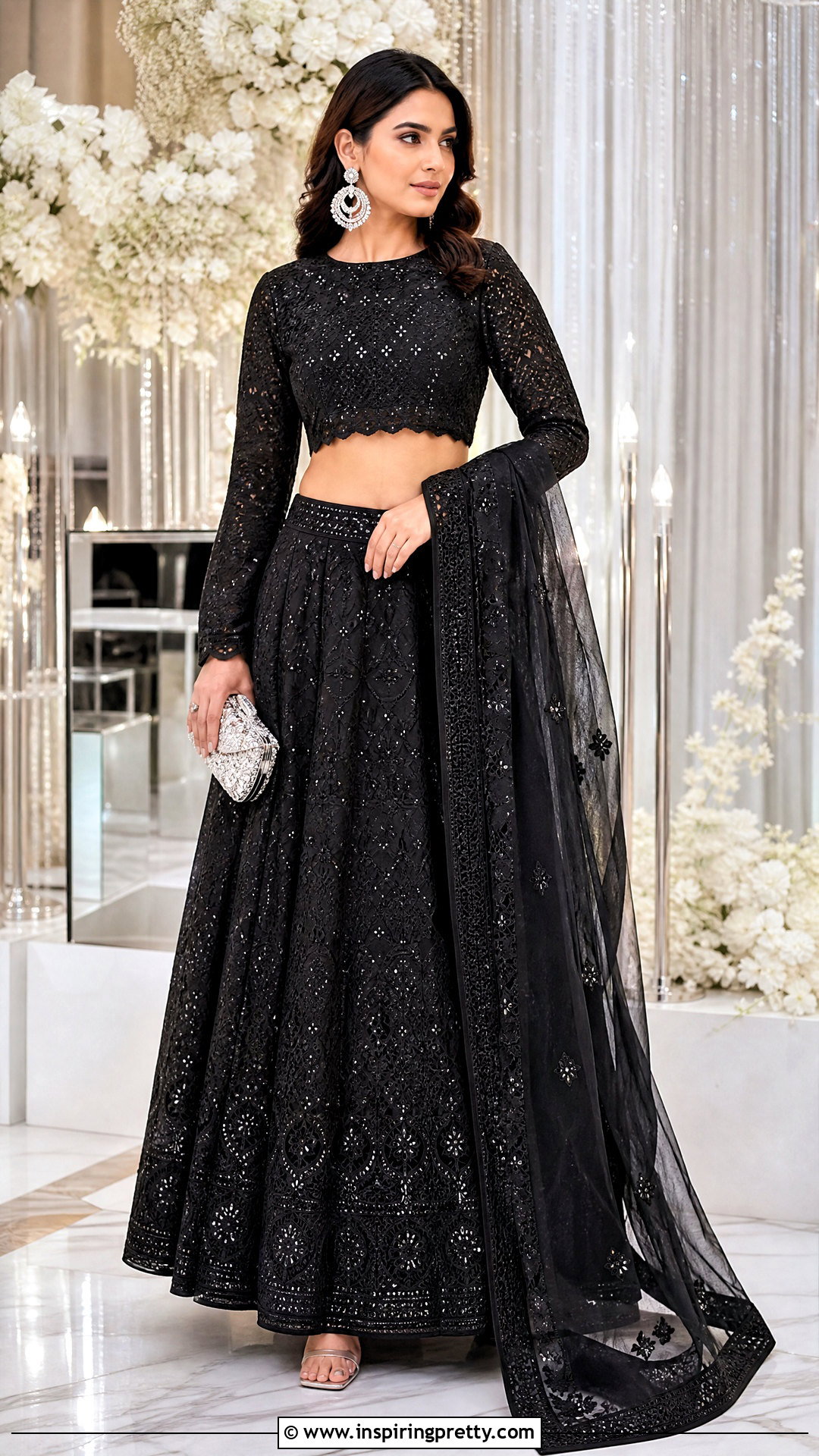
Black chikankari is striking at night, especially with silver thread or a little sequin work. A long-sleeve crop and high-waisted black skirt make one long column. I'd open the neckline wide or into a soft V so all that dark fabric doesn't look heavy near the face. Silver chandbalis, a crystal clutch and metallic heels add light. Drape the sheer dupatta over one arm instead of covering the blouse. Black lining matters here too, because it's what makes the open jaali stitches show as pattern.
6. Red Chikankari Crop Top Lehenga Outfit
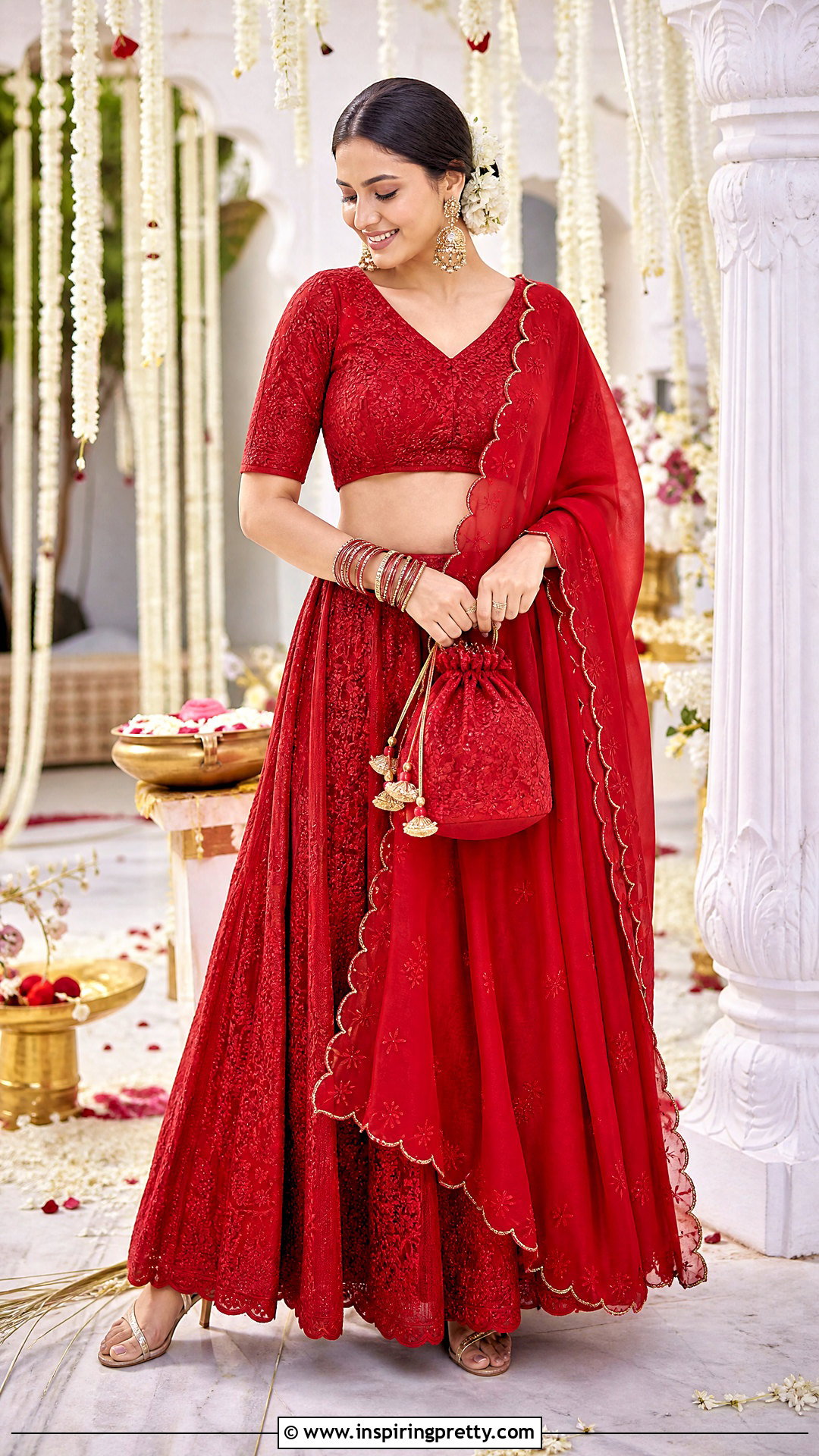
Red feels traditional, and the cropped blouse makes it current. A structured blouse with a modest V and gold embroidery suits a full skirt with work concentrated at the hem and waist. One caution from experience: at many weddings red belongs to the bride, so check with the family before you wear it to the ceremony itself. A matching dupatta with a scalloped border, antique gold earrings, bangles and a red potli finish it. If the set is heavily worked, skip the necklace.
7. Blue Chikankari Crop Top Lehenga Outfit
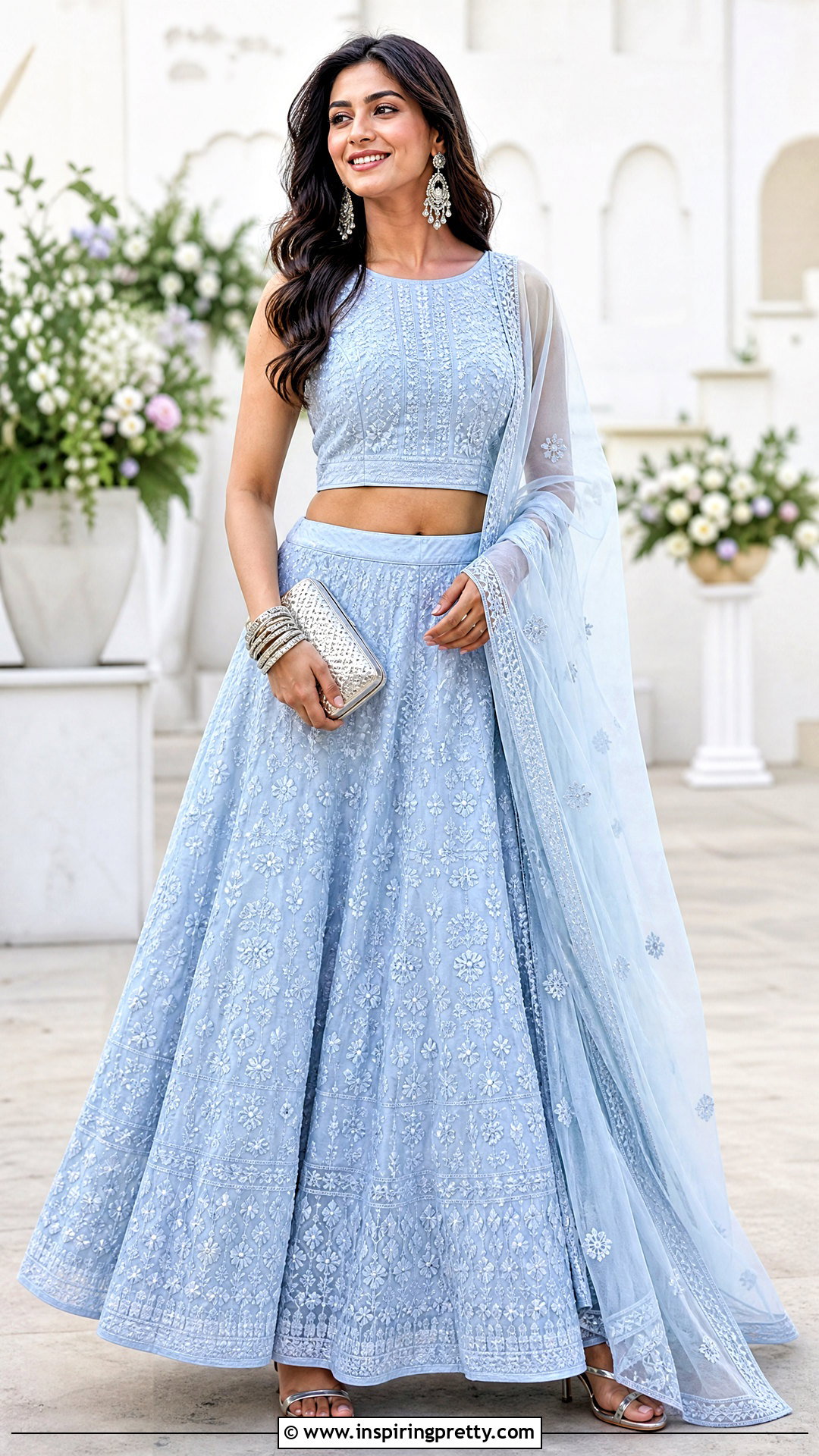
Medium blue sits between pastel and jewel tone, which makes it easy for day or evening. A sleeveless blouse with a round neckline and a slightly longer hem gives coverage over an A-line skirt in white, silver or tonal thread. Crystal earrings, silver bangles and a metallic clutch suit the cool palette. Silver kitten heels or embroidered flats depend on the venue. A pale blue organza dupatta adds depth. Set the skirt at your natural waist and adjust the blouse length from there.
8. Lavender Chikankari Crop Top Lehenga Outfit
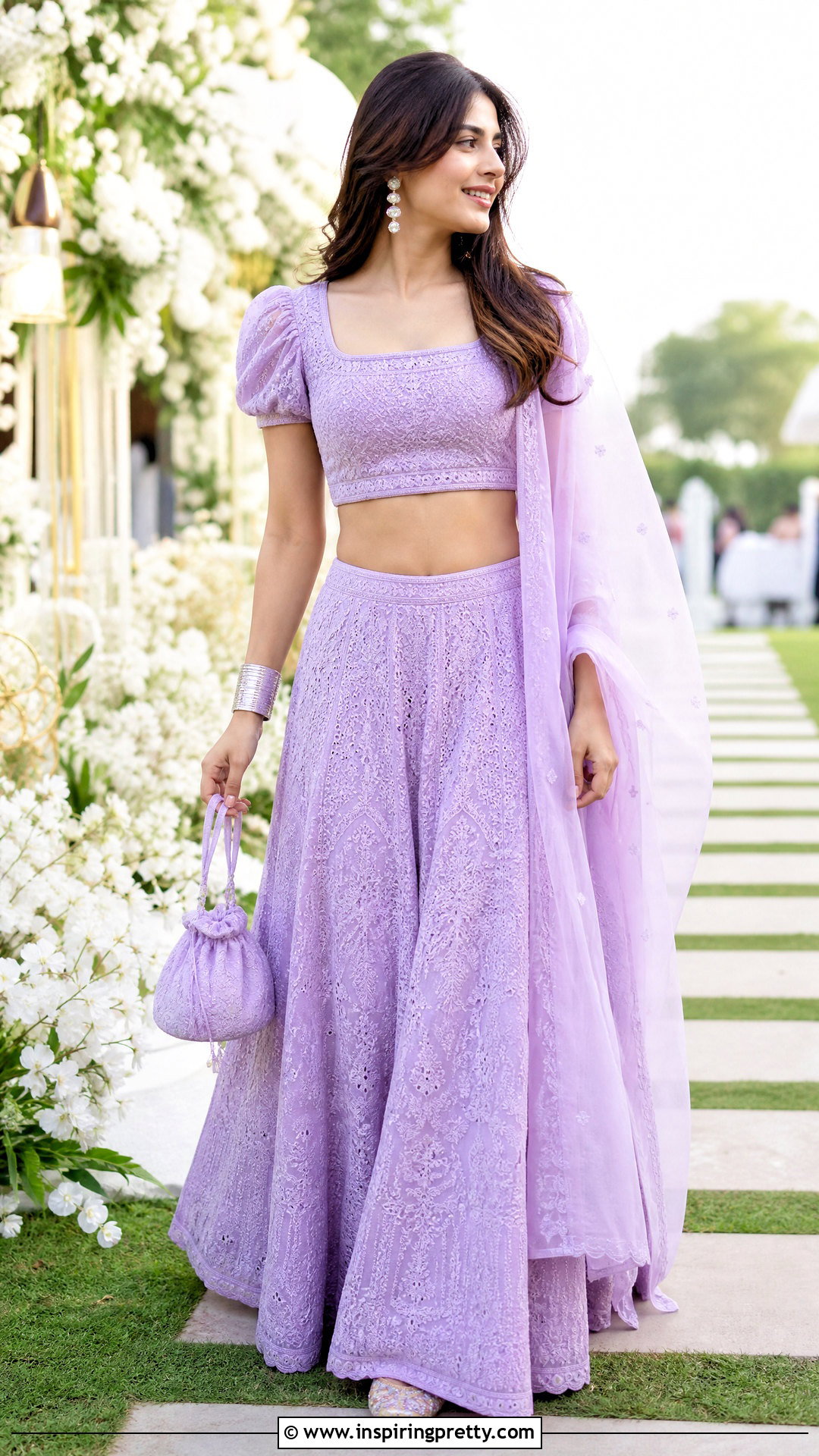
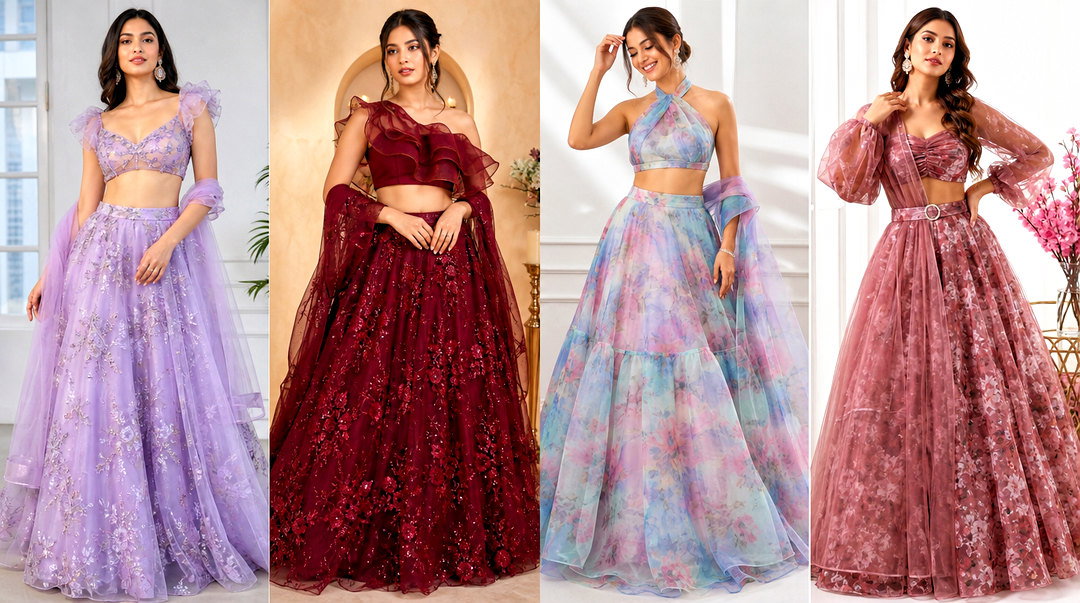
Lavender is delicate but unusual enough to stand out at a day wedding or engagement. A softly structured square-neck crop with short puff sleeves gives the embroidery a modern shape over a high-waisted, full skirt. Pearl earrings, a silver cuff and a lavender potli coordinate easily. Choose embellished juttis for comfort or low metallic heels for height. Drape the lilac dupatta at the elbows for photos and pin it for the rest of the event. Ask for a lining with enough body to hold the flare without bulk.
9. Peach Chikankari Crop Top Lehenga Outfit
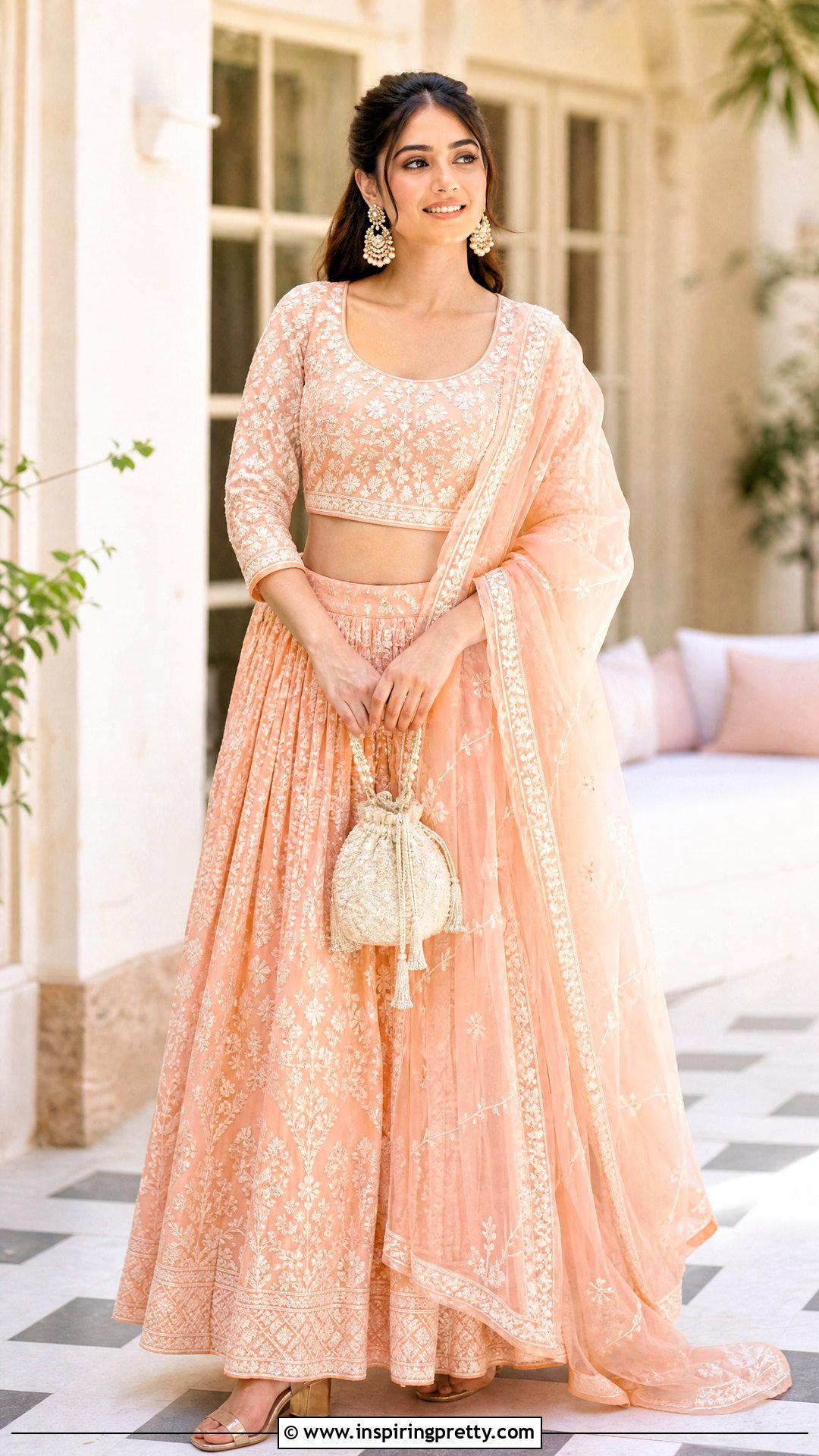
Peach is one of the kindest backgrounds for white chikankari; the warm color shows every stitch. A fitted wide-scoop blouse with three-quarter sleeves and a softly gathered skirt with a high waistband stop the outfit looking shapeless. Pearl-and-gold earrings, a slim kada and a cream potli suit it. Nude or champagne block heels keep the leg line long. Drape the peach dupatta diagonally for more cover. For photos, I prefer embroidery concentrated at the neckline, waist and hem rather than scattered evenly; it defines the shape from a distance.
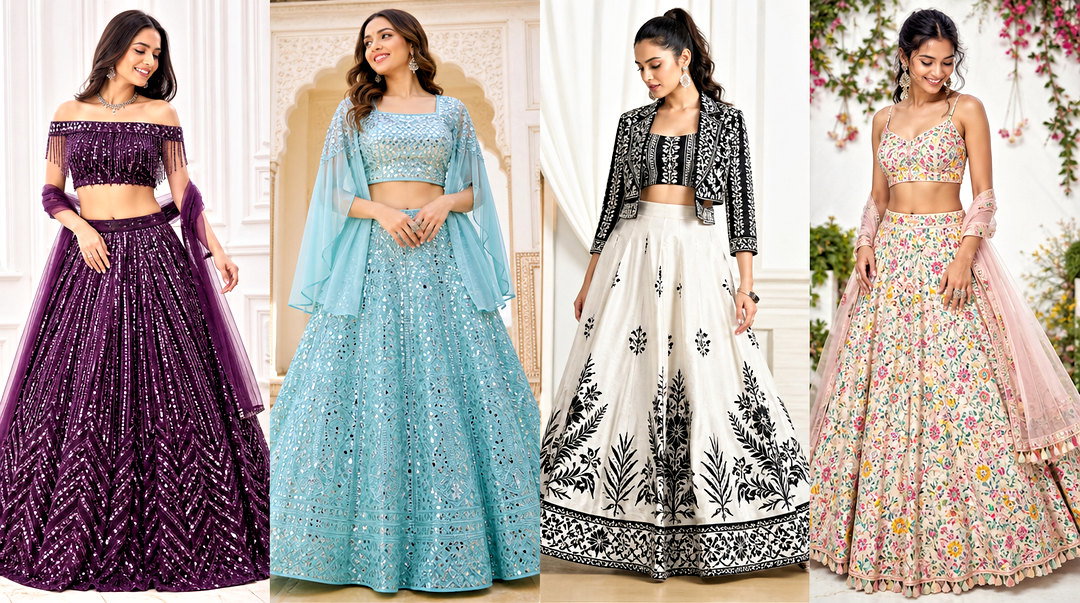
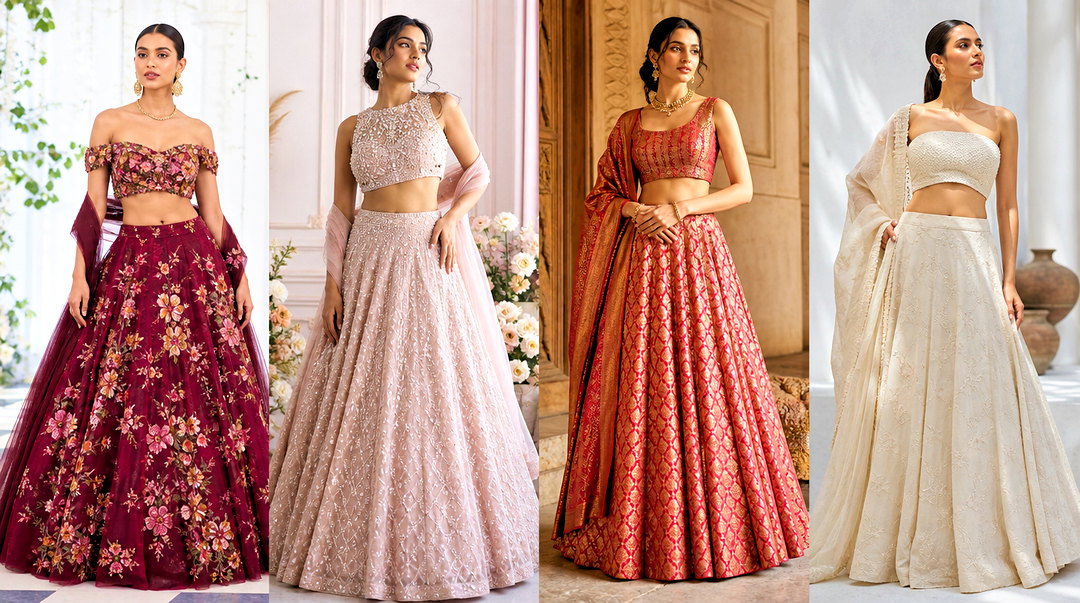
10. Ivory Chikankari Crop Top Lehenga Outfit
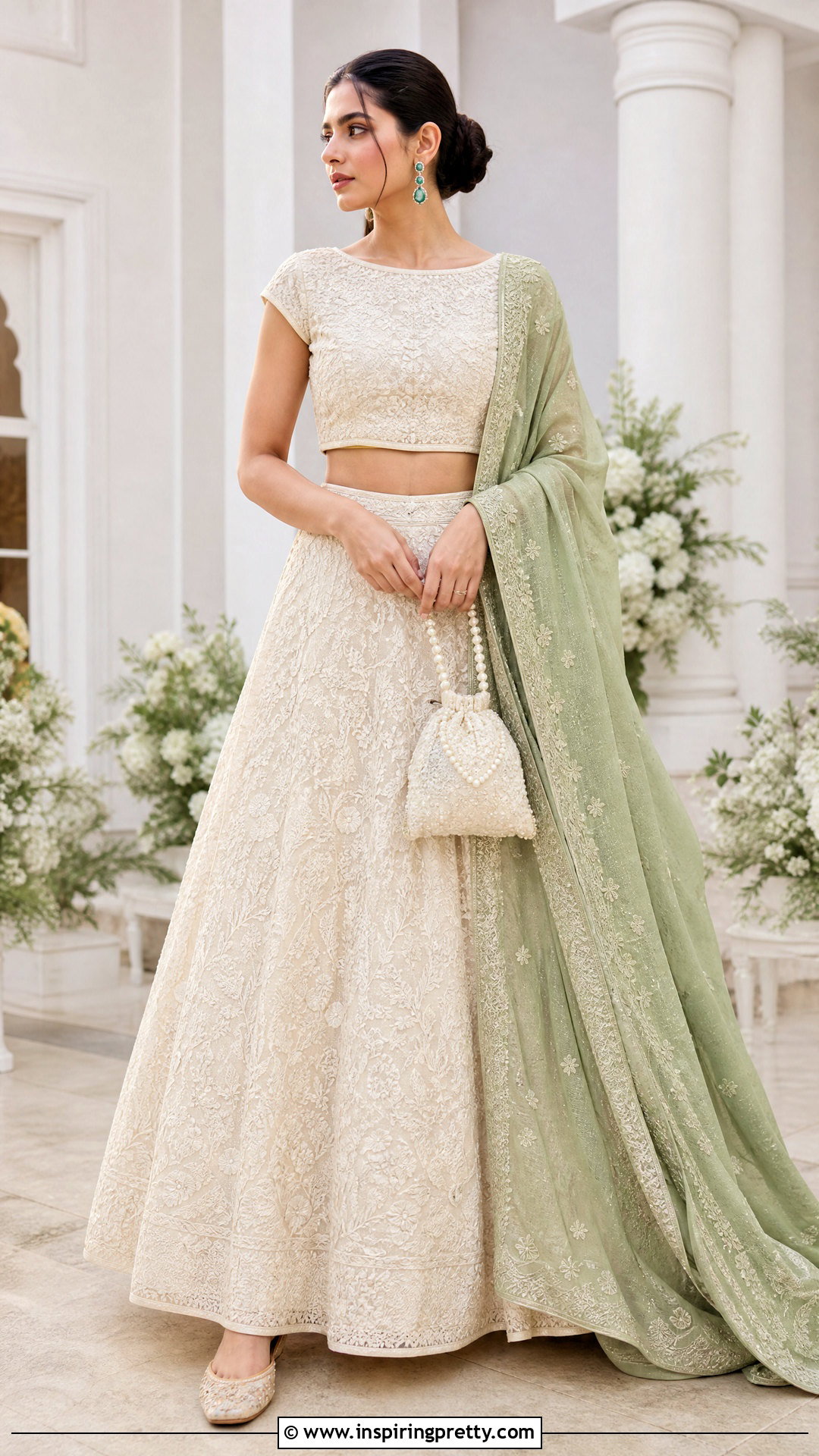
Ivory is a blank canvas you finish with color. A cap-sleeve blouse with a boat neck and a full skirt in tonal embroidery pair with a contrasting dupatta in sage, dusty pink or powder blue. Match gemstone earrings to the dupatta and add a pearl potli and gold juttis. Ivory pieces can look like one flat block, so mix textures: georgette, organza, embroidered cotton. A secure lining and well-placed hooks keep a pale outfit smooth, because every ripple shows on light fabric.
11. Maroon Chikankari Crop Top Lehenga Outfit
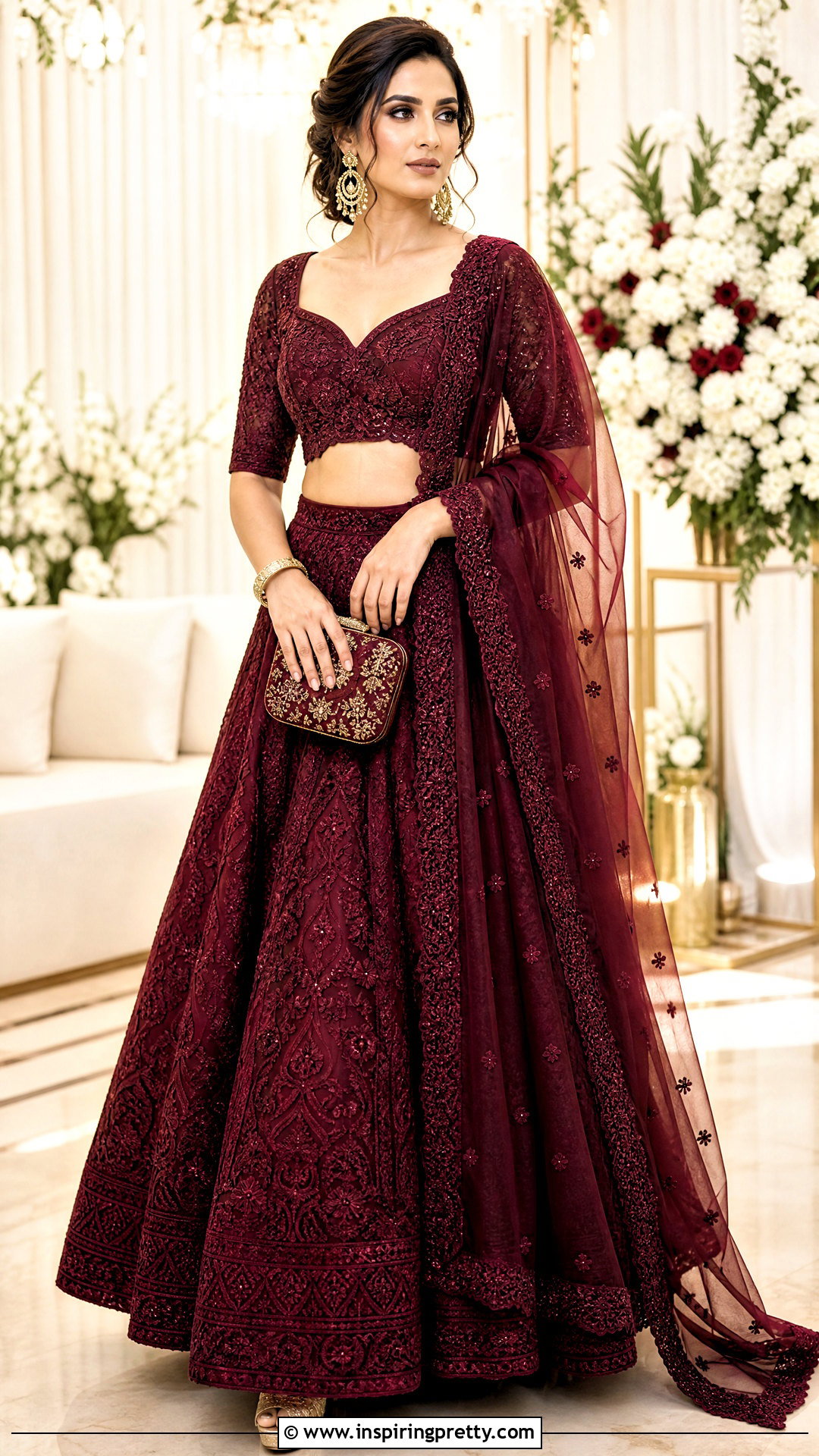
Maroon carries chikankari into evening without the heaviness of a fully embellished lehenga. Choose a fitted crop with a sweetheart neckline and elbow-length sleeves and a matching skirt with a broad embroidered hem. Gold or beige thread stands out well against the dark base. Antique gold chandbalis, a kada, a small embroidered clutch and platform heels suit it. Because maroon already has weight, I'd pick one or two statement pieces, never necklace, big earrings and stacked bangles all together.
12. Powder Blue Chikankari Crop Top Lehenga Outfit
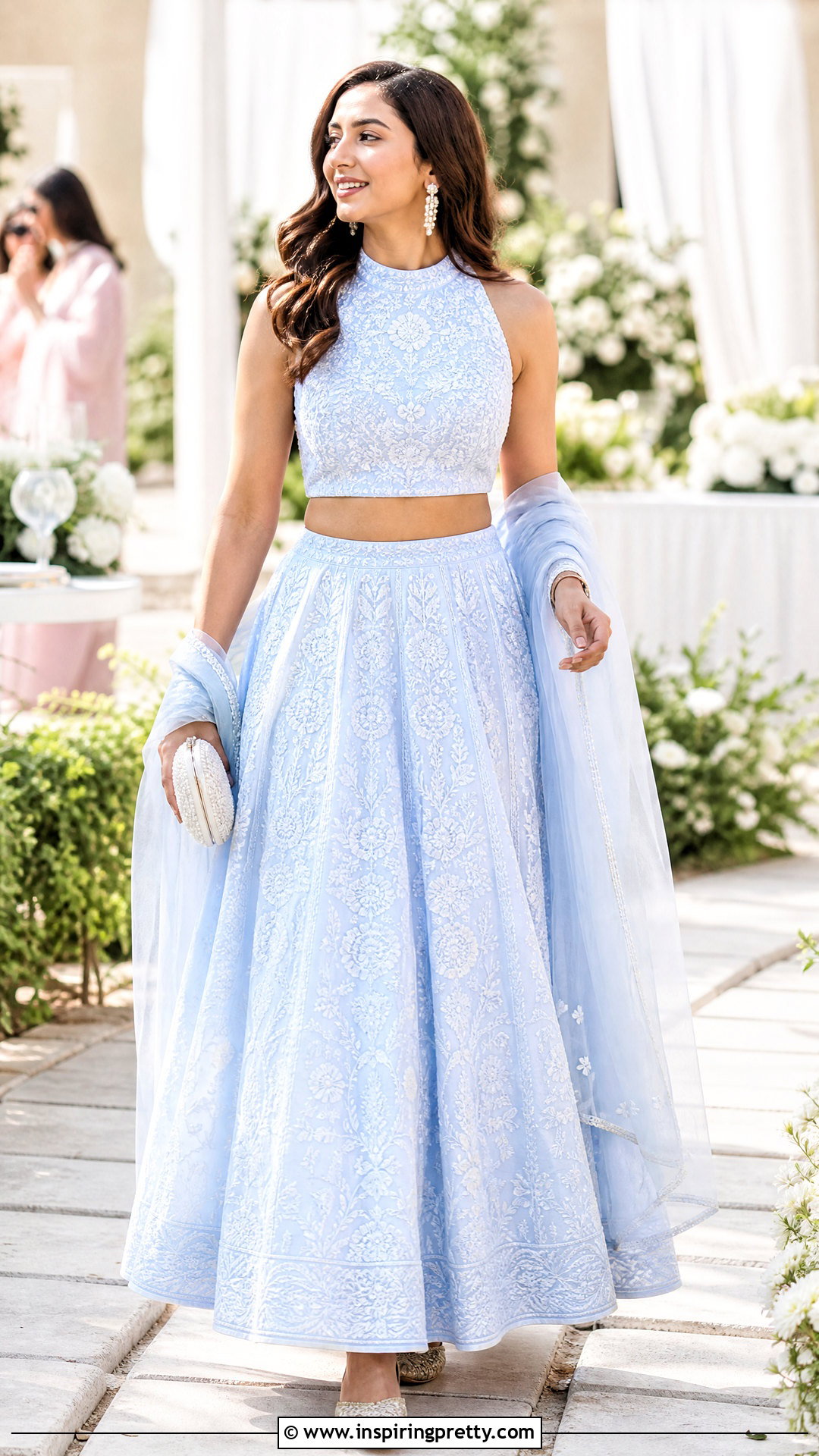
Powder blue is airy and made for outdoor daytime events. A sleeveless crop with a high round neck and keyhole back pairs with a flowing skirt in white threadwork with a scalloped hem. Pearl studs or drops, a white beaded clutch and silver juttis keep the palette soft. A sheer blue dupatta adds a traditional touch if the occasion calls for it. Look for a skirt that moves without clinging to your legs. A light lining stops the pale fabric going see-through in sunlight and makes the white embroidery look crisper on camera.
13. Orange Chikankari Crop Top Lehenga Outfit
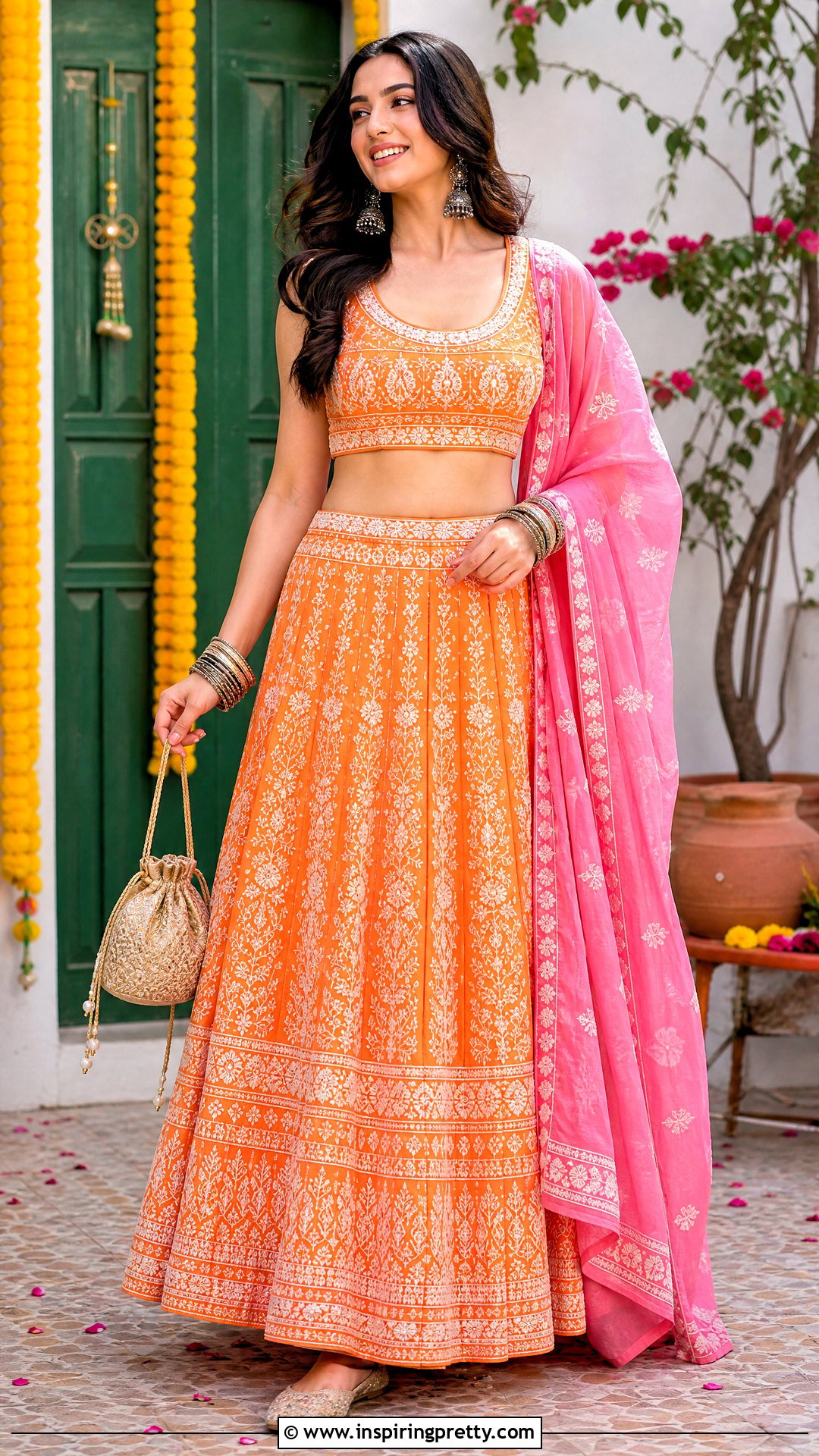
Orange is bold for mehendi or haldi, so keep the cut simple: a scoop-neck crop and a high-waisted skirt in the same shade. White thread looks fresh; muted gold looks richer. Oxidized earrings, bangles, a woven potli and embroidered juttis keep it relaxed. A pink or green dupatta adds contrast, but choose one with a light border. If head-to-toe orange feels like too much, pick a skirt with spaced embroidery and a busier blouse, so the solid color settles the lower half.
14. Navy Blue Chikankari Crop Top Lehenga Outfit
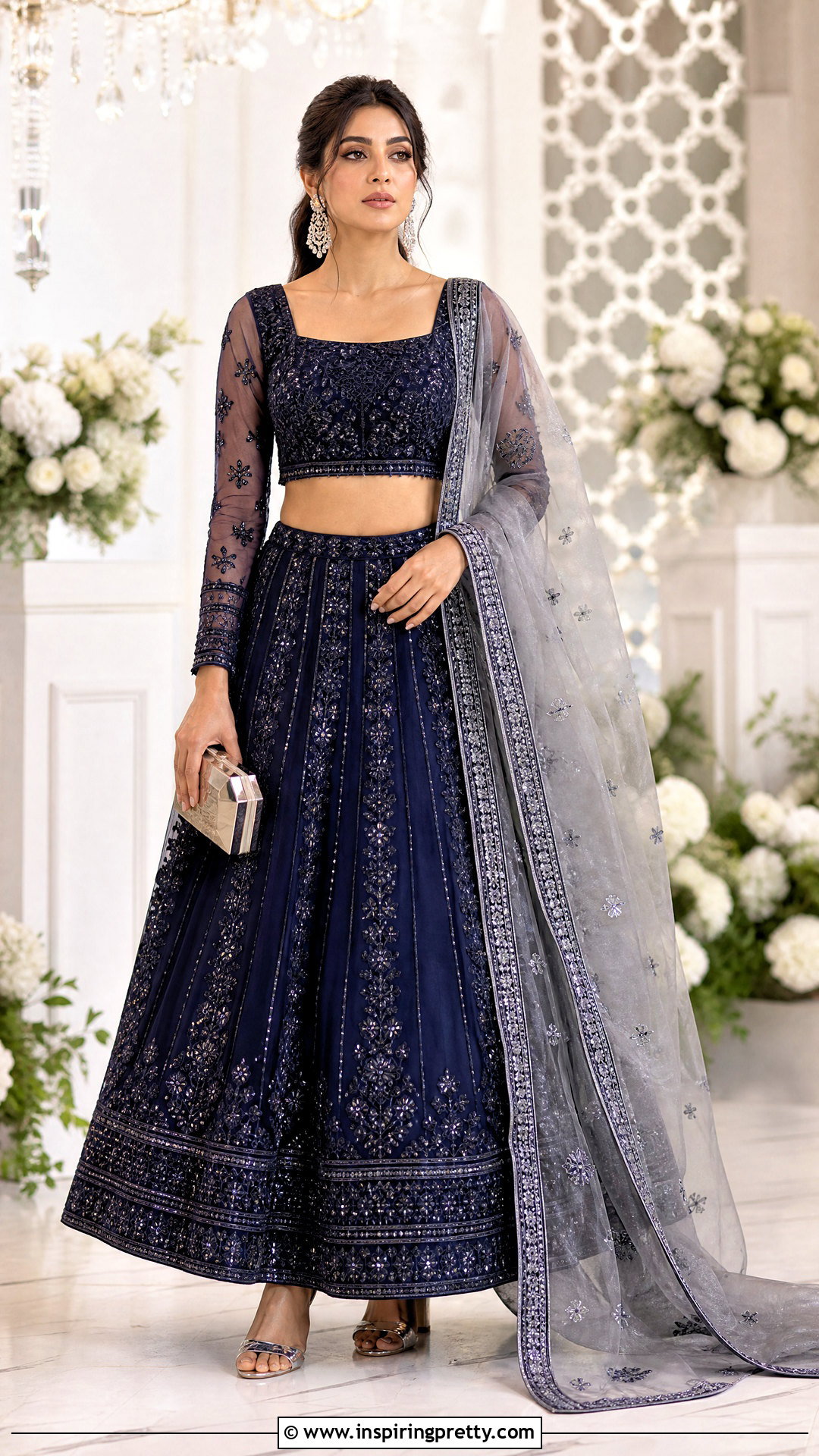
Navy with silver or pale gold chikankari reads formal and evening-ready. A structured square-neck blouse with sheer full sleeves suits a paneled skirt heavier at the hem. Crystal drops, a silver box clutch and metallic heels bring light to the dark color. A smoky gray or soft silver dupatta often looks better than a matching navy one. If you prefer less midriff, a slightly longer blouse with a high waist covers more without losing the cropped shape. Keep the rest minimal so the fine threadwork stays visible.
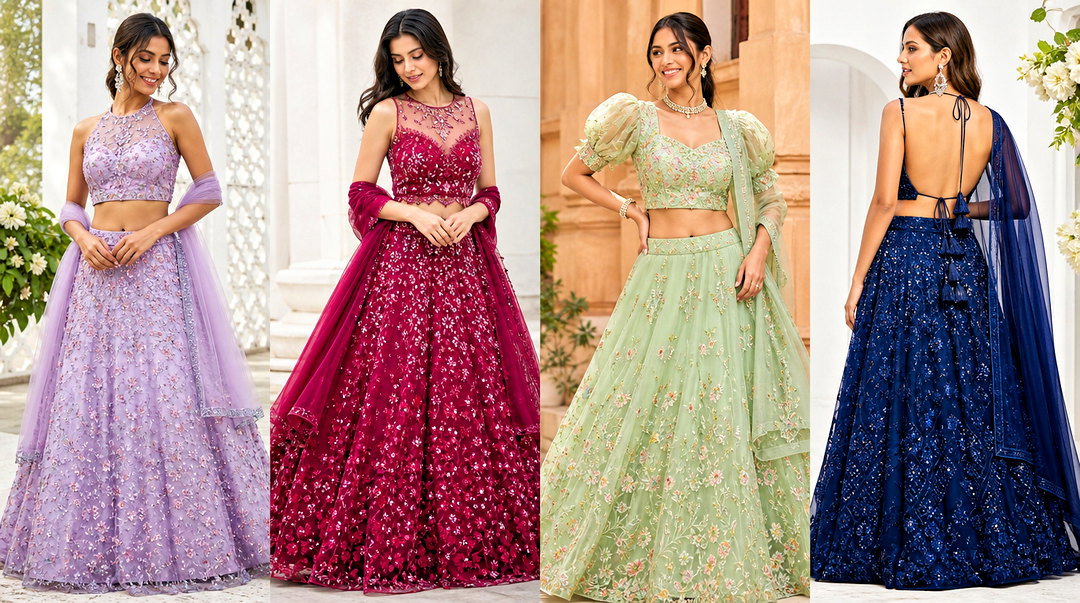
15. Mint Green Chikankari Crop Top Lehenga Outfit
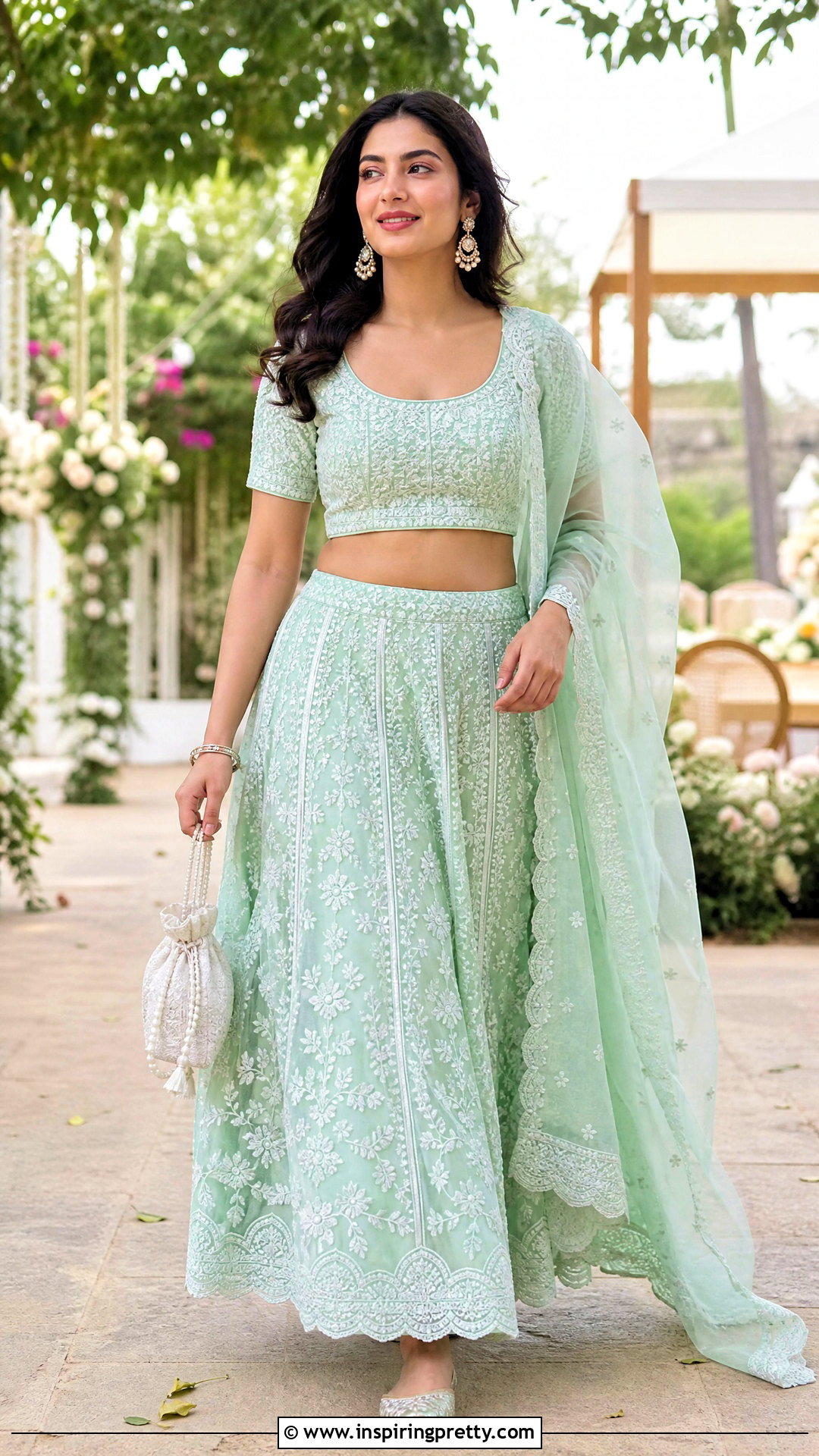
Mint is fresh and needs very little styling. A short-sleeve crop with a curved neckline and fitted waist goes over a flowing skirt worked in white thread and small sequins. Pearl chandbalis, a slim silver bracelet, a white potli and metallic flats keep it gentle. Wear the dupatta over one shoulder or at the elbows. For a cleaner silhouette, I'd choose a skirt with paneled volume instead of heavy gathers at the waist, which add bulk right where the blouse ends.
16. Purple Chikankari Crop Top Lehenga Outfit
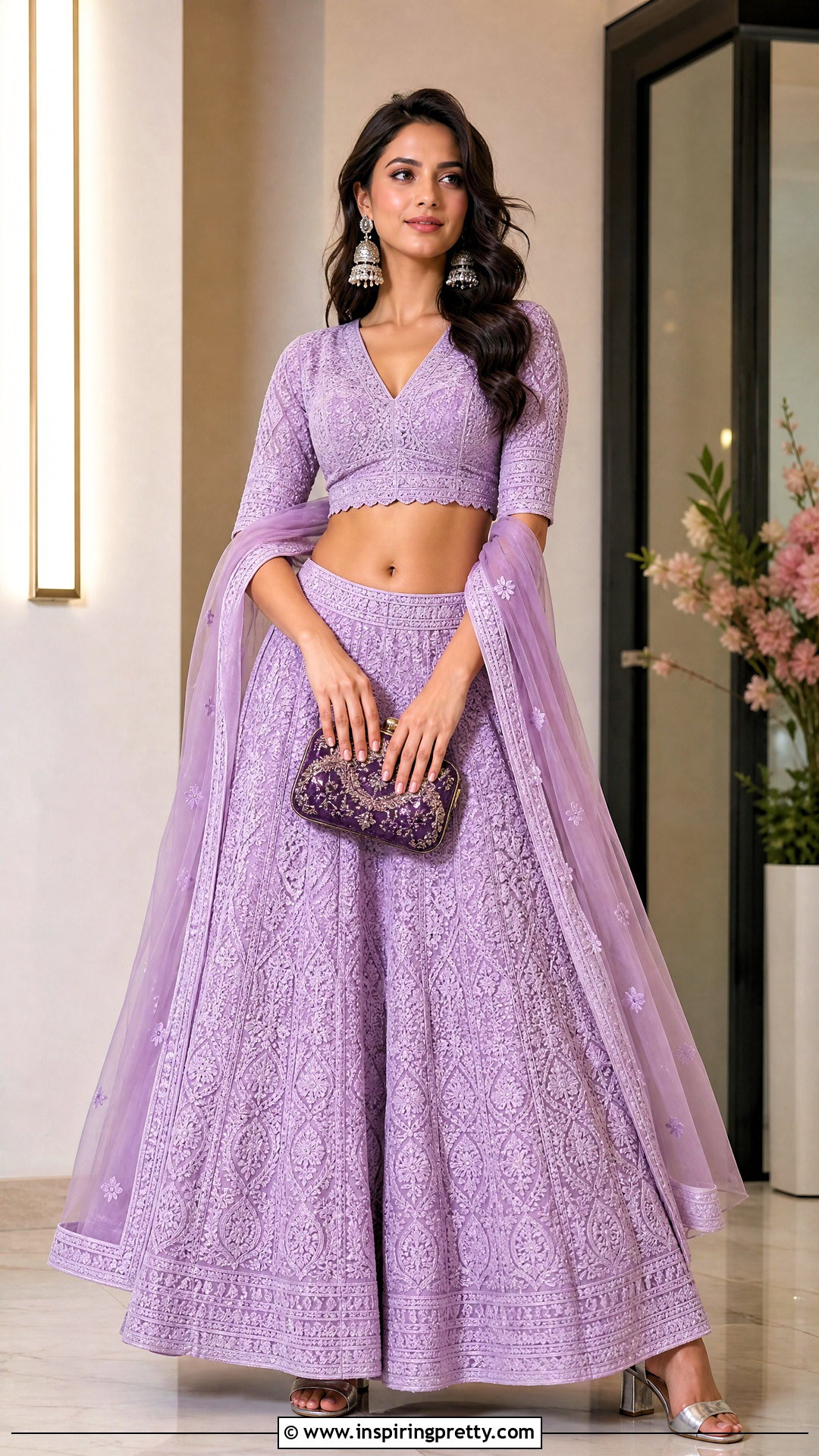
Purple with silver or lavender thread is rich and a little dramatic. A V-neck crop with elbow sleeves and a supportive bodice pairs with a circular skirt heavier at the hem. Silver jhumkas, a purple clutch and low metallic heels suit an evening event. A sheer lavender dupatta lightens it. If the skirt is heavily worked, ask for a firm waistband and a light lining; weight in the hem drags a loose waistband down. You should be able to walk, sit and dance without hitching it up.
17. Gray Chikankari Crop Top Lehenga Outfit
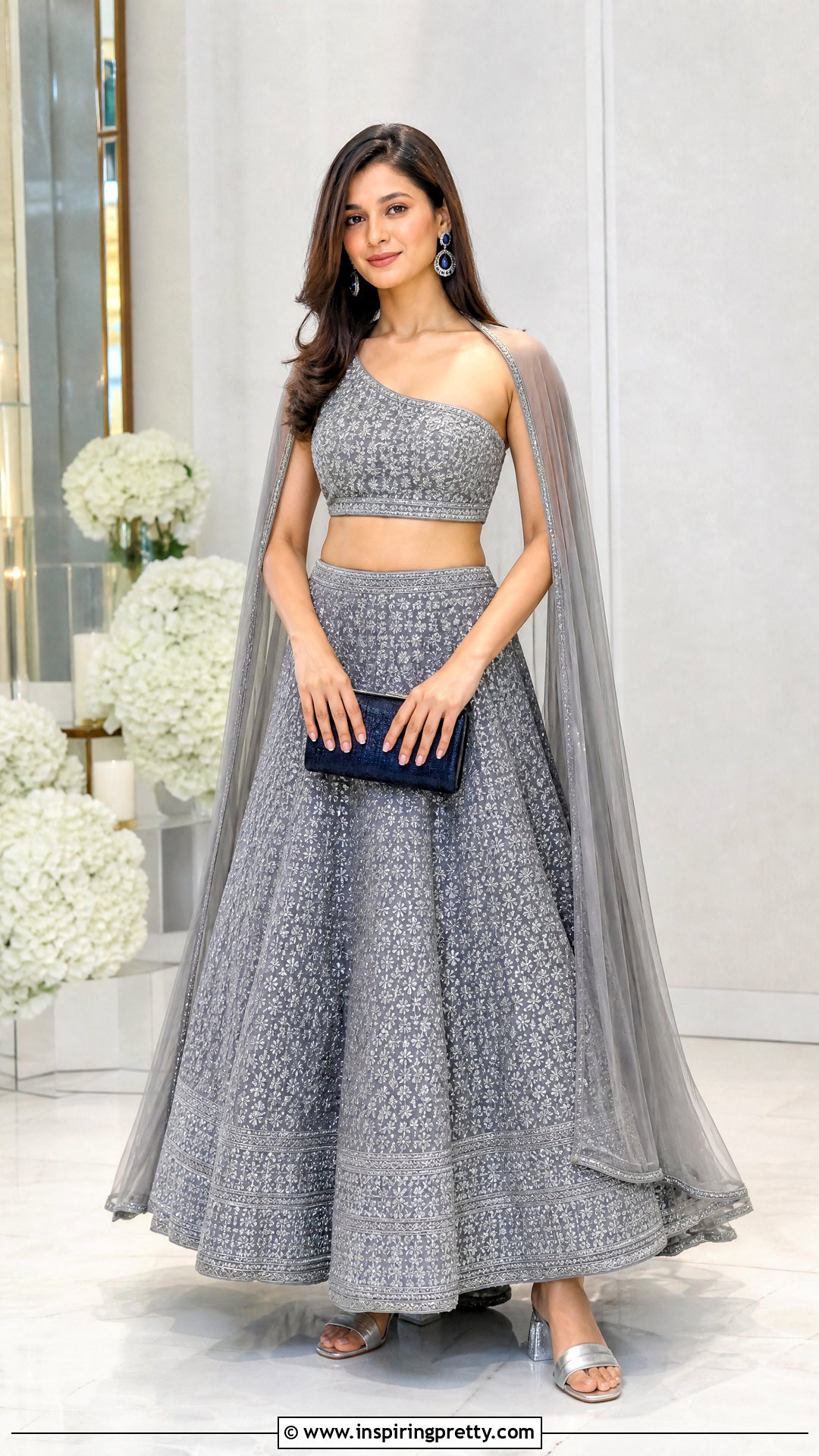
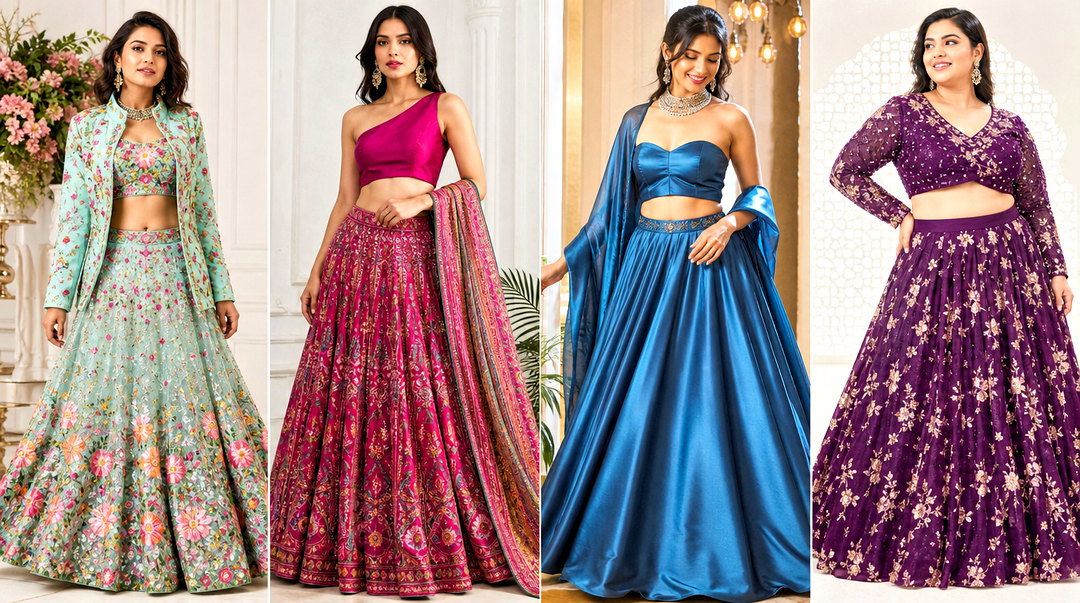
Soft gray is the modern neutral of this list. An asymmetric or one-shoulder blouse over a flowing high-waisted skirt keeps it contemporary. White or silver thread stops gray looking dull. Sapphire earrings, a navy clutch and silver block heels add a little color. A sheer gray cape or light dupatta gives cover. Gray can go flat under indoor lighting, so choose threadwork with varied stitches and some shine, and wear a berry lip so the palette doesn't wash you out.
18. Teal Chikankari Crop Top Lehenga Outfit
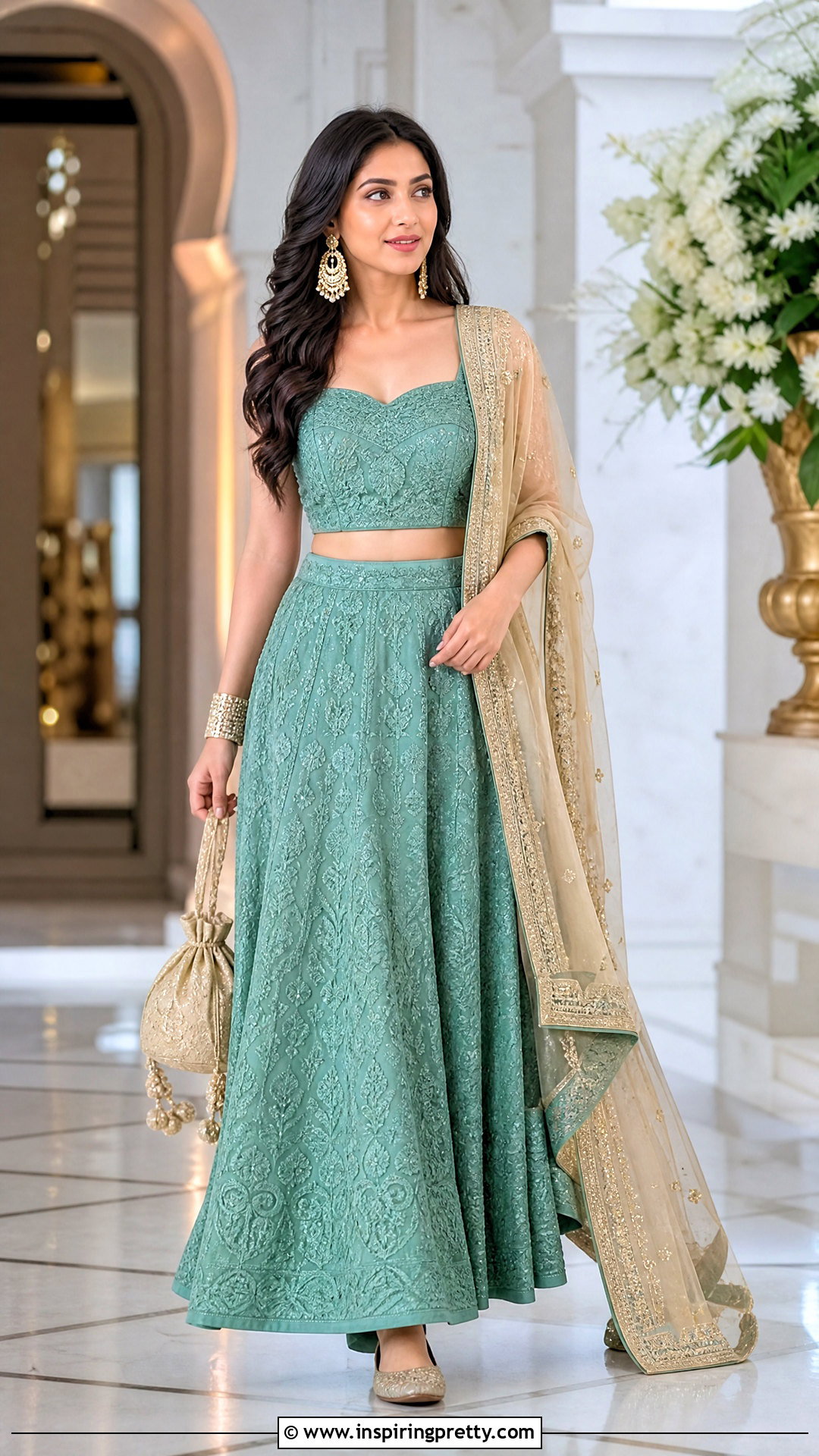
Teal sits between blue and green and looks rich on most skin tones. A modest sweetheart crop with short sleeves pairs with a high-waisted skirt in tonal embroidery, sequins and a defined border. Gold earrings, a cuff, a structured potli and juttis warm it up. Pin a pale gold dupatta at one shoulder and let it fall behind. My rule with teal: either heavy jewelry or dense embroidery, never both. A braided bun finishes it neatly.
19. Magenta Chikankari Crop Top Lehenga Outfit
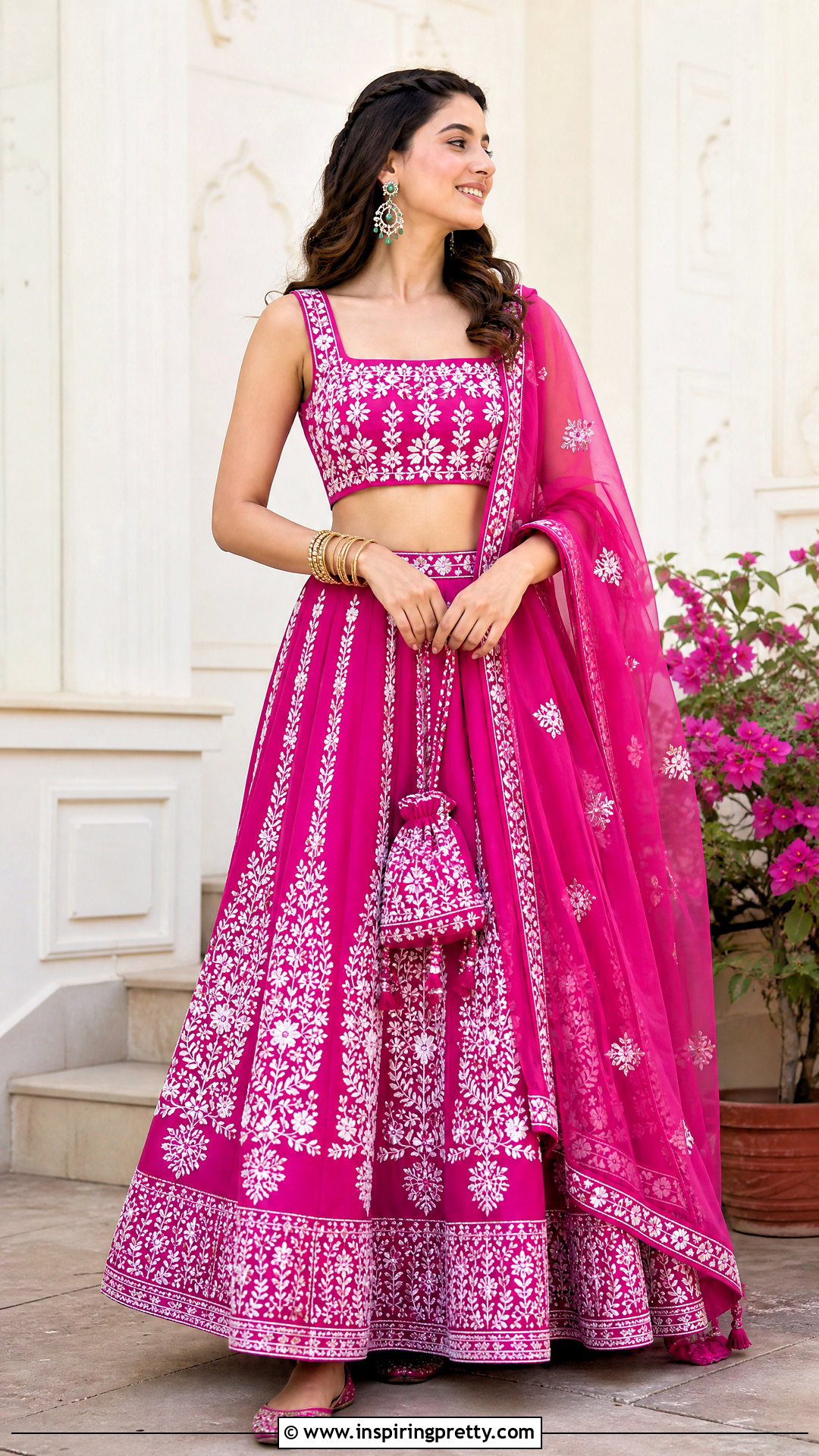
Magenta photographs vividly, especially outdoors or against pale décor. A sleeveless square-neck crop with a wide shoulder line suits a flared skirt in white or pale gold thread. Green gemstone earrings give classic contrast, with gold bangles and a potli. If you'll stand or dance for hours, choose juttis over heels. Drape the dupatta over one arm so the blouse stays visible. Keep makeup balanced, with defined eyes and a rose lip, rather than matching everything to the outfit.
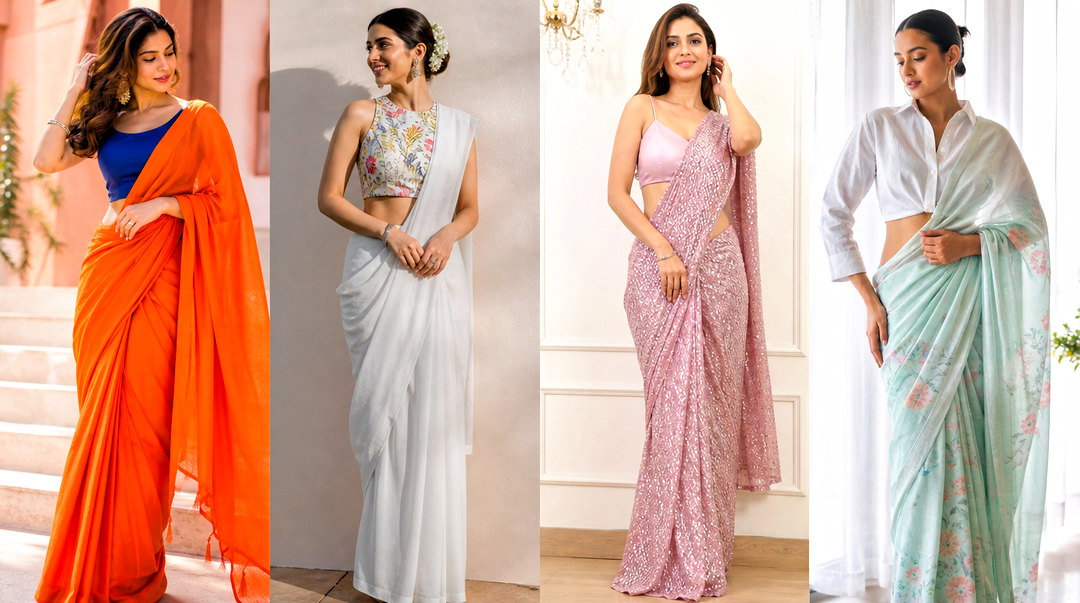
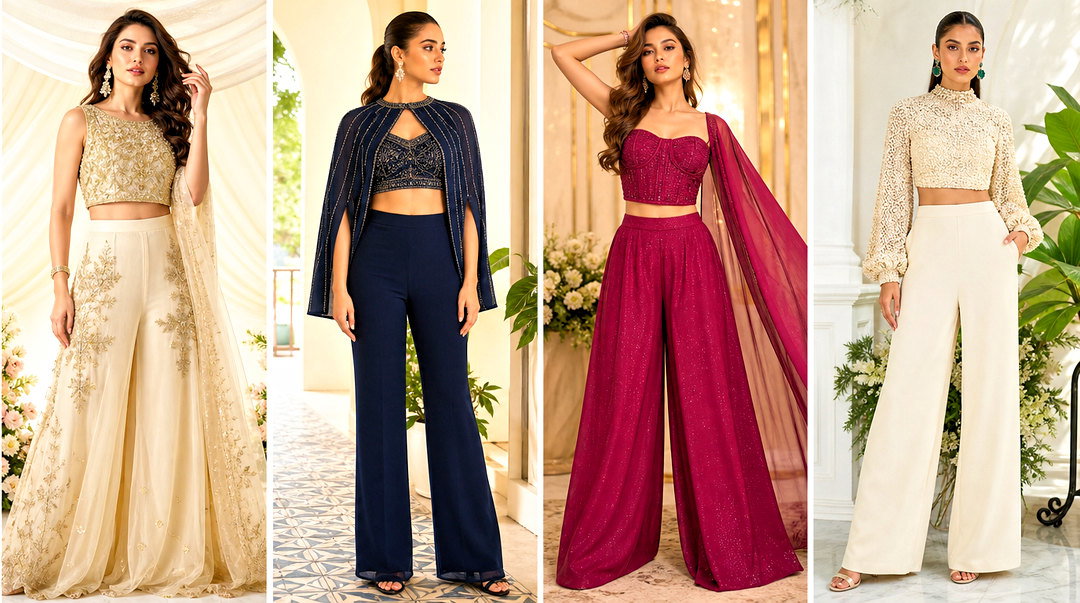
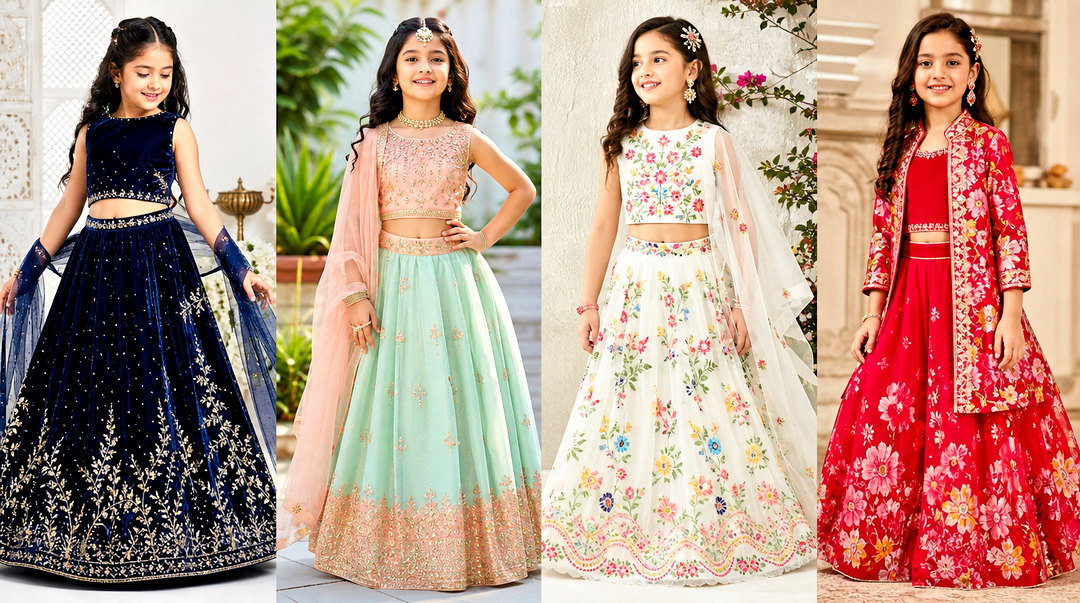
20. Pastel Multicolor Chikankari Crop Top Lehenga Outfit
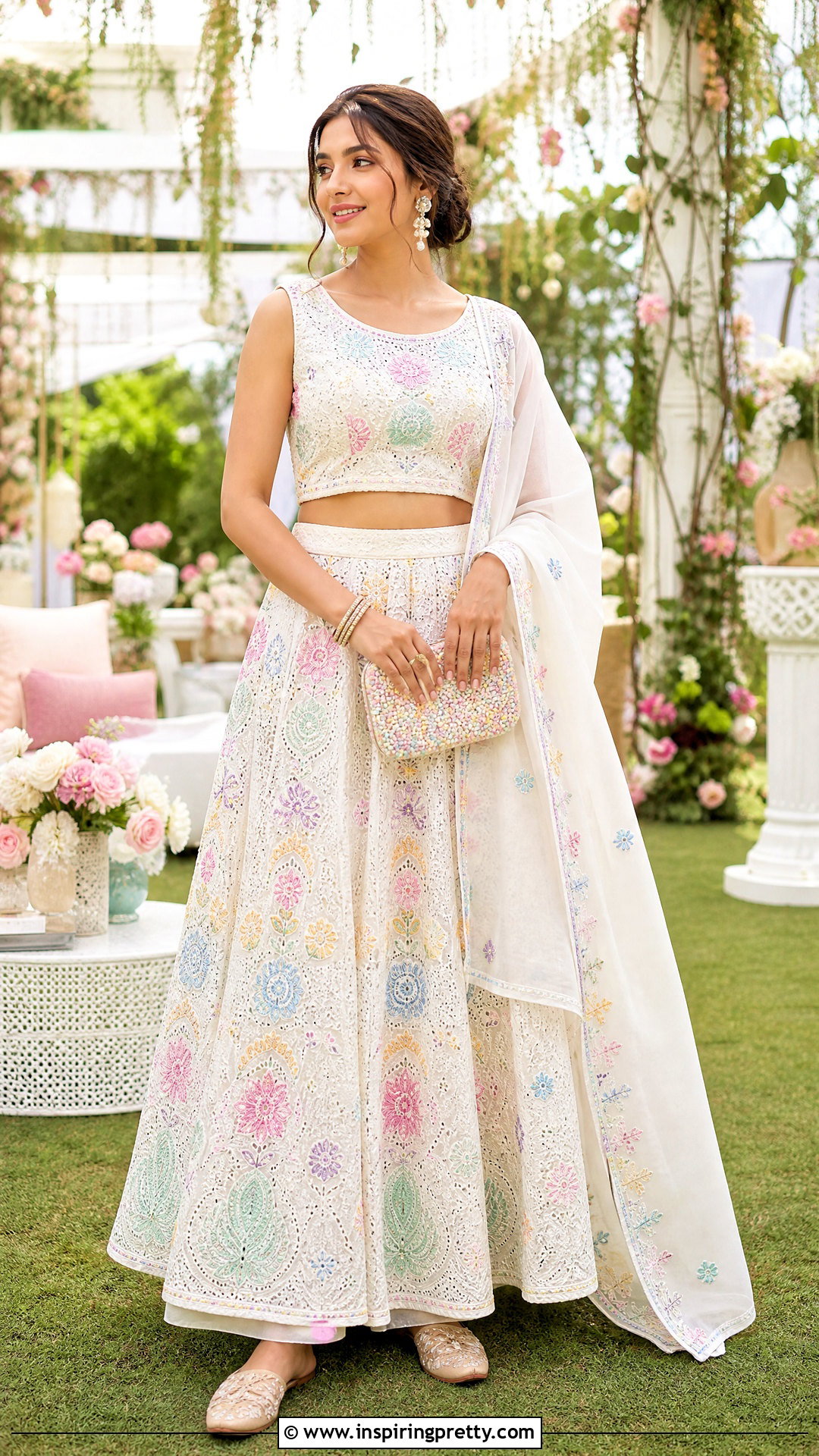
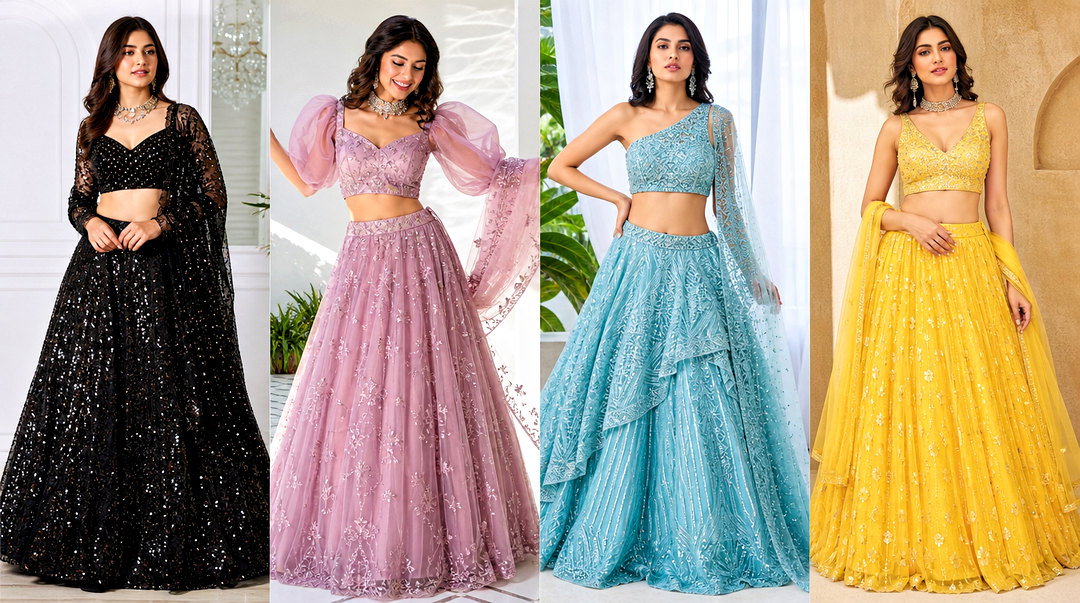
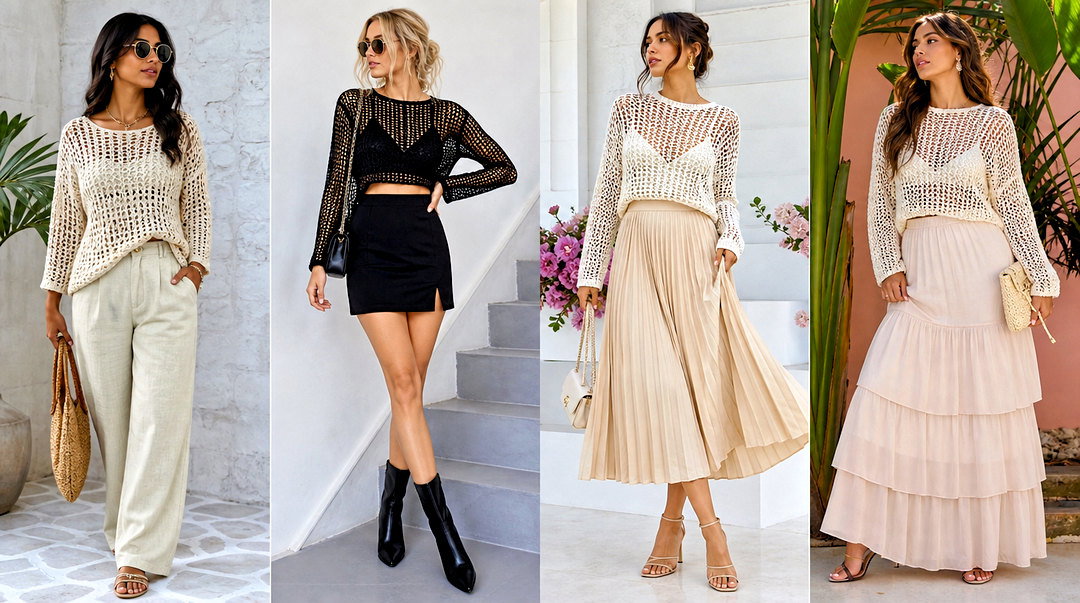
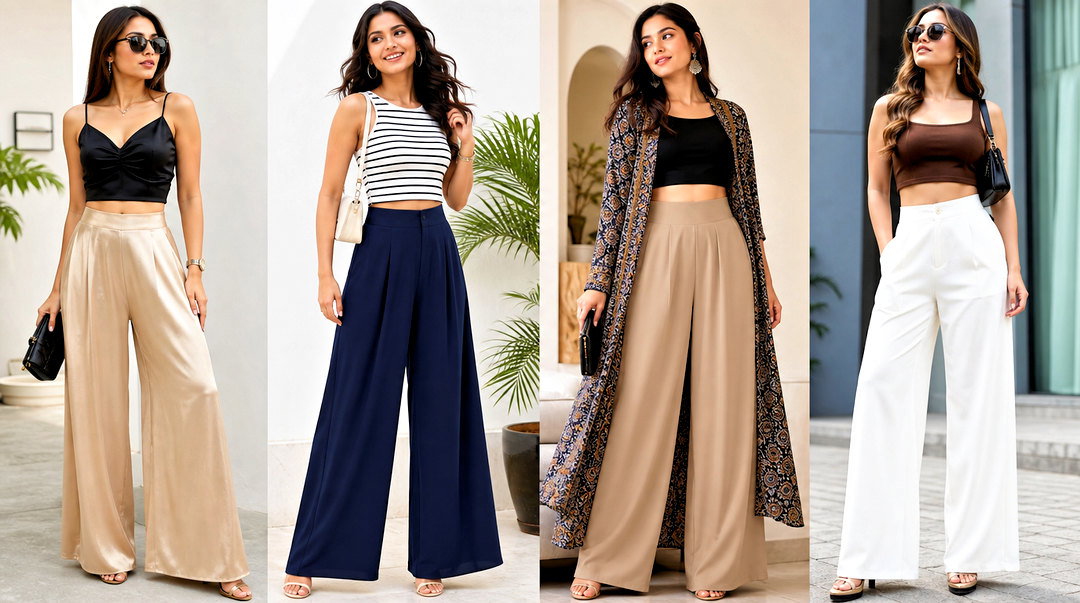
Multicolor pastel threadwork on ivory or blush is playful and young. Keep the blouse simple with a round neck so the colored motifs carry the outfit. Pick up one or two thread colors in small accessories, flowers or makeup instead of introducing a new shade. Pearl earrings, a pastel beaded clutch and neutral juttis keep it light. A sheer ivory dupatta with a narrow multicolor border finishes it. Skip heavy jewelry here; it competes with the embroidery straight away.
21. Chikankari Crop Top Lehenga With Jacket
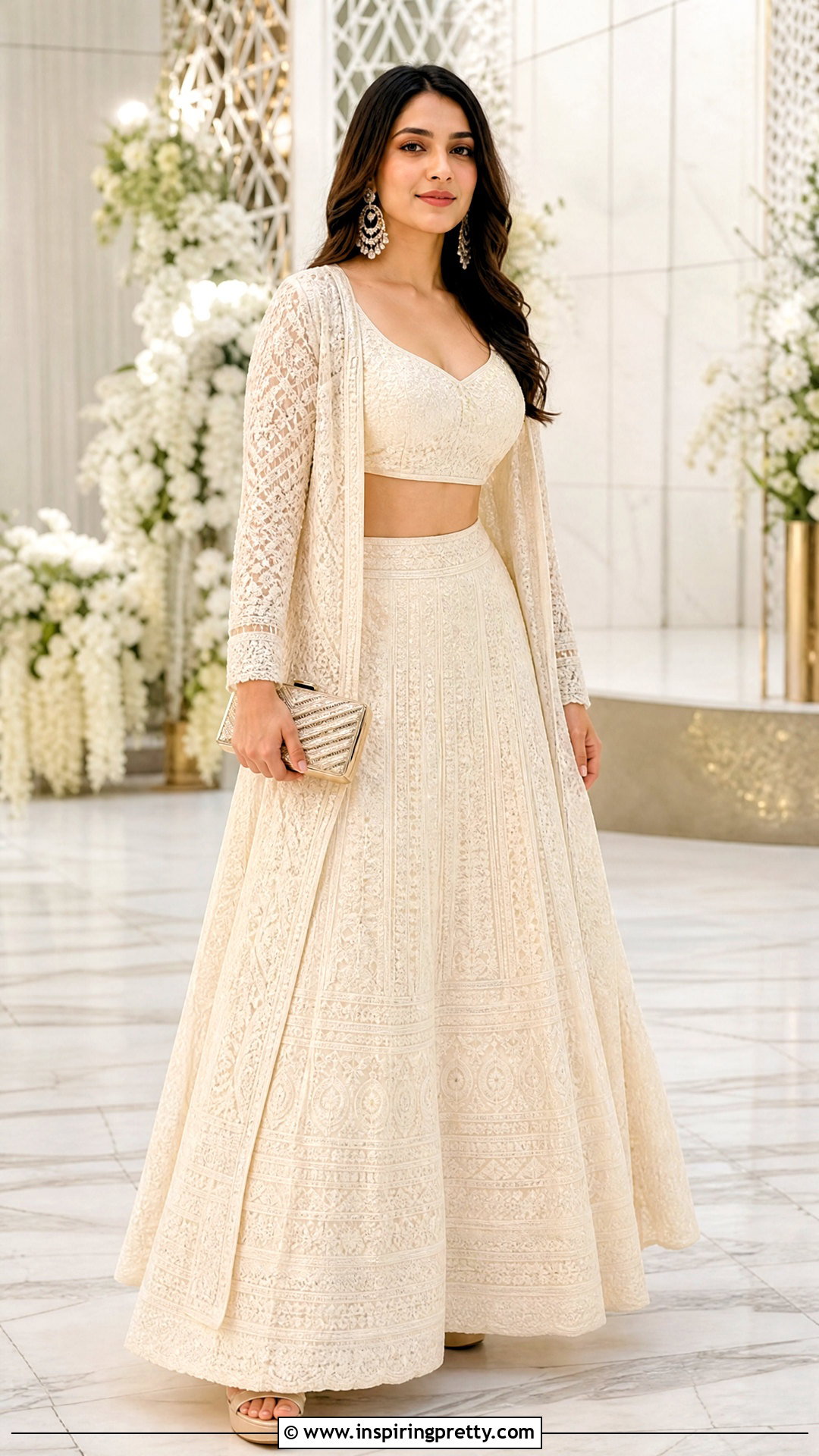
A long embroidered jacket turns the lehenga into an Indo-Western look and covers arms and sides. Start with a fitted sleeveless crop and high-waisted skirt in ivory, blush or sage, then add a floor-length open jacket in tonal chikankari. The long vertical line makes you look taller. Skip the dupatta; the jacket already moves. Statement earrings, a structured clutch and platform heels finish it. Have the jacket hemmed with your event shoes on, so it clears the floor when you walk.
22. Chikankari Crop Top Lehenga With Cape
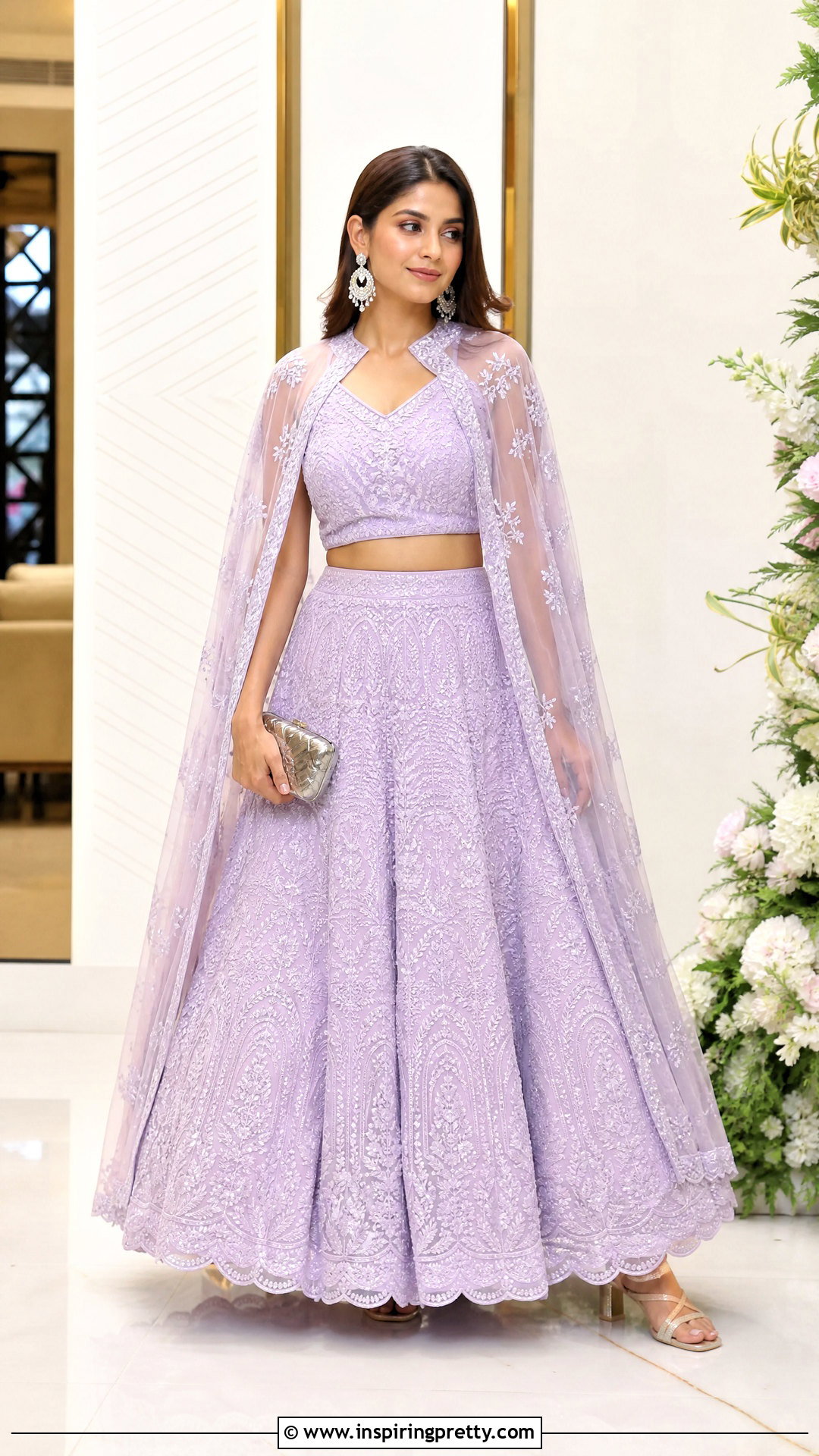
A sheer cape gives movement without a dupatta to manage all night. Wear a fitted sleeveless top and a high-waisted flared skirt, then layer a shoulder- or waist-length embroidered cape over the blouse. Powder blue, lavender or mint in one color keeps the line clean. Crystal earrings, a small metallic clutch and low block heels suit it. Since the cape frames the neck, skip the necklace. Check the fastening: a cape that slides forward is the most common annoyance with this look.
23. Chikankari Crop Top Lehenga With Organza Dupatta
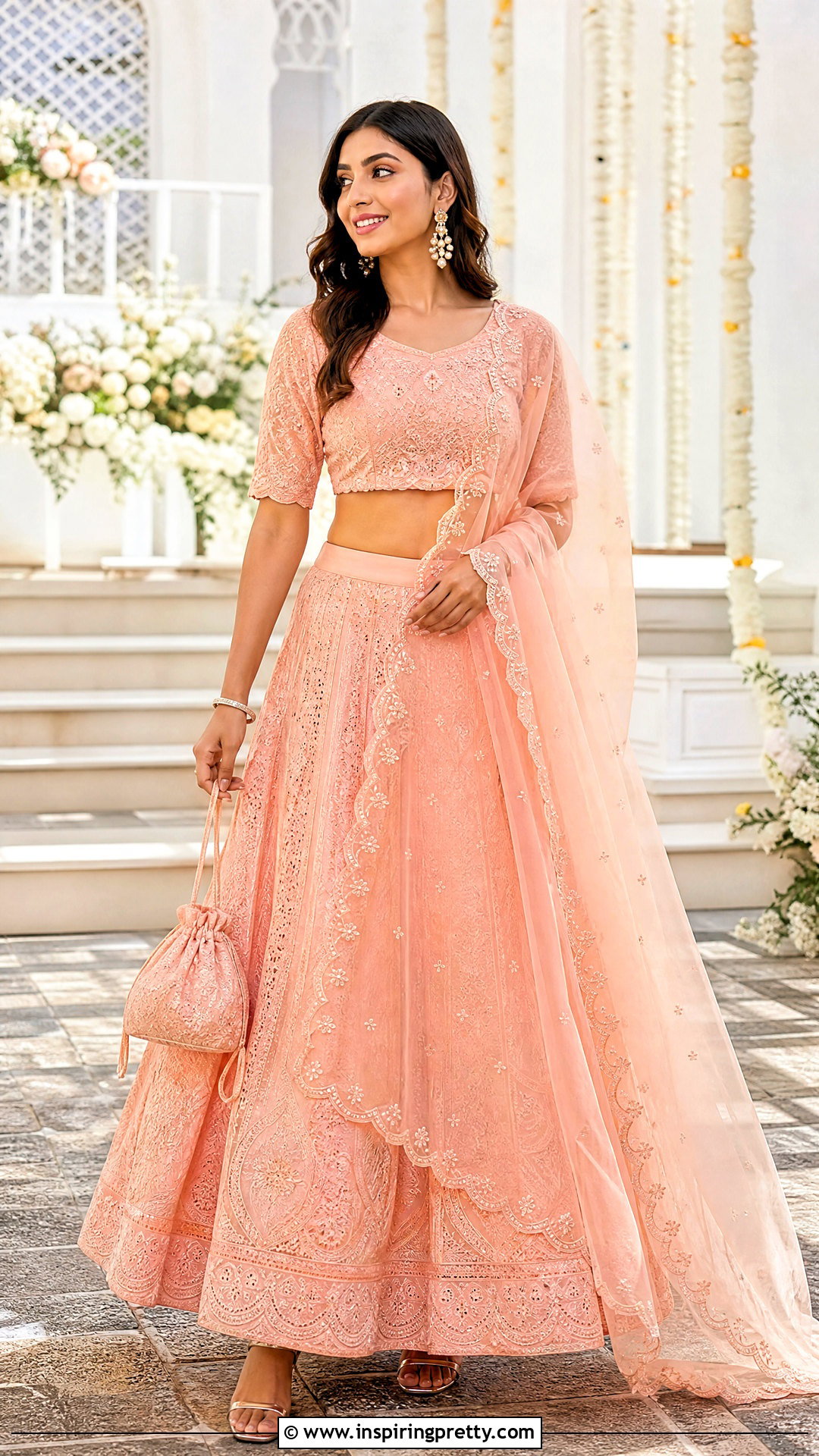
Organza brings crispness against the softness of chikankari. A monochrome set in peach, ivory, rose or pistachio with a transparent organza dupatta and a scalloped border looks polished. An elbow-sleeve blouse and paneled skirt give a balanced base. Drape the dupatta over one shoulder and secure it at the opposite waist. Pearl earrings, a slim bangle, an embroidered potli and low metallic heels suit it. Organza holds its folds, so use few pleats at the shoulder or it stands up and widens you.
24. Chikankari Crop Top Lehenga With Mirror Work
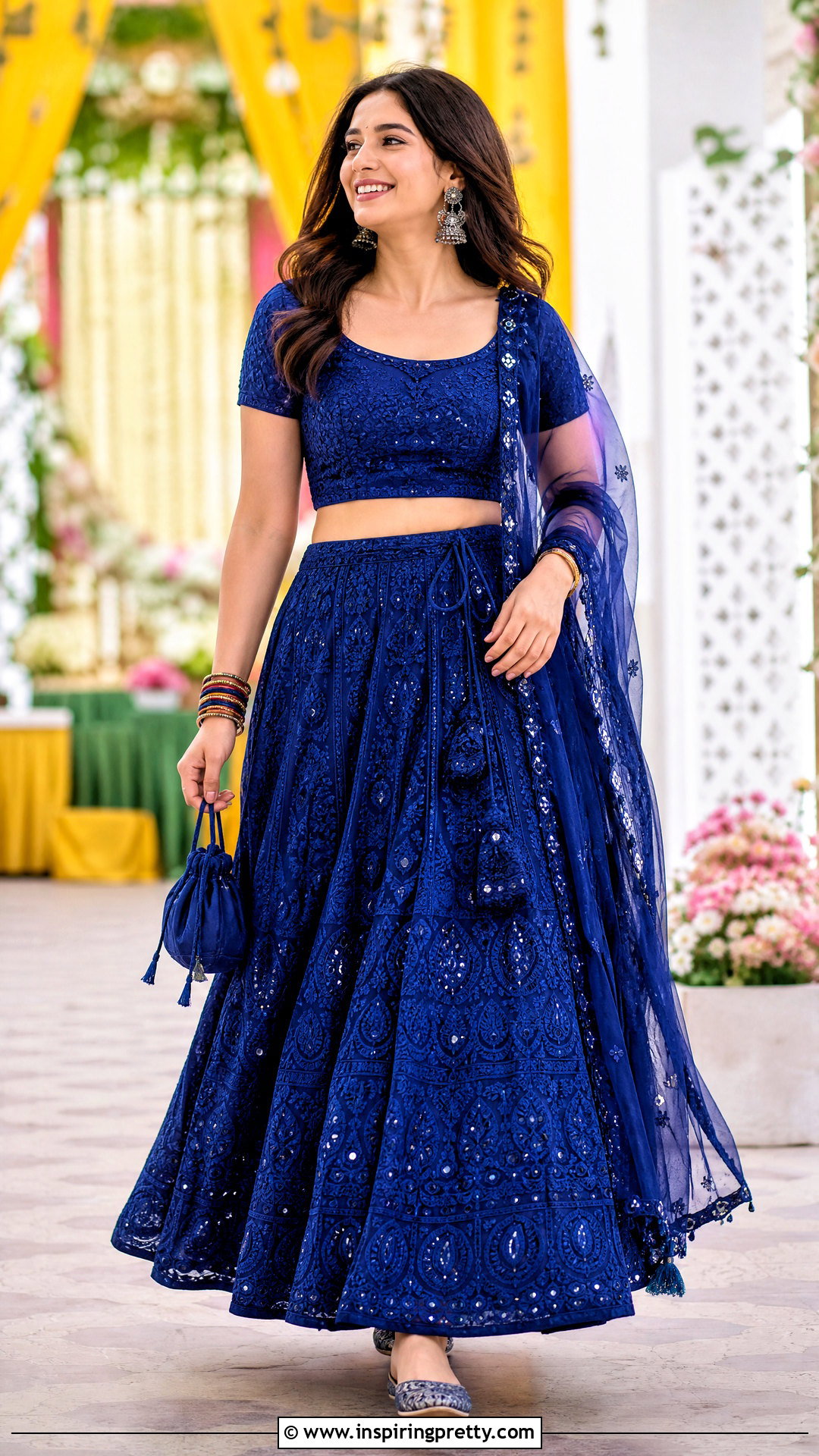
Mirror work adds sparkle to chikankari for daytime events. Choose a fitted crop top with scattered mirrors at the neckline and sleeves and a skirt with mirrors at the waist and hem. Emerald, coral, royal blue and yellow suit it. Oxidized silver earrings, colorful bangles, a drawstring potli and juttis keep it festive. Keep the dupatta light. Before the event, run your hand over the mirrors; any loose or sharp edge will snag a georgette dupatta all evening.
25. Chikankari Crop Top Lehenga With Full Sleeves
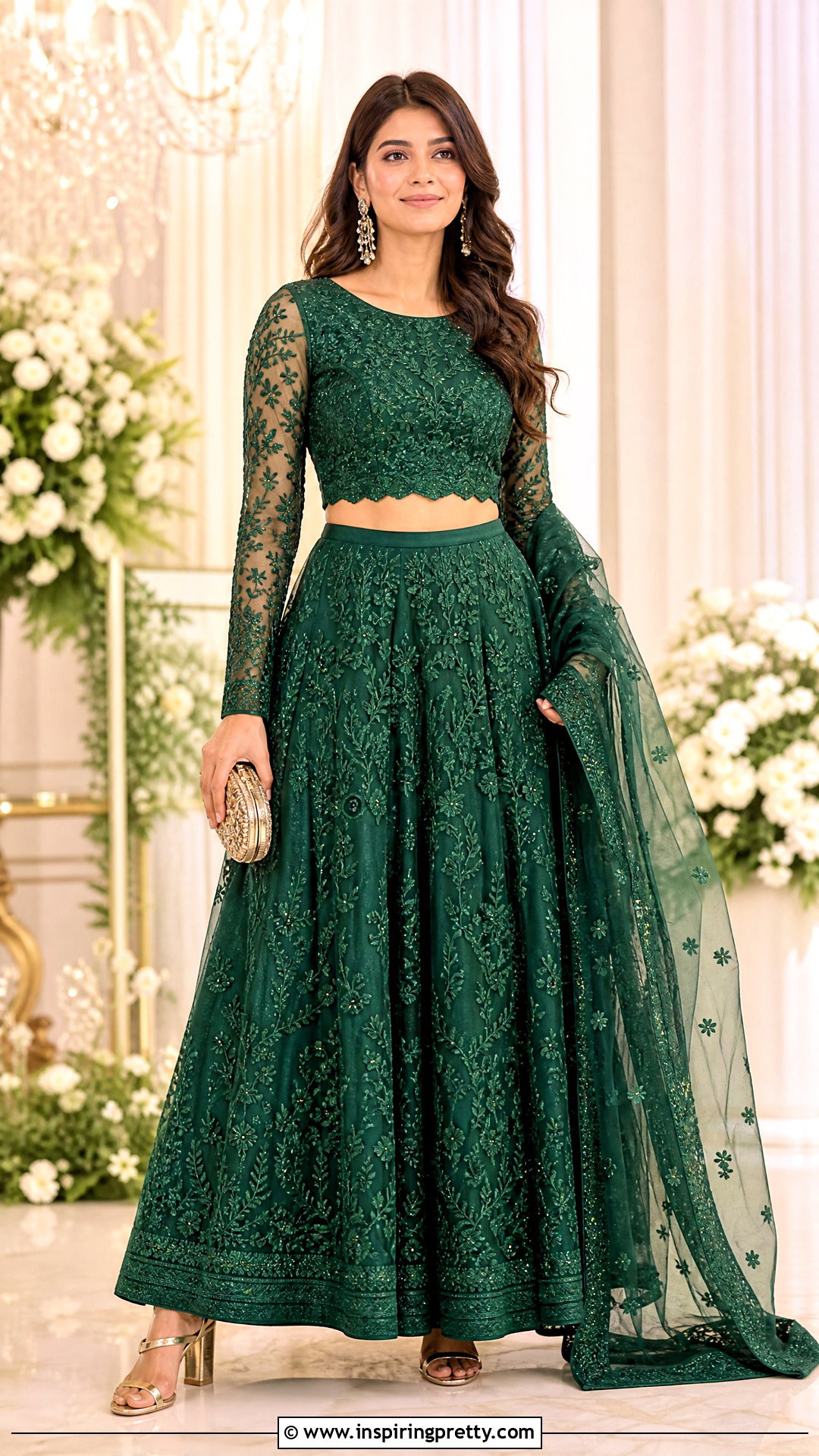
Full sheer sleeves give elegant coverage and balance a full skirt. Choose a fitted blouse with embroidered sleeves, a defined neckline and lining through the bodice, with a matching high-waisted skirt for one long line. Jewel tones suit evening; ivory and pastels suit day. Drop earrings, a small clutch and block heels or embroidered flats finish it. Keep the dupatta narrow or over one arm so the sleeves show. Raise your arms at the fitting; tight embroidered sleeves with a low armhole pull across the back.
Guest Colors That Respect the Bride and the Family
Color rules vary between communities and families, so I always ask the hosts before picking a shade. A few guidelines hold at most South Asian weddings:
- Bright red and heavy bridal maroon are usually kept for the bride. Wear them to sangeet or reception only if the family says it's fine.
- All-white is associated with mourning in some families. Ivory with colored accessories or a colored dupatta is the safer route.
- Yellow at the haldi and green at the mehendi are popular but never compulsory; some families set a theme color, so check the invitation.
- Black is fine at many evening functions now, but some older relatives still see it as unlucky at a wedding.
Caring for Chikankari Once the Celebrations End
Plain cotton chikankari can be hand washed gently in cool water, but anything with sequins, mirror work, mukaish or a georgette base is safer dry cleaned. Never wring it; press the water out in a towel. Iron embroidered areas from the reverse on a thick towel, so the stitches stay raised instead of being flattened. Store the lehenga folded in a cotton bag, not plastic, with tissue between the folds of embellished panels so mirrors and sequins don't rub against the threadwork.
Let the Threadwork Lead
Chikankari works across far more colors and occasions than its white-on-white origins suggest. Pastels suit daytime; maroon, teal, black and navy carry evening. Before you commit, settle the blouse length, sleeve fit, waistband, lining, shoes and how the dupatta will sit. Then let the threadwork lead and keep jewelry to what supports it. Whether you choose a plain monochrome set, a jacket or a cape, the outfit should let you dance, eat and hug without adjusting anything.
Related posts:


Leave a Reply