
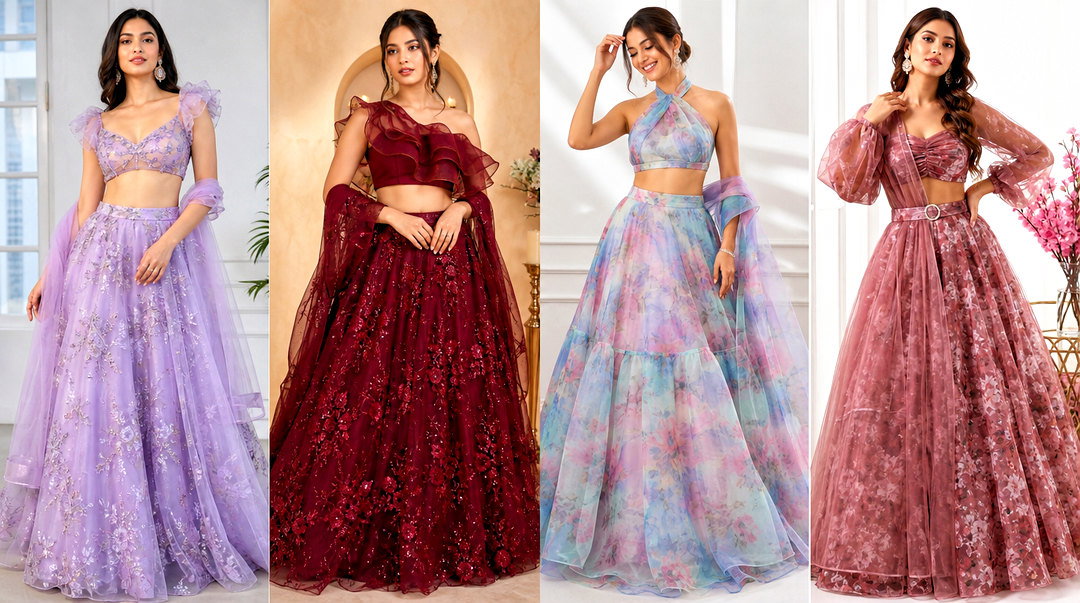
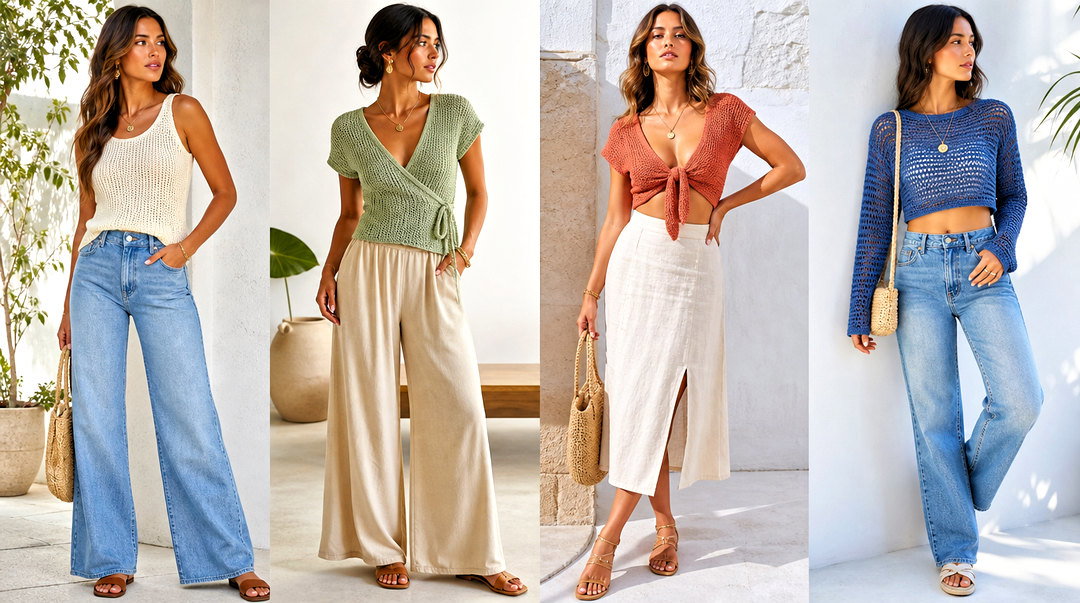
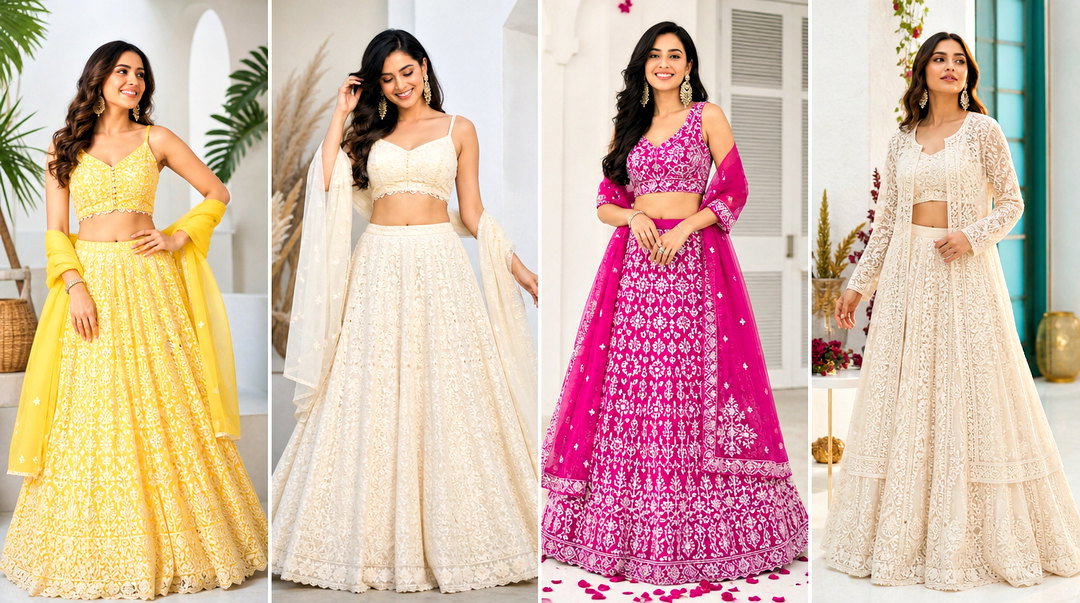
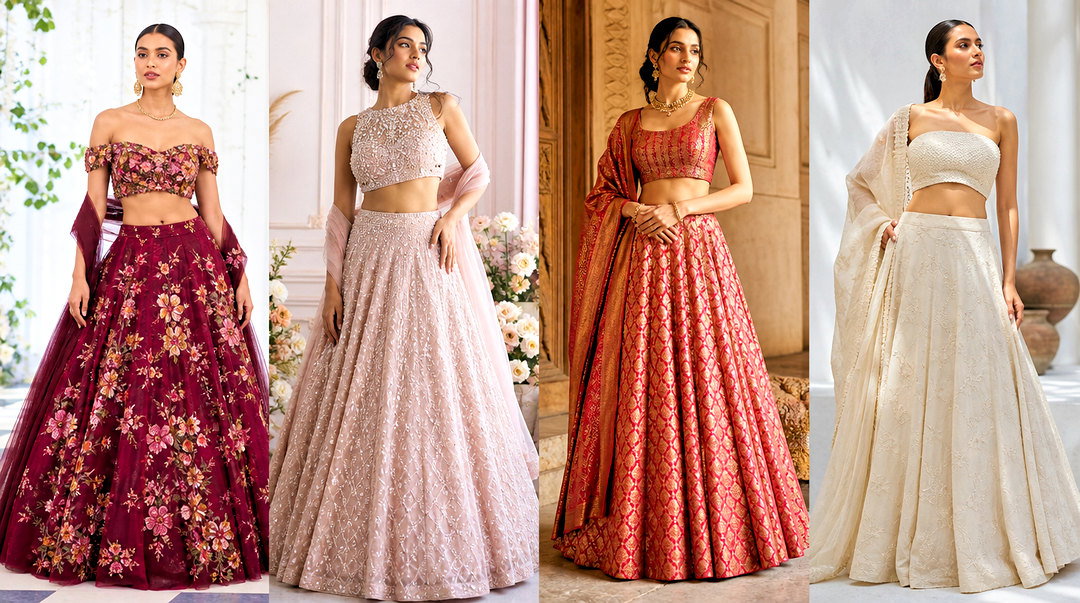
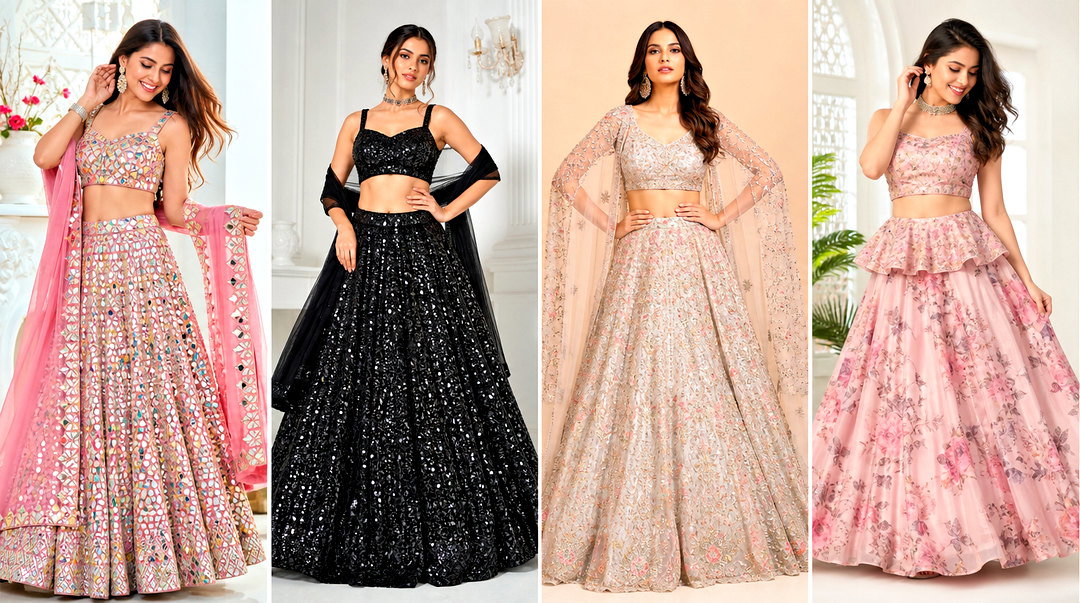
The right blouse can completely change the mood, fit, and visual balance of a lehenga. These **50 lehenga top design ideas** cover traditional cholis, modern corsets, modest full-sleeve blouses, glamorous necklines, and comfortable options for dancing. Current lehenga fashion favors expressive silhouettes such as structured corsets, cropped jackets, mirror-work necklines, statement sleeves, and decorative tie-back details. () The best choice should complement the skirt rather than compete with it. Consider the occasion, fabric weight, support, sleeve mobility, and dupatta placement before finalizing a design. Every look below also explains how to coordinate the skirt, footwear, and accessories, making it easier to plan a complete outfit. Explore these 50 lehenga top design ideas to find a flattering design that feels personal and wearable.

1. Sweetheart Neck Lehenga Top
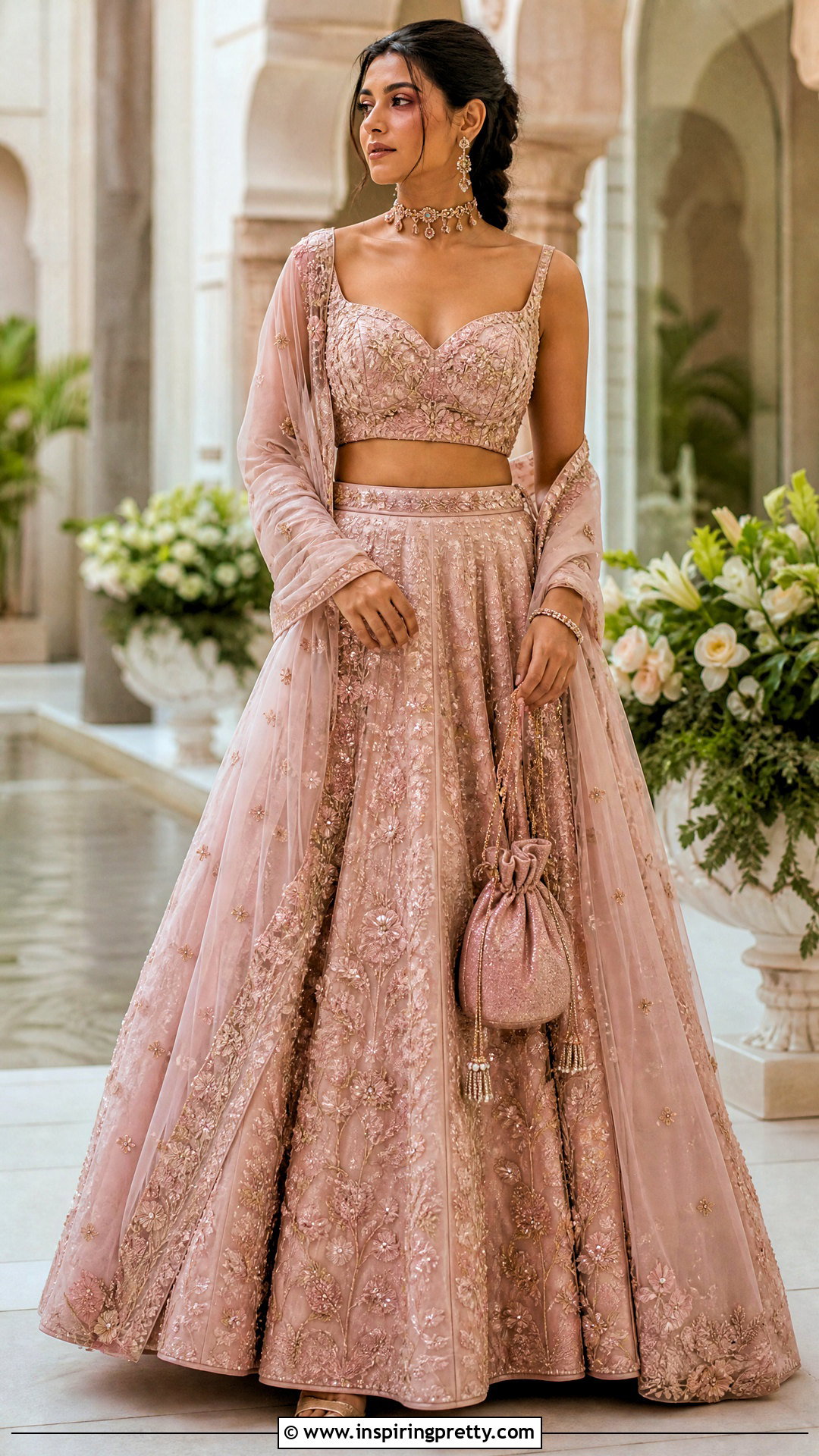
A sweetheart-neck top creates a soft, curved frame around the collarbone while giving a lehenga outfit a beautifully structured finish. Choose a fitted blouse with light boning or supportive cups so the neckline remains secure throughout the event. Zari embroidery, pearls, sequins, or floral threadwork can outline the curved edge without making it look crowded. Pair the top with a high-waisted flared lehenga in the same color for a long, balanced silhouette. A lightweight dupatta draped over one shoulder keeps the neckline visible. Complete the outfit with a delicate choker, drop earrings, embroidered heels, and a small potli bag. This design works especially well for wedding guests, bridesmaids, engagement celebrations, and formal receptions.
2. Square Neck Lehenga Top
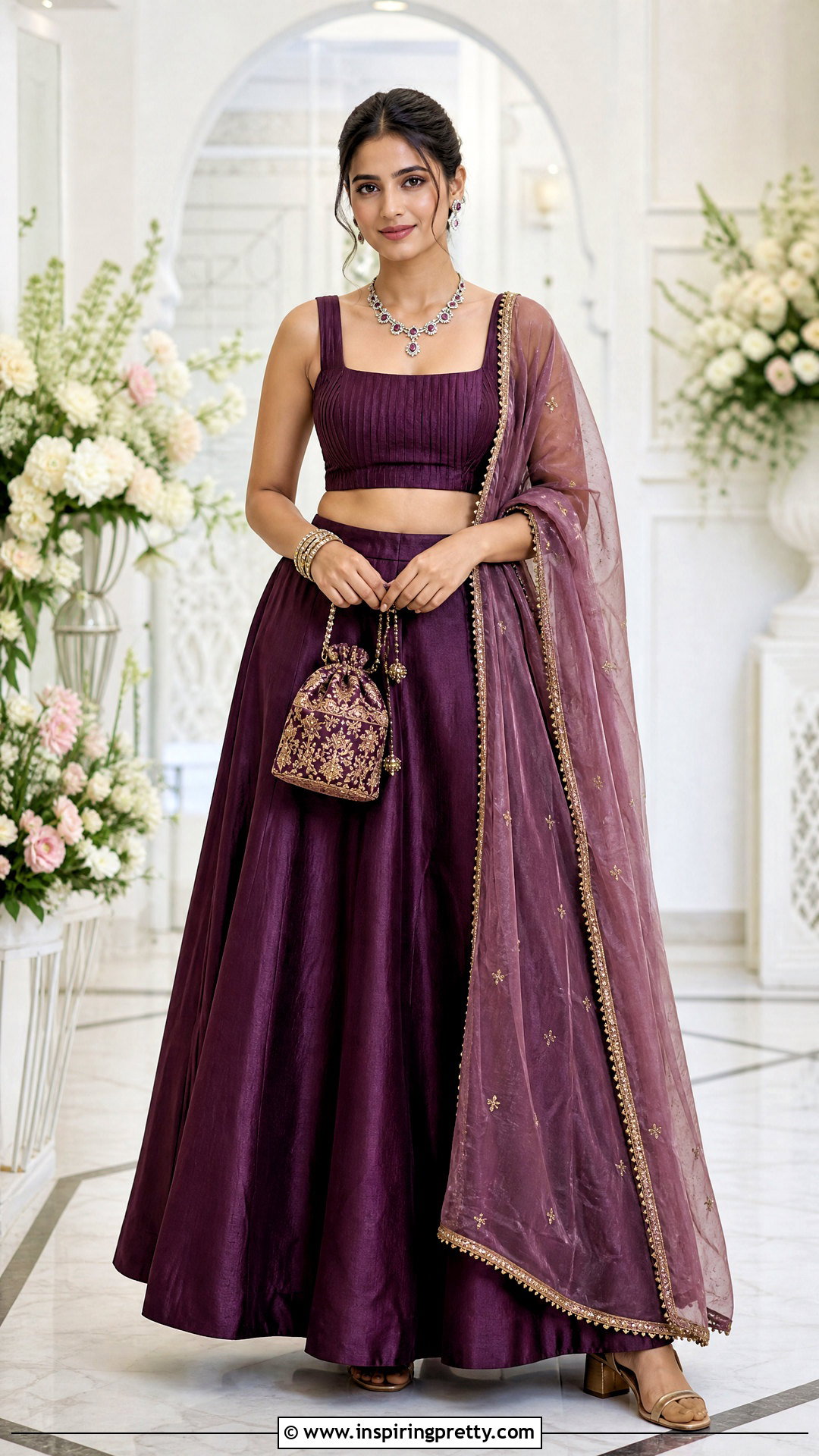
Clean lines make a square-neck lehenga top feel polished, contemporary, and easy to accessorize. The open neckline highlights the collarbone, while wider shoulder straps offer more support than very narrow straps. Select raw silk, velvet, brocade, or embroidered georgette depending on the season and formality of the event. A square-neck blouse looks especially cohesive with a paneled or A-line lehenga because both pieces have strong, defined proportions. Add elbow-length sleeves for coverage or keep it sleeveless for a lighter appearance. Wear the dupatta across one arm rather than over the neckline. Finish with a short gemstone necklace, matching studs, block heels, and stacked bangles. Careful tailoring at the shoulders prevents the neckline from shifting or gaping.
3. Deep V-Neck Lehenga Top
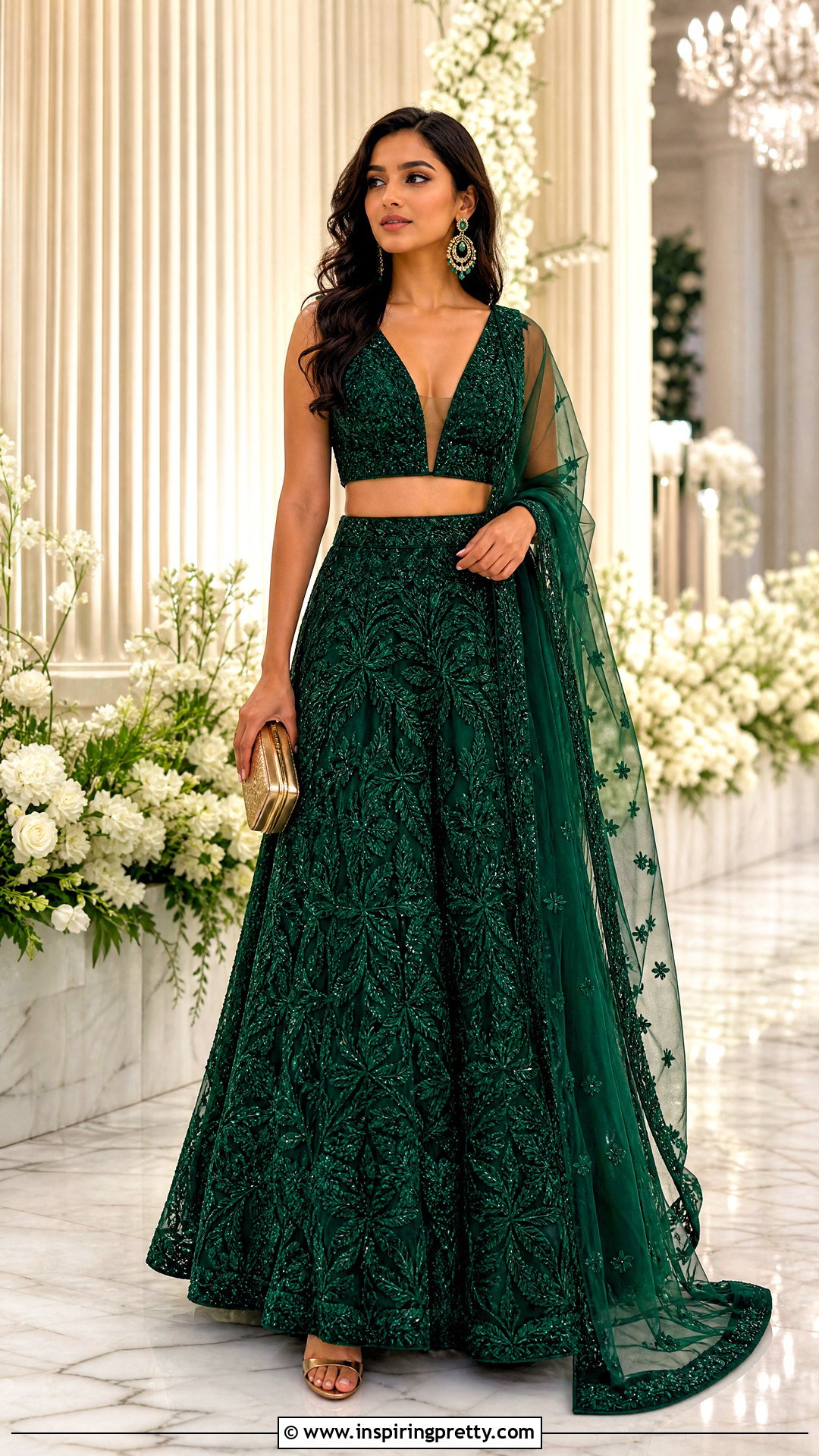
A deep V-neck top brings length and definition to an ornate lehenga outfit. The most wearable version uses a fitted inner panel, discreet mesh, or carefully placed embroidery to provide coverage and stability. Keep the blouse structured through the waist so the sharp neckline looks intentional rather than loose. Pair it with a high-rise lehenga skirt that leaves only a narrow section of the midriff visible. A monochromatic palette can make the entire silhouette appear taller and more streamlined. Place the dupatta over one shoulder or secure it at the elbows to preserve the V shape. Add long earrings instead of a heavy necklace, then complete the look with metallic sandals and a compact clutch. Always test the neckline while sitting and moving.
4. High Neck Lehenga Top
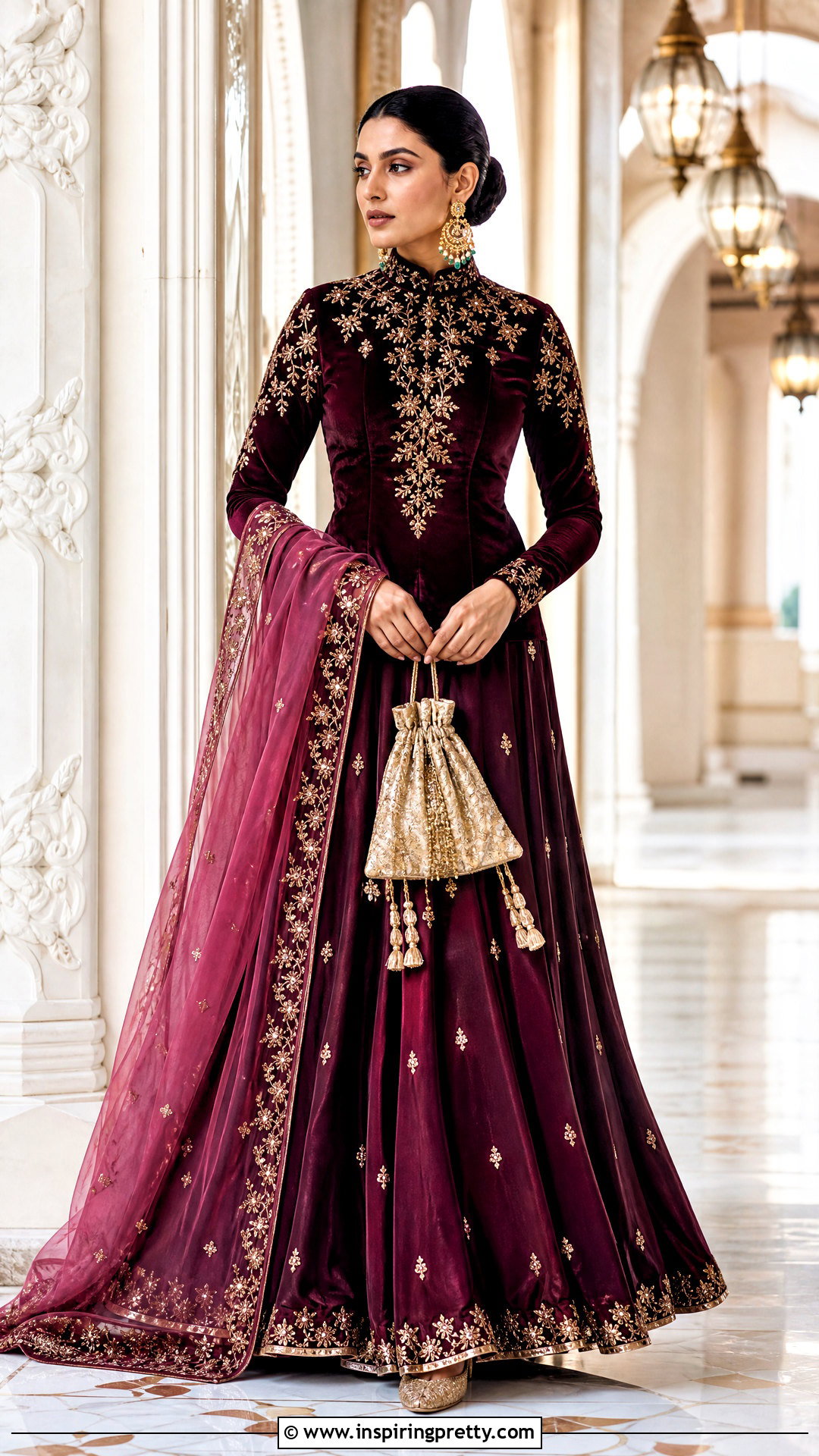
When the skirt already has elaborate detailing, a high-neck lehenga top can create a refined sense of balance. A fitted neckline in velvet, silk, or embroidered net provides coverage while offering space for decorative work around the shoulders and upper chest. Choose sleeveless construction for a sleek result or add full sleeves for a more formal outfit. Pair the top with a flowing lehenga and a softly draped dupatta positioned over one arm. Since the neckline acts as a visual accessory, skip a necklace and wear statement earrings instead. Pointed juttis, a structured potli, and one or two bangles complete the outfit without overloading it. Make sure the collar fits comfortably and does not rub against the neck during longer celebrations.
5. Halter Neck Lehenga Top
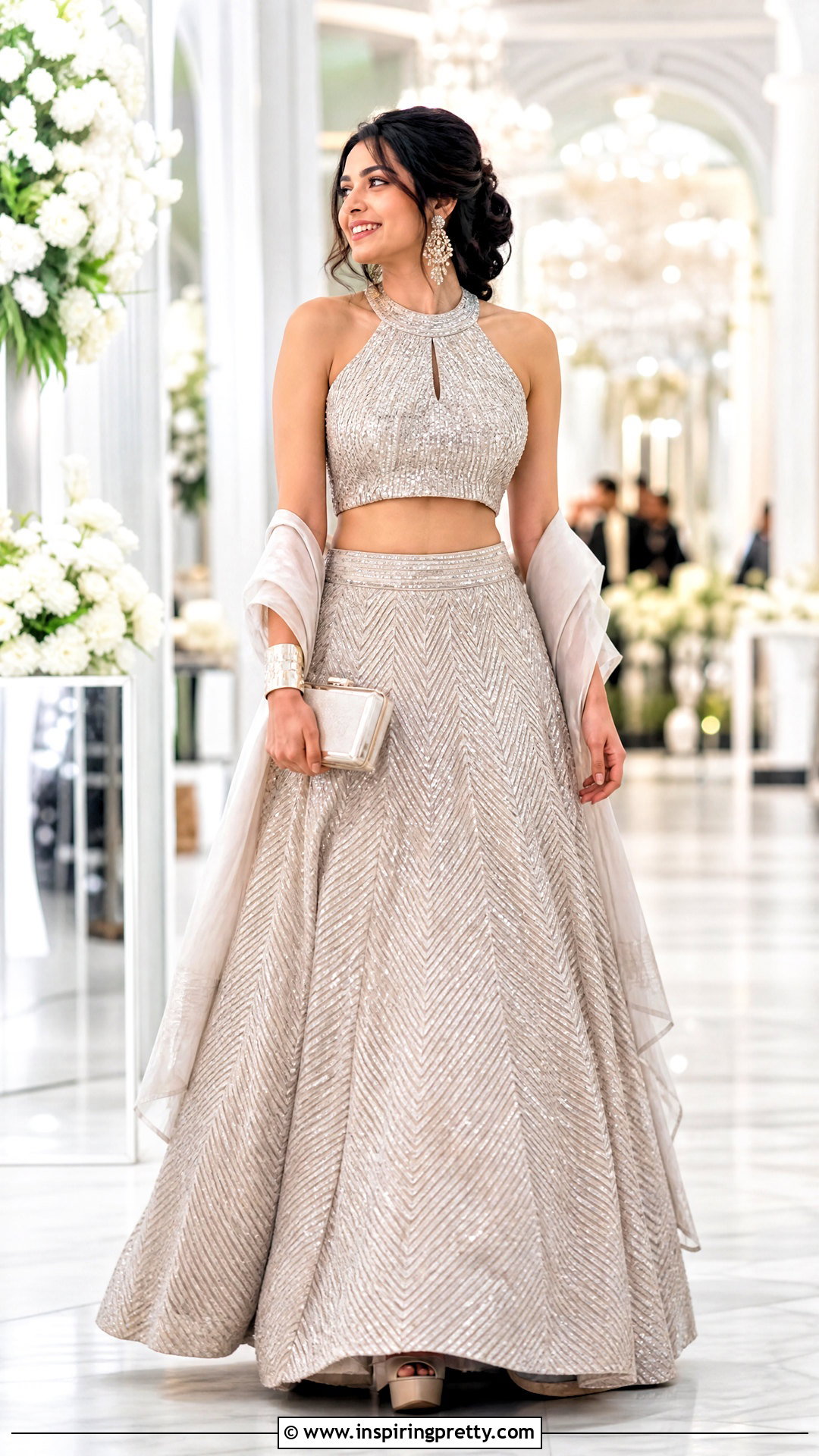
A halter-neck blouse is an excellent match for a light, modern lehenga worn to a sangeet, cocktail celebration, or destination wedding. The cut draws attention toward the shoulders and gives the upper body a clean, sculpted shape. Choose a wide halter band for support and finish the back with covered buttons, a zipper, or adjustable ties. Sequined fabric can create evening sparkle, while printed silk or cotton works for daytime festivities. Coordinate it with a high-waisted circular skirt and a narrow dupatta draped around the arms. Long earrings, a cuff bracelet, platform heels, and a sleek clutch provide a confident finish. A secure inner structure is important because conventional bra straps may not work beneath this neckline.
6. One Shoulder Lehenga Top
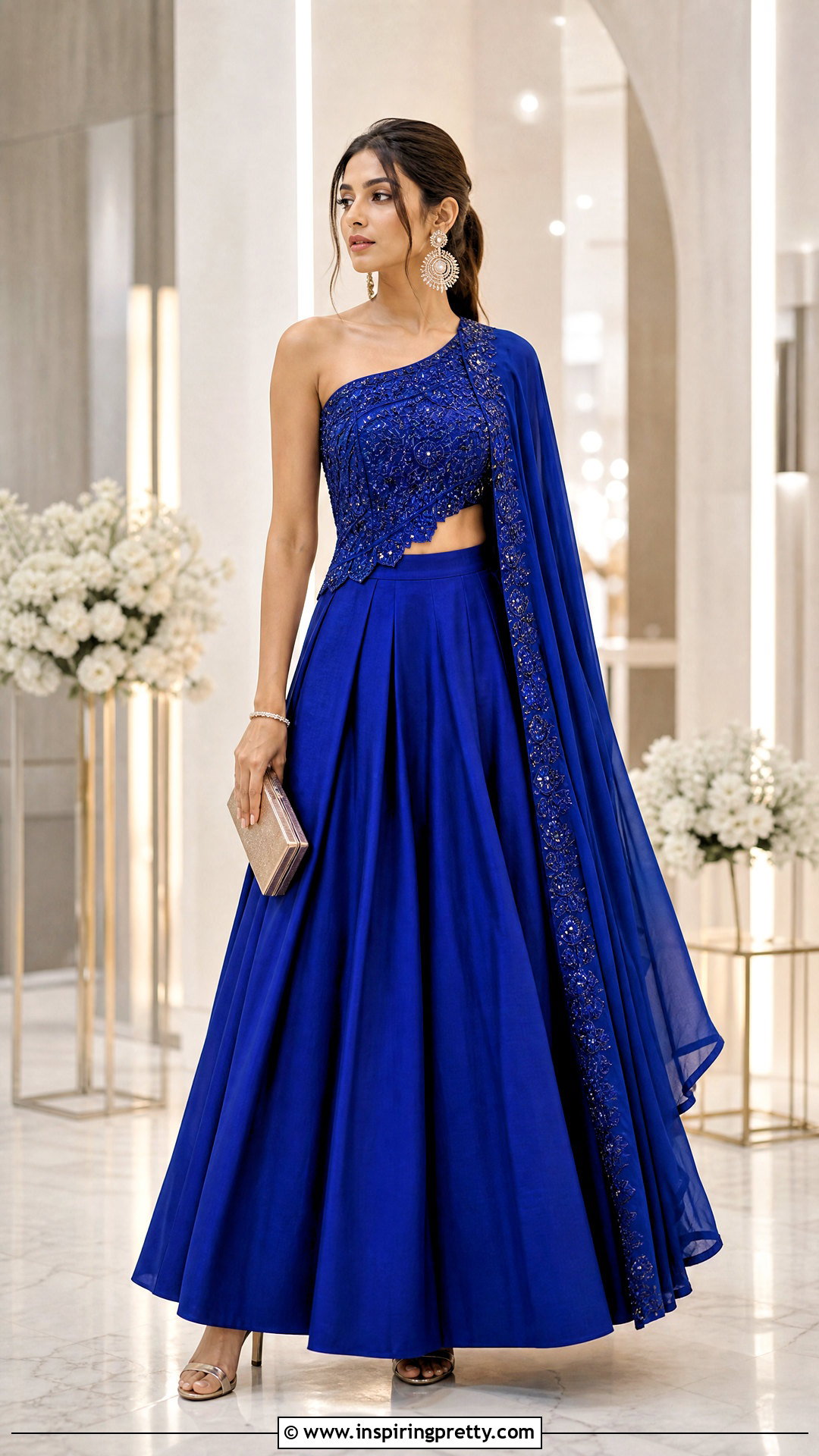
An asymmetric one-shoulder top instantly gives a traditional lehenga a modern, occasion-ready update. Keep one side fitted and streamlined while using the other shoulder for embroidery, pleating, or a controlled drape. This top works best with a relatively simple skirt because the neckline already creates a strong focal point. Choose a tonal lehenga for a sleek ensemble or introduce a contrasting skirt for a bolder fusion look. Instead of adding a separate dupatta, consider extending fabric from the shoulder into a cape-like panel. Style the outfit with sculptural earrings, a slim bracelet, metallic heels, and a box clutch. Proper support at the side seam and underarm will help the asymmetric neckline stay comfortably in place while walking or dancing.
7. Off Shoulder Lehenga Top
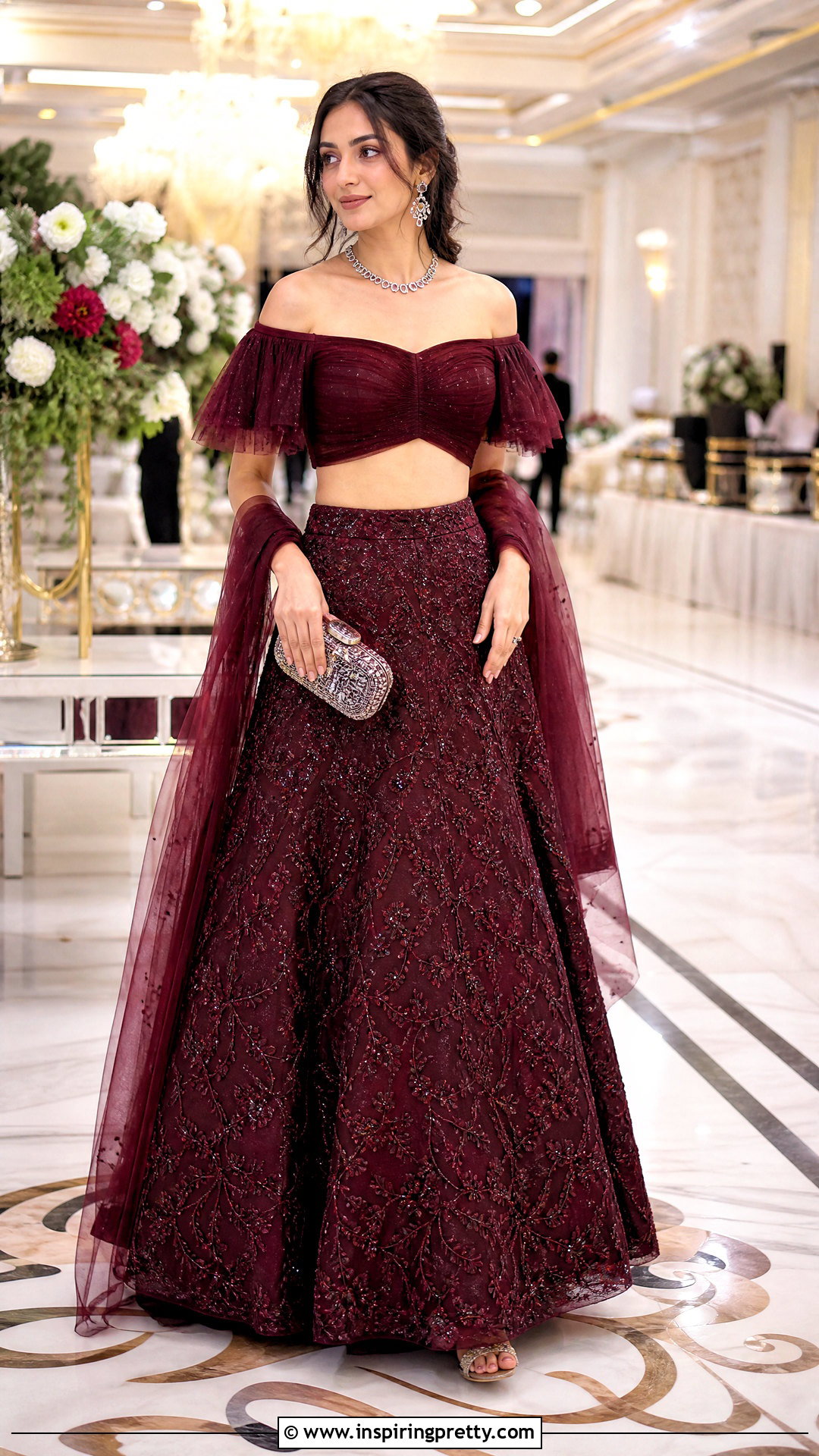
An off-shoulder lehenga top creates an elegant neckline for celebrations where a glamorous look feels appropriate. A structured band should sit securely around the upper body without restricting arm movement. Short sleeves, fold-over cuffs, or lightly gathered tulle can soften the shape. Pair the blouse with a high-waisted skirt to balance the open shoulder line and keep the outfit comfortable. A light net dupatta can be attached at the wrist or worn behind the arms, leaving the neckline unobstructed. Complete the look with a short necklace, chandelier earrings, embellished sandals, and a beaded clutch. Before the event, raise and move your arms during a fitting. This simple test helps identify slipping, pinching, or tightness around the shoulders.
8. Boat Neck Lehenga Top
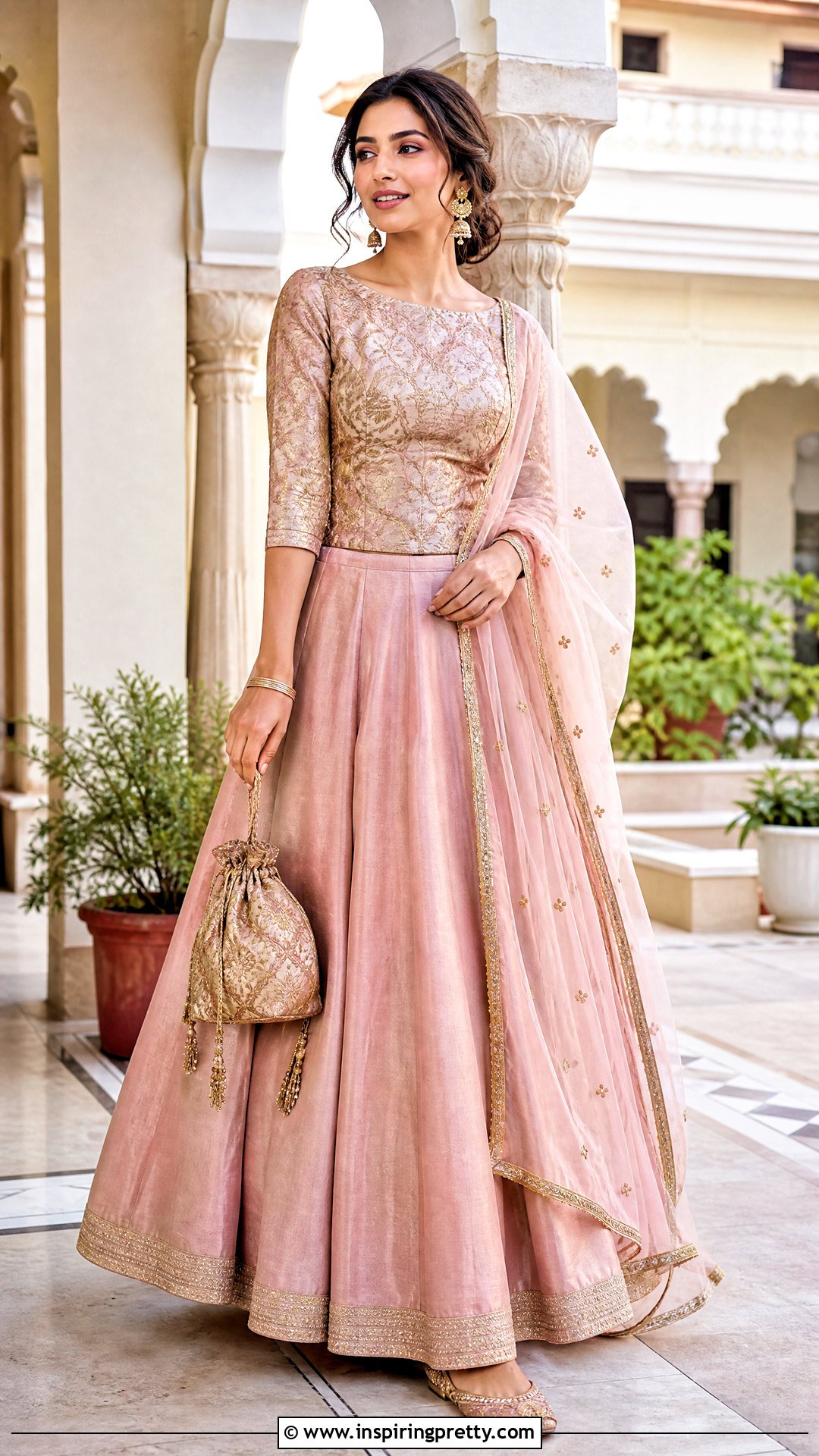
A boat-neck blouse stretches gently across the collarbone, offering graceful coverage without looking heavy. It is especially flattering when made in raw silk, brocade, velvet, or fabric covered with fine embroidery. Three-quarter sleeves create a traditional finish, while a sleeveless cut looks cleaner and more contemporary. Pair the blouse with a coordinated flared lehenga and place the dupatta on one shoulder so the neckline remains visible. Because the neck is wide but relatively high, choose medium-length earrings and avoid an oversized necklace. Add embroidered juttis, a potli bag, and slim bangles for a complete outfit. Ask the tailor to reinforce the shoulder line and check that undergarment straps remain concealed beneath the outer edges of the neckline.
9. Scoop Neck Lehenga Top
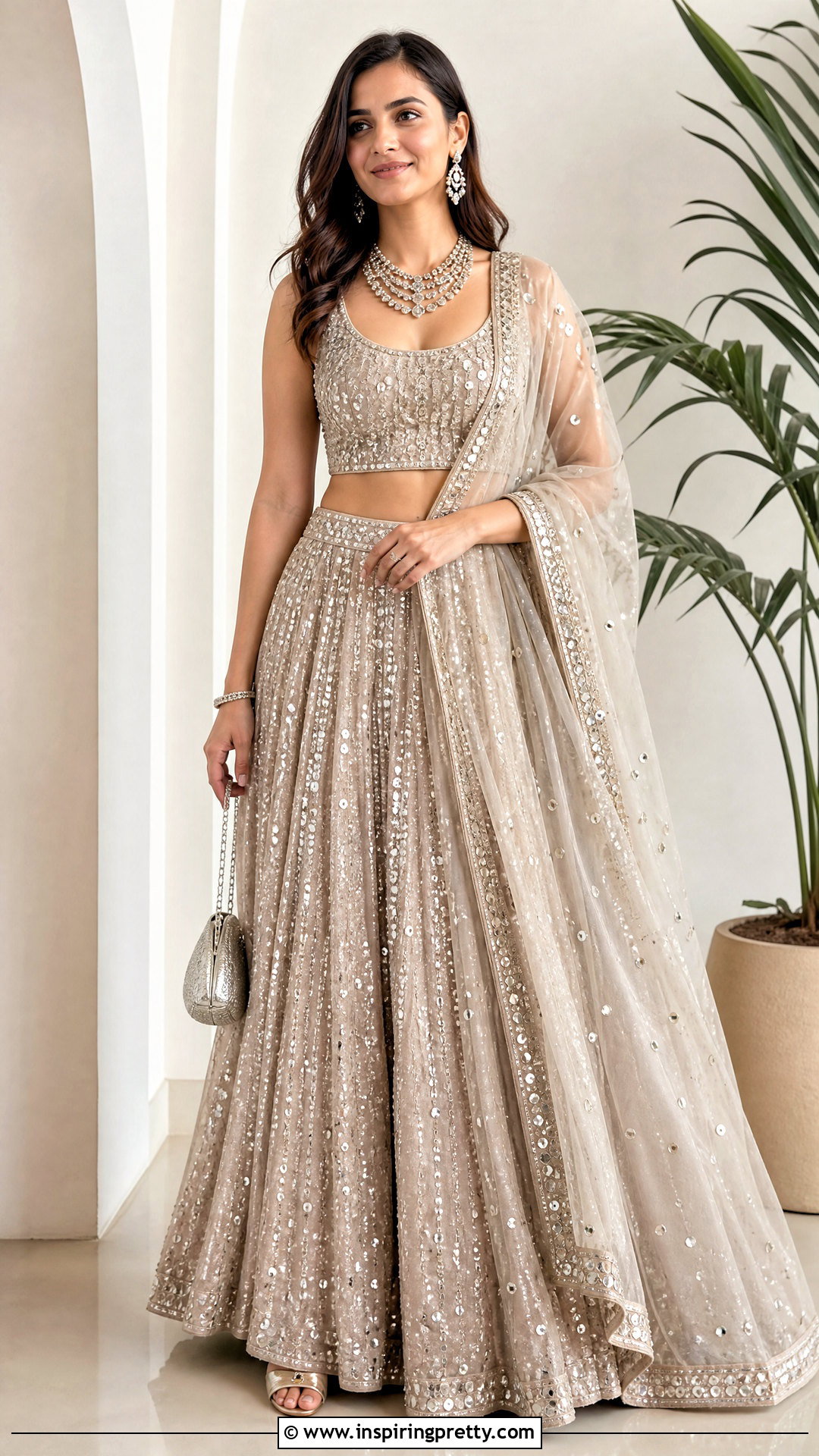
Soft and versatile, a scoop-neck top can complement everything from a simple festive lehenga to a heavily embroidered bridal skirt. The rounded neckline opens the upper body without creating the sharp effect of a deep V. Choose the depth according to your preferred coverage and add a sheer mesh insert if extra security is needed. A fitted scoop-neck blouse with elbow-length sleeves looks timeless with a silk lehenga, while a sleeveless sequined version feels more suitable for evening wear. Drape the dupatta diagonally across the torso for traditional balance. Finish with a layered necklace that follows the curve of the neckline, coordinating earrings, comfortable heels, and a small handbag. Smooth piping helps the rounded edge maintain its shape.
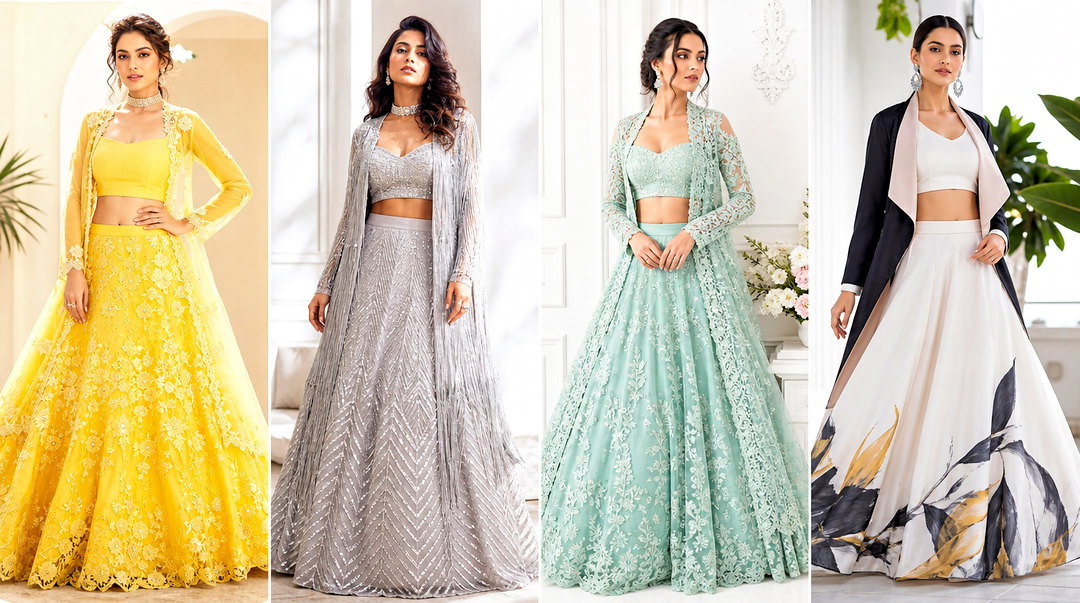
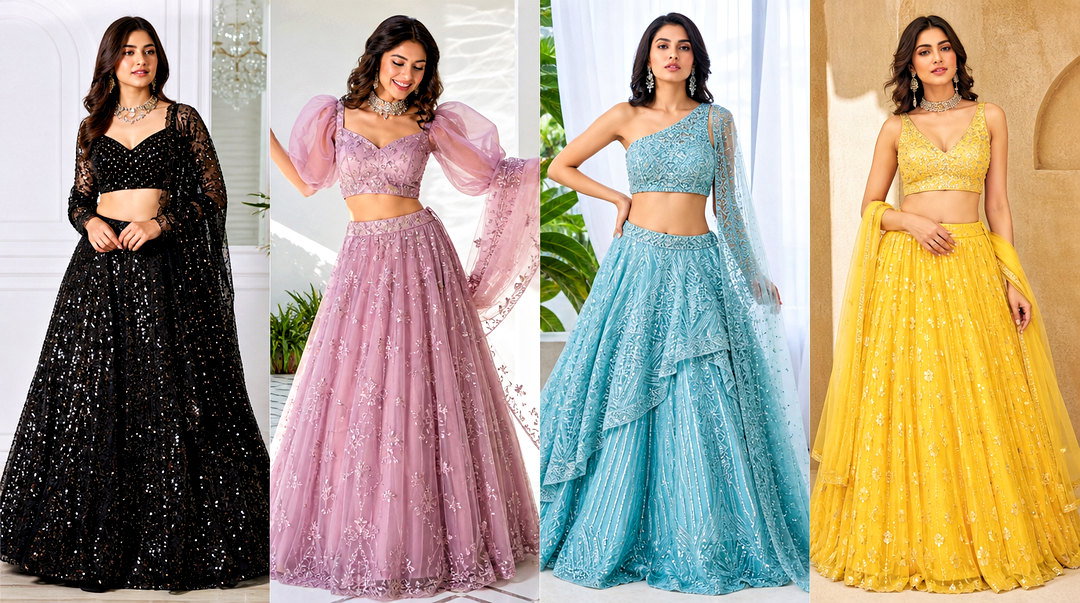
10. Round Neck Lehenga Top
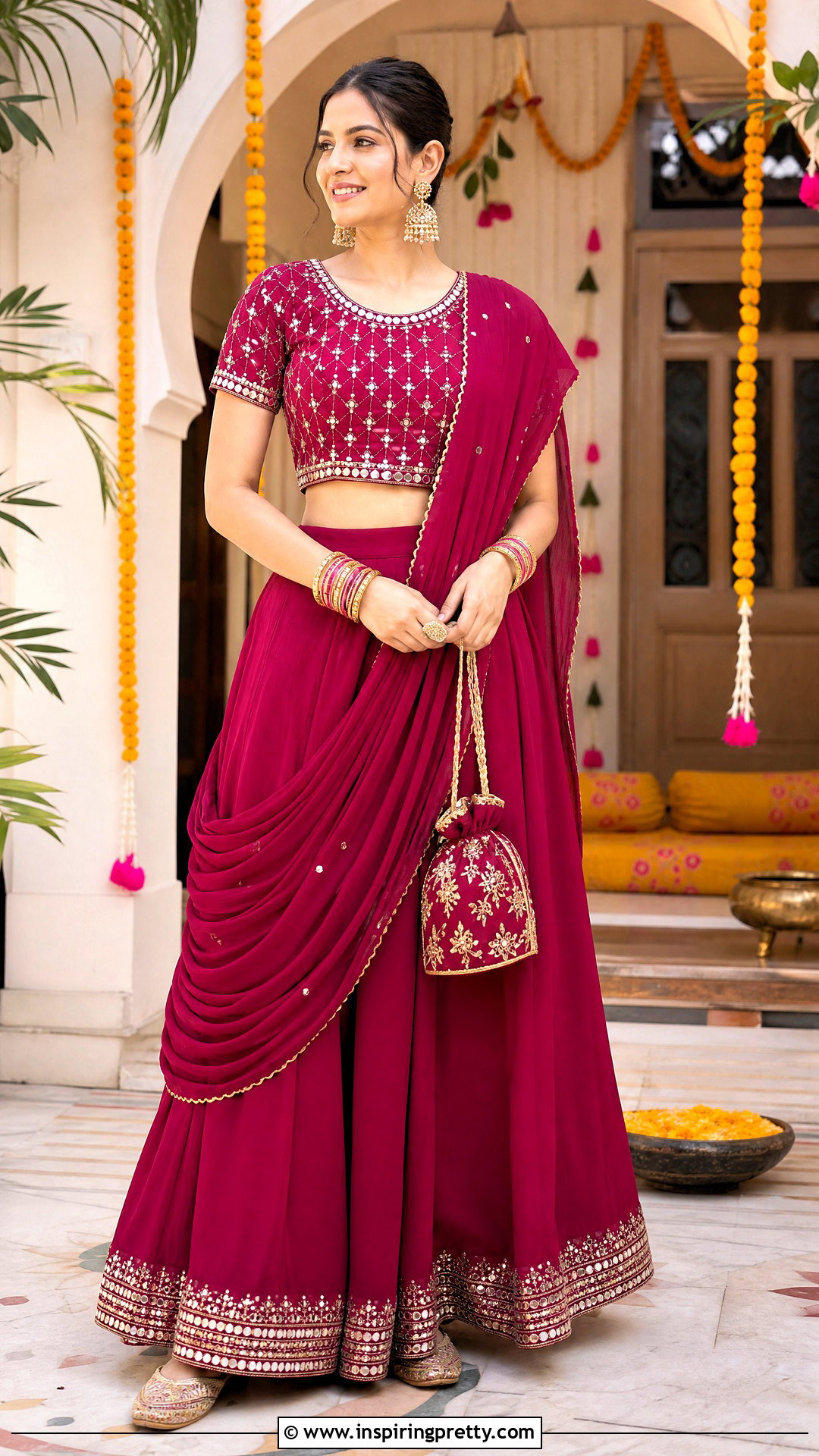
A classic round-neck top is dependable, flattering, and simple to personalize with embroidery or contrasting trim. The neckline can sit close to the collarbone for more coverage or lower on the chest for a relaxed festive look. Pair a plain round-neck blouse with a heavily worked lehenga, allowing the skirt to remain the centerpiece. For a simpler skirt, choose a blouse decorated with mirror work, beads, sequins, or floral motifs. Add short sleeves or elbow-length sleeves based on the occasion. A neatly pleated dupatta, traditional jhumkas, stacked bangles, and embroidered juttis complete the outfit. This familiar design is also practical for rewearing because it coordinates easily with different skirts, sarees, and draped pants.
11. U-Neck Lehenga Top
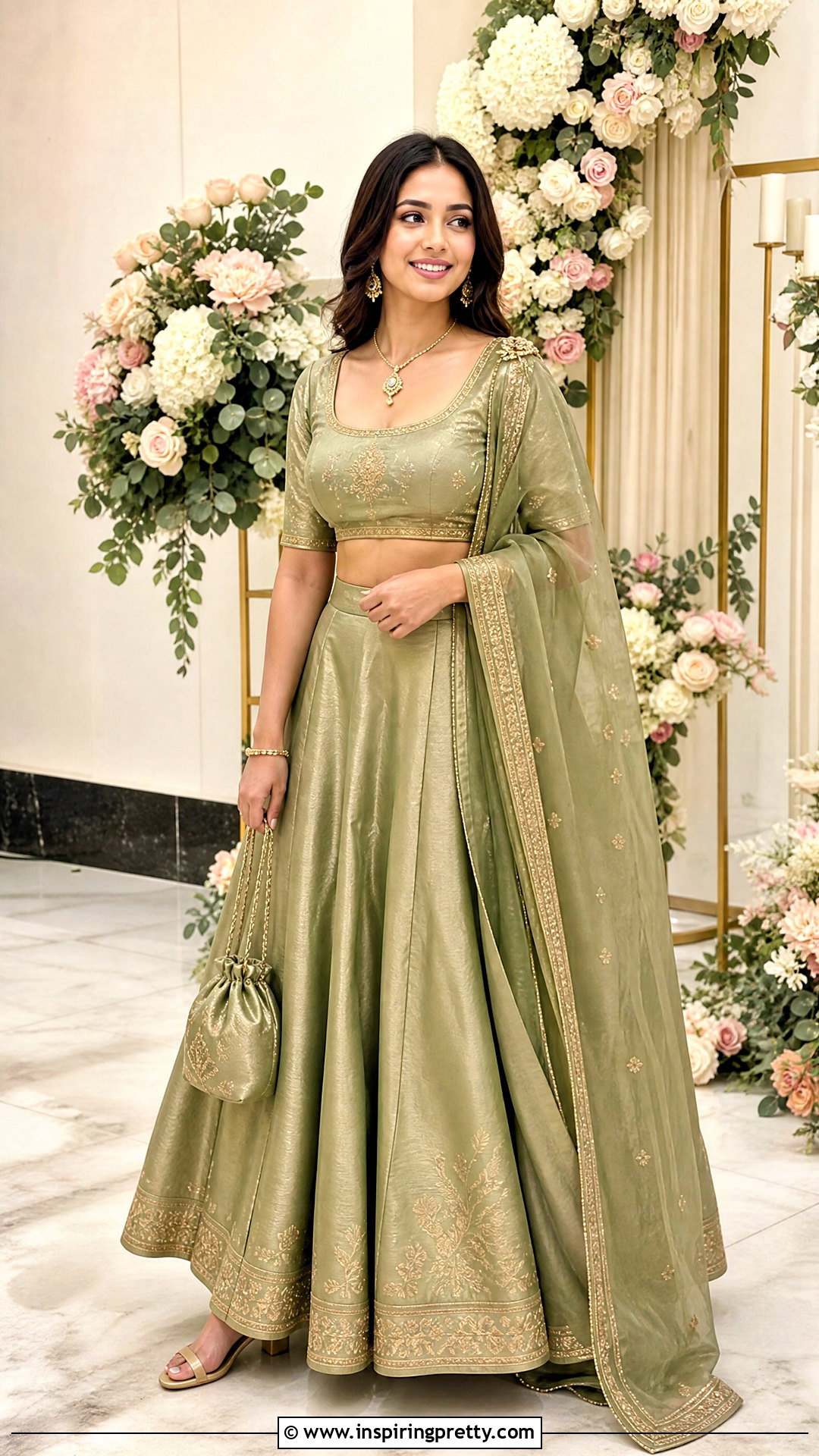
The gently elongated curve of a U-neck top gives a lehenga outfit a graceful, traditional appearance. Unlike a round neckline, the deeper vertical shape creates more room for a pendant, short necklace, or layered jewelry. Select a fitted silk blouse for a classic celebration or use sequined fabric for an evening event. Pair it with a full lehenga skirt featuring borders that repeat the top’s color or embellishment. A dupatta pinned neatly at one shoulder preserves the neckline while keeping the outfit secure. Complete the look with a pendant necklace, matching earrings, low block heels, and a potli. The back can repeat the U shape for cohesion, but the shoulder width should remain substantial enough to prevent slipping.
12. Keyhole Neck Lehenga Top
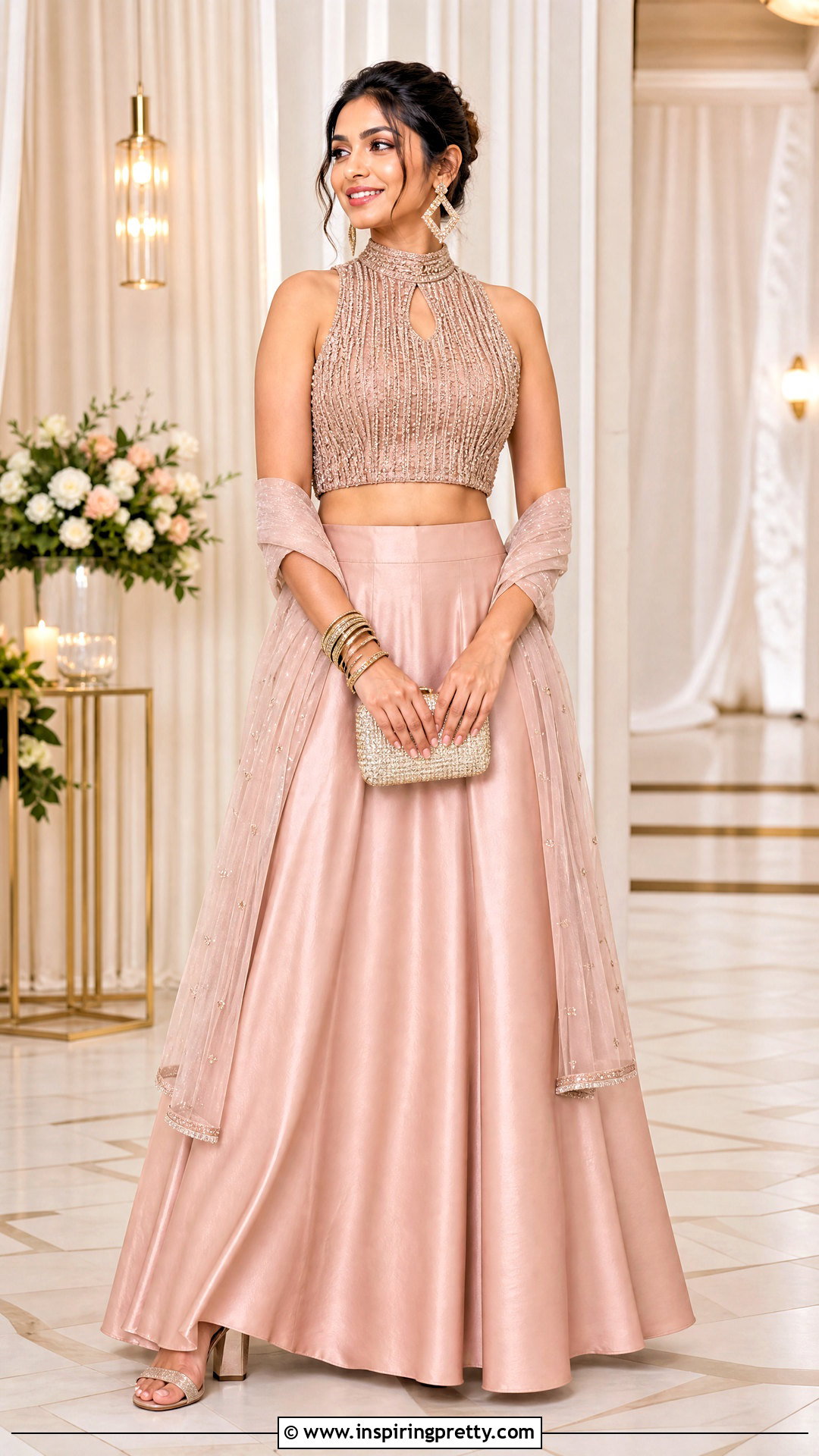
A keyhole neckline adds a small, distinctive detail without requiring a dramatically open blouse. The cutout may be circular, teardrop-shaped, or narrow and vertical, depending on the desired effect. Place it at the center of a high-neck top and finish it with piping, beads, or a decorative button. Pair this detailed blouse with a plain satin, silk, or georgette lehenga to maintain visual balance. A lightweight dupatta draped over the elbows allows the neckline to remain visible. Choose earrings that echo the keyhole’s shape, then add bangles, block heels, and a compact clutch. This design offers a useful middle ground for anyone wanting contemporary detail, comfortable coverage, and enough structure for a long celebration.
13. Scallop Neck Lehenga Top
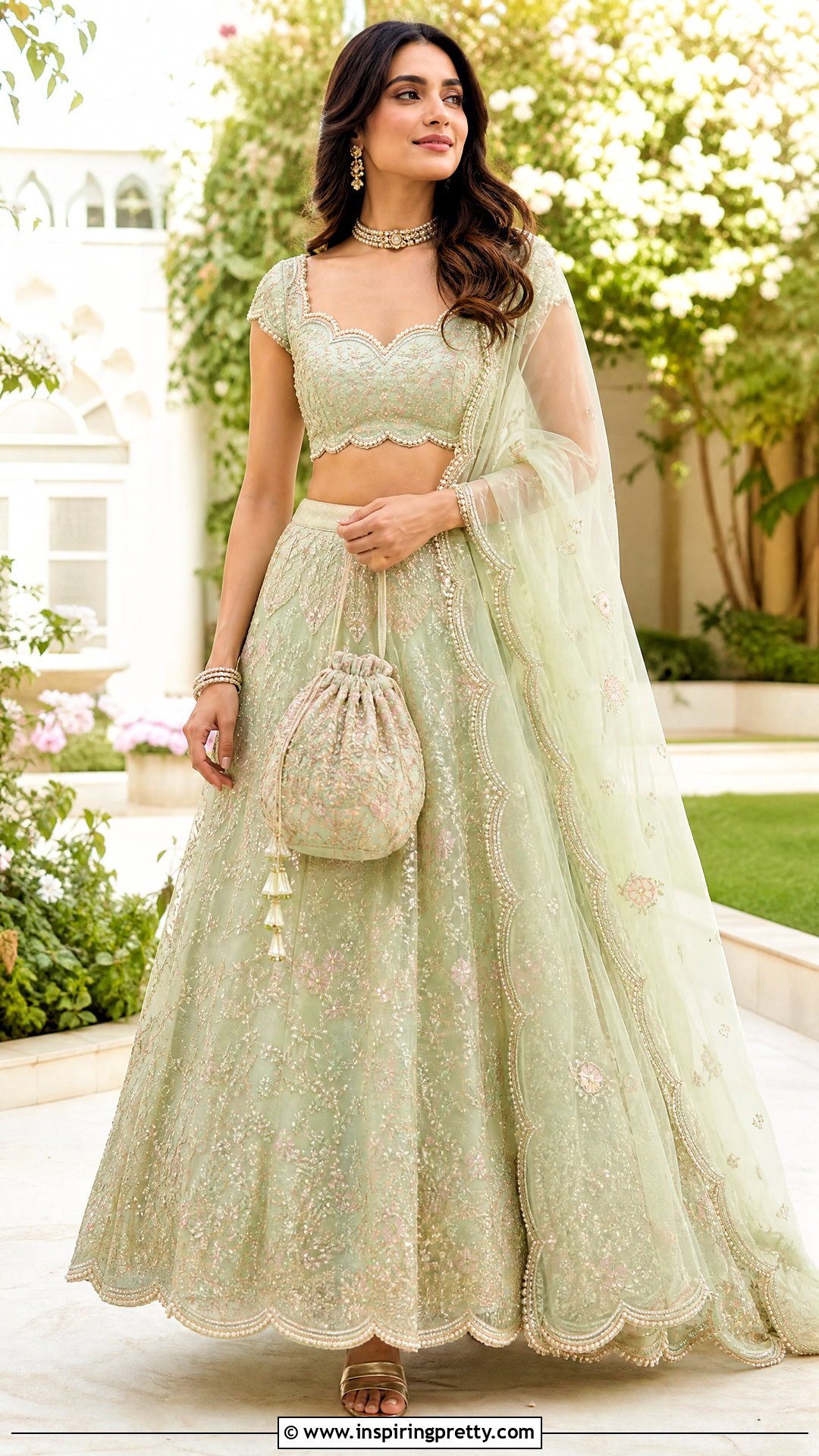
A scalloped neckline replaces a straight edge with soft, repeating curves that look delicate against a structured lehenga. Highlight each scallop with pearls, fine zari, sequins, or contrast piping for a crisp finish. The design works beautifully on square, sweetheart, round, or wide necklines, making it easy to adjust for different coverage preferences. Pair the blouse with a coordinated skirt featuring a matching scalloped border near the hem. Keep the dupatta sheer and lightly embellished so it does not hide the detailed neckline. Pearl earrings, a small choker, metallic heels, and a potli bag complete the ensemble. Accurate cutting and firm interfacing are essential because uneven curves can make the neckline appear untidy after stitching or repeated wear.
14. Plunging Neck Lehenga Top
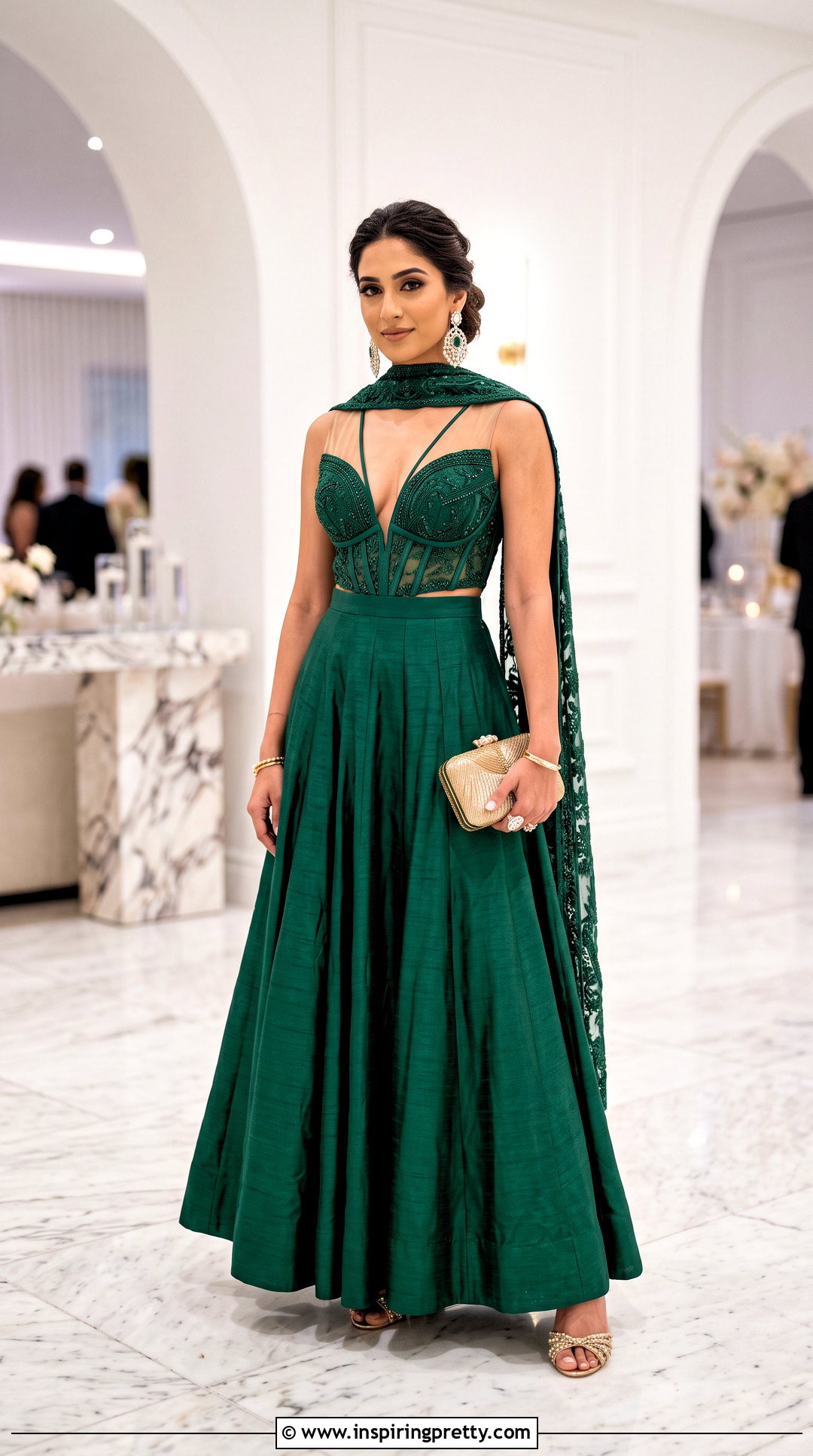
A plunging-neck top delivers a bold formal look when its fit, coverage, and internal support are carefully planned. Use a firm fabric, built-in cups, side boning, and a discreet mesh insert to stabilize the neckline. Dense embroidery along the edges can add coverage while emphasizing the long central line. Match the blouse with a high-waisted lehenga in a coordinated shade to keep the proportions balanced. Position the dupatta over one arm or attach it at the shoulder rather than covering the front. Skip a necklace and choose statement earrings, a cocktail ring, heeled sandals, and a structured clutch. Multiple fittings are worthwhile for this design, especially if the outfit will be worn while dancing, bending, and sitting.
15. Strapless Corset Lehenga Top
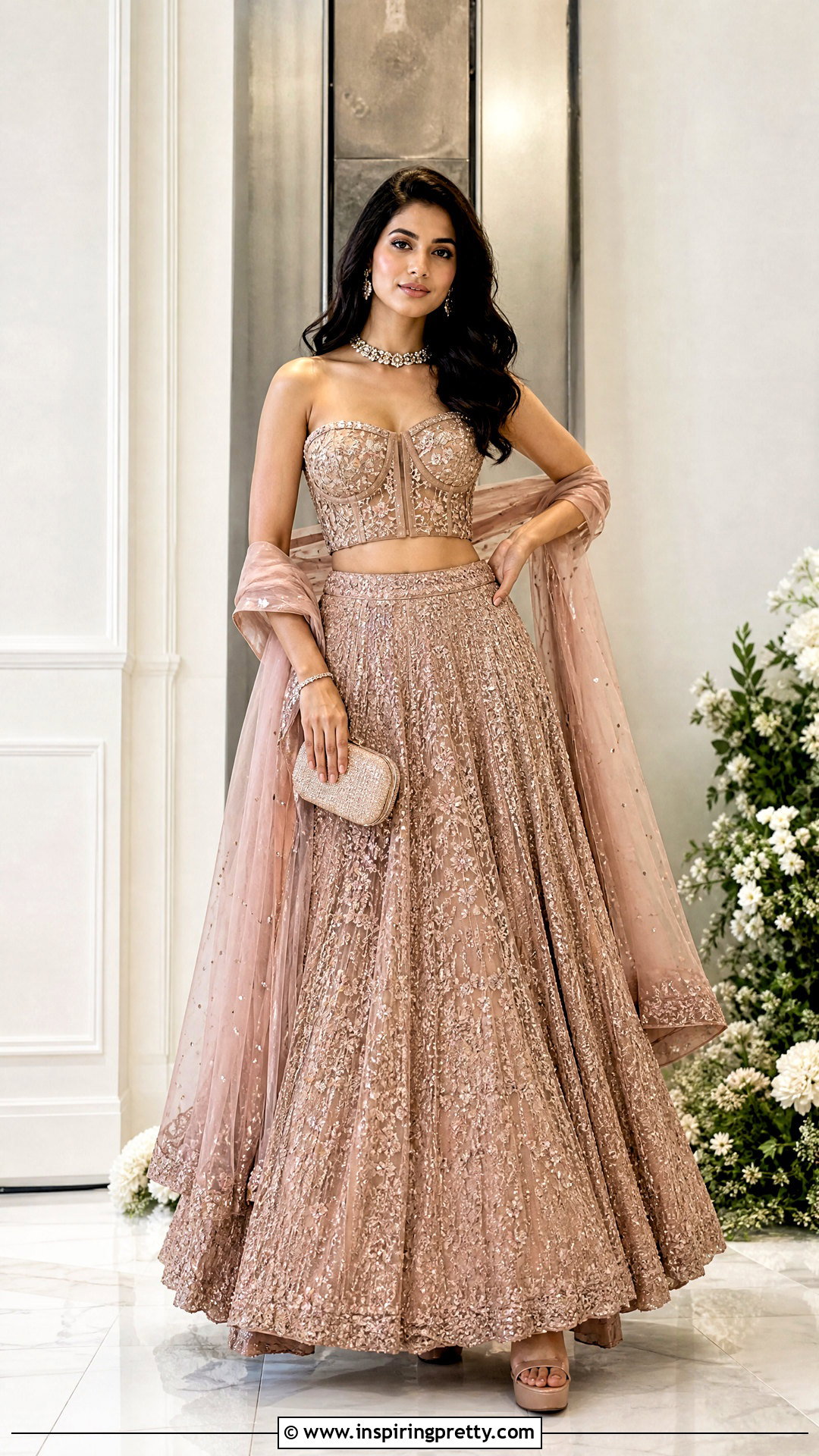
A strapless corset top gives a lehenga a clean, sculpted silhouette suited to receptions and modern wedding celebrations. Vertical seams, internal boning, and a well-fitted back closure provide the necessary structure. Choose embroidered fabric for a coordinated bridal effect or plain velvet for contrast against a detailed skirt. The lehenga should sit high at the waist so the outfit feels balanced and secure. Add a sheer dupatta over the arms, a detachable cape, or a light stole if you want adaptable coverage. Style the ensemble with a collar necklace, drop earrings, platform heels, and a compact evening bag. During fittings, check the top from every angle and test normal movement to ensure it stays comfortably positioned without constant adjustment.
16. Bustier Lehenga Top
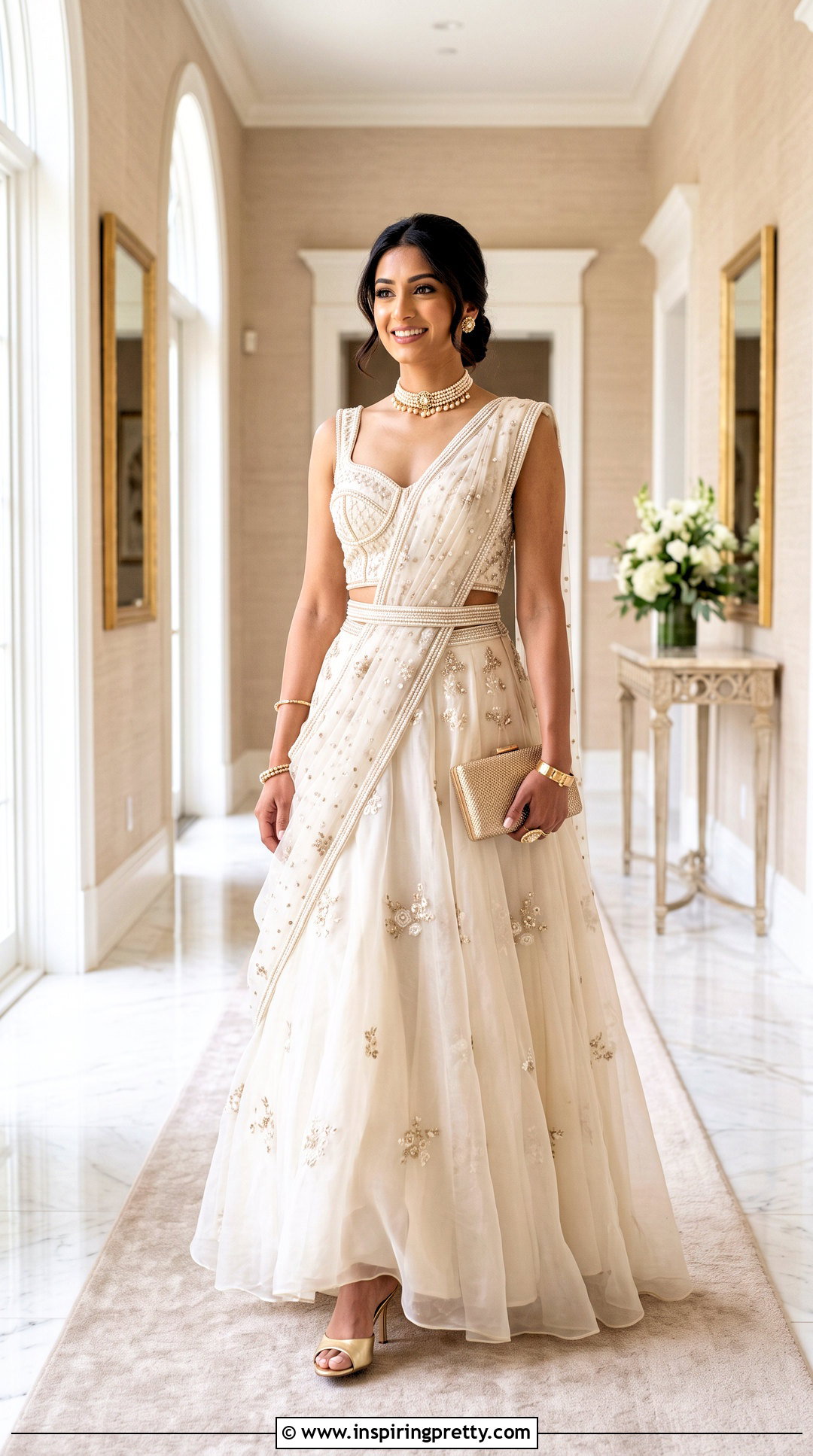
A bustier blouse combines a defined cup shape with a cropped, fitted body, creating a confident alternative to the classic choli. Curved seam lines can be highlighted with piping, crystals, embroidery, or tonal beads. For a polished outfit, pair a detailed bustier with a relatively simple lehenga in satin, organza, or raw silk. A high waist keeps the silhouette refined and reduces excessive space between the pieces. Drape a sheer dupatta from one shoulder to the opposite wrist for soft movement. Complete the look with a choker, small earrings, heeled mules, and a metallic clutch. Proper cup placement matters more than the labeled size, so arrange a fitting with the exact undergarments and skirt you intend to wear.
17. Longline Corset Lehenga Top
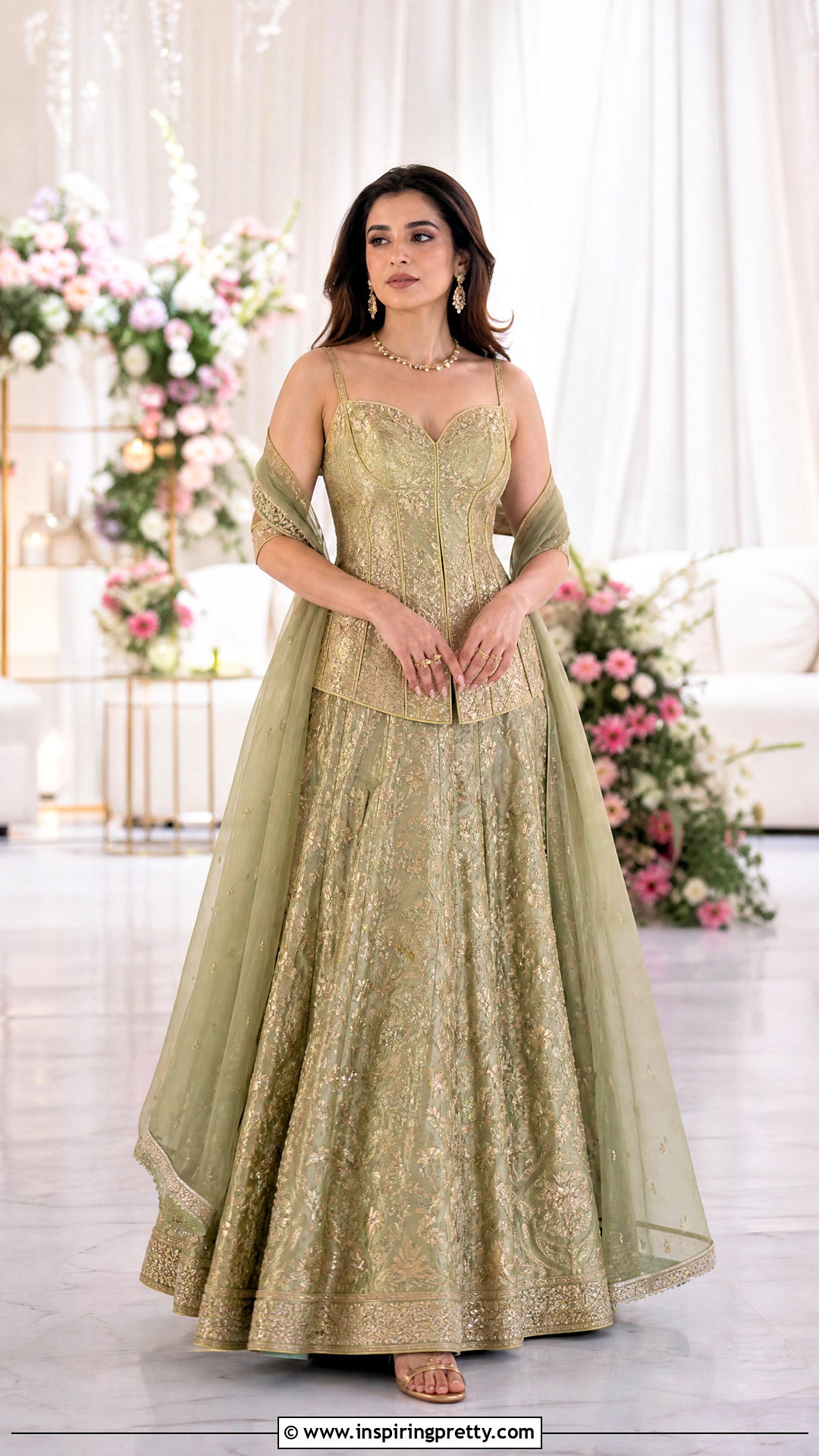
A longline corset extends toward the natural waist, offering greater coverage than a short bustier while preserving a structured shape. It pairs especially well with a lehenga worn slightly lower at the waist because the longer bodice minimizes the exposed midriff. Select brocade, embroidered silk, or embellished velvet to create a formal finish. Vertical paneling can make the torso appear longer, while a softly flared skirt balances the fitted upper body. Place a sheer dupatta behind the shoulders or across one forearm. Complete the outfit with medium-length earrings, a slim necklace, stacked rings, and comfortable heels. Ask for flexible boning rather than overly rigid construction so sitting, eating, and dancing remain easy throughout the occasion.
18. Peplum Lehenga Top
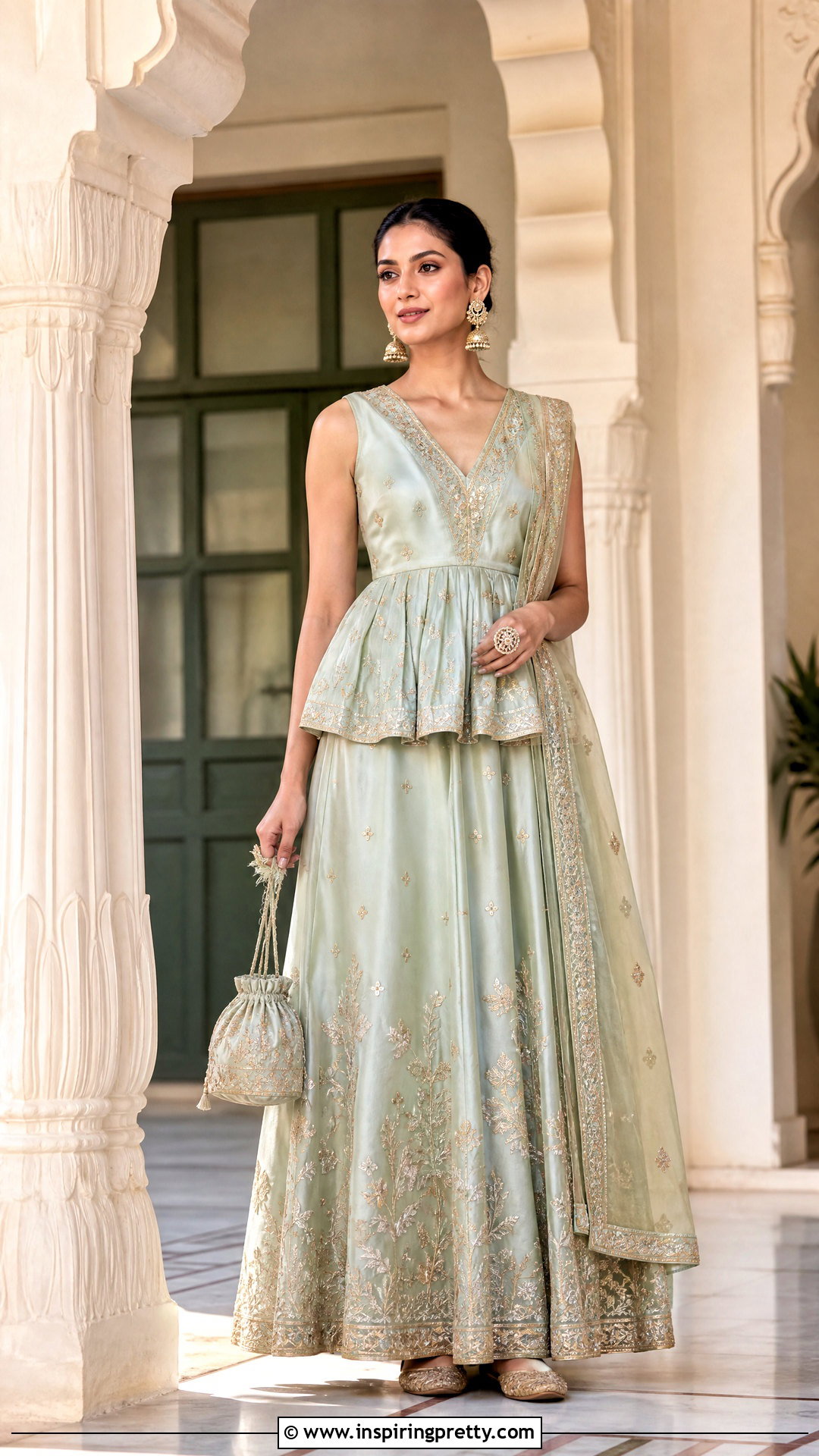
A peplum top brings extra coverage and graceful movement to a lehenga while defining the waist. The fitted bodice should end at the natural waist before opening into a short, controlled flare. Choose a lightweight fabric so the peplum sits smoothly rather than adding unnecessary bulk. Pair it with a streamlined A-line or lightly flared skirt, avoiding excessive volume directly beneath the top. A narrow dupatta draped over one shoulder keeps the layered silhouette tidy. Style the outfit with jhumkas, a statement ring, pointed juttis, and a structured potli. The peplum may be plain with an embroidered skirt or heavily decorated over a simpler lehenga. Its longer cut also makes the outfit comfortable for extended family celebrations.
19. Jacket Style Lehenga Top
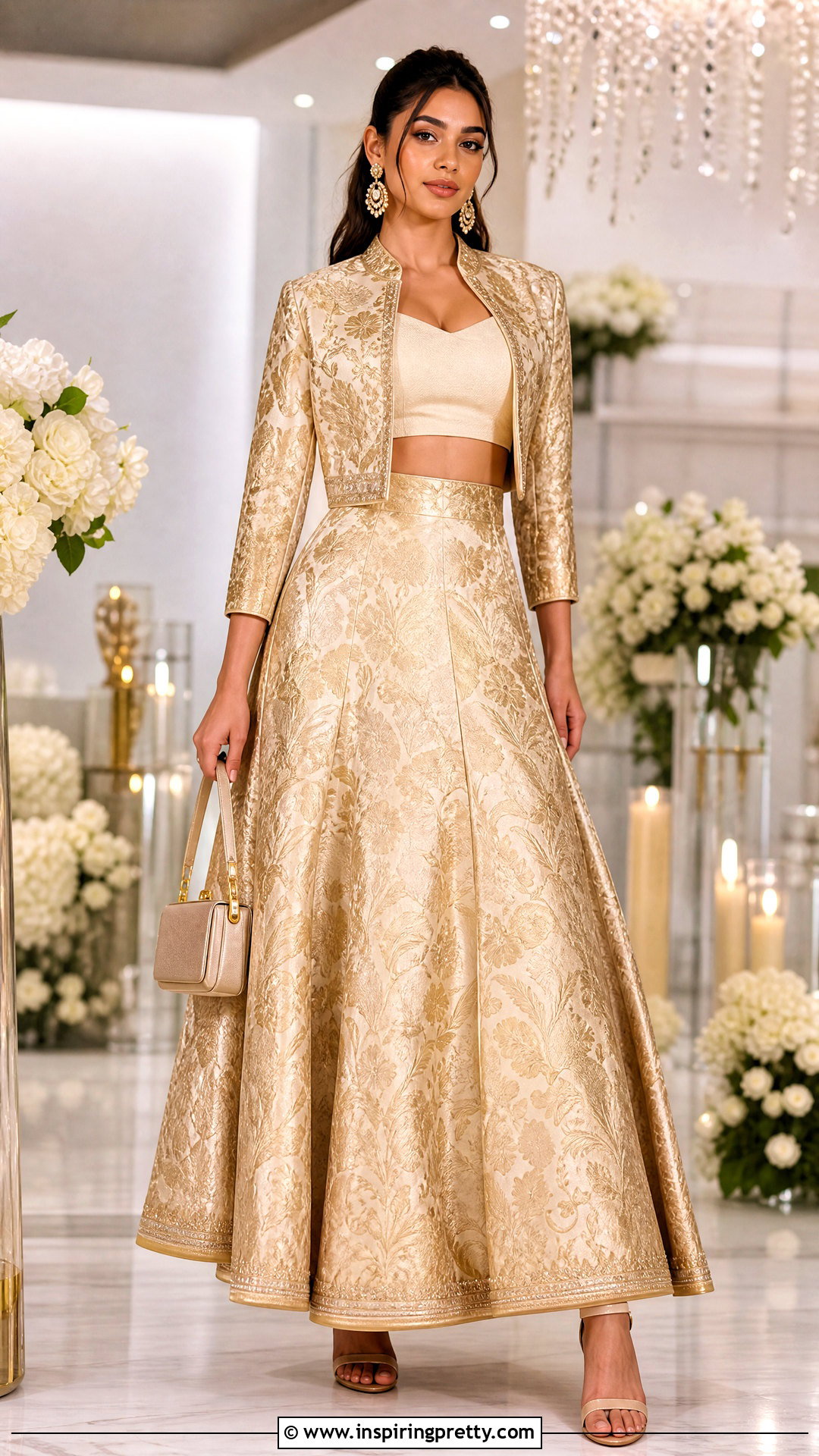
A cropped jacket-style top offers structure, coverage, and an easy fusion element. It can feature a closed front, hooks, decorative buttons, or an open design worn over a simple fitted inner blouse. Brocade and raw silk create a traditional look, while velvet or sequins make the outfit more evening appropriate. Pair the jacket with a high-waisted lehenga and limit the dupatta to a light drape over one arm. For a more streamlined outfit, skip the dupatta entirely when the jacket already contains detailed embroidery. Add statement earrings, ankle-strap heels, and a small structured bag. Ensure the jacket ends near the waistband rather than at the widest part of the hips, which helps maintain balanced proportions.
20. Cape Sleeve Lehenga Top
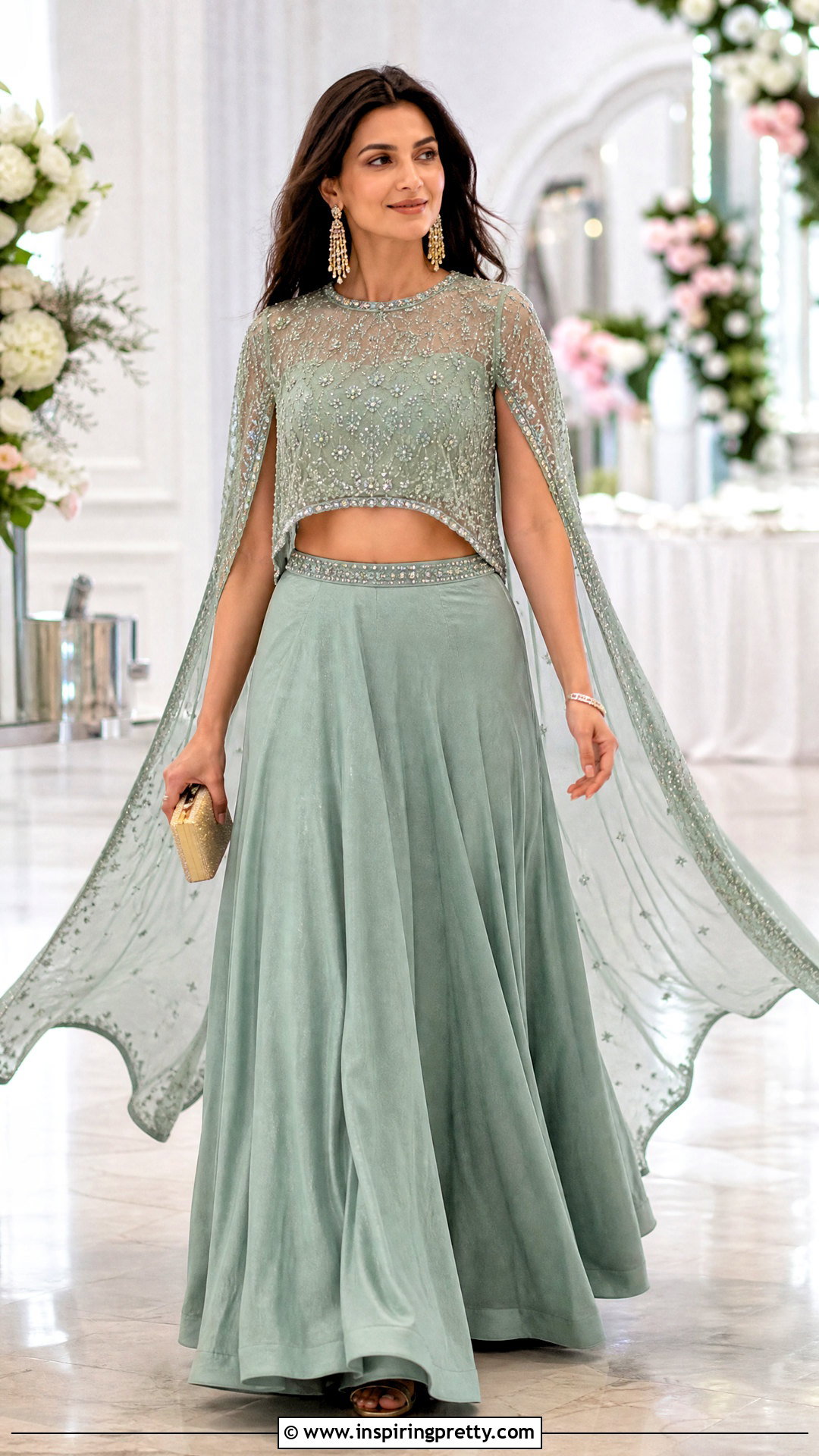
A cape-sleeve top adds fluid movement while covering the shoulders and upper arms. The cape can extend from a fitted blouse, fall from the neckline, or split at the sides to make hand movement easier. Chiffon, georgette, and soft net work best because they drape without overwhelming the lehenga. Pair a decorated cape blouse with a plain or lightly embroidered skirt in a coordinating shade. Since the cape already performs the visual role of a dupatta, an additional drape is usually unnecessary. Finish with long earrings, a delicate bracelet, comfortable heels, and a box clutch. Keep the cape length above the skirt’s widest point, and check that its edges cannot catch on bangles or embroidered embellishments.
21. Sheer Yoke Lehenga Top
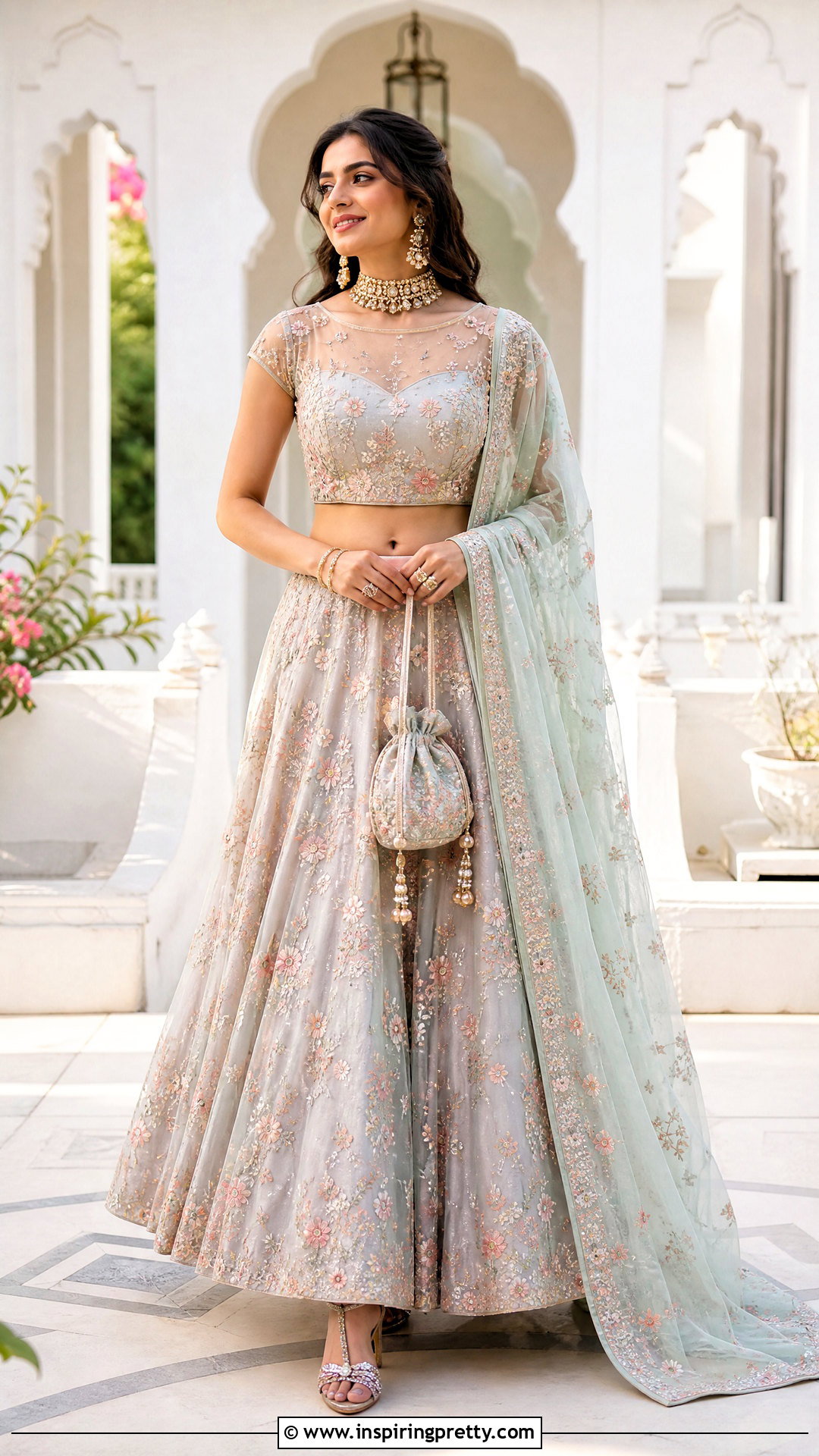
A sheer-yoke top creates the illusion of an open neckline while offering additional coverage and support. Fine net can extend from a sweetheart, scoop, or strapless inner bodice toward the collarbone. Embroidered motifs placed carefully across the yoke make the transition look refined, while piping around the neck adds durability. Pair the top with a lehenga that repeats the same embroidery in its border or panels. Secure the dupatta on one shoulder without covering the yoke’s detailing. Add earrings, a slim bracelet, embellished heels, and a coordinated potli. Choose soft, high-quality net that matches your skin tone or outfit color. Rough fabric and bulky seams may feel uncomfortable around the neckline during long events.
22. Illusion Neck Lehenga Top
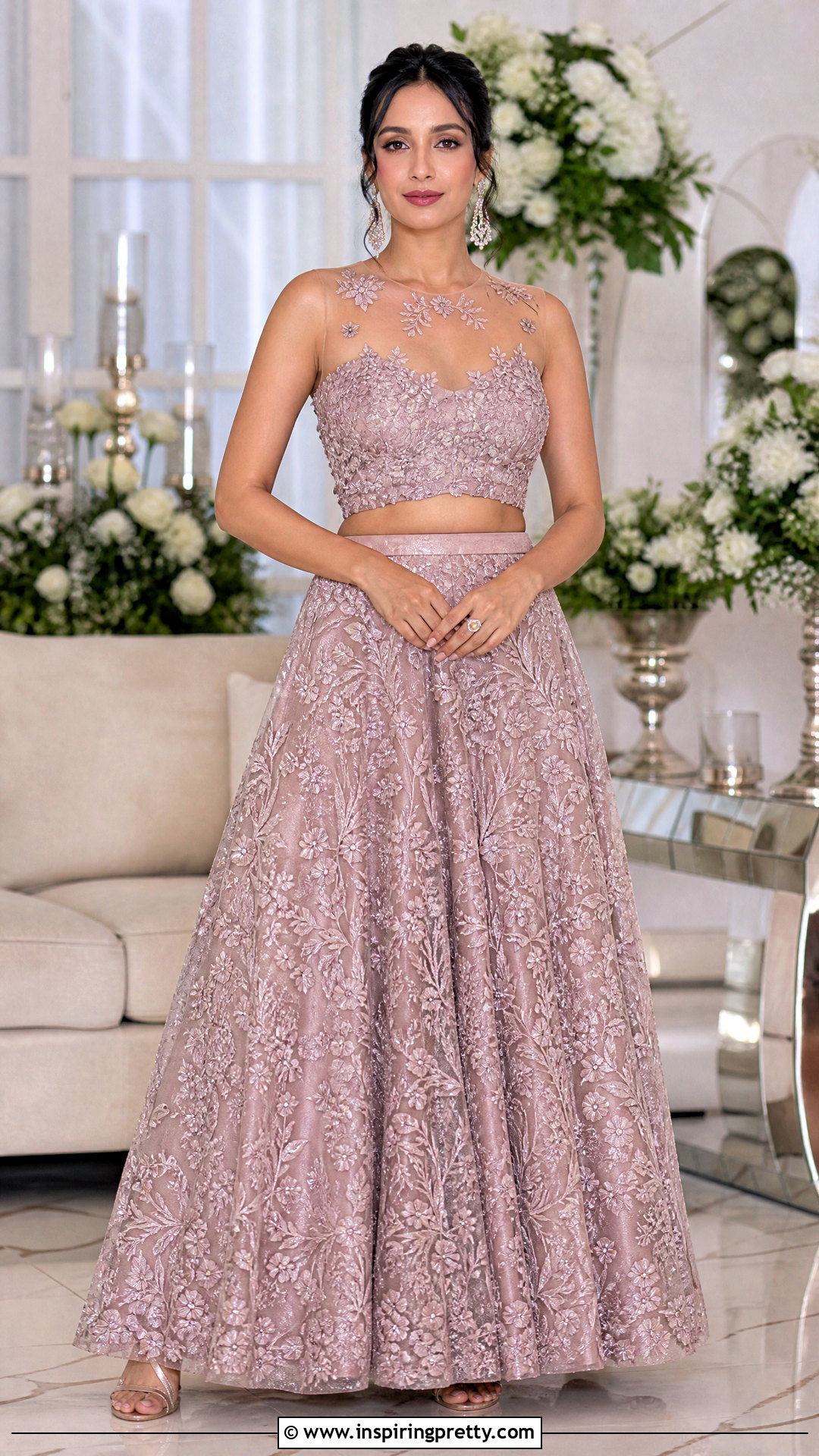
An illusion-neck blouse uses nearly invisible mesh to support decorative embroidery, creating the appearance of motifs floating across the skin. It can provide the visual openness of a strapless or plunging design with more stability. Select lightweight floral, vine, or geometric embellishments so the mesh does not sag under excessive weight. Pair the top with a matching lehenga and keep the dupatta away from the neckline. An elegant updo, drop earrings, a cocktail ring, and heeled sandals allow the detailed upper section to stand out. Fit the mesh closely without making it tight across the shoulders. The color should blend naturally with the wearer’s skin tone, while the finished edges must remain smooth and almost unnoticeable in photographs.
23. Full Sleeve Lehenga Top
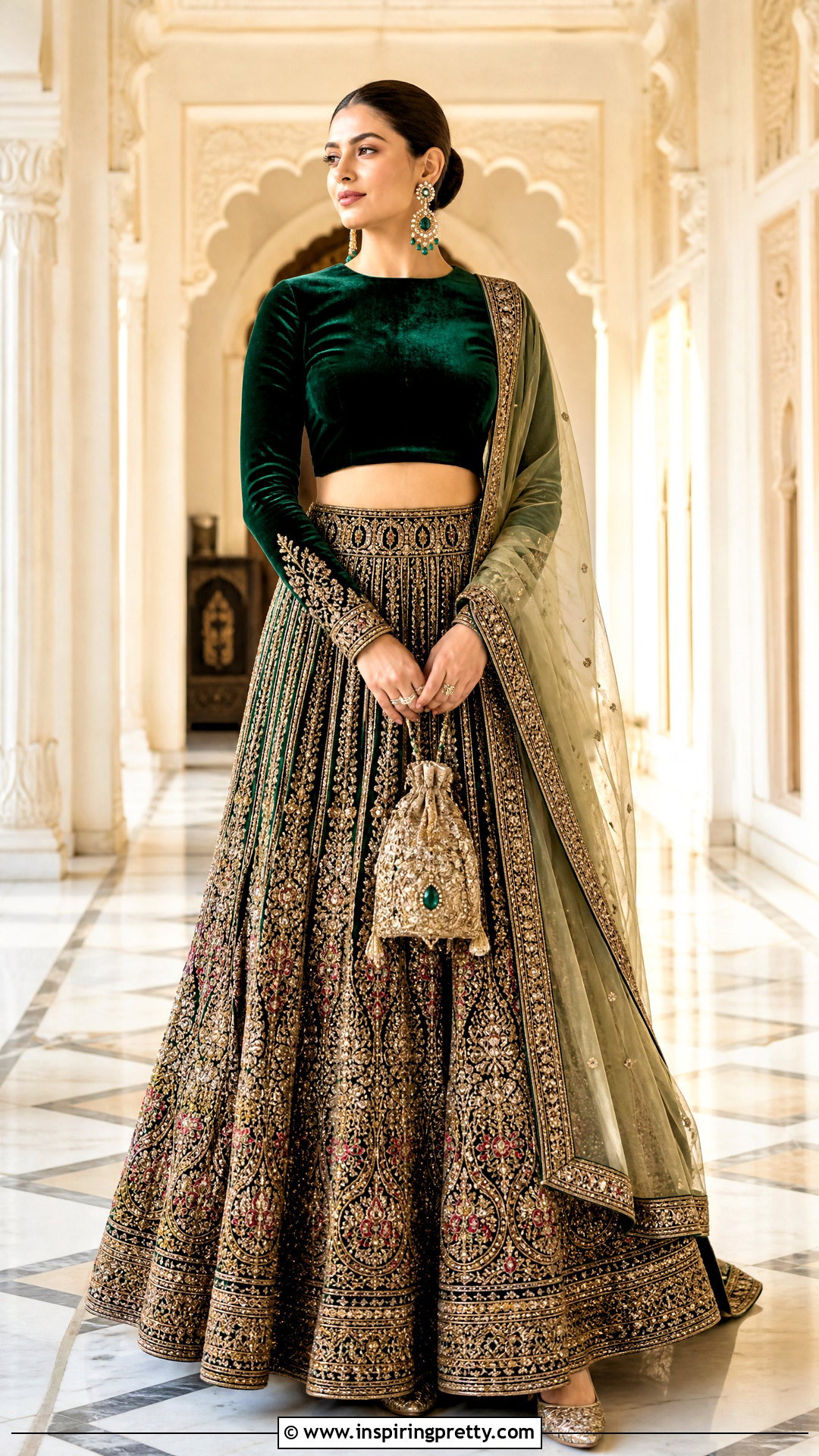
A full-sleeve top creates an elegant, balanced outfit for cooler weather, formal weddings, and modest dressing preferences. Velvet, silk, brocade, and lined net are strong fabric options, although sleeve weight should remain manageable. A fitted sleeve looks refined beside a heavily flared skirt, while slight gathers at the shoulder introduce softer volume. Coordinate the cuff embroidery with the lehenga border for a cohesive finish. Drape the dupatta over one shoulder or around the elbows so the sleeves remain visible. Add a choker or large earrings, closed-toe heels, and a structured potli. Check the elbow and armhole fit carefully. Adequate movement is essential for greeting guests, eating comfortably, and dancing without pulling the blouse out of position.
24. Three Quarter Sleeve Lehenga Top
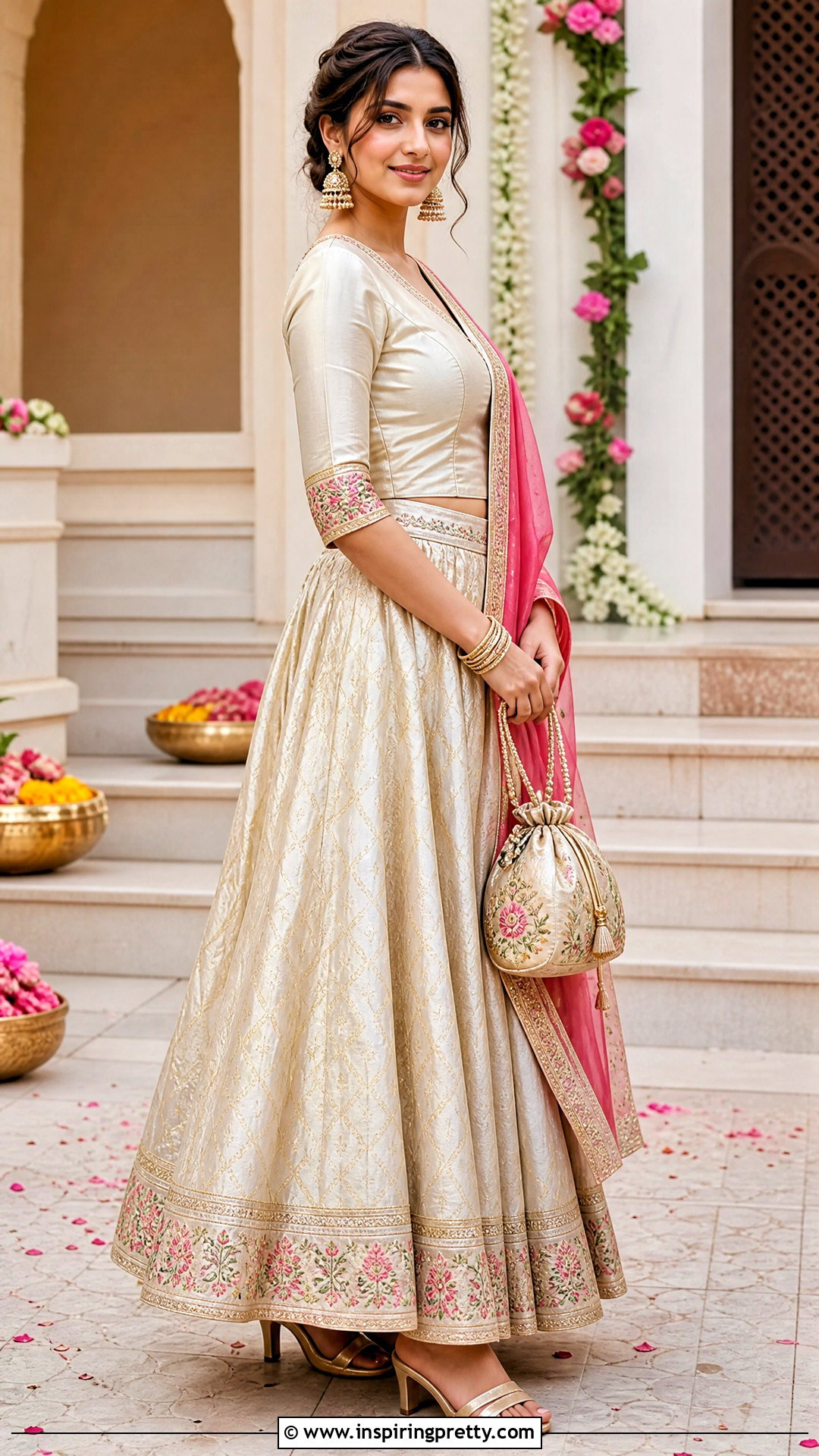
Three-quarter sleeves offer practical coverage while leaving enough wrist space for bangles and statement bracelets. The length feels especially harmonious with traditional silk, brocade, and embroidered lehengas. Choose a fitted sleeve with a decorative border at the cuff or use transparent net for a lighter effect. A boat, scoop, or modest V neckline pairs naturally with this sleeve length. Complete the outfit with a coordinated skirt, neatly pinned dupatta, stacked bangles, jhumkas, and low heels or juttis. If both blouse and skirt are heavily embellished, keep the jewelry controlled. Three-quarter sleeves can also help balance a broad, voluminous skirt by adding visual structure to the upper body. Make sure the cuff does not feel tight when bending the arm.
25. Elbow Sleeve Lehenga Top
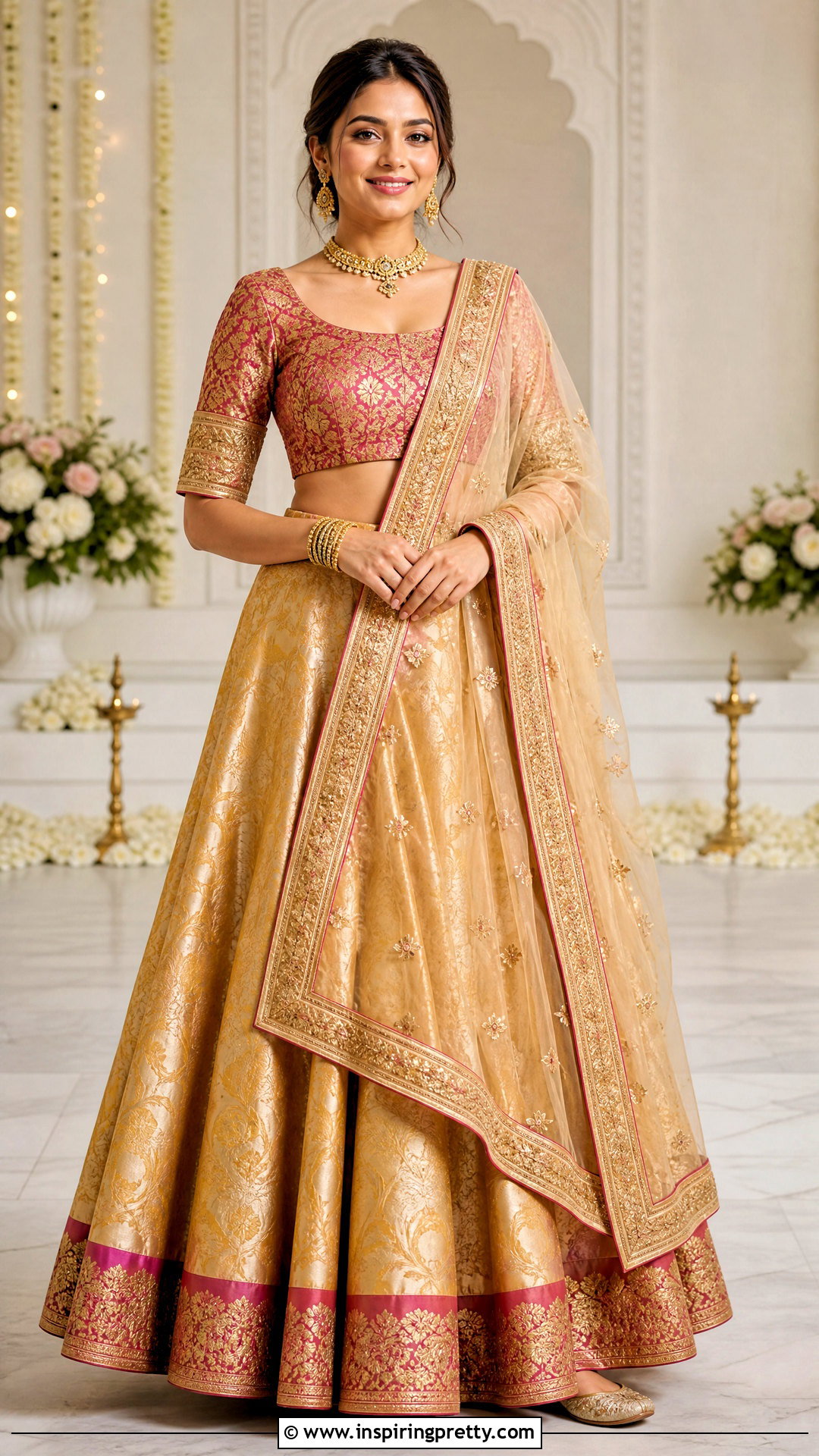
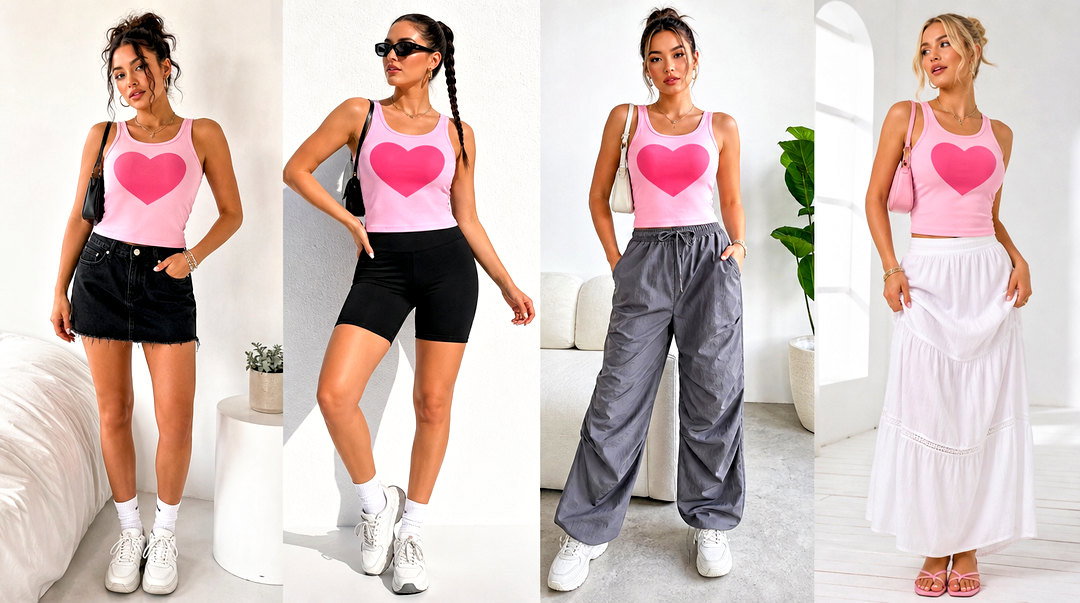
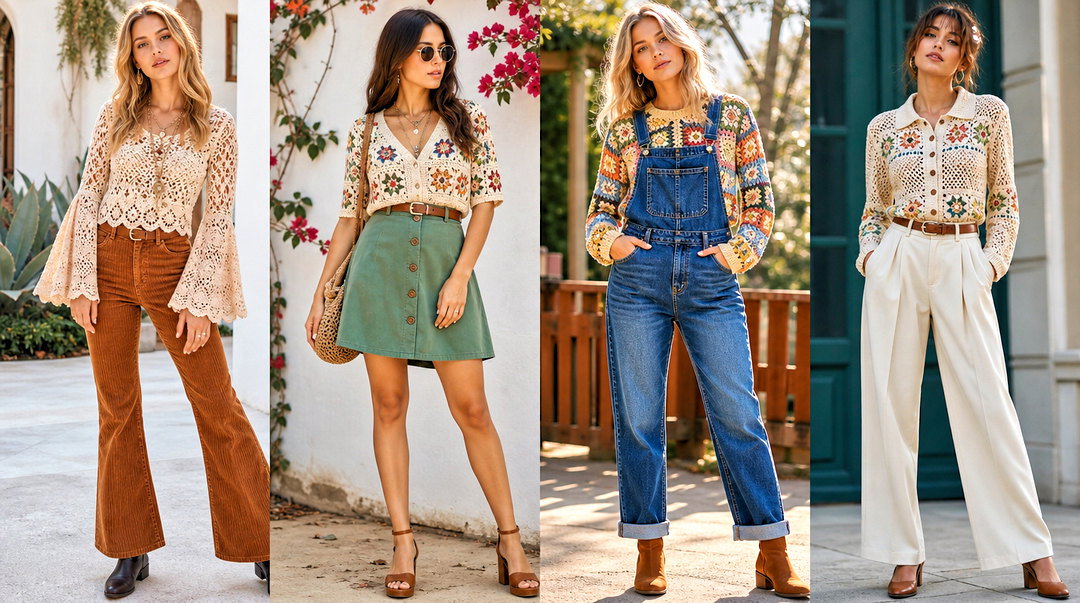
An elbow-sleeve blouse has a timeless quality that suits bridal lehengas, family celebrations, and traditional ceremonies. The sleeve offers comfortable upper-arm coverage without hiding bracelets or restricting movement. Finish it with a wide embroidered cuff, scalloped border, contrast piping, or rows of small pearls. Pair the top with a silk or brocade lehenga and a dupatta draped diagonally across the torso. A medium-depth round or U neckline keeps the proportions classic. Complete the look with a short necklace, matching earrings, bangles, and embroidered juttis. If the skirt contains elaborate patterns, repeat only one motif on the sleeves to avoid visual clutter. A comfortable armhole and carefully measured sleeve opening will prevent pulling, wrinkling, or pinching.
26. Puff Sleeve Lehenga Top
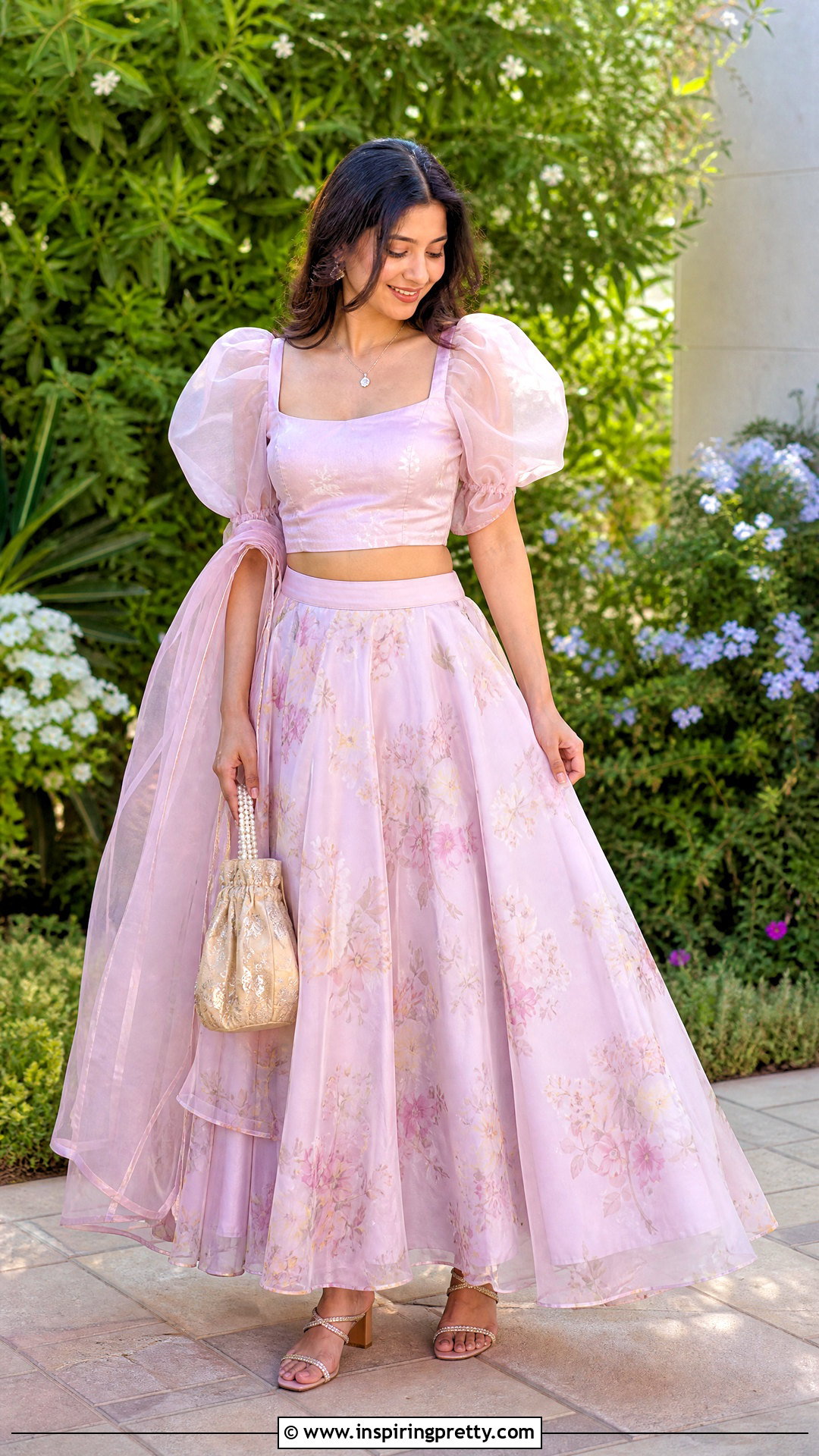
Puff sleeves give a lehenga top a playful shape while adding volume around the shoulders. A short, controlled puff feels festive without overpowering the skirt, while an elbow-length puff creates a more dramatic silhouette. Organza, tissue, and light silk hold the shape particularly well. Pair the blouse with a simple fitted bodice and a flowing lehenga in a matching or complementary color. Limit heavy embellishment to the neckline, sleeve cuffs, or waistband. A narrow dupatta, small earrings, a delicate necklace, and block heels maintain balance. Puff placement should complement the wearer’s proportions, so experiment with the amount of gathering during fittings. Soft lining beneath transparent sleeves can prevent irritation and keep the seams comfortable against the skin.
27. Bell Sleeve Lehenga Top
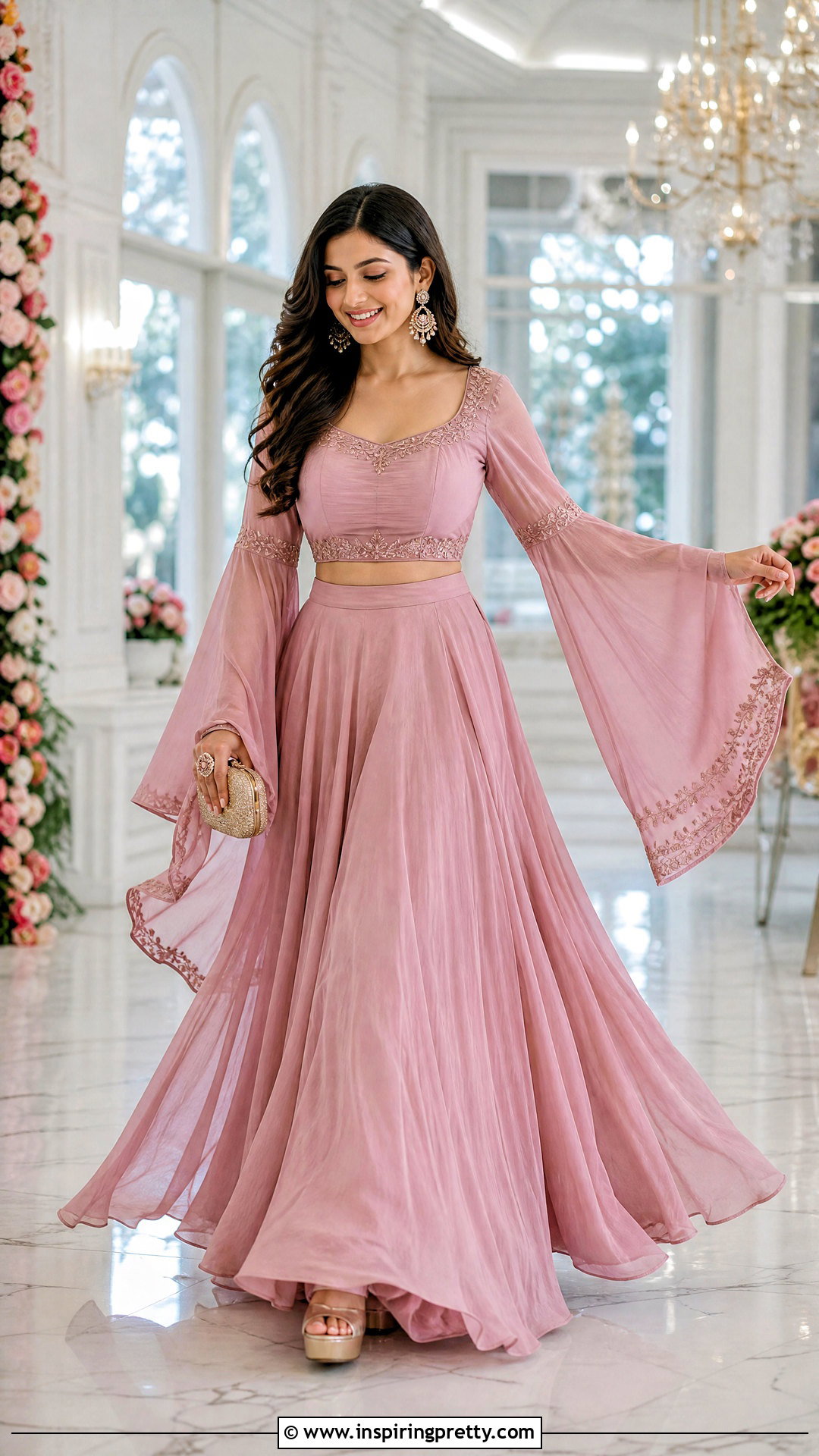
Bell sleeves introduce graceful movement to a lehenga, especially during dancing or outdoor celebrations. The sleeve should remain fitted above the elbow before widening into a soft flare. Georgette, chiffon, and lightweight net create fluid movement, while organza produces a more sculptural shape. Pair the top with a relatively simple skirt so the sleeves remain the defining element. A fitted waist and clean neckline prevent the outfit from appearing overly voluminous. Skip stacked bangles that may catch inside the sleeve, choosing earrings and a ring instead. Add platform sandals and a small clutch to finish the look. Keep the flared portion away from floor length, food, candles, and heavily beaded surfaces for greater comfort and practicality.
28. Flutter Sleeve Lehenga Top
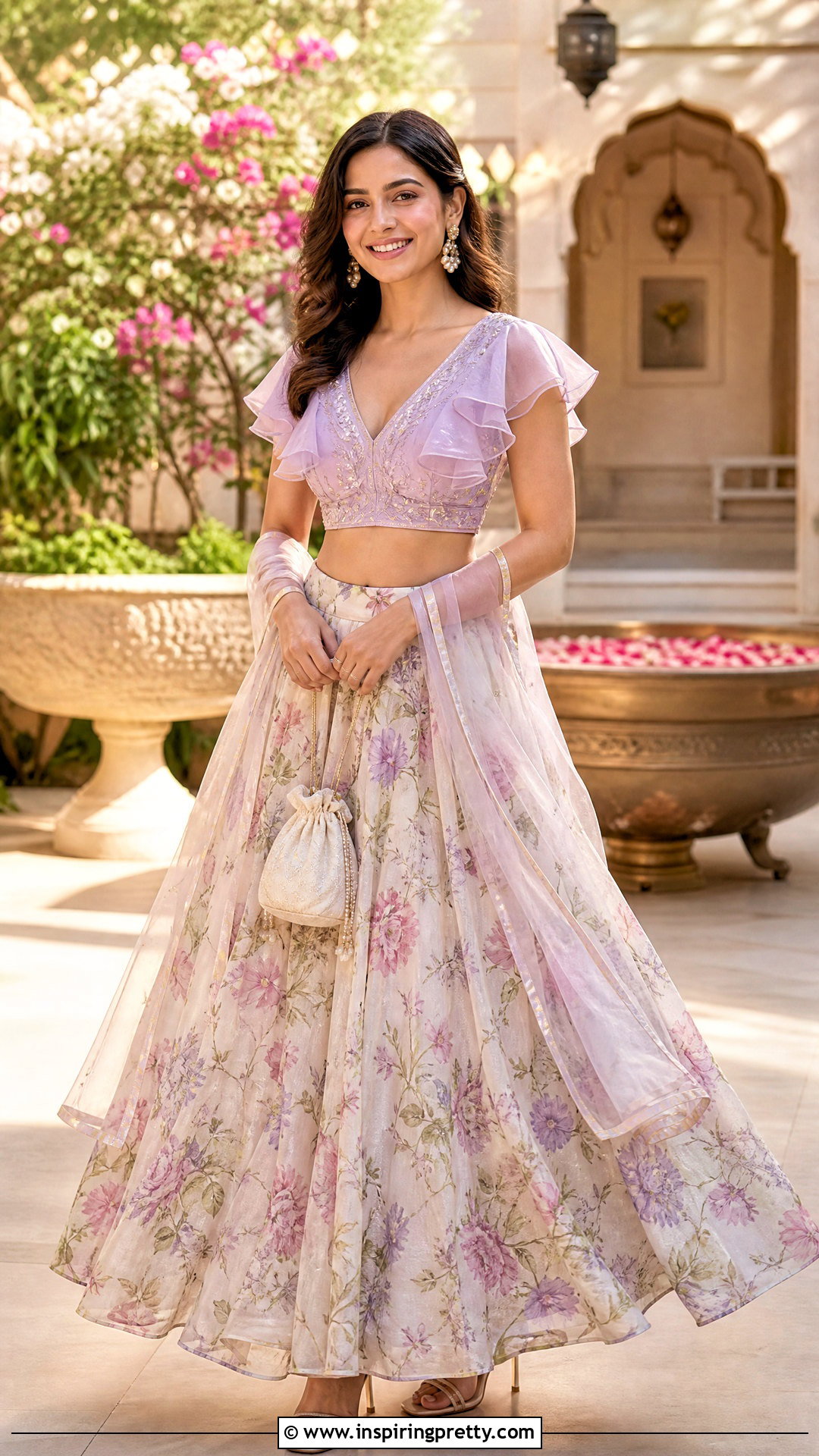
Flutter sleeves are light, airy, and ideal for daytime weddings or warm-weather festivities. They fall softly over the shoulders without the structured fullness of puff sleeves. Chiffon, georgette, and fine organza create the prettiest movement and can be layered for extra coverage. Pair the blouse with a floral, pastel, or lightly embroidered lehenga and a minimal dupatta draped over one arm. A V, scoop, or sweetheart neckline complements the gentle sleeve shape. Finish with pearl earrings, a delicate bracelet, comfortable heels, and a small potli bag. Avoid dense embellishment along the flutter edge because excessive weight may interfere with the drape. The sleeve should also end high enough to leave the elbow free for easy movement.
29. Ruffle Sleeve Lehenga Top
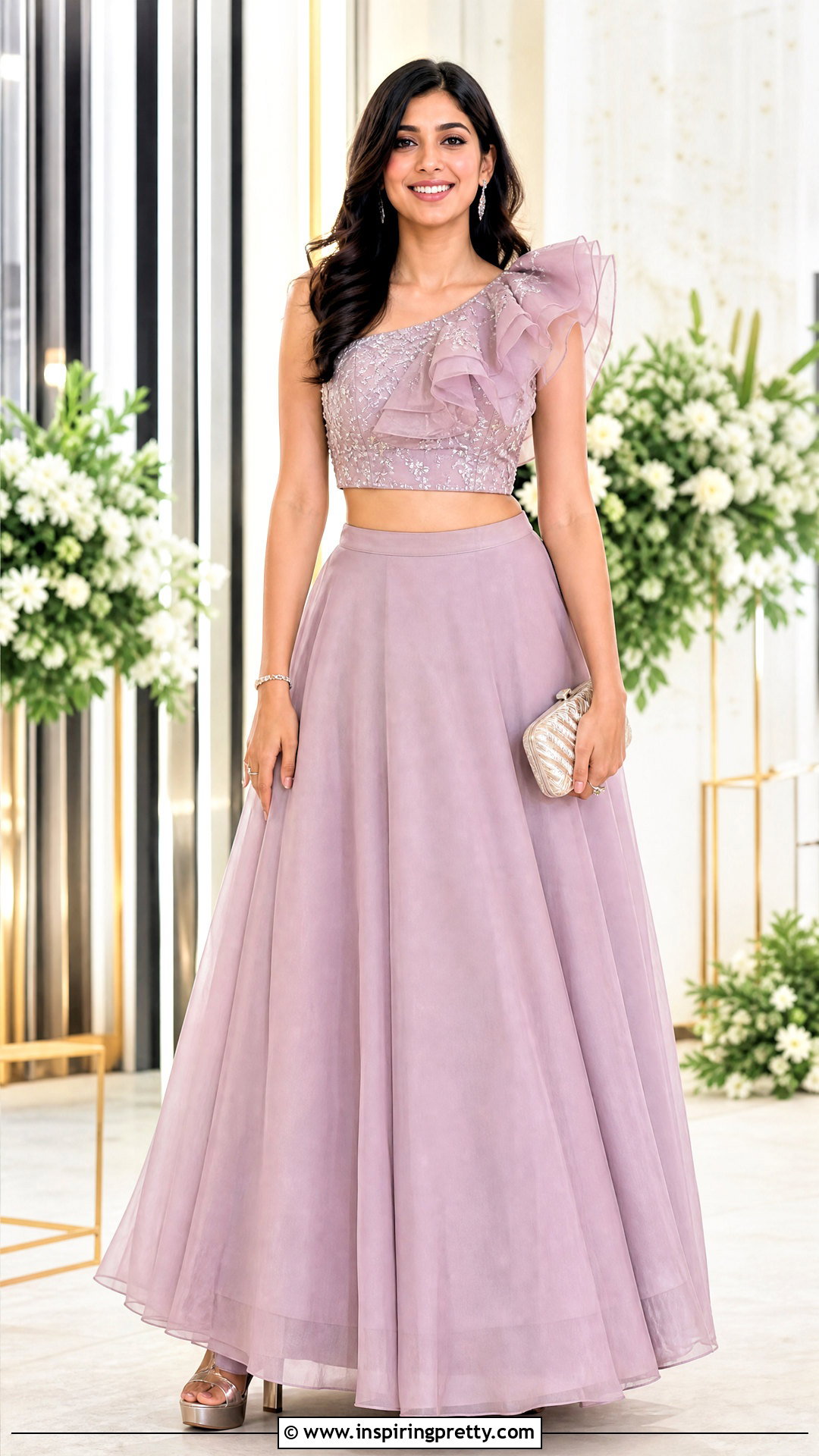
Ruffle sleeves can transform a plain lehenga top into a strong statement piece. Keep the ruffles controlled and place them at the shoulder, along one side, or near the cuff rather than covering the entire blouse. Soft net and organza maintain volume, while georgette produces a relaxed fall. Pair the top with a solid-color or minimally embellished lehenga to prevent competing details. An asymmetric neckline can reinforce the modern character of the outfit. Add simple earrings, a slim bracelet, platform heels, and a clean clutch. A separate dupatta is optional because ruffles already create movement around the upper body. During the fitting, check how the ruffles appear from the front, side, and back to ensure flattering, balanced placement.
30. Cold Shoulder Lehenga Top
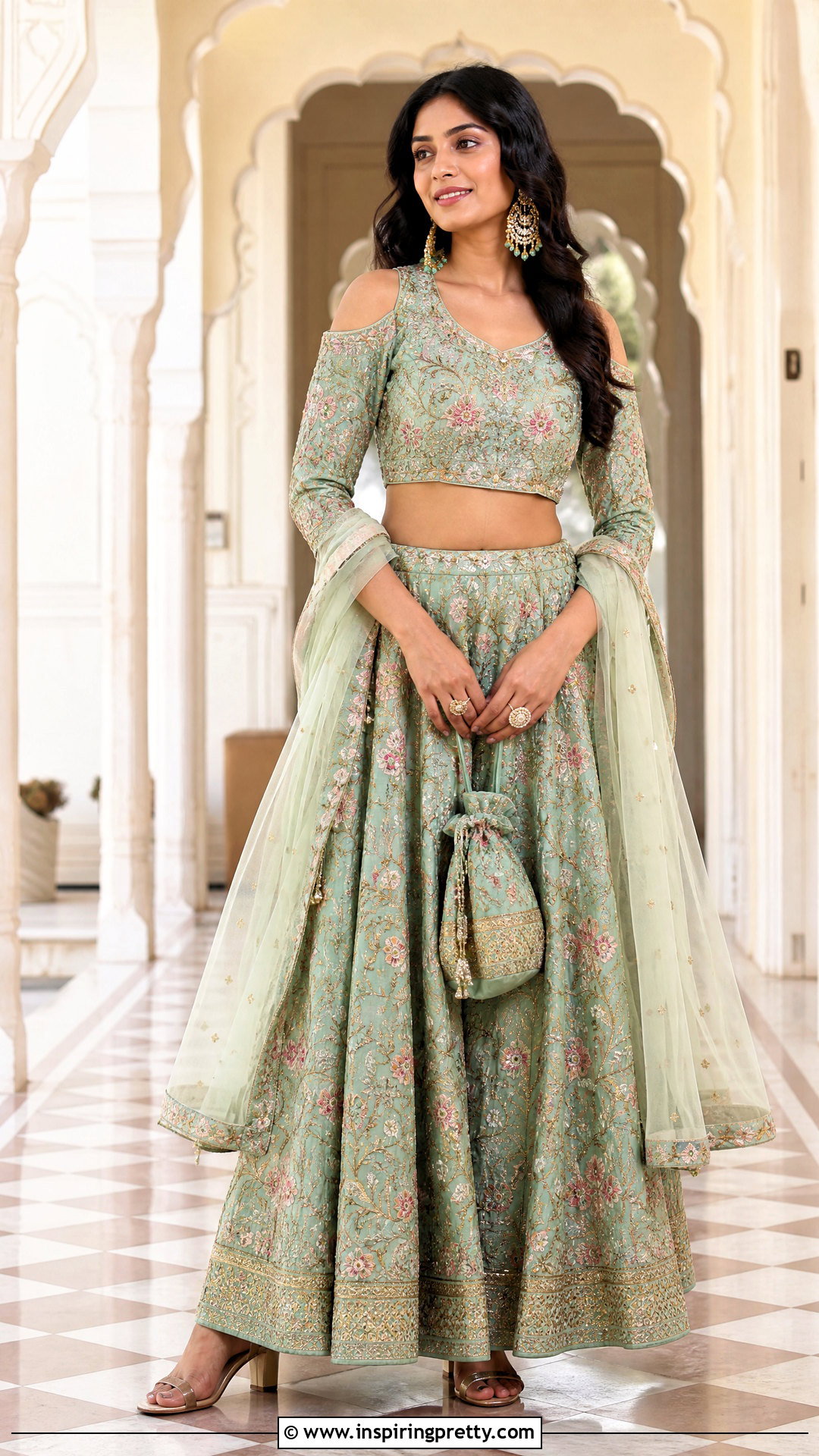
A cold-shoulder blouse offers selective coverage while introducing small cutouts at the upper arms. This design works best when the openings are neatly shaped and supported rather than excessively large. Use three-quarter, elbow-length, or short sleeves according to the overall formality of the outfit. Pair an embroidered cold-shoulder top with a coordinated lehenga and a sheer dupatta positioned behind the arms. Keep the neckline simple so the shoulder details remain the focus. Complete the ensemble with long earrings, stacked rings, block heels, and a potli bag. Reinforced edges help the cutouts retain their shape, while soft lining prevents irritation. Test the design while lifting your arms to ensure the sleeves do not twist or pull.
31. Spaghetti Strap Lehenga Top
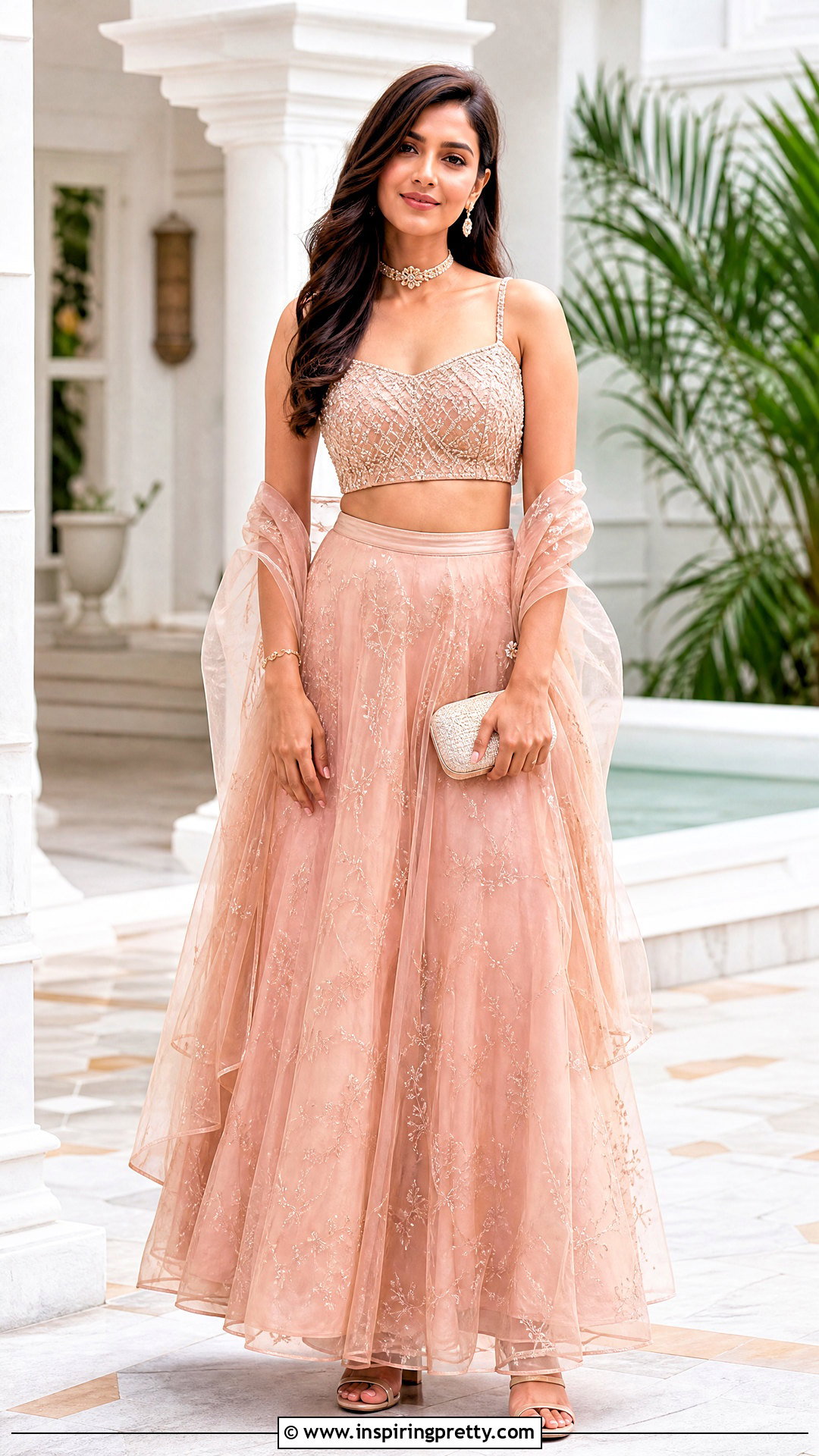
A spaghetti-strap top creates a minimal, youthful silhouette that suits lightweight lehengas and warm-weather events. The bodice should be fully structured because the narrow straps provide limited support on their own. Choose a square, scoop, or softly curved neckline and add embroidery to the body rather than heavily weighting the straps. Pair it with a high-waisted skirt in satin, organza, georgette, or embroidered net. A sheer dupatta draped around the arms offers flexible coverage while preserving the neckline. Complete the look with a choker, small drop earrings, heeled sandals, and a compact clutch. Adjustable or carefully measured straps can prevent slipping. Confirm the final length only after the blouse’s cups and inner structure have been completed.
32. Wide Strap Lehenga Top
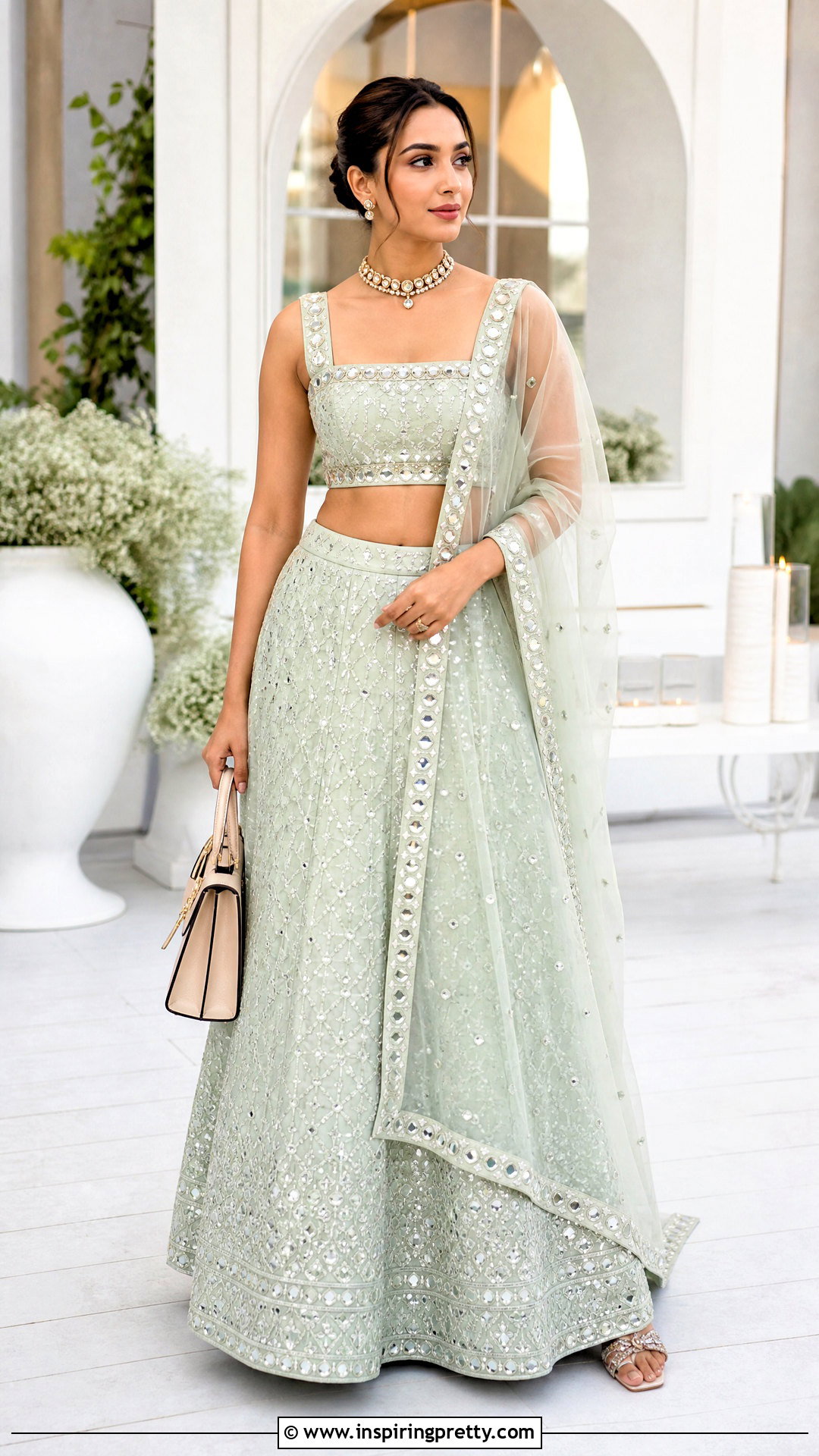
A wide-strap blouse delivers the clean look of a sleeveless top with greater comfort, coverage, and support. Square and sweetheart necklines work especially well with substantial straps because they create a defined frame around the upper body. Cover the straps with embroidery, mirror work, or tonal beads to integrate them into the design. Pair the blouse with a high-waisted lehenga and a dupatta draped from one shoulder across the opposite arm. Add a collar necklace, studs or small earrings, embroidered sandals, and a structured handbag. Wide straps can conceal supportive undergarments more easily than narrow versions, making this option practical for longer occasions. Ensure the inner edges sit flat and do not rub against the neck or underarms.
33. Mirror Work Lehenga Top
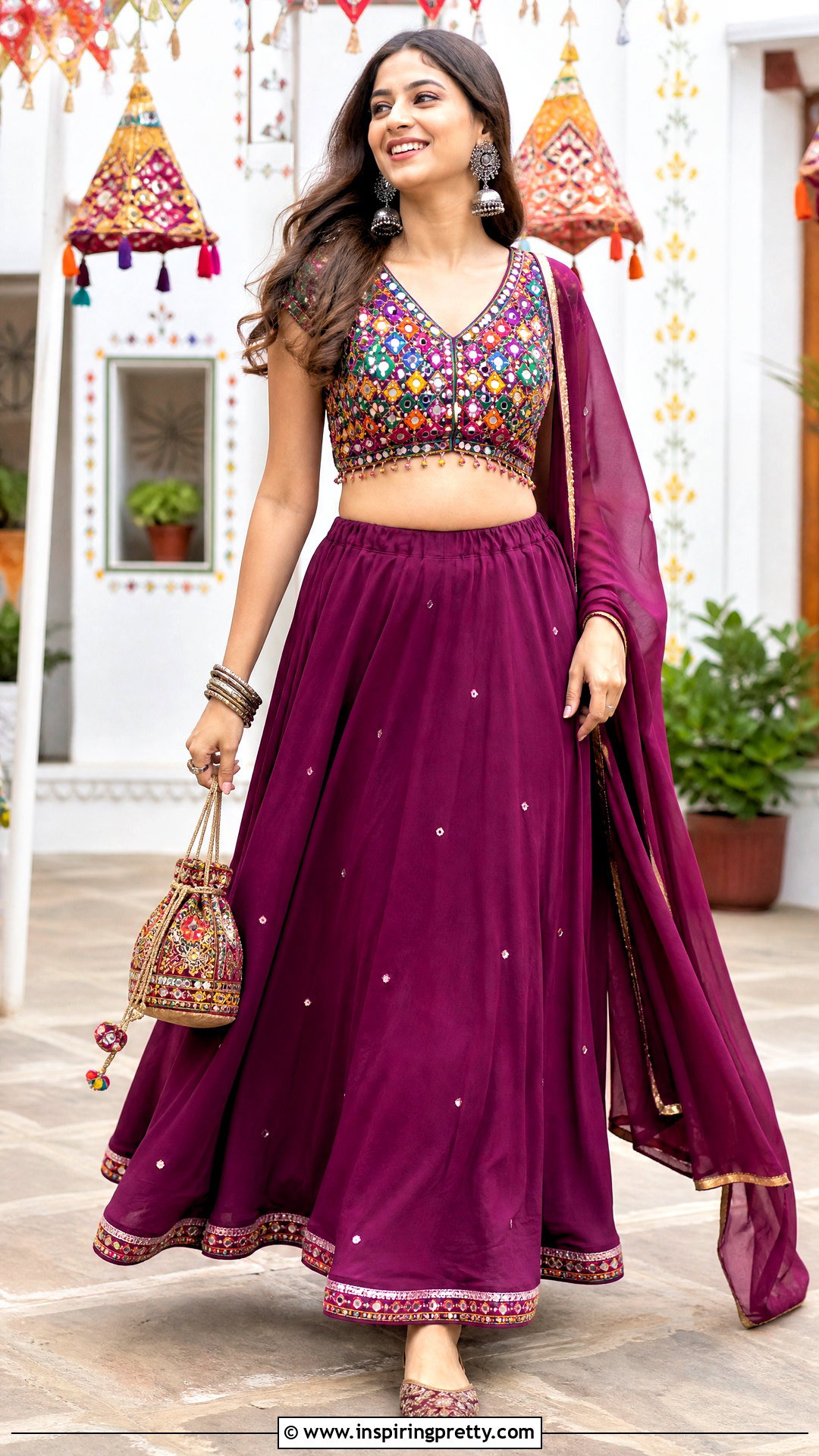
A mirror-work top catches light beautifully and creates a festive focal point for garba, sangeet, and wedding celebrations. Choose small, securely attached mirrors arranged in geometric, floral, or border patterns. Pair a heavily worked blouse with a solid or lightly decorated lehenga that repeats only a few reflective details. A square or round neckline gives the embellishment a clear framework, while short sleeves keep the outfit comfortable. Add a plain chiffon dupatta, oxidized or gemstone earrings, stacked bangles, and cushioned juttis. Avoid wearing a large necklace that competes with the reflective surface. Check the inside for exposed threads or sharp backing, and request a smooth lining so the blouse remains comfortable during energetic movement and extended wear.
34. Sequin Lehenga Top
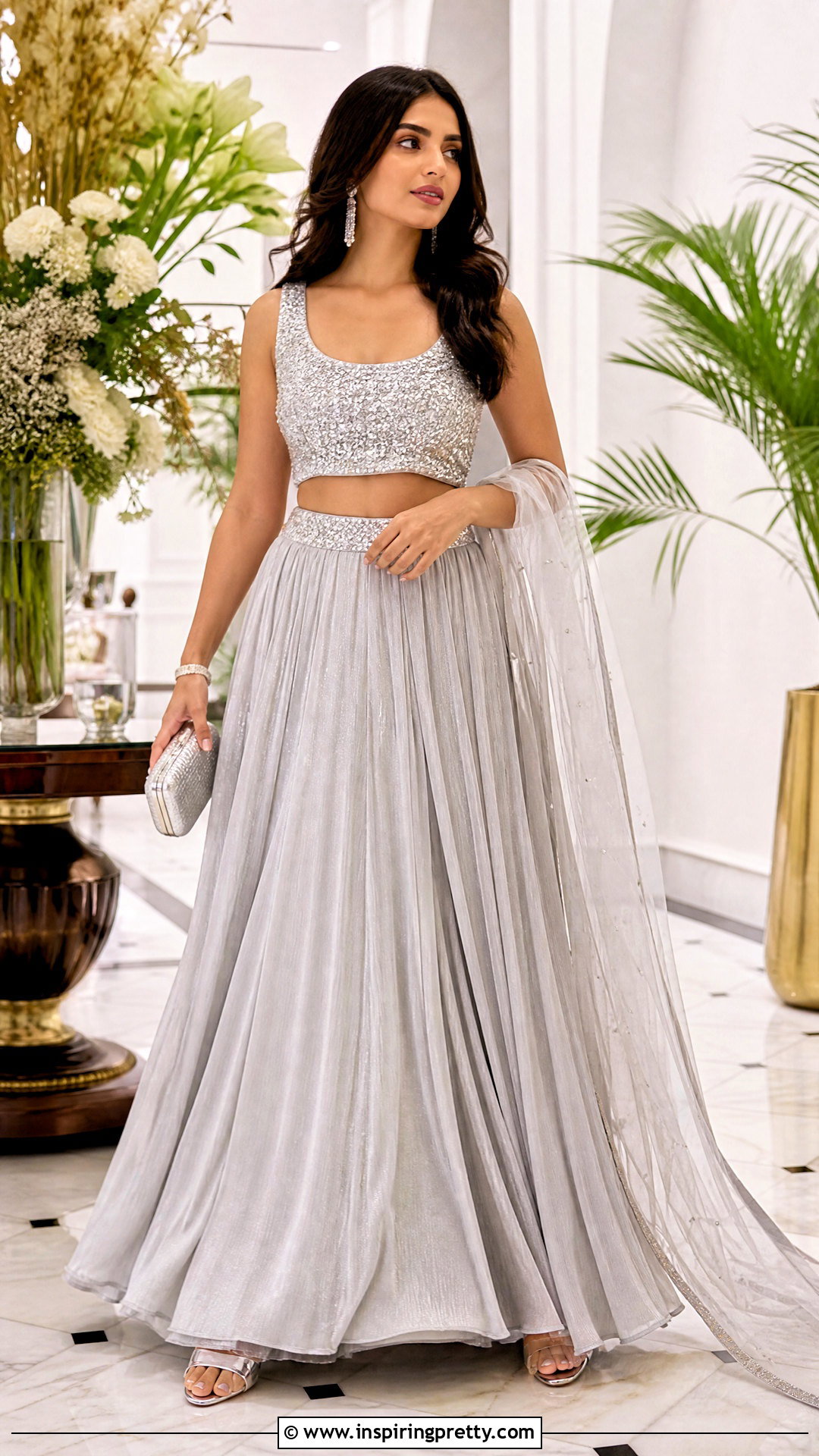
A sequined top creates instant evening glamour, especially when paired with a flowing monochromatic lehenga. Select smaller sequins for refined shimmer or larger paillettes for a stronger statement. A sleeveless scoop, square, or V-neck bodice keeps the silhouette clean and allows the texture to remain prominent. Match the skirt exactly for a seamless look or use a matte skirt to create subtle contrast. Drape a plain net dupatta over one arm and complete the outfit with sleek earrings, a bracelet, metallic heels, and a hard-case clutch. Make sure the blouse is fully lined because sequin edges can scratch the skin. Cover rough seams near the armholes, and avoid accessories that may snag against the embellished fabric.
35. Pearl Work Lehenga Top
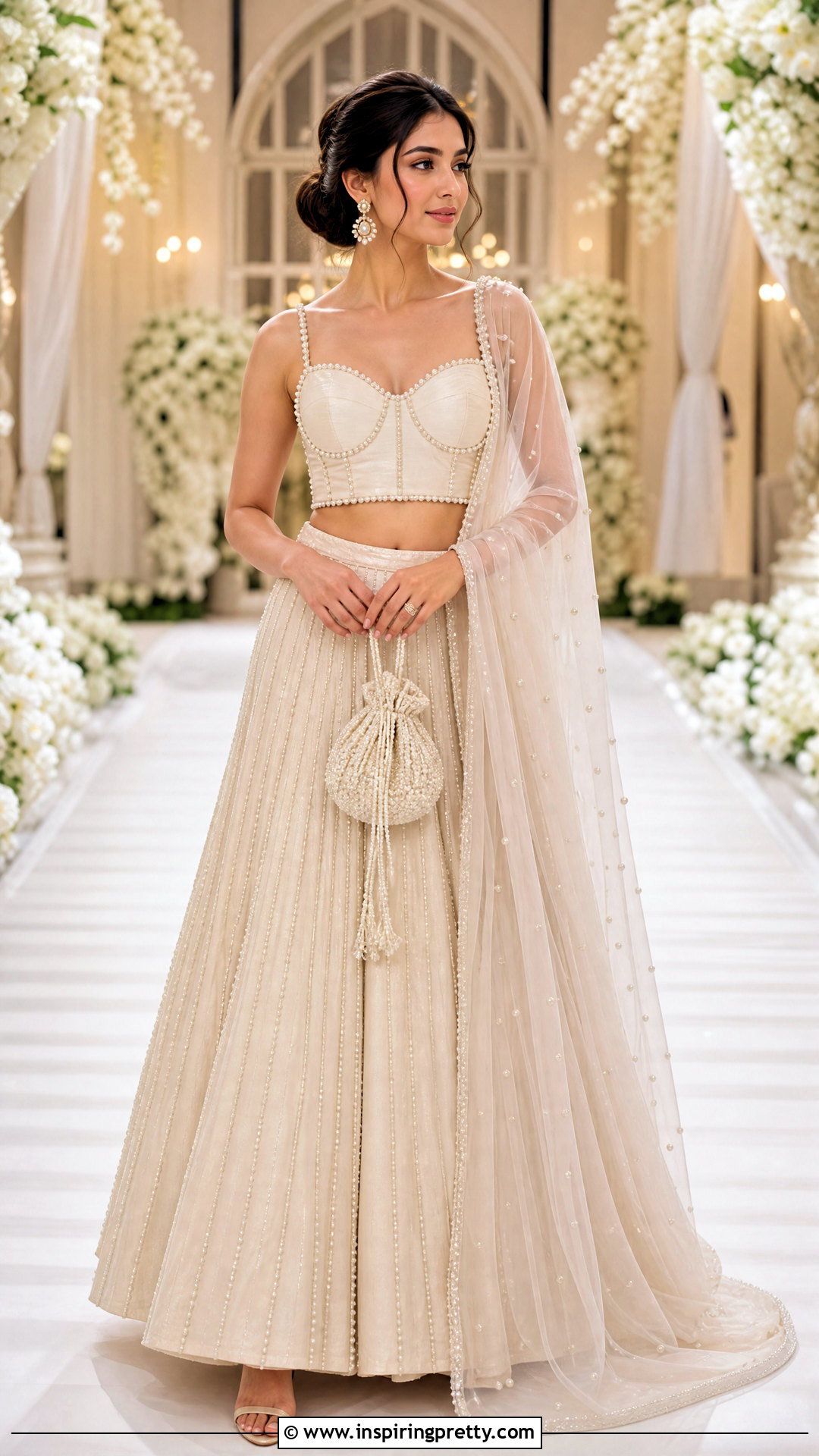
Pearl embellishment brings a soft, luminous finish to pastel, ivory, champagne, and jewel-toned lehengas. Place pearls along the neckline, straps, sleeves, or structured seam lines rather than covering every surface. This creates dimension without making the blouse unnecessarily heavy. Pair the top with a coordinated skirt featuring light embroidery or a narrow pearl border. A sheer dupatta with scattered pearl accents can connect the pieces while maintaining an airy effect. Style the outfit with pearl studs or drop earrings, a delicate ring, satin heels, and a beaded potli. Use different pearl sizes sparingly to create texture. Each embellishment should be stitched securely and backed with smooth lining so threads do not irritate the skin or loosen during wear.
36. Zari Embroidered Lehenga Top
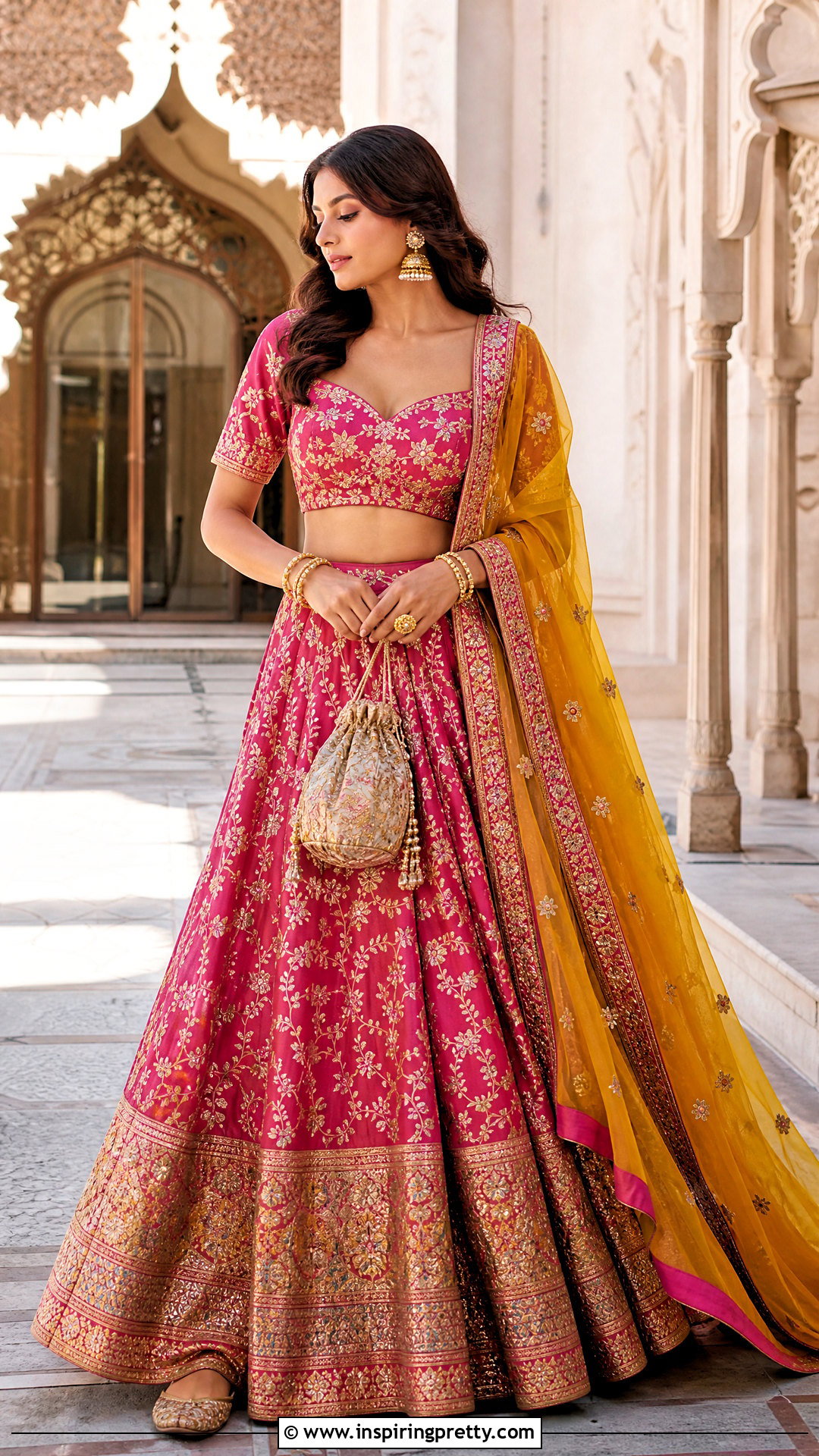
A zari-embroidered blouse brings traditional richness to silk, velvet, brocade, and raw-silk lehengas. Gold or silver metallic thread can outline the neckline, sleeves, and waist or form detailed floral and architectural motifs. Pair a richly embroidered top with a skirt that repeats the same metallic tone in its border. A classic U-neck, sweetheart neckline, or fitted high neck supports the formal character of the outfit. Drape a contrasting dupatta neatly over one shoulder and secure it with hidden pins. Complete the ensemble with traditional earrings, bangles, a potli, and embroidered juttis. Because dense zari can feel heavy, keep seam allowances soft and ensure the lining covers all metallic threads. Store the top carefully to prevent tarnishing and snagging.
37. Floral Embroidered Lehenga Top
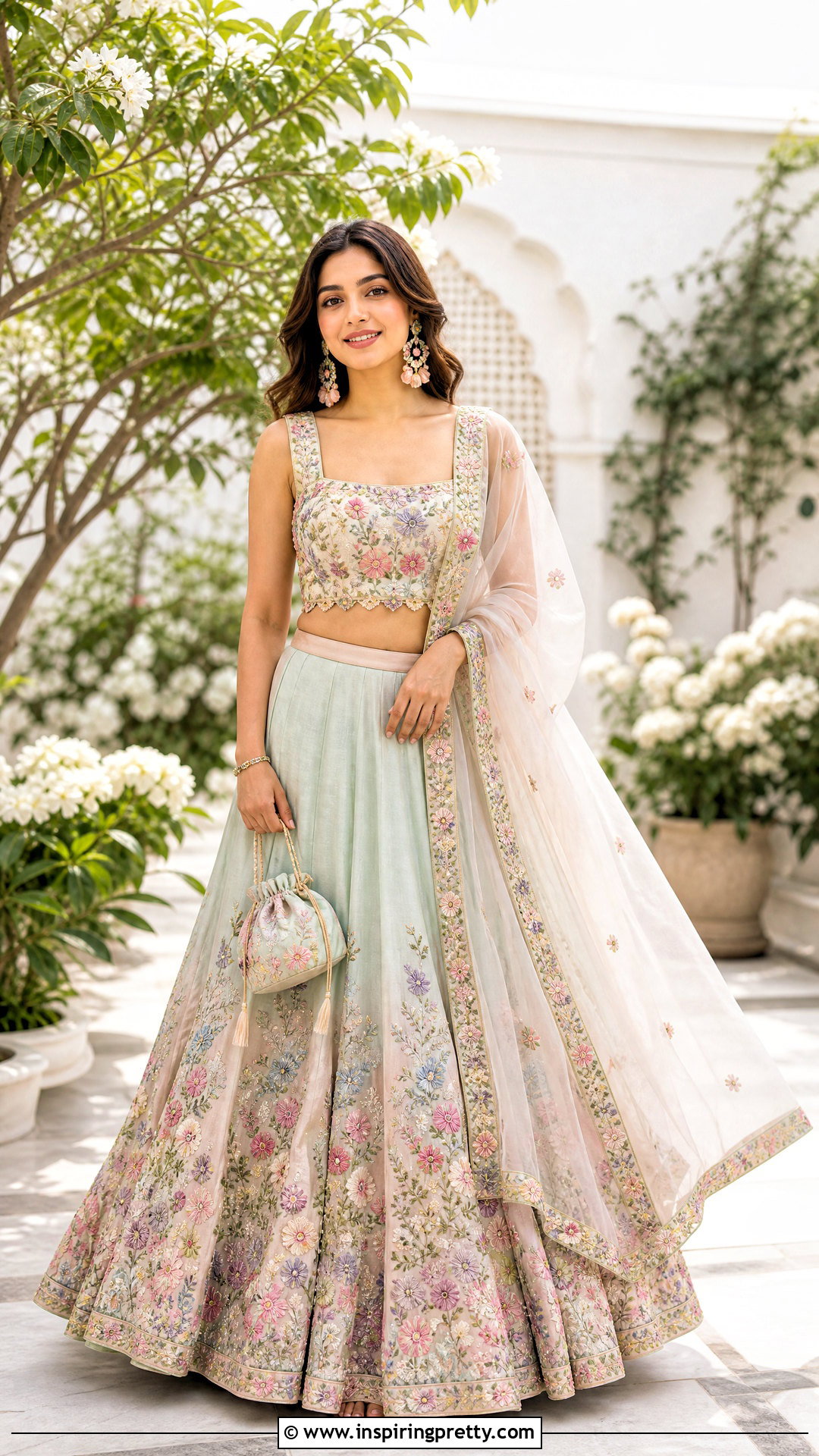
Floral embroidery gives a lehenga top a romantic, versatile appearance that works beautifully for daytime festivities and garden celebrations. Choose threadwork in tonal shades for subtle dimension or contrasting colors for a more vibrant effect. A sweetheart, square, or scoop neckline provides enough open space around detailed floral motifs. Pair the blouse with a flowing skirt that carries smaller versions of the same flowers near the hem. Use a light organza dupatta with a narrow embroidered border. Complete the look with floral-inspired earrings, a slim bracelet, comfortable heels, and a pastel potli. Keep larger motifs away from bulky seam areas so the blouse lies smoothly. Balanced placement around the bust, waist, and shoulders will produce a more flattering overall pattern.
38. Brocade Lehenga Top
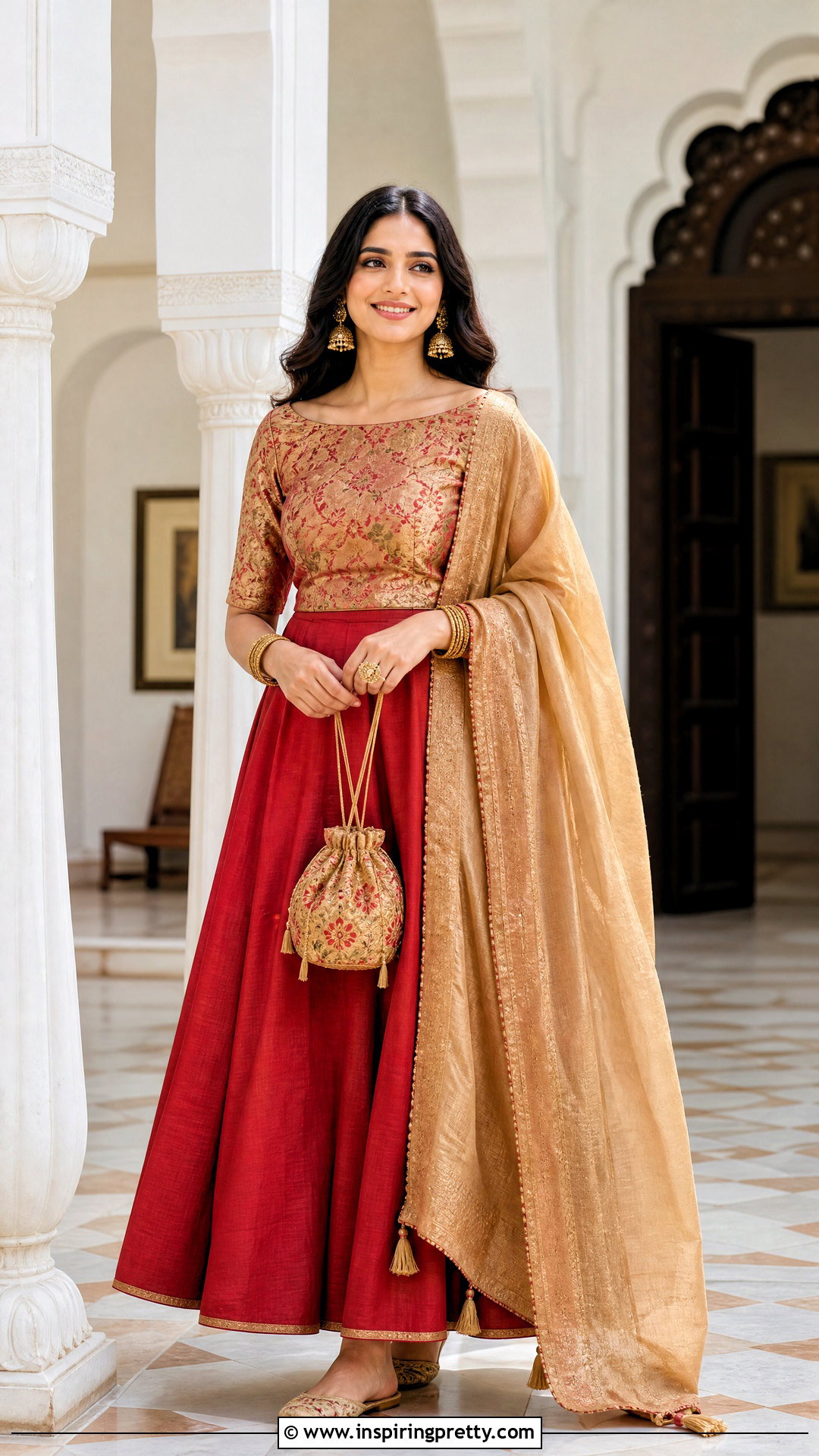
A brocade blouse provides rich texture without requiring layers of added embellishment. Its woven metallic patterns pair naturally with plain silk, raw-silk, velvet, or organza lehengas. Choose a structured square neck, boat neck, or classic round neckline to showcase the fabric clearly. A fitted sleeveless top creates a modern effect, while elbow-length sleeves make the outfit more traditional. Coordinate one color from the brocade with the skirt and use another in the dupatta border. Add jhumkas, bangles, a potli, and pointed juttis for a polished finish. Pattern placement matters, particularly around seams and darts, so allow enough fabric for careful matching. A breathable cotton lining can make dense brocade more comfortable during warm or crowded celebrations.
39. Velvet Lehenga Top
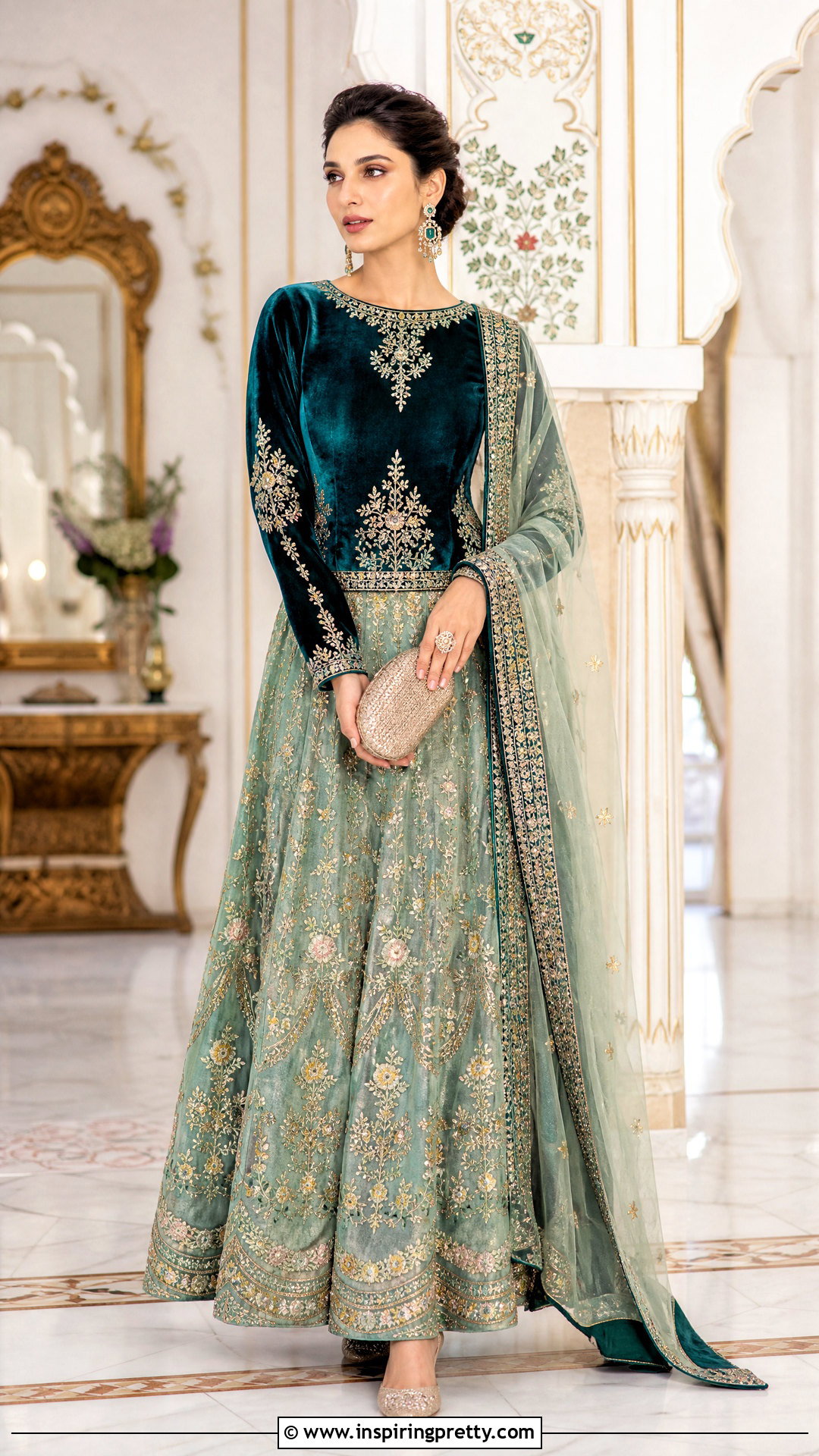
A velvet blouse gives a lehenga depth, softness, and a luxurious cold-weather finish. Jewel tones such as emerald, burgundy, navy, and plum work especially well, although black and neutral velvet can produce a striking contrast. Choose a simple neckline because the fabric already has strong visual weight. Full sleeves create formal drama, while a sleeveless fitted cut feels more contemporary. Pair the top with a brocade, silk, or lightly embroidered lehenga and a sheer dupatta that prevents the outfit from feeling heavy. Complete it with gemstone earrings, a cocktail ring, closed-toe heels, and a structured clutch. Velvet should be cut consistently with the fabric pile, and bulky seam allowances must be carefully reduced for a smooth fit.
40. Organza Lehenga Top
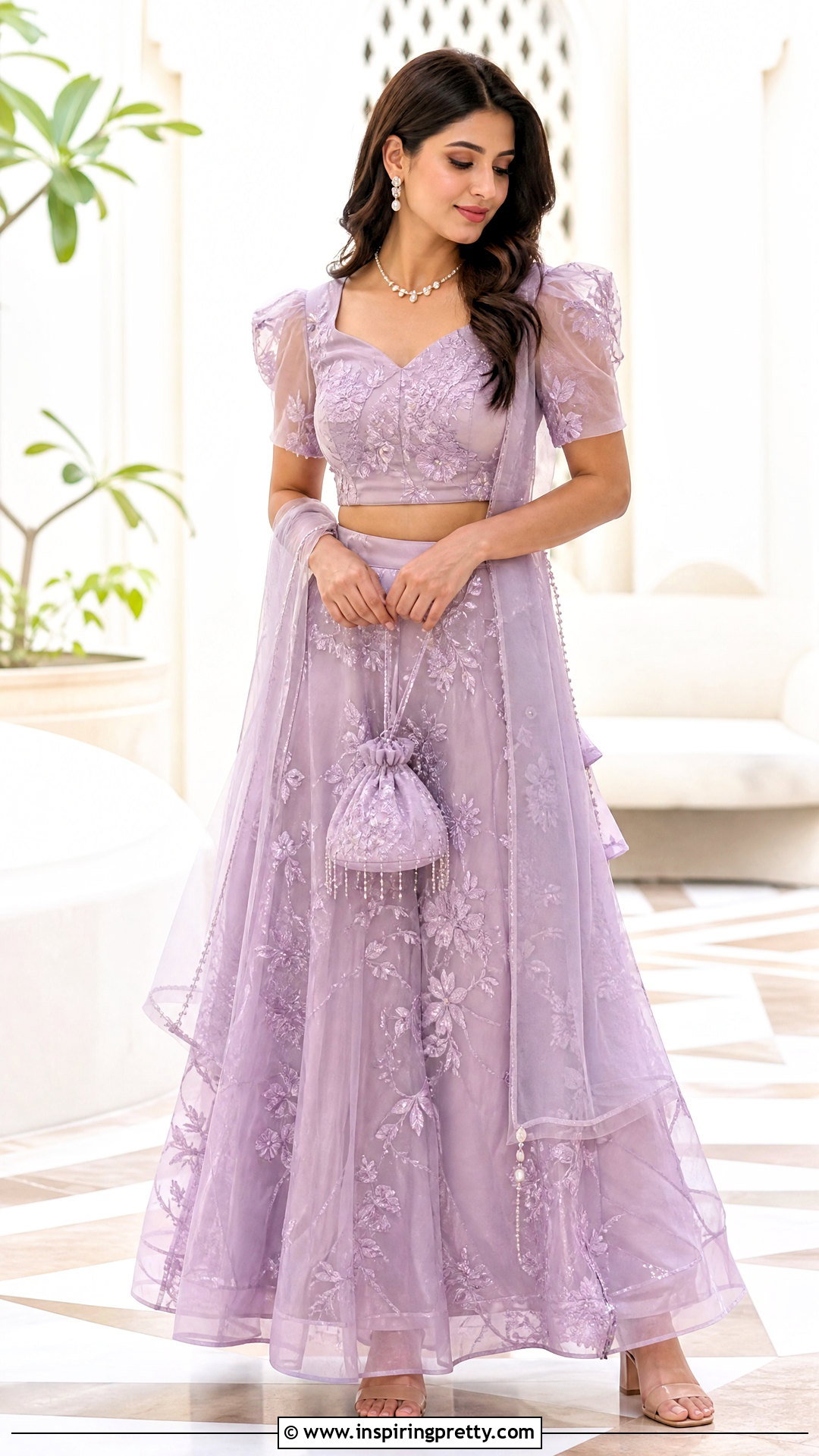
An organza top introduces crispness and gentle transparency to a light festive lehenga. Use the fabric for puff sleeves, a sheer yoke, an overlay, or sculpted shoulder details while keeping the main bodice lined and supportive. Pair it with a coordinated organza skirt featuring embroidery around the waistband and hem. A separate dupatta may be unnecessary, but a narrow sheer drape can add traditional balance when desired. Style the outfit with pearl earrings, a delicate necklace, block heels, and a small potli. Because organza can feel stiff against the skin, bind the neckline and armholes with soft fabric. Avoid placing bulky seams under the arms, and steam the finished garment gently rather than pressing it too heavily.
41. Net Sleeve Lehenga Top
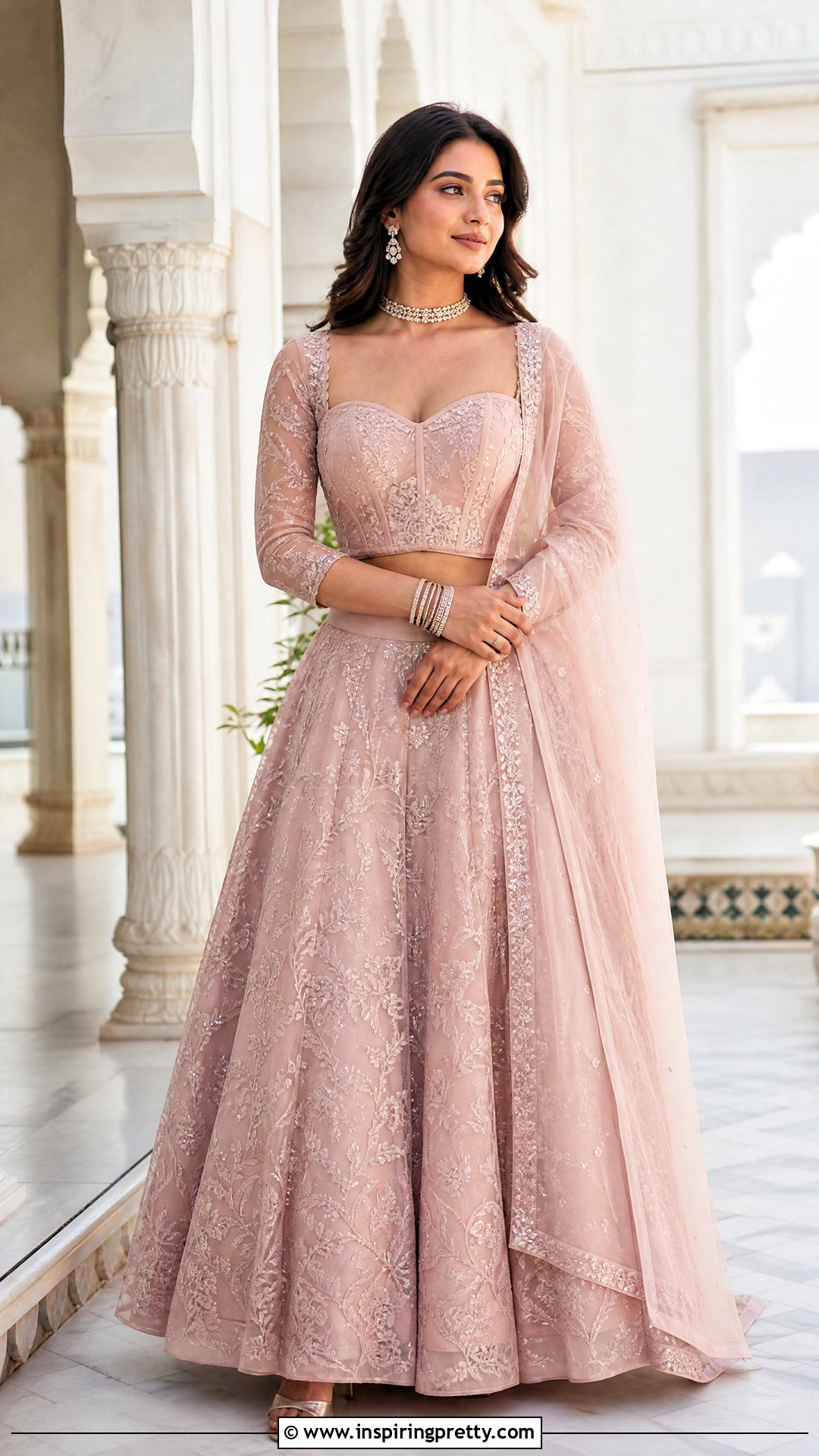
Net sleeves provide coverage while keeping a lehenga top visually light. Choose soft net that complements the blouse color, then decorate it with spaced embroidery, small sequins, pearls, or floral appliqués. A lined sweetheart or scoop-neck bodice forms a supportive base, while full or three-quarter net sleeves create an elegant contrast. Pair the blouse with a matching flared lehenga and a lightweight dupatta worn over one arm. Add a choker, drop earrings, slim bangles, and heeled sandals. Keep heavy motifs away from the elbow to preserve movement and prevent sagging. The armhole seams should be fully covered, and the sleeve opening should remain comfortable. Fine net requires careful handling because rings and embellished bags can easily catch the surface.
42. Tie Back Lehenga Top
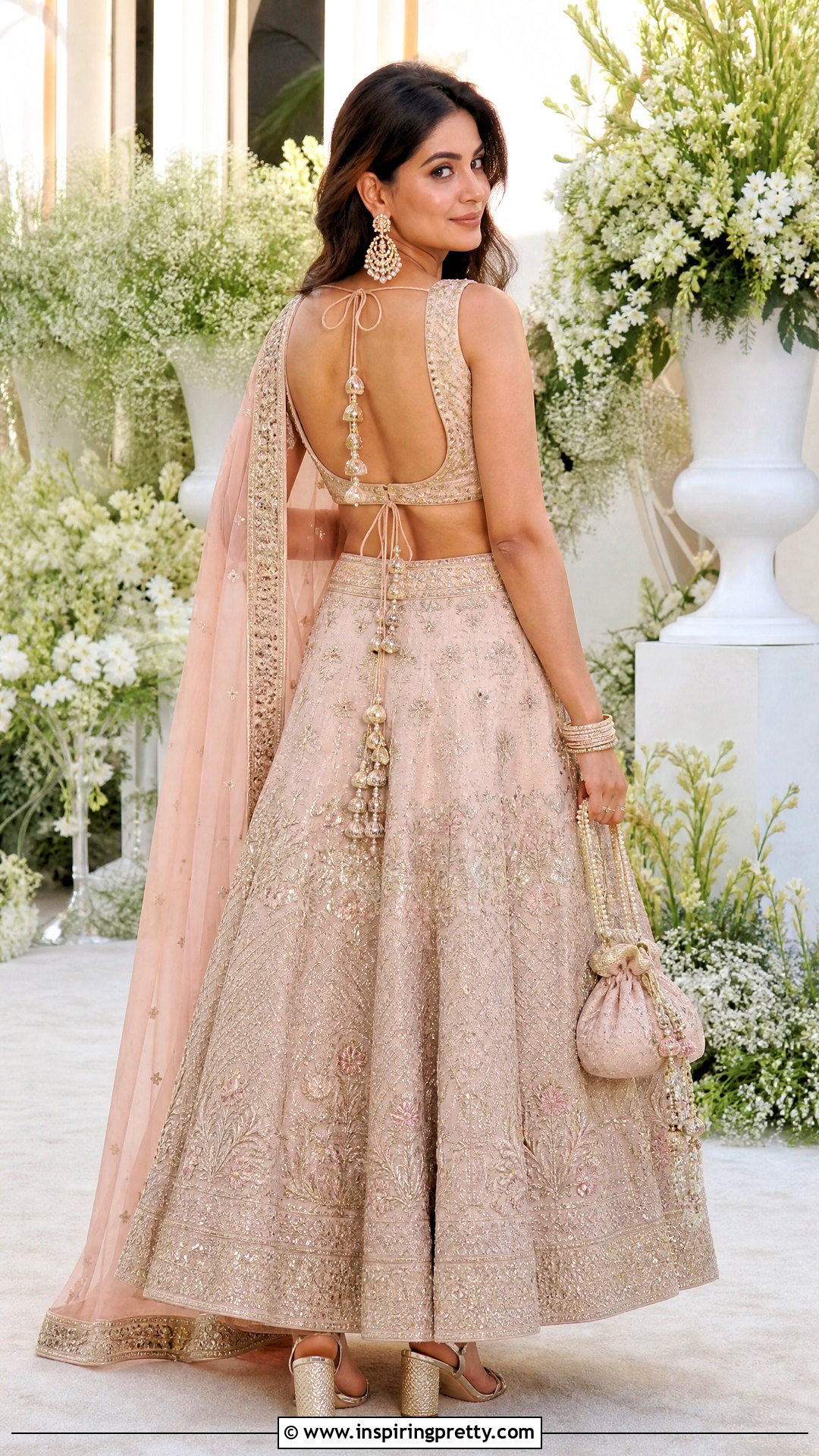
A tie-back blouse introduces an adjustable, decorative feature to the back of a lehenga outfit. The front can remain simple and supportive, while fabric ties, tassels, or embroidered cords create interest behind the shoulders or waist. A deep U, square, or rounded back works well, provided the straps are securely reinforced. Pair the top with a coordinated lehenga and drape the dupatta over one arm to keep the back visible. Add statement earrings, bangles, embellished heels, and a small potli. Keep tassels proportionate to the blouse so they move gracefully without feeling heavy. The main support should come from the blouse construction rather than the decorative tie alone. Double-check knots and hooks before leaving for the celebration.
43. Dori Back Lehenga Top
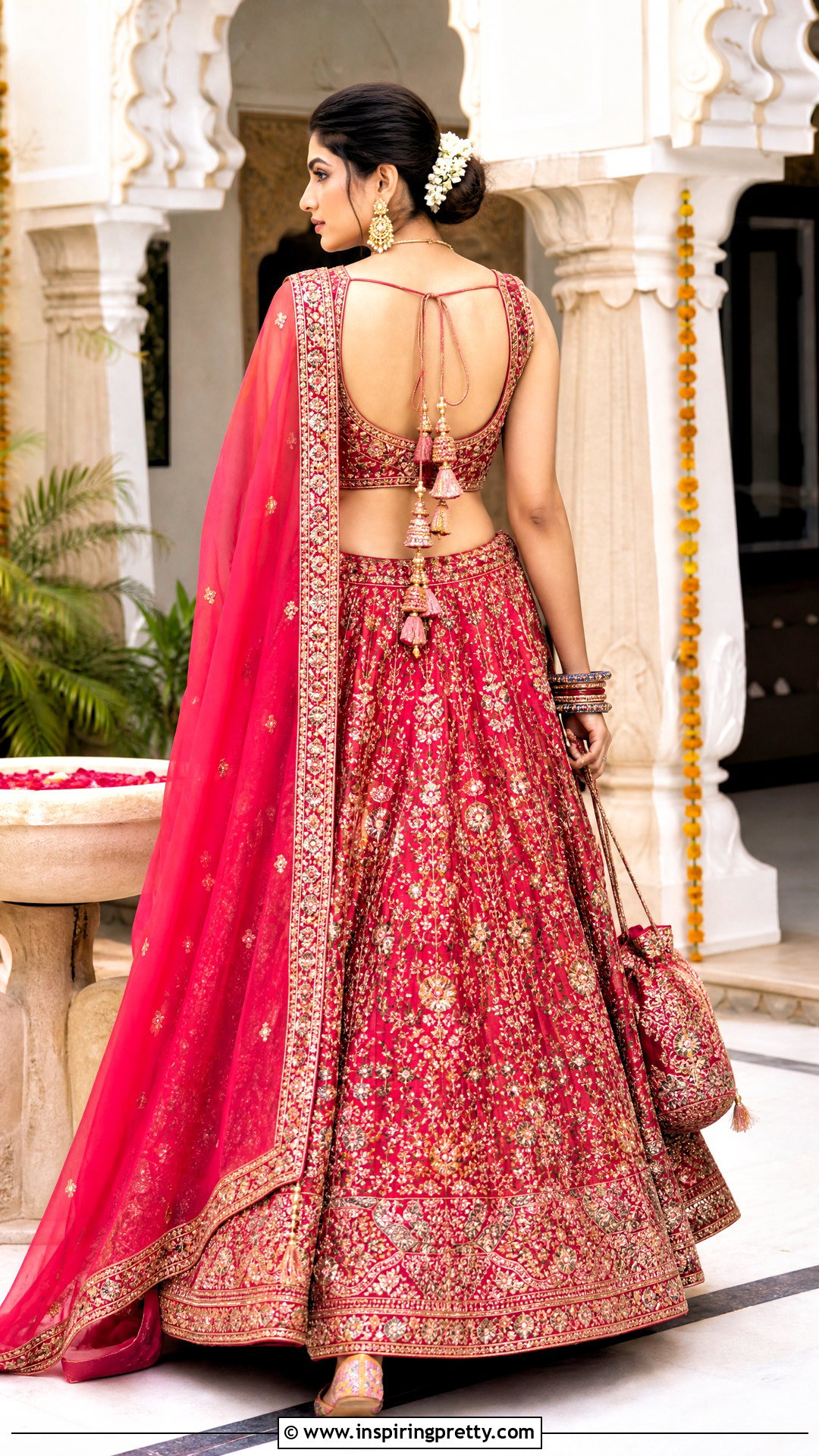
A dori-back top is a traditional choice featuring slim cords that connect or adjust the rear neckline. Embroidered tassels, fabric-covered ornaments, beads, or small latkans can decorate the cord ends. Pair this detail with a deep round or U-shaped back and a well-fitted front bodice. A bridal version may include zari and gemstone work, while a festive version can use mirror work or contrast piping. Wear it with a full lehenga, a dupatta pinned at one shoulder, traditional earrings, bangles, and juttis. Position the dori high enough to stabilize the shoulders without pressing against the neck. Ensure every embellishment is lightweight and securely stitched. A concealed side zipper or hooks should provide the blouse’s primary closure.
44. Cutout Back Lehenga Top
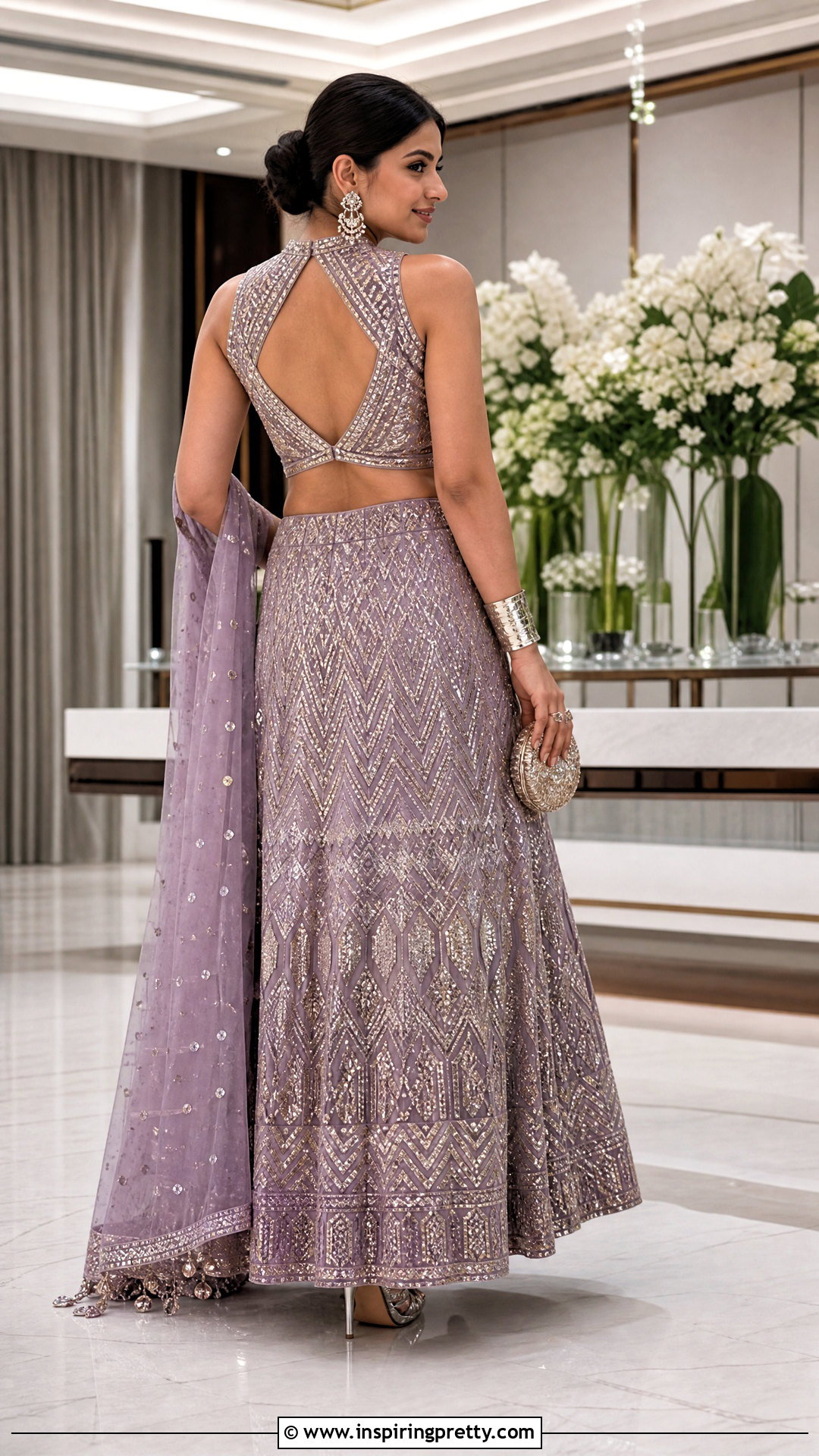
A cutout-back blouse creates an eye-catching rear view while maintaining a relatively covered front. Circular, diamond, leaf, and geometric openings can be framed with piping, embroidery, or small beads. Keep the cutout proportionate and place it away from areas that require firm structural support. Pair the blouse with a high-waisted lehenga and secure the dupatta over one forearm rather than across the back. An updo or side-swept hairstyle highlights the design. Complete the outfit with earrings, a cuff bracelet, metallic heels, and a compact bag. Add discreet hooks or a concealed zipper for stability. During the fitting, sit and move naturally to confirm that the cutout retains its intended shape without pulling, gaping, or revealing undergarments.
45. Bow Back Lehenga Top
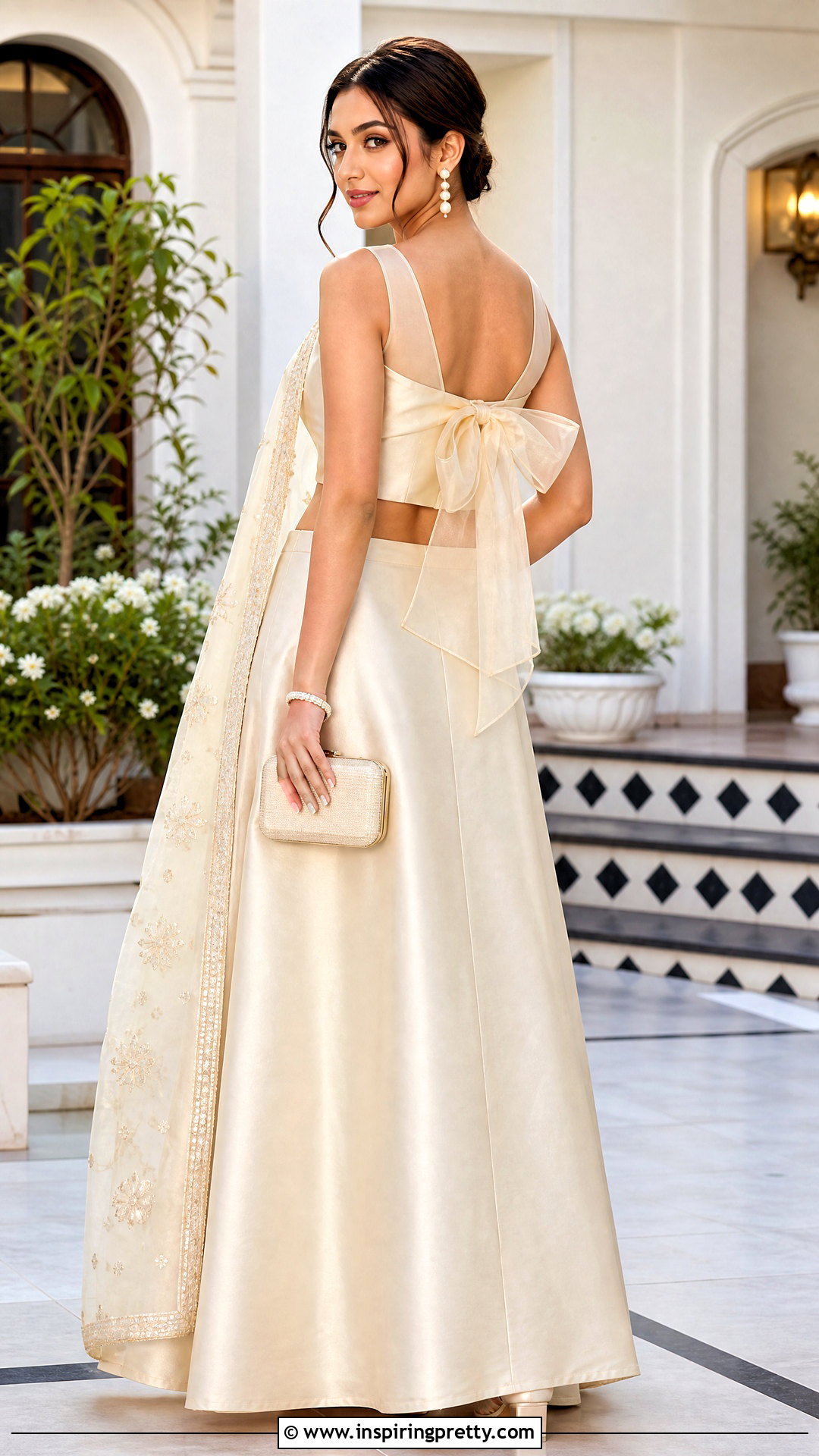
A bow-back top adds a feminine statement to a modern lehenga without requiring heavy embroidery. The bow can sit between the shoulder blades, at the lower back, or across a small cutout. Use silk, satin, or structured organza so it holds a clean shape. Pair the blouse with a simple A-line or circular lehenga in a coordinating color. Keep the front neckline minimal and replace the traditional dupatta with a light shoulder drape if necessary. Style the outfit with pearl earrings, a slim bracelet, block heels, and a structured clutch. The bow should be detachable or firmly secured for practical wear. Avoid excessive size, which can interfere with seating or become hidden beneath long hair and dupatta fabric.
46. Shirt Style Lehenga Top
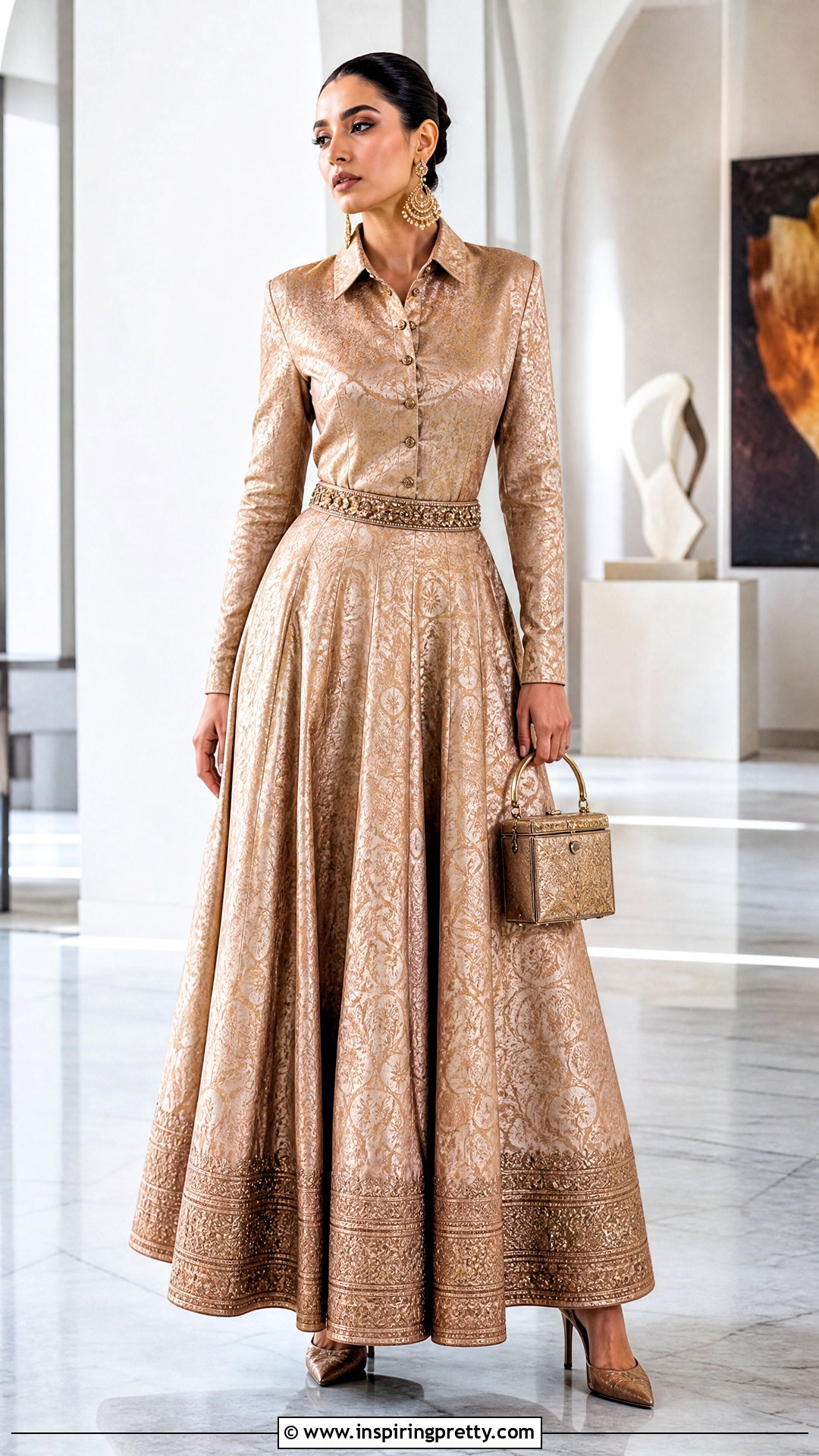
A shirt-style top creates a sophisticated fusion outfit when tucked neatly into a high-waisted lehenga. Choose silk, brocade, organza, or embroidered cotton rather than standard shirting fabric. A pointed collar and covered buttons provide tailored structure, while rolled or fitted sleeves keep the outfit relaxed. Pair a plain shirt with an ornate skirt or reverse the balance by combining an embroidered shirt with a solid lehenga. Define the waist with a narrow embellished belt and skip the dupatta for a cleaner finish. Add statement earrings, pointed heels, and a structured mini bag. The shirt should end smoothly beneath the waistband without bunching. A cropped version can achieve the same look while reducing excess fabric around the waist and hips.
47. Kurti Style Lehenga Top
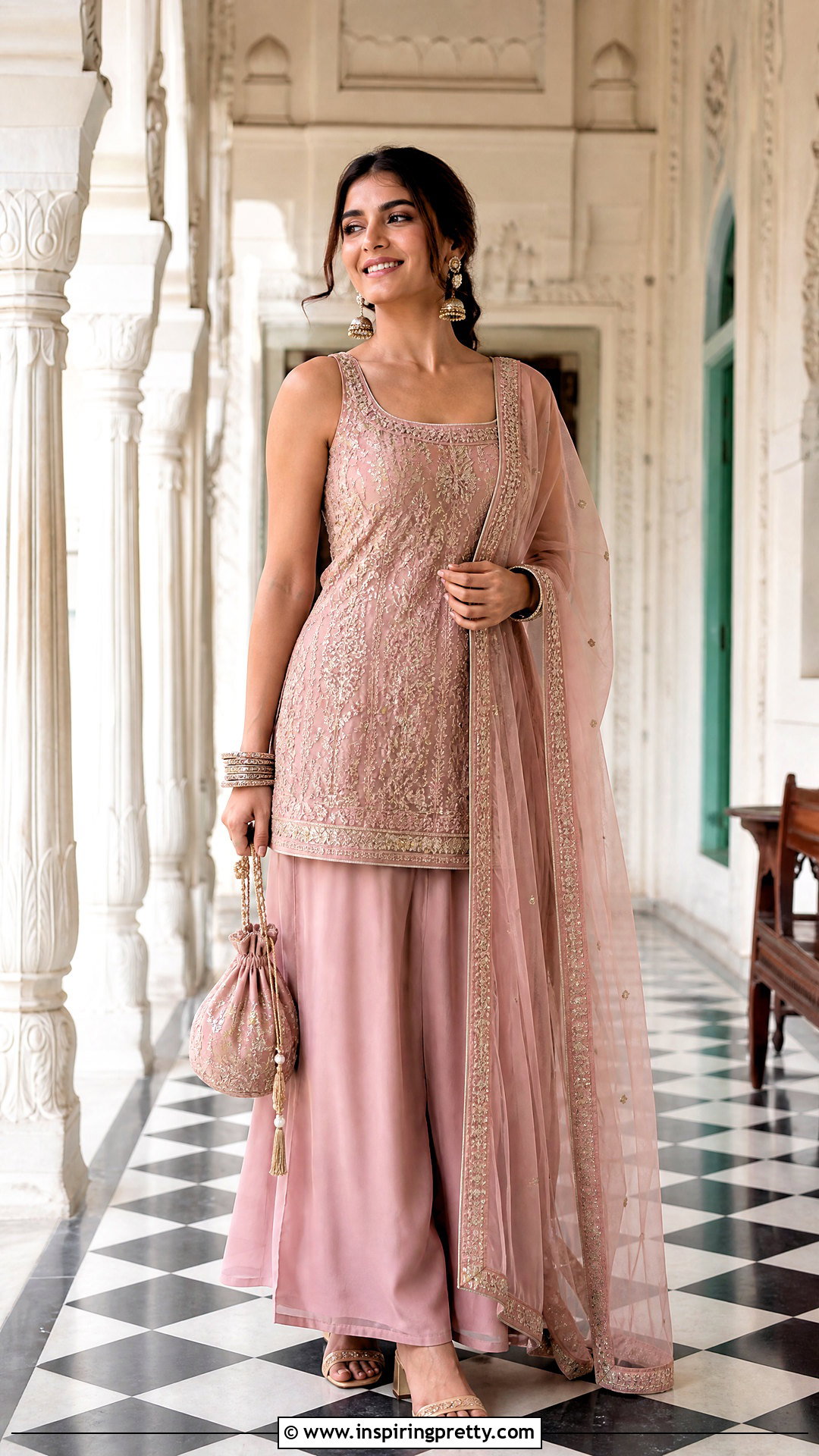
A short kurti-style top provides comfortable midriff coverage while retaining the movement and formality of a lehenga. Choose a length that finishes just below the waistband and add small side slits if greater mobility is needed. Straight, lightly flared, or paneled cuts work well in silk, georgette, brocade, and embroidered net. Pair the top with a streamlined skirt so the longer layers do not create unnecessary bulk. A dupatta draped over one shoulder, jhumkas, bangles, low block heels, and a potli create a complete traditional outfit. Use vertical embroidery to lengthen the appearance of the torso. The hem should remain structured and level, particularly when the top is worn over a heavily embellished or gathered waistband.
48. Asymmetric Hem Lehenga Top
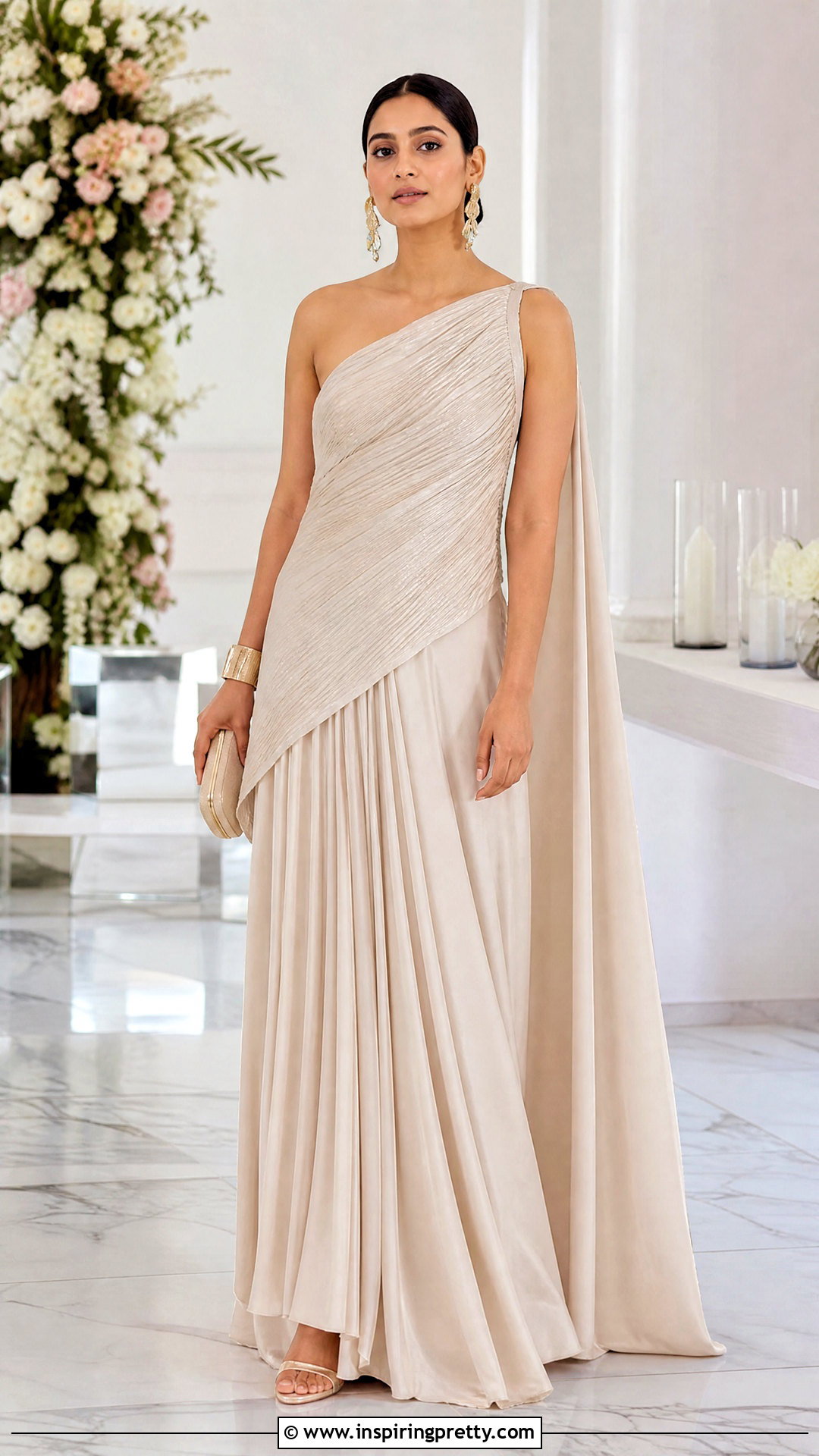
An asymmetric-hem blouse gives a lehenga outfit contemporary movement through a slanted, curved, or pointed lower edge. One side may end at the waist while the other extends slightly over the skirt. Keep the bodice fitted so the unusual hemline remains clearly defined. Pair it with a plain or softly pleated lehenga and avoid a heavily decorated waistband that could compete with the shape. A one-shoulder neckline or single draped sleeve can reinforce the asymmetry. Finish the outfit with sculptural earrings, a cuff bracelet, heeled sandals, and a clean clutch. Skip the dupatta or attach a narrow drape to one shoulder. Careful pattern cutting is essential because an unplanned uneven hem can look accidental rather than deliberately modern.
49. Fringed Lehenga Top
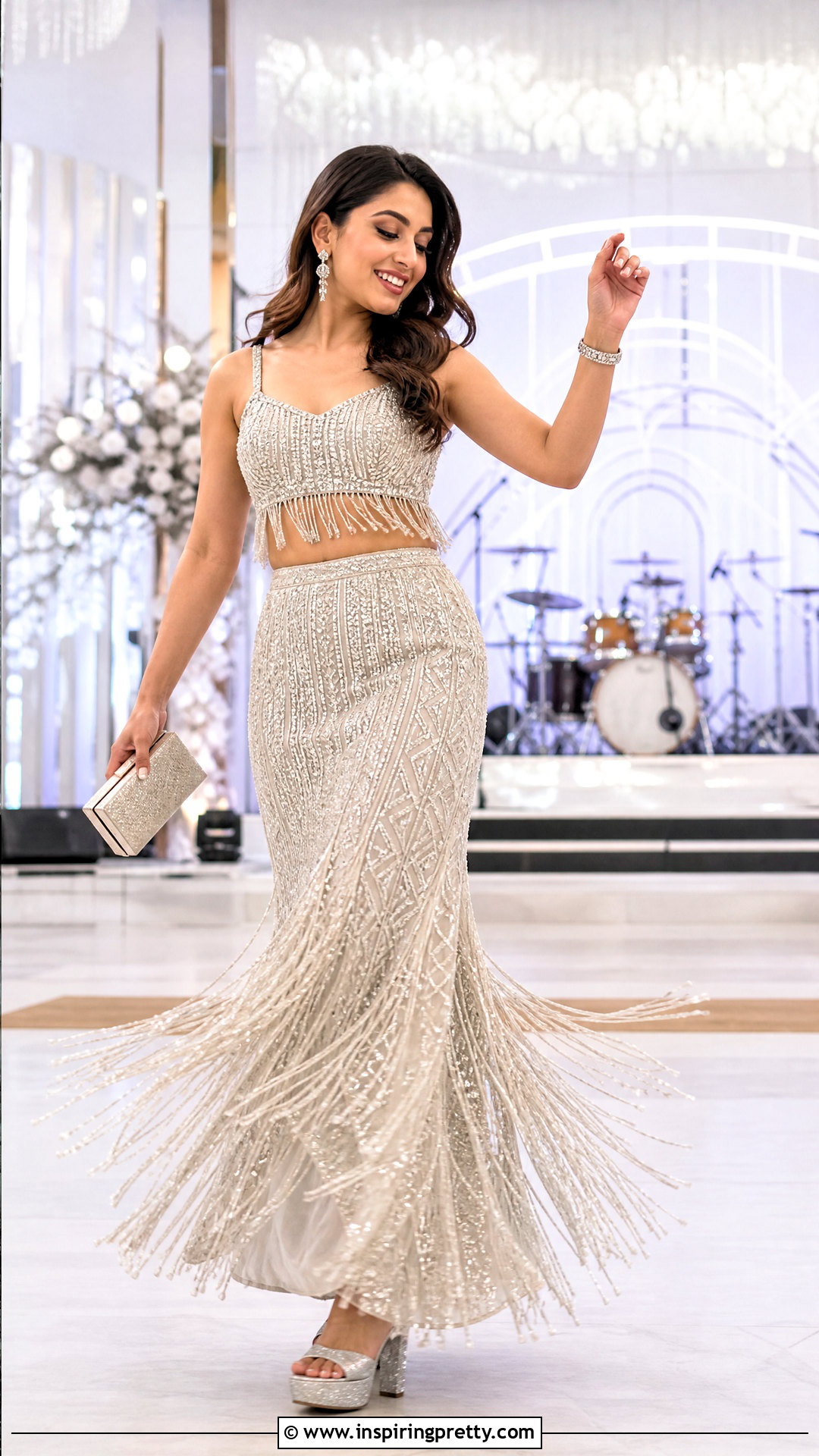
A fringed top adds playful movement to a lehenga outfit and works especially well for dance-focused celebrations. Place beaded, thread, pearl, or sequin fringe along the hem, sleeves, or one shoulder. Keep the fitted base simple and limit fringe to one or two areas so it does not overwhelm the body. Pair the blouse with a streamlined lehenga in a matching shade and use little or no dupatta. Complete the look with medium-length earrings, a bracelet, stable platform heels, and a compact clutch. Fringe should end above the skirt waistband or fall cleanly over it without catching on embroidery. Test the outfit while turning and dancing to confirm that the strands move freely, remain secure, and do not tangle together.
50. Detachable Sleeve Lehenga Top
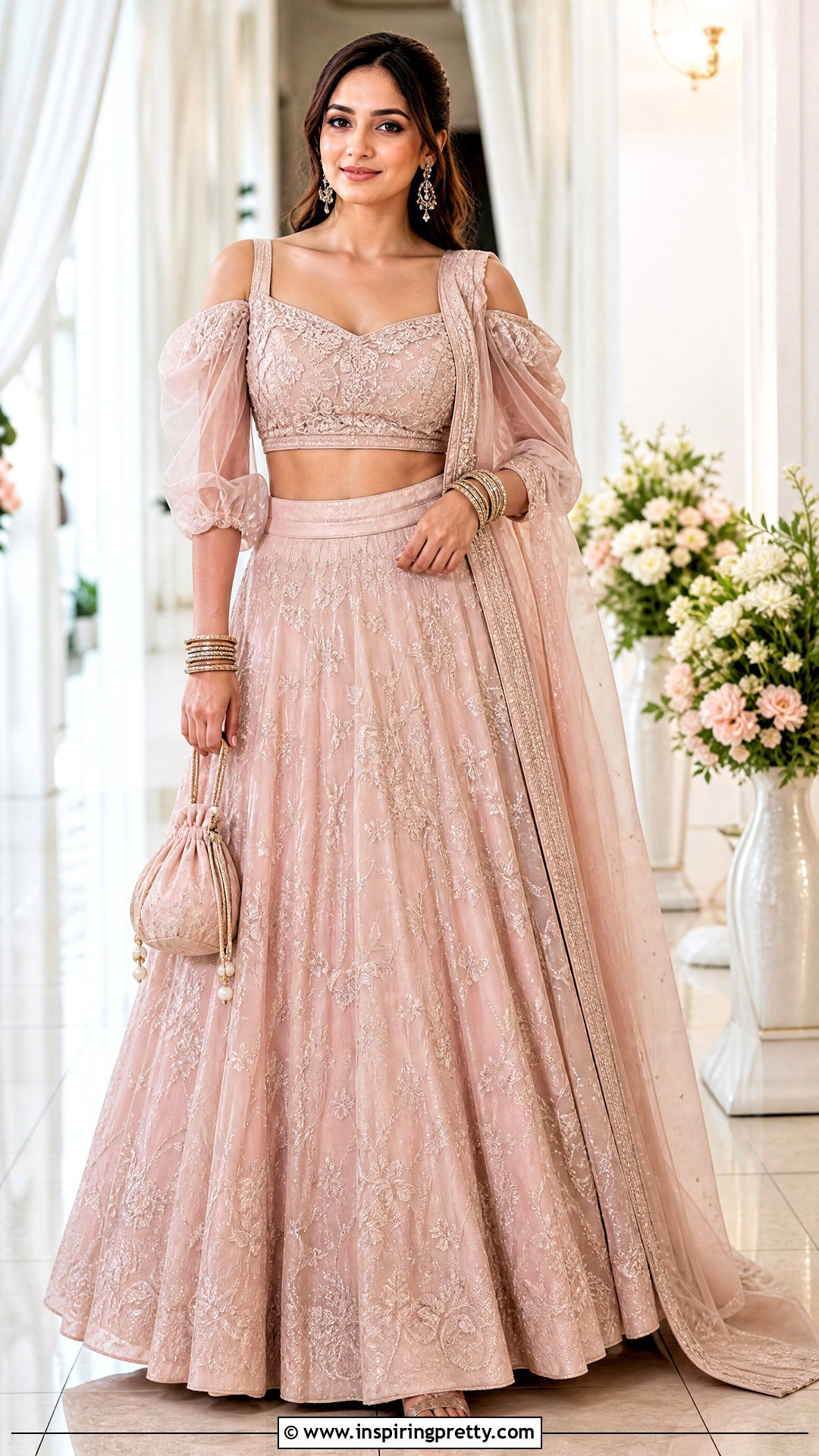
A detachable-sleeve top allows one lehenga outfit to transition between covered and sleeveless looks. Begin with a fitted, supportive bodice featuring hidden snaps or hooks around the armholes. Add removable full sleeves, puff sleeves, draped panels, or embroidered shoulder pieces that appear integrated when attached. Pair the convertible top with a coordinated high-waisted lehenga and a simple dupatta that works with both versions. Wear the sleeves for a ceremony, then remove them for dancing or a less formal portion of the event. Complete the ensemble with earrings, bangles, comfortable heels, and a potli. The attachment points must remain concealed, smooth, and strong. Practice removing the sleeves beforehand to avoid damaging embroidery during the celebration.
Conclusion:
Choosing among these **50 lehenga top design ideas** becomes easier when you begin with fit, comfort, and occasion rather than decoration alone. A supportive neckline, balanced sleeve, secure closure, and smooth lining can make even an elaborate top comfortable to wear. The blouse should also relate naturally to the lehenga skirt. Pair a statement top with a quieter skirt, or use a richly embroidered blouse to repeat selected details from the hem and dupatta. Take your shoes, undergarments, and jewelry to the final fitting whenever possible. Most importantly, move, sit, and raise your arms before approving the design. Thoughtful tailoring will help your complete lehenga look feel secure, flattering, and distinctly yours.
Related posts:


Leave a Reply