
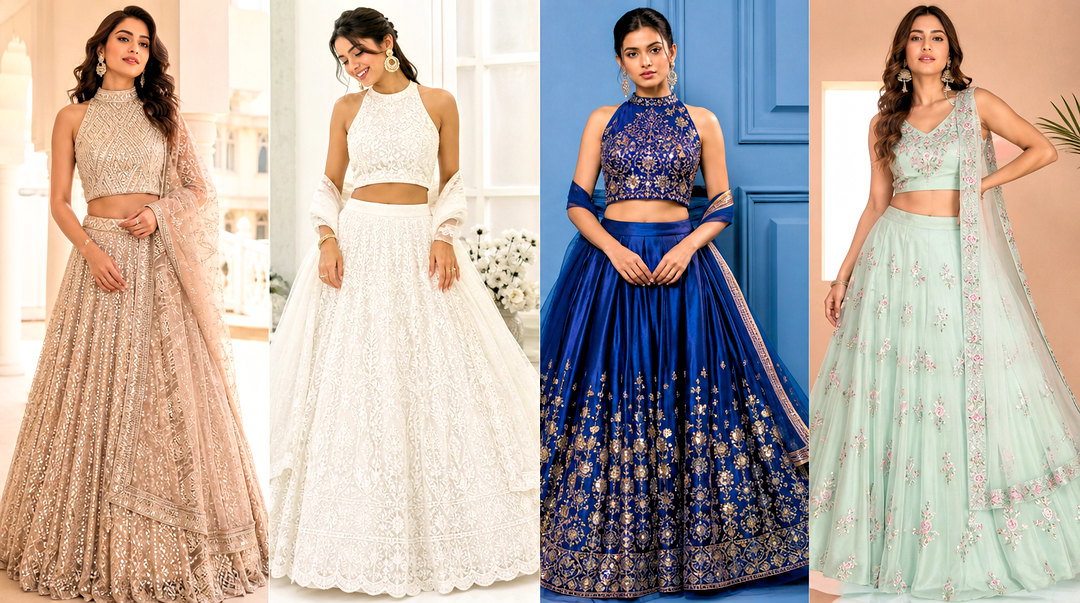
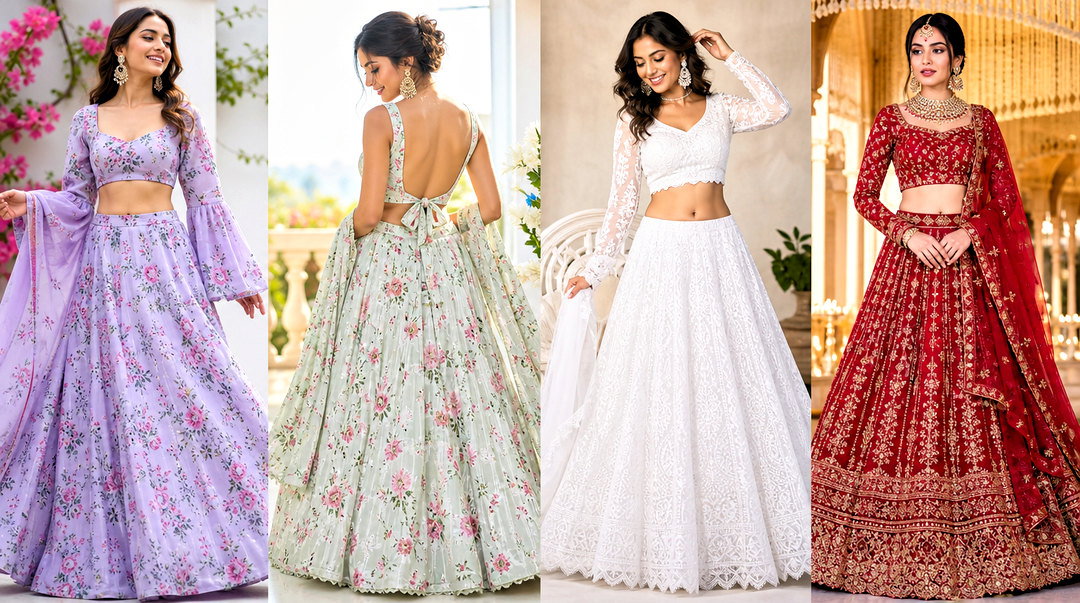
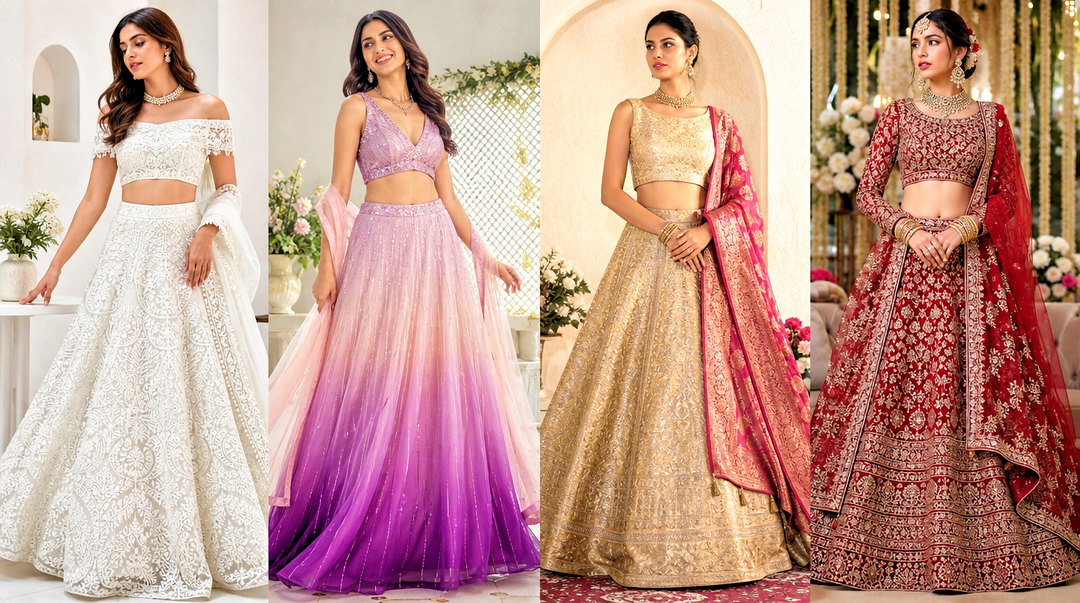
A ghagra is a lot of skirt, and the crop top above it decides whether the whole outfit looks balanced or top-light. Blouse shapes have moved a long way from the classic short-sleeve choli: mirror-work crops, halter necks, capes, corset bodices and full sleeves all sit on the same full skirt now. When I design one of these sets, I start from the ghagra's volume, color and embroidery, then pick a neckline, sleeve and blouse length that answer it. Coverage is yours to choose; blouse length and the height of the ghagra's waistband control how much midriff shows. The 25 combinations below cover weddings, sangeet nights, Garba and family functions, each with the jewelry, shoes and dupatta I'd put with it.
Measurements Your Darzi Needs for a Crop Blouse
Most of these blouses are stitched to measure, and a crop top is less forgiving than a longer choli because it ends right where you bend. These are the points I'd go through at the fitting:
- Blouse length and waistband height together. Measure from the shoulder to where you want the blouse to end, then decide where the ghagra will sit. The gap between them is your midriff; agree on it before cutting.
- Cups or no cups. Padded cups sewn into the blouse remove the need for a bra under halter, off-shoulder and backless styles.
- Closure. Hooks at the front are traditional, a side or back zip lies flatter, and a dori tie at the back gives some adjustment.
- Armhole and sleeve ease. Raise both arms during the trial. If the blouse rides up or the sleeve cuts in, ask for more room. You will dance in it.
- Seam allowance. Ask for extra margin inside the side seams so the blouse can be let out later.
1. Mirror Work Crop Top With Flared Ghagra
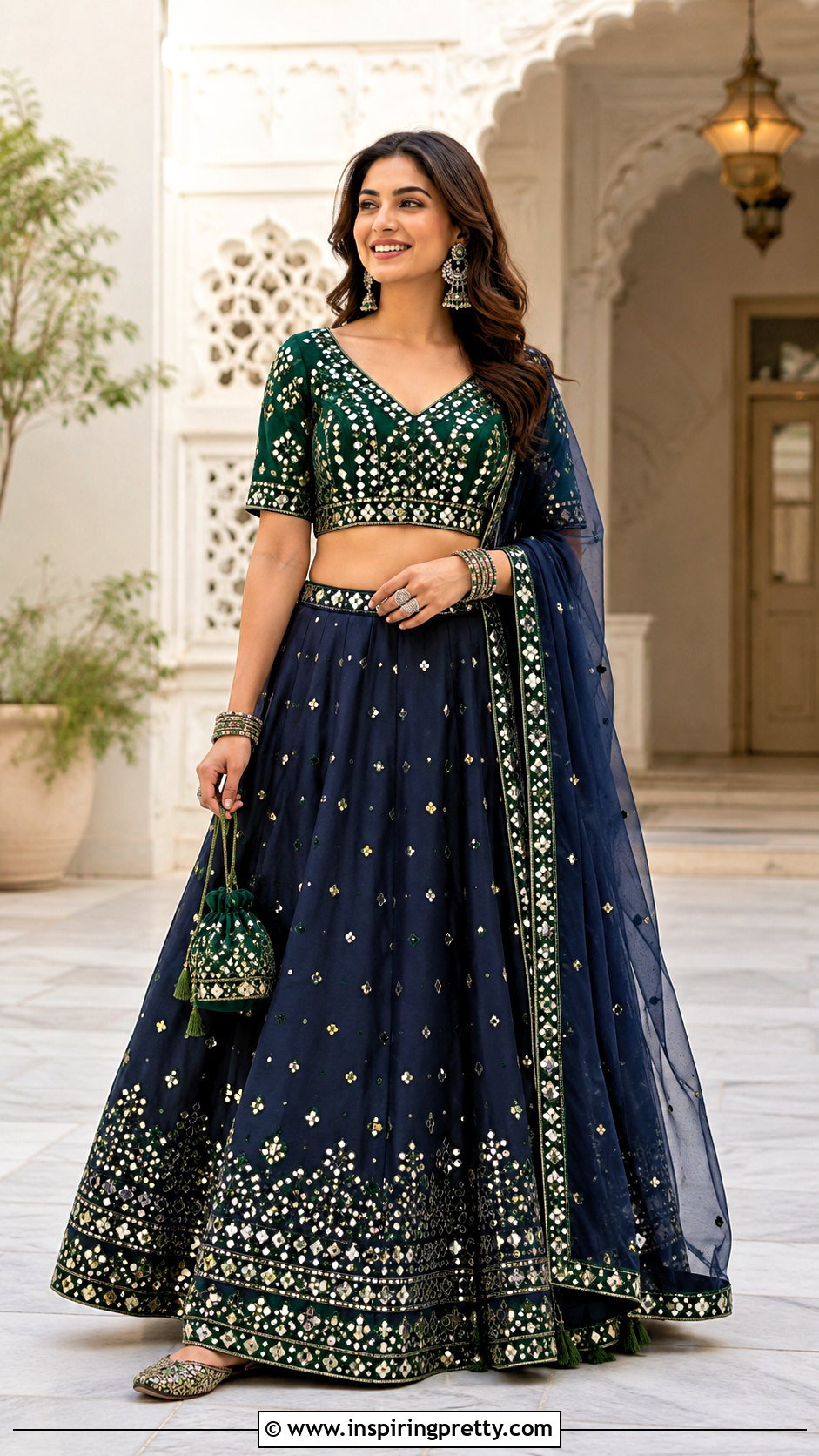
Mirror work catches light every time you turn, which is why it belongs at Garba. I'd keep the mirrors to the blouse's neckline, sleeves and hem and put it over a solid or lightly worked flared ghagra; mirrors on both pieces become hard to look at. Jewel-tone contrasts like emerald with navy or fuchsia with orange suit the energy. One practical point: mirrors are stitched on with thread, and a tight blouse strains those stitches when you raise your arms, so leave a little ease. A light dupatta over one shoulder, oxidized silver, stacked bangles, juttis and a potli. A braided ponytail stays put through the dancing.
2. Silk Crop Top With Brocade Ghagra
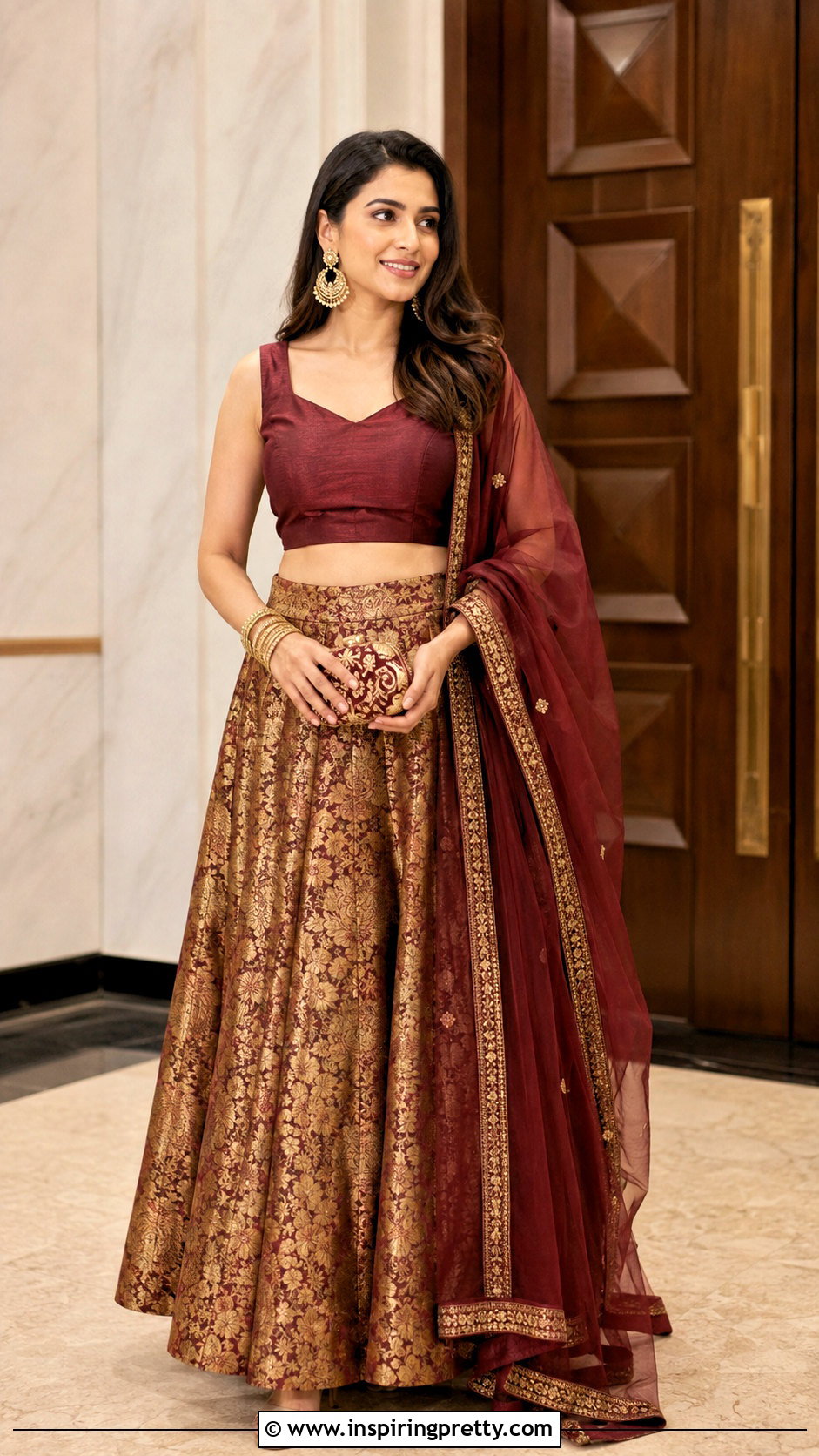
Silk over brocade is a pairing I use for formal weddings because the two fabrics have such different surfaces: one smooth, one woven and heavy. A structured silk crop top with a square or soft round neck, over a high-waisted brocade ghagra with a broad border. Keep the blouse plain and let a metallic motif or piping tie it to the skirt. Maroon, royal blue, bottle green and antique gold all look rich. A sheer dupatta with a narrow border, since brocade already carries plenty of weight. Chandbalis, a small bindi, gold bangles, a structured clutch, and block heels or padded juttis. A bun keeps the neckline clear.
3. Off Shoulder Crop Top With Embroidered Ghagra
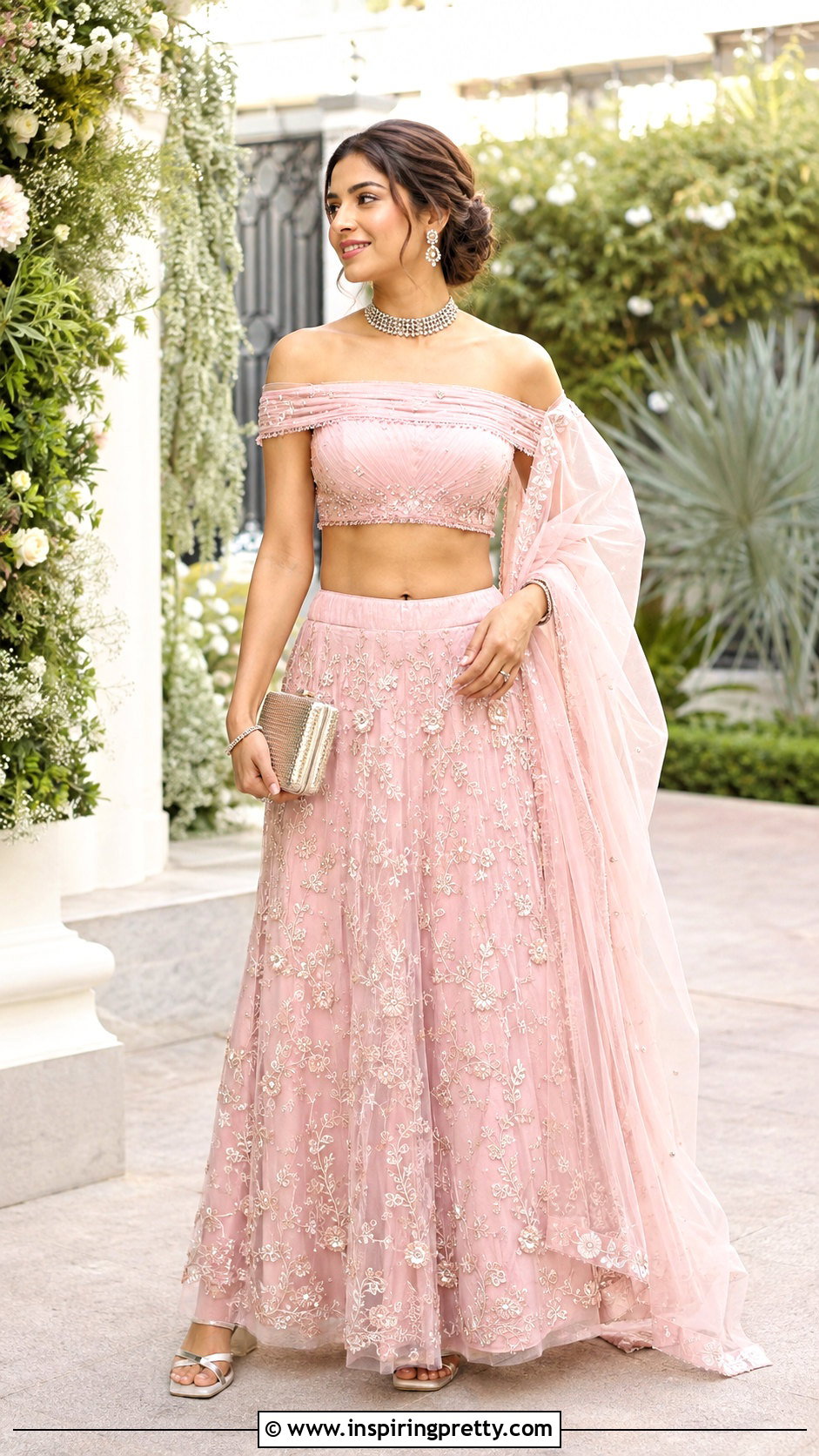
An off-shoulder blouse looks modern over threadwork, but it's the style I'd be most careful with at the fitting. The elastic or band across the arms needs to grip without cutting in, and many tailors add a silicone strip or internal boning so the neckline doesn't slide. Pair it with a high-waisted ghagra in fine threadwork, in pink, powder blue, lavender or sage for a day function. Drape the dupatta over a forearm so the shoulders stay visible. A choker or short layered necklace suits the bare neckline. Loose waves or a side ponytail and low block heels.
4. High Neck Crop Top With Plain Ghagra
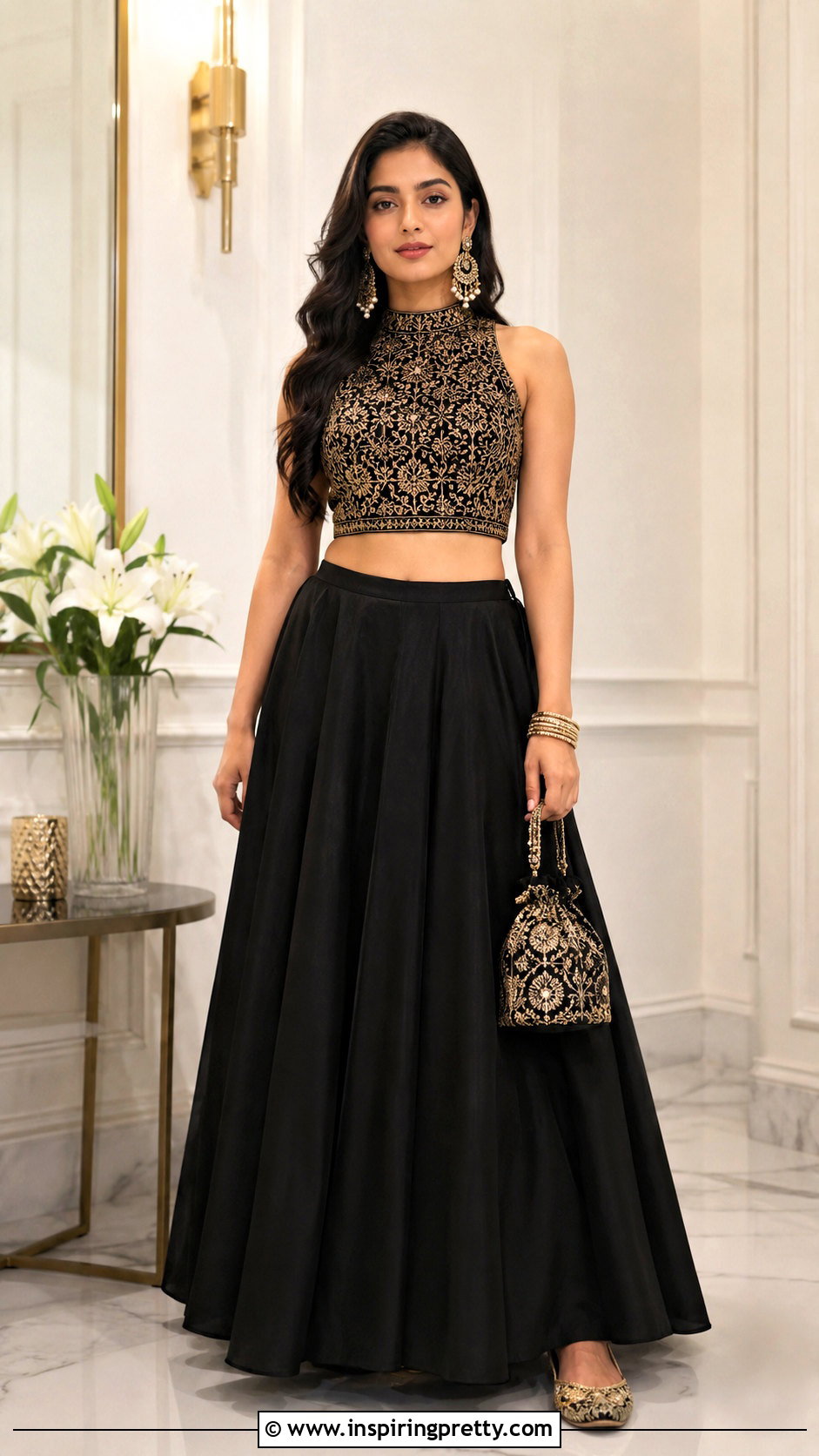
A high neck gives full coverage and makes a plain ghagra look considered. Choose a sleeveless or short-sleeve blouse with the embroidery packed around the collar and shoulders, then let a solid skirt flow below: ruby over ivory, antique gold over black, magenta over teal. No necklace, because it fights the collar. Statement earrings, stacked bracelets and one bold ring do the job instead. Pointed juttis and a small embroidered bag. A high neck feels warm in summer heat, so I'd choose a lighter silk or cotton silk for daytime and keep heavier fabrics for evening events.
5. Halter Neck Crop Top With Printed Ghagra
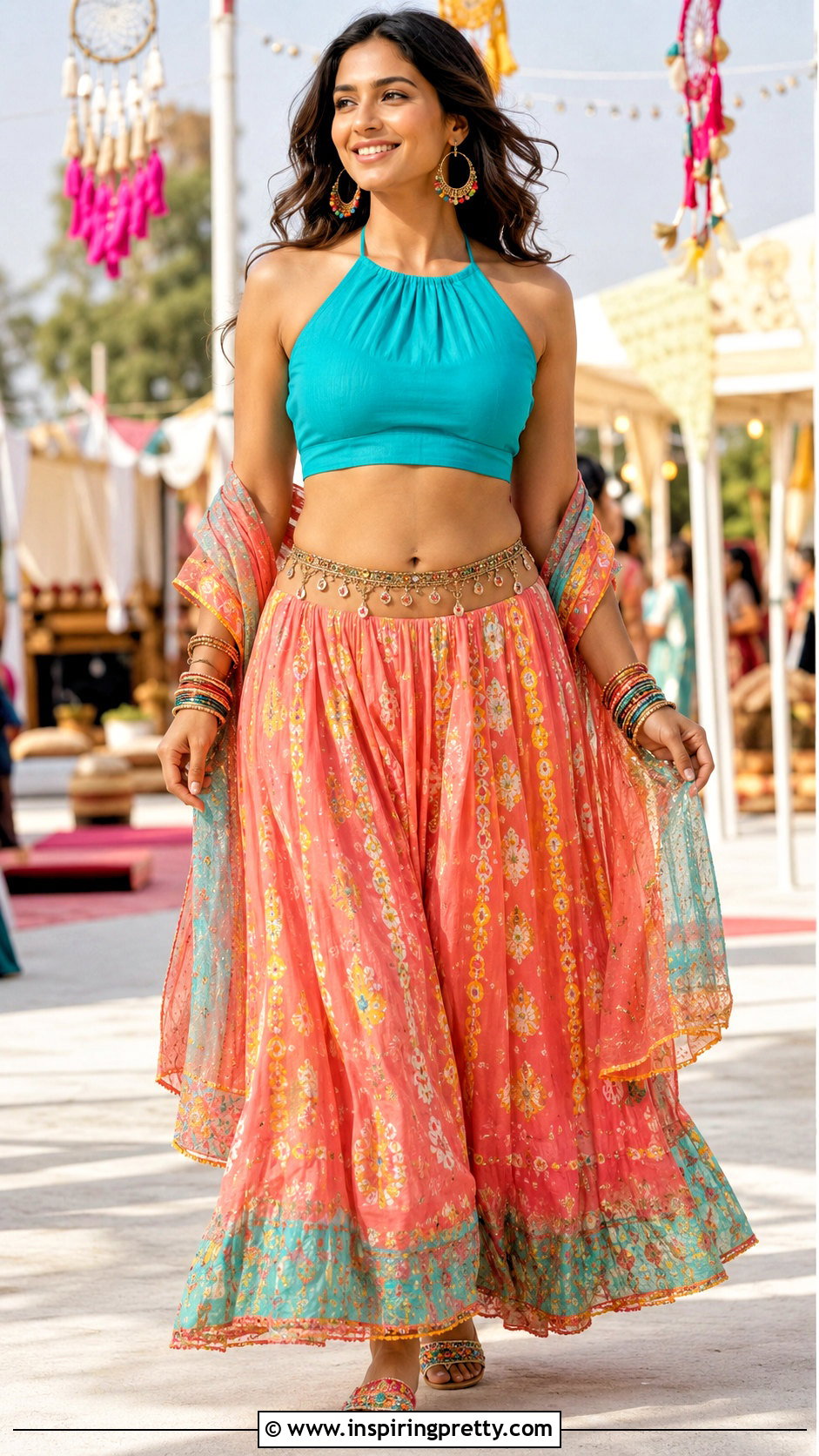
A halter crop with a printed ghagra is young and light, and good for daytime. A solid blouse in cotton silk, satin or crepe against a floral, paisley or geometric print. Yellow with pink, turquoise with coral, or ivory with a multicolor print. Set the ghagra's waistband high and decide the blouse length by how much midriff you're comfortable with; an inch difference at the hem changes a lot. A halter needs a strong neck tie or hook, and a built-in padded cup avoids strap problems. Large ethnic hoops, colorful bangles and flat juttis. A braid keeps the halter visible.
6. One Shoulder Crop Top With Layered Ghagra
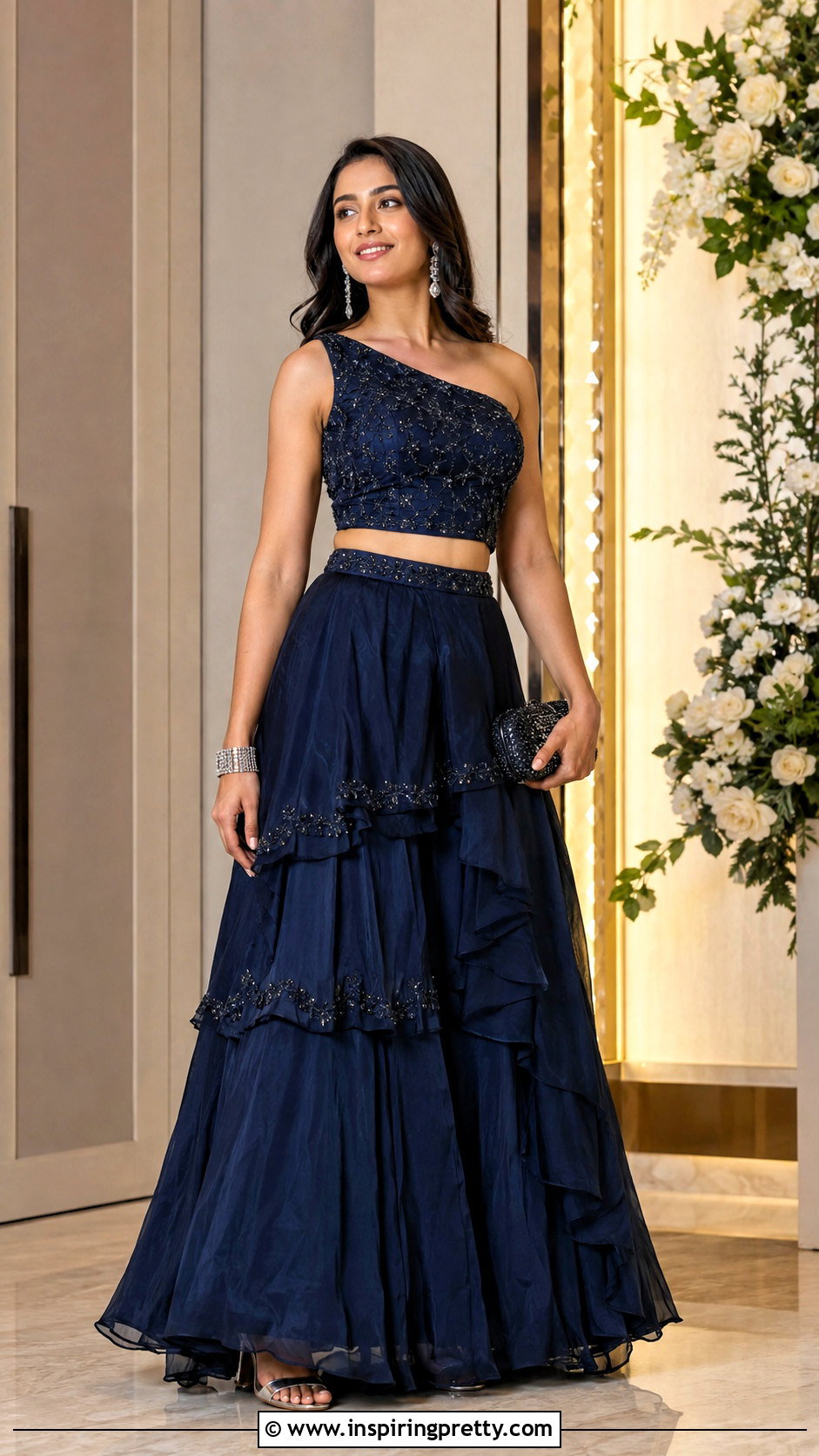
A one-shoulder blouse needs to be engineered more than most. I'd insist on a side zip and a single wide strap, cut so the strap is anchored to the back, otherwise it slips toward the arm whenever you lift a plate. Over a tiered georgette or chiffon ghagra it moves softly. One color top to bottom, dusty rose, midnight or mint, gives you a long line. Repeat a little embroidery on the strap and the waistband. Drop earrings, a cuff and metallic block heels, with your hair swept to the bare side.
7. Peplum Crop Top With A-Line Ghagra
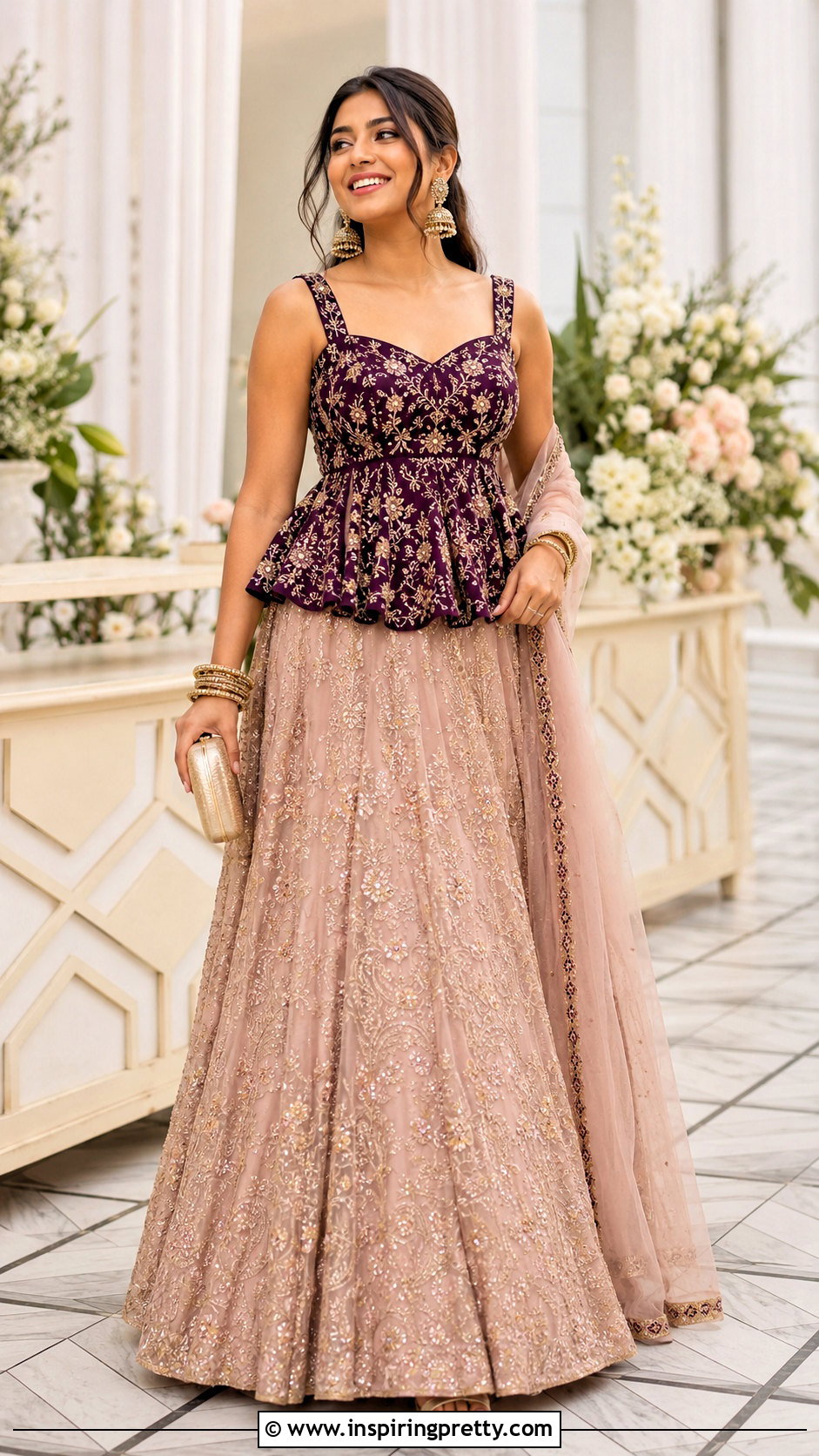
A peplum blouse is my suggestion for anyone who'd like the waist covered without giving up the two-piece look. The flare should start at or just above the ghagra's waistband. Choose an A-line ghagra with few gathers; a heavily gathered skirt plus a peplum stacks two layers of volume at the middle. Let zari, threadwork or small sequins sit on the peplum and keep the skirt mostly plain, in plum with blush, navy with silver or mustard with deep green. A narrow dupatta from one shoulder, medium jhumkas, a box clutch and low heels. Comfortable for long ceremonies.
8. Cape Crop Top With Satin Ghagra
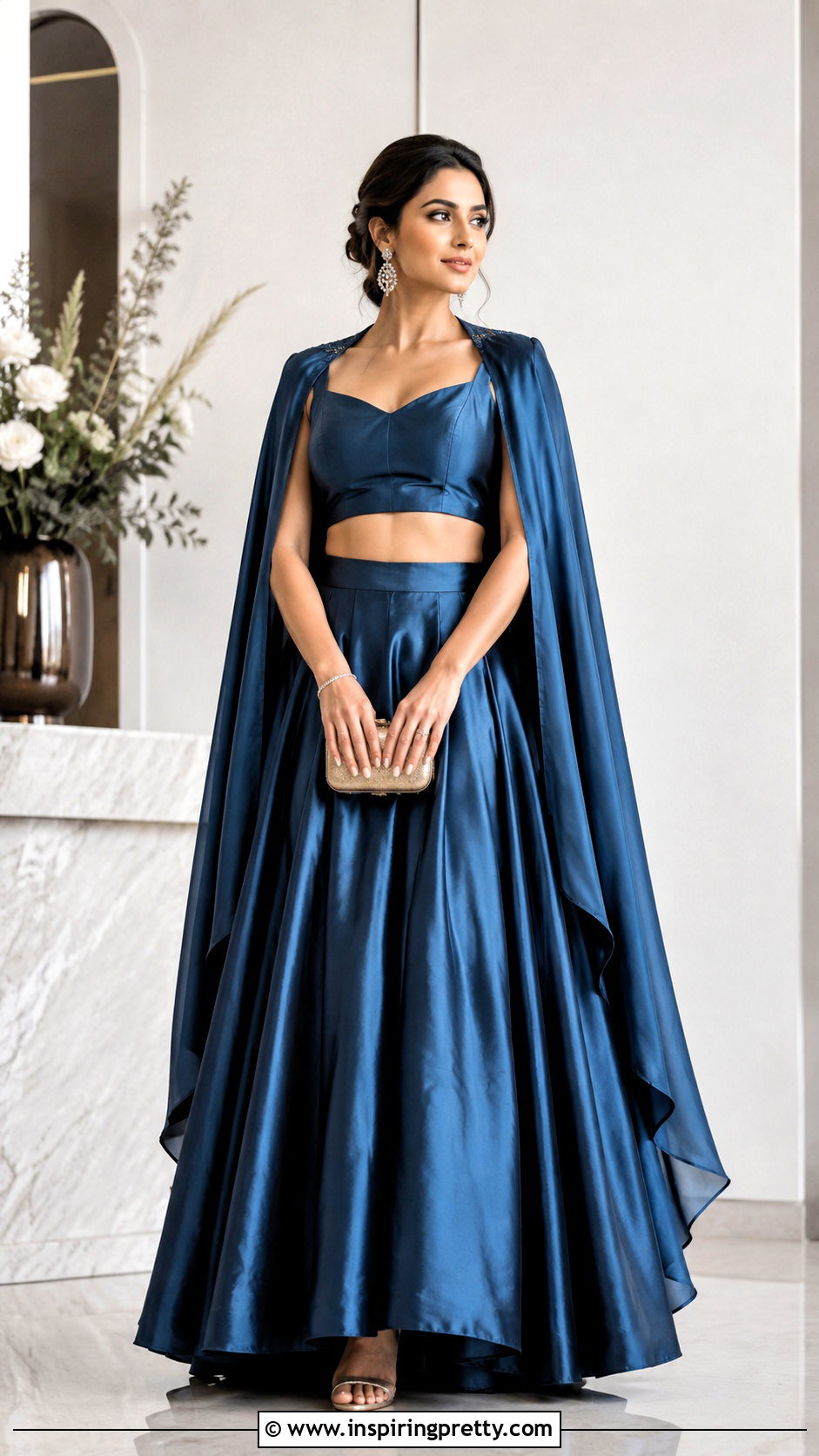
A cape blouse does the dupatta's job, which makes the outfit much easier to manage through a long evening. The inner blouse is fitted; the sheer cape attaches at the shoulders or neckline and can end at the waist or lower for more arm coverage. Over a high-waisted satin ghagra in the same color, you get a clean column. Jewel tones, muted metallics and deep pastels suit evening light. Crystal drops, a thin bracelet, a structured clutch and heeled sandals. A straight ponytail or neat bun keeps the cape's movement the only drama.
9. Corset Crop Top With Organza Ghagra
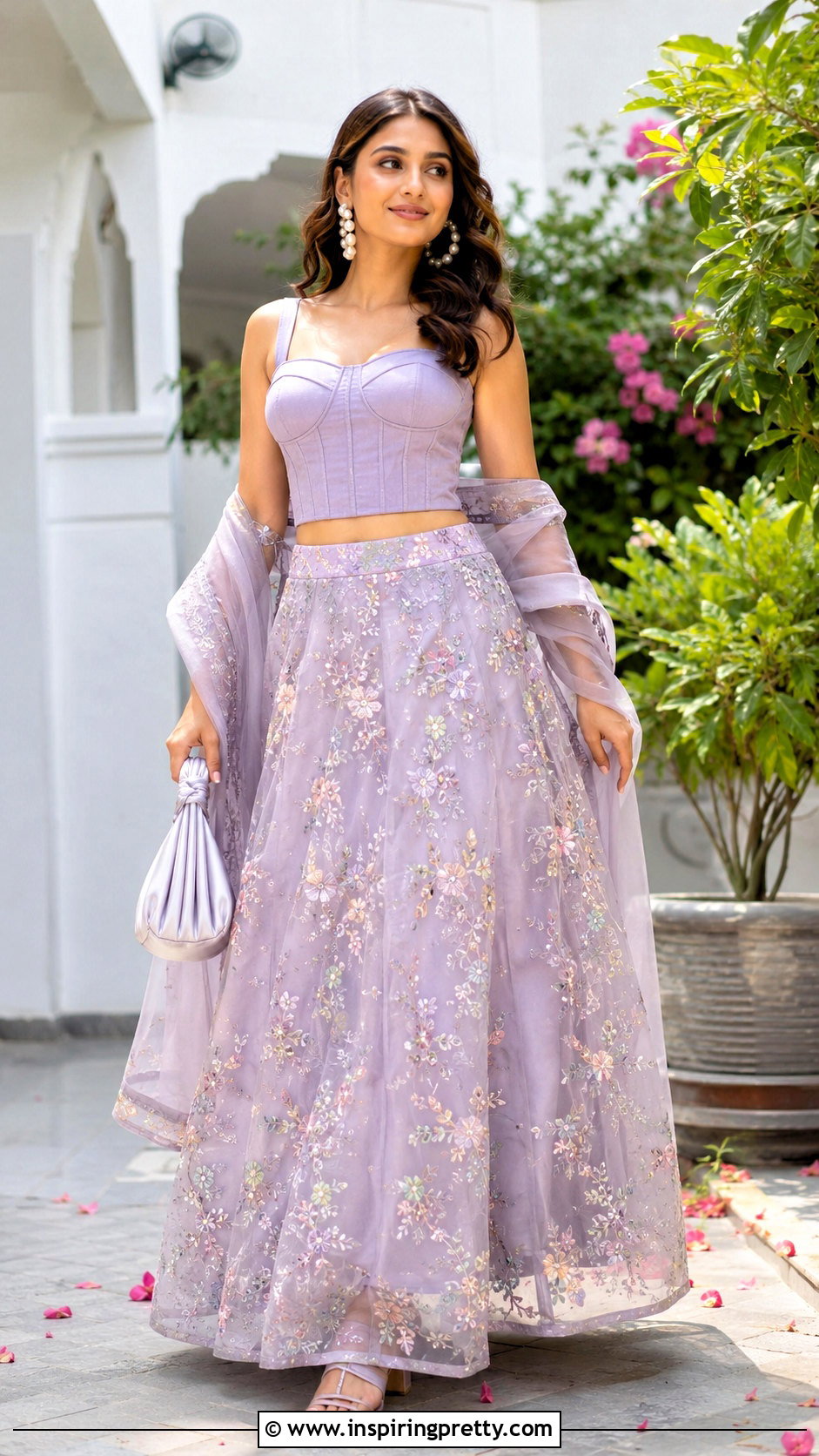
A corset-style blouse gives organza structure to push against. The bodice should have a soft lining, broad straps and a modest neckline; boning in a blouse is for shape, not for pulling the waist in, so make sure you can breathe and eat in it. Organza is crisp, so a high-waisted organza ghagra with scattered florals or a wide hem border holds its shape well. Peach, lilac, ice blue and soft gray. Wear a sheer dupatta behind the shoulders, or skip it for an Indo-Western finish. Pearl earrings, a small satin bag and block heels. Sit, walk and raise your arms at the trial.
10. Full Sleeve Crop Top With Sequin Ghagra
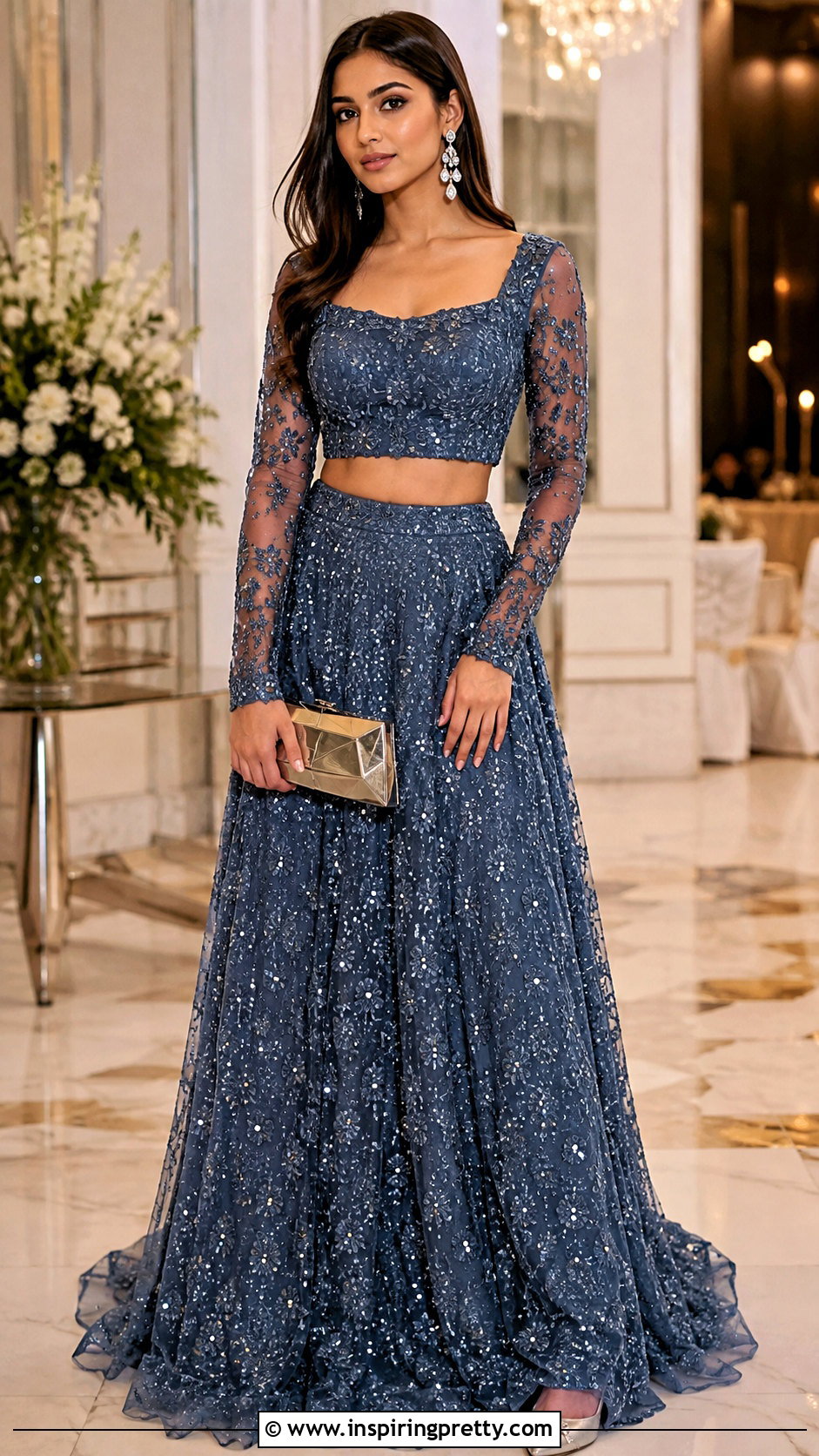
Full sleeves calm down a sequinned ghagra. A fitted crop with a round, boat or shallow V-neck, and sheer sleeves with embroidered cuffs so the upper half doesn't look heavy. Champagne, smoky blue, rose gold or burgundy sequins below. Skip the necklace; sequins on the skirt and any shine on the blouse already reflect plenty of light. Refined earrings, one bracelet and a metallic clutch. Sequin skirts are heavy, so check the waistband is wide enough to carry the weight comfortably. Pointed flats or low heels and a low bun.
11. Puff Sleeve Crop Top With Floral Ghagra
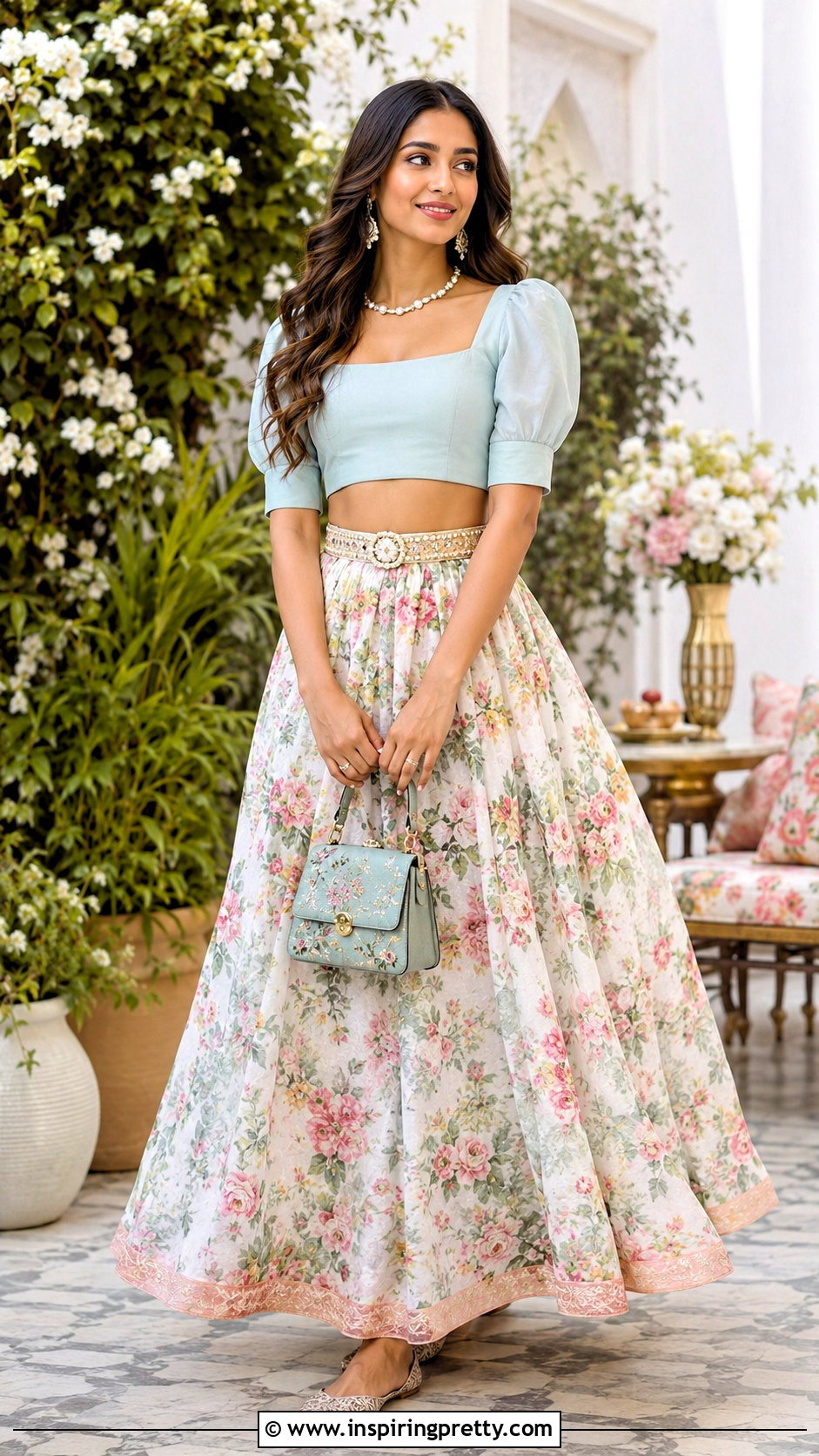
Puff sleeves with a floral ghagra feel playful, and the sleeve volume needs a limit: next to a wide skirt, big puffs make the whole outfit look inflated. Controlled gathering at the shoulder and a square neckline give the blouse structure. A solid pastel top over a printed floral skirt, or a blouse that picks out one of the print's small accent colors. Pearl drops, embroidered flats and a compact bag. A thin belt helps when sleeves and skirt both have volume. Half-up hair suits daytime mehndi and garden functions.
12. Ruffle Sleeve Crop Top With Solid Ghagra
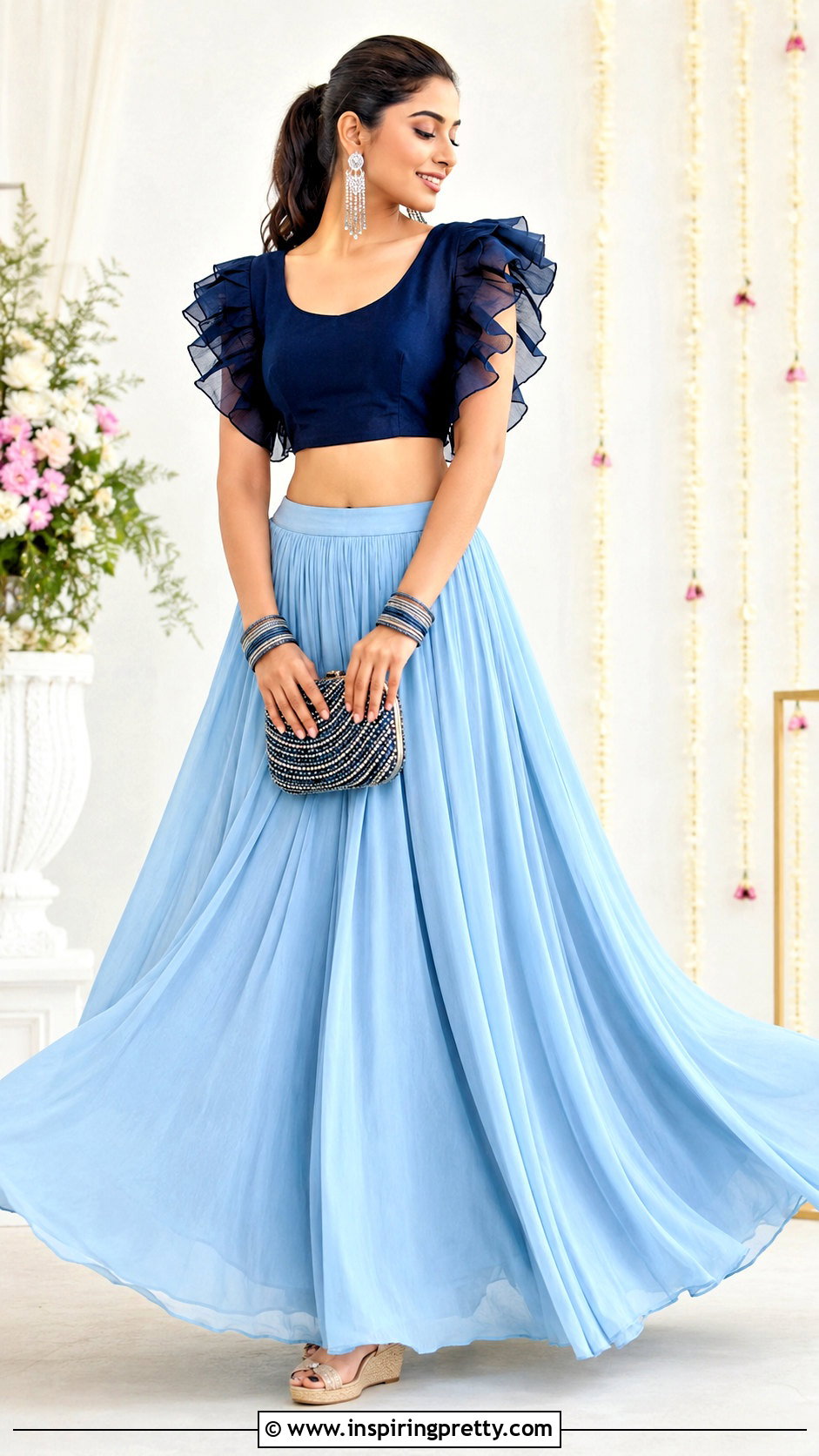
Ruffles give movement without embroidery, but one layer is enough. A single ruffle at the shoulder or sleeve hem keeps the blouse light; several tiers compete with the skirt's fullness. A plain crepe, georgette or satin ghagra makes a calm base. Monochrome looks refined; white with coral or navy with pale blue feels more festive. Long earrings, a few bangles and a beaded clutch. Wedges handle a wide hem on uneven ground better than thin heels. A sleek ponytail lets the sleeves show. Easy to rewear with other skirts.
13. Jacket Crop Top With Pleated Ghagra
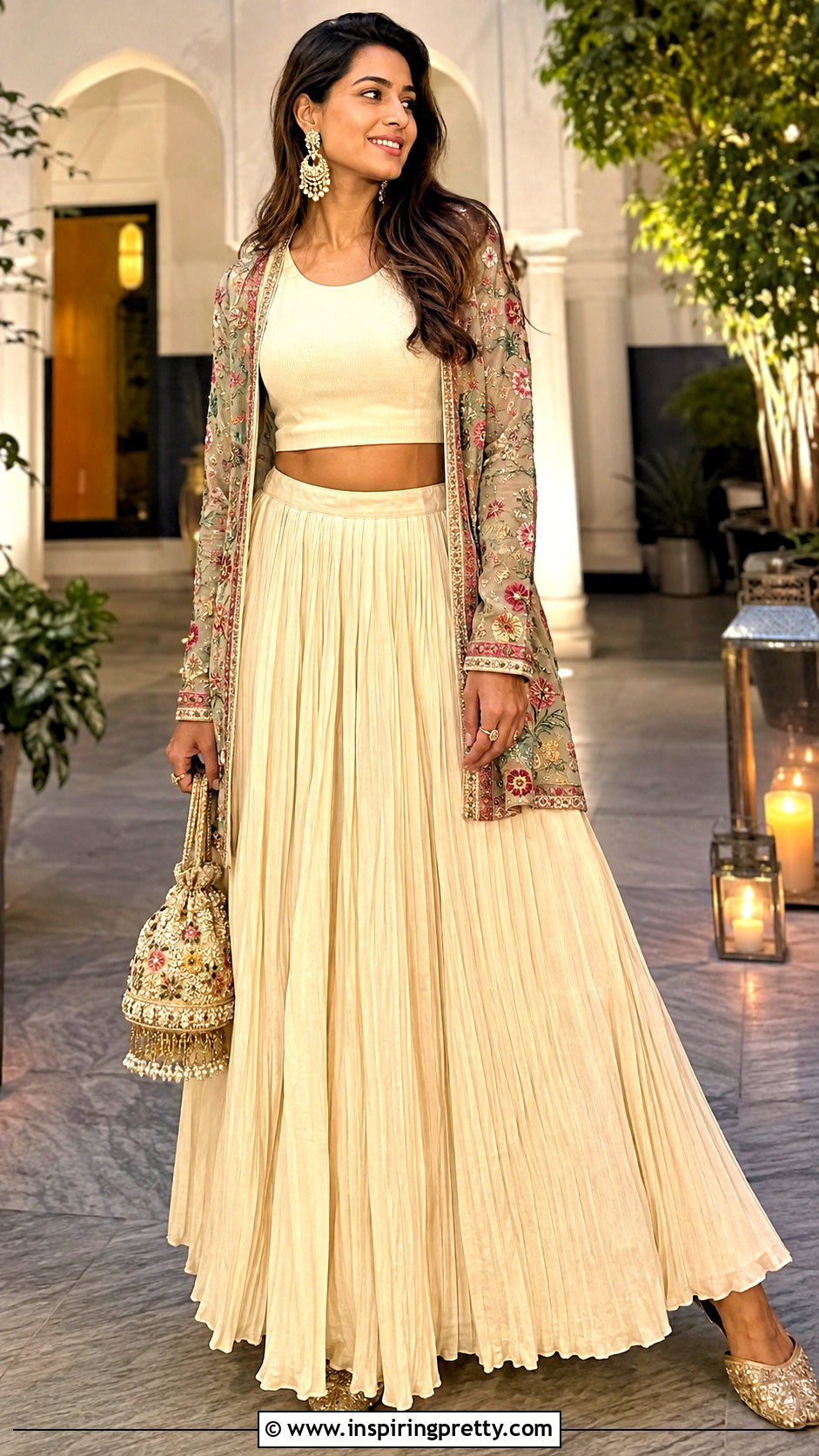
A cropped jacket over a fitted sleeveless blouse gives coverage and a second layer of detail. The jacket should end near the natural waist, open at the front, with the embroidery concentrated on it. Keep the blouse and the softly pleated ghagra in one color so the jacket stands out: ivory with a colorful jacket, black with gold work, teal with multicolor. Medium earrings and no necklace if the jacket's neckline is decorated. A ring, a potli and juttis. I like this for winter evening functions, since the jacket comes off once the dancing starts.
14. Bandhani Crop Top With Contrast Ghagra
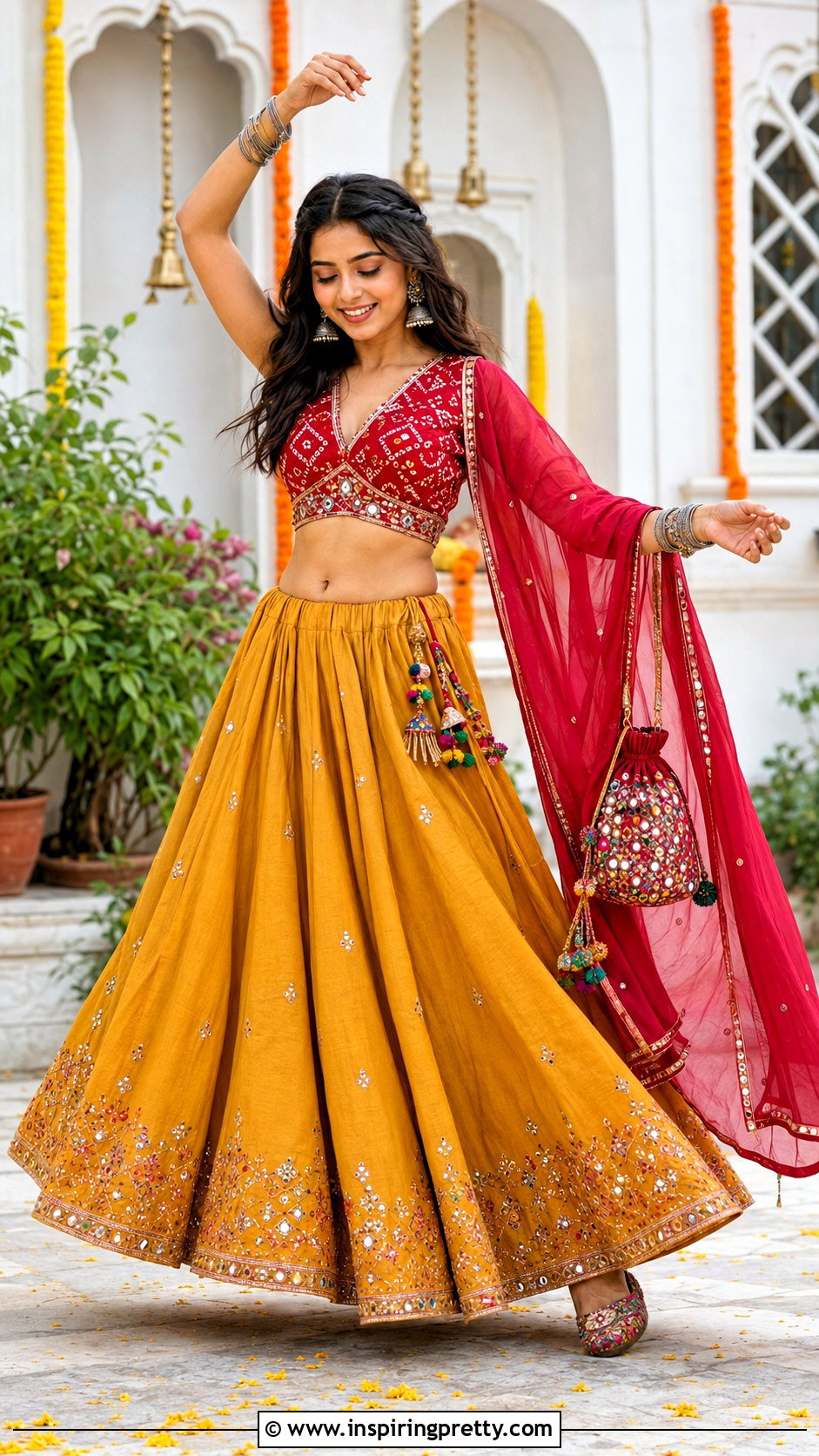
A Bandhani crop top brings tie-dye dots and vivid color, and it needs a plain partner. A fitted blouse in red, magenta, green or blue with a square or V neck, over a solid contrast ghagra: red with mustard for energy, navy with ivory for something quieter. A matching Bandhani dupatta only if the skirt is very simple; otherwise a sheer solid one. Real Bandhani can bleed in its first washes, so I'd dry clean it or wash it alone in cold water. Oxidized jhumkas, bangles and a braid for Navratri.
15. Chikankari Crop Top With Pastel Ghagra
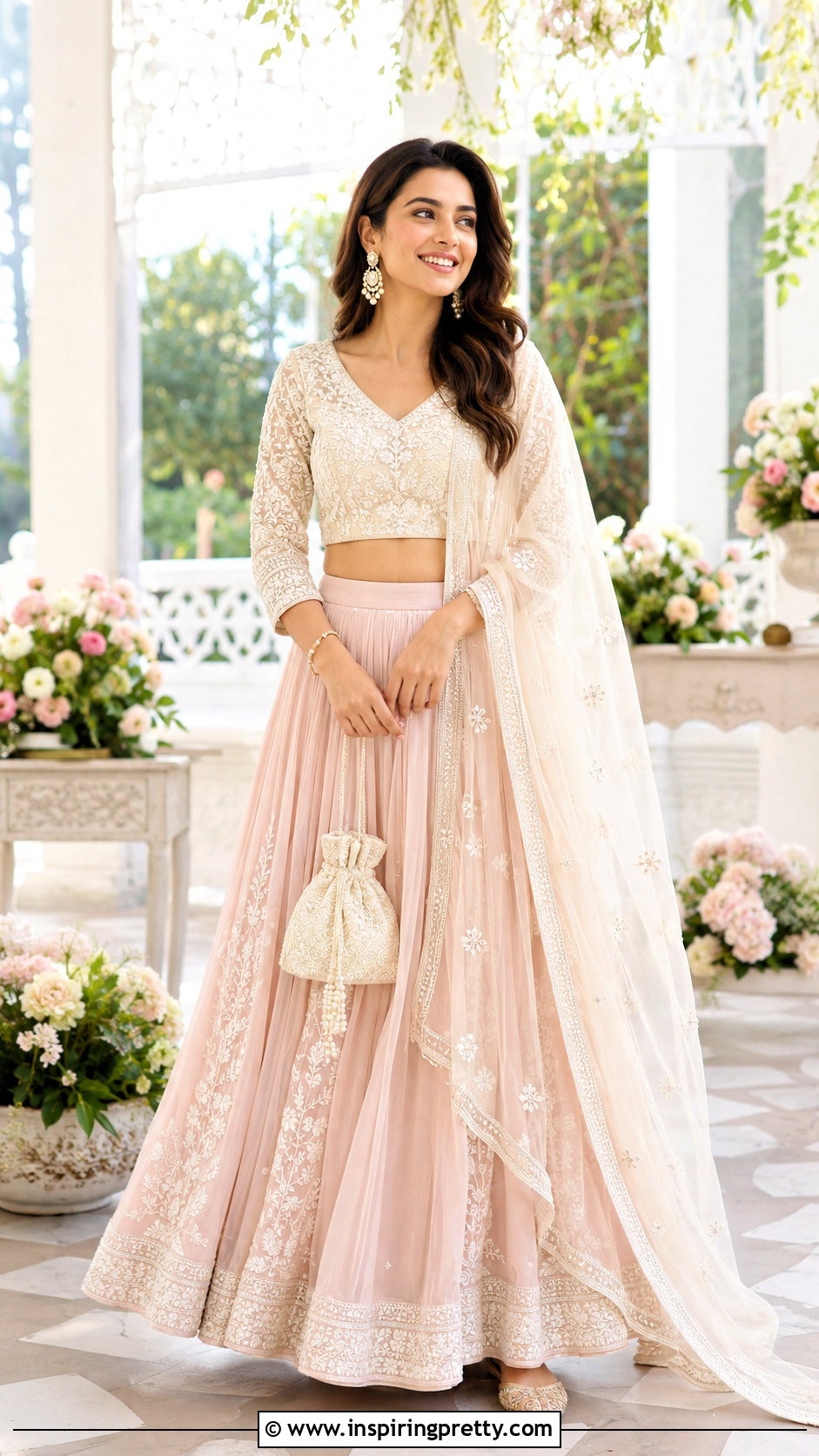
Delicate Chikankari embroidery is done on fine, often sheer cotton or georgette, so the crop top must be lined, or every seam and bra strap shows through. Three-quarter sleeves with a modest V or round neck suit it. Pair it with a lightly gathered chiffon or georgette ghagra in the same or a neighboring pastel: ivory, blush, pistachio, lavender or powder blue. A sheer dupatta with tiny motifs, pearl or kundan-style earrings and a pale potli. Embellished flats. It's best at daytime functions where quiet detail suits the setting.
16. Floral Crop Top With Tulle Ghagra
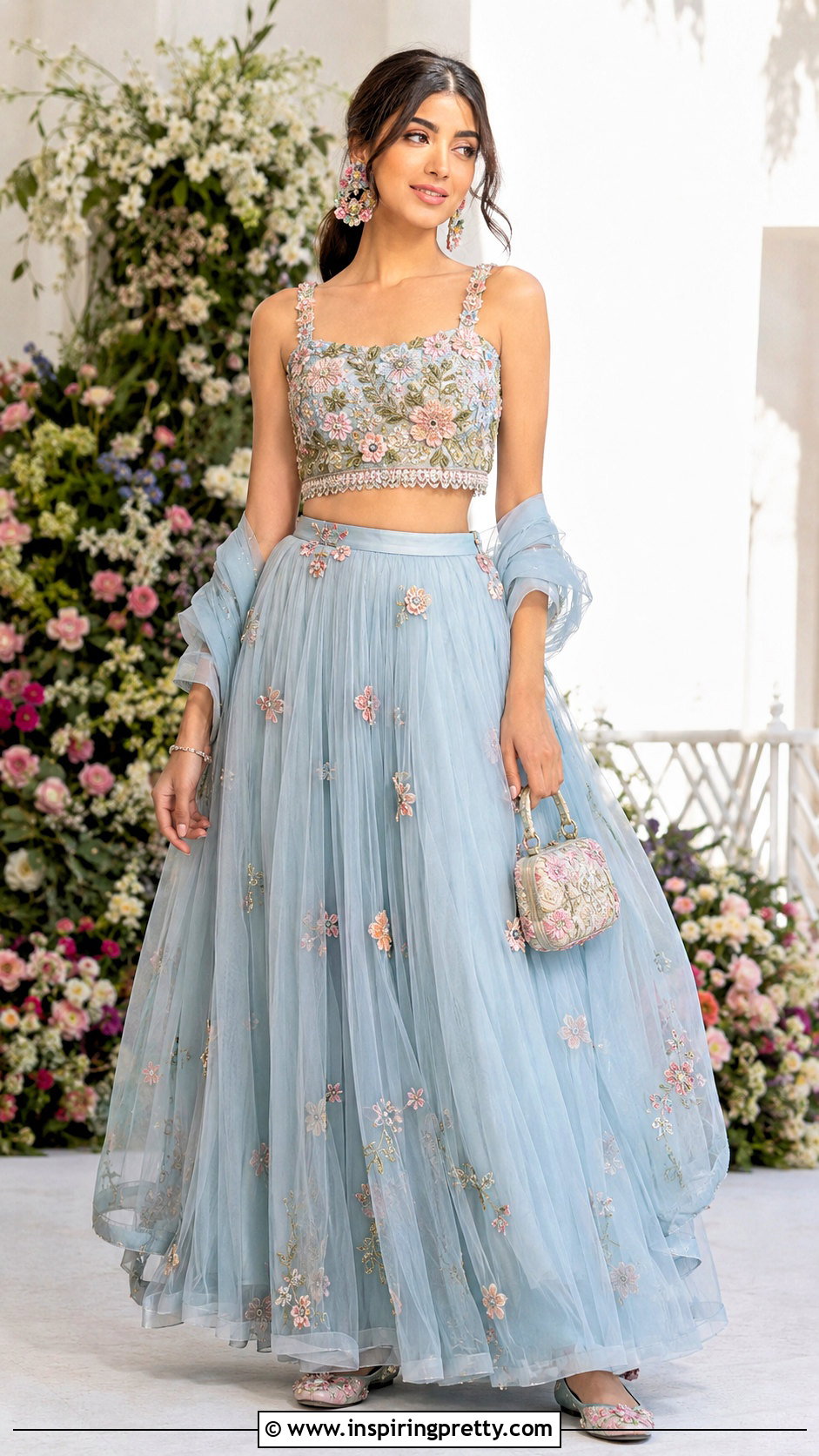
A floral crop over a tulle ghagra is light and young. Keep the florals flat, printed, embroidered or small appliqué, because large 3D flowers on a blouse crush under a dupatta or a hug. Take the ghagra color from the print. Tulle needs a proper lining for opacity; check it in daylight, not just indoor light. The dupatta is optional, a narrow sheer one behind the arms if you want it. Floral earrings, a top-handle bag and low block heels or decorated flats. Half-up waves finish it.
17. Sequin Crop Top With Minimal Ghagra
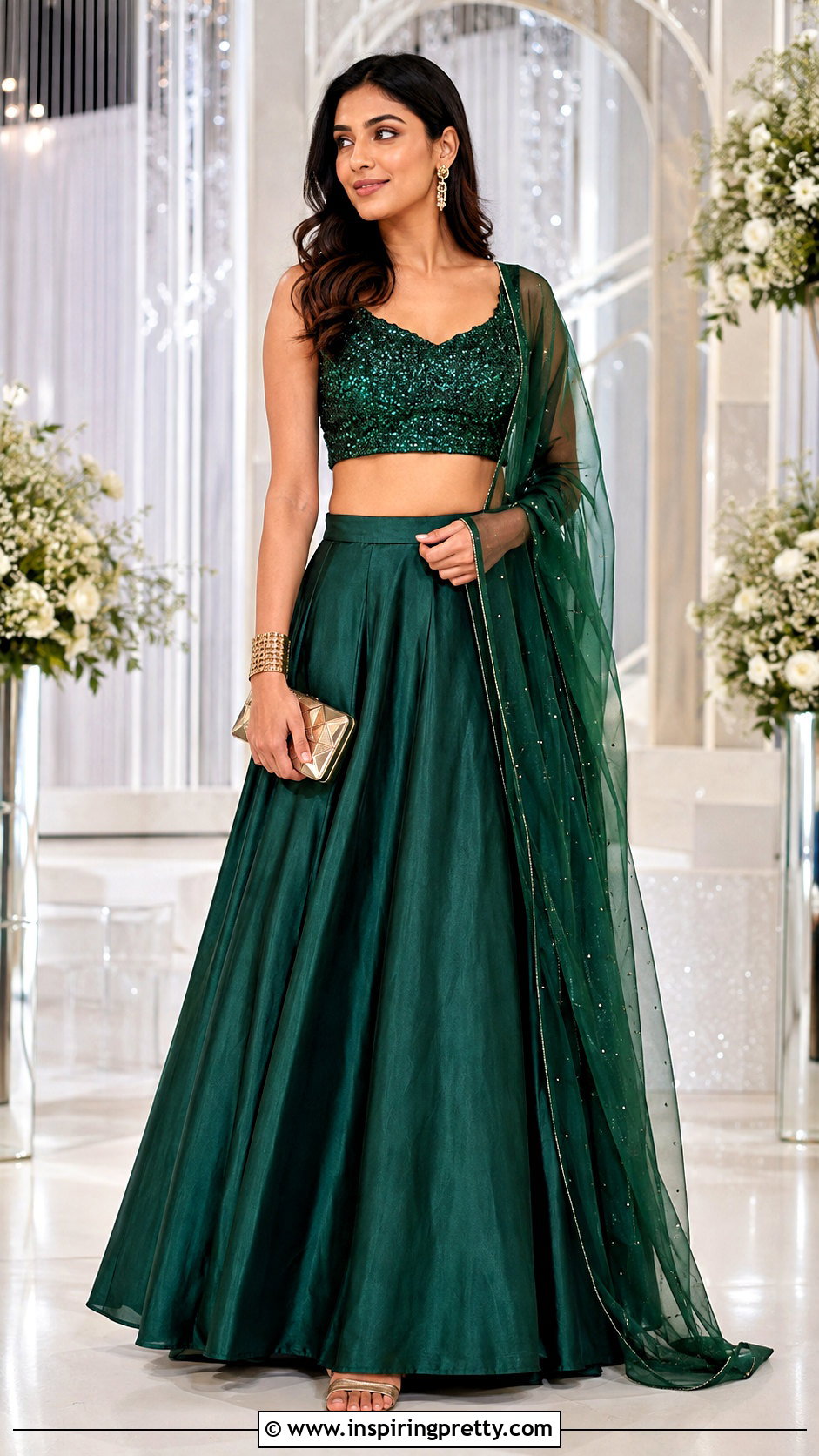
When the blouse is fully sequinned, everything else steps back. I'd check that the sequins lie flat and that the inside is lined, because sequin backs scratch the skin under the arms over a few hours. A sleeveless or short-sleeve round neck, over a plain satin, crepe or georgette ghagra with only a narrow border. Black with silver, emerald with antique gold, champagne with ivory. No embellished dupatta; a sheer plain one or none. Small drops, a metallic cuff and sleek sandals. Good for evening receptions.
18. Velvet Crop Top With Embroidered Ghagra
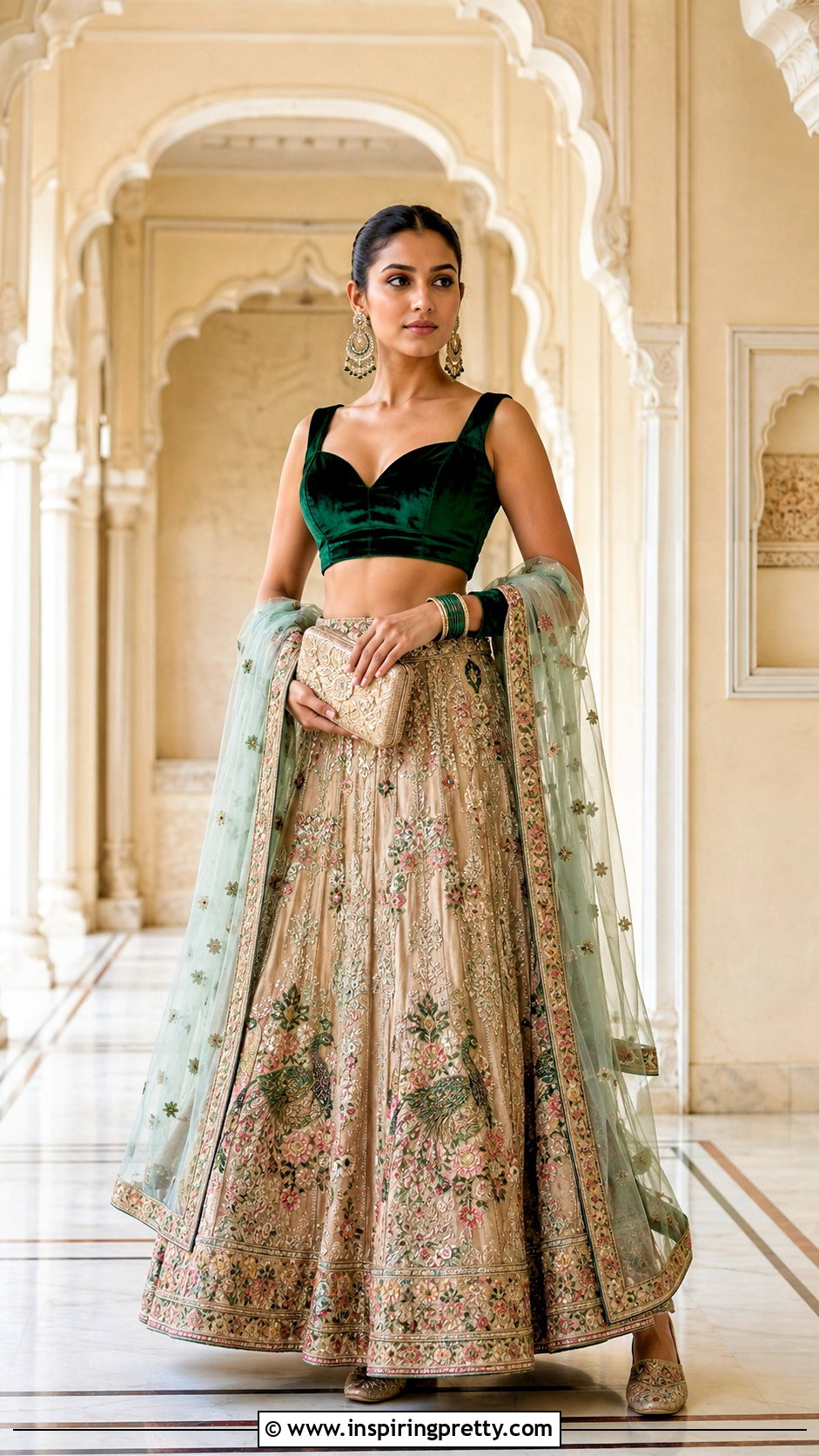
Rich velvet is the blouse fabric I reach for in winter. A sweetheart, square or boat neck with only a little embroidery at the edges, over a silk or raw-silk ghagra with a worked hem. Burgundy, navy, forest green and plum all suit velvet's depth. A sheer net dupatta with a thin metallic border keeps the outfit from feeling heavy. Velvet has almost no give and holds heat, so I always cut the armholes with extra room and avoid it for summer daytime events. Antique earrings, bangles and closed juttis.
19. Black Crop Top With Metallic Ghagra
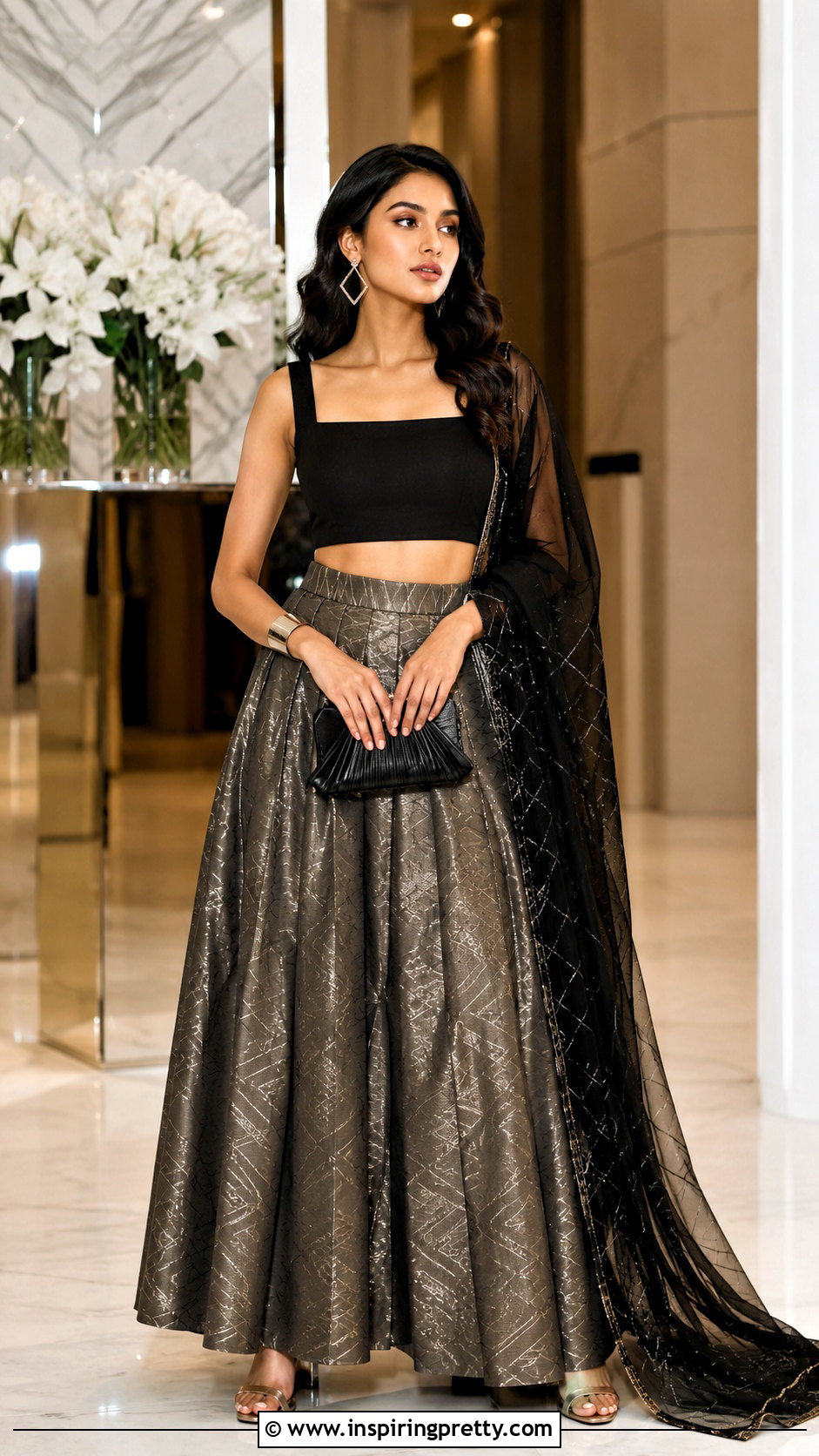
A black blouse sharpens a metallic ghagra. Square neck, clean straps or a subtle sheer sleeve. Choose a silver, pewter, champagne or muted gold skirt where the shine is controlled, not covered waist to hem. A border on the blouse in the skirt's metal ties the two together. A black sheer dupatta over one shoulder adds cover. Geometric earrings, a slim cuff, a black clutch and metallic block heels. I'd keep makeup and hair sleek. It suits anyone who prefers neutrals to the usual bright festive palette.
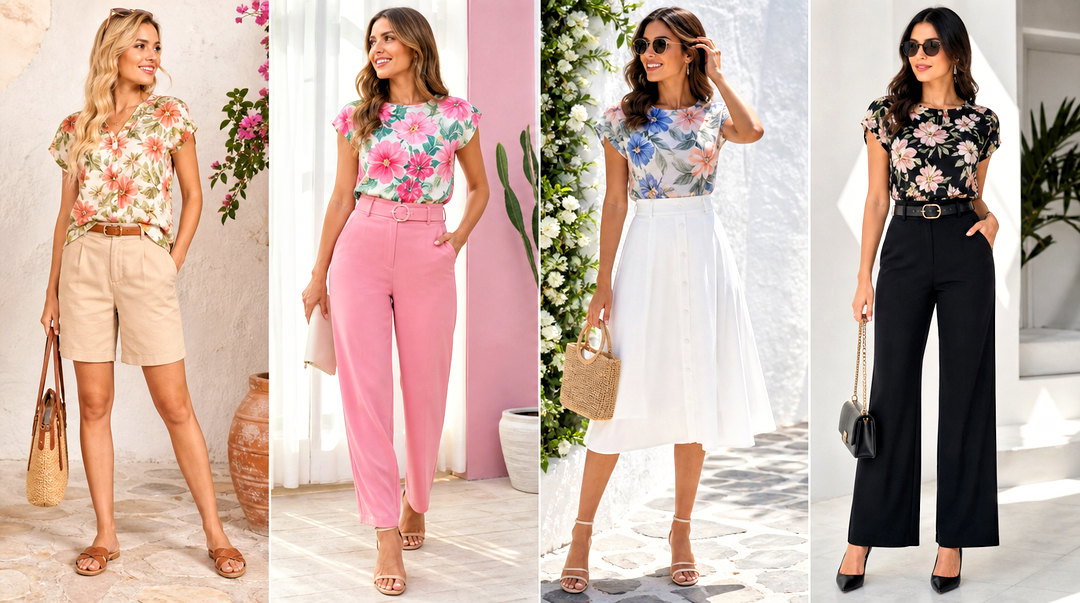
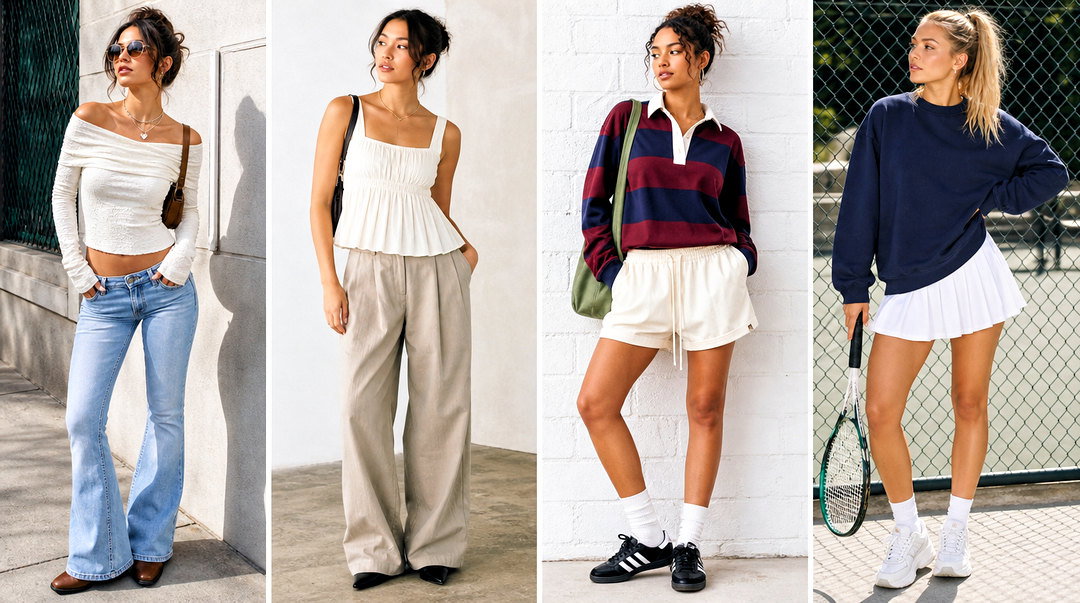
20. White Crop Top With Multicolor Ghagra
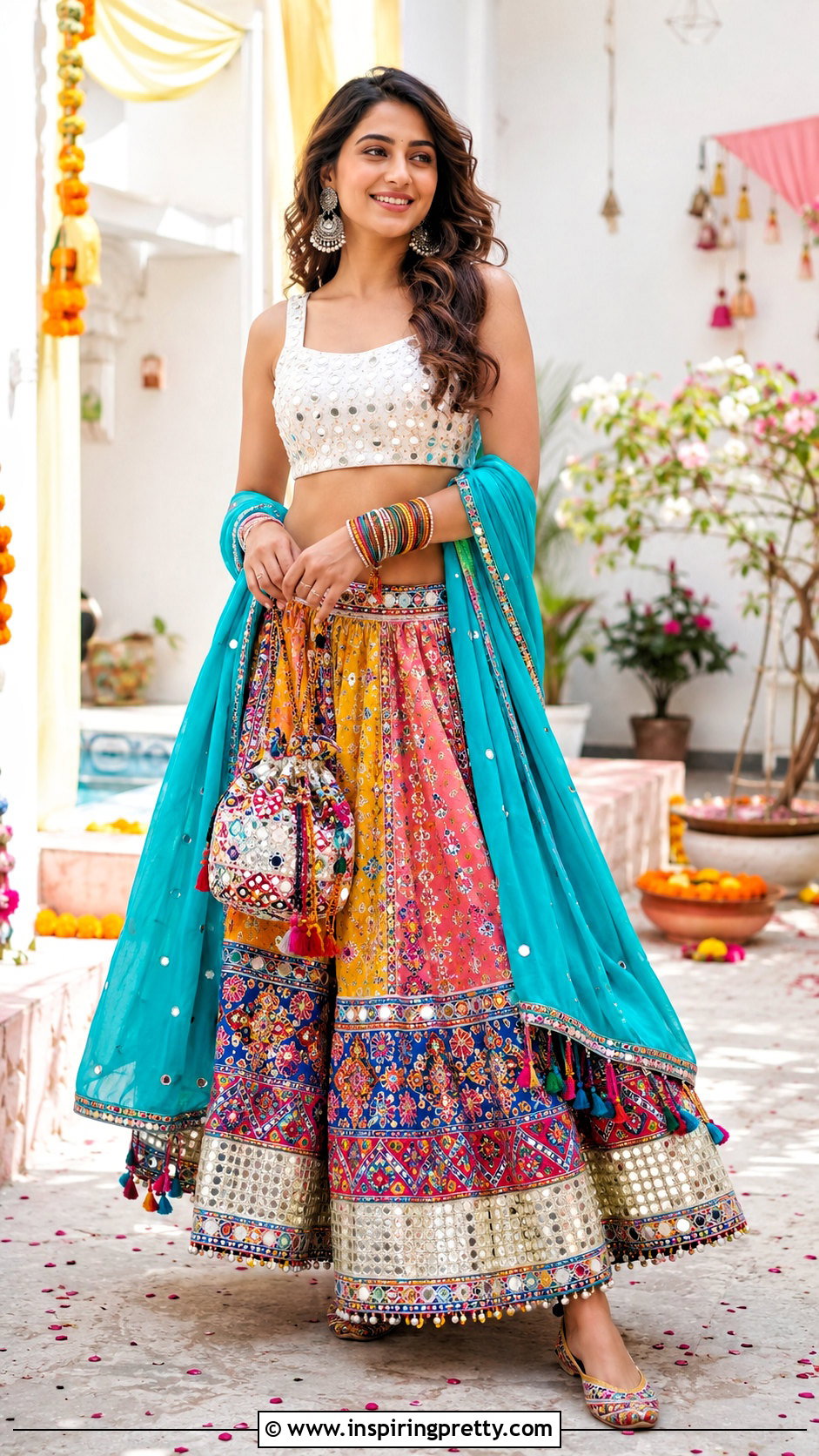
White is the calmest base for a multicolor ghagra. Choose a blouse with small mirror accents, threadwork or a border that repeats two of the skirt's colors. A high waistband links the fitted top to the full skirt. Carry a solid dupatta in one accent color instead of another print. Oxidized silver, colorful bangles, a mirror potli and juttis. White shows turmeric and color powder instantly, so I'd save this for Garba or a day festival rather than a haldi.
21. Pastel Crop Top With Matching Ghagra
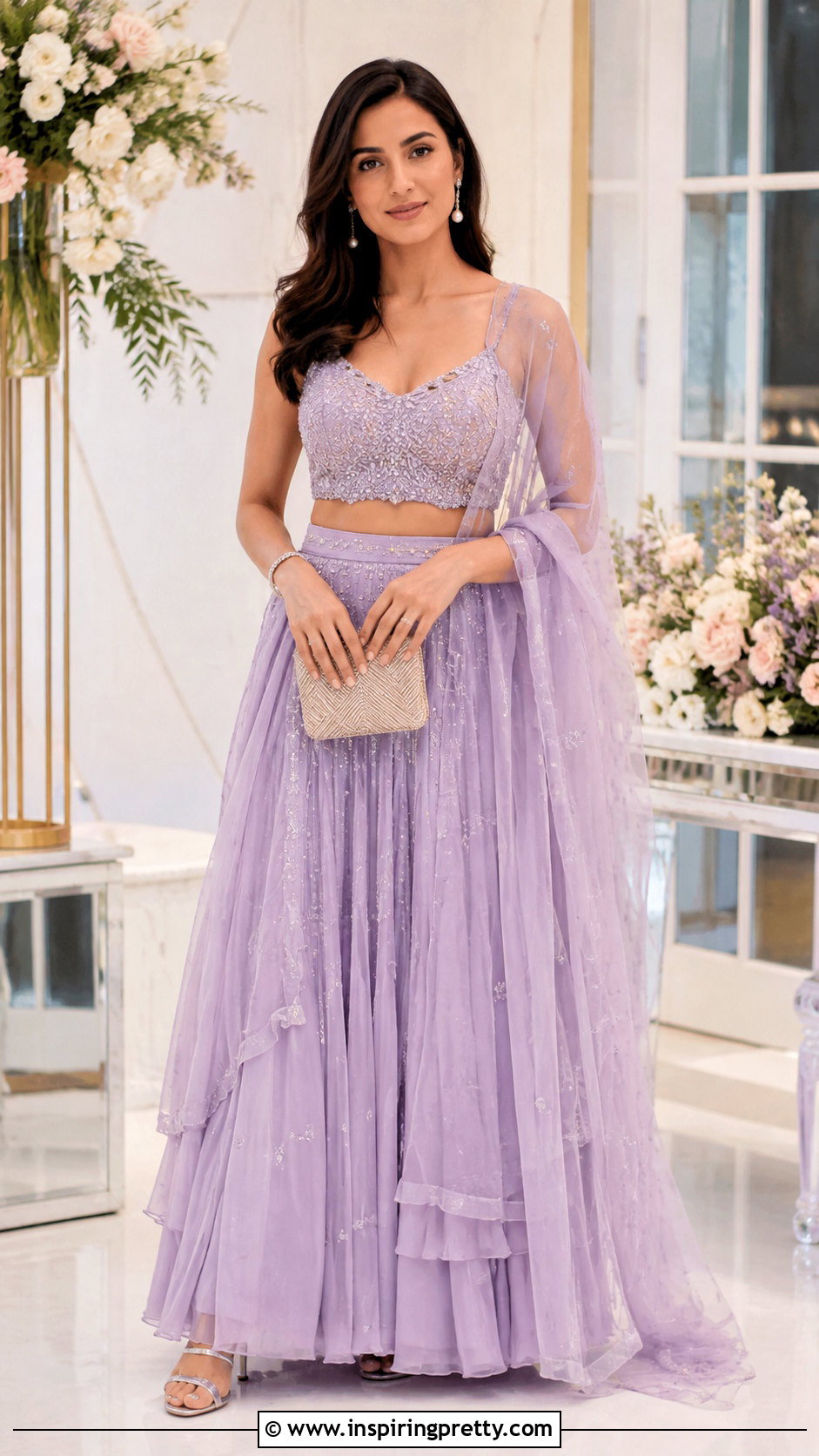
A matching pastel set gets its interest from texture rather than color. Blush, mint, lavender, peach, soft yellow or powder blue, used head to toe, with a contrast of finishes: a bead-worked blouse over plain georgette, or smooth satin above an embroidered skirt. A sheer dupatta in the same shade keeps the line unbroken. Pearl earrings, a crystal bracelet, a tonal clutch and nude or metallic sandals. Loose waves or a low bun. Pastels show makeup marks easily, so dress after your makeup is set.
22. Multicolor Crop Top With Solid Ghagra
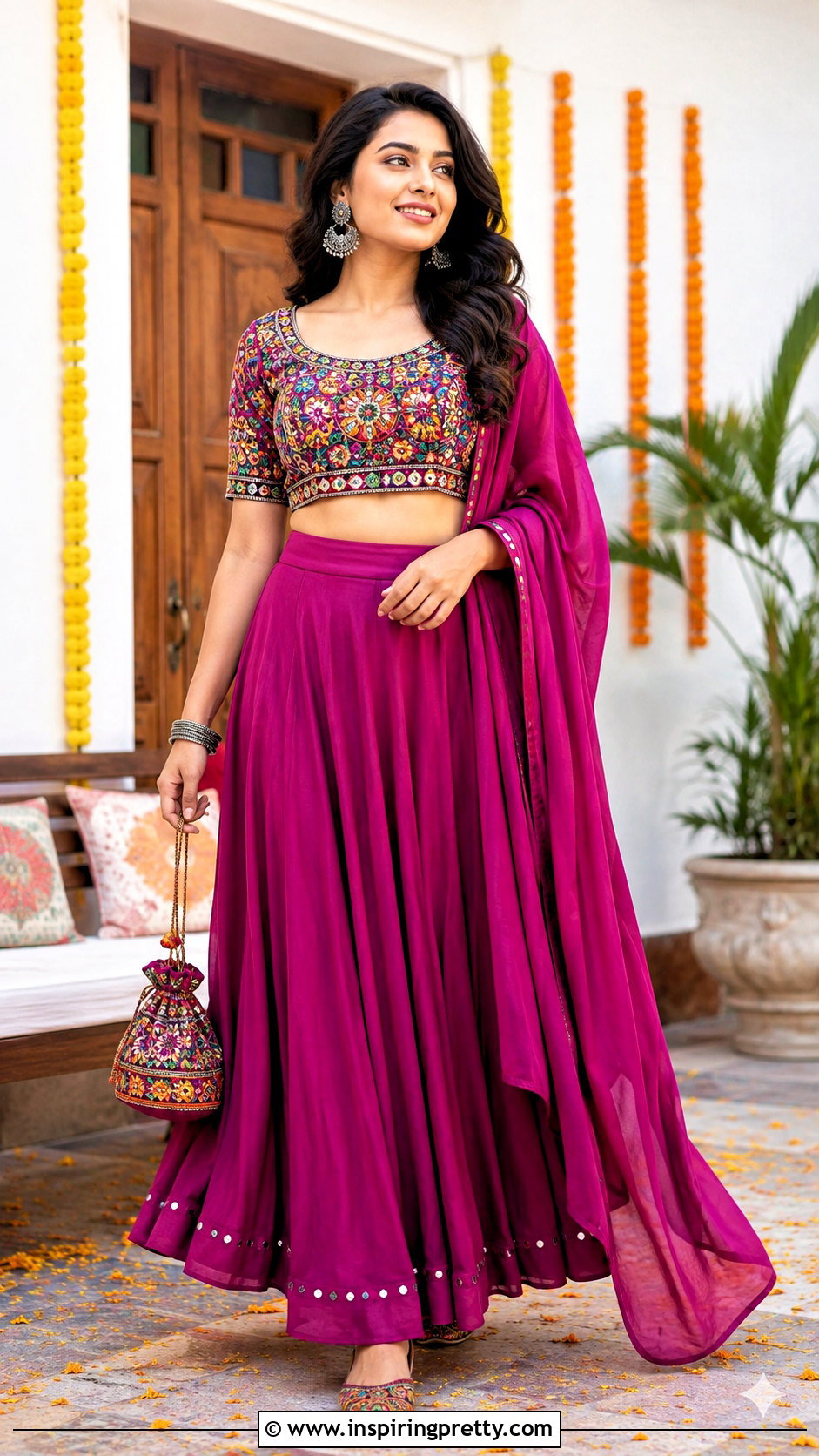
A multicolor blouse lets you buy one plain ghagra and restyle it many times. Look for patchwork, embroidery, woven panels or geometric motifs, then choose the skirt in the darkest or most repeated color in the blouse. That color link is what makes it look planned. A solid dupatta matching the skirt balances it. Simple oxidized earrings, slim bangles and a compact potli, avoiding accessories that bring in yet more colors. Juttis or flat sandals for dancing and a tidy braid.
23. Longline Crop Top With Panelled Ghagra
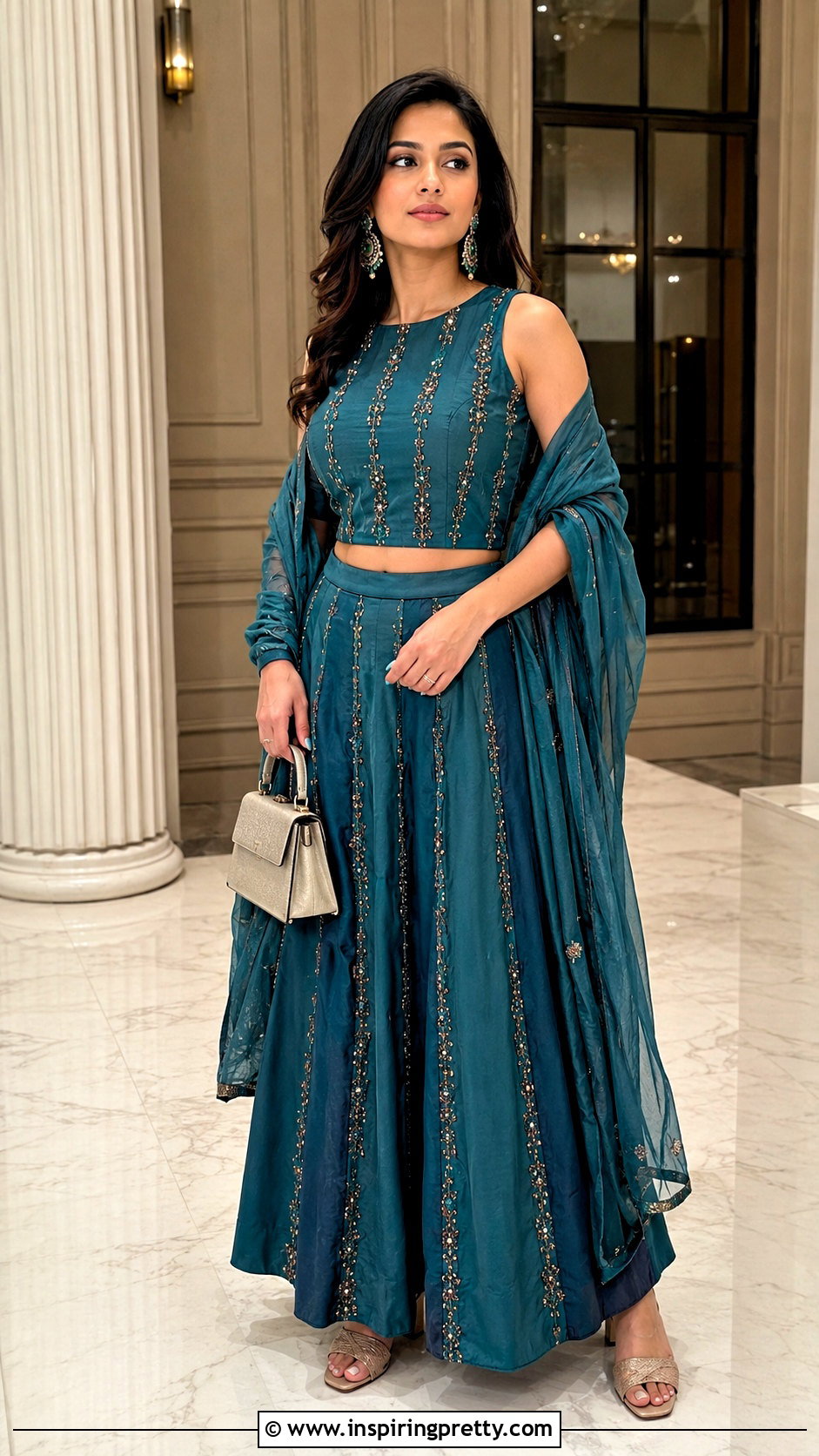
A longline crop gives the most torso coverage while keeping the two-piece shape. It should reach the waistband or overlap it slightly. Princess seams make it fit closely without darts, and vertical embroidery lengthens the body. Pair it with a panelled ghagra, which flares gradually from fitted panels instead of bunching gathers at the waist; that combination is the most slimming in this list. Matching colors for a long line, a contrast border for definition. A dupatta from one shoulder or tucked at the waist, statement earrings and low block heels.
24. Scalloped Crop Top With Net Ghagra
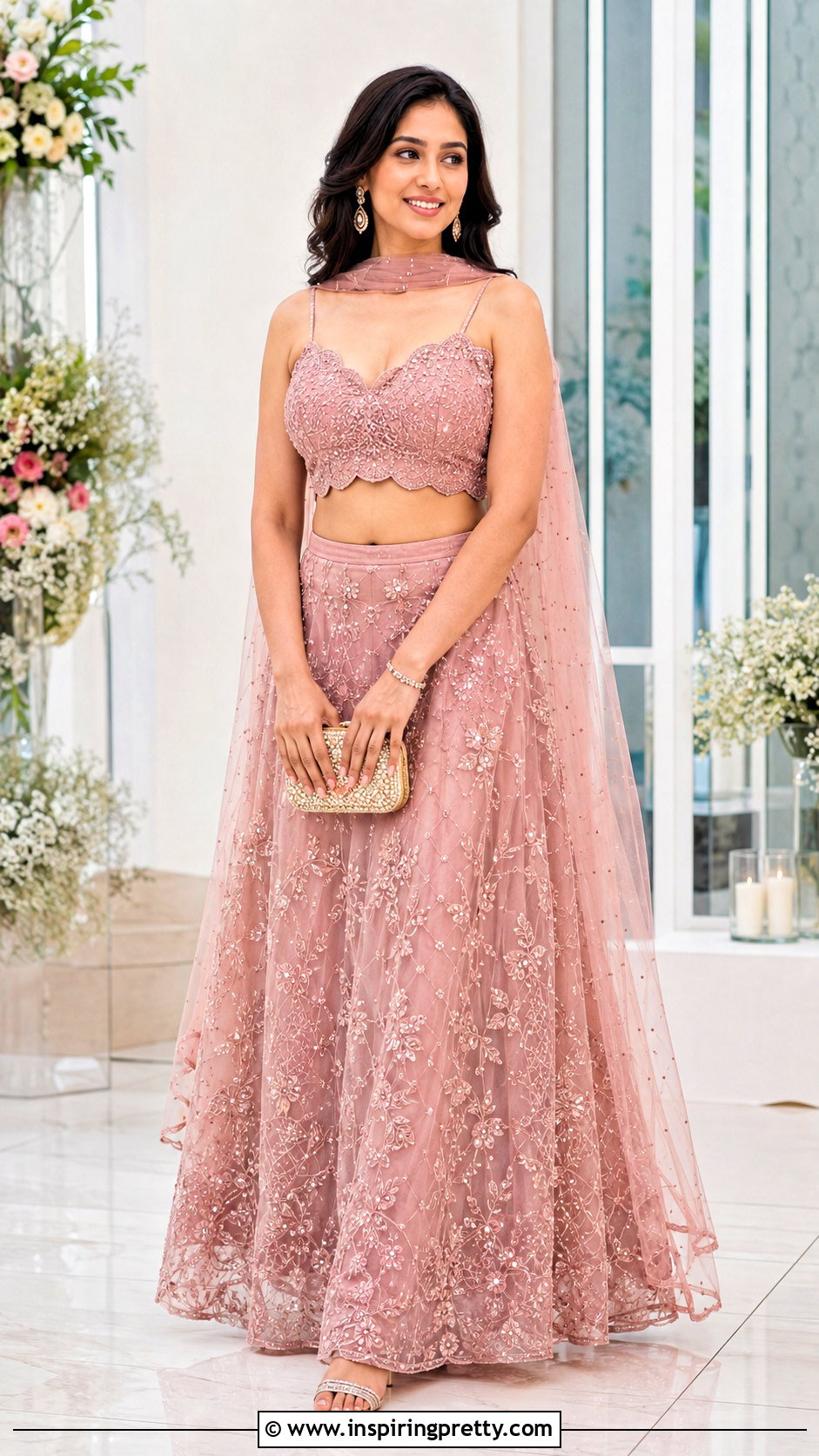
Scalloped edges are a quiet kind of decoration. Choose a blouse with scalloped edges around the neckline, sleeves or hem, and pick one or two of those places, not all three. Pair it with a lined net ghagra with scattered embroidery and a simple waistband so the scallops aren't competing with another border. Soft jewel tones, dusty pastels or ivory and gold. Drop earrings, one bracelet, a small clutch and heeled sandals, with a sheer dupatta loose behind the shoulders.
25. Sleeveless Crop Top With Color Block Ghagra
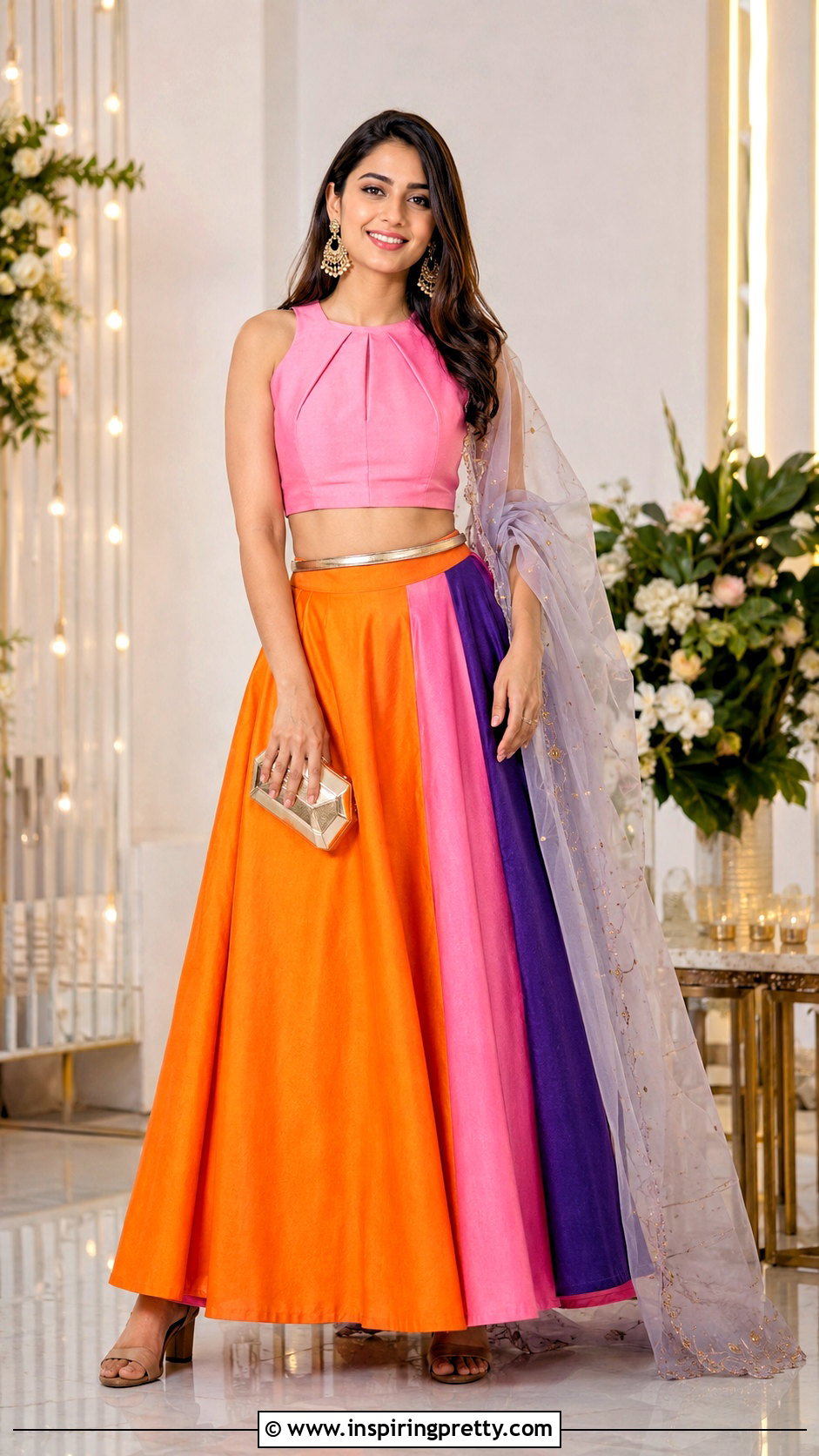
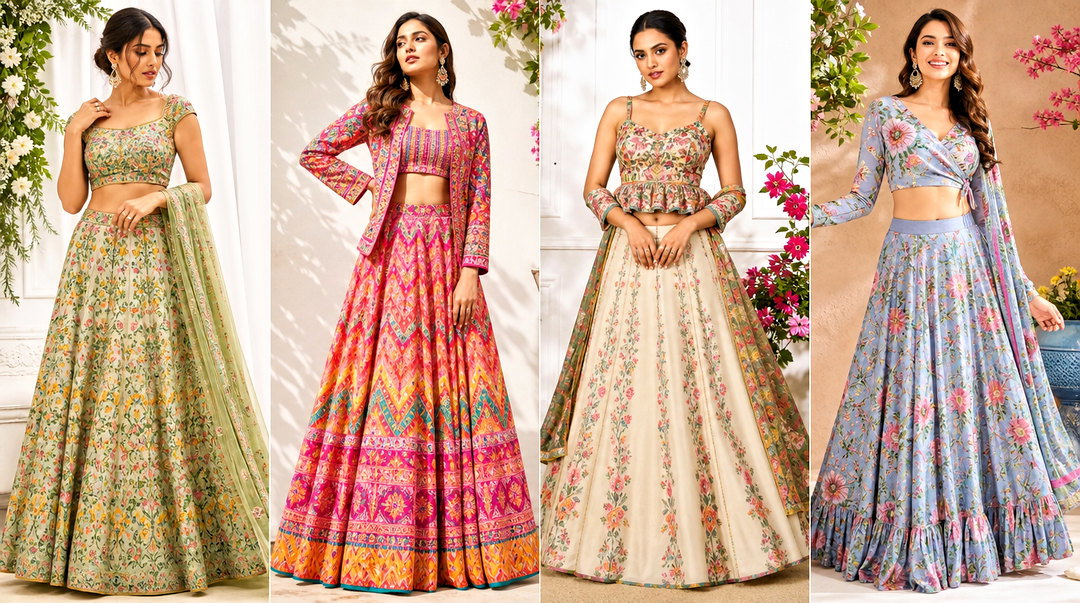
Color blocking is the most modern option here: a structured sleeveless blouse over a skirt made of two or three solid sections. Broad straps and a square, round or shallow V neck. Pink with orange, blue with green, or purple with red. Repeat one skirt color in the blouse and use the others for the border, dupatta or accessories. Statement earrings, a slim waist belt, a box clutch and neutral block heels. A high ponytail. Bright, festive and free of heavy embroidery, which also makes it lighter to dance in.
Hem Length for a Night of Garba
A full ghagra that looks right standing still can trip you during a dance circle. Here's how I set it up for movement:
- Wear the exact shoes you'll dance in at the final fitting.
- Set the hem so it clears the floor by about a finger's width in those shoes.
- If you want more flare, a can-can underskirt adds it, but it also adds heat. For outdoor summer events, a lighter lining is often enough.
- Pin the dupatta at the shoulder and at the waist with safety pins from the inside, so it can't slide when you spin.
Storing Zari, Mirror Work and Sequins
Heavy festive pieces often spend most of the year in a cupboard, and that's where they get damaged. Metallic zari can tarnish in damp air, mirrors can scratch each other when folded together, and sequins snag on neighboring fabric. I'd air the outfit out after wearing, spot-clean or dry clean as the label suggests, then fold it with plain tissue between the embroidered layers and wrap it in a cotton or muslin cloth rather than plastic. Refold along different lines every few months so the creases don't wear through the fabric.
The Blouse Sets the Balance, the Ghagra Follows
Every outfit above follows the same balance rule. A heavily worked blouse wants a simple ghagra, and a detailed skirt wants a clean blouse. Decide first how much coverage and structure you want, then choose a neckline and sleeve you'll feel secure in all evening. Footwear, jewelry and the dupatta should help you move rather than slow you down. Color, blouse length, fabric and waistband height are all yours to adjust. A ghagra outfit is finished when you can walk, sit, eat and dance in it without a second thought.
Related posts:


Leave a Reply