
A traditional crop top is really a choli cut a little longer and worn with confidence. What separates it from a casual cropped tee is the handwork: zari, mirror work, brocade, bandhani, chikankari and hand-block prints. With a lehenga, sharara, palazzos or a long skirt, one top can cover a whole wedding season, from mehendi to reception. Coverage is more flexible than people assume, because the neckline, sleeves, crop length and dupatta can all be adjusted. Below are fifty designs, with what I'd pair each one with and where it tends to run into trouble.
Setting the Gap Between Choli and Lehenga
Most fitting problems with a traditional crop top happen at the gap, not the neckline. When I fit one, I fasten the lehenga at the height it will actually be tied on the day, then mark the top's hem from there.
- Decide where the lehenga sits first. Tied at the natural waist, it shows less skin and stays put while dancing; tied lower, it shows more and can slip.
- Sit down in both pieces. The visible gap grows when you sit and when you raise your arms, so judge it then rather than standing still.
- For full coverage, ask for the top's hem to overlap the waistband slightly, or add a sheer panel across the gap.
- Have the tailor add a short tie-up or extra hooks at the back of the top, so it can be adjusted across a season of functions.
Heavily embroidered tops are hard to let out once the work is finished, so when ordering one, ask for slightly generous seam allowances at the sides.
1. Mirror Work Crop Top With Lehenga
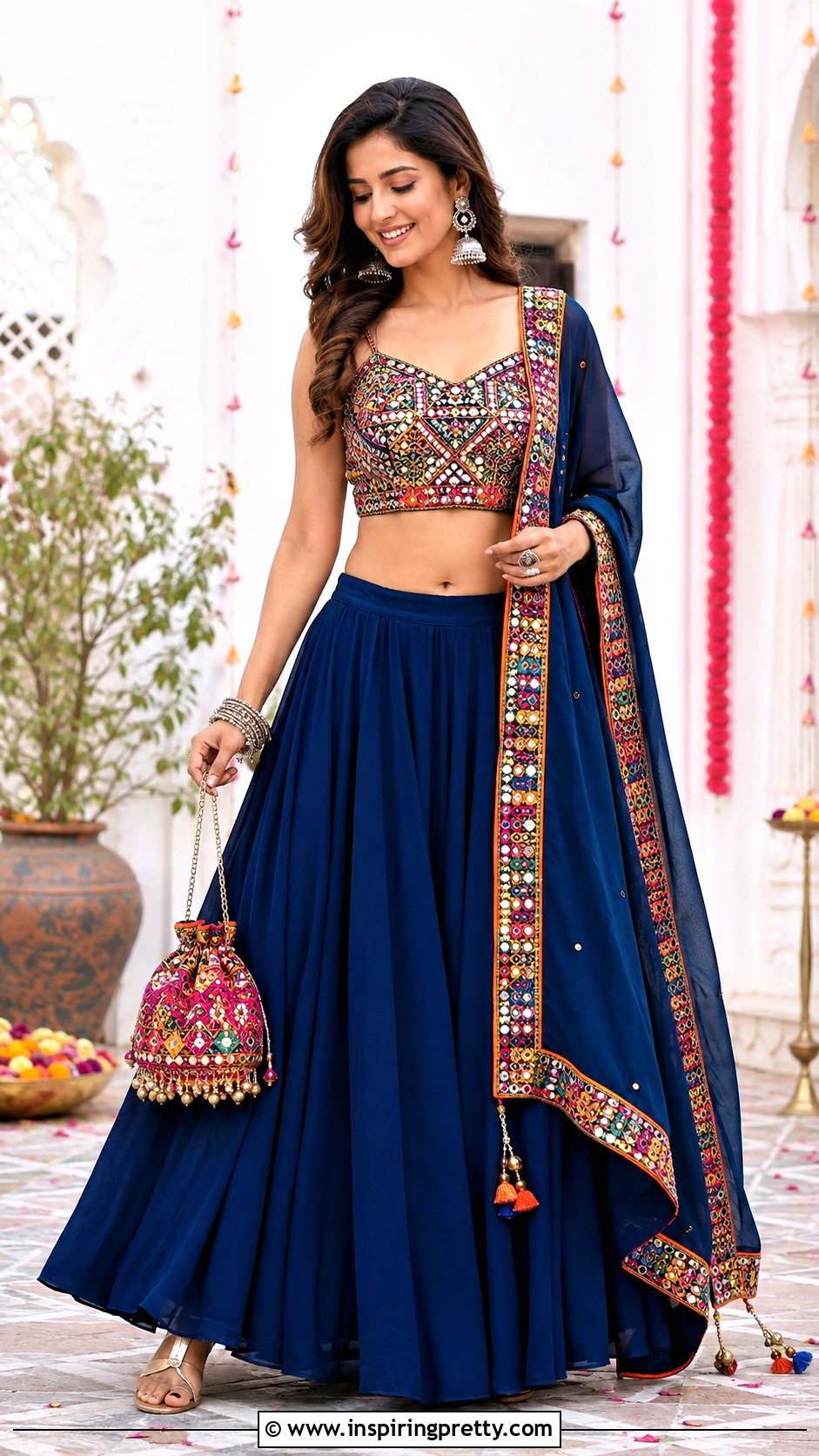
Mirror work is the most festive embellishment on this list and the quickest to overwhelm. I keep the mirrors to the neckline, sleeves and hem rather than the whole bodice, because a fully mirrored top is heavy and the edges scratch the inner arm during a long sangeet. A solid georgette or raw silk lehenga gives it room. Wear jhumkas and metallic sandals and skip the necklace, since the mirrors already throw light at your face. Elbow sleeves and a slightly longer crop add coverage.
2. Banarasi Brocade Crop Top With Silk Skirt
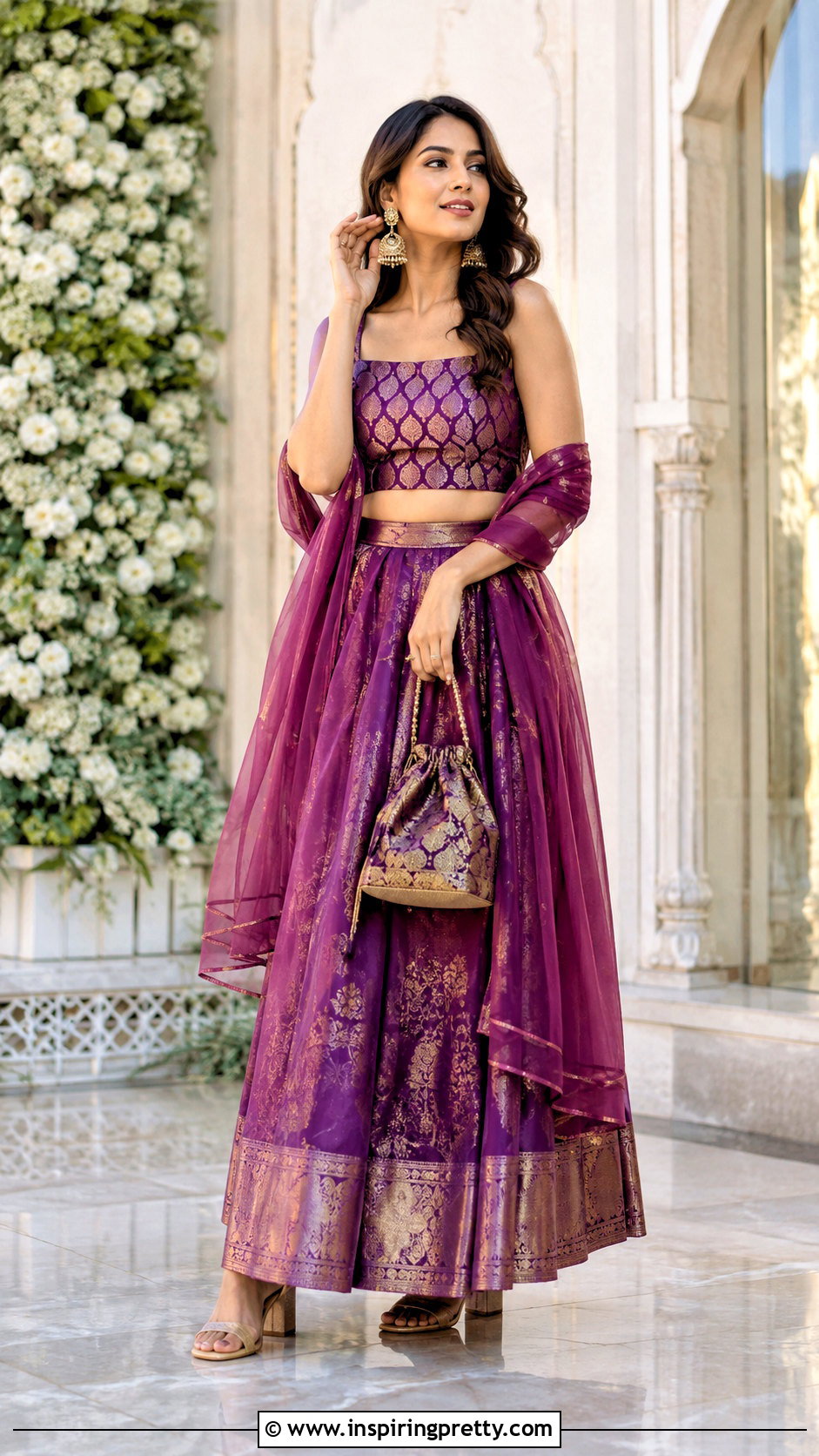
Banarasi brocade is woven, not embroidered, so the richness lives in the fabric and the top stays lighter than it looks. Pair a jewel-toned brocade top with a plain silk skirt; two brocades together usually fight. A square neck and elbow sleeves suit the stiff weave, which won't mold around curves the way georgette does. Burgundy with antique gold reads formal. If you're petite, small woven motifs keep the scale in proportion.
3. Chikankari Crop Top With Flared Lehenga
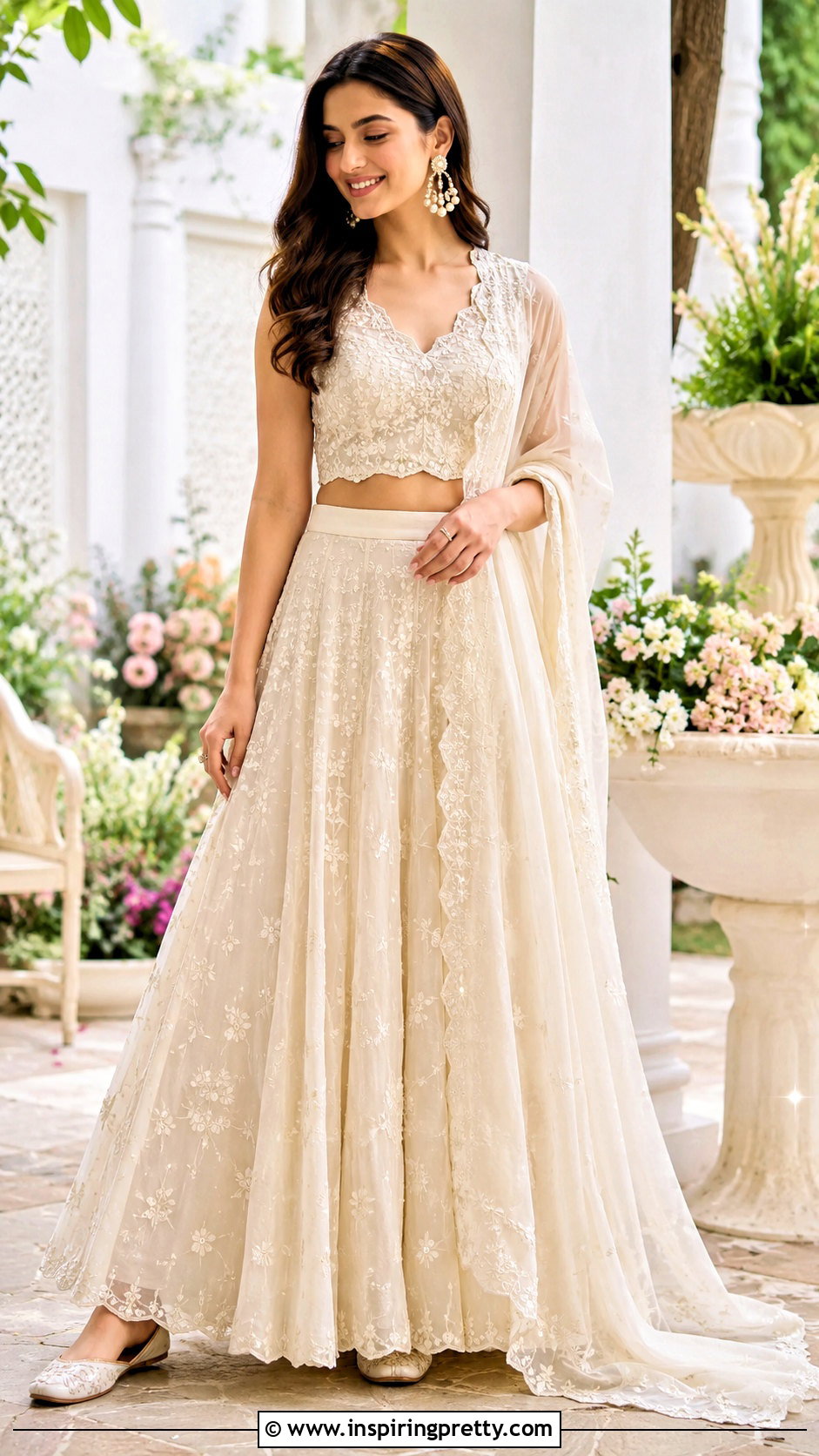
Soft chikankari embroidery is tonal shadow work, which is why it reads graceful rather than ornate. Cotton chikan breathes at a summer daytime function, while georgette chikan looks dressier but is sheerer, so check the lining. Ivory or sage with a matching flared lehenga, pearl earrings and juttis keeps it calm. The fine threads snag on rough jewelry and bead clasps, so I'd keep bracelets smooth.
4. Bandhani Crop Top With Solid Lehenga
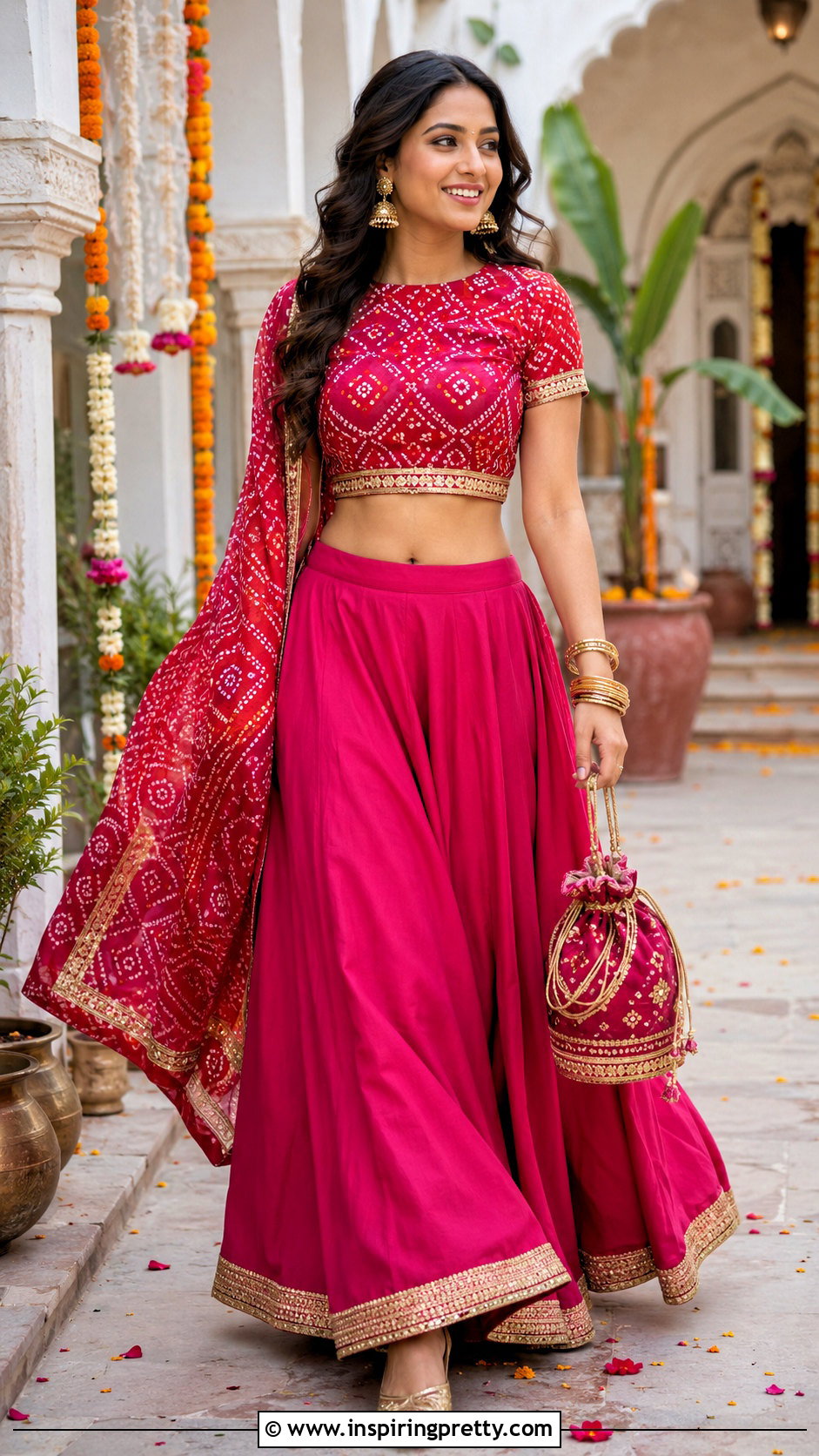
Bandhani is tie-dye made with thousands of tiny knots, and that dotted pattern is busy enough to carry the outfit alone. Pick a solid lehenga in one shade from the print and let a gota border supply the shine. A high round neck and short fitted sleeves give the fabric a clean frame. A practical warning: bandhani dyes often bleed in the first wash, so dry clean it or wash it alone in cold water. Gold juttis and stacked bangles finish it.
5. Zari Embroidered Crop Top With Velvet Lehenga
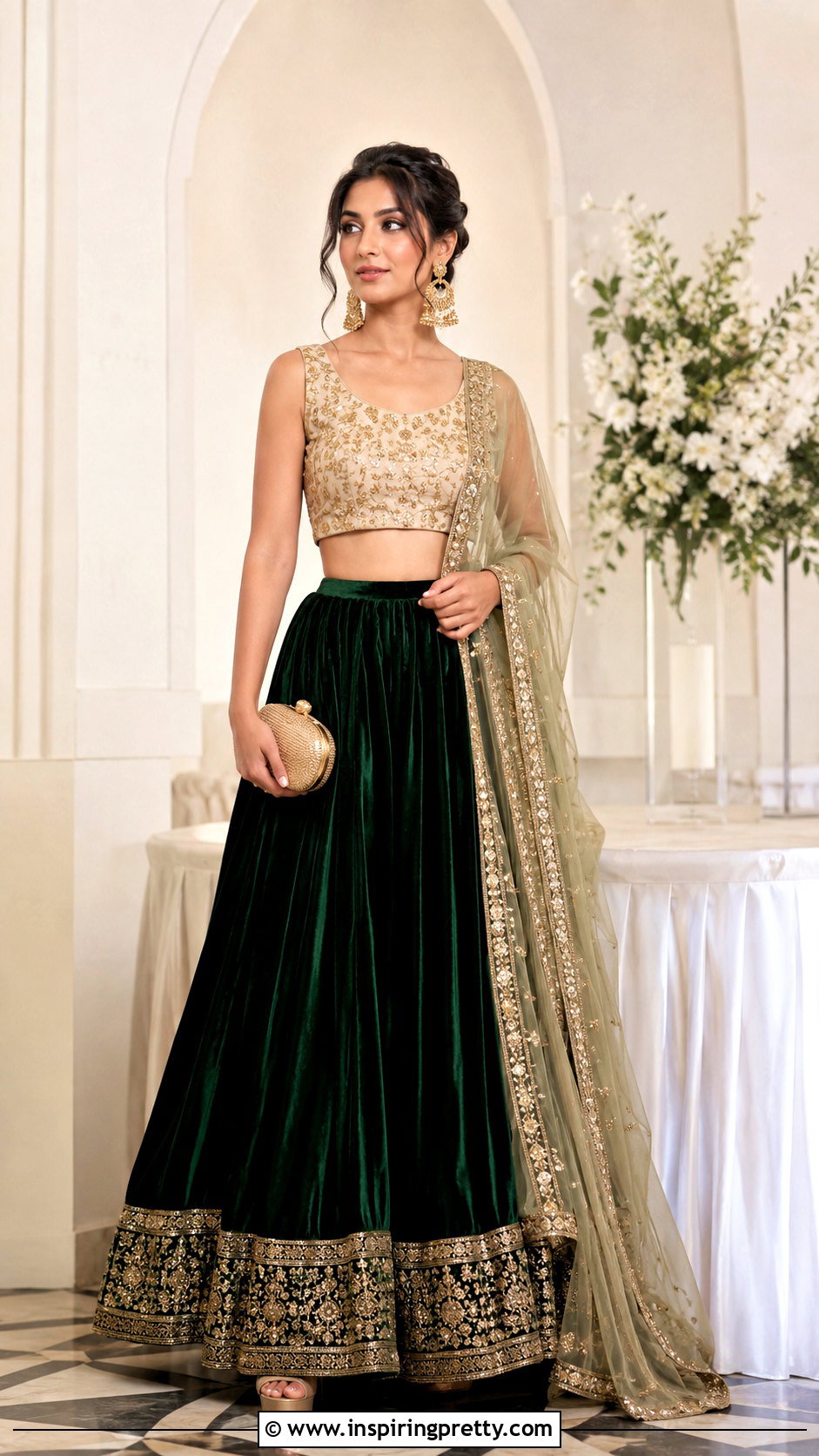
Zari and velvet both carry weight, visually and literally, so this pairing belongs to cool evenings. Keep the metallic thread to the neckline, cuffs and waist of a raw silk top, over velvet in maroon or bottle green. A net dupatta with a narrow zari edge connects the two without adding bulk. I'd choose stable platform sandals; a velvet lehenga is heavy to walk in, and a thin heel makes that worse. Full sleeves suit a winter function.
6. Gota Patti Crop Top With Chiffon Lehenga
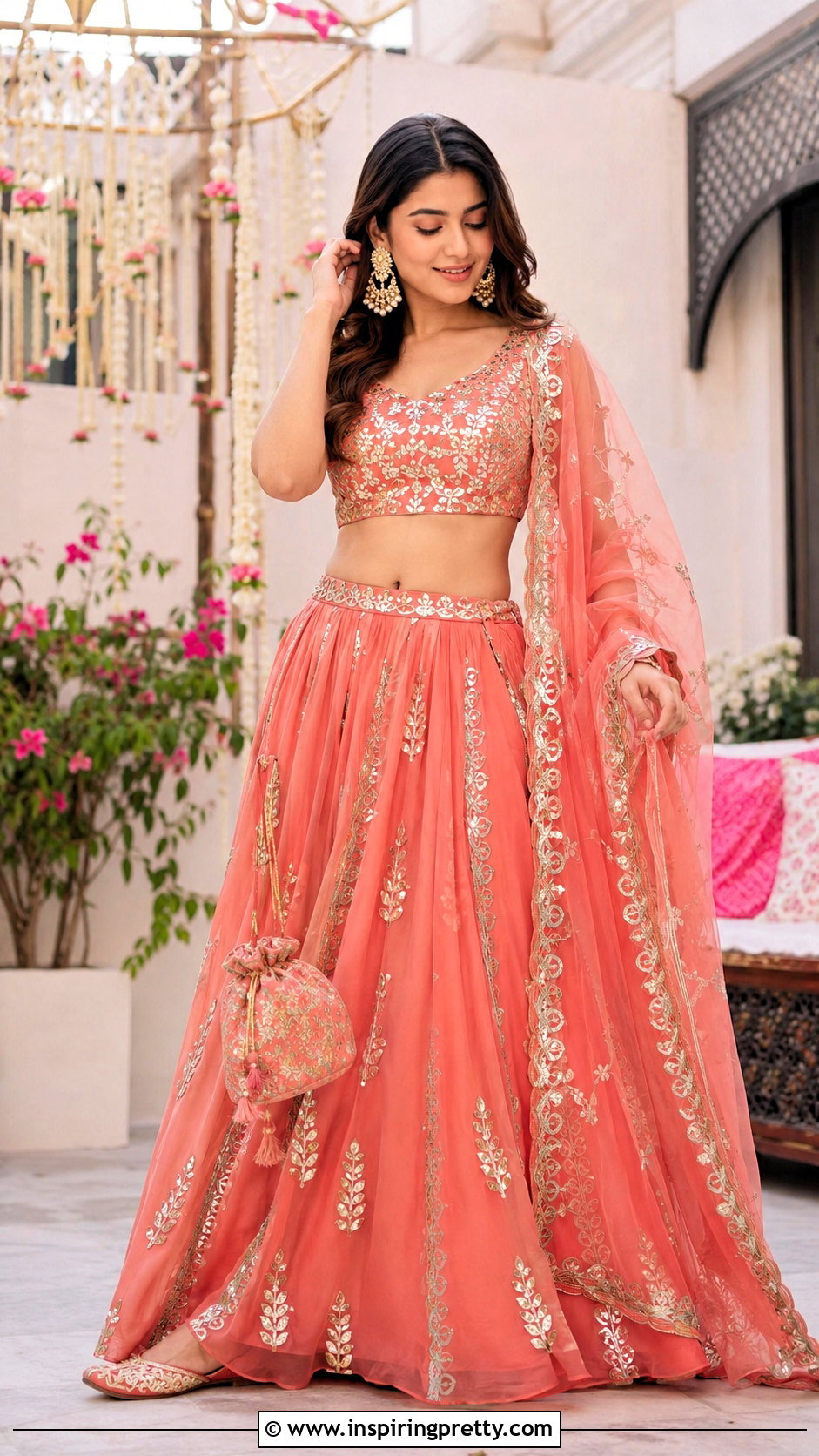
Gota patti is metallic ribbon cut and stitched into shapes, so it adds sparkle without the weight of dense embroidery. That lightness suits chiffon, and a circular lehenga with a matching gota border swings well at a daytime mehendi. Coral, mustard and hot pink are the classic palette, with ivory and gold as the softer option. Gota can darken with humidity over time, so store it dry and wrapped. Embroidered flats keep you comfortable through a long function.
7. Kalamkari Crop Top With Long Skirt
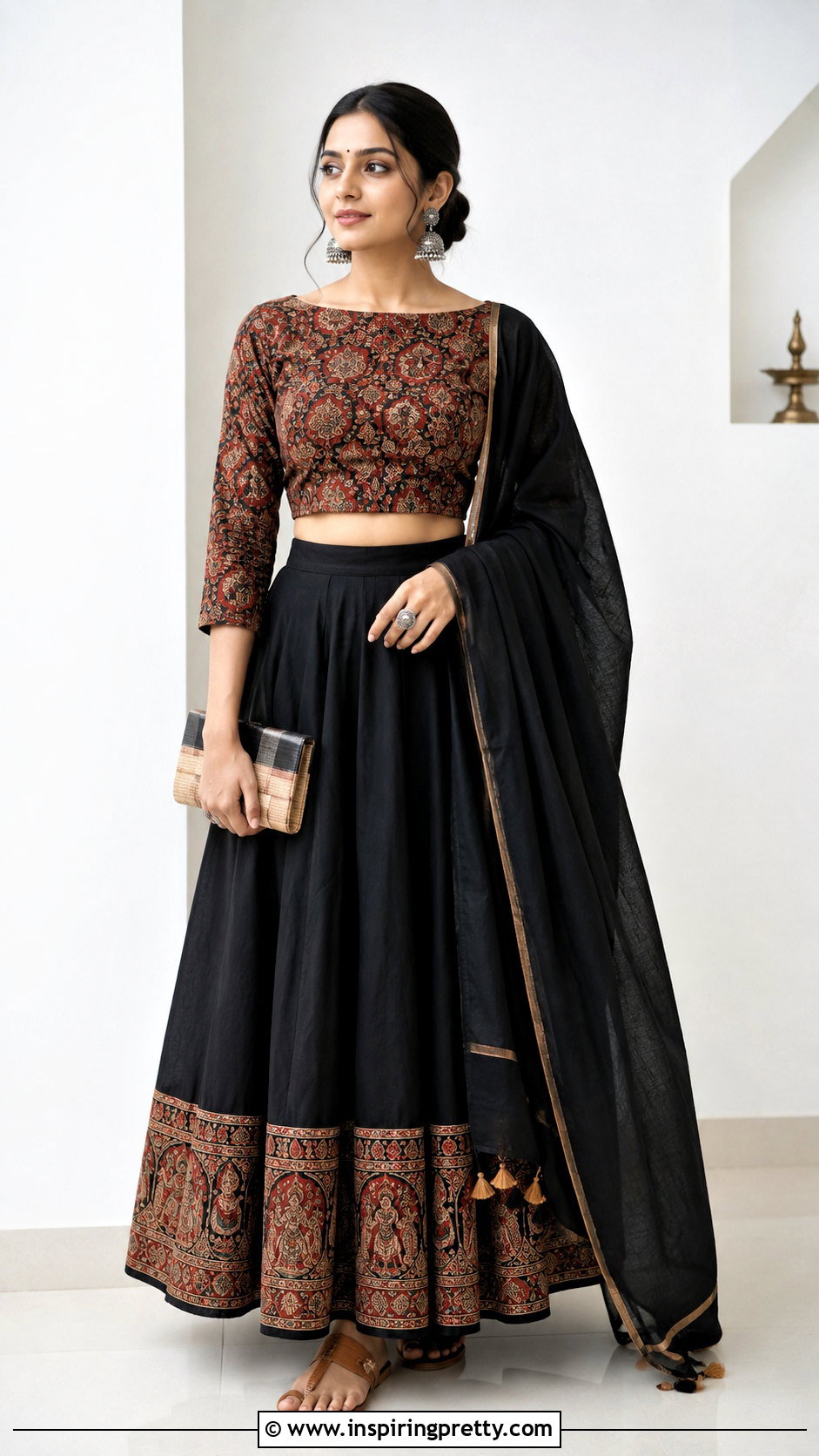
Kalamkari is hand-painted or block-printed with narrative motifs, usually in rust, indigo and black. A structured boat neck with elbow sleeves gives the print a clean outline. Pair it with a plain cotton-silk skirt and let the one print do all the talking. Oxidized silver and kolhapuri sandals suit its earthy mood better than shiny gold. I'd wear it to a cultural program or a family lunch rather than a night reception.
8. Kutch Embroidery Crop Top With Black Lehenga
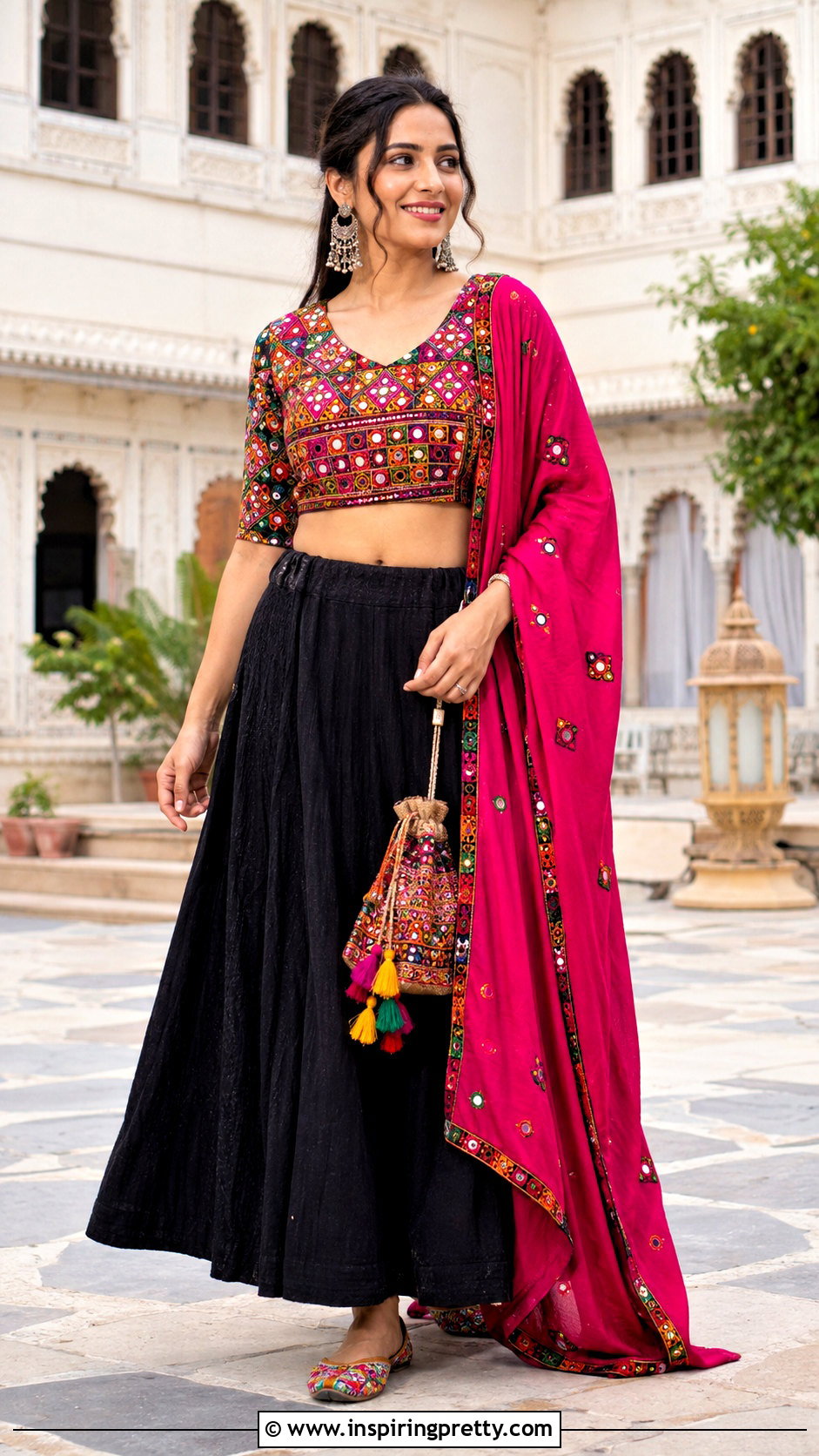
Kutch embroidery uses dense geometric stitching and tiny mirrors in bright thread, and black is the base that makes it glow. A fitted top with short or elbow sleeves keeps the needlework visible. Choose a black cotton or georgette lehenga with a coordinating border, then a red or magenta dupatta. Keep every other embellishment to almost nothing. If you want more coverage, let the top meet a high-rise waistband.
9. Phulkari Crop Top With Plain Patiala Pants
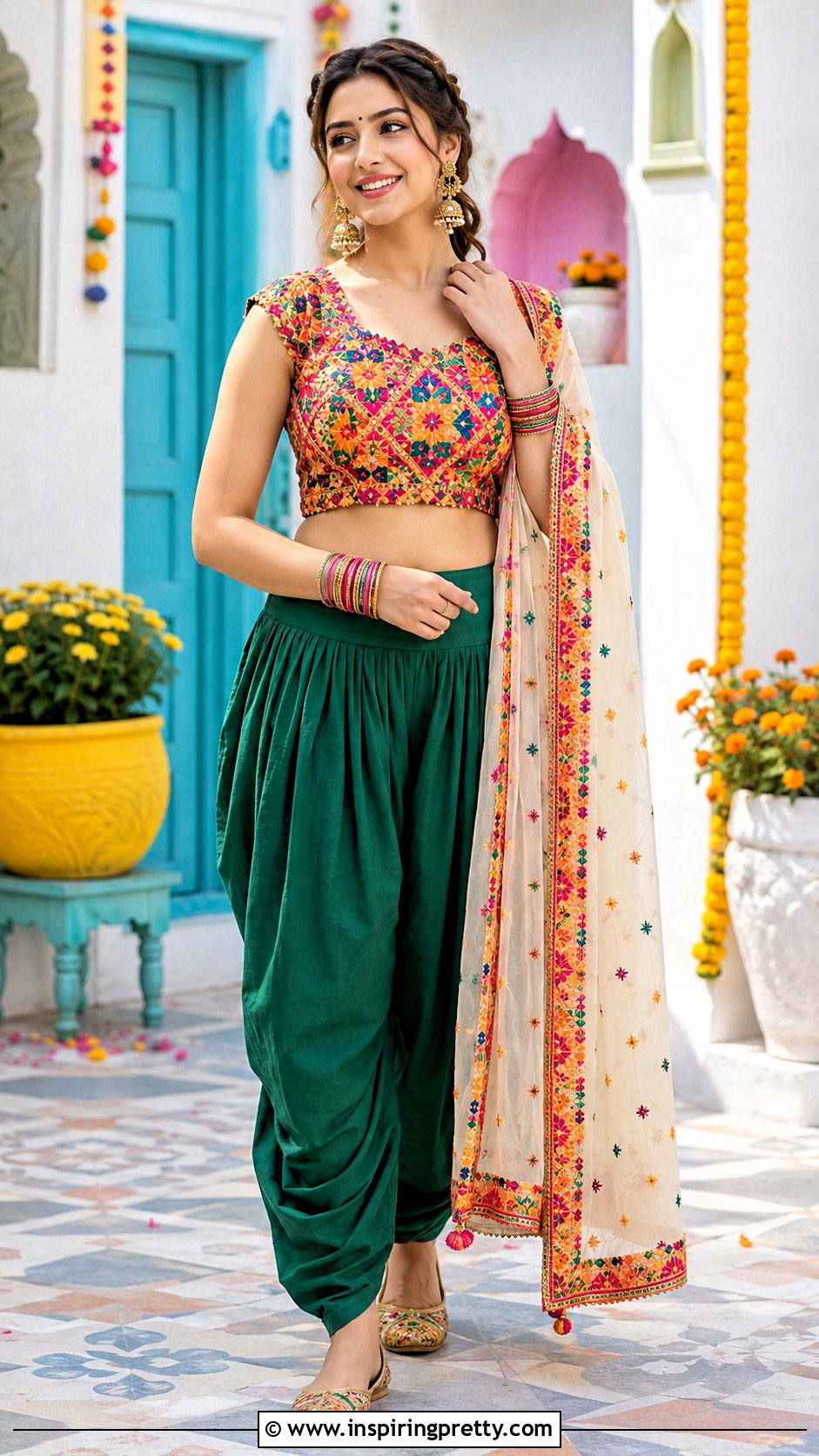
Phulkari is darning-stitch embroidery in silky floss from Punjab, and it's dense enough to stiffen the fabric under it. Keep it to the front yoke and sleeves of a waist-length top. Patiala pants carry a lot of pleated volume, so the top has to be fitted, or the whole outfit turns into fabric. Pull a quieter color from the threadwork for the pants. Juttis and glass bangles suit it, and it's made for dancing.
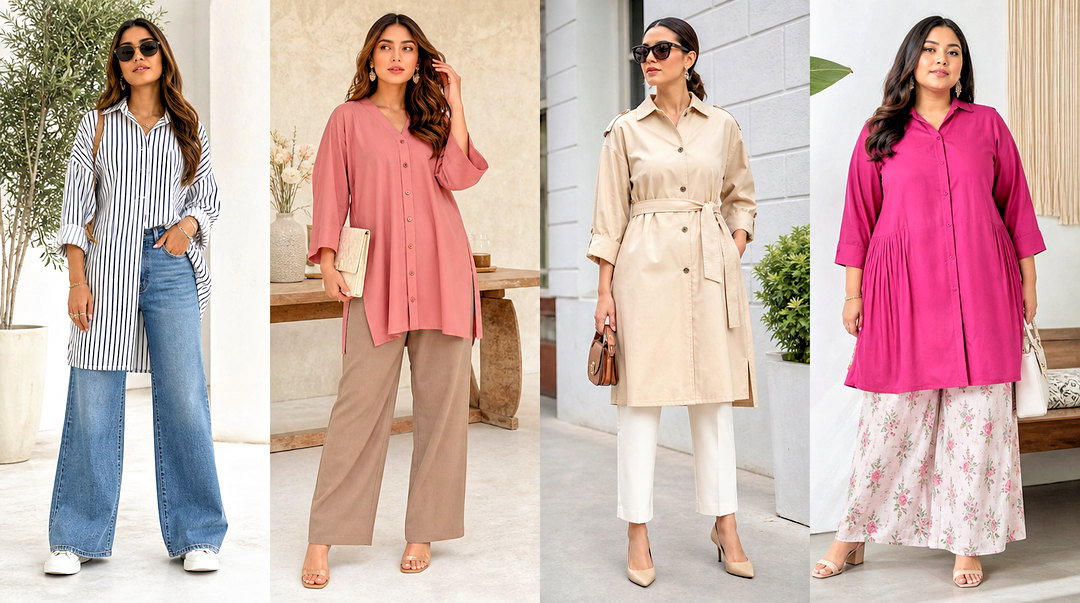
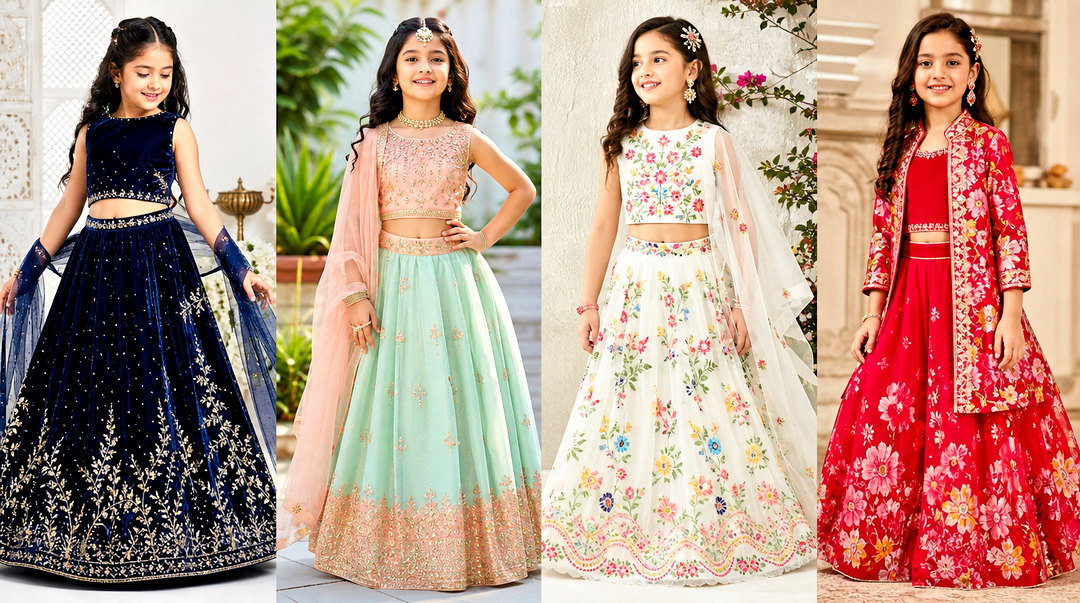
10. Ajrakh Crop Top With Palazzo Pants
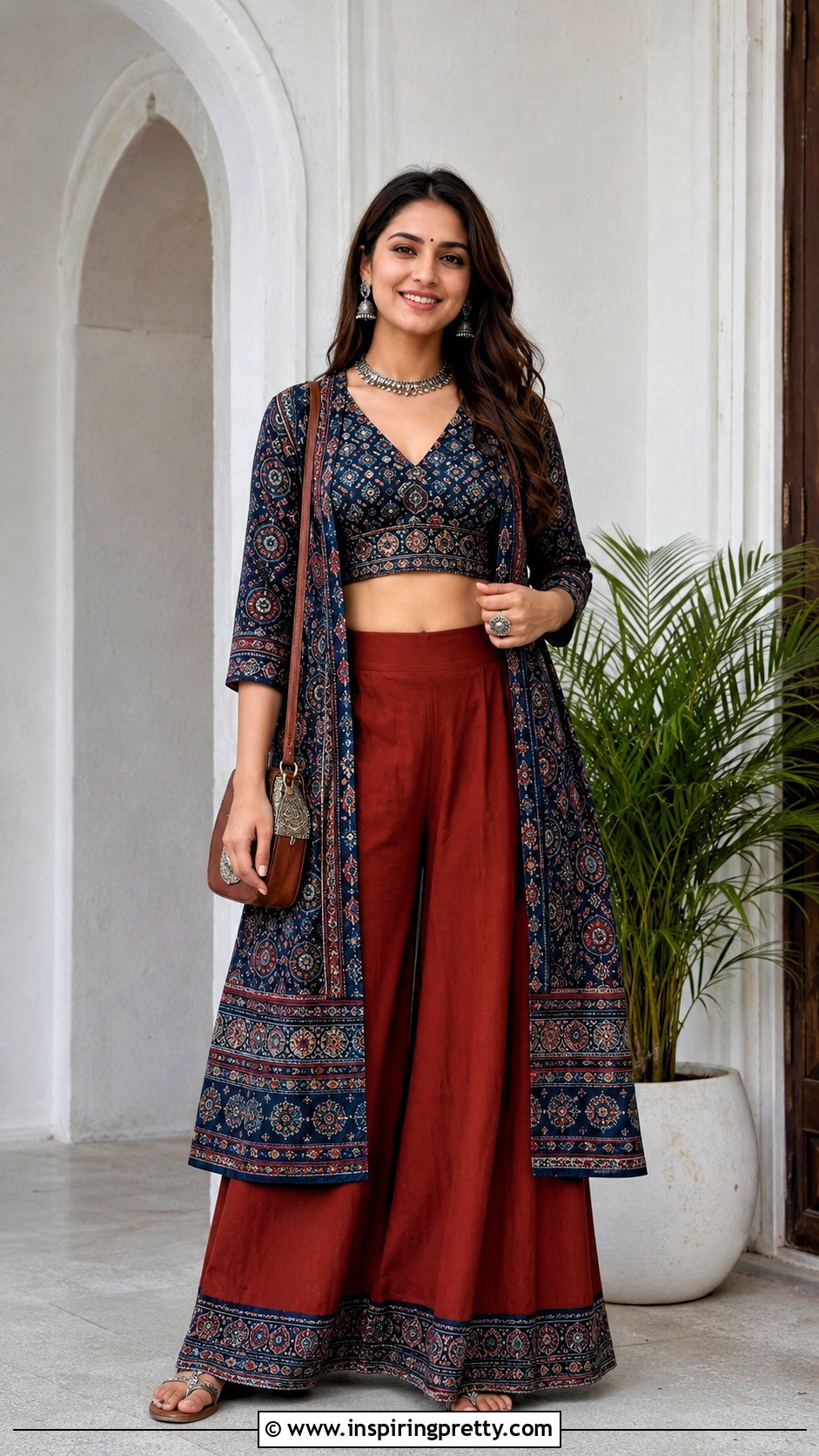
Ajrakh is resist-printed with natural dyes, typically indigo and madder red, in a precise geometric repeat. A clean-front cropped blouse with a modest V lets that repeat read clearly. Solid palazzos in cotton or linen keep it breathable, and their high rise makes the short top easier to wear. Natural dyes fade with harsh detergent and direct sun, so wash it gently and dry it in shade. Oxidized silver and flat sandals complete it.
11. Ikat Crop Top With Pleated Skirt
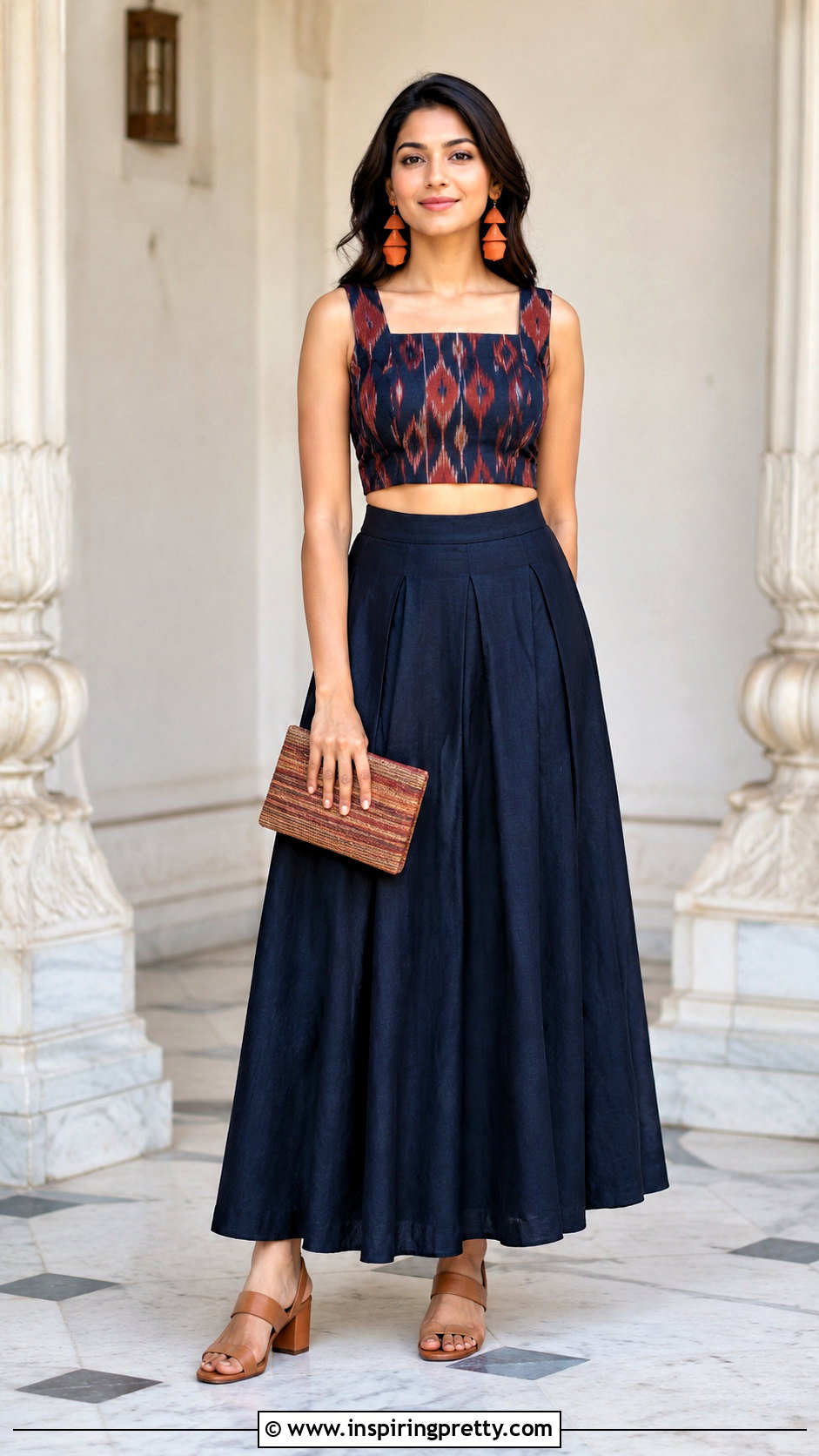
Ikat gets its feathered edges from dyeing the threads before weaving, so the pattern has a soft blur that needs a sharp shape around it. A structured cotton-silk top and a crisp pleated skirt give it that. Sleeveless square necks feel current, while cap or elbow sleeves look more traditional. A thin woven border on the skirt ties the pieces together. Terracotta earrings and block heels suit a daytime event.
12. Embroidered Crop Top With Organza Lehenga
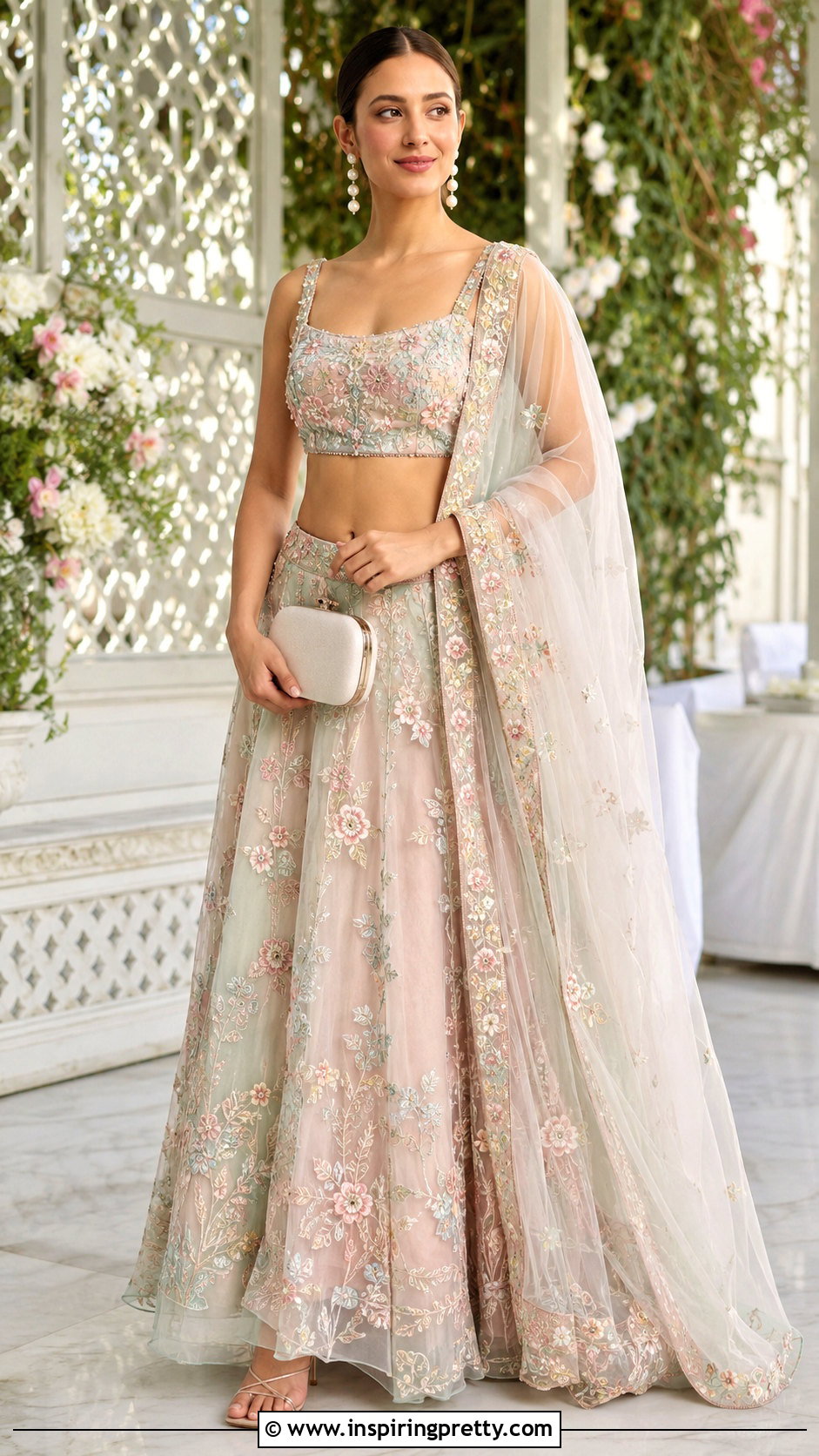
Organza is stiff and sheer, so the lehenga needs an opaque lining and a firm waistband. A fitted top with tonal floral embroidery or tiny sequins sits well against its airy volume. Organza creases sharply and scorches easily, so I steam it on a low setting through a pressing cloth. Pastel pink, mint or lavender keep the mood light. Slender heels and a small box clutch suit a daytime wedding.
13. Sequin Crop Top With Plain Georgette Lehenga
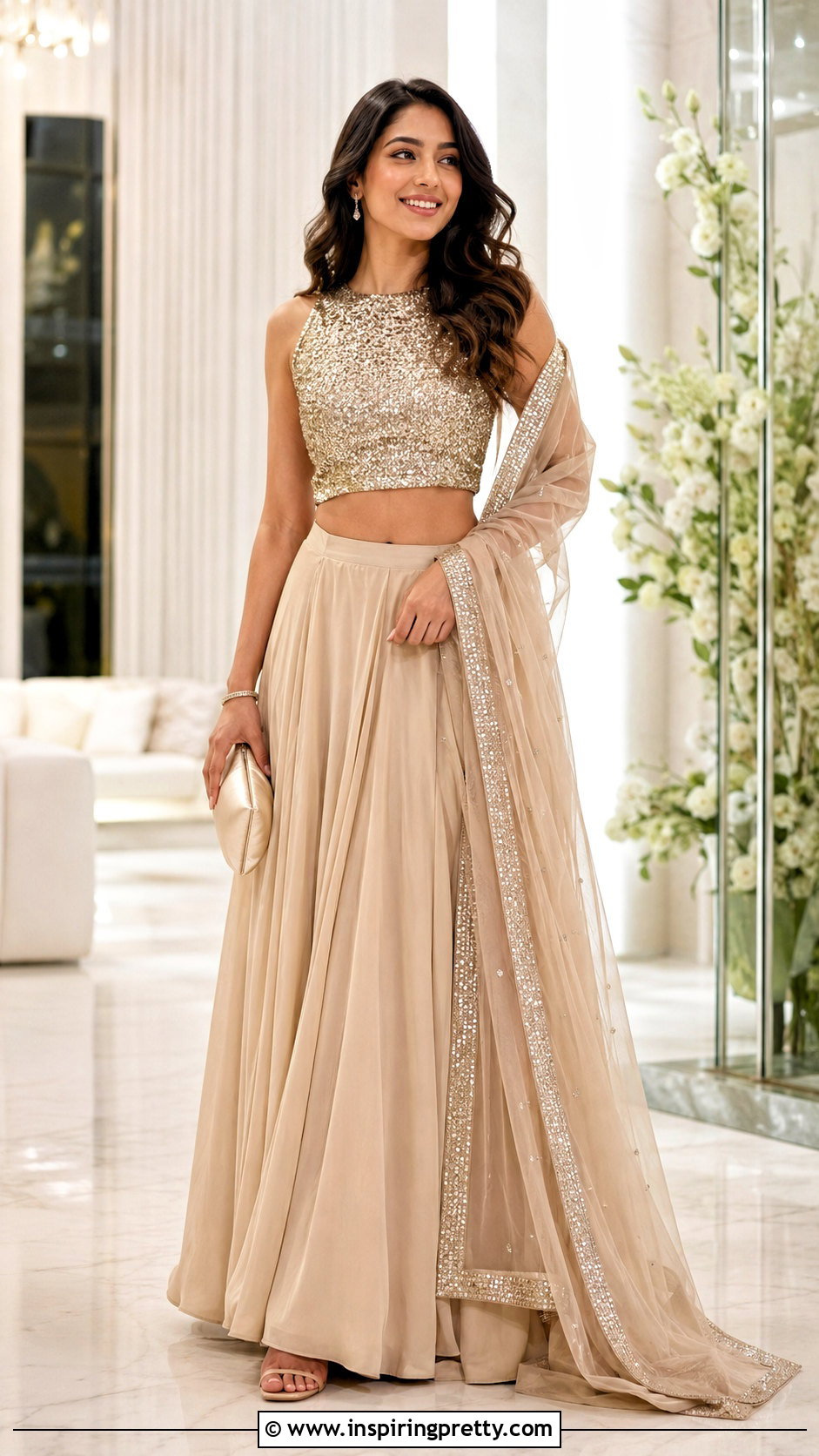
Tonal sequins look refined; mixed colors start to look like a costume. Pair a champagne or navy sequin top with a plain georgette lehenga. Sequins scratch the inner arm over a long evening, so check that the top has a smooth lining and that the sequins stop short of the armhole seam. A scoop neck and three-quarter sleeves soften the shine. Neutral heels and simple drop earrings are enough.
14. High Neck Crop Top With Embroidered Lehenga
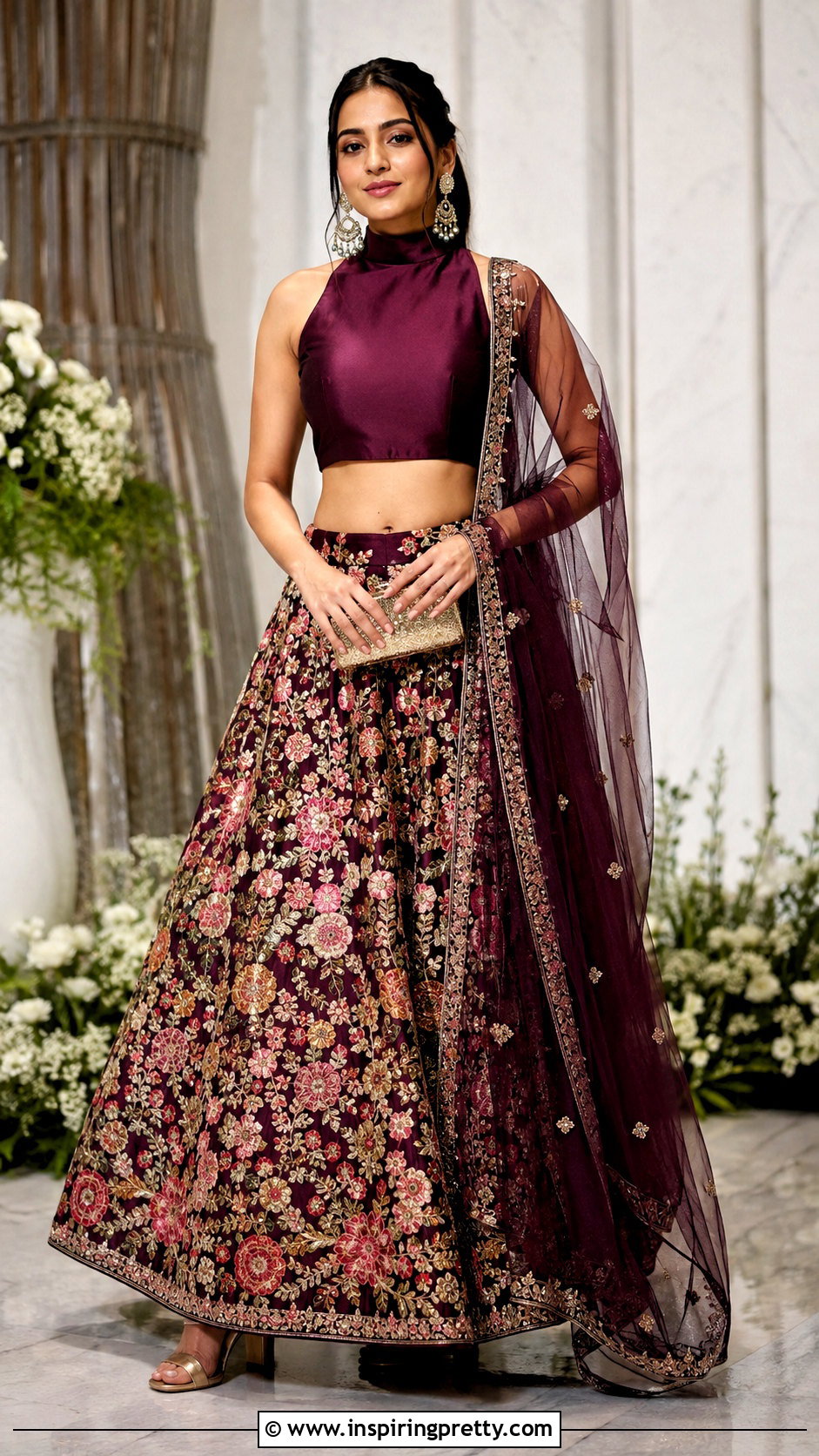
A high neck gives full coverage and lets an embroidered lehenga take the attention. Keep the top plain in silk, velvet or crepe. Because the neckline already fills the upper body, skip the necklace and wear statement earrings. The hem should meet a high-rise waistband so the line runs unbroken. Go sleeveless in summer and full-sleeved in winter, with a sheer dupatta over one shoulder.
15. Peplum Crop Top With Lehenga
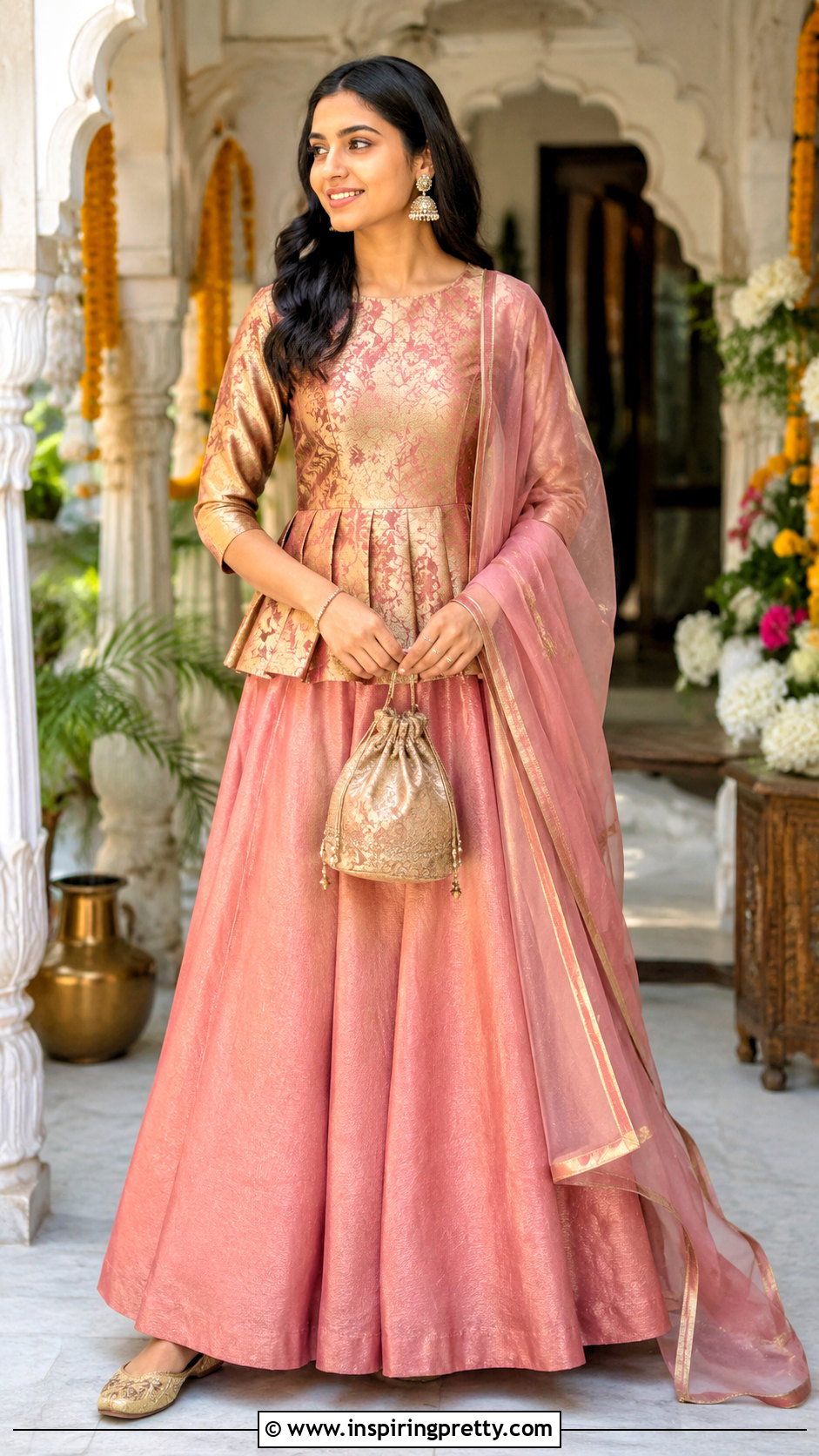
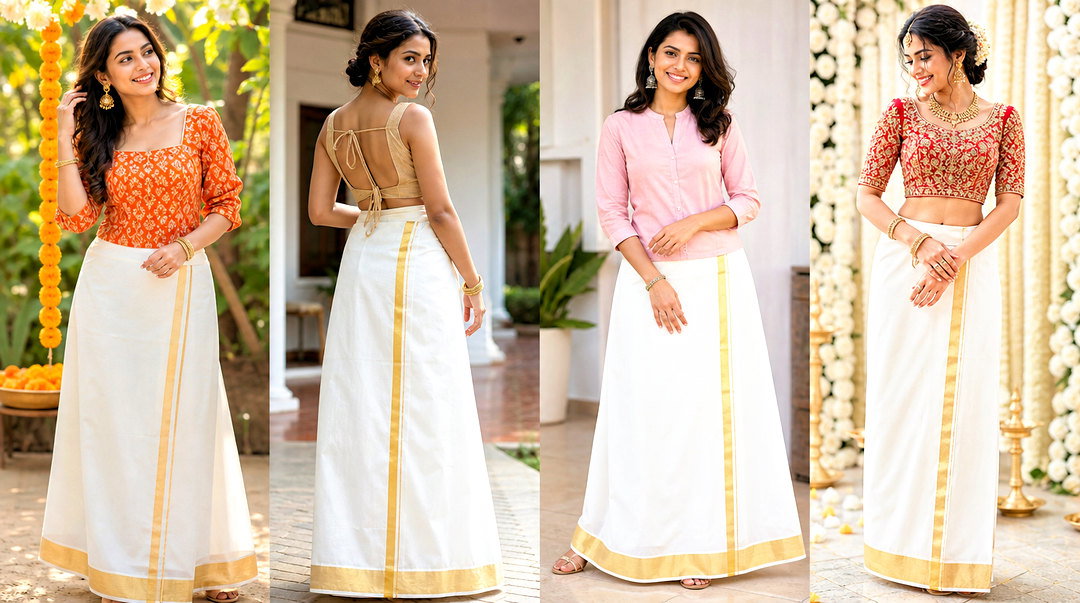
A short peplum gives more coverage than a fitted choli and hides the exact point where top meets skirt. The flare should start just above the waistband. Brocade and raw silk hold that flare, while soft georgette lets it droop. Pair it with a streamlined A-line lehenga so there's no extra volume at the middle. A V-neck lengthens the torso. This is the version I suggest to anyone nervous about showing midriff.
16. Jacket Crop Top With Lehenga
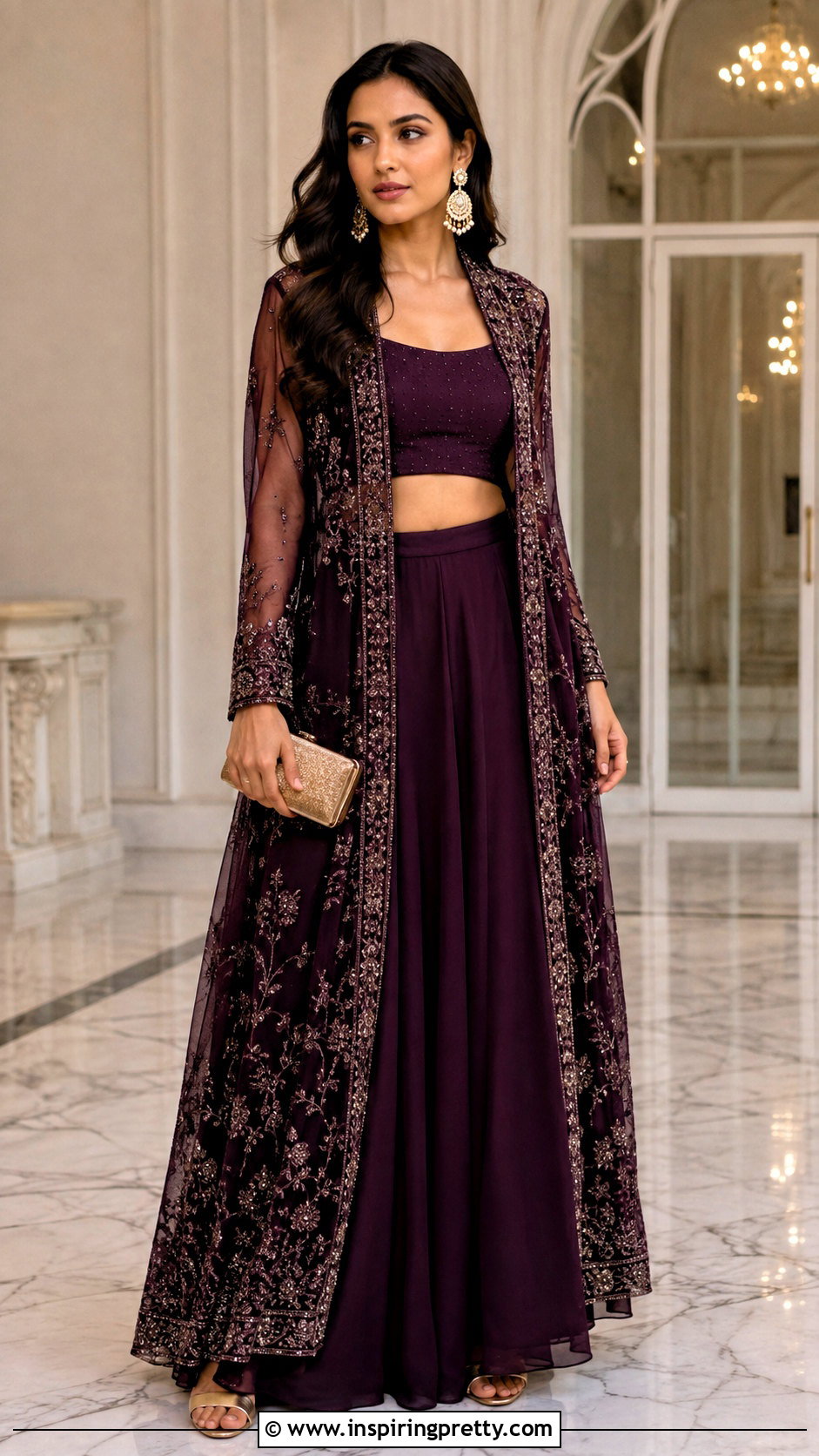
A long open jacket over a crop top and lehenga gives you coverage, movement and some warmth on a cold night. Keep the top simple and let the jacket fall below the knee. Embroidered net drapes softly, while brocade stands away from the body. Skip the dupatta, because the jacket already does that job. Tonal colors make you look taller. Watch the hem on stairs, where a long jacket can catch under a heel.
17. Cape Crop Top With Flared Skirt
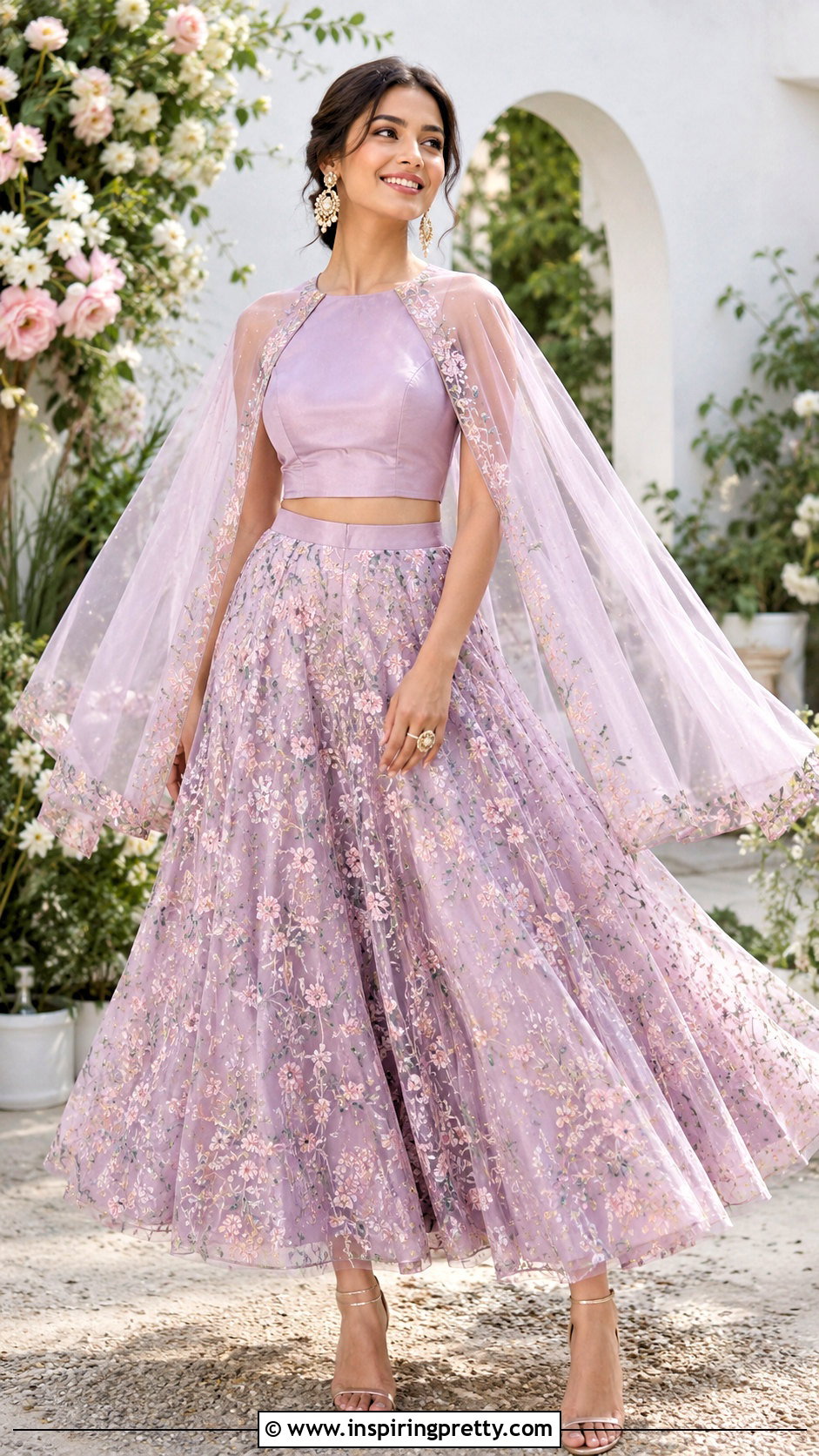
A cape top covers the shoulders and upper arms softly without sleeves that restrict movement. It's a fitted inner bodice with a sheer chiffon or organza cape attached, ending at the elbow or the waist. A high-rise flared skirt with a subtle border suits it. Skip both necklace and dupatta so the cape can move. I like it for anyone who wants arm coverage but finds fitted sleeves too hot.
18. One Shoulder Crop Top With Silk Lehenga
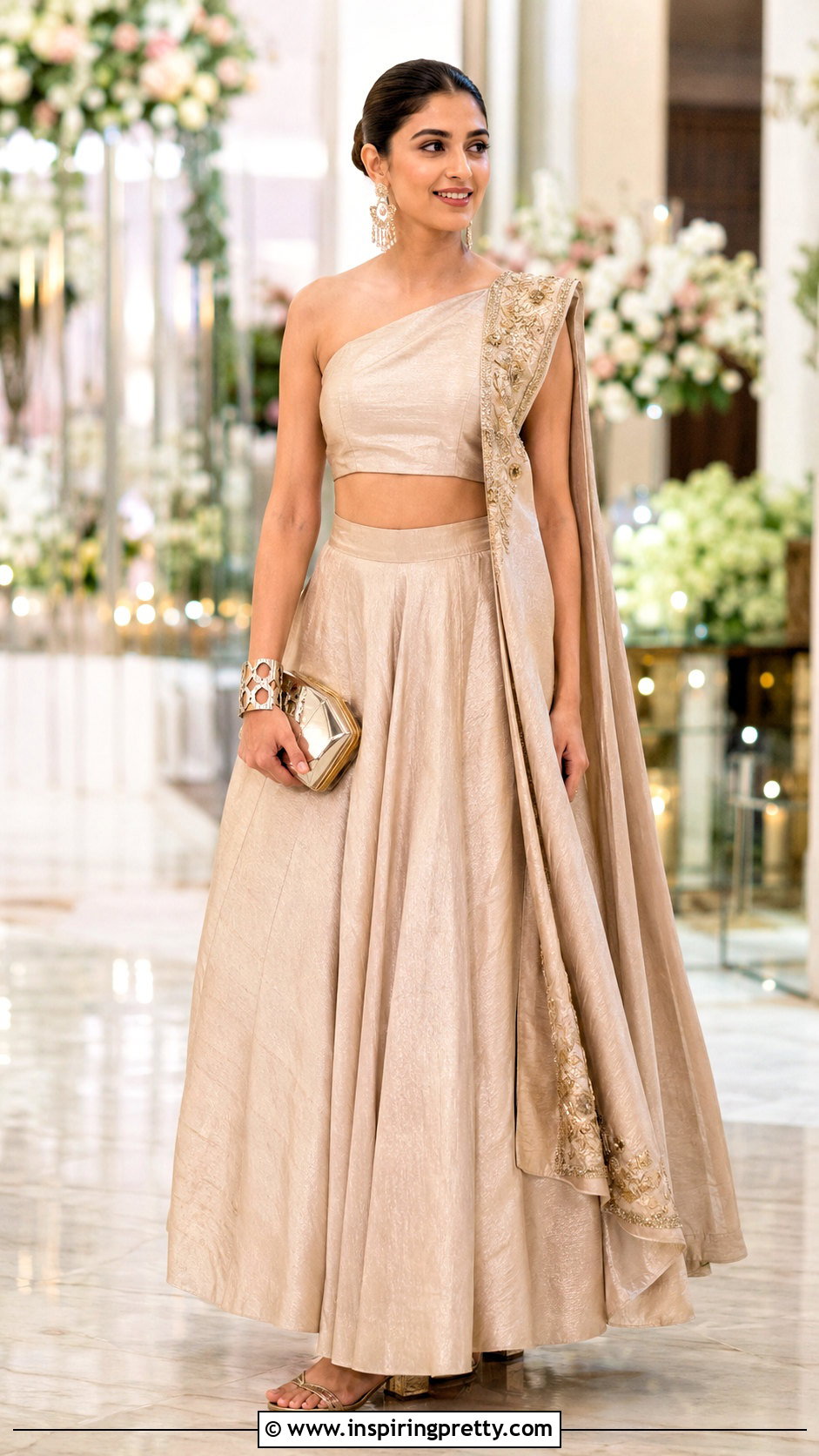
With only one strap holding things in place, a one-shoulder top depends entirely on the bodice fit. Choose raw silk or brocade with a firm, well-structured bodice and a wide shoulder panel. A draped shoulder detail can replace the dupatta and keep the outfit manageable. A slightly longer crop makes sitting easier. Keep the embroidery at the shoulder or waist, and add low block heels and a cuff bracelet.
19. Cold Shoulder Crop Top With Circular Lehenga
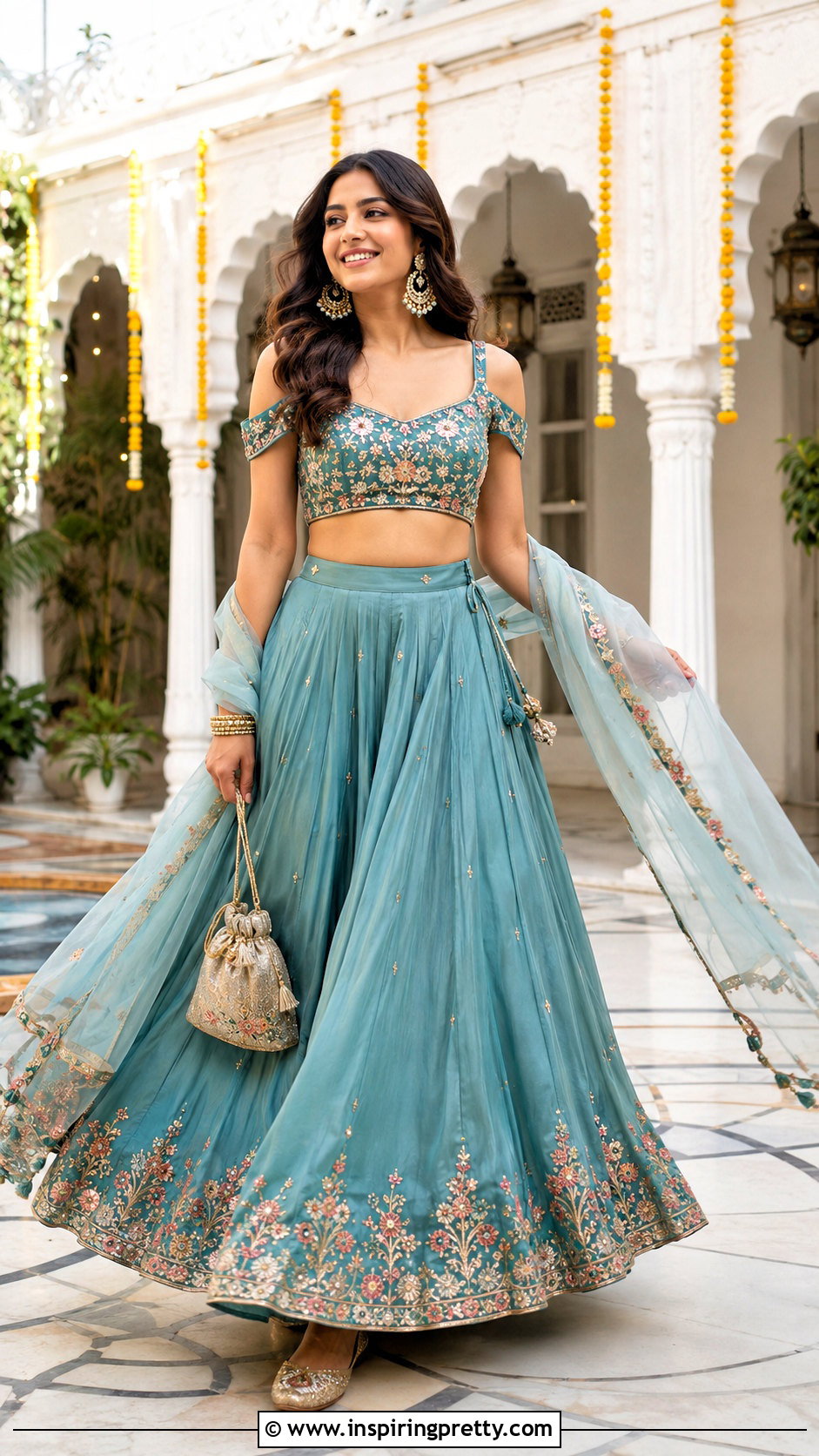
Cold-shoulder cutouts should stay small. Large ones weaken the sleeve and fight with the embroidery around them. Elbow sleeves with gota or metallic edging around the openings, plus a circular georgette lehenga, make a good dancing outfit. A slightly longer top and a high waistband feel more secure. Cushioned juttis help when the sangeet runs late.
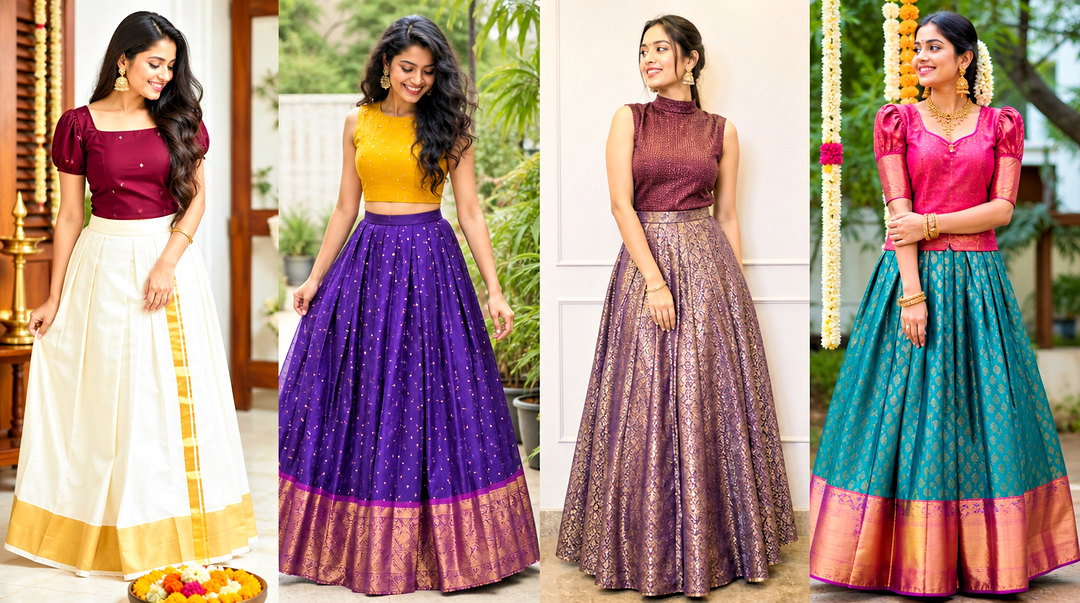
20. Off Shoulder Crop Top With Embroidered Skirt
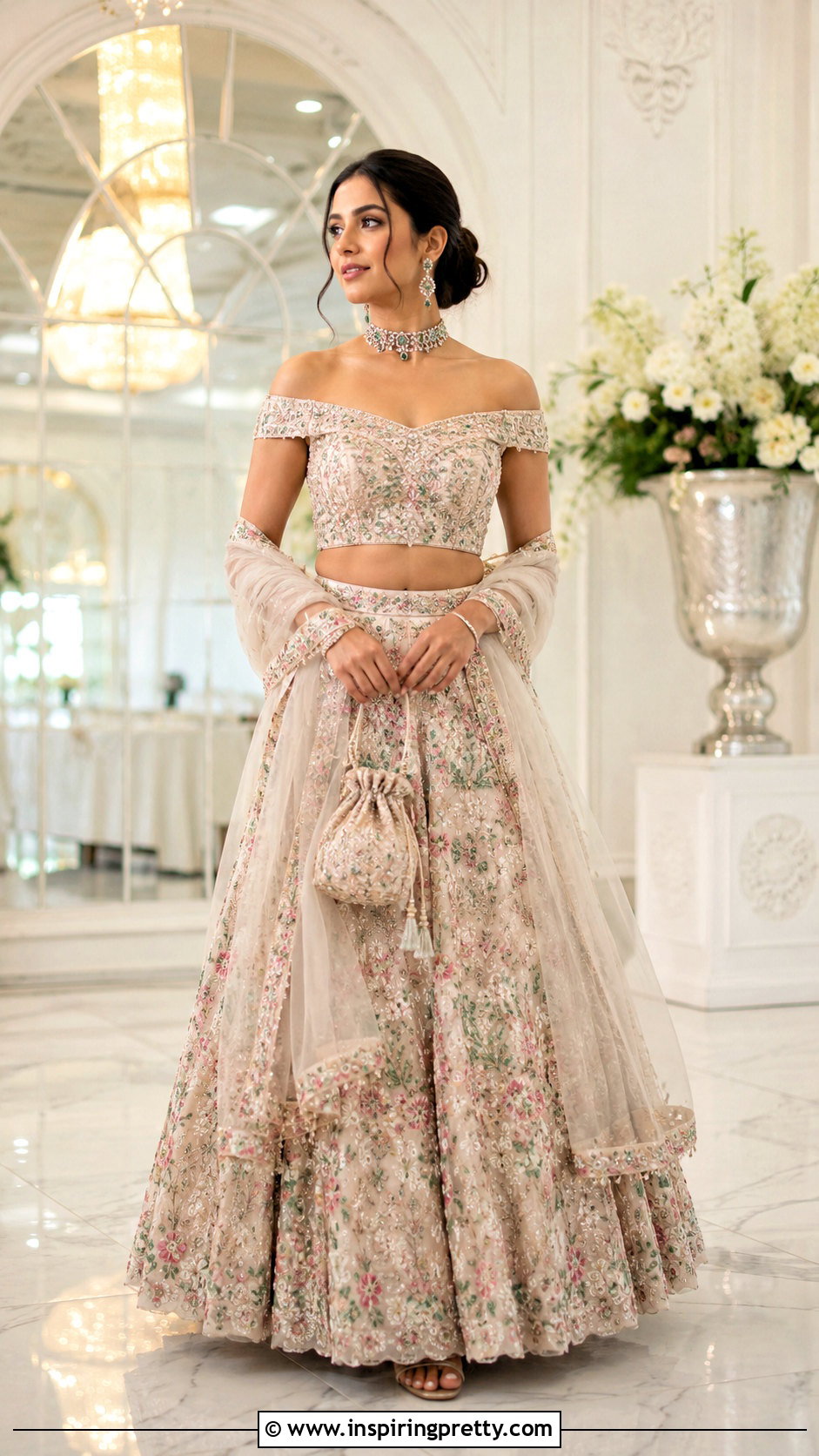
An off-shoulder choli needs real structure inside, an elastic or boned band, or it drifts down the arms as soon as you dance. A fold-over neckline with inner support stays put. Balance the open shoulders with a full-length, high-waisted skirt. If the skirt is heavily embroidered, keep the top plain. An illusion-net panel at the neckline adds security, and a choker frames the bare shoulders.
21. Sweetheart Neck Crop Top With Lehenga
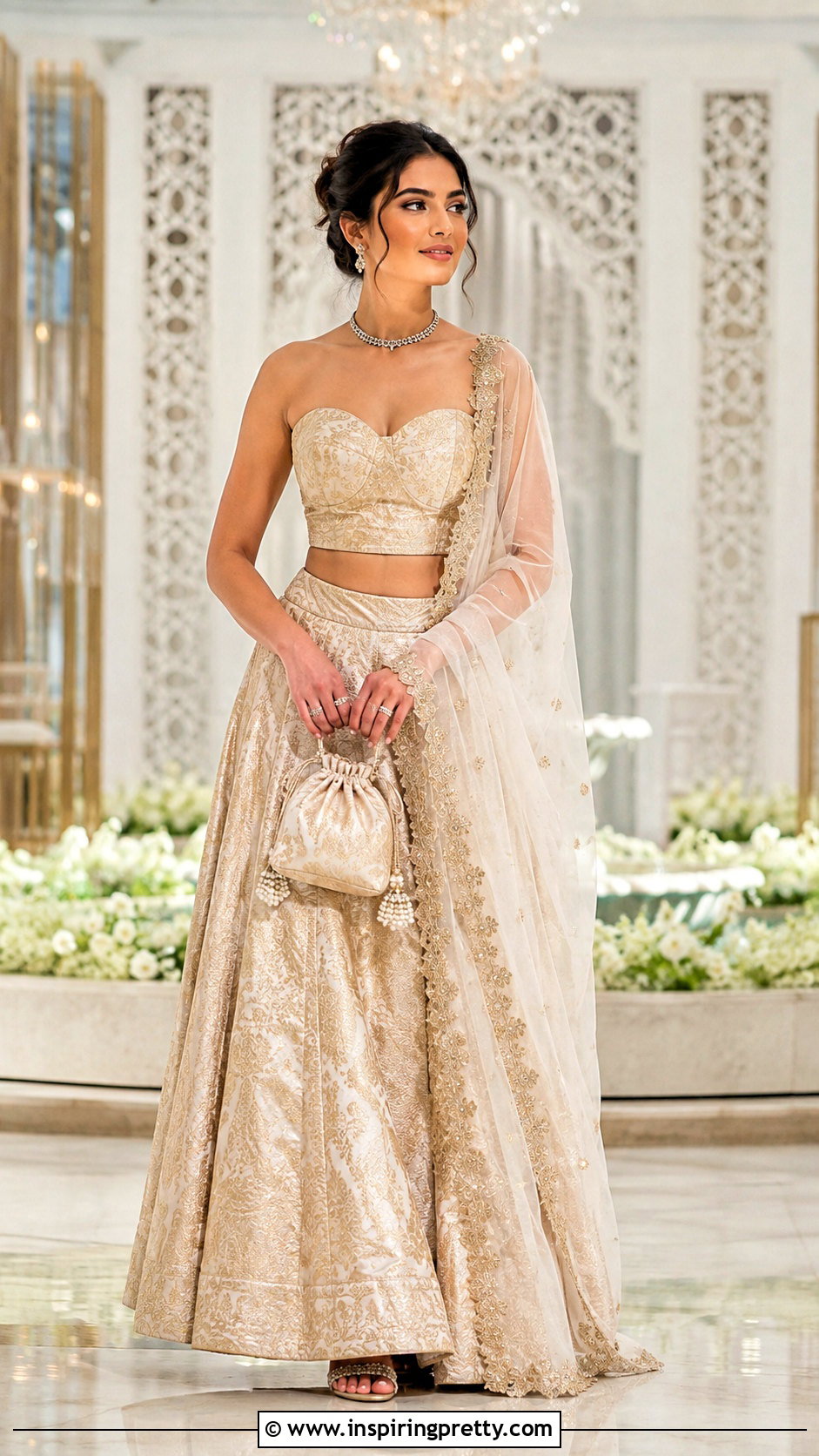
The curve of a sweetheart neckline softens a fitted traditional crop top, but it needs proper support. Wide straps or short sleeves in brocade, velvet or silk do that job. Keep the neckline edge clean rather than heavily embroidered, and let a short necklace sit inside the curve. For a modest version, add a skin-tone mesh panel above the sweetheart shape. A matching lehenga at the natural waist completes it.
22. Square Neck Crop Top With Printed Lehenga
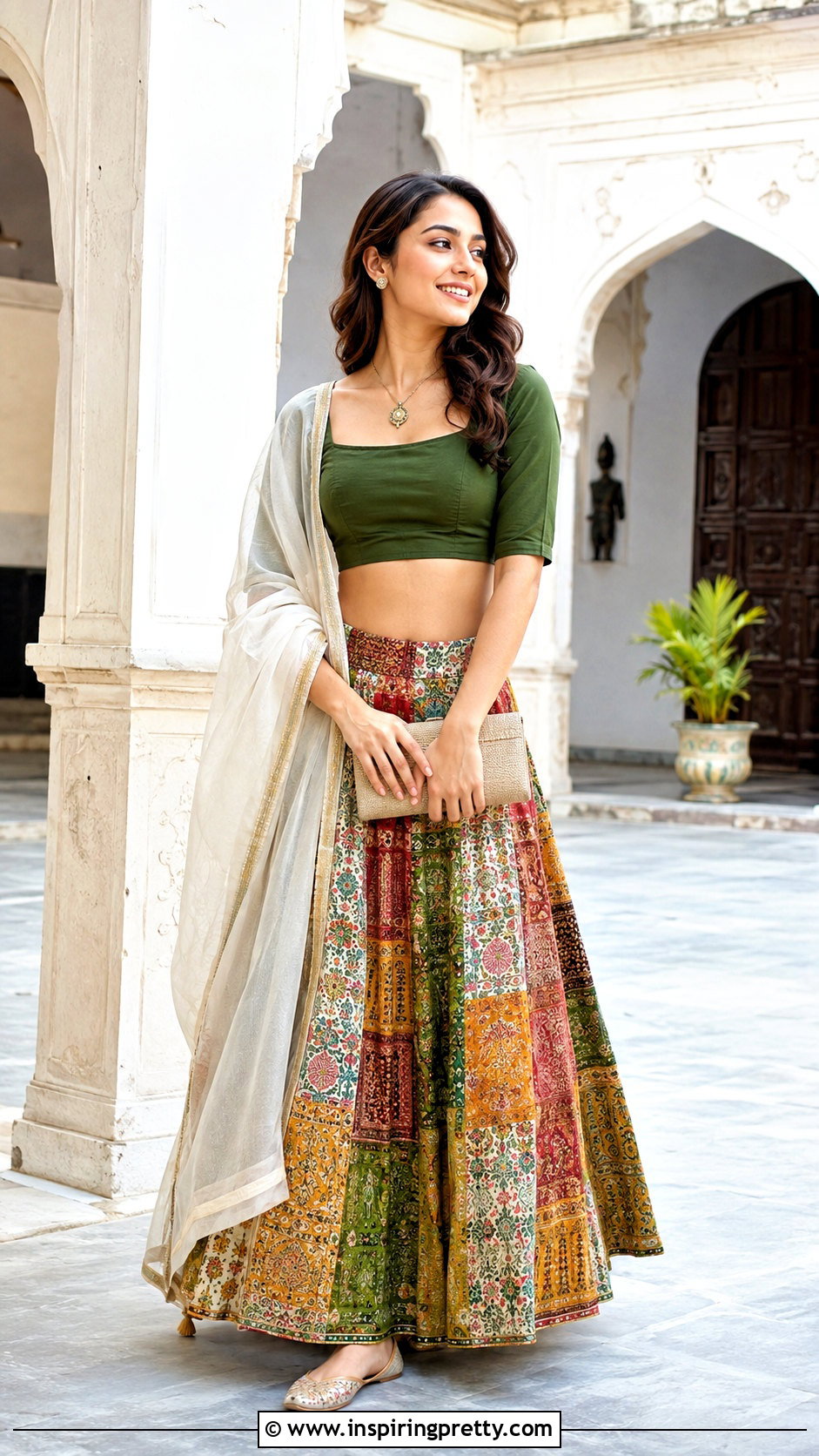
A square neck is crisp and symmetrical, and it suits almost any print below it. Choose a solid cotton-silk or raw silk bodice and match it to one of the quieter colors in a floral or bandhani lehenga. Puff sleeves soften it; elbow sleeves feel more traditional. A delicate pendant sits neatly inside the square. Neckline depth, sleeve length and crop can all change for different ages without changing the design.
23. Boat Neck Crop Top With Brocade Skirt
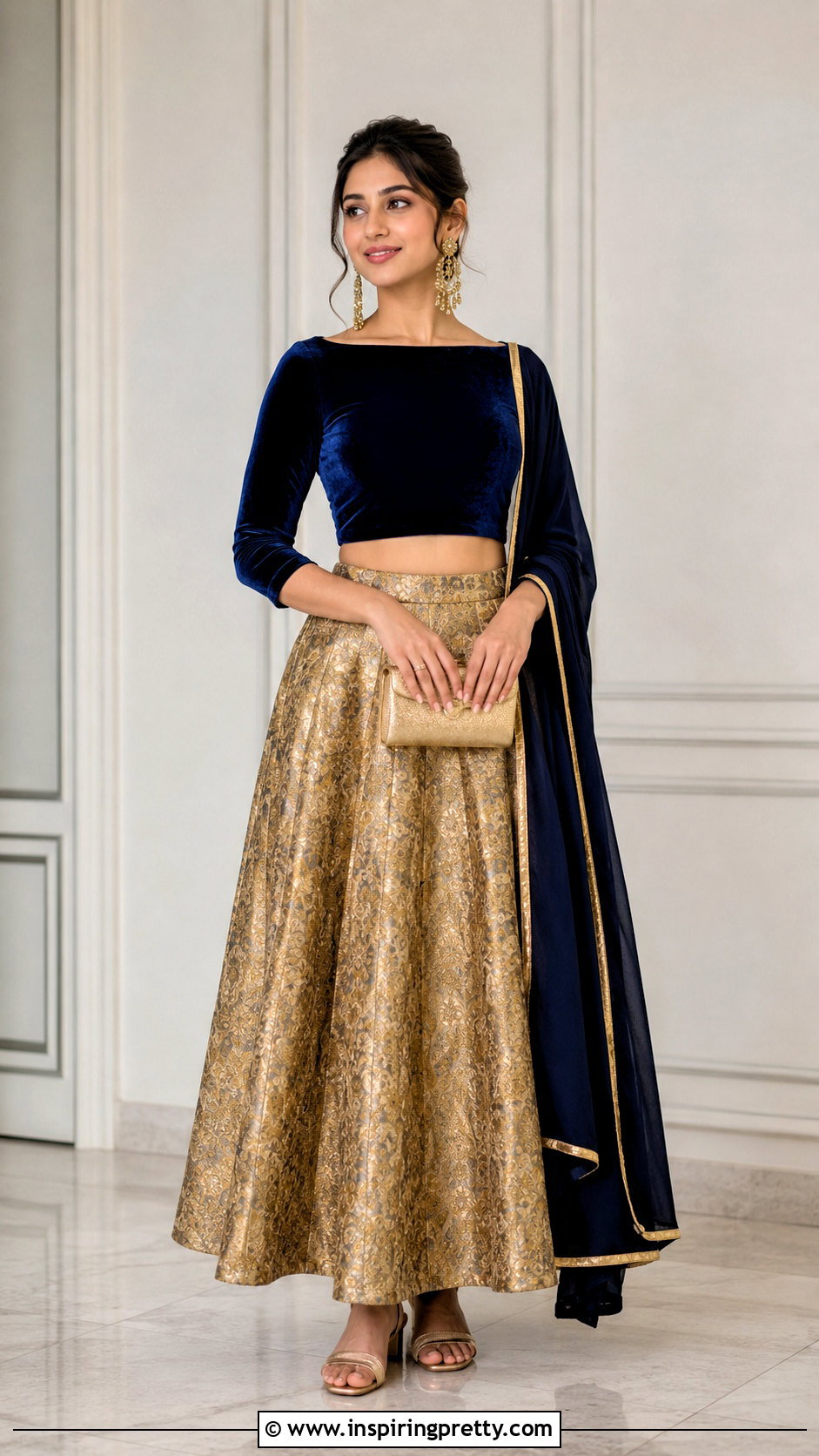
A boat neck runs across the collarbone and widens the shoulders slightly, which balances fuller hips. Pair a plain silk or velvet top with a brocade skirt, navy with gold or maroon with bronze. Three-quarter sleeves make it right for formal family events. Fold the dupatta narrow over one shoulder so the neckline stays clean. Long earrings work here, and a bulky necklace doesn't.
24. V Neck Crop Top With A-Line Lehenga
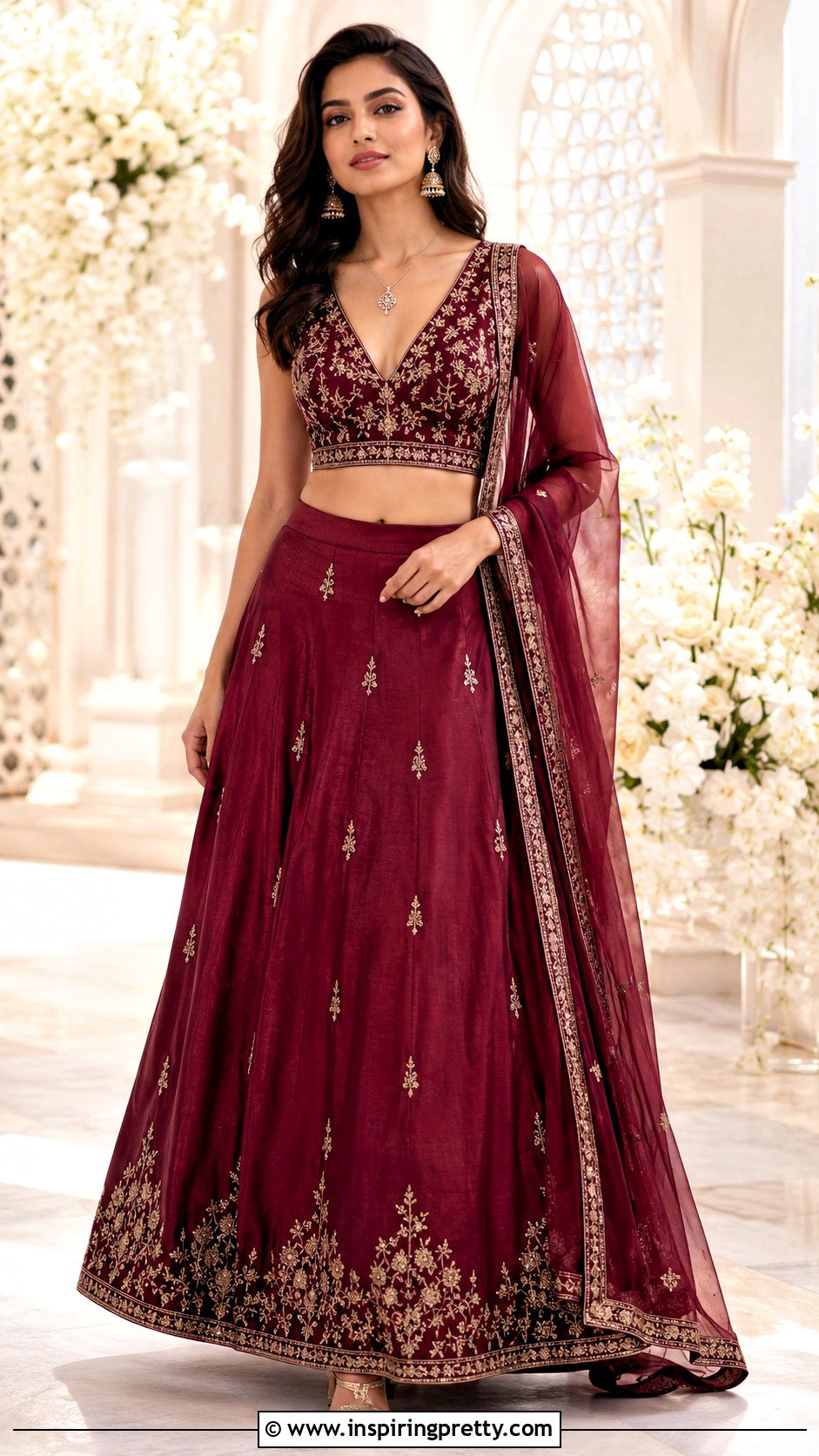
A V-neck lengthens the neck and upper body. Keep it moderate, with the embroidery following the line of the V. A fuller bust looks best in a wider, shallower V than a deep, narrow one, which tends to gape. Pair it with a high-waisted A-line lehenga that widens gradually. Matching shades lengthen the figure, and a contrasting skirt adds definition. A delicate pendant and medium jhumkas finish it.
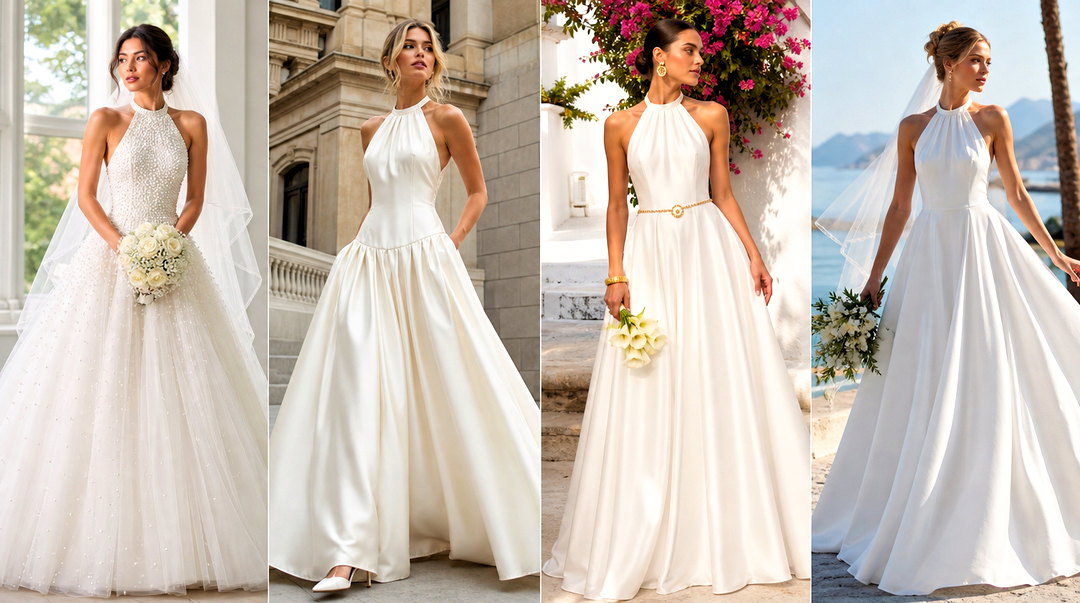
25. Round Neck Crop Top With Printed Skirt
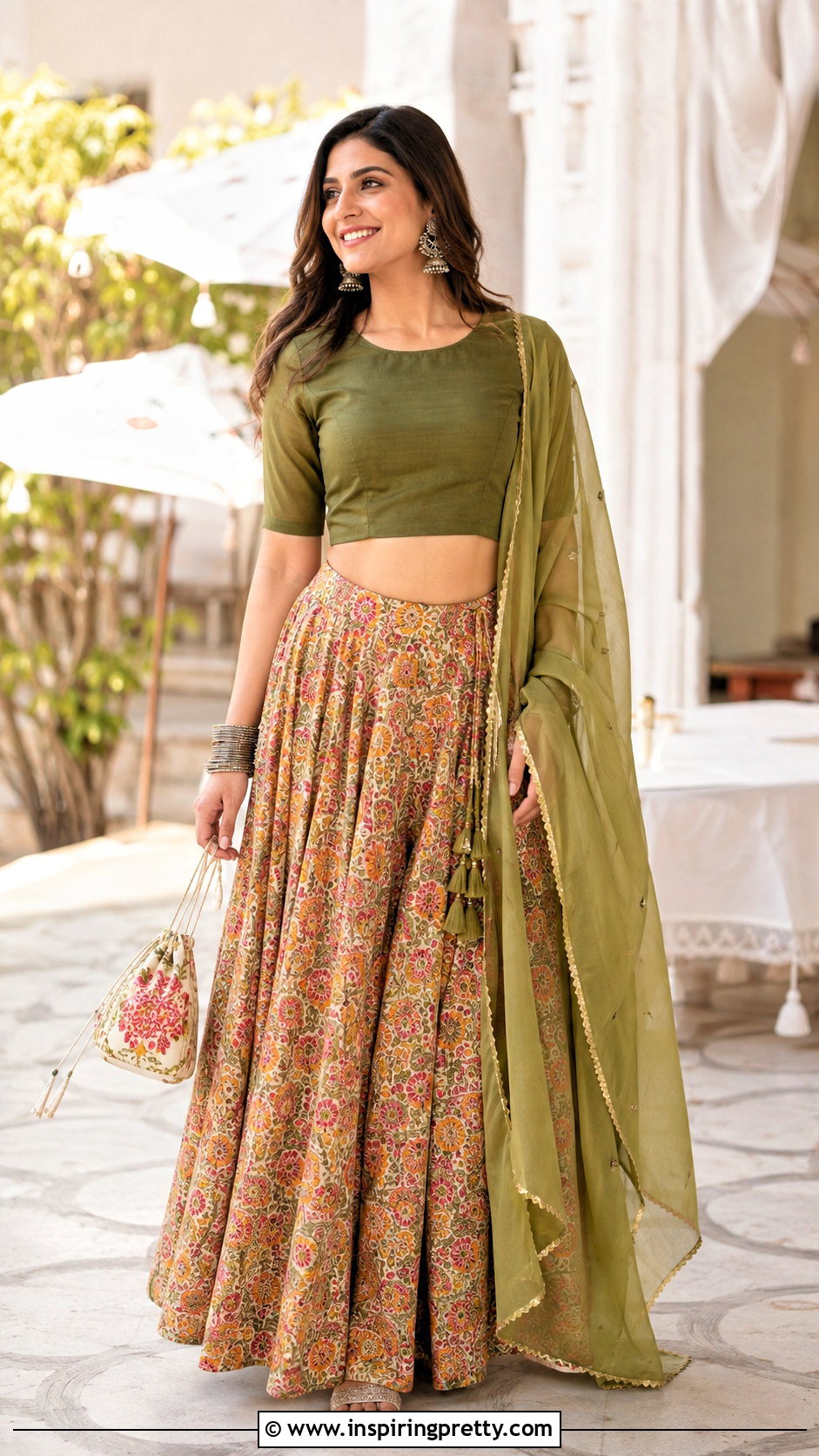
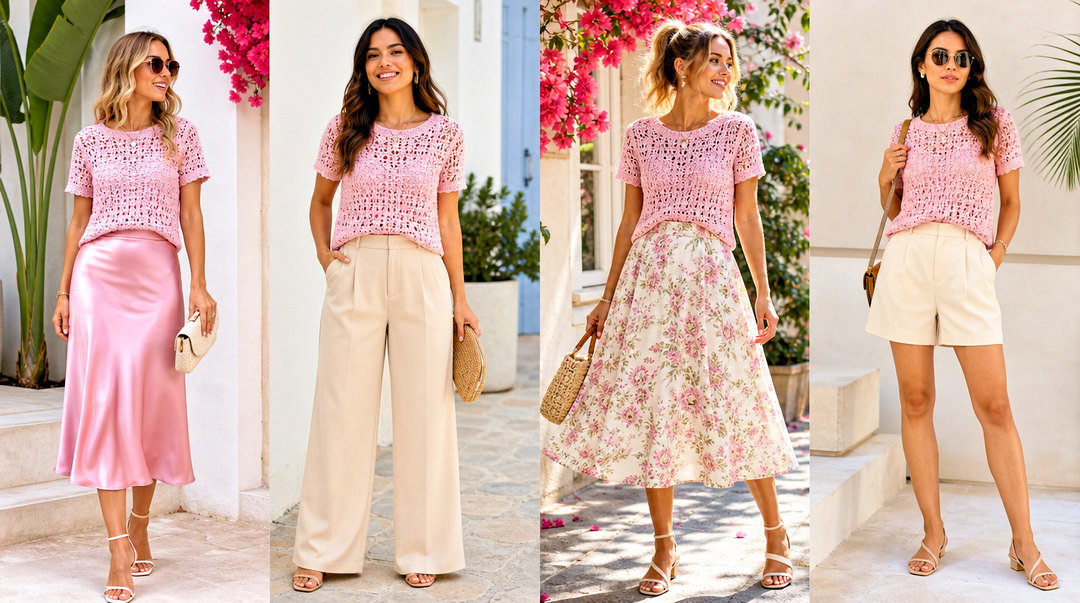
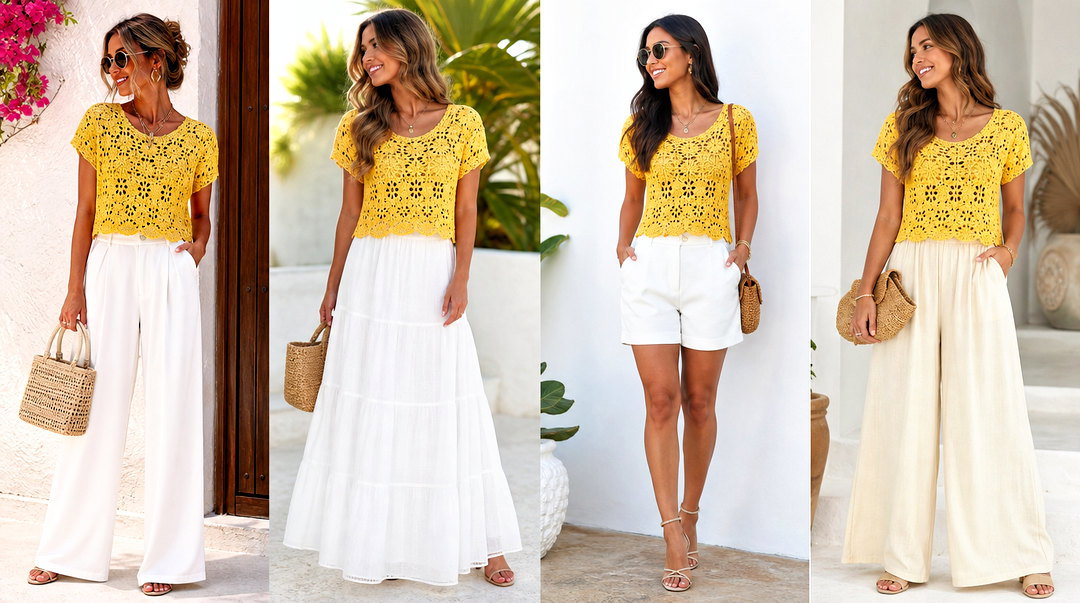
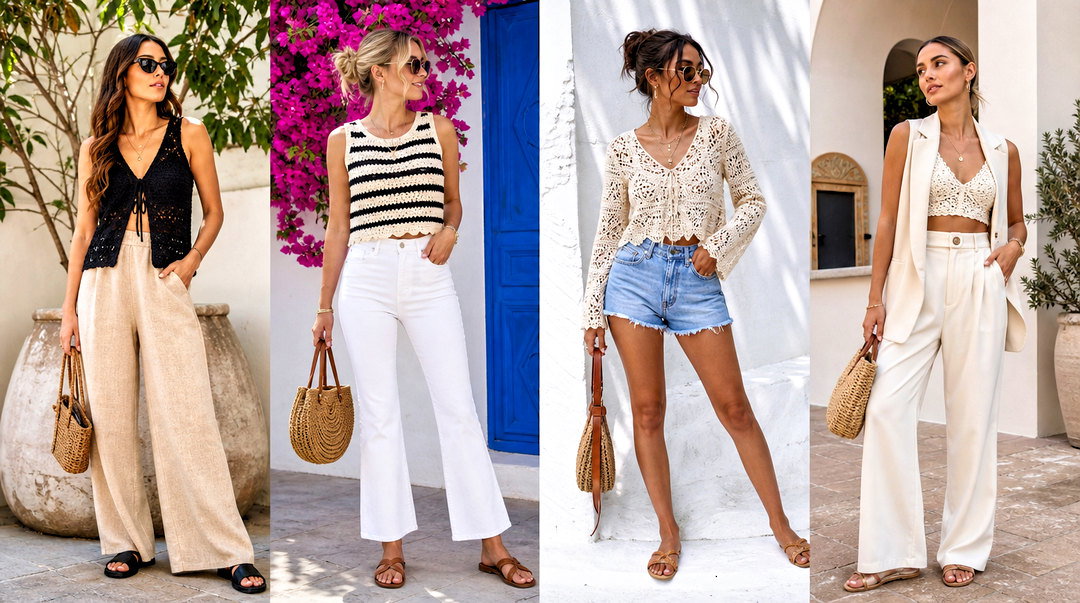
For an easy, comfortable daytime start, the round-neck crop top is it. Choose cotton, chanderi or cotton-silk with small embroidery at the neck and sleeves, and pull its color straight from a printed skirt. A crop that meets the waistband gives practical coverage. Oxidized earrings, bangles and flat sandals keep it relaxed for a family gathering.
26. Full Sleeve Crop Top With Lehenga
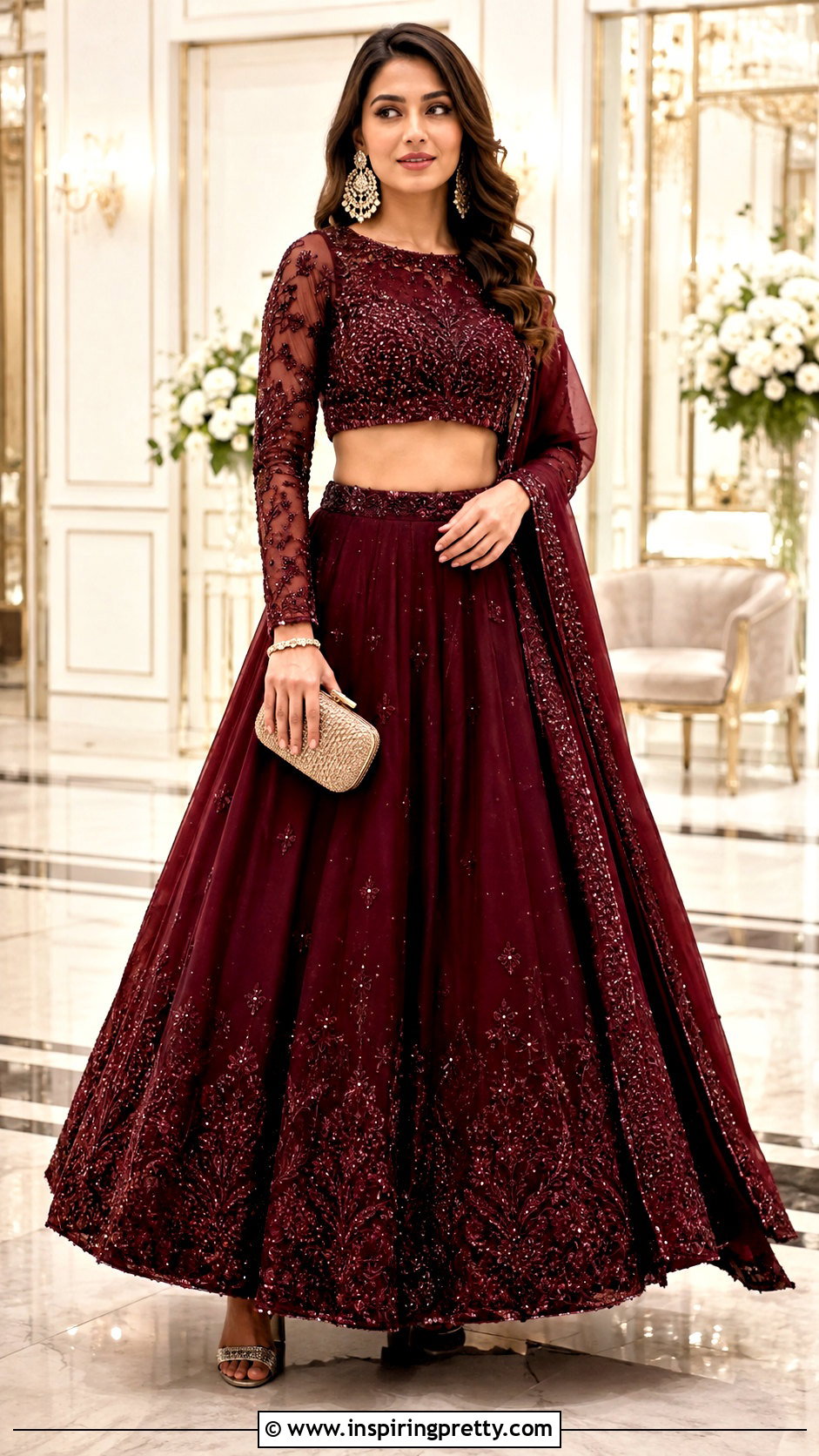
Full sleeves balance a cropped bodice and suit cool evenings. Net sleeves with embroidered cuffs look light, and opaque silk sleeves give more coverage. Before you commit, raise both arms: a tight full sleeve on a fitted choli restricts dancing and pulls at the armhole. Keep the neckline simple. Deep green or wine with matching border embroidery looks rich, and the dupatta can drape over one arm.
27. Puff Sleeve Crop Top With Lehenga
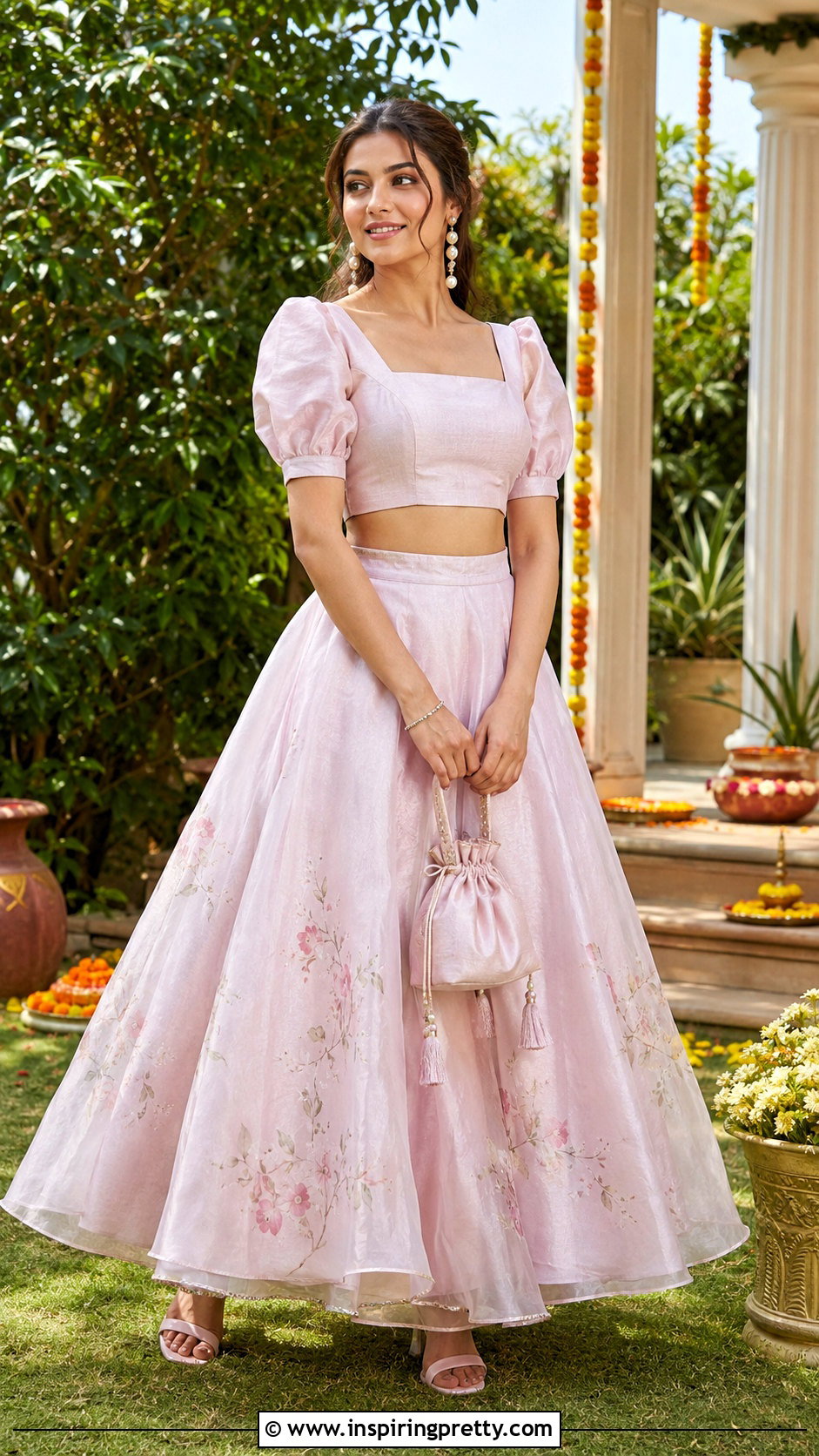
Puff sleeves add volume at the shoulder and a slightly vintage feel. Keep the fullness controlled, since large puffs widen the shoulders and crowd a dupatta. A fitted waist and a square neck keep the top structured. Pair it with a simple A-line lehenga in raw silk or organza, with small floral embroidery or pearls. It suits daytime functions and family photos.
28. Bell Sleeve Crop Top With Long Skirt
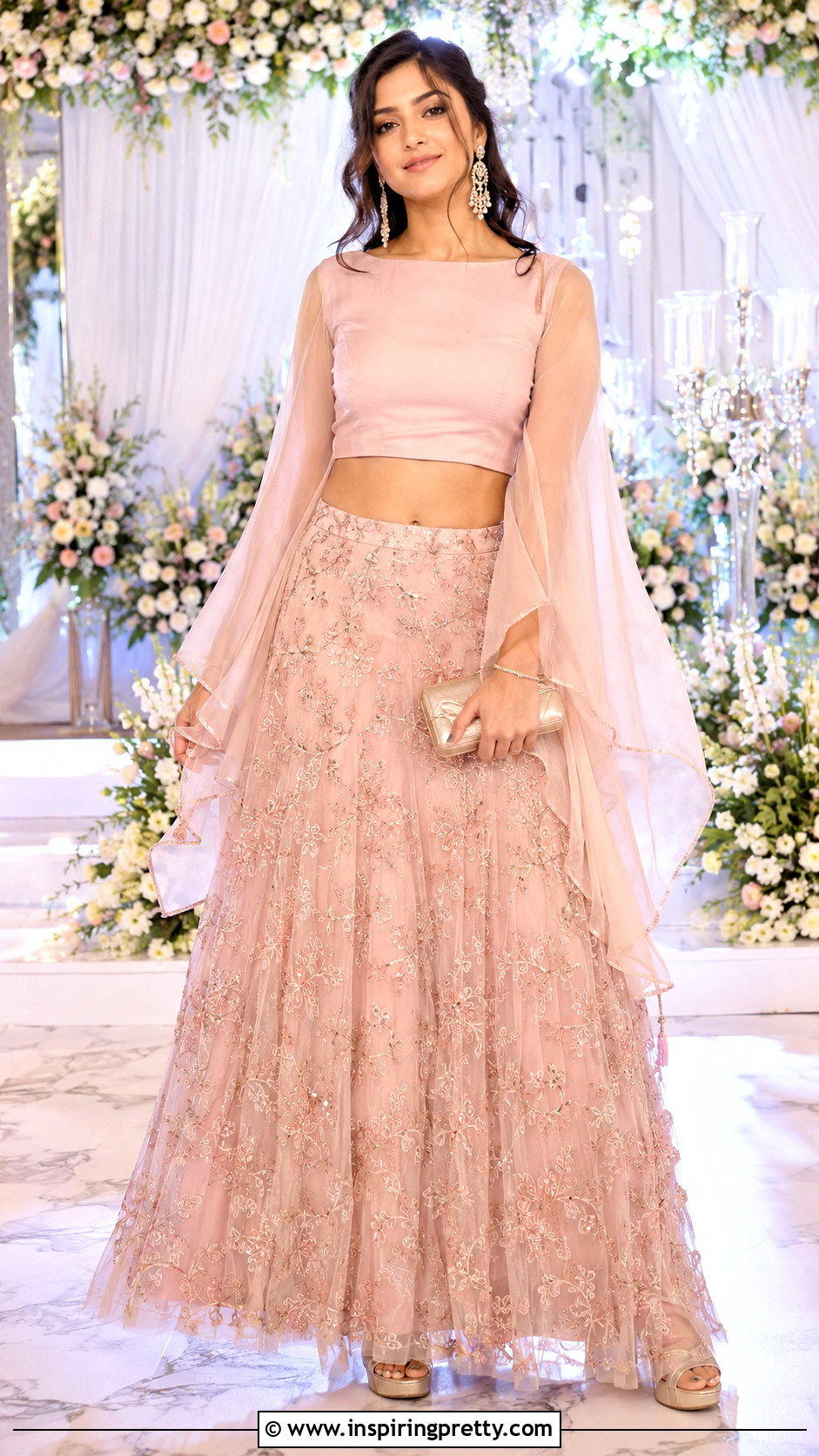
Bell sleeves flare from the elbow and move with you. Use chiffon, georgette or light net so they swing rather than stick out. The practical issue is the buffet, where wide sleeves dip straight into plates. Repeat the sleeve border near the skirt hem to link the pieces. Skip a heavy dupatta, which hides the sleeve shape. Platform sandals and long earrings suit it.
29. Ruffle Sleeve Crop Top With Ethnic Skirt
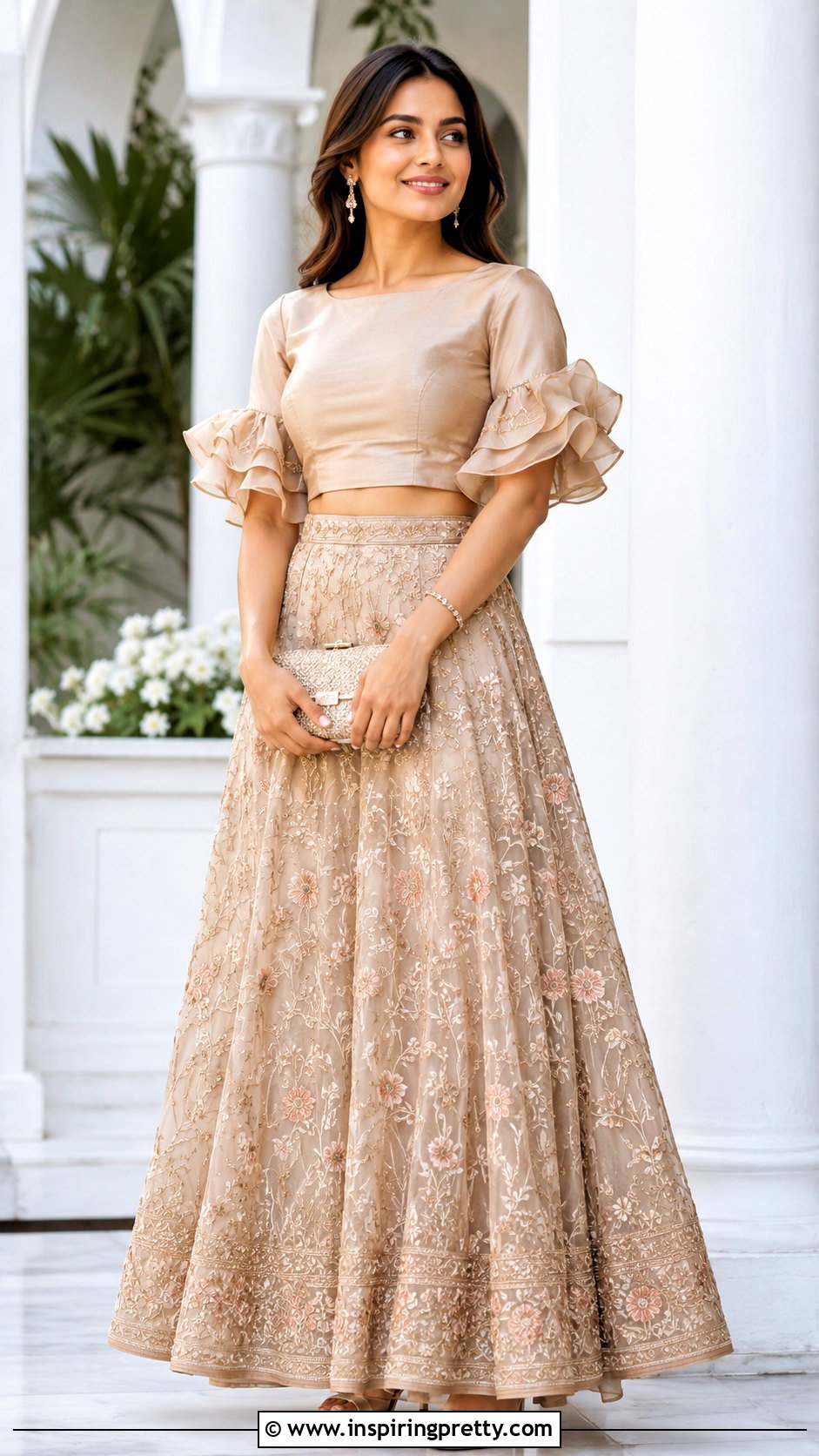
One or two neat ruffle tiers give a sleeve movement without making it fussy. On broad shoulders, start the ruffle lower on the arm so it doesn't add width; narrower shoulders can carry more volume. A monochrome scheme keeps it from looking too playful. Pair it with a high-waisted skirt in tonal threadwork. If you add a dupatta, drape it away from the sleeves.
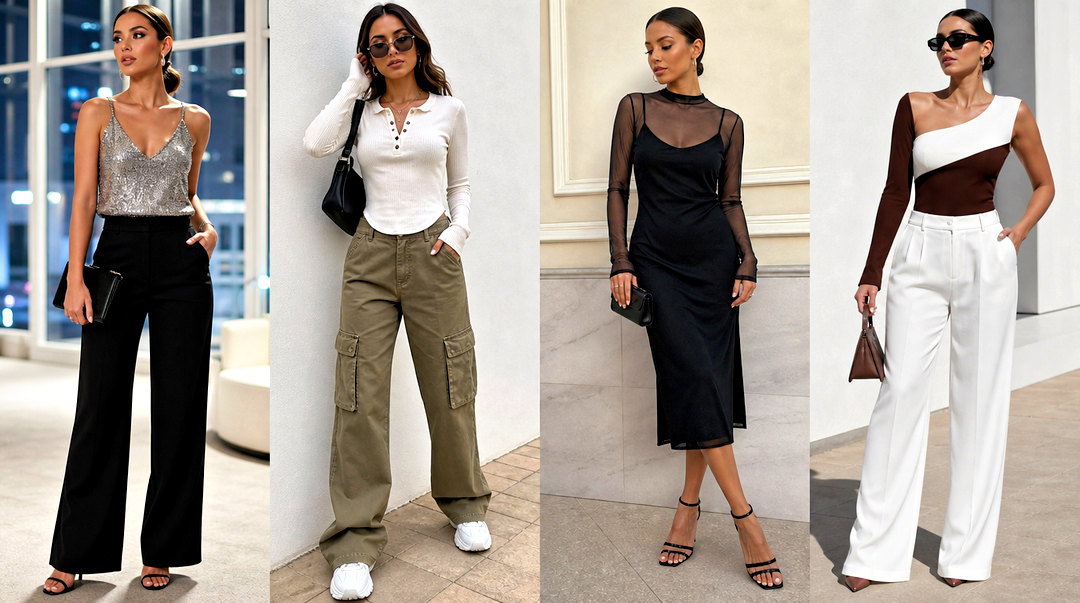
30. Halter Neck Crop Top With Lehenga
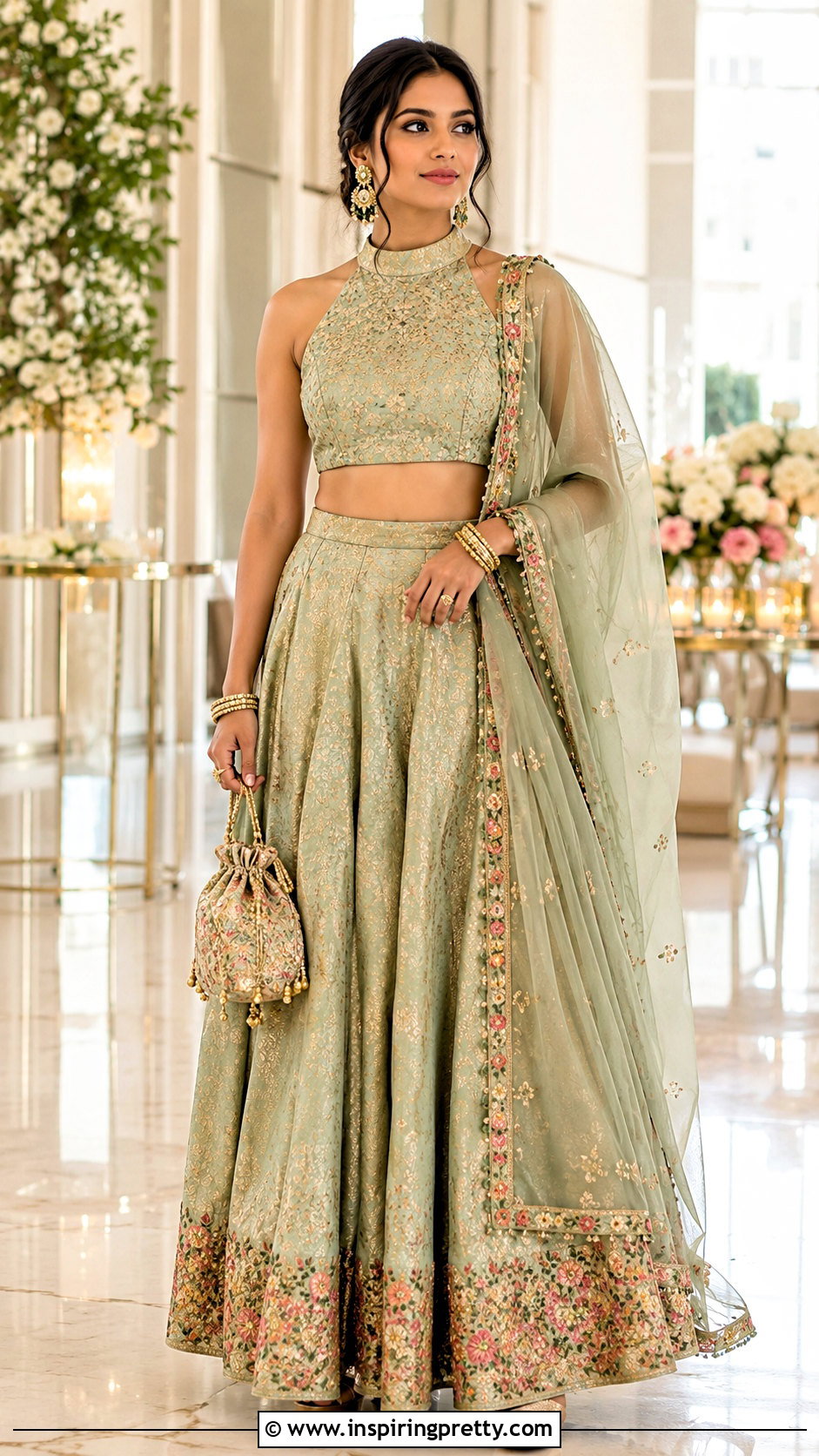
A halter frames the shoulders and leaves the neckline free of jewelry. Choose a broad, supportive neck band rather than thin straps, and check the back closure, because hooks hold more securely than ties alone. A high front and wider back add coverage. Brocade or embroidered raw silk works well. Wear large earrings and stacked bangles, with the dupatta pinned at one shoulder.
31. Collar Neck Crop Top With Pleated Skirt
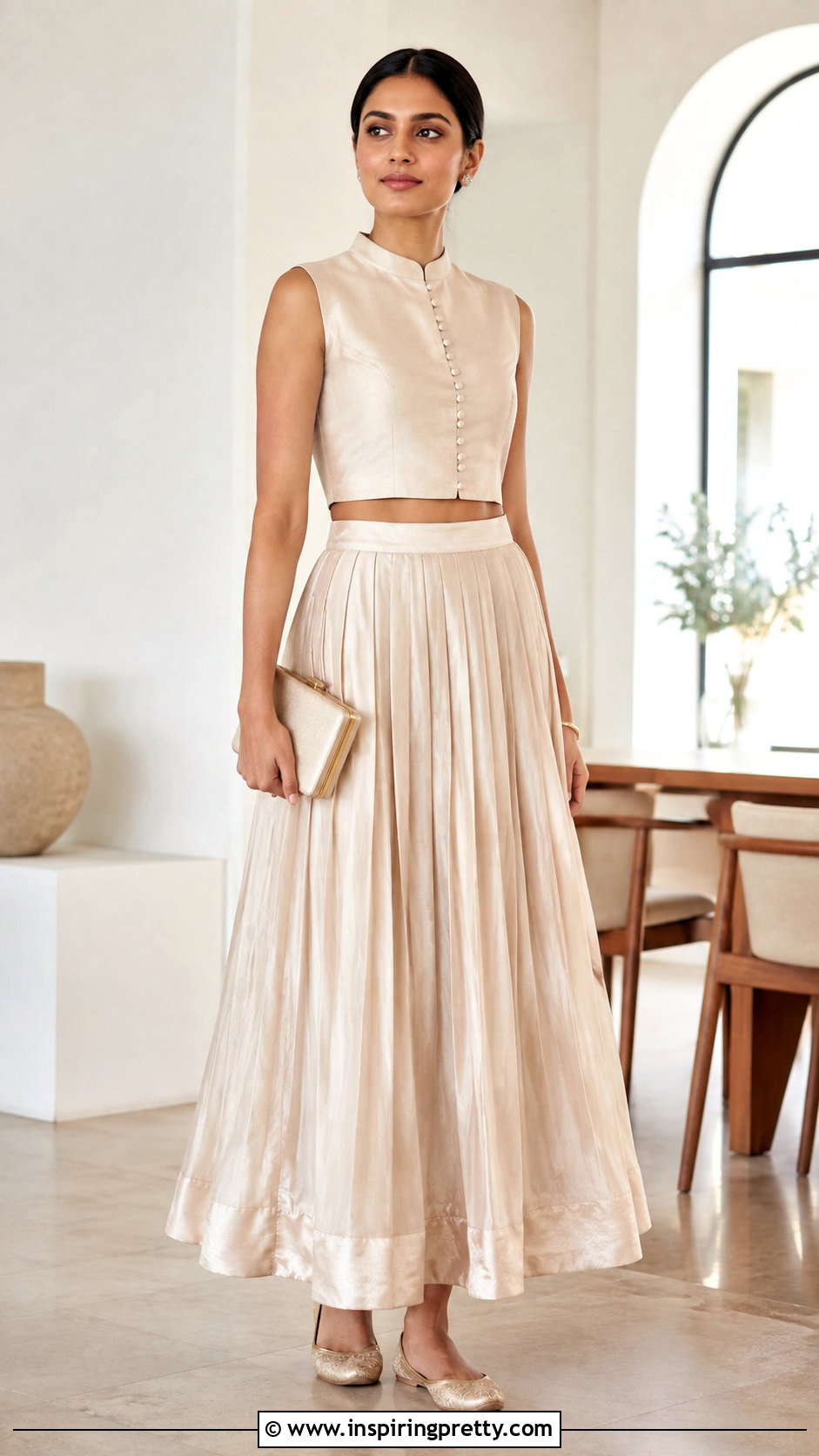
A collar neck brings tailoring into ethnic wear. A band or short shirt collar with fabric-covered buttons and subtle placket embroidery suits a pleated silk or chanderi skirt. Skip the necklace, since the collar already defines the neck. A matching fabric belt smooths the join between top and skirt. Closed-toe flats and a structured clutch make it right for a formal lunch.
32. Keyhole Neck Crop Top With Lehenga
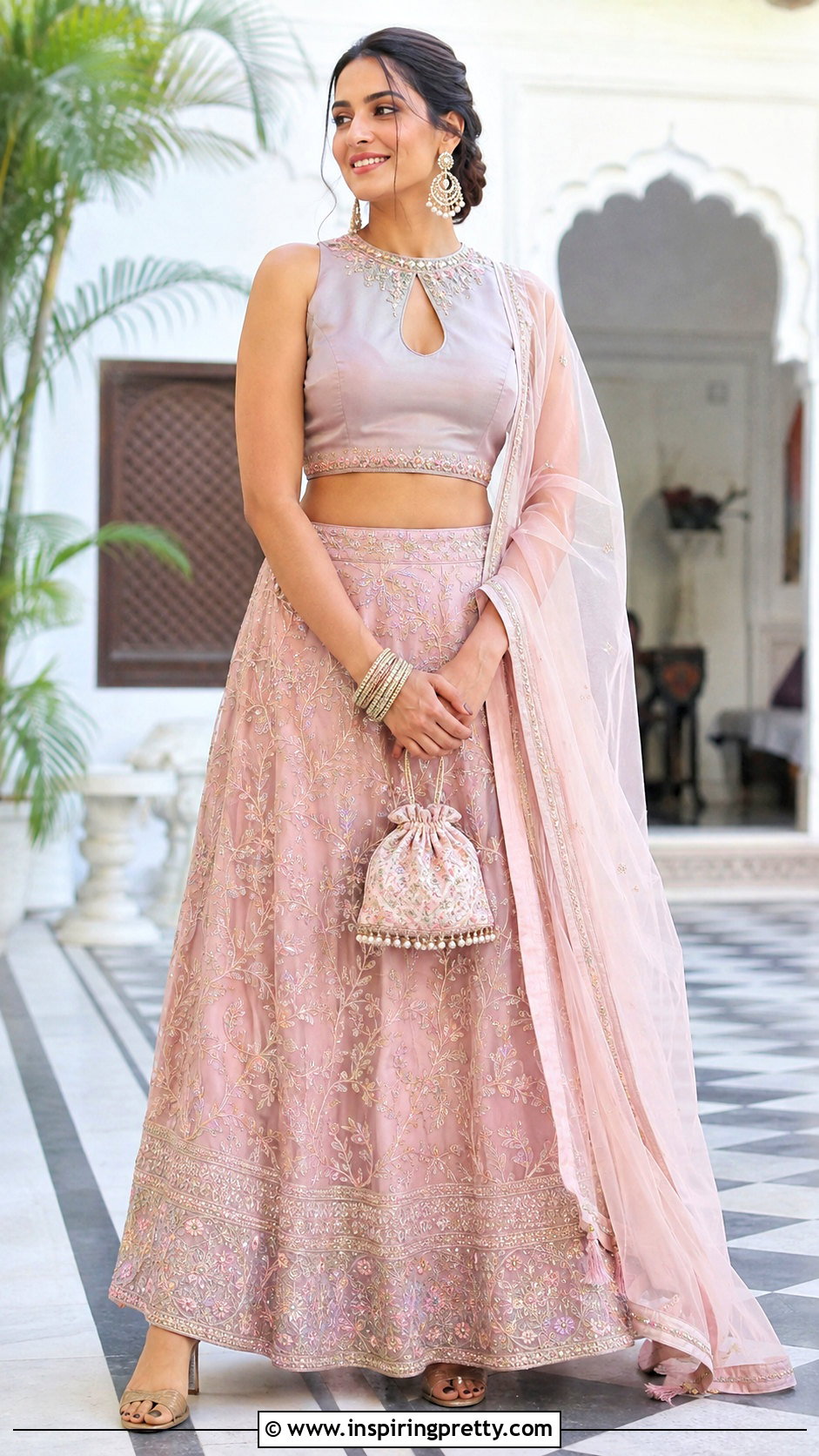
A keyhole adds detail without showing much skin. It's a round-neck bodice with a narrow front opening closed by a hook, button or tie, and embroidery around the edge. Check the opening as you lean forward; a keyhole cut too long will gape. Pair it with a lehenga that sits high on the waist. Silk and velvet suit evening, while chanderi works for daytime.
33. Wrap Crop Top With Printed Skirt
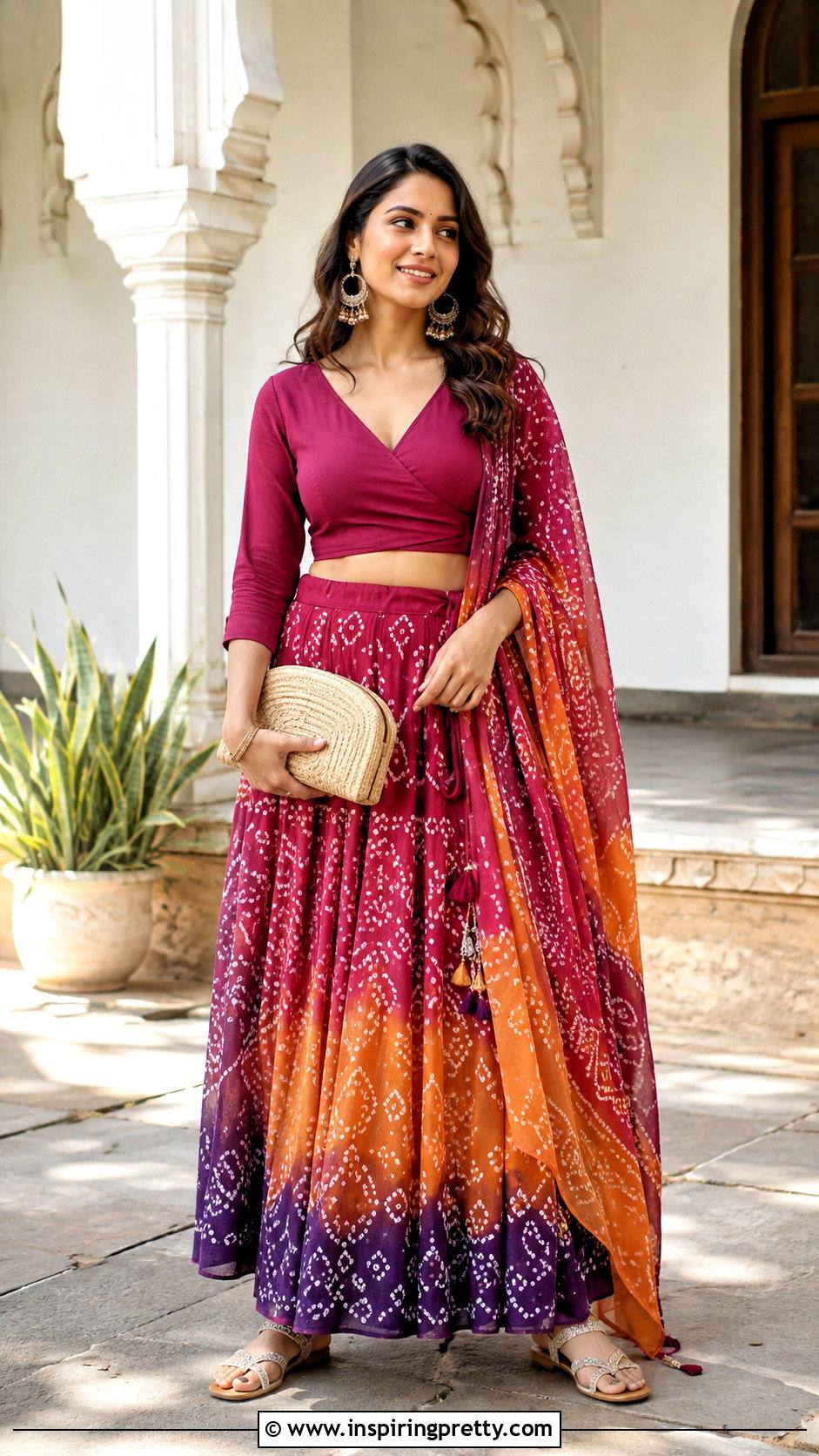
A wrap crop top adjusts to your waist, but it must have inner ties or hidden hooks, or the neckline shifts every time you move. Make sure the front overlaps generously. A solid cotton-silk or crepe top lets a bandhani or block-printed skirt stand out. Three-quarter sleeves add coverage. Flat sandals and hoop jhumkas keep it right for a casual festival.
34. Tie Back Crop Top With Lehenga
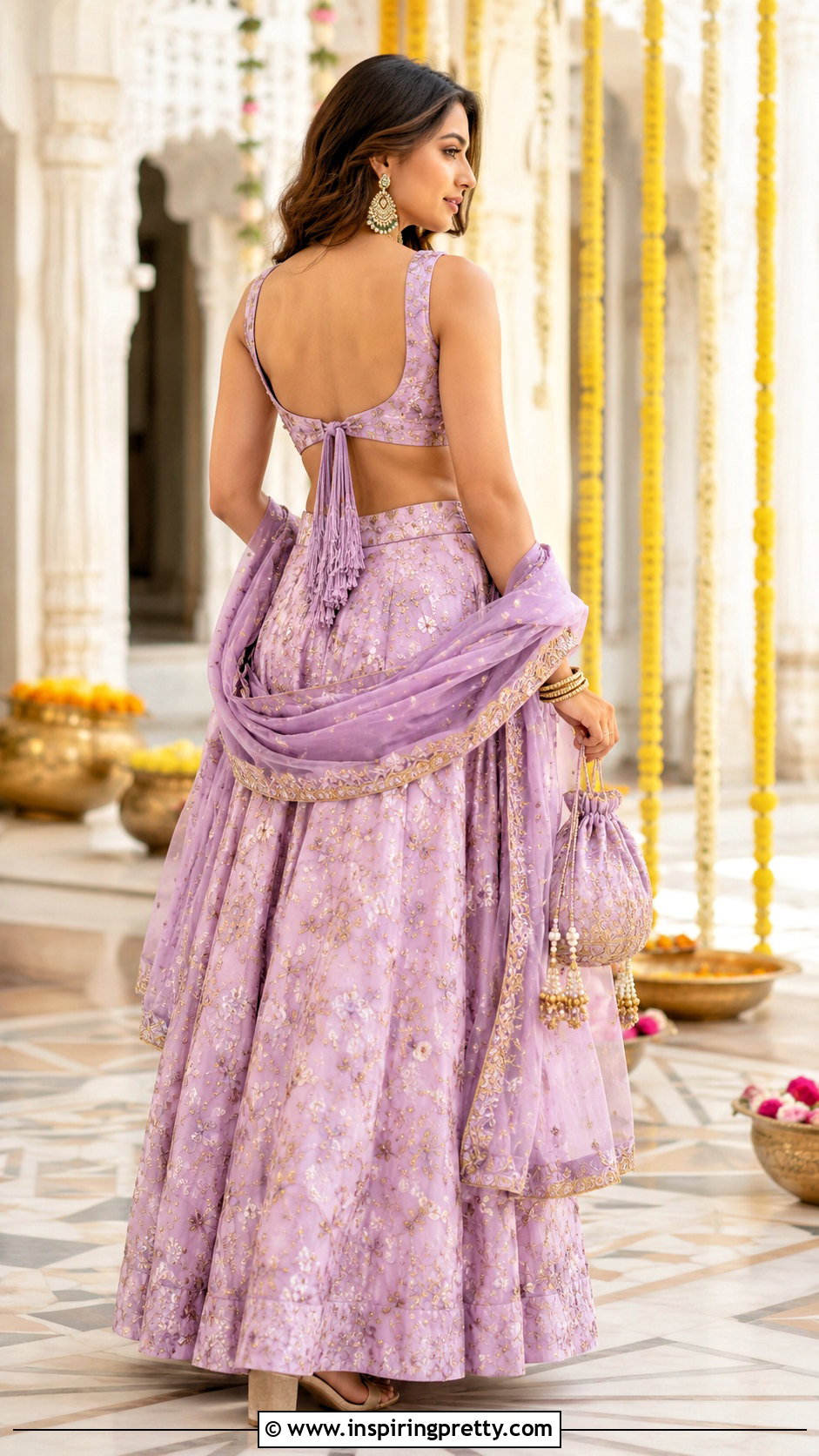
Tie-back tops put the detail at the back, but the ties should be decoration only. The front has to fit on its own, or the top shifts through the evening. Broad ties with tassels look finished. Drape the dupatta over one arm so the back stays visible, and match tassel colors to the skirt border. It's a smart choice when you'll be photographed from behind during a dance.
35. Scalloped Crop Top With Organza Skirt
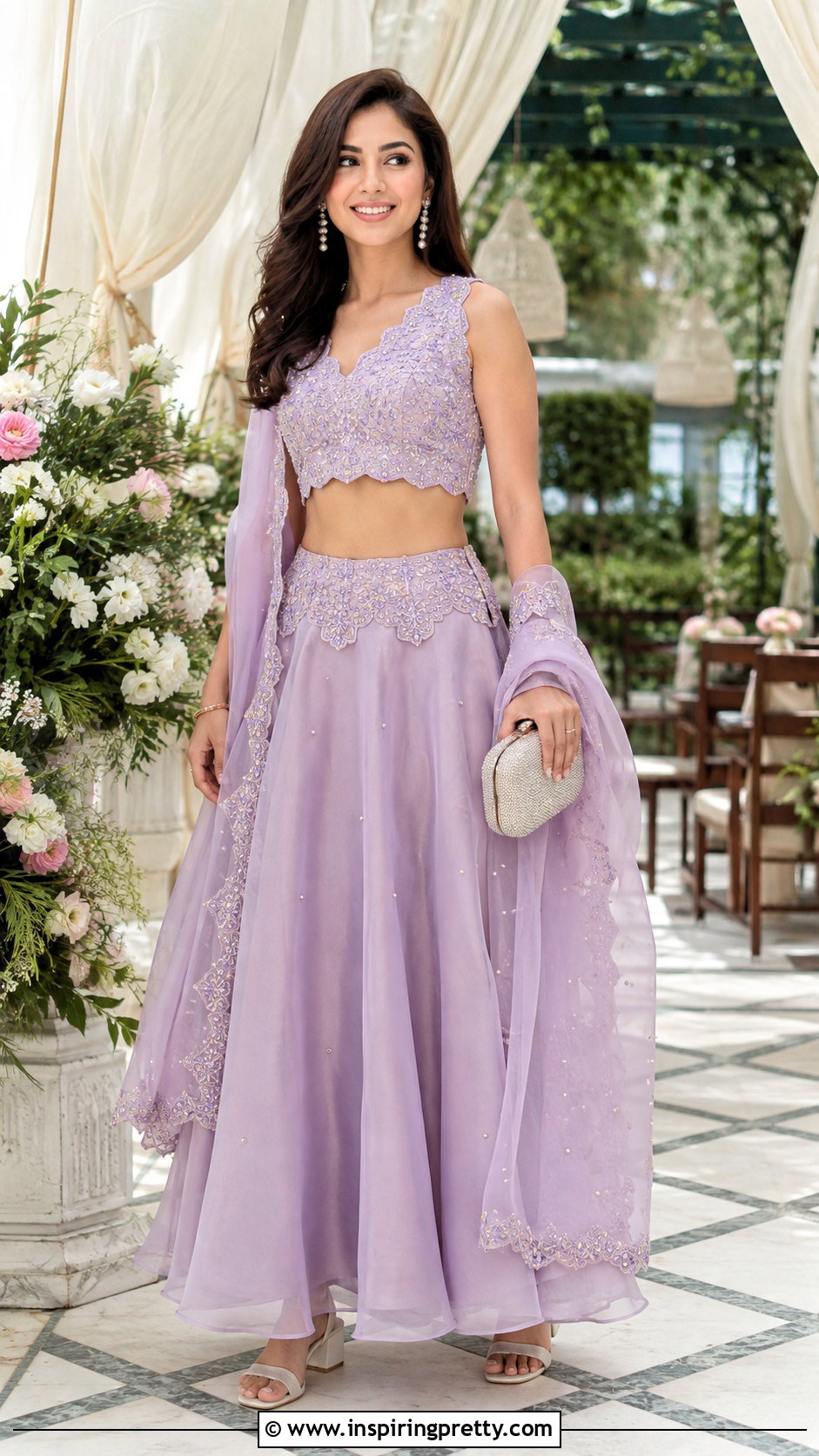
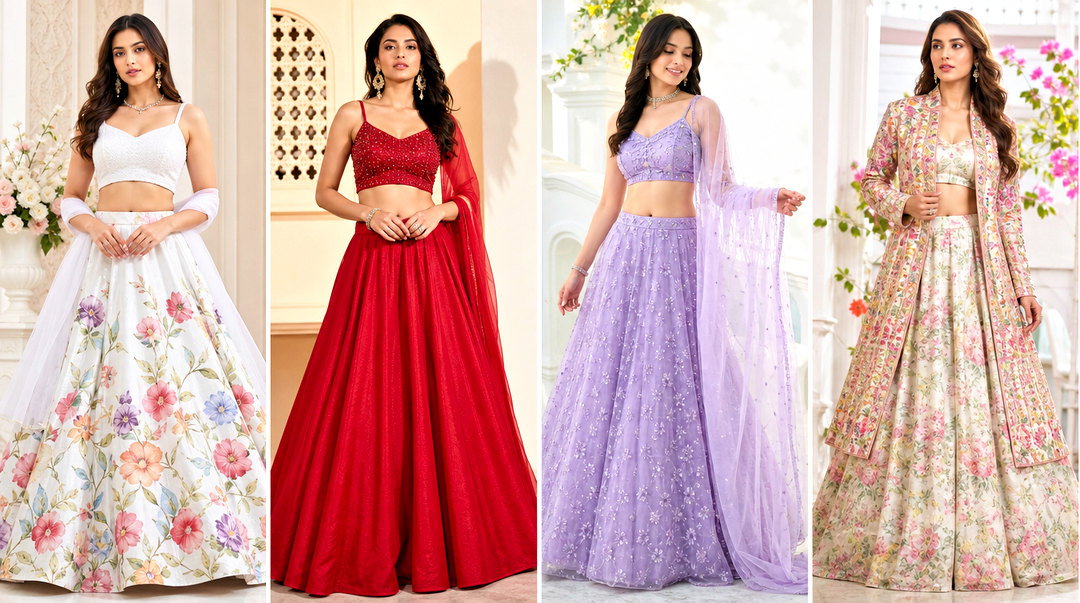
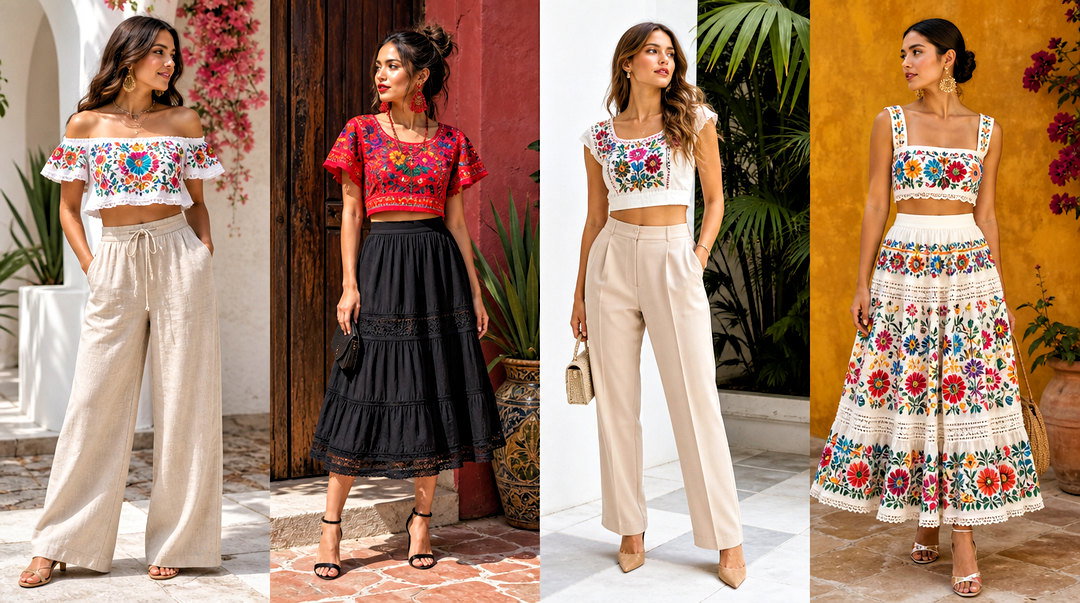
Scallops soften an edge, but use them in one place only: the hem, the neckline or the sleeves. Check that the lining ends cleanly behind the scalloped edge, because a lining that peeks out ruins the line. A flowing organza skirt in the same color family suits it, and tiny pearls add a gentle shine. Garden weddings and daytime engagements are where it fits best.
36. Tassel Crop Top With Flared Lehenga
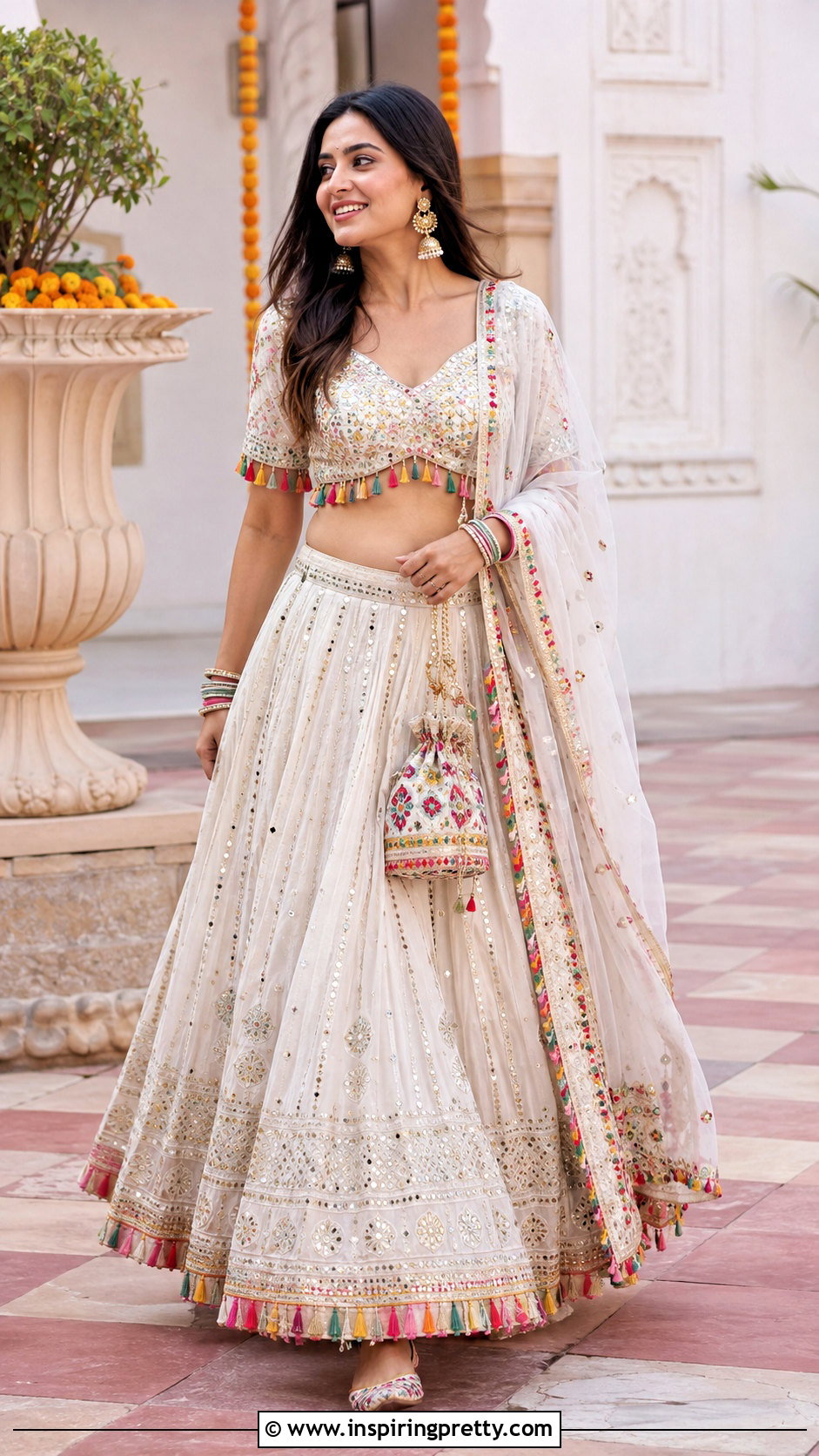
Tassels add movement, but keep them small and placed at the sleeves, hem or back ties. Long fringe tangles in jewelry and catches on chair backs. Short, securely stitched tassels survive a night of dancing. Repeat one tassel shade in the skirt border or dupatta. Jhumkas and bright bangles suit it, with only a light necklace.
37. Pearl Work Crop Top With Satin Lehenga
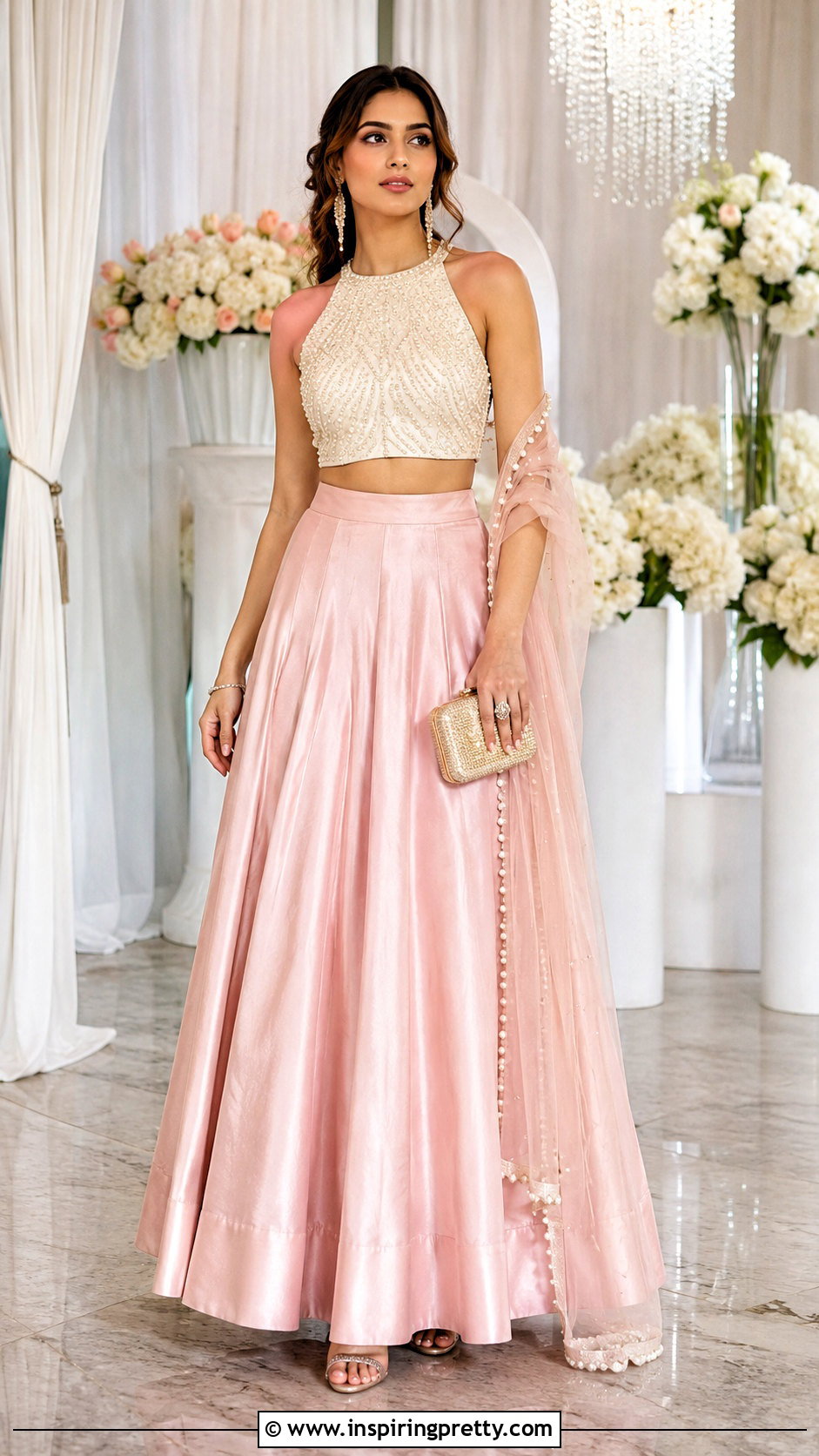
Pearl work has a soft glow, but beads are heavy and pull on fine fabric. I keep them to the neckline, sleeve edges and waist. Every embellished area needs a soft lining, because bead backs and threads rub against skin. Ivory, blush or champagne goes well with a high-rise satin lehenga that falls smoothly without heavy gathering. Pearl drop earrings and understated heels finish it.
38. Beaded Crop Top With Chiffon Skirt
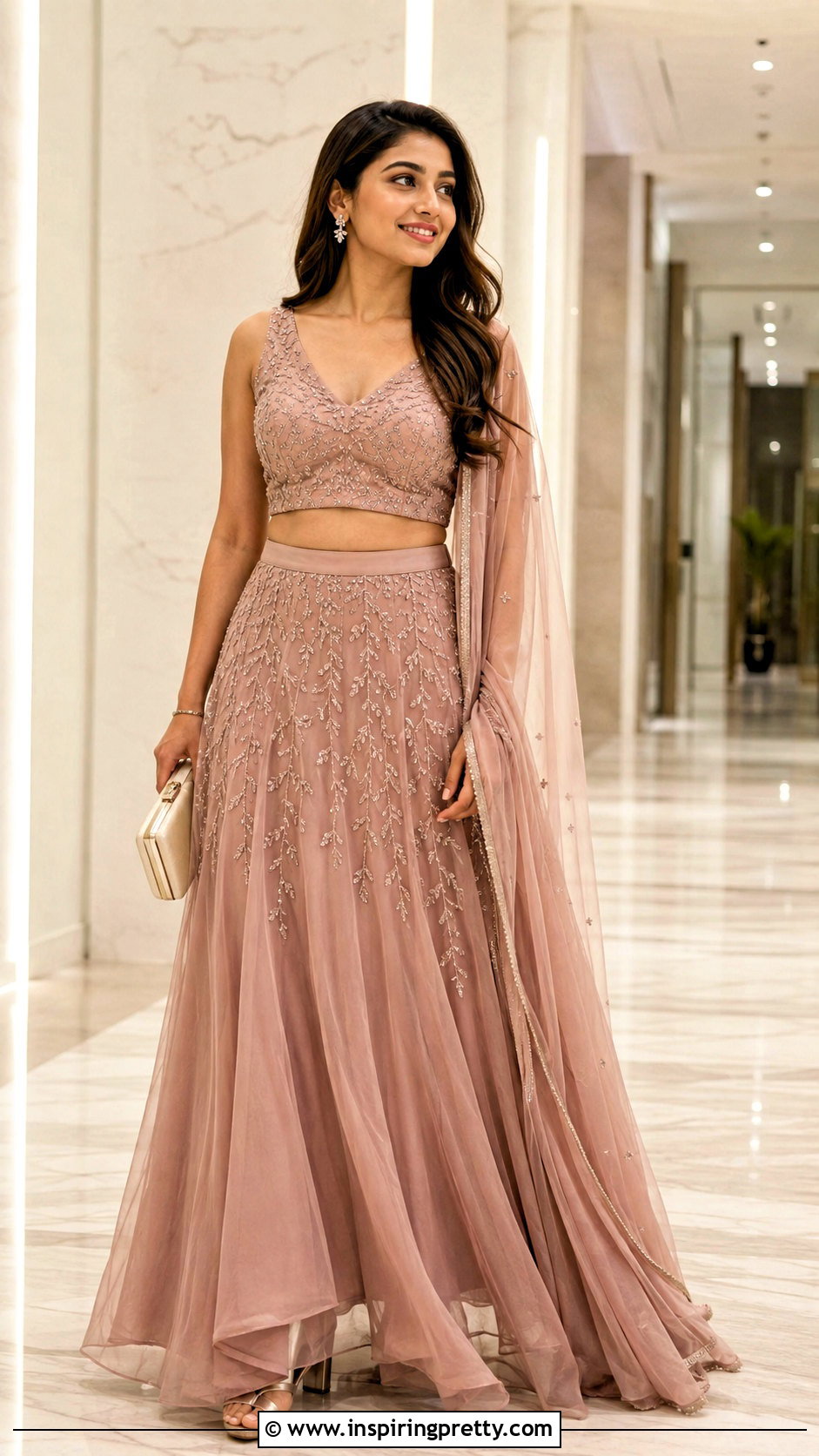
Fine beadwork adds dimension, but heavy bangles and layered necklaces catch on it and pull threads loose. Keep jewelry minimal: small crystal earrings and a plain clutch. Tonal beads in a vine pattern on a top with a shallow V look refined. A fully lined chiffon skirt moves lightly. Store beaded pieces flat, never on a hanger, because the weight drags the fabric out of shape.
39. Floral Embroidered Crop Top With Plain Lehenga
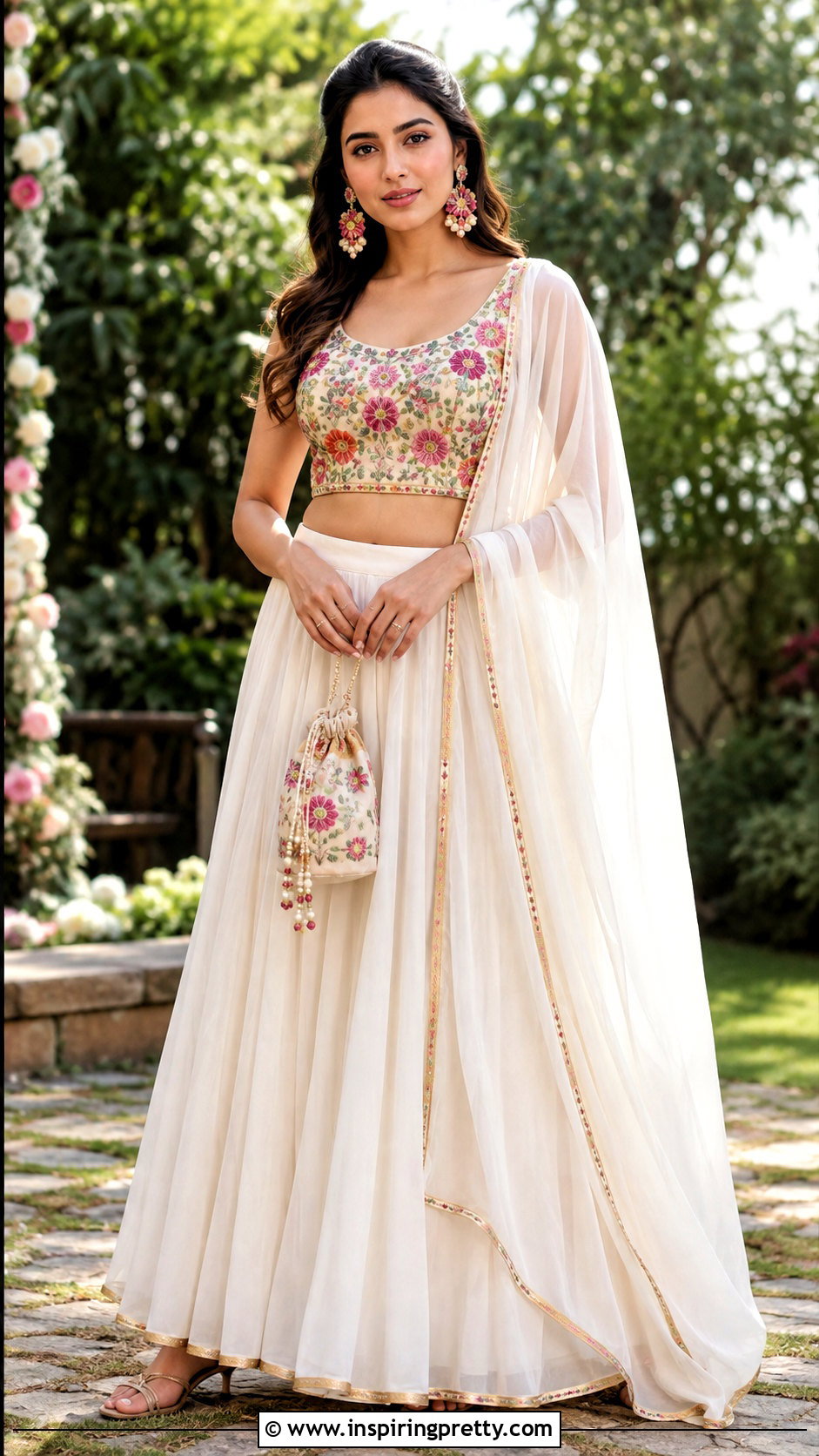
Floral embroidery in two or three coordinated colors gives a crop top a romantic feel. Pair it with a plain lehenga in georgette, silk or organza that matches the base fabric or one thread color. A rounded neck and short sleeves read soft; a square neck with elbow sleeves reads structured. Keep the dupatta to a narrow border. It suits garden venues and spring or summer functions.
40. Lotus Embroidered Crop Top With Silk Skirt
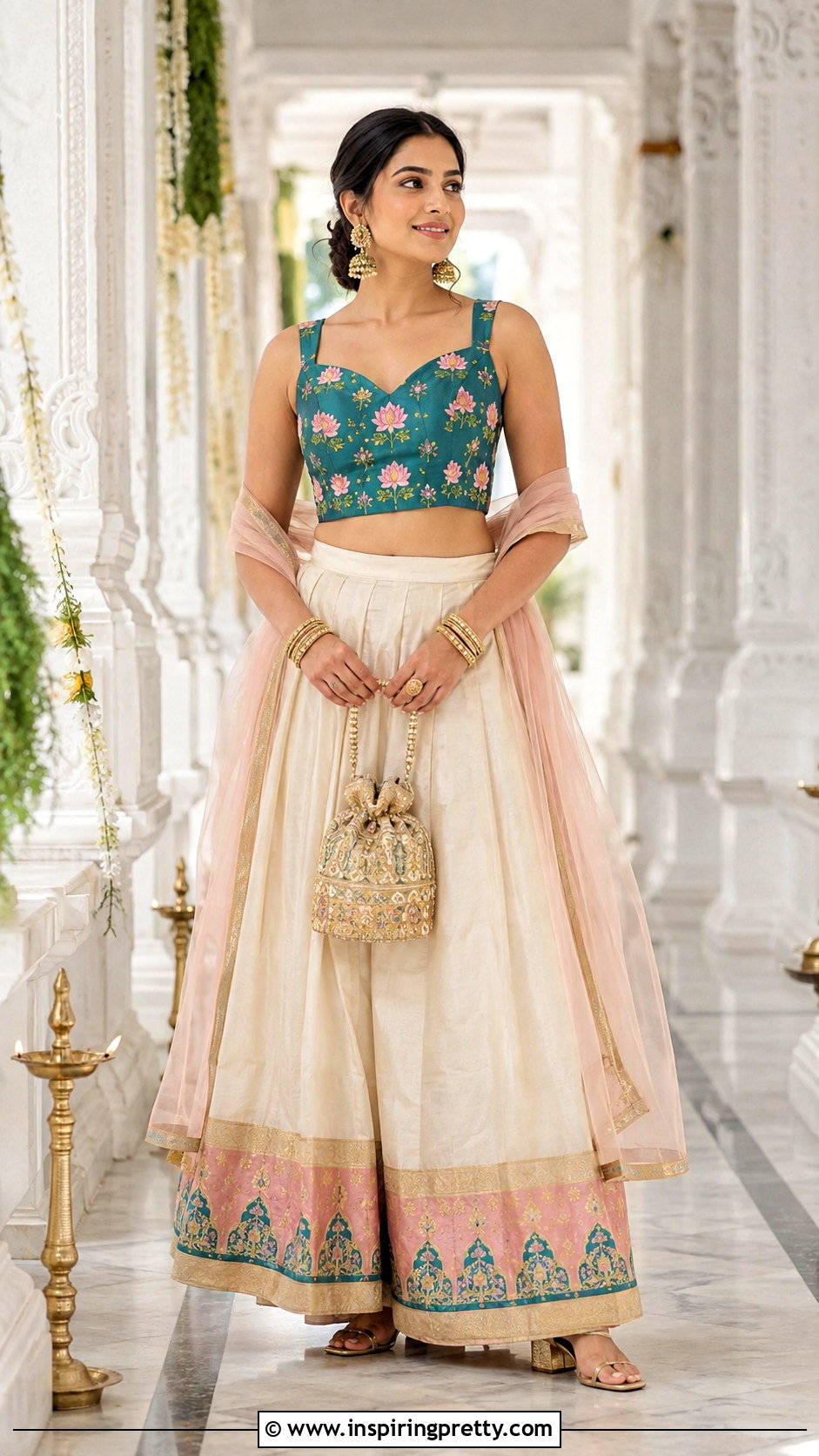
Lotus motifs suit a restrained layout: spaced flowers around the neckline, sleeves or lower edge. Pair the top with a plain silk skirt in pink or teal with a temple border near the hem. A high neck or a modest V suits the motif. A dupatta with a minimal border keeps the embroidery visible. Gold earrings, bangles and low block heels make it right for a ceremony.
41. Peacock Embroidered Crop Top With Lehenga
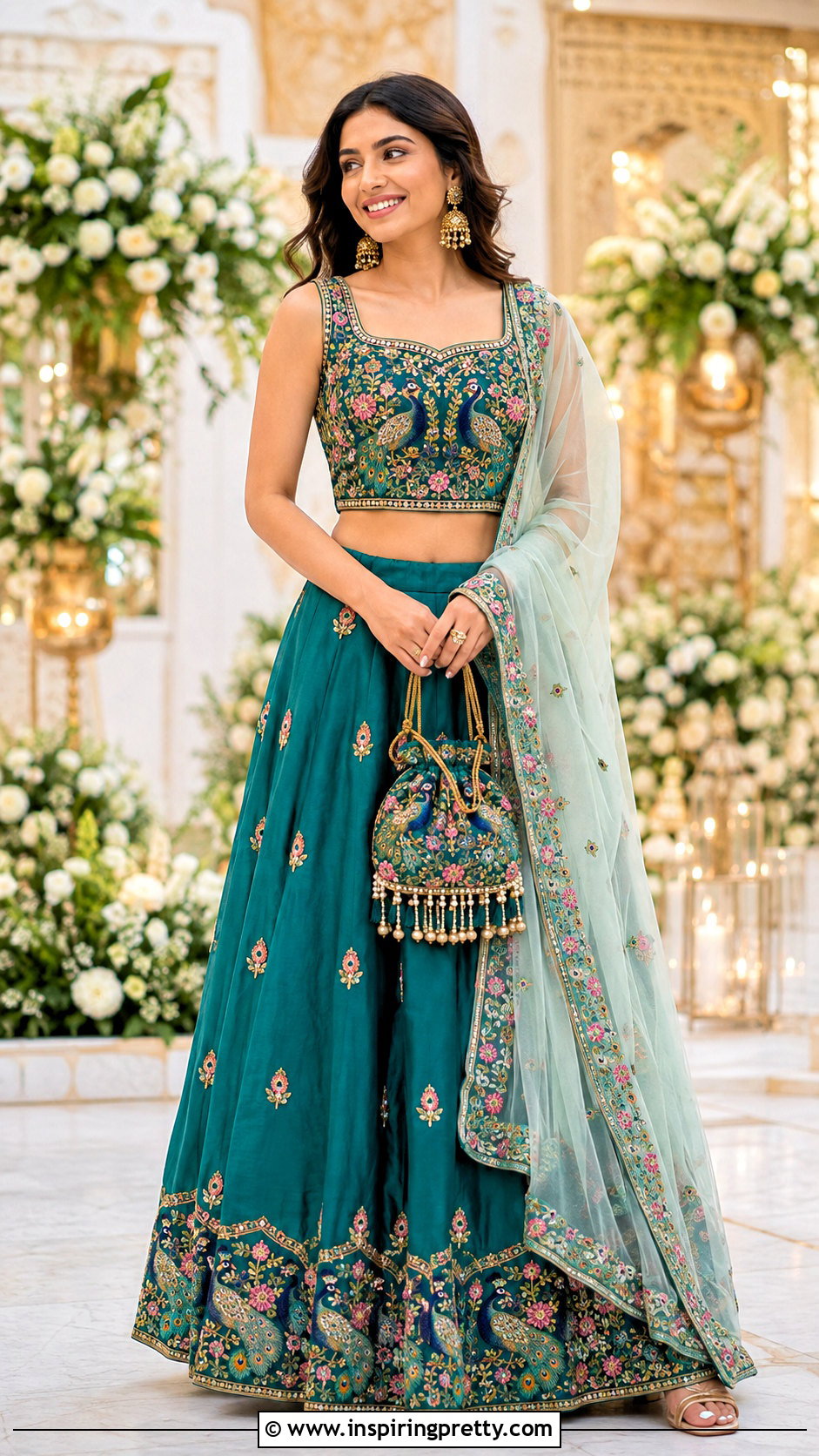
Peacock motifs are rich and symmetrical, and one motif family per outfit is plenty. Choose a deep teal or blue base, with a solid lehenga carrying only a coordinated border. A square or boat neck frames the design cleanly. Wear simple, comfortable shoes, especially with a floor-length skirt. A lighter dupatta keeps the color from going heavy. Evening events show the saturated colors best.
42. Paisley Crop Top With Brocade Lehenga
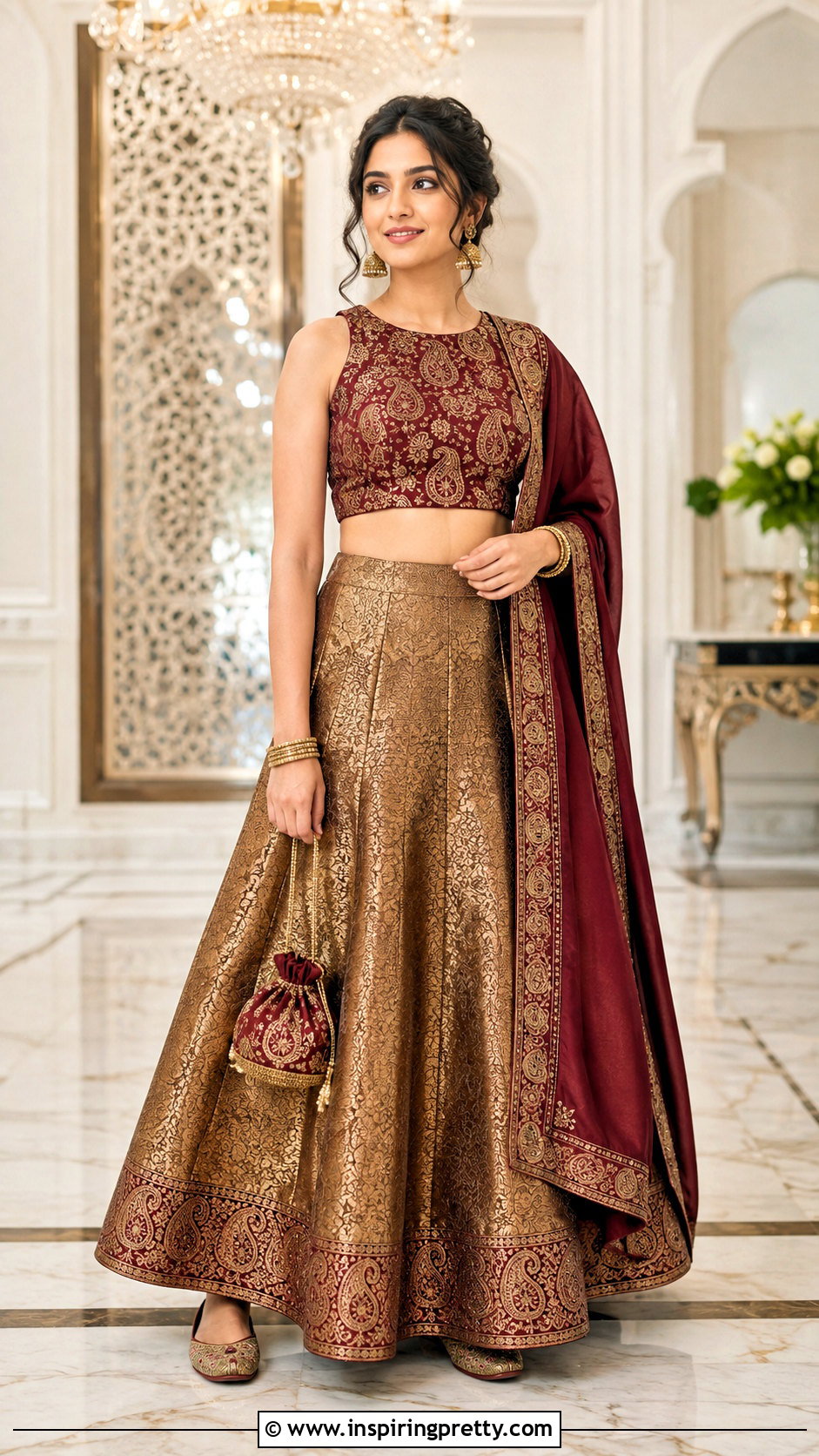
Everyone knows paisley on sight, and the trick with it is scale. If both top and lehenga are brocade, make one motif large and the other small so they don't compete. A fitted round neck with elbow sleeves keeps the motif clear. Dark jewel tones suit evening, and cream or peach suit daytime. A plain dupatta with a paisley border, small jhumkas and embroidered flats finish it.
43. Temple Border Crop Top With Silk Lehenga
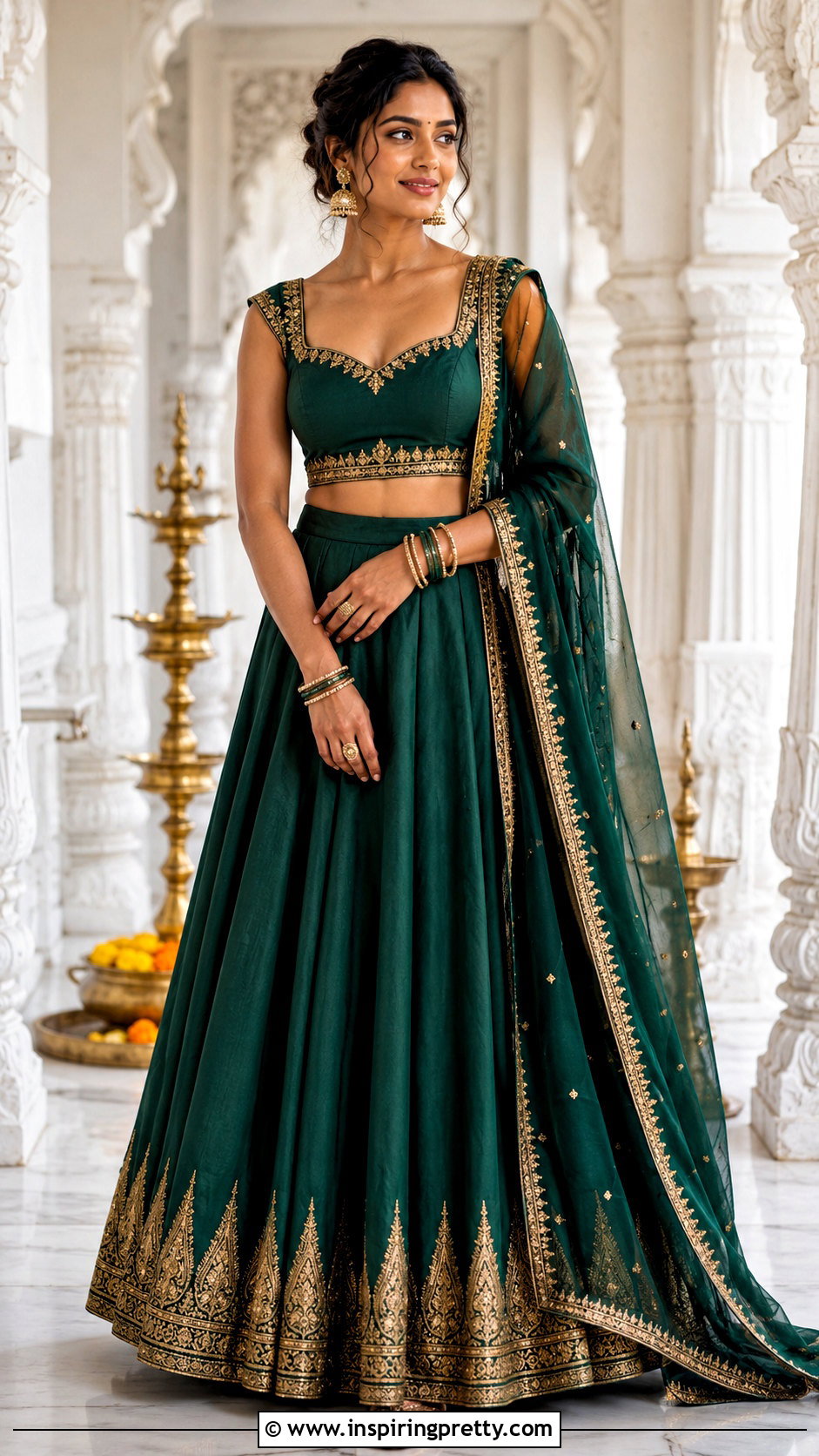
The temple border, a repeating triangular edge familiar from South Indian silk sarees, gives a strong geometric line. Put it on the sleeves and hem of a solid blouse, then repeat it near the floor on a silk lehenga. Deep red with gold and green with mustard are classic pairings. Keep other embroidery limited so the border reads clearly. Gold jhumkas and bangles complete it.
44. Hand Block Print Crop Top With Cotton Skirt
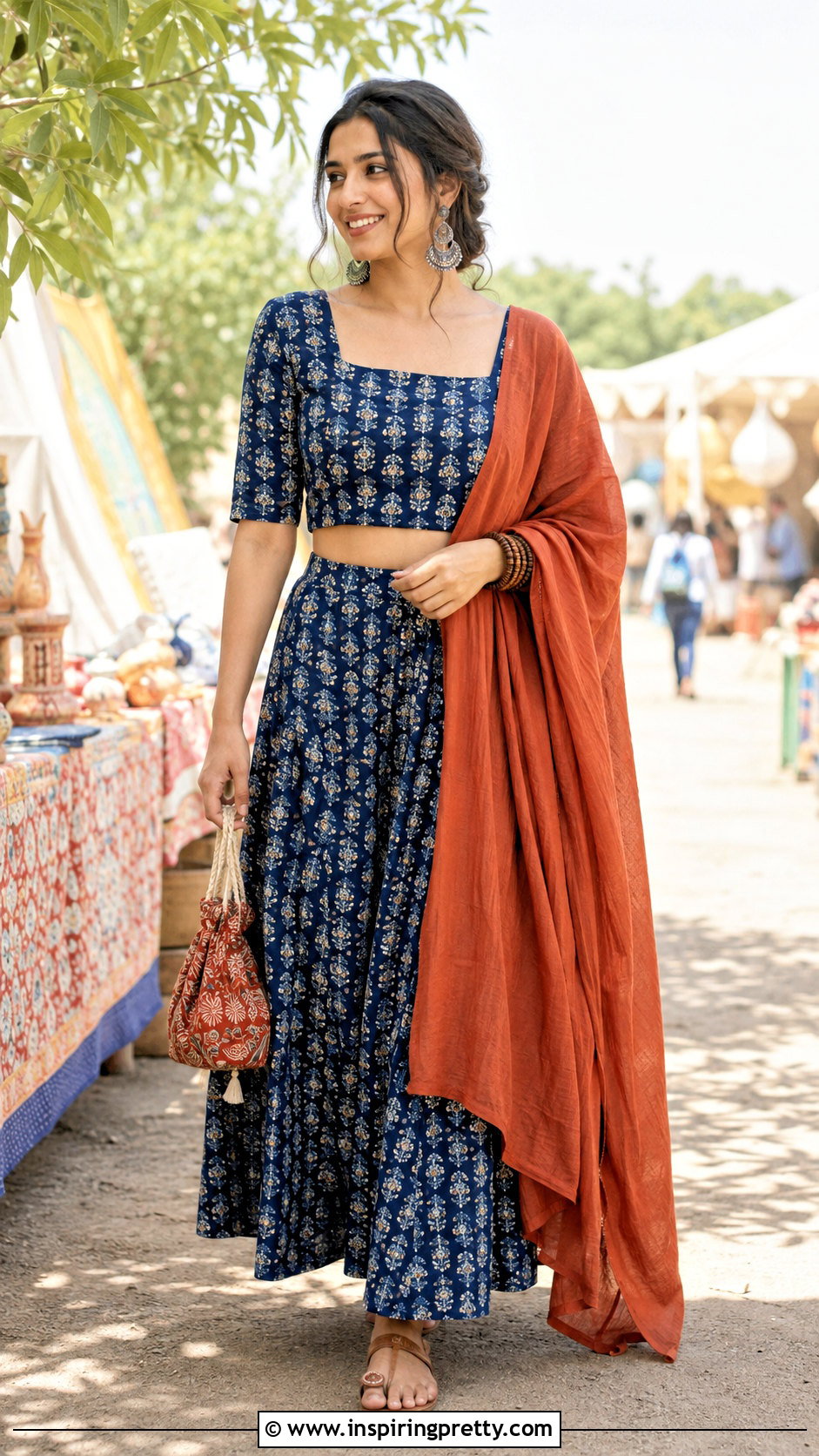
Hand-block printed cotton is the coolest choice here for a hot daytime event. Small irregularities in the print are a sign of hand work, not a flaw. If both pieces are printed, add a solid dupatta to give the eye a resting point. A square neck and elbow sleeves look neat. Wooden bangles, a cloth potli and flat sandals suit its relaxed mood.
45. Patola Print Crop Top With Solid Lehenga
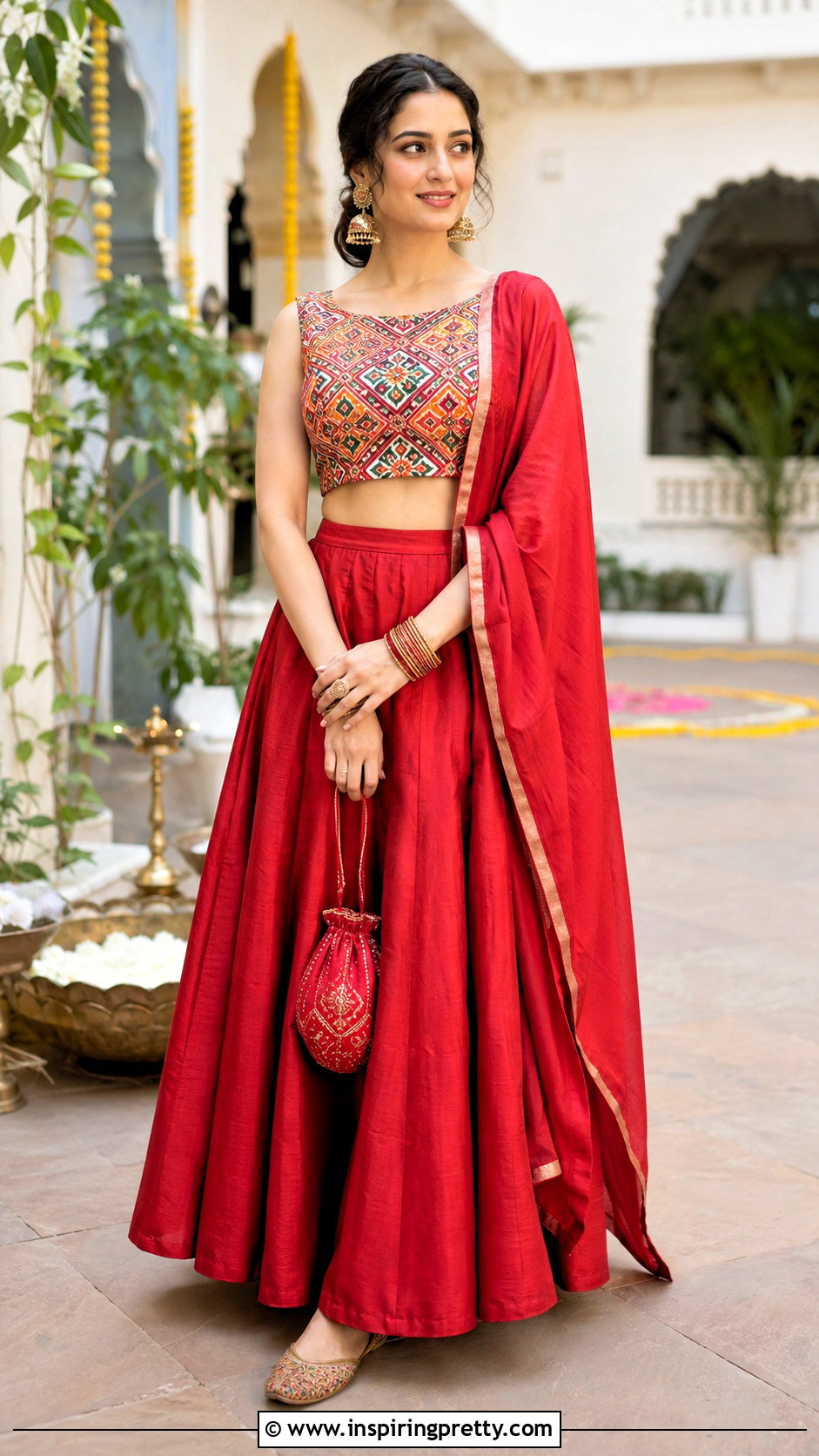
Patola is a double ikat, with both warp and weft dyed before weaving, which is why handwoven pieces are costly and most tops are printed versions. Either way, the geometric pattern carries the outfit. Pair it with a solid raw silk lehenga in red or green, and keep the neckline a simple boat or round shape. If the pattern is large, use it on the bodice only. Gold earrings and juttis finish it.
46. Velvet Crop Top With Banarasi Lehenga
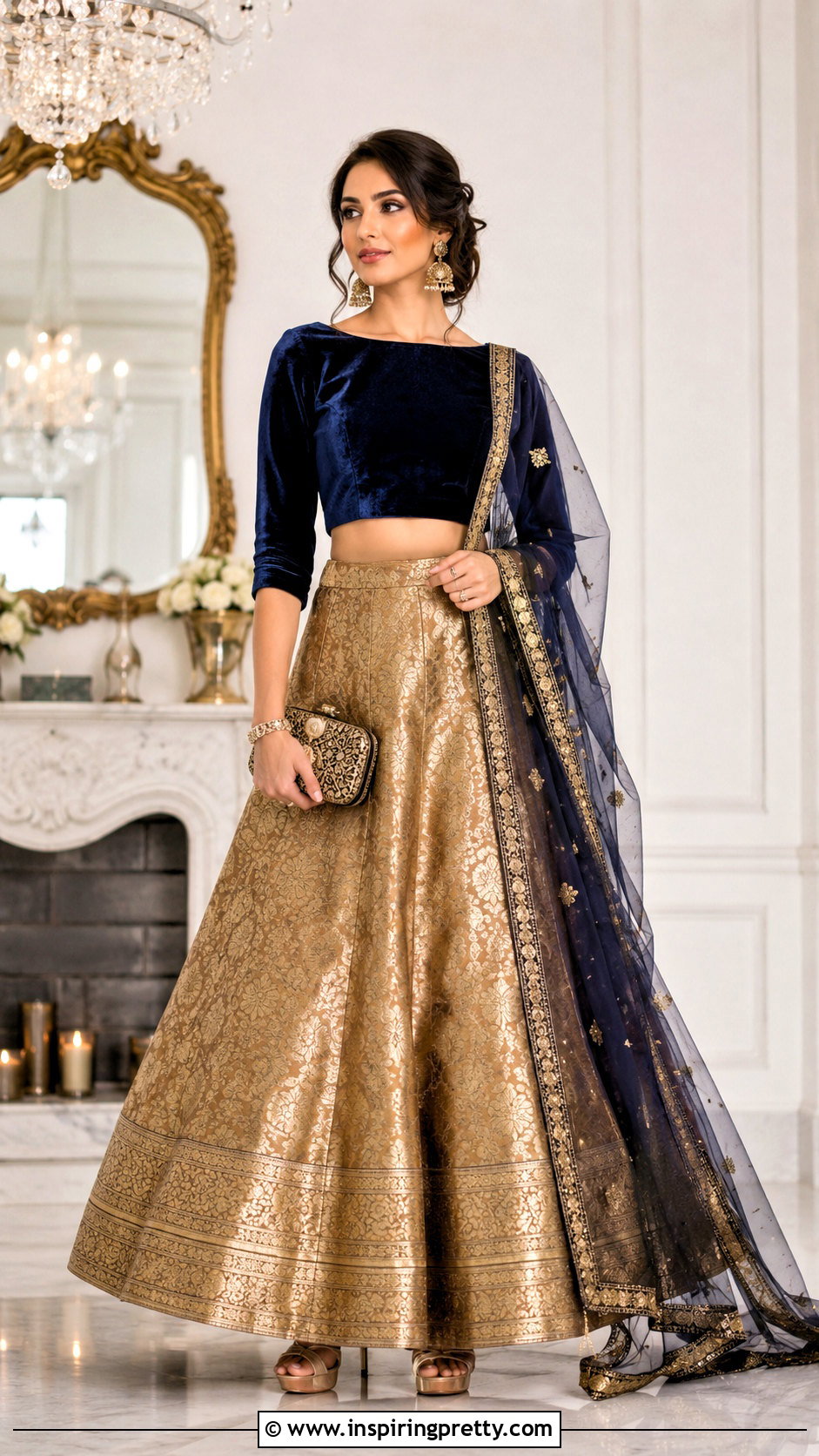
A velvet crop top absorbs light while a Banarasi lehenga reflects it, and that contrast is the whole appeal. Velvet is warm and heavy, so this belongs to winter evenings. The pile crushes under pressure, so steam velvet from the back instead of ironing the face. Keep it plain apart from a zari border at the neck and cuffs. A light net dupatta and platform sandals finish it.
47. Raw Silk Crop Top With Embroidered Lehenga
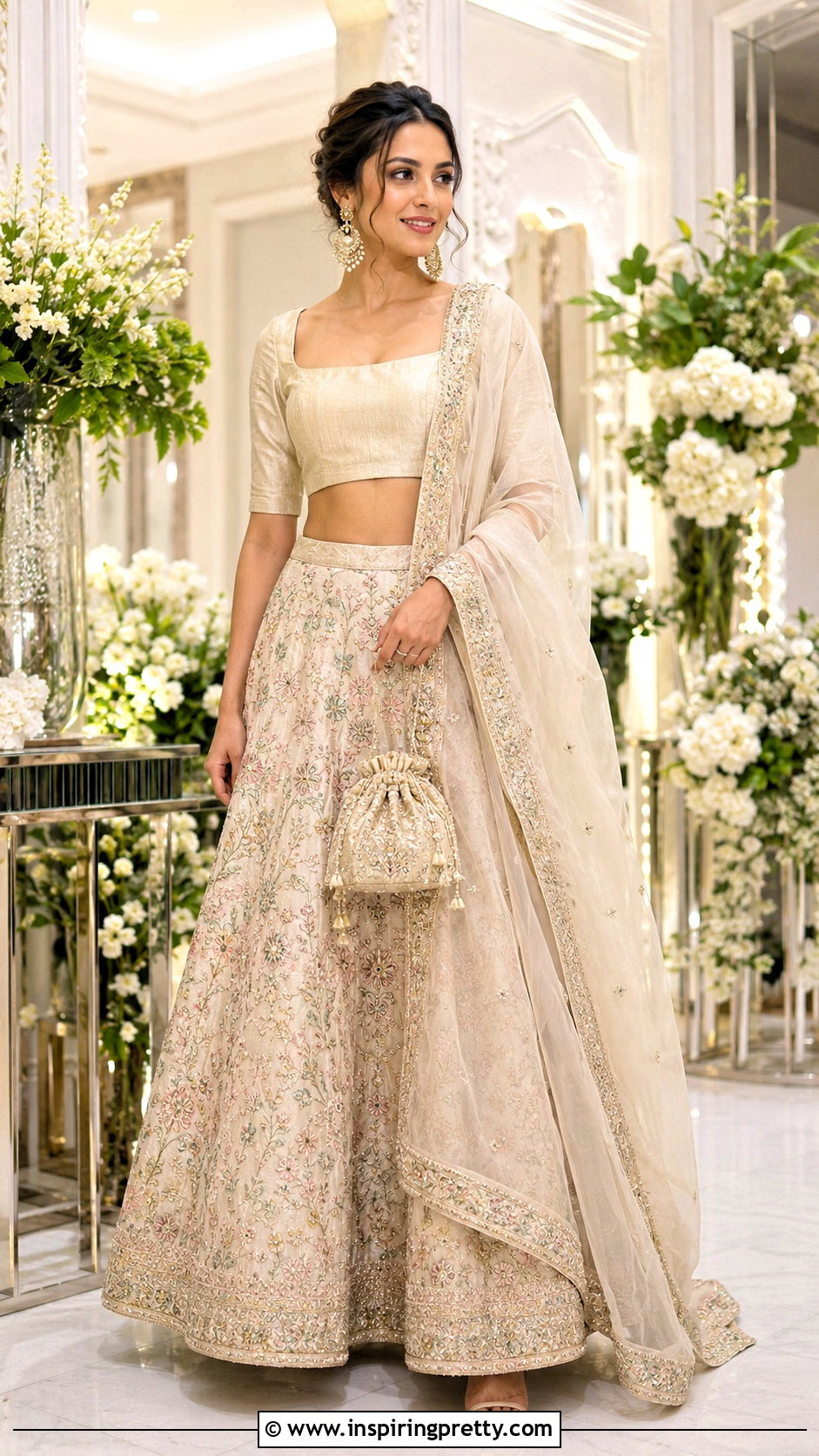
Raw silk has a slubby texture that looks rich with no embellishment, which makes it a calm partner for a heavily embroidered lehenga. Princess seams fit it closely without darts. A square neckline with elbow sleeves suits it. Raw silk shows water spots, so keep drinks at a distance and don't spray perfume onto it. Statement earrings and mid-height heels are enough.
48. Chanderi Crop Top With Printed Lehenga
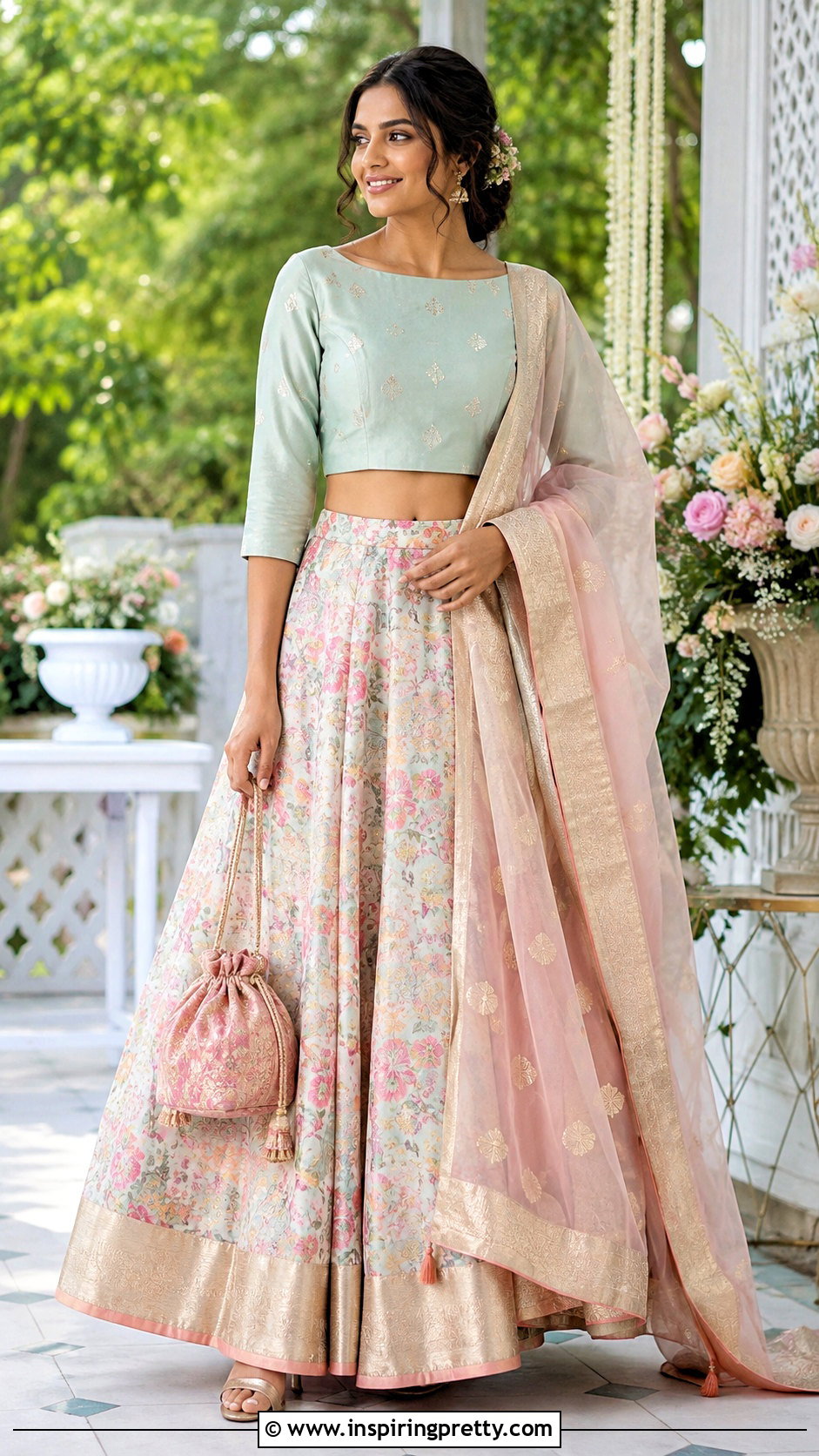
Chanderi is a light, slightly sheer weave of silk and cotton with a soft sheen, often dotted with small woven motifs called butis. Because it's sheer, a smooth matching lining is essential. A boat neck and three-quarter sleeves suit its crispness. Pair it with a printed or lightly embroidered lehenga, moderately flared. It's a fabric for warm daytime ceremonies.
49. Dupatta Style Crop Top With Lehenga
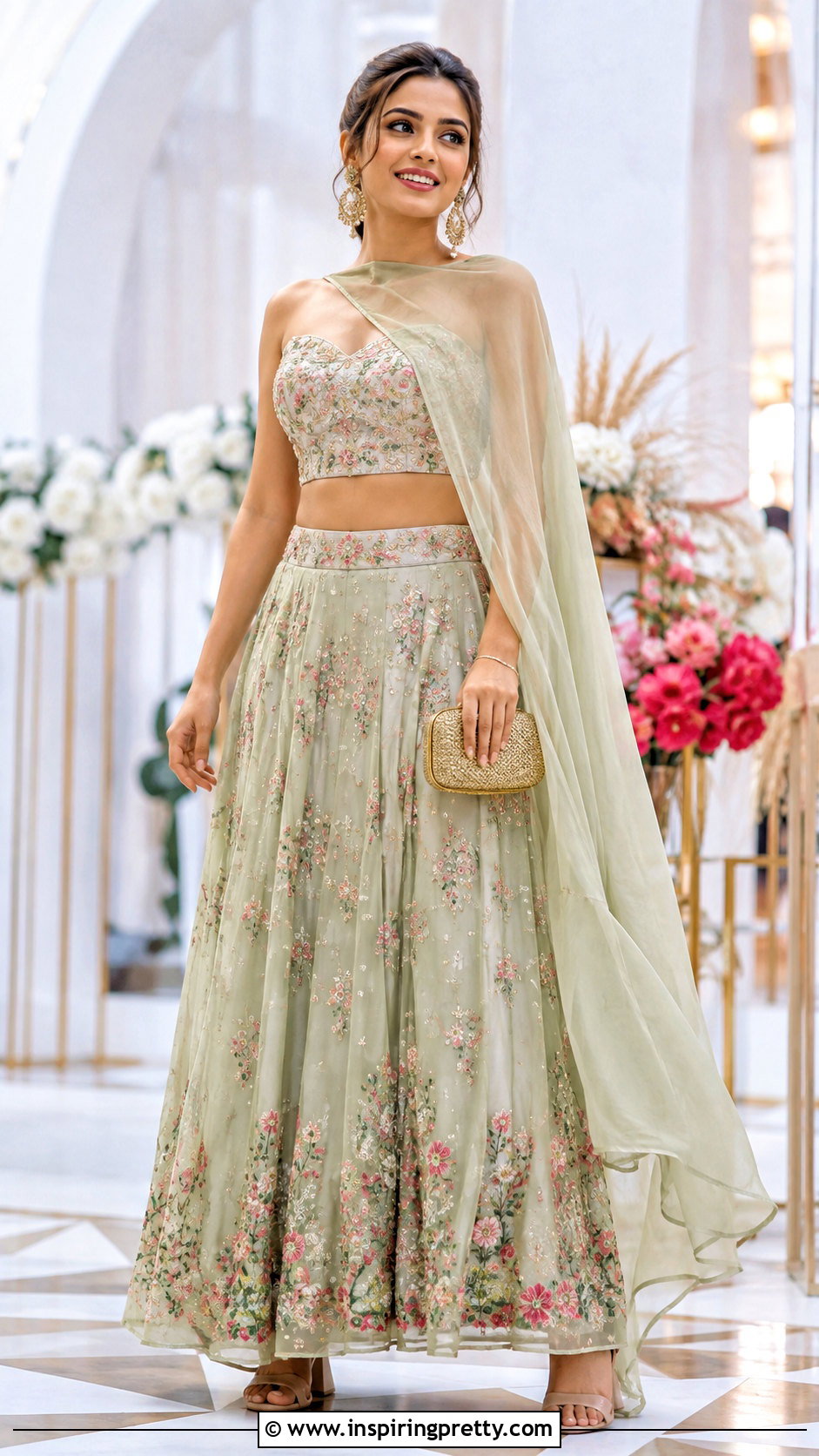
An attached dupatta solves the biggest annoyance of a long function, which is a dupatta that keeps sliding off. The panel is stitched at one shoulder and falls across the body or down the back. Check the length carefully: long enough to flow, short enough not to catch under your heel. Keep embroidery to the neckline and the drape's border. Block heels keep you steady.
50. Layered Crop Top With Matching Lehenga
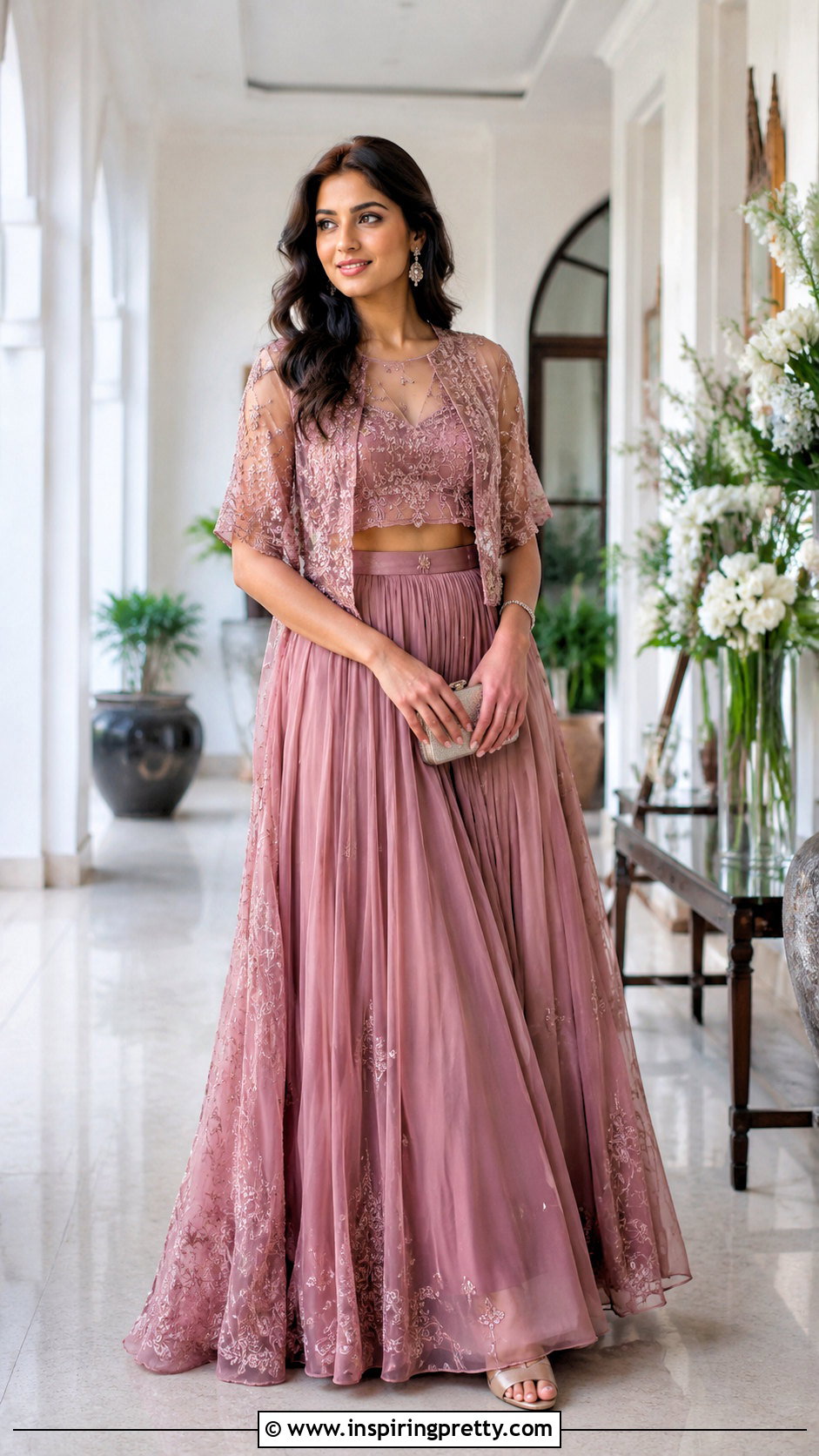
A layered crop top puts a short overlay or sheer outer panel over a fitted inner bodice, which gives adjustable coverage. Keep the layers light so the waist doesn't bulk up. Tonal colors let the construction show. Skip the dupatta if the overlay is already busy, or drape one lightly over an arm. A matching high-waisted lehenga in georgette or silk completes it.
Dupatta Drapes That Work With a Crop Top
With a crop top, the dupatta becomes your coverage dial. The same outfit can look modest at a puja and lively at a sangeet just by changing how it's draped.
- Over one shoulder, pinned at the back: shows the neckline and frees an arm for dancing.
- Across the front and pinned at the opposite hip: covers the midriff gap completely.
- Draped over both arms like a stole: keeps the bodice visible, which suits cape, cold-shoulder and tie-back designs.
- Over the head and pinned at the crown: for religious ceremonies, where a light net or chiffon stays in place best.
Use small safety pins on the inside, hidden under the border, and never pin straight through zari or sequin work, which tears and doesn't repair neatly.
Zari, Mirror and Velvet Need Gentle Handling
These outfits are worn a few times a year and spend the rest of it in storage, which is where most of the damage happens.
- Dry clean anything with zari, gota, sequins or beads, and point the embellishment out to the cleaner.
- Air the outfit for a day after wearing it, since trapped sweat stains silk and dulls metallic thread.
- Wrap pieces in soft muslin or old cotton, never plastic, and lay tissue inside the folds.
- Refold along different lines every few months so creases don't set permanently.
- Spray perfume before you dress, not onto zari or silk.
Ornate Top, Quiet Skirt, or the Reverse
Good traditional dressing balances handwork with restraint. Mirror work, chikankari, zari, gota patti and regional prints can make a simple silhouette special, yet not every piece needs embellishment. Pair an ornate top with a quiet skirt, or a solid top with a patterned lehenga. A high-rise waistband, a dupatta you can adjust and the right sleeve length make any of these designs easier to wear through a long function. Choose the fabric for the weather and the hour, and the rest follows.
Related posts:


Leave a Reply