
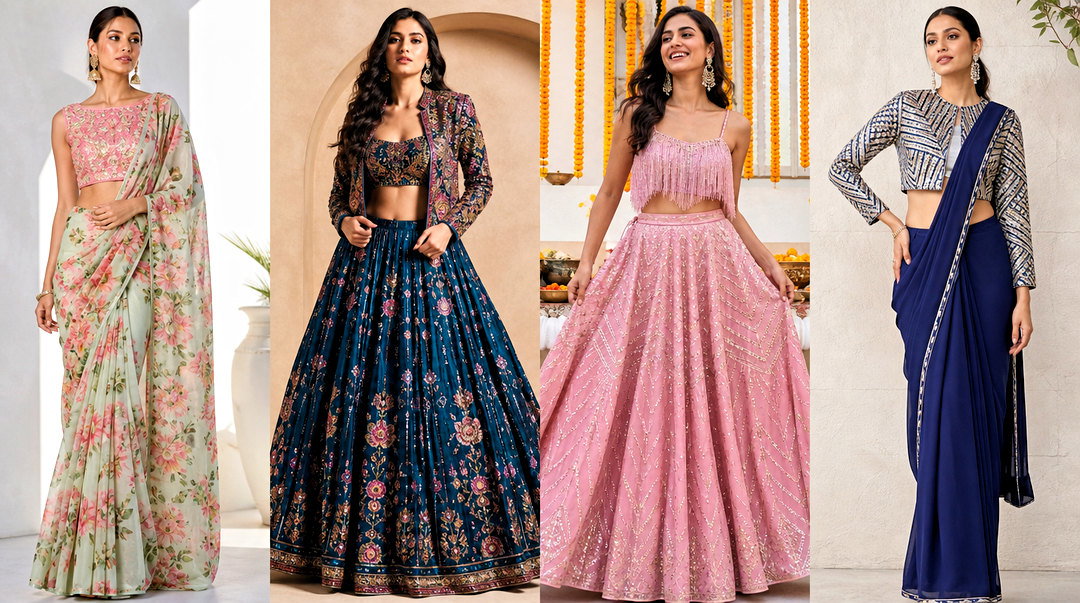
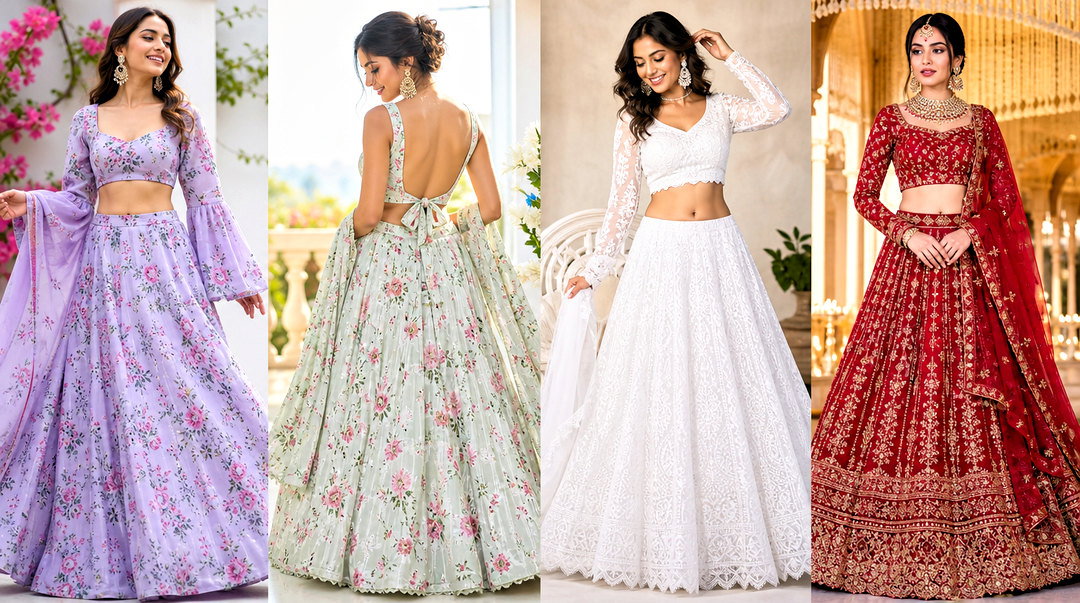
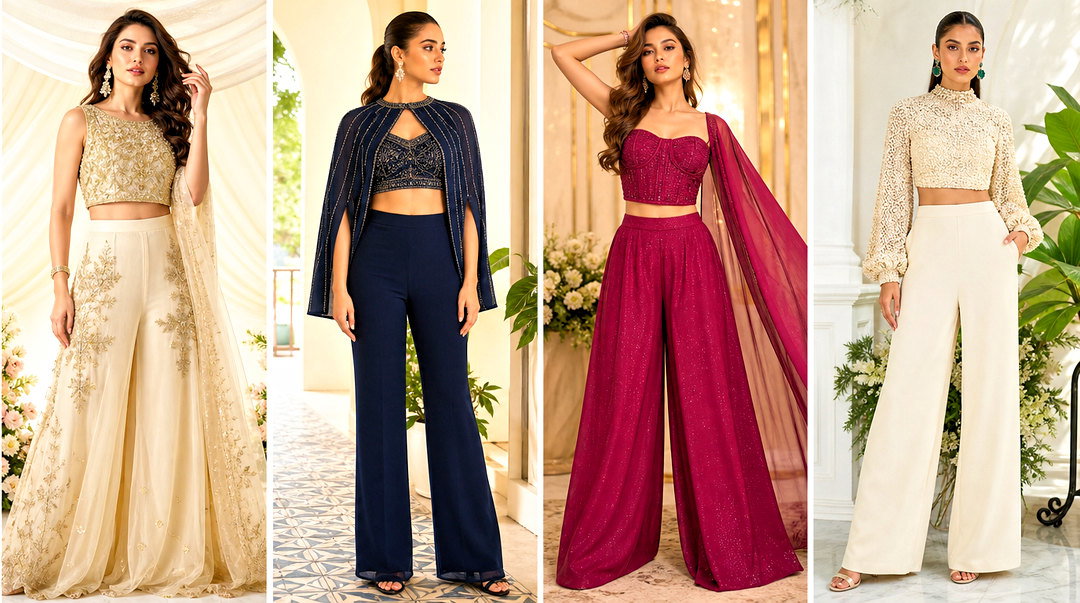
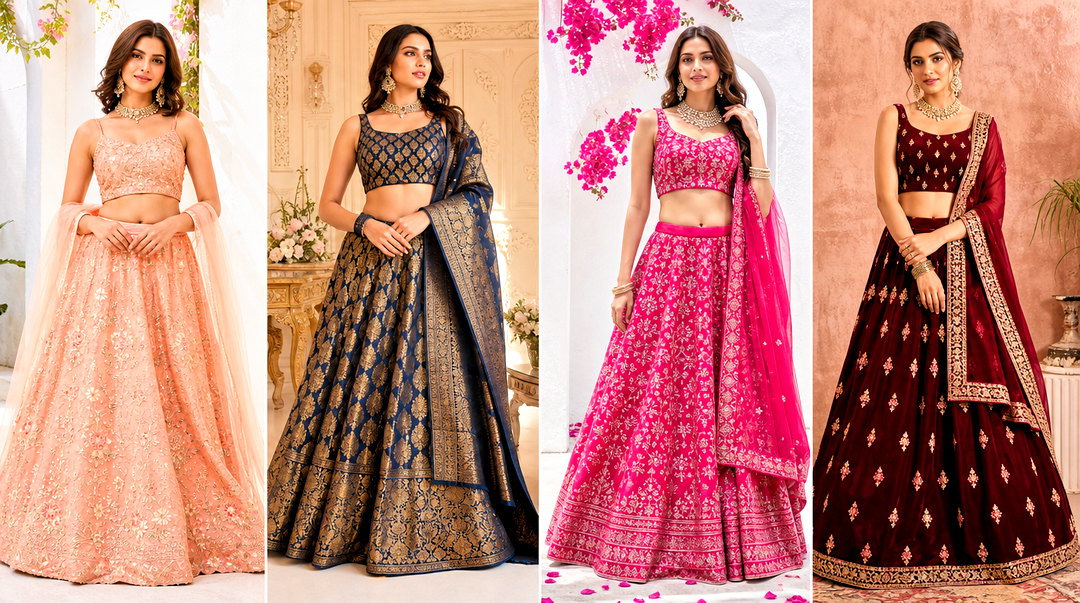
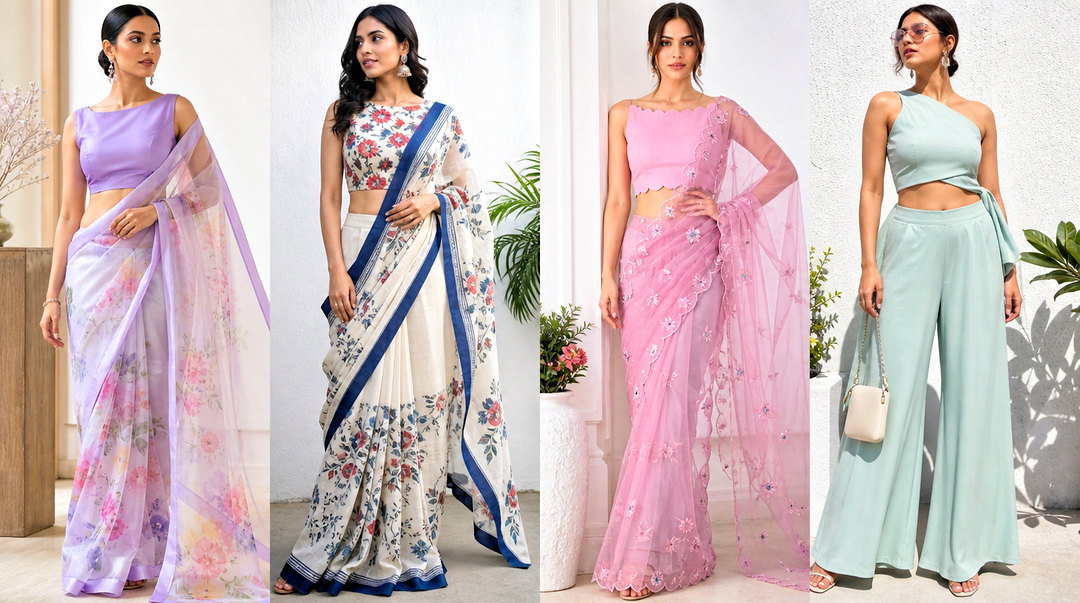
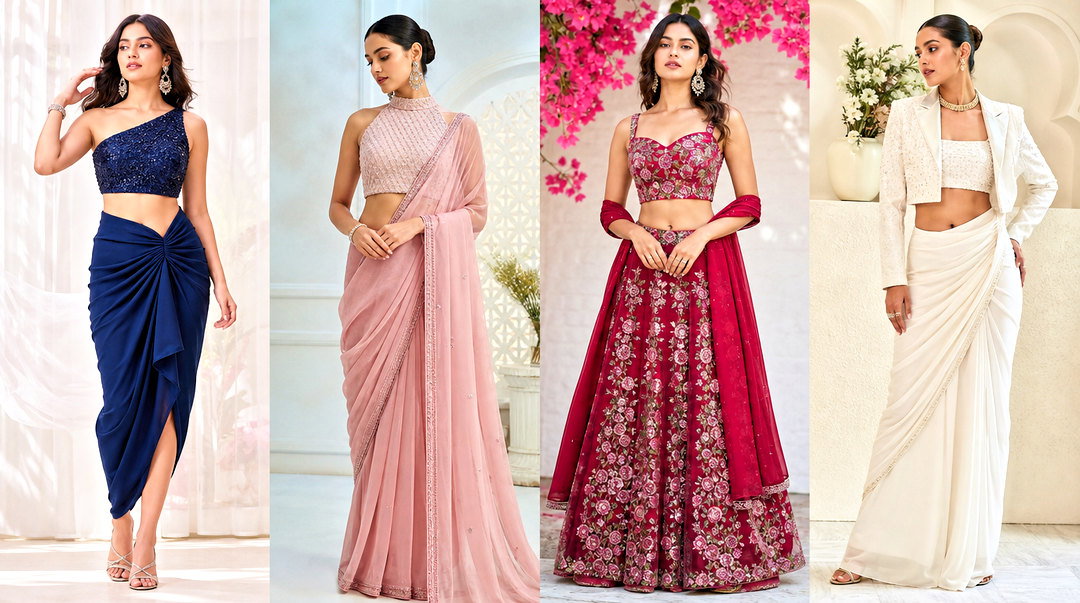
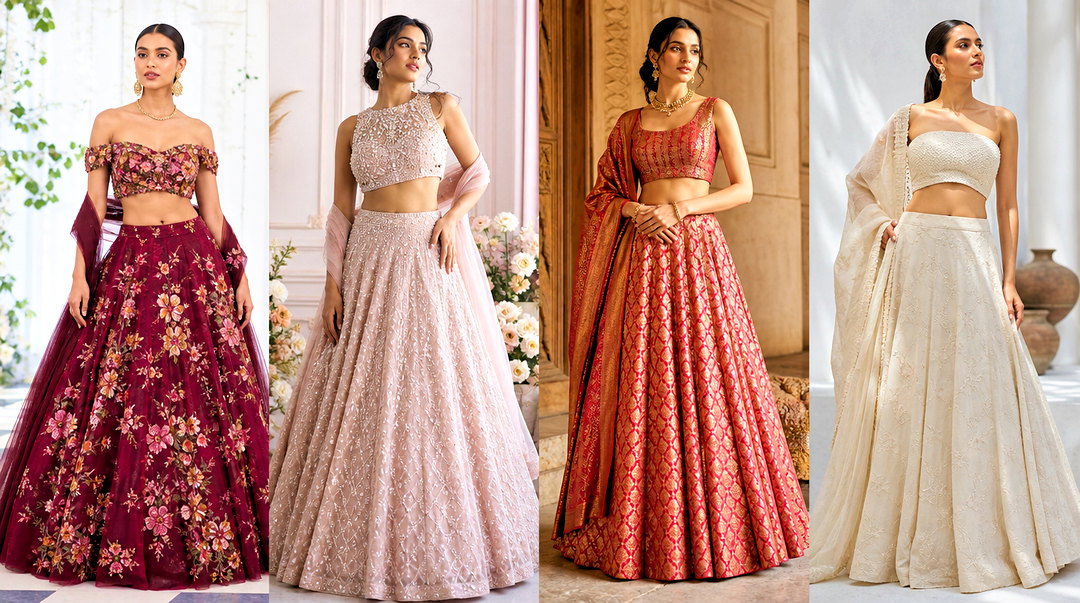
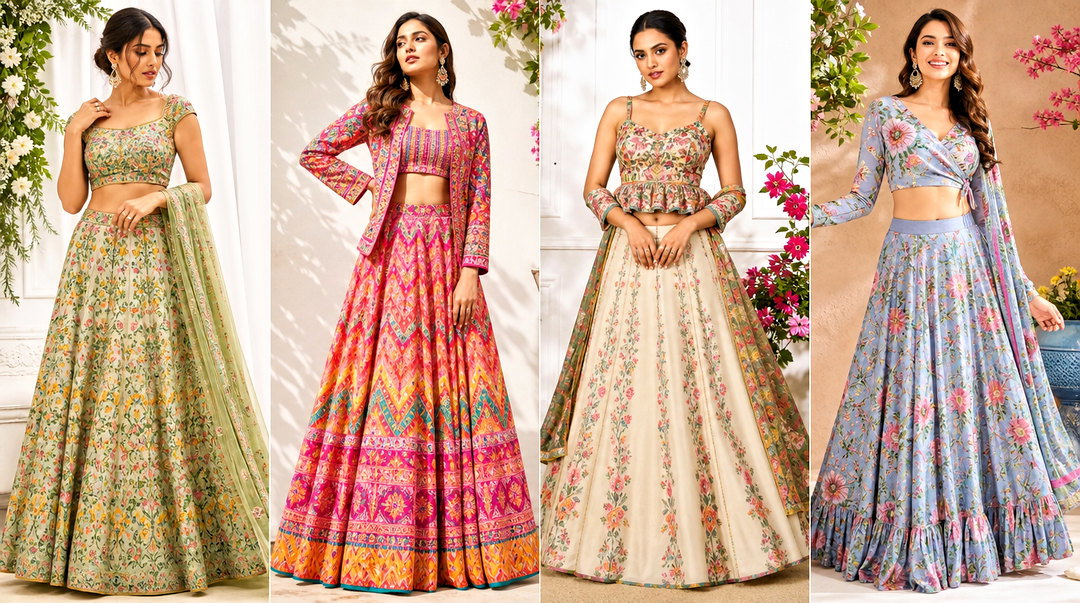
Modern Indian occasion wear has moved toward cleaner shapes, bolder blouses and outfits that take less effort to wear for a whole evening. The crop top lehenga sits right in the middle of that shift. Below are twenty designs I'd actually put a guest or bride in: corset necklines, cape sleeves, jackets, one-shoulder cuts and lighter embroidery, paired with skirts that suit them. For each one I've noted what to check at the fitting, because with a crop top the fit of the blouse and the height of the waistband matter more than any embellishment. There are looks here for the mehendi, the sangeet, the ceremony and the reception.

The Gap Between Blouse and Waistband
The gap between a crop top and the lehenga waistband is the single thing guests ask me about most. There is no fixed amount. It depends on the event, your family and how you feel when you sit down. What matters is that you decide it at the fitting, not on the day.
- Measure the gap seated, not standing. Sitting pushes the waistband down and the top up, so a small standing gap roughly doubles.
- For more coverage, ask for a deeper blouse hem or a longer waistband rather than a whole new top. A peplum or jacket covers it entirely.
- For a religious ceremony, a dupatta pinned from shoulder to waist can close the gap for a few hours, then come off for the reception.
- Lehenga skirts sit best at the natural waist. Worn low on the hips, they slide down through the evening and widen the gap.
1. Corset Crop Top With Floral Lehenga
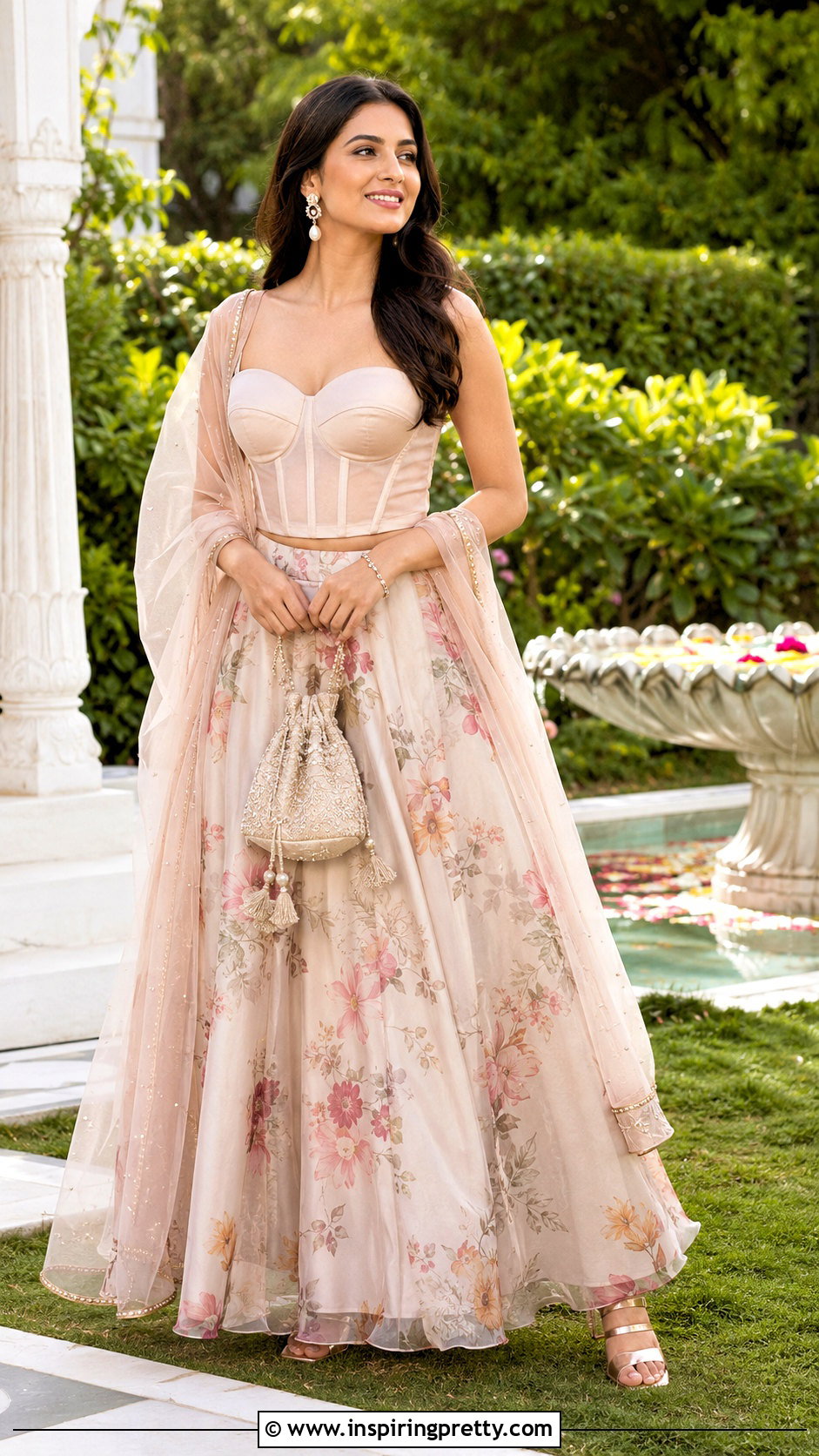
A corset crop top only works if the boning does its job, so that's the first thing I check. The bones should run straight down from the cups and stay flat when you sit; if they curve or poke at the ribs, it needs refitting. Once it fits, pair it with a high-waisted floral lehenga in organza or light silk, so the soft skirt offsets the structured top. Blush, powder blue, ivory and sage all suit a daytime wedding. Drape a sheer dupatta loosely over one shoulder so the neckline still shows. Pearl drops, a small potli and metallic block heels you can stand in for hours finish it.
2. Off Shoulder Crop Top With Sequin Lehenga
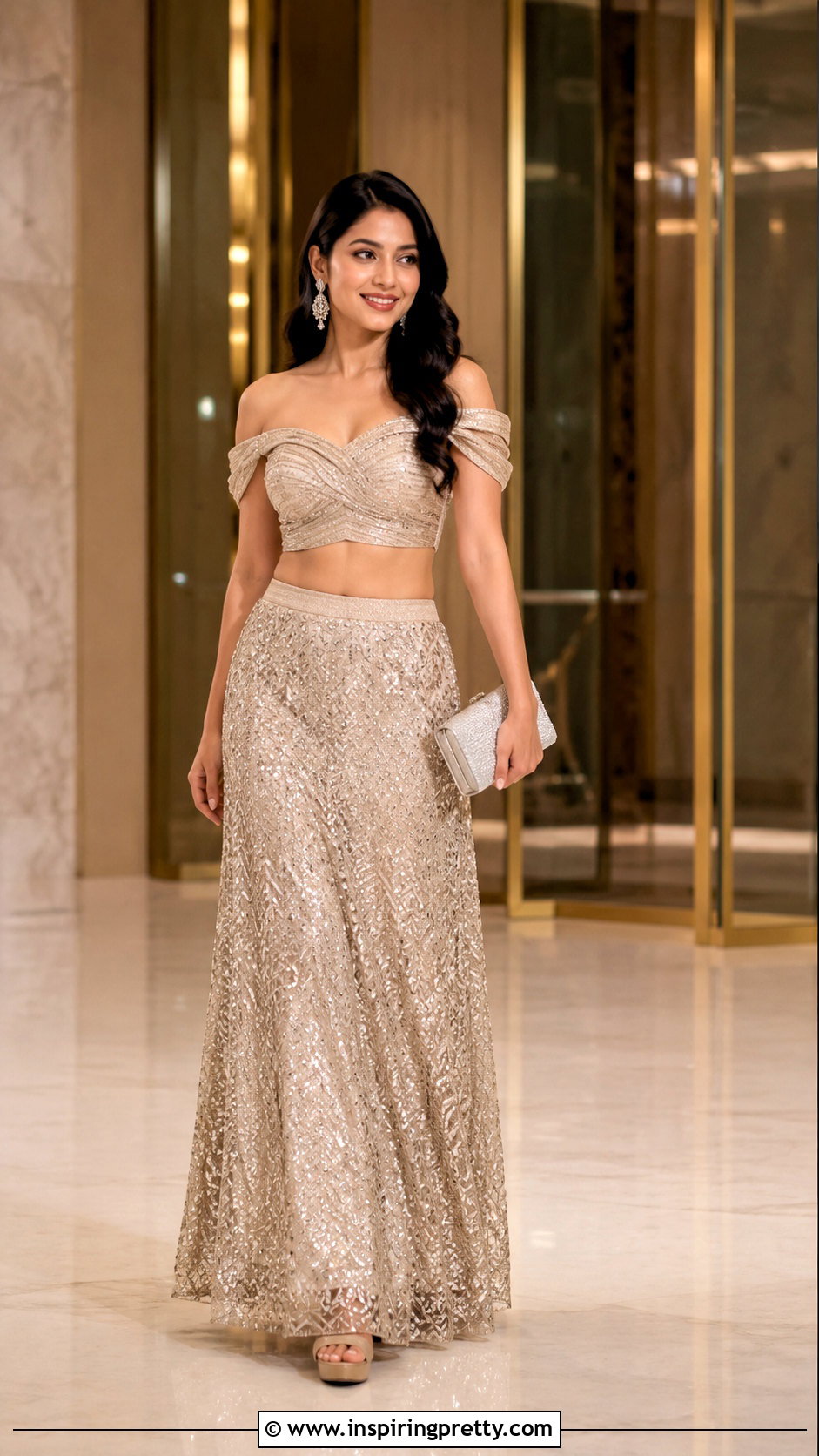
Off-shoulder blouses slide, and on a dance floor they slide faster. I ask for internal support, either a silicone grip strip along the neckline or a firm inner band, and short draped sleeves that sit just below the shoulder rather than halfway down the arm. Pair it with a lehenga carrying scattered sequins or linear beadwork, which catches light as you move. Champagne, silver, midnight blue and deep plum all read well under evening lighting. The bare shoulders already frame the face, so I'd wear statement earrings and no necklace. Platform heels give you height under the long skirt. You can skip the dupatta entirely here; the blouse looks cleaner without it.
3. One Shoulder Crop Top With Pleated Lehenga
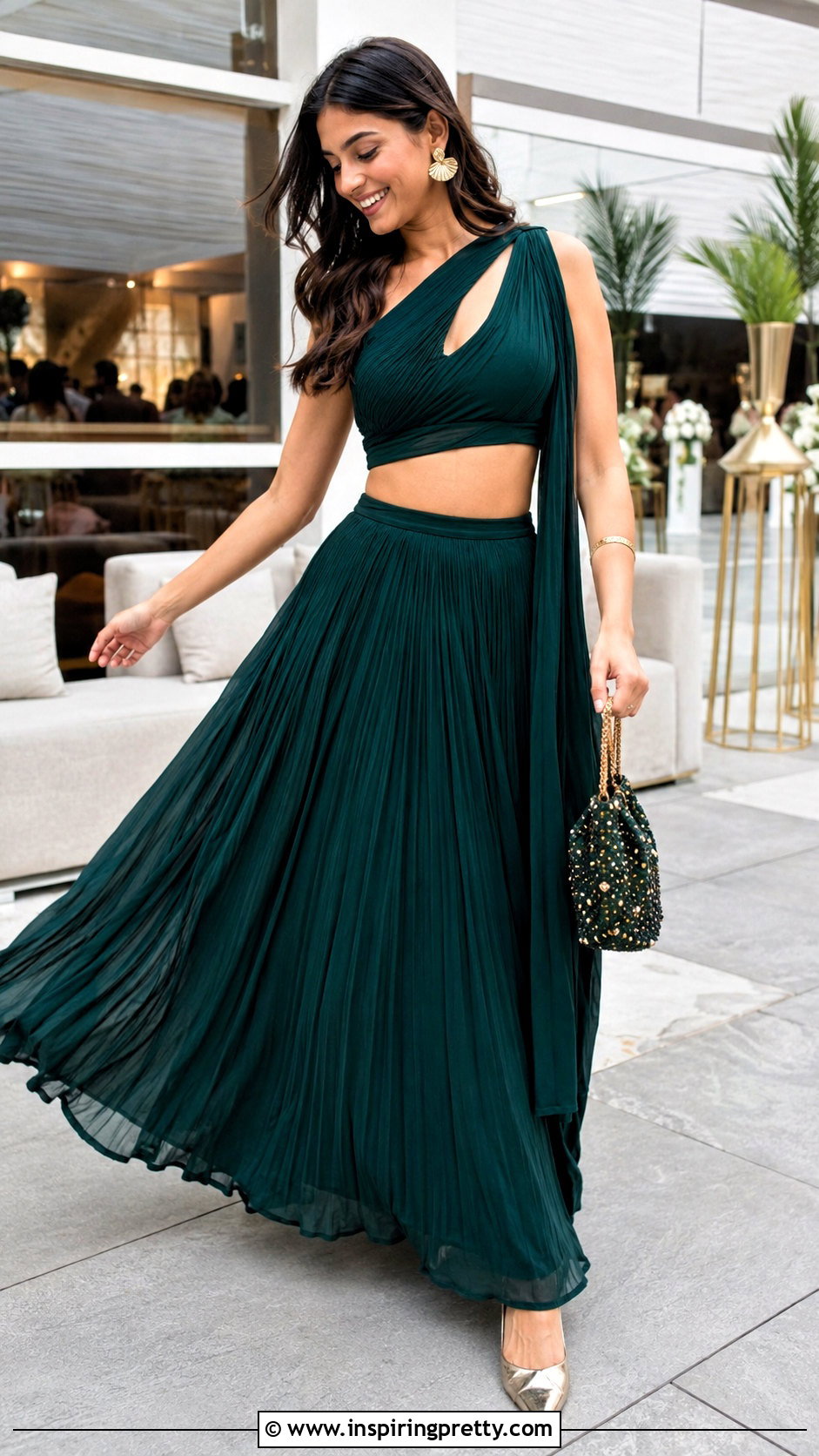
One-shoulder blouses make a lehenga feel Indo-Western straight away. The single strap carries all the work, so it needs to be wide and firmly anchored; a thin strap twists and cuts in by the end of the night. A softly pleated georgette or chiffon skirt moves with you and keeps the asymmetric top from looking stiff. I like one color head to toe here, emerald, cobalt, coral or dusty rose, for a long unbroken line. Instead of a dupatta, choose a blouse with a draped panel falling down the back. A single bracelet, medium earrings and a small embellished bag are enough, with metallic flats if you plan to dance.
4. Full Sleeve Crop Top With Plain Lehenga
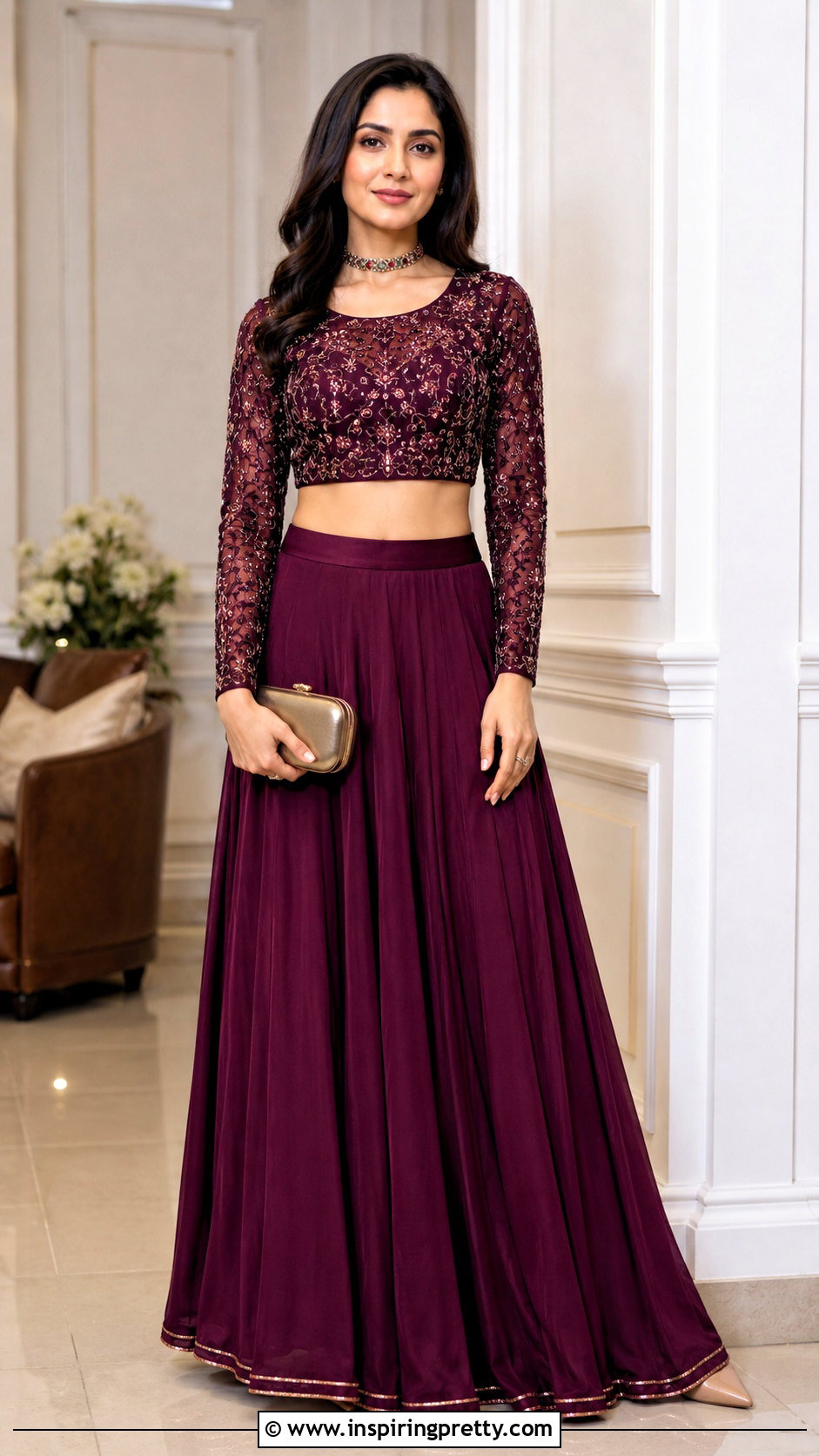
Full sleeves let the blouse carry all the decoration while the skirt stays plain. I put the thread work, sequins or motifs on the sleeves and bodice and keep the lehenga quiet apart from a border at the hem. That balance stops a heavily worked outfit from wearing you. Wine, forest green, navy and maroon suit evening events; peach and lavender feel lighter for the day. Keep the skirt high-waisted so the gap under the short top stays small. Full sleeves are the most common fitting complaint I hear, so ask for ease at the elbow; you'll be eating, raising a glass and dancing in them. A slim choker and closed-toe heels finish it.
5. Peplum Crop Top With Panelled Lehenga
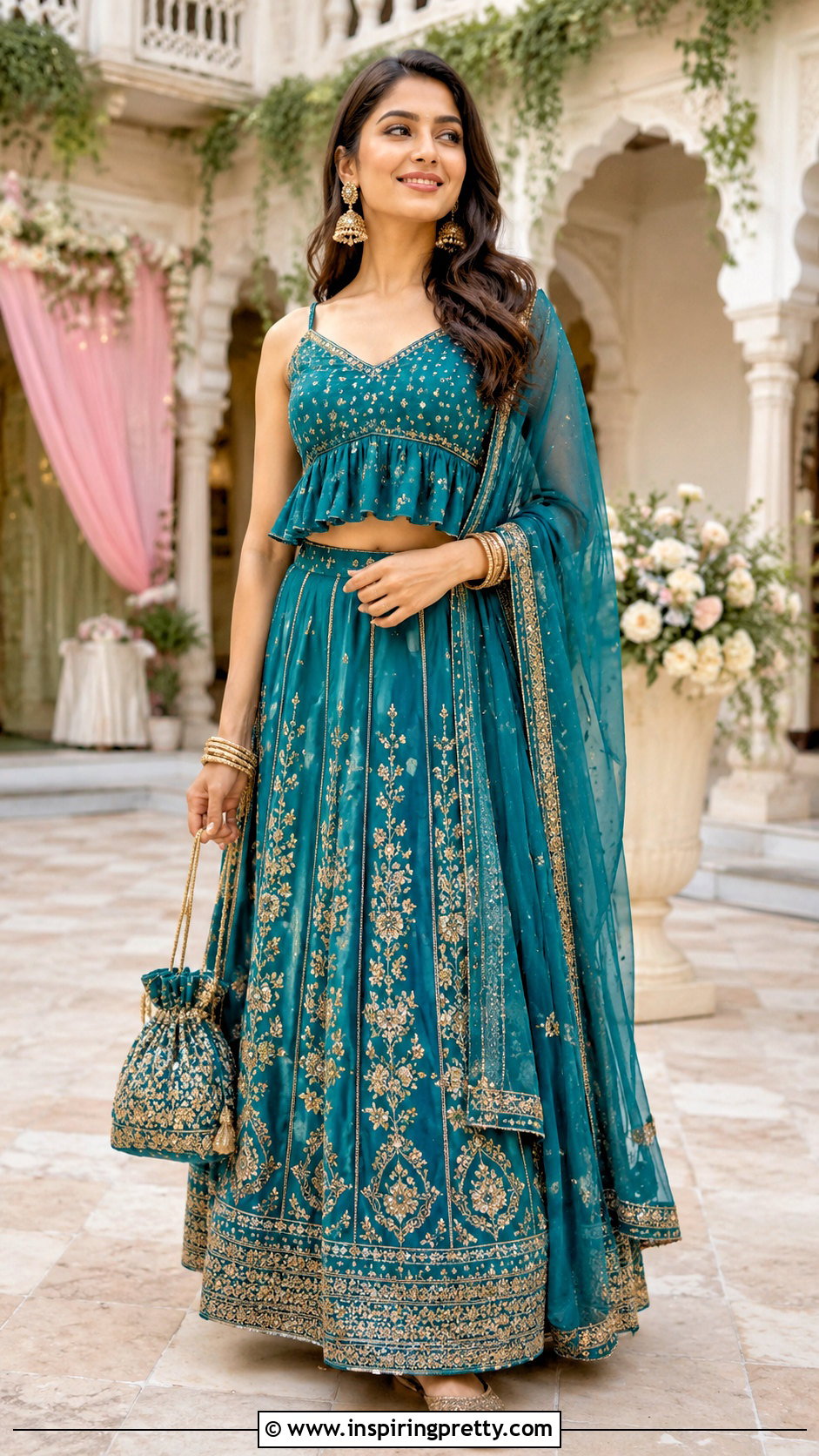
For anyone who wants a defined waist with a little more cover over the middle, a peplum crop top is my usual suggestion. The trick is length. The flare should stop at or just over the waistband; if it runs too far down the skirt, the top looks like a short kurta and the waist disappears. A panelled lehenga falls smoothly without bulk around the hips, which suits that small flare. Ruby, teal, mustard or ivory make a good matching set. Pick a light dupatta with a narrow border so it doesn't fight the peplum hem. Jhumkas, slim bangles and embroidered juttis keep the finish traditional.
6. Cape Sleeve Crop Top With Mirror Work Lehenga
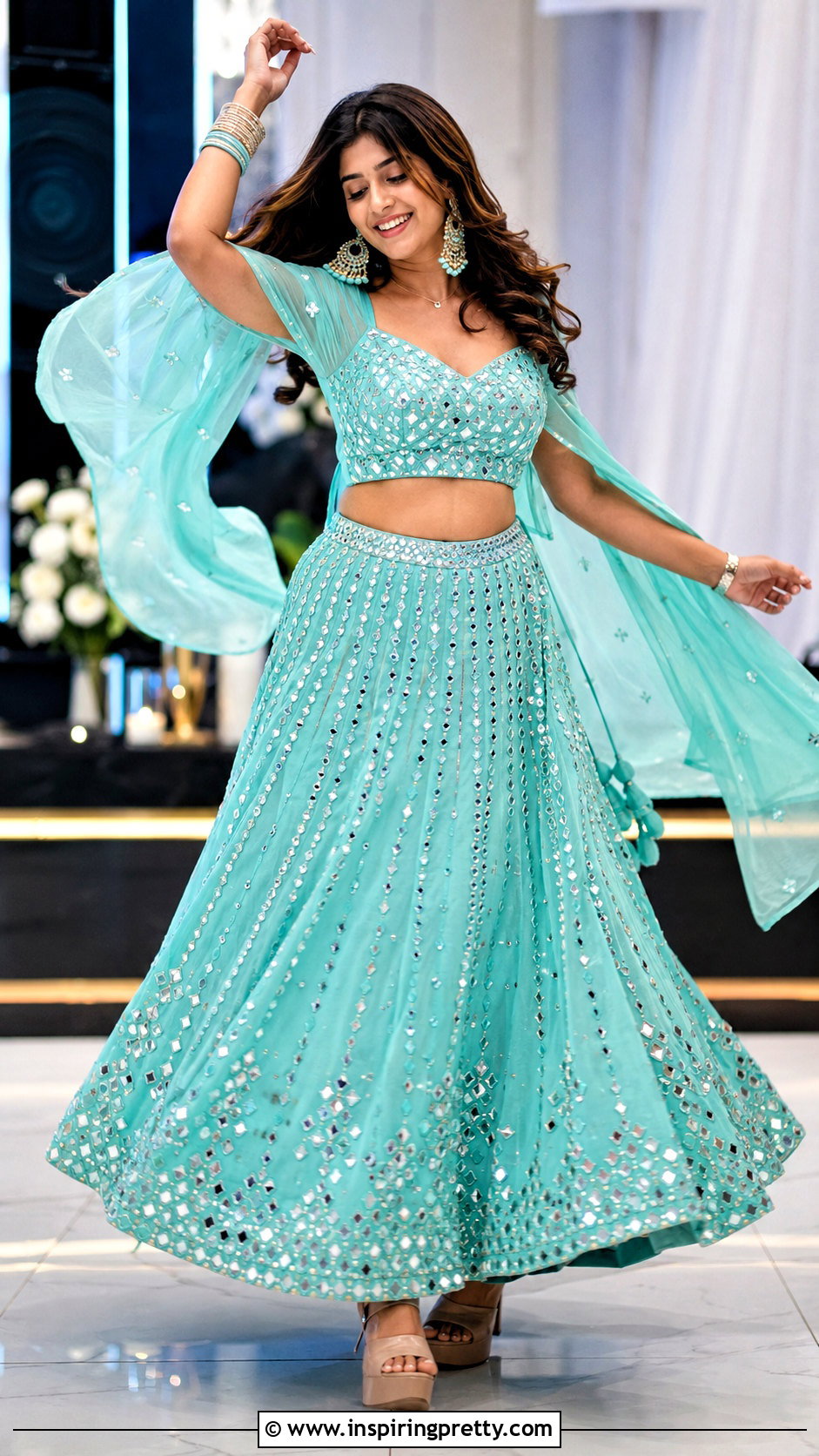
A cape sleeve gives you coverage and movement without a dupatta to manage. I look for a fitted inner bodice with sheer cape panels from the shoulder to the elbow or waist, so the structure stays underneath and the cape floats. Pair it with a mirror work lehenga where the mirrors are spaced out rather than packed in; dense mirror work is heavy and can scratch bare arms. Bright yellow, aqua, fuchsia and lime green suit a mehendi or sangeet. The cape already does a dupatta's job, so skip the extra layer. Medium earrings, bangles, a wristlet and neutral platform sandals keep it dance-proof.
7. Halter Neck Crop Top With Organza Lehenga
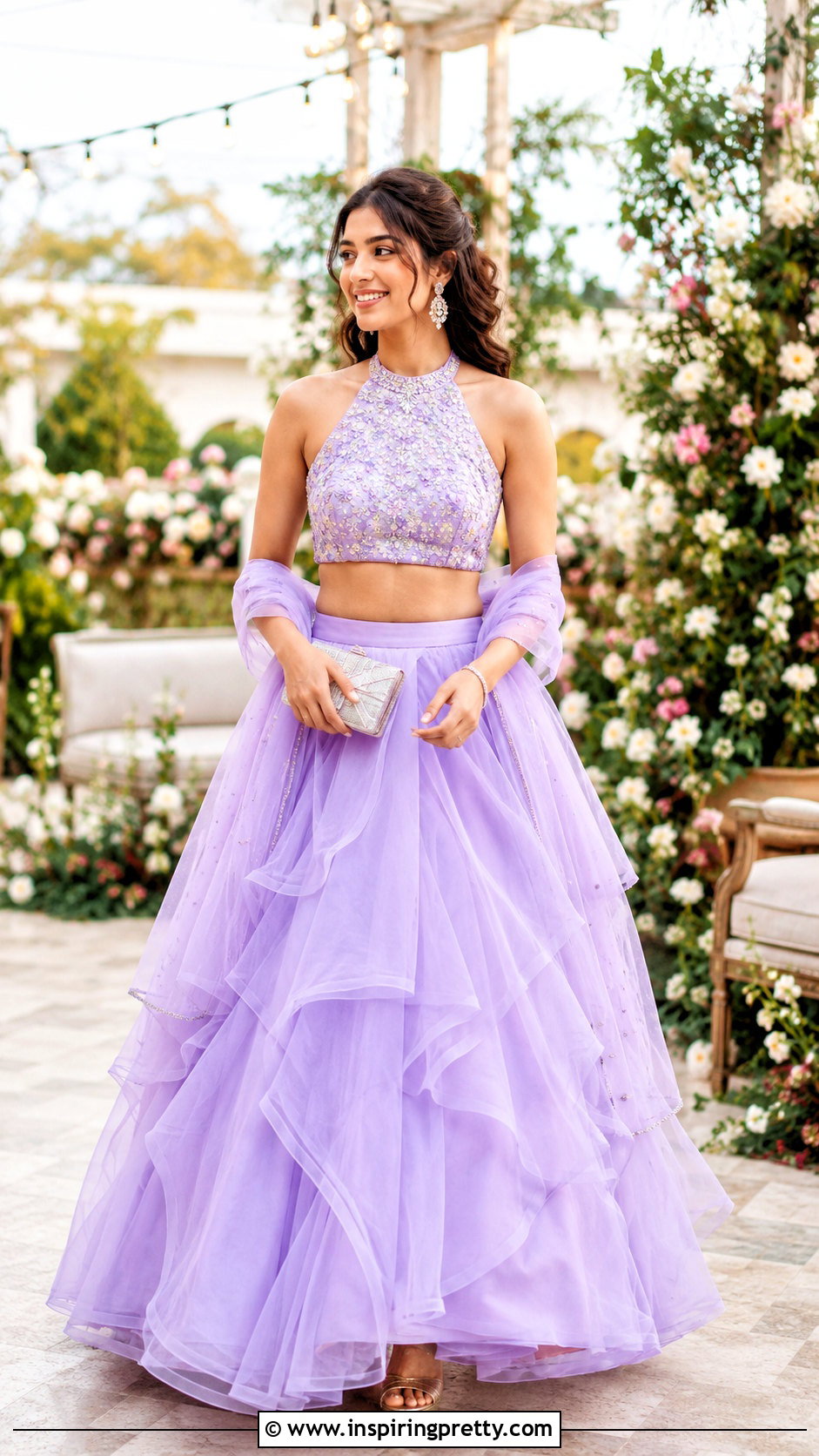
Halter necks look crisp on an organza lehenga, but the neck strap carries the bodice's weight, so a heavy blouse will pull at the back of your neck after a few hours. Keep the bodice light, closely fitted and fastened at the back with a proper hook or zip. A full organza skirt in pastel or a soft floral gives volume without heaviness. Mint, lilac, butter yellow and rose pink suit garden weddings. Wear the dupatta draped over the arms or from one side of the waist so the halter shape stays visible. Shoulder-grazing earrings, a slim bracelet and a box clutch are enough. Organza snags on sharp heels, so wedges or block heels are safer.
8. High Neck Crop Top With Banarasi Lehenga
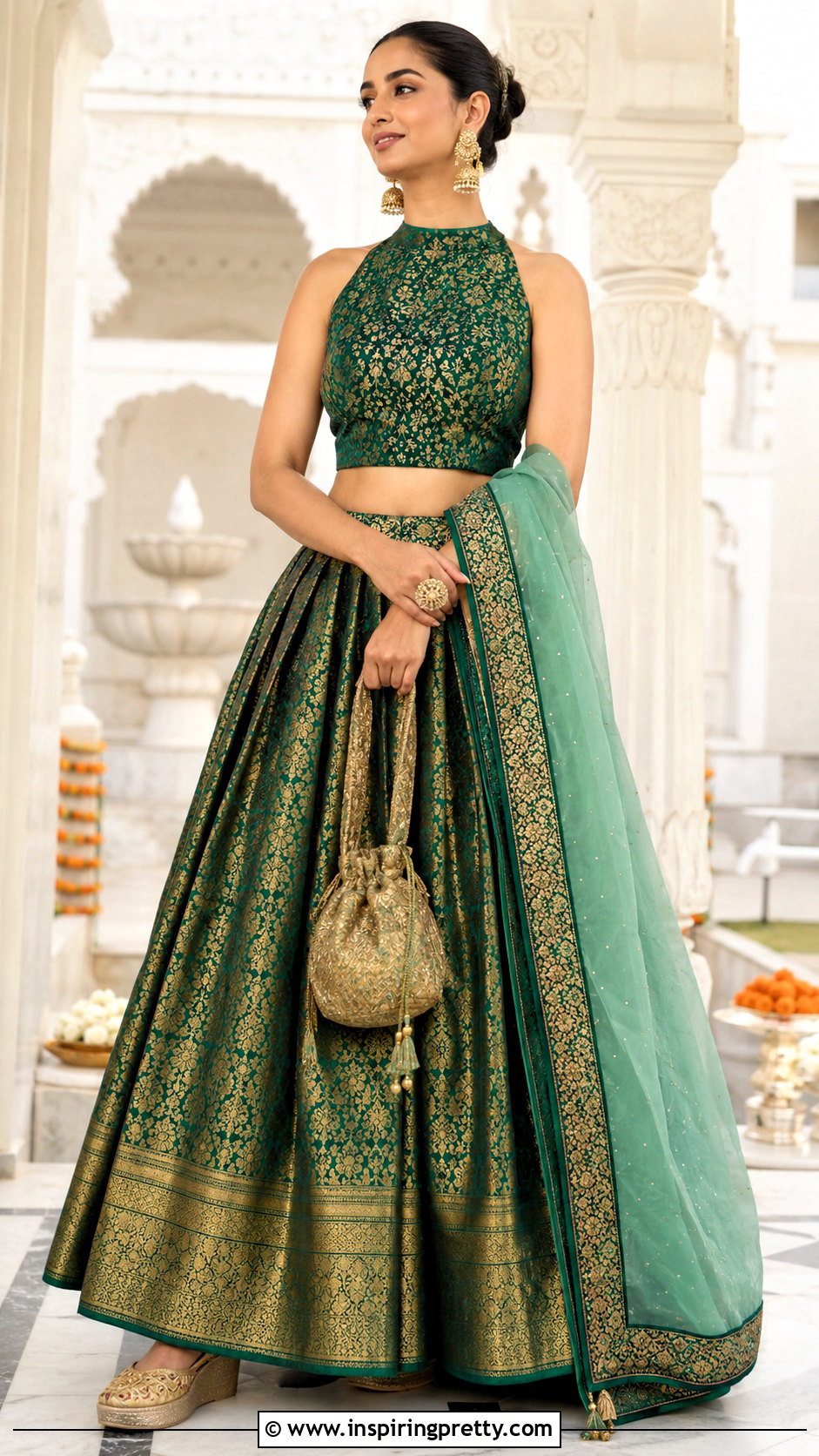
Banarasi is heavy and rich, so I keep the blouse simple and let the weave lead. A fitted high-neck crop top, sleeveless to balance the covered neck, with a strip of the skirt's border used at the hem or armholes ties the two together. Deep magenta, royal blue, emerald, rust and antique gold show off woven motifs best. Drape a plain silk or organza dupatta over one arm rather than across the blouse. A high neck doesn't need a necklace; jhumkas, a statement ring and a potli are enough. Banarasi skirts are weighty, so platform juttis or block heels help. This is the one I'd suggest for a family ceremony where traditional textiles are expected.
9. Sweetheart Crop Top With Scalloped Lehenga
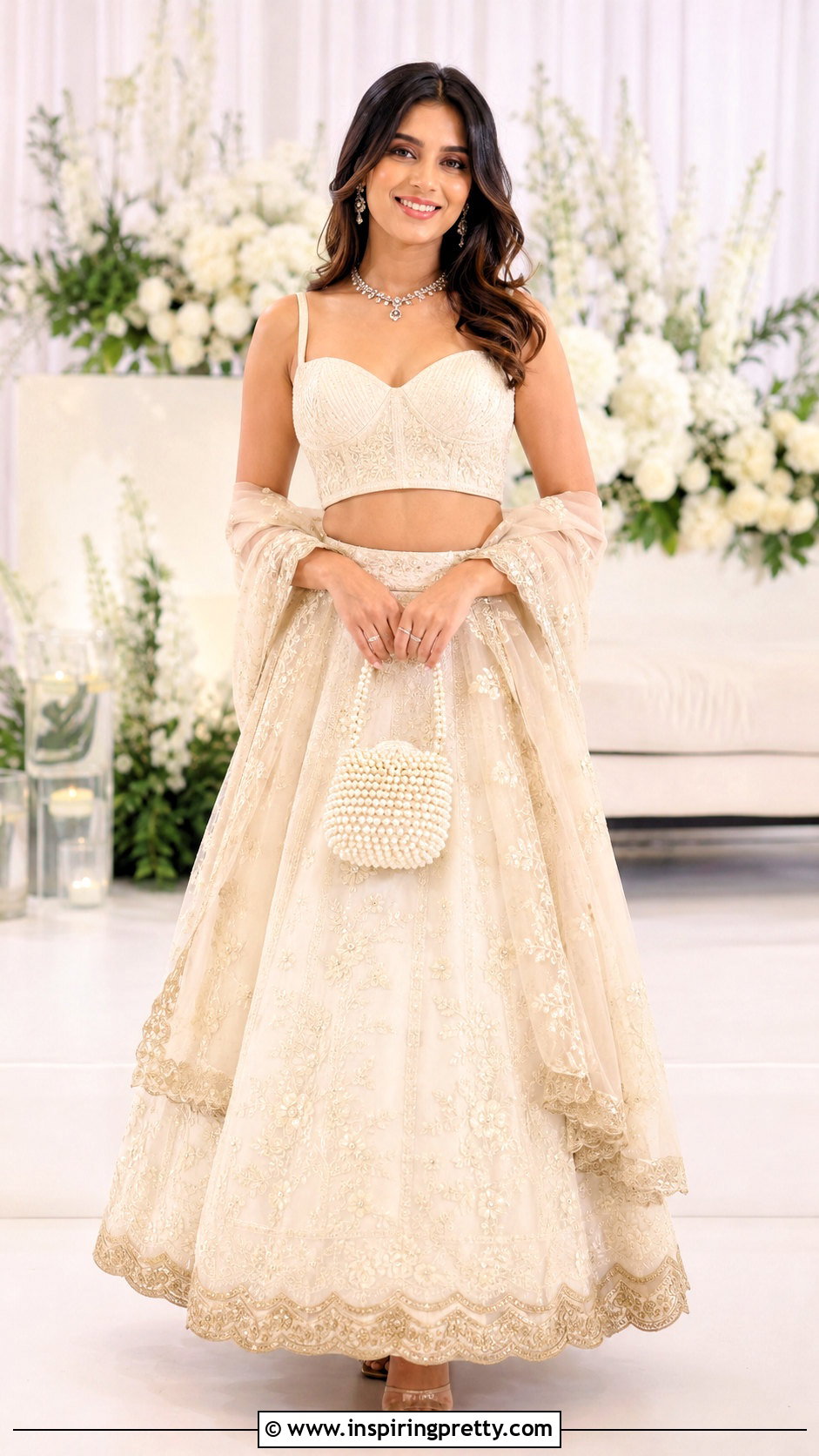
The sweetheart neckline is where I spend the most time at a fitting, because the curve has to sit flat against the skin. A sweetheart crop top with supportive cups and fine embroidery along the edge pairs naturally with a scalloped lehenga, the two curves repeating each other. Ivory with gold, peach with silver or dusty blue with tonal thread feel understated. Leave some open space on the skirt so the scalloped hem stays readable. A short necklace that follows the neckline, matching earrings and neutral heels keep the eye on the borders. Sit, lean and lift your arms before the final stitch; that's when a sweetheart gapes.
10. Jacket Crop Top With Monochrome Lehenga
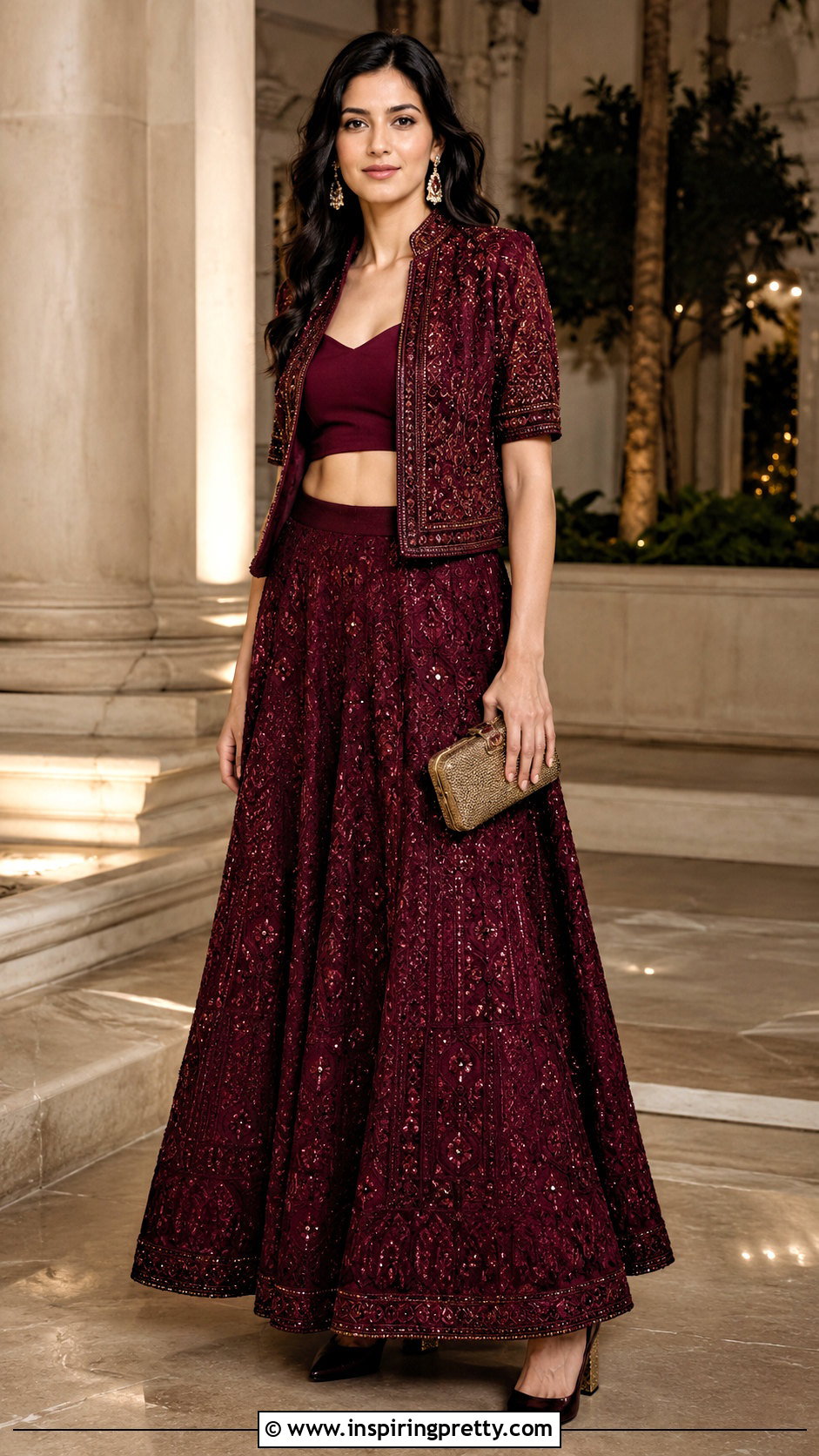
Outdoor winter functions are where a cropped jacket earns its place. Underneath, a fitted sleeveless crop top; over it, a short embroidered jacket that stops right at the waistband so the skirt's shape stays visible. Keep everything in one color family, ivory, burgundy, charcoal, olive or navy, and let texture do the work instead of contrast. The jacket can have structured shoulders, a collarless front or a little fringe at the hem. Skip the dupatta; a jacket and a dupatta together crowd the shoulders. Drop earrings, a modern clutch and pointed block heels finish it. The inner crop top can also be worn on its own at a later event.
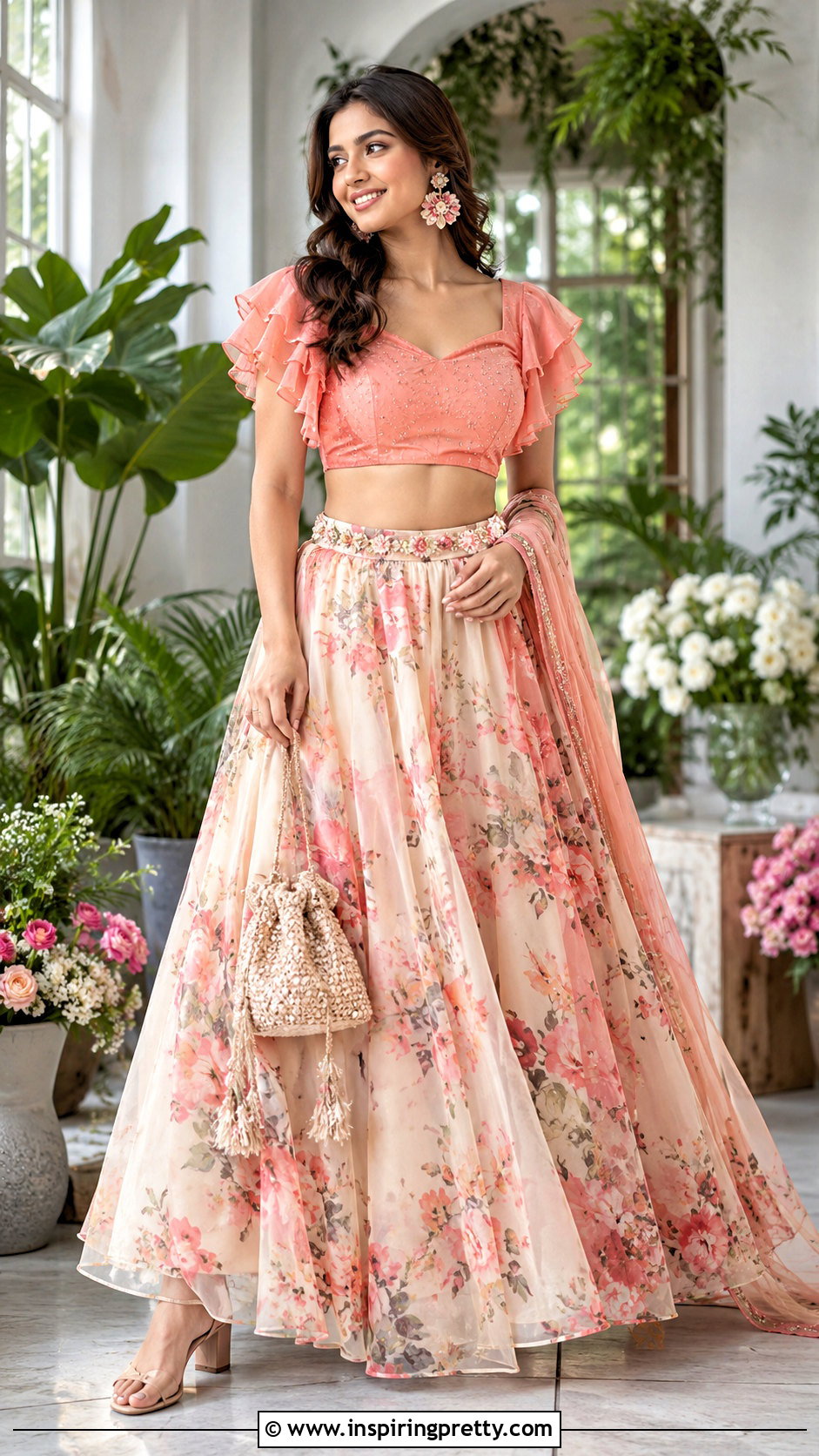
11. Ruffle Sleeve Crop Top With Printed Lehenga
Ruffles go wrong when they're too big. Oversized sleeves catch on things and get in the way when you eat. I keep them short and layered or soft at the elbow, and pair them with a floral, botanical or watercolor print skirt in chiffon, crepe or organza. Stay within one palette so the print and the ruffle look planned together. A plain top steadies a busy print; a lightly printed blouse makes it a set. A narrow belt over the draped dupatta defines the waist and holds the drape in place. Floral earrings, a woven potli and simple block heels suit a daytime or outdoor celebration where you'll be on your feet.
12. Asymmetrical Crop Top With Layered Lehenga
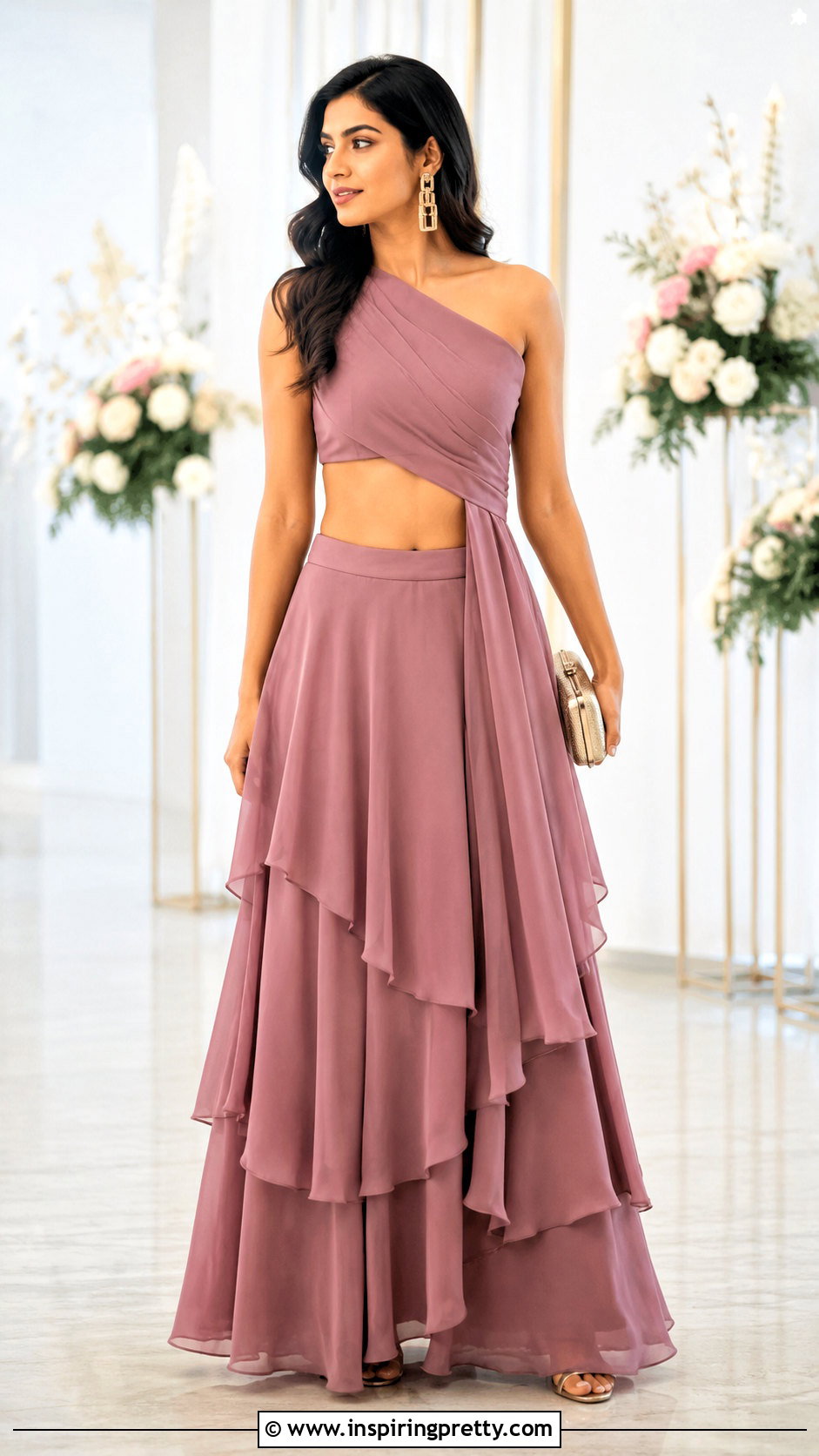
An asymmetric crop top is the strongest shape in this list, so the rest of the outfit should hold back. The blouse might have a diagonal hem, one longer side or a draped panel across the waist. Pair it with a tiered georgette or net lehenga that moves lightly rather than adding stiffness. Keep the whole outfit one color, teal, mauve, coral or steel gray, so the unusual cut looks deliberate. A heavy dupatta would fight the diagonal line; attach a light drape at one shoulder or go without. Geometric earrings, a compact clutch and slim heels finish it. Make sure the longest point of the blouse ends above the first skirt tier.
13. Square Neck Crop Top With Gota Patti Lehenga
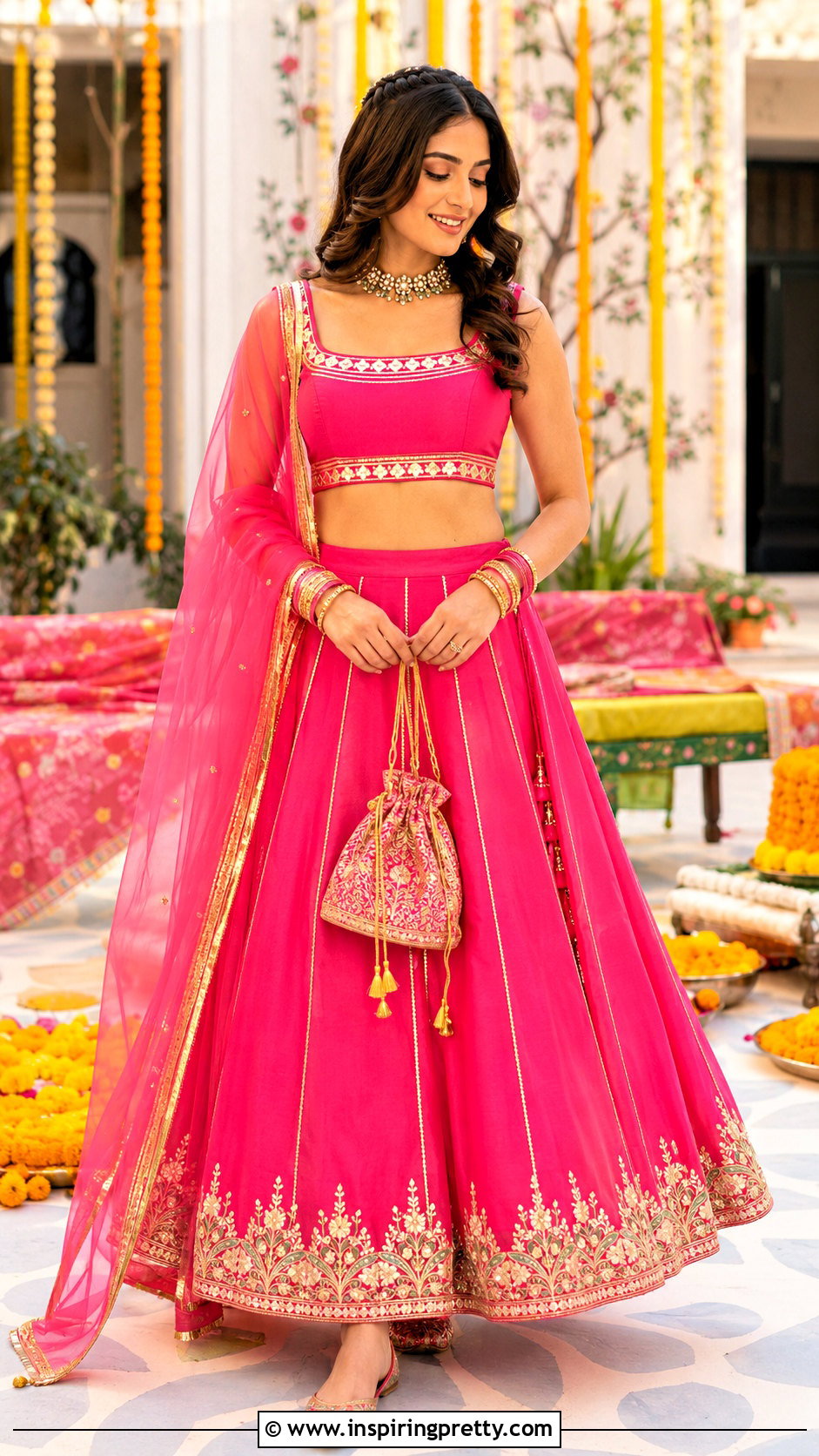
Gota patti is light, which makes it one of the easiest festive embroideries to wear for a long day. A square-neck crop top frames it cleanly against a gota patti lehenga, with gold or silver gota outlining the neck, sleeves and waistband rather than covering everything. Medium straps or short sleeves keep the square neckline from slipping. Marigold, rani pink, orange and green belong at a daytime celebration. Drape a sheer dupatta with small gota motifs loosely across one arm. A choker sits naturally inside a square neck, with bangles and embroidered juttis. A clean high waist lets the angular top and the flared skirt meet neatly.
14. Boat Neck Crop Top With Chikankari Lehenga
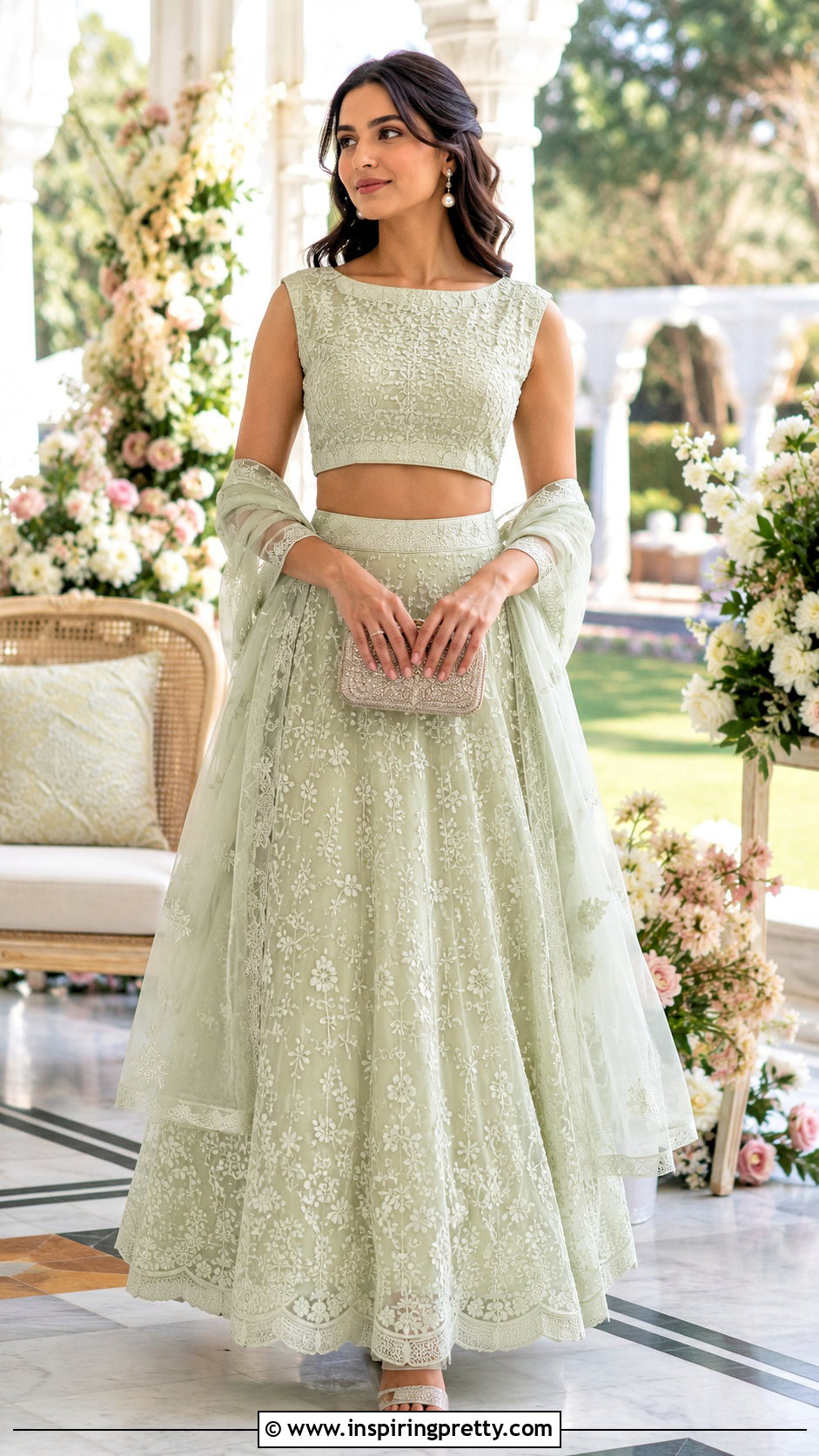
Chikankari is fine shadow work, and the first thing I check is the lining. Without a nude lining under sheer fabric, the embroidery disappears into whatever shows behind it. A boat-neck crop top gives modest coverage and widens the shoulders a little, a softer choice than a deep cut. Cotton-silk, georgette or organza with tonal threadwork stays cool for a daytime event. White, ivory, blush, powder blue and pistachio let the stitches show. A high-waisted, moderately flared skirt keeps it comfortable. Drape the dupatta over both arms or pin it at one shoulder, and wear pearls or silver earrings with low block heels or decorative flats.
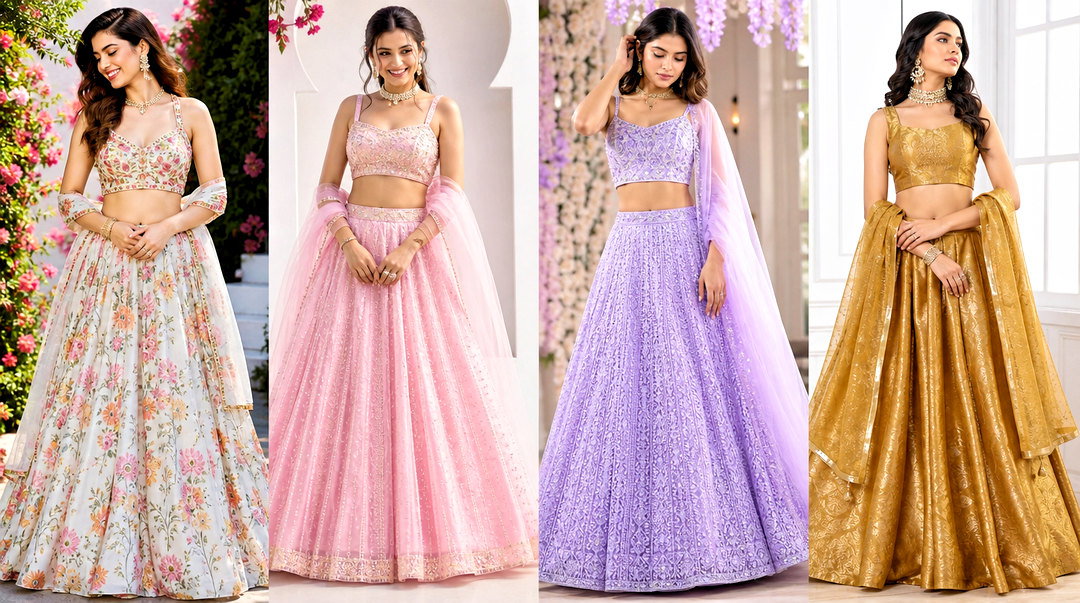
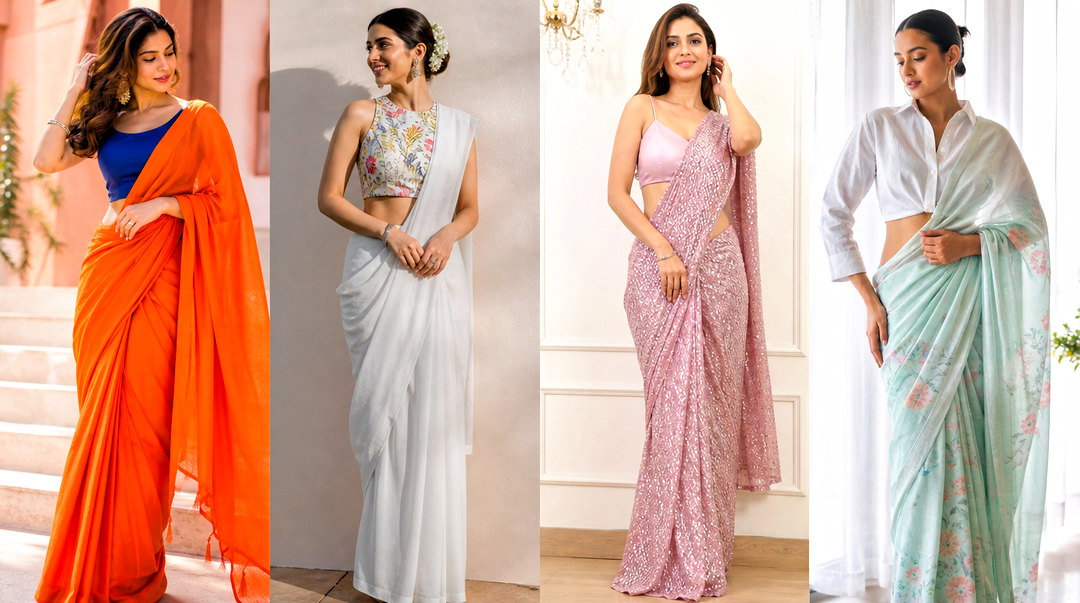
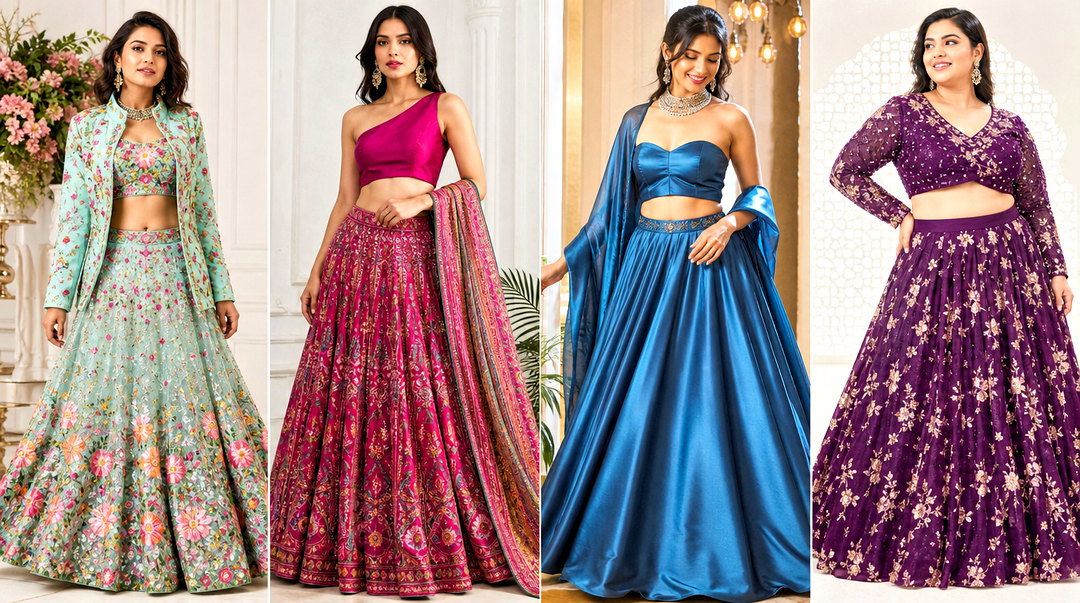
15. Bralette Crop Top With Ombre Lehenga
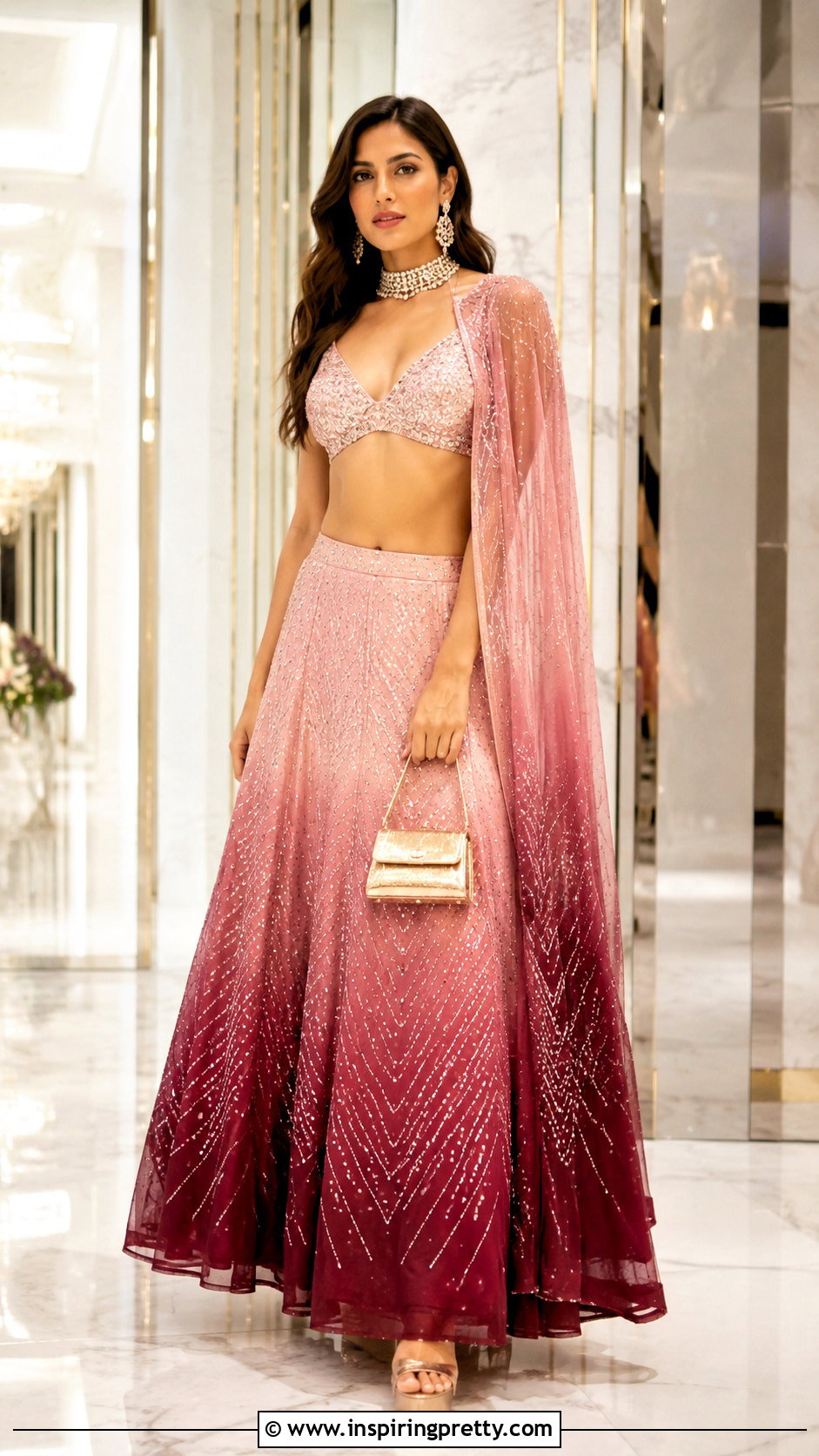
A bralette top is the boldest cut here, and I'll only style one that's built like real support: wide straps, structured cups and a substantial back band. Thin straps and soft cups look delicate on a hanger and feel exposed by the second hour. The ombre lehenga fades from a pale waistband to a deep hem, which draws the eye down rather than to the open top. Pink to burgundy, aqua to navy and peach to coral all work. Add a sheer cape or one-shoulder drape if you'd like more coverage. A short layered necklace or choker fills the open neckline. Keep embroidery at the waistband and hem so the fade stays the feature, and wear stable platform heels.
16. Cold Shoulder Crop Top With Georgette Lehenga
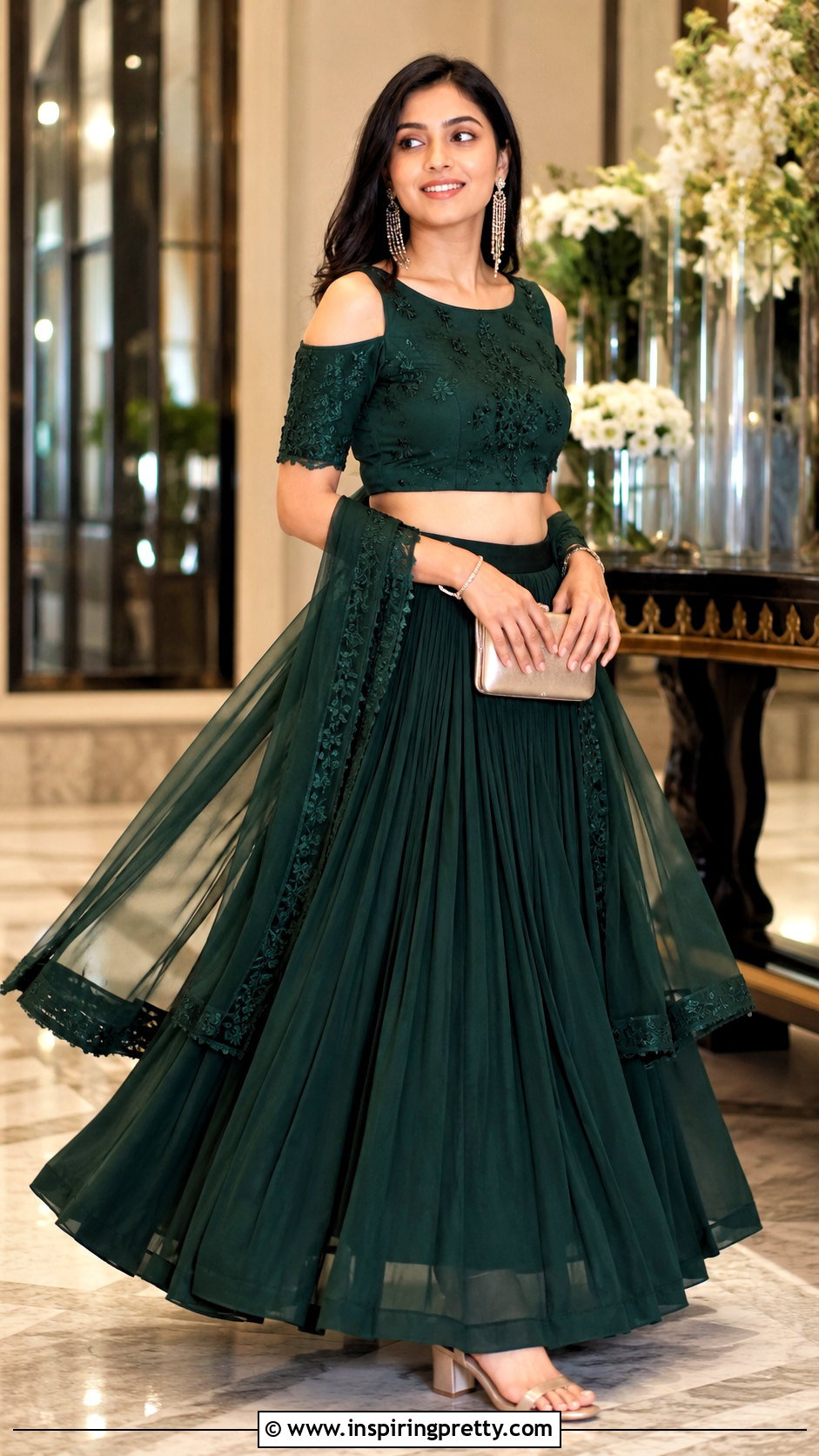
Cold-shoulder tops give you sleeves without the heat of a full one. The weak point is the strap that holds the sleeve up; if it's thin or loose, the sleeve slides down your arm all night. I ask for firm straps and soft sleeves that drop straight. A fluid georgette lehenga moves well without adding volume. Wine, navy, bottle green and smoky purple suit an evening wedding or reception. I like tonal embroidery around the shoulder cutouts, repeated on the skirt border so the pieces belong together. A narrow net dupatta pinned at the waist and worn behind the arms keeps the shoulders clear. Long earrings, a satin clutch and block heels finish it.
17. Wrap Crop Top With Bandhani Lehenga
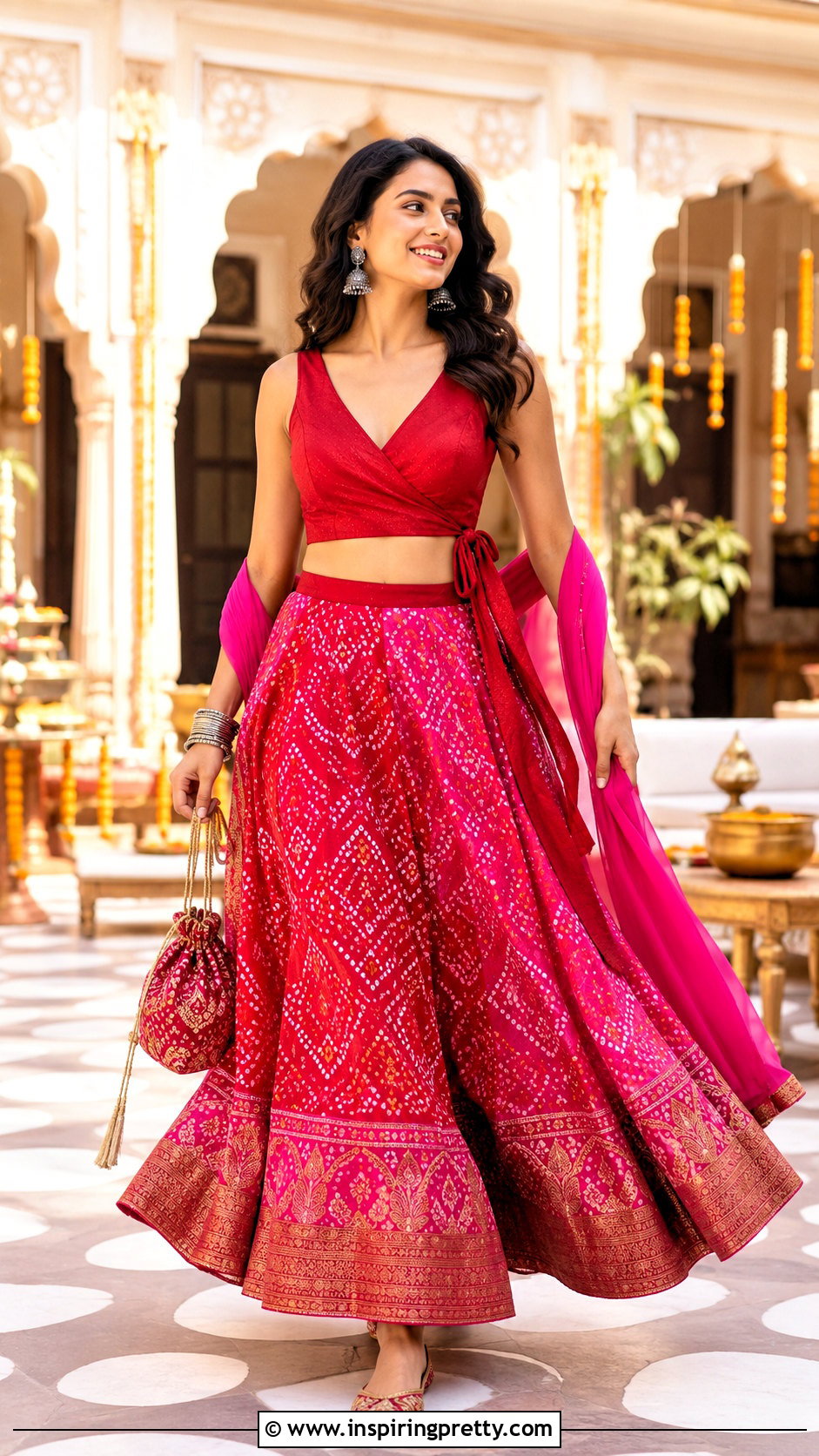
Bandhani's dotted tie-dye is loud and joyful, so a wrap crop top keeps the blouse side relaxed. Wrap fronts shift when you dance; I always ask the tailor to add a couple of hidden snaps inside so the panels stay where they were tied. Choose an adjustable side tie and a modest V. A full Bandhani skirt with a broad woven or embroidered border carries the traditional red, pink, green or indigo. A plain contrasting dupatta stops it from getting busy, though a lightly patterned one works if the blouse is plain. Oxidized earrings, stacked bangles, a drawstring potli and traditional juttis suit long hours on your feet.
18. Metallic Crop Top With Velvet Lehenga
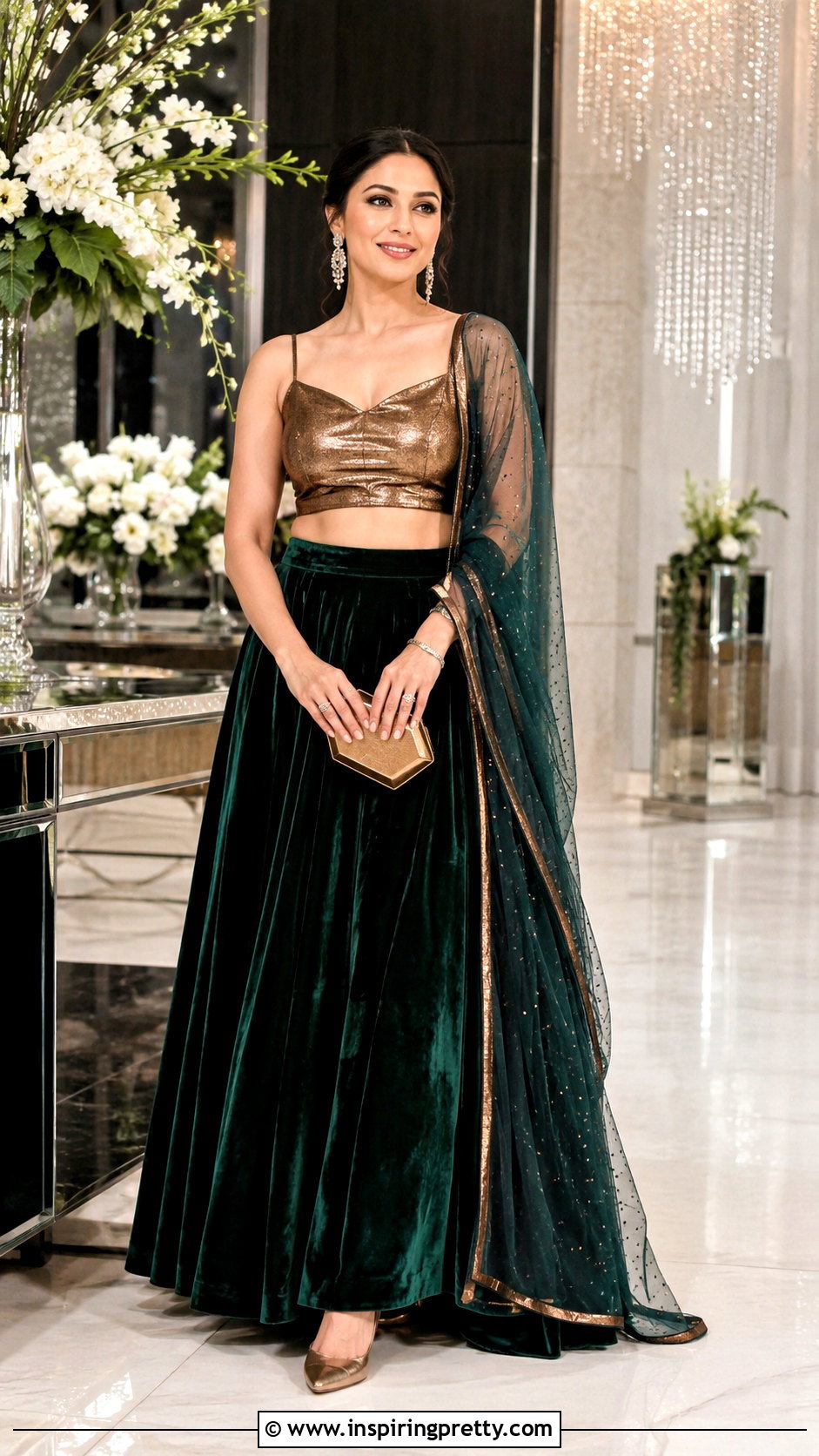
Velvet is heavy and warm, so I save this pairing for cool evenings. A gold, bronze or silver blouse with a clean neckline and restrained shine sits against a velvet skirt in emerald, burgundy, navy or black, with a metallic border tying the two together. Velvet already has weight, so keep the flare moderate and skip all-over embroidery. Check the lining; velvet clings without one and loses its smooth fall. A sheer dupatta with a narrow metallic edge adds lightness without another heavy fabric. Velvet crushes when you sit, so a quick steam inside out before you leave helps. Crystal earrings, a hard clutch and closed-toe heels in the blouse's metal finish it.
19. Puff Sleeve Crop Top With Raw Silk Lehenga
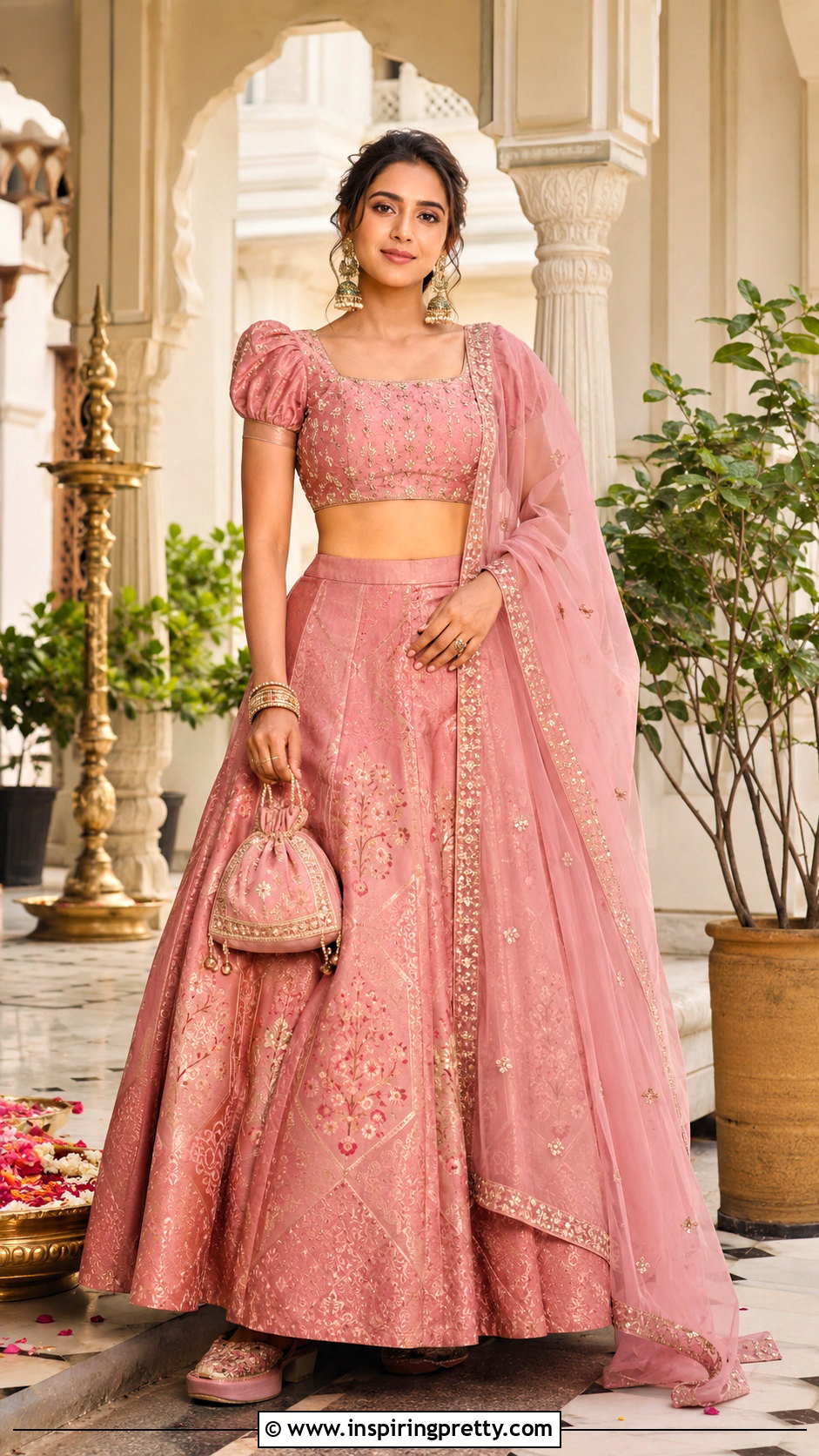
Puff sleeves on a crop top look sweet when they're gathered neatly and look costume-like when they're huge. I keep them short or to the elbow, with controlled gathers and a soft lining so the seams don't scratch. A fitted waist and a square, scoop or modest sweetheart neckline keep the blouse balanced. Raw silk has a slightly slubby texture and holds its shape, so a high-waisted skirt with panel seams, small motifs or one strong border suits it. Terracotta, turquoise, rose, purple and antique gold read festive. Drape a light organza dupatta over one shoulder, and add temple-style earrings, a few bangles, a potli and platform juttis.
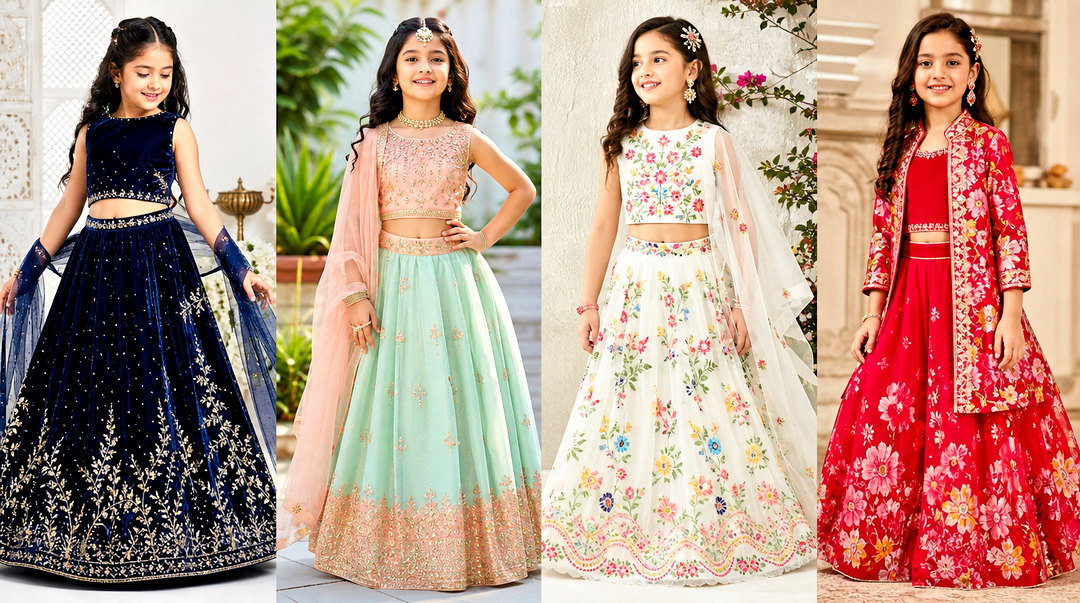
20. Spaghetti Strap Crop Top With Embroidered Lehenga
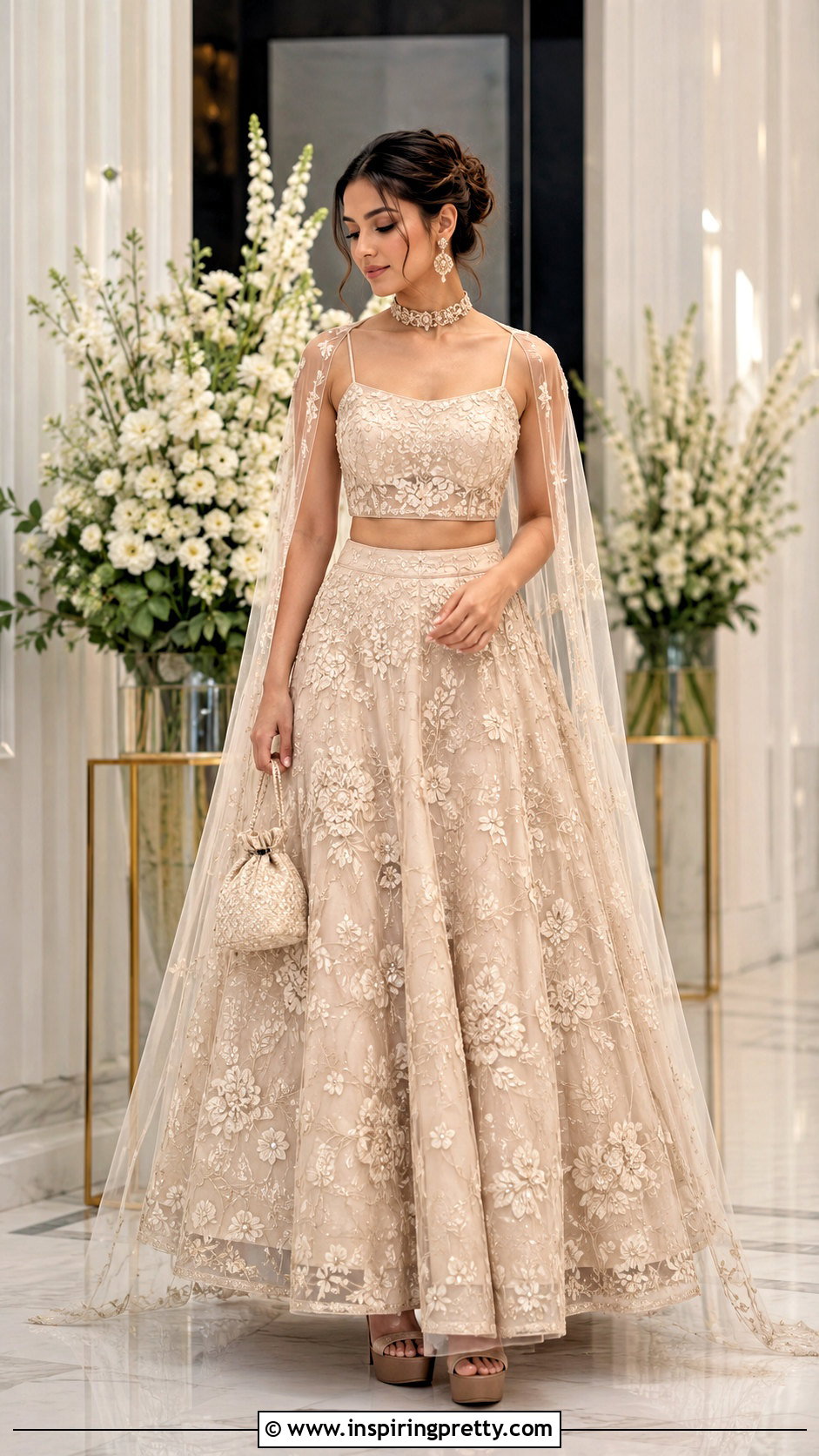
Spaghetti straps carry the least weight of any blouse here, so the bodice has to do the supporting. I fit these tightest around the bust and underarm, with adjustable straps and a firm, lined bodice. Keep the top plain or lightly worked so the embroidered skirt with florals, vines or geometric motifs stays the focus. Champagne, ivory, blush and muted gold read soft; emerald or ruby gives stronger contrast. This is the cut I'd pair with detachable sleeves, a sheer cape or a dupatta, so you can cover your shoulders for the ceremony and take it off for the party. A delicate choker, matching earrings, a compact bag and neutral platform heels finish it.
What to Bring to the Final Fitting
Most problems I see on wedding days come from a fitting done in flat shoes and without the underwear that will be worn. Take these with you so the tailor fits the outfit you'll actually be wearing.
- The exact shoes. The skirt hem should clear the floor by a small margin in those heels; a hem that touches the ground gets stepped on and torn.
- The bra or adhesive cups you plan to wear, especially under a corset, halter or bralette top.
- The can-can or petticoat, if you're using one. It changes how the skirt falls and where the waistband sits.
- The dupatta, so pinning points can be marked and small loops added inside the blouse to hold it.
At the fitting, sit down, raise both arms, bend to pick something up and do a few dance steps. If anything pinches or gapes, say so then. Small changes before the event are easy; a broken hook or split seam mid-celebration isn't.
Putting Zari and Mirror Work Away Safely
Metallic zari and gota tarnish with moisture and perfume, so spray scent before you dress and let the outfit air for a day before storing it. Wrap embroidered pieces in a soft cotton or muslin cloth rather than plastic, which traps damp. Fold with tissue between the layers so mirrors and sequins don't press into the fabric, and refold along different lines every few months to stop permanent creases. Have heavy pieces professionally dry-cleaned; home washing can bleed dyes like Bandhani and loosen beadwork.
Your Crop Top Lehenga, From Fitting to Last Dance
There's a crop top lehenga here for nearly every function, from a daytime mehendi to a late reception. Corset and metallic blouses make the strongest impression; wraps, cape sleeves and chikankari sets are gentler. I'd decide on the occasion and the hours you'll be wearing it first, then the fabric weight, then how much coverage you want. At the final fitting, check blouse support, where the waistband sits, the skirt length in your actual shoes and how you move. Match the jewelry to how much embroidery you're wearing. With a good tailor, the blouse and skirt can each be worn again with other pieces.
Related posts:


Leave a Reply