
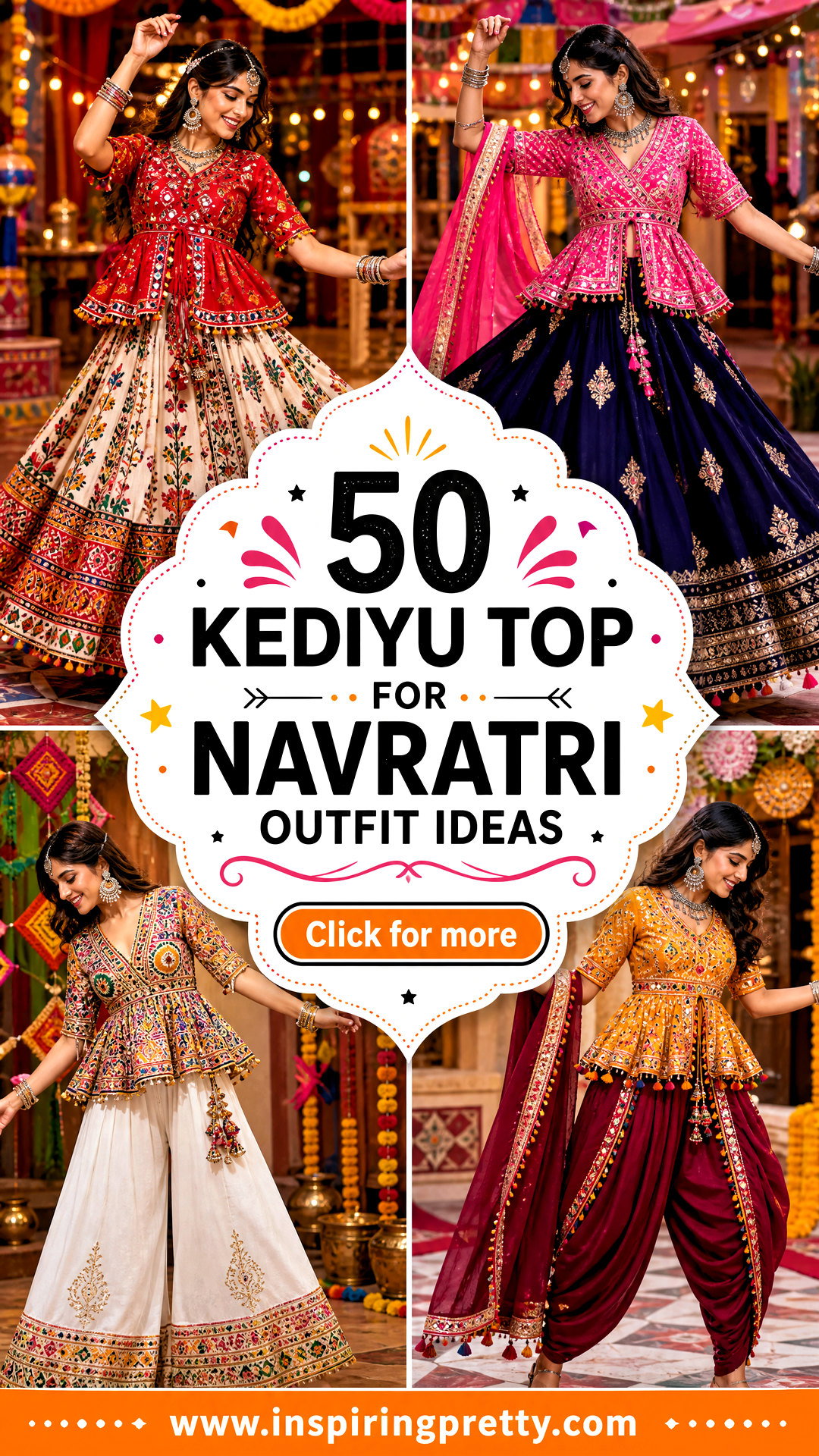
A kediyu is built to move. Its fitted bodice flares out into gathers at the waist, so every Garba turn sends the hem swinging while the mirror work catches the light. It began as a Gujarati men's garment, but women now wear it with lehengas, chaniyas, dhoti pants, palazzos, shararas and even jeans. Below are fifty outfits, from classic Bandhani and mirror work to single-color sets and denim fusion. Because you'll be dancing for hours, I've focused on what keeps you comfortable: light fabrics, a dupatta that stays pinned, cushioned flat shoes and jewelry that won't weigh you down.
What Makes a Kediyu Different From a Choli
A kediyu started as a man's upper garment in rural Gujarat and Kutch, usually worn with a dhoti. What women have borrowed is its shape: a fitted yoke and bodice that gathers into a full flare, so the lower edge fans out when you spin. A choli, by contrast, is a short fitted blouse that ends under the bust and doesn't move on its own.
Length changes how a kediyu works with the bottoms.
- Cropped, ending at the waist: best with high-waisted lehengas, chaniyas and shararas, because the flare sits right on top of the skirt's volume.
- Hip-length: the most versatile, and the one I'd choose for jeans, dhoti pants and cargos.
- Mid-thigh: the most coverage, but it needs side slits and slim bottoms like churidars or straight pants, or the two layers look heavy.
Whatever the length, check that the gathers start at your natural waist. A flare that begins too high adds bulk across the bust, and one that begins too low just looks like a dropped hem.
1. Mirror Work Kediyu With Black Lehenga
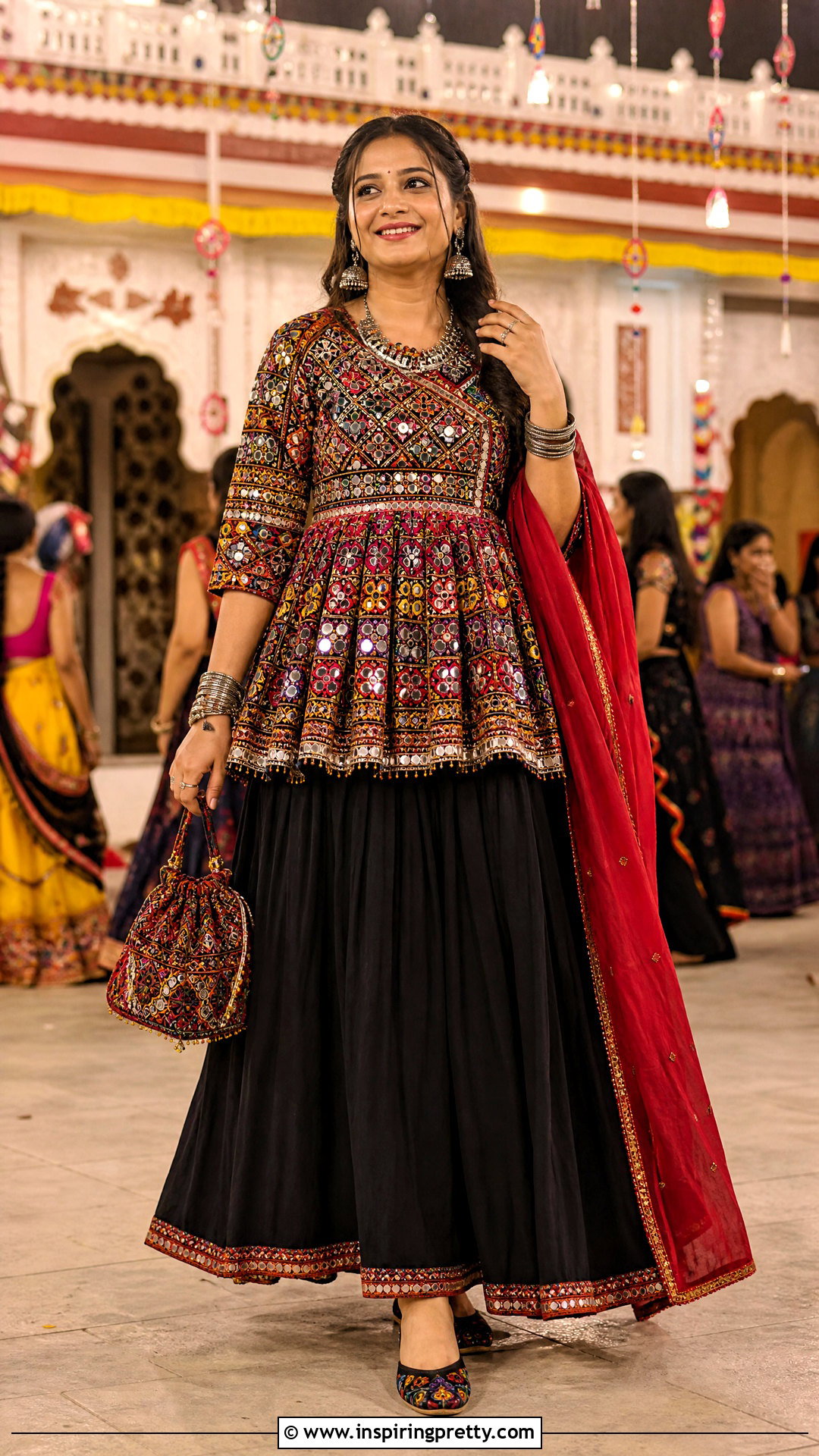
A colorful mirror work kediyu over a plain black lehenga is the pairing I'd give a first-timer. The black skirt gives the mirrors a dark background, so they flash under the lights instead of blending in. Choose a cotton or georgette lehenga with enough flare for full turns, and an embroidered waist belt to define the shape. Oxidized jhumkas, stacked bangles and a small potli. If you add a red or mustard dupatta, pin it at the shoulder and the waist. Cushioned black juttis and a braid keep you neat all night.
2. Bandhani Kediyu With White Dhoti Pants
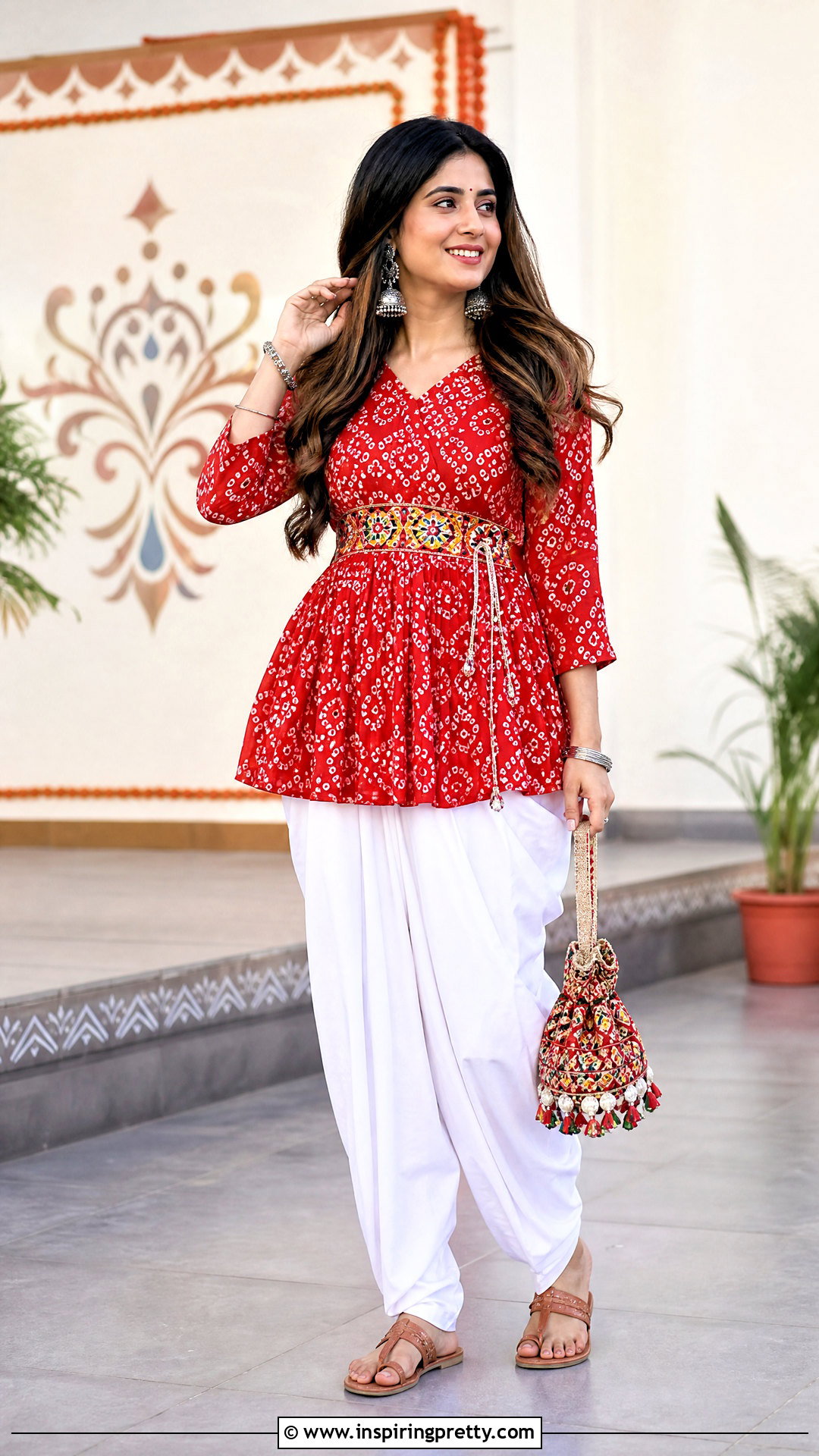
Bandhani with white dhoti pants is light, bright and easy to dance in. Pick a red, green or royal blue Bandhani kediyu with a wrap neckline and a flared hem; the gathered dhoti echoes the top's volume and leaves room for wide steps. White dhoti pants show dust from outdoor grounds quickly, so I'd keep them for indoor venues or plan a wash after each night. An embroidered belt, silver earrings and a crossbody potli. Flat Kolhapuris with soft straps, a ponytail, and a short shoulder drape or no dupatta at all.
3. Red Kediyu With Printed Chaniya
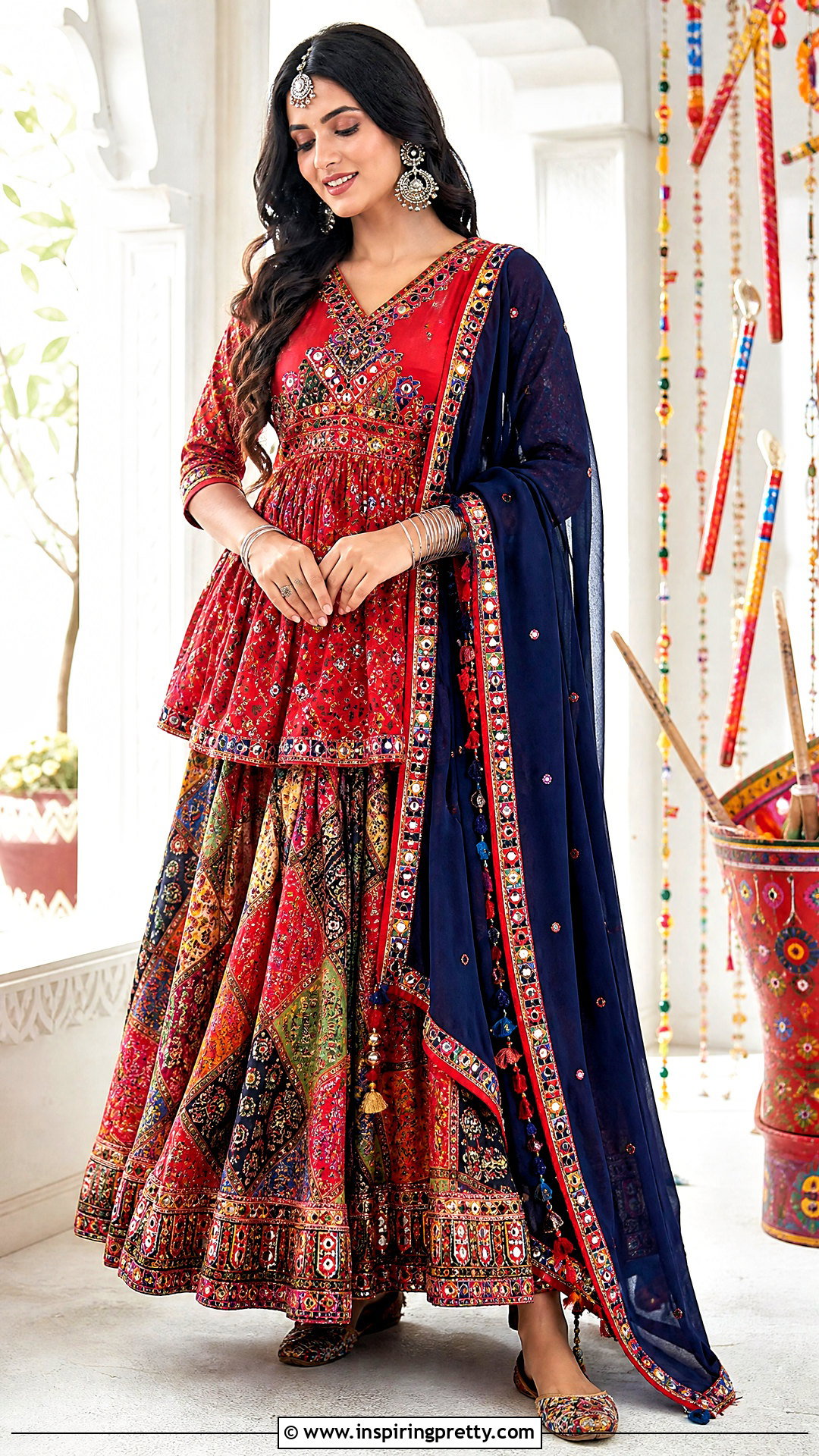
Red with a multicolored printed chaniya is the classic Navratri palette for good reason. I keep the kediyu fairly simple, with subtle mirrors or white thread, because a skirt full of elephants, florals or folk geometrics already does plenty when it spins. Fitted sleeves help balance the busy skirt. A navy or green dupatta can link the colors. Oxidized chandbalis, a small maang tikka and light bangles. Embroidered juttis, defined eyes and a long-wear berry lip that survives a sweaty night.
4. White Kediyu With Multicolor Lehenga
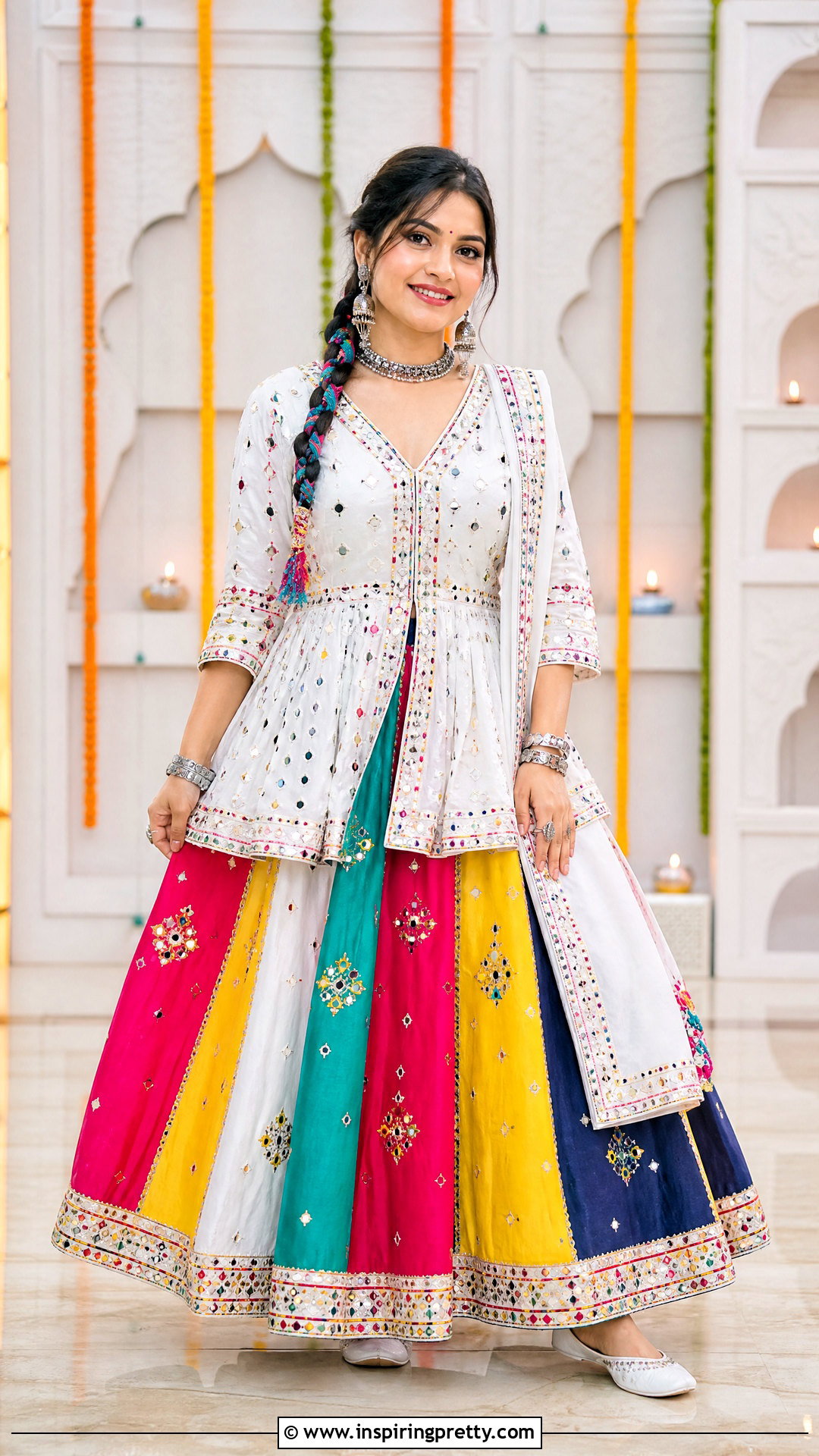
White is the background that makes multicolored embroidery pop. A white kediyu with small mirrors, colored thread or pom-pom edging goes over a lehenga with bold vertical panels in pink, yellow, green and blue, so no single color takes over. If you add a matching dupatta, keep the drape narrow for Garba. Oxidized silver suits the folk details better than high-polish jewelry. White or metallic juttis and a small embroidered bag. Wrap a low braid with colored thread to echo the skirt.
5. Black Kediyu With Red Palazzo Pants
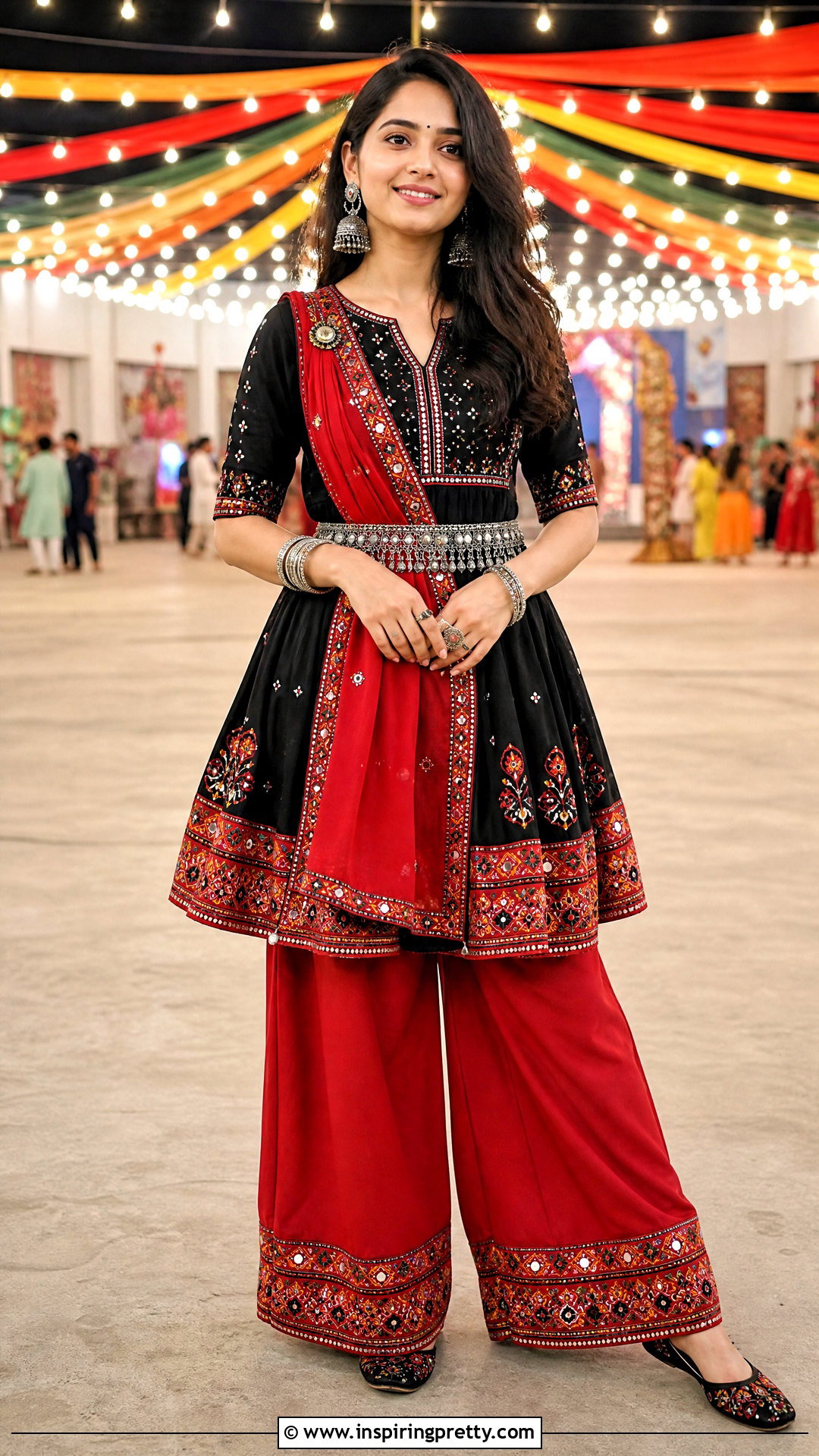
Black kediyu, red palazzos: this is the evening version. The fitted top with its flared hem contrasts nicely with wide trousers, but a kediyu that's too long hides the pants' shape, so I'd keep it waist to high-hip length. Mirror borders or red threadwork link the two. A slim oxidized belt, silver jhumkas and a few statement bangles. Flat black shoes if you're dancing all night; low block heels only if you'll mostly be watching. A sleek braid, kohl and a pinned red dupatta.
6. Yellow Kediyu With Green Chaniya
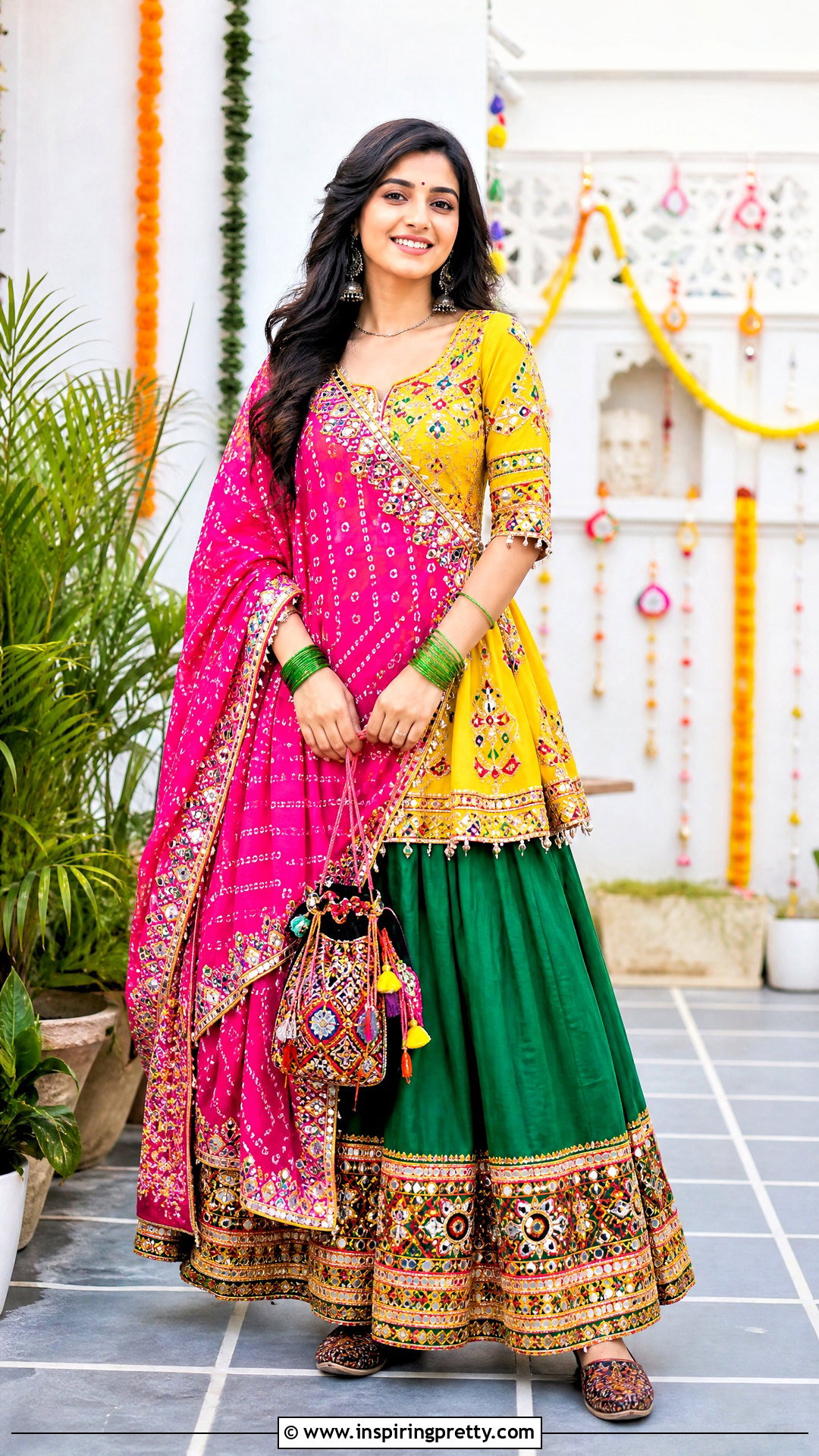
Yellow and green feel like daytime, so this is my pick for early-evening Garba or afternoon gatherings. A yellow cotton kediyu with mirror work at the neckline goes over a green chaniya with a wide border. A pink Bandhani dupatta adds contrast, pinned diagonally across the torso so it can't slip. Oxidized earrings, green glass bangles and a small potli. Glass bangles can crack during enthusiastic Dandiya, so I tuck a few metal ones between them. Brown or gold juttis, a braided ponytail and coral lipstick.
7. Blue Kediyu With Orange Skirt
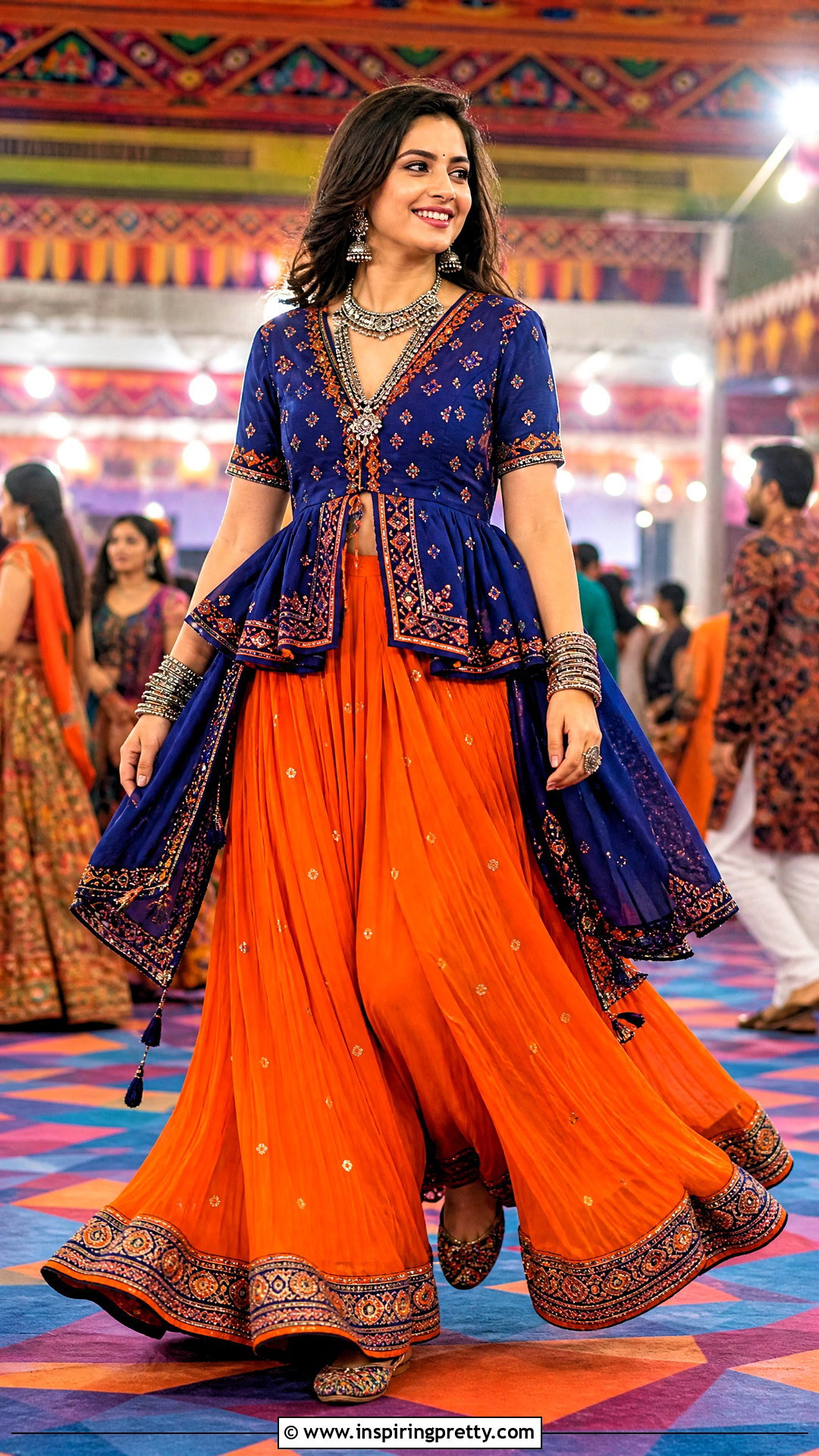
Royal blue and orange sit opposite each other on the color wheel, which is why they read clearly even across a crowded ground. A blue kediyu with orange thread, small mirrors or shell details over a plain or lightly printed orange skirt keeps the top in charge, and a multicolored hem border ties the two together. A short blue dupatta, or an orange shoulder drape fixed with decorative pins. Oxidized jhumkas, a layered silver necklace and stacked bangles. Embroidered flats with cushioned insoles, and a high braid.
8. Pink Kediyu With Navy Lehenga
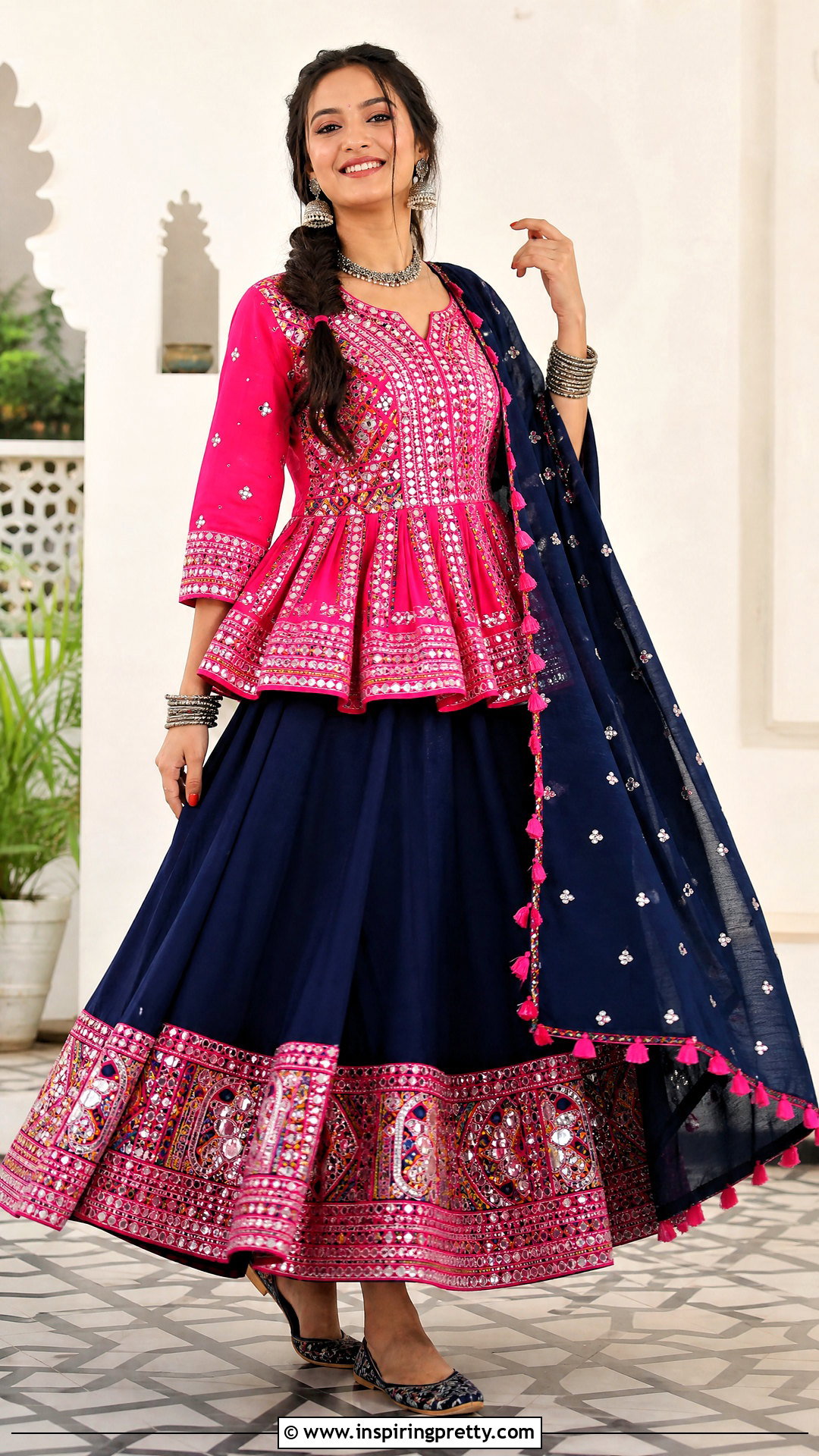
Navy calms a bright pink kediyu, and that balance makes it look more grown-up. Look for navy piping, mirror work or embroidered cuffs on the top to link the two. The lehenga can be plain or have a colorful border near the hem. A light navy dupatta with pink tassels across one shoulder. Silver suits both shades. Bangles that fit snugly won't slide up and down your forearm with every clap. Navy juttis with pink embroidery, a side braid and a small bindi.
9. Green Kediyu With Purple Dhoti Pants
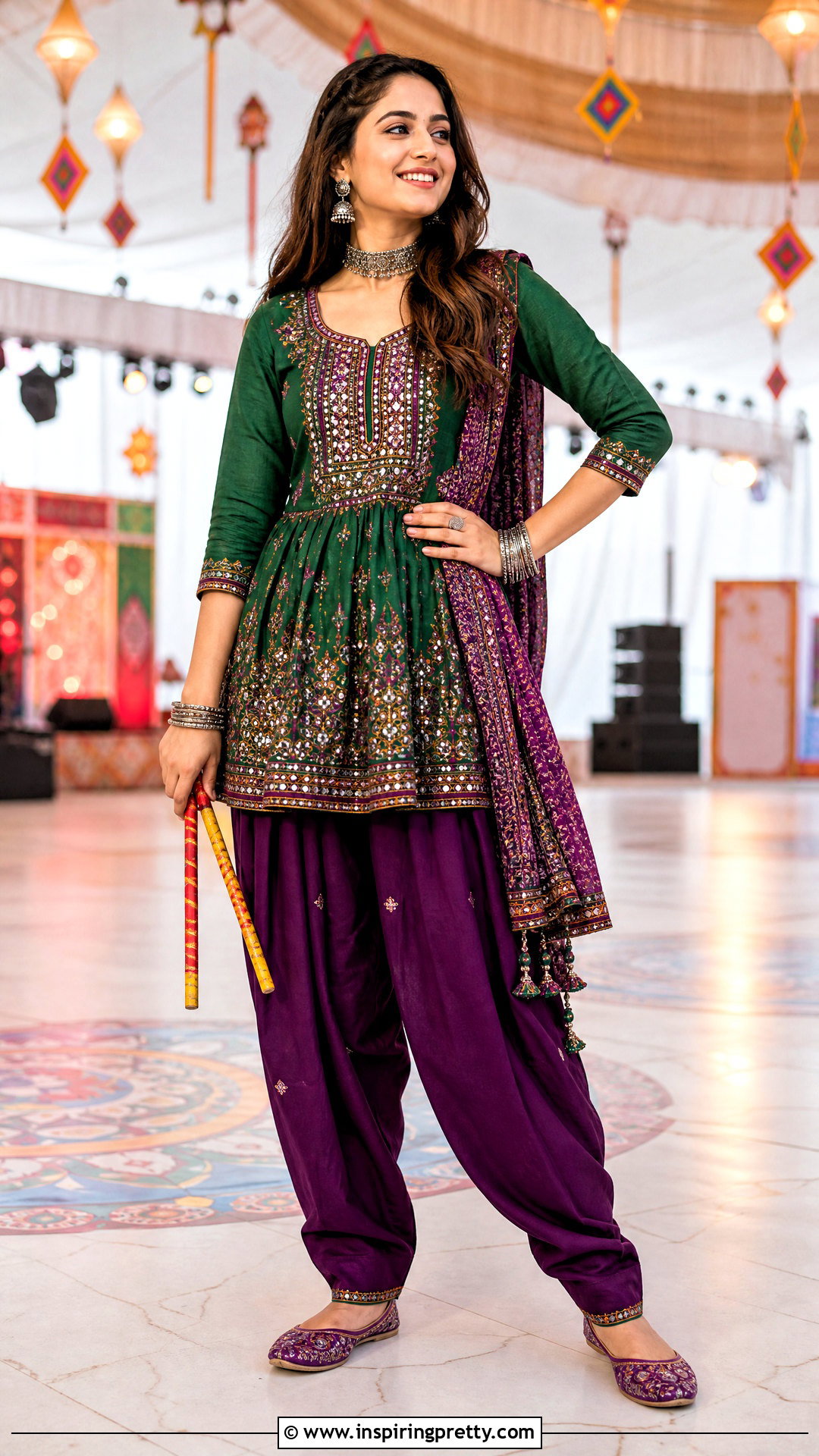
Dhoti pants are my answer for anyone who'd rather not dance in a skirt. A green kediyu with a structured waist and a moderate flare that ends above the fullest part of the dhoti keeps both shapes visible. Purple embroidery on the top makes the pairing look planned. A narrow printed dupatta, or none at all for free movement. An oxidized choker, light earrings and a few sturdy bangles. Flat mojaris in tan or muted gold, and a braided bun that stays put.
10. Orange Kediyu With Teal Palazzo Pants
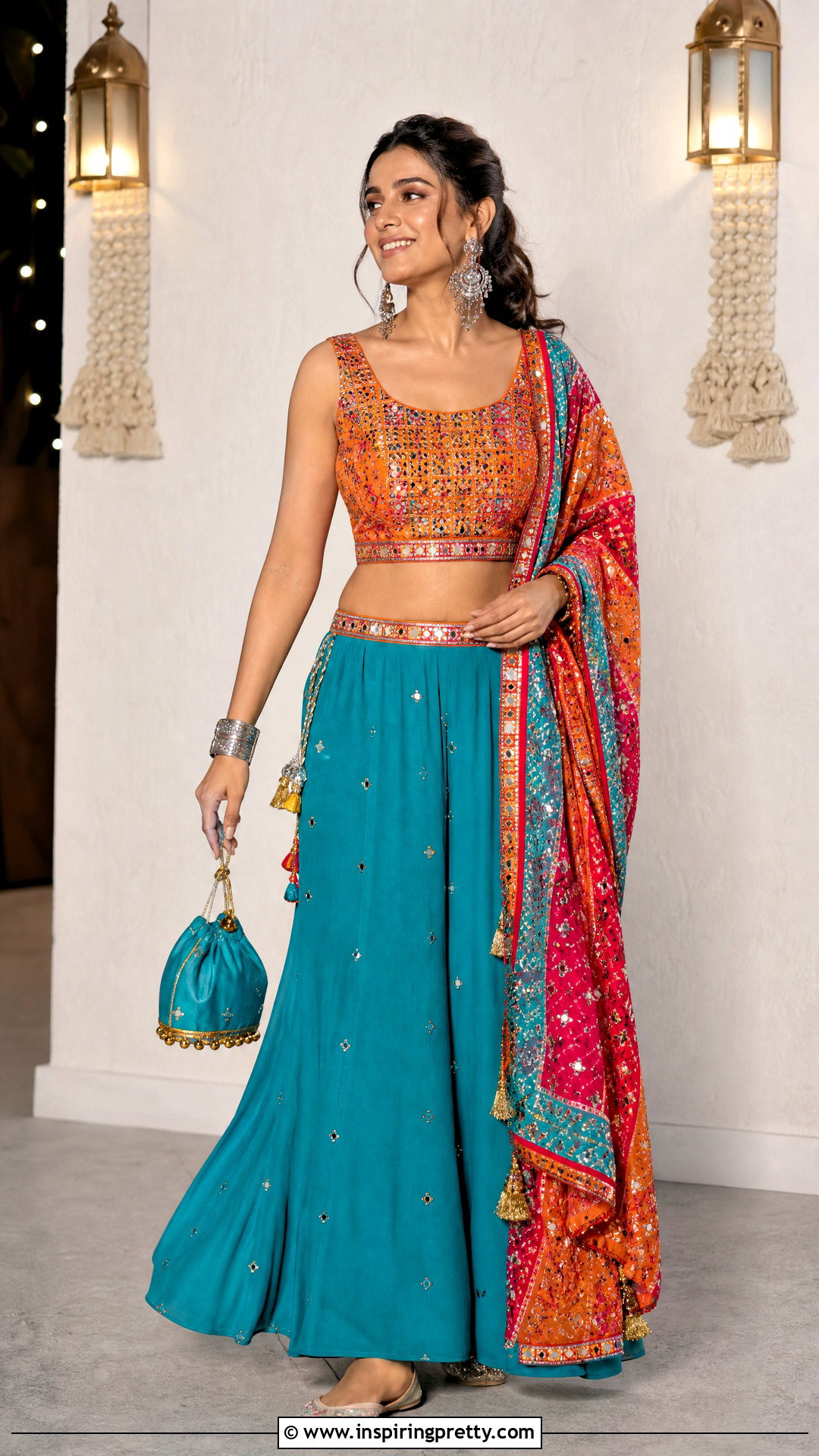
Orange and teal is a warm-cool contrast that feels fresh. A cropped or waist-length orange kediyu with mirrors at the neckline and hem goes over wide teal palazzos, which sway like a skirt without a lehenga's weight. Pin a two-color dupatta close to the body, since loose fabric gets caught by dandiya sticks. Antique silver earrings, a cuff and a teal potli. Flat juttis with flexible soles bend with your foot, while stiff soles make quick steps harder. A high ponytail and a nude lip.
11. Patchwork Kediyu With Plain Black Skirt
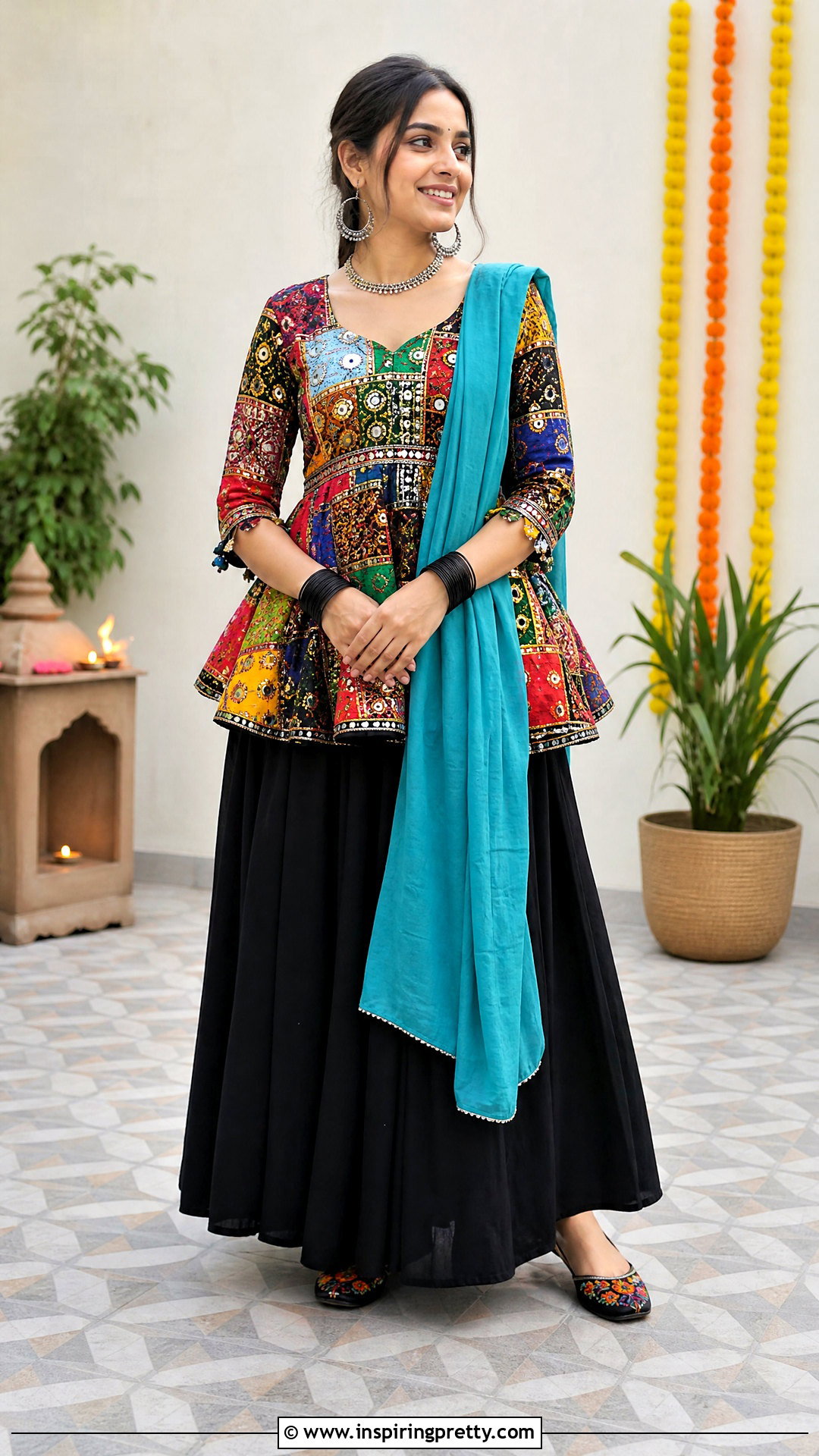
A patchwork kediyu has plenty to say, so a plain black skirt lets it talk. Check that the panels are sewn flat, because thick appliqué can rub when you raise your arms. Black cotton or georgette moves well. Take a narrow dupatta color from one of the patches, such as red or turquoise. Oxidized hoops, a short necklace and black bangles. Black juttis or flat ankle-strap sandals for secure footing, and a smooth braid. It's a good way to show off handmade or upcycled textiles.
12. Ajrakh Kediyu With Maroon Lehenga
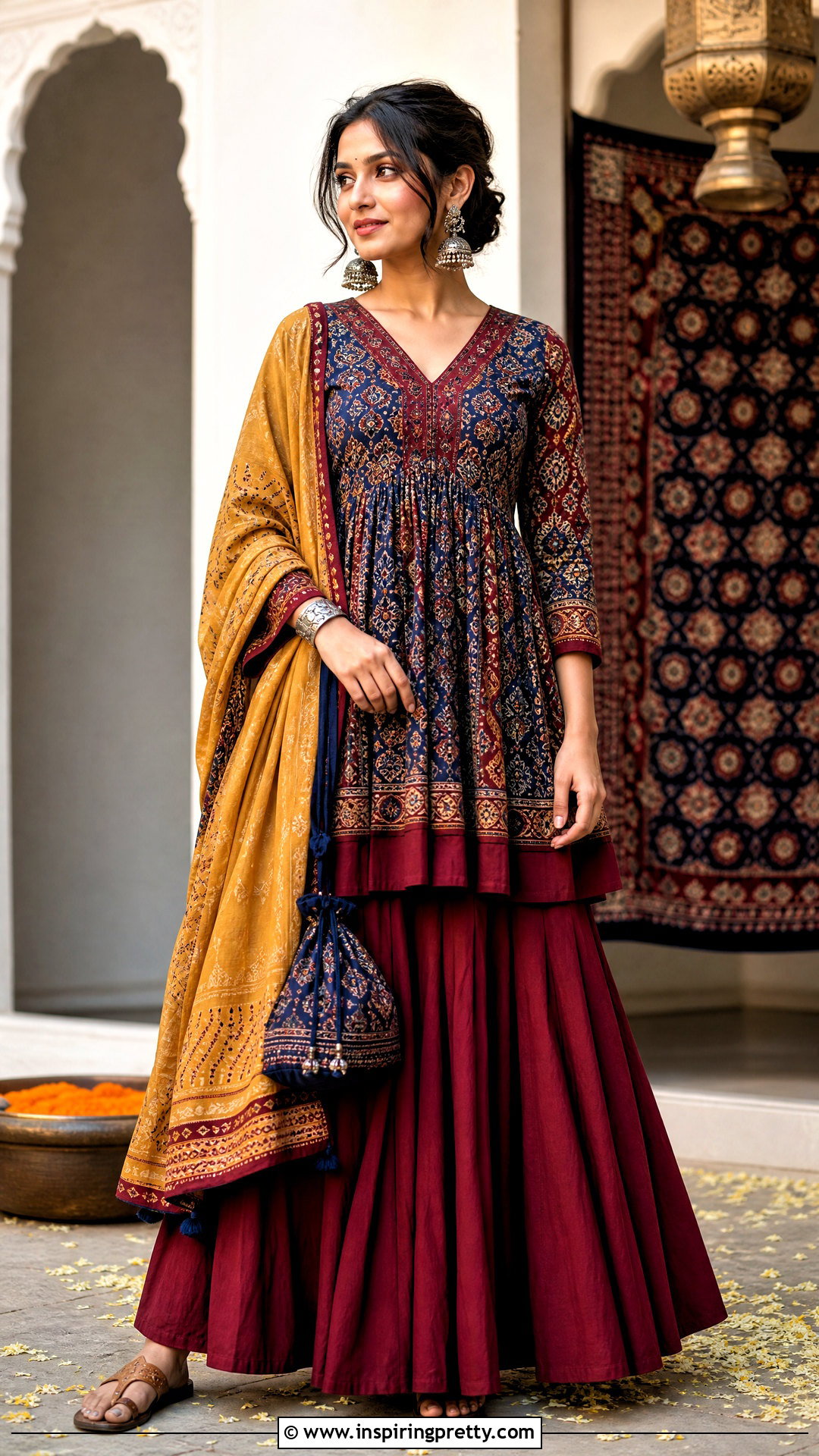
Ajrakh is a block print from Kutch, traditionally dyed in indigo and madder red with very fine geometric repeats, so it looks rich without any embellishment. An indigo-and-maroon Ajrakh kediyu over a solid maroon lehenga in breathable cotton or rayon keeps the print in charge, and a mustard dupatta lightens the dark palette. Three-quarter sleeves and a soft flare at the waist. Antique silver jhumkas and a cuff. Kolhapuris or leather-look flats, an indigo potli, and a low braided bun for a community Garba.
13. Embroidered Kediyu With Denim Jeans
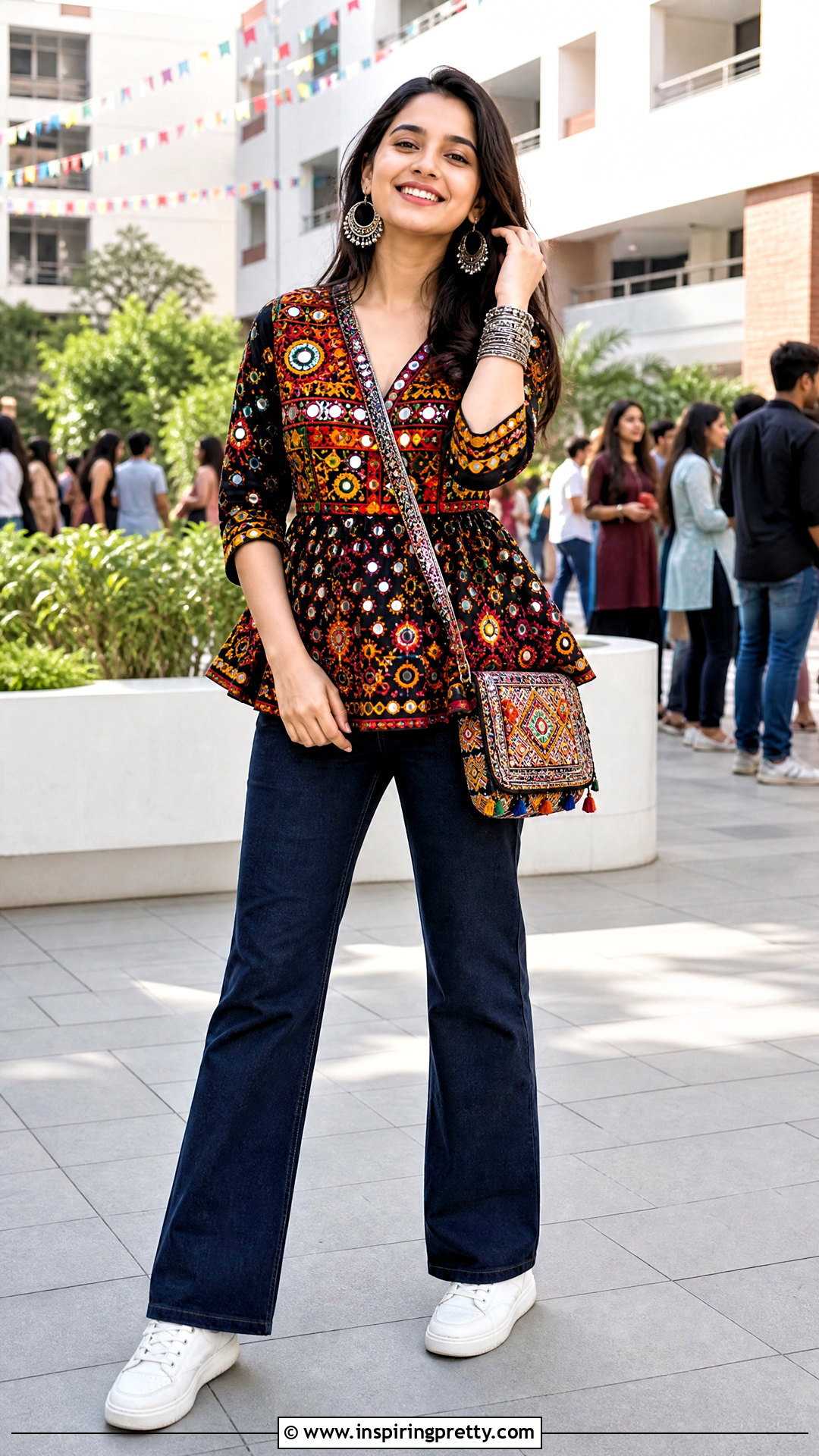
A colorful embroidered kediyu can turn basic jeans into an easy Indo-western outfit for college or office Navratri events. Dark straight or relaxed denim leaves room to move and balances the flared top. A hip-length kediyu with mirrors, tassels and three-quarter sleeves looks festive without a dupatta. Oxidized hoops, stacked bangles and an embroidered crossbody. White sneakers for long nights, flat juttis for a more traditional finish. Skinny jeans restrict wide Garba steps, which is why I'd avoid them here.
14. Cropped Kediyu With Flared Jeans
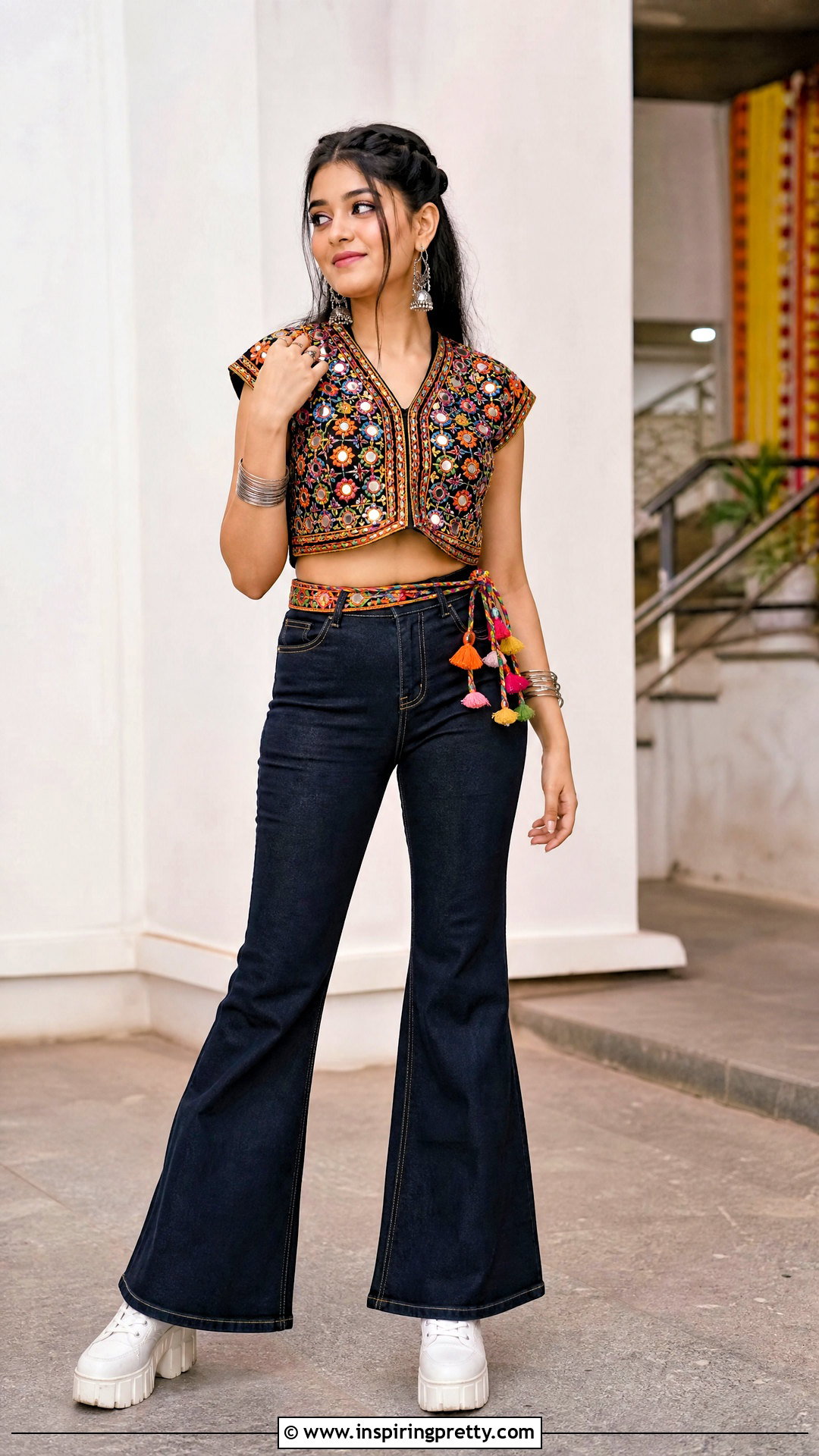
Cropped kediyu plus high-waisted flares gives a retro fusion look. The top should be fitted and flare slightly from the waist, with mirrors or colorful piping, and dark indigo jeans make those details look brighter. An embroidered sash at the waist connects the ethnic and denim halves. Oxidized jhumkas and a few silver bangles. Platform sneakers or low block heels only if they feel stable, since flares can catch under a heel mid-spin. A braided half-up style keeps hair off your face. No dupatta needed.
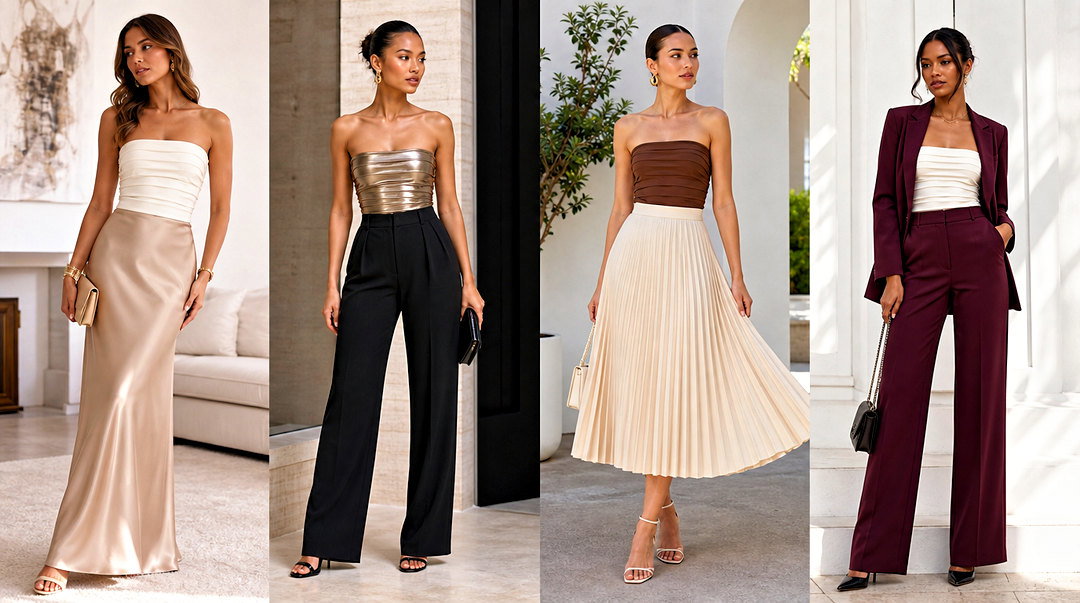
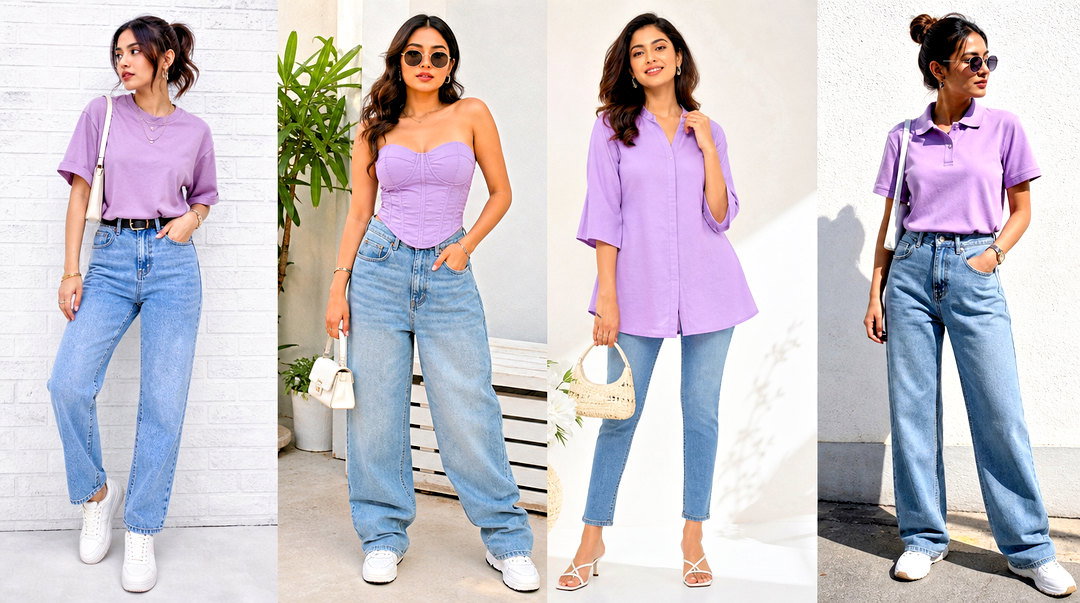
15. Long Kediyu With Straight Pants
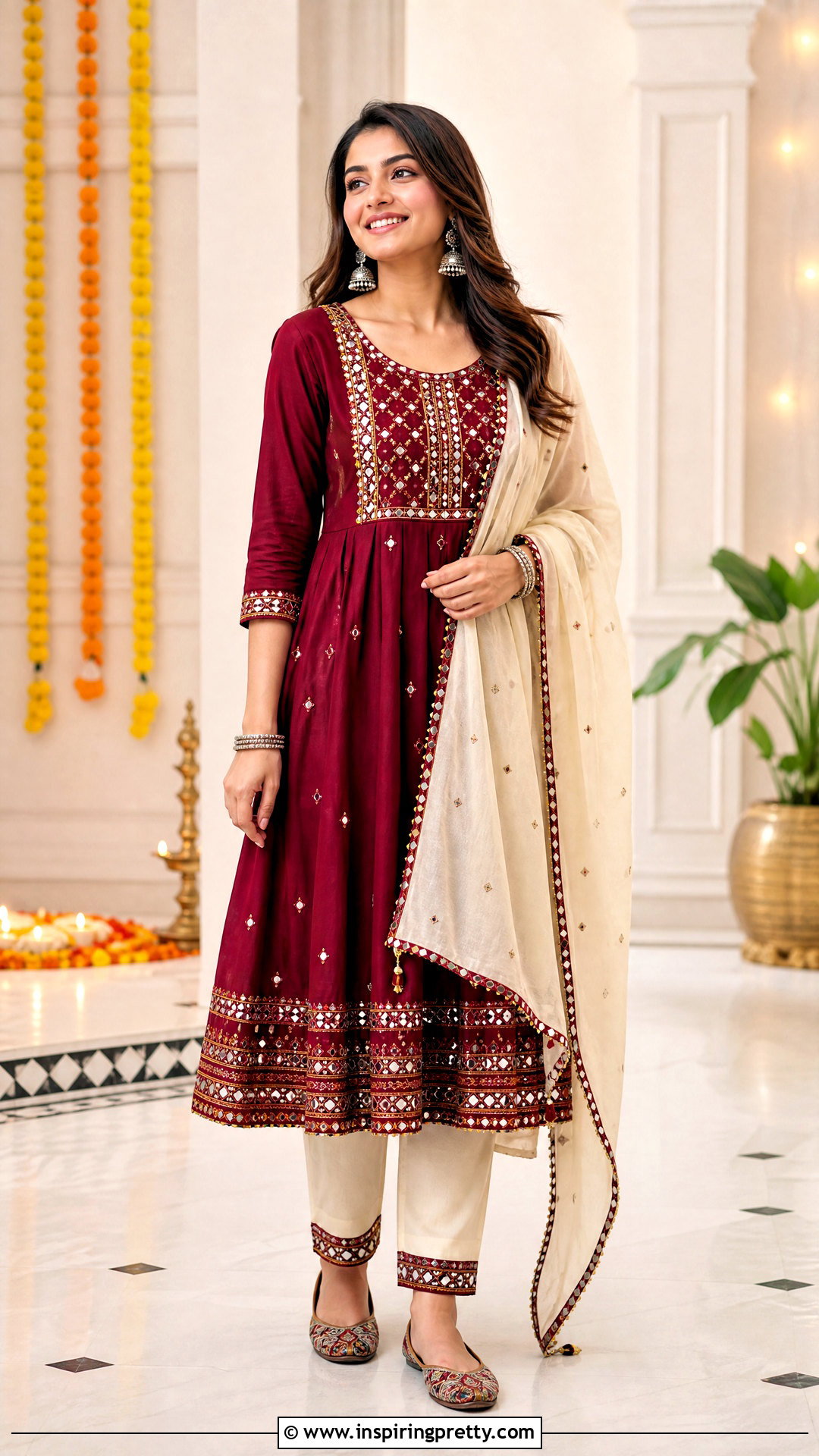
A long kediyu ending mid-thigh gives the most coverage of any style here and still swings when you turn. Side slits are essential at this length, or the hem restricts your stride. White, black or matching straight pants keep the line clean. Mirror work at the neckline and cuffs adds sparkle without weight. A light dupatta over one shoulder, fixed with hidden pins. Medium jhumkas, a slim bracelet stack and embroidered flats. A low ponytail suits the longer proportions.
16. Sleeveless Kediyu With Sharara Pants
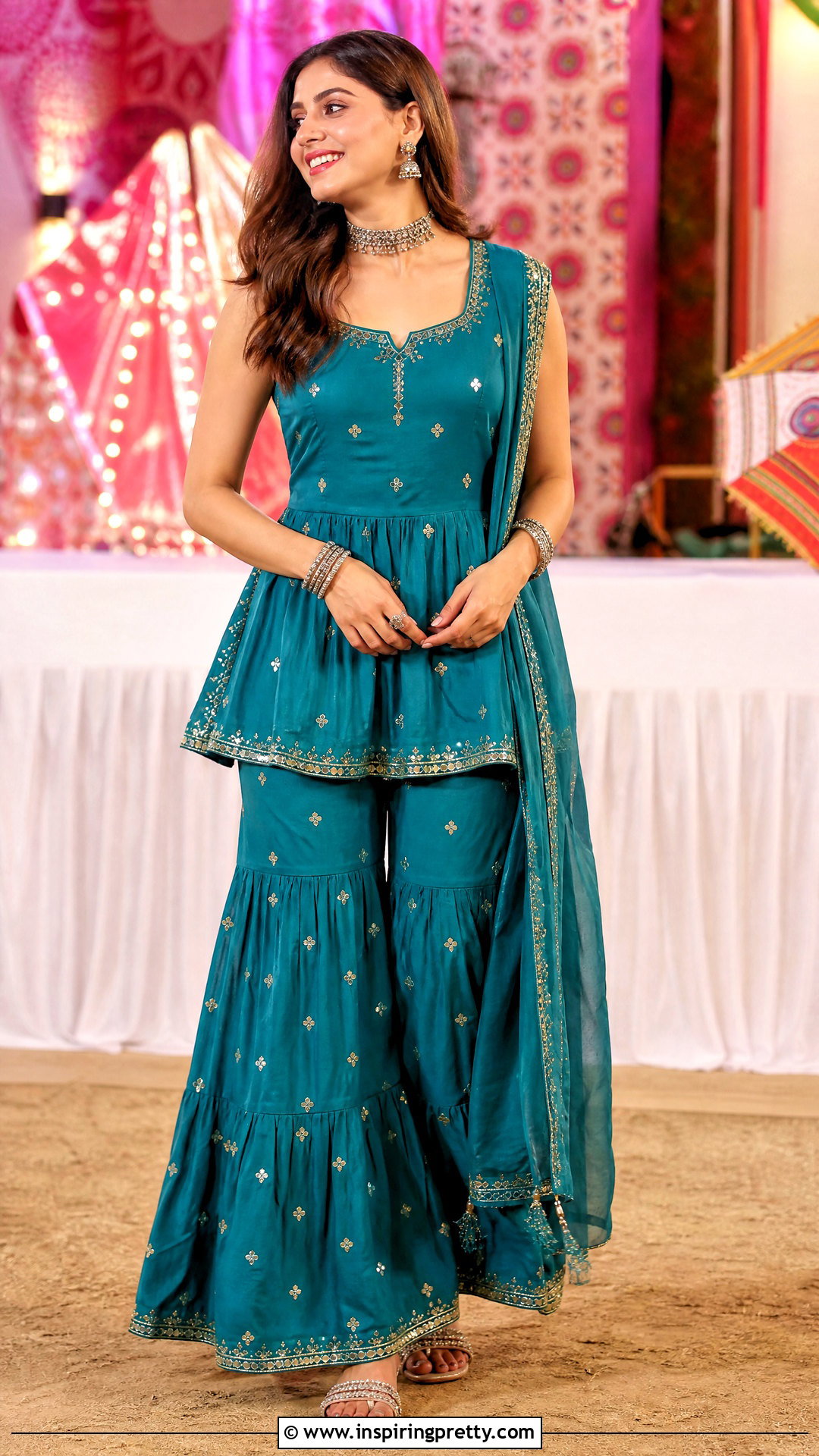
A sleeveless kediyu keeps you cooler than any sleeved version, which matters on humid nights. Check that the armholes are cut close and softly lined, because a gaping armhole shows your bra every time you lift your arms to clap. Pair it with matching or contrasting sharara pants with a light border rather than heavy embroidery. A narrow dupatta at one shoulder. A silver choker, small jhumkas and bangles that sit snugly. Flat embellished sandals and a high braid.
17. Full Sleeve Kediyu With Churidar
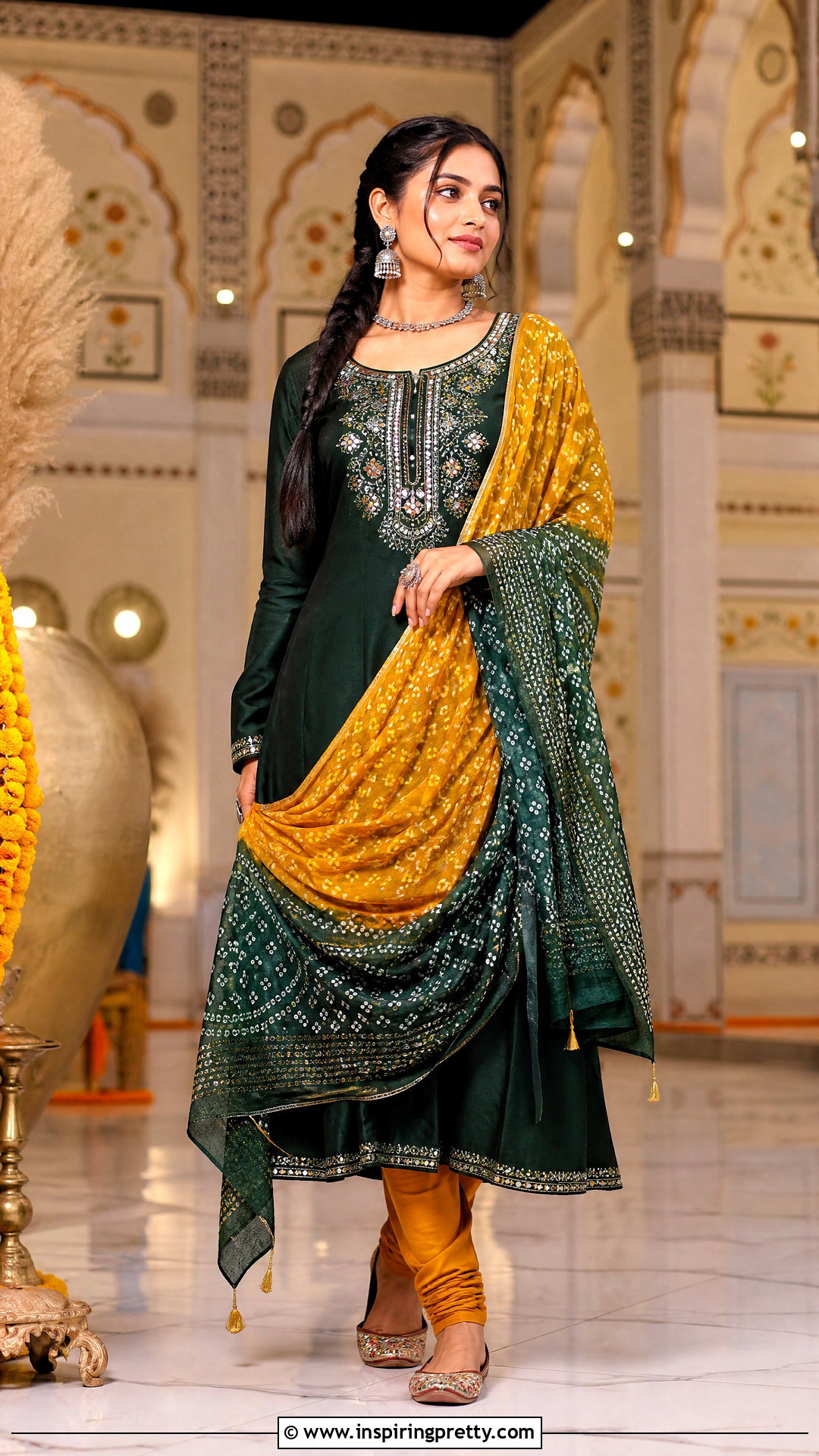
Cool evenings are when full sleeves earn their place. Choose breathable cotton, rayon or a light silk blend so the coverage doesn't trap heat once you start dancing. Wine, navy or forest green makes a rich base for colorful mirrors, and a contrasting mustard or cream churidar keeps it lively. A Bandhani dupatta worn diagonally and pinned at the waist. Silver earrings, a short necklace and juttis. Keep the wrists fairly bare so the embroidered sleeves show, and finish with a sleek braid and one small hair ornament.
18. Peplum Kediyu With Wide Leg Pants
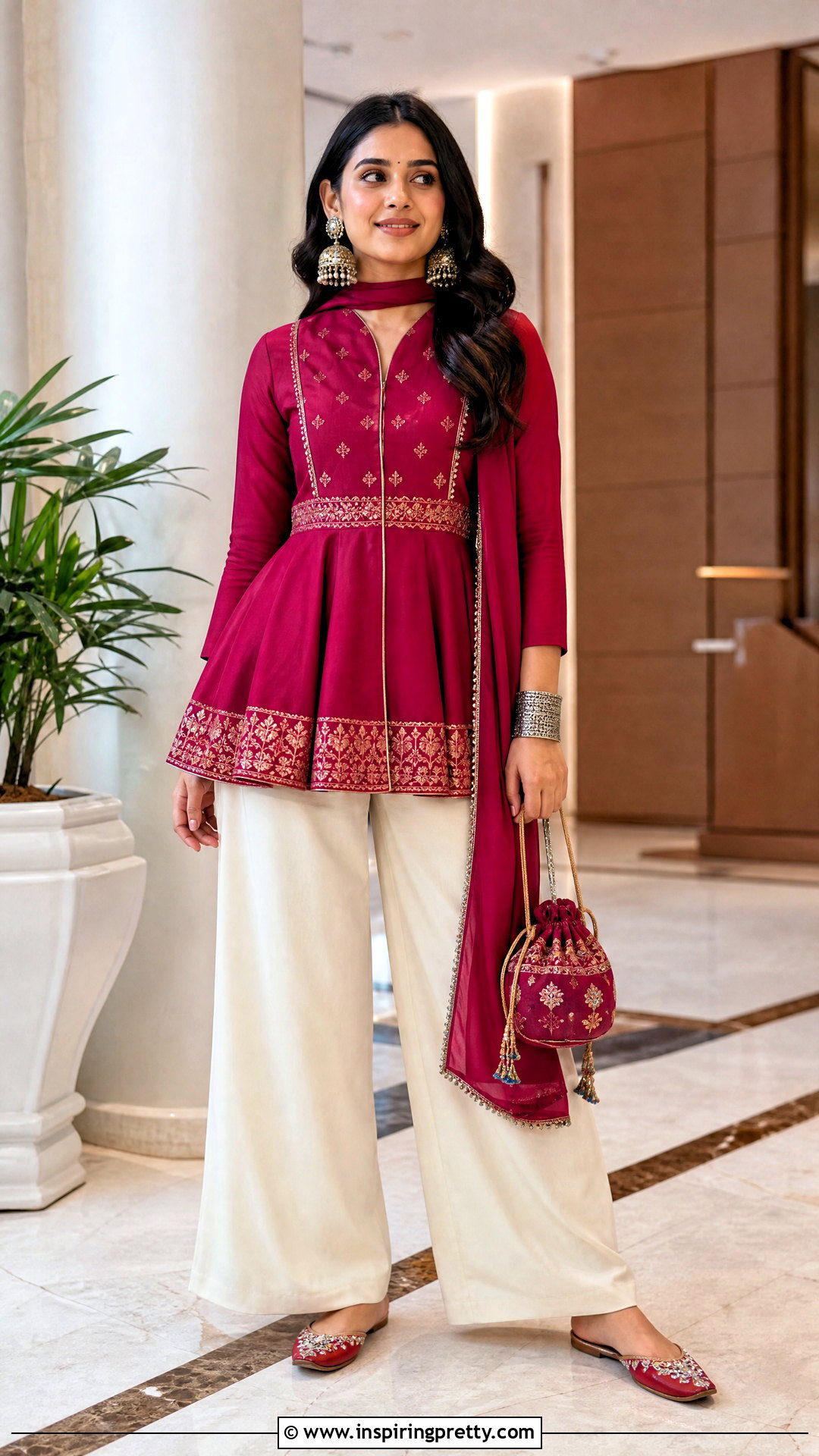
A structured peplum kediyu with high-waisted wide-leg pants makes a clean fusion outfit, handy when you're heading from an office Navratri event straight to an evening one. The flare should be evenly gathered so it sits smoothly over the trousers. Black, navy or ivory pants balance bright embroidery. A narrow stole instead of a full dupatta keeps the lines modern. Statement jhumkas and one oxidized cuff. Embroidered pointed flats, or secure block heels if you won't dance much.
19. Velvet Kediyu With Silk Lehenga
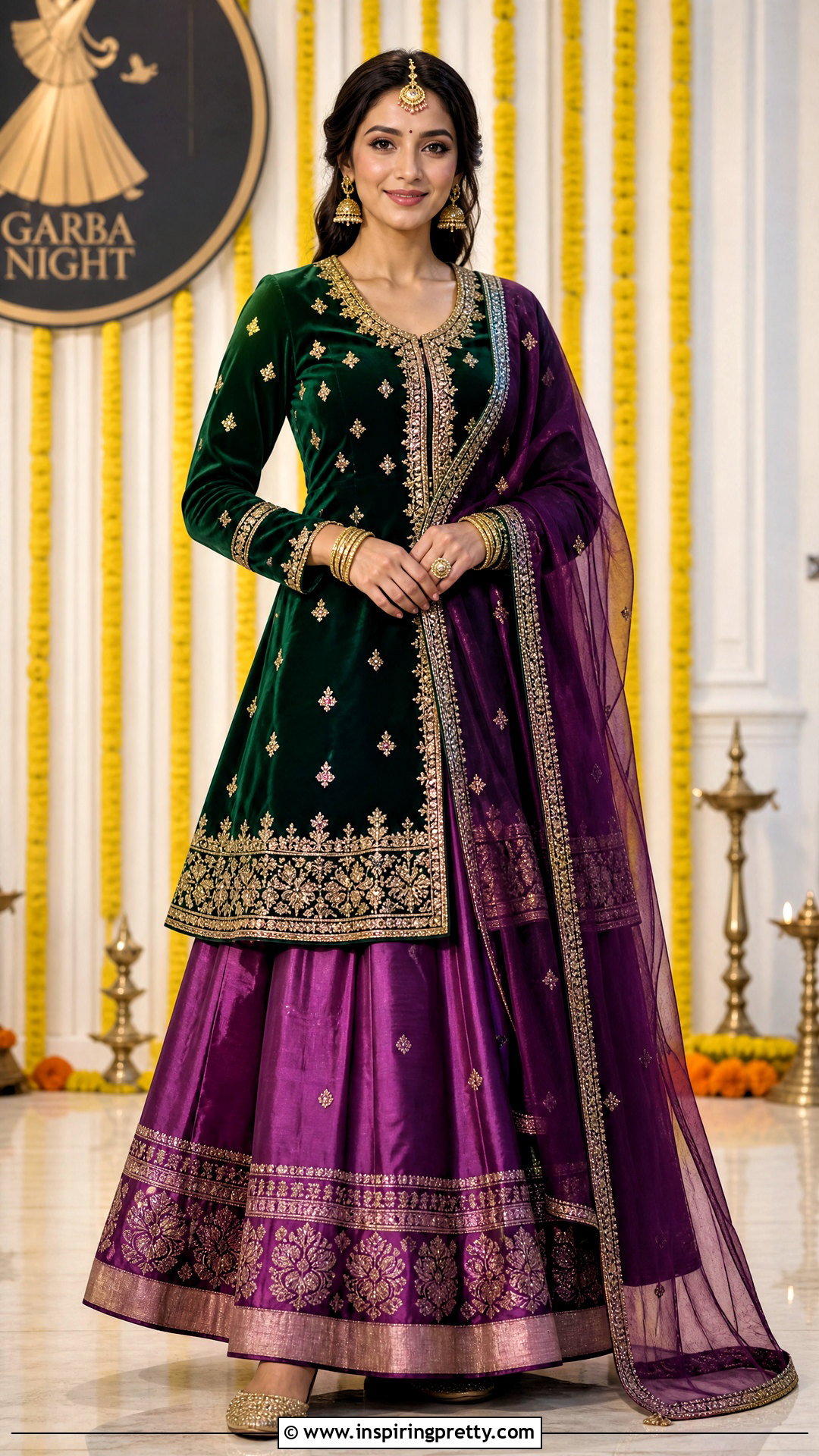
A velvet kediyu and silk lehenga make a regal outfit for one special night. Both fabrics are substantial, so keep the top short with a controlled flare and the skirt a light silk blend. Emerald, burgundy, navy and deep purple look richest with antique gold or silver embroidery. A sheer dupatta with a narrow border, not another heavy textile. Medium jhumkas, a simple maang tikka and a few bangles. Velvet gets hot fast, so I'd save this for a cooler venue or a shorter dance set.
20. Cotton Kediyu With Printed Palazzo Pants
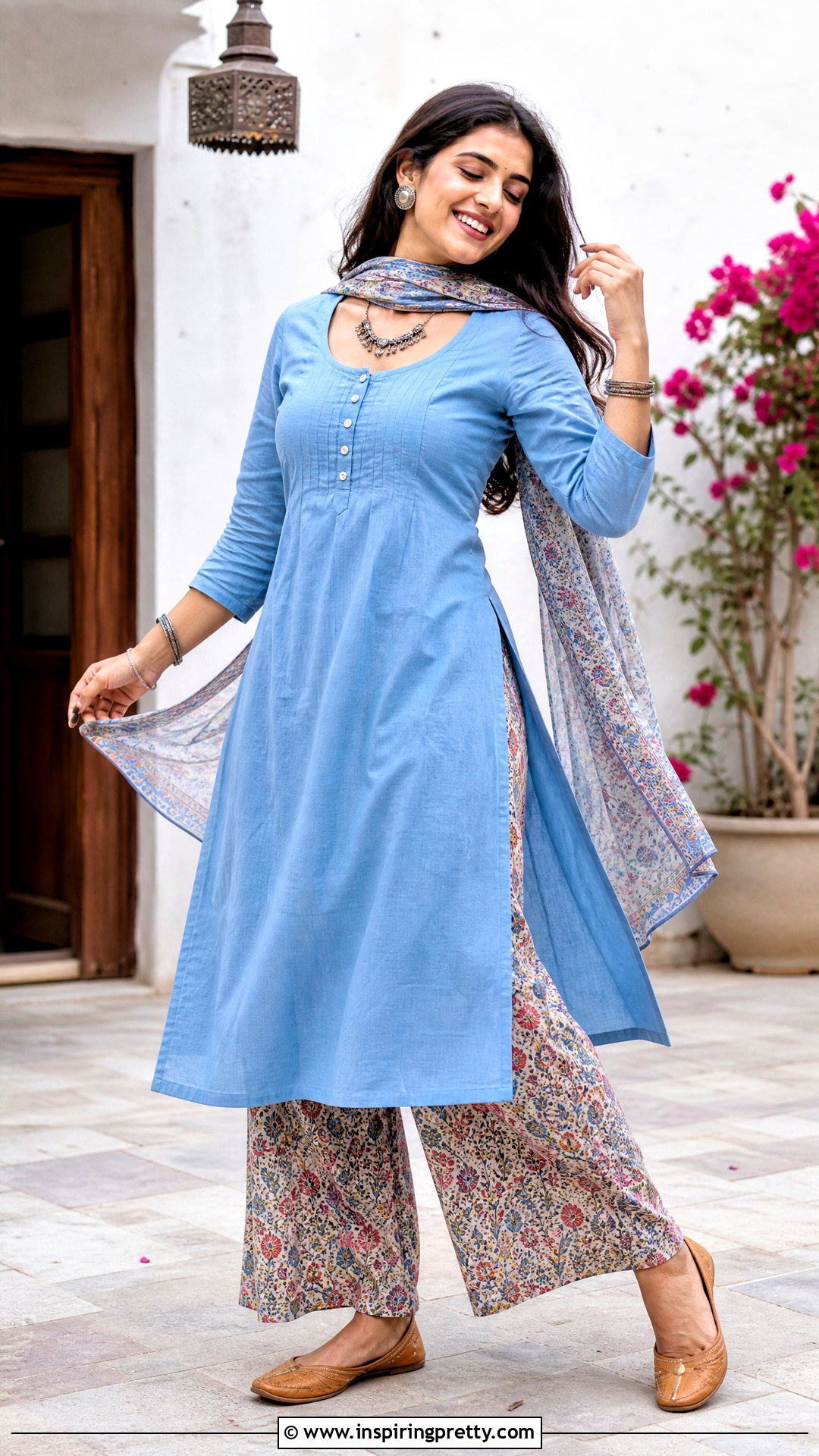
Cotton is the most comfortable fabric for nine nights of dancing, because it breathes and absorbs sweat. A solid or lightly embroidered cotton kediyu goes over printed palazzos in Bandhani dots, block prints or folk geometrics; keep one piece quieter than the other. A waist-length top balances very wide trousers. A small printed scarf instead of a long dupatta. Oxidized studs, a light necklace and simple bangles. Flexible juttis, a ponytail and a colorful bindi. Ideal for outdoor grounds and warm halls.
21. Silk Kediyu With Brocade Skirt
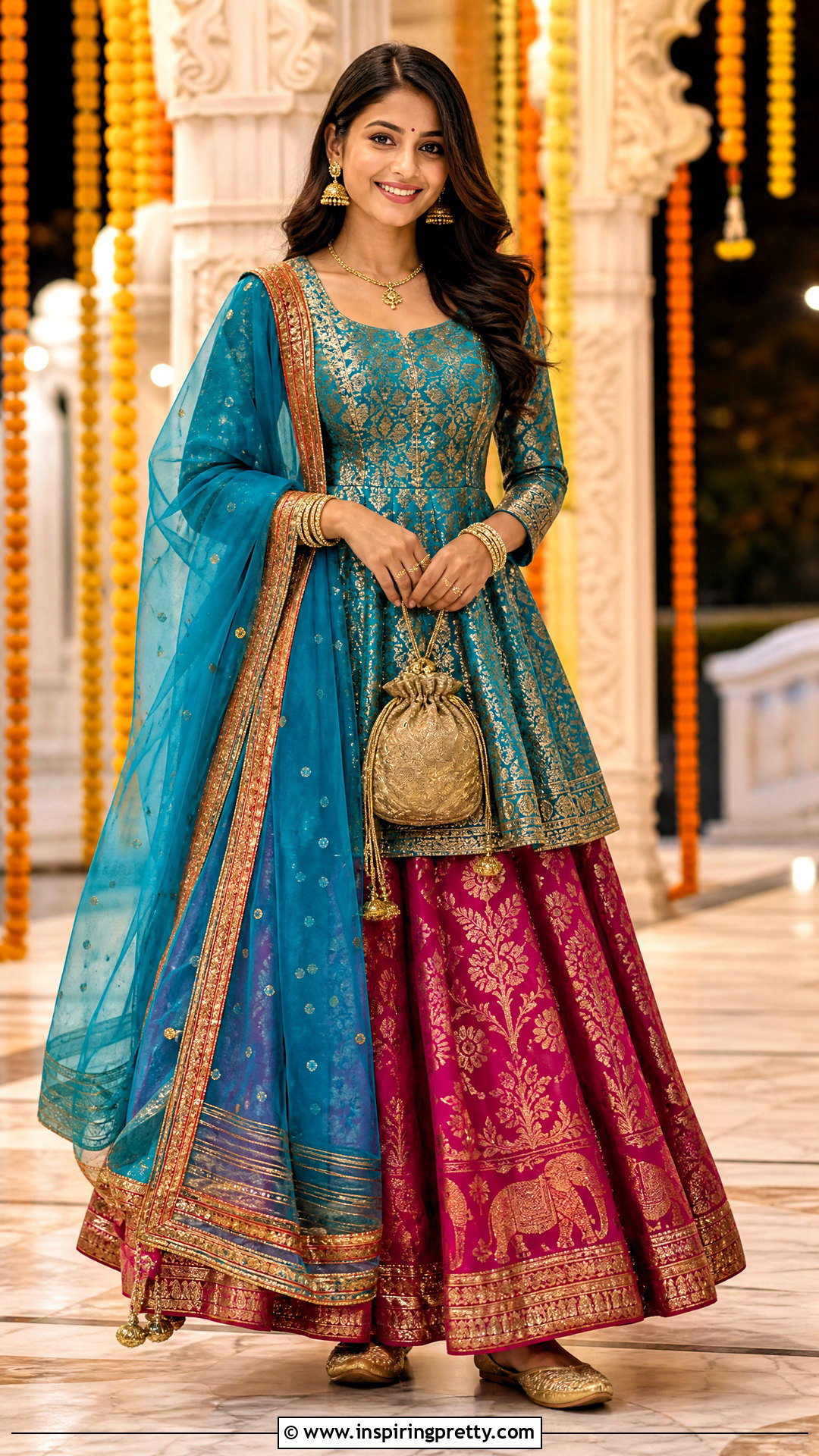
A silk kediyu and brocade skirt is the dressiest traditional combination here. Brocade carries a woven pattern, so the kediyu should be fairly plain, with embroidered borders only. Jewel-tone pairs like teal with magenta, or purple with mustard, look rich. Brocade is stiff and can feel heavy, so pick a lightweight, moderately flared skirt for dancing. A sheer solid dupatta pinned near the shoulder. Gold-toned jhumkas, cushioned gold juttis, and a low bun with a small flower.
22. Multicolor Kediyu With White Palazzo Pants
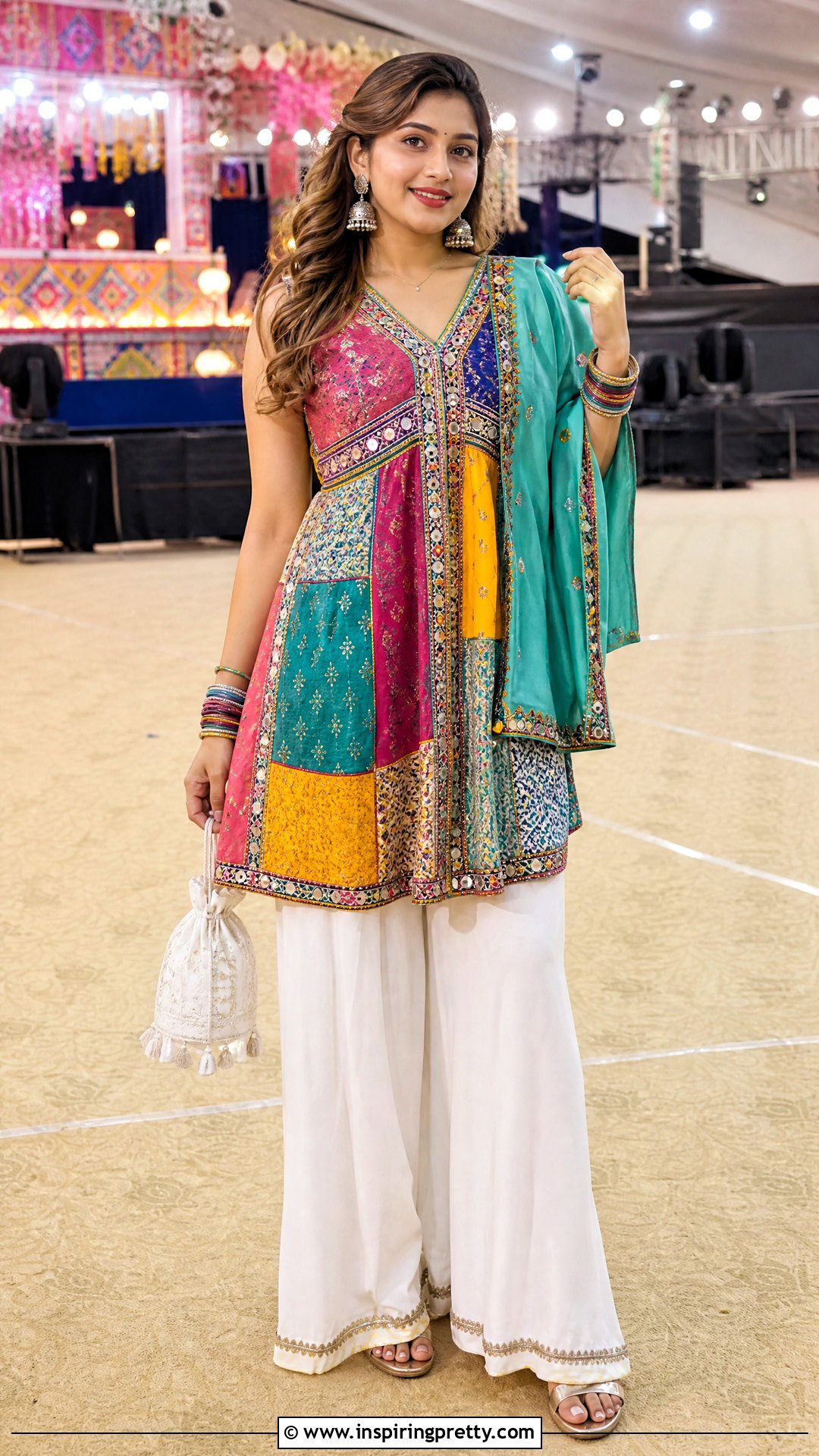
White palazzos make a multicolored kediyu look modern and bright. Choose balanced patchwork, mirrors and clean borders rather than oversized tassels, and the white base keeps it from looking busy. Make sure the pants are opaque and lined, since white under bright stage lights can turn see-through. Moderate width is easier to handle while dancing. Silver jhumkas, colorful bangles and a small potli. A short dupatta in one of the kediyu's colors, white juttis and a high braided ponytail.
23. Monochrome Red Kediyu And Lehenga
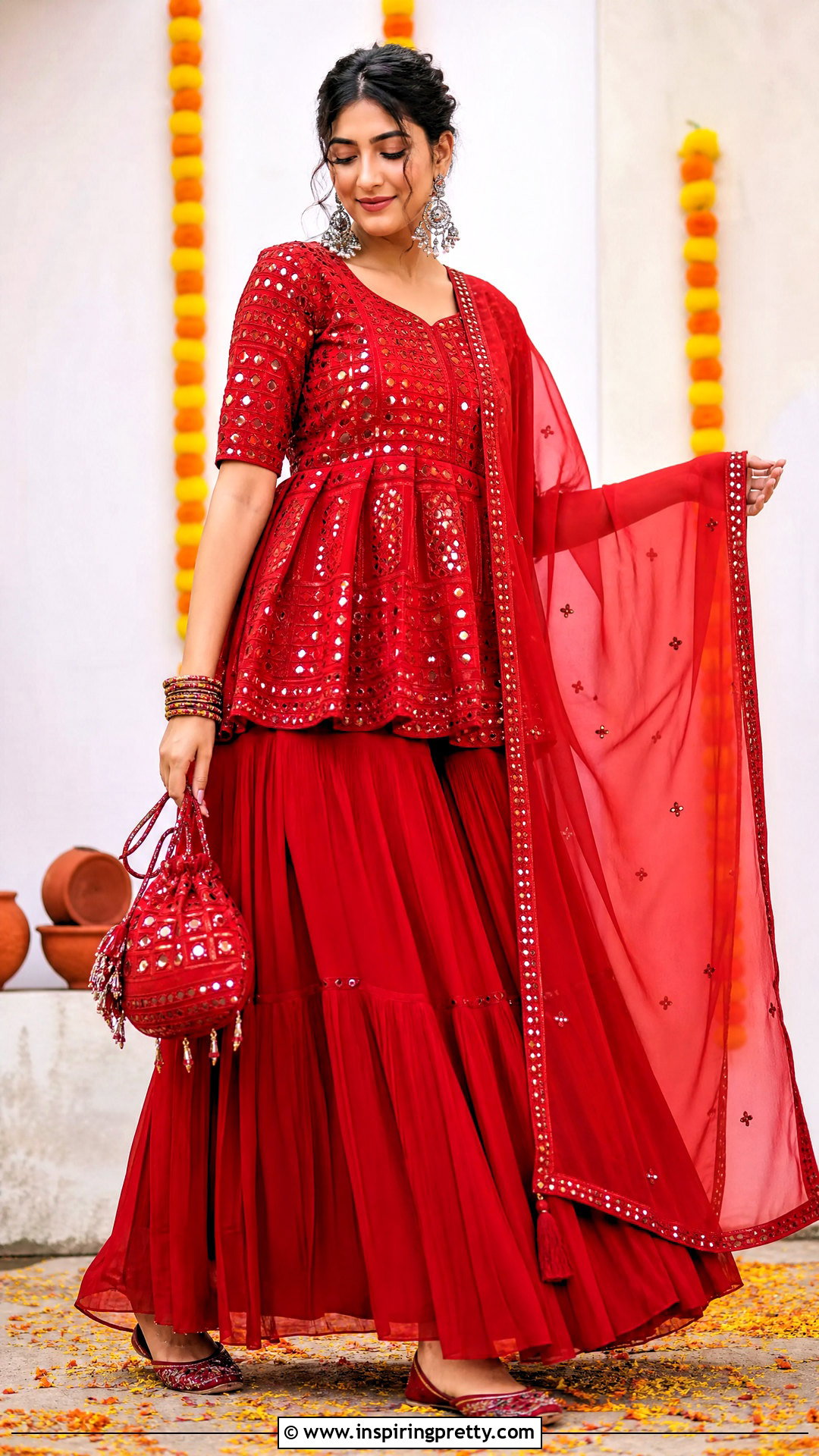
All-red only works when the textures vary. I'd put a mirror-work cotton kediyu with a flowing georgette skirt and a sheer red dupatta, so each layer has a different surface, and let small antique silver or muted gold details separate them. Light jhumkas, matching bangles and a small potli. Flat red or neutral juttis, a braided bun and a small bindi. Defined eyes with a softer lip keep the red from taking over your face. In flash photos, the mix of matte cotton and sheer georgette stops it reading as one flat block.
24. Monochrome Blue Kediyu And Dhoti Pants
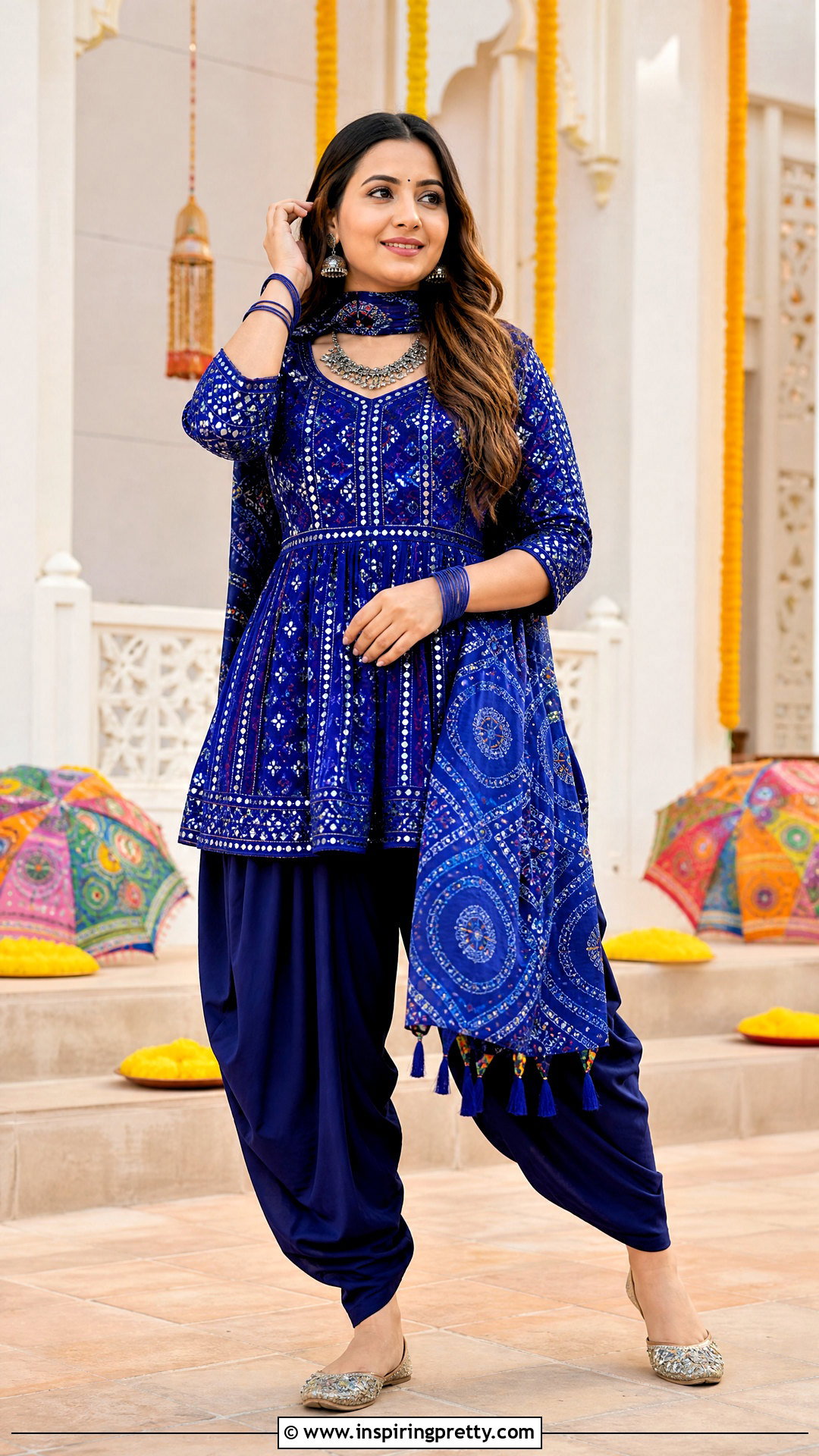
One blue family from top to toe looks polished and modern. Wear a royal blue mirror-work kediyu with slightly darker navy dhoti pants, or reverse the shades for stronger contrast near the face. A narrow blue printed scarf adds depth. The kediyu should end above the gathered part of the dhoti so both shapes show. Silver jhumkas, a short oxidized necklace and blue bangles, with metallic juttis to tie in with the jewelry. A high ponytail and a small silver bindi.
25. Pastel Kediyu With Ivory Lehenga
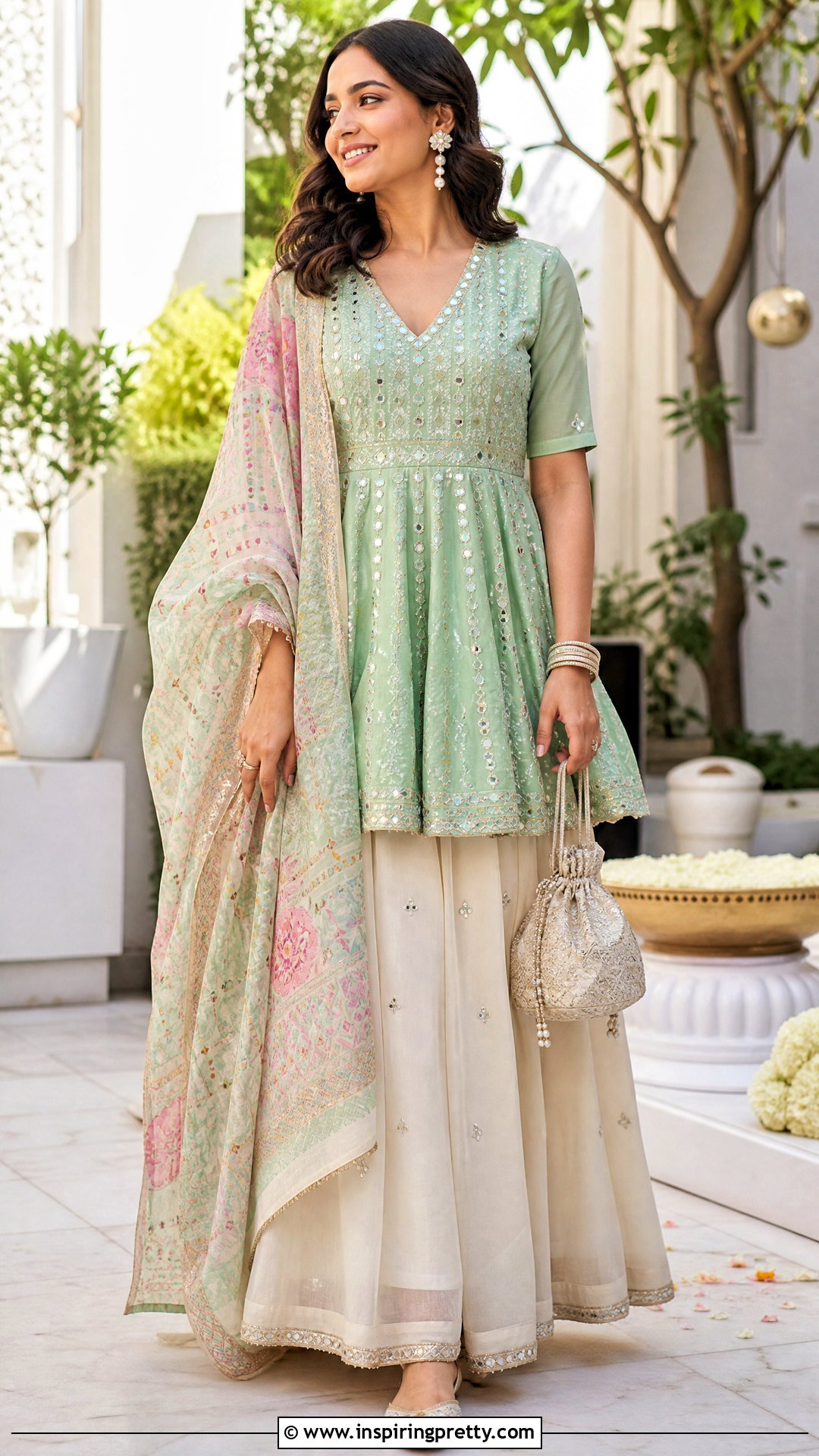
Pastels are a softer route to festive, and I'd use them for daytime and family events. A mint, lilac or powder-blue kediyu with fine mirror work goes over an ivory lehenga with a narrow embroidered border, and a printed pastel dupatta ties it together. Silver or pearl-accented earrings suit the light palette better than very dark oxidized pieces. Ivory juttis, a small potli and slim bangles. A soft braid, pinned well enough to survive dancing. Ivory marks easily, so carry a few wipes.
26. Neon Kediyu With Black Dhoti Pants
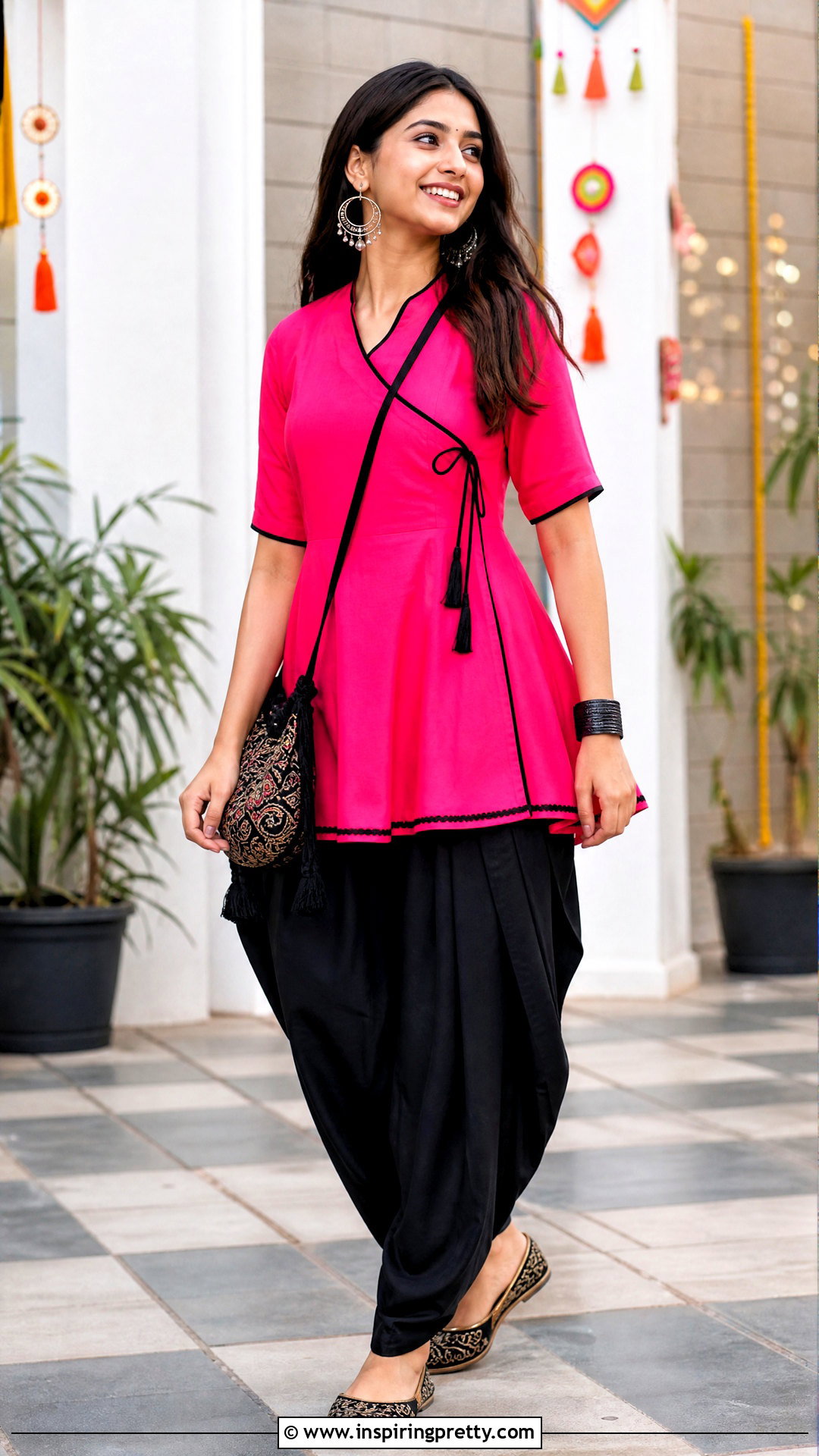
Neon and black is the high-energy look for youth nights. Choose one vivid shade, like lime or hot pink, and let black dhoti pants calm it. Black piping or geometric embroidery on the top links the two. Keep the kediyu lightweight. Oxidized hoops, a black cuff and a small crossbody potli. Black juttis or clean sneakers, depending on the venue. Skip a flowing dupatta, or pin a short scarf at the shoulder. A high ponytail and sharp eyeliner.
27. White Kediyu With Bandhani Dhoti Pants
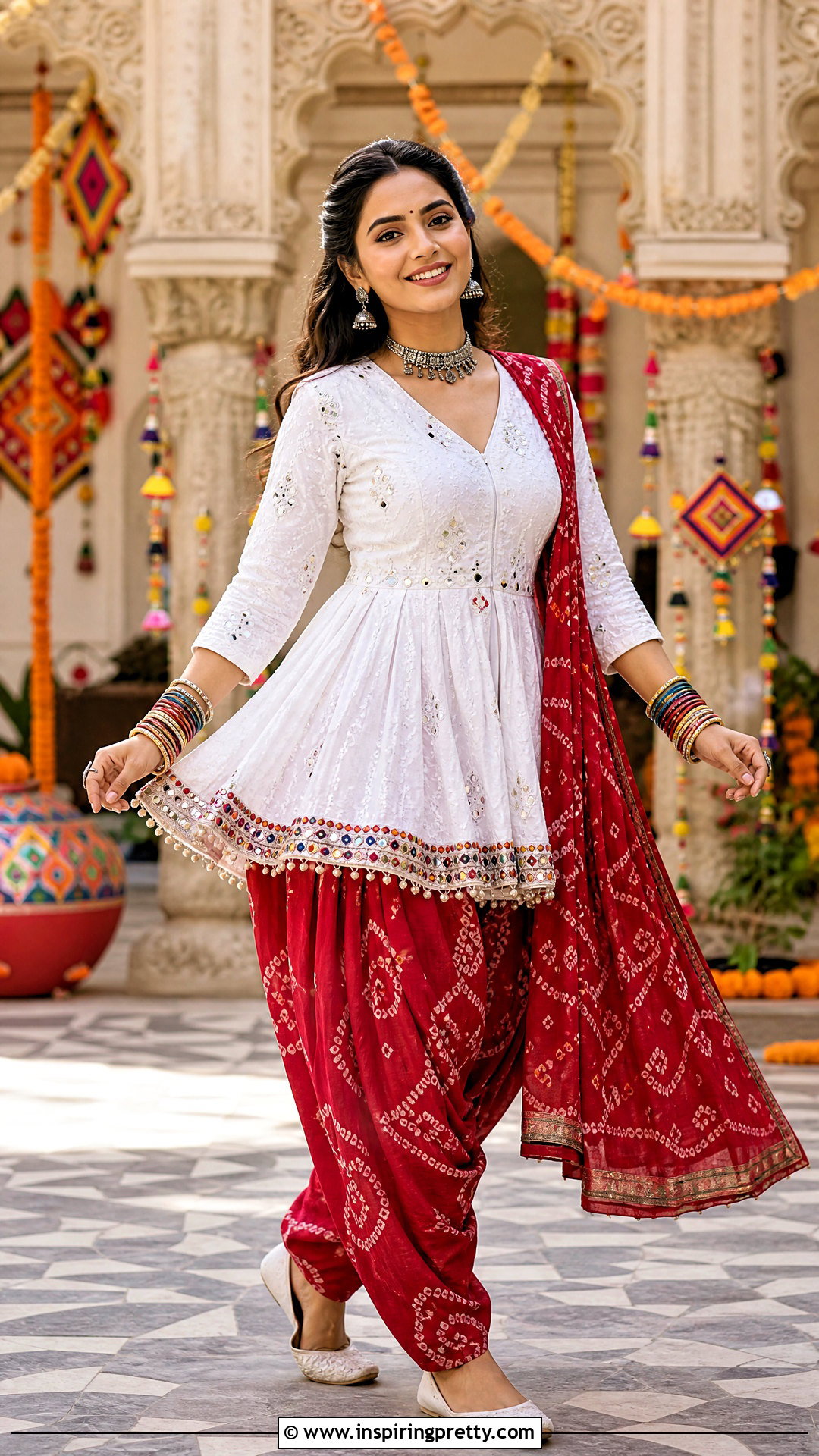
Here the pattern moves to the bottom half: a white kediyu with colorful embroidery at the yoke, cuffs and hem over Bandhani dhoti pants in red, pink or navy. The kediyu should end near the waist so the gathered dhoti shows. Bandhani dyes can bleed for the first few washes, so I wash new pants on their own before they ever go near the white top. An oxidized choker, small jhumkas and colorful bangles. White or tan juttis and a braided ponytail.
28. Black Kediyu With Mirror Work Skirt
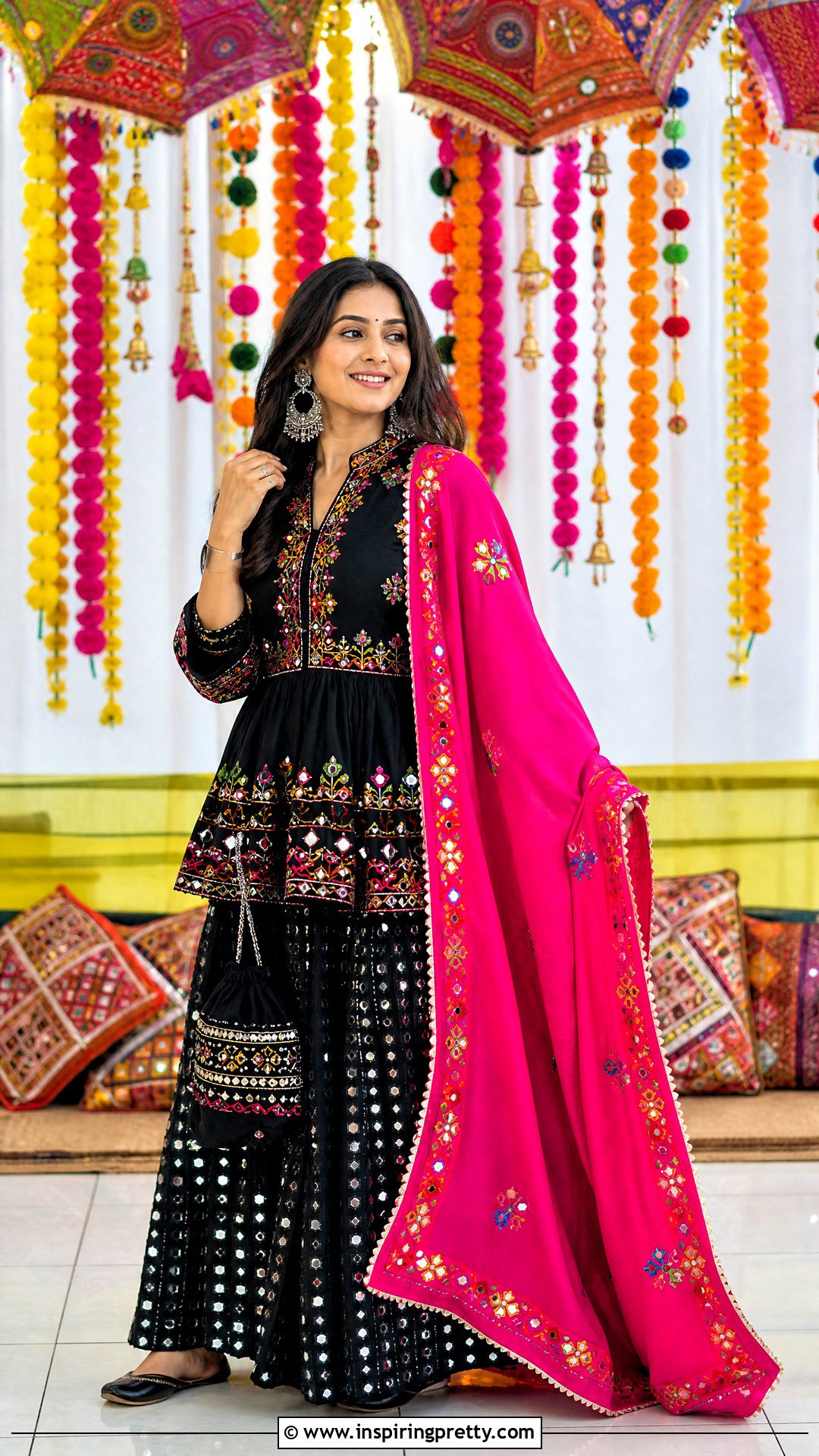
A black kediyu with a mirror-work skirt is built for night. Choose a top with colorful embroidery around the neckline so it doesn't disappear against the black. The skirt can have mirror borders or small reflective motifs. A red, fuchsia or orange dupatta lifts the dark palette; use strong pins at the shoulder and waist. Silver chandbalis and a cuff suit the mirrors, so you can skip the necklace. Black juttis, a small potli and a braid. Under bright lights, the mirrors shine in every photo.
29. Purple Kediyu With Mustard Lehenga
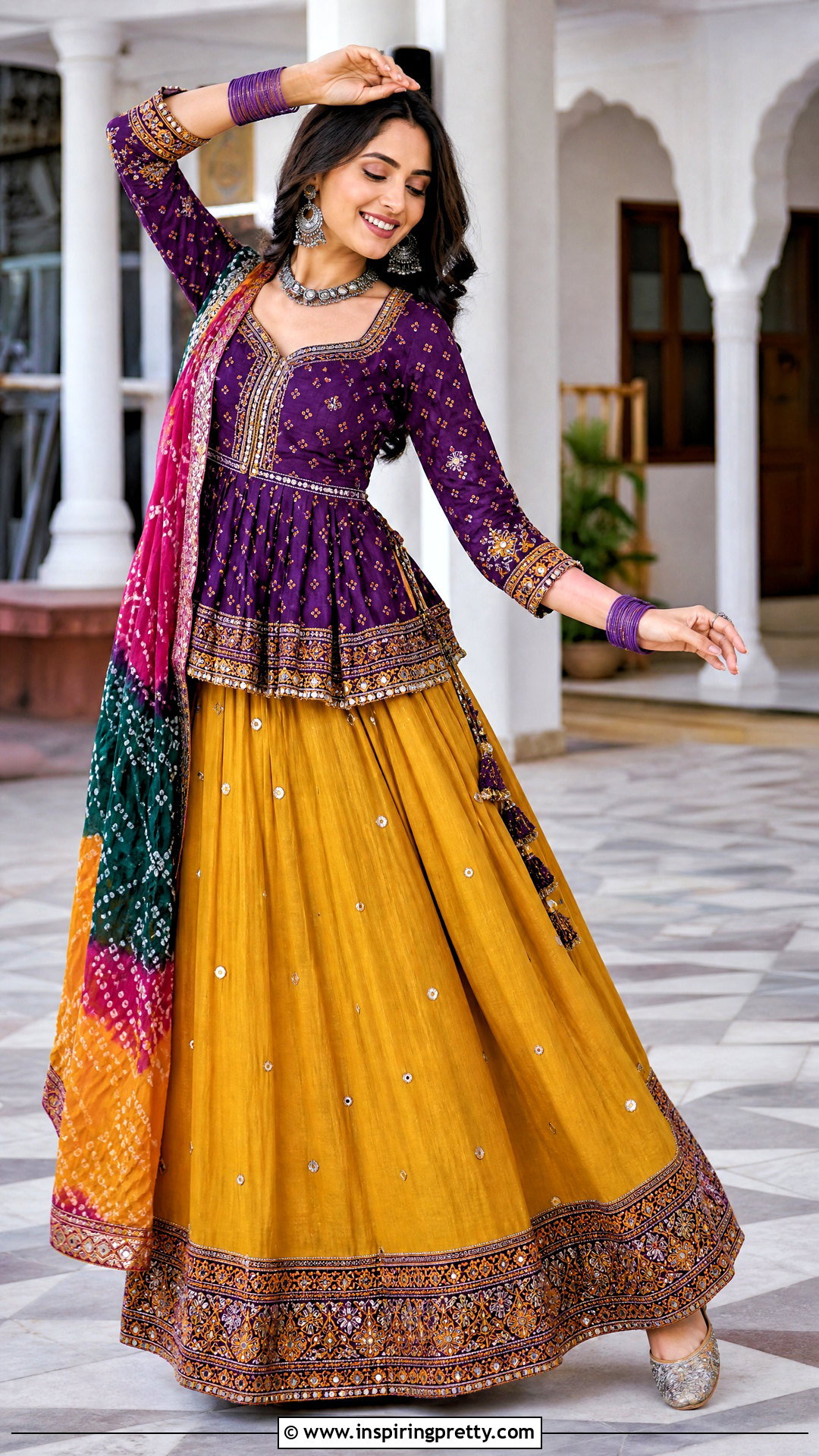
Purple and mustard is a jewel-toned pairing that feels distinctive without shouting. A purple kediyu with mustard embroidery or mirror details goes over a flowing mustard lehenga in cotton, rayon or georgette. A multicolored Bandhani dupatta links both shades; drape it across the torso and pin it in two places. Oxidized silver earrings, a short necklace and purple bangles. Tan or metallic juttis with supportive insoles. Wrap a low braid with mustard ribbon and keep the makeup warm and understated.
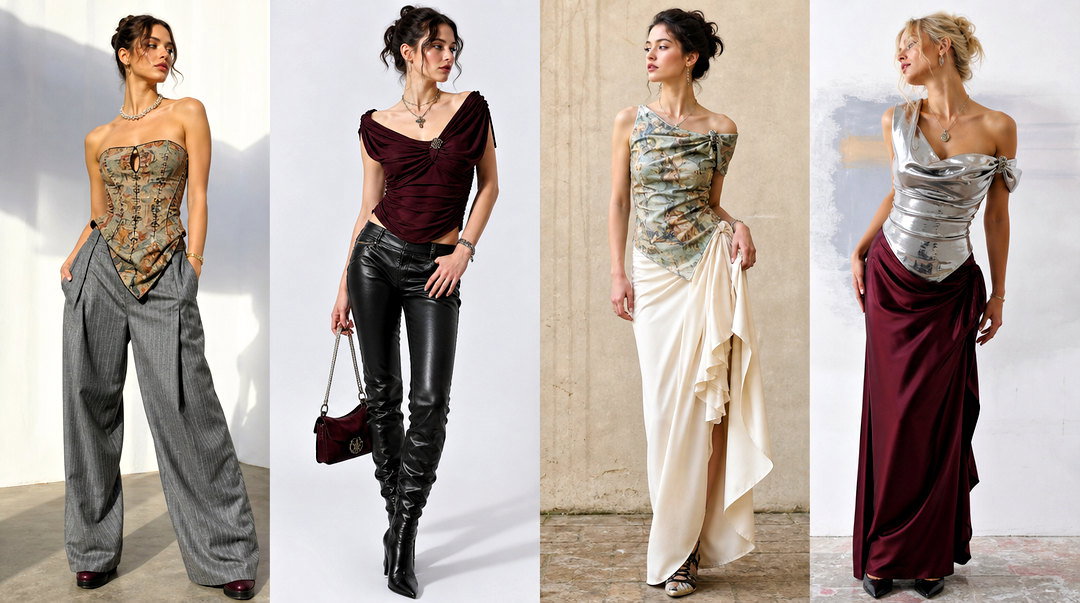
30. Teal Kediyu With Pink Sharara
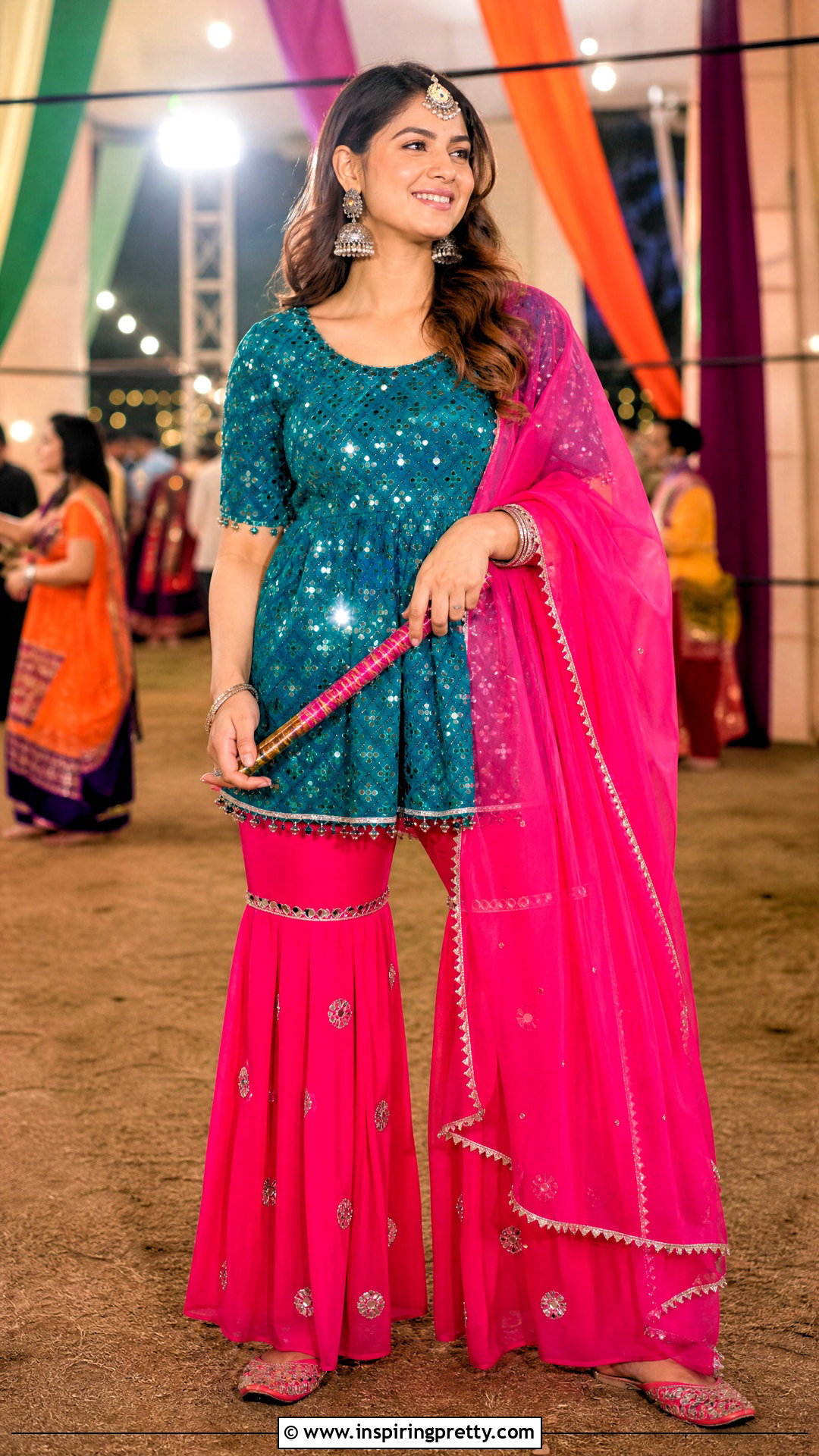
A teal kediyu and bright pink sharara give you color and plenty of swing. Choose a fitted top with mirror work and a peplum-style flare that stops above the widest part of the sharara, with pink piping or tassels to link the two. A sheer teal or printed dupatta, pinned at the shoulder and looped at the wrist if you want it flowing. Silver jhumkas, a fine maang tikka and slim bangles. Pink embroidered flats and a high braid. A sharara is lighter to dance in than most heavily worked lehengas.
31. Maroon Kediyu With Beige Palazzo Pants
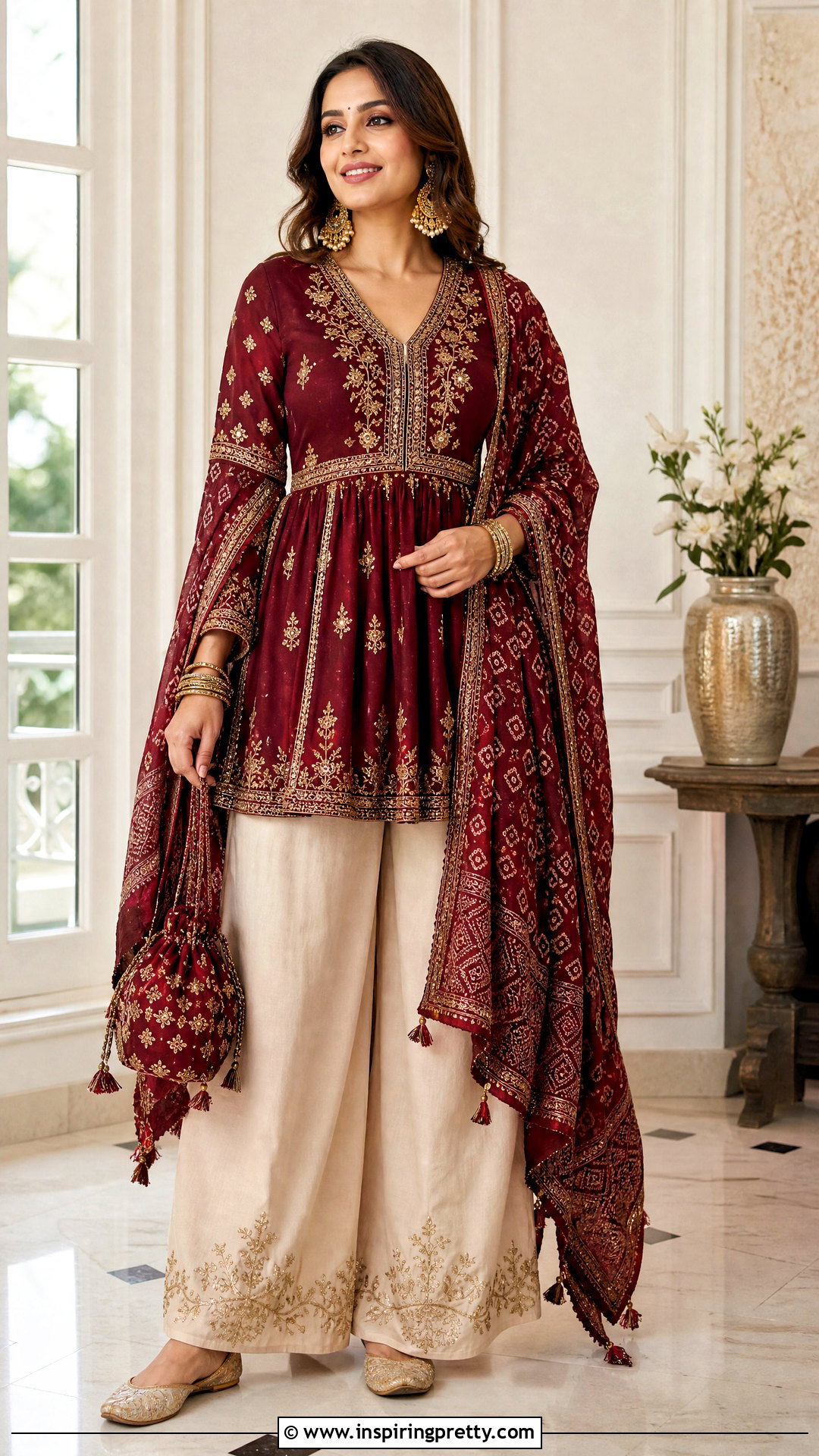
Maroon with beige palazzos is the most understated palette here, which suits anyone who wants festive without loud. A maroon kediyu with mirrors, cream thread or soft gold borders. The palazzos should be wide enough for movement but not so full that they swamp the flare. A printed beige-and-maroon dupatta as a narrow drape. Choose one metal, antique gold or oxidized silver, and keep it consistent. Beige juttis lengthen the leg line. A maroon potli and a smooth braid.
32. Coral Kediyu With Mint Green Skirt
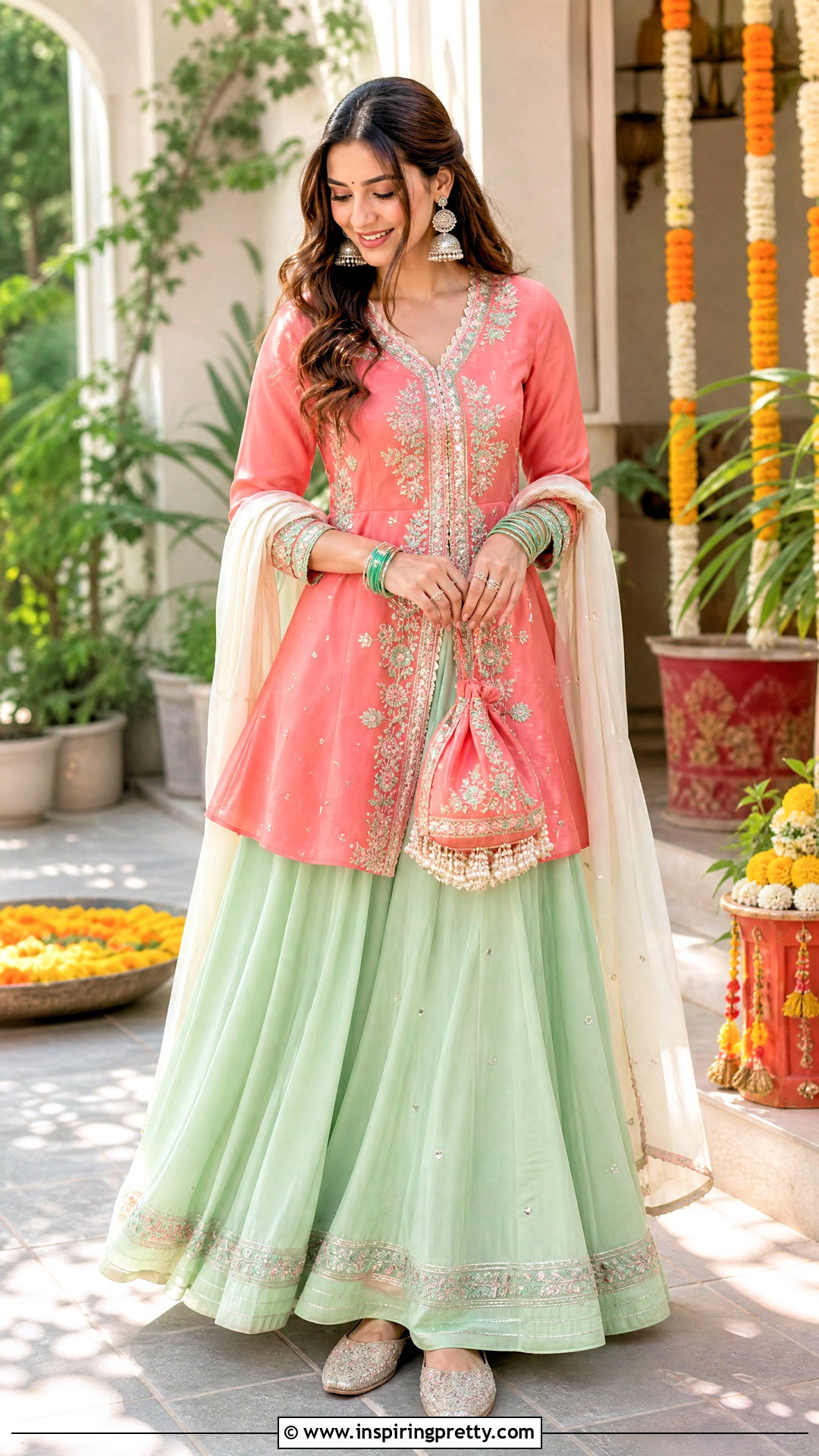
Coral and mint make a cheerful daytime pairing. A coral kediyu with mint embroidery or small mirrors goes over a flowing mint skirt with a coral border, so the two look matched on purpose. An ivory dupatta balances both colors without adding another focal point. Silver jhumkas, mint bangles and a small coral potli. Ivory or pale gold juttis, a side braid with a small clip, and coral lipstick. Mint is a pale shade, so check the skirt isn't sheer in daylight.
33. Indigo Kediyu With Red Chaniya
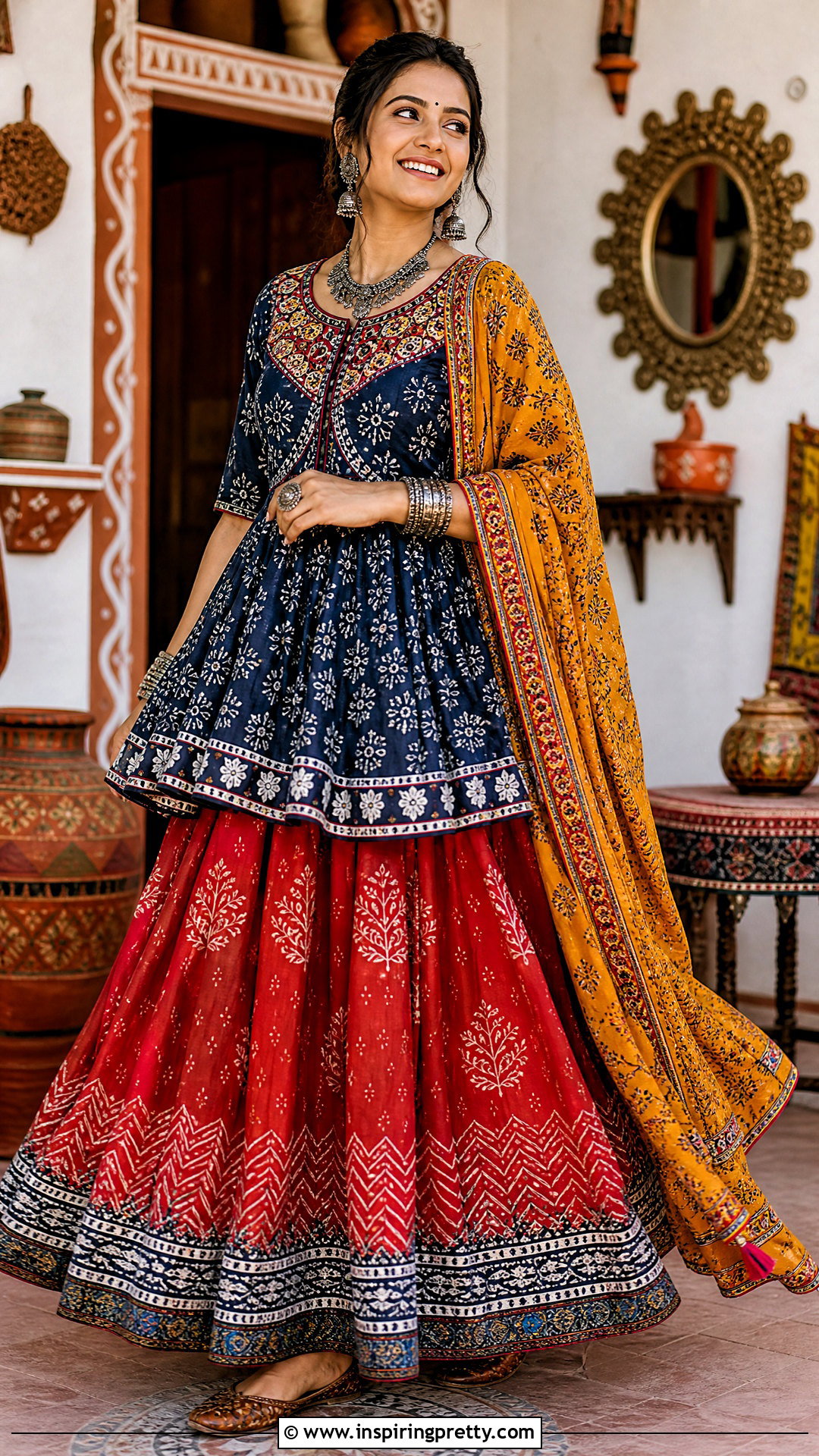
Indigo and red are old partners in Gujarati textiles, and the pairing still looks strong. An indigo kediyu with block-printed motifs, white stitching or small mirrors goes over a red chaniya with an indigo border. A mustard or white dupatta brightens it; pin it at the shoulder and waist before dancing. Antique silver jhumkas, a chunky silver necklace and close-fitting bangles. Brown or red juttis and a long braid. With so little embellishment, it stays light enough for warm venues.
34. Mustard Kediyu With Maroon Dhoti Pants
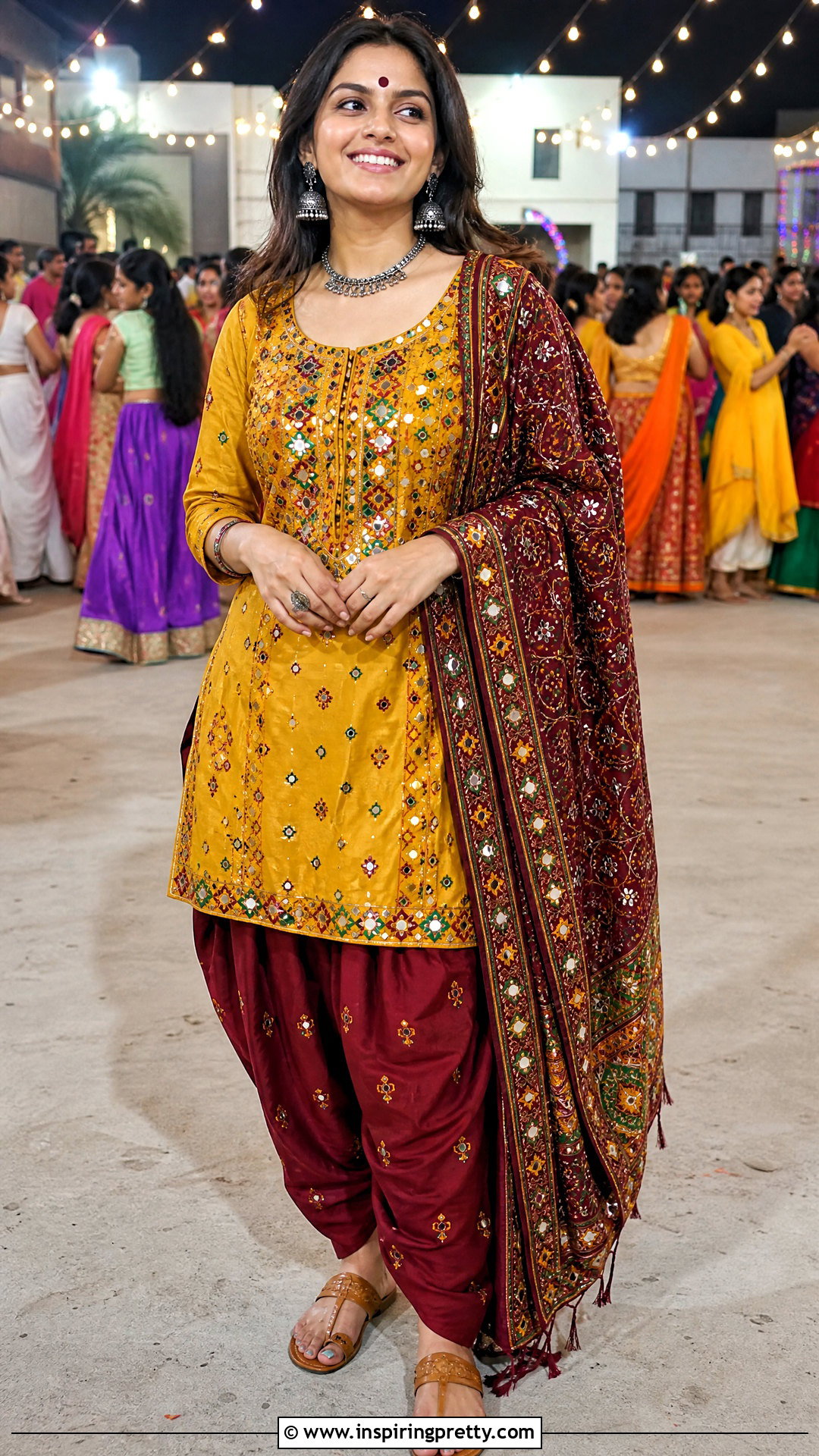
Mustard and maroon is warm and grounded, made for traditional Garba. Maroon piping, thread embroidery and small mirrors around the kediyu's neckline link it to the pants. The dhoti should sit securely at the waist with room for wide steps, and a drawstring waist is more forgiving than elastic alone. A printed dupatta in both shades, or a narrow maroon stole. Oxidized silver for contrast. Tan Kolhapuris or cushioned juttis, a braided bun and a maroon bindi.
35. Green Kediyu With Floral Lehenga
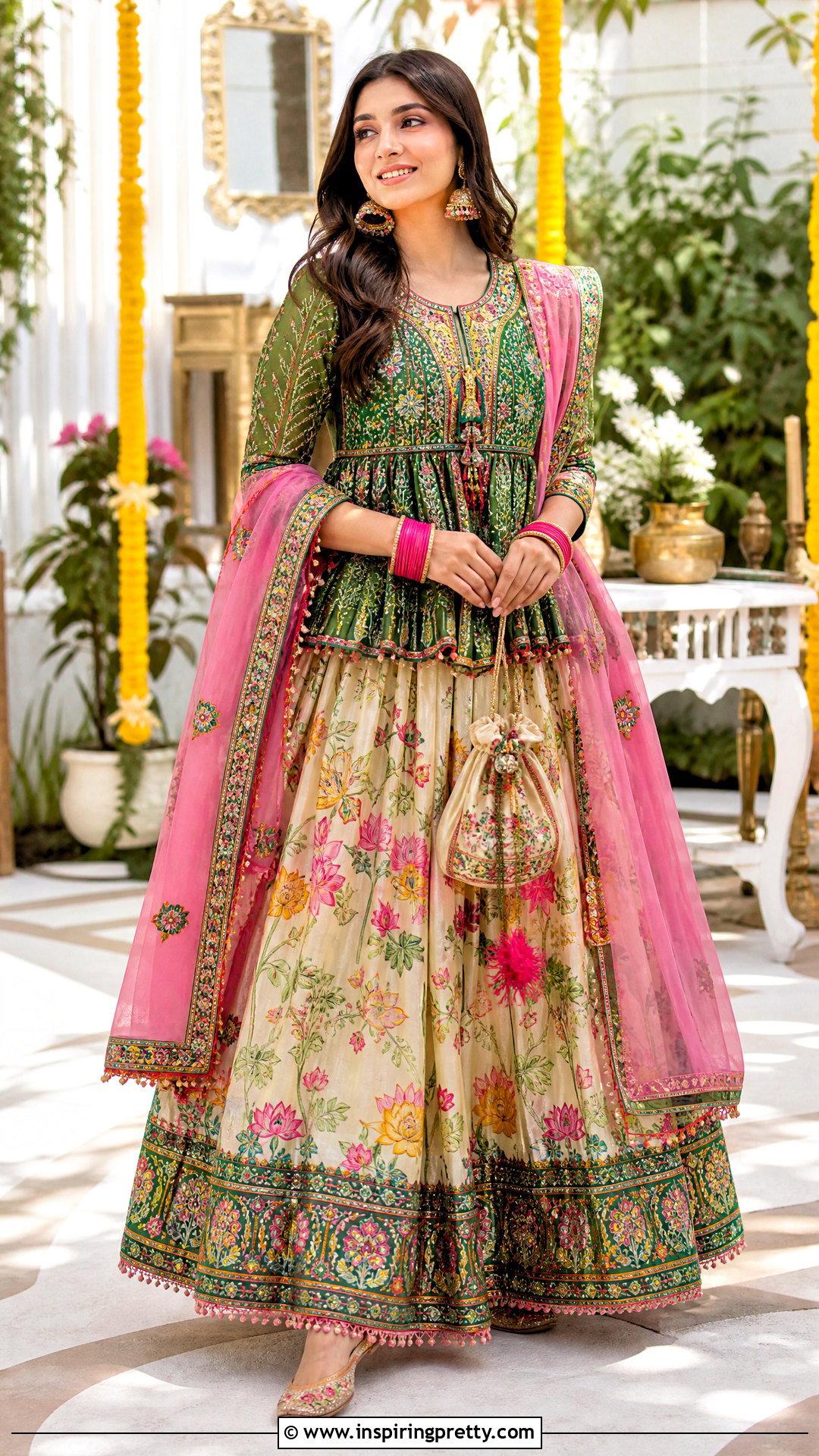
A green kediyu with a floral lehenga has a garden feel. Choose emerald, leaf or bottle green with restrained mirror work so the top supports the printed skirt instead of fighting it. Pick a lehenga with pink, yellow or ivory flowers, and a sheer dupatta in one of those accent colors. Medium jhumkas, colorful bangles and a small potli. Neutral metallic juttis. A low braid with a small floral accessory and soft makeup. It's lovely for daytime community events.
36. Printed Kediyu With Solid Maxi Skirt
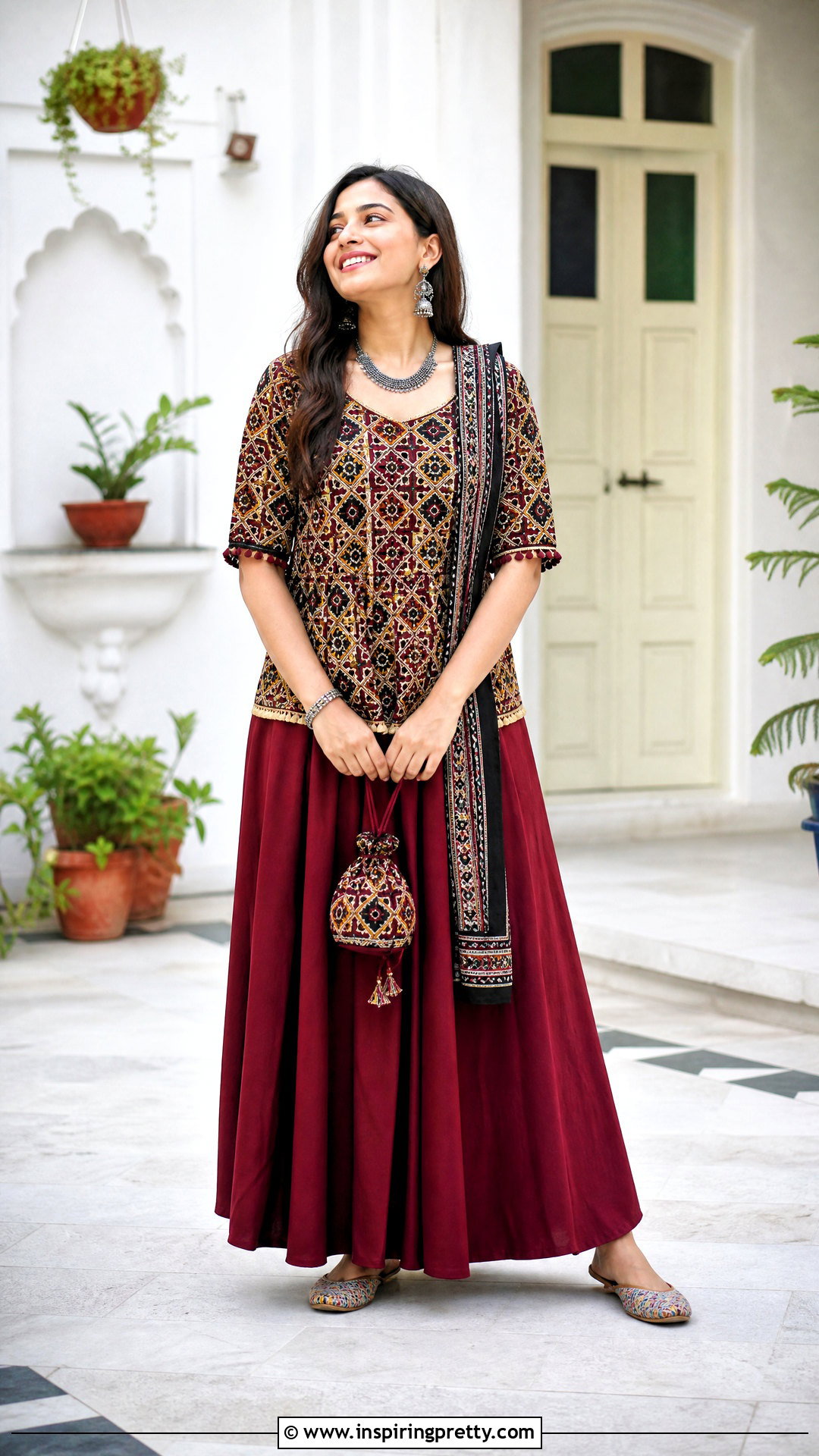
A printed kediyu with a solid maxi skirt is the easiest formula to build and rewear. Pick a top with Bandhani dots, block prints or folk geometrics, then take a secondary color from the print for the skirt, such as navy or mustard. A soft cotton or rayon maxi moves well without heavy decoration. An oxidized necklace, light earrings and a potli. Flat juttis or secure sandals, and a narrow dupatta if you want it. The skirt goes straight back into your everyday wardrobe after the festival.
37. Mirror Work Kediyu With Cargo Pants
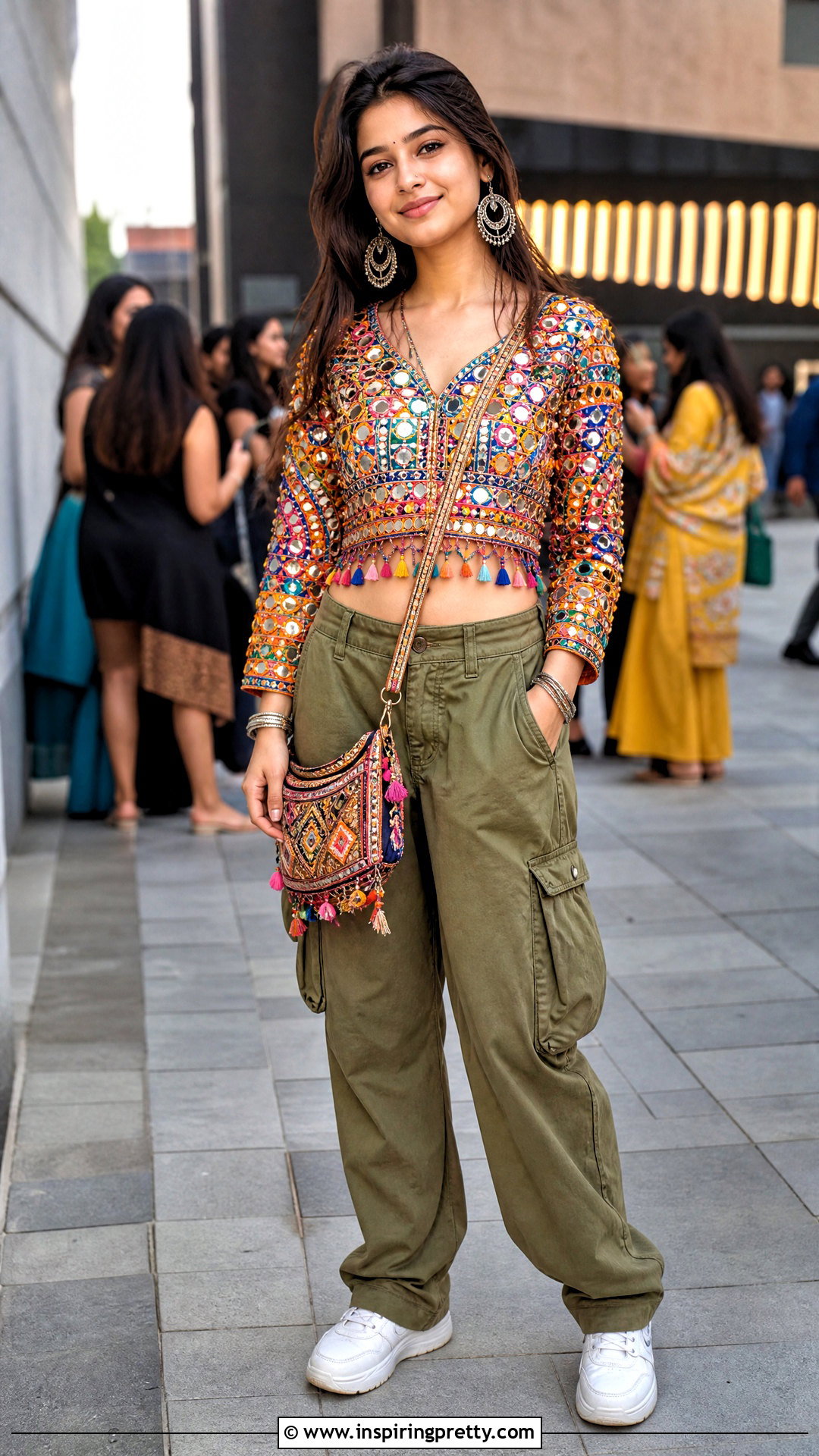
Cargo pants with a mirror-work kediyu is the street-style fusion option for college Garba. Choose black, olive or cream cargos with a clean shape and flat pockets. A cropped or waist-length kediyu defines the body so two loose shapes don't compete. Oxidized hoops, slim bracelets and a small crossbody that frees your hands for the sticks. Clean sneakers are the most practical shoe. Skip the dupatta or tie a short embroidered scarf at the neck. A high ponytail finishes it.
38. Kediyu With Matching Co-Ord Pants
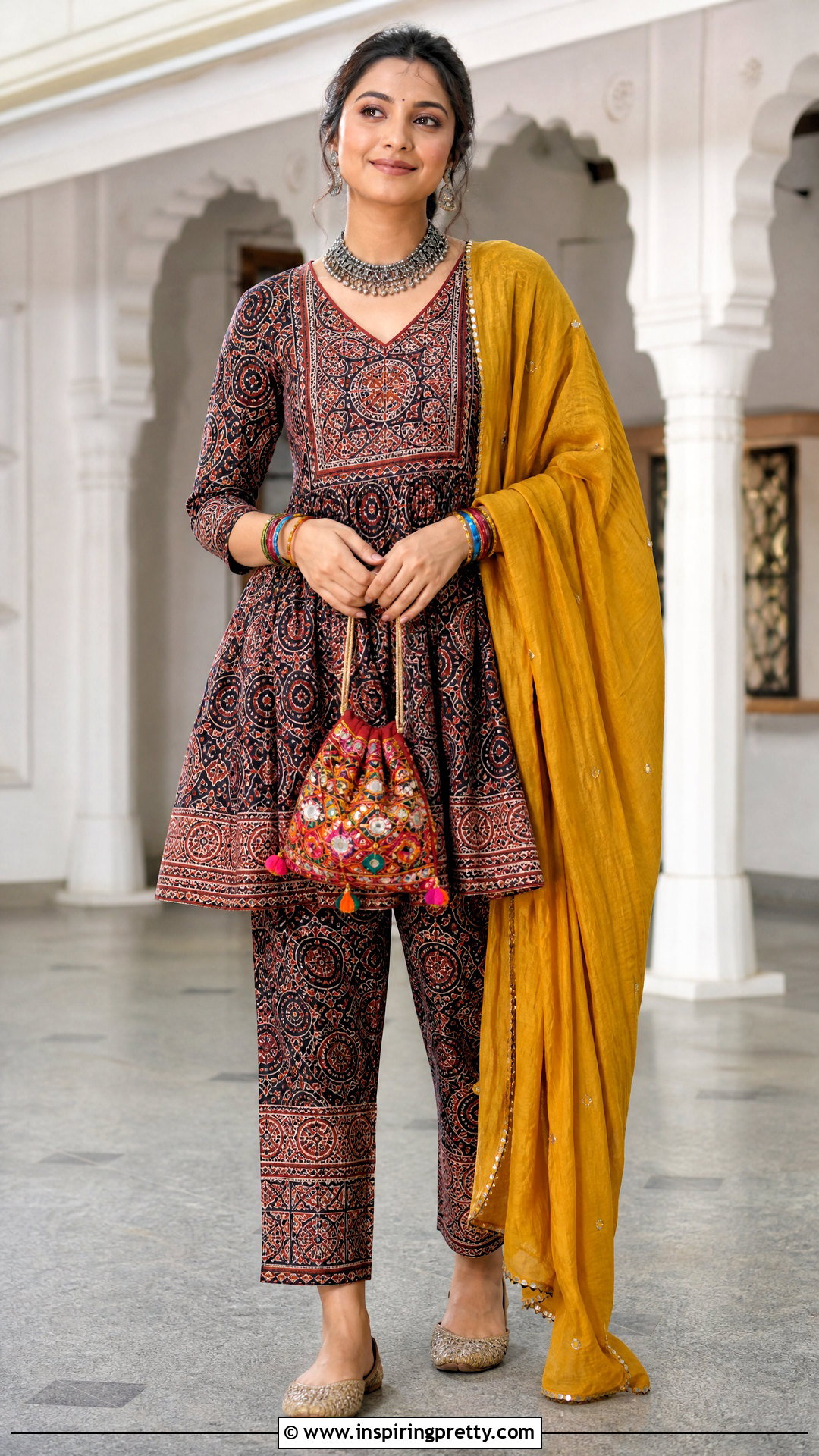
A matching kediyu and pants set takes almost no styling, which is handy across nine nights. Look for Bandhani, Ajrakh, floral block prints or small embroidered motifs. A fitted waist and flared hem give the kediyu shape, while straight or gently tapered pants keep it balanced. Add contrast with an oxidized necklace, bright bangles or a colorful potli. A solid dupatta makes it more traditional; pin it before dancing. Neutral juttis, a smooth braid and a small bindi. Later, each piece works on its own.
39. Asymmetrical Kediyu With Cigarette Pants
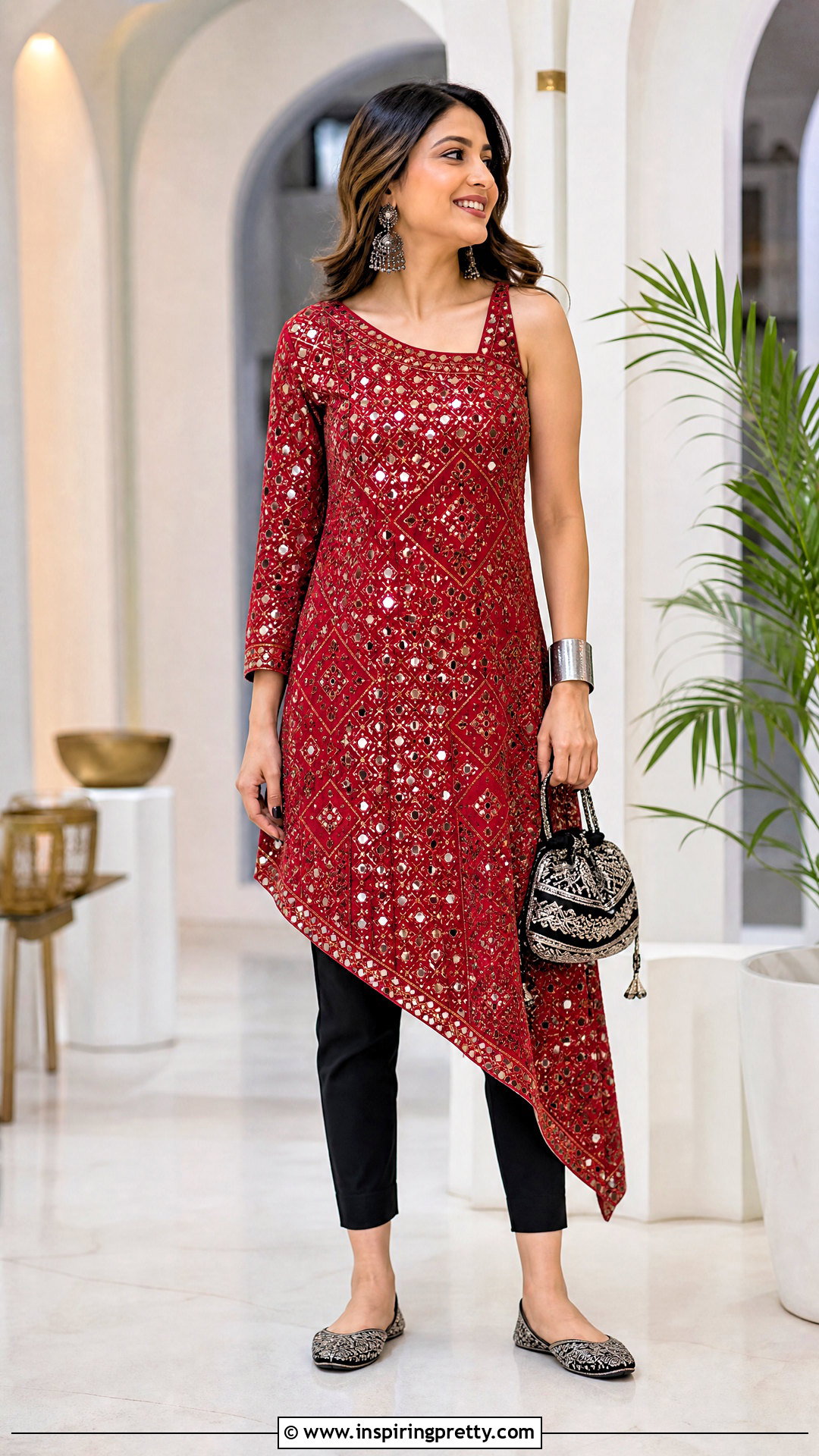
An asymmetric hem gives a kediyu a modern edge over fitted cigarette pants. Make sure the long side stays above the knee, or it catches when you step. Black, ivory or matching pants show off the angle, and mirror work along the neckline or diagonal hem highlights the cut. Long oxidized earrings and one cuff. Pointed embroidered flats and a compact potli. Skip the dupatta so the shape shows from every side. Right for contemporary events where fusion dressing is welcome.
40. Layered Kediyu With Plain Lehenga
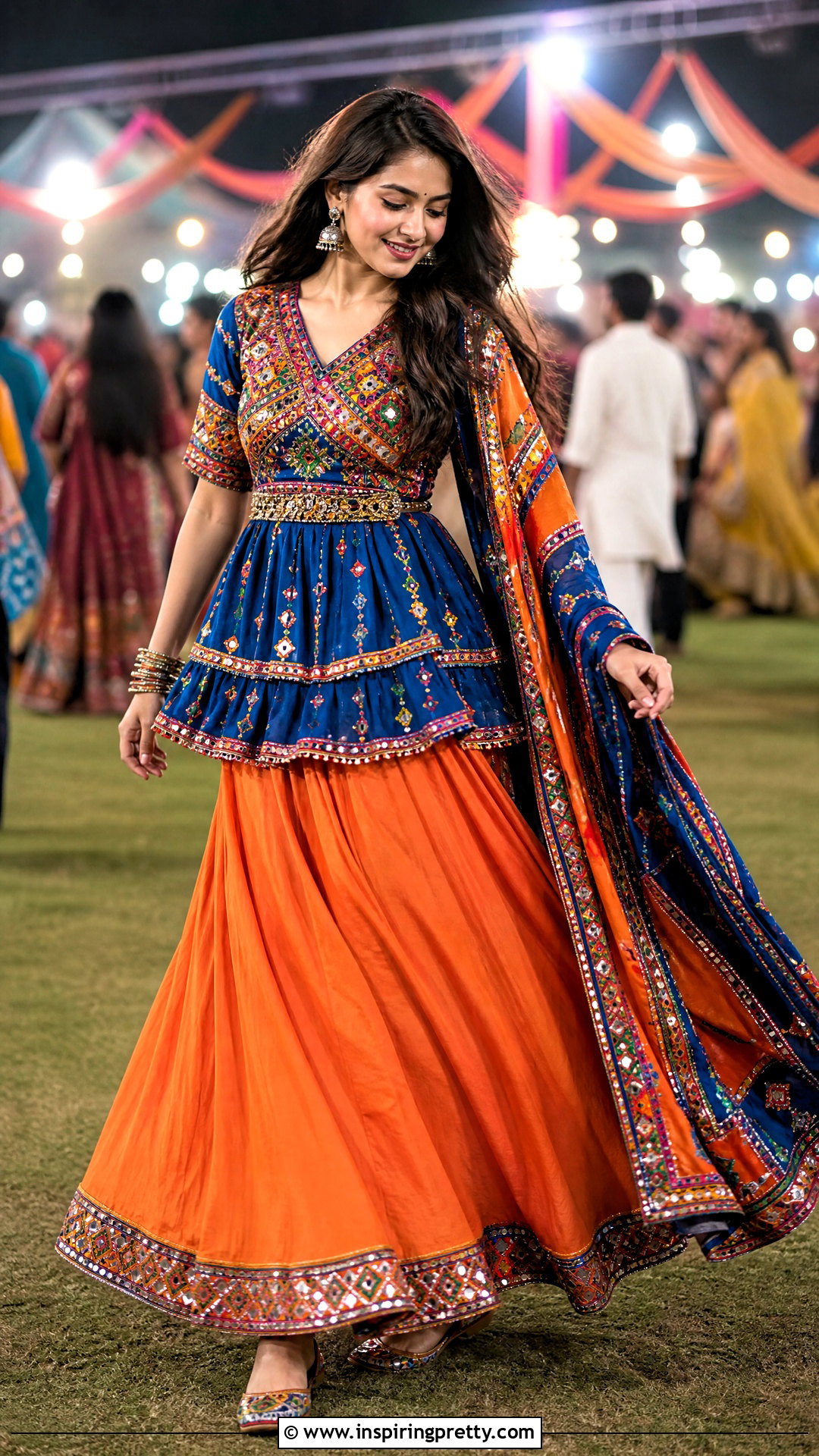
A layered kediyu adds dimension through two soft tiers rather than dense embroidery. Lightweight cotton, georgette or rayon keeps those tiers floaty instead of bulky. Pair it with a plain lehenga in a coordinating solid, with a moderate flare so the top stays the focus. A narrow mirror-work dupatta, light jhumkas and a few secure bangles. Flat embroidered shoes with flexible soles. A small waist belt can define the shape, as long as it doesn't flatten the tiers. A braided ponytail finishes it.
41. Ruffled Kediyu With Straight Leg Pants
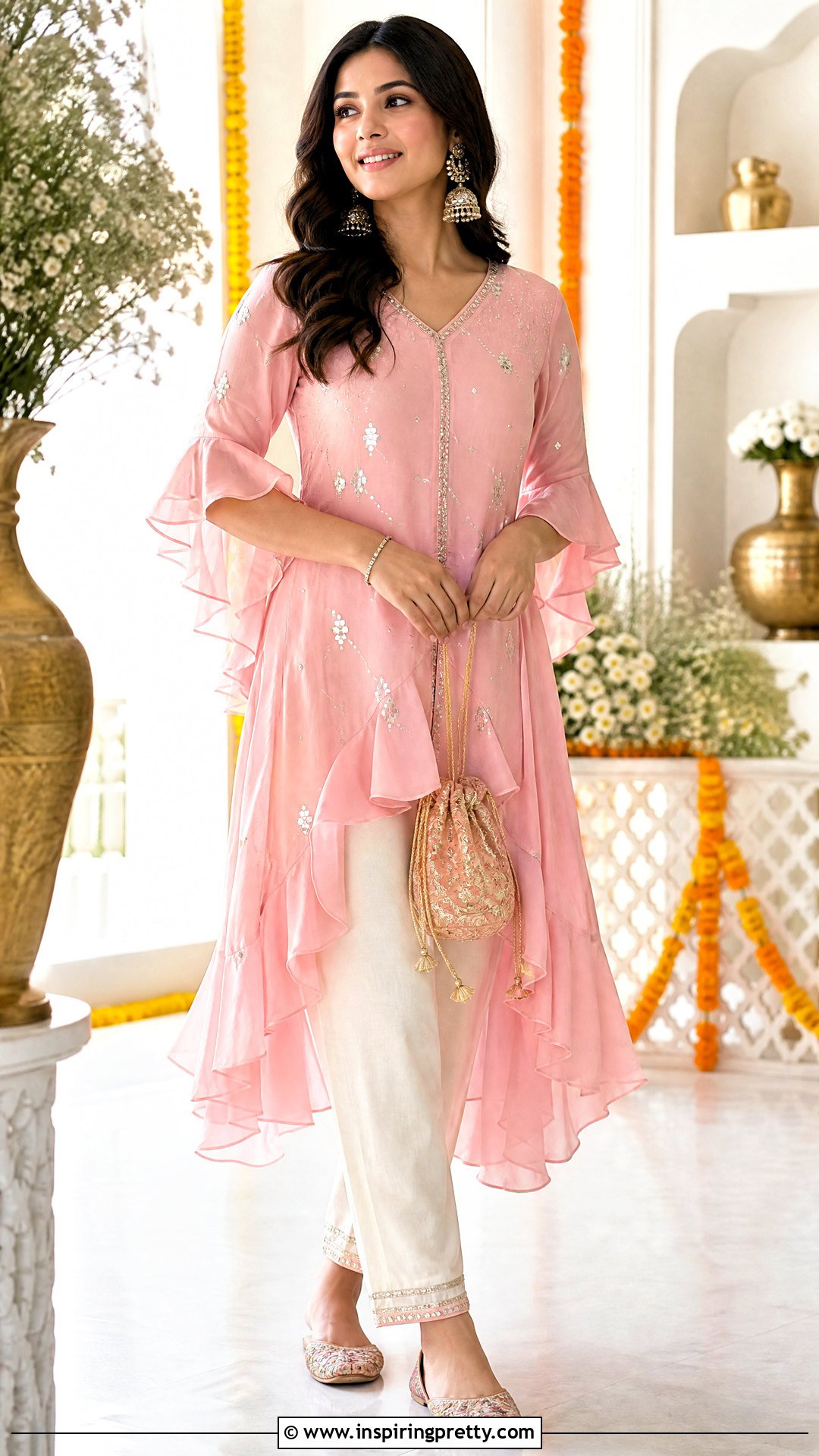
One controlled ruffle at the hem or sleeves keeps a ruffled kediyu playful, while several bulky layers add width and weight. Pair a bright top with black, navy or matching straight-leg pants for clean proportions. Small mirrors and embroidered piping add festive detail around the ruffle. Statement jhumkas, a slim bracelet and a compact potli. Pointed juttis or secure low block heels. A short scarf if you want coverage, and a high braid.
42. Plus Size Kediyu With Paneled Lehenga
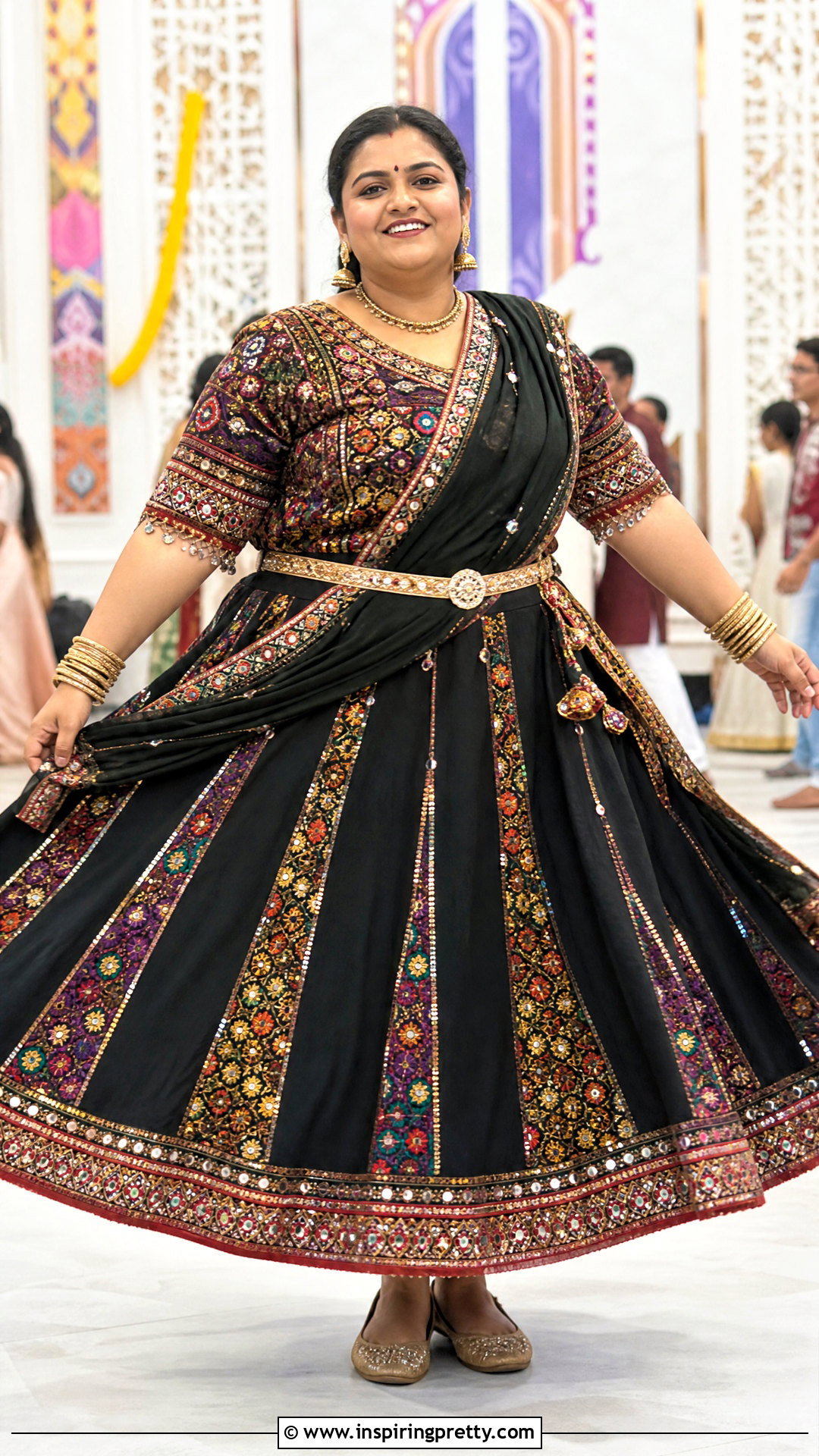
For plus-size figures, the fit at the bodice and the point where the flare starts matter most. Choose a kediyu with a supportive bodice, roomy armholes and a flare that begins at your natural waist; one that starts too high adds volume over the bust. Vertical embroidery or evenly spaced mirrors create a long line. Pair it with a paneled lehenga that skims the hip before widening. Drape the dupatta diagonally and pin it rather than wrapping it tight. Medium jhumkas, cushioned juttis and breathable lining, and try a few dance steps at home first.
43. Petite Kediyu With High Waist Skirt
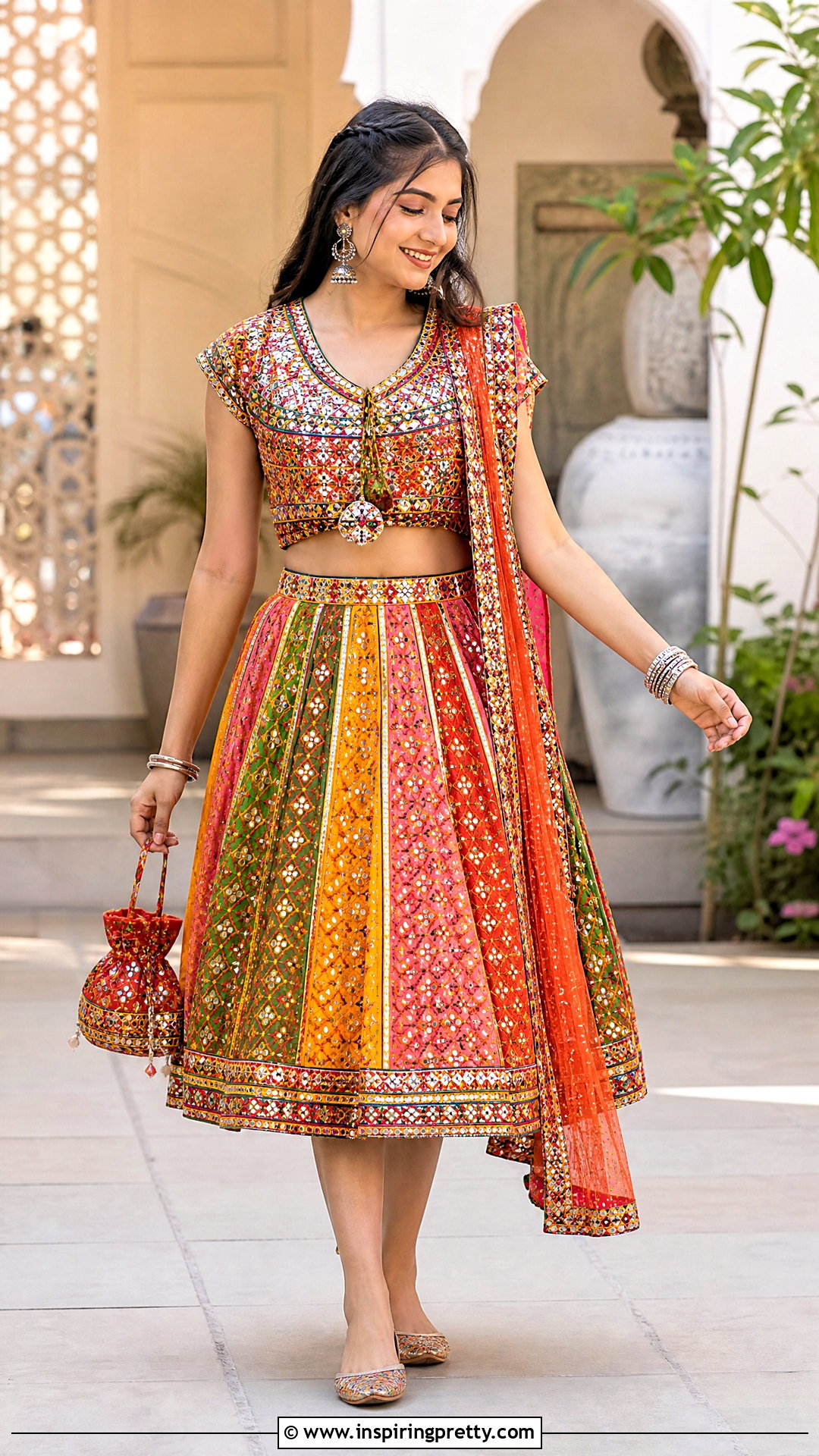
On a petite frame, the kediyu should end close to the natural waist, not over the hips, where it cuts the leg short. A high-waisted, vertically paneled or moderately flared skirt lengthens the line. Keep mirrors and embroidery small and evenly spread, since large motifs overwhelm a small frame. A narrow dupatta over one shoulder. Medium earrings, slim bangles and a small potli, all in proportion. Pointed juttis or low, stable block heels, and a high braid for a touch of height.
44. Modest Kediyu With Ankle Length Skirt
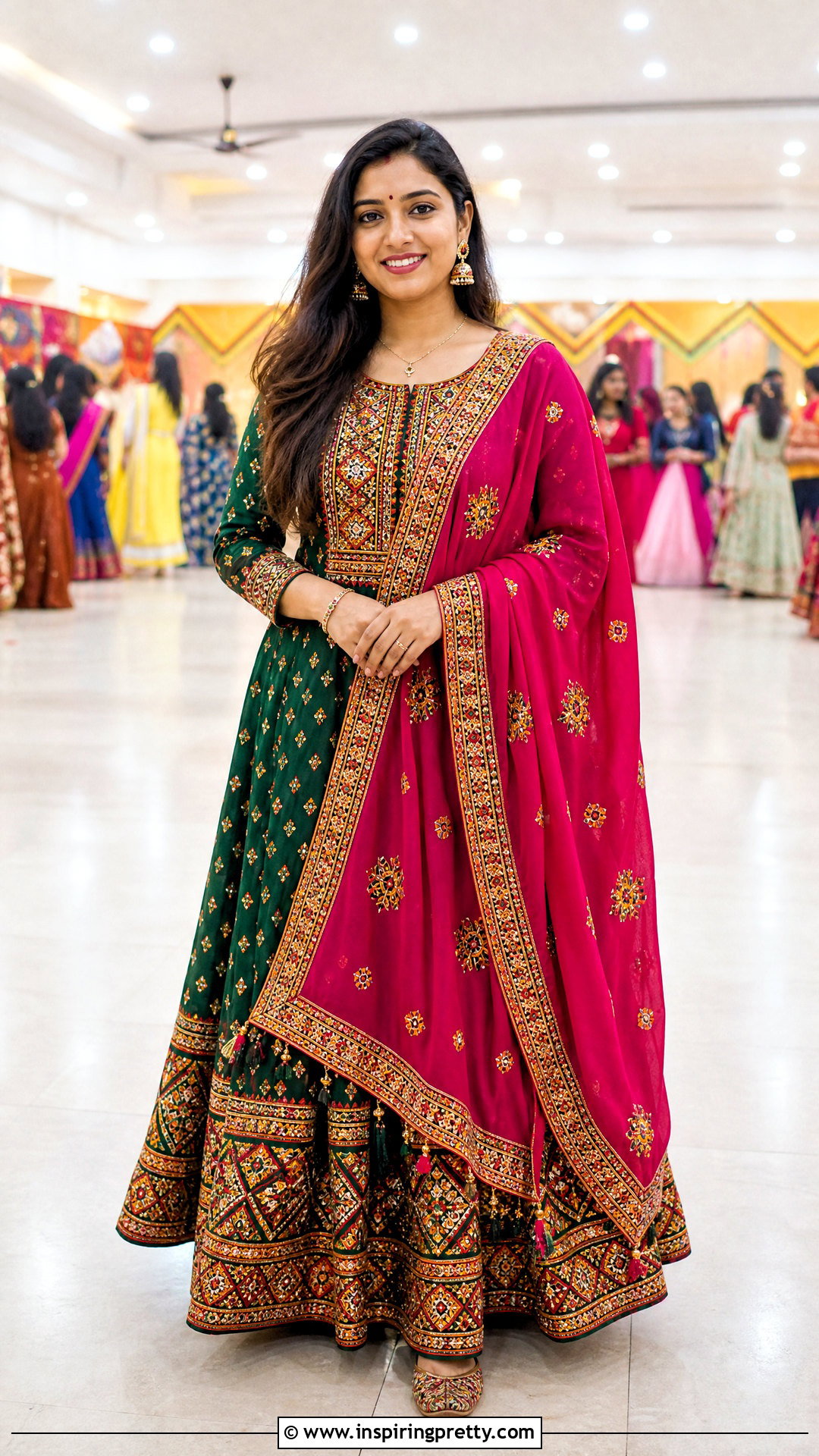
For full coverage, I'd pair a full-sleeve kediyu with an ankle-length skirt. Choose breathable fabric and a neckline that stays put when you move. A hip-length kediyu over a moderately flared skirt still leaves room for Garba steps. Drape a wide dupatta across the chest and pin it at the shoulder and waist. Embroidery at the cuffs, neckline and skirt border adds the festive detail. Light jhumkas, a small necklace and flat closed-toe juttis, which also protect your toes in a crowded circle. A braided bun keeps it neat.
45. Kediyu With Dupatta Cape And Palazzo Pants
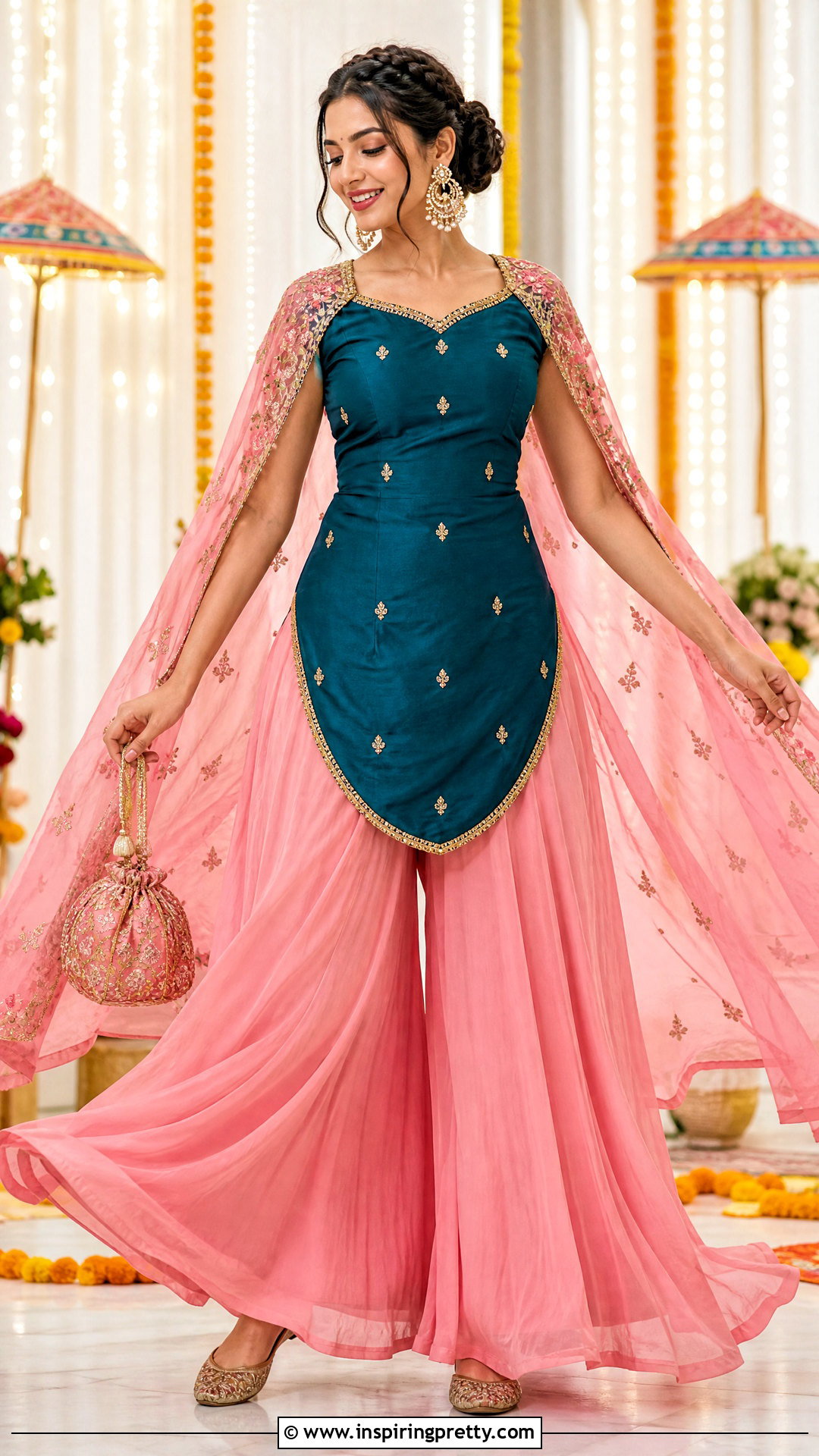
Wearing the dupatta as a cape is my favorite trick for dancers, because it keeps both hands free for dandiya. Pin the fabric securely at both shoulders so it falls behind the arms. A fitted, waist-length kediyu and moderately wide palazzos balance the floating layer. Use a sheer dupatta with a narrow border, since heavy fabric drags on the shoulders. Statement earrings, a ring and a small wristlet or potli. Flat juttis. Keep your hair up in a ponytail or bun so it doesn't tangle in the cape.
46. Kediyu With Belted Dupatta And Lehenga
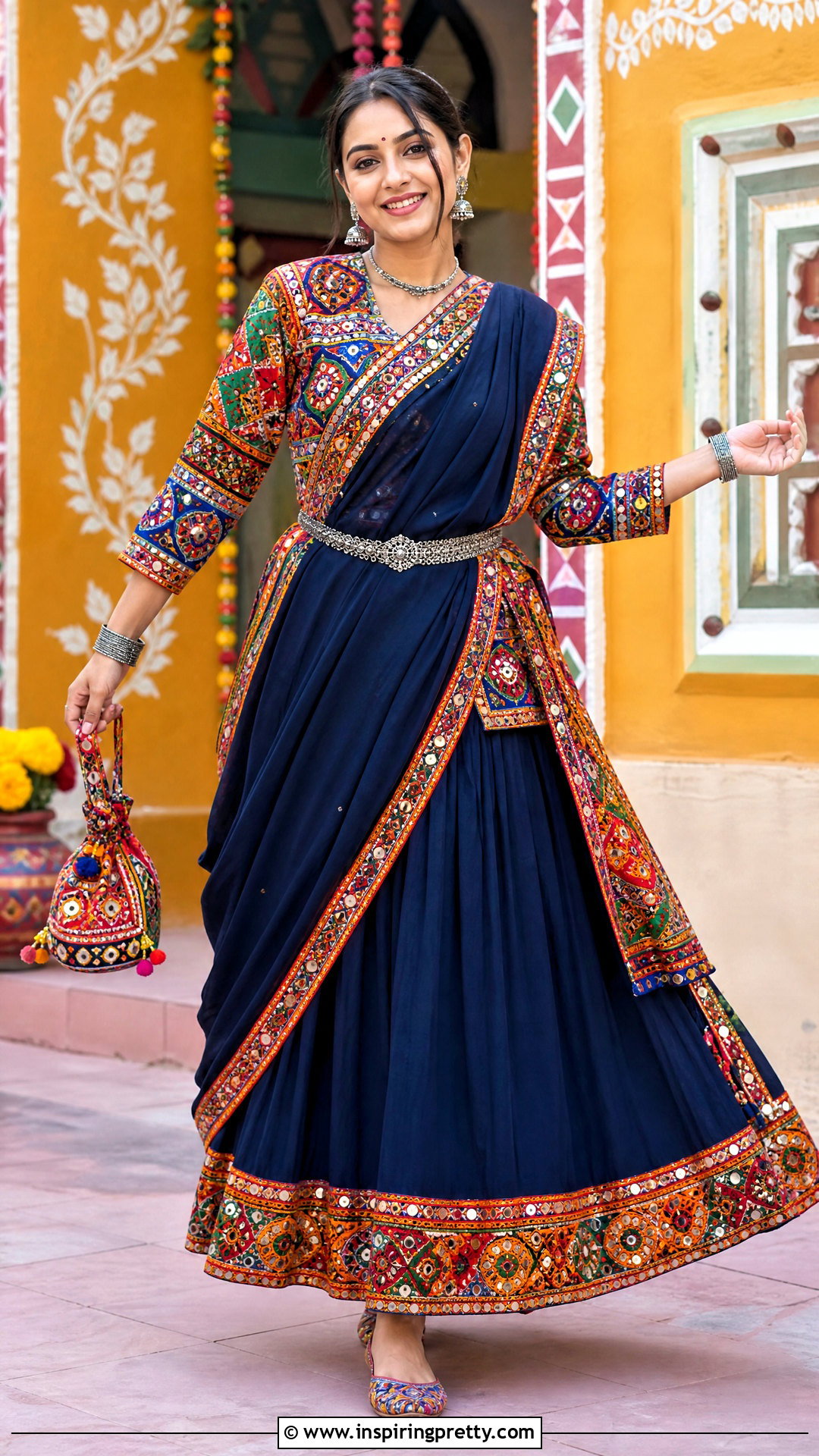
A belted dupatta is the most secure drape of all. Lay it diagonally across the torso, then fix it at the waist with an embroidered or oxidized belt. The belt should sit comfortably, never so tight that it limits your breathing after an hour of dancing. A fitted kediyu with a soft flare and a light skirt. Small jhumkas and slim bangles so the waist detail leads. A compact potli and embroidered flats, with a long braid or low bun. Test the drape at home and back it up with hidden safety pins.
47. Kediyu With Oxidized Jewelry And Black Skirt
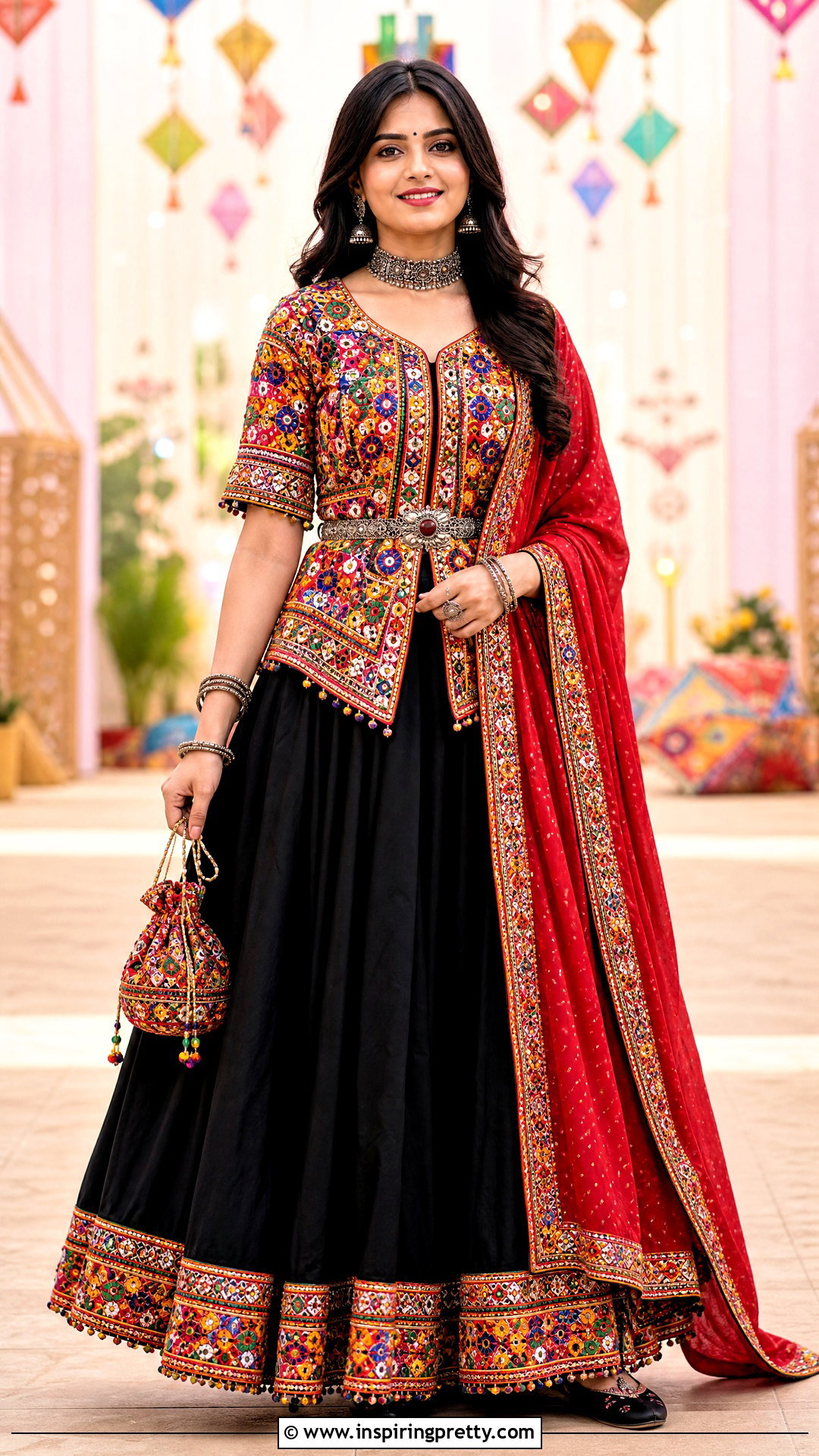
If you love statement jewelry, a colorful kediyu and black skirt make a calm backdrop for it. Choose moderate embroidery rather than heavy metal embellishments that compete with your pieces. An oxidized choker, medium jhumkas and a slim waist belt, but not every large piece at once; heavy earrings pull on the lobes over a long night. A plain black flared skirt and a red or yellow dupatta pinned diagonally. Black juttis, an embroidered potli and a braid that leaves the necklace visible.
48. Kediyu With Sneakers And Dhoti Pants
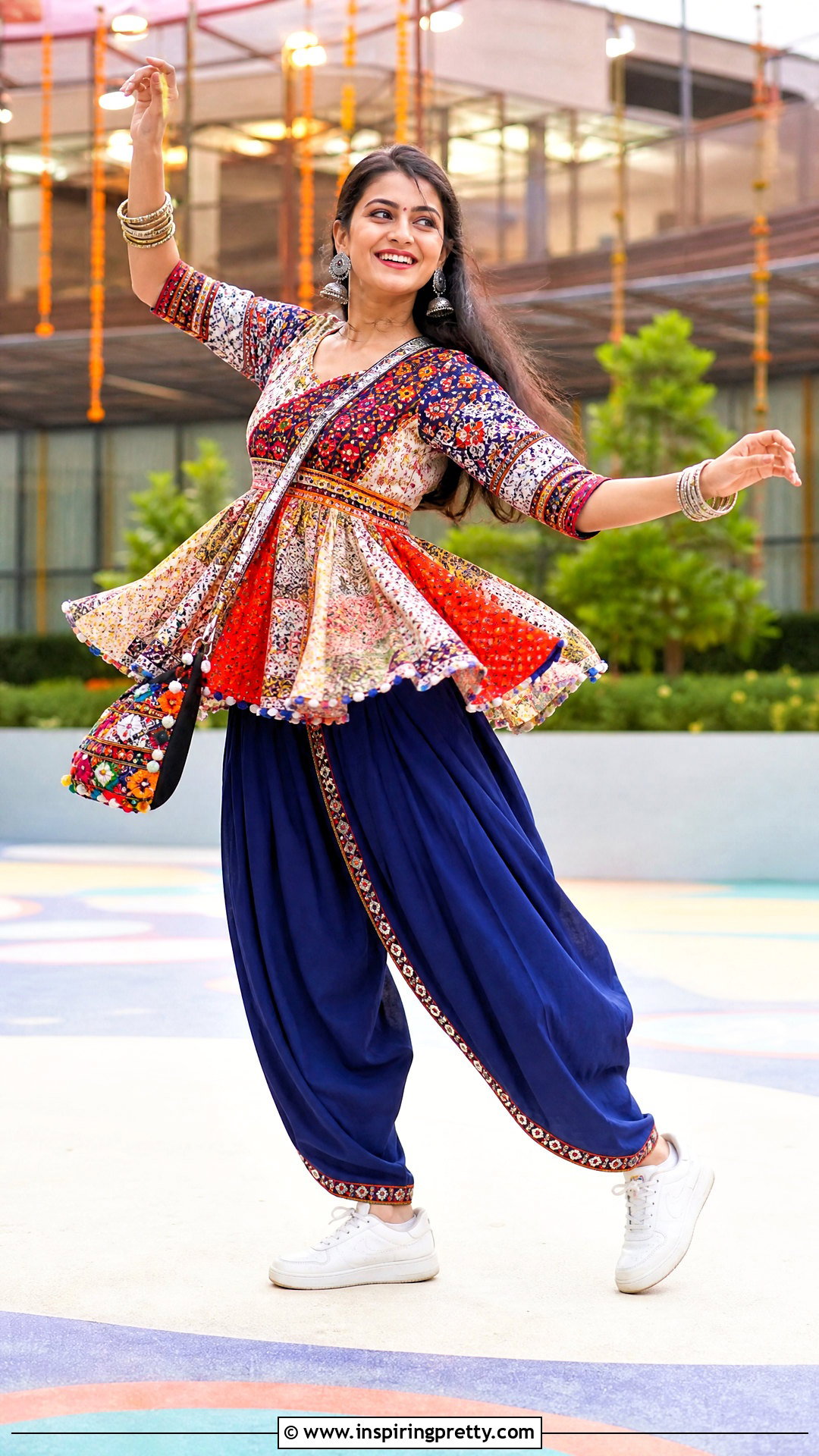
Dhoti pants and sneakers are the most comfortable Garba outfit I know. A colorful cotton kediyu with a fitted top and light flare goes over black, navy or cream dhoti pants. Clean white sneakers support quick steps and repeated turns far better than flat juttis on hard floors. Bring in the traditional side with oxidized earrings, secure bangles and an embroidered crossbody potli. Skip the dupatta or pin a short scarf at the neckline. A high ponytail. Great for outdoor grounds and packed venues.
49. Upcycled Kediyu With Solid Palazzo Pants
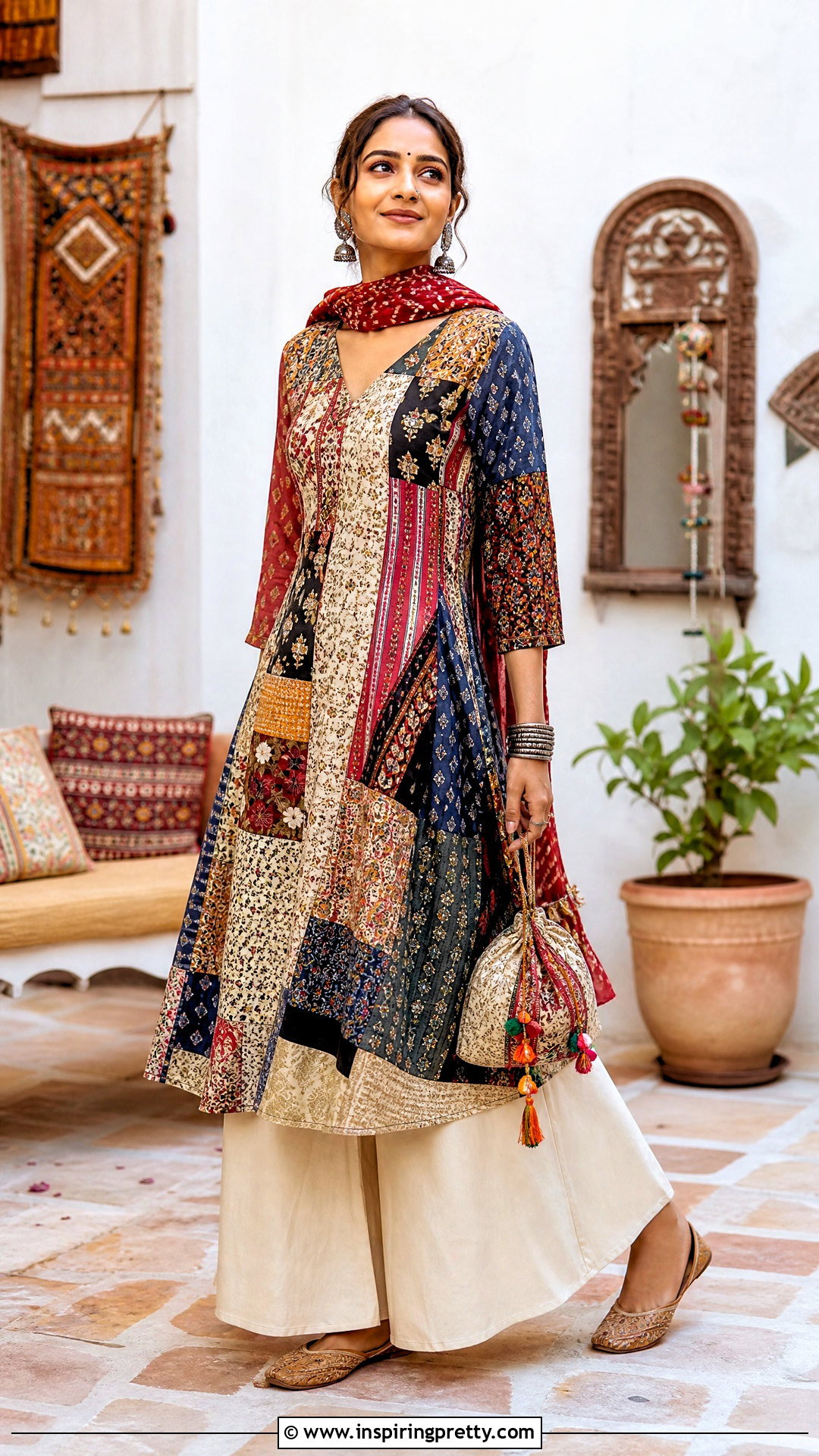
An upcycled kediyu made from vintage textile panels deserves a quiet setting. Pair it with solid palazzos in black, cream, maroon or a shade already in the fabric. Old textiles have weak spots, so before the night I check every seam and mirror and restitch anything loose; a mirror that drops off on the dance floor is usually gone for good. An old Bandhani scarf as a narrow dupatta, oxidized earrings and comfortable juttis. A potli made from leftover fabric, and a neat braid.
50. Designer Kediyu With Layered Chaniya
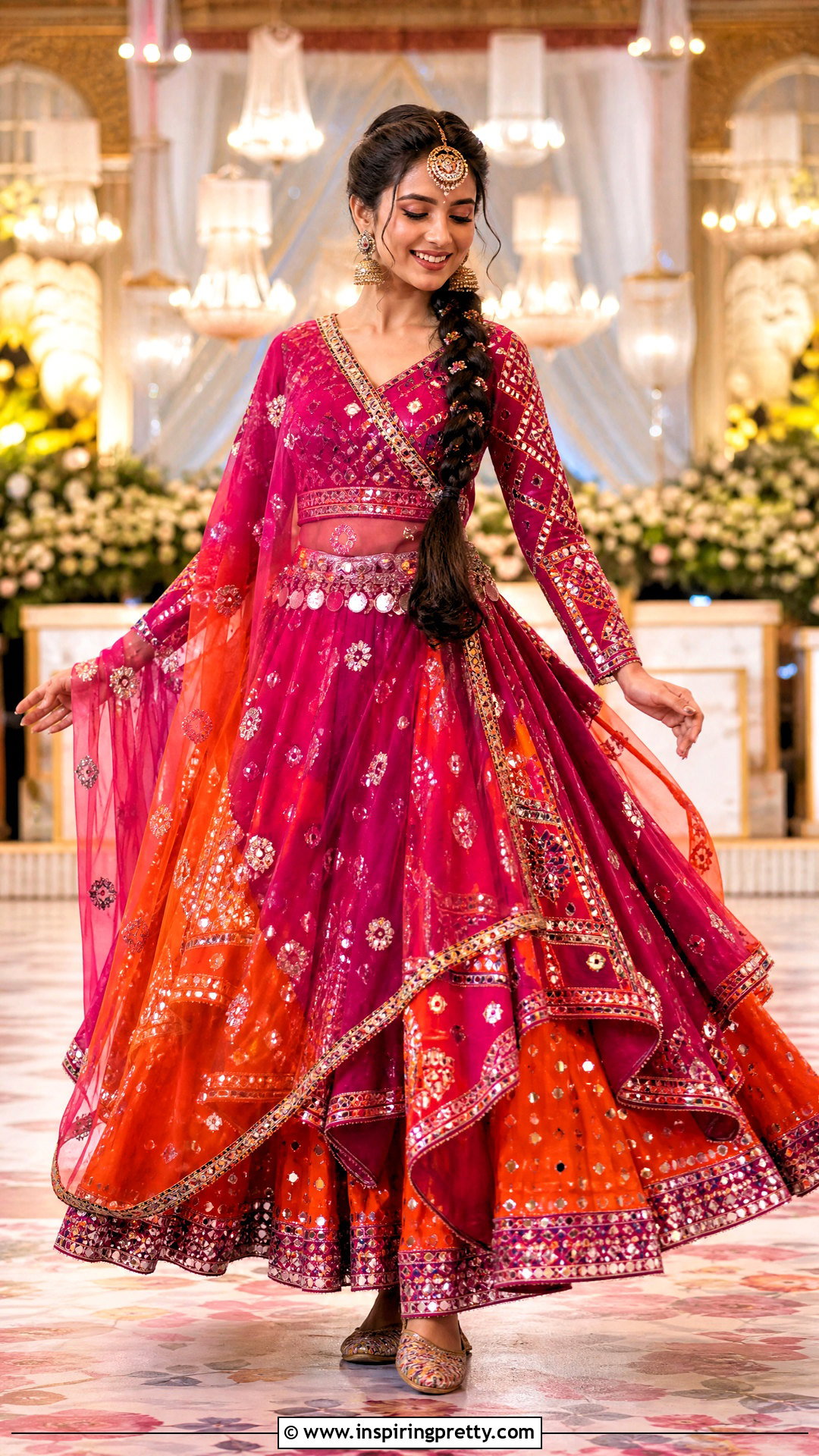
For the main night, a designer kediyu with a layered chaniya is the showpiece. Choose a structured top with fine mirror work, thread embroidery and neatly finished borders. Pair it with a light two-layer skirt that moves without becoming hard to control. Keep the palette coordinated, such as magenta with orange or teal with purple. A sheer dupatta pinned diagonally and held with a decorative belt. Medium jhumkas, a maang tikka and embroidered juttis. A long braid or polished bun. Practice sitting, walking and turning in it before the night.
Dressing for Nine Nights of Garba
Navratri is a marathon rather than one party, and the outfits that last are the ones you can dance in for hours, night after night.
- Break in your juttis or Kolhapuris before the festival. New leather is stiff and rubs, so wear them around the house first and add cushioned insoles.
- Pin the dupatta in at least two places, the shoulder and the waist. Safety pins on the inside hold better than decorative brooches alone.
- Choose cotton, rayon or light georgette for most nights, and save velvet, silk and brocade for one cooler or shorter evening.
- Do the spin test at home: raise your arms, turn quickly a few times, then sit down. Anything that slips, pinches or flies up needs fixing first.
- Plan for rewearing. One kediyu with two different bottoms and a change of dupatta gives you several looks from a single top.
Mirror Work and Bandhani Need a Gentle Wash
Festival textiles take a beating from nine nights of sweat and dust, and the traditional techniques need careful laundering.
- Mirror work: hand wash in cold water or have it dry-cleaned, never wring it, and iron on the reverse with a cloth on top. Store it folded flat so the mirrors don't press into each other.
- Bandhani: the dyes can bleed for the first few washes, so wash it alone in cold water and dry it in the shade.
- Ajrakh and other block prints: use a mild detergent and keep them out of strong sun while drying, since natural dyes fade with light.
- Air everything overnight between dance nights. Packing a damp outfit away is the quickest route to mildew on cotton.
Spin Once in the Mirror Before You Leave
A kediyu works with chaniyas, lehengas, dhoti pants, shararas, palazzos, jeans and even cargos, as long as the outfit lets you dance. Breathable fabric, a pinned dupatta, flexible flat shoes and jewelry that won't weigh you down matter more than any trend. Contrasting colors make a bold Garba look, and tonal shades look polished. Above all, test everything before you go: walk, turn, raise your arms and try a few steps in front of a mirror. Then you can spend the night enjoying the music instead of adjusting your clothes.
Related posts:


Leave a Reply