
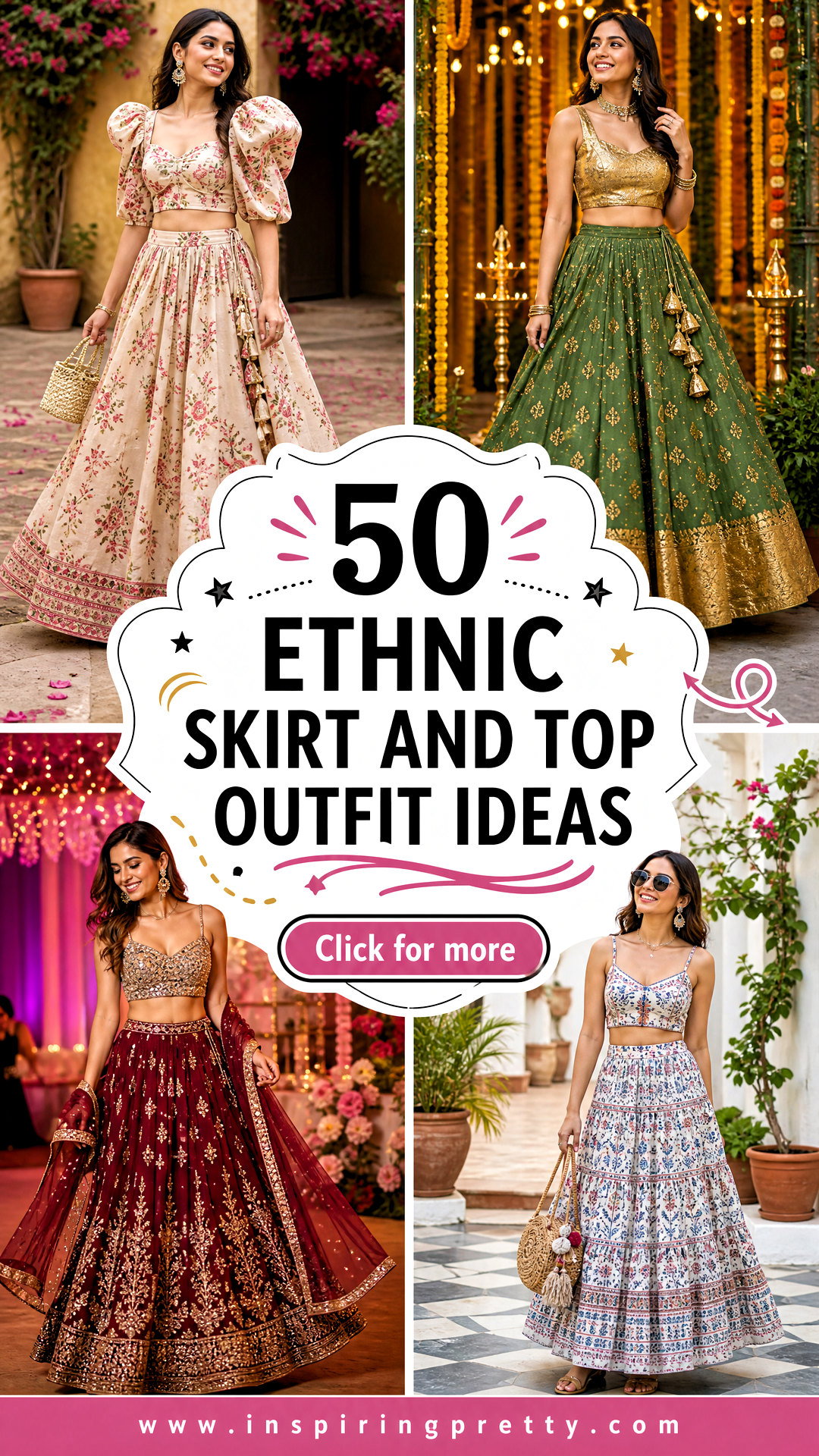
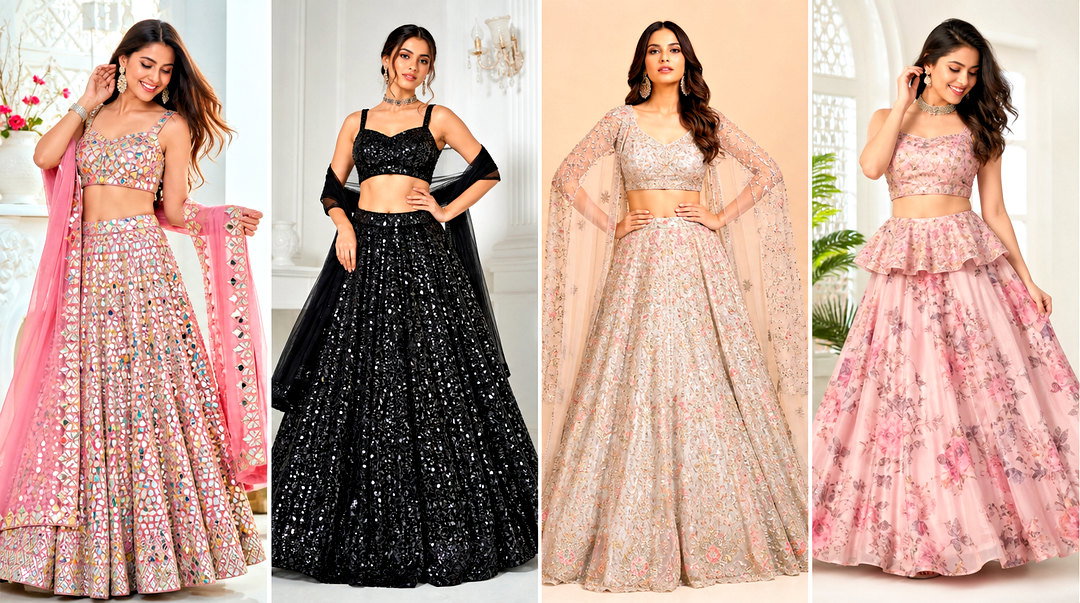
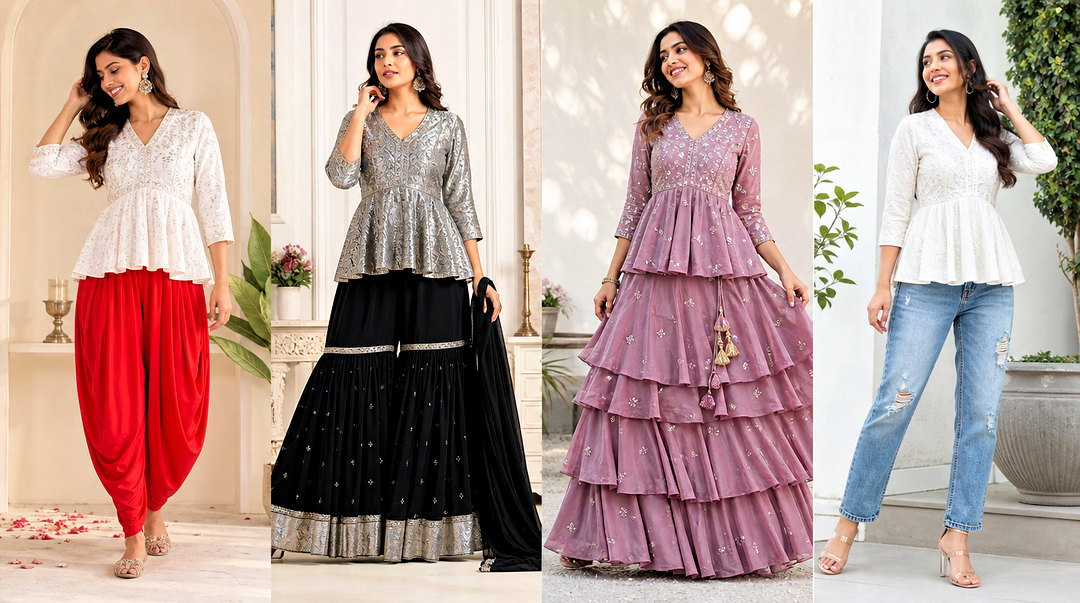
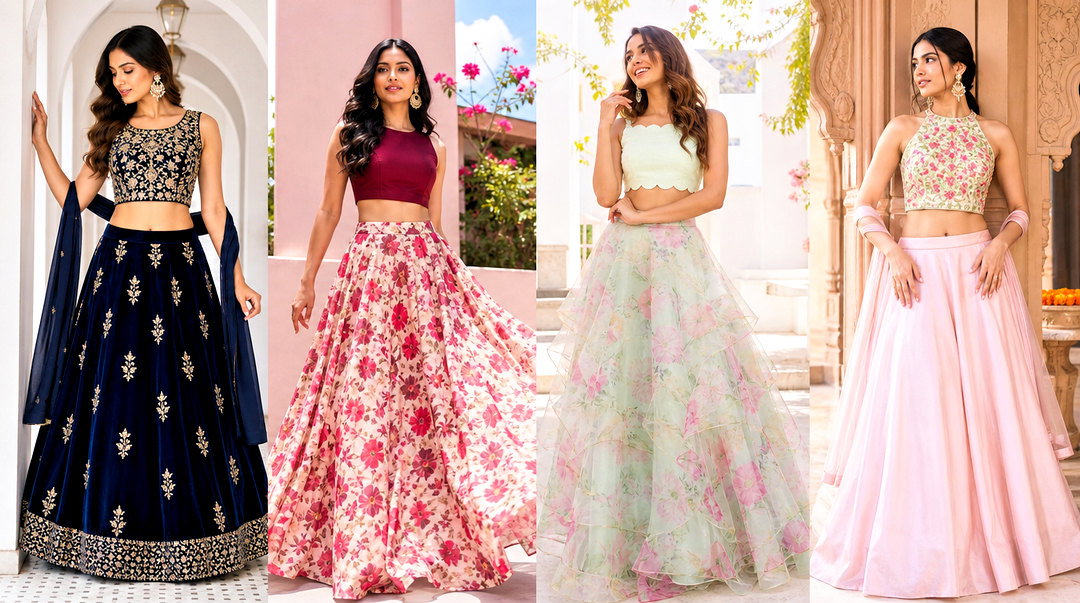
A skirt with a separate top is the most flexible way I know to dress for a season of weddings and festivals. The same embroidered skirt can go to a sangeet with a sequin blouse and to a family lunch with a cotton kurti, and nobody feels they've seen it before. The pairings below run from block-printed cotton for daytime to brocade and velvet for winter receptions, with crop tops, long blouses, capes and jackets in between. In almost every one, the first decision I make is which half carries the detail. The other half stays quieter, and the jewelry follows from there.
Getting a Lehenga Skirt to Sit Right
Most of the fit problems I see with festive skirts start at the waistband, not the top. A heavy embroidered skirt is pulled down by its own weight all evening, so it has to sit at your natural waist and stay there. These are the checks I make at every fitting.
- Wear the skirt at your natural waist, the narrowest point, not low on the hip. That is what lets crop tops and short blouses sit neatly.
- Look for hooks or a button plus a drawstring. Elastic on its own rolls under a heavy skirt.
- Set the hem with the shoes you'll actually wear. It should just clear the floor at the front; slightly longer at the back is fine.
- Check the net or can-can layer. It adds volume but can itch, so a soft lining between it and your legs makes a long night bearable.
- Sit down in it. If the waistband digs in after a minute, it will be unbearable at a five-hour wedding.
Then look at the top. A blouse or crop should meet the waistband or leave a small, even gap. Raise both arms in front of the mirror. If much more skin appears than you're happy with, choose a longer top or wear the skirt higher.
1. Floral Ethnic Skirt And Solid Crop Top Outfit
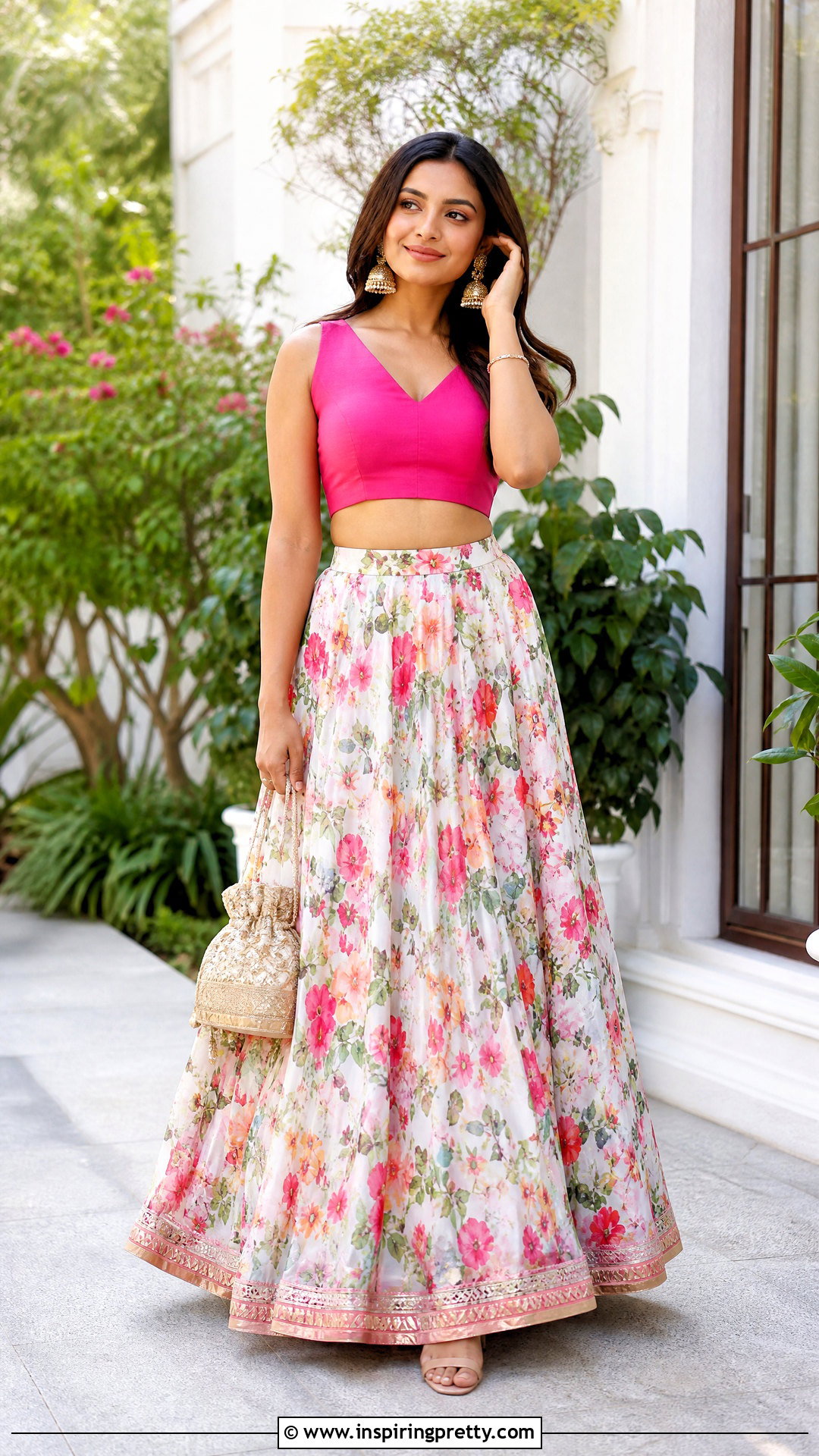
The easiest way into a floral skirt is to pull one color out of the print for the top. Usually not the dominant color but the second one, which makes the match look deliberate rather than bought as a set. I keep the top fitted and the skirt high on the waist so only a sliver of skin, or none, shows between them. Elbow sleeves stop it looking too bare for a family event. Small jhumkas and a structured potli are enough; a necklace just fights the flowers. The chiffon dupatta is optional, and I'd leave it at home for a daytime party.
2. Silk Ethnic Skirt And Embroidered Blouse Outfit
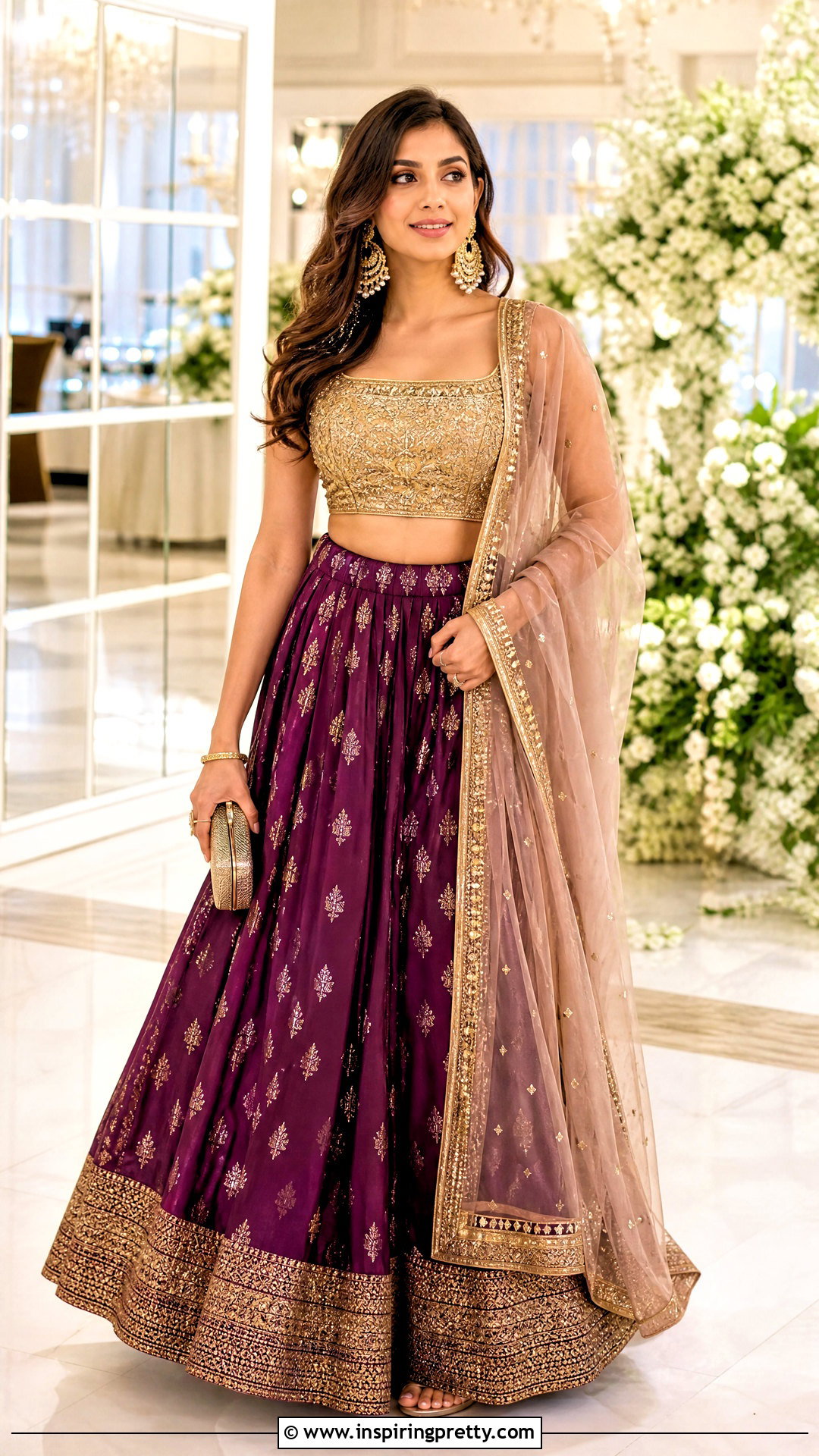
Silk catches light in every fold, so a jewel-toned silk skirt already does most of the formal work. I pair it with a gold or champagne blouse and keep its embroidery lighter than the skirt's border, because two dense surfaces side by side flatten each other. A defined waist on the blouse matters more here than with cotton; heavy silk adds width at the hip when the top is loose. One honest warning: silk shows sweat marks under the arms, so dress shields are worth tacking in for a long reception. Chandbalis, a low bun and a metallic clutch finish it.
3. Mirror Work Ethnic Skirt And Halter Top Outfit
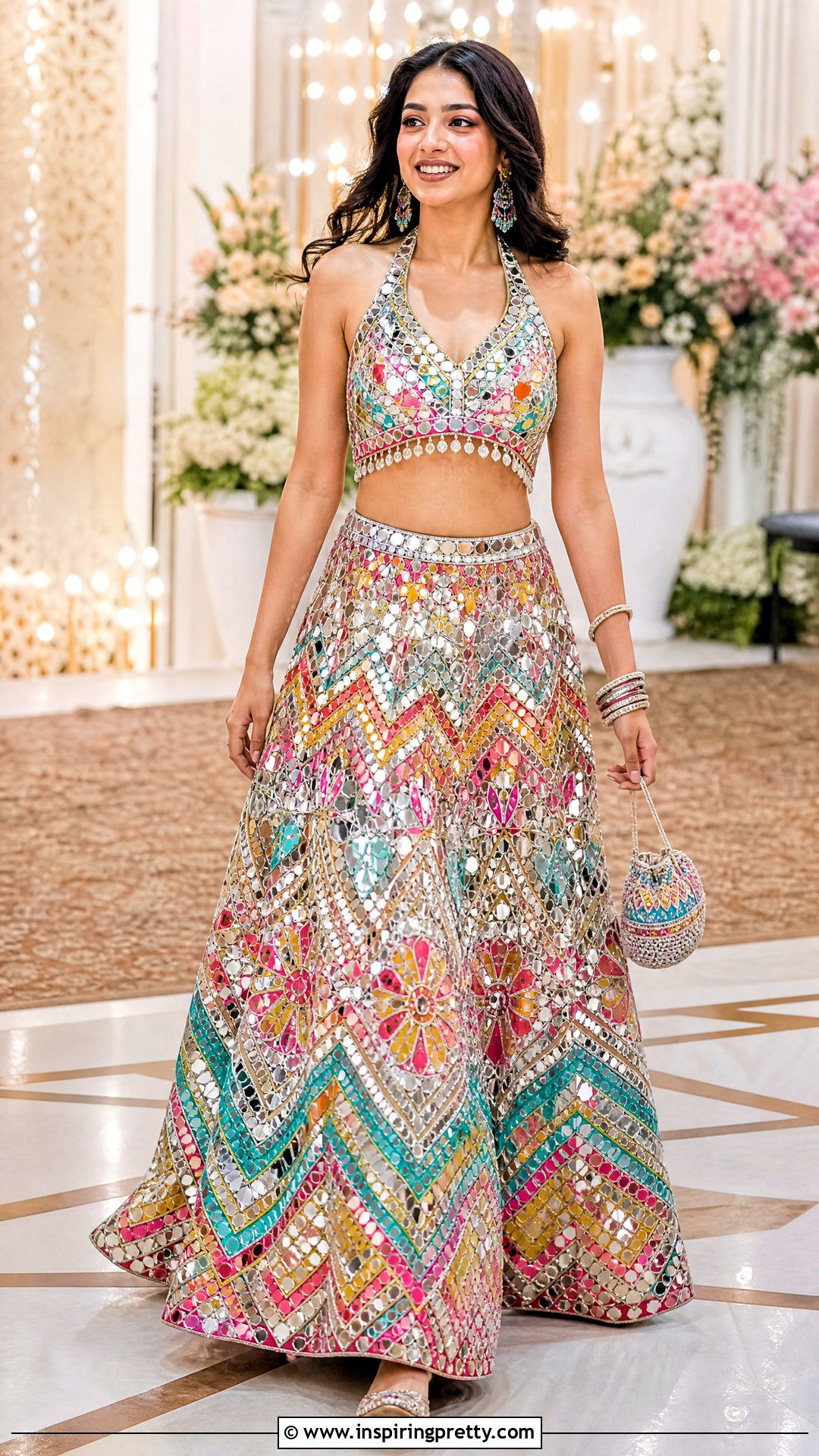
Mirror work moves the whole time you dance, which is why I like it for a sangeet. The skirt is busy, so the halter stays plain, in the skirt's base color or in ivory, black or silver. I always ask for wide halter straps. Thin ones hang the whole top from the back of your neck, and after three hours that turns into a headache. The little mirrors also catch on chiffon, so any dupatta should be light, or left out. Block heels or embellished juttis and a wristlet rather than a shoulder bag that knocks against the skirt.
4. Black Ethnic Skirt And Gold Top Outfit
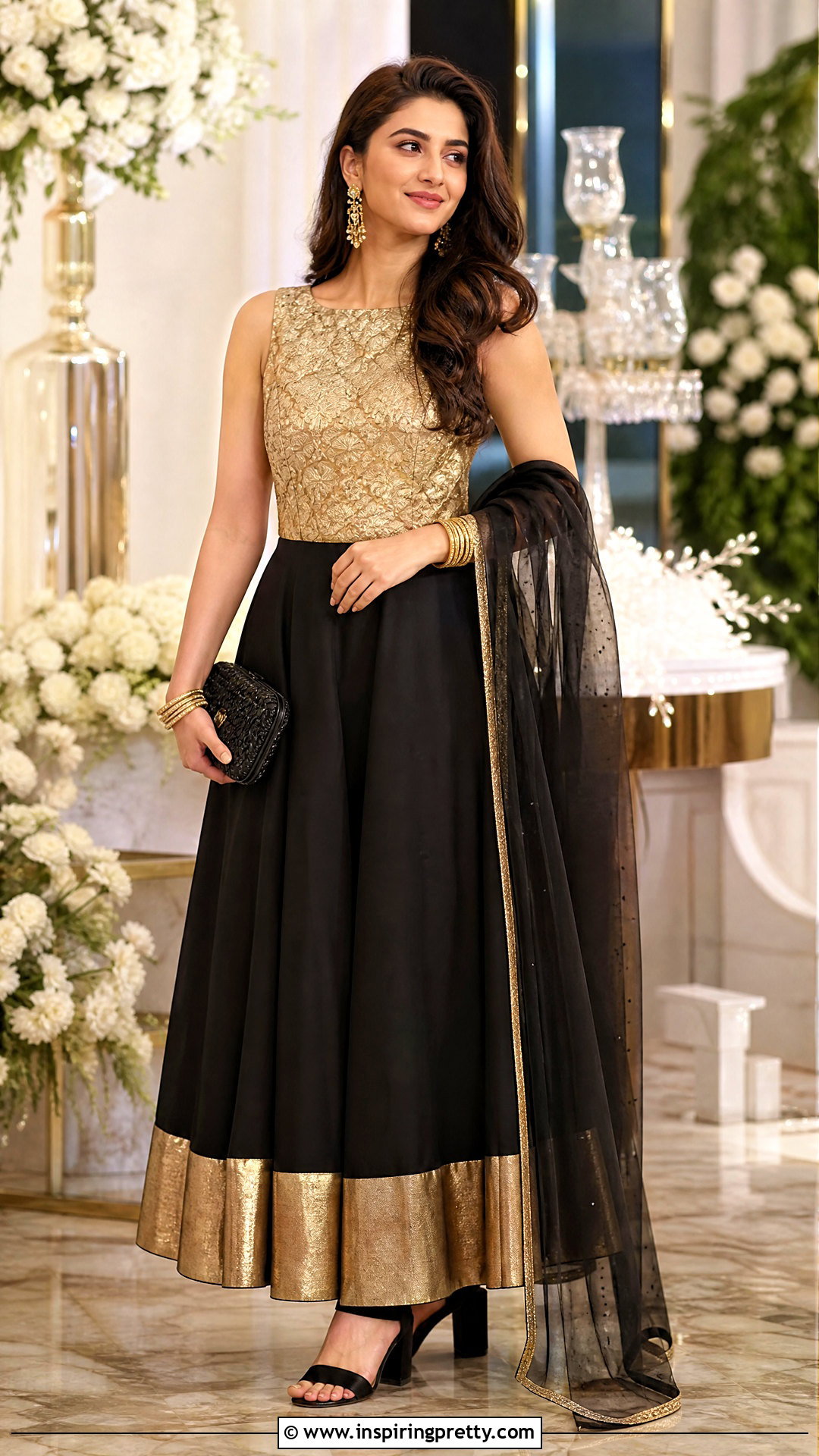
Black and gold is what I suggest when someone isn't sure what an evening function expects. Start with a flowing black skirt with a gold border or scattered motifs, then a fitted gold blouse in brocade or sequins with a clean neckline and plain sleeves, so the metal looks rich rather than costume-like. Gold zari does tarnish over time, especially when perfume lands on it, so spray your scent before you dress. Black block heels, gold drops and one cuff are plenty. A sheer black dupatta with a narrow gold edge makes it more traditional without hiding the blouse.
5. White Ethnic Skirt And Pastel Top Outfit
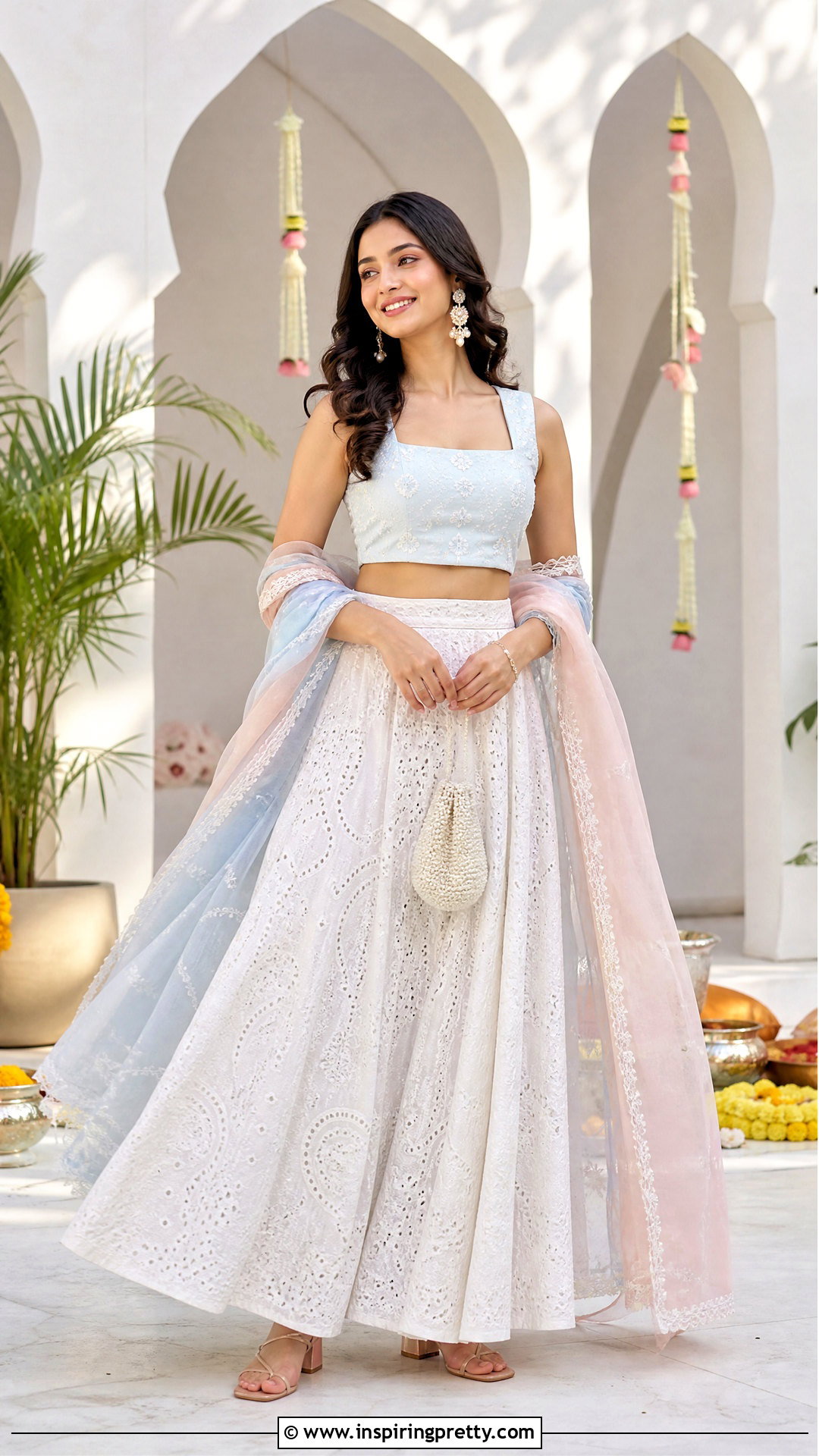
White skirts tell you very quickly whether they're properly lined. Hold a lightly embroidered skirt up to daylight before you buy it; if you can see your hand through the panels, people will see your legs at an outdoor lunch. Cotton and chikankari both need a full lining. With the white, I choose one pastel for the blouse, often blush or powder blue, and a square or boat neck to give the soft colors some structure. Pearl earrings, nude sandals and a beaded bag. Add another strong color and the calm disappears.
6. Bandhani Ethnic Skirt And Peplum Top Outfit
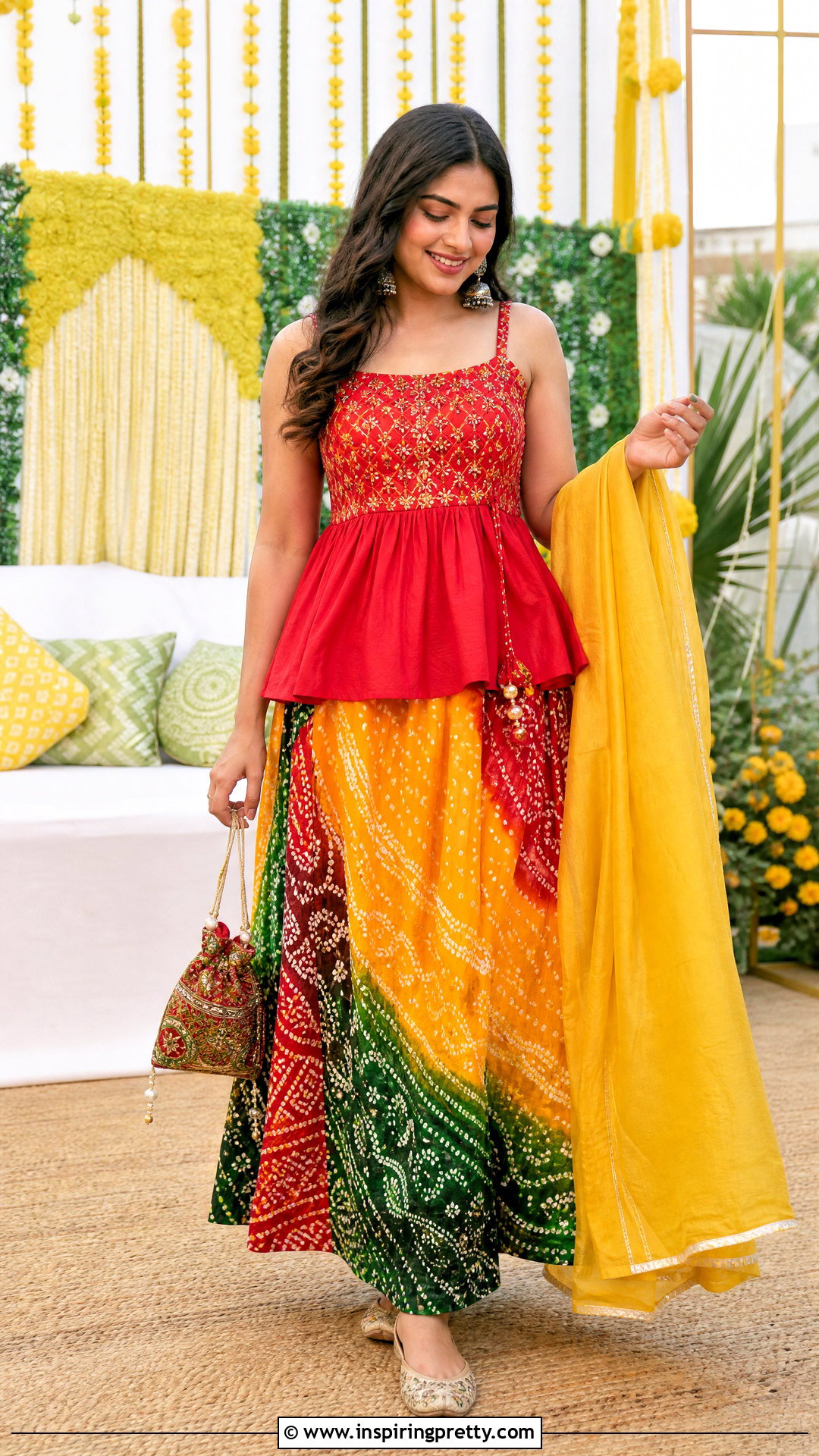
Bandhani is tie-dyed in tiny dots, and a new piece can bleed in its first few washes, so I dry clean it or hand-wash it cold and alone at first. For styling, pick a solid peplum in one of the colors already in the dots, usually the deeper one. The fitted bodice and short flare sit over the waistband and cover more than a crop would, which is why I suggest this pairing to anyone who doesn't want skin showing. Juttis, oxidized earrings and a small potli. If you add a dupatta, keep it plain; a second print fights the dots.
7. Kalamkari Ethnic Skirt And Cotton Blouse Outfit
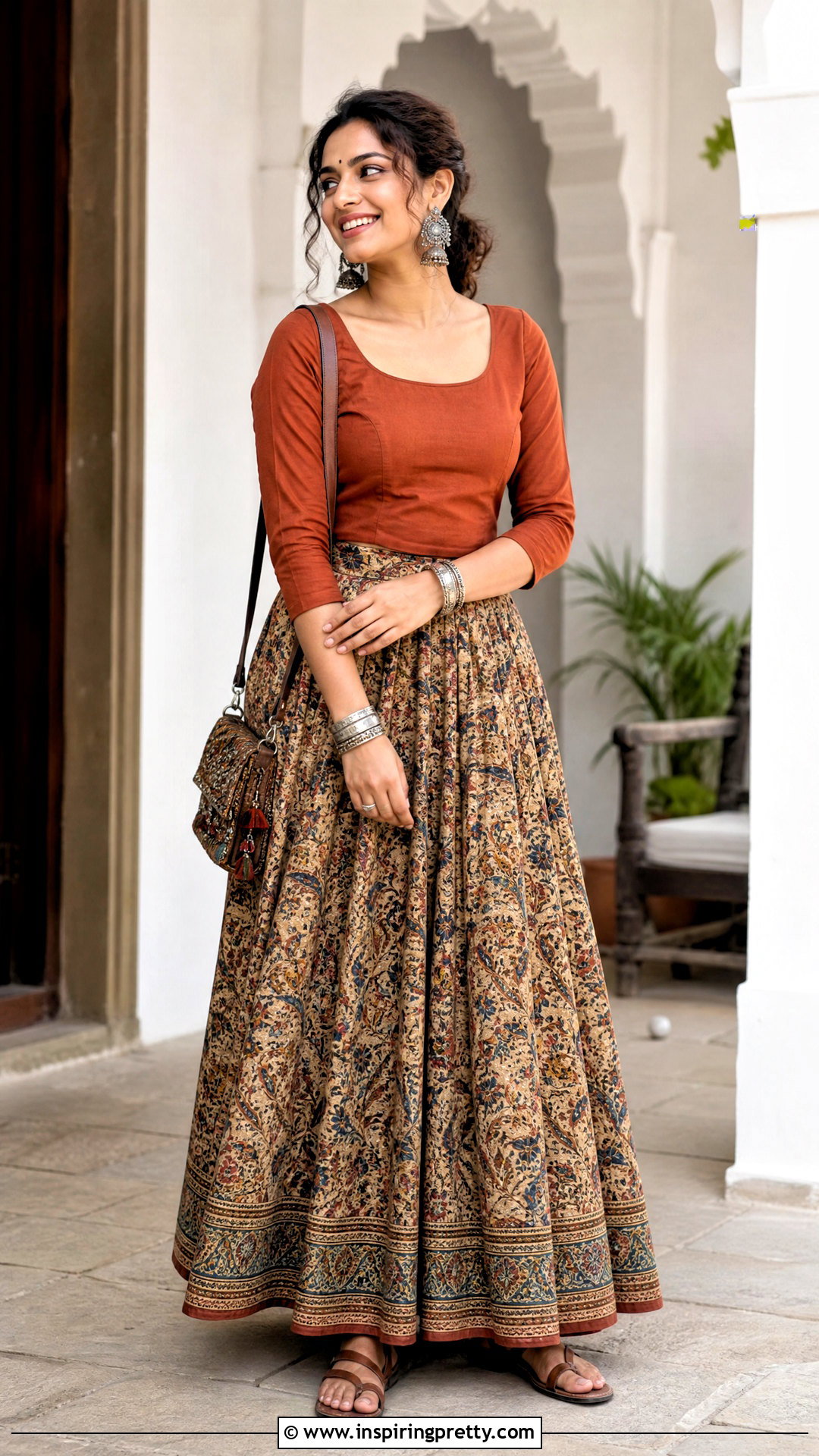
Kalamkari is hand-painted or block-printed, traditionally with natural dyes, and those colors fade if the skirt is washed hot or dried in strong sun. Wash it cold and dry it inside out in the shade. On styling, I treat the print as the whole outfit: a plain cotton blouse in rust or mustard picked from the motifs, three-quarter sleeves, and nothing that sparkles. Flat leather sandals and oxidized silver suit the handmade feel, as does a jute or cotton sling bag. I'd wear it to a cultural program or a creative workplace. It's too relaxed for an evening wedding.
8. Brocade Ethnic Skirt And Velvet Top Outfit
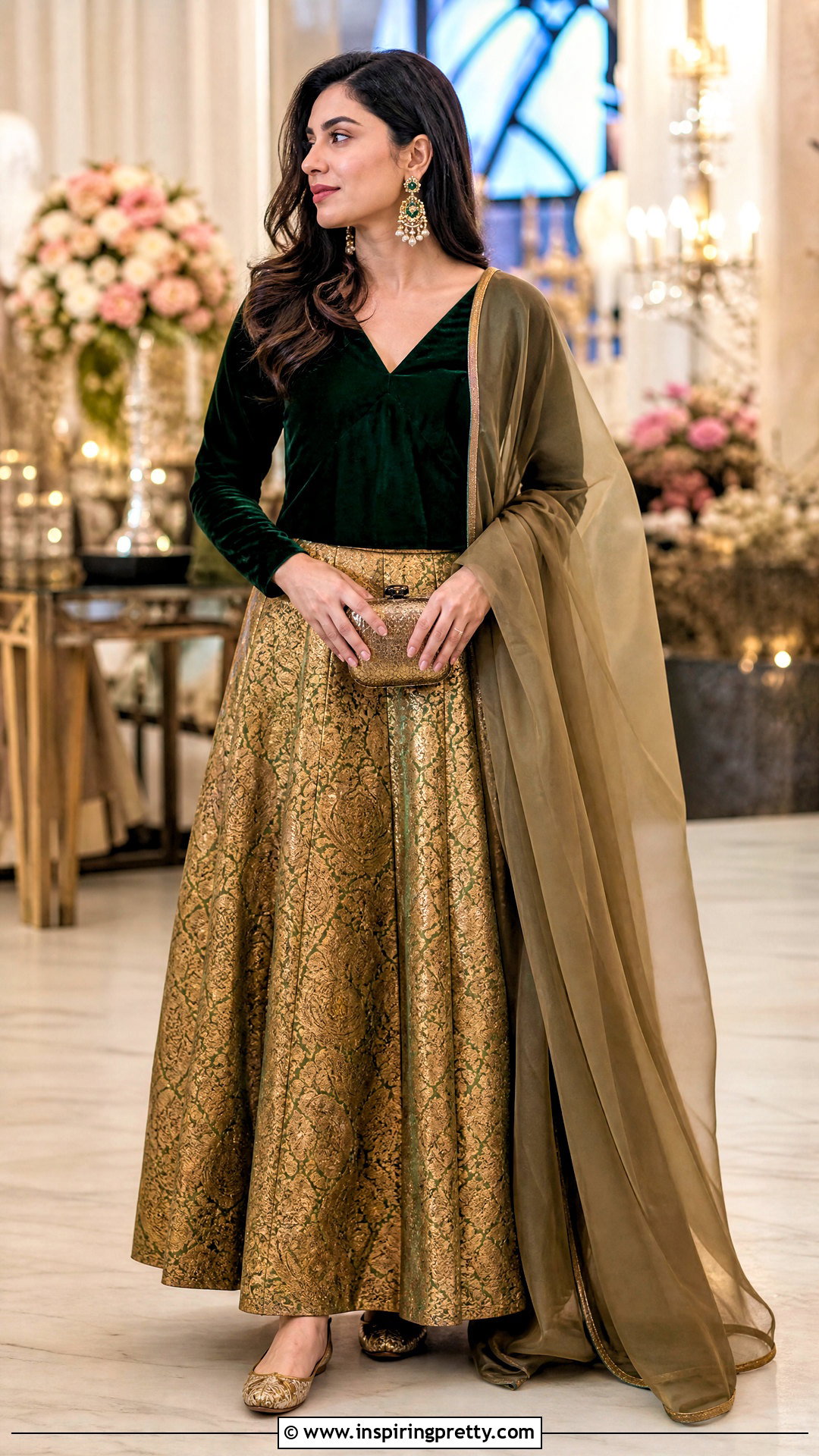
Brocade and velvet are both heavy, and for a winter wedding that's the point. The risk is looking boxy, so I choose a V or square neck on the velvet blouse to open up the dense top half and keep embellishment to the neckline or cuffs. Velvet crushes wherever it's pressed. A steamer lifts the pile again; an iron flattens it for good. Emerald or wine against antique gold brocade is my favorite combination here. Closed embroidered flats, a metallic clutch, and a plain organza dupatta if you want a layer that doesn't add bulk.
9. Sequin Ethnic Skirt And Satin Top Outfit
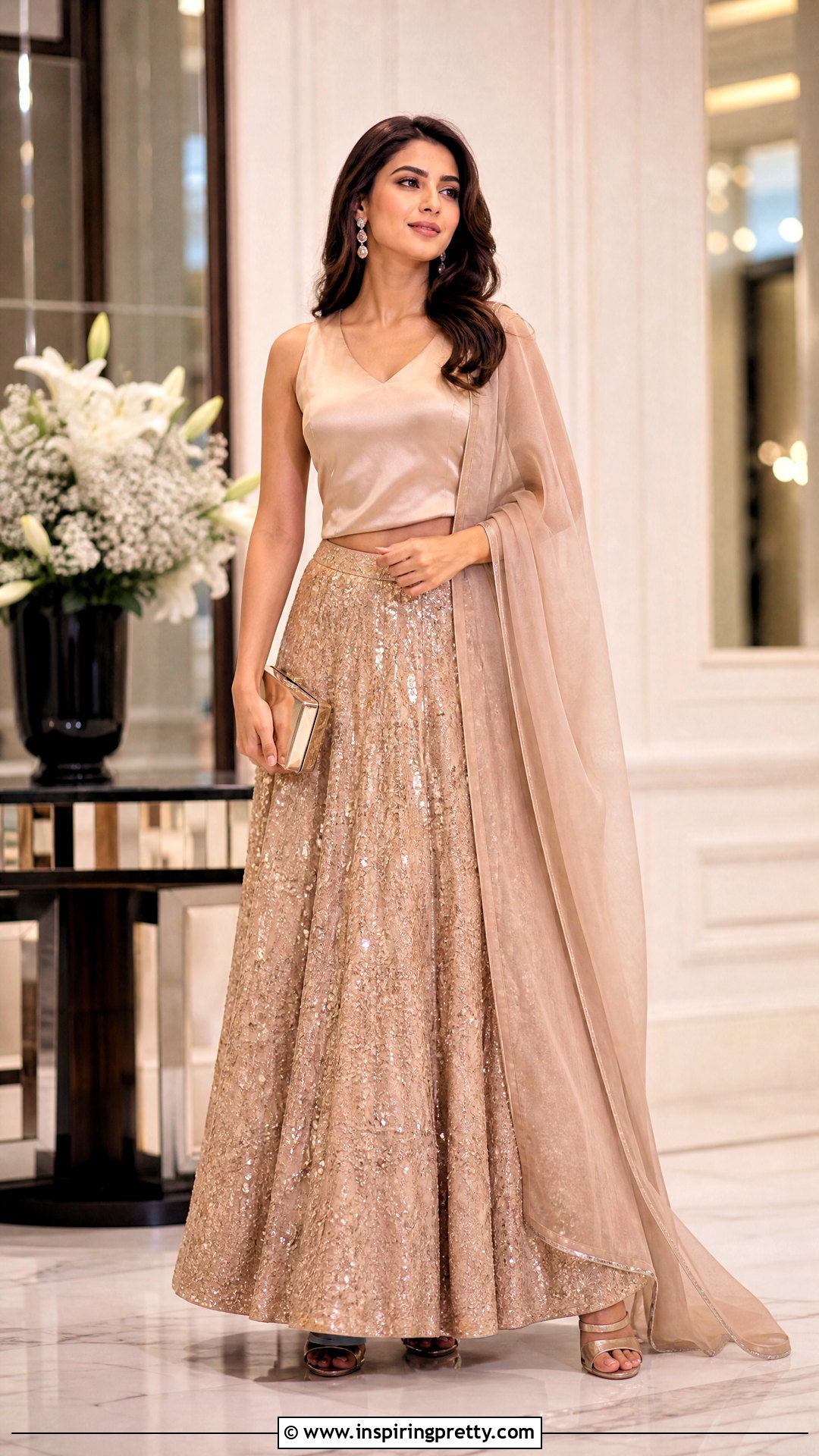
A sequin skirt is loud enough on its own, and a smooth satin top gives the eye somewhere to rest. Stay in one color family for a sleek look, or use champagne or black for contrast. The thing I check is the inside of the skirt. Sequins without a soft lining scratch your legs, and anything sequined at the hip rubs your inner arm as you walk. Satin has its own weakness: a single drop of water leaves a dark mark, so keep drinks away from your lap. Slim heels, crystal earrings, no necklace, and plain chiffon if you need a dupatta.
10. Organza Ethnic Skirt And Corset Top Outfit
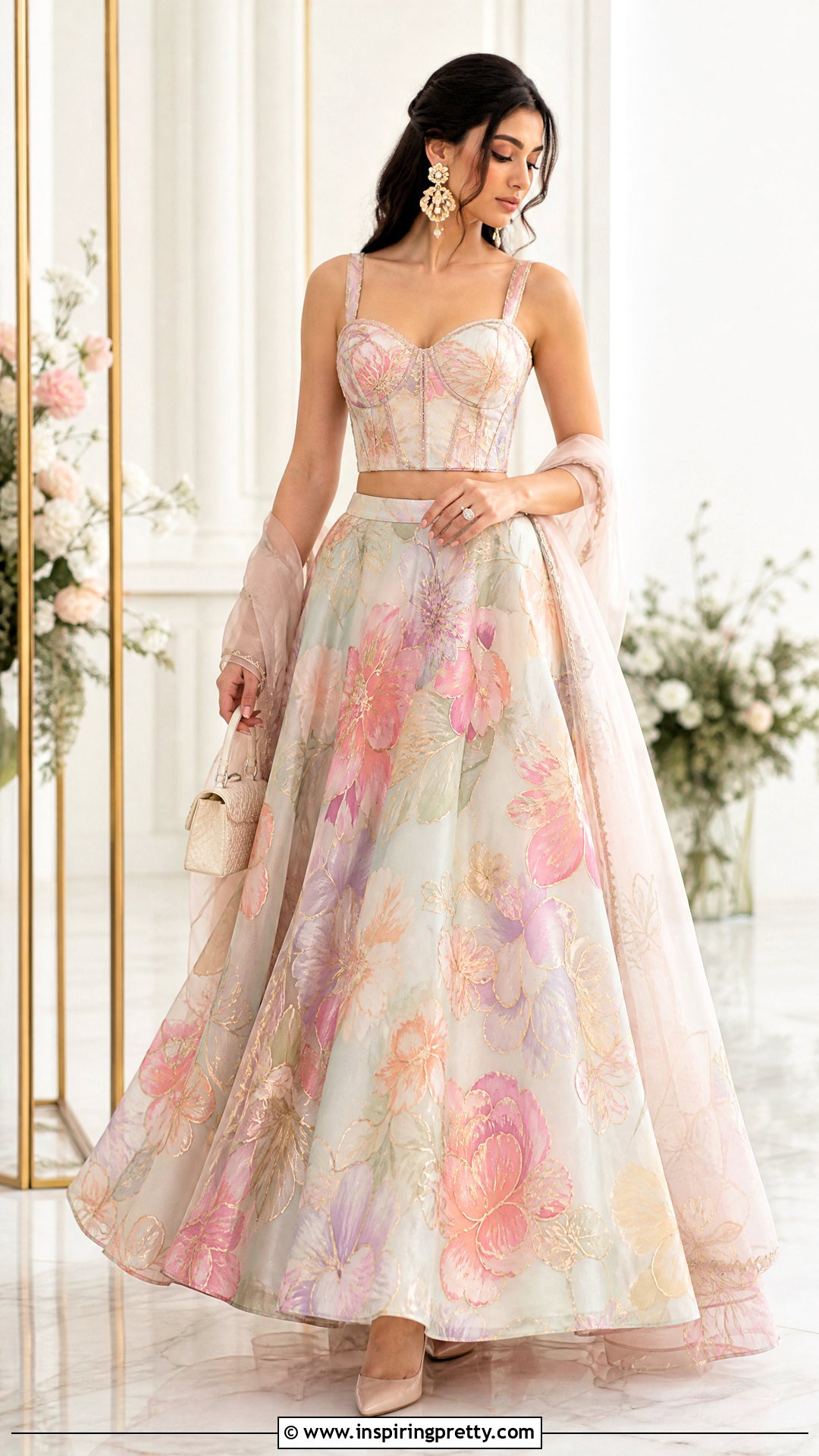
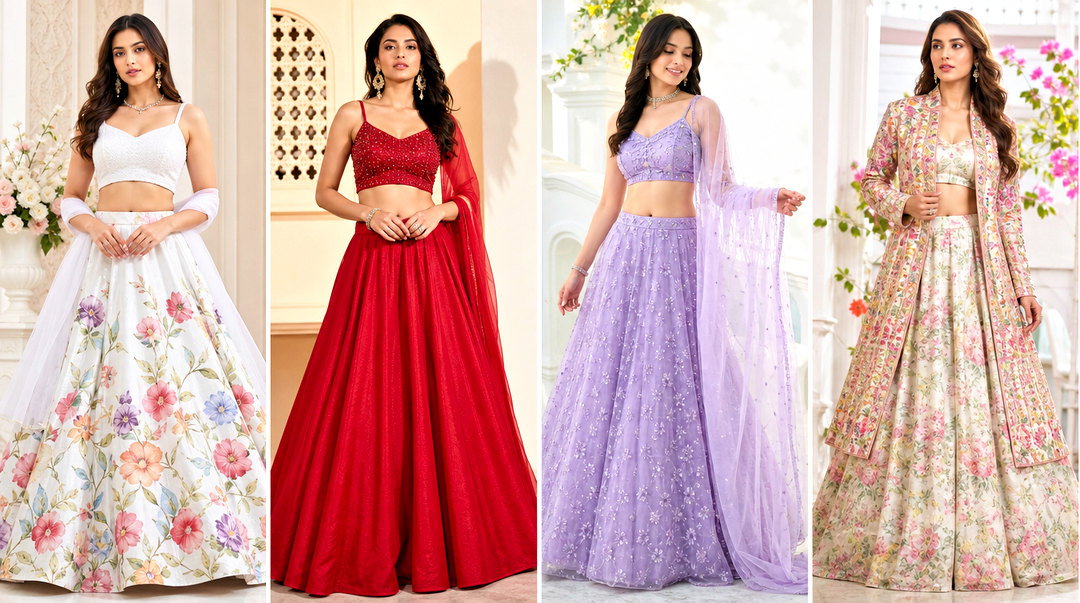
Organza is crisp and stands away from the body, so a structured corset top suits it well. On the corset I check two things: boning that's properly sewn in so it doesn't dig when you sit, and enough length that the top still meets the skirt when you raise your arms. Secure straps or short sleeves help if you'll dance. Organza holds sharp creases and doesn't relax easily, so I'd steam it on the day rather than pack it folded. Matching colors make you look longer; contrast reads more fusion. Pointed heels, sculptural earrings and smooth hair.
11. Printed Ethnic Skirt And White Shirt Outfit
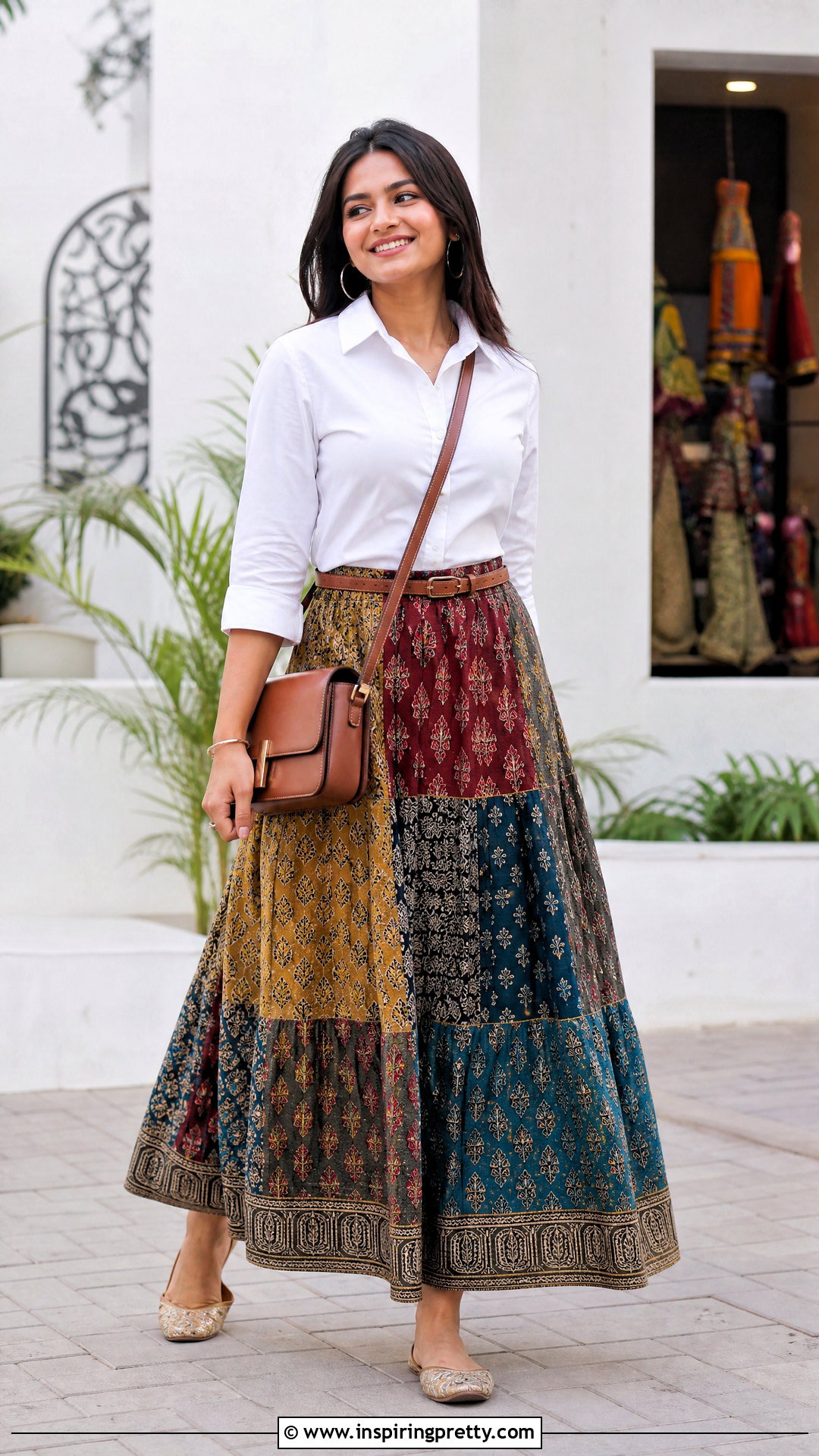
A crisp white shirt over a block-printed skirt is the Indo-Western outfit I'd wear to a creative office on a festival day. Tuck it fully into a high waist so the skirt keeps its shape. A knotted hem works only if the shirt is soft; stiff poplin bunches into a lump at the front. Rolled sleeves feel relaxed, buttoned cuffs smarter, and a slim belt helps when the waistband is plain. Metallic juttis, hoops and a structured crossbody bag. I leave the dupatta out here, since the contrast between shirt and print is the whole idea.
12. Ethnic Skirt And Denim Crop Top Outfit
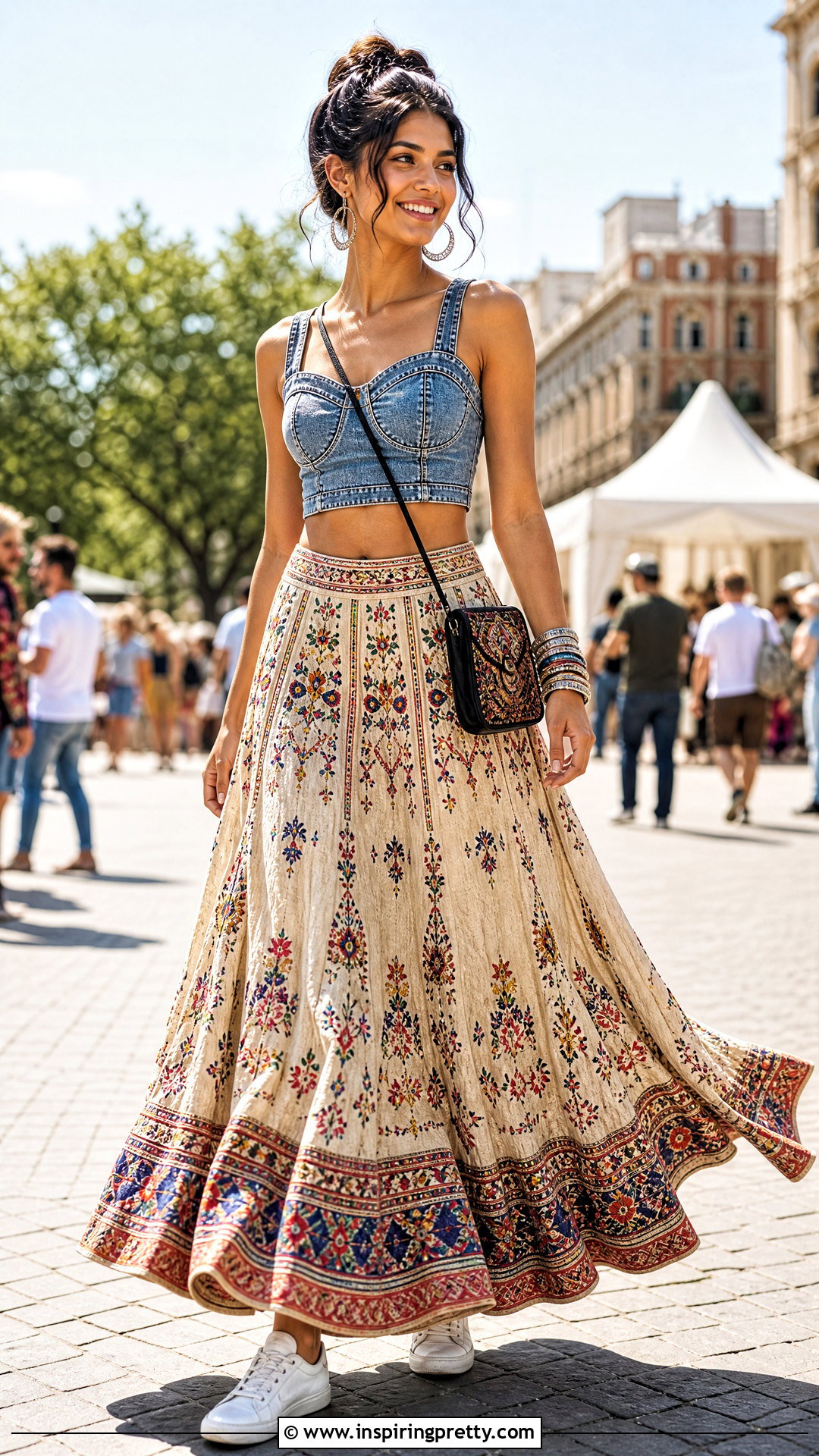
Denim makes a printed maxi skirt feel younger straight away. A fitted crop or short button-front shirt in a medium or dark wash gives clearer contrast against bright prints than pale denim does. Denim is stiffer than the skirt, so I make sure the crop ends at the waistband instead of flaring out over it. White sneakers turn it into a casual fusion look, while tan juttis pull it back toward traditional. Silver hoops and a few bangles. A heavily decorated dupatta makes it look like two different outfits, so I skip it.
13. Ethnic Maxi Skirt And Short Kurti Outfit
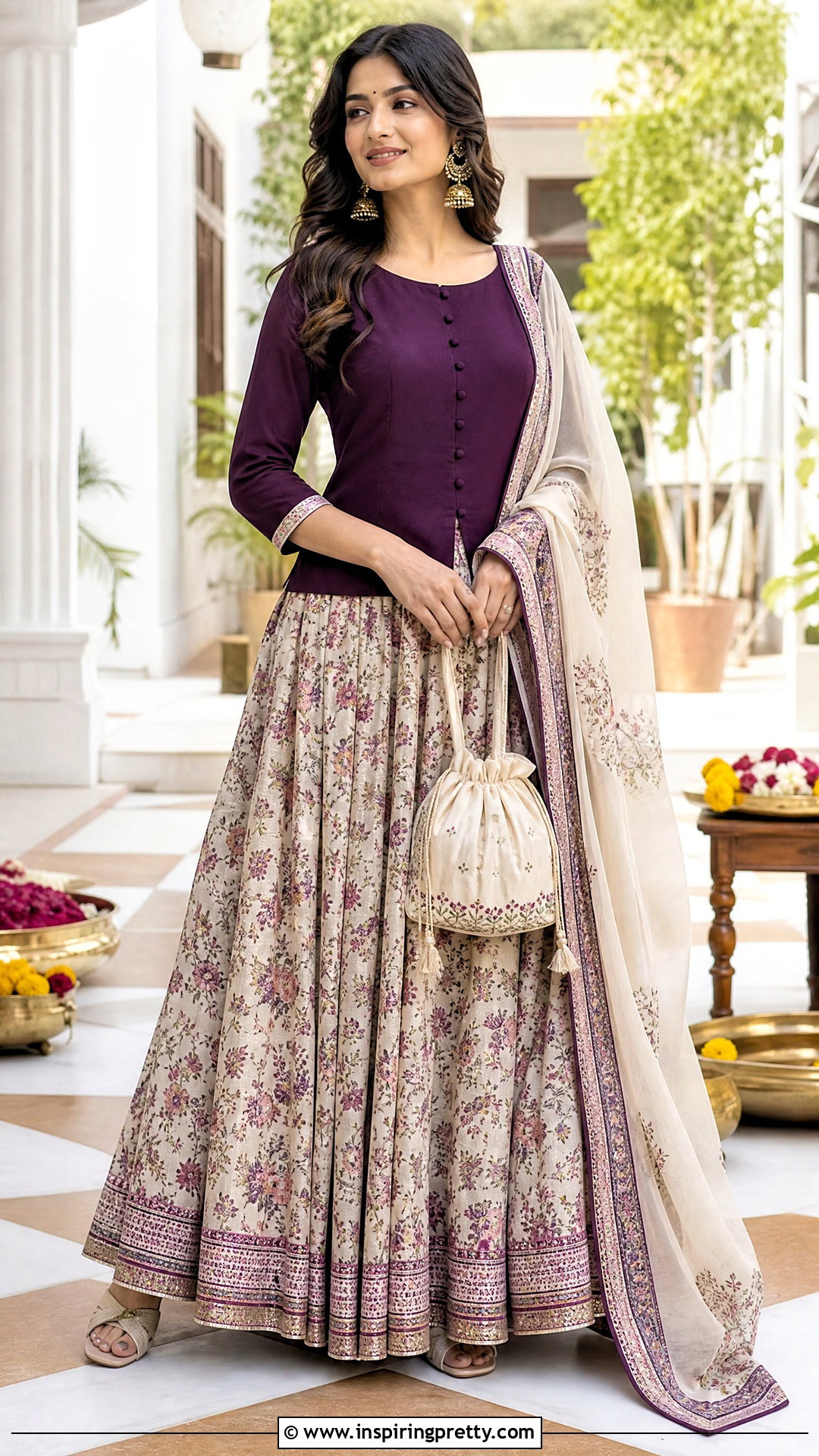
A short kurti over a maxi skirt is the most comfortable pairing here, and hem length is what I watch. The kurti should end just below the waistband. If it stops at the widest part of your hips, it adds width exactly where the skirt begins to flare. Printed skirt with a solid kurti, or the reverse. Keep the sleeves fitted when the skirt is full. Low wedges, jhumkas and a roomy sling bag. A dupatta dropped straight down from one shoulder draws a long line, which helps if you're on the shorter side.
14. Tiered Ethnic Skirt And Fitted Top Outfit
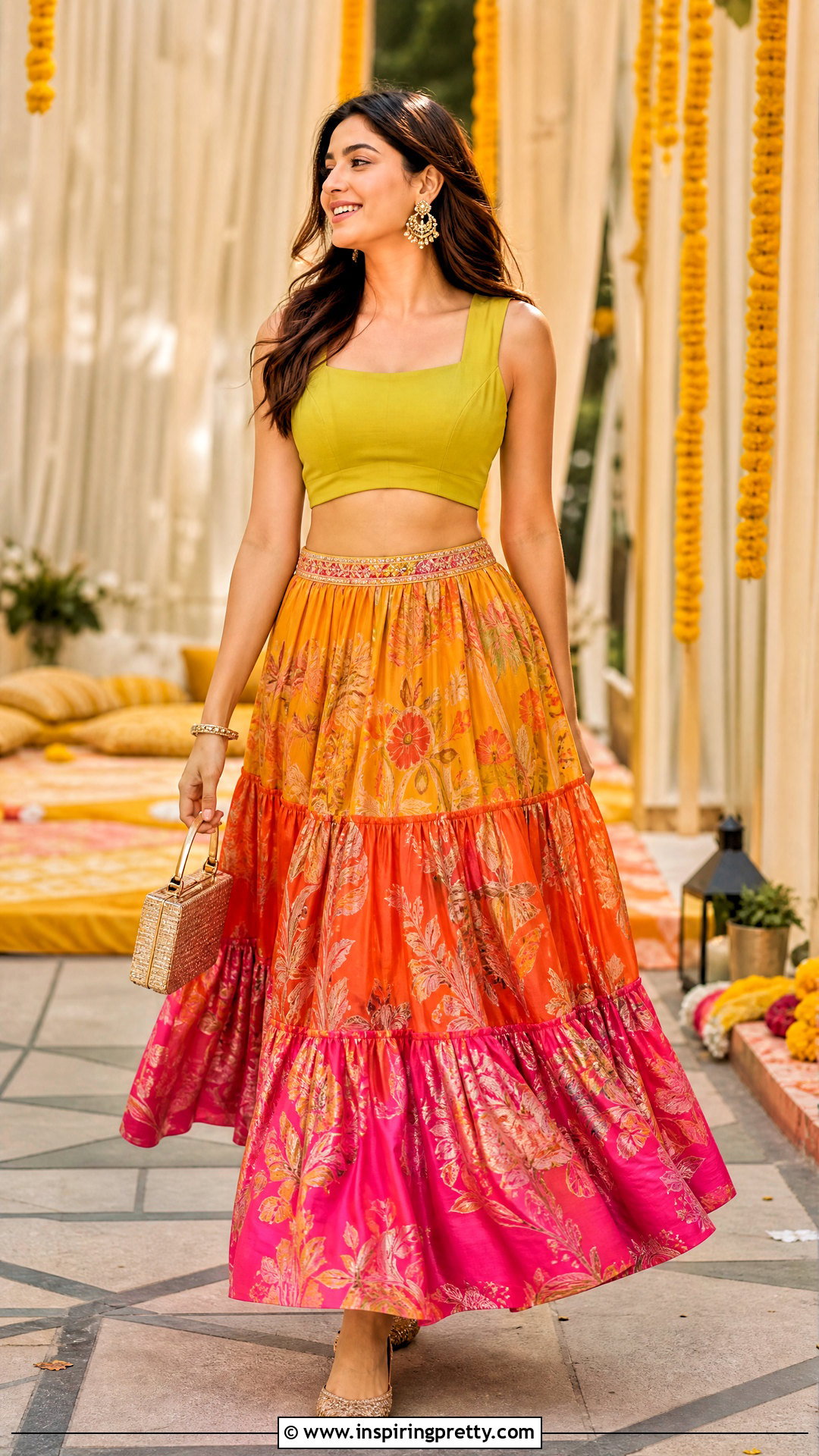
Every seam of a tiered skirt adds volume, so the top has to be the opposite: smooth, fitted, with no ruffles or peplum. A cropped blouse or a tucked bodysuit both work. On a petite frame I keep the skirt at the natural waist and stick to three tiers at most; beyond that the skirt starts to swallow you. Heeled juttis, medium earrings and a small structured bag contrast with the soft tiers. A short dupatta over one arm adds festive detail without covering the waist. Good for a mehendi where you'll be on your feet all afternoon.
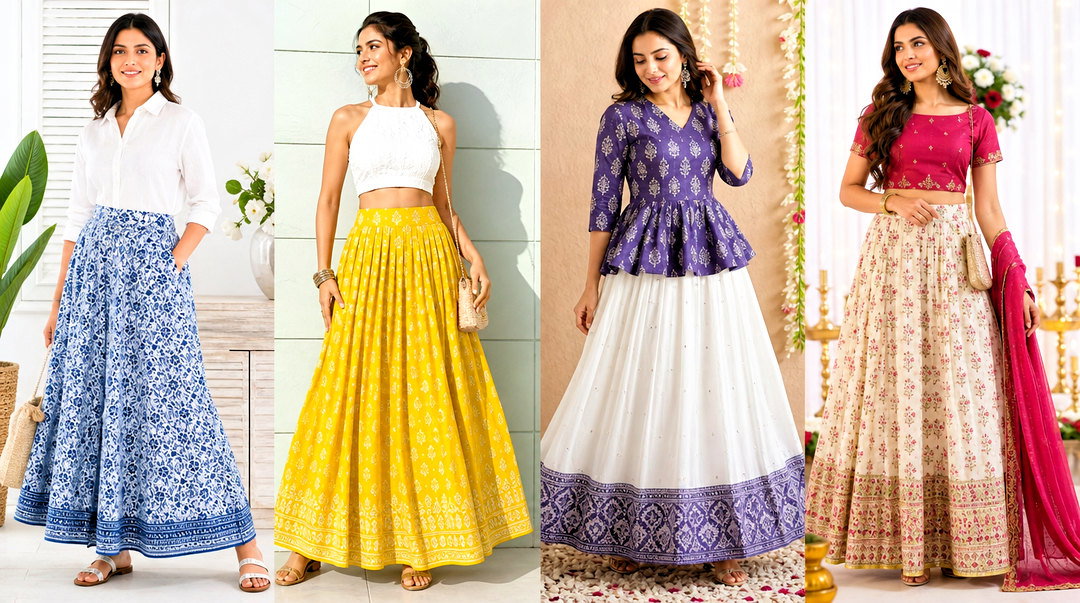
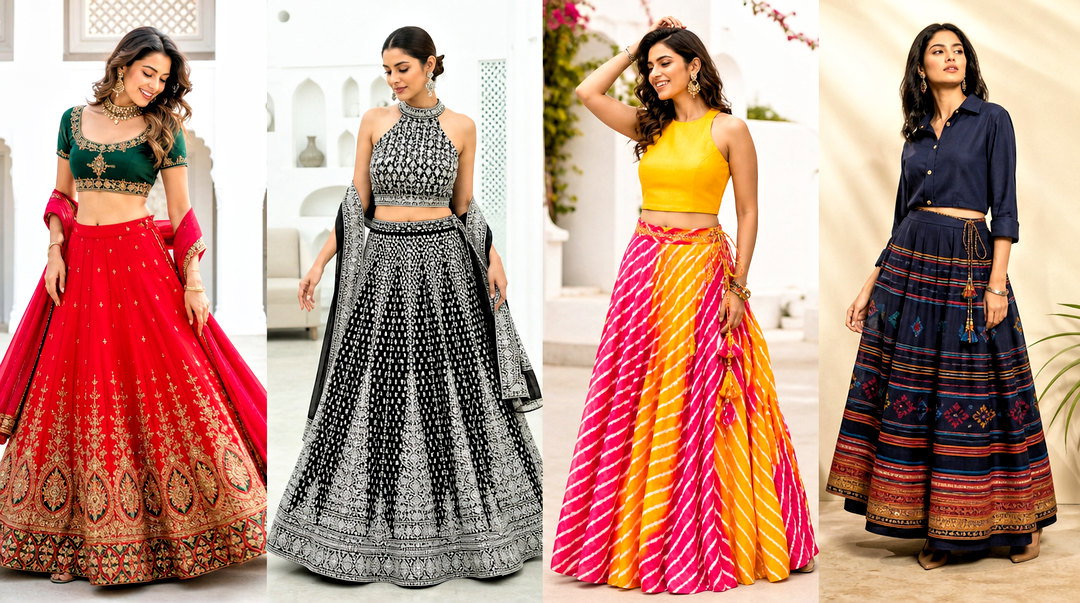
15. Ruffle Ethnic Skirt And Off Shoulder Top Outfit
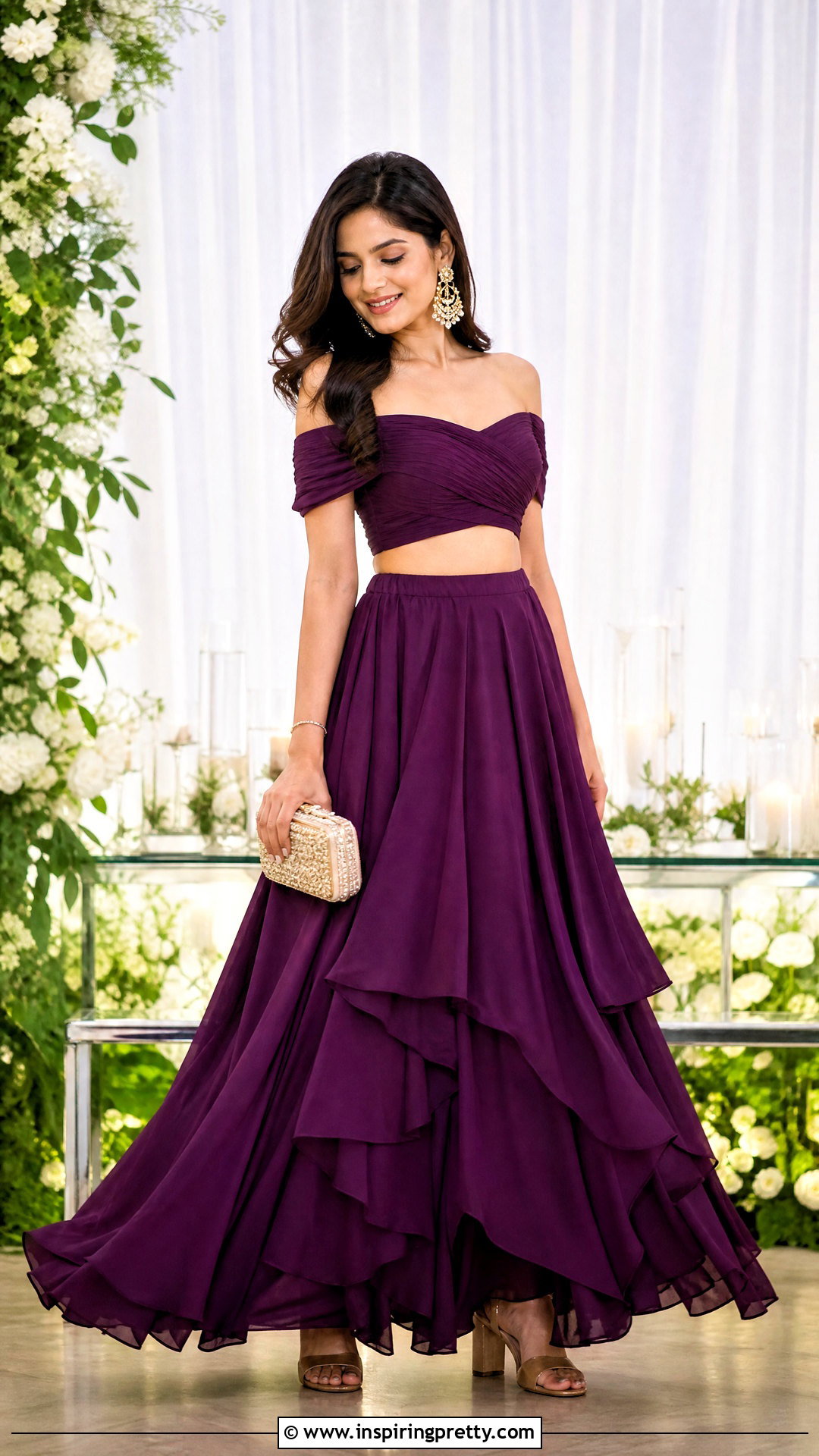
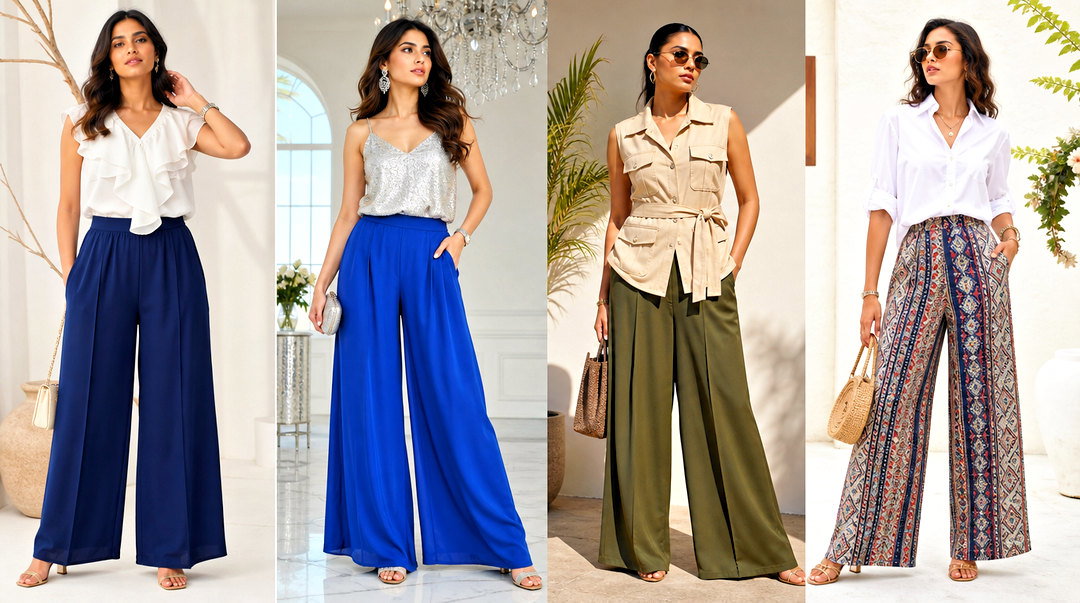
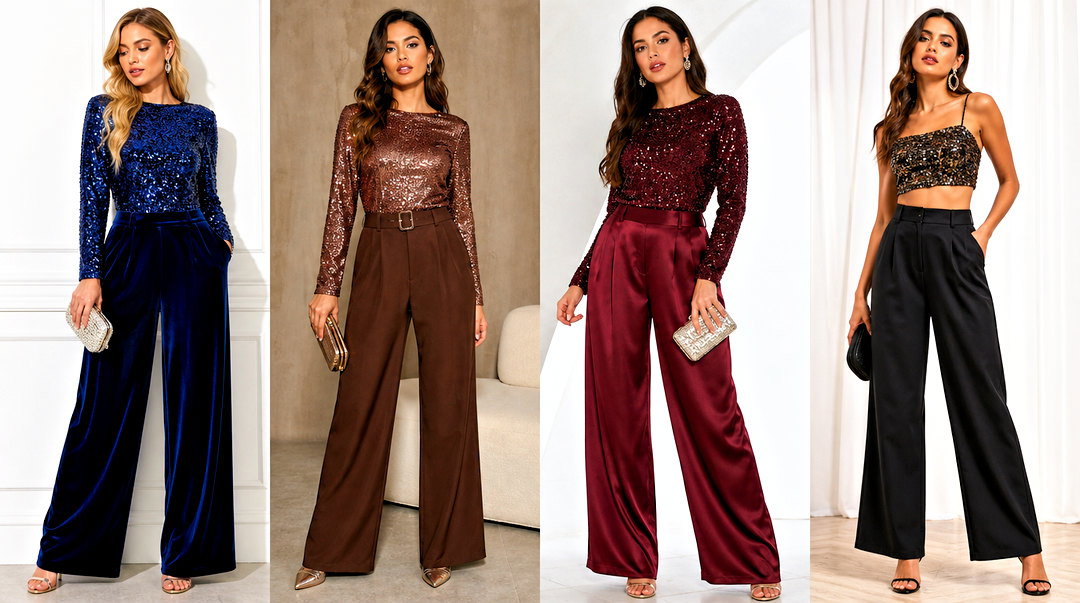
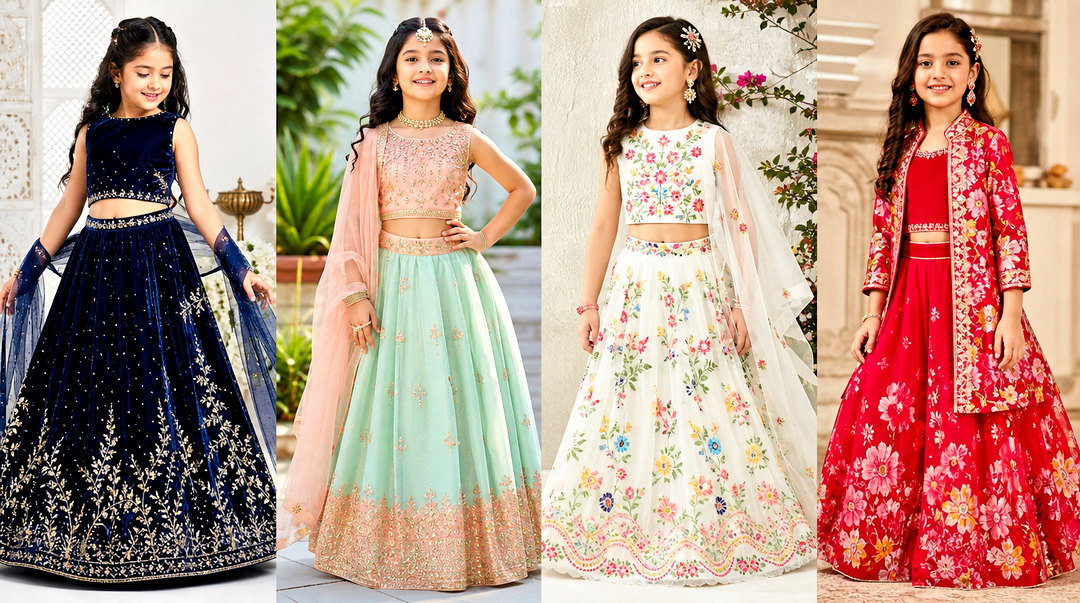
The off-shoulder top is where this outfit can go wrong, so I start there. It needs silicone grip tape or firm elastic inside the neckline; otherwise it creeps up every time you lift your arms to dance. A strapless bra with a grippy band goes underneath. Then the skirt: ruffles at the hem or in diagonal panels, not all over, or the volume takes over. Drop earrings, block heels that show below the hem, and no necklace. You can drape a light dupatta at the elbows, though I think it looks sharper without one.
16. Pleated Ethnic Skirt And Cape Top Outfit
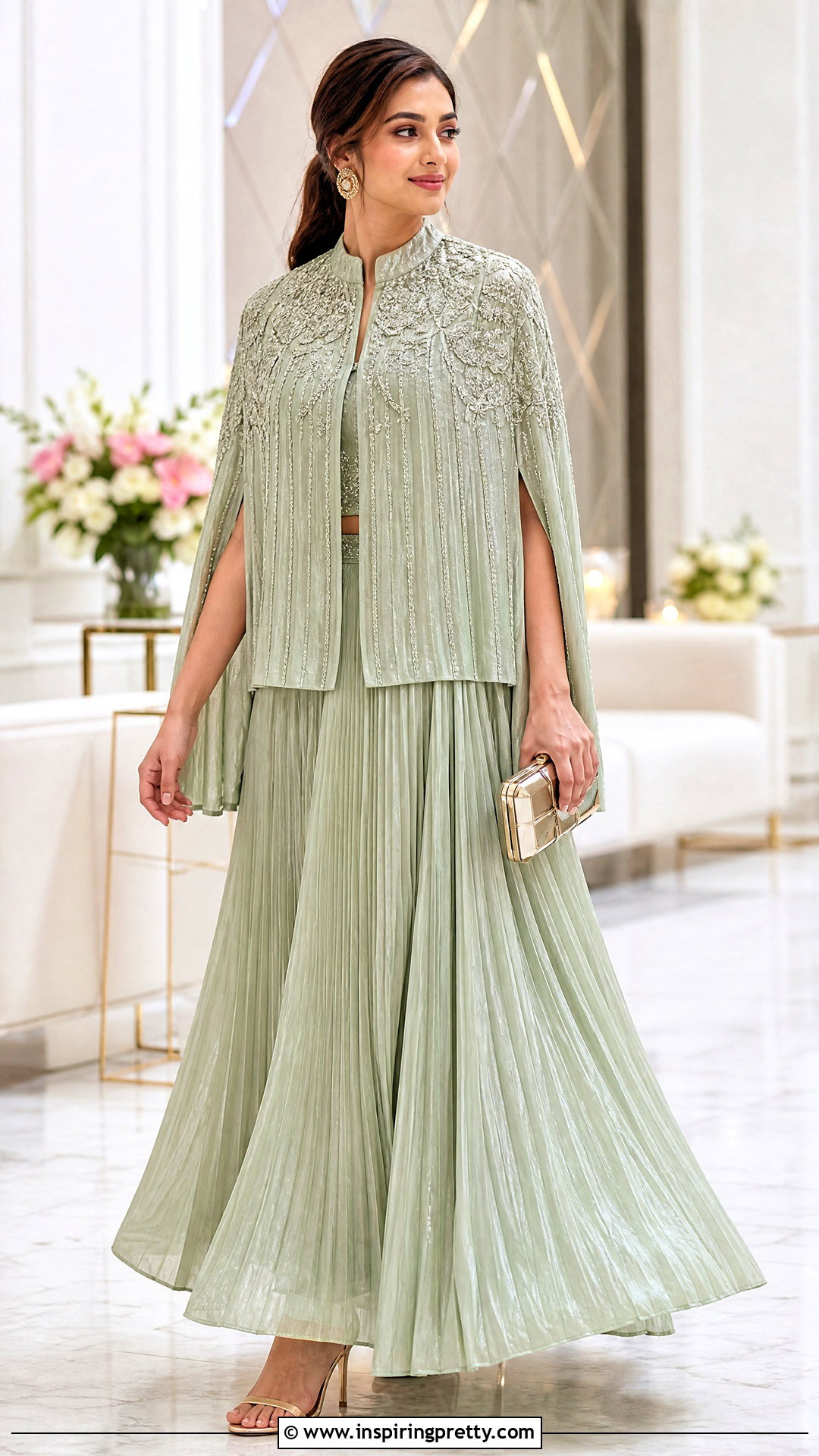
Pleats fall in long straight lines, and a cape sits over them like a soft extra layer at the shoulders. I keep the cape at waist length. Any longer and it hides the pleats, which are the reason to wear the skirt. Put the detail on one half only, either an embellished cape over a plain skirt or the other way round. Check for side openings in the cape so you can raise your arms to eat. With the cape covering you, a dupatta is unnecessary. A low bun shows off the shoulder detail.
17. Ethnic Skirt And Asymmetrical Top Outfit
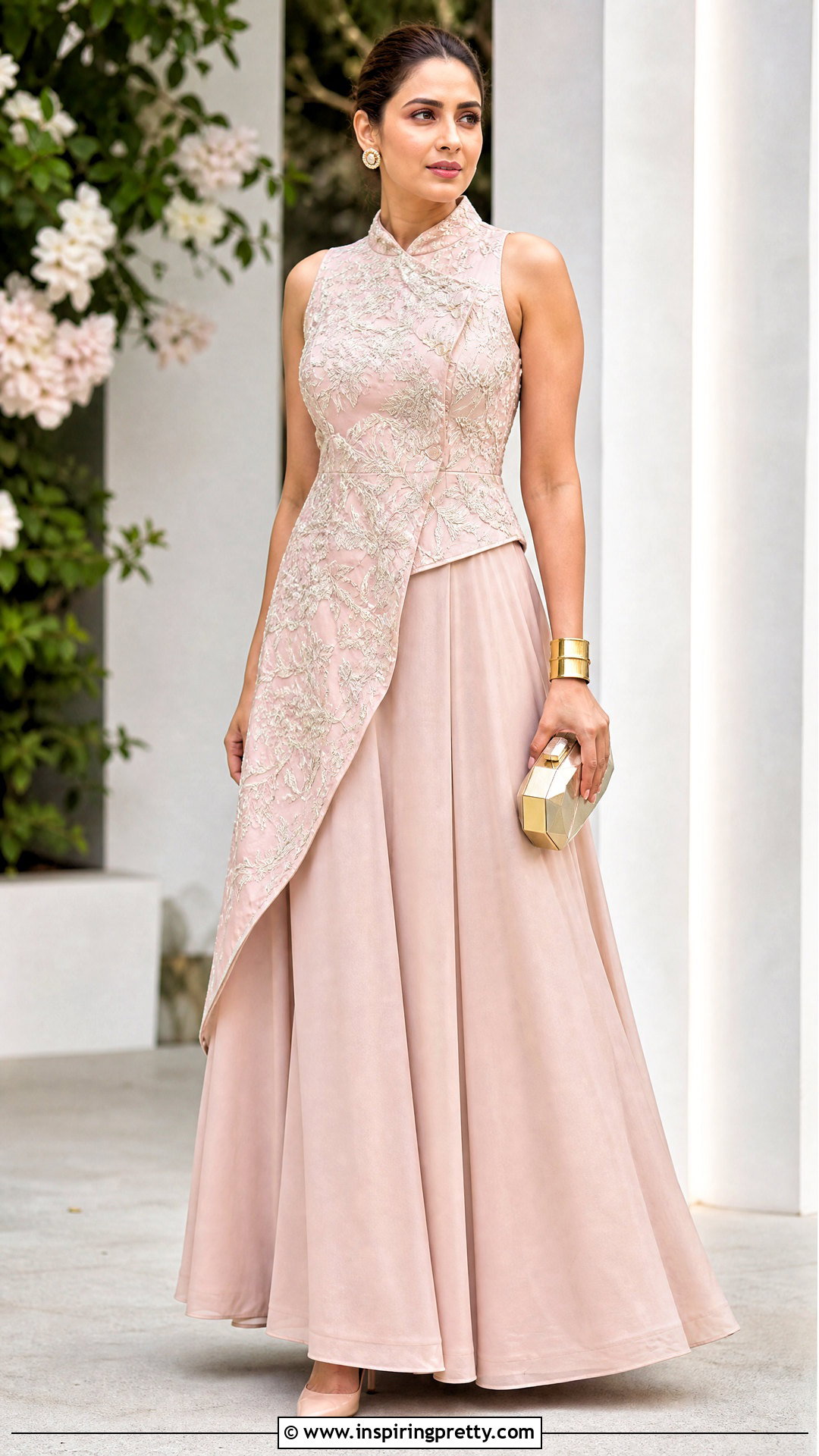
An asymmetric hem or draped neckline updates a plain skirt faster than almost any other top. I check the longest point of the hem from the side in the mirror. If it lands on the widest part of the hip, it adds bulk there and hides the skirt's embroidery. Detailed top with a plain skirt, or a printed skirt under a solid asymmetric blouse. Pointed heels and one statement cuff suit the modern line. If you add a dupatta, drape it from the plainer shoulder so the two don't compete.
18. Ethnic Skirt And Jacket Top Outfit
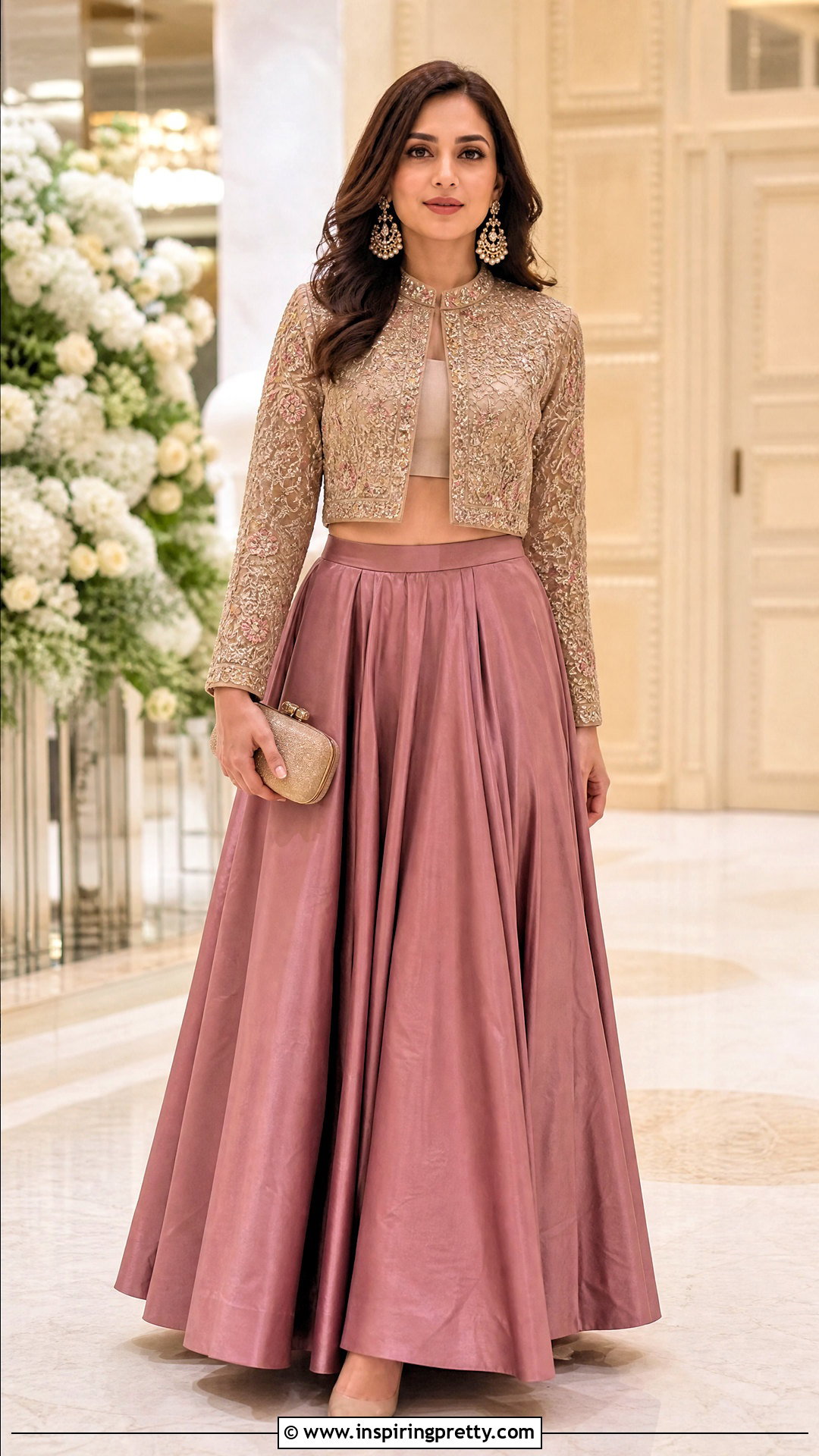
A cropped embroidered jacket can replace the dupatta entirely, which is a relief at a long winter wedding. Wear it closed as the top or open over a fitted plain blouse. I keep the jacket at the waist, since a hip-length one cuts the skirt in half. A solid skirt balances a heavy jacket. Densely embroidered jackets are stiff at the armhole, so raise your arms in the fitting room before you commit. Closed-toe heels and chandelier earrings. It's also one of the warmer choices here for a cold outdoor reception.
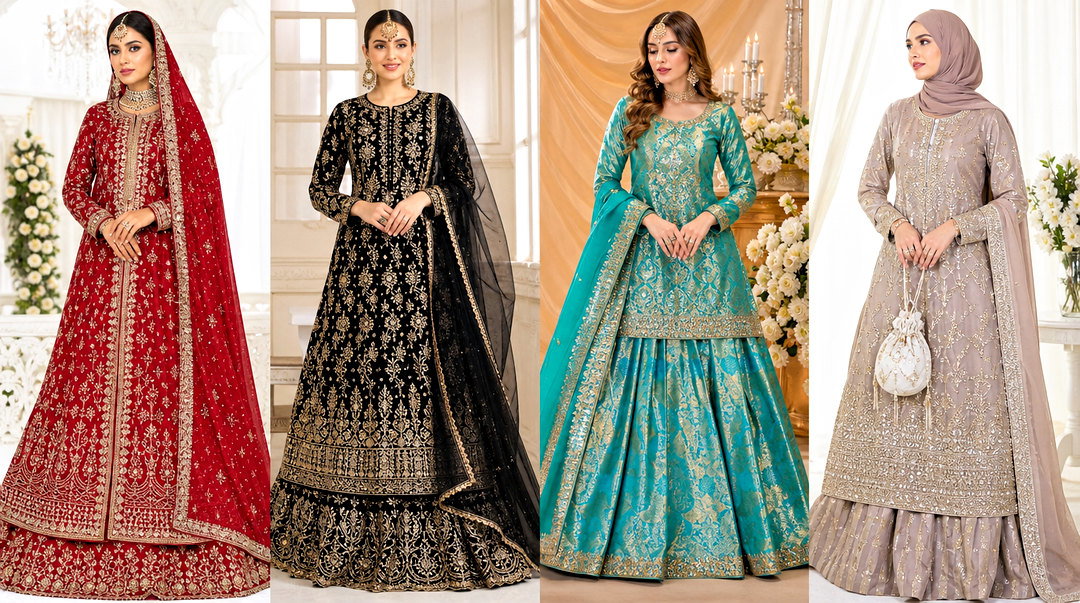
19. Ethnic Skirt And Long Blouse Outfit
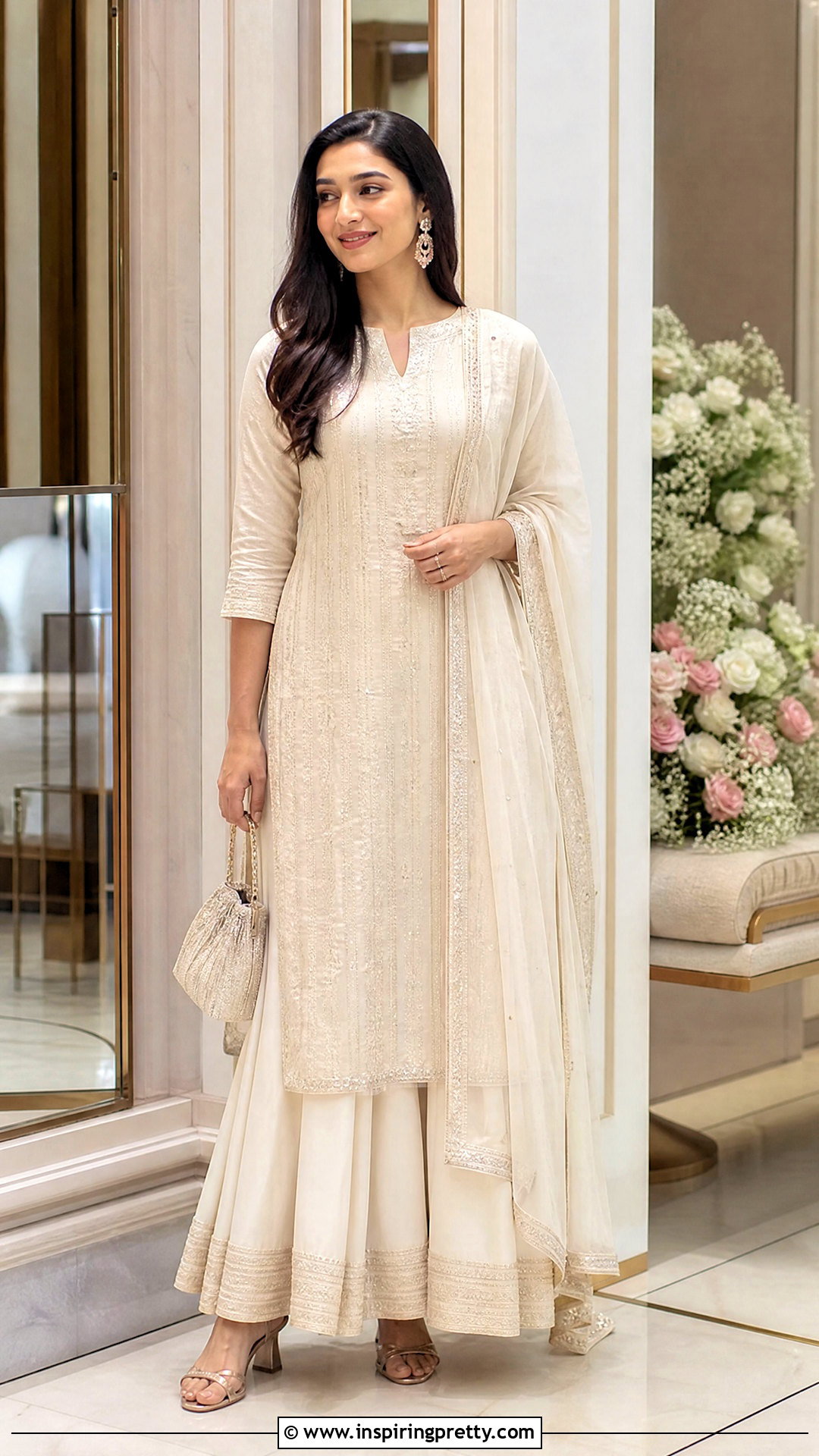
A long blouse that ends at the upper hip covers the waist and the tops of the arms, which many women prefer at family ceremonies. Side slits are not optional. Without them the blouse rides up and wrinkles over the skirt every time you sit. The skirt should fall flat from the waistband, so I avoid heavy gathering under a long top. Matching colors make one long line; a contrasting border adds definition. Three-quarter sleeves, low block heels, a small handbag and a narrow dupatta over one shoulder.
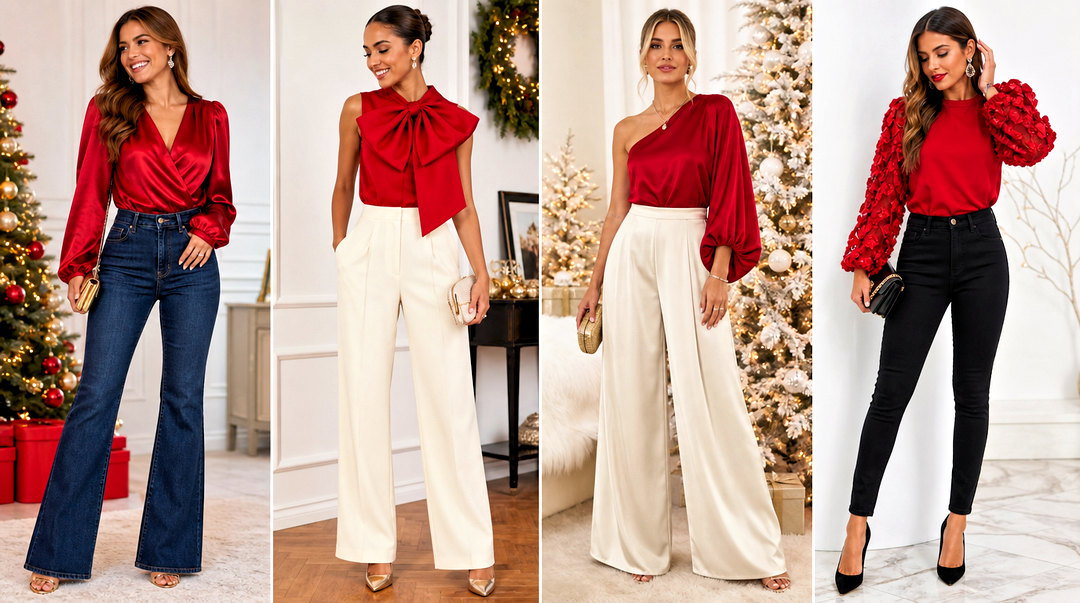
20. Ethnic Skirt And High Neck Top Outfit
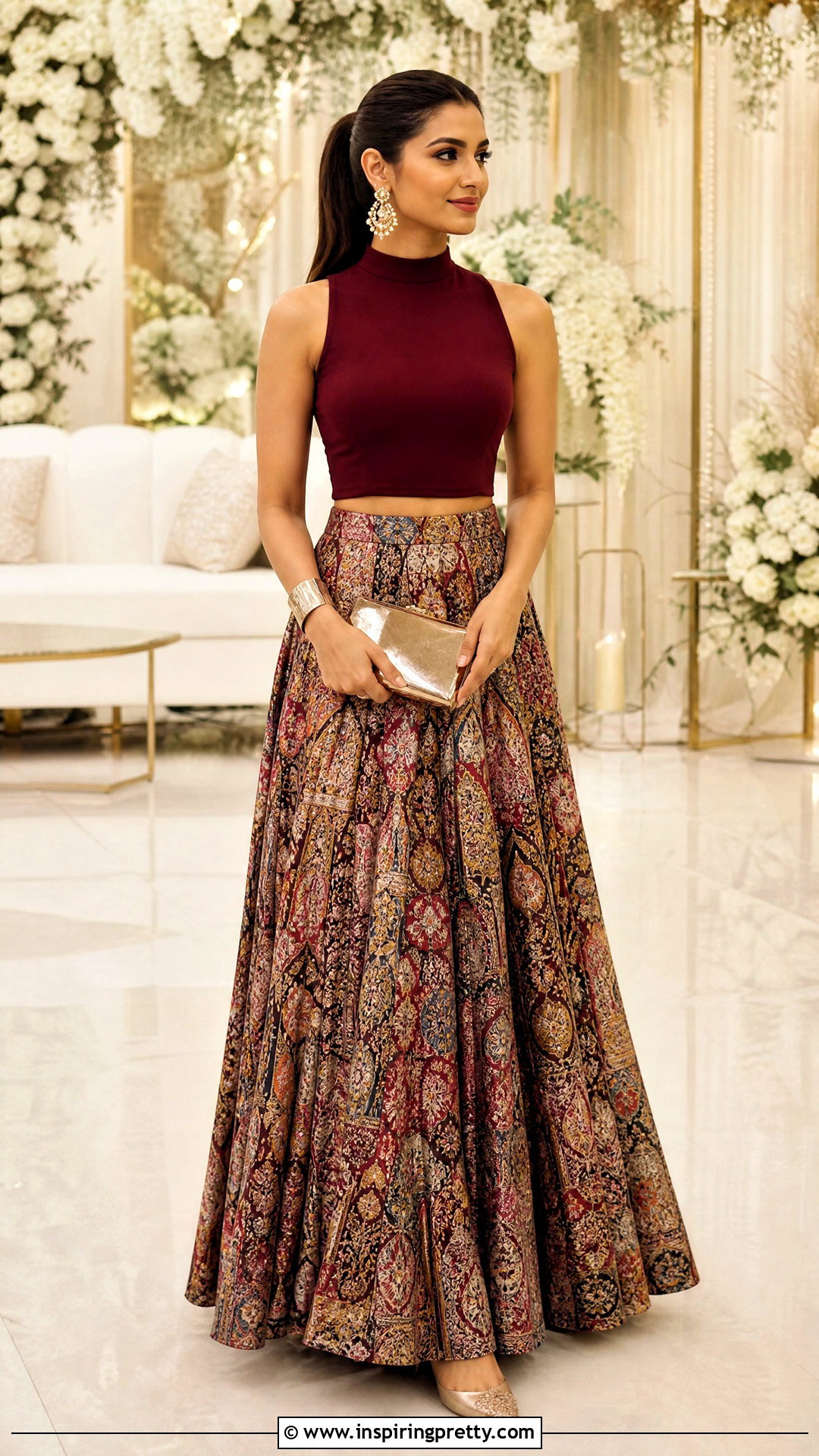
A high neck does the job a necklace usually does, so I skip the necklace every time. Sleeveless for a summer event, full sleeves in winter, with any embroidery kept near the collar or cuffs. Pair a busy skirt with a plain top or the reverse. One fit point I always check: the collar should close without pulling at the back hook. If it strains, it tips forward and creases all evening. Statement earrings, an updo and pointed flats. Carry the dupatta over one arm instead of bunching it at the collar.
21. Ethnic Skirt And Full Sleeve Crop Top Outfit
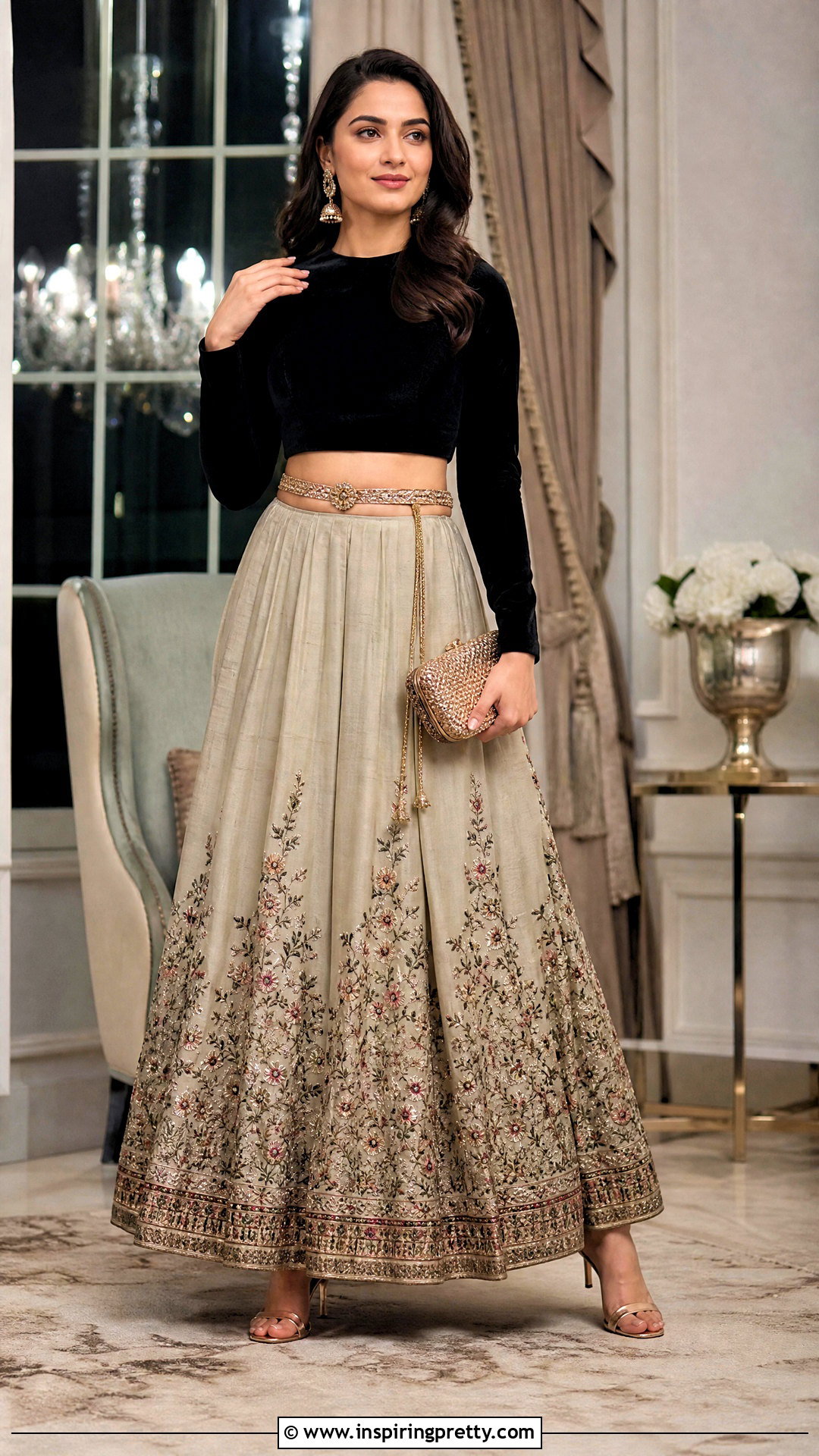
Full sleeves let you show a small strip of waist and still feel covered, which is why I like this for winter functions. Pair it with a high-waisted skirt so only a little skin shows, or with a top that meets the waistband. Sheer embroidered sleeves look delicate; velvet or raw silk feels formal. The sleeves should be fitted but not tight at the elbow, or you'll feel them every time you lift a plate. Jhumkas and a compact clutch. Go easy on bangles over decorated cuffs, since they snag the embroidery.
22. Ethnic Skirt And One Shoulder Top Outfit
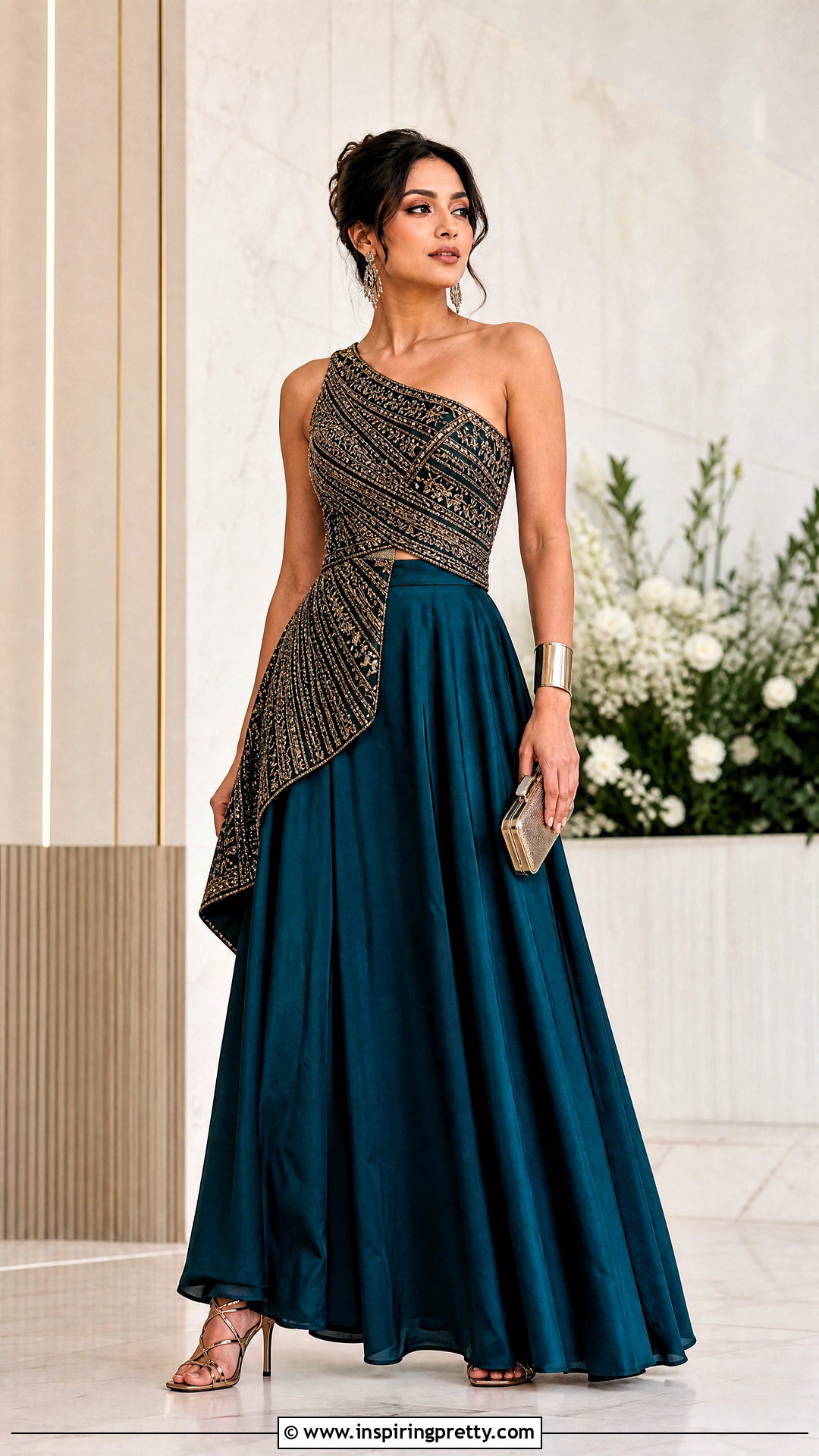
A one-shoulder top only works if it stays put. I look for a wide band of fabric over the shoulder and a firm side seam on the bare side, and pair it with a strapless or multiway bra that has a grippy band. The neckline is the feature, so choose between a plain, well-draped skirt and a richly embroidered one under a solid blouse. One cuff on the opposite wrist, strappy heels and a small clutch. Keep the dupatta off the neckline. If you need coverage, tuck a light drape in at the waist instead.
23. Ethnic Skirt And Square Neck Top Outfit
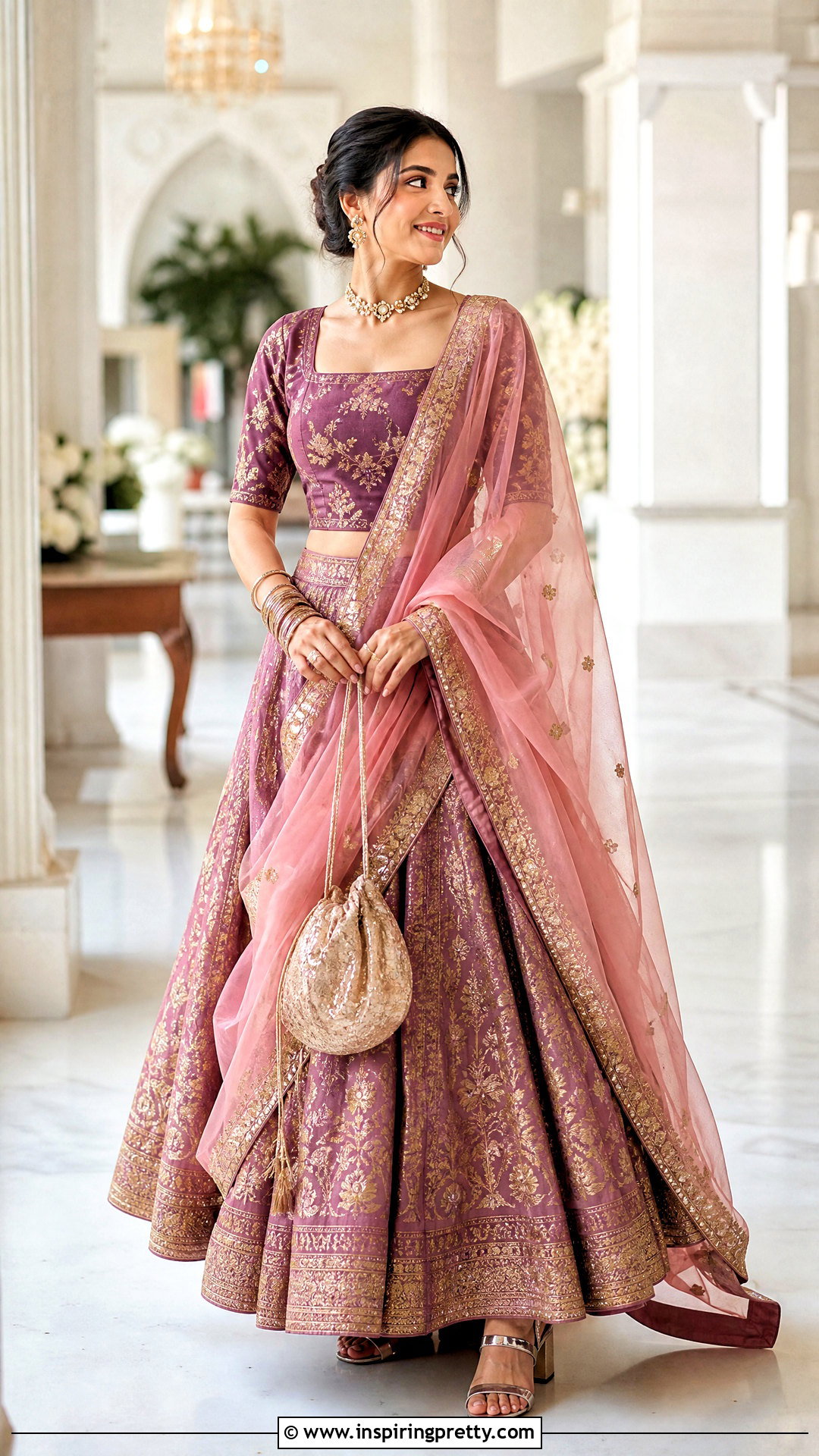
A square neck frames the face and takes a short necklace better than almost any other neckline. I check its width first. The corners should sit inside the shoulder points, not near them, or bra straps show and the top slips. Short, elbow or slightly puffed sleeves depending on the day. Embroidered skirt with a solid top, or plain silk with a brocade blouse. Block heels, a small potli and a few bangles. A dupatta pinned to one shoulder can stay clear of the neckline.
24. Ethnic Skirt And Boat Neck Top Outfit
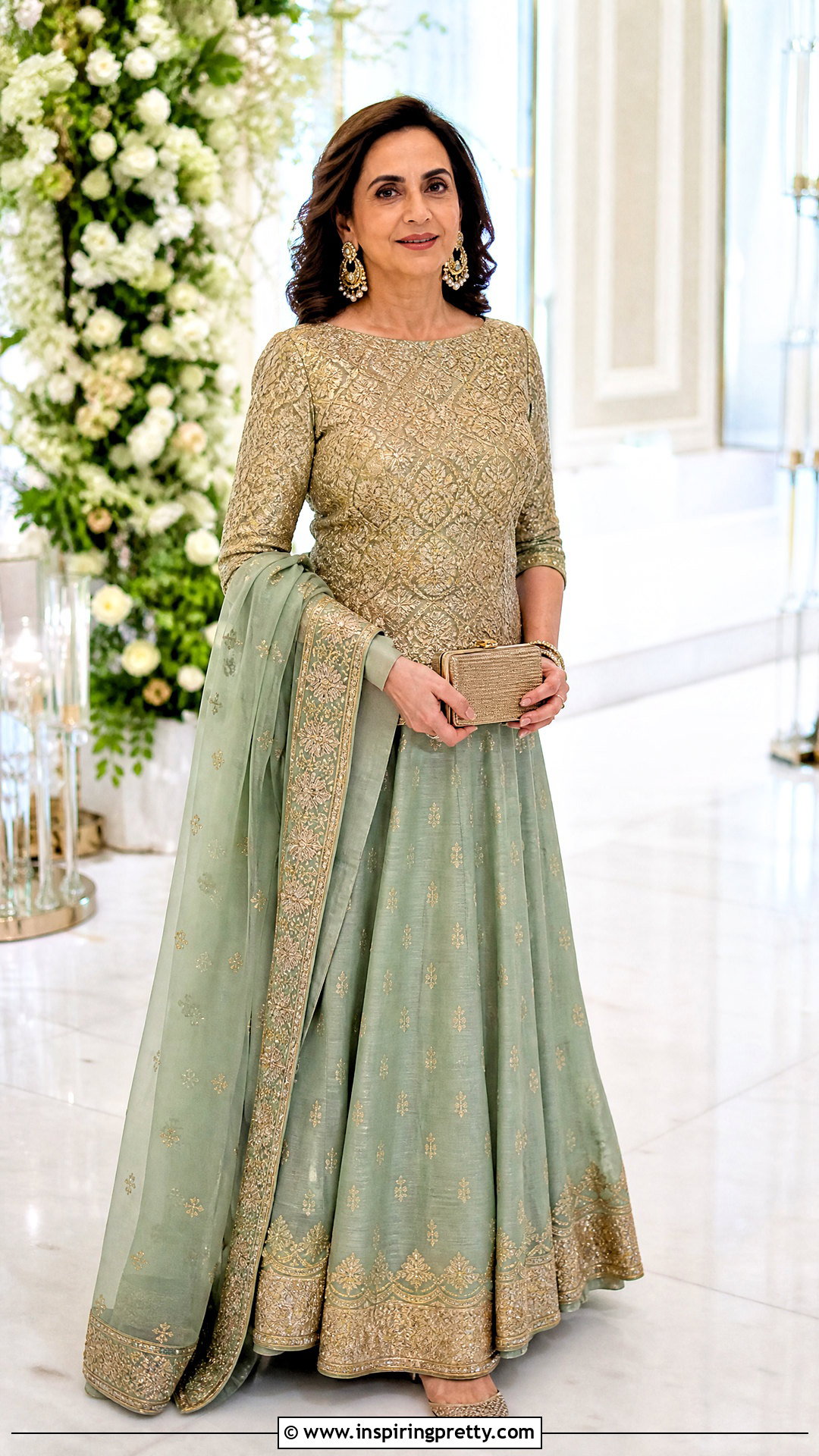
A boat neck draws a wide line across the collarbones. That helps narrow shoulders and does less for shoulders that are already broad. It sits high, so I swap a necklace for chandelier earrings. Silk, brocade and embroidered cotton hold the line well, while soft jersey lets it droop. The blouse hem should finish right at the skirt waistband. Pointed flats or low heels, a structured clutch, and a dupatta draped from one shoulder to the opposite arm. Older women often like this one because it covers without looking heavy.
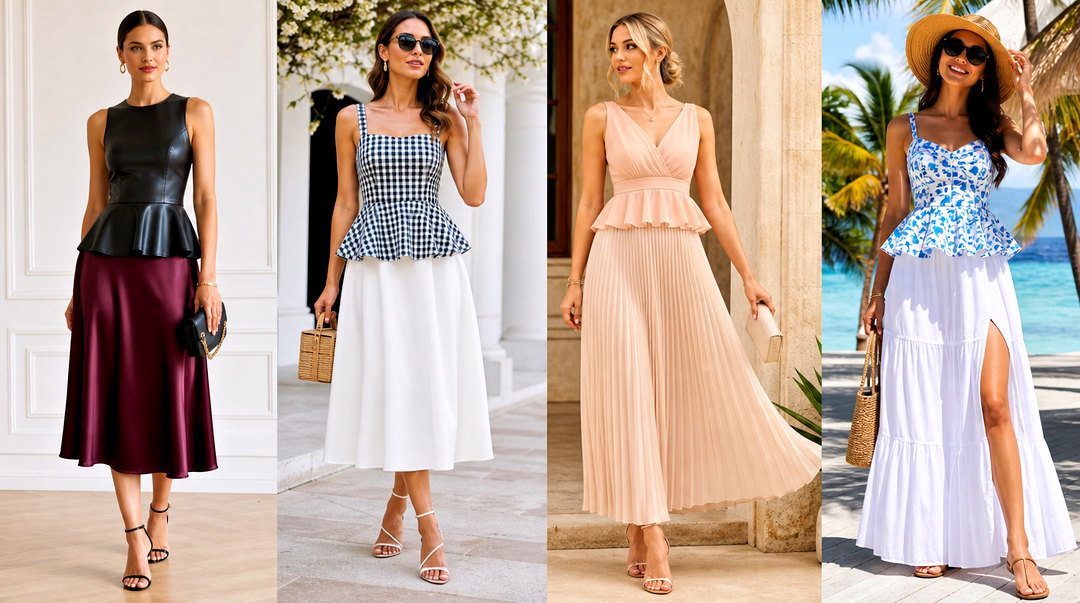
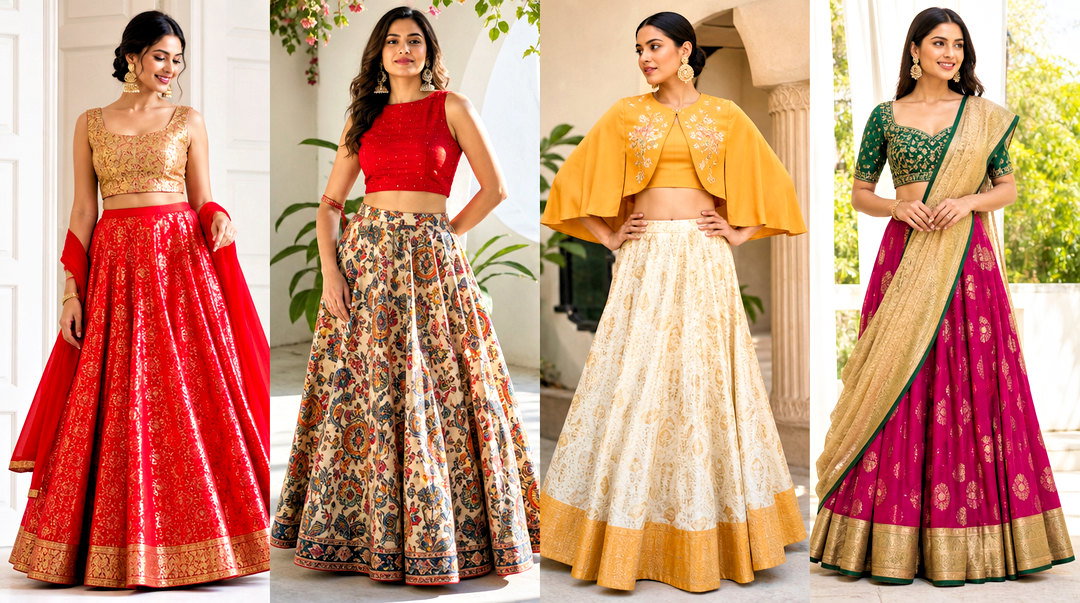
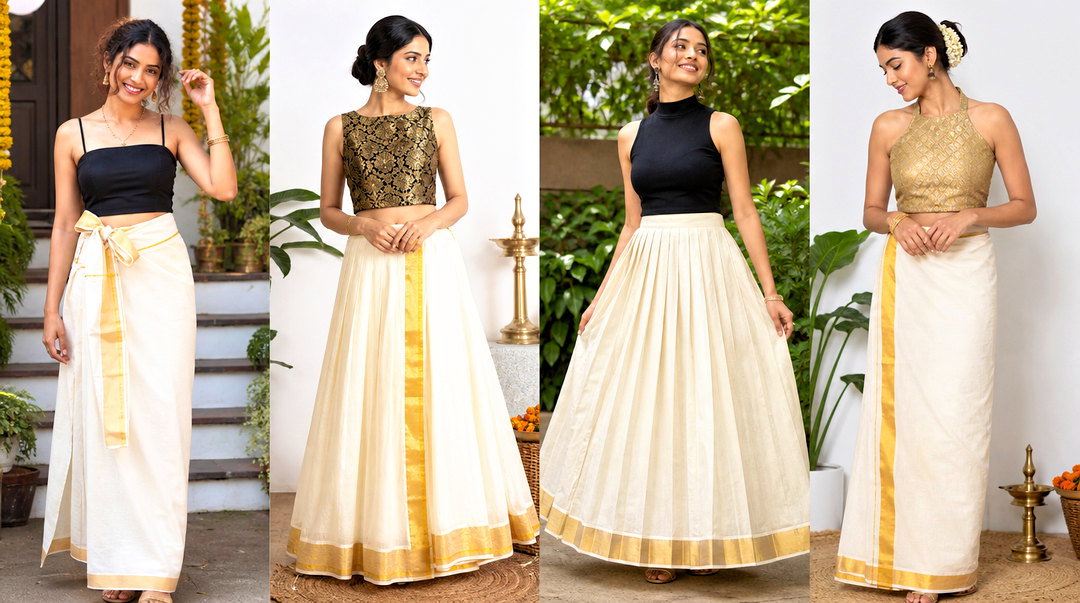
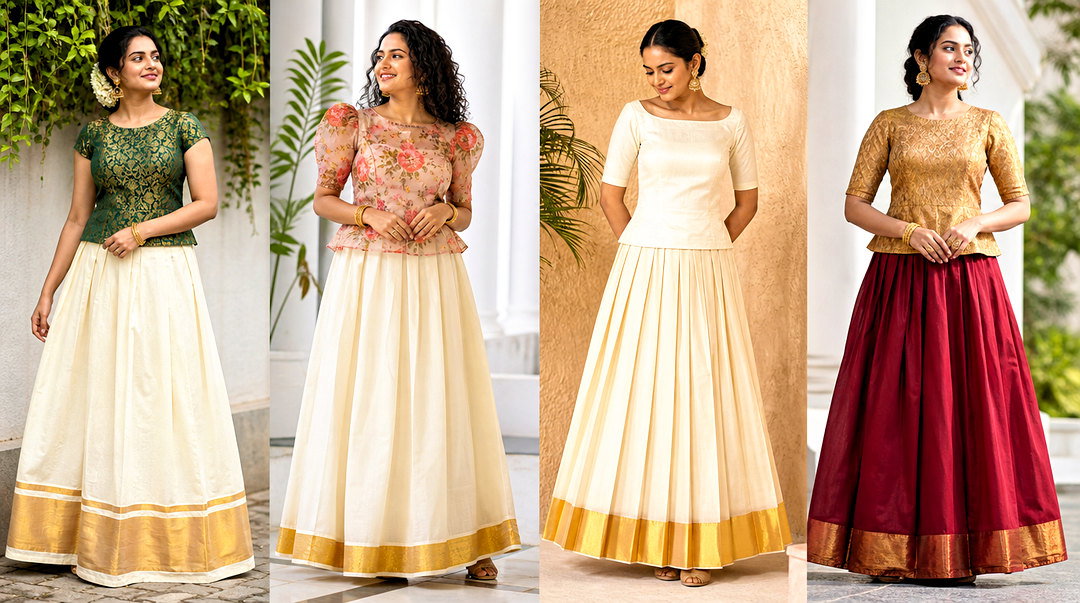
25. Ethnic Skirt And Puff Sleeve Top Outfit
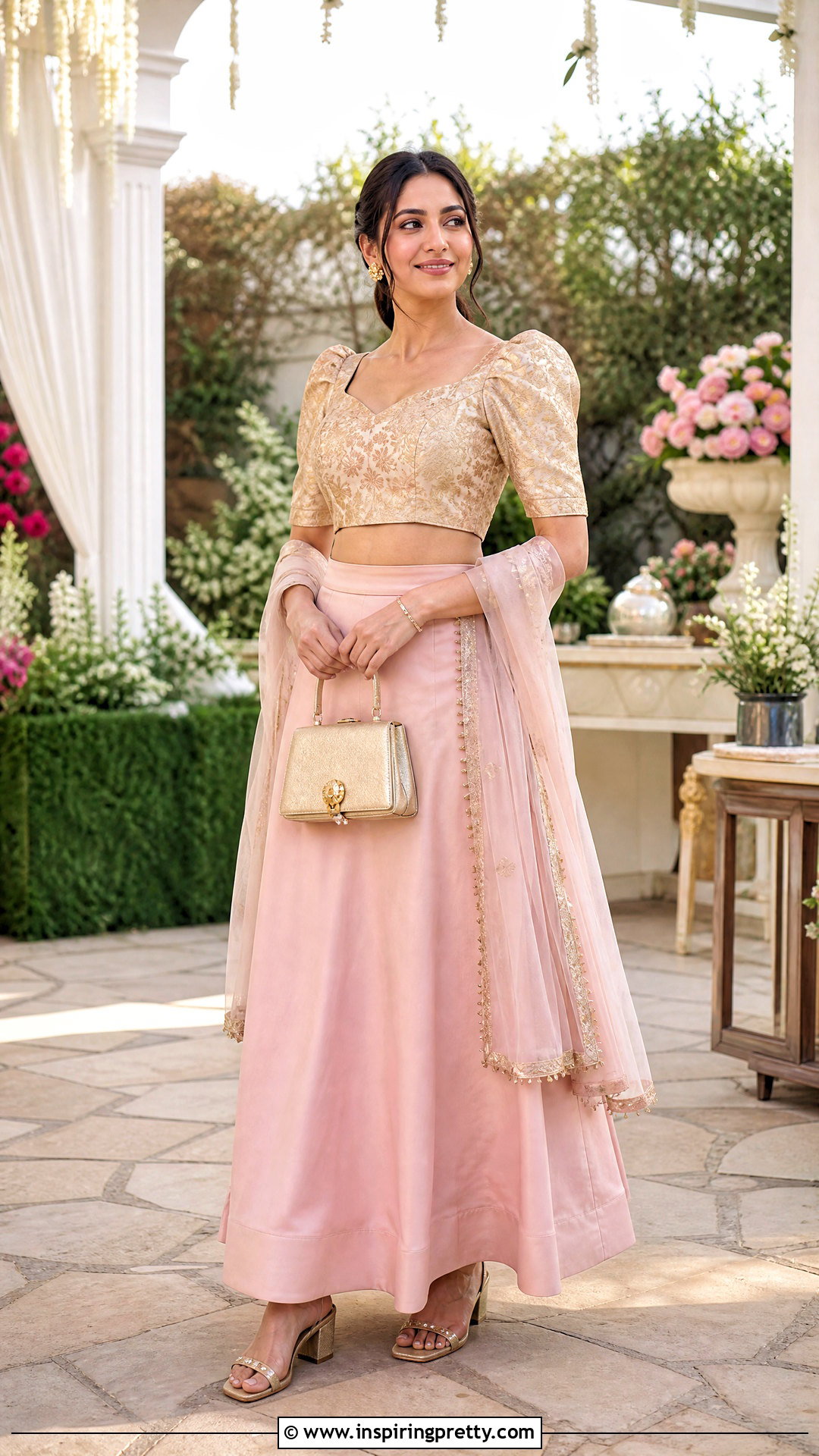
Puff sleeves add volume at the shoulder, and the rest of the outfit has to make room for it. I choose either short structured puffs or soft elbow-length ones, and I never put a big sleeve over a heavily gathered skirt. A smooth waistband and moderate flare keep the balance. A plain puff top suits a printed skirt; a brocade one dresses up solid silk. No broad necklace and no dupatta piled on the shoulders. If you want a drape, pin it behind one arm. Compact earrings and block heels.
26. Ethnic Skirt And Wrap Top Outfit
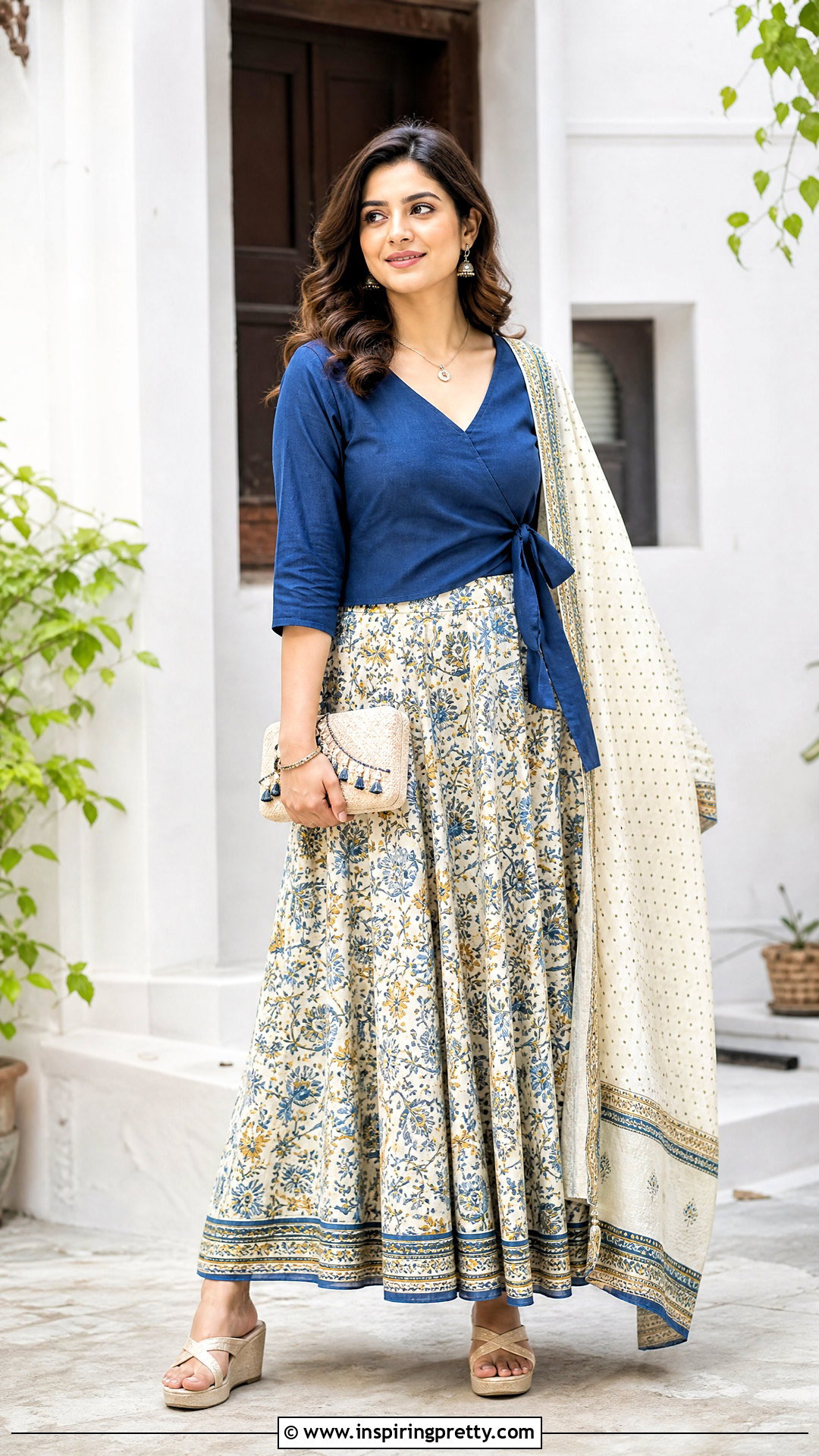
I recommend a wrap top when your size changes through the day or the year, because the ties loosen and tighten with you. The diagonal it draws across the chest suits most bust sizes. Tie it at the side; a big knot at the front sits right over the waistband and adds bulk. Check that the wrap overlaps deeply enough not to gape when you lean forward. A small pendant or small jhumkas suit the V. Wedges, a fabric clutch, and a light dupatta falling straight from one shoulder.
27. Red Ethnic Skirt And Matching Top Outfit
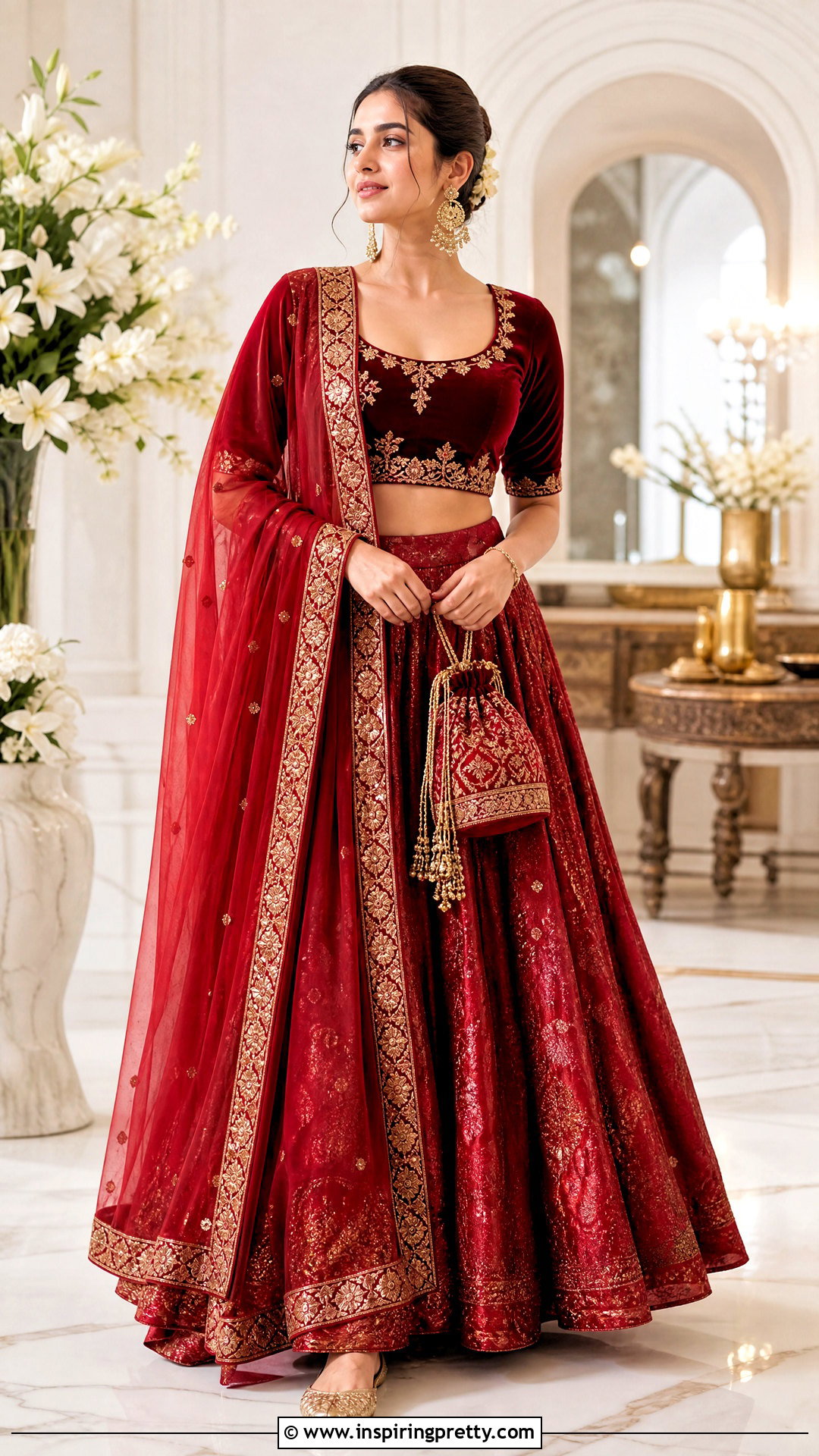
All-red works best when the reds aren't identical. I mix textures within the color: a silk skirt with a velvet blouse, or georgette with embroidered raw silk. The slight difference in sheen stops it reading as one flat block in photos. Antique gold carries through the border, the chandbalis and the potli. A sheer matching dupatta pinned at one shoulder. Red is the bridal color in many families, so as a guest I keep the embroidery lighter and the ornate finishes for close family roles.
28. Pink Ethnic Skirt And Embellished Top Outfit
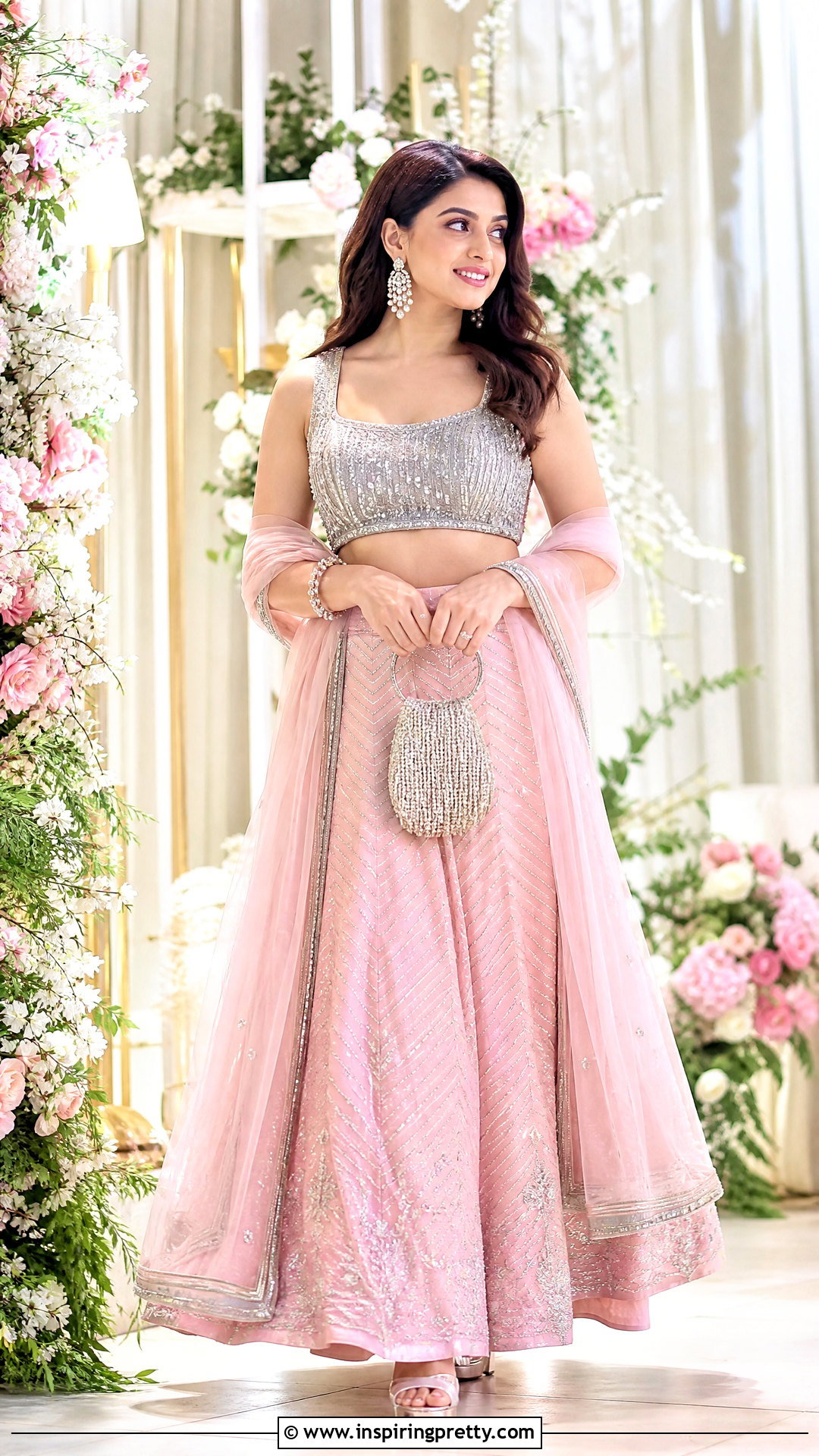
Pink runs from pale blush to fuchsia, and the shade decides the occasion more than the fabric does. Blush in a breathable fabric for daytime; a deeper pink with some shine for evening. When the skirt is already embroidered, I keep the top's embellishment on the neckline and sleeves. Silver suits cool pinks and gold suits warm ones. A sheer dupatta one shade lighter adds depth without breaking the color story. Metallic heels, pearl earrings and a small beaded bag.
29. Blue Ethnic Skirt And Silver Top Outfit
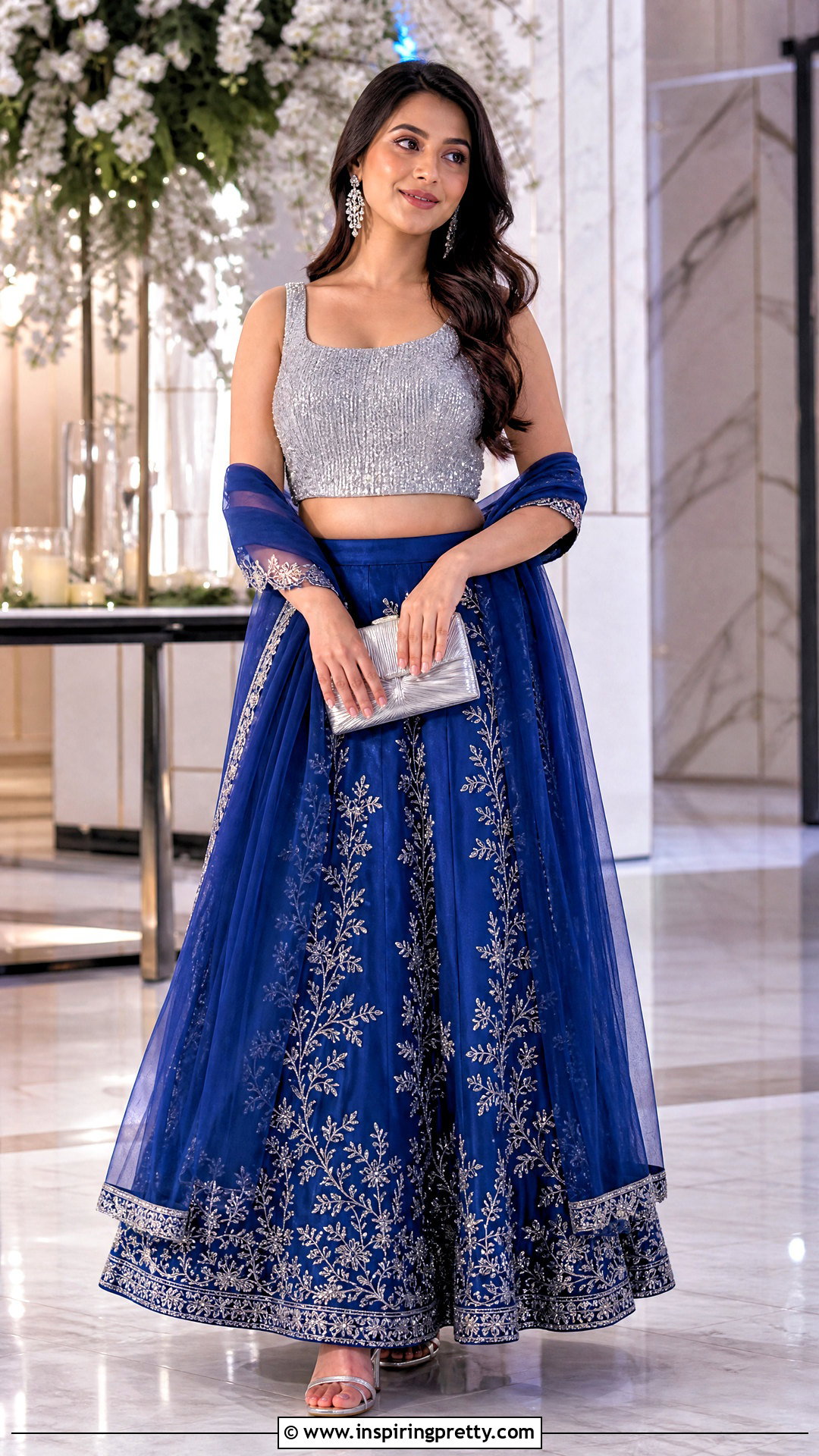
Blue and silver photograph clearly under evening lighting, where gold can turn yellowish. A navy or royal blue skirt with silver embroidery, then a silver-gray blouse with restrained shimmer, or a plain blue skirt under a fully embellished top. I stick to one metal: silver sandals, crystal drops and a metallic clutch, with no gold anywhere. Silver thread darkens with time, so store the outfit wrapped in cotton and away from rubber and perfume. A blue chiffon dupatta with a narrow silver edge makes it more traditional.
30. Green Ethnic Skirt And Gold Top Outfit
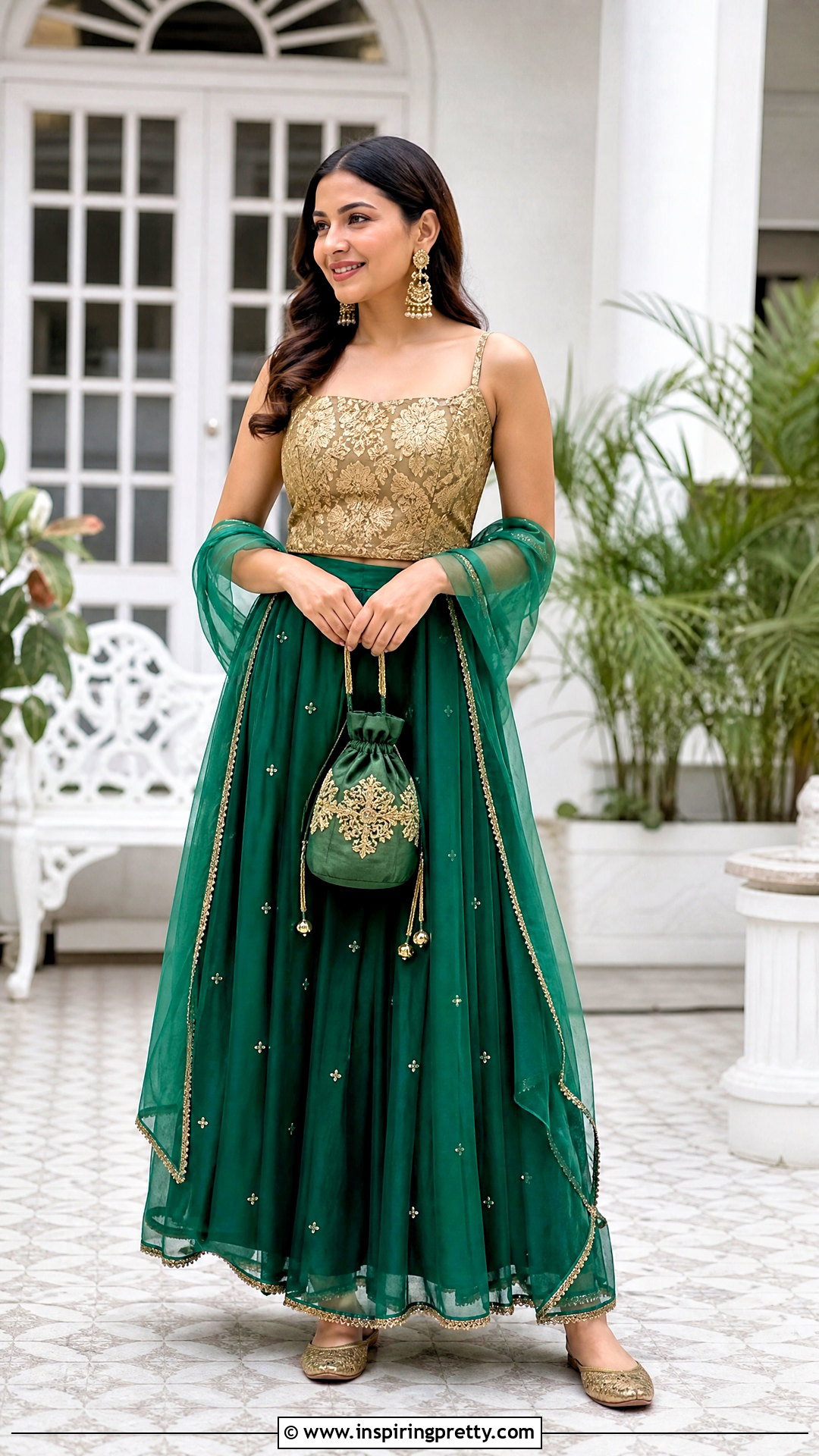
Green with gold reads festive with almost no effort. The shade sets the time of day: emerald and forest for evening, mint and sage for daytime. I pick a fitted gold brocade blouse and repeat the gold in the skirt border so the two look connected. If the blouse is very shiny, the jewelry stays moderate. A plain organza dupatta softens it without hiding the top. Gold juttis and a green potli. Check that the waistband is secure, because a flared skirt gets twirled a lot at a mehendi.
31. Yellow Ethnic Skirt And White Top Outfit
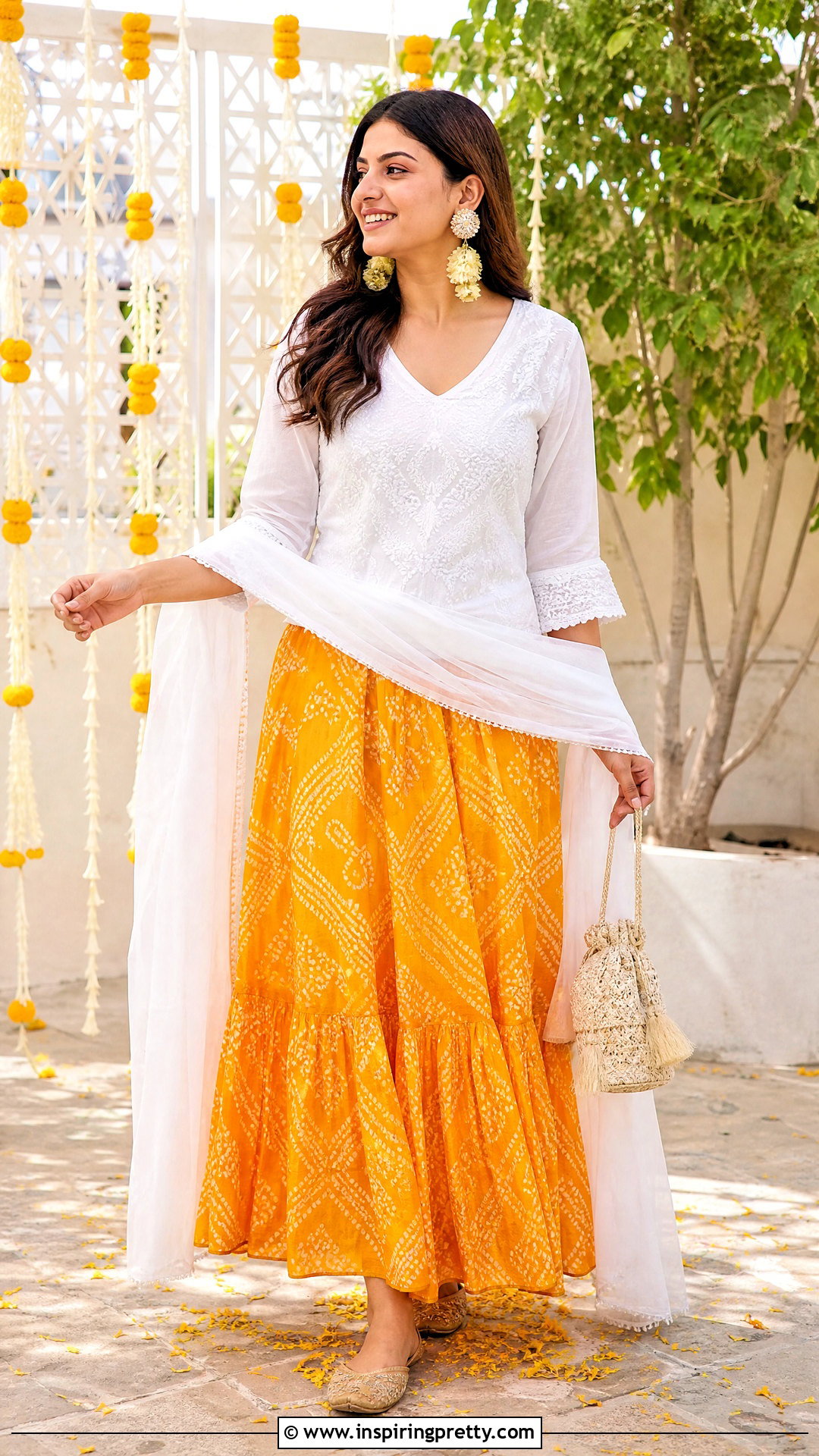
Yellow is the obvious color for a haldi, and a white top keeps it from feeling loud. Choose a block-print or bandhani skirt and a white cotton or chikankari blouse. A warning from experience with this event: turmeric paste stains white cotton badly and rarely washes out fully, so wear pieces you won't mind marking if you'll be near it. A cropped top looks younger; a waist-length blouse covers more. Tan juttis, floral earrings and a woven potli. Keep any dupatta light.
32. Orange Ethnic Skirt And Pink Top Outfit
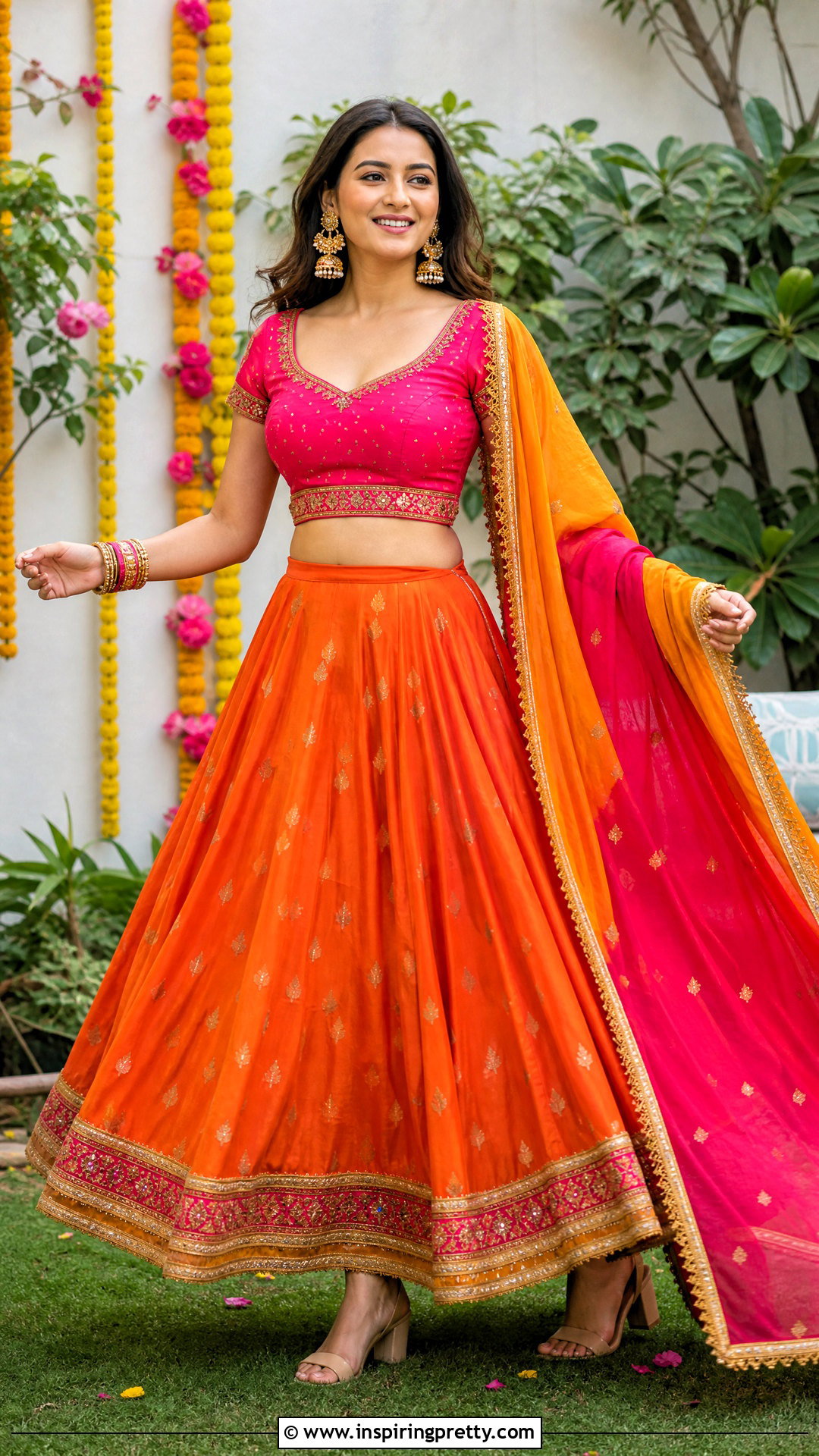
Orange and pink is a bold color block, and I keep it for bright daytime events. One piece carries the embroidery and the other stays plain, with gold trim linking the two. Deep orange with fuchsia is easier to wear than pale orange with pale pink, which tends to look washed out in sunlight. Gold jhumkas, stacked bangles and a compact potli. A dupatta carrying both colors makes the pairing look planned, though a plain gold-edged one does the job too. Keep the skirt's volume moderate for an outdoor afternoon.
33. Purple Ethnic Skirt And Lavender Top Outfit
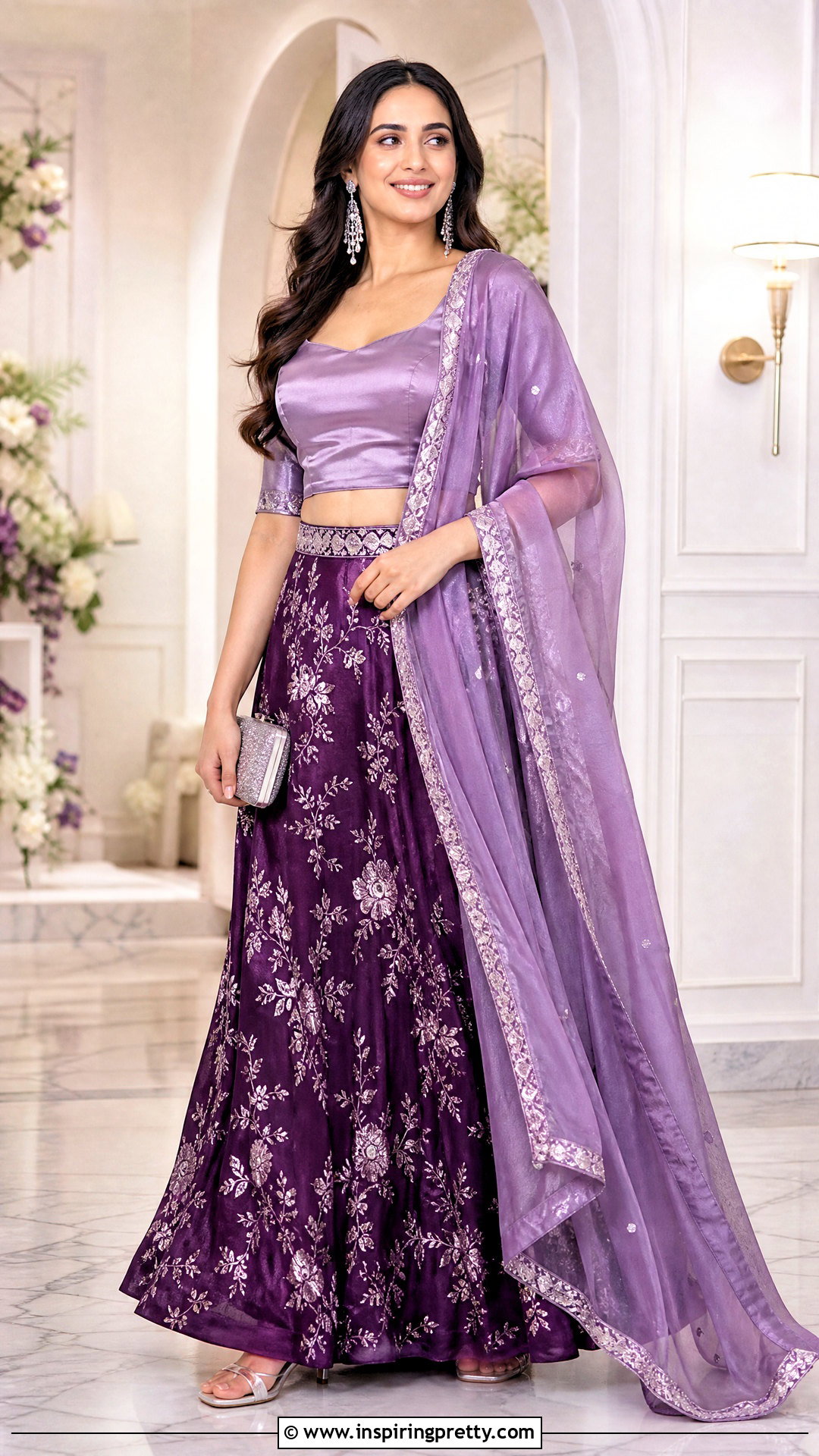
Two shades of one color are easier to wear than two colors, and plum with lavender proves it. The darker skirt grounds the outfit and the lavender blouse lifts the area near your face. Satin or silk in the blouse adds a little light. Choose the metal by the embroidery: silver for cool violet, antique gold if the skirt work is warm. A sheer lavender dupatta over one shoulder, caught at the wrist so it doesn't drag. Block heels and a small matching clutch.
34. Ivory Ethnic Skirt And Gold Blouse Outfit
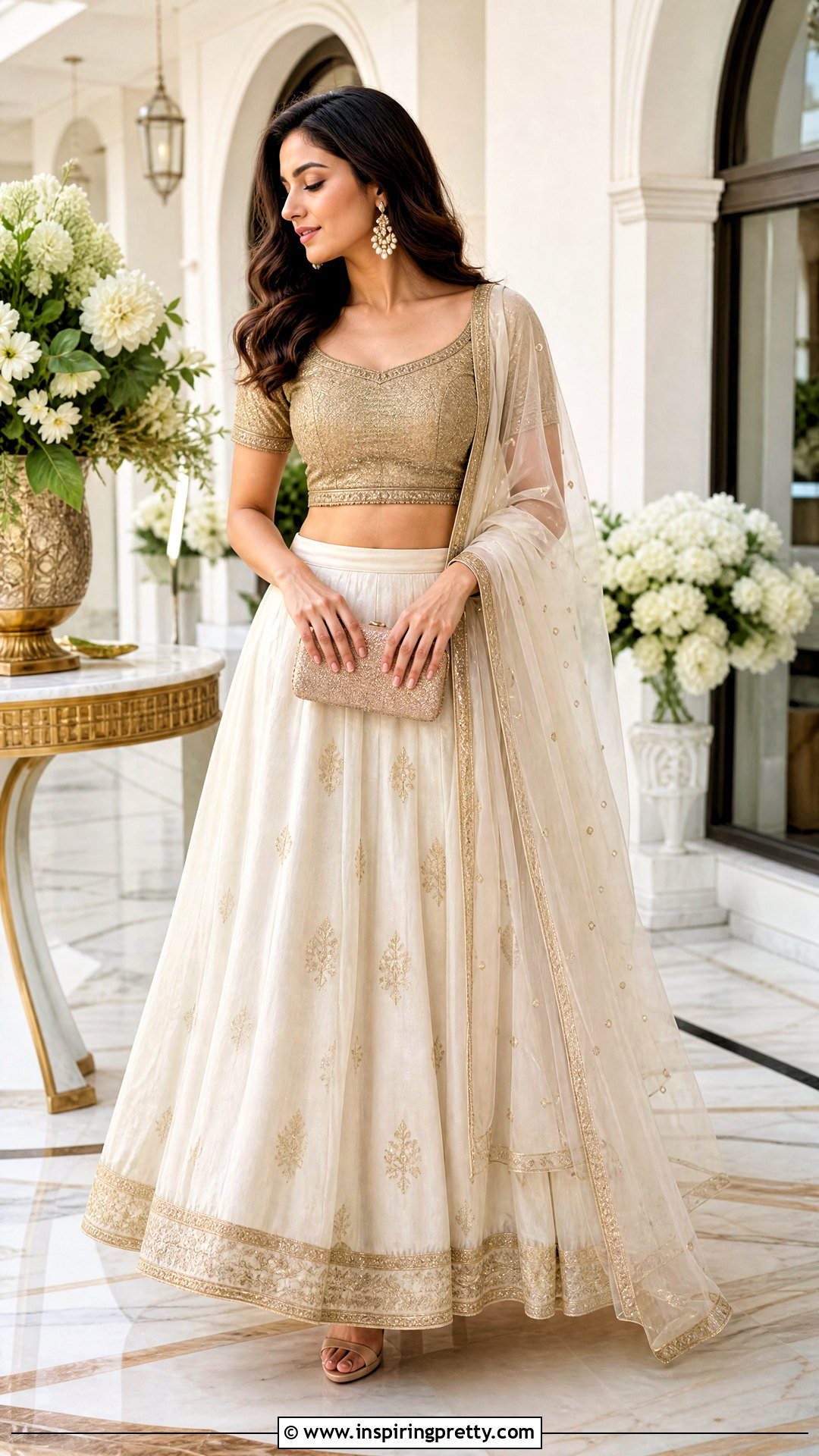
Ivory has to be opaque, so before anything else I check the lining against daylight. Then a fitted antique gold blouse keeps the contrast soft; bright yellow gold against ivory can look harsh. Ivory also picks up foundation at the neckline, so get dressed after your makeup has set. Pearl-and-gold earrings, nude heels and a champagne clutch. Too much white-on-white sparkle flattens the outfit in photographs, which is why I bring in one soft accent color through the bangles or bag.
35. Black And White Ethnic Skirt And Top Outfit
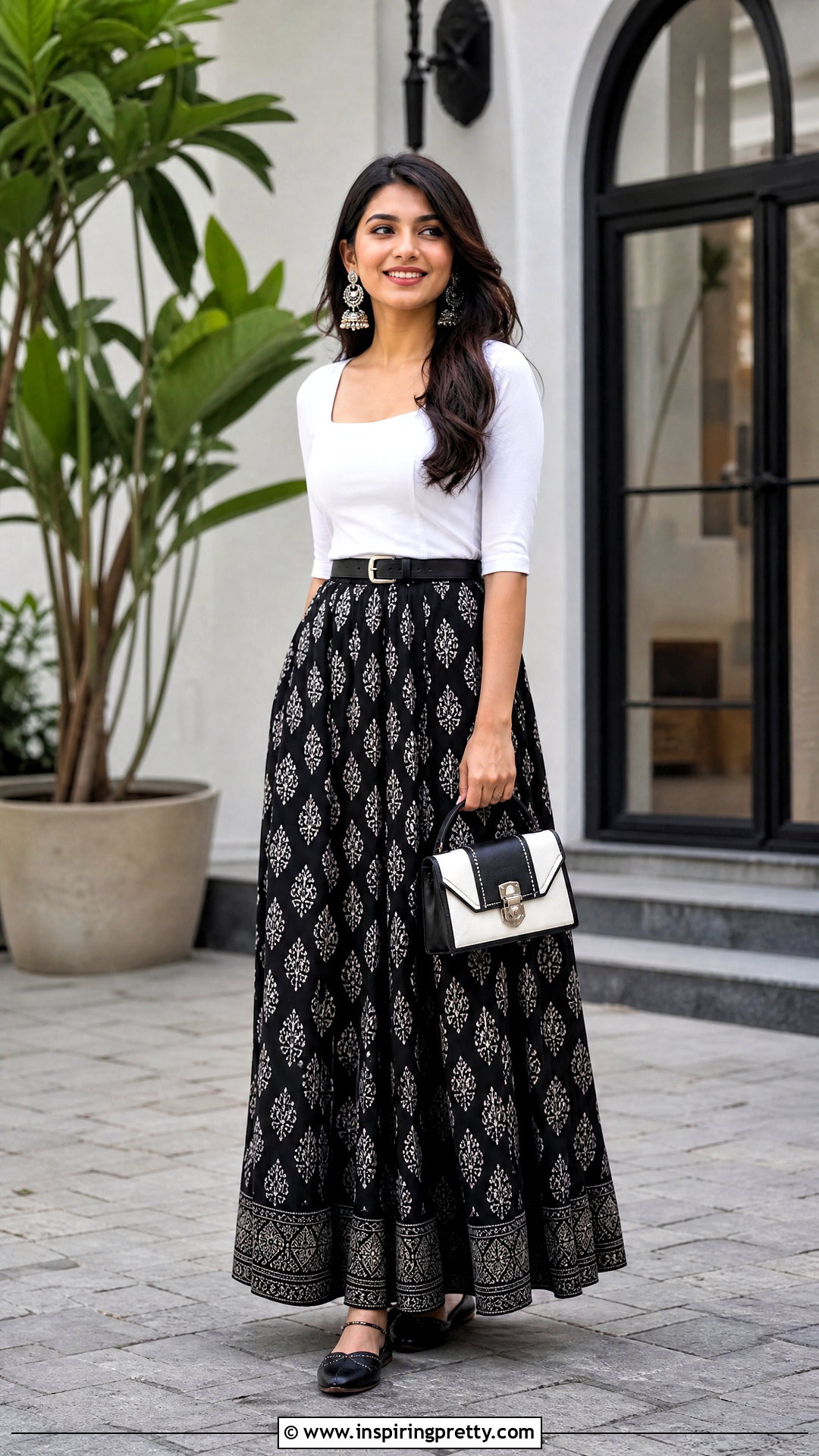
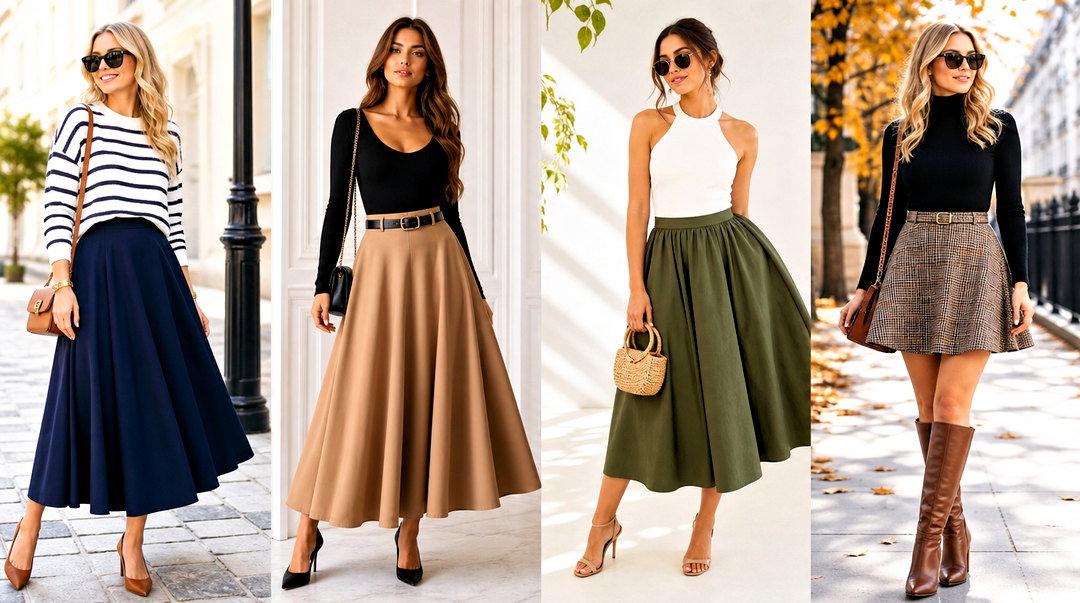
Black and white feels modern while keeping the hand-printed texture of a block-print skirt. Wear a black skirt with white motifs and a fitted white blouse, or reverse it. Silver jewelry, black juttis, and a slim belt if you tuck the top in. One accent color is fine, usually red or turquoise through the dupatta or earrings. I don't add a second print, because black and white patterns clash quickly. You probably own most of this already, which makes it a good last-minute outfit for a cultural program or casual festive dinner.
36. Wedding Guest Ethnic Skirt And Top Outfit
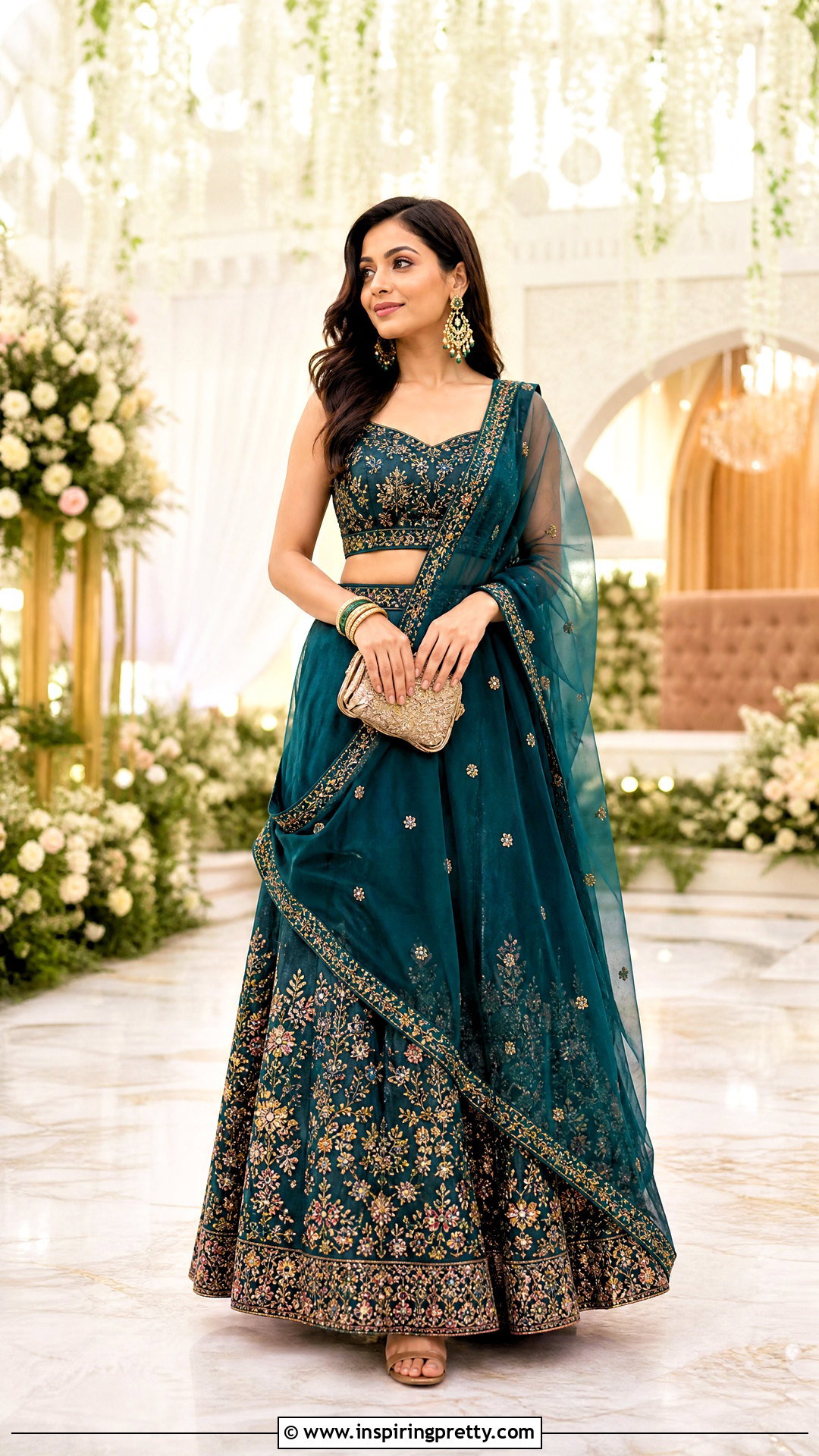
For a wedding guest my rule is one focal piece. If the skirt is heavily embroidered, the blouse repeats one detail from it and stays lighter, and the dupatta is plain. A heavy skirt, heavy blouse, heavy dupatta and big jewelry all at once is how guests end up uncomfortable and overdone. Pin the dupatta at the shoulder for the ceremony so your hands are free. Choose cushioned juttis or block heels over stilettos, because Indian weddings run long and involve plenty of standing. Statement earrings and a compact clutch.
37. Mehendi Ethnic Skirt And Crop Top Outfit
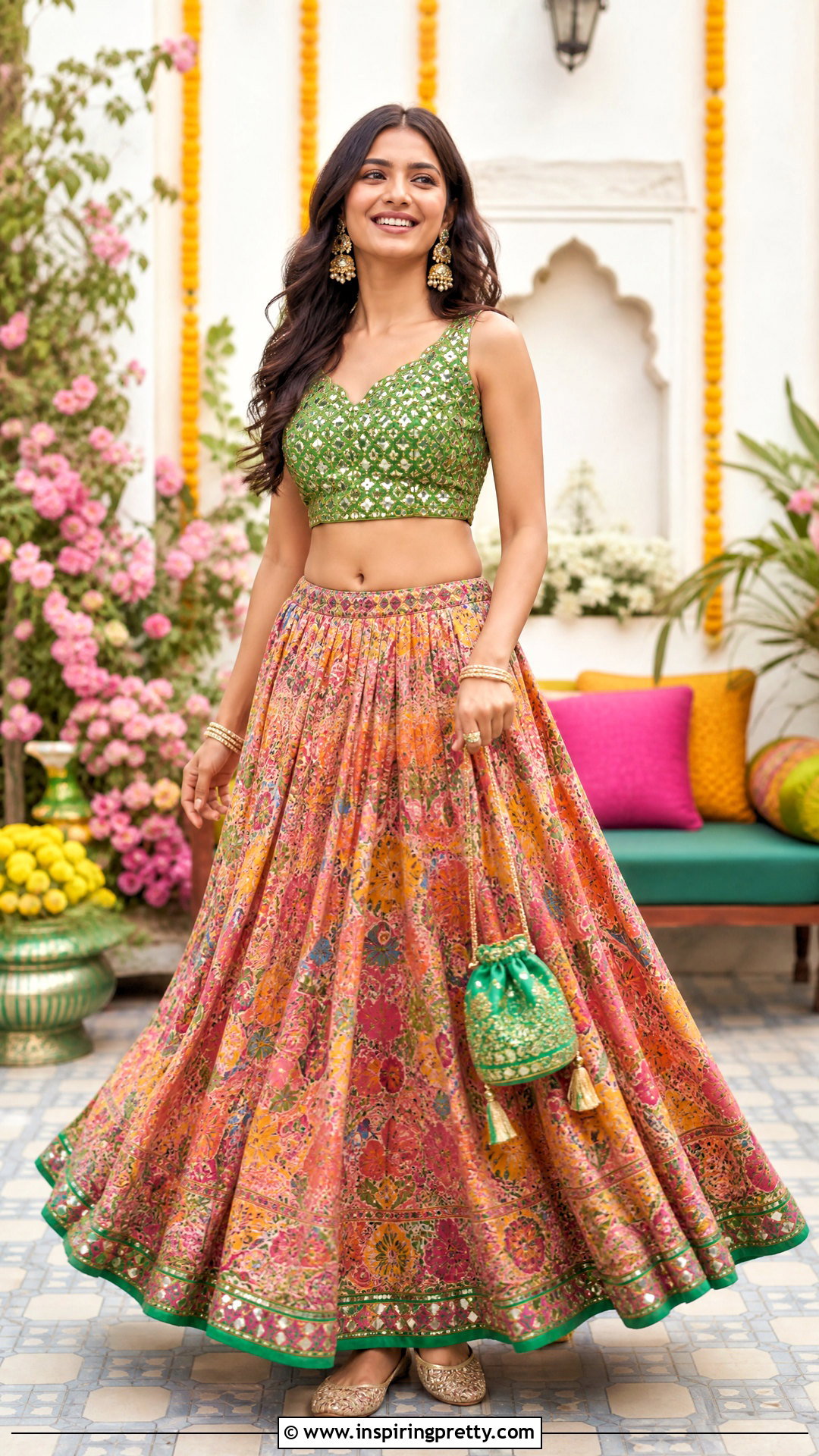
At a mehendi you'll sit with wet henna on your hands for an hour or more, and that shapes the whole outfit. Choose a fitted crop top featuring mirror work or thread embroidery that never needs adjusting, and a skirt that clears the floor so you aren't lifting it. Keep bangles minimal, since they smudge fresh henna. A sling potli keeps your phone reachable without using your hands. Skip the long dupatta, or pin a short one firmly. Henna stains pale fabric orange, which is another reason bright colors suit this event.
38. Sangeet Ethnic Skirt And Sequin Top Outfit
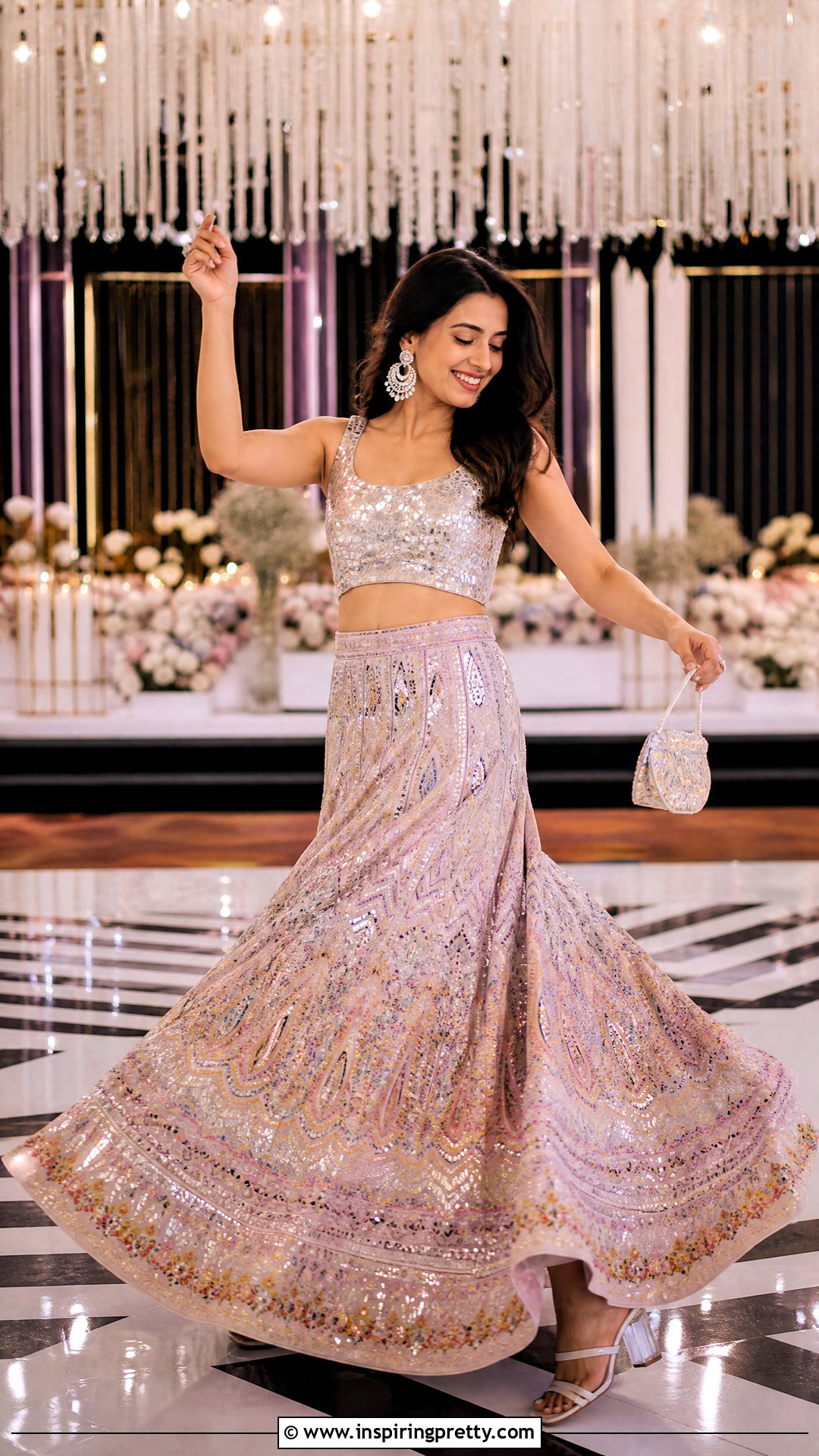
For a sangeet I dress people to dance, not to stand still for photos. A light flared skirt that turns easily and a fitted sequin or beaded top that's well secured. Before the day, do a few full arm raises in the top. Sequins and beads at the underarm scratch with every move, and a top that rides up will show it on the dance floor. Cushioned block heels and a wristlet that stays close to the body. Keep the dupatta short, pre-draped or gone.
39. Engagement Ethnic Skirt And Cape Top Outfit
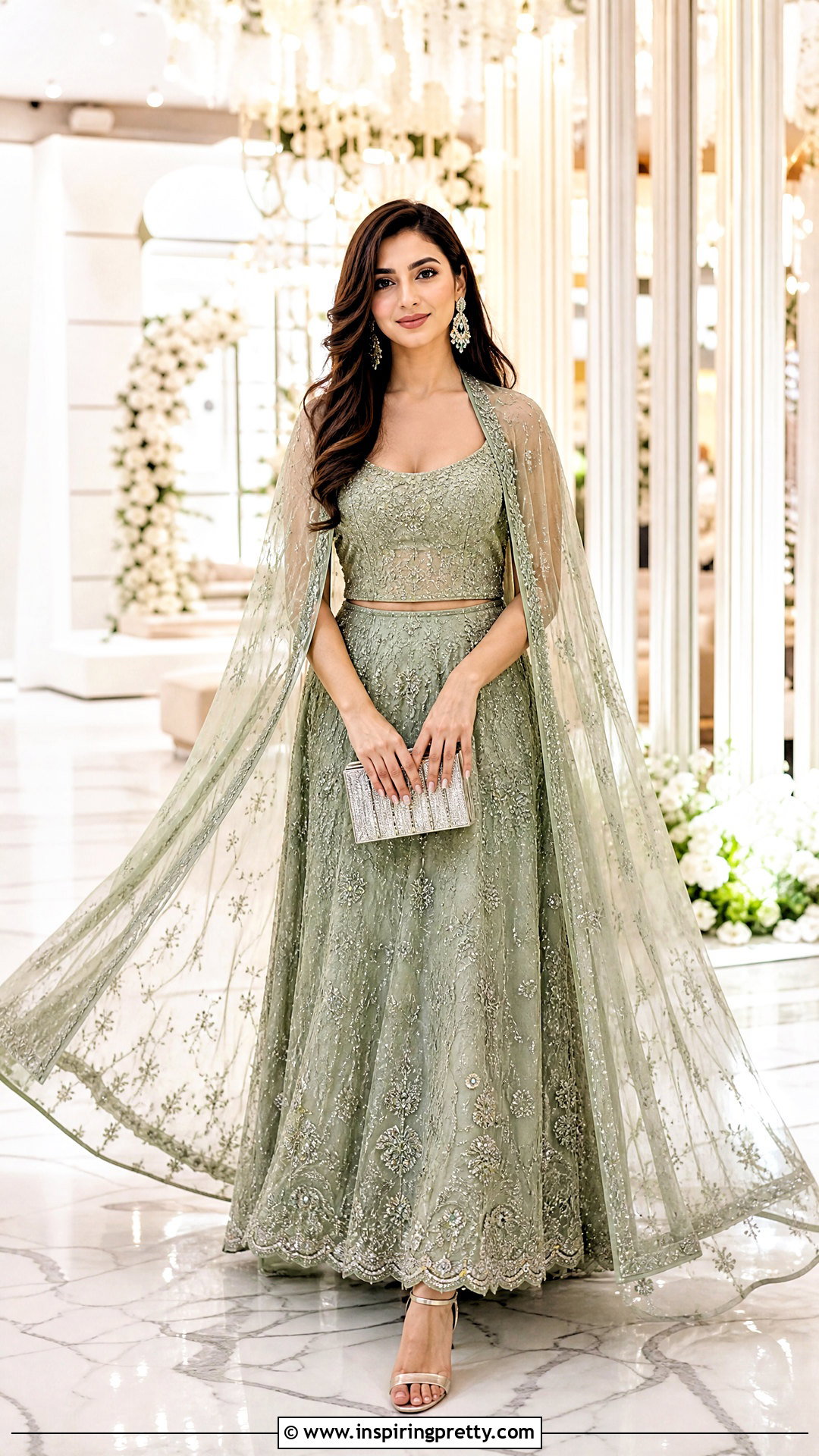
A sheer cape attached to the blouse replaces the dupatta, which helps at an engagement where you're greeting people and posing for family photos. I keep the skirt's volume controlled so the cape still shows in full-length pictures. Embroidery that runs across the blouse, the waistband and the cape edge makes the three pieces look like one outfit. Pick the color by venue and time of day, from blush and sage for an afternoon to a rich jewel tone at night. Refined heels, crystal earrings and a structured clutch.
40. Festive Ethnic Skirt And Brocade Top Outfit
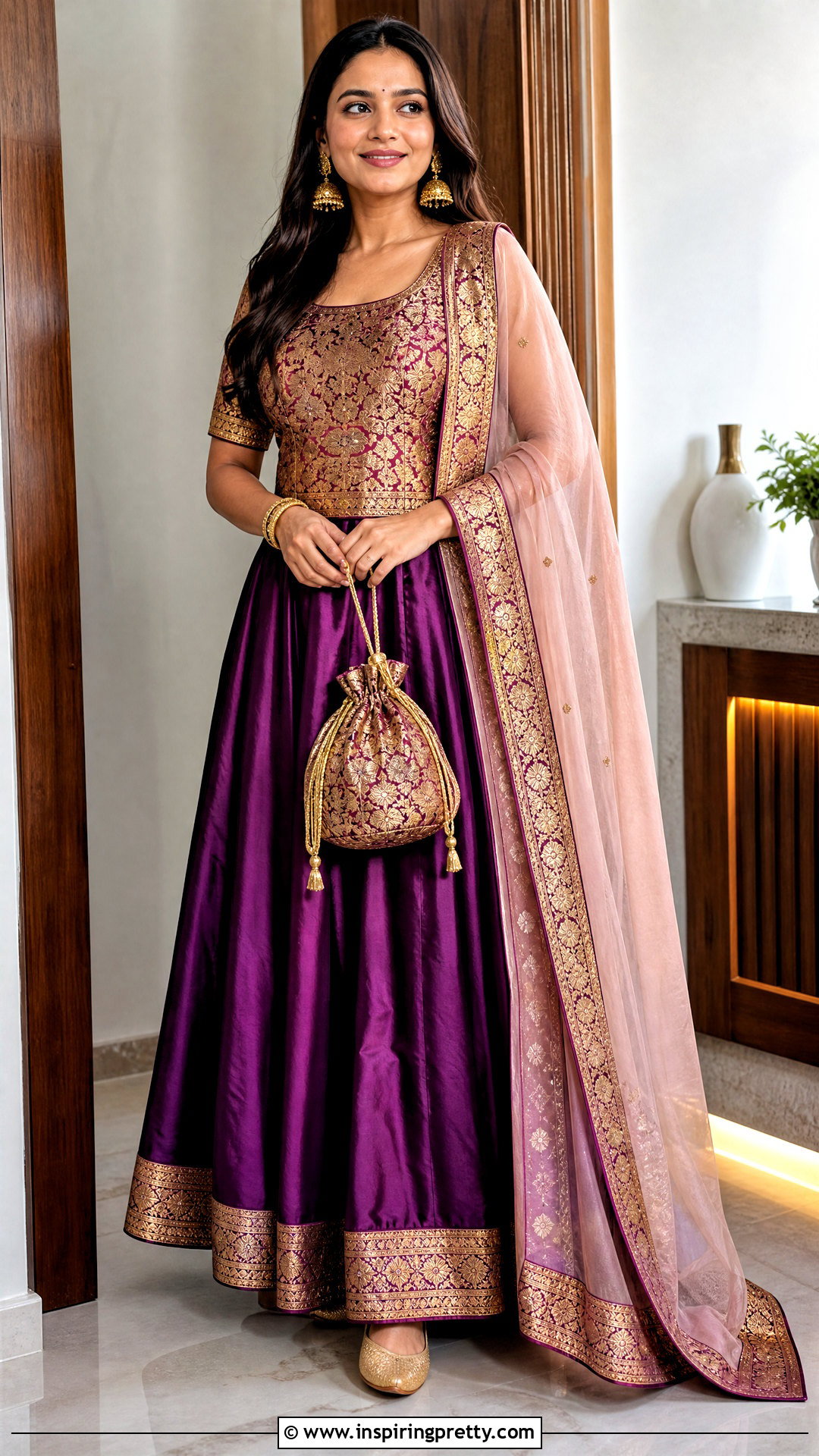
A brocade top is the quickest way I know to make a plain skirt festive again. Pick a solid silk or georgette skirt and a woven blouse in a complementary color. Brocade is stiff and doesn't stretch, so fit matters: it should close at the back without straining across the bust. A square, boat or V neck keeps the heavy fabric clean. Jhumkas, slim bangles and gold juttis. An organza dupatta with a brocade border can connect the separates, as long as it doesn't compete with the blouse.
41. Family Function Ethnic Skirt And Kurti Top Outfit
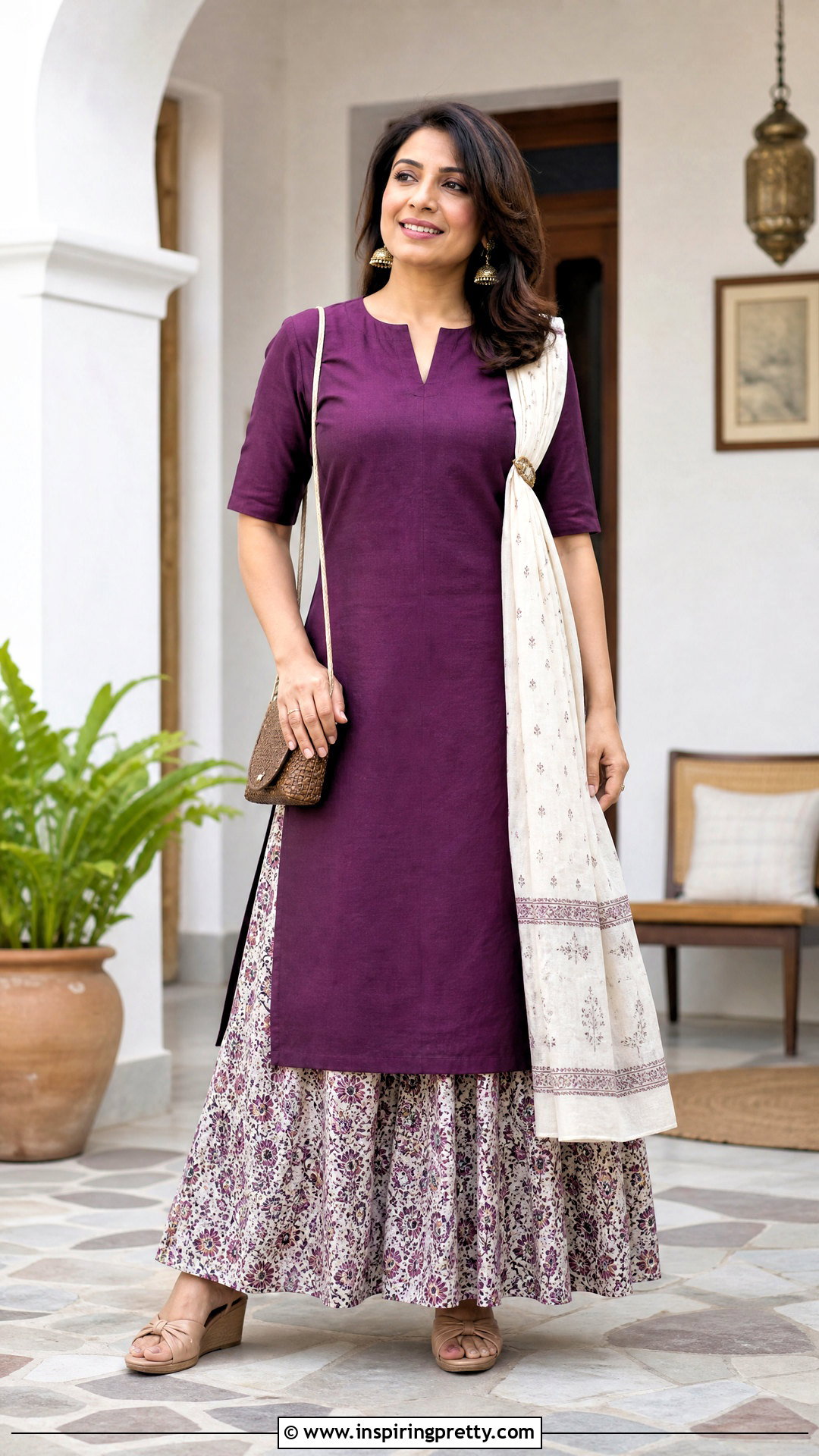
A long family function usually means helping in the kitchen, sitting on the floor and chasing children, and that's the test this outfit has to pass. A breathable printed skirt with a solid short kurti ending near the waistband or upper hip, elbow sleeves and a modest neck. I avoid hems that drag, because they collect dust and catch on stairs, and embroidery so heavy you'll worry about it. Cushioned wedges, medium earrings and a shoulder bag. Pin a dupatta to one shoulder if the occasion is traditional.
42. Daytime Ethnic Skirt And Pastel Top Outfit
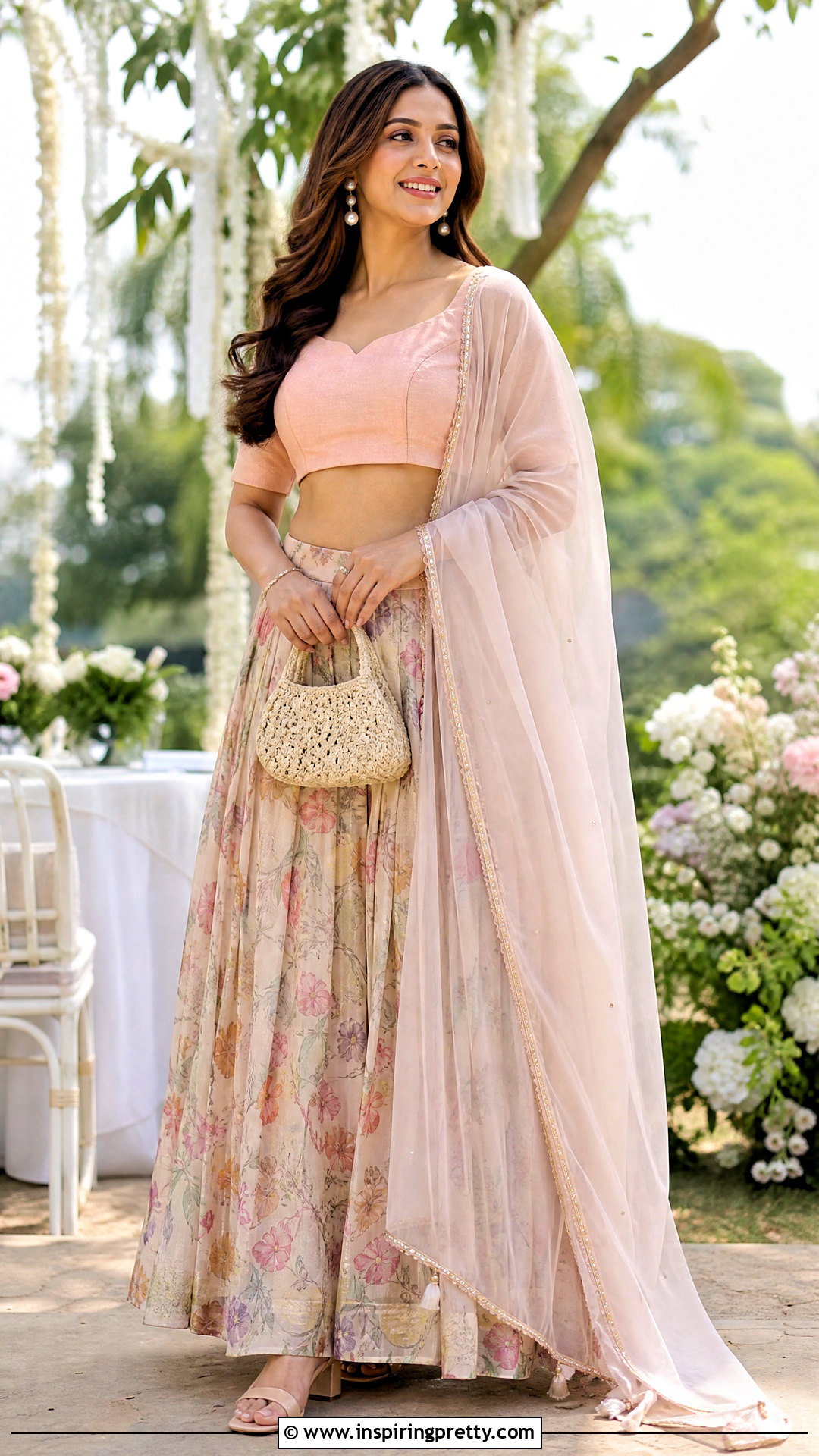
Daylight is less forgiving than evening light. Heavy shimmer that looks rich at night looks harsh at a noon lunch. So I keep this one soft: a printed cotton, chanderi or organza skirt with a pastel top, and embroidery only at the neckline and sleeve edge. Chanderi is light and slightly sheer, so check the lining before you commit. Pearl studs or delicate jhumkas, nude sandals and a small woven bag. A sheer dupatta gives coverage without darkening the palette.
43. Evening Ethnic Skirt And Velvet Top Outfit
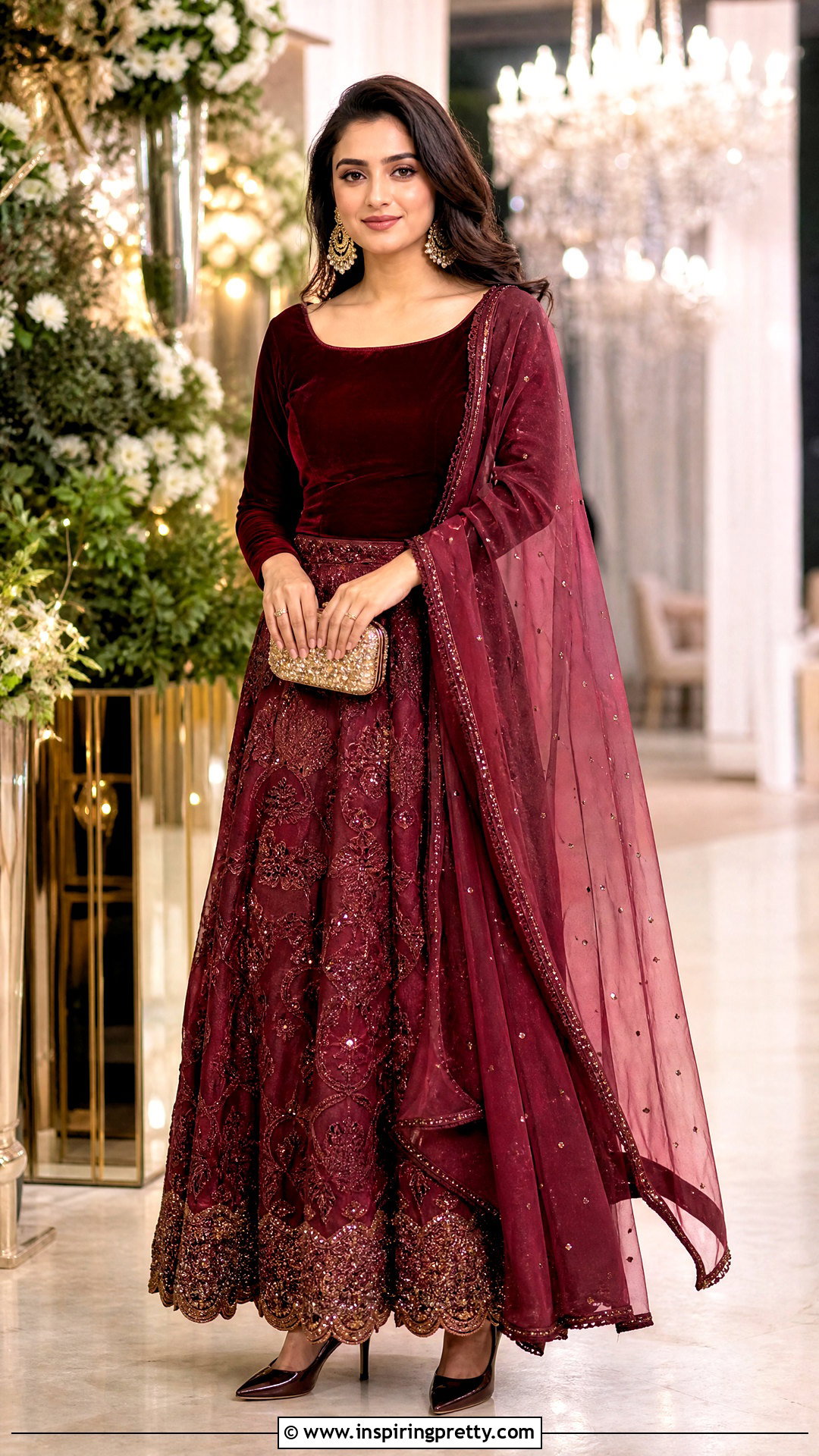
Velvet has real depth under evening light, which is why I save it for night events. A navy, wine or black skirt with a fitted velvet top; short sleeves for a warm hall, full sleeves when it's cold. Velvet is warm, so in a packed indoor reception the short sleeve may be the wiser choice even in winter. Metallic embroidery at the neckline ties the top to the skirt border. A sheer dupatta in the skirt color keeps the look from becoming too dense. Closed-toe heels, chandelier earrings and a small embellished clutch.
44. Summer Cotton Ethnic Skirt And Top Outfit
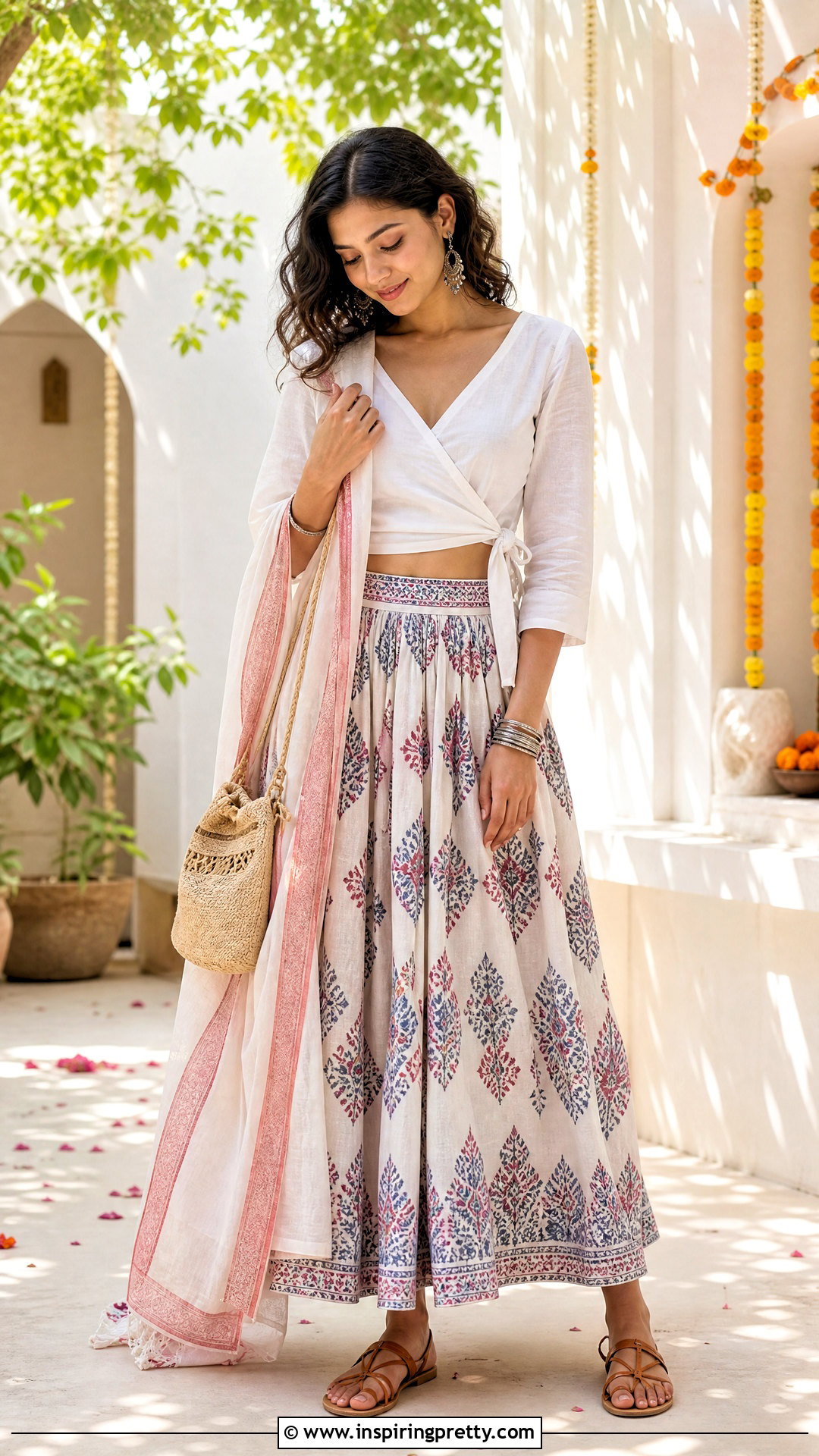
In real heat I care more about the lining than the skirt. Plenty of cotton skirts are lined in polyester, which traps sweat, so look for a cotton lining. Pair a block-print or handloom skirt with a fitted cotton blouse, a short kurti or a wrap top. Flat juttis or leather sandals for hours of wear. Oxidized earrings and a woven sling bag. Drape a cotton voile dupatta loosely, or go without. Skip sequins and extra layers; they hold heat and scratch damp skin.
45. Winter Velvet Ethnic Skirt And Top Outfit
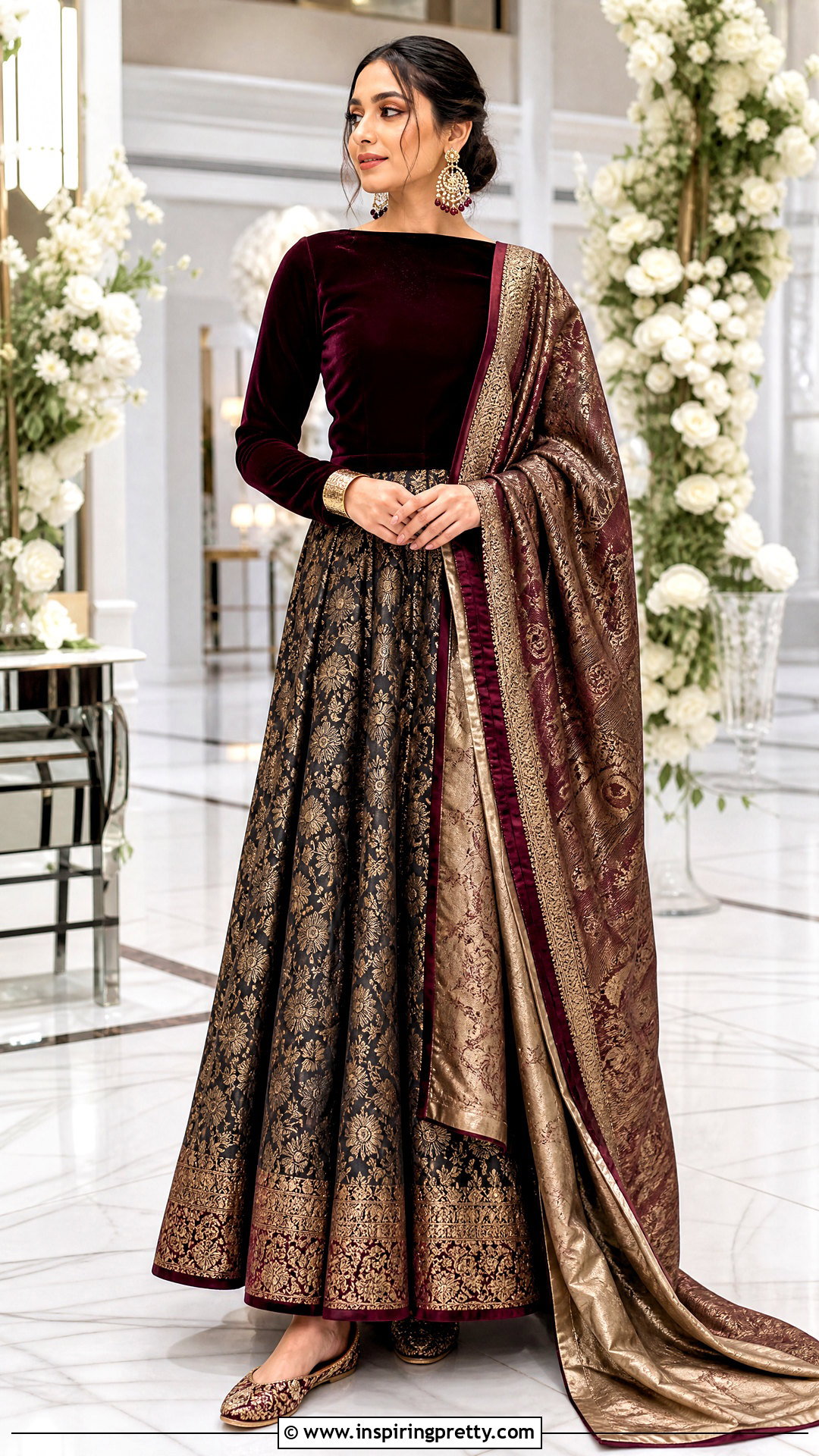
Winter is when I can finally put someone in the heavy pieces. A full-sleeve velvet blouse in burgundy or emerald over a brocade or raw silk skirt, with a high, boat or modest V neck. For an outdoor reception, a proper wool or pashmina shawl does more than any number of layers underneath, and a cropped jacket works too. Statement earrings and a single cuff. Watch the total weight: brocade, velvet and a heavy lining together can drag at the waist by the end of the night, so the waistband needs to be firm.
46. Plus Size Ethnic Skirt And Peplum Top Outfit
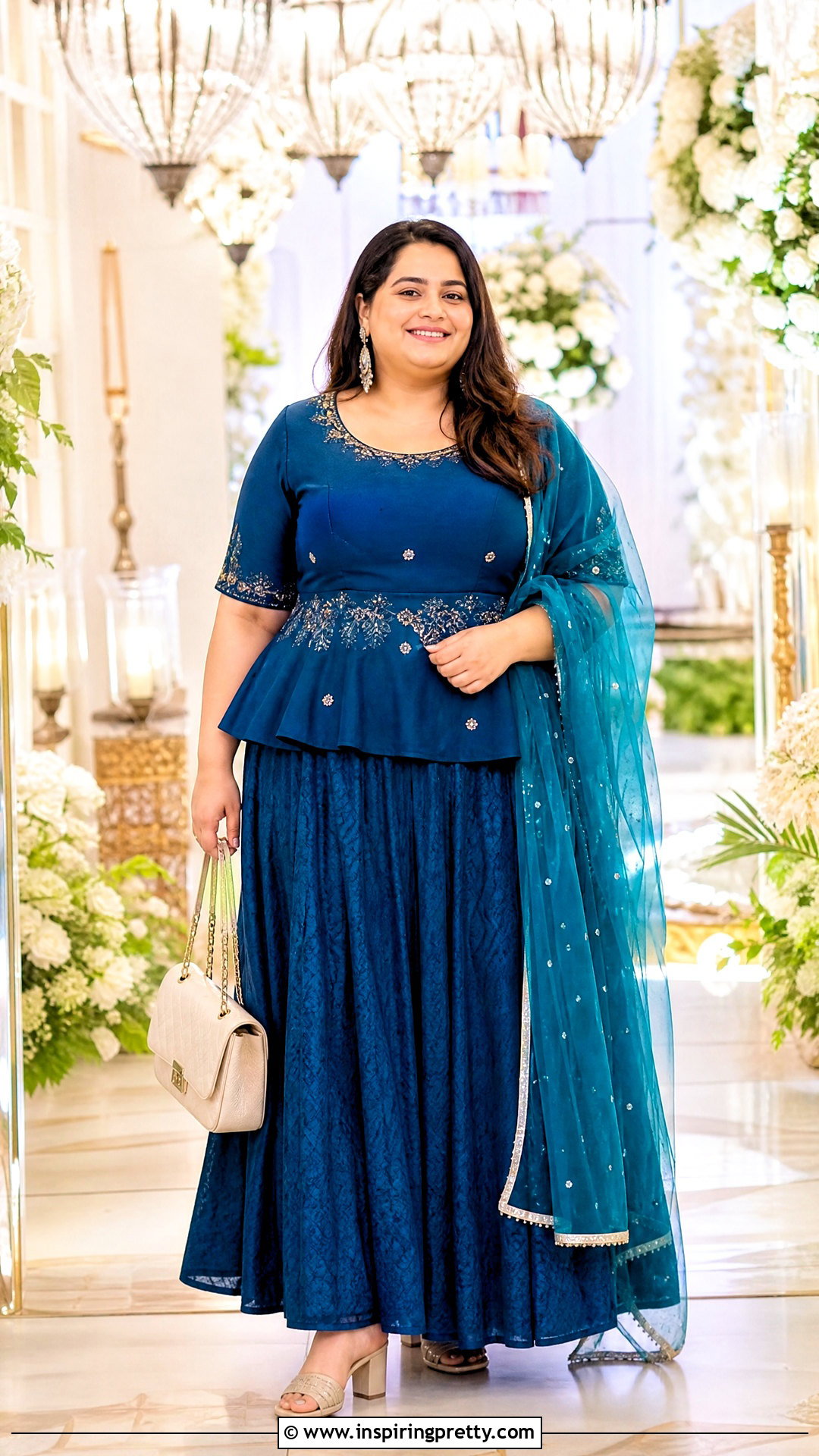
The peplum I look for follows the torso closely before it flares, and the flare is soft rather than stiff. A stiff, wide peplum builds a shelf at the hip. The hem should finish near the waistband. Pair a solid top with a vertically patterned skirt, or match the colors for one long line. Look for a skirt with hooks and a drawstring rather than elastic alone, so it holds without rolling. A dupatta draped vertically adds length. The aim isn't to hide your body; it's for both pieces to sit where they should.
47. Petite Ethnic Skirt And Fitted Top Outfit
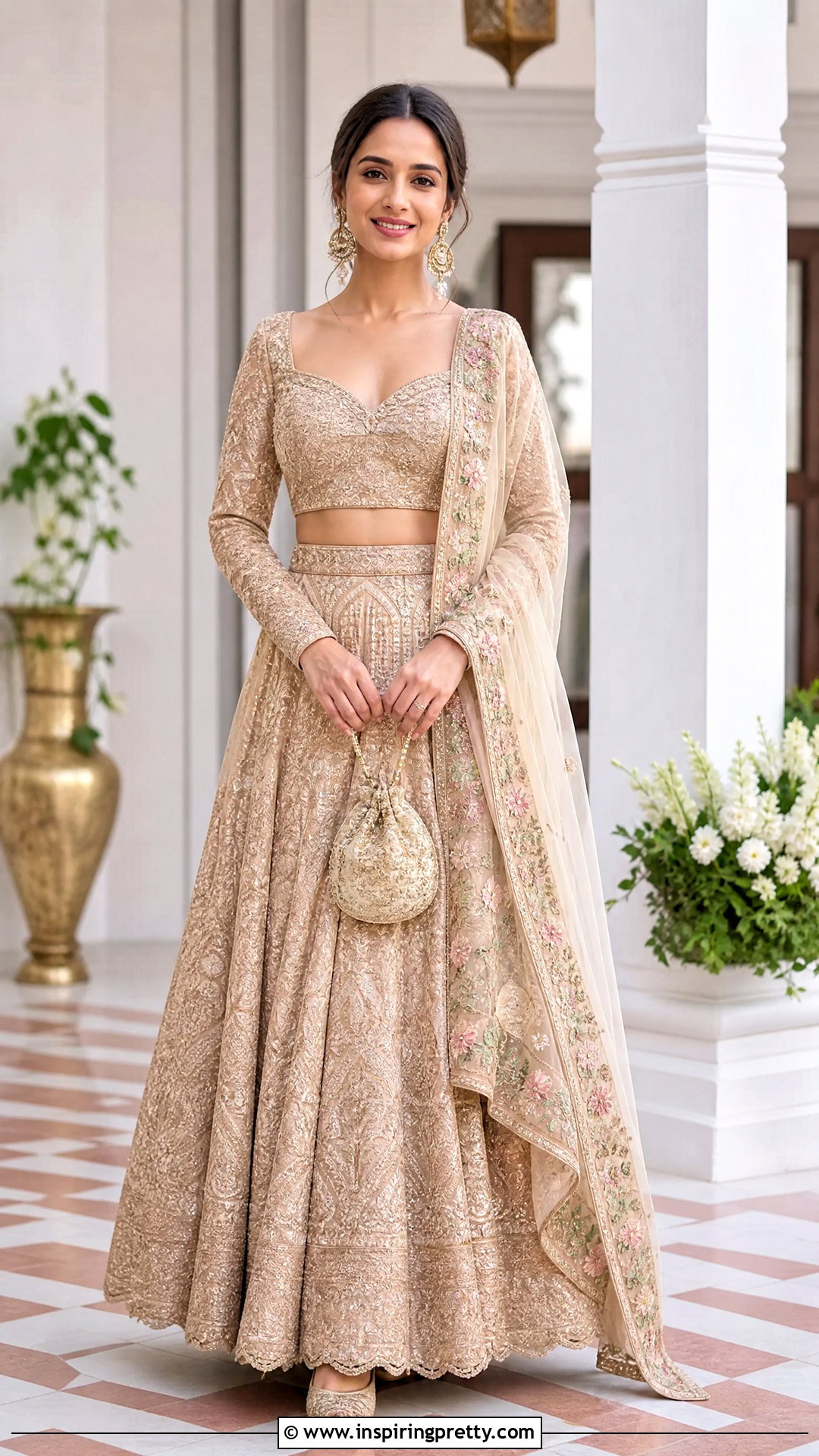
On petite women the skirt is usually the problem, not the top. Ready-made festive skirts are often cut long, so I have the hem taken up with the exact shoes on until it just clears the floor. Smaller motifs, controlled gathers and a high waist all help. A matching fitted top that ends at the waistband makes the line longer. Platform juttis or moderate heels that still show under the hem. Avoid long peplums and long capes, which shorten the visible skirt, and choose a narrow dupatta over a bulky wrap.
48. Modest Ethnic Skirt And Long Sleeve Top Outfit
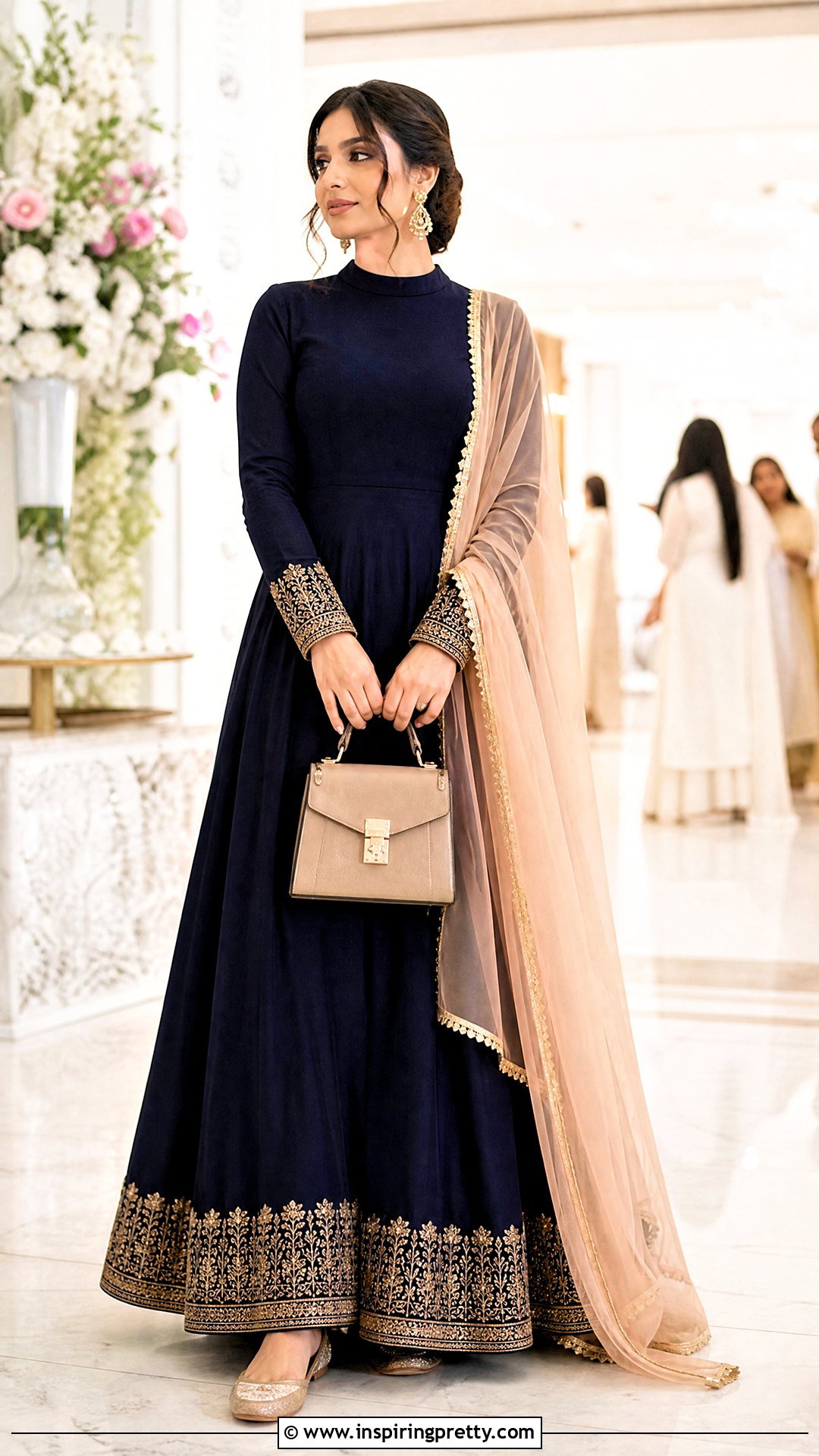
Full coverage doesn't have to mean loose. A floor-length skirt with a fitted long-sleeve top that meets or overlaps the waistband means nothing shows when you bend or reach. Some waist definition matters, because a loose top over a loose skirt looks shapeless. A high round or boat neck with embroidery at the cuffs and collar. The sleeves need a little ease and a breathable lining for a long event. Closed-toe flats, drop earrings, and a contrasting dupatta if you want some pattern.
49. Mature Women Ethnic Skirt And Blouse Outfit
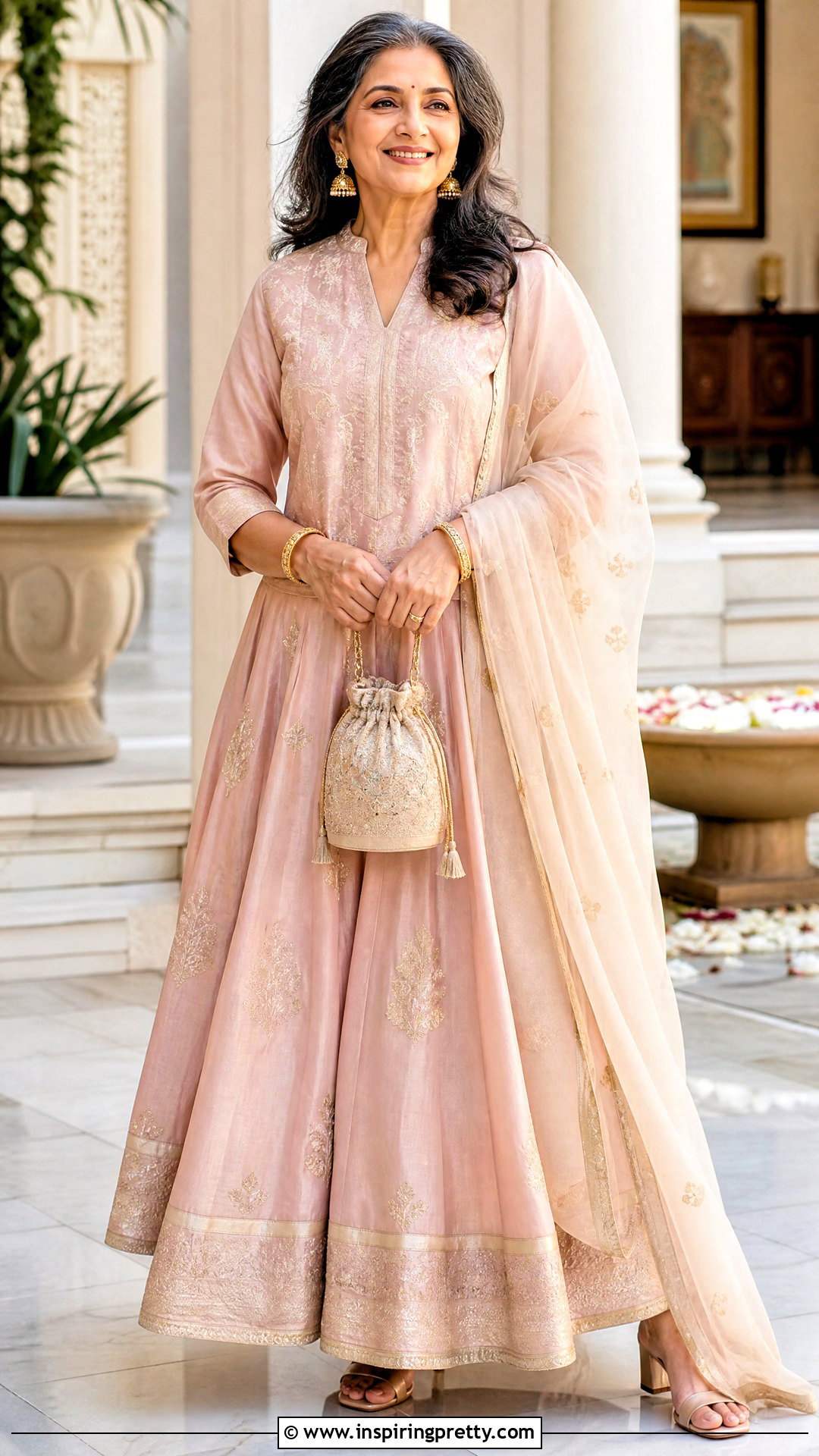
When comfort matters as much as polish, I go to a silk or cotton-silk skirt with moderate flare and a waist-length blouse with elbow or three-quarter sleeves. Boat, square and modest V necks frame traditional jewelry well. I care about closures more than embellishment: hooks that hold and a zip that doesn't gape matter far more than heavy embroidery. Low block heels, refined jhumkas and a structured potli. A light dupatta over one shoulder. Jewel tones and soft pastels both work if the fabrics coordinate.
50. Ethnic Skirt And Crop Top With Sneakers Outfit
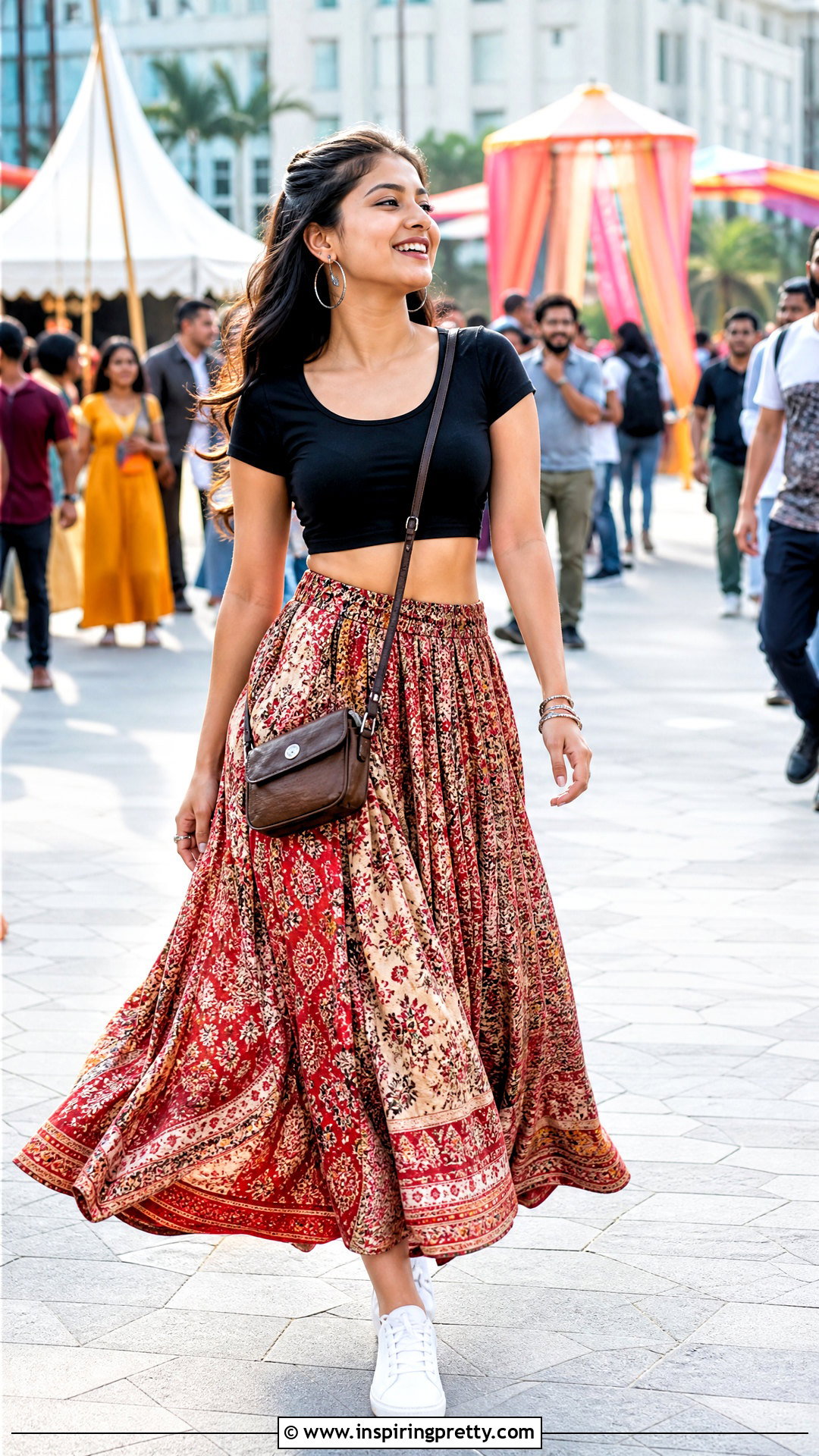
Sneakers turn a skirt and crop top into something you can wear all day at a college fest or a daytime festival. I choose or hem the skirt so it sits a little above the ground; at full length it catches under flat shoes and becomes a hazard on stairs. White sneakers give clean contrast, and embroidered ones keep the traditional feel. A fitted solid top or a matching co-ord blouse. Hoops, a small crossbody and slim bangles. A short light jacket can replace the dupatta and keeps your arms free.
Draping a Dupatta So It Stays Out of Your Way
A dupatta looks graceful in photos and becomes a nuisance by the second hour if it isn't secured. I pin it with small safety pins on the inside of the blouse, never through the embroidery itself, where the pin leaves a hole.
- One shoulder, pinned: pleat it, pin it at the shoulder and let it fall behind you. The easiest drape for eating and dancing.
- Over both arms: across the back and resting on the elbows. It leaves the neckline free for jewelry.
- Pleated across the front: tuck one end into the waistband. The most secure option, and the one with the most coverage.
- Carried over one forearm: fine for a few photos, then put it away.
I leave it out completely for sangeet dancing, a mehendi, or any outfit with a cape or neckline you want people to see.
Storing Embroidered Skirts Between Functions
Festive skirts last for years when they're stored well, and they deteriorate quietly when they aren't.
- Air the skirt for a few hours after wearing it. Trapped sweat weakens silk and tarnishes zari.
- Fold heavy skirts rather than hanging them by the waistband, which stretches under the weight. Wrap them in plain cotton or muslin, not plastic.
- Refold along different lines every few months so the creases don't wear through.
- Dry clean silk, brocade, velvet and zari work. Hand-wash cotton block prints cold, and wash new bandhani on its own.
- Keep perfume and sharp-edged jewelry away from metallic thread and mirror work.
The Skirt I'd Buy First for Wedding Season
If you're starting from scratch, buy one skirt that can go from lunch to a late reception: a solid silk or a jewel-toned skirt with a moderate border. Then let the tops do the changing. Begin each outfit with the setting, the weather and how long you'll be on your feet, and pair one detailed piece with one simple one. Check the fit, the shoes and the hem length before you think about color. The same embroidered skirt can go out with a cotton blouse at noon, with brocade at night, and with sneakers to a festival.
Related posts:


Leave a Reply