
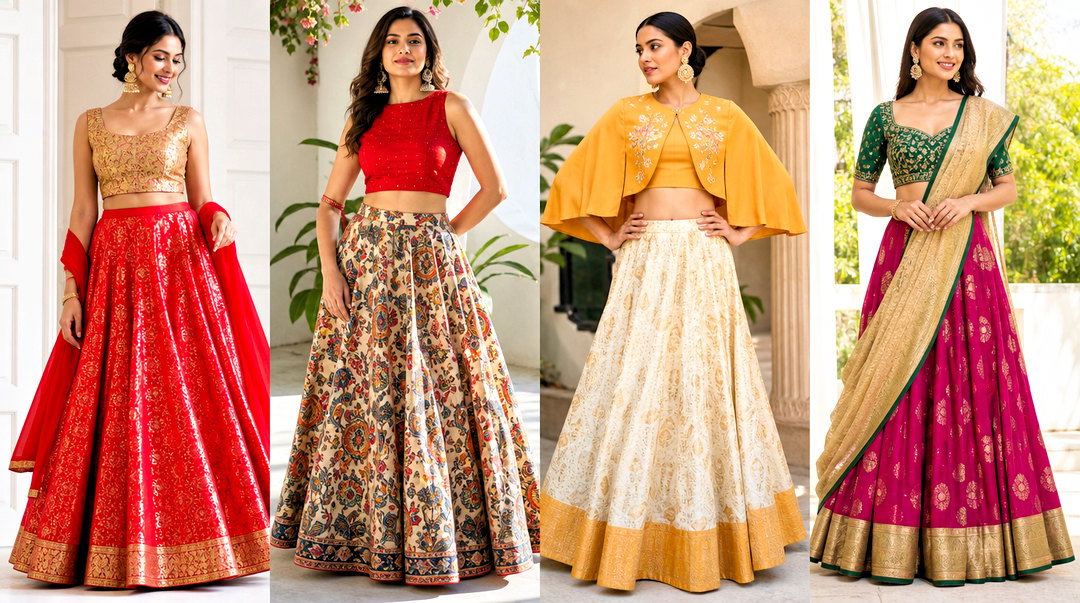
Finding the right skirt-and-top combination makes Indian dressing feel both versatile and personal. This guide to **50 skirt and top indian outfits** covers traditional lehenga sets, relaxed cotton combinations, contemporary fusion looks, and polished options for weddings or festivals. Each outfit is styled from head to toe, including practical suggestions for footwear, jewelry, dupattas, and bags. You will also find lightweight choices for daytime celebrations, richly embellished ensembles for formal events, and adaptable separates that can be worn again. Choose colors and proportions that make you comfortable rather than following rigid fashion rules. Whether your taste is minimal, colorful, classic, or modern, the complete looks below offer wearable inspiration. Explore these **50 skirt and top indian outfits** to create a combination that suits your occasion and personality.
1. Silk Skirt And Crop Top Indian Outfit
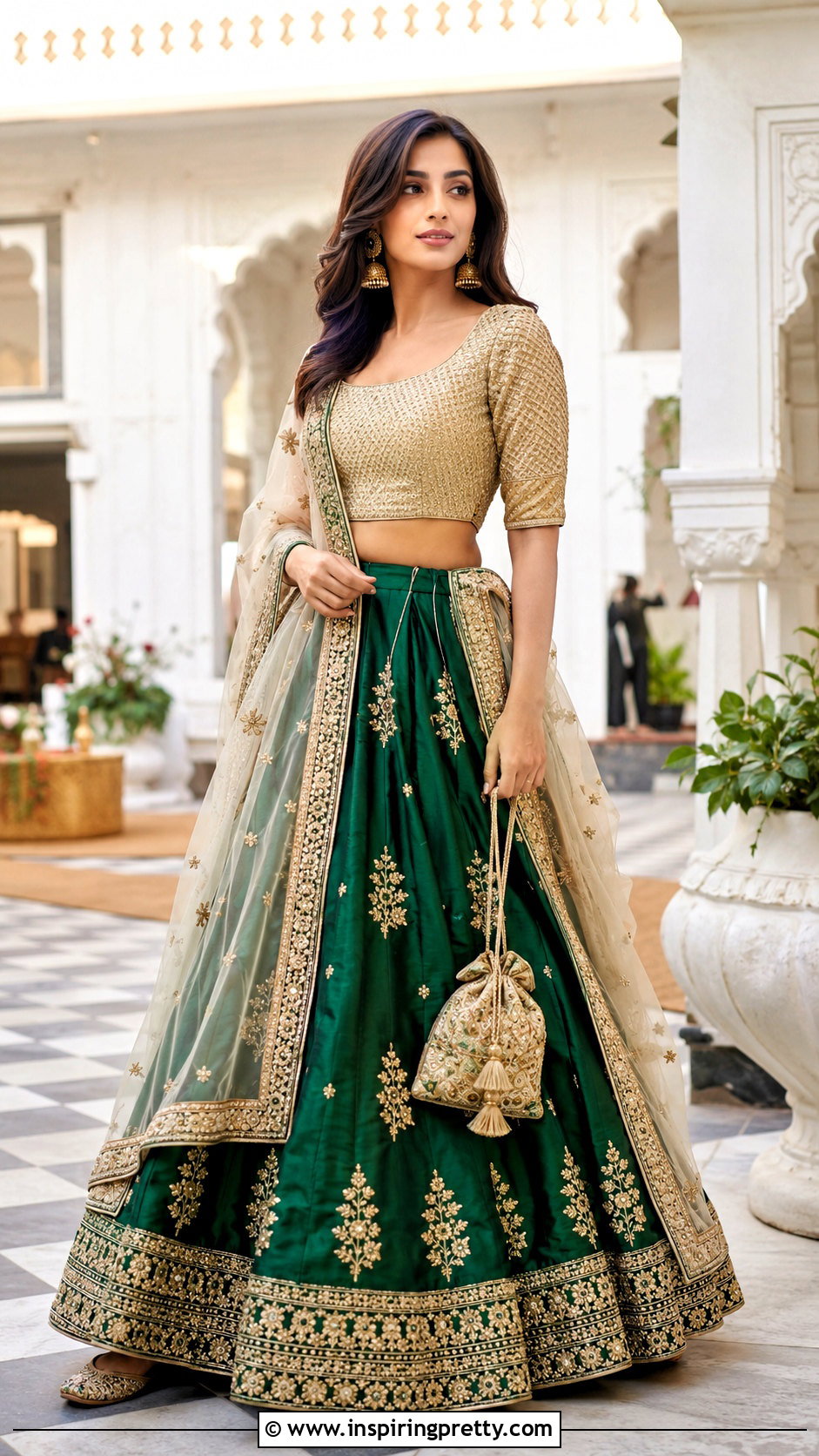
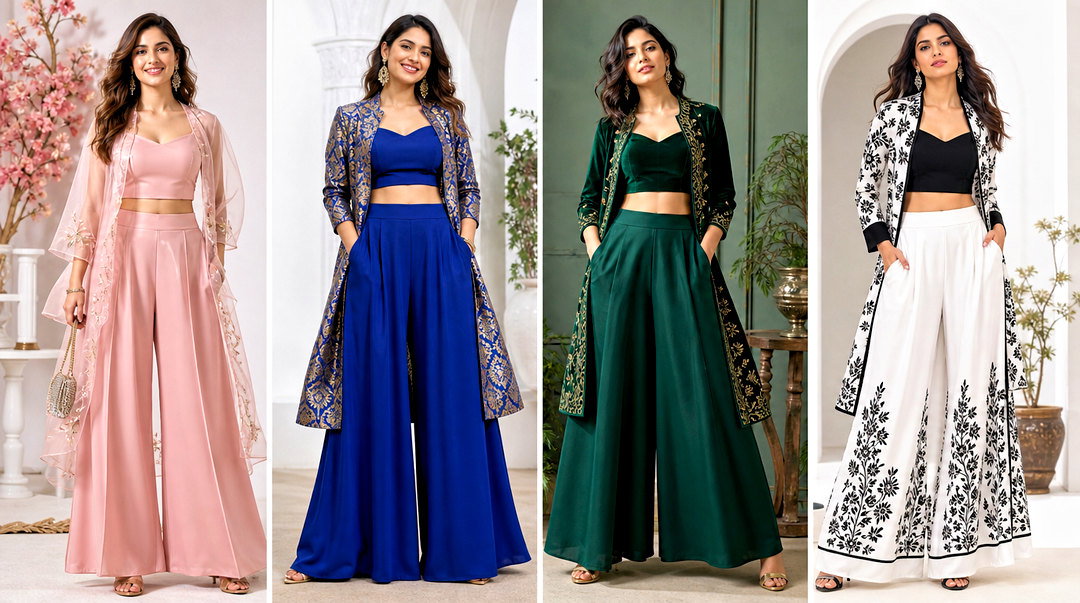
A silk skirt and crop top create a graceful outfit that works beautifully for weddings, festivals, and family celebrations. Choose a jewel-toned skirt in emerald, maroon, or sapphire, then add a fitted gold or champagne blouse. A broad waistband gives the flowing skirt definition, while elbow-length sleeves provide comfortable coverage. Add a lightweight organza dupatta if the occasion calls for a more traditional finish. Gold jhumkas, stacked bangles, and an embroidered potli bag bring the pieces together without making the outfit overly heavy. Finish with cushioned block heels or embellished juttis. If the skirt has detailed zari work, keep the top comparatively simple so the craftsmanship remains visible and the entire look feels balanced.
2. Floral Skirt And Plain Top Indian Outfit
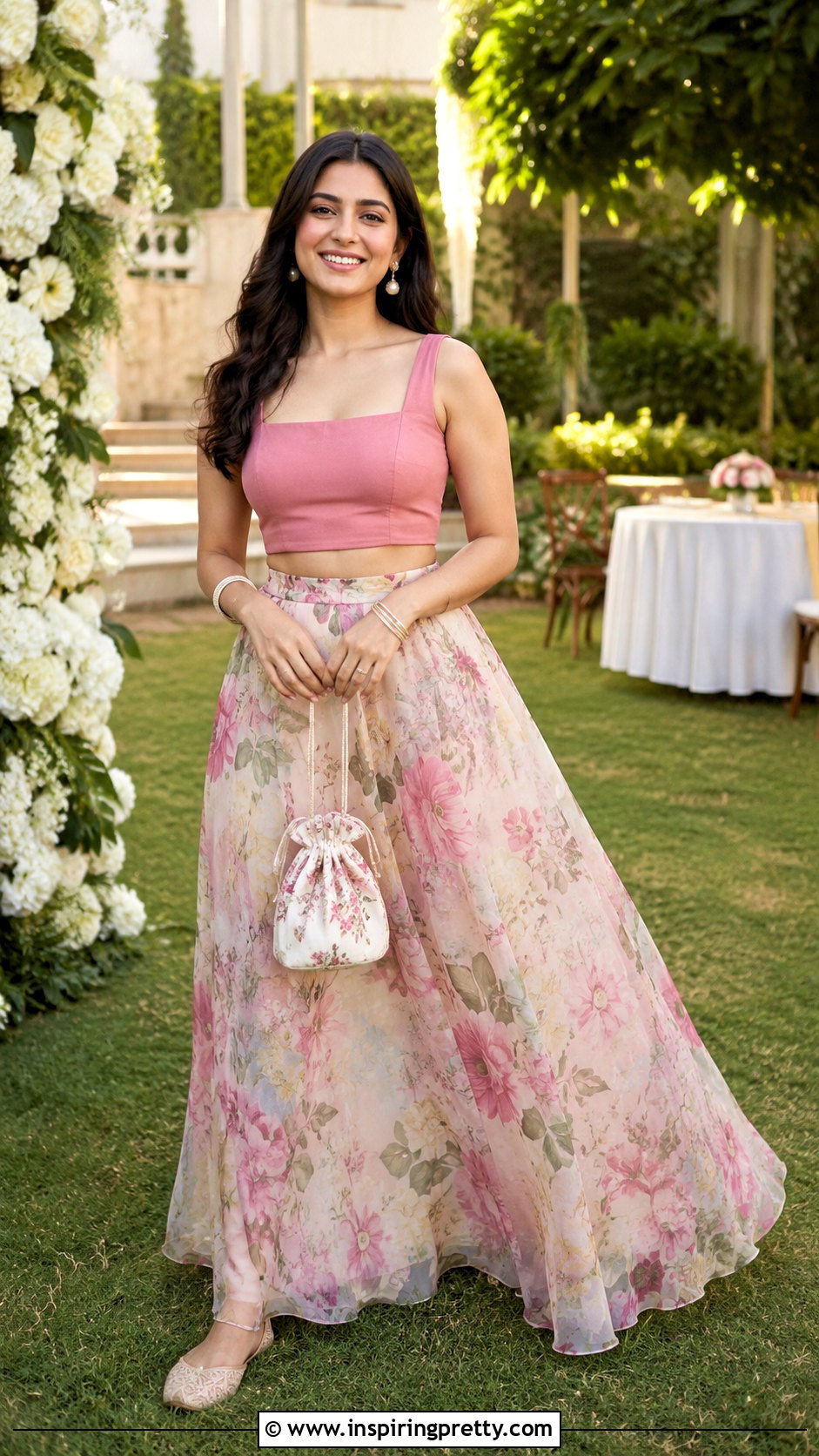
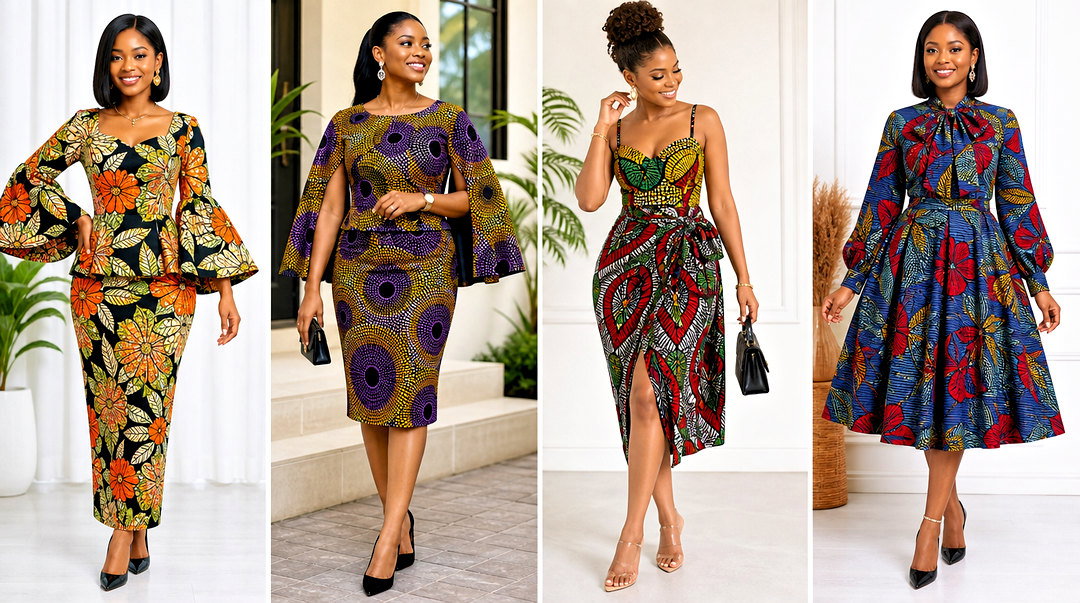
Soft movement and cheerful color make a floral skirt and plain top especially suitable for daytime festivities. Start with a flowing georgette or cotton-silk skirt covered in small botanical prints. Pair it with a solid crop top that picks up one understated shade from the pattern. A square-neck or gently scooped blouse keeps the combination fresh and easy to accessorize. Wear pearl drops, slim bangles, and a small crossbody potli for an unfussy finish. Nude sandals or neutral juttis prevent additional colors from competing with the print. For more coverage, select a longer top that meets the high waistband. A sheer matching dupatta can dress up the outfit, but the combination also looks complete without one at casual gatherings.
3. Mirror Work Skirt And Top Indian Outfit
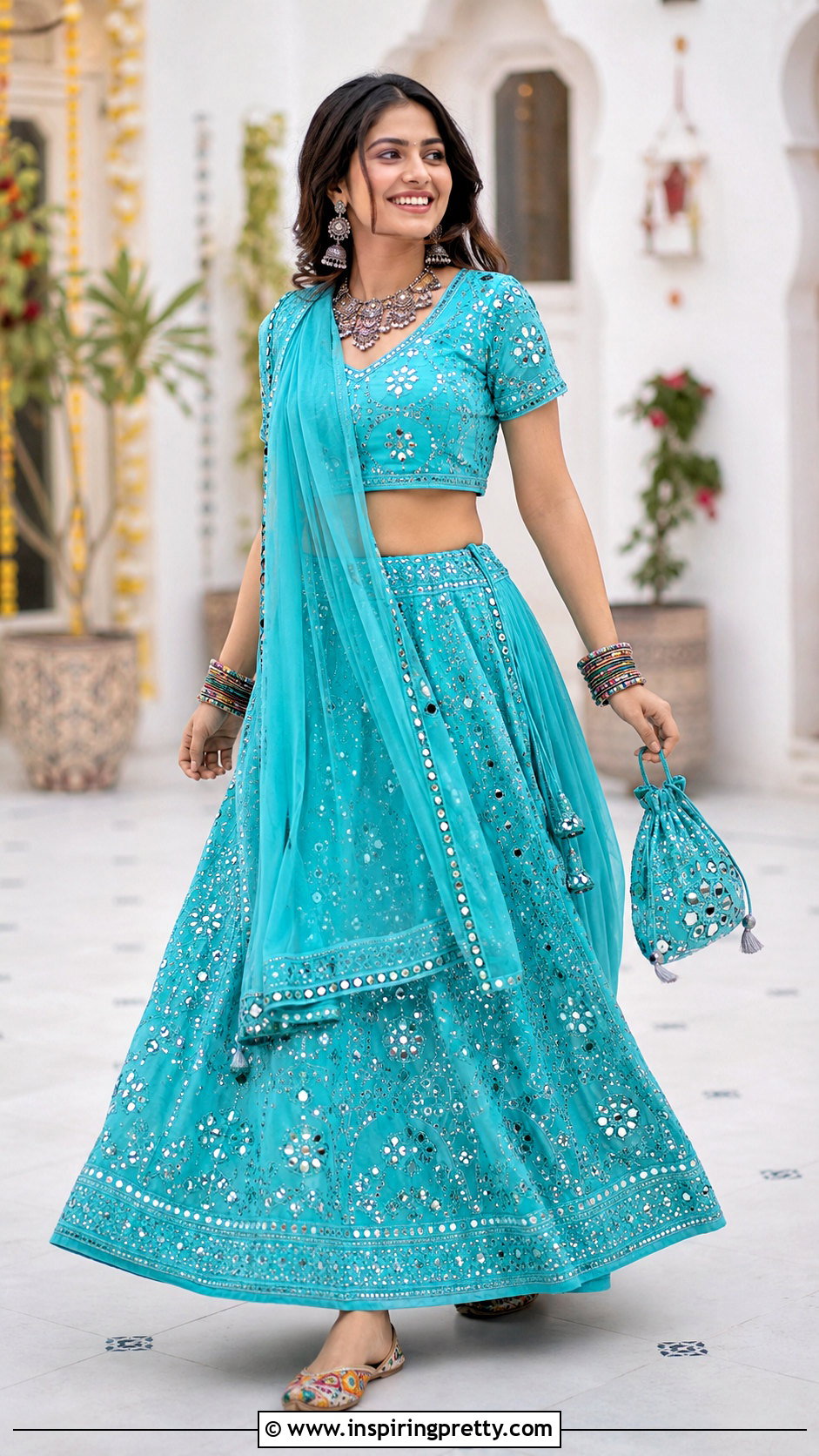
When the celebration includes music and dancing, a mirror work skirt and matching top delivers festive sparkle with energetic movement. Pick a lightweight lehenga skirt with well-spaced mirror embroidery rather than dense embellishment that feels difficult to carry. Balance it with a sleeveless, short-sleeve, or elbow-sleeve blouse featuring similar borders. Bright shades such as fuchsia, turquoise, orange, and lime suit this playful combination. Oxidized silver earrings, bangles, and a small fabric bag complement the reflective details. Choose flat juttis or low block heels so you can move comfortably. A plain chiffon dupatta softens the shine and provides coverage without hiding the embroidery. Keep makeup fresh and hair neatly braided or pulled into a low ponytail.
4. Black Skirt And Gold Top Indian Outfit
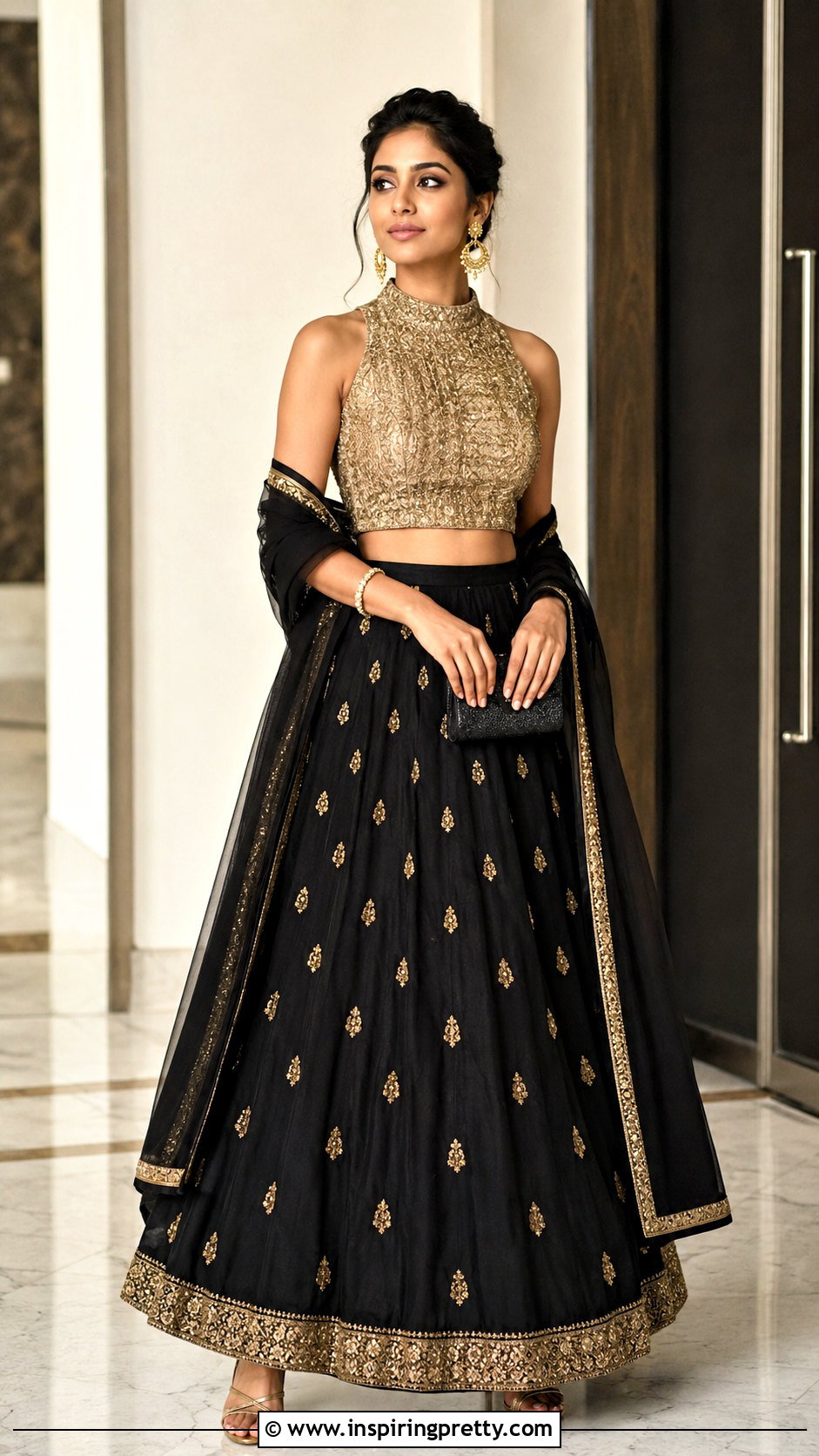
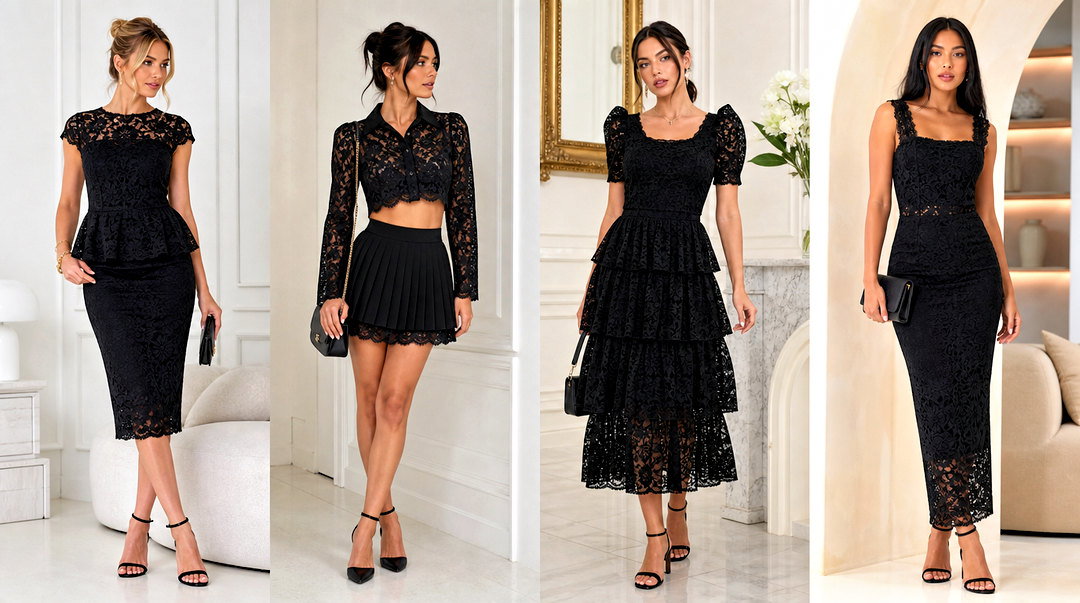
A sweeping black skirt paired with a gold top creates a striking evening outfit with a refined Indian finish. Look for a skirt featuring subtle gold motifs, an embroidered hem, or delicate sequin accents. Add a structured gold blouse with a high neckline, boat neck, or modest V-neck to create clean proportions. A black dupatta with a narrow metallic border keeps the outfit coordinated. Complete the look with gold drop earrings, one statement cuff, and a compact black clutch. Black or antique-gold heels visually extend the silhouette without distracting from the clothing. Because the color combination already has strong contrast, avoid layering too many ornate accessories. A sleek bun or soft waves will maintain the outfit’s polished, uncluttered appearance.
5. White Skirt And Colorful Top Indian Outfit
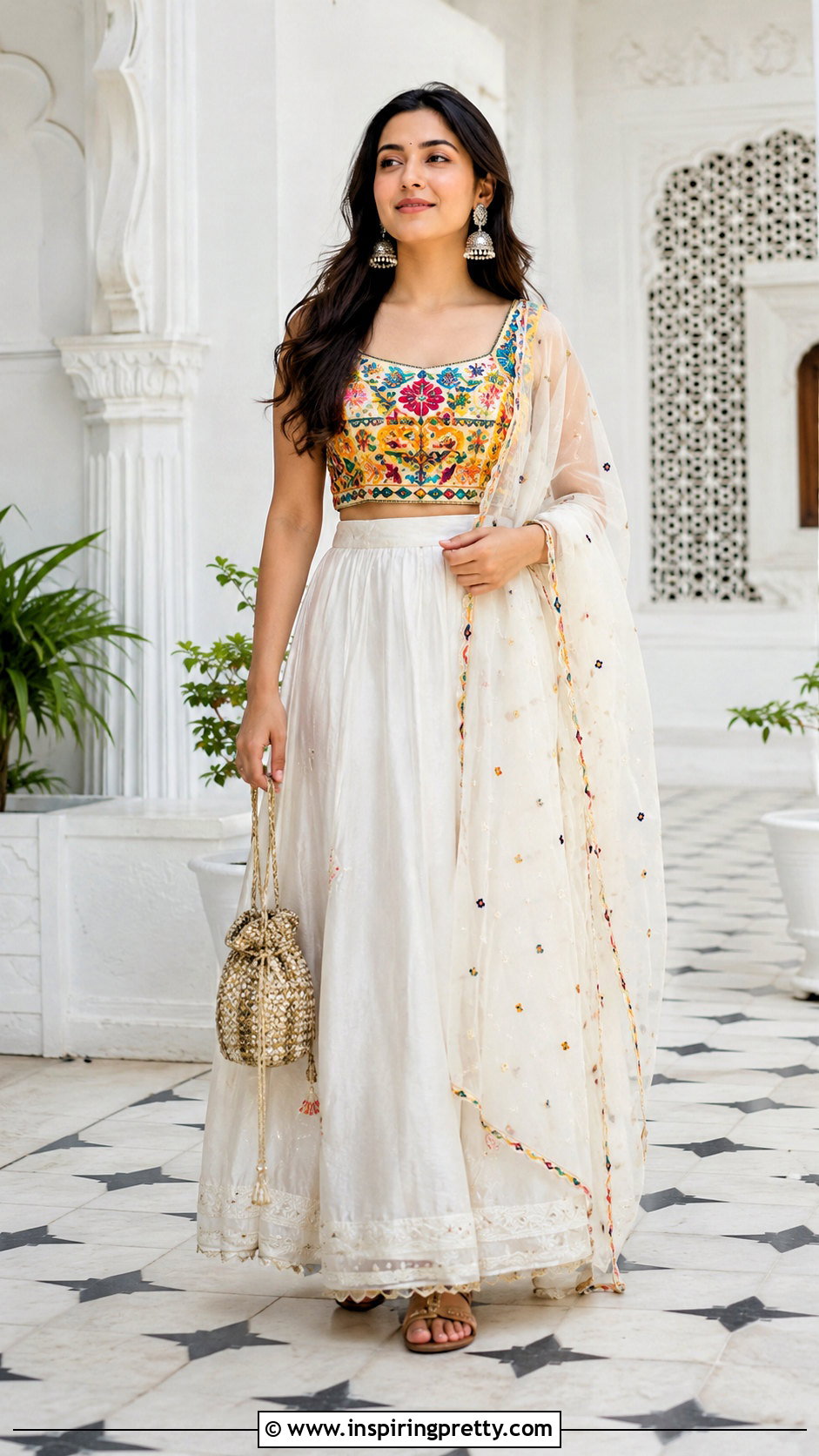
Crisp white fabric provides the perfect base for a lively embroidered or printed top. Choose a cotton, chanderi, or lightly textured skirt with enough lining to remain comfortable and opaque. Pair it with a colorful blouse featuring threadwork, mirror accents, or regional prints. Coral, cobalt blue, green, and magenta all stand out beautifully against white. Add silver jhumkas, colorful bangles, and a small woven bag for a relaxed festive mood. Tan kolhapuri sandals or embroidered flats keep the outfit practical for daytime wear. If you want a dupatta, select a sheer version in one of the top’s dominant colors. This combination works particularly well during warm-weather gatherings because it looks bright, airy, and celebratory without relying on heavy fabric.
6. Banarasi Skirt And Solid Top Indian Outfit
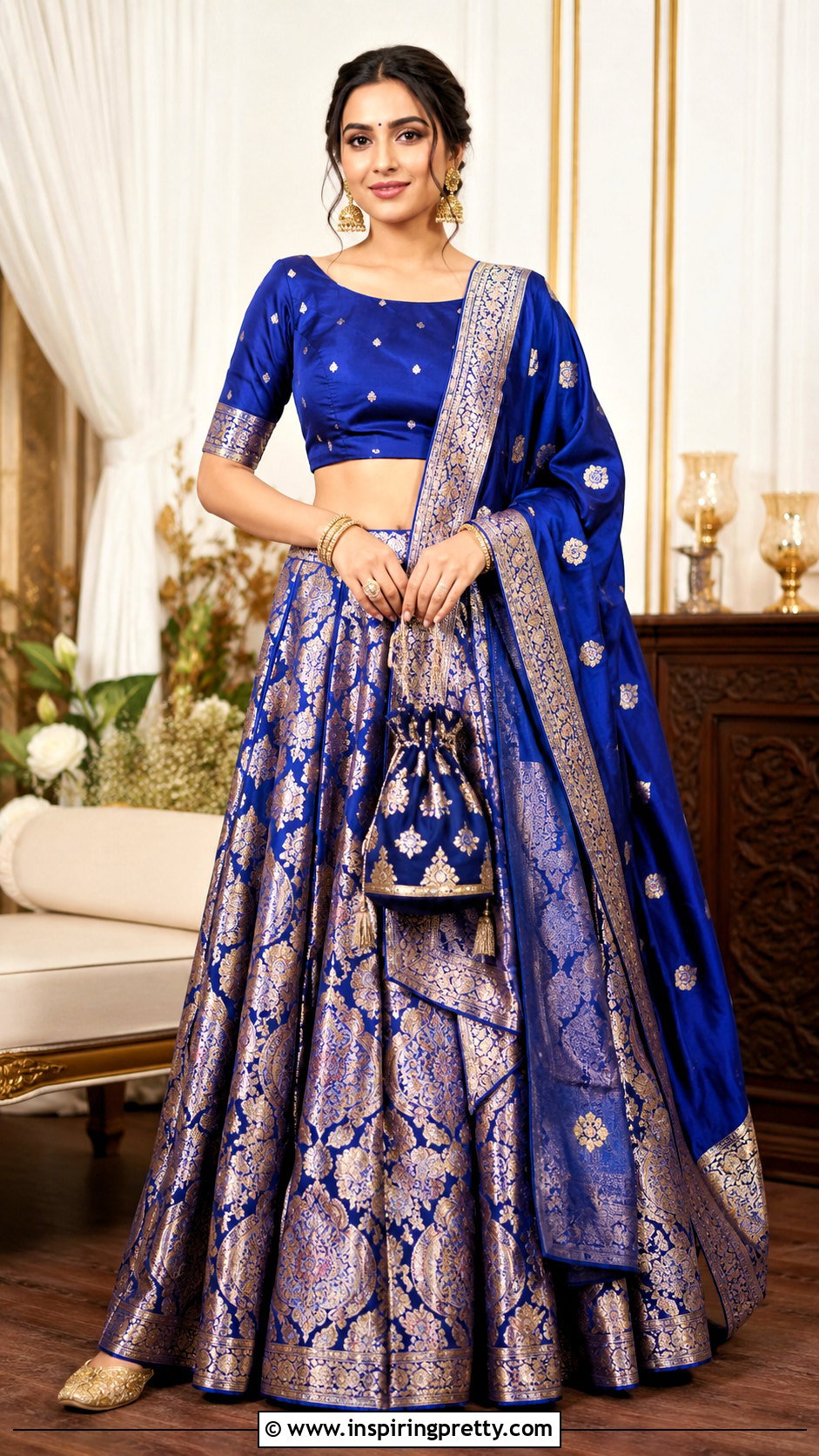
A Banarasi skirt brings rich woven texture to an outfit, so it needs a top that supports rather than competes with its pattern. Select a high-waisted skirt in deep red, royal blue, plum, or green, then pair it with a solid silk blouse. A fitted top with elbow-length sleeves and a wide neckline gives the traditional textile a clean frame. Add a plain dupatta with a Banarasi border to echo the skirt without introducing another busy surface. Temple-inspired earrings, gold bangles, and a structured potli complete the ensemble. Choose comfortable gold juttis beneath the floor-length hem. This is also an effective way to repurpose a Banarasi saree, provided an experienced tailor preserves the woven motifs and creates balanced skirt panels.
7. Bandhani Skirt And Crop Top Indian Outfit
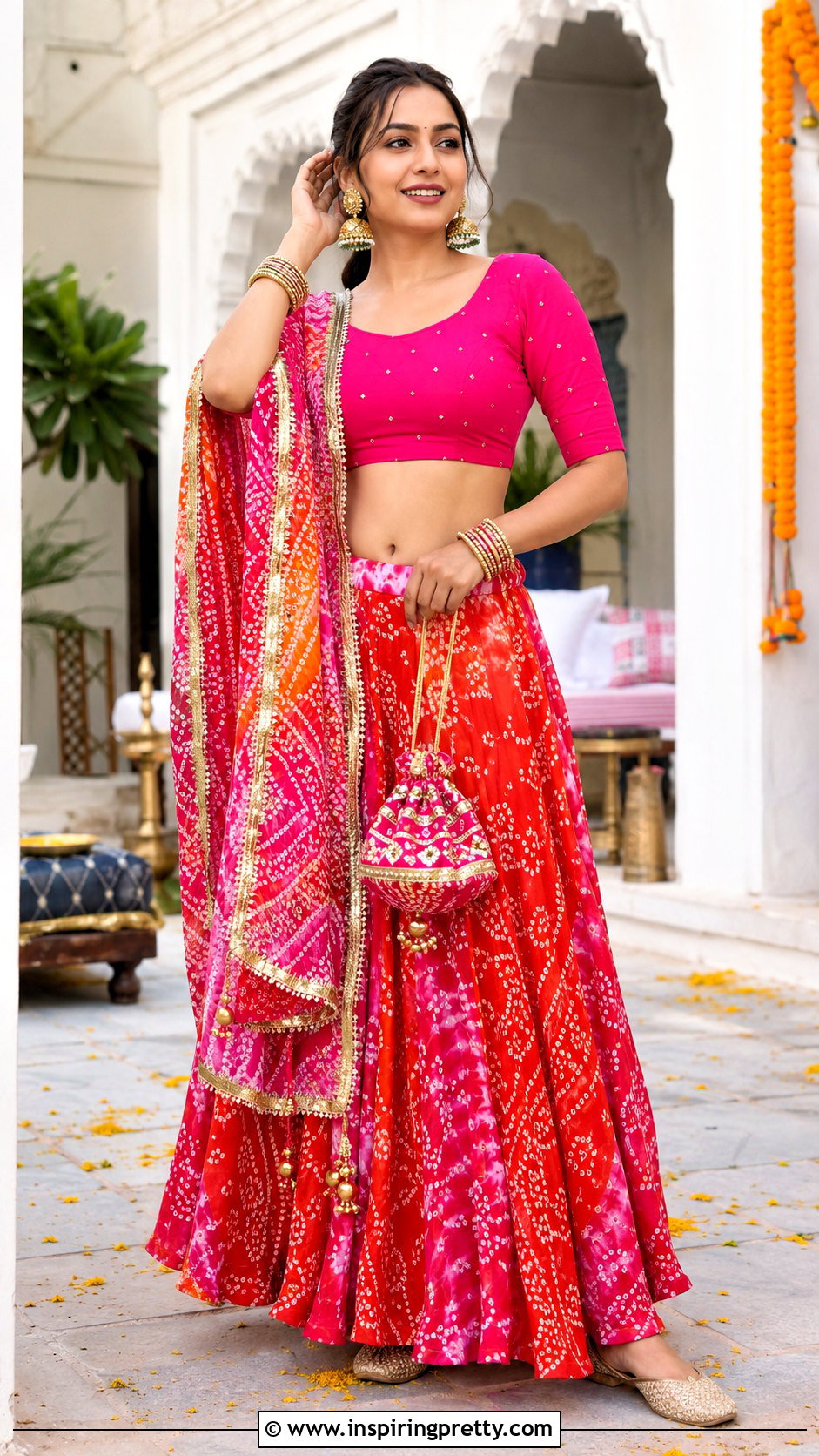
Tiny tie-dyed patterns give a Bandhani skirt an unmistakably festive appearance. Pair a red, pink, yellow, or green Bandhani skirt with a solid crop top in a coordinating shade. A blouse featuring a modest round neck and elbow sleeves lets the skirt remain the central focus. Add a contrasting dupatta with a slim gota border for extra color and movement. Traditional jhumkas, stacked bangles, and a compact potli suit the joyful character of this look. Embroidered juttis are more practical than narrow heels when attending long celebrations. A defined waist creates structure, but the skirt should still skim comfortably over the hips. Finish with a braid, low bun, or soft waves and bright, balanced makeup.
8. Chikankari Skirt And Top Indian Outfit
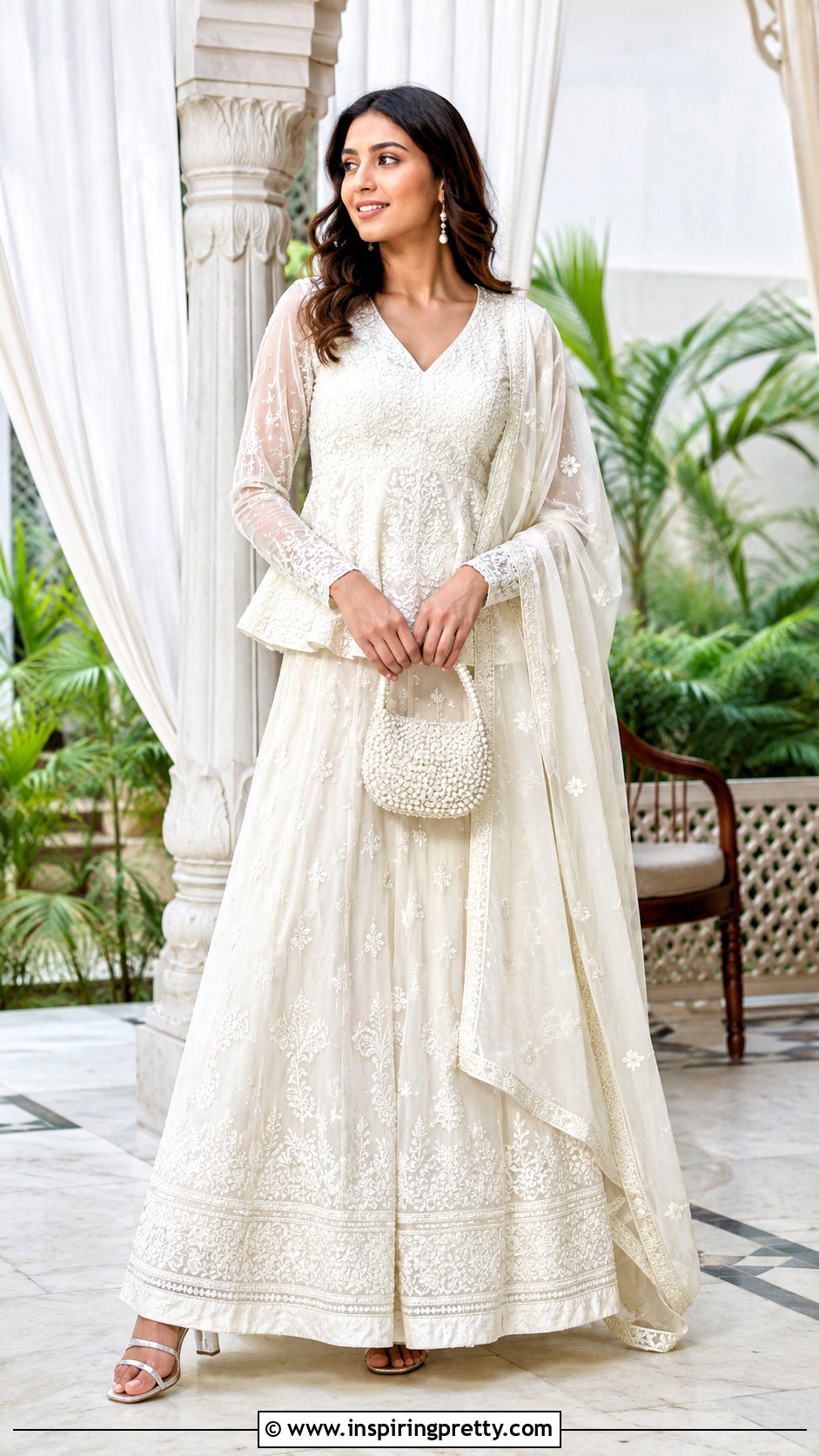
Delicate embroidery makes a Chikankari skirt and top feel elegant without appearing too formal. Choose a softly flared skirt in ivory, blush, mint, powder blue, or pale yellow. Pair it with a tonal short kurti, peplum top, or fitted blouse featuring matching embroidery. A cotton lining keeps the outfit comfortable, while a sheer chiffon dupatta adds gentle movement. Pearl earrings, a slim bracelet, and a small beaded bag support the light color palette. Complete the look with metallic flats or low-heeled sandals. Tonal styling allows the embroidery’s texture to stand out, especially when the fabric is photographed in natural daylight. For added definition, select a skirt with a fitted waistband and a top that ends near its upper edge.
9. Kalamkari Skirt And Black Top Indian Outfit
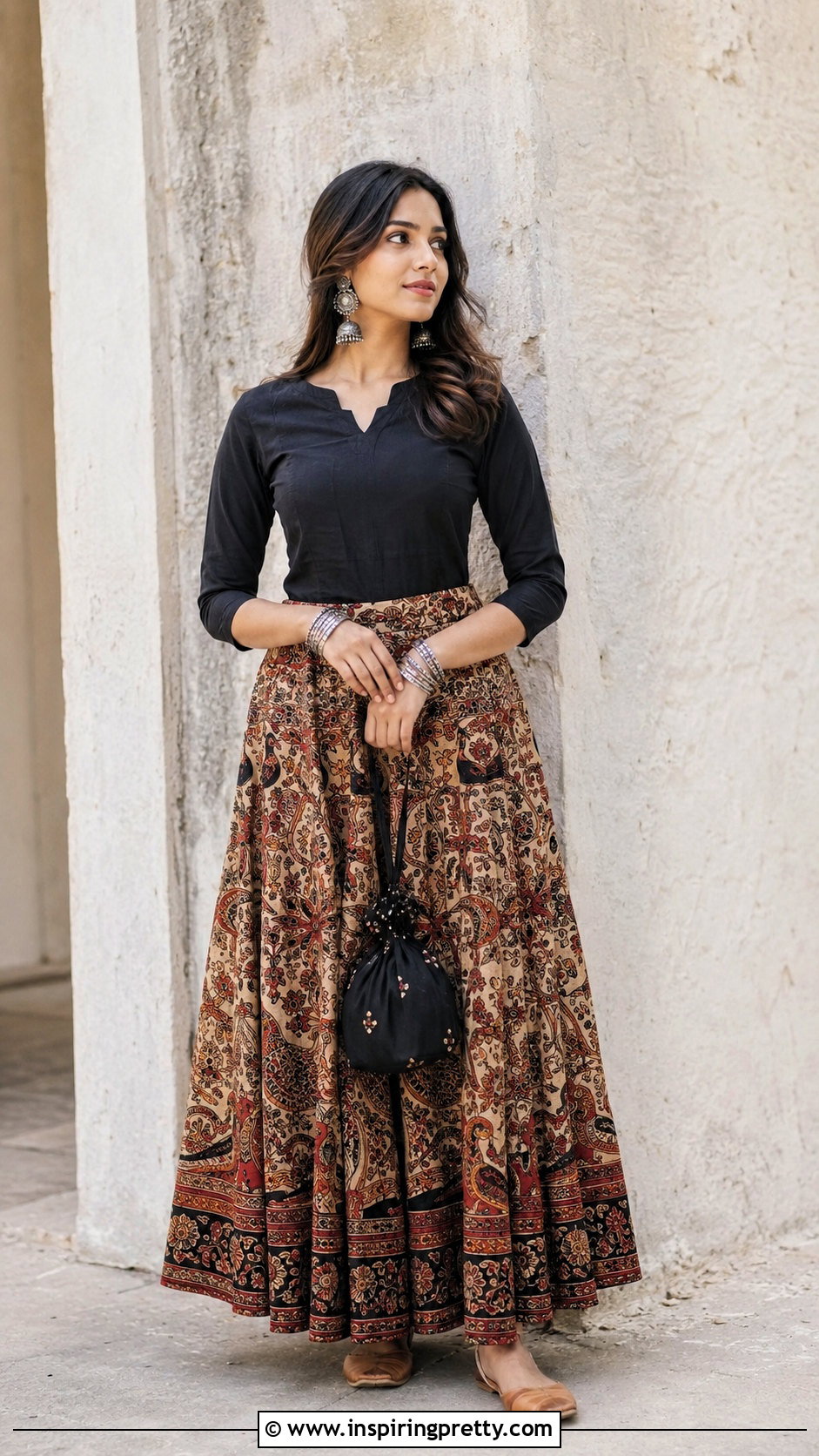
Earthy colors and narrative prints make a Kalamkari skirt ideal for an artistic Indian outfit. Let the printed skirt take center stage by pairing it with a fitted black top in cotton, raw silk, or linen. A boat-neck blouse, short kurti, or three-quarter-sleeve crop top can all work, depending on your preferred coverage. Oxidized silver earrings and bangles complement the craft-inspired character of the print. Add a black sling bag or handmade fabric potli, then finish with tan flats or dark juttis. A rust, mustard, or black cotton dupatta can introduce an extra layer for a cultural program or family event. Keep the hairstyle simple, such as a loose braid, so the skirt’s rich design remains the visual focus.
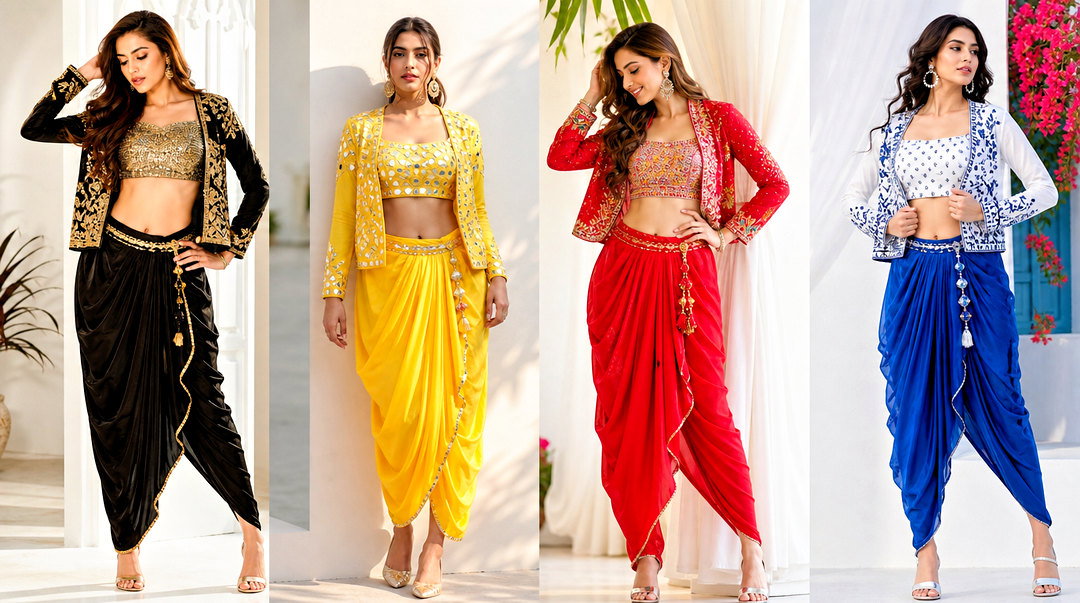
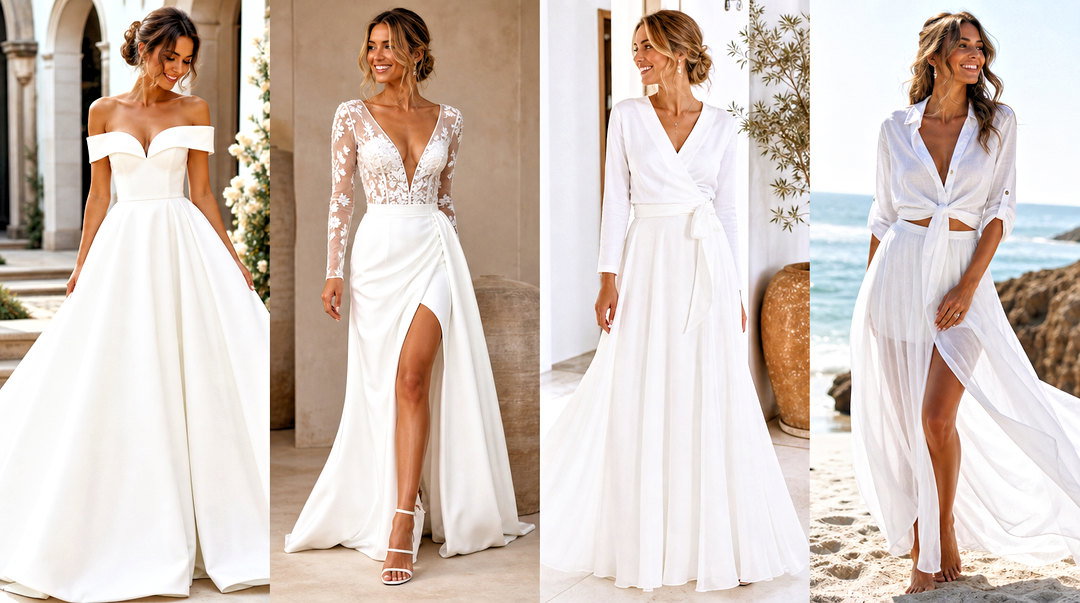
10. Phulkari Skirt And Plain Top Indian Outfit
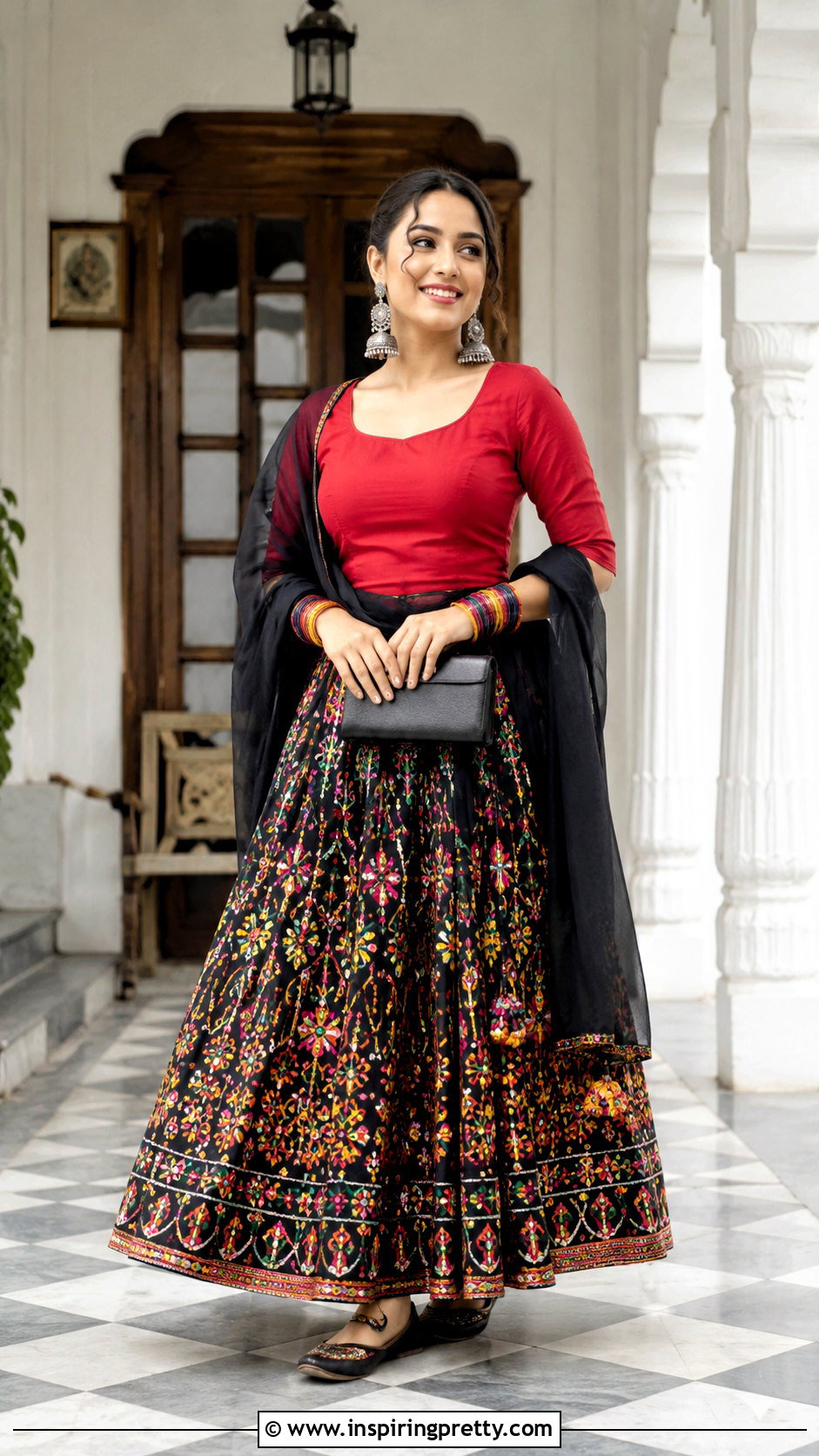
Bold embroidery transforms a Phulkari skirt into a statement piece that needs only a streamlined top. Select a skirt with colorful threadwork set against black, red, navy, or ivory fabric. Pair it with a plain blouse in one shade taken from the embroidery. A high-neck sleeveless top feels contemporary, while a round-neck blouse with elbow sleeves creates a more traditional appearance. Finish the look with gold or oxidized earrings, a few coordinating bangles, and a simple clutch. Solid juttis keep attention on the stitched patterns. If you include a dupatta, choose a lightweight plain fabric with a narrow embroidered edge. Avoid adding another heavily decorated garment because open visual space helps the Phulkari work look more distinctive and carefully styled.
11. Gota Patti Skirt And Top Indian Outfit
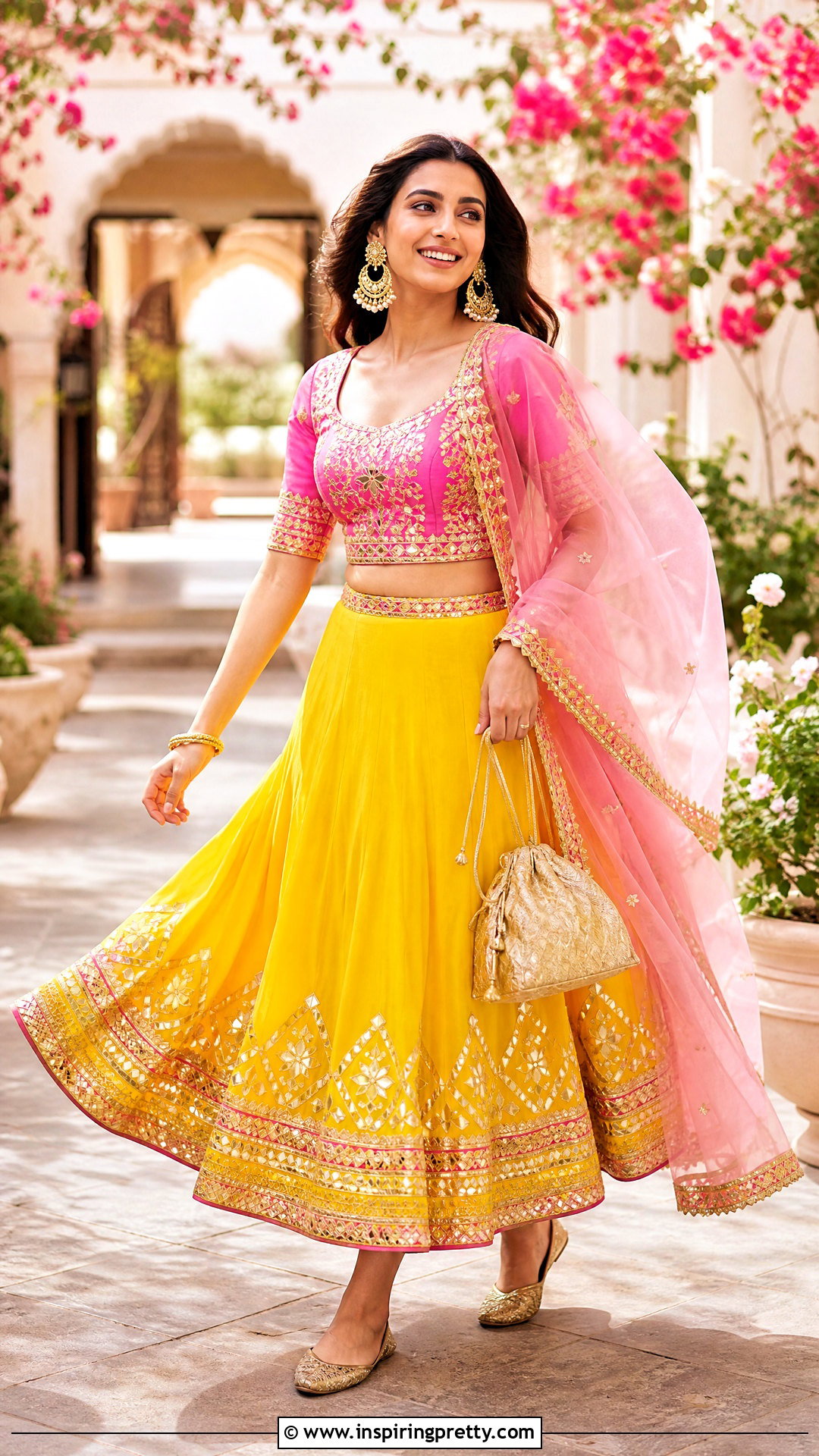
Golden gota detailing adds celebration-ready shine without the density of heavy beadwork. Choose a flared skirt in yellow, pink, coral, turquoise, or green, paired with a fitted top carrying matching metallic borders. A sweetheart, square, or round neckline provides a flattering base for a short necklace or chandbali earrings. Add a light net or chiffon dupatta edged with narrow gota trim. Metallic juttis and a small potli complete the look while keeping it comfortable for extended wear. Because the reflective ribbons already catch the light, select jewelry with a clean shape rather than layering several statement pieces. A high ponytail or low bun will keep the neckline visible and give the bright, detailed outfit a neat finish.
12. Sequin Skirt And Simple Top Indian Outfit
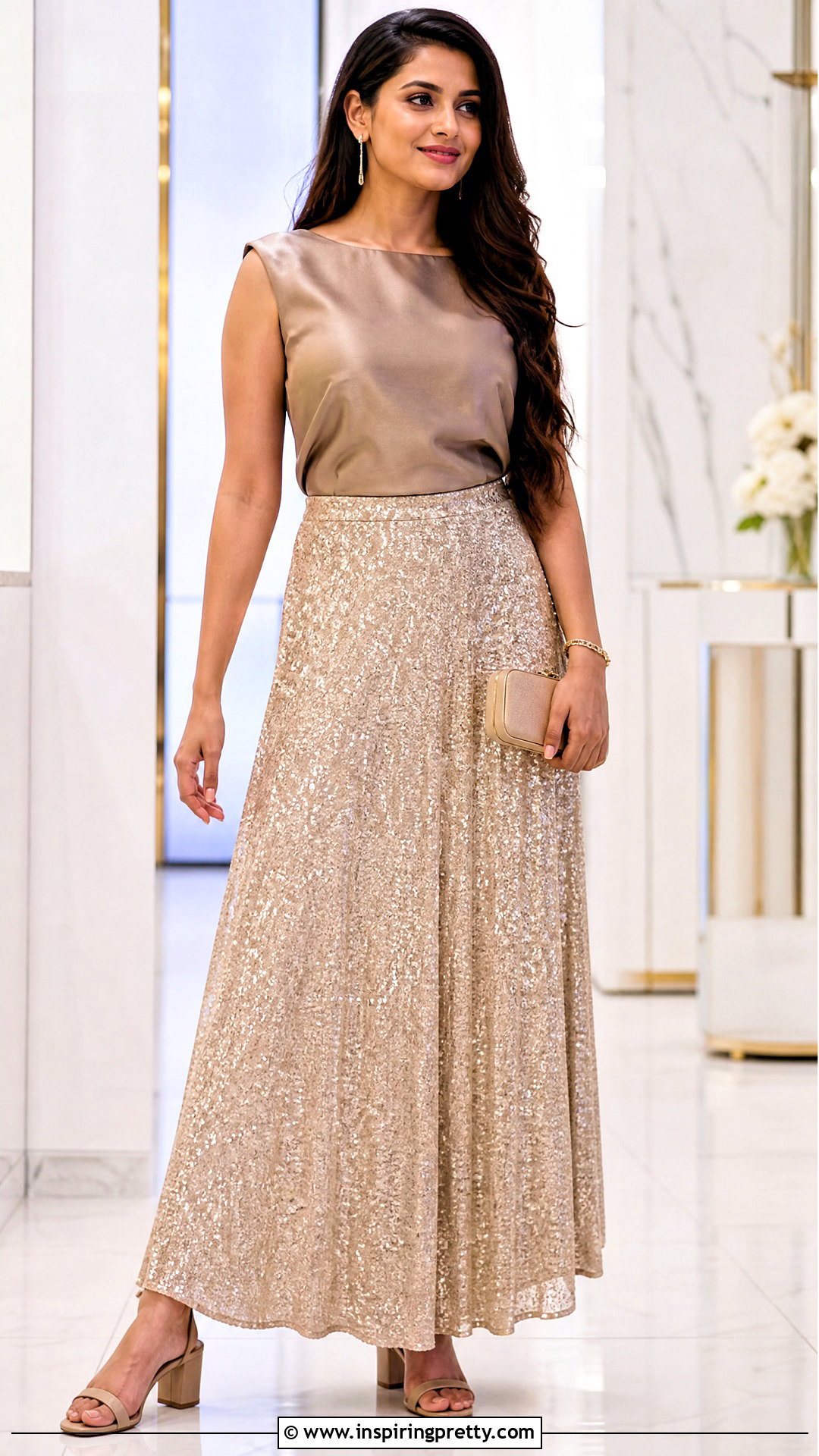
A sequin skirt can look sophisticated when paired with a simple, well-cut top. Choose a flowing skirt in silver, champagne, rose gold, navy, or deep green, then add a matte blouse in a closely related shade. A satin, crepe, or velvet top creates contrast against the reflective surface. Keep the neckline clean and avoid additional beading across the blouse. Add slim earrings, a delicate bracelet, and a compact clutch instead of numerous ornate accessories. Block heels or cushioned platform sandals provide height while remaining practical. Skip the dupatta for a streamlined fusion look, or wear a plain sheer one over a shoulder for more coverage. Soft waves and understated makeup help the complete outfit appear elegant rather than overly glittery.
13. Velvet Skirt And Embroidered Top Indian Outfit
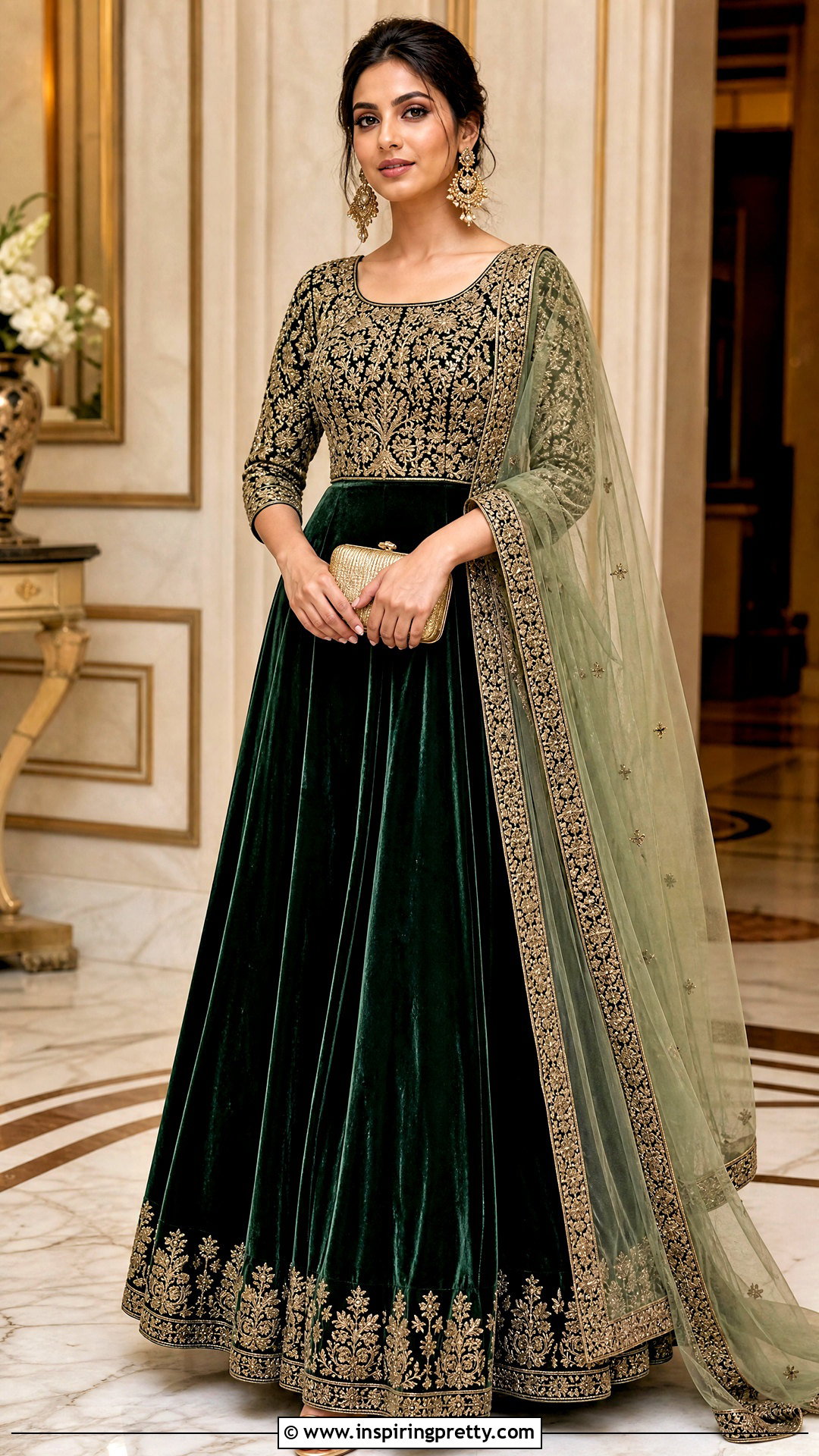
Cool-weather celebrations call for richer fabric, and a velvet skirt offers warmth as well as depth of color. Select a deep burgundy, navy, forest green, or black skirt with a controlled flare. Pair it with a fitted embroidered top in antique gold, muted silver, or a matching jewel tone. Three-quarter sleeves balance the weight of the skirt and suit formal evening occasions. Add a lightweight net dupatta rather than another heavy velvet layer. Statement earrings, a structured clutch, and comfortable block heels complete the outfit. Since velvet naturally reflects light, minimal jewelry is often enough. Ensure the skirt is properly hemmed because the dense fabric can gather around the feet. A sleek bun keeps the overall silhouette clean and polished.
14. Organza Skirt And Crop Top Indian Outfit
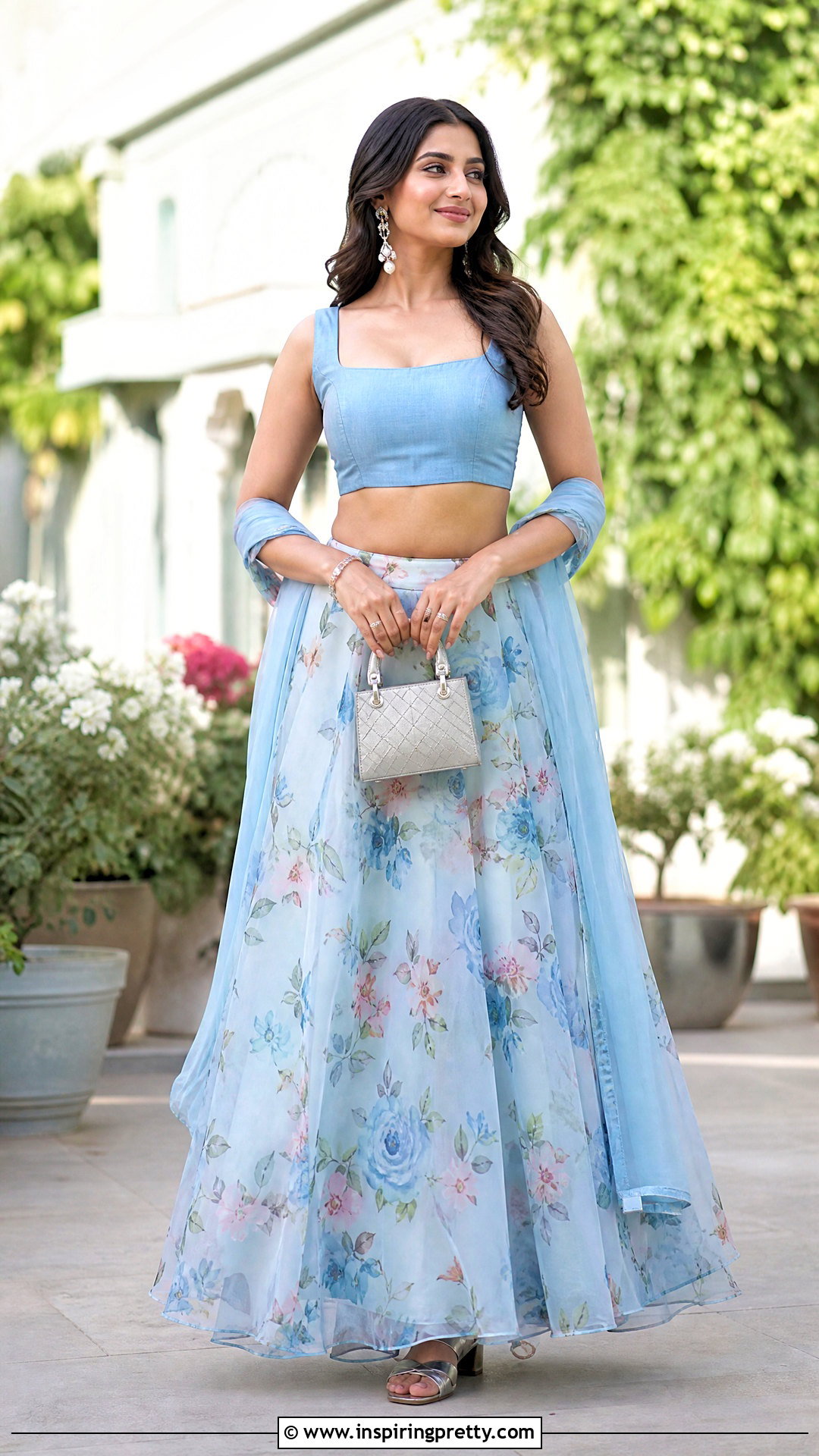
An organza skirt creates airy volume while maintaining a polished, modern shape. Choose a floral, embroidered, or solid skirt with a smooth lining and a defined waistband. Pair it with a fitted crop top in raw silk or satin to contrast with the skirt’s sheer texture. Soft pastels suit daytime events, while navy, wine, and emerald work well in the evening. Add pearl earrings, a structured mini bag, and delicate block-heeled sandals. A matching organza dupatta can look beautiful, but it should be narrow enough to manage comfortably. Avoid excessive underskirt volume, since organza already holds its shape. The finished combination should feel light and dimensional, with the structured top creating balance against the skirt’s gentle, floating movement.
15. Georgette Skirt And Embellished Top Indian Outfit
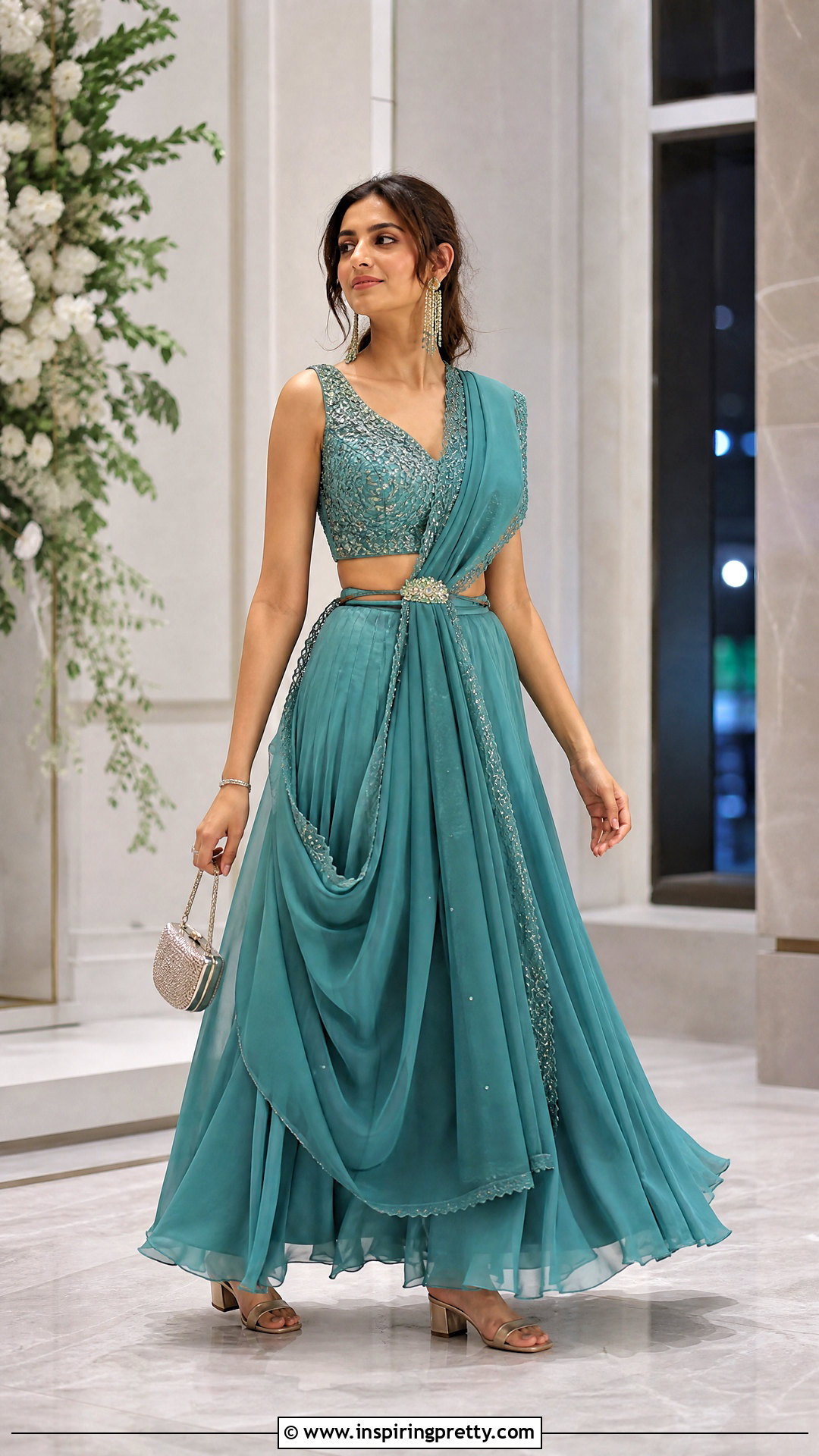
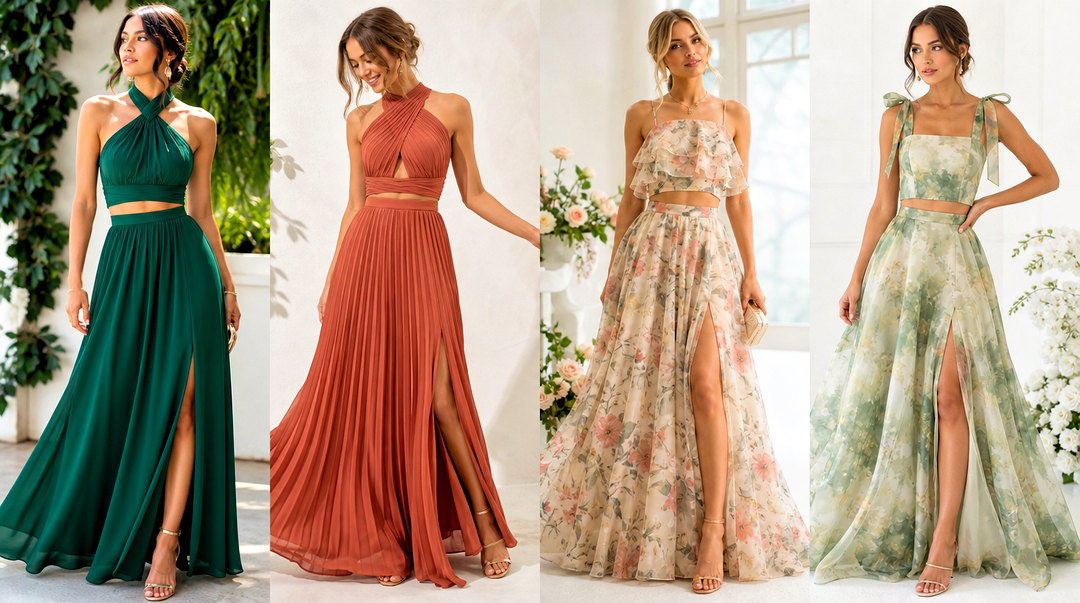
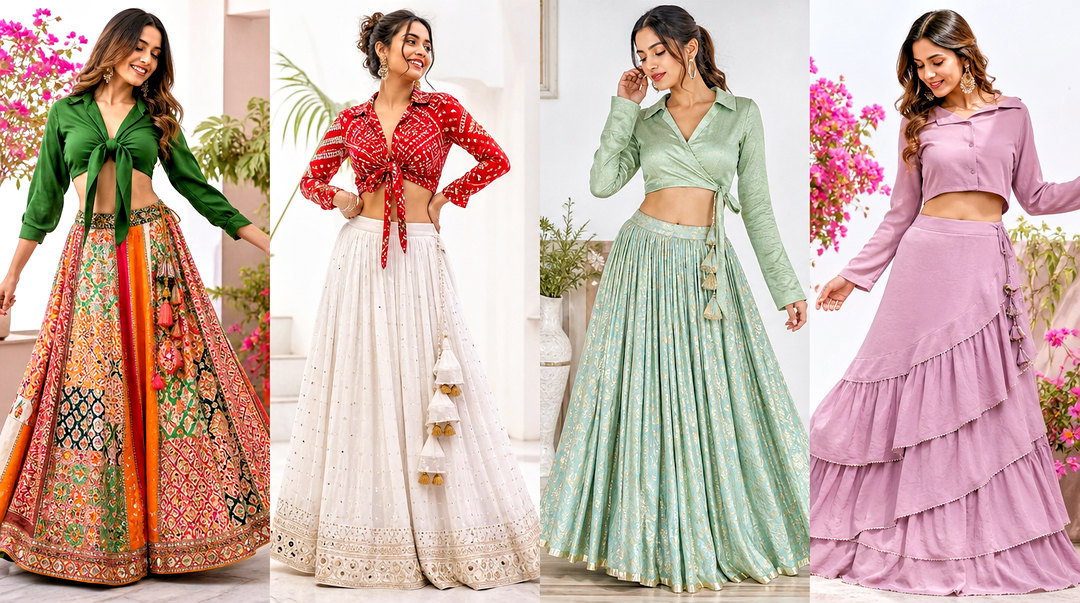
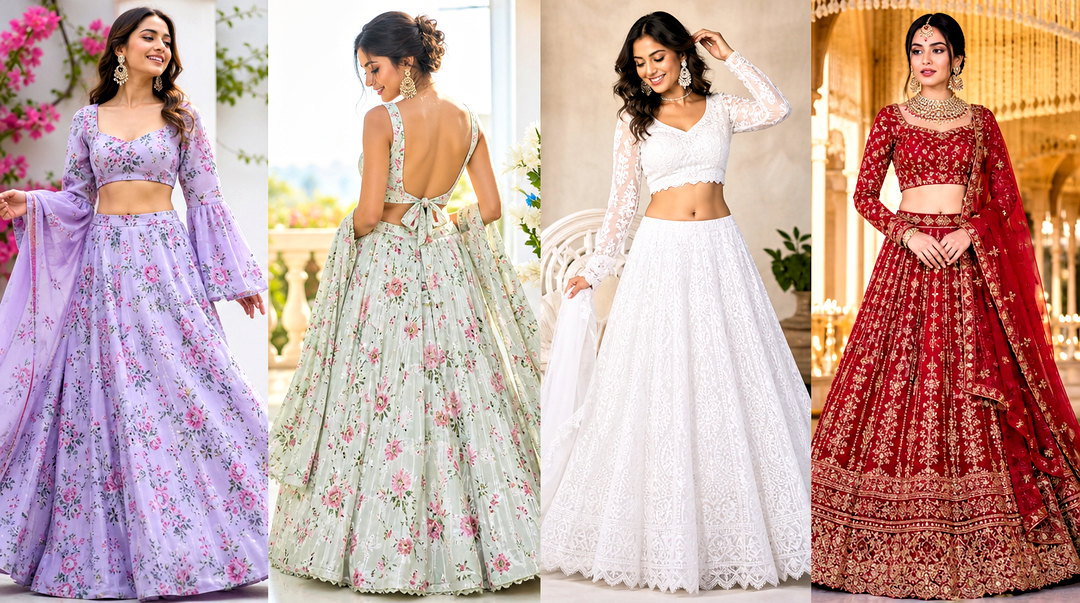
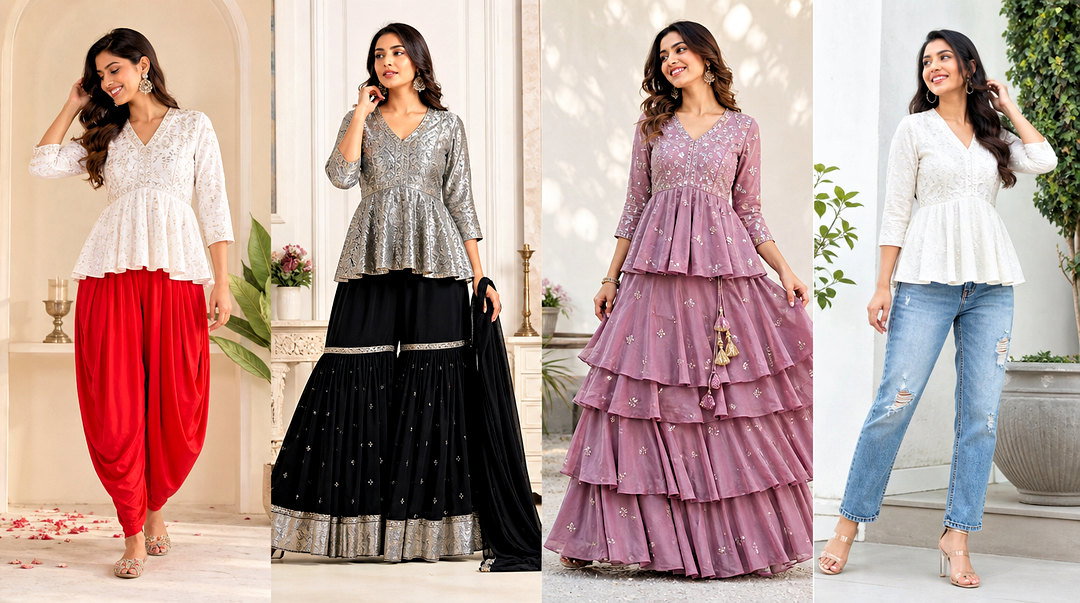
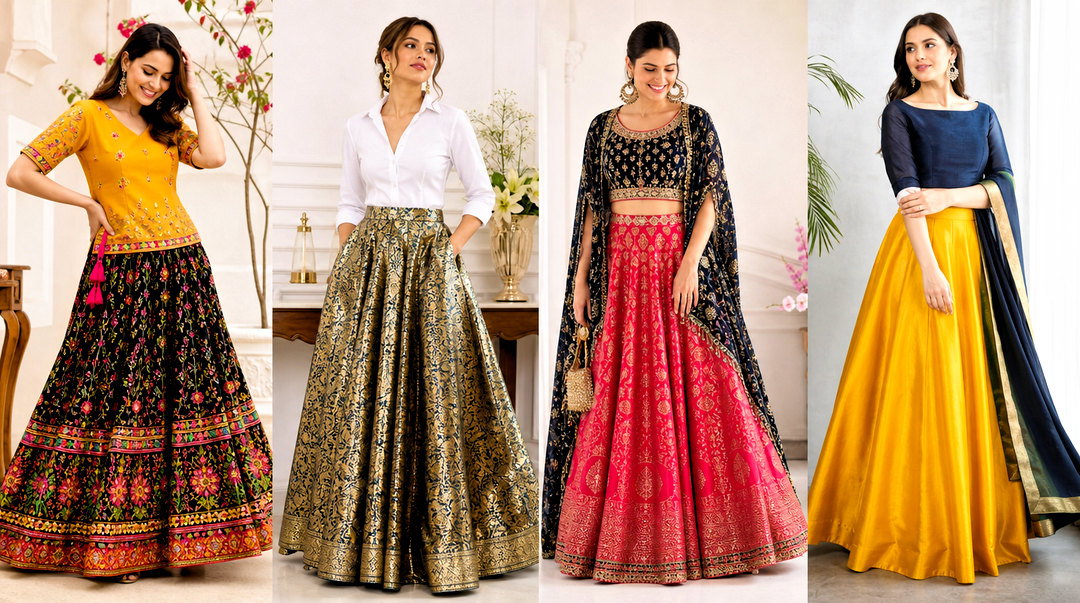
Fluid georgette creates a skirt that moves easily and feels comfortable during long celebrations. Pair a softly flared solid skirt with an embellished blouse featuring sequins, beadwork, or thread embroidery. Keeping decorative detail on the top draws attention toward the face while leaving the lower half clean and lengthening. Shades such as teal, plum, dusty rose, and midnight blue give the combination a polished finish. Add long earrings, a slim bracelet, and a small metallic bag. Low heels or embellished flats allow easy walking and dancing. A sheer dupatta can be draped over one shoulder or secured neatly at the waist. Look for a fully lined skirt and a top with supportive construction, especially if you plan to wear the outfit for several hours.
16. Cotton Skirt And Short Kurti Indian Outfit
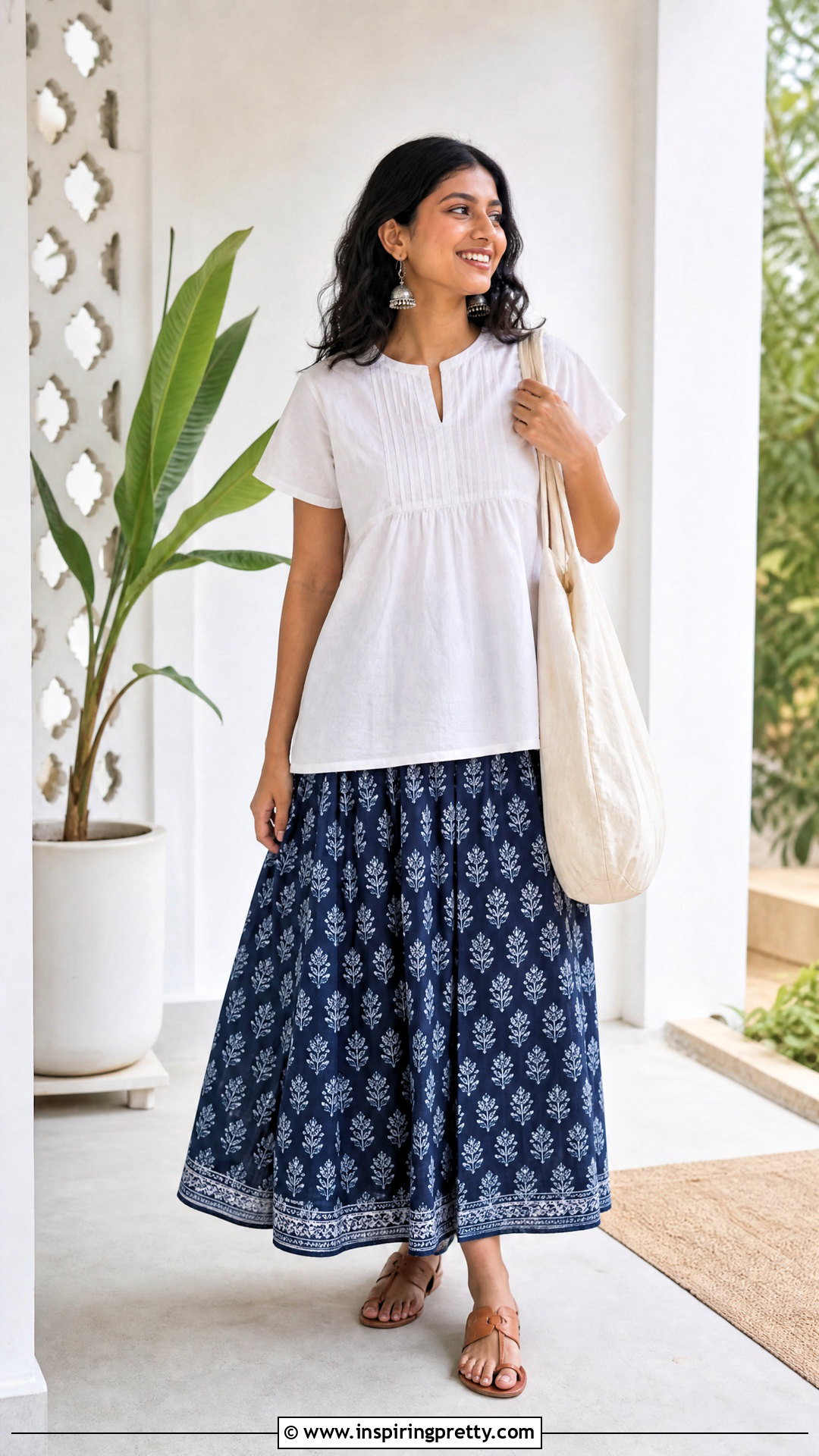
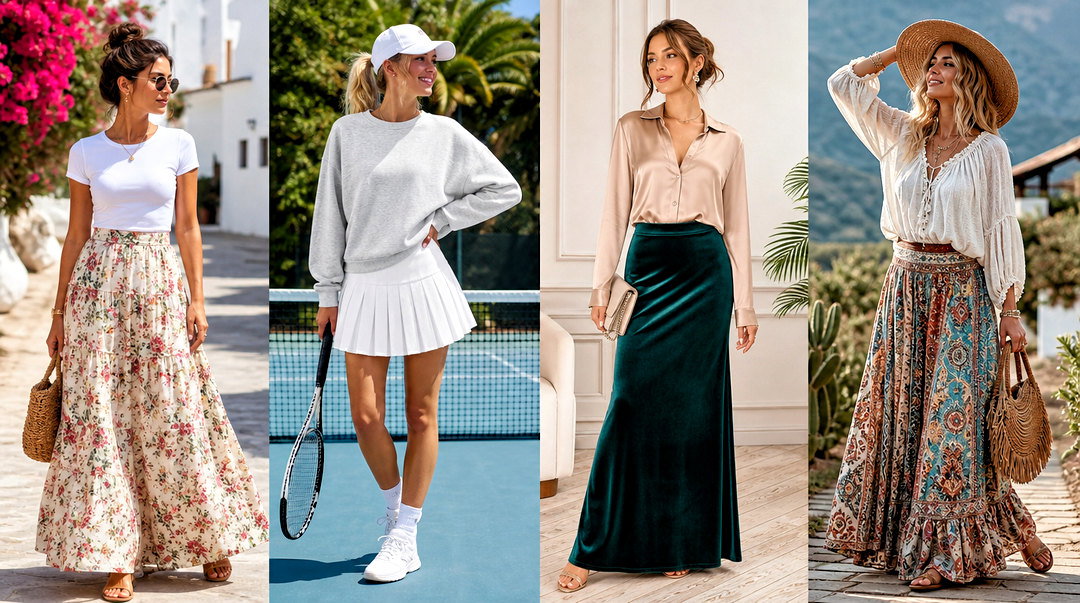
A breathable cotton skirt and short kurti make Indian dressing practical for casual gatherings and warm days. Choose an ankle-length skirt with block prints, subtle stripes, or a small floral pattern. Add a solid or coordinating short kurti that finishes near the waistband. A lightly shaped top prevents the loose skirt from making the outfit appear oversized. Style the set with silver studs or small jhumkas, a cloth tote, and comfortable kolhapuri sandals. A cotton dupatta is optional, although a narrow scarf can add color without creating bulk. Roll or tailor the sleeves to a comfortable length and ensure the skirt allows an easy stride. This relaxed combination is also useful for travel because each separate can be mixed with other wardrobe basics.
17. Ikat Skirt And Solid Top Indian Outfit
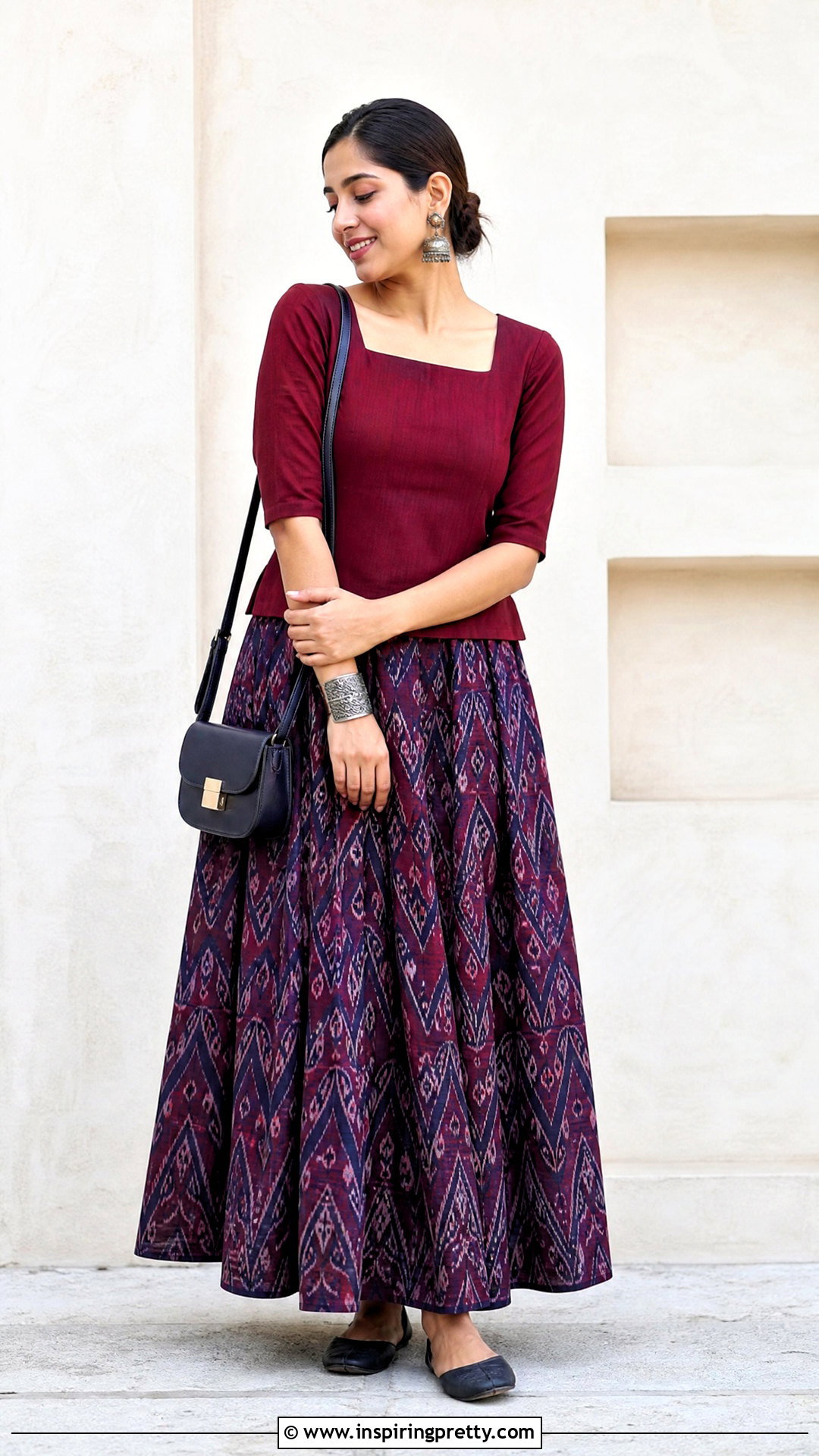
The geometric pattern of an Ikat skirt brings visual interest to an otherwise straightforward outfit. Select a skirt featuring indigo, maroon, black, mustard, or rust motifs and pair it with a solid top in one of those colors. A cotton-silk blouse with a square neckline feels polished, while a simple cropped kurti creates a more relaxed result. Add oxidized silver earrings, a cuff bracelet, and a structured sling bag. Leather flats or plain juttis work well with the textile’s artisanal appearance. For layering, use a solid dupatta rather than another pattern. The top should fit neatly around the shoulders and end close to the high waistband. This combination offers a thoughtful balance of traditional textile, everyday comfort, and contemporary proportion.
18. Ajrakh Skirt And Maroon Top Indian Outfit
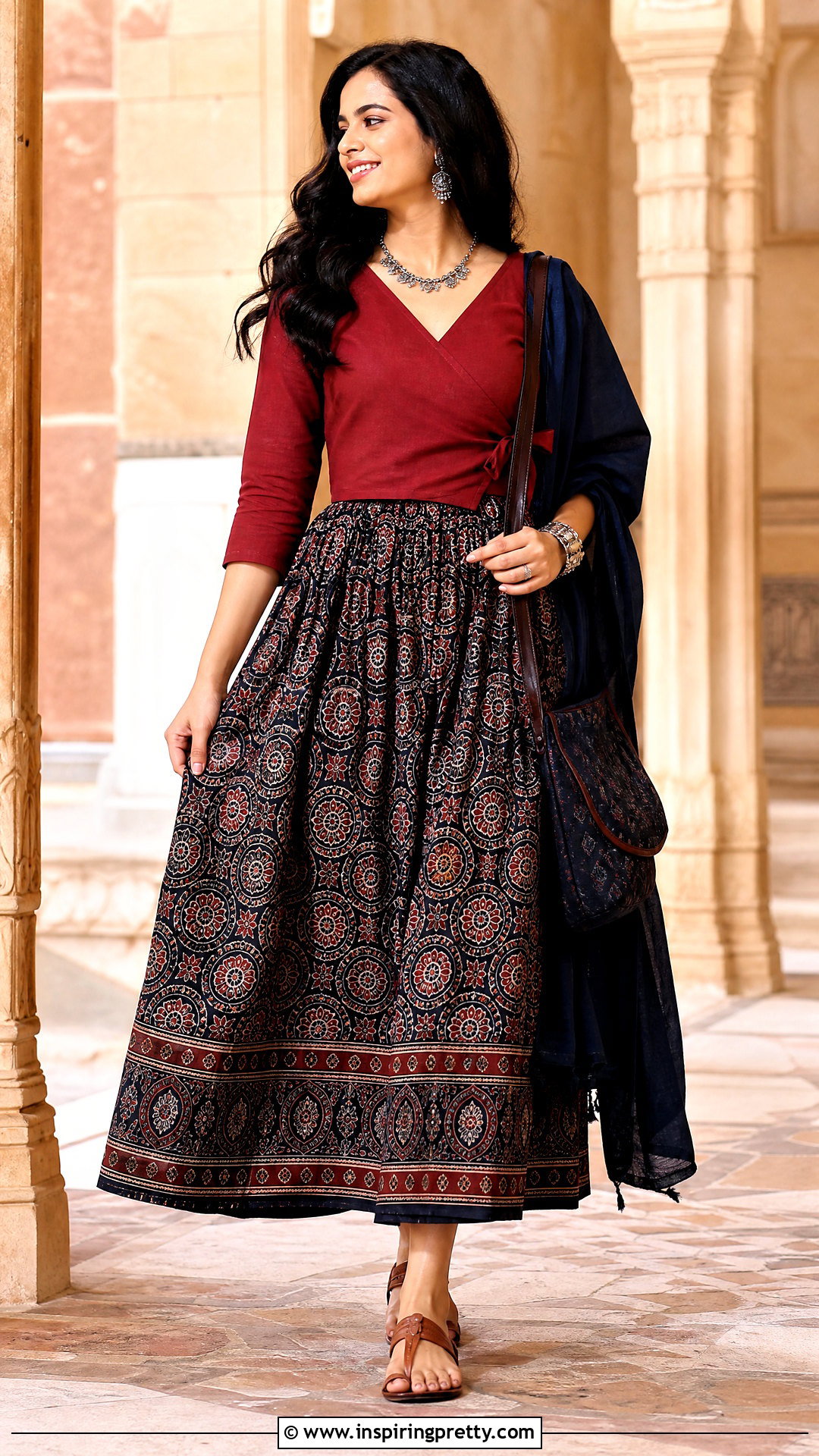
Deep indigo, madder red, and earthy printed motifs give an Ajrakh skirt a distinctive handcrafted quality. Pair it with a plain maroon top for a rich tonal outfit that remains easy to wear. Choose a fitted blouse, short kurti, or wrap-style top made from breathable cotton or linen. Oxidized silver jhumkas, a handcrafted bangle, and a dark fabric bag reinforce the traditional character without overwhelming the print. Complete the outfit with brown kolhapuri sandals or closed juttis. A solid indigo dupatta can add coverage for a more formal cultural event. Keep the skirt around ankle length to show the footwear and create practical movement. Natural makeup and a low braid provide a relaxed finishing touch that complements the textile’s grounded color palette.
19. Leheriya Skirt And White Top Indian Outfit
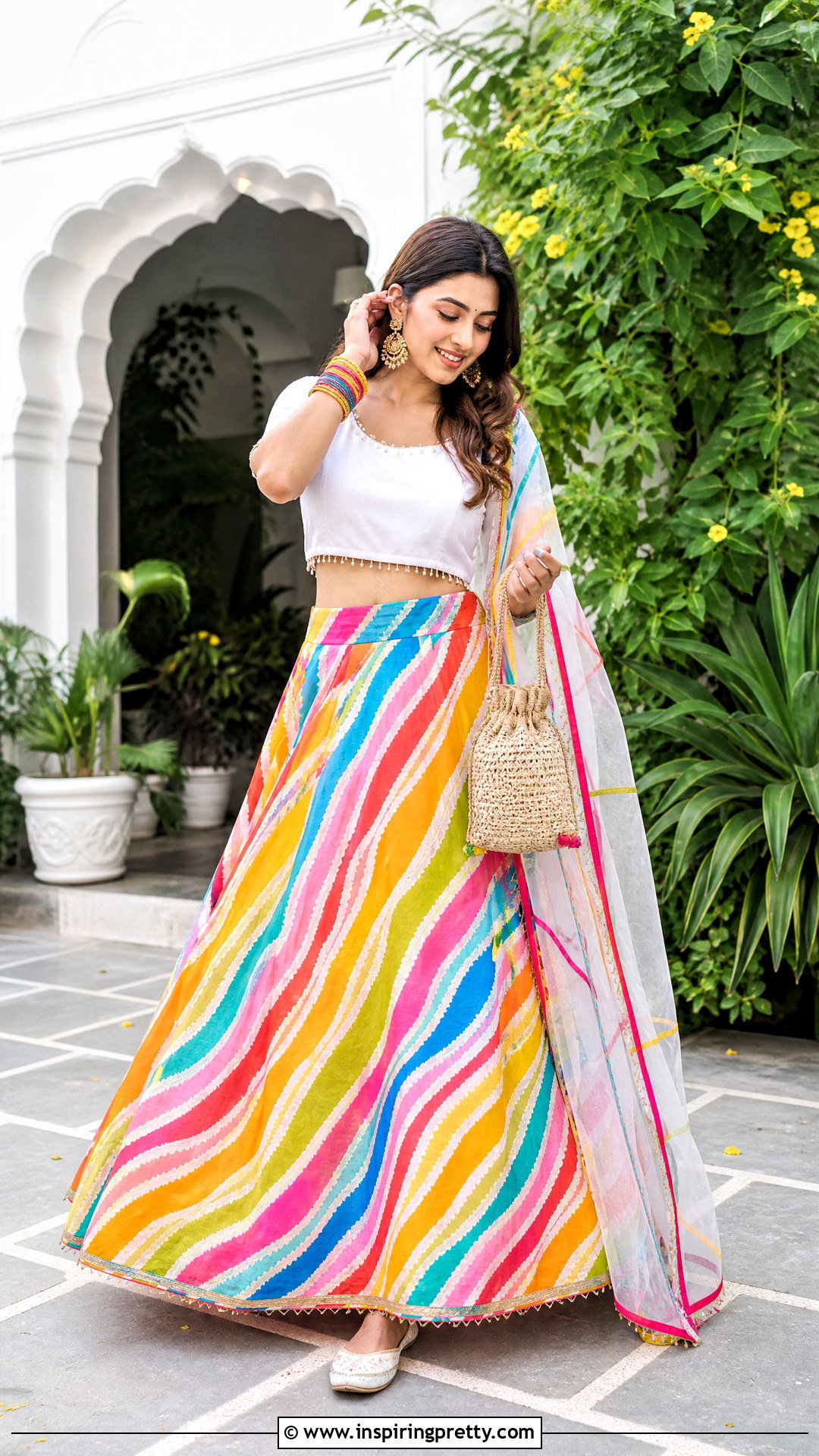
Diagonal waves of color make a Leheriya skirt especially cheerful for bright daytime functions. Pair a multicolored or single-color skirt with a fresh white blouse to keep the overall look light. A sleeveless high-neck top creates a modern finish, while a puff-sleeve or elbow-sleeve blouse provides softer proportions. Add colorful bangles, small gold earrings, and a woven potli that picks up one shade from the skirt. White, tan, or gold juttis keep the palette clean. A matching Leheriya dupatta can be draped loosely over one shoulder, although the printed skirt already provides plenty of visual movement. Keep the white top properly lined, and select breathable fabrics so the complete outfit remains comfortable during outdoor or warm-weather celebrations.
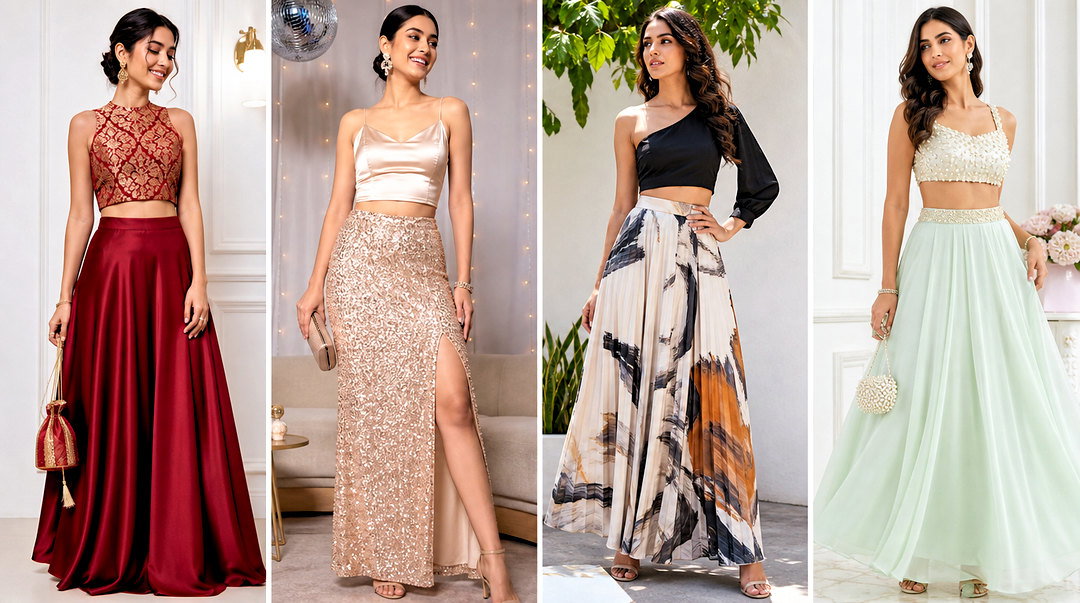
20. Block Print Skirt And Peplum Top Indian Outfit
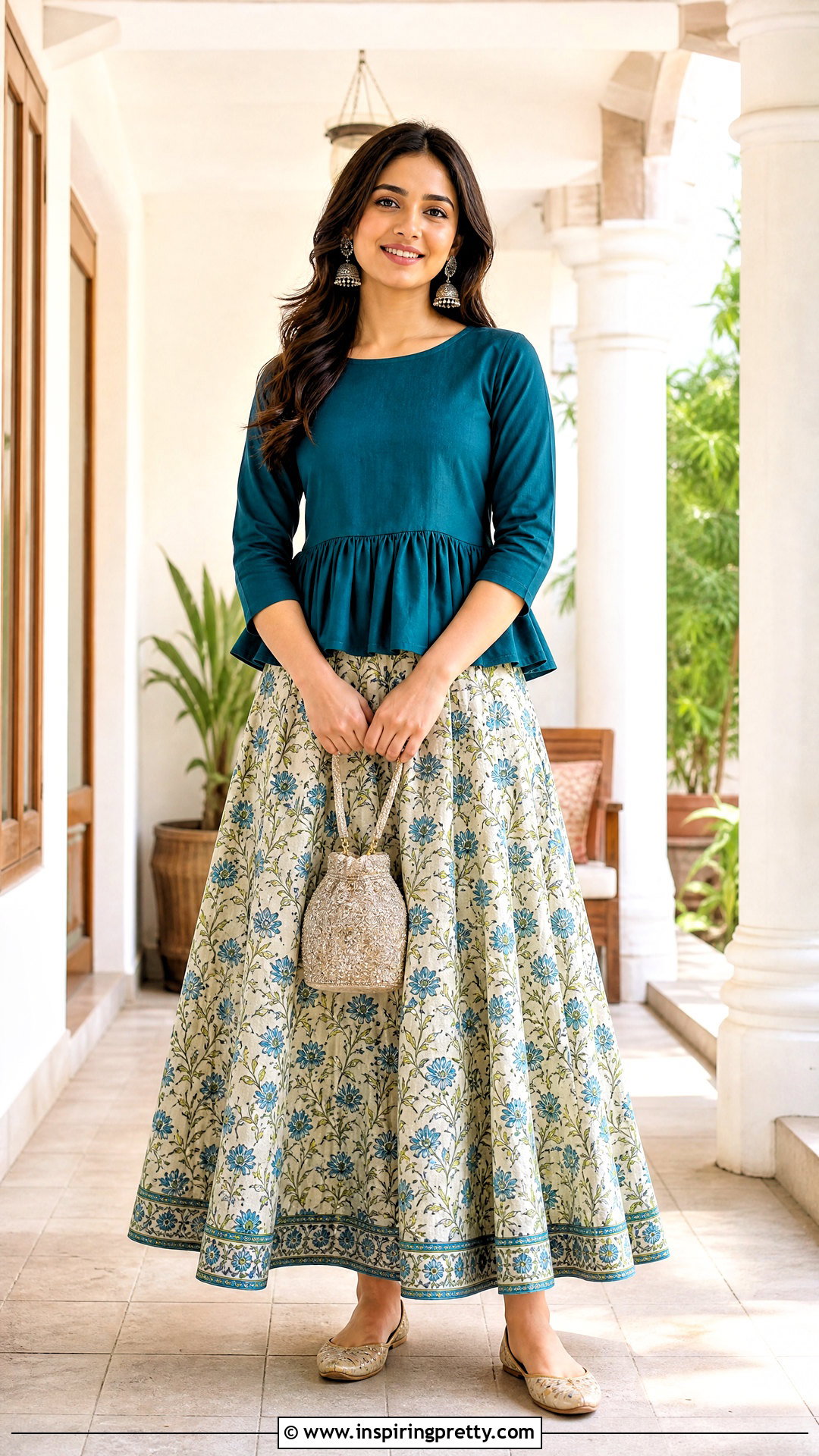
A block print skirt paired with a peplum top offers easy coverage and a neatly defined shape. Choose a long cotton or chanderi skirt in floral, paisley, or geometric print. Add a solid peplum blouse that fits smoothly at the shoulders and flares gently below the waist. The longer top works particularly well for anyone who prefers not to wear a cropped silhouette. Style the outfit with oxidized earrings, a simple ring, and a small handcrafted bag. Flat juttis or kolhapuri sandals support the comfortable, daytime mood. If the skirt uses muted earthy colors, introduce mustard, teal, or rust through the top. A lightweight dupatta is optional, but a plain version can make the combination suitable for a slightly more formal family gathering.
21. Brocade Skirt And High Neck Top Indian Outfit
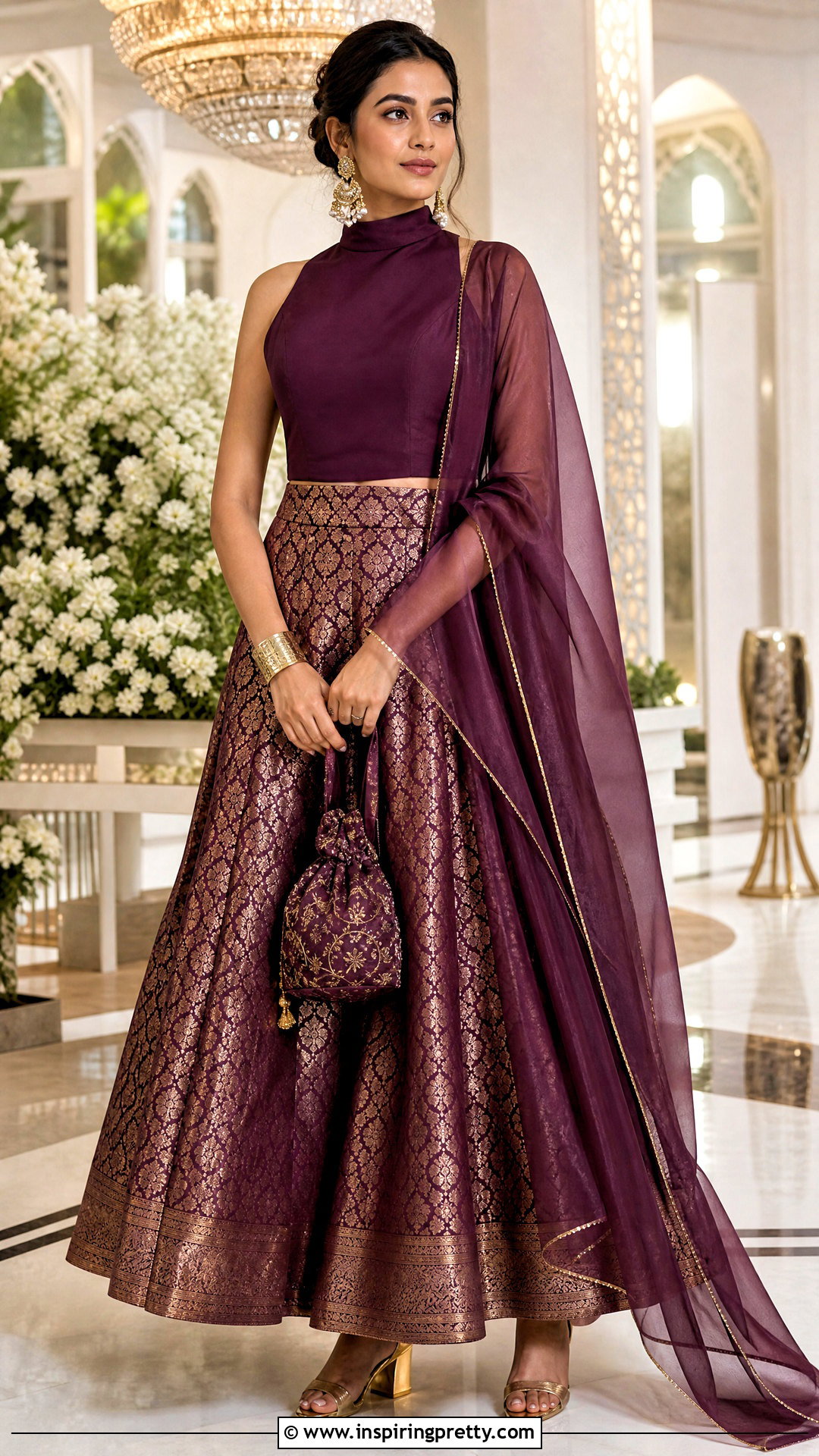
A brocade skirt and high-neck top create a regal silhouette with enough structure for formal celebrations. Choose a skirt woven with metallic floral or geometric motifs, then add a plain blouse that echoes its base color. A high neckline looks particularly polished with a sleeveless cut or fitted elbow sleeves. Skip a necklace and wear statement earrings instead, allowing the top’s clean shape to remain visible. Add a compact potli, one bangle or cuff, and gold block heels. A plain silk or organza dupatta can be draped from one shoulder if desired. Since brocade holds volume, keep the top close-fitting and avoid oversized sleeves. Tailoring the waistband precisely will help the skirt sit smoothly and give the entire outfit a balanced, intentional appearance.
22. Pastel Skirt And Matching Top Indian Outfit
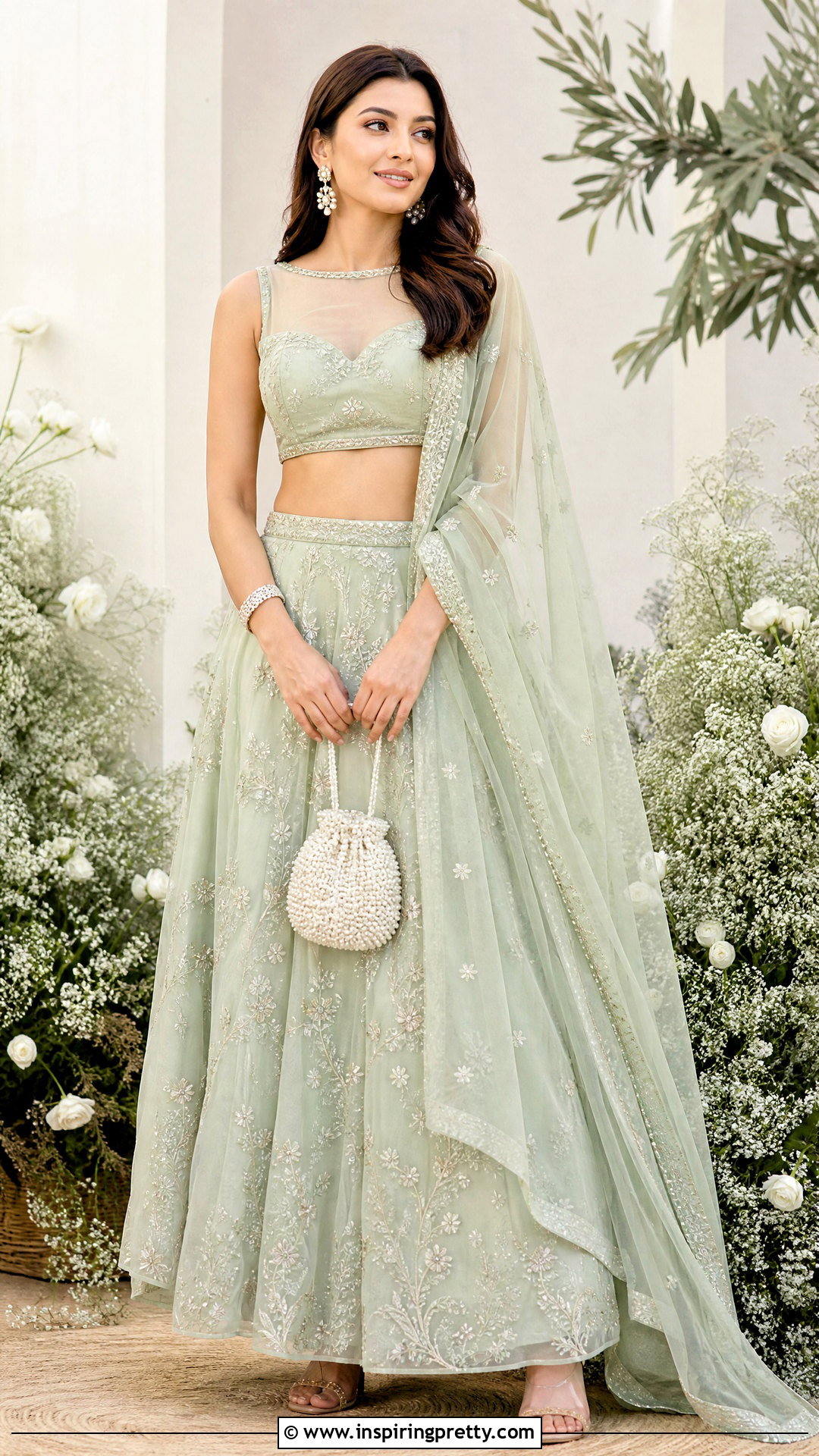
A matching pastel skirt and top creates a soft monochromatic outfit that photographs beautifully in daylight. Consider powder blue, sage, blush, lilac, peach, or pale yellow in organza, georgette, or chanderi. Combine a lightly embroidered skirt with a top in the same color family, varying the texture to prevent the set from appearing flat. Pearl earrings, a crystal bracelet, and a beaded mini bag add quiet detail. Finish with nude or silver sandals that blend into the gentle palette. A sheer tonal dupatta can be worn over both shoulders for additional coverage. Ensure that the lining closely matches the outer fabric, especially with pale colors. Soft makeup and a loose bun or waves maintain the outfit’s delicate, cohesive mood.
23. Red Skirt And Ivory Top Indian Outfit
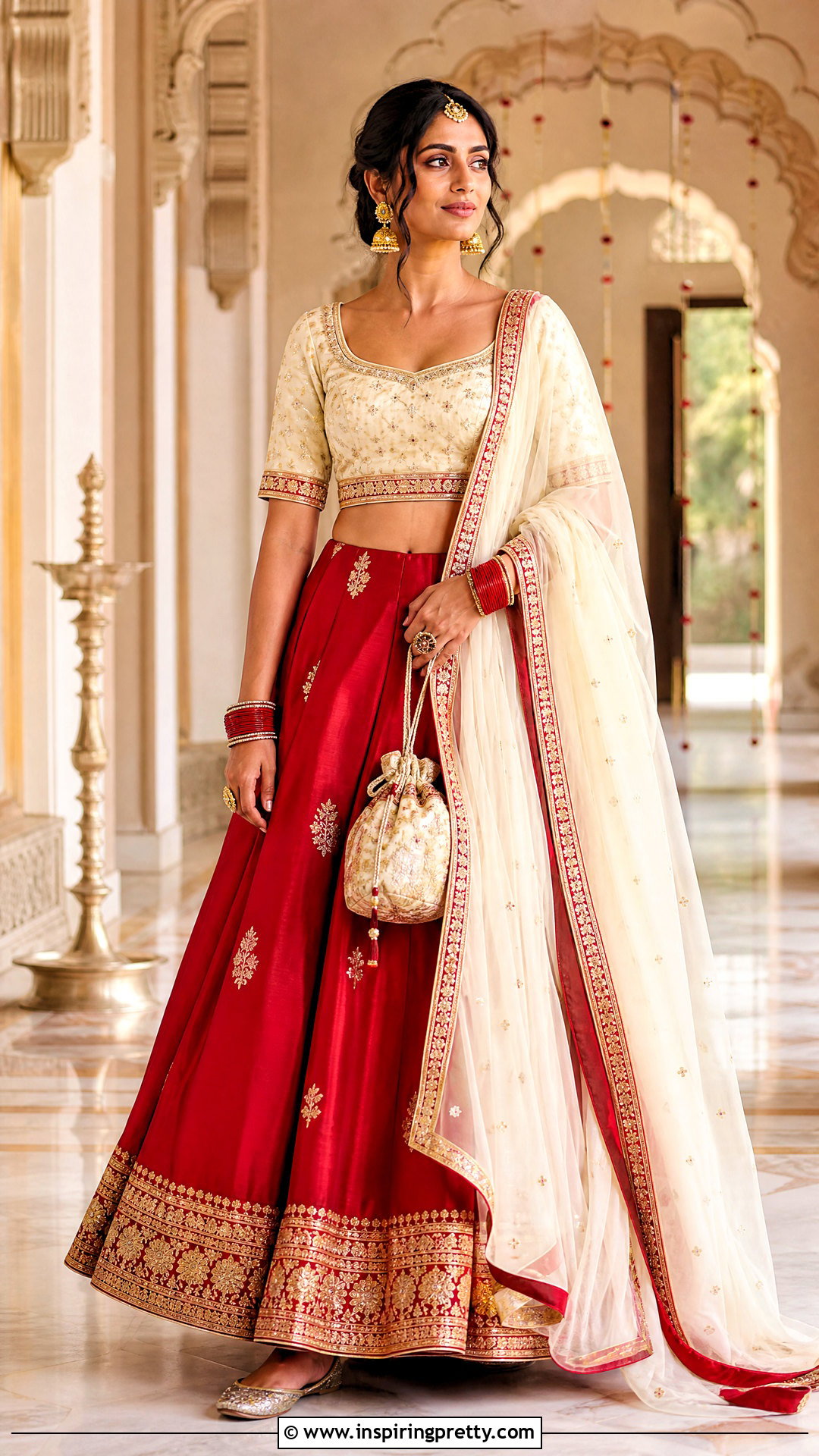
A red skirt and ivory top delivers classic festive color while feeling lighter than an entirely red ensemble. Choose a flowing skirt in crimson, ruby, or vermilion with a gold border or restrained embroidery. Pair it with an ivory silk blouse featuring delicate zari, pearl, or thread details. Gold earrings, red bangles, and an ivory potli bring the two colors together. Complete the outfit with metallic juttis or stable block heels. An ivory dupatta with a red border creates a coordinated traditional finish, while a plain sheer dupatta keeps the look understated. Adjust the blouse neckline and sleeve length according to your comfort. Because red already creates strong visual impact, avoid crowding the outfit with numerous large accessories or several competing embroidery patterns.
24. Yellow Skirt And Pink Top Indian Outfit
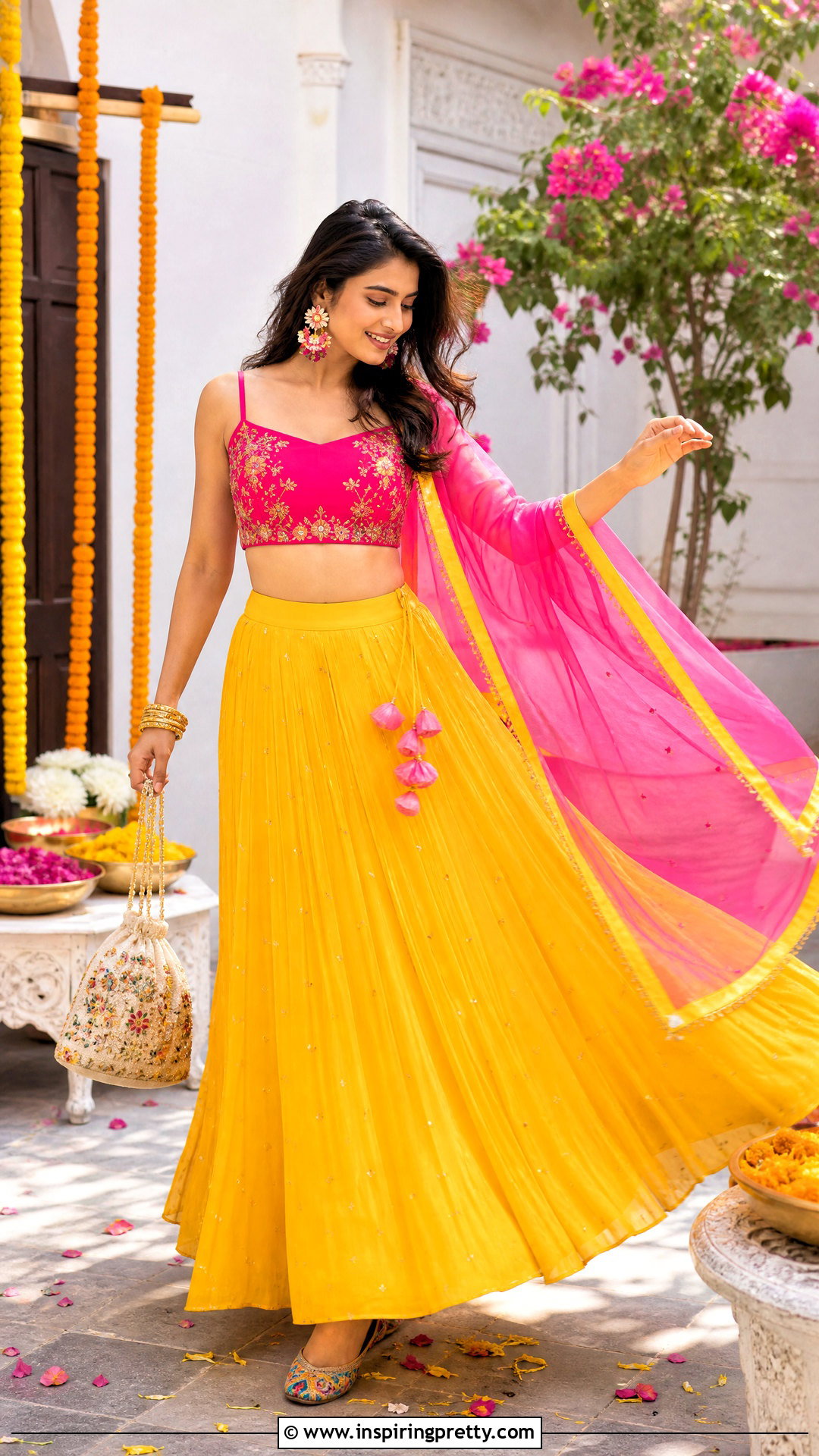
Bright yellow and pink create a joyful combination for daytime celebrations. Start with a marigold or lemon skirt in cotton-silk, georgette, or chanderi. Pair it with a fuchsia, rose, or coral blouse featuring light embroidery around the neckline and sleeves. A pink dupatta with a narrow yellow border can connect the contrasting pieces without hiding them. Add floral-inspired earrings, slim gold bangles, and an embroidered potli. Comfortable juttis are ideal when the gathering involves plenty of standing or movement. Keep the skirt lightweight and select a top that stays securely in place. A braid decorated with subtle accessories or a neat ponytail supports the lively mood. The result is colorful, traditional, and easy to personalize across different ages.
25. Green Skirt And Gold Top Indian Outfit
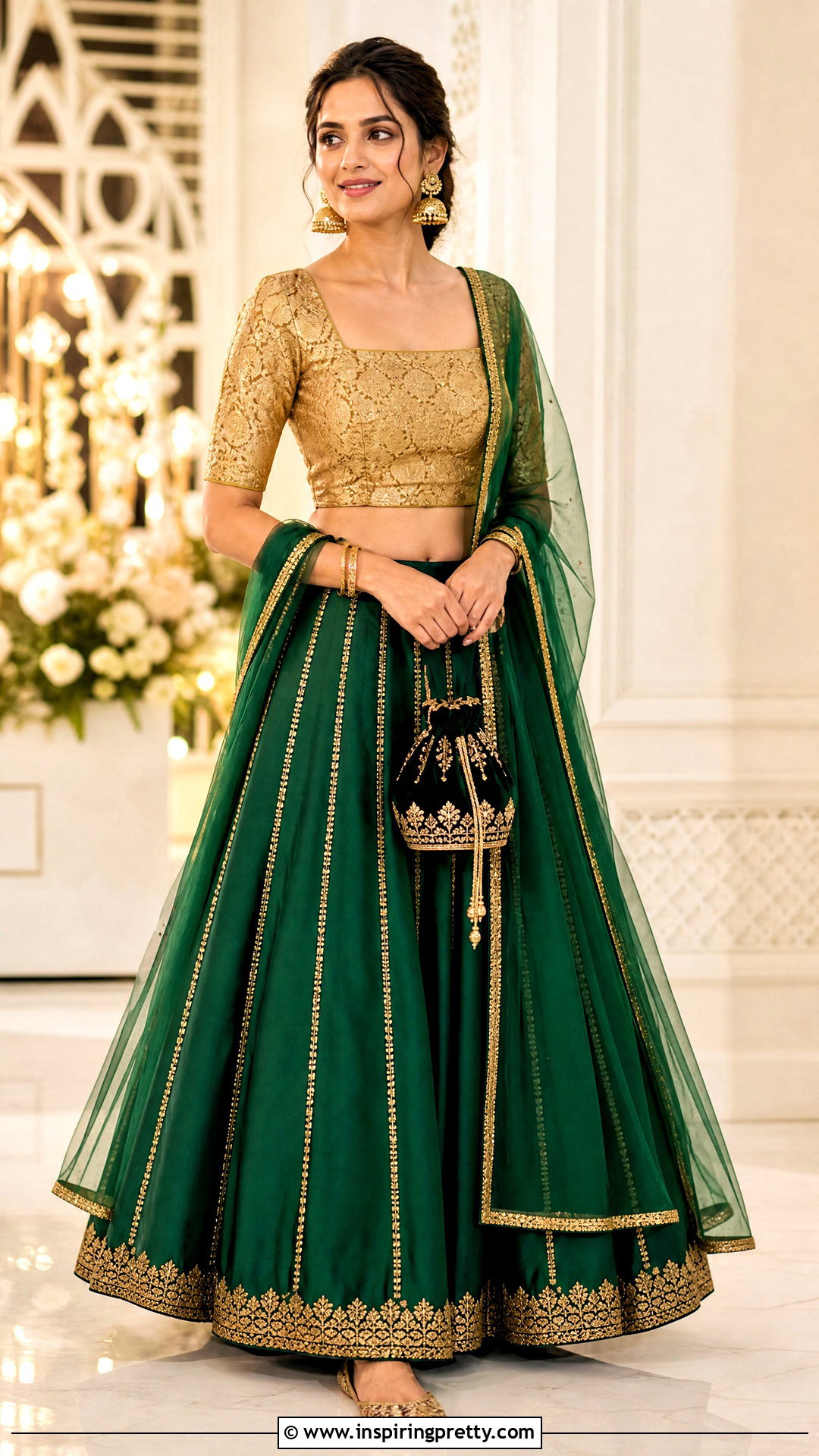
Emerald or bottle green paired with gold offers a rich look that suits evening festivities and formal family occasions. Choose a paneled green skirt with a subtle metallic border, then add a gold blouse in brocade, silk, or lightly sequined fabric. A square neckline and fitted sleeves create definition against the fuller skirt. Add gold jhumkas, a green potli, and a few slim bangles. Metallic block heels or embroidered juttis complete the head-to-toe combination. Drape a sheer green dupatta with a gold edge over one shoulder for a traditional layer. If the top is highly reflective, keep the skirt relatively simple. This balance prevents the outfit from feeling heavy and lets the deep color look sophisticated rather than excessively ornate.
26. Blue Skirt And Silver Top Indian Outfit
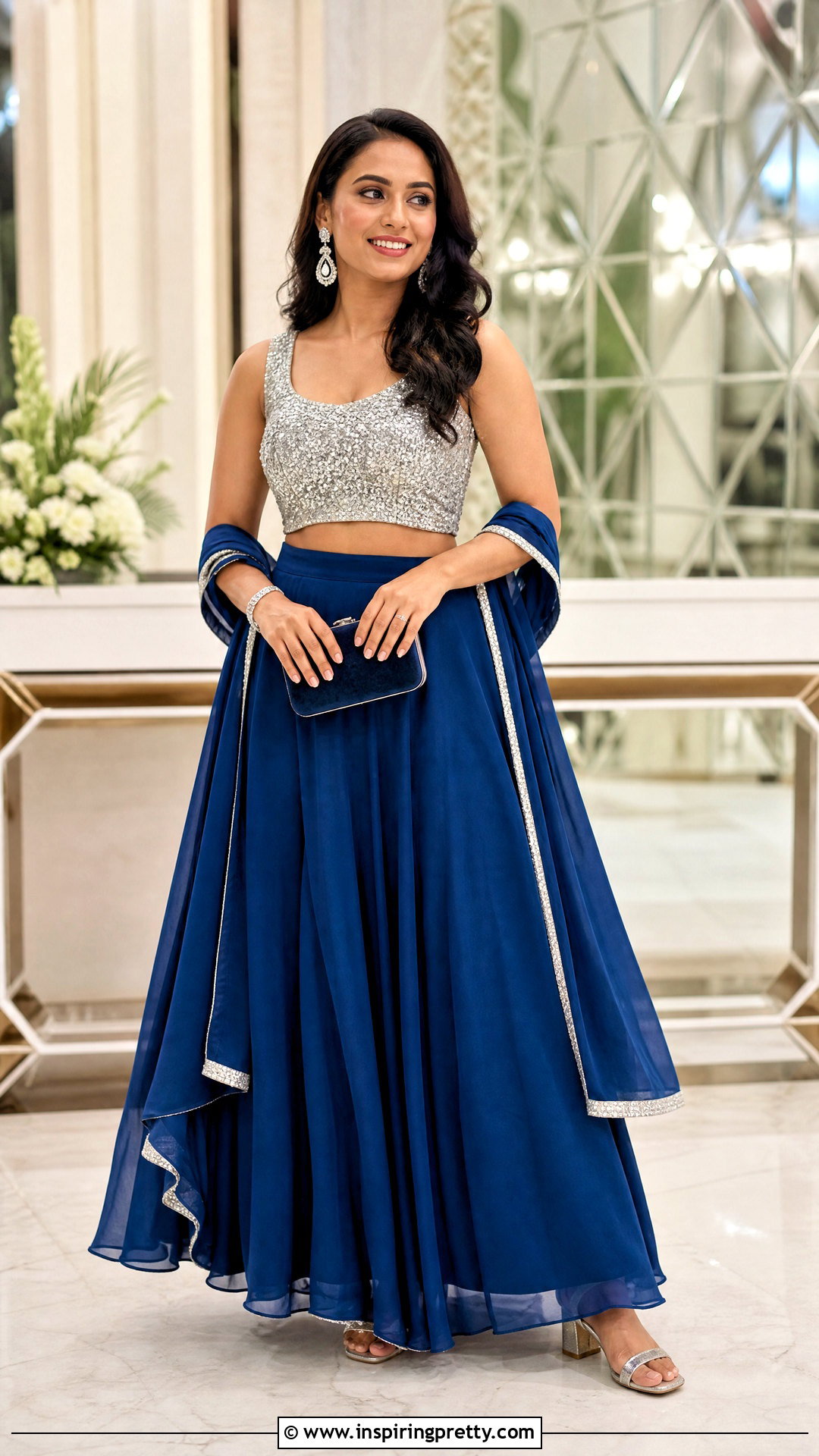
A blue skirt with a silver top creates a cool-toned ensemble that feels sleek and celebration-ready. Select royal blue, navy, or cobalt for the skirt, using georgette or silk for fluid movement. Pair it with a fitted silver blouse featuring restrained sequins or metallic threadwork. Crystal drops, a silver bracelet, and a navy clutch add sparkle without introducing another color. Wear silver sandals or low block heels that remain visible beneath the hem. A plain blue dupatta with a narrow silver border gives the outfit a traditional finish. Keep the top’s construction supportive and the skirt waistband comfortably fitted. A sleek ponytail or softly pinned waves will showcase the neckline and help the strong blue-and-silver contrast look clean from head to toe.
27. Purple Skirt And Mint Top Indian Outfit
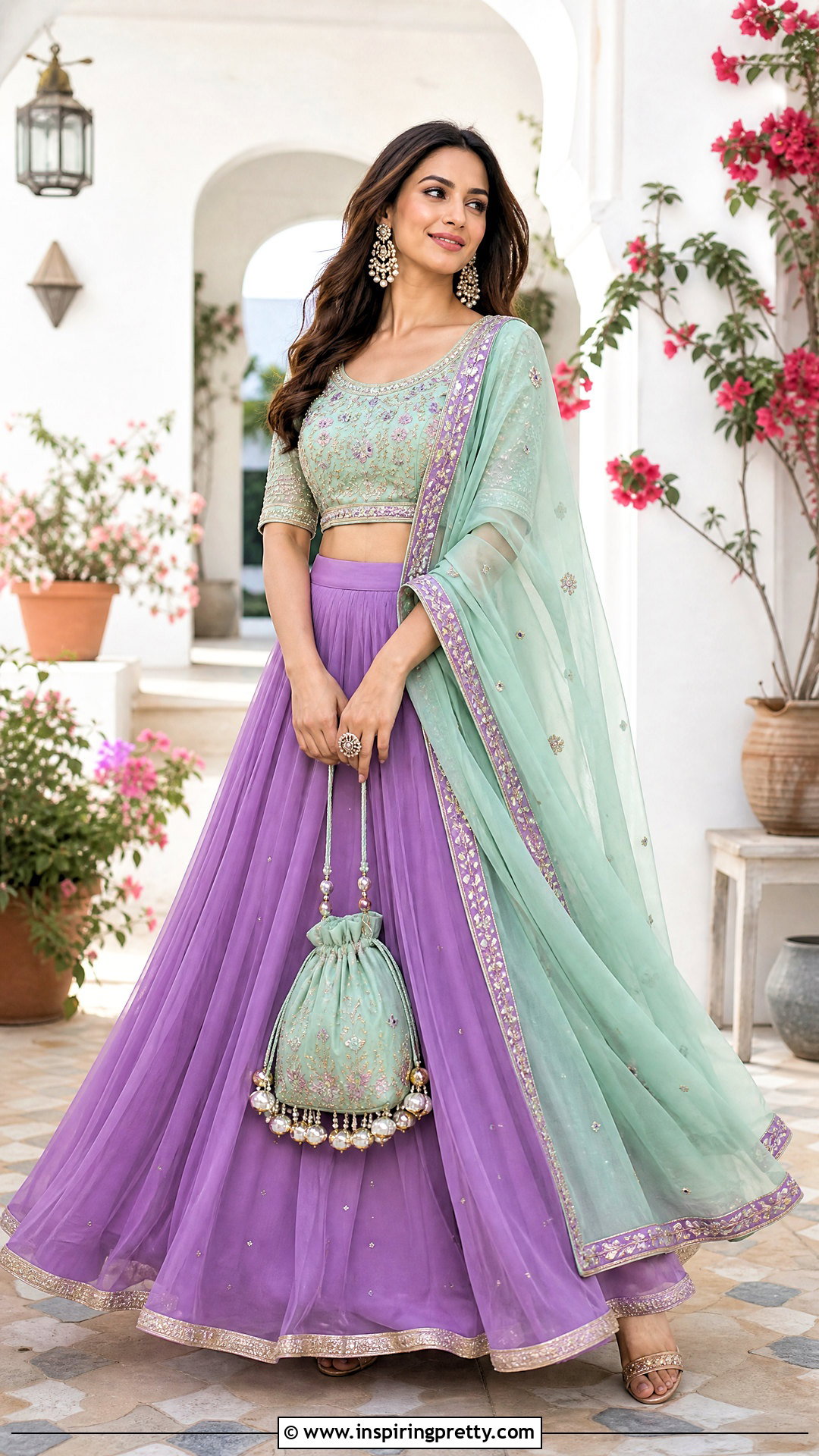
Purple and mint produce a distinctive color pairing that feels fresh without losing its festive character. Choose a plum, violet, or lavender skirt, then pair it with a mint-green blouse decorated with delicate threadwork. A fitted top balances a wide lehenga skirt, while elbow sleeves add elegant coverage. Connect the colors through a mint dupatta with purple edging or small embroidered motifs. Add pearl-and-stone earrings, a coordinating potli, and neutral metallic sandals. Keep the jewelry light so the unusual color combination remains the main feature. If you prefer softer contrast, use lavender instead of deep purple. The skirt’s waist should sit smoothly, and the top should finish near it, creating a deliberate break between the two complementary shades.
28. Orange Skirt And Navy Top Indian Outfit
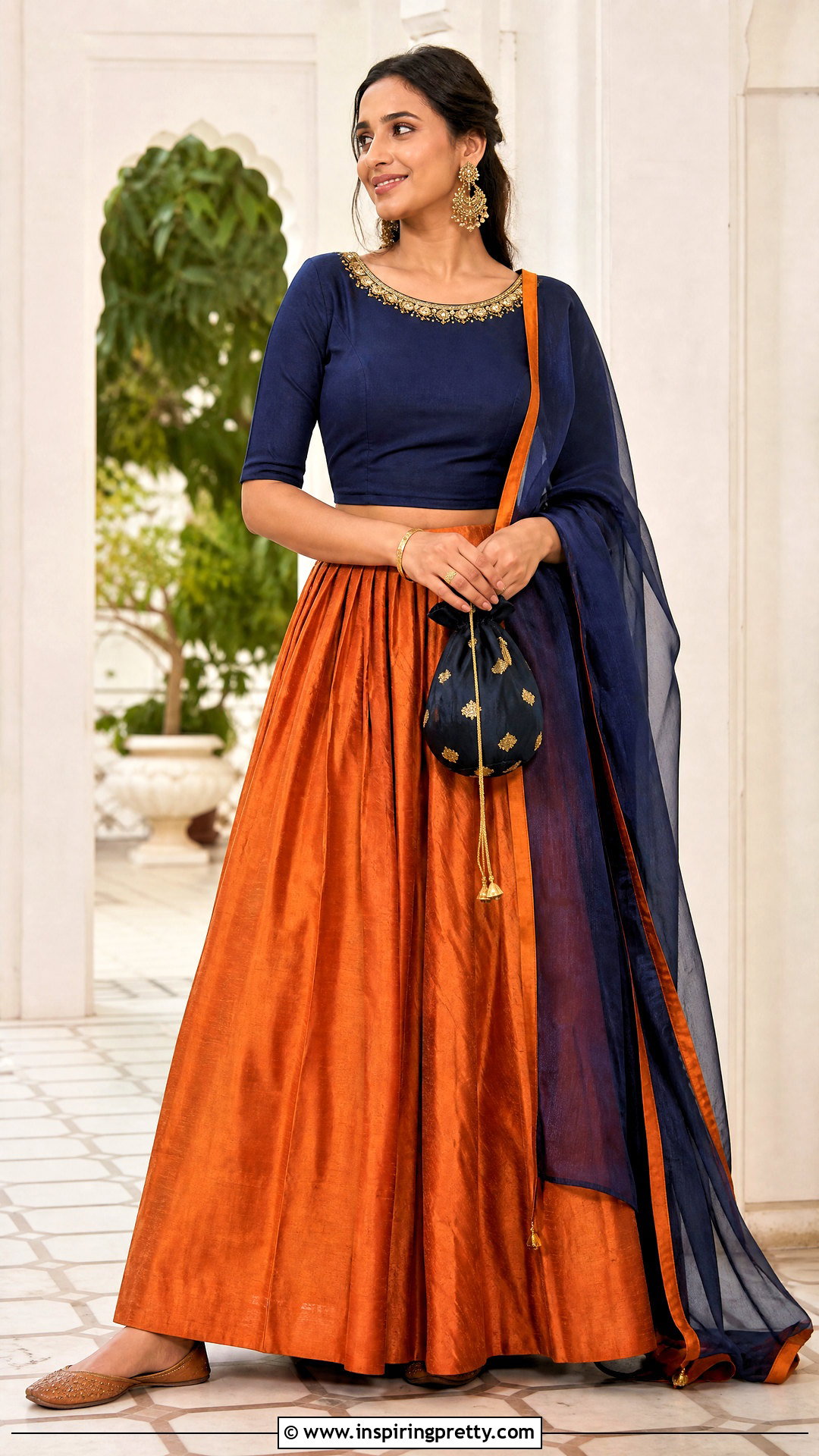
Warm orange looks more sophisticated when grounded by a deep navy top. Begin with a rust, burnt orange, or saffron skirt in silk, cotton, or georgette. Add a navy blouse with gold embroidery along the neckline or sleeves. Antique-gold earrings, a navy potli, and tan or gold juttis complete the coordinated palette. For additional coverage, choose a lightweight navy dupatta with an orange border. A fitted top keeps the fuller skirt balanced, although a short straight kurti also works for a more relaxed silhouette. Avoid adding several bright colors because the contrast between orange and navy already creates enough impact. This outfit transitions easily from afternoon to evening and offers a practical way to wear a vibrant skirt with understated accessories.
29. Monochrome Skirt And Top Indian Outfit
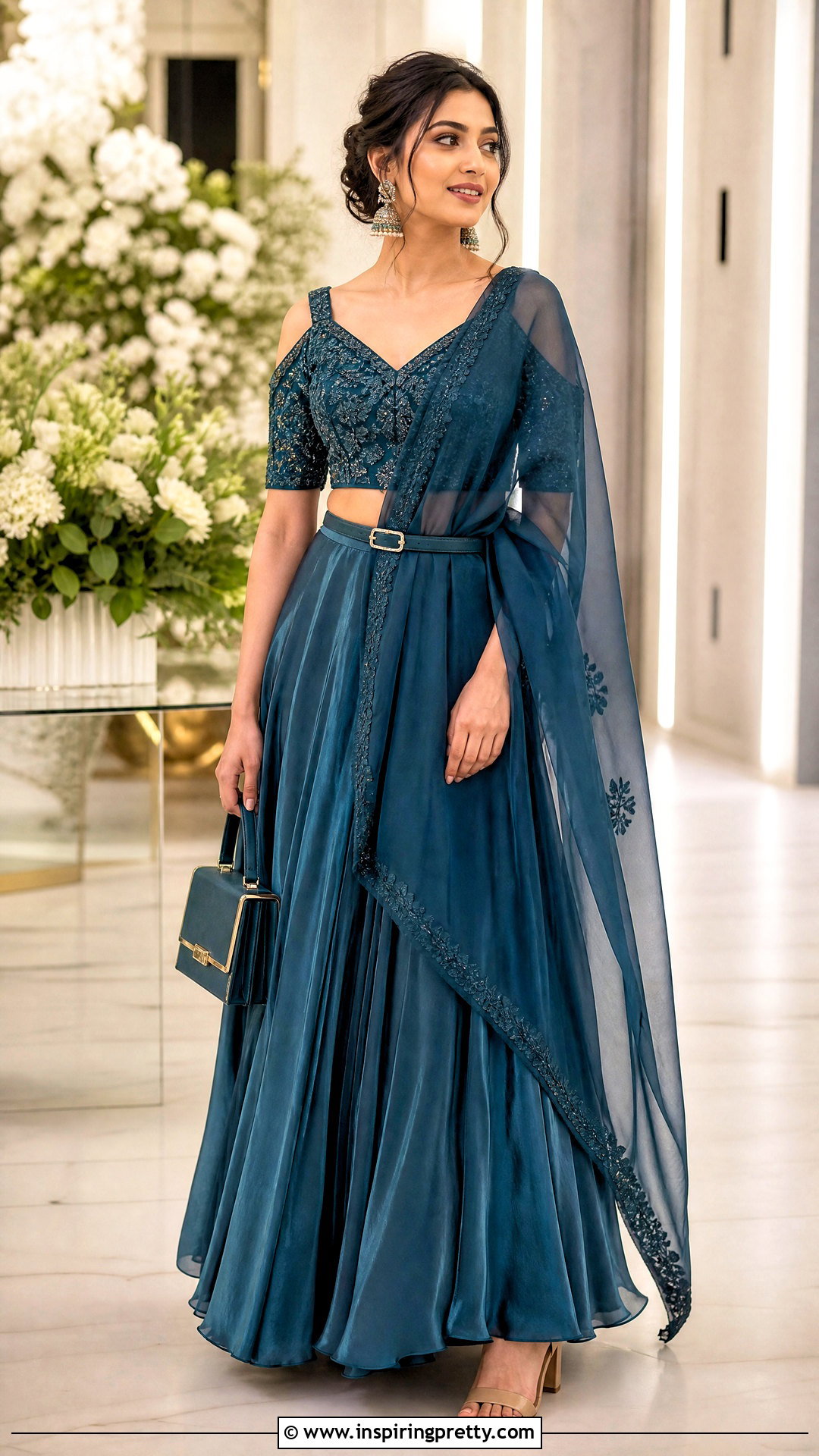
Wearing one color from head to toe gives a skirt-and-top ensemble a lengthened, cohesive appearance. Choose a shade that suits the occasion, such as deep teal, berry, ivory, rust, or midnight blue. Combine different textures within that color family: an embroidered blouse, a smooth flowing skirt, and a sheer dupatta. Tonal dressing looks most effective when the fabrics are close in color but not identical in finish. Add metallic earrings, a small structured bag, and neutral heels or juttis. A matching belt can define the waist and secure the dupatta, provided it does not compete with the embroidery. Keep makeup and accessories balanced with the color’s intensity. The result feels polished, modern, and easy to adapt to many body shapes.
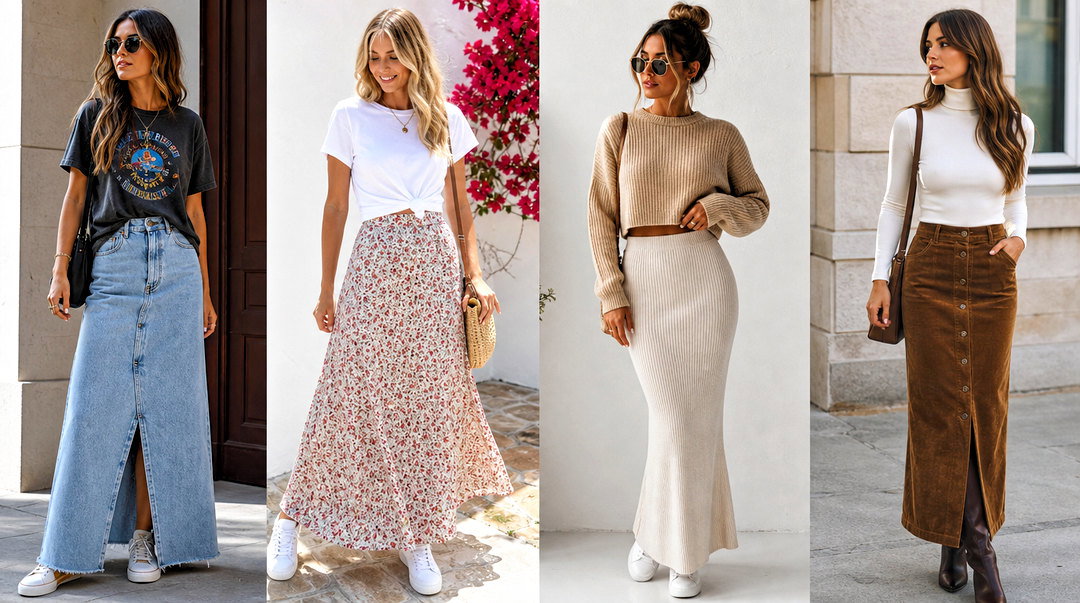
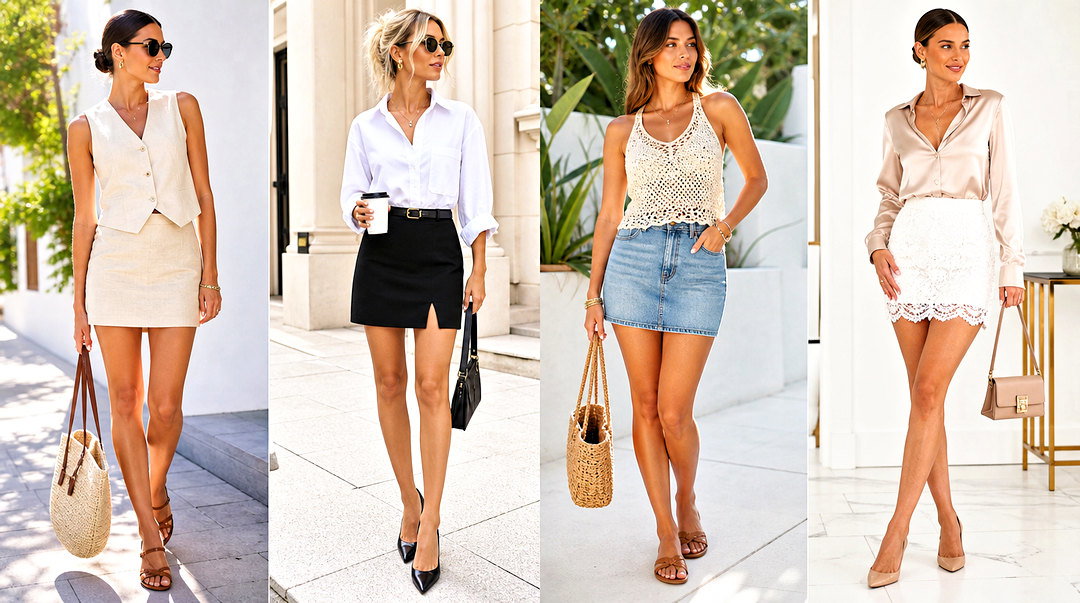
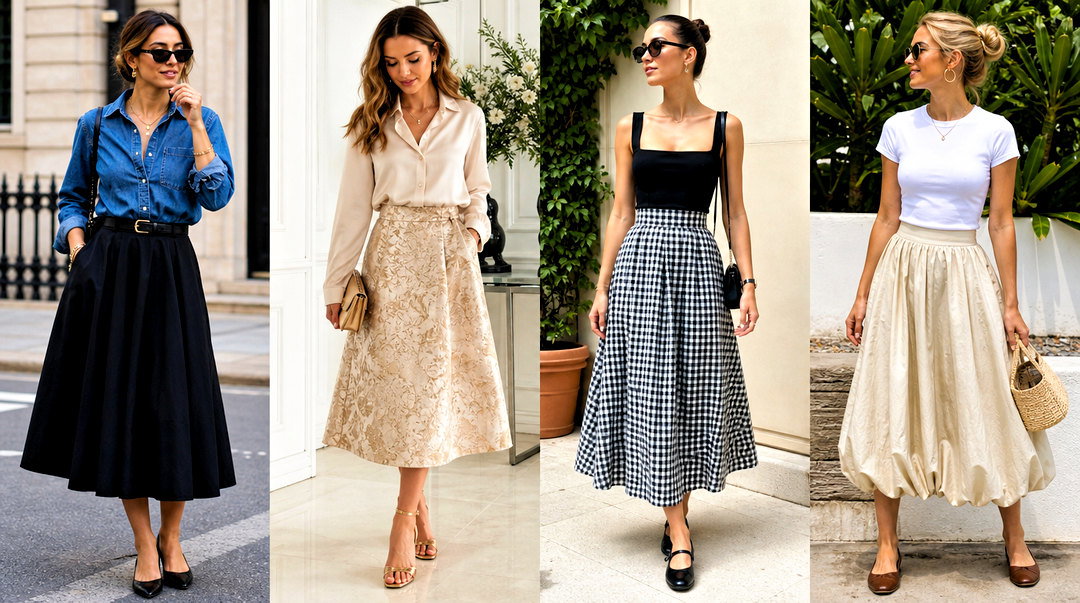
30. Printed Skirt And White Shirt Indian Outfit
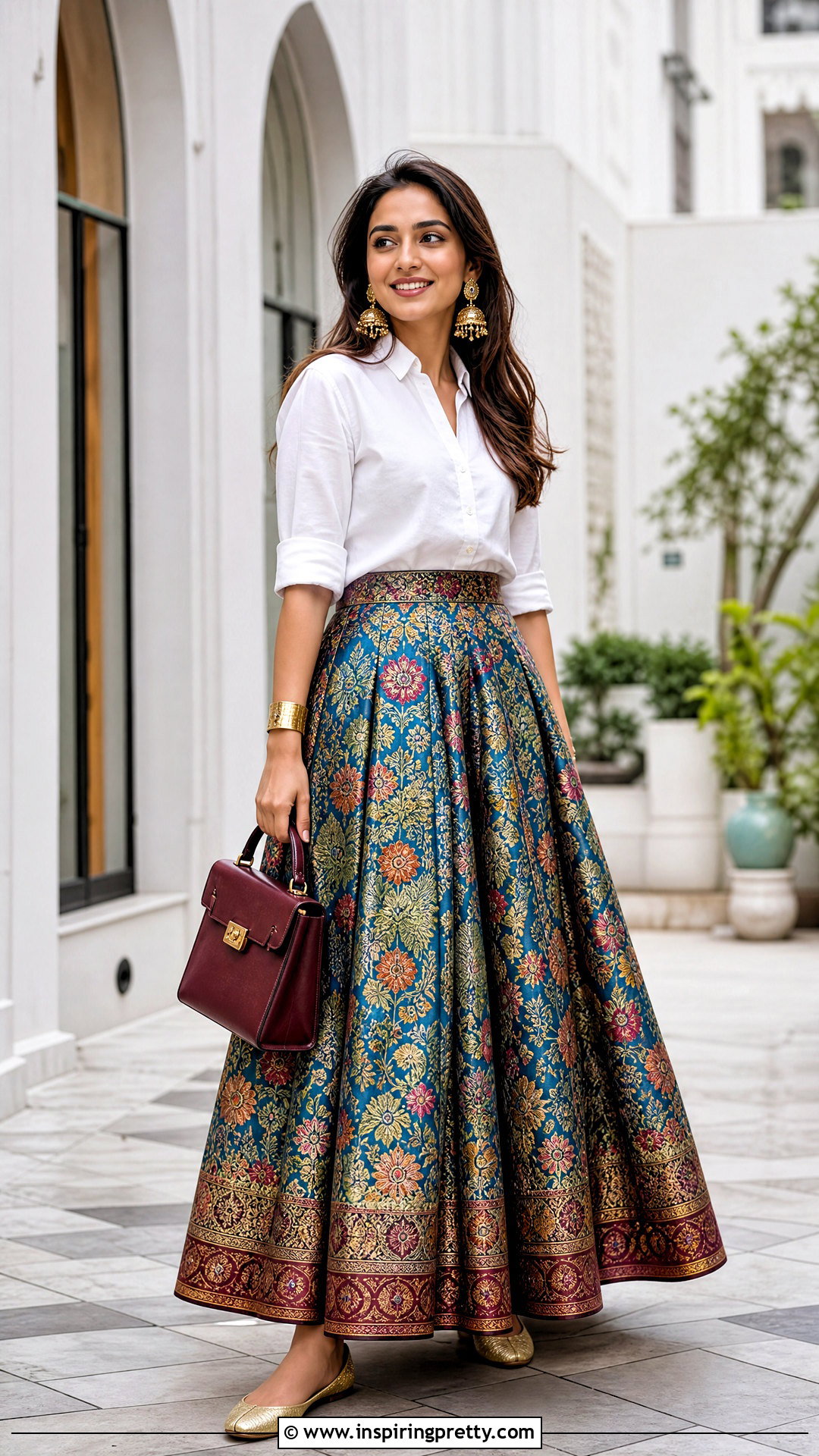
A printed Indian skirt paired with a crisp white shirt creates an approachable fusion outfit. Choose a long skirt in brocade, block print, floral cotton, or colorful woven fabric. Tuck in a fitted button-down shirt and roll the sleeves neatly, or knot the shirt at the natural waist for a more relaxed finish. Add statement jhumkas, a cuff bracelet, and a structured handbag. Plain juttis, loafers, or block-heeled sandals can change the level of formality. Leave the top buttons slightly open for a balanced neckline, but keep the overall styling polished. A dupatta is unnecessary because the shirt provides complete coverage. This combination is particularly useful for rewearing a festive skirt in a less traditional setting without sacrificing its Indian textile character.
31. Lehenga Skirt And Satin Top Indian Outfit
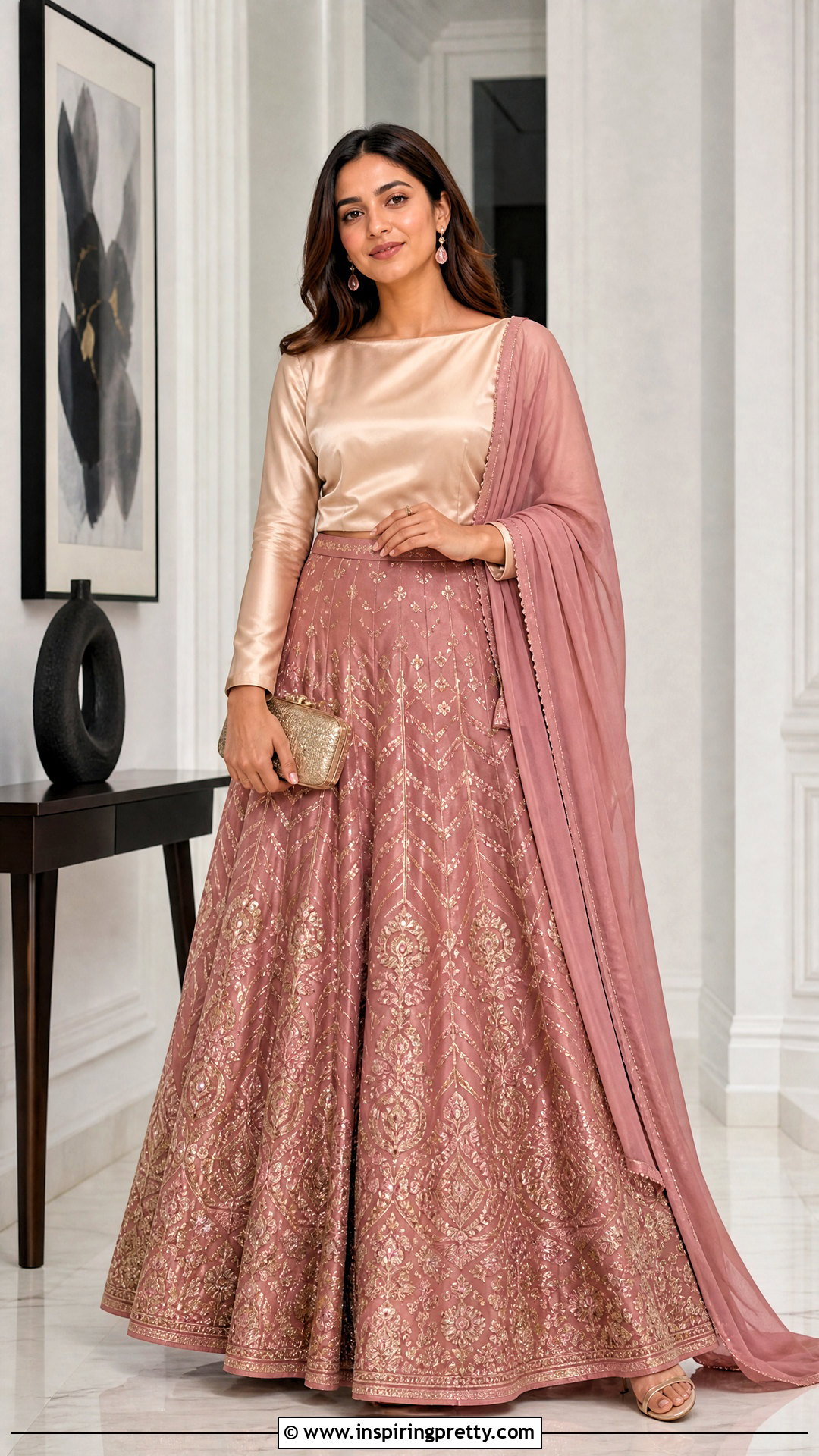
A satin top softens the traditional appearance of a lehenga skirt and creates an elegant fusion combination. Choose a lightly embroidered skirt, then pair it with a solid satin blouse in a complementary or tonal shade. A cowl-neck, boat-neck, or simple long-sleeve top can work, depending on the skirt’s waistband and your preferred coverage. Tuck the top smoothly to avoid bunching under the fitted waist. Add streamlined earrings, a clutch, and low metallic heels. Skip a dupatta for a modern look, or use a plain chiffon version if the gathering is more traditional. The satin should be substantial enough to drape cleanly without clinging. Keeping one piece simple also makes a detailed skirt easier to rewear across different celebrations.
32. Lehenga Skirt And T Shirt Indian Outfit
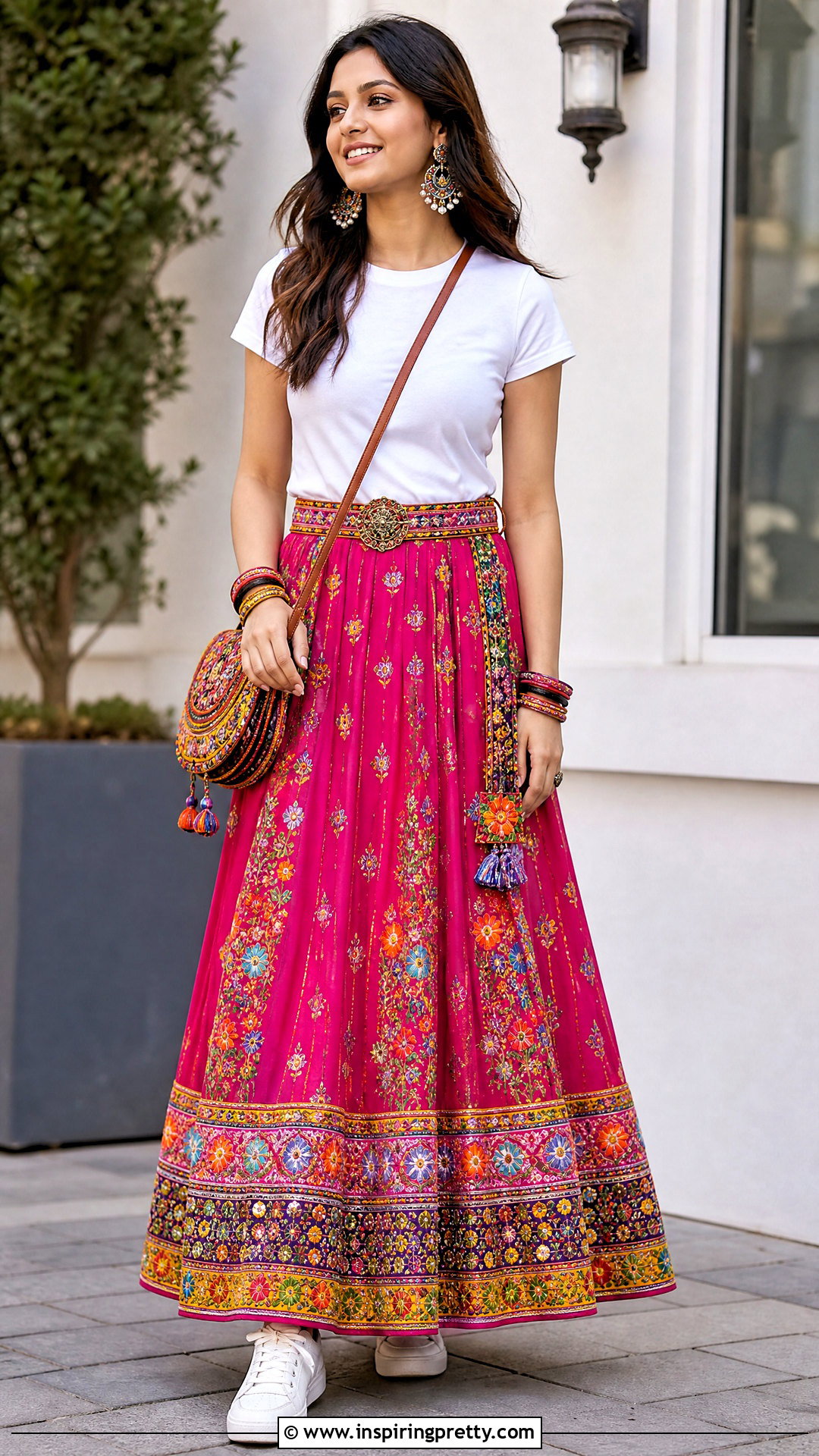
Pairing a lehenga skirt with a fitted T-shirt creates a relaxed Indo-Western outfit that works for casual festive gatherings. Select a colorful printed or embroidered skirt without excessive volume. Add a high-quality plain T-shirt in black, white, navy, or a shade found in the skirt. Tuck it completely into the waistband and define the waist with a slim embroidered belt if desired. Statement earrings, a stack of bangles, and clean sneakers or simple juttis give the combination personality. Avoid heavily distressed or oversized tees because they can make the outfit appear disconnected. A cropped, waist-length T-shirt also works when it meets the skirt’s upper edge. Skip the dupatta and carry a compact crossbody bag for an easy, youthful finish.
33. Denim Top And Indian Skirt Outfit
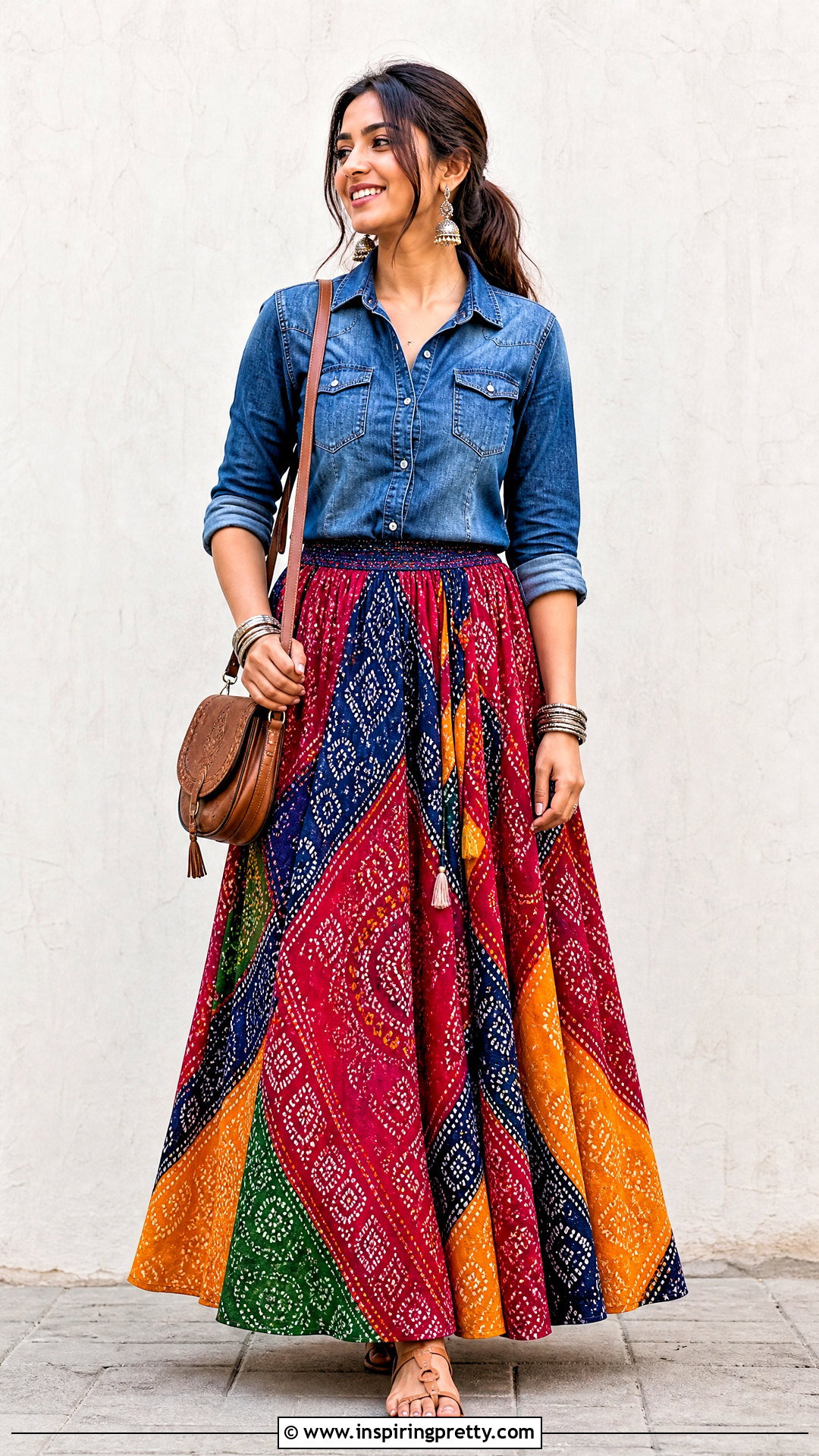
A fitted denim top can make a colorful Indian skirt feel casual, contemporary, and suitable for low-key gatherings. Choose a block-printed, Bandhani, or mirror-accented skirt, then add a dark or medium-wash denim shirt. Tuck it in neatly and roll the sleeves to the forearm. Alternatively, wear a structured denim crop top with wide straps for a cleaner silhouette. Oxidized earrings and colorful bangles reinforce the Indian details, while tan sandals or plain sneakers keep the outfit relaxed. Carry a small leather crossbody bag rather than a formal clutch. Avoid distressed denim because a smooth finish coordinates better with traditional textiles. The skirt should be the more decorative piece, allowing the denim top to provide structure and a useful neutral foundation.
34. Long Jacket Skirt And Top Indian Outfit
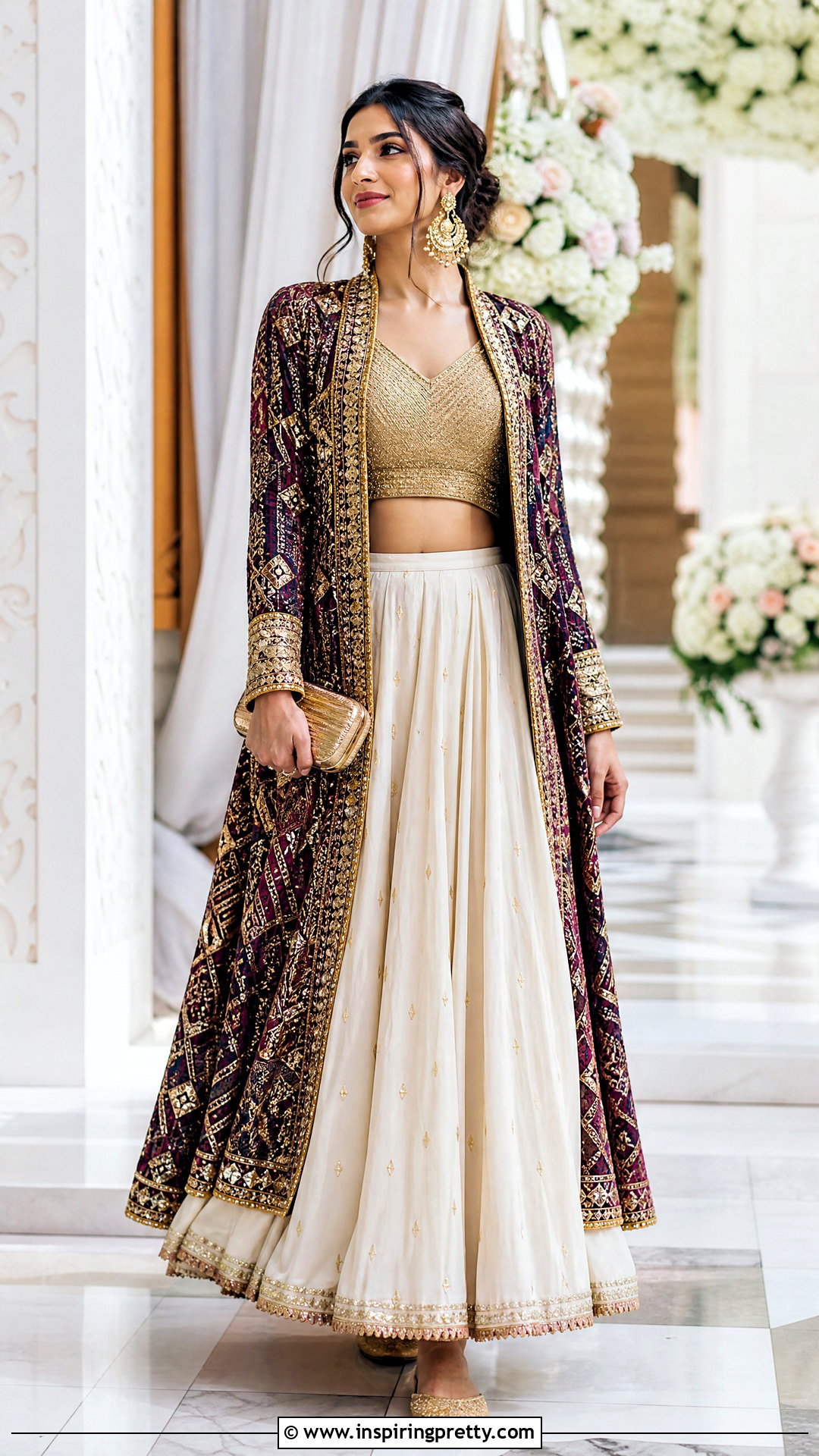
A long jacket layered over a skirt and fitted top creates a dramatic yet comfortable three-piece ensemble. Start with a solid flowing skirt and a simple crop top or sleeveless blouse. Add an open-front jacket featuring embroidery, brocade panels, or printed borders. The jacket should fall below the knee and move freely without covering the skirt entirely. Wear statement earrings, one ring, and a compact clutch, keeping other accessories limited. Heeled sandals or pointed juttis add polish beneath the long layers. A separate dupatta is usually unnecessary because the jacket already provides coverage and movement. For balanced proportions, pair a heavily embellished jacket with plain inner pieces. This approach also allows each garment to be restyled with simpler wardrobe separates later.
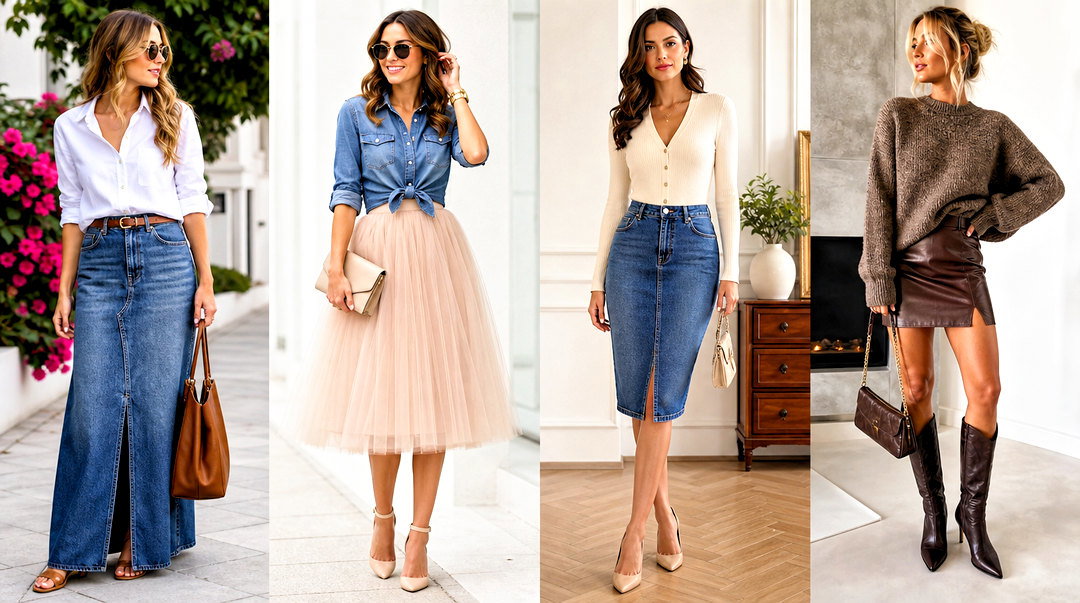
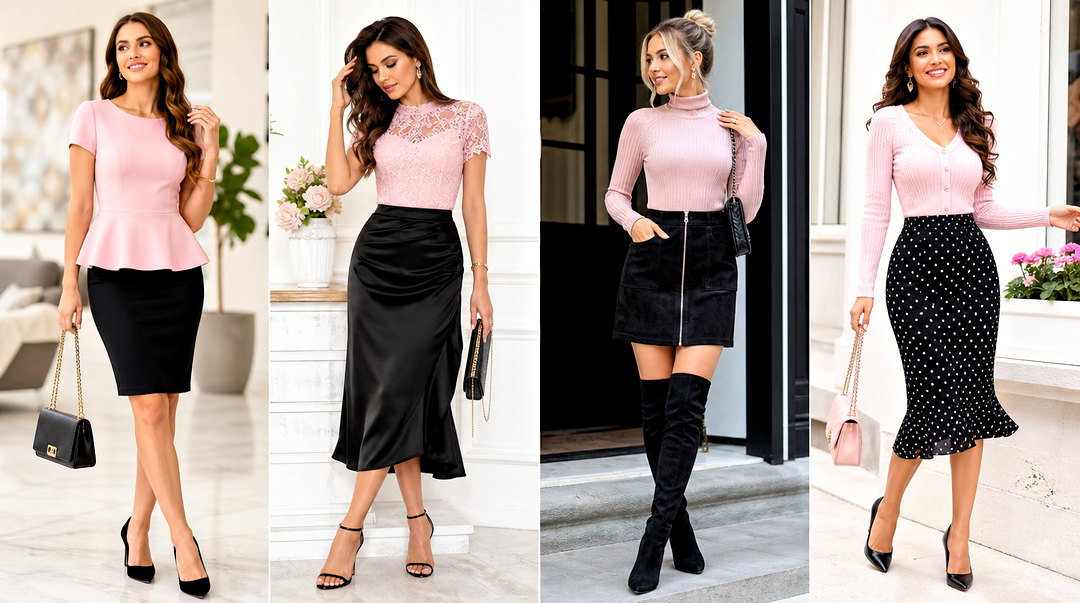
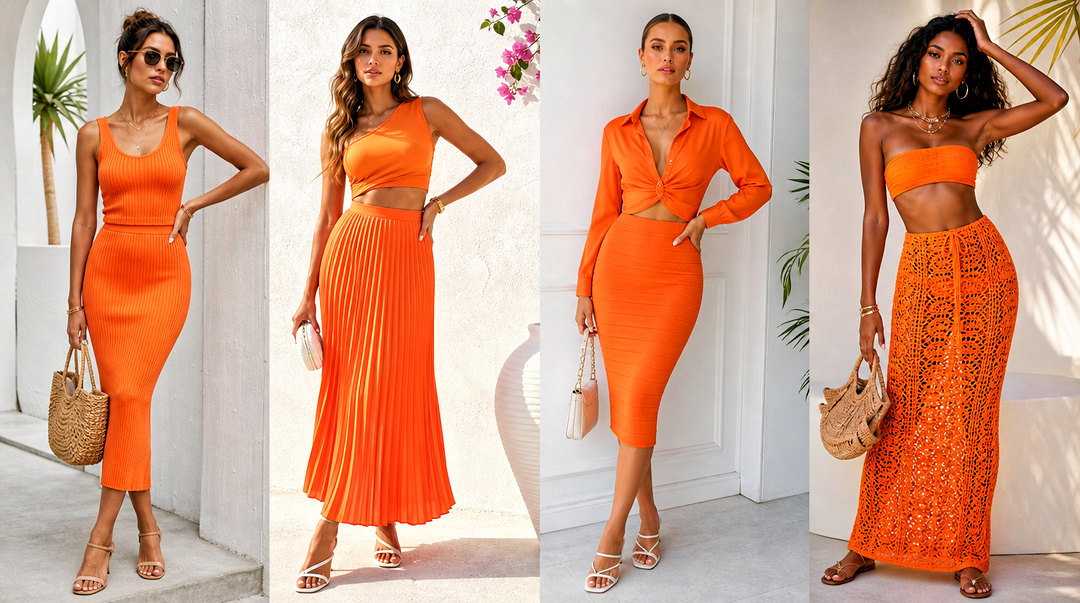
35. Cape Top And Lehenga Skirt Indian Outfit
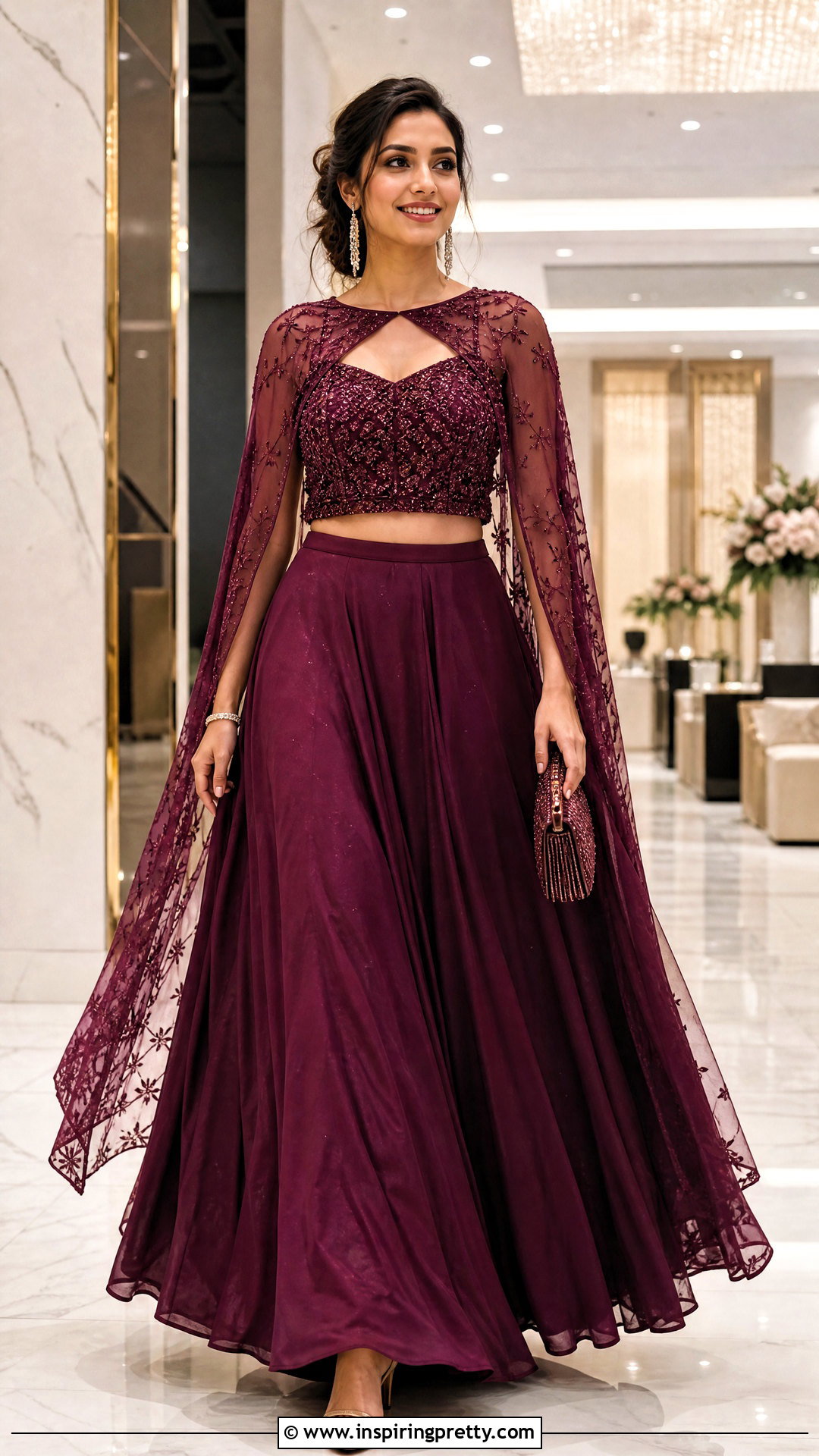
A cape top gives a lehenga skirt graceful movement while offering more shoulder and upper-arm coverage. Choose a solid or lightly embroidered skirt, then add a fitted inner blouse with an attached sheer cape. The cape can finish at the waist, hip, or knee, depending on how much drama you want. Tonal colors create a lengthened appearance, while a contrasting cape makes the upper half more prominent. Add slim drop earrings, a delicate bracelet, and a small clutch. Low block heels provide stability beneath the flowing layers. Skip the dupatta because it can compete with the cape and create unnecessary bulk. Keep the neckline relatively simple, allowing the translucent fabric and embroidered edges to become the outfit’s main decorative feature.
36. Peplum Top And Lehenga Skirt Indian Outfit
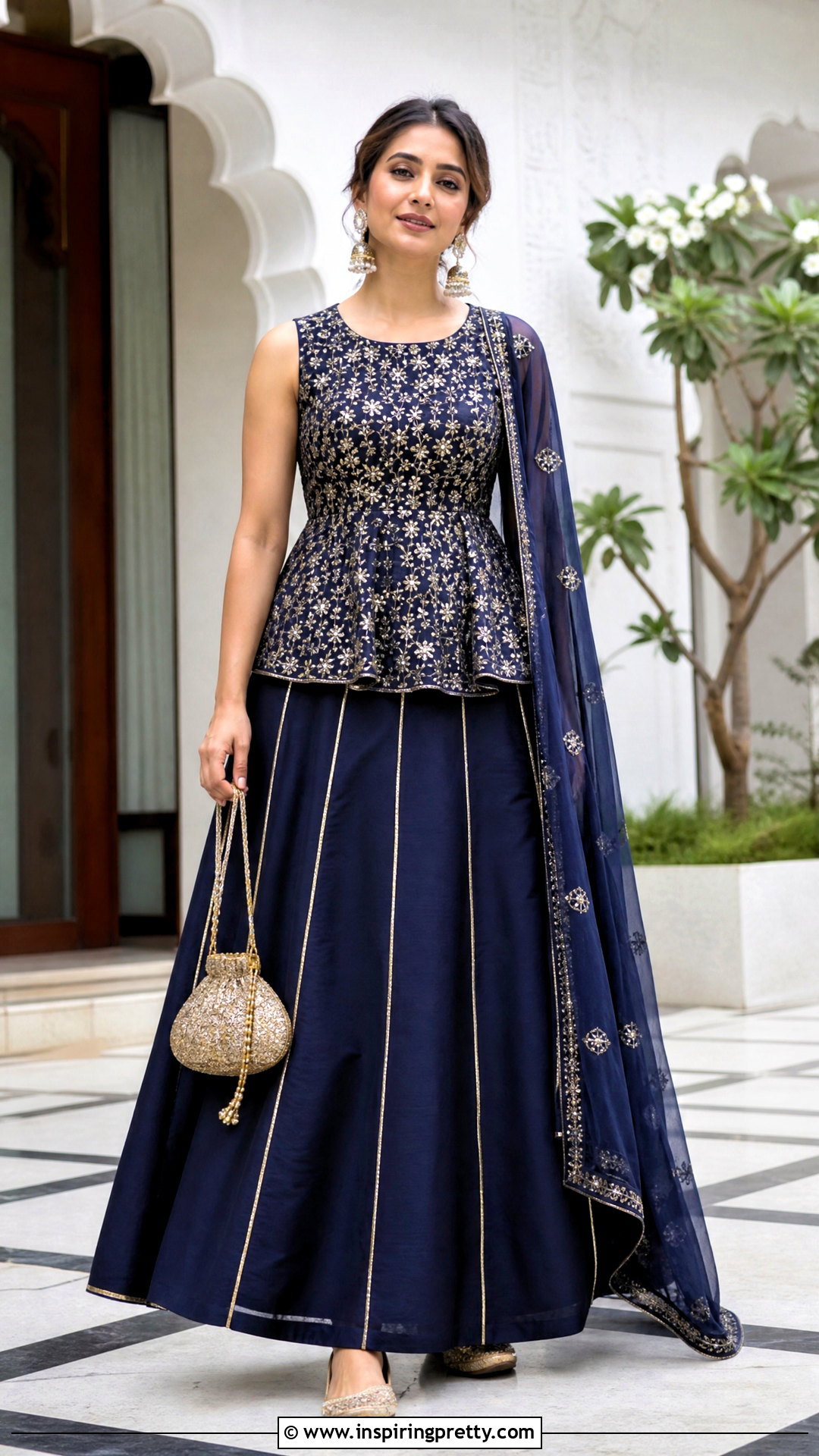
A peplum top paired with a lehenga skirt provides a structured waist and comfortable midsection coverage. Choose a blouse that fits well through the shoulders and upper torso before flaring gently over the waistband. Pair it with a paneled or moderately full skirt so the two flares do not create excessive volume. Jewel tones, pastels, and tonal neutrals all work for this balanced silhouette. Add medium-size earrings, a slim bangle, and a small potli. Embellished flats or low heels keep the combination practical. A sheer dupatta can be pinned over one shoulder, although it is optional when the peplum has detailed embroidery. Make sure the top’s hem ends above the skirt’s widest point to maintain clean, flattering proportions.
37. Corset Top And Lehenga Skirt Indian Outfit
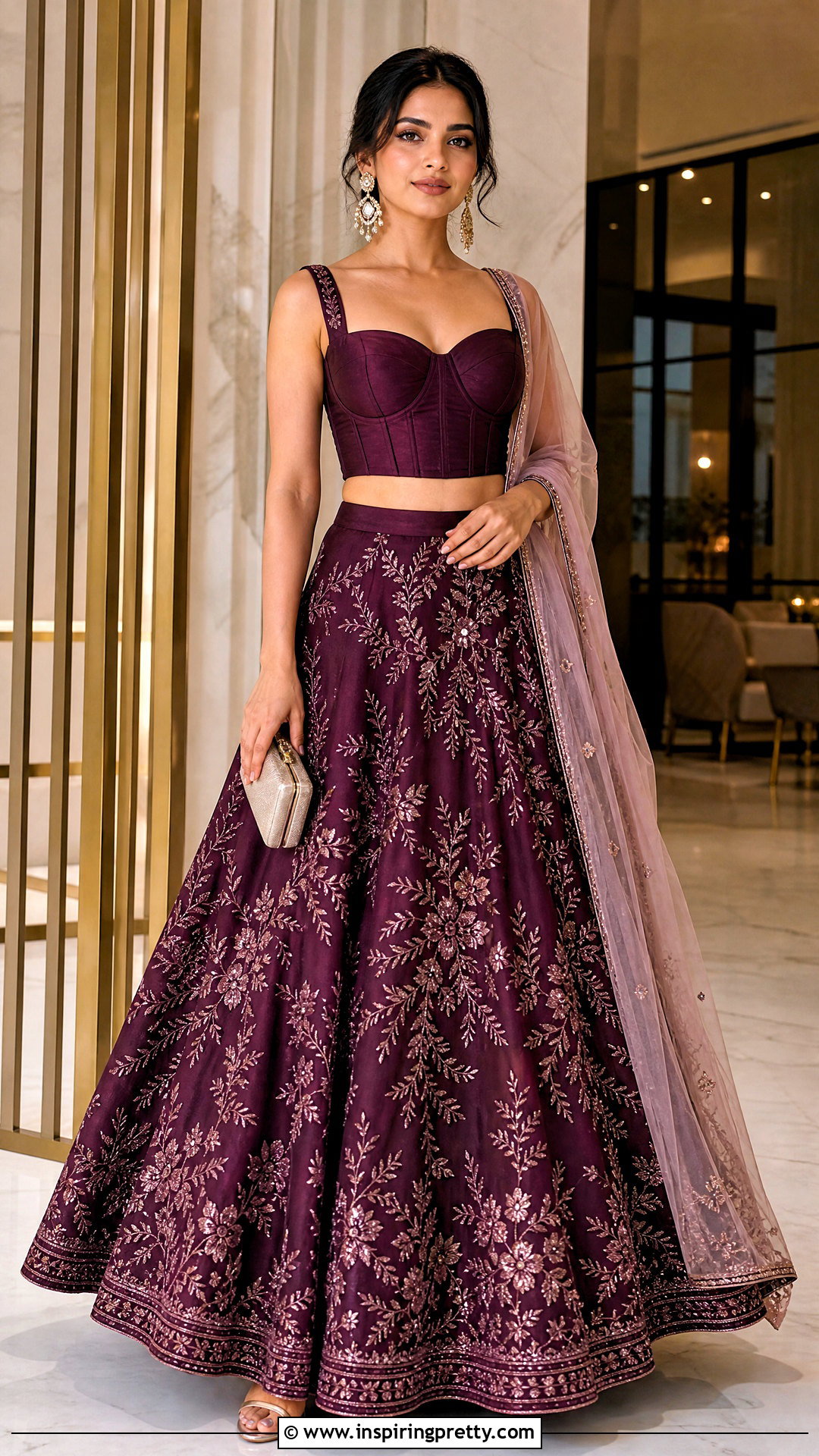
A corset-inspired top adds modern structure to a flowing lehenga skirt while creating clear waist definition. Select a well-fitted top with broad straps, supportive seams, and a neckline that feels secure. Pair it with a high-waisted printed, embroidered, or solid skirt that meets the lower edge of the blouse. For a sophisticated finish, keep both pieces within the same color family or repeat the skirt’s embroidery on the top. Add statement earrings, a small box clutch, and stable heels. A light dupatta draped from one shoulder softens the structured bodice and makes the outfit feel more traditional. Proper tailoring is essential; the top should support without restricting movement, and the skirt should sit comfortably without pulling at the waistband.
38. Halter Top And Indian Skirt Outfit
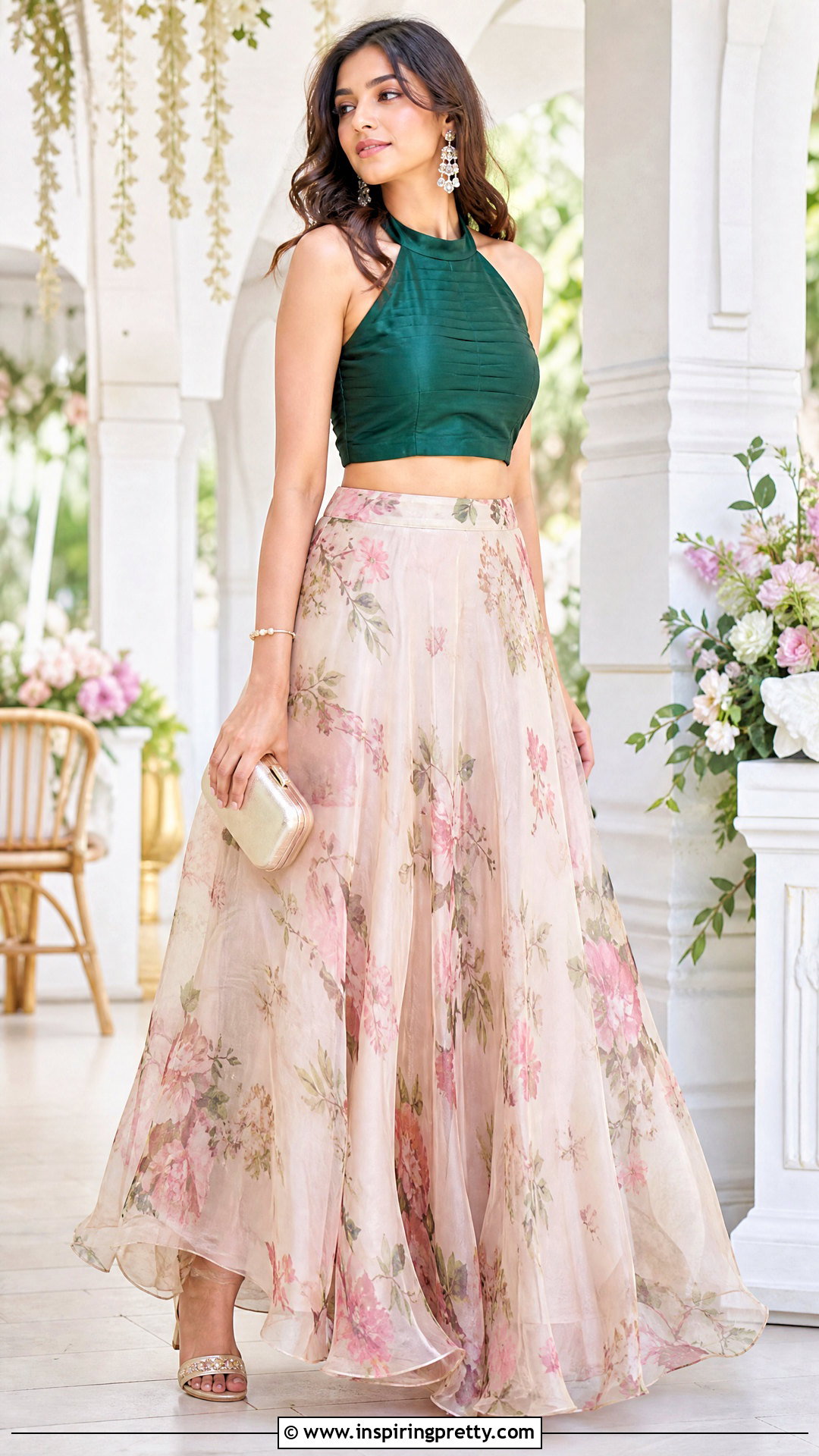
A halter top creates a clean shoulder line and pairs particularly well with a high-waisted Indian skirt. Choose a top with a secure neckline and enough structure for comfortable movement. Style it with a floral organza, lightly embellished georgette, or silk skirt that flares gently from the waist. Long earrings draw attention upward, while a slim bracelet and compact clutch keep the accessories refined. Add block-heeled sandals or embroidered flats based on the event. Skip a necklace so the halter shape remains uncluttered. A narrow dupatta may be draped around the arms or over one shoulder for additional coverage. Wearing the hair in a bun or high ponytail highlights the neckline and gives the complete outfit a crisp, modern finish.
39. Off Shoulder Top And Lehenga Skirt Indian Outfit
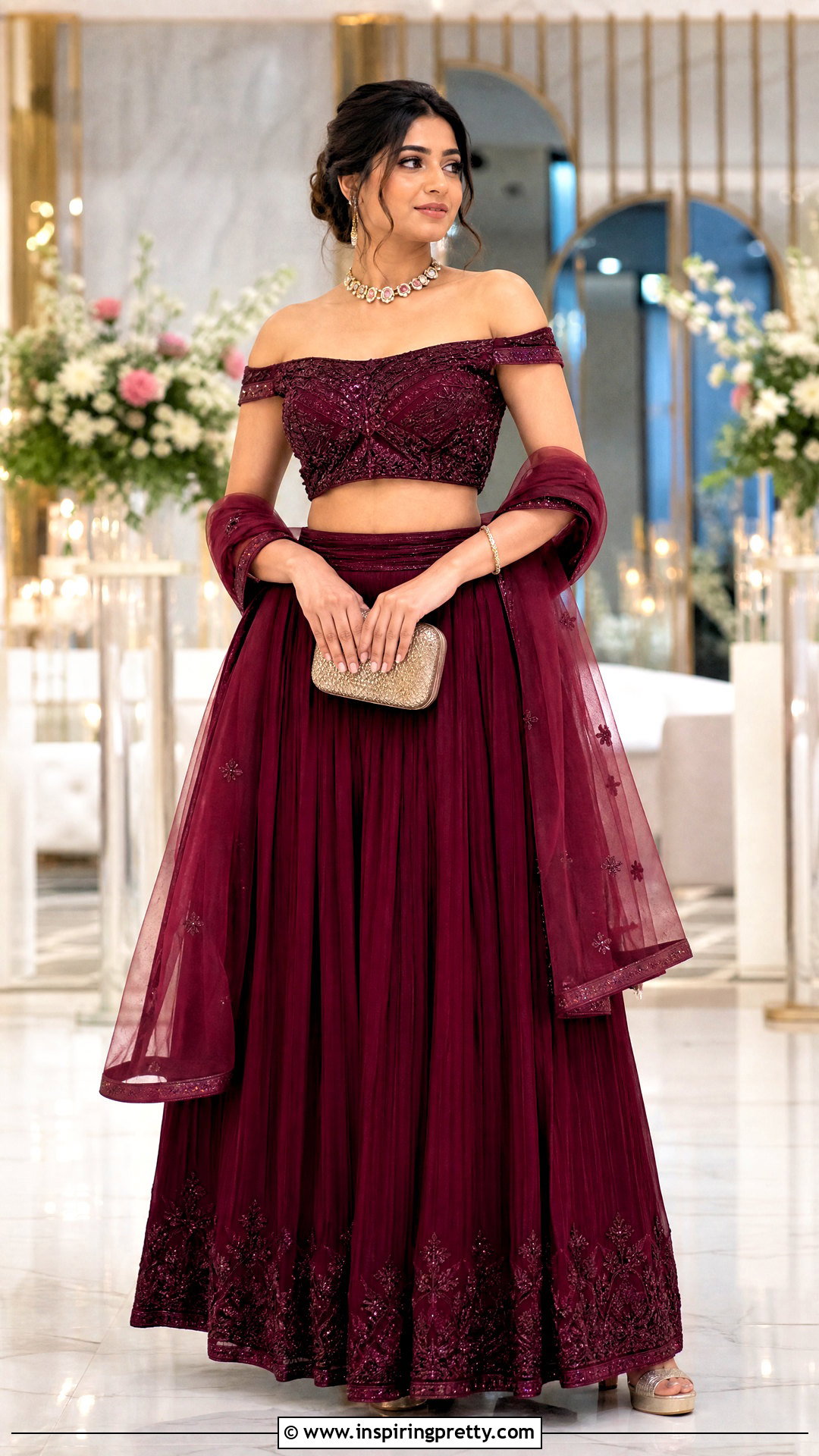
An off-shoulder top brings a contemporary touch to a traditional lehenga skirt. Choose a structured blouse that stays securely in place and allows natural arm movement. Pair it with a high-waisted skirt in silk, organza, or georgette, keeping the embroidery concentrated along the hem or waistband. A short necklace or choker balances the open neckline, while small earrings prevent the upper half from becoming crowded. Add a structured clutch and comfortable block heels. A sheer dupatta can rest lightly around the elbows, but it should not cover the neckline entirely. Keep the skirt moderately full to balance the close-fitting top. Soft waves swept to one side or a neat bun will complete the polished fusion outfit without hiding its defining detail.
40. Full Sleeve Top And Indian Skirt Outfit
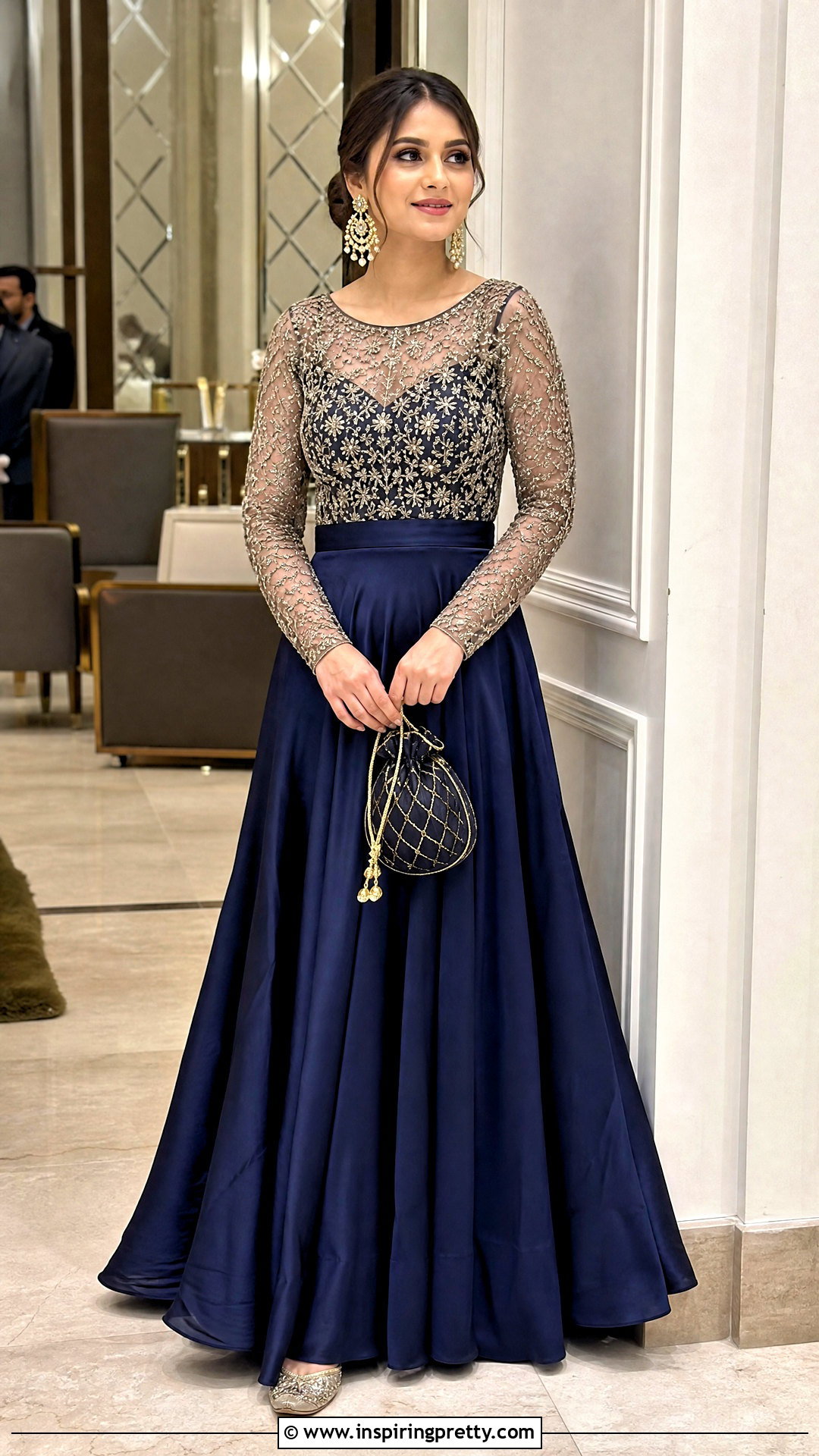
A full-sleeve top lends graceful coverage and creates an elegant contrast with a flowing Indian skirt. Pair a fitted embroidered blouse with a plain georgette or silk skirt, or reverse the balance by wearing a solid top with a detailed lehenga. Sheer sleeves add lightness, while velvet or raw-silk sleeves suit cooler evening events. Choose a wider neckline to prevent the covered silhouette from feeling too closed. Add statement earrings, a ring, and a compact potli instead of stacking several bracelets over decorative cuffs. Pointed juttis or block heels complete the outfit. A dupatta is optional, since the long sleeves already offer coverage. Keep the top properly tailored at the shoulders and wrists so it looks intentional rather than loose or restrictive.
41. Ruffle Top And Long Skirt Indian Outfit
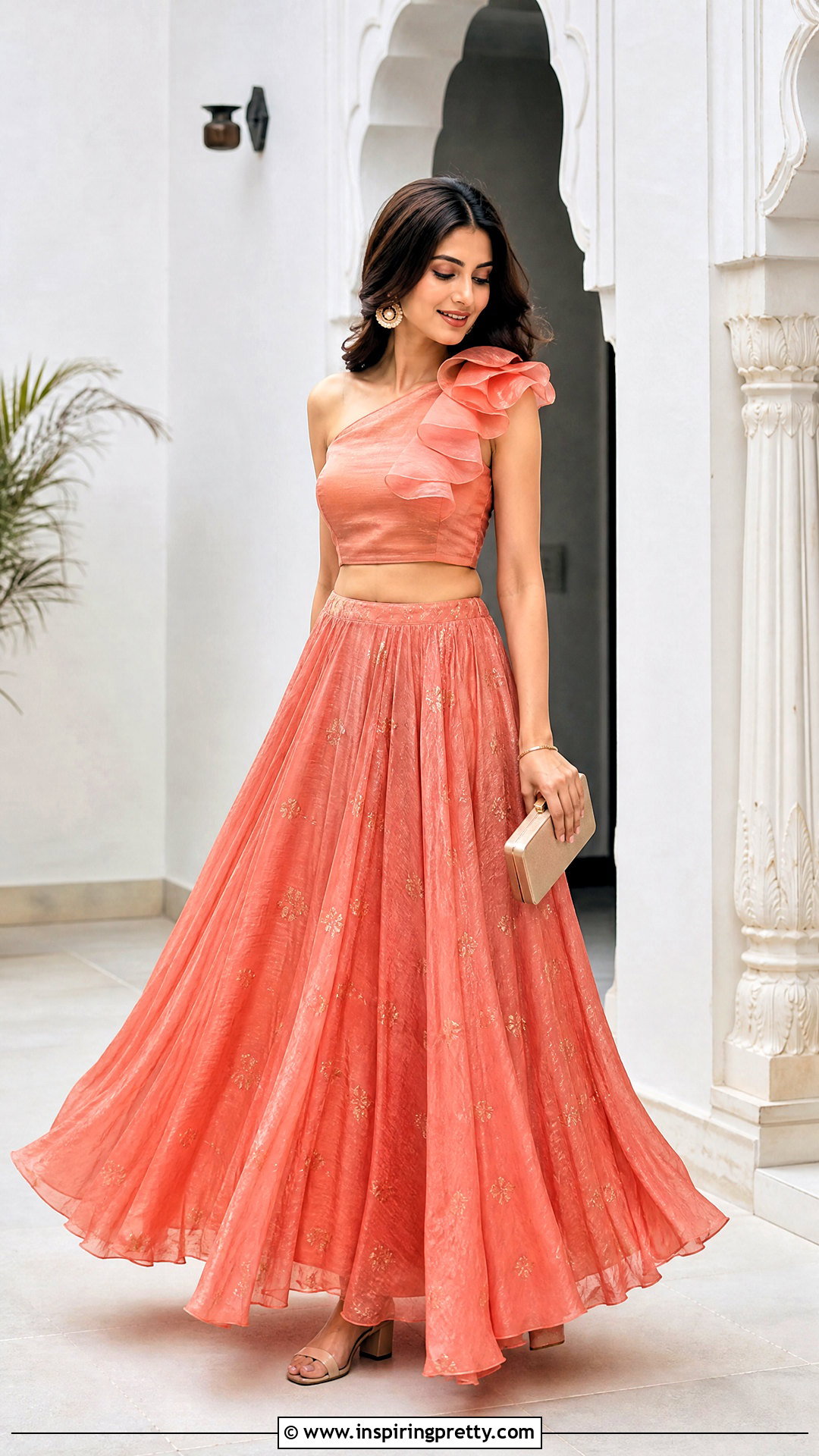
A ruffle top can soften a long Indian skirt and add dimension without requiring heavy embellishment. Choose one focused ruffle detail, such as a diagonal neckline, layered sleeve, or gentle peplum hem. Pair the top with a plain or subtly printed skirt so the silhouette does not become overly busy. Tonal shades keep the ruffles sophisticated, while contrasting colors create a more playful effect. Add simple earrings, a slim bracelet, and a clean clutch. Block-heeled sandals help balance a floor-length skirt and maintain comfortable movement. Avoid a voluminous dupatta; a narrow chiffon layer is enough if coverage is needed. Pull the hair back or wear it over one shoulder so the top’s shape remains visible and the outfit feels neatly styled.
42. One Shoulder Top And Lehenga Skirt Indian Outfit
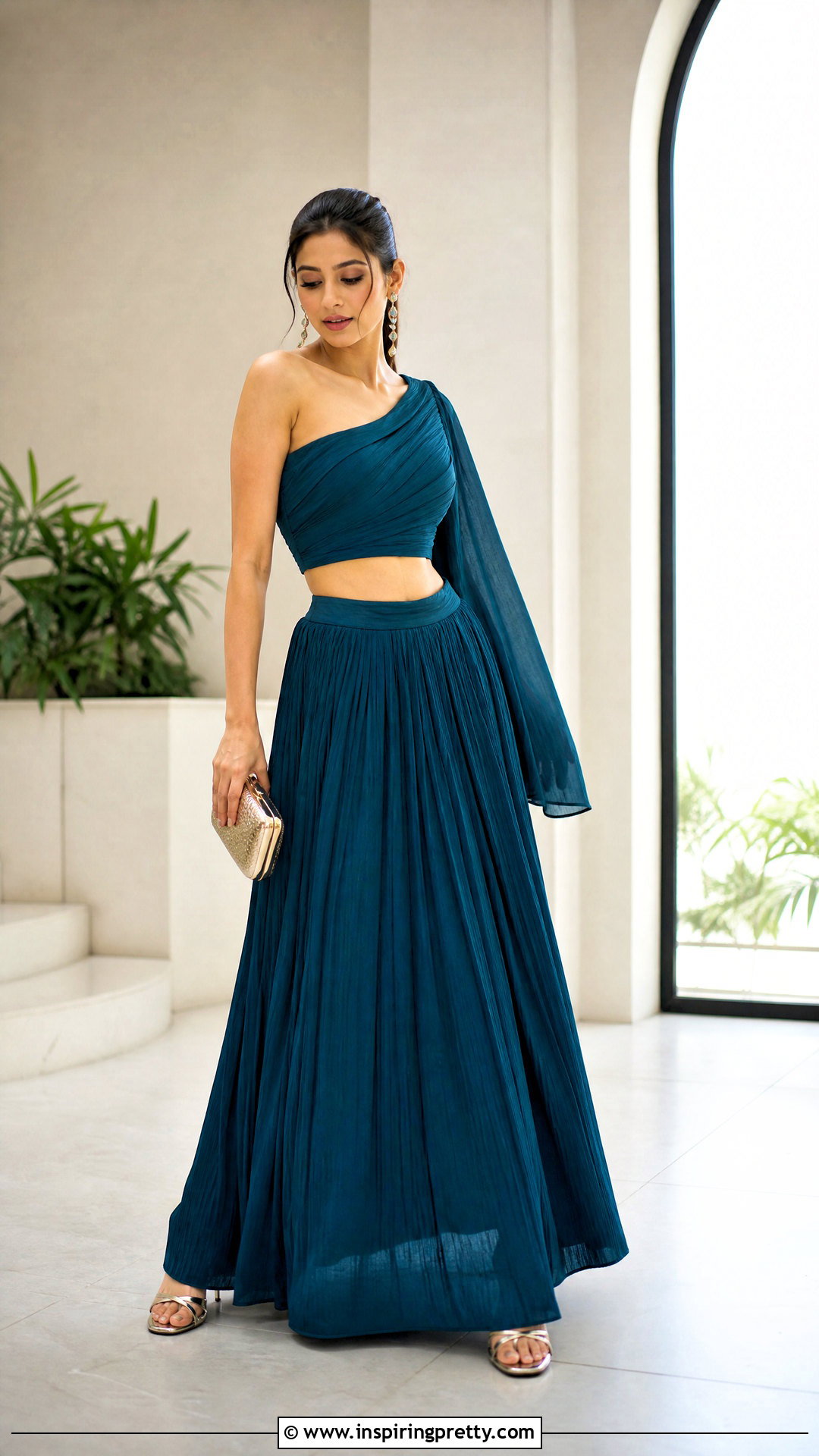
A one-shoulder top gives a lehenga skirt an asymmetrical, modern finish. Choose a blouse with secure internal support and either a clean neckline or a single draped sleeve. Pair it with a solid, pleated, or lightly embroidered skirt that sits at the natural waist. A tonal combination looks sleek, while a metallic top can dress up a deep jewel-toned skirt. Wear a statement earring on the exposed side or choose matching medium-size drops for balance. Add a structured clutch and stable heeled sandals. Skip the necklace and dupatta because both can obscure the neckline. A low side bun or sleek ponytail highlights the asymmetry. Keep the skirt’s volume controlled so the distinctive upper silhouette remains the clear focus of the ensemble.
43. Jacket Top And Pleated Skirt Indian Outfit
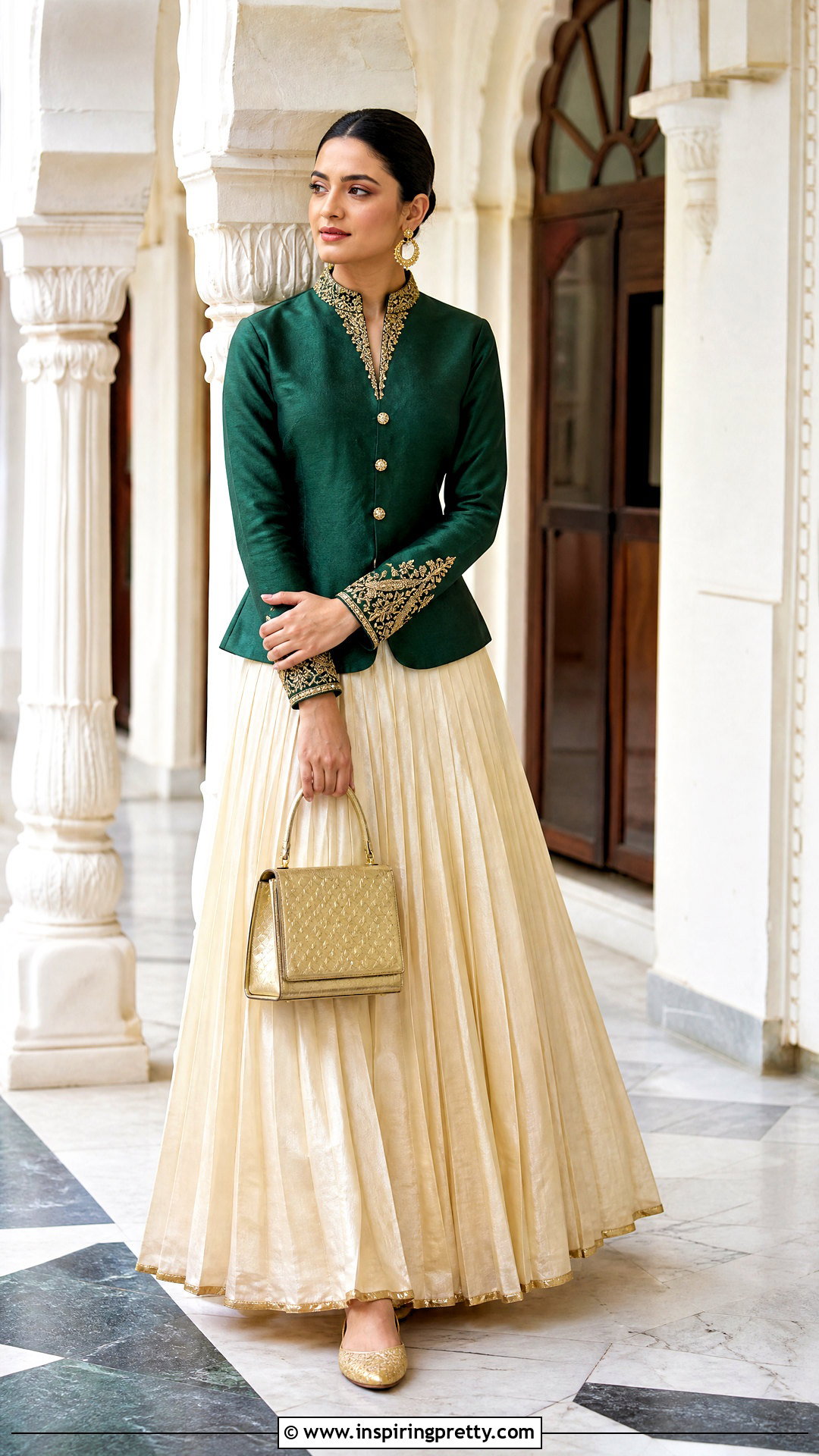
A short jacket-style top and pleated skirt offer sharp structure with graceful movement. Select an ankle-length skirt featuring narrow, evenly placed pleats in silk, chanderi, or georgette. Pair it with a fitted jacket blouse that buttons or fastens at the front. Embroidery along the collar, cuffs, or edges adds Indian detail without covering the entire top. Complete the outfit with medium-size earrings, a small structured bag, and pointed juttis. A high neckline means you can skip a necklace and keep the styling uncluttered. Choose matching colors for a coordinated set or combine a jewel-toned skirt with an ivory or gold jacket. The top should end at the waistband, creating a clean line and preventing excess fabric from disrupting the pleats.
44. Short Kurti And Tiered Skirt Indian Outfit
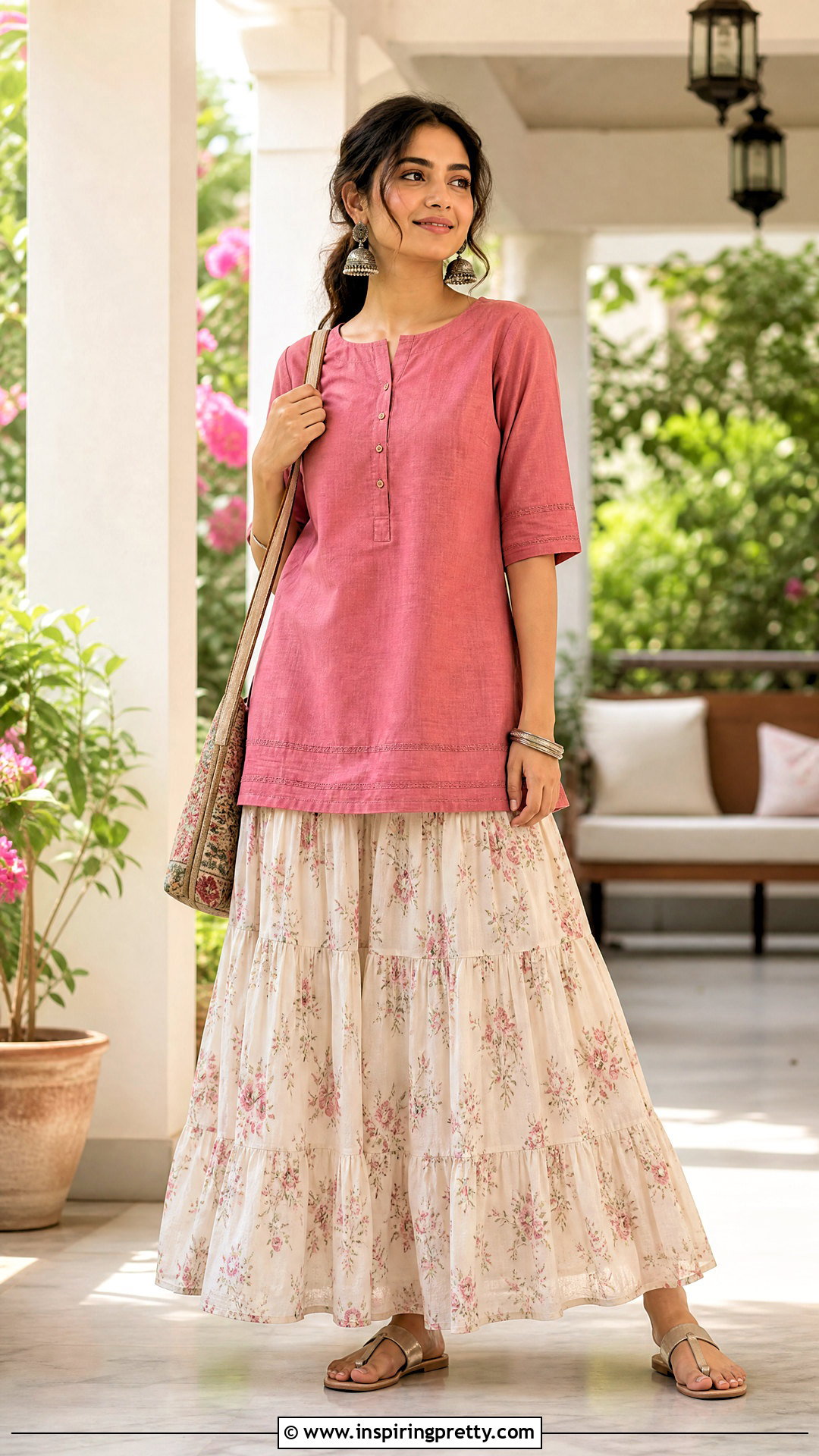
A short kurti paired with a tiered skirt creates an easy, comfortable silhouette with plenty of movement. Choose a cotton or georgette skirt featuring soft tiers rather than extremely gathered layers. Add a hip-length or waist-length kurti that fits neatly through the shoulders. A small print on one piece and a solid color on the other keeps the outfit visually balanced. Style it with silver jhumkas, simple bangles, a fabric sling bag, and flat sandals. A lightweight dupatta can make the look more traditional, but it is not essential for a casual gathering. Keep the skirt at ankle length so the tiered shape does not overwhelm the body. This combination suits many ages and can be adjusted easily through sleeve length and top coverage.
45. Embroidered Blouse And Mermaid Skirt Indian Outfit
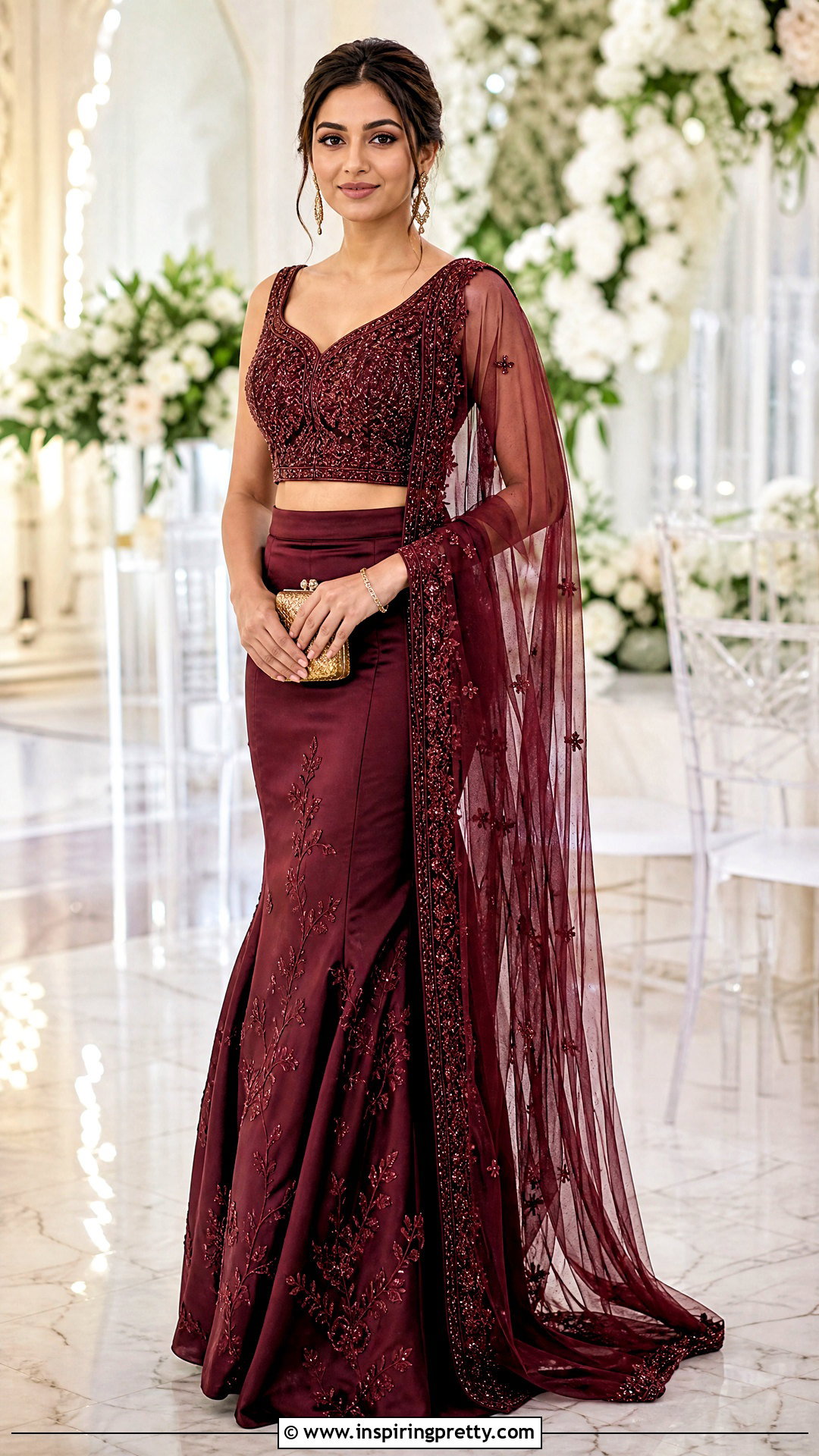
A mermaid skirt creates a defined silhouette before flaring near the lower legs, making it an elegant choice for formal celebrations. Pair it with a fitted embroidered blouse that ends close to the high waistband. Choose fabric with a little flexibility so walking and sitting remain comfortable. Deep green, navy, burgundy, and charcoal suit the sculpted shape, while tonal embroidery keeps the outfit polished. Add drop earrings, a slim bracelet, a clutch, and supportive heels. A sheer dupatta can be pinned at one shoulder and allowed to fall vertically without hiding the skirt’s outline. Precise tailoring is especially important because the skirt should skim rather than squeeze. Keep accessories restrained so the distinctive flare and clean upper fit remain the primary focus.
46. Draped Top And Asymmetrical Skirt Indian Outfit
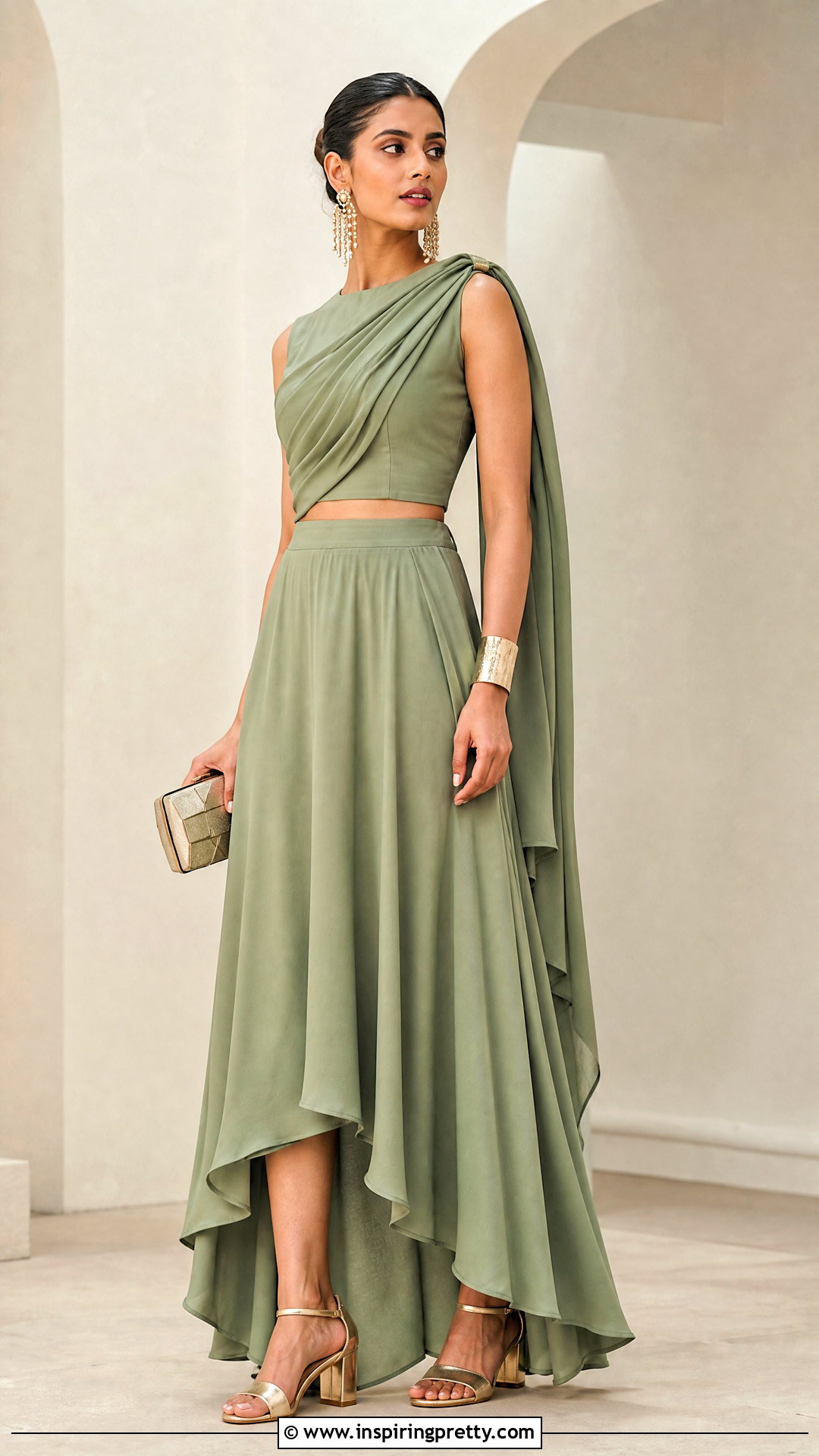
A draped top and asymmetrical skirt form a fluid Indo-Western ensemble with striking movement. Choose a fitted blouse featuring a soft shoulder drape or scarf-like panel, then pair it with a skirt that falls slightly shorter at the front or one side. Use matching fabric and color to keep the unusual lines cohesive. Add long earrings, a sleek cuff, and a compact clutch. Visible footwear matters with an uneven hem, so select polished block heels or embellished sandals. A separate dupatta is unnecessary because the draped top already creates that visual effect. Avoid combining multiple prints or dense embroidery with the asymmetrical silhouette. Smooth fabric such as crepe or georgette allows the folds to fall naturally and keeps the complete outfit refined.
47. Half Saree Skirt And Top Indian Outfit
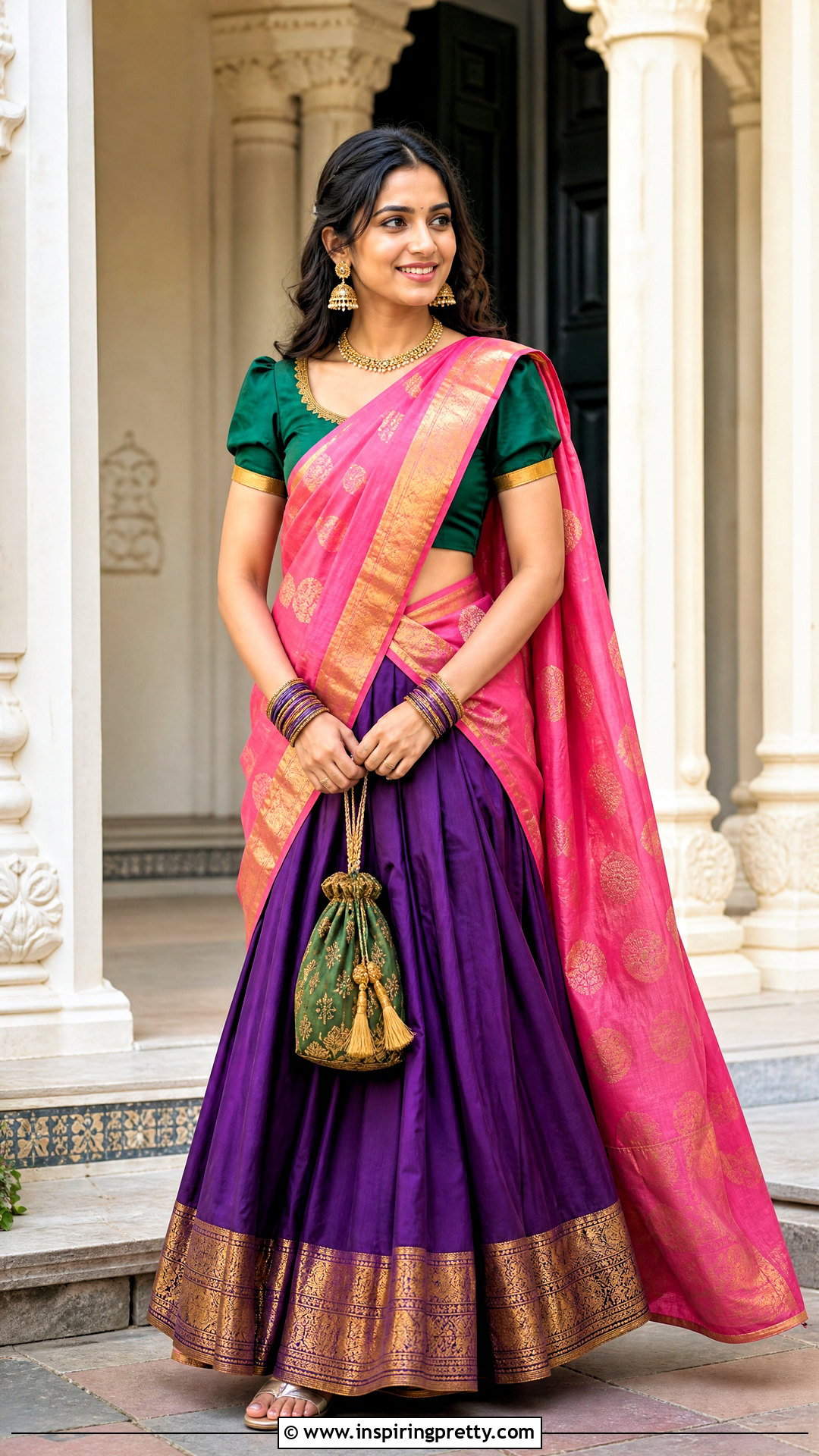
A half saree ensemble combines a long skirt, fitted blouse, and generously draped dupatta for a graceful regional look. Choose a silk or cotton-silk skirt with a contrasting border, then pair it with a coordinated blouse in a complementary color. Drape the dupatta from the waist across the torso and over one shoulder to create the recognizable saree-inspired finish. Gold jhumkas, bangles, and a small potli support the traditional styling. Wear comfortable juttis or low sandals beneath the ankle-length skirt. Secure the drape with discreet pins so it remains neat throughout the event. A neatly braided hairstyle or low bun complements the silhouette. Thoughtful color contrast between all three pieces makes this outfit particularly vibrant and visually balanced.
48. Dupatta Belt Skirt And Top Indian Outfit
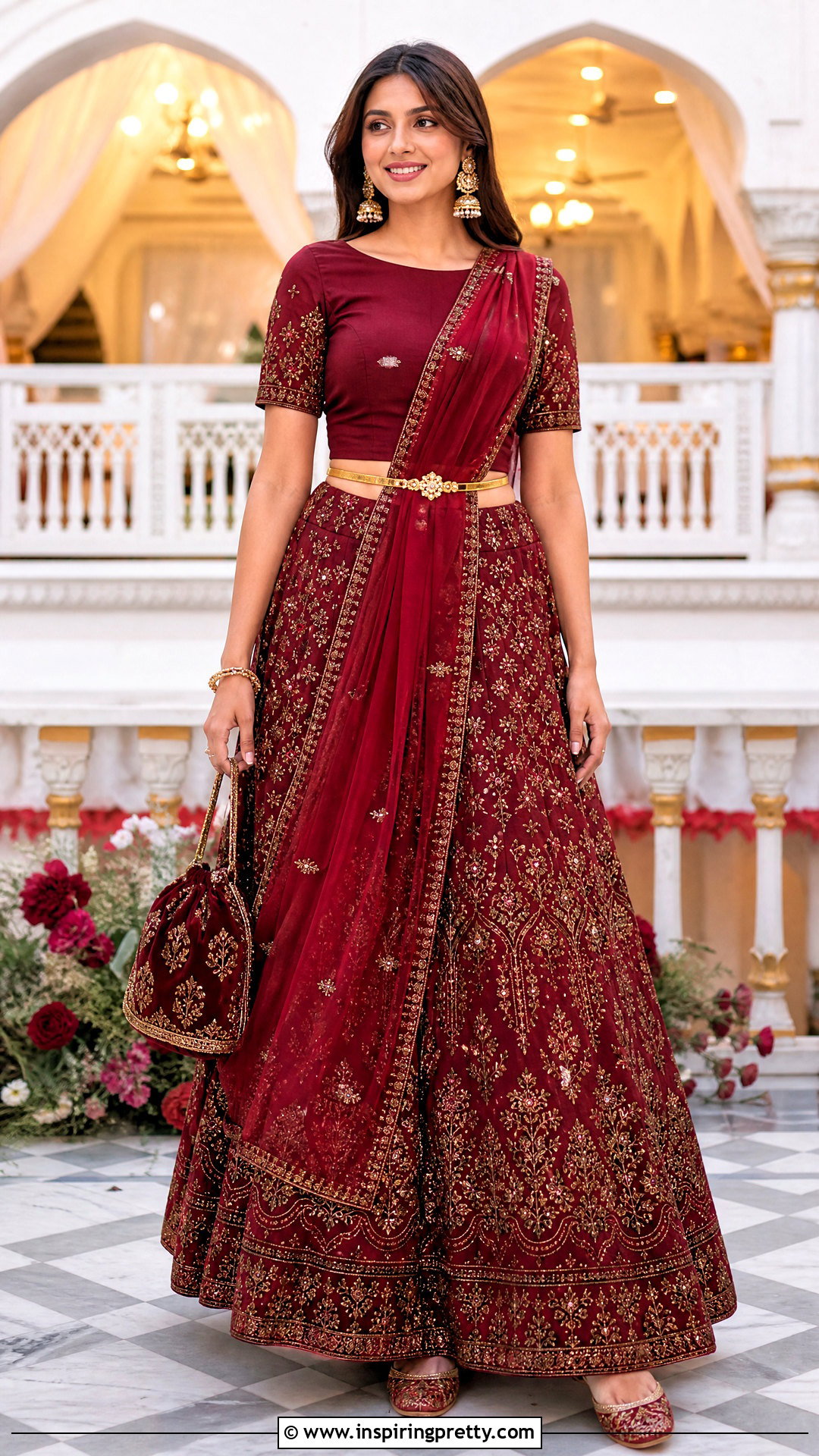
Securing a dupatta with a belt gives a skirt-and-top outfit a neat, defined finish. Start with a fitted blouse and a high-waisted lehenga skirt in matching or complementary colors. Drape the dupatta across one shoulder and position a slim embroidered or metallic belt at the natural waist. This keeps the fabric controlled while highlighting the skirt’s shape. Add statement earrings, a small potli, and comfortable heels or juttis. Avoid an excessively wide belt if the blouse or waistband already has heavy embroidery. A softer chiffon or organza dupatta fits beneath the belt more smoothly than thick fabric. This styling method is practical for celebrations that involve movement because the drape remains secure while still providing traditional coverage and graceful vertical lines.
49. Plus Size Skirt And Peplum Top Indian Outfit
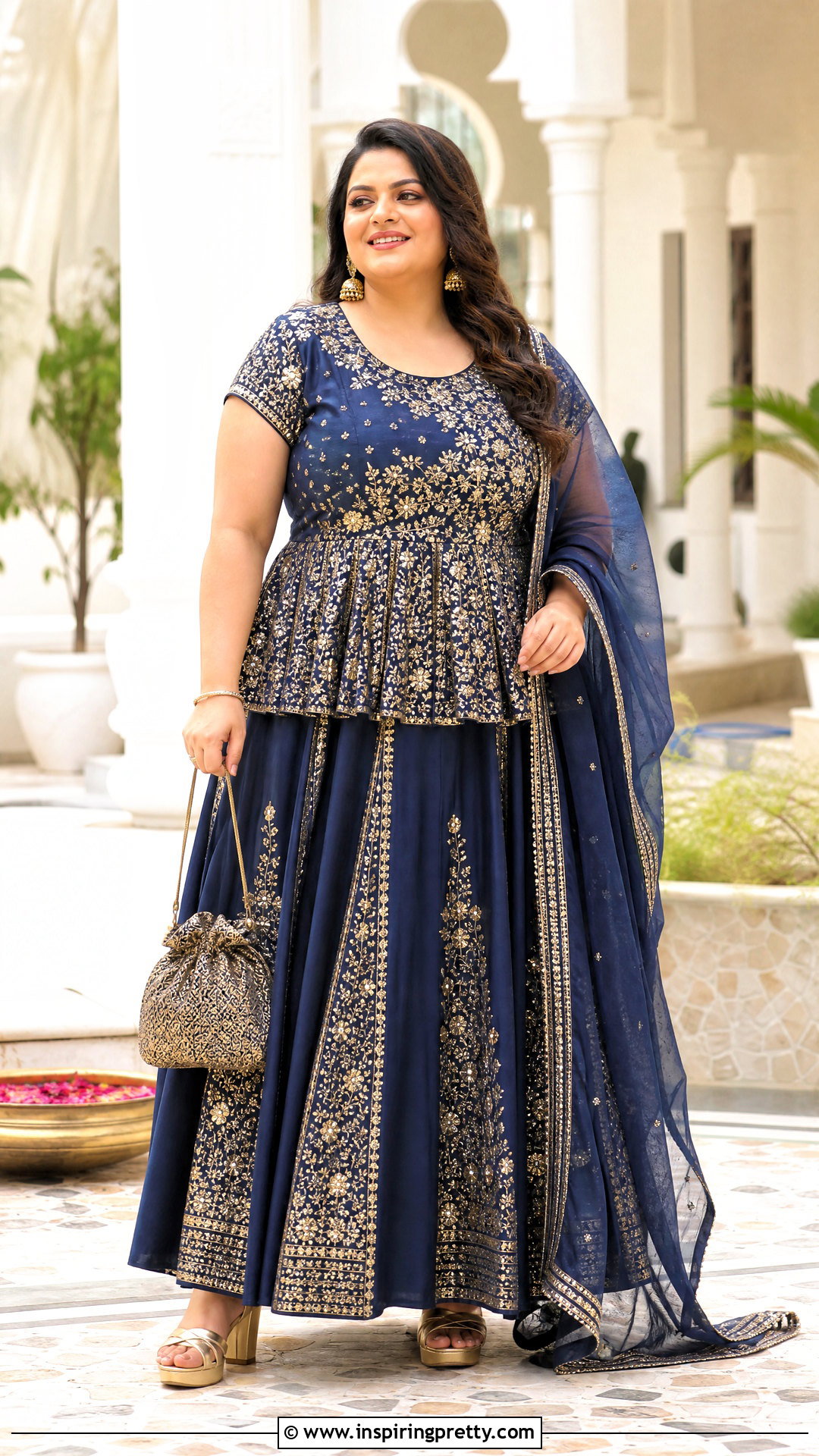
A well-tailored peplum top and flowing skirt create a comfortable, defined outfit across an inclusive range of sizes. Choose a top that fits smoothly at the shoulders and bust, then flares gently rather than adding stiff volume. Pair it with a high-waisted A-line or paneled skirt that moves freely over the hips. Monochrome color creates continuity, while vertical embroidery or borders lengthen the overall visual line. Add medium-size earrings, a structured potli, and cushioned block heels or juttis. A lightweight dupatta can fall from one shoulder without wrapping tightly around the body. Prioritize breathable lining, secure closures, and a waistband that stays comfortable when seated. Personal comfort and accurate tailoring matter far more than restrictive rules about colors, prints, or embellishment.
50. Minimal Skirt And Top Indian Outfit
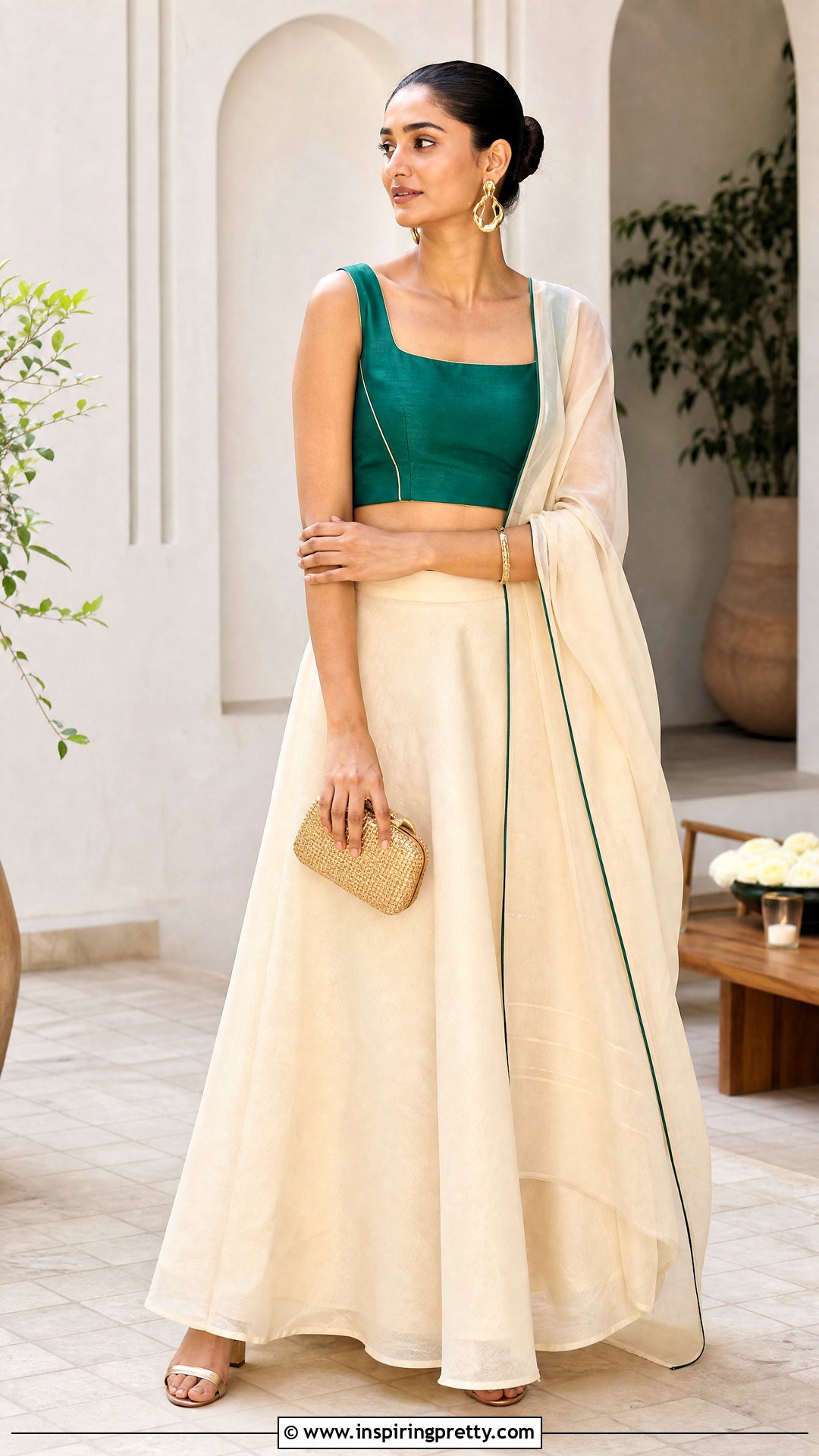
A minimal skirt and top prove that Indian occasion wear does not require dense embroidery to look complete. Choose a clean A-line skirt in silk, chanderi, crepe, or cotton-silk. Pair it with a precisely tailored blouse featuring one thoughtful detail, such as a square neckline, textured fabric, or contrasting piping. Keep the colors tonal or combine a neutral skirt with a muted jewel-toned top. Add sculptural earrings, a slim bangle, a structured mini bag, and simple metallic sandals. A plain organza dupatta with a narrow border can provide a traditional layer without changing the understated mood. Focus on excellent fit, smooth lining, and a carefully finished hem. The resulting outfit feels elegant, versatile, and easy to rewear with different accessories.
Conclusion:
These **50 skirt and top indian outfits** show how easily traditional textiles, modern tops, comfortable skirts, and thoughtful accessories can work together. Start by matching the outfit’s fabric and embellishment level to the occasion. Then consider fit, movement, climate, and the amount of coverage you prefer. A detailed skirt usually looks best with a simpler top, while a plain skirt creates room for an embroidered or sculptural blouse. Dupattas, jackets, belts, jewelry, and footwear should support the main combination rather than compete with it. Most importantly, choose separates that feel comfortable and can be styled again. With balanced proportions and practical finishing touches, a skirt-and-top ensemble can look personal, polished, and celebration-ready.
Related posts:


Leave a Reply