
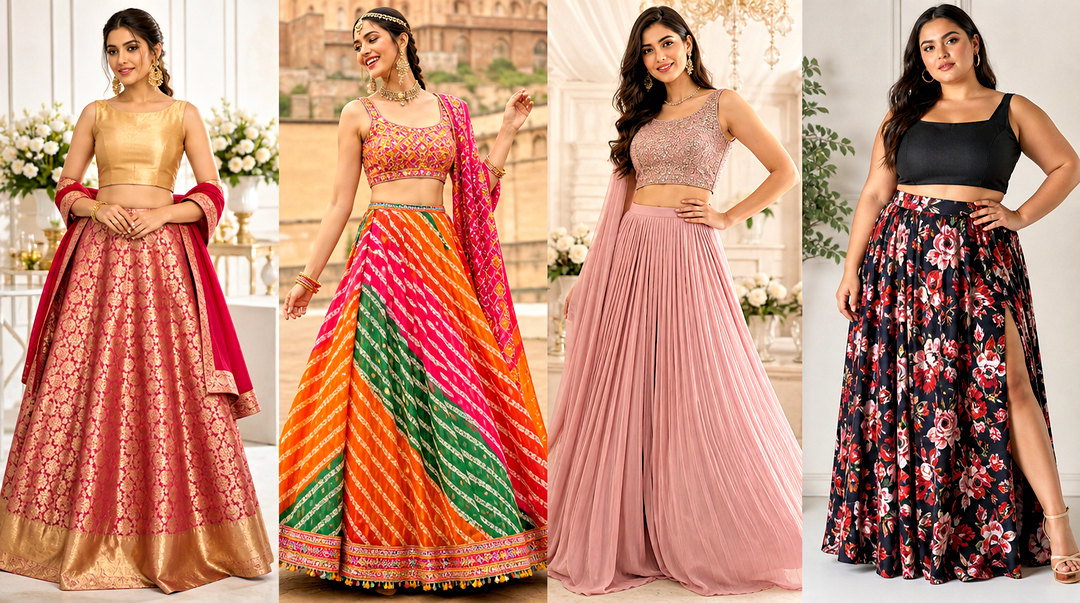
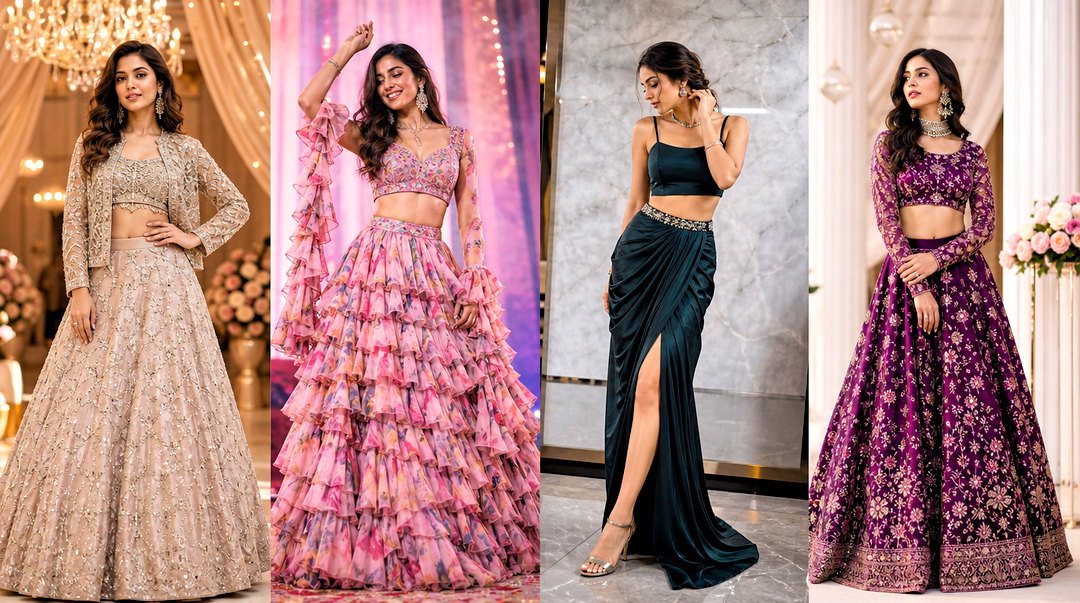
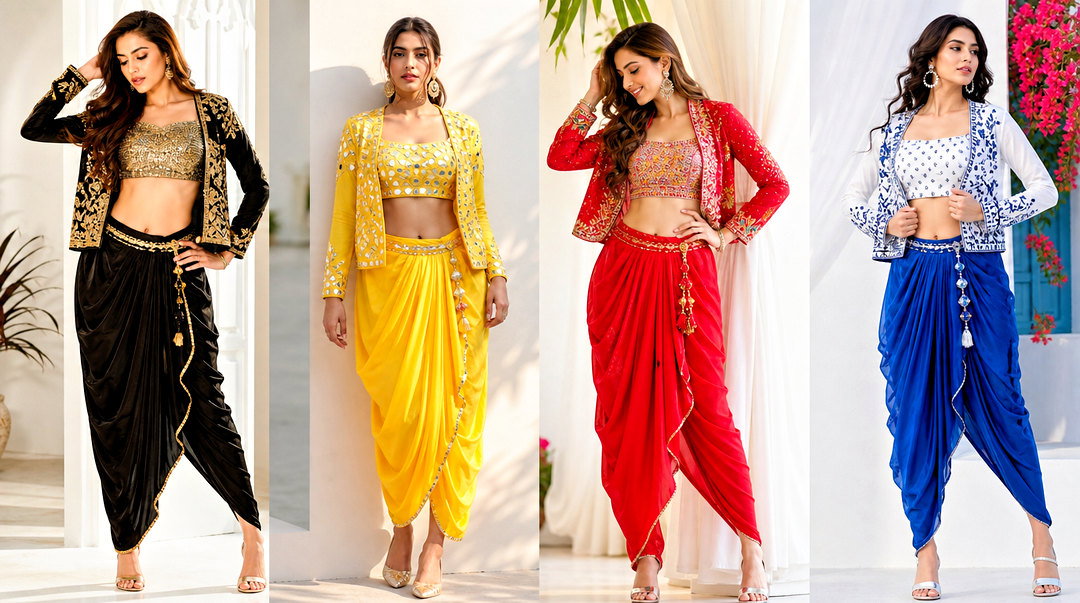
A skirt and top is the most flexible way I know to build Indian outfits for weddings, festivals and family functions, because the two halves can be split up and worn again. An embroidered lehenga skirt goes with a plain silk blouse one season and a white shirt the next. The rule I dress every client by is simple: one piece carries the work, the other stays quiet. A heavy skirt wants a calm top, and a plain skirt makes room for a detailed blouse and bigger jewelry. The ideas below run from heavy festive looks to cotton day outfits, so pick by the function first and the color second.

Getting the Fit Right Before the Function
Most of the trouble I see at weddings comes from fit, not from color or embroidery. A skirt that's too long, a blouse that gapes, a waistband that slides: none of it shows in a photo of the outfit on a hanger. Here's the order I check things in when a client brings me a skirt and top.
- Hem the skirt wearing the exact shoes you'll wear on the day. The hem should just clear the floor when you stand straight. Heavy skirts trip you on stairs if they touch the ground.
- Check the waistband with the skirt's full weight on it. Drawstrings hold a heavy lehenga better than a single hook, and a hook plus a short zip is the tidiest combination.
- Look at the gap. Sit down and raise your arms. If the blouse lifts more than you'd like, ask the tailor for an extra inch of length at the hem.
- Decide on support early. Blouses can have cups or padding sewn in, and that changes how the neckline sits, so it has to be done before the final fitting, not after.
- If the skirt has a can-can, a stiff net layer that adds flare, try sitting in it. Some are scratchy or very wide, and a softer one may be the better choice for a long event.
Keep a few safety pins and a strip of double-sided fabric tape in your clutch. They fix a slipping dupatta or a gaping neckline in a minute, and nobody at a long function escapes needing one.
1. Floral Skirt With White Crop Top
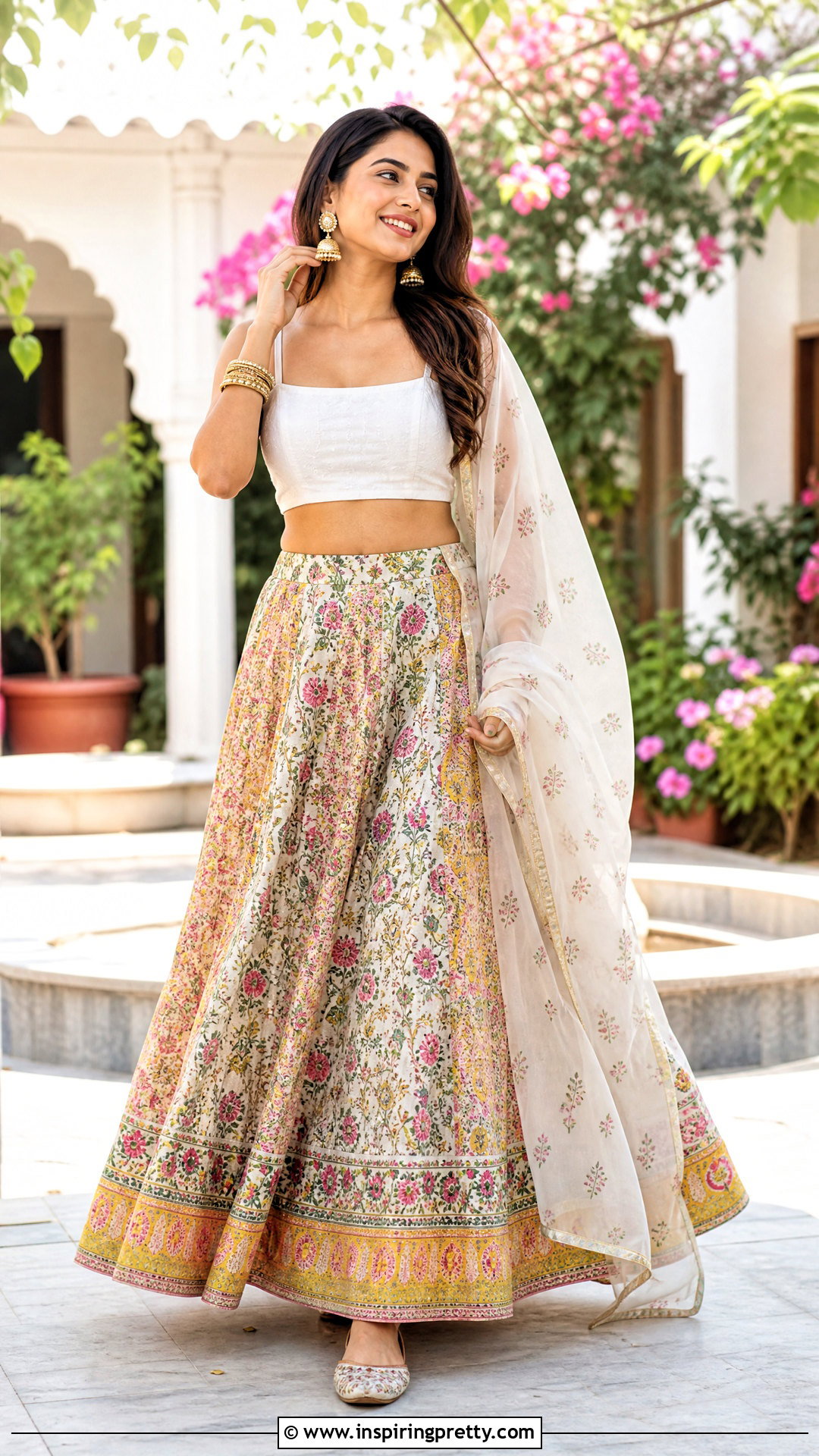
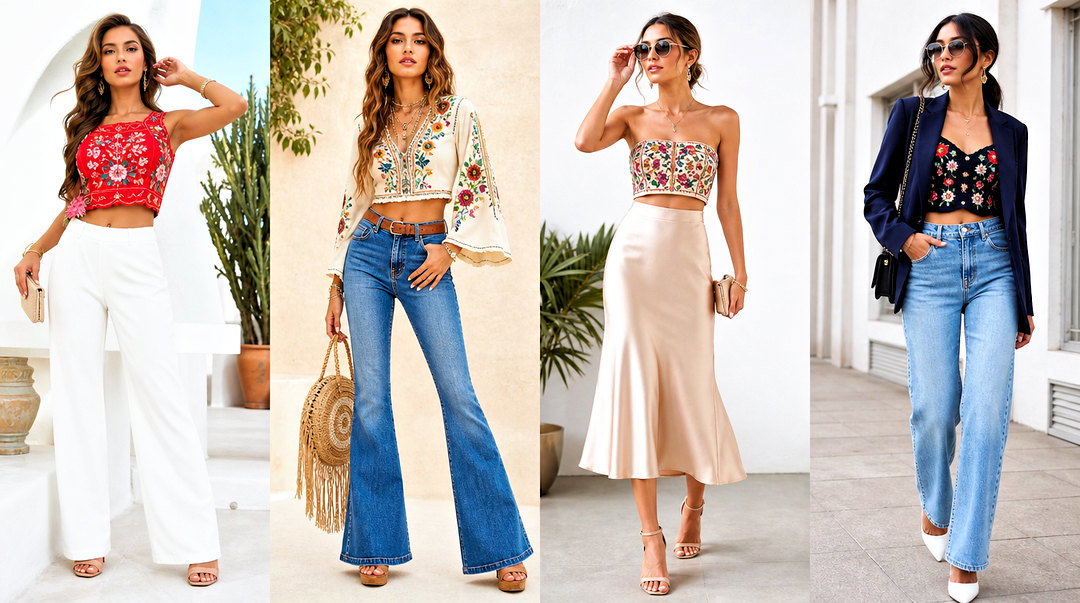
Block-printed florals and a white crop top are what I'd suggest for a mehndi or a daytime haldi, where you'll be sitting on the floor and getting splashed. Choose a high-rise skirt with enough flare to sit cross-legged in. A cotton or linen-blend top keeps it breathable, and white lets the print do the talking. Add a chiffon dupatta if the family is traditional. Embroidered juttis, small jhumkas and slim bangles are plenty. For the bag, pick one of the quieter shades in the print, not the loudest.
2. Black Skirt With Gold Crop Top
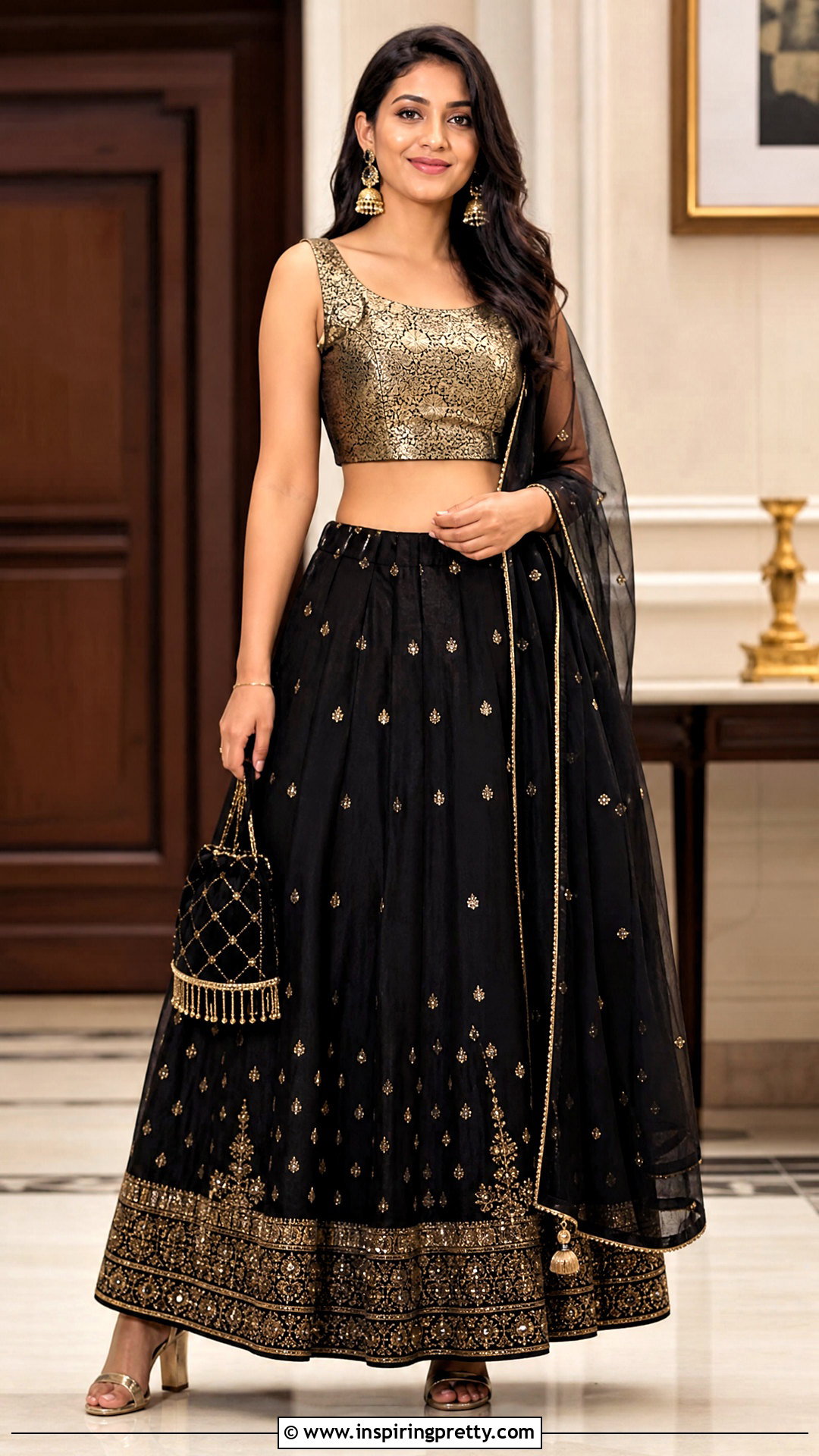
Black and gold is the evening pairing I trust when someone isn't sure what the dress code really means. A floor-length black skirt with tonal embroidery or a zari border, then a fitted gold crop top in brocade or tissue. The contrast already makes plenty of noise, so stop the jewelry at gold drops and one kada. A black potli and metallic block heels hidden under the hem. Some families avoid black at a wedding, so check before you commit to it. A black dupatta with a thin gold border adds coverage without breaking up the base.
3. Yellow Skirt With Green Blouse
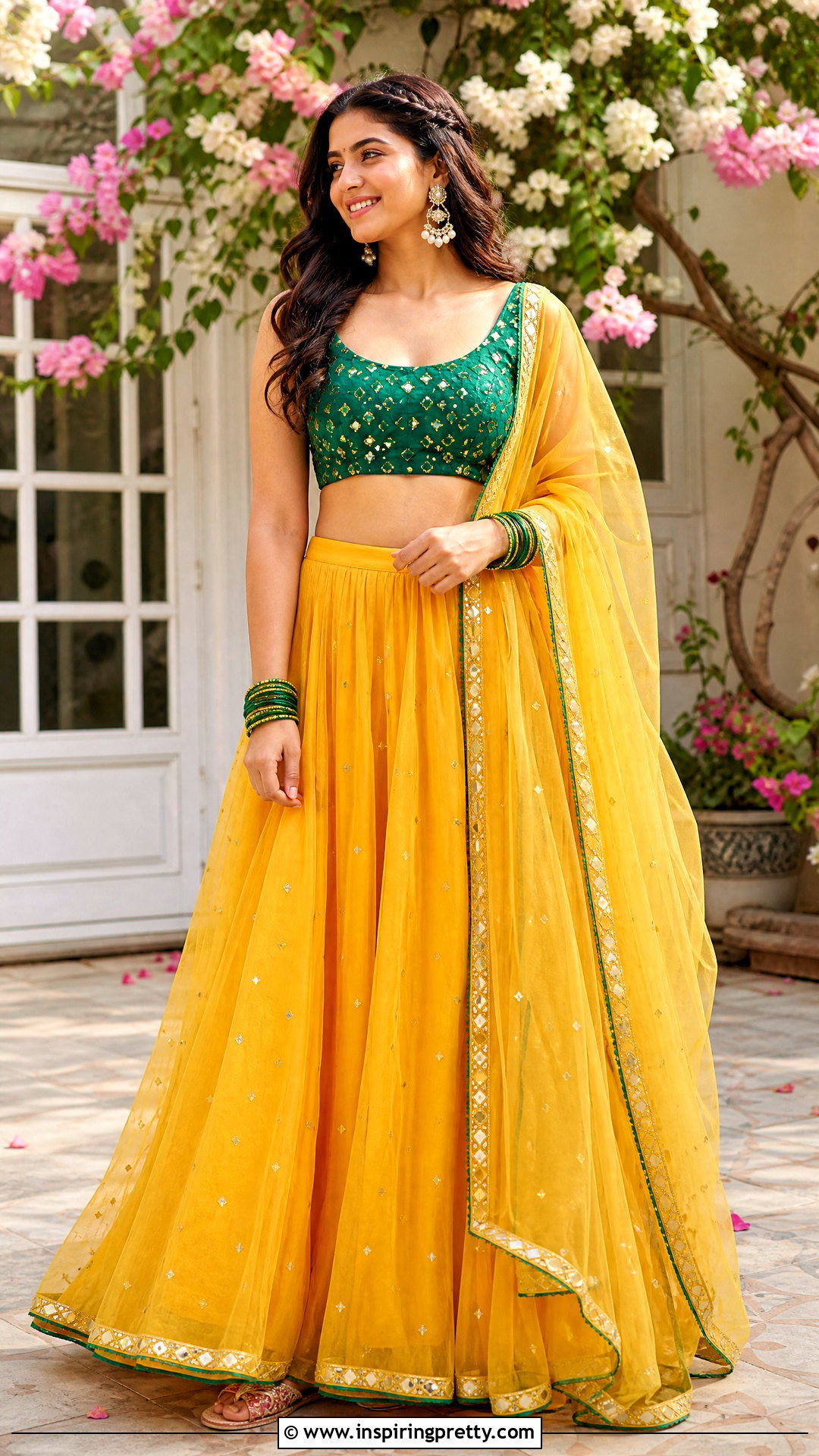
Yellow and green is a classic daytime festive pairing, and it's very forgiving on most skin tones if you get the shade right. Marigold or mustard skirt, fitted green blouse with a square or round neck. Mirror work or thread embroidery that uses both colors ties them together. An organza dupatta keeps it light. Pearl jhumkas and green bangles. If bright yellow washes you out, olive with a golden mustard is the softer version I'd steer you toward. Fresh flowers in a braid finish it for a morning ceremony.
4. Pink Skirt With Mirror Work Top
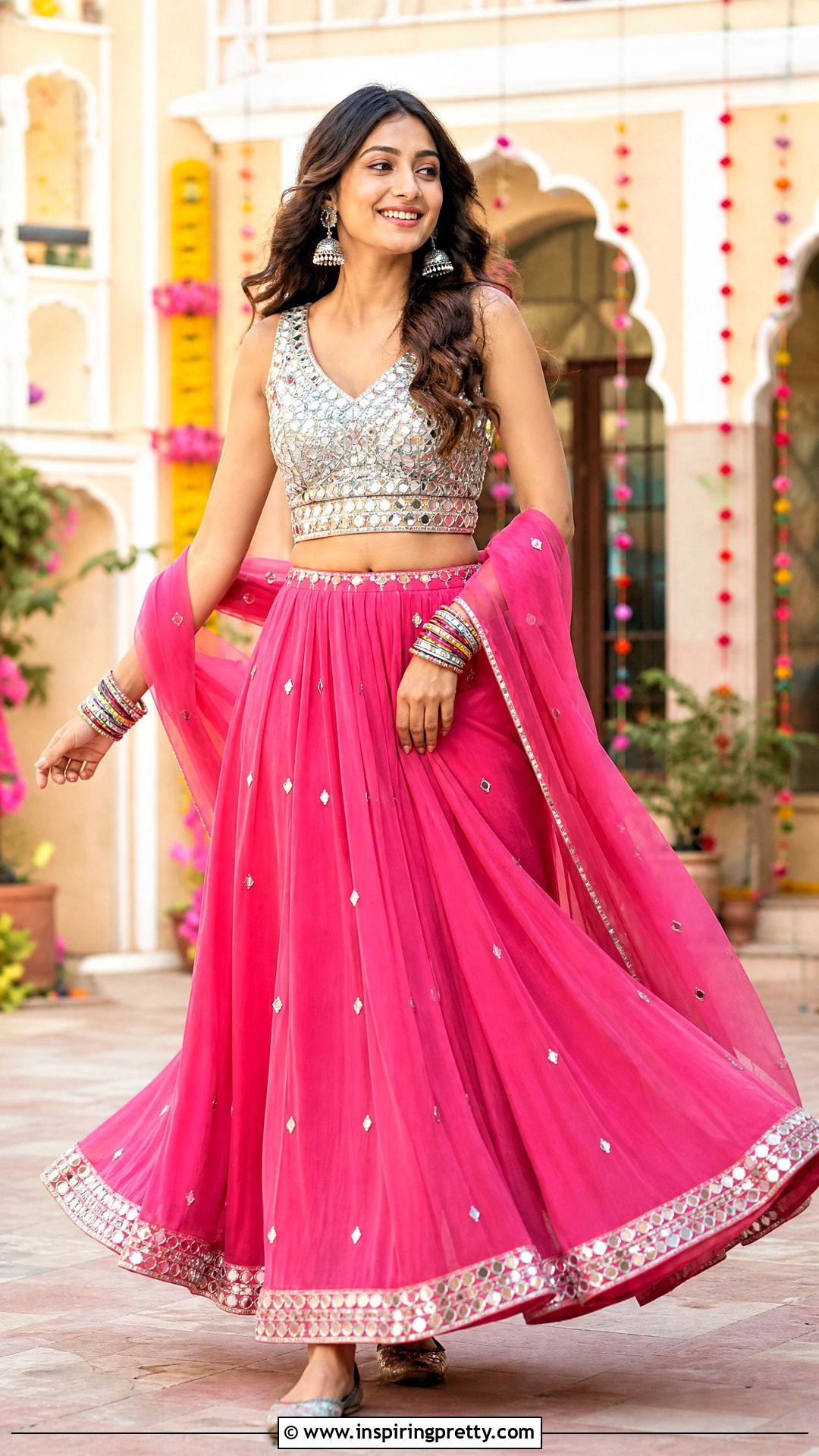
Mirror work is heavy and it catches on everything, which is why I ask for spaced-out mirrors on the blouse rather than dense coverage when a client will wear it for hours. Pair it with a flowing georgette or cotton-silk skirt in rose or fuchsia. Keep the neckline plain so the mirrors look neat. Silver jhumkas, a maang tikka and metallic juttis. The dupatta should be light chiffon, because a net dupatta snags on the mirror edges every time you move. Carry a plain potli, not another embellished piece.
5. Banarasi Skirt With Plain Silk Top
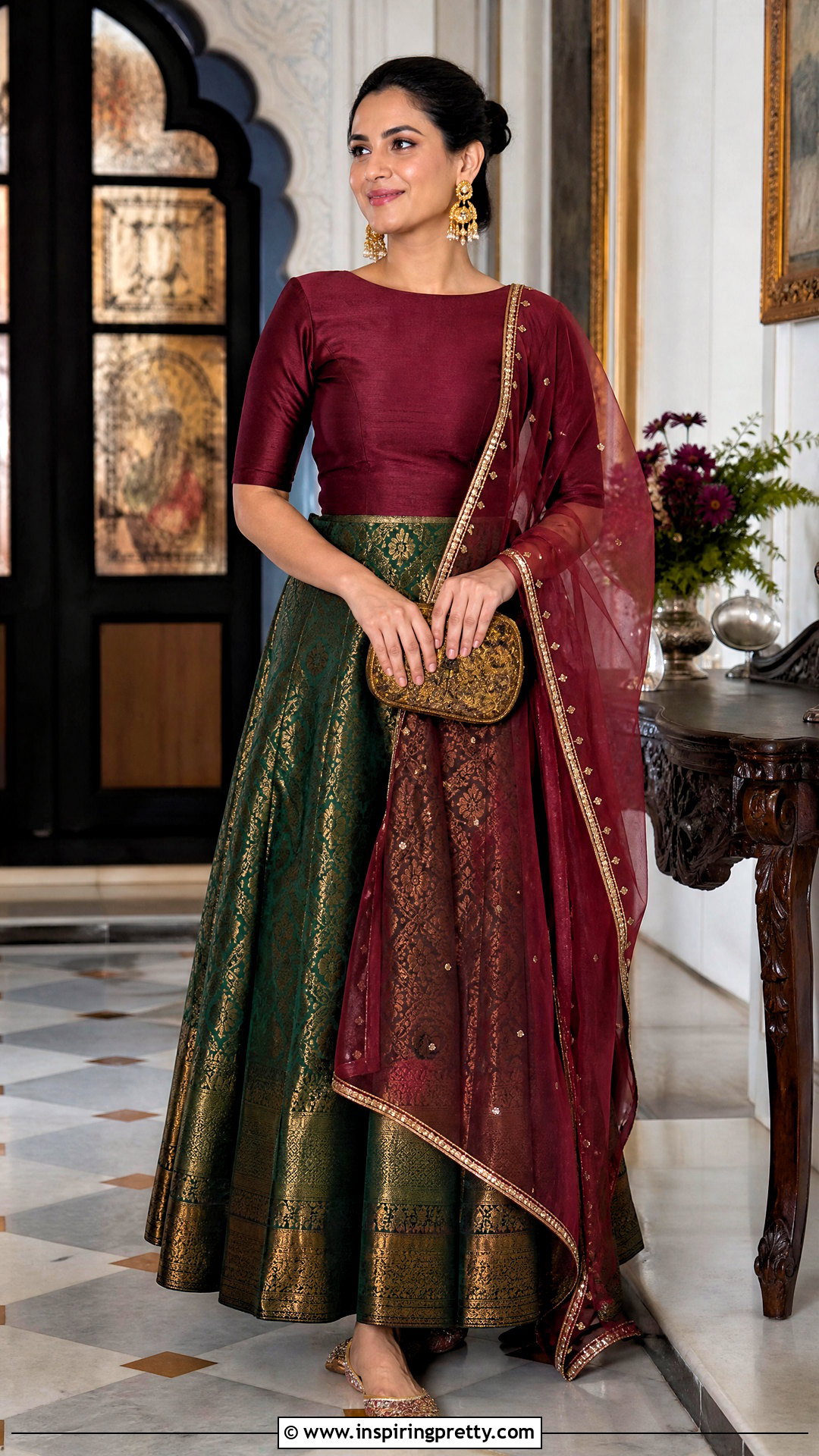
Let the weave of a Banarasi skirt lead and keep the blouse in plain silk. Emerald, wine or royal blue looks rich, especially when the blouse color is pulled from one of the woven motifs. Elbow sleeves and a clean neckline are what I'd choose. Banarasi silk is heavy, so the waistband needs to be fitted properly or the skirt drags itself down over a long evening. Traditional gold earrings and a brocade clutch. A sheer dupatta only if the function is formal.
6. Printed Skirt With Black Full Sleeve Top
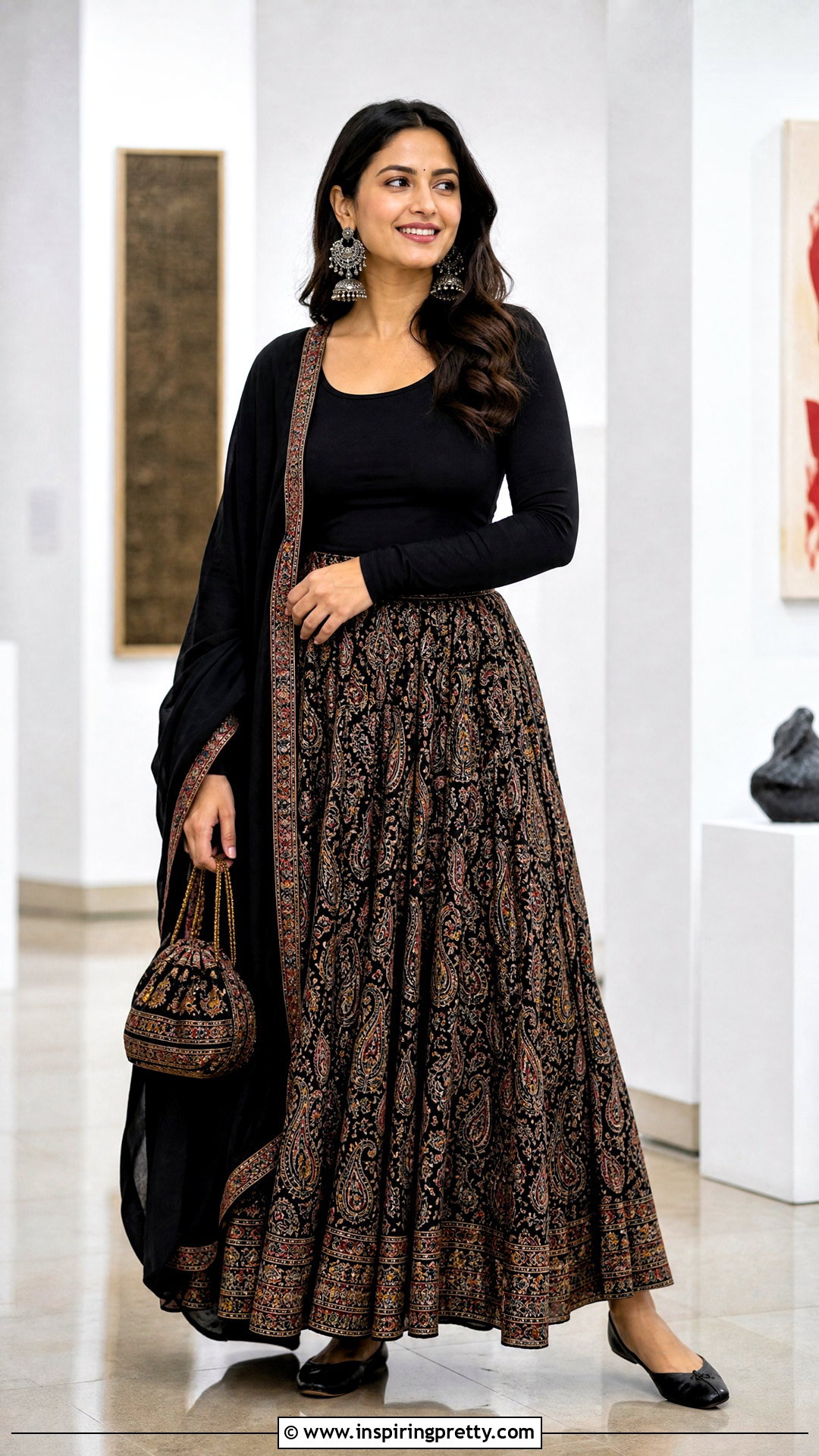
When the print already has five colors, a black full-sleeve top is the calm in the middle of it. Paisley, kalamkari or geometric maxi skirts all sit well against it. A boat neck gives clean lines; a modest V-neck lengthens the upper body. Cotton for a day puja, silk-blend for an evening. Oxidized silver earrings and black juttis. The long sleeves earn their place at outdoor winter functions, where you'd otherwise end up hiding the outfit under a shawl.
7. White Skirt With Red Embroidered Top
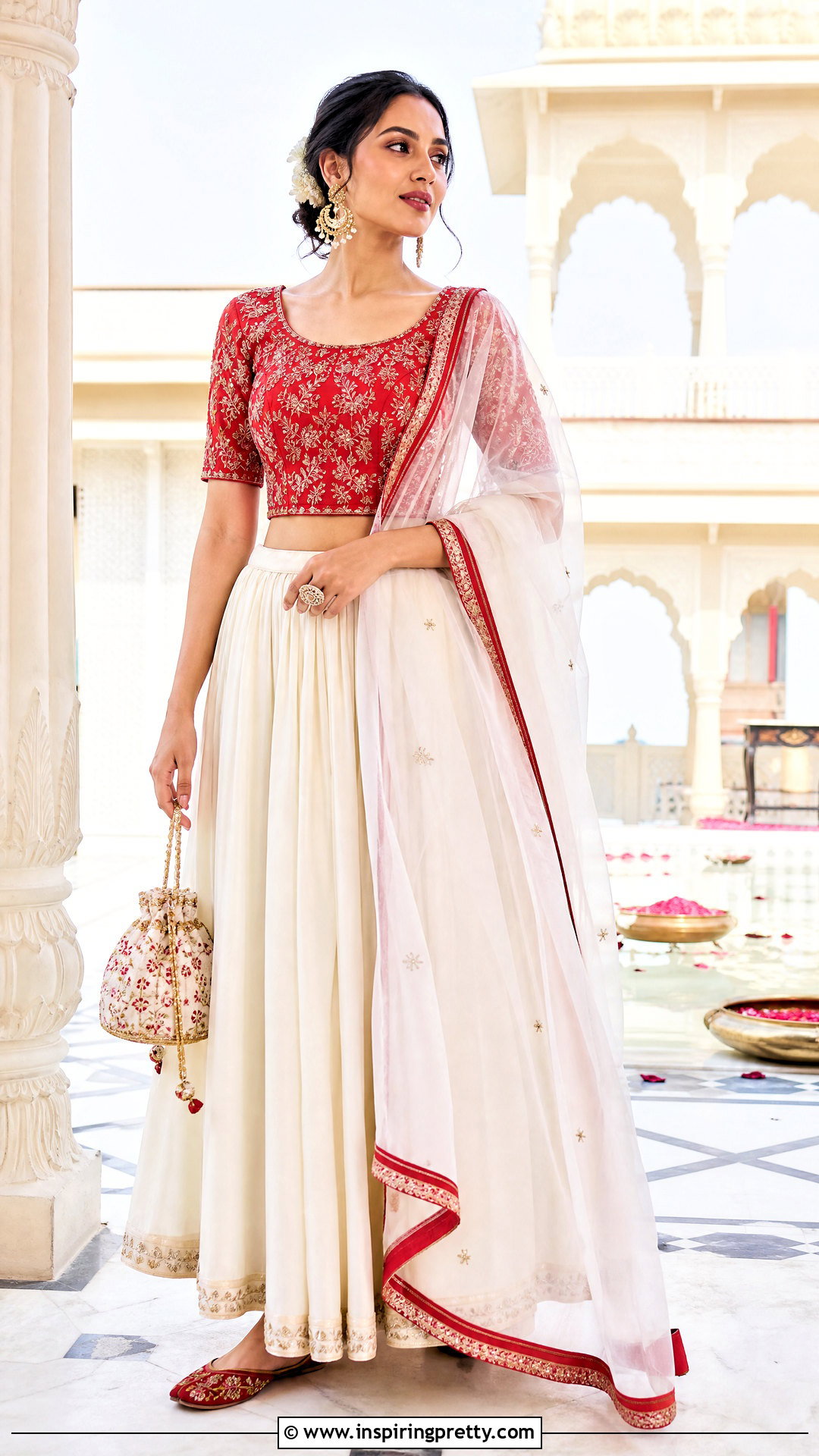
White and red is crisp, but white skirts show every mark, so I only suggest it for a seated function, not for one where you'll be on the dance floor or near the food. Choose an ivory skirt with soft gathers or a woven border and a red blouse with threadwork or small mirrors. Keep the skirt simple so the blouse leads. Red juttis and gold jhumkas. A sheer white dupatta with red edging softens the contrast for an older crowd. Leave out any third color; red and white is already strong.
8. Denim Skirt With Indian Crop Top
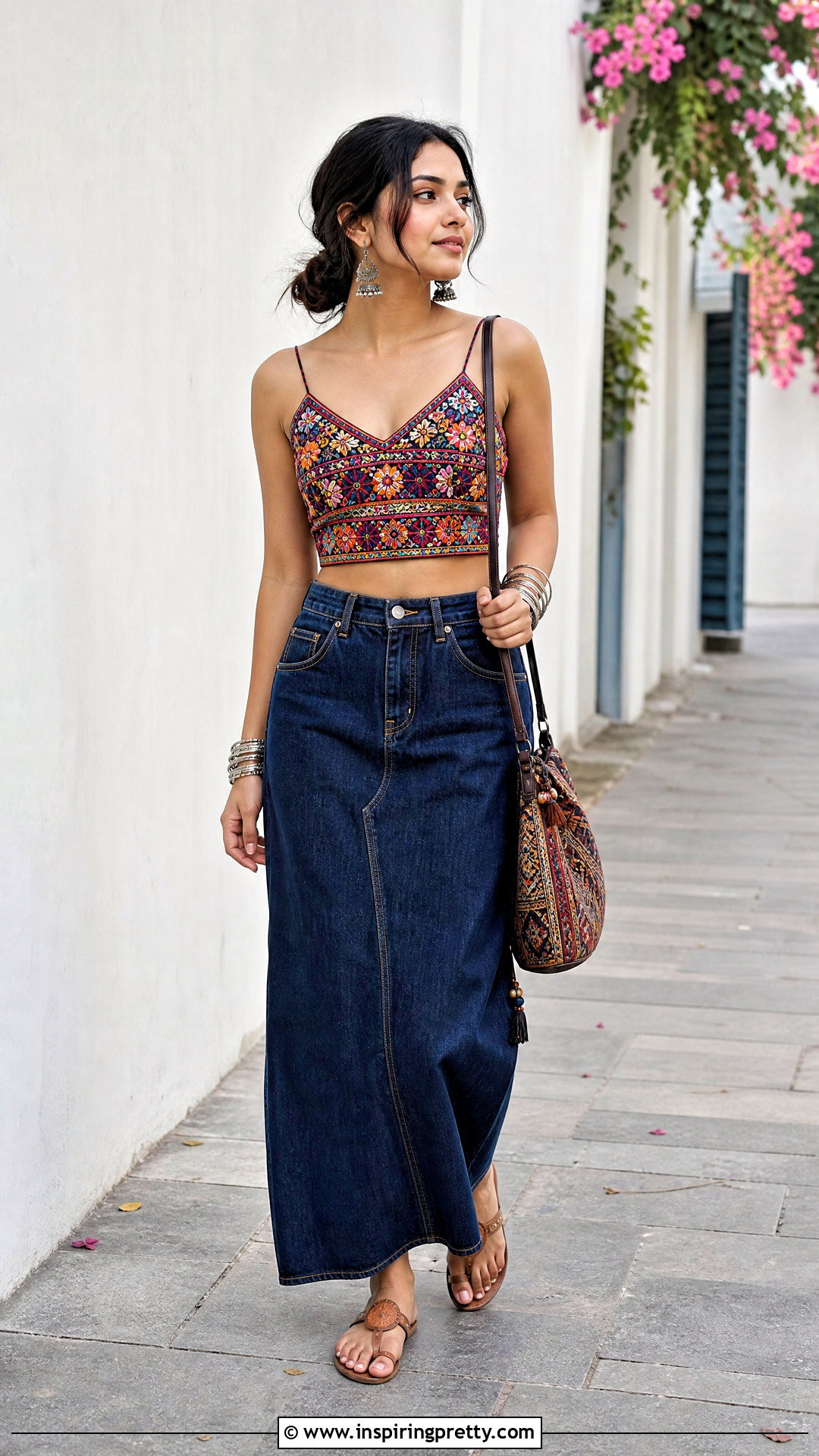
This one is for college fests and casual festival evenings, not a wedding. Give an everyday denim skirt an Indian update with an embroidered crop top. A dark-wash, ankle-length A-line skirt looks cleaner than distressed denim. The blouse brings all the Indian character: block print, mirrors or hand embroidery, maybe a tie-back. Kolhapuri sandals and oxidized earrings. New kolhapuris rub until they soften, so break them in before a long day.
9. Chanderi Skirt With Peplum Top
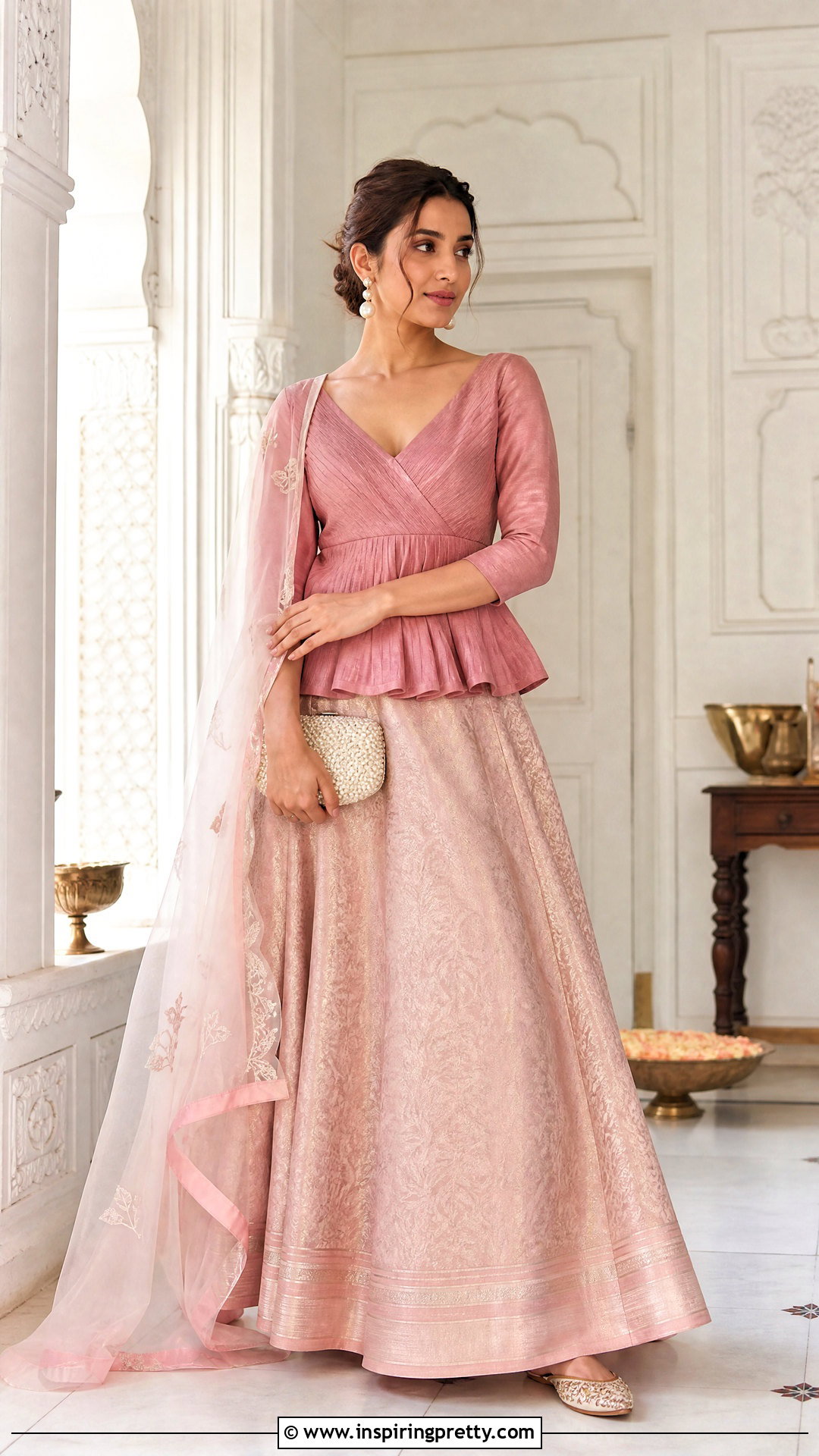
Chanderi is light and has a soft sheen, but it's also slightly sheer, so I always check that the skirt is lined. A fitted peplum blouse defines the waist and then falls over the waistband, which is far more comfortable than a short choli if you don't want to show your midriff. Keep both pieces in one color family, blush with rose or ivory with gold. Pearl earrings and embroidered flats. An organza dupatta over one shoulder finishes it for a daytime ceremony.
10. Blue Skirt With Silver Sequin Top
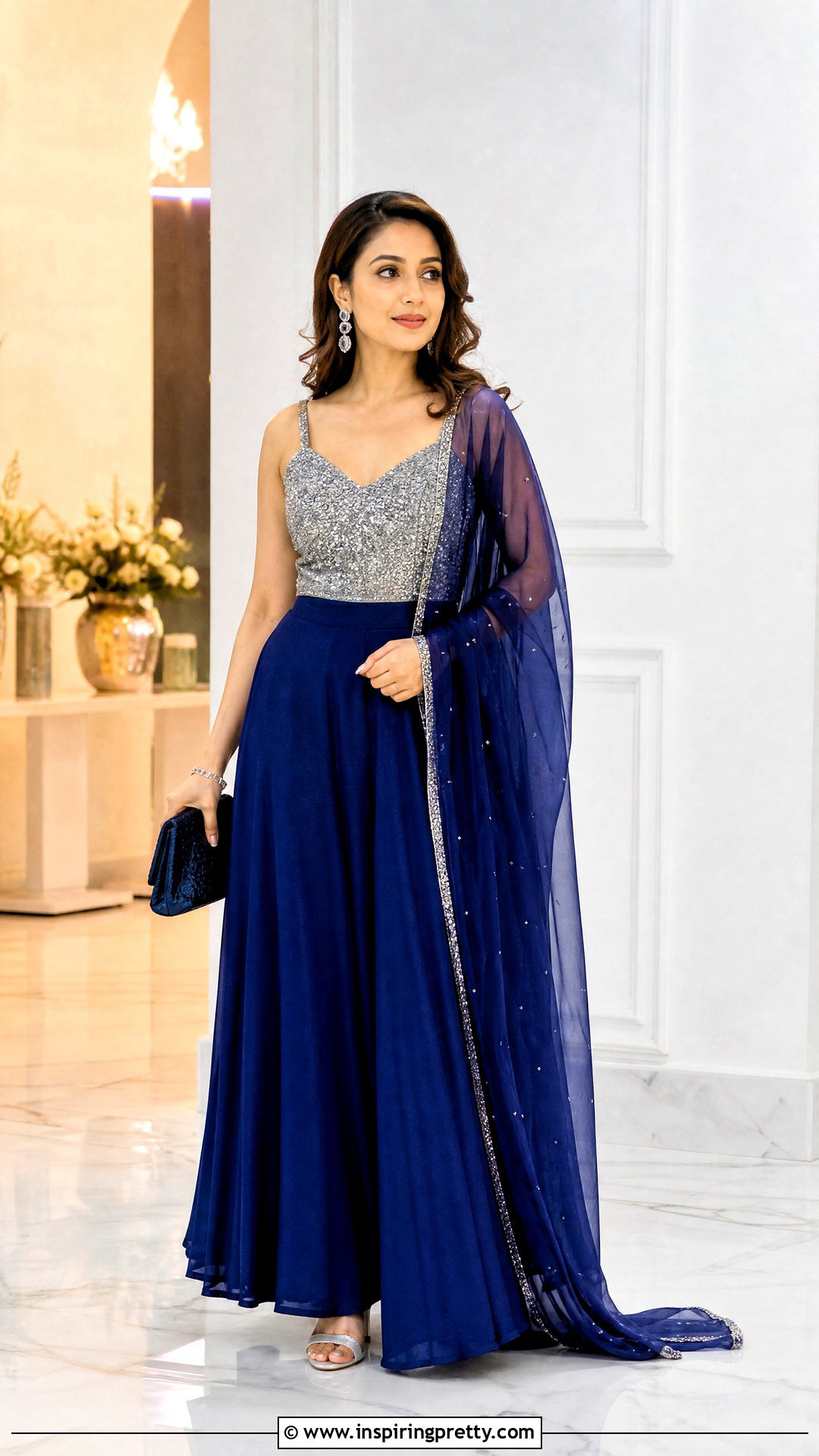
Navy or sapphire with a silver sequin top is a sangeet look that photographs well under stage lights. Keep the skirt plain and let the blouse carry the shine. Sequins scratch the inner arm on a tight sleeve, so I prefer sleeveless or a cap sleeve for a night of dancing. A softly draped or square neck keeps the metallic fabric from looking hard. Silver heels and crystal drops. Skip chunky bracelets; they catch on sequins and pull the threads.
11. Cotton Skirt With Short Kurti
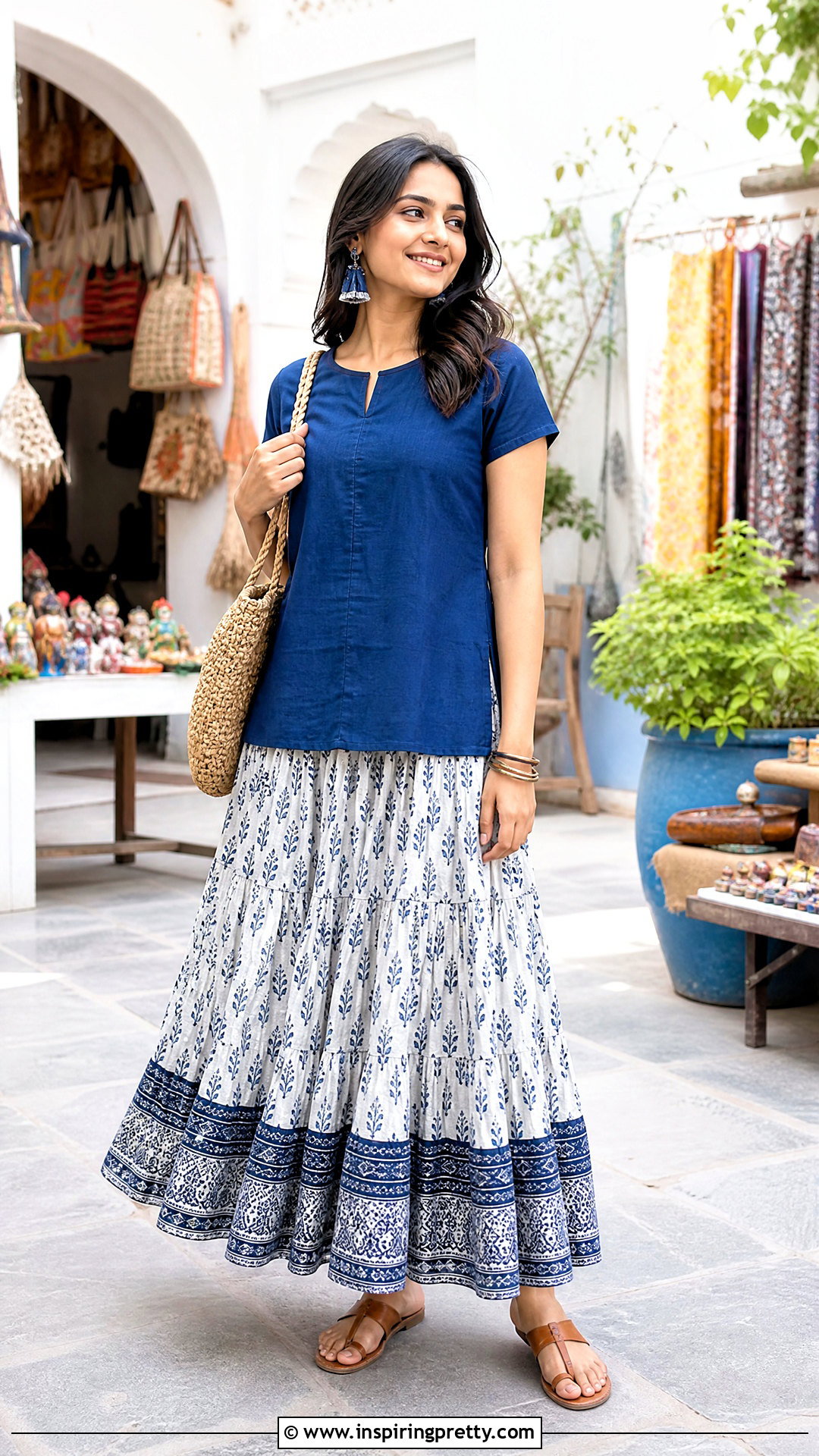
Printed cotton and a short kurti is the outfit for warm-weather pujas and family lunches, where embroidery would feel overdressed. The kurti length matters. Hip-length or slightly cropped sits well over a full skirt; a long tunic swamps it. Pattern on one half, solid on the other. Fabric earrings, simple bangles, flat sandals. A cotton dupatta is optional. Wash block-printed cotton cold and separately the first few times, since the dyes can run.
12. Green Skirt With Off Shoulder Top
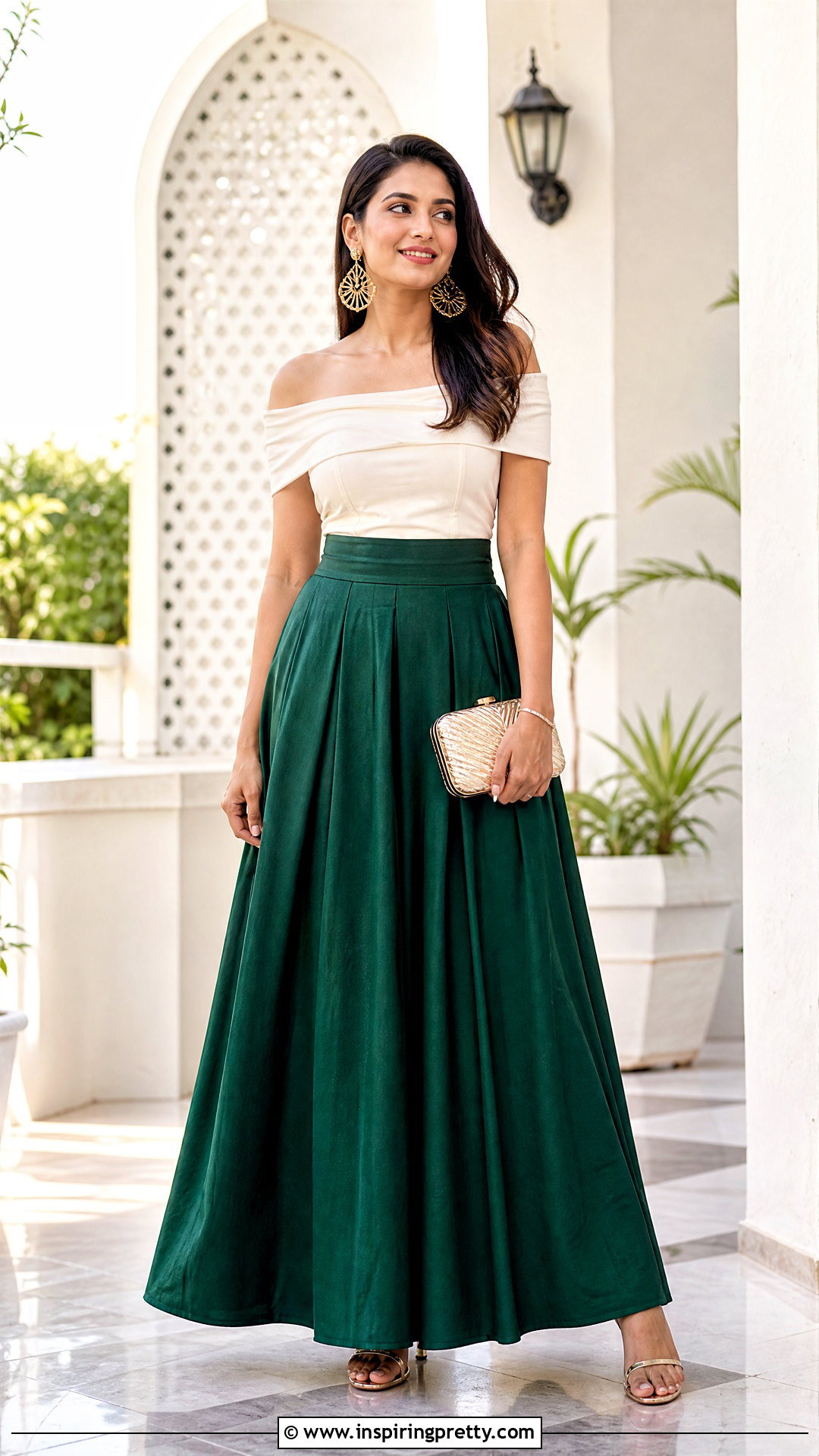
An off-shoulder blouse turns a green ethnic skirt Indo-Western. The blouse needs internal support, either cups or a band of silicone grip at the neckline, or you'll spend the evening pulling it up. Emerald or bottle green with ivory, gold or a matching green. Statement earrings, since the open neckline puts all the attention on your face and collarbones. A dupatta mostly hides the neckline, so skip it or drape a sheer one over one arm. Hair up.
13. Red Skirt With White Shirt
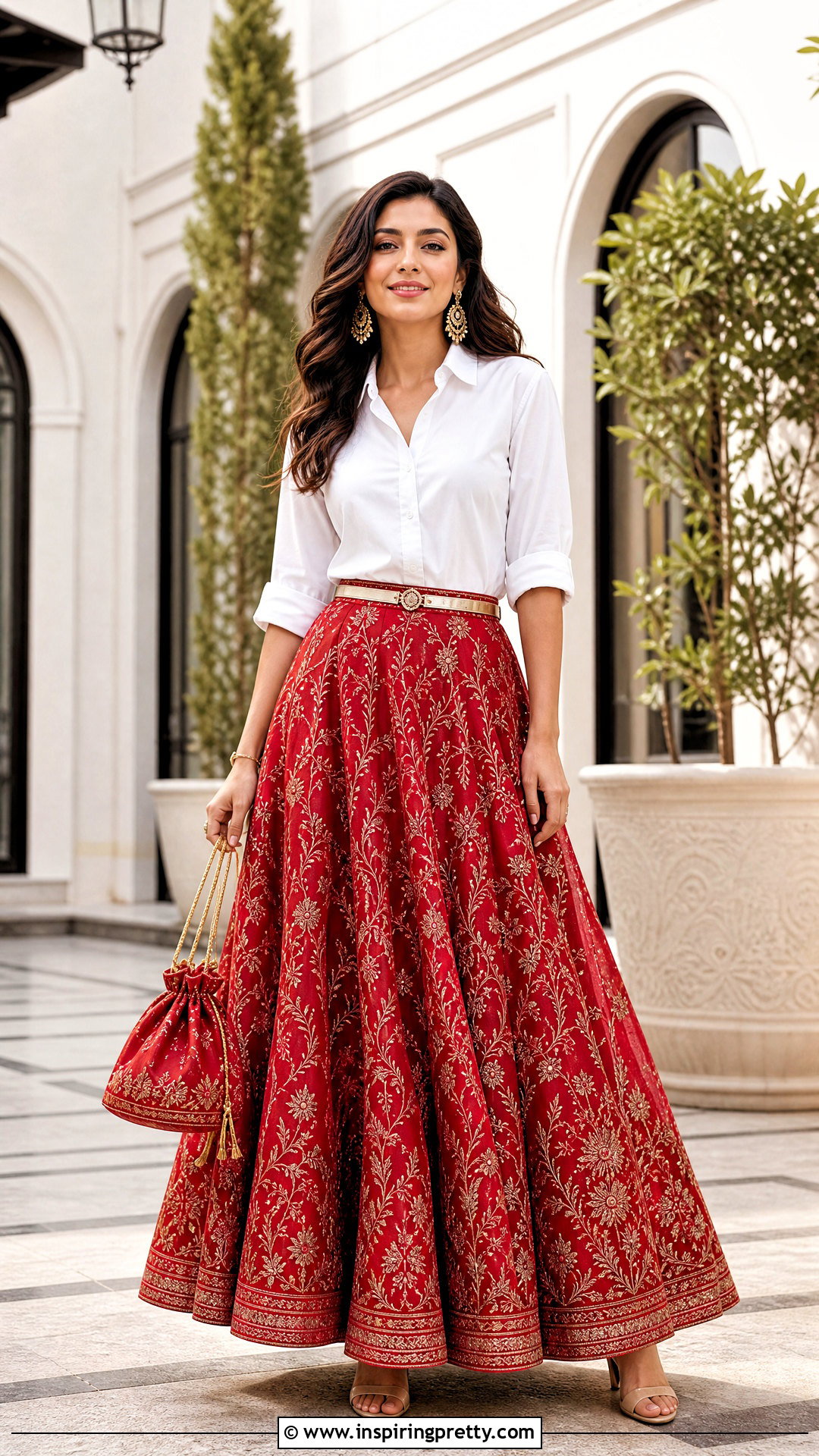
A crisp white shirt over an old red lehenga skirt is one of my favorite ways to re-wear bridal or festive pieces. Use a cotton poplin or soft silk button-down and tuck it into the high waist. Sleeves rolled for a mehndi, buttoned for a reception. A slim belt at the waist gives it shape, and knotting the shirt instead makes it more casual. Gold earrings, embroidered juttis, a small potli. A center-parted bun keeps it polished.
14. Brocade Skirt With Velvet Blouse
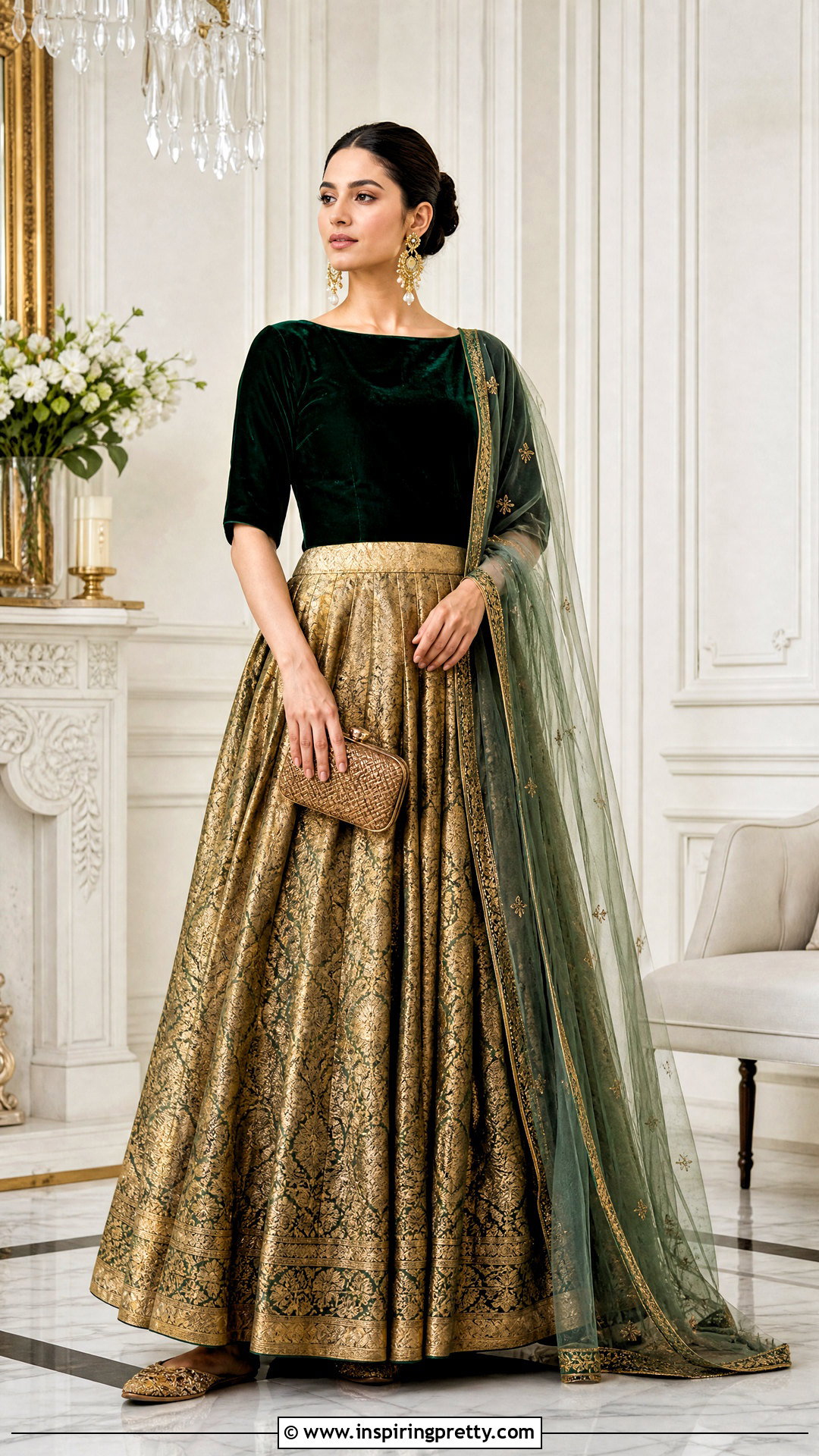
Brocade and velvet are both heavy, so this is strictly a winter wedding outfit; in a hot hall, velvet becomes unbearable within an hour. A gold or antique-silver brocade skirt with a solid velvet blouse in burgundy, forest green or plum. Elbow sleeves and a modest neckline. One statement ring and traditional earrings, nothing more. An organza dupatta stops the outfit getting too heavy. Velvet crushes where you sit or lean, so store and steam the blouse carefully before the day.
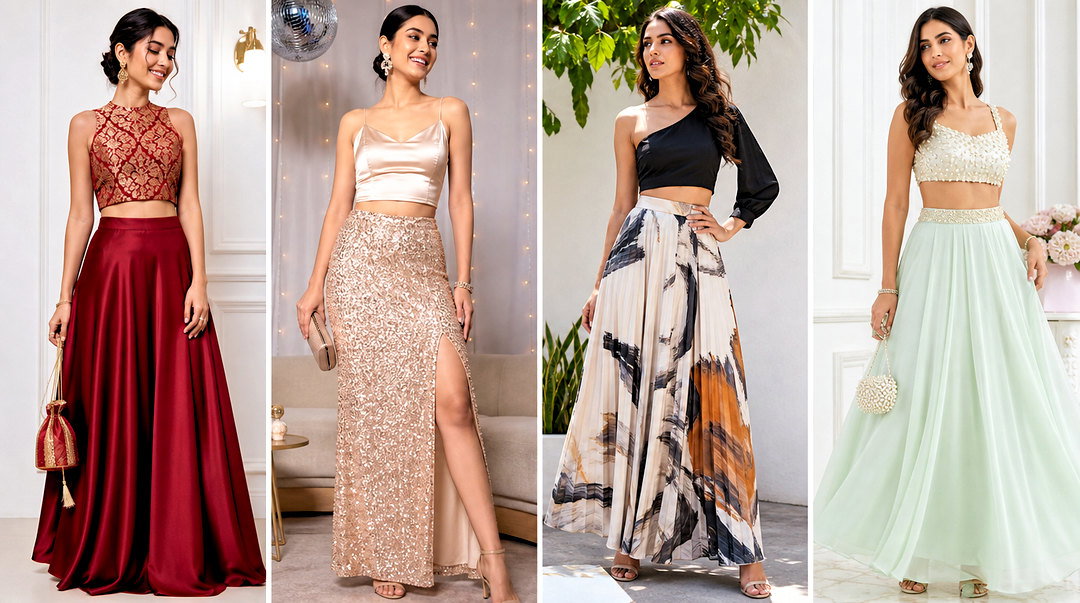
15. Orange Skirt With Pink Crop Top
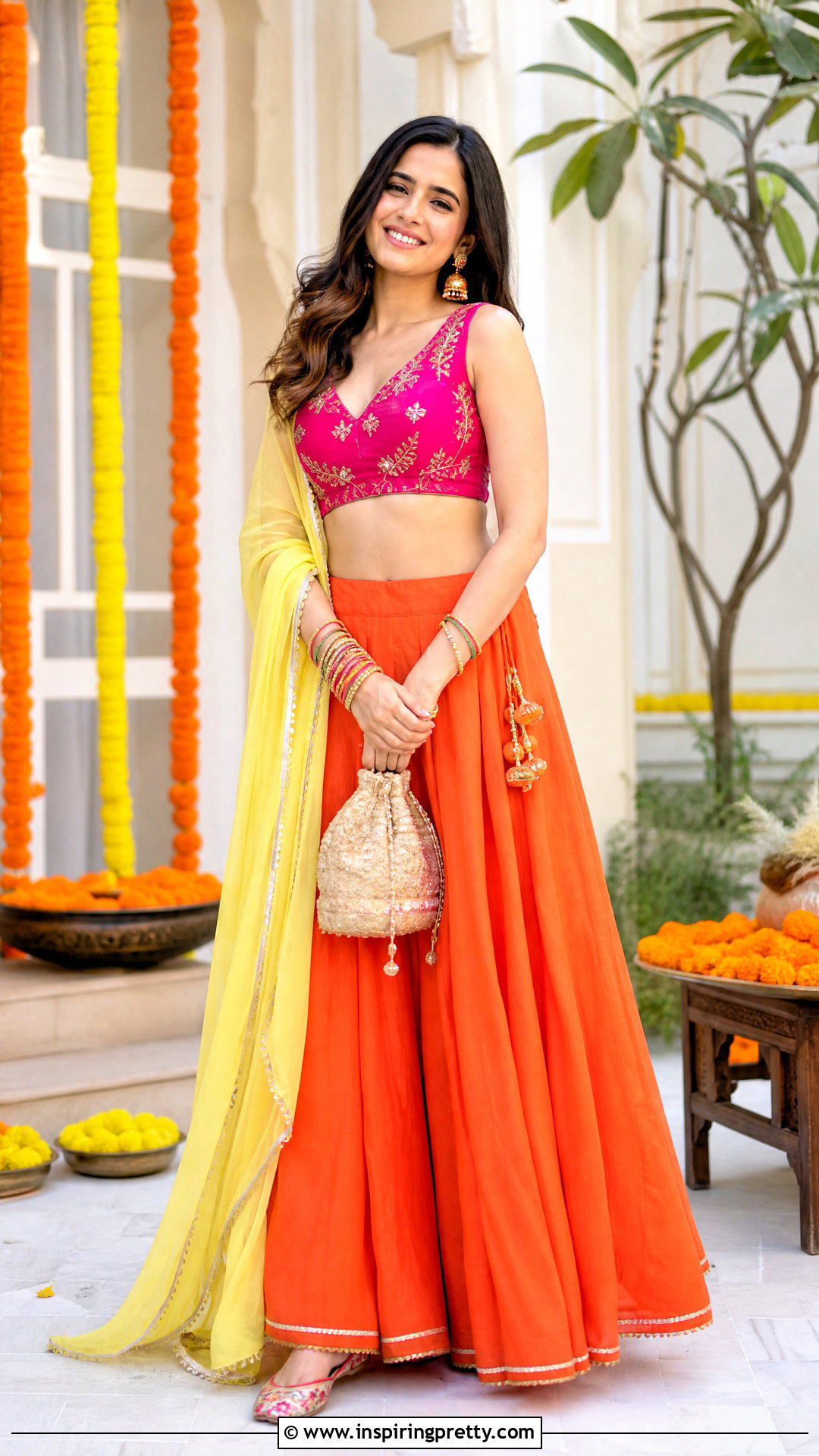
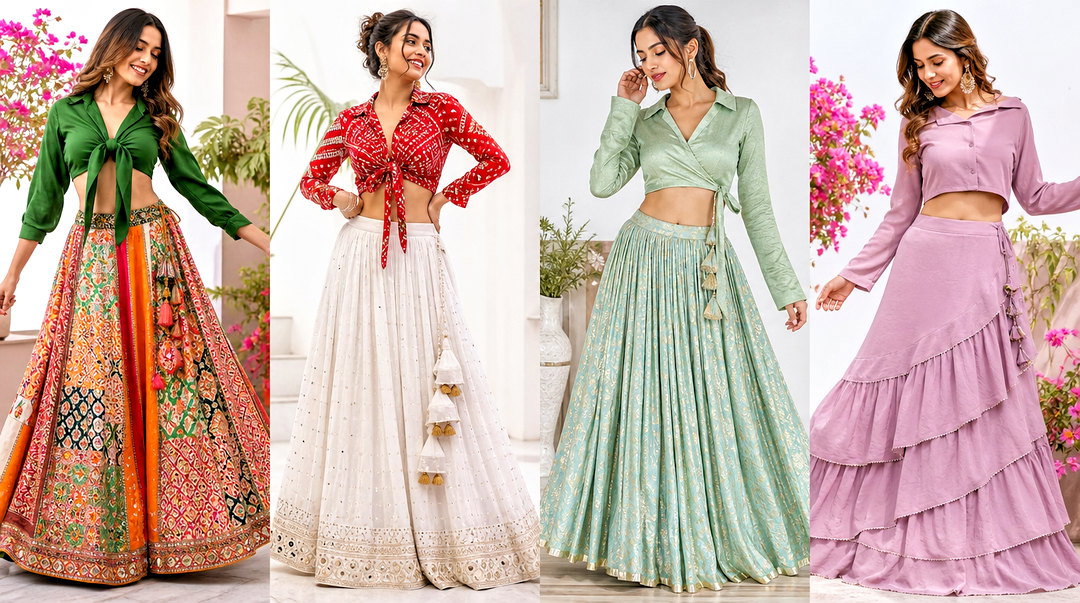
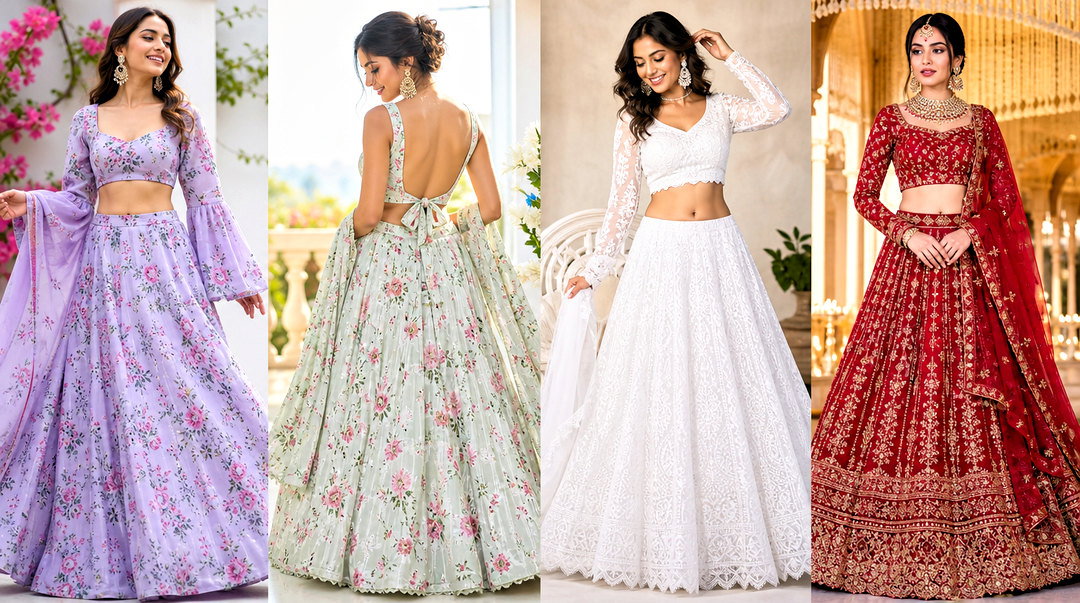
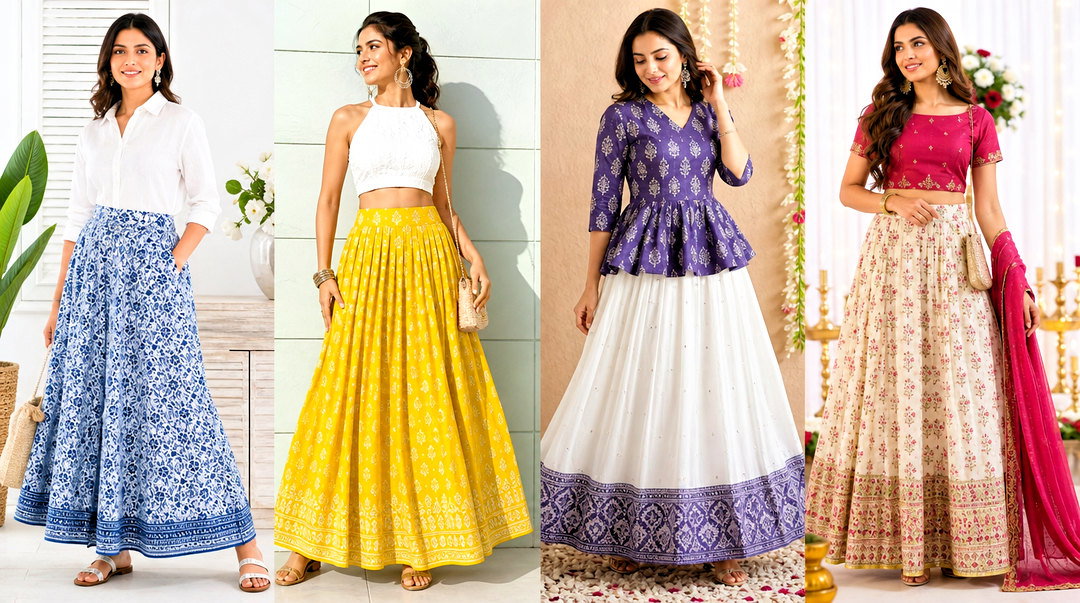
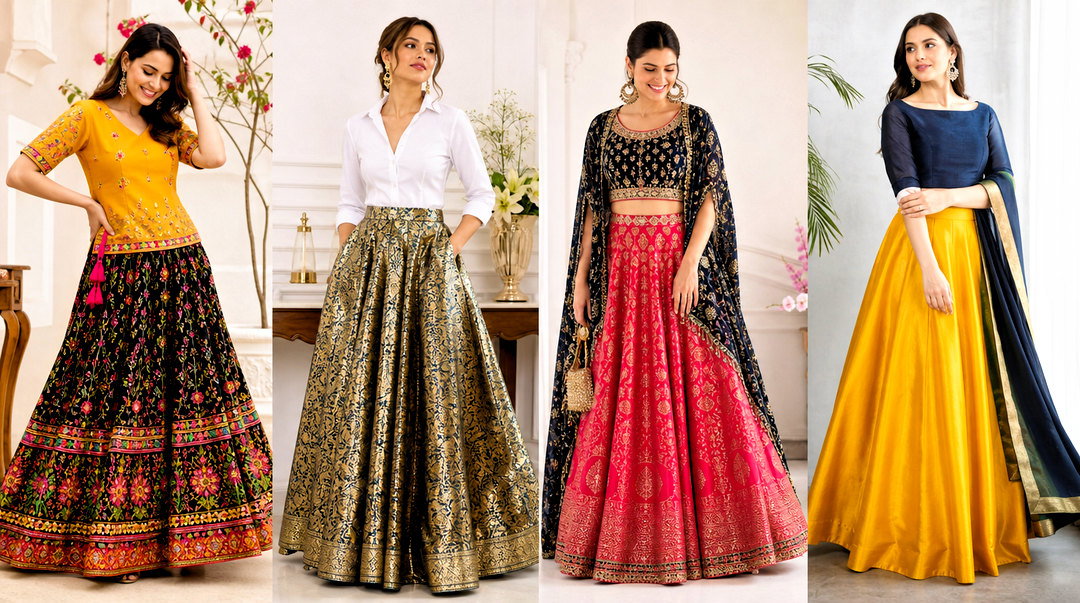
Orange and pink is loud in the best way, and it suits an energetic daytime function like a haldi or a festival mela. A tangerine or coral flared skirt with a fitted pink crop top. Embroidery that uses both shades makes the pair look planned. A soft yellow dupatta adds a third note, or keep it sheer in the skirt color. Gold jhumkas and colorful bangles. Keep the bag small and neutral. If the bright version feels too much, terracotta with dusty rose is quieter.
16. Black Skirt With White Peplum Top
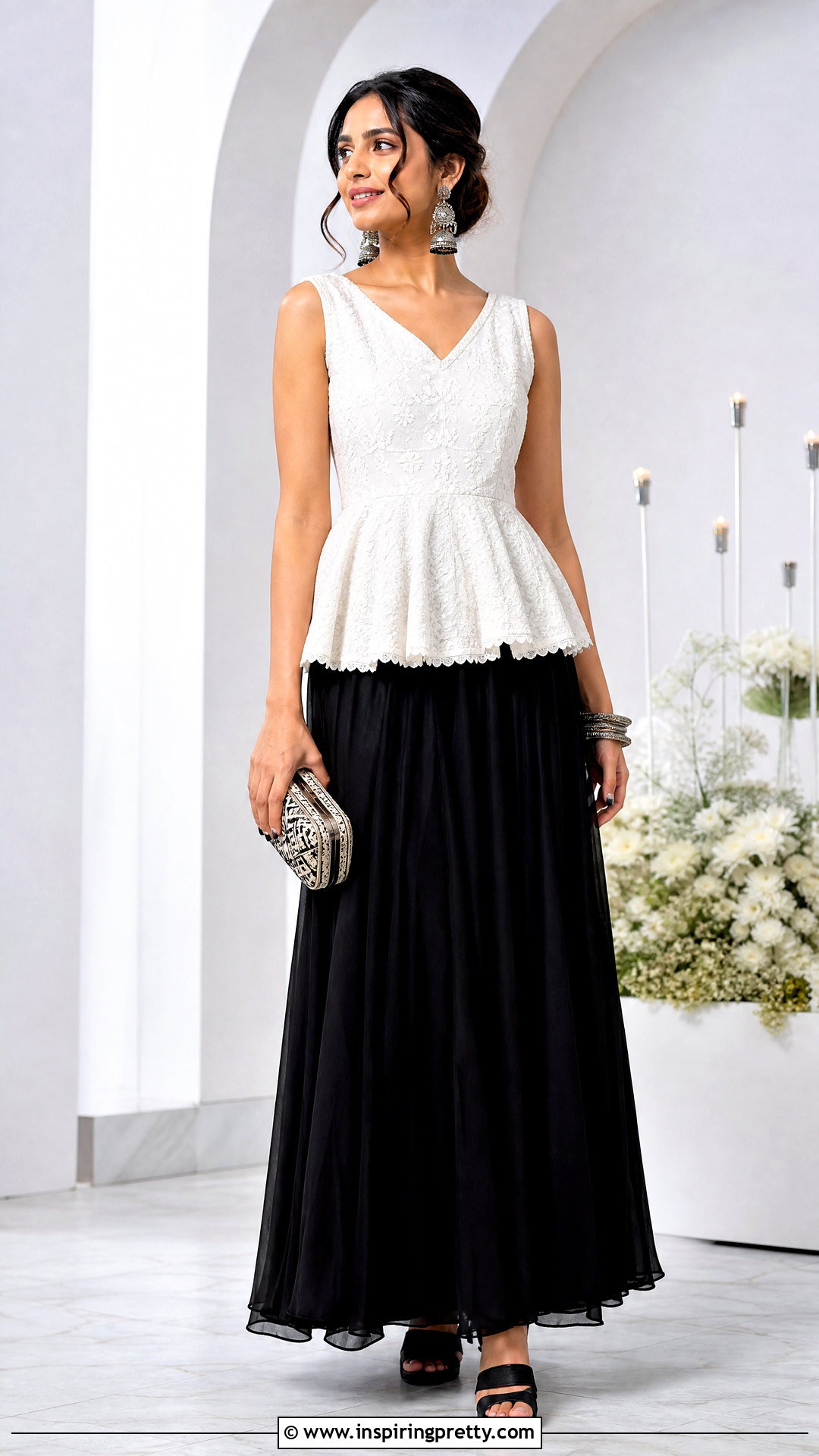
A white peplum over a black skirt gives a clean, graphic look with a defined waist, and it reads as smart rather than festive. A black maxi with a broad border or tonal embroidery, and a white peplum in lace or chikankari-style work. The peplum's flare balances the skirt's volume. Oxidized silver keeps it relaxed; polished gold dresses it up. If you want color, add it through one thing only, the bangles or the dupatta.
17. Purple Skirt With Gold Blouse
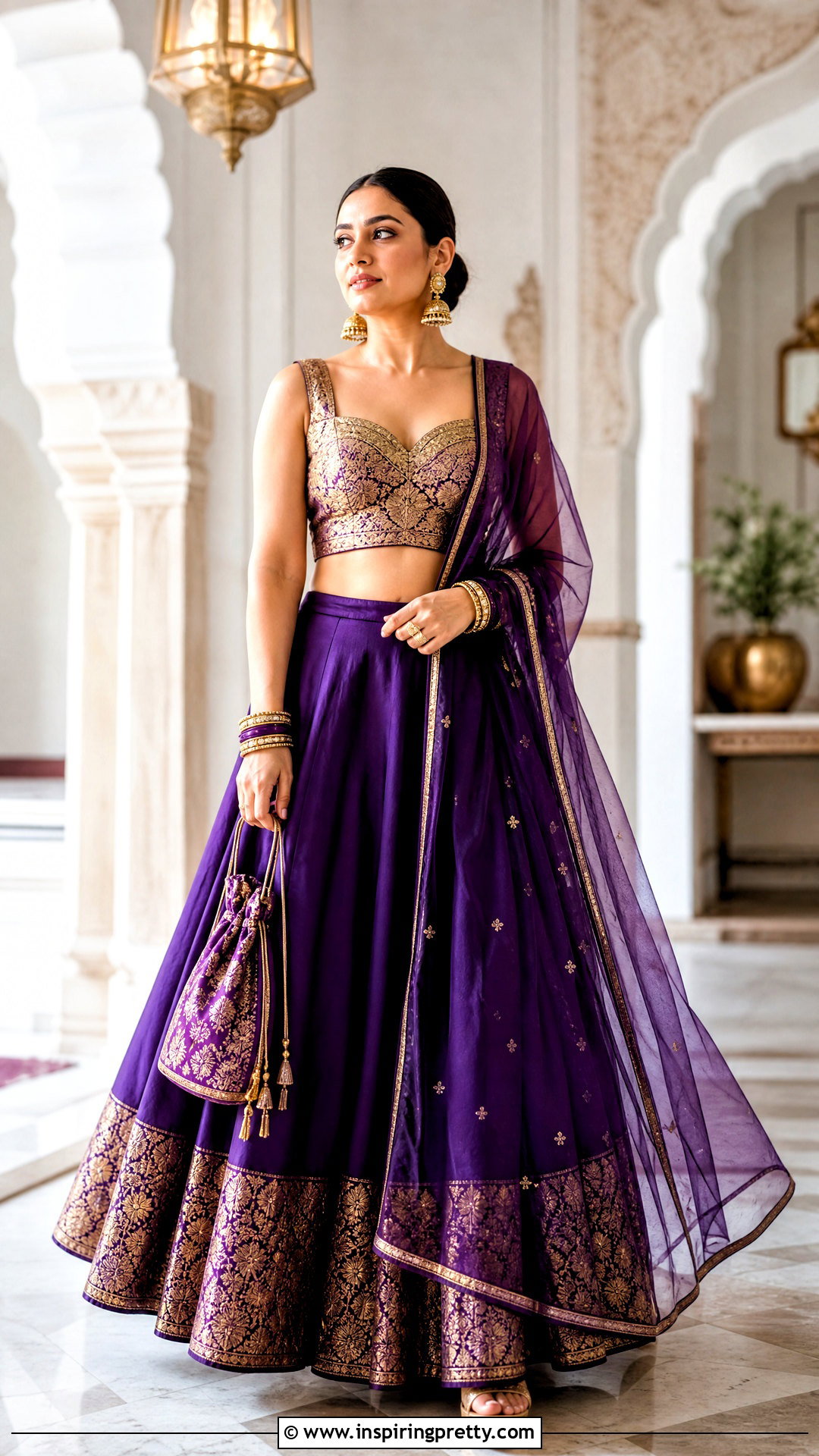
Purple and gold looks regal for a reception or an engagement. A plum or royal-purple skirt with light zari, then a gold brocade or textured silk blouse. A high neck or elbow sleeves keep the metallic top from feeling flashy. Gold jhumkas, one set of bangles and a purple potli. I recommend gold wedges here, because receptions involve a lot of standing in line to greet the couple. A sheer purple dupatta and a soft updo.
18. Kalamkari Skirt With Solid Crop Top
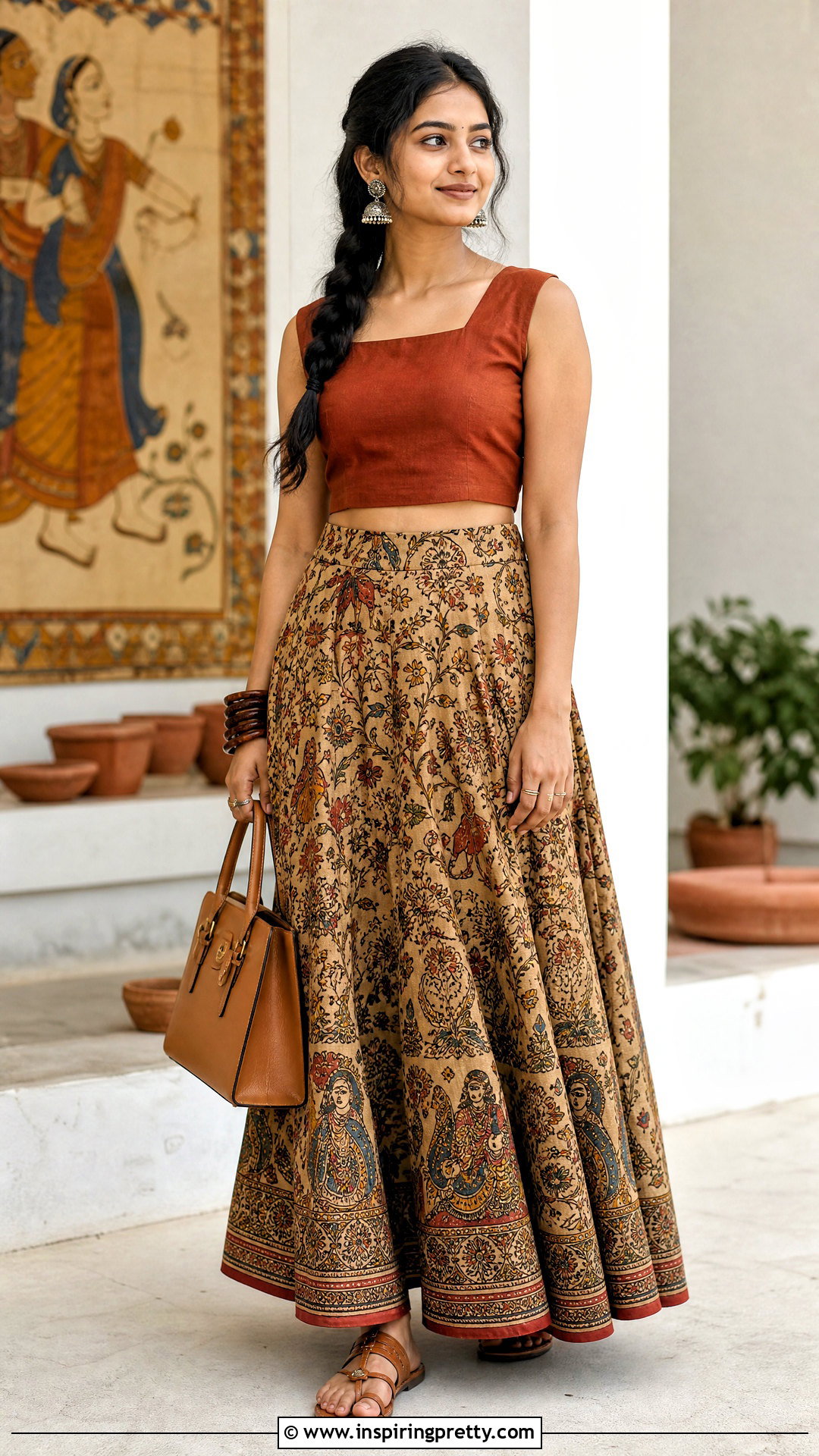
Kalamkari is hand-drawn or block-printed with natural dyes, and the motifs are detailed, so the top should be a solid crop in a shade pulled from the print: rust, indigo, maroon or olive. Cotton and cotton-silk keep the handmade feel. Oxidized jhumkas, wooden bangles, brown kolhapuris. A handwoven stole adds coverage. Natural dyes fade in strong sun and hot water, so wash it cold and dry it in shade. Wear it to cultural programs and daytime festivals.
19. Ruffled Skirt With Fitted Embroidered Top
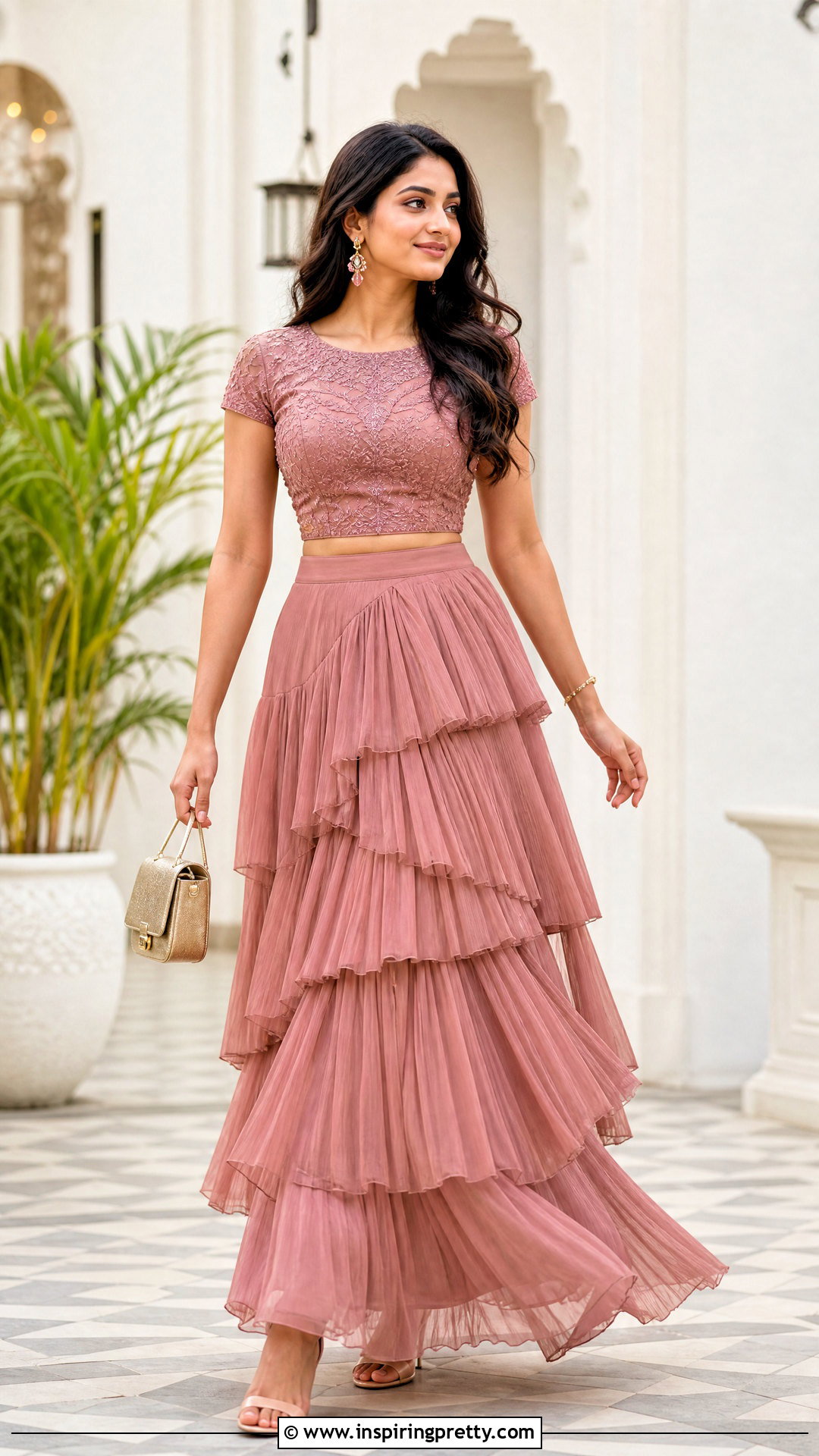
Two or three soft tiers move well; a stack of stiff ruffles adds width at the hips and makes stairs awkward. Pair the ruffled skirt with a close-fitting embroidered blouse so the upper body stays defined. Same color top and bottom looks taller, while contrast is more playful. Heeled sandals so the hem falls cleanly, a tiny structured bag. A bulky dupatta fights the ruffles, so skip it or keep it sheer over one shoulder.
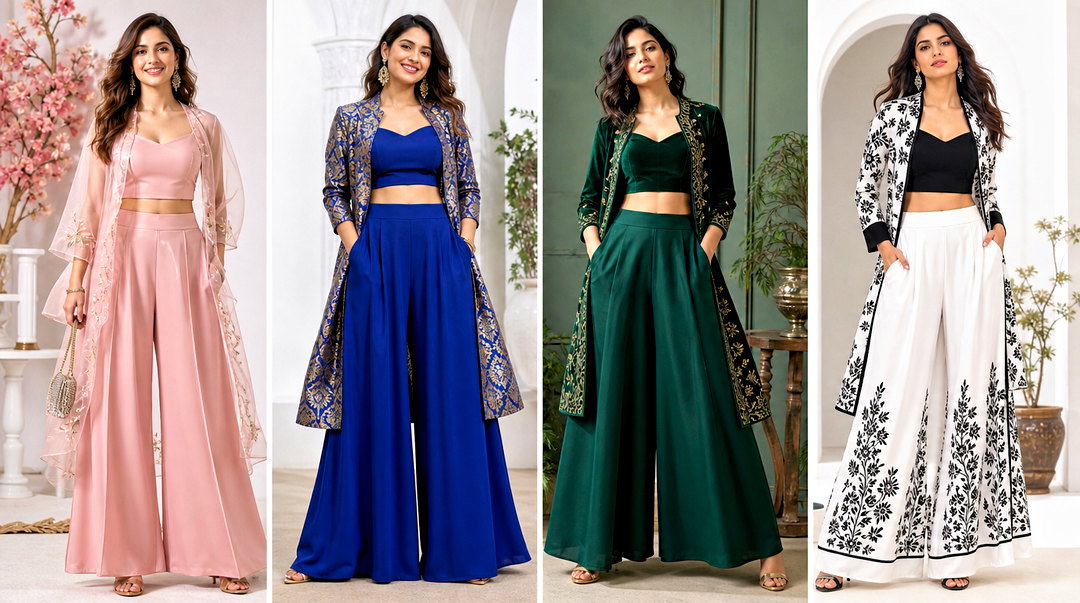
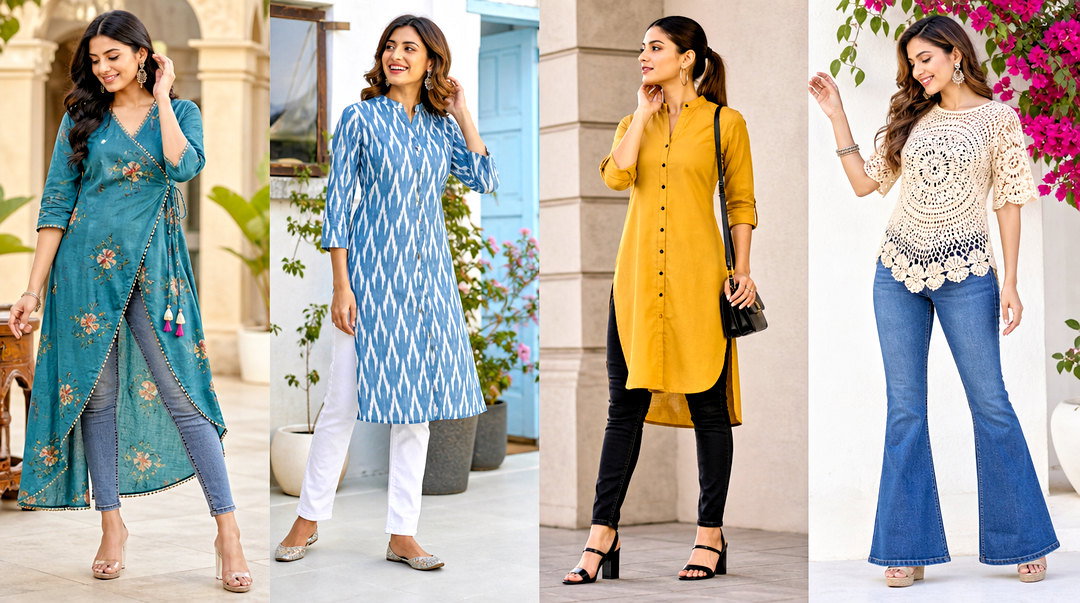
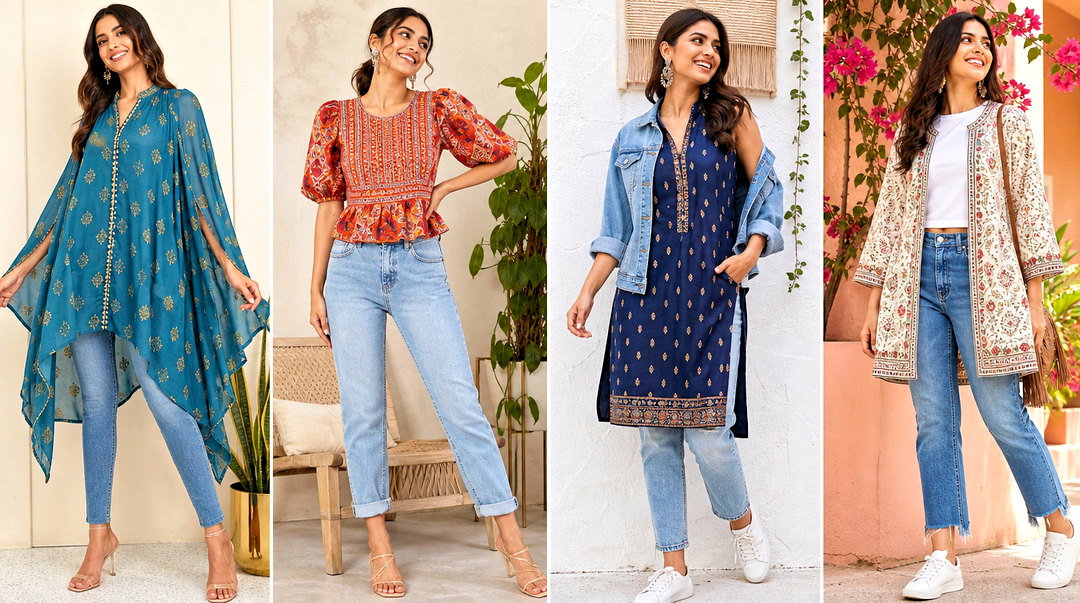
20. Ivory Skirt With Pastel Floral Top
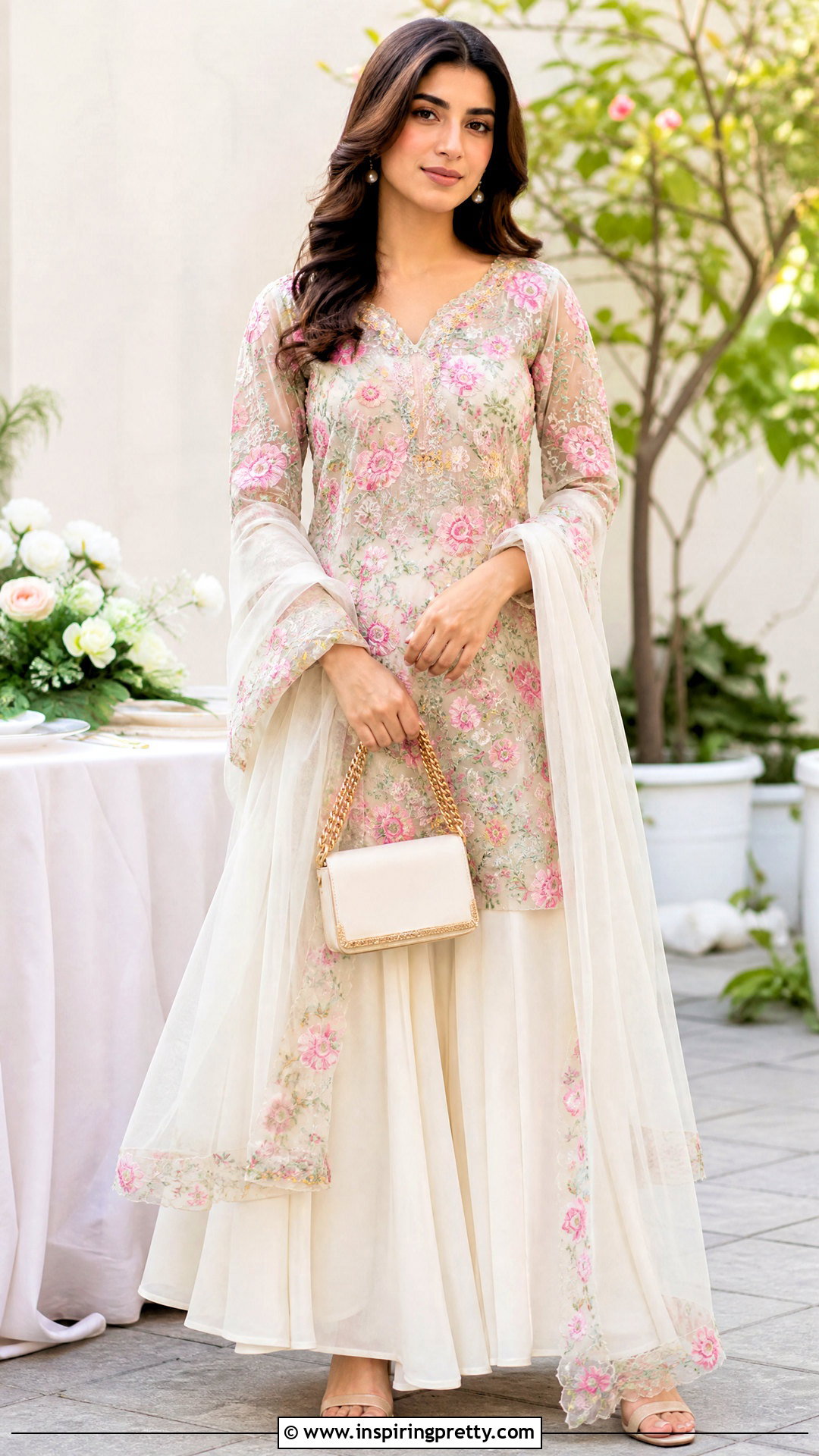
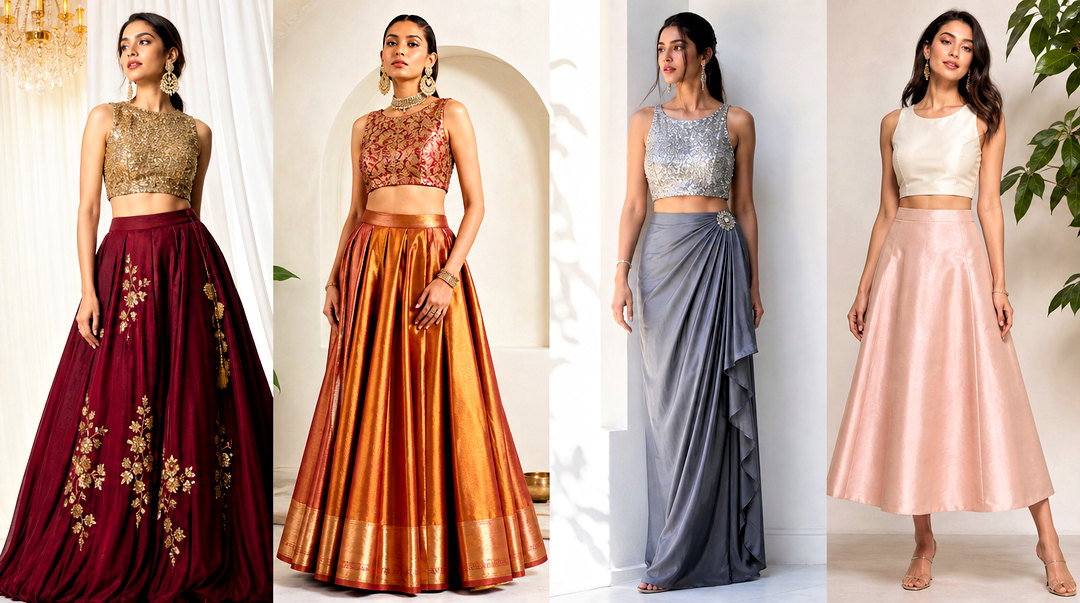
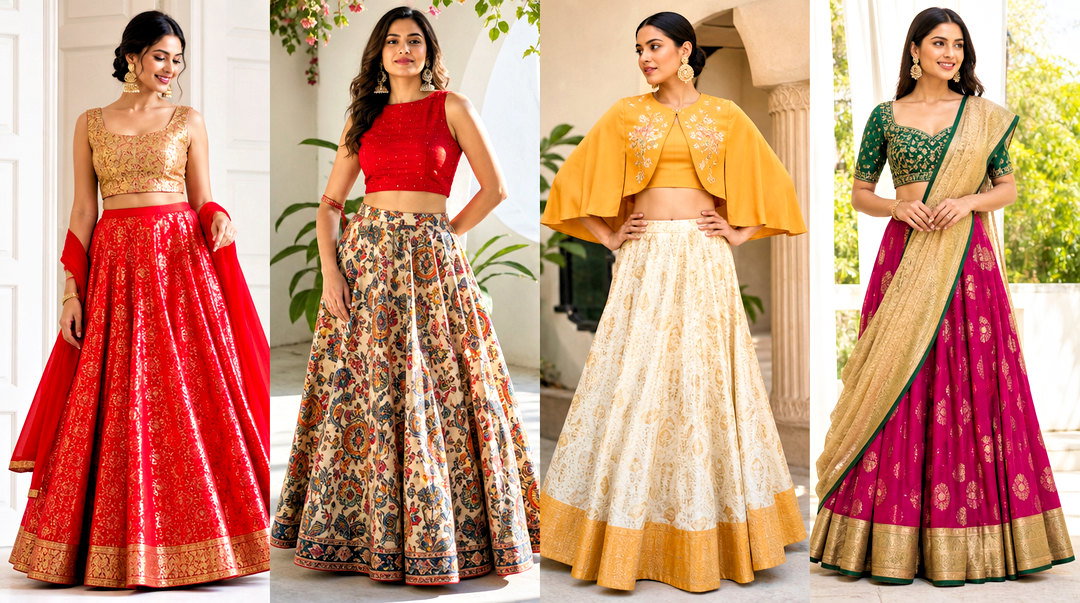
Ivory with a pastel floral blouse is the outfit I'd pick for a daytime engagement or a garden function. Silk, organza or georgette for the skirt, with light embroidery at the hem. The blouse can carry several soft colors. Pearl earrings, champagne sandals, a small ivory bag. Dark accessories break the light effect, so leave them at home. Ivory silk marks easily with turmeric or food, which makes it a poor choice for a haldi.
21. Maroon Skirt With Beige Jacket Top
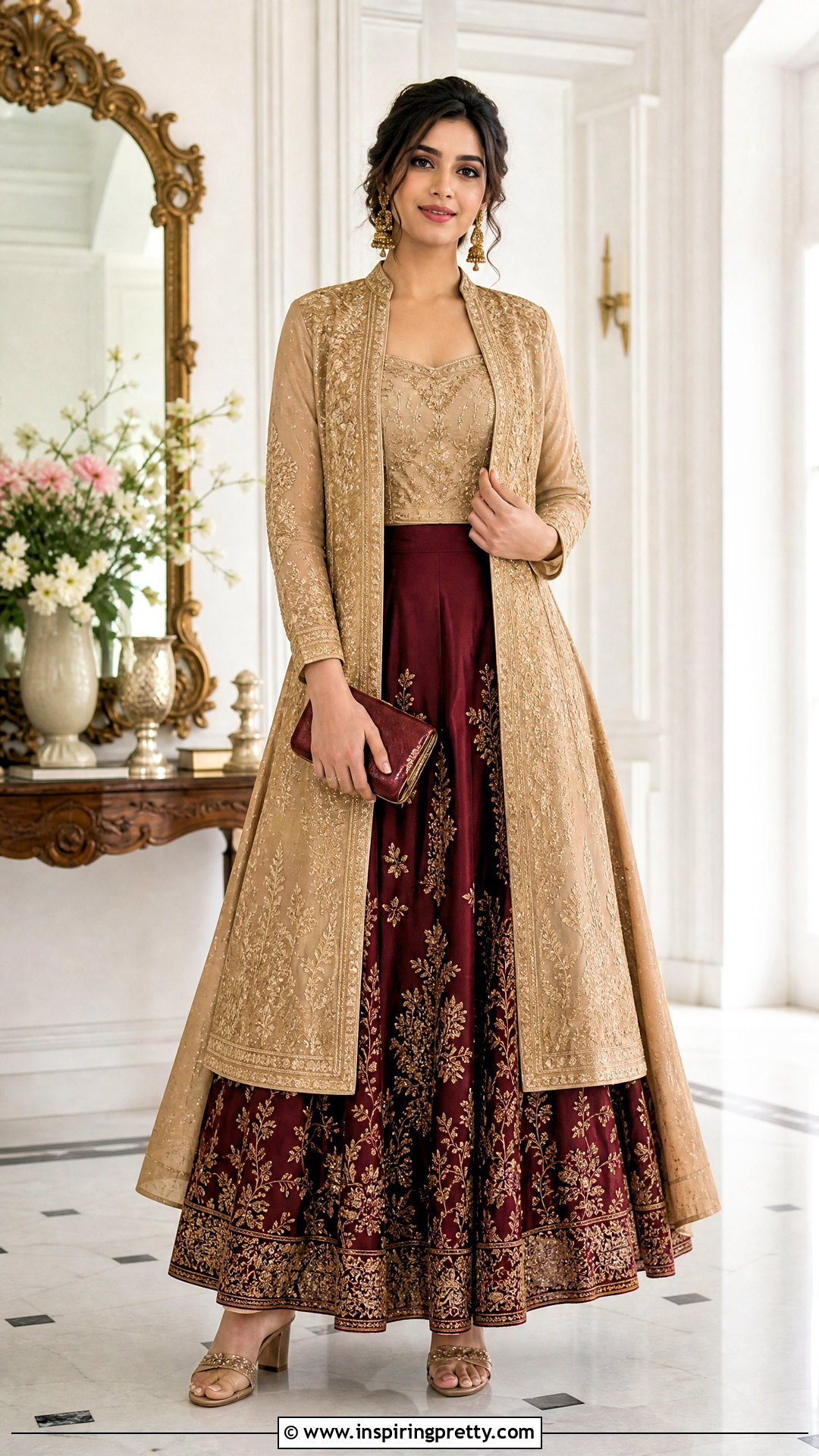
A short embroidered jacket over a plain beige blouse gives a maroon skirt structure and coverage at once. It's the outfit I suggest when someone wants to cover their arms but hates managing a dupatta. The jacket should end at the waistband and stay open so the outfit keeps a long vertical line. Antique-gold earrings and neutral block heels. Before the day, raise your arms in it; stiff embroidered sleeves can stop you lifting a plate or hugging relatives.
22. Navy Skirt With Cape Sleeve Top
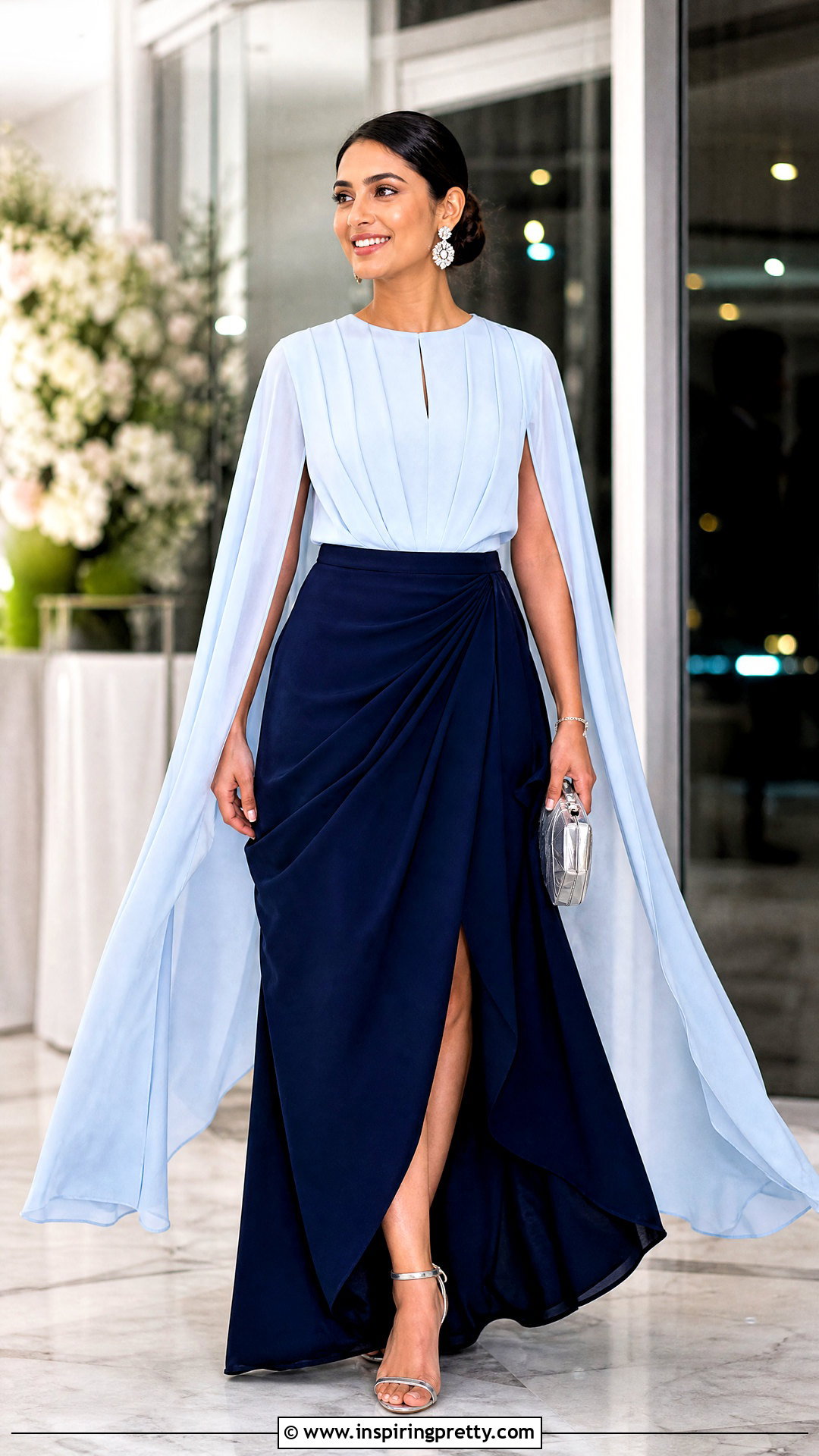
Cape sleeves give arm coverage without the weight of a jacket, and they move nicely when you walk. A navy skirt with subtle sequins or a satin border, then a blouse in silver, powder blue or navy with sheer cape panels. Keep the cape to elbow or waist length so it doesn't fight the skirt's volume. The cape is already a layer, so the dupatta can go. Crystal earrings, metallic heels, a sleek bun.
23. Green Printed Skirt With Black Blouse
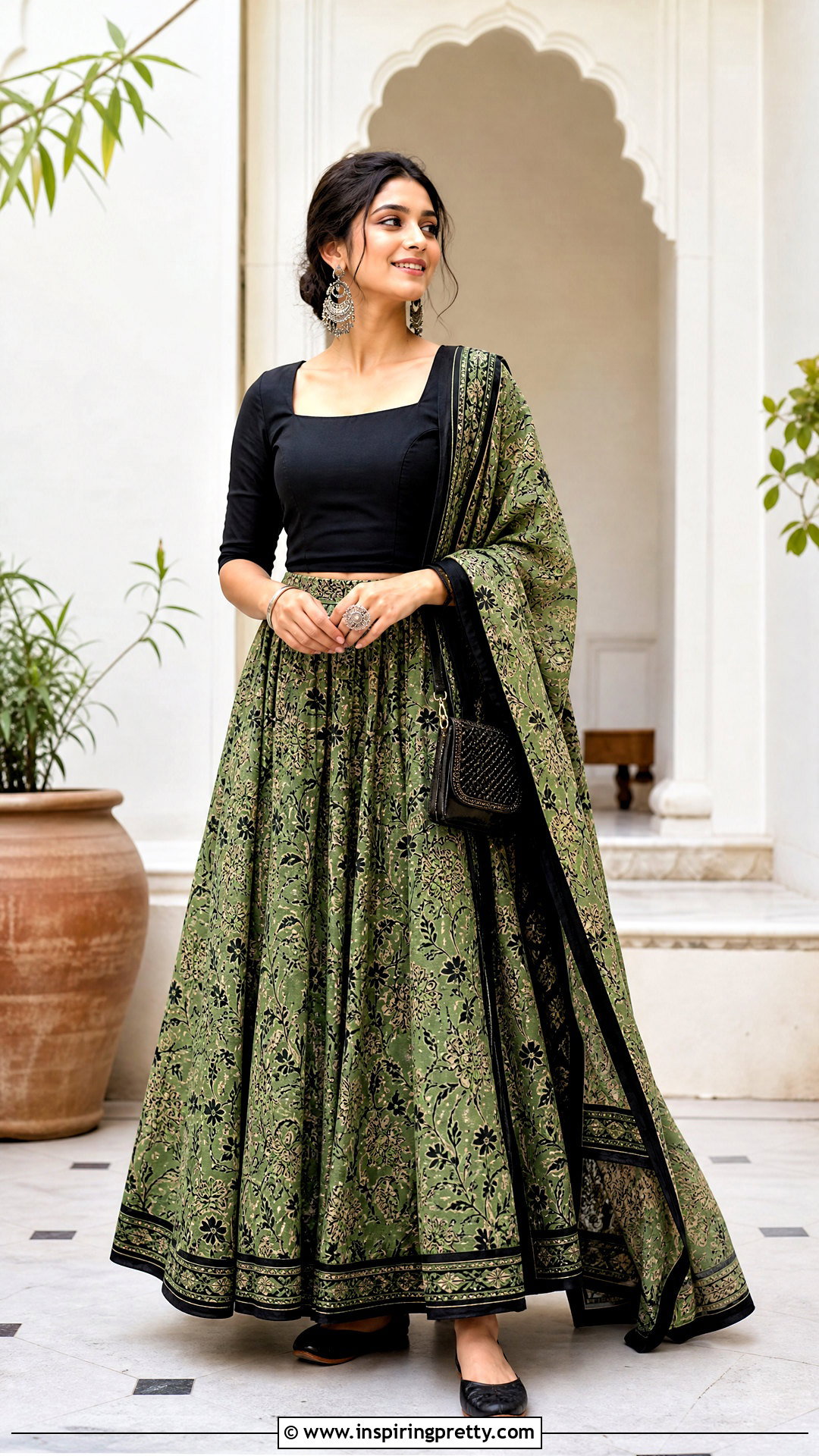
A green printed skirt with a black blouse works from a casual festival to a dressier family dinner, which makes it good value. Botanical, paisley or block patterns all work. A fitted black blouse with a square neck grounds the print. Piping on the blouse that matches the skirt makes it look tailored as a pair. Oxidized silver earrings and black juttis. Add a green dupatta with a black border for a more formal gathering.
24. Gold Skirt With Black High Neck Top
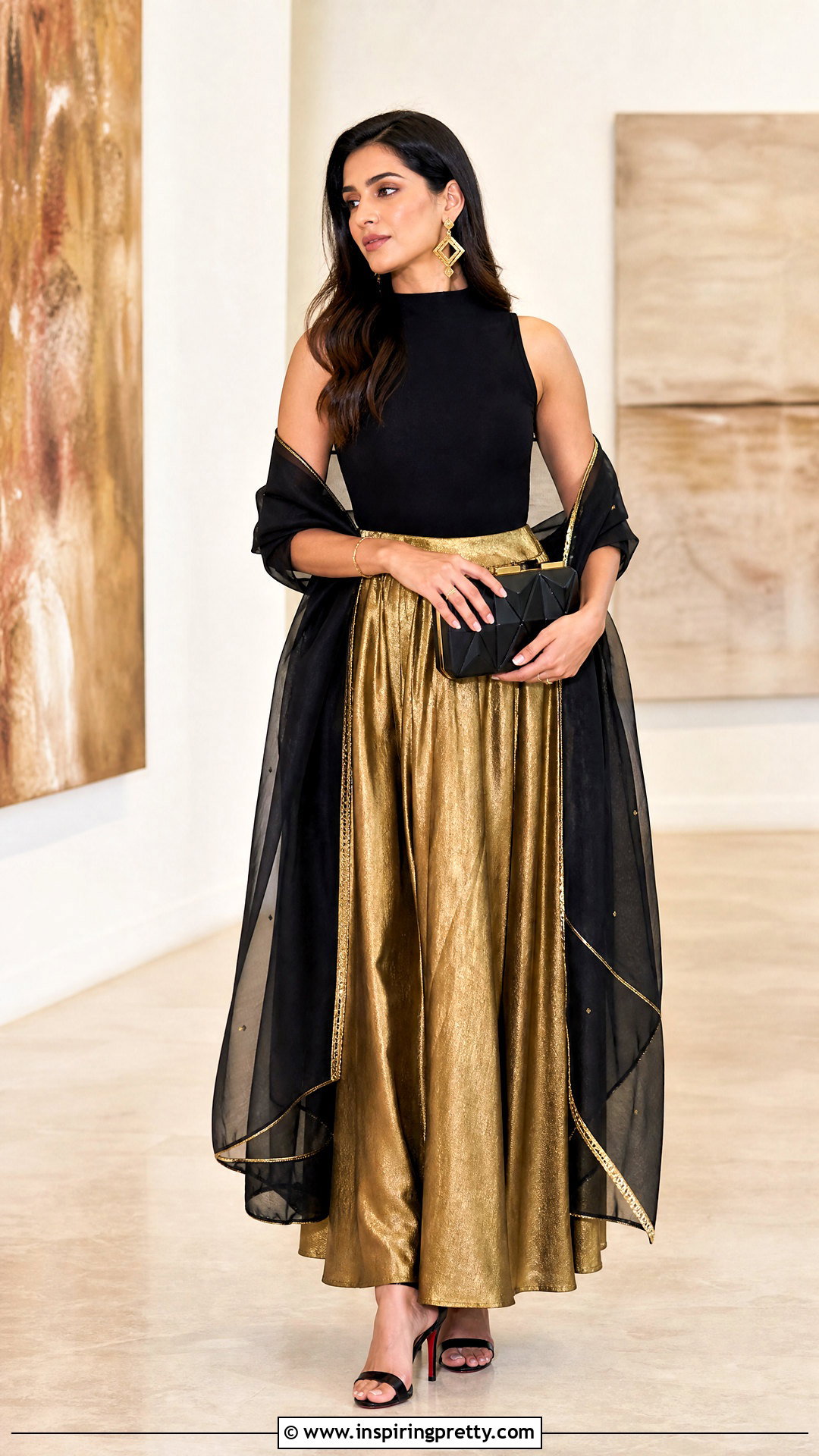
A gold skirt with a black high-neck top is the most modern look in this list, and it suits a cocktail night or a reception. Choose a skirt with a fluid drape; stiff gold tissue can look like a costume. The black top should be plain and fitted. Skip the necklace, because the high neck already frames your face, and wear geometric gold earrings instead. If you need a dupatta, a transparent black one with a thin gold edge, draped straight down from one shoulder.
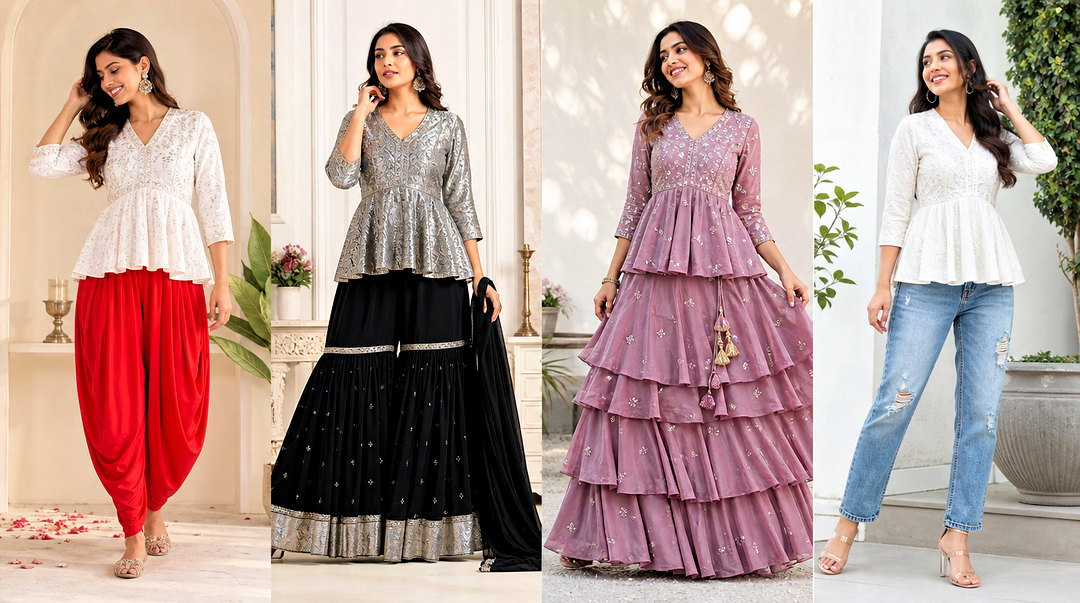
25. Pastel Skirt With Pearl Work Top
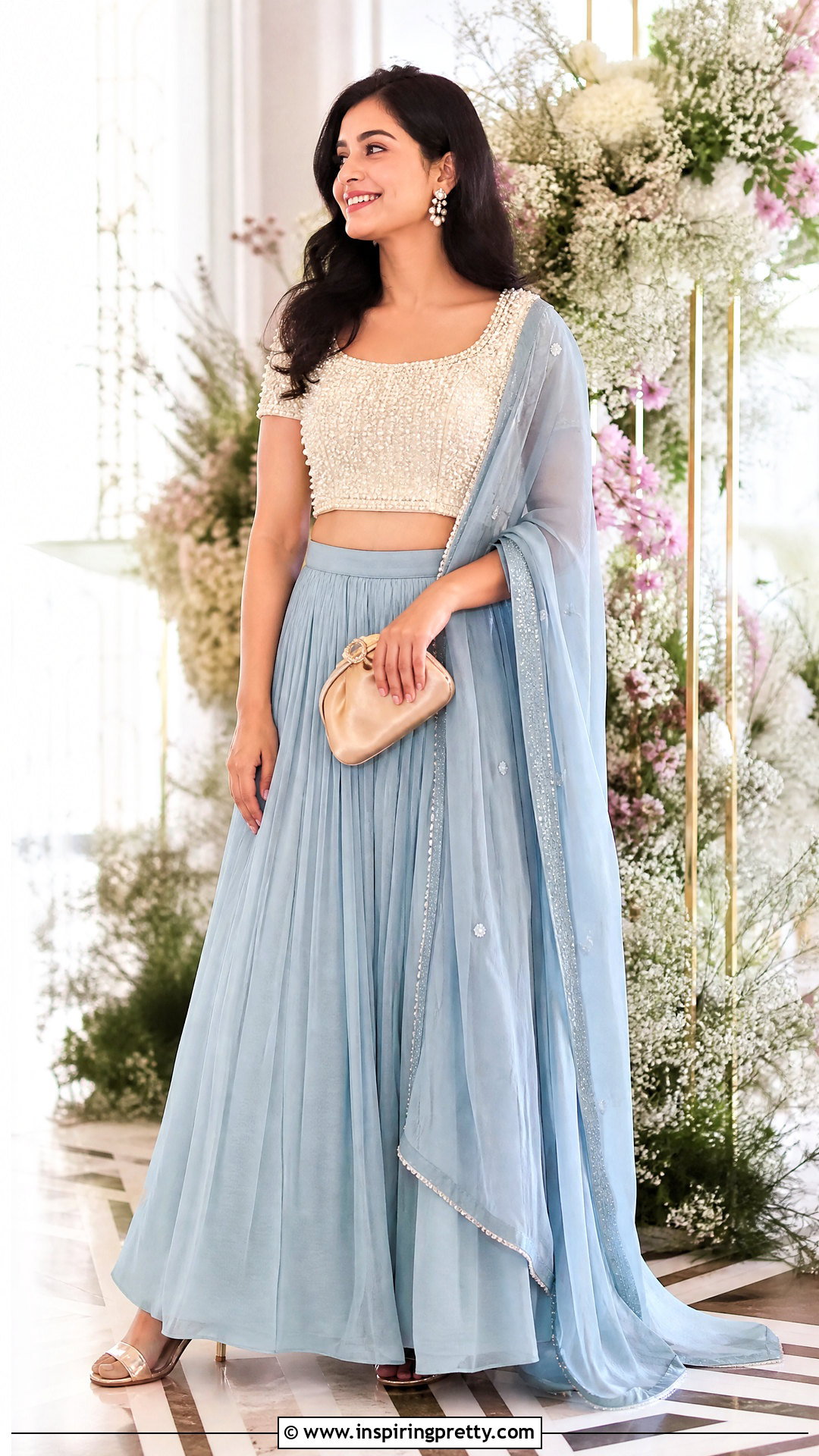
Pearl work is lovely on pastels, but dense pearl embroidery is heavy and drags a light blouse down at the neckline. I prefer pearls scattered around the neck and sleeves. Powder blue, lilac, mint or blush skirt, matching or ivory blouse. Pearl drops and low metallic heels. A sheer dupatta in the skirt color. Pearls are sewn on with thin thread, so check for loose ones before the event and fasten them, or you'll leave a trail across the venue.
26. Multicolor Skirt With Plain White Top
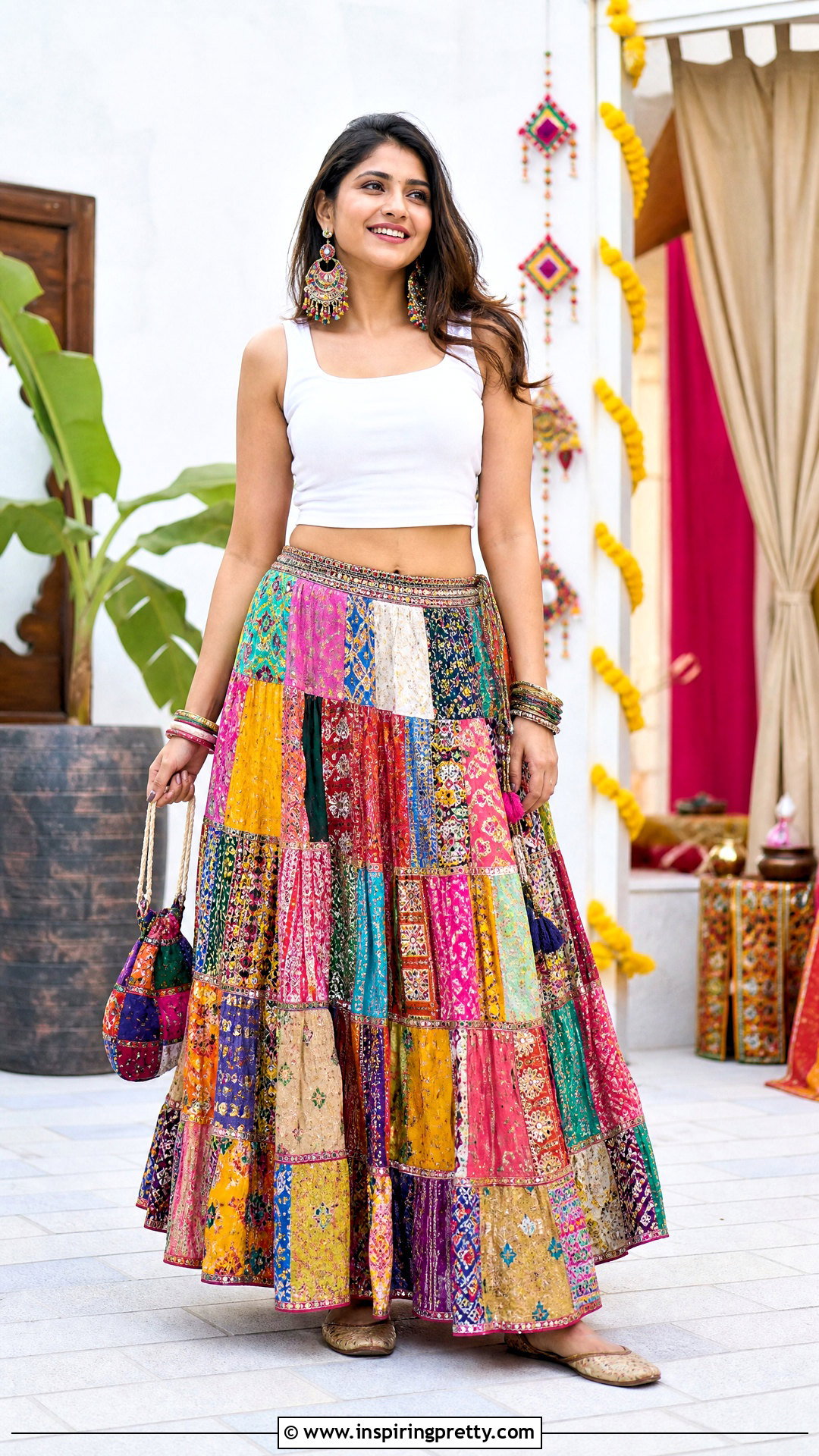
A multicolor skirt in patchwork or printed panels needs almost nothing from the top, so a plain white blouse or cropped kurti does the job. Pick one color from the skirt for your earrings or bangles. Neutral juttis. A white dupatta can soften a very bright print, but it's optional. Patchwork skirts are usually cotton, which makes this a sensible choice for a hot afternoon mela.
27. Pleated Skirt With Embroidered Bustier Top
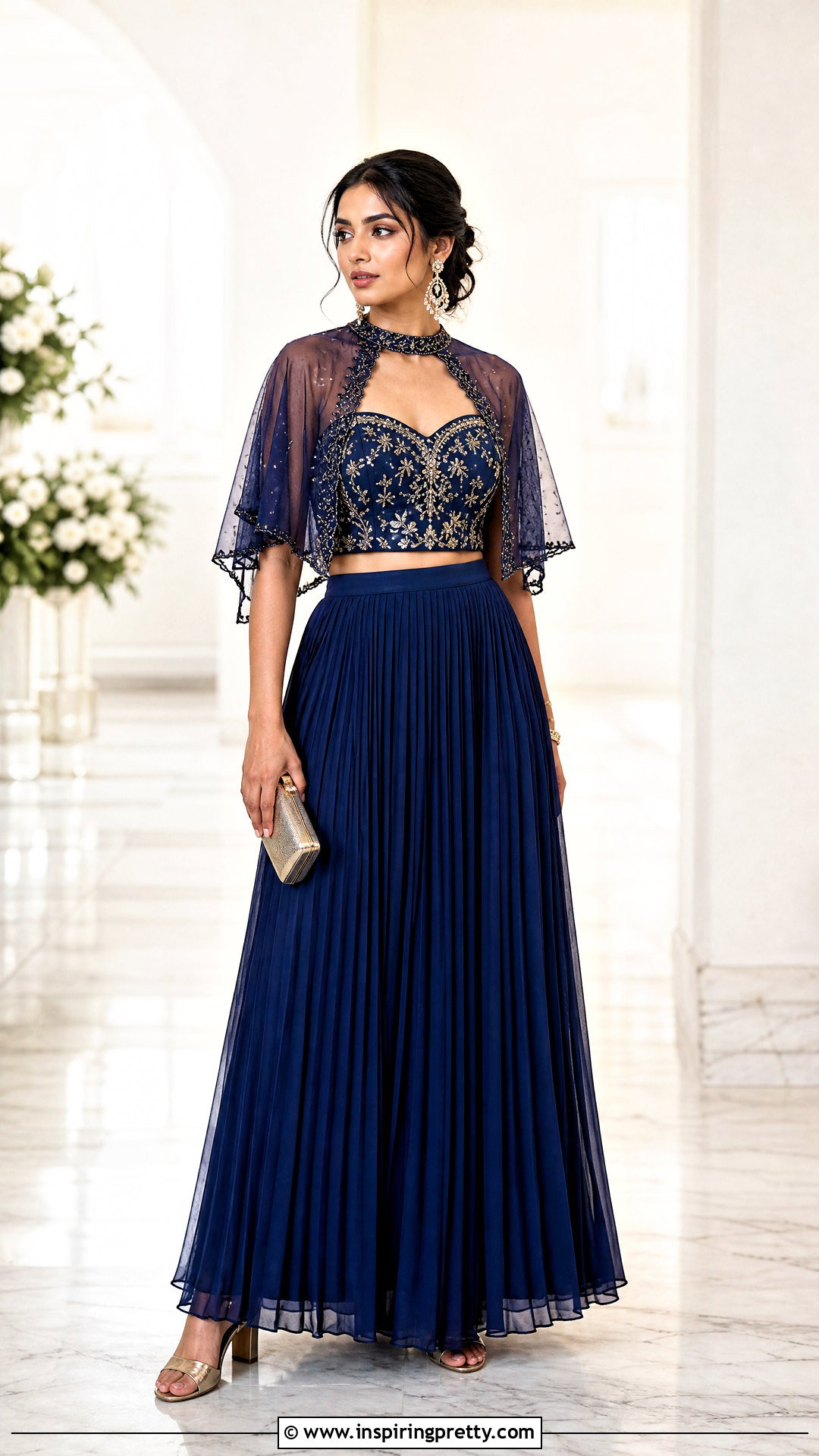
A bustier-style top is the most modern blouse here, and the one where fit matters most. It needs secure straps, proper support and enough length to meet the high-rise skirt when you sit. Choose fine, fluid pleats in the skirt rather than stiff folds. Embroidery on the bodice keeps it Indian. If your family expects covered shoulders, a sheer cape or a cropped jacket solves it without changing the outfit. Stable block heels, statement earrings.
28. Silk Skirt With Boat Neck Blouse
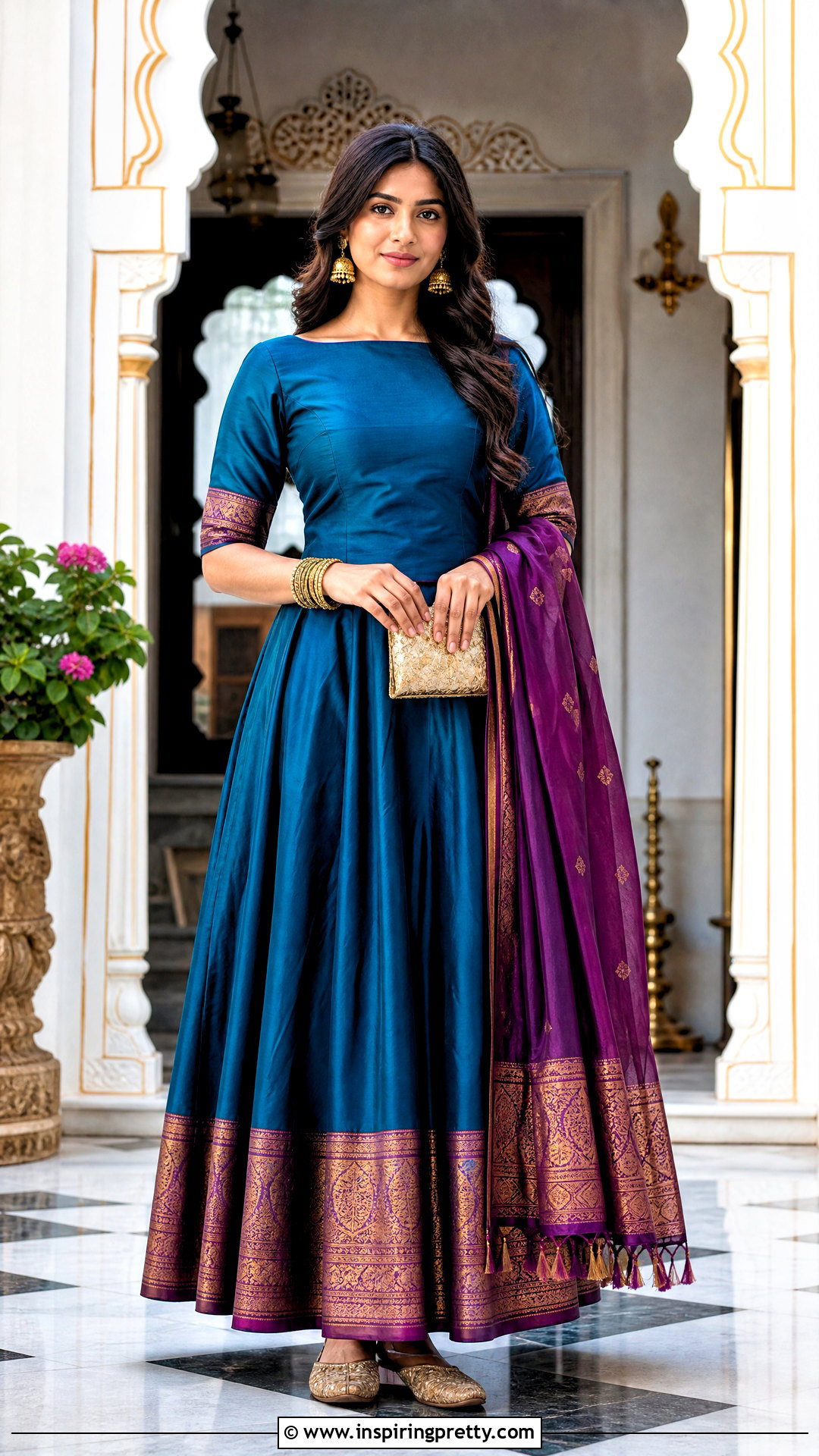
A silk skirt with a contrasting woven border and a boat-neck blouse is about as classic as this list gets. The boat neck should follow the collarbone, not sit up at the throat, and a good tailor will add a hidden strap holder so your bra straps don't show. Elbow sleeves balance a full skirt. Jhumkas, a small bindi, bangles. A dupatta draped neatly over one shoulder. A center-parted bun suits the symmetrical neckline.
29. Tiered Skirt With Halter Neck Top
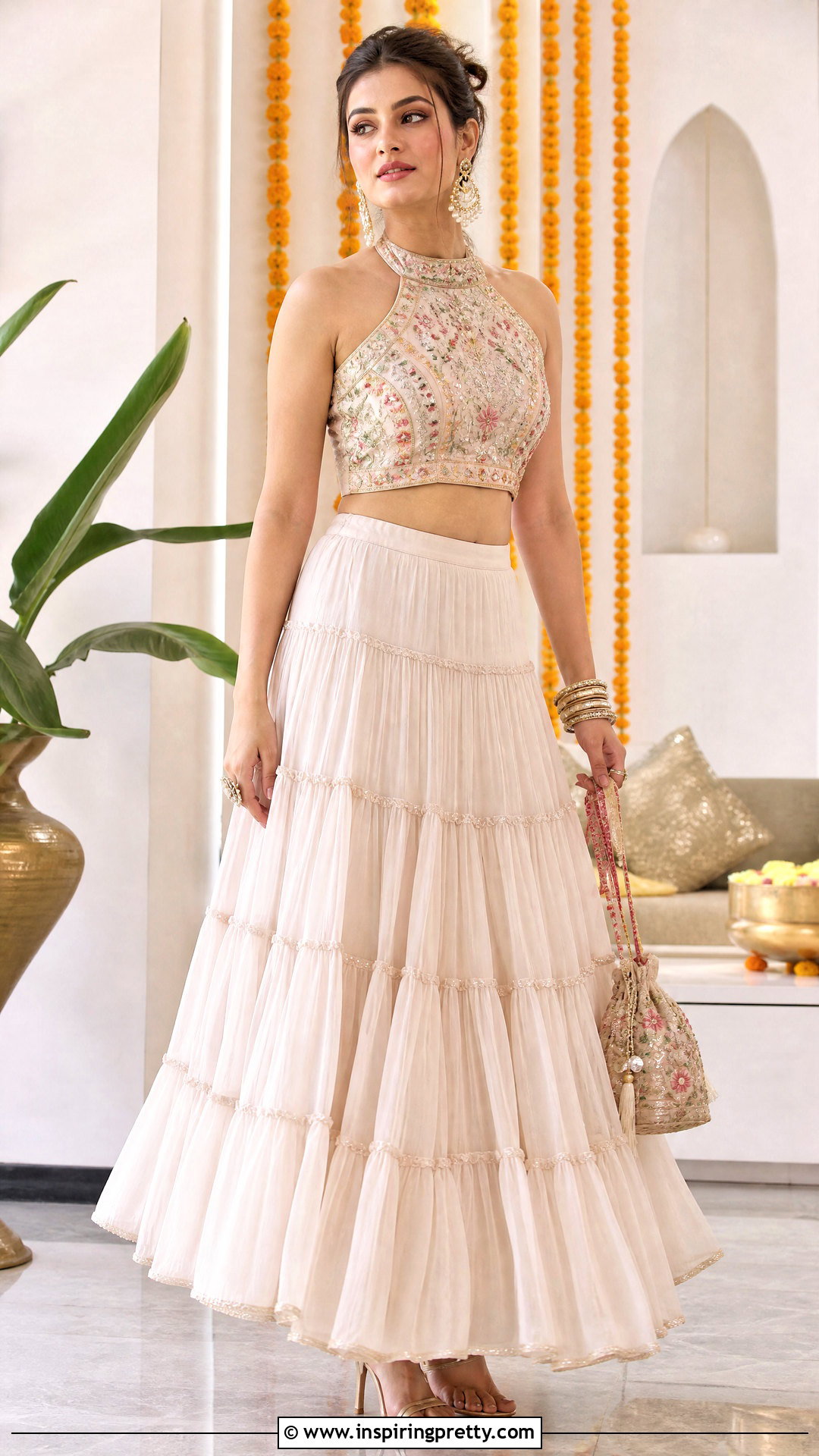
A halter neck shows the shoulders and back, so for a traditional crowd I keep a sheer stole in the bag. Pair it with a georgette or cotton-silk tiered skirt that falls smoothly from the waist. Embroidery around the neckline adds Indian detail without covering the whole top. Earrings that graze the shoulder, stacked bangles, heeled sandals. A necklace crowds the halter, so leave it off. Hair up or in a high ponytail.
30. Mustard Skirt With Maroon Blouse
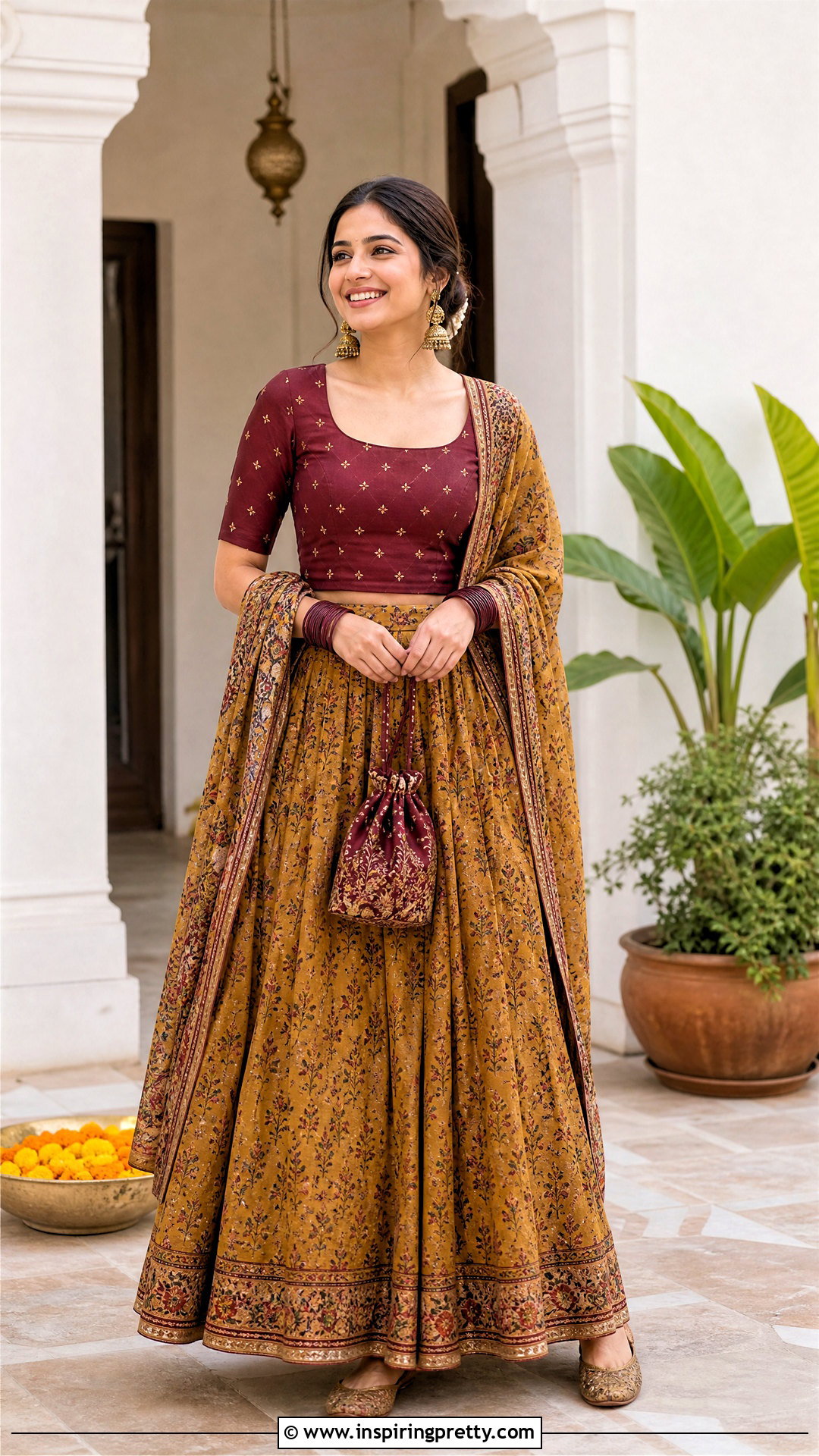
Mustard and maroon is warm and earthy, and it suits deeper skin tones particularly well. A mustard skirt with block prints or a maroon border, and a fitted maroon blouse in cotton-silk for daytime or raw silk for the evening. Antique-gold earrings, maroon bangles, tan juttis. A printed dupatta using both colors makes it a complete ethnic set. Since both colors are rich, I keep the embellishment light.
31. White Skirt With Blue Chikankari Top
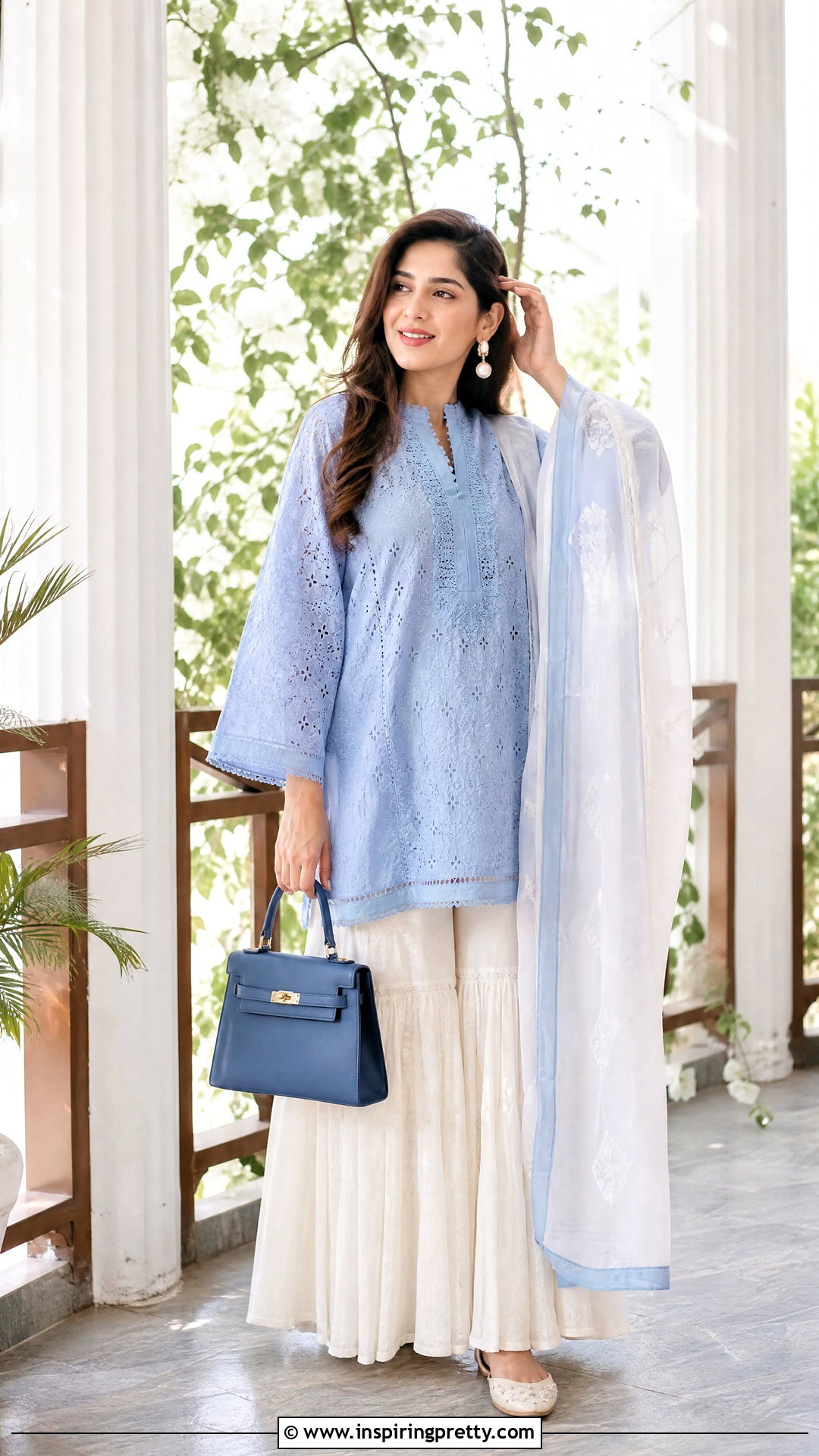
White and blue is the coolest-looking pairing here, which matters in summer heat. An ivory cotton or georgette skirt with soft gathers, then a sky-blue or indigo embroidered blouse or short kurti. Chikankari is delicate hand embroidery, so hand wash it in cold water and never wring it. Pearl or silver earrings and white juttis. Ask for a breathable cotton lining; a polyester one undoes the whole point of choosing cotton.
32. Teal Skirt With Blush Pink Top
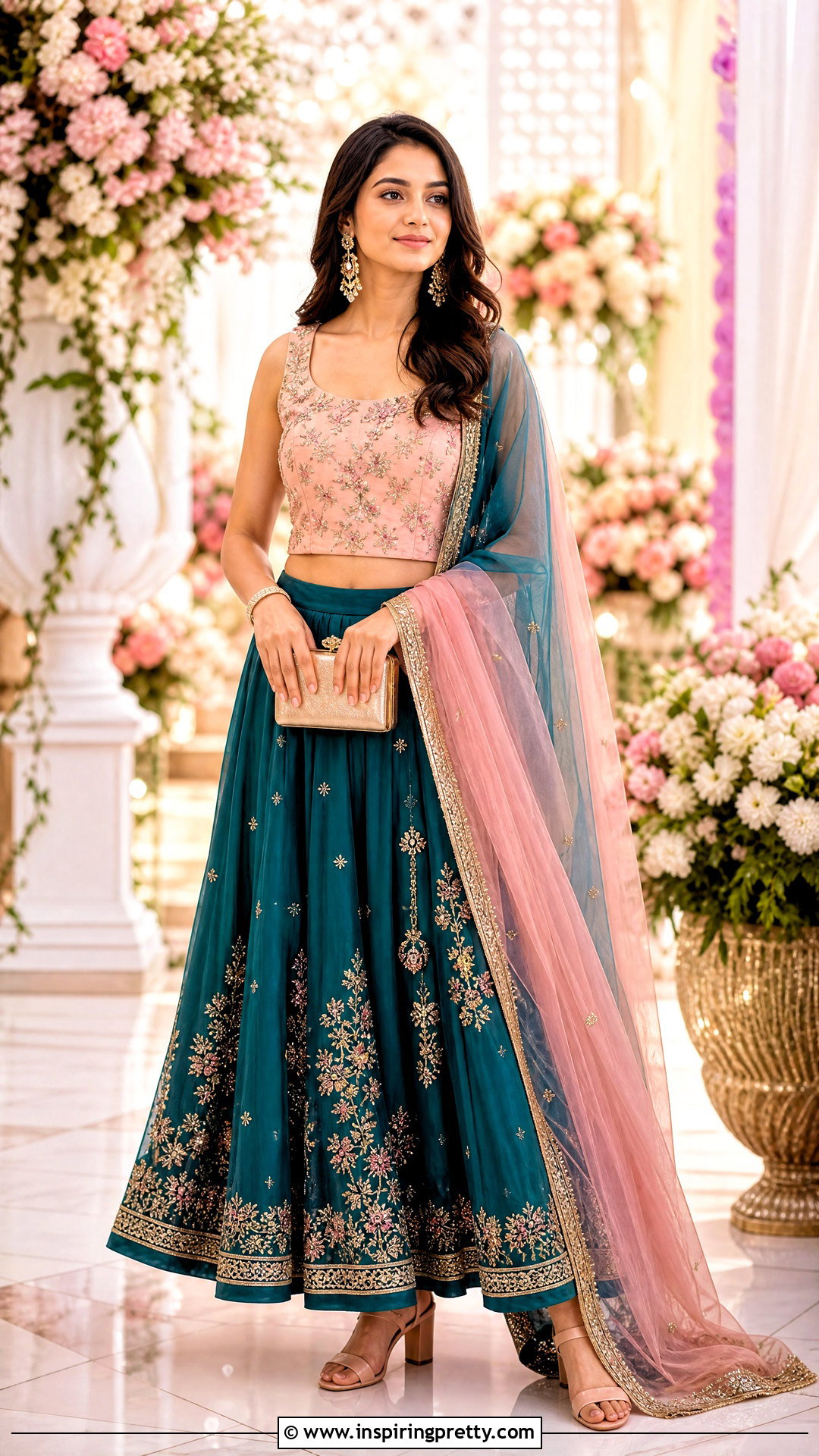
Teal and blush balances a deep color with a soft one, and it holds up well in evening photographs. A teal silk or georgette skirt with light gold embroidery, and a fitted blush blouse with floral threadwork. Gold jewelry links the warm pink to the cool teal, which silver wouldn't do as well. Drop earrings and metallic sandals. Keep the blouse closely fitted against the full skirt to mark the waist.
33. Gray Skirt With Wine Velvet Top
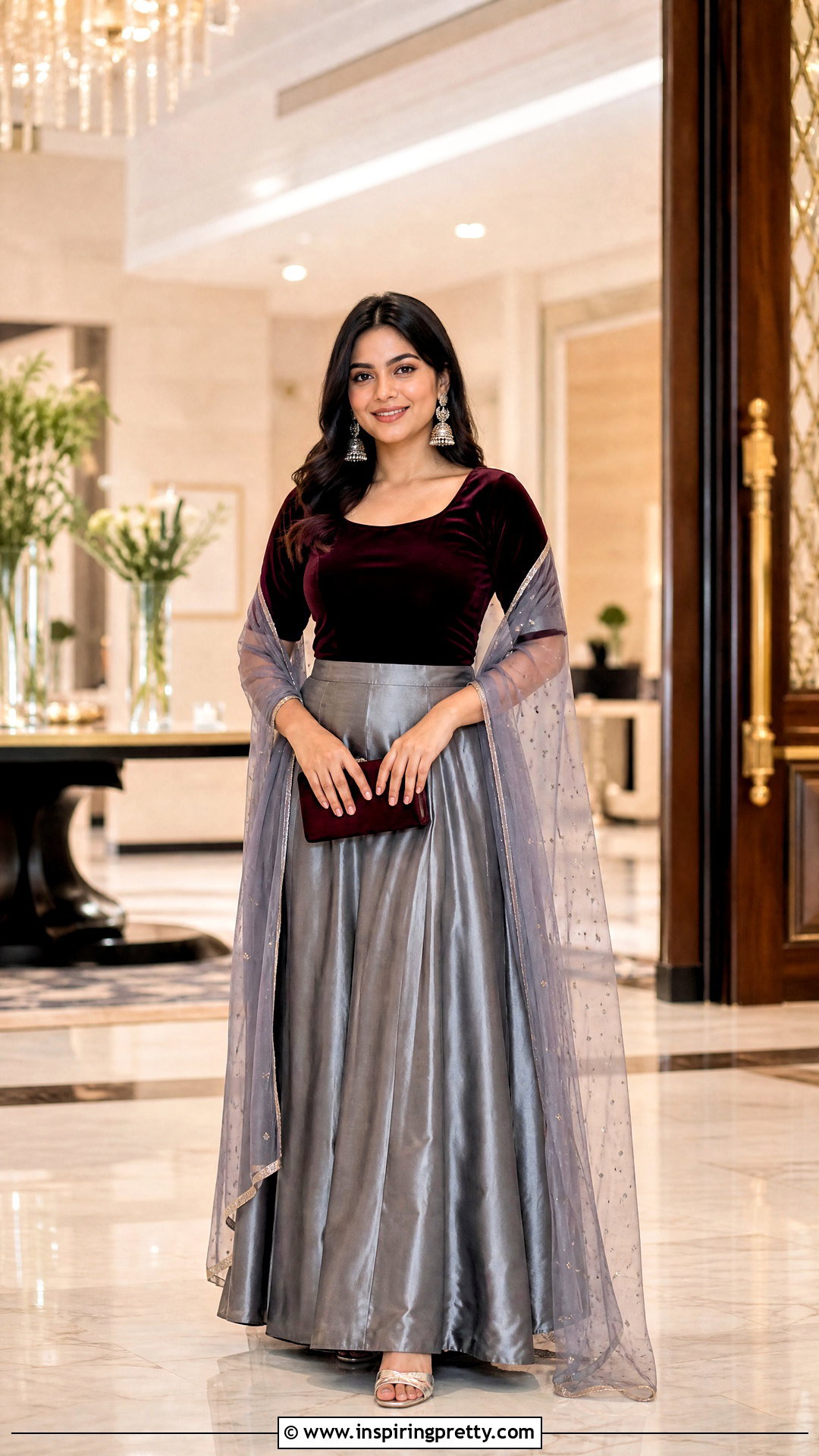
Gray is an underrated wedding color, because it lets a wine velvet blouse look deep instead of dark. A charcoal or pewter skirt in silk or georgette with silver accents, and an elbow-sleeve velvet top with a square neck. Silver earrings, a wine clutch, metallic heels. Velvet and silver thread already give plenty of texture, so I skip the necklace. Like any velvet, it belongs at a cool-weather function.
34. Lehenga Skirt With Long Jacket Top
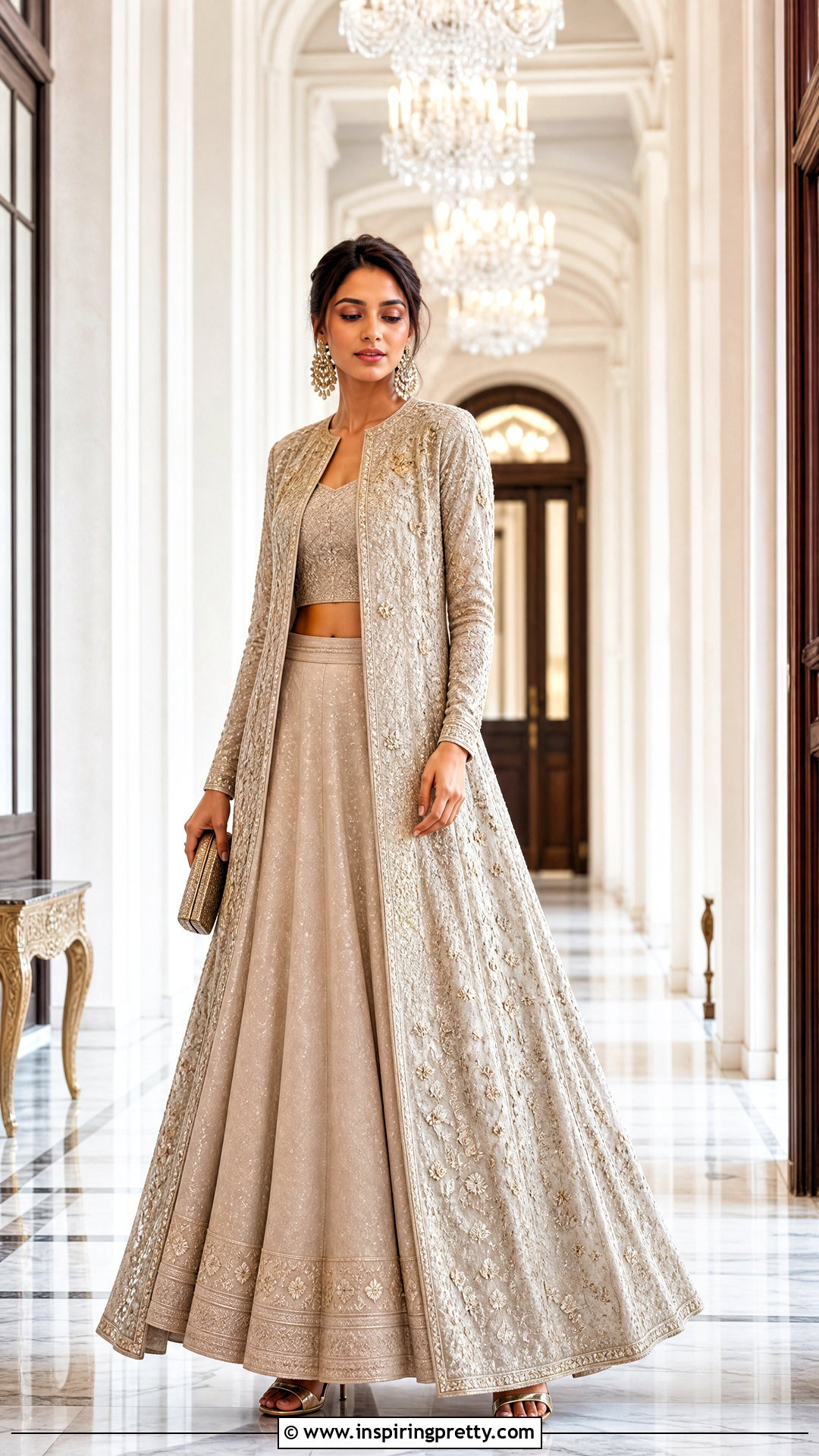
A long jacket over a lehenga skirt gives full coverage and a dramatic line, and the jacket replaces the dupatta, which frees your hands for a whole evening. Start with a simple fitted blouse and a moderately flared skirt, then an open-front jacket to the knee or the hem. Vertical embroidery along the edges frames the body. Keep all three pieces in one color family. Statement earrings and heels. Long jackets are warm, so this is a winter outfit.
35. Printed Skirt With Denim Shirt
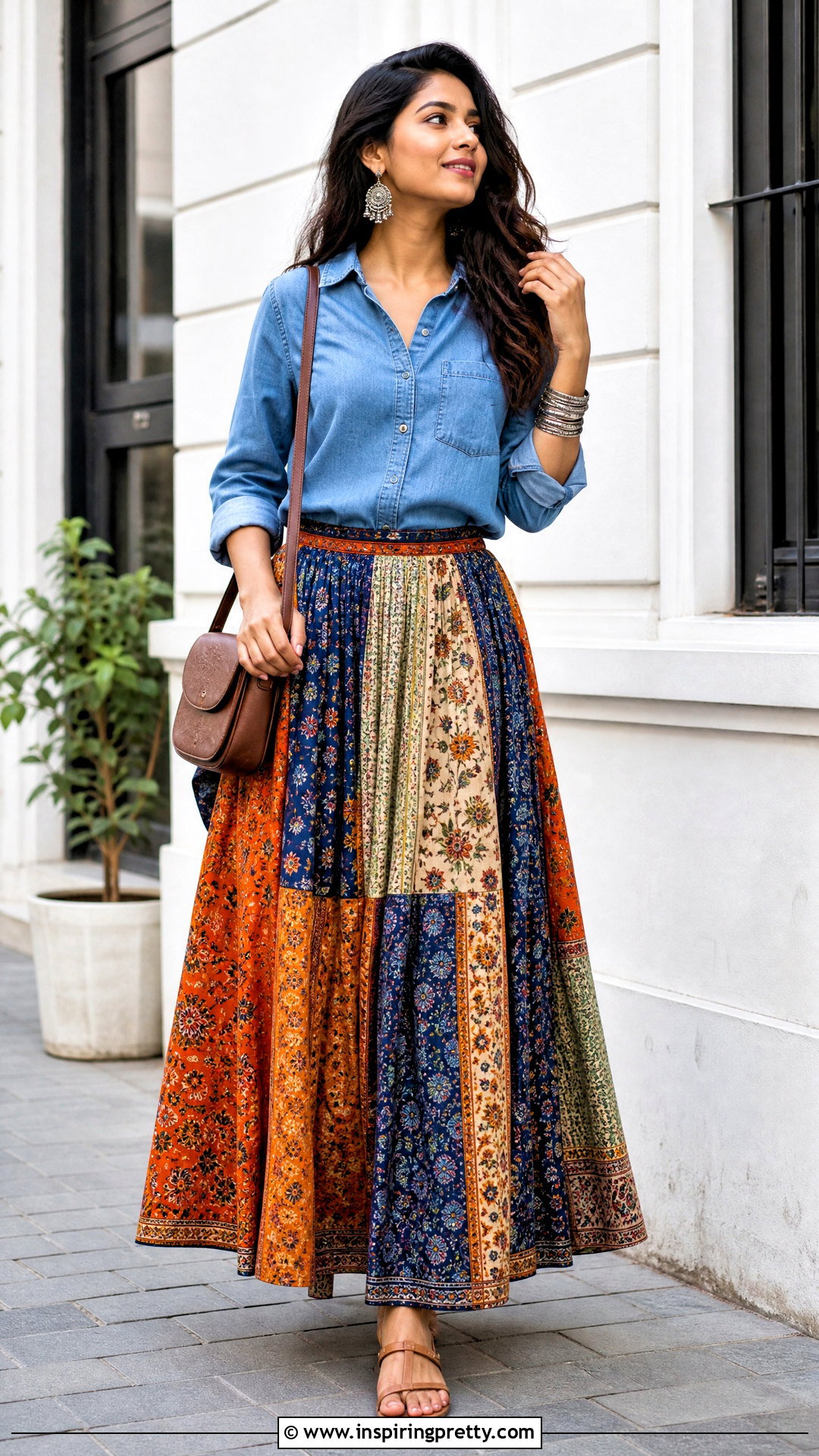
A soft chambray shirt over a block-printed skirt is fusion at its most relaxed, for a festival afternoon or a cultural event. Choose a lightweight denim shirt; a stiff one won't tuck neatly. Tuck it in or tie it at the front. Roll the sleeves to the elbow. Oxidized earrings, stacked bangles, tan sandals. No dupatta here. It's easy to recreate from things already in most wardrobes.
36. Embroidered Skirt With Satin Cowl Neck Top
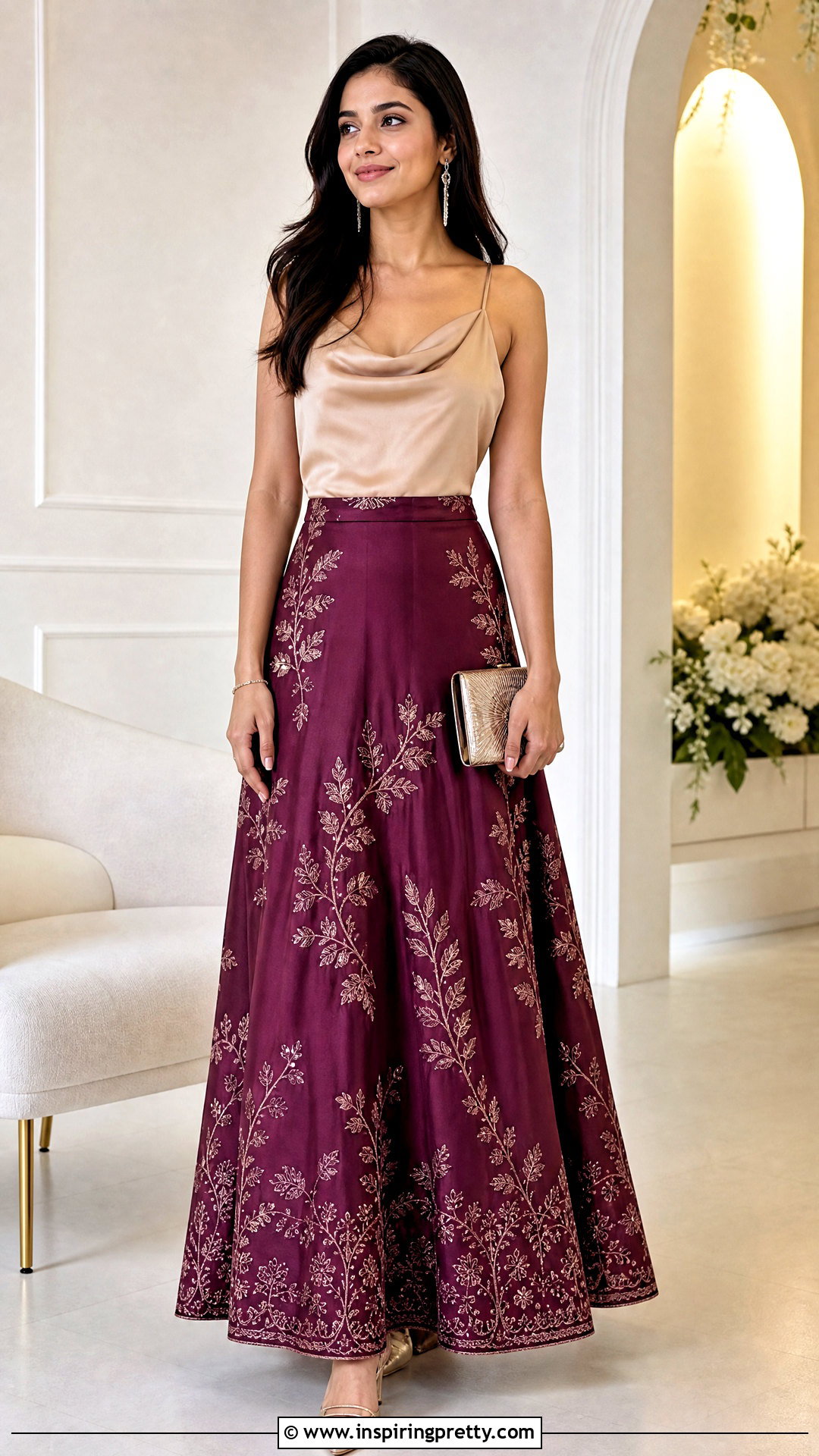
A satin cowl adds shine without repeating the skirt's embroidery. Choose a skirt where the work is concentrated at the hem and keep the waistband plain. The cowl's color should come from the embroidery. A cowl that's cut too deep falls open when you bend to touch elders' feet, so I'd check the drape in the mirror while bending forward. Slender earrings, pointed flats, a metallic clutch. A sheer stole only if you want more coverage.
37. Mirror Work Skirt With Plain Black Top
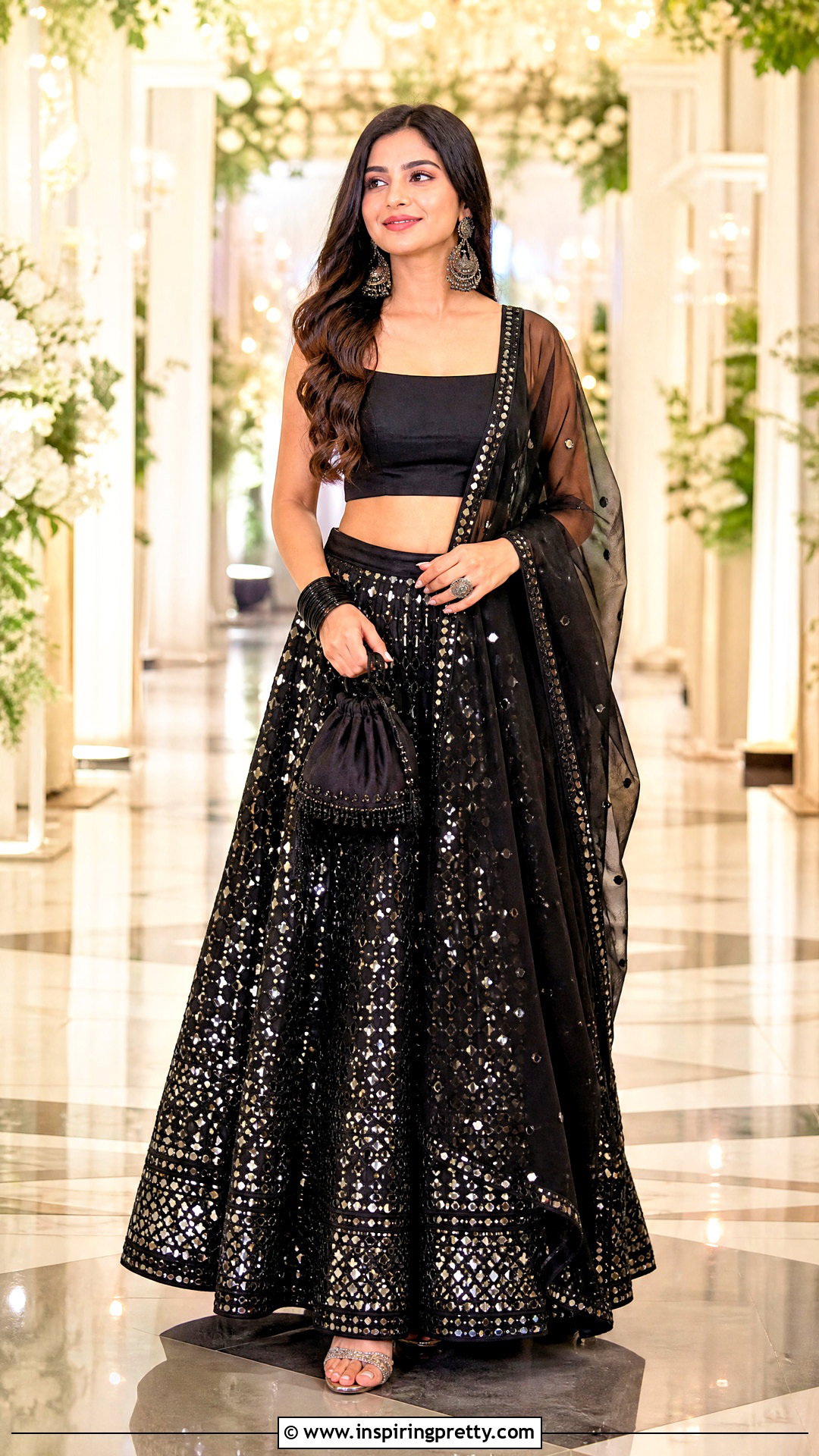
A mirror work skirt has all the sparkle you need, so a plain black blouse in matte crepe or velvet is the right partner. Organized borders of mirrors look smarter than random scatter. A square neck and elbow sleeves. Oxidized earrings and black bangles. Carry a plain black potli rather than another reflective piece. Heavy mirror work weighs the skirt down, so a sturdy drawstring or hook waistband is worth checking before you buy.
38. Lavender Skirt With Silver Blouse
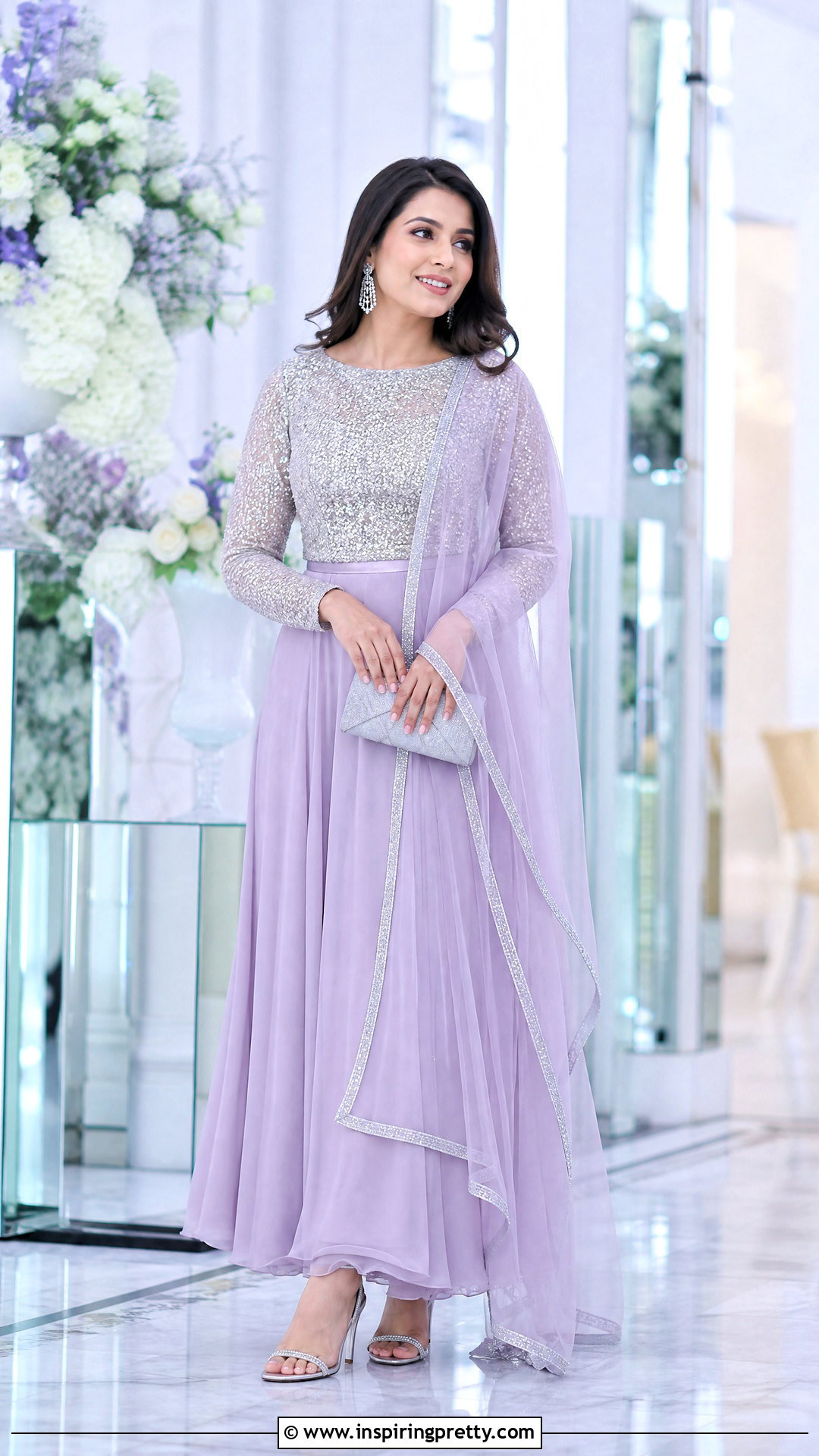
Lavender and silver is cool-toned and soft, a good choice for an evening engagement or a cocktail. A chiffon or organza lavender skirt with gentle flare, and a silver blouse with fine sequins or beadwork. The fitted blouse contrasts the light skirt. Crystal earrings and silver heels. The reflective top already brightens your face, so other jewelry can stay minimal. Pale lavender can turn see-through in flash photography, so make sure the skirt is lined.
39. Rust Skirt With Ivory Crochet Top
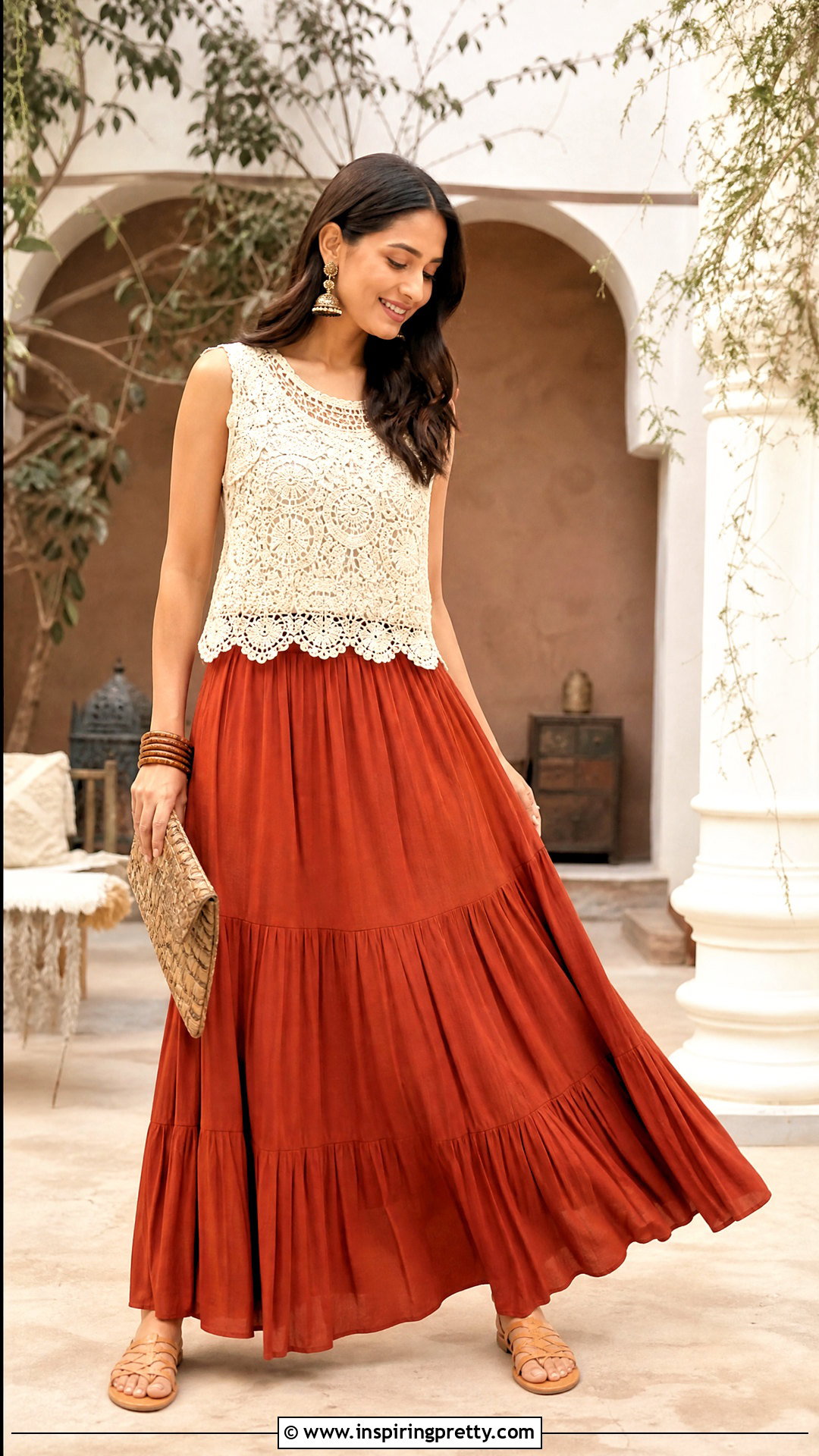
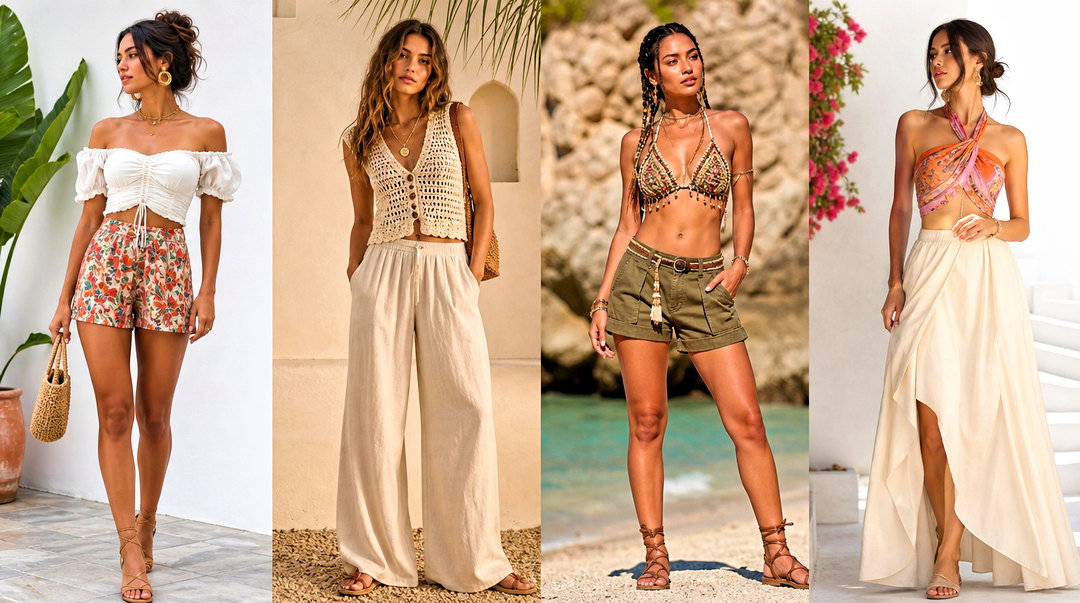
Rust with an ivory crochet-style top is the earthiest fusion idea here, for a daytime festival rather than a formal wedding. A terracotta or cinnamon skirt with a simple border. The top must be lined, because open crochet or lace panels are see-through. Antique-gold earrings, wooden bangles, tan sandals. Crochet snags on bangles and bag zips, so keep metal accessories smooth. A loose braid suits it.
40. Black And White Skirt With Red Top
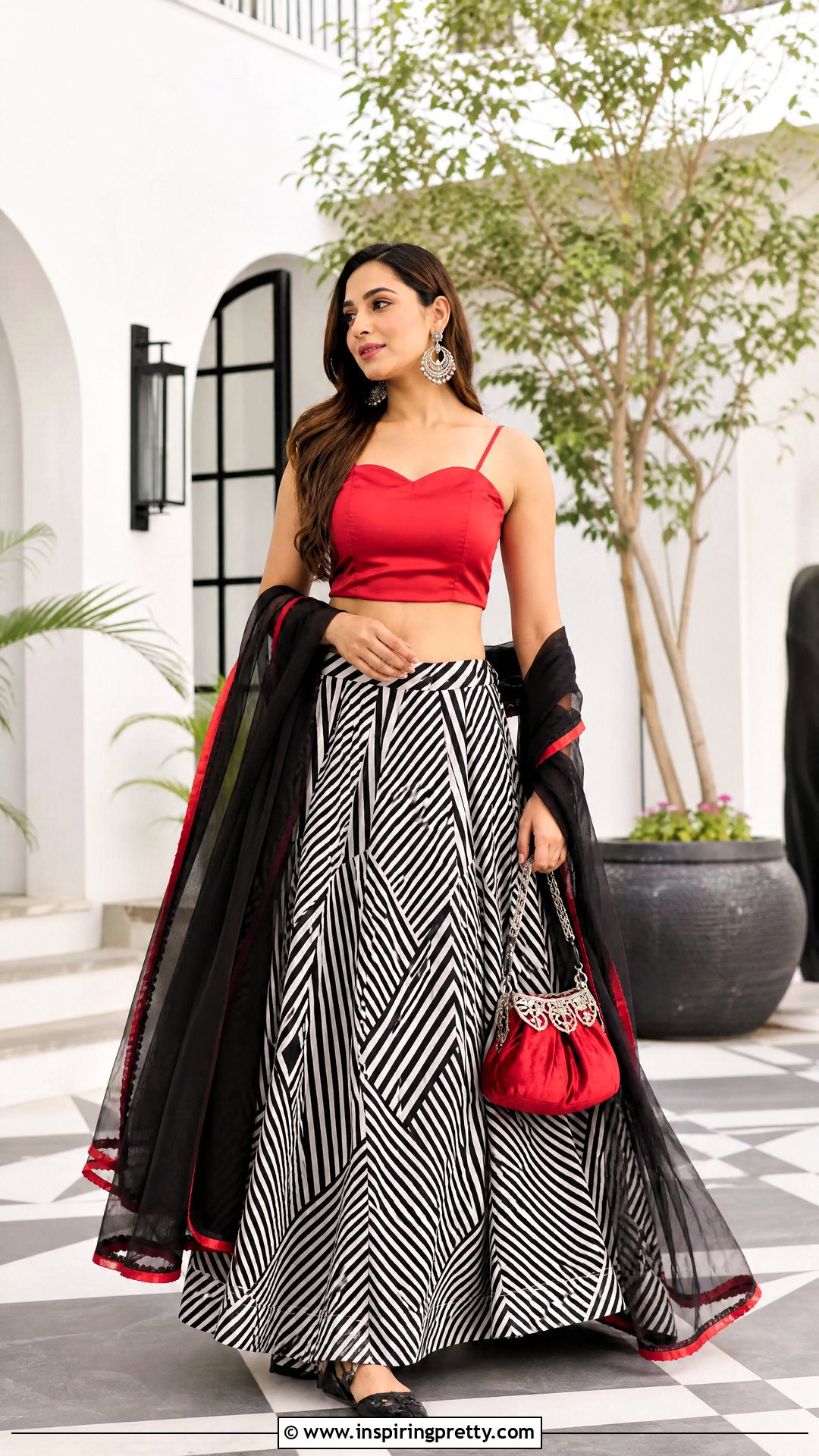
A black-and-white printed skirt turns festive the moment you add a solid red blouse. Checks, stripes or graphic florals all work, with the blouse in cotton-silk or raw silk. Match the red exactly across blouse and bag; two slightly different reds look accidental. Black juttis and silver earrings. A sheer black dupatta with red edging if you want one.
41. A-Line Skirt With Angrakha Top
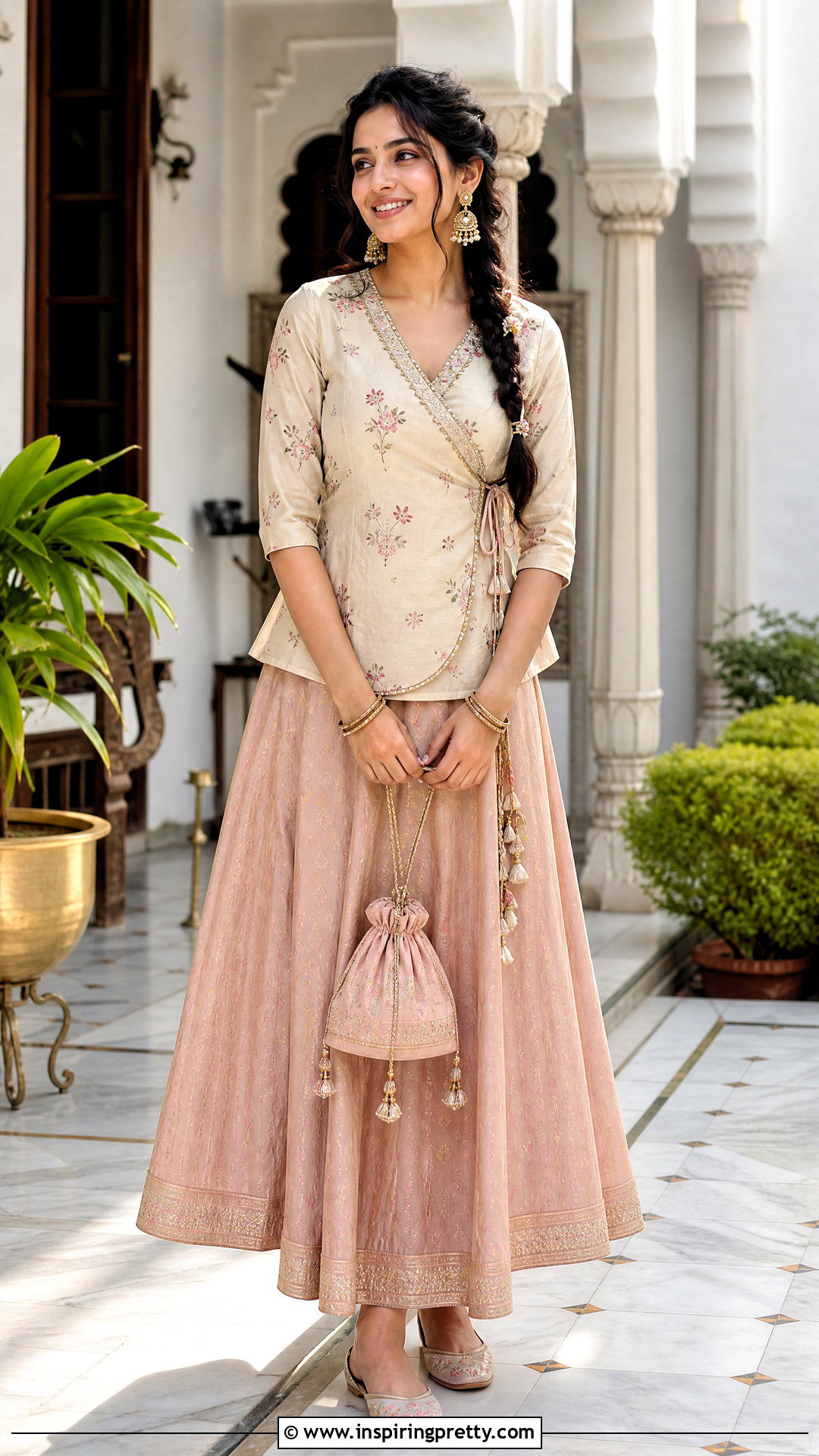
An angrakha top crosses over the bodice and ties at the side, which gives a modest, fitted shape without a deep neckline. Pair it with a plain or lightly printed A-line skirt. Contrast piping that outlines the wrap connects top and skirt. The overlap already gives coverage, so the dupatta is optional. Jhumkas, bangles and embroidered flats. Make sure the top ends near the waistband; a longer angrakha starts to look like a kurta over a skirt.
42. White Skirt With Multicolor Mirror Top
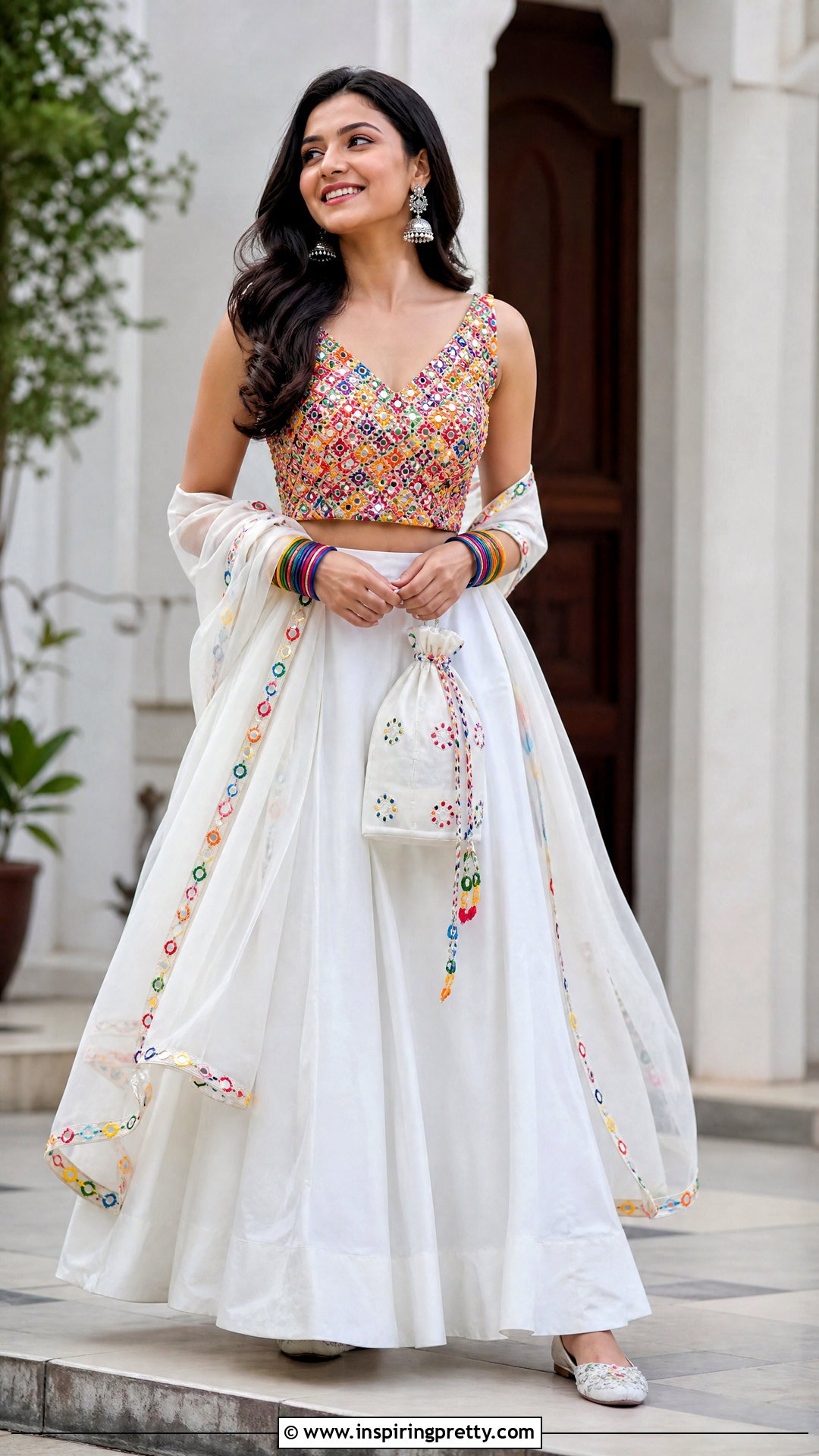
A plain white skirt gives a multicolor mirror work top room to shine. Keep the skirt simple, with a clean waistband and only a narrow border. Pick one color from the embroidery for your bangles or bag, and keep the shoes neutral. Silver jhumkas and white juttis. If you add a dupatta, tiny multicolor edging links it to the blouse. Hair lifted off the shoulders so the mirror work shows.
43. Red Brocade Skirt With Black Velvet Top
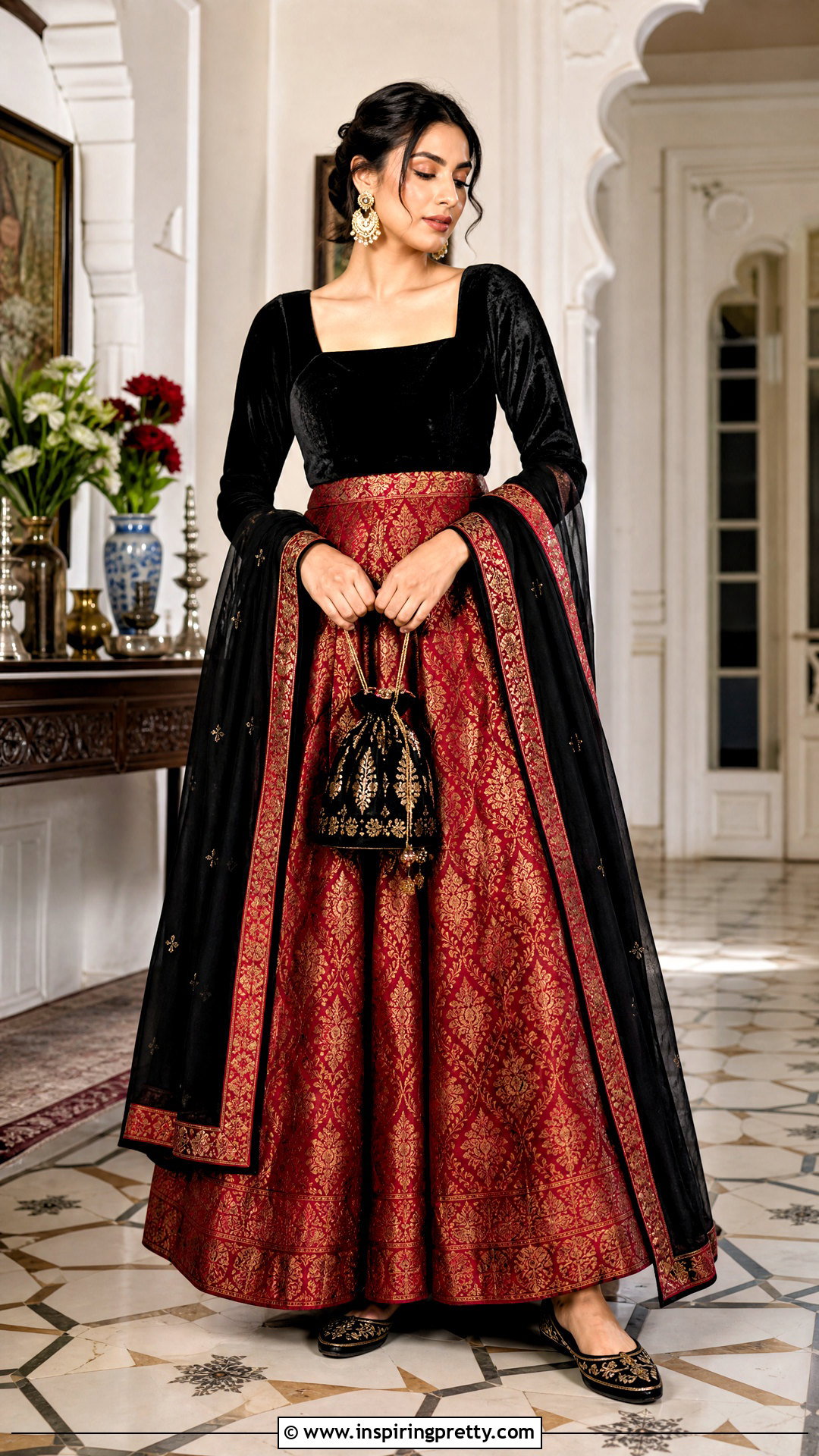
Red brocade and black velvet is bold and formal, a winter reception outfit. Choose brocade woven with antique-gold motifs rather than one with extra surface embellishment piled on top. A fitted black velvet blouse with a square neck and elbow sleeves. Gold earrings, one traditional bracelet, a black potli. Closed-toe heels suit the cold. A sheer black dupatta with a red-and-gold border. Brocade frays at the seams, so ask the tailor to finish them properly.
44. Pastel Skirt With Organza Puff Sleeve Top
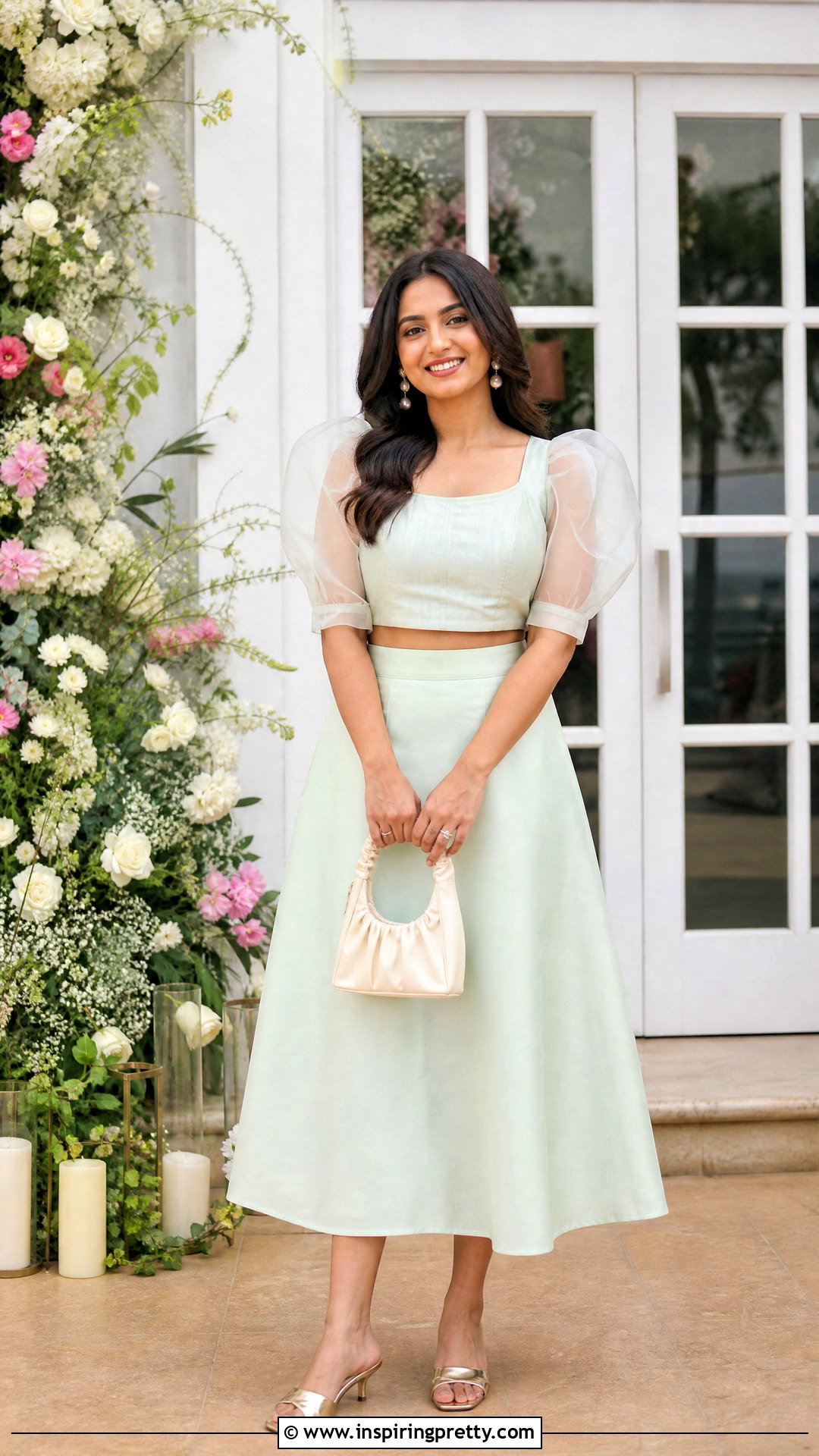
Organza puff sleeves add volume and drama to a pastel skirt, but organza is crisp and can feel scratchy on the inner arm, so I always look for a soft lining on the bodice. Mint, lilac or powder blue with a fairly smooth skirt. Moderate puff is easier to wear; a huge sleeve widens the whole frame. Pearl earrings and low metallic heels. Skip the dupatta so the sleeves show. Neighboring shades top and bottom look longer.
45. Green Skirt With White Chikankari Blouse
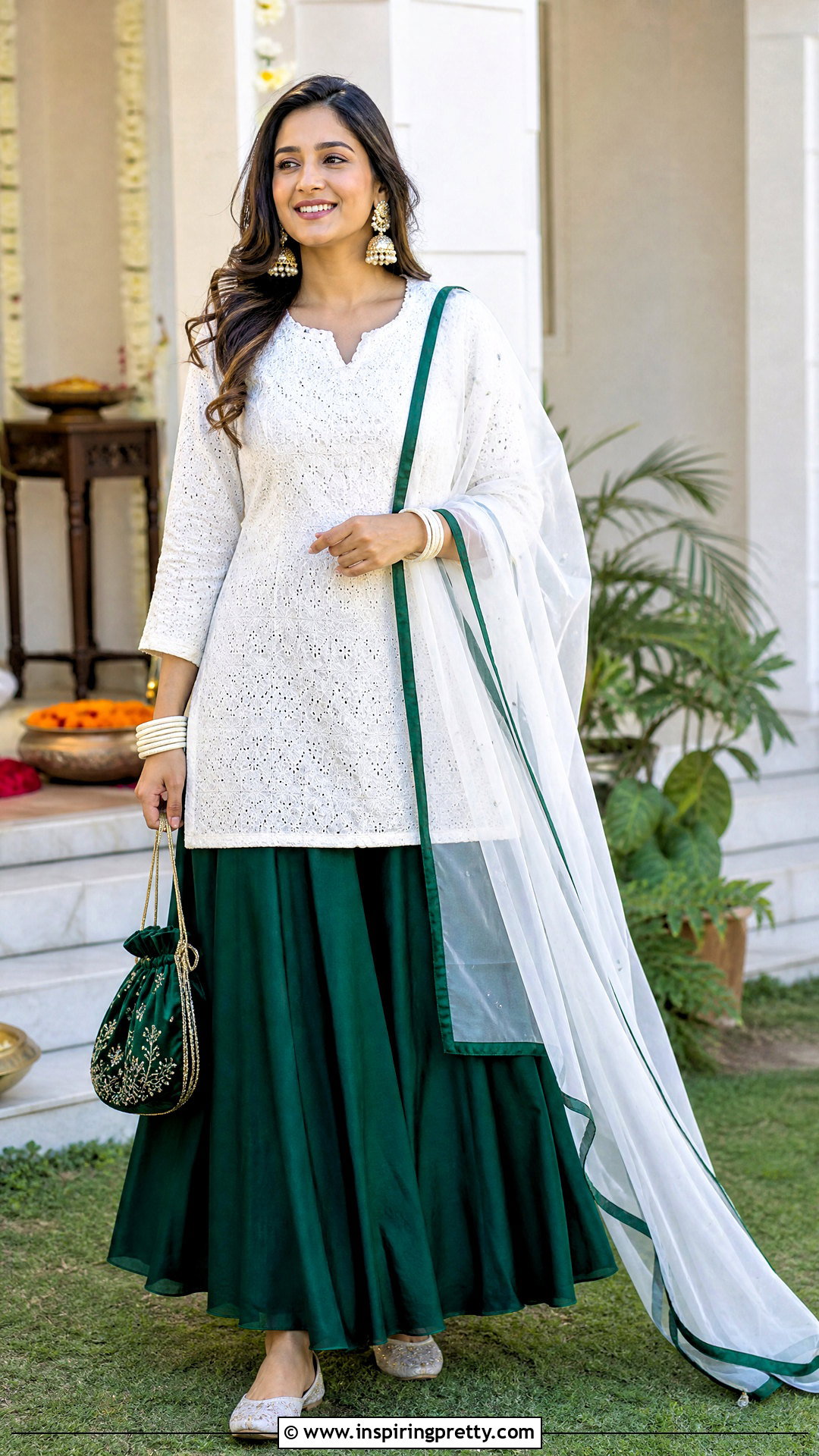
Green and white is crisp and fresh, and the shade of green sets the formality: sage for daytime, emerald or bottle green for an evening. Pair it with a lined white chikankari blouse in short or elbow sleeves. The white threadwork adds texture without fighting the green. Pearl jhumkas and neutral flats. A green potli links the accessories to the skirt. Fresh flowers in a low bun make it traditional; loose waves make it modern.
46. Blue Bandhani Skirt With Yellow Top
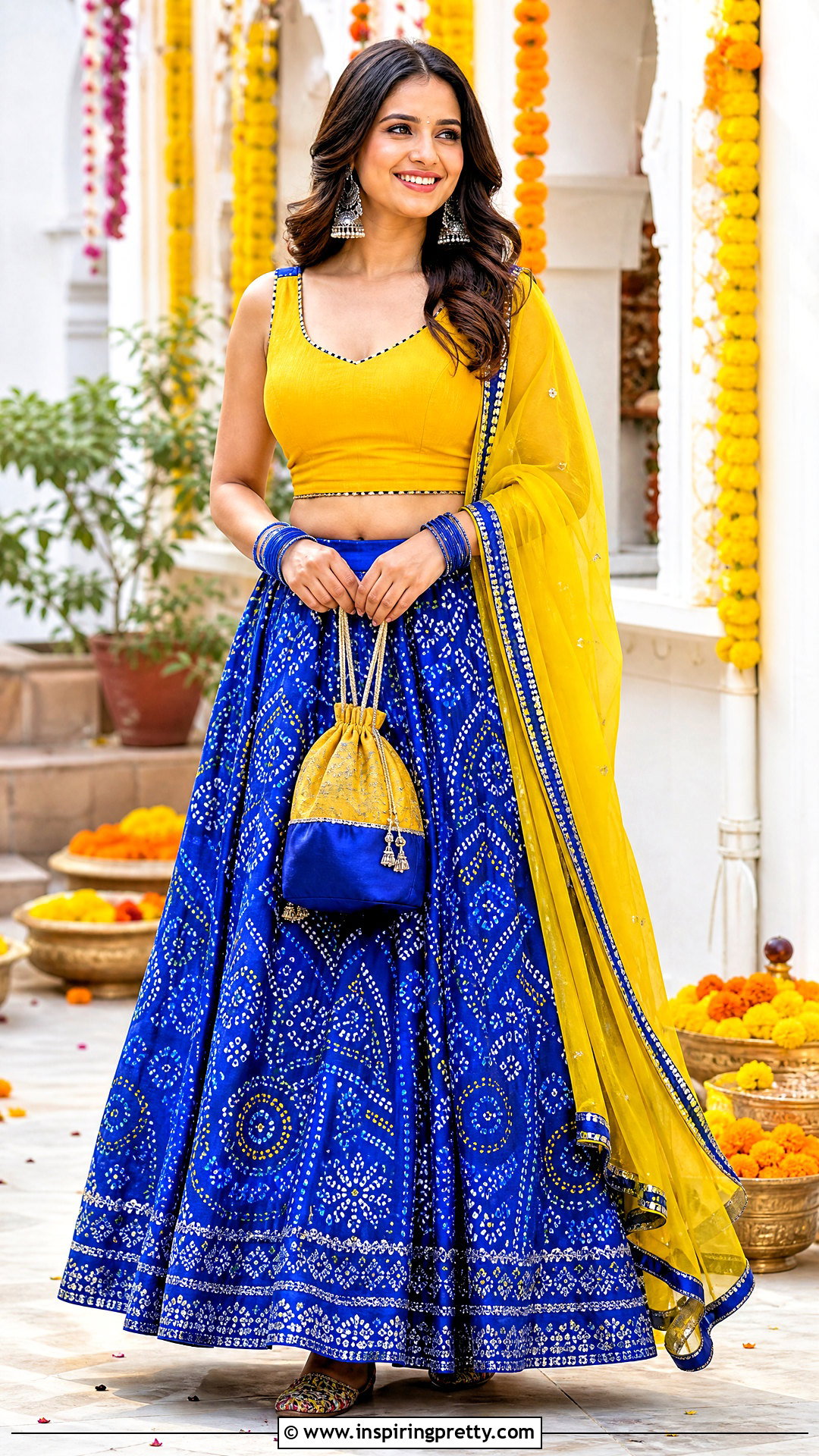
A blue Bandhani-inspired skirt with a yellow top is a lively, recognizably Indian pairing for Navratri or a festive day function. Bandhani is tie-dye made of tiny resist dots, and the dyes can bleed the first few washes, so wash it alone in cold water. A fitted mustard or bright-yellow blouse with minimal embroidery. Silver jhumkas and blue bangles. A yellow dupatta with blue edging turns the separates into a set. Keep other colors out.
47. Ombre Skirt With Matching Crop Top
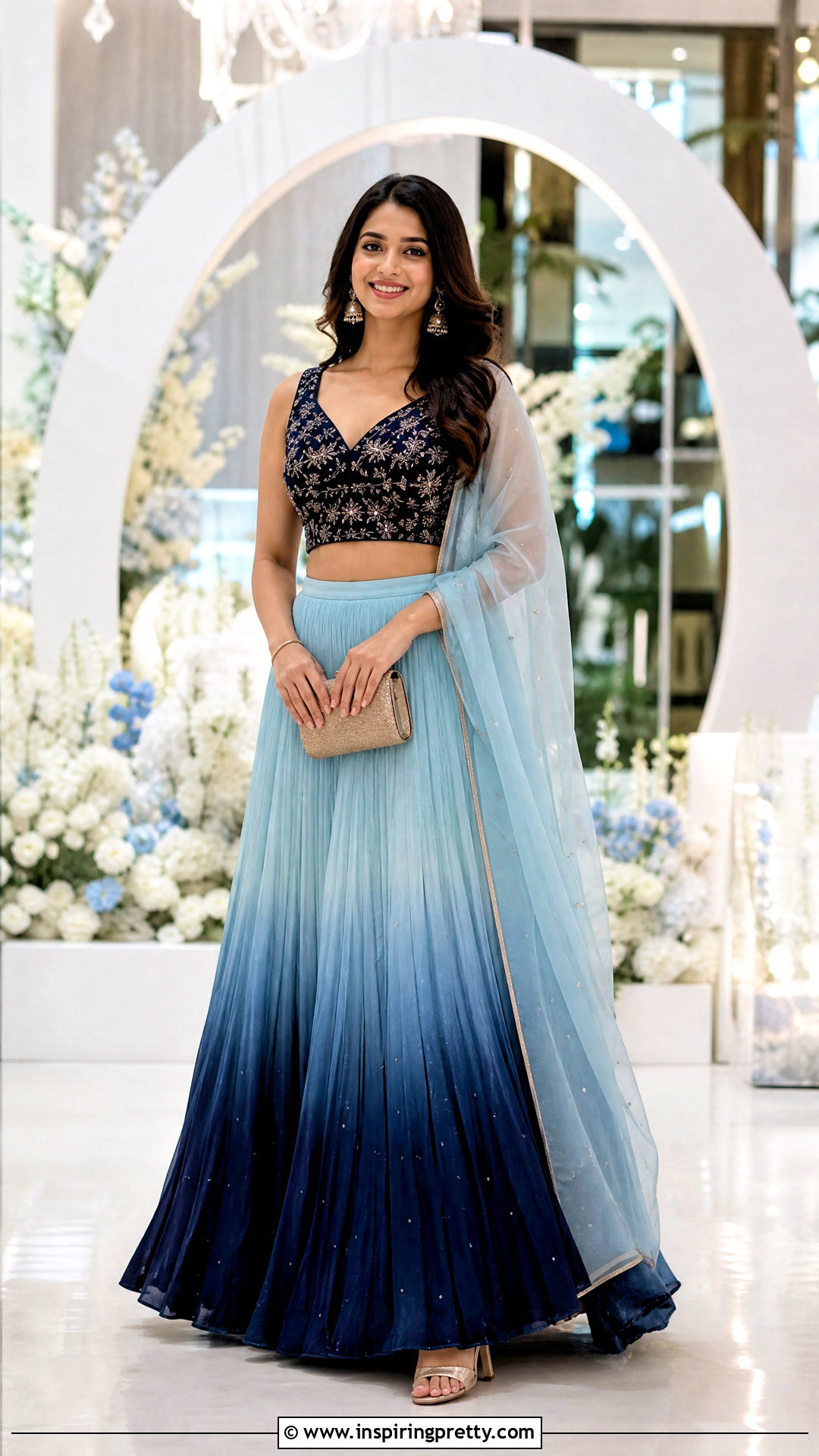
An ombre skirt looks most polished when the top repeats one shade from the gradient. Blush to berry, or sky blue to navy, then a crop top matching either the darkest or the lightest end. I prefer the darker match on most figures, because it keeps the eye at the waist and lets the skirt lighten toward the hem. Embroidery only around the neckline. Metallic earrings and a simple clutch. A sheer dupatta in the palest shade.
48. Layered Skirt With One Shoulder Top
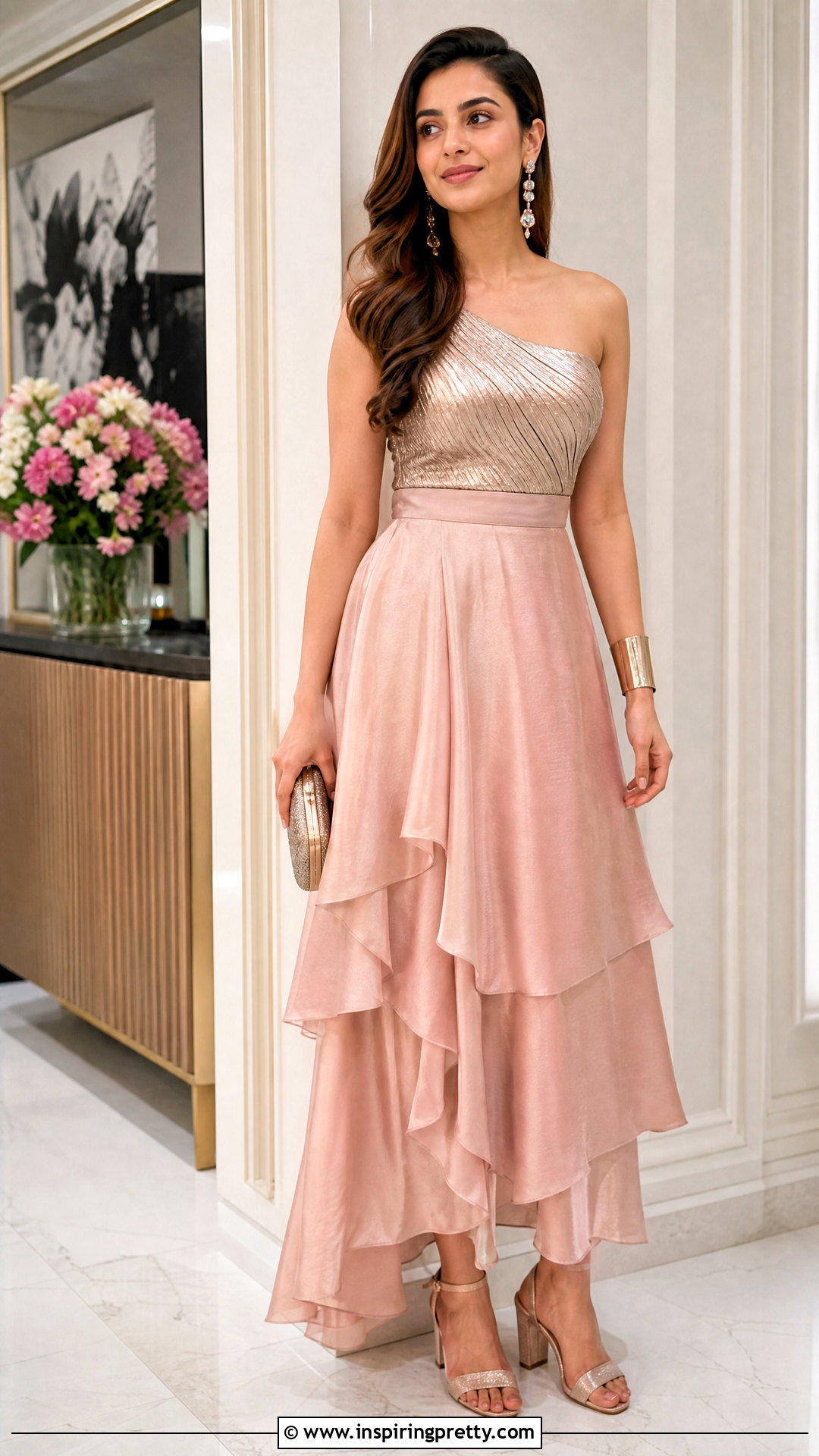
A one-shoulder top gives a layered skirt a modern edge. The skirt's layers should be light overlays or angled panels, not bulky ruffles. A fitted, secure blouse in the same color or a metallic shade, with a band of grip inside the neckline so it stays in place. One statement earring works better than a necklace, and a cuff on the bare arm balances it. Block heels to carry the skirt length. Skip the dupatta; it hides the neckline.
49. Printed Lehenga Skirt With Corset Top
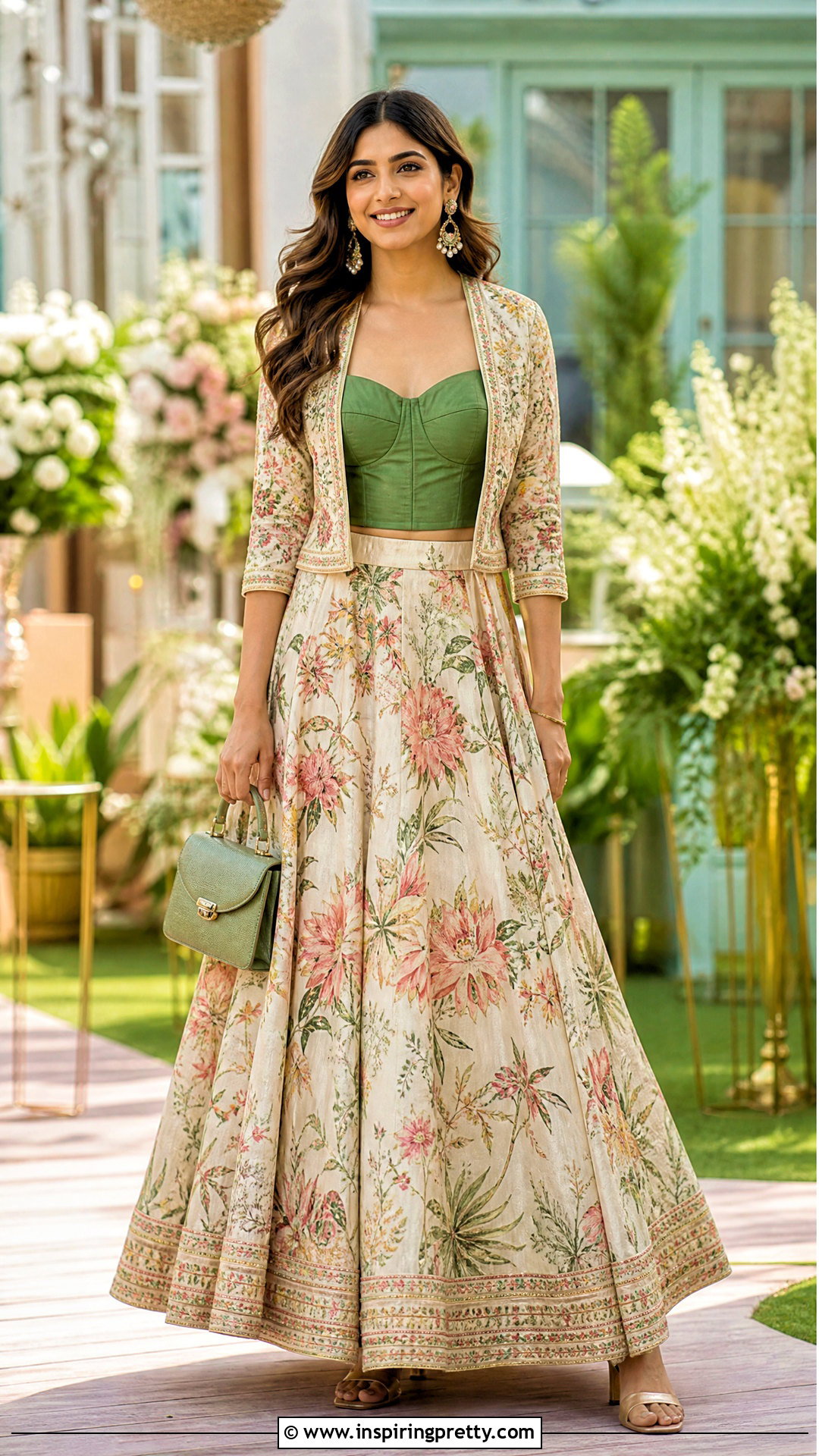
A corset-style top with a printed lehenga skirt is the sharpest Indo-Western shape in this list. The corset needs flexible boning and real coverage, with secure straps or sleeves. Rigid boning digs in when you sit down to eat, so try it seated before the event. Choose a solid shade from the skirt print. A cropped ethnic jacket or light dupatta if you want another layer. Keep belts and waist chains off, so bodice and skirt stay distinct.
50. Monochrome Skirt And Top Set
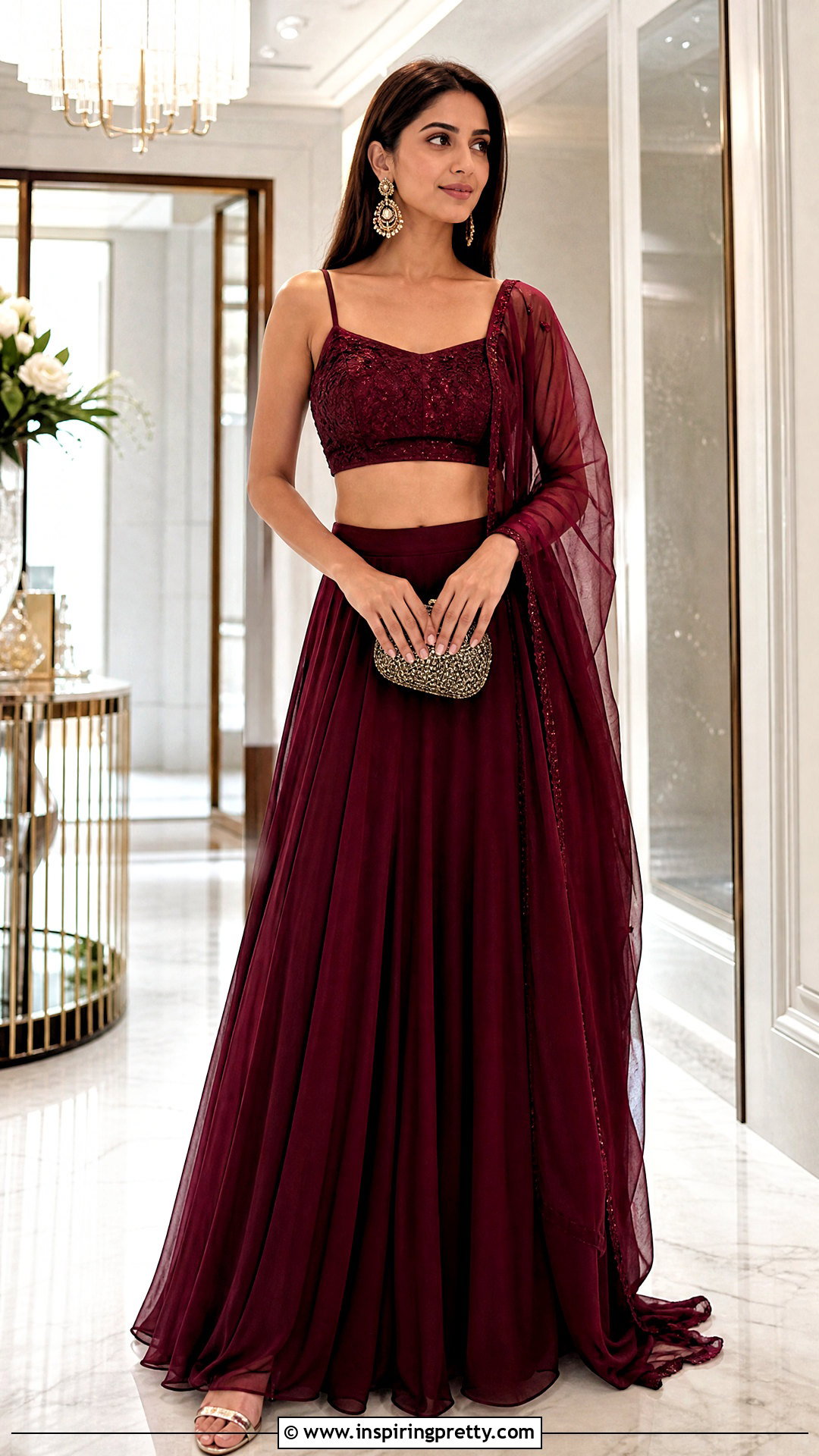
A monochrome skirt and top set is the easiest way to look put together at a function, and it makes you look taller. Choose one color you know suits you, then vary the texture: a silk skirt with an embroidered blouse, or georgette with a tonal sequin top. Pick gold or pearl jewelry to match the undertone of the shade. Keep the embellishment in one area rather than spread over every piece. Matching heels, a compact clutch and a sheer tonal dupatta.
Pinning a Dupatta So It Survives the Dancing
A dupatta that keeps sliding off ruins more evenings than any other piece. How you drape it should depend on what you'll be doing.
For a seated ceremony
Pleat one end into narrow folds, lay it on the left shoulder and pin it from underneath to the blouse strap, so the pin doesn't show. Let the rest fall down the back or across to the right elbow. It stays put for hours.
For a sangeet or anything with dancing
Pin it at the shoulder and again at the waist on the opposite side, crossing it over the body. Two pins mean it can't fly off or catch on someone else's bangles. Heavy dupattas are better left at the table during the dancing.
Storing Zari and Embroidery Between Weddings
Embroidered skirts get worn three or four times a year and then folded away, and that's when the damage happens. Zari, the metallic thread in brocade and borders, tarnishes with moisture and perfume, so spray perfume before you dress, never onto the work. After the event, air the skirt overnight before packing it.
Wrap each piece in plain cotton or muslin rather than plastic, which traps damp. Put tissue in the folds so zari and mirror work don't crack along a sharp line, and refold along different lines every few months. Velvet blouses go on padded hangers, not folded, or they keep the crush marks.
One Piece Carries the Work, the Other Stays Quiet
Almost every outfit above follows the same balance. Decide which piece is the star, a printed skirt, an embroidered blouse or a long jacket, and keep the rest calmer. Then spend your effort on the things guests never notice until they go wrong: the fit of the blouse, a neckline that stays put, a lining that breathes, shoes you can stand in, and a hem that clears the floor. An old lehenga skirt can come back with a white shirt, a peplum or a short kurti, so the pieces you already own are a good place to start.
Related posts:


Leave a Reply