
Learning how to fold tank tops for storage can make crowded drawers, closet shelves, and travel bags much easier to manage. Tank tops often become messy because their narrow straps tangle, lightweight fabric slips, and different lengths create uneven stacks. The right folding method solves these problems by turning each top into a compact rectangle, stable file, or secure roll. File folding improves visibility in drawers, while rolling works well for luggage and packing cubes. Traditional folds remain useful for open shelves and deep storage bins. () The best choice depends on the garment’s fabric, neckline, straps, and built-in support. Below, you will find practical, step-by-step instructions covering how to fold tank tops for storage.

1. Classic Tank Top Fold
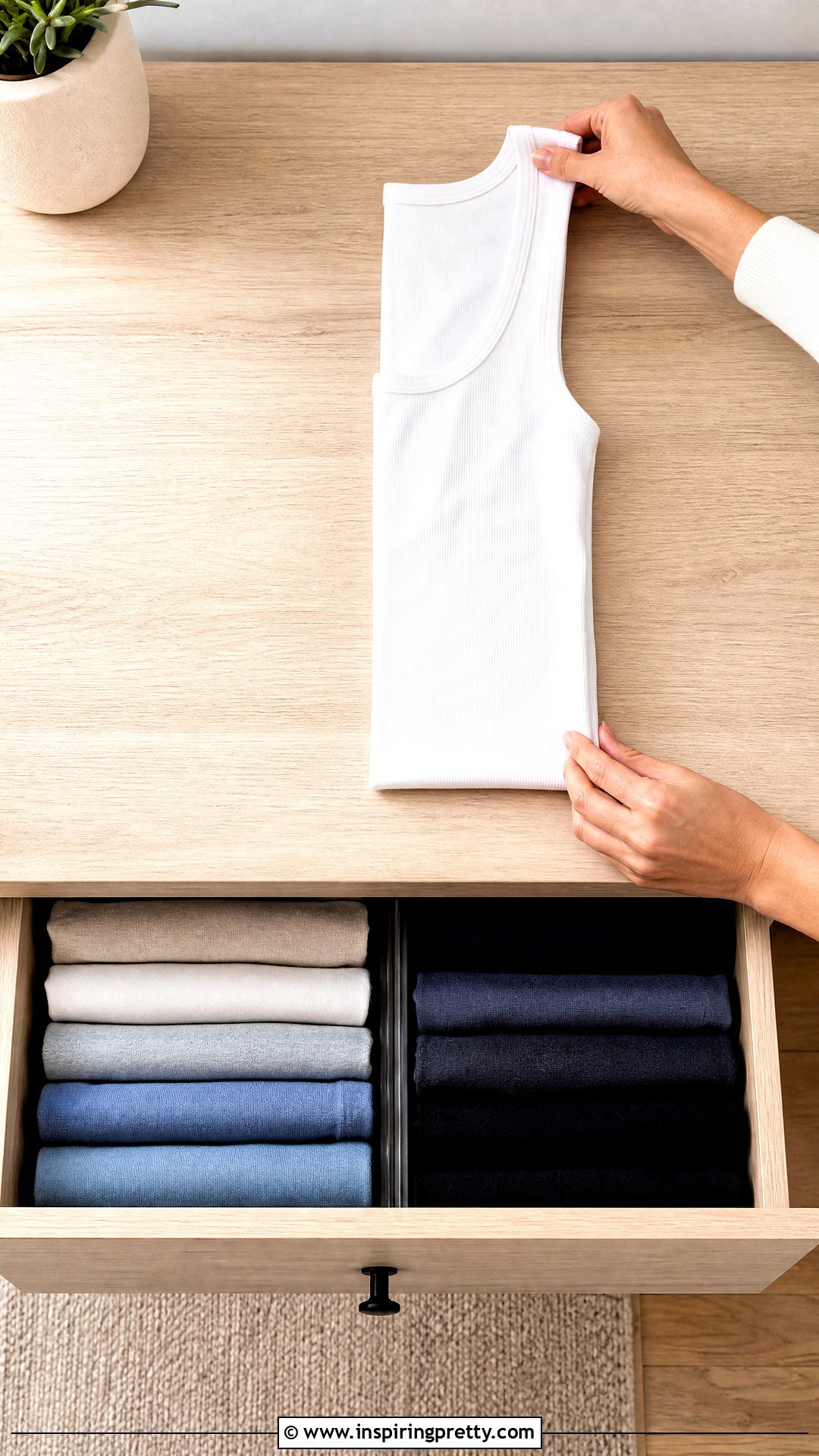
The classic fold creates a clean rectangle that works well in dresser drawers, storage baskets, and closet bins. Place the tank top face down on a smooth surface. Straighten the neckline, hem, side seams, and straps without stretching the material. Fold the left side toward the center, bringing the strap inward. Repeat with the right side so the top becomes one long rectangle. Fold the straps down if they extend beyond the upper edge. Next, bring the bottom hem halfway toward the neckline. Fold the garment in half once more to create a compact package. Smooth each layer with your hands instead of pressing hard. This everyday method is easy to repeat and produces a tidy, balanced stack.
2. KonMari Tank Top Fold
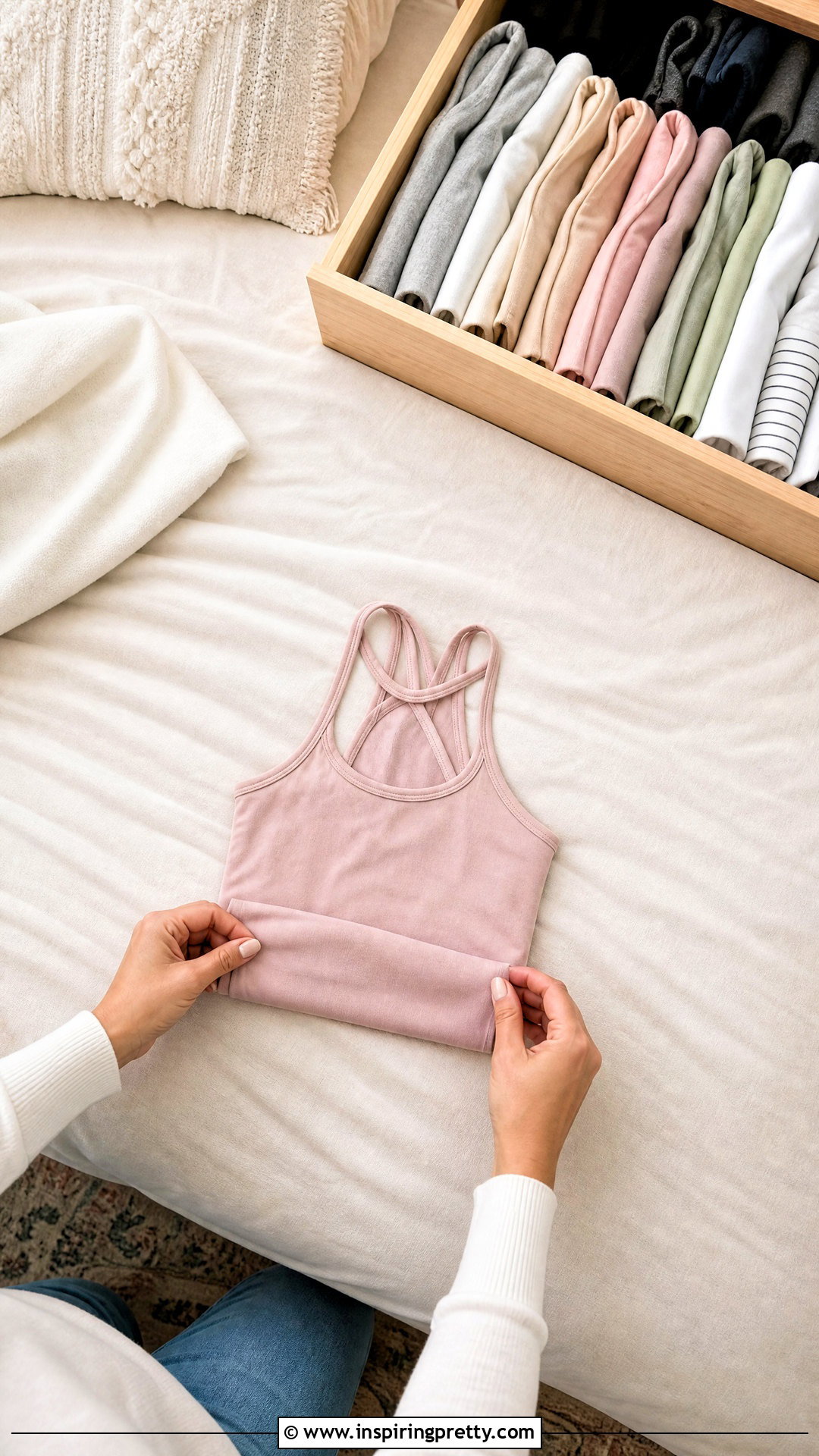
Want to see every tank top without lifting a pile? The KonMari fold turns the garment into a small rectangle that can stand vertically inside a drawer. Lay the top face up and smooth the fabric. Fold one side toward the center, including its strap, and repeat on the opposite side. You should now have a narrow rectangular shape. Fold the bottom upward, stopping slightly below the neckline to leave a small gap. Divide the remaining length into thirds and fold upward again. Adjust the final fold until the top stands on its edge without unfolding. Arrange several tops like files rather than stacking them. This format makes colors, necklines, and fabrics easier to identify at a glance. ()
3. Narrow Tank Top File Fold
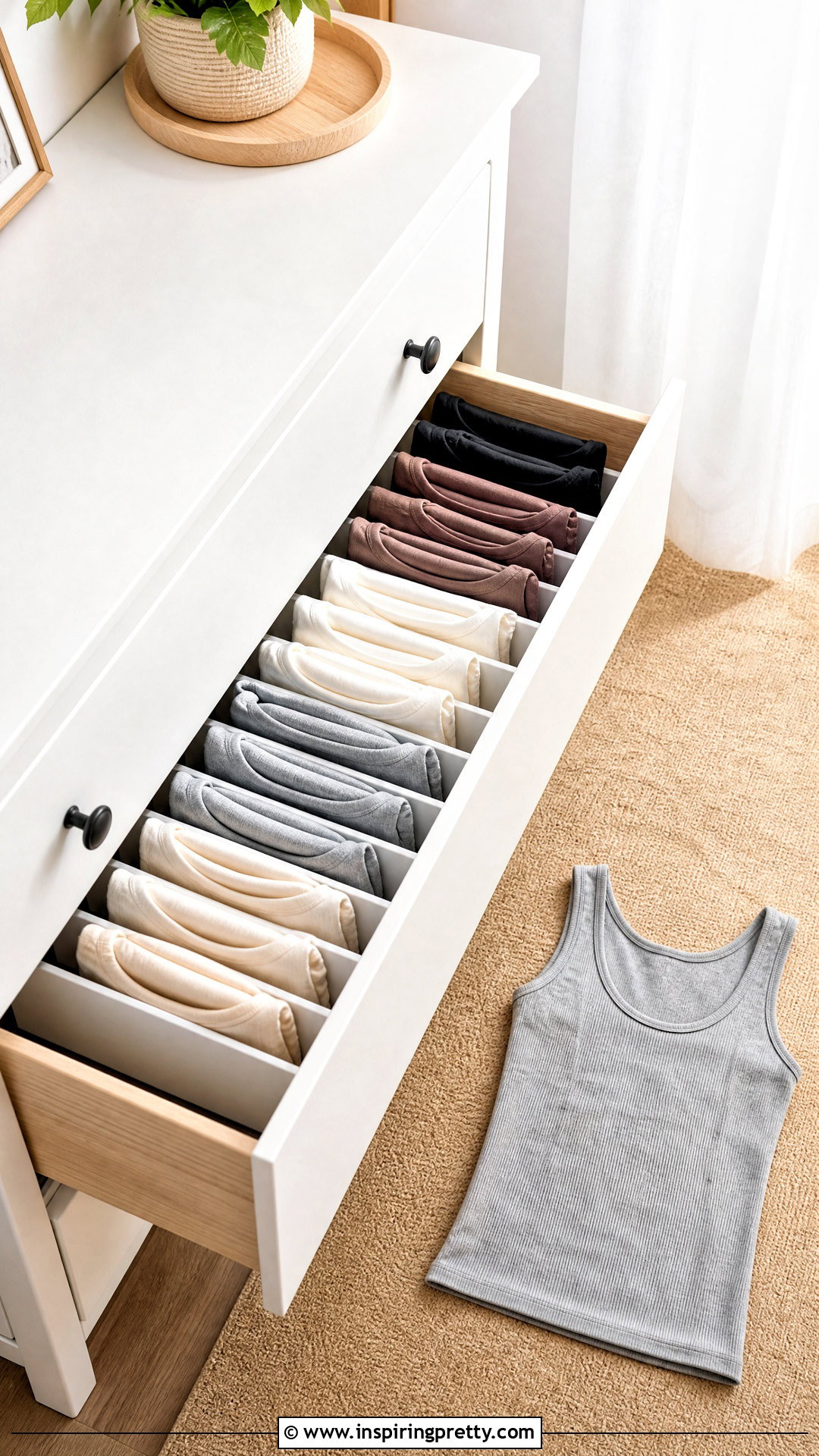
A narrow file fold is useful when your drawer has slim dividers or limited front-to-back space. Begin with the tank top lying flat and facing upward. Fold both straps down so they rest completely within the body of the garment. Bring the left side slightly past the center. Fold the right side over it, creating a narrow vertical strip. Starting at the hem, fold the bottom third upward. Fold it upward again, leaving a slim gap below the neckline. Complete the package with one final fold if your drawer is shallow. Test the finished top by standing it vertically. If it collapses, reduce its height with another fold. Place narrow tops beside one another inside a divider so they stay supported and visible.
4. Wide Tank Top File Fold
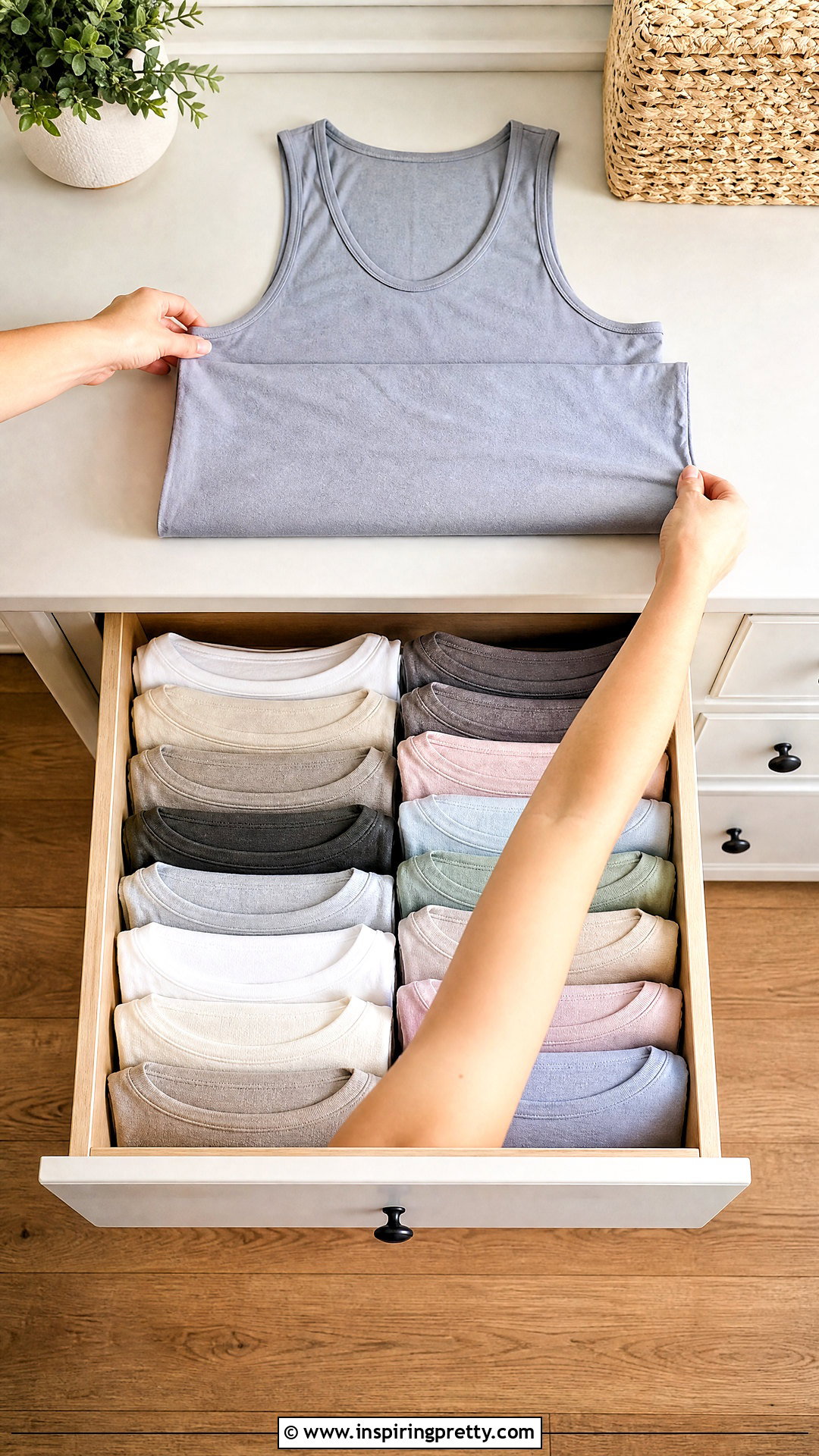
Deep or extra-wide drawers may work better with a broader file fold. Spread the tank top face down and straighten any curved hems or side slits. Fold the straps downward at the neckline. Bring each side inward only far enough to create a wide rectangle, rather than overlapping the fabric heavily. Fold the lower edge upward to approximately one-third of the garment’s length. Make a second fold toward the top, leaving the neckline tucked within the package. The finished shape should be wider and flatter than a narrow file fold. Stand it upright with similar tops so the row supports itself. This method is especially practical for relaxed cotton tanks, loose workout tops, and garments with wide armholes that become bulky when folded too narrowly.
5. Half Fold Tank Top For Shelves
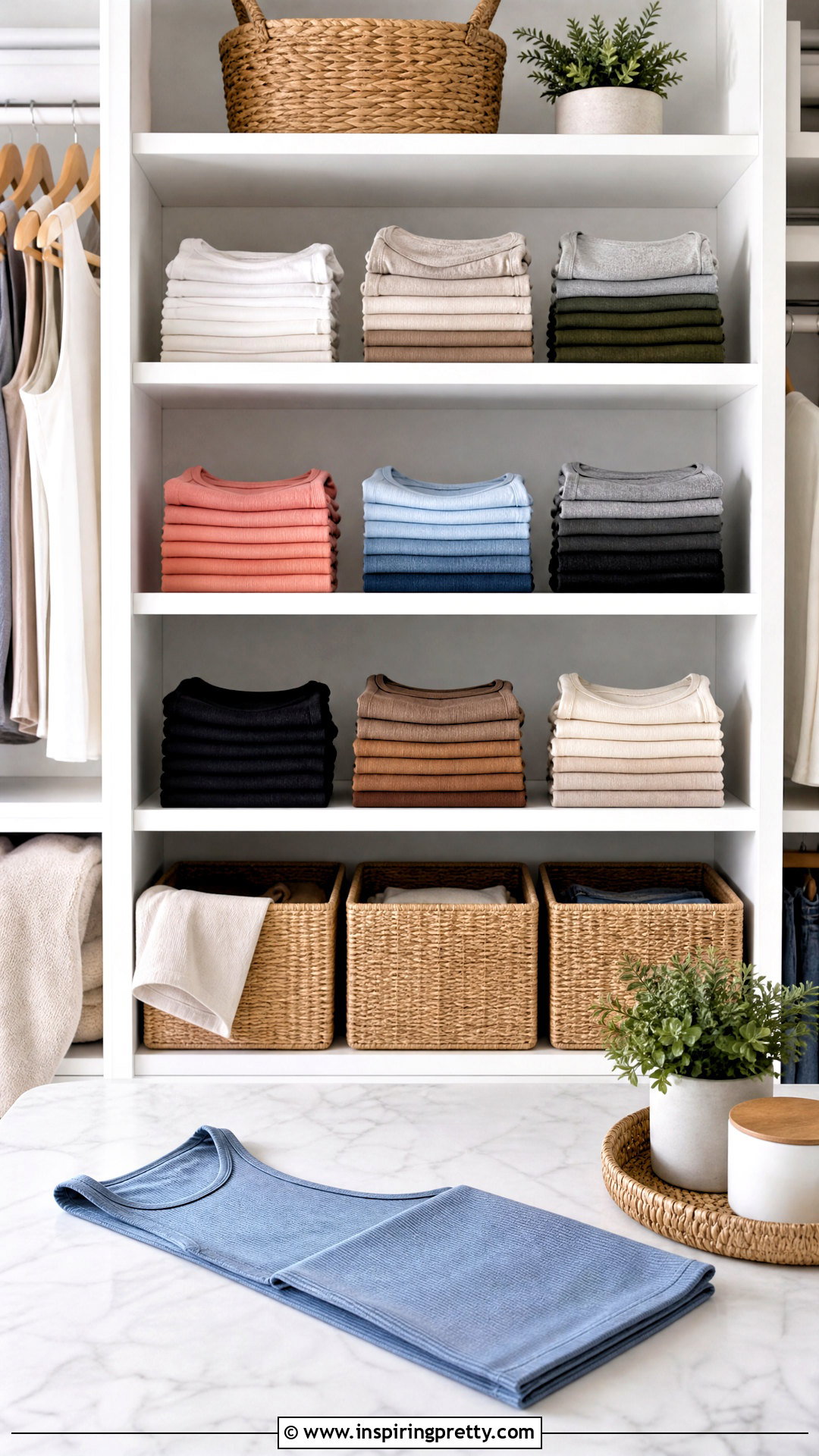
Open shelving calls for a fold that looks neat from the front and stays stable when stacked. Lay the tank top face down with the straps pointing away from you. Fold each side inward until the outer edges meet or slightly overlap at the center. Tuck the straps down to create straight upper corners. Bring the bottom hem to the neckline, folding the garment in half horizontally. Smooth the top surface and square the edges before placing it on the shelf. Keep stacks short so removing one tank does not disturb everything above it. Position the folded edge toward the front for a cleaner appearance. Group tops by color, fabric, or use, and place heavier cotton garments underneath delicate or lightweight options to maintain an even pile.
6. Tank Top Thirds Fold For Shelves
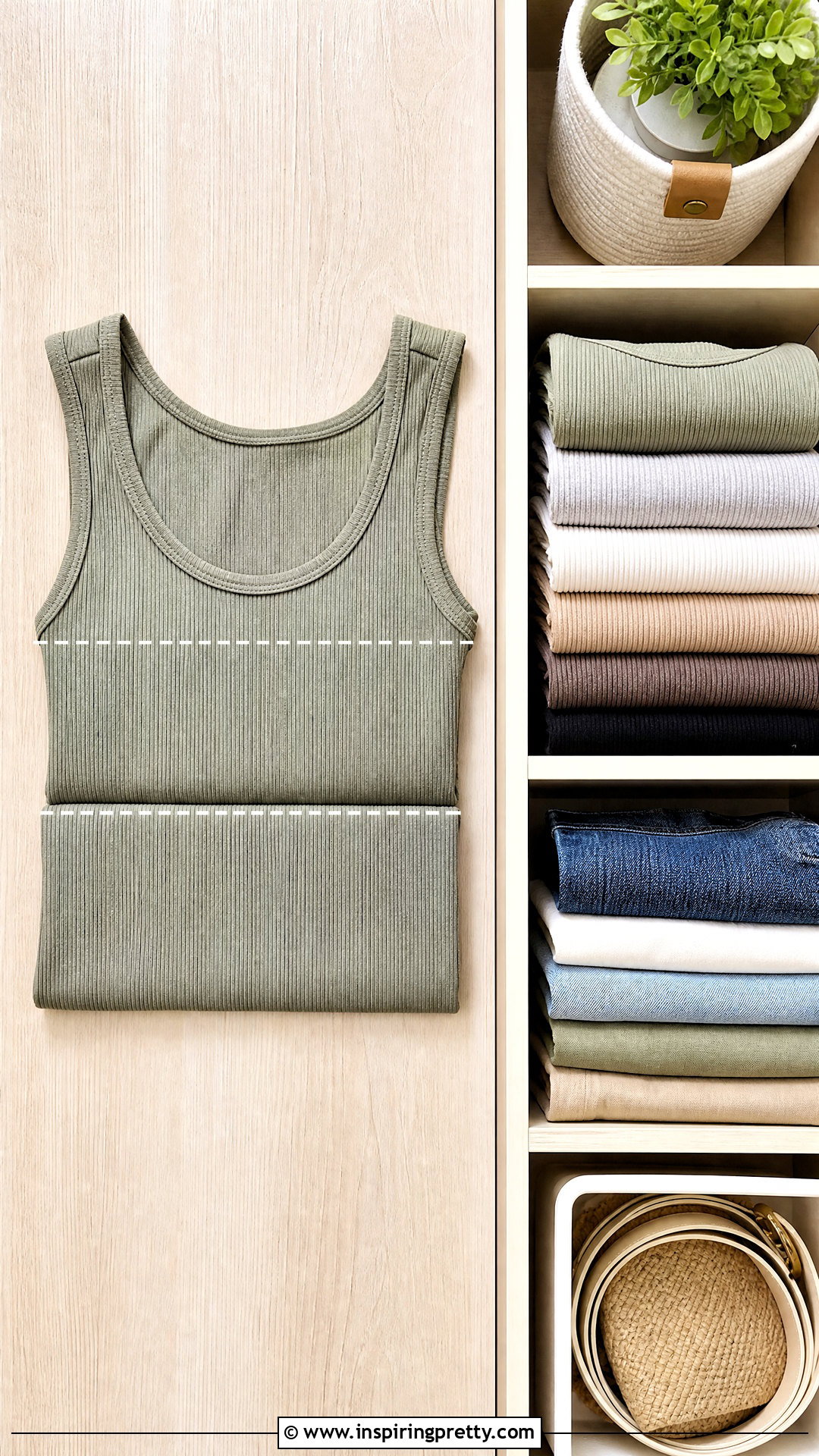
A thirds fold creates a shorter, thicker package that fits neatly on narrow closet shelves. Start by placing the tank top face up on a clean table or bed. Fold the straps downward so the top edge forms a straight line. Bring both sides into the center, making a uniform rectangle. Imagine the rectangle divided into three horizontal sections. Fold the bottom section upward, then fold that section over again toward the neckline. Keep the neckline and straps enclosed so they cannot catch on nearby clothing. Turn the folded top over and place the smooth side facing outward. This method works particularly well for tanks made from medium-weight cotton or ribbed knit. Avoid building overly tall stacks, which can lean and make lower garments difficult to reach.
7. Quarter Fold Tank Top
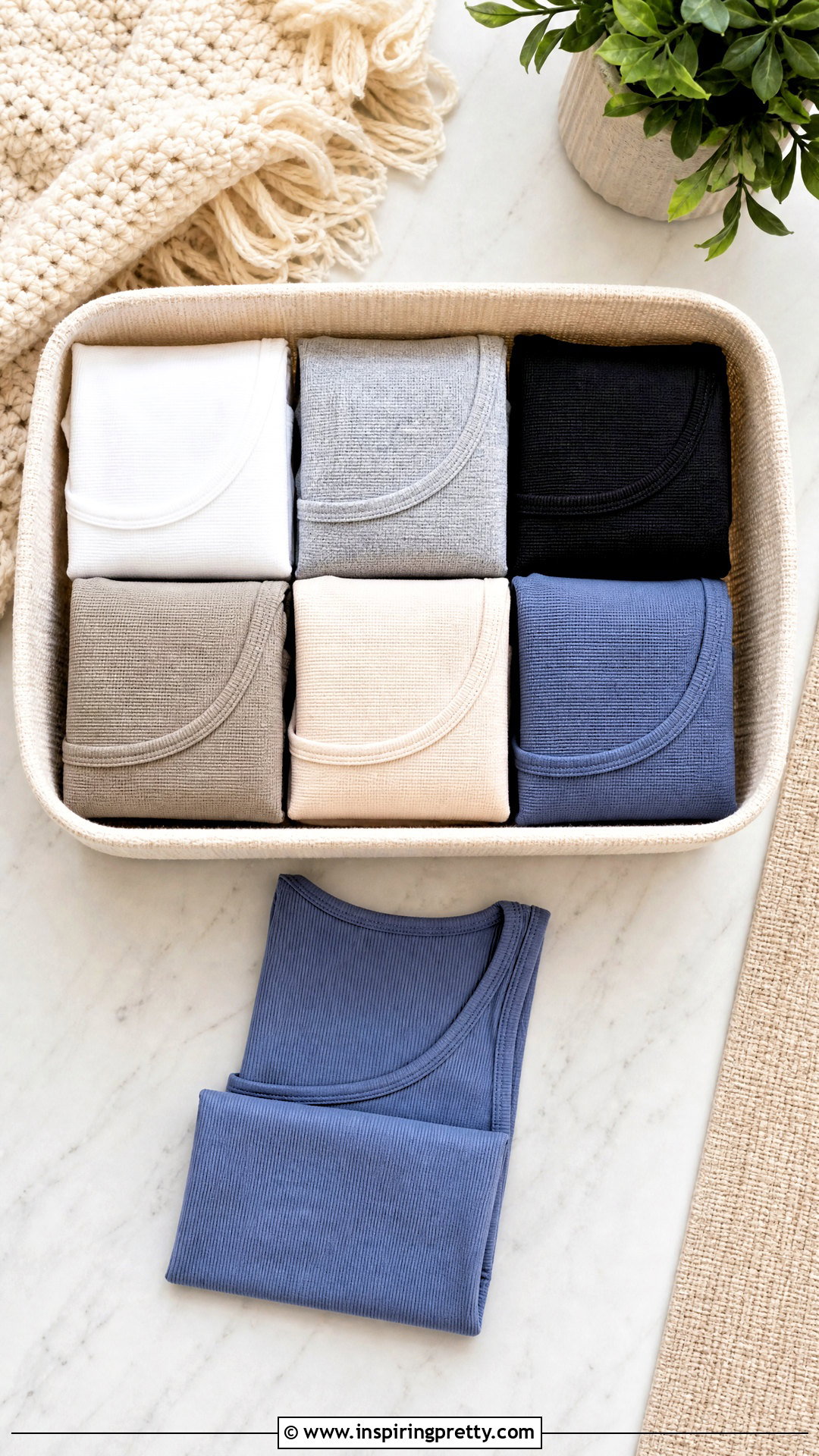
When a shelf, basket, or storage box has limited depth, the quarter fold produces a compact square. Lay the top face down and straighten the straps. Fold both sides inward to form a long rectangle, keeping the width consistent from top to bottom. Bring the neckline down to meet the hem, creating a shorter rectangle. Fold that rectangle in half once more. The result should be a small, thick package with the loose edges enclosed. This fold suits structured tank tops that hold their shape, but it may create noticeable creases in delicate materials. Place the folded tops side by side inside a basket or arrange them in a low stack. Use the same final dimensions for every garment to prevent the storage arrangement from becoming uneven.
8. Quick Tank Top Fold
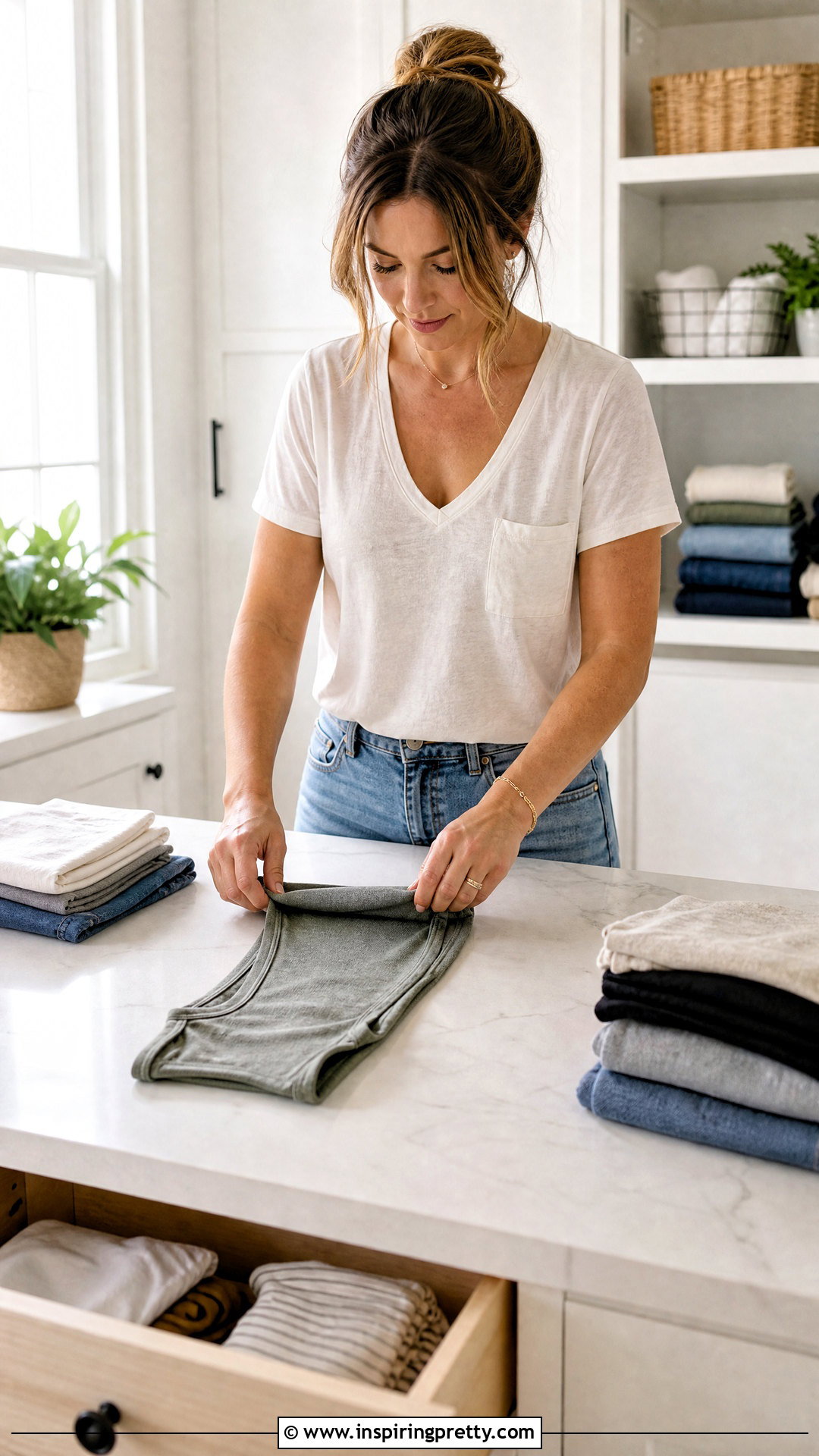
Busy laundry days sometimes require speed rather than a perfectly measured fold. Place the tank top face down and quickly smooth the center with your palm. Fold the left third inward, including the strap, and bring the right third over it. Tuck down any straps that remain visible. Fold the bottom hem directly up to the neckline. If the resulting package is too large for your drawer, fold it in half one more time. The key is to create straight sides before making the horizontal folds. Once practiced, this process takes only a few seconds per garment and keeps everyday tops reasonably organized. Use it for casual cotton tanks, undershirts, and workout clothes that do not require special handling or precise crease protection.
9. Basic Rolled Tank Top
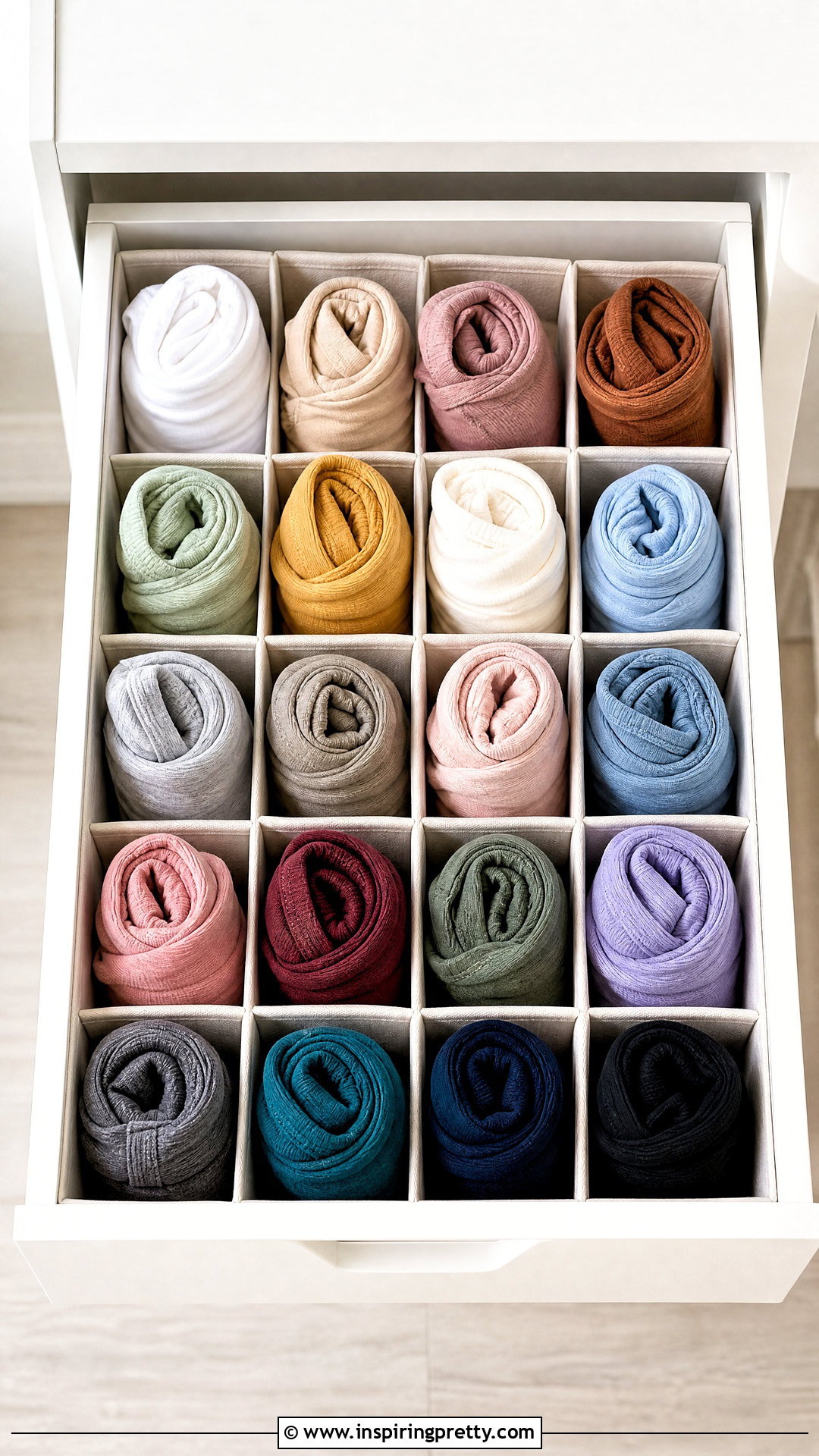
Soft rolls fit easily into baskets, packing cubes, gym bags, and deep drawers. Place the tank top face down and smooth out large wrinkles. Fold both sides inward so the garment forms a narrow strip. Make sure the straps lie flat within the strip instead of hanging outside. Begin at the bottom hem and roll toward the neckline using small, even turns. Keep the roll firm enough to hold together, but avoid pulling or stretching elastic fabric. Position the finished roll with its seam facing downward. Store multiple rolls upright so you can see every color, or place them horizontally in a single layer. Rolling is particularly helpful for flexible knit tanks, although loosely woven or wrinkle-prone materials may be better suited to flat folding.
10. Ranger Roll Tank Top
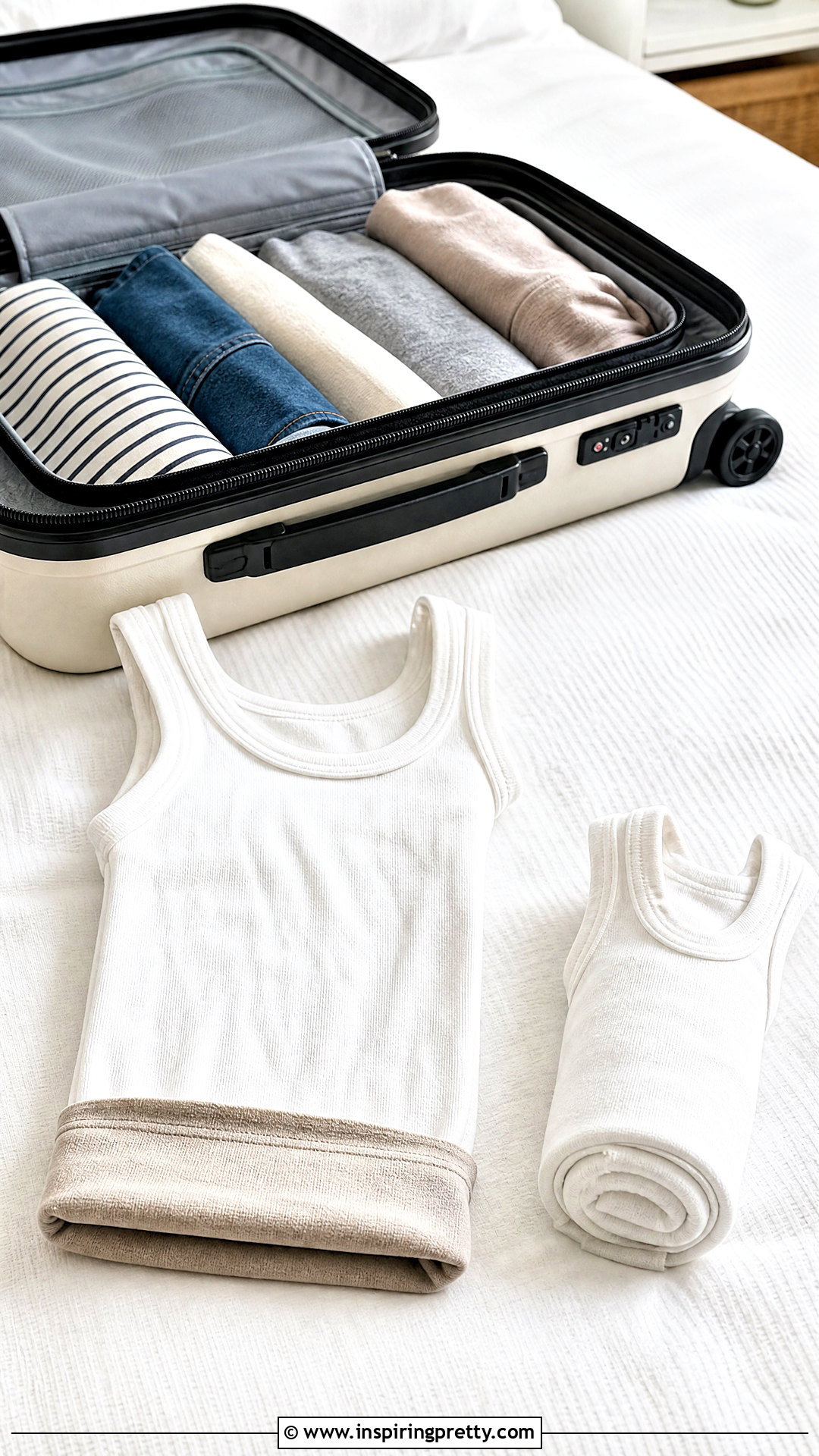
The ranger roll creates a self-contained bundle that is useful for travel or compact storage. Lay the tank top face up. Turn approximately four inches of the bottom hem inside out to form a cuff. Fold the left side into the center, followed by the right side, creating a narrow strip. Tuck both straps into the strip. Starting at the neckline, roll the garment tightly toward the cuff. Once the roll reaches the bottom, pull the inside-out cuff around the bundle to secure it. Adjust the fabric carefully so the cuff covers both ends without overstretching the hem. This technique keeps the top from unrolling inside luggage, though it can require practice and may not suit delicate trims or easily creased fabric. ()
11. Loose Tank Top Travel Roll
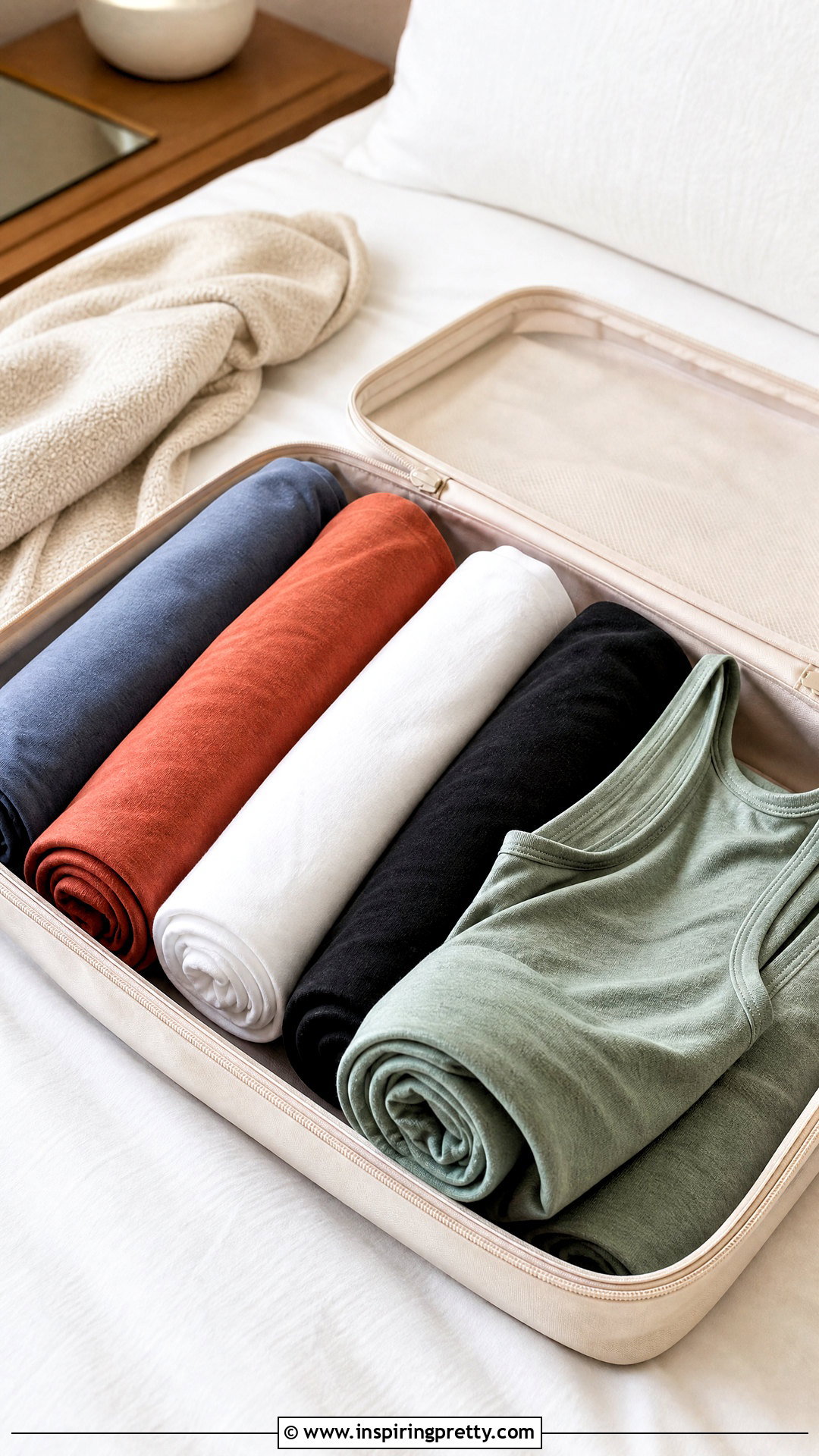
A loose travel roll balances compact packing with gentler treatment of the fabric. Spread the tank top face down and place the straps smoothly against the upper body. Fold each side inward until you have a medium-width rectangle. Starting at the neckline, roll downward with broad, relaxed turns. Avoid compressing the garment into an extremely tight cylinder. Place the roll inside a packing cube with the visible edge facing upward. This makes it easier to distinguish different colors or printed designs without unpacking everything. The loose roll is suitable for rayon blends, lightweight cotton, and soft ribbed tanks that may develop sharp lines when tightly folded. Fill empty spaces around the rolls carefully so they remain organized without becoming crushed during transportation.
12. Tank Top Fold For Packing Cubes
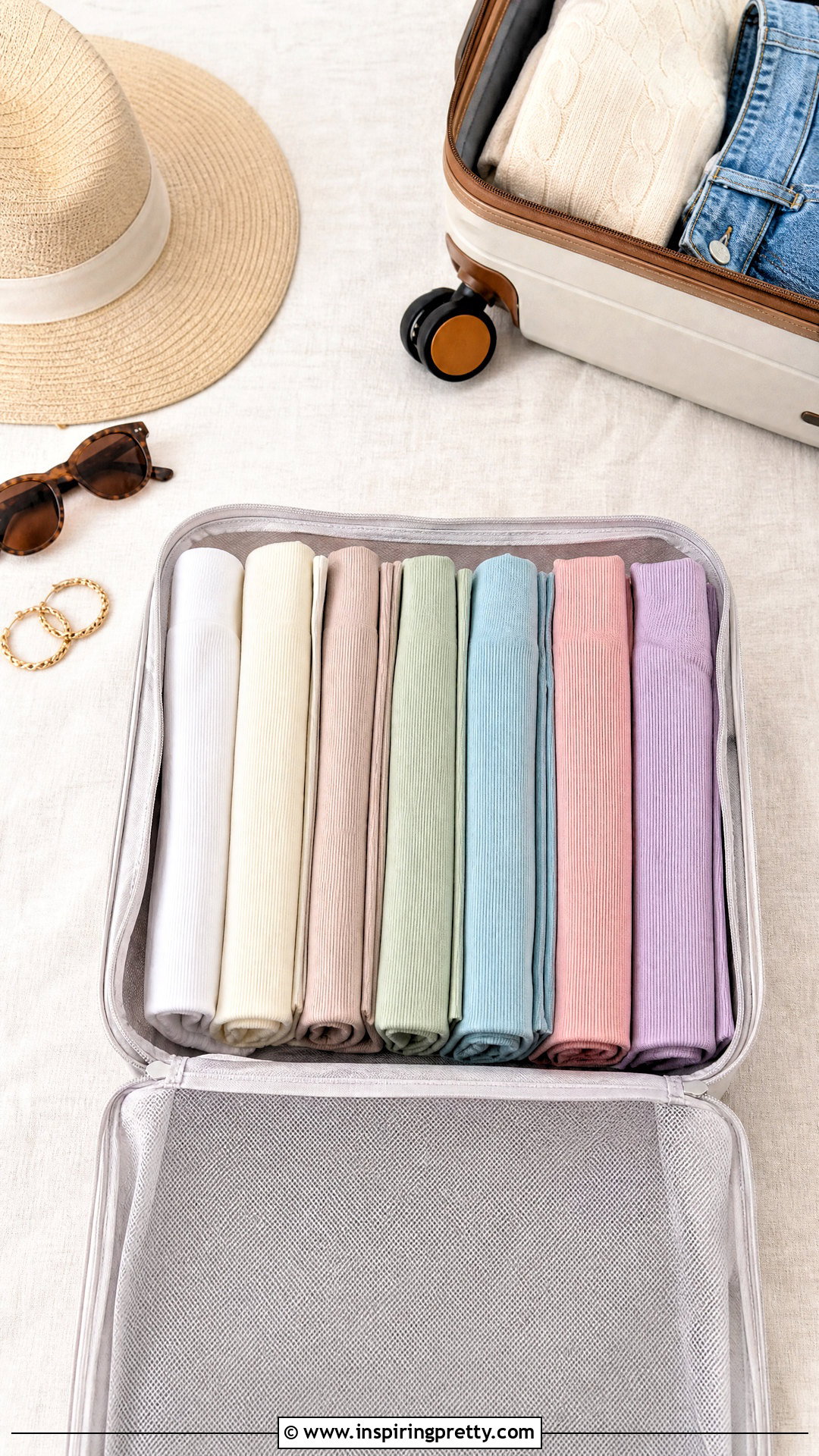
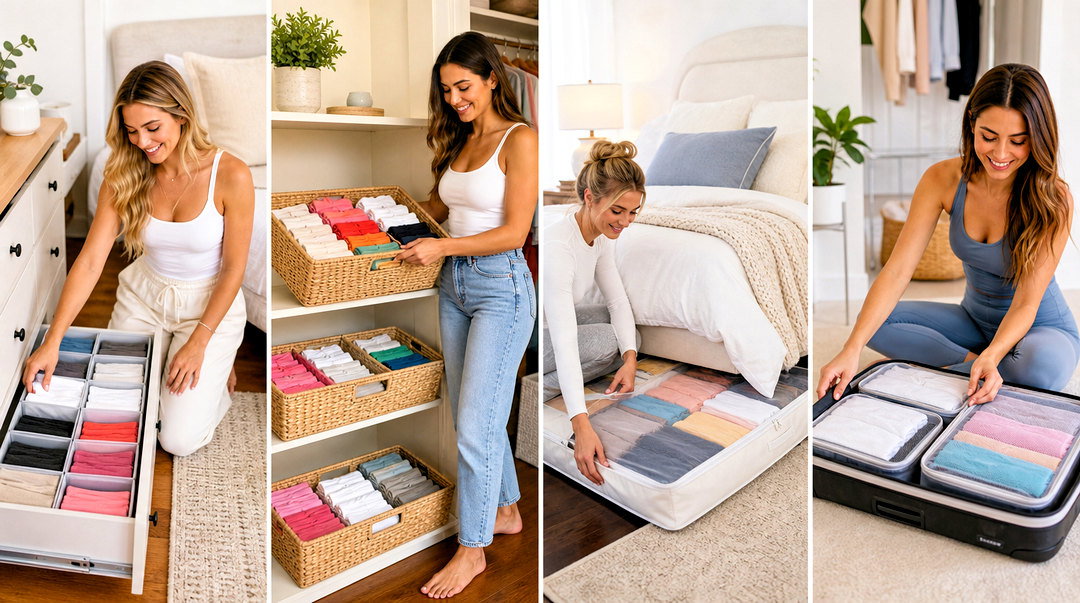
Packing cubes work best when every garment matches the cube’s dimensions. Lay the tank top face up and fold the straps down. Fold both sides toward the middle to make a rectangle slightly narrower than the packing cube. Bring the bottom hem upward about one-third of the way, then fold the garment upward again. Check the finished size against the cube before folding the rest of your tops. Place each one vertically if the cube has enough depth, or arrange them in a single flat layer. Keep lightweight tanks together rather than placing them beneath jeans or heavy sweaters. A consistent fold prevents empty gaps and allows you to remove one top without disrupting the rest of the cube. File-folded garments can also transfer easily from a drawer into luggage. ()
13. Bundle Fold Tank Tops
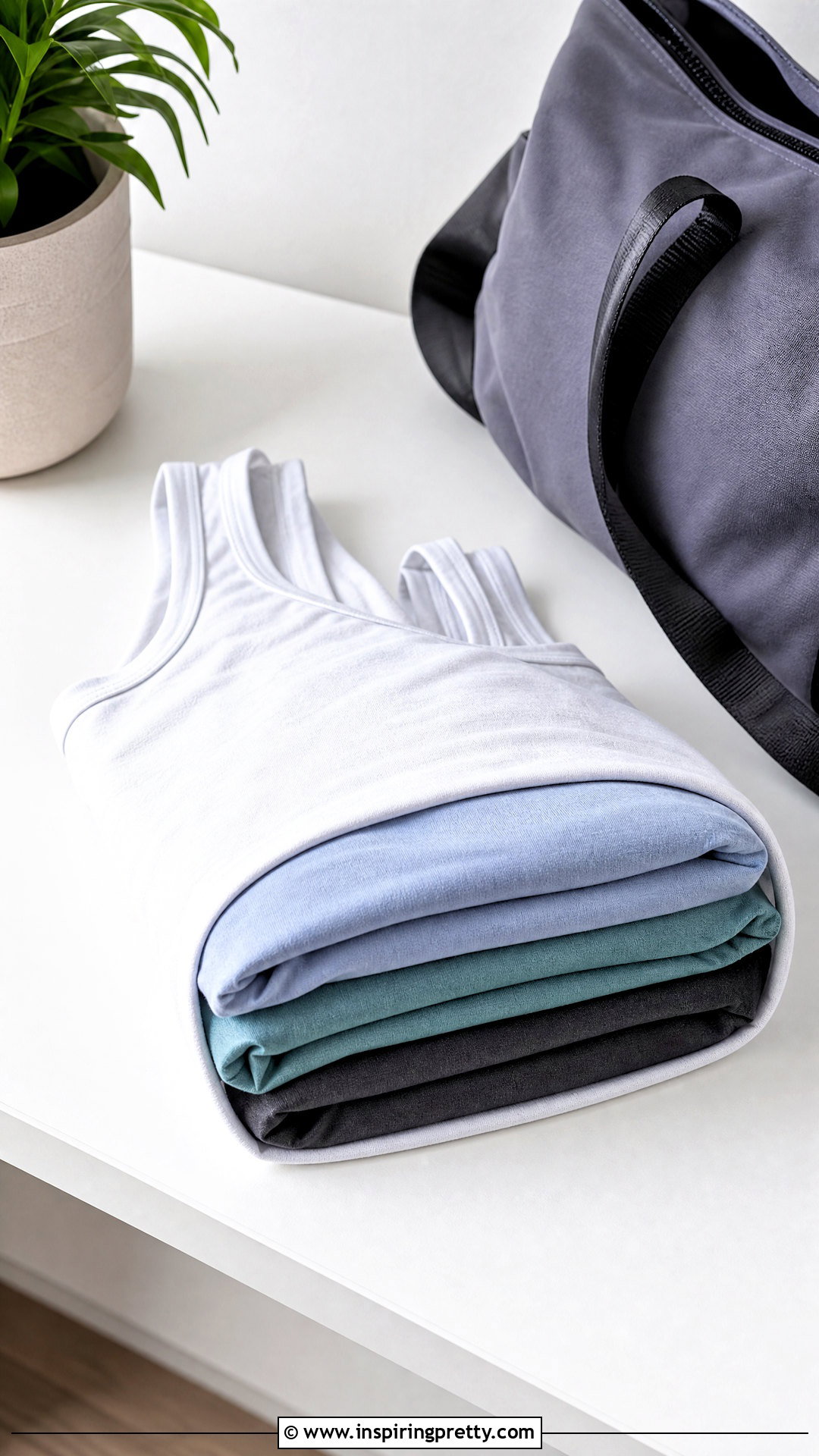
Several coordinating tank tops can be stored together as one manageable bundle. Begin by folding each top lengthwise into a simple rectangle. Place the largest or thickest tank face down as the outer layer. Stack two or three folded tanks across its center, keeping the pile even. Fold the bottom of the outer tank over the stack, followed by the neckline and straps. Bring both sides around the bundle to secure the contents. Do not create an oversized package, since a thick bundle can become difficult to store and may crease the inner garments. This method is convenient for grouping workout tops, travel clothing, or seasonal basics. Keep each bundle limited to a clear category so you can identify its contents without opening several packages. ()
14. Straps Tucked Tank Top Fold
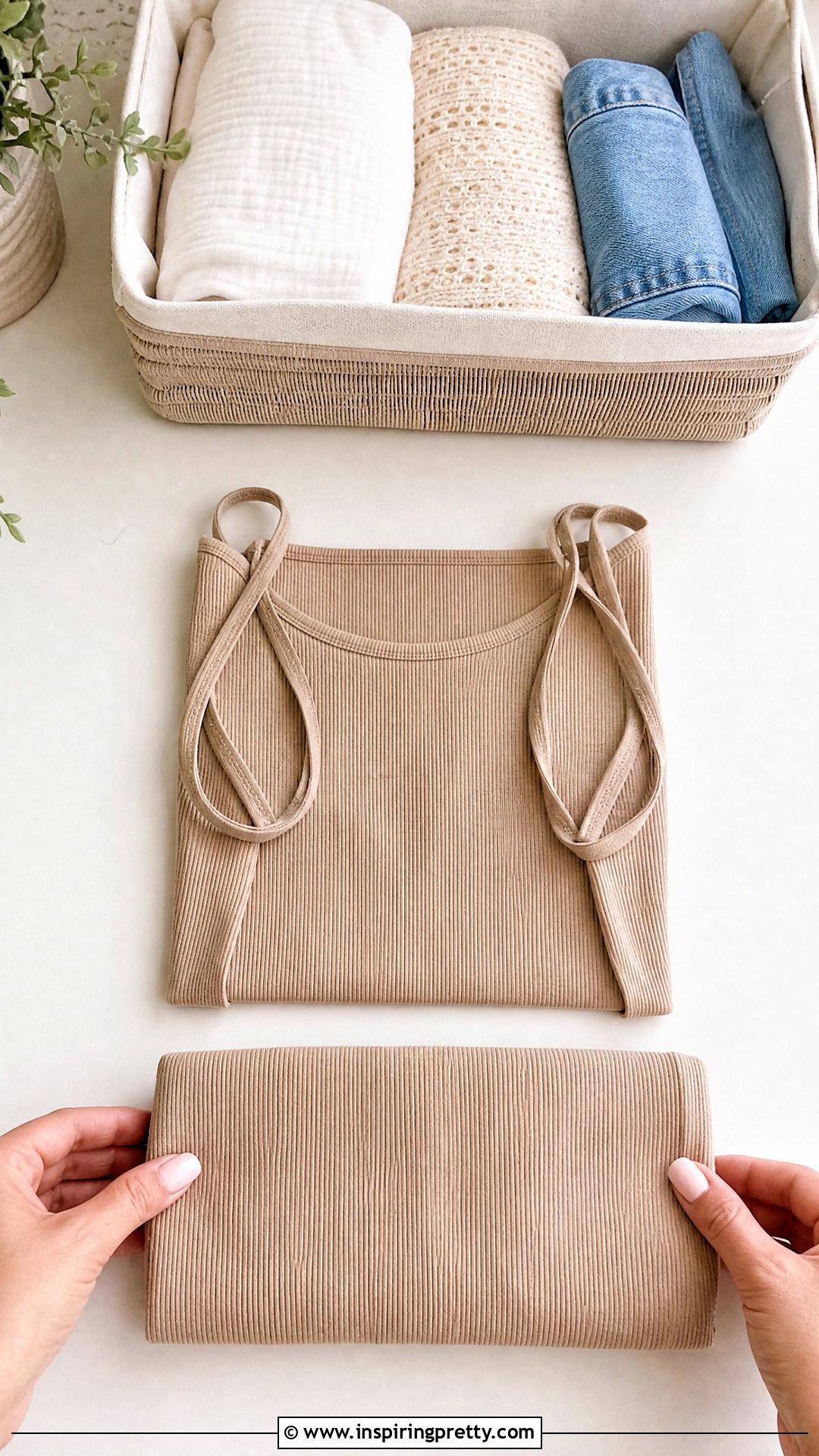
Long straps frequently catch on other clothing, so secure them before completing the main fold. Place the tank top face up and straighten each strap carefully. Fold the straps downward at the point where they meet the neckline, keeping them flat rather than twisted. If they are exceptionally long, cross them once or fold them into thirds. Next, bring both sides toward the center to trap the straps inside a rectangular shape. Fold the bottom upward in halves or thirds according to your storage space. This approach works for scoop-neck tanks, loose summer tops, and garments with decorative shoulder ties. Avoid pulling the straps tightly, especially when they contain elastic. A relaxed tuck reduces tangling while helping the tank maintain its original shape between wears.

15. Spaghetti Strap Tank Top Fold
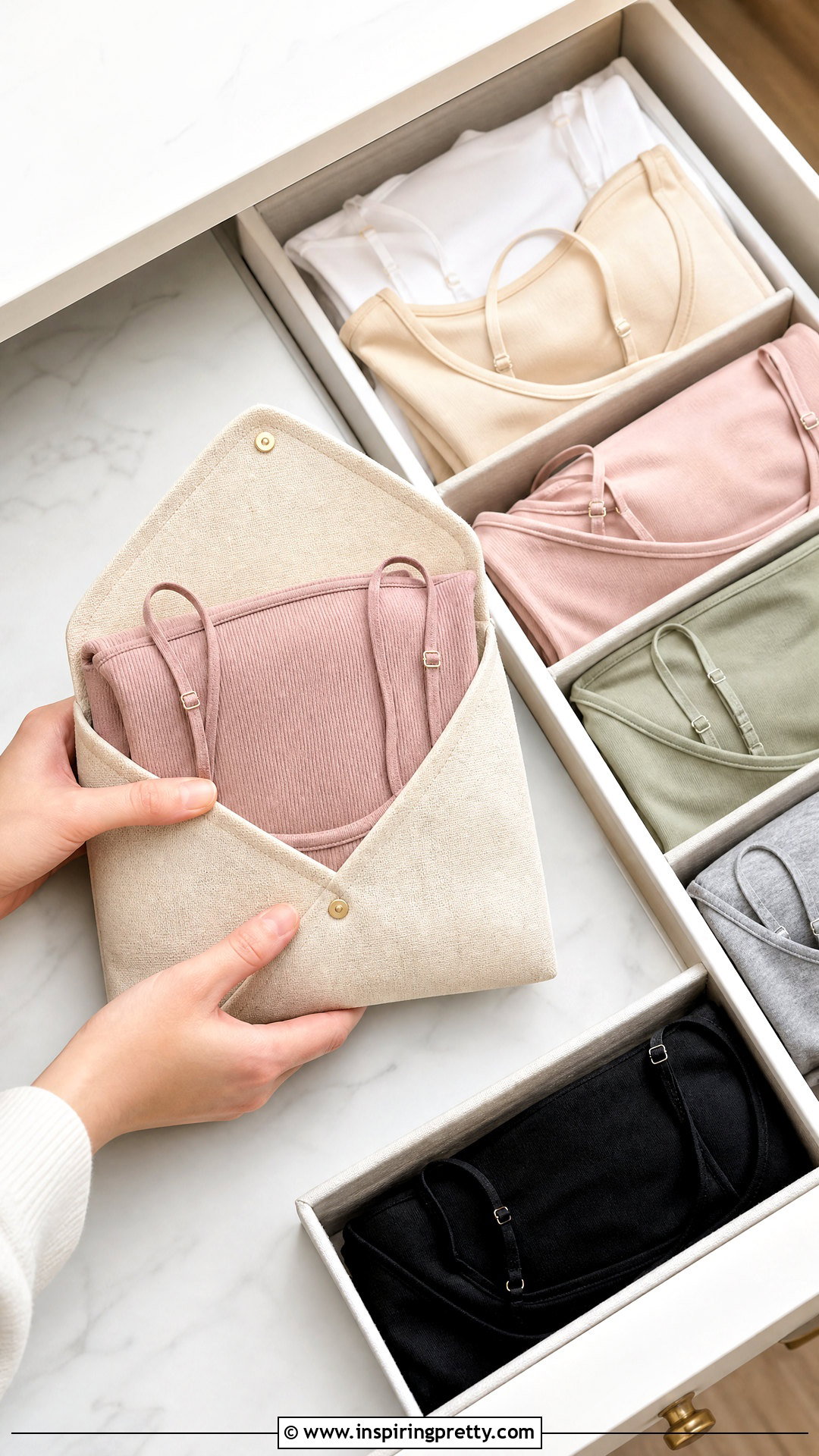
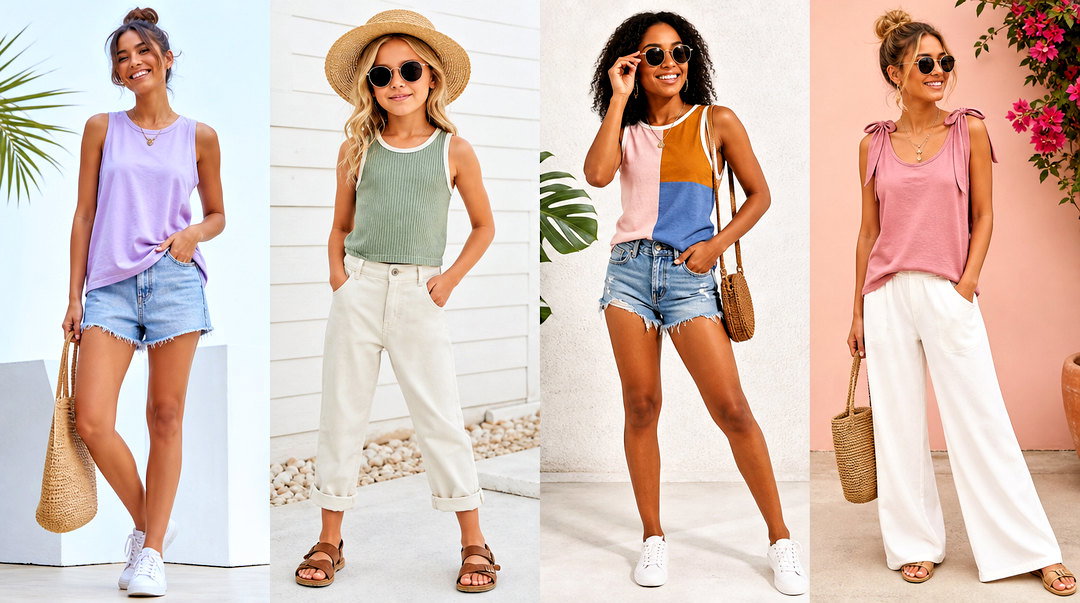
Thin spaghetti straps require a gentle fold because they twist and stretch easily. Lay the tank face down with the straps arranged naturally. Fold the upper section downward at the bottom of the armholes, allowing the straps and neckline to rest flat inside the body of the top. You should now have a simple rectangle without exposed straps. Fold the left and right sides inward, adjusting the width to match your drawer or storage box. Bring the bottom toward the center, then fold the upper section over it like an envelope. Store the package flat or vertically with lightweight garments. Do not place heavy stacks on top. For tops with adjustable hardware, position the sliders inside a soft layer of fabric so they do not snag nearby garments.
16. Racerback Tank Top Fold
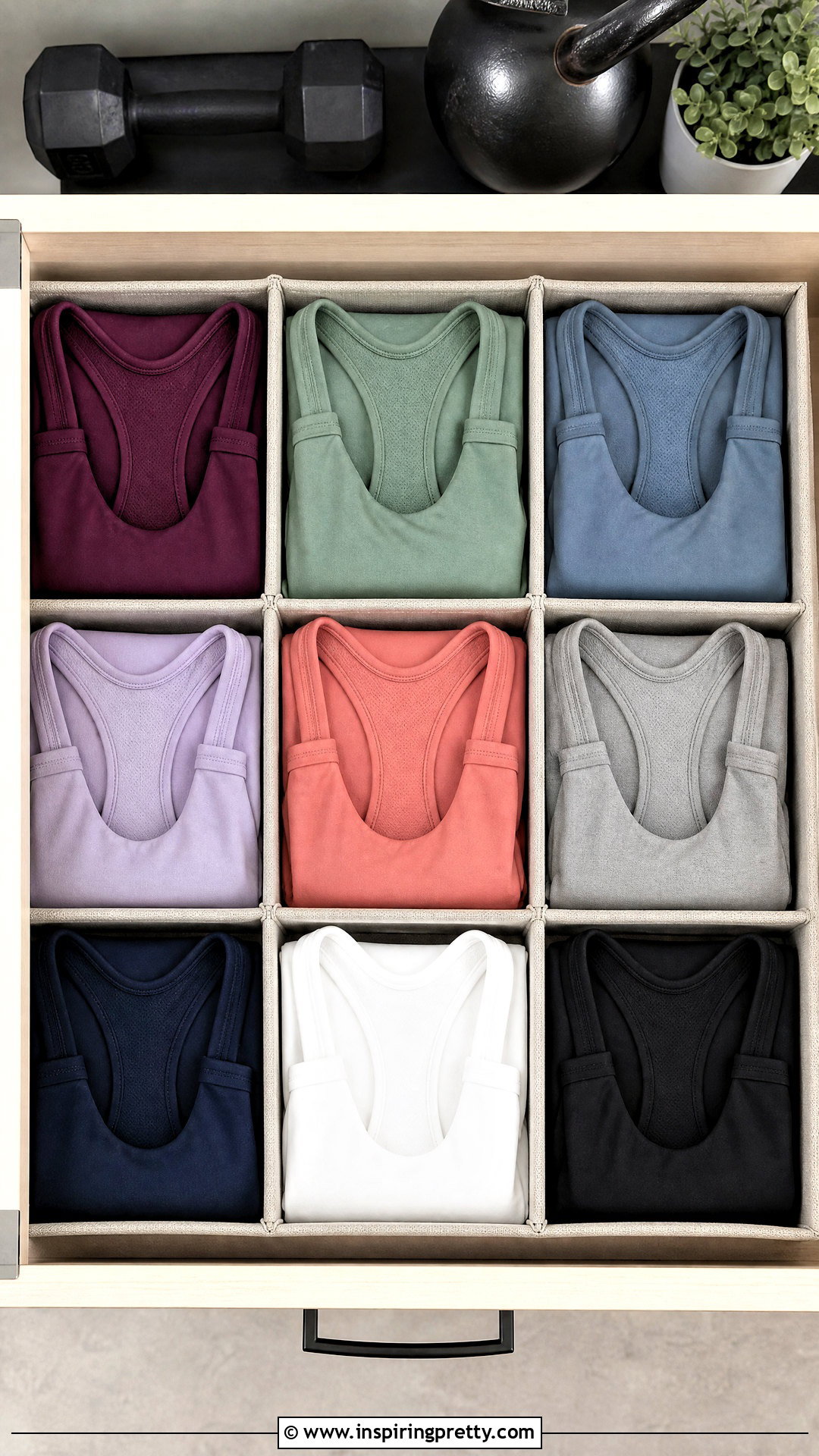
The curved back and angled straps of a racerback tank can create an uneven package unless you square the shoulders first. Place the garment face down so the racerback detail is visible. Fold the top section downward at the bottom of the armholes. This brings the straps into the body and creates a straight upper edge. Fold the left side inward, then repeat on the right, forming a narrow rectangle. Bring the hem upward in thirds for vertical storage or in half for shelf stacking. Smooth the mesh or performance fabric lightly without stretching it. If the back panel includes a printed logo, make the final fold with that detail facing outward. This small adjustment helps you recognize individual workout tops in a crowded activewear drawer.
17. Built-In Bra Tank Top Fold
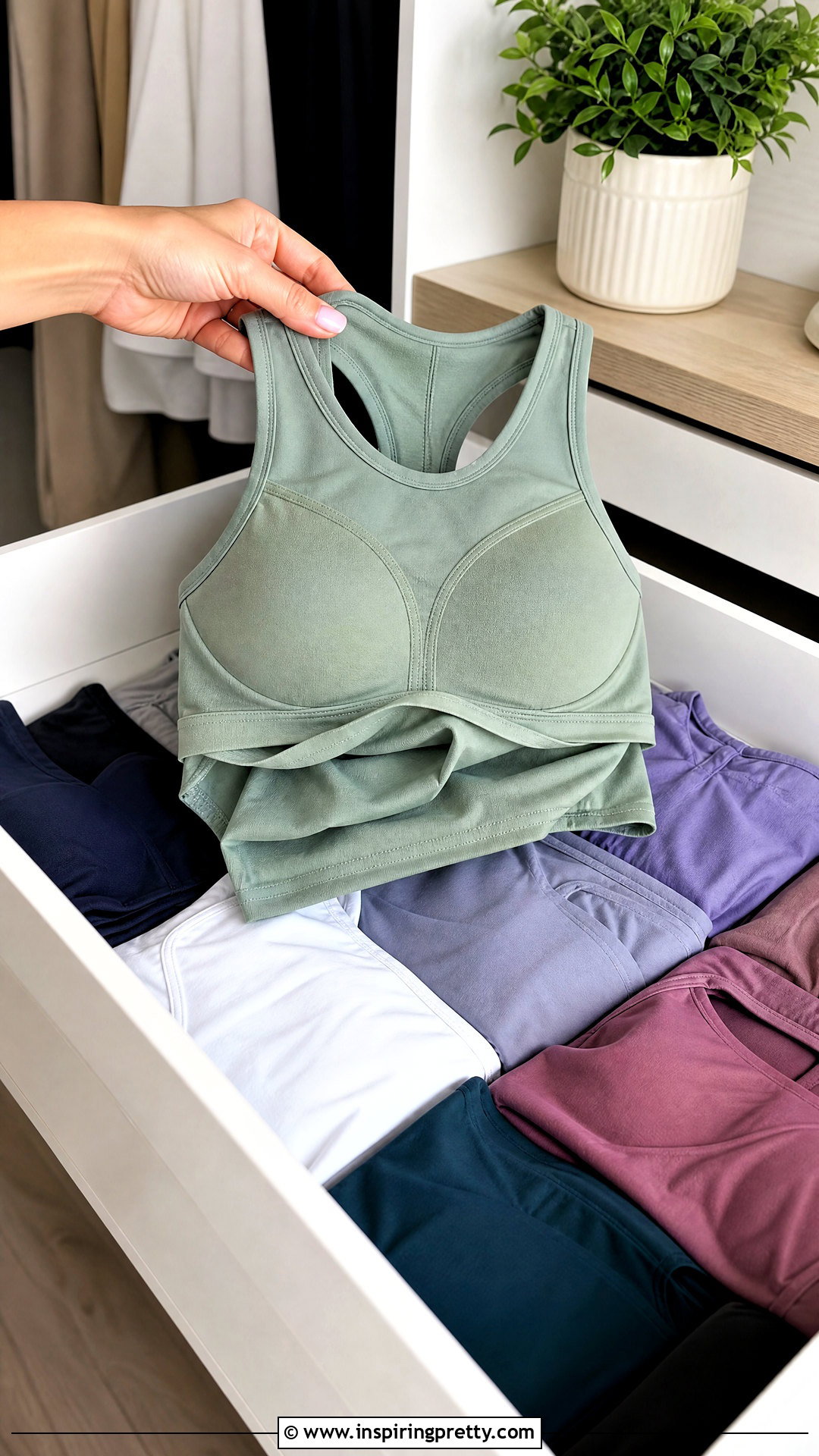
Built-in cups and shelf bras need more room than standard tank tops. Place the garment face up and arrange the bust area in its natural shape. Never invert molded cups or press them completely flat. Fold the straps down behind the neckline, then bring each side inward without folding directly through the cups. Fold the bottom hem upward until it rests just below the bust panel. If necessary, make one additional loose fold beneath the cups. Store the garment flat near the top of a stack or place it vertically inside a wide drawer divider. Avoid tight rolls because they can distort foam, padding, or elastic support bands. This method creates a compact shape while protecting the structured section and preventing straps from becoming tangled during storage.
18. Cropped Tank Top Fold
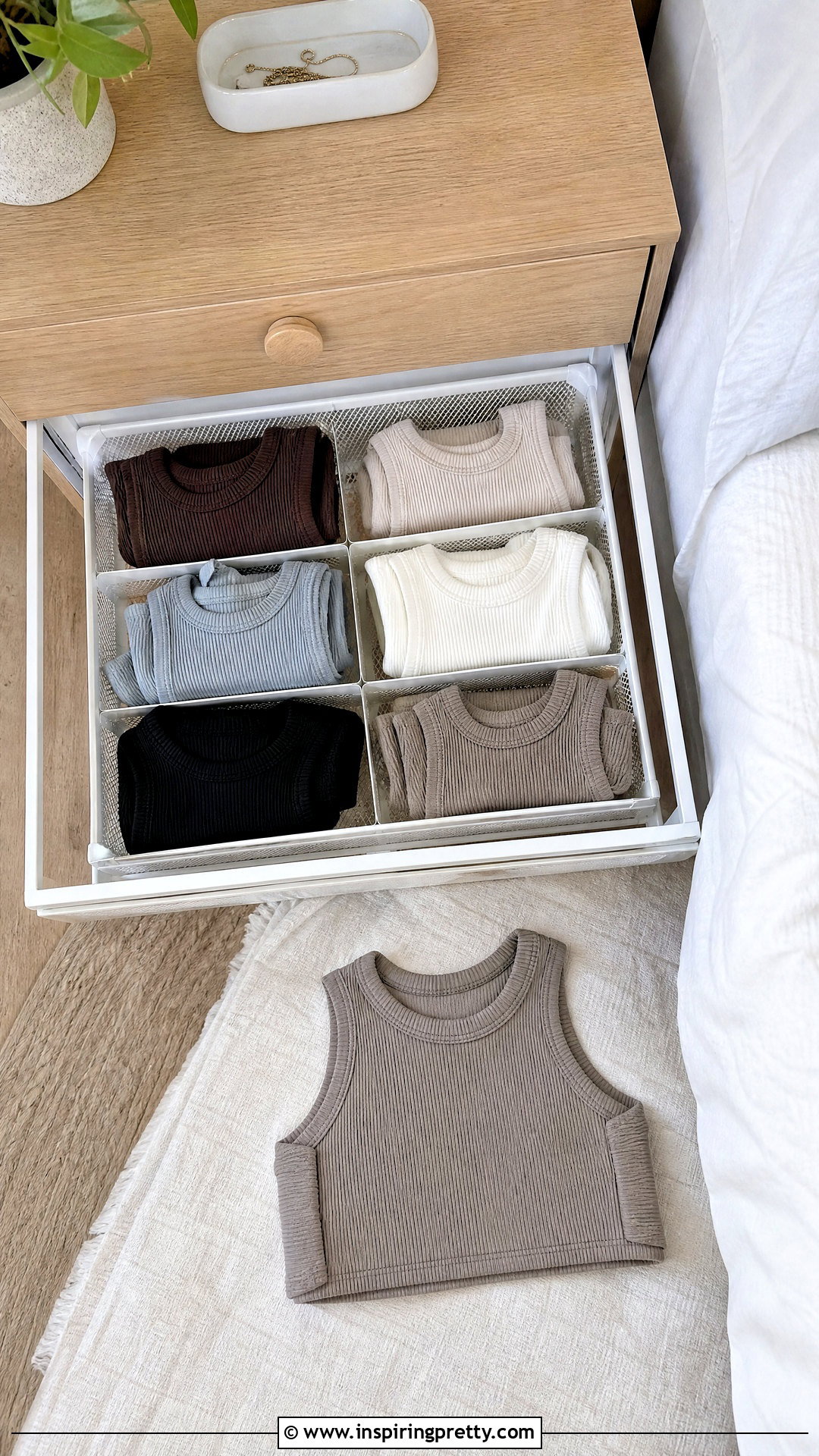
A cropped tank requires fewer folds, but its short length can make it disappear between larger garments. Begin with the top face down and smooth the hem, neckline, and armholes. Fold each strap into the body. Bring the left and right sides toward the center to create a narrow rectangle. Depending on the crop length, fold the hem to the neckline once or divide the garment into thirds. Keep the finished package wide enough to remain visible in a drawer. Store cropped tanks in a separate row, small basket, or drawer compartment rather than mixing them with full-length tops. Arrange the folded edge upward and allow a distinctive color, trim, or logo to remain visible. This makes each compact top easier to identify and retrieve.
19. Athletic Tank Top Fold
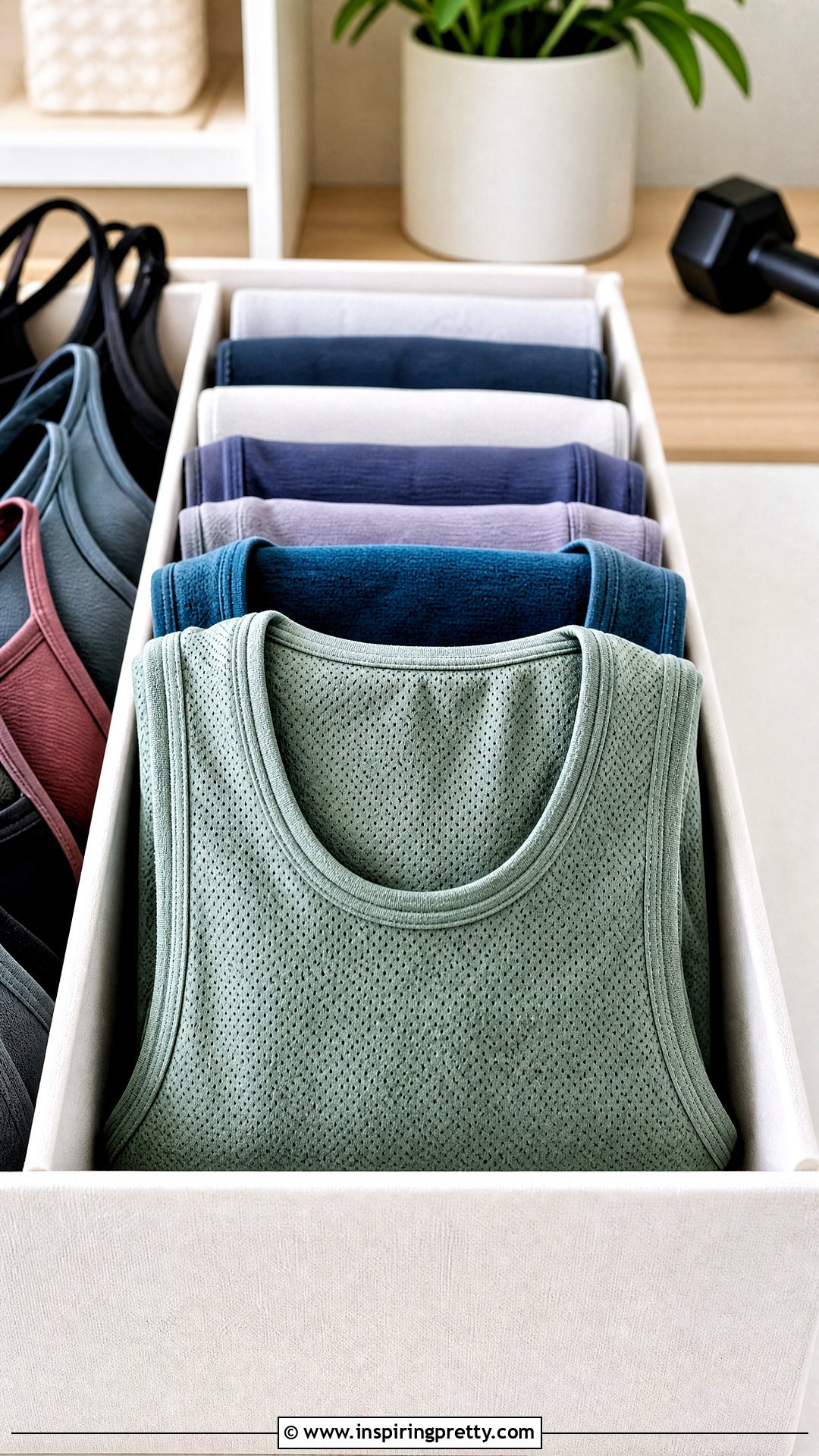
Lightweight athletic tanks can slide apart when stacked, particularly when made from smooth performance fabric. Lay the top face down and fold the shoulder area downward at the armholes. Bring both sides inward, overlapping them slightly to create a stable rectangle. Fold the bottom third upward and make a second fold toward the top. Apply light pressure with your hands to release trapped air, but do not pull the stretchy material. Stand the top vertically inside a narrow divider where neighboring garments can support it. Alternatively, use a loose roll for a gym bag. Make sure every tank is completely clean and dry before long-term storage. Separate heavily textured or zippered activewear so its hardware does not catch on the smooth fabric.
20. Design-Facing Tank Top Fold
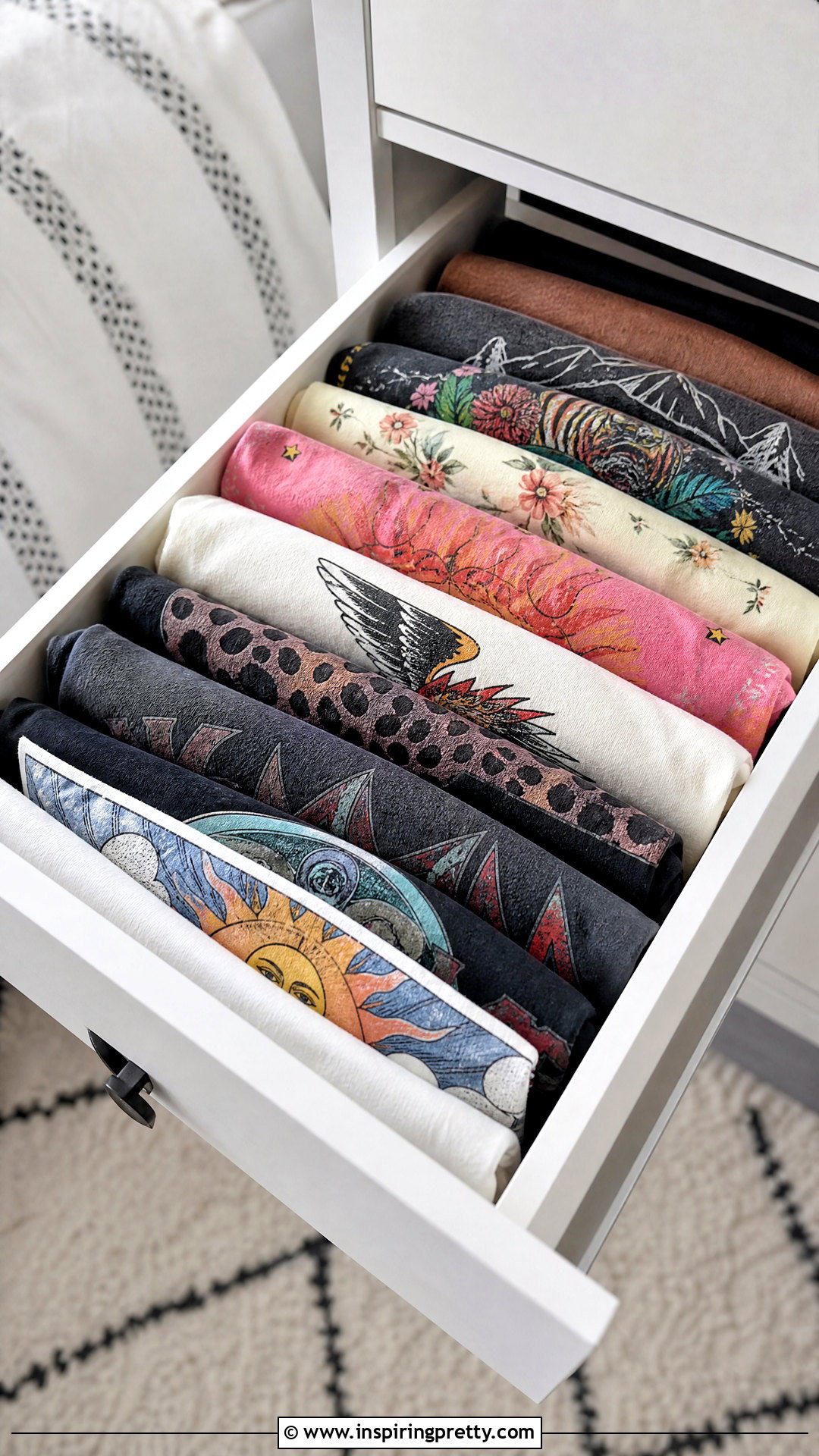
Printed tanks are easier to find when part of the design remains visible after folding. Lay the garment with the graphic facing down and identify the area you want displayed. Fold the straps and neckline inward while keeping that section centered on the opposite side. Bring each side toward the middle, adjusting the folds so the recognizable part of the print lands along the top edge. Fold the bottom upward in thirds until the tank forms a standing rectangle. Place it vertically with the visible design facing you. For shelf storage, turn the completed package so the graphic faces upward. This customized method may be slightly off-center, but it improves identification and reduces unnecessary handling when several tank tops share similar colors. ()
Conclusion:
Knowing how to fold tank tops for storage makes everyday organization faster and helps you use drawers, shelves, bins, and luggage more effectively. Choose a classic or thirds fold for stable shelf stacks. Try vertical file folding when visibility is the priority, or use a regular roll for gym bags and packing cubes. Ranger rolls are convenient for secure travel bundles, while gentle envelope folds protect spaghetti straps and delicate details. Structured tops with built-in bras should remain loosely folded to preserve their shape. Whatever method you select, straighten the fabric, tuck the straps, and match the final dimensions to your storage space. Consistent folding is the simplest way to maintain an orderly tank top collection.
Related posts:



Leave a Reply