
Tank tops are compact, but their thin straps, slippery fabrics, and similar shapes can quickly create a cluttered drawer or crowded closet. A practical storage system should make every top visible, protect delicate materials, and fit your daily routine. Start by deciding which tanks should be folded, hung, or moved into seasonal storage. Everyday cotton basics usually work well in drawers, while silky, structured, or embellished tops may benefit from hangers. Sorting by color, purpose, or frequency also makes getting dressed faster. The best solution may combine several methods rather than relying on one organizer. Use these practical tips for **how to store tank tops how to organize**, simplify your wardrobe, and keep each piece easy to find. ()

1. File Fold Tank Tops In A Drawer
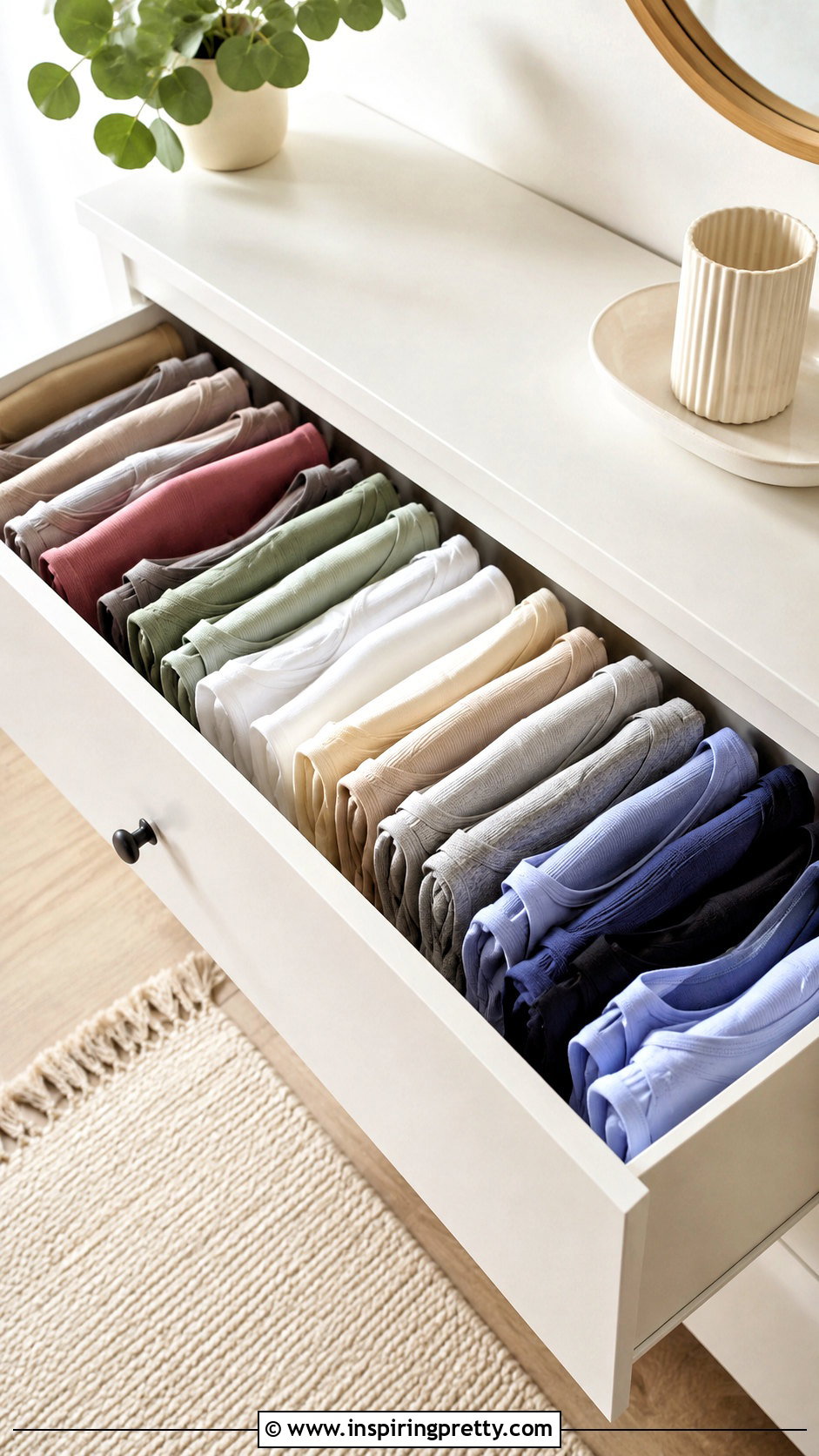
File folding lets tank tops stand vertically instead of sitting in tall piles. Lay each top flat, smooth the fabric, and fold the straps inward. Fold both sides toward the center to create a narrow rectangle, then fold the rectangle into thirds. Place each top upright with a recognizable color, neckline, or pattern facing upward. This arrangement provides a clear view of the entire collection when you open the drawer. It also prevents you from disturbing several tops while removing one. Use a snug drawer or divider so the folded pieces do not collapse after laundry day. File folding works especially well for cotton tanks, ribbed basics, undershirts, cropped tanks, and other pieces that hold a compact fold. ()
2. Roll Tank Tops In A Drawer
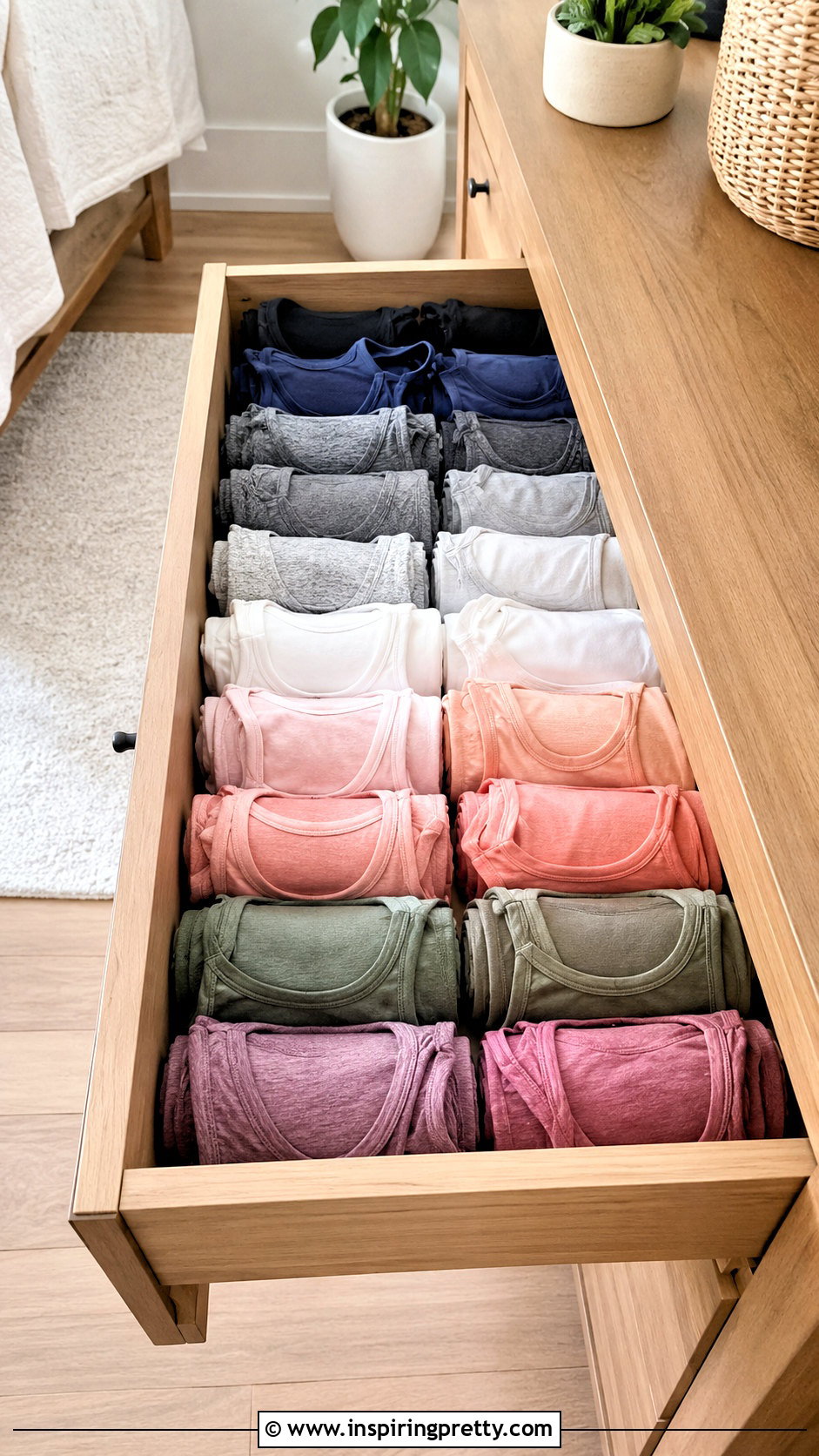
Rolling is a convenient choice when your drawers are deep or your tank tops are made from soft, flexible material. Begin by placing the top face down and folding the straps toward the body. Bring the sides inward until you have a long rectangle. Roll firmly from the hem toward the neckline, but avoid pulling or stretching the fabric. Arrange the finished rolls side by side so every color remains visible. You can create separate rows for casual, workout, and layering tanks. Rolled storage reduces bulky piles and works well in narrow drawers, baskets, and bins. However, loosely woven or heavily embellished tops should be stored another way because rolling can crush decorative details or create unwanted pressure. ()
3. Stack Tank Tops In Short Piles
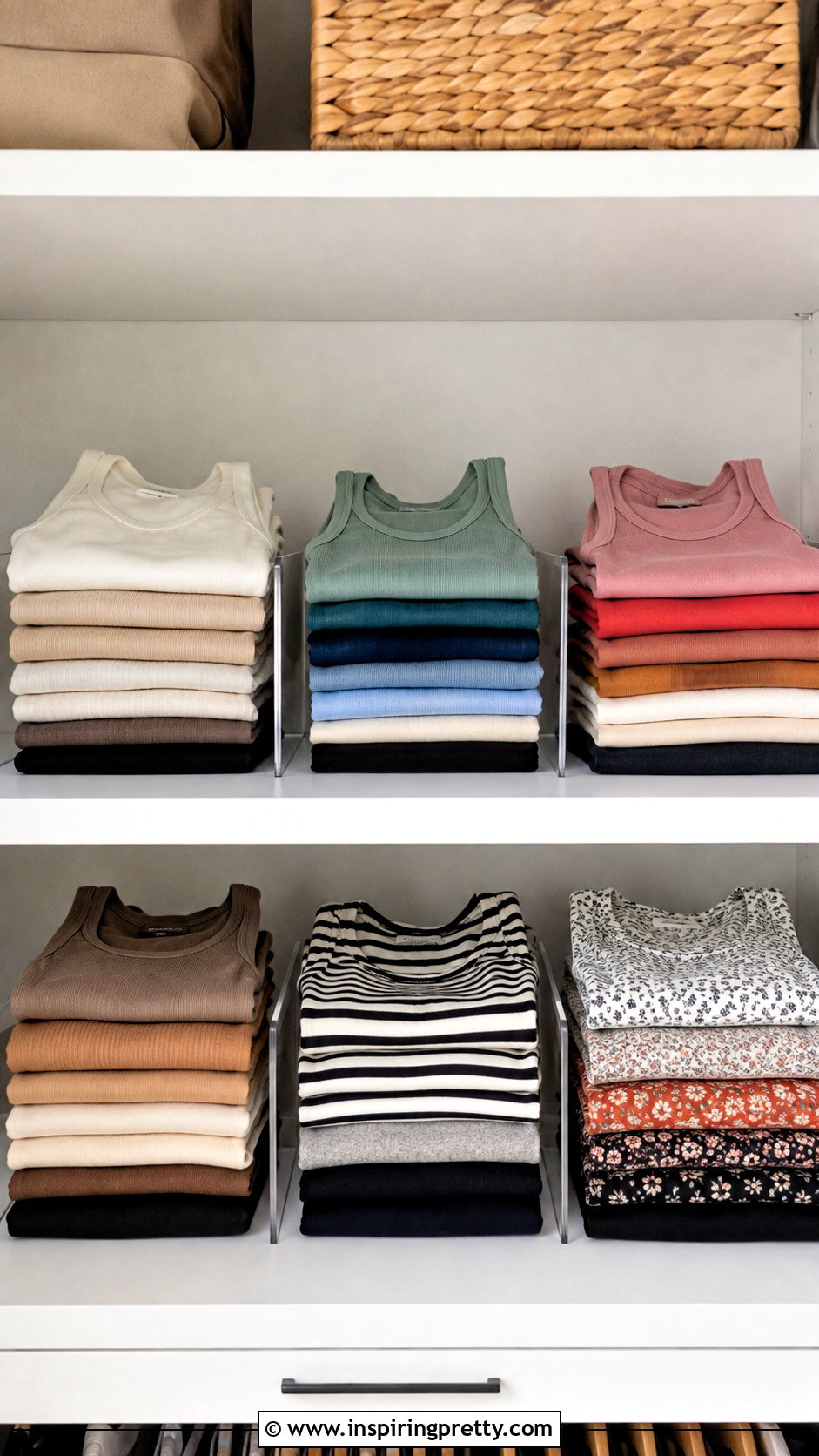
Traditional stacking can work when you keep the piles short and organized. Fold each tank top into the same rectangular size, tucking the straps inside so they do not become tangled. Limit each stack to approximately five or six pieces, depending on the thickness of the fabric. Place frequently worn tops at eye level or near the front of the shelf. Group similar items together, such as basic layering tanks in one stack and relaxed cotton tanks in another. Avoid creating one tall tower because removing a piece from the bottom will disrupt everything above it. Shelf dividers, shallow baskets, or bookends can help each pile remain upright. This straightforward approach is useful when you have wide shelves but limited drawer space.
4. Use Drawer Dividers For Tank Tops
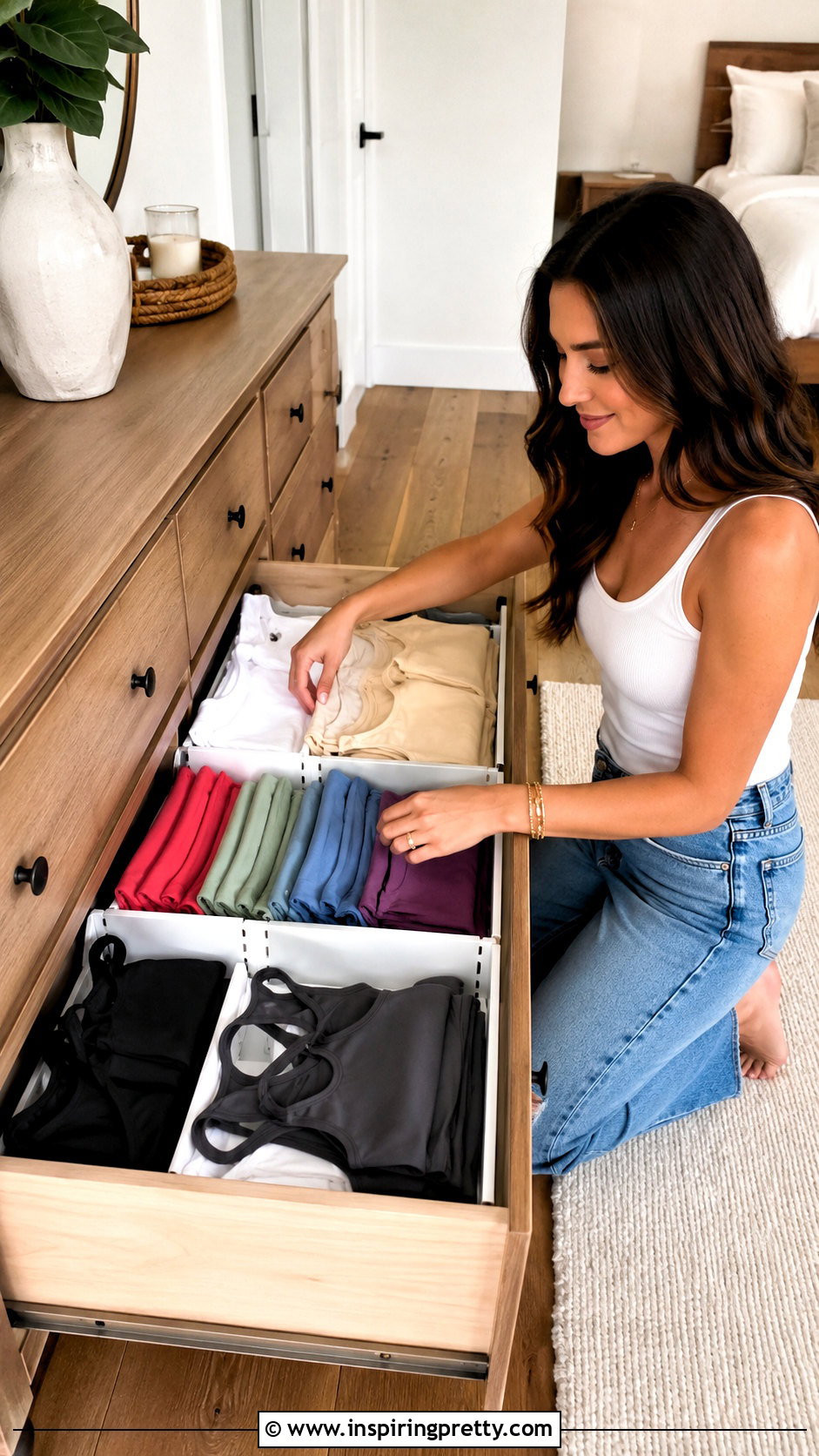
Drawer dividers create clear boundaries that prevent folded tank tops from sliding into other clothing. Choose adjustable dividers that run from the front to the back of the drawer, or use smaller modular compartments. Measure the drawer before buying anything so the organizer fits without wasting space. Assign each section a simple category, such as neutrals, bright colors, cropped tanks, workout tops, or layering pieces. File fold or roll the tanks within each compartment, keeping the most frequently worn category closest to the front. A divider system is especially helpful when tank tops share a drawer with T-shirts, pajamas, or undergarments. When putting away laundry, return every item to its assigned section immediately. That small habit keeps the arrangement functional.
5. Use A Honeycomb Organizer For Tank Tops
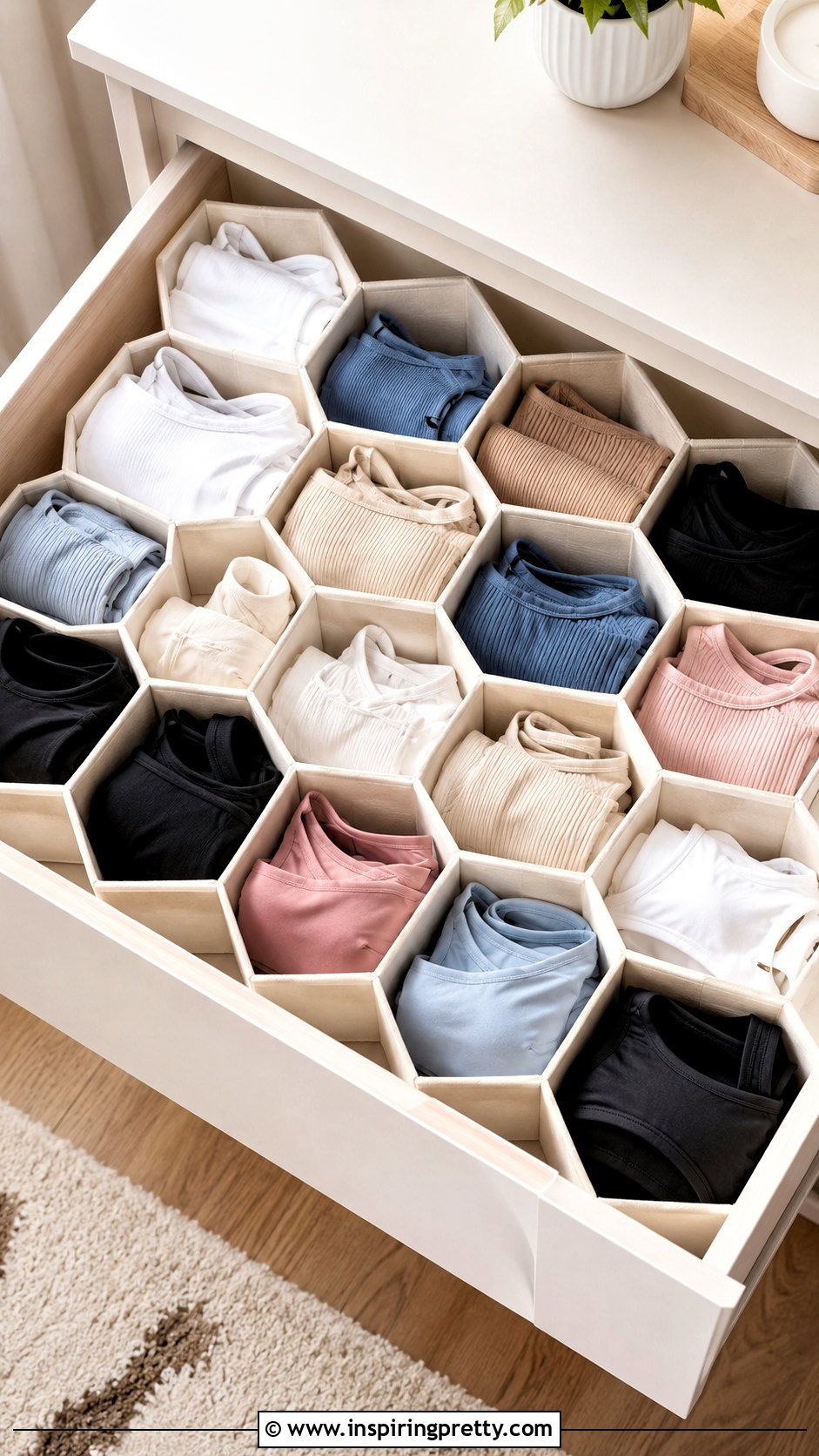
A honeycomb organizer provides individual compartments for lightweight tank tops and prevents small folded pieces from falling over. Fold each top into a compact rectangle or roll it before placing it inside one cell. Keep visible colors or neckline details facing upward so you can identify every piece quickly. This method works best for thin cotton tanks, fitted camisoles, cropped tops, and workout tanks. Before purchasing an organizer, measure the height, width, and depth of the drawer carefully. Some honeycomb compartments are too narrow for thick ribbed fabric or tops with built-in support. Avoid overfilling the cells because compressed clothing becomes harder to remove. If one compartment is too small, combine several lightweight tanks by color rather than forcing in a bulky piece.
6. Organize Tank Tops In Small Drawer Bins
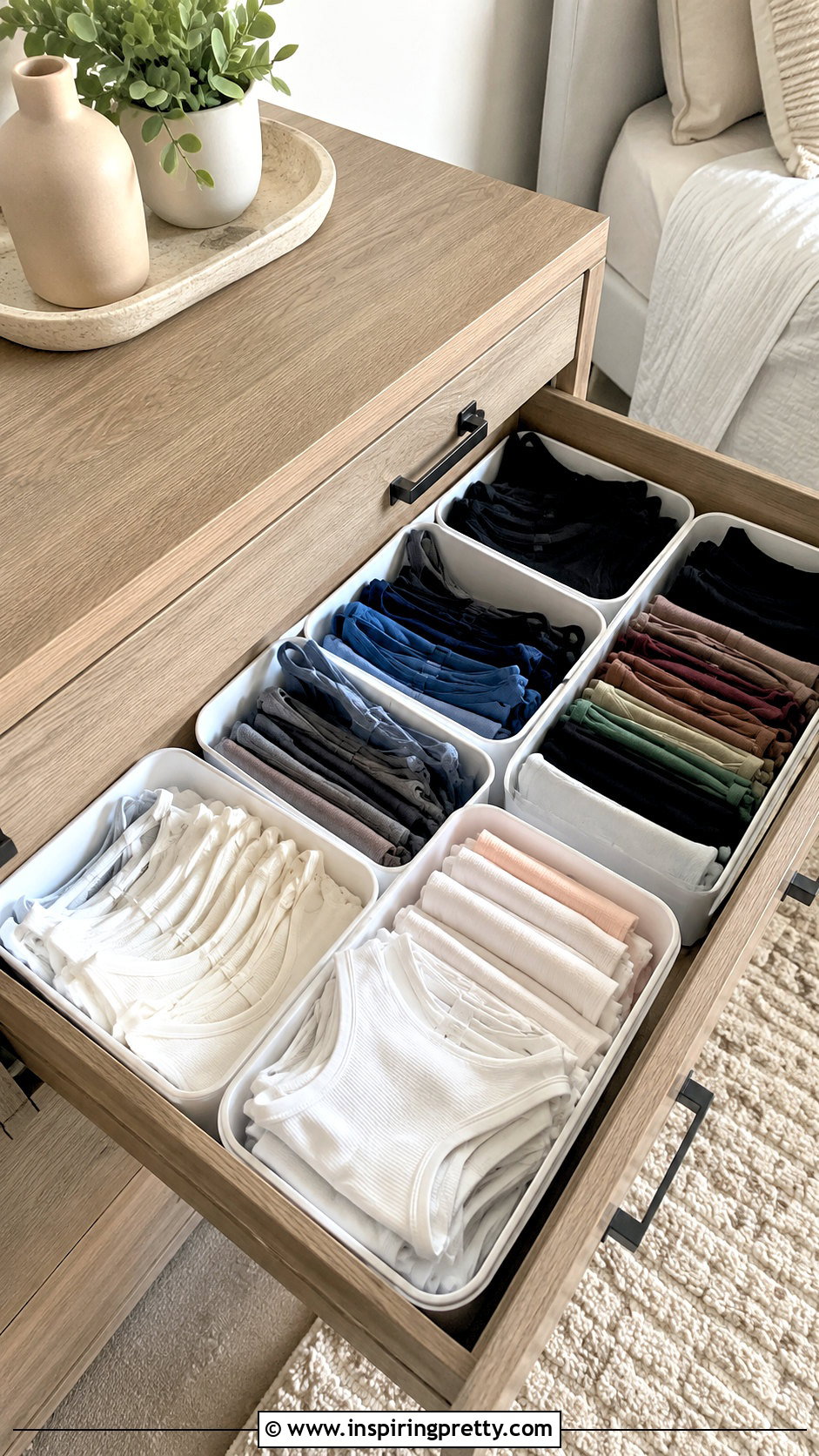
Small open bins can transform one large drawer into a flexible tank top storage station. Select low-sided bins that let the drawer close easily and allow you to see the contents. Use one bin for everyday basics, another for athletic tanks, and a third for dressier tops. Fold or roll each piece consistently so the containers remain neat. Removable bins make it easy to lift an entire category out when you need to reorganize or clean the drawer. They are also useful in deep dresser drawers where small garments often disappear beneath larger clothing. Leave a little open space inside every bin instead of packing it tightly. Extra room makes the system easier to maintain and gives you space for future replacements without creating immediate clutter.
7. Organize Tank Tops By Color
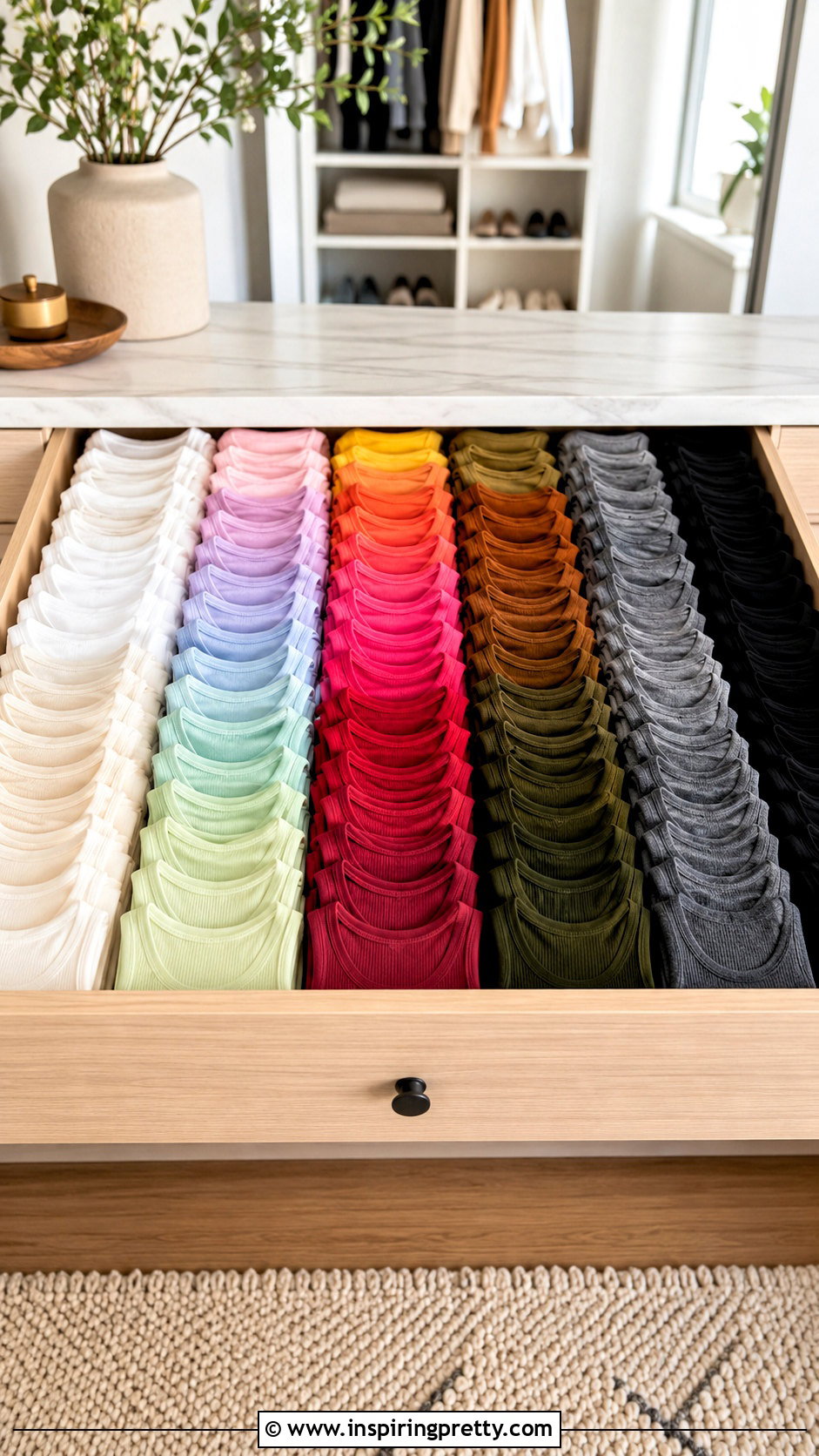
Color organization makes similar tank tops easier to distinguish and creates a cleaner visual arrangement. Begin with white and cream, move through lighter shades and bright colors, and finish with gray, brown, and black. Printed tops can have their own section or be placed beside their dominant color. This system works with file-folded drawers, hanging storage, baskets, or shelves. If you own several nearly identical black tanks, organize those by neckline, fabric, or strap width within the color group. Place your most frequently worn colors in the easiest location rather than following a perfect rainbow at the expense of convenience. Color sorting is most effective when the edges or fronts of the tops remain visible, so avoid hiding them in deep, overlapping stacks.
8. Organize Tank Tops By Activity
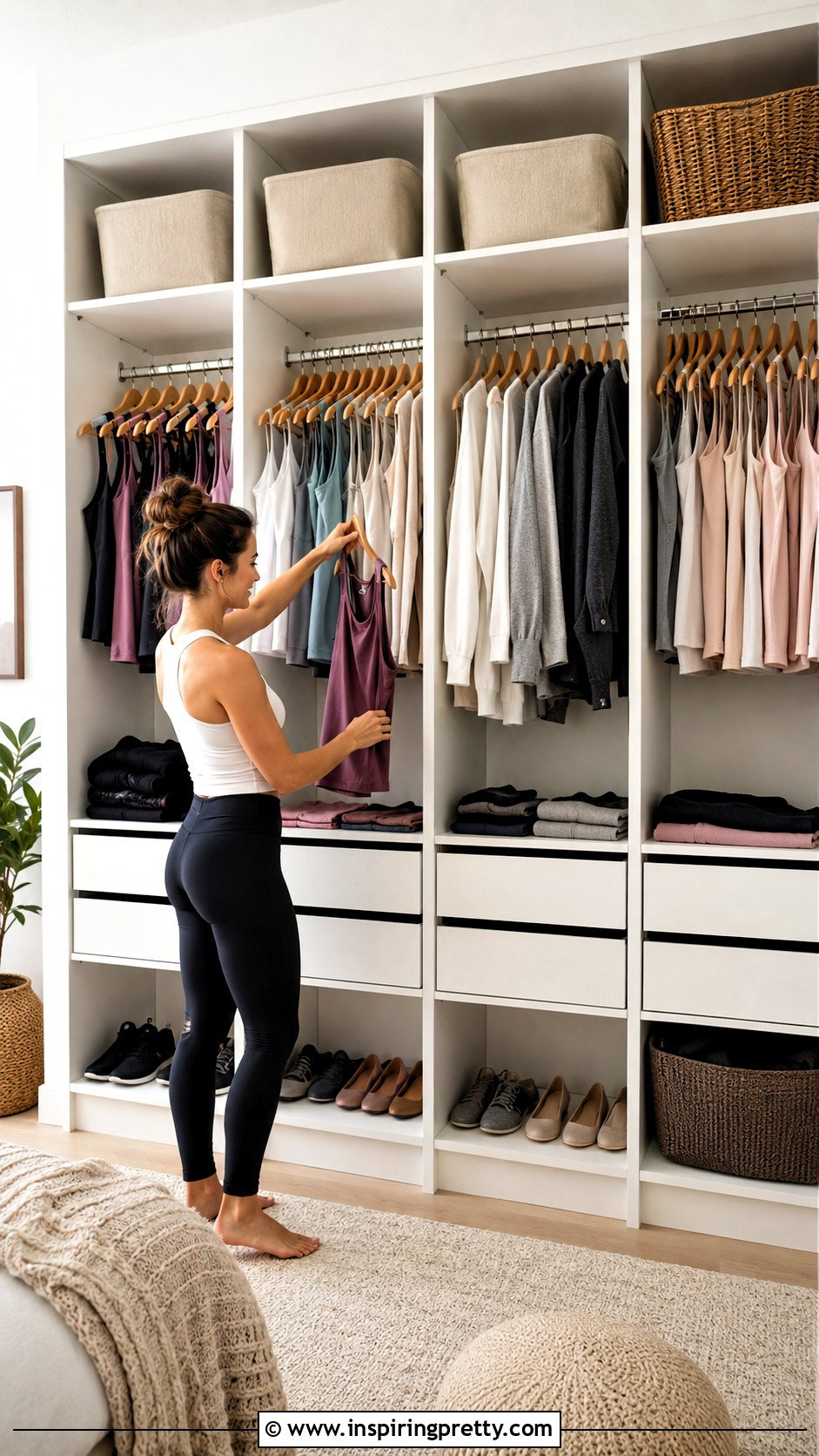
Imagine getting ready for a workout and finding every athletic tank in one designated place. Sorting by activity eliminates the need to search through casual and dressier pieces. Create practical groups such as exercise, everyday wear, work layering, sleepwear, and special occasions. Store workout tanks close to leggings or shorts, while layering tanks can sit near cardigans and work clothes. If you wear certain pieces for several purposes, place them in the category you use most often. Labels can help when multiple family members share a closet or laundry routine. This method is particularly useful for a large collection containing different performance fabrics and silhouettes. Review the categories occasionally because your schedule, workplace, fitness habits, and preferred clothing may change over time.
9. Organize Tank Tops By Frequency

The easiest storage space should always contain the tank tops you wear most. Place weekly favorites at the front of a drawer, on the most accessible shelf, or near the center of the closet rod. Move occasional and special-purpose pieces toward the back or into a higher container. This arrangement reduces daily searching and keeps frequently handled clothing from disrupting the entire collection. If you are unsure which tops deserve prime space, turn their hangers backward or place a temporary marker beside them. After wearing and washing an item, return it normally. Pieces that remain untouched become clear candidates for seasonal storage, donation, or reassessment. Frequency-based organization is practical because it reflects your actual routine rather than creating categories that look attractive but feel inconvenient.
10. Organize Tank Tops With Matching Sets
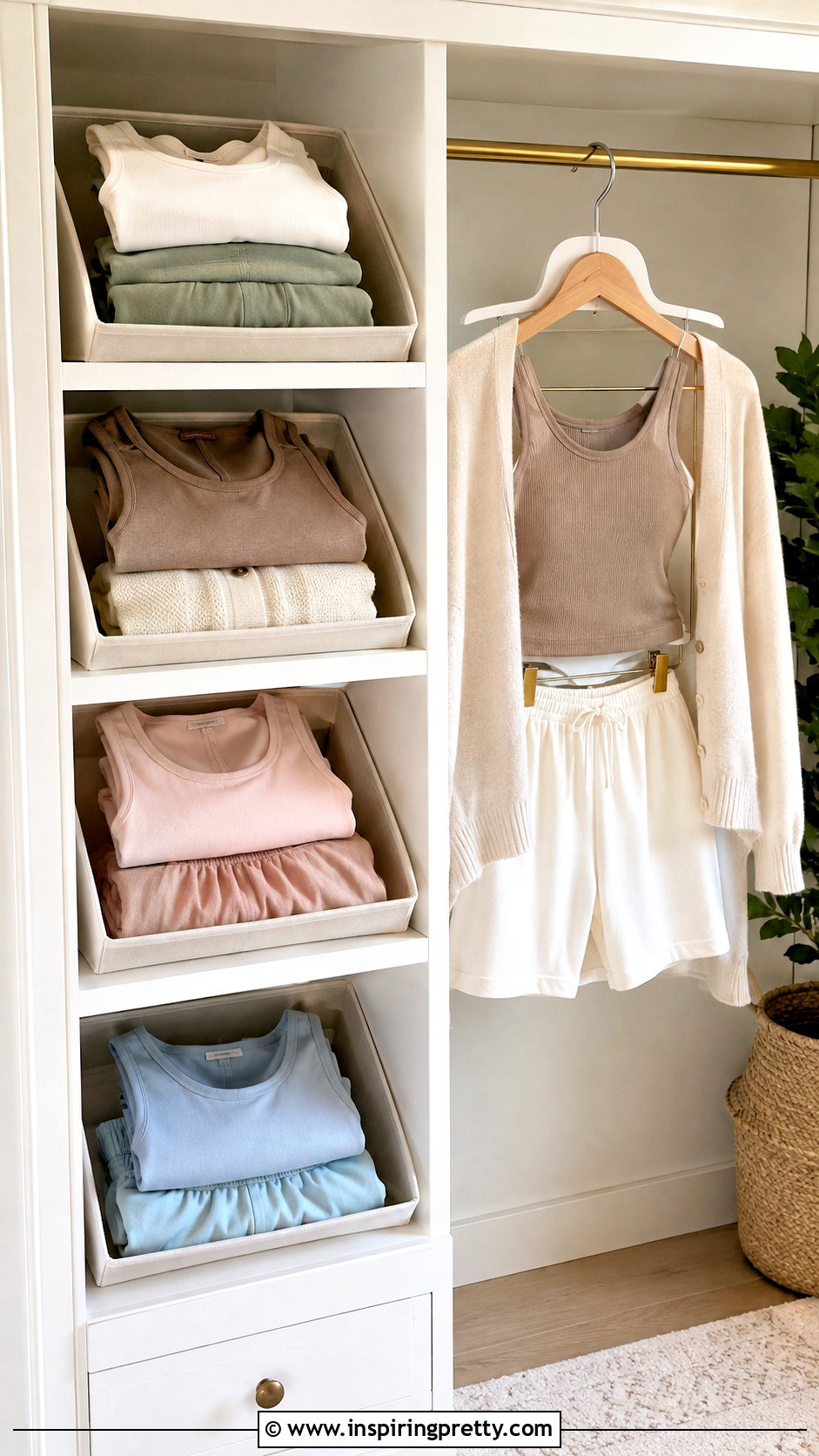
Tank tops that belong to coordinated outfits can be stored with their matching bottoms. Fold a tank around its coordinating shorts, skirt, cardigan, or lounge pants, or place both pieces in the same labeled compartment. For hanging sets, use a hanger with a lower bar or clips so the complete combination stays together. This method simplifies rushed mornings, travel preparation, workouts, and casual weekend dressing. Make sure the tank does not remain stretched around a bulky garment, especially when it contains elastic fibers. You can also photograph completed combinations and keep the images in a wardrobe album on your phone. If a tank works with many outfits, keep it in your general collection instead. Set storage is most useful for pieces you nearly always wear together.
11. Hang Tank Tops On Velvet Hangers
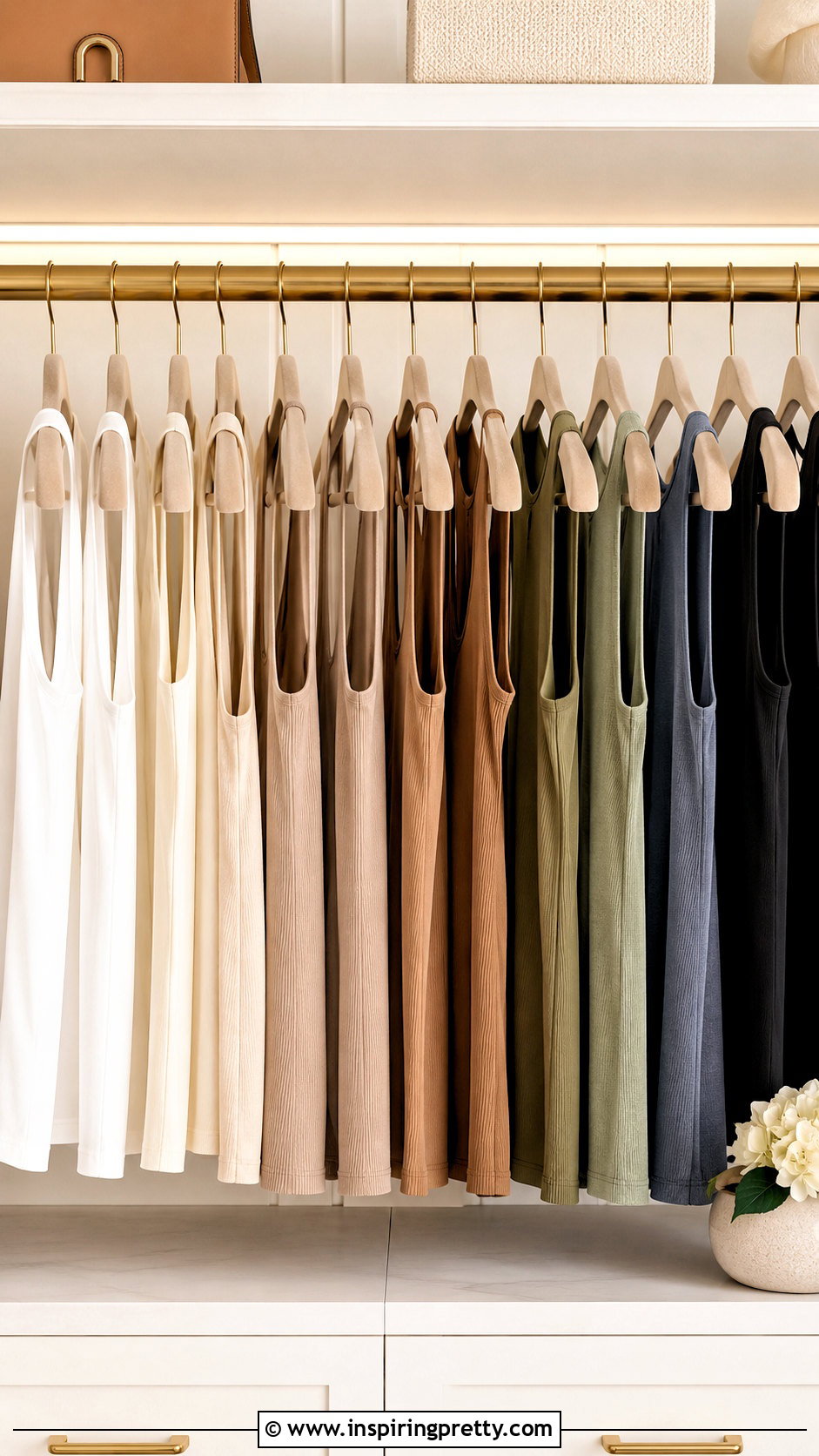
Slim velvet hangers are useful for tank tops that wrinkle easily or slip from smooth plastic hangers. Their narrow profile saves closet-rod space, while the textured surface helps keep wide and narrow straps in place. Position the straps naturally and check that the neckline is not pulled sideways. Never force a small tank over a hanger that is too wide because the shoulders may stretch or develop bumps. Leave a little breathing room between delicate garments rather than compressing them tightly. Arrange hanging tanks by color, purpose, or fabric and keep frequently worn pieces toward the most accessible part of the rod. Velvet hangers are especially suitable for flowy woven tanks, structured shells, and tops that look better when they are not folded.
12. Hang Delicate Tank Tops On Padded Hangers
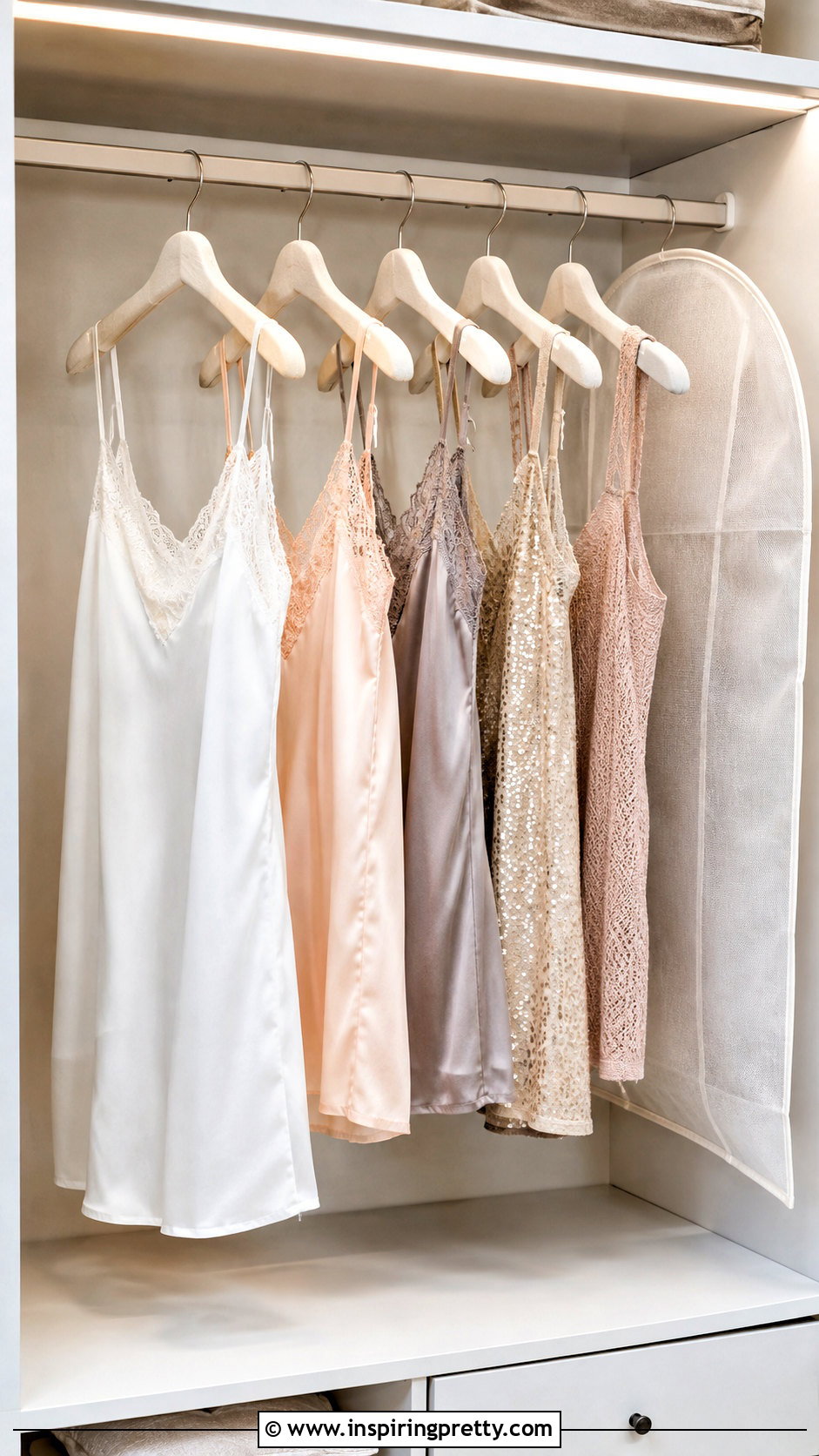
Silky, sheer, embellished, and finely knitted tank tops need gentler support than everyday cotton basics. A padded hanger cushions delicate fabric and reduces hard creases around the shoulders. Look for hangers with fabric-covered surfaces and small strap loops, especially when the garment includes hanging ribbons inside. Fasten any buttons or closures before storing the top, and place decorative details facing outward so they are not pressed against neighboring clothing. Allow enough room around sequins, beads, or textured trim to prevent snagging. For extremely delicate pieces, add a breathable garment cover that protects against dust without trapping moisture. Padded hangers take up more space, so reserve them for tops that truly need protection. Basic ribbed and jersey tanks can use more compact storage elsewhere.
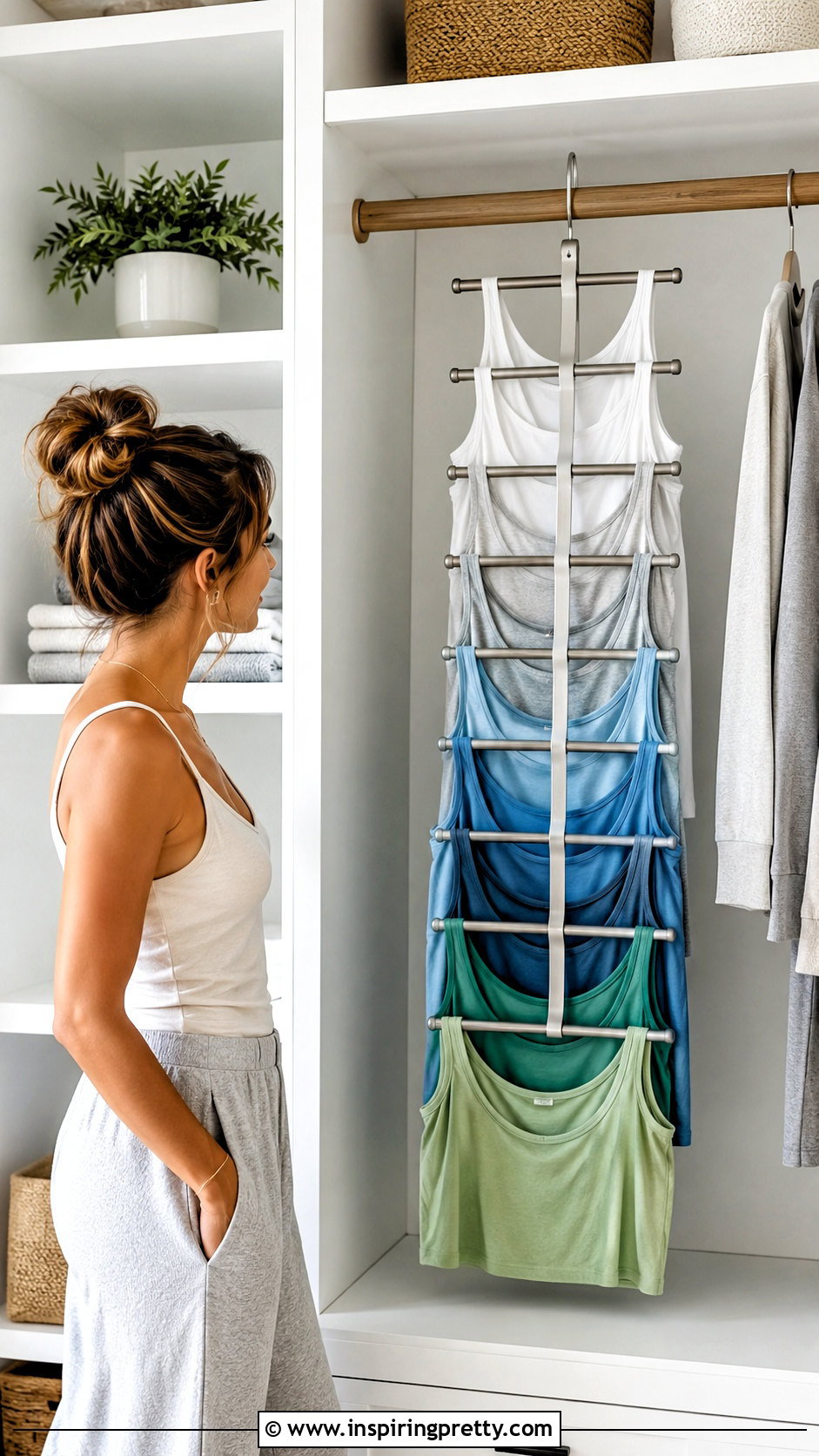
13. Use A Multi Tier Tank Top Hanger
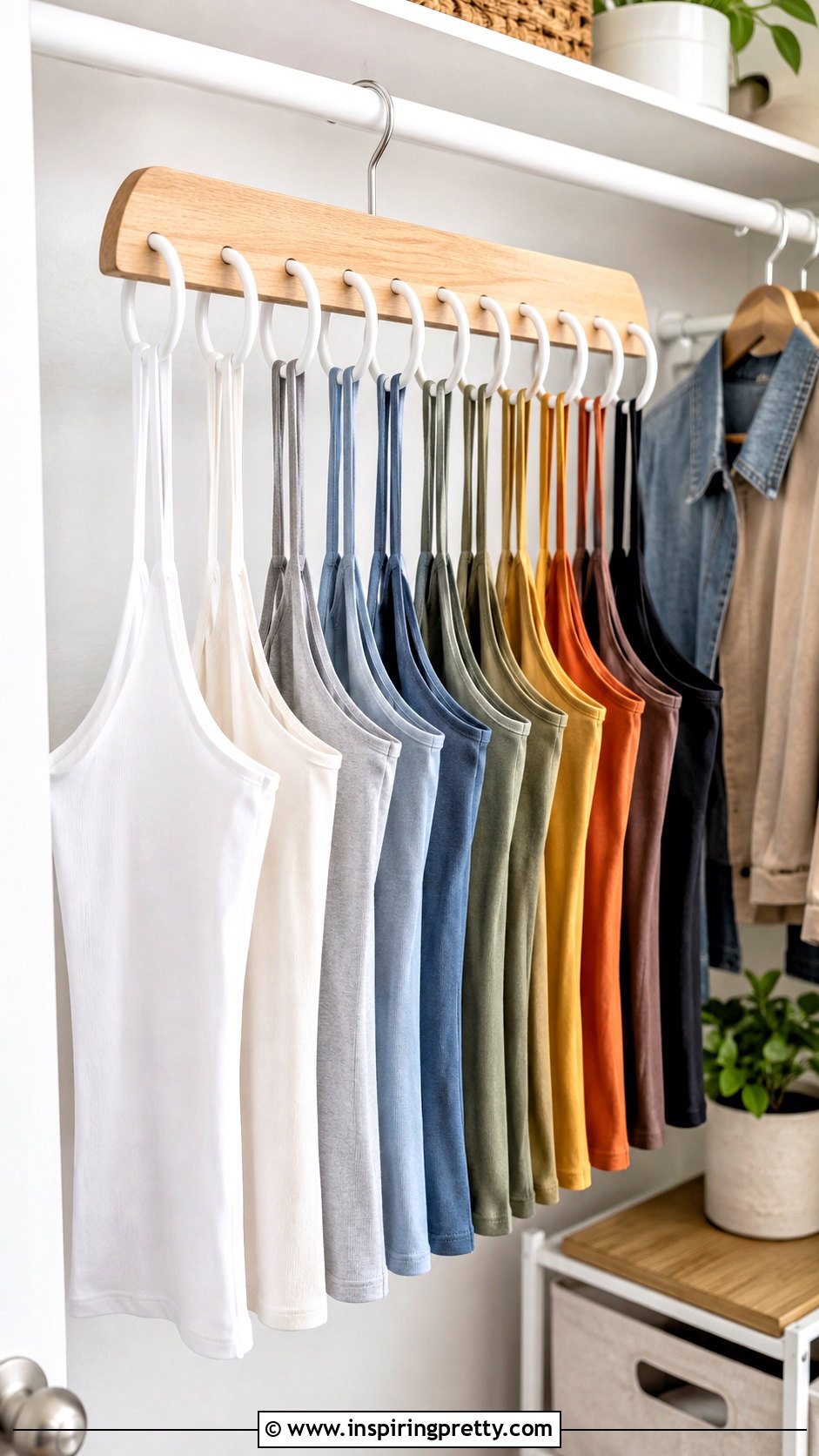
A multi-tier hanger holds several tank tops vertically while using the footprint of one standard hanger. Choose a model with smooth, rounded bars or hooks that will not catch thin straps. Arrange tops by color, activity, or strap type, and place the most frequently worn piece on the easiest tier. Avoid loading every opening simply because it is available. Too much weight can bend the organizer and make individual tops difficult to remove. Multi-tier storage is particularly helpful in a small closet with unused vertical space. It works best for lightweight cotton, jersey, and athletic tanks. Remove one garment carefully rather than pulling its strap through neighboring pieces. Specialty hangers can reduce rod crowding when they are used thoughtfully and not overloaded. ()
14. Use Shower Curtain Rings For Tank Tops
Shower curtain rings can turn one strong hanger into a compact organizer for casual tank tops. Attach sturdy, smooth rings along the lower bar of a wooden or heavy-duty plastic hanger. Thread one tank strap through each ring, then close it completely. Avoid rings with rough seams, sharp edges, or loose closures that could snag fabric. This solution works best for inexpensive cotton, jersey, or athletic tops rather than silk, fine knits, or easily stretched garments. Keep the hanger load light and distribute the weight evenly. Hang similar colors or uses together so you do not need to remove several pieces to find one. If straps begin to stretch, switch to folded storage or loop both straps through the same ring for more balanced support.


15. Use A Scarf Hanger For Tank Tops
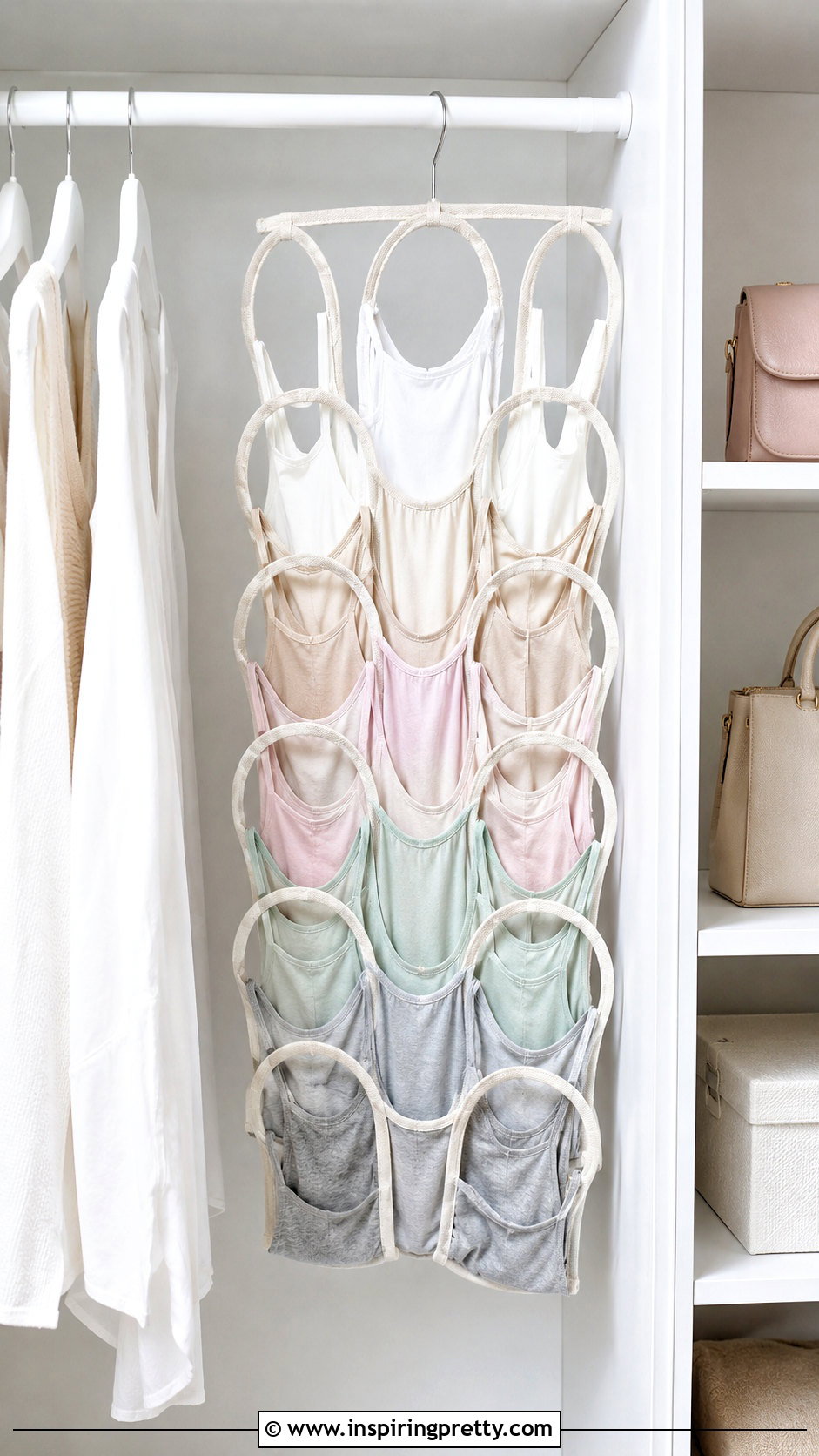
A scarf hanger with multiple fabric-covered loops can hold a collection of lightweight tank tops in one compact area. Feed both straps through a loop so the garment hangs evenly instead of pulling from one side. Place frequently used tanks around the outside loops and occasional pieces toward the center. Choose an organizer with smooth openings and enough space between loops to prevent fabric from becoming tightly compressed. This method is convenient for cotton camisoles, workout tanks, and basic layering tops. Avoid hanging heavy ribbed pieces because their weight may stretch the straps over time. You can assign separate scarf hangers to neutral tanks, colorful pieces, and athletic clothing. Keeping each organizer focused on one category makes browsing easier and prevents it from becoming an overcrowded bundle.
16. Use Cascading Hangers For Tank Tops
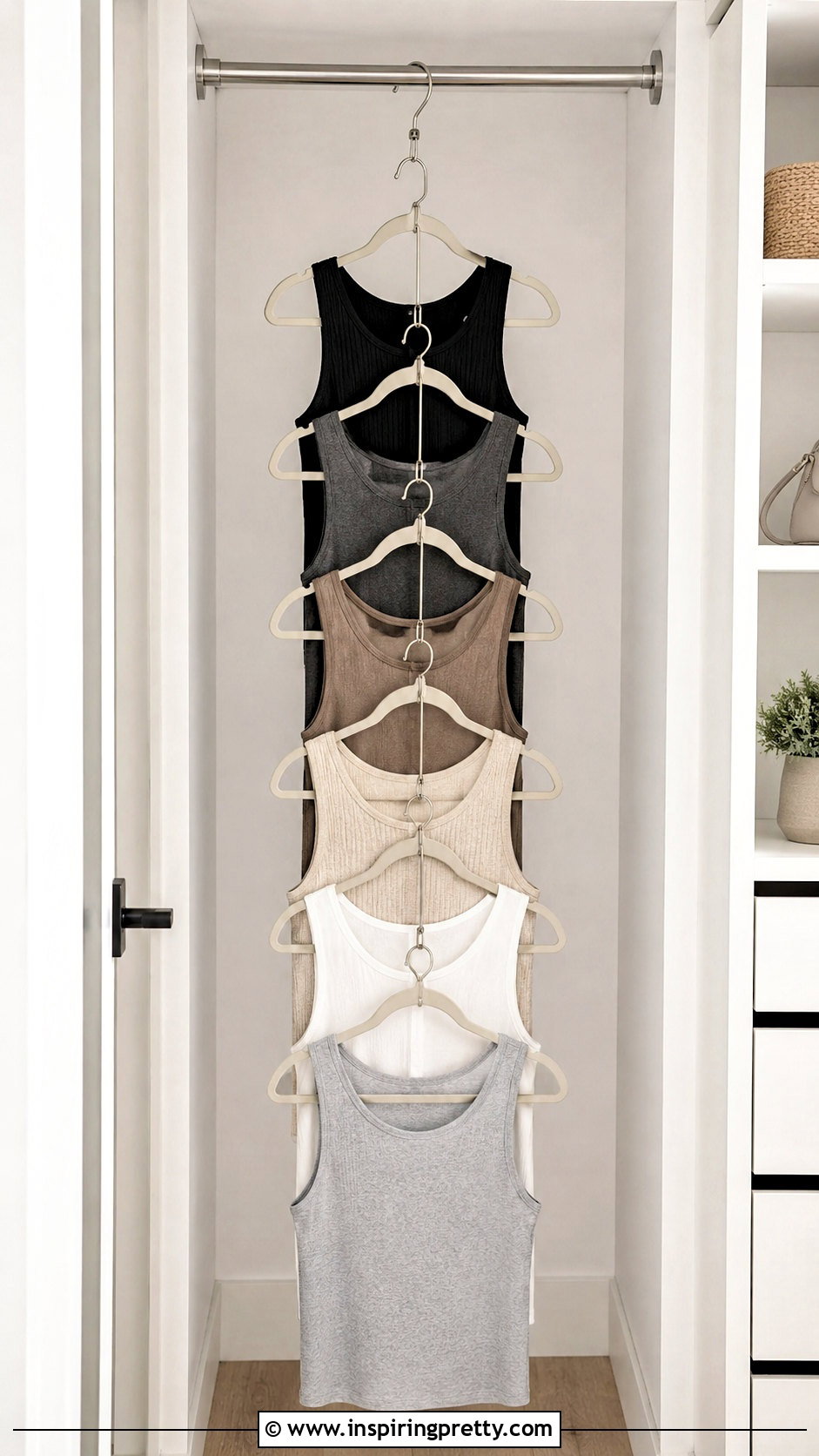
Cascading hangers arrange tank tops on separate hangers while allowing them to drop vertically from one hook. This protects each garment better than threading several straps onto a shared ring. Use slim, nonslip hangers, then connect them with purpose-made cascading hooks. Hang only a few lightweight pieces in each chain to avoid excessive weight on the closet rod. Arrange the tops from shortest to longest or from most to least frequently worn. Make sure the lowest garment does not touch shoes, storage boxes, or the closet floor. Cascading storage can free horizontal rod space, but it requires enough vertical clearance. It is a strong option for narrow closets, shared wardrobes, and rentals where installing a second rod is not practical.
17. Use An Over The Door Organizer For Tank Tops
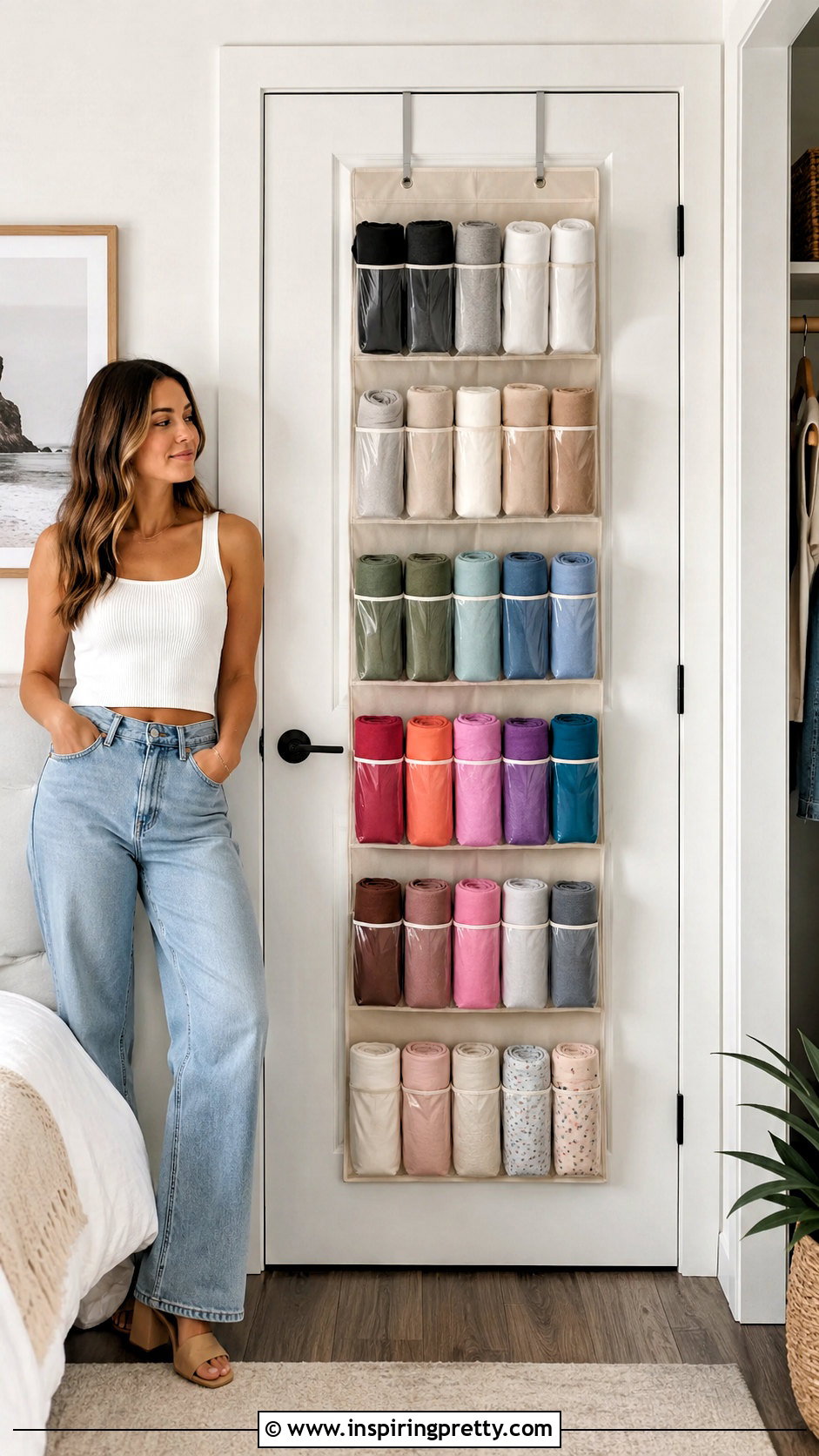
An over-the-door shoe organizer can store rolled tank tops in separate visible pockets. Select a breathable fabric design or clear organizer with generously sized compartments. Roll one or two lightweight tops per pocket, keeping the main color or pattern visible. Assign rows to everyday basics, exercise tanks, sleep tops, and seasonal pieces. Check that the organizer does not block the door from closing or rub against nearby walls. Avoid stuffing the pockets because stretched seams may tear and compressed tops become difficult to identify. This approach is valuable in dorm rooms, apartments, and small bedrooms with limited drawer space. It also uses an often-overlooked vertical surface without requiring permanent installation. Over-the-door pockets are a commonly recommended way to organize rolled tops. ()
18. Use A Hanging Shelf Organizer For Tank Tops
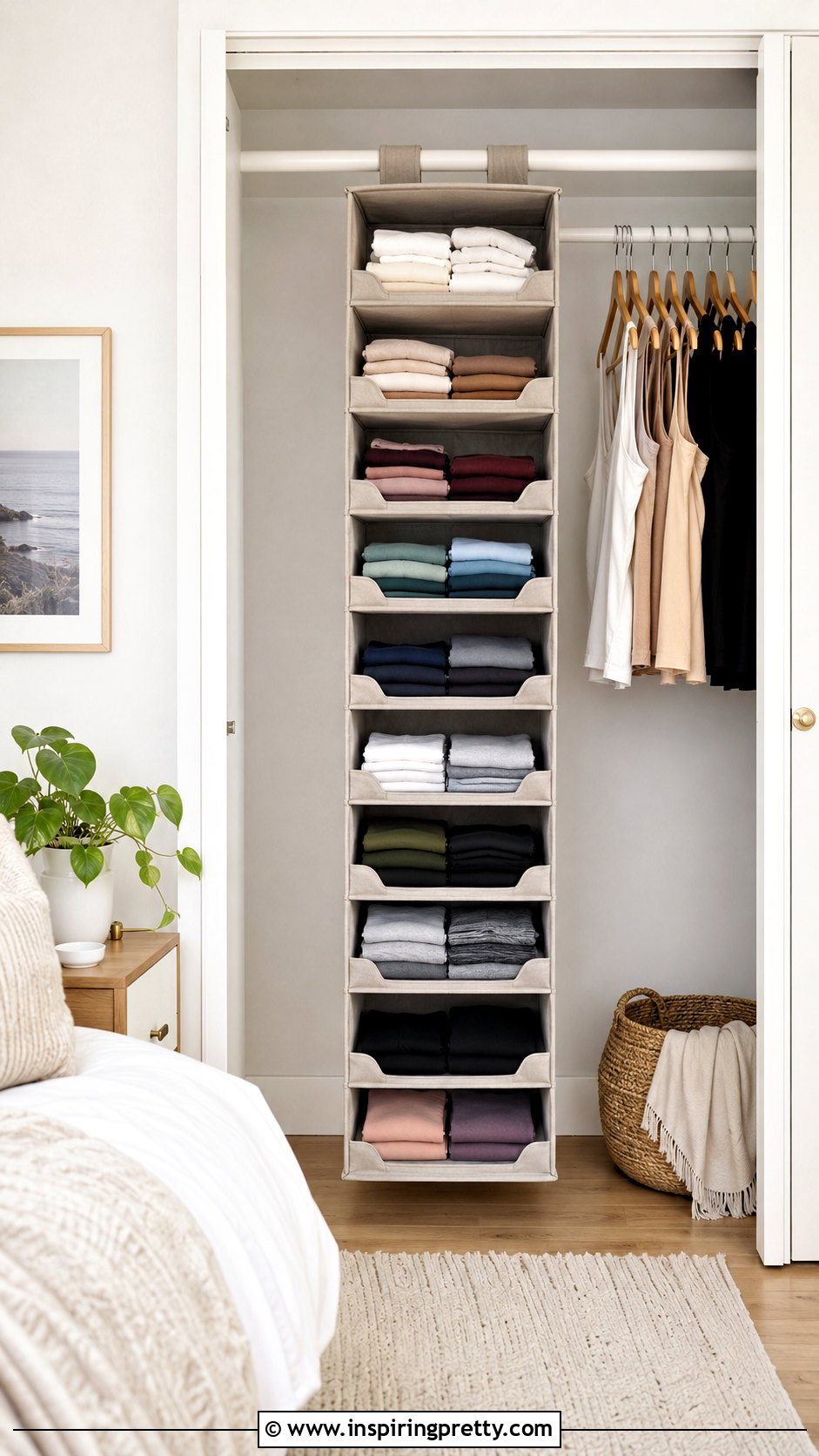
A hanging fabric shelf organizer creates lightweight cubbies directly on the closet rod. Dedicate one compartment to each tank top category, such as basics, athletic pieces, cropped tanks, and dressier tops. Fold garments into uniform rectangles and keep each stack short enough to browse easily. Add small shelf bins if slippery fabrics tend to slide forward. Before installation, confirm that the organizer will not take too much space from dresses, pants, or other hanging clothing. Choose reinforced shelves that remain level when filled. This system works particularly well for wardrobes without built-in shelving and for renters who need a removable solution. Avoid placing heavy objects above the tank tops because sagging shelves can compress them and make the compartments harder to access.
19. Store Tank Tops In Clear Shelf Bins
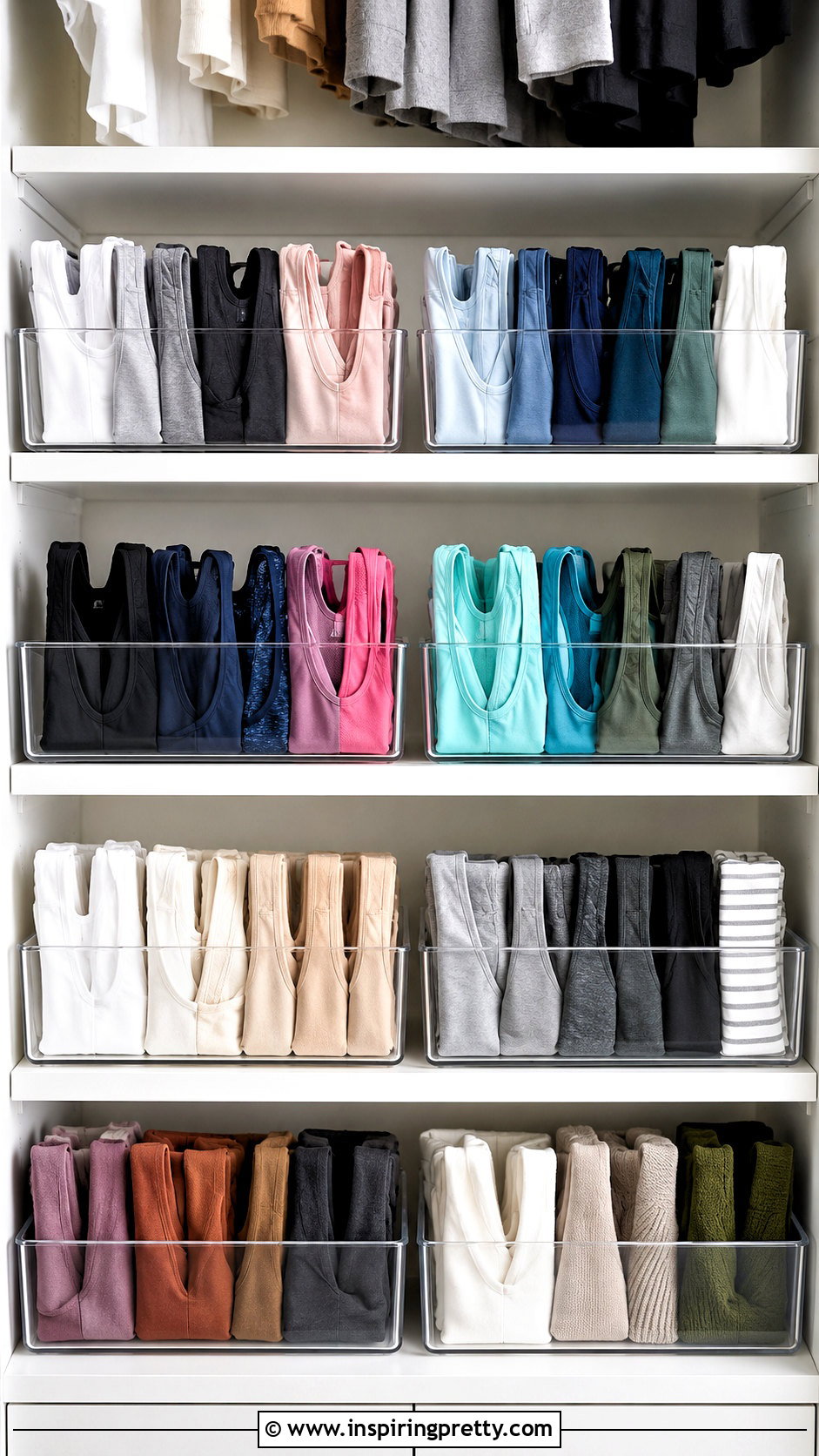
Clear shelf bins protect tank tops from dust while keeping their colors and categories visible. Choose shallow containers that you can slide forward without removing several surrounding items. File fold the tops inside, placing the folded edge or neckline toward the transparent side. Use separate bins for casual tanks, workout wear, undershirts, and special-purpose pieces. Open-front containers are convenient for everyday clothing, while lidded bins are better for infrequent or seasonal storage. Add simple labels even when the contents are visible, especially if several bins look similar. Do not pack the tops so tightly that removing one becomes difficult. Clear bins work well on high shelves because you can identify their contents from below, reducing the chance that forgotten clothing will remain unused for months.

20. Store Tank Tops In Open Baskets
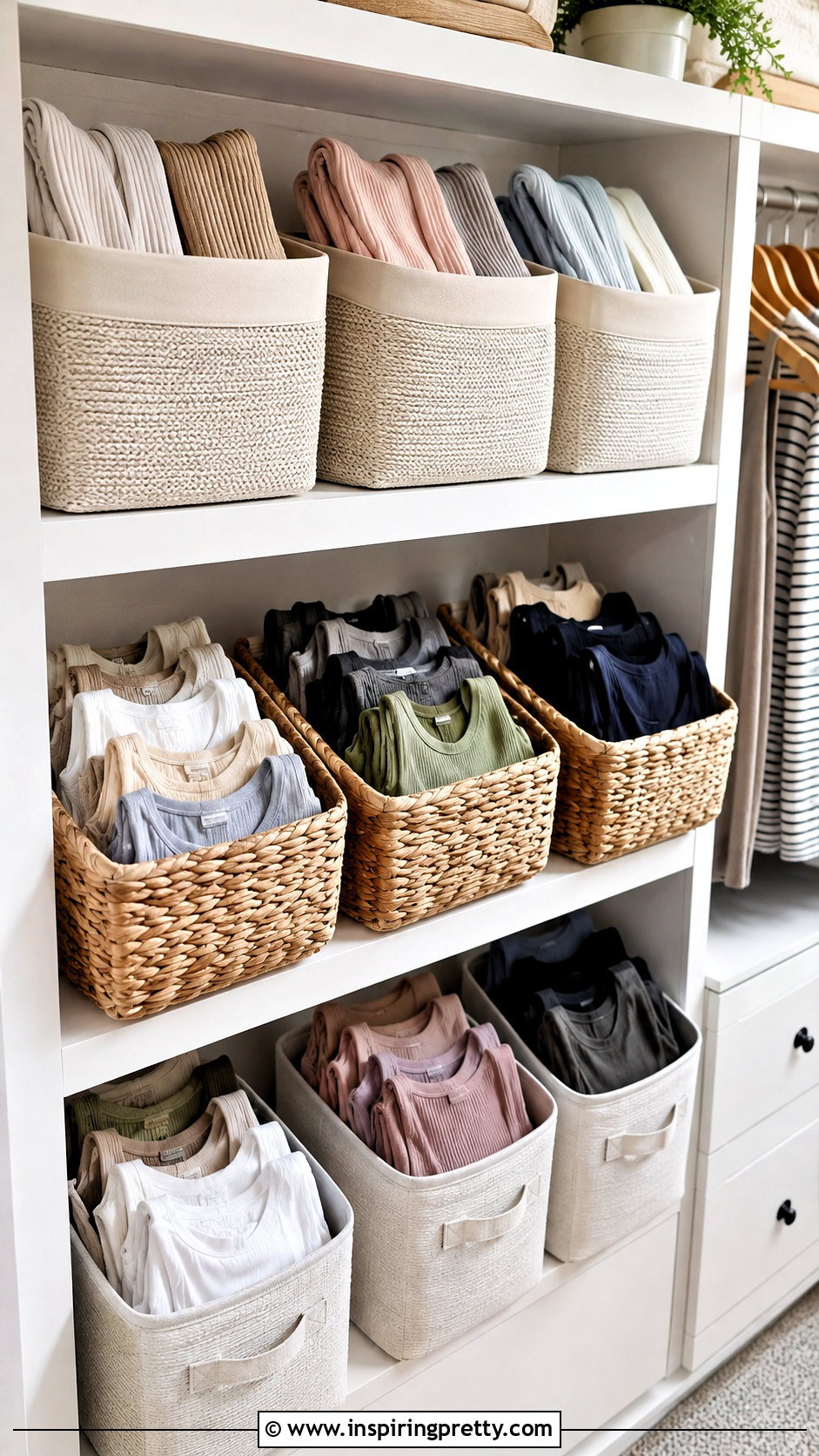
Open baskets provide quick access and add structure to deep shelves or open wardrobes. Select baskets with smooth interiors so woven edges do not catch delicate fabric. Fold or roll tank tops, then arrange them vertically rather than piling them randomly. Place everyday tanks in a basket at waist or eye level and reserve higher shelves for occasional categories. Handles make the container easier to remove when you need to view everything at once. If the basket is deep, insert a small divider or shoebox to stop rows from collapsing. Natural-fiber baskets look attractive but may require a washable liner. Fabric or plastic options are easier to clean. Keep a label on the front so tank tops do not become mixed with T-shirts, scarves, or workout accessories.
21. Store Tank Tops In Labeled Fabric Cubes
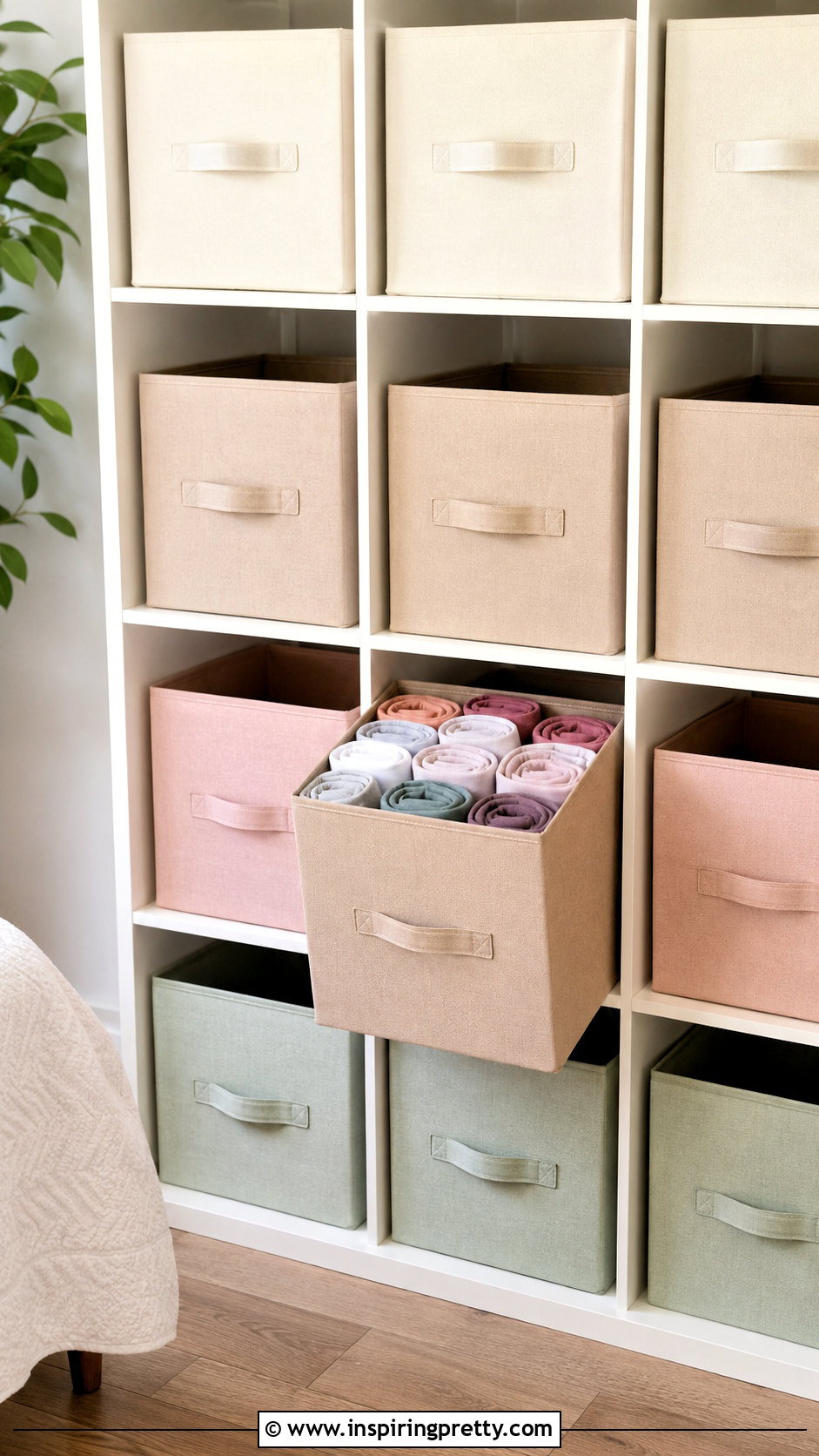
Fabric cubes are useful when tank tops need to be stored inside a cube bookcase, closet shelf, or modular wardrobe. Assign each cube one broad category and attach a readable label to the front. Roll tops in rows or use smaller boxes inside the cube to create compartments. Because fabric cubes are often deep, avoid tossing garments loosely into the back. A shallow insert or folded towel can reduce unnecessary depth and keep clothing within reach. Choose cubes with reinforced handles if you expect to move them frequently. Neutral cubes produce a calm appearance, while different colors can identify categories without written labels. This system is especially helpful in shared rooms, children’s closets, and multipurpose spaces where open clothing storage needs to look tidy.
22. Store Seasonal Tank Tops Under The Bed
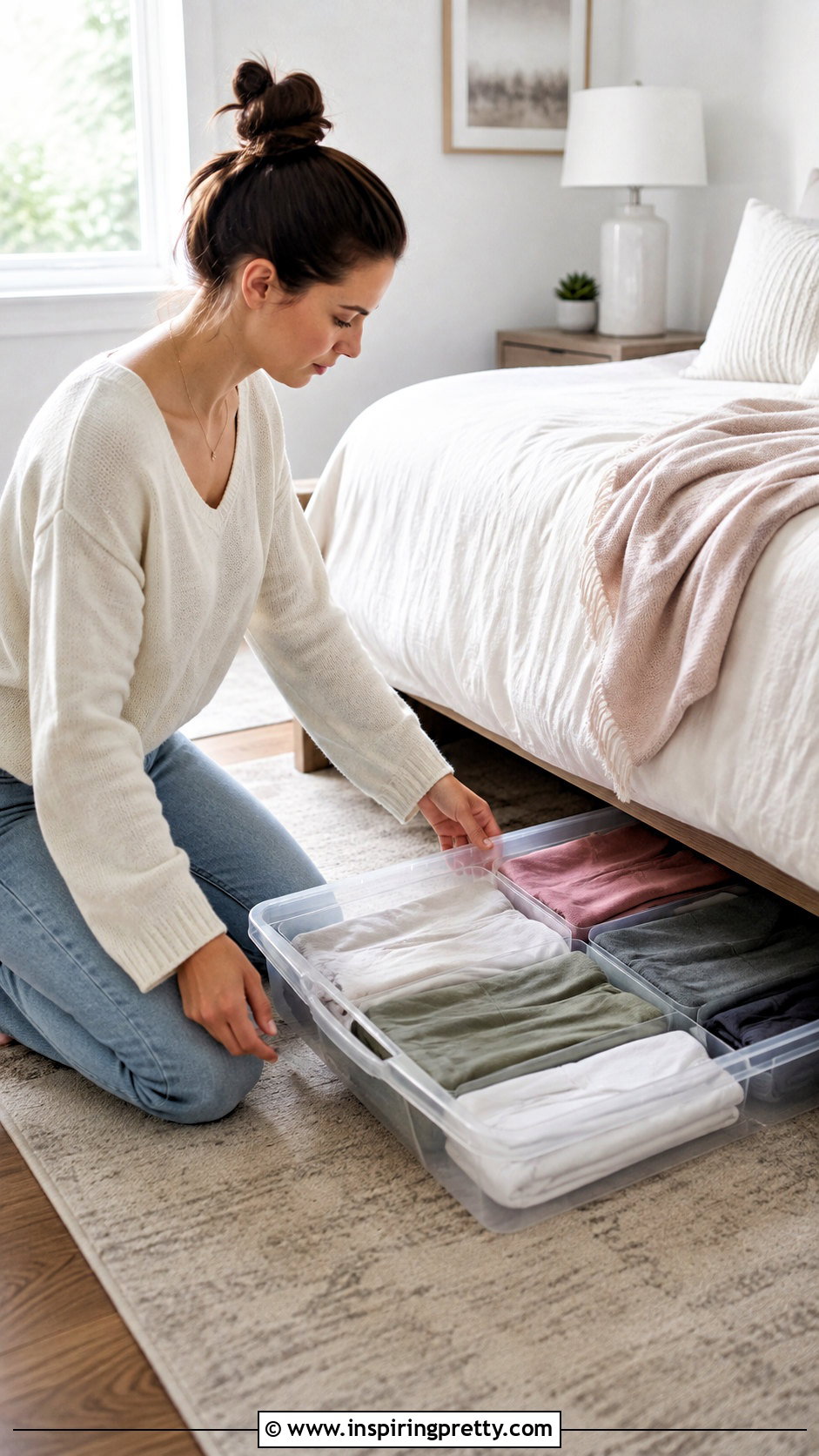
Under-bed containers can hold tank tops that are not needed during the current season. Wash every garment and let it dry completely before packing. Fold tops uniformly, group them by type, and place heavier cotton pieces beneath lighter fabrics. Choose a low-profile container with a secure lid to limit exposure to dust and lint. Clear bins make the contents visible, while fabric bags may fit more easily under low bed frames. Add a label showing the category and packing date. Avoid storing delicate fabric directly against rough cardboard or unfinished wood. When the season changes, review the collection before returning everything to your everyday wardrobe. Under-bed storage is most effective for occasional pieces, not items you expect to retrieve every week. ()
23. Store Tank Tops In Vacuum Bags
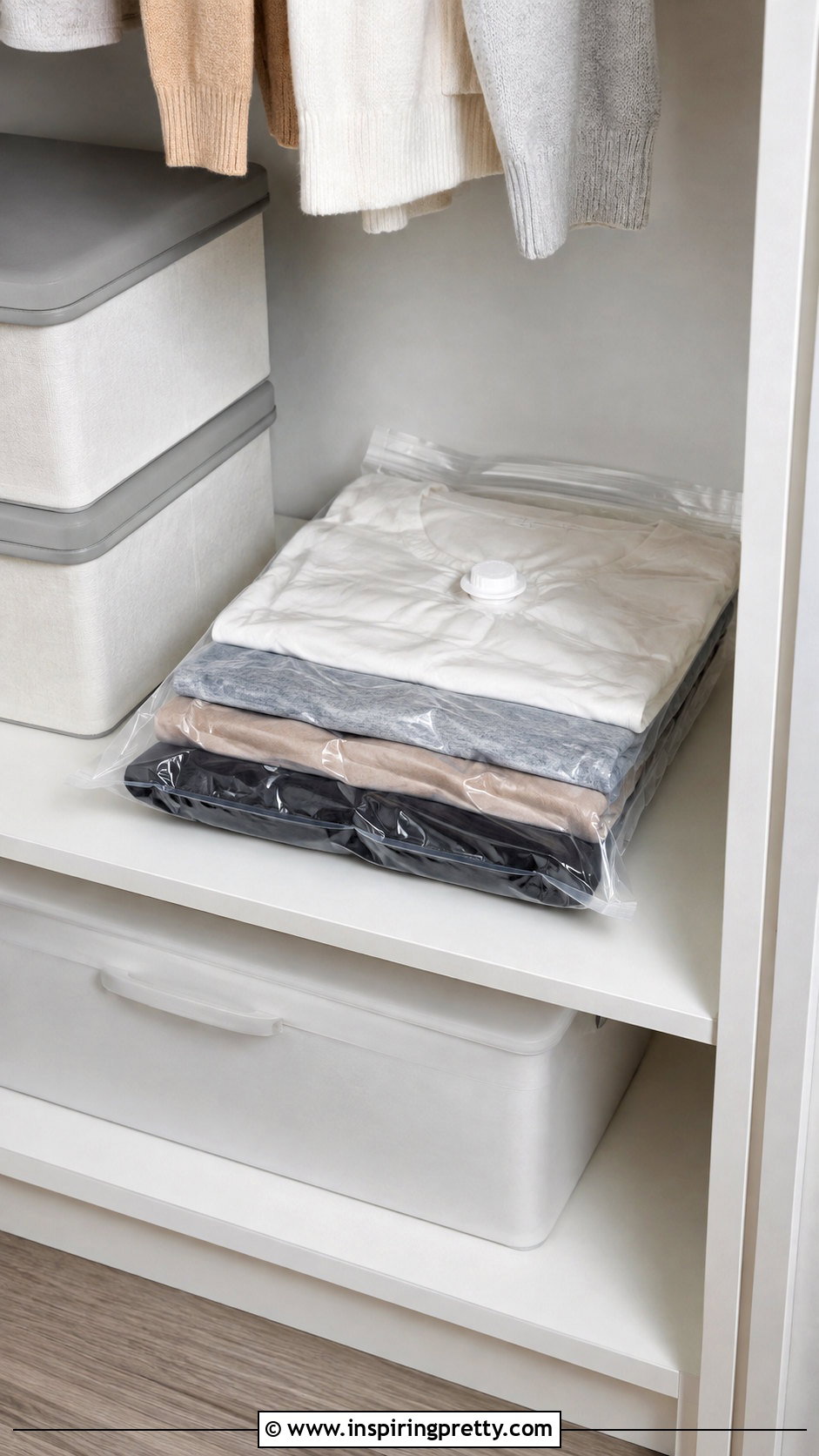
Vacuum bags can compress a large collection of basic tank tops when storage space is extremely limited. Use them mainly for washable cotton or sturdy synthetic garments that can recover after compression. Clean and dry every piece, fold the straps inward, and stack the tops evenly before sealing the bag. Do not include sequins, molded cups, delicate knits, silk, or structured embellishments. These details may become crushed or permanently misshapen. Remove excess air according to the bag instructions, but avoid creating an excessively rigid package. Store the sealed bag in a clean, temperature-controlled area rather than a damp basement or hot attic. Label it clearly and inspect it periodically. Once unpacked, shake out the tops and refold them before returning them to regular storage.
24. Store Delicate Tank Tops In Garment Bags
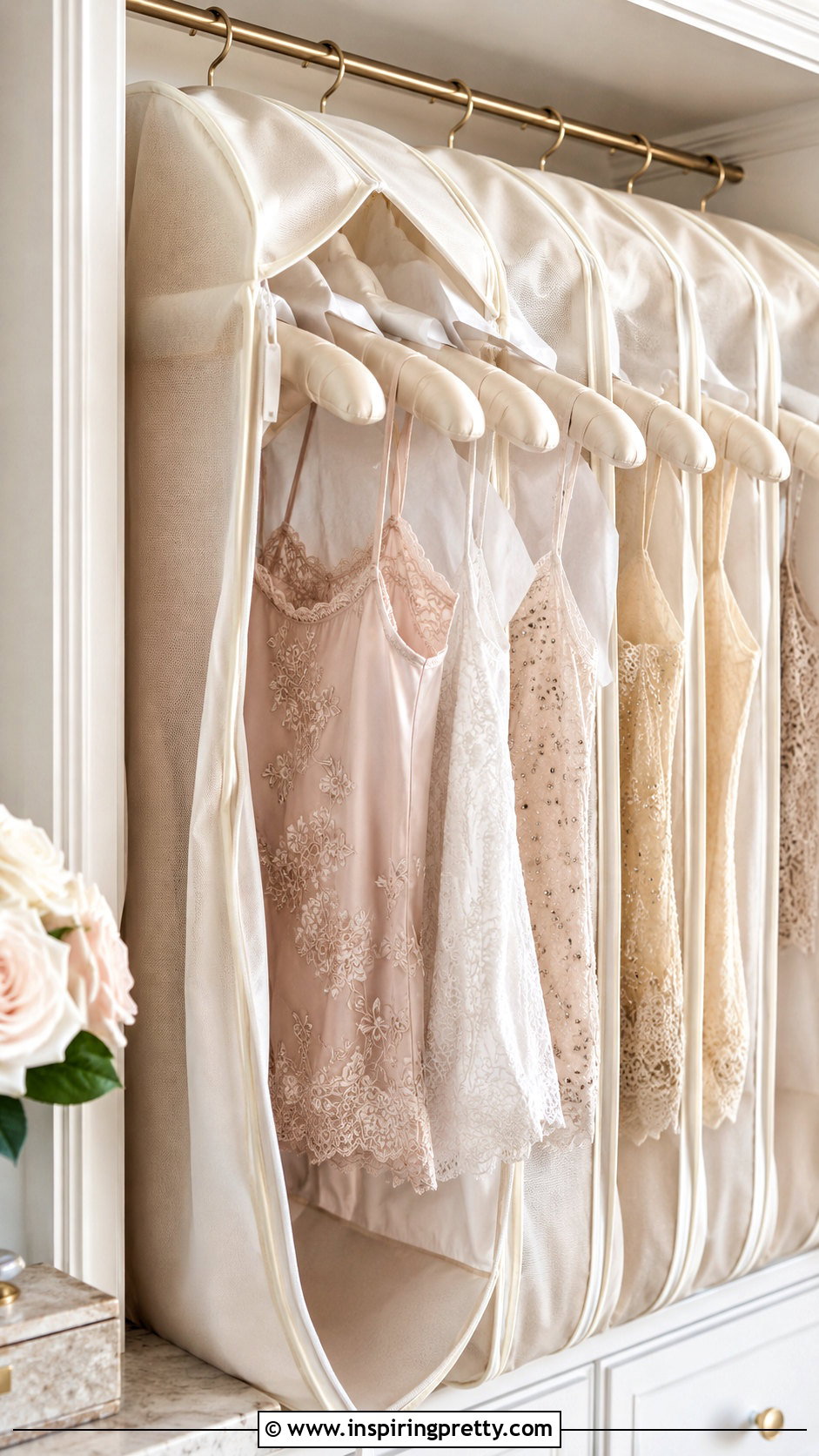
A breathable garment bag offers extra protection for tank tops with beading, sequins, lace, embroidery, or fragile woven fabric. Place each top on an appropriately sized padded or nonslip hanger. Cover it with a clean cotton or breathable fabric bag, leaving enough room so decorative surfaces are not compressed. Avoid tightly sealed plastic covers for long-term storage because trapped conditions may contribute to unwanted odors or moisture problems. If several tops share one large bag, separate them with clean, acid-free tissue and make sure embellishments cannot catch one another. Label the bag or use a version with a clear identification window. Store these protected pieces away from crowded everyday clothing. Special treatment takes more room, but it can prevent snags, crushed decorations, and unnecessary wrinkles.

25. Store Tank Tops In Packing Cubes
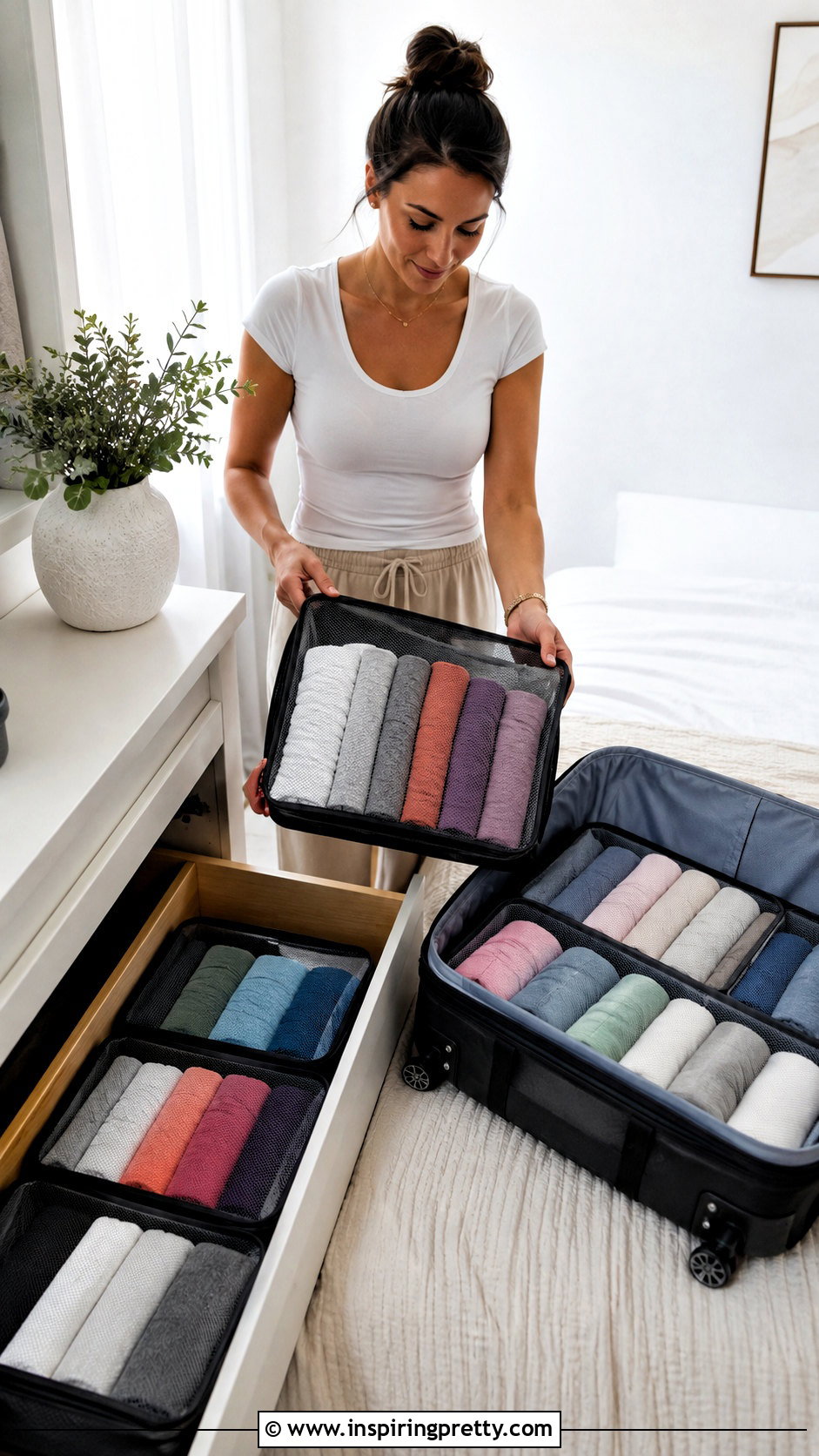
Packing cubes are not limited to suitcases. They can organize tank tops inside deep drawers, closet shelves, storage trunks, and small wardrobes. Choose cubes with mesh panels so colors remain visible and air can circulate. Roll or file fold the tops, then assign one cube to each useful category. A small cube can hold workout tanks, while a medium version may contain seasonal basics. Avoid filling the cube beyond its natural shape because a bulging container becomes difficult to stack or close. Handles make the collection portable, which is helpful for travel, dorm living, or frequent moves. When packing for a trip, lift the entire relevant cube from the closet and place it in your suitcase, reducing the need to reorganize everything twice.
Conclusion:
A reliable tank top system should match your available space, wardrobe size, and laundry habits. File folding and drawer dividers provide excellent visibility, while velvet, padded, and specialty hangers protect tops that should not be folded. Baskets, clear bins, hanging shelves, and door organizers make better use of small closets. Seasonal pieces can move into labeled under-bed containers or carefully packed compression bags. Begin with one method, test it for several weeks, and adjust any category that becomes difficult to maintain. Most importantly, avoid overcrowding and return every clean top to its designated place. These practical solutions make **how to store tank tops how to organize** much simpler, faster, and more sustainable.
Related posts:






Leave a Reply