
A flutter sleeve is one of the friendliest alterations you can make to a plain tank. It's a short, loose sleeve that falls in soft folds, so it covers the top of the arm without gripping it, and it doesn't need the precise fitting a set-in sleeve does. What decides success is the tank you start with: its fabric, the shape of its armhole and how closely it fits. Jersey wants a knit sleeve; cotton, eyelet, chiffon and lace give a crisper or more decorative edge. Before I cut anything, I wash the sleeve fabric, measure both armholes separately (they're rarely identical) and pin a trial sleeve cut from scrap. Below are 20 ways to do it, each with an outfit for the finished top.
Drafting the Sleeve From Your Own Armhole
Every sleeve in this list starts the same way, and getting this part right matters more than the fabric you pick. You don't need a printed pattern. The tank itself tells you everything.
- Lay the tank flat and mark the shoulder seam. Measure along the armhole edge, not straight across, from a point on the front to the same point on the back. That curved length is the top edge of your sleeve.
- Decide how far down the arm the sleeve should fall at its centre. Cap sleeves are often 3 to 4 inches; longer flutters can reach 7 or 8.
- Draw a crescent: a gentle top curve as long as your armhole measurement, and a deeper outer curve that dips to your chosen length at the middle and tapers to nothing at both ends. The bigger the difference between the two curves, the more the sleeve will ripple.
- Cut it from scrap, pin it on and look in a mirror with your arms down and then raised. Adjust, then trace the final version onto paper so the second sleeve is identical.
- Hem or finish the outer curve first. Then sew the sleeve to the armhole with right sides together, matching the centre mark to the shoulder seam, and finish the seam allowance.
Which Seam Finish to Use
On jersey, a serger or narrow zigzag keeps the seam stretchy. On cotton and linen, I prefer to bind the armhole seam with a strip of bias, which is soft against the skin and hides any frayed threads. On sheer chiffon, tulle or lace, a French seam or a very narrow zigzag looks cleanest from the outside. If the tank already has a bound armhole, you can open the binding, sandwich the sleeve inside it and stitch it closed again, which gives the neatest result of all.
1. Cotton Flutter Sleeve Tank Top With Jeans
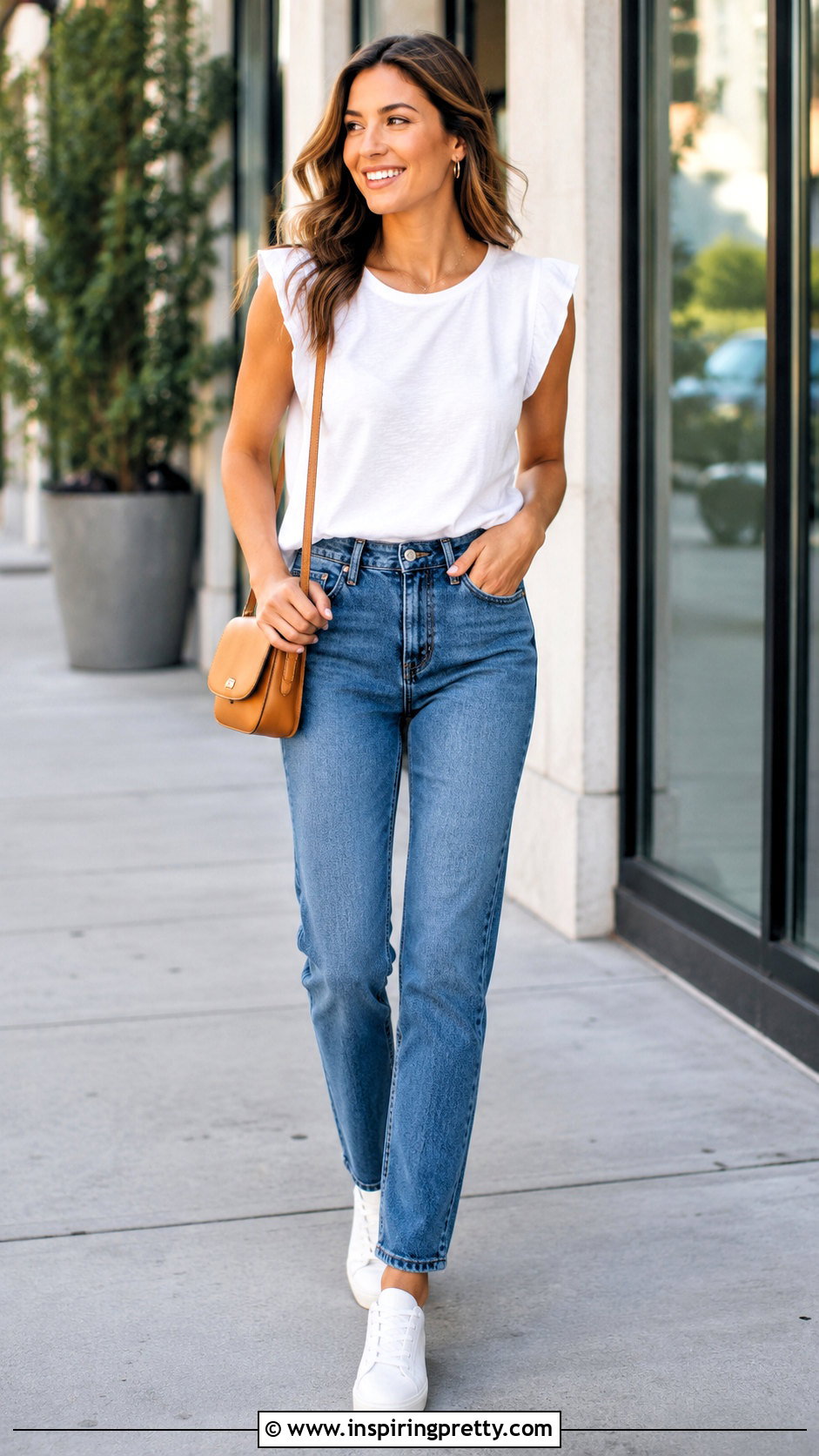
Cotton on cotton is where I'd start a first attempt, because nothing slips and every mistake is easy to unpick. Measure from the shoulder seam down to where you want the sleeve to stop, then draft a gentle curve that tapers to nothing at the front and back of the armhole. Cut two mirrored pieces, hem the outer curve narrowly and pin each one across the upper armhole. I keep this version almost flat, with very little gathering, so it reads as part of the original top. The closer the sleeve fabric matches the tank in colour and weave, the less it looks added later. Straight-leg jeans, white sneakers, a crossbody bag and small hoops finish it for weekends and errands.
2. Floral Flutter Sleeve Tank Top With White Pants
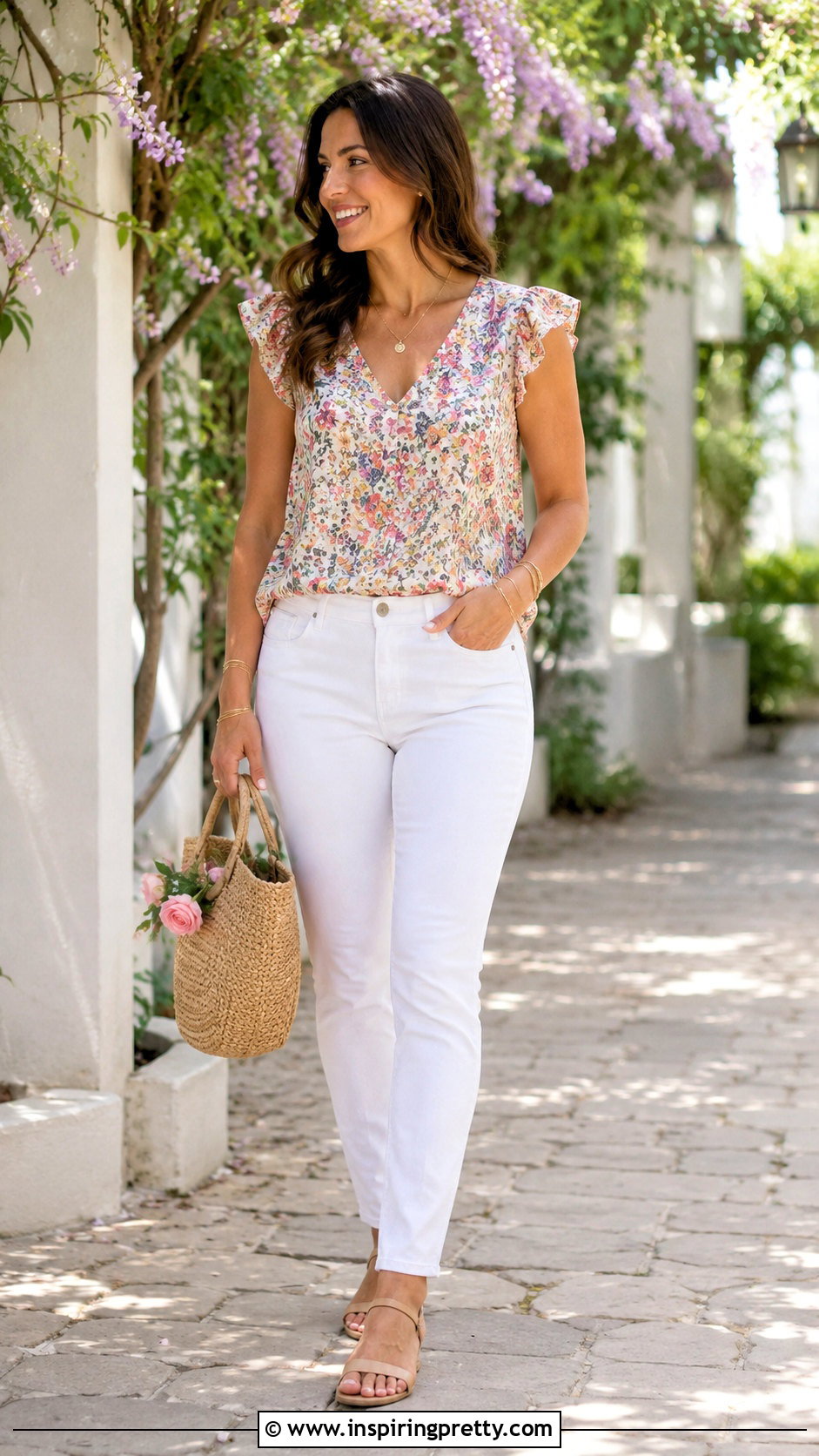
Do you have floral fabric left from another sewing project? A pair of crescent sleeves barely uses a fat quarter, which makes this the best way I know to use up a remnant. Cut the crescents wide enough to ripple over the shoulder and finish them with a narrow rolled hem so the curve stays soft. Pin the centre of each sleeve to the shoulder seam first, then the two ends, and only then spread the fullness between them. Stitch slowly. Small prints forgive uneven gathers far better than large ones. White ankle pants calm a bright print down, and neutral sandals with a woven bag keep the focus on the shoulders.
3. Lace Flutter Sleeve Tank Top With Midi Skirt
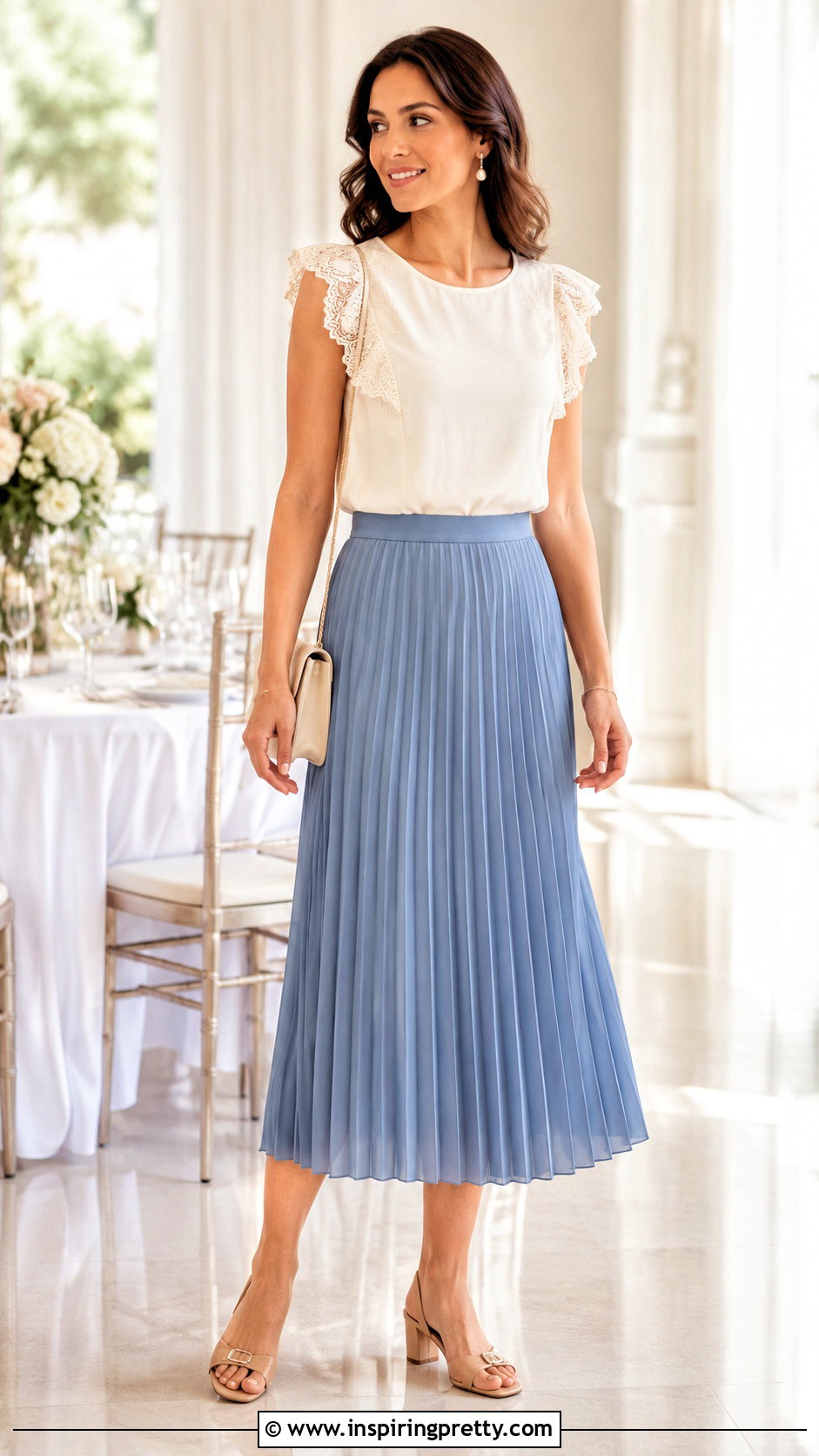
Lace is the shortcut I recommend most, because a scalloped edge means there's no hem to sew at all. Lay the sleeve pattern so its outer curve sits right along the scallops, and cut each sleeve as a single layer. Stretch lace suits a knit tank; a stable lace suits a woven one. Join it with a narrow zigzag so the seam can move with you. If the lace is sheer, resist lining it, since a lining turns a light flutter into a stiff cap. A satin or pleated midi skirt, low block heels and pearl studs make it right for a shower or an afternoon party. Lace dyed to match the tank looks refined; a contrast colour makes the alteration the feature.
4. Chiffon Flutter Sleeve Tank Top With Wide Leg Pants
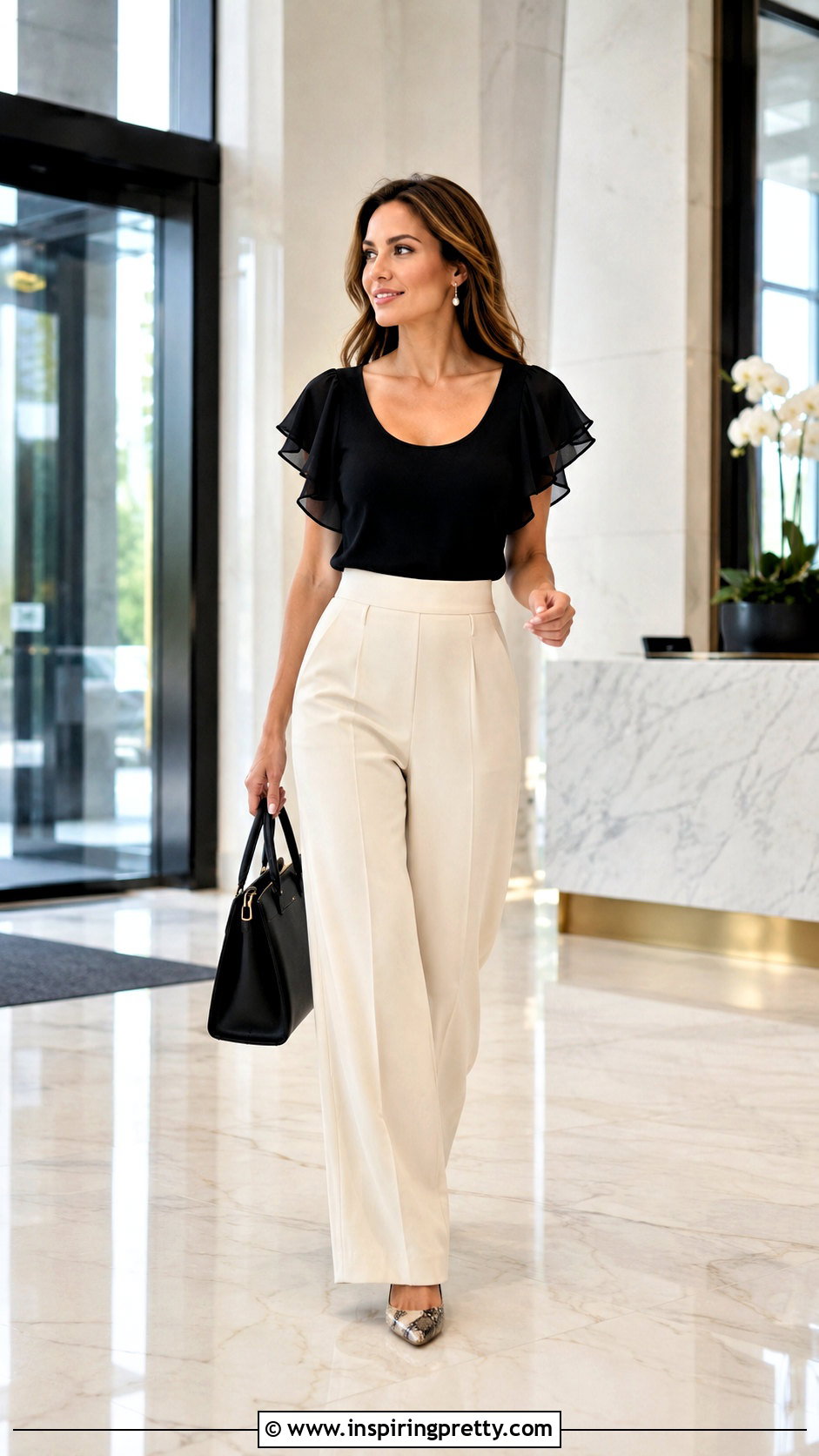
Chiffon gives the most movement for the least weight, and it is also the fabric most likely to defeat you at the cutting table. I lay it over tissue paper and cut through both layers with a rotary cutter so it can't creep. Draft a wide sleeve that drops several inches below the shoulder and finish the curve with a rolled hem. Use a fine needle (size 60 or 70), fine pins and a slightly longer stitch, or the seam will pucker. Then wear it with high-waisted wide-leg trousers and pointed flats in one colour family. The single column of colour carries from shoulder to shoe, and the top looks deliberate enough for an office lunch.
5. Ruffled Flutter Sleeve Tank Top With Denim Skirt
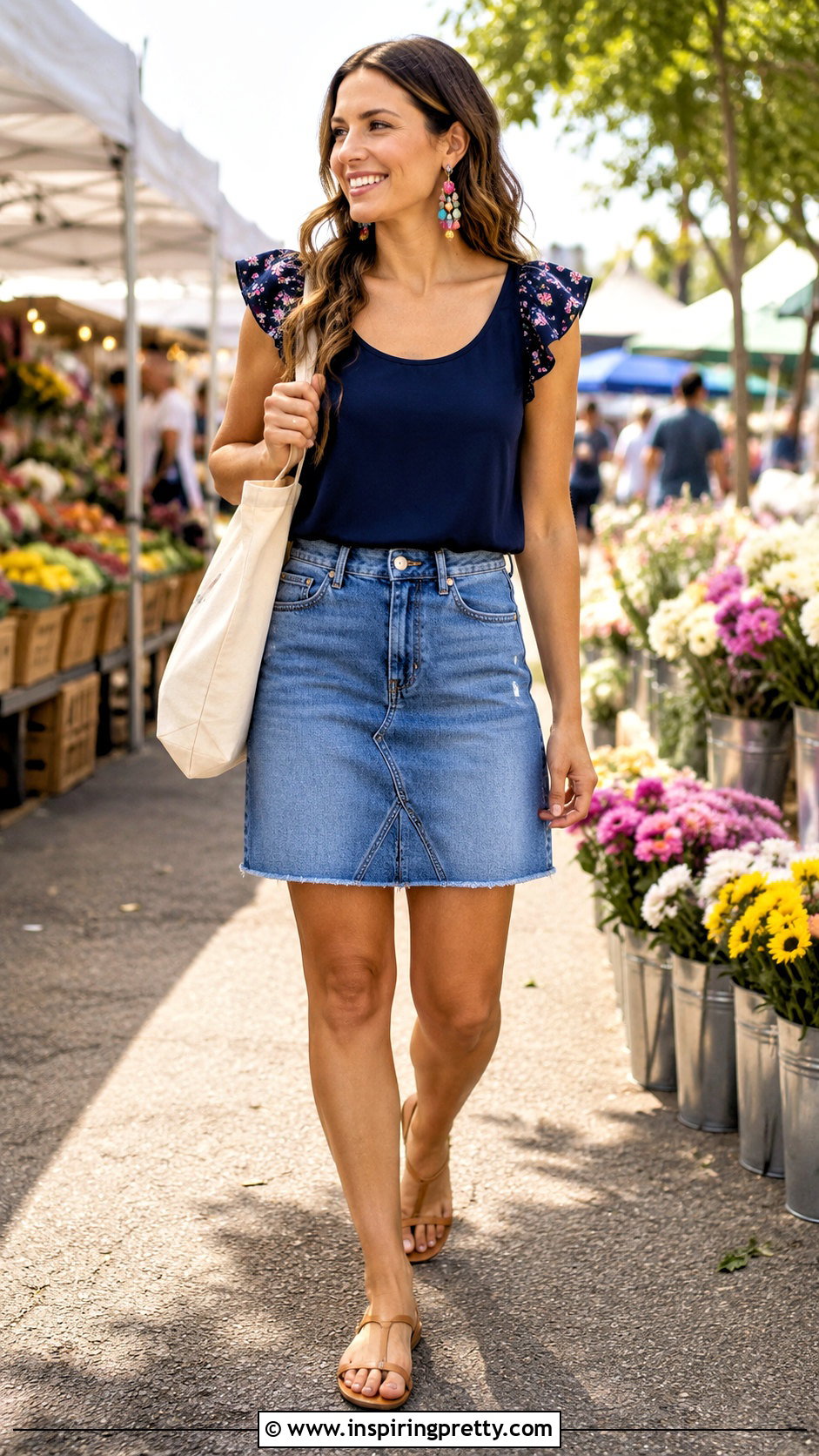
Gathered sleeves need more fabric than people expect. Start with a fabric strip or curved pattern piece about one and a half to two times the length of armhole it will cover. Run two rows of long gathering stitches, pull them up gently and spread the gathers by hand before you pin. The one rule I never break: keep the gathering out of the underarm, where bulk rubs and shows. Gingham, dotted cotton and small florals hold a ruffle without collapsing it. I'd pair it with an A-line denim skirt, flat sandals and a canvas tote, and keep the jewellery minimal because the shoulders already carry the look.
6. Double Layer Flutter Sleeve Tank Top With Trousers
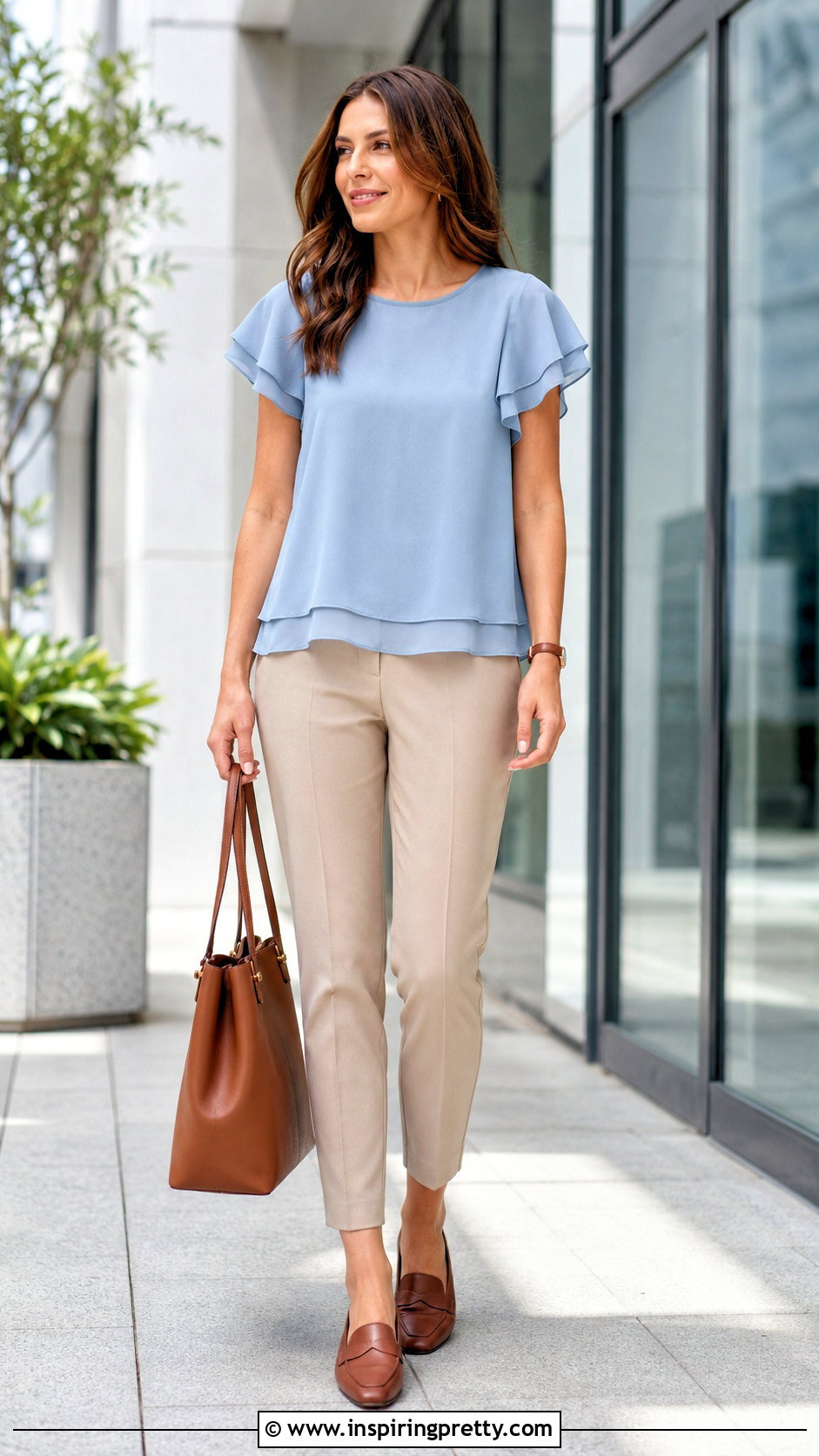
A double layer gives more coverage for anyone who wants the upper arm properly hidden. Draft one standard sleeve, then a second one an inch or two shorter. Hem both curves, lay the short piece over the long one and baste them together along the top edge so they go into the armhole as one sleeve. Trim that seam allowance down hard afterwards. Two layers plus the tank fabric can leave a ridge you'll feel against the arm all day. Matching fabric looks polished with tailored ankle trousers, loafers and a leather tote. For dinner, swap the tote for a small bag and add earrings.
7. Eyelet Flutter Sleeve Tank Top With Linen Shorts
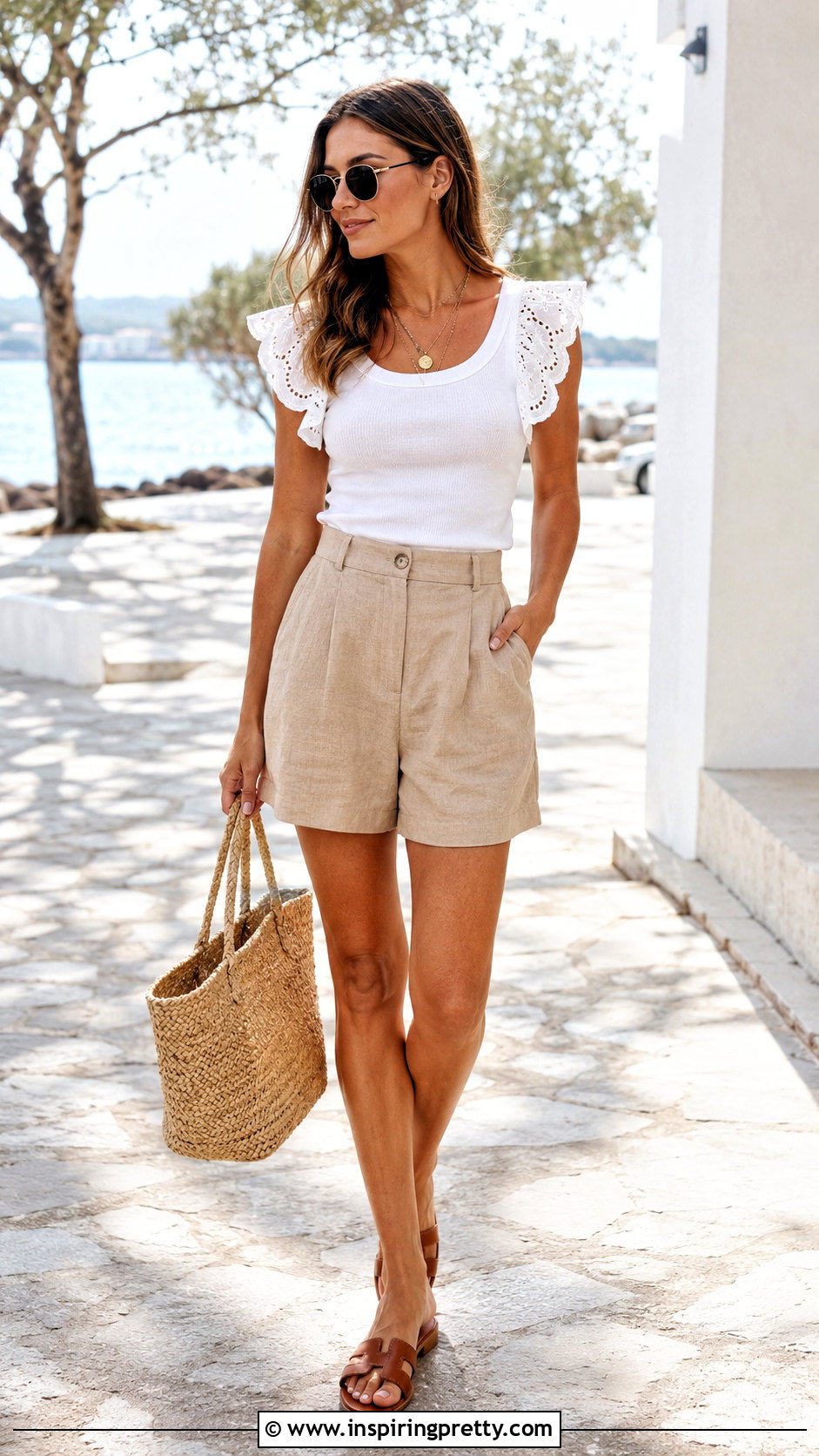
Eyelet breathes well in heat, and if you find it with an embroidered or scalloped border, that border becomes your hem. Align it carefully on both sleeves before cutting so the motifs mirror each other. The cut edge is a different story: eyelet frays readily through its holes, so I finish the attachment edge with a serger, zigzag or narrow bias binding before it goes near the tank. Press the seam toward the tank so the sleeve falls outward. White on white is the safe choice; blue or coral eyelet on a white tank is livelier. Tailored linen shorts, leather slides and a straw tote suit a holiday or a market morning.
8. Knit Flutter Sleeve Tank Top With Leggings
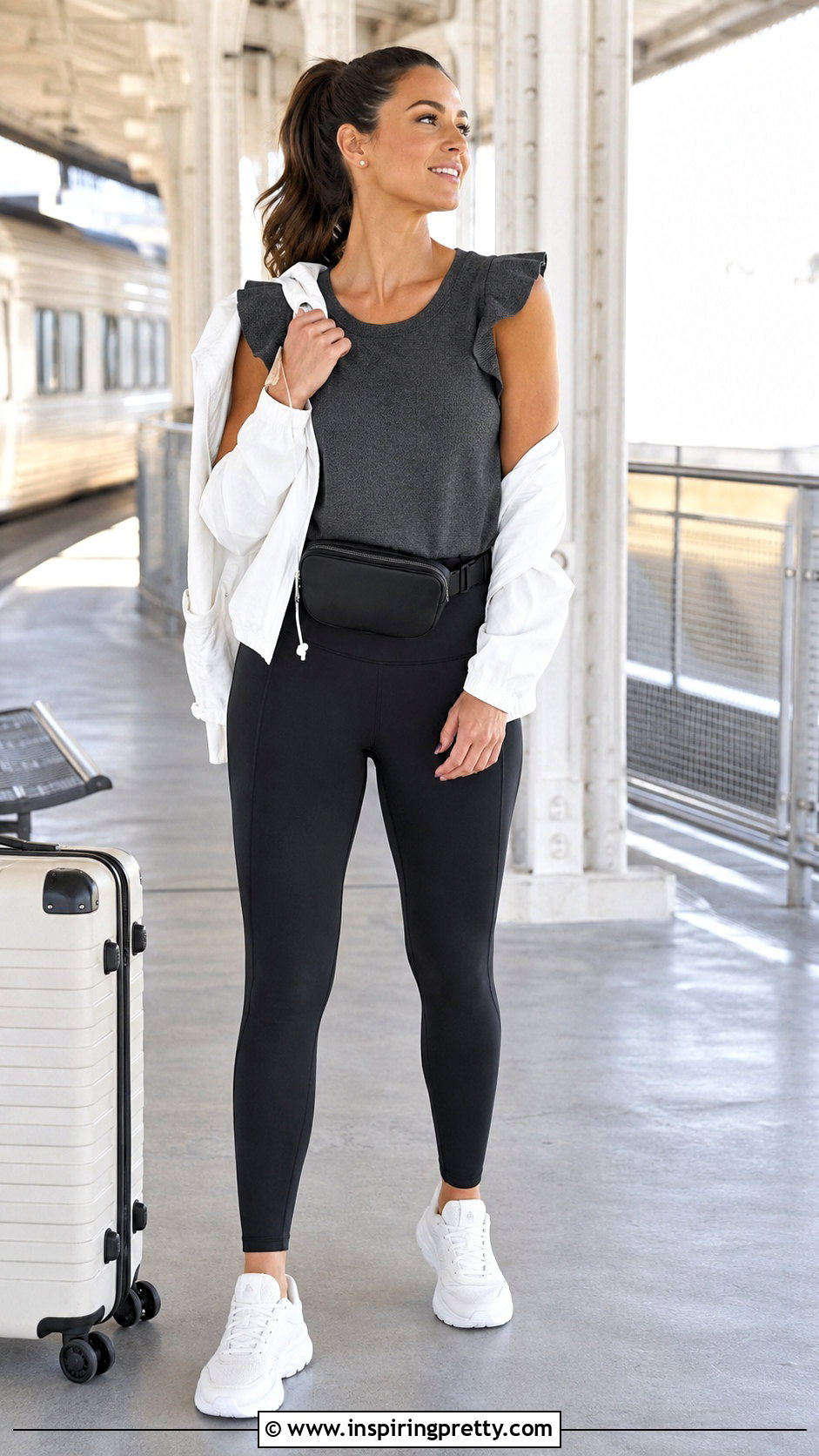
For a fitted jersey tank, the sleeve fabric has to stretch and recover the same way, or the armhole will ripple where the two meet. I test this by stretching both fabrics side by side over a ruler. A semicircle gives drape without any gathering at all. Most jersey won't run, so you can leave the outer edge raw, or finish it with a narrow zigzag or twin needle. Sew with a ballpoint needle and a stretch stitch, and never pull the armhole while you sew, which stretches it out permanently. High-rise leggings, supportive sneakers and a light zip jacket make it a travel or walking outfit with a little more shoulder cover than a bare tank.
9. Cap Flutter Sleeve Tank Top With Chinos
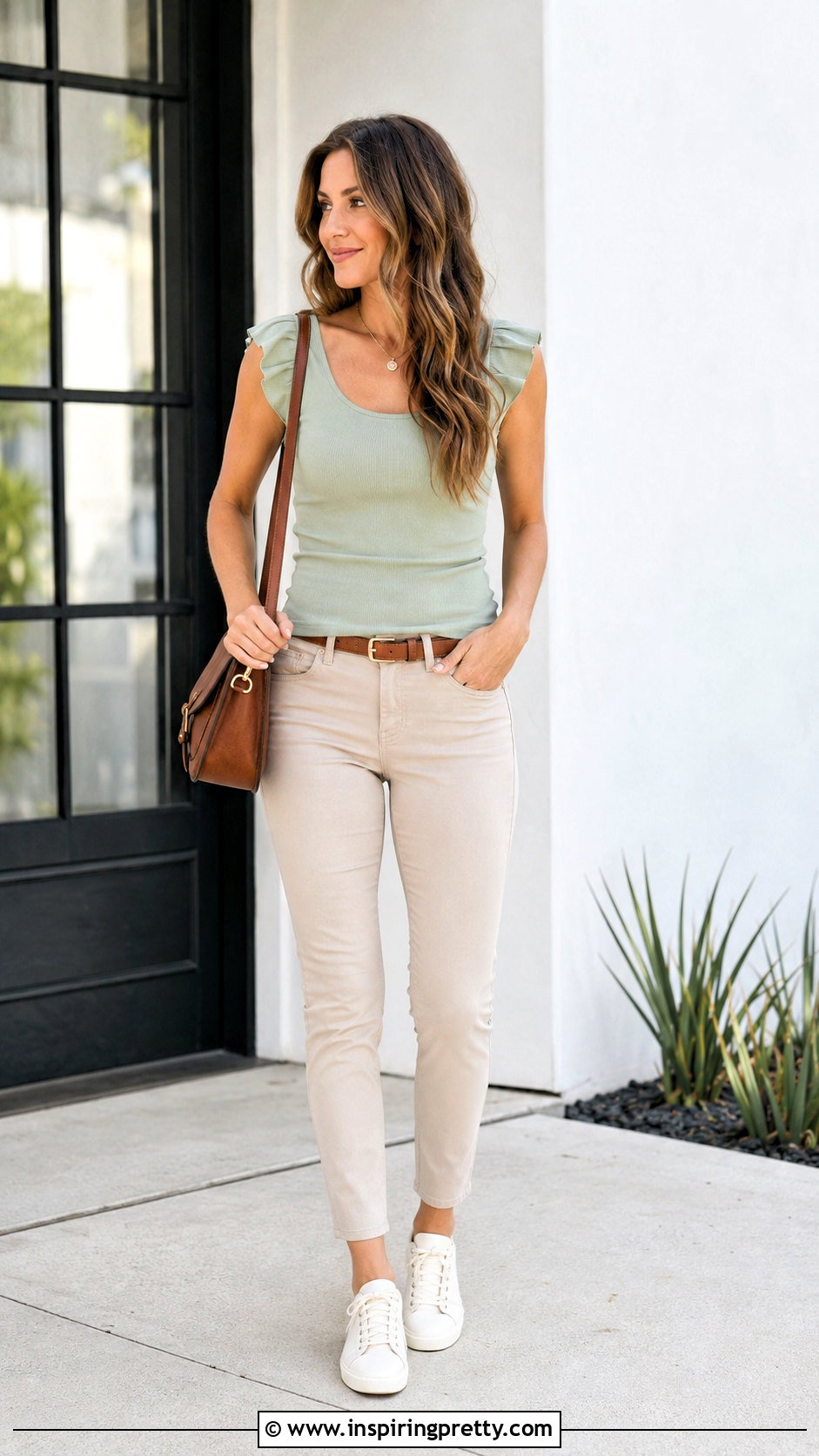
If you only want a hint of sleeve, the cap flutter is also the easiest to fit. Draft a shallow crescent that covers the top portion of the armhole and stops well above the underarm, so it never has to turn the tight curve under the arm. Hem the outer edge first, mark its centre and match that mark to the shoulder seam. I always hand-baste these and try the top on, because a cap that sits a quarter inch further forward on one side is obvious in a mirror. Fabric with moderate drape curves over the shoulder; anything stiff sticks out like a wing. Slim chinos and canvas sneakers make it an everyday top.
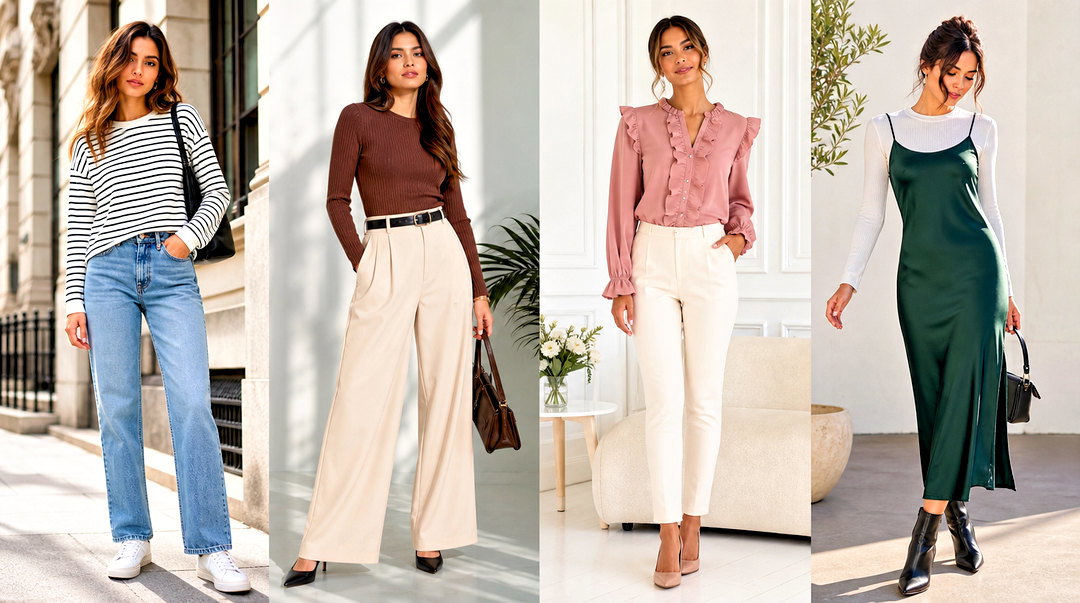
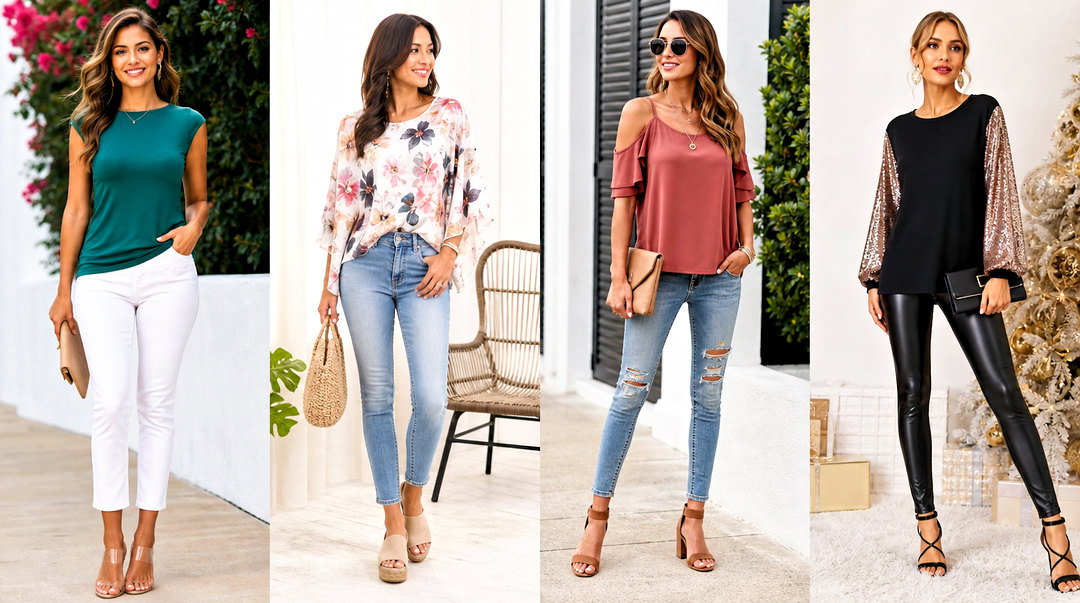
10. Long Flutter Sleeve Tank Top With Maxi Skirt
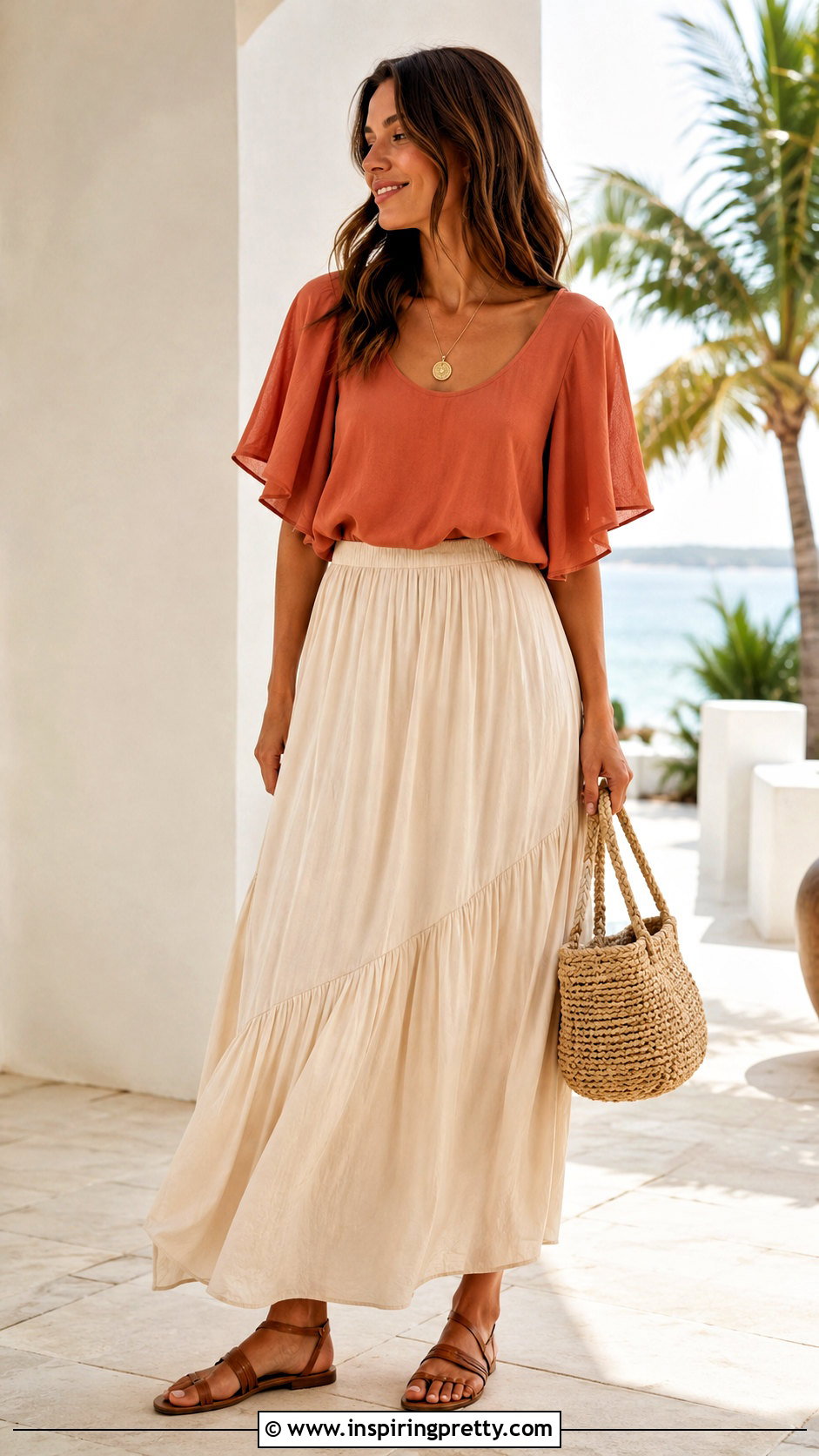
Longer sleeves that drop toward the elbow need a wider half-circle or full-circle draft with a deeper centre. They also use noticeably more fabric, so stick to lightweight rayon, voile, or chiffon to keep the weight off the shoulder seam. Make a test sleeve and lift your arm in front of a mirror: a long flutter can open up and expose the side of the bra, and that's far easier to fix in calico than in your good fabric. Finish every raw seam. A plain maxi skirt and flat leather sandals let the sleeves supply the movement, which suits a resort evening or a family party.
11. Pleated Flutter Sleeve Tank Top With Straight Jeans
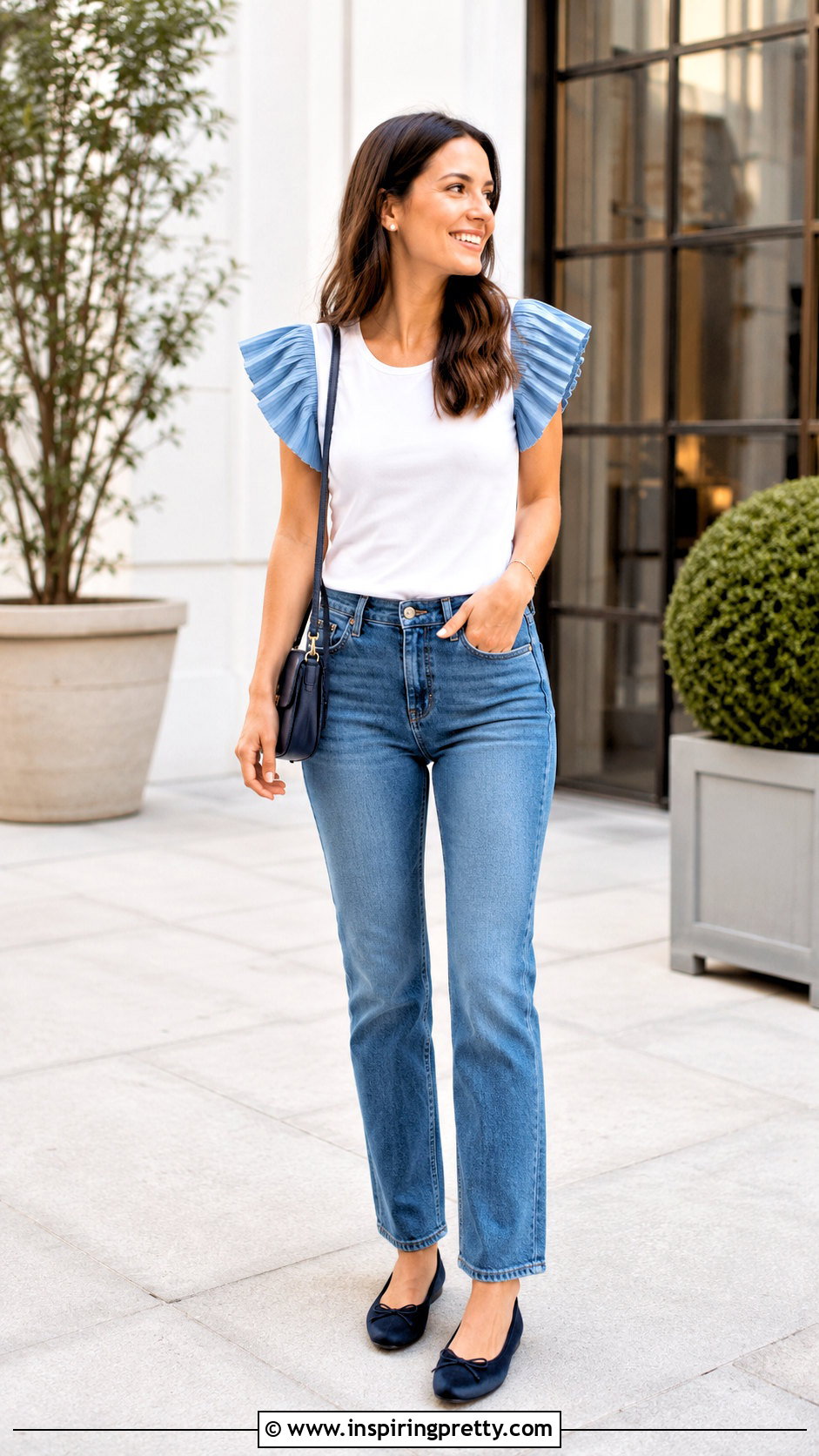
Pleats look tidier than gathers, and I find them easier to make symmetrical. Cut a curved sleeve slightly wider than its section of armhole, then fold two or three shallow pleats near the centre, all facing toward the back so the front looks smooth. Baste, compare the two sleeves side by side and adjust before sewing. Cotton lawn, chambray and light poplin hold a fold; drapey rayon lets it drop out. Press only the top inch of each pleat and leave the rest free to open as you move. With straight jeans, ballet flats and stud earrings it lands neatly between casual and smart.
12. Bias Cut Flutter Sleeve Tank Top With A-Line Skirt
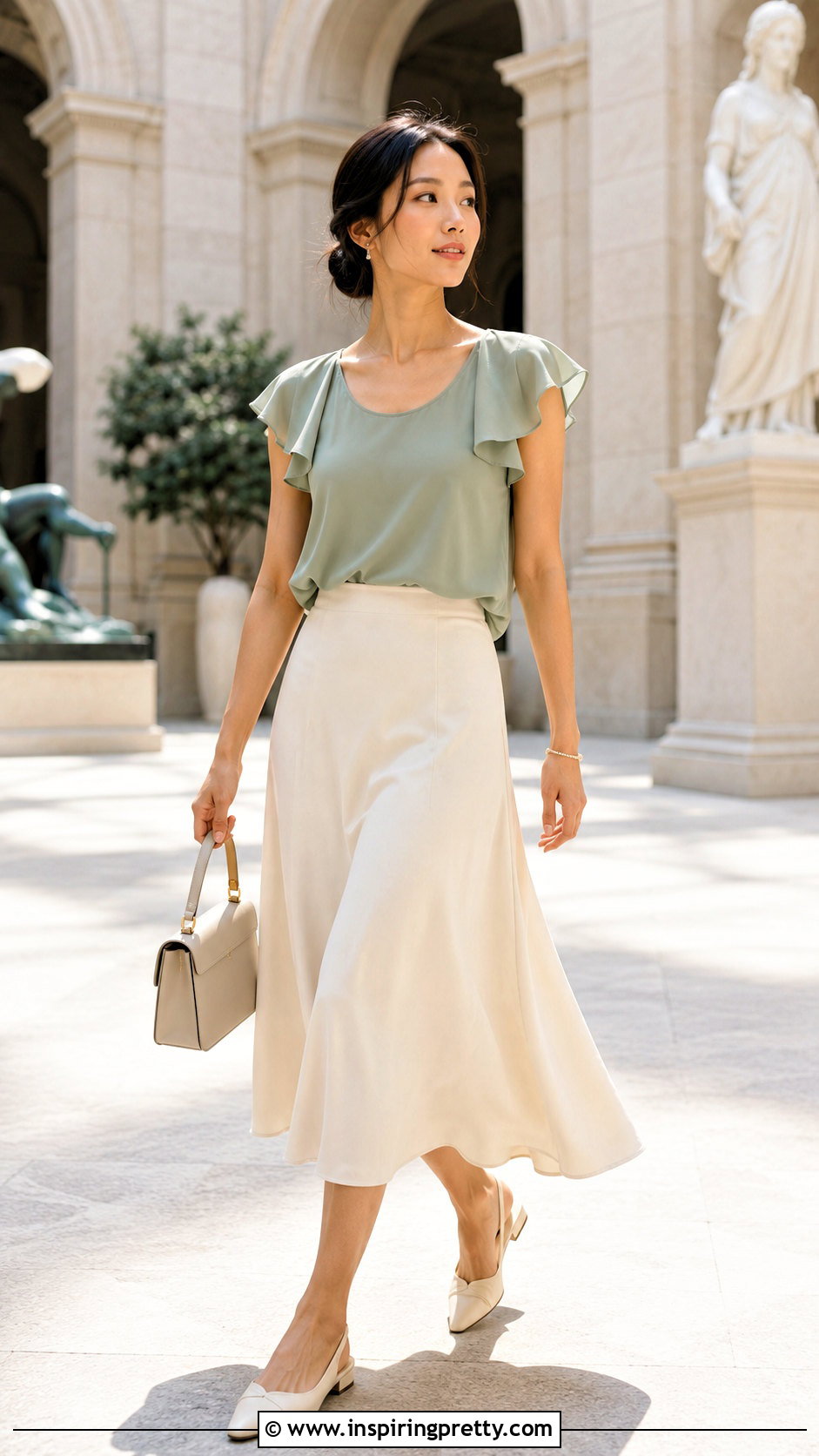
Cut a woven fabric on the bias and it suddenly drapes almost like a knit. Turn the pattern so the grainline sits at 45 degrees to the selvage. Bias edges stretch the moment you handle them, so I staystitch the top edge straight away and hang the sleeves overnight before hemming. They will drop unevenly, and you trim them level afterwards. Pin to the tank without pulling. This is my answer when straight-grain cotton looks too rigid but chiffon feels too fragile for the tank. Pair it with an A-line skirt and slingback flats, and choose a subtle tonal print so the drape is what people notice.
13. Color Block Flutter Sleeve Tank Top With Black Pants
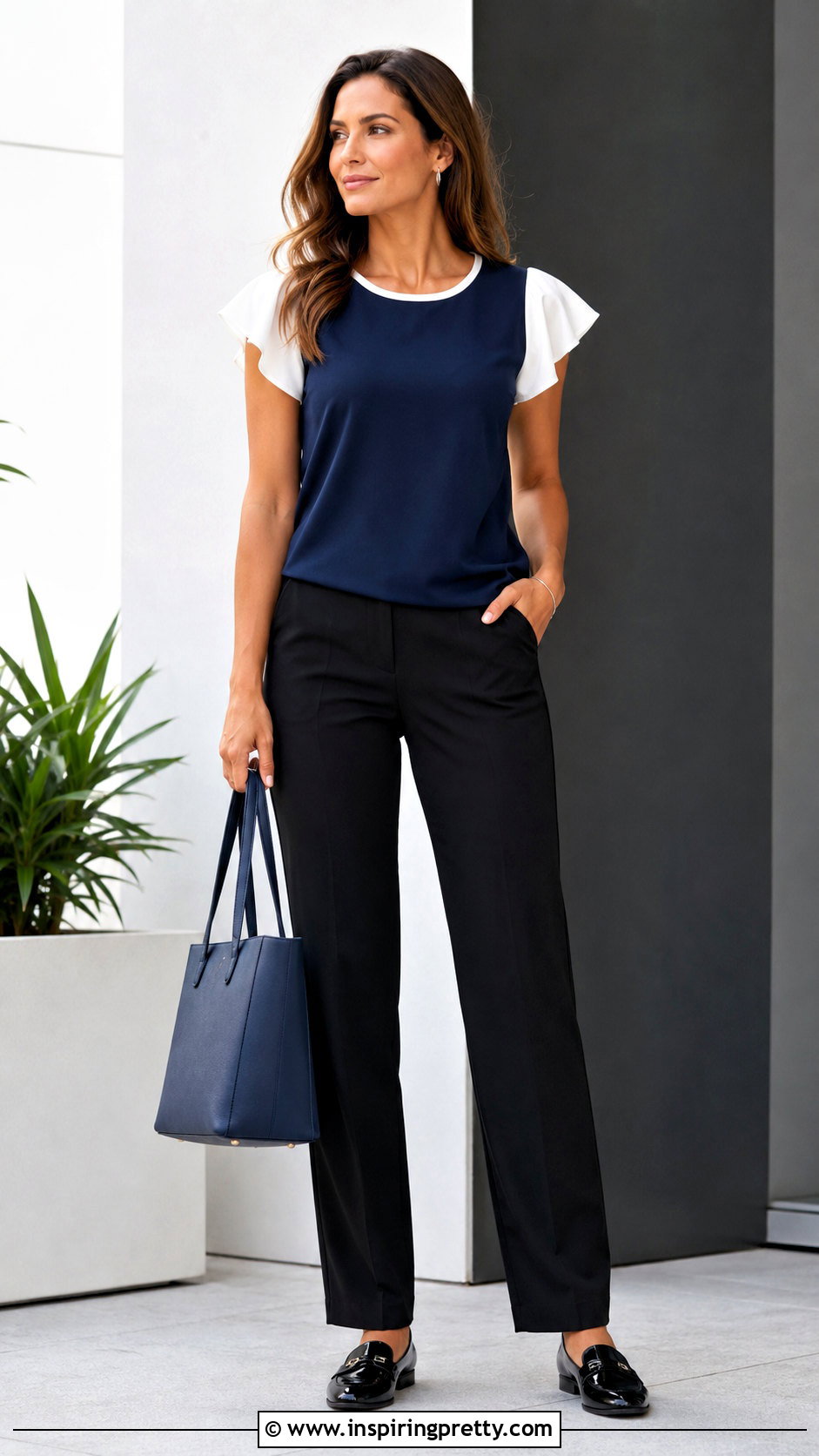
Colour-blocked sleeves only look intentional when the two colours carry similar weight: navy with white, black with camel, burgundy with blush. The fabric still has to match the tank's weight and stretch even if the colour doesn't. Draft a simple flutter, hem it and attach it with thread matched to the tank, so no contrast stitching shows on the body. If the top looks unfinished, bind the neckline in the sleeve colour to tie the two together. Black straight-leg trousers, loafers and silver jewellery keep it sharp. Repeat the sleeve colour once, in the bag or the shoes, and stop there.
14. Tiered Flutter Sleeve Tank Top With Cropped Jeans
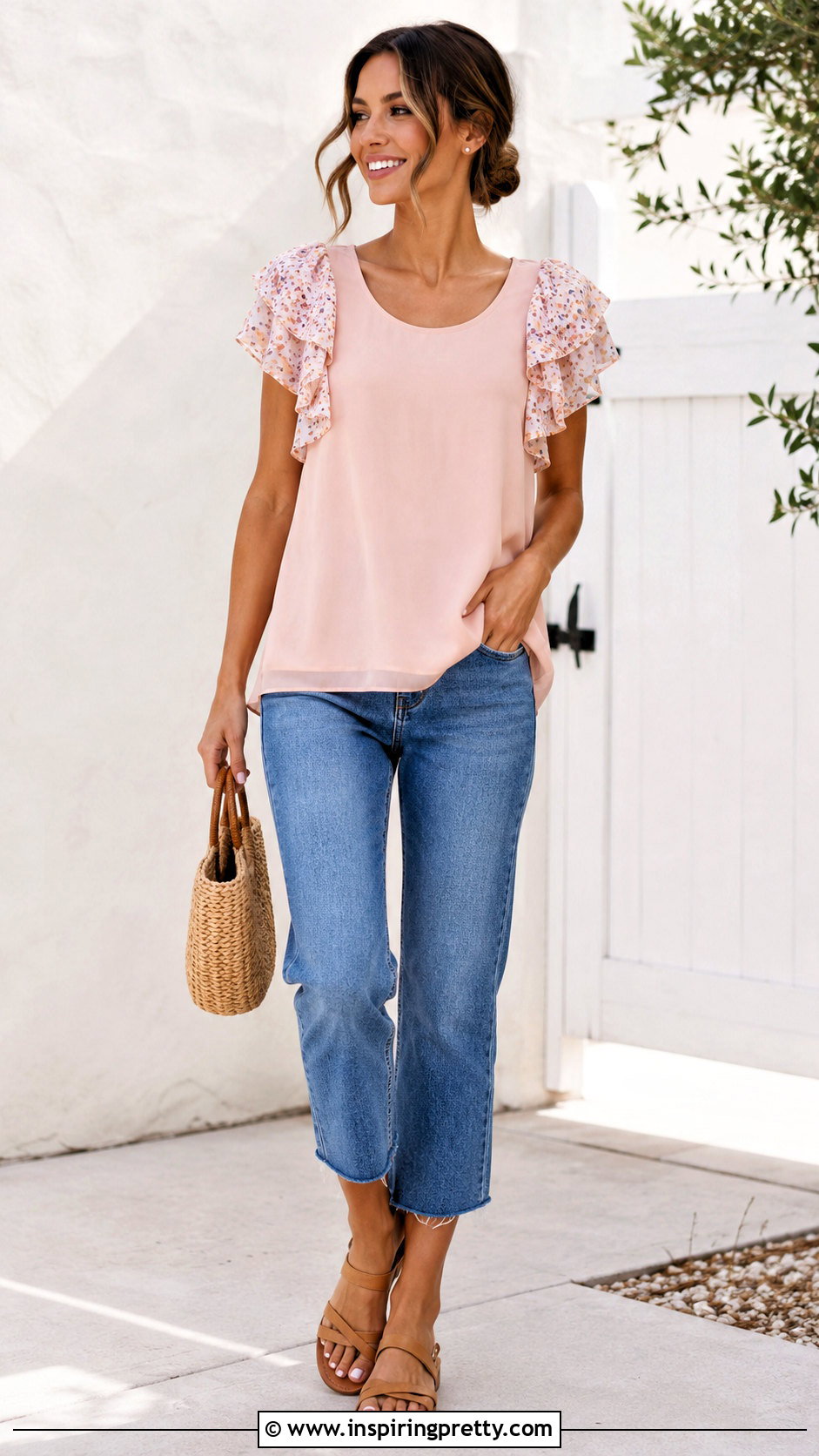
Tiers give real volume from a simple pattern: two curved pieces per shoulder, the lower one wider and longer than the upper. Hem each edge separately, gather the tops lightly, stack the short tier over the long one and baste them together before they go into the armhole. Weight is the danger here. Heavy tiers drag the armhole down and can pull the neckline off centre, so use the lightest fabric you have. I'd stop the bottom tier above the elbow so the arm still moves freely. Printed tiers on a solid tank look cheerful; matching ones look more grown-up. Cropped jeans and flat sandals keep it casual.
15. Tulle Flutter Sleeve Tank Top With Satin Pants
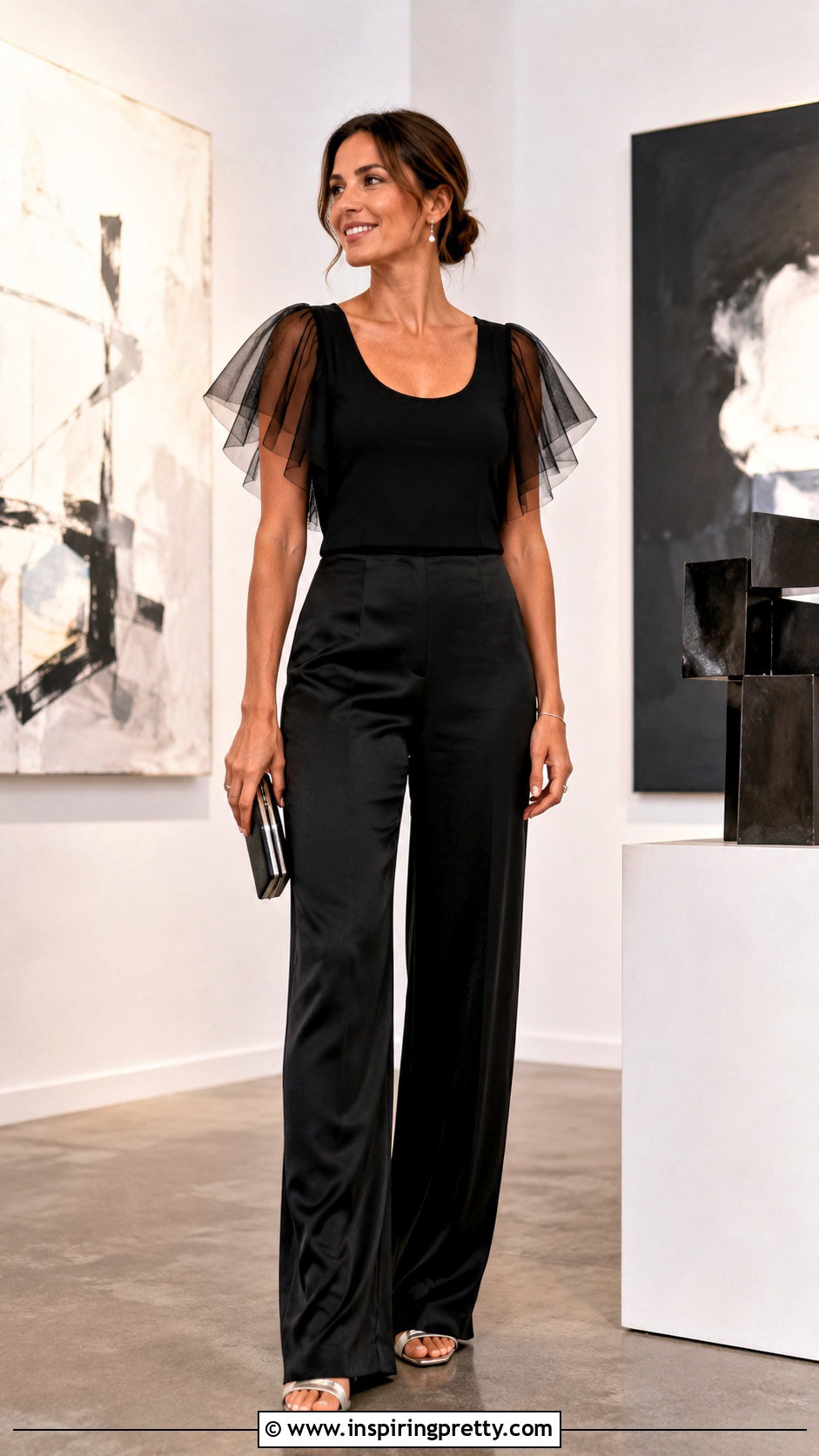
Tulle never needs hemming, which makes it quick, but it shows every seam allowance through the sleeve. Buy soft dressmaking tulle; craft netting scratches and stands away from the arm. Cut one or two circle layers and pin them on before sewing to judge the fullness. I attach tulle with a narrow zigzag or a slim self-fabric binding, then trim every thread end, because anything left behind is visible from across a room. In a tonal palette with fluid satin trousers, low heels and a small clutch, it's dressy enough for an evening out. I'd keep it away from rough-knit cardigans, which snag it.
16. Linen Flutter Sleeve Tank Top With Matching Shorts
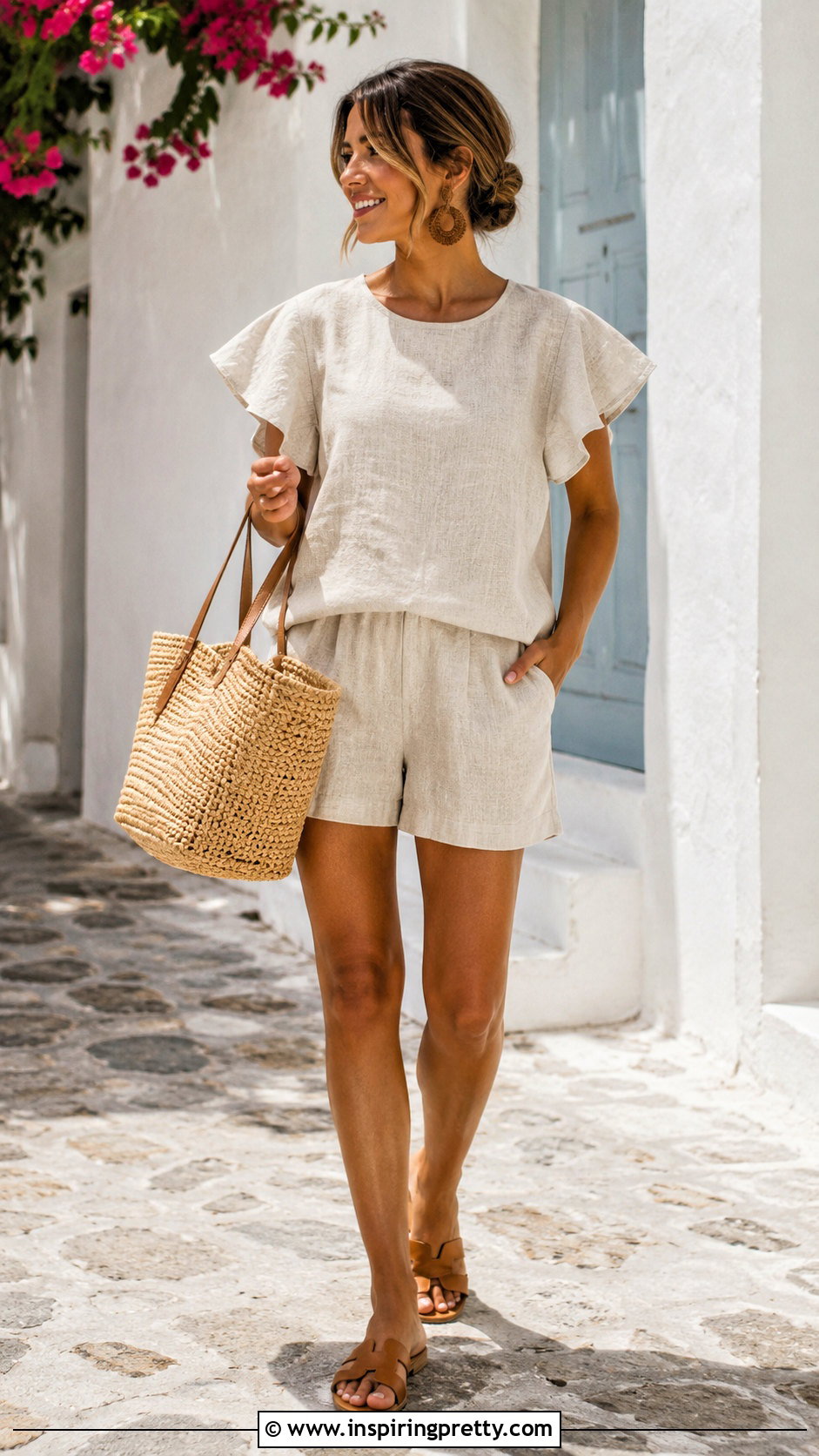
A linen-blend tank and a little leftover linen can become the top half of a matching set. Prewash the linen first, since it can shrink noticeably in its first wash and the sleeves would then pull the armhole tight. Draft medium sleeves with moderate fullness and finish them with narrow double-fold hems. After sewing, clip the curved armhole seam so it lies flat. Wearing the same material from top to bottom looks far more deliberate than two unrelated casual pieces. If you can't match the linen exactly, choose a slightly lighter tone rather than a near miss. Steam it, but let the linen keep a little of its natural creasing.
17. Scarf Print Flutter Sleeve Tank Top With Neutral Pants
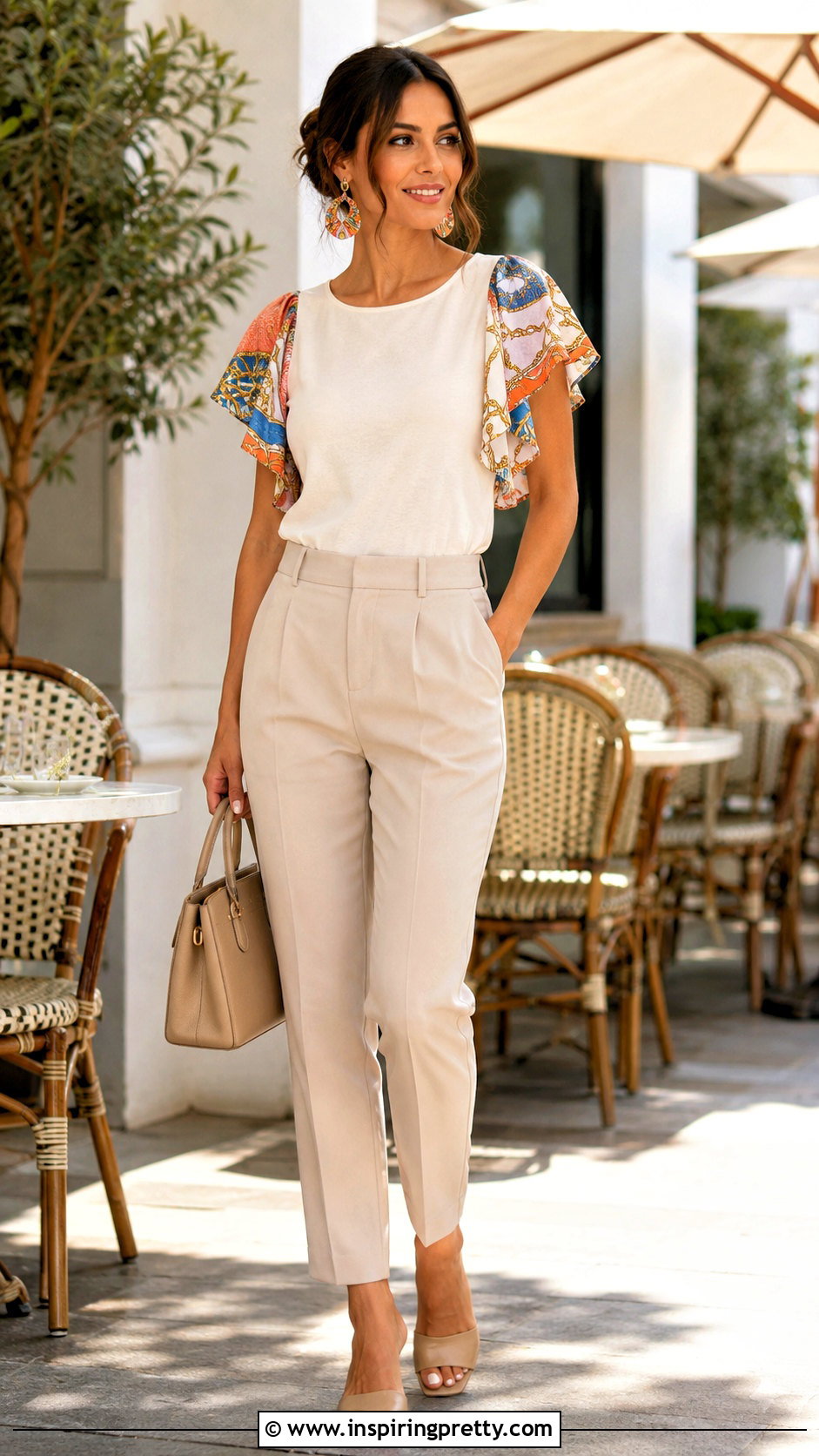
An old or damaged silk-weight scarf can hold just enough fabric for two sleeves, and it's a good use for one with sentimental value. Check the care label first; some scarves shrink or bleed and won't survive the tank's wash. Place the pattern so both sleeves catch the same area of the print, and if the scarf has a hand-rolled border, put it on the outer edge and skip the hem entirely. Tissue paper underneath helps with slippery fabric. Keep the tank and trousers solid, cream or tan, and pick earrings that repeat one colour from the print. One patterned area per outfit is plenty.
18. Detachable Flutter Sleeve Tank Top With Midi Dress Pants
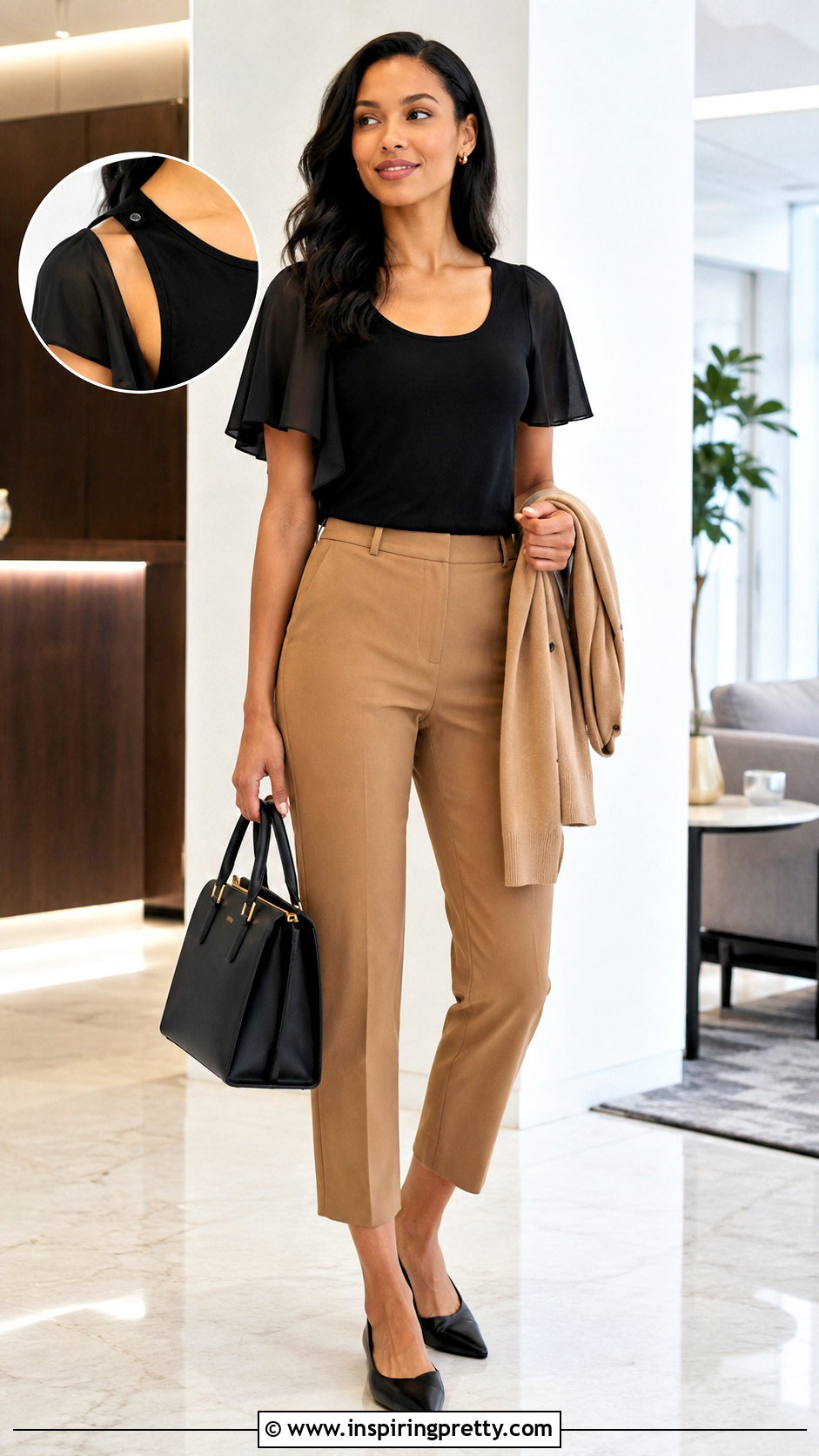
If you don't want to commit to an alteration, make the sleeves removable. Give each flutter a narrow finished band along its top edge, then sew small snaps inside the tank's armhole and matching snaps on the band, evenly spaced. Buttons and thread loops work too and look nicer if the inside ever shows. Move your arms around before wearing it out; a snap that sits too far apart lets the sleeve flip up. You get two tops from one tank, and nothing has been cut. Cropped dress trousers, pointed flats and a light cardigan suit it for work, and with the sleeves off it goes back under a jacket.
19. Hand Sewn Flutter Sleeve Tank Top With Pull-On Pants
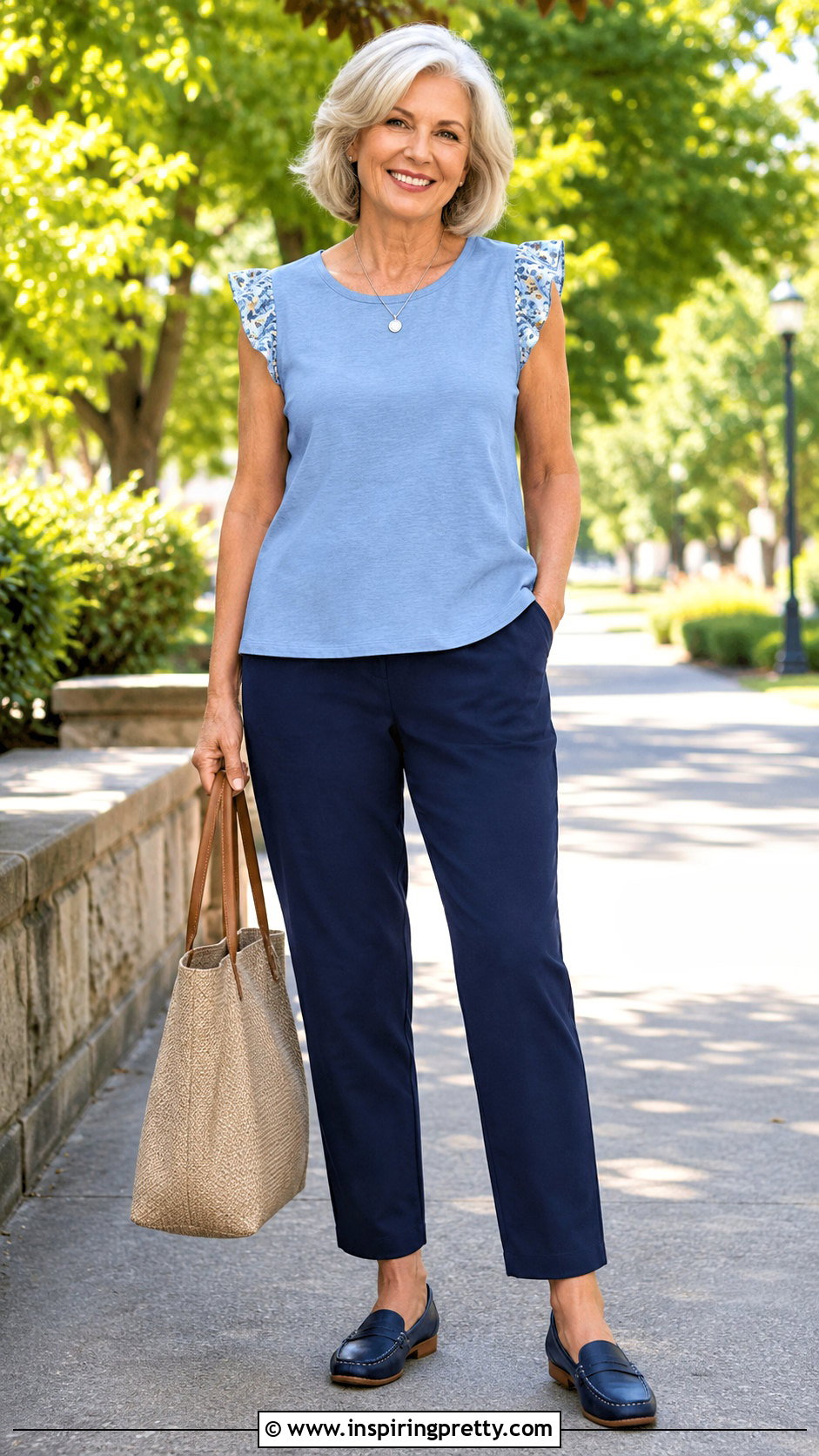
No machine? A backstitch is strong enough for a sleeve seam if your stitches are small and even. Choose a stable tank and a fabric that doesn't fray much, then roll the sleeve hem by hand or use a fabric that already has a finished edge. Pin the sleeve in place and work in short sections, turning the top right side out every few inches to check the stitching line. I'd only hand-sew cap-length sleeves; a full sleeve means a long seam and a lot of evenings. Reinforce the two ends and the shoulder centre, which take the most strain when you lift your arm. Pull-on trousers and soft loafers make it a relaxed weekend outfit.
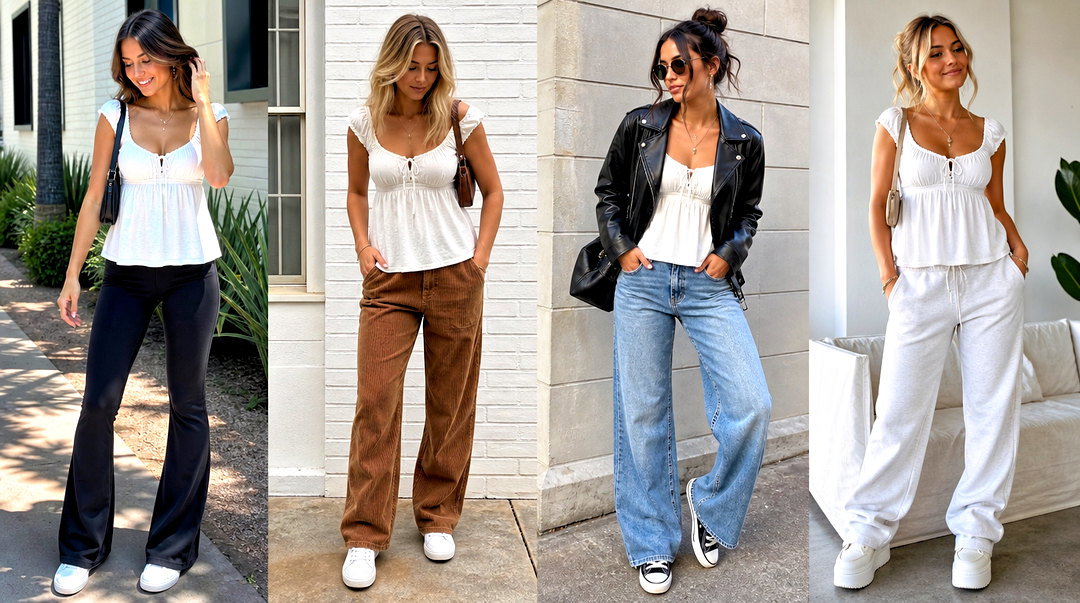
20. Upcycled T-Shirt Flutter Sleeve Tank Top With Shorts
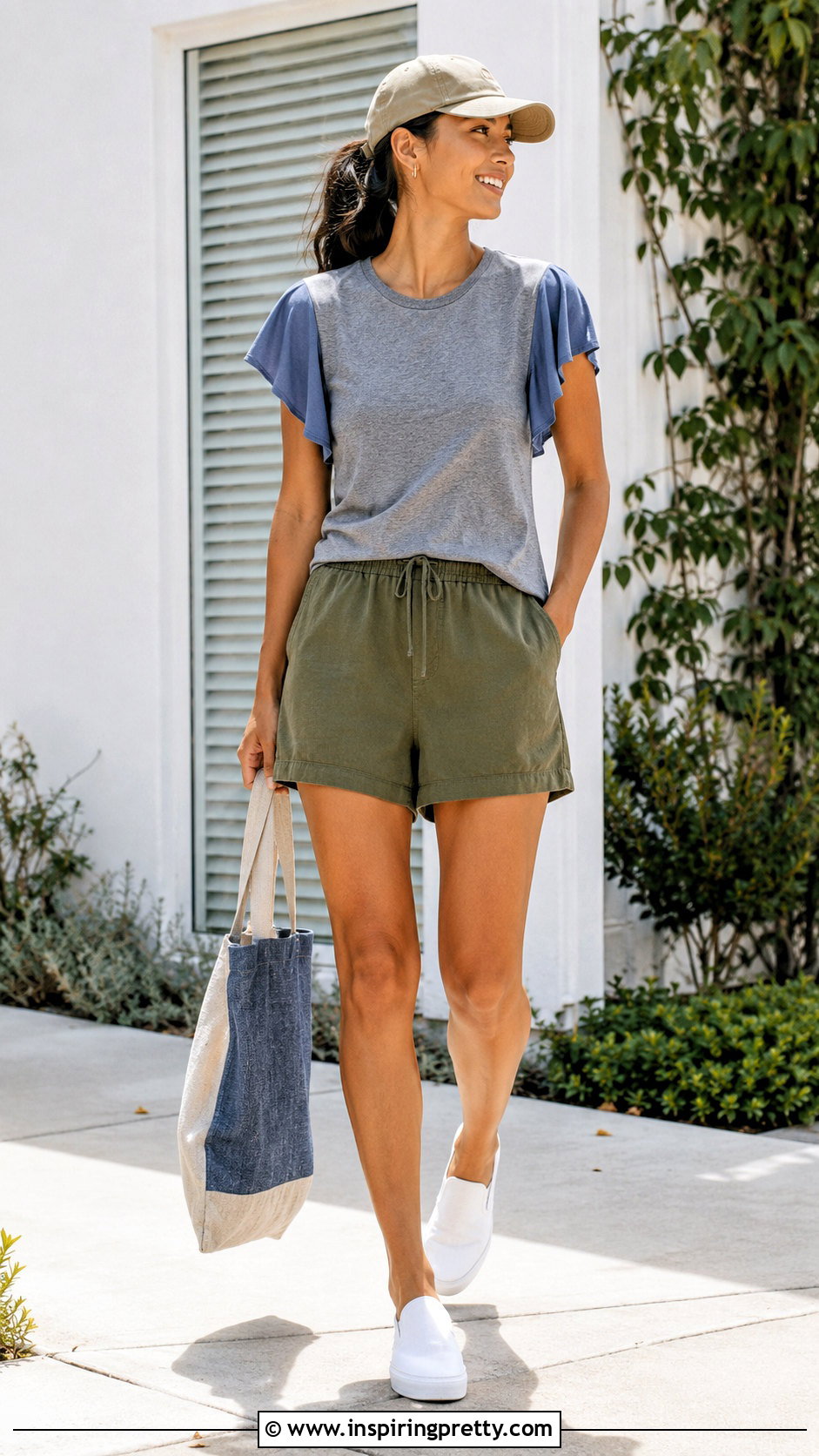
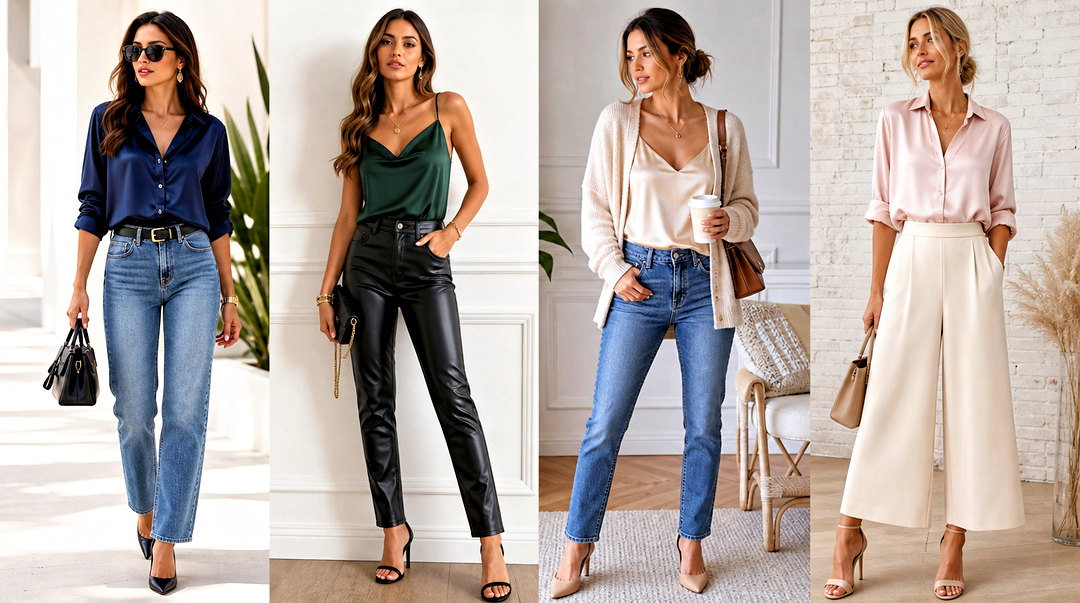
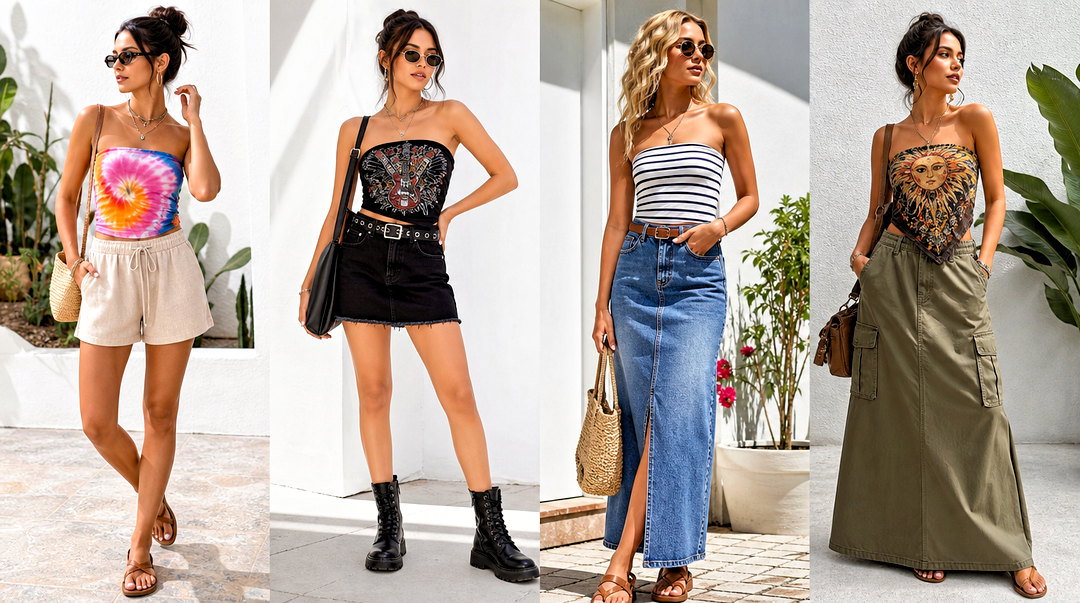
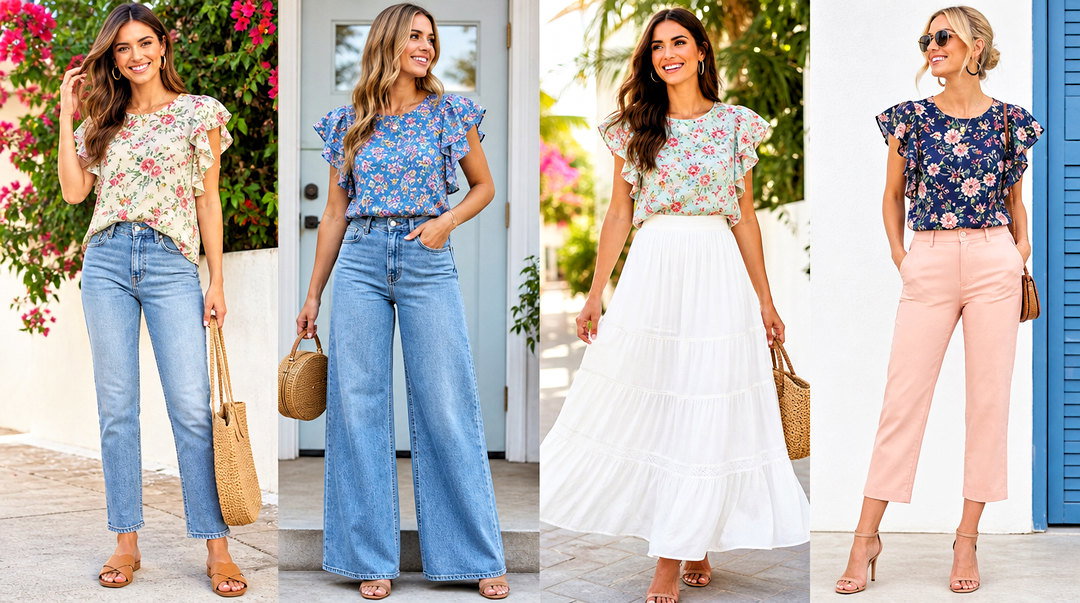
An old T-shirt is ready-made sleeve fabric, and its bottom hem is already finished. Place the outer edge of your sleeve pattern right along that hem and you skip hemming entirely, with both sleeves guaranteed to match. Fold the shirt before cutting so the pieces mirror each other. If your design is a full sleeve, close the underarm first, then sew it into the tank right sides together with a stretch stitch or narrow zigzag. Two related T-shirt colours give a sporty contrast. Casual shorts, slip-on sneakers and a cap make it something for the park or a long walk.
Who Flutter Sleeves Flatter, and Who Should Keep Them Small
A flutter adds width right at the shoulder line, which is useful or unhelpful depending on your frame. If your hips are wider than your shoulders, a fuller flutter balances the silhouette nicely, and it's one of the easiest proportion fixes I know. If your shoulders are already broad, I'd stay with a short cap or a single flat layer in a drapey fabric, and avoid tiers and stiff cotton that stand out from the arm.
For a fuller bust, a long, wide flutter can make the top look boxy from the bust upward. A shorter sleeve that ends above the fullest part of the chest keeps the line cleaner. Petite frames usually look best with less fabric overall, so cut the sleeve a little shorter than the pattern suggests rather than longer.
Washing a Tank You've Altered
Two fabrics in one garment won't always behave the same in the wash, which is why prewashing the sleeve fabric is not optional. After that, follow the more delicate of the two care labels. Chiffon, lace, tulle and scarf silk sleeves should be hand washed or put in a mesh bag on a cool, gentle cycle, then dried flat; the tumble dryer distorts curved hems and can melt fine synthetic tulle. Press the sleeve seams with the iron pointed toward the tank, never across the flutter, so the ripples keep their shape.
Start With a Cheap Tank and a Test Sleeve
Once you can read an armhole and predict how a fabric will hang, every one of these sleeves becomes manageable. My advice is to practise on an inexpensive tank and cut a test sleeve from scrap, so you can change the length and fullness before your good fabric is involved. Match knit to knit and woven to woven, stabilise anything slippery, and hem the curve before the sleeve is attached. A cap flutter adds a little coverage; tiers, chiffon, lace and long sleeves change the whole character of the top. Then wear it with bottoms and shoes you'd actually reach for, so the alteration earns its place in your wardrobe.
Related posts:


Leave a Reply