Blue pants are not one color, and that is the first thing I sort out before suggesting any top. Navy behaves almost like a neutral and will take nearly anything above it. Cobalt and royal blue are loud enough to need a calmer partner. Light blue reads soft, so it welcomes cream, pastels and one deep accent. Below are twenty pairings I'd actually put together, from plain white and cream to pink, green, red, brown and tonal blue, with the shoes and bag that tie each one together.

Name Your Blue Before You Open the Top Drawer
Most pairing mistakes happen because people treat all blue pants the same. I sort them by two things: how dark they are and how much color they carry. That tells me how loud the top can be.
- Navy and very dark blue: treat them like black or charcoal. Almost any top works, from pale pastels to strong jewel tones.
- Cobalt and royal blue: these are already the bright piece. A neutral or one warm contrast color (coral, rust, mustard) is enough.
- Light, powder or sky blue: soft and cool. They need either a deeper anchor on top (burgundy, chocolate, charcoal) or a gentle partner like cream or blush.
- Mid-blue denim-style trousers: casual by nature, so they suit cotton tees, stripes and earthy shades better than satin.
Then look at the undertone of the blue itself. Hold the pants beside a plain white sheet in daylight. A blue that leans slightly green or teal looks better with warm tops like rust, cream and coral; one that leans violet sits more comfortably with pink, lavender and silver. It's a small check that saves a lot of outfits that feel off for no obvious reason.
1. White Blouse With Blue Pants And Loafers
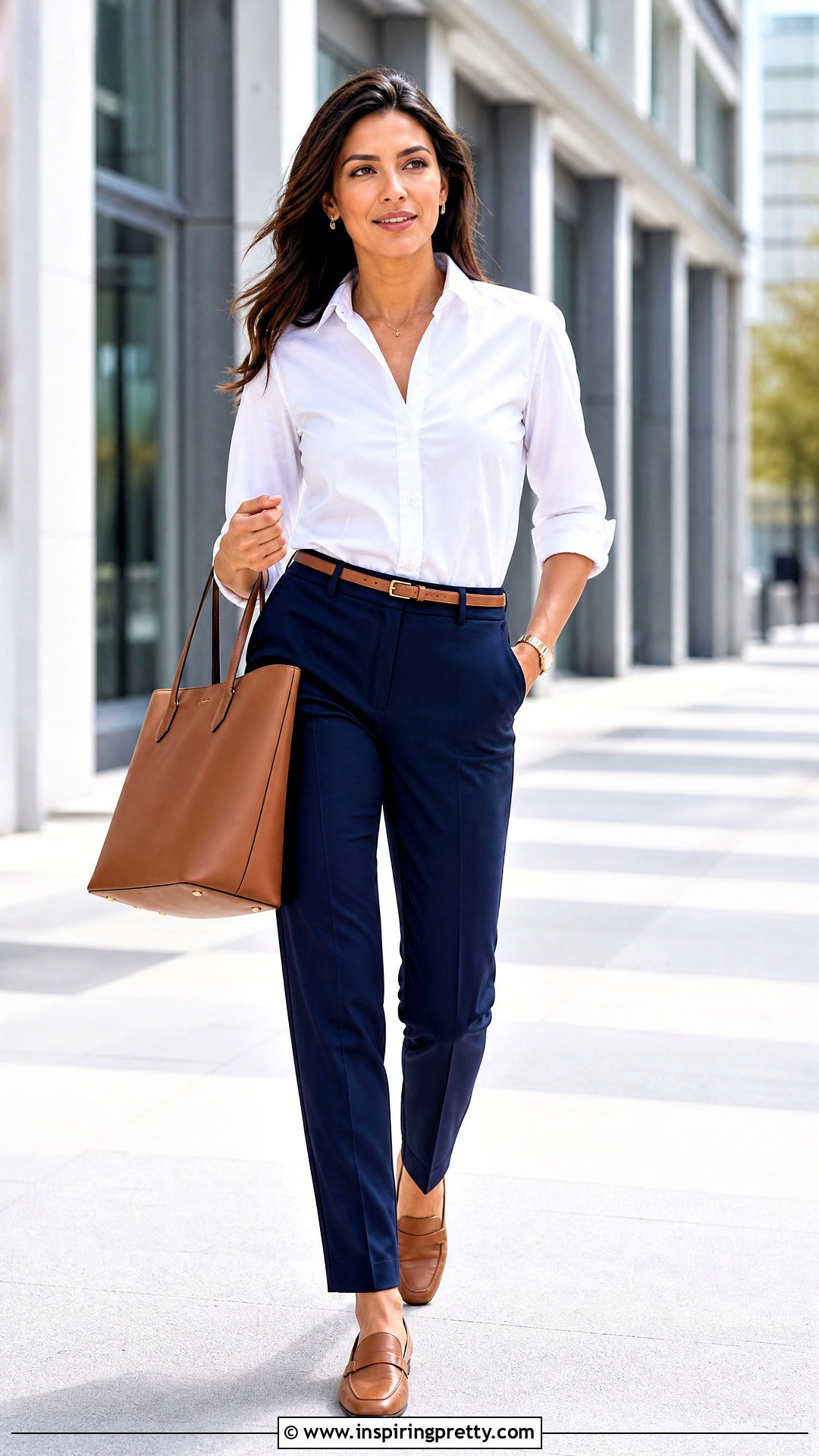
White against blue is the cleanest contrast you can get, which is why I start most people here. For the office, a crisp button-down tucked into navy tailored trousers with a slim belt, black or tan loafers and a structured leather tote does the job. On a weekend I'd swap in a relaxed linen shirt over light blue or cobalt wide-leg pants, white sneakers, a woven bag and simple silver jewelry. One thing I check first is the white itself. Optic white can look harsh beside a warm or sallow complexion, and soft white or ivory fixes that without losing the crispness.
2. Black Fitted Top With Cobalt Blue Pants And Heels
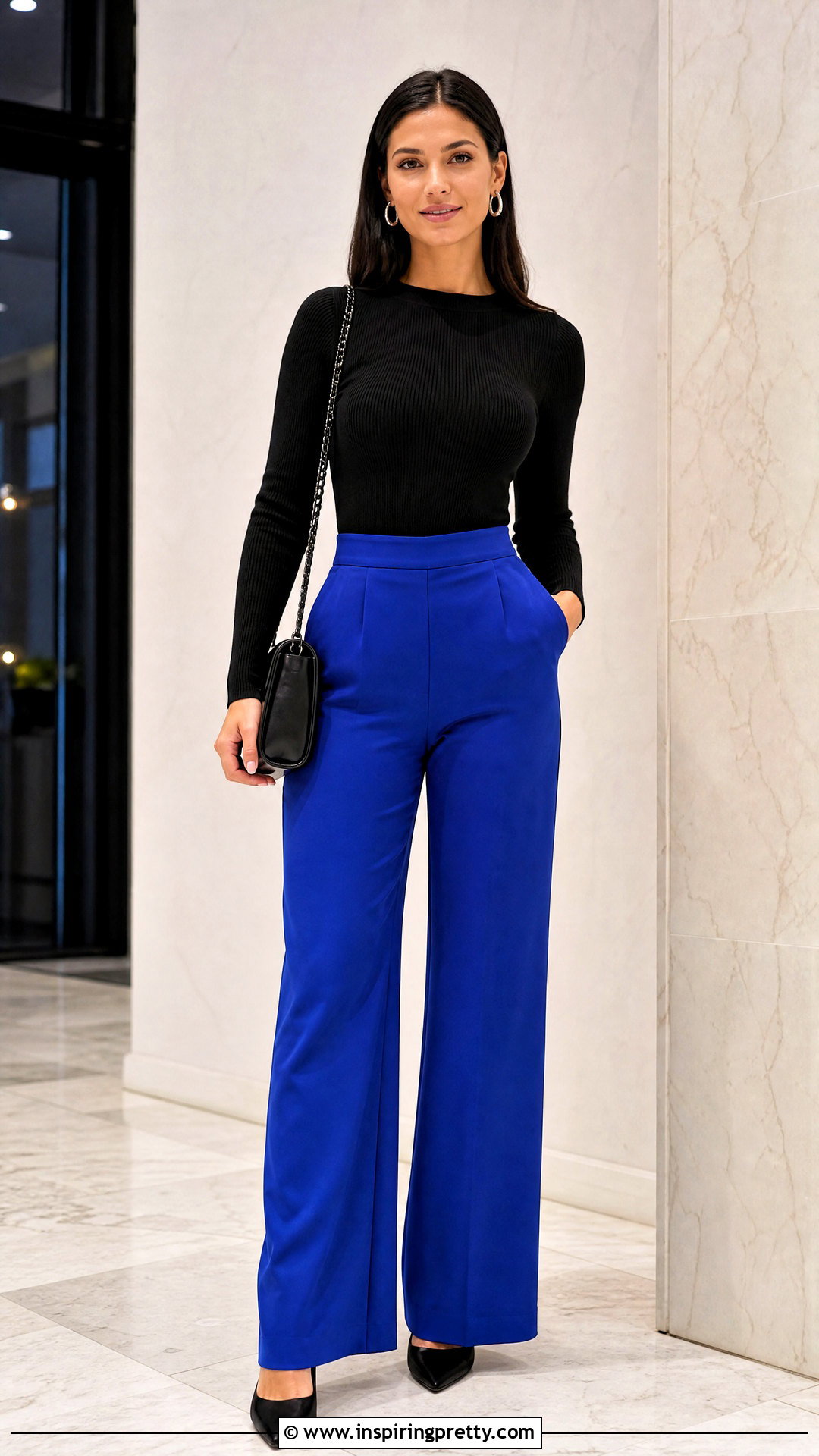
Black next to cobalt or royal blue pants gives a sharp, modern contrast, and the trick is letting the pants lead. I keep the top plain: a fitted black knit, a bodysuit or a crew-neck tee, tucked into wide-leg cobalt trousers. Pointed black heels and a small shoulder bag dress it up; straight-leg pants, ballet flats and a crossbody bring it back to daytime. Silver suits this cool pairing better than gold. Skip big graphics on the black top, because two strong focal points fight each other.
3. Cream Sweater With Navy Blue Pants And Ankle Boots
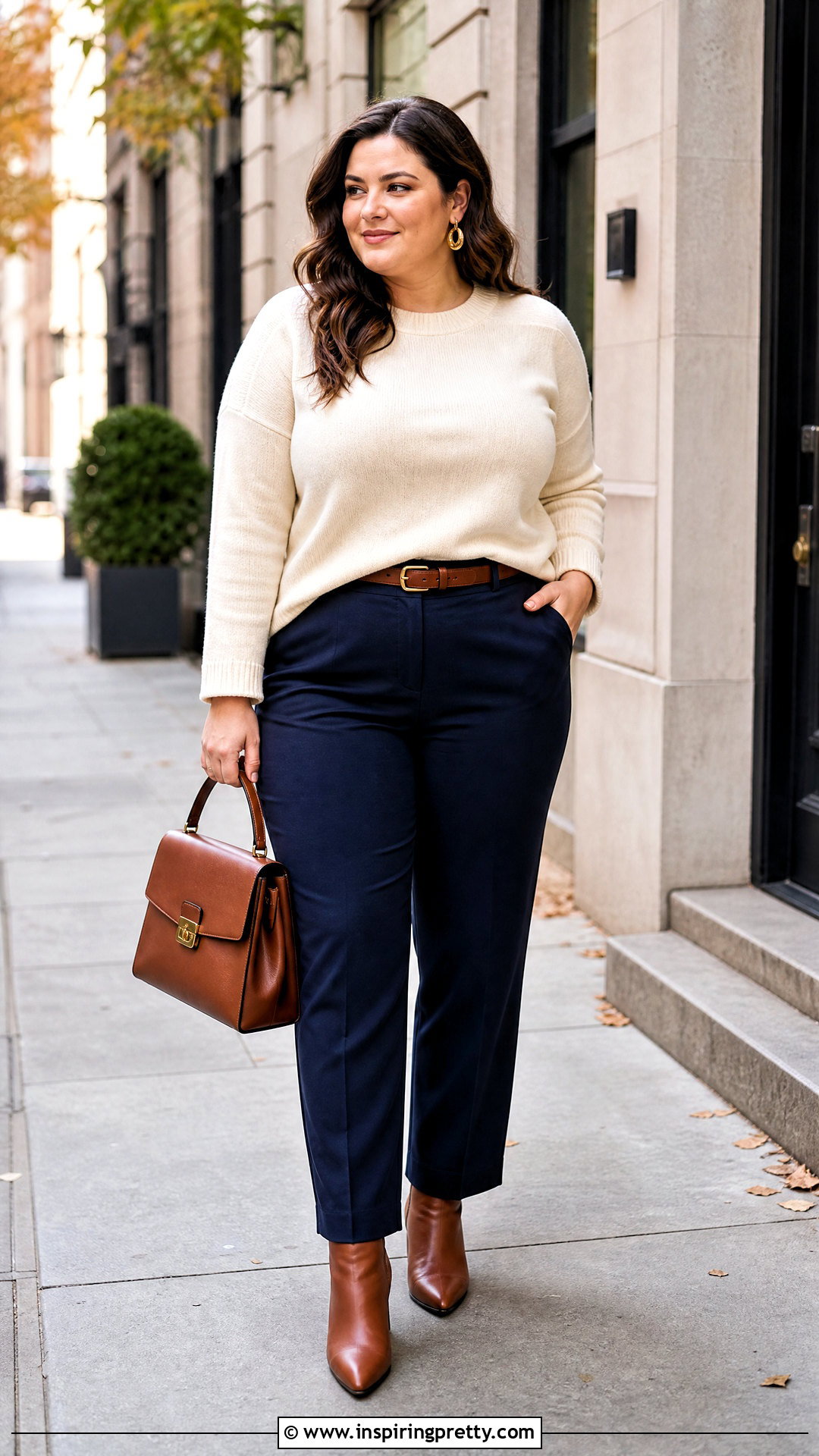
If white feels too sharp against navy, cream is the answer. It carries a little yellow, so the contrast softens and the whole outfit warms up. In cooler months I'd put a cream crew-neck sweater over navy straight-leg trousers with cognac ankle boots, a brown belt and a structured bag, which links the warm top to the warm leather. Go fine-knit for the office and slightly oversized for weekends, with a partial front tuck if you want shape without tightness at the middle. With loose pants, let the sweater stop near the waistband; a long chunky knit over wide trousers swallows a smaller frame.
4. Gray T-Shirt With Blue Pants And White Sneakers
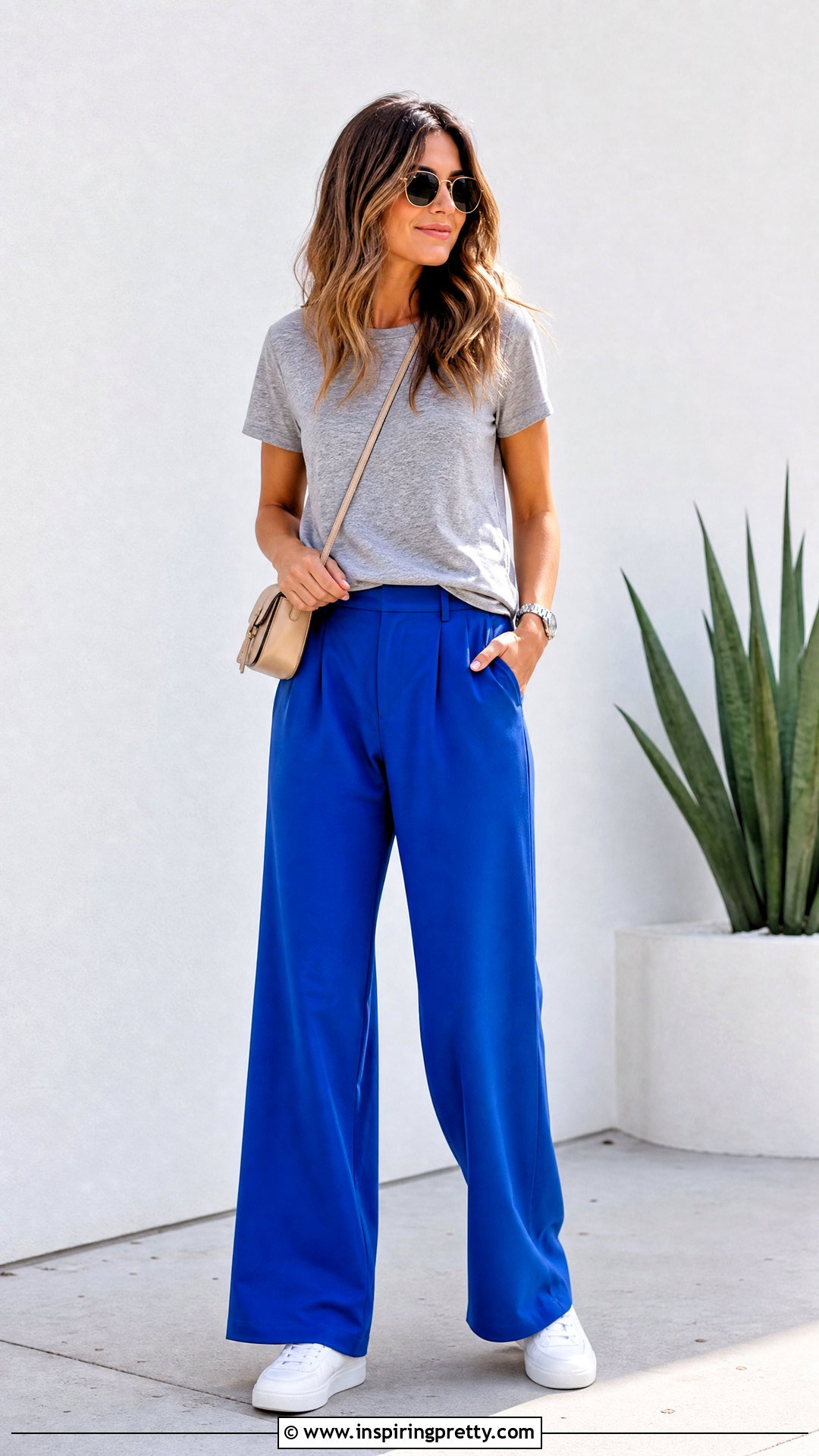
Gray is the quiet option, and it calms even vivid cobalt. A light heather-gray tee with cobalt joggers or relaxed straight-leg pants, white sneakers, a silver watch and a crossbody bag is about as easy as getting dressed gets. For pale or powder-blue pants I switch to charcoal, since light gray on light blue can look washed out; a charcoal mock-neck with light blue tailored trousers and black loafers has far more definition. Because gray carries no color drama, texture does the work here. Ribbed cotton or a soft jersey adds depth, and a denim jacket or neutral trench covers changing weather.
5. Beige Shirt With Navy Blue Pants And Tan Sandals
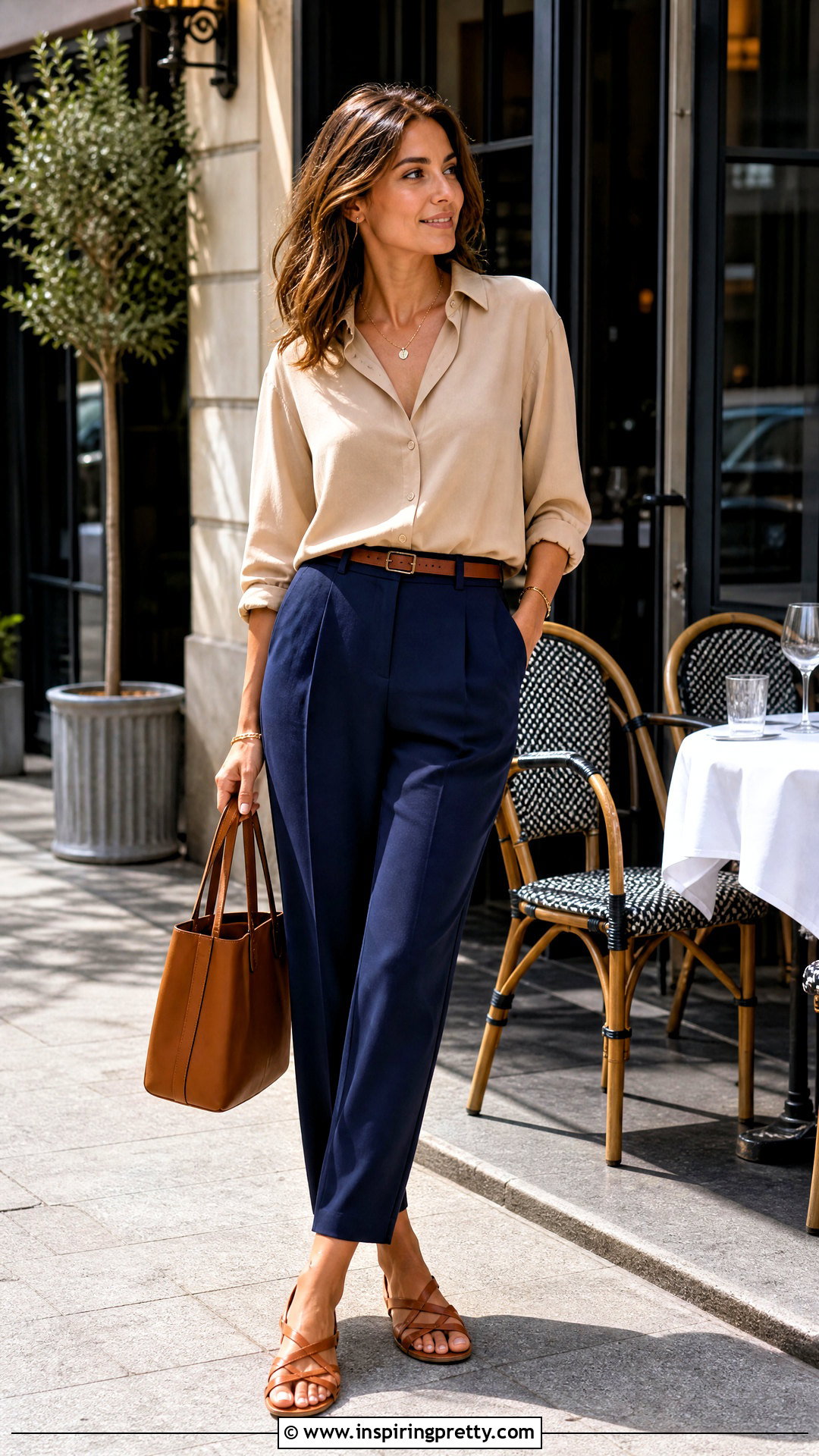
Beige and navy is a pairing I trust for casual offices, lunches and travel days. A loose beige button-down tucked fully into high-waisted navy trousers, with tan leather sandals or loafers, a medium-brown tote and fine gold jewelry, looks finished without effort. Leave the shirt open over a fitted tank for a looser mood. The shade of beige matters more than people expect. Cooler taupe-beige sits quietly beside blue-based navy, while a warm sand gives visible contrast, so pick the one that matches your own undertone. If it starts to look flat, a patterned scarf or textured bag fixes it better than another color.
6. Light Blue Shirt With Navy Blue Pants And Flats
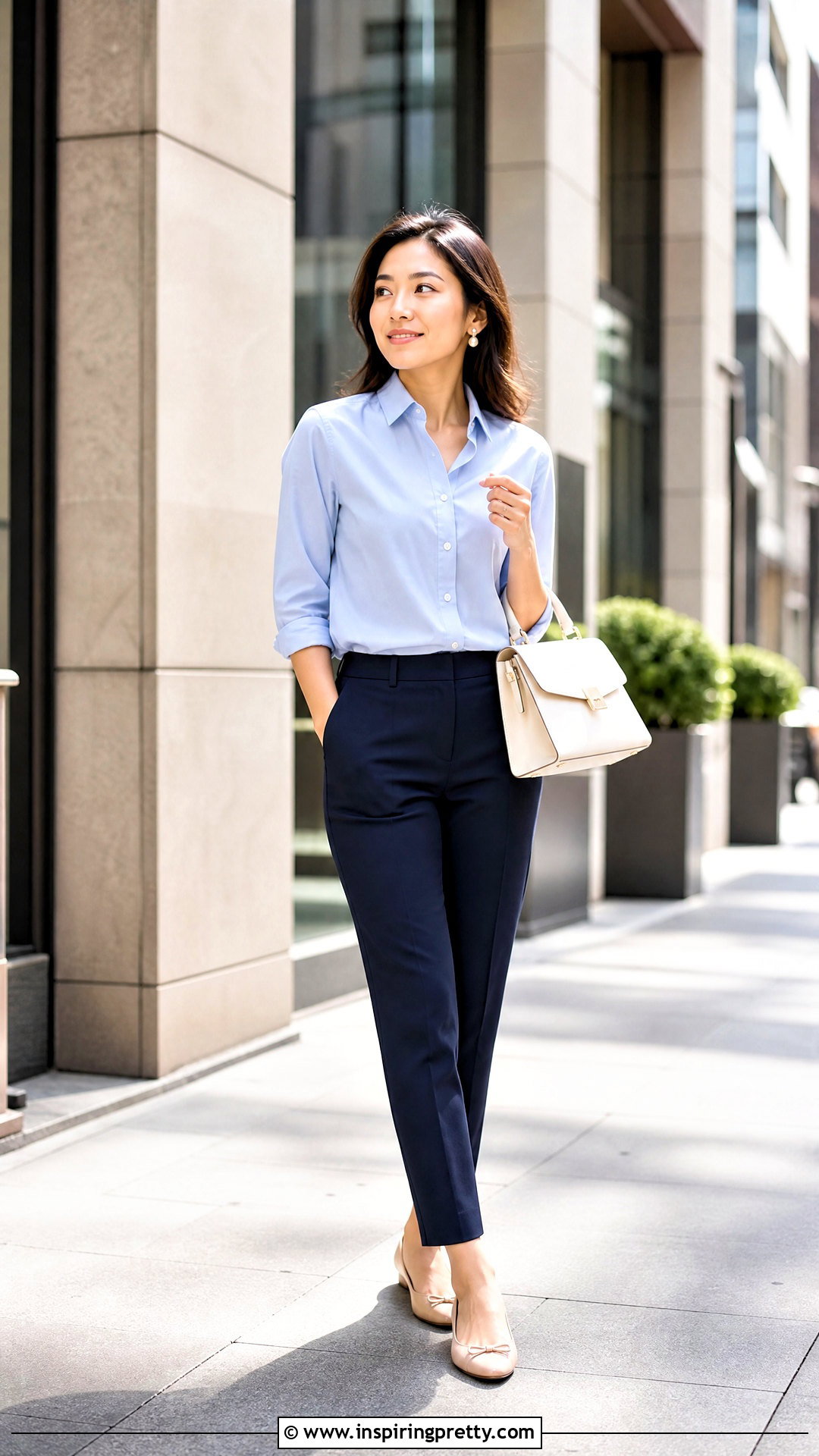
Light blue over navy is tonal dressing that still looks coordinated rather than matched, because the paler shirt separates your top half from the darker trousers. For work, I'd wear a pale blue cotton button-down with navy ankle pants, nude flats and a structured cream bag, sleeves rolled once. A chambray shirt with white sneakers takes it casual. What I always check is the gap between the two blues. If they're only a shade apart, the outfit looks like a mismatched suit, so keep the shirt clearly lighter. Pearl or silver earrings and a slim navy belt suit the palette, and the whole look gives one colorful accessory a calm backdrop.
7. Navy Top With Navy Blue Pants And Metallic Shoes
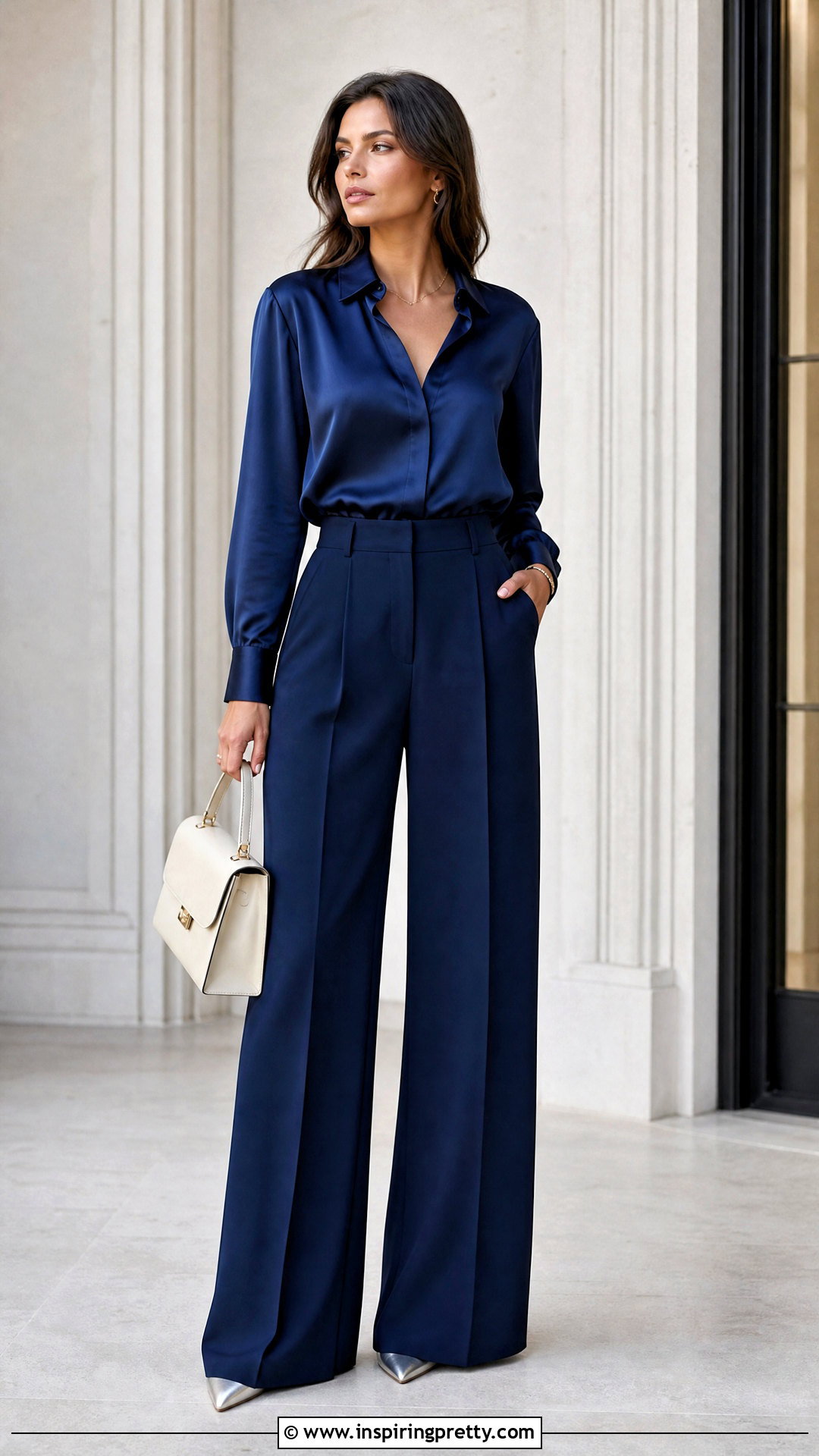
Head-to-toe navy makes you look taller and longer, but only if the fabrics differ. Two matte navies in the same weight look flat. I pair a navy satin blouse with matte tailored pants, or a ribbed navy knit with fluid wide-leg trousers, and tuck the top so the waist reads clearly. Metallic flats, silver pumps or gold sandals break up the dark column, and a cream handbag brightens it. Navy fades unevenly in the wash, so if your top and pants nearly match but not quite, go for an obvious step lighter or darker. Near-misses look accidental.
8. Blush Pink Blouse With Navy Blue Pants And Nude Pumps
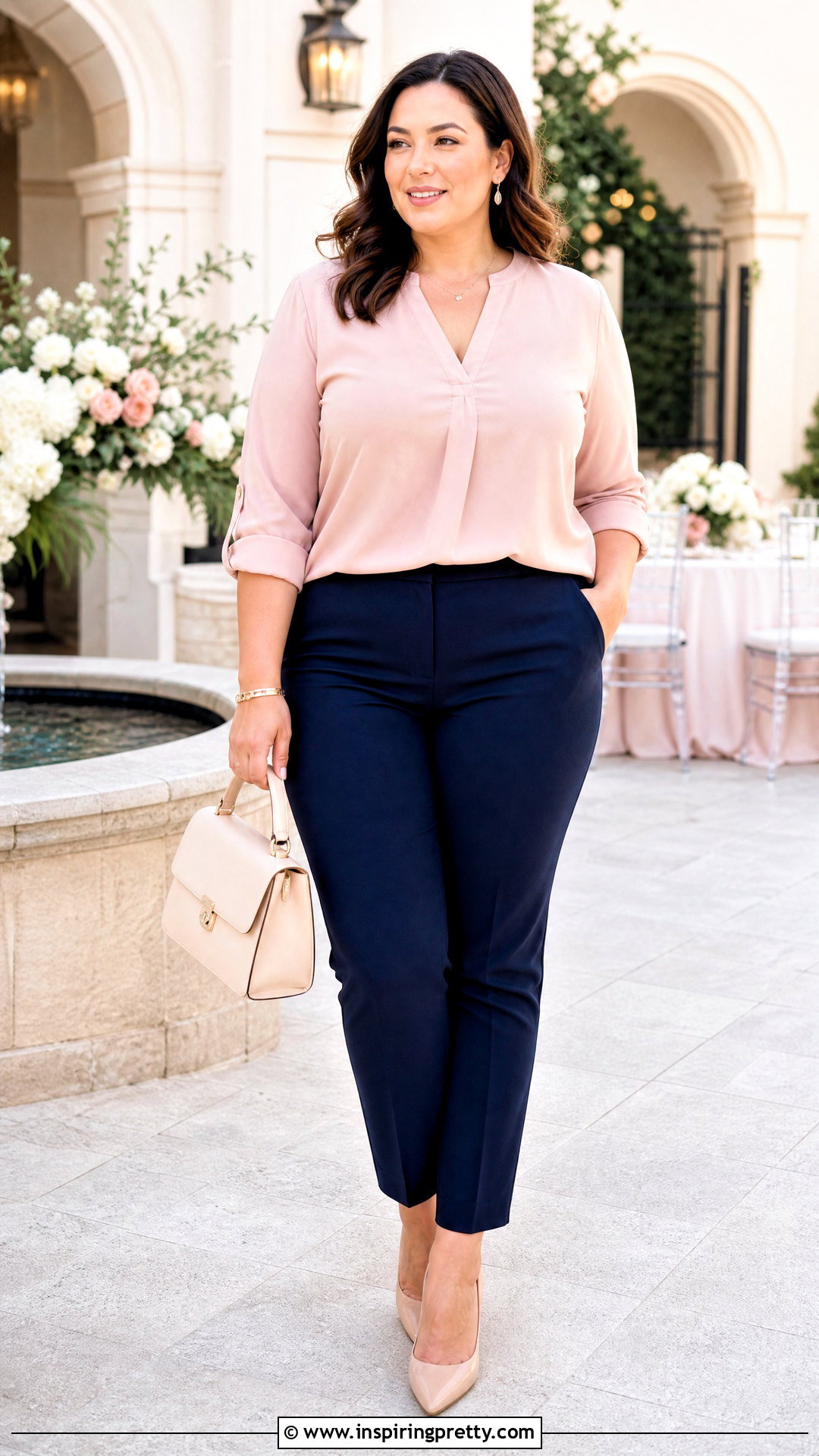
Blush pink softens navy pants and suits polished daytime dressing. I'd style a lightweight pink blouse with navy cigarette pants, nude pumps and a cream top-handle bag, letting a gathered neckline or small sleeve detail carry the interest. Pale pink is one of the colors I test most carefully, because on cool or very fair skin it can drain the face. Dusty rose or muted mauve keeps the gentle mood while adding definition near the jaw. Rose-gold jewelry connects to the pink, and a blush cotton tee with navy chinos and white sneakers covers casual days. Keep sweet details to one, so the pairing stays grown-up.
9. Lavender Top With Dark Blue Pants And Silver Flats
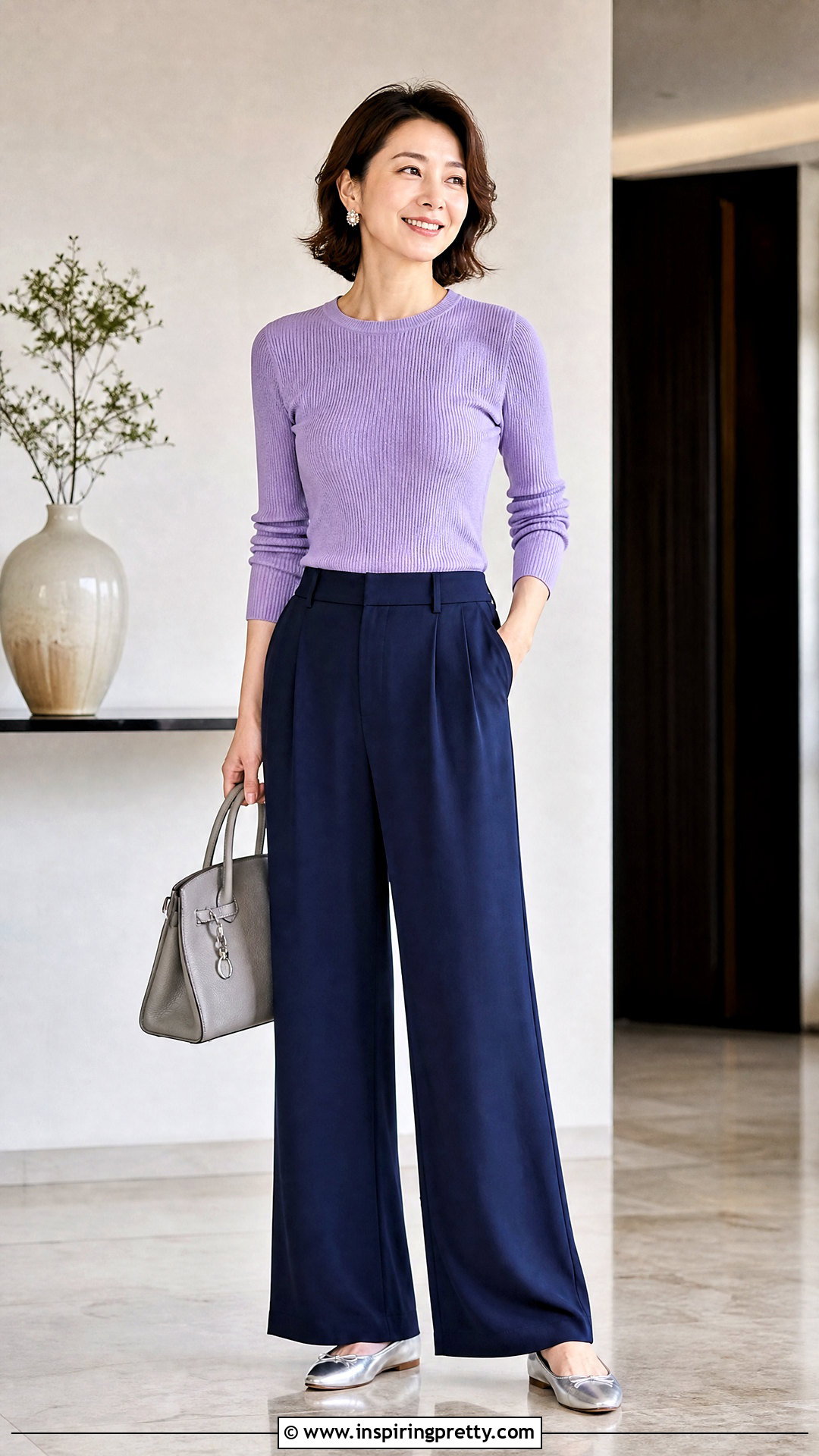
Lavender is a cool, low-key contrast with dark blue, since both share a blue base. A lavender knit top tucked into navy wide-leg trousers is right for the office, family gatherings or daytime celebrations. Silver flats, a soft gray bag and small crystal earrings keep the palette cool. If you want more color, a saturated purple top against medium or light blue pants is the stronger version. With two noticeable colors in play, I keep the shape plain: a smooth crew neck, a fitted cardigan or a clean blouse. Warm-toned dressers can swap the silver for taupe shoes and a beige bag.
10. Red Top With Navy Blue Pants And Neutral Heels
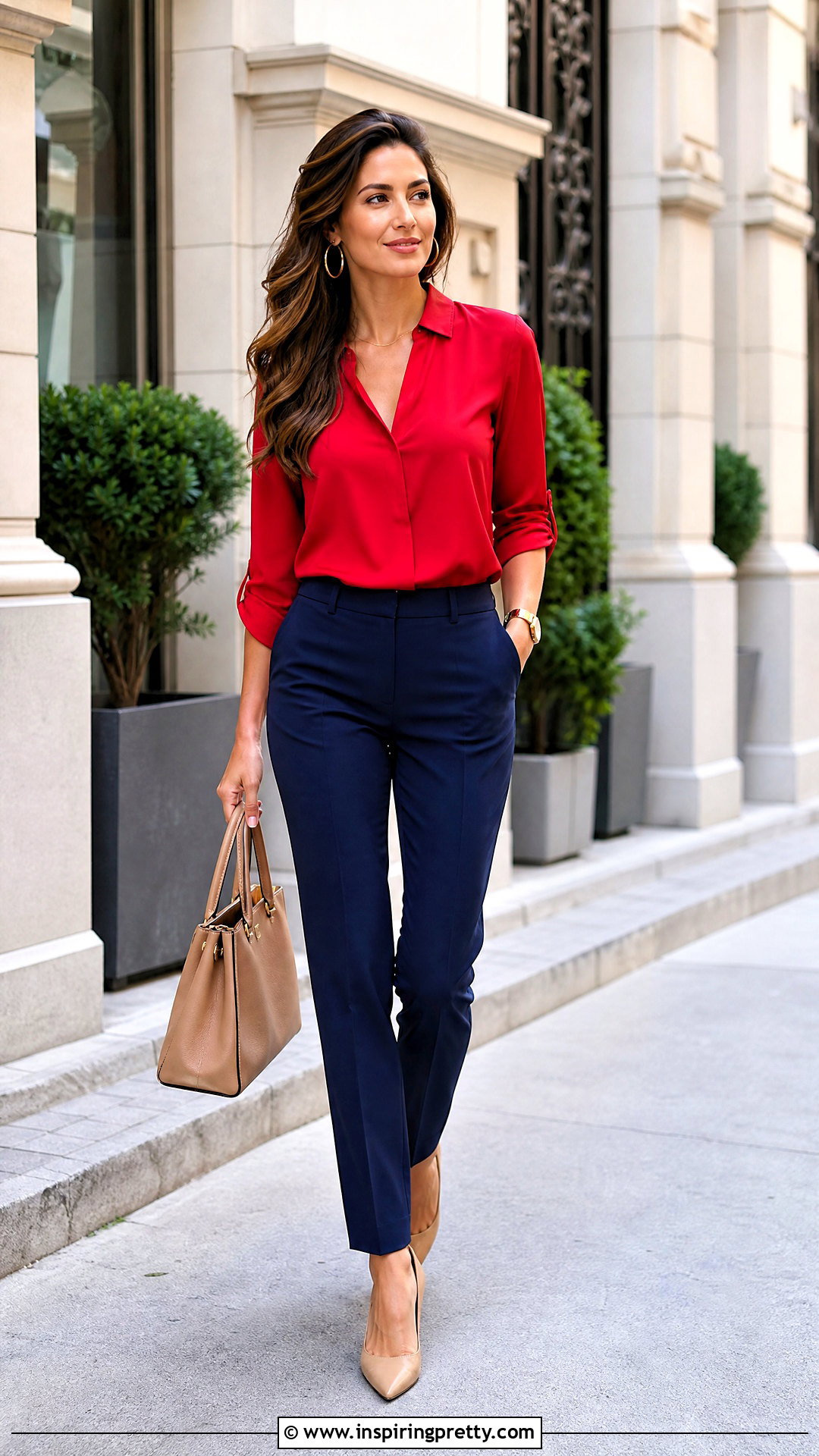
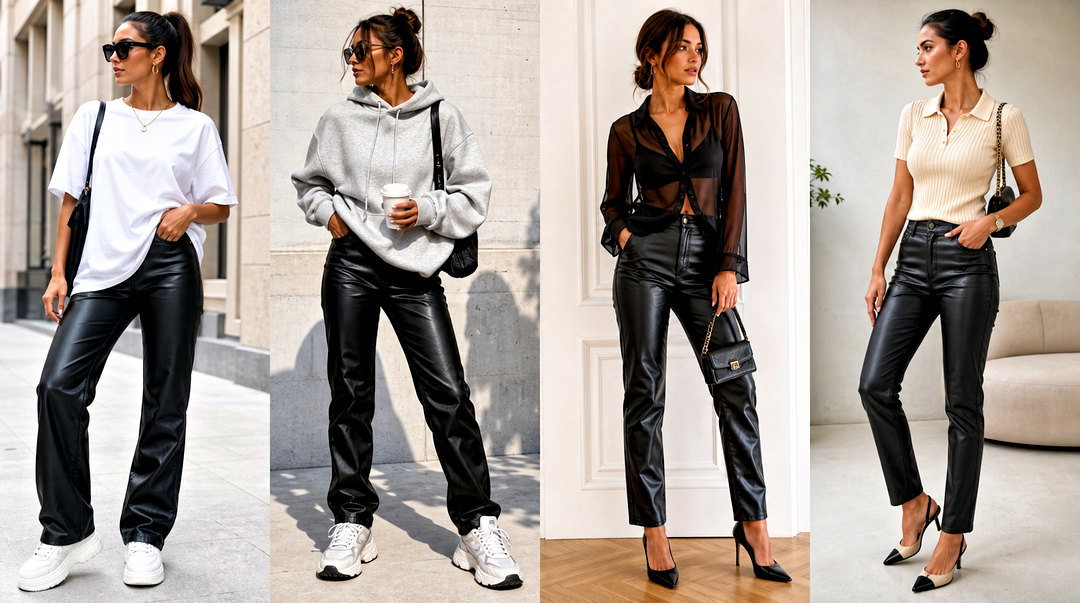
Red over navy is a confident pop of color with a long history in classic dressing. A clean red blouse with navy tailored trousers and beige pointed-toe heels is my starting point; the neutral shoes stop it tipping into full color-blocking. True red is crisp, while brick and tomato read warmer, and I match that choice to the wearer's undertone. For weekends, a fitted red tee with navy jeans, white sneakers and a small tan crossbody is enough. Red is already the focal point, so gold hoops and a watch are plenty. If bright red feels like a lot, wear it under a navy blazer so only the neckline and front opening show.
11. Burgundy Sweater With Light Blue Pants And Loafers
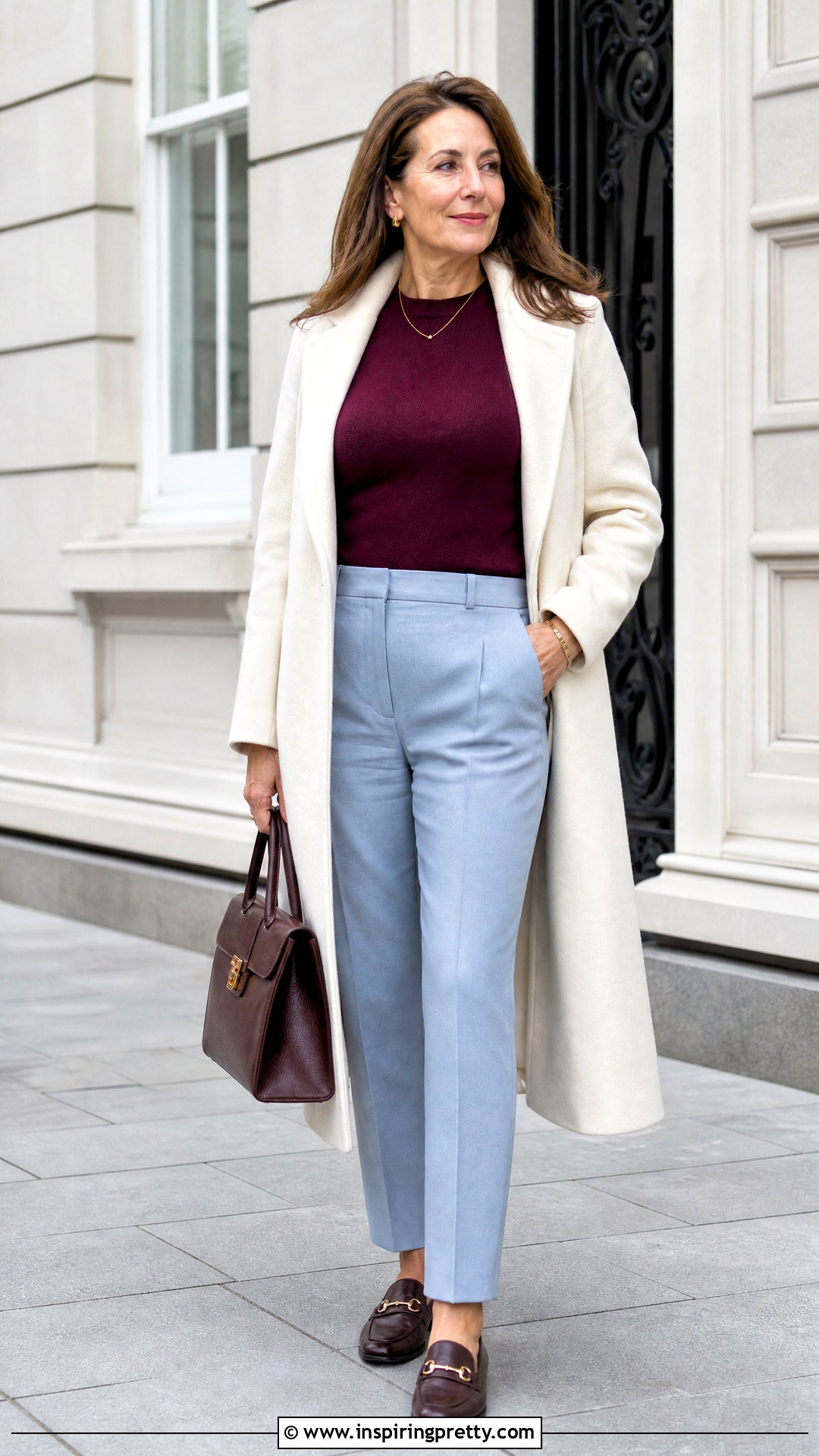
Burgundy gives light or medium-blue pants real depth, and I reach for it in fall and winter. A fitted burgundy sweater with powder-blue tailored trousers, dark brown loafers and a structured chocolate bag lets the deep top anchor the pale pants, while the brown leather eases the jump between them. With navy trousers, choose a slightly brighter burgundy, since a deep wine next to navy can merge into one dark blur in low light. Gold suits burgundy's red undertone, and a cream coat lightens the whole thing. With wide-leg pants, tuck the sweater or pick a cropped length so the waist stays visible.
12. Mustard Yellow Top With Navy Blue Pants And Brown Shoes
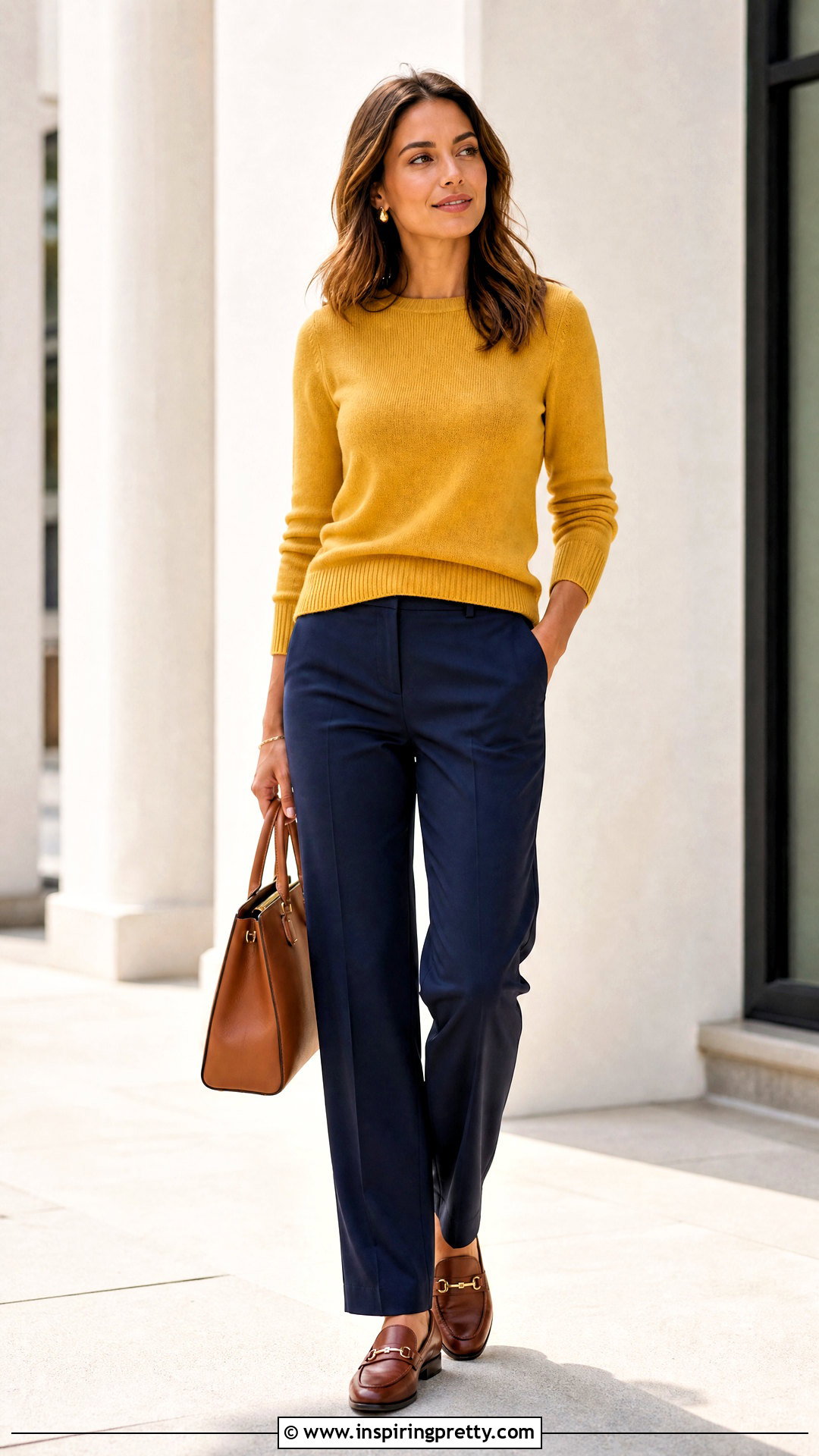
Mustard is a warm partner for navy that's far easier to wear than lemon yellow. A mustard blouse or fine-knit sweater with navy straight-leg trousers, brown loafers and a cognac bag works because the brown leather picks up the earthiness in the yellow. In warmer months, a butter-yellow shirt with medium-blue pants and white sneakers is the lighter take. Yellow is the hardest color I place near faces; on many complexions it throws a sallow cast. If that happens to you, put a cream cardigan or scarf between the top and your face, and keep the hardware minimal.
13. Coral Top With Royal Blue Pants And Neutral Sandals
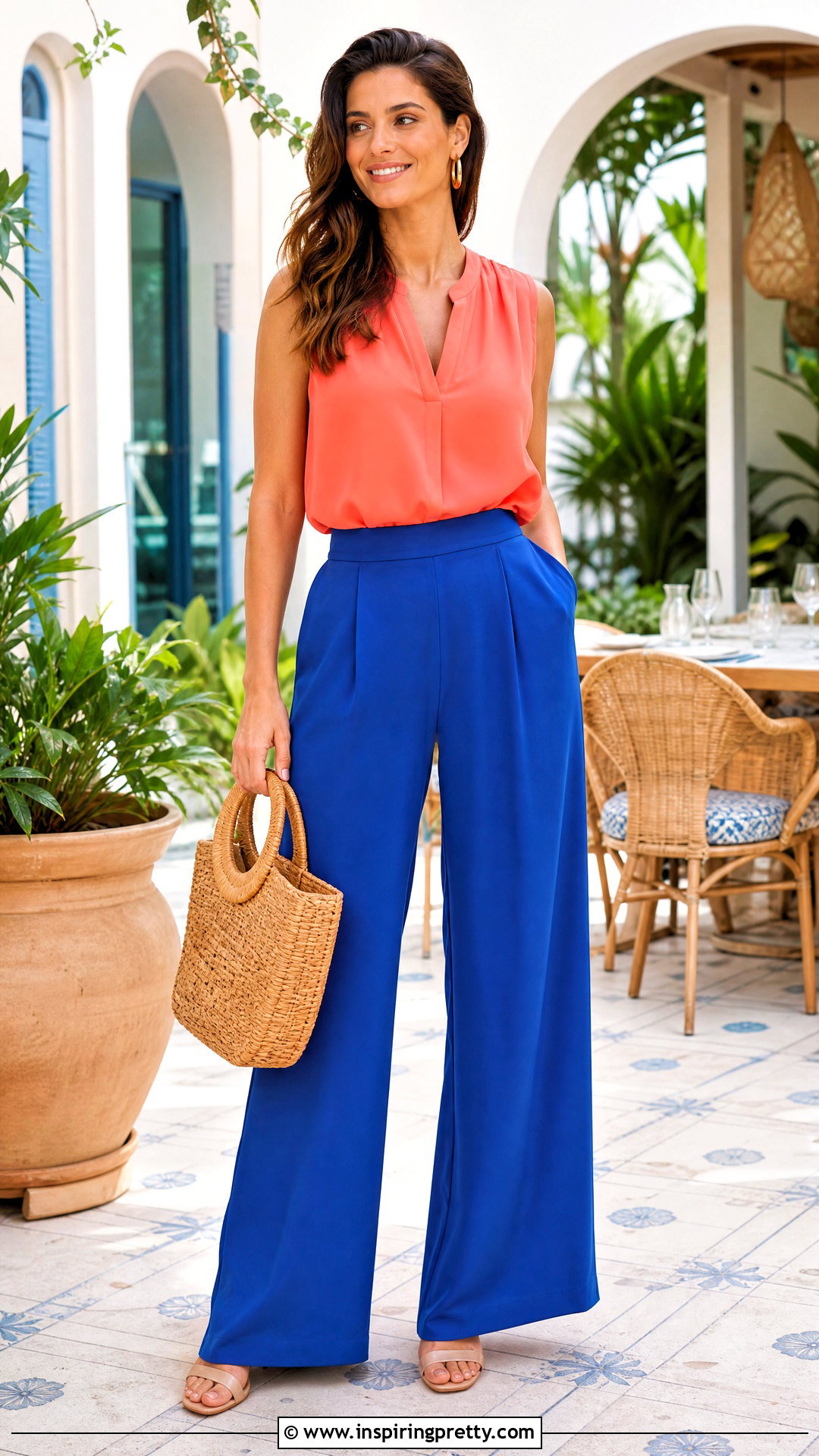
Coral and royal blue sit close to opposite each other on the color wheel, which is why the pairing feels so lively in daylight. Try a coral sleeveless blouse with royal blue wide-leg pants, nude sandals and a woven bag. The neutral accessories give two strong colors space. Soft coral is gentler; a saturated coral-orange pushes the contrast harder. Match the cut to the pants: fitted over flowing trousers, a looser shirt over slim or straight legs. If you add a layer, make it a cream blazer, never another bright shade.
14. Emerald Green Blouse With Navy Blue Pants And Black Heels
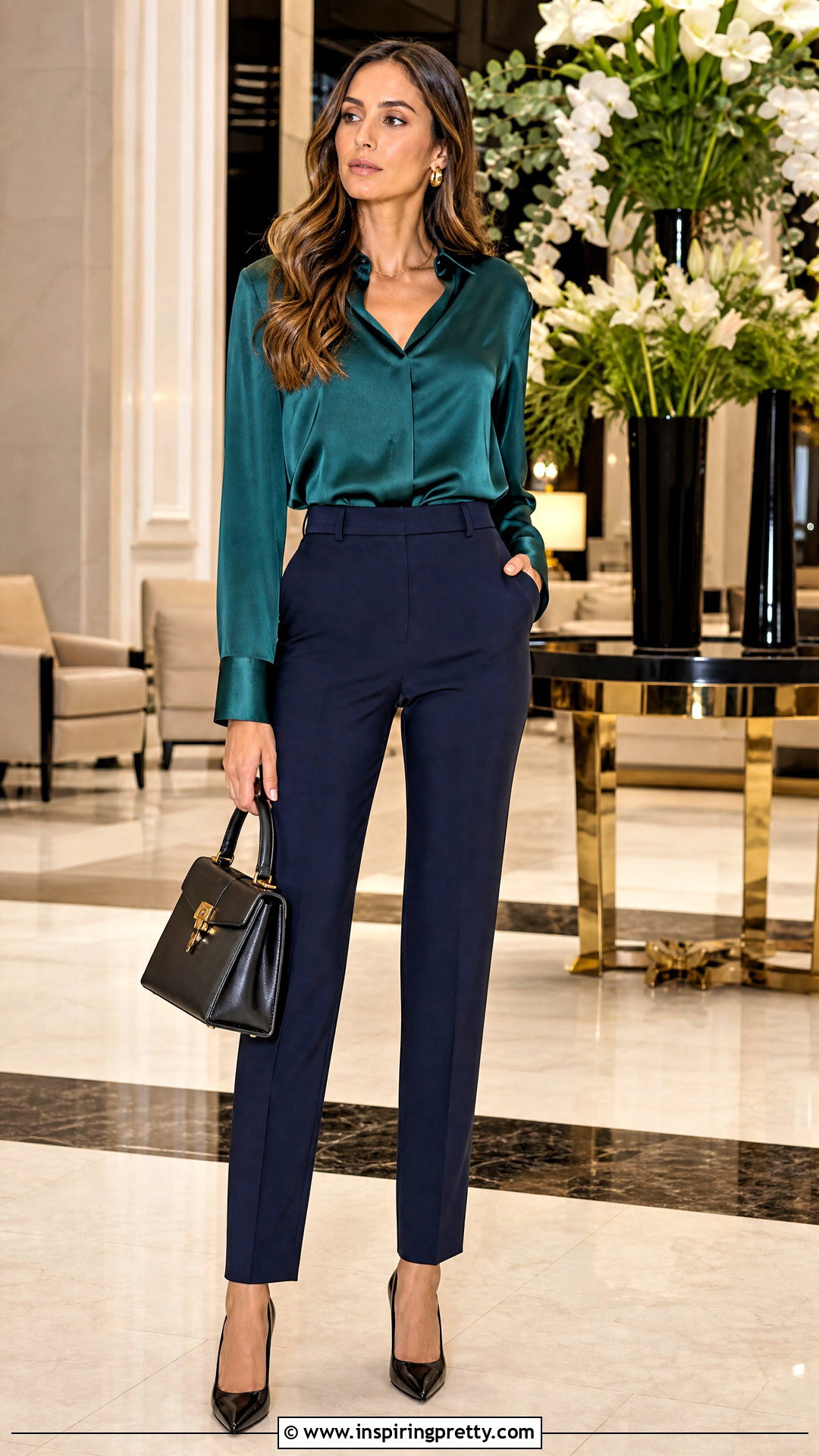
Emerald with navy is a jewel-tone pairing that looks deliberate, especially for evening or a smart occasion. I'd put a smooth emerald blouse with high-waisted navy trousers, black heels and a structured black bag, using the black as a steady neutral base. Fabric matters with dark jewel tones: satin, crepe or a fine knit catches light, while a flat matte cotton can look dull beside dark trousers. Forest or bottle green softens the effect. Gold jewelry warms both colors. On a petite frame, tuck the blouse and choose pants with a clean, flat front, so two saturated blocks don't cut the body in half.
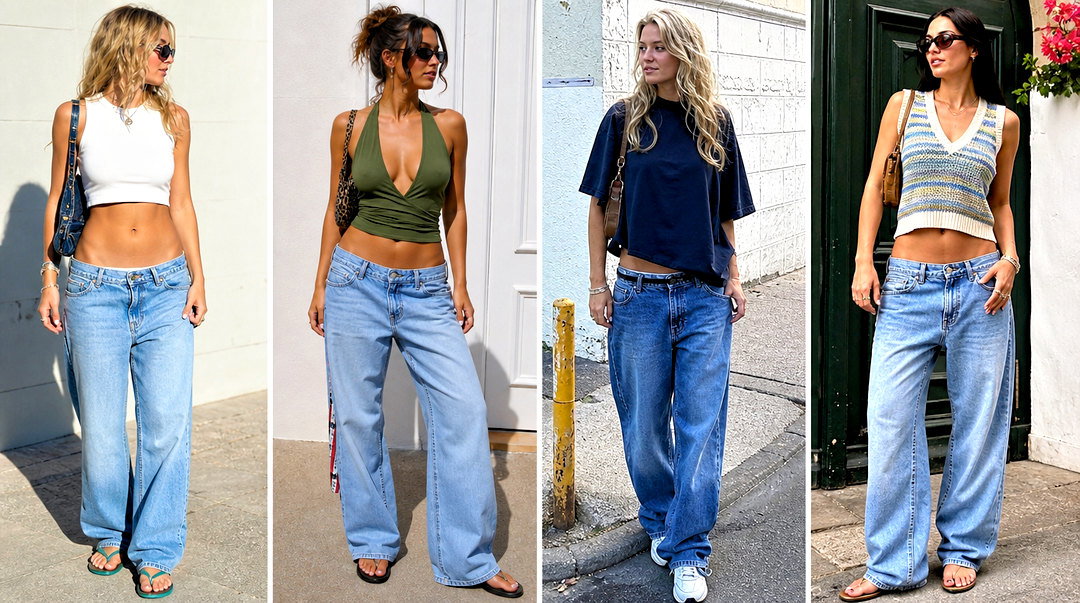
15. Sage Green Shirt With Dark Blue Pants And Cream Sneakers
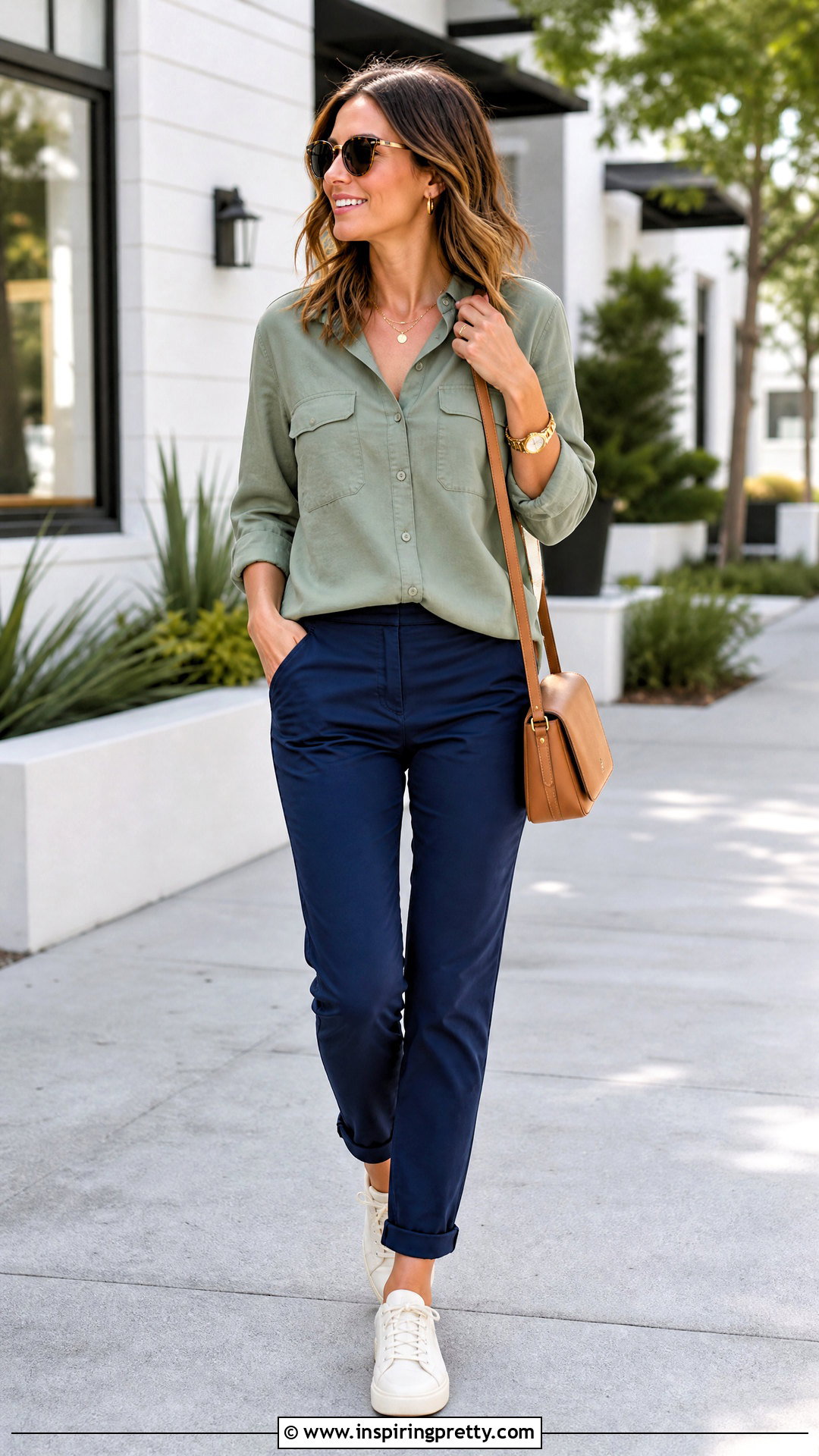
Sage is muted, and so is navy, which is the one problem with this pairing. Together they can go dull, so I always add one light element: white shoes, a cream jacket or a pale bag. For weekends, a sage utility shirt left slightly loose over navy chinos, sleeves rolled, with cream sneakers and a light tan crossbody is relaxed and easy. A fitted sage ribbed top with the same chinos, loafers and a structured tote looks cleaner. Gold jewelry adds warmth, and canvas and suede suit the understated palette.
16. Chocolate Brown Top With Light Blue Pants And Tan Accessories
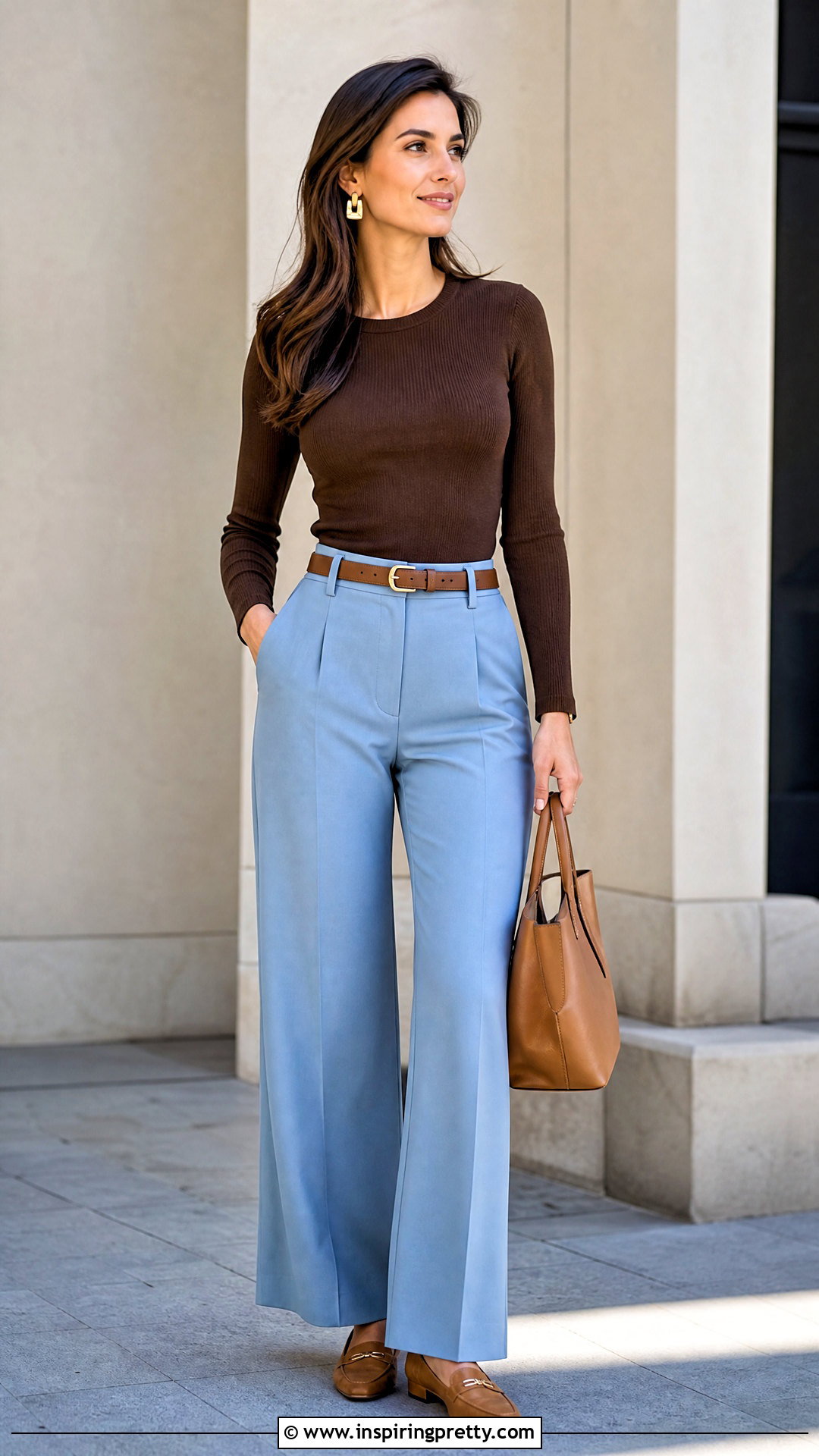
Chocolate brown over pale blue pants is warm and grounded. A fitted brown knit with light blue wide-leg trousers, tan loafers and a camel bag lets the light pants lift the dark top, and the related browns keep it coordinated. For richer contrast, a chocolate satin blouse with cobalt pants is the dressier version, finished with gold earrings and a brown belt that links top and bottom. Mocha, cinnamon or caramel are gentler if dark brown feels heavy. The mistake I see most here is black shoes. Black breaks the warm story, so keep the shoes inside the brown family.
17. White And Blue Striped Top With Navy Pants And Sneakers
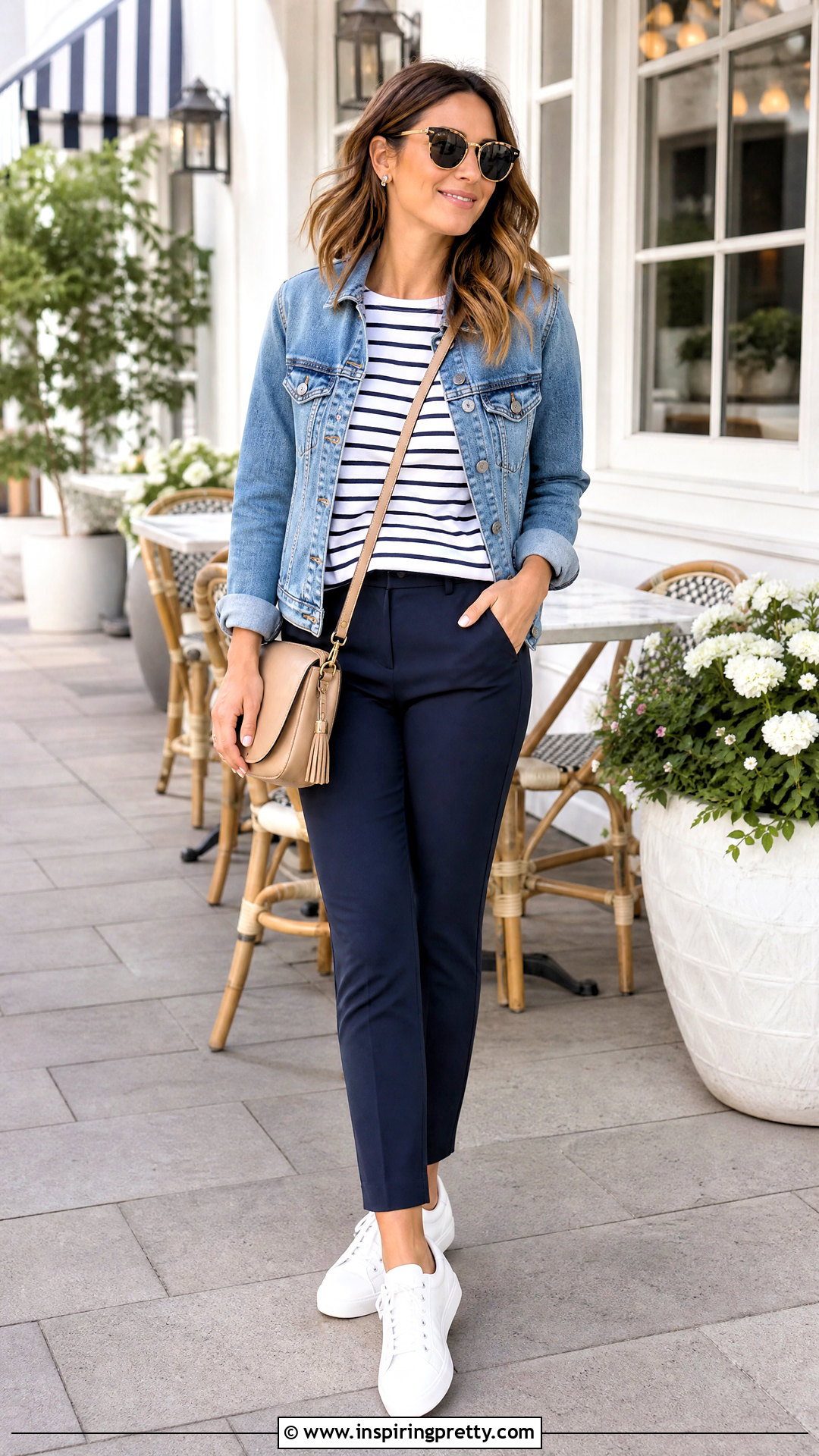
Stripes are the most forgiving print to wear with navy pants, because the blue in the stripe repeats the trousers. A fitted Breton-style shirt with navy ankle pants, white sneakers and a red or tan crossbody bag is a casual classic, and the white ground keeps it bright. Stripe width changes the effect: wide bands read bolder and add visual width, while narrow ones are quieter and sit neatly under a blazer. A looser striped shirt wants tapered trousers to keep the outline balanced. A denim jacket adds another blue without confusing things. Leave other patterns out.
18. Floral Blouse With Blue Pants And Solid Flats
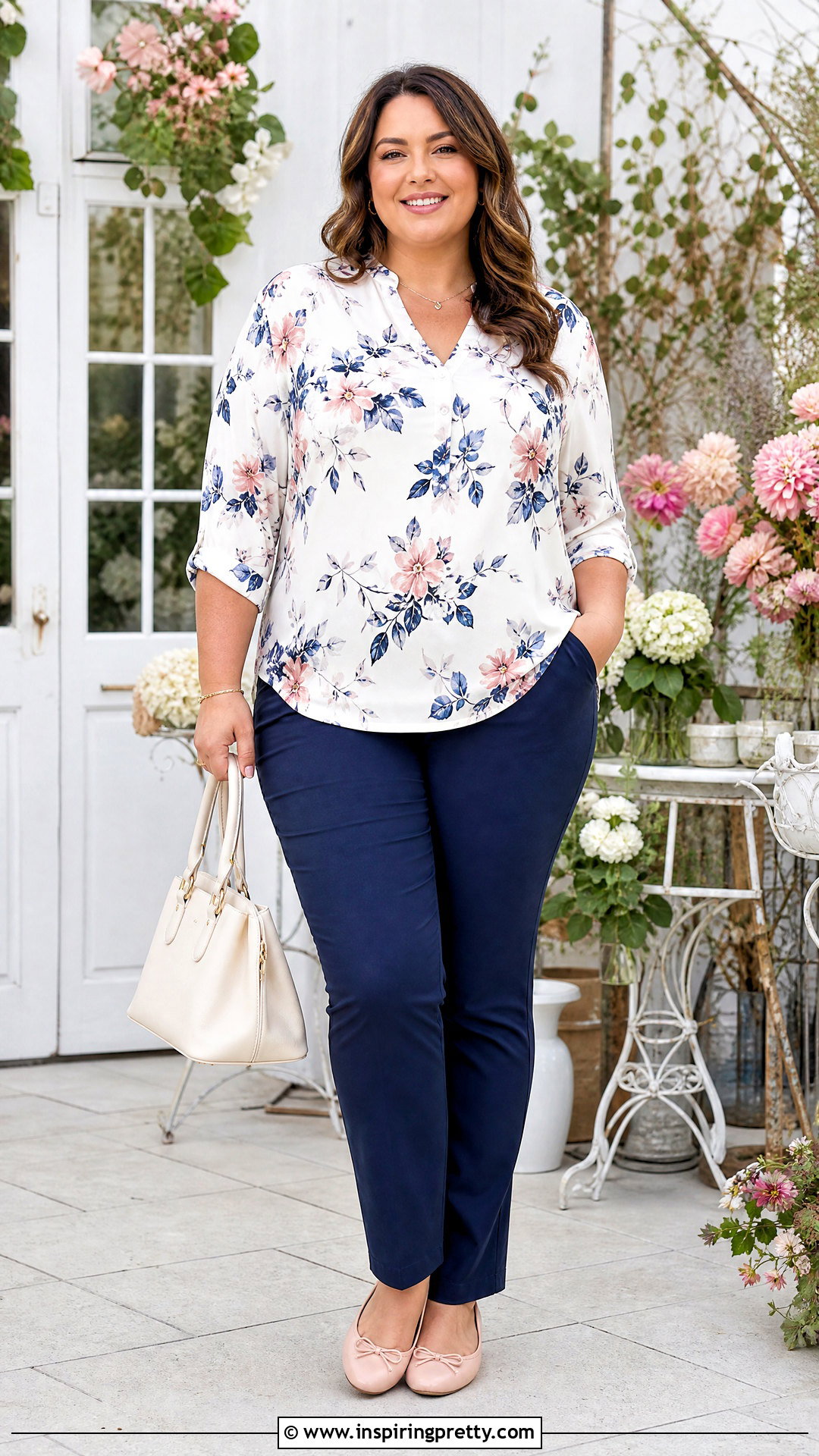
A floral blouse solves the color question for you, provided the print already contains a blue. I look for a white-based floral with navy, cobalt, pink or green accents, then wear it with solid blue trousers and pull one secondary color from the print for the shoes or bag. A white blouse with blue and pink flowers over navy pants, blush flats and a cream bag is a good example. Large, busy florals call for plain pants, minimal jewelry and no second pattern. Small prints are quieter and suit an office. Tuck it in so the print has a defined edge at the waist.
19. Silver Top With Navy Blue Pants And Black Accessories
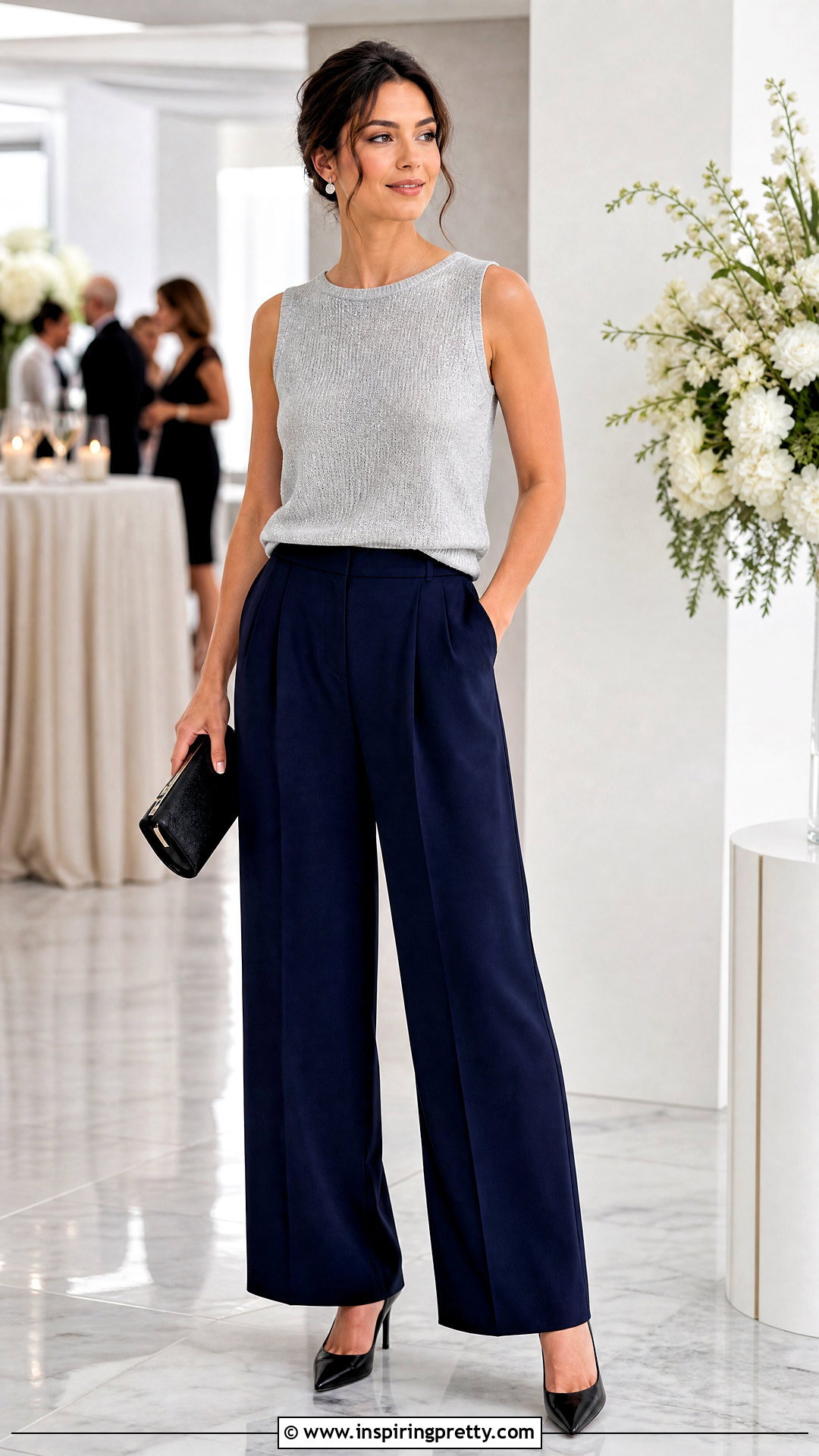
Silver is a neutral that dresses navy up without adding color. A subtle silver knit shell with navy wide-leg trousers, black pointed-toe pumps and a compact black clutch is my evening version. Choose fabric with a soft sheen rather than heavy glitter so it doesn't look costume-like in daylight. A navy blazer adds coverage. Since the top already reflects light, small silver earrings and a slim bracelet are plenty. Cool silver can grey out warm skin; pewter or champagne metallics are kinder there. Keep the trousers clean and simple so the shine has no competition.
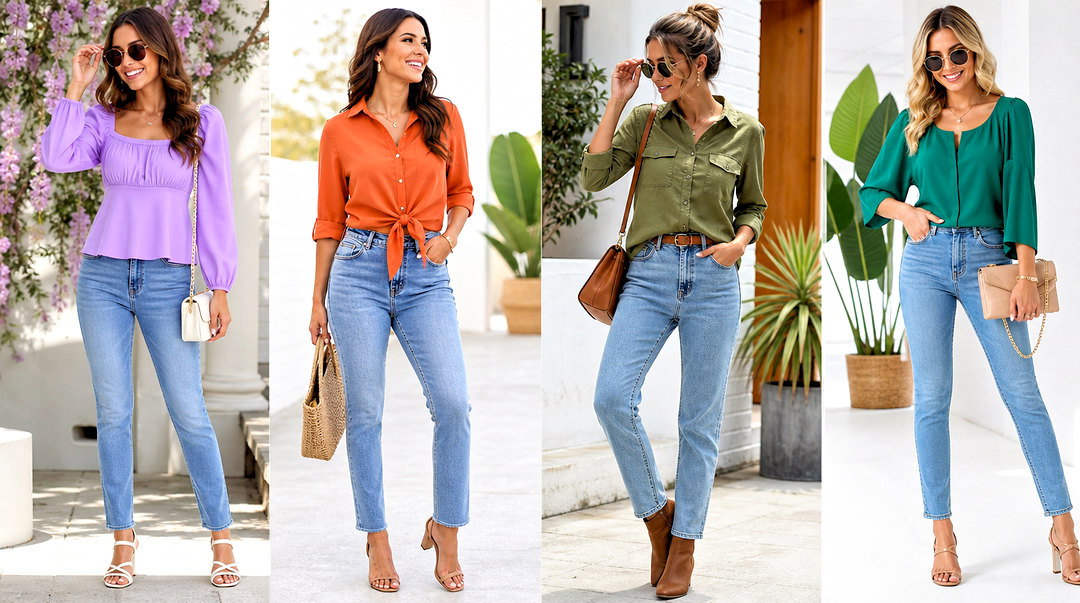
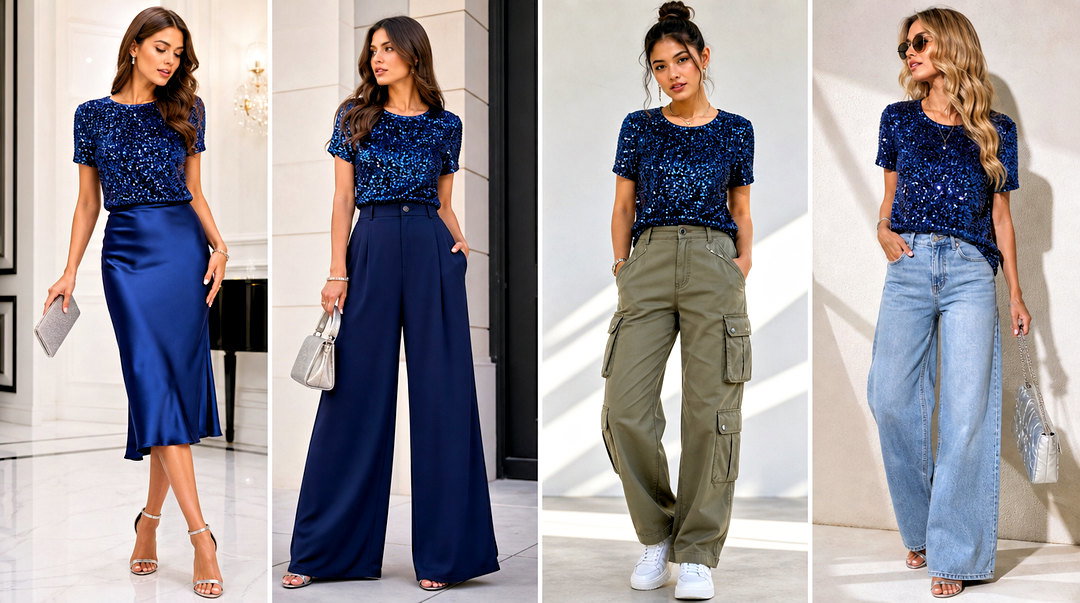
20. Rust Orange Top With Dark Blue Pants And Cognac Boots
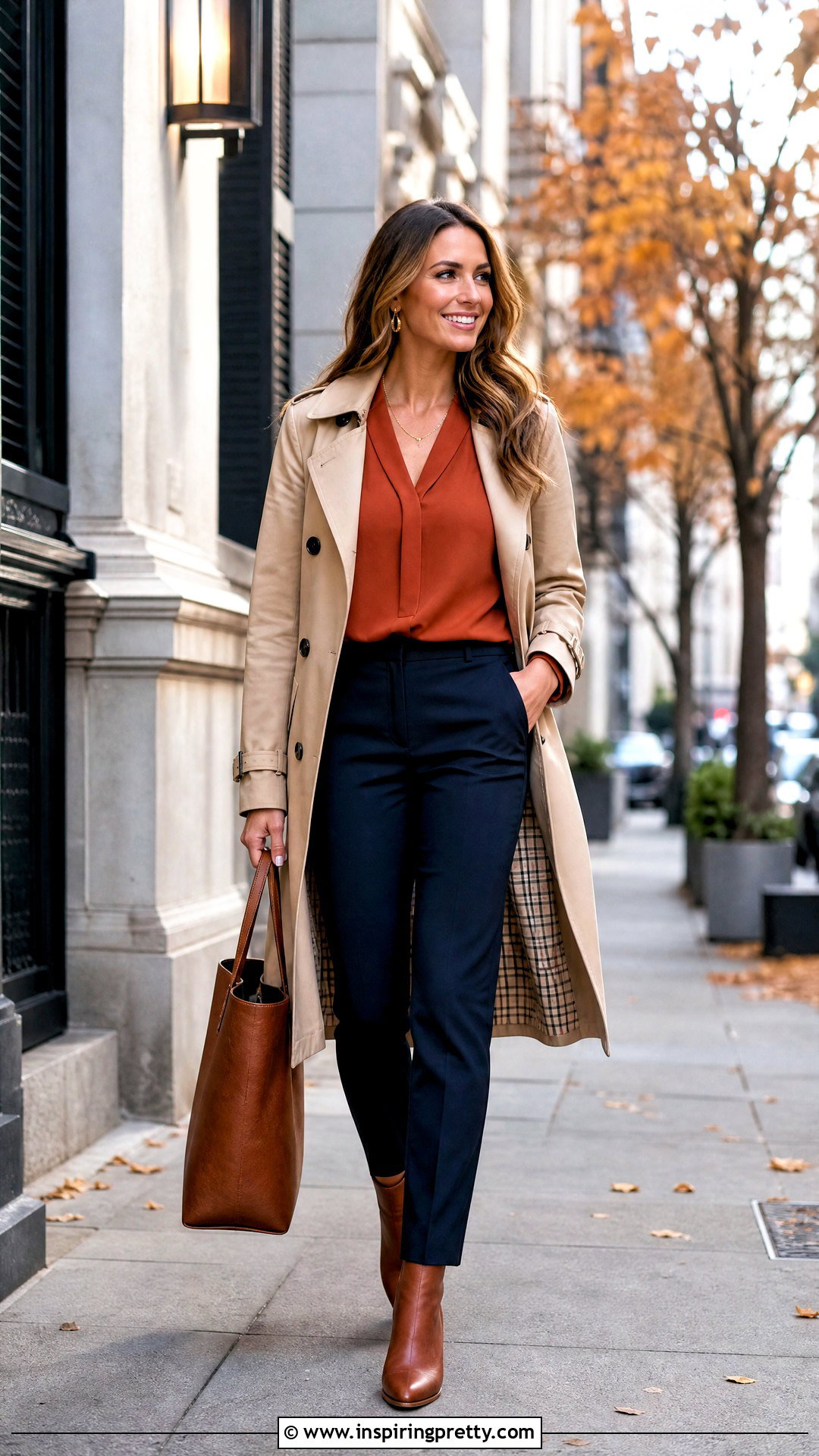
Rust and navy is the autumn version of the orange-and-blue contrast, earthy rather than bright. A rust blouse with navy straight-leg trousers, cognac ankle boots and a medium-brown tote is comfortable and easy, with a camel cardigan or beige trench as the layer. With mid-blue denim-style pants, a soft cotton rust top, tan flats and a crossbody keep it casual. Gold jewelry suits the orange. Keep the rest neutral, because rust plus other unrelated brights quickly looks loud. With relaxed pants, a tucked or waist-length top holds the proportions.
A Window Test for Any Top Color
The pants sit far from your face, so they rarely clash with your skin. The top is a different story. Before committing to a new color, I do the same quick test I'd do in a consultation.
- Stand by a window in daylight with no makeup or very little. Artificial bulbs, especially warm ones, hide what a color really does.
- Hold the top right under your chin, then step back so you can see your whole face in the mirror.
- Look at the skin, not the fabric. A good color evens out redness and makes the eyes look clearer. A poor one adds shadows under the eyes, makes skin look gray or yellow, or shows every blemish.
- Compare two versions of the same color side by side, such as blush versus dusty rose or bright white versus ivory. The difference is usually obvious within seconds.
If a color you love fails the test, you don't have to give it up. Wear it lower on the body, under a blazer, or with a neckline scarf in a shade that does pass. That's the honest trade-off with tricky colors like yellow and pale pink.
Black With Navy, and Other Pairings People Worry About
Black and navy together used to be called a mistake. It isn't, as long as the difference looks intended. A black top with clearly navy pants reads modern; the trouble starts when the navy is so dark it looks like faded black, and the outfit looks like two pieces that almost match. In dim rooms that happens a lot, so I'd save the pairing for brighter navy or daylight events.
Brown with blue worries people too, yet it's one of the most reliable combinations here, because brown is essentially a deep, muted orange and orange is blue's natural contrast. Two blues together work when one is clearly lighter. Two bright colors together, such as cobalt pants with a hot pink top, can work too, but only with neutral shoes and bag and nothing else competing.
Finally, watch the fabric finish. Shiny navy pants with a matte cotton tee look mismatched, while a matte trouser with a light-catching top looks balanced. Satin blouses also show sweat and creases near the waistband, so I keep them for shorter events and choose crepe or knit for long days.
My Shortlist for the Blue Pants You Already Own
Start with the blue you own, then decide how much contrast you want. White, cream, beige, gray and black are the safe bets that move between casual and polished. Pink, lavender, sage and lighter blue keep things soft; red, emerald, mustard, coral, rust and burgundy bring the contrast. Stripes, florals, metallics and all-navy add variety once the basics feel easy. Tie each outfit together with shoes and a bag from the same family, and trust what you see next to your face in daylight over any rule.
Related posts:


Leave a Reply