
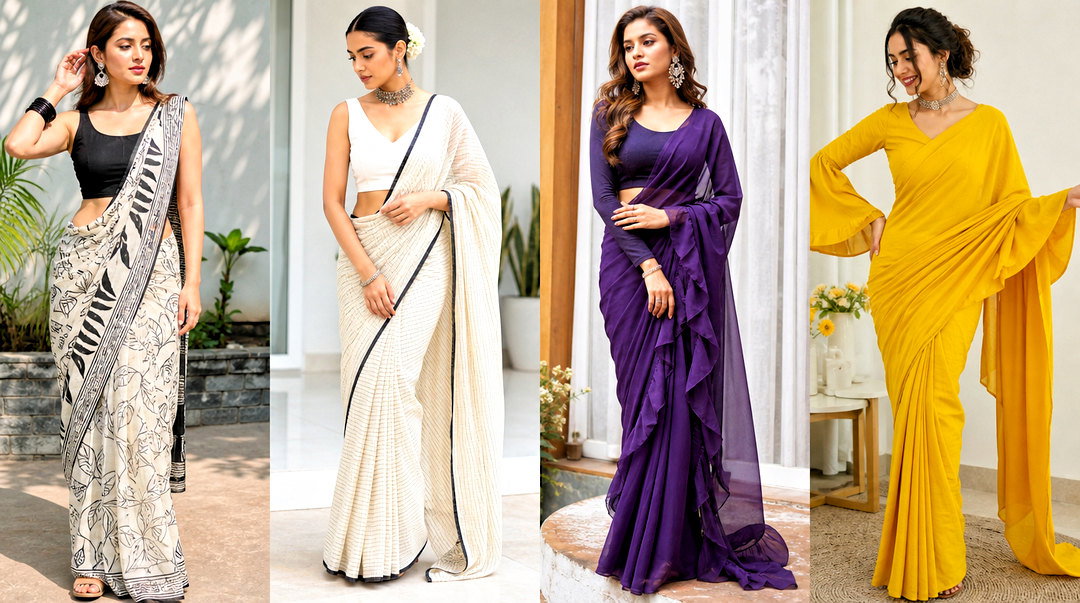
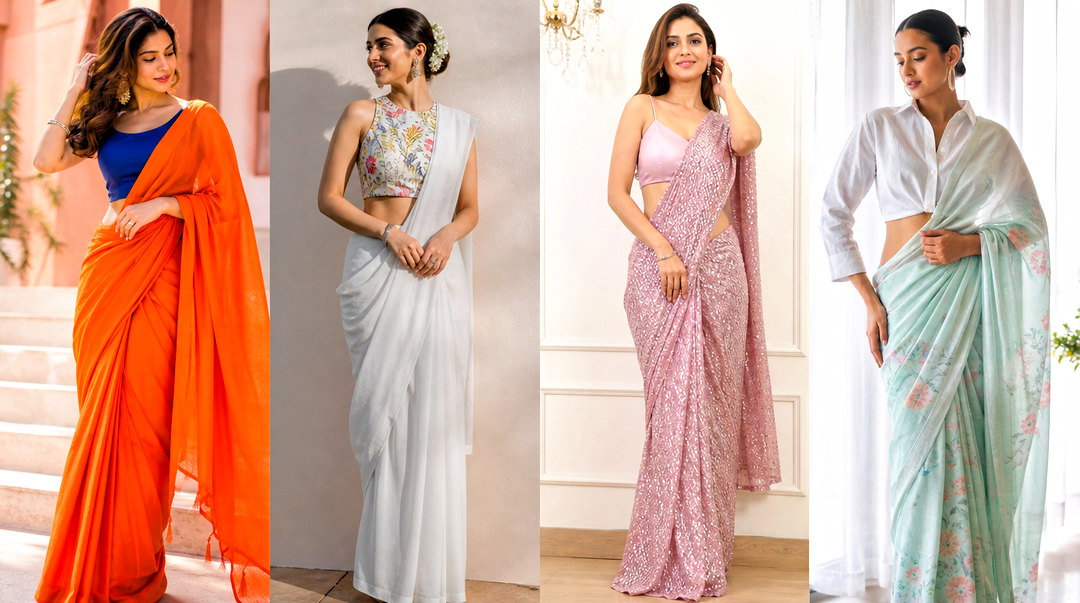
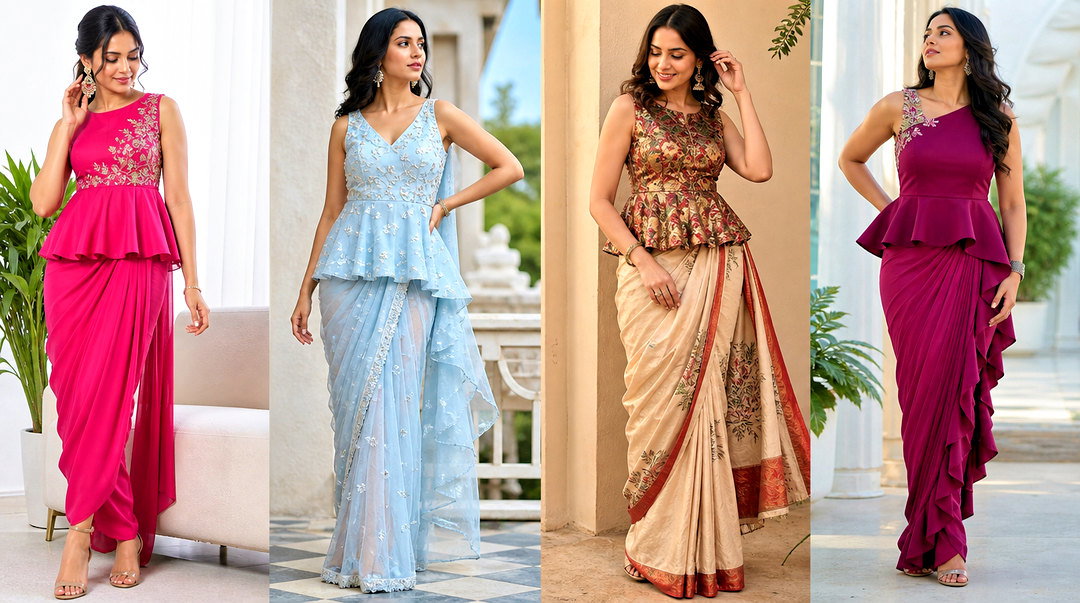
Cutting into a saree that belonged to your mother or grandmother is a big decision, and I always treat it that way. A saree gives you three different fabrics in one length: the plain body, the border running along one edge, and the decorated pallu at the end. A good skirt and crop top uses each where it shows best, usually the border at a hem and the pallu across the front of the top. The ideas below range from heavy silk lehenga-style sets to light chiffon and everyday cotton. Whichever you pick, check the fabric for weak spots and fading first, and plan every motif before the scissors come out, so the result looks designed rather than recycled.

Mapping the Saree Before Anyone Cuts
I always open the saree fully on a clean floor or bed before deciding anything. Most sarees are somewhere around five and a half to six and a half metres long and just over a metre wide, but older and regional weaves vary, so measure yours.
- Find the three zones: the plain body, the border along one or both edges, and the pallu at one end. Some sarees also have an unstitched blouse piece at the other end, which is extra fabric for the top.
- Hold every fold line up to a window. Silk and cotton that have been folded the same way for years often weaken or split along those creases.
- Mark stains, holes and faded patches with safety pins, not chalk, which can mark old silk.
- Test the colour by pressing a damp white cloth on a hidden corner. Bandhani, Kalamkari and older dyes can bleed.
As a rough guide, a flared floor-length skirt takes most of the body, and a crop top needs about a metre, so a standard saree can usually give both. A circle skirt or a three-piece with a dupatta or jacket needs careful planning, and sometimes a second saree or a plain matching fabric.
1. Banarasi Saree Skirt And Square Neck Crop Top
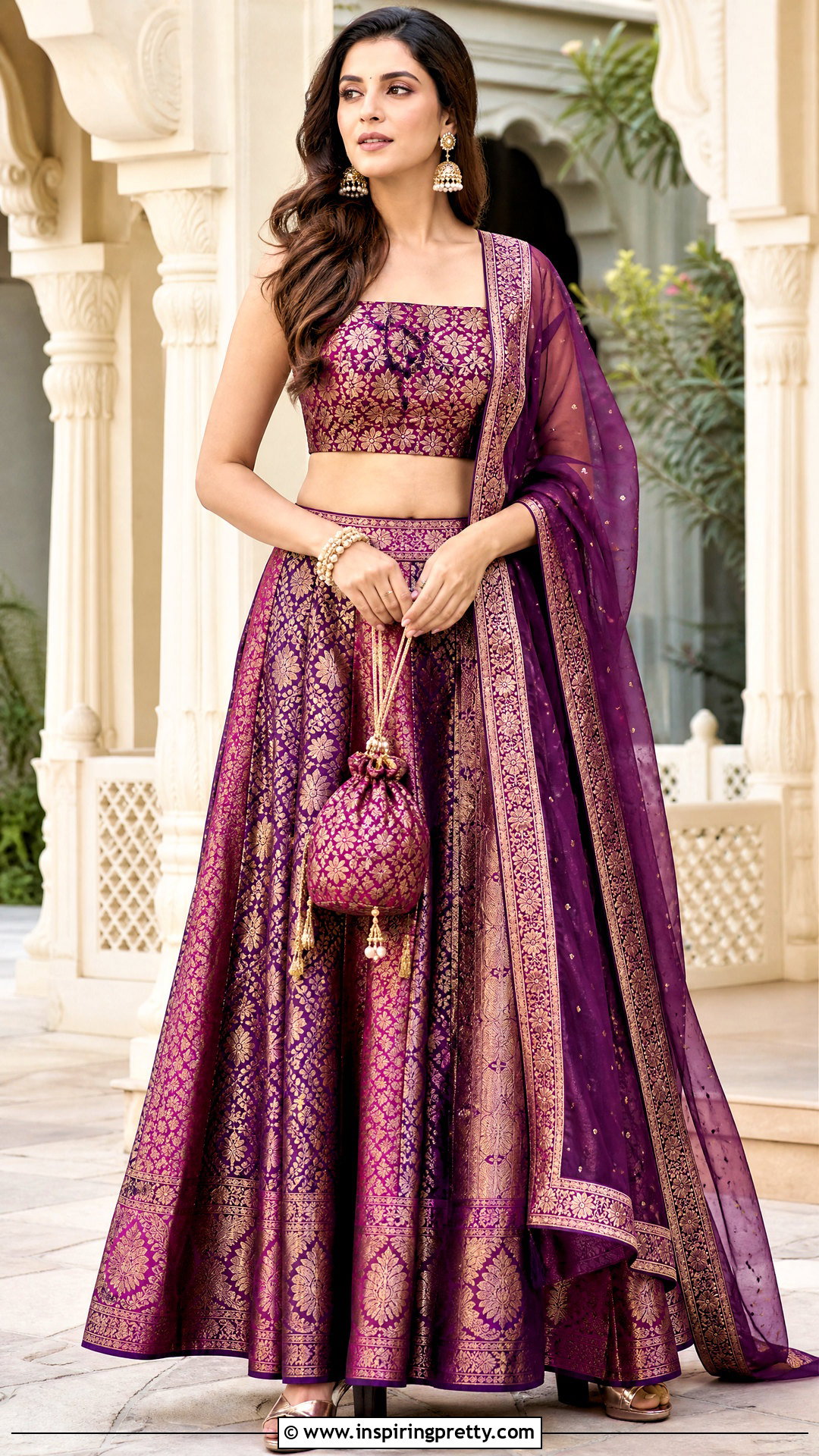
Banarasi brocade has enough body for a high-waisted paneled skirt with real flare, which is what I'd make for a wedding or reception. Put the zari border at the hem, where it moves and catches light. The pallu, which carries the densest motifs, becomes a fitted square-neck crop top with short or elbow sleeves. Metallic block heels, jhumkas and a potli finish it, and a light net dupatta can soften the heavier brocade. Line both pieces in cotton: the floats on the back of an old Banarasi weave scratch and catch on skin and jewelry.
2. Kanjeevaram Saree Skirt And Boat Neck Crop Top
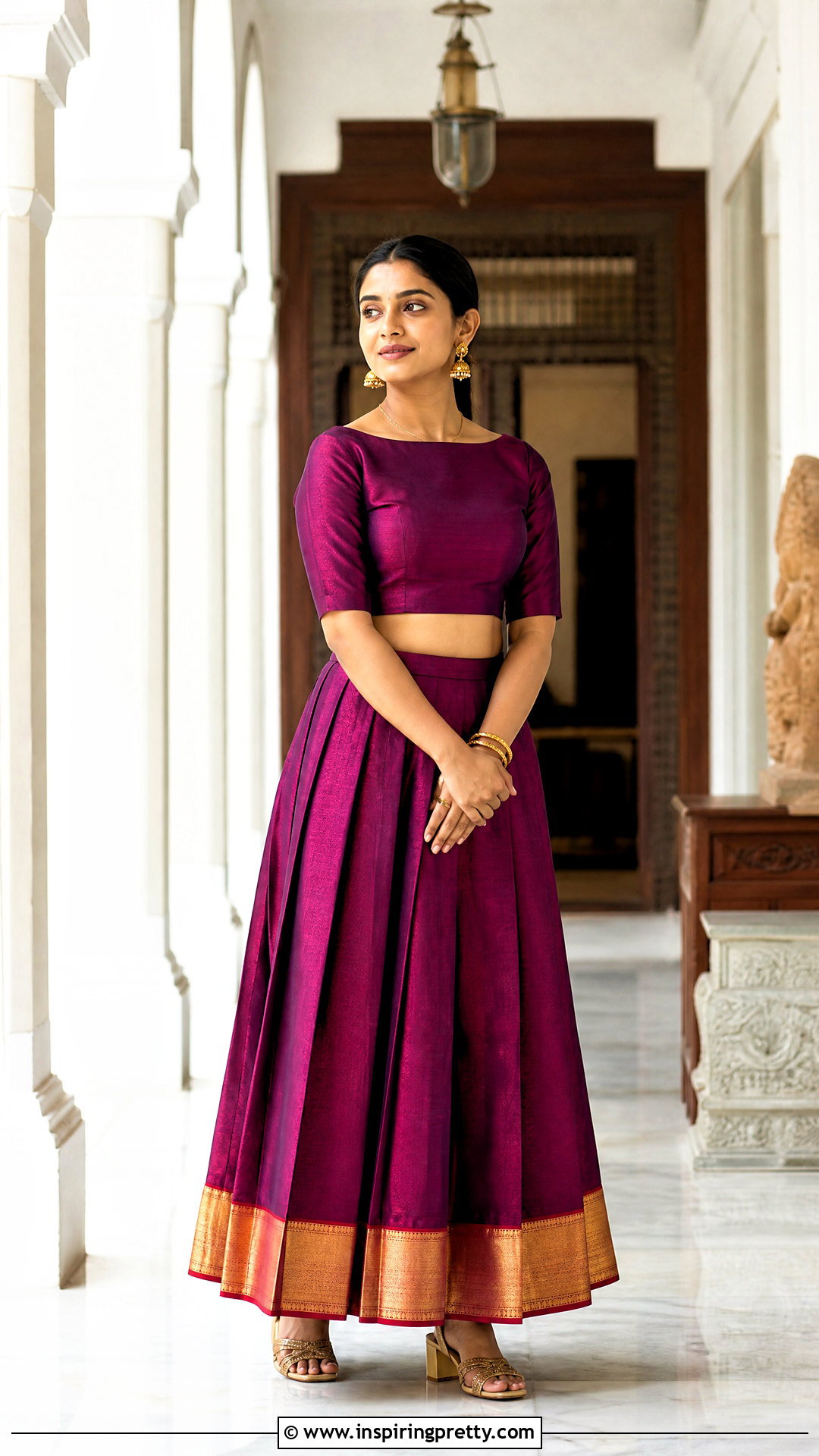
Kanjeevaram silk is crisp and heavy, so I cut it as an A-line with broad panels rather than gathers, which would add too much bulk at the waist. A boat-neck crop top suits the stiff fabric because it sits flat across the collarbones. Put the contrast border along the hem and repeat a narrow strip at the sleeves. If the pallu is elaborate, use it across the front of the top or as a detachable shoulder drape. Older Kanjeevaram silk can split at long-held folds, so reinforced waist seams and a firm lining matter more here than anywhere.
3. Chiffon Saree Maxi Skirt And Ruched Crop Top
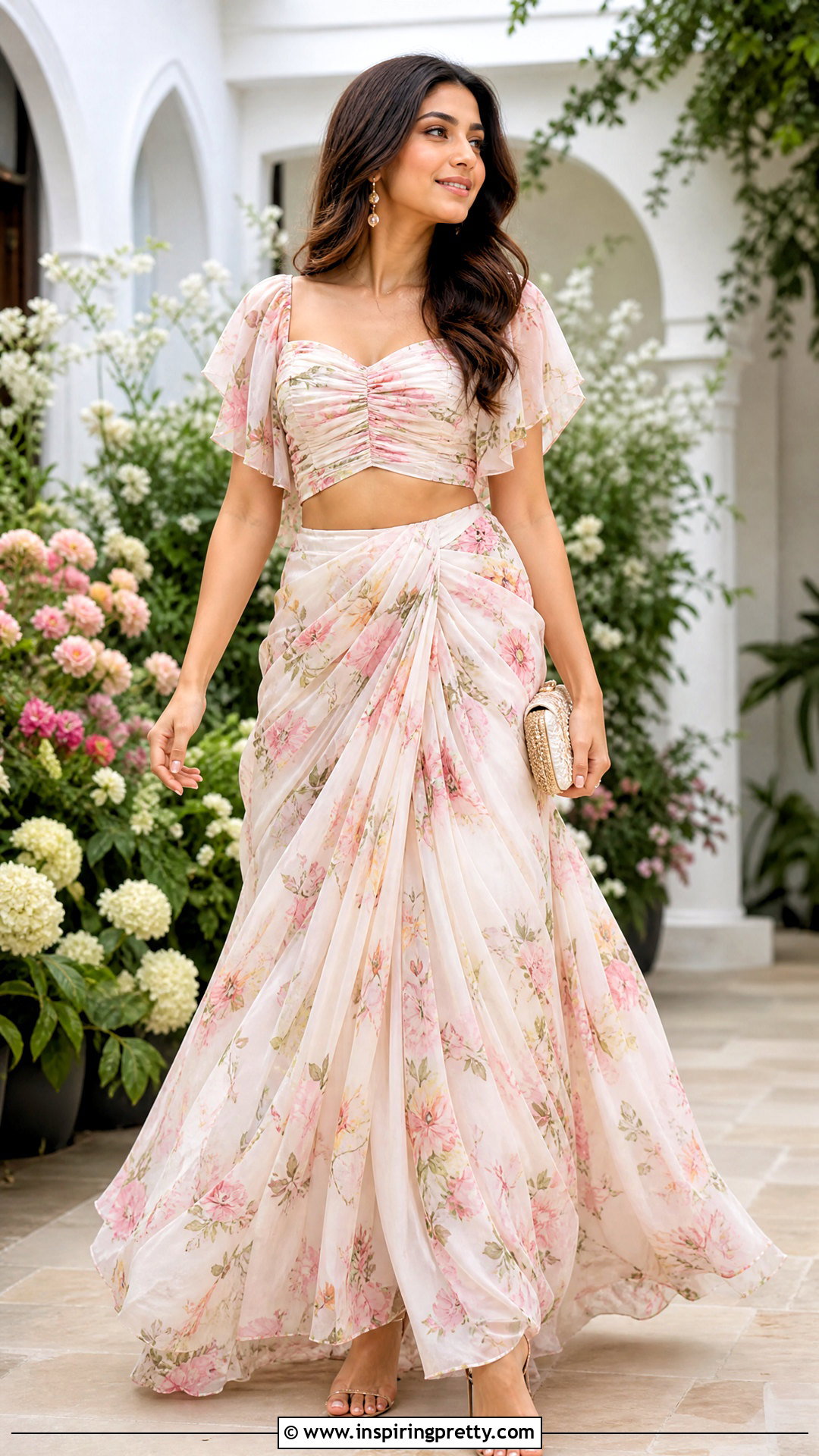
Chiffon is the easiest saree to wear as a set and one of the hardest to sew, because it slides and frays. Turn the body into a gathered maxi on a fitted waistband with a smooth lining, and use the rest for a softly ruched crop top with flutter sleeves. Keep any border on show at the hem or neckline rather than lost in a seam. A side zip keeps the skirt waist flat, and an adjustable back closure lets the top be refitted later. Slim-strap heels, drop earrings and a small clutch are enough.
4. Georgette Saree Paneled Skirt And Sleeveless Crop Top
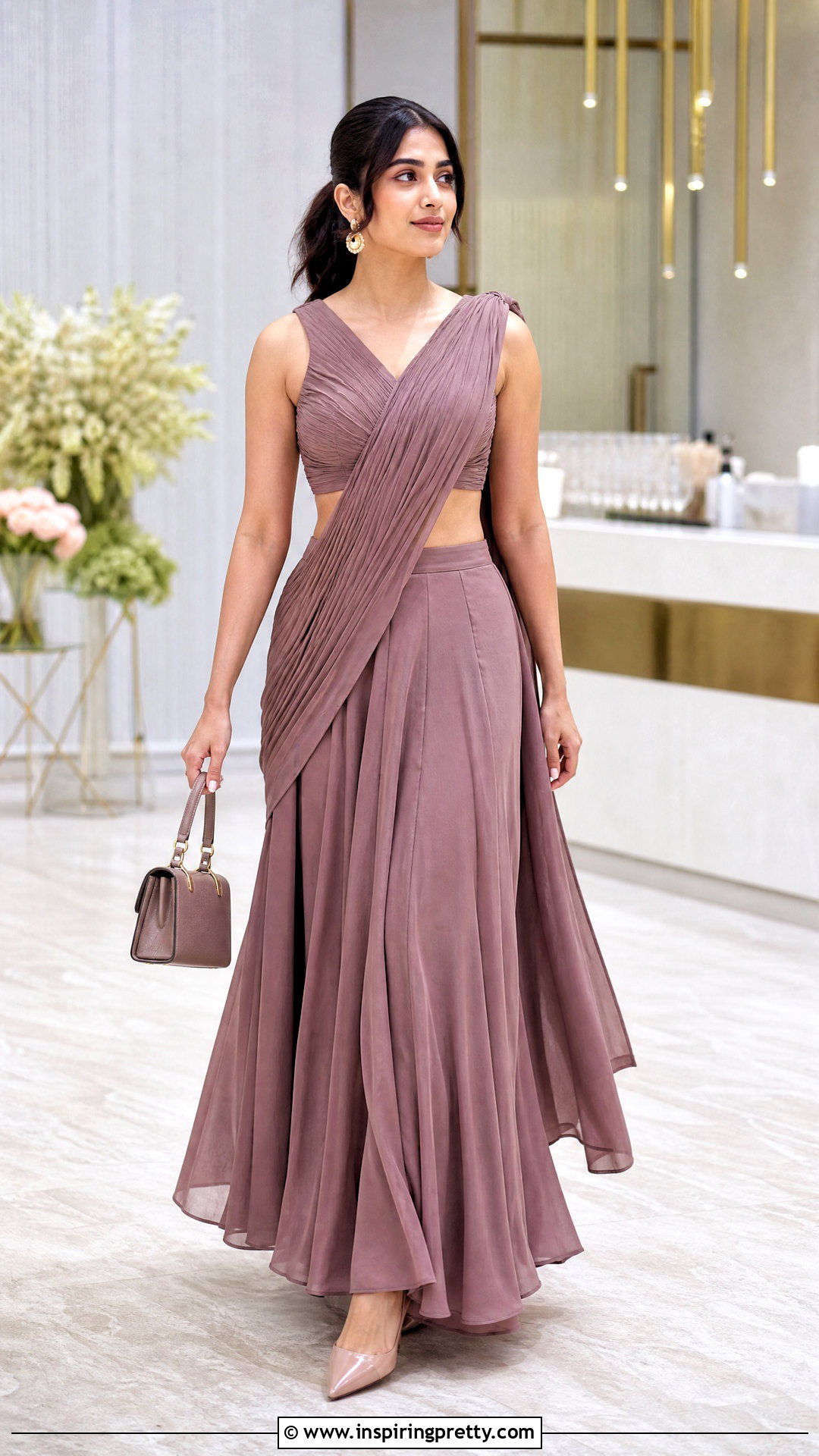
Georgette has more grip than chiffon, which makes it ideal for a paneled skirt: six or eight panels give a long line without bulk. Sit the skirt at the natural waist with a narrow border at the hem. A sleeveless crop top with a round neck and princess seams shapes the body comfortably; put the pallu on the front panel if it carries the stronger print. Pointed heels and a structured bag suit it. I'd end the lining slightly above the skirt hem, so it stops the sheerness but the georgette still floats when you walk or dance.
5. Cotton Saree Tiered Skirt And Puff Sleeve Crop Top
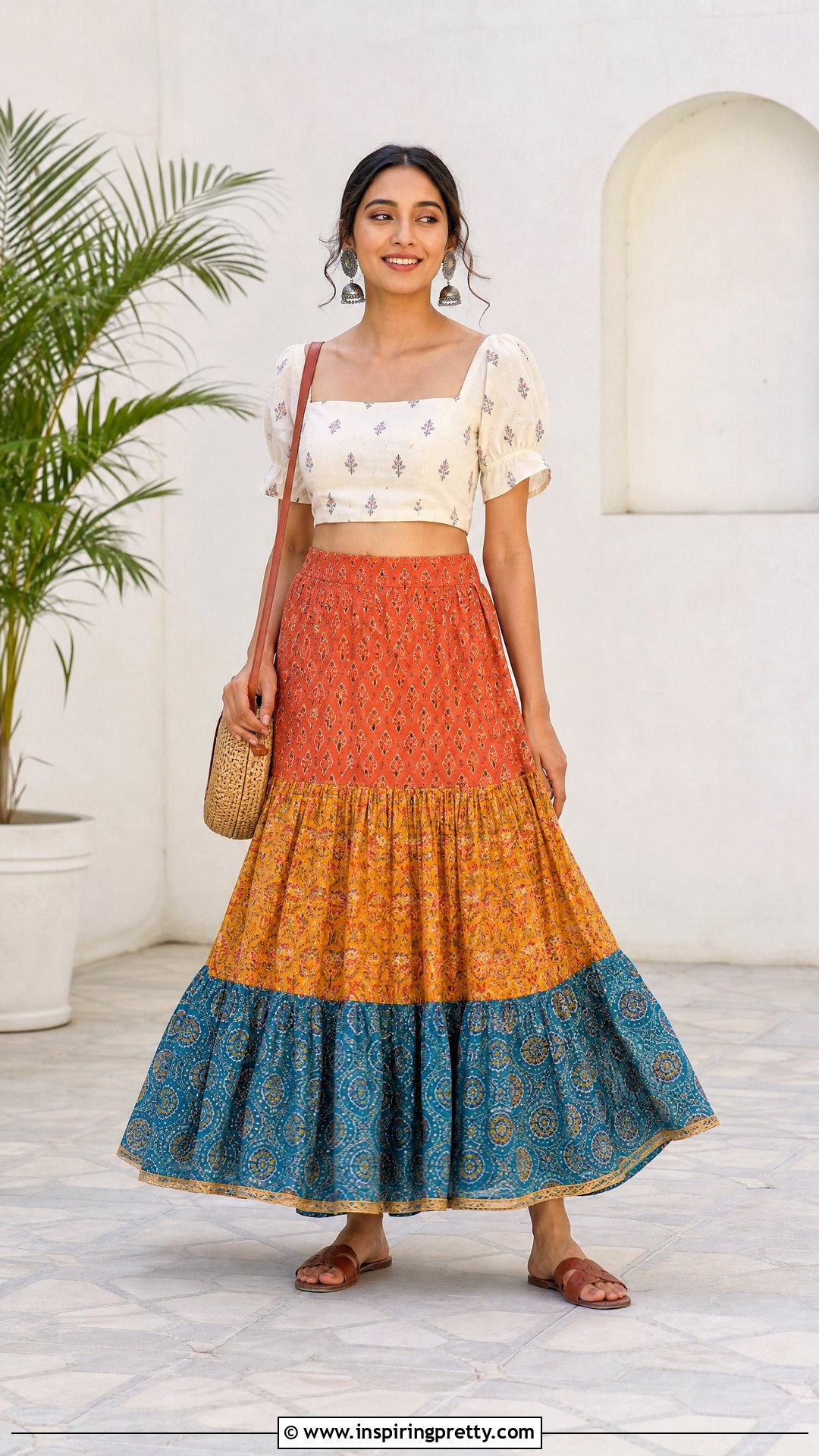
A printed cotton saree makes a relaxed tiered skirt for daytime events. Three wide tiers, with the biggest print or the border on the bottom tier, keep the weight low so the skirt swings. A fitted square-neck crop top with short puff sleeves defines the waist. Flat sandals, oxidised silver earrings and a woven sling bag finish it. Smocking at the back of the top makes it flexible. Always prewash the cotton before cutting; old cotton sarees can still shrink, and they rarely shrink evenly between body and border.
6. Linen Saree Wrap Skirt And Tie Front Crop Top
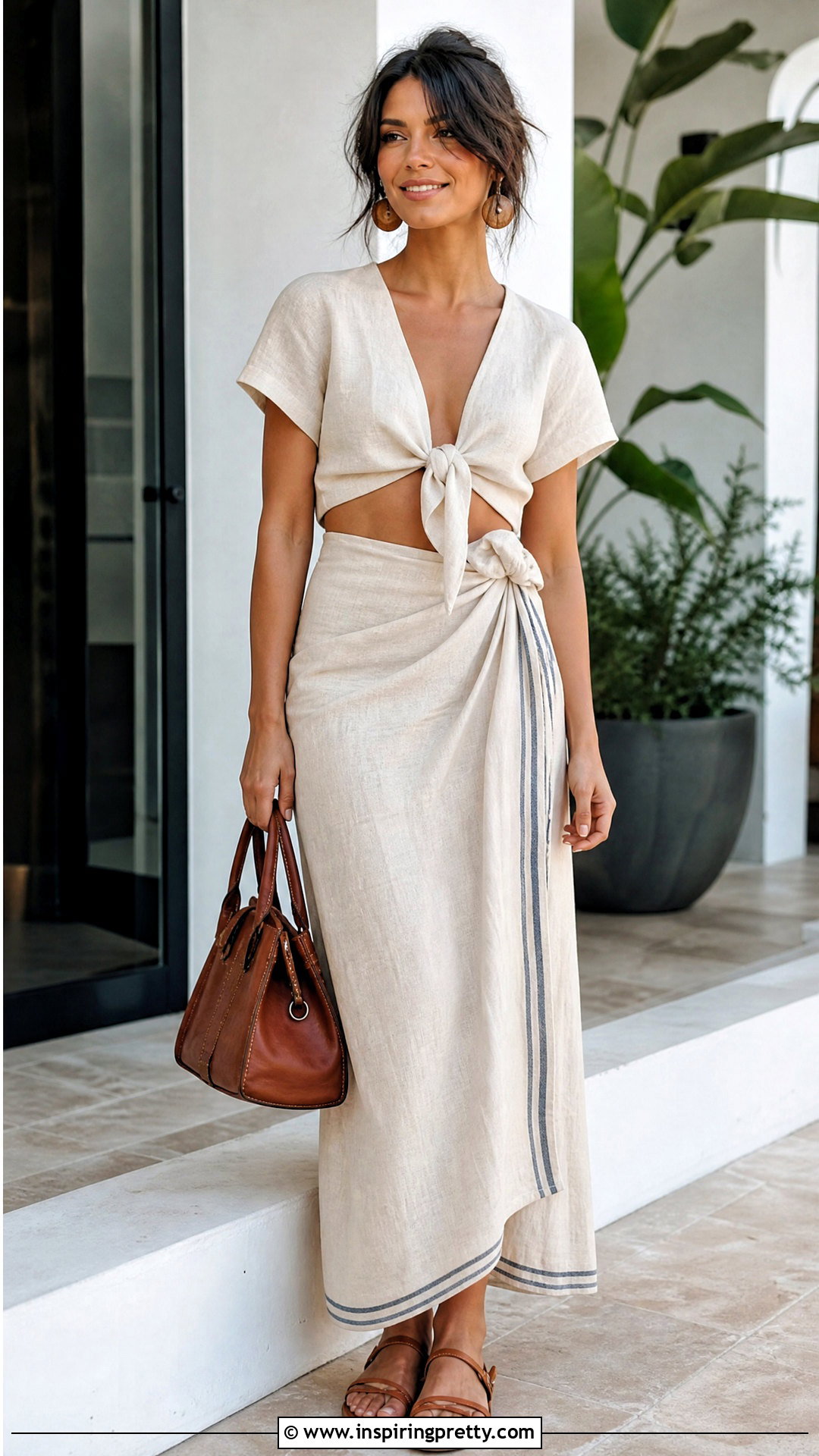
Linen is firm enough for a wrap skirt, which suits it better than gathers. I'd add an internal button, a hook and a wide overlap so it never blows open, and run the border vertically down the wrap edge. A short-sleeved crop top with a modest V and a decorative front tie over a hidden closure completes the set. Tan sandals, wooden earrings and a leather bag keep it casual. Linen creases; accept it rather than stiffening the fabric. A light facing at the neck and waistband holds the shape without adding weight.
7. Organza Saree Circle Skirt And Structured Crop Top
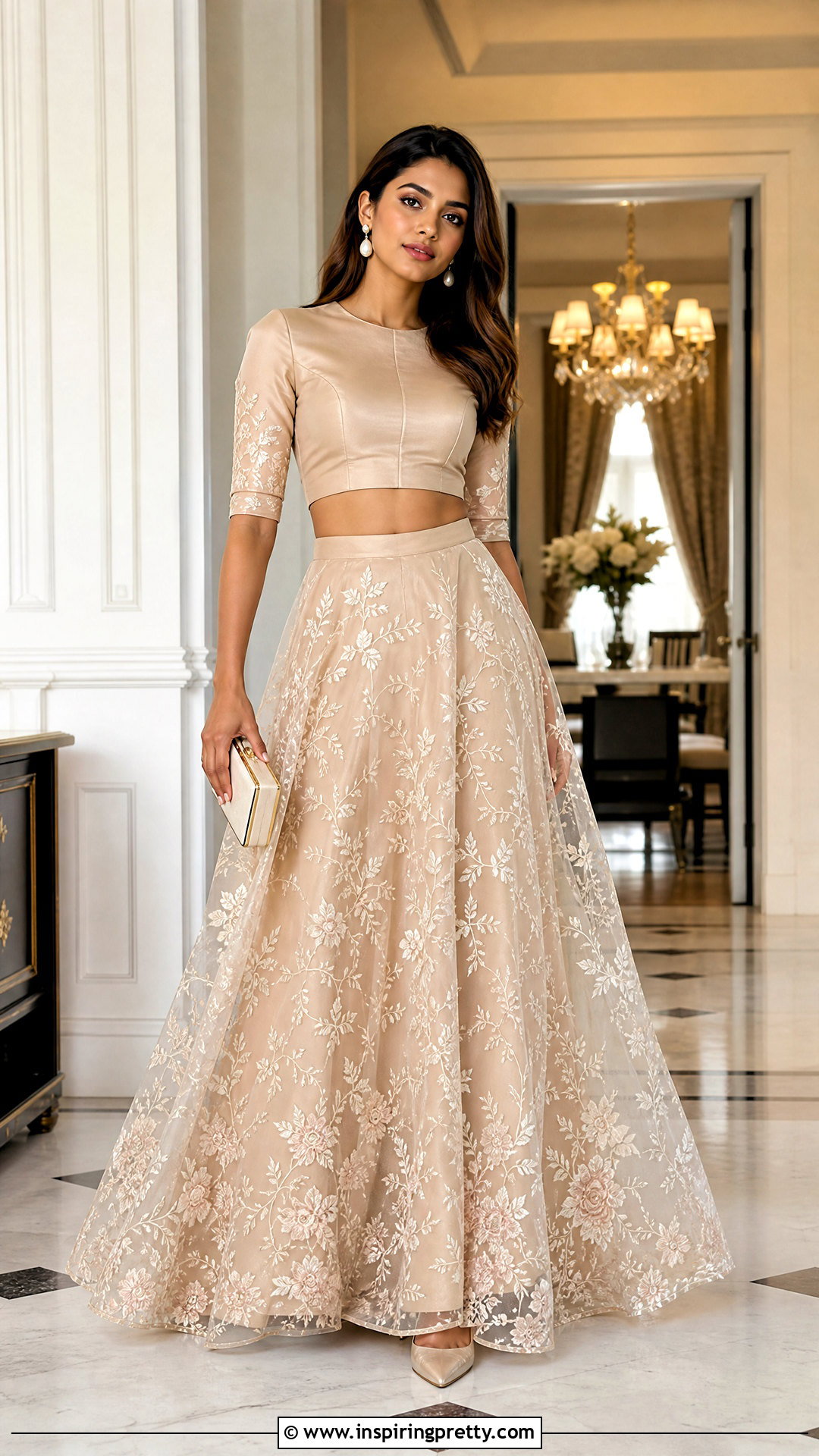
Organza is sheer and springy, so a circle skirt shows it off well. If the saree is narrow, you'll need several panels, and the embroidered motifs must line up across each seam. A full-length satin lining gives coverage while the organza keeps its volume. Make the crop top with a wide round neck, fitted elbow sleeves and proper inner structure. Pearl earrings, a box clutch and pointed heels are plenty. Organza frays and shows every needle hole, so ask for French seams or bound edges, and a concealed zip on a firm waistband.
8. Bandhani Saree Flared Skirt And Mirror Work Crop Top
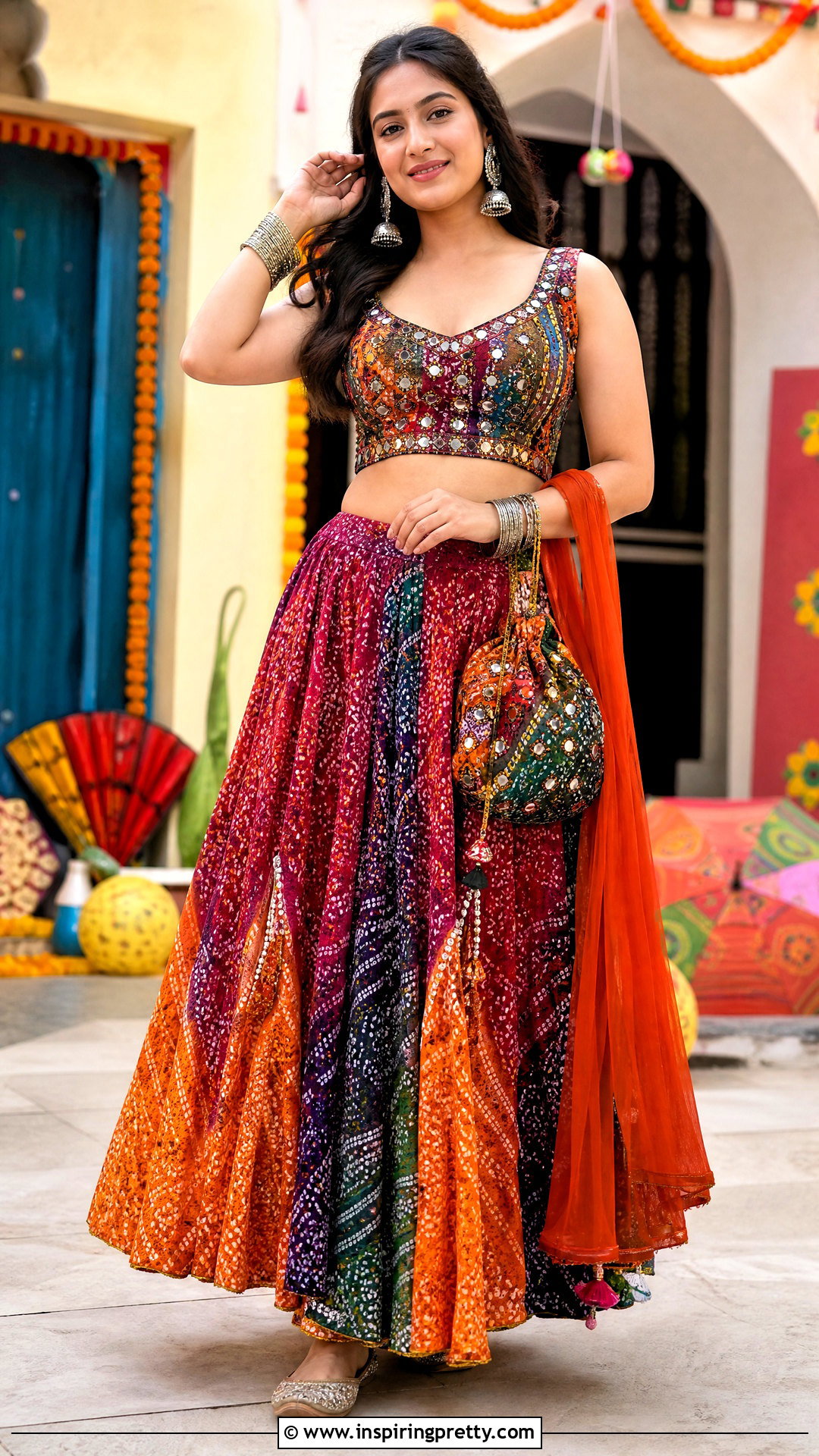
Bandhani dots look lively on a full flared skirt and matching festive crop top. Use the body for the skirt with the border on the hem, and give the top a scoop neck, fitted short sleeves and small mirror-work details around the neck only. A plain chiffon dupatta turns it into a three-piece. Silver jhumkas, bangles and juttis finish it. Bandhani is tie-dyed, so the dye can bleed when wet; test a hidden corner with a damp white cloth first. A drawstring with hooks makes the skirt waist adjustable for long celebrations.
9. Patola Saree Skirt And Pallu Crop Top
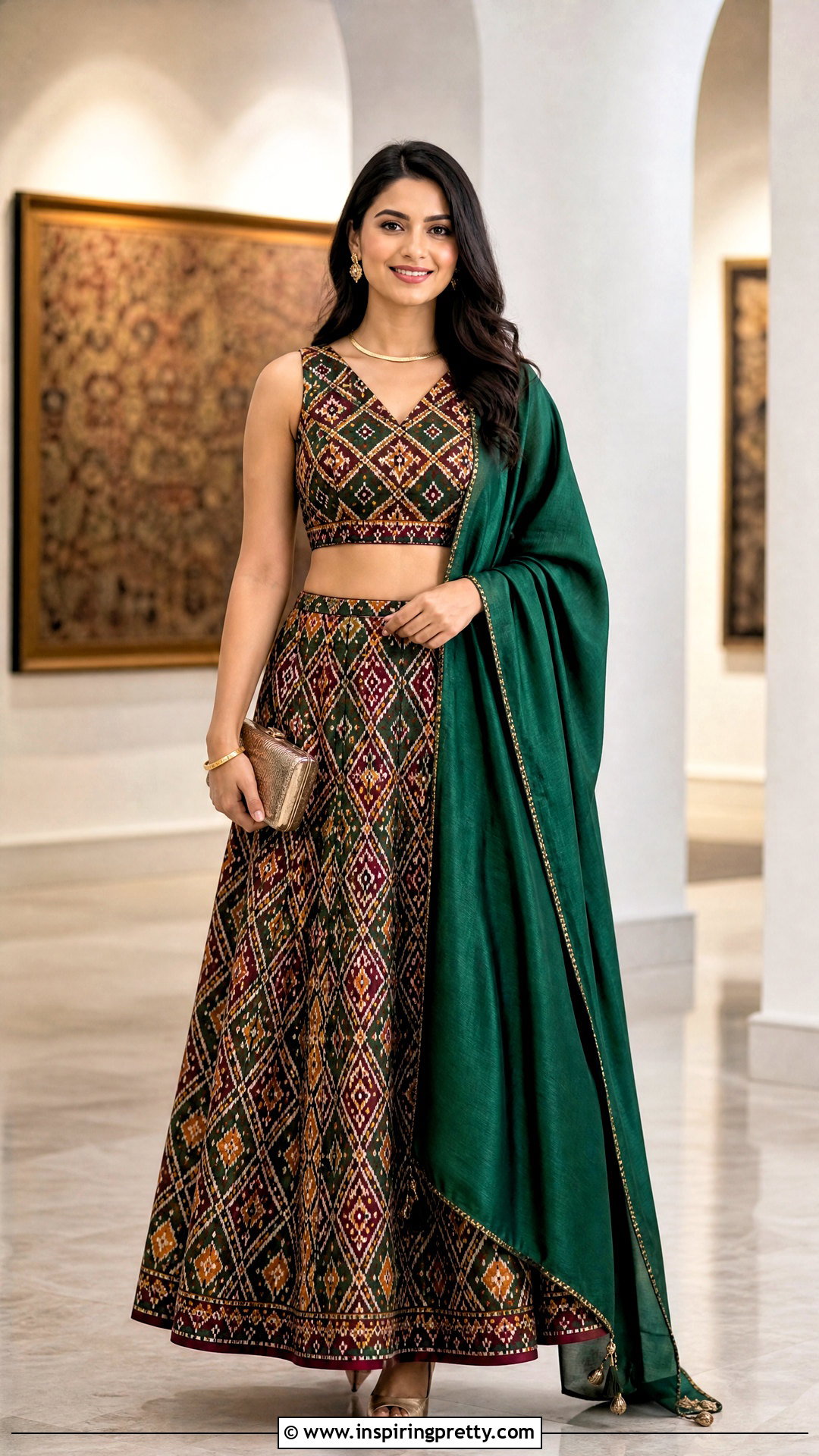
Patola is woven with a precise geometric pattern, so I keep the shape simple and spend the time on alignment. A high-waisted A-line skirt from the body, with motifs lined up across every panel, and a fitted V-neck crop top from the pallu is the plan. Skip extra trim; the weave is the decoration. Solid block heels, a small metallic clutch and plain gold jewelry suit it, with a dupatta in one of the saree's own shades. Lay every pattern piece on the fabric before cutting; a motif that is off by a finger's width at the centre front shows across a room.
10. Kalamkari Saree Skirt And Black Crop Top
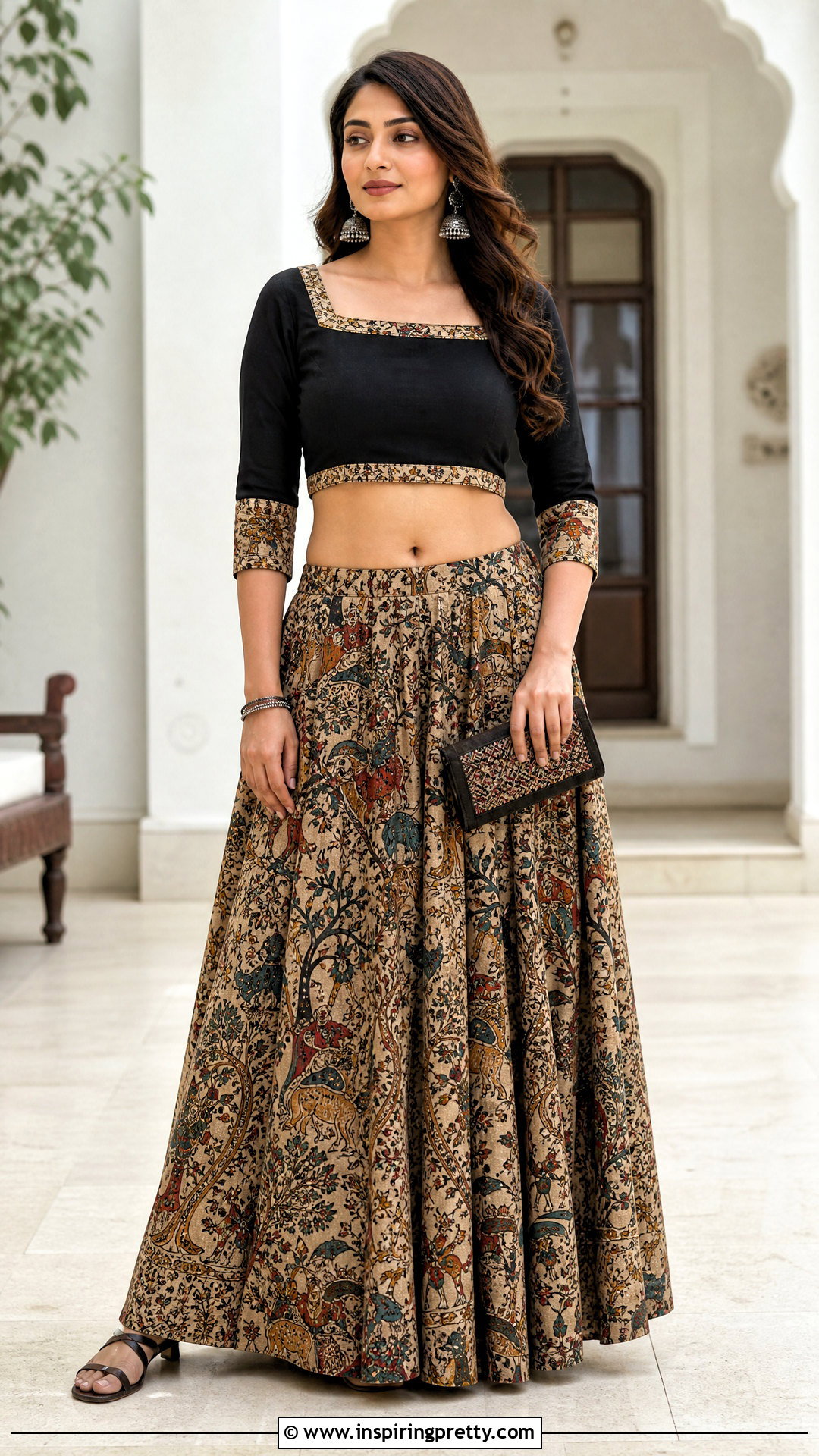
Kalamkari is hand-painted or block-printed storytelling, so I'd cut it into a long, gently flared skirt that keeps the figures readable. Keep busy narrative motifs away from seam lines. The top works best solid black, with a square neck, three-quarter sleeves and narrow Kalamkari edging taken from the border. Oxidised earrings, black sandals and a handcrafted clutch suit it, with a black or rust dupatta for bigger events. A smooth waistband rather than heavy gathers keeps the prints visible, and cotton lining stops the skirt clinging.
11. Ikat Saree Midi Skirt And Boxy Crop Top
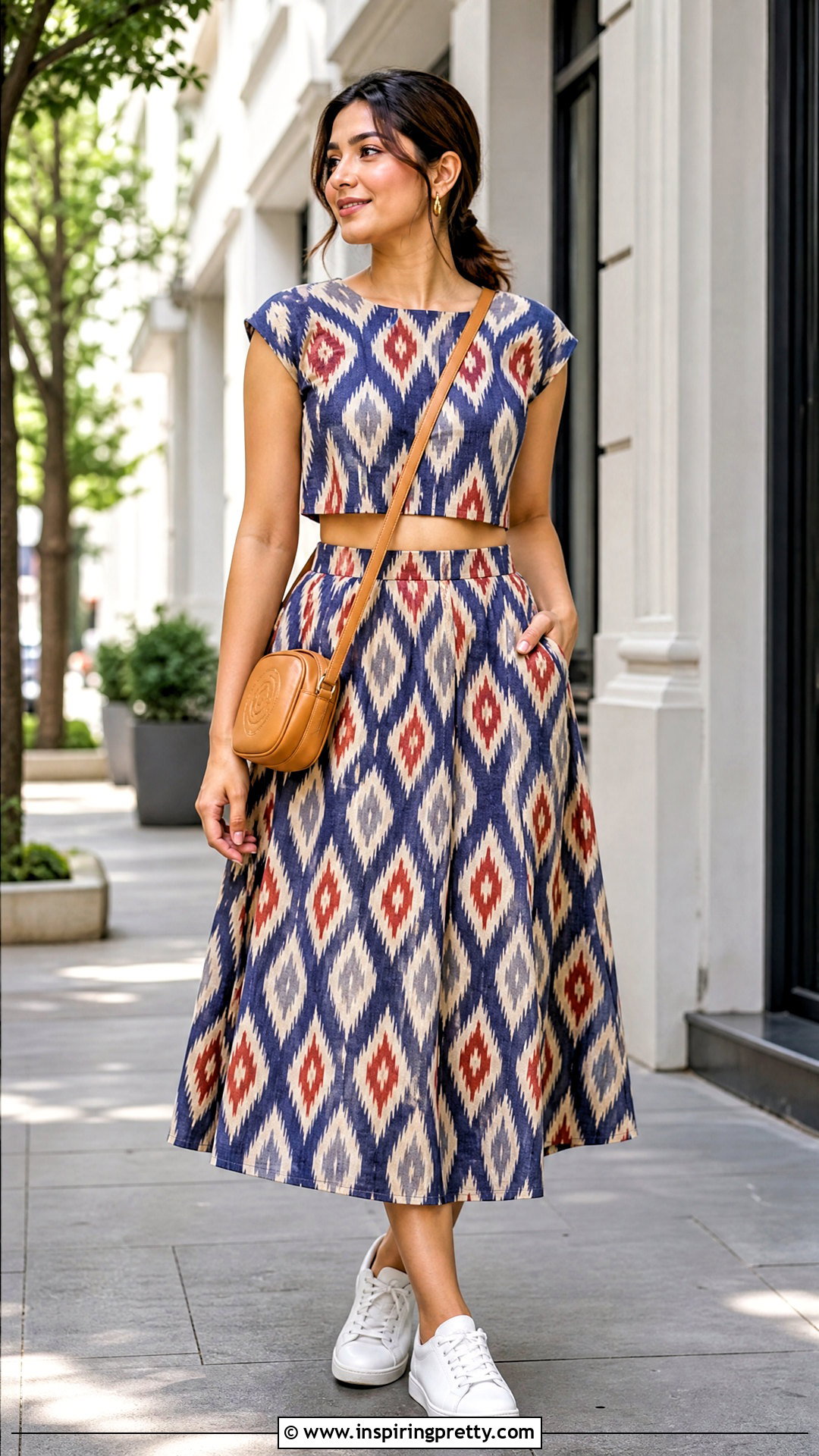
Ikat makes a good modern Indo-Western outfit as a calf-length skirt and a relaxed boxy crop top. A structured A-line or soft pleated midi shows the weave without needing much fabric. The top can have a high round neck and cap sleeves and end at the waistband. Use the border on the sleeves or top hem. White sneakers and a crossbody make it daytime; block heels and a clutch make it semi-formal. Ikat's blurred edges are part of the weave, so match the pattern at the centre front by eye rather than expecting crisp lines.
12. Handloom Saree Pleated Skirt And Cap Sleeve Crop Top
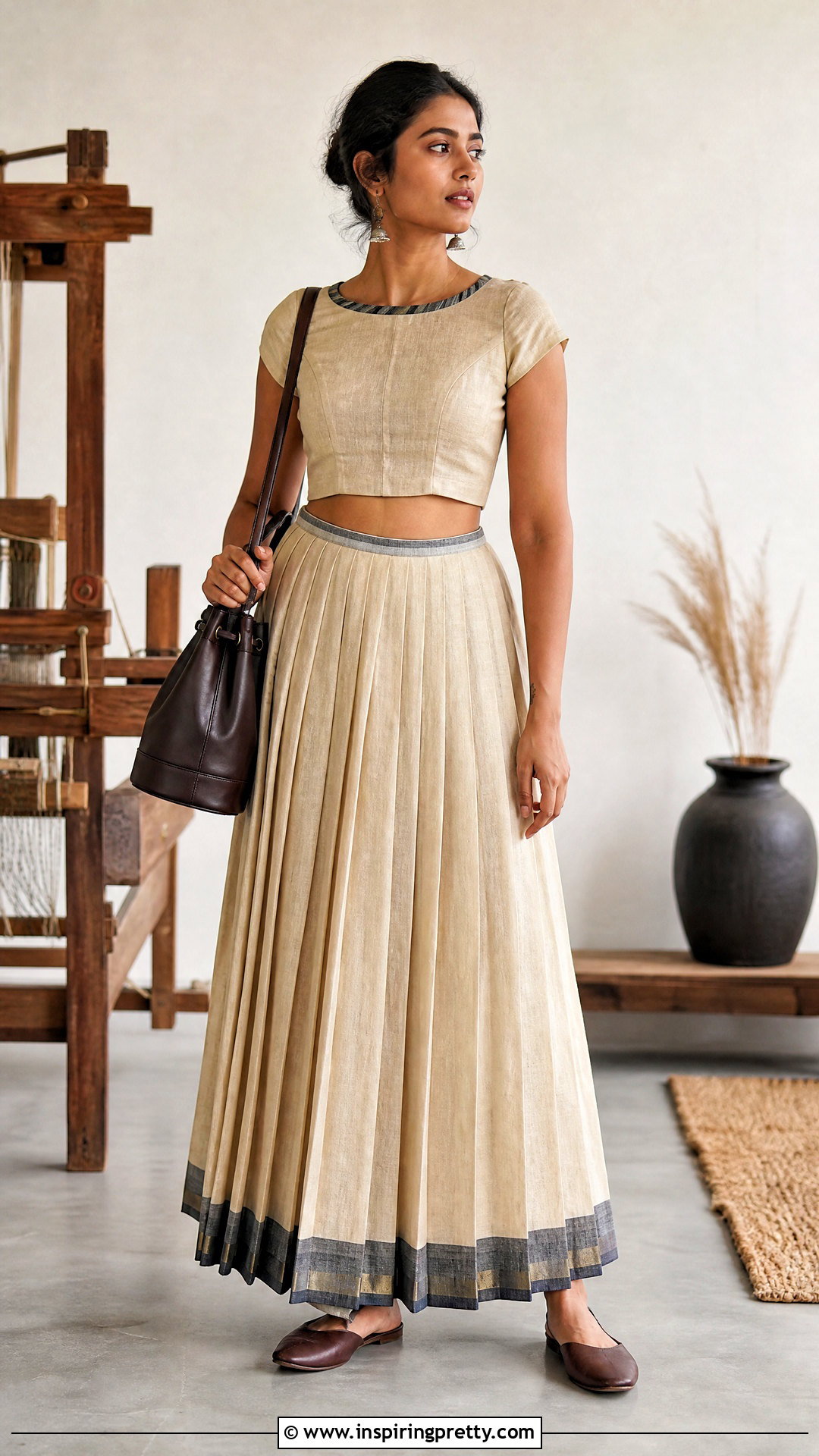
A handloom cotton saree suits a quiet pleated skirt with a cap-sleeve crop top. Wide knife pleats show the weave and border better than tiny gathers. Put the border at the hem and repeat it at the neckline. A lightly fitted top with princess seams gives shape without restriction. Leather flats, handcrafted earrings and a bucket bag in tan or brown keep the palette natural. Before cutting, hold the fold lines up to the light: cotton stored folded for years often weakens along those creases, and I'd cut around them.
13. Brocade Saree Fishtail Skirt And Corset Crop Top
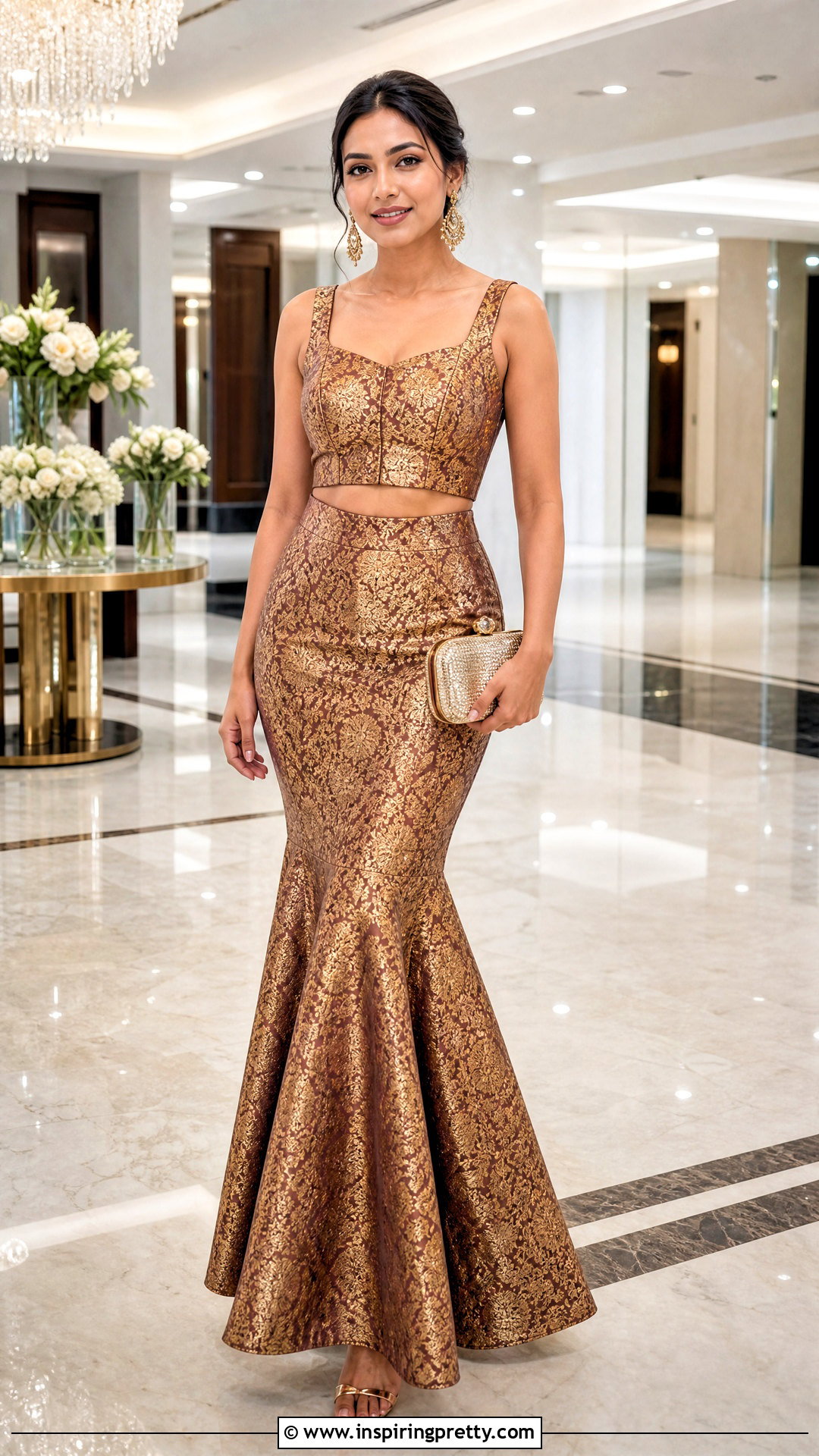
Brocade can carry a fishtail skirt and corset-style crop top for a formal event, but only if the fabric is sound enough for fitted panels. Keep the top supportive with a straight or softly curved neckline, wide straps and a covered back. The skirt stays close through the hips and flares below the knee. Sleek heels, statement earrings and a structured clutch finish it. Boning in selected top seams and a walking slit or hidden godet in the skirt are what make it wearable for a whole evening; without them you can't sit or climb stairs.
14. Embroidered Saree Layered Skirt And Satin Crop Top
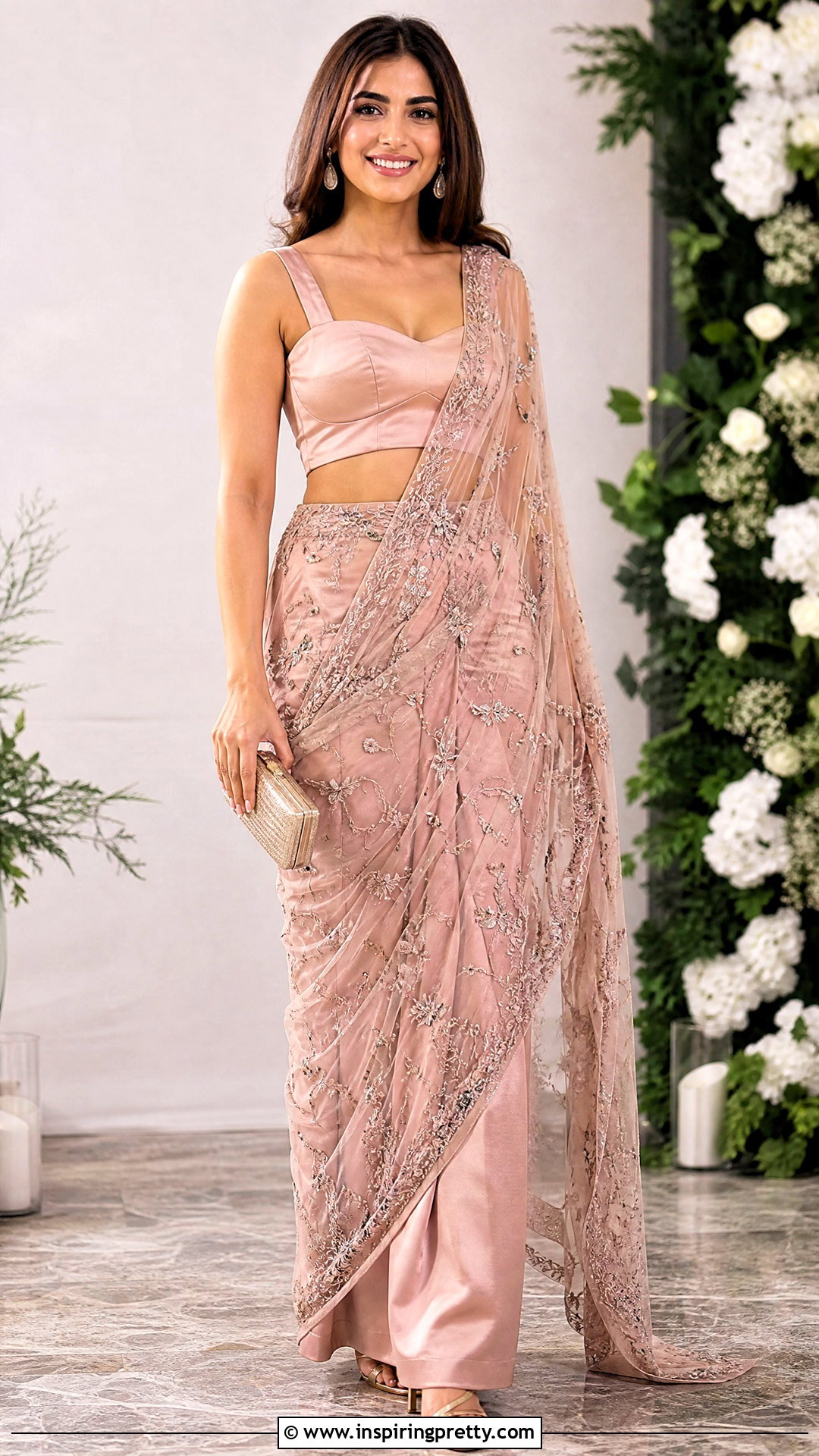
If an embroidered saree has damaged areas, I'd use its best sections as an overlay on a plain satin skirt rather than throwing it away. Arrange the undamaged motifs around the front and hem. A satin crop top with a sweetheart-style neck, wider straps and narrow saree-border trim keeps it formal. Choose heels in a colour from the embroidery. Back each weak motif with soft fusible or net before construction, and don't hang heavy embellishment on worn fabric. A lightly gathered overlay hides small flaws far better than a fitted one.
15. Crepe Saree Asymmetrical Skirt And Halter Crop Top
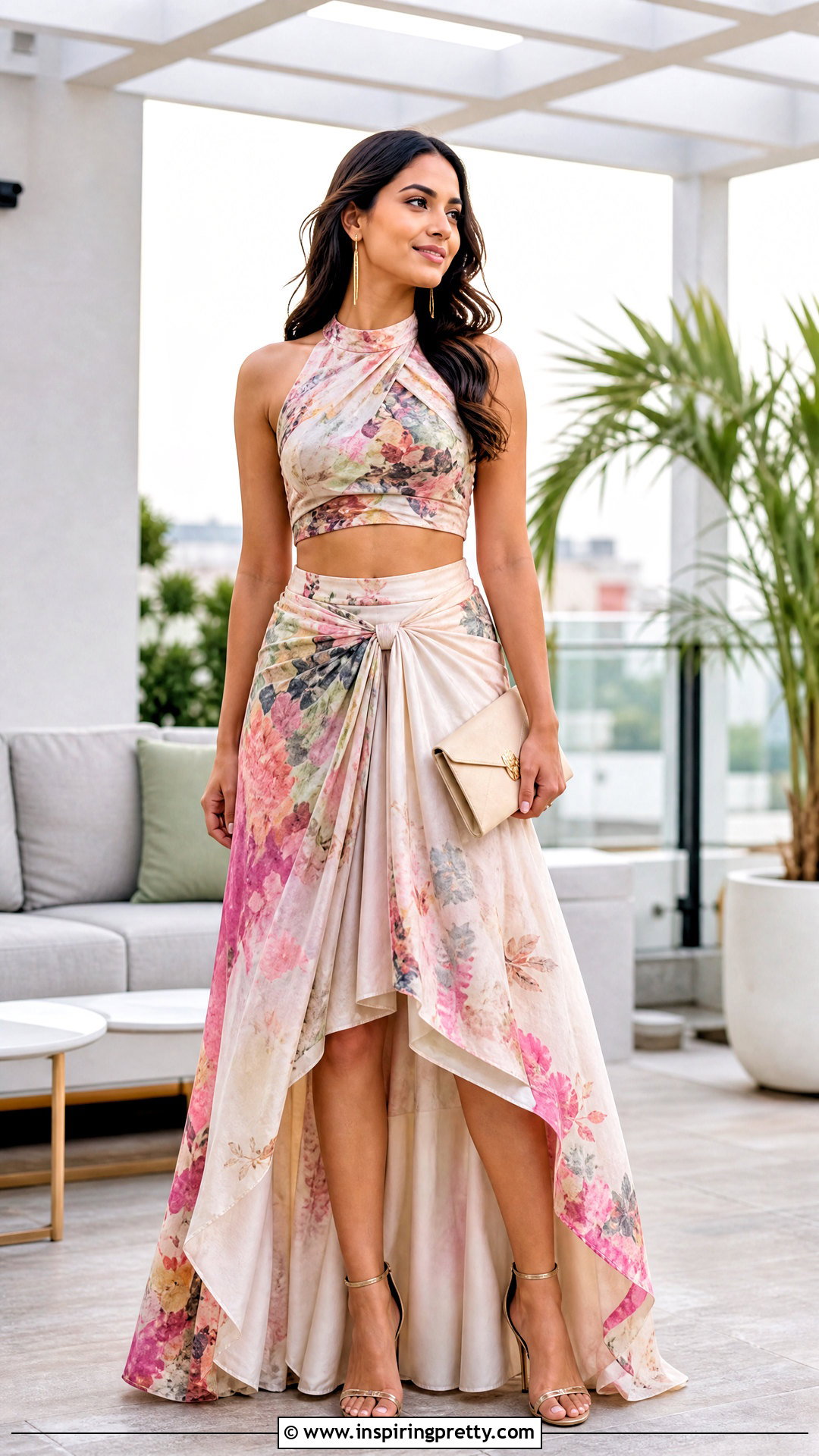
Printed crepe falls smoothly, which suits an asymmetrical skirt with a slightly shorter front. Keep the difference subtle so you don't trip on the back. The pallu becomes a high-neck halter crop top with a secure back closure and full lining. Ankle-strap heels, slim earrings and an envelope clutch suit it. Run the border along the uneven hem to show the shape. With a bold print, skip the dupatta. A stable waistband and an evenly cut lining keep the hem from pulling to one side, which is the usual fault with asymmetric skirts.
16. Floral Saree Skirt And Peplum Crop Top
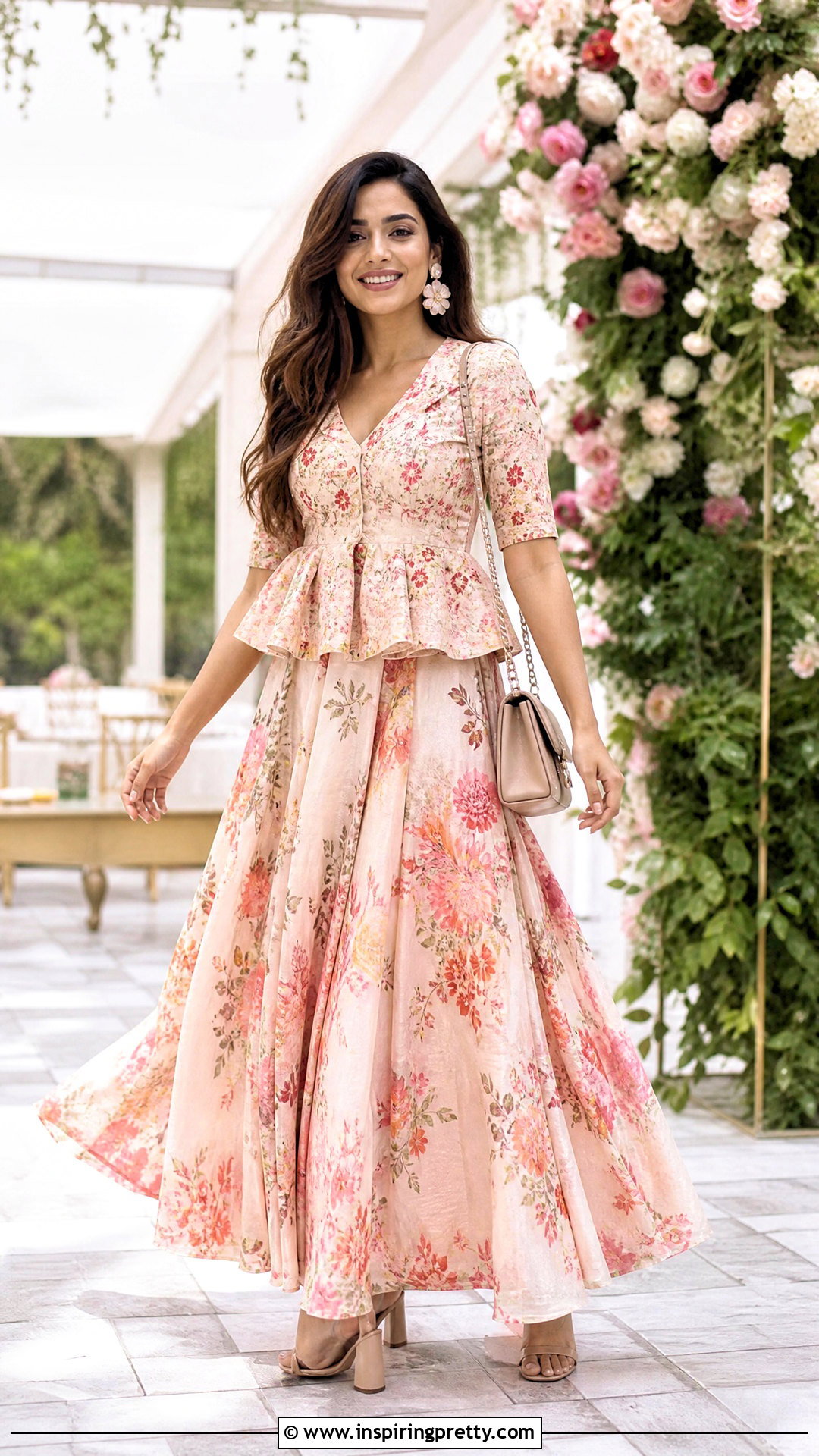
A floral saree needs its flowers placed with thought. In a long circular or paneled skirt, I put the larger blooms on the lower half so the waist doesn't look crowded. The crop top has a fitted bodice with a short peplum ending just over the waistband, a V-neck, elbow sleeves and piping in a solid shade. Keep the peplum only lightly flared. Nude block heels and a small shoulder bag finish it. If the fabric is slippery, stay tape along the neckline and waist stops it stretching while you sew and wear it.
17. Zari Border Skirt And One Shoulder Crop Top
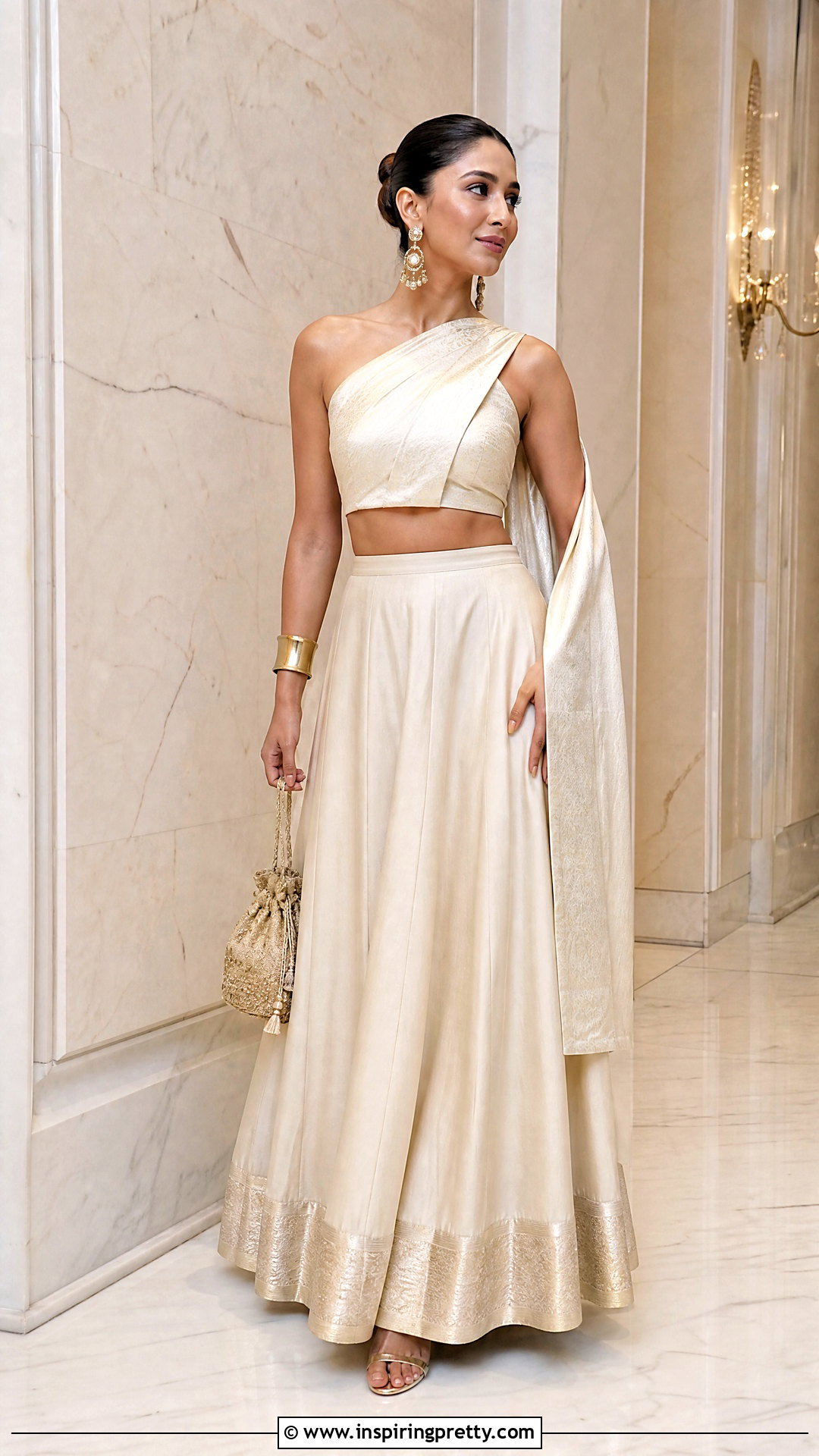
When the zari border is the best part of the saree, build the whole set around it. Use the plain body for a high-waisted paneled skirt with the border around the full hem. Cut a one-shoulder crop top from the pallu and run a narrower strip of zari down the diagonal neckline. A strong shoulder strap and a concealed side zip keep it secure. Metallic sandals, a cuff, statement earrings and a potli finish it, with no necklace. Old zari can tarnish and its metal threads are brittle, so ask your tailor to press it only through a cloth.
18. Two Saree Patchwork Skirt And Solid Crop Top
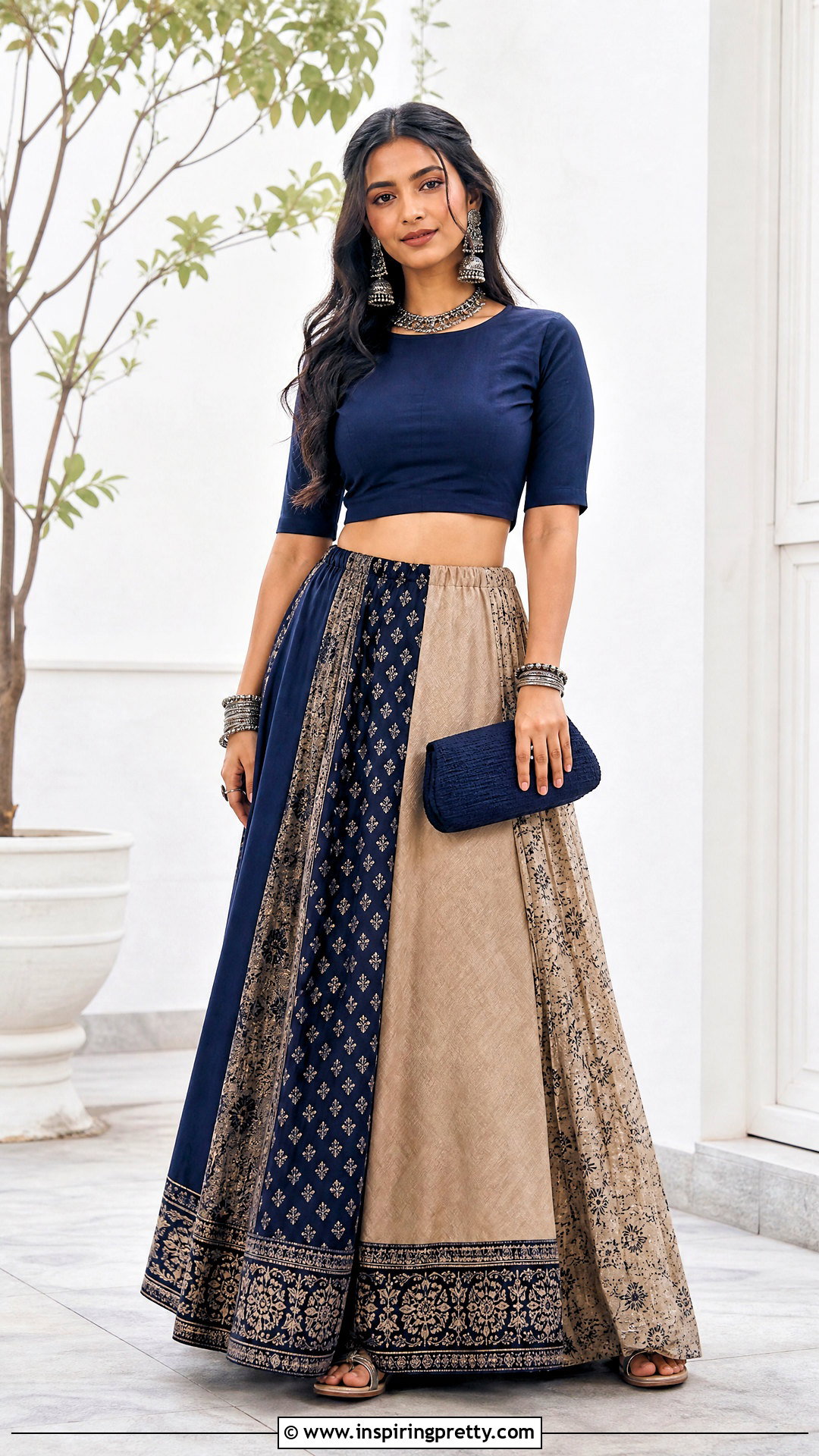
Two sarees can make one outfit when neither has enough fabric alone. I'd build a paneled skirt alternating solid and printed sections, symmetrical on both sides, and cut the fitted crop top from the quieter saree with a strip of the print at the sleeves. Simple sandals, oxidised jewelry and a plain clutch suit it. The fabrics must have similar weight and drape or the skirt hangs unevenly; if one is softer, use it for the smaller side panels. One lining colour and one metal tone for accessories pull the patchwork together.
19. Monochrome Saree Skirt And Matching Crop Top
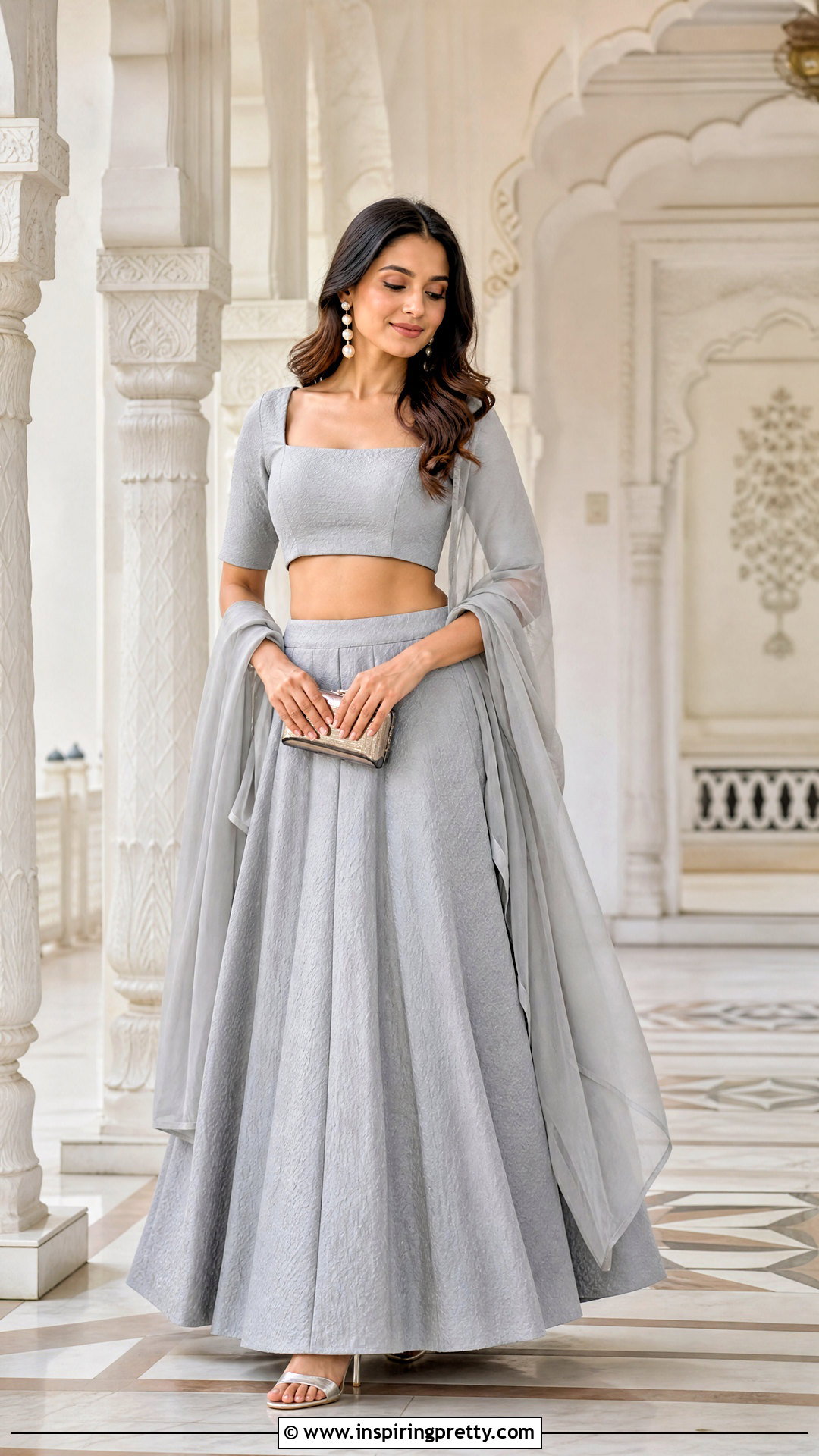
A single-colour set lets the texture of the weave carry the outfit. Use the same fabric for a long flared skirt and a fitted crop top, with the pallu across the front of the top. A square neck, elbow sleeves and a defined waistband keep the column balanced. Shoes and a bag in a related neutral or metallic, plus pearl or brushed-metal earrings, add quiet contrast. A plain colour hides nothing, so the tailoring has to be precise; uneven seams or a wavy hem show immediately.
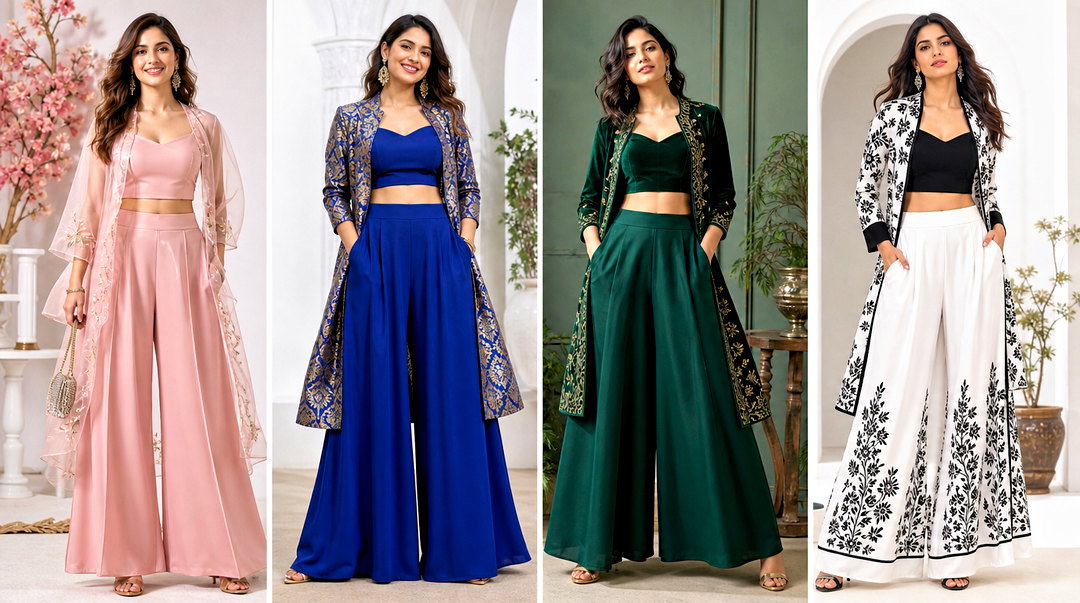
20. Plain Saree Skirt And Contrast Pallu Crop Top
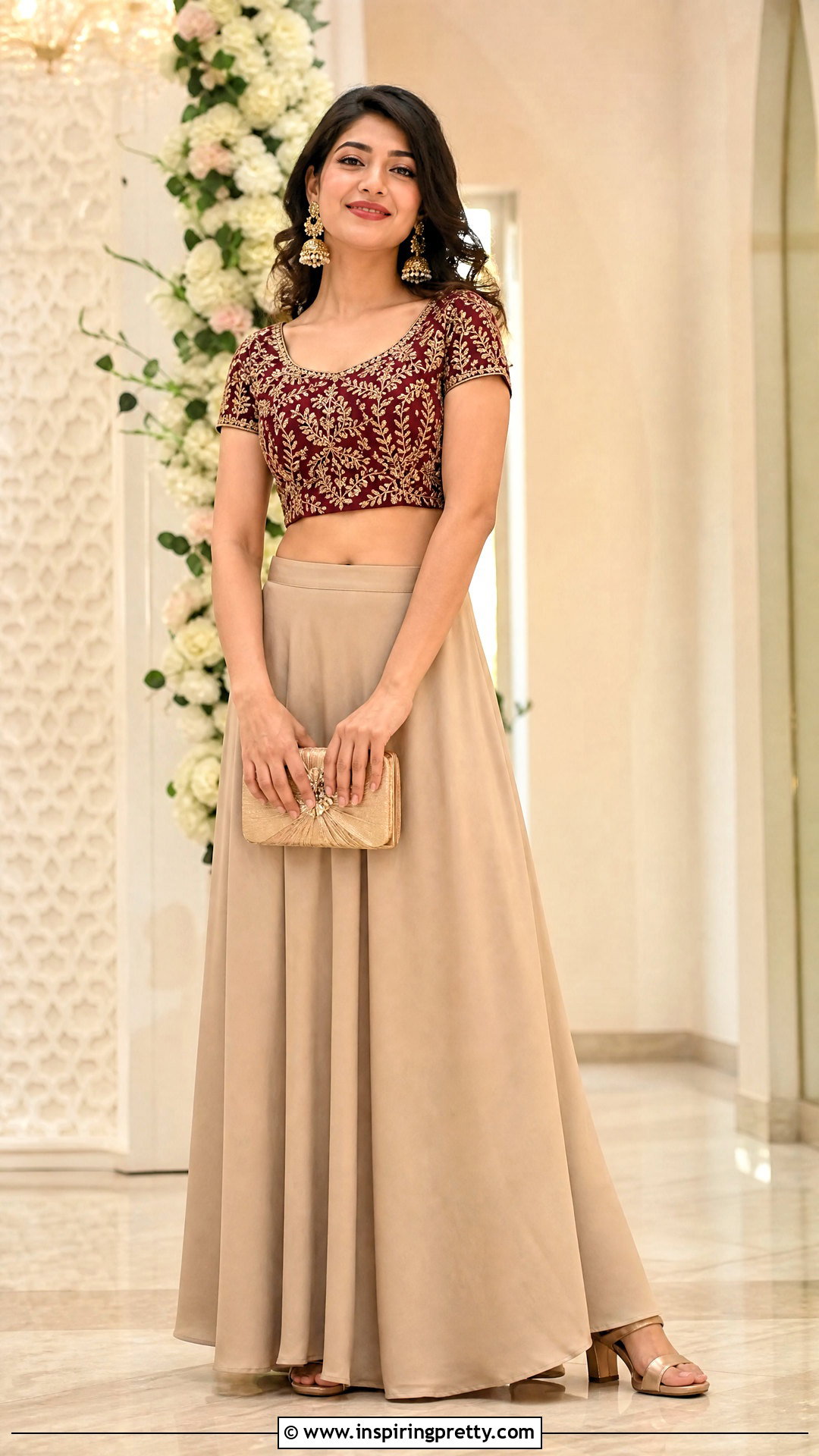
Many sarees have a fairly plain body and a richly decorated pallu, which divides neatly into skirt and top. Make a gathered or paneled maxi from the plain section and use the entire pallu across the front and back of the crop top. A scoop neck and short sleeves keep the pattern visible. A narrow pallu strip on the skirt waistband connects the two. Plan the top's pattern pieces around the pallu motifs before cutting, so the best designs don't disappear into darts or a zip.
21. Saree Skirt And Crop Top With Long Jacket
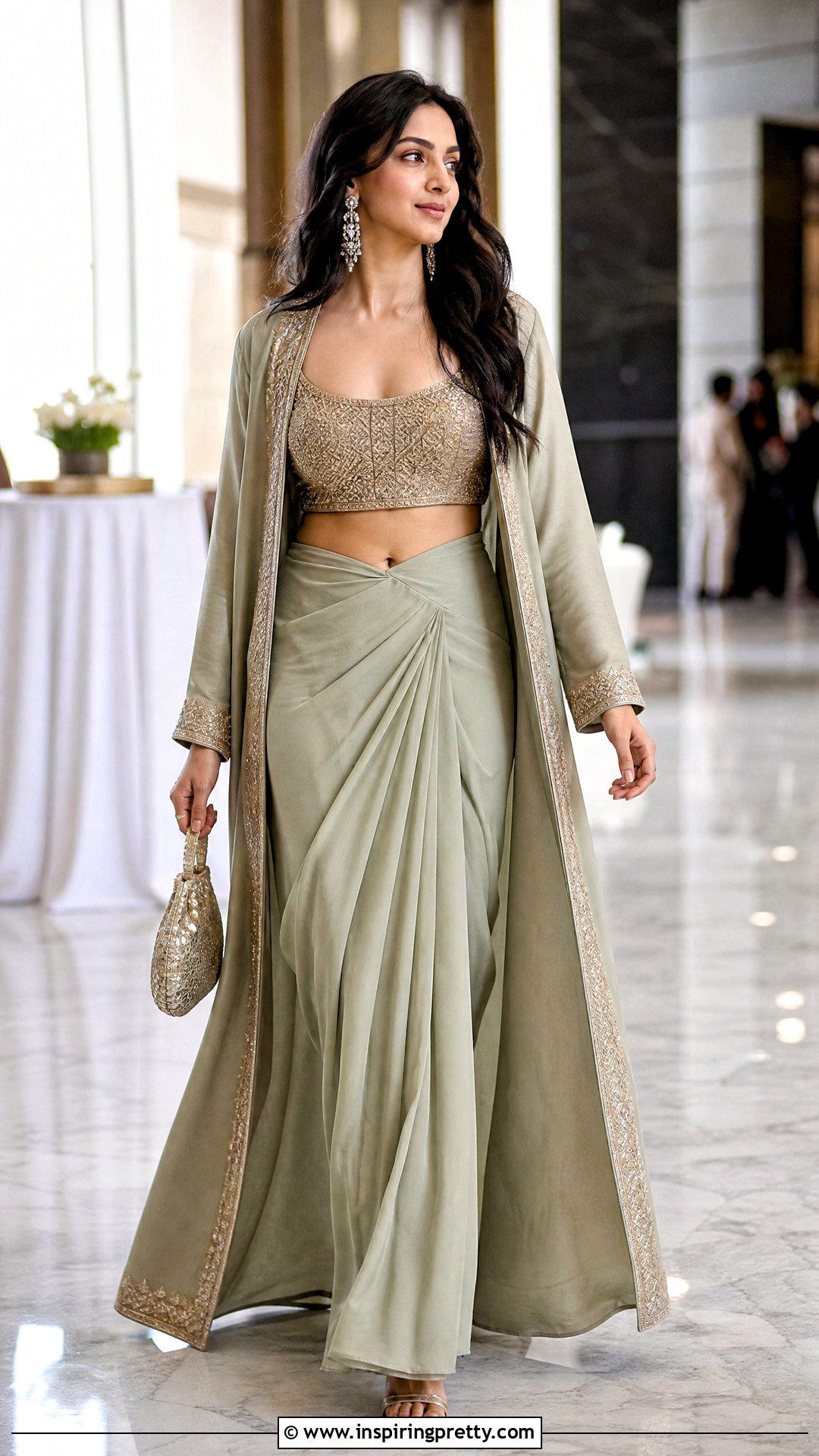
A long open jacket cut from the pallu turns a simple skirt and top into a three-piece. The body makes a lightly flared skirt and a sleeveless fitted top. Cut the jacket straight and floor-skimming with side slits and no bulky fastening, and run the border along the opening, sleeves and hem. It gives coverage without a dupatta. Low heels, statement earrings and a small bag are enough. I line only the shoulders of the jacket and leave the lower part unlined, so it moves freely and doesn't get heavy.
22. Saree Skirt And Crop Top With Dupatta
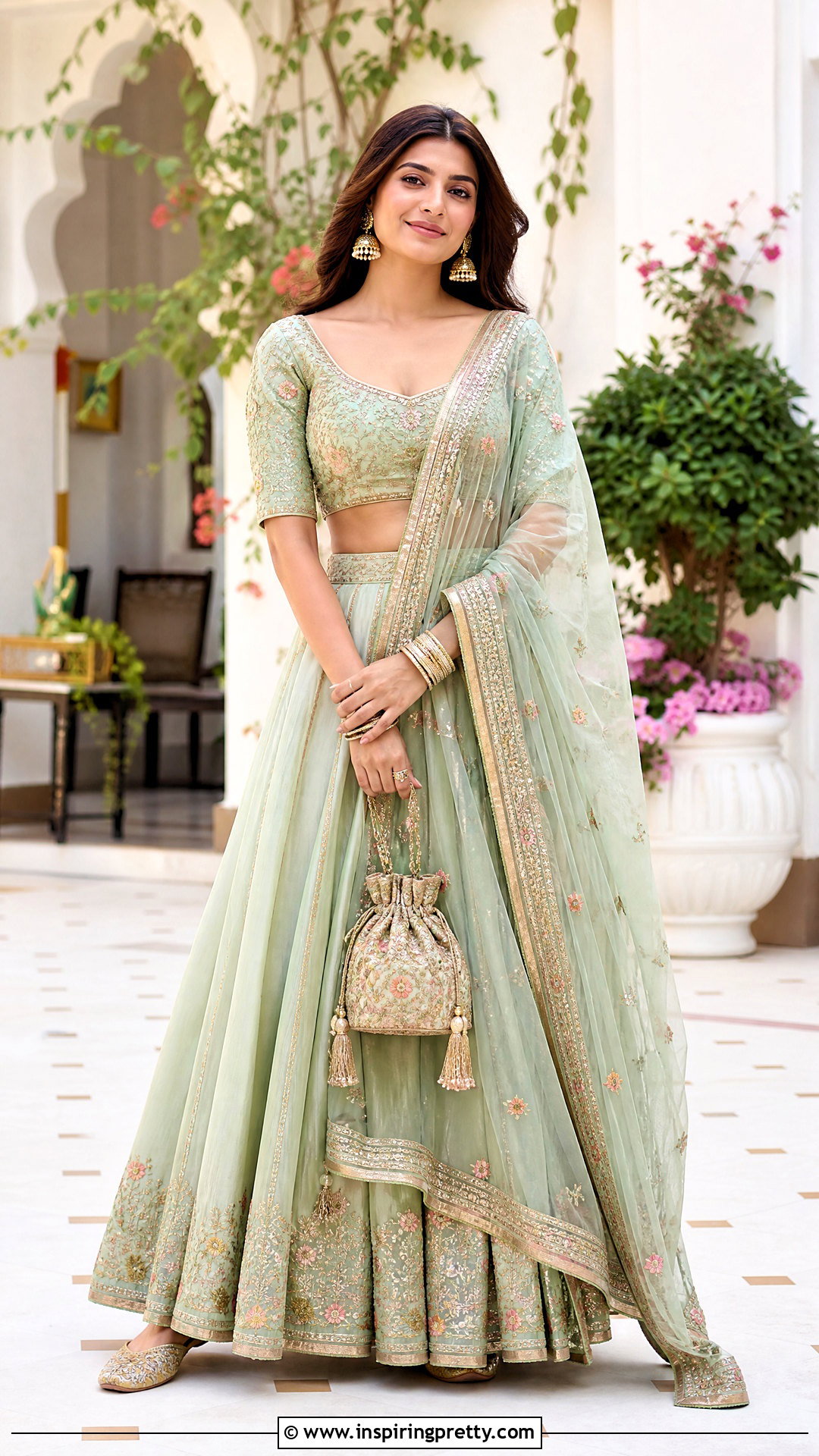
A standard saree length can often give you a skirt, a crop top and a dupatta from the pallu. Use the central body for a paneled skirt, which wastes less fabric than gathers, and make a simple top with a wide neck and fitted elbow sleeves. Hem the pallu edges neatly and wear it across one shoulder or both arms. Juttis, bangles, jhumkas and a potli complete it. If the fabric runs short, make the top from a plain complementary fabric and use saree pieces as trim. Small hidden snaps at the shoulder keep the dupatta in place for dancing.
23. Saree Skirt And Cape Crop Top
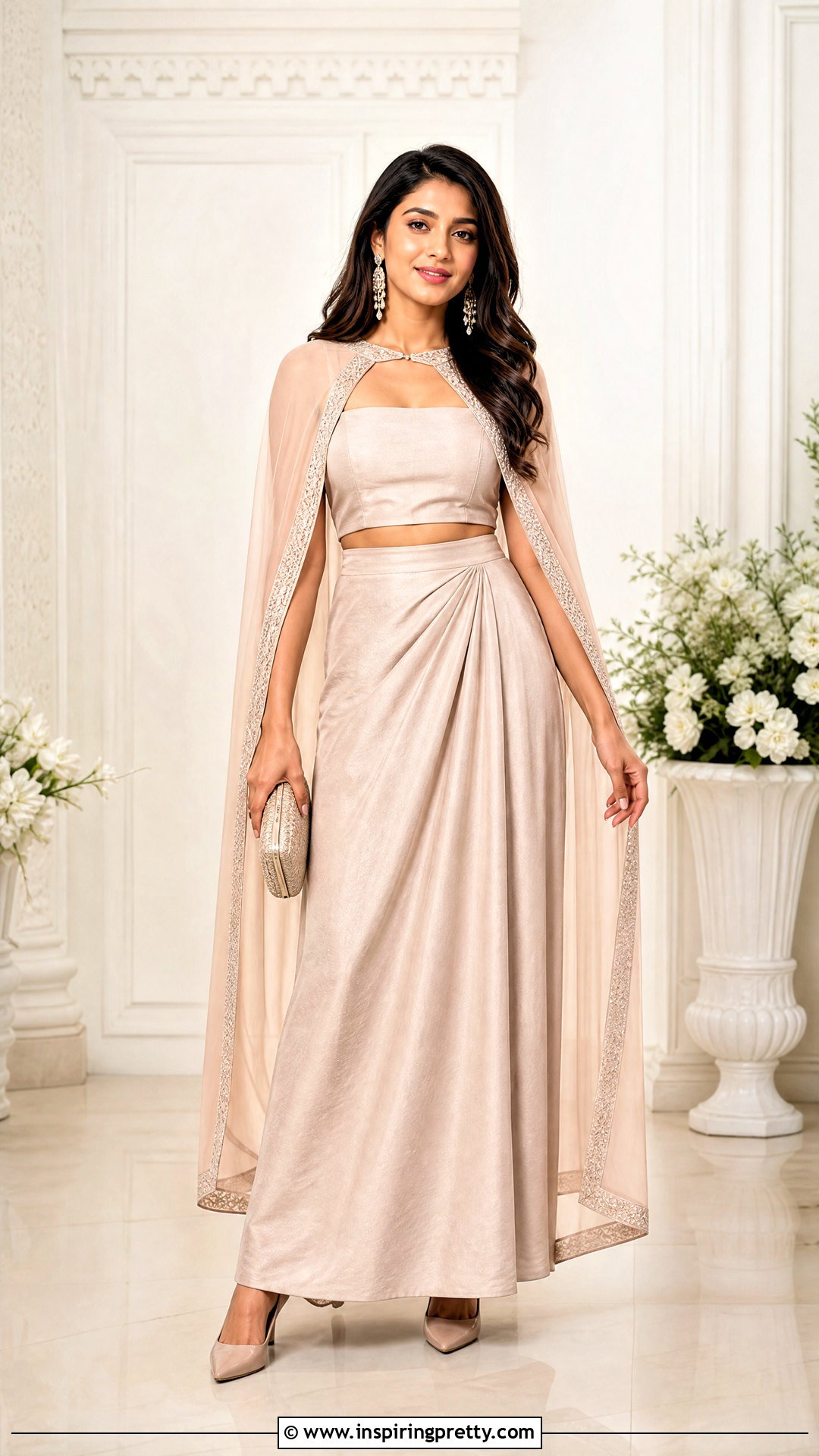
A cape attached to the crop top gives graceful coverage without a separate scarf. Make a high-waisted A-line skirt from the body and a sleeveless inner top from the pallu or a matching plain fabric, then attach a light circular cape at the neckline over the shoulders and upper arms. Border on the cape edge links it to the hem. Keep the cape around waist length so it doesn't hide the skirt. Chiffon, georgette or soft crepe suit this; a stiff silk cape stands out from the shoulders like a box.
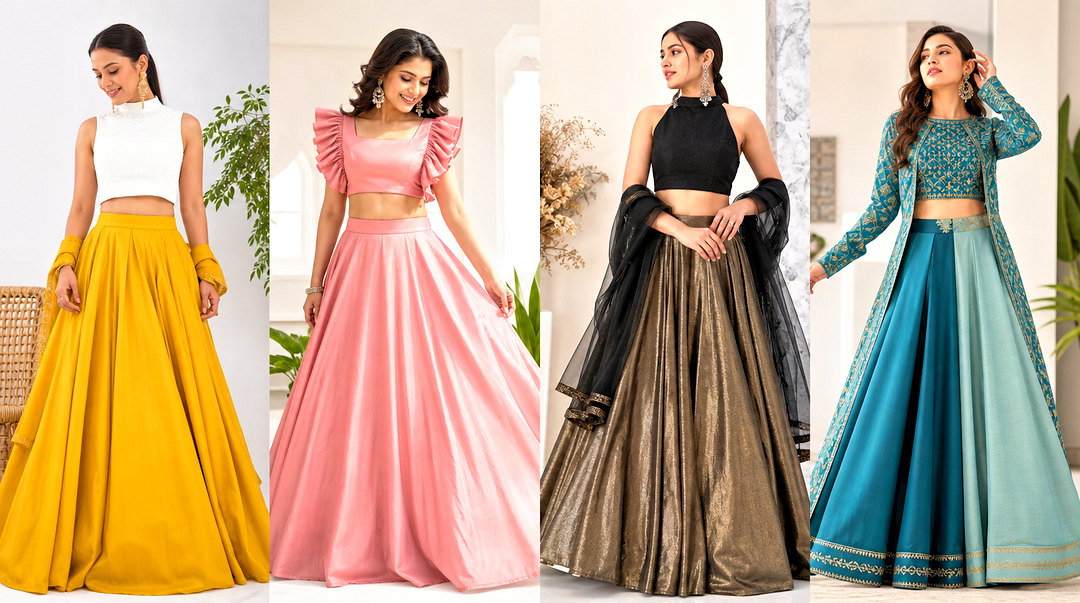
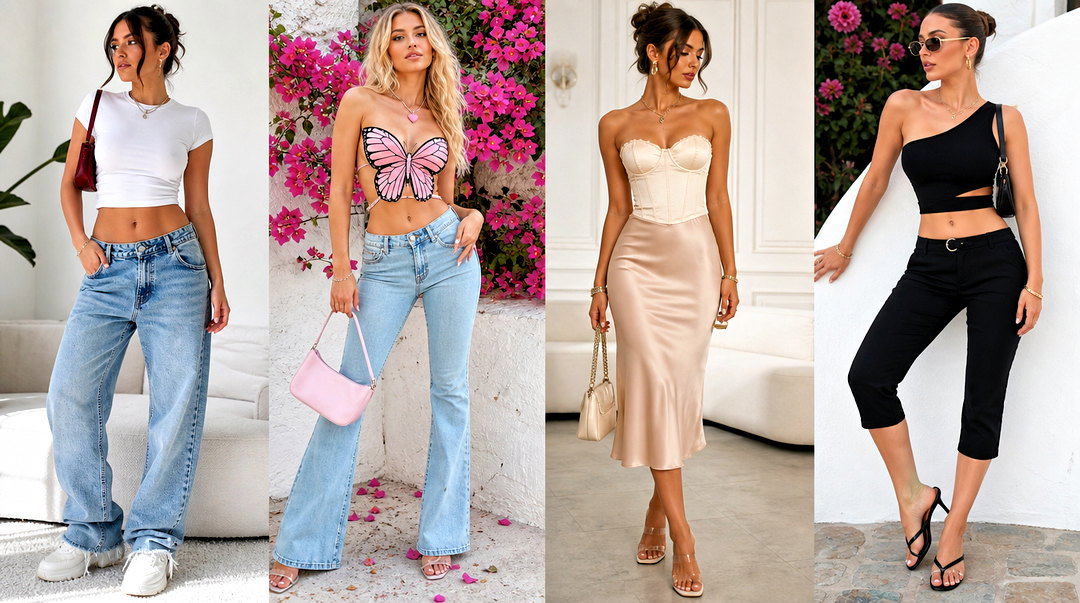
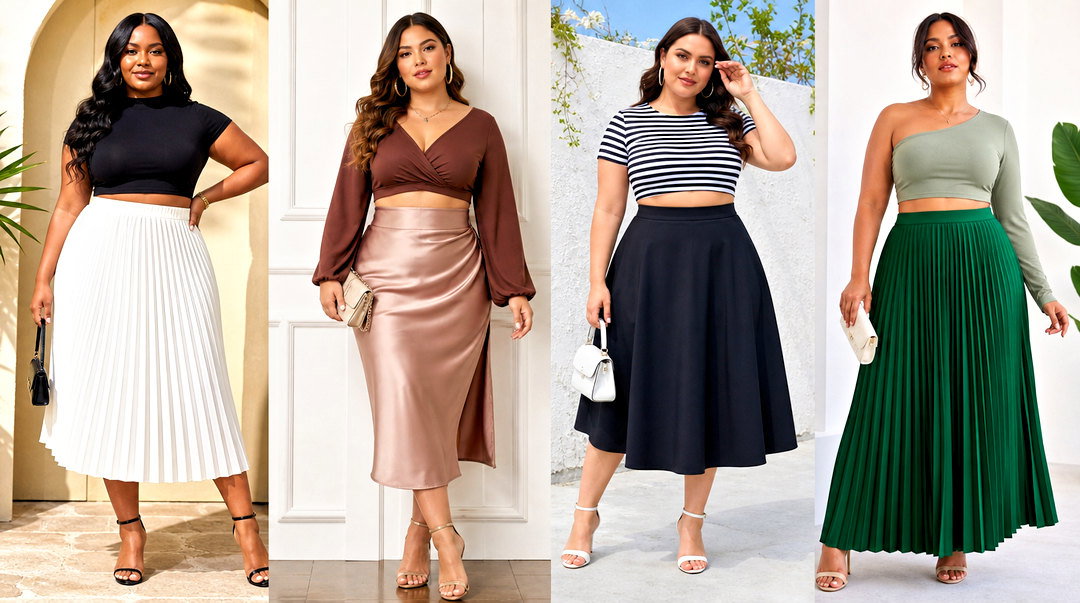
24. Plus Size Saree Gored Skirt And Longline Crop Top
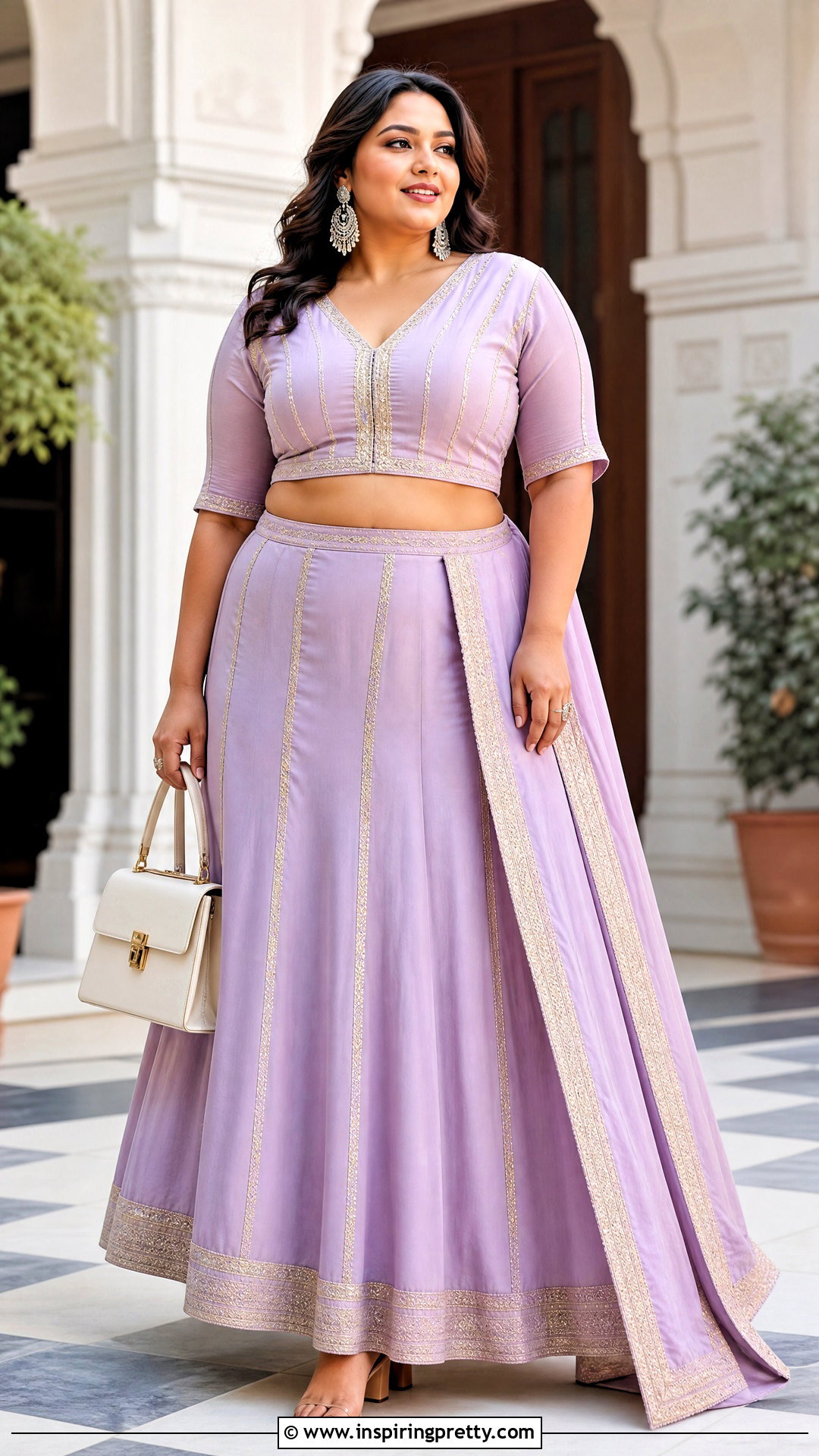
For fuller figures, a gored skirt is my first choice because the shaped panels fit smoothly at the waist and widen gradually, with no bulky gathers. Run the border vertically on selected panels to give a long line. The longline crop top ends at or just above the waistband, with a V-neck, wide straps or sleeves and a flexible back panel. Stable block heels and a medium structured bag suit it. Properly placed bust darts, strong lining and generous seam allowances mean the set can be let out later. Do a sitting and dancing test at the trial fitting.
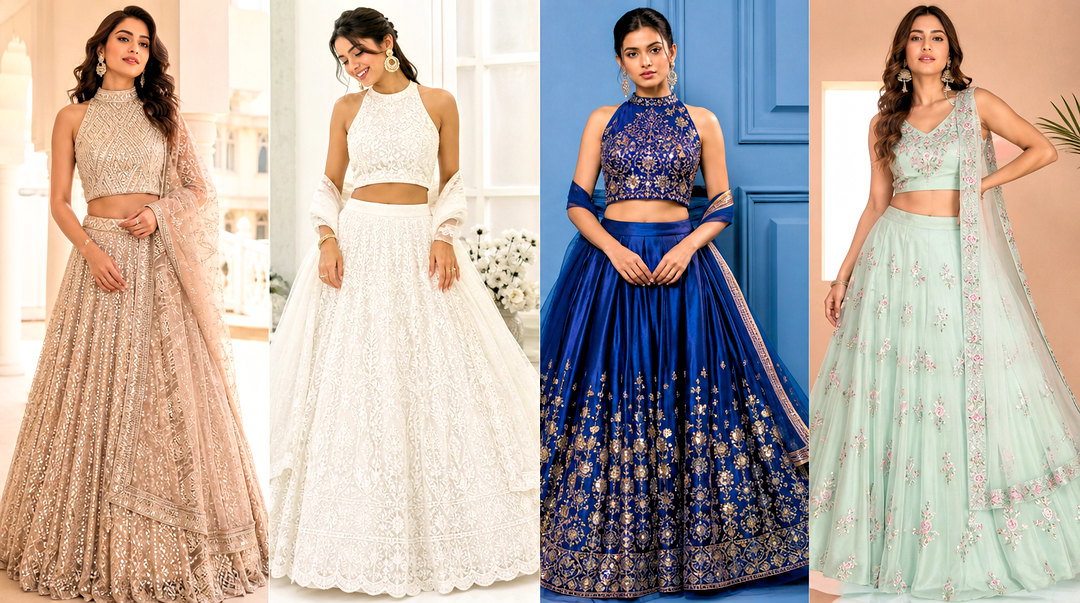
25. Scalloped Saree Skirt And Short Sleeve Crop Top
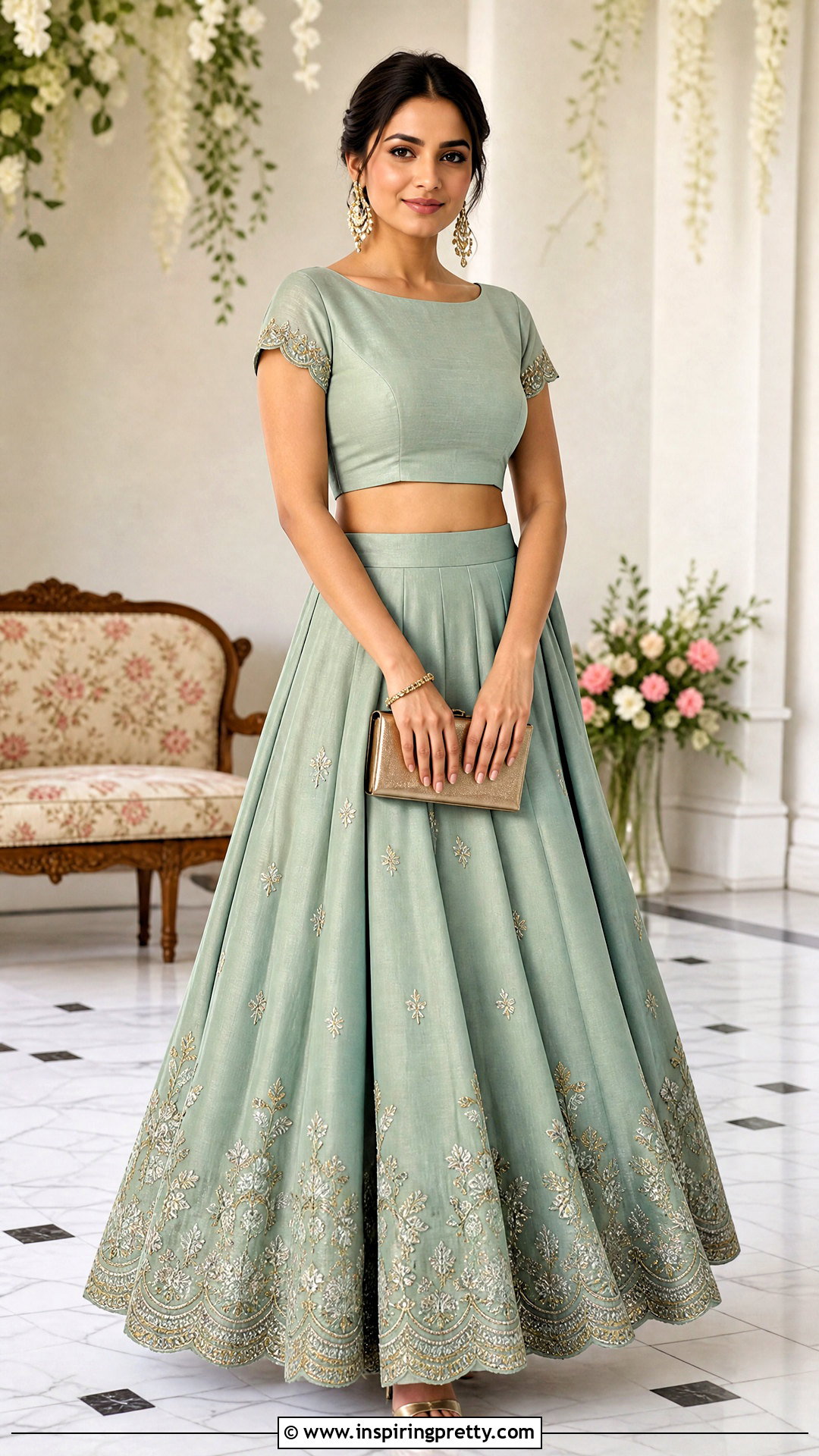
A scalloped or embroidered edge is often the most distinctive part of the saree, so I keep it intact. Put the scalloped border around the skirt hem, joining the ends where the seam is least visible, usually at a side or back. Smaller edge pieces trim the top's sleeves or neckline. A gently flared skirt and fitted top keep the shape classic. Low metallic heels, stone earrings and a rectangular clutch finish it. Back delicate scallops with matching organza, and store the set flat or loosely folded so the embroidery isn't crushed.
Construction Details That Make a Saree Set Last
The fabric in an old saree has already done years of work, so the stitching has to protect it. These are the points I'd raise at the first tailor appointment.
Lining and seams
Line both pieces in cotton or a soft silk-cotton for silks and brocades, and in a fine cotton voile for chiffon and georgette. Ask for finished seams, such as French seams on sheer fabrics or overlocked edges on heavier ones, because raw saree edges fray fast once cut.
Room to adjust
Leave wider seam allowances at the side seams of both skirt and top, so the set can be let out or taken in later. A skirt waist with a hook and zip plus a hidden drawstring copes with weight changes far better than a fixed waistband alone.
Cleaning and storage
Silk, brocade and zari sets should be dry cleaned; cotton and linen can be hand washed cold if the colour test passed. Store heavy sets folded in a cotton cloth rather than plastic, with tissue in the folds, and refold them along different lines every few months so the creases don't wear through again.
A Saree Can Have a Second Life
Turning an old saree into a skirt and crop top works best when the fabric decides the shape. Crisp silks hold structured skirts; chiffon, georgette and crepe want soft movement; cotton and linen make easy daytime sets. Photograph the saree before anything is cut, mark every weak area, and agree lining, closures and motif placement with your tailor in advance. Keep every usable scrap for trims, potlis or future repairs. Made carefully, the new outfit carries the old saree's memories into years of wear.
Related posts:


Leave a Reply