
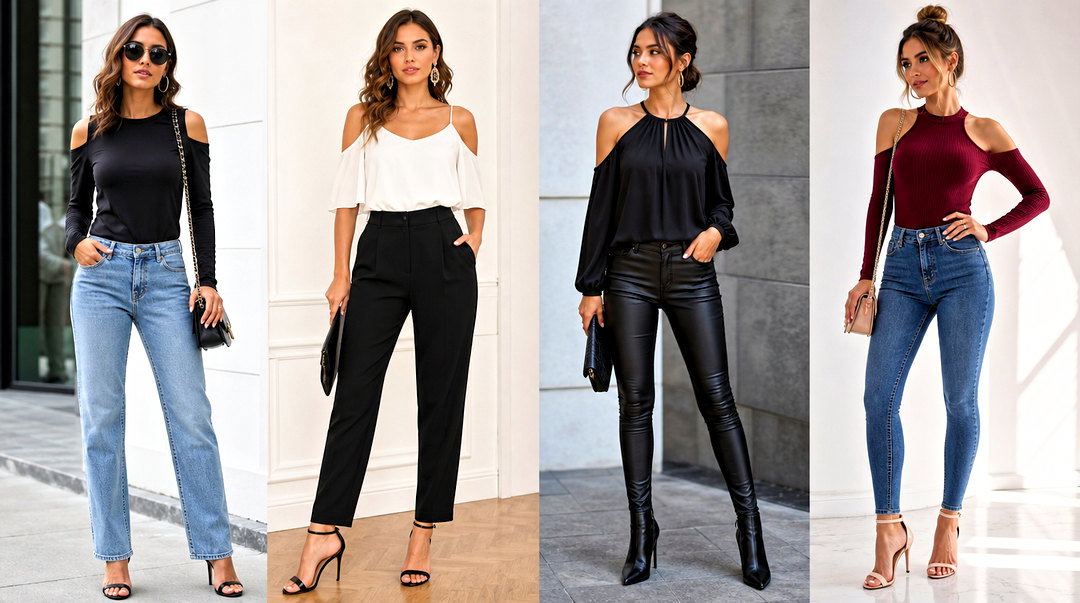
A cold shoulder top is one of the easiest refashions to start with, because the change is small and the old garment does most of the work. T-shirts, button-downs, light sweaters and thrifted blouses all take it differently, and the fabric decides how you finish the cut. Below are twenty versions, from no-sew tees to beginner-friendly sewing projects with lace, ribbon or pearls, each styled into an outfit you'd actually leave the house in. The one rule I give everyone: mark the opening while you're wearing the top, cut smaller than you think, and enlarge later. You can always take more fabric away, never put it back.

Marking the Opening While You Wear It
Every cold shoulder project goes better if you mark on your body, not on a flat table. Shoulders slope, and a cutout that looks centered on a folded shirt often lands too far back once you put it on.
- Put the top on and look in a mirror with your arms relaxed.
- Use tailor's chalk or a washable marker to draw the oval where the shoulder curves, starting small, about the size of your palm.
- Mark the other side the same way, then take the top off and fold it in half down the center front to check that both marks line up.
- Cut one side, try it on, then use it as a template for the second.
- Raise your arms and reach forward before finishing; the opening should not gape toward your bra.
Knit or woven decides the finish
Knits such as jersey tees don't fray, so a raw or rolled edge is fine. Wovens such as shirting, linen and rayon do fray, so they need a narrow hem, bias tape or at least a zigzag stitch. Sweaters are a third case: cut stitches can run, so stitch a stay line around the oval before cutting. Sharp fabric scissors make a cleaner curve than kitchen scissors, which chew the edge.
1. No-Sew T-Shirt Cold Shoulder Top With Straight-Leg Jeans
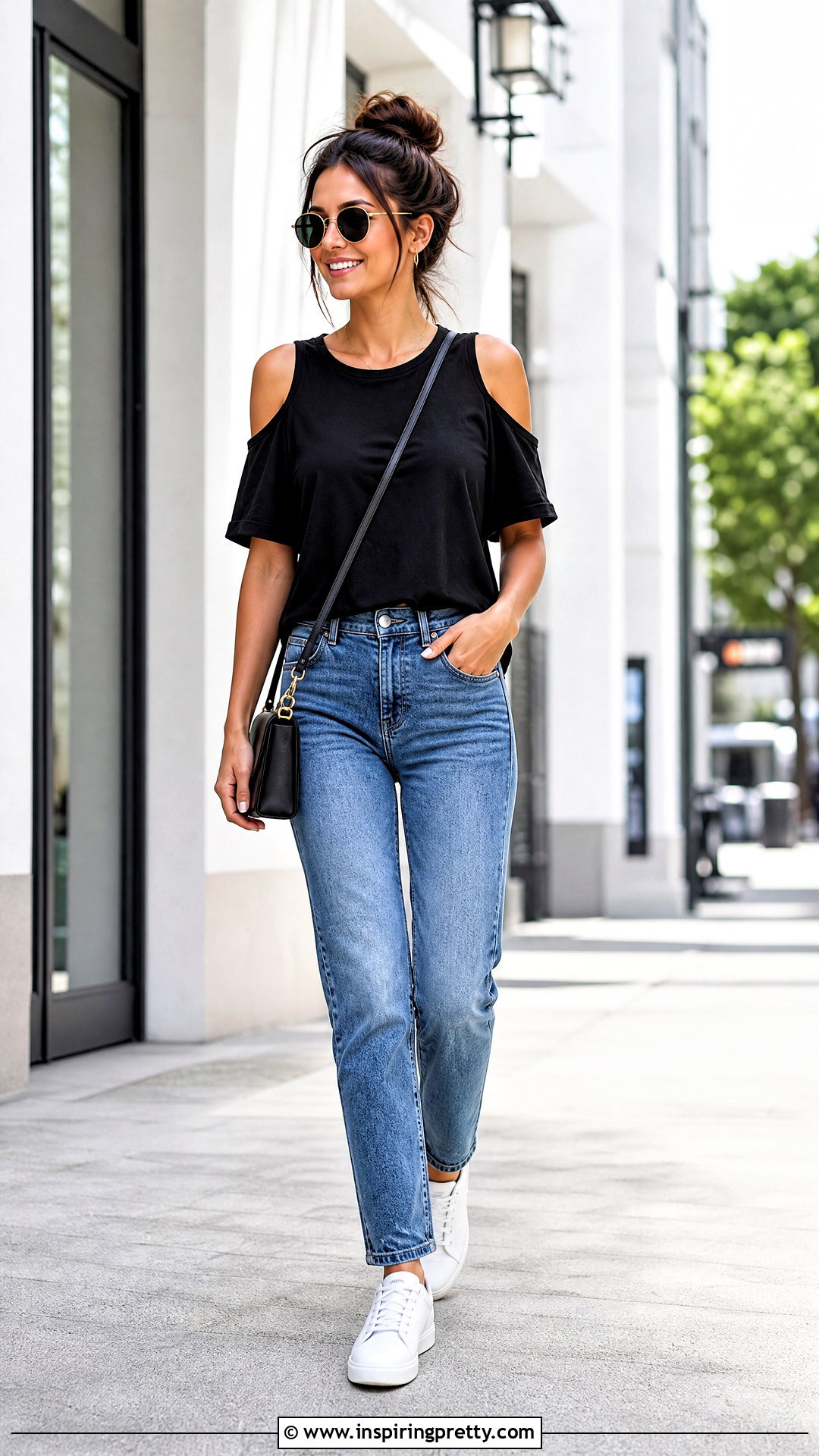
The no-sew tee is where I'd start a beginner. Pick a roomy cotton T-shirt, mark a small oval over each shoulder while wearing it, and cut through the sleeve. Cotton jersey curls toward the right side when you stretch a cut edge, so give the raw edge a gentle pull and it rolls into a soft finish on its own. That only works across the grain, so the ends of the oval may stay flat. Wear it with high-waisted straight jeans and a front tuck to give the loose tee a waist. White sneakers, a small crossbody and hoops. Practice on an old shirt first and cut each side a little at a time so they match.
2. Bow Sleeve Cold Shoulder Top With Denim Shorts
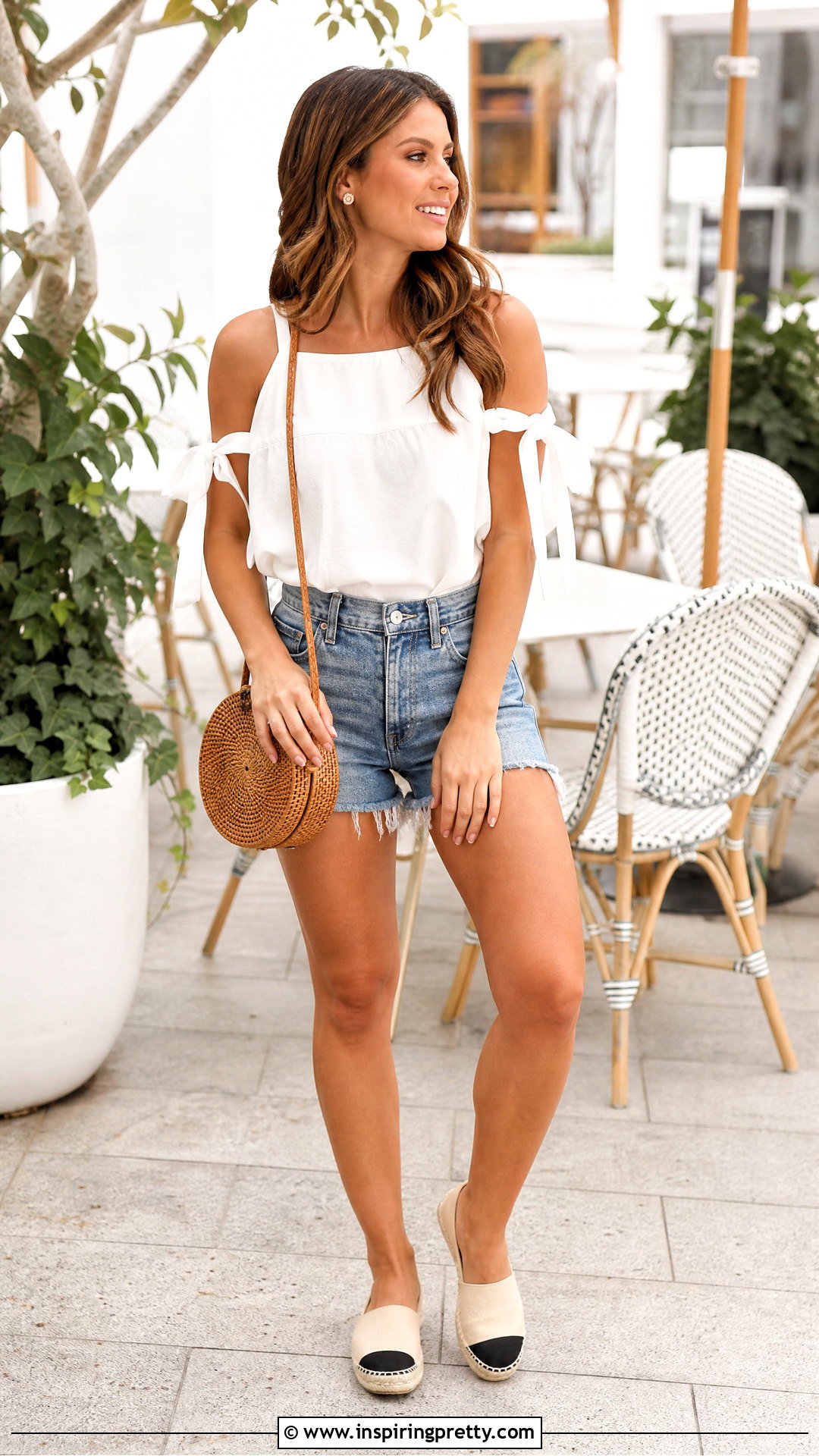
Bows turn a plain long-sleeve top into something playful. Cut a narrow slit along the top of each sleeve, finish the edges with a stretch stitch or fabric glue, and tie ribbon at two or three points. I keep the bows small: big loops flop and look heavy on the arm. Cotton ribbon is softer on skin than polyester, and it holds a knot better. Pale blue with white bows feels fresh; black with tonal ties is subtler. With high-rise denim shorts, flat espadrilles and a woven crossbody, it's an easy summer outfit.
3. Lace Trim Cold Shoulder Top With White Jeans
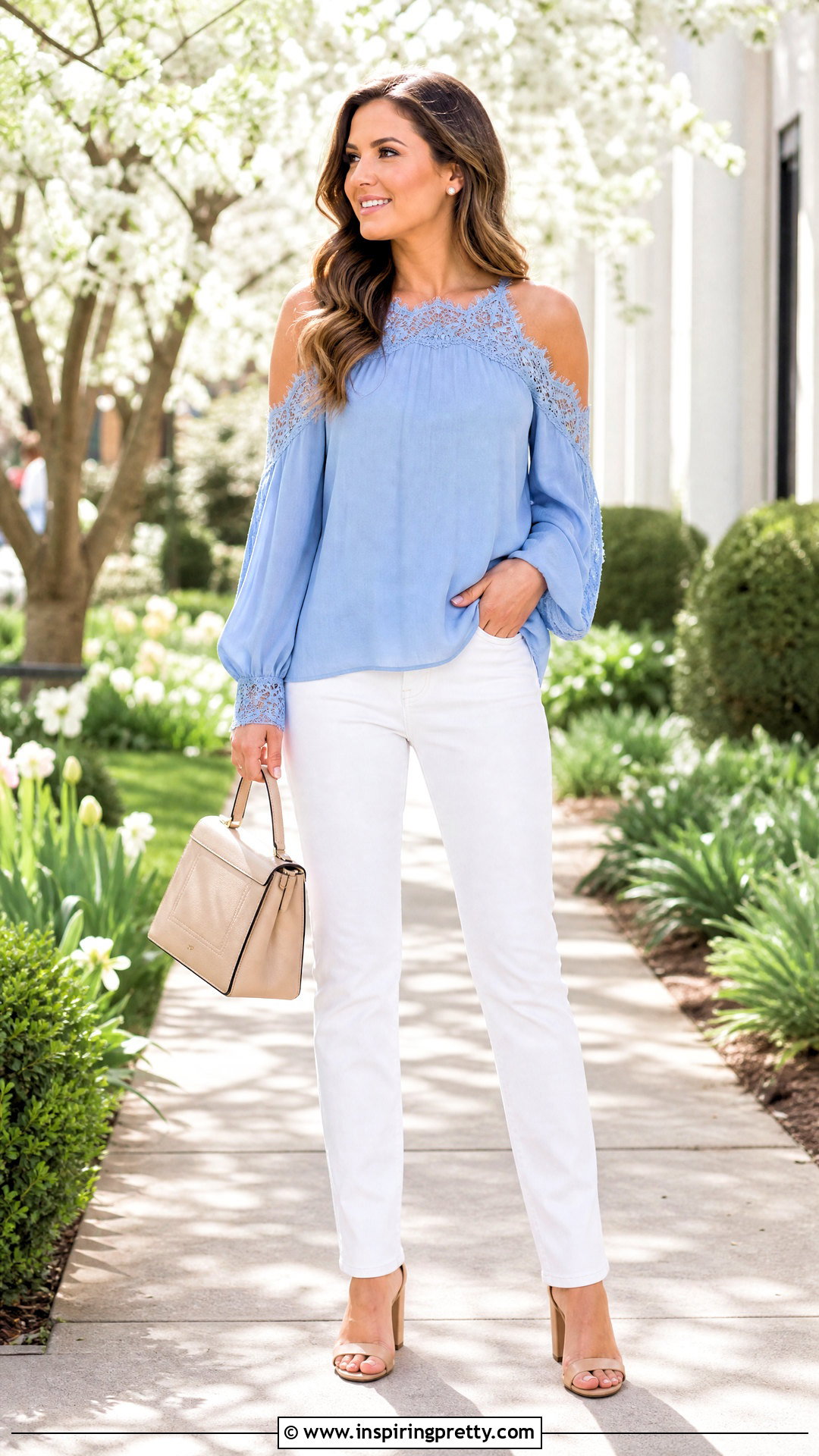
Lace around the openings makes a basic blouse look finished, and it hides an imperfect cut. Start with a light solid top, cut symmetrical shoulder openings, and pin narrow lace trim around each edge. The trick is to ease the lace around the curve instead of stretching it; pulled lace puckers the blouse. Small hand stitches give you the most control. Pair it with straight or slim white jeans, nude block heels, a beige bag and pearl studs. If you want more coverage, let the lace sit slightly inside the opening rather than framing bare skin.
4. Button-Down Cold Shoulder Top With Tailored Pants

An oversized button-down is a great base because the collar, cuffs and placket stay intact and keep it looking like a real shirt. Mark the openings above the sleeve seams, cut, and finish with a narrow double-fold hem. Woven cotton frays, so this one does need sewing. A striped or solid shirting cotton holds the shape of the opening better than soft rayon. Tuck it into ankle-length tailored pants with pointed flats and a leather tote. Before you sew, check the openings from the side and back in a mirror; bra straps often show at angles you can't see from the front. I'd keep this for creative workplaces rather than formal ones.
5. Ruffle Cold Shoulder Top With A-Line Skirt
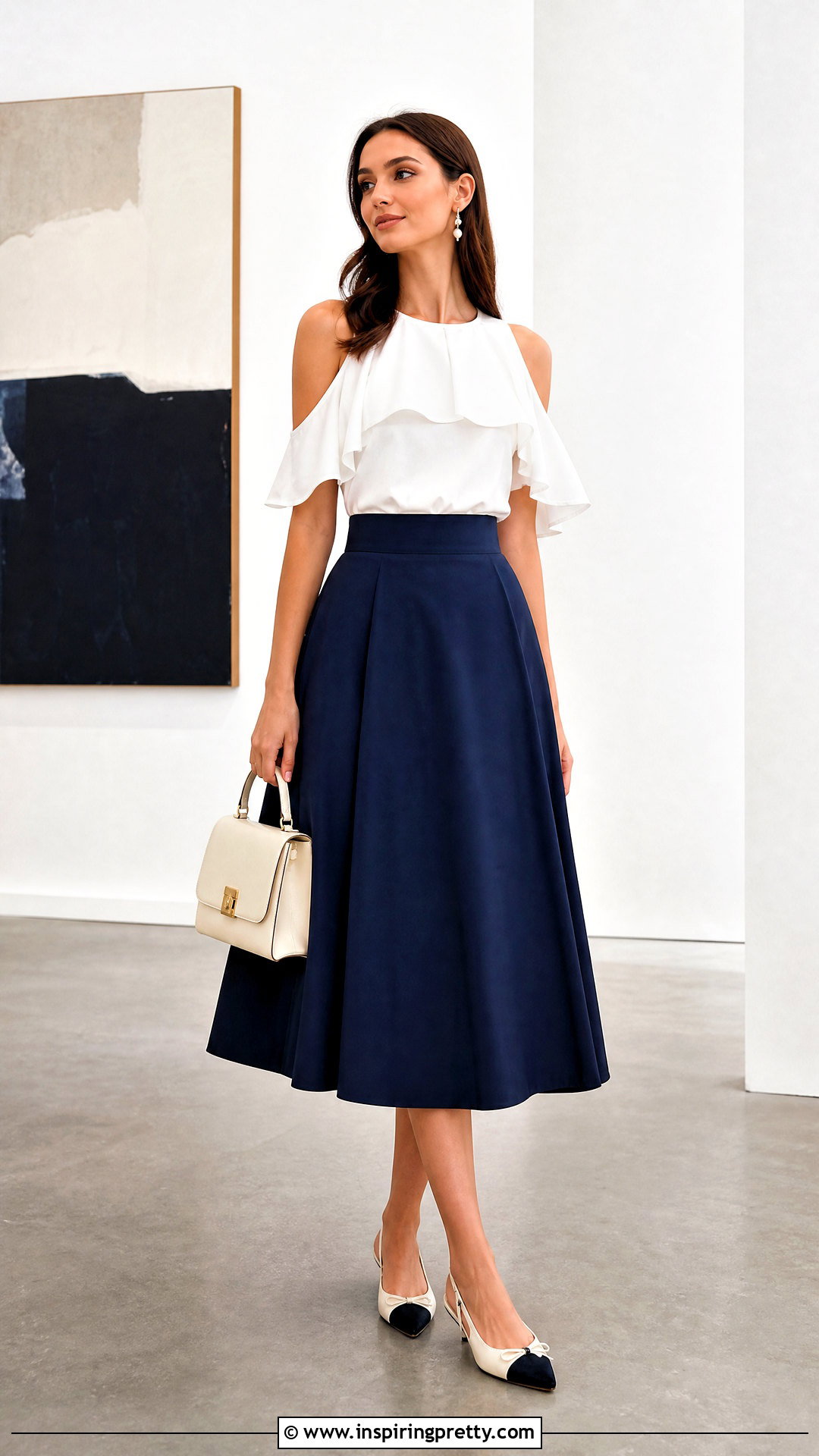
Got a plain blouse that feels unfinished? Narrow ruffles around the cutouts add movement. Cut strips from leftover light fabric about twice the length of the opening's edge, run a gathering stitch, pull it up evenly, and sew it around the opening. Ruffles wider than a couple of inches start to crowd the neckline. Matching fabric looks subtle; a coordinating print is bolder. Press each seam lightly so the trim falls neatly. A high-waisted A-line midi skirt balances the decorated shoulders, with slingback flats and a small top-handle bag.
6. Graphic Cold Shoulder Top With Black Cargo Pants
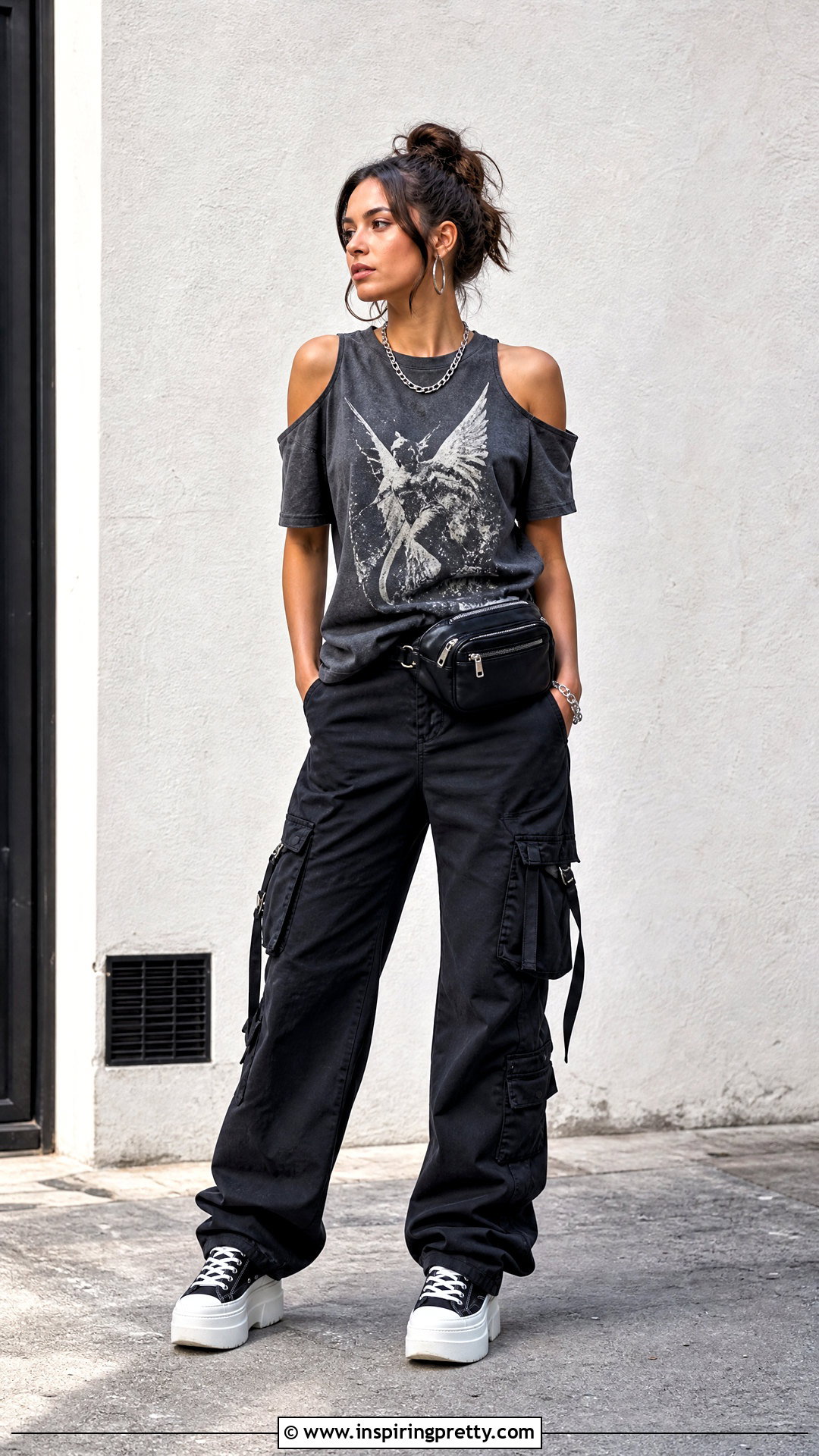
A faded graphic tee gets an edge with two well-placed cutouts. Plan them so they don't cut through the print. Leave the edges rolled or catch them with a stretch stitch. The detail that matters most is shape: ragged or uneven cuts look like damage, not design, so mark with chalk and cut in smooth curves. If the tee is oversized, shorten it to hip length or tie a side knot. Black cargo pants, platform sneakers, a belt bag and silver hoops keep the palette in blacks and grays.
7. Crochet Panel Cold Shoulder Top With Linen Pants
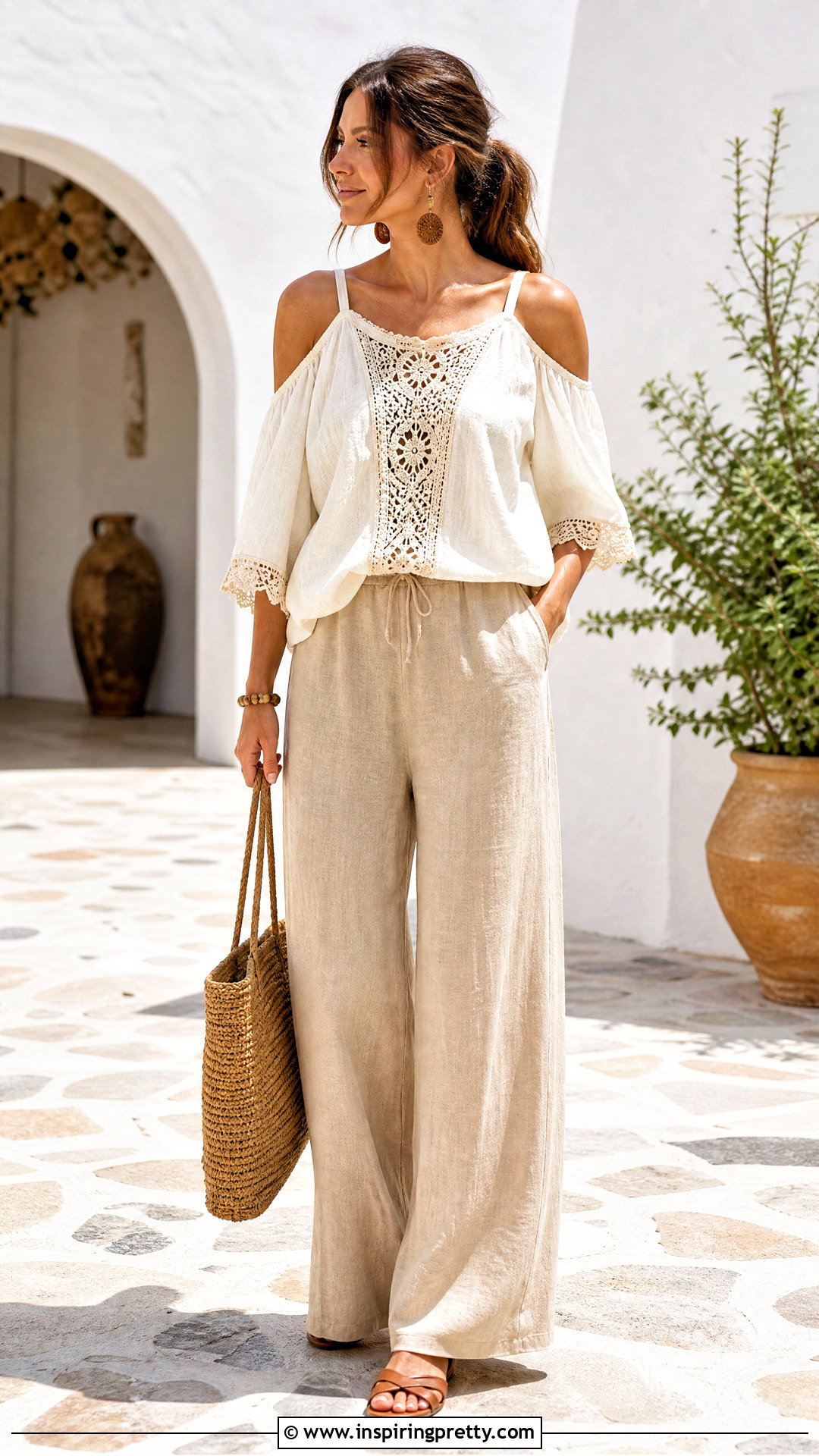
Crochet panels give coverage and still show the cold shoulder outline. Cut rounded openings in a loose linen or cotton blouse and hand-sew small crochet motifs inside. Attach every edge, not just a few points, or the motif sags with the weight of the arm. I always pick motifs in soft cotton yarn; acrylic can scratch against bare skin. Tonal crochet on ivory reads quietly handmade; contrasting color is bolder. Wide-leg linen pants, flat sandals and a woven tote suit it, with a light front tuck so the two loose pieces don't hide your shape.
8. One-Shoulder Cutout Top With Black Jeans
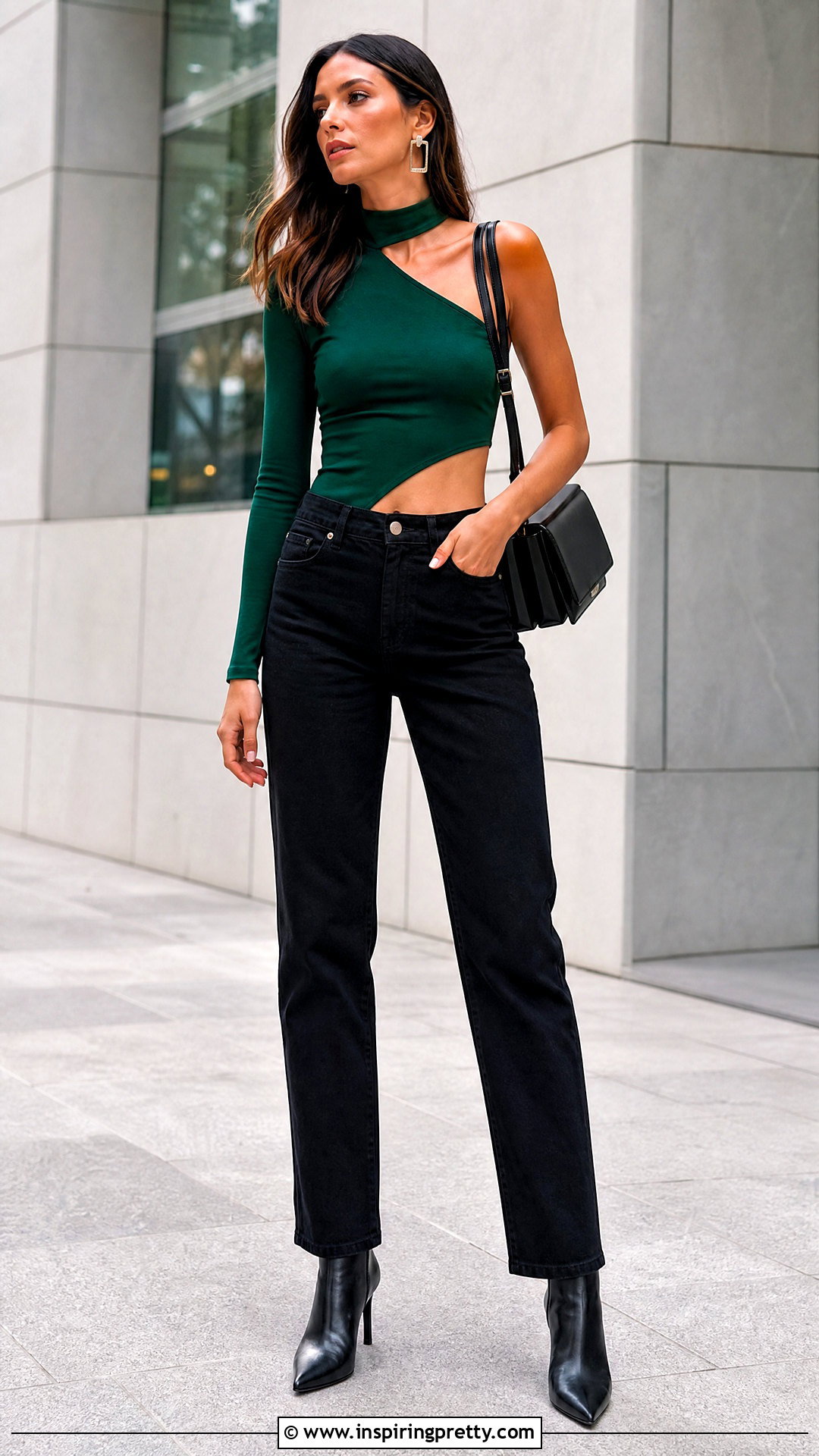
One cutout instead of two gives an asymmetric twist. Use a fitted long-sleeve top, cut one neat shoulder opening and leave the other sleeve alone. A narrow hem or stretch binding keeps the edge durable. Placement is the hard part: too close to the neckline and the top slides off the shoulder, too close to the underarm and it gapes when you lift your arm. Try it on and mark it in place. Black straight jeans, heeled ankle boots, a structured bag and geometric earrings suit it. Deep red, cobalt, emerald or white stand out against the black.
9. Pearl Trim Cold Shoulder Top With Pleated Skirt
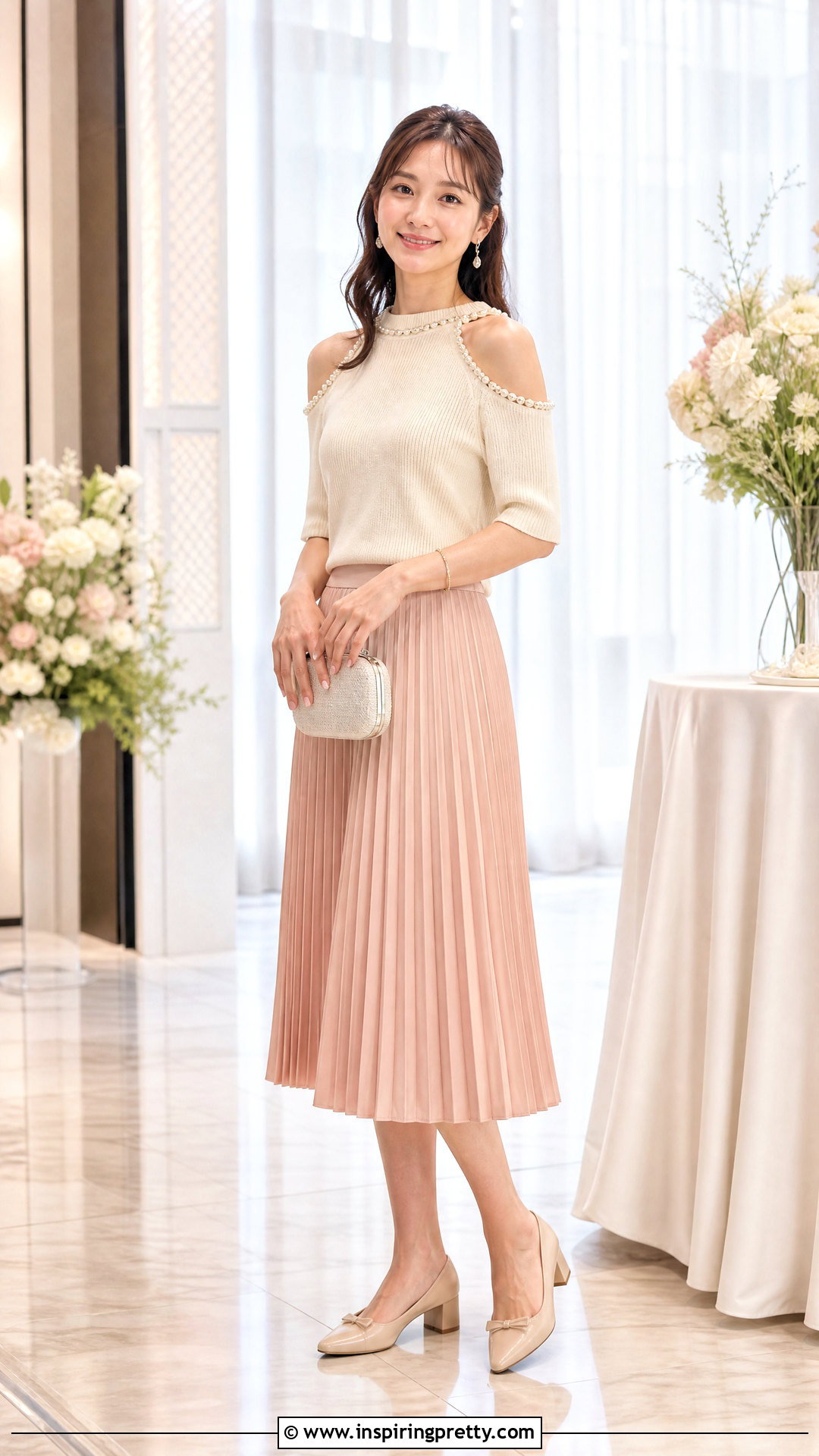
Small faux pearls make a plain knit dressy. Cut and finish the openings first, then hand-sew each pearl with doubled thread, knotting after every one so a broken thread loses one pearl, not ten. Space them evenly and don't crowd them. Heavy beads drag knit fabric down and stretch the opening out of shape, so keep them small and light. Cream, blush, gray or black all look refined. A flowing pleated midi, low block heels and a small clutch finish the outfit. Hand wash, or use a mesh laundry bag on a gentle cycle.
10. Sweater Cold Shoulder Top With Faux Leather Leggings
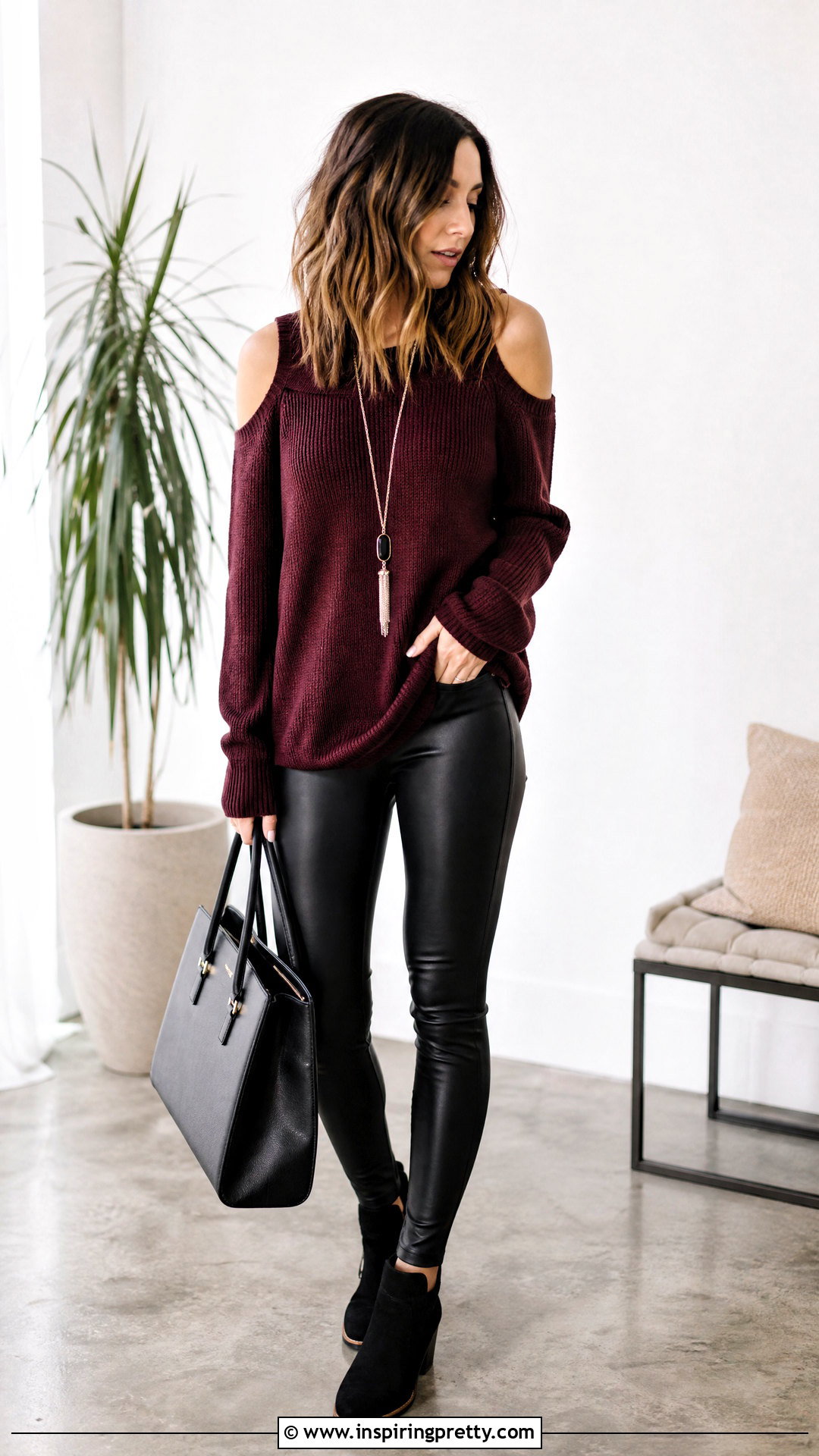
Cutting a sweater is riskier than cutting a tee. Knitted fabric can run once a stitch is cut, so stabilize the area first: sew a line of small stitches just outside your marked oval, then cut inside it and finish with knit binding or a stretch stitch. Fine-gauge sweaters behave; chunky or loose knits can unravel and stretch, so I wouldn't start with those. Matte faux leather leggings, ankle boots and a long pendant make it a cool-weather outfit. Choose a sweater long enough to cover the hips if that feels more comfortable.
11. Tie-Dye Cold Shoulder Top With Distressed Jeans
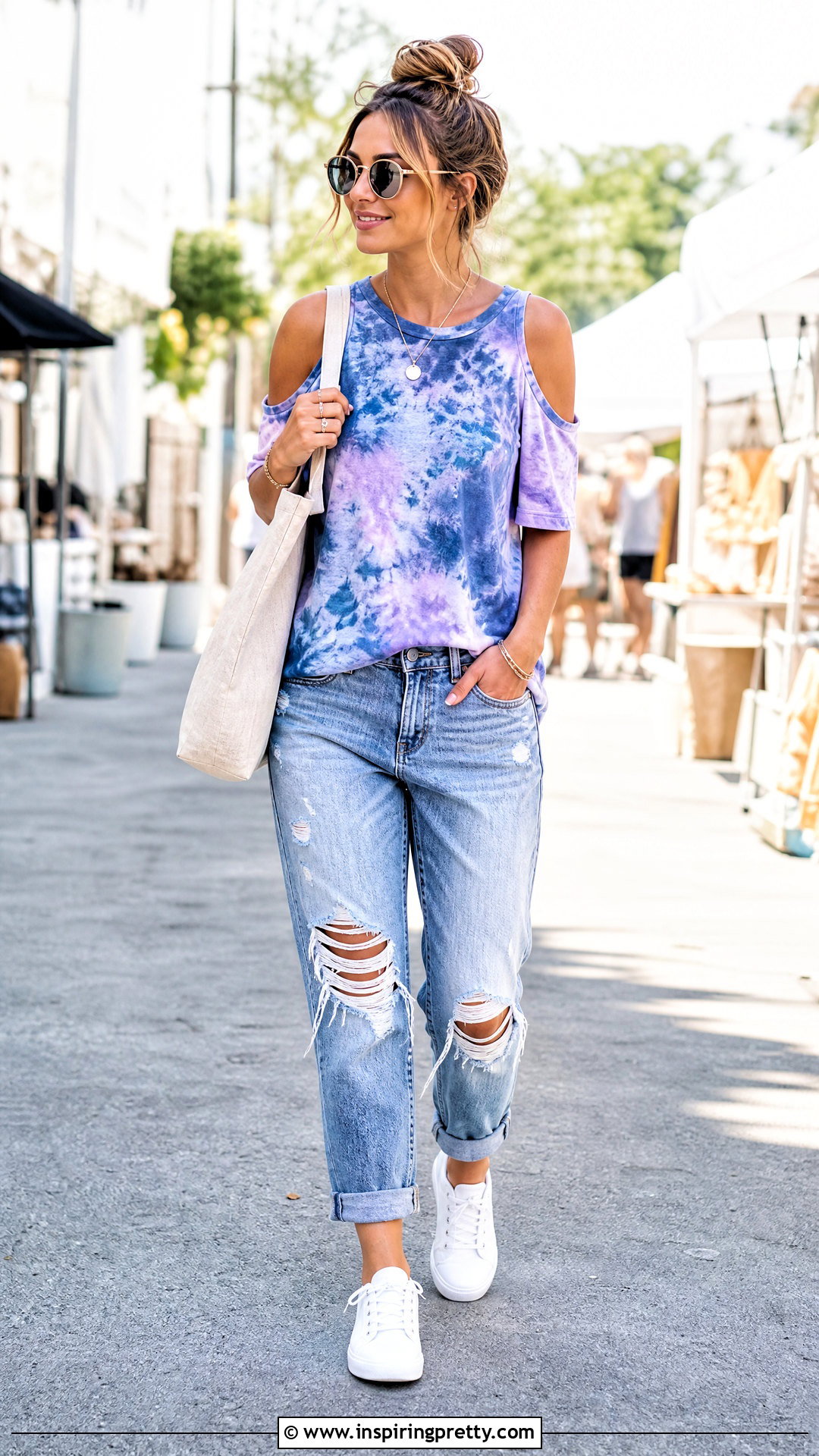
Dye the shirt first, then cut. A plain white cotton tee in a spiral or scrunch pattern with two or three colors stays wearable; more colors usually turn muddy. Wash and dry it fully so the dye is set, then cut two modest openings. Wear the tie-dye cold shoulder top with distressed boyfriend jeans, white sneakers and a canvas tote, with a partial front tuck so the loose pieces don't swamp you. Keep everything else neutral. Follow the dye kit's instructions, wear gloves and cover your work surface.
12. Cold Shoulder Peplum Top With Slim Trousers
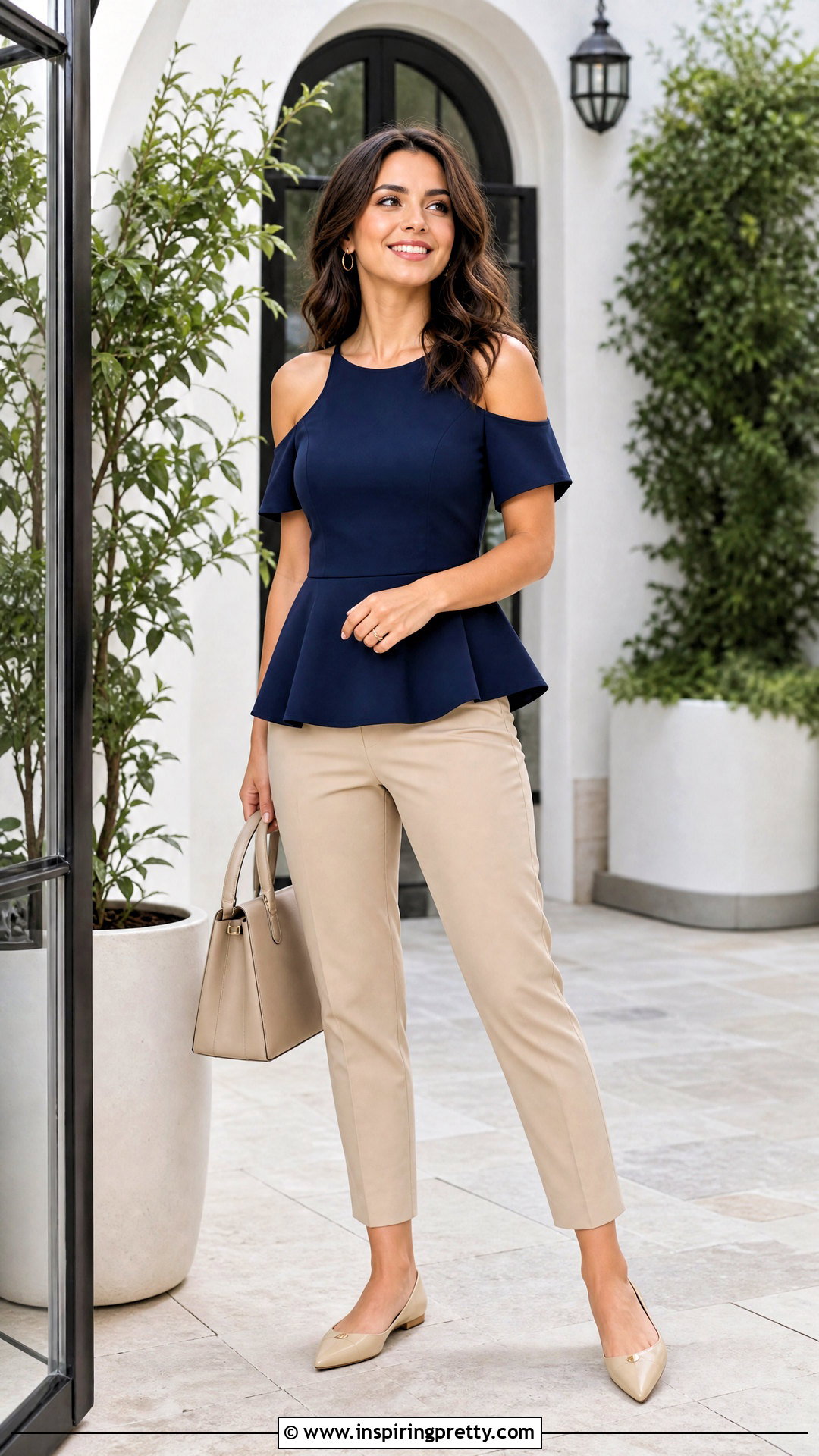
A DIY peplum is more of a project. Sew a gathered panel to the lower edge of a fitted tee, then cut and finish the shoulder openings. The seam should sit at your natural waist; below it, the peplum adds width at the hip instead of shape. I choose panel fabric close in stretch and weight to the shirt, or the hem will hang unevenly. Press the waist seam well. Keep the shoulder openings simple so there's one decorative focus. Slim ankle trousers, pointed flats and a structured bag finish it.
13. Scarf Sleeve Cold Shoulder Top With Wide-Leg Jeans
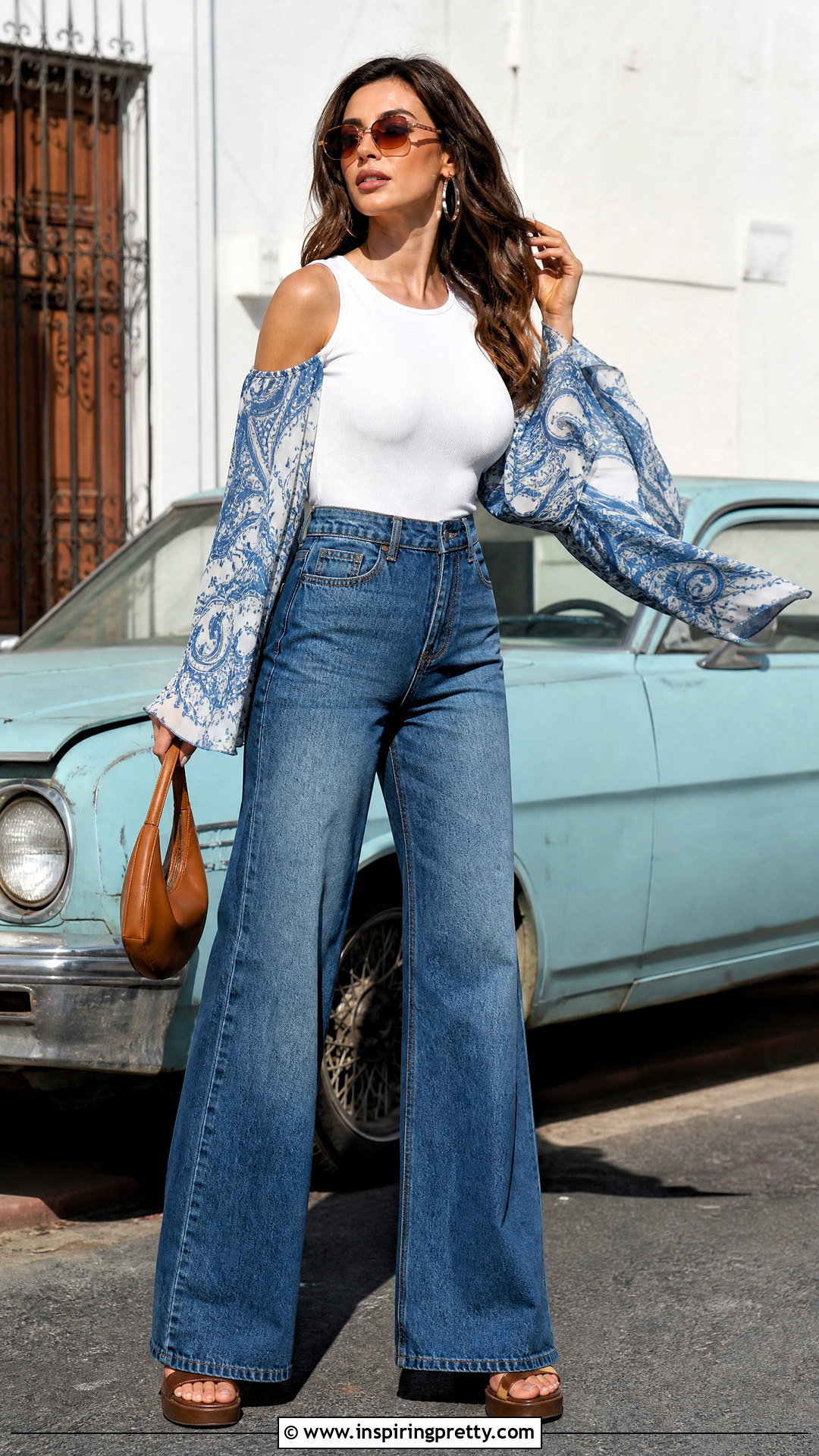
Scarf fabric can replace the top of a sleeve and drape down the arm. Remove a controlled section of each sleeve cap, finish the edges, and attach narrow scarf panels. I find very slippery silks hard to sew; a light crepe or chiffon with some grip is easier. Keep the panels short of the wrist so they don't catch on door handles, and reinforce each attachment point because these take strain when you move. A fitted bodice works best since the sleeves already add volume. High-waisted wide-leg jeans, platform sandals and hoops give it a retro feel.
14. Studded Cold Shoulder Top With Denim Skirt
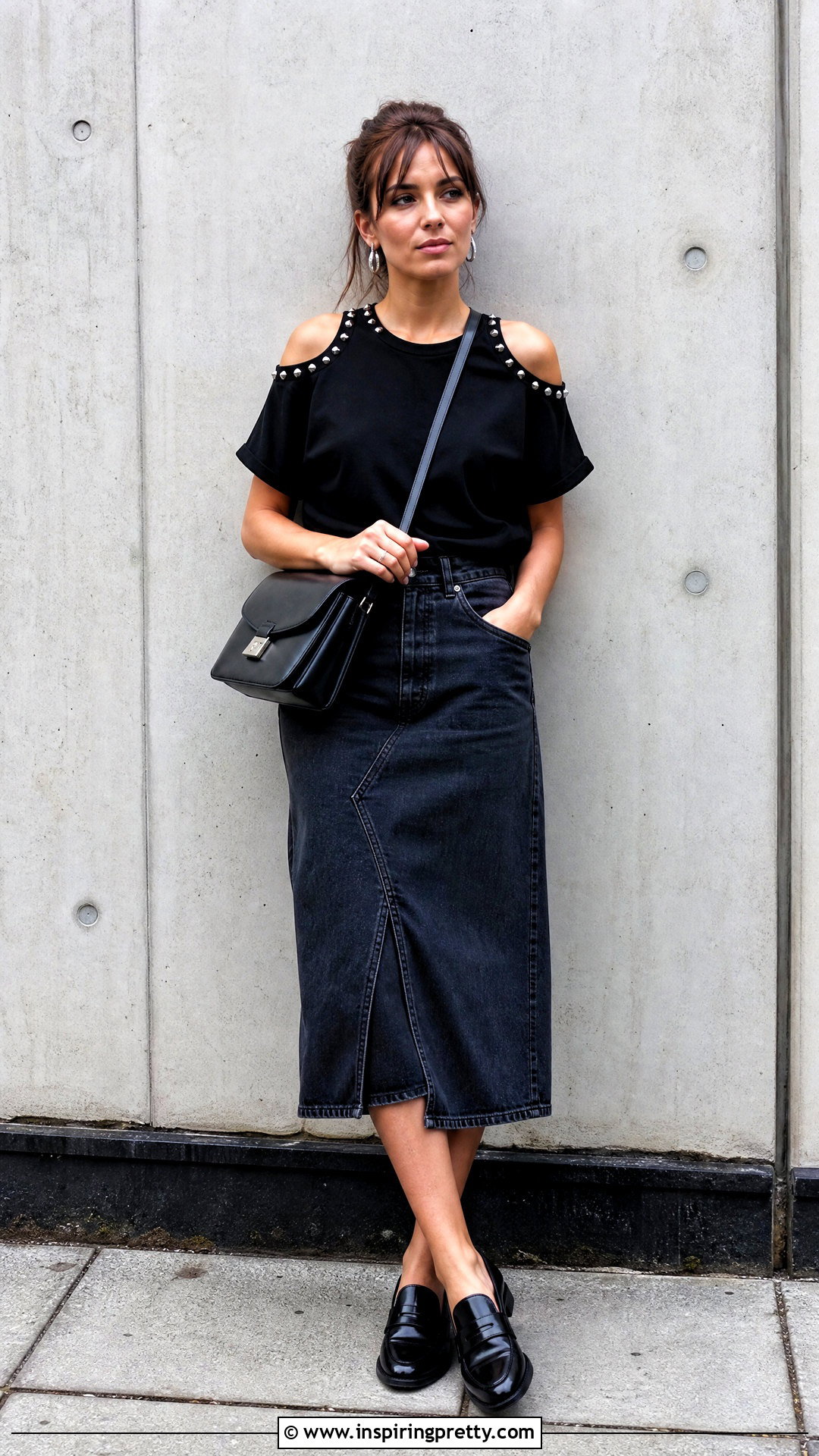
Studs give a dark top some edge without a big redesign. Cut two symmetrical openings in a sturdy cotton tee, finish the edges, and add light flat-back studs around each cutout following the stud kit's instructions. Keep them a little away from the inner edge, where the prongs or backs can scratch your skin. Check each stud before wearing and turn the top inside out to wash. A knee-length or midi denim skirt softens the hardware, with black loafers and a crossbody. A half tuck gives it shape.
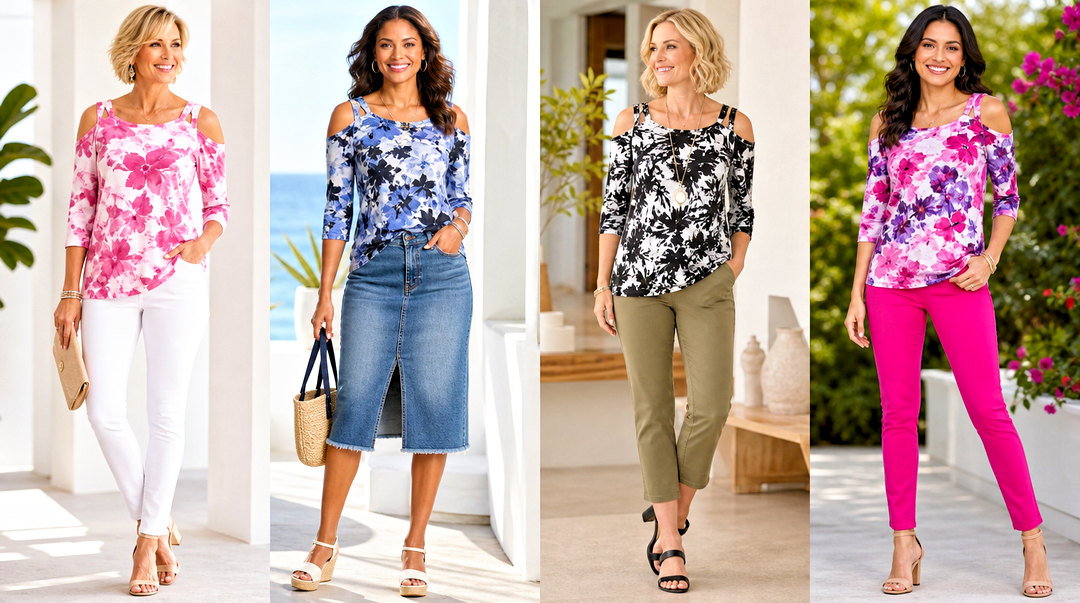

15. Floral Appliqué Cold Shoulder Top With Cropped Pants
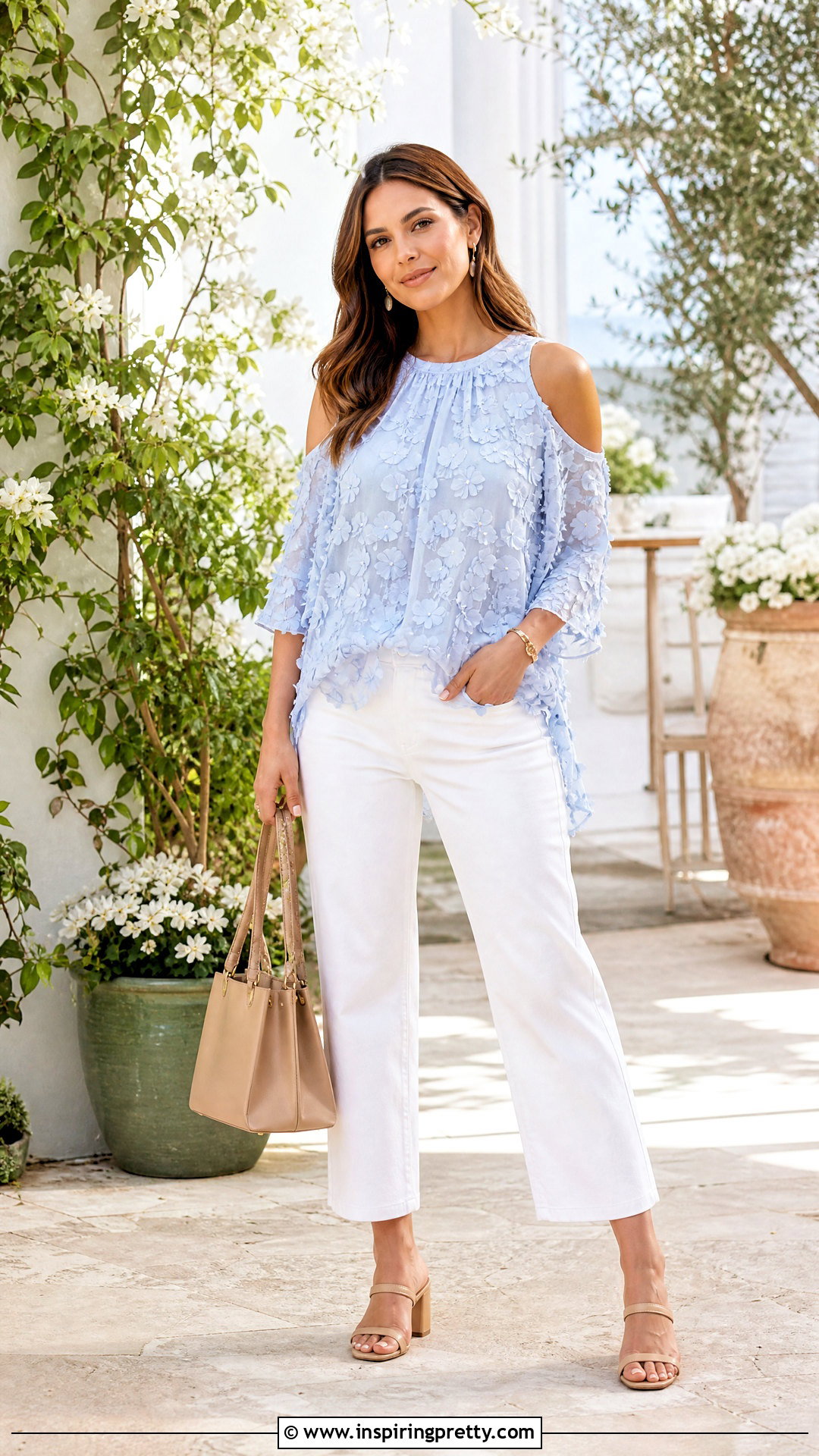
Appliqués are forgiving: they cover uneven stitching and give the openings a finished edge. Cut two modest openings in a plain blouse and sew floral appliqués along the outer edge. Arrange them asymmetrically, but keep the weight similar on both sleeves so one side doesn't pull down. I only use washable appliqués with soft backing and tack down every petal, or the edges curl after the first wash. White flowers on a blue blouse look crisp. Cropped straight-leg pants, low block heels and a small bag finish it.
16. Ribbon Laced Cold Shoulder Top With Midi Skirt
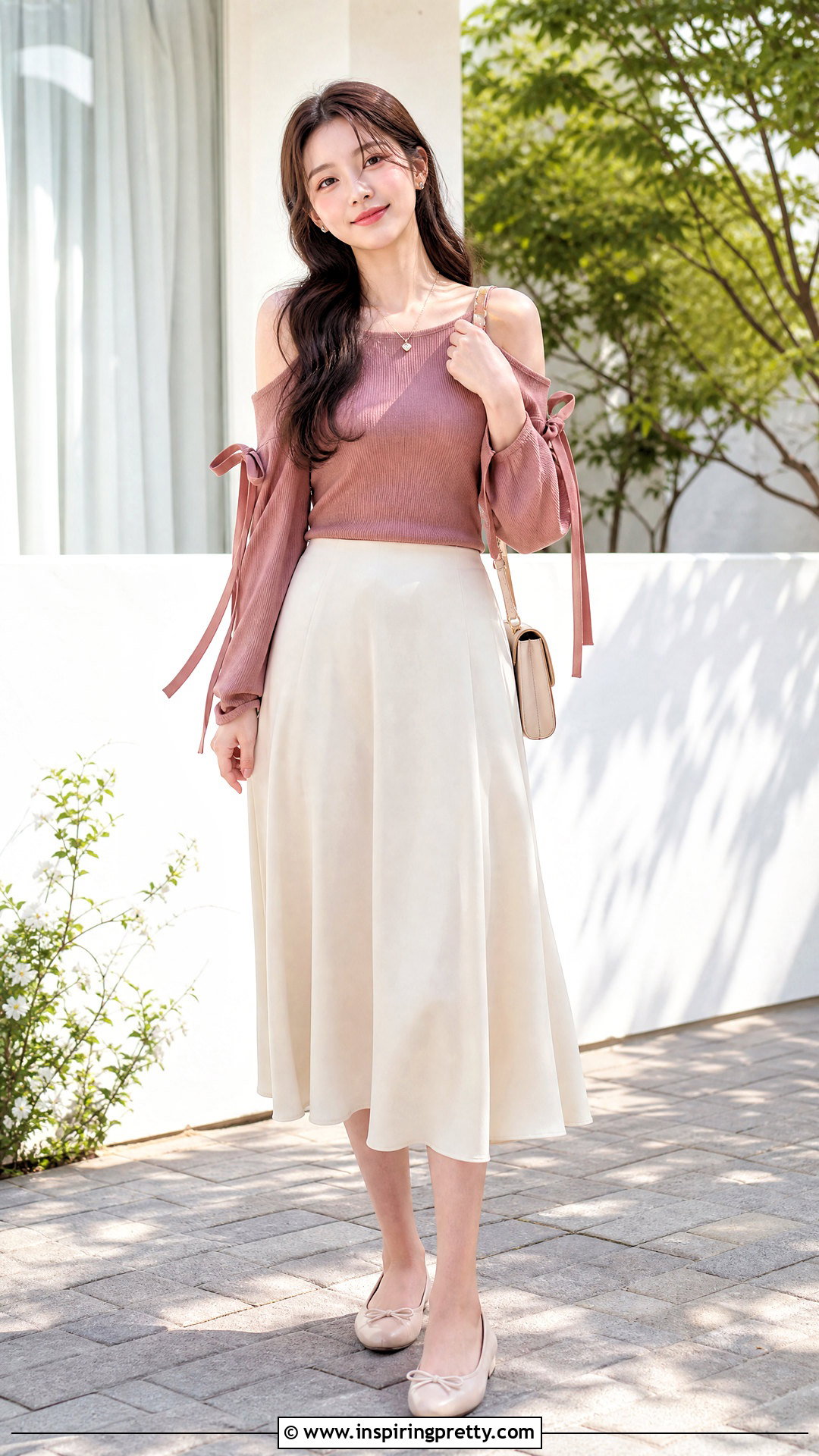
Lacing lets you decide how much shoulder shows. Sew small fabric loops on both sides of each opening and thread ribbon through, then tie it at the shoulder or upper arm. Grosgrain or soft cotton ribbon holds a bow; satin slips loose within an hour. The loops take strain every time you adjust them, so stitch each one several times. Pair the ribbon laced cold shoulder top with a solid midi skirt, ballet flats and a slim shoulder bag.
17. Fringe Cold Shoulder Top With High-Waisted Shorts
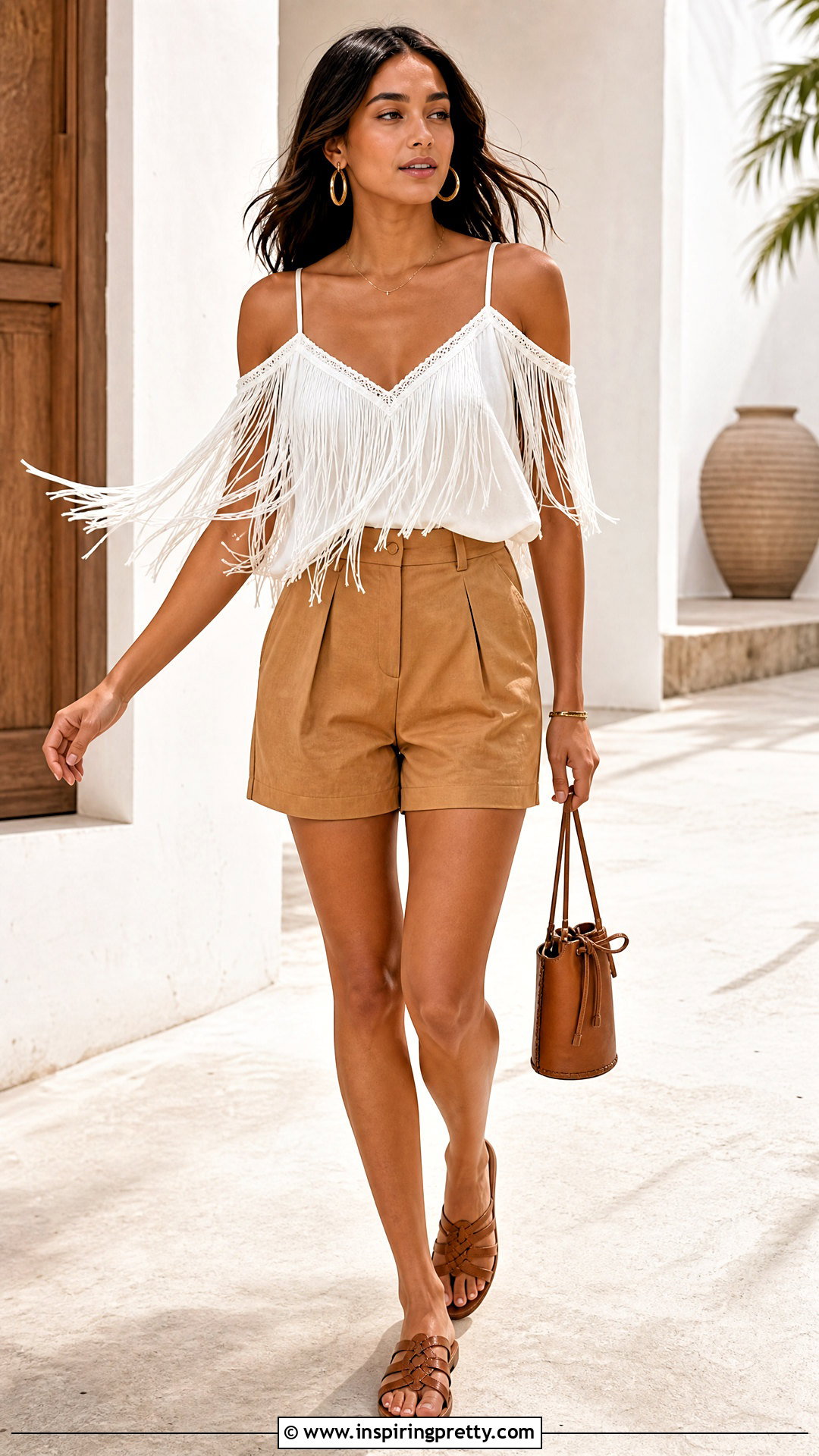
Fringe adds movement and suits a relaxed summer top. Make clean openings in a loose tee, finish the edges, and sew short fringe trim along the lower side of each cutout. A few inches is enough; long fringe tangles and gets caught in bag straps. Match the fringe to the top or go one shade darker. Wash it inside a mesh bag and comb the strands out when dry. High-waisted tailored shorts in a solid color balance the texture, with flat sandals and a bucket bag.
18. Ruched Cold Shoulder Top With Maxi Skirt
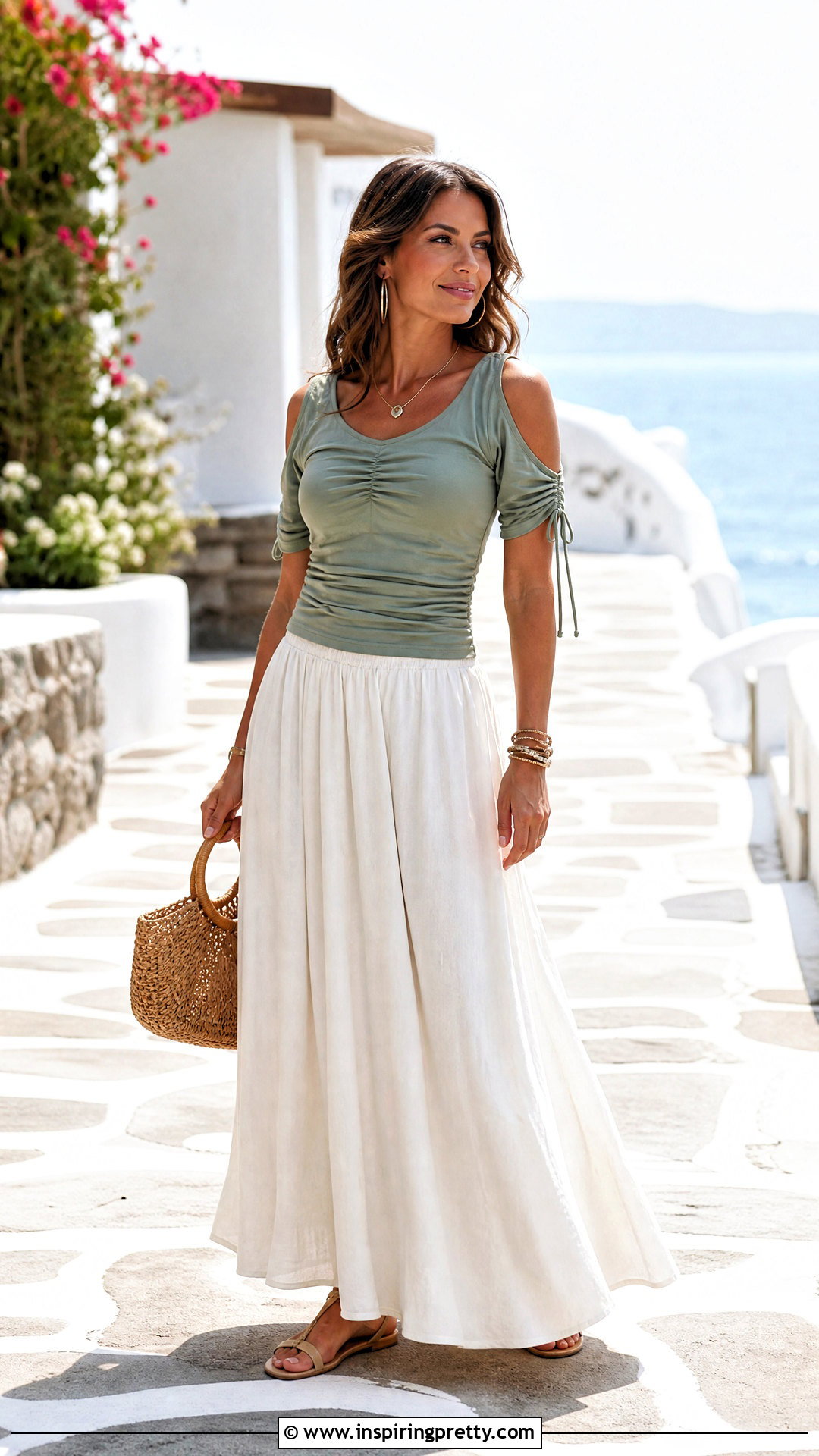
Ruching lets you adjust the opening size. Make a vertical cut along the top of each sleeve, finish the edges, and sew a narrow channel on both sides. Thread fabric ties through and gather until the opening is where you want it. Reinforce the channel ends with a few backstitches, since the ties pull there every time you adjust them. Ties should be long enough for a secure bow but not dangling. Style the ruched cold shoulder top with a solid maxi skirt; keep the top fitted if the skirt is full, and tuck it in.
19. Patchwork Cold Shoulder Top With Mom Jeans
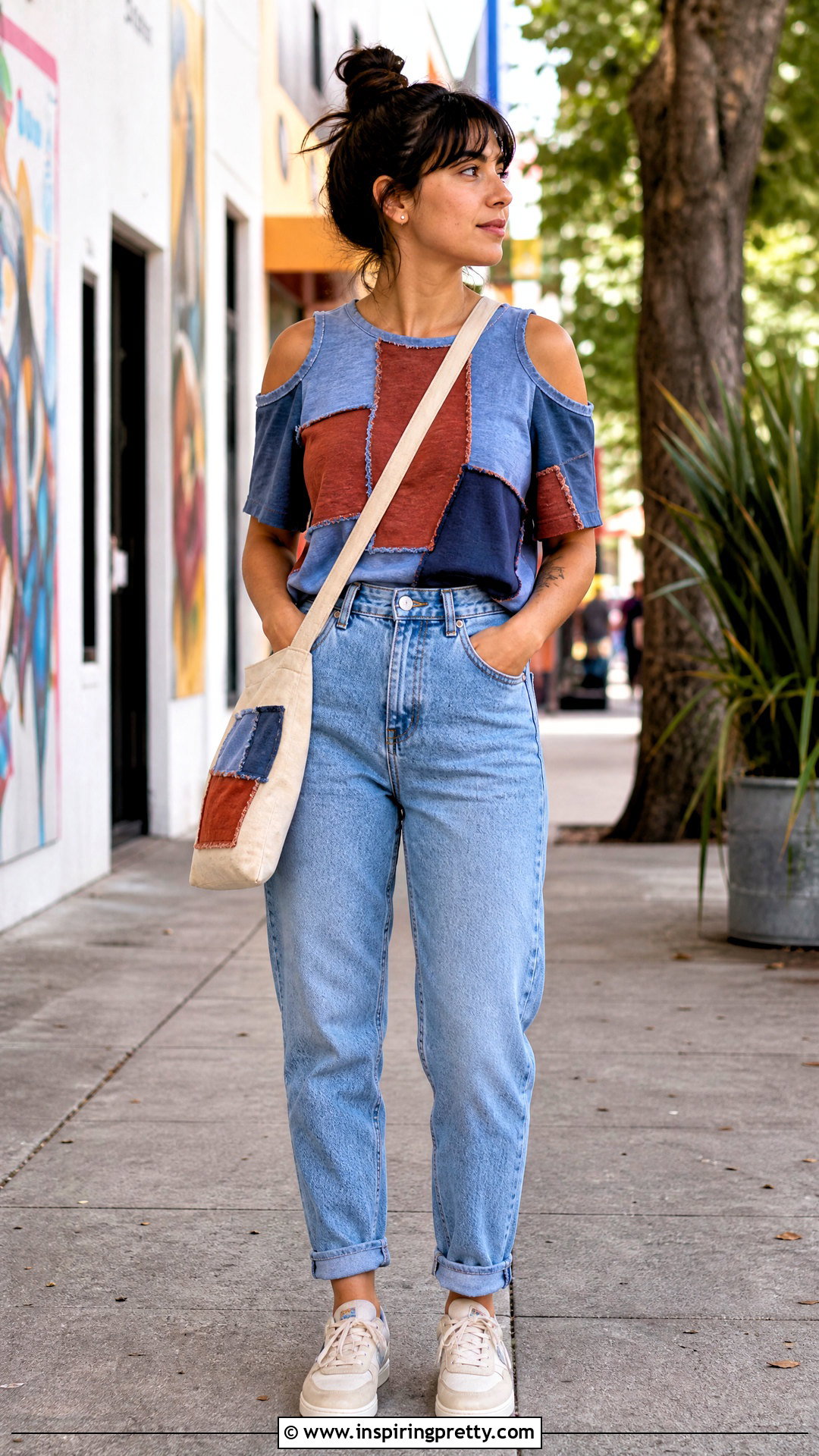
Patchwork turns a thrifted tee into something no one else has. After cutting and finishing the openings, add small patches around the sleeves, neckline or hem. Pick a tight palette of three or four colors so it looks designed, not random. I wash and press every scrap before sewing; cotton shrinks, and an unwashed patch can pucker the shirt after its first wash. Pin the whole layout and look at it in a mirror before stitching. High-waisted mom jeans, cuffed once, neutral sneakers and a canvas crossbody keep it relaxed.
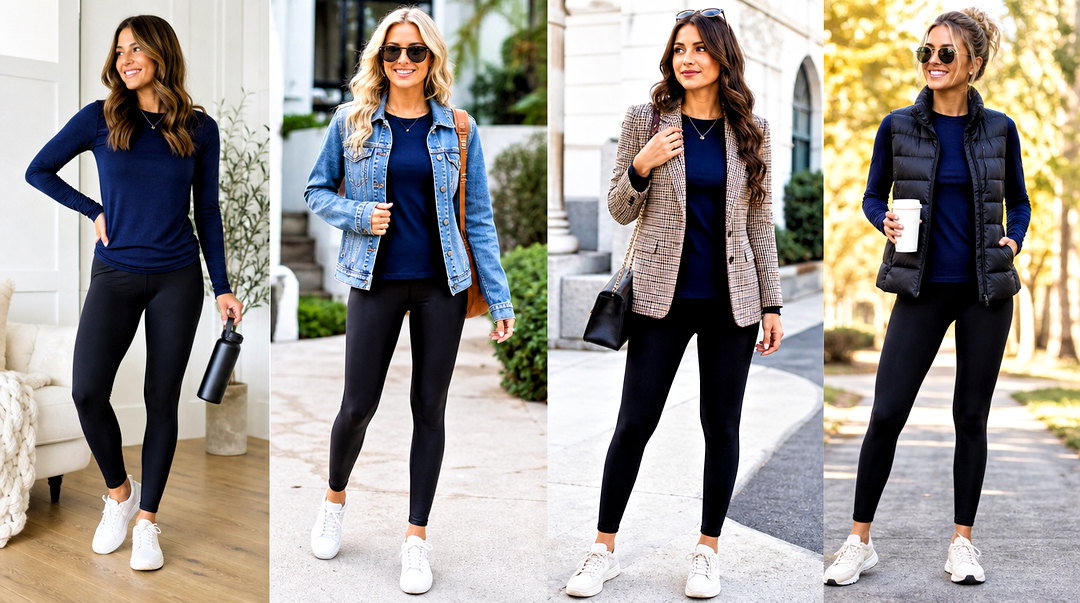
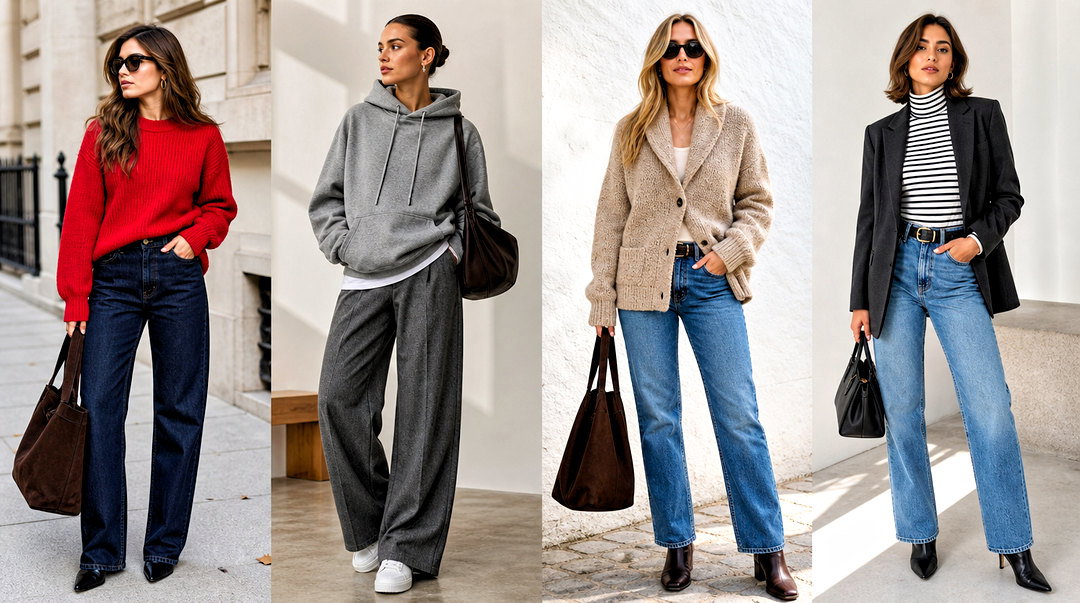
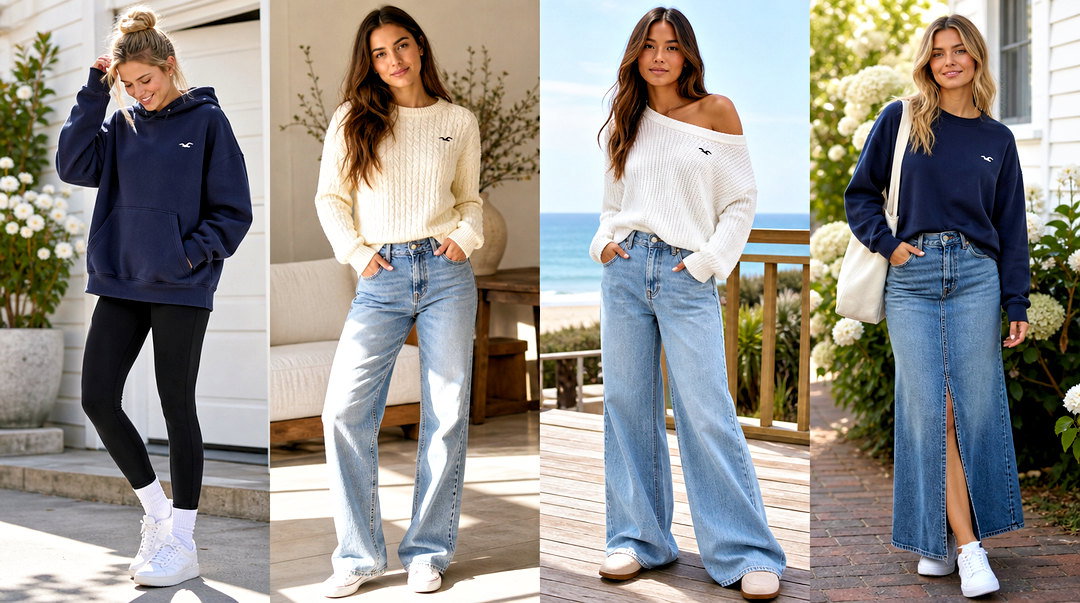
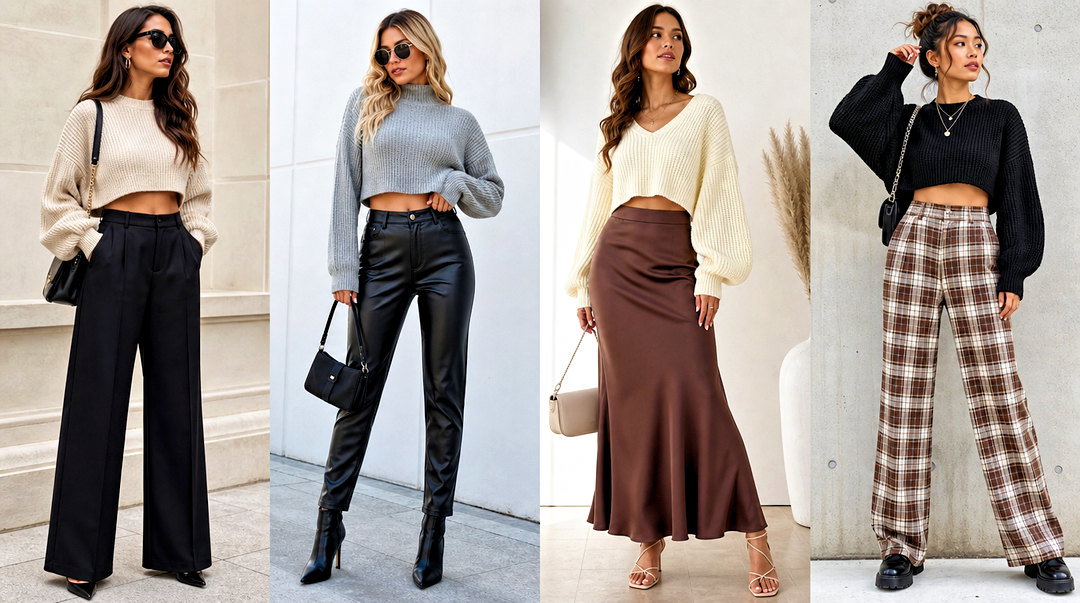
20. Elastic Cold Shoulder Top With Palazzo Pants
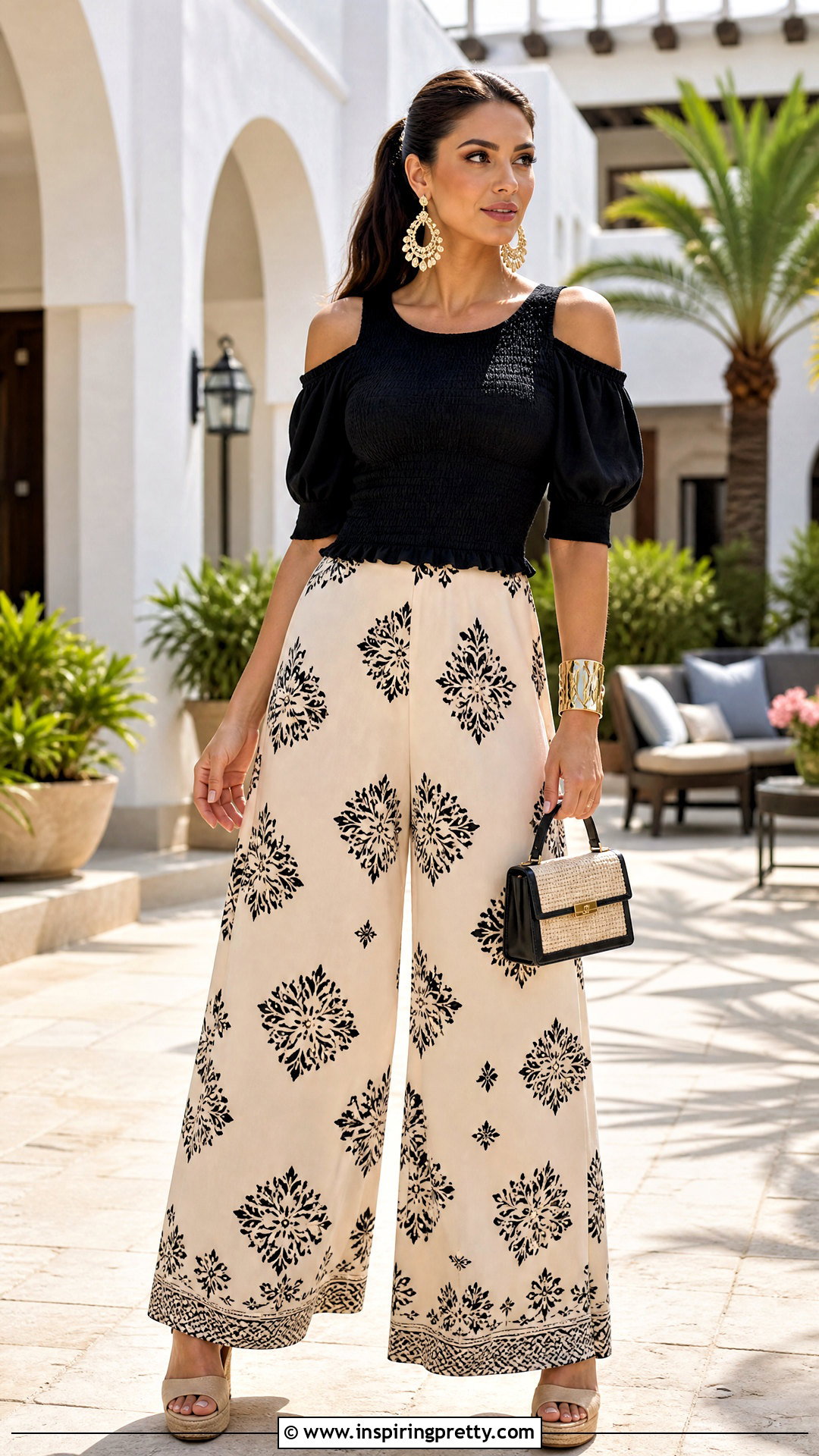
Elastic edging holds the opening closer to the body, which helps on blouses that gape. Cut two curved openings in a light blouse, sew a narrow casing around each, and thread elastic through. Measure the elastic slightly shorter than the opening, but don't stretch it hard; tight elastic digs in and leaves red marks after a few hours. Try it on before closing each casing. Flowing palazzo pants, wedge sandals and a structured mini bag suit it. A solid top with printed palazzos, or a patterned top with plain ones.
Which Old Clothes Are Worth Cutting
Not every garment survives a refashion. Before cutting, I check the fabric, the fit and the seams.
- Good candidates: cotton tees, cotton or linen button-downs, fine-gauge sweaters and blouses that already fit across the shoulders.
- Tricky: thin rayon, which frays and shifts while you sew; slippery satin; and stretchy activewear, which curls unpredictably.
- Skip: chunky or loosely knit sweaters if you're new to sewing, and anything too tight at the shoulders, since a cutout won't fix that.
Wash the garment before you mark it, so any shrinkage happens first. Thrifted pieces especially can shrink a little the first time through your machine, and a perfectly placed cutout can end up in the wrong spot.
Embellished tops need gentler care after the project. Turn them inside out, use a mesh bag, and skip the hot dryer, which weakens glue on studs and appliqués and softens elastic. Hand washing is safest for anything with pearls or beads.
Cut Small, Finish Well, Wear It Often
Making your own cold shoulder top is a good way to bring a forgotten shirt back into rotation, and you get to decide the fit, the coverage and the finish. Start with a T-shirt, then move to lace, appliqués, elastic or rebuilt sleeves as your hands get steadier. Measure carefully, cut small, and finish edges to match the fabric. Then treat it as clothing, not a craft project: style it with bottoms that balance its shape, shoes you can walk in and accessories that leave the shoulder detail visible.
Related posts:



Leave a Reply