
A peasant top is one of the friendliest garments to sew yourself: a few rectangles, an elastic or drawstring neckline and sleeves gathered into a cuff. The challenge isn't making it, it's wearing it so the volume looks deliberate. Cotton, linen, gingham, old scarves and upcycled shirts all work, as long as the fabric is light enough to gather. When I style a handmade one, I pair the loose blouse with a defined waist and a cleaner bottom, and I adjust sleeve length, neck width and hem placement to the person wearing it. Here are twenty outfits built around that idea, with the sewing detail that makes each one work.
Measuring the Neckline Casing and Elastic
Every top on this list comes back to the neckline. A basic peasant top is a front, a back and two sleeves, all gathered into one casing, and the length of the elastic in that casing decides where the neckline sits on your shoulders. Get it right and the top stays put all day. Get it wrong and you're tugging it up or pulling it off your arms.
- Measure around your body where you want the neckline to sit: across the collarbone for a classic neck, around the upper arms for off-shoulder.
- Cut the elastic shorter than that measurement, then pin it in a loop and try it on before sewing. It should hold without leaving a mark.
- Make the casing a little wider than the elastic so it can slide and gather evenly.
- Leave a small gap in the casing seam until the very end so you can adjust the elastic after one wear.
For tie necks and drawstrings, skip the elastic and make the casing roomier so the cord pulls through easily. A safety pin on the end of the drawstring makes threading it much faster.
1. White DIY Peasant Top With Straight Leg Jeans
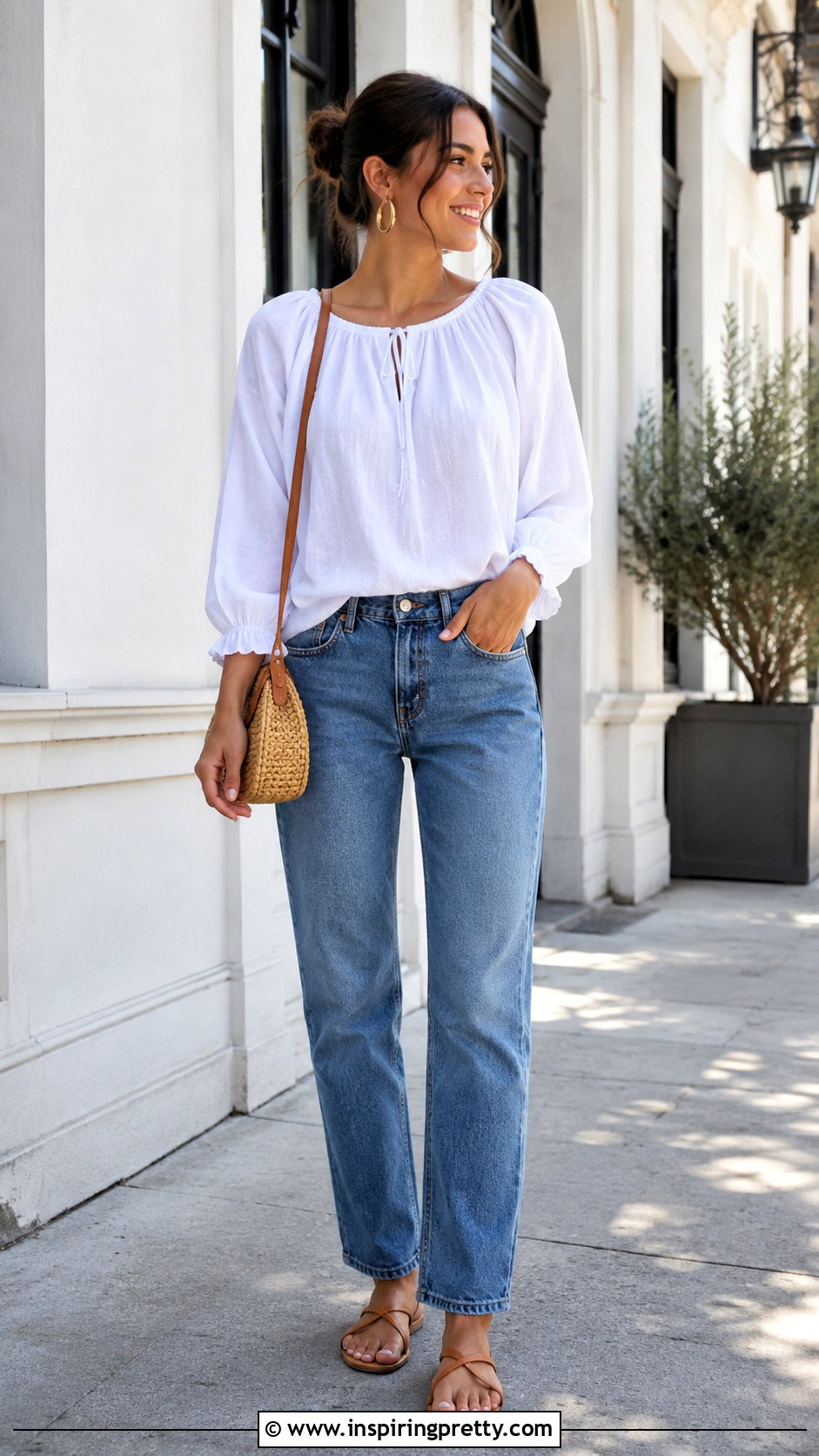
White cotton is where I'd start, and an old sheet with a smooth finish is honestly fine for a first attempt. Give it a gathered neck, elbow-length sleeves and a slightly curved hem, then front-tuck it into medium-wash high-rise straight-leg jeans so the waist shows without flattening the gathers. Tan flat sandals, a woven crossbody and small gold hoops are enough, with the jeans rolled once. If the neckline sits too wide, run a narrow drawstring through the casing alongside or instead of the elastic. Then you can pull it in on the day rather than unpicking anything.
2. Floral DIY Peasant Top With Denim Shorts
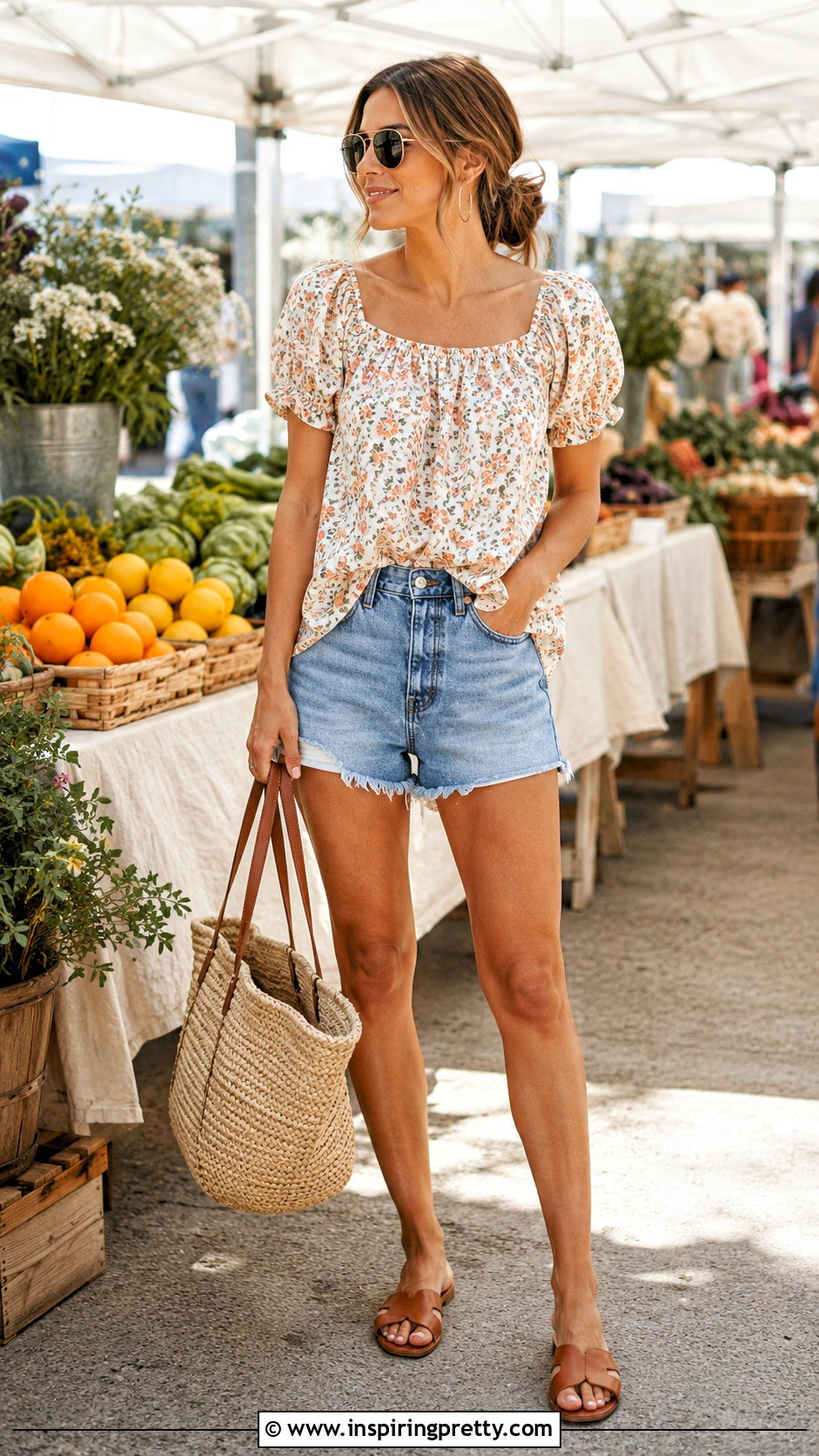
Floral lawn is soft enough to gather and crisp enough to hold a little shape, which is why I keep reaching for it. An old floral dress that no longer fits often has enough fabric for a top. I'd keep the sleeves short and lightly gathered so the print stays the focus, then pair it with high-rise denim shorts with a relaxed leg and a mid-thigh hem. A partial tuck gives you a waist while leaving room to move. Flat leather slides, a straw tote, sunglasses and small hoops finish it for a market morning or a lunch outside.
3. Linen DIY Peasant Top With Wide Leg Pants
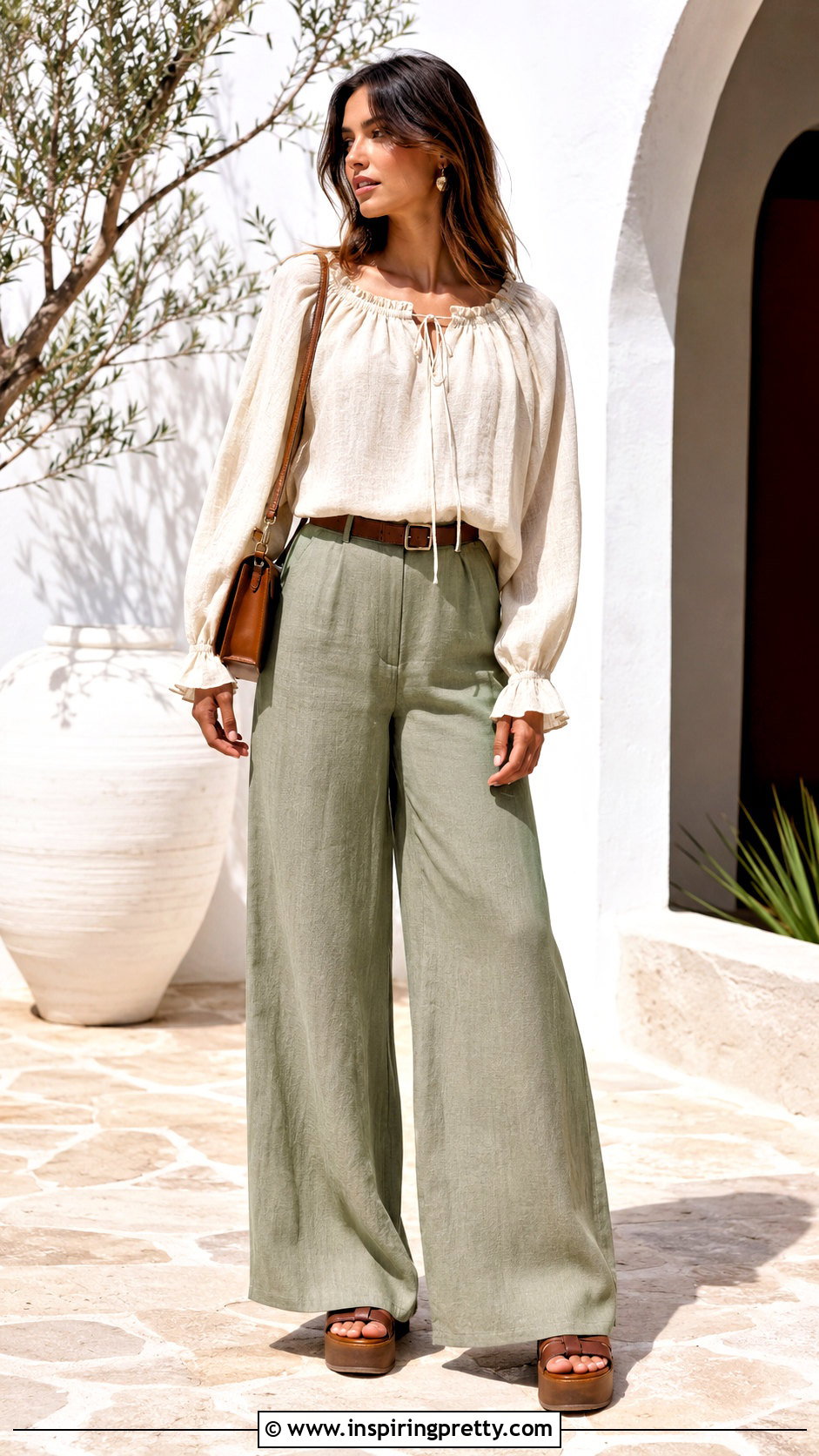
Prewash linen before you cut, every time. It shrinks in the first wash, and a peasant top that fit perfectly as sewn can end up short and tight under the arms. In ivory, sand, pale blue or muted sage, a hip-length top with three-quarter sleeves balances high-waisted wide-leg pants in a slightly darker neutral. Tuck it fully or front-tuck it, and add a slim belt if the waistband disappears. Platform sandals stop the wide legs from swallowing you, and a structured shoulder bag adds some edge. Don't fight the creases; linen softens with wear and the rumple is part of its charm.
4. Off Shoulder DIY Peasant Top With Midi Skirt
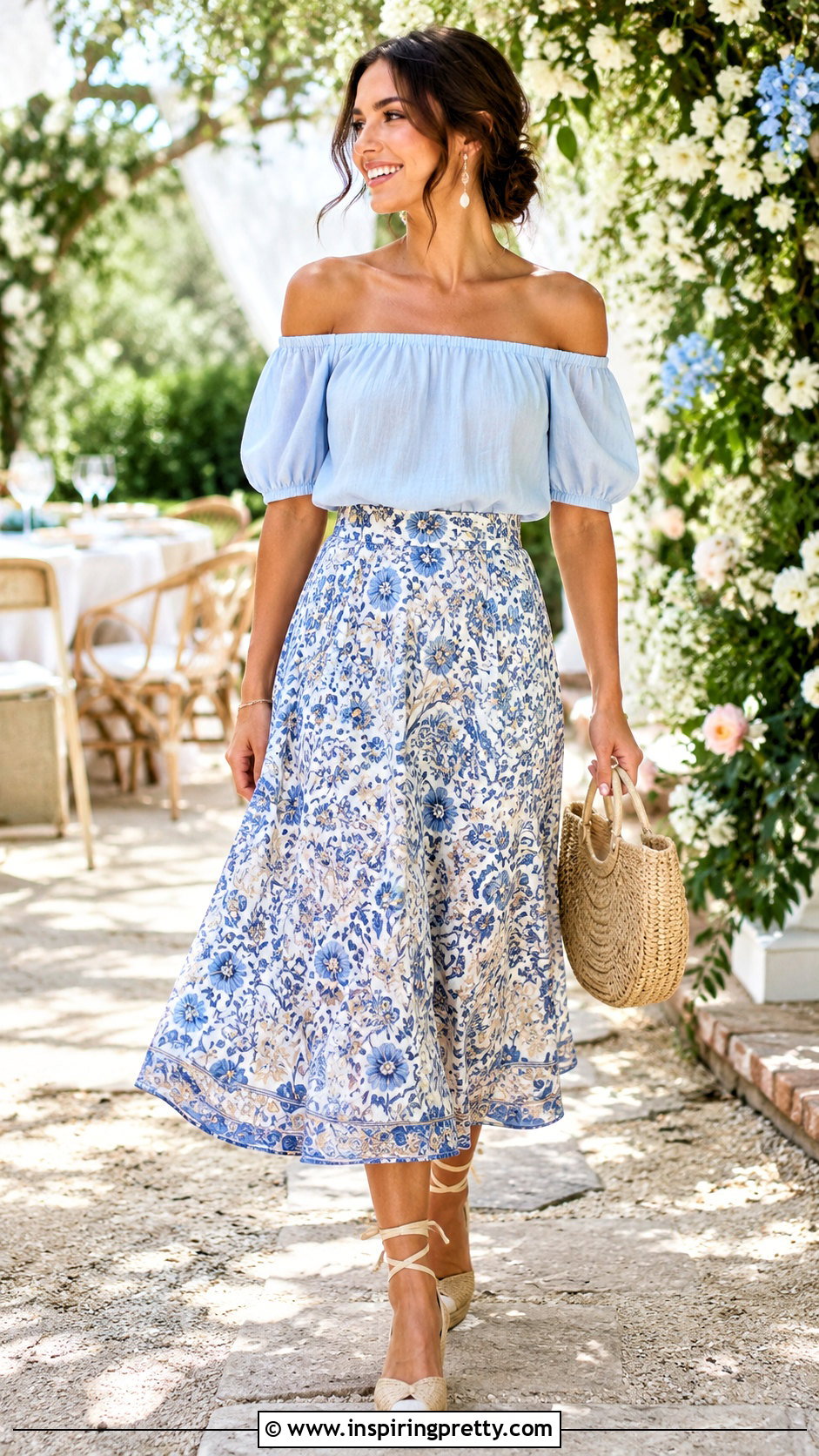
The elastic is what makes or breaks an off-shoulder top. Too tight and it digs a red line across your arms; too loose and you're hitching it up all afternoon. I use a soft, wide elastic and cut it to sit snugly when stretched only slightly. Cotton voile or light chambray drapes well here, and a slightly cropped hem meets a high-waisted A-line midi skirt cleanly. Pair a solid top with a printed skirt or the reverse. Espadrille wedges, a small woven bag and drop earrings finish it. You can also wear the neckline across both shoulders for more coverage, and short flutter sleeves soften it without adding much volume.
5. Embroidered DIY Peasant Top With White Jeans
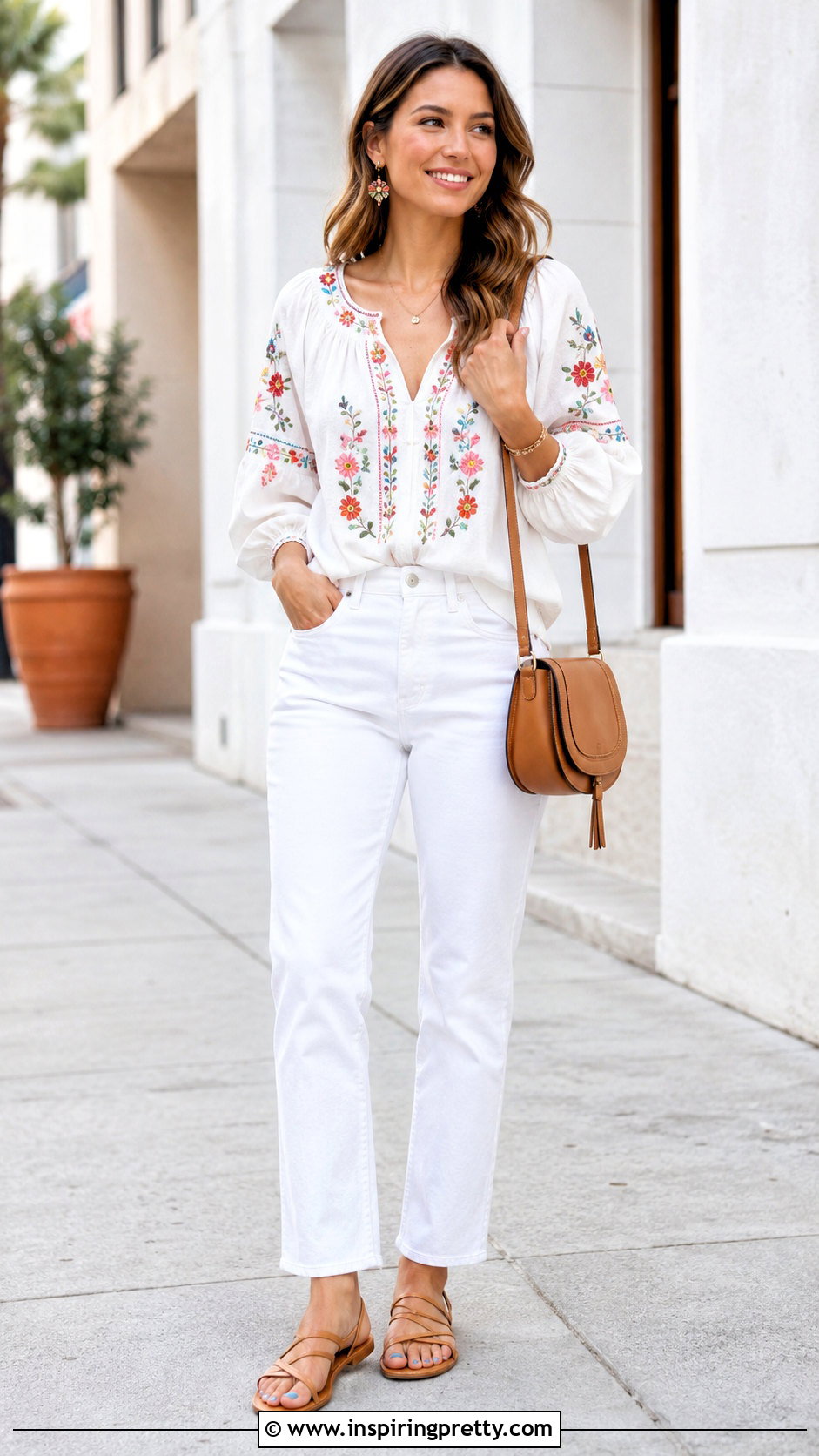
White jeans are the best canvas for embroidery because nothing below competes with the stitching. I'd embroider a plain cotton peasant top at the neckline, the cuffs or along the sleeve seams. Patches or decorative ribbon give a similar effect if freehand stitching isn't your thing. Choose slim straight or gently flared white jeans, front-tuck the top so it doesn't look boxy, and wear skin-tone underwear so nothing shows through the light denim. Tan sandals and a saddle crossbody suit it, and I'd pick jewelry in one of the thread colors. Use embroidery hoops and a stabilizer on lightweight cotton or it will pucker.
6. Gingham DIY Peasant Top With Denim Midi Skirt
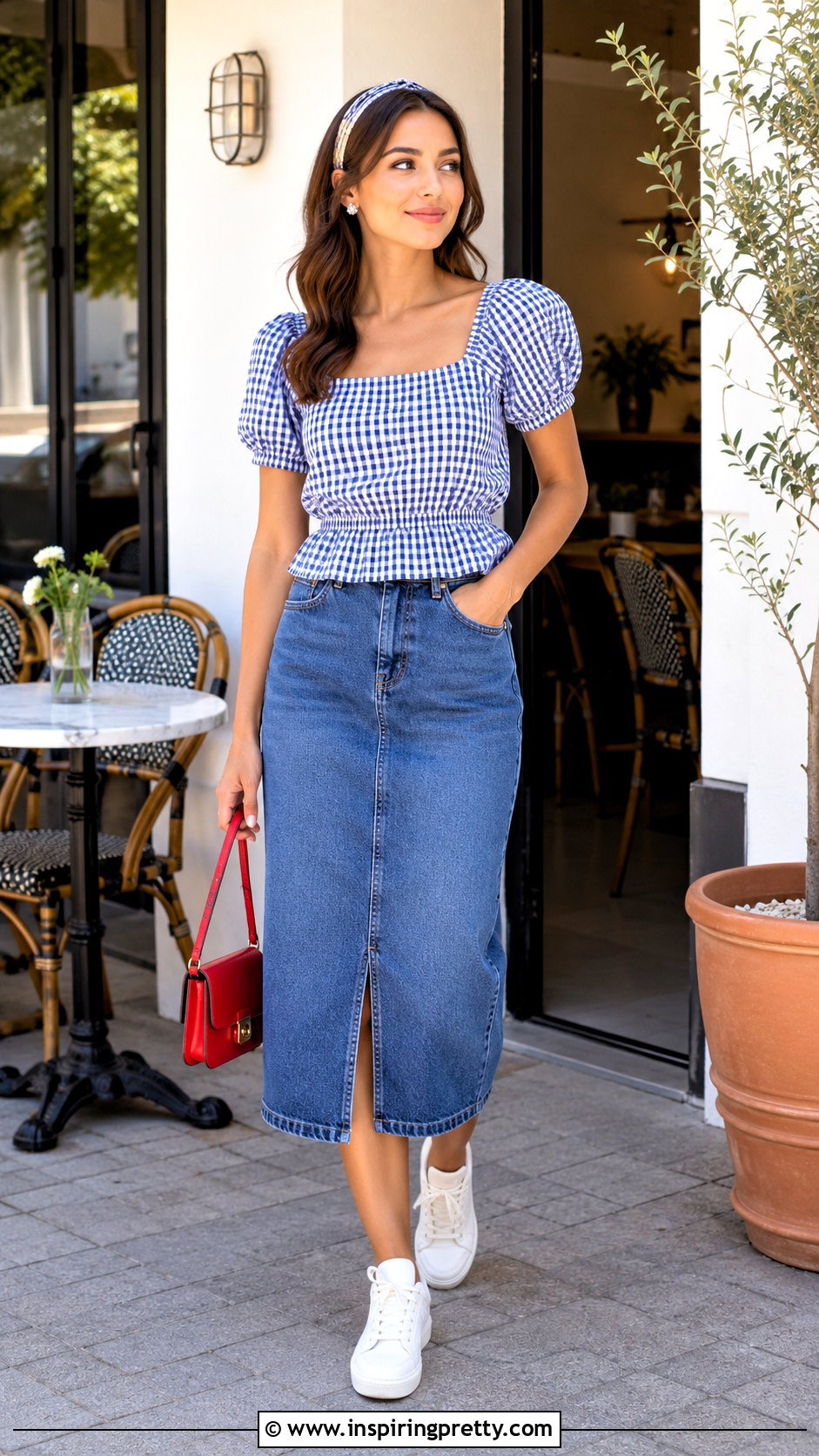
Gingham is a gift to beginner sewists because the checks act as built-in guide lines for cutting straight and matching seams. Small checks are the easiest to wear. Make it with short puff sleeves, a gathered neck and either an elasticated waist or a cropped hem, and pair it with a high-rise A-line denim midi skirt. White canvas sneakers keep it casual, and a compact red, navy or tan bag adds a sharp accent. Keep the top fitted at the waist, since a loose top over a long skirt quickly looks shapeless. A narrow headband in a matching color is a nice touch for a spring lunch or a school event.
7. Black DIY Peasant Top With Tailored Trousers
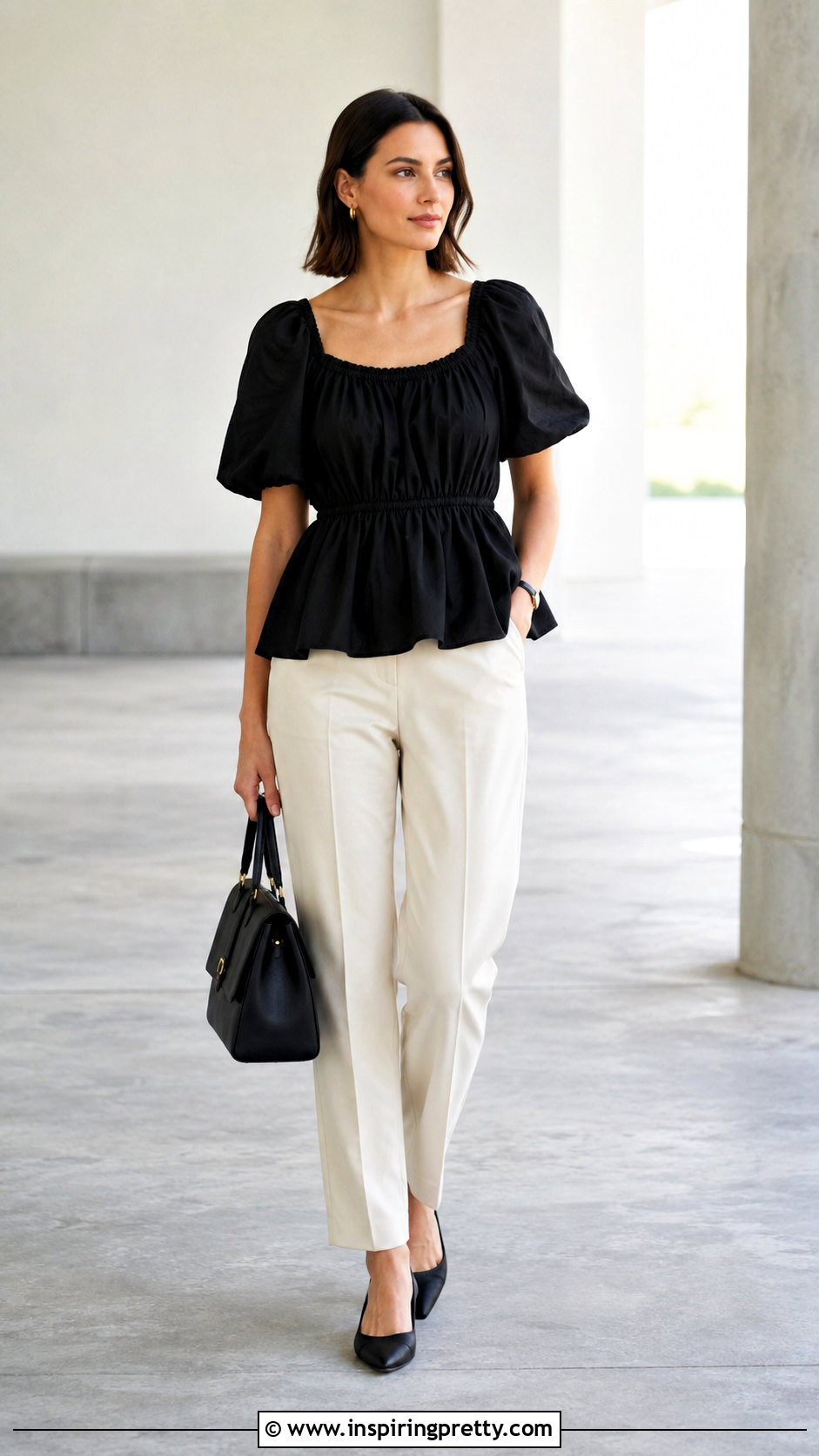
Can a handmade peasant blouse look polished? In black with tailored trousers, yes, but only if the fabric drapes. Stiff cotton gathers into a puffy ring at the neck; rayon or voile falls into soft folds instead. I'd make bracelet-length sleeves with narrow elastic cuffs and tuck the top neatly into high-waisted cream, camel, gray or olive trousers. Pointed flats or low block heels, a structured bag and a simple watch keep it office-ready. Skip extra trim on this one. A clean black peasant top worn this way is comfortable enough for a long day and smart enough for a meeting or dinner.
8. Patchwork DIY Peasant Top With Corduroy Pants
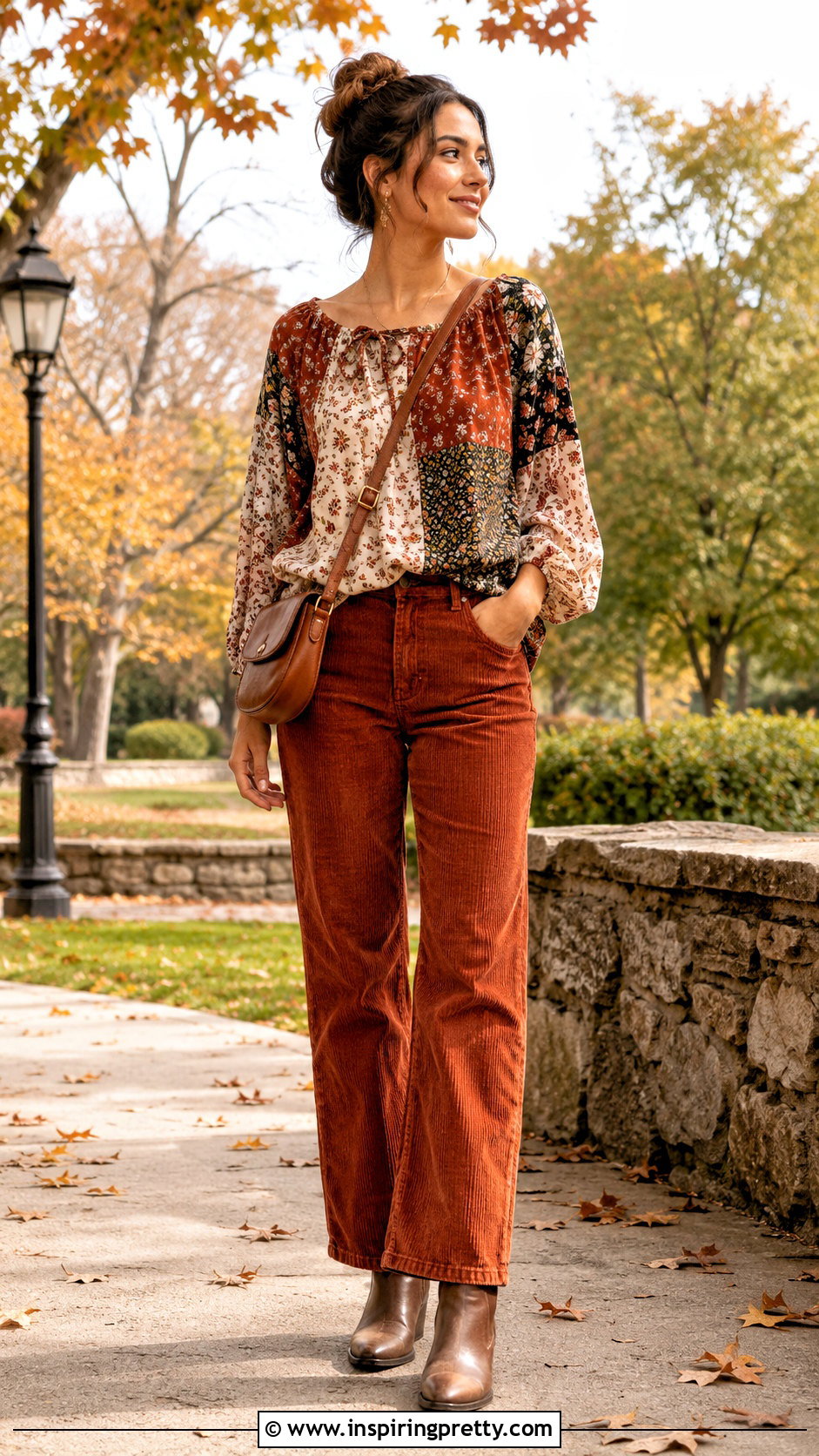
Patchwork only looks planned when the fabrics share a mood. I limit it to two or three lightweight cotton prints: one for the body, one for the sleeves and one for the neck band or cuffs. Rust, olive, tan or chocolate corduroy pants in a high-rise straight cut balance the volume and bring cooler-weather texture, with brown ankle boots and a leather crossbody. A half tuck keeps the waist visible. On the inside, press every seam and finish the raw edges with a zigzag or French seam, because patchwork has many more seams than a plain top and they all rub against your skin.
9. Eyelet DIY Peasant Top With Maxi Skirt
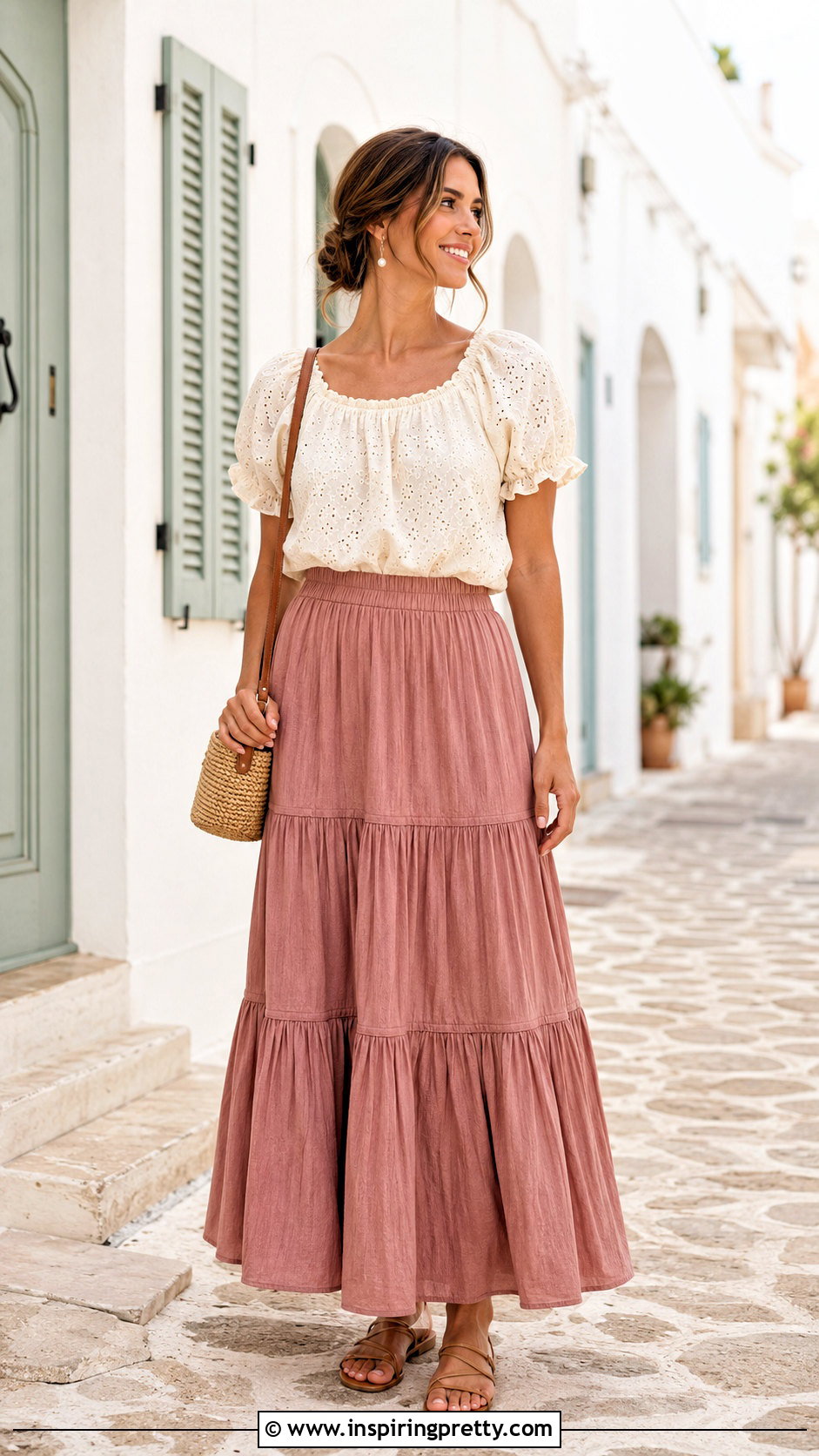
Eyelet is pretty and more see-through than it looks on the bolt, so I line the body with plain cotton and leave the sleeves unlined. A gently gathered neckline and a waist-length hem let the blouse sit cleanly over a solid tiered maxi skirt in blue, terracotta, olive or dusty rose. Tuck it in fully or tie a narrow fabric strip at the waist. With volume both top and bottom, I keep the accessories small: flat strappy sandals, a woven bucket bag and delicate earrings. It's an easy outfit for a slow vacation walk or a family meal outside.
10. Cropped DIY Peasant Top With High Waisted Shorts
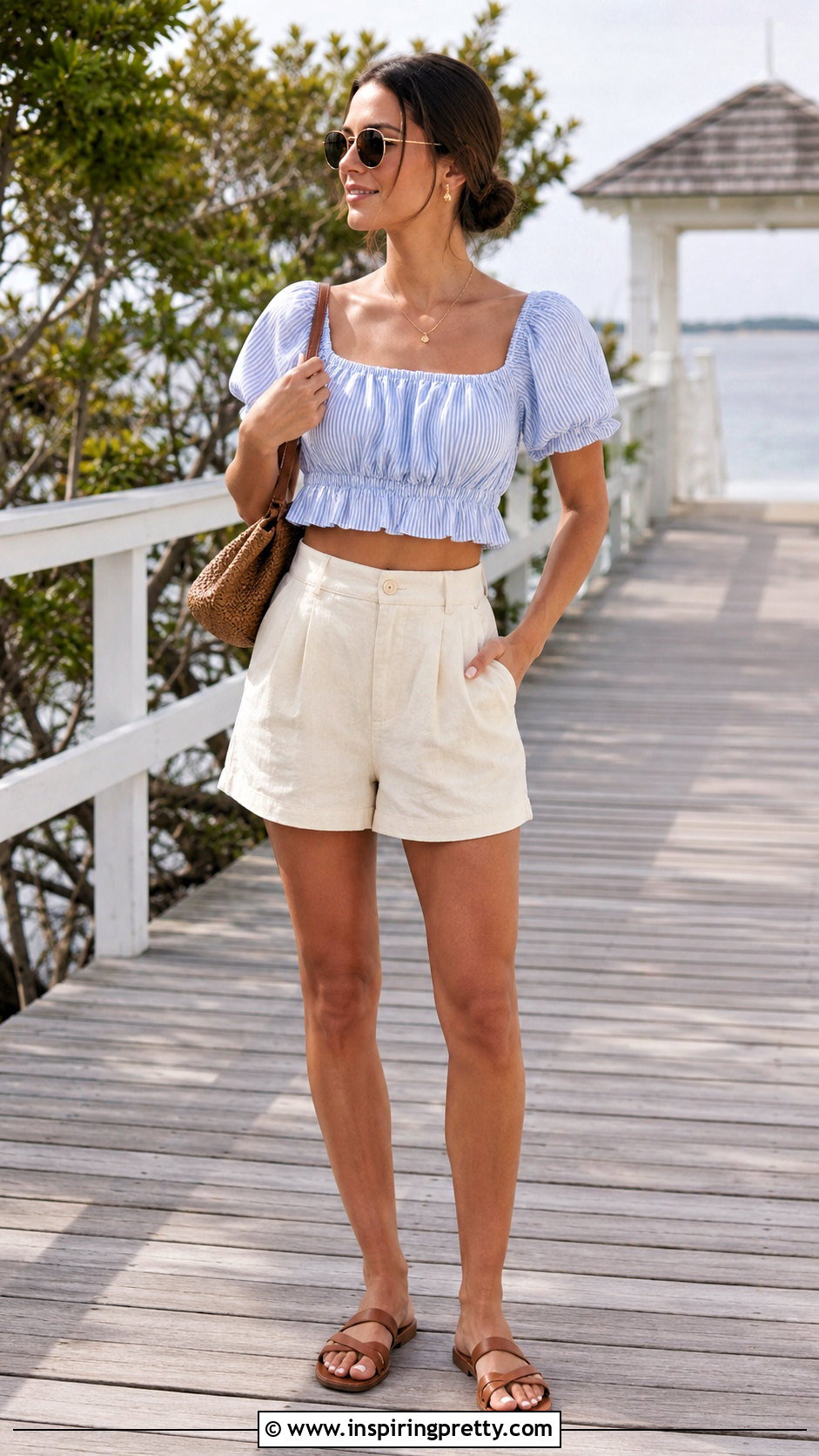
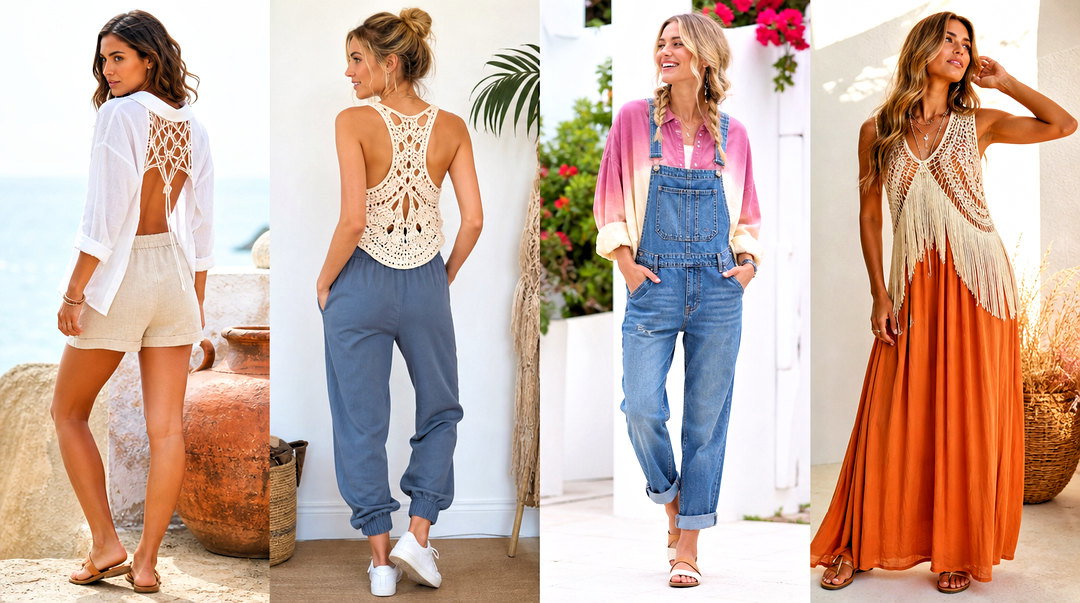
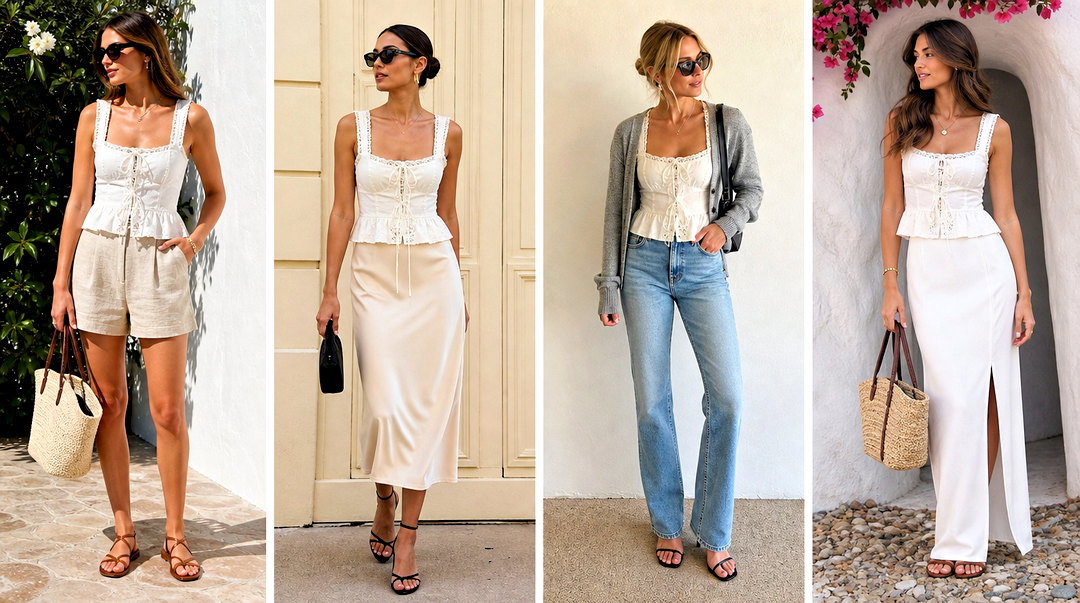
Measure before you cut a crop. I hold a tape from the shoulder down to the top of the shorts you'll actually wear and use that as the finished length, so the hem meets the waistband instead of floating above it. Cotton poplin or seersucker has enough body to hold puff sleeves and a square gathered neckline. Pleated linen shorts in cream, khaki, navy or soft brown pair well, with white sneakers or flat sandals and a small shoulder bag. An elastic hem keeps the top from shifting when you reach. If you'd like more coverage, add one or two inches to the body before cutting.
11. Long Sleeve DIY Peasant Top With Leggings And Boots
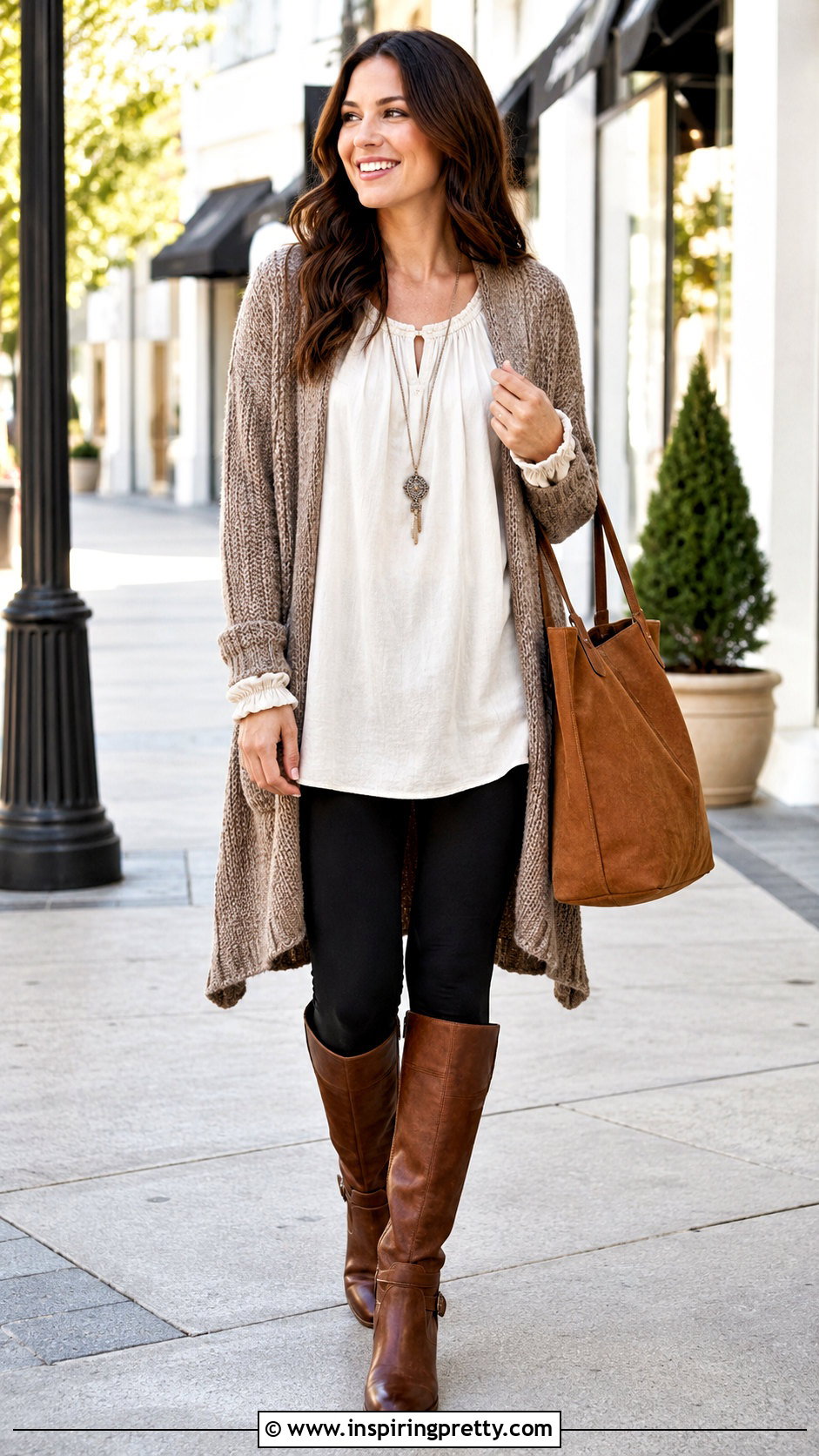
For colder weeks, I make a long-sleeve peasant top in brushed cotton, light flannel or challis, cut to tunic length so it covers the hips over leggings. A moderately gathered neck and elastic cuffs you can push up make it practical for errands. Thicker ponte leggings look smoother than thin lounge leggings, which show every line. Knee-high boots in brown or black, a large tote and a pendant finish it, and a long open cardigan adds warmth without hiding the blouse. Side slits matter on a tunic; without them, the hem rides up over the hips when you walk.
12. Lace Trim DIY Peasant Top With Slip Skirt
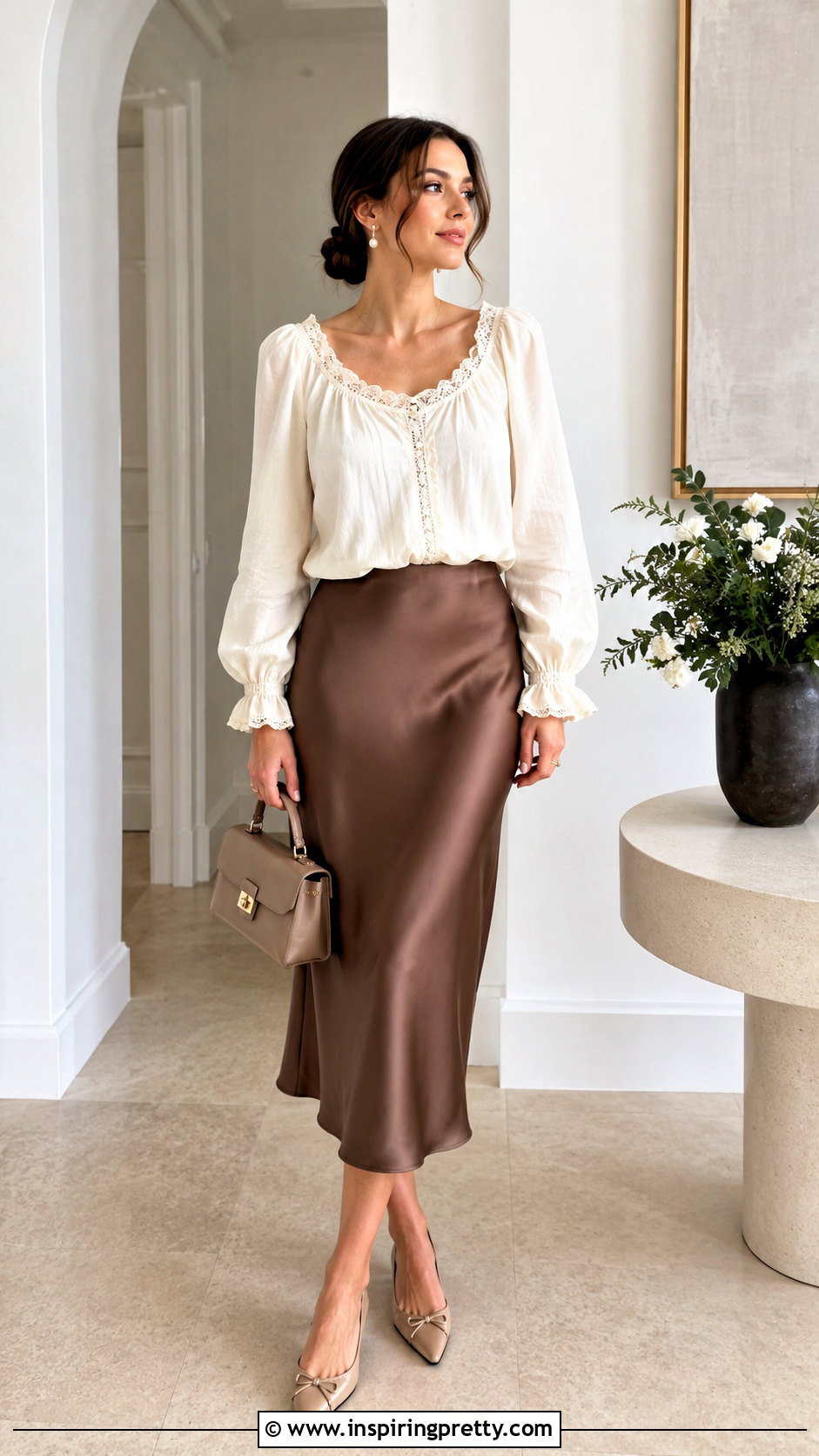
Lace trim is easy to overdo. I'd put it in two places at most, usually the neckline and the cuffs, on a solid rayon or cotton voile, so the top reads as refined rather than costume. Tuck it into a satin-finish midi slip skirt in champagne, cocoa, black or muted green, and add low slingbacks or pointed ballet flats, a structured mini bag and small pearl earrings. The matte top against the fluid skirt is what makes it work. If the voile is sheer, line the body or wear a camisole. Sew lace on with a narrow zigzag so it stretches with the gathers rather than snapping.
13. Striped DIY Peasant Top With Denim Overalls
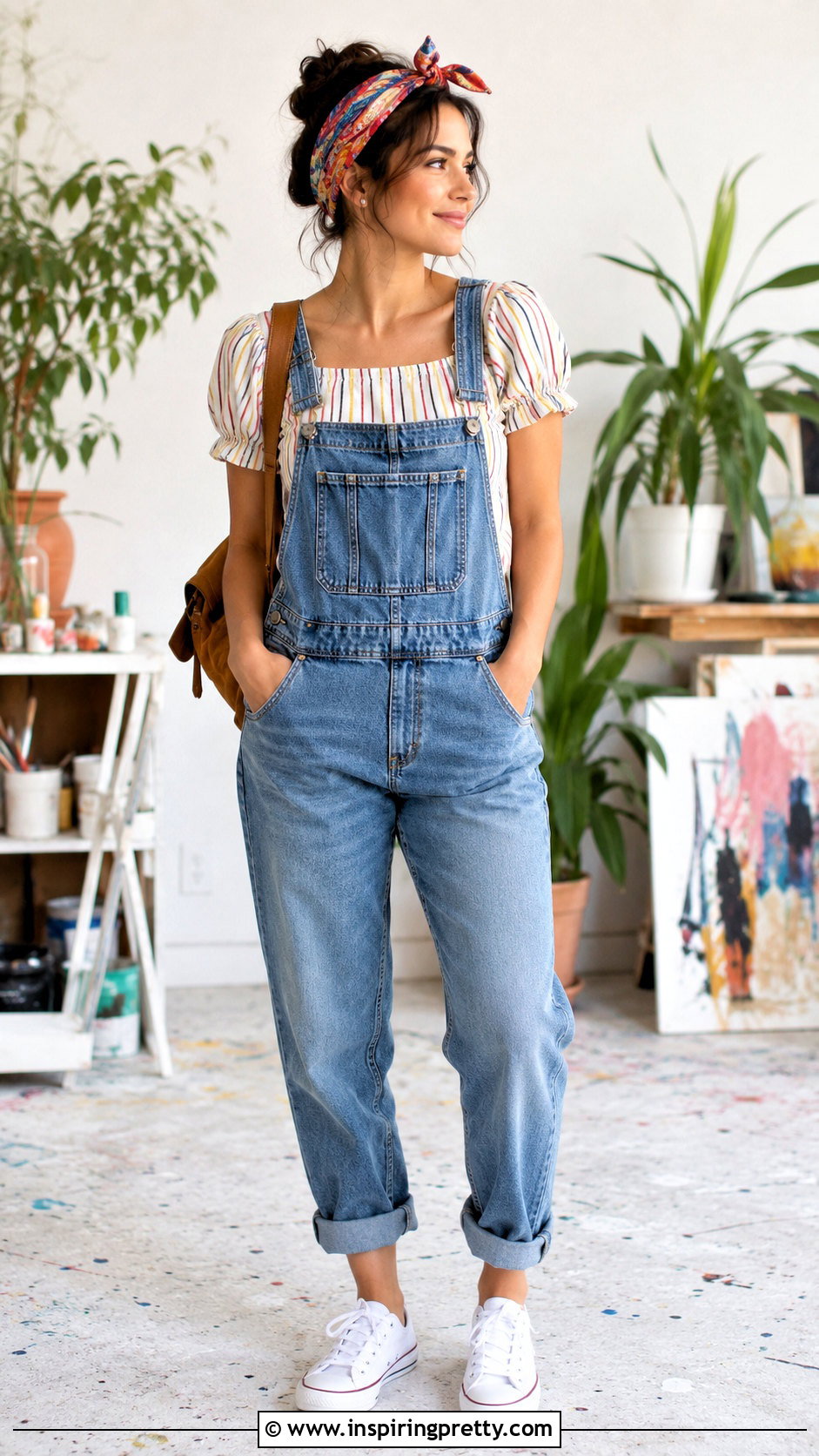
Under denim overalls, short puff sleeves are the right call because they sit outside the straps and stay visible. Cotton jersey or woven ticking stripes both work; with stripes, match the lines where the sleeve meets the body, since a mismatch is very obvious on a top this simple. Keep the neckline just above the bib so it doesn't bunch under it. Choose straight or relaxed overalls over very oversized ones, roll the hems, and add white canvas sneakers, a small backpack and a bandana. It's a practical outfit for a crafting day or a weekend of errands.
14. Puff Sleeve DIY Peasant Top With Flare Jeans
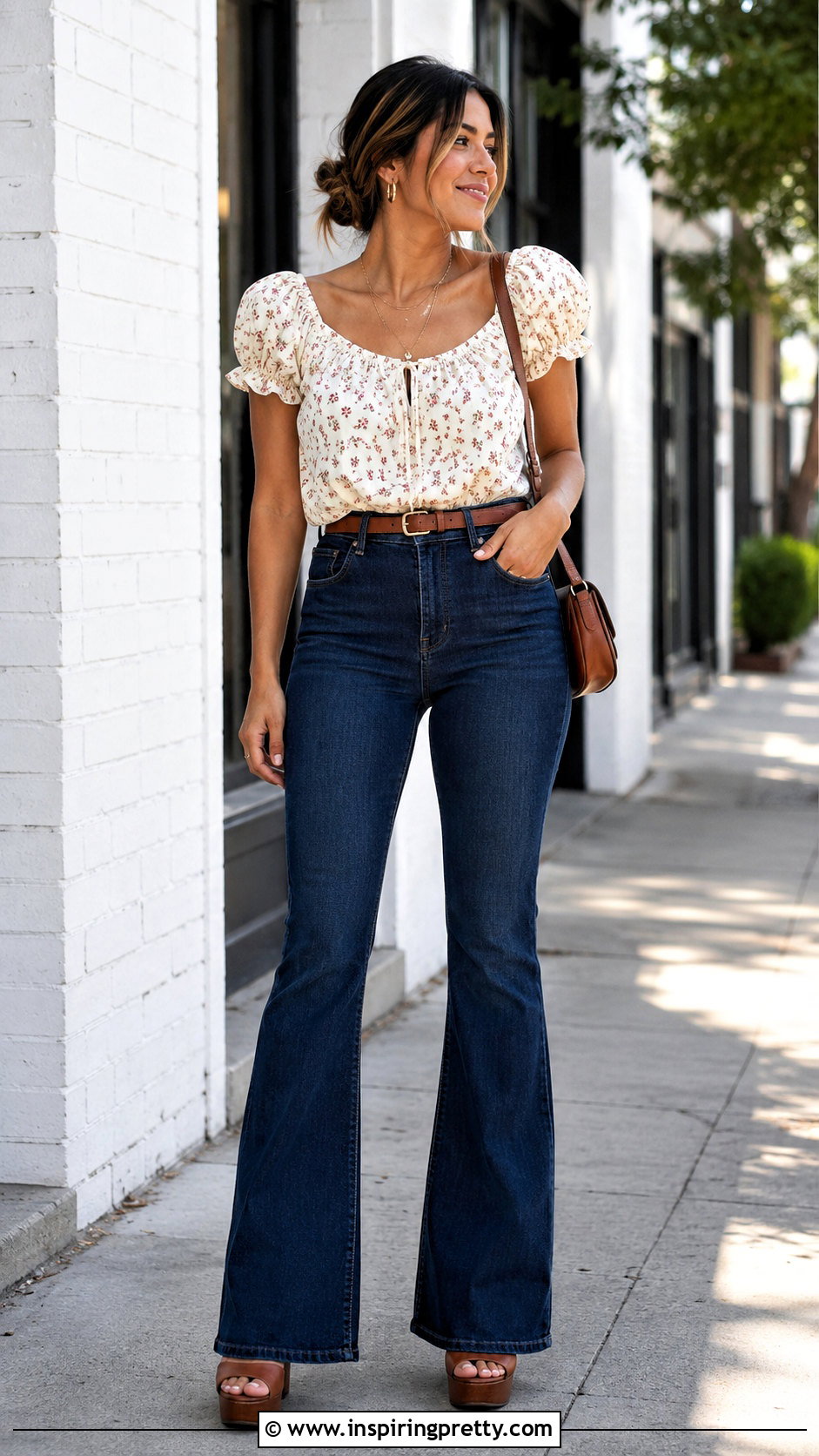
Puff sleeves hold their round shape only if the fabric has a bit of body. Soft cotton or dotted voile works; very drapey rayon collapses into a droop. I keep the body skimming the torso, with a square or gentle scoop neck, and tuck it fully into dark-wash high-rise flare jeans long enough to almost cover platform sandals or heeled ankle boots. A slim belt, a small shoulder bag and medium hoops finish it. The clear waist balances the wide hems. It's a good way to make plain denim feel more personal without adding anything complicated.
15. Tie Neck DIY Peasant Top With Cargo Pants
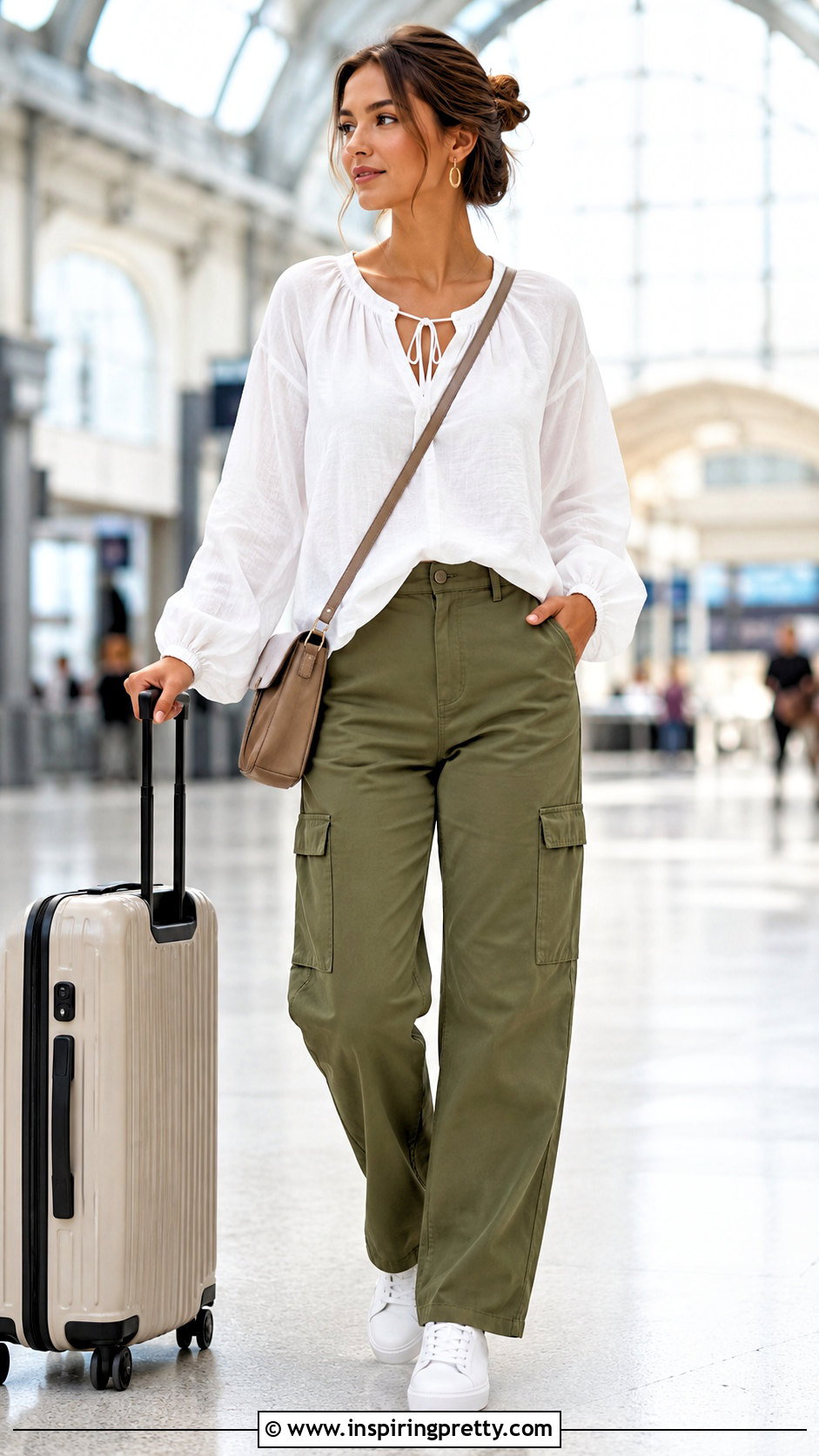
A tie neck changes the feel of a peasant top completely. Instead of an elastic casing, I cut a narrow front slit and add self-fabric ties, which gives you control over how open the neckline sits. White, ivory, black or a muted floral all work. Keep the sleeves relaxed with small cuffs so they don't fight the pockets on high-rise straight or tapered cargo pants. A front tuck stops both pieces from looking oversized. Sleek sneakers, a crossbody and plain metal earrings suit travel days. Leave the ties loose or knot them lightly; a tight bow tends to pull the slit open.
16. DIY Peasant Top Under A Midi Sundress
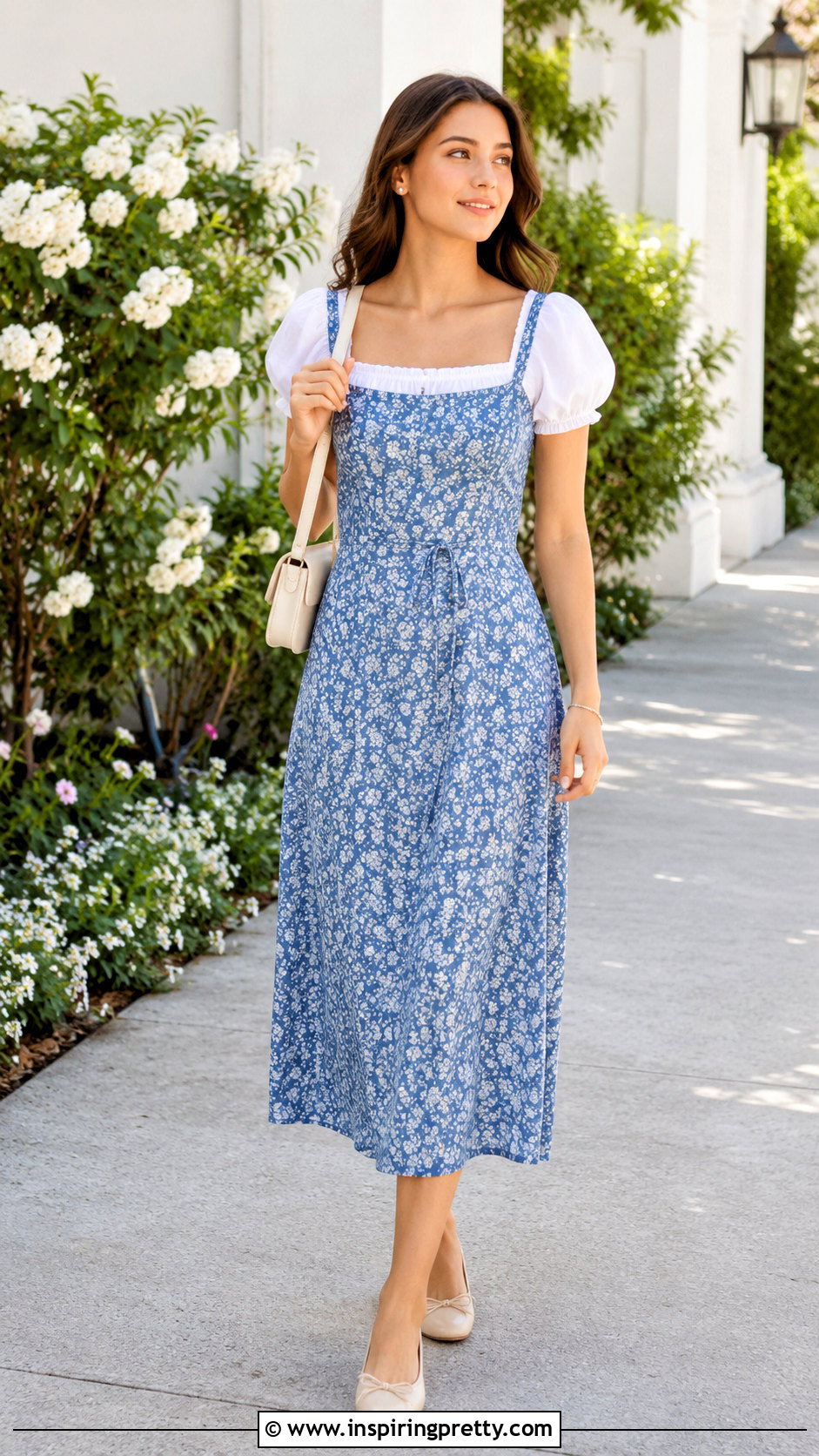
Layering a blouse under a sleeveless midi sundress is the easiest way to stretch a summer dress into spring. For this, I make the peasant top closer-fitting than usual, with short puff sleeves and minimal gathering at the neck, so it doesn't bunch under the bodice. Plain white or cream goes under printed dresses; a tiny floral brightens a solid one. A square neckline and defined waist on the dress keep the blouse visible and tidy. Ballet flats or low sneakers and small studs finish it. Make the sleeve elastic secure but not tight, because you'll be wearing it for hours.
17. DIY Peasant Top With Vest And Trousers
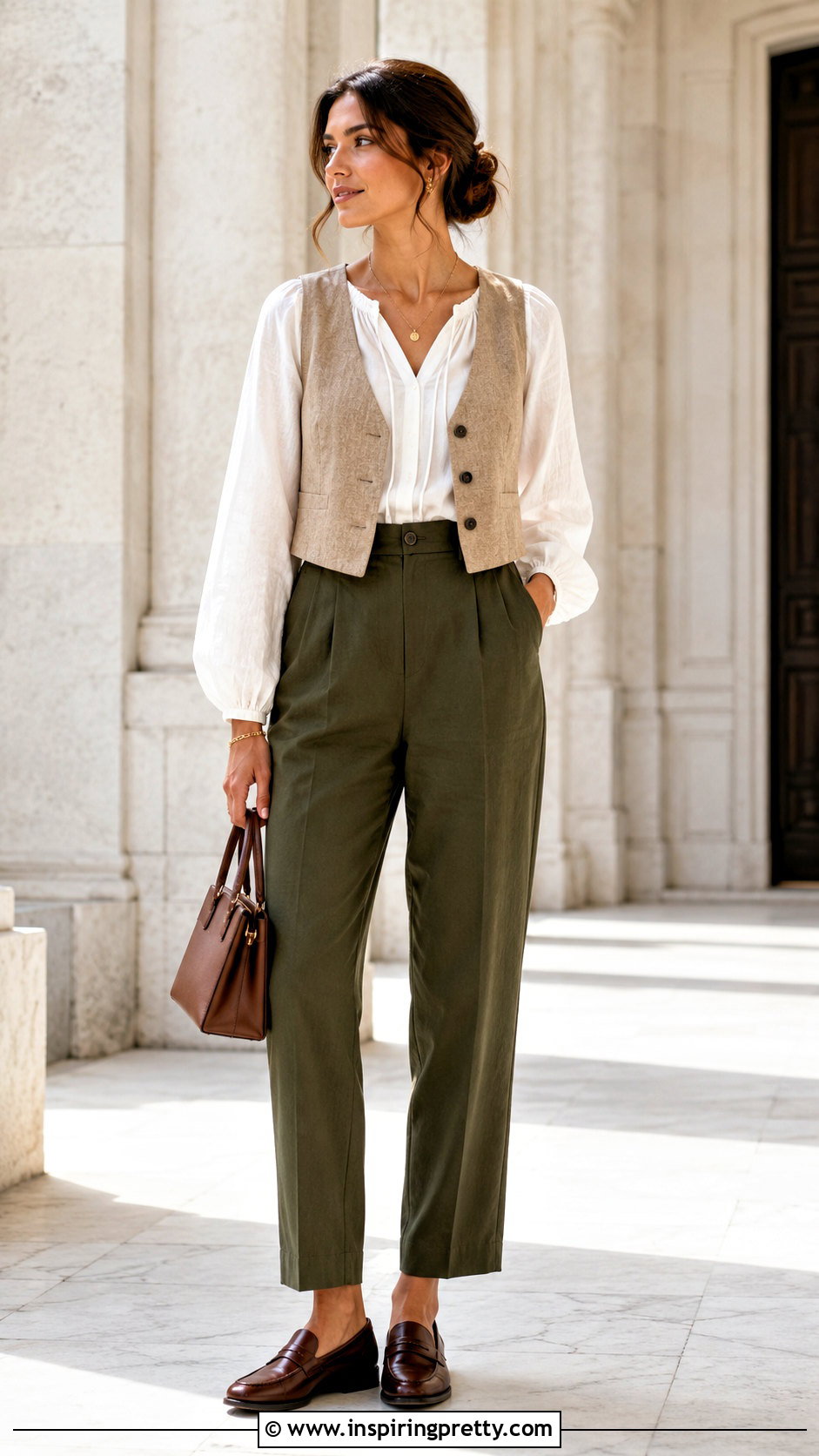
If a blouse bunches under a vest, the fix is in the pattern, not the styling: take some fullness out of the body and keep all the volume in the sleeves. I'd sew this one in light white cotton with a gathered neck and full sleeves ending at the wrist, then layer a cropped denim, linen or tailored vest over it. High-waisted straight trousers in tan, charcoal, olive or dark denim ground it, with loafers or low ankle boots and a structured bag. Keep jewelry minimal since the vest and neckline already have plenty going on. It works on a casual office day or a cool weekend.
18. DIY Peasant Top With Blazer And Jeans
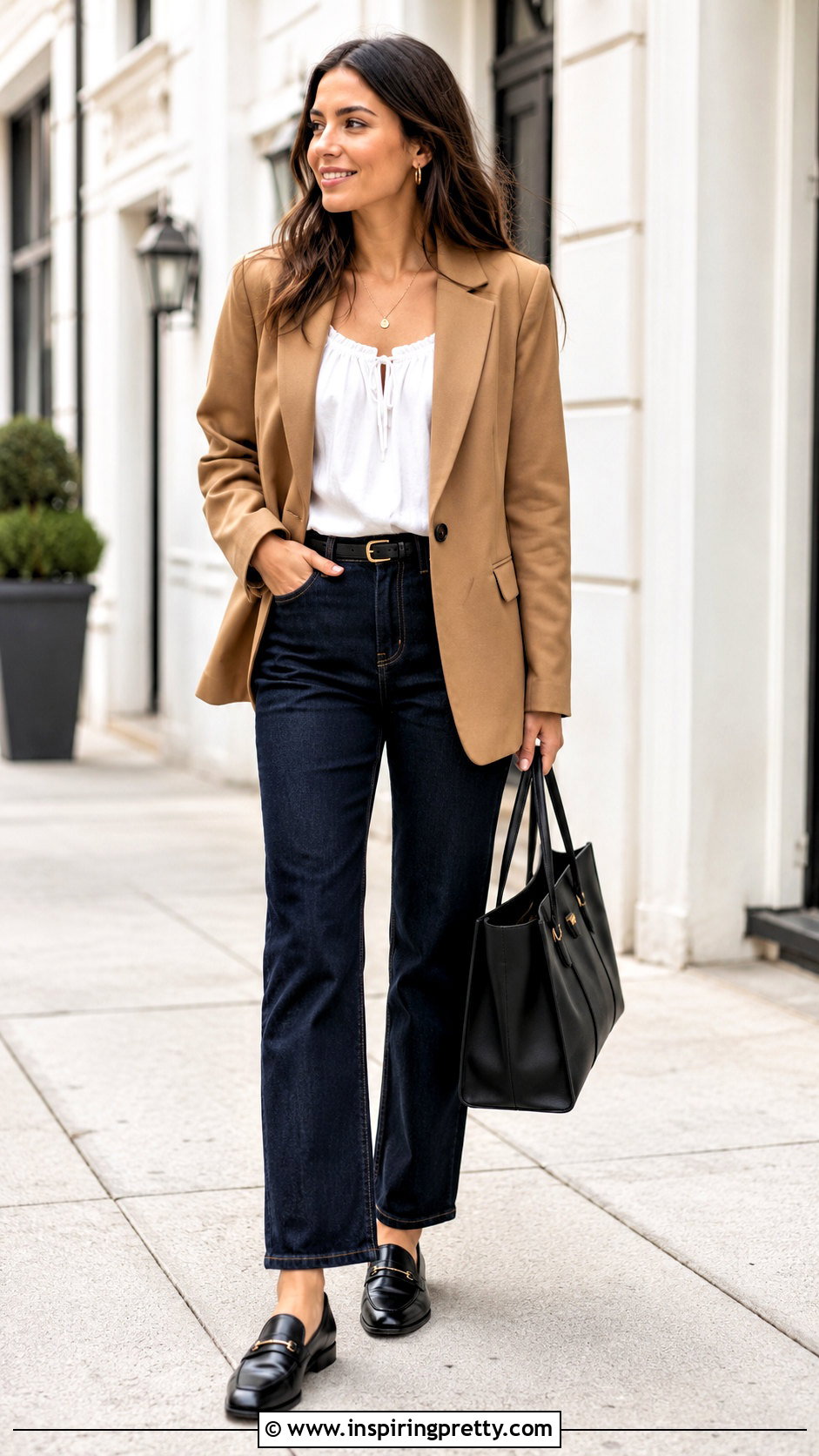
Under a blazer, sleeve volume is the limit. I make the blouse from thin cotton lawn or rayon with modest cuffs rather than very full sleeves, so the jacket goes on without a fight. Let the gathered neckline show above the lapels and use a partial tuck into straight-leg jeans in a clean dark or medium wash. Loafers, pointed flats or ankle boots and a structured tote keep it sharp. If the sleeves still feel crowded, a slightly relaxed blazer cut fixes it better than trimming the blouse. I'd wear this for a casual workplace or a travel day.
19. Scarf Fabric DIY Peasant Top With Tiered Skirt
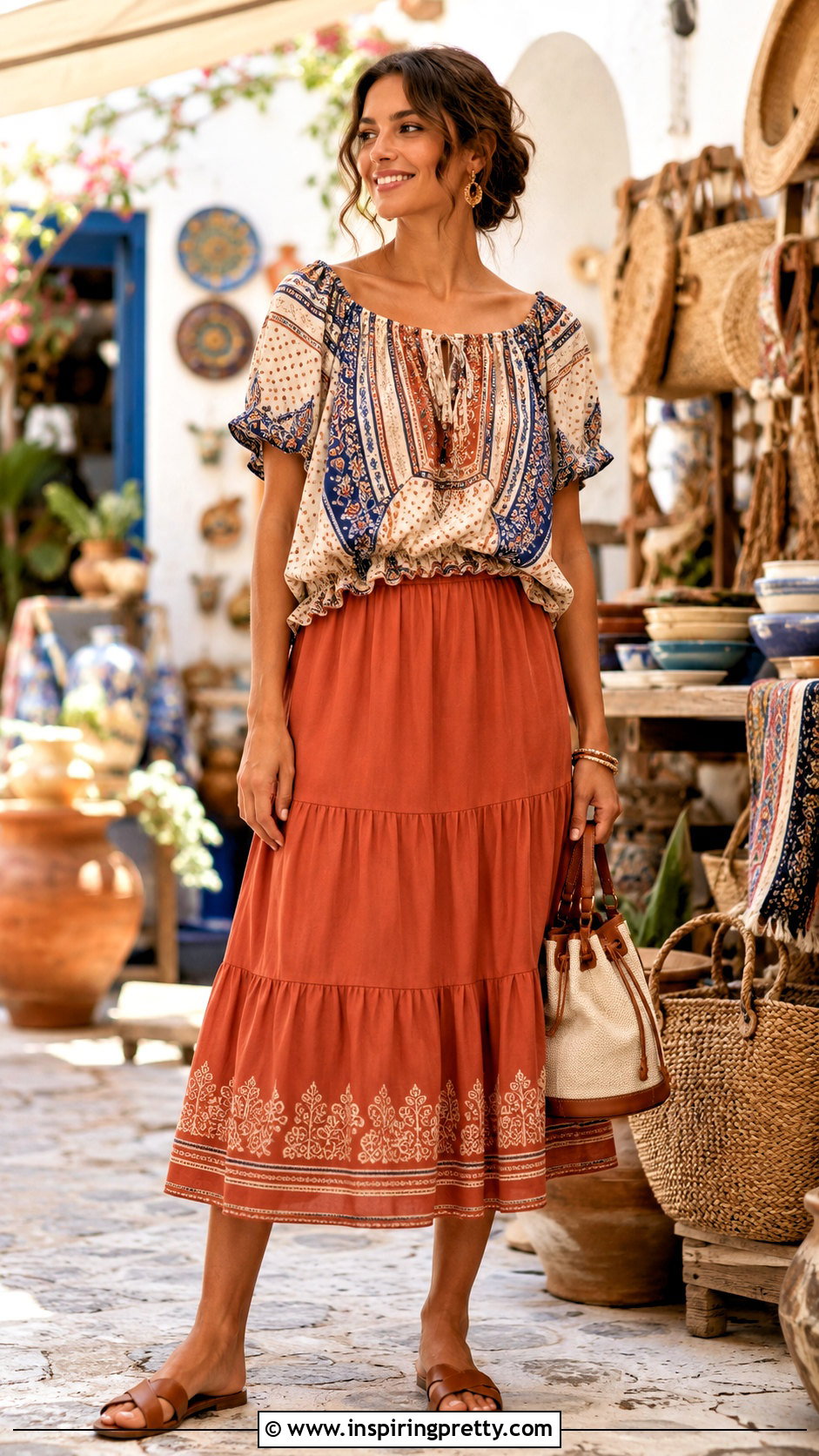
Vintage scarves make great peasant tops because the border print is already designed to frame an edge. Use larger squares of similar weight, or a light fabric with a border print, and lay out the best motifs around the neckline and sleeve ends before you cut anything. I'd pair it with a solid tiered midi skirt picking up one color from the print, plus flat leather sandals and a small bucket bag. Tuck it in, or elasticate the hem for a blouson shape. Avoid a second busy print. Old scarves can be fragile, so check for thin spots by holding the fabric up to the light first.
20. Upcycled Shirt Peasant Top With Culottes
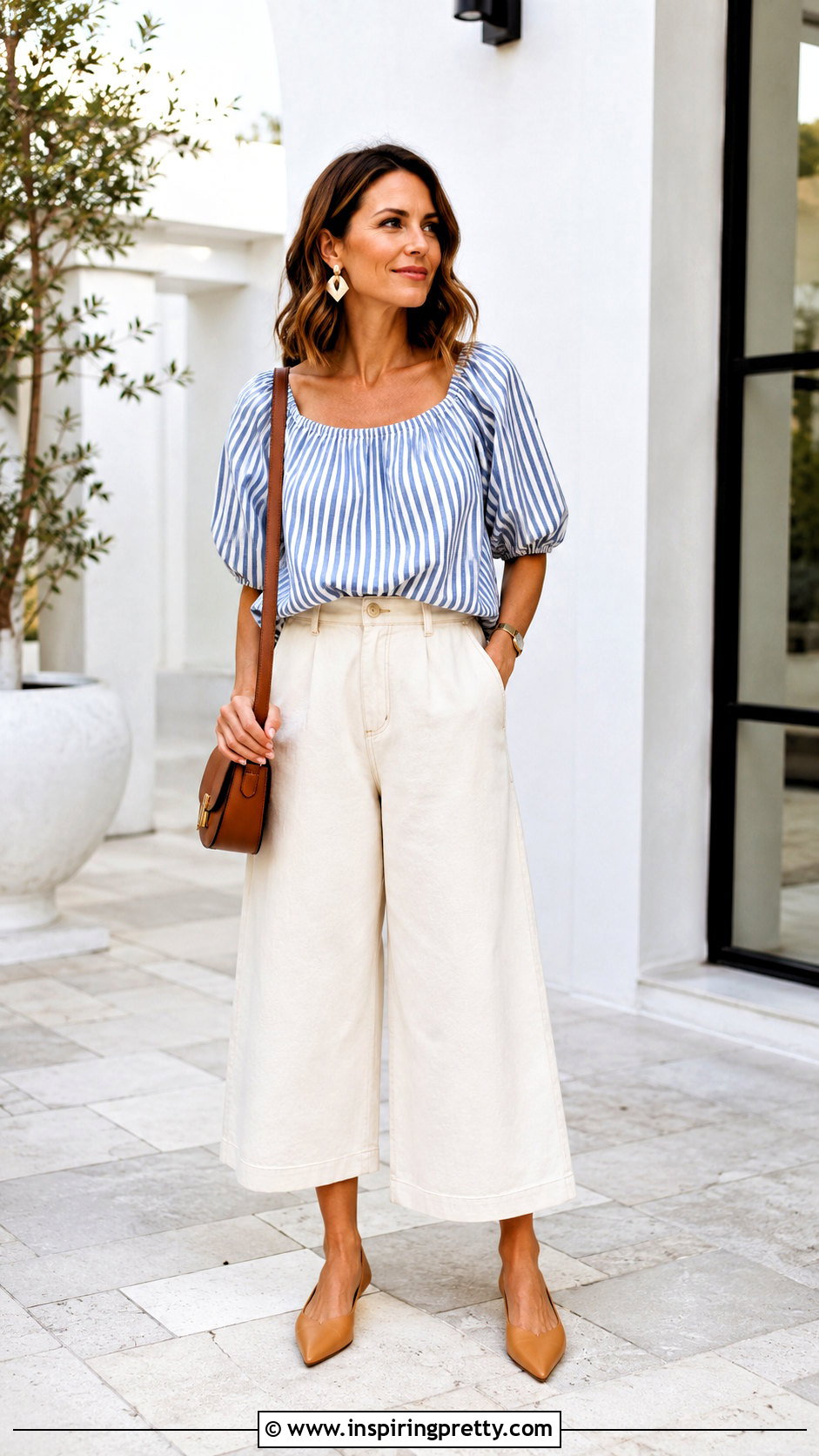
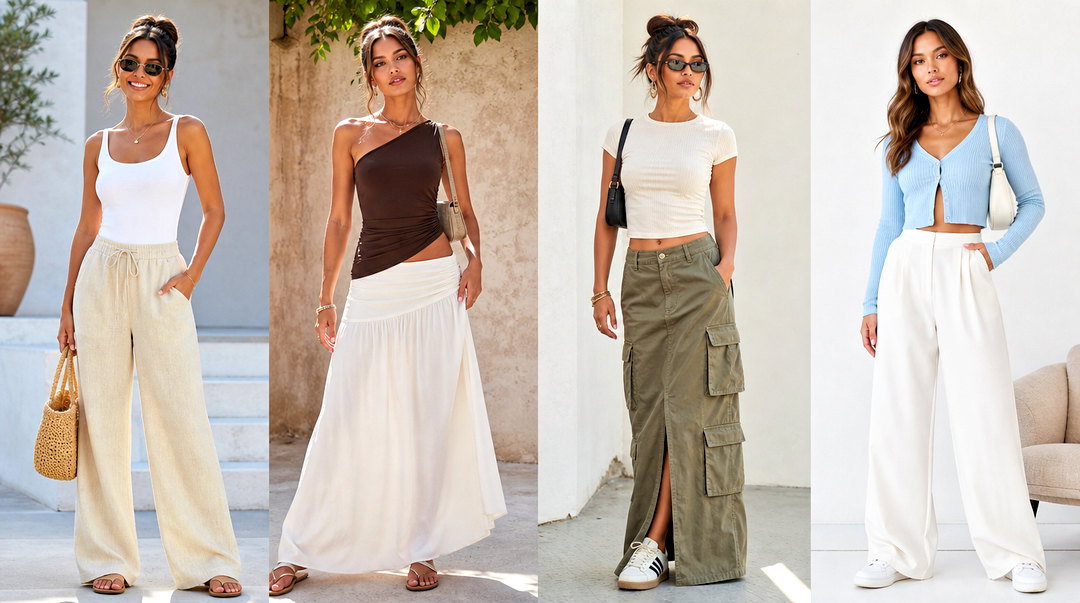
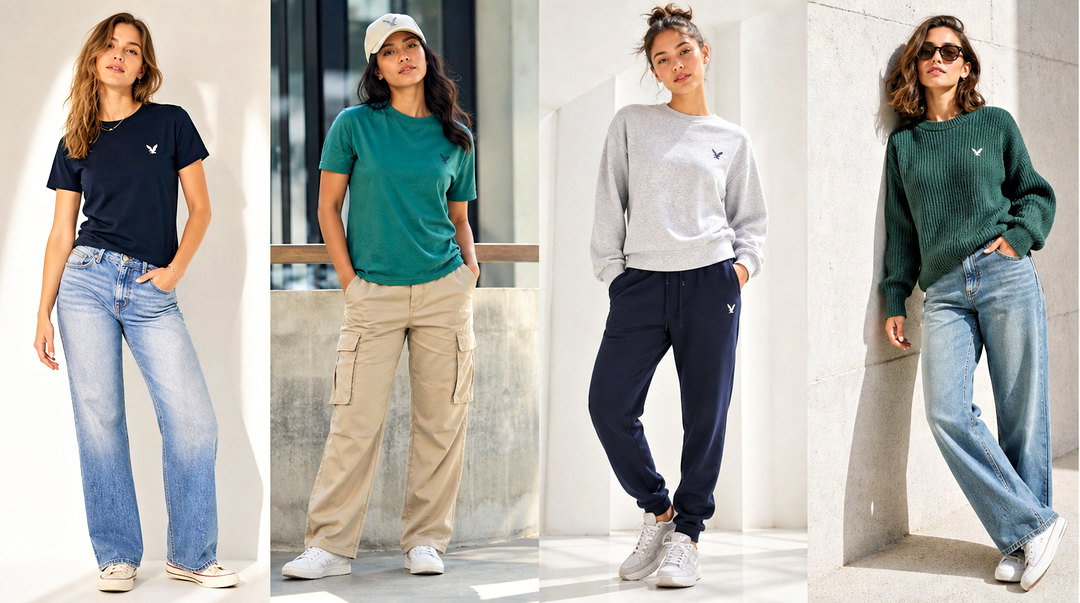
An oversized button-down is my favorite starting point for an upcycled peasant top, because the hem and much of the sleeves are already finished. Remove the collar, reshape the neckline, and sew a casing for narrow elastic or a drawstring. That's most of the work. Wear it with high-rise culottes in black, navy, camel or cream, front-tucked, with pointed flats or low block heels that help the cropped trouser length. A structured crossbody, geometric earrings and a slim watch finish it. Solid or subtly striped shirts are the easiest to restyle, and the button placket can stay as a detail.
Lawn, Rayon or Poplin Under the Gathers
The same pattern looks completely different in different fabrics, and most disappointments with a finished peasant top come from the fabric, not the sewing. Gathers multiply the thickness of the cloth, so a medium-weight cotton that seems light on the roll becomes a stiff ruffle at the neck.
- Cotton lawn and voile: light and soft, gathers into fine folds, often needs a camisole underneath.
- Rayon and challis: very drapey, good for polished or layered looks, but it can shrink and should be prewashed.
- Poplin and seersucker: crisp, holds puff sleeves and cropped shapes well.
- Linen: breathable and creases easily; prewash before cutting.
- Quilting cotton: fine for gingham or patchwork, but go easy on the gathering ratio or it puffs out.
Scaling the Volume for a Busty or Petite Frame
If you're busty, a peasant top can hang from the fullest point of the bust like a tent. I'd lower the neckline slightly, take some width out of the lower body, and always tuck or belt it so the waist shows. A V-shaped slit or tie neck helps too, since it breaks up the area across the chest.
If you're petite, scale everything down: shorter sleeves, a narrower neckline casing and less fullness overall. A cropped length that meets a high waistband keeps your legs looking long, while tunic lengths and very full sleeves tend to overwhelm a smaller frame.
Sew the Plain Cotton Version First
My advice is simple: make one peasant top in plain cotton, wear it for a week, and note what you'd change. Then try linen, eyelet, embroidery, lace, scarf prints or an old shirt. Because a gathered blouse adds softness and volume, defined waists, cleaner bottoms and simple accessories keep it looking deliberate. Small pattern changes, like a shorter sleeve, an added drawstring or a raised hem, let one basic pattern suit very different bodies and seasons. And style each finished top with clothes you already love wearing, because that's what turns a sewing project into something you reach for.
Related posts:


Leave a Reply