
A tunic is a top long enough to pass the hips, usually landing somewhere between the upper thigh and just above the knee. It can be sleeveless or long-sleeved, buttoned or pull-on, with slits, a curved hem or an uneven one. What makes it useful is the coverage; what makes it tricky is the volume. Put a roomy tunic over bulky bottoms and the body disappears. I've grouped the outfits below by what you wear underneath, because that's the decision that decides whether a tunic looks intentional.

Tunic, Long Shirt or Mini Dress?
Shoppers ask me this constantly, because the labels overlap. A long shirt usually ends at the hip or just below, meant to be tucked or worn loose. A tunic goes longer, to the upper or mid thigh, and is cut to be worn over something. A mini dress covers the same length but is designed to be worn alone, often with a lining and a shaped waist.
The practical test is to sit down. If the hem rides up past what you'd be happy showing, treat the piece as a tunic and wear it over pants, leggings or a skirt. Many tunic styles come from traditional dress in South Asia, the Middle East and North Africa, where long tops are worn over trousers, and that pairing is still the most comfortable way to wear one.
1. Tunic Top With Leggings
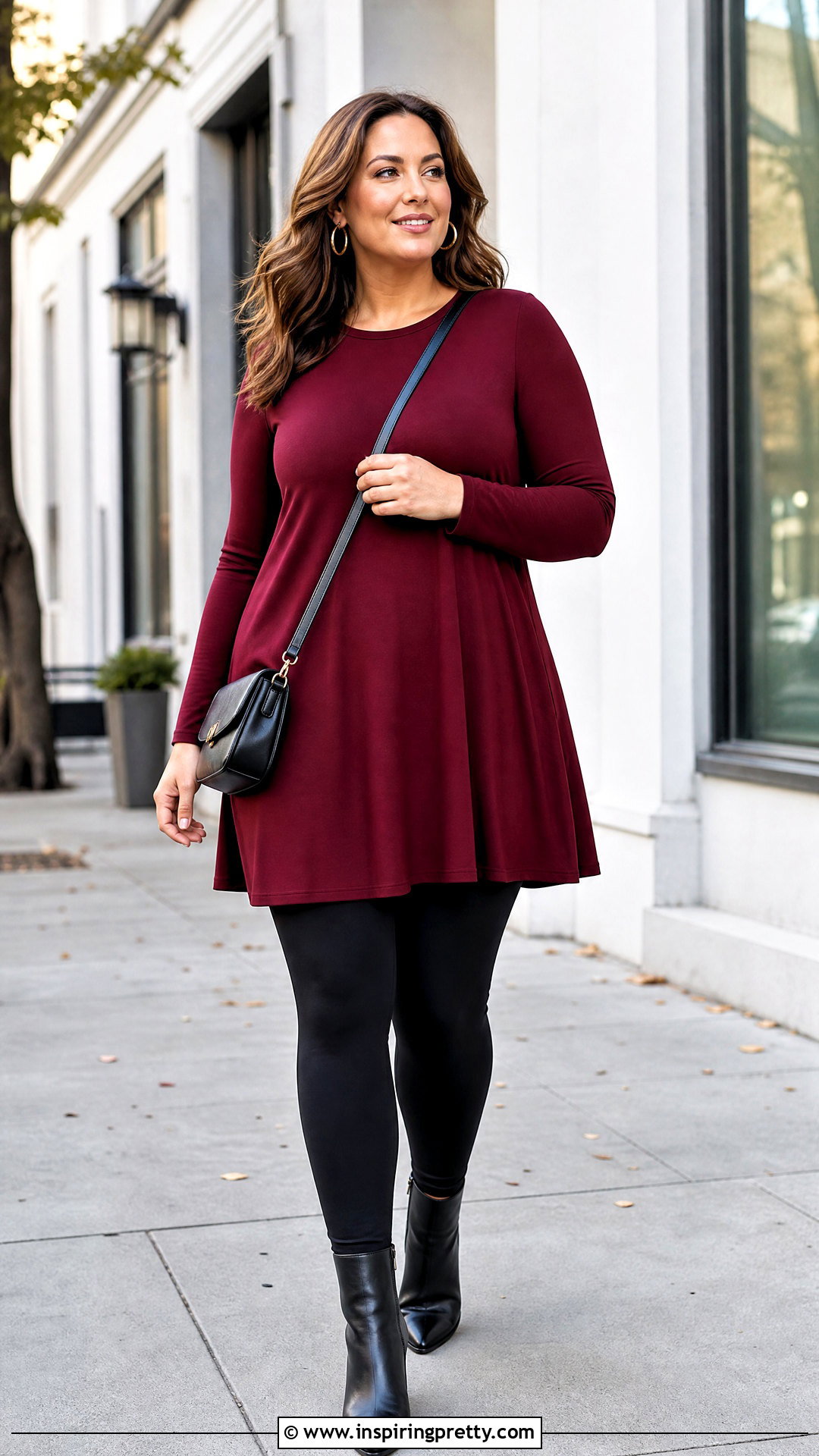
Leggings are the easiest base because they add no volume at all, so the tunic gets to be the shape. I look for a hem at upper or mid-thigh and a cut that skims rather than clings. Before you leave the house, bend over in front of a mirror in daylight: thin leggings turn see-through when stretched, and that's when the tunic's length really matters. Ankle boots in cold weather, sneakers for errands.
2. Tunic Top With Skinny Jeans
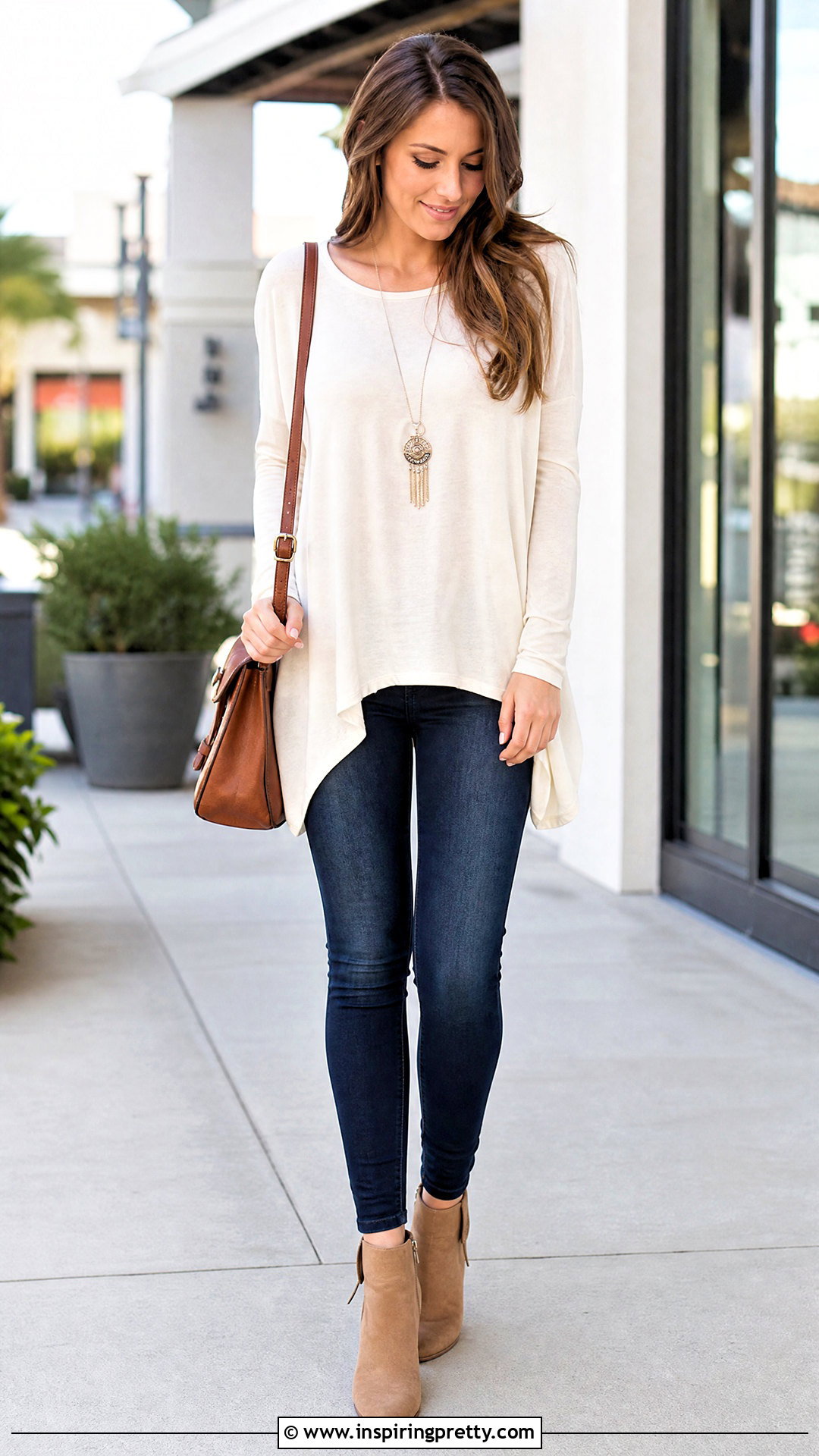
A tunic top with skinny jeans gives you the leggings proportion with more structure. Side slits or a high-low hem show a little denim and let you sit without the hem bunching in your lap. If you're petite, keep the tunic at upper thigh; past mid-thigh it starts cutting the leg in half. Dark denim reads polished, faded denim reads weekend.
3. Tunic Top With Straight Leg Jeans
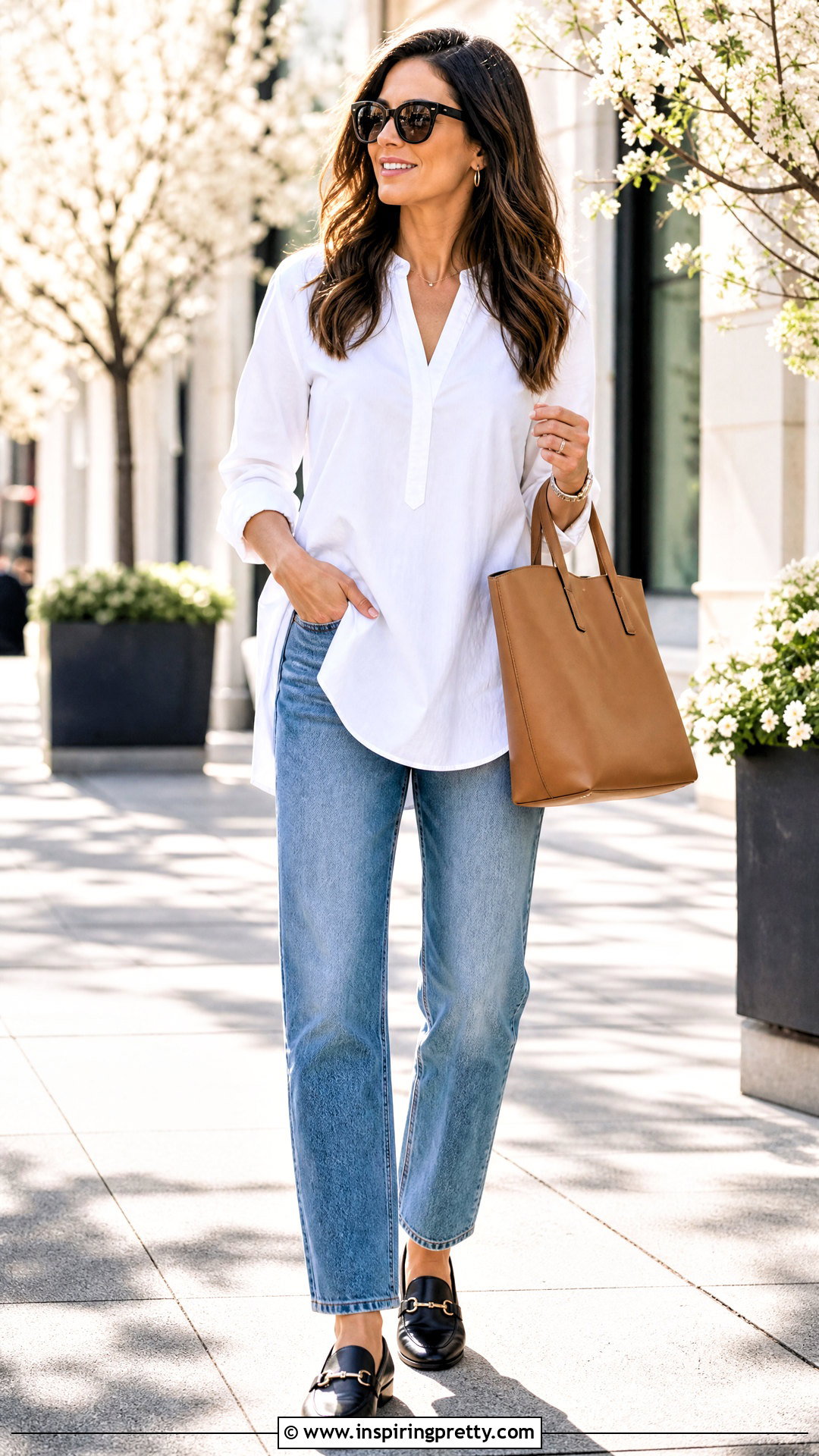
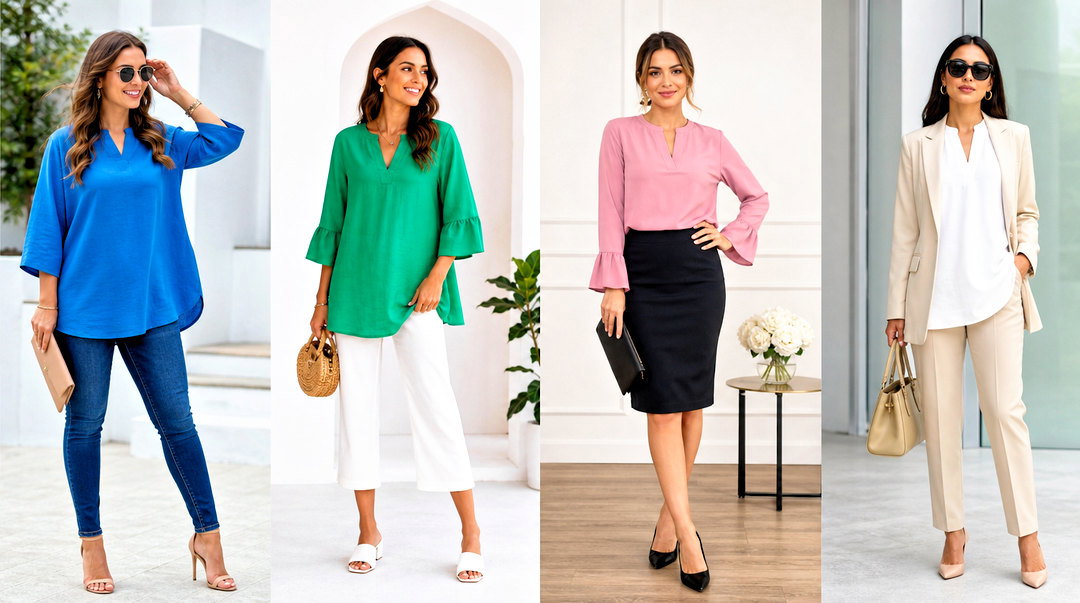
Straight jeans are wider than skinnies, so the tunic needs to be a little neater. A white shirt tunic with mid-wash straight jeans and loafers is my go-to version. Undo the lowest one or two buttons and you get movement at the sides and a glimpse of denim, which stops the outfit reading as one long block. The jeans should end at the ankle, not pool on the shoe.
4. Tunic Top With Wide Leg Pants
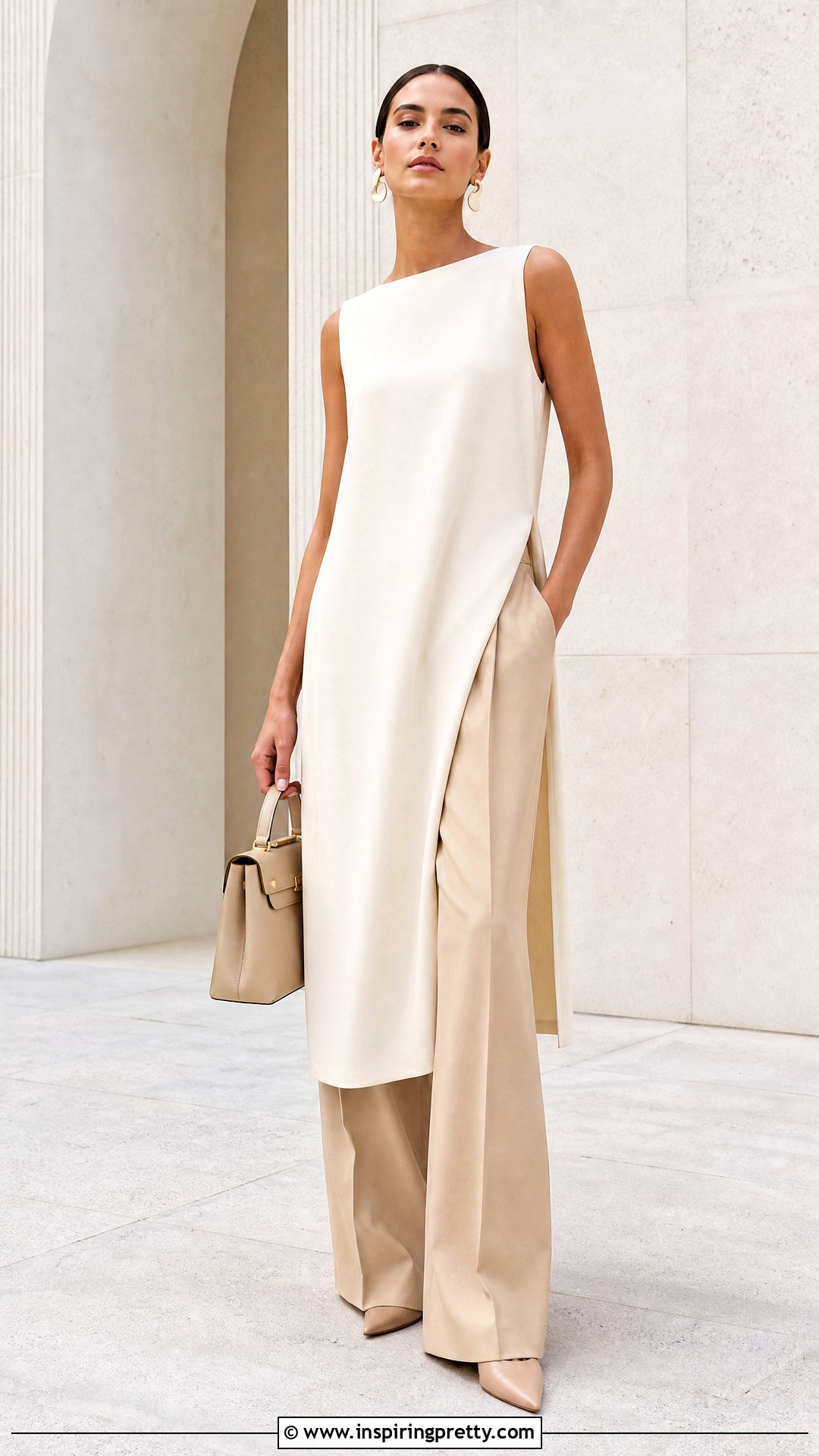
Wide trousers under a tunic can work, but this is the pairing I see go wrong most often. The tunic has to be thin, ideally a lightweight fabric with side slits, a set shoulder or an uneven hem, so it doesn't add bulk at the hip. High-waisted trousers that drop straight from the hip and almost reach the floor finish the line. A tonal palette, like cream on beige, makes it look like a set. I'd avoid a long, full tunic with gathered pants unless they were sold together.
5. Tunic Top With Ankle Pants
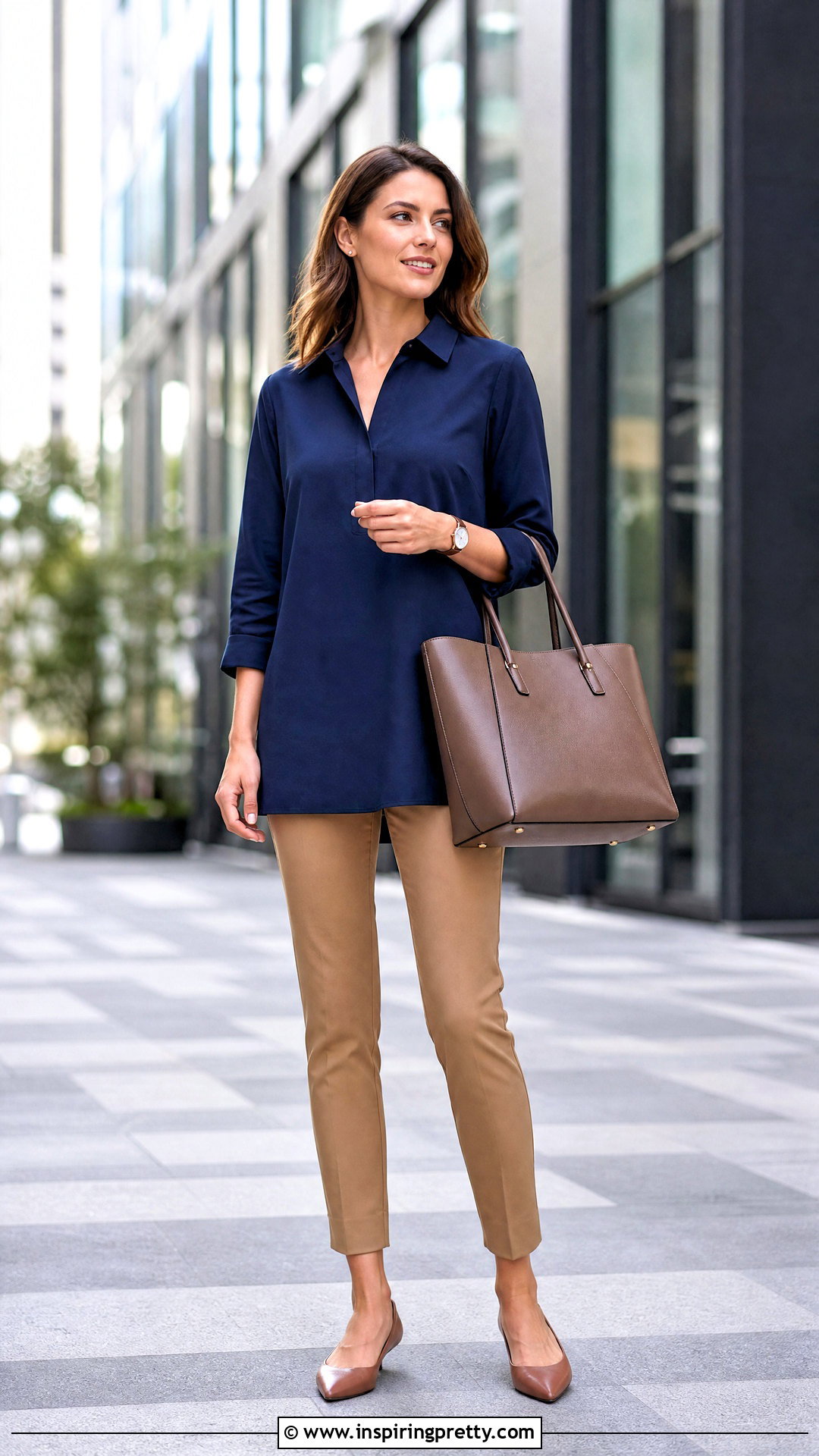
For work, a collared or button-front tunic that ends at the upper thigh over slim ankle pants is hard to beat. The pants should fit cleanly through the hip and taper a touch, so the tunic is the only loose piece. Showing a bit of ankle with pointed flats keeps the look from getting heavy. Pick a fabric that doesn't wrinkle easily, because a long hem creases fast after an hour at a desk.
6. Tunic Top With Cropped Trousers
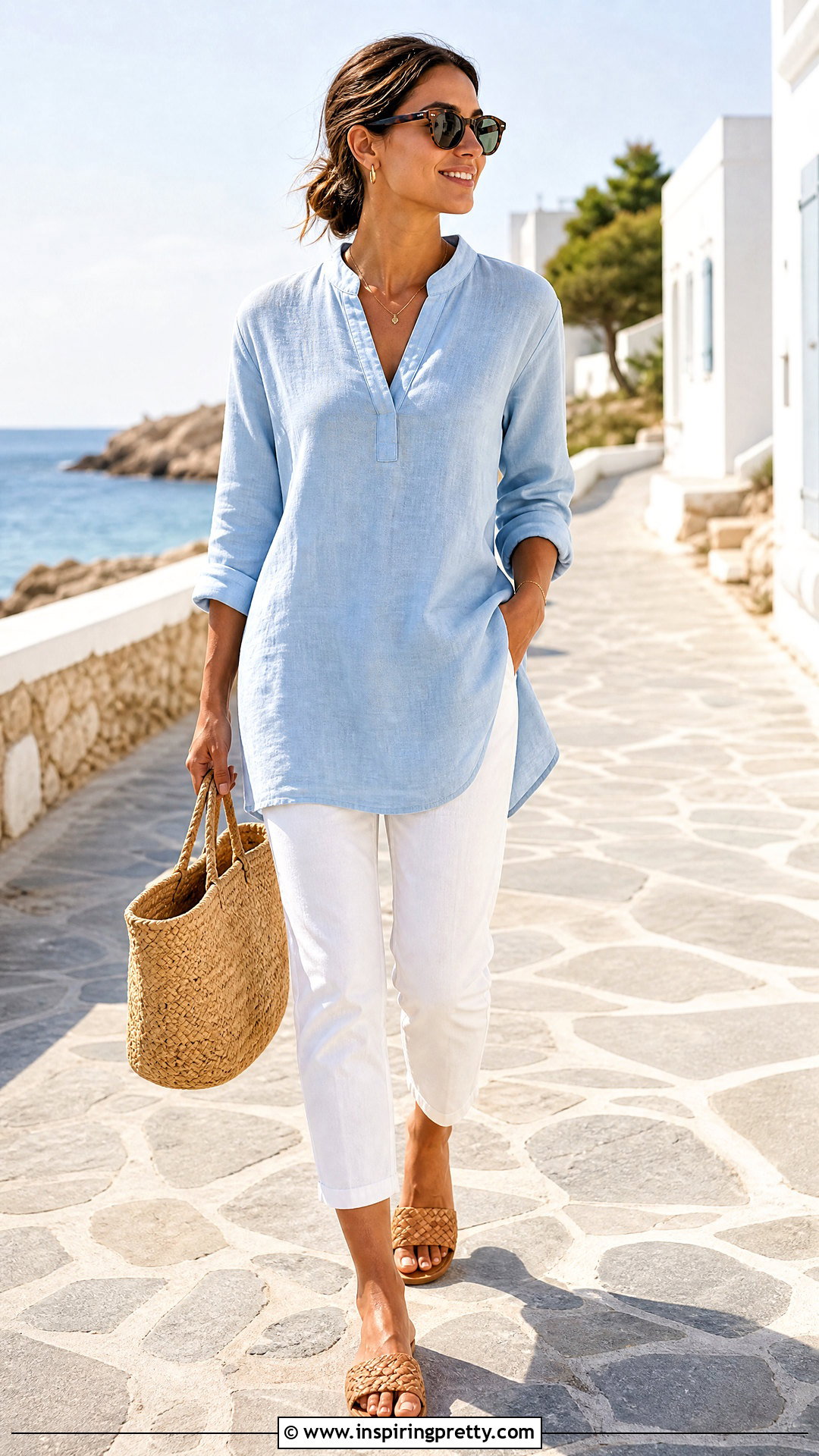
On hot days I reach for linen or cotton poplin with cropped trousers. A split neck and side vents let air move. Watch where the crop lands: if it stops at the widest part of your calf, it makes the leg look shorter, so aim just above the ankle instead. A slightly shorter tunic also shows more of the trouser. Flat sandals and a straw tote keep it relaxed.
7. Tunic Top With Denim Shorts
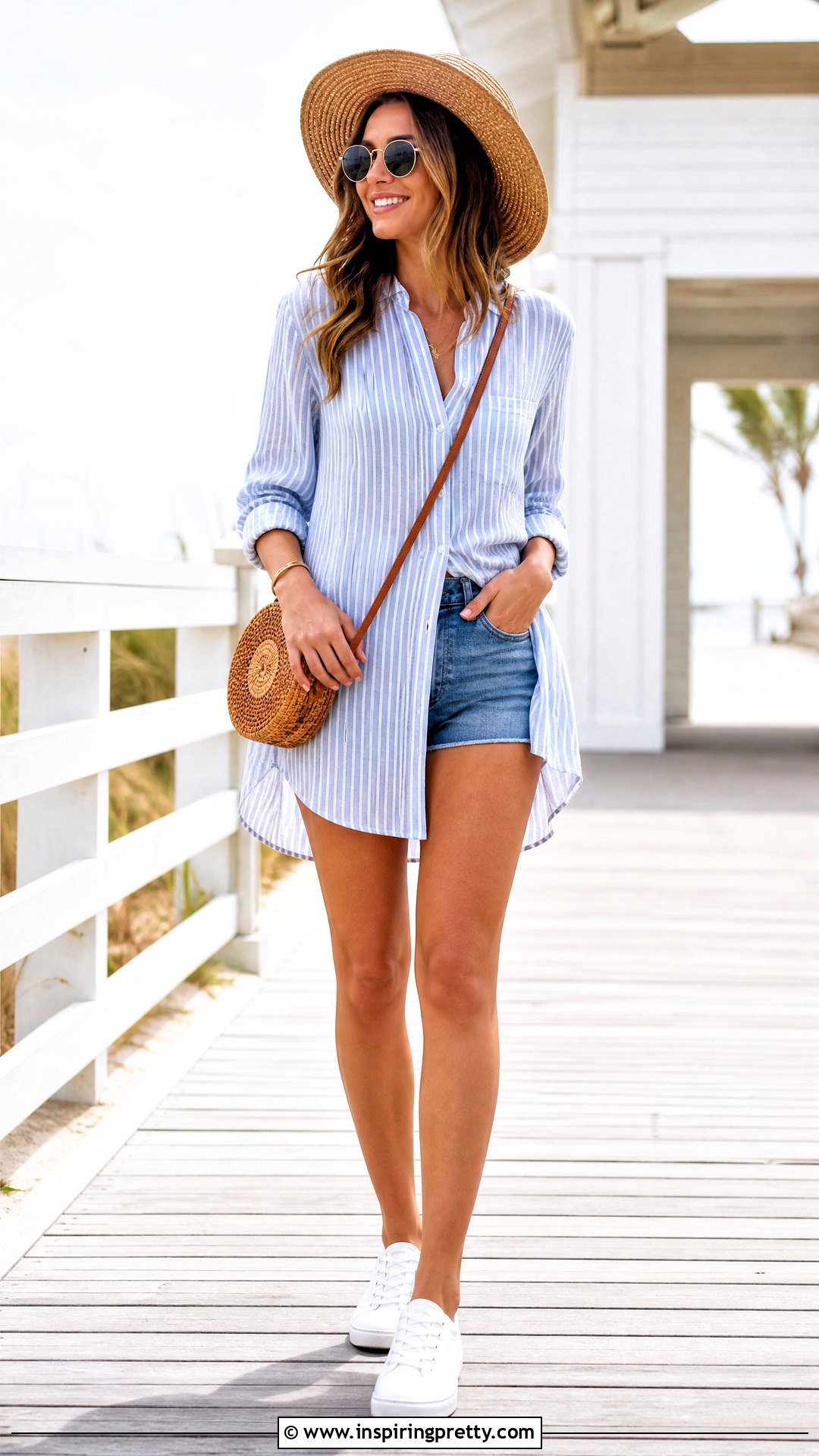
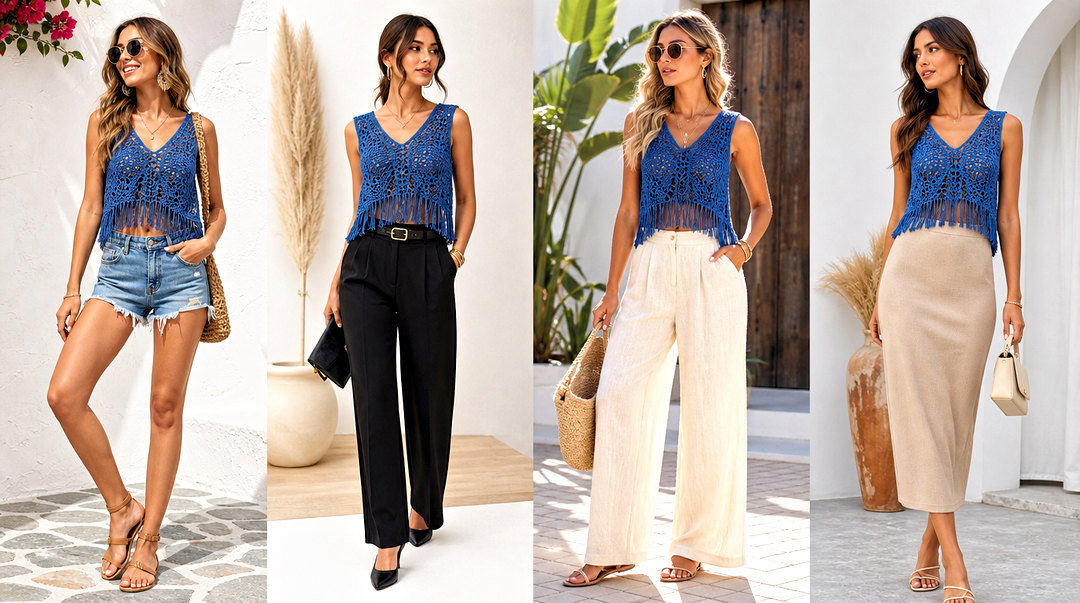
With denim shorts, the shorts must peek out below the hem, otherwise people read the tunic as a very short dress. A lightweight cotton or linen tunic with rolled sleeves works, over mid-rise shorts in white, blue or ecru. If the tunic covers the shorts completely, a small front tuck at the waistband fixes it and adds some shape. Espadrilles or canvas sneakers, and a crossbody so your hands are free.
8. Tunic Top With Tailored Shorts
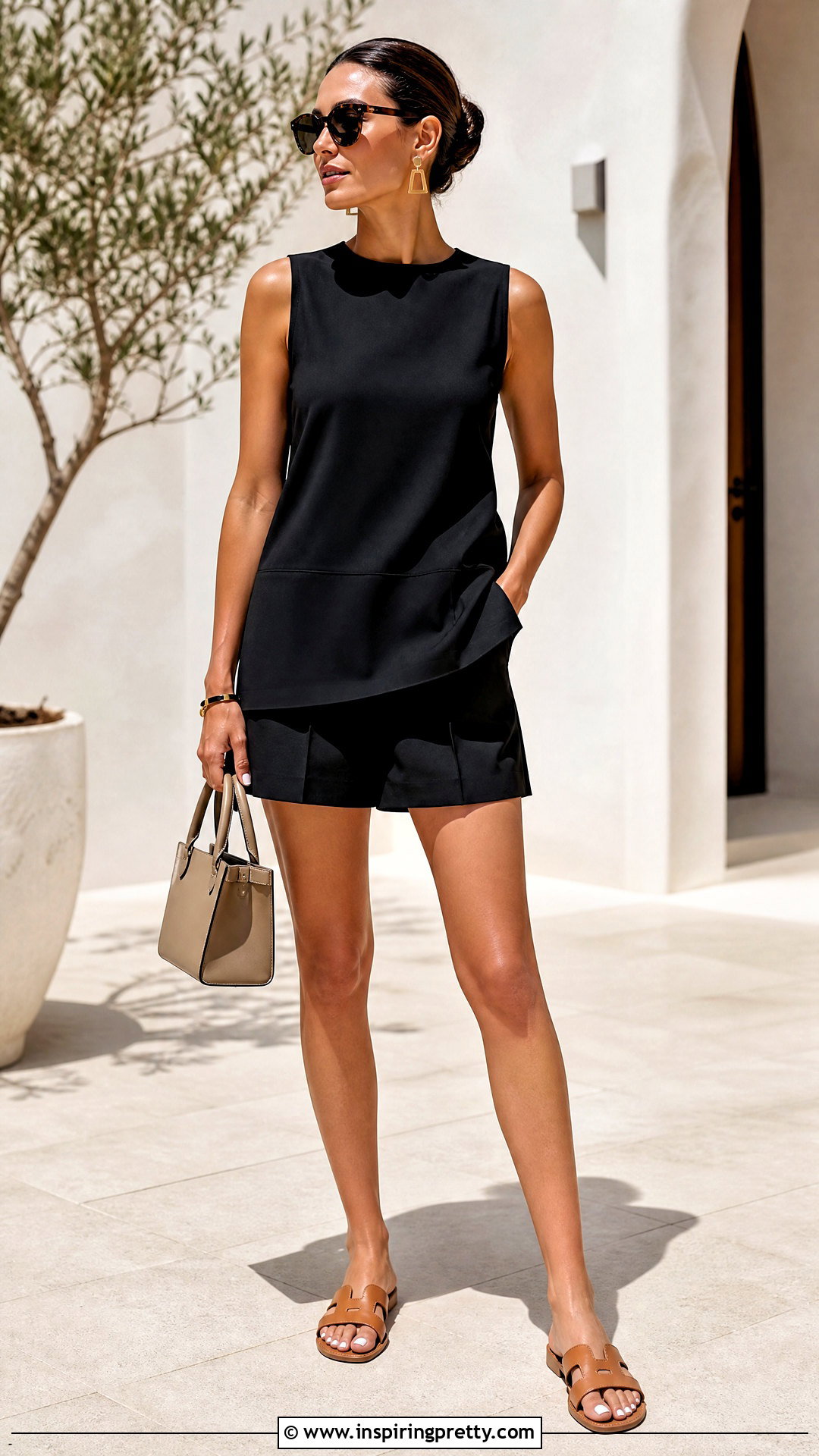
Tailored shorts make the warm-weather version smarter. Choose a flat-front pair long enough to show under the hem, and a sleeveless or short-sleeve tunic in cotton poplin, crepe or linen. Pleated shorts are a mistake here: the pleats push out the tunic and make it ripple unevenly over the hip. Matching colors, black on black or cream on beige, look the most finished.
9. Tunic Top With A Midi Skirt
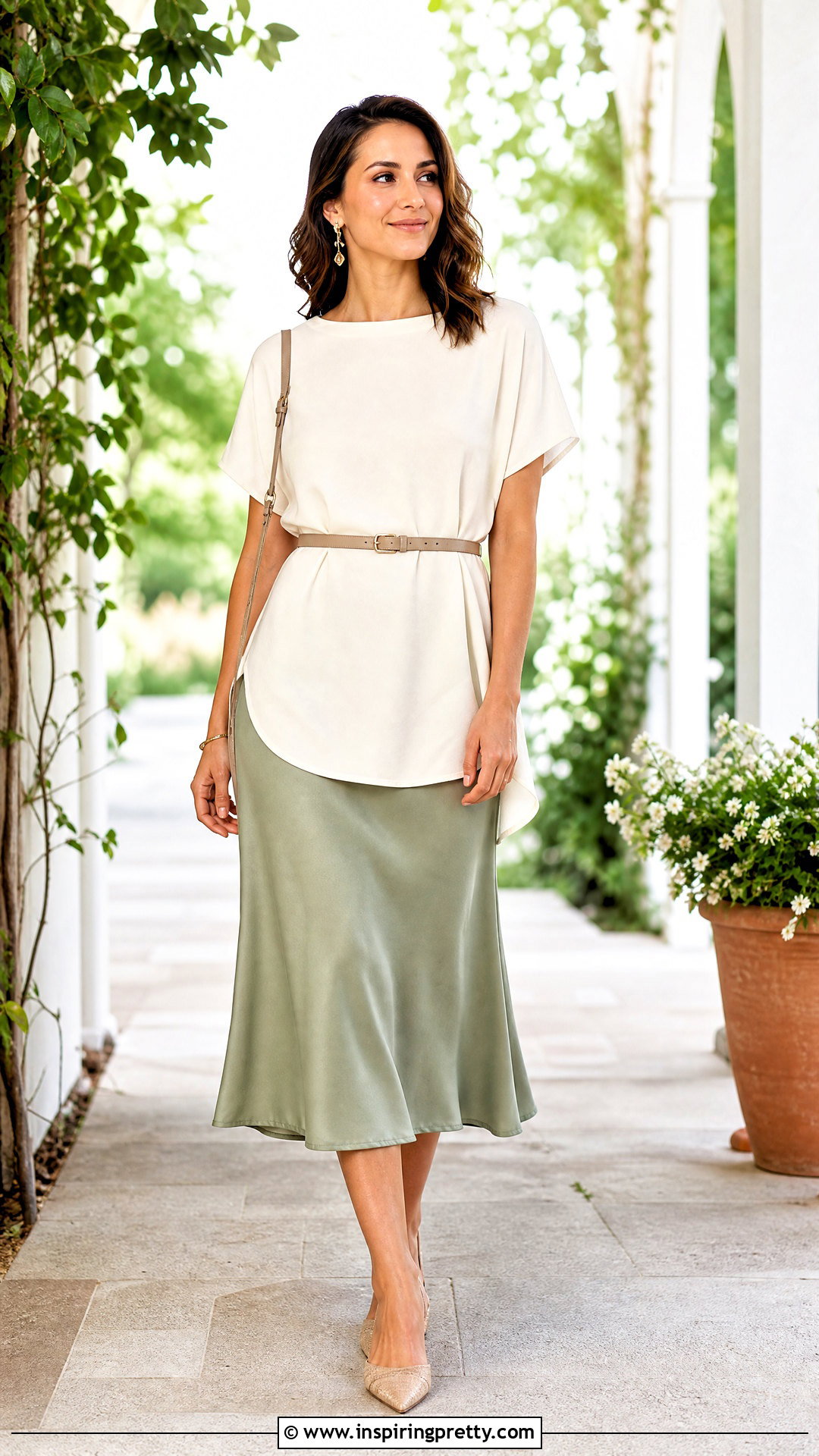
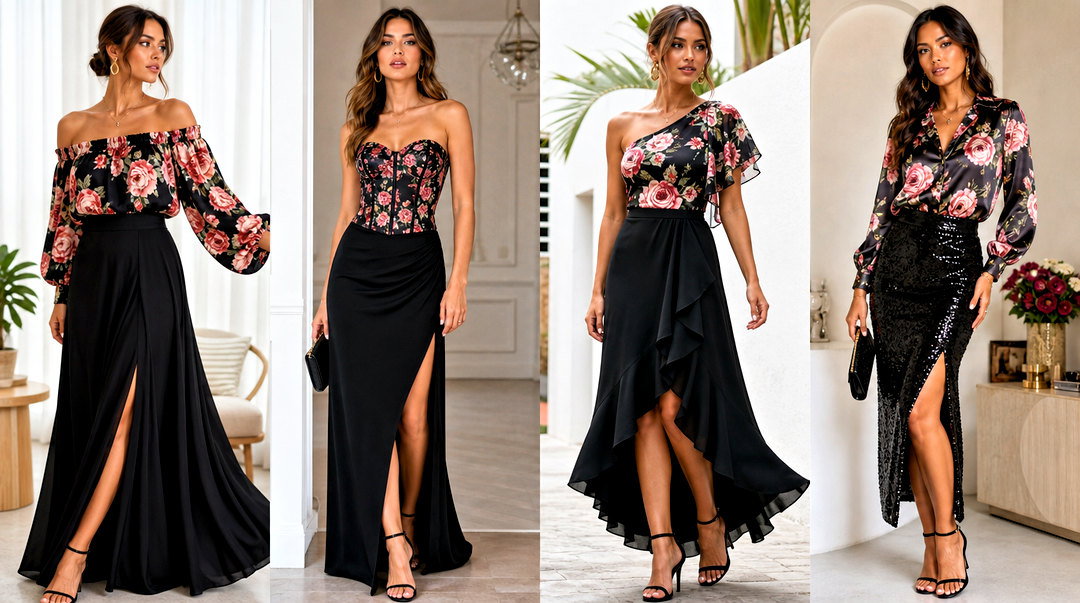
A tunic over a midi skirt only works if you give it a waist. Without one, the two layers merge into a shapeless column. Use a thin tunic, not a boxy knit, and either belt it at the natural waist or tuck it partly into the skirt if the fabric is fine enough. The skirt needs to fall well below the tunic hem, a good hand's width at least, or it looks like a slip showing. Pointed flats or knee boots lengthen the leg.
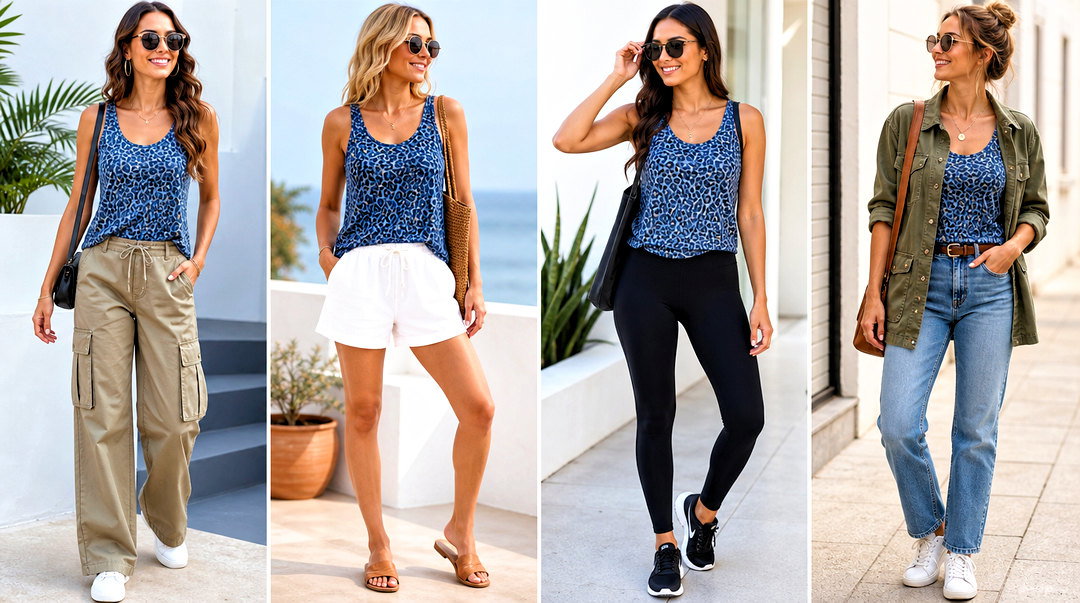
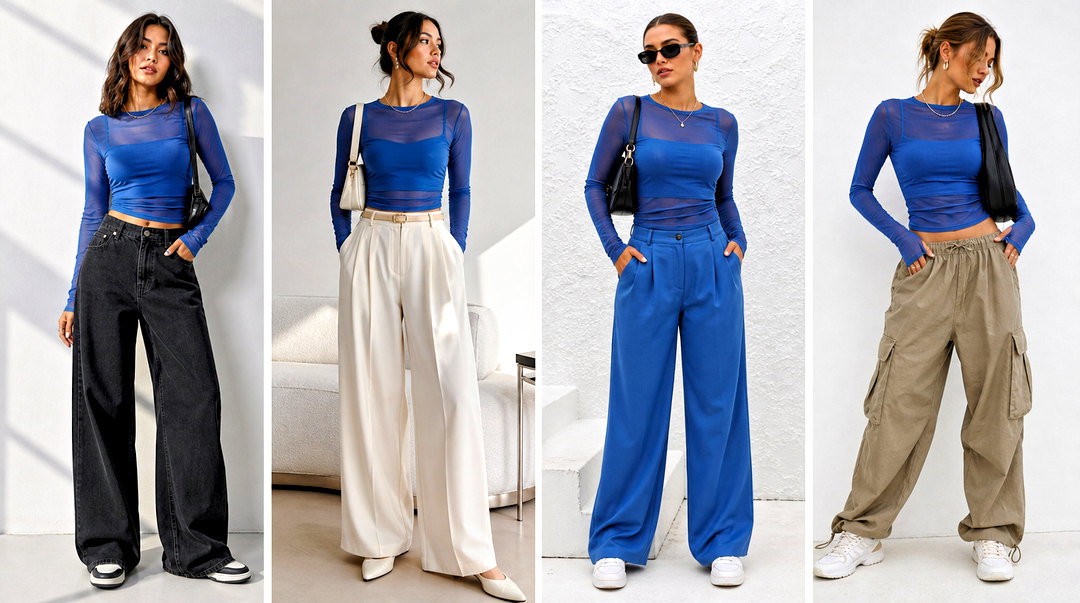
10. Tunic Top With A Pencil Skirt
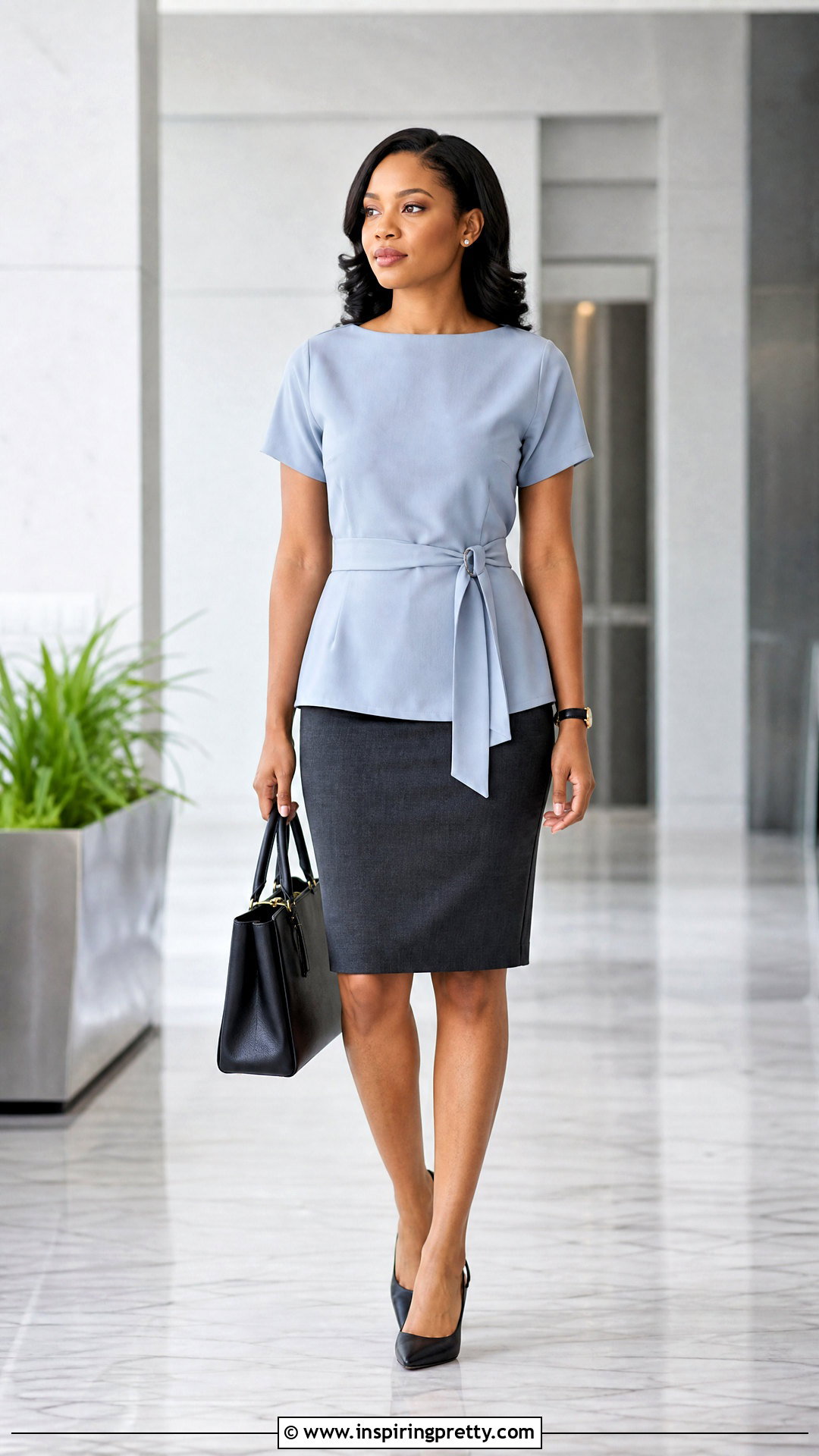
A tunic over a pencil skirt is an unusual work outfit, and it pays to keep everything else plain. The fitted skirt gives the loose top something to sit against. I keep the tunic to upper thigh so plenty of skirt shows, and add a narrow belt or choose a tunic with a built-in tie. Check that the skirt isn't riding up under the tunic when you walk. Two coordinated colors, no more.
11. Button Down Tunic Top With Jeans
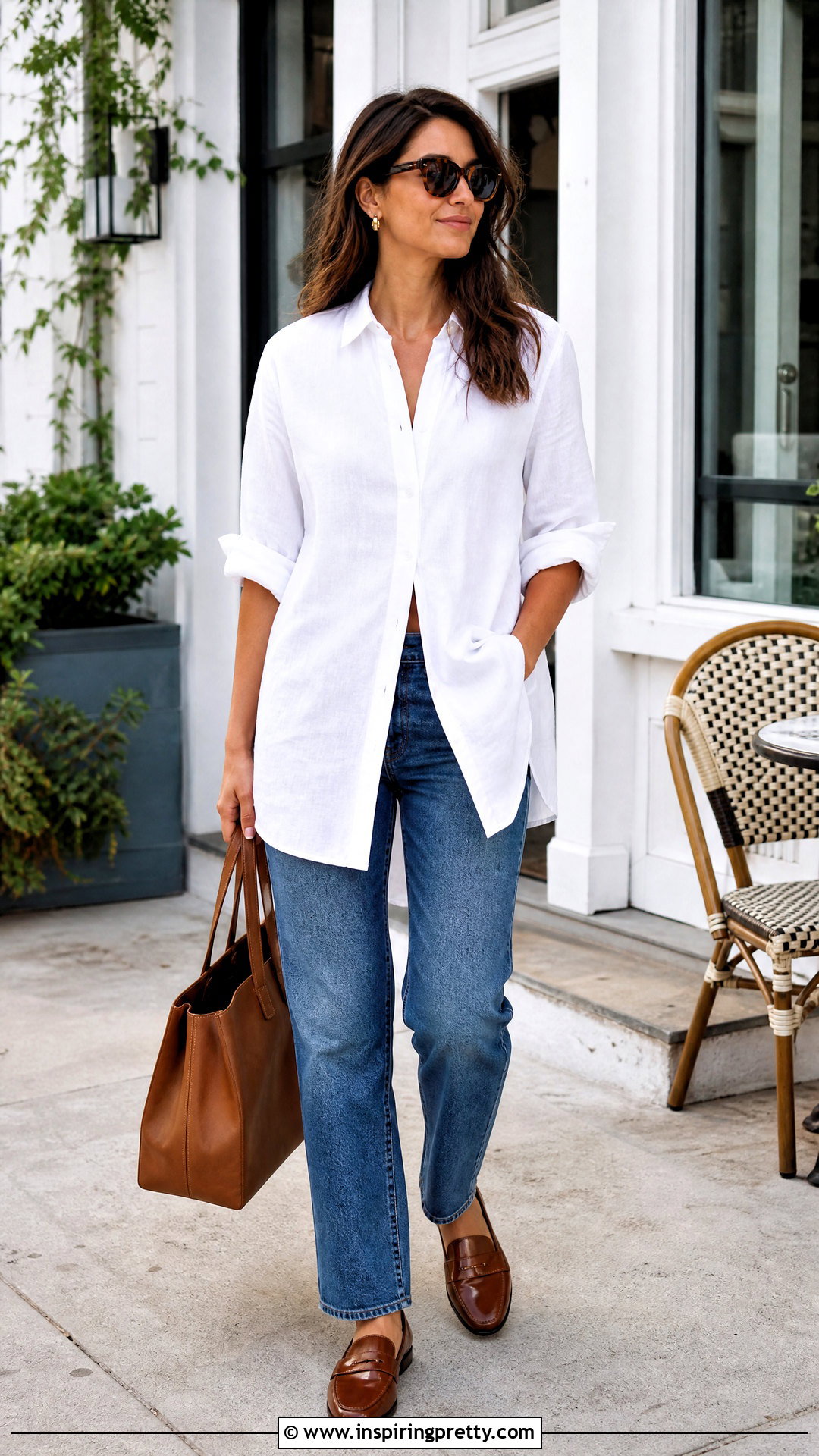
Button-down tunics are the easiest to style because the collar, cuffs and button placket add structure to all that length. A white, striped or pale blue one over straight jeans, untucked, then open the lowest buttons so it moves like it has side slits. A front half-tuck gives more shape if you want it. The shoulder seam is what I check first: it should sit at your shoulder bone, or the whole shirt just looks a size too big.
12. Sweater Tunic Top With Leggings
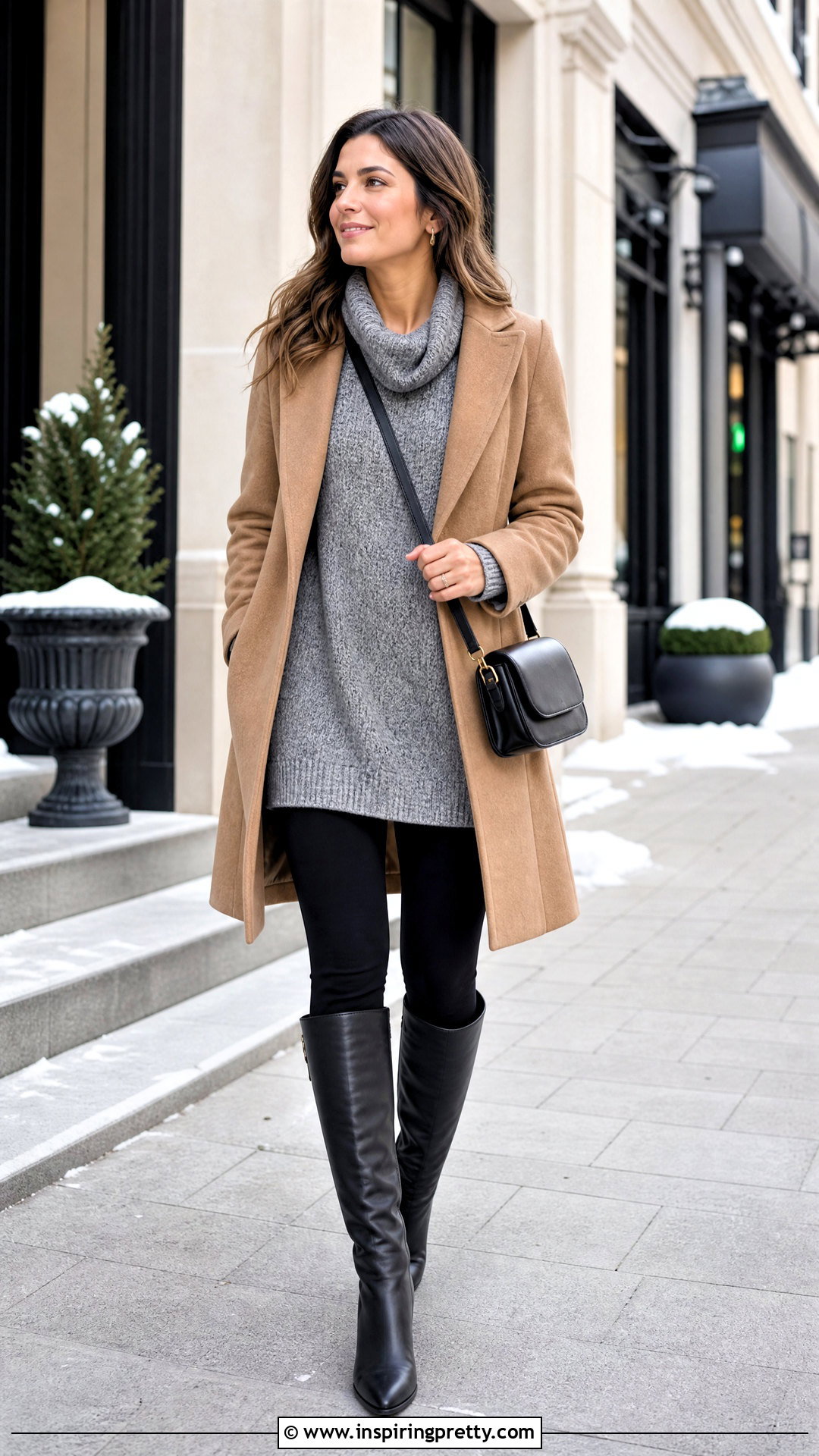
Sweater tunics need room. If the knit stretches across your hips, it pulls into horizontal lines and rides up as you walk. Look for side slits or a ribbed hem, and choose a fine or medium-weight knit if you'll wear a heavy coat on top; a chunky one makes the coat sleeves tight. Opaque leggings and knee boots give full coverage. A coat close to the tunic's length looks more balanced than a short puffer.
13. Tunic Top With A Blazer
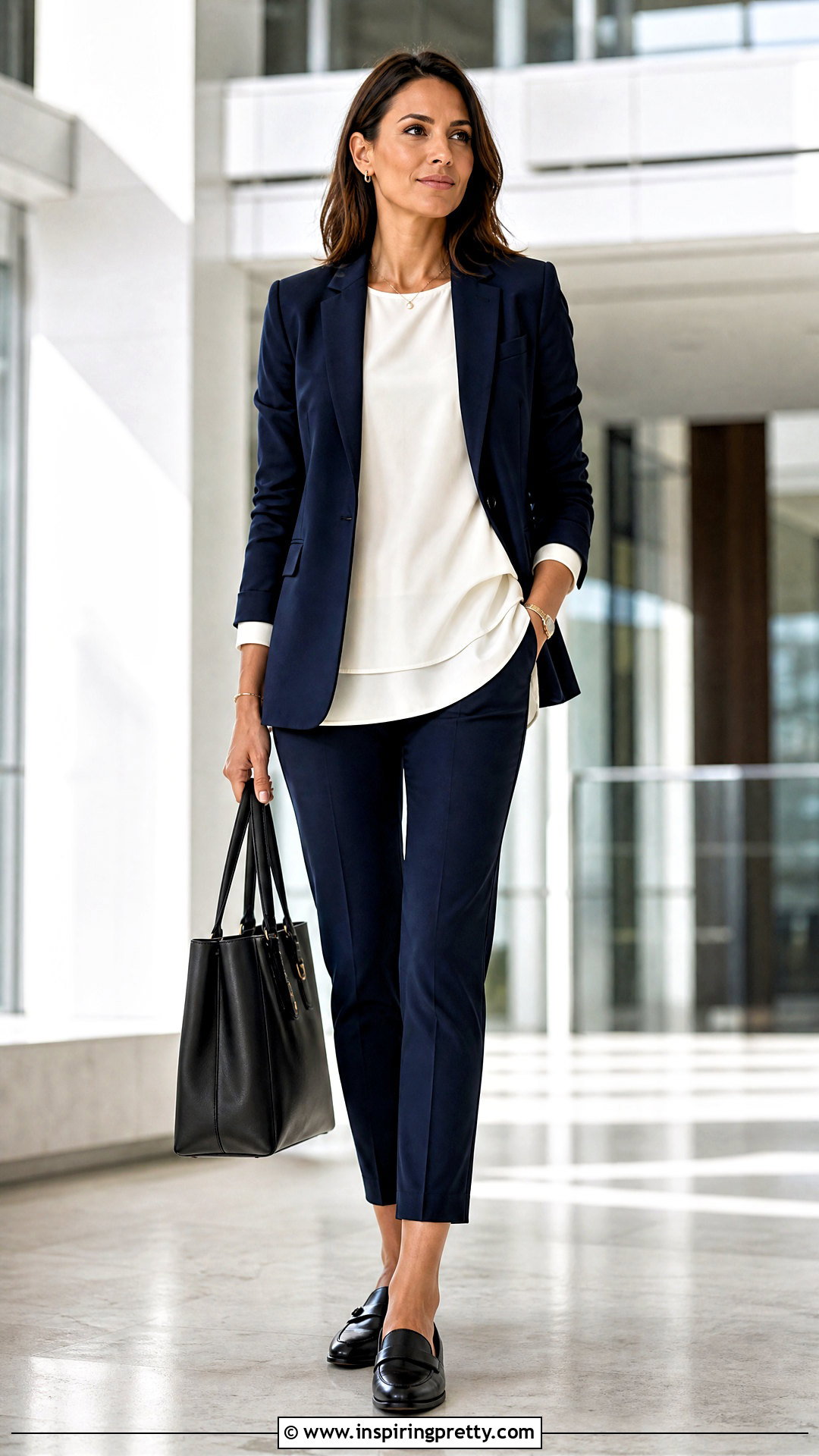
A blazer over a tunic gives you a sharp outfit that's still comfortable at your desk. A sleeveless or very light tunic sits smoothly under the jacket; a long-sleeved one bunches at the elbows. The blazer should reach the hip, and it's fine if the tunic shows below it, as long as that hem is tidy. A slit or angled hem looks more deliberate than a wide straight edge peeking out. Matching the tunic and pants in color makes a column under the jacket.
14. Tunic Top With A Denim Jacket
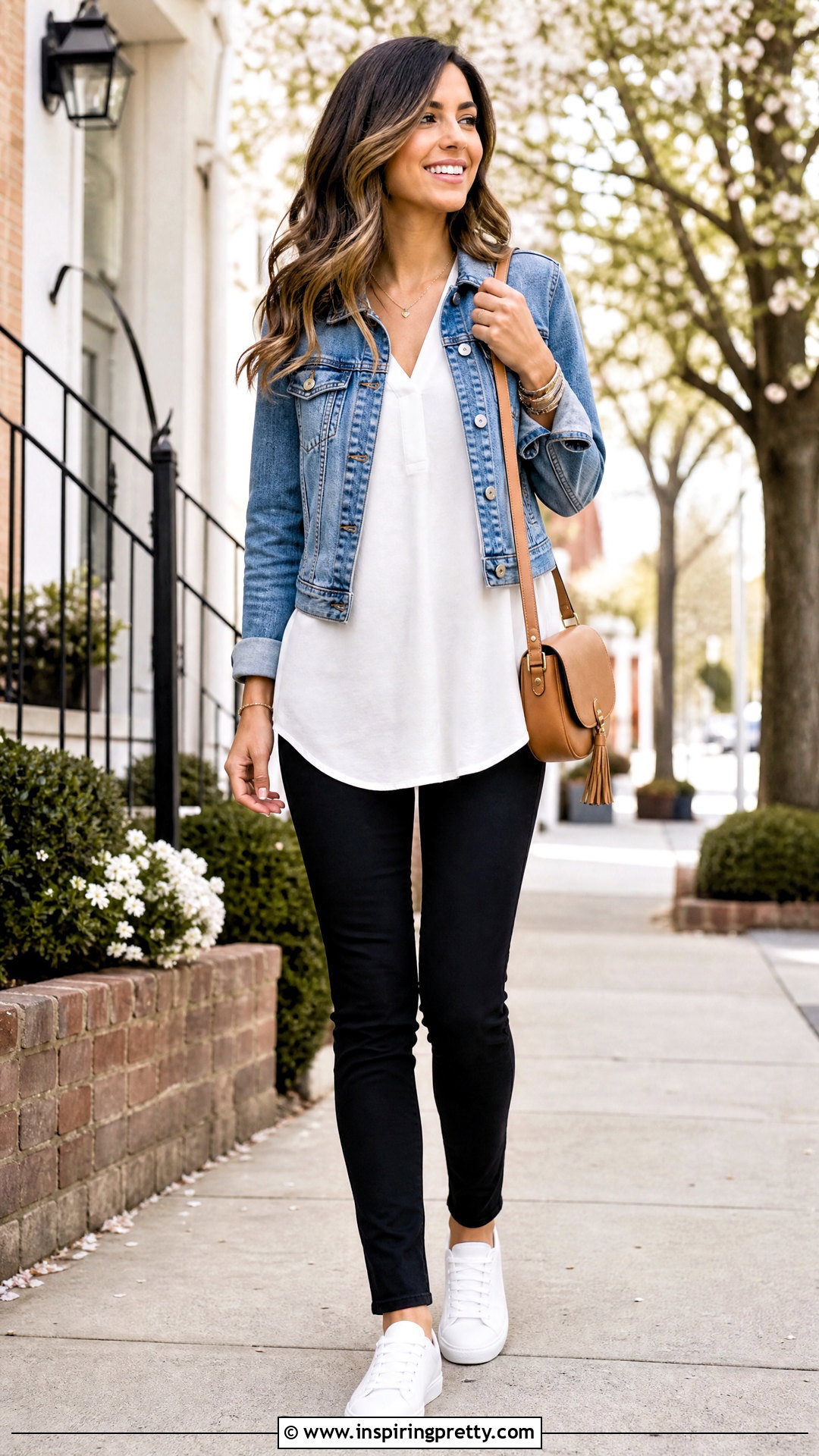
A cropped denim jacket is ideal with a tunic because the two lengths contrast. The jacket ends near the waist, the tunic keeps going, and that difference defines your torso without a belt. Push the jacket sleeves up so the tunic cuffs show and the arms stay slim. A very oversized jacket ruins the effect, so pick one that fits at the shoulder. Black leggings or slim jeans underneath.
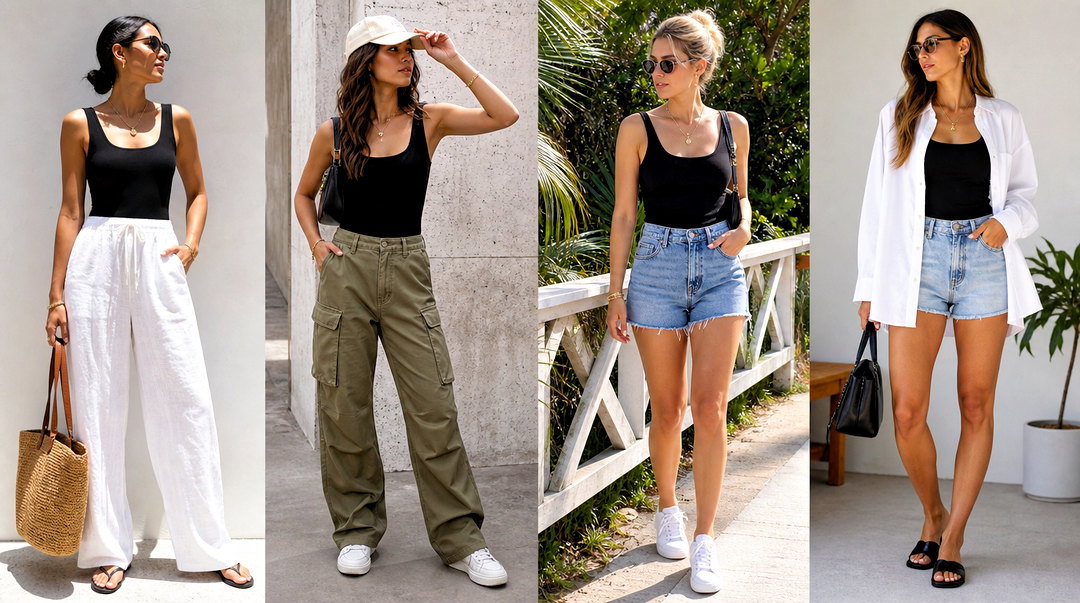
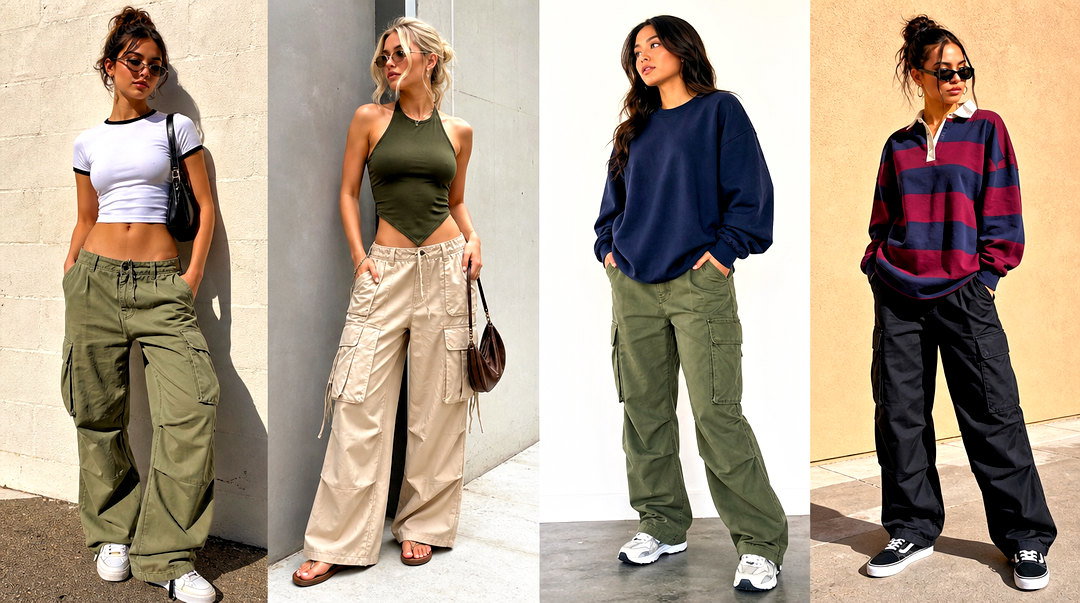
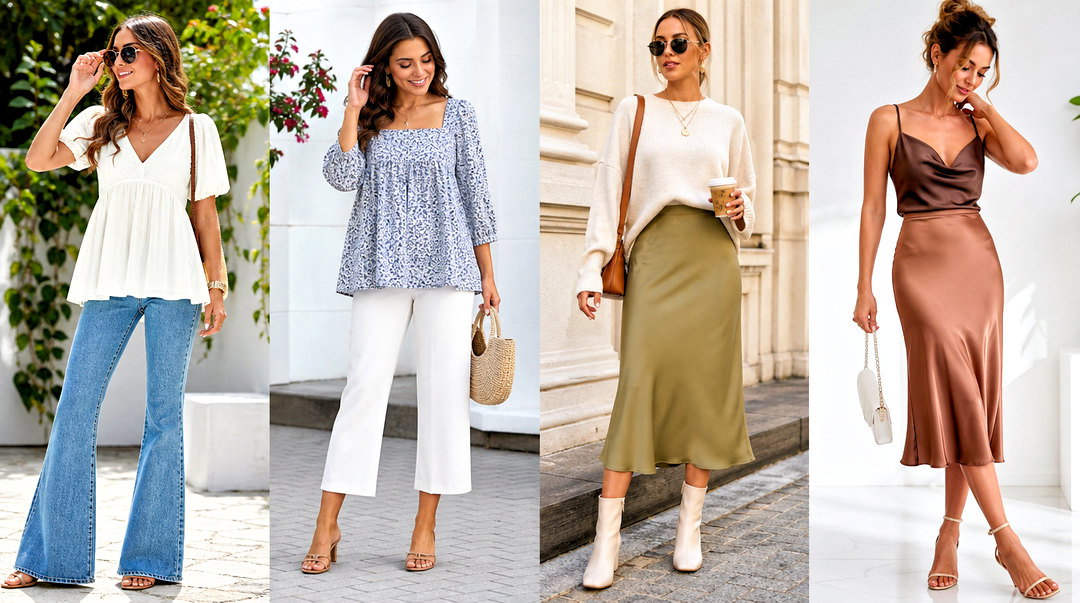
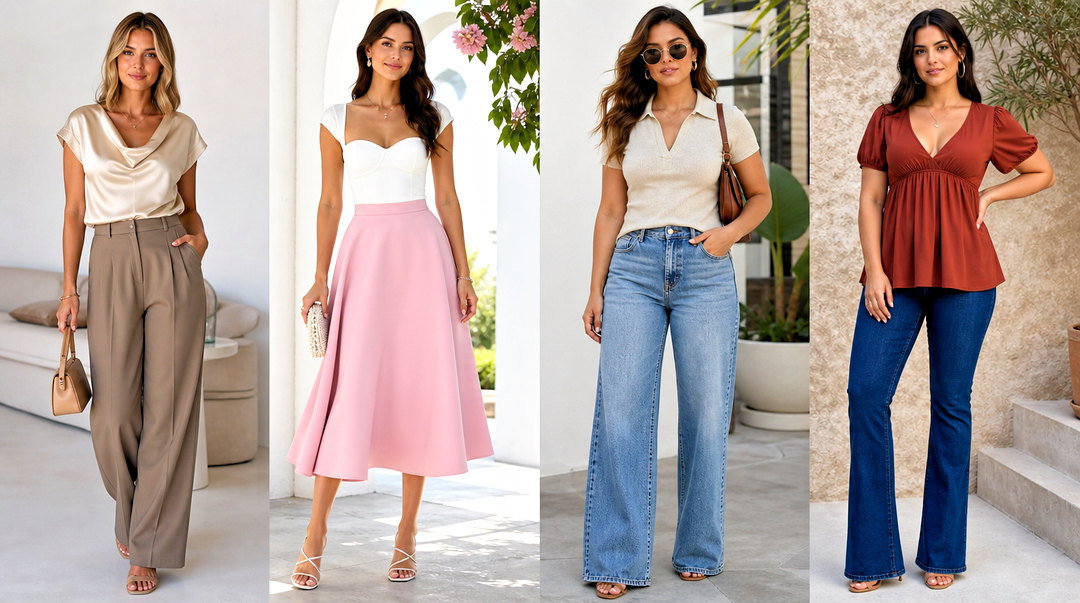
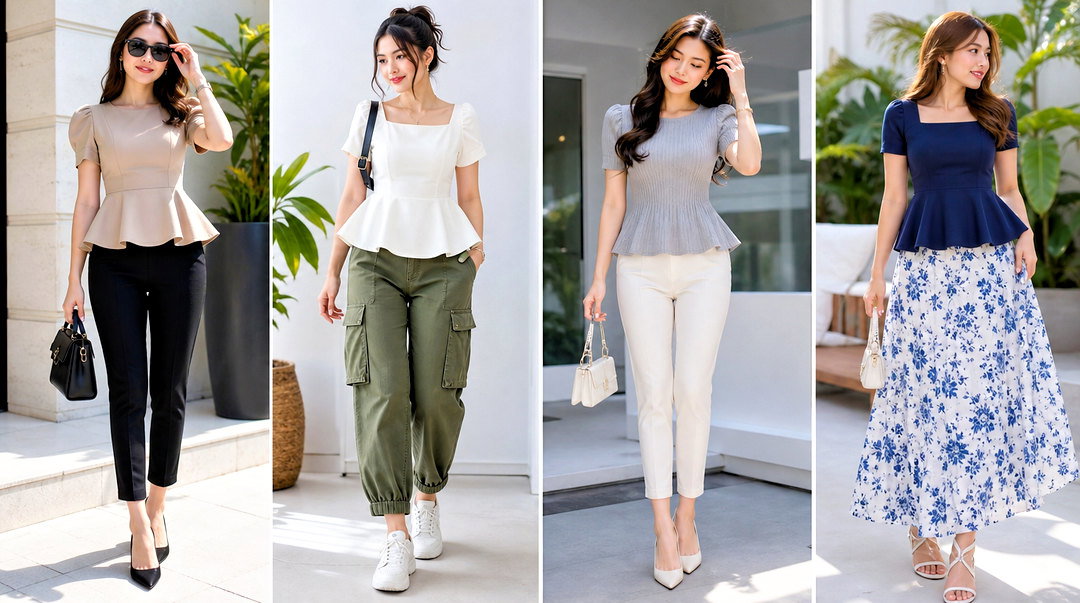
15. Tunic Top With A Leather Jacket
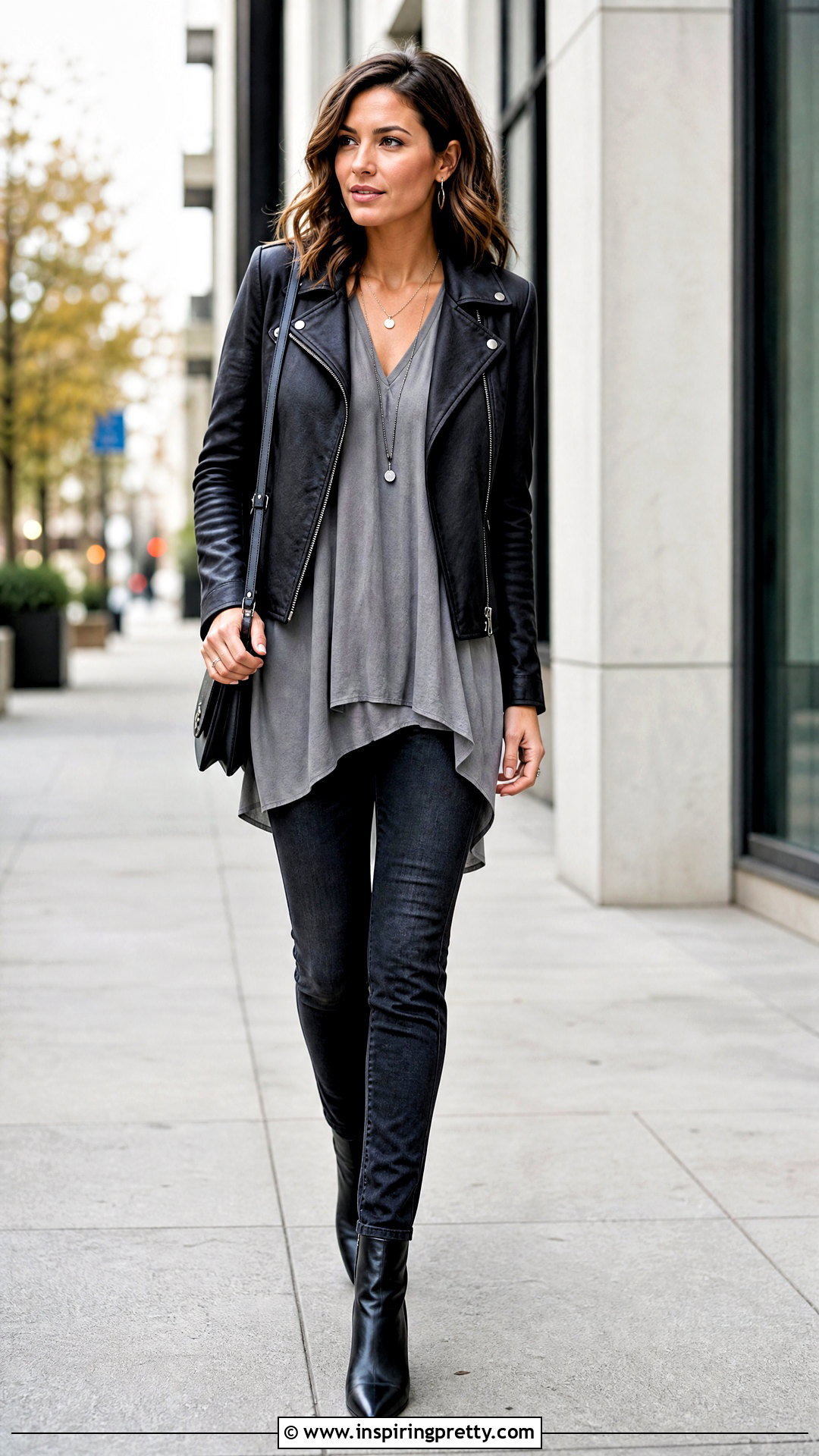
A short moto jacket over a soft tunic gives the outfit an edge. The jacket's waist-length cut does the same job as the denim jacket, but sharper. Keep the tunic in black, gray, ivory or a muted print so it doesn't fight the zippers. Faux leather works just as well if you don't wear real hide. Skip big necklaces; lapels and zips already fill that space.
16. Belted Tunic Top With Slim Pants
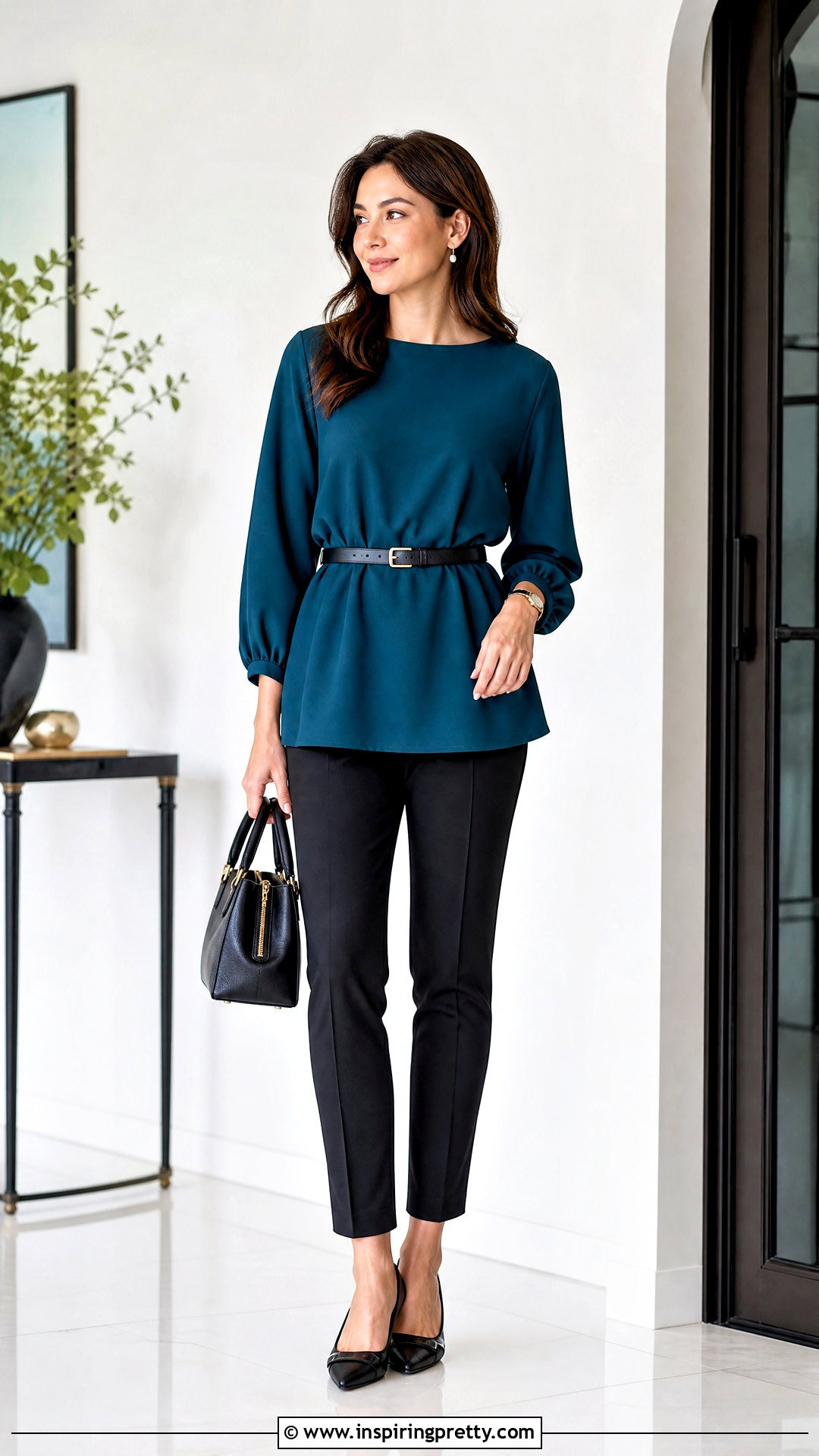
If you own a tunic that's comfortable but looks shapeless, a belt is the fix. You need a drapey fabric that can blouse a little over the belt; stiff cotton just creases. I belt at the natural waist or a touch above, then pull the fabric evenly all the way round so it doesn't collect at the back. A narrow belt is subtle; a medium one gives more definition. Slim pants keep the bottom half quiet.
17. Asymmetrical Tunic Top With Black Pants
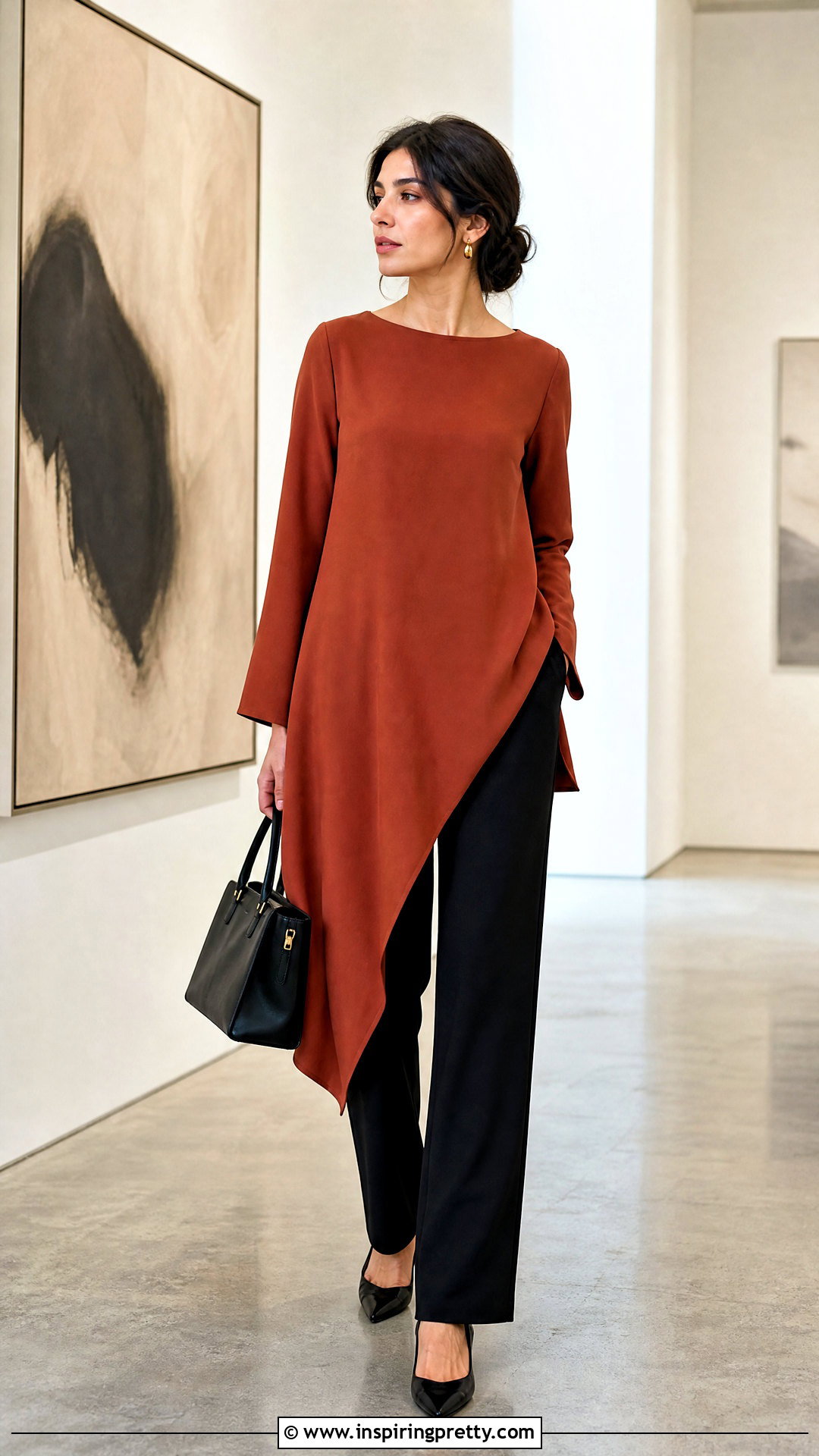
An asymmetrical tunic top breaks up the length with diagonal lines, so plain black pants are all it needs below. Avoid a long necklace that ends at the same height as the hem; two strong lines at once make the outfit busy. Small earrings or a short pendant work better. Before buying, sit down and check that the shortest part of the hem still covers what you want it to.
18. Printed Tunic Top With Neutral Pants
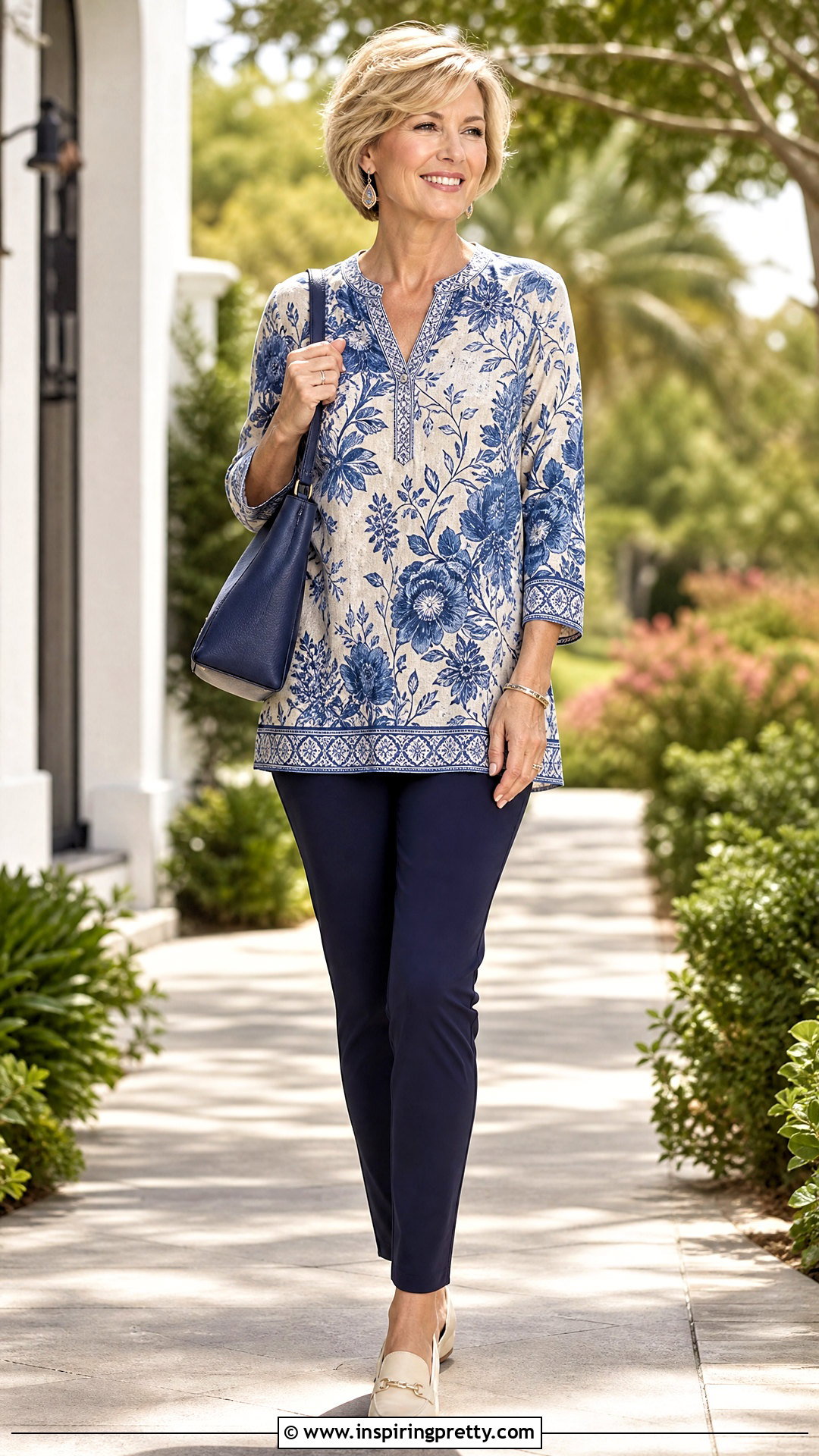
Prints are easiest with a neutral bottom. I pull one background color from the print, navy, olive, cream, and use it for the pants. Slim or straight trousers keep the print as the focus. Print size matters: smaller motifs suit a petite frame, while a large print needs height to look right. Also check where the pattern lands; a big flower right on the bust or hip draws attention there.
19. Linen Tunic Top With Relaxed Pants
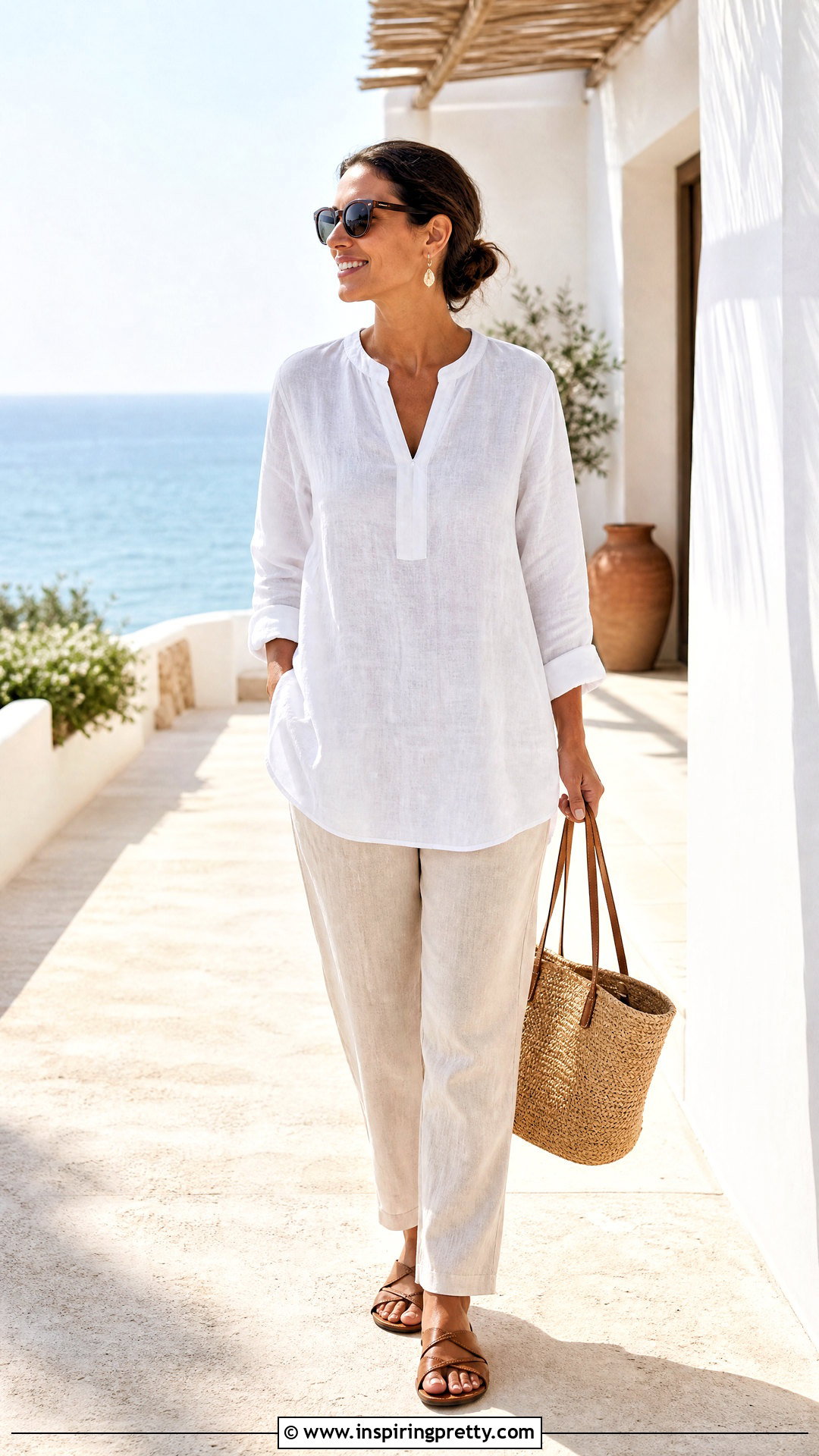
In real heat, a linen tunic with a split neckline and side vents over pull-on trousers is the coolest outfit here. The trousers should hang straight rather than gather heavily at the waist, or the outfit doubles up on volume. Linen creases the moment you sit, and that's fine; it's part of the fabric. If both pieces are loose, a tunic with a set-in shoulder or shorter sleeve gives the body some structure.
20. Tunic Top With Boots And A Long Coat
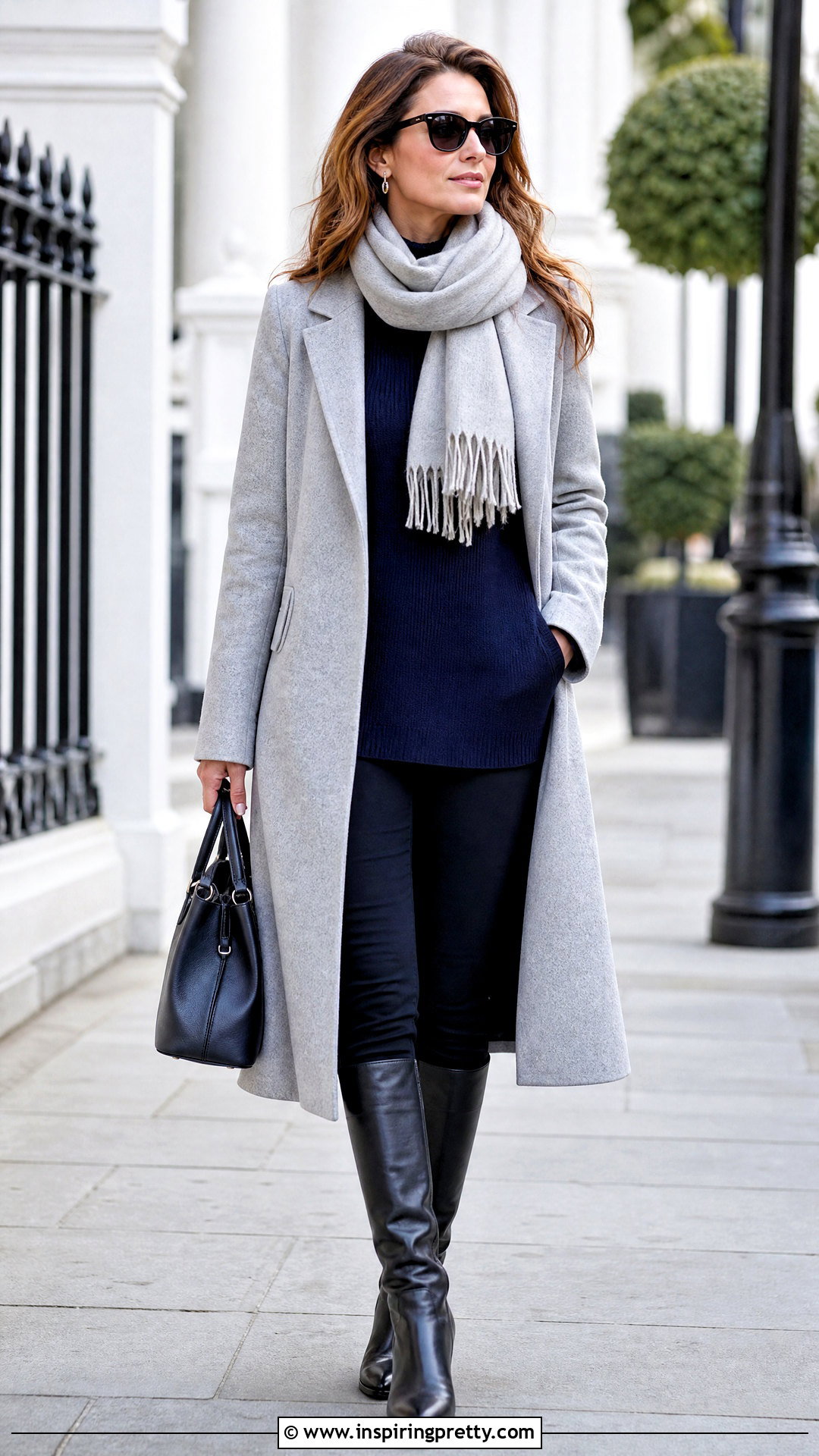
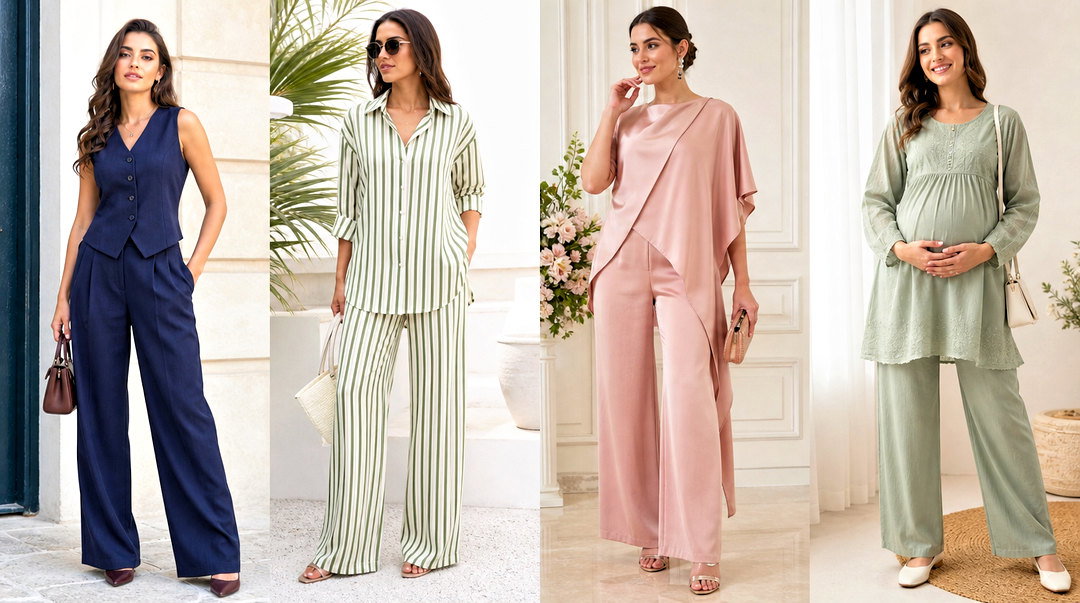
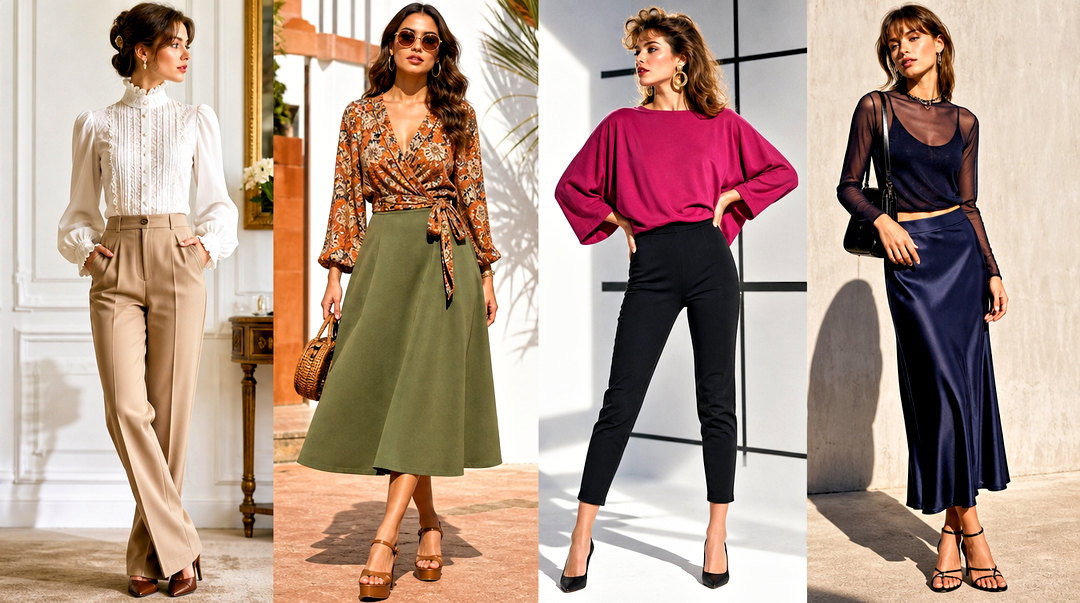
In winter, I build this one from the coat down. A fine knit or jersey tunic, thick leggings or narrow trousers, and a coat that either matches the tunic length or goes well past it. A coat that stops just above the tunic hem leaves an awkward strip of fabric showing. Knee boots add warmth. Before you go out, check the tunic isn't bunching over the hips under the coat.
The Right Tunic Length for Your Height
Length is the detail that makes or breaks a tunic, and it depends on your frame more than on the trend. I measure from the top of the shoulder to where the hem lands, then compare it with the leg showing below.
- Petite: aim for the upper thigh. Longer tunics swallow the leg and make you look shorter.
- Average height: upper to mid thigh both work; mid thigh gives more coverage with leggings.
- Tall: you can go just above the knee, which suits wide trousers and long coats.
- Curvy hips: a tunic that ends just past the widest point of the hip, not right on it, skims better.
- Busty: look for a V or split neck; a high round neck on a long, loose top can make the whole torso look wide.
If a tunic you love is too long, a tailor can shorten a straight hem quickly. Curved, high-low and slit hems take more work, so ask before you buy.
Washing Tunics Without Losing the Shape
Long tops lose their shape in the wash faster than short ones, simply because there's more fabric to twist. Knit tunics grow in length if hung wet, so I dry them flat. Linen and cotton can go on a hanger, but smooth the hem and slits while damp or they dry crooked. Rayon and viscose shrink in hot water, so wash them cool, and button shirt tunics up before washing so the placket stays straight.
The Proportion Rule I Use With Every Tunic
A tunic is simply a long top that passes the hips, and the length is the only thing all of them share. Everything else, from fabric to neckline, varies. The rule I come back to is volume in one place only: a loose tunic wants slim bottoms, and wider trousers or skirts need a thin tunic, slits or a belt. Get that right and a tunic suits casual weekends, office days and cold-weather layering alike.
Related posts:



Leave a Reply