Most of the top names you see on shop tags describe a single thing: a neckline, a sleeve, a length or the way the garment is built. Once you know which part a name refers to, online searches get faster and fitting-room surprises get rarer. Below are fifty tops I either wear or get asked about, each with its defining feature and one complete outfit built around it, so you can picture the piece on a body instead of on a hanger.
What Each Top Name Is Actually Describing
Almost every top name points at one feature. If you know which feature, you can read a product page or a shop tag and picture the garment before you see it. When I explain these names, I sort them into four groups:
- Neckline names: crew, scoop, V, square, boat, cowl, halter, mock neck, turtleneck, off-shoulder and one-shoulder. They tell you where the fabric meets your neck and shoulders, and therefore which bra you'll need.
- Sleeve names: puff, bell, bishop and cold-shoulder. These tell you where the volume sits, which matters most the moment you put a jacket on top.
- Length names: crop, tunic, high-low and longline. These only make sense next to the rise of your trousers or skirt.
- Construction names: corset, bustier, peplum, empire, wrap, smock and bodysuit. These describe how the top is built, so they predict how it will fit and move.
Most tops carry two names at once: a ribbed mock-neck crop, a satin cowl camisole, a peplum blouse with puff sleeves. When a listing is vague, I go straight to the measurements for body length and armhole depth. Those two numbers tell me more about fit than any name on the tag.
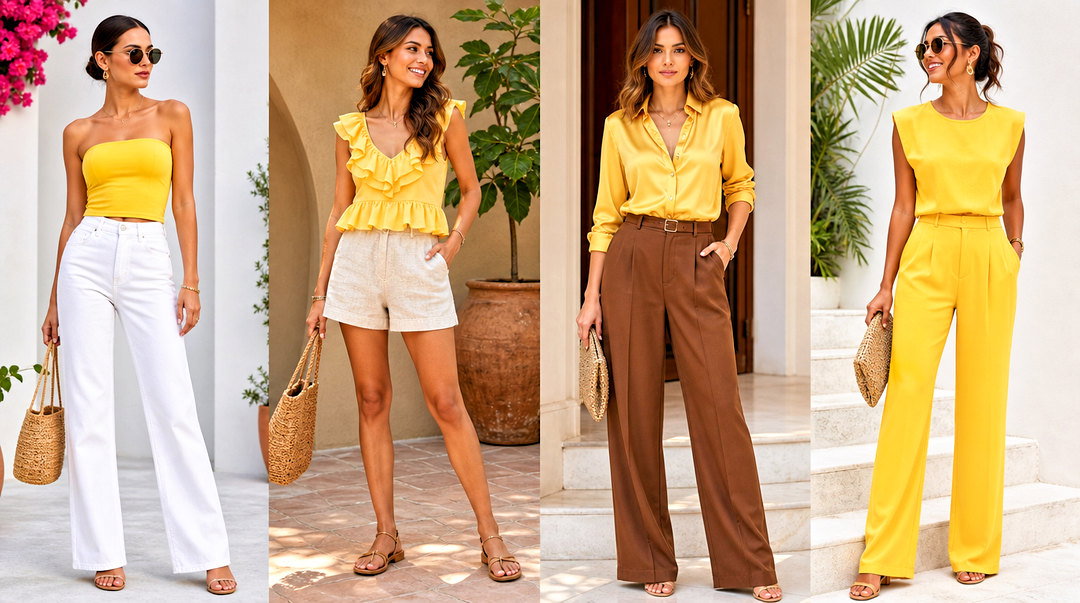
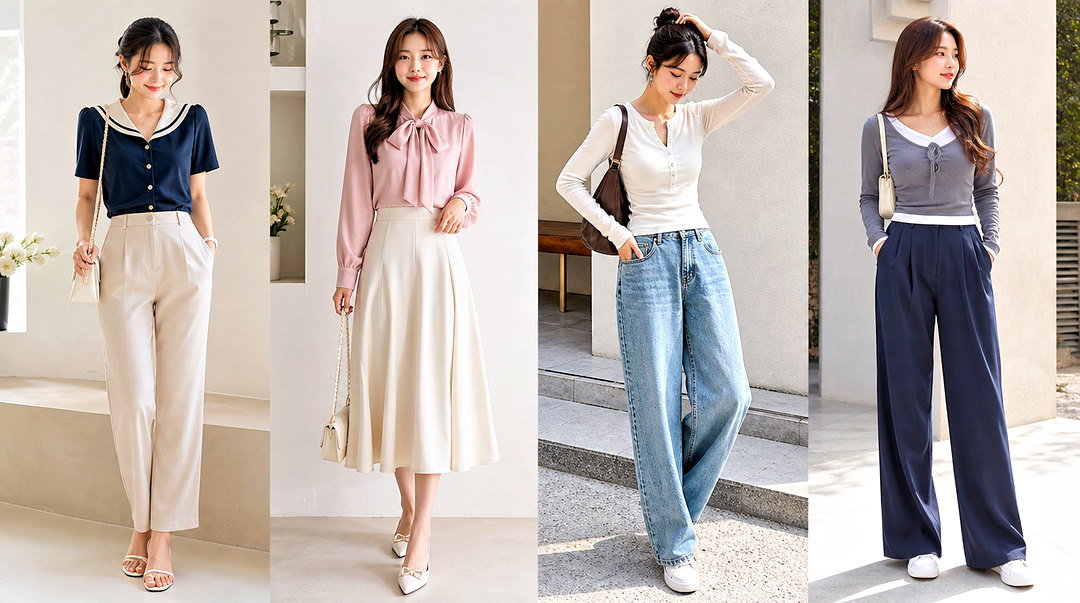
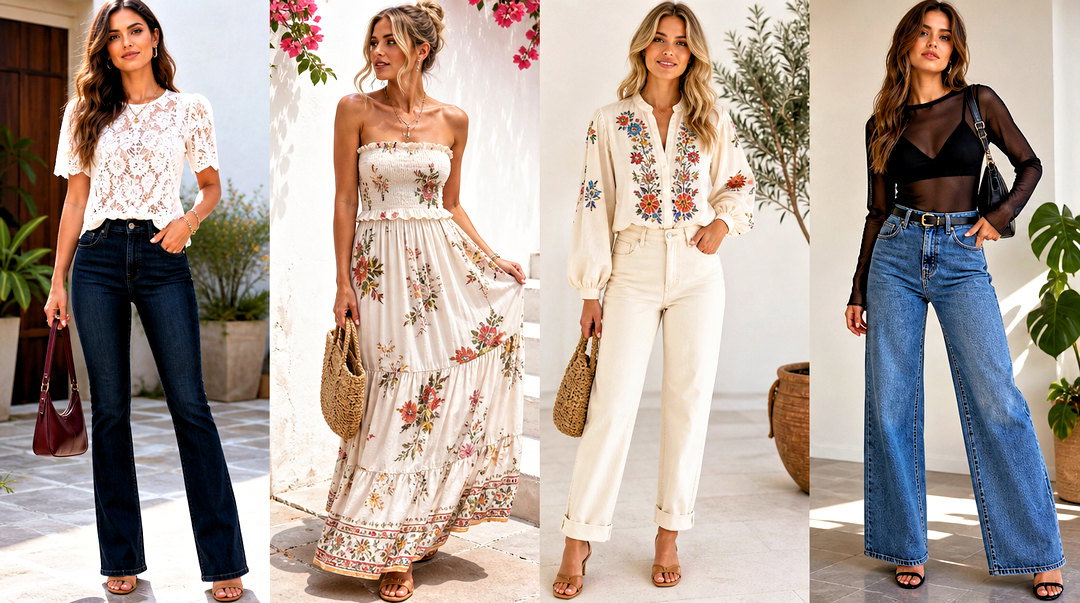
1. T-Shirt With Straight-Leg Jeans
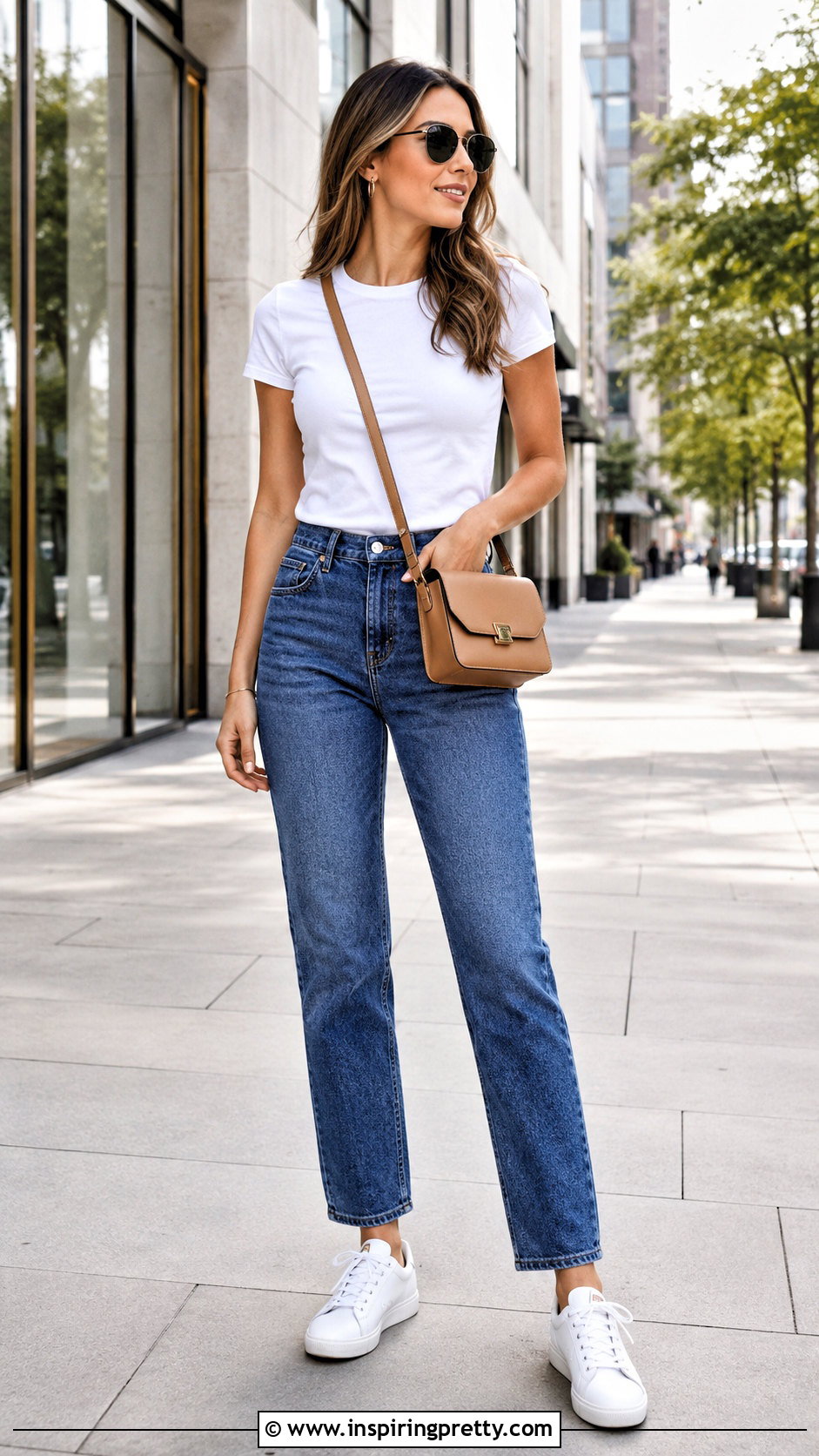
Start with the plainest one, because a T-shirt shows fit problems faster than anything fancy. It's a short-sleeved knit with a crew, scoop or V neckline. My go-to version is a fitted white tee tucked into high-rise straight-leg jeans, with leather sneakers and a structured crossbody. I check two things before buying: whether the shoulder seam lands on the shoulder bone, and whether the white is thick enough to hide a bra. Pure cotton breathes better, while a little elastane keeps the neckline from going wavy. Add a blazer and small hoops when you need more polish.
2. Tank Top With Wide-Leg Pants
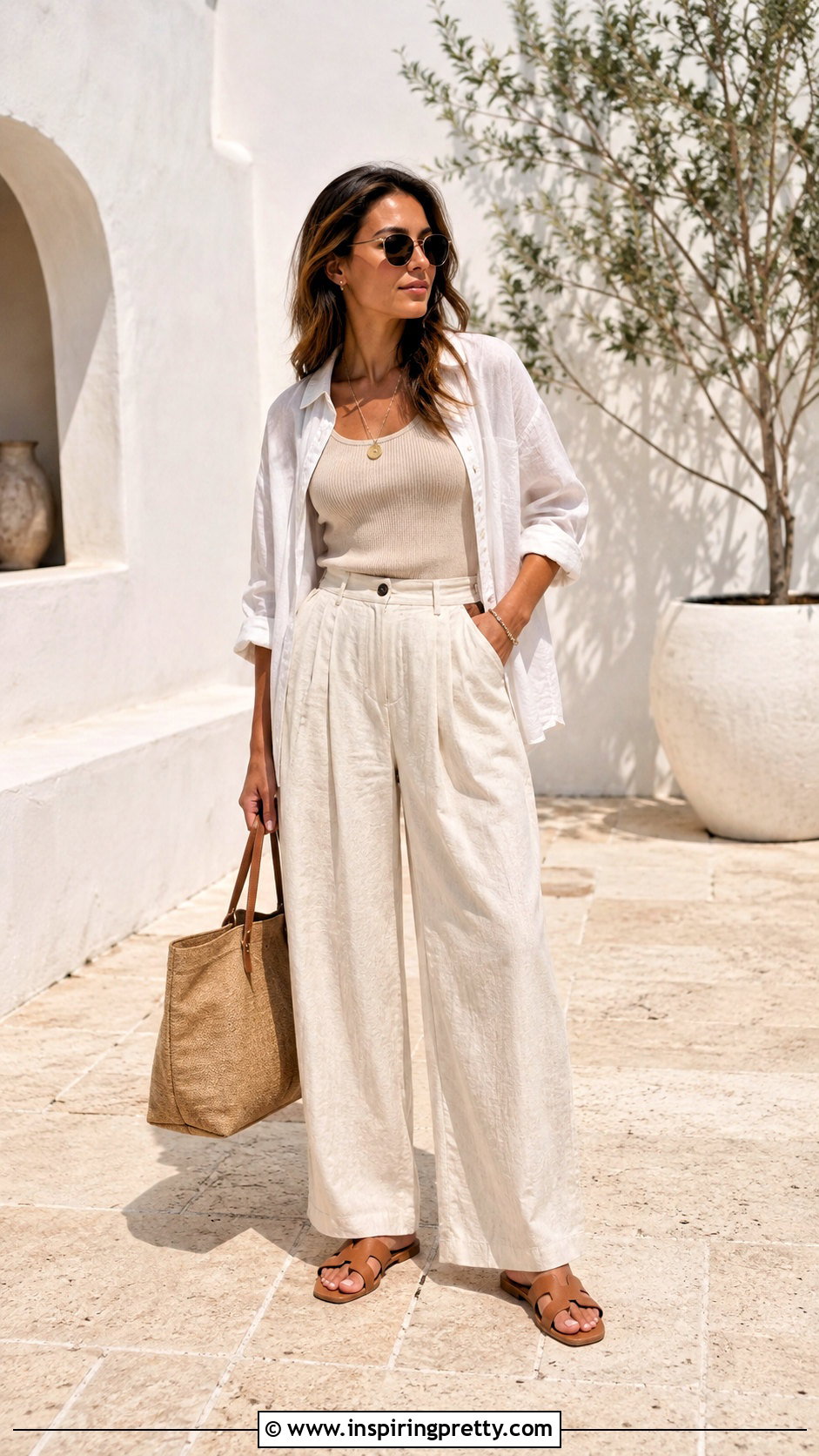
Tank straps are wider than camisole straps, and that width is the whole point: it covers a regular bra strap. Necklines run round, square, scooped or high. I pair a ribbed tank with high-waisted wide-leg pants, flat leather sandals and a big tote, with a linen shirt thrown open over it when the sun is strong. The armhole is where cheap tanks fail. Look at it from the side in a mirror; if you can see the bra band, size down or pick a cut with a higher armhole. Heavier rib also stays opaque longer than thin jersey.
3. Camisole Top With Satin Midi Skirt
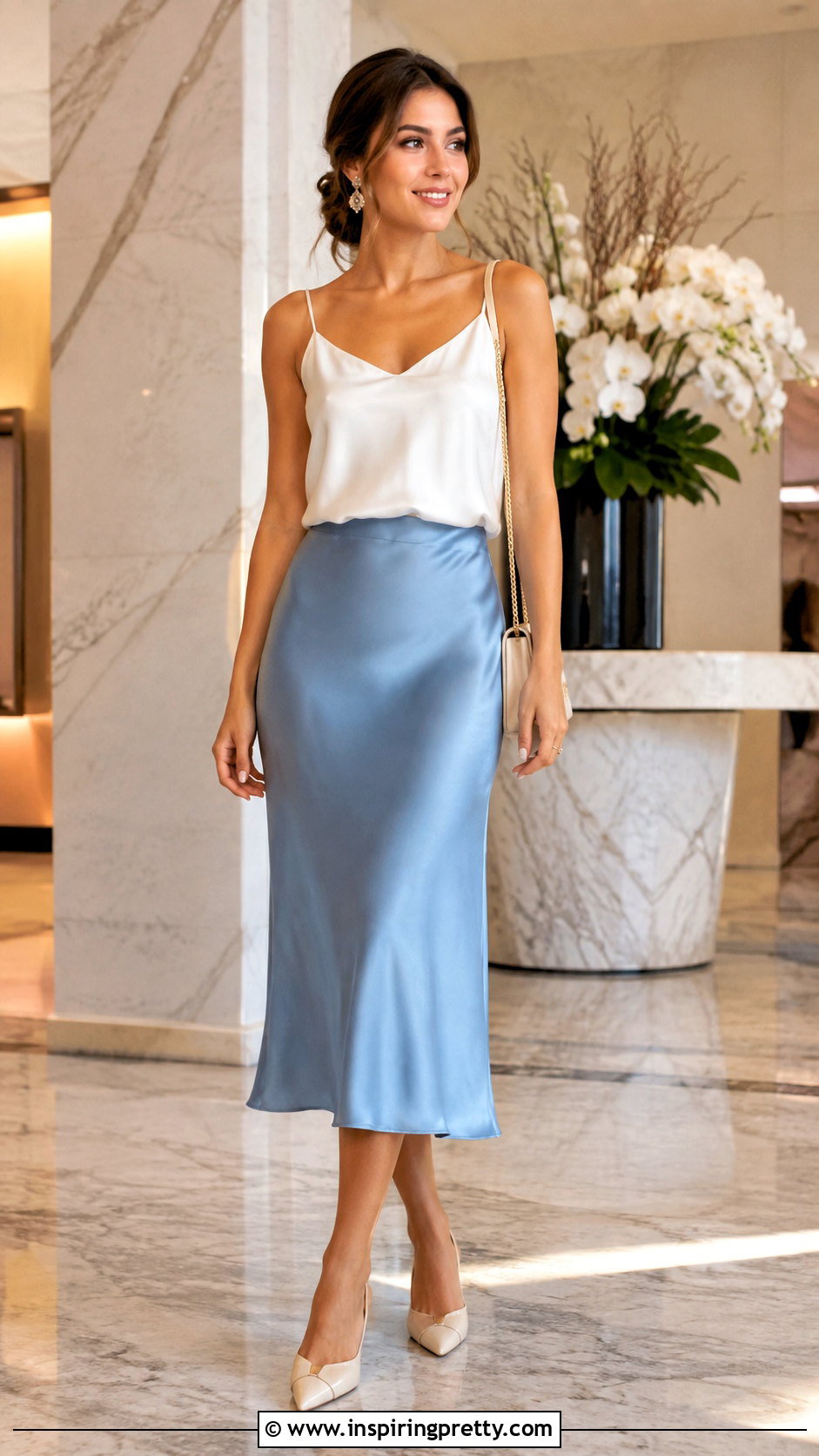
A camisole has spaghetti-thin straps and usually a smooth, slippery fabric like silk, satin or cotton voile, sometimes edged in lace. Worn with a satin midi skirt in the same tone, it reads like a slip dress split in two. I finish it with pointed flats, a small shoulder bag and fine earrings. Adjustable straps matter more than people think, since lifting the neckline half an inch changes how much shows when you lean. Satin also marks with sweat and water, so I'd keep this pairing for evenings rather than a hot commute. A light cardigan covers the shoulders when needed.
4. Crop Top With High-Waisted Trousers
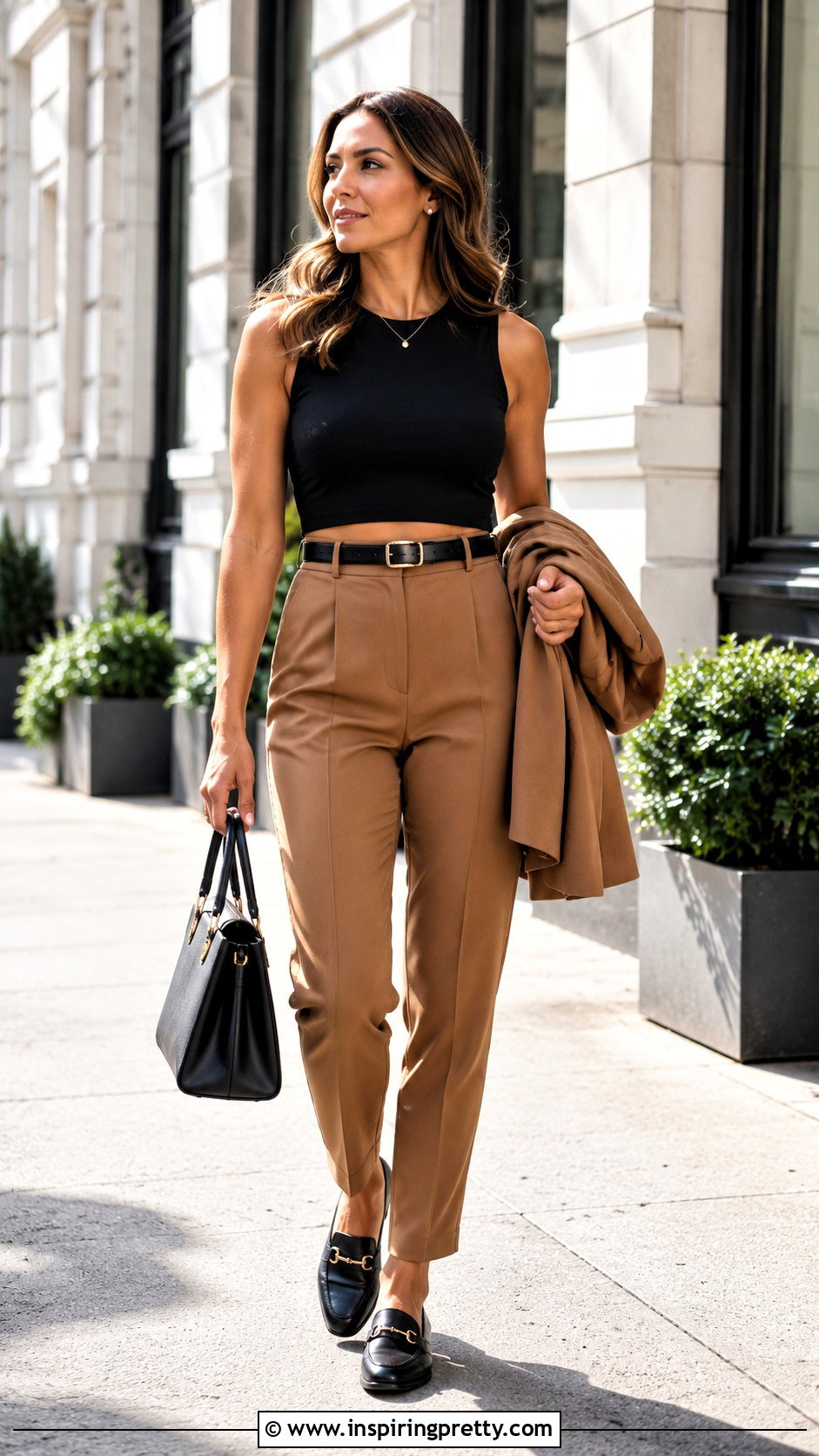
Crop is a length, not a style. Any top that stops at or above the natural waist counts, whether it's loose, fitted or long-sleeved. The easiest way to wear one without showing skin is a waist-length crop with high-waisted tailored trousers, so the hem just meets the waistband. Loafers, a slim belt and a structured handbag finish it. The measurement I care about is the gap between hem and rise. On a long torso, a crop designed to meet the waist may leave two inches of midriff; on a petite frame the same top can land right at the belt.
5. Tube Top With Relaxed Jeans
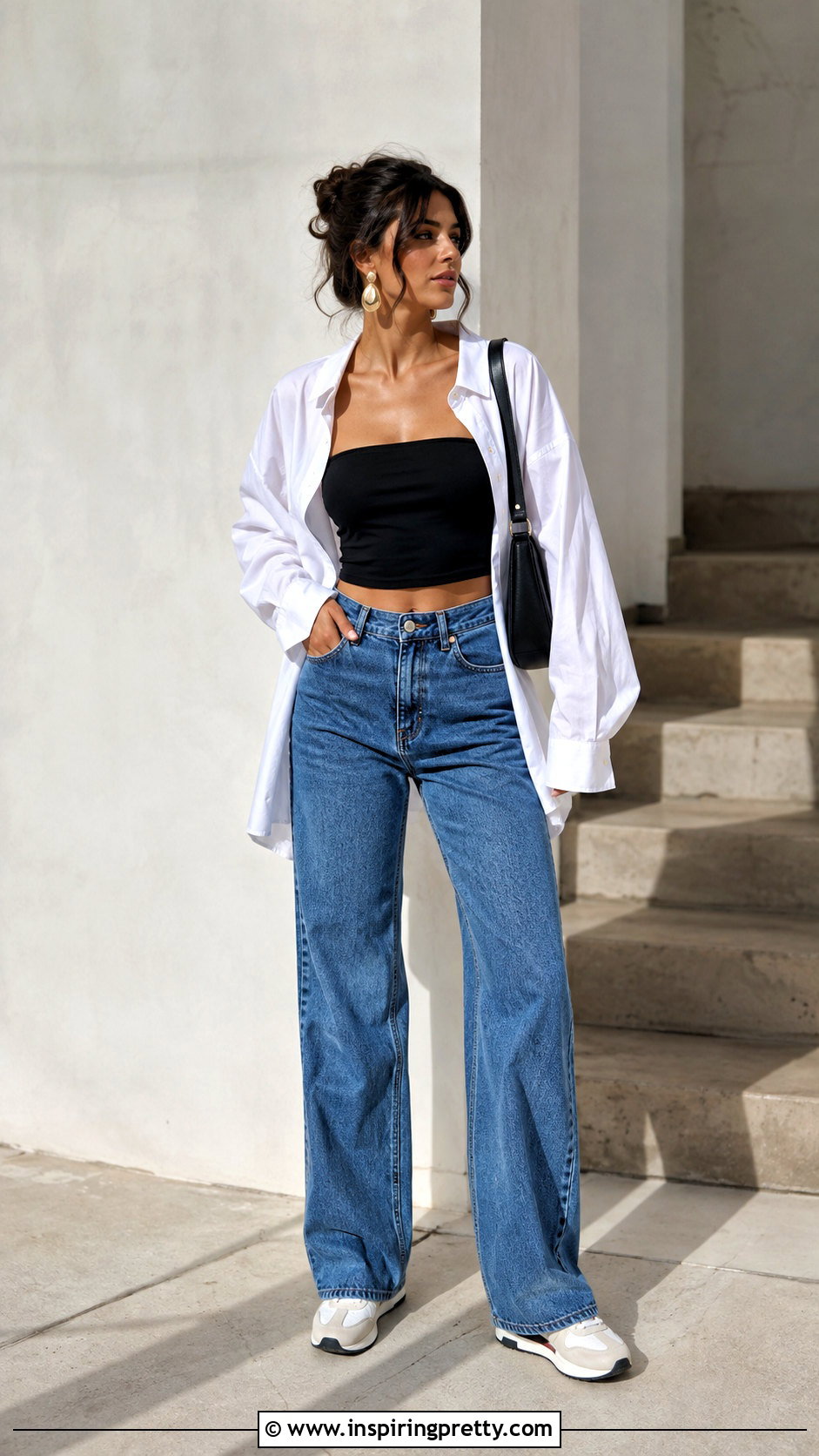
A tube top is a stretchy band of knit with no straps and no shaping, pulled on over the head. That simplicity is also its weakness, because nothing holds it up except tension and grip. I style a black tube top with relaxed high-rise jeans, low sneakers and an oversized button-down left open, which gives you cover on demand. Look for silicone tape inside the top edge or a double-layer band. Before wearing one out for hours, sit, walk and lift your arms in the mirror. If it slides when you reach overhead, it will slide all evening.
6. Bandeau Top With Linen Pants
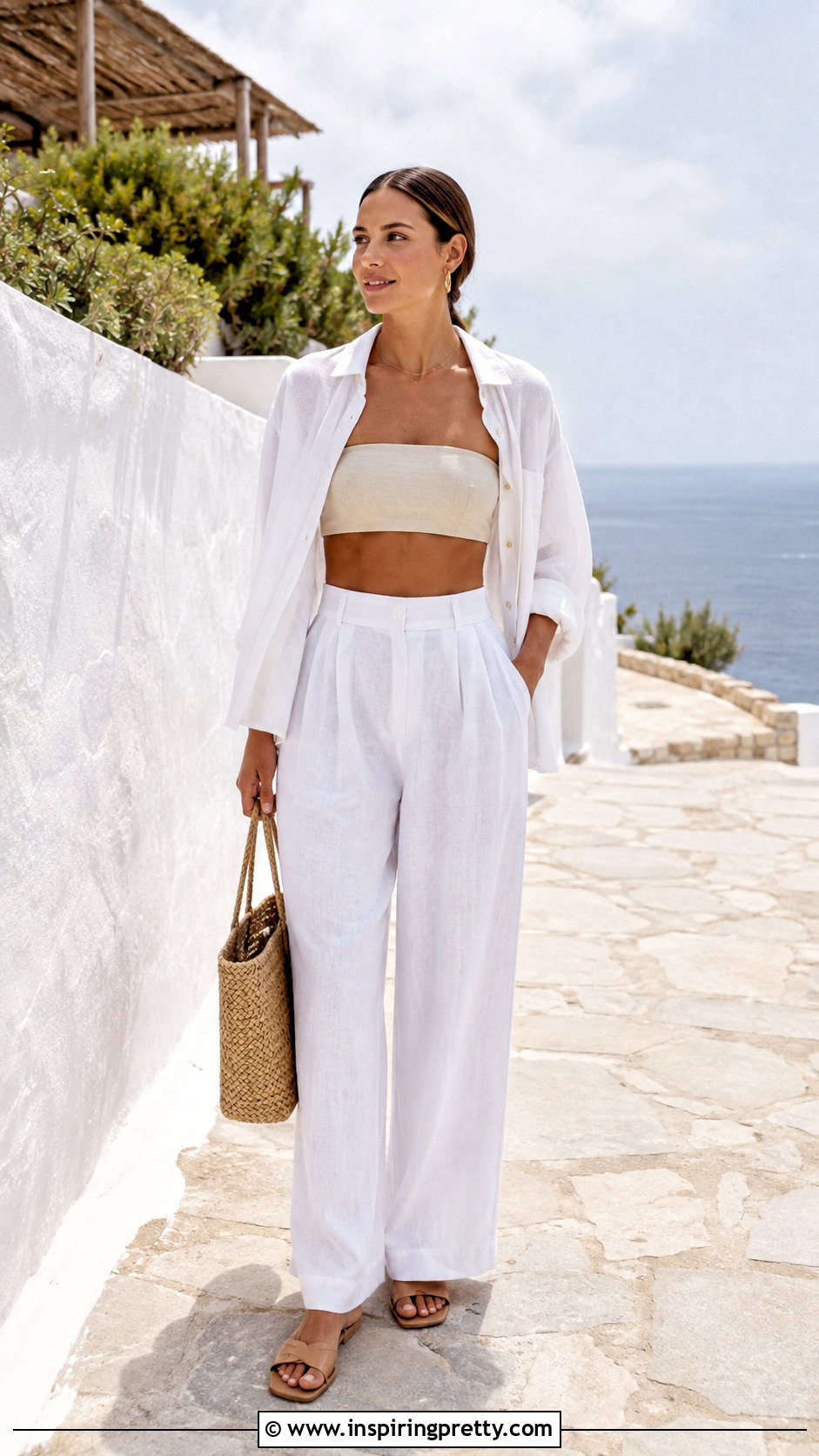
Bandeau and tube get used interchangeably online, but a bandeau is usually shorter, sometimes just a strip across the bust. I like a wide bandeau with high-rise linen pants, a loose linen shirt worn open, flat slides and a woven tote for a hot holiday afternoon. Band width decides the support. A narrow one gives almost none, so anyone above a B cup will usually want a lined or molded version. Matching sets are the easy shortcut. Small hoops are enough jewelry, since bare shoulders already carry the look.
7. Halter Top With Maxi Skirt
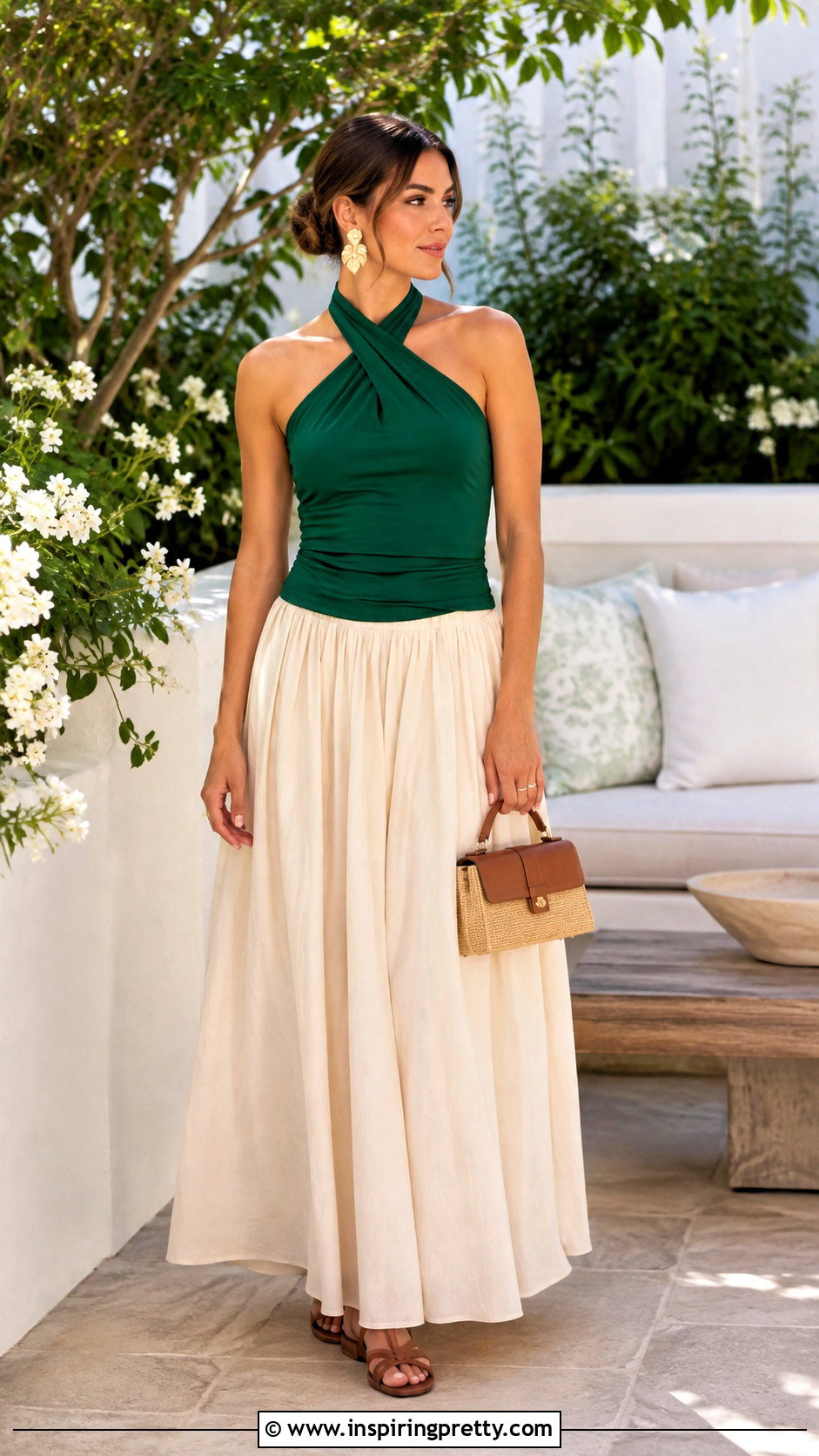
A halter fastens behind the neck and leaves the shoulders and upper back bare. The neckline can be a sporty high cut, a twist or a deep draped V. I put a fitted halter over a flowing maxi skirt so the narrow top and full skirt play off each other, then add flat sandals, a small top-handle bag and sculptural earrings. Heavy fabric on a halter pulls on the back of the neck, and after a few hours that turns into a sore neck, so I check the weight first. A regular bra won't hide here; a halter-convertible bra or built-in cups will.
8. Off-Shoulder Top With Tailored Shorts
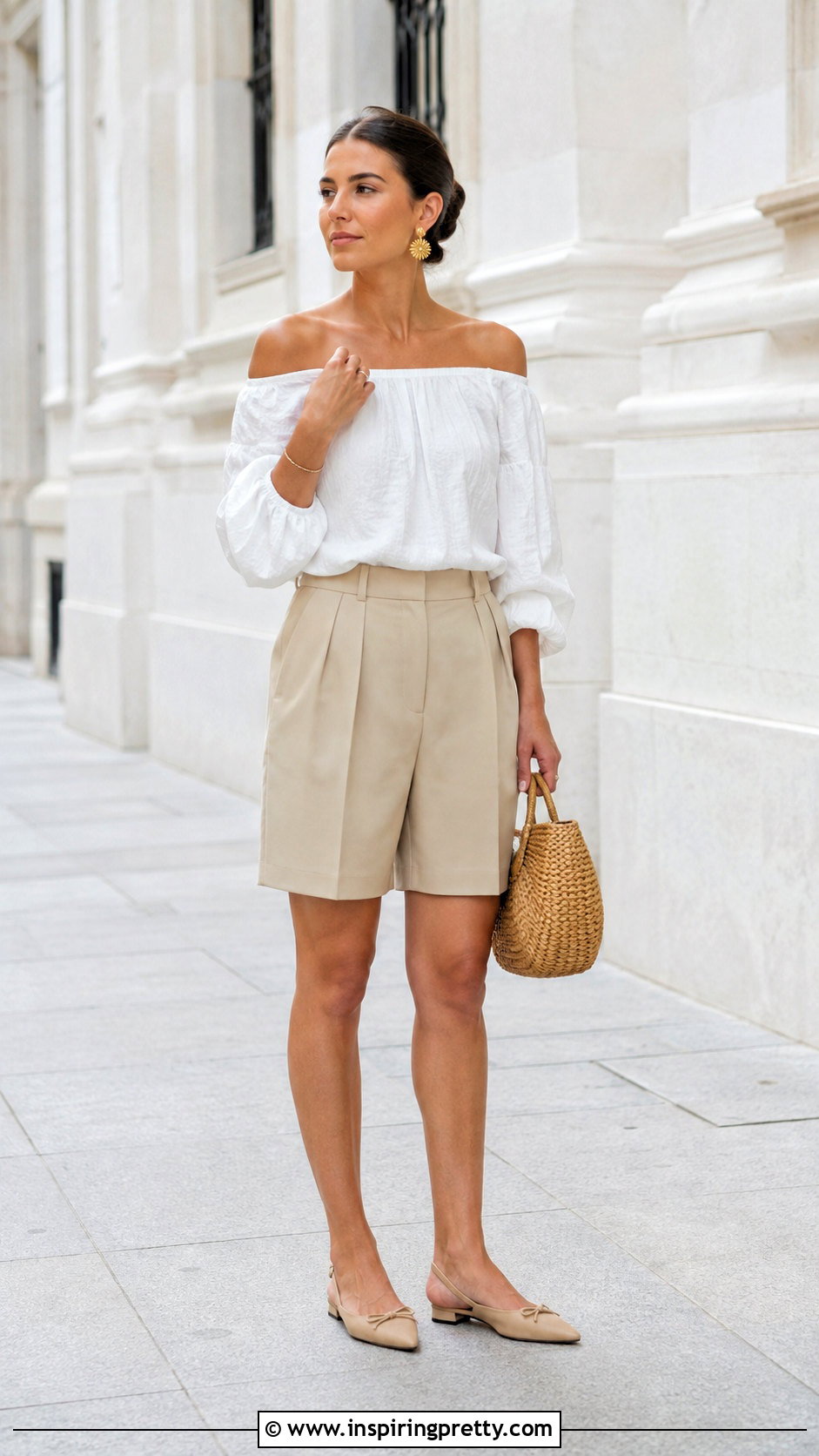
The off-shoulder neckline sits below both shoulders and draws one wide horizontal line, which visually broadens the frame. I wear a white elastic-neck version with high-waisted tailored shorts, slingback flats and a little woven bag; longer Bermuda shorts give the same idea more coverage. The test I always run is arms up. Elastic necklines creep upward when you reach, and a top that keeps riding toward your armpits gets tugged down all day. You'll usually need a strapless bra, so factor that in if you don't own one.
9. One-Shoulder Top With Column Skirt
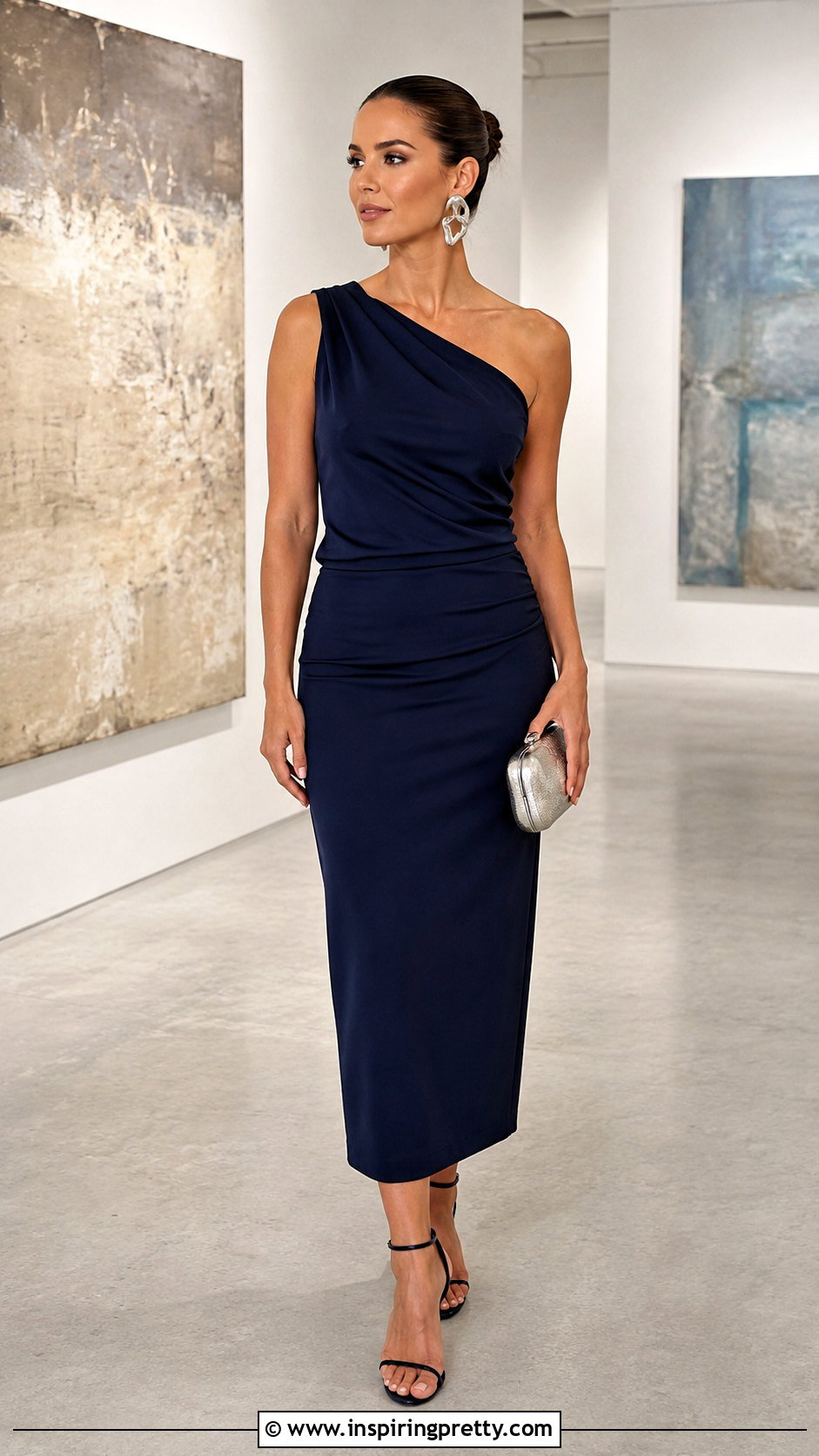
A one-shoulder top covers one side and bares the other. Some are plain and fitted; others carry a dramatic sleeve, bow, or draped panel on the covered side. For an event, I keep the top and a straight column skirt in one color family, then add slim heels and a compact clutch. One bold earring on the bare side does more than a necklace, which fights the diagonal line. Watch the strap as you move. If it twists toward the bare shoulder, the top is too big. Bodysuit versions stay tucked far better than loose hems.
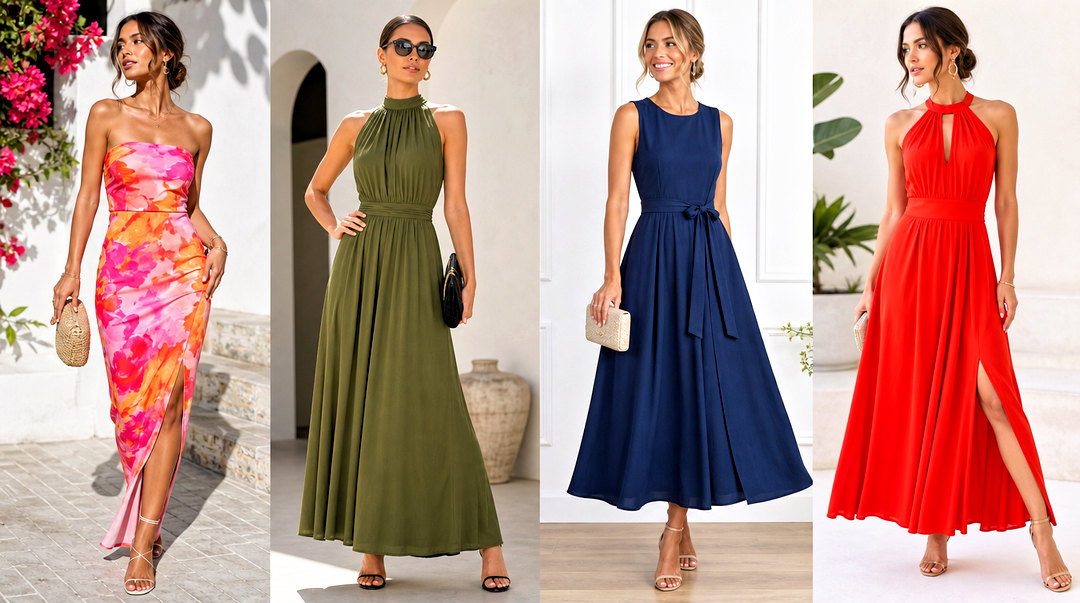
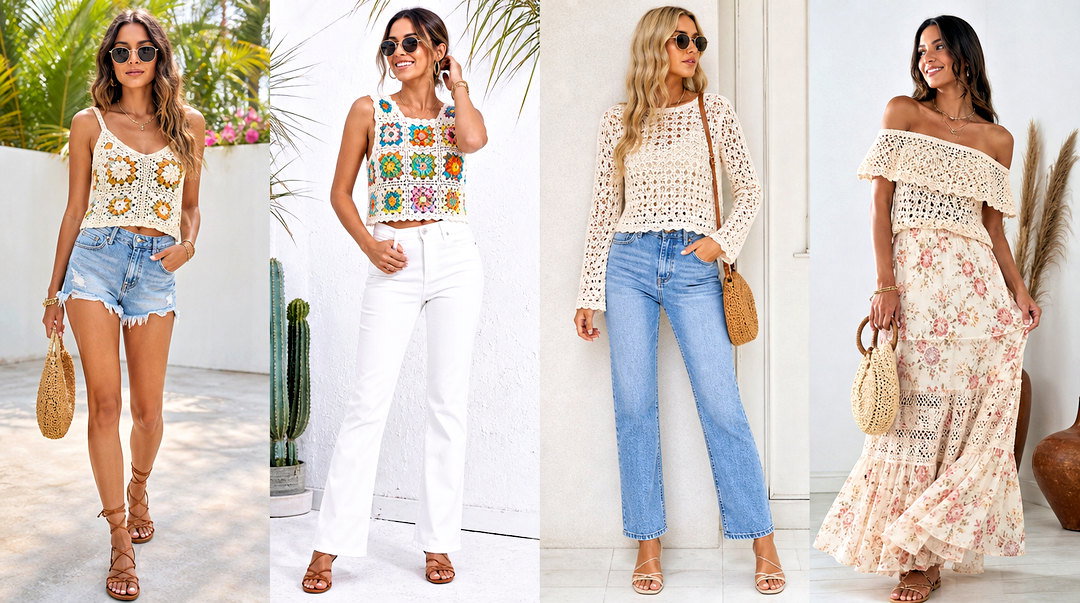
10. Cold-Shoulder Top With Slim Pants
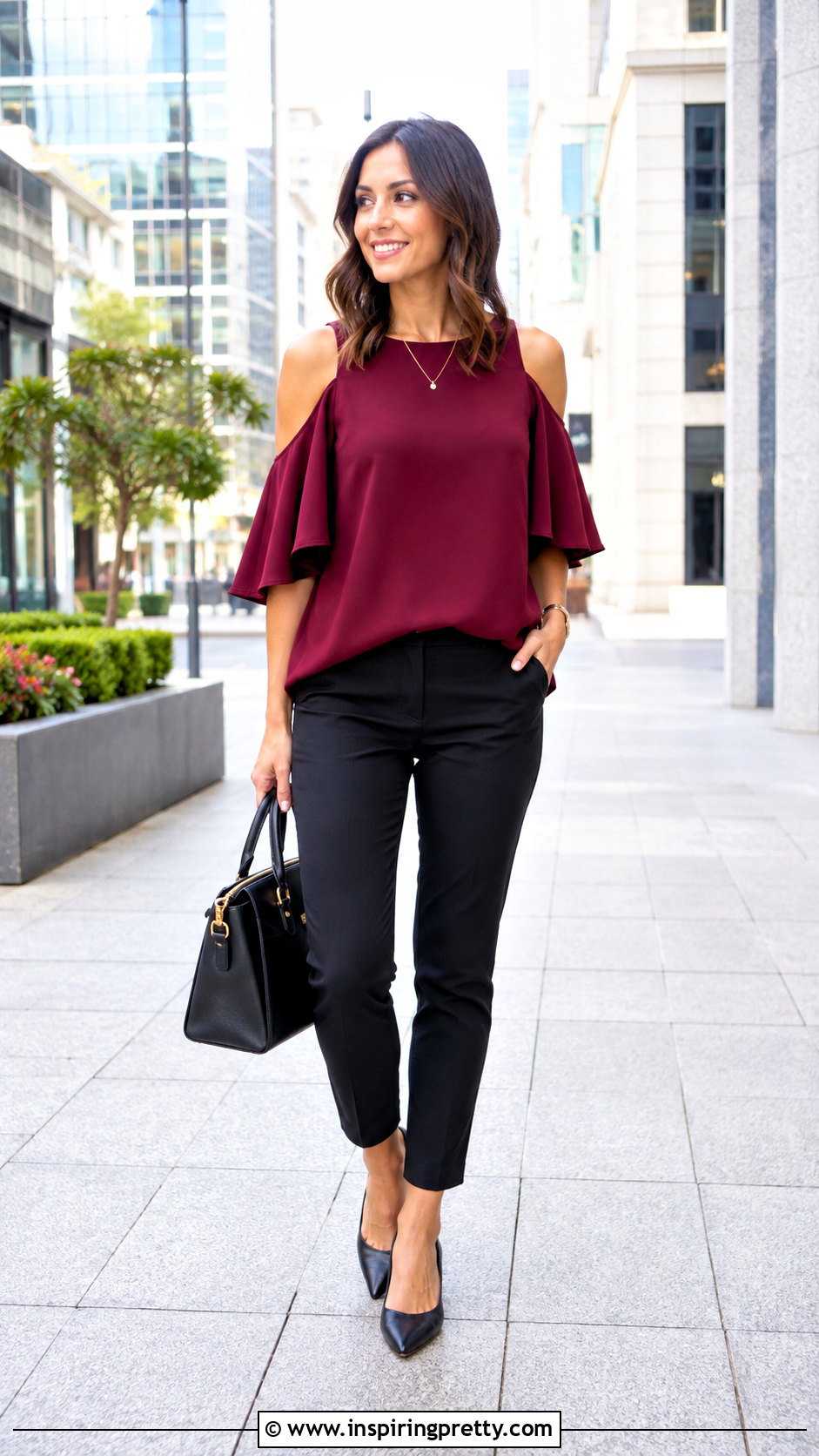
Think of the cold-shoulder as an off-shoulder that kept its straps. Cutouts open at the shoulder while the neckline and upper sleeve stay put, so a regular bra often still works. A flowing cold-shoulder blouse sits nicely over slim ankle pants, pointed flats and a structured satchel, because the narrow trousers calm the volume up top. My main fitting check is cutout placement. On narrow shoulders the openings drift toward the back; on broad ones they can pull forward. Try a few cuts before deciding the shape isn't for you.
11. Strapless Top With Pleated Trousers
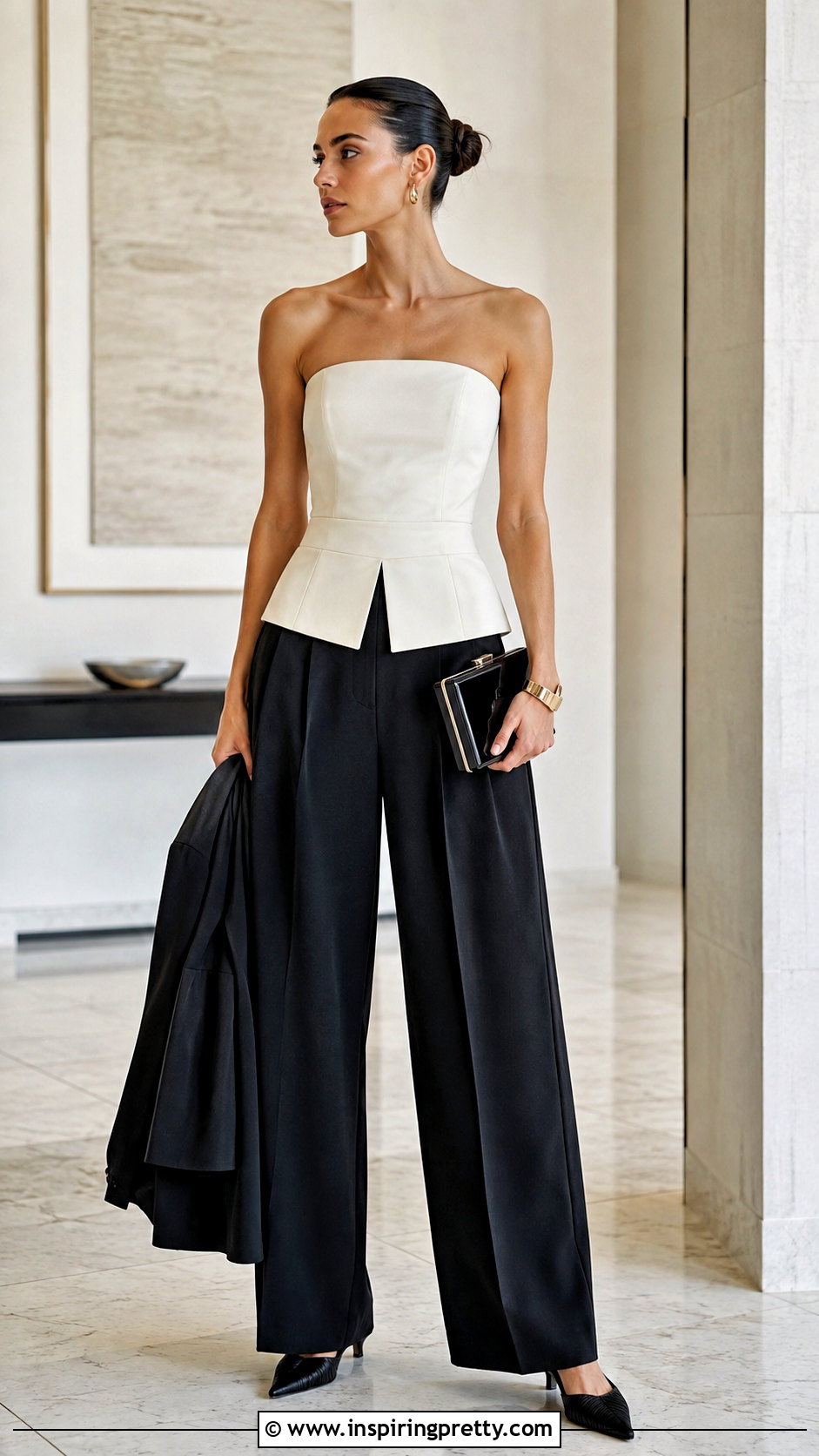
Strapless is the umbrella term. The tube top belongs here, but so do boned bodices, longline tops and draped shapes held up by inner grip tape. For an evening, I match a structured strapless top with pleated wide-leg trousers, low heels and a boxy clutch, with a cropped jacket on hand. Sizing is unforgiving: too loose and it slips, too tight and it digs a ridge into your back. When I fit one, I sit down and bend forward. If the top edge gapes when you bend, a smaller size or a boned style is the fix.
12. Blouse With Ankle-Length Trousers
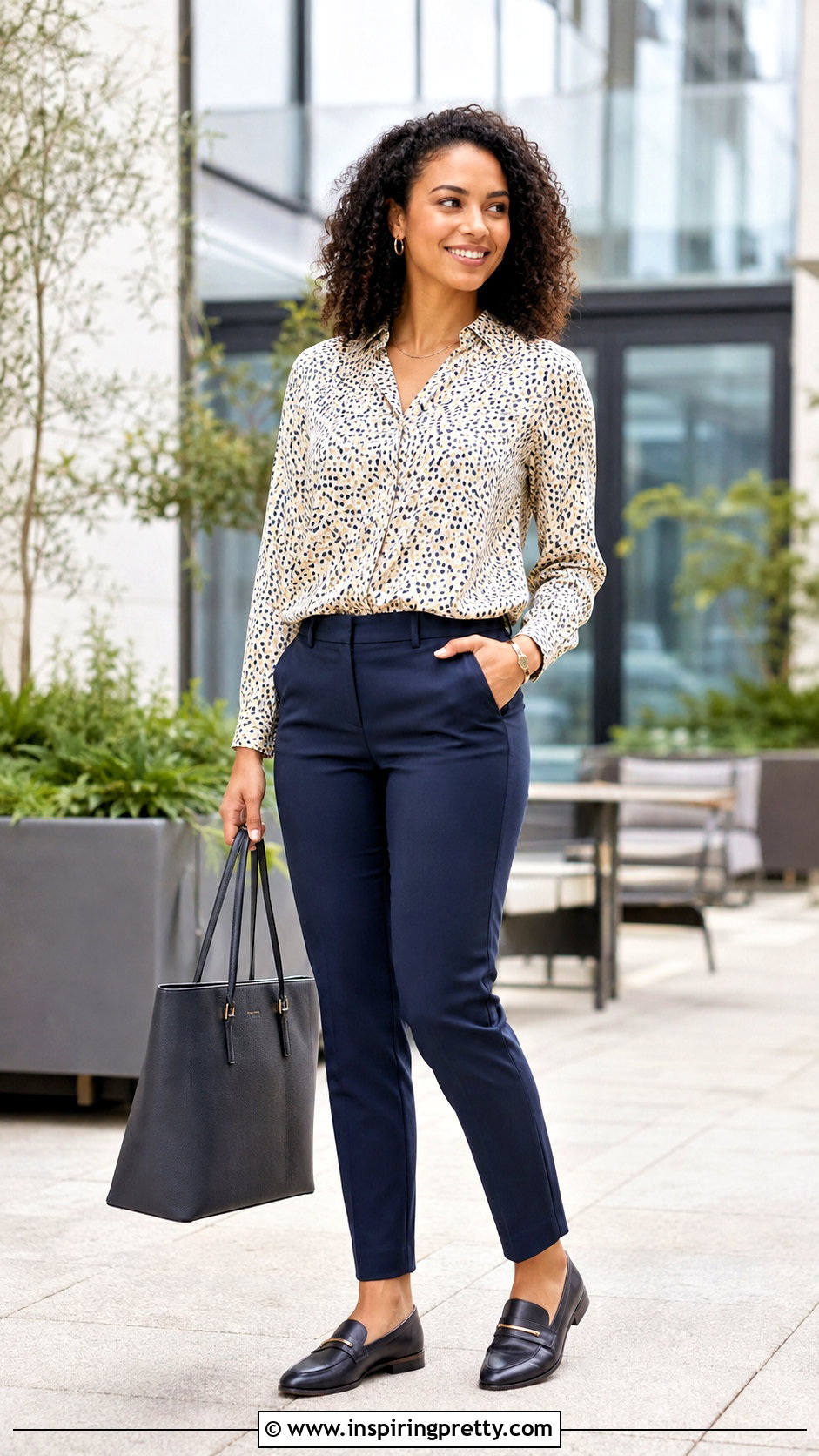
A blouse is a softer, usually woven top with dressier details such as gathers, ties, pleats, covered buttons or fluid sleeves. For the office I wear a printed blouse with plain ankle-length trousers, loafers and a work tote, front-tucked so the waist shows without looking stiff. Pull one quiet color from the print into the shoes or bag and the outfit holds together. Hold the fabric up to a window before buying, because plenty of polyester crepes look solid indoors and turn see-through in daylight. A smooth camisole in your skin tone fixes that.
13. Button-Down Shirt With Dark Jeans
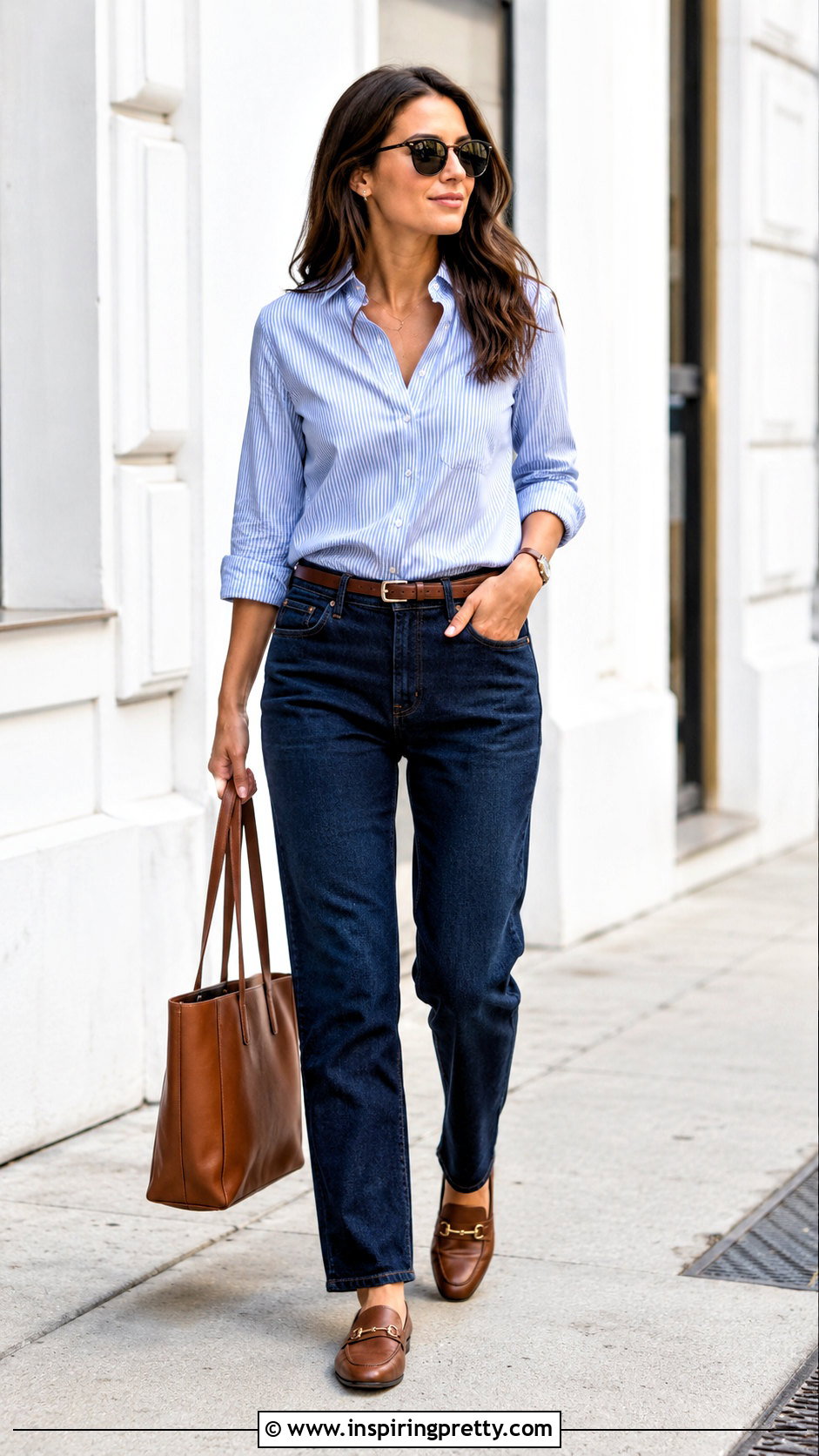
Strictly speaking, a button-down is a shirt whose collar points button to the body, though most shops use the name for any front-button collared shirt. A blue striped one with dark straight-leg jeans, loafers and a leather tote is my default smart weekend outfit. Roll the cuffs twice, or leave them down under a blazer. The fit check I never skip is the bust line. If the placket pulls open between buttons when you sit, go up a size or find a cut with more chest room, then have the waist taken in.
14. Oxford Shirt With Chino Pants
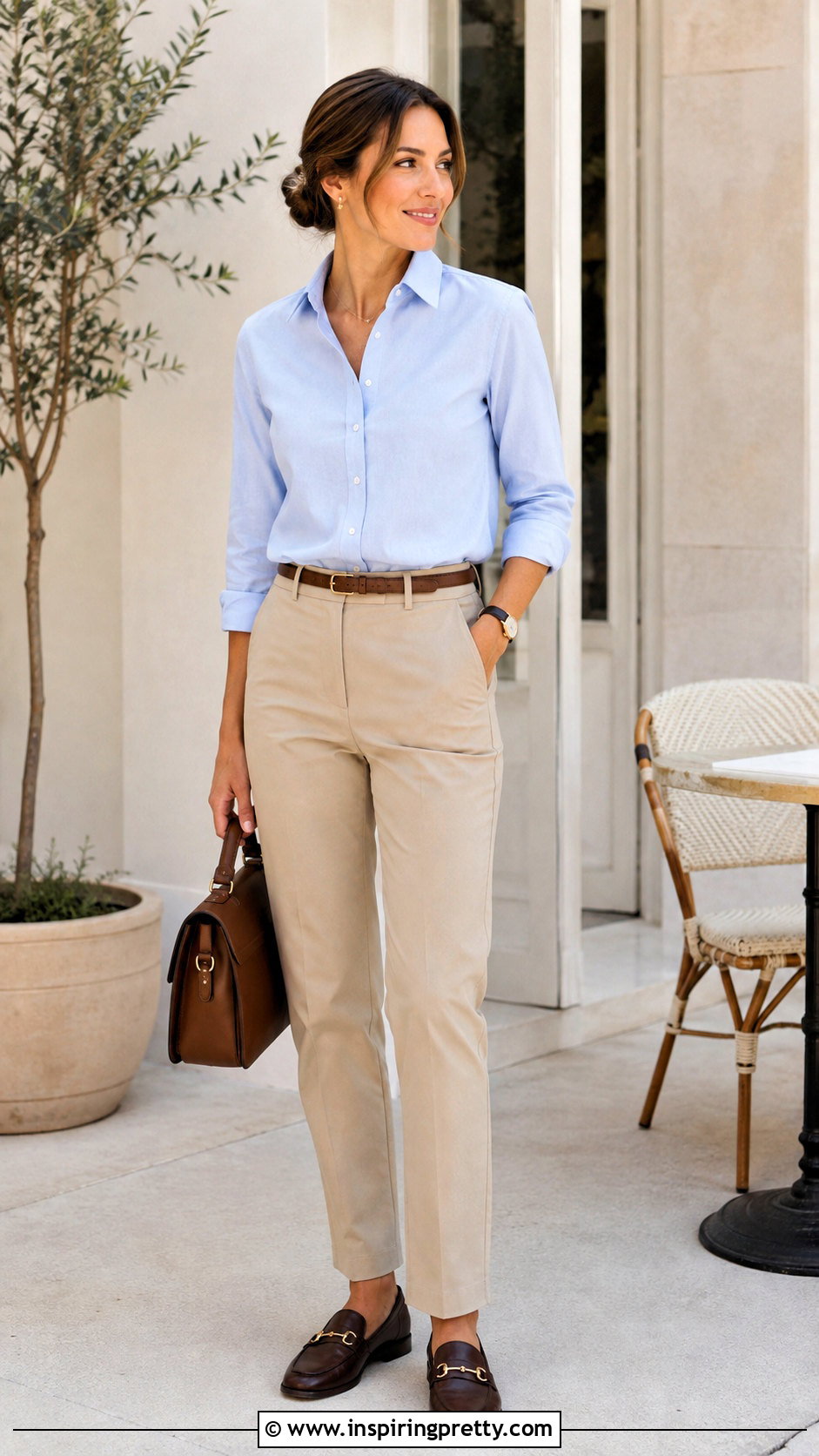
Oxford refers to the cloth, a basket weave with a slightly nubby surface that softens with every wash. That texture is why an Oxford shirt sits halfway between weekend and office. I pair pale blue with straight chinos, loafers, a slim belt and a plain watch: untucked for Saturday, tucked for a meeting. An oversized one doubles as a light jacket over a tank. Check the shoulder seams if you plan to layer it, because a dropped shoulder bunches under a fitted blazer. New Oxford cloth feels stiff for the first few washes, and that's normal.
15. Peplum Top With Straight Pants
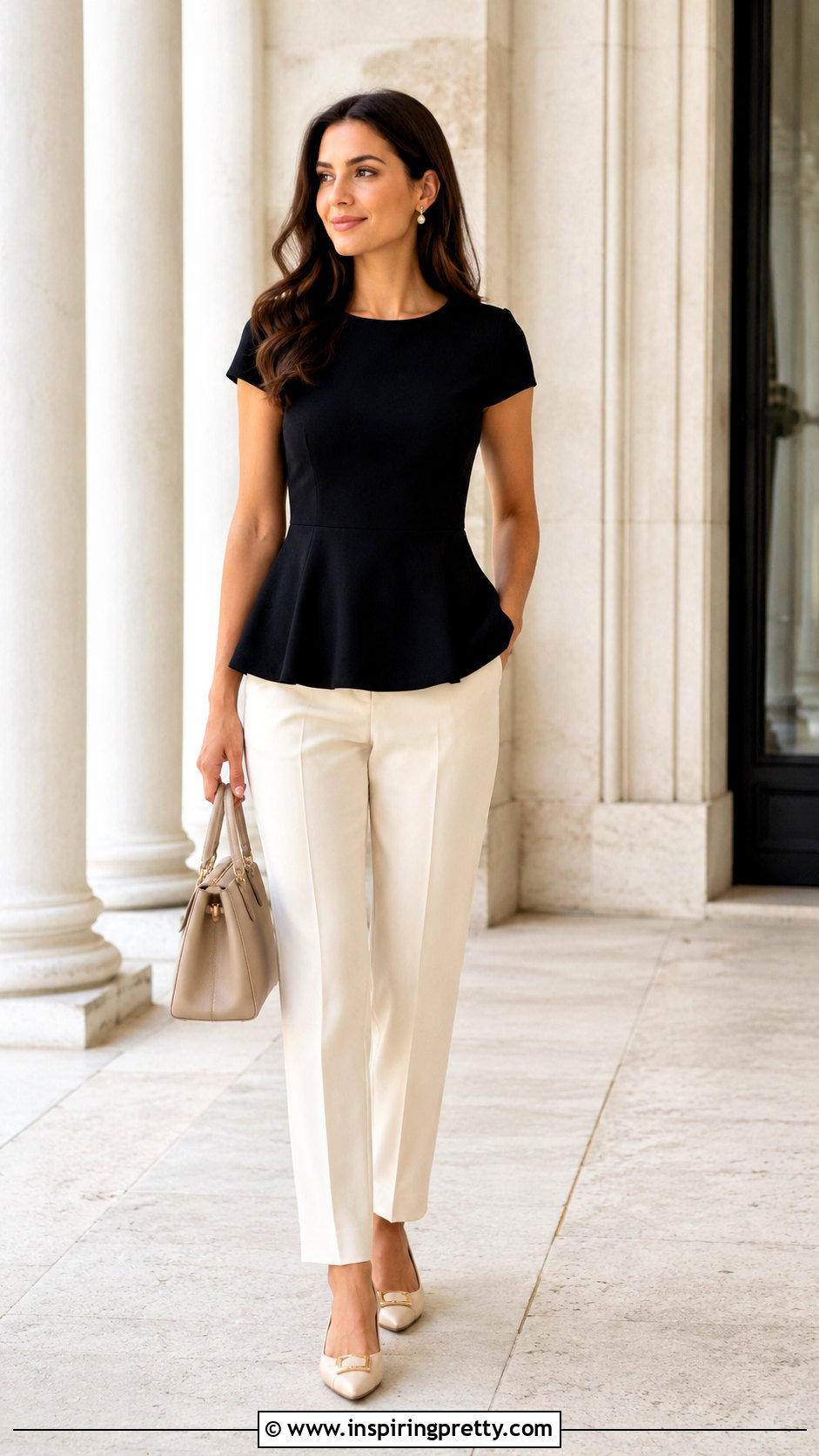
A peplum is fitted through the bodice, then a flounce or pleated skirt flares out at the waist. With straight-leg pants, pointed flats and a mid-size bag, the narrow leg lets the flare stand on its own; if the top is printed, I keep the trousers in one plain shade. Where the peplum seam lands matters more than any body-shape rule. It should sit at your actual waist, not an inch above or below, or the flare kicks out at an odd angle. Longer peplums cover the hip, while short ones sit best over a high-rise waistband.
16. Wrap Top With Bootcut Jeans
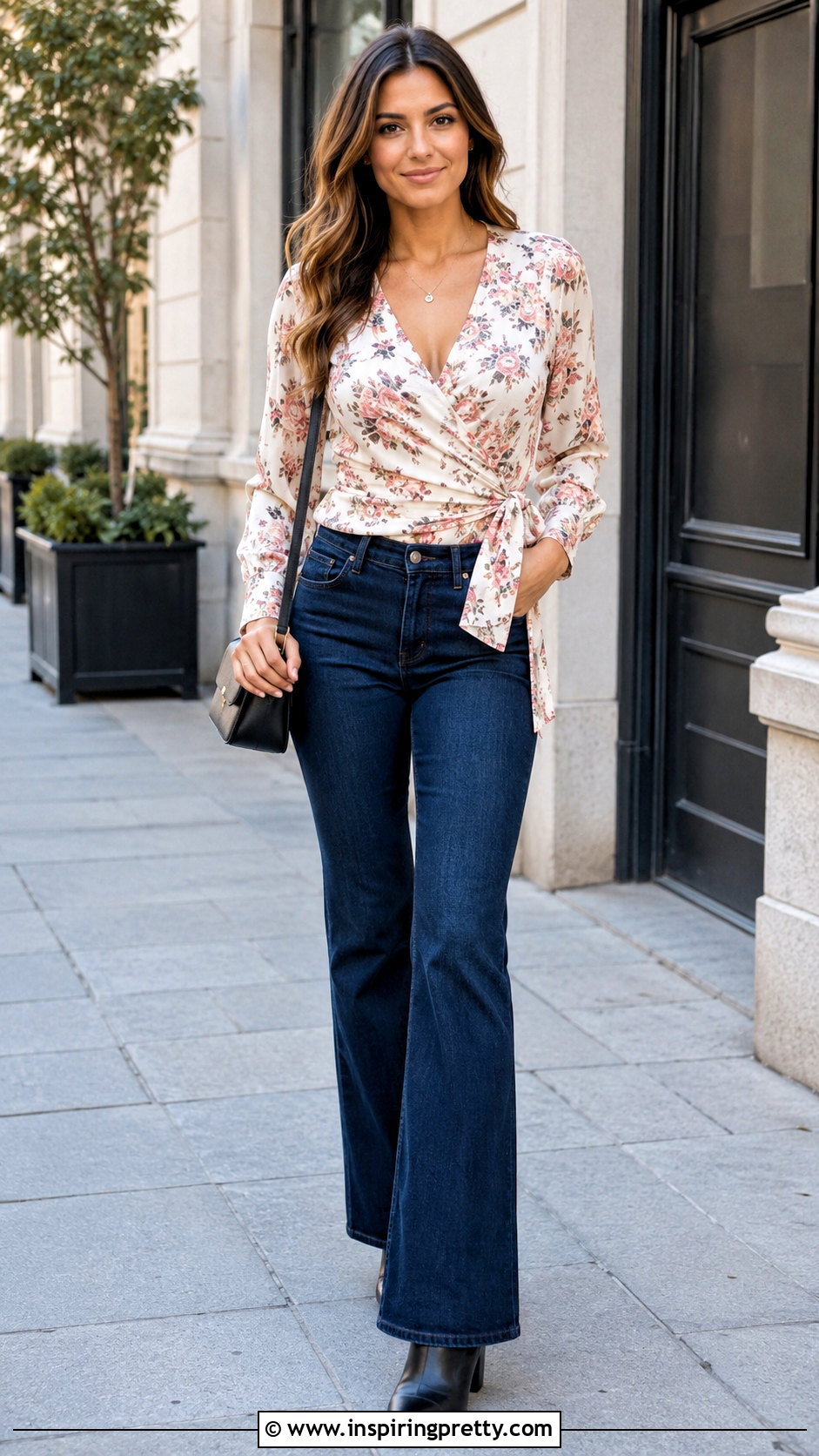
A true wrap crosses one front panel over the other and ties, so you can loosen or tighten it. A faux wrap is sewn in place and gives you no adjustment at all. I wear a printed wrap with dark bootcut jeans, heeled ankle boots and a structured shoulder bag, letting the long jeans balance the diagonal neckline. The problem everyone meets is gaping at the cross point. A strip of fashion tape or a camisole underneath solves it. Don't over-tighten the tie, since the fabric then pulls into creases across the bust.
17. Tunic Top With Slim Jeans
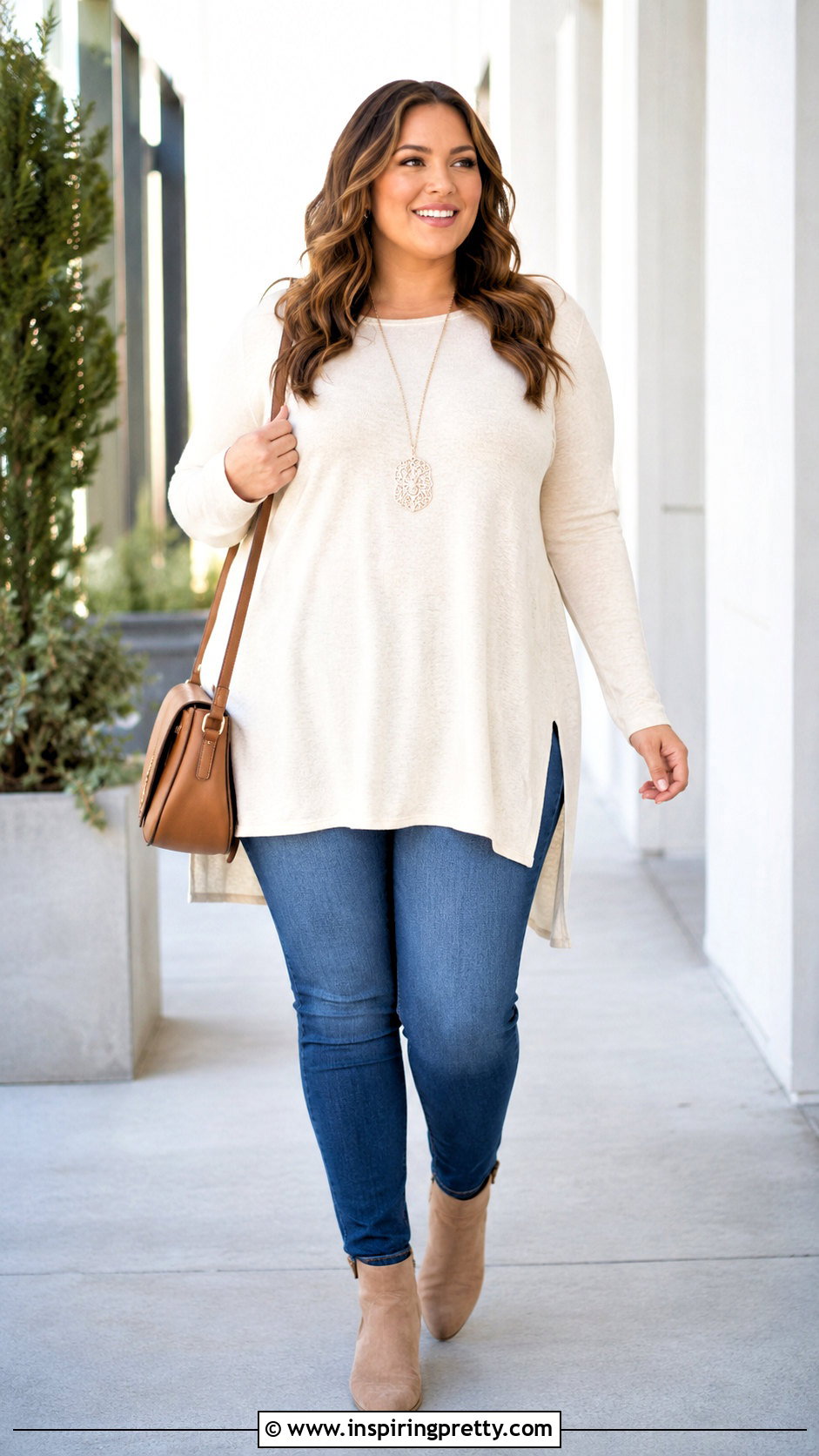
A tunic runs past the hips, sometimes to mid-thigh, in straight, A-line, side-slit or belted cuts. With slim jeans, ankle boots and a crossbody bag, it makes a comfortable layered outfit for errands or travel days. Wide-leg pants can work too, but only if the tunic fabric is fluid enough to drape rather than tent. On a petite frame I usually reach for a shorter tunic or add a belt so the legs don't disappear. Check the back hem in a mirror and make sure the slits let you take a full stride.
18. Kaftan Top With Cropped Pants
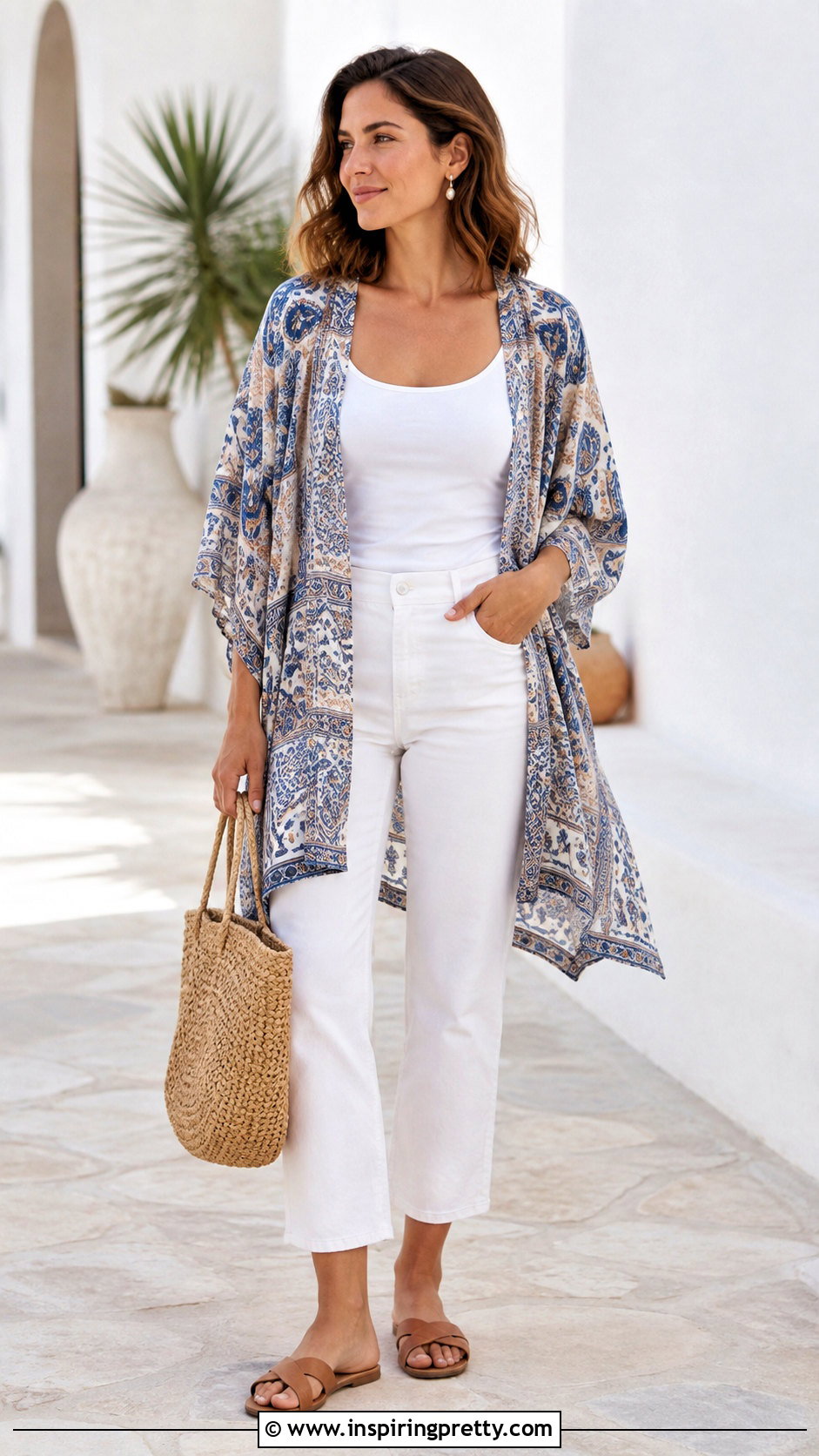
A kaftan top borrows its shape from the traditional kaftan: a loose body, wide sleeves and often an embroidered or open neckline. Treat the decoration as the point. I pair a hip-length one with cropped straight pants, flat sandals and a woven tote so nothing below competes with the trim. Fabric decides whether it floats or looks boxy; soft cotton voile and rayon drape, while stiff cotton stands away from the body. A slim belt adds shape if you want some. It's also worth knowing where the garment comes from instead of calling every loose tunic a kaftan.
19. Empire Waist Top With Flared Jeans
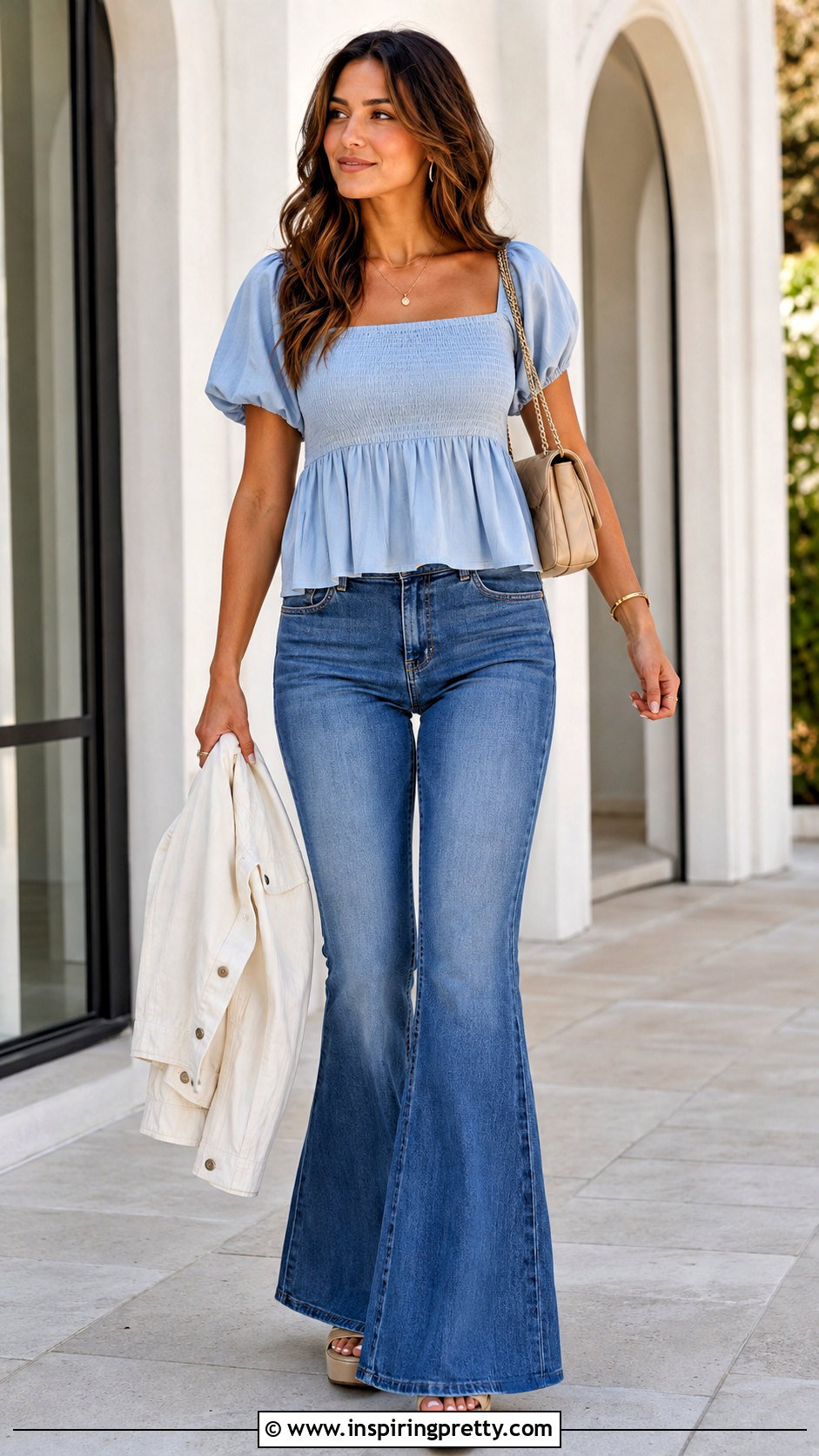
The empire waist puts the seam just under the bust and lets everything below fall free. The risk is that seam: if it lands across the bust instead of beneath it, the whole top looks wrong. I pair a solid empire top with high-rise flared jeans, platform sandals and a small shoulder bag, and I keep the top hip-length so the loose fabric doesn't swallow the flare. Jersey, lightweight cotton and soft woven fabrics fall best. A cropped jacket gives structure while leaving the raised waistline visible.
20. Babydoll Top With Straight Jeans
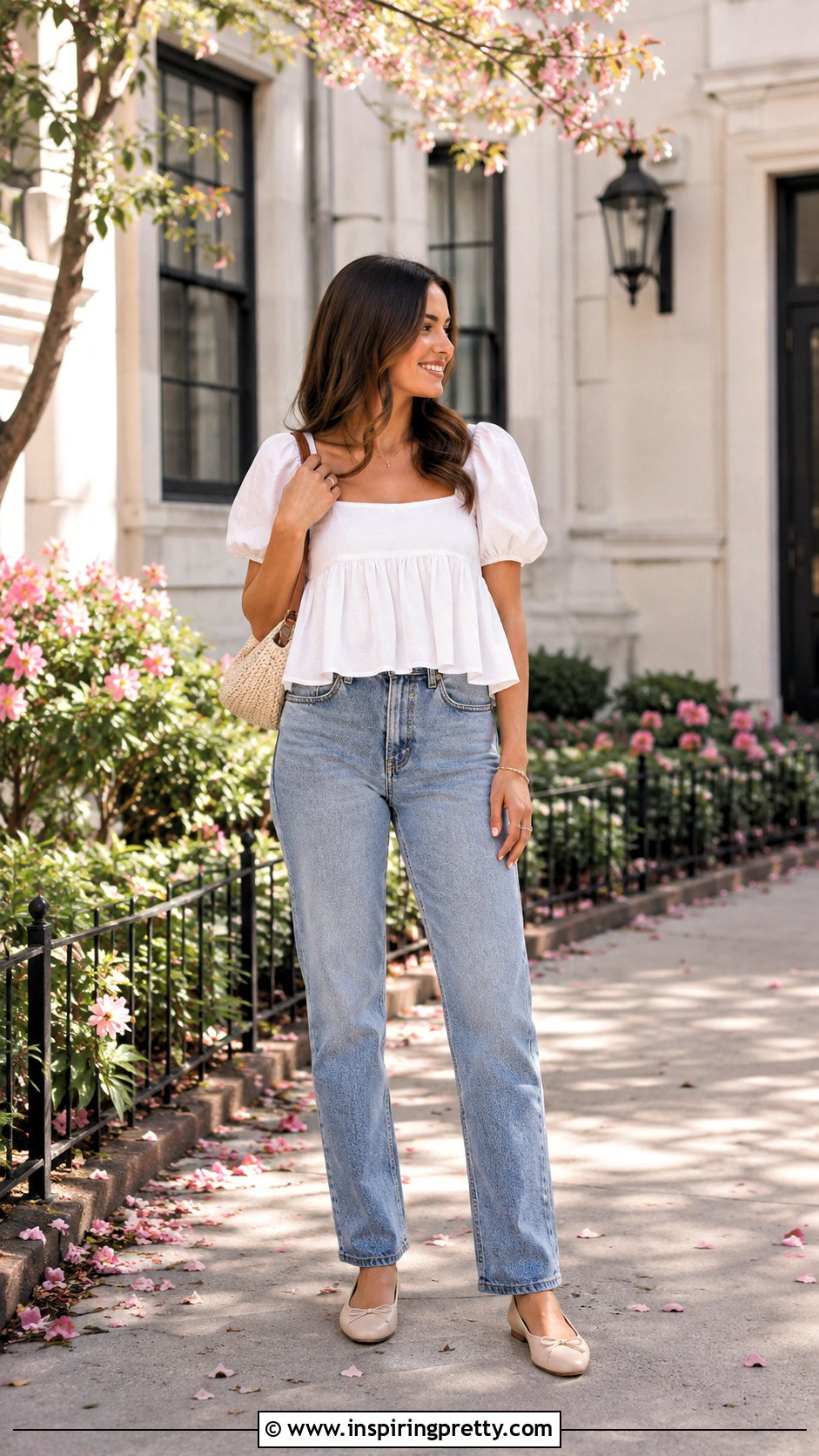
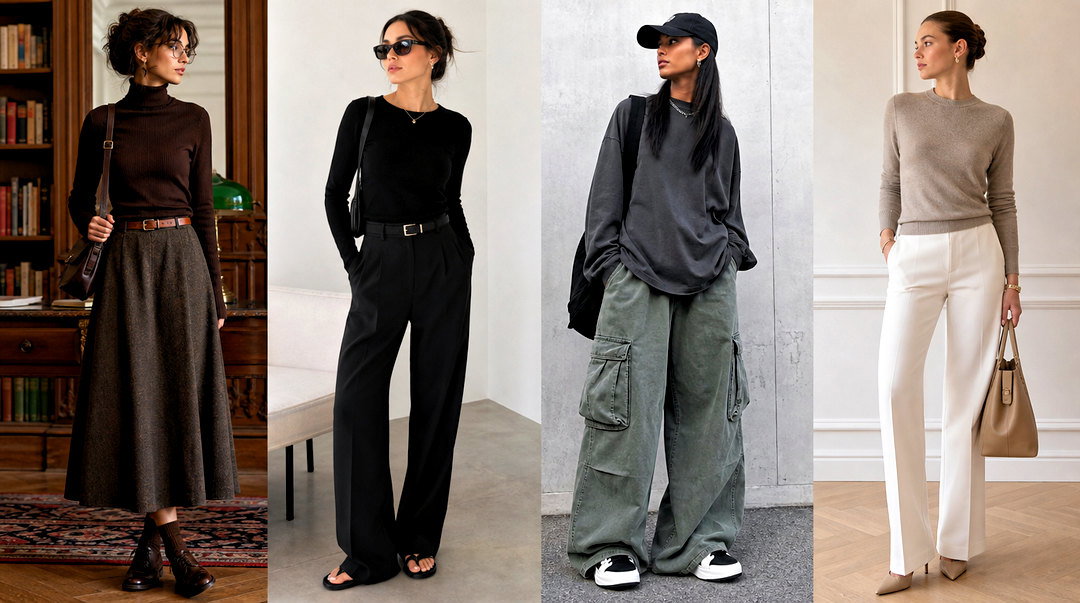
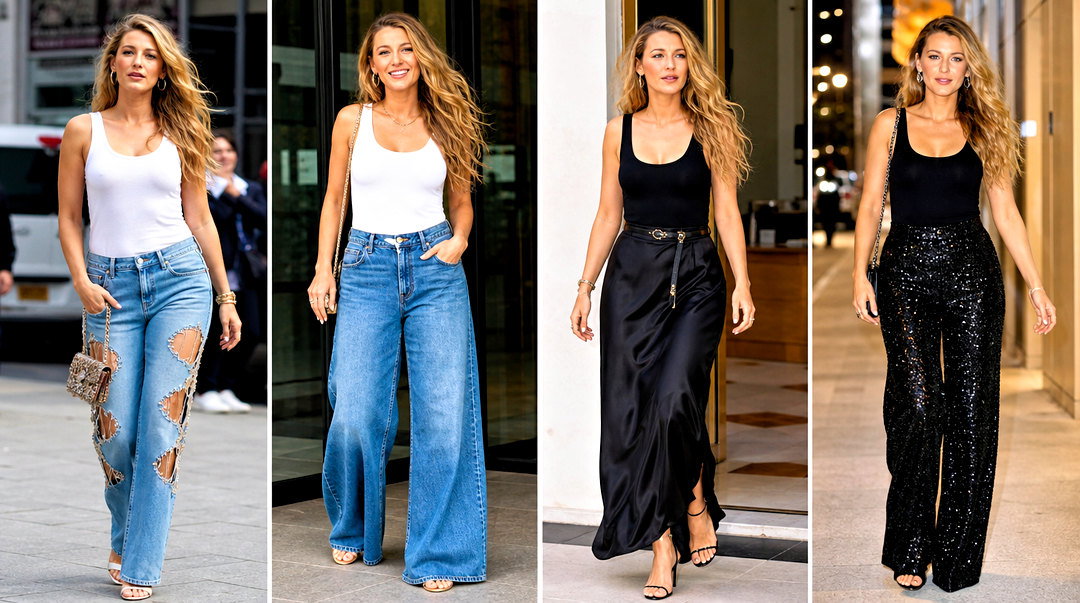
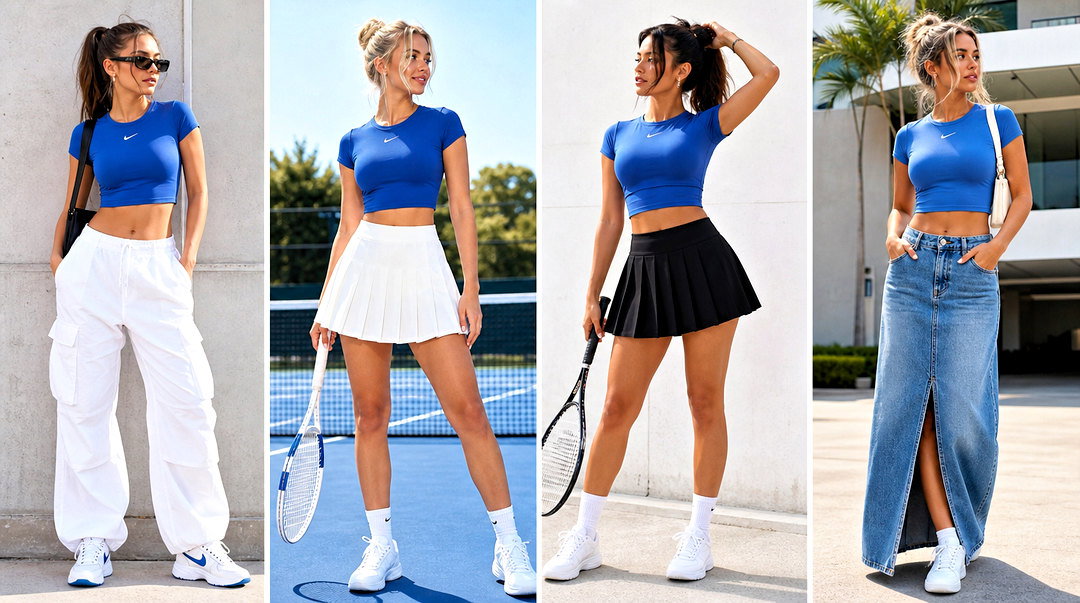
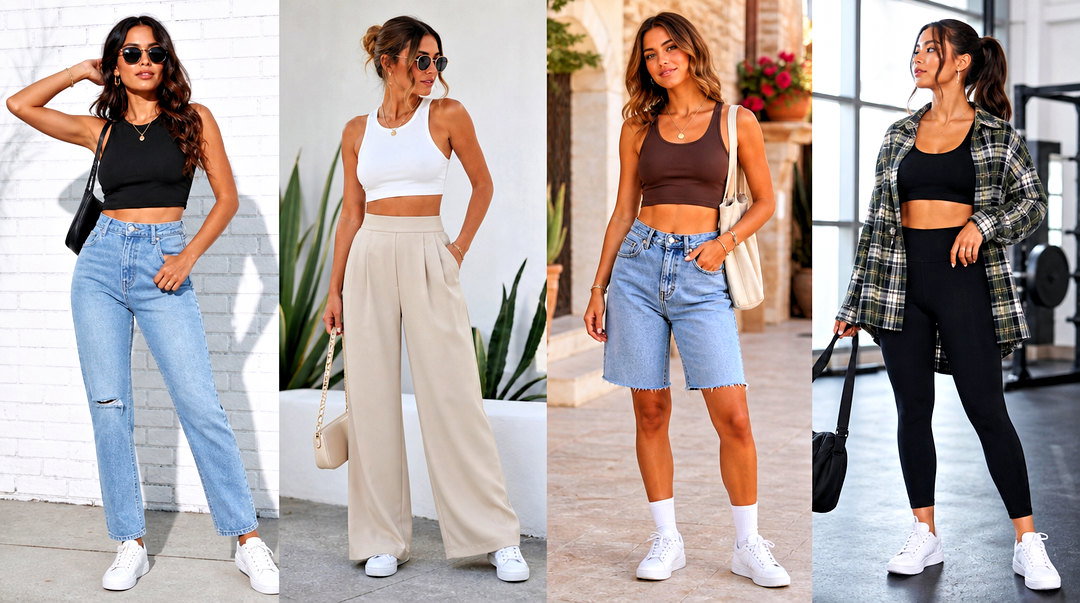
Babydolls look sweet on the hanger and boxy in real life more often than not. The shape is a short fitted bodice with a gathered body starting near the bust, often with puff sleeves or a square neck. I balance that volume with straight-leg jeans that skim rather than cling, ballet flats and a small shoulder bag. If you want more shape, pick one with a slightly longer bodice and less gathering. Short versions sit over high-rise bottoms, and tunic-length ones go with slim pants. Keep accessories minimal when the top already has ruffles or ties.
21. Smock Top With Cropped Trousers
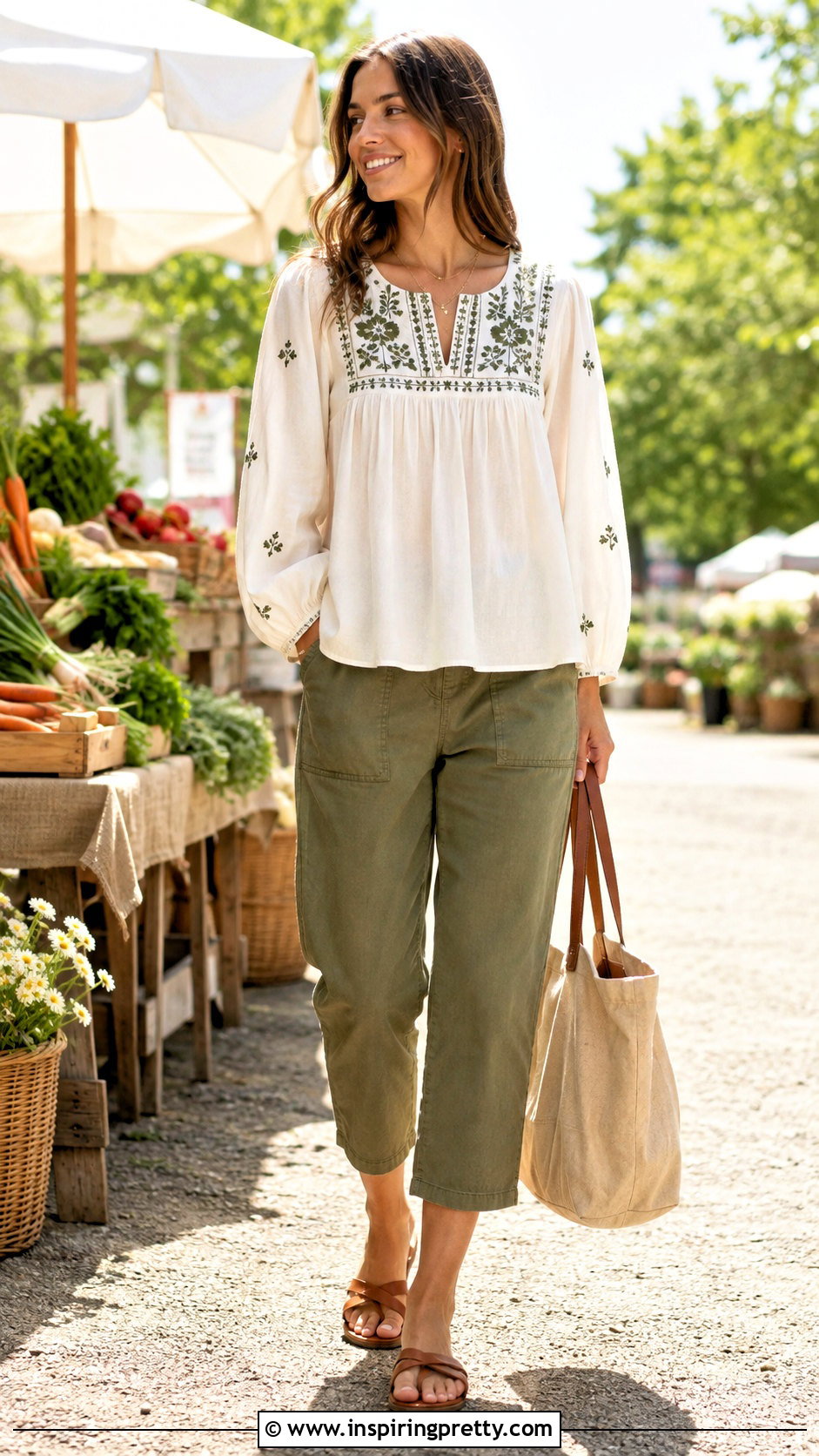
Smocking is a stitching technique that gathers fabric into tight elastic rows, and smock tops usually carry it across a yoke at the chest, shoulders or cuffs, sometimes with embroidery. I wear a cotton smock top with cropped trousers, flat sandals and a roomy tote. The cropped hem shows the ankle, which stops the loose top and the shoes from blurring together. A heavily gathered smock needs plain, straight trousers. One honest drawback: smocked elastic loses its snap after many hot washes, so I wash these cool and dry them flat.
22. Corset Top With Wide-Leg Jeans
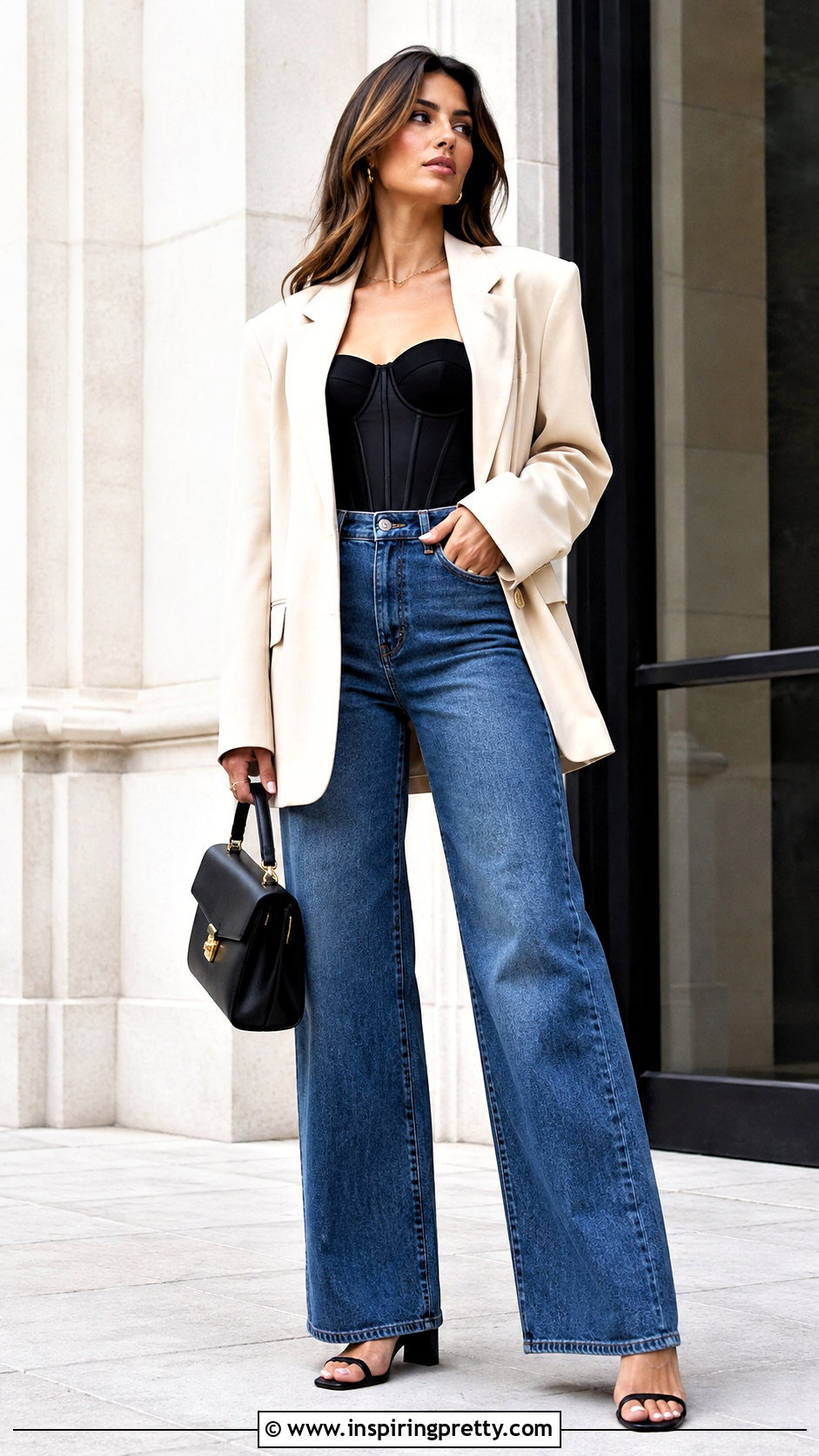
Fashion corset tops borrow the look of historical corsetry, the seamed panels, lacing and boning, but rarely the actual cinching. I pair a corset-style top with high-rise wide-leg jeans, a relaxed blazer and low block heels so the fitted bodice reads casual rather than costume. When I fit one, I take a deep breath and then sit down. If you can't do both comfortably, it's the wrong size. Stretch side panels and lace-up backs fit more bodies. Plastic boning bends and kinks over time, while spiral steel holds its curve much longer.
23. Bustier Top With Tailored Pants
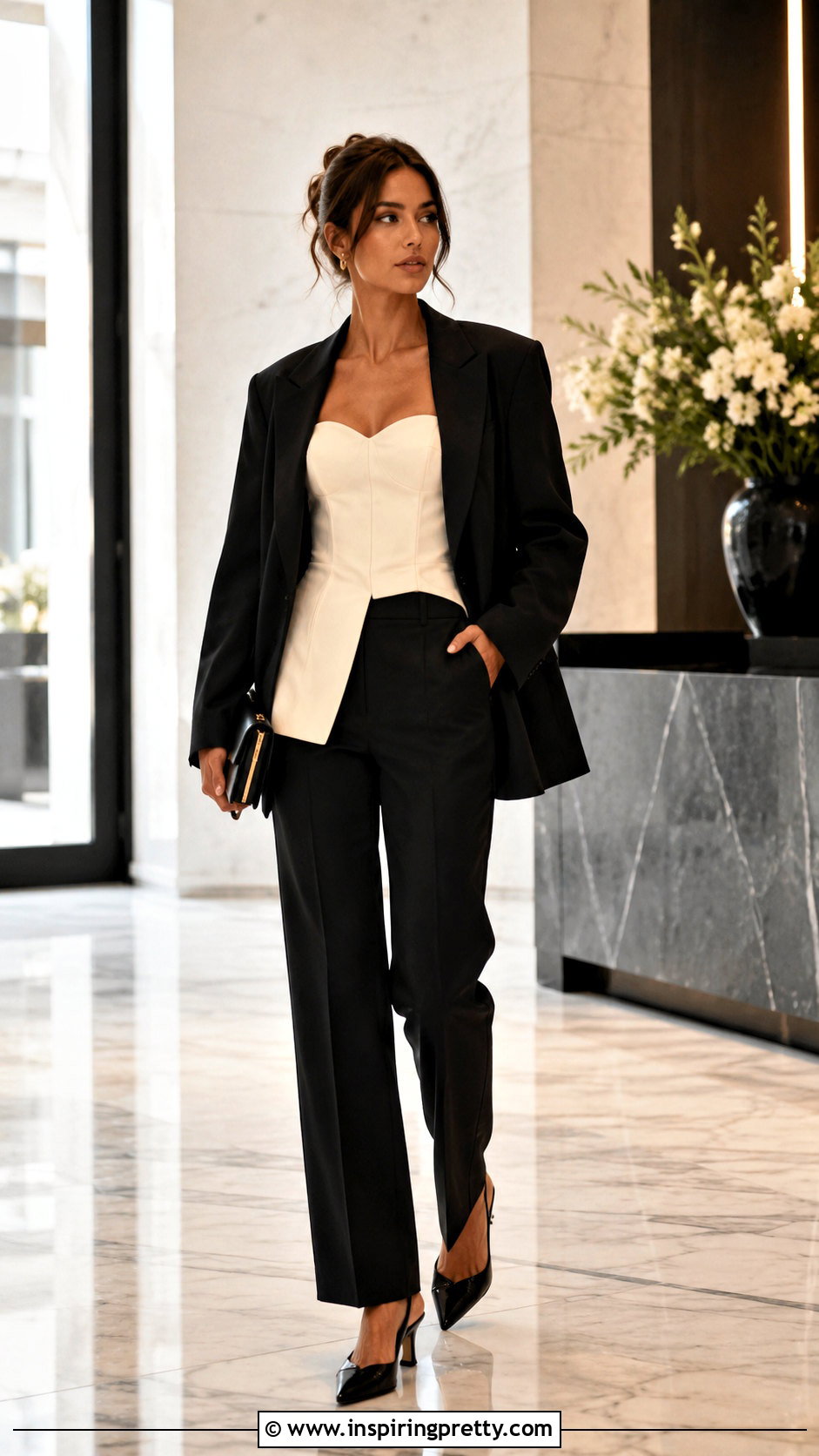
Bustiers and corset tops overlap, but a bustier is built around the bust: cups or curved cup seams, often with less waist shaping and no lacing. A longline bustier with high-waisted tailored pants, slingbacks and an oversized blazer is one of my favorite night-out formulas, and because the hem meets the waistband, almost no skin shows. Cup placement is everything here, and it varies wildly between makers, so I go by the garment measurements rather than the size label. Keep embellished versions with plain trousers and very little jewelry.
24. Bodysuit With Full-Length Trousers
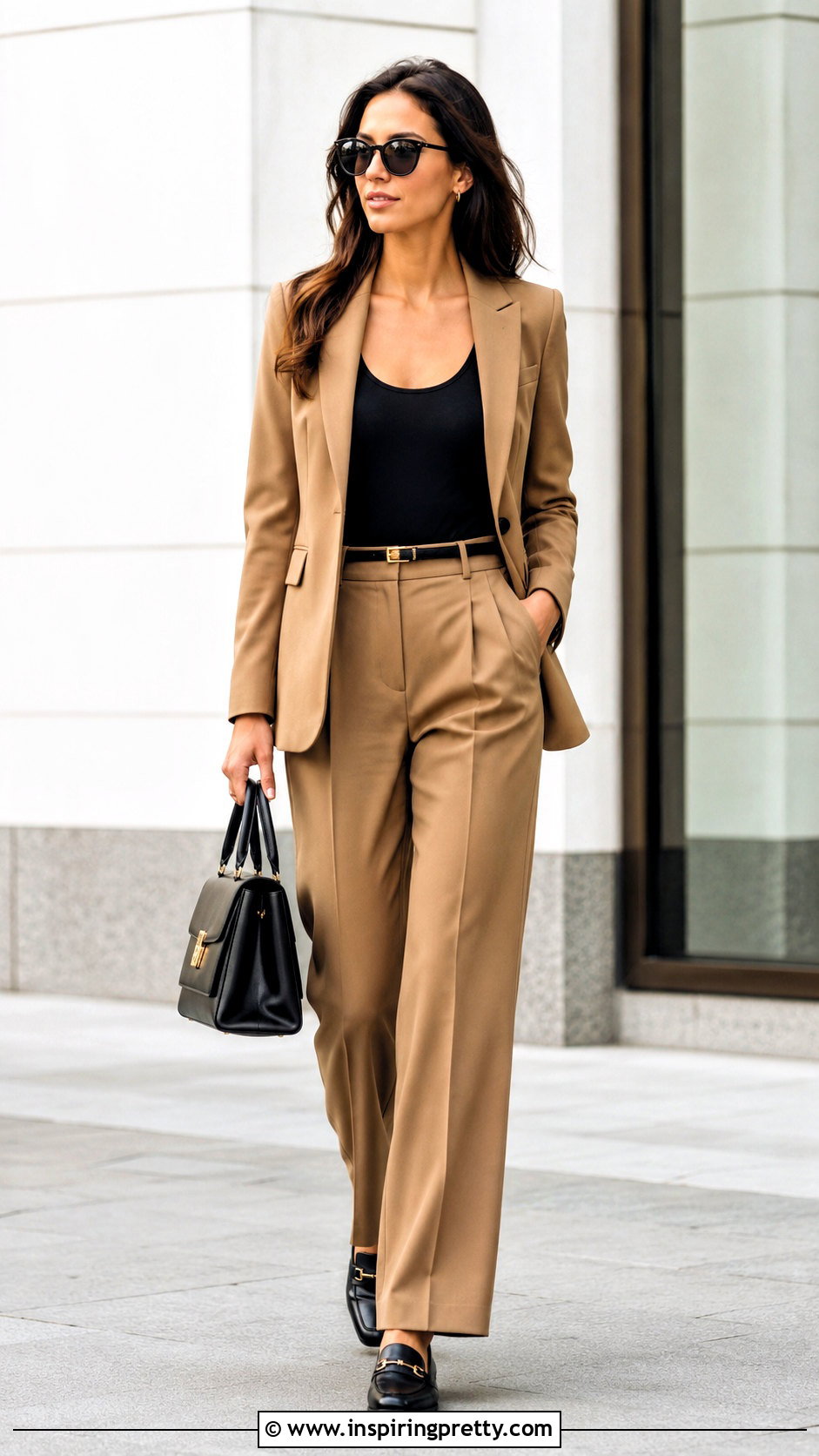
A bodysuit is a fitted top that continues into briefs and snaps closed underneath, which is why it never untucks. I like a scoop-neck one under full-length pleated trousers with loafers and a tailored jacket. The measurement that matters is torso length, not bust size. Too short and it drags on the shoulders and cuts at the hip all day, so long-torso wearers often need a tall range. If snaps feel like a hassle, a fitted top tucked into high-rise trousers gives you most of the same clean line.
25. Shell Top With Pencil Skirt
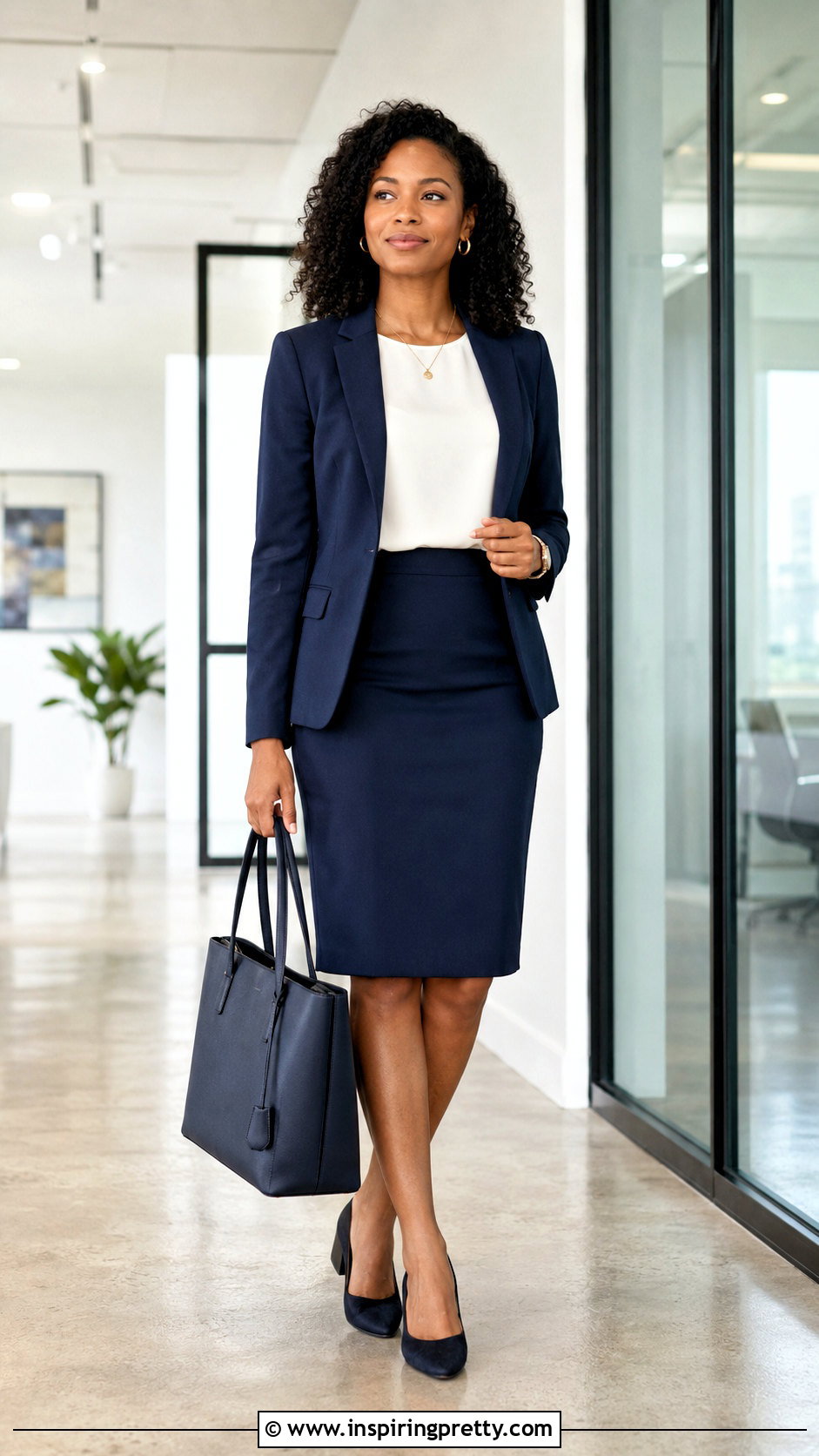
The shell top is office armor: a sleeveless woven blouse with a plain neckline and almost no detail, meant to sit under a jacket. With a knee-length pencil skirt, low pumps and a structured tote, it's the simplest workday outfit on this list. Tuck it in, or leave it out only if the hem lies flat over the skirt waistband. The armhole is my main check, because a shell worn without a jacket needs to cover the bra from the side. A lined shell drapes more smoothly and stays opaque in pale colors.
26. Polo Top With Pleated Pants
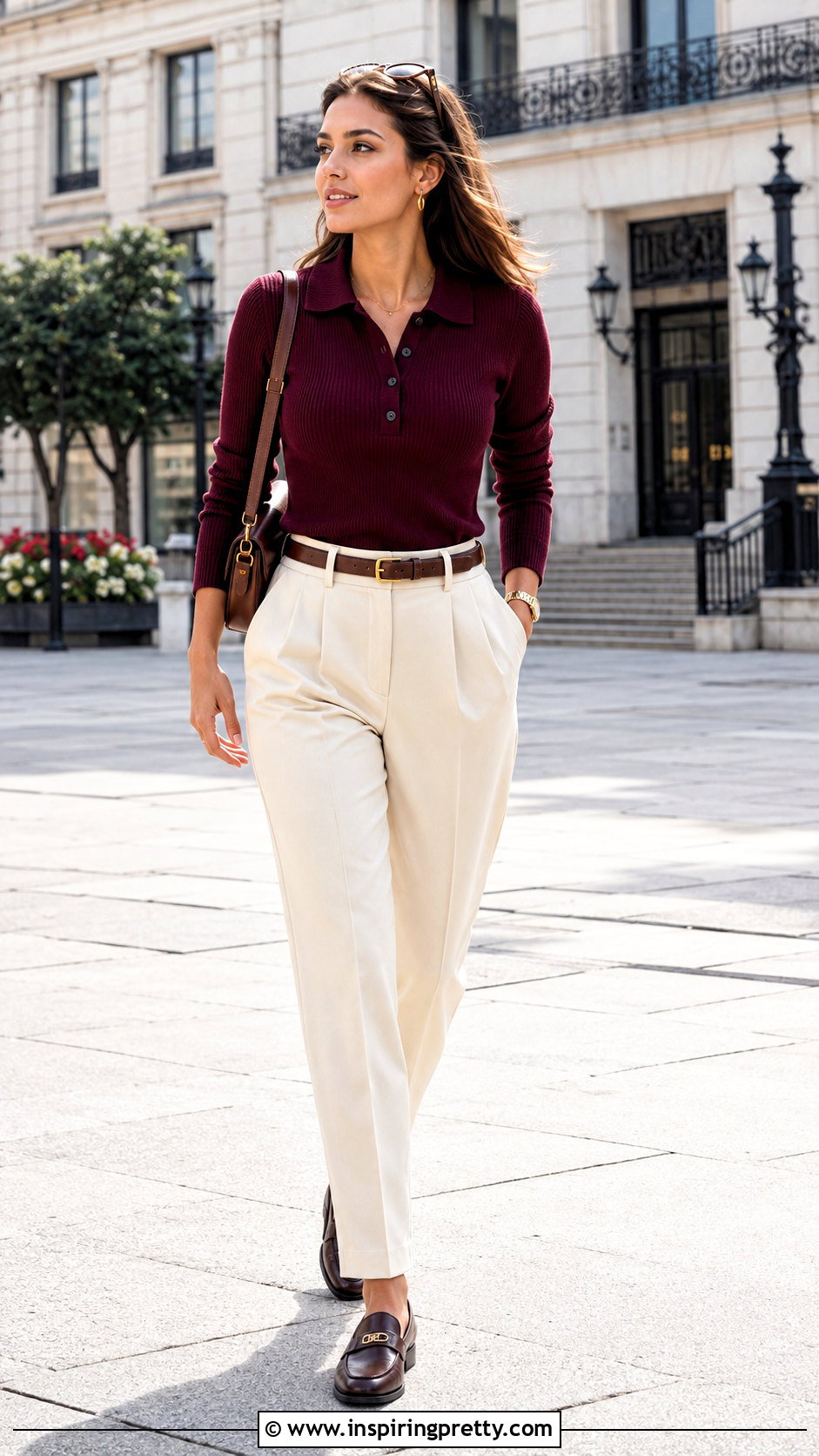
The polo's soft collar and short placket come from sportswear, which is why it reads preppy rather than formal. A fine-knit polo tucked into high-waisted pleated trousers, with loafers and a structured shoulder bag, is how I make it dressier. Cotton piqué, with its waffled surface, stays casual. Cream, navy, green or burgundy give you color without a print. Check that the collar lies flat, since cheaper polos curl at the points after a few washes. A belt and a light trench finish it.
27. Henley Top With Utility Pants
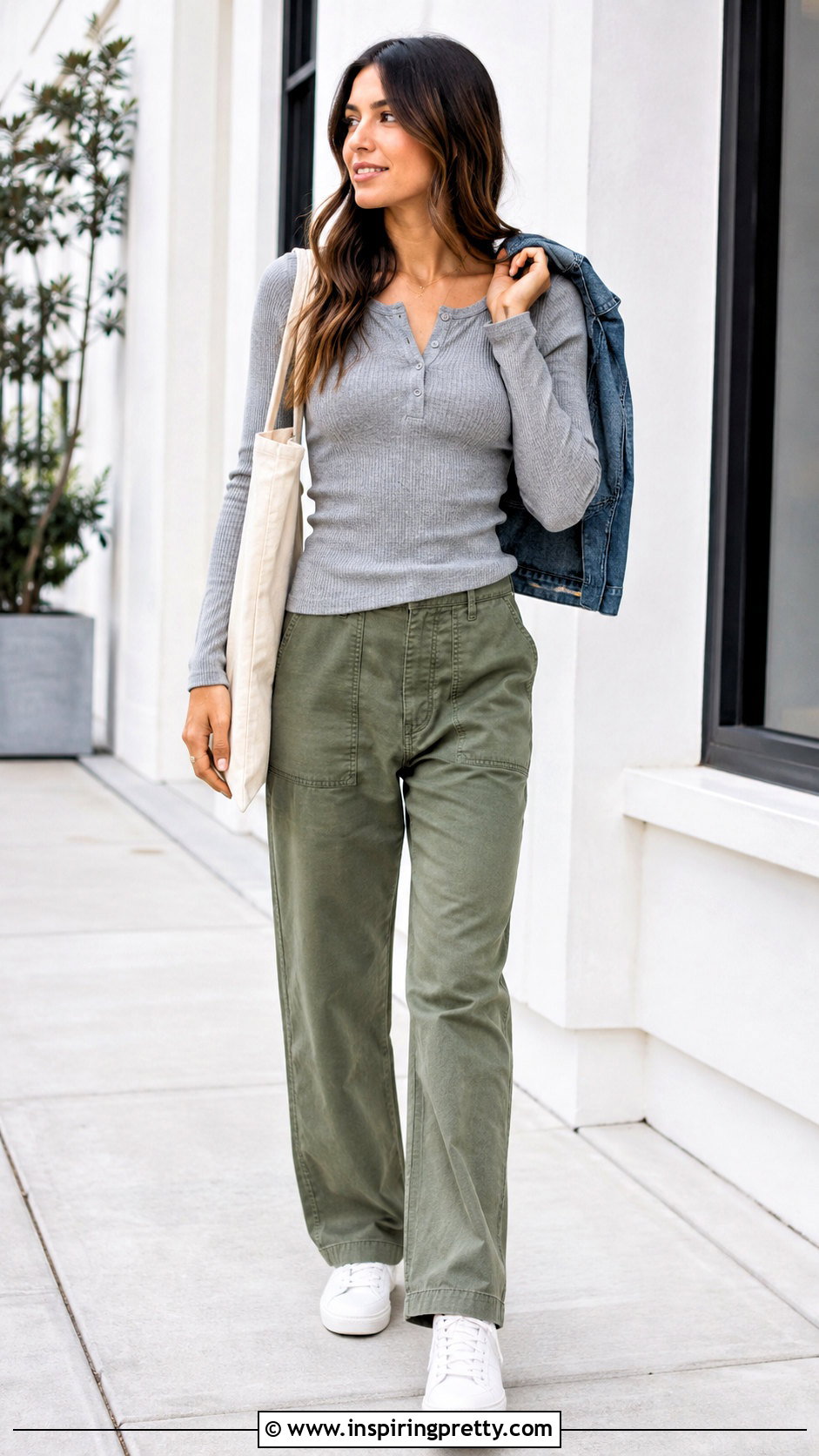
A Henley is basically a T-shirt with a short button placket and no collar, and that small detail makes it look more considered without becoming formal. I wear a ribbed one lightly front-tucked into relaxed utility pants with clean sneakers and a canvas tote. Open one or two buttons depending on how much neckline you want. Long-sleeved Henleys layer under denim jackets and quilted vests through autumn. Thin slub-cotton versions stretch out at the placket quickly; a midweight rib keeps its shape much longer.
28. Rugby Shirt With Straight Jeans
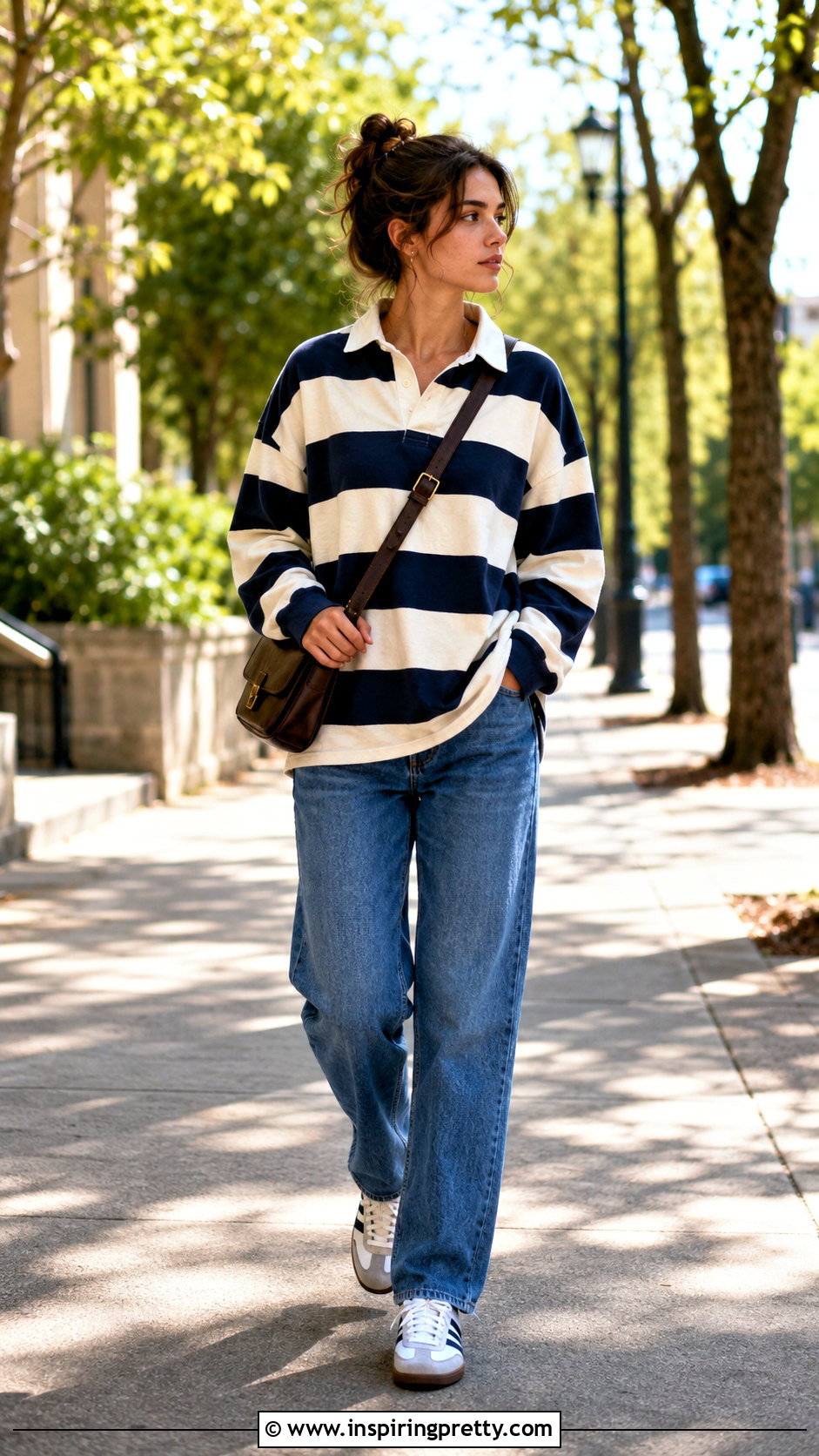
Rugby shirts were made to survive being grabbed in a tackle, so traditional ones are heavy cotton with a sturdy contrast collar and reinforced buttons. That bulk changes how you style it. With straight-leg jeans, retro sneakers and a crossbody bag, I let the hem hang, or make a small front tuck only if the fabric is thin enough. Stripes are the classic; a solid color is quieter. The collar already draws the eye, so skip necklaces. Size up for an oversized look, but make sure the sleeves won't swallow your hands.
29. Graphic Tee With Cargo Pants
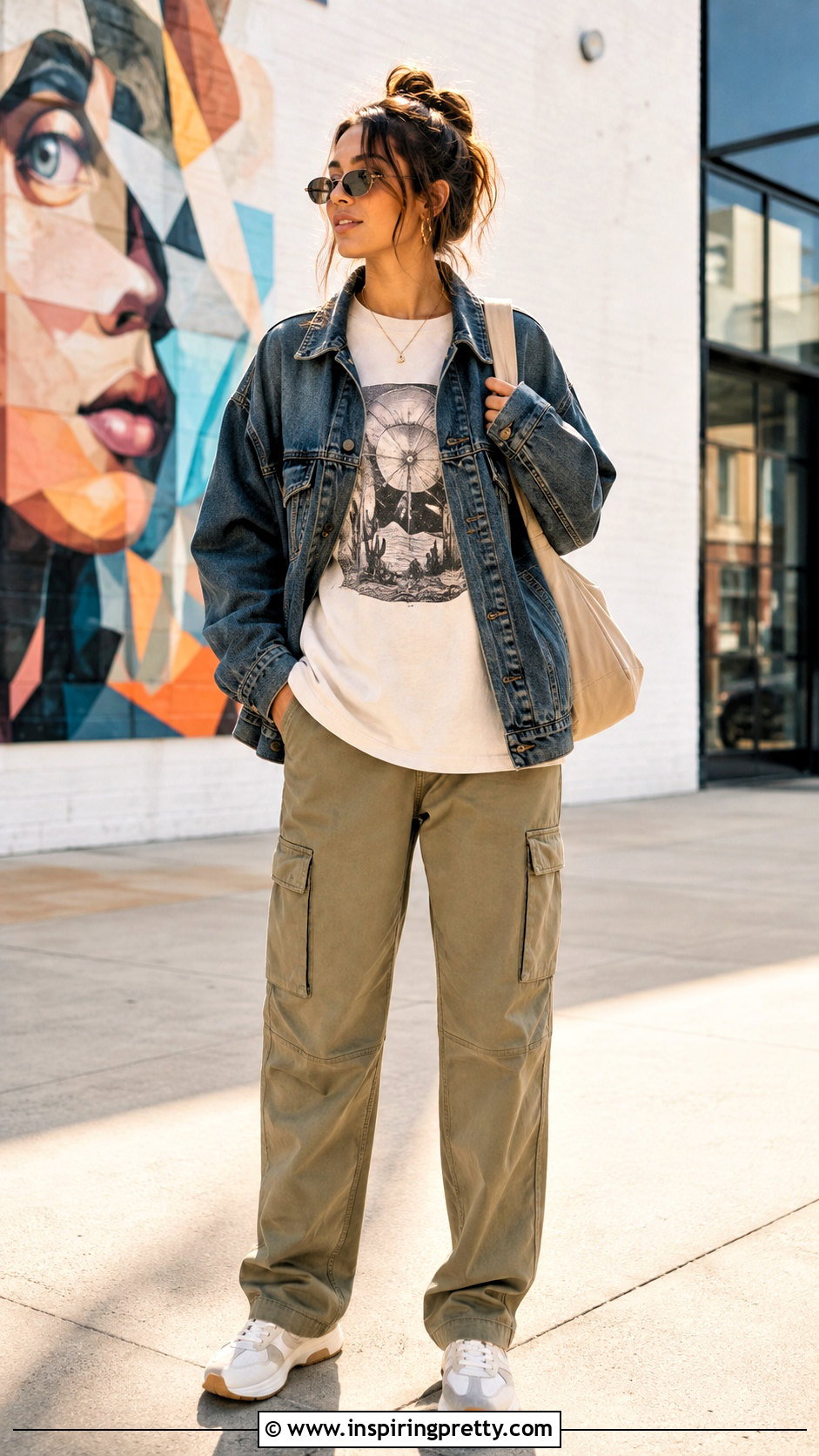
The print sets the whole tone of a graphic tee, so everything around it should step back. I wear an oversized one with straight cargo pants, low sneakers and a practical shoulder bag, with a corner of the hem tucked in so the waist doesn't vanish. A denim jacket covers the cooler hours. If the graphic has several colors, I repeat one in the shoes. Wear prints you actually like and understand. To protect the print, wash it inside out in cold water and keep it out of the dryer, since heat cracks printed ink over time.
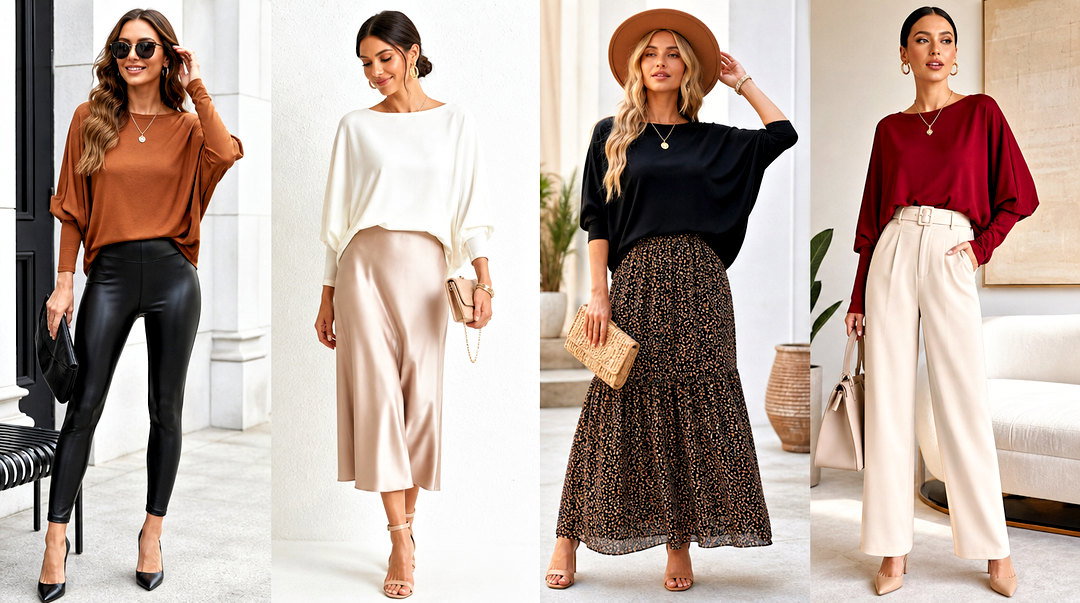
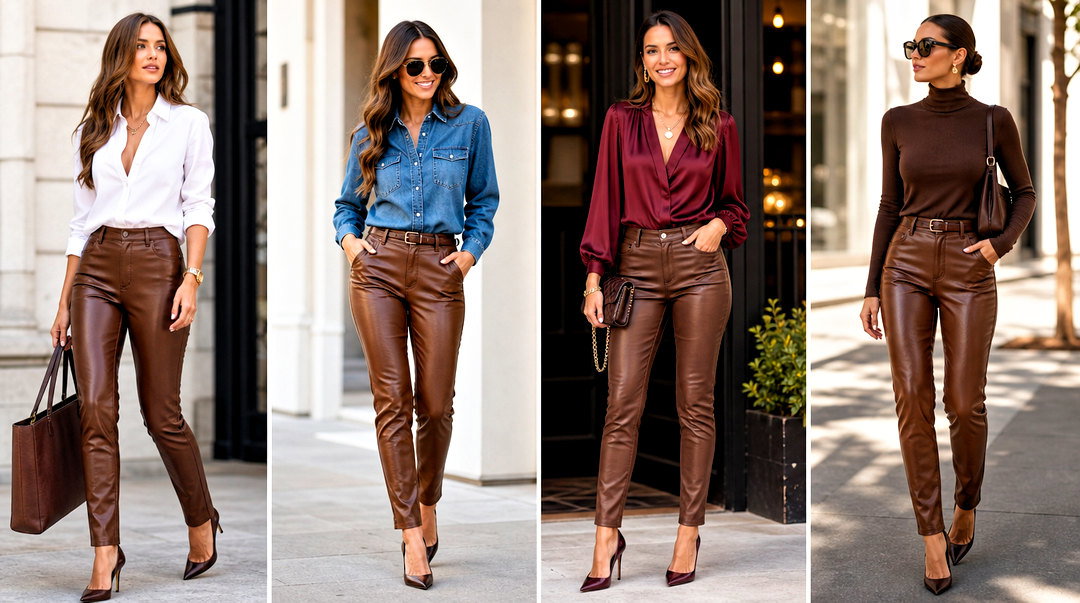
30. Sweatshirt With Leggings And Sneakers
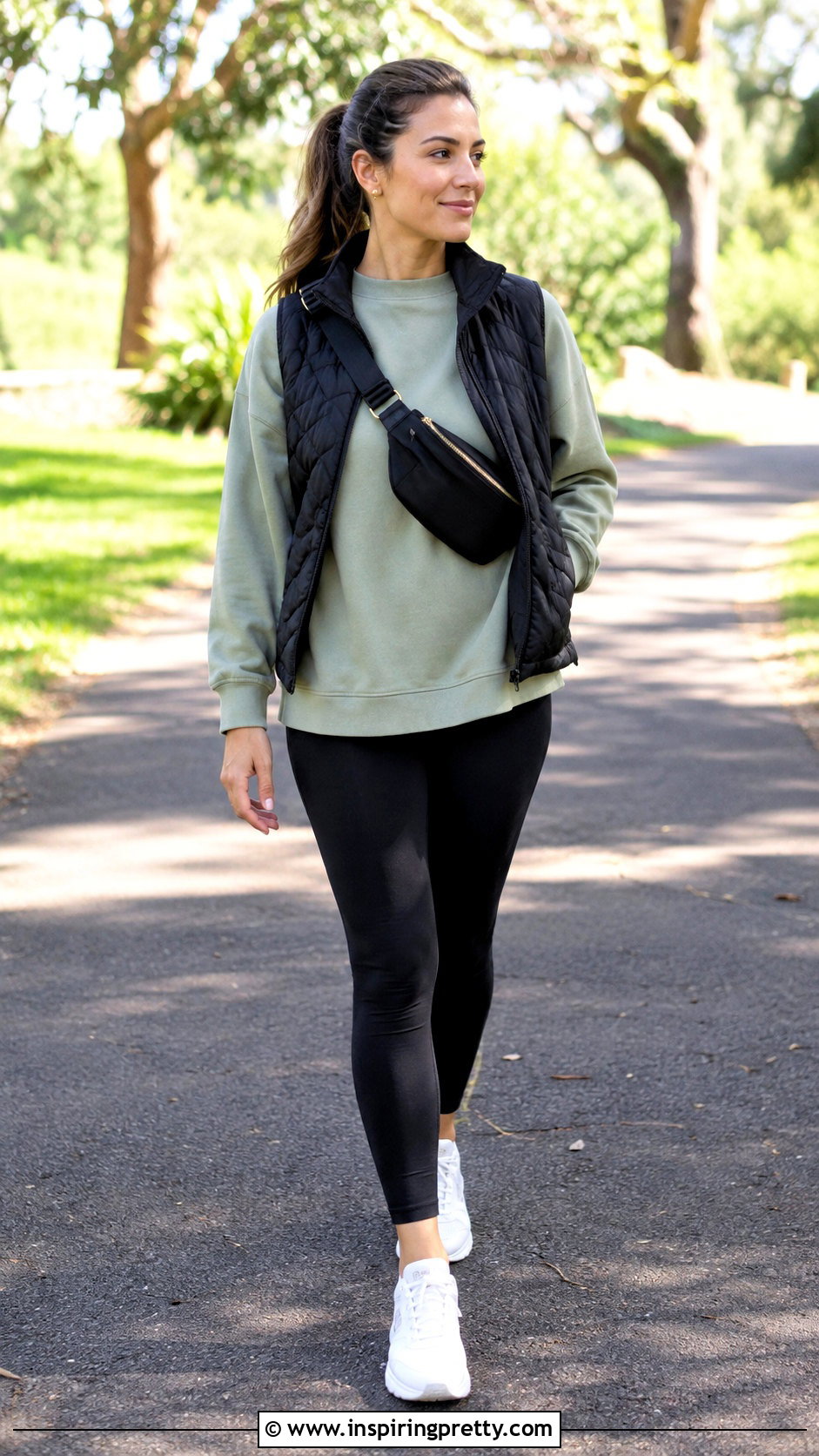
A sweatshirt is a pullover knit, usually fleece-backed or loopback inside, with ribbed cuffs and hem. Fleece is the warm one, while loopback breathes better in spring and autumn, so feel the inside before you buy. My athleisure outfit is an oversized sweatshirt, thick opaque leggings, supportive sneakers and a belt bag, plus a vest or cap when the weather turns. Upper-hip length sits best over fitted bottoms, and cropped versions need high-rise leggings or joggers. One bright color makes the outfit look chosen rather than thrown on.
31. Hoodie With Jogger Pants
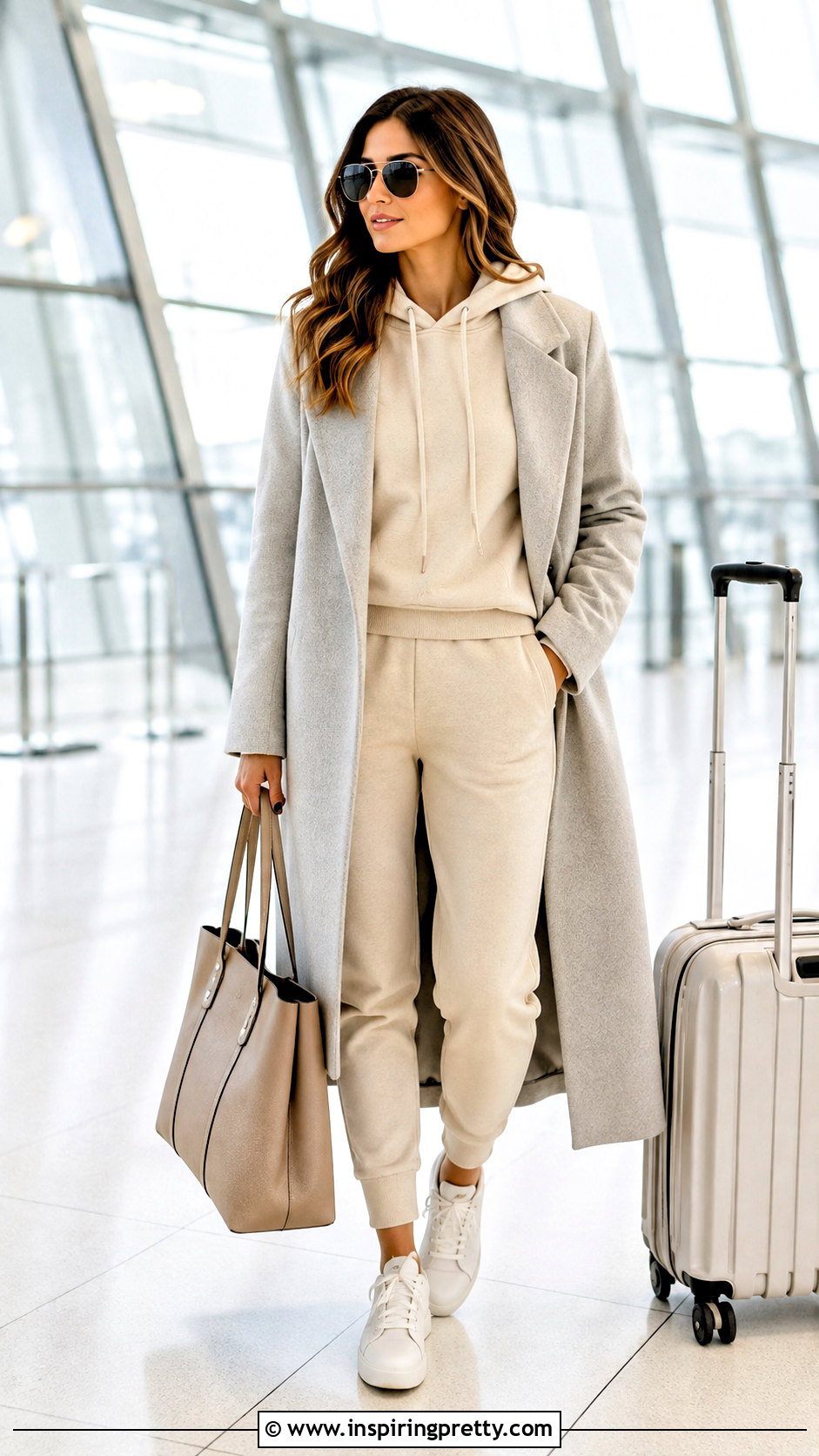
A hoodie is a sweatshirt with a hood, in pullover or zip form. A matching hoodie and jogger set looks deliberate rather than lazy once you add sleek sneakers, a structured tote and a long coat over the top. I always check how the hood sits when the coat is on, because a heavy hood drags the neckline back against the throat. Cuffs should hold without pinching. For the most polished version, choose joggers with a clean taper, few logos and fabric heavy enough to keep its shape at the knee.
32. Crewneck Sweater With Midi Skirt
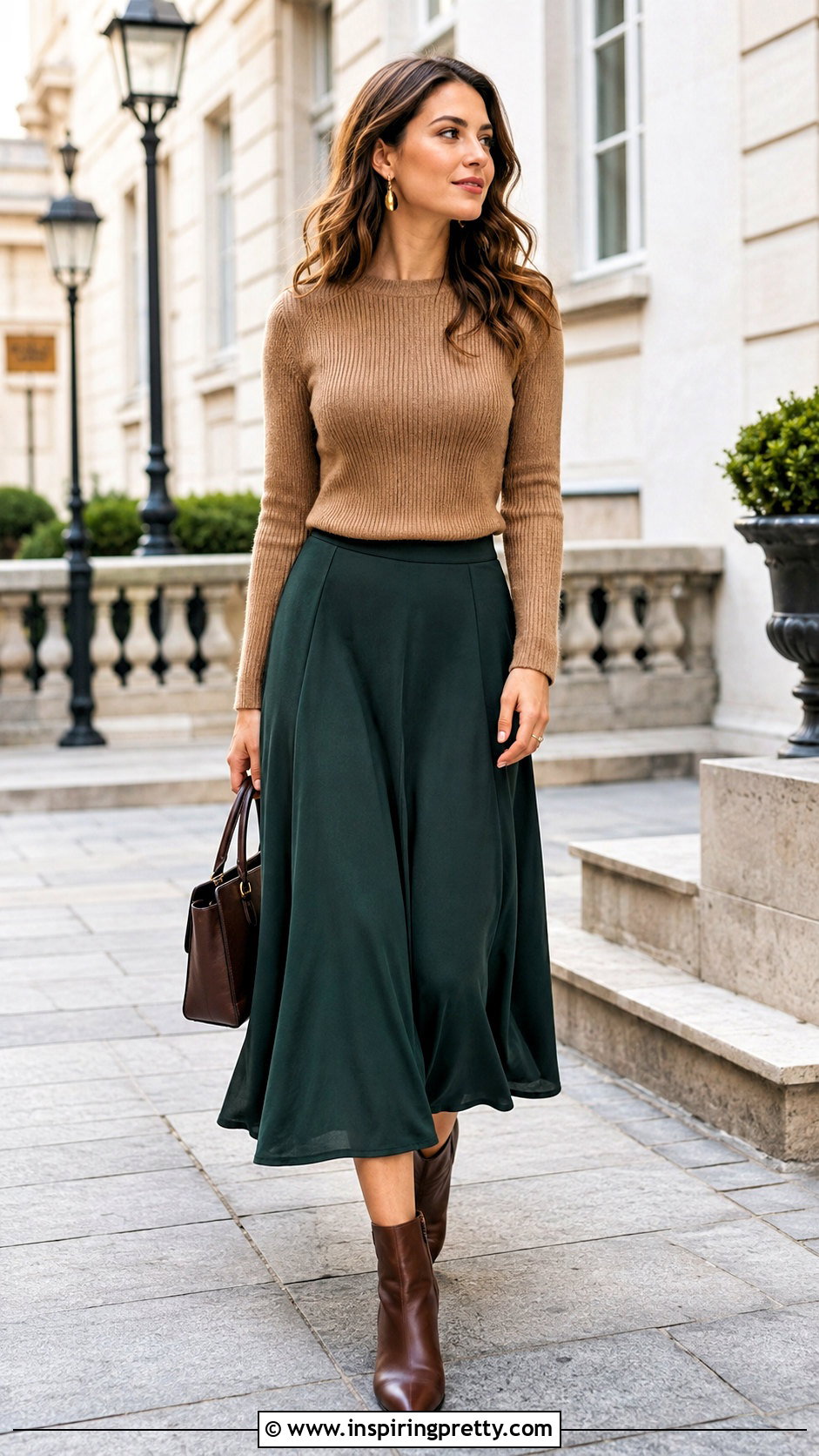
A crewneck sweater has a round neck that sits close to the base of the throat, in anything from fine merino to chunky cable. I put a fitted one over a flowing midi skirt with ankle boots and a structured bag. Only tuck a thin knit. A chunky sweater tucked into a skirt leaves a bulky ring at the waist, so in that case I pick a cropped cut that rests on the waistband instead. Tonal colors look quiet and expensive. Wool often needs hand washing or a wool cycle, so read the label before buying.
33. Cardigan Top With Straight-Leg Jeans
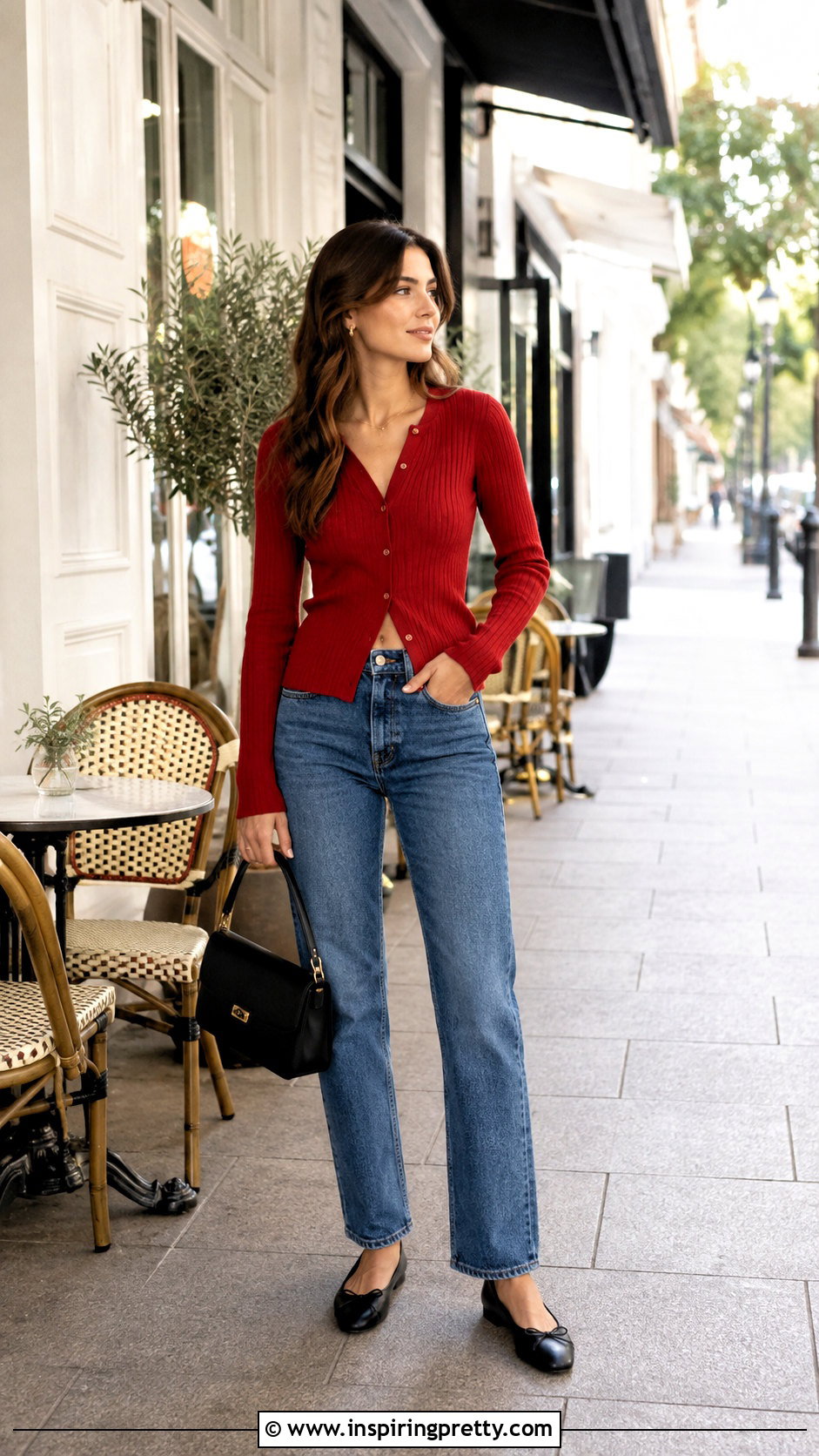
Buttoned all the way, a fitted cardigan works as a top on its own, which doubles its use. I style a ribbed one with high-rise straight-leg jeans, ballet flats and a structured handbag, either fully closed or open at the top over a camisole. Cropped cardigans suit higher rises; longer ones look better with a belt. The thing I check first is the gap between buttons across the bust, and if it pulls, I size up. For wear against bare skin, choose a soft yarn, since scratchy wool at the neckline is hard to ignore.
34. Turtleneck Top With Tailored Trousers
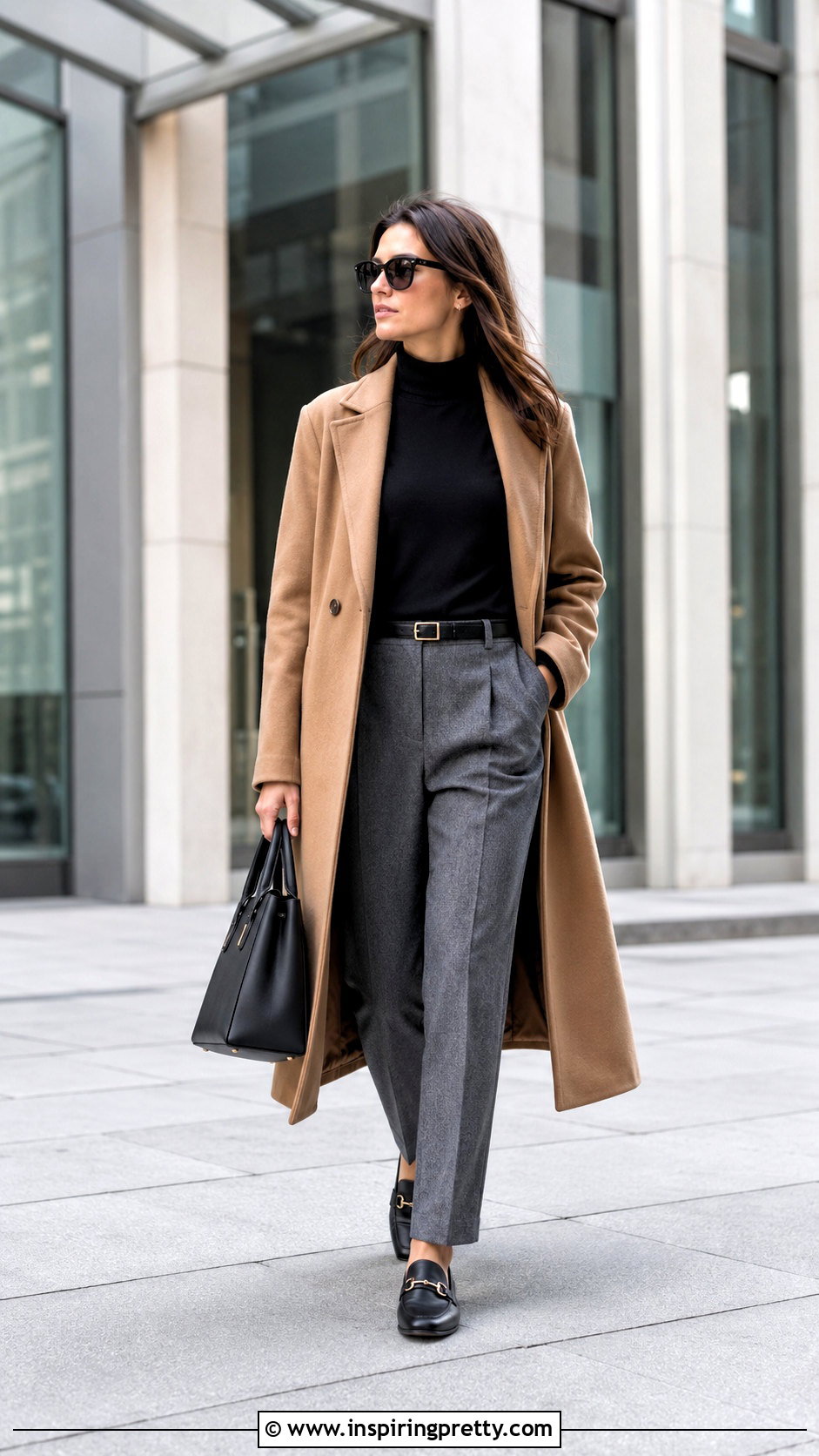
A turtleneck folds over on itself at the neck, and it comes as anything from a thin layering knit to a thick sweater. My winter formula is a fine-knit turtleneck tucked into tailored trousers with loafers and a long wool coat; the tuck gives one unbroken line from neck to hem under the coat. Skip the necklace and wear small earrings instead. If high necks make you feel choked, a mock neck is the gentler option. Thin turtlenecks slide under blazers and sleeveless dresses, while thick ones are usually best as the top layer.
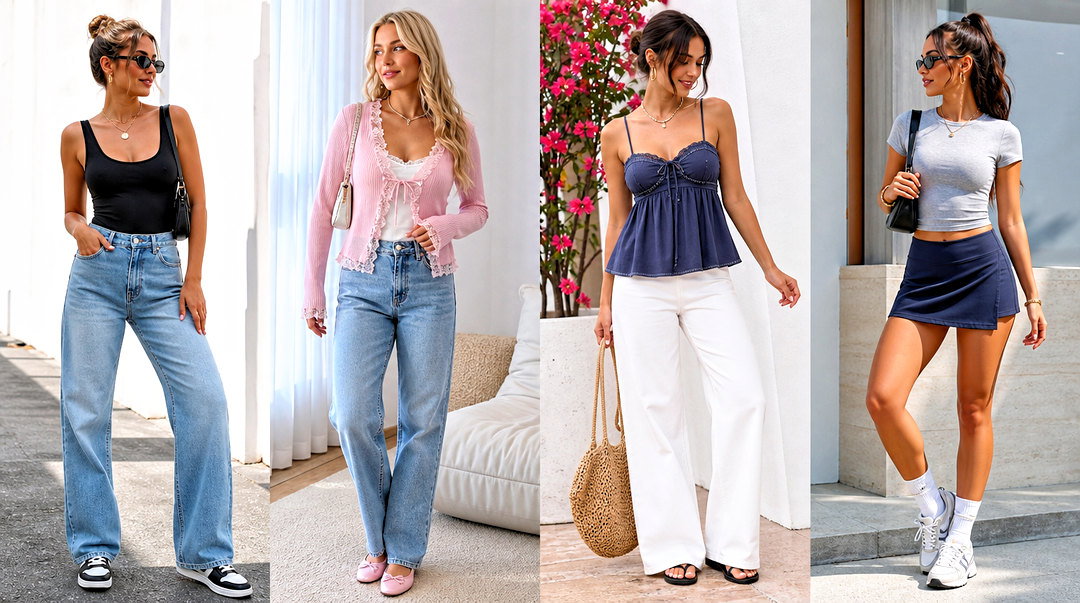
35. Mock Neck Top With Wide-Leg Jeans
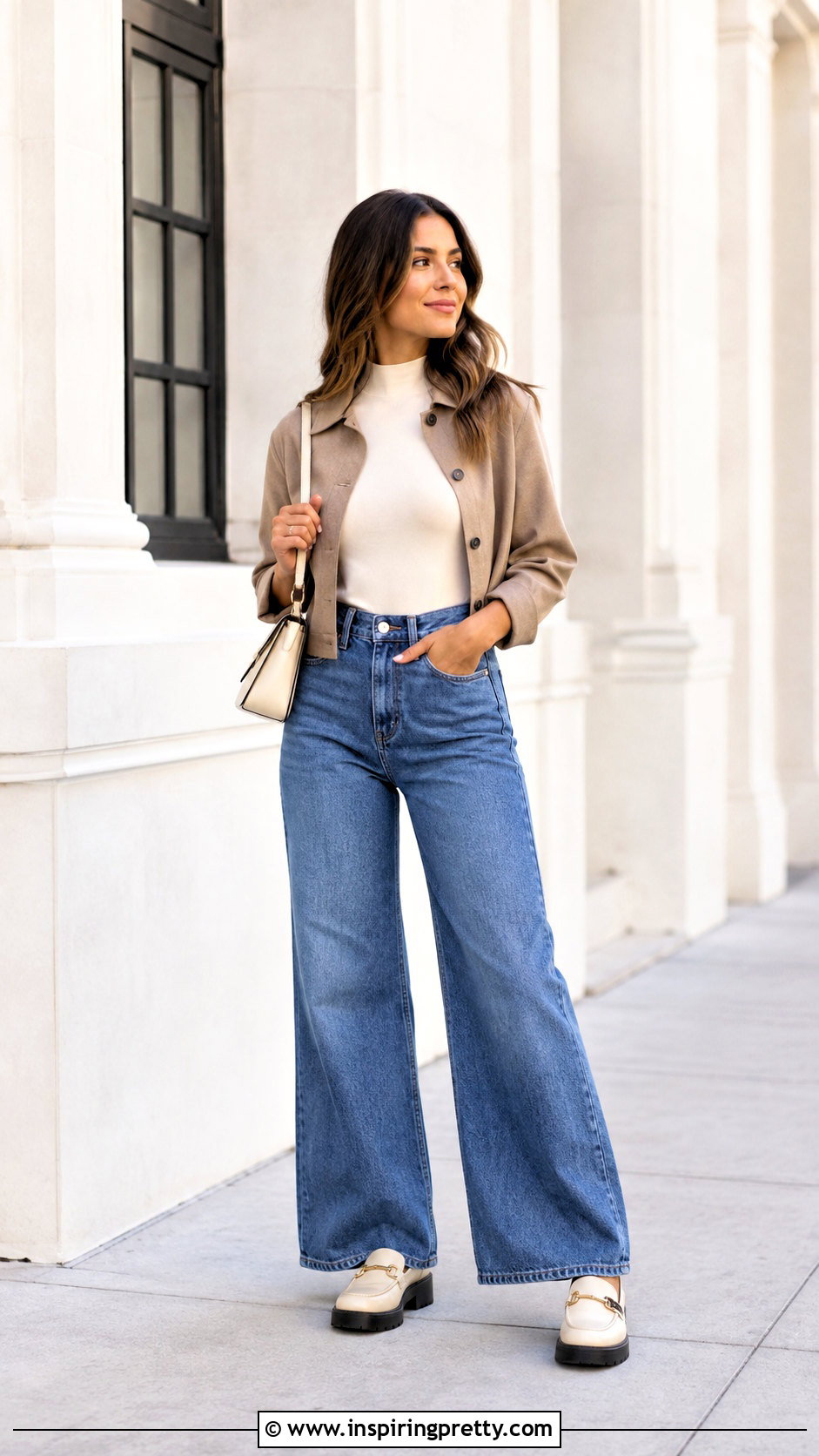
A mock neck stands up partway without folding over, so you get the clean line of a turtleneck with less bulk under the chin. I wear a fitted one with wide-leg jeans, platform loafers and a small shoulder bag, sometimes adding a cropped jacket that stops short of the collar. The plain shape needs texture or a strong color to stay interesting, and ribbing helps. The collar should stand on its own, not slump or press on the throat. Sleeveless mock necks cover spring and autumn; long-sleeved ones sit neatly under blazers.
36. Boat Neck Top With Capri Pants
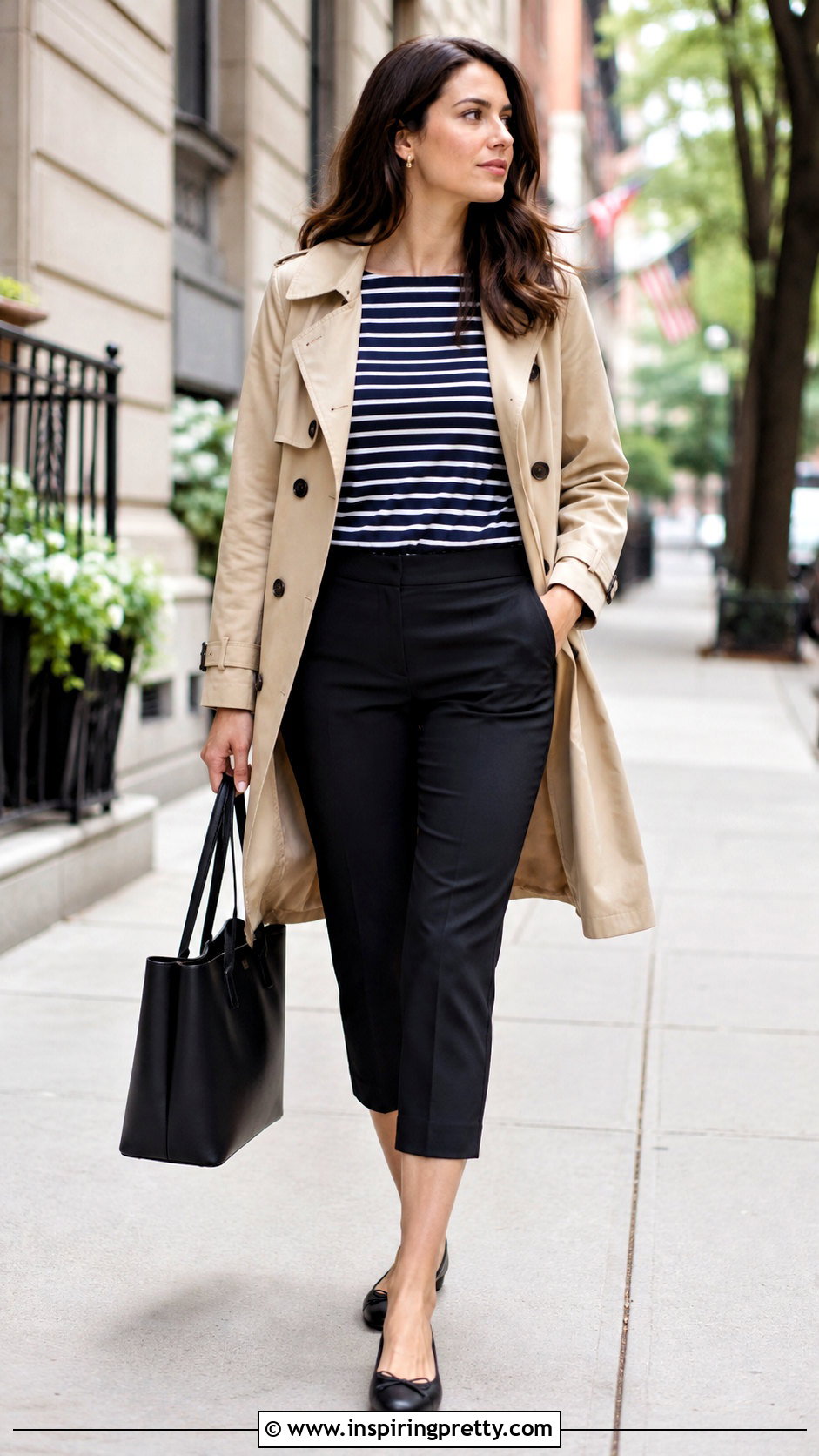
A boat or bateau neckline runs wide and shallow from shoulder to shoulder, almost along the collarbones, and it's the classic neckline for striped Breton tops. I wear one with tailored capris, ballet flats and a structured tote, tucked or cut at the waist, with a light trench in spring. The width is also the catch, because standard bra straps peek out at the edges. A bra with straps set wider apart, a convertible style or small strap holders sewn into the shoulder seams solve it. Move your arms to make sure the neckline stays on your shoulders.
37. Cowl Neck Top With Satin Skirt
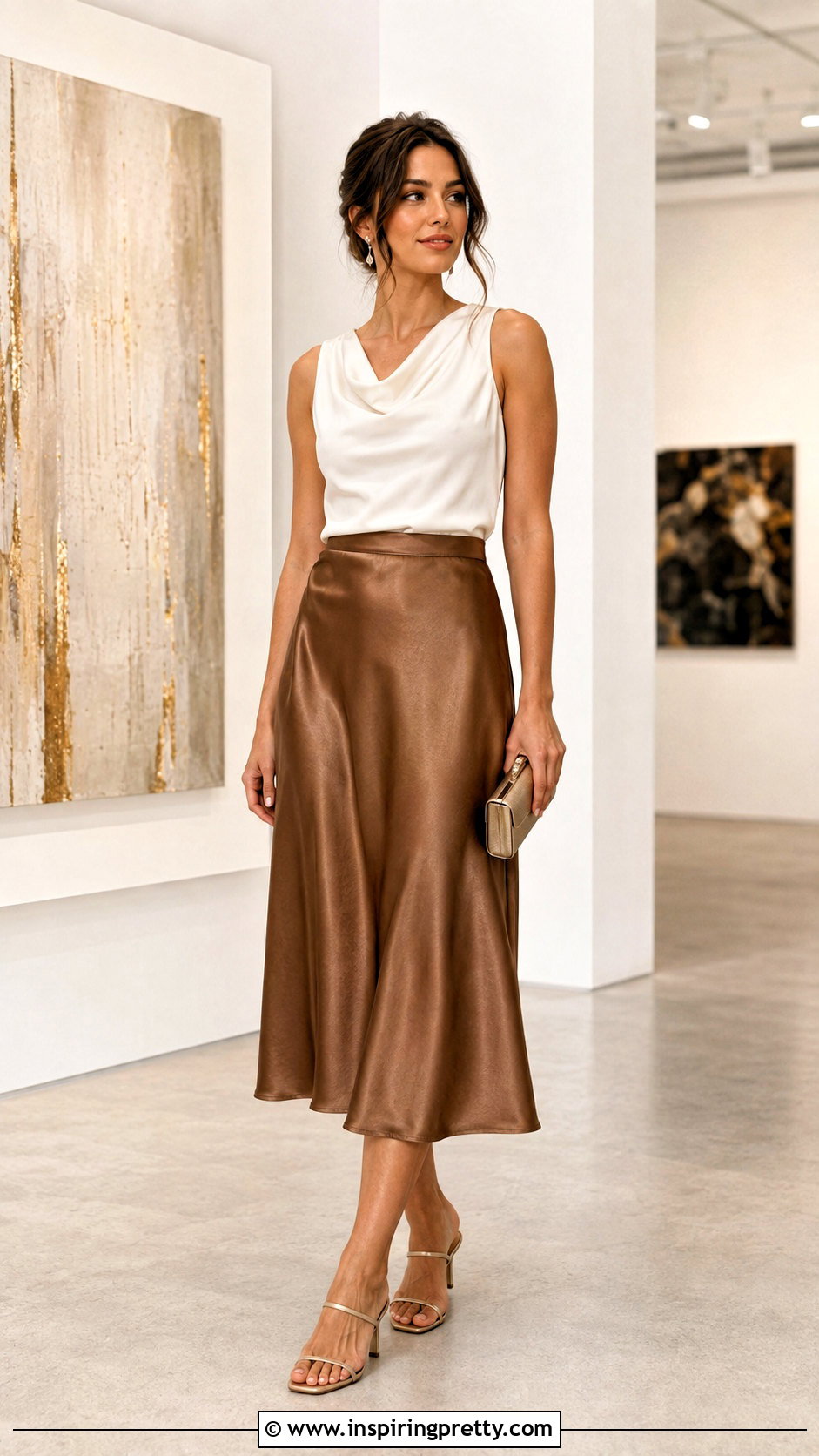
A cowl is extra fabric, often cut on the bias, that hangs in soft folds at the neck. I pair a sleeveless matte cowl top with a satin midi skirt, low heels and a small clutch, so the contrast between dull and shiny does the work instead of a print. No necklace, since the folds already frame the face. The test is leaning forward. Deep cowls fall open, so I either choose a shallower drape or add a camisole. Bias-cut satin and jersey drape best. Don't bury the neckline under a chunky scarf.
38. Scoop Neck Top With Relaxed Trousers
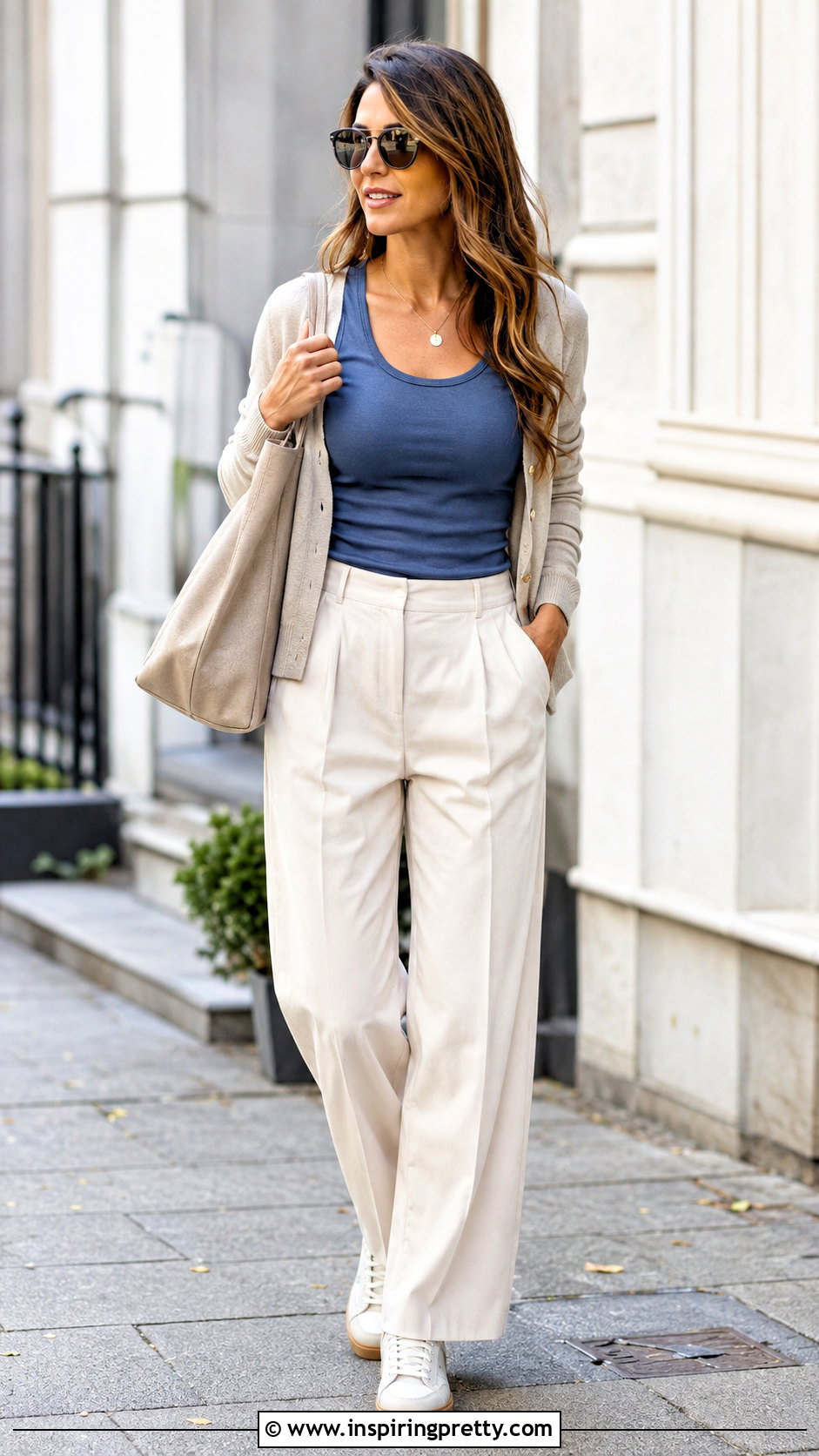
A scoop neck curves lower and wider than a crew, but depth ranges from modest to very low, so the name alone tells you little. I wear a fitted scoop with relaxed pleated trousers, leather sneakers and a soft tote, plus a light cardigan for temperature swings. A short pendant sits nicely in the open neckline. Look for edges that lie flat. A rippling neckline usually means the knit was stretched during sewing, and it only gets worse with wear. Double-layered fronts help pale colors stay opaque.
39. V-Neck Top With A-Line Skirt
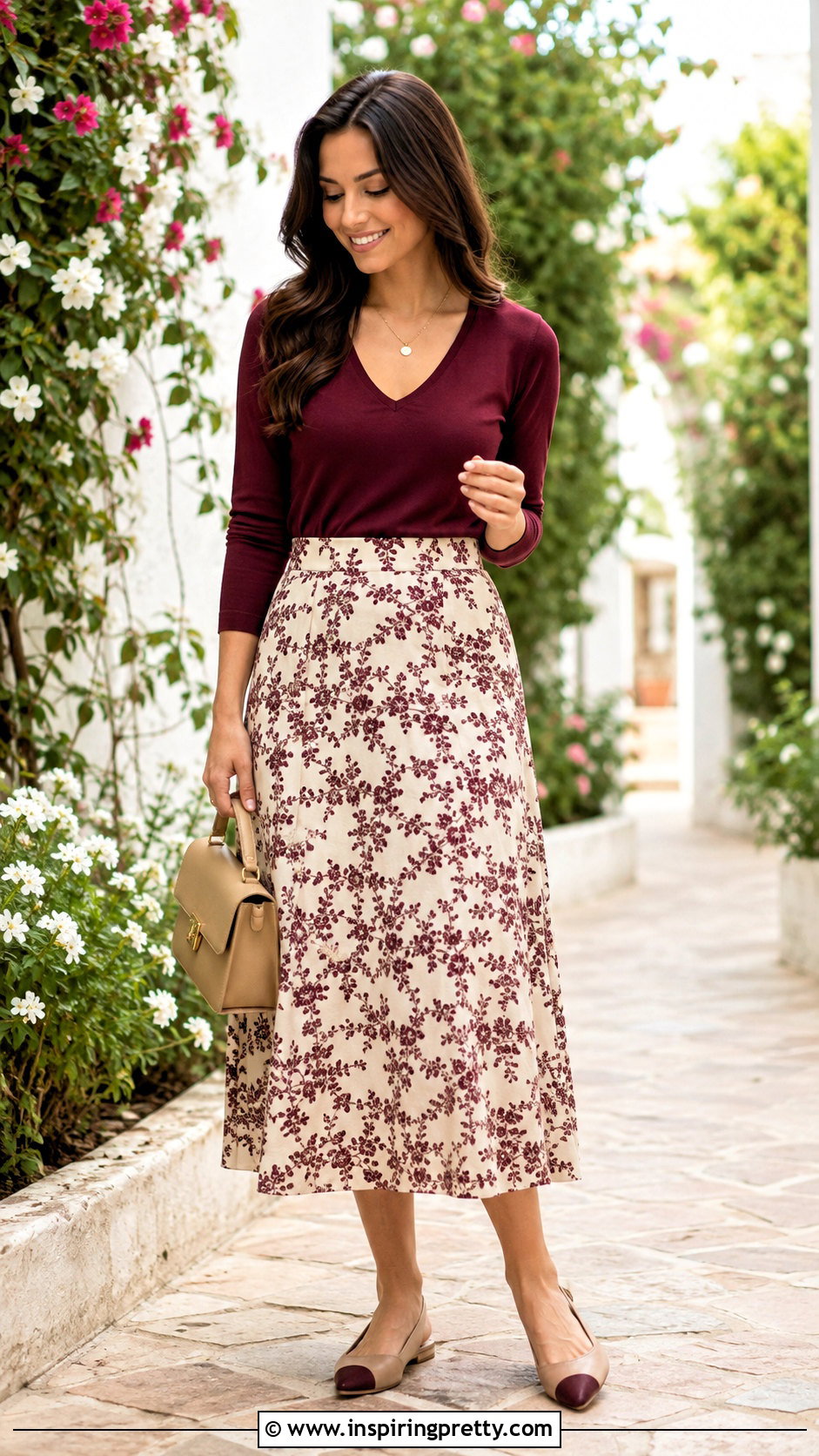
A V-neck dips to a point at center front, shallow or deep, narrow or wide, and it turns up on tees, sweaters, blouses and wraps. A fitted V-neck tucked into an A-line midi skirt, with slingback flats and a top-handle bag, makes a polished daytime outfit, and a simple pendant follows the line of the V. Before buying, I sit and bend in front of a mirror to see where the point really falls. If it's too low, a matching camisole fixes it. Taped or ribbed neck edges keep a knit V from stretching out.
40. Square Neck Top With Midi Skirt
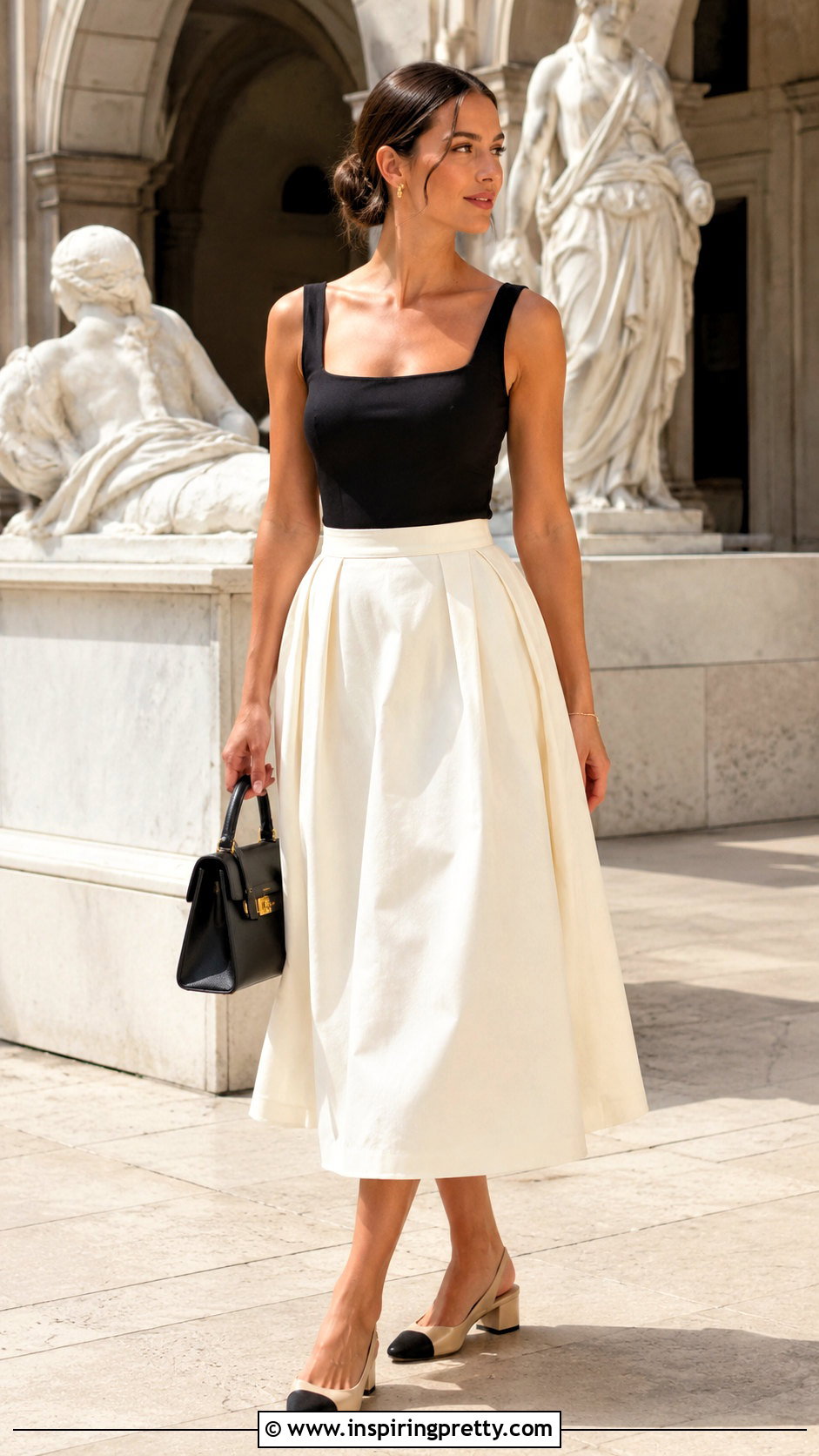
A square neckline cuts straight across with straight or slightly angled sides, and it shows up a lot on fitted bodices, puff-sleeve blouses and ribbed knits. I pair one with a full midi skirt, low block heels and a structured mini bag, keeping jewelry minimal so the neckline shows. Corners are the fit test. They should lie flat, not curl or pucker, and the straps shouldn't drift out over the shoulder. Width and depth vary a lot, so try it with the bra you'd really wear. An open cardigan keeps the shape visible.
41. Puff-Sleeve Top With Straight Jeans
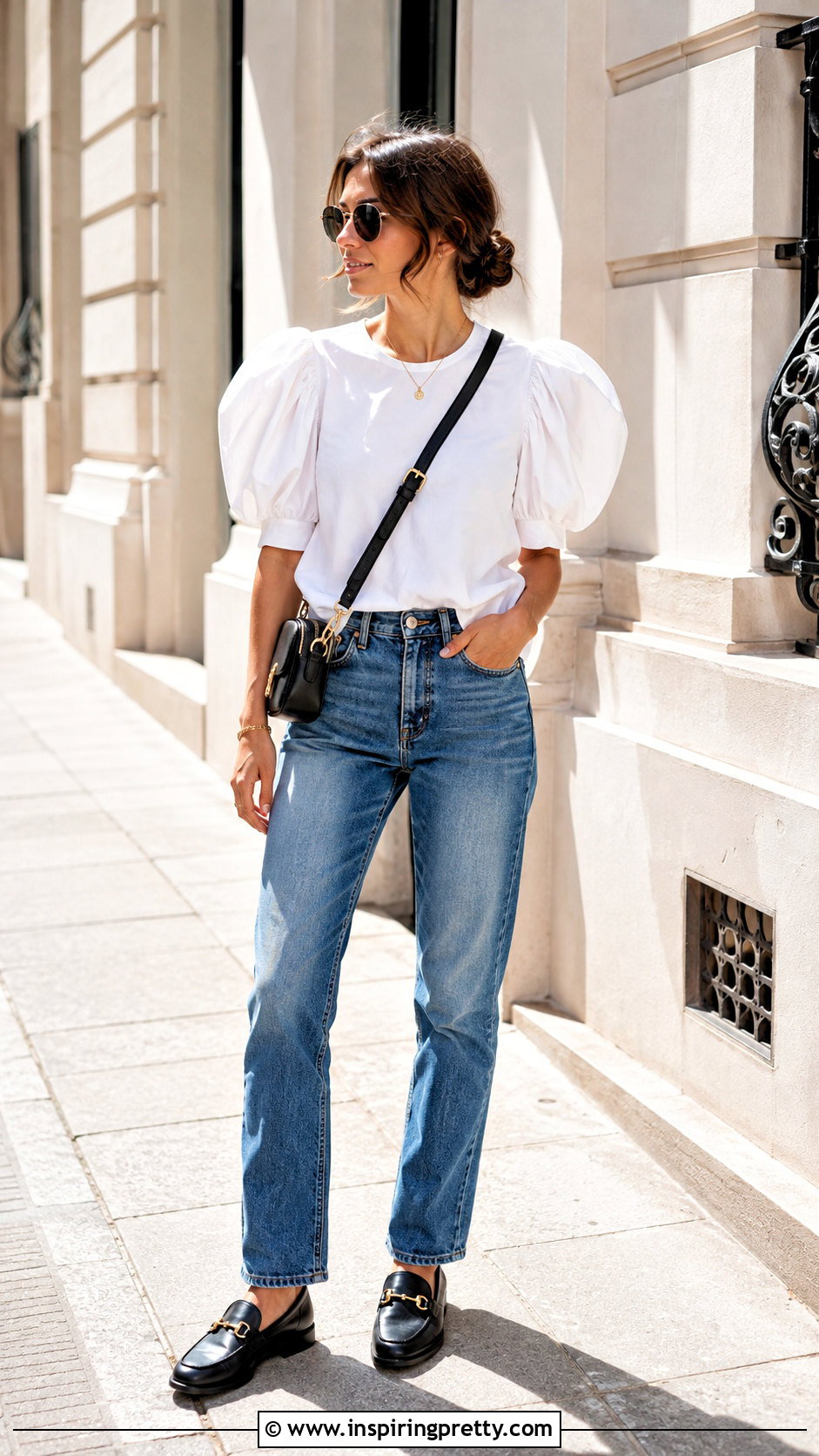
A puff sleeve is gathered at the shoulder, the cuff or both to create round volume. I let a cotton puff-sleeve top carry the outfit, with plain straight-leg jeans, loafers and a compact crossbody doing the supporting work. Tuck it, or pick a cropped hem, otherwise the volume up top spreads all the way down. Crisp poplin holds a big puff, and soft cotton gives a gentler one. The real problem is outerwear. Big puffs crush inside a fitted jacket, so for cold months I'd pick a smaller sleeve or wear a cardigan instead.
42. Bell-Sleeve Top With Flared Pants
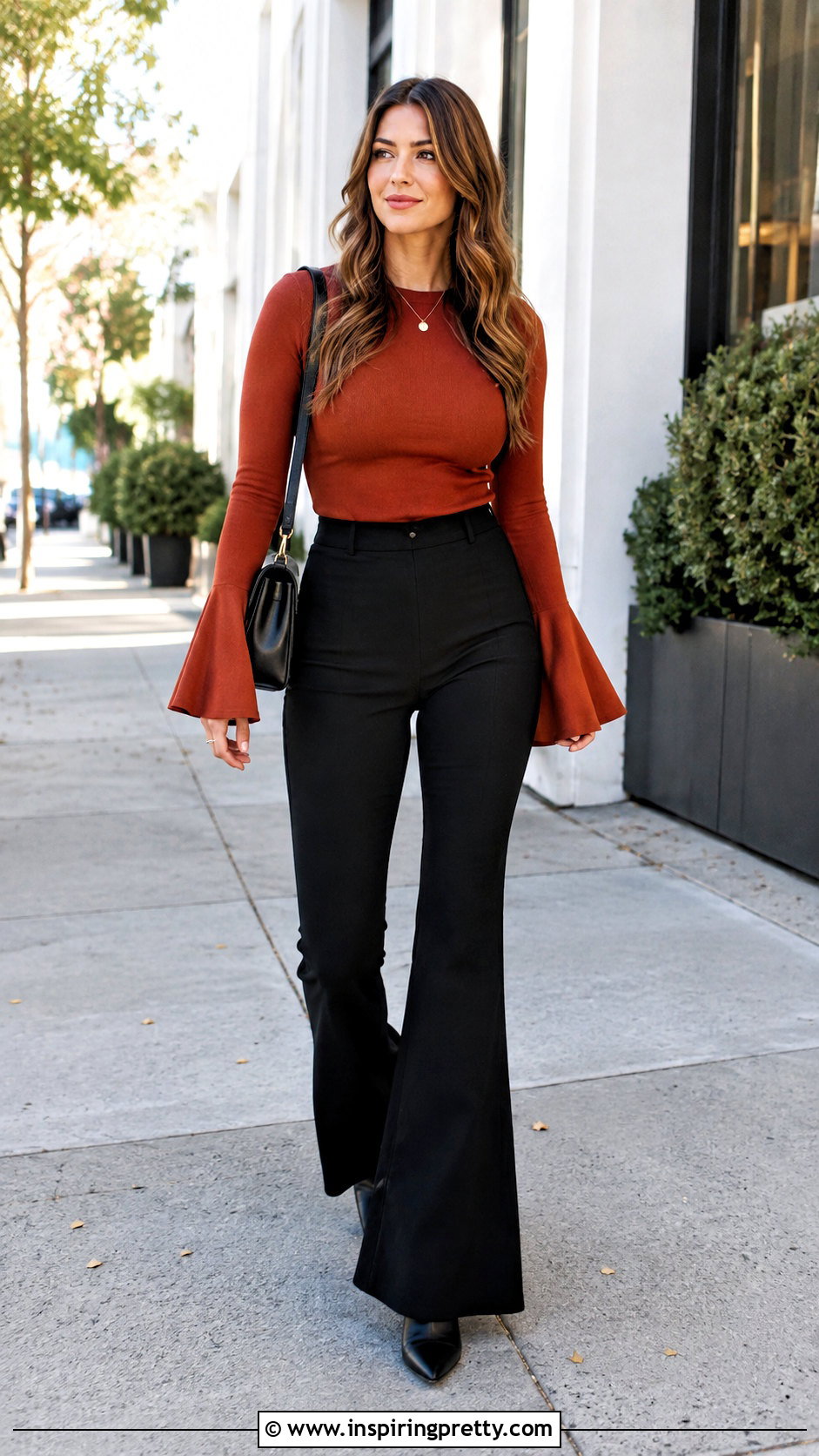
Bell sleeves stay close at the upper arm and widen toward the cuff. With high-waisted flared pants, heeled boots and a structured shoulder bag, the two flares echo each other, so I keep the top itself plain. Practicality matters with this one. Long bell cuffs drag through food and catch on desk edges, which is why I steer people toward three-quarter bells for daily wear. Jersey drapes softly, while woven fabric holds a sharper bell. A slim vest adds warmth without squashing the sleeves.
43. Bishop-Sleeve Top With Pencil Skirt
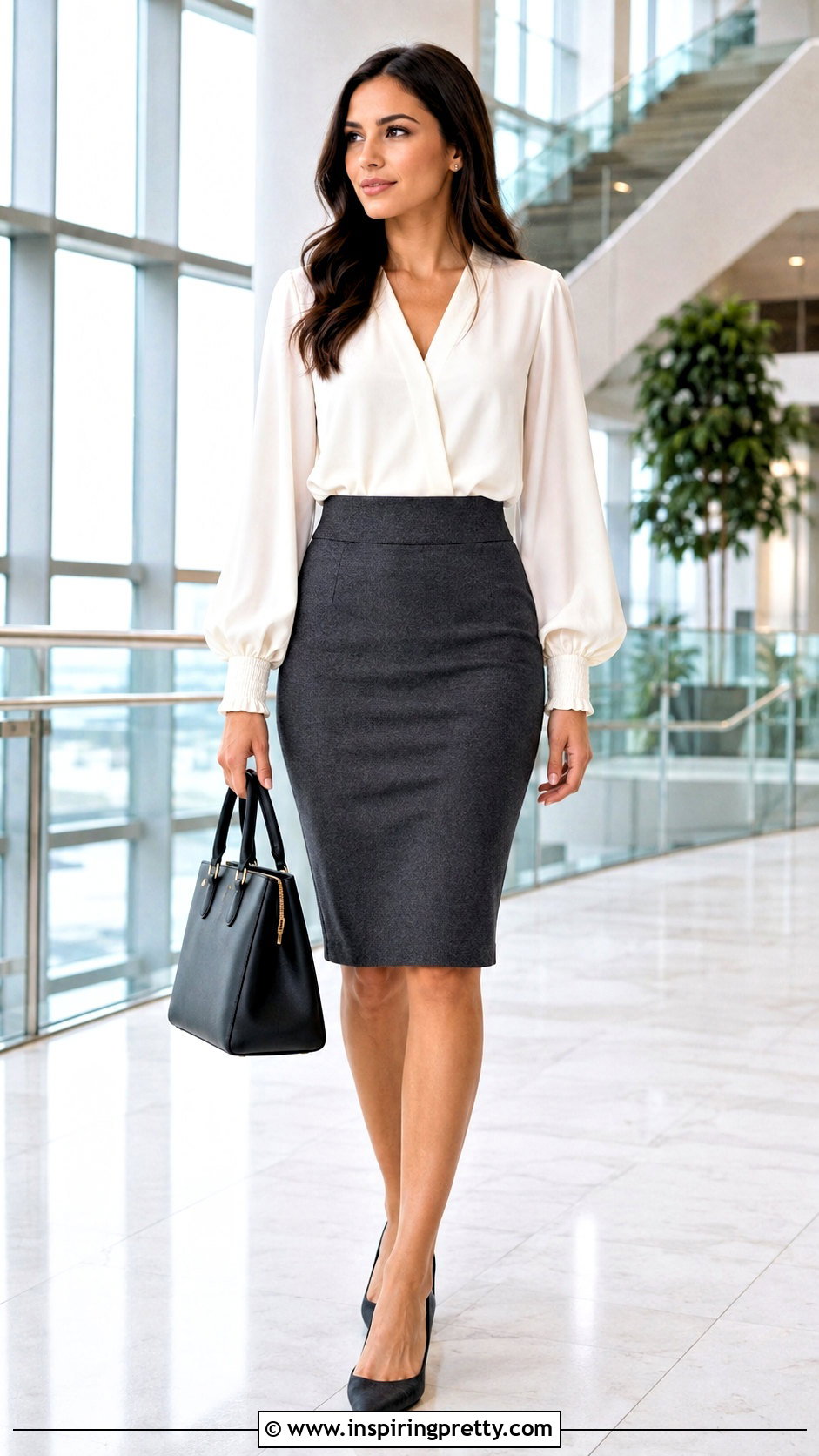
Bishop sleeves are long and full, gathering into a snug cuff at the wrist, so the volume sits along the arm rather than at the shoulder. I tuck a softly draped bishop-sleeve blouse into a pencil skirt with pointed flats and a structured handbag, letting the fitted skirt balance the full arms. If the blouse is sheer, a matching camisole goes under. Skip bracelets, because the cuffs are the detail. Check the sleeve length so the cuff stays at the wrist instead of sliding over your hands. Heavier fabrics feel bulky under coats.
44. Ruffle Top With Tailored Jeans
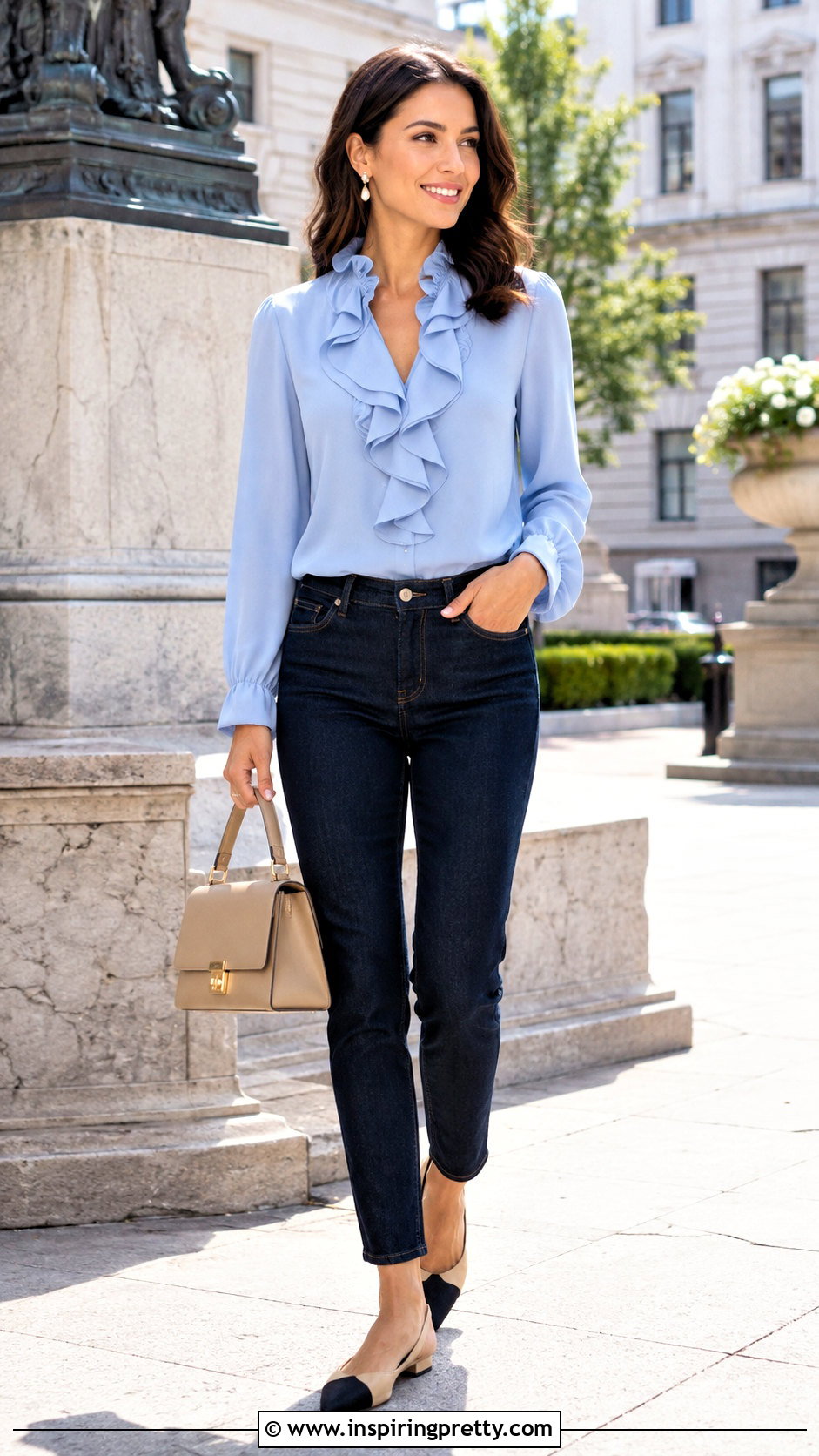
Ruffles can run along the neckline, the shoulder, the placket or the hem, and they range from a narrow frill to one that defines the whole top. I pair a ruffled blouse with dark tailored jeans, slingback flats and a structured bag so the clean lines balance the softness. With a neckline ruffle, skip jewelry; with a hem ruffle, check where it lands against the jeans' rise. Crisp cotton holds a sculptural ruffle and chiffon falls softer. Big shoulder ruffles fight a fitted jacket, so I stick to one ruffled area per top.
45. Tie-Front Top With High-Waisted Pants
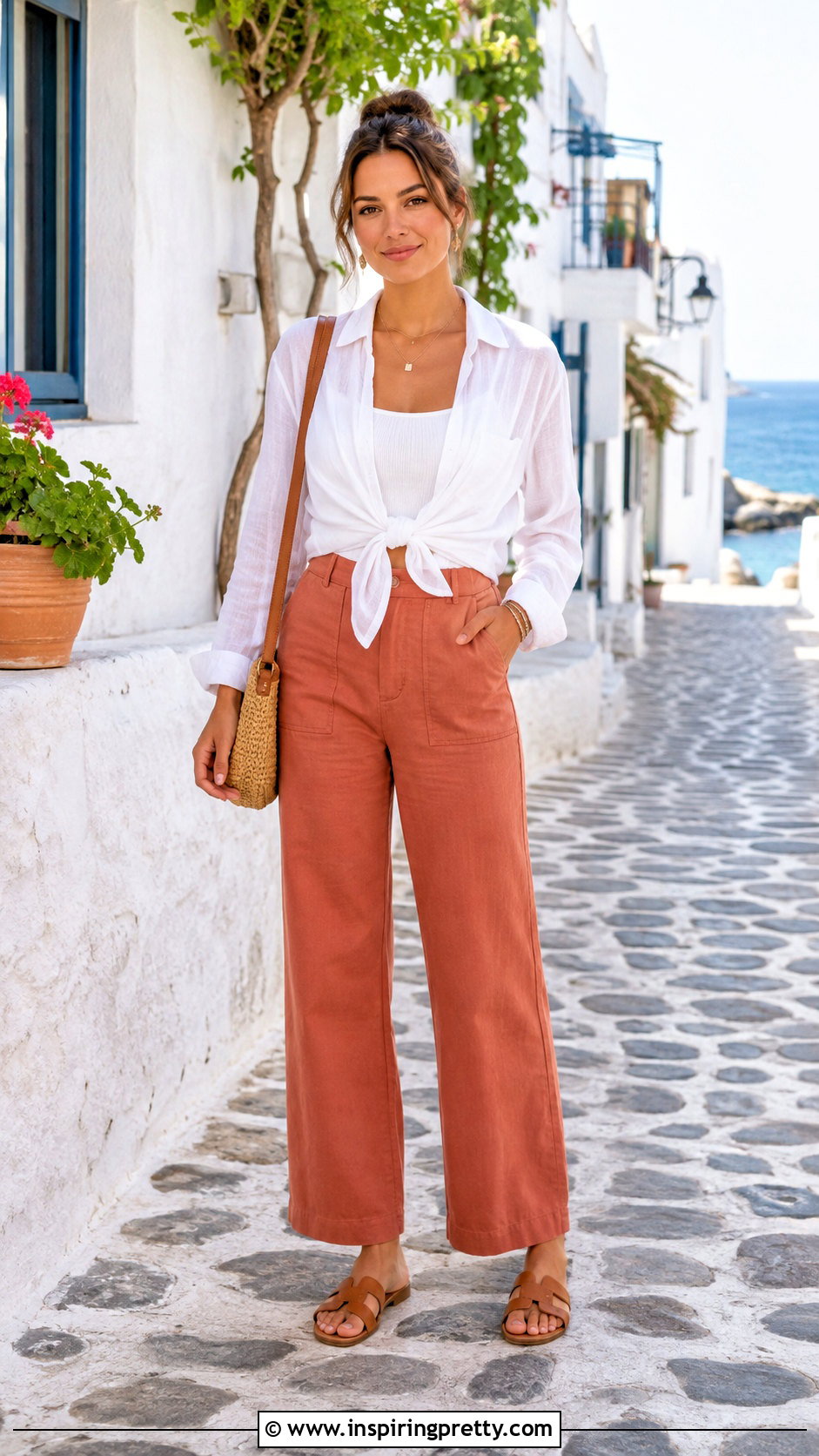
Some tie-front tops are truly adjustable, with the knot holding the front closed; others just have a decorative bow sewn on. In summer I wear a tie-front blouse with high-waisted pants, flat sandals and a woven shoulder bag, where the high waistband meets the short hem and keeps the midriff covered. When the opening above the knot runs low, a fitted camisole fills it. Sit down before buying, because a fat knot can press into your stomach. Cotton and linen read casual, while satin looks dressier. Keep necklaces short or skip them.
46. Asymmetrical Top With Slim Trousers
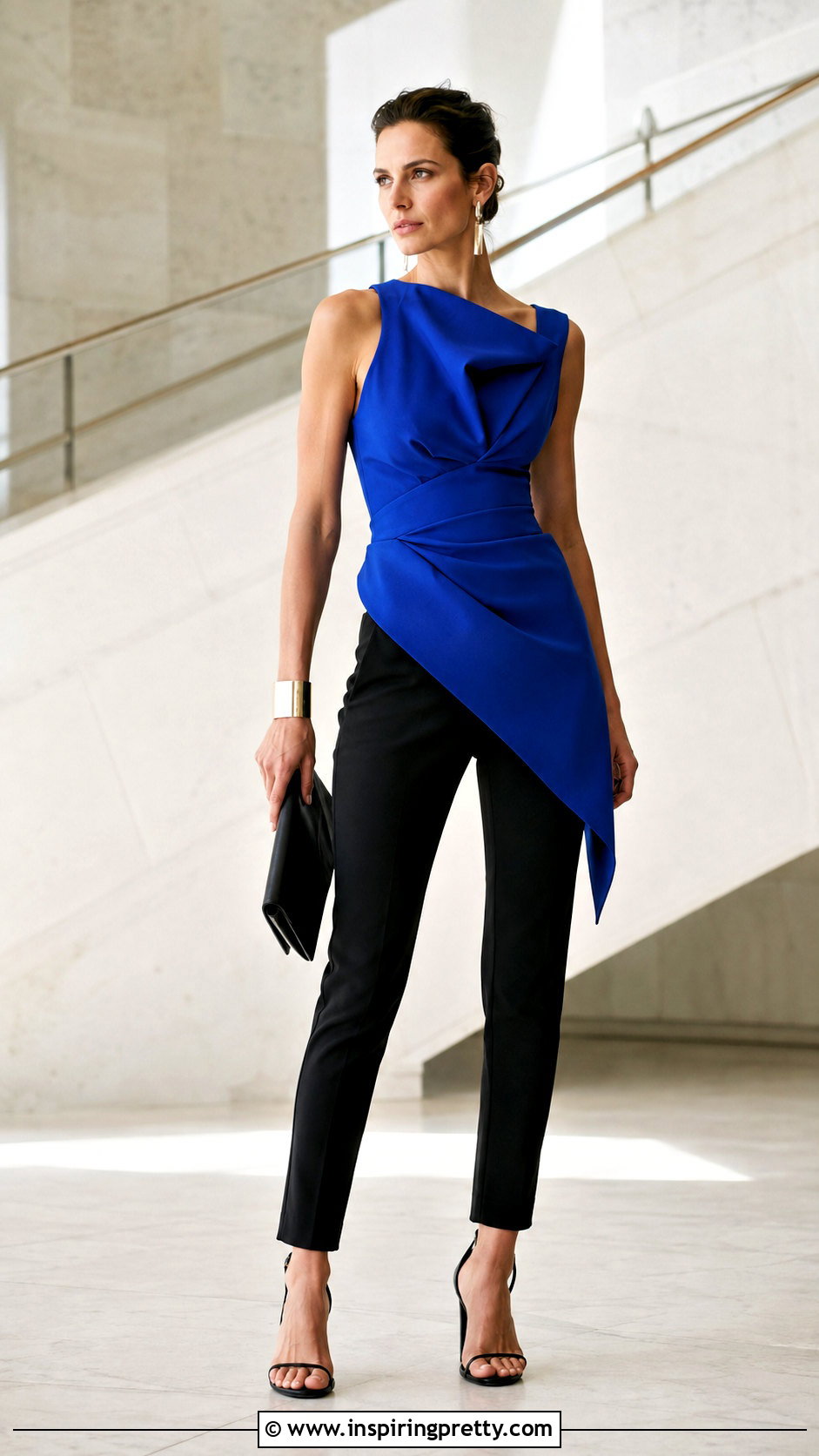
An asymmetrical top makes one side different from the other, whether that's the neckline, the hem, the drape or the sleeves. With slim tailored trousers, minimal heels and a clean clutch, the plain bottom gives the unusual cut room to show. Wear one bold cuff or small earrings, not both. My main fitting question is whether the top hangs as designed or just twists because it's the wrong size; the seams should fall straight, not spiral around you. Long side panels shouldn't catch when you sit. Solid colors show the cut better than prints.
47. High-Low Top With Straight Pants
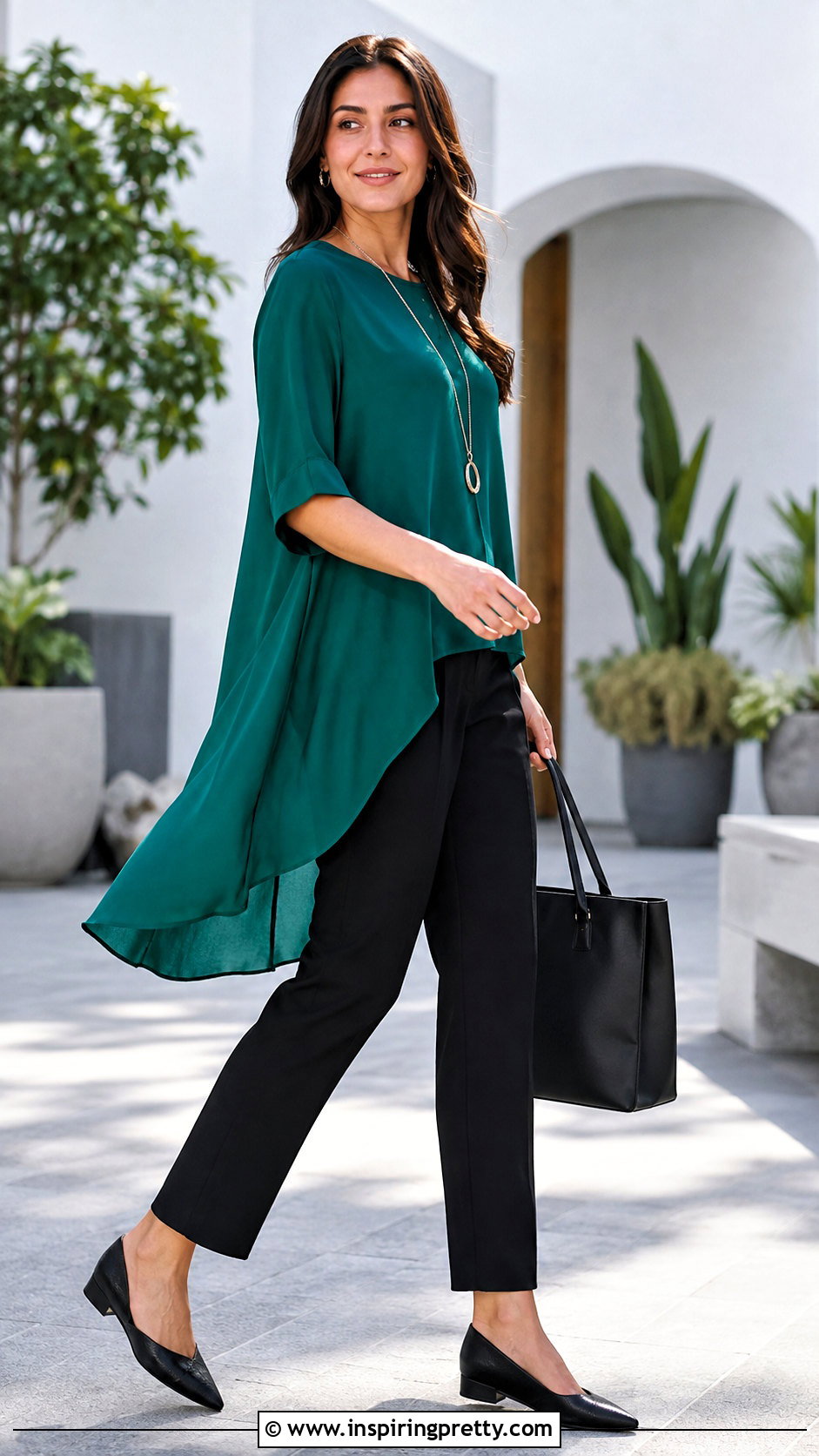
A high-low hem is shorter at the front and longer at the back, from a subtle drop to a back panel that reaches the thighs. I wear a flowing one with straight ankle pants, pointed flats and a structured tote. The short front shows the waistband and leg line, and the long back adds movement. I'd avoid pairing a dramatic hem with wide, voluminous trousers unless you want an oversized silhouette on purpose. Always check the side view in a mirror, since that's where odd drape shows. A long necklace follows the vertical line.
48. Denim Top With White Jeans
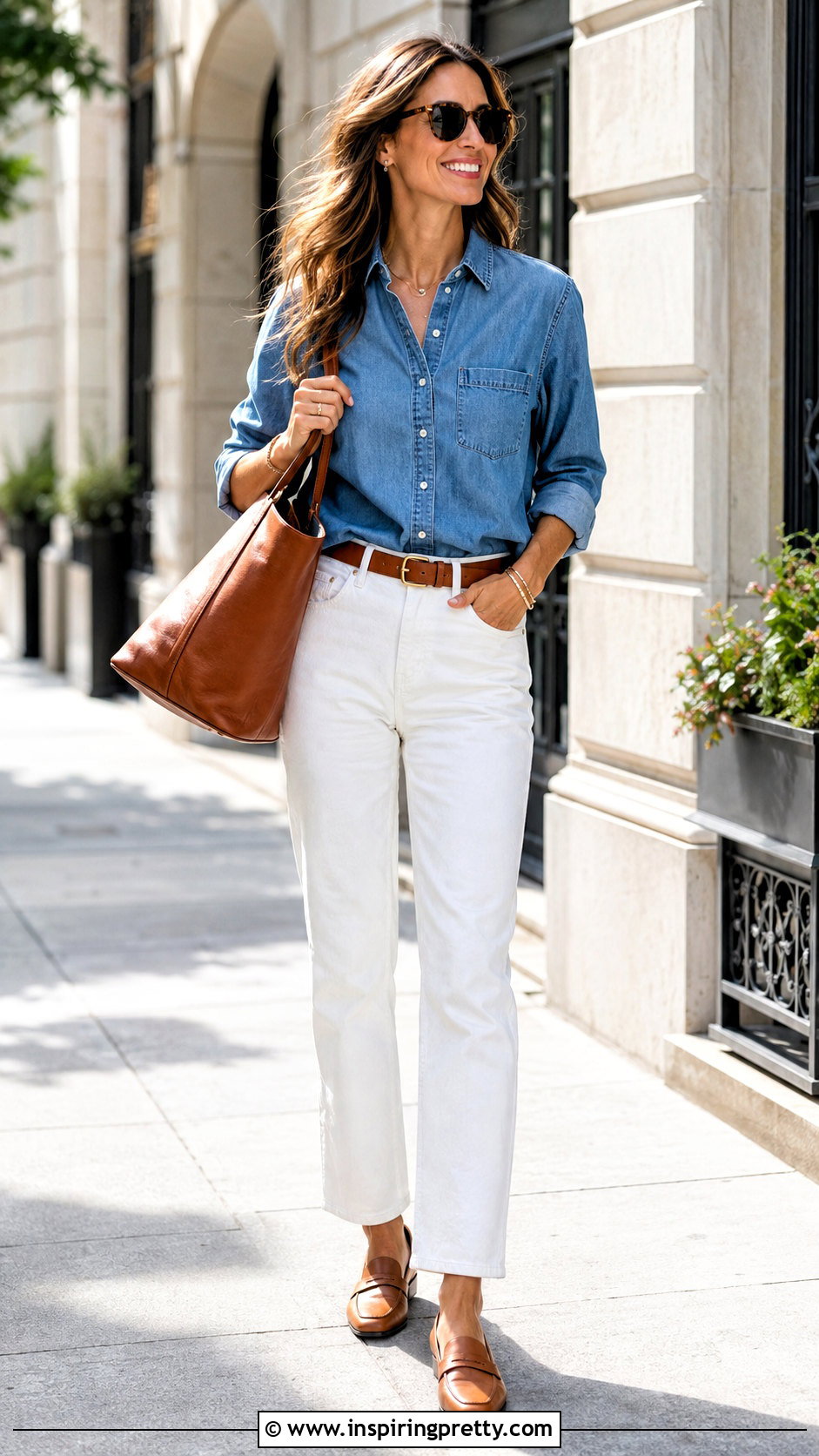
Denim tops come in real denim or lighter chambray and may be cut as a shirt, bustier, blouse or a structured sleeveless piece. My spring outfit is a medium-wash denim shirt with white straight-leg jeans, tan loafers and a brown leather tote, tucked or loosely knotted at the waist. White jeans break up the blue so it doesn't read as a uniform. For true double denim, either match the washes closely or make them clearly different; two almost-similar blues look like a mistake. Rigid denim gets bulky under jackets, so lighter weights layer better.
49. Mesh Top With Wide-Leg Trousers
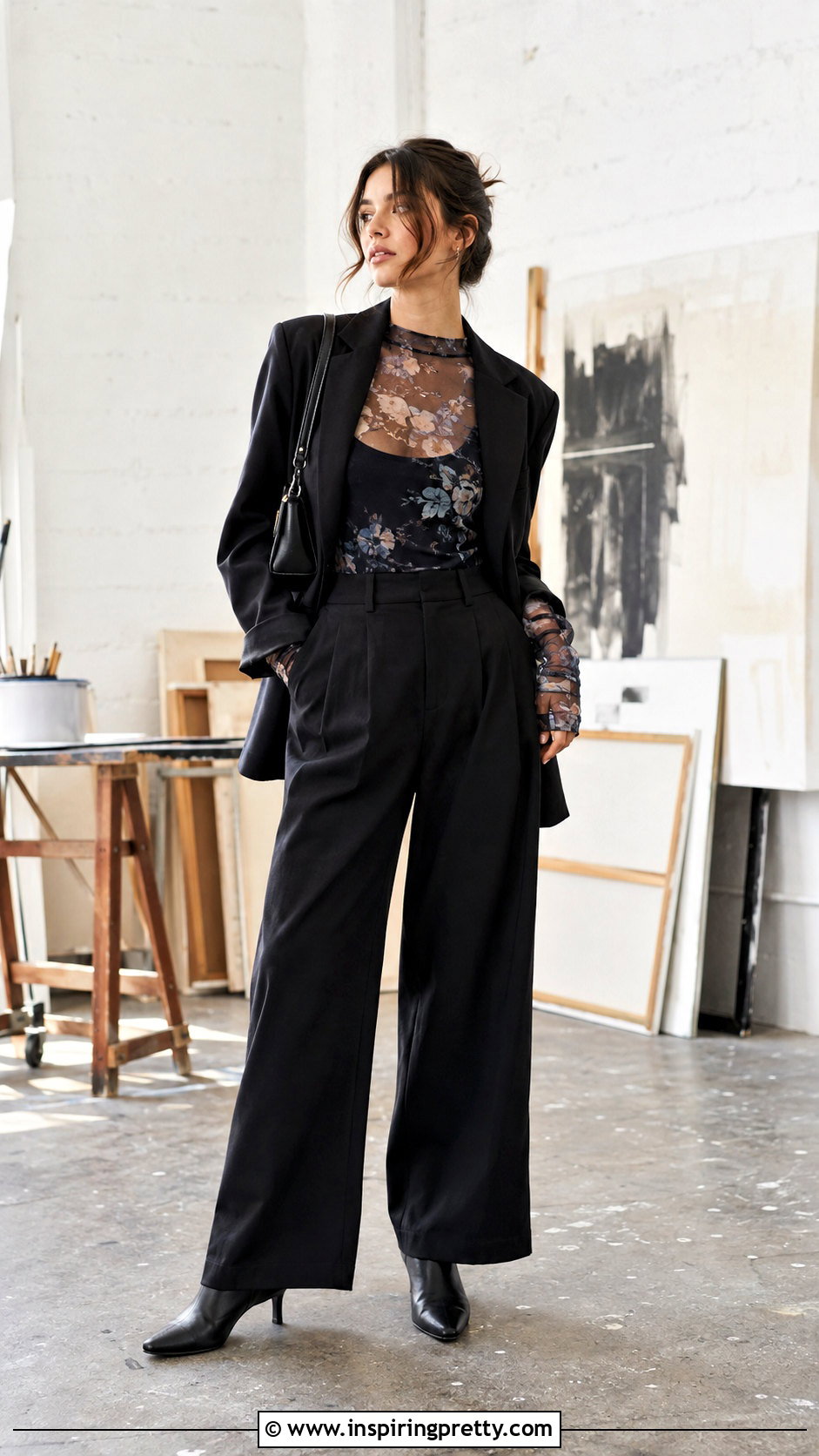
Mesh is an open, semi-sheer knit, plain, printed or embroidered, and it's usually a layering piece rather than a top on its own. I wear a long-sleeved printed mesh top over an opaque fitted tank, with wide-leg trousers, ankle boots and a compact shoulder bag. Matching the tank to the mesh background keeps the two reading as one garment. Rough mesh scratches, so feel the seams on the inside first. Transparency also changes with light, which is why I check the outfit in daylight and with a phone flash before wearing it out.
50. Waistcoat Top With Matching Trousers
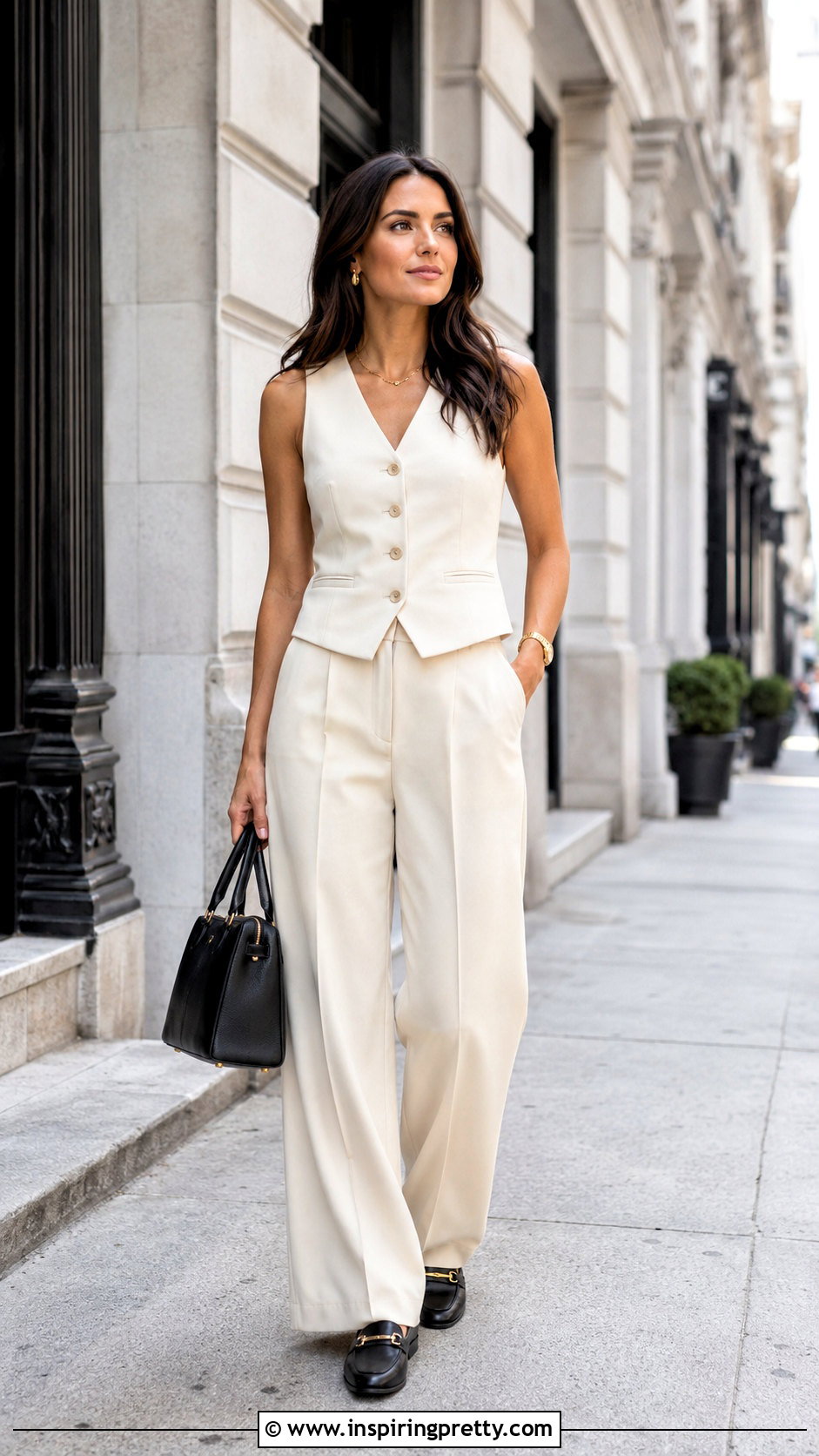
A waistcoat top is a tailored, buttoned, sleeveless piece borrowed from the three-piece suit, worn alone or over a shirt. A longline waistcoat with matching tailored trousers, loafers or low heels and a structured handbag gives a full suit effect without a jacket. Worn on its own, the armholes and neckline need to be cut close enough to cover a bra. A fine-knit tank or crisp shirt underneath is the easier route. I look for pulling across the buttons and wrinkles across the back. It pairs with jeans and midi skirts too.
Names Shops Mix Up, and How to Tell Them Apart
Retail listings blur several of these terms, which is why a search can bring back the wrong garment. These are the pairs I see confused most, with the one detail that separates them.
- Tank or camisole: strap width. If the strap covers a standard bra strap, it's a tank.
- Tube or bandeau: a tube usually covers more of the torso, while a bandeau can be a narrow strip across the bust. Read the length measurement rather than the name.
- Corset or bustier: a corset top shapes the waist with panels and boning; a bustier is built around cups and may barely touch the waist.
- Turtleneck or mock neck: a turtleneck folds over, a mock neck stands up without folding.
- Empire or babydoll: both start below the bust, but a babydoll is gathered, fuller and usually shorter.
- Off-shoulder or cold-shoulder: off-shoulder sits below both shoulders, while cold-shoulder keeps its straps and cuts openings around them.
When a listing's name and photo disagree, I trust the photo and the measurements. It also helps to search with both names, because the piece you want is often filed under the other one.
A Two-Minute Fitting Routine I Run on Every Top
Most of the problems in this list only show up when you move. Whatever the name on the tag, I put every top through the same short routine before it comes home with me.
- Arms overhead. Off-shoulder, crop and tube tops reveal their worst habits here: riding up, slipping down or untucking.
- Sit and lean forward. This is where cowls gape, button plackets pull and wrap tops open at the cross.
- Side view in the mirror. Check the armholes for bra show and high-low hems for odd drape.
- Daylight or a phone flash. Pale knits, crepe blouses and mesh all change opacity under strong light.
- Jacket on top. Puff sleeves crush, bulky knits ride up and heavy hoods drag, so test it with the jacket you'll actually wear.
If a top fails one test but you love it, decide whether there's a simple fix, such as a camisole, a different bra or a tailor taking in the side seams. If the only fix is constant tugging, I leave it on the rack.
The Few I'd Own Before the Other Forty
You don't need all fifty. Knowing the names mostly helps you search smarter and work out why a top disappointed you. Before buying anything, I look at the neckline, the length against the bottoms I already own, the sleeve construction, the fabric and what has to go underneath. Build from comfortable basics, add a couple of layers, then bring in one or two statement shapes you truly love. Treat the outfits above as starting points and swap colors, shoes and accessories until each one looks like yours.
Related posts:


Leave a Reply