
A Banarasi skirt carries most of an outfit on its own: dense silk, metallic zari and a heavy woven border. That is why I spend more time choosing the top than the skirt. A heavily woven skirt wants a plain, well-cut blouse; a lighter skirt with scattered butis can take embroidery, a jacket or a dramatic sleeve. Below are fifty pairings I'd put together for weddings, festivals, pujas and family dinners, from crop tops and kurtis to shirts, corsets and jackets, with notes on where each one tends to go wrong.

Silk Weight and Zari Type Before You Pick a Top
Banarasi isn't one fabric. The same weave appears on heavy katan silk, light organza and soft georgette, and each one changes what you can put above it. Before I plan a single top, I hold the skirt up and feel how much it weighs.
- Heavy katan silk: stiff, structured, and it pulls on the waistband. Choose a fitted top with clean lines, and ask for a wide, firm waistband rather than a thin drawstring.
- Organza Banarasi: light and crisp. It can carry a more decorated top, a jacket or a cape without feeling heavy.
- Georgette or chiffon Banarasi: soft and fluid. It suits wrap tops, cowl necks and satin shirts, but needs a lining to stay opaque.
Look at the zari too. Real zari is silver-coated thread with a warm, soft shine. Tested zari and polyester metallic thread look brighter and harsher, and they scratch the skin on the inside of the arms. If your skirt has the scratchy kind, I'd skip sleeveless tops and choose sleeves that cover the inner arm.
1. Red Banarasi Skirt With Gold Crop Top
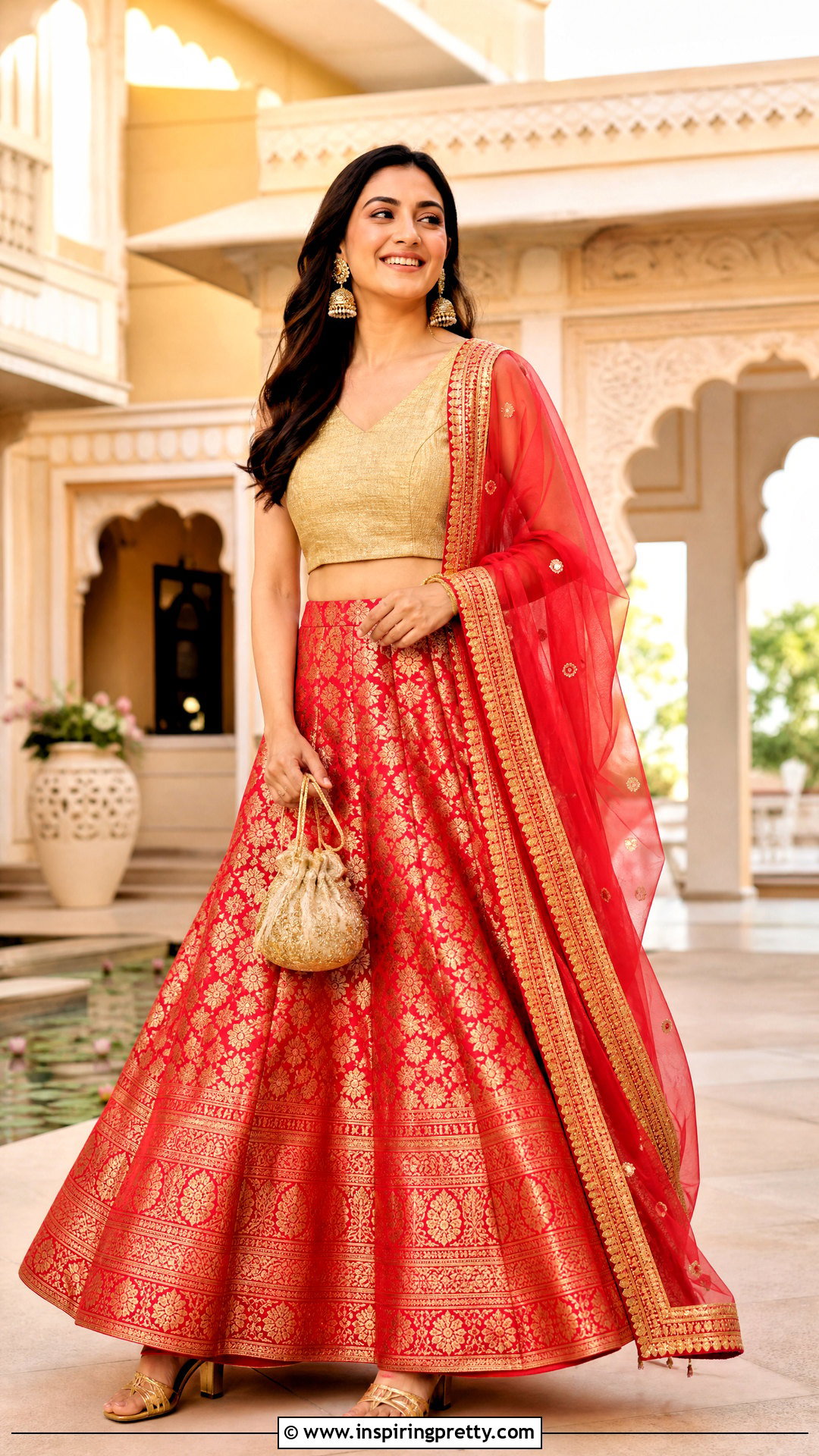
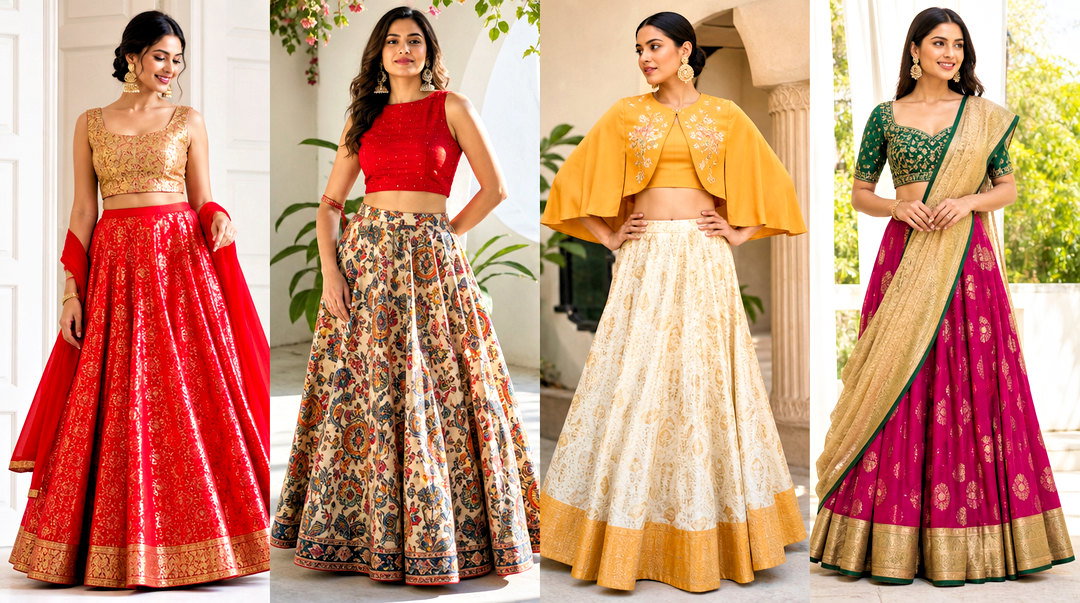
Red with gold is the pairing every family elder recognizes, and it still works because the two colors are built into the weave itself. I keep the fitted gold crop top in plain raw silk so it doesn't fight the floral zari and wide border. A light red organza dupatta adds formality when the ceremony needs it. Gold jhumkas, a few slim bangles and juttis or block heels finish it; a low bun keeps hair off the zari, which can catch on loose strands.
2. Green Banarasi Skirt With Ivory Silk Top
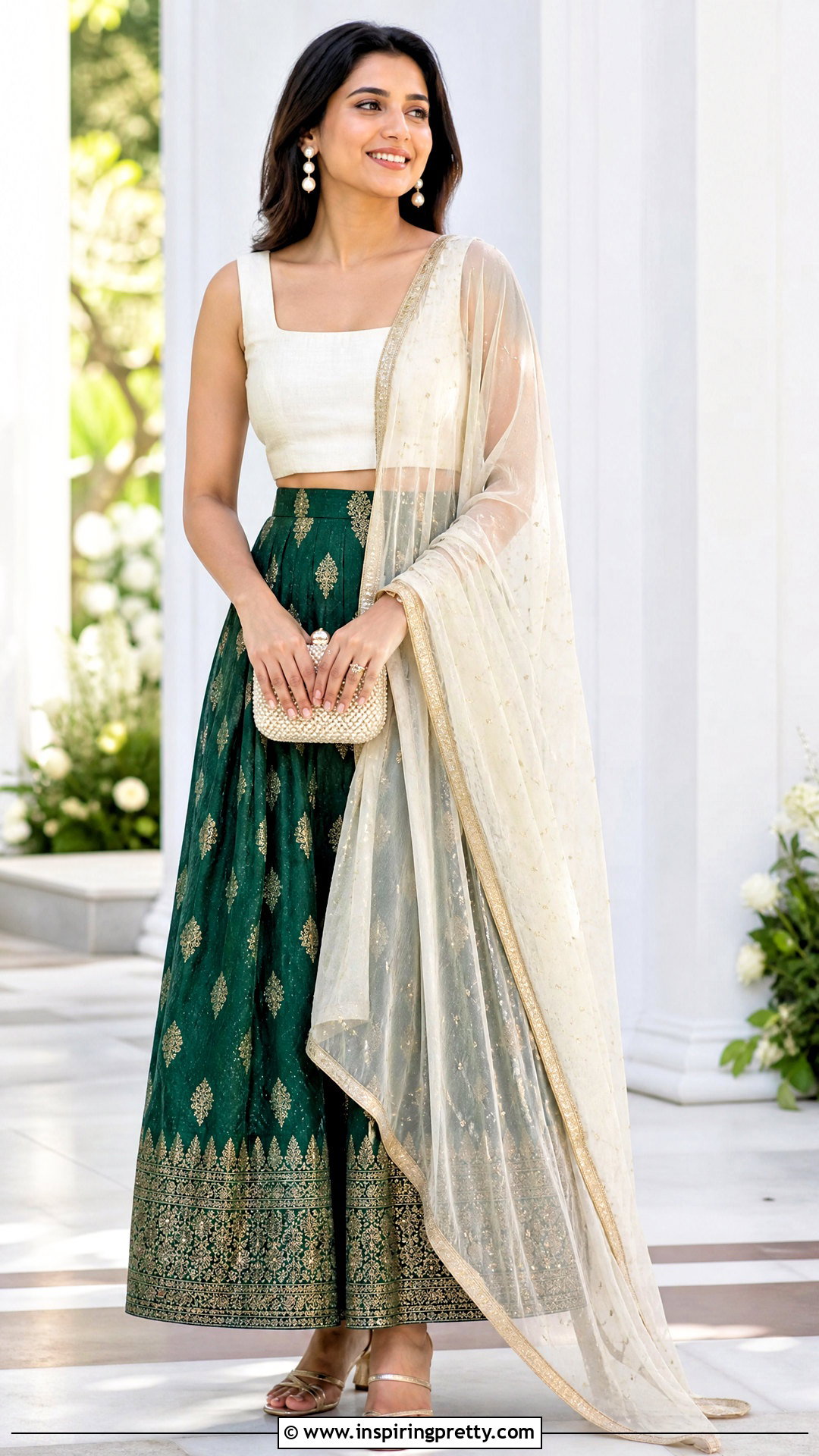
For a daytime wedding, emerald and ivory is the combination I suggest most often, because the pale top lets the antique-gold butis on the skirt show up in daylight. A boat or square neck in ivory raw silk keeps it clean. Pearls suit ivory far better than heavy gold here. If you add a dupatta, choose sheer ivory with a thin green edge so it doesn't hide the weave.
3. Pink Banarasi Skirt With Off-Shoulder Top
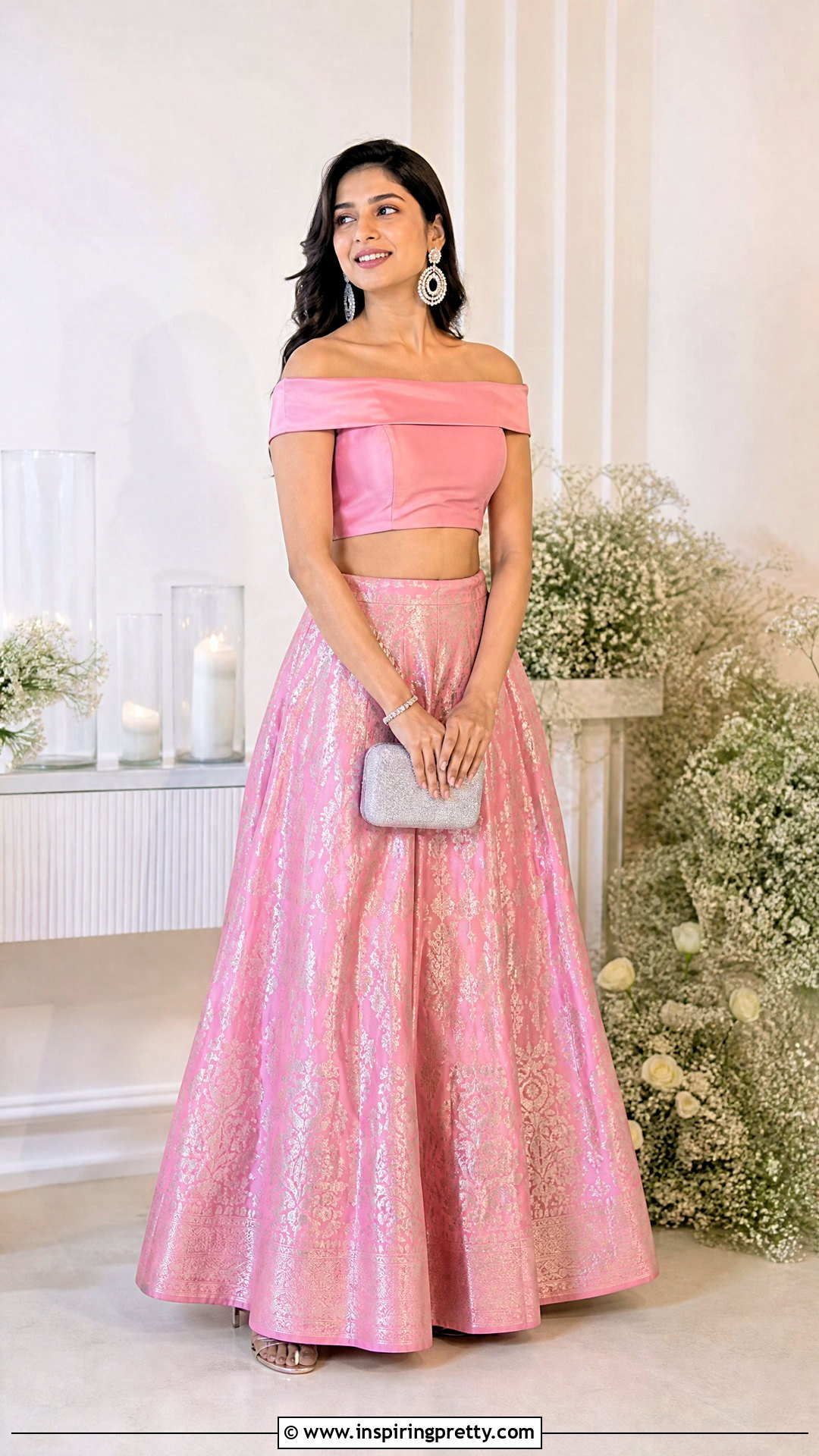
An off-shoulder top turns a bright pink Banarasi into something a younger guest will actually want to wear. Choose plain satin or raw silk for the top, since the shoulder line is already the feature. I'd only wear one with a firm inner bodice or wide band; a loose elastic keeps slipping every time you raise your arms to dance. Statement earrings, no necklace, and metallic heels you can stand in for hours.
4. Navy Banarasi Skirt With High-Neck Blouse
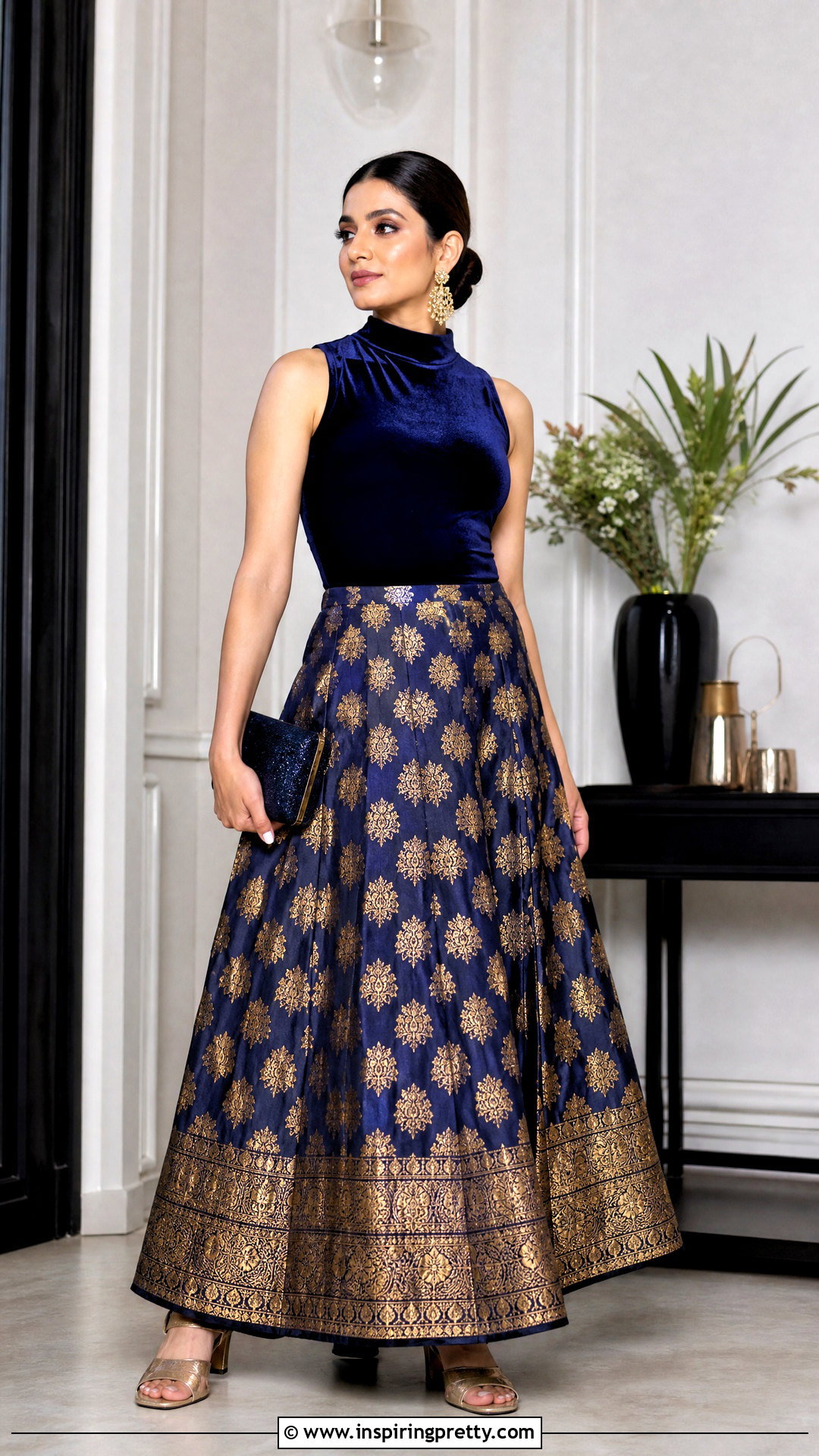
Navy is my favorite evening base for Banarasi because gold zari glows against it under warm lighting. A high neck in matching silk or velvet looks sleek; fitted long sleeves make it more formal. With a high neckline, skip the necklace entirely and put the jewelry into drop earrings. Pointed flats or low blocks matter more than you think at an evening reception with hours of standing.
5. Purple Banarasi Skirt With Peplum Top
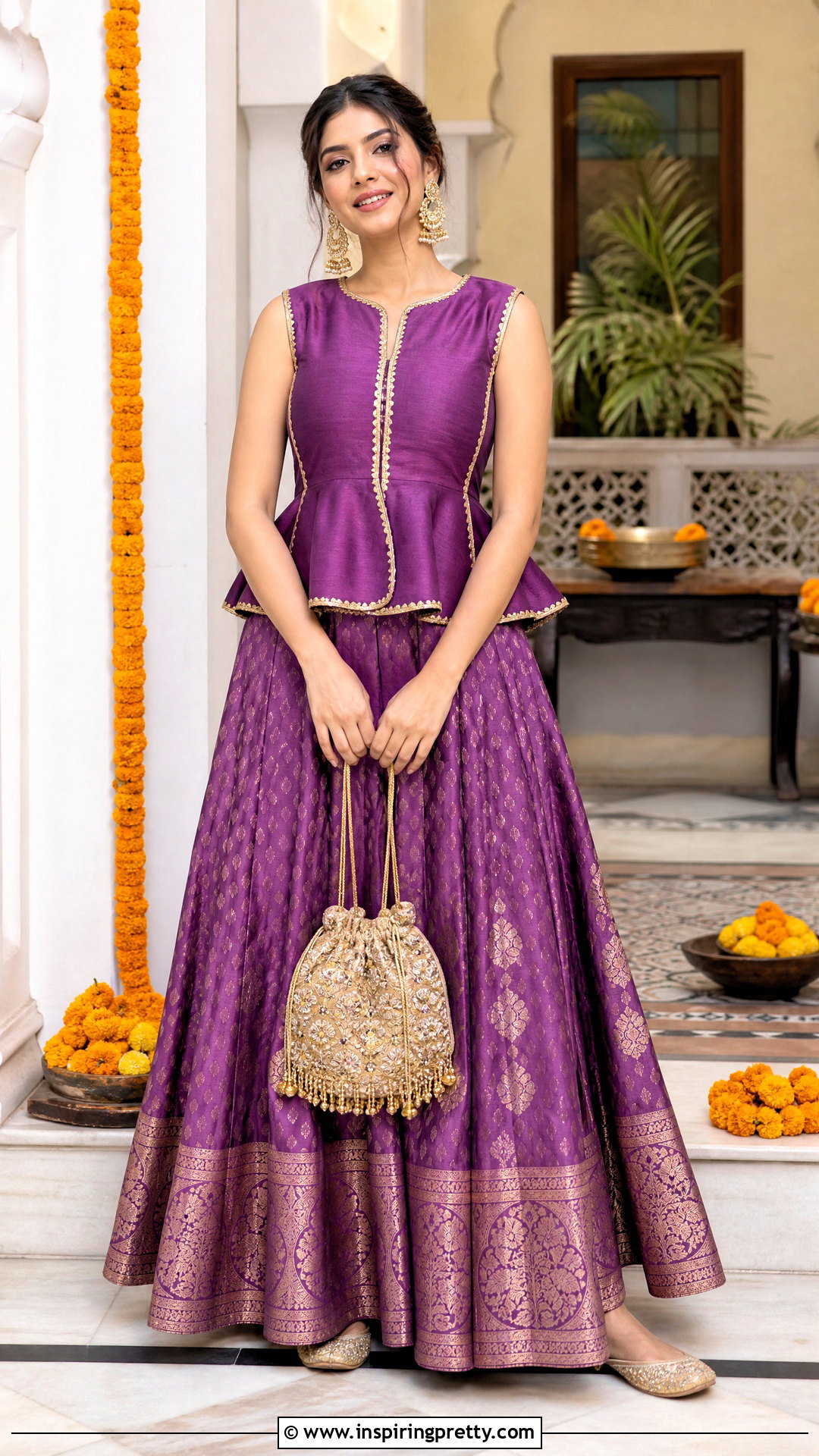
A short peplum gives definition at the waist, but the flare has to stop above the skirt's waistband so the two don't overlap into a thick band. Plum or aubergine with warm gold looks richest. Keep the peplum in plain silk with only a trim at the neckline. Because the peplum and woven skirt both carry shape, I usually leave the dupatta at home.
6. Mustard Banarasi Skirt With Maroon Blouse
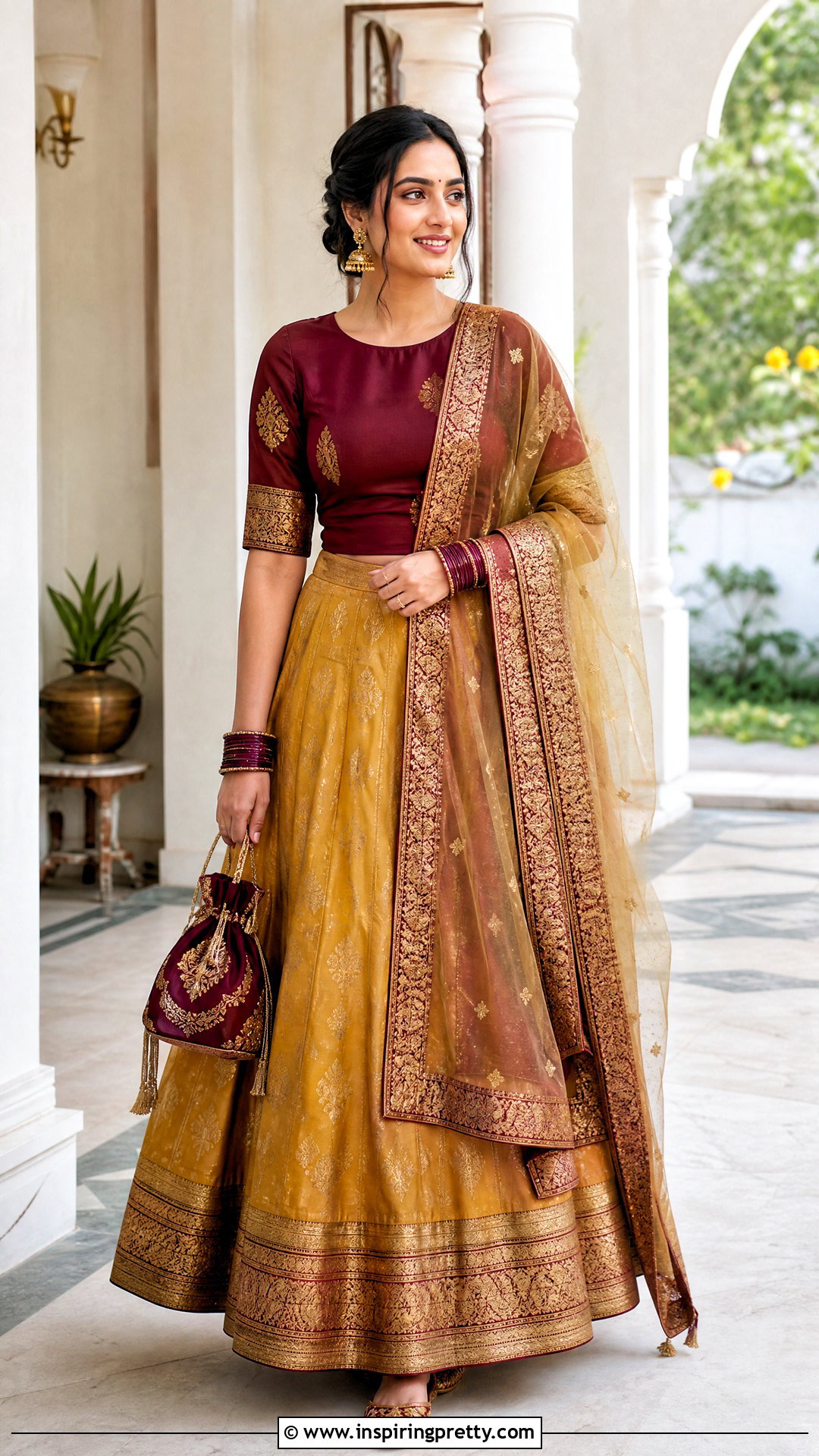
Mustard and maroon are an old festive pairing and they suit warm, golden skin tones especially well. Use the maroon blouse to anchor the brighter skirt; elbow sleeves give coverage for a puja or temple visit. A deeper back with secure tie-ups adds interest without exposing much. Temple-style earrings and juttis keep it traditional, and a plain, light dupatta lets the contrast stay visible.
7. Black Banarasi Skirt With White Shirt
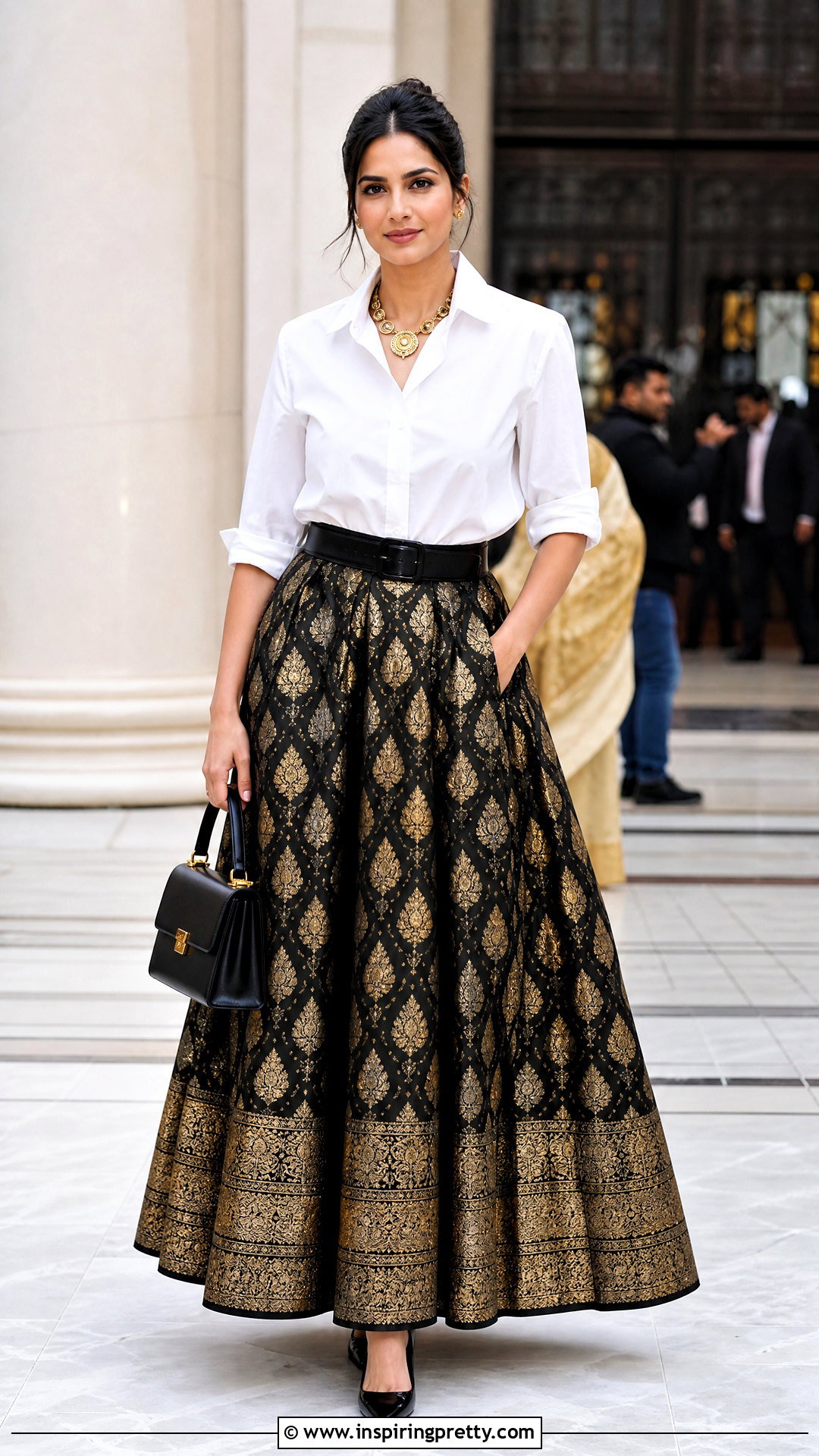
A white shirt is the quickest way I know to make a Banarasi skirt feel modern. It works best with a black skirt that has subtle gold weaving rather than busy multicolor motifs. Tuck a fitted cotton-silk shirt in, roll the sleeves and open the top two buttons. A belt is fine only if it doesn't sit on top of the woven border. It is a smart choice for a cultural dinner where a full lehenga would feel like too much.
8. Maroon Banarasi Skirt With White Satin Shirt
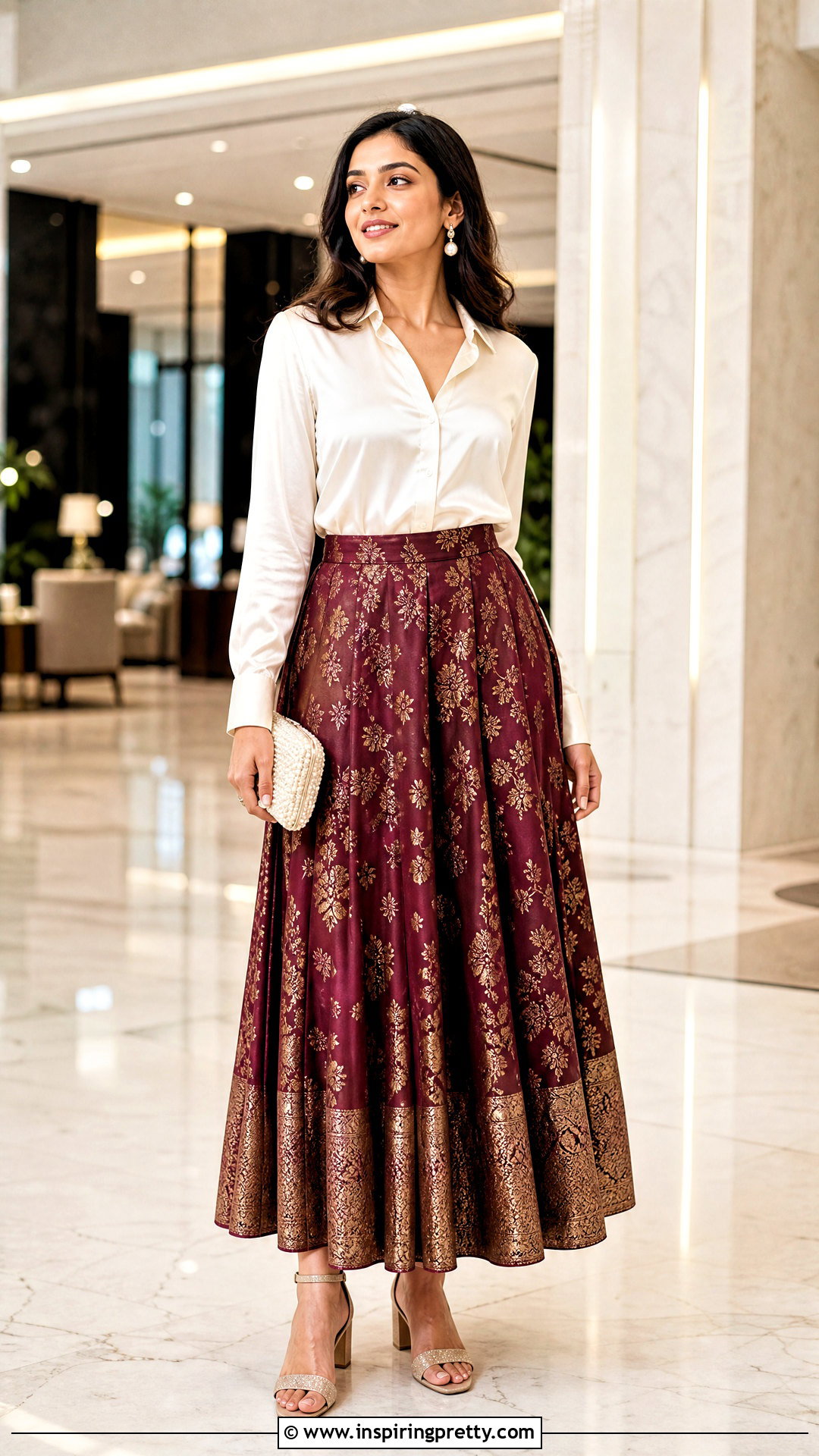
Satin against maroon zari gives two kinds of shine: soft and liquid on top, crisp and metallic below. I tuck the shirt fully for anything formal; a knotted hem reads too casual next to brocade. Choose pearls in the ears or at the neck, not both. This is the pairing I recommend when someone wants to rewear an heirloom skirt without looking dressed for a wedding ceremony.
9. Burgundy Banarasi Skirt With Velvet Top
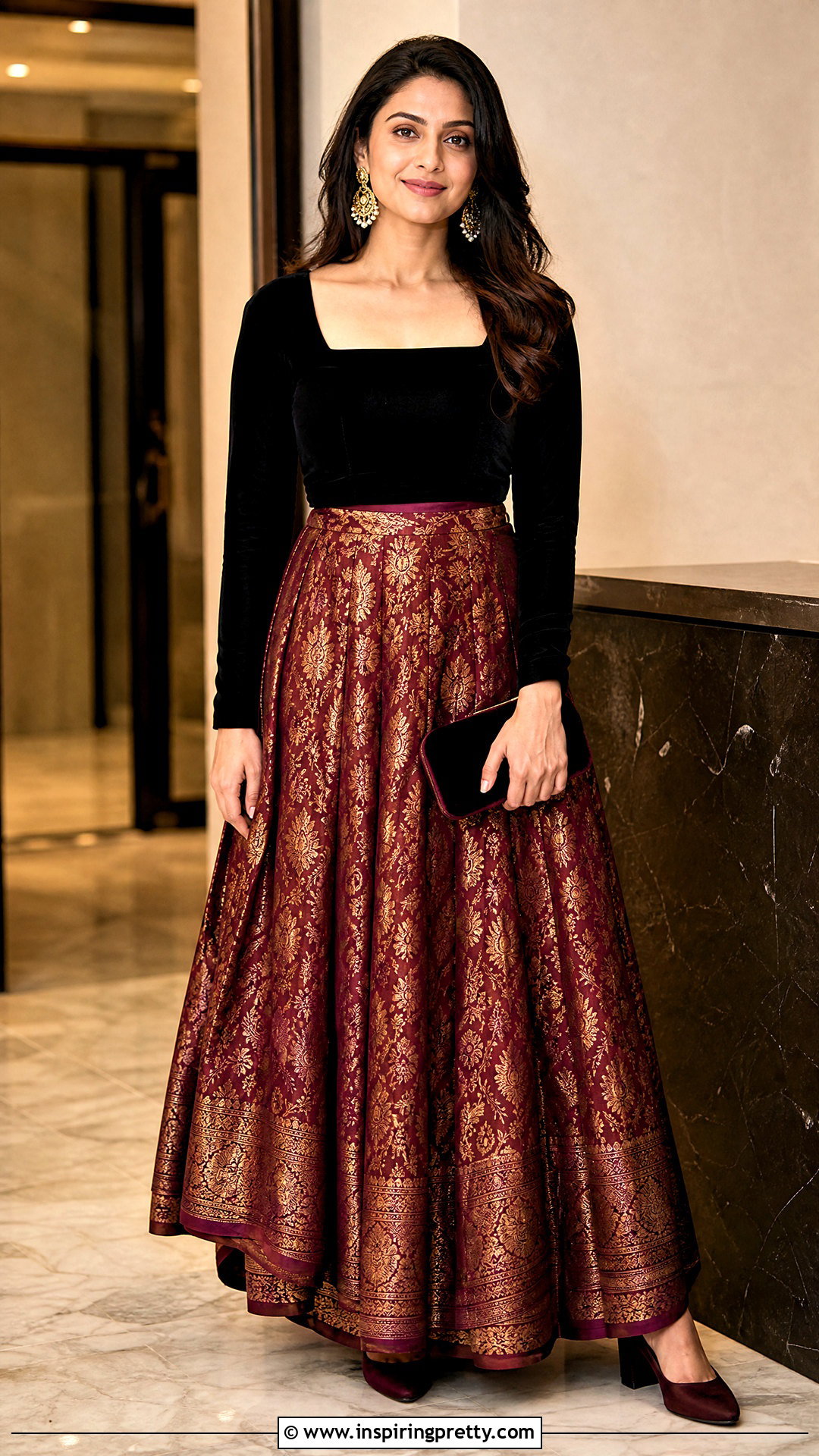
Velvet is the top I reach for at winter weddings, since it's warm and its matte pile makes the zari look brighter by contrast. A square neck with three-quarter sleeves in black, wine or bottle green suits a burgundy skirt. Leave the velvet plain; velvet plus heavy embellishment plus brocade is too much weight on the body. Closed-toe heels are kinder on cold evenings.
10. Royal Blue Banarasi Skirt With Corset Top
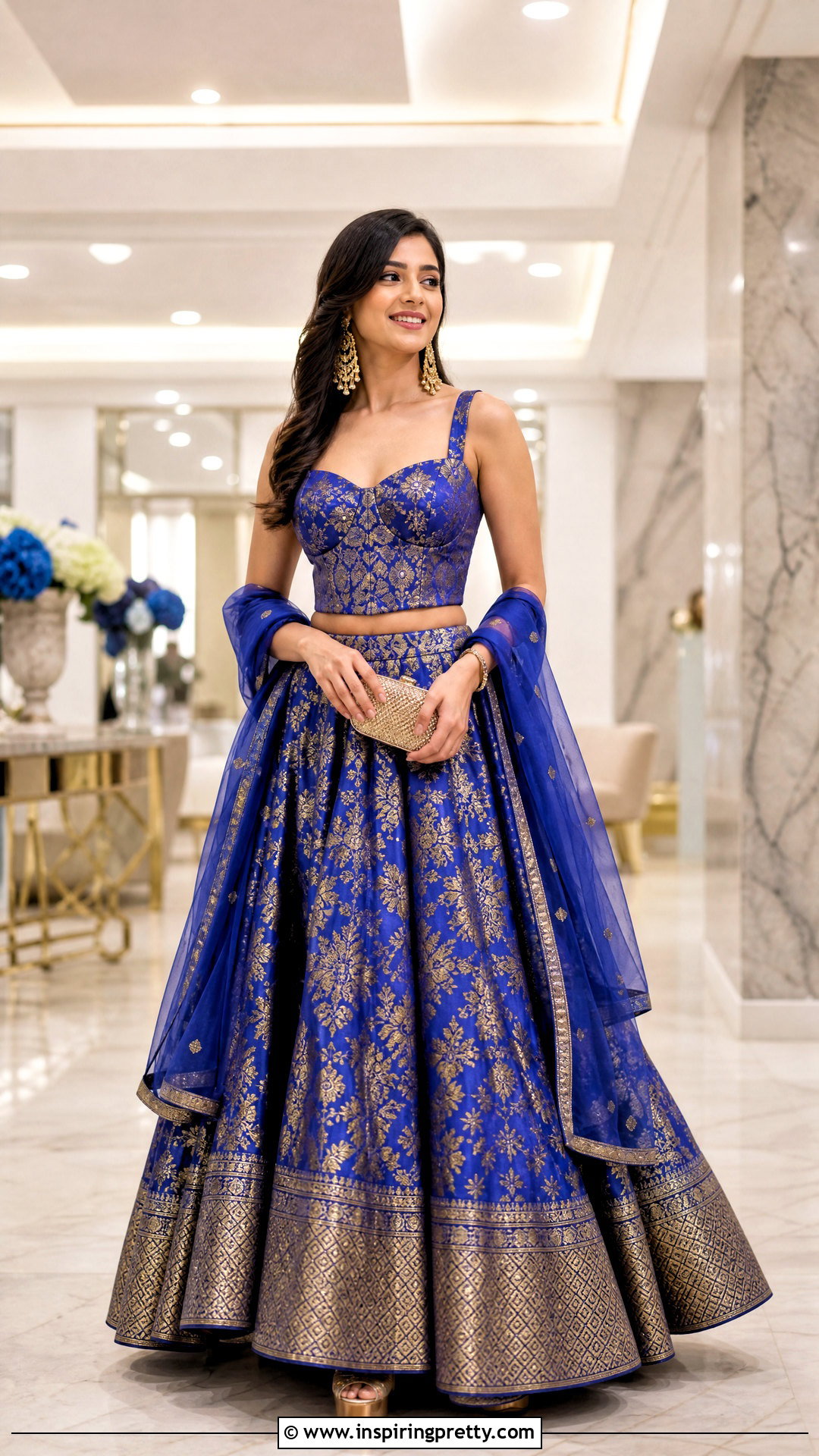
A corset top gives a royal blue Banarasi a clean modern line, but I check the boning before anything else. Wide straps and a secure back closure mean you're not hitching it up all night. Gold piping ties it to the zari. A sheer blue dupatta over one shoulder brings back a traditional note. Platform heels are steadier than stilettos on a dance floor with a heavy skirt.
11. Blush Banarasi Skirt With Organza Top
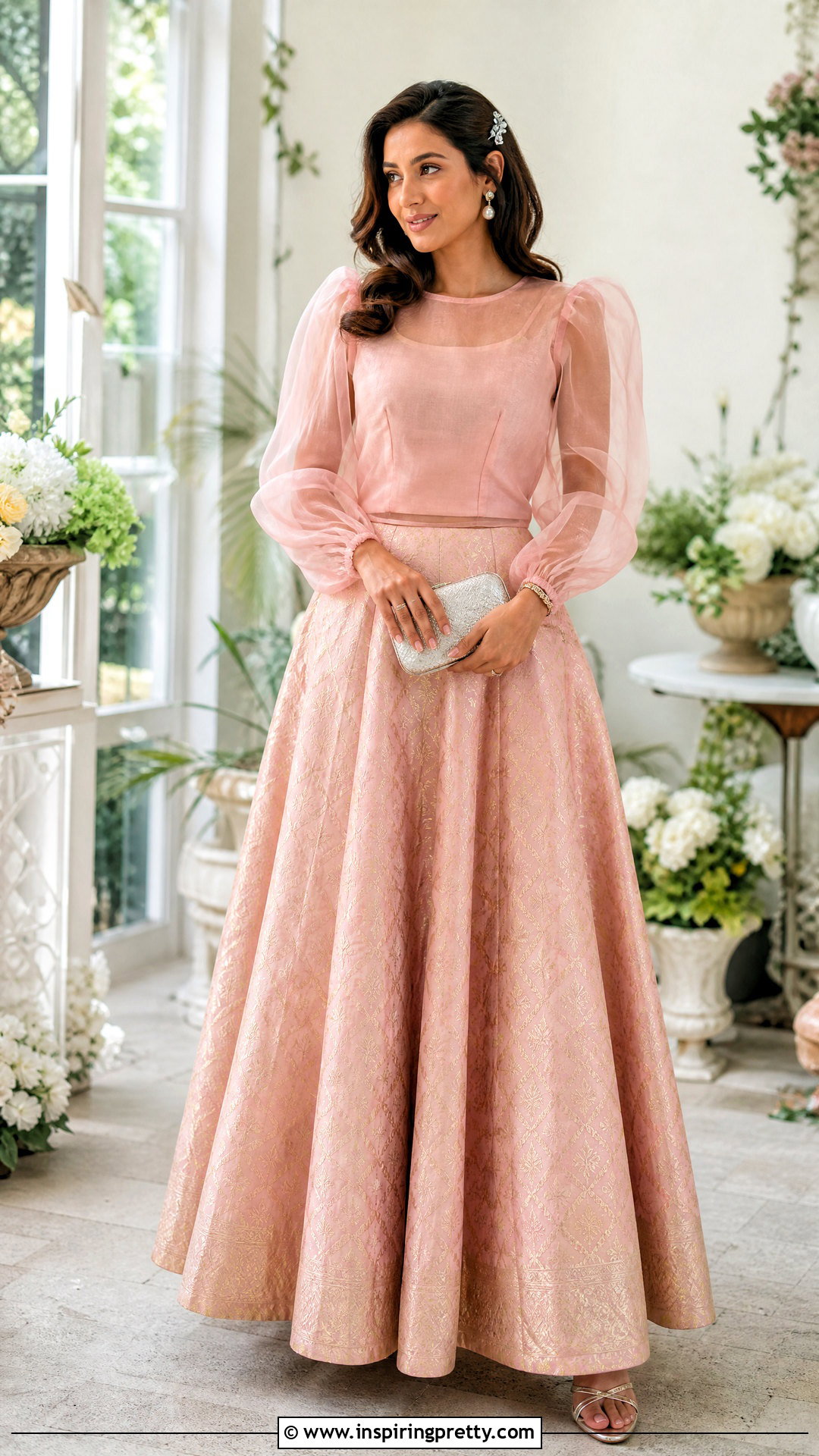
Blush is the shade to choose when you want Banarasi without the boldness. Silver zari keeps it cool and soft. A lined organza top with sheer puff sleeves adds lightness against the dense silk. Avoid heavy chain necklaces here; organza snags and frays easily. It suits a day ceremony or engagement in warm weather far better than an evening event.
12. Mint Banarasi Skirt With Cape Top
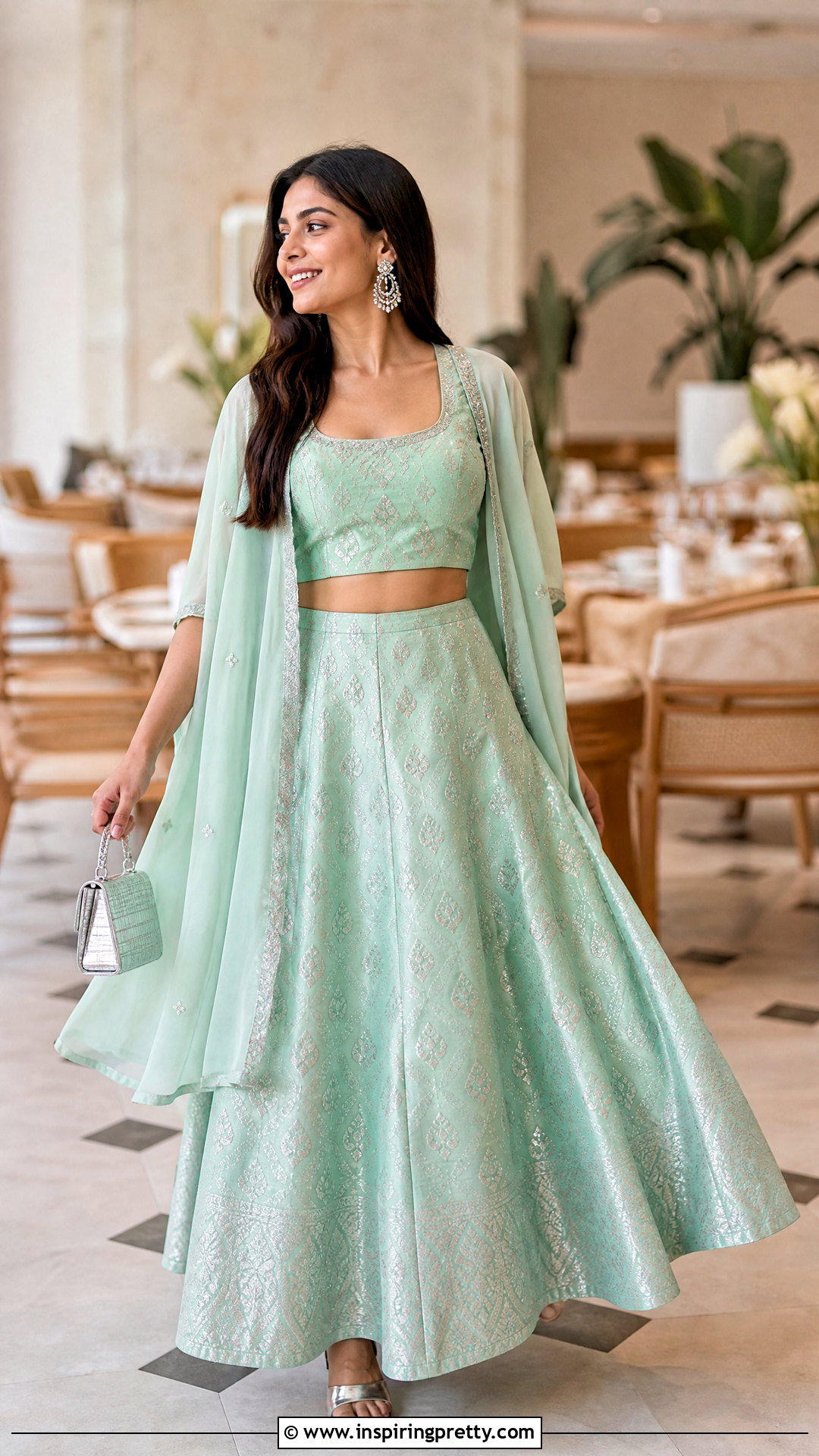
Mint is a cool, fresh shade for daytime, and a cape gives arm coverage without the heat of a sleeve. Let the cape end around the hip; anything longer hides most of the skirt. Attach it at the shoulder seam so it doesn't slide. A sleeveless fitted blouse underneath and a sleek ponytail keep the shoulders clear.
13. Orange Banarasi Skirt With Halter Top
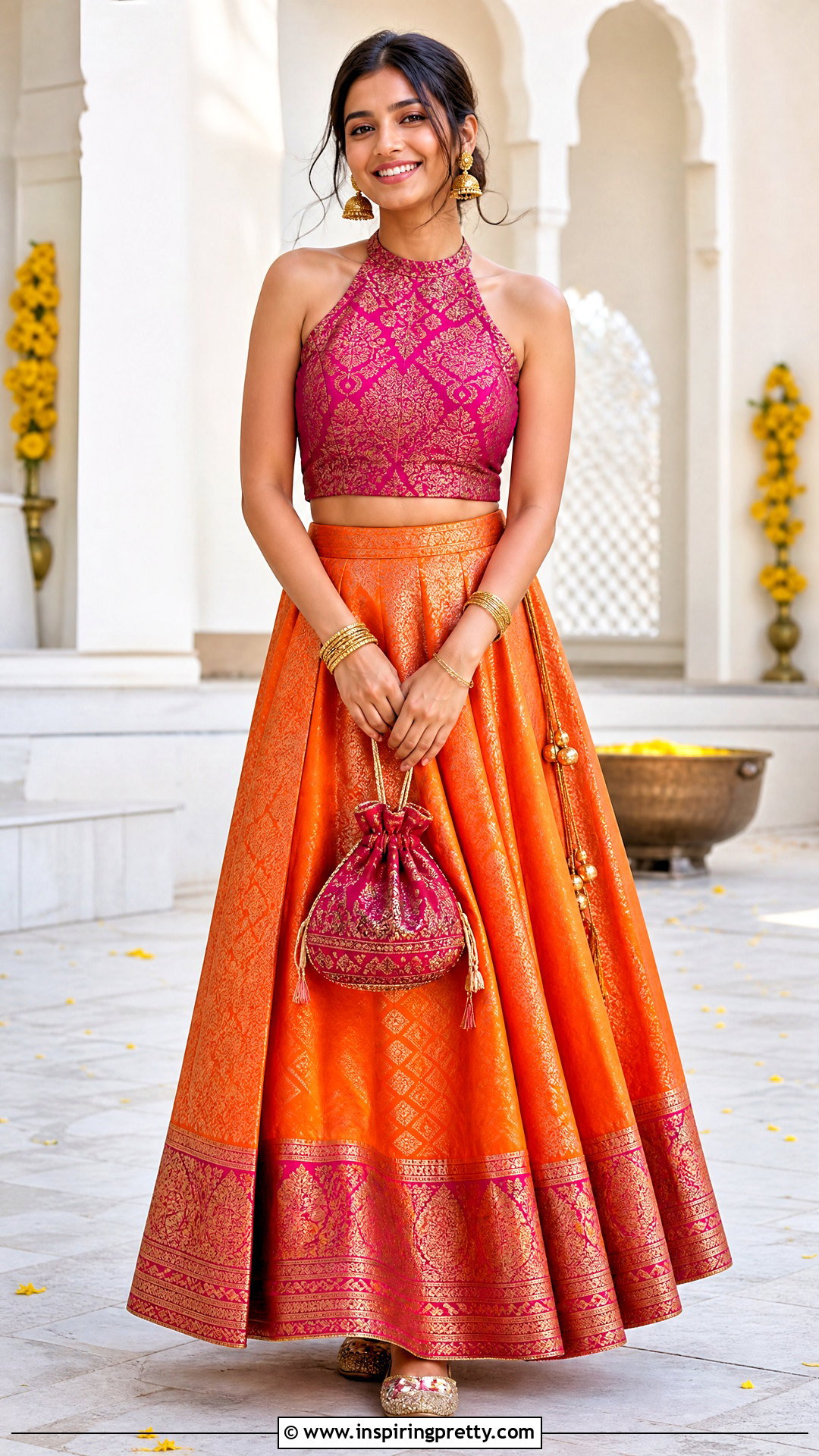
Orange is loud, and the best way to wear it is with an equally confident top in magenta, red or antique gold. A halter needs a broad neck strap; thin ones dig into the neck under the weight of a heavy skirt pulling the body down all day. Skip the necklace, wear medium jhumkas, and drape any dupatta over the arms so it doesn't cover the halter line.
14. Ivory Banarasi Skirt With Pearl Blouse
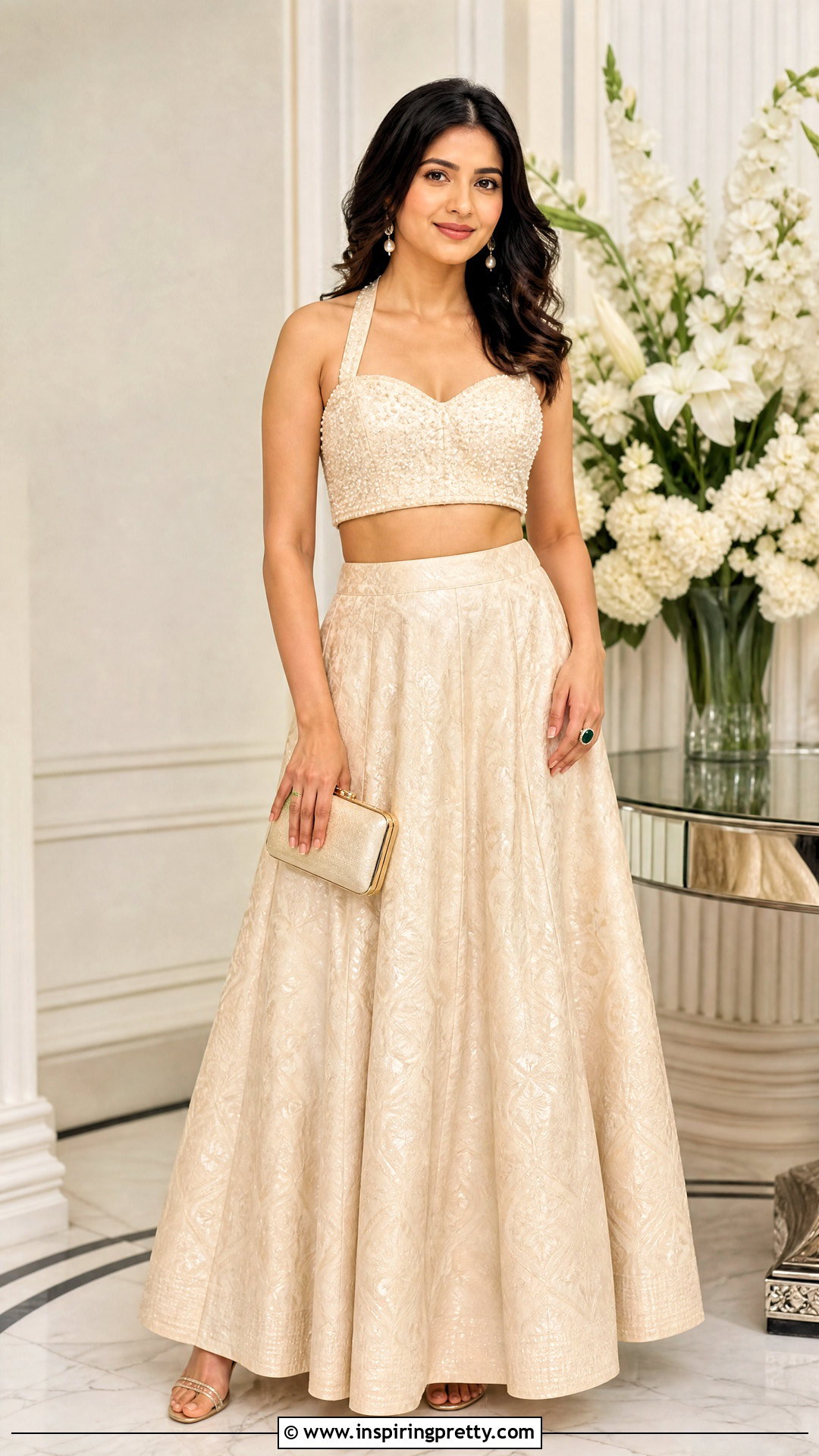
Ivory on ivory reads quiet and expensive, provided the textures differ. The skirt brings tonal weaving; scattered pearls on a fitted bodice add a soft sparkle. I'd avoid dense beading, which adds weight and makes the bodice stiff. A single colored stone ring gives the eye one small point to land. This works for engagements and daytime receptions where bright colors would feel too much.
15. Teal Banarasi Skirt With Balloon-Sleeve Top
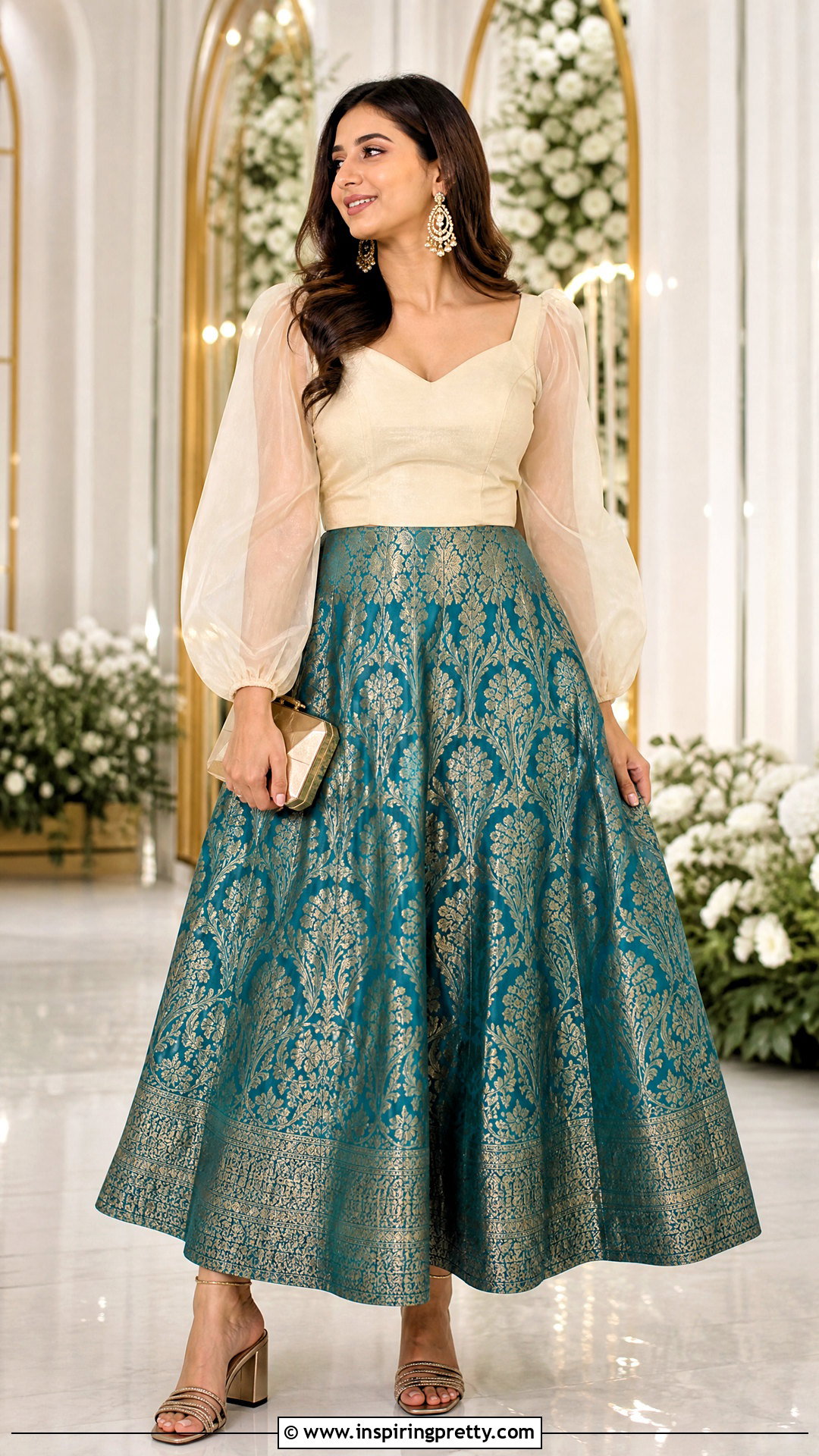
Balloon sleeves on top and a full skirt below means two big shapes, so the bodice must fit closely at the waist to separate them. Sheer organza sleeves gathered at the wrist keep the volume light. A teal skirt with geometric motifs is a strong base; ivory or gold tops coordinate easily. I'd skip the necklace because the sleeves already carry the drama.
16. Magenta Banarasi Skirt With Wrap Top
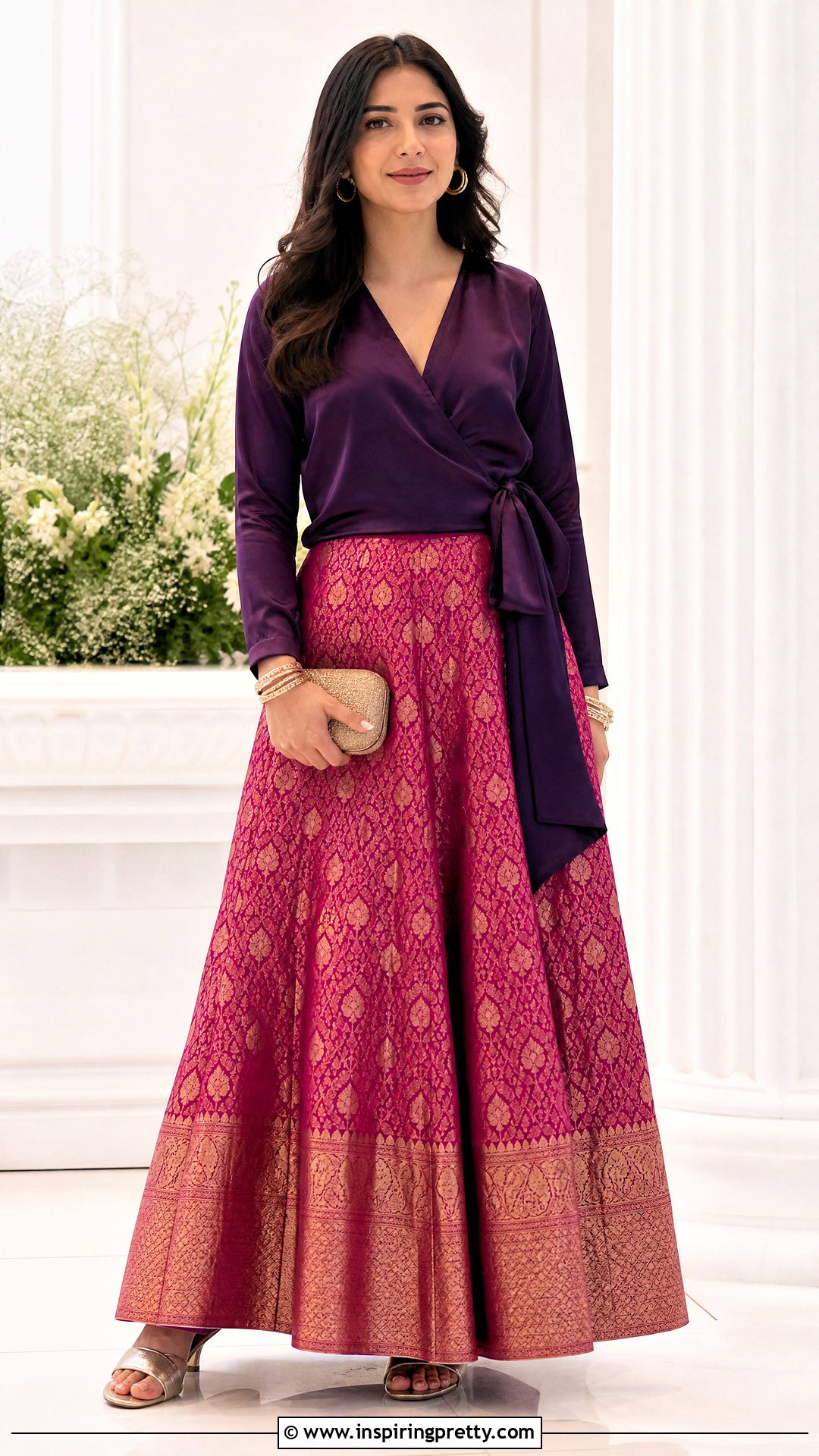
A wrap top is my practical choice for long functions because you can loosen the tie after the meal. Choose silk or satin with an inner snap so the V-neck stays where you put it when you lean forward. Ivory or deep purple contrasts with magenta; a matching magenta top creates a longer, taller line. Add a dupatta only if the occasion needs it, since it covers the tied waist.
17. Gray Banarasi Skirt With Silver Blouse
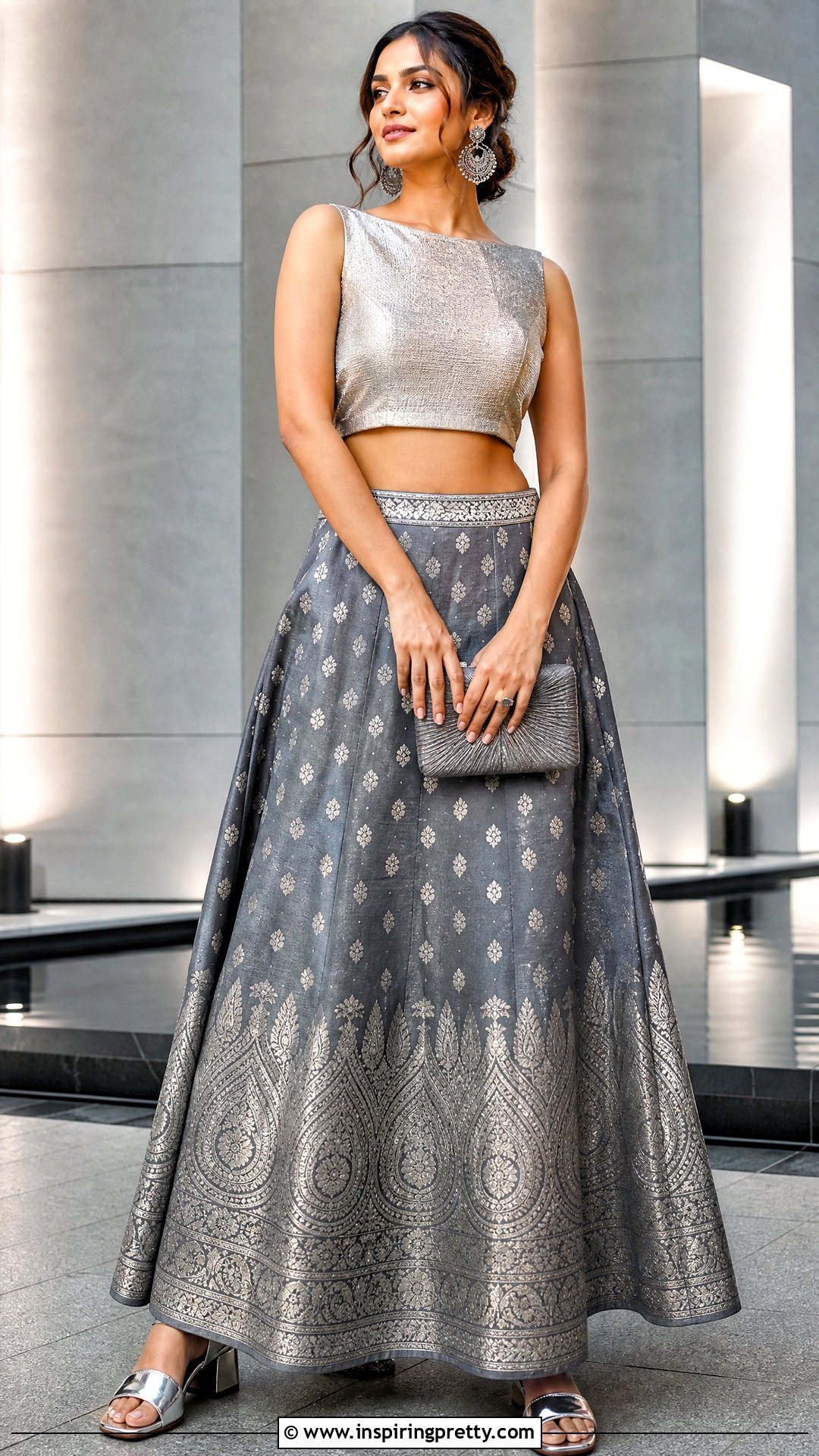
Charcoal gray with silver zari is the Banarasi I'd suggest to anyone who finds traditional colors too bright. A silver raw-silk blouse in a boat or square neck keeps the palette quiet. Keep sequins to a minimum; under stage lighting they wash out the woven pattern. Oxidized silver earrings feel handmade; crystal drops are more formal. A berry lip adds the one touch of color it needs.
18. Green Banarasi Skirt With Gold Jacket Top
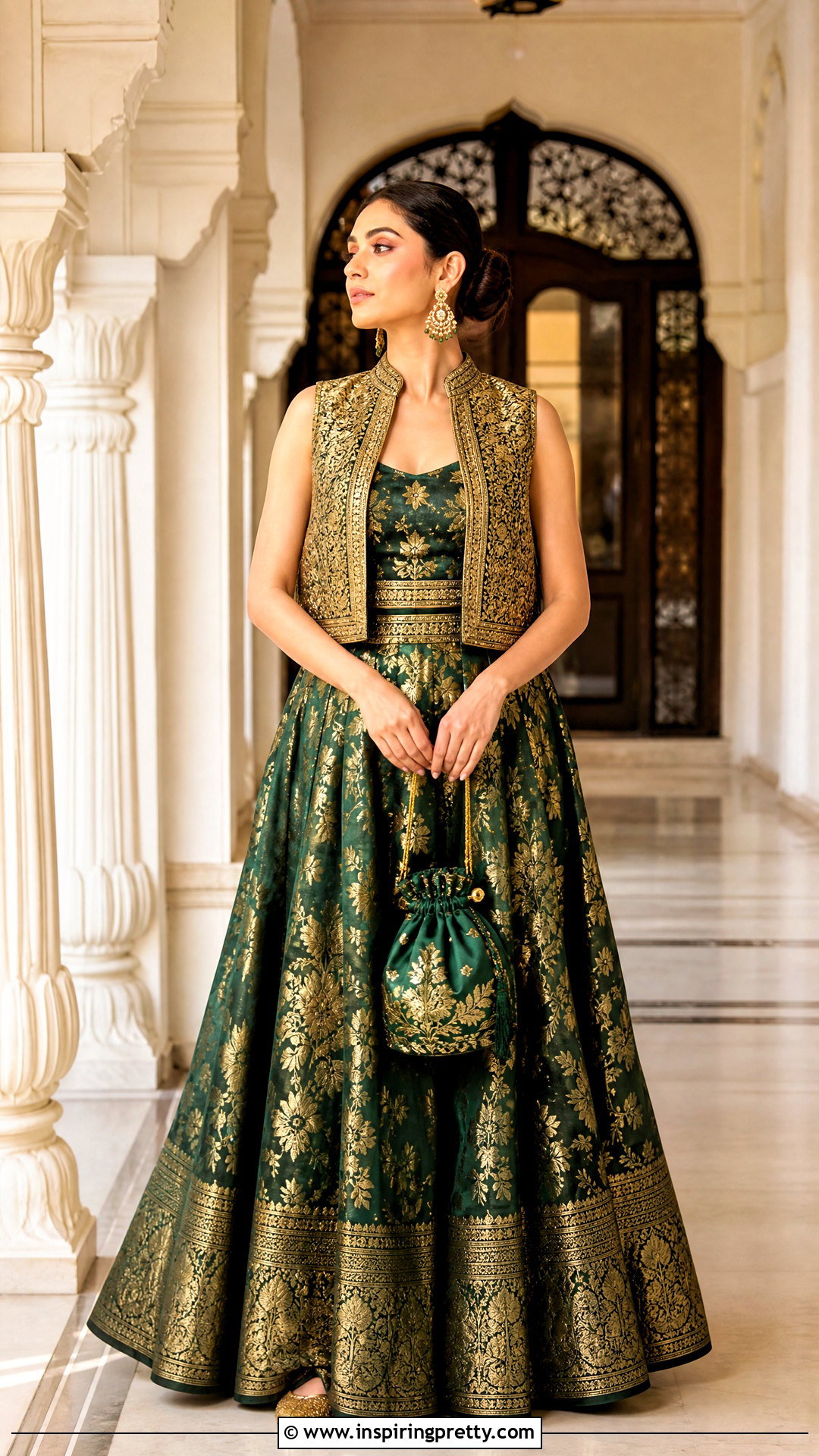
A short gold jacket gives a green skirt structure and coverage for cooler ceremonies. Wear a plain sleeveless blouse underneath and keep the jacket at waist length so the skirt's waistband motifs still show. Light embroidery on collar and cuffs is enough. When the jacket has a decorated neckline, I keep the hair in a sleek bun so nothing competes.
19. Gold Banarasi Skirt With Black Turtleneck
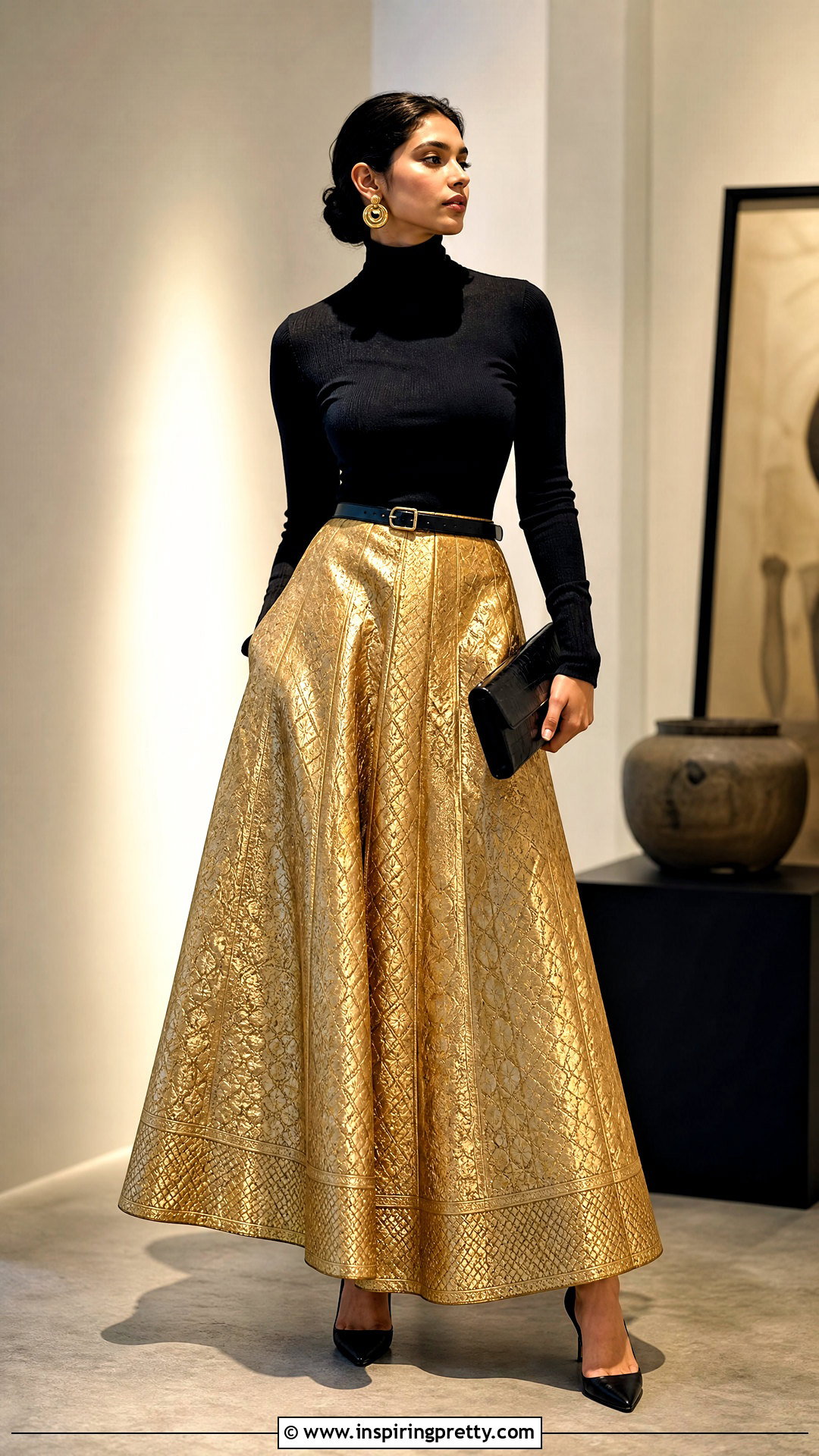
A fitted black turtleneck is my answer for wearing a gold Banarasi to a cool-weather party. Use a thin knit or jersey, since thick knits bunch under the waistband and add bulk at the hip. The turtleneck makes the skirt the only decorative piece. Sculptural gold earrings, black pumps and a sleek ponytail finish it.

20. Pink Banarasi Skirt With Denim Shirt
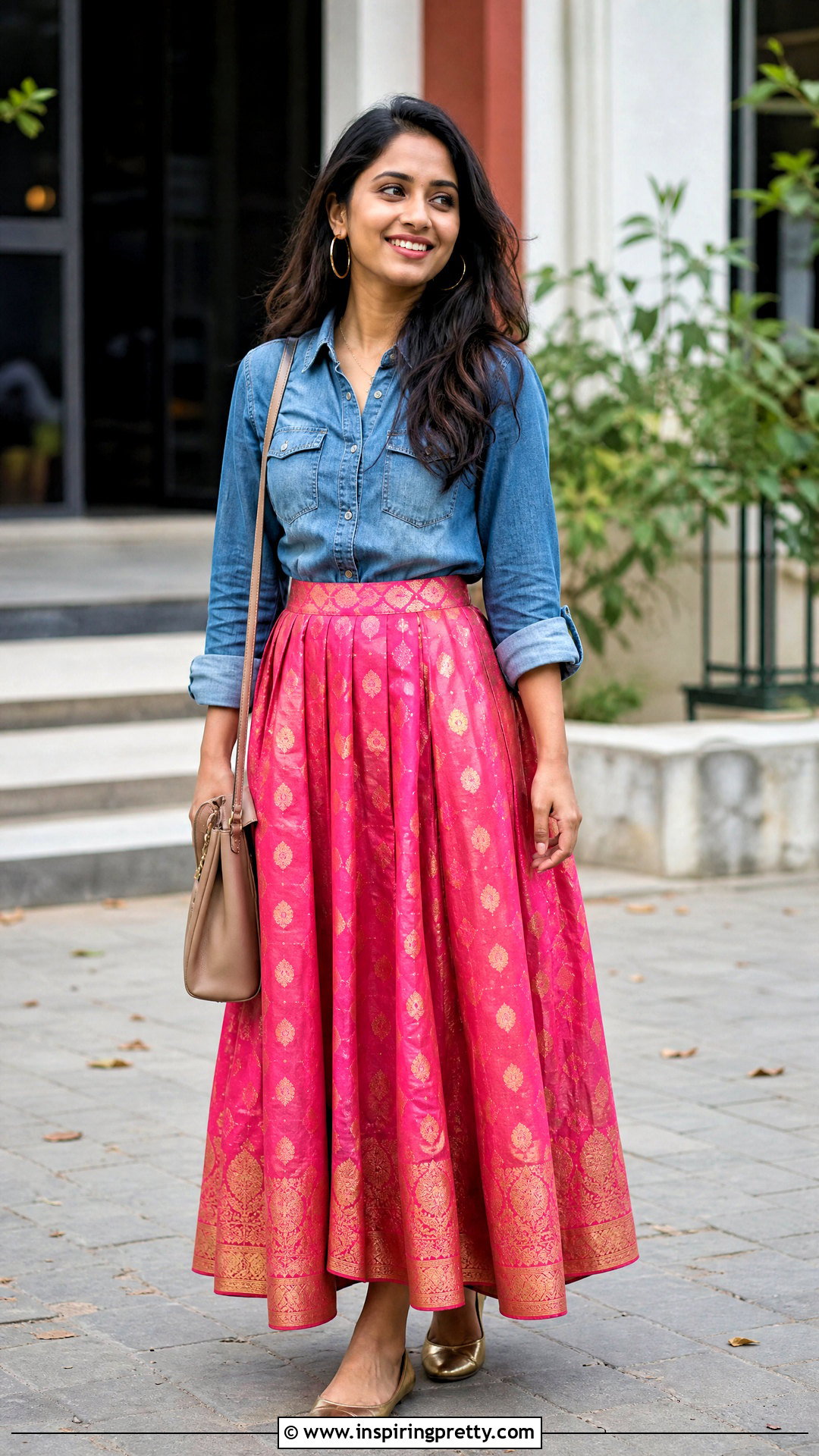
Denim takes Banarasi silk down to a college festival or daytime fair. Pick a medium-wash fitted shirt with no distressing; ripped denim next to zari looks careless rather than deliberate. Tuck fully, roll the sleeves to the elbow and leave the collar open. Gold hoops, bangles and flats or juttis keep the outfit easy to move in.
21. Red Banarasi Skirt With Embroidered Kurti
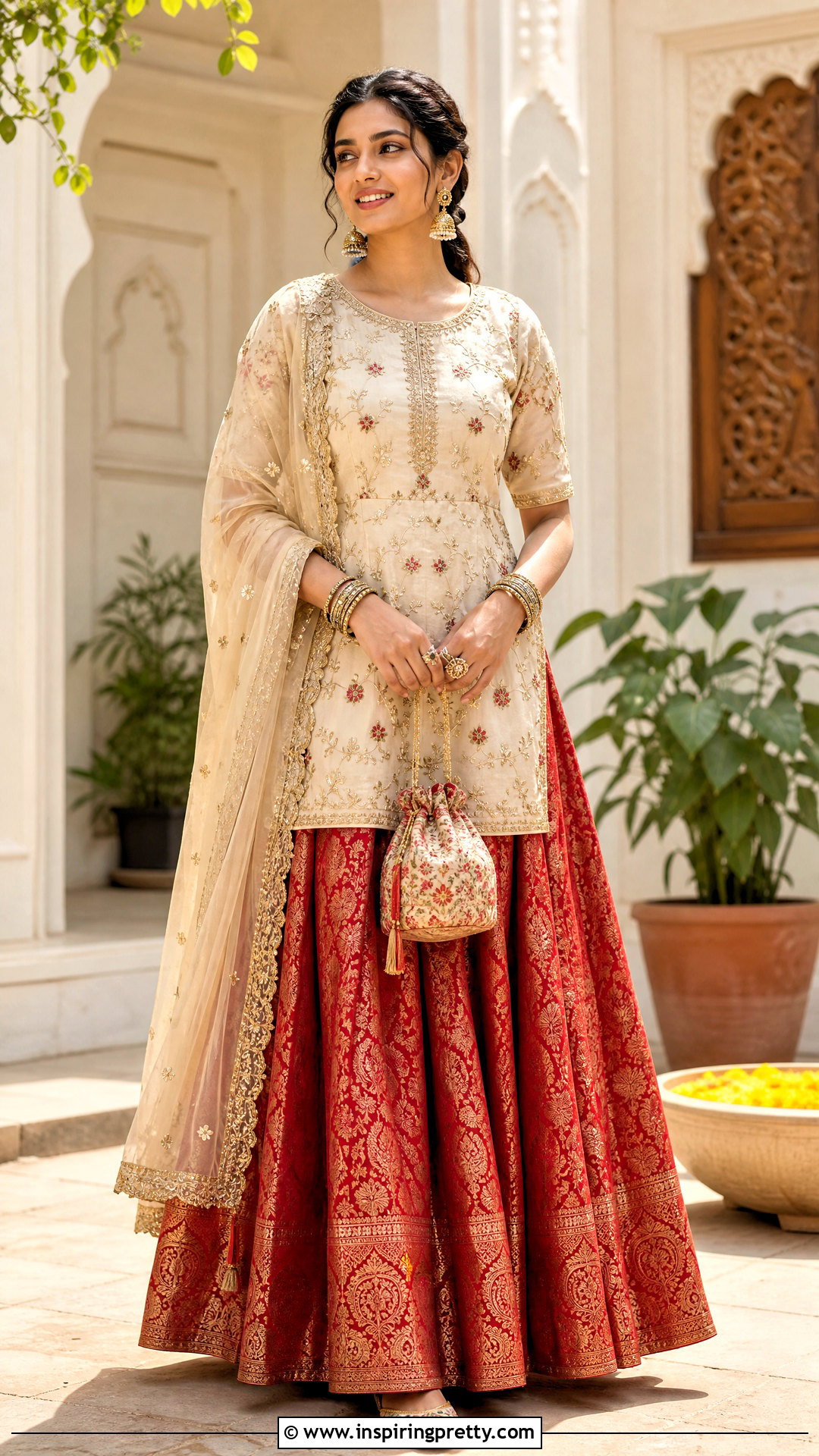
A short embroidered kurti is the most modest way to wear a Banarasi skirt, and I recommend it for pujas and gatherings with older relatives. It should end just below the waistband so the skirt still flares. Ivory, green or mustard embroidery that repeats the skirt's gold looks intentional. Three-quarter sleeves and a round neck are comfortable through a long day of sitting on the floor.
22. Purple Banarasi Skirt With Asymmetrical Top
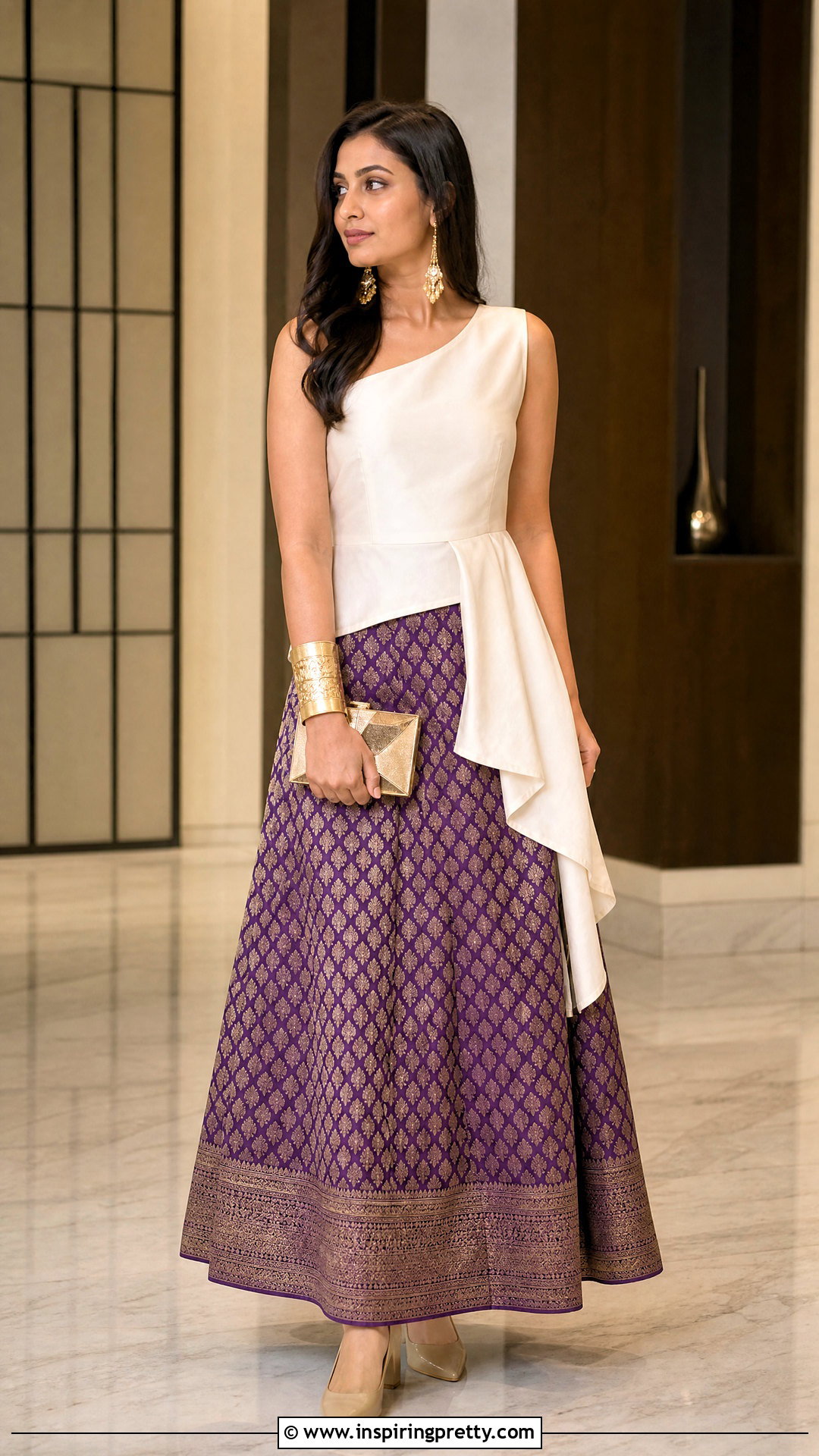
An asymmetric hem adds a modern line, but it must not sweep across the skirt's main motifs. I like a fitted top that ends at the waist on one side and dips a little on the other. Ivory, black or metallic keeps the shape readable. Pick a single bold accessory, such as long earrings or one cuff, and stop there.
23. Maroon Banarasi Skirt With One-Shoulder Top
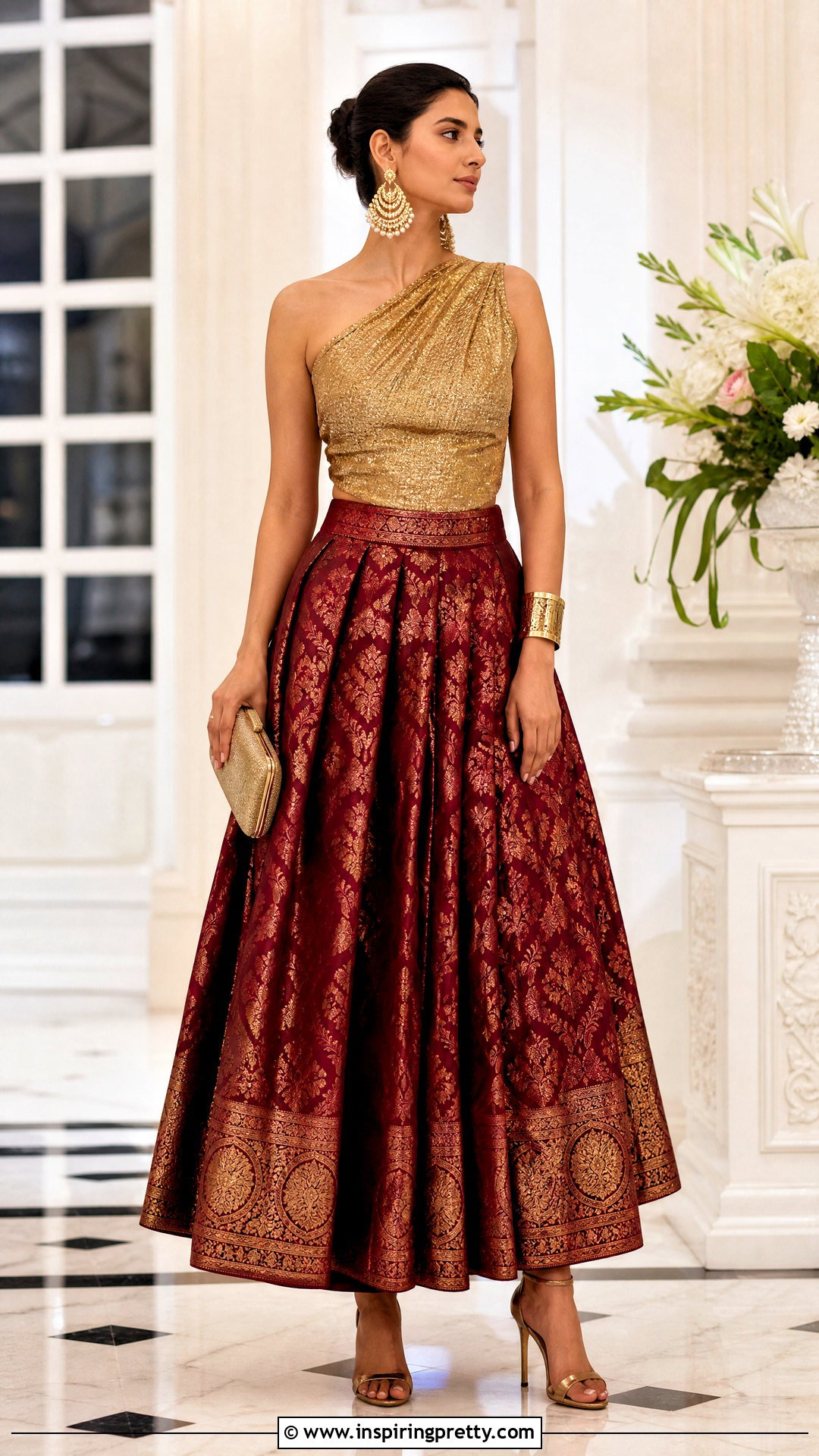
A one-shoulder top needs real structure to stay up through a reception; a soft drape without inner support keeps sliding. Antique gold, blush or burgundy all suit maroon. A small draped detail at the shoulder is enough. Leave the neck bare and sweep hair to the opposite side. For coverage, a light cape stitched at the shoulder works better than a dupatta, which hides the line.
24. Blue Banarasi Skirt With Brocade Blouse
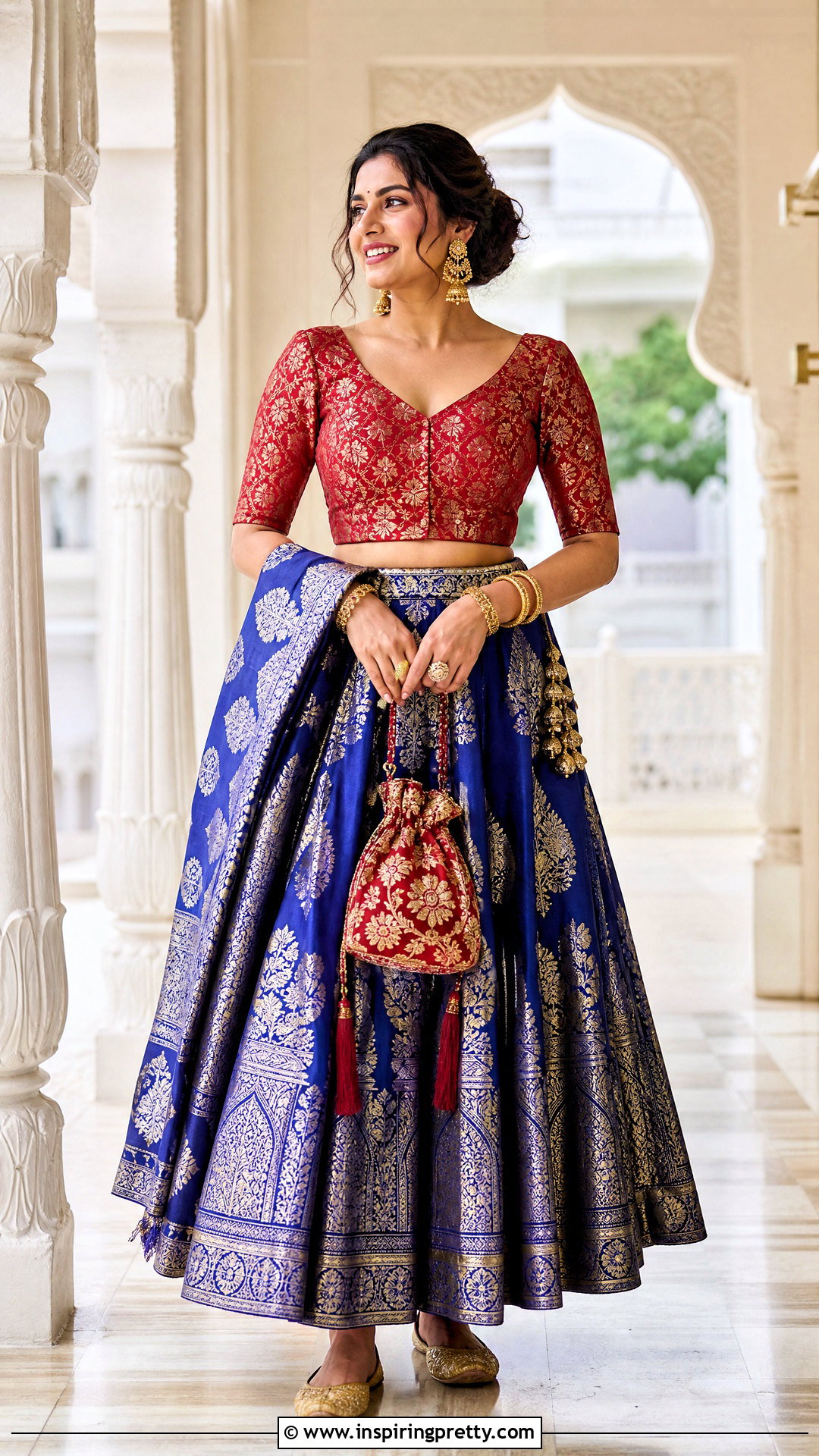
Brocade on brocade can work if the blouse motifs are noticeably smaller than the skirt's; same-size motifs blur into one busy surface. A contrasting color such as red, fuchsia or green separates the two. Elbow sleeves and a broad round neck suit most ages. If you need a dupatta, plain organza with a narrow border is enough.
25. Green Banarasi Skirt With Raw Silk Top
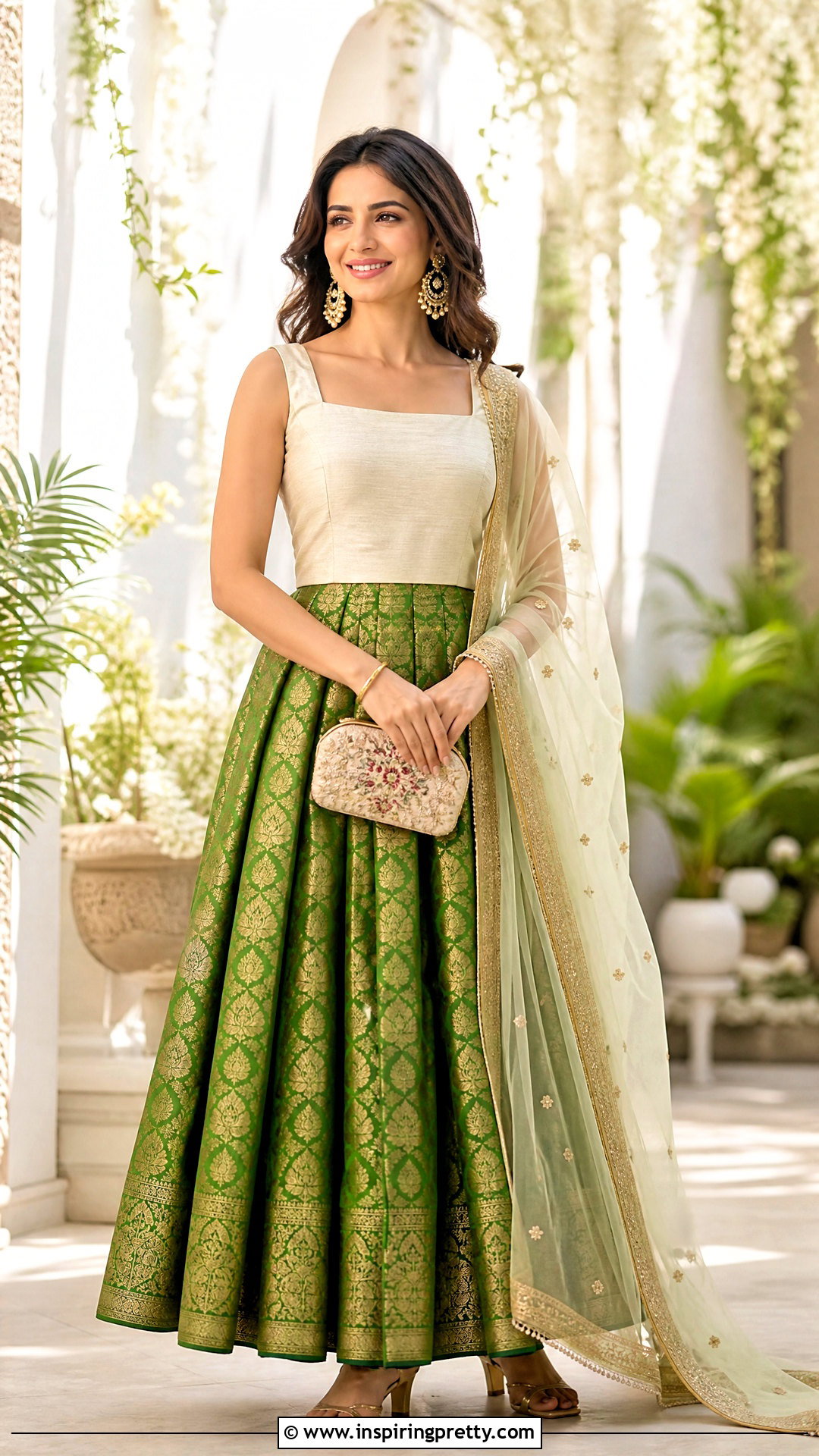
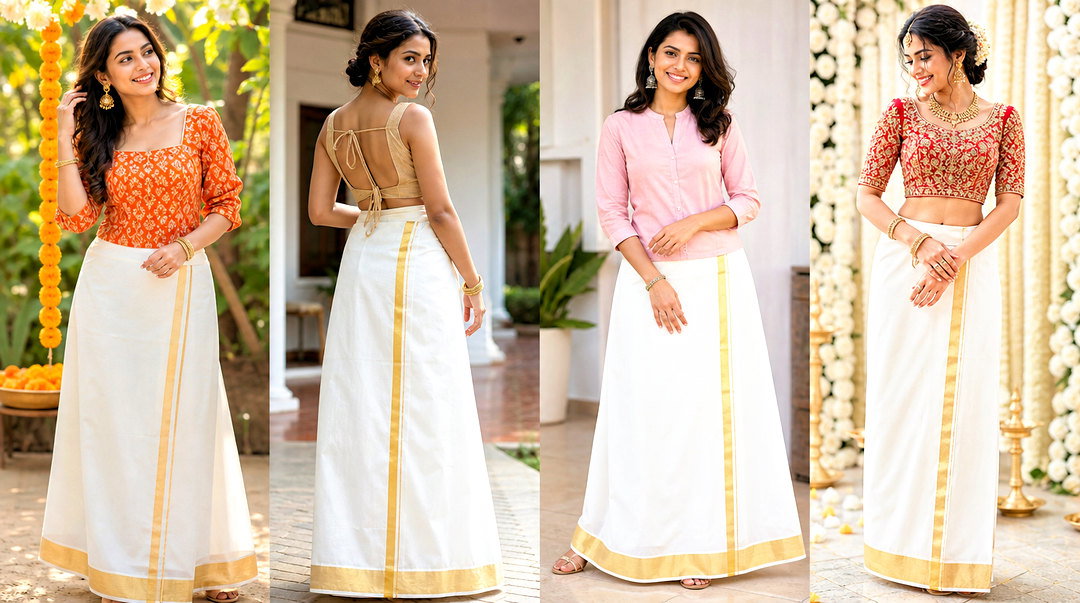
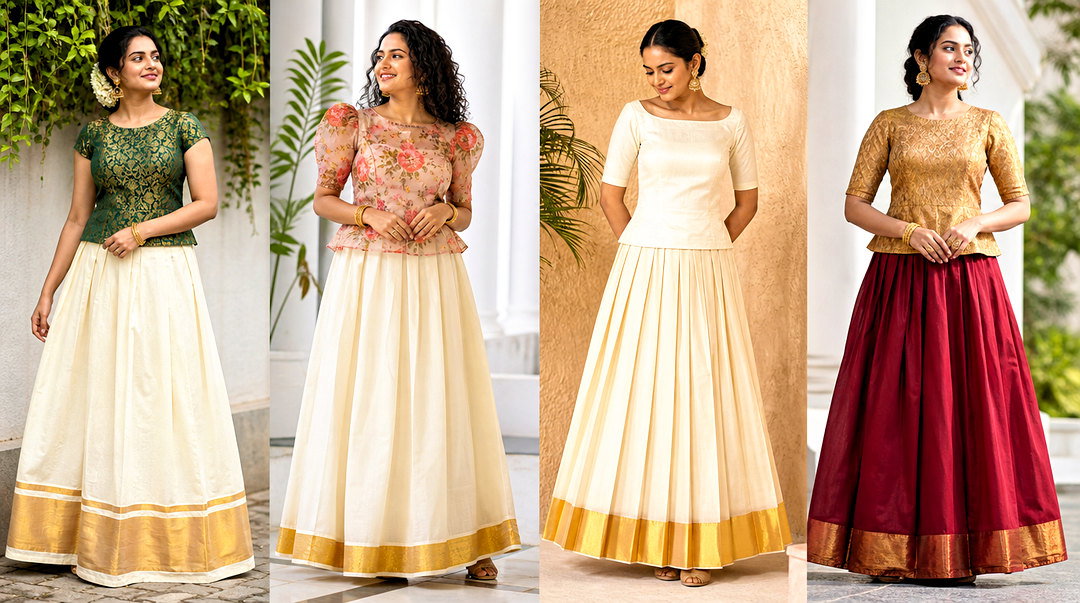
Raw silk has a slightly slubbed, matte surface, so it calms a lustrous green Banarasi. I'd choose a sleeveless top in ivory, mustard or rust with a clean square neck and sharp tailoring. Covered buttons or piping add quiet detail. Low gold blocks are the shoe I recommend for long ceremonies.
26. Pink Banarasi Skirt With Ruffle-Sleeve Top
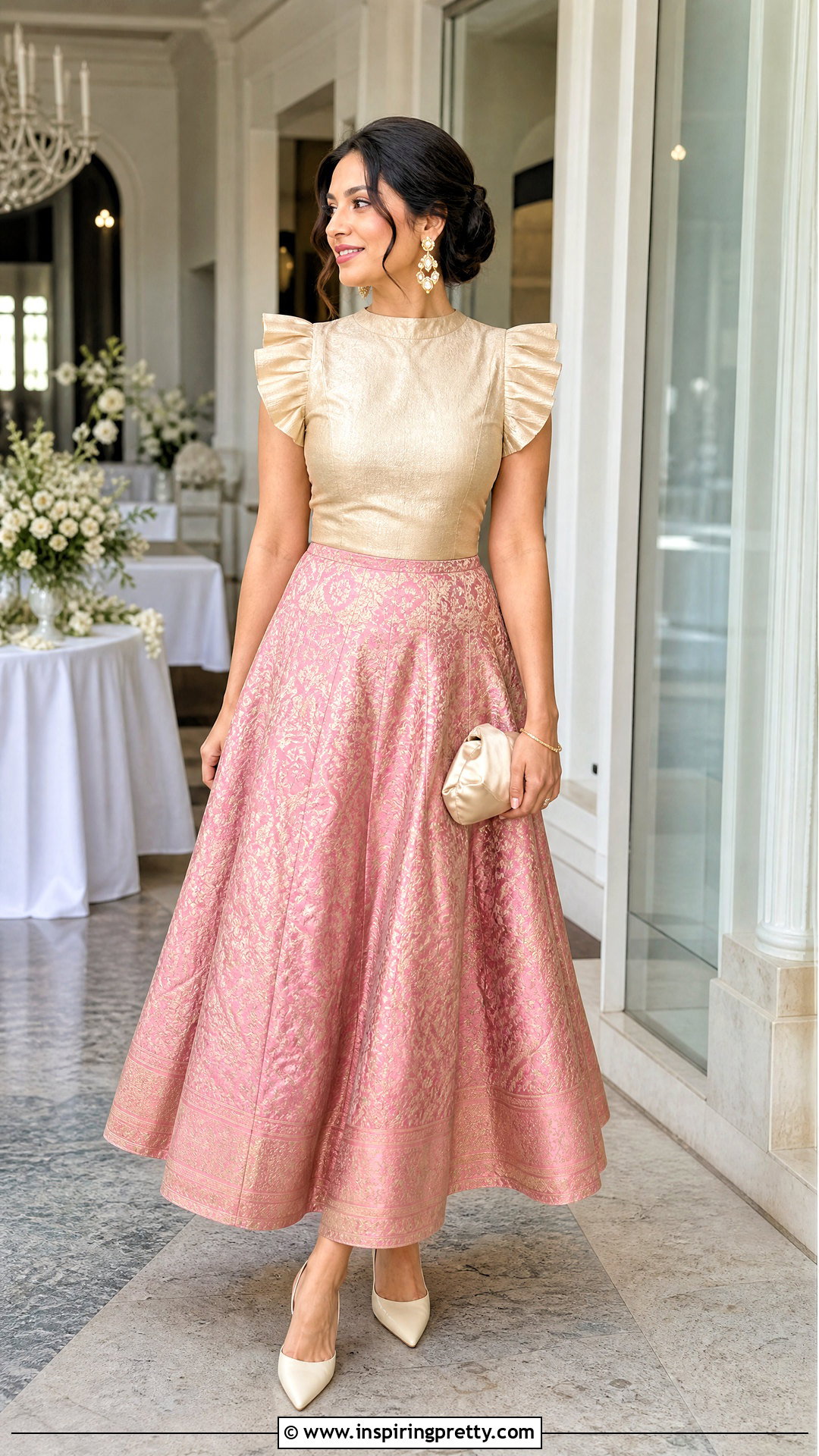
Ruffles bring softness to the stiff surface of Banarasi, but one controlled ruffle per shoulder is plenty. Multiple tiers look fussy against a woven skirt. Ivory or pale gold gives gentle contrast; deep wine is more dramatic. A half-up hairstyle keeps the sleeves visible.
27. Black Banarasi Skirt With Boat-Neck Blouse
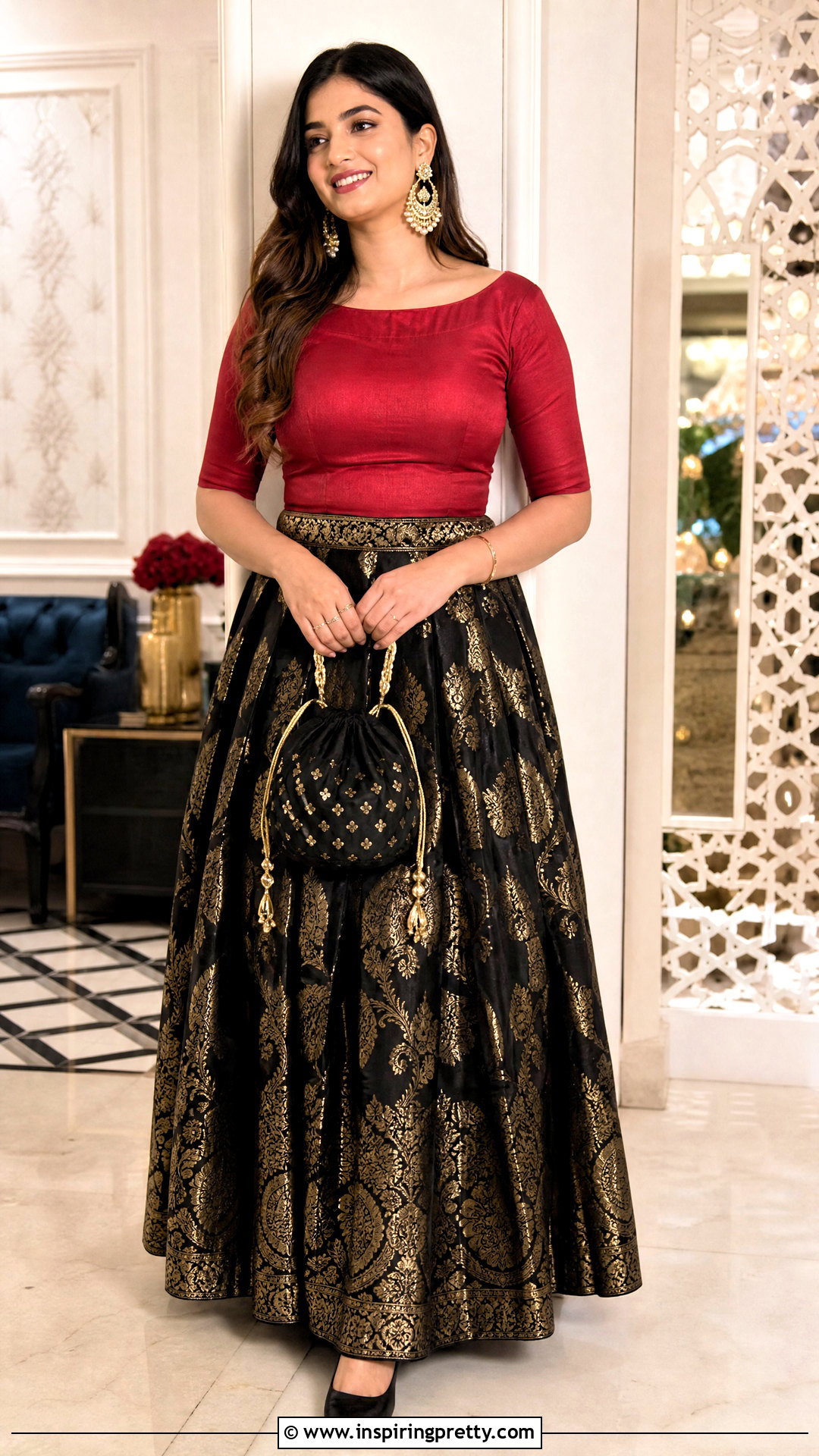
A boat neck shows the collarbone without exposing much, which is why it suits so many ages. Pair it with a black skirt with antique-gold zari and a wide border. Deep red, emerald or gold blouses all look right. Medium chandbalis, no necklace, and closed-toe block heels.
28. Wine Banarasi Skirt With Square-Neck Top
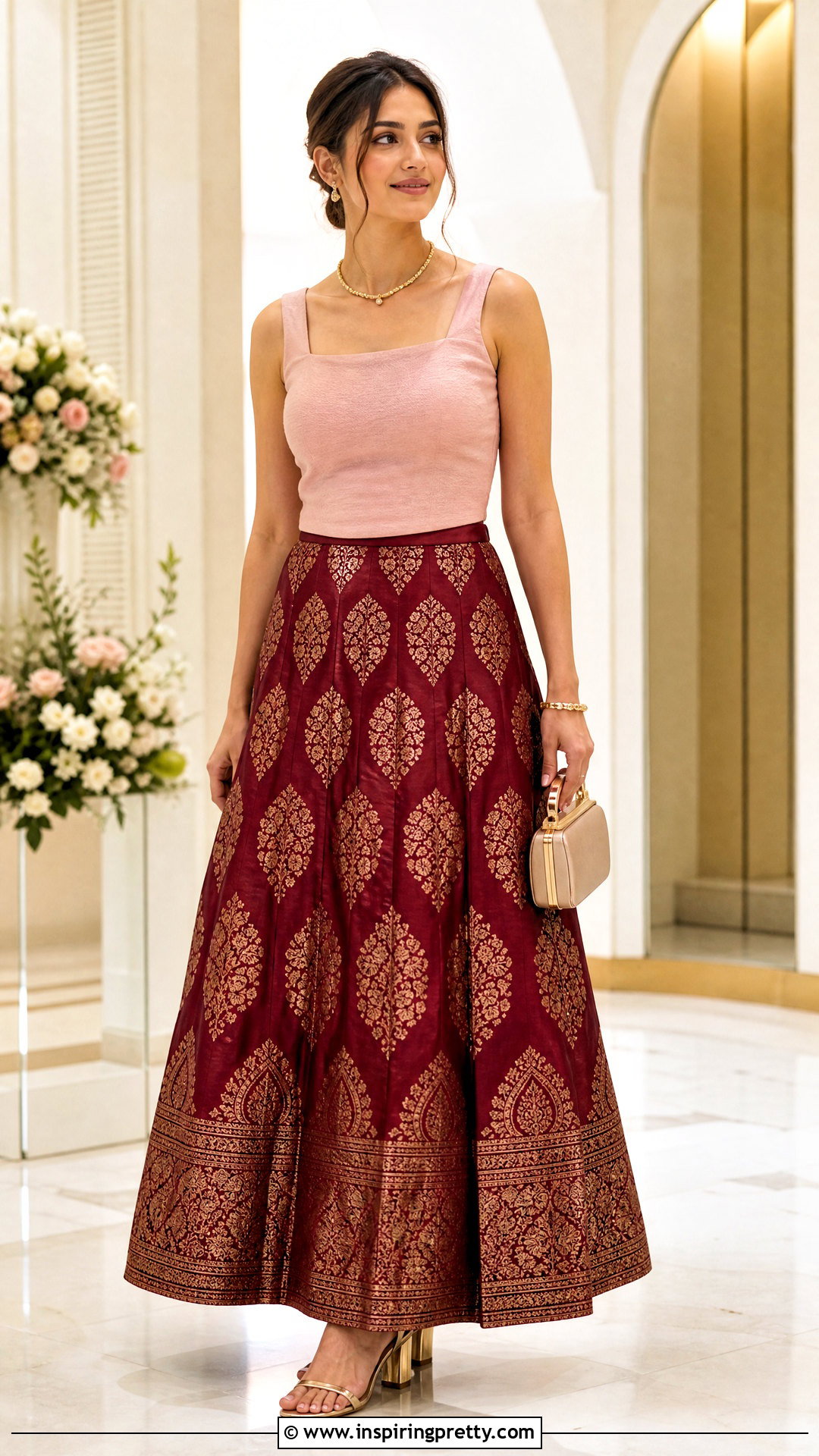
A square neckline frames the face neatly and suits wide or narrow shoulders alike. In a tonal wine shade it gives a long, elegant line; blush or muted gold offers more contrast. Wide straps support the bodice. A short necklace that echoes the square looks deliberate. A low bun with loose face-framing strands softens the geometry.
29. Red Banarasi Skirt With Sweetheart-Neck Top
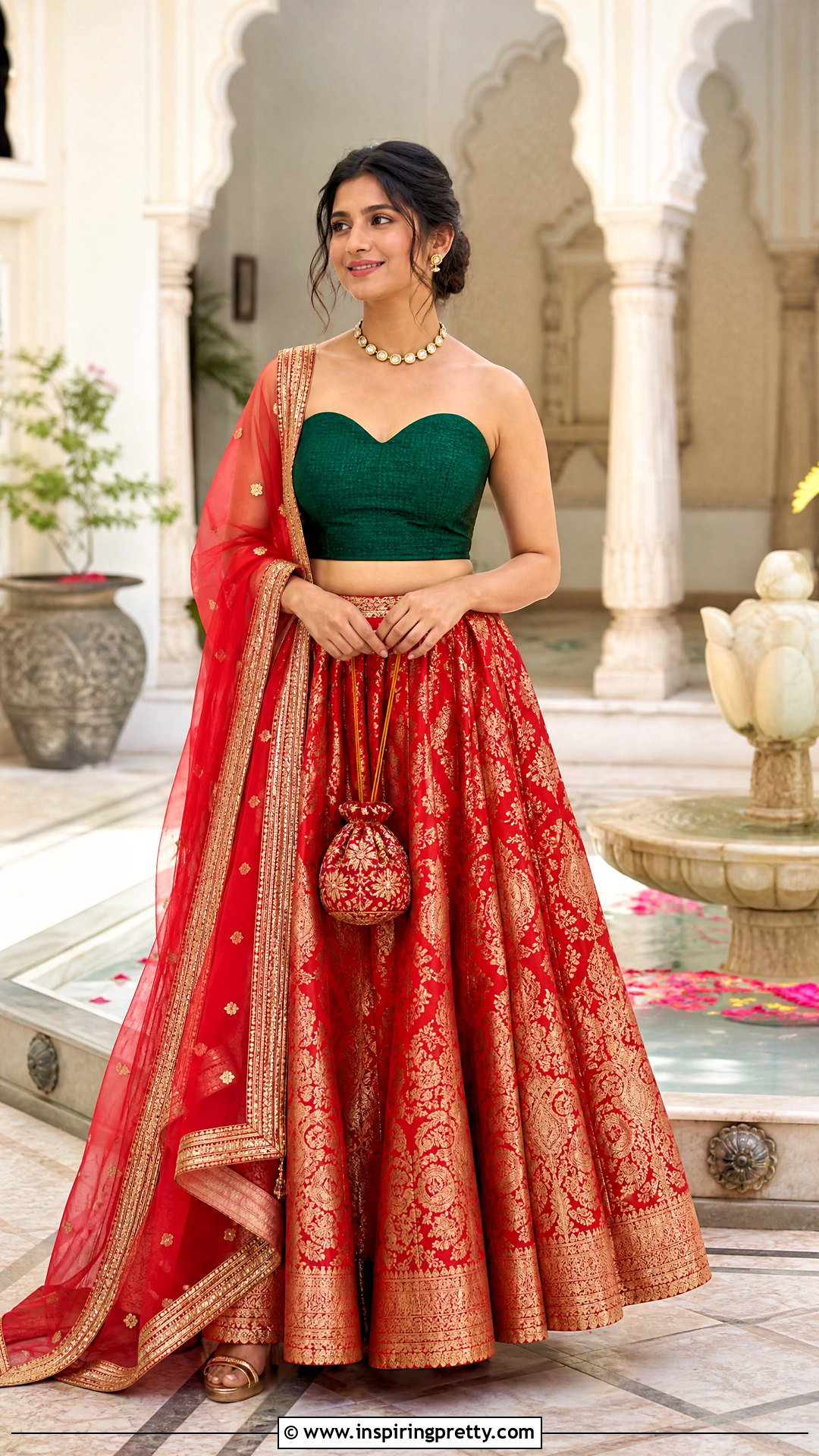
The curve of a sweetheart neckline softens the hard lines of a heavy woven border. Keep embellishment at the neckline rather than all over the bodice. A short kundan necklace that follows the curve works with small earrings. I always check that the bodice stays put when you bend; a sweetheart without boning shifts under a heavy dupatta.
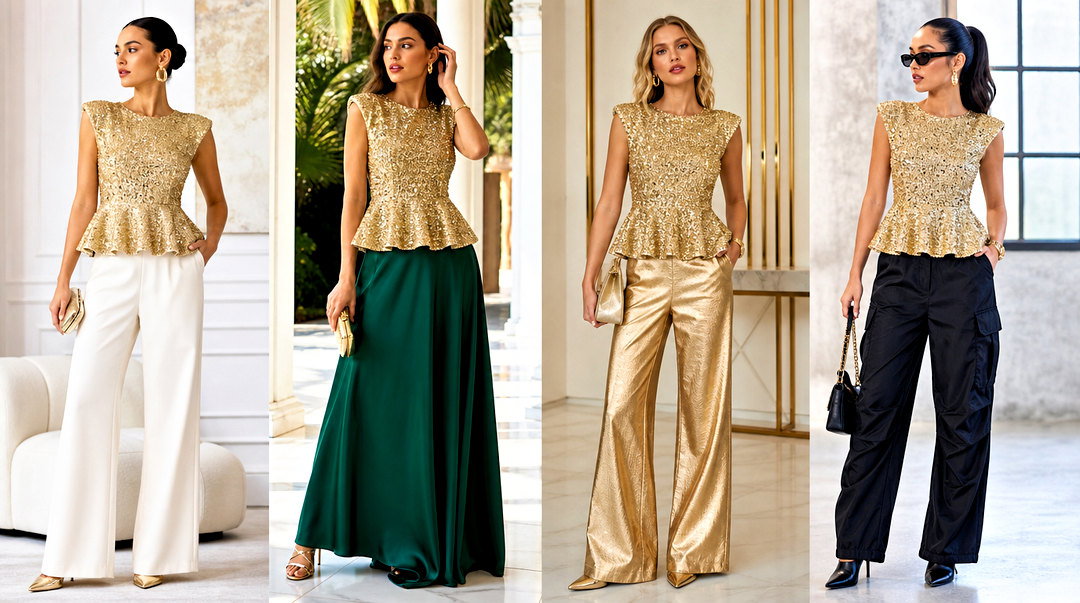
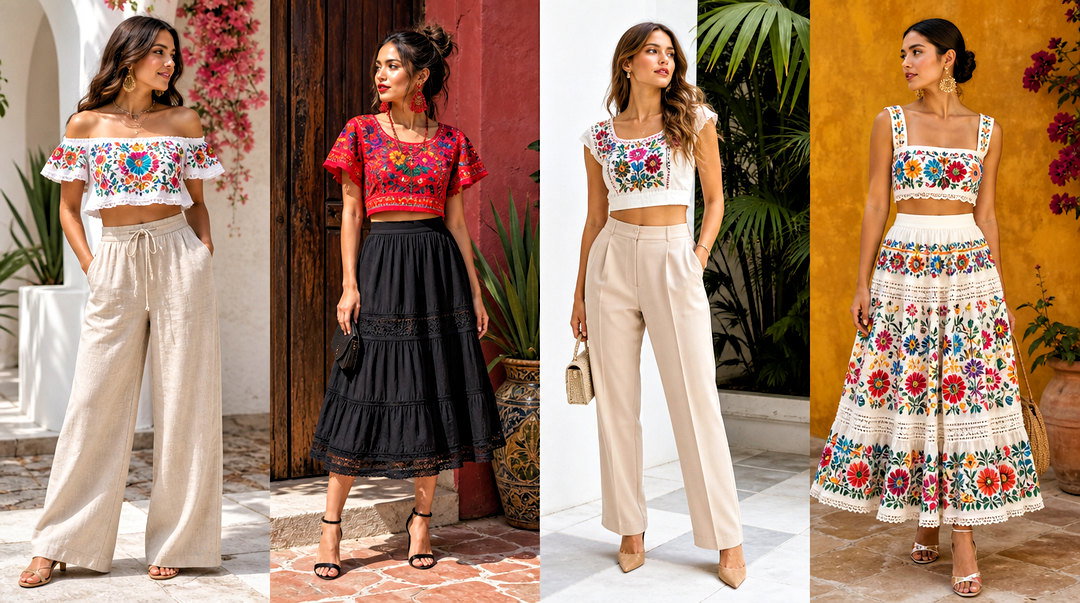
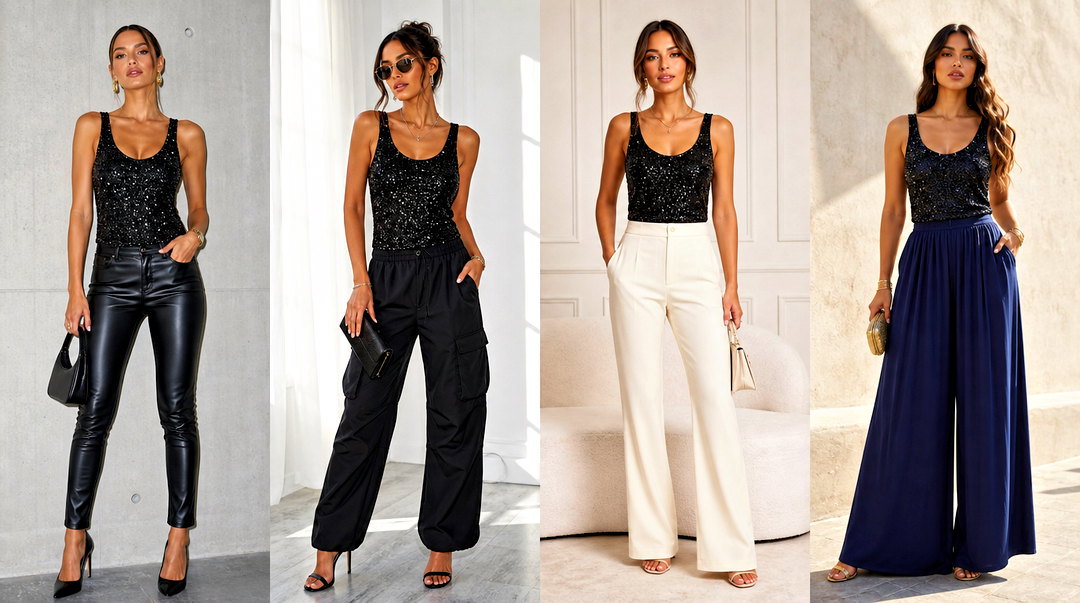
30. Teal Banarasi Skirt With V-Neck Blouse
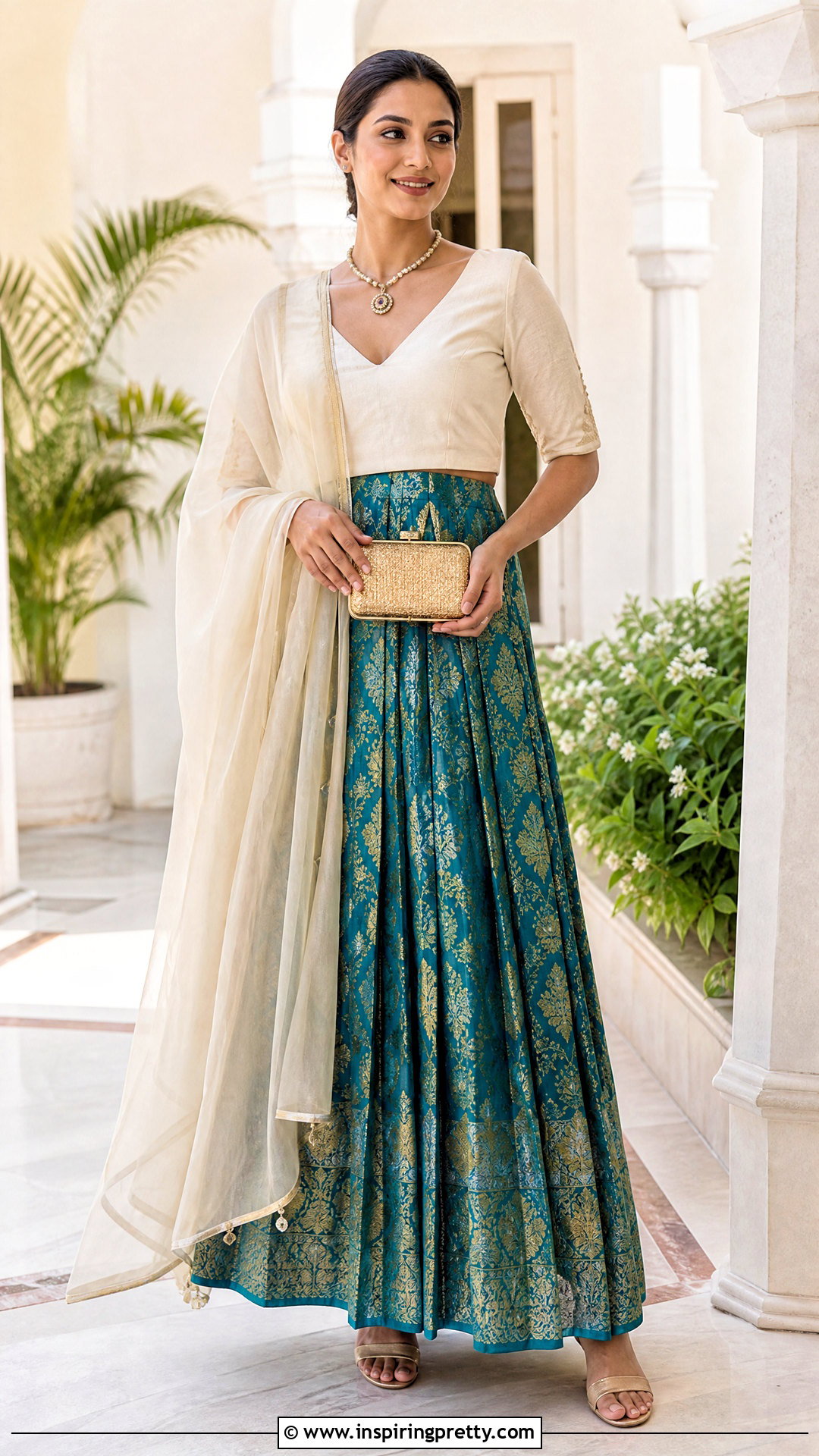
A V-neck draws the eye up and makes the torso look longer, which helps balance a full teal skirt. Keep the V moderate and the hem at the natural waist. Choose either a pendant or long earrings, not both. A plain organza dupatta draped diagonally keeps the V visible.
31. Yellow Banarasi Skirt With Collared Short Kurta
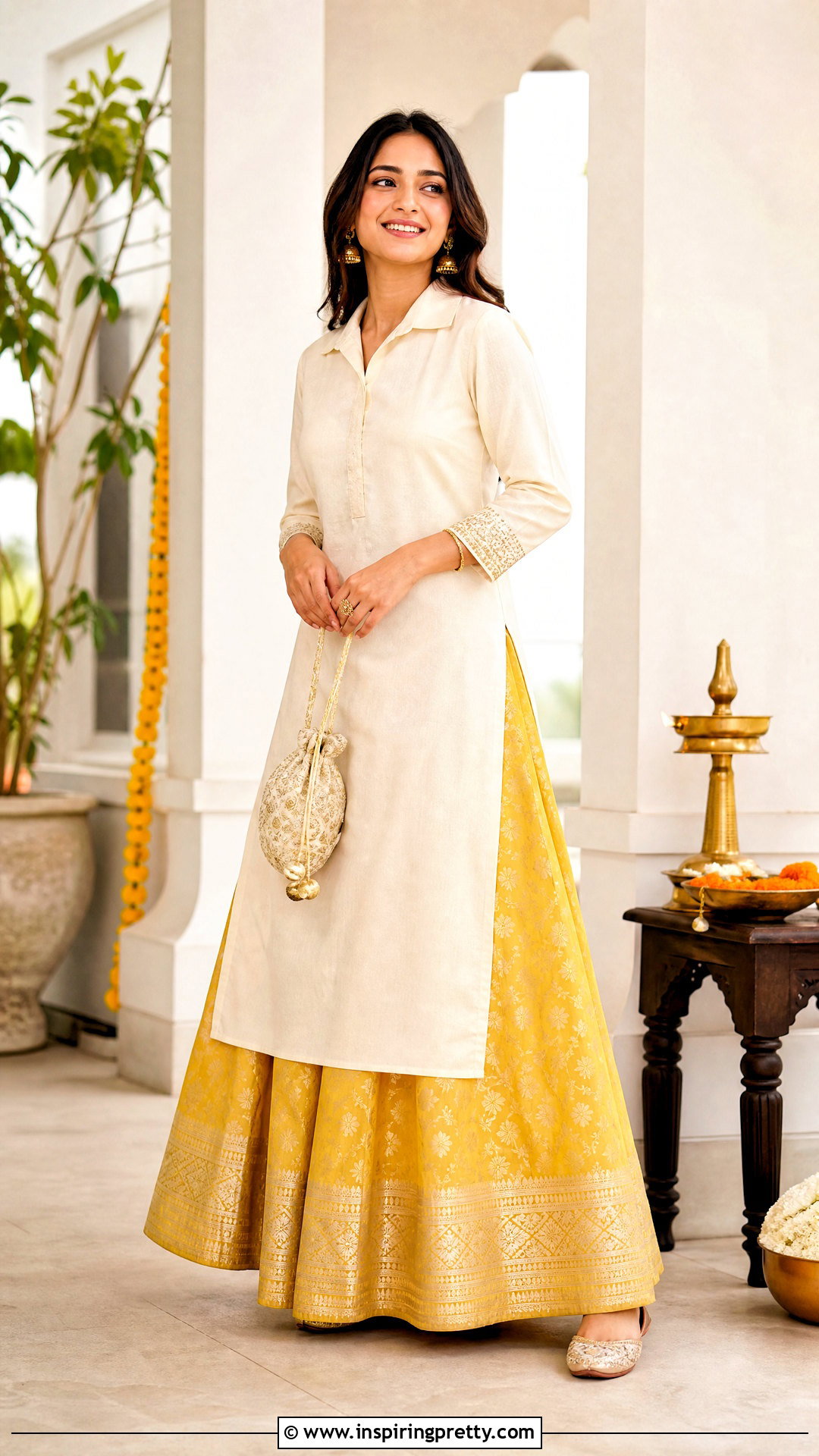
A short collared kurta looks crisp and modest with a yellow Banarasi. Side slits let the skirt move freely. A band collar and three-quarter sleeves make it tailored. Keep embroidery to cuffs or placket only. Embroidered flats are what I'd wear for a daytime festival with lots of walking.
32. Maroon Banarasi Skirt With Long Jacket Top
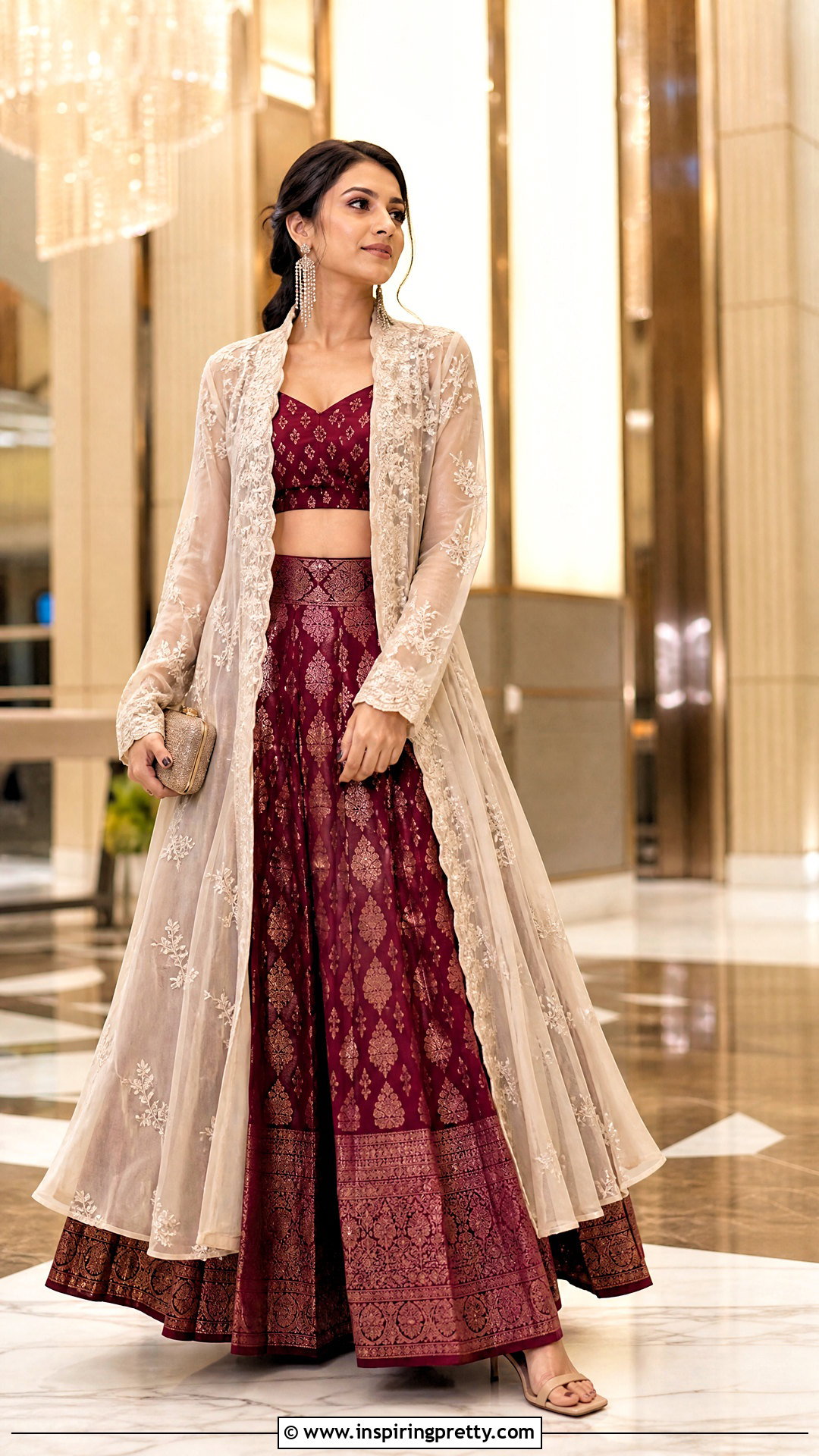
A long jacket adds vertical lines and movement to a maroon skirt, which helps shorter women look taller. Wear a simple fitted blouse underneath and an open-front jacket that falls between knee and ankle. Sheer organza or net keeps the skirt visible. Ivory, black or muted gold are reliable. Skip the necklace if the jacket edge is decorated.
33. Green Banarasi Skirt With Angrakha Top
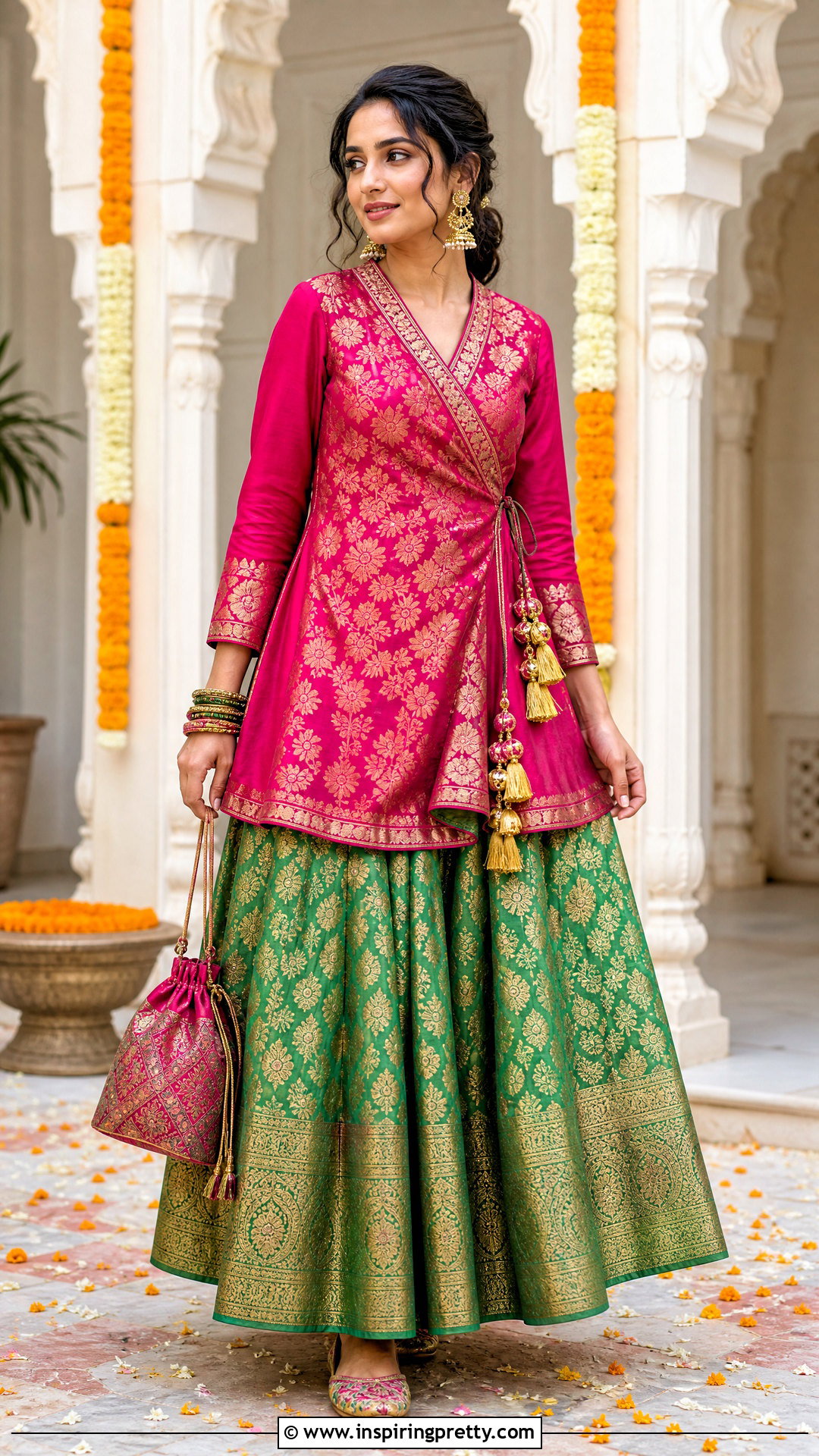
An angrakha top has a curved, overlapping front with ties at the side, so it echoes the heritage feel of the skirt. Keep it waist-length with secure inner ties; loose ties open at the worst moment. Deep pink, mustard or ivory contrast well with green. Tassels should be light, as heavy ones swing and pull the neckline.
34. Red Banarasi Skirt With Bustier And Peplum Jacket
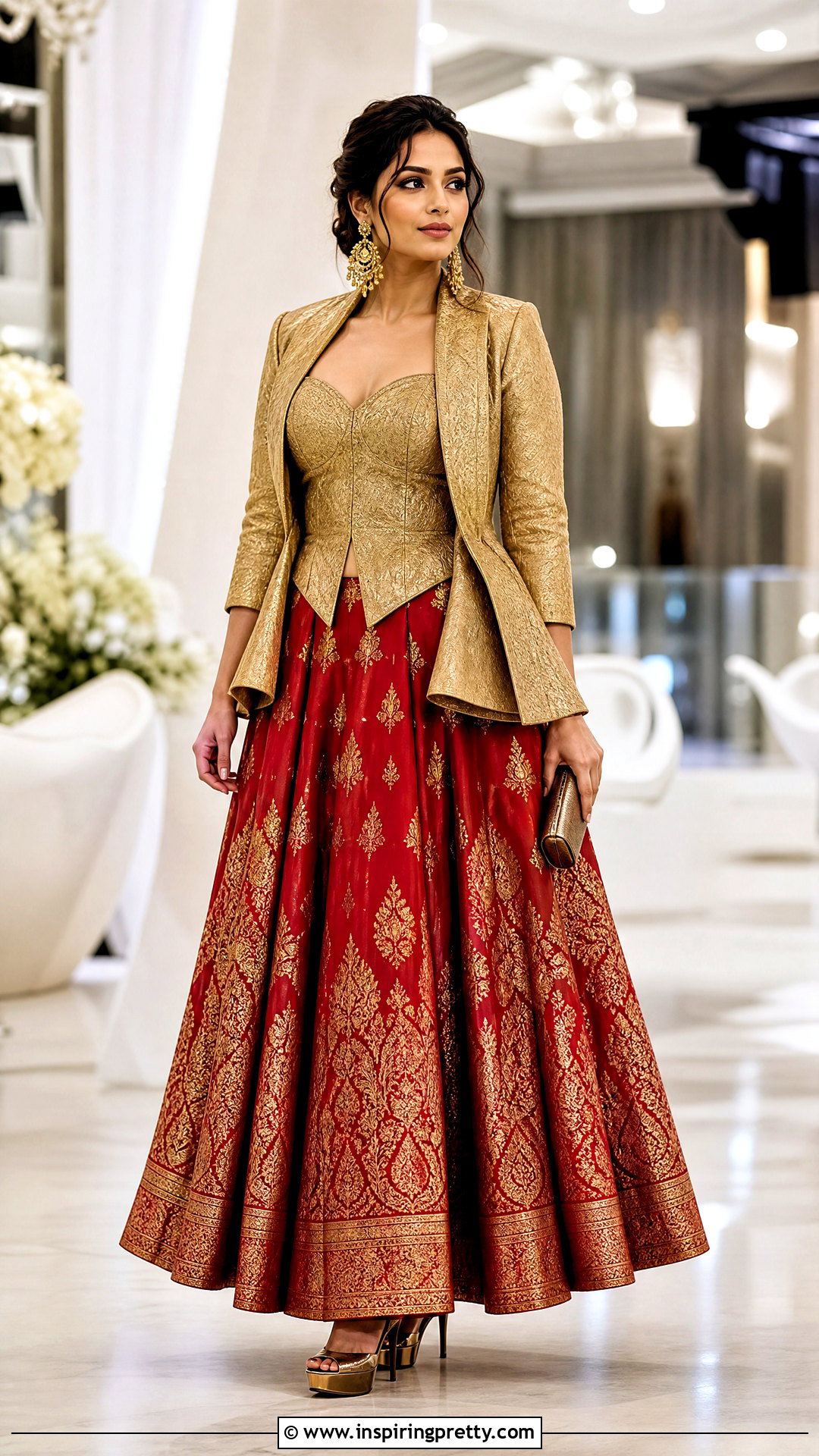
A bustier with an open peplum jacket is a layered modern look for a sangeet or reception. Keep both upper pieces in one color, usually antique gold, black or red, so the layers read as one. The bustier needs wide straps and firm structure. Keep the peplum short so the skirt's waistband motifs show. Platform heels are steadier for dancing.
35. Navy Banarasi Skirt With Mirror-Work Crop Top
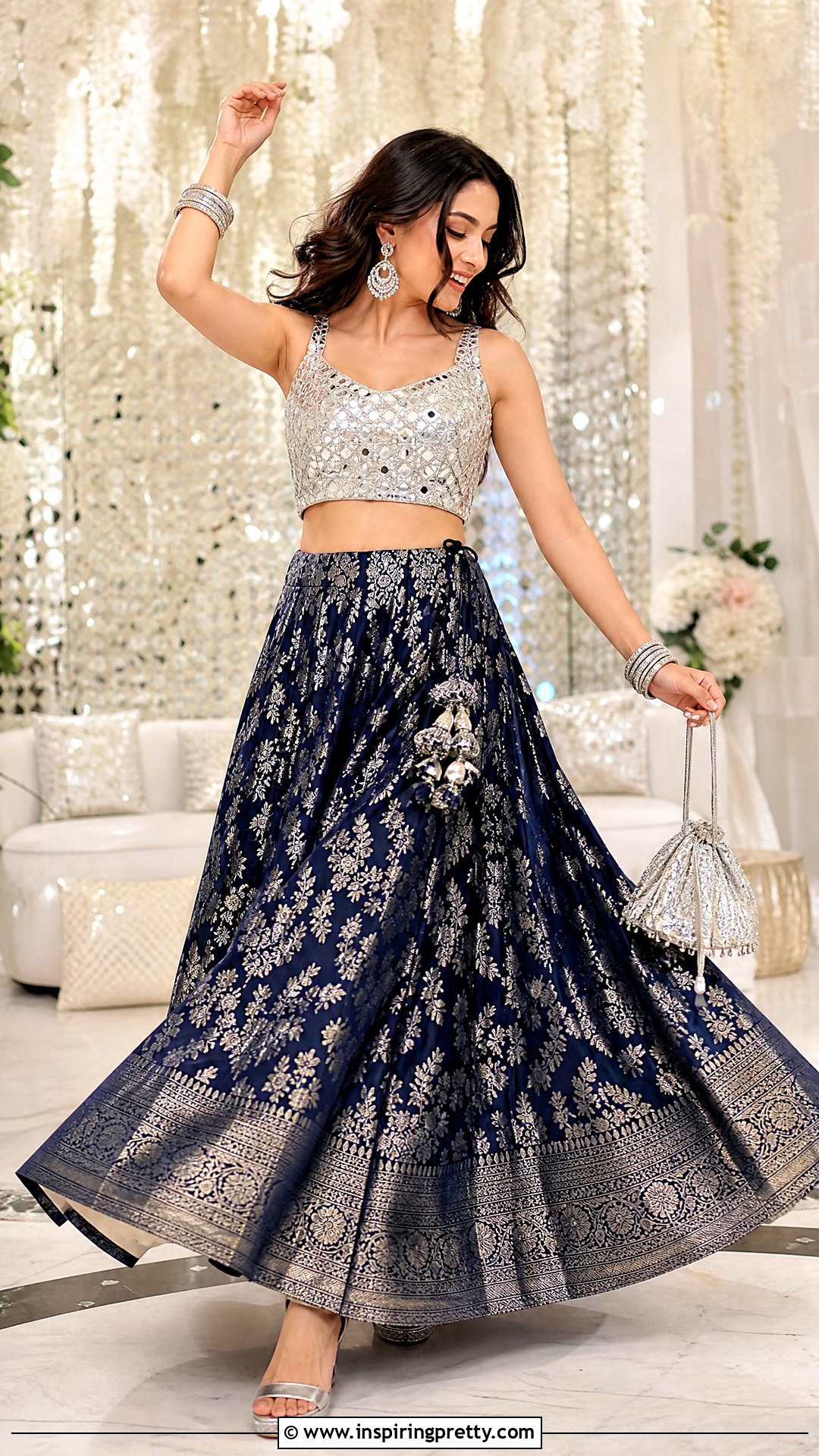
Mirror work catches light as you move, which is why I suggest it for a sangeet. Small, evenly spaced mirrors look neater than large discs. Silver, pale blue or ivory shine against navy. Keep the skirt's zari pattern simple so the two textures don't compete. A high ponytail and cushioned wedges suit a night of dancing.
36. Purple Banarasi Skirt With Sequin Top
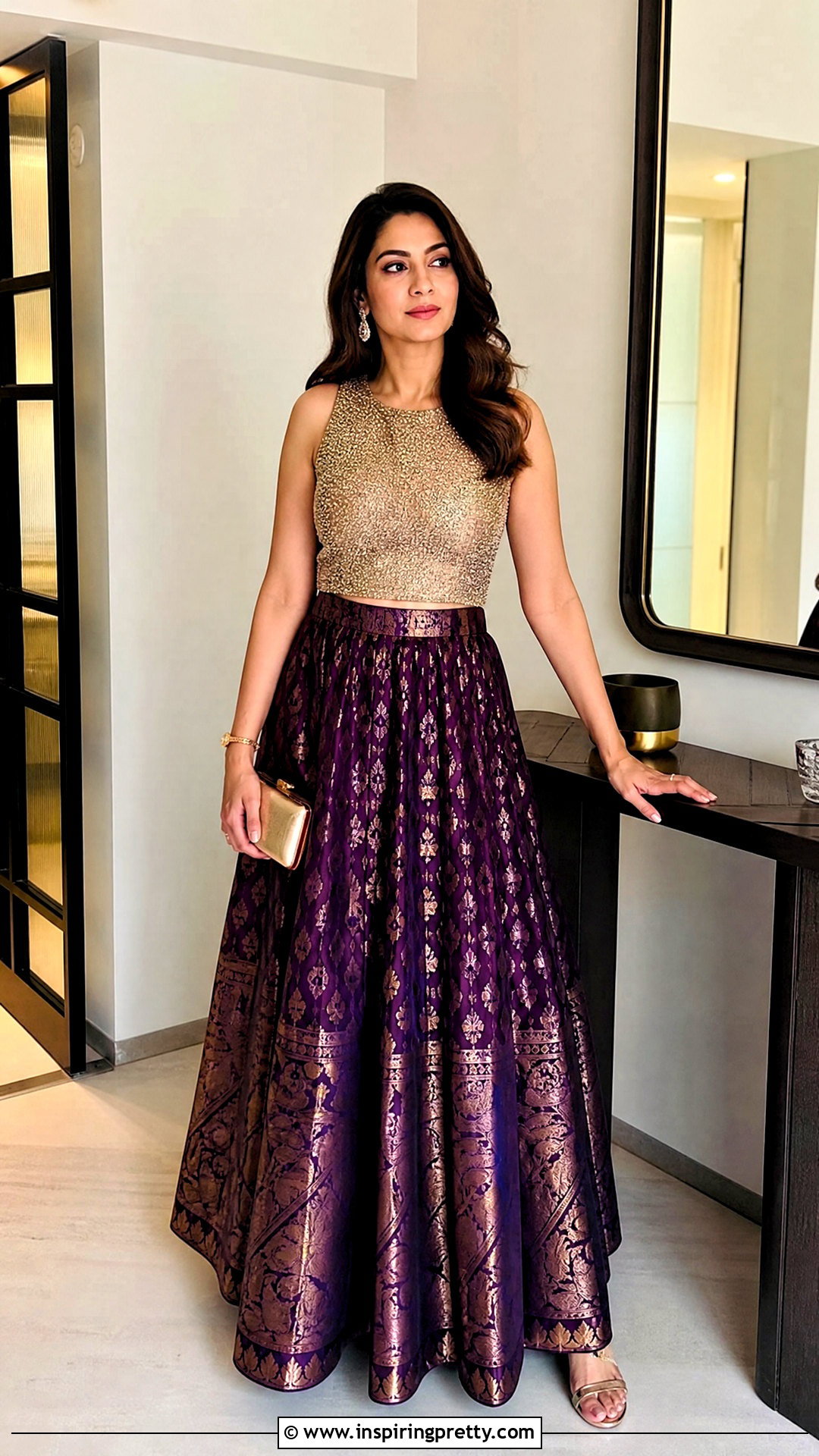
Sequins and zari are both reflective, so you need to control the shine. Fine sequins in muted gold, bronze or deep purple look richer than big discs. Keep the top's cut simple and the jewelry small. A plain satin clutch gives the eye a rest. Skip any decorated dupatta.
37. Red Banarasi Skirt With Chikankari Top
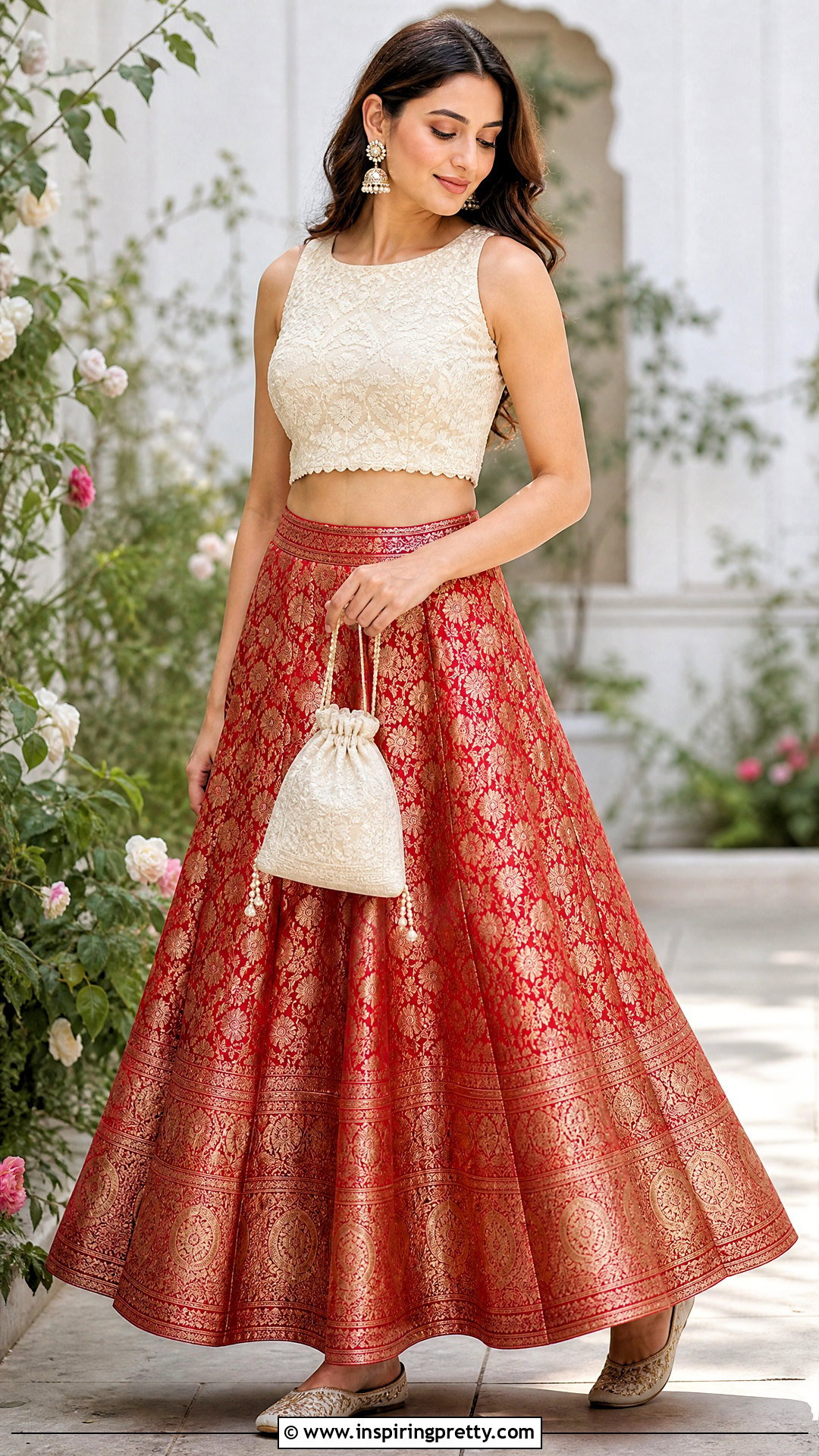
Chikankari is a hand embroidery done in white thread on light fabric, and a white or ivory chikankari top calms down a rich red skirt. Choose a lined cotton-silk or georgette version for a festive event. A round or boat neck keeps it classic. Pearl jhumkas and embroidered juttis are my picks. It's a comfortable choice for hot daytime functions.
38. Gold Banarasi Skirt With Handloom Cotton Top
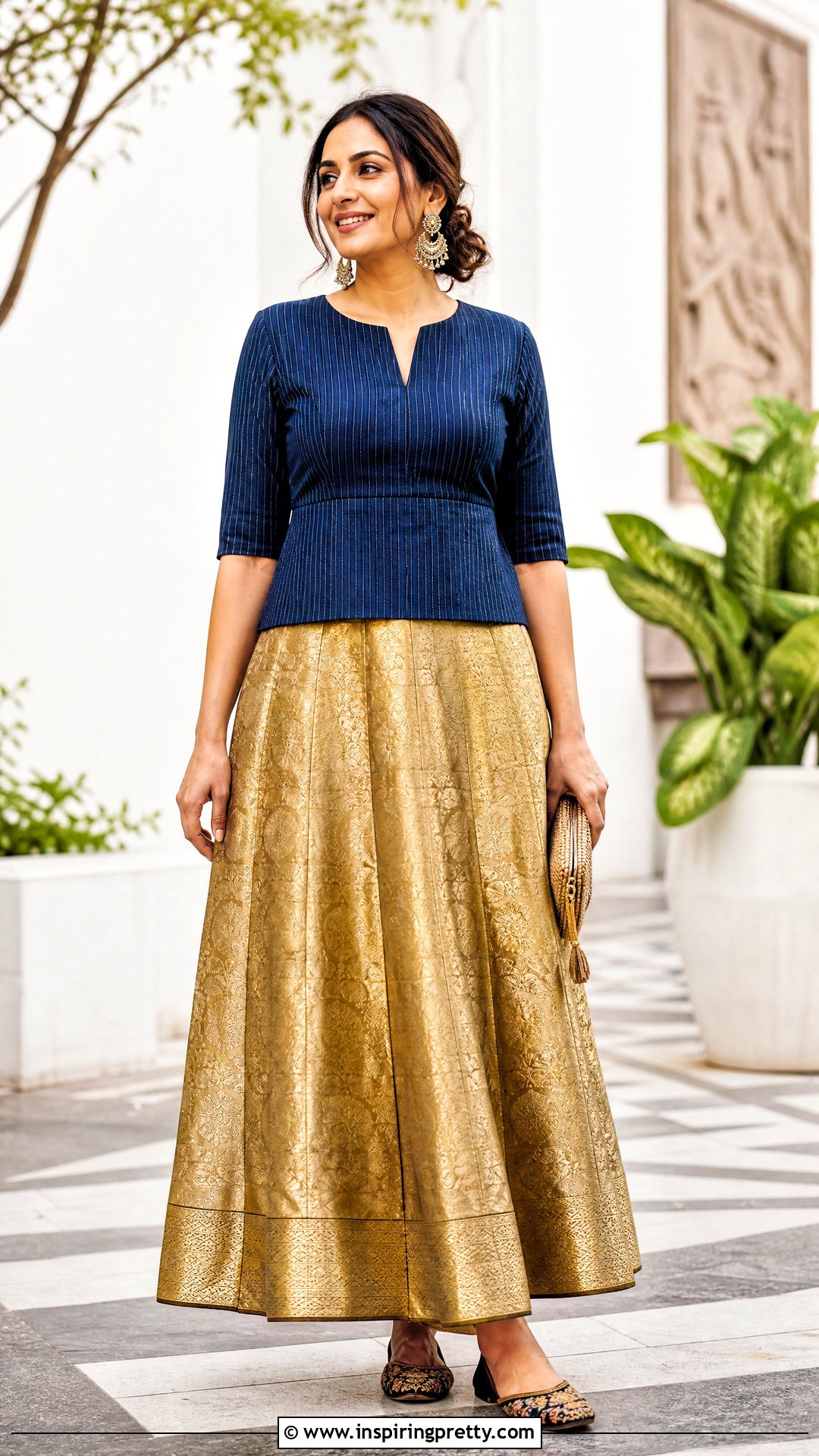
A handloom cotton top makes a metallic gold skirt wearable in daylight. A black, rust, indigo or deep green top with a fitted waist suits it. The coarse cotton texture lowers the formality. Keep it tucked in neatly even if the sleeves are rolled. Leather or embroidered flats fit the handmade mood.
39. Emerald Banarasi Skirt With Satin Cowl-Neck Top
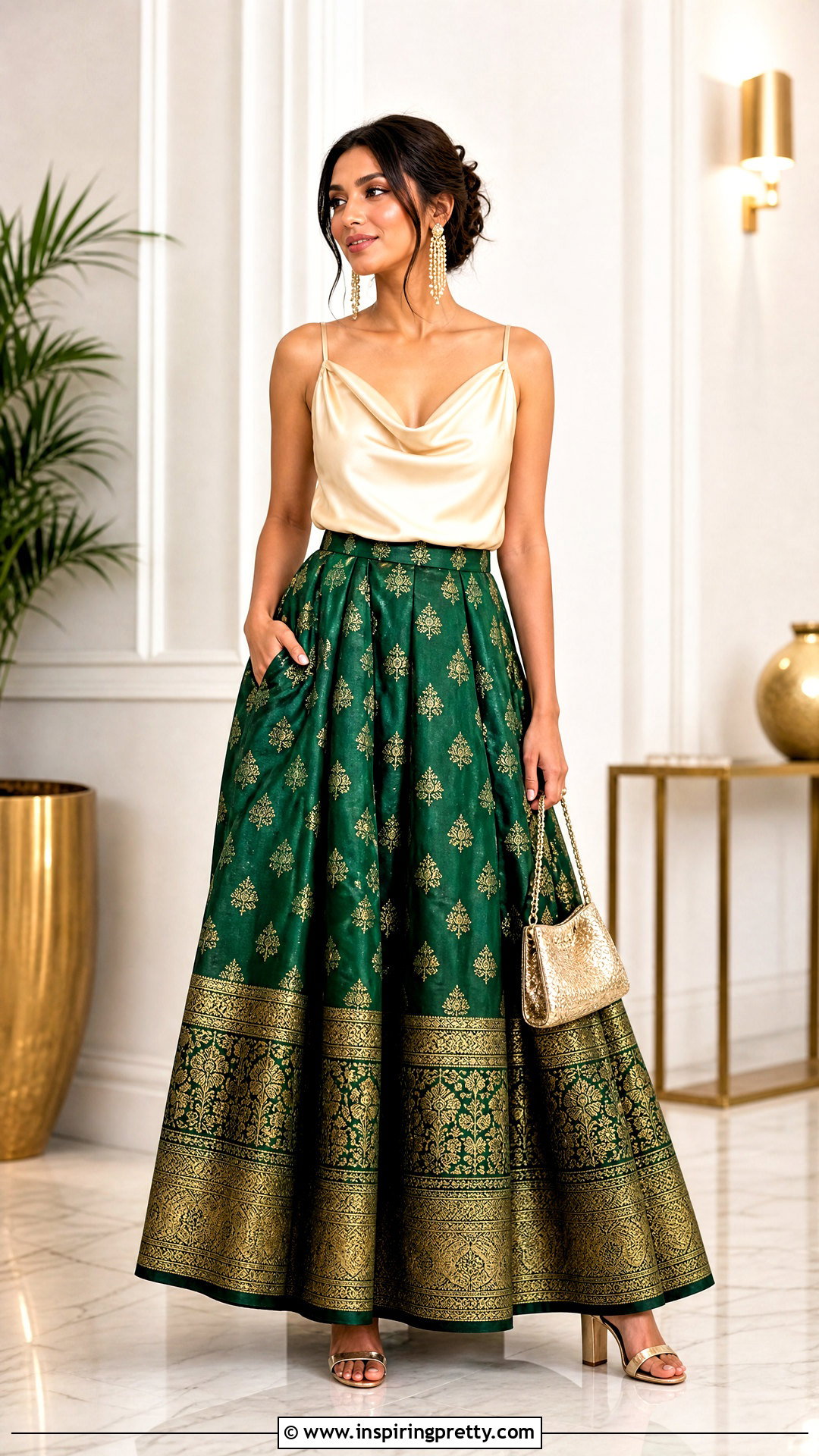
A cowl neck drapes in soft folds, so I keep the satin completely plain and let the skirt carry the detail. Champagne, ivory or muted gold works with emerald. A necklace would fight the drape, so long earrings it is. Tuck the top carefully or choose a cropped version; satin bunches under a heavy waistband.
40. Maroon Banarasi Skirt With Sheer-Sleeve Blouse
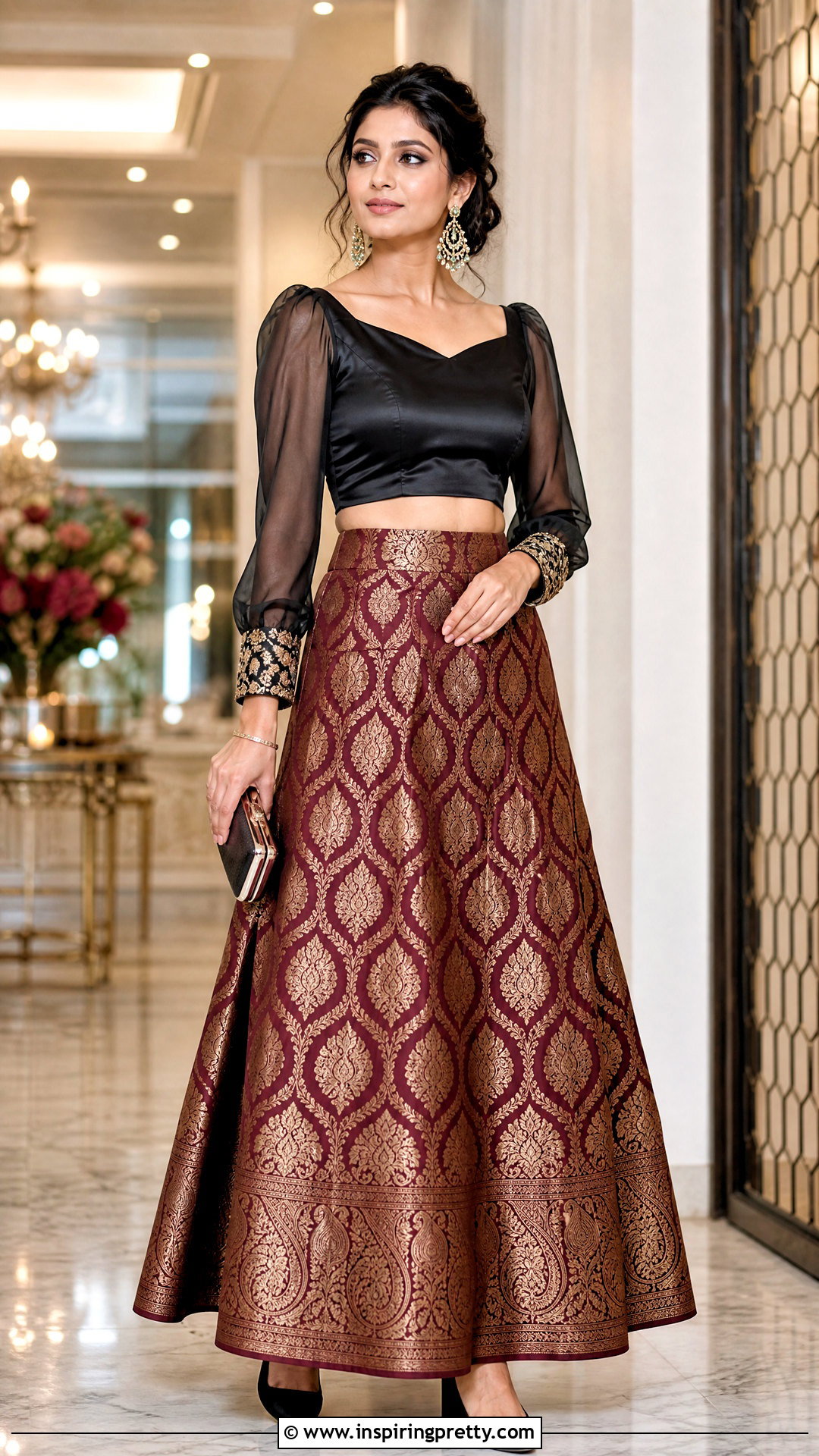
Sheer sleeves give coverage without weight, which is why I like them for evening functions. The bodice should be lined silk, with transparent organza or net sleeves. Small embroidered cuffs connect them to the gold weaving. Black, blush or maroon all work. Avoid pairing them with a heavily embellished dupatta.
41. Blue Banarasi Skirt With Floral Printed Top
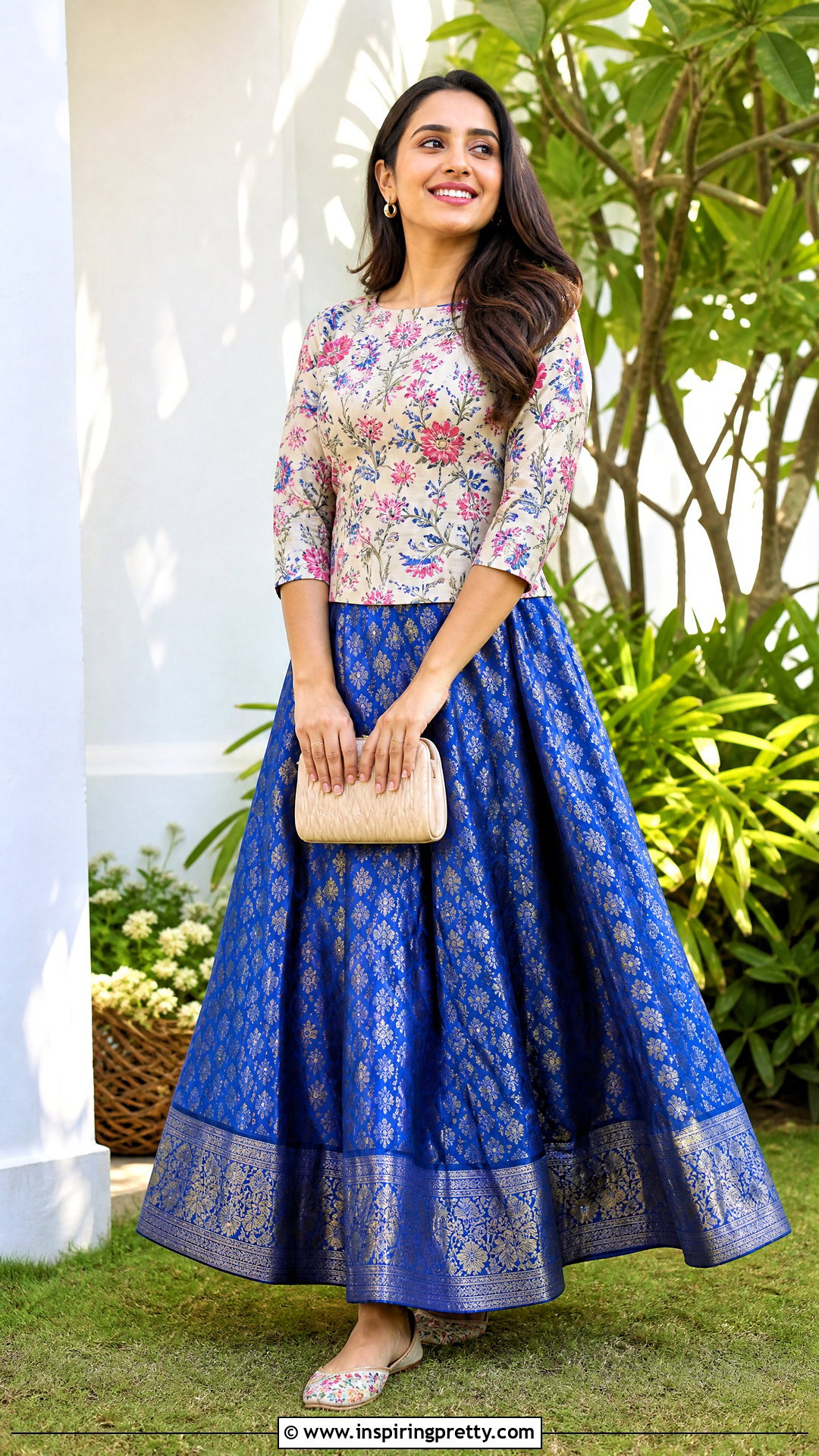
A floral print top brings a daytime feel to a blue Banarasi. Pick a print that contains a little of the skirt's blue or gold so the pieces look linked. A fitted short-sleeve crop in cotton-silk keeps the pattern manageable. The skirt should be lightly woven, not dense. Small hoops and juttis.
42. Cream Banarasi Skirt With Matching Silk Top
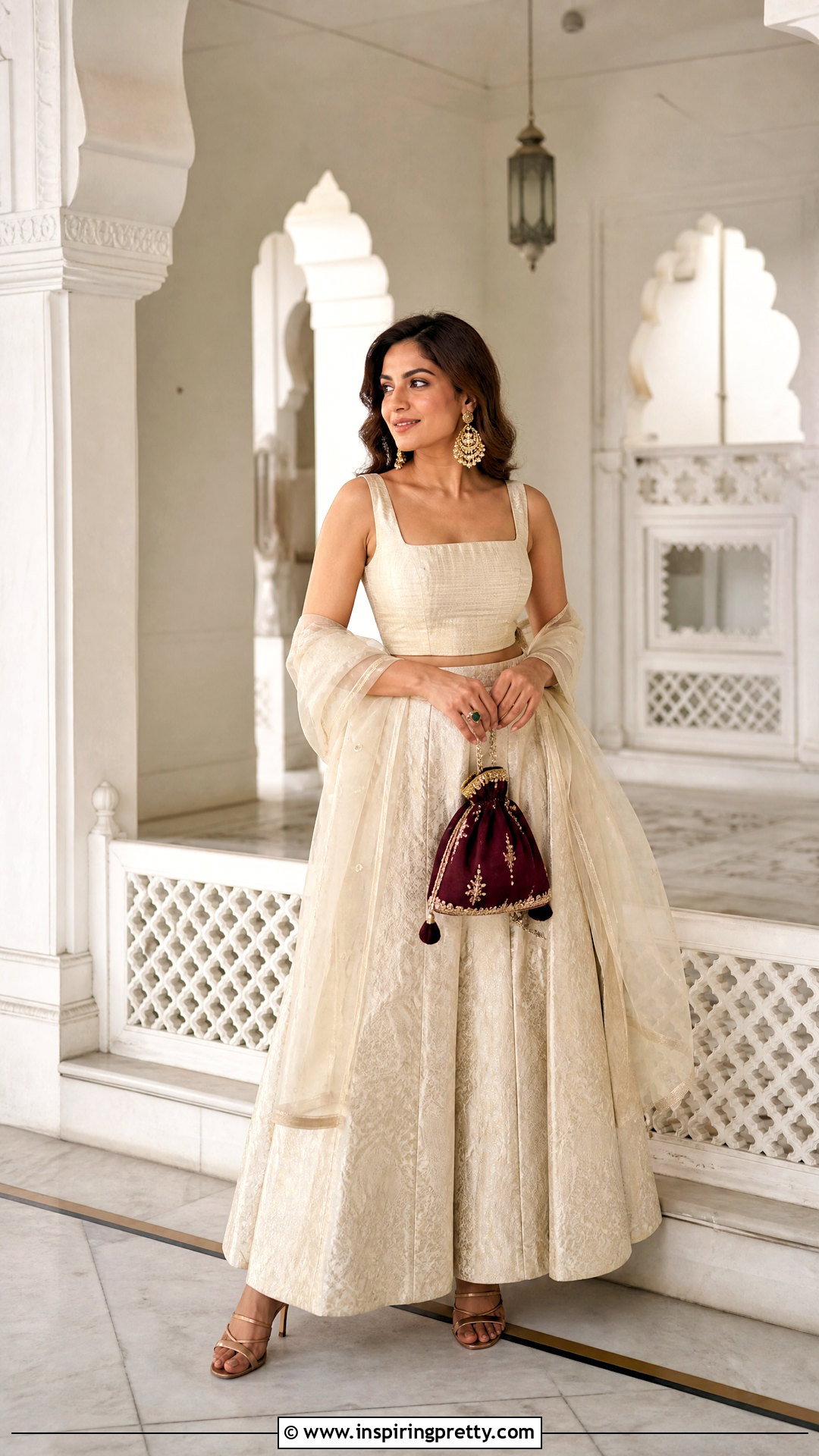
Cream on cream lets texture do the work: tonal weaving on the skirt, matte raw silk on top. Add color through one item, such as antique-gold earrings, a green stone or a maroon potli. Champagne heels continue the line. A sheer cream dupatta with a narrow metallic border is enough for formal moments.
43. Red Banarasi Skirt With Green Bridal Top
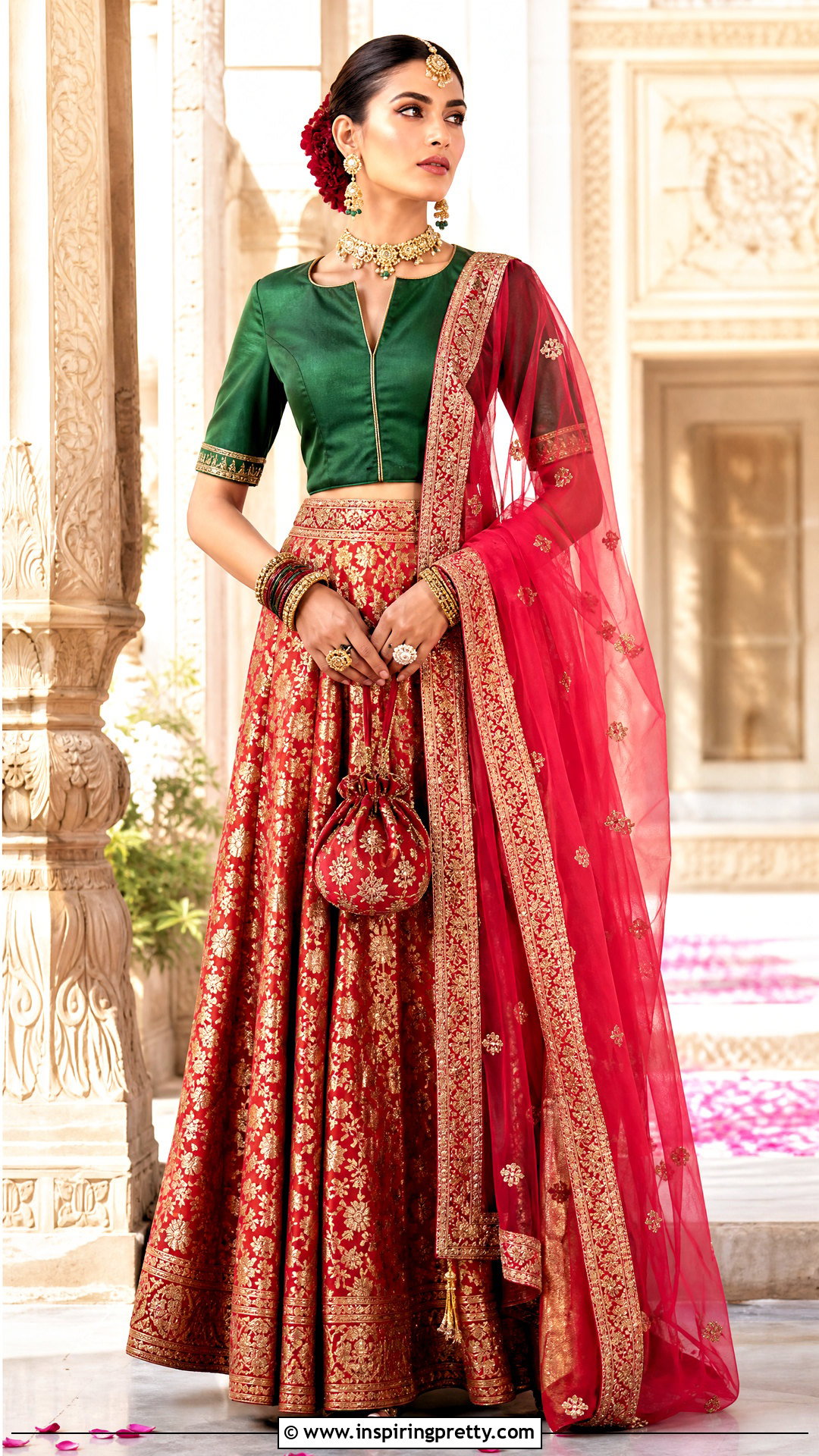
Red and green is the most traditional pairing on this list, and it's usually reserved for brides and close family. Pair a rich red skirt with an emerald silk blouse with elbow sleeves and a detailed back. Match the necklace to the neckline: short with a wide neck, longer with a high one. A red or green organza dupatta with a narrow gold border finishes it.
44. Black Banarasi Skirt With Gold Evening Top
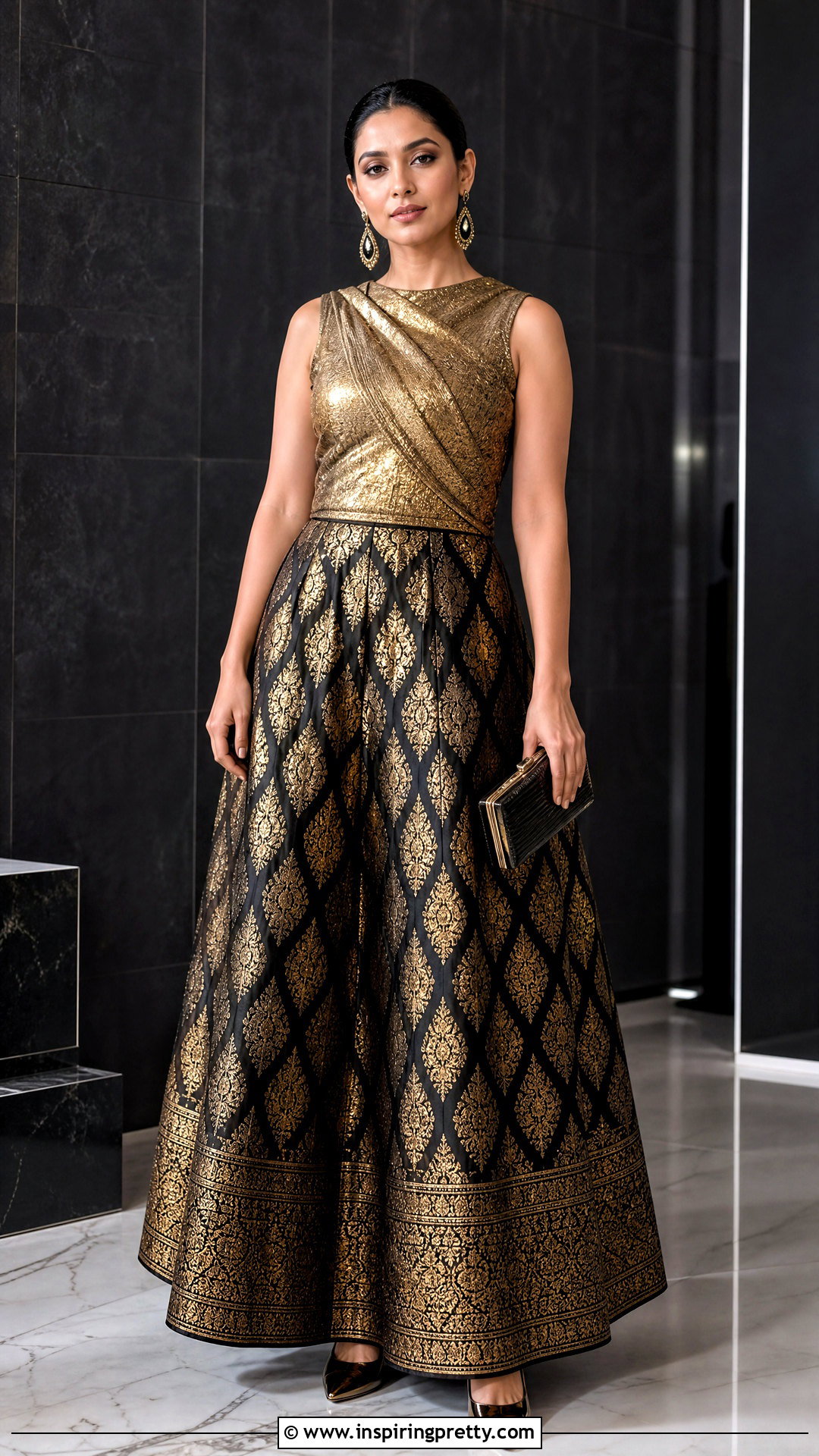
Black and gold is dramatic, so I keep the cut simple and the accessories few. A fitted gold top in raw silk or brocade over a black skirt with gold motifs. Sleeveless or elbow sleeves, depending on coverage. Polished makeup, sleek hair and a structured black clutch. Any dupatta should be plain black.
45. Yellow Banarasi Skirt With White Haldi Top
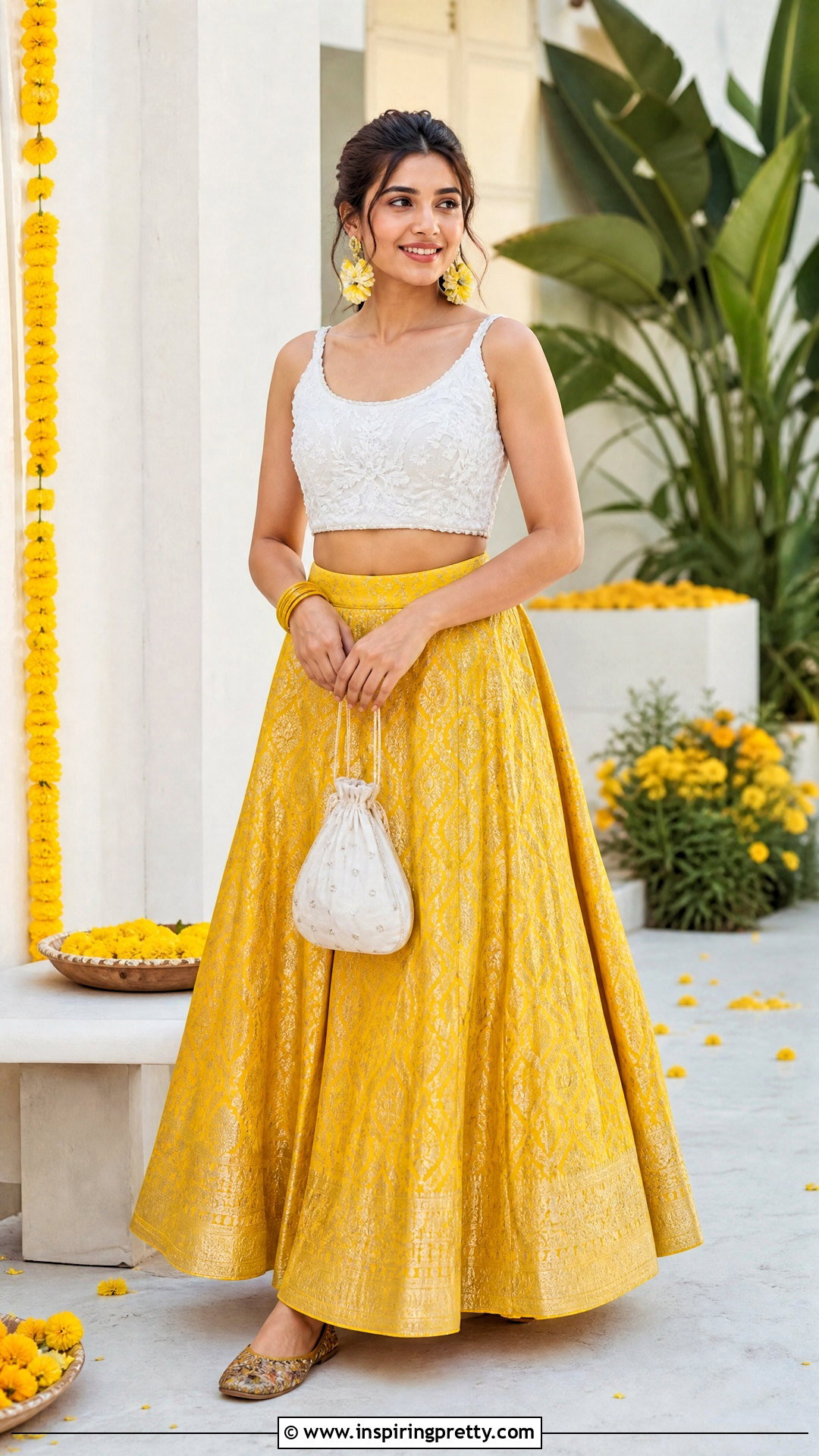
Haldi is messy, as turmeric paste stains everything it touches, so I steer people toward a yellow Banarasi skirt and white top they won't mind marking. A washable cotton-silk or chikankari crop top is safer than raw silk. A skirt with light zari and an easy flare lets you sit and move. A braid keeps hair out of the paste.
46. Green Banarasi Skirt With Pink Mehendi Top
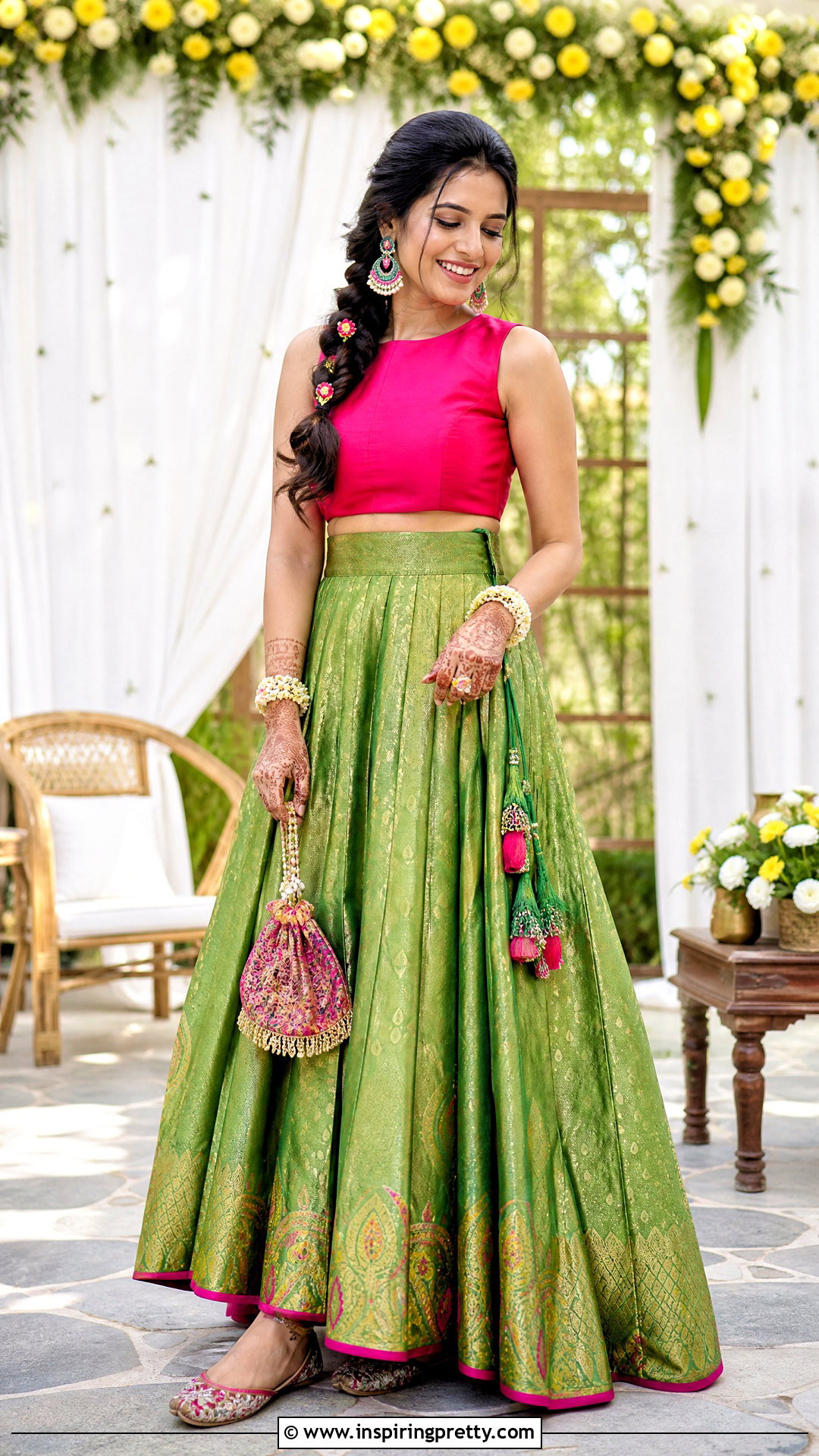
At a mehendi, your hands are busy with henna for hours, so I plan the outfit around that. Keep bangles and rings off until the henna dries. A bright pink sleeveless crop or short kurti over a green skirt gives cheerful contrast. Drape the dupatta behind the arms so it stays out of the wet henna.
47. Pastel Banarasi Skirt With Day Wedding Top
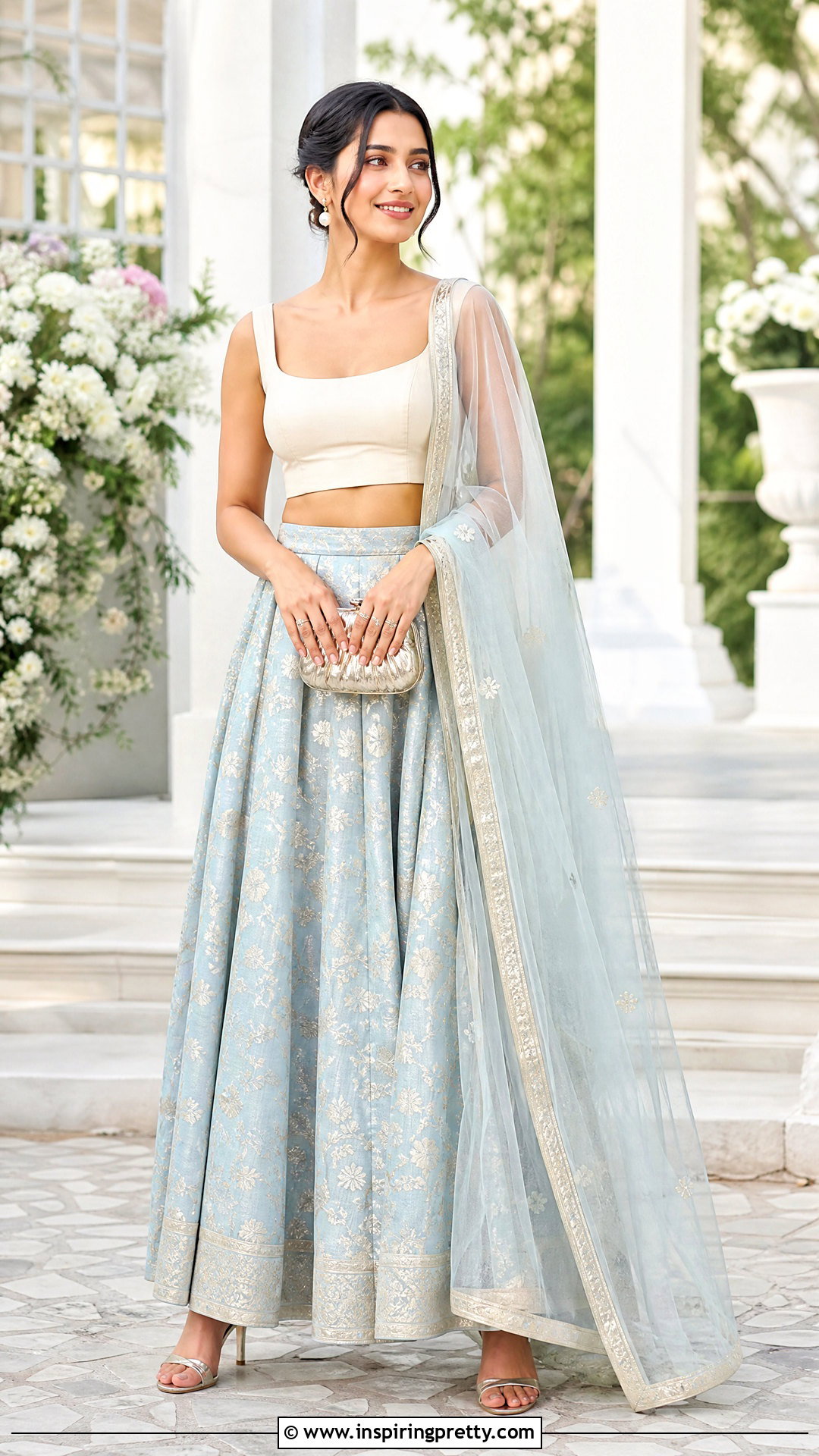
Pastel Banarasi looks light and fresh at a day wedding. Powder blue, blush, lilac or mint with silver or muted-gold zari. A fitted ivory or matching top with a square neck and fine sleeves. Pearls and low champagne heels keep it soft. Fresh makeup and a loose bun keep it from looking too formal.
48. Jewel-Tone Banarasi Skirt With Sangeet Top
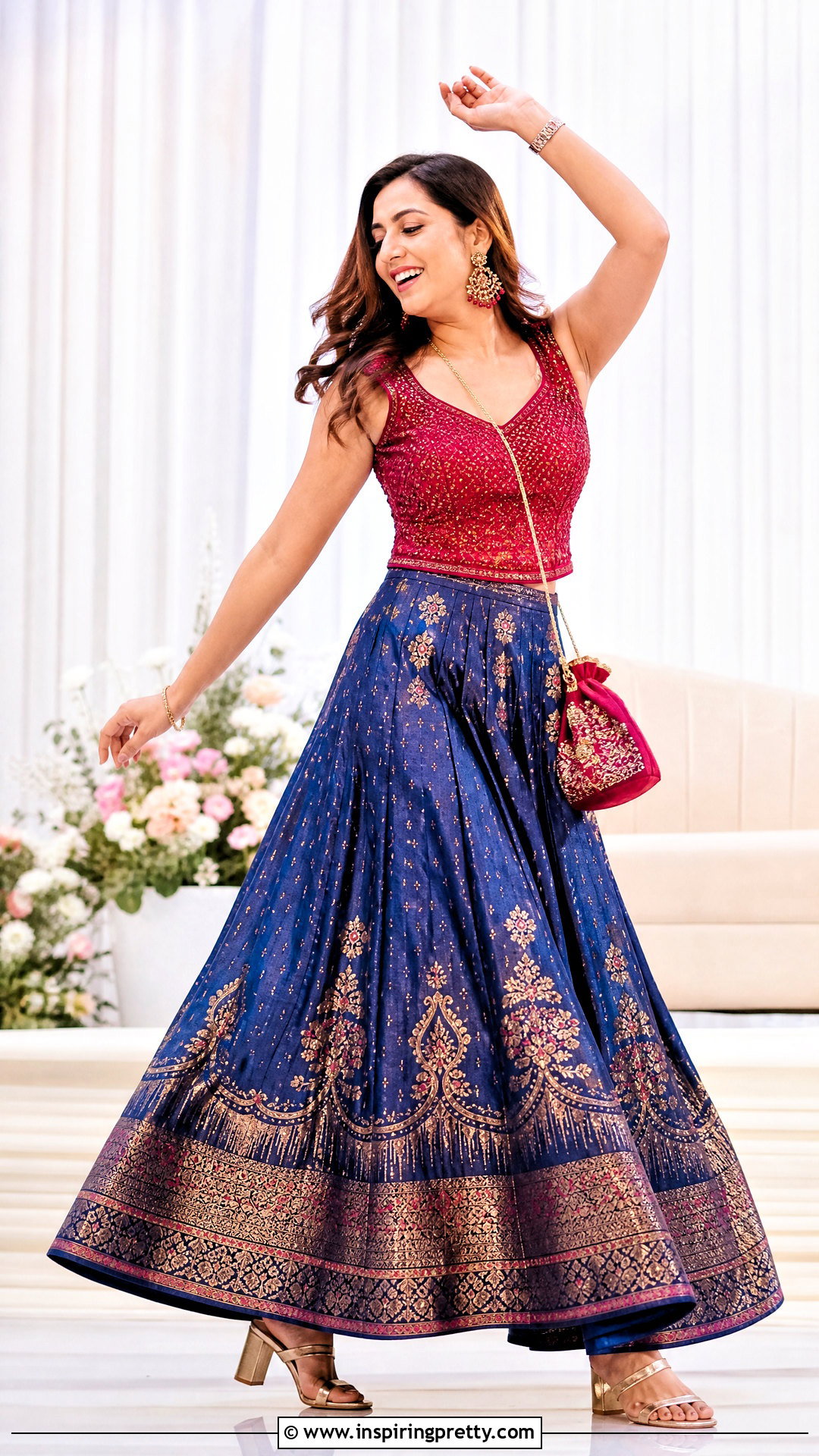
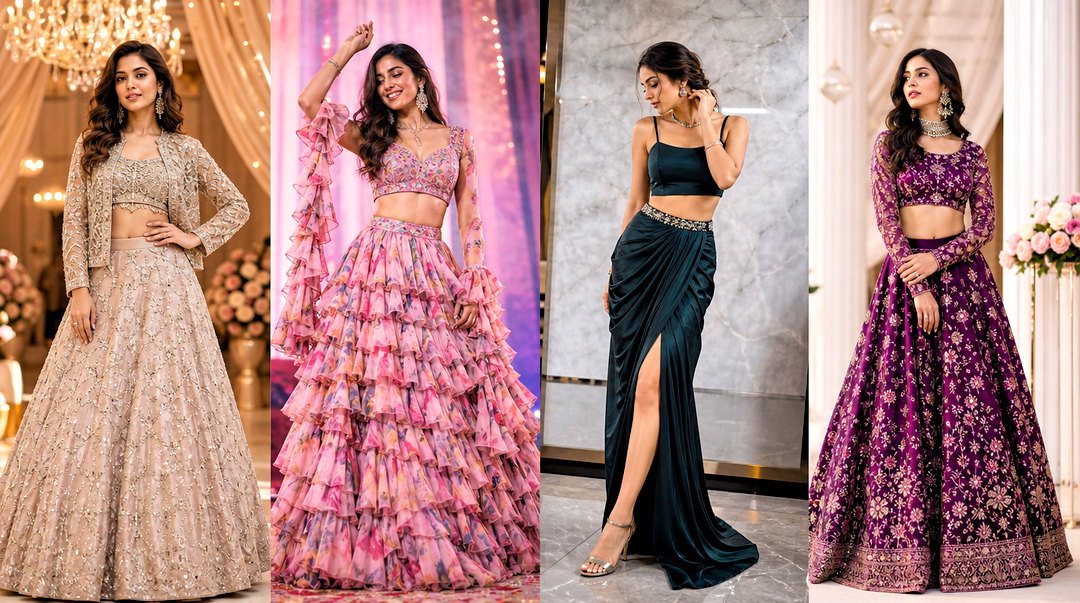
At a sangeet you'll dance, so I plan for movement first. A jewel-tone skirt with metallic weaving catches light as you turn. The top needs secure straps, a supportive bodice and a breathable lining. Pin the dupatta firmly or leave it off. Cushioned block heels or embellished flats are the only shoes I'd dance in for hours.
49. Banarasi Skirt With Longline Top
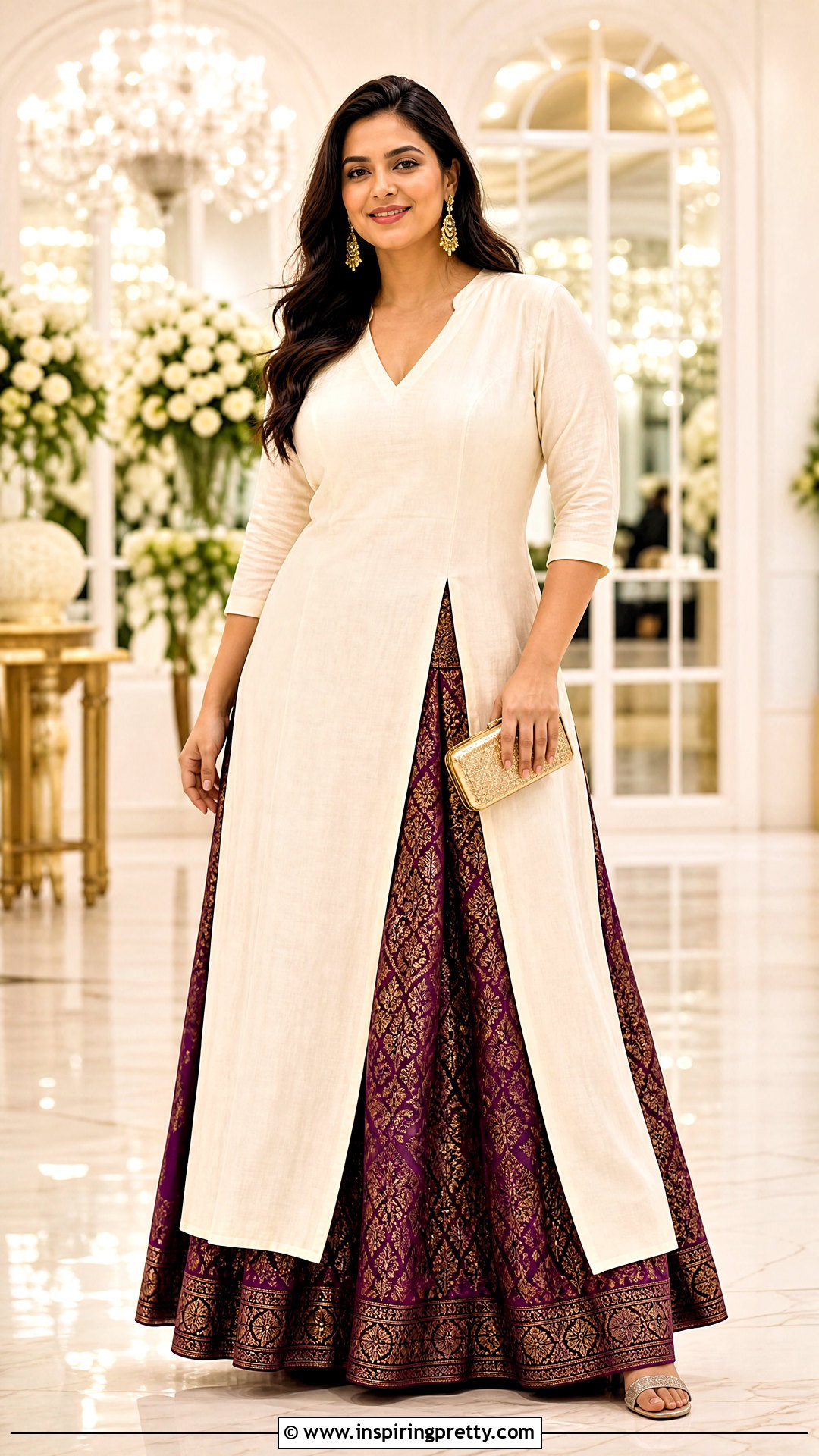
A longline top gives coverage and a long vertical line. It should end at the upper hip with side slits so the skirt still moves. A V-neck or button placket adds length. Avoid a very flared top, which competes with the skirt. Choose a plain top over a patterned skirt.
50. Banarasi Skirt With Three-Quarter-Sleeve Top
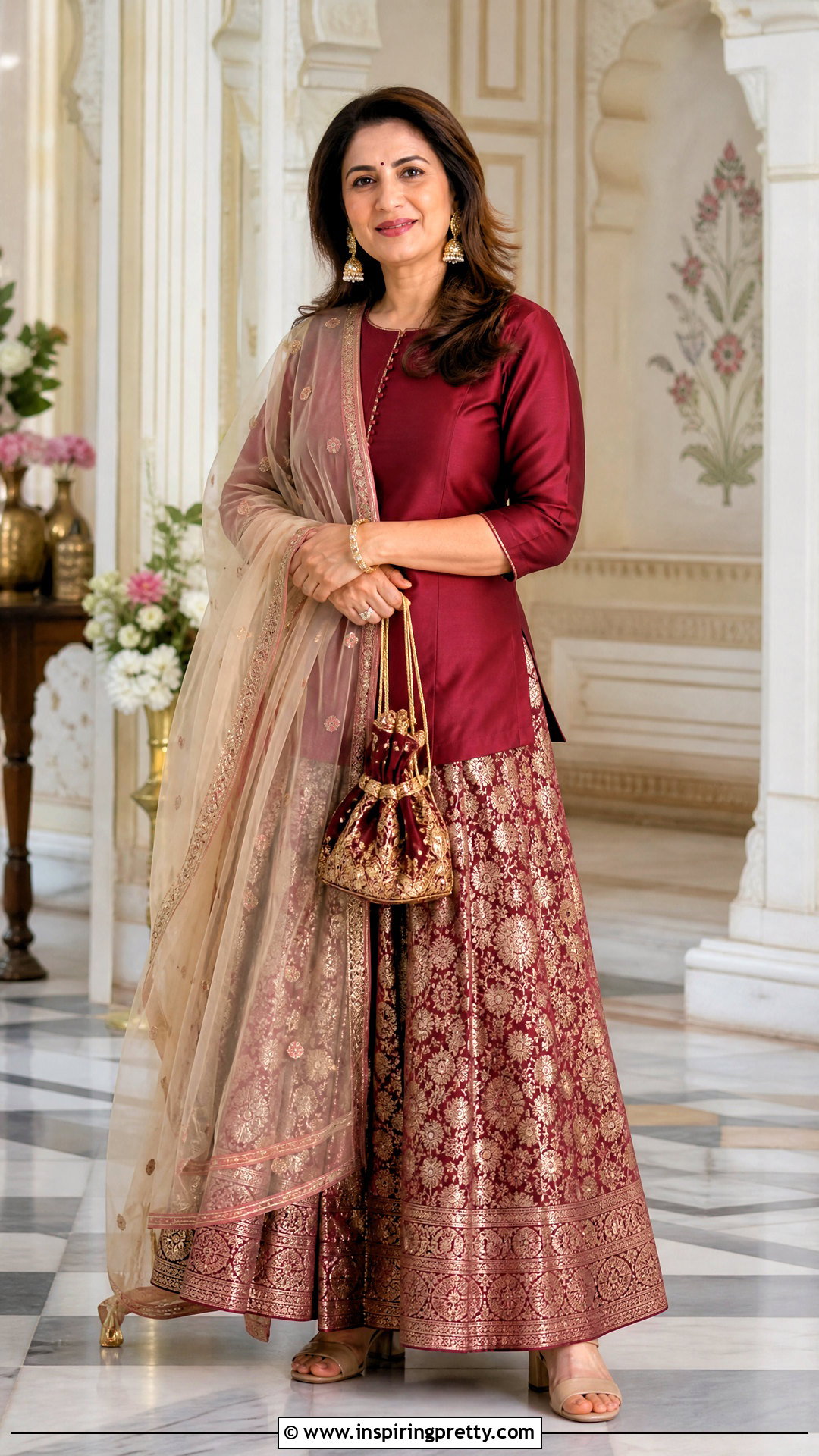
Three-quarter sleeves suit almost any age and give enough coverage for formal ceremonies. A well-tailored silk blouse or short kurti with a round or boat neck is the classic cut. The sleeve leaves room for a slim bangle stack. Pair a patterned skirt with a solid top and low heels or flats.
Small Tailoring Fixes Worth Asking For
Most Banarasi outfits that feel uncomfortable on the day have the same few fit problems. They're simple to fix if you take the skirt to a tailor a week before.
- Add a soft cotton lining so the back of the zari doesn't scratch your legs. Skip the can-can on heavy katan, which flares on its own weight.
- Set the hem so it just clears the floor in the shoes you'll wear. Banarasi borders fray if they drag.
- Ask for side pockets in the seam. They're invisible and save you from holding a phone all night.
Storing Banarasi So the Zari Doesn't Crack
Zari is metal thread, and metal cracks when it's folded in the same place for months. I refold my Banarasi pieces every few months along new lines and roll the border rather than crease it. Wrap the skirt in soft muslin or an old cotton saree, never plastic, which traps moisture and dulls the shine.
Keep perfume and deodorant away from the fabric, because both tarnish silver zari. Dry clean only, and only when it really needs it. Air it out after every event before you put it away.
Let the Weave Lead, Then Rewear It Often
Across every pairing here, one rule holds: let a single piece carry the detail and keep the rest quiet. Blouses, jackets, shirts, kurtis and corsets all work once you decide which piece is the star. Echo colors and textures through one small accessory, choose shoes you can stand in for hours and edit the jewelry hard. One good Banarasi skirt can come out several times a year with different tops, which is the best argument for owning one.
Related posts:


Leave a Reply