
A scarf is already a finished piece of cloth, with hemmed edges and a print placed to be seen, which is exactly why it makes such a good halter. The ideas below run from tie-on versions you can undo in a minute to small sewing projects with rings, ribbons, beads and chains. Size matters more than print: a large square or a long rectangle gives you enough fabric to cover the bust and still reach around the back with knots that hold. Whatever you try, tie it over a fitted tank first, then lift your arms, sit and twist before you trust it on its own.
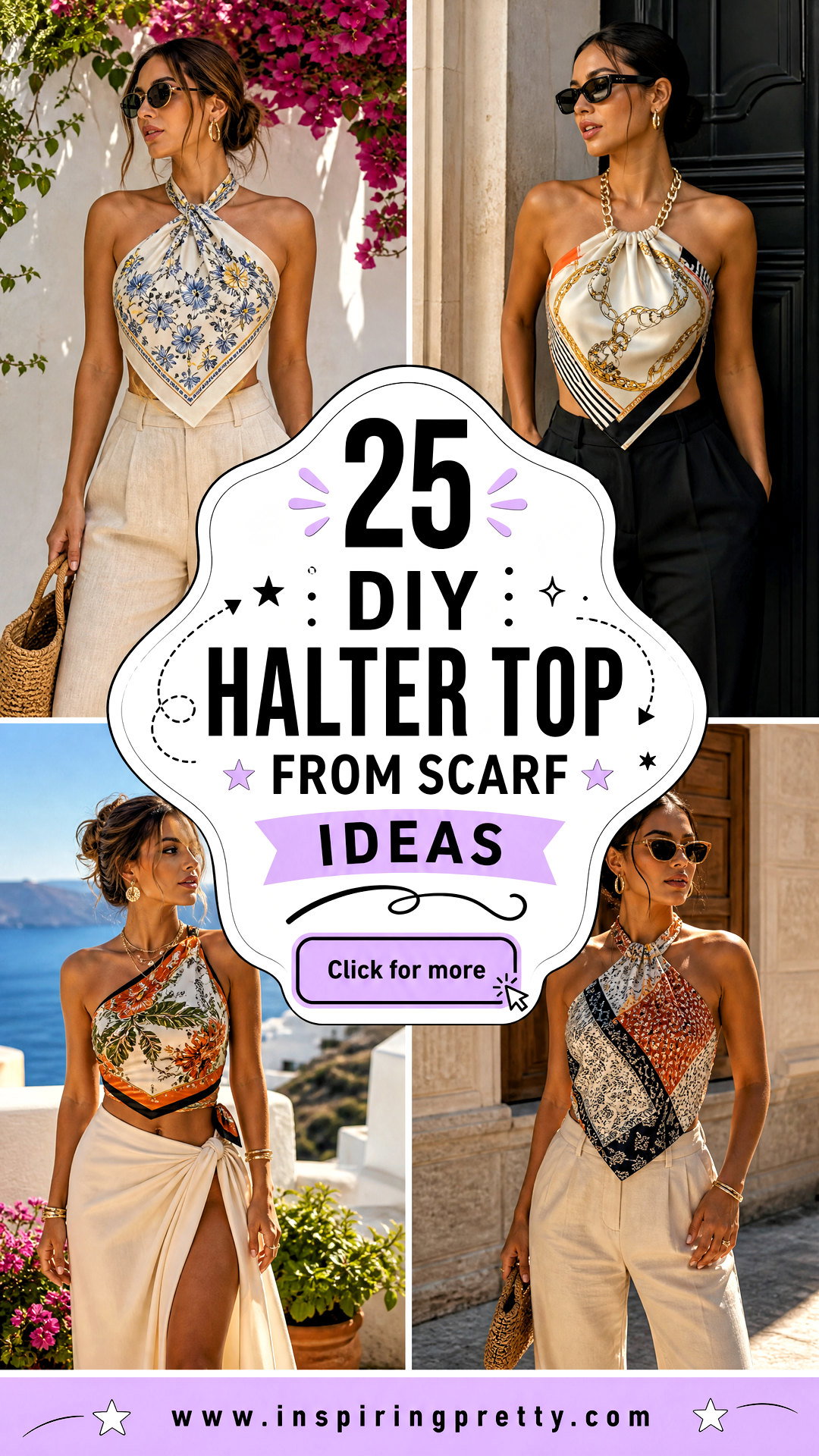
Measure the Scarf Before Folding It
Most failed scarf tops fail on size, not technique. A large silk-style square is usually around 90 cm (35 inches) per side, and that is roughly the minimum I'd use for a triangle halter on an average bust. Squares around 70 cm tend to end up as crop tops with ribbon extensions, and a standard bandana is smaller again.
Here's the quick check I do before any folding. Fold the square on the diagonal and hold the long edge across your chest just under the collarbone. If the two side corners don't reach to at least the sides of your back with some length left to knot, plan on adding ties. For rectangles, wrap the scarf once around your ribcage; you want enough left over to cross the front and still tie.
- Square near 90 cm: triangle, ring, bow, keyhole and open-back styles.
- Long rectangle: crisscross, V-neck, high-neck, cowl and longline wraps.
- Small square or bandana: cropped styles with ribbon or cord extensions.
- Two or more small scarves: double, reversible or patchwork versions.
Fibre matters next. Cotton and silk twill hold knots; polyester satin and chiffon slide. Check the care label too, because anything marked dry clean only will be awkward to wear in summer heat against skin.
1. Triangle Scarf Halter Top With Linen Pants
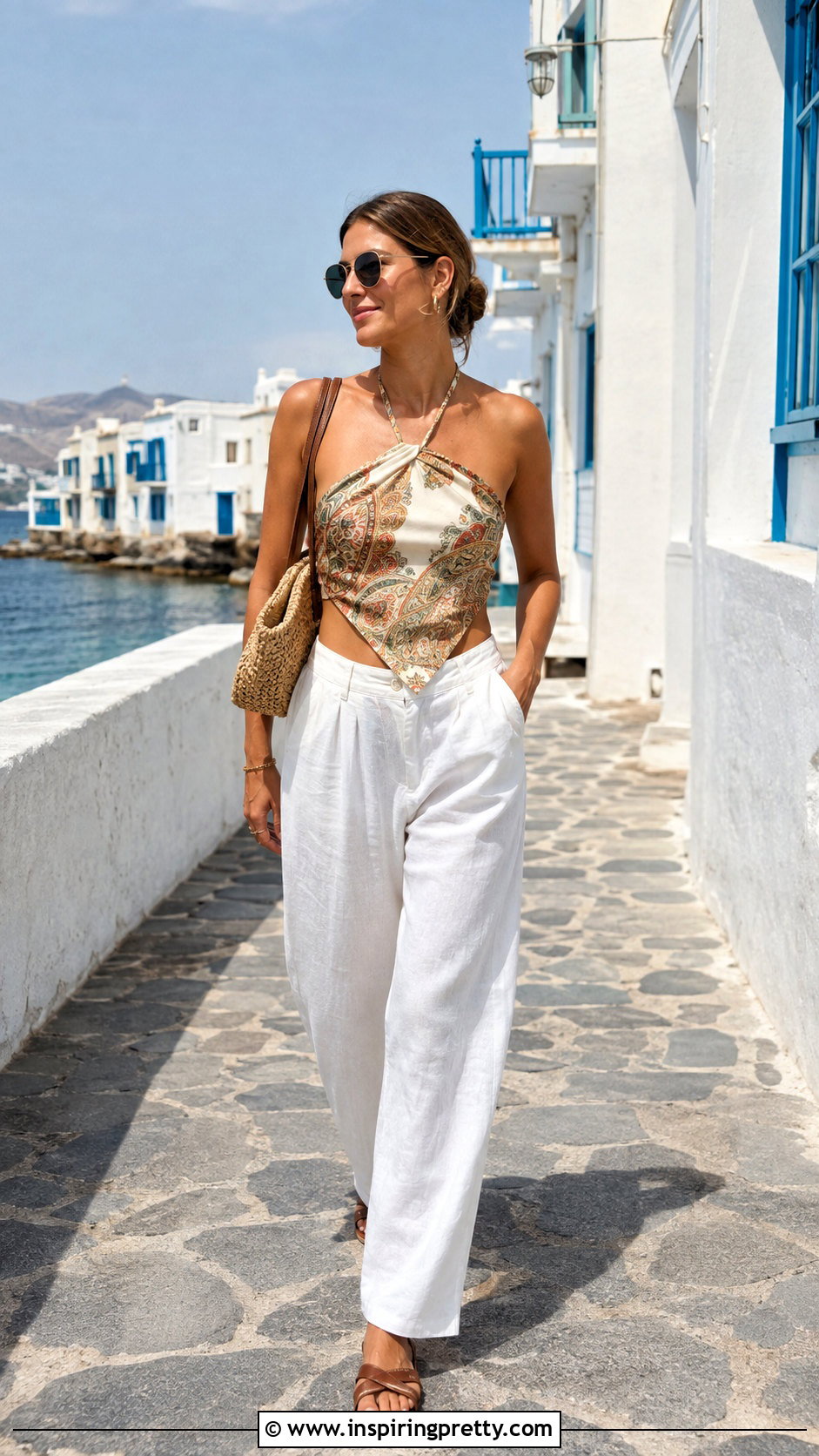
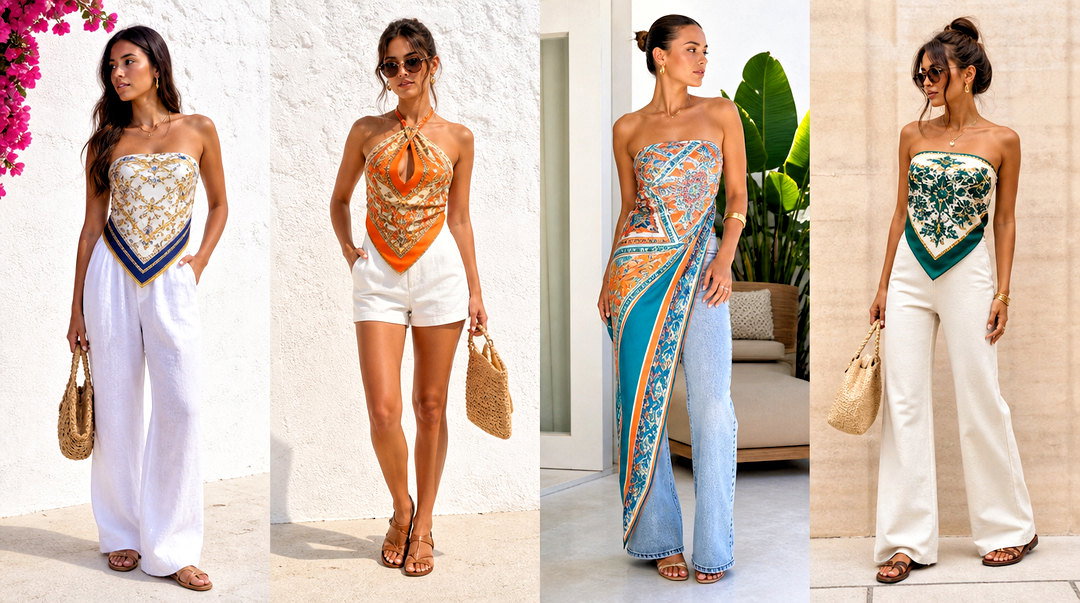
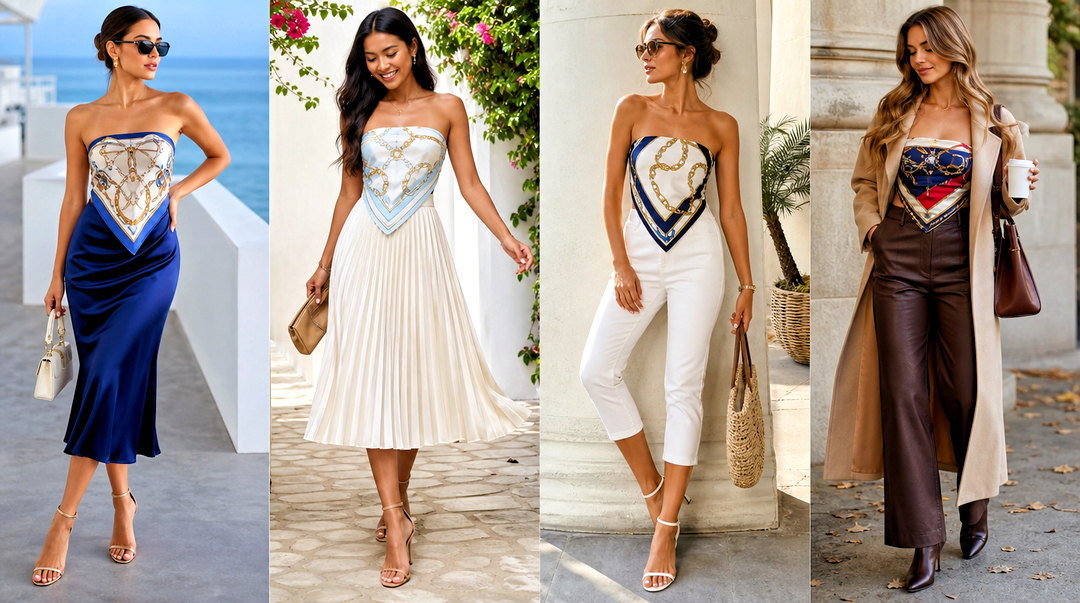
I'd start everyone here, because the triangle teaches you how a scarf behaves on a body. Fold a large square scarf diagonally, set the point down the centre front, tie the top corners at the nape and the side corners across the back. Double-knot both. Cotton and medium-weight silk grip their own knots; thin polyester satin tends to work loose by lunchtime. White linen trousers, flat sandals and small hoops keep everything quiet around the print, and a bandeau underneath is cheap insurance.
2. Crisscross Scarf Halter Top With Wide-Leg Jeans
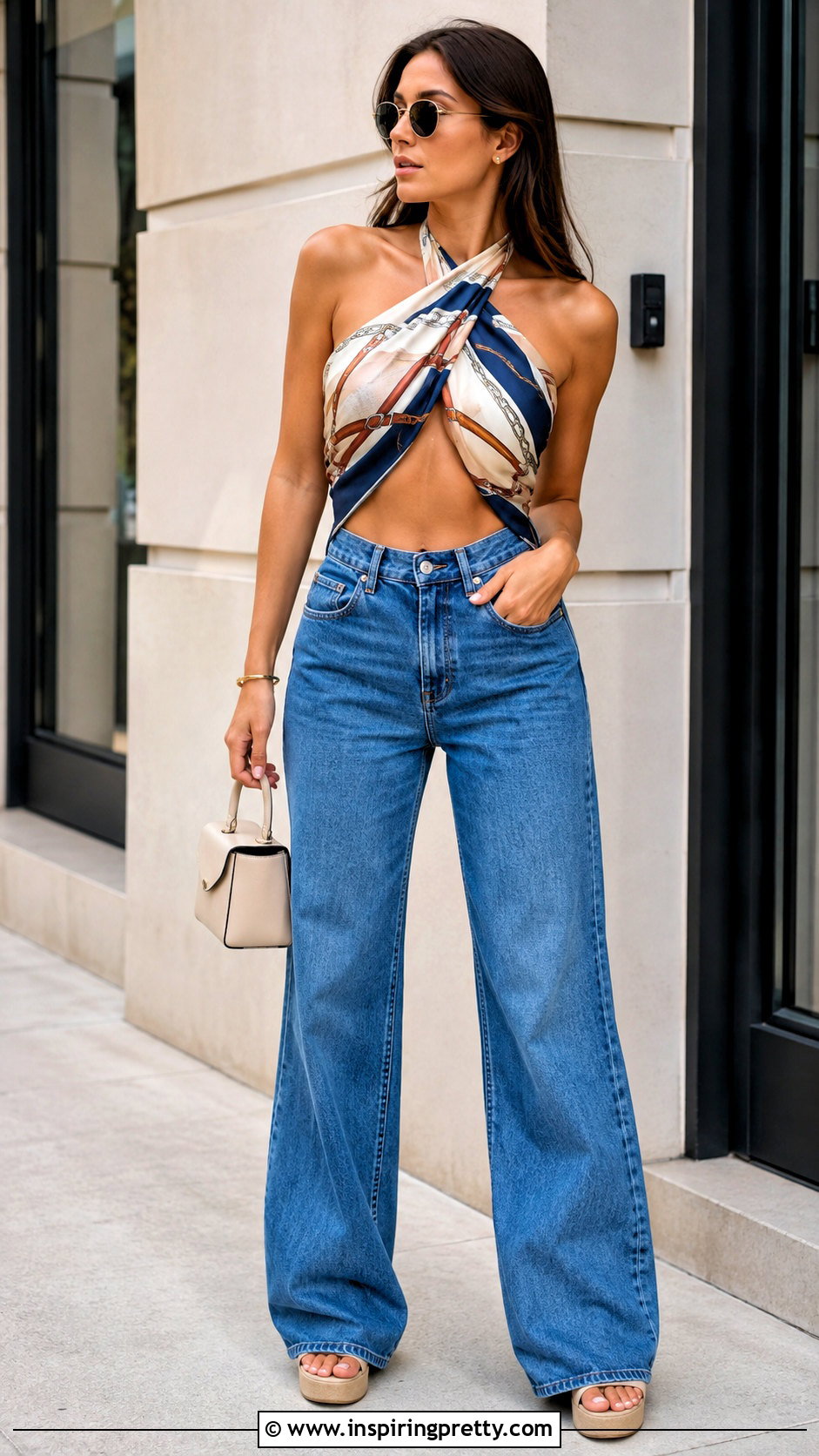
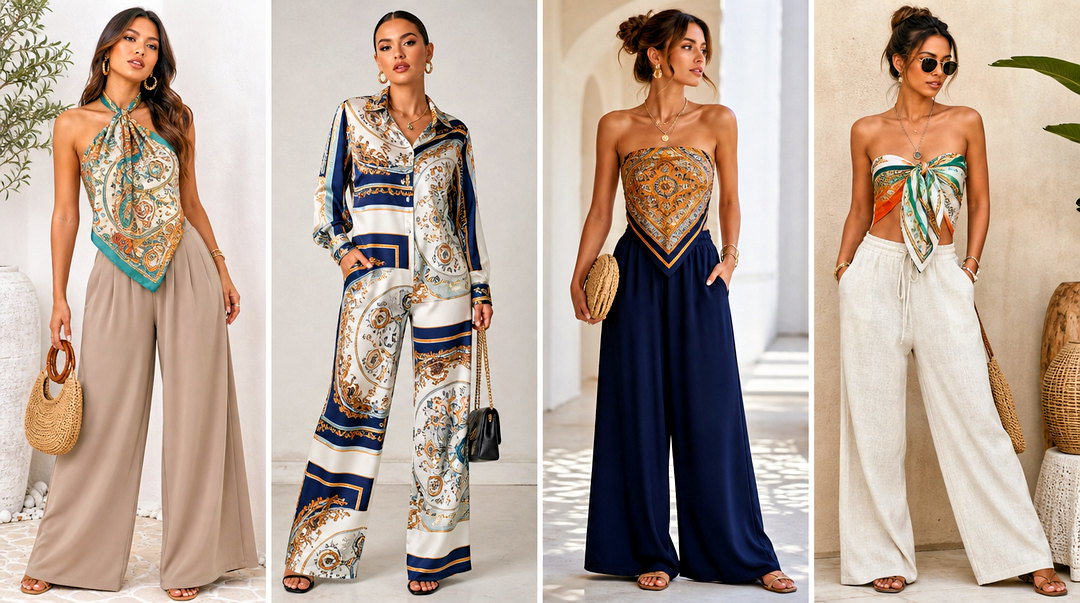
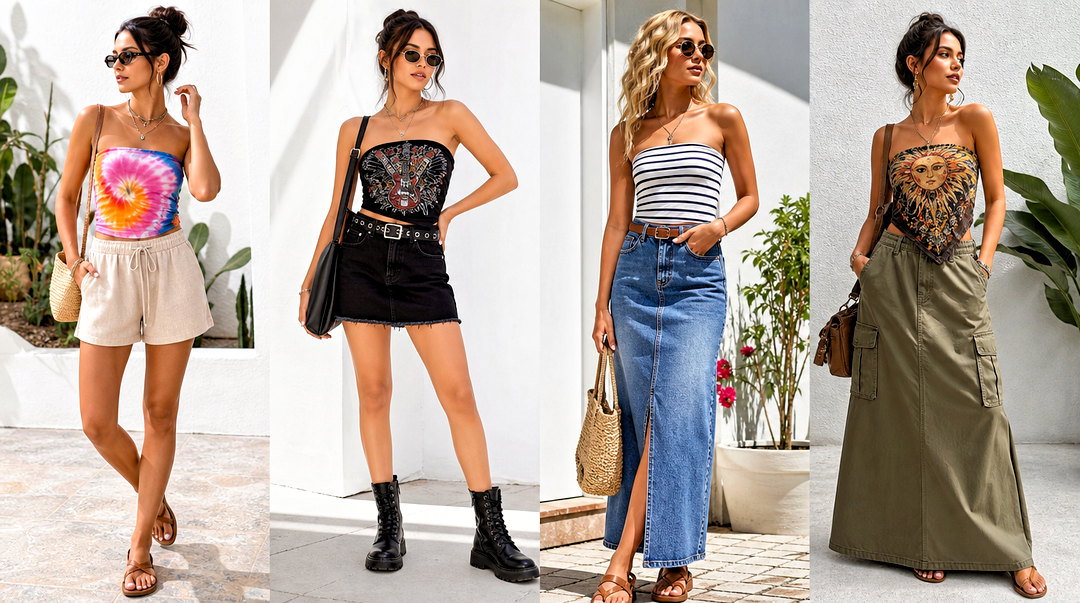
The crisscross needs a long rectangle, not a square. Hang it behind your neck, cross the ends over your chest, fan each panel wide so the bust is covered edge to edge, then wrap the waist and knot at the side. Where the panels overlap, slippery fabric will slowly open, so a strip of fashion tape there earns its place. A border print makes the X read clearly from across a room. Wide-leg jeans and platforms balance the narrow straps at the shoulder, and I always raise my arms in the mirror before calling it done.
3. Ring Front Scarf Halter Top With Maxi Skirt
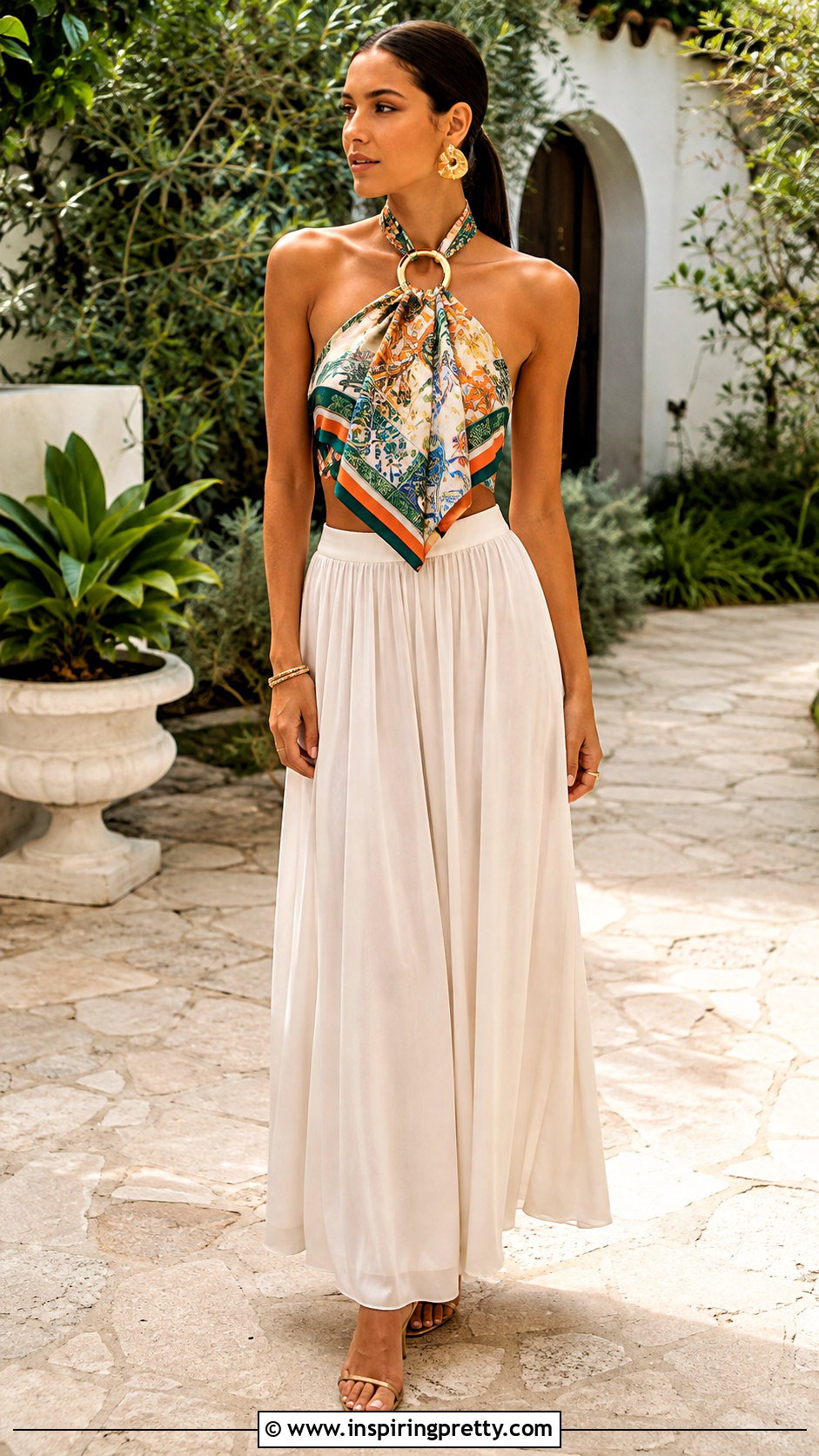
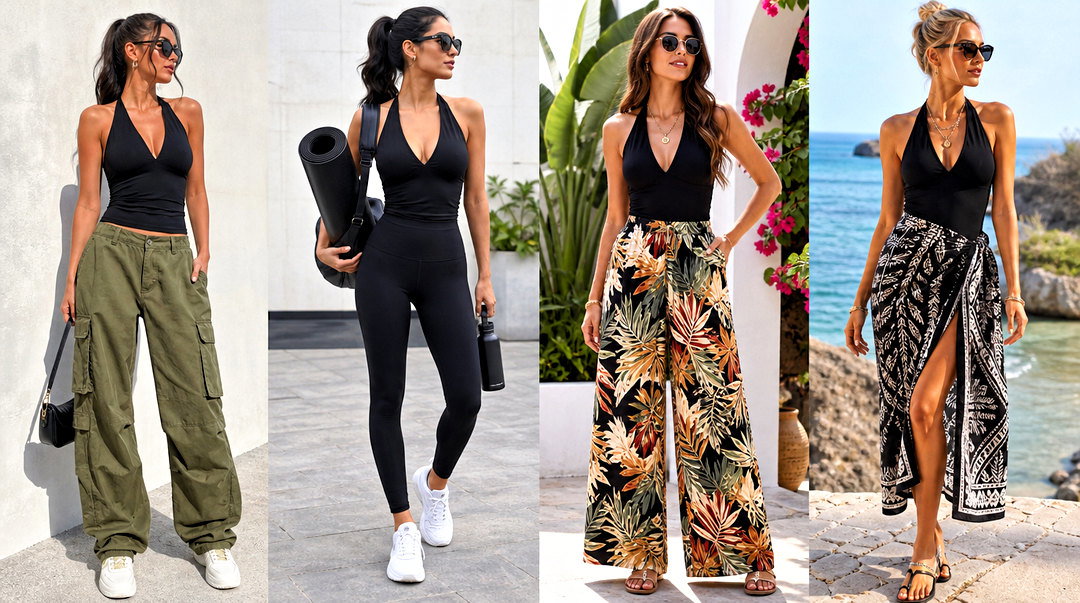
A ring gives a soft scarf a hard centre point, and that contrast is the whole appeal. Fold a square diagonally, pull the two side corners through a smooth ring or bangle from opposite directions, and even out the panels before tying the neck and back. Run your finger round the inside of the ring first: any seam or rough edge will catch silk the moment the fabric shifts. A plain maxi skirt and slim sandals let the print and the metal do the talking.
4. Cowl Neck Scarf Halter Top With Tailored Shorts
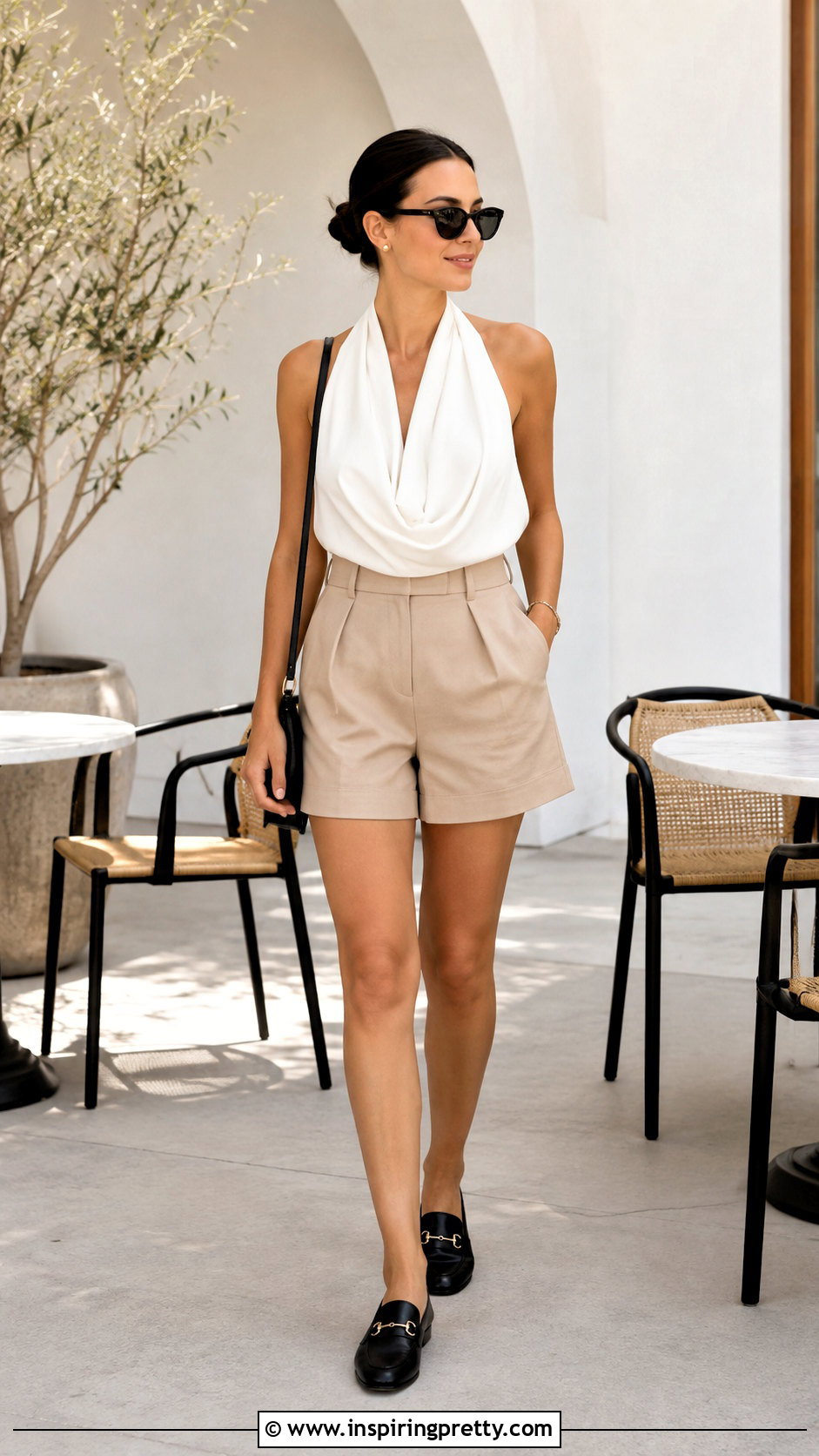
Cowls only drape properly in fabric with real fluidity, so this is where satin finally beats cotton. Take a big rectangle, fold the top long edge inward to set how deep the neckline falls, tie the corners at the neck and let the centre sag rather than pulling it flat. If it drops lower than you want, shorten the neck ties or add another fold along the top. Tailored shorts and loafers give the soft neckline something structured to sit against. Hair up helps too, since the drape is the detail people notice.
5. Bow Front Scarf Halter Top With Midi Skirt
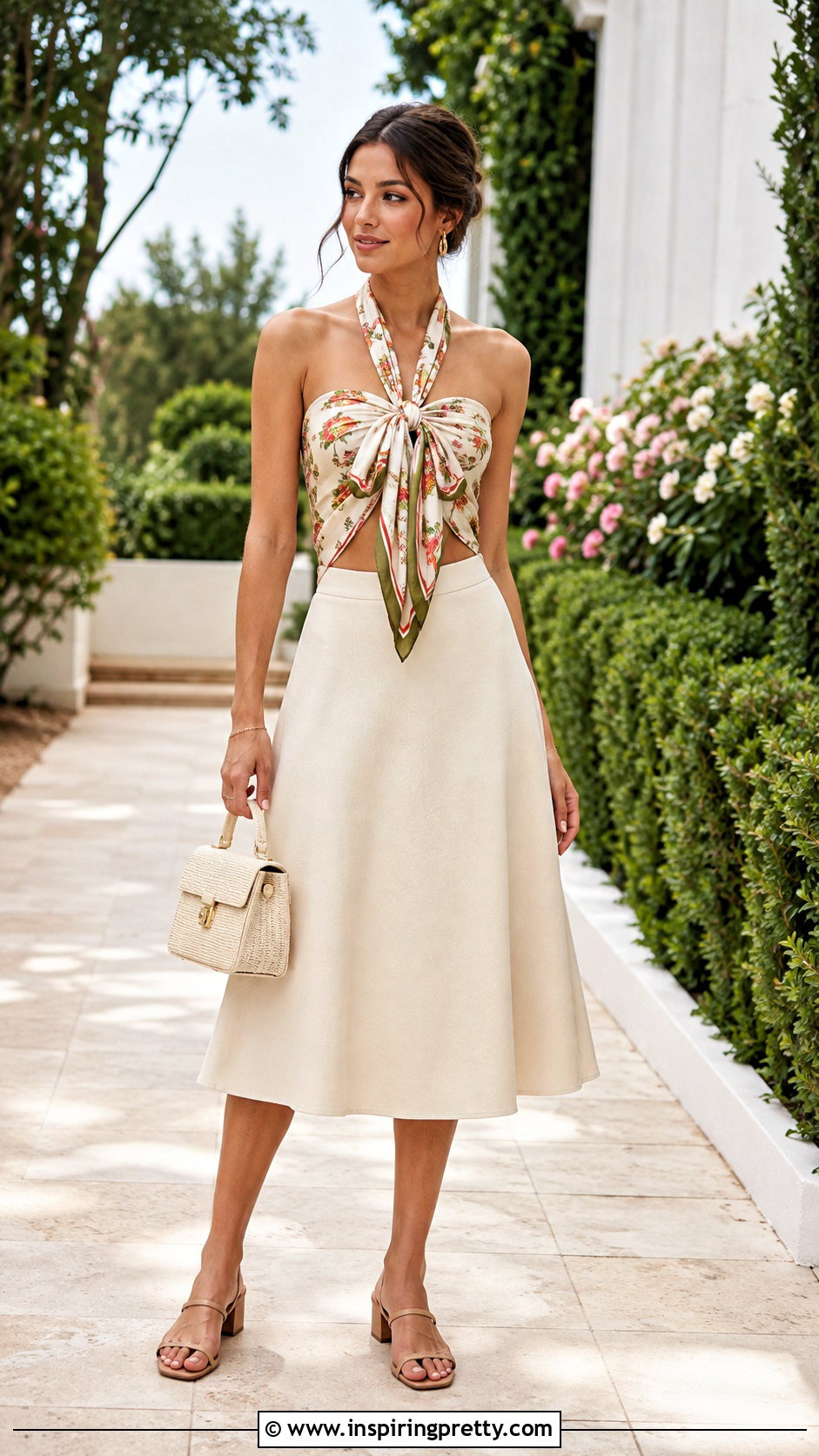
A bow adds bulk wherever it sits, so I keep it small and tight. Fold a large scarf into a wide triangle, bring the side corners to the front through a scarf ring, and tie a compact bow over it before using the top corners as neck straps. On satin, the bow loosens faster than the back knot, so check it after an hour. An A-line midi in one colour lifted from the scarf ties the outfit together without competing.
6. Keyhole Scarf Halter Top With Pleated Trousers
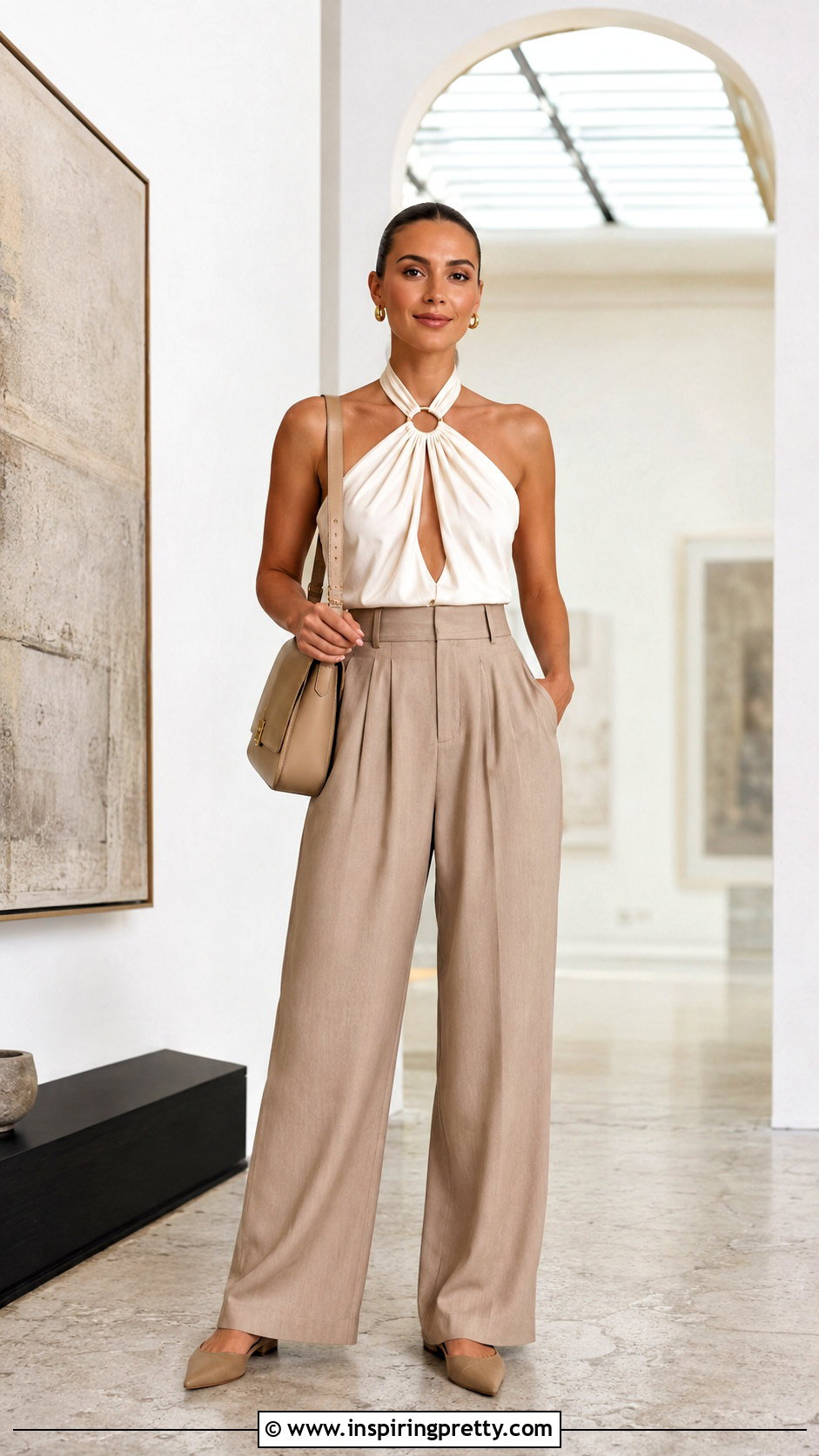
This version is about restraint. Gather the centre of a folded scarf through a ring, pull gently to open a small keyhole, and then tie the neck and back. The higher the ring sits and the less fabric you pull through, the more modest the opening stays. Go for a light ring; a heavy one drags the keyhole downward all day. Stripes or geometric prints show off the symmetry, and pleated trousers with pointed flats keep it looking deliberate.
7. Double Scarf Halter Top With Flared Pants
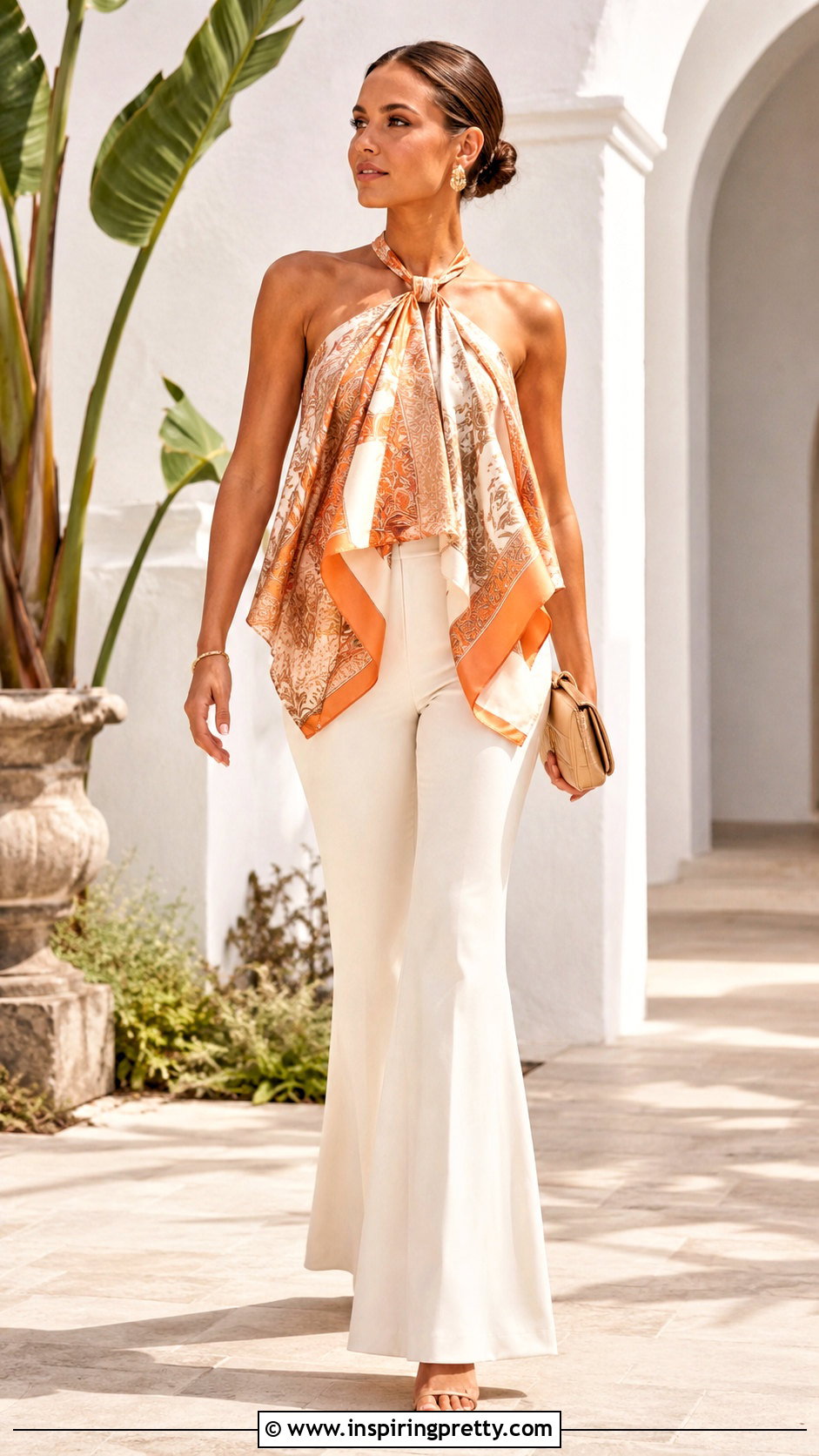
When one scarf won't cover enough, two will. Lay them with the right sides out, join the centre edges with small hand stitches, then add ribbon ties at the top corners and link the side edges, leaving plenty of room at the armhole. You can add a third scarf across the back if you want more coverage there. I pick scarves that share a colour rather than matching prints; it reads as a deliberate patchwork instead of a mistake. Flared trousers and a plain clutch finish it.
8. Reversible Scarf Halter Top With Denim Skirt
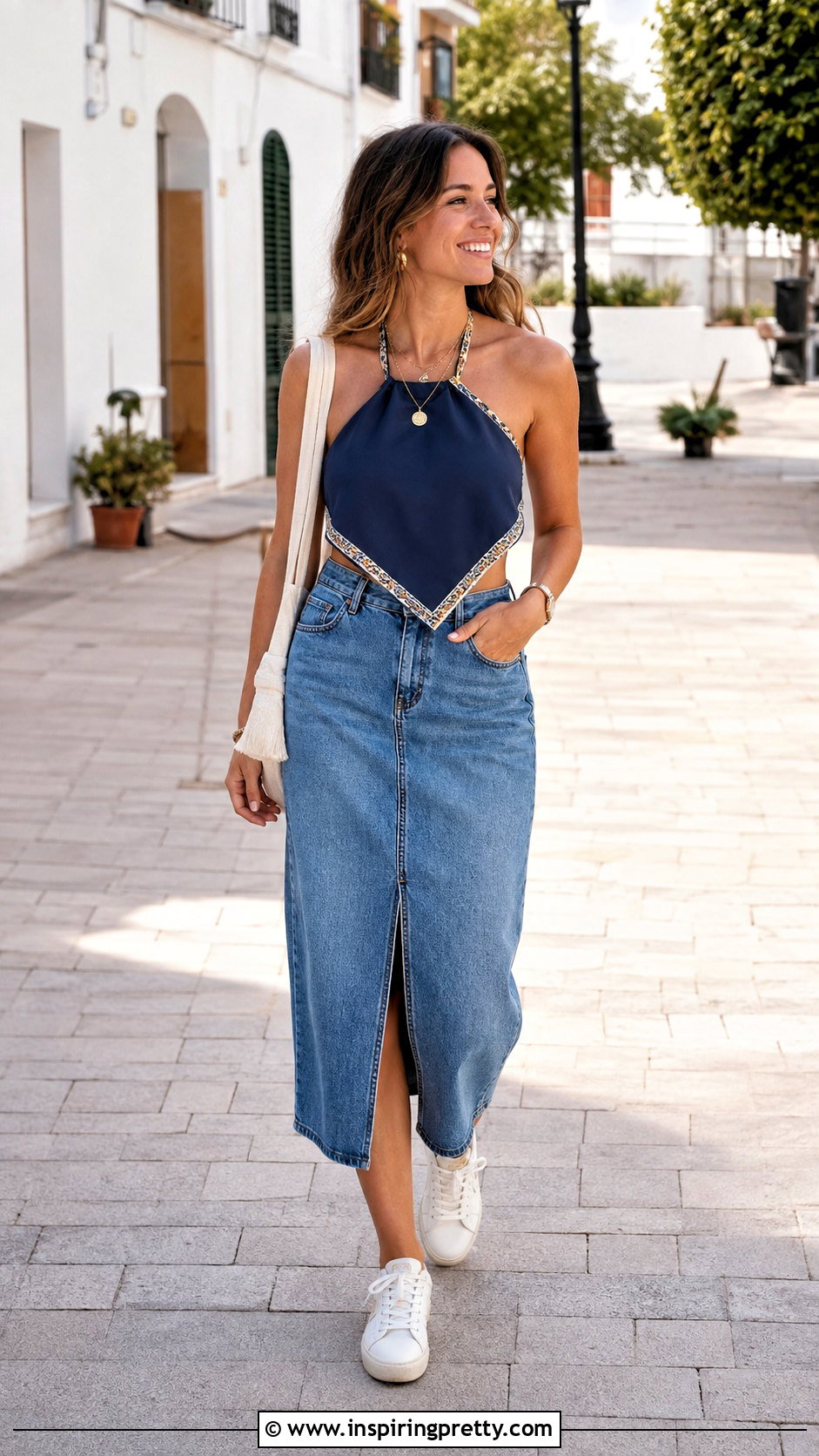
Why settle for one print when two light scarves can make a reversible top? Wash or steam both first, because two fabrics that shrink differently will pucker the moment they're sewn together. Place them printed sides facing, stitch round the edge leaving a small gap, turn through, then close the gap by hand and add ribbon loops at the corners. Keep the weights close; a heavier side will pull the lighter one off grain. A denim midi and white sneakers suit either face.
9. Bandana Scarf Halter Top With Cargo Pants
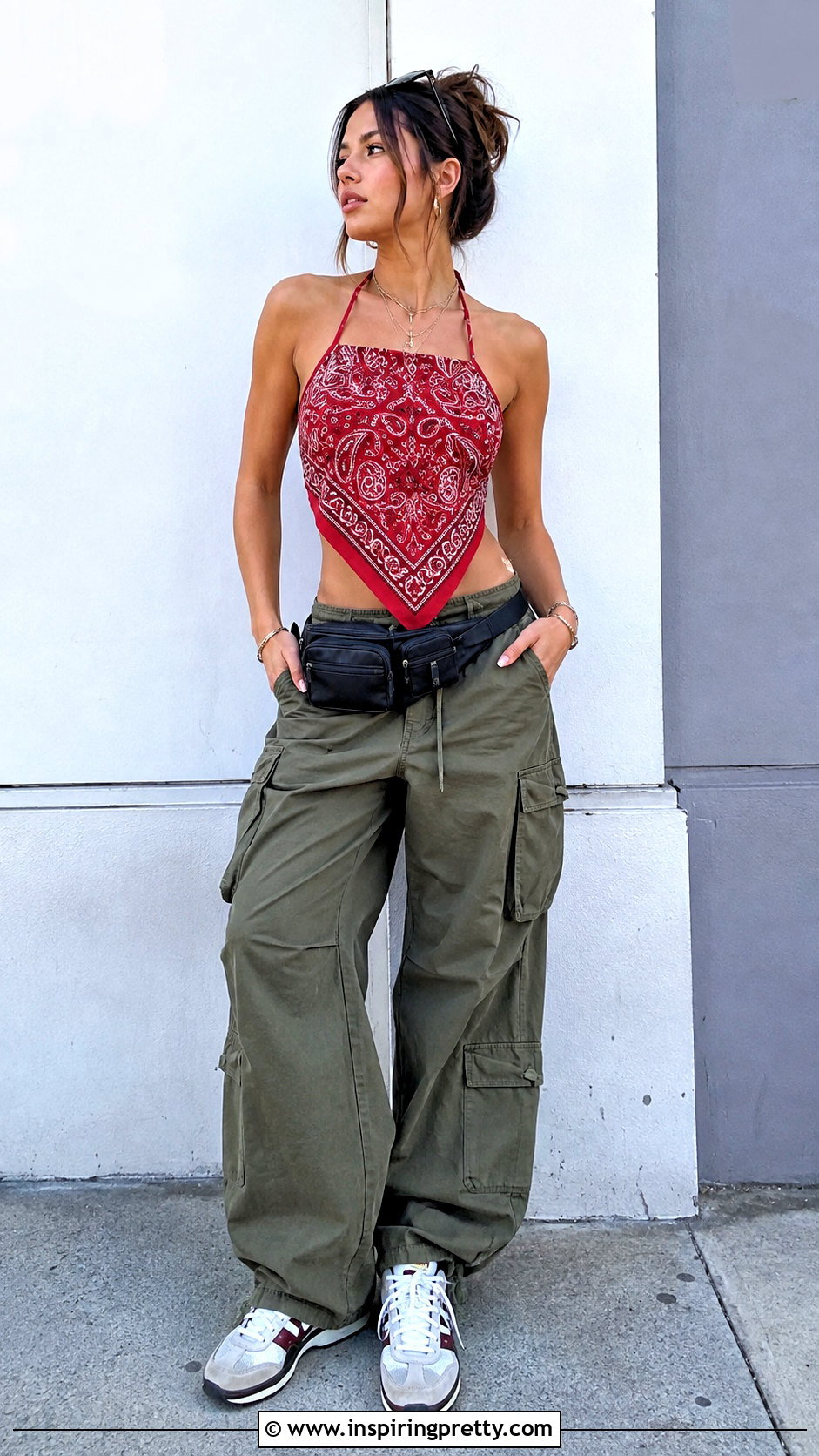
A standard bandana is too small for most adults, so look for the oversized kind before you start. Fold it on the diagonal, run the long fold across your upper chest and sew sturdy ribbon ties near the top corners, leaving the point hanging at the centre. If the side corners won't reach round your back, extend them with ribbon rather than stretching the cotton. You can also stitch a channel along the top edge and thread the ribbon through it. Cargo pants and retro sneakers keep the mood casual, and solid red or navy bandanas look sharpest.
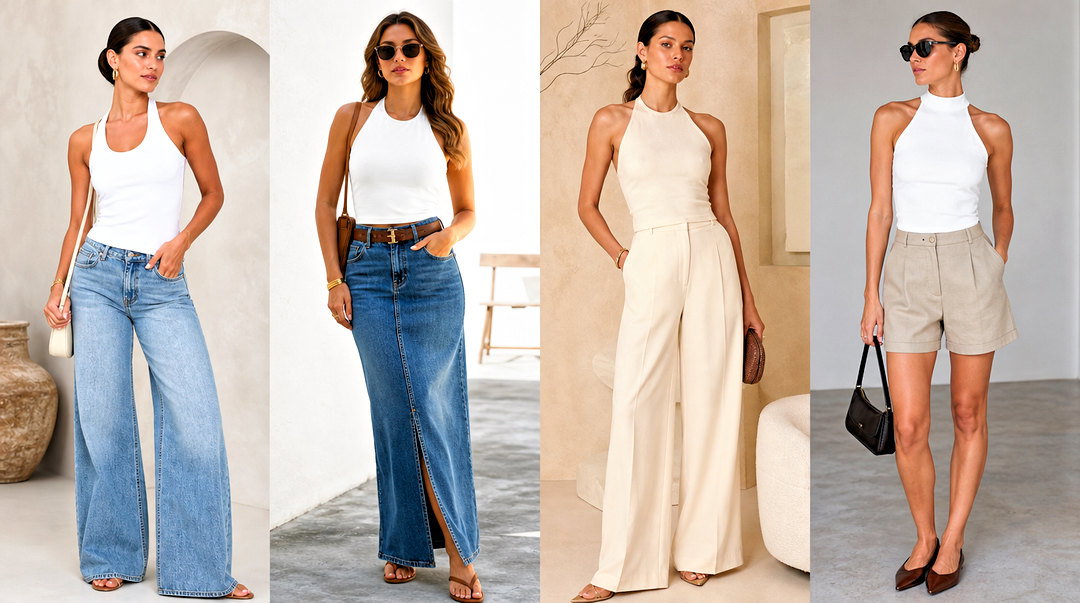
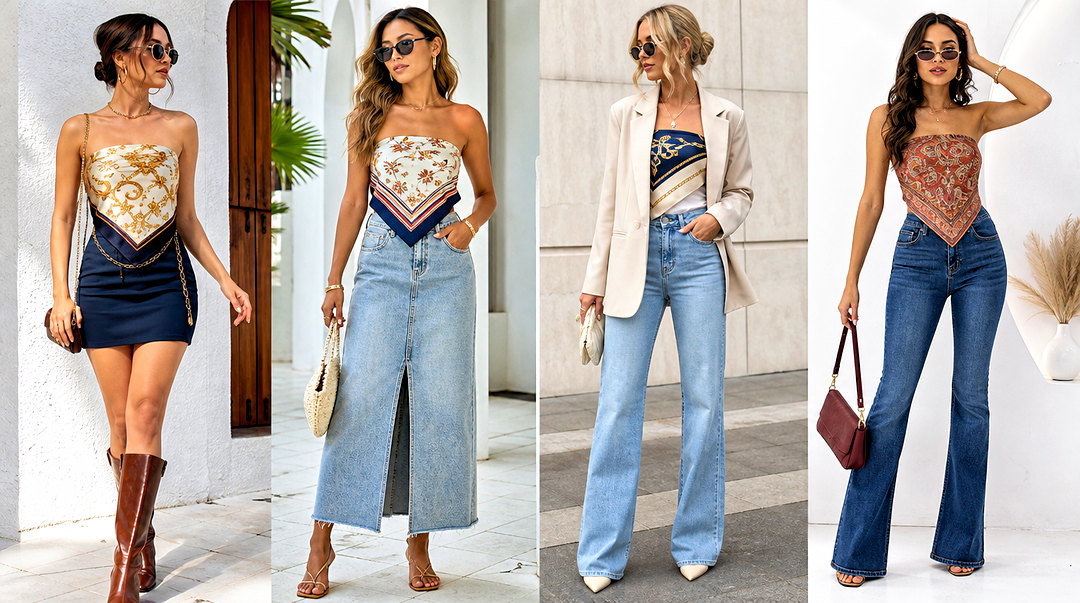
10. Chain Strap Scarf Halter Top With Black Trousers
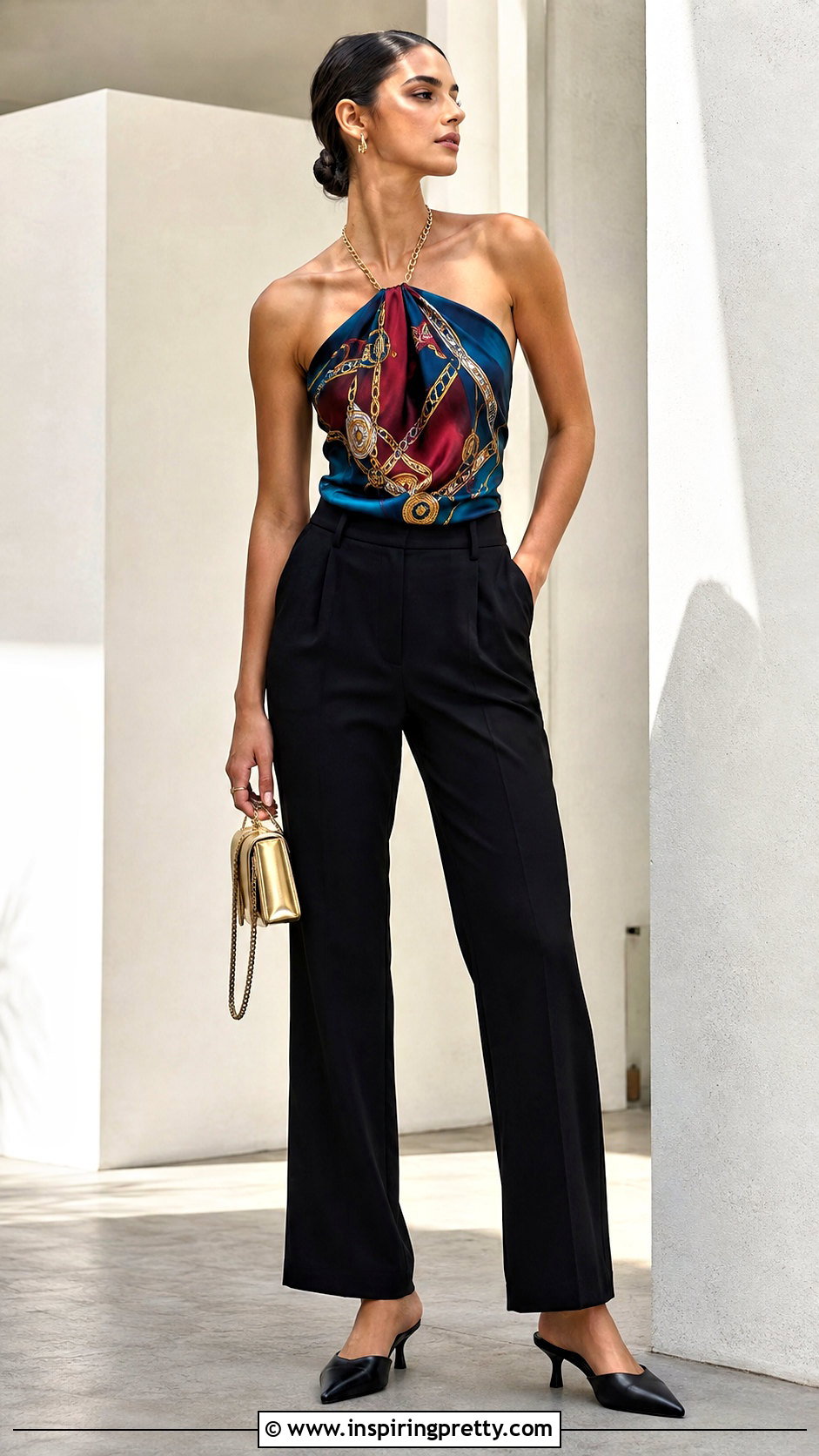
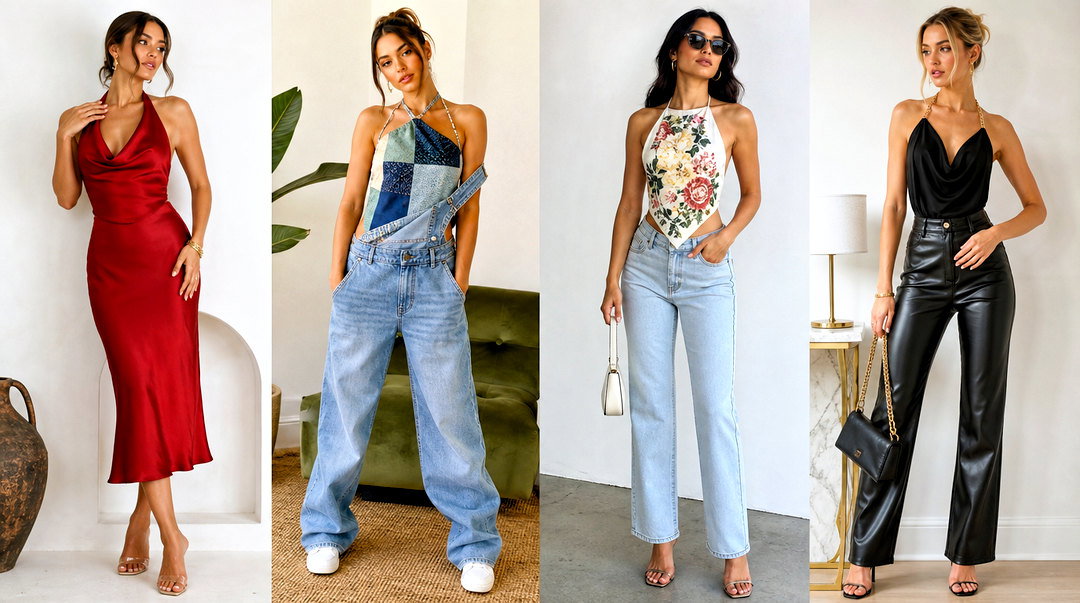
A chain strap turns a scarf top into something you could wear to dinner. Sew small fabric loops onto the two top corners of a triangle and clip a light necklace or bag chain through them, then tie the back as usual. The loops take every bit of weight, so stitch each one several times and give it a firm tug before wearing. Heavy chain digs into the back of the neck within an hour, so lighter is better. Black trousers and mules keep the outfit sleek; skip extra necklaces.
11. Ribbon Tie Scarf Halter Top With White Jeans
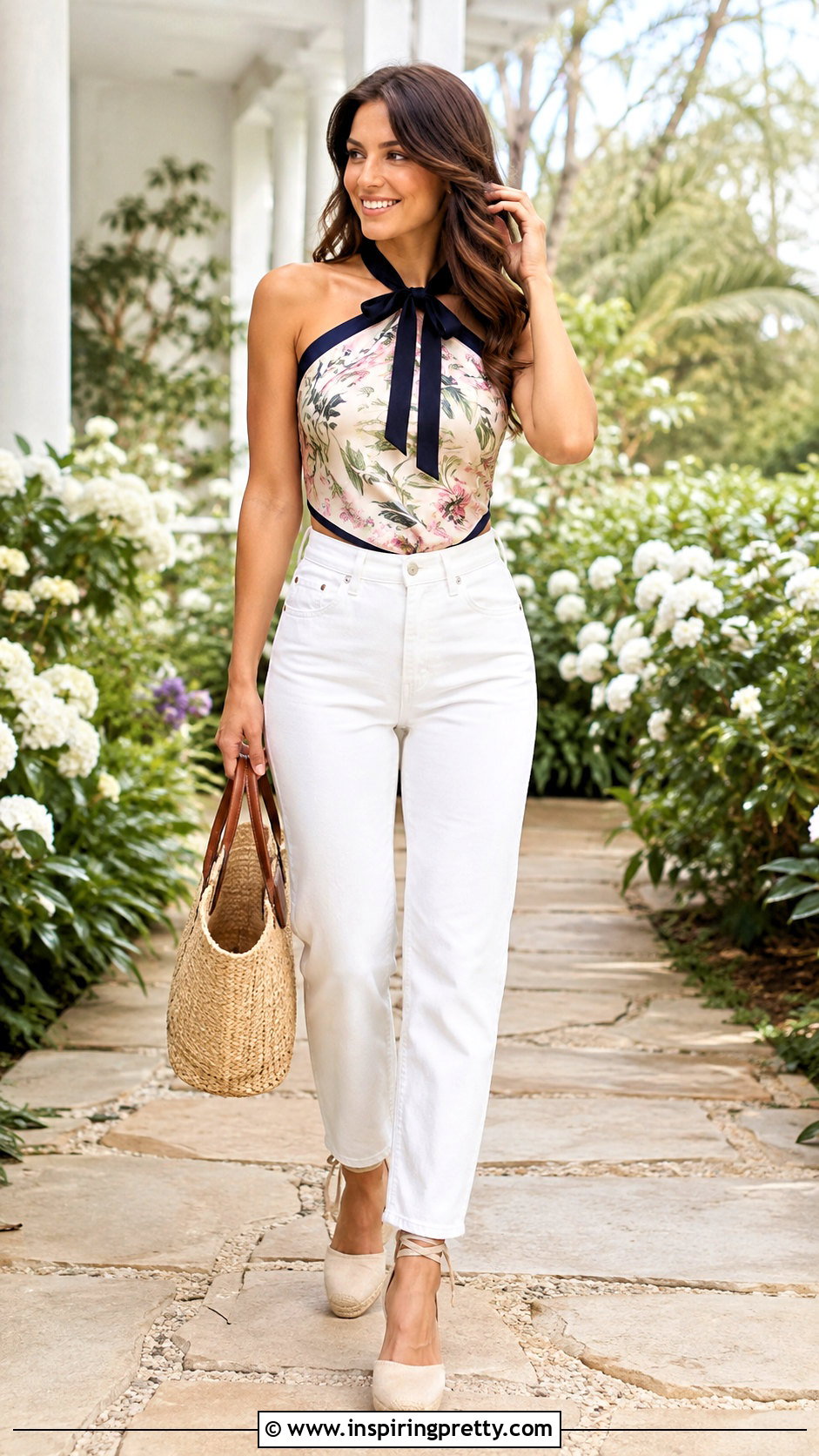
Ribbon is my favourite fix for a scarf that's a few centimetres short. Stitch narrow lengths to the top corners of a diagonally folded square, and to the side corners as well if the back won't close. Grosgrain grips in a knot; satin ribbon slides but looks finer. Seal every cut end with a fray stopper or a tiny folded hem, and tie the neck in a double knot rather than a bow. White jeans and espadrilles work well, especially if the ribbon matches a small colour in the print.
12. Beaded Strap Scarf Halter Top With Palazzo Pants
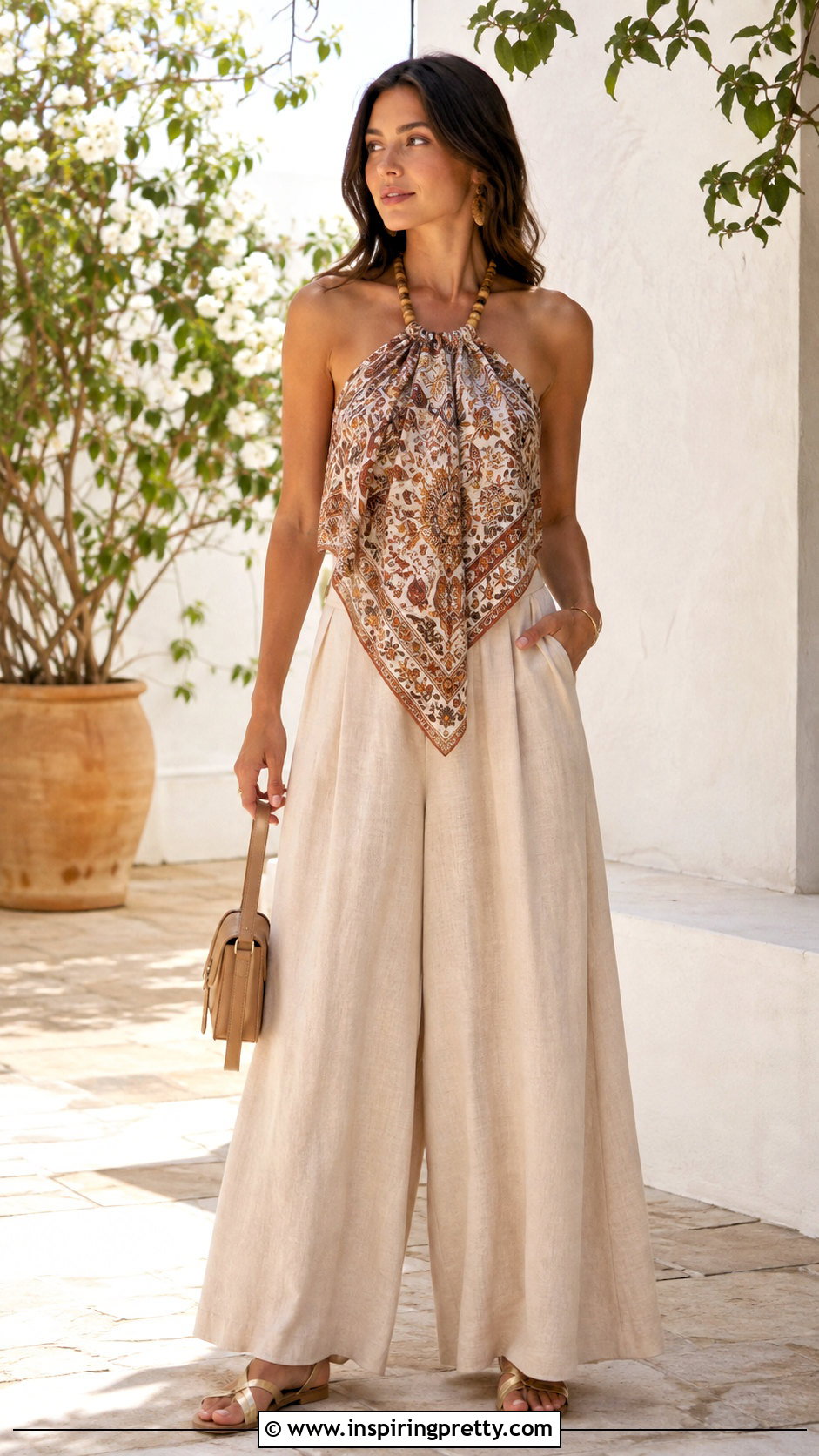
Never sew beads straight through a delicate scarf corner; the weight will tear it. Make the straps separately on strong jewellery cord, then attach them to reinforced fabric loops on a medium-weight scarf, and keep plain cord at the back so the fit stays adjustable. Smooth beads only, since a sharp edge will snag the fabric every time you move. Wood suits earthy prints and pearl-look beads suit satin. Light straps feel far better than a heavy beaded neckline, and palazzo pants with flat sandals let them stand out.
13. Ruched Scarf Halter Top With Straight-Leg Jeans
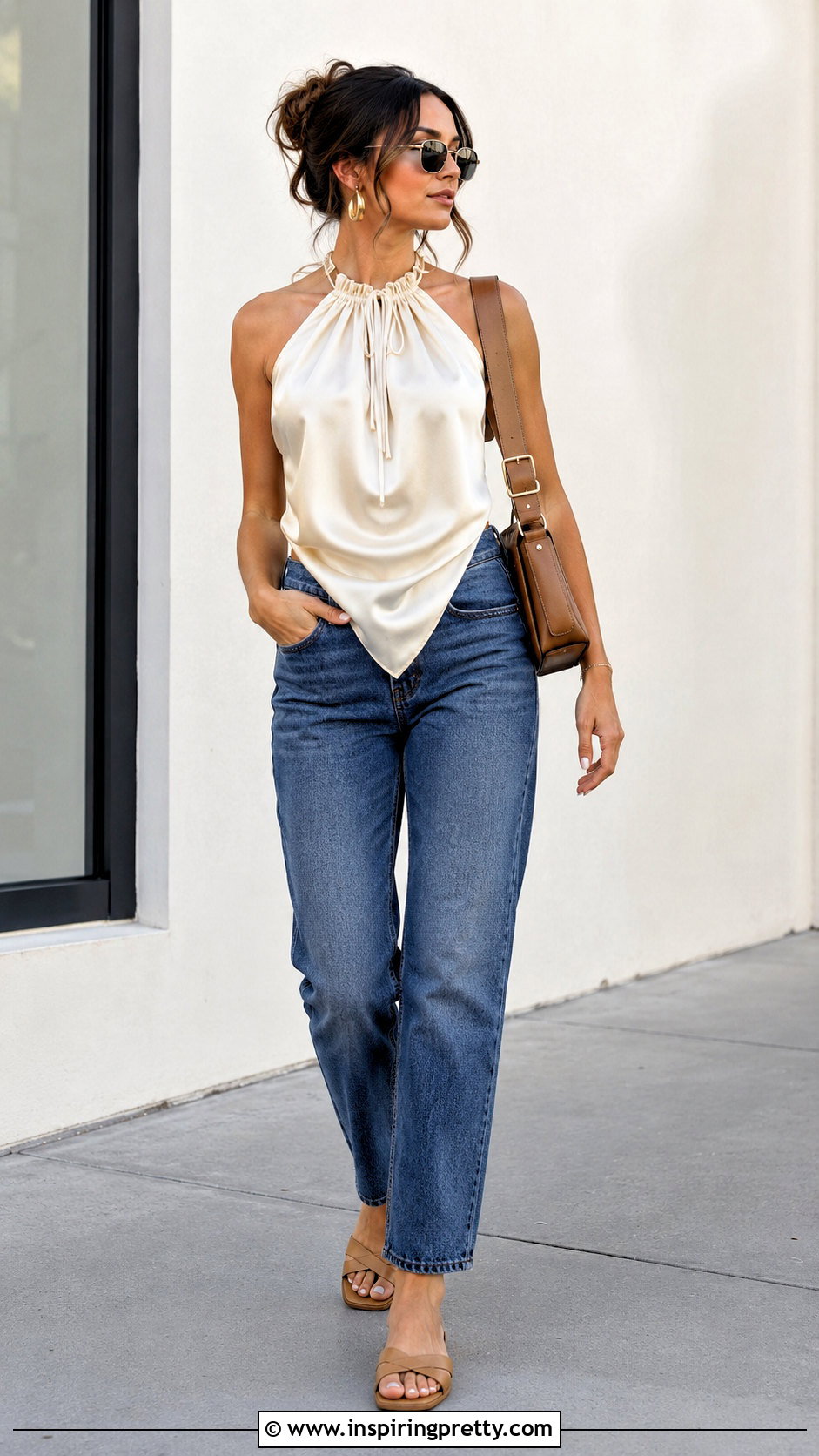
A drawstring channel gives you ruching and an adjustable neckline in one step. Fold the top edge of a big rectangle inward, stitch a narrow casing, and feed satin cord through it with a safety pin before gathering to fit and tying at the neck. Make the casing slightly wider than you think, because a tight channel stops the gathers from moving. Fluid fabrics such as lightweight satin or silk-like polyester gather softly; stiff cotton bunches. The ruched halter pairs easily with straight-leg jeans and slides.
14. High-Neck Scarf Halter Top With Column Skirt
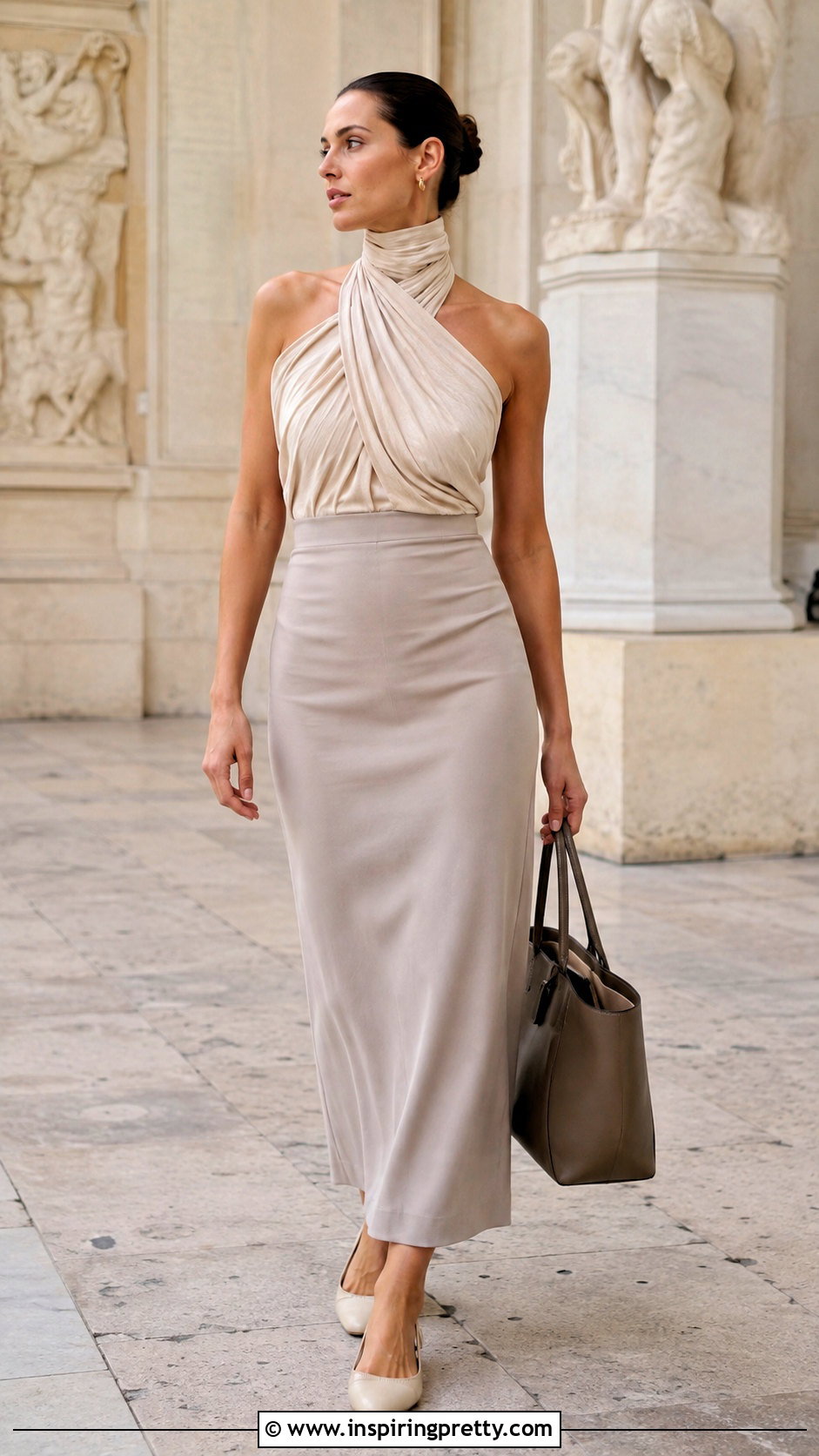
If you want more coverage up top, this is the one. Centre a long scarf across the front, cross the upper ends at the collarbone, wrap them once around your neck and tie at the back, then take the lower corners behind the waist. The neck wrap shows off the scarf's edge, so a decorative border pays off here. Snug at the neck, never tight. A column skirt and slingbacks keep the long vertical line going from chin to hem.
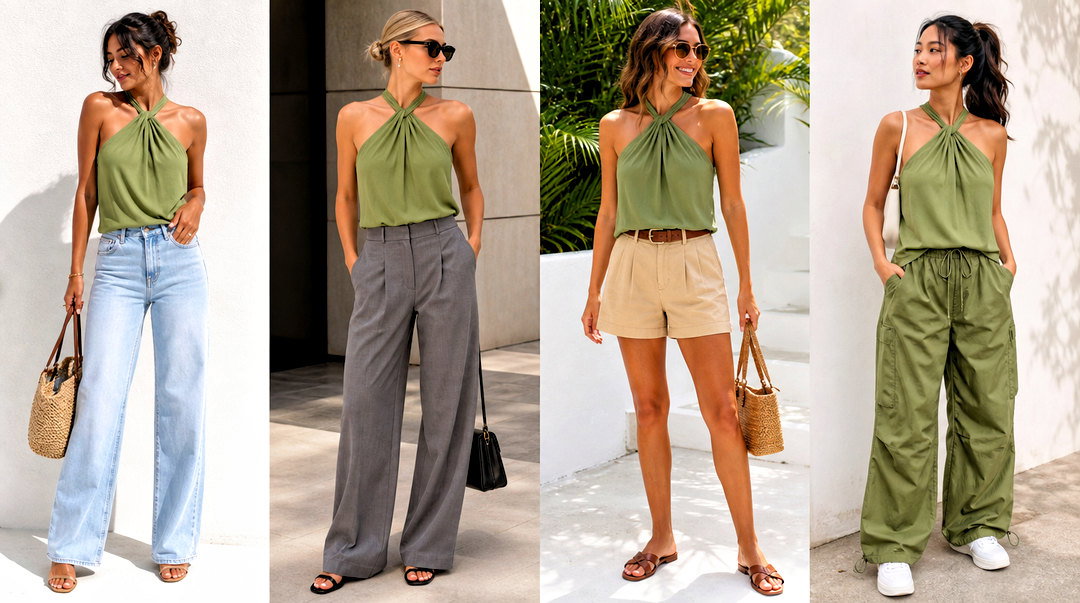
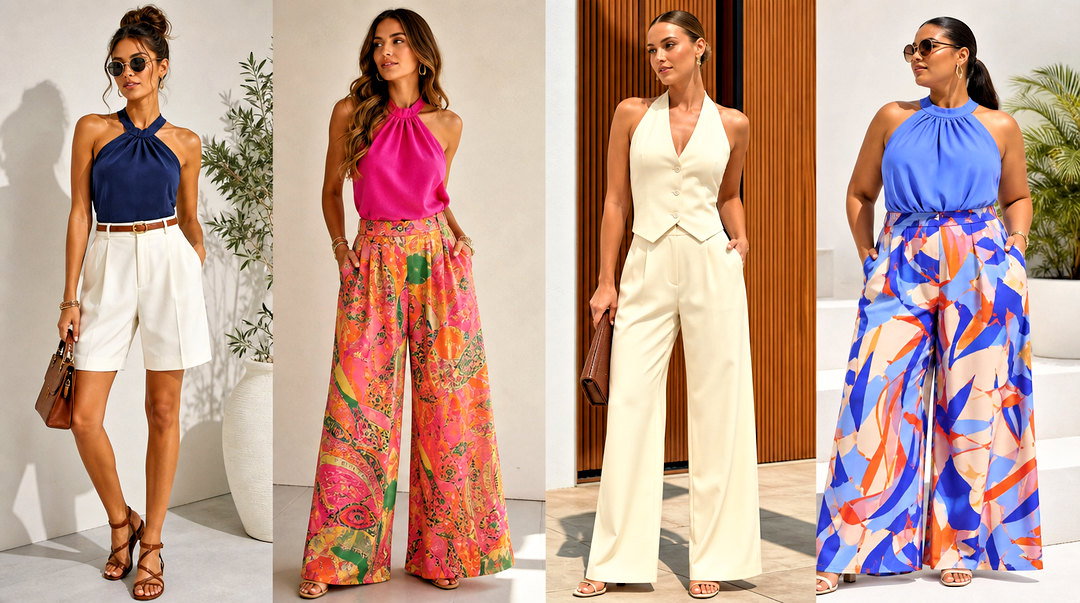
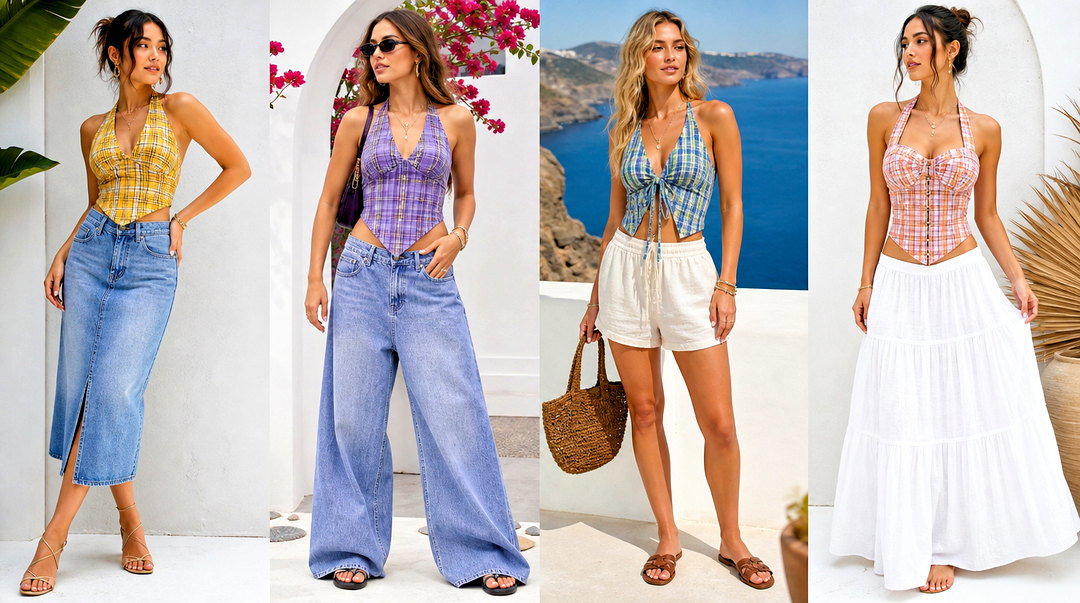
15. V-Neck Scarf Halter Top With Bermuda Shorts
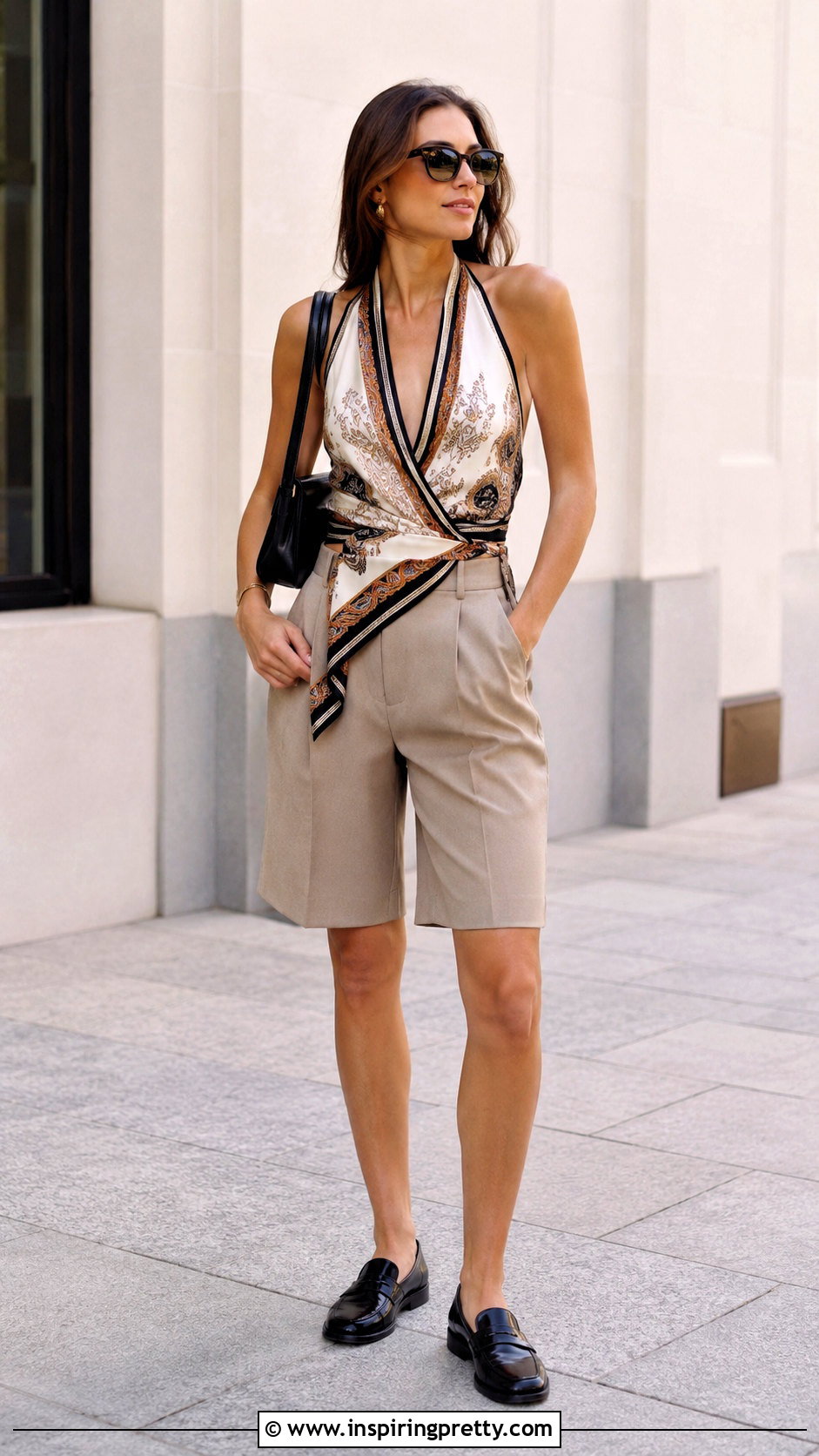
The V comes from two overlapping panels, and how high they cross sets your coverage. Hang the scarf behind your neck, bring both ends forward, cross them over the torso, spread them into an even V and wrap round to tie at the back. A hidden stitch, a scarf clip or tape at the overlap stops the V from widening as you move. It needs a generous rectangle; a short one pulls the panels into narrow strips. Bermuda shorts and loafers are a smart, slightly preppy pairing.
16. Open-Back Scarf Halter Top With Maxi Pants
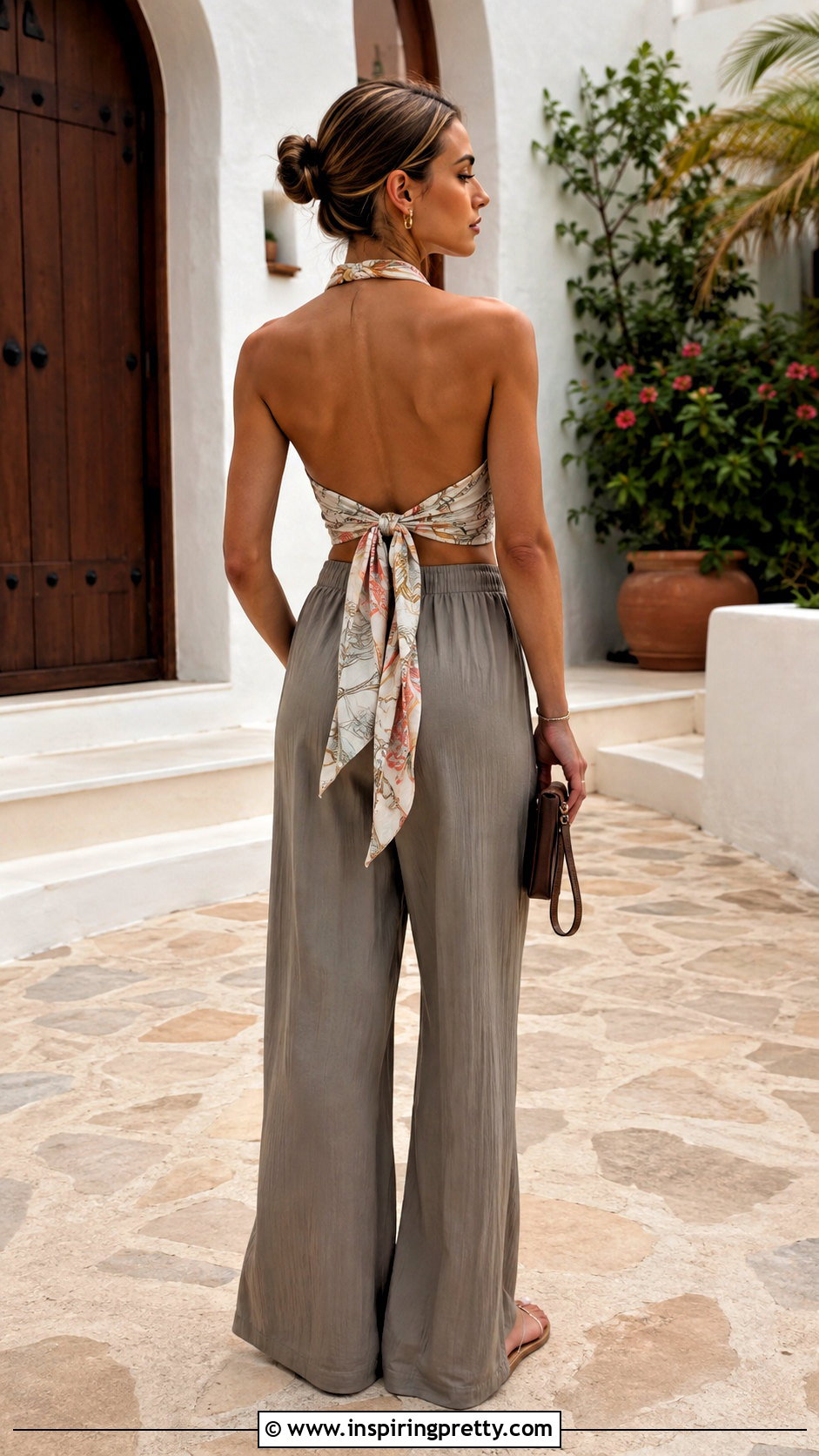
Every scarf halter is open-backed by nature, so here I simply lean into it. Tie the triangle at the neck and across the middle of the back, leave the point loose over the waistband, and keep the front neckline higher to balance the bare back. A cotton-silk blend holds a knot far better than slick satin. If the back tie keeps loosening, sew a small snap inside the knot. Flowing maxi trousers and flat sandals keep the outline long.
17. Longline Scarf Halter Top With Cropped Trousers
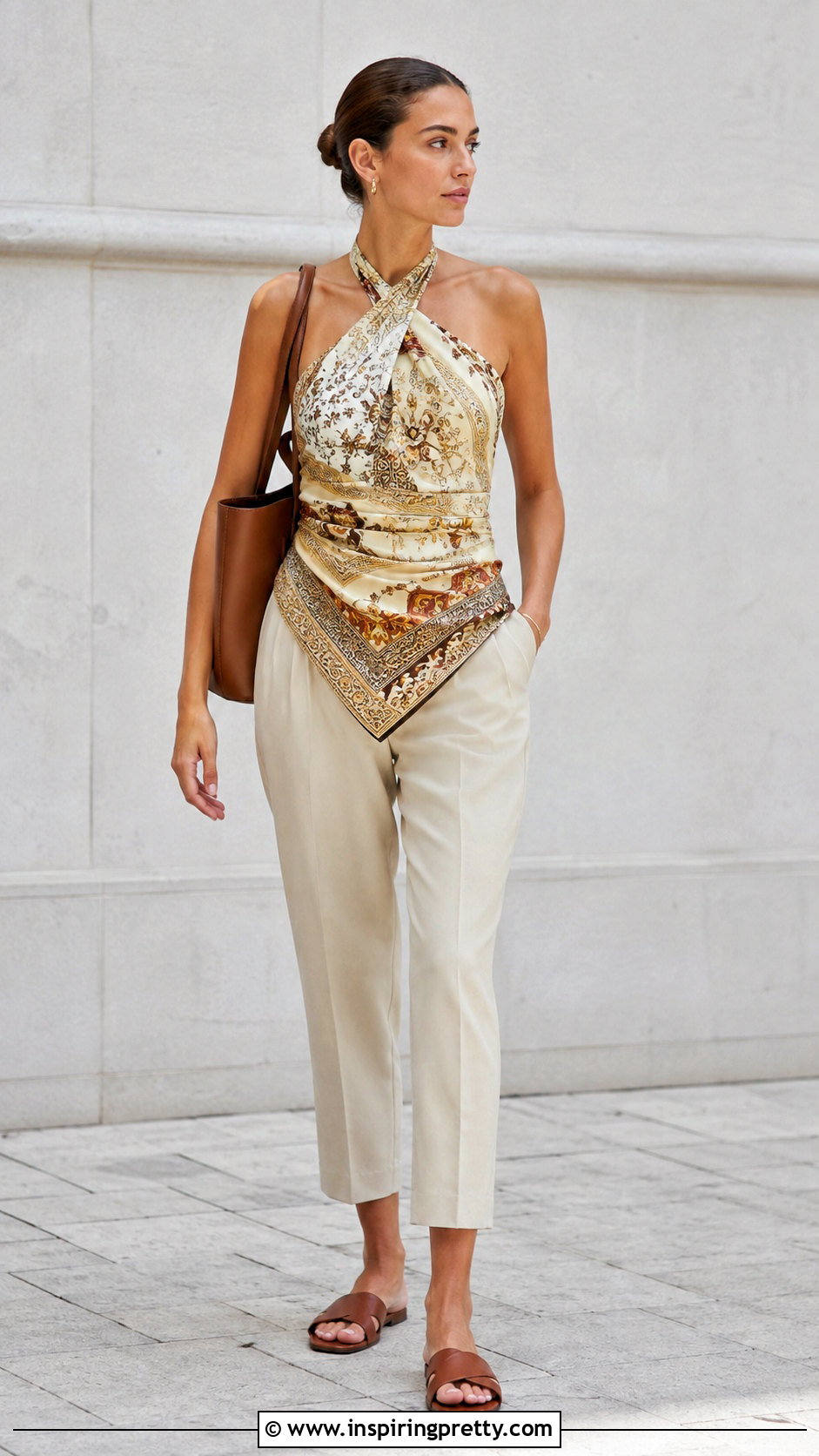
This one suits anyone who wants the midriff covered. Drape an oversized rectangle around the neck, cross the front panels and keep wrapping the torso until the fabric reaches the waistband or upper hip, then finish with a flat double knot at the side. Thin scarves matter here, since every wrap adds a layer and thick fabric quickly looks bulky. Smooth each pass and keep the tension even. Cropped trousers and leather slides show a little ankle to offset the longer top.
18. Cropped Scarf Halter Top With High-Waisted Shorts
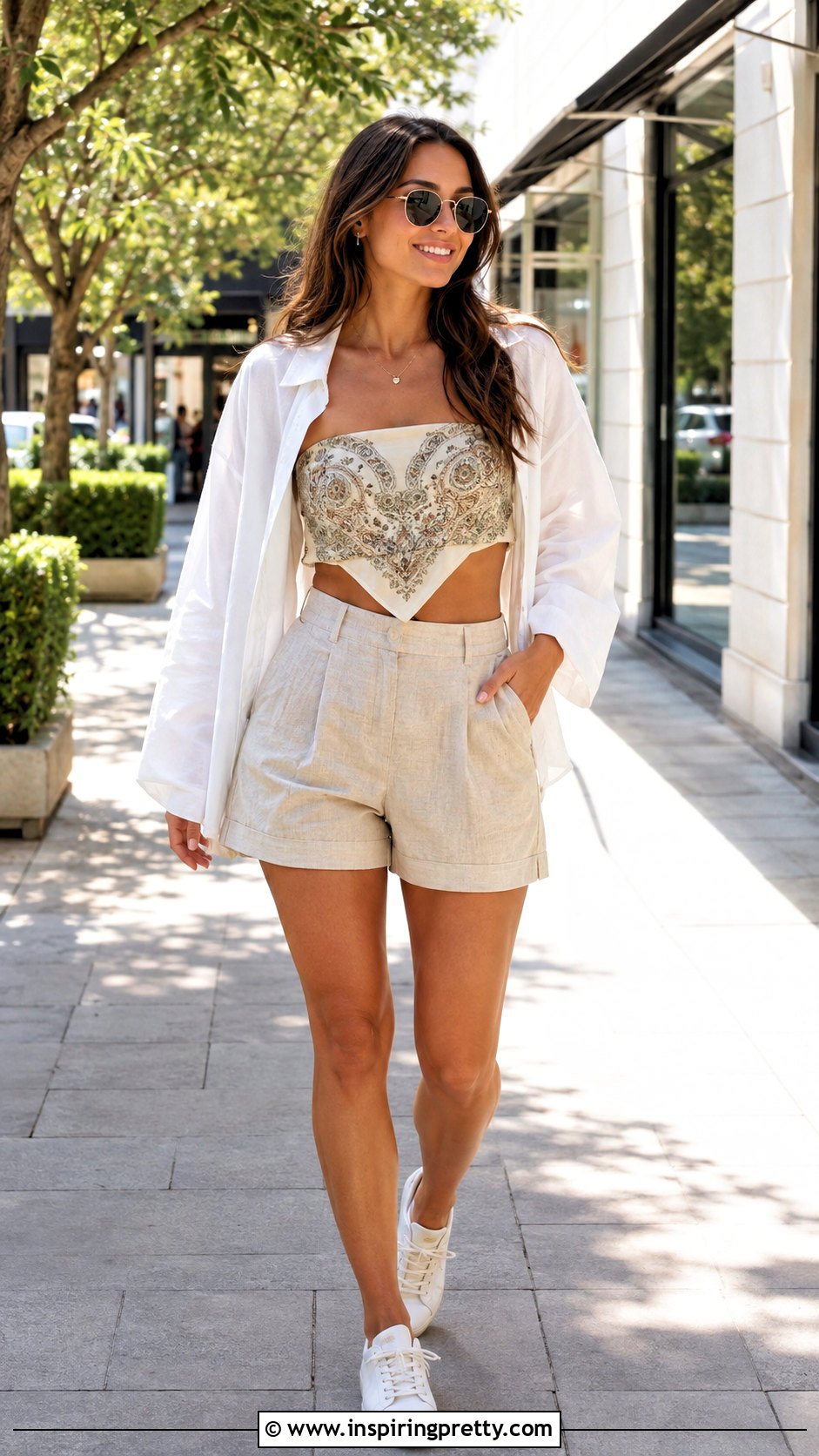
Small scarves can still work if you accept a cropped result. Fold one into a triangle with the long edge across your upper chest and add ribbon extensions wherever the corners fall short. Let the point hang, or fold it inside for a straight hem. Don't stretch the fabric to buy coverage; it pulls the print out of shape and puts strain on the knots. Cotton is easiest for a first go. High-waisted pleated shorts plus an open overshirt keep the proportions sensible.
19. Asymmetric Scarf Halter Top With Wrap Skirt
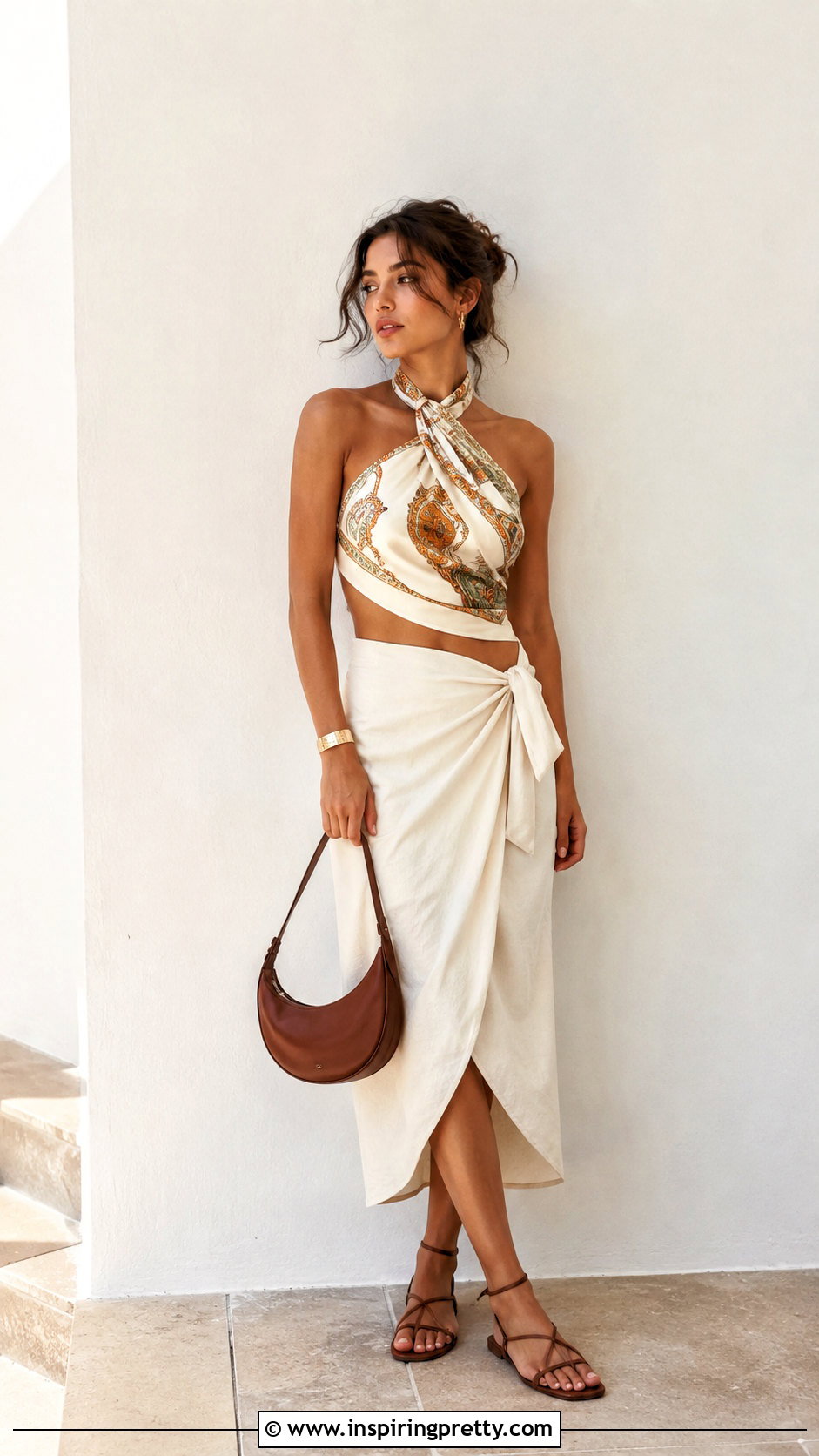
Fold the scarf loosely into a triangle but set one top corner higher than the other. That single shift makes a plain square look sculpted. Tie the high corner behind your neck, bring the other diagonally across the body, and knot the lower ends at one side. A hidden pin or tape keeps the diagonal panel flat. An off-centre print suits the uneven line; a wrap midi skirt keeps the rest calm. Roll your shoulders afterwards to make sure the one-sided strap isn't digging in.
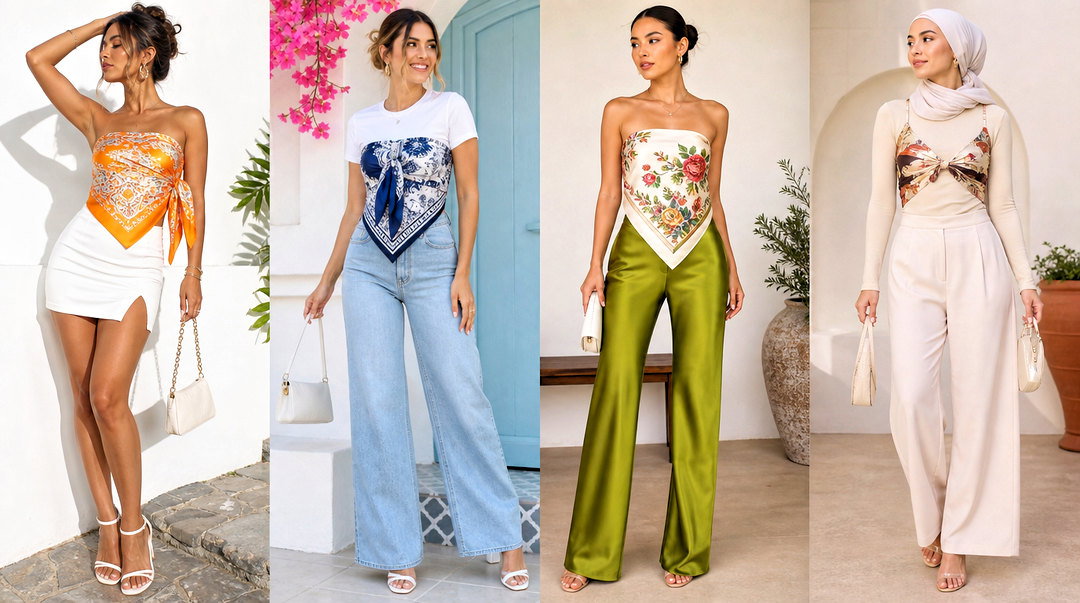
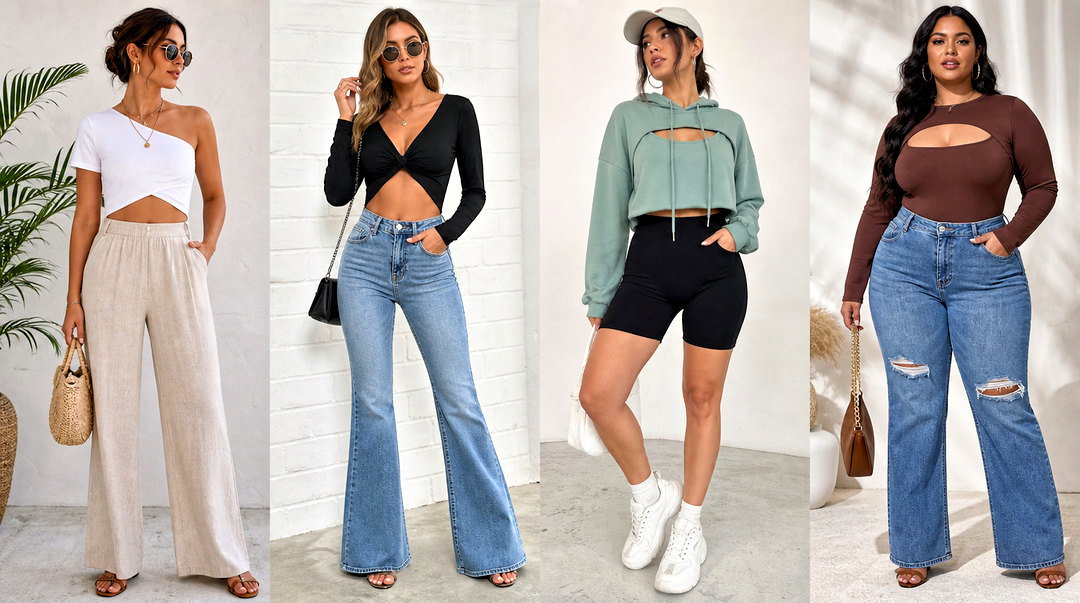
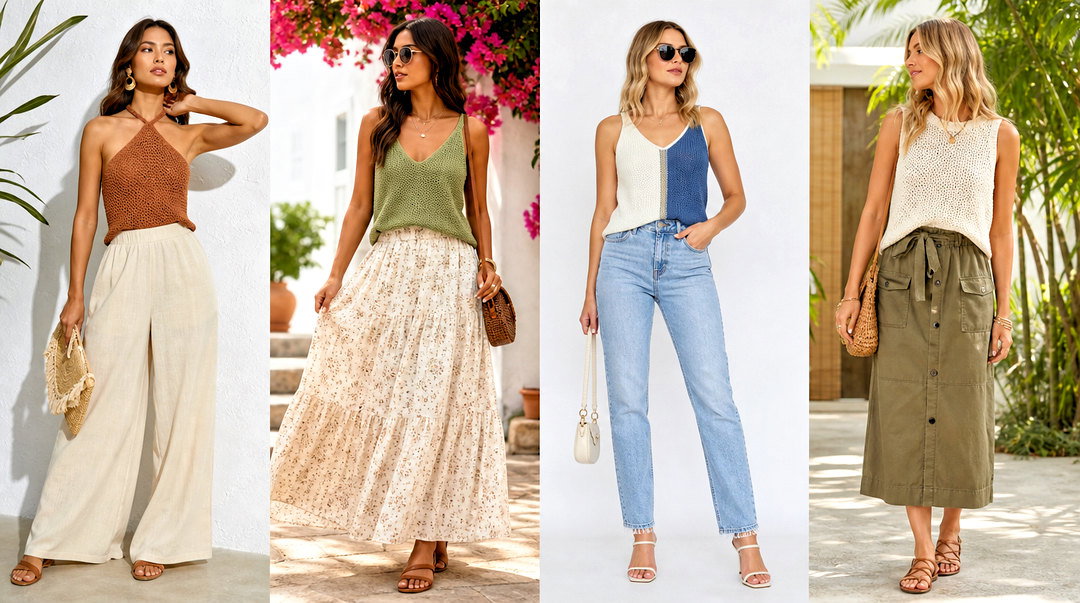
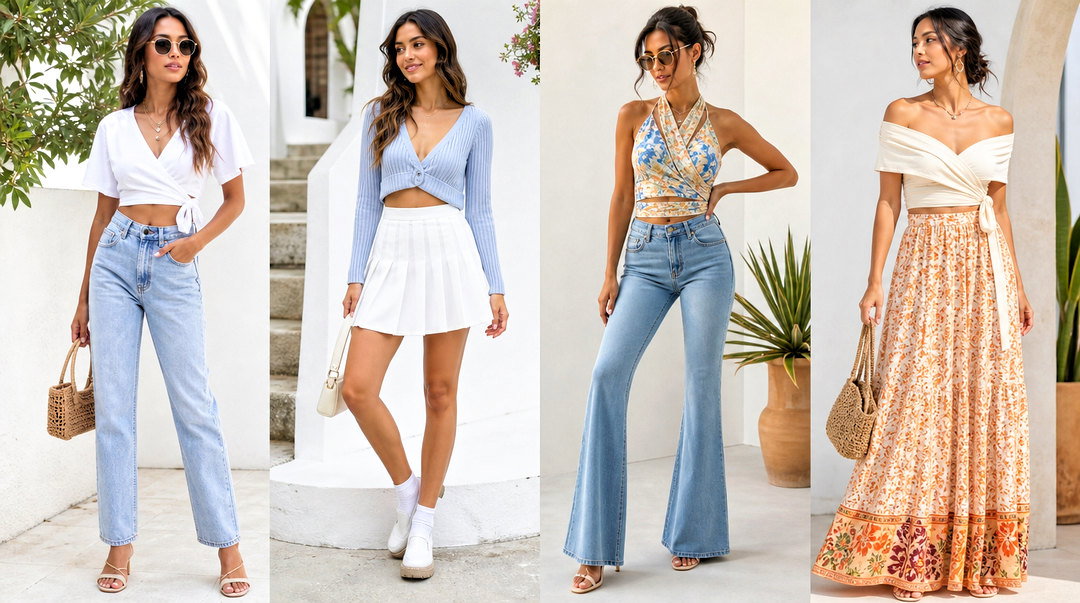
20. No-Sew Scarf Halter Top With Relaxed Jeans
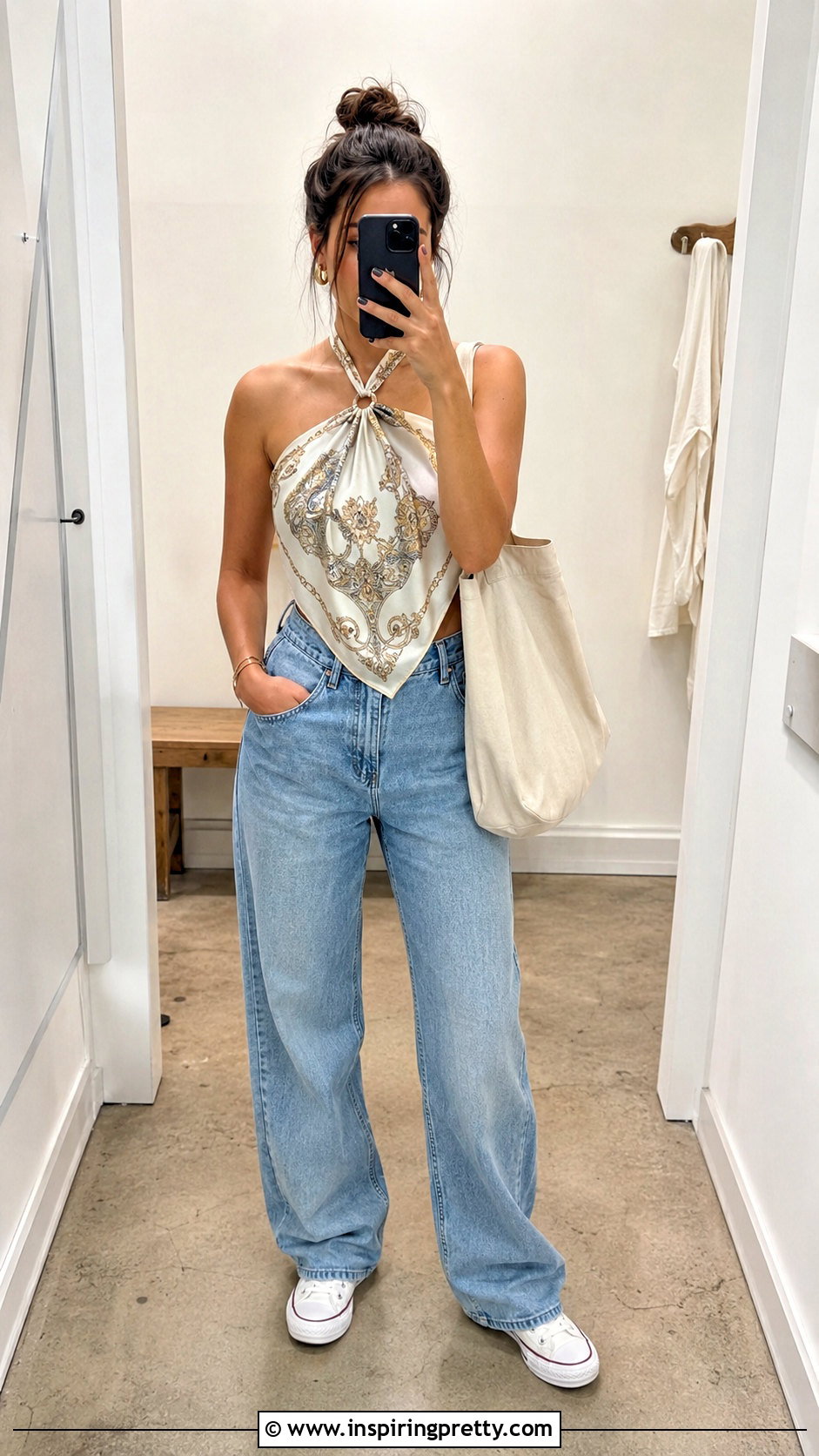
Go no-sew if you want the scarf back as a scarf later. Fold a large square diagonally, join the top corners with a scarf ring or clip, slip the loop over your head and knot the lower corners at the back. This no-sew method takes about a minute once you've done it twice. I'd use a clip over a safety pin; if you do pin, bury it fully in folded fabric. Relaxed jeans and canvas sneakers suit it, and a tank underneath helps until you trust the knots.
21. Sewn Scarf Halter Top With A-Line Skirt
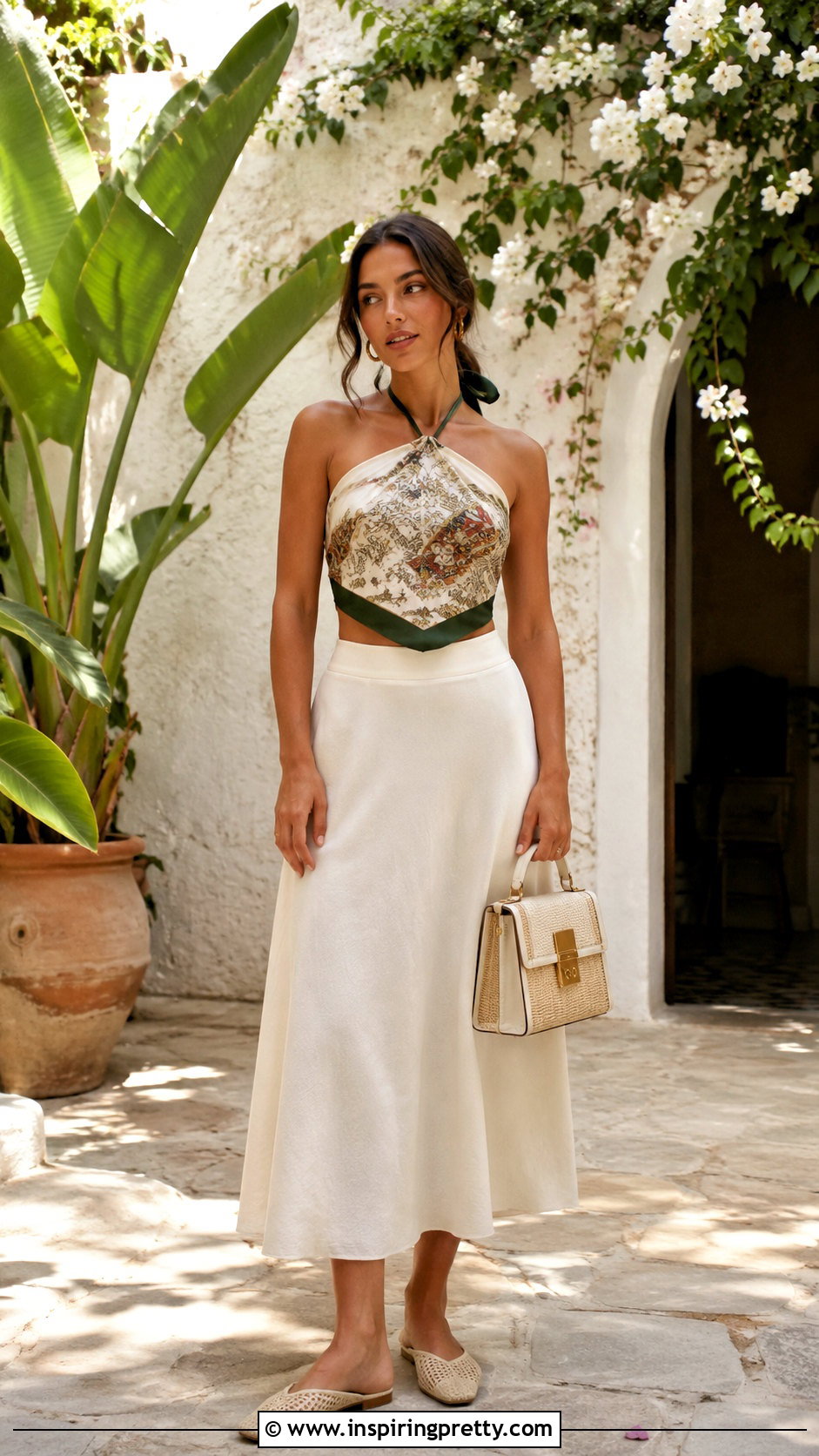
Stitching makes the shape permanent, so you stop retying every morning. Press a square into a triangle, sew a channel along the top fold, thread ribbon or soft cord through it, and add ties to the side corners backed with a small square of fabric inside. Use a fine needle and matching thread, because a thick needle leaves visible holes in silk. Leave the fit loose at first: a neckline that looks high on the table often sits lower once the weight of the scarf hangs from it. A vintage print with an A-line skirt is a pretty pairing.
22. Patchwork Scarf Halter Top With Neutral Pants
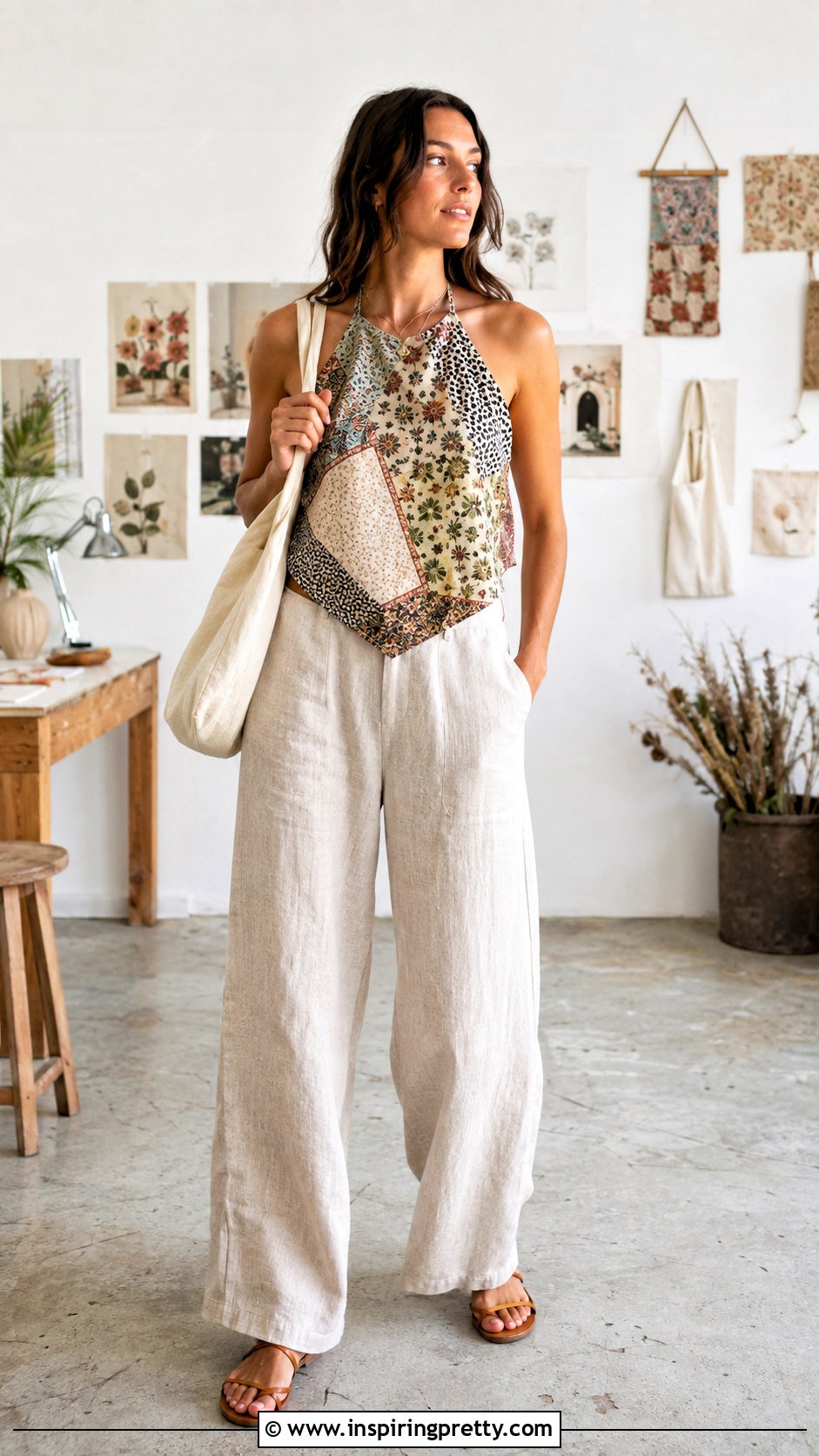
Patchwork rescues a drawer of small scarves. Arrange three or four into one triangle or rectangle, overlap the finished edges slightly and join them with a narrow straight seam, keeping the joins toward the sides so the centre front stays smooth. Match fibre and care needs, or one piece will shrink and drag the others. One shared colour across the scarves is what makes it look planned. Press the seams under a cloth and try the panel on over a tank before adding straps. Neutral wide-leg pants let it be the focus.
23. Layered Sheer Scarf Halter Top With Satin Skirt
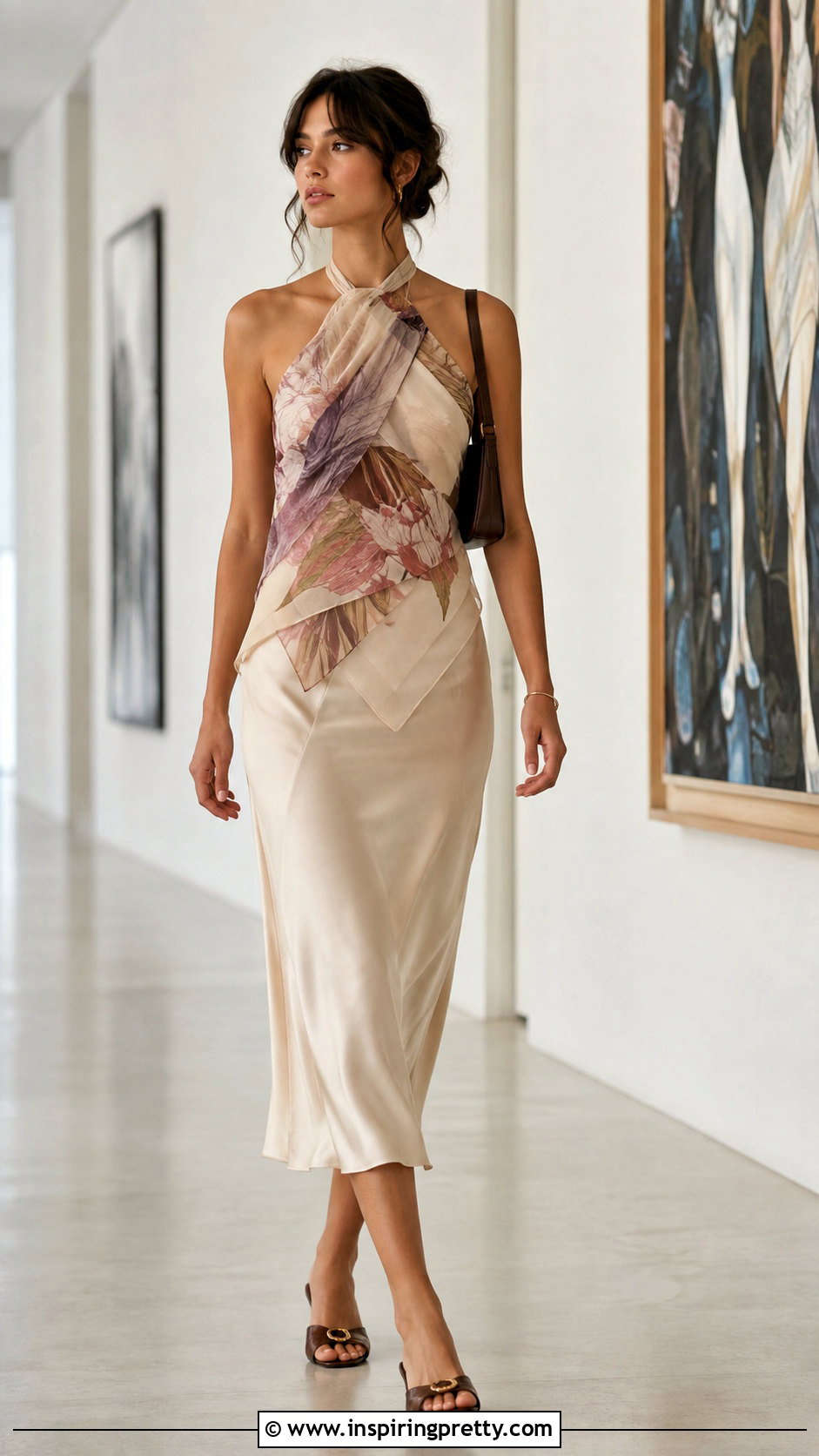
Sheer chiffon alone is see-through, but two layers deepen the colour and add coverage. Lay equal scarves together, offset the prints a little for depth, and hand-baste the edges so they behave as one piece before folding and tying. Chiffon wanders under the presser foot, so pin closely or use clips. Pull the basting out only after the permanent stitching is in. Pick a satin midi in a shade from the print, and wear an opaque tank underneath; I wouldn't skip it.
24. Satin Scarf Halter Top With Cream Trousers
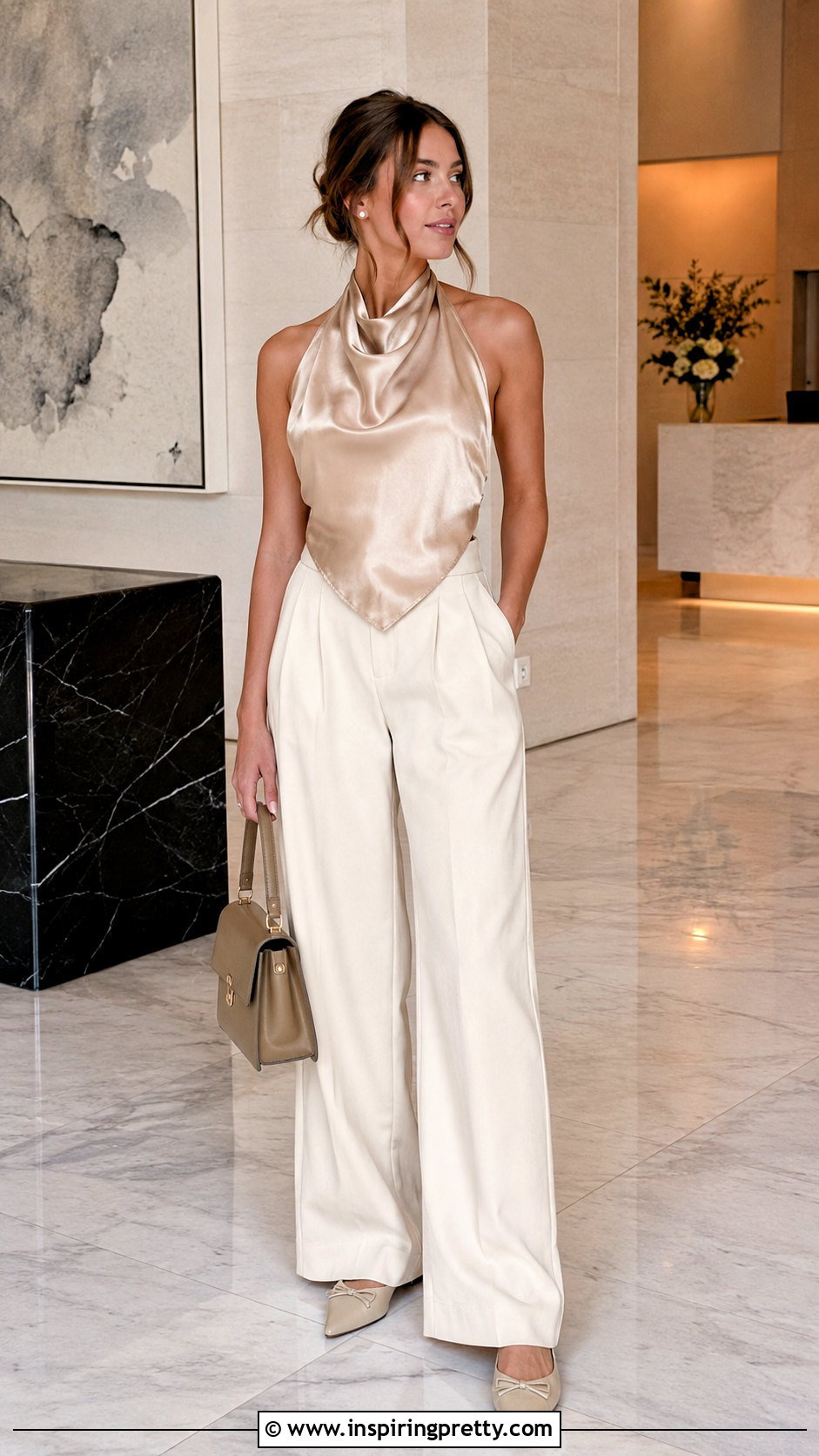
Satin looks expensive and behaves badly. It slips at every knot, so start with a large square whose corners taper to thin points; those knot smaller and hold better. Press on a low setting after testing a hidden corner, since high heat leaves shine marks on polyester satin. Tape along the folded neckline and sides keeps it in place, and if it still creeps, sew small loops to the corners and use separate ties. Cream trousers, pointed mules and pearl-look studs keep it refined.
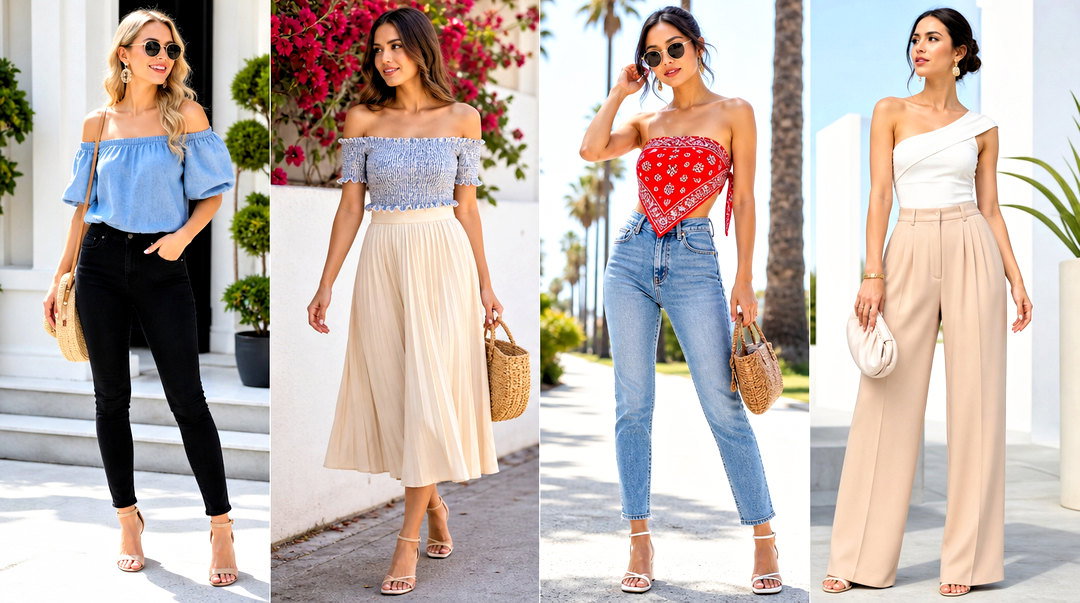
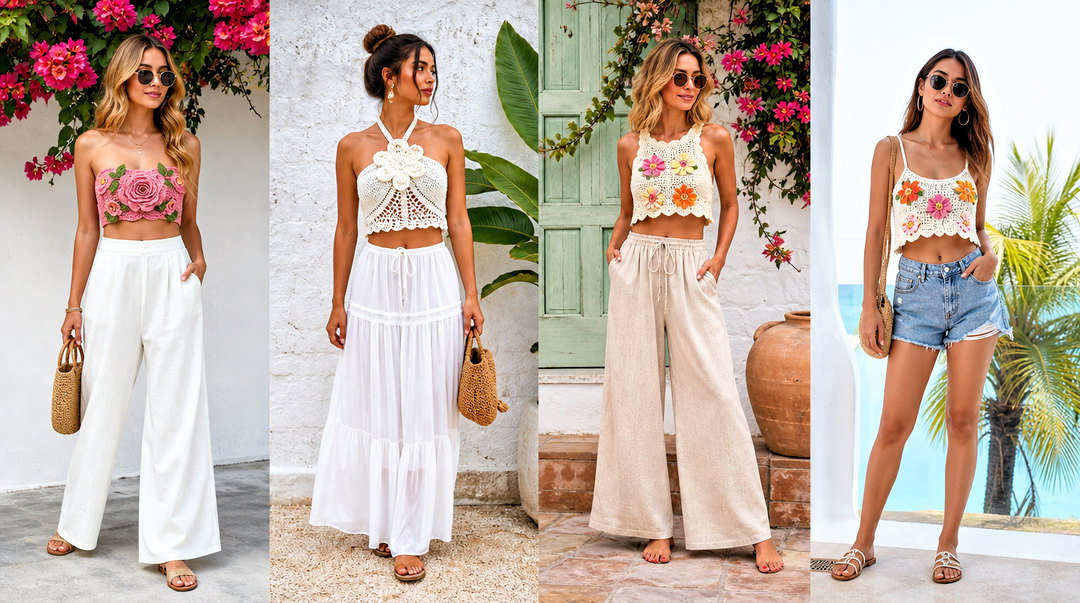
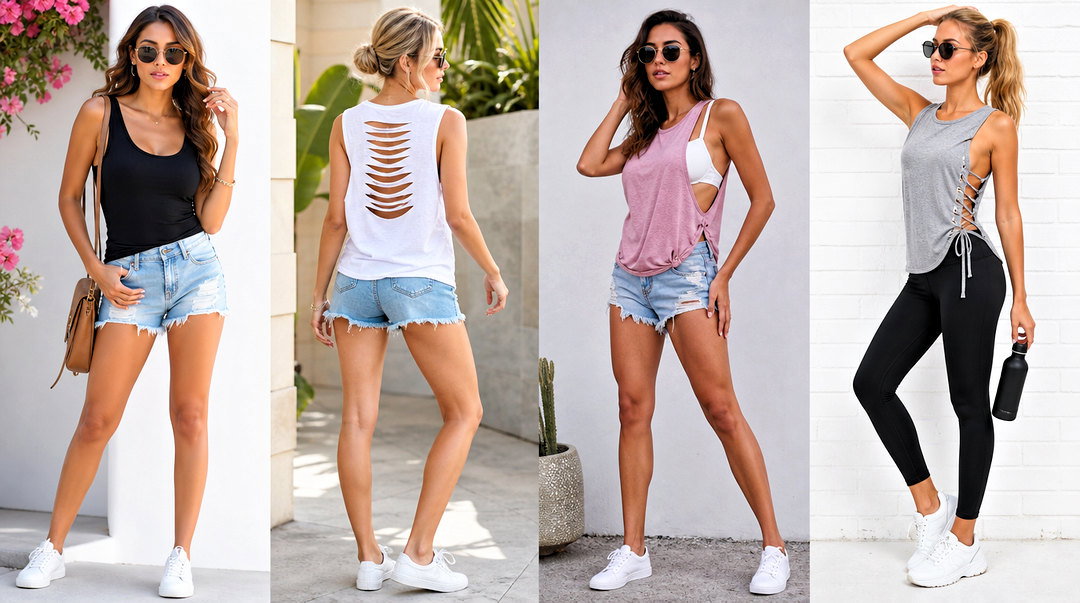
25. Cotton Scarf Halter Top With Denim Shorts
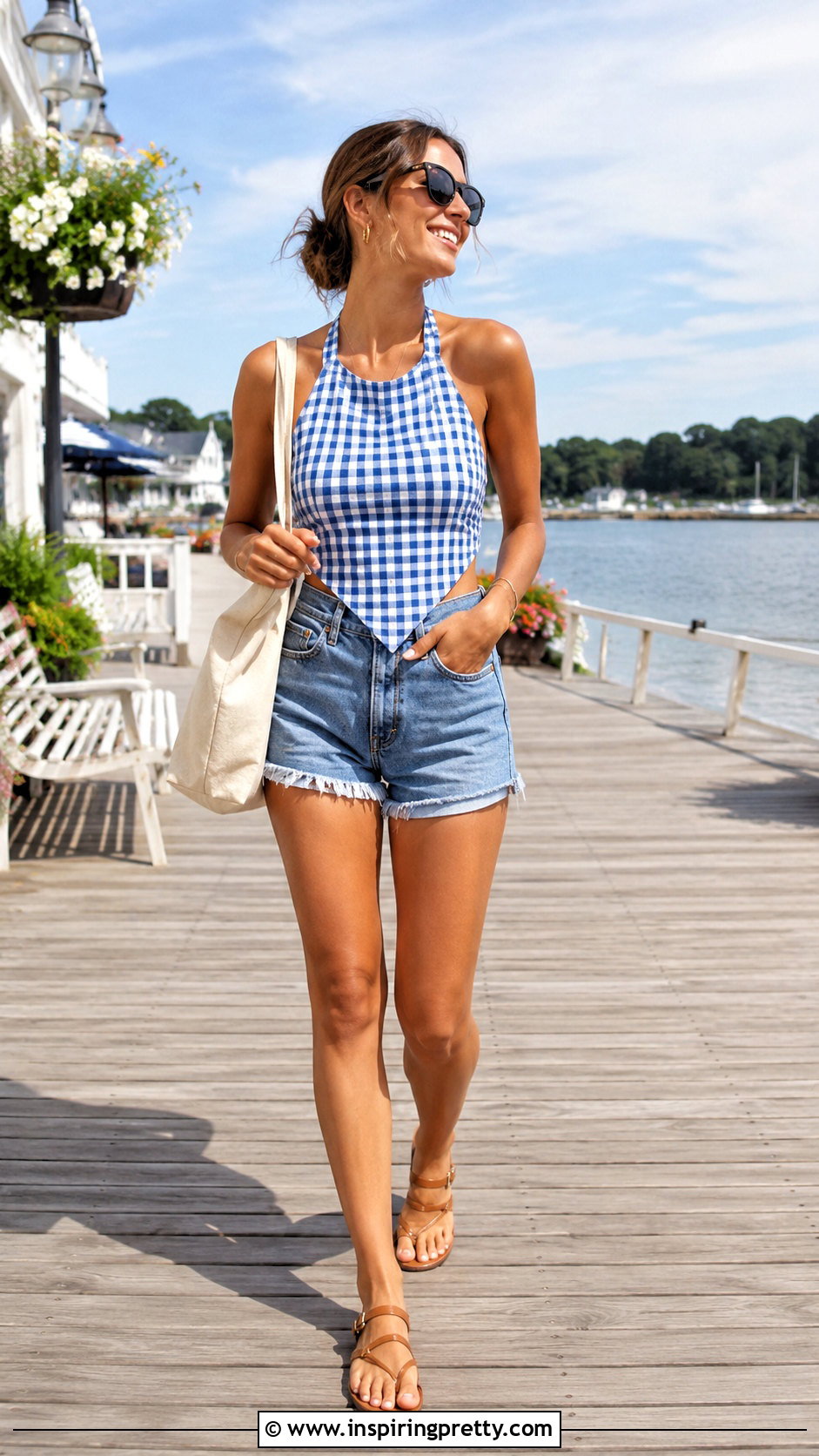
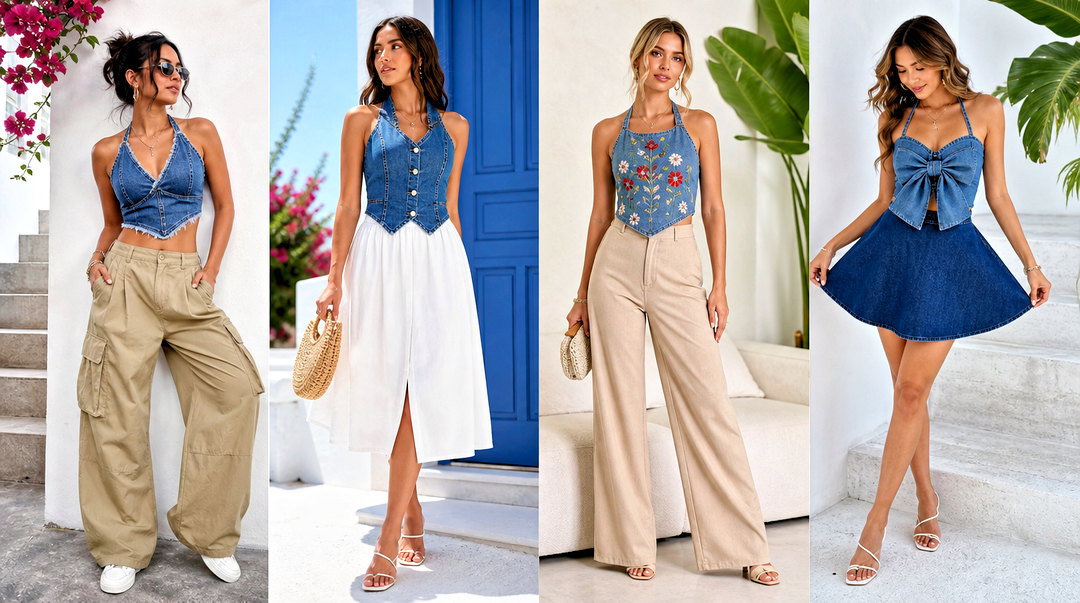
Cotton is where I'd send a first-timer. It holds folds, grips its own knots and forgives a crooked tie. Wash and dry it before any sewing, because cotton shrinks and a tight ribbon channel will pucker after the first wash. Steam out deep fold creases, tie the triangle as usual, and tuck the point up inside with a hidden stitch if you prefer a straight hem. Gingham or a small floral with denim shorts and flat sandals is the classic summer outfit.
Sewing Into a Finished Scarf
A scarf already has rolled or machine-finished edges, so you're never sewing a raw hem, only attaching things to one. That changes how you work. Use a fine sharp needle, a size 60 or 70 for silk and thin polyester, and shorten the stitch length so the seam doesn't pucker the fabric.
Anything that takes strain, such as a tie, a loop or a ring, should be stitched through a small backing patch on the wrong side, never just through the scarf alone. Fine fabric tears at a single line of stitches, and a patch spreads the pull. Hand stitches are often easier than a machine on chiffon, which gets swallowed into the needle plate.
Undoing It Later
If there's any chance you'll want the scarf back, keep alterations reversible: stitched-on ribbons and loops can be unpicked, a cut cannot. I avoid trimming a good silk square at all.
What the Wash Does to a Scarf Top
Hand wash in cool water with a gentle detergent, and roll the top in a towel rather than wringing it, especially if it has ribbons or bead straps attached. Take off chains and rings first; metal can mark wet silk. Dry it flat in the shade, since sun fades printed silk and cotton quicker than you'd expect.
Mixed constructions are the tricky part. A cotton ribbon sewn onto a polyester scarf may shrink when the scarf doesn't, which drags the corner out of shape. Pre-washing ribbons before you attach them avoids most of that.
Your First Scarf Halter Should Be Cotton
One good scarf can give you a whole run of summer tops, provided it's big enough and you respect how its fabric behaves. Start in cotton, move to satin once you know how much tape and reinforcement it needs, and save beads and chains for when you're comfortable sewing loops that carry weight. Test every version standing, sitting and reaching before you leave the house. High-waisted bottoms and simple shoes keep the handmade top the centre of attention.
Related posts:


Leave a Reply