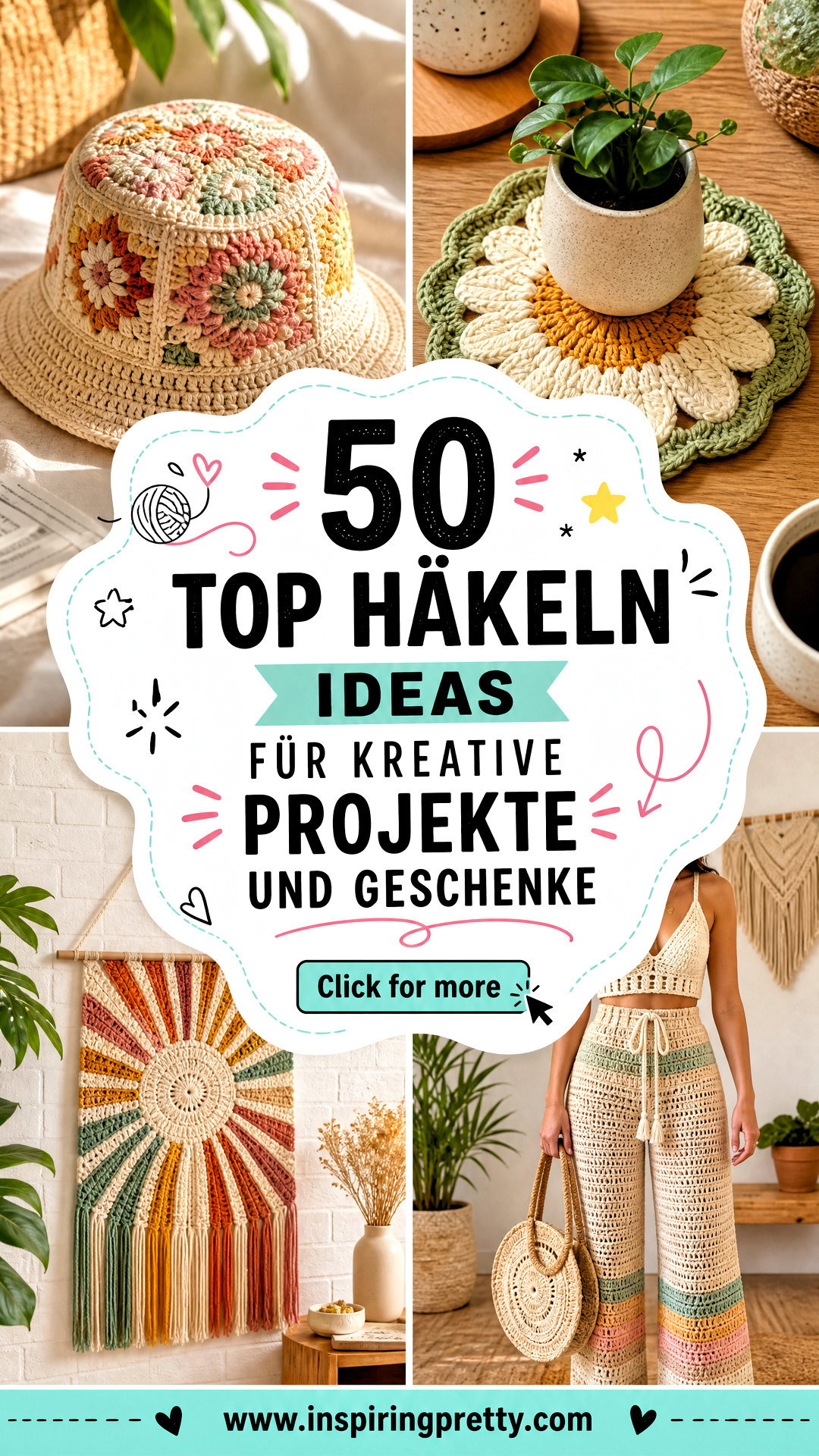
Crochet can turn a simple skein of yarn into something useful, wearable, decorative, or wonderfully playful. This collection of **50 top häkeln ideas** covers quick beginner projects, modern accessories, comfortable clothing, charming amigurumi, and practical pieces for the home. You will find projects for cotton, wool, raffia, chenille, and leftover yarn in many different weights. Each option includes helpful guidance on color, texture, construction, and finishing, making it easier to choose a project that matches your experience. Start small with coasters or scrunchies, explore modular granny squares, or challenge yourself with a cardigan or dress. Whatever your skill level or available crafting time, the following **50 top häkeln ideas** offer plenty of creative inspiration.
1. Crochet Granny Square Tote Bag
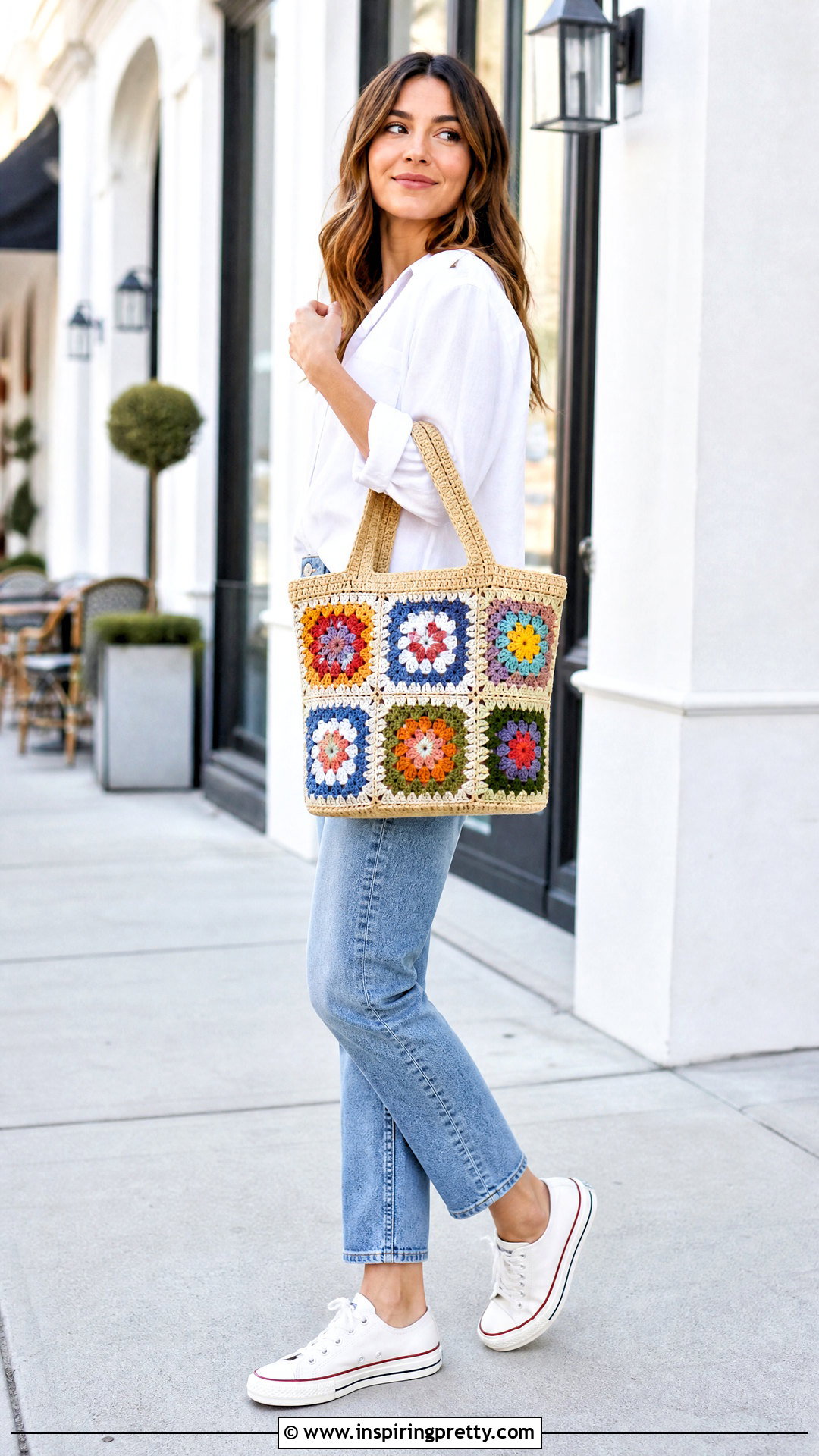
A granny square tote bag is a practical project that lets you experiment with color without committing to a large garment. Crochet several equal-sized squares in coordinating shades, then join them with slip stitches or a visible contrasting seam. Cotton yarn works especially well because it creates a sturdy fabric and handles regular washing. Add solid-color side panels if you need more room for books, groceries, or craft supplies. Wide crocheted handles feel more comfortable than thin straps, while a fabric lining prevents smaller objects from slipping through the stitches. Finish the bag with an interior pocket, magnetic closure, or decorative tassel. This project is approachable for confident beginners who want to practice working in rounds and joining motifs neatly.
2. Crochet Mesh Market Bag
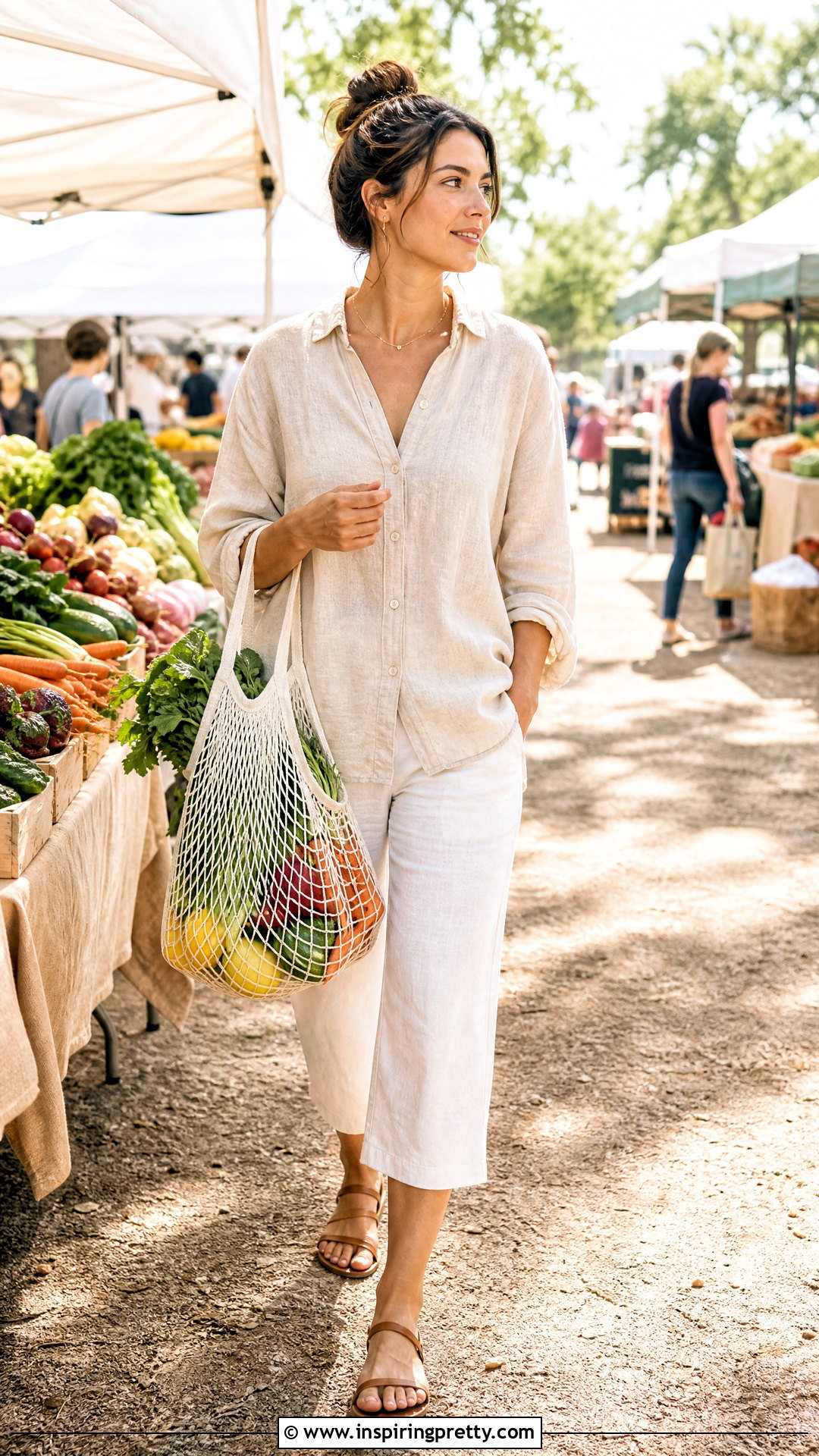
Lightweight, reusable, and easy to fold, a crochet mesh market bag is useful for shopping trips and casual outings. Begin with a solid oval or circular base so the bag can support heavier contents. Work the body in chain spaces or an open mesh stitch, gradually increasing its height until it reaches the desired size. Mercerized cotton or a durable cotton blend offers strength without excessive stretching. Use a smaller hook for the handles to create a denser, more supportive texture. Neutral yarn gives the bag a simple everyday appearance, while bright stripes make it more playful. Reinforce the points where the handles connect to the body. Once finished, the bag can be rolled compactly and stored inside a purse or car compartment.
3. Crochet Raffia Beach Bag
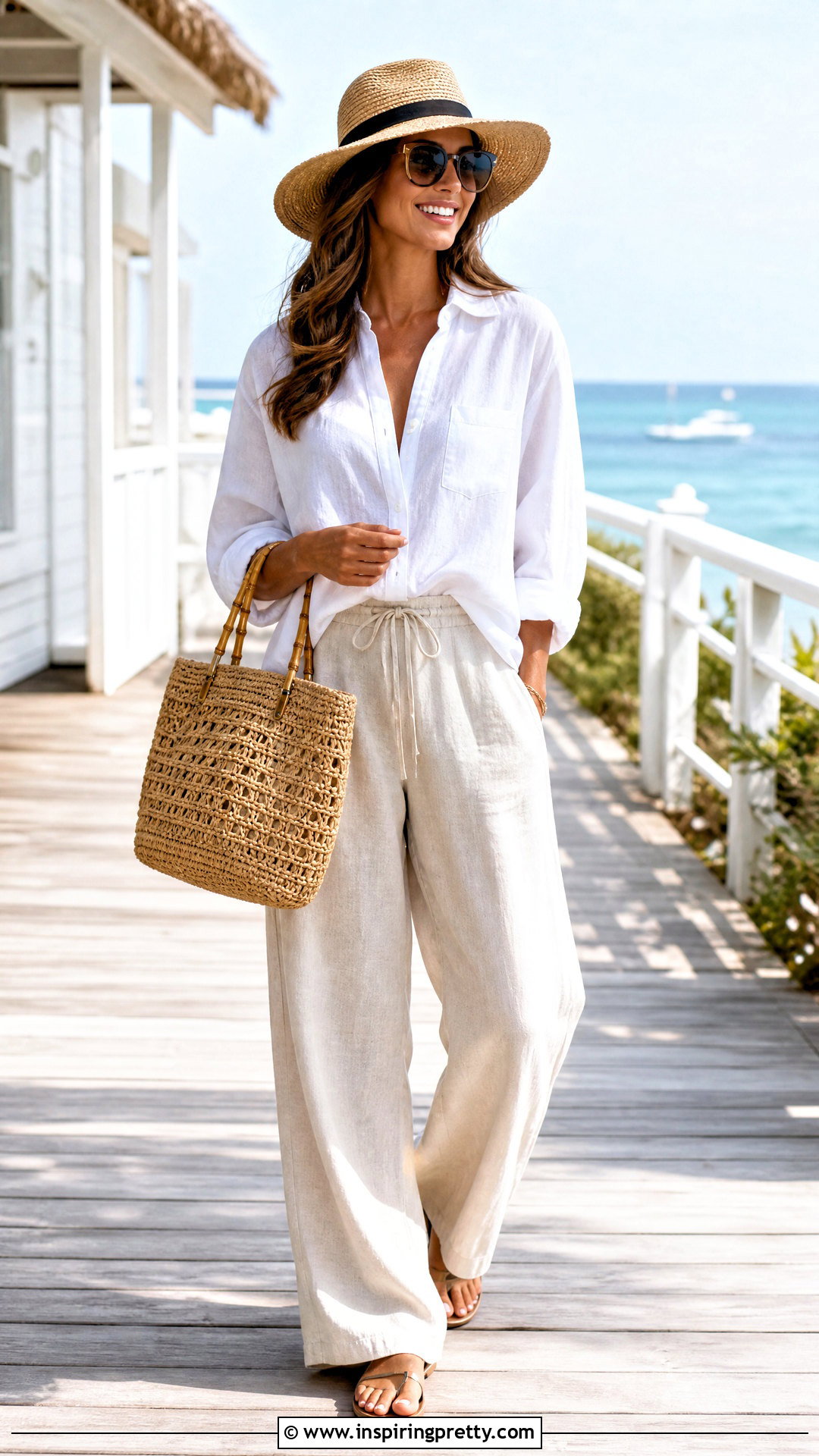
A structured raffia beach bag combines handmade character with a polished summer appearance. Crochet the base tightly in single crochet, then build the sides without increasing to create a roomy basket shape. Paper raffia produces crisp definition, while synthetic raffia is generally softer and more resistant to moisture. Natural tan, cream, black, or color-blocked combinations make the finished piece easy to coordinate. Add sturdy handles made from crochet, bamboo, rope, or faux leather. A removable fabric pouch can protect sunscreen, keys, and other small belongings from escaping through the stitches. Keep your tension consistent because raffia does not hide uneven work as easily as soft yarn. This project creates a functional accessory that works beyond the beach, including shopping and weekend travel.
4. Crochet Mini Shoulder Bag
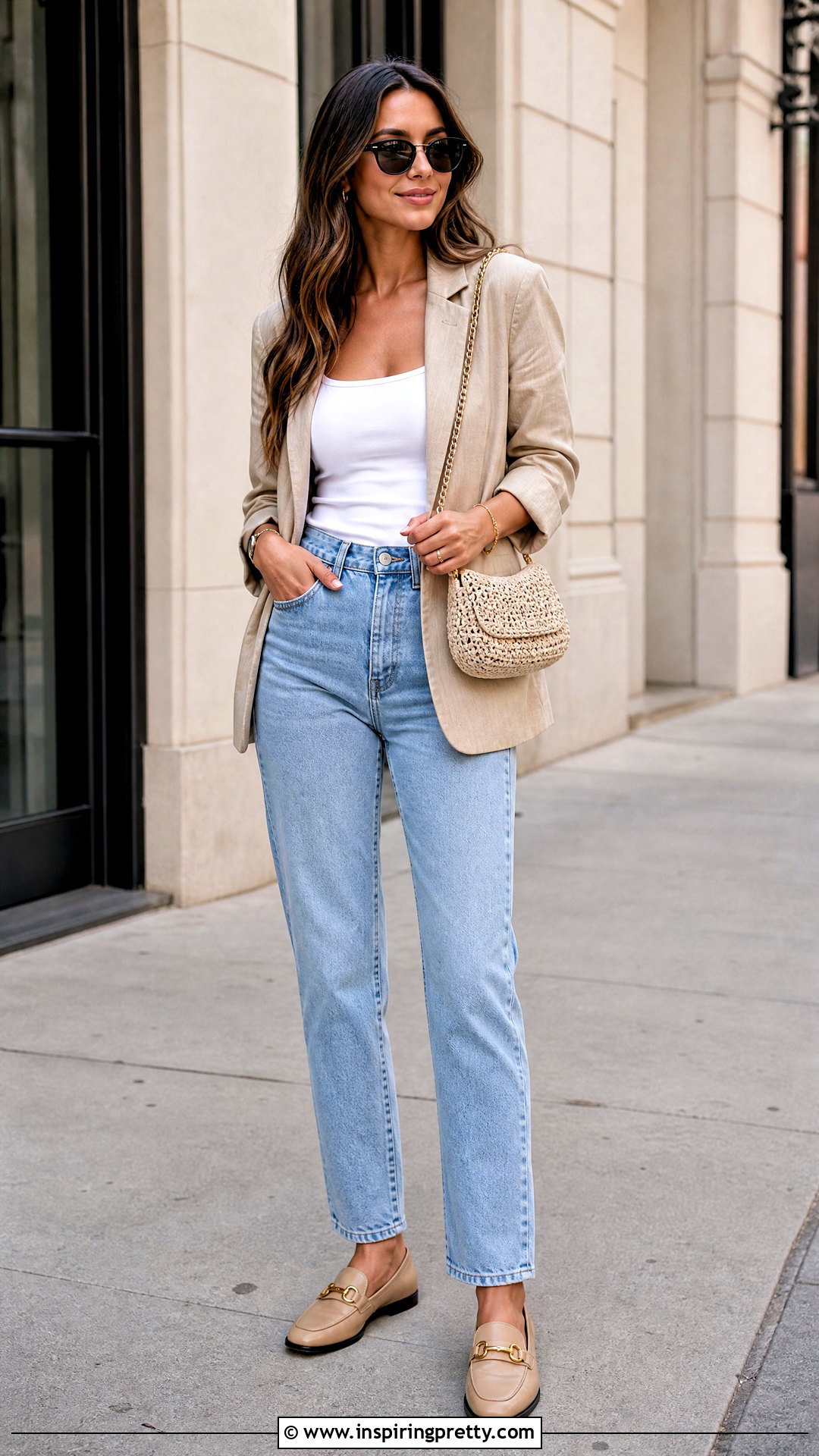
A crochet mini shoulder bag is an excellent choice when you want a fashionable project that does not require much yarn. Create two matching panels in a dense stitch, join the sides and bottom, and leave the top open for a zipper or button closure. Single crochet, waistcoat stitch, and thermal stitch all produce a firm fabric that holds its shape. Add a long strap for crossbody wear or a short strap for a compact shoulder-bag silhouette. A fabric lining provides extra structure and keeps the bag from stretching. Solid neutral colors look sleek, while checkerboard patterns and contrasting borders create a bolder result. Include a small internal pocket for cards. Carefully block the panels before assembly so every edge aligns cleanly.
5. Crochet Japanese Knot Bag
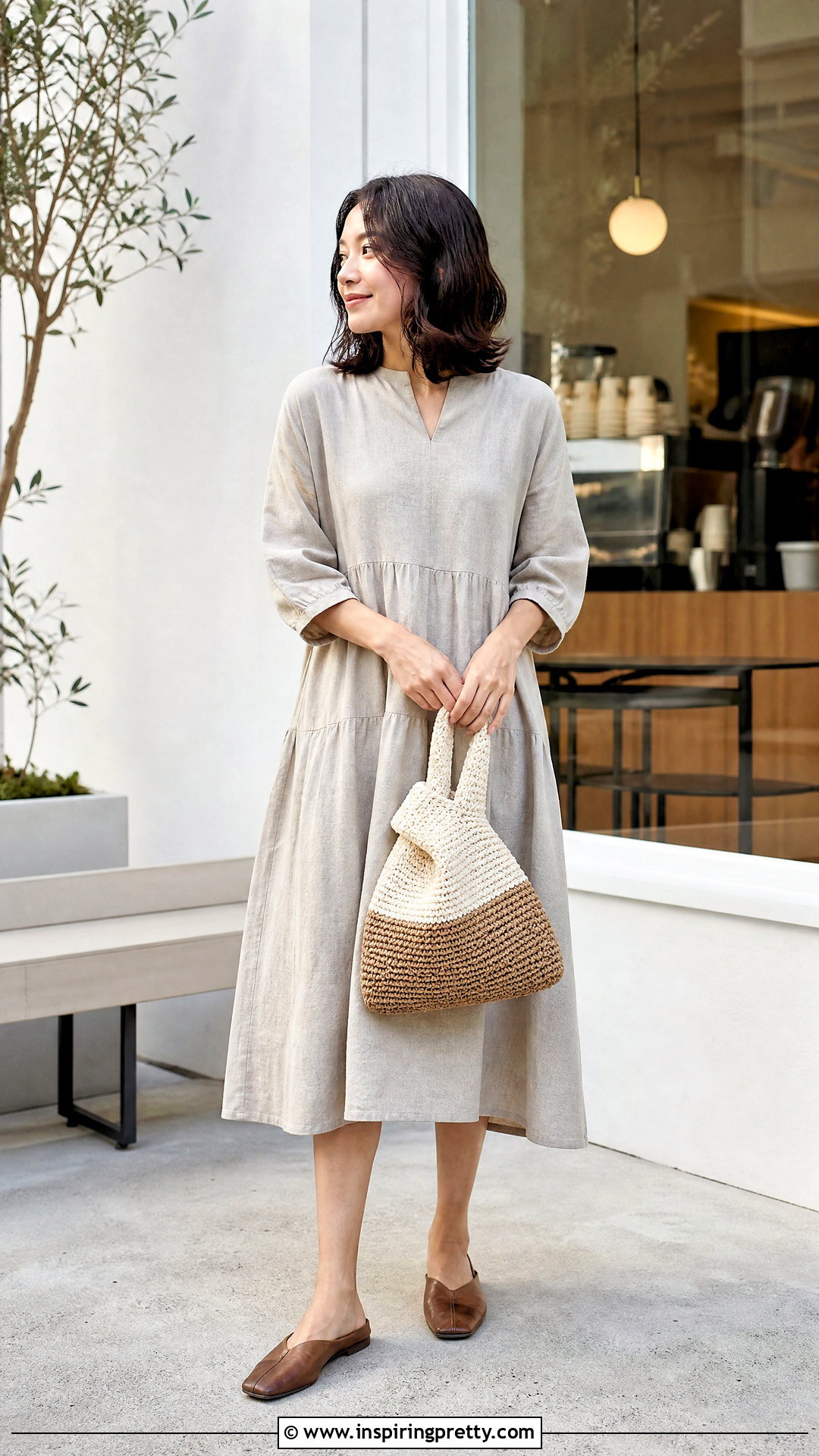
The recognizable asymmetrical handles of a Japanese knot bag create a clever closure without buttons or zippers. One handle is longer than the other, allowing it to pass through the shorter loop and secure the contents. Crochet the body in the round for a seamless finish, beginning with an oval base and adding evenly spaced increases. Cotton yarn is ideal for everyday use, although a wool blend can create a softer winter version. Try a solid textured stitch, subtle stripes, or a two-tone color block. Reinforce both handles with extra rows or surface slip stitches so they remain supportive. A medium-sized version can hold a phone and wallet, while a larger design works well for yarn, small groceries, or personal essentials.
6. Crochet Bucket Hat
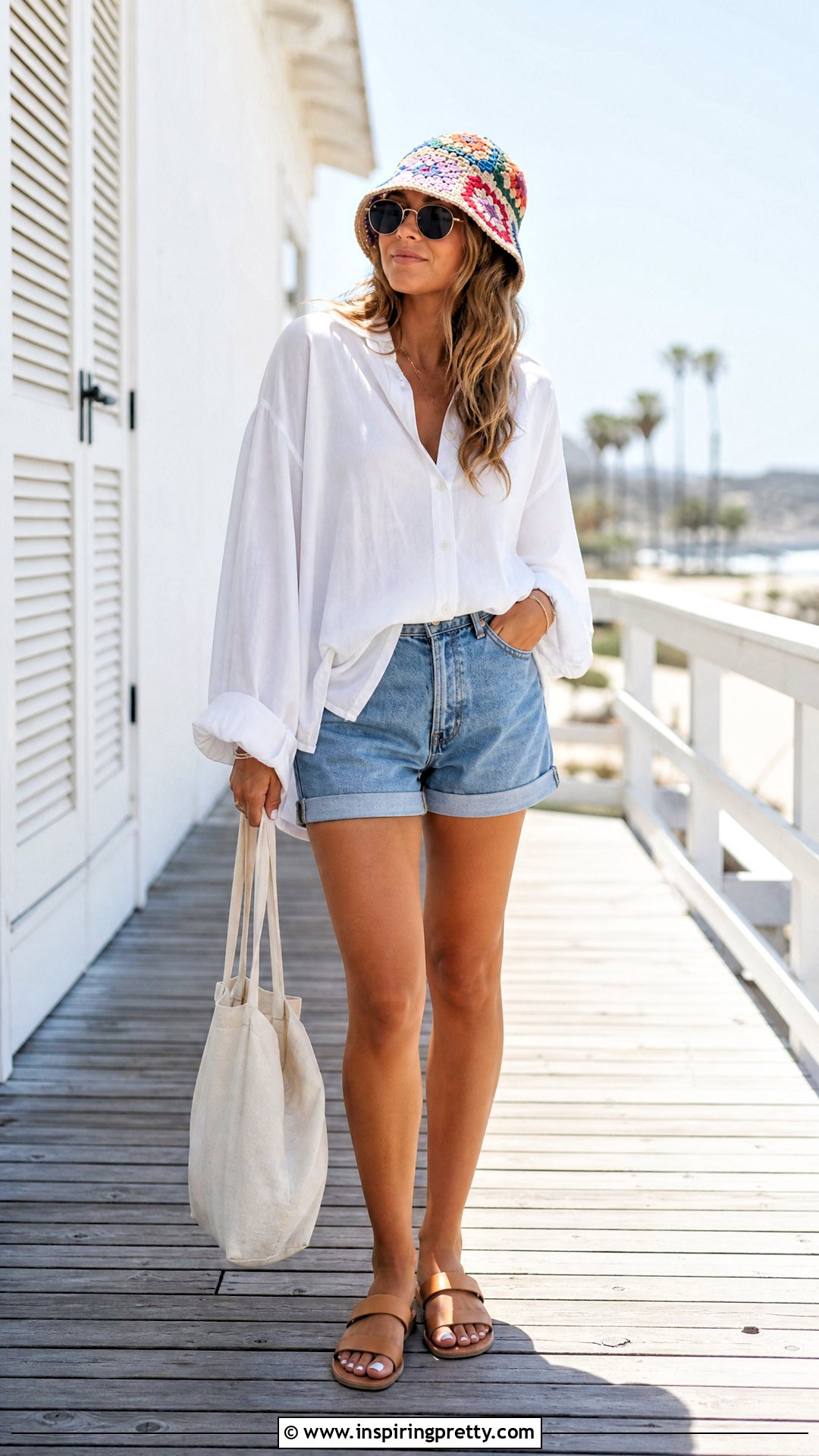
A crochet bucket hat is a manageable wearable project that can be customized through color, brim width, and stitch texture. Start at the crown and work outward in rounds, increasing evenly until the circle fits the top of the head. Continue without increases to form the sides, then add controlled increases for the brim. Cotton yarn creates a breathable hat with enough structure for warm weather. Raffia gives the design a firmer, straw-like appearance, while soft acrylic creates a colorful casual version. Measure the head before beginning and check the fit throughout the project. A flexible wire or plastic brim insert can provide additional shape. Pair the finished hat with a relaxed shirt, loose shorts, sandals, and a simple canvas tote.
7. Crochet Bandana Head Scarf
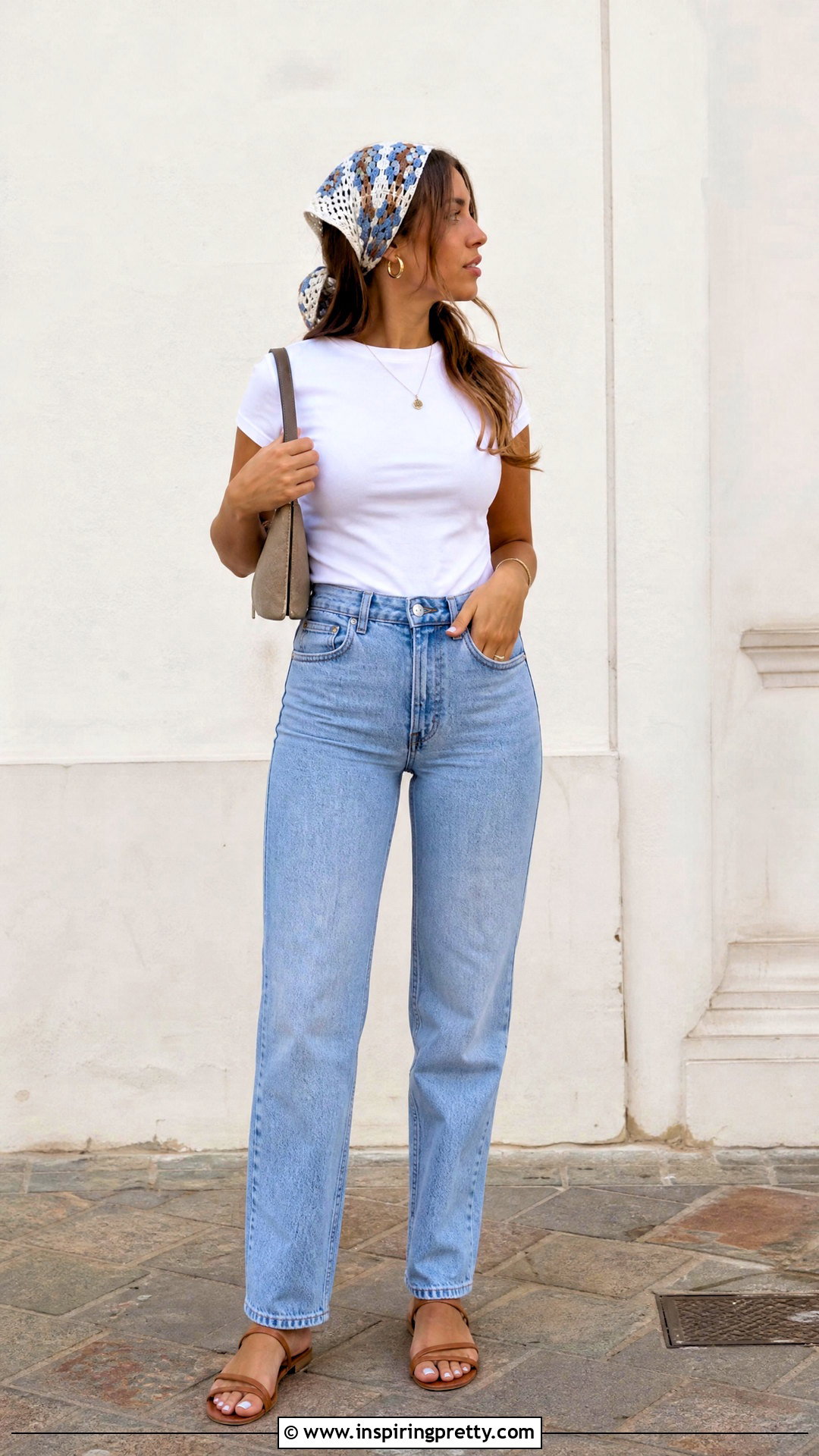
A crochet bandana head scarf is quick to make and offers an easy introduction to triangular shaping. Work from the center outward or begin at the widest edge and decrease toward the point. Lightweight cotton is comfortable against the hair and provides clear stitch definition. Solid stitches offer more coverage, while floral motifs and open lace create a delicate summer finish. Add slim ties at each corner so the bandana can be adjusted securely. Scalloped edging, picots, or contrasting trim can give the final piece more personality without complicating the construction. Style it with a white T-shirt, high-rise jeans, flat sandals, and small hoop earrings. The same design can also be tied loosely around a ponytail or worn as a narrow neck scarf.
8. Crochet Lace Hair Scarf
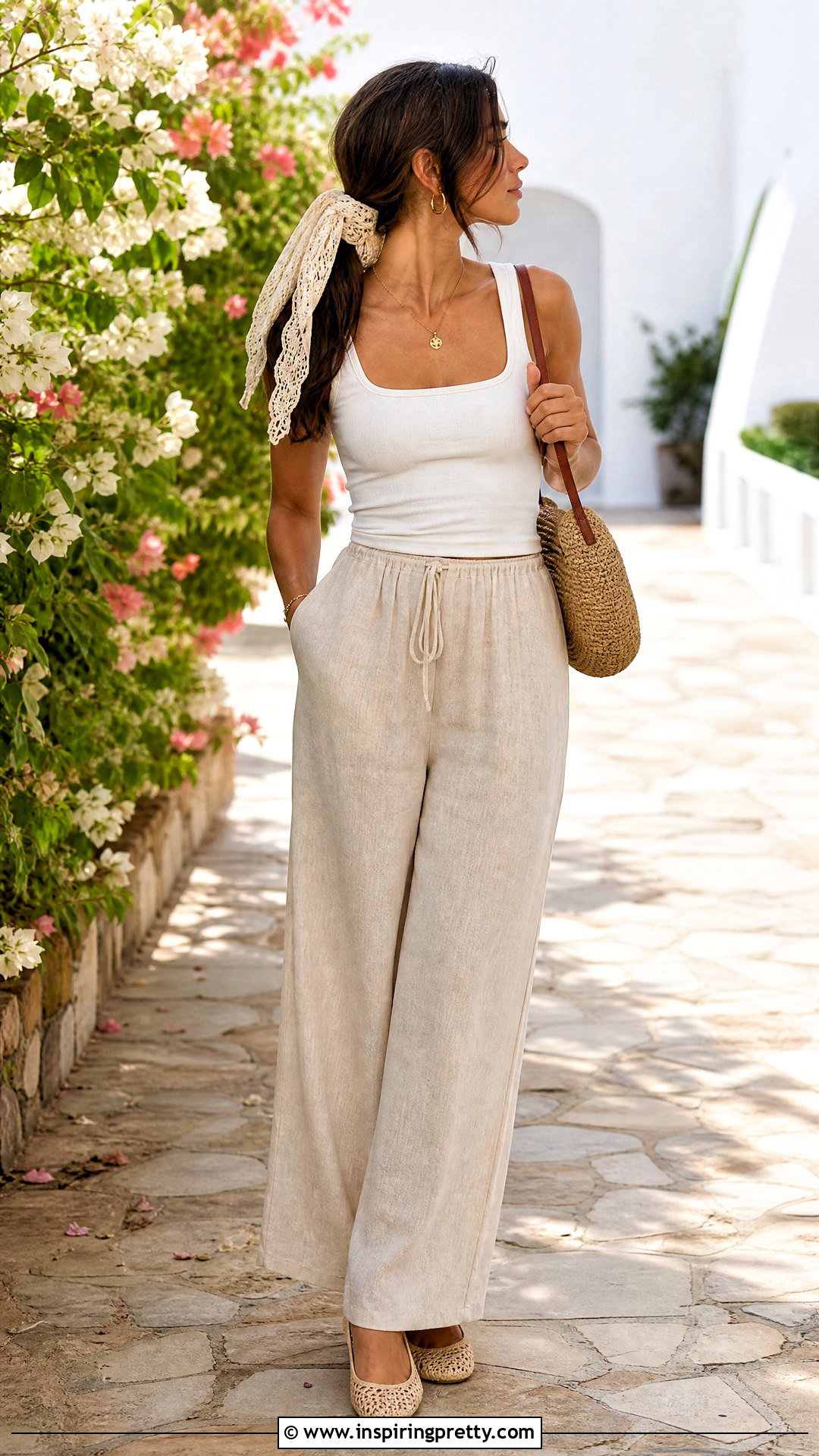
A narrow crochet lace hair scarf adds handmade texture to simple everyday outfits. Choose fine cotton yarn and a small hook to produce light, defined stitches that drape naturally. The scarf can be worked as a long rectangle or gently tapered at both ends for easier tying. Repeating shell, fan, or mesh patterns make the project interesting while keeping the construction straightforward. Block the finished scarf carefully to open the lace and straighten its edges. Soft ivory offers a romantic effect, whereas cherry red, blue, or green creates a stronger accent. Tie it around a low ponytail, braid, or bun. For a balanced outfit, combine the scarf with a fitted tank, relaxed linen pants, woven flats, and a compact shoulder bag.
9. Crochet Scrunchie Set
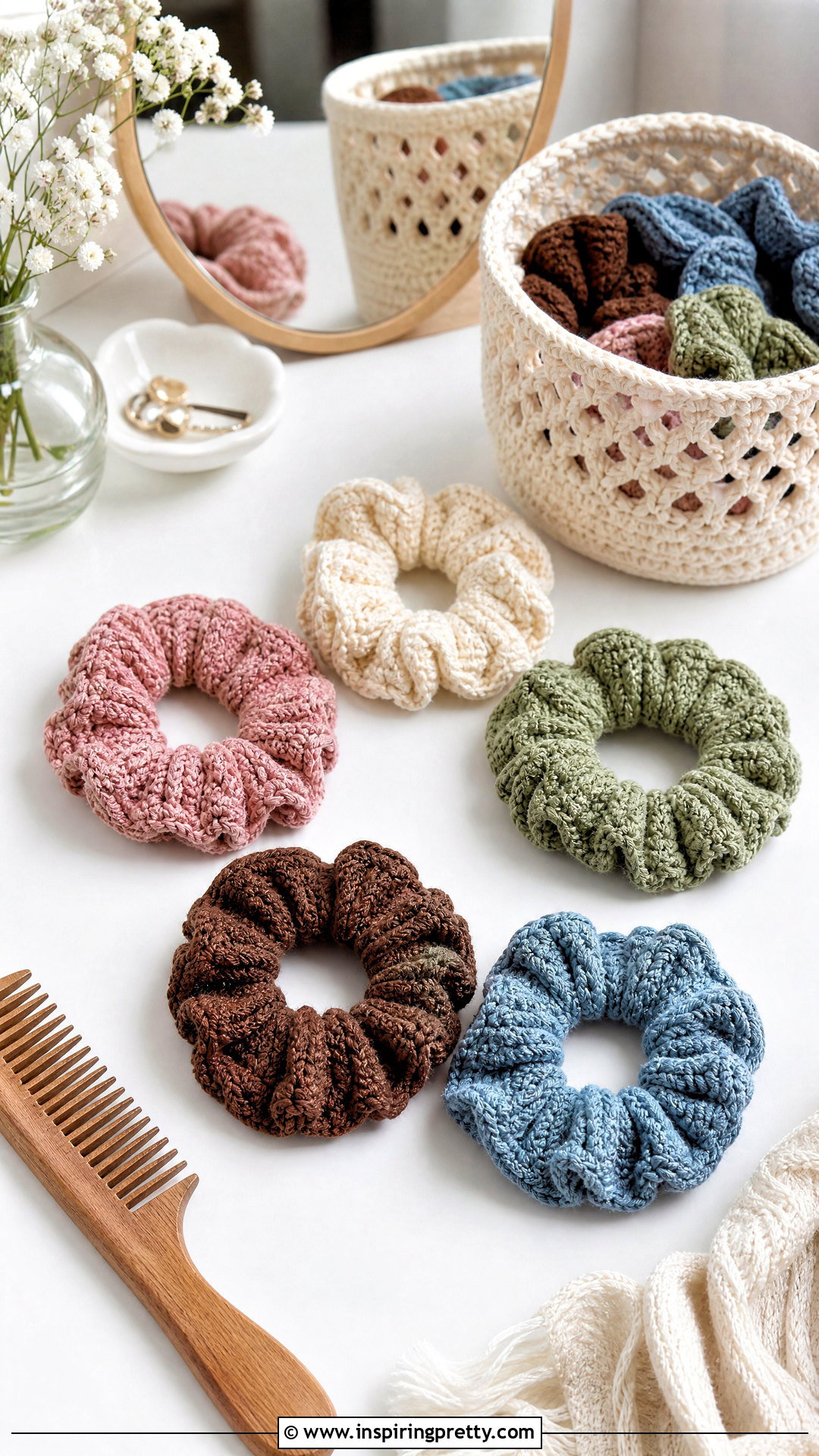
Crochet scrunchies are ideal for beginners, leftover yarn, and fast handmade gifts. Begin by placing yarn around a basic elastic hair tie, then crochet enough stitches to cover it completely. Add additional rounds or increases to create the gathered, ruffled shape. Cotton produces a defined everyday scrunchie, while velvet or chenille yarn gives it a fuller and softer appearance. Make several in related colors, such as cream, dusty pink, sage, and brown, to create a coordinated set. Avoid very heavy yarn because it can pull uncomfortably on the hair. Secure and weave in every end carefully so the scrunchies withstand repeated use. Present the completed set on a reusable card or keep them in a small crocheted storage basket near a mirror.
10. Crochet Floral Claw Clip Cover
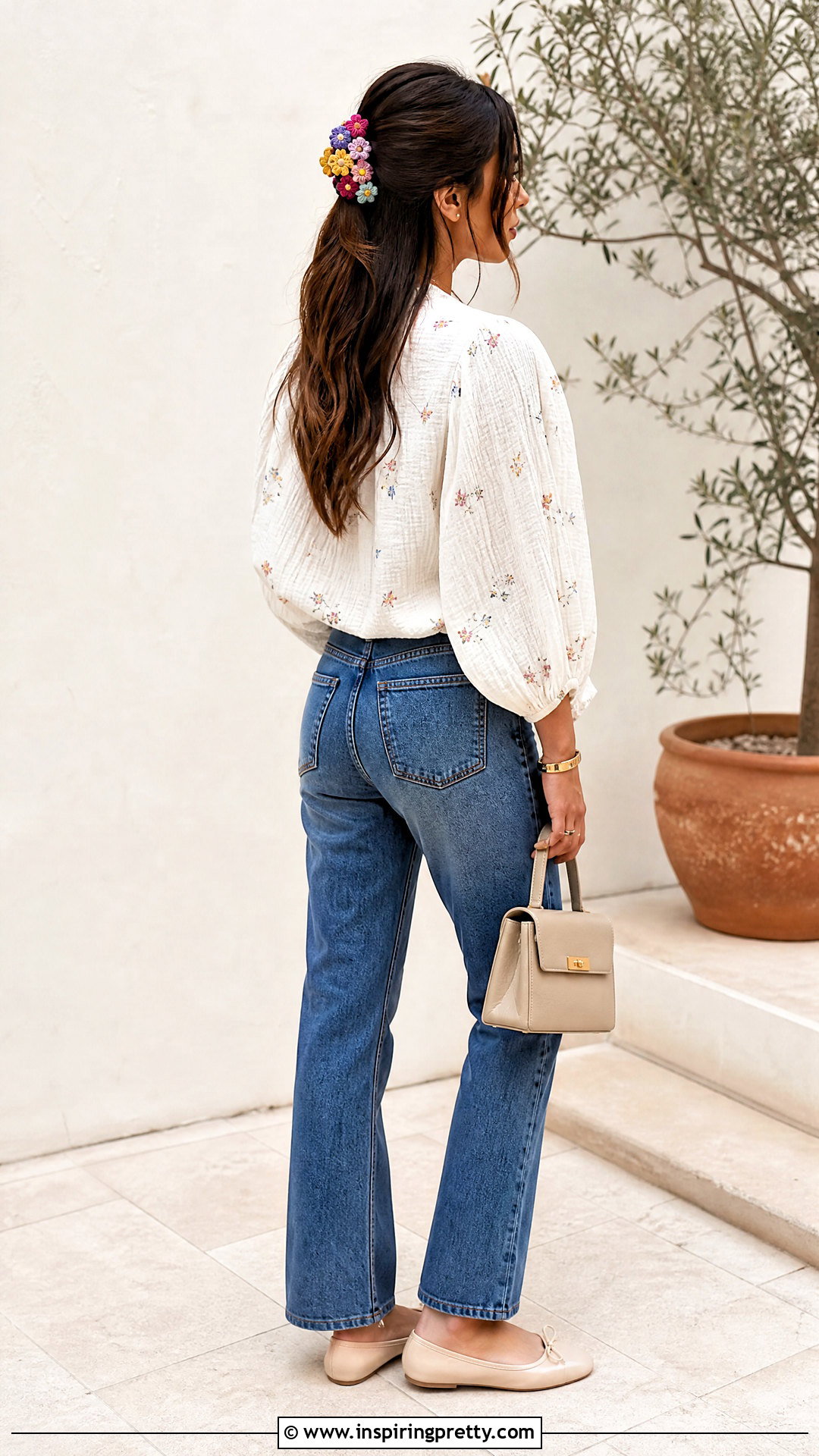
Transform a basic hair accessory with a crocheted floral claw clip cover. Choose a plain clip with openings that allow the crochet piece to be sewn securely around its top section. Create small flowers, leaves, or a narrow decorative strip using lightweight cotton and a fine hook. Arrange the motifs before attaching them to prevent the clip from becoming uneven or too bulky. Pastel petals provide a soft spring look, while bright contrasting colors feel playful and graphic. Keep yarn away from the hinge and teeth so the clip continues to open properly. Wear the finished piece with a casual blouse, straight-leg jeans, ballet flats, and a small handbag. It is a creative scrap-yarn project that can be completed relatively quickly.
11. Crochet Phone Case With Strap
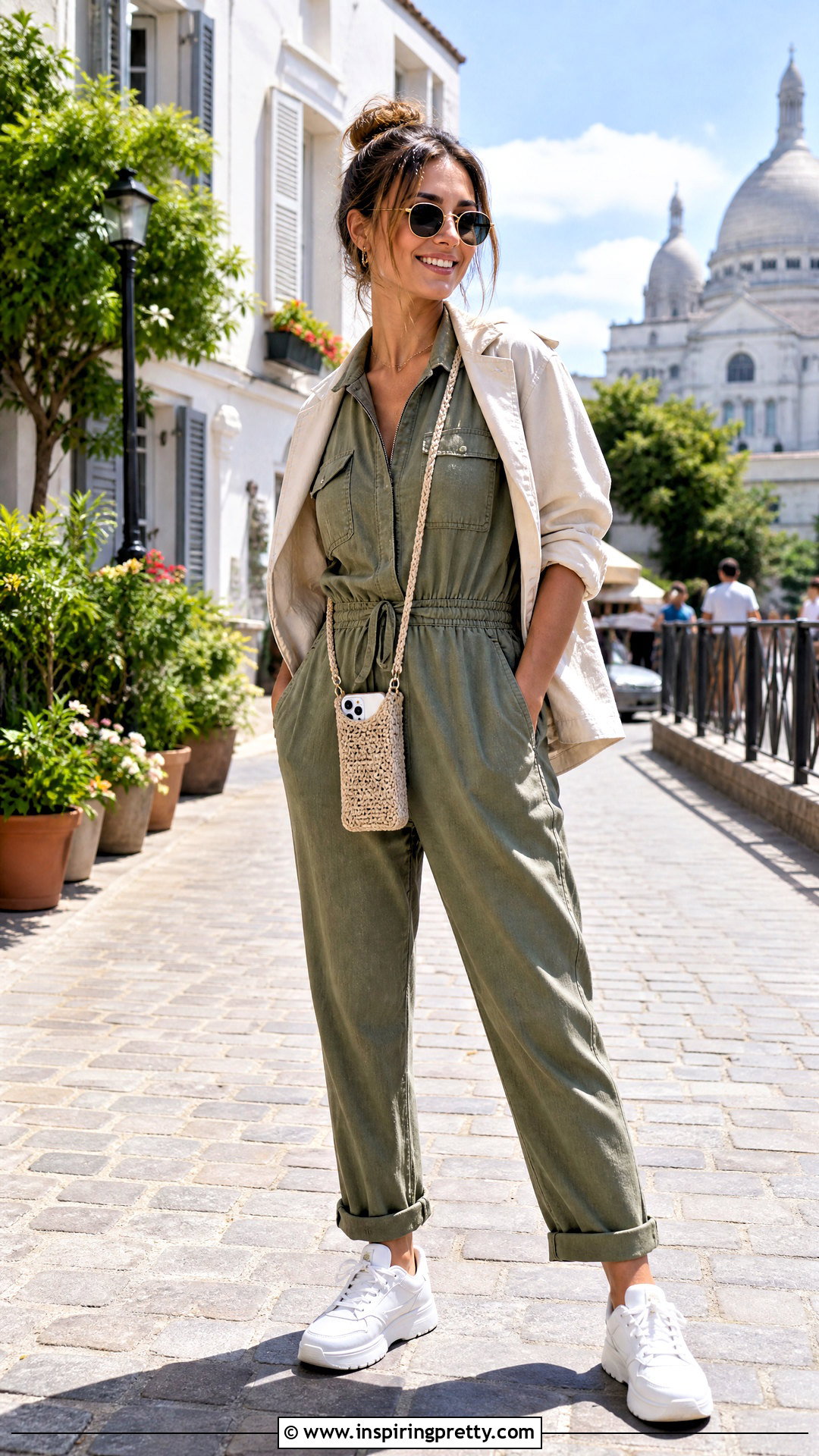
A crochet phone case with a long strap keeps essential technology accessible while leaving both hands free. Measure the phone carefully, including its protective cover, before creating two fitted rectangular panels or a seamless pouch. Dense single crochet reduces gaps and adds durability. Use sturdy cotton or cord yarn and select a hook that produces a firm fabric. Attach the strap at multiple points, since the upper corners experience regular tension. A buttoned flap or zipper helps keep the phone secure, while a soft fabric lining protects the screen. Add a small exterior pocket for a card if desired. Style the finished case with a casual jumpsuit, sneakers, sunglasses, and a lightweight jacket for errands, sightseeing, or outdoor events.
12. Crochet Water Bottle Holder
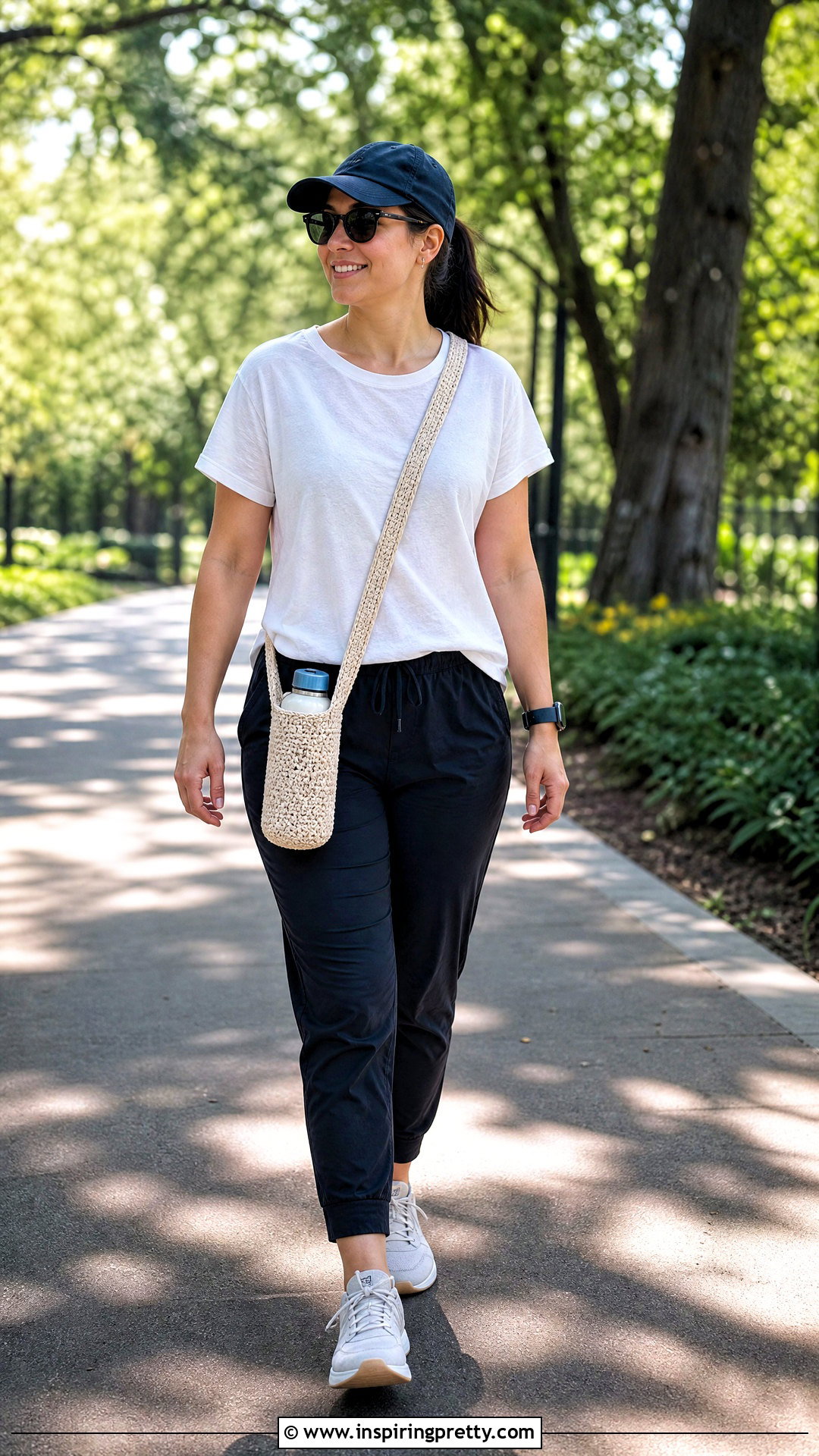
A crochet water bottle holder is a practical project for walks, travel, and everyday errands. Begin with a flat circular base that matches the bottle’s width, then work the body upward in a firm mesh or solid stitch. Cotton yarn handles weight well and is easier to clean than many delicate fibers. Create a broad crossbody strap to distribute pressure comfortably across the shoulder. Reinforce the strap connections with several rows of stitching, especially when designing the holder for a larger bottle. A drawstring top can prevent the bottle from slipping out when you bend or move quickly. Choose neutral yarn for versatility or use bold stripes to make the carrier easy to spot. Always test the completed holder with a filled bottle before regular use.
13. Crochet Cup Cozy
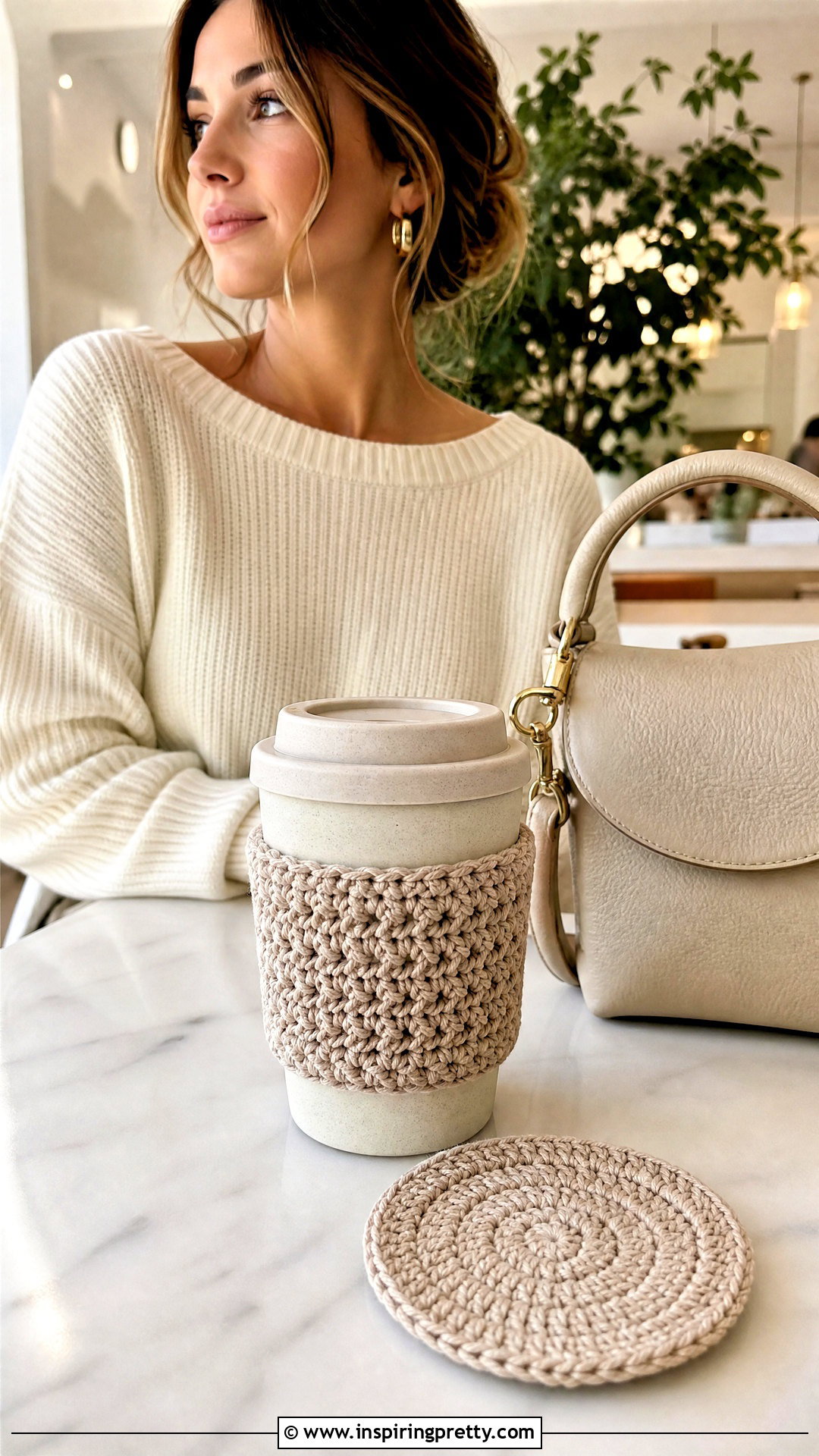
A crochet cup cozy is one of the simplest useful projects for learning tension, seaming, and textured stitches. Measure around a reusable mug or takeaway cup and create a small rectangle that fits snugly without sliding. Join the short ends, or add a button and loop so the cozy can be removed easily. Cotton yarn is a sensible choice because it is washable and provides enough grip. Ribbing, waffle stitch, bobbles, and simple color blocks can make this compact project visually interesting. Avoid loose embellishments that could interfere with holding the cup. Create matching cozies in several colors for a coordinated kitchen or office set. Pair one with a reusable cup and a small crocheted coaster for a thoughtful, practical handmade package.
14. Crochet Coaster Set
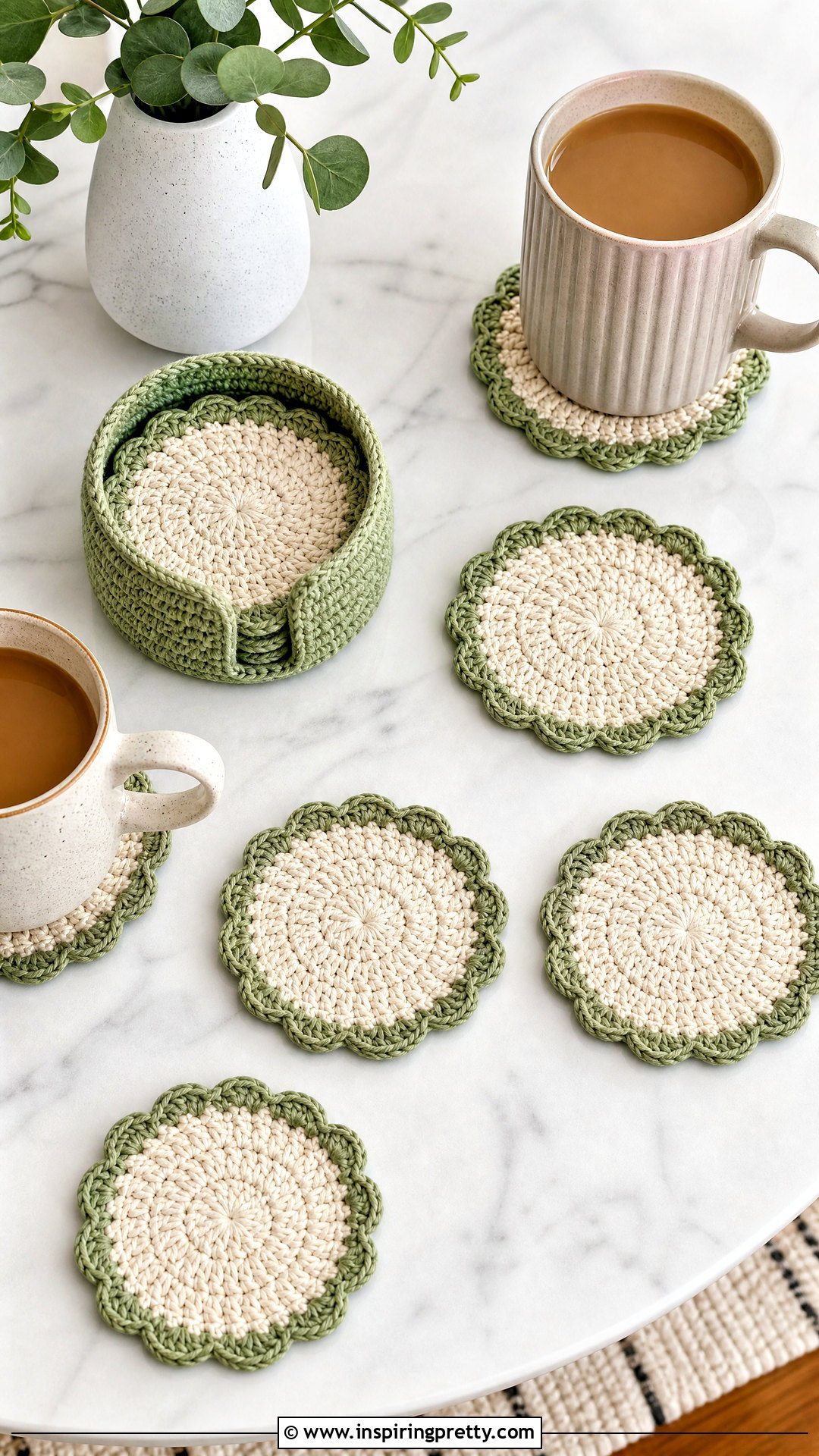
Crochet coasters provide an easy way to practice circles, squares, color changes, and tidy borders. Use absorbent cotton yarn and a relatively tight gauge so moisture does not pass through immediately. Round coasters can begin with a magic ring, while square versions are simple to work in rows or from the center outward. Make each piece the same size by counting rounds carefully and measuring before fastening off. Earthy neutrals suit minimalist rooms, whereas fruit shapes, flowers, and checkerboard patterns add cheerful color. Finish every coaster with a flat border, then block the complete set to prevent curled edges. Four to six matching pieces can be tied together with leftover yarn and paired with a crocheted holder or small storage basket.
15. Crochet Flower Pot Coaster
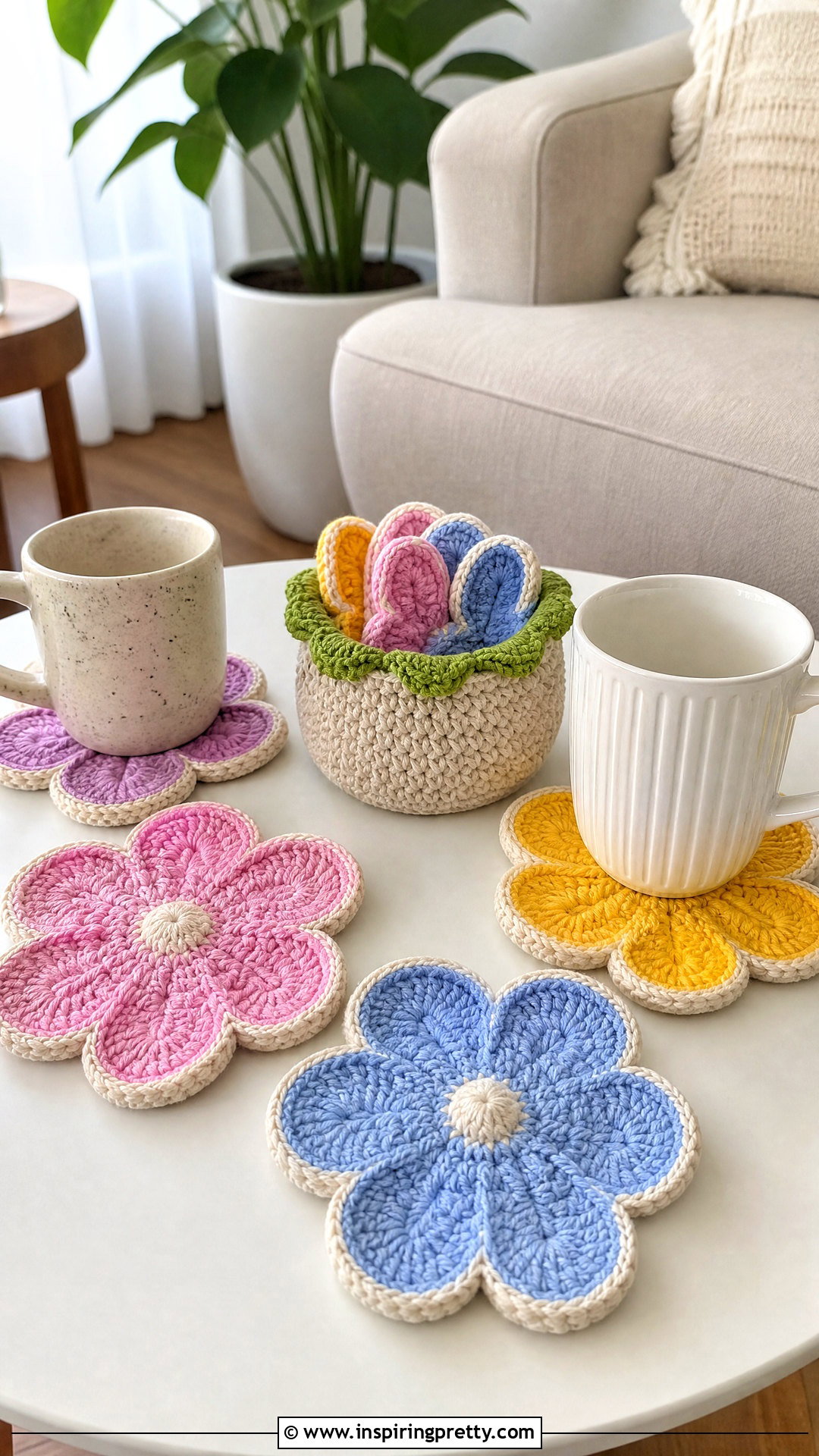
A flower pot coaster creates a decorative bloom when opened and folds neatly into a small crocheted container when stored. The project generally combines several petal-shaped coasters with a round base or holder. Choose cotton yarn in a botanical palette, such as terracotta, green, cream, yellow, and pink. Keep the petals flat enough to support a mug, but use a firm gauge so they maintain their shape inside the pot. Careful blocking helps each flower appear even and symmetrical. The holder can be finished with a contrasting rim or tiny leaves for extra detail. Place the complete set on a coffee table, kitchen counter, or desk. It offers practical surface protection while doubling as a colorful handmade decoration between uses.
16. Crochet Fruit Trivet
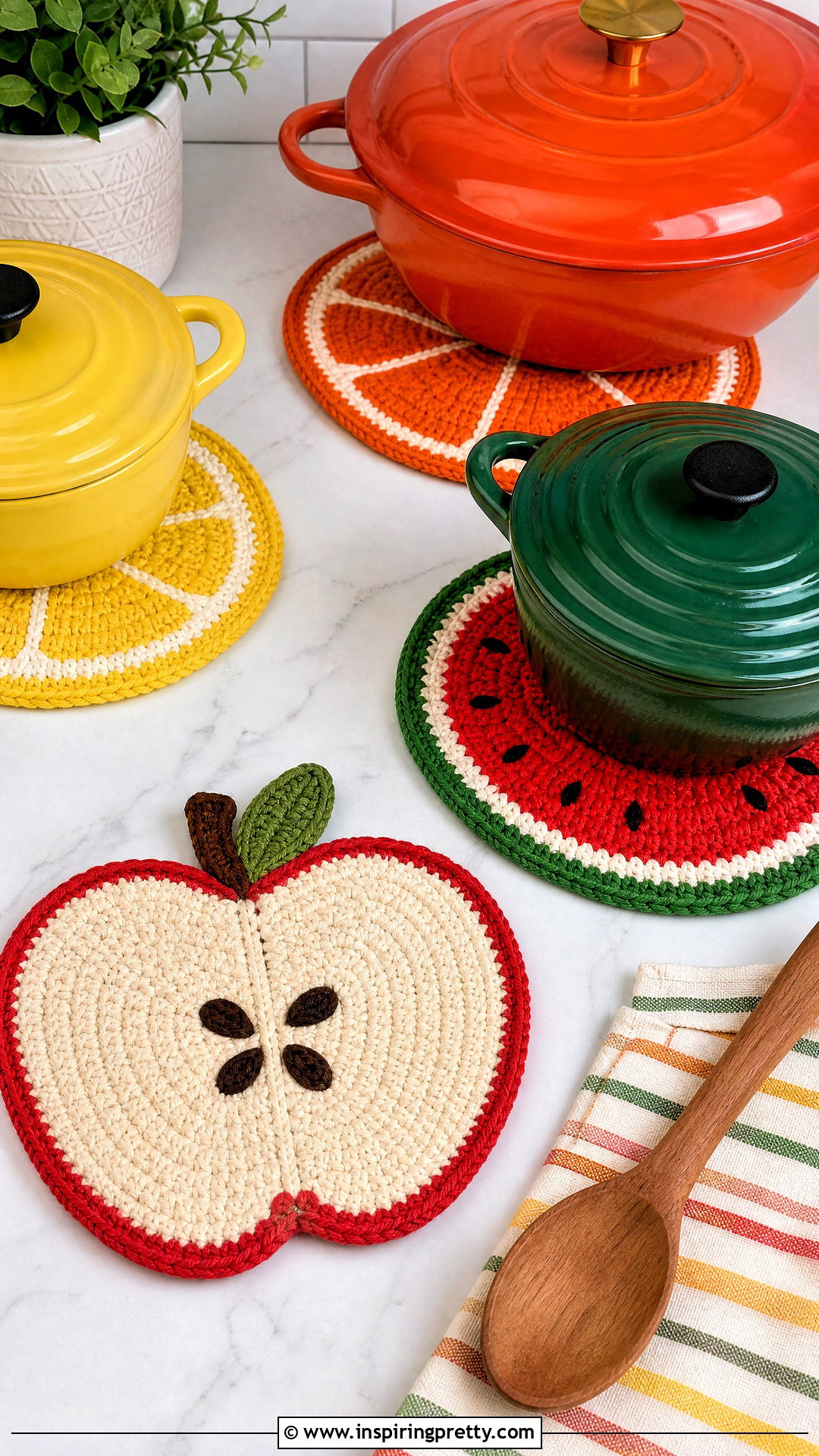
A crochet fruit trivet brings color to the kitchen while protecting a table from warm serving dishes. Lemon, orange, watermelon, apple, and dragon-fruit designs are easy to recognize through simple circular construction and thoughtful color changes. Use heat-resistant cotton rather than synthetic yarn, which may react poorly to high temperatures. Work with two strands or select a dense stitch to create a thick, protective fabric. Embroider seeds and segment lines after completing the main shape so the details remain controlled. Ensure all knots and yarn ends are secured on the back. A hanging loop allows the trivet to become visible kitchen decor when it is not in use. Make several coordinating fruits for a bright, cohesive, and useful handmade collection.
17. Crochet Dishcloth Set
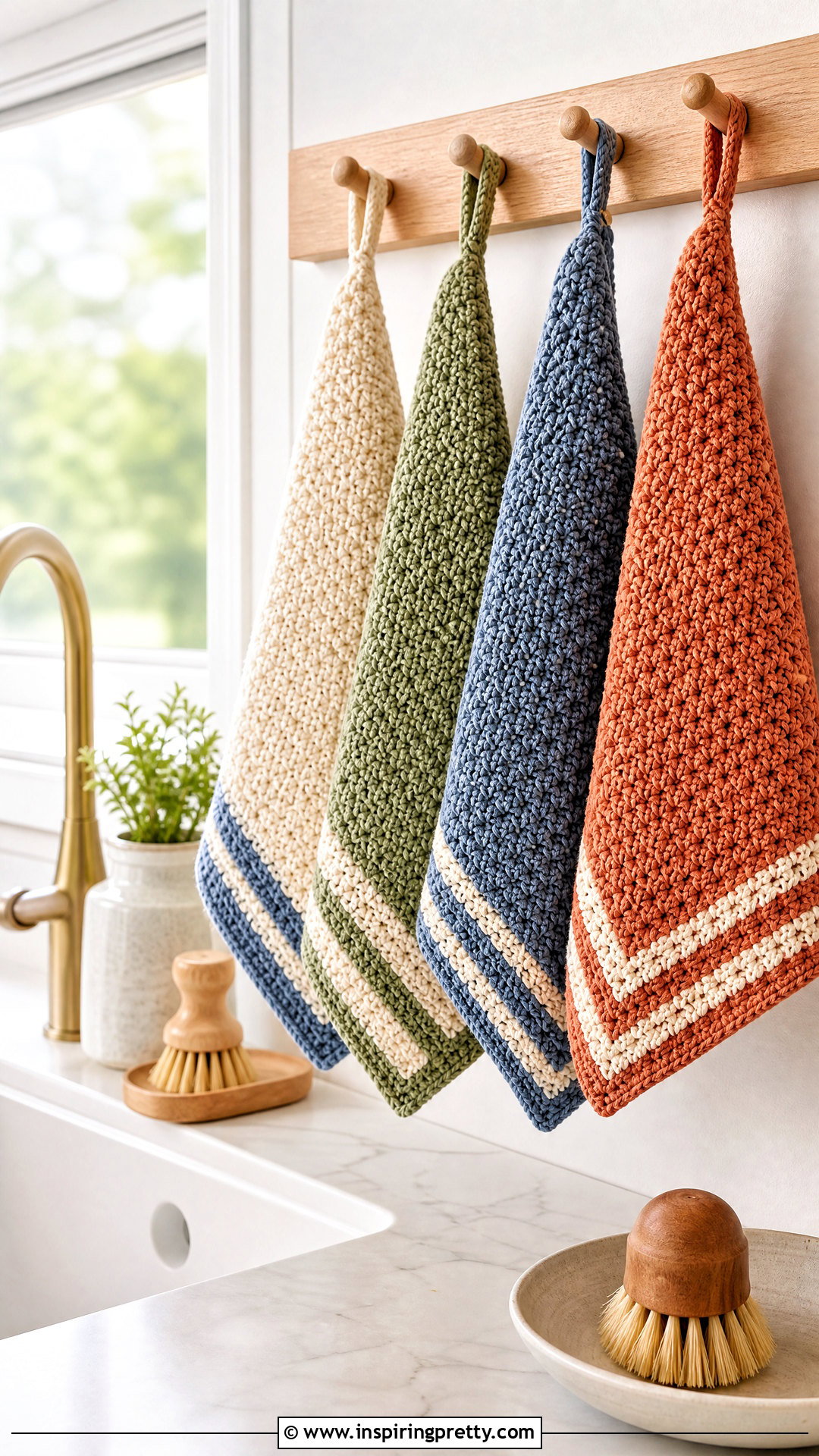
Handmade crochet dishcloths are durable practice projects that can replace disposable cleaning materials. Choose machine-washable cotton yarn because it absorbs water and handles frequent use. Simple square construction allows beginners to concentrate on consistent edges and stitch tension. Moss stitch creates a flexible surface, waffle stitch adds scrubbing texture, and half-double crochet works up quickly. Keep each cloth at a practical size that is comfortable to hold and easy to rinse. Add a hanging loop at one corner if you want the cloth to dry between uses. Create a coordinated set using stripes, contrasting borders, or several shades from one color family. Wash the finished pieces before use to remove manufacturing residue and help the cotton become softer and more absorbent.
18. Crochet Hanging Kitchen Towel
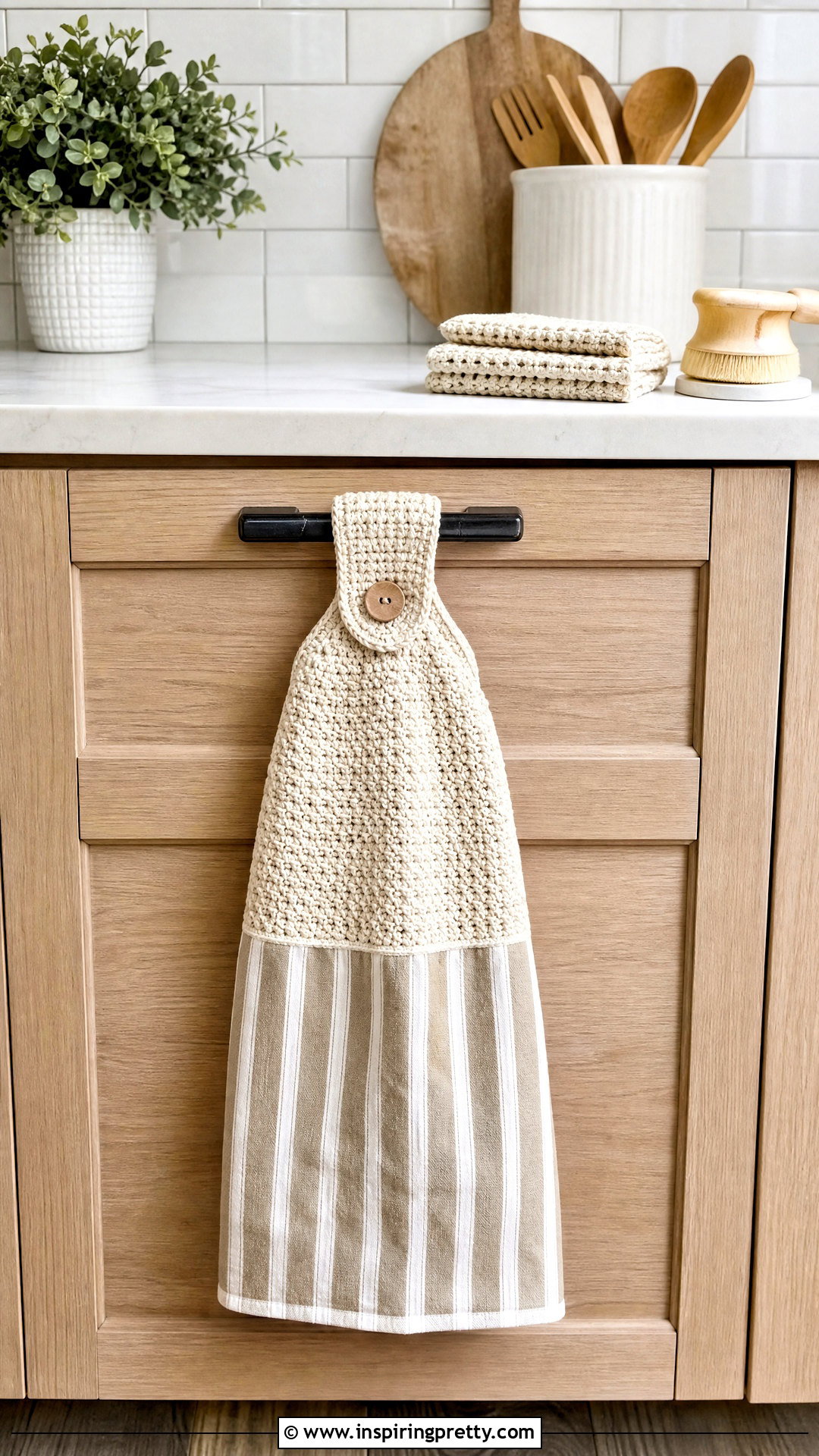
A crochet hanging kitchen towel stays conveniently attached to an oven or cabinet handle. Use a ready-made cotton towel for the lower section, then crochet a decorative topper directly through evenly spaced holes along the cut edge. Alternatively, make the entire towel from absorbent cotton yarn. Shape the upper panel gradually and finish it with a buttoned strap that wraps around a handle. Select a washable button large enough to remain secure during use. Neutral yarn creates a clean farmhouse look, while checks, stripes, or fruit colors introduce more personality. Maintain a firm gauge around the buttonhole because it will receive repeated strain. This project combines basic sewing and crochet, making it a useful next step for crafters who want to expand their finishing skills.
19. Crochet Storage Basket
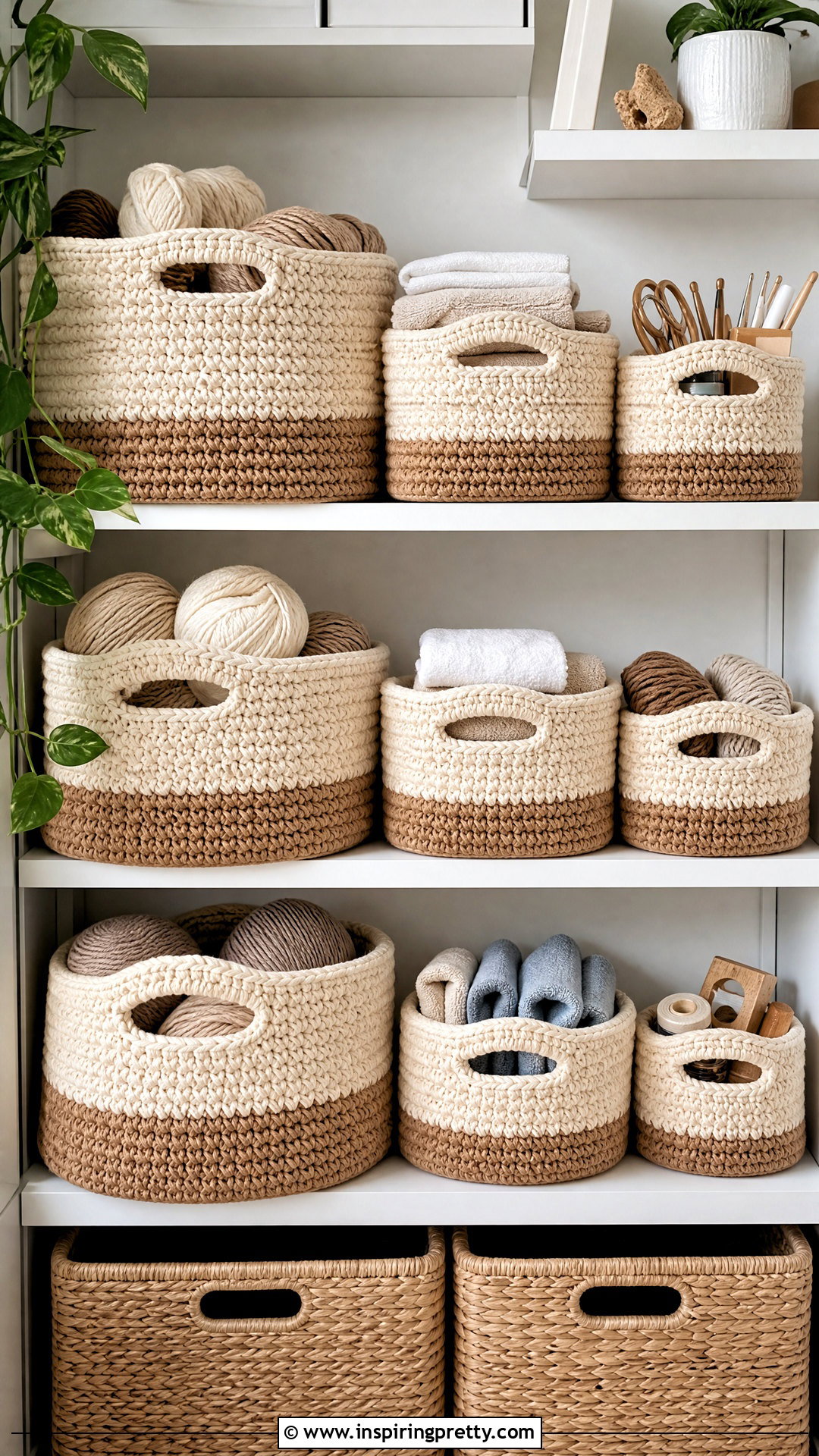
A crochet storage basket can organize yarn, toiletries, toys, office supplies, or entryway accessories. Thick cotton cord, fabric yarn, or multiple strands held together will create the firmest structure. Start with a flat circular, oval, or rectangular base, then stop increasing and work upward to form the sides. Use a smaller hook than usual if the fabric feels loose or collapses easily. Integrated handles make larger baskets easier to move, while a folded rim gives smaller containers a clean finish. Color blocking can define the base and upper section without requiring complicated stitches. Add a washable fabric liner when storing delicate objects. Make several baskets in graduated sizes and related colors to establish an organized, consistent look throughout a shelf, closet, or craft area.
20. Crochet Hanging Wall Basket
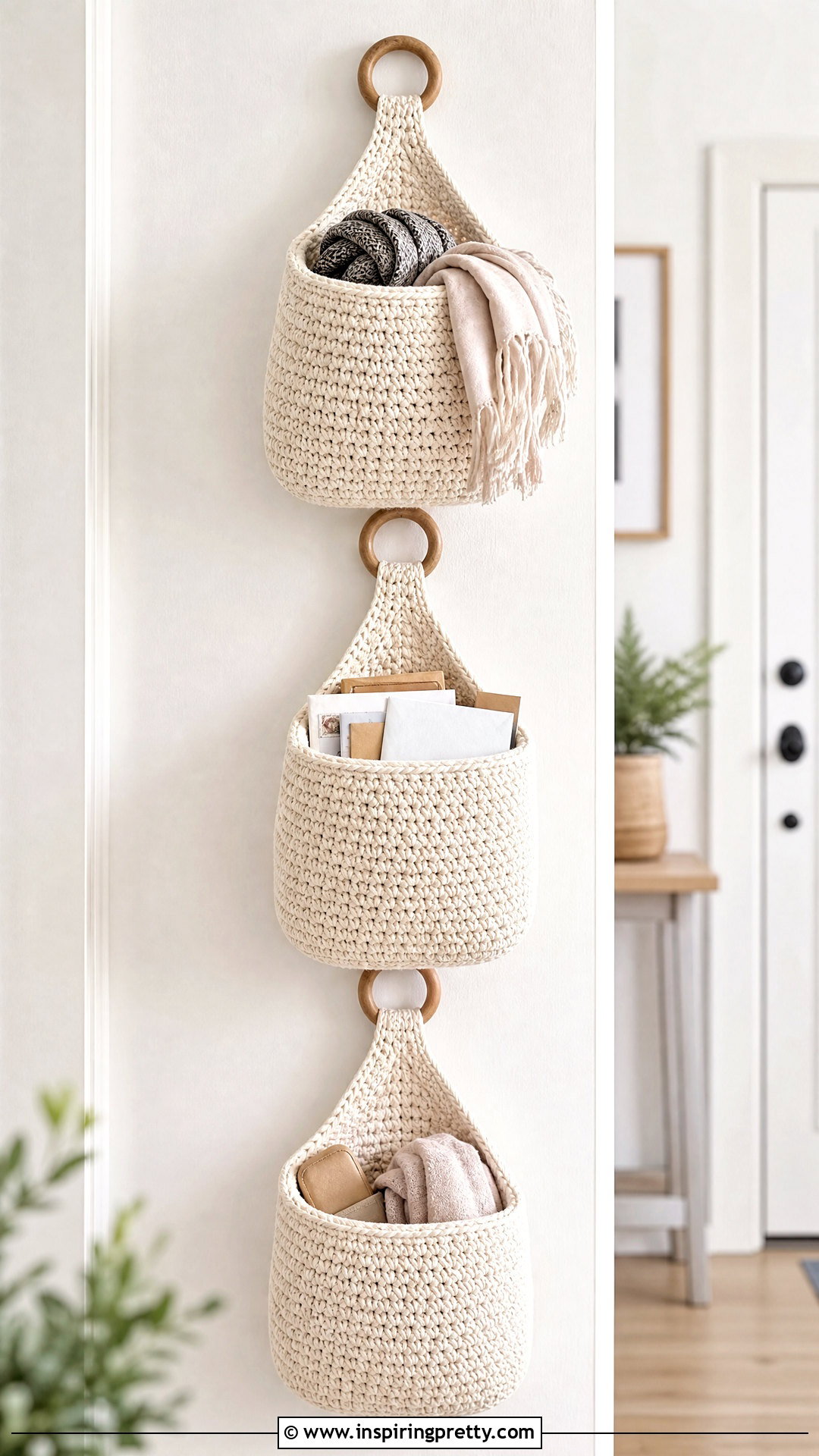
A crochet hanging wall basket adds vertical storage where shelves or floor space are limited. Construct a flat back panel and a rounded front pocket, or crochet a pouch with a reinforced hanging loop. Cotton cord provides structure, while jute creates a rustic texture suitable for dried flowers or lightweight supplies. Keep the upper edge firm so the basket does not sag forward after it is filled. A wooden ring can serve as both a decorative detail and a reliable hanging point. Create one large basket or arrange several smaller versions in a vertical grouping. These containers work well for scarves, mail, craft materials, and soft bathroom items. Use an appropriate wall hook and avoid placing heavy or breakable objects inside the finished basket.
21. Crochet Plant Hanger
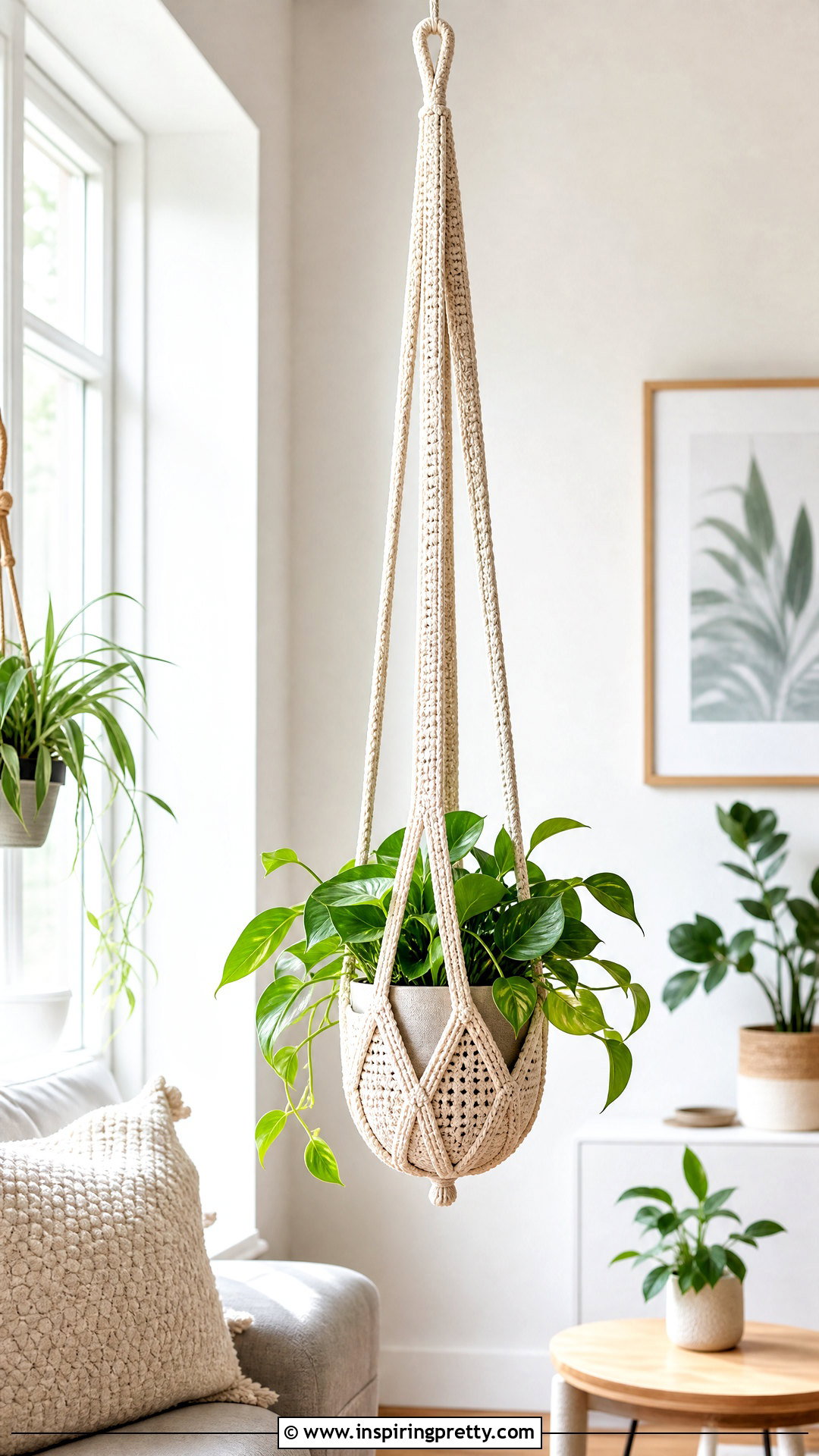
A crochet plant hanger brings soft texture to a room while keeping greenery off crowded surfaces. Strong cotton cord is the safest material because it resists excessive stretching and supports the planter more effectively than delicate yarn. Begin with a secure base or net that fits beneath the pot, then create evenly spaced straps that meet at the top. Test the hanger at a low height before mounting it permanently. Decorative beads can be added, but each opening must be smooth enough to prevent damage to the cord. Natural cream suits a calm interior, while rich green, rust, or blue makes the hanger more noticeable. Use a lightweight planter without drainage leaks and confirm that the ceiling or wall hook is rated for the combined weight.
22. Crochet Plant Pot Cover
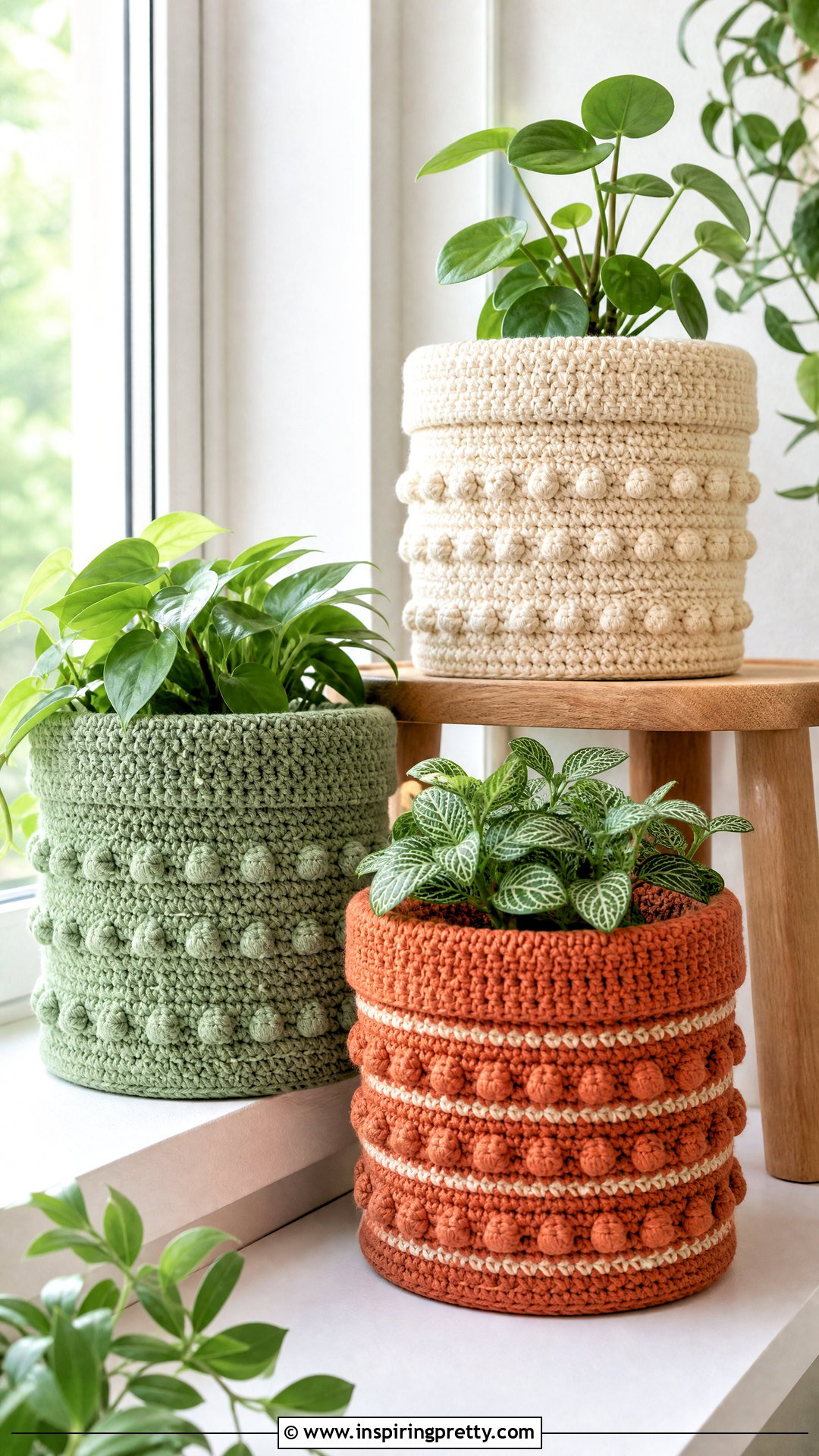
A crochet plant pot cover can update a plain container without requiring a permanent decorative change. Measure the pot around its widest point and create a fitted sleeve that can be removed for washing. Work from a circular base for a complete basket or crochet only the sides when the original pot already provides stability. Cotton cord, jute, and thick recycled yarn produce defined texture. Bobbles, ridges, geometric color blocks, or simple stripes help the cover complement the surrounding room. Keep the upper edge away from damp soil and use a waterproof saucer inside. Small matching covers can unify mismatched pots on a windowsill. This project is also an effective way to use partial skeins, provided the chosen yarns have similar thickness and care requirements.
23. Crochet Flower Garland
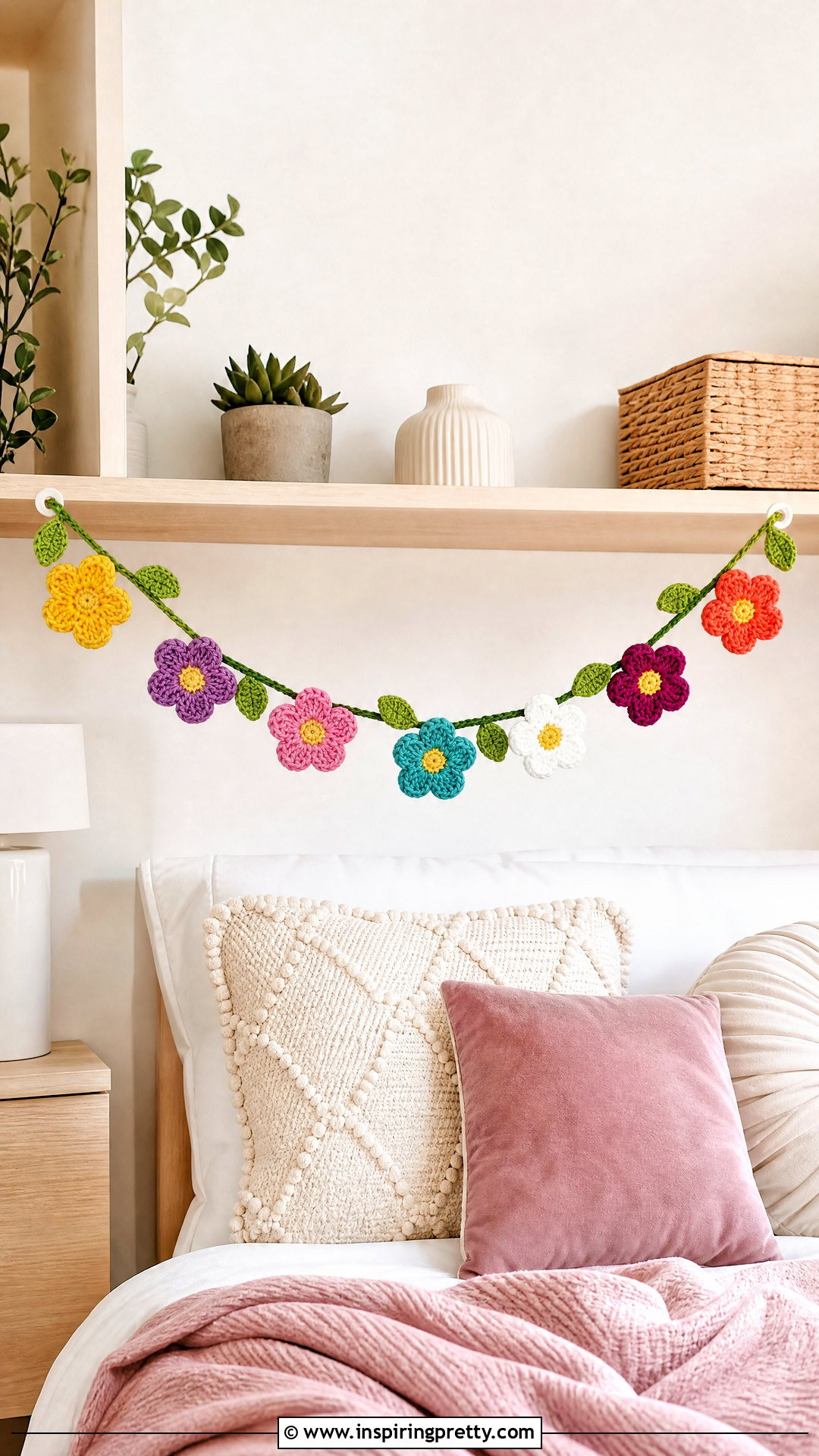
A crochet flower garland creates reusable decoration for bedrooms, studios, nurseries, and craft spaces. Make individual flowers in several shapes, then connect them with a long chain, cord, or row of leaves. Lightweight cotton provides crisp petals and keeps the finished garland from becoming too heavy. Choose three to five coordinated colors so the design feels varied but cohesive. Arrange every motif on a flat surface before joining to confirm the spacing and overall length. Small leaves, circles, or tassels can fill awkward gaps between larger flowers. Steam or wet block the pieces when the petals curl inward. Hang the garland across a shelf, mirror, headboard, or window, keeping it away from heat sources. The project is portable and excellent for using colorful yarn remnants.
24. Crochet Leaf Wall Hanging
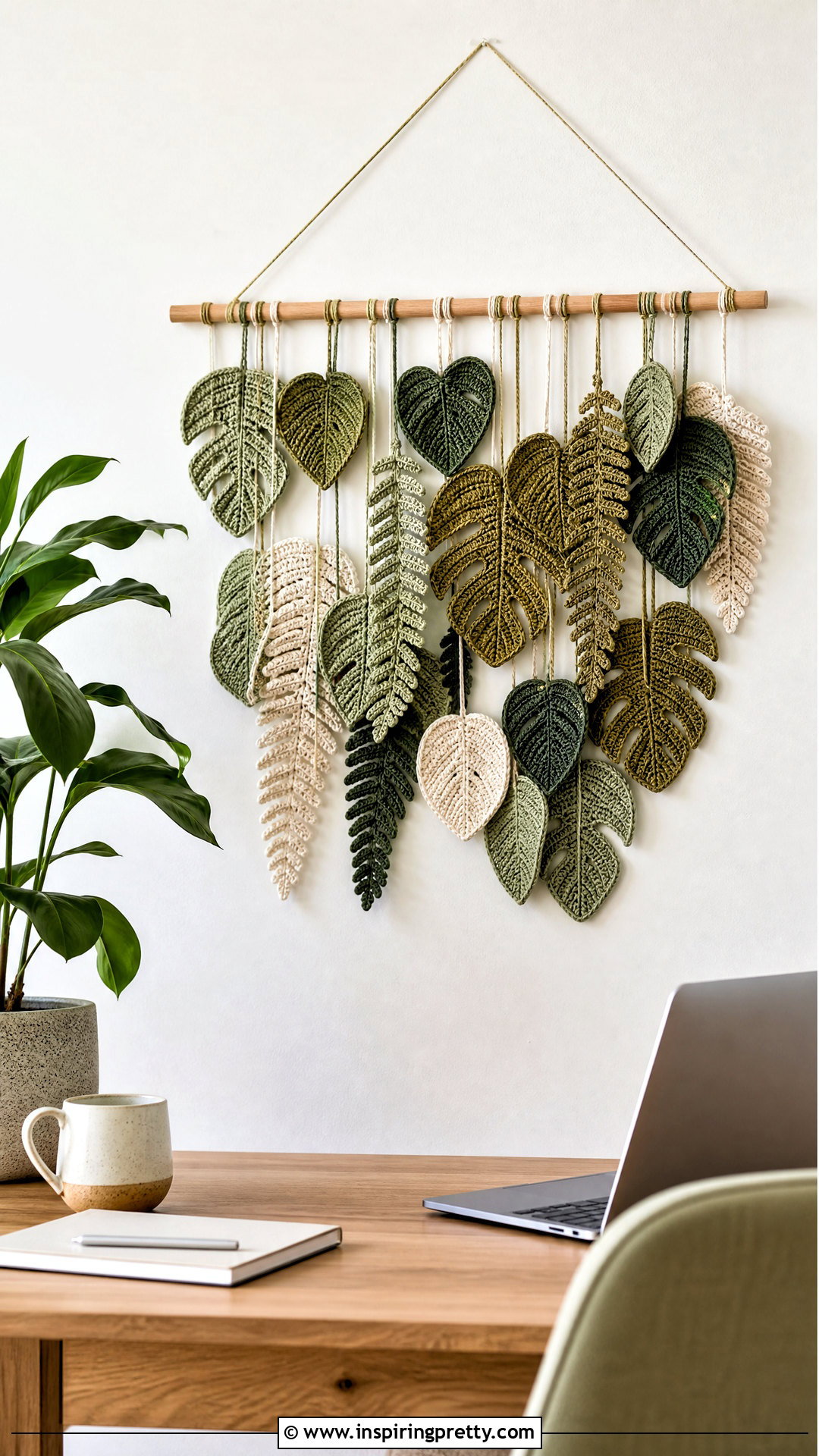
A crochet leaf wall hanging introduces botanical form without requiring real plant care. Create several leaves in different sizes using cotton or a smooth wool blend that clearly shows the stitch pattern. Monstera, fern, vine, and simple oval leaves can be combined for a layered arrangement. Attach the motifs to a wooden dowel or natural branch with crocheted cords at varied lengths. A limited palette of olive, sage, cream, and forest green produces a calm result, while brighter colors create graphic wall art. Block each leaf before assembly so its edges and internal openings remain defined. Keep the final design lightweight and balanced on both sides. A simple hanging cord completes the piece and allows it to be displayed above a desk, console, or reading area.
25. Crochet Sunburst Wall Hanging
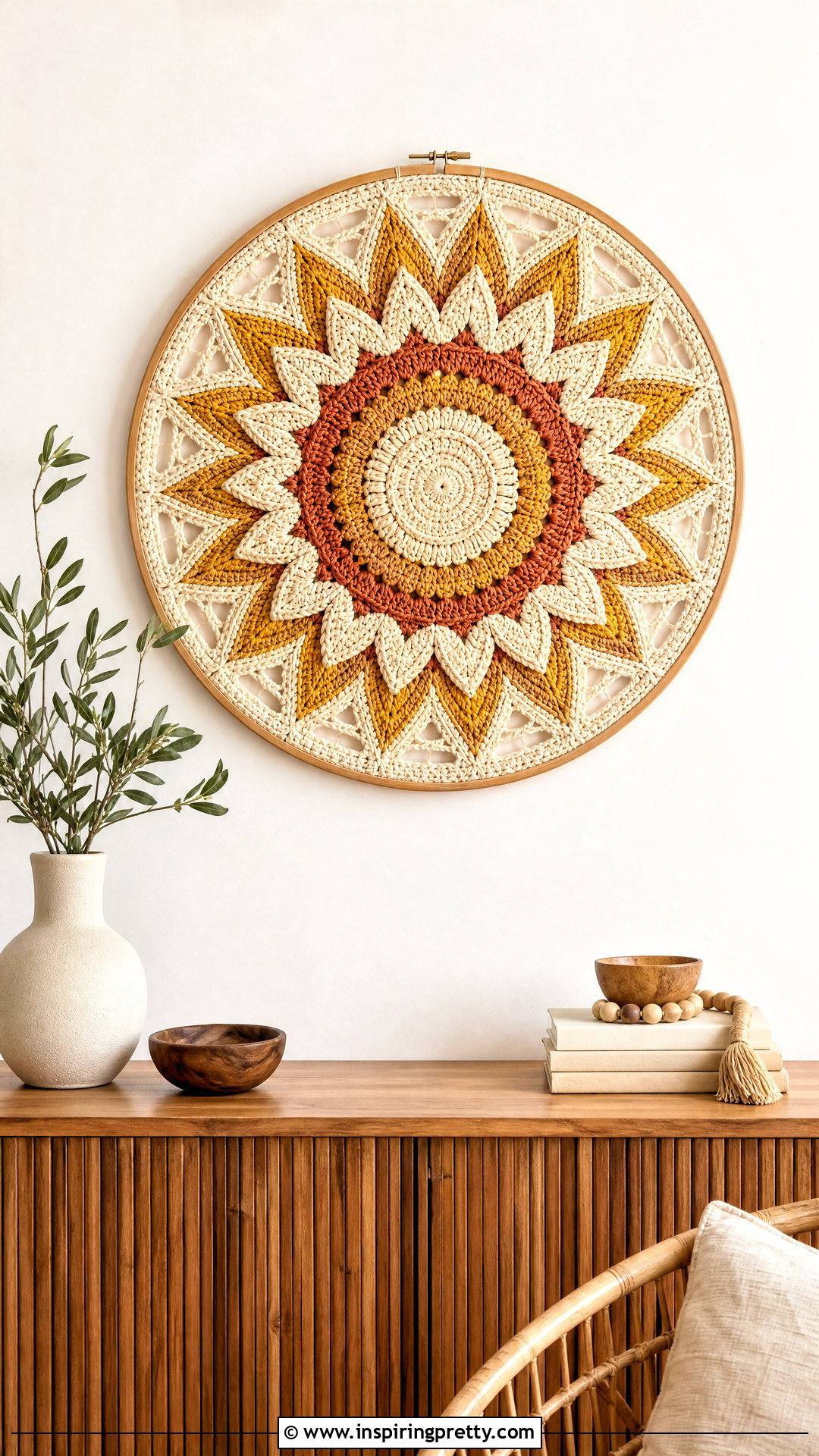
A crochet sunburst wall hanging creates an eye-catching focal point through radial stitches and layered texture. Start with a tightly crocheted center and build outward using shells, clusters, loops, or elongated points. Mount the finished motif inside a metal hoop or attach it to a circular frame for stability. Cotton yarn offers clear stitch definition, while raffia can produce a more organic appearance. Cream, mustard, terracotta, and muted gold support the sun-inspired shape without requiring metallic materials. Block the crochet carefully before fastening it to the frame, ensuring the tension remains even around the entire circle. Add a simple loop for hanging rather than a bulky cord. Display the completed piece against a plain wall where its detailed construction can remain clearly visible.
26. Crochet Throw Pillow Cover
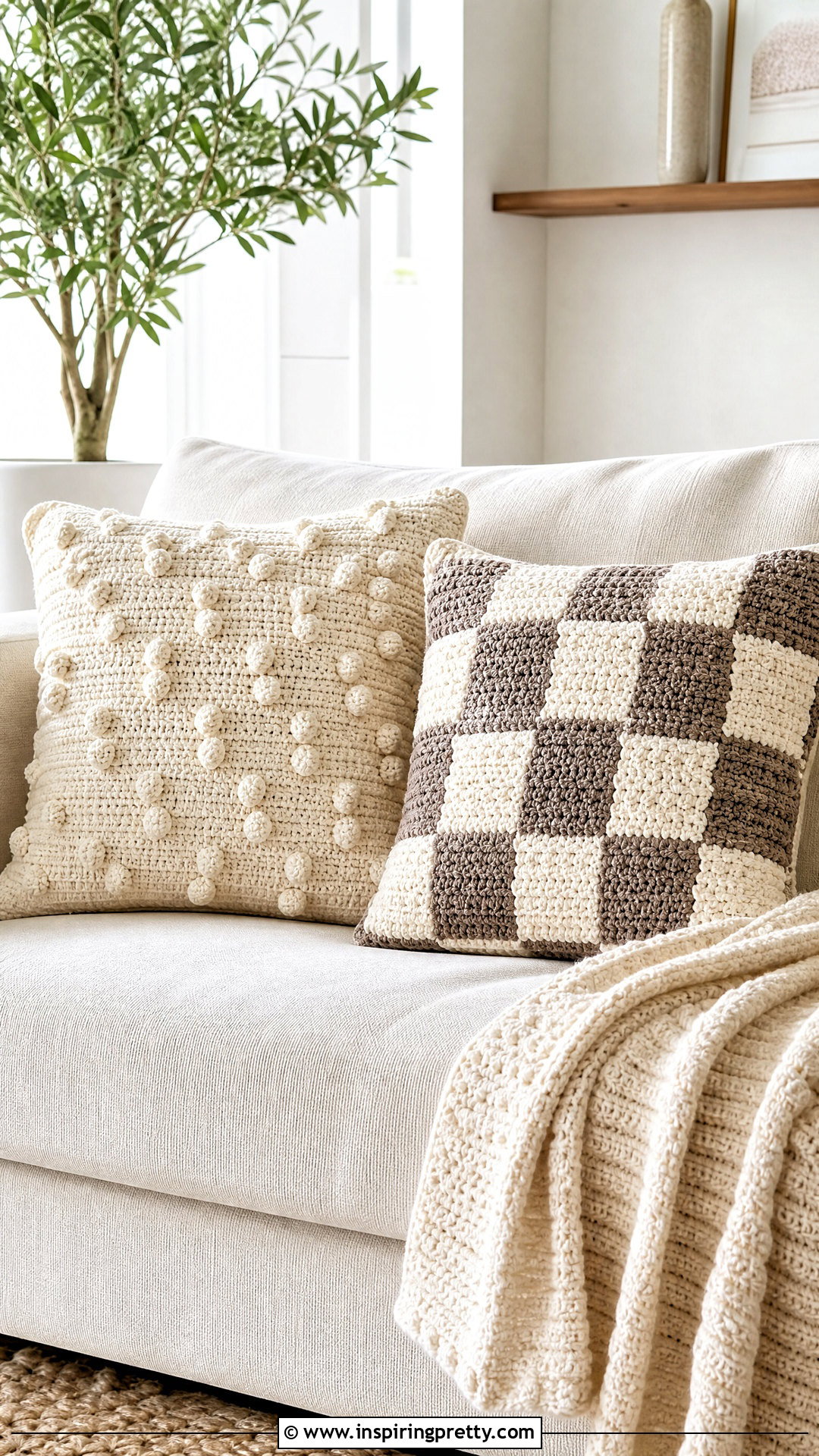
A crochet throw pillow cover is an accessible home project that can change the mood of a sofa, chair, or bed. Create two square panels, or work one long rectangle that folds around the insert. Dense stitches provide full coverage, while open patterns should be paired with a coordinating fabric liner. Bobbles, cables, checkerboards, and raised geometric motifs create appealing texture in a single color. Add an envelope back or buttons so the cover can be removed for cleaning. Measure the pillow insert before beginning and make the crochet slightly smaller for a plump finish. Block both panels to matching dimensions before seaming. For a polished arrangement, make two coordinated covers with reversed colors or related stitch patterns instead of producing several identical pillows.
27. Crochet Daisy Pillow
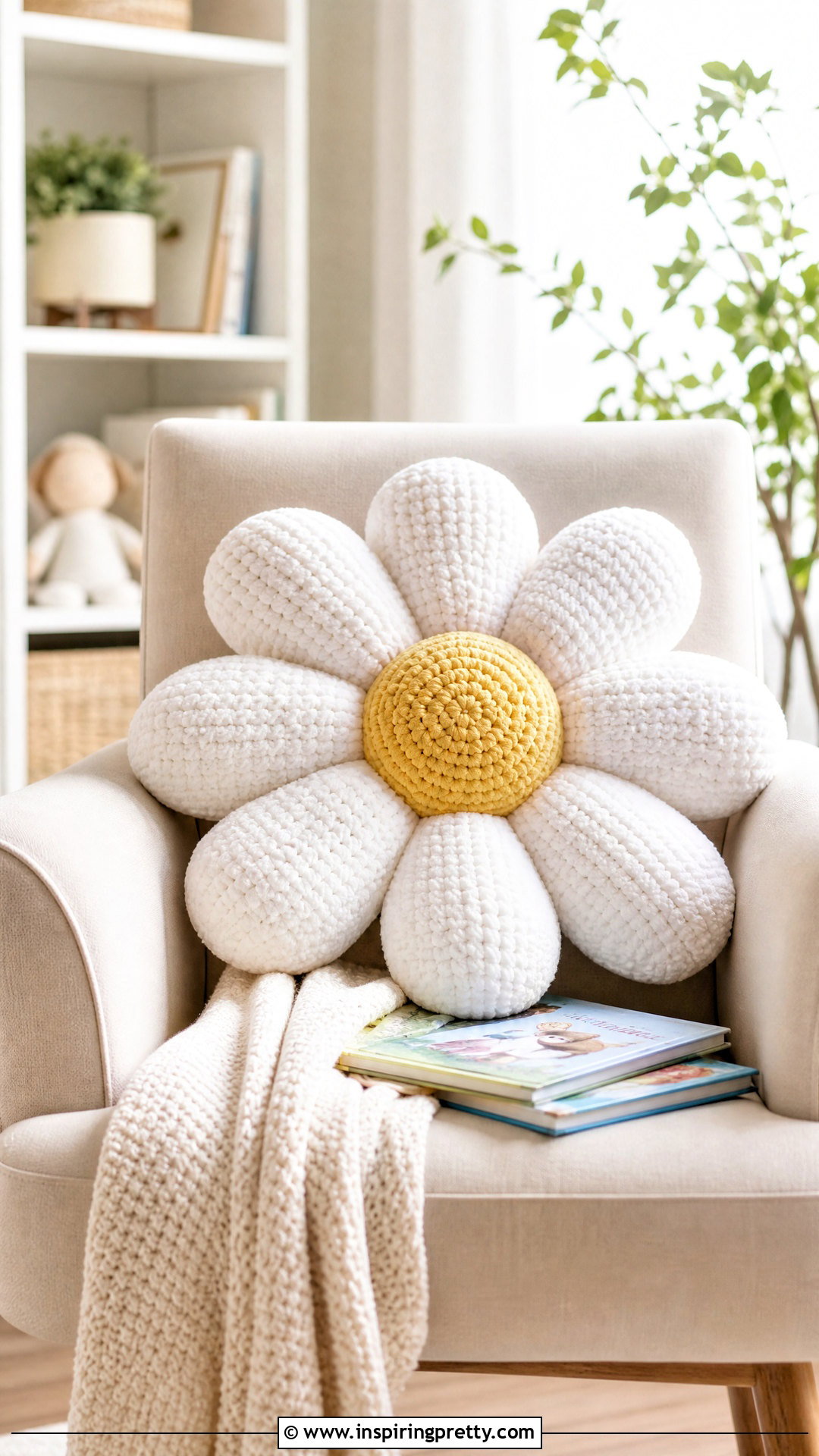
A crochet daisy pillow brings a playful floral shape to a bed, reading chair, or child-friendly room. Crochet two large flower panels with a contrasting circular center and clearly defined petals. Join the panels around the outer edge, leaving a small opening for washable stuffing or a custom insert. Use soft acrylic, cotton, or chenille according to the desired texture. White petals with a yellow center create a recognizable daisy, but pink, orange, and blue combinations can look equally cheerful. Stuff each petal consistently so the finished flower remains balanced. Avoid small buttons or detachable decorations when the pillow is intended for young children. Close the opening securely with matching yarn, then gently shape the petals by hand to create an even, comfortable cushion.
28. Crochet Patchwork Blanket
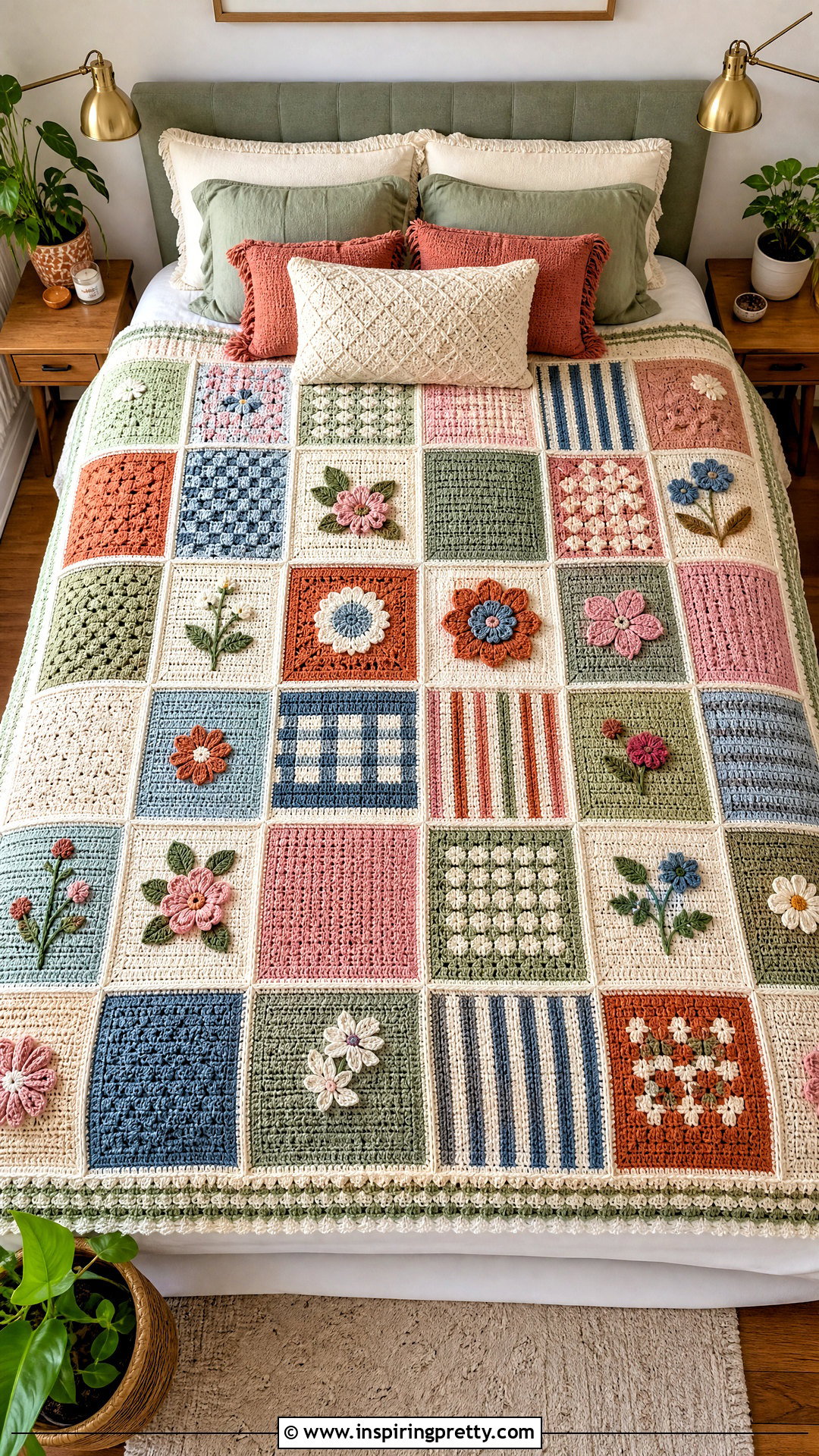
A crochet patchwork blanket is a flexible long-term project that can grow one square at a time. Choose a consistent square size and yarn weight, then combine solid blocks, stripes, florals, checks, and textured motifs. Limiting the palette to several coordinated colors keeps varied patterns from looking disconnected. Block every square before joining because small measurement differences become more obvious during assembly. Use an invisible seam for a smooth surface or a contrasting join to emphasize the patchwork construction. Arrange all completed squares on the floor before deciding on their final placement. Add a sturdy border that incorporates colors from across the blanket. This project works particularly well for using leftover yarn, as long as the fibers have compatible washing instructions and similar thickness.
29. Crochet Temperature Blanket
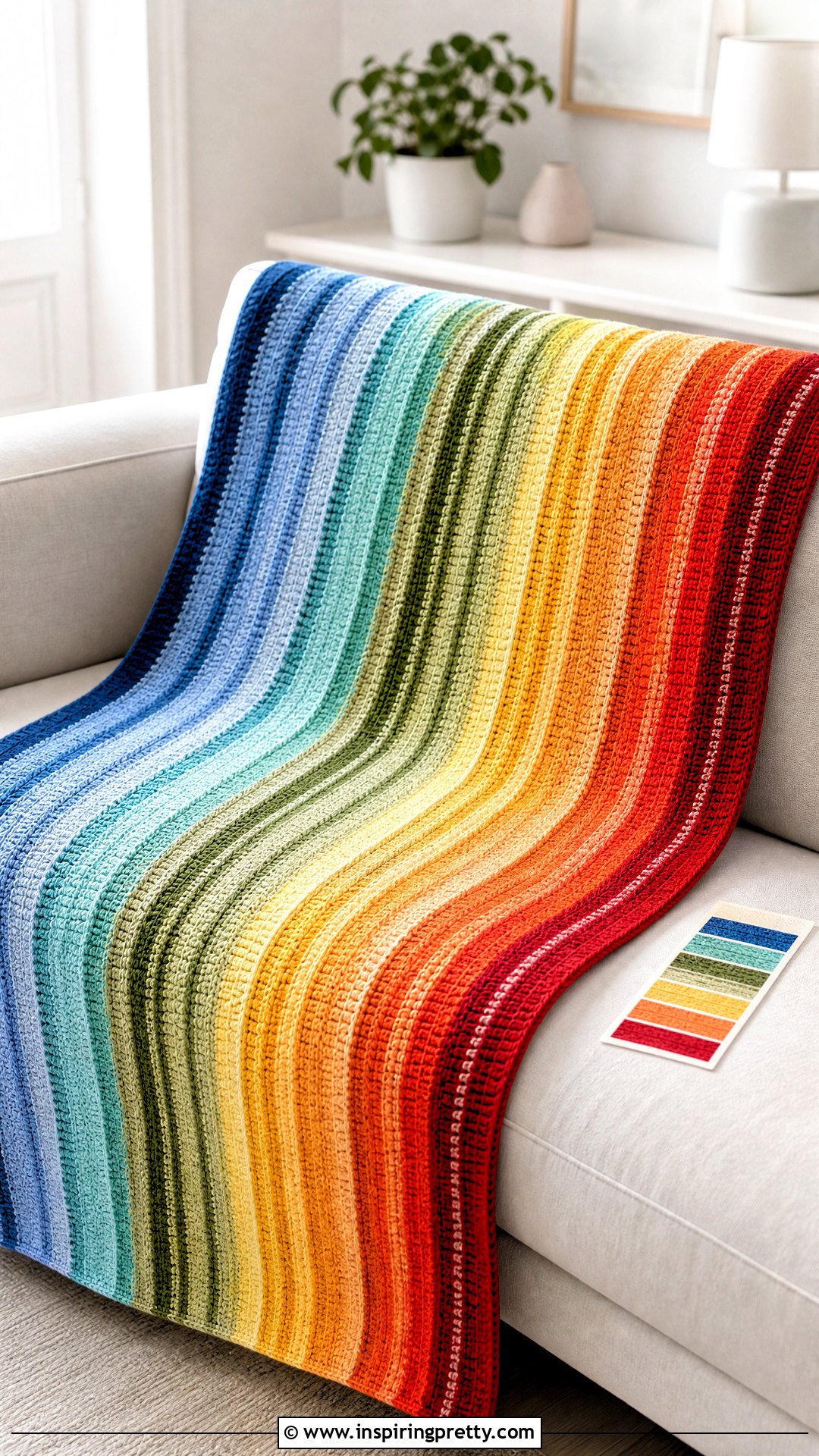
A crochet temperature blanket records daily weather through a planned color system. Assign a yarn shade to each temperature range, then add one row, motif, or small section every day. Before starting, decide whether you will track daily highs, lows, averages, or another consistent measurement. Create a reference card with the complete palette and temperature ranges so colors are used correctly. A simple stitch is usually best because the changing shades provide enough visual interest. Consider the final dimensions carefully; one row per day can produce a very long blanket with thick yarn. Monthly granny squares or weekly blocks offer more control over size. Keep a written log in case you miss several days. At the end, add a border and a small label marking the recorded year and location.
30. Crochet Striped Baby Blanket
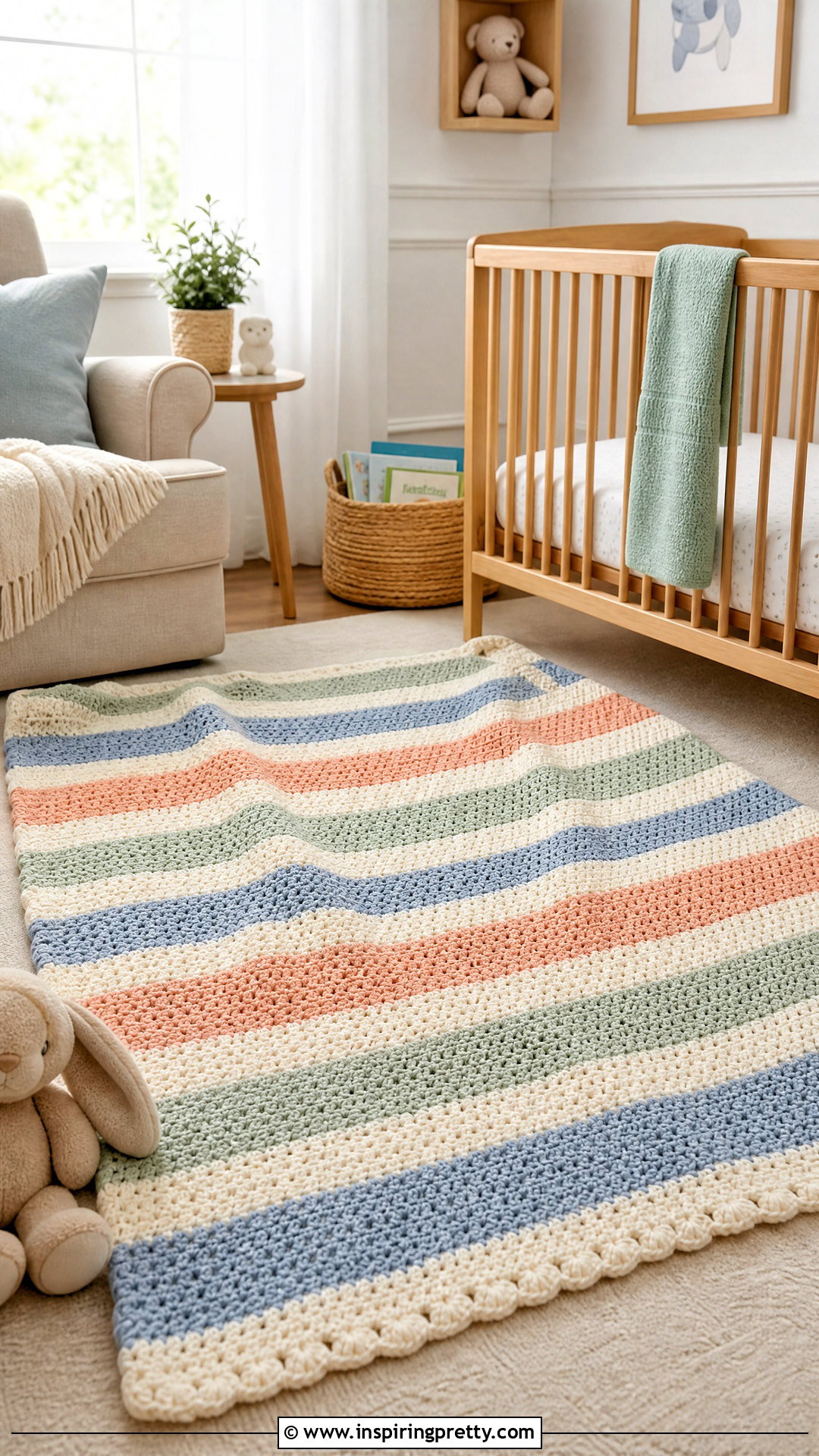
A striped baby blanket offers a soothing, repetitive project and a practical handmade gift. Select soft, washable yarn that is appropriate for sensitive skin and frequent laundering. Use a stitch pattern without large openings, long loose loops, or detachable decorations. Alternating broad and narrow stripes can make a simple design more dynamic. Soft neutrals feel timeless, while muted rainbow colors provide gentle contrast. Create a gauge swatch and wash it before starting to check for shrinkage, dye transfer, and texture changes. Keep the finished blanket compact enough for supervised floor play or stroller use rather than making it excessively heavy. Finish the edges with a smooth border and weave in every yarn tail securely. Include clear fiber-content and washing information when giving the blanket to someone else.
31. Crochet Baby Cardigan
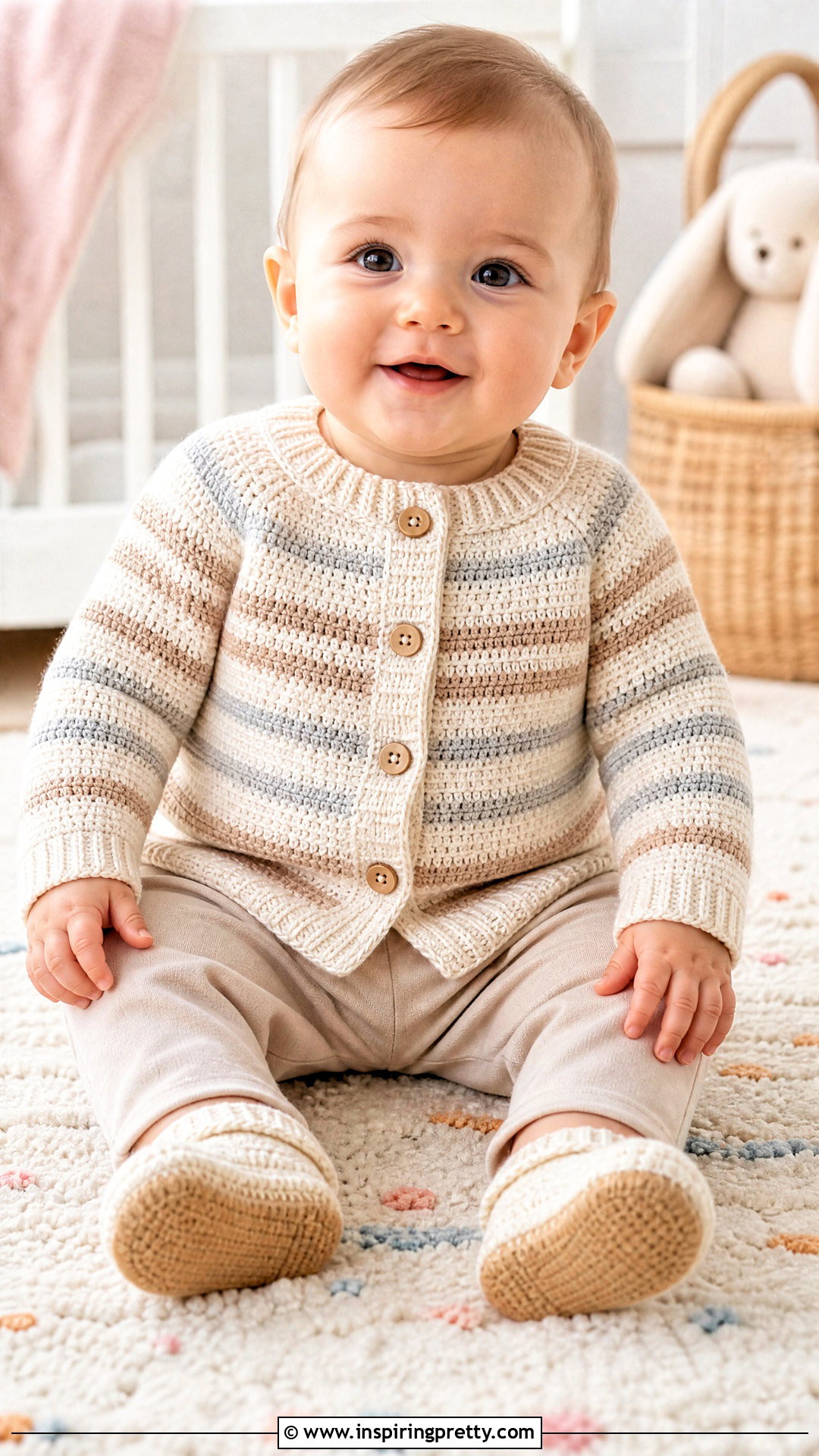
A crochet baby cardigan is a satisfying introduction to garment construction because it uses relatively little yarn. Top-down patterns reduce seaming and make it easier to adjust the length while working. Choose soft, machine-washable yarn and avoid fibers that feel scratchy against sensitive skin. Simple raglan shaping, a round neckline, and a slightly relaxed body provide comfortable layering room. Use securely sewn, appropriately sized buttons, or select a tie-free open-front design. Check the pattern’s finished chest measurement instead of relying only on an age label. Gentle stripes, solid pastels, and small embroidered details can personalize the cardigan without adding excessive bulk. Weave in every end thoroughly and wash the completed garment according to the yarn instructions before it is worn or presented as a gift.
32. Crochet Baby Booties
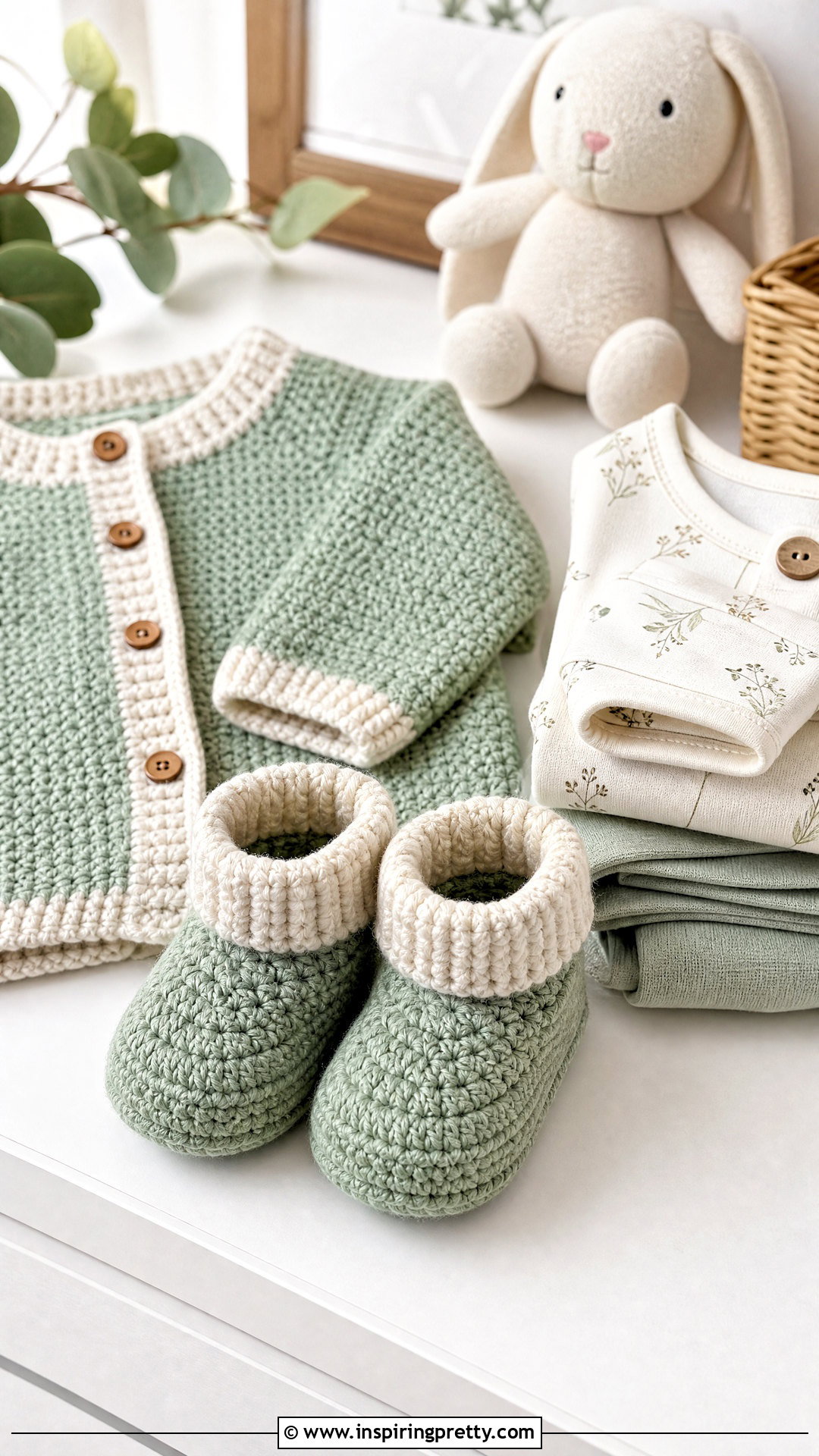
Crochet baby booties are small, portable projects that help crafters practice shaping and symmetrical construction. Begin with an oval sole, build the sides, and decrease around the toe to create the upper section. Soft washable yarn is essential, and the finished fabric should be flexible rather than stiff. Make both booties during the same crafting session when possible so the tension and measurements remain consistent. Ribbed cuffs can help them stay in place without tight ties or long cords. Neutral cream, soft gray, sage, peach, and blue are versatile choices, while contrasting soles add definition. Avoid beads, bells, and other detachable embellishments. Measure both completed booties before fastening off, then block them gently and include care instructions if they are intended as a handmade gift.
33. Crochet Granny Square Cardigan
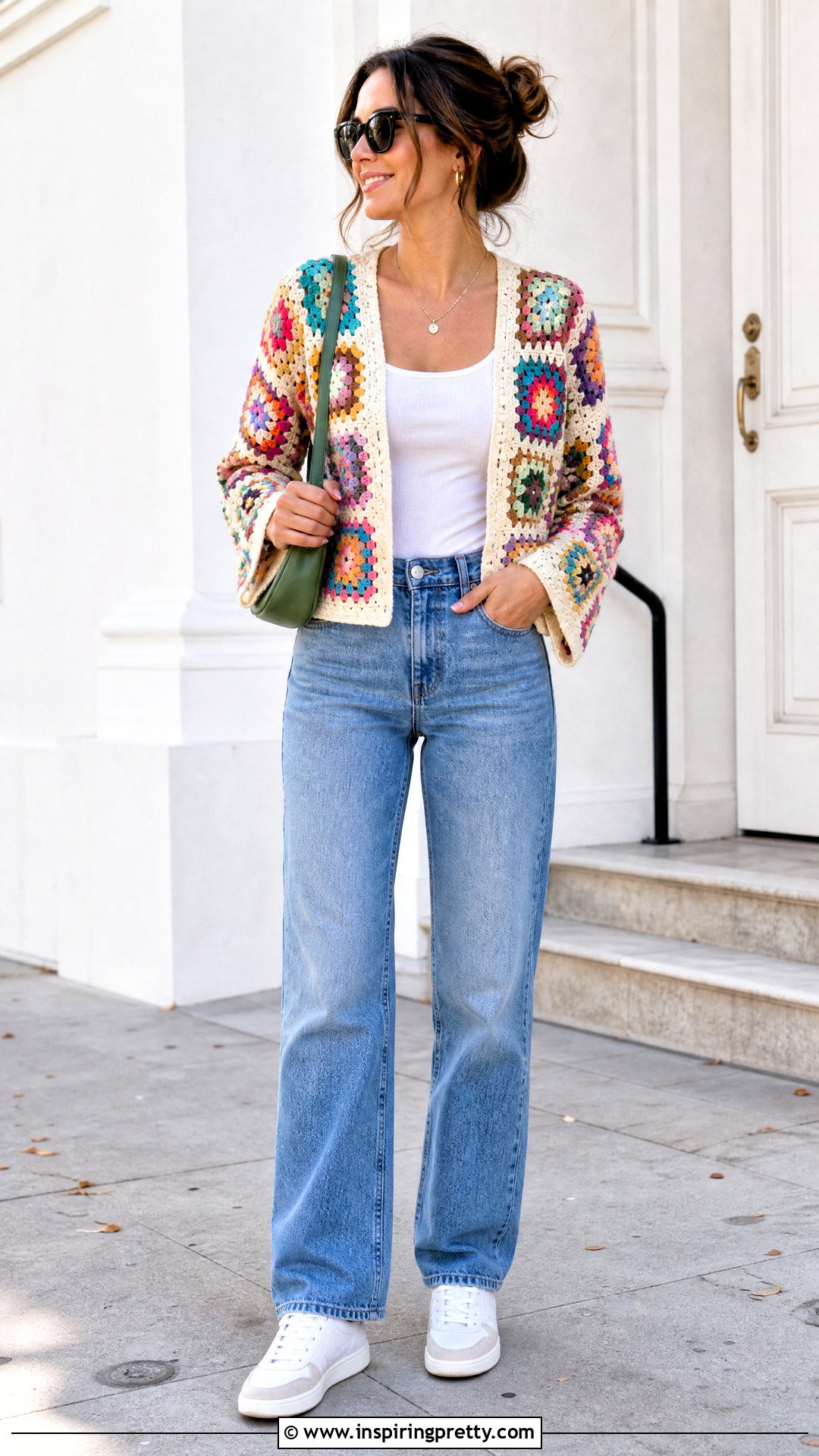
A granny square cardigan turns modular crochet into a colorful, wearable statement. Begin by selecting a pattern with a clear square layout and finished garment measurements. Crochet one test motif, block it, and confirm its final size before making the full set. A coordinated palette of neutrals and two or three accent shades feels balanced, while scrap yarn creates a more eclectic result. Arrange every square before joining to distribute colors evenly across the front, back, and sleeves. Add solid ribbed cuffs, a hem, and a button band to give the cardigan structure. For a complete outfit, wear it over a fitted tank with straight-leg jeans, simple sneakers, and a solid shoulder bag. Careful seaming and blocking are essential for a comfortable, polished fit.
34. Crochet Oversized Cardigan
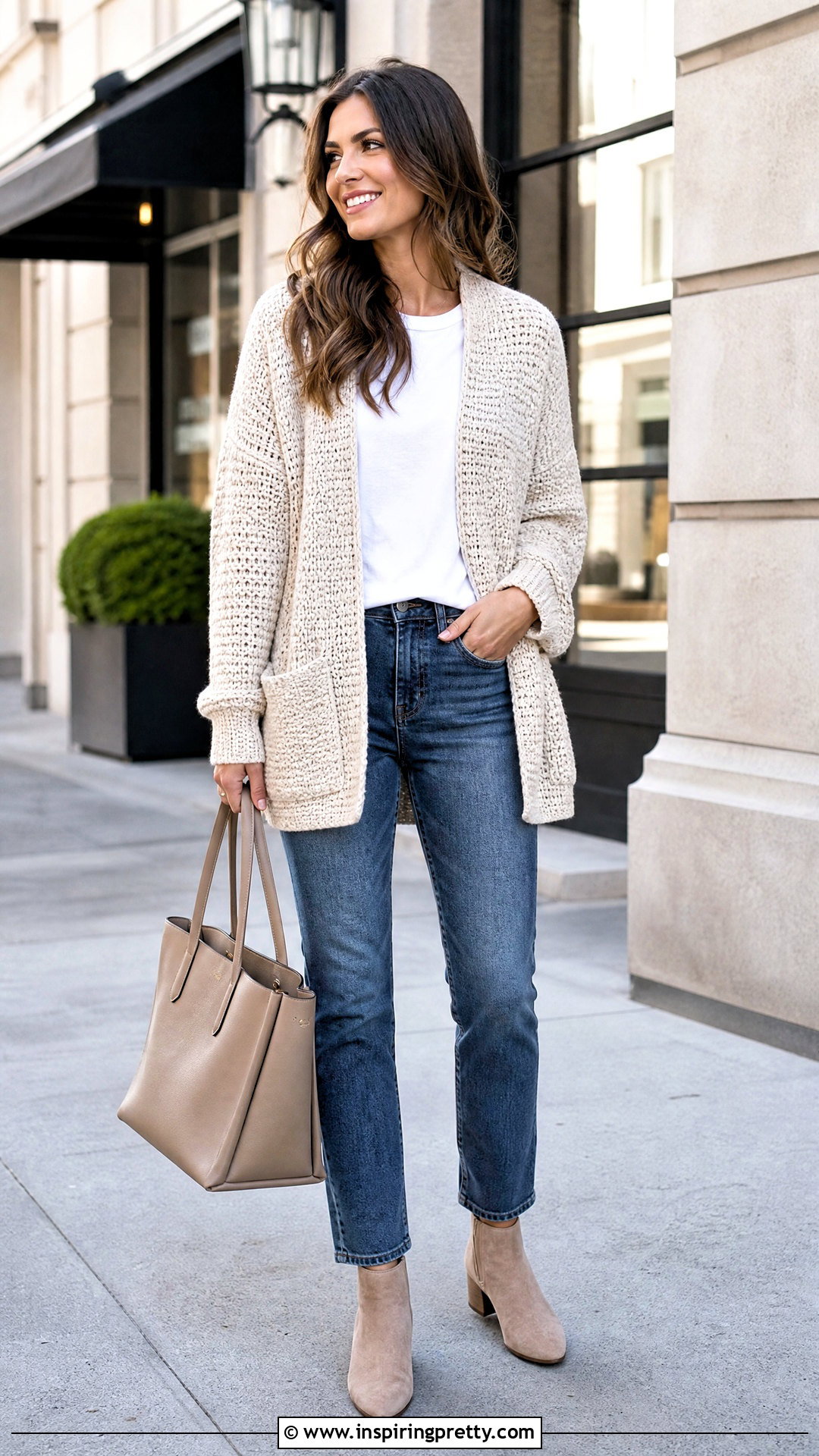
An oversized crochet cardigan provides warmth while allowing room for relaxed layering. Choose a lightweight yarn if the design has long sleeves and generous proportions, since thick yarn can make the finished garment unexpectedly heavy. Simple rectangular panels work for beginner-friendly construction, while shaped shoulders create a more tailored fit. Measure the desired width, body length, sleeve length, and armhole depth before beginning. Use textured stitches selectively to prevent the silhouette from becoming bulky. Neutral oatmeal, charcoal, navy, or olive makes the cardigan easy to combine with existing clothes. Style it with a tucked T-shirt, slim or straight jeans, ankle boots, and a structured tote. Add ribbed cuffs and a firm front border to help the relaxed garment retain its intended shape.
35. Crochet Cropped Cardigan
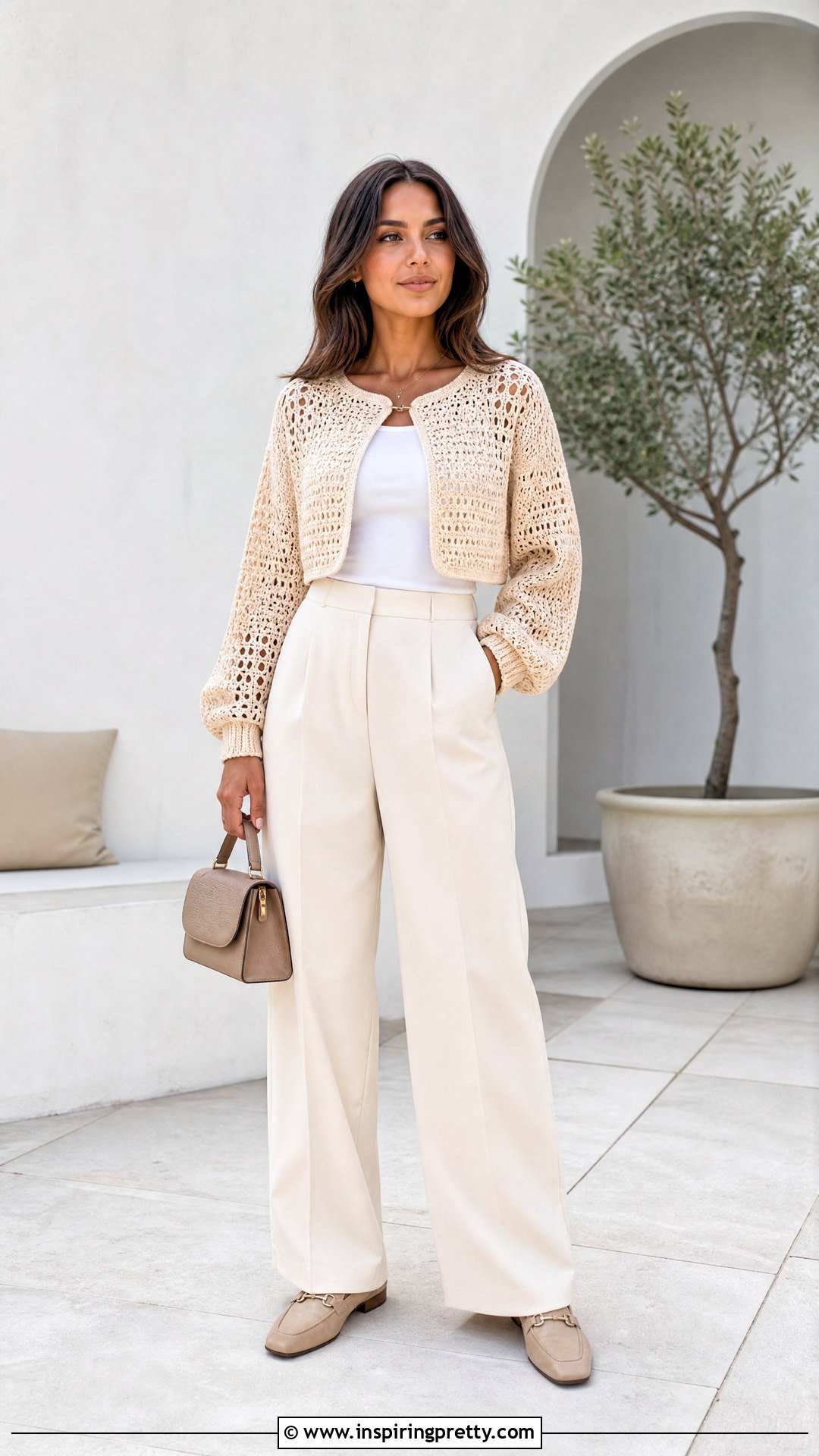
A crochet cropped cardigan works well over dresses, high-rise pants, and fitted base layers. Select a pattern that ends near the natural waist and check the finished length against your torso before starting. Cotton blends create breathable transitional layers, while merino or acrylic blends provide more warmth. A solid stitch gives the cardigan coverage, whereas floral squares and openwork make it lighter. Keep the sleeves balanced with the shorter body by choosing fitted cuffs or a gentle balloon shape. Add small buttons, ties, or a clean open front according to your preferred finish. Wear the completed cardigan over a tank with high-rise wide-leg trousers, loafers, and a compact handbag. Blocking helps the button bands lie flat and prevents the cropped hem from curling upward.
36. Crochet Mesh Sweater
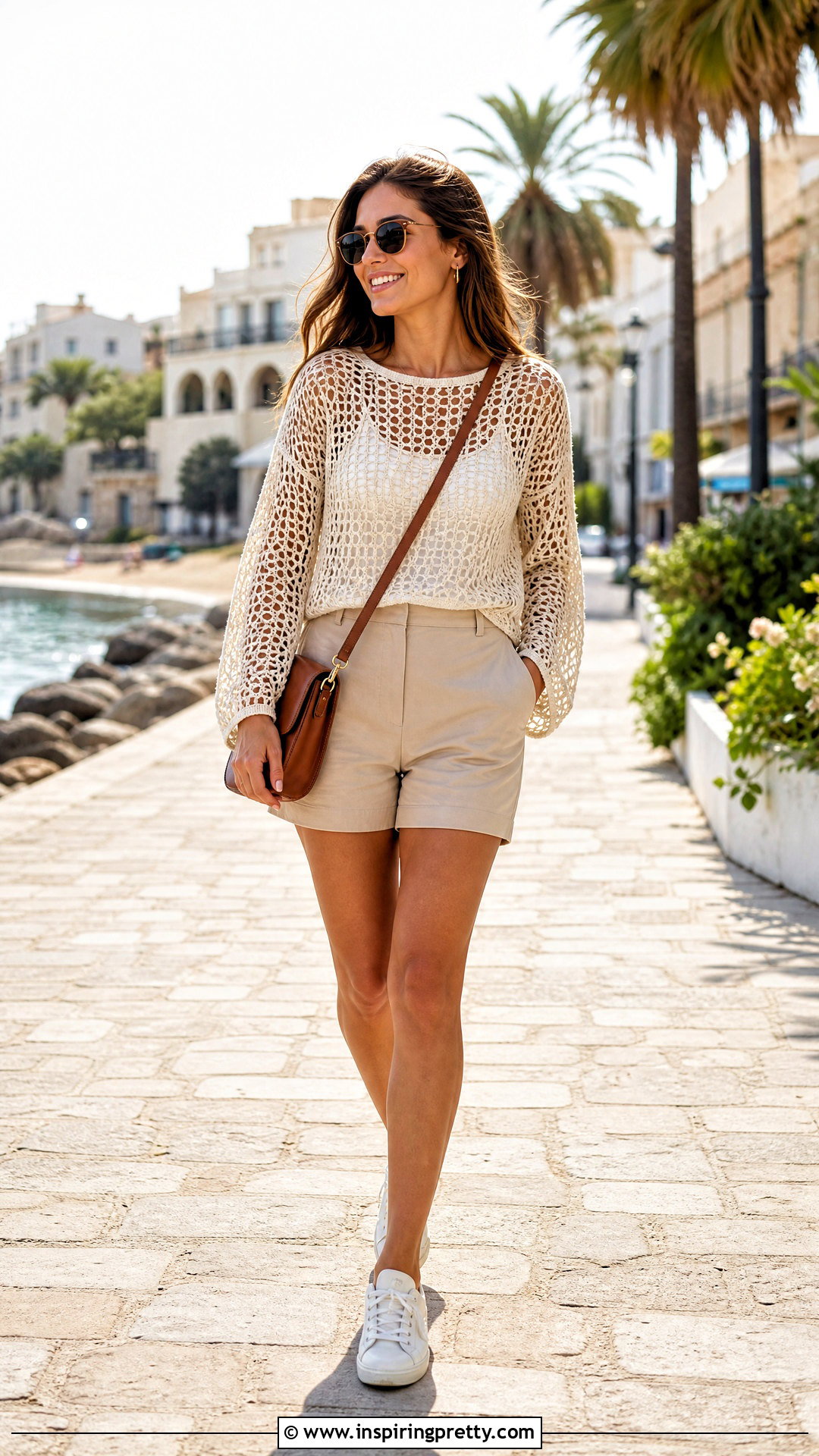
A crochet mesh sweater is a lightweight layering piece that can be adapted for several seasons. Work it in fine cotton or a smooth blend so the open stitches remain defined without becoming heavy. Because mesh stretches, use the blocked gauge rather than relying on measurements taken directly from the hook. A relaxed drop shoulder keeps construction simple, while ribbed cuffs and a solid neckline provide helpful structure. Wear a fitted camisole, tank, or long-sleeve shirt underneath, depending on the temperature. Complete the look with tailored shorts or straight-leg pants, low-profile sneakers, and a simple crossbody bag. Keep jewelry minimal so it does not catch on the open fabric. Reinforce shoulder seams carefully because they carry much of the garment’s weight during wear.
37. Crochet Striped Sweater
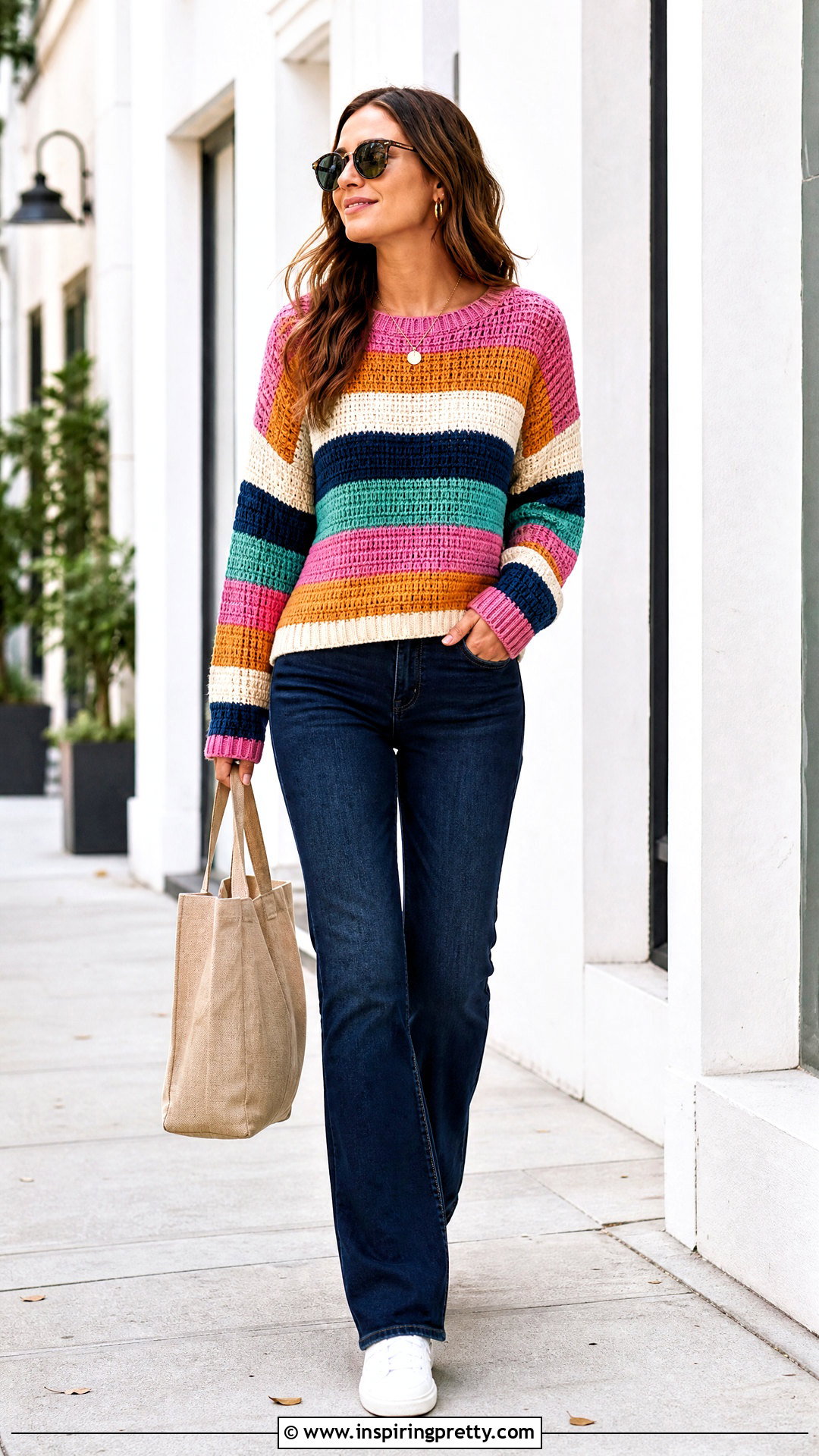
A crochet striped sweater is a classic wearable project that can use several coordinated skeins or leftover yarn. Plan the stripe sequence before beginning, including how the colors will align across the body and sleeves. Broad stripes feel clean and graphic, while narrow irregular bands create a playful handmade finish. Choose yarns with matching fiber content and weight so the fabric washes and stretches evenly. A simple stitch allows the colors to remain the main feature. Pair the finished sweater with dark straight-leg jeans, white sneakers, and a neutral tote for an easy everyday outfit. If the neckline or cuffs appear too colorful, finish them in one solid shade. Block all garment pieces consistently before seaming to prevent mismatched lengths and uneven stripe placement.
38. Crochet Sweater Vest
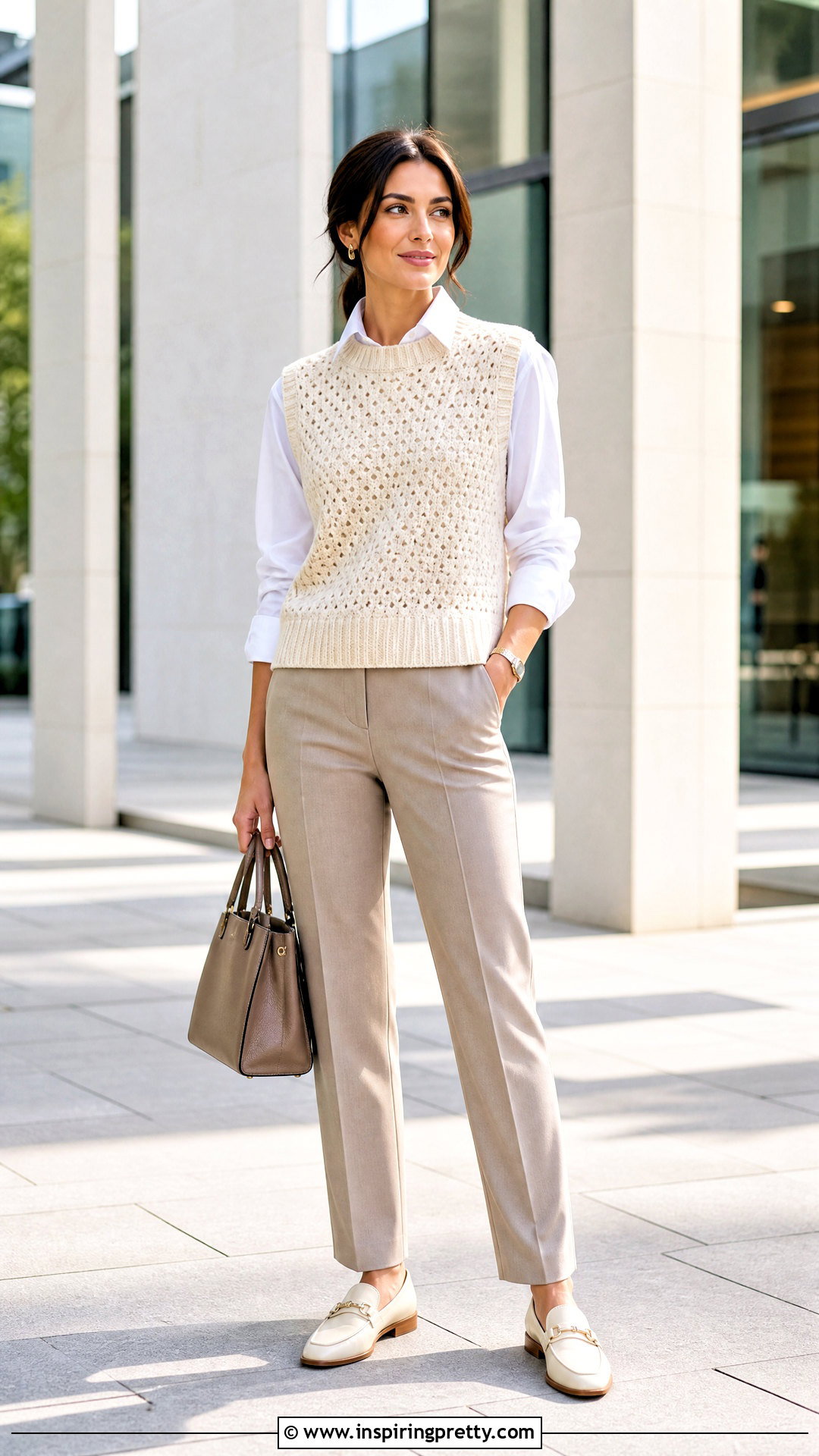
A crochet sweater vest is easier to fit than many sleeved garments and can be layered throughout the year. Create separate front and back panels, or use granny squares for modular construction. Measure the bust, armhole depth, shoulder width, and preferred body length before choosing a size. A ribbed neckline and hem give the finished vest a neat, familiar structure. For a versatile outfit, layer a cream vest over a crisp button-down shirt and add straight trousers, loafers, and a structured handbag. A colorful vest works well over a plain T-shirt with relaxed jeans and sneakers. Keep the armhole edging smooth and flexible so it does not restrict movement. Blocking is particularly important for aligning the shoulders and helping the side seams hang vertically.
39. Crochet Halter Top
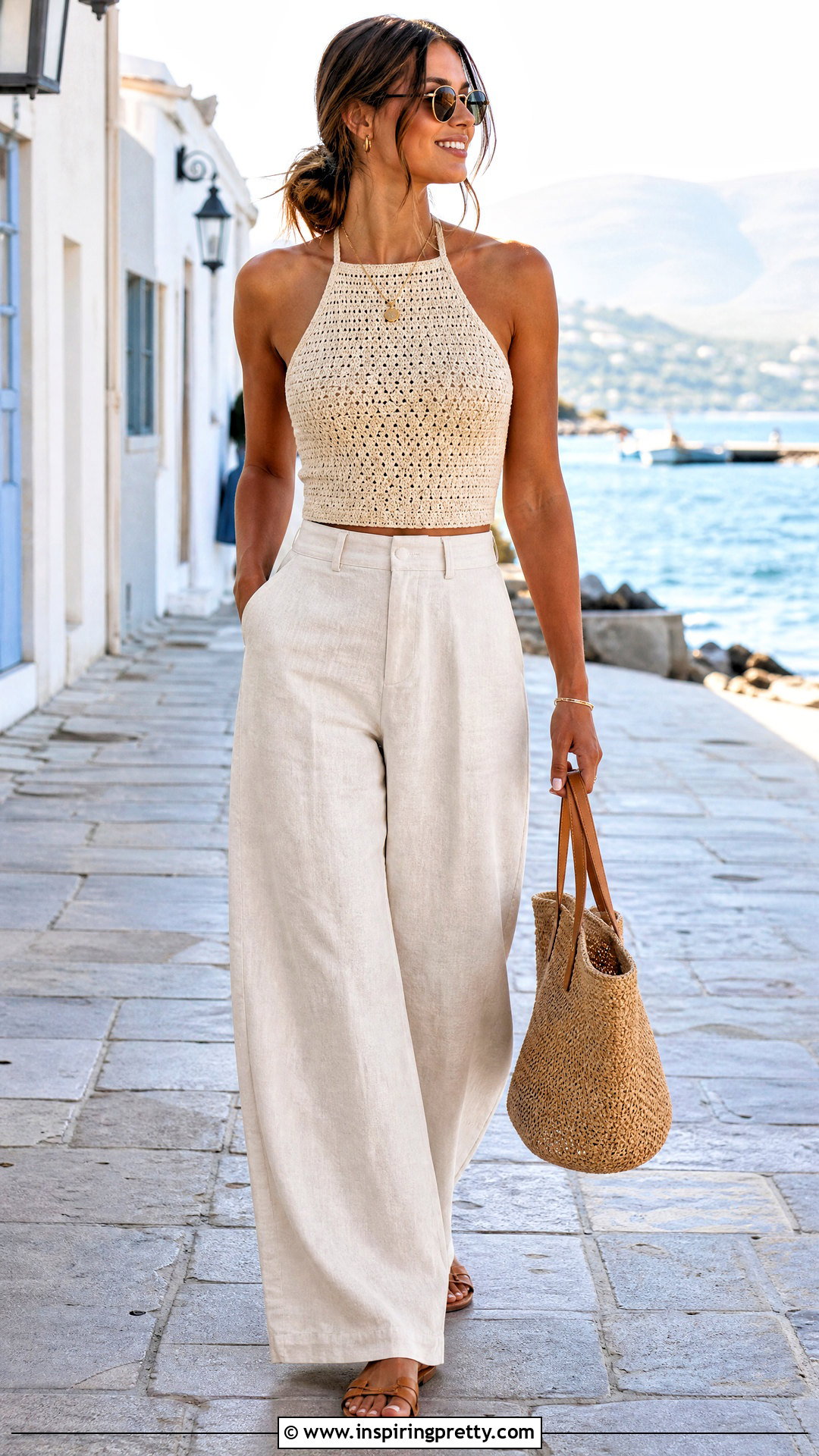
A crochet halter top is a compact summer garment that provides an opportunity to practice shaping and adjustable ties. Use breathable cotton or bamboo-blend yarn and select a stitch pattern that offers suitable coverage. Measure the bust and torso length carefully, then test the top over the undergarment or lining you plan to wear. Wide neck and back straps distribute pressure more comfortably than very thin cords. Add a fabric lining when the stitch pattern is open or textured. Style the completed halter with high-rise linen pants, flat sandals, a woven tote, and understated jewelry for a balanced warm-weather outfit. Check every tie and seam before wearing. Hand washing and flat drying can help the top retain its shape, especially when made from plant-based fibers.
40. Crochet Short-Sleeve Top
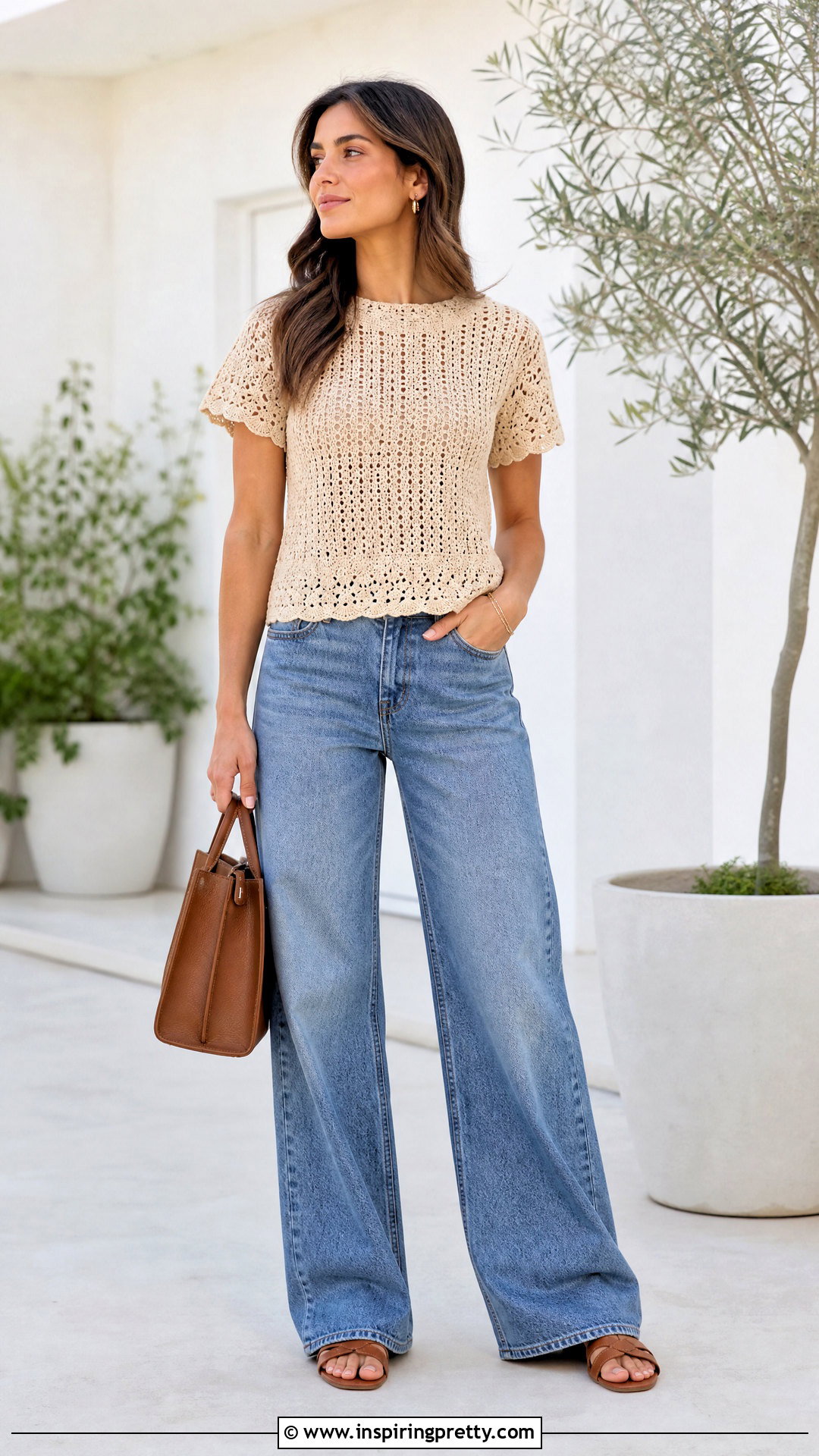
A crochet short-sleeve top offers more coverage than a tank while retaining the texture and breathability associated with handmade summer clothing. Choose fine cotton or a cotton-linen blend to keep the garment light. Simple top-down construction makes it easier to adjust the yoke, sleeve opening, and body length as you work. Use a solid stitch through the bust and place openwork along the sleeves or hem for controlled detail. A neutral top can be paired with wide-leg jeans, leather sandals, a structured bag, and small earrings. A brighter version works with solid shorts or a flowing midi skirt. Block the garment to its intended measurements, paying particular attention to the neckline and sleeve edges so they sit evenly against the body.
41. Crochet Matching Skirt Set
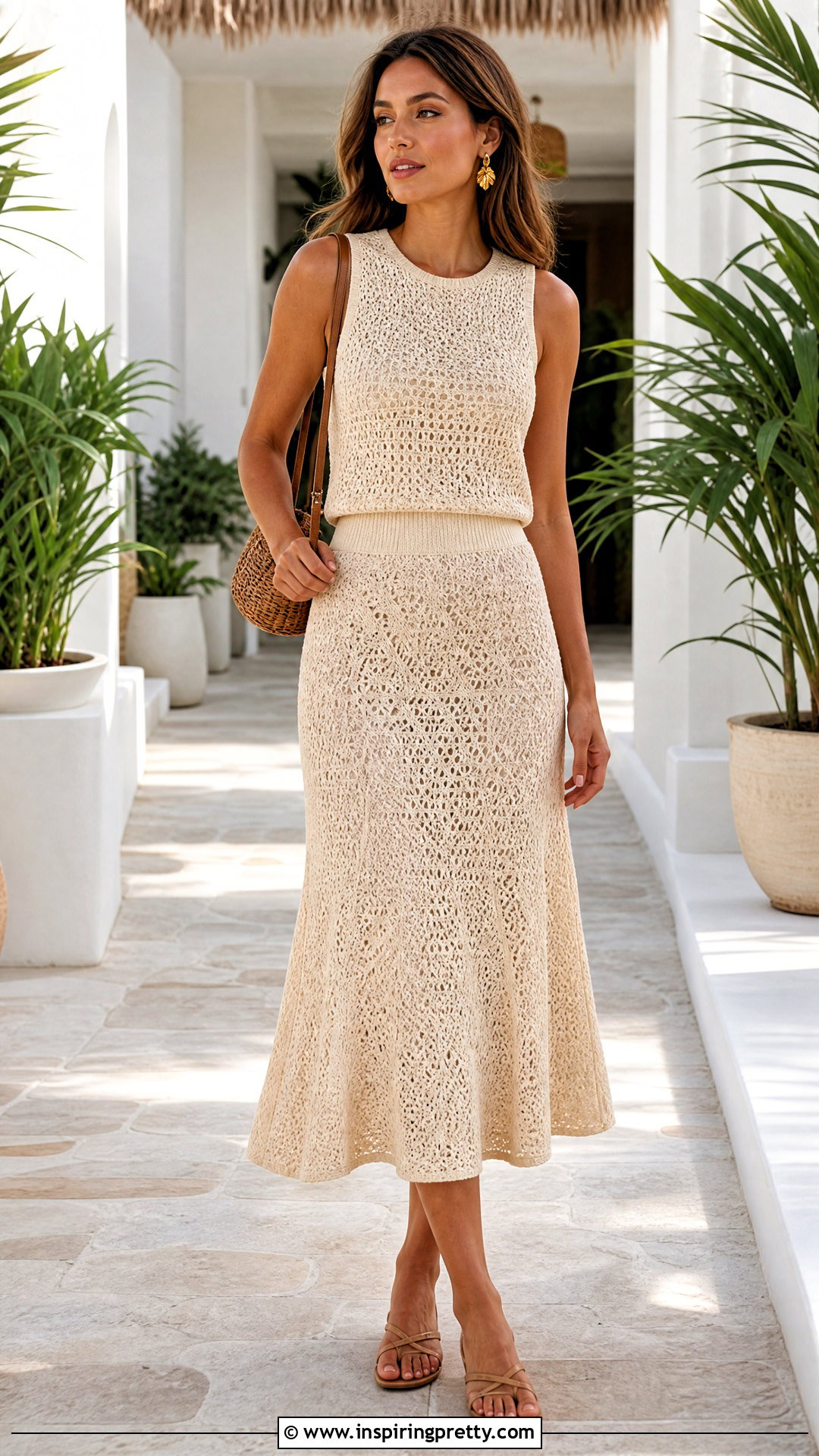
A crochet matching skirt set creates a coordinated outfit while allowing each piece to be worn separately. Select a lined crop top, camisole, or short-sleeve top and pair it with a fitted or gently flared skirt. Use the same yarn, stitch pattern, and border treatment for both pieces. Cotton blends offer breathability and enough weight for a smooth drape. Add elastic or a drawstring at the skirt waist, but ensure it remains hidden and comfortable. Both pieces should include suitable lining if the crochet fabric is open. Complete the outfit with minimal sandals, a small shoulder bag, and simple earrings. Check the skirt length after blocking because plant-based yarn can grow. Reinforce the waistband and shoulder straps to protect areas that experience frequent tension.
42. Crochet Wide-Leg Pants Set
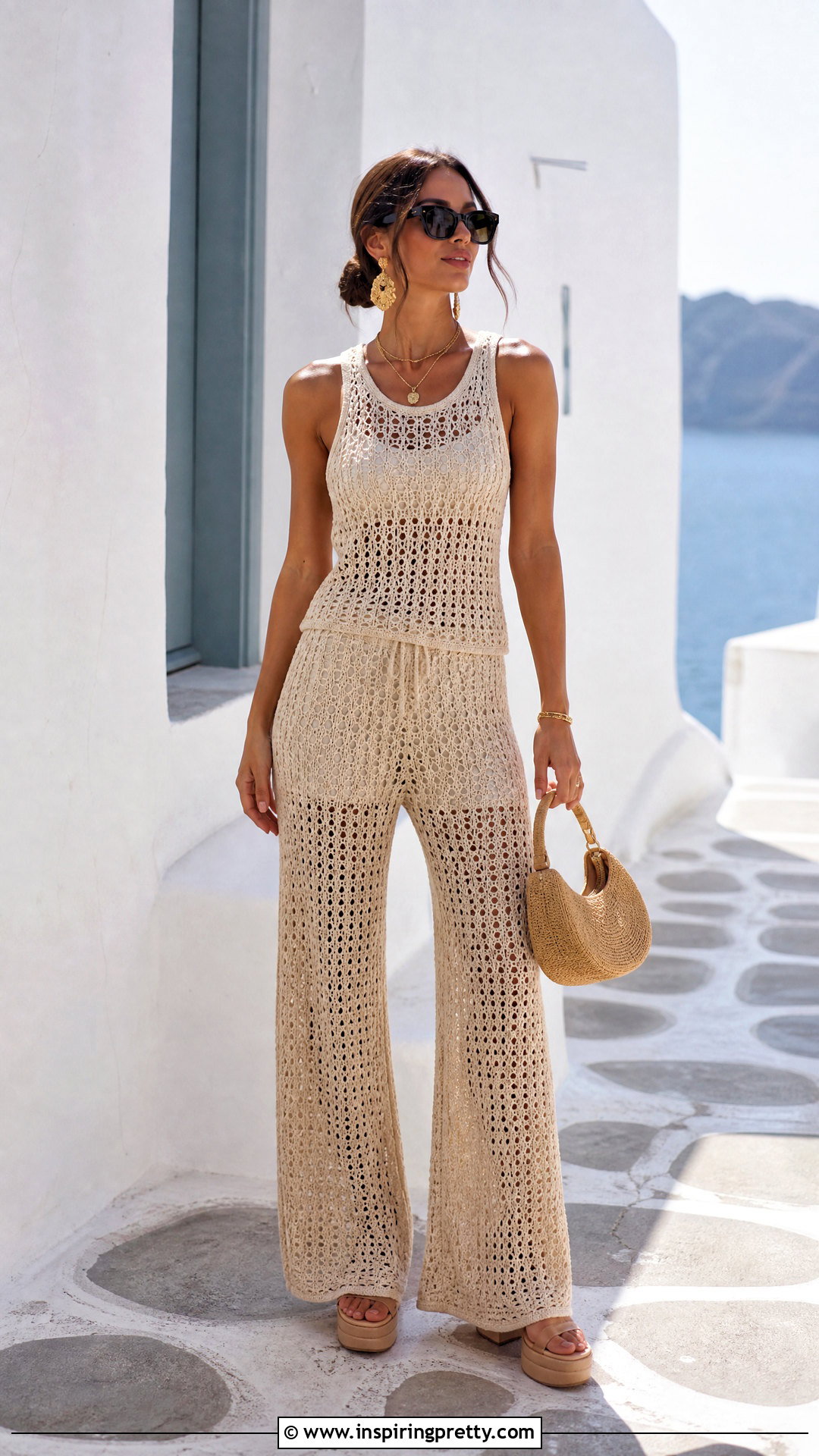
A crochet wide-leg pants set is an ambitious project that makes a strong handmade fashion statement. Use lightweight yarn and an open but stable stitch to prevent the pants from becoming overly heavy. Construct a secure waistband with elastic or a drawstring, and include fitted shorts or a full lining for comfortable coverage. Pair the pants with a matching sleeveless top or relaxed crochet shirt. Keep the color palette solid or limited so the textured silhouette remains cohesive. Platform sandals, a compact bag, and simple sunglasses can complete the outfit without competing with the crochet. Make and wash a large gauge swatch before beginning because vertical growth can significantly affect the finished length. Reinforce the rise, inseam, waistband, and any other areas exposed to regular movement.
43. Crochet Summer Dress
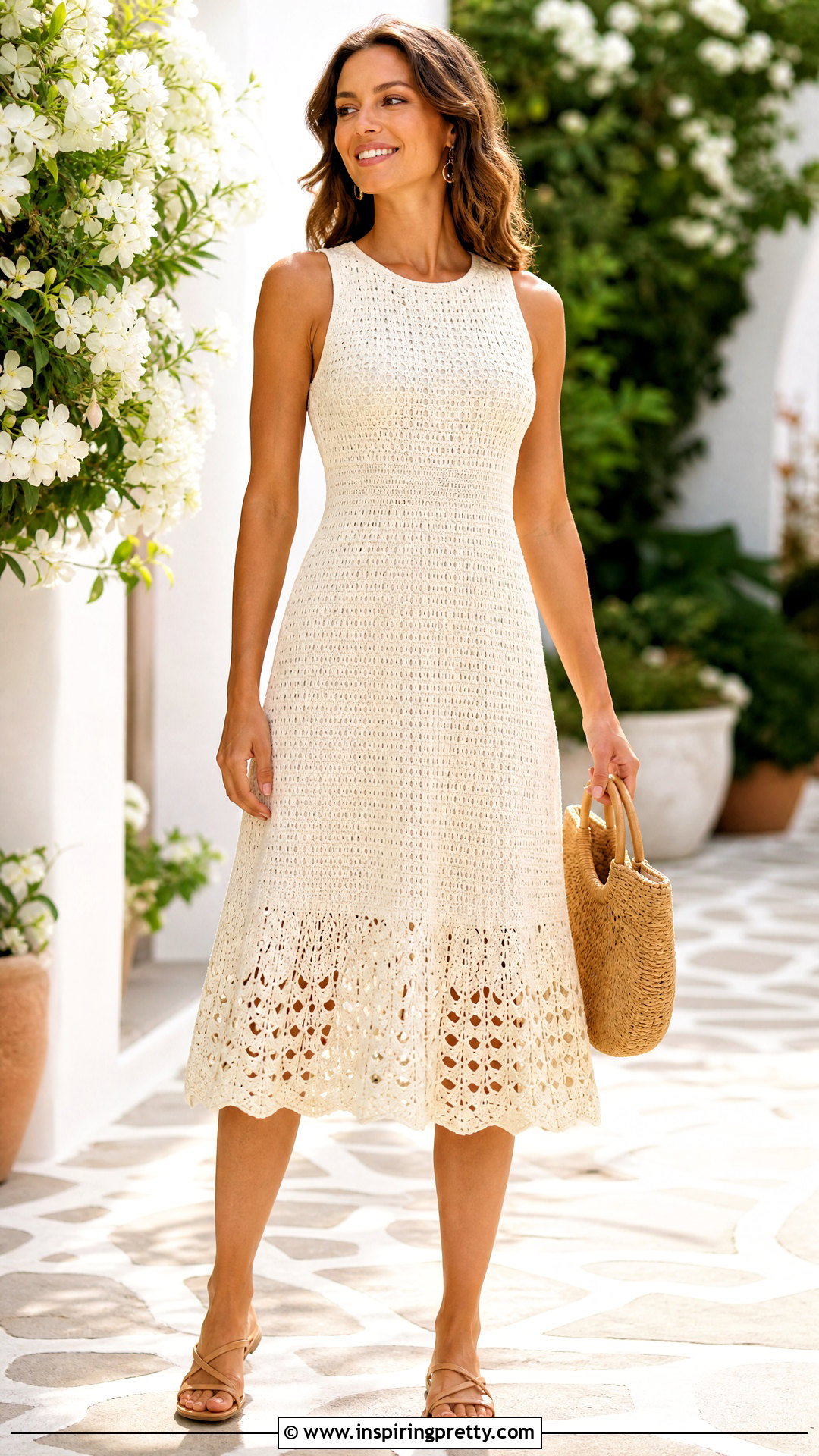
A crochet summer dress combines detailed handwork with a complete warm-weather outfit. Choose lightweight cotton, bamboo, or linen-blend yarn that drapes without becoming transparent or excessively heavy. A fitted upper section with a gently flared skirt is easier to wear than a fully body-conscious shape. Use denser stitches where coverage is needed and decorative openwork around the hem or sleeves. Add a removable slip or sewn lining that complements the yarn color. Complete the look with flat sandals, a woven handbag, and minimal jewelry. Adjustable straps or a tie waist can make fitting more flexible. Hang the work periodically while crocheting to check how its weight affects the length. Store the finished dress folded rather than on a hanger to reduce stretching.
44. Crochet Swimsuit Cover-Up
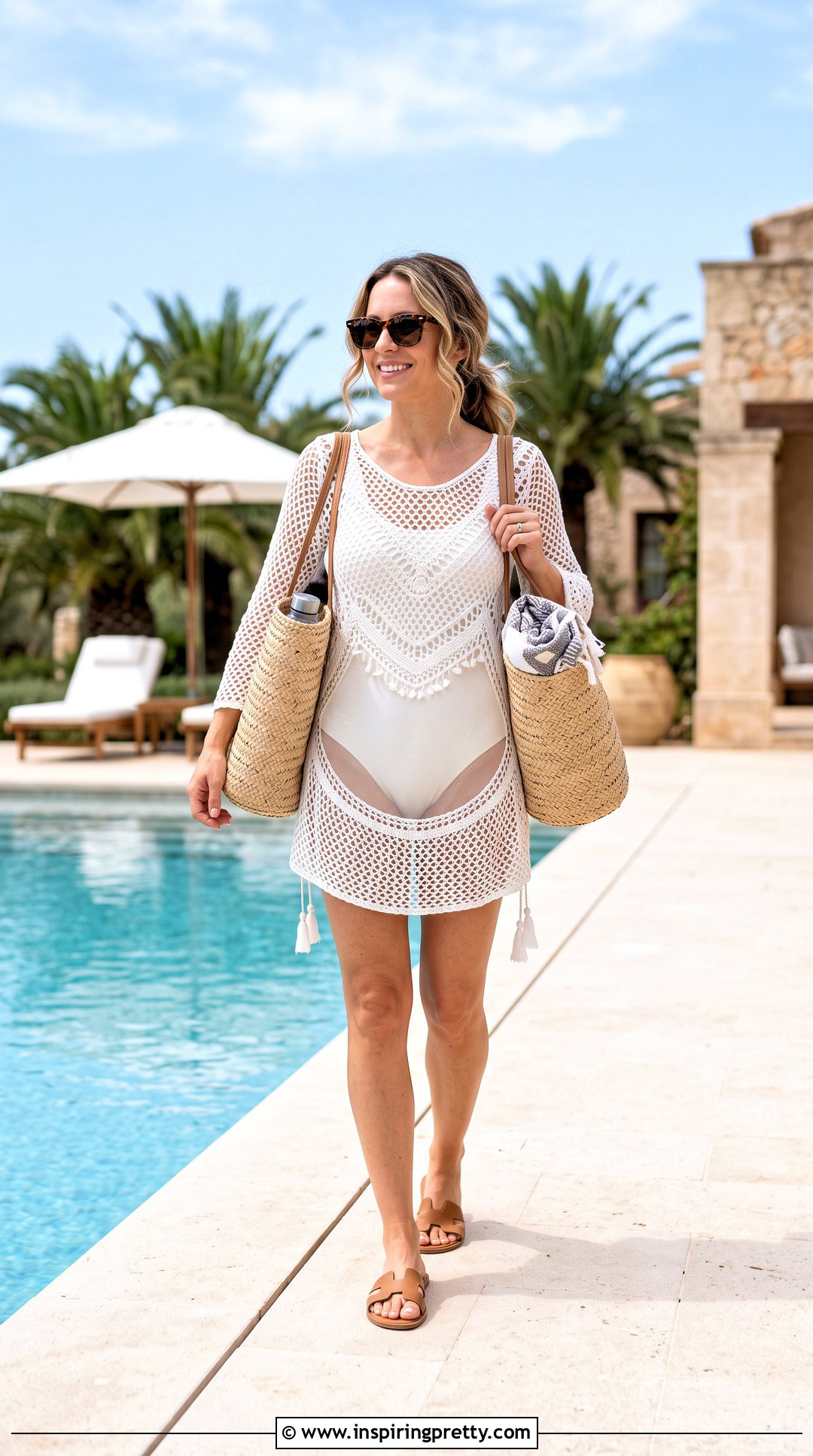
A crochet swimsuit cover-up is designed for light layering during poolside or beach activities. Open mesh, shell stitches, and lace motifs create airflow while allowing the swimwear color to remain visible. Cotton or a quick-drying blend is preferable to thick absorbent yarn that may become heavy when damp. Choose a loose tunic, midi dress, or side-slit silhouette that can be pulled on easily. Keep the neckline and armholes generous without making them unstable. Style the cover-up with a coordinating swimsuit, flat waterproof sandals, sunglasses, and a roomy raffia tote. Avoid long fringe if it could drag or tangle. Rinse the finished garment after exposure to chlorine or salt, then reshape it and allow it to dry flat away from strong direct heat.
45. Crochet Triangle Shawl
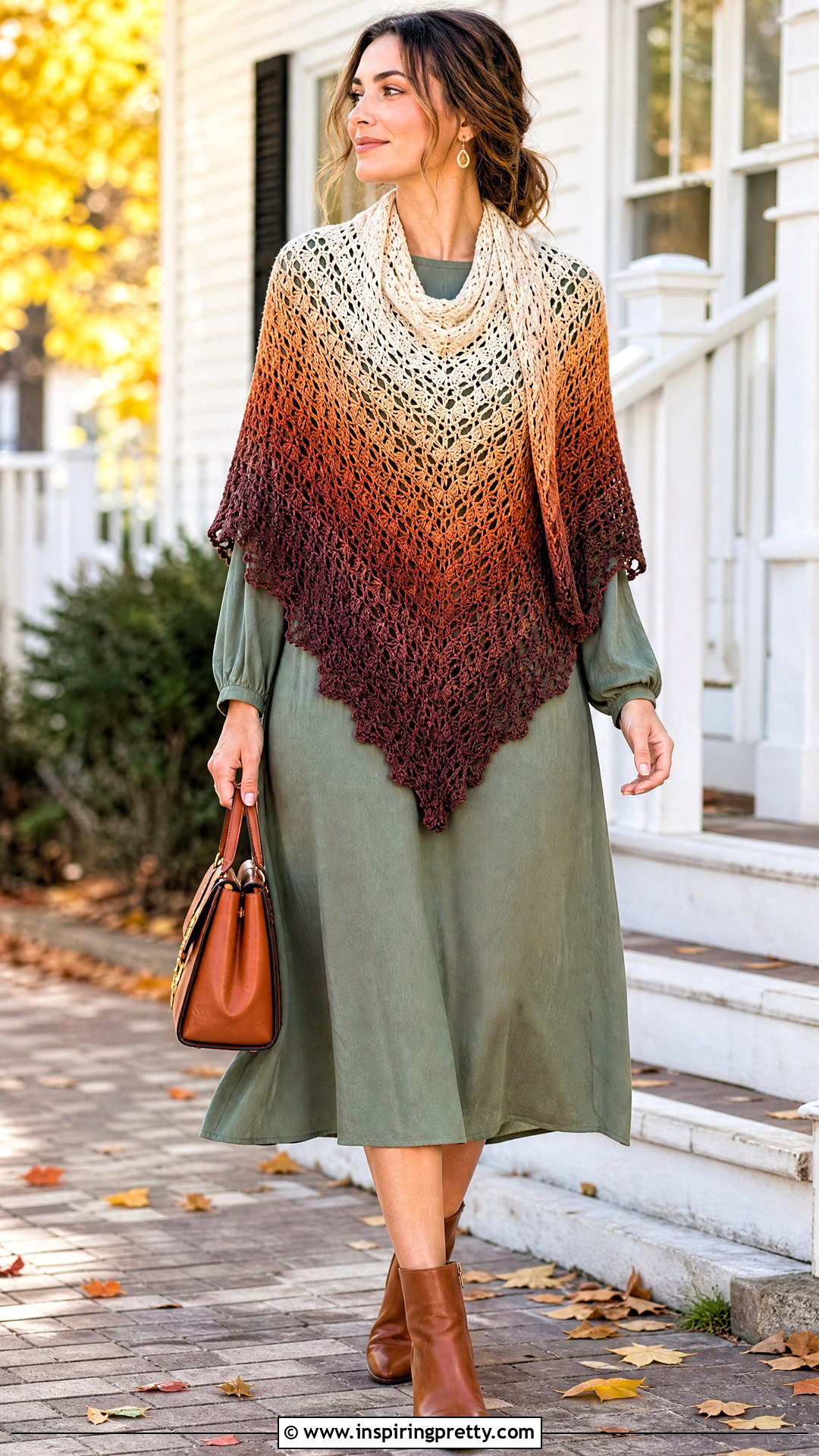
A crochet triangle shawl is a versatile project that can be worn over dresses, shirts, or lightweight knitwear. Begin at the center top and increase regularly along the edges and center point. This construction allows you to stop when the shawl reaches the preferred size. Gradient yarn creates effortless color movement, while a solid shade highlights lace or textured stitches. For a refined outfit, drape the completed shawl over a simple midi dress and add ankle boots, a structured handbag, and subtle earrings. Tassels can add movement, but keep them proportionate to the fabric. Block the shawl carefully to open its stitch pattern and sharpen the triangular shape. Use a shawl pin only if it can pass through the crochet without splitting or damaging the yarn.
46. Crochet Hooded Scarf
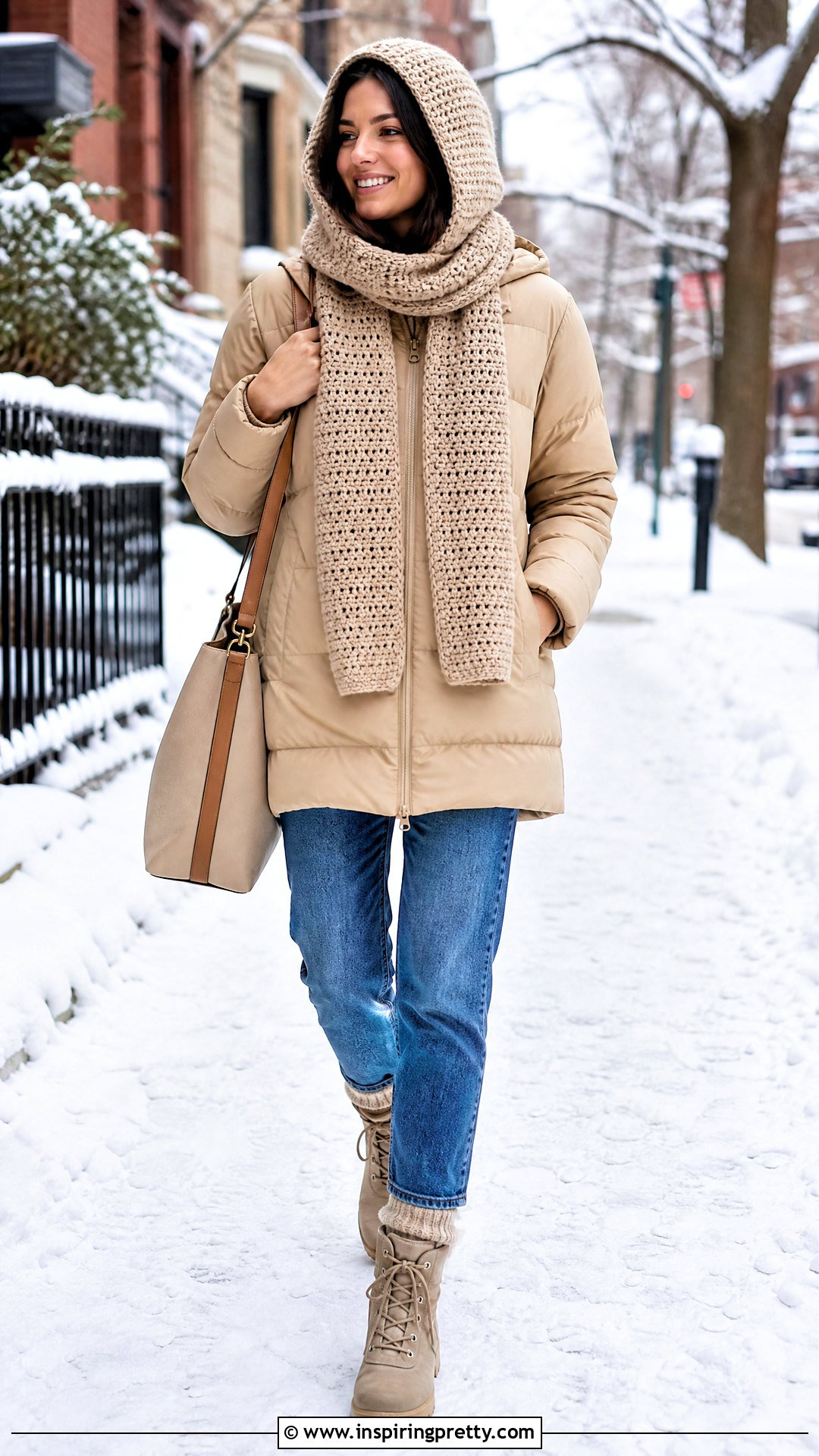
A crochet hooded scarf combines head coverage and a long neck wrap in one practical winter accessory. Make the hood as a shaped rectangle or work it in rounds, then attach wide scarf panels along the lower edge. Soft wool or an easy-care blend provides warmth without requiring extremely thick fabric. Check the hood depth before adding the scarf so it fits comfortably over the head without pulling backward. A textured neutral design pairs naturally with a puffer coat, straight jeans, winter boots, and a roomy tote. Contrasting trim can define the hood opening and scarf ends. Avoid oversized tassels when the piece will be worn around zippers or bag straps. Block lightly to even the stitches while preserving the yarn’s loft and insulating texture.
47. Crochet Fingerless Gloves
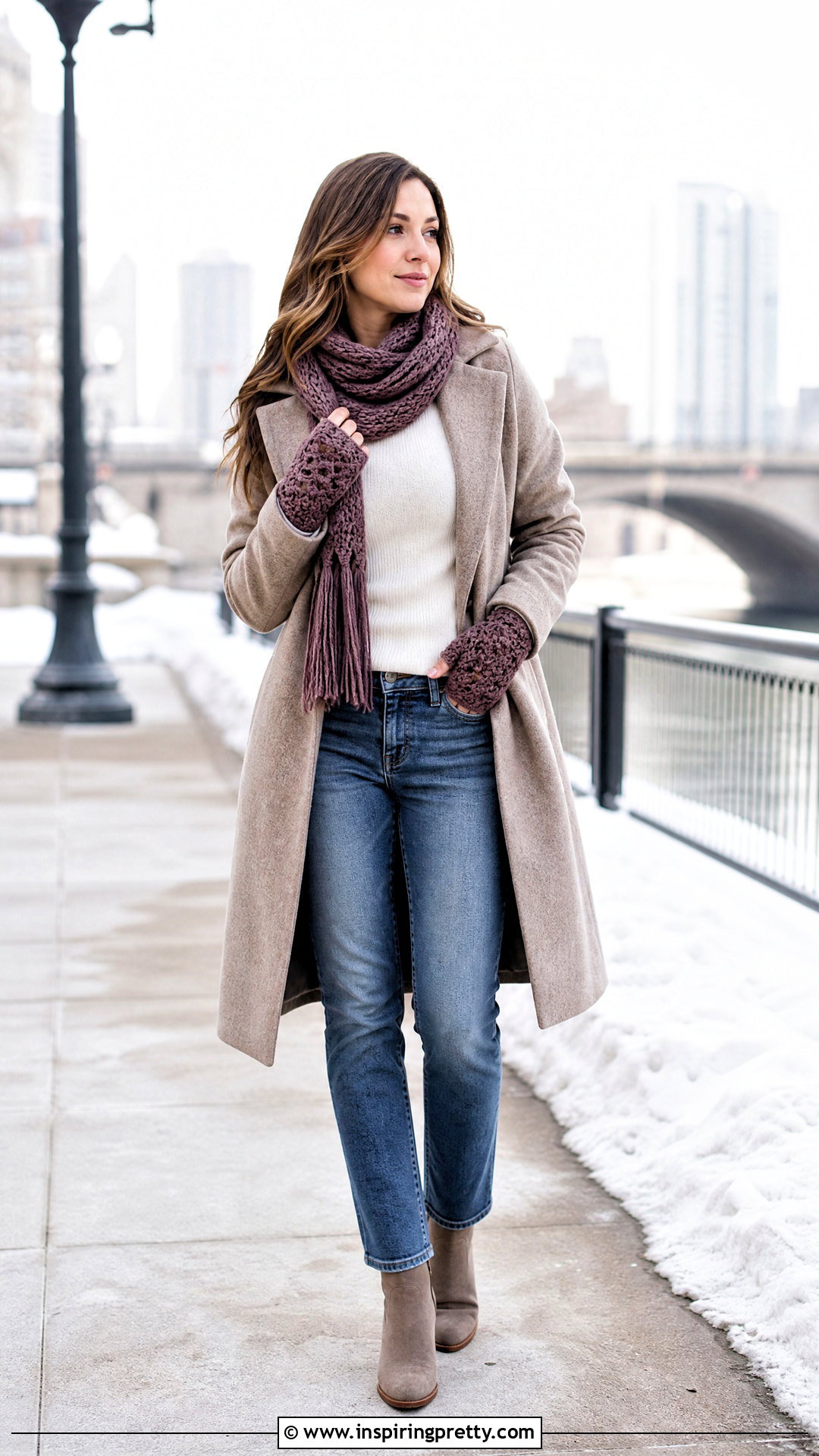
Crochet fingerless gloves keep the hands warm while leaving the fingers available for phones, writing, and other daily tasks. Beginners can create a ribbed rectangle and seam it around the hand, leaving an opening for the thumb. More advanced makers can work fitted gloves in the round with a shaped thumb gusset. Choose soft, flexible yarn that will not irritate the wrists. Make both gloves from the same notes and row counts to ensure they match. Wear a neutral pair with a wool coat, sweater, jeans, ankle boots, and a coordinating scarf. Keep decorative buttons away from the palm, where they may interfere with movement. A snug ribbed cuff helps the gloves stay secure without needing tight elastic or drawstrings.
48. Crochet Amigurumi Frog
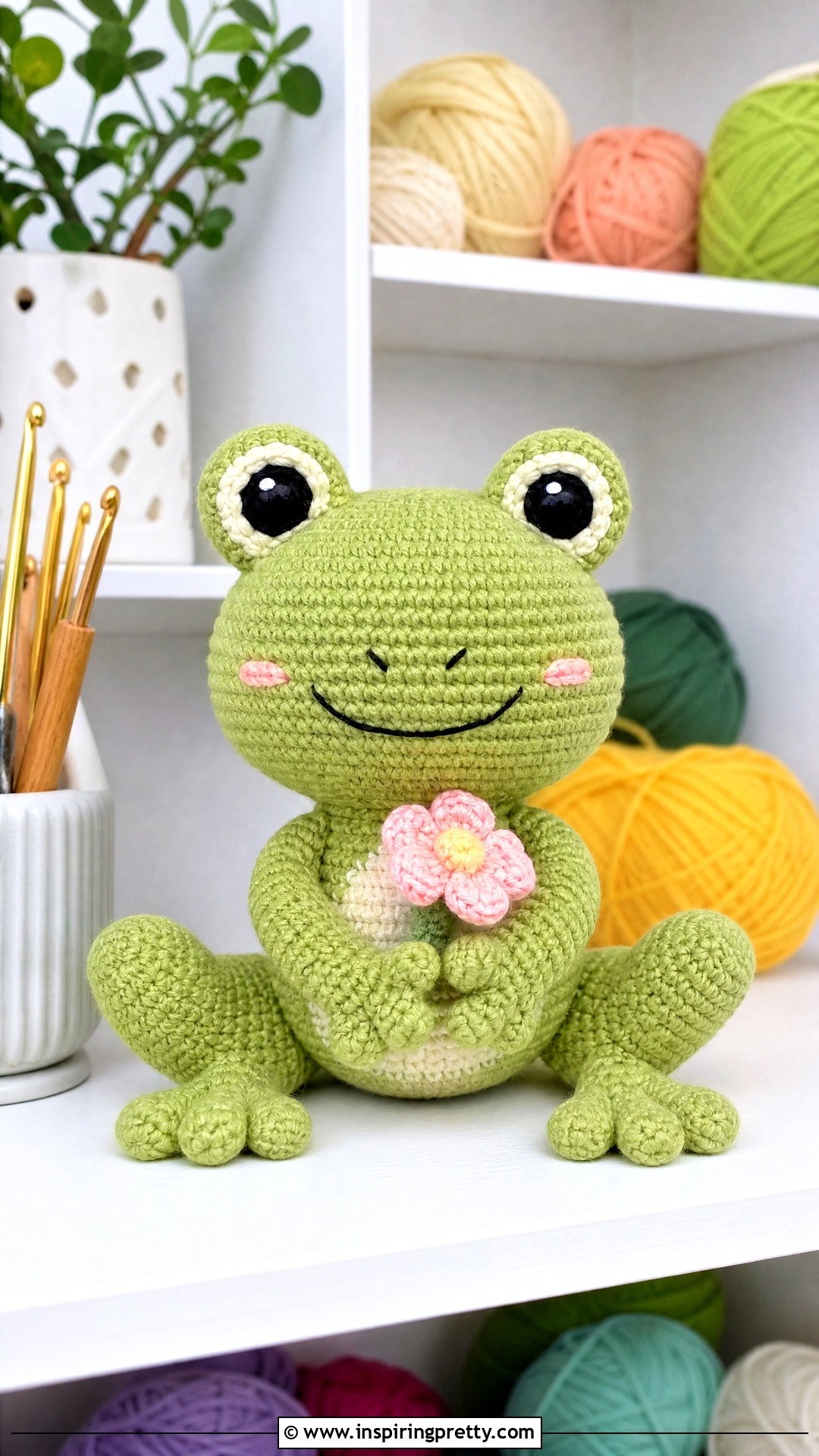
An amigurumi frog is a cheerful small project that teaches working in rounds, increasing, decreasing, stuffing, and assembling pieces. Use smooth cotton yarn if you want clearly defined stitches, or soft chenille for a plush finish. Keep the gauge tight enough to prevent the stuffing from showing through. Create the body and head as one piece when possible, then attach the legs and eyes securely. Embroidered facial details are preferable for items intended for small children, since plastic safety eyes may still present a risk. Green is the obvious choice, but lavender, yellow, blue, and striped frogs can be equally charming. Add a tiny crocheted bag, scarf, or flower for personality. Weave in all assembly tails deeply inside the finished toy.
49. Crochet Amigurumi Food Set
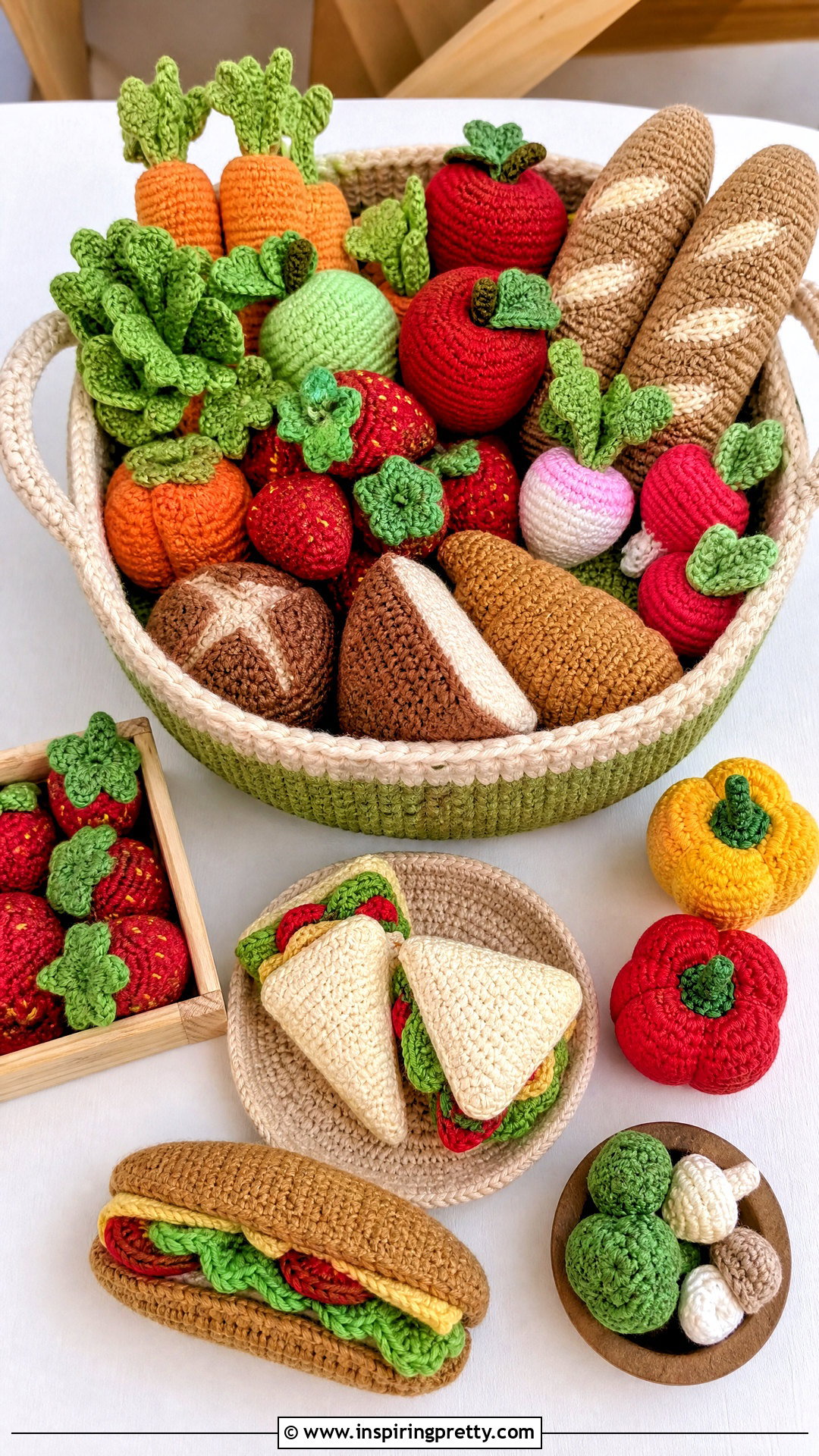
A crochet amigurumi food set can include fruit, vegetables, baked goods, sandwiches, or miniature pantry items. Select a consistent yarn weight so the complete collection appears proportionate. Cotton yarn gives small shapes clear definition and allows embroidered details to stand out. Start with basic forms such as apples, strawberries, carrots, and bread slices before attempting more complex layered pieces. Stuff each object lightly enough to maintain its intended shape. Use yarn embroidery instead of glued decorations, especially when the set is made for children. A matching crochet basket or tote provides practical storage and extends the project. Choose washable materials and secure every seam firmly. The finished collection can support imaginative play, classroom activities, decorative displays, or colorful handmade gifts for food-loving friends.
50. Crochet Mini Animal Keychain
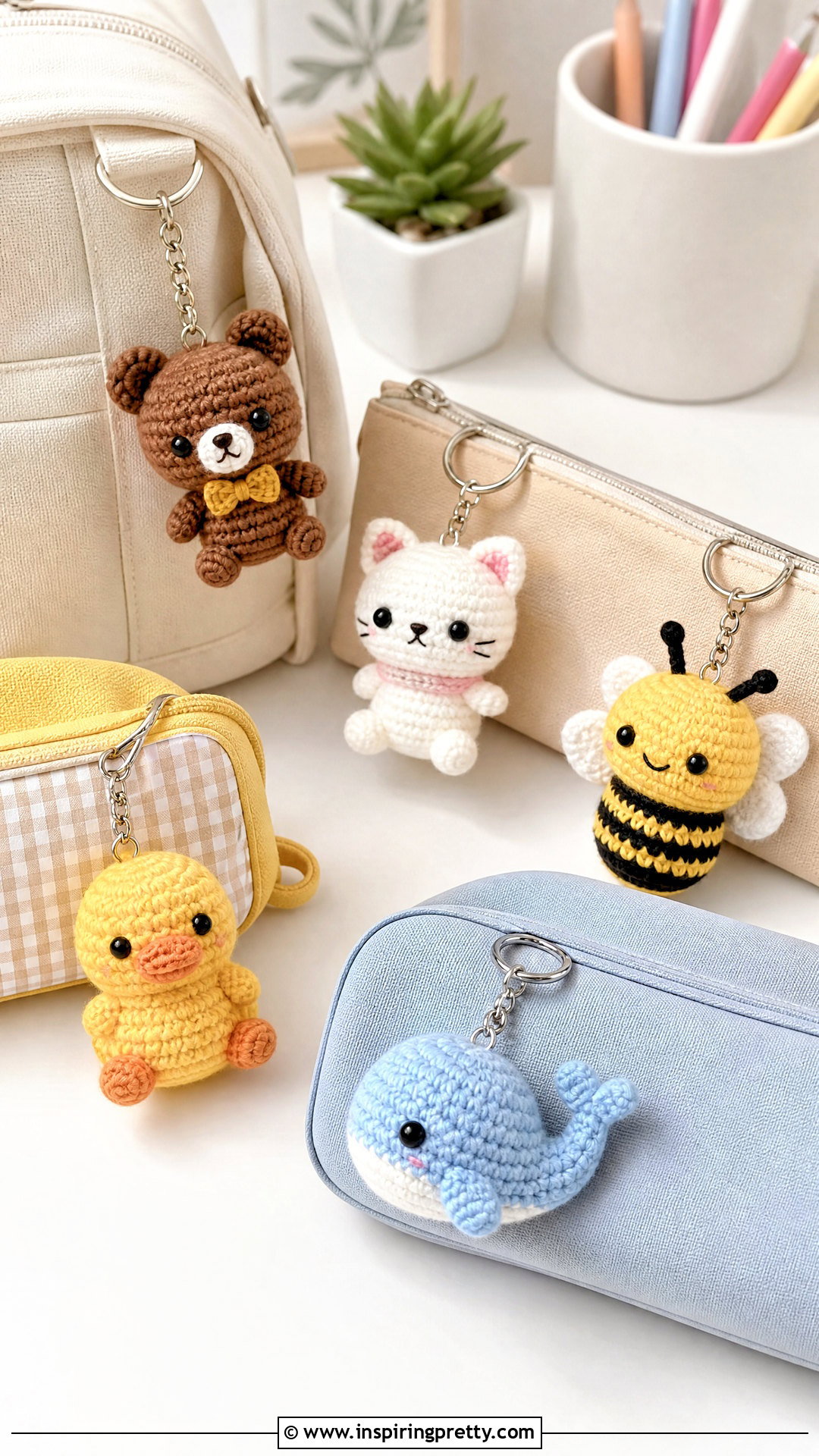
A crochet mini animal keychain uses very little yarn and can often be completed in one sitting. Choose a simple rounded character such as a bear, cat, bee, duck, or whale. Fine cotton yarn and a small hook help create compact stitches that hold their shape. Keep limbs and ears short so they are less likely to catch inside a bag. Attach the key ring through a reinforced crocheted loop rather than relying on one loose strand. Embroider the eyes when making the piece for a child or when you want a softer finish. Test every seam and attachment point before use. These miniature projects are perfect for experimenting with new color combinations, using scraps, practicing amigurumi shaping, or creating matching charms for bags and pencil cases.
Conclusion:
The best crochet project is one that matches your current skills, available yarn, and intended use. Beginners can build confidence with coasters, dishcloths, scrunchies, and simple bags, while experienced makers can explore fitted clothing, lacework, large blankets, and coordinated sets. Always check your gauge for wearables, choose washable fibers for frequently used pieces, and finish every seam securely. Thoughtful blocking can also transform uneven-looking work into a cleaner, more polished project. Whether you prefer practical home accessories, colorful fashion, or playful amigurumi, these **50 top häkeln ideas** provide a varied starting point for creating something personal, functional, and rewarding with your crochet hook.
Related posts:


Leave a Reply