
Couture is really about construction: a garment cut and fitted so precisely that the shape holds itself, with handwork you mostly can't see. The fifty looks below range from full ball gowns to suits, sculptural separates and a few clever everyday pieces, in satin, lace, velvet, brocade, leather and even denim. Very few of us will ever own true couture, and that's fine. What I want you to take from each idea is the principle behind it, whether that's the structure, the proportion or the fabric choice, so you can get close with ready-to-wear, a vintage find or a good dressmaker. I've noted shoes, bags and jewelry where they matter, and where a look needs tailoring to work.

Signs of Real Construction Inside a Gown
In Paris, haute couture is a protected label reserved for houses that meet strict rules about made-to-order work and in-house workshops. A gown is fitted on the client several times and much of it is finished by hand. You don't need that label to get the same benefits. Turn a formal dress inside out and look for these signs of careful construction.
- A waist stay: a strip of grosgrain ribbon sewn inside at the waist and hooked closed. It carries the weight of the skirt so the bodice doesn't drag on your shoulders.
- Boning that is sewn into channels and bends as you sit. Stiff plastic boning that kinks or pokes is a cheaper shortcut.
- Matched patterns. Stripes, lace motifs and beadwork should line up across seams instead of breaking at every join.
- Generous seam allowances. A centimeter or two of spare fabric inside the side seams means a tailor can let the dress out later.
- Hem finishing. Horsehair braid in the hem of a full skirt keeps its shape, and a hand-stitched hem is invisible from the outside.
I'd pay more for a plain dress with these details than for a heavily beaded one without them. The structure is what makes a dress look expensive from across a room.
1. Sculpted Satin Couture Ball Gown
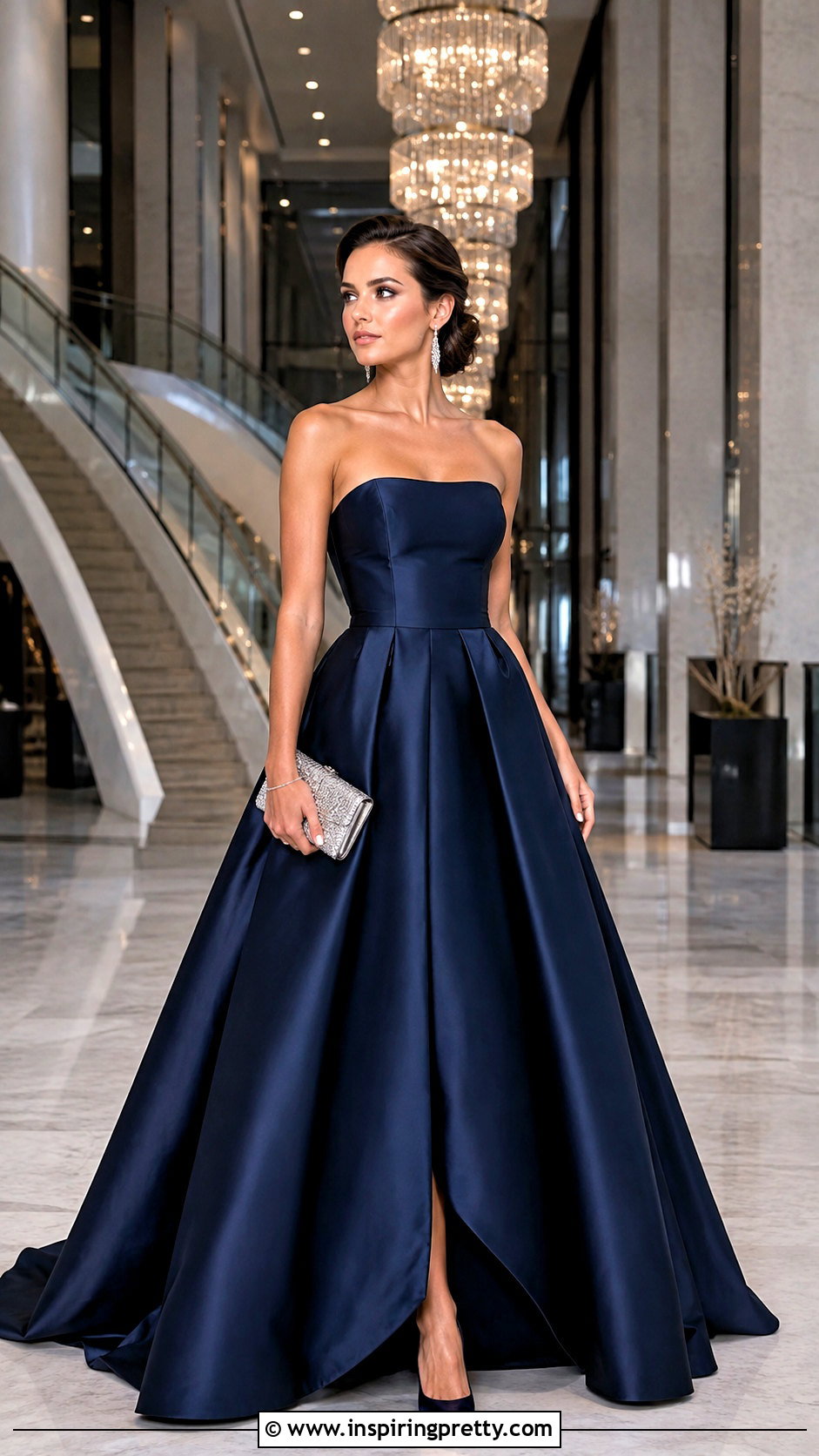
A sculpted satin ball gown needs almost no decoration, because the shape is the decoration. What holds that shape is inside: a boned bodice built on a firm underlayer, a waist stay that takes the skirt's weight off your shoulders, and petticoat layers under the skirt. Duchess satin and mikado are heavy enough to stand away from the body; thin satin collapses. Keep the neckline clean, square or sweetheart, and the jewelry to drop earrings and one bracelet. An updo shows the line of the bodice. If a gown like this feels heavy at the shoulders, the waist stay is missing or too loose.
2. Corset Mermaid Couture Gown
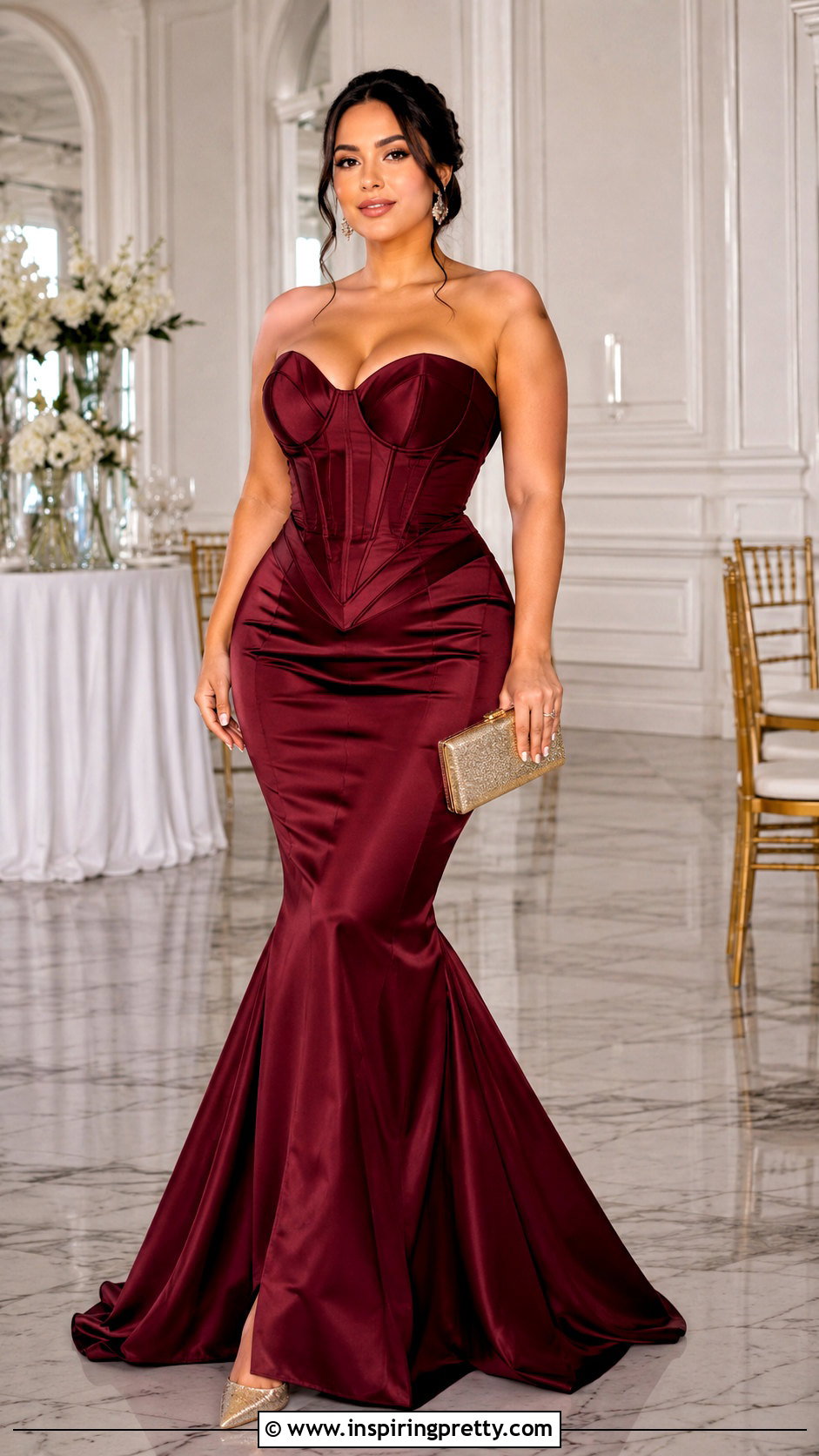
Mermaid gowns are the least forgiving cut I know, because the skirt has to fit the hips exactly before it flares at the knee. If the flare starts too high you lose the shape; too low and you can't walk. With a corset bodice on top, comfort depends on flexible spiral steel or synthetic boning and on enough room in the skirt to take a normal stride, so walk across the fitting room before you commit. Satin, crepe or a light jacquard looks polished. Crystal studs and a low bun let the silhouette do the work.
3. Cape Sleeve Couture Gown
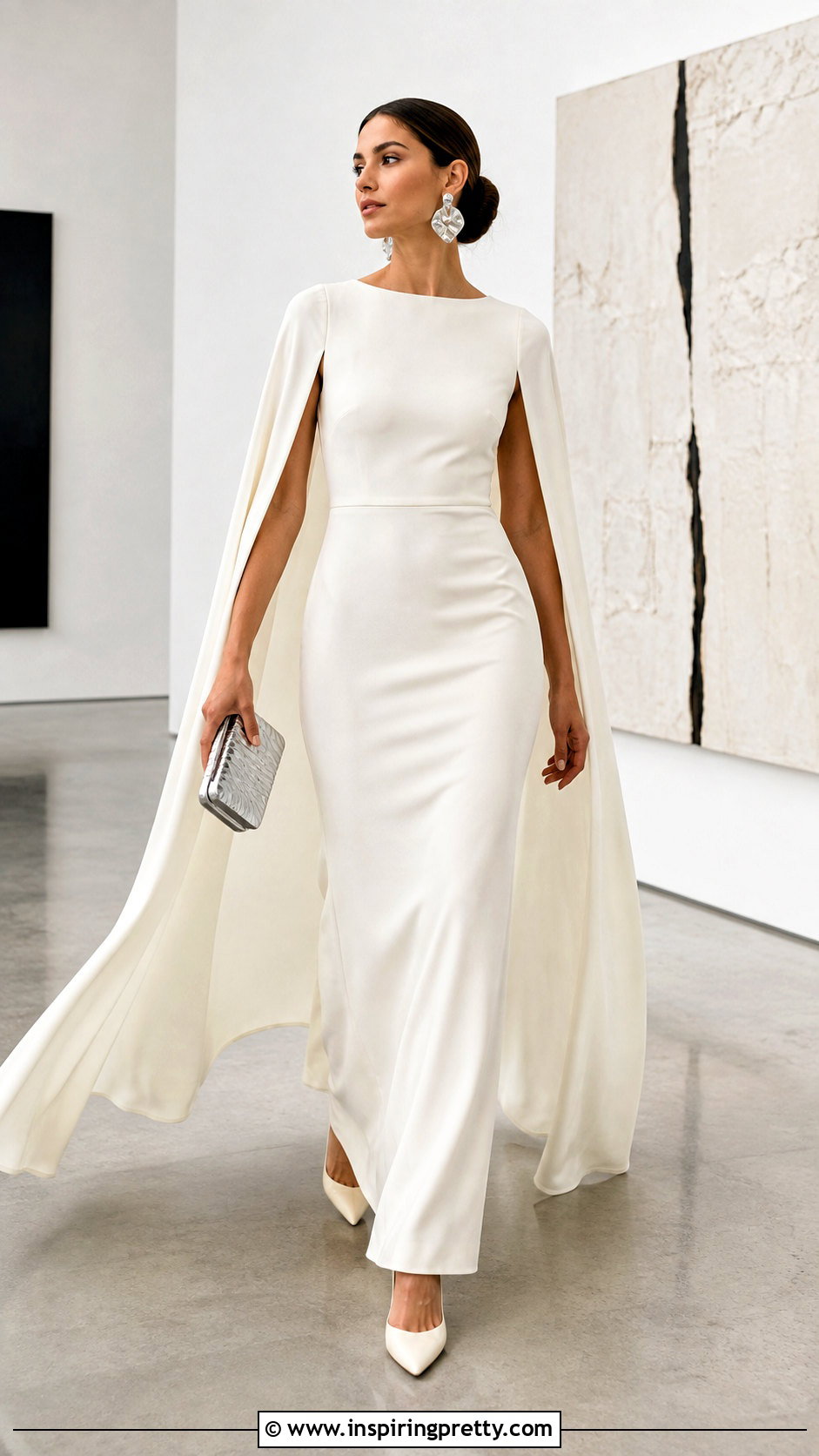
A cape sleeve gives the arms coverage without the weight of a jacket, and it moves every time you do. It usually falls from the shoulder seam or attaches along the neckline over a slim column or soft A-line. Chiffon floats; crepe and satin hold a more sculpted edge. I keep cape and dress in one color so they read as a single piece. Hair swept back or a short bob keeps the cape visible. Check that the cape is anchored firmly at the shoulder, or it will slide back and pull at the neck all night.
4. Floral Appliqué Couture Gown
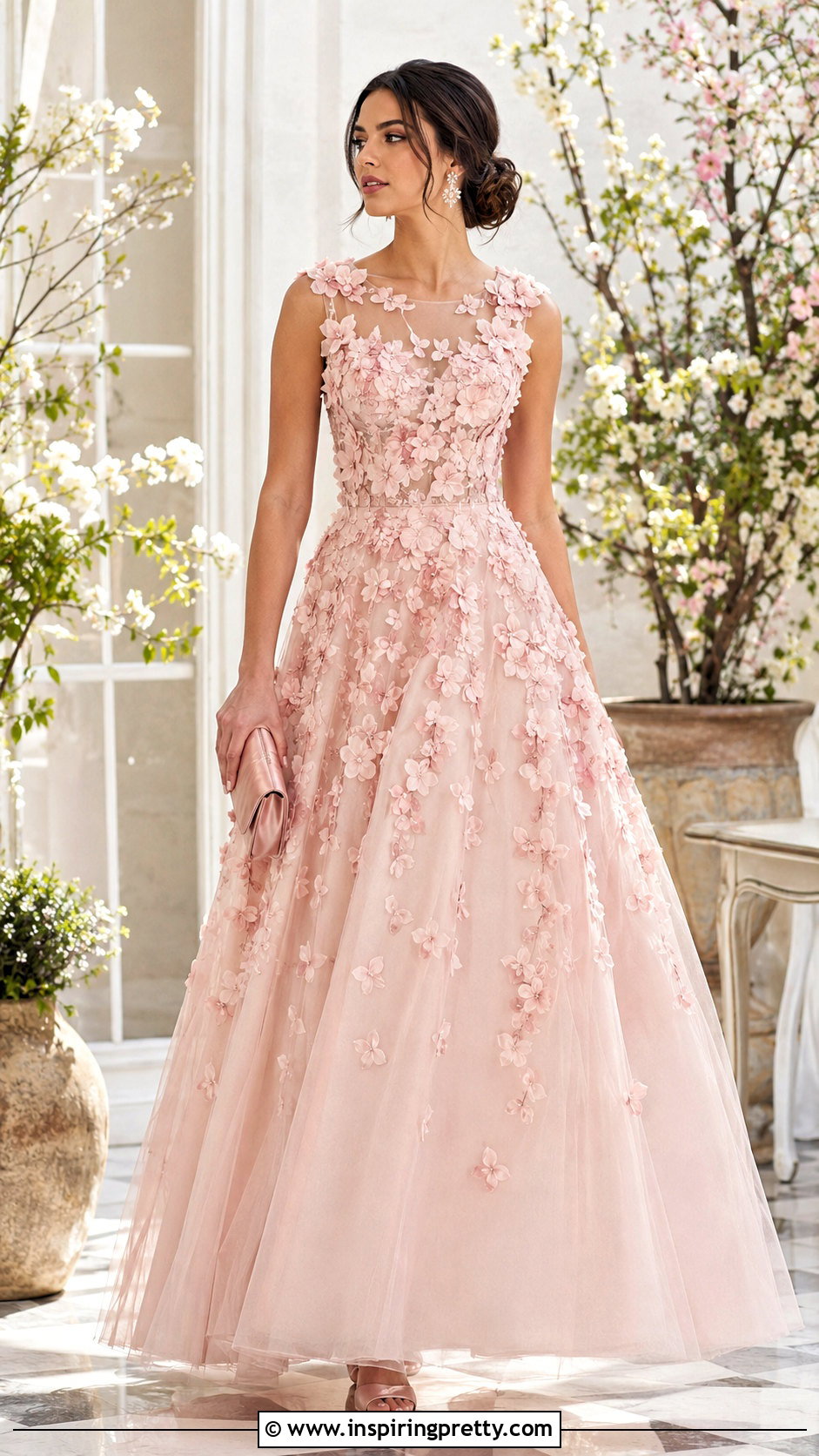
Appliqué flowers are cut out separately and stitched on by hand, which is why good ones look like they're growing out of the dress rather than stuck to it. Placement is everything. A cluster that starts at one shoulder and trails down the bodice looks designed; flowers scattered evenly everywhere look like wallpaper. Pale pink, ivory and lilac read airy, while red or black appliqué turns dramatic. Big flowers draw the eye, so put them where you want attention and let smaller ones fade out elsewhere. Skip the necklace if flowers already frame the neckline.
5. Feather Trim Couture Column Dress
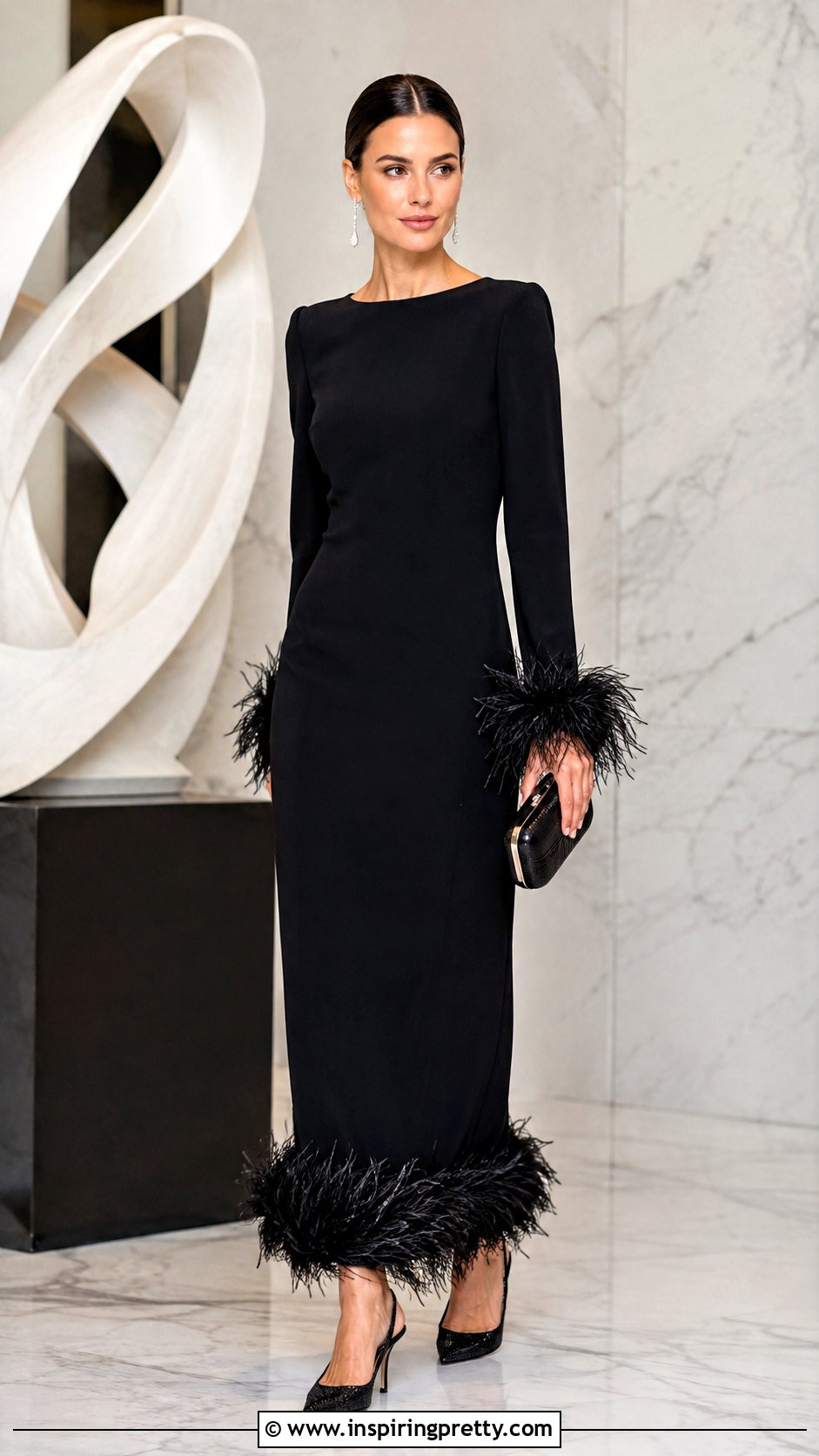
Soft feather trim adds movement to a plain column dress in crepe, satin or velvet. I limit feathers to one or two places, cuffs and hem, or one shoulder, because feathers everywhere look like a costume. Feathers also add real volume, so keep them away from any area you'd rather not widen. Black on black gives quiet texture; tonal pastels feel lighter. Feather trim sheds a little and hates rain, so it's best for indoor evenings. A hard-shell clutch won't snag the feathers the way a beaded bag would.
6. Beaded Overlay Couture Gown
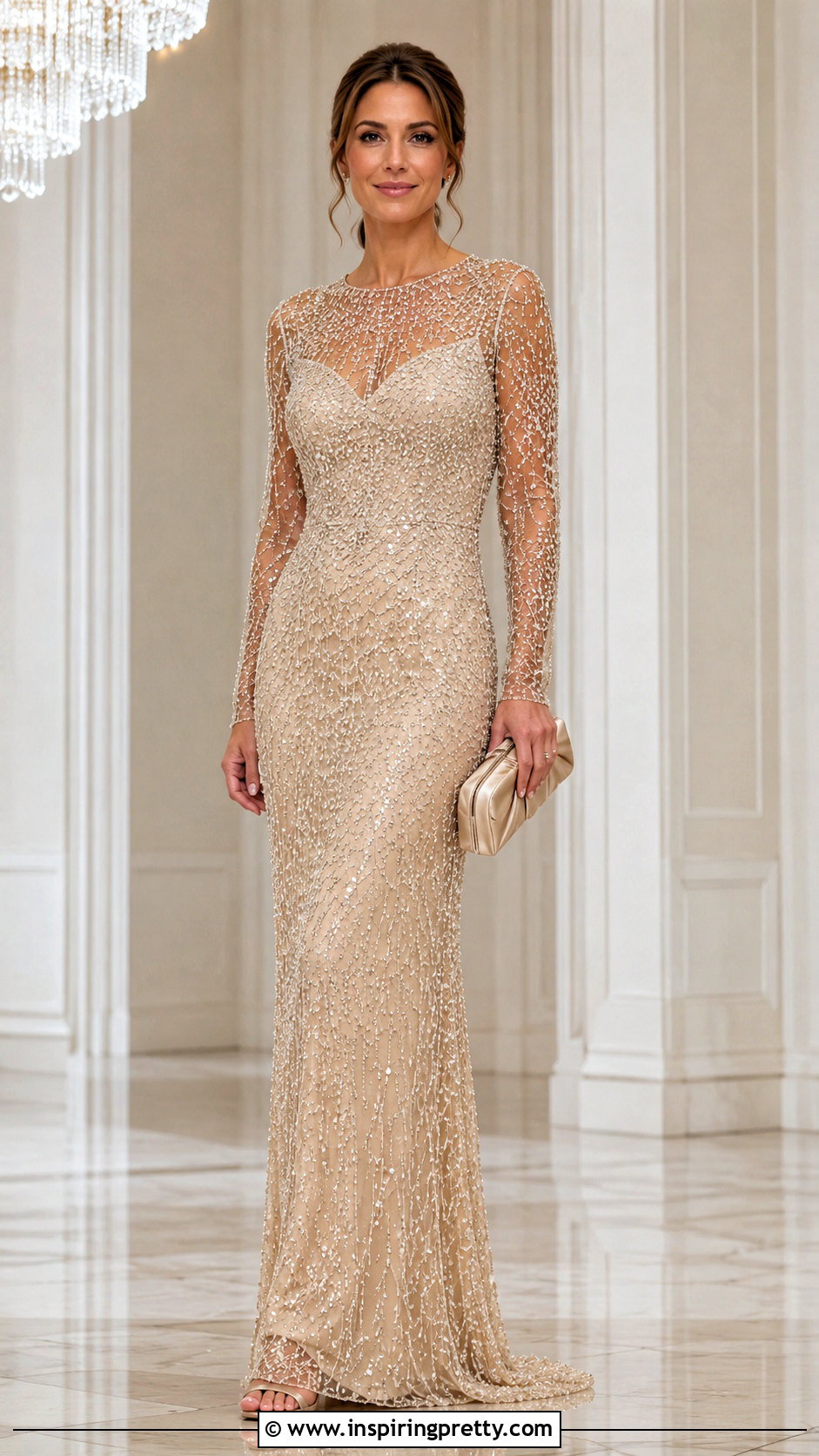
A beaded overlay is a sheer layer covered in beads, laid over a smooth slip lining, and the two have to be cut to move together or the overlay drags. Long sleeves and a high neck give coverage; a V-neck lightens it. Beading is heavy, so the hem must be set at the right length for your shoes before the event, because a dragging beaded hem shreds quickly. I'd choose a lining close to your skin tone for any sheer panels, so they look deliberate. With that much sparkle, skip statement jewelry.
7. Asymmetric Draped Couture Dress
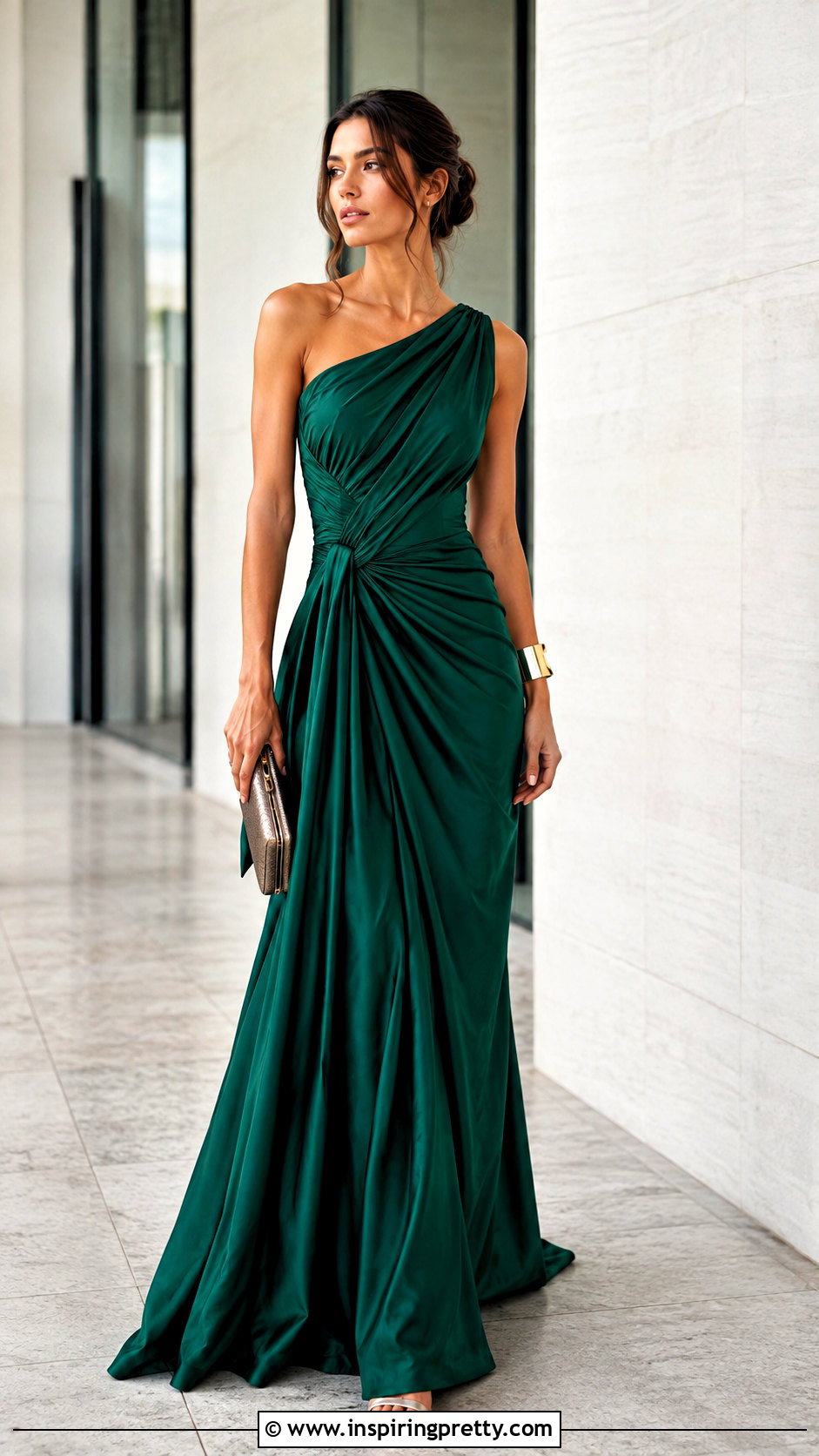
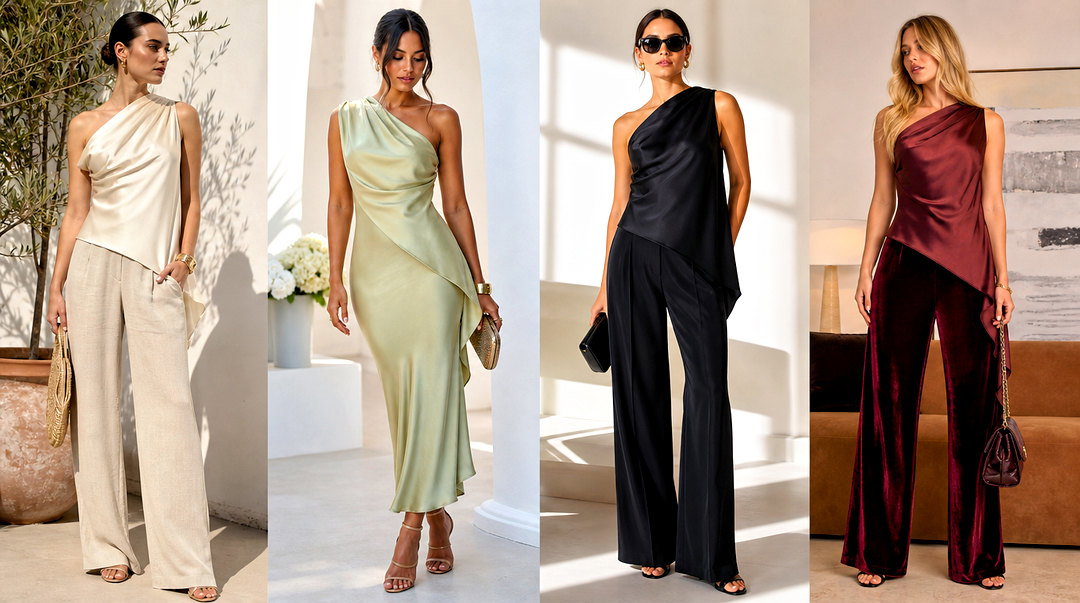
Drape uses the fabric itself to make shape, gathering it at one shoulder or across the hip, so there's nothing to add on top. Silk crepe, fluid jersey and soft satin fold well; stiff fabrics just crumple. A well-placed diagonal drape can define the waist or skim the stomach. I'd wear one sculptural cuff on the bare arm and sweep hair toward the covered shoulder to balance the asymmetry. Every fold should look like it was put there on purpose, and on good drape, it was: the folds are hand-tacked so they stay.
8. Velvet Couture Opera Gown
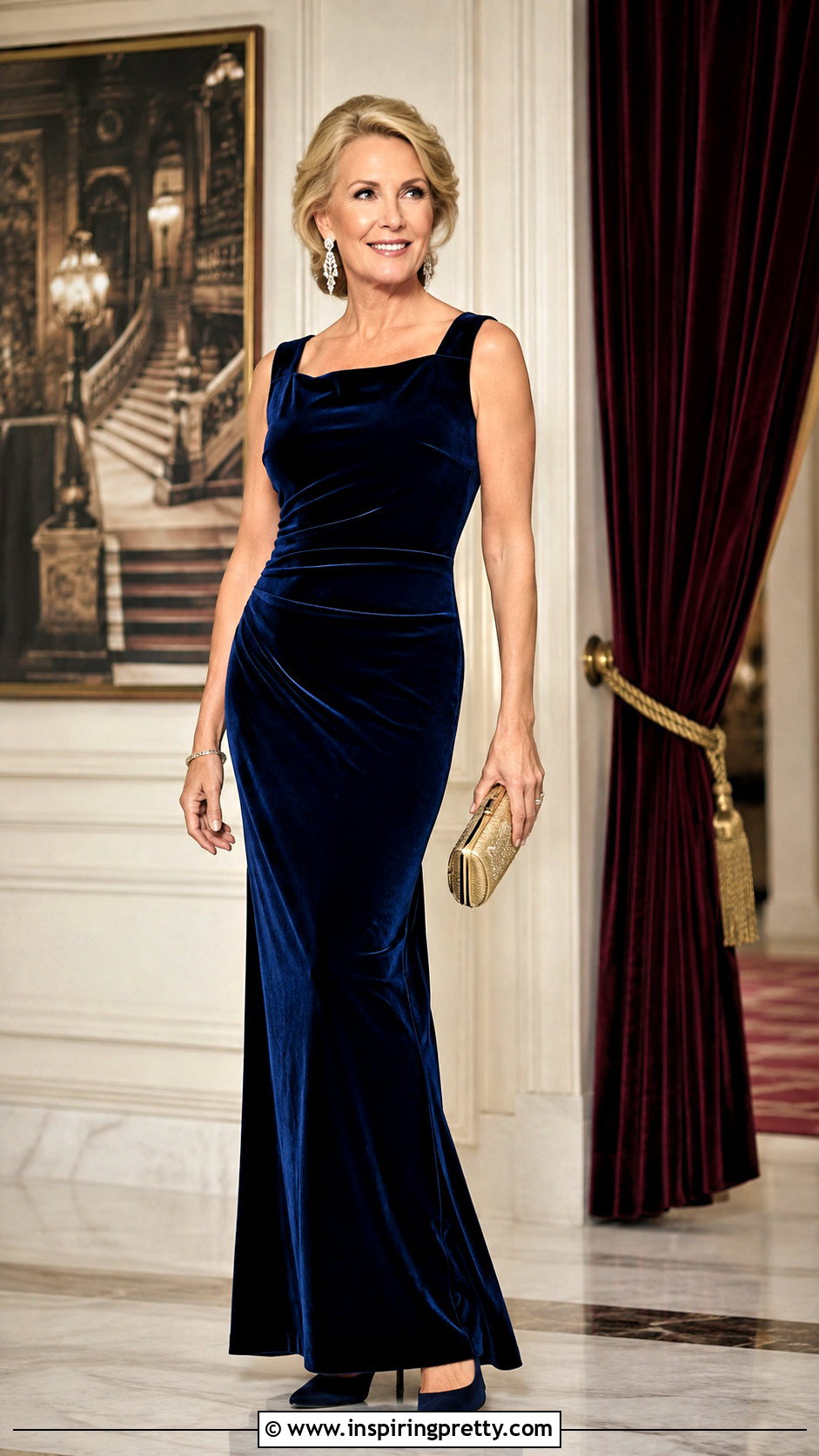
Velvet absorbs light in its pile, which is why jewel tones like burgundy, sapphire and emerald look so deep in it. An off-the-shoulder or portrait neckline suits the weight of the fabric. Velvet is heavy and warm, so a good lining and a controlled skirt keep it comfortable; a full velvet skirt can feel like a blanket by the second hour. Long gloves fit the formality if the dress code supports them. Never sit on a velvet skirt bunched underneath you for long, as the pile crushes and leaves shiny marks.
9. Metallic Pleated Couture Gown
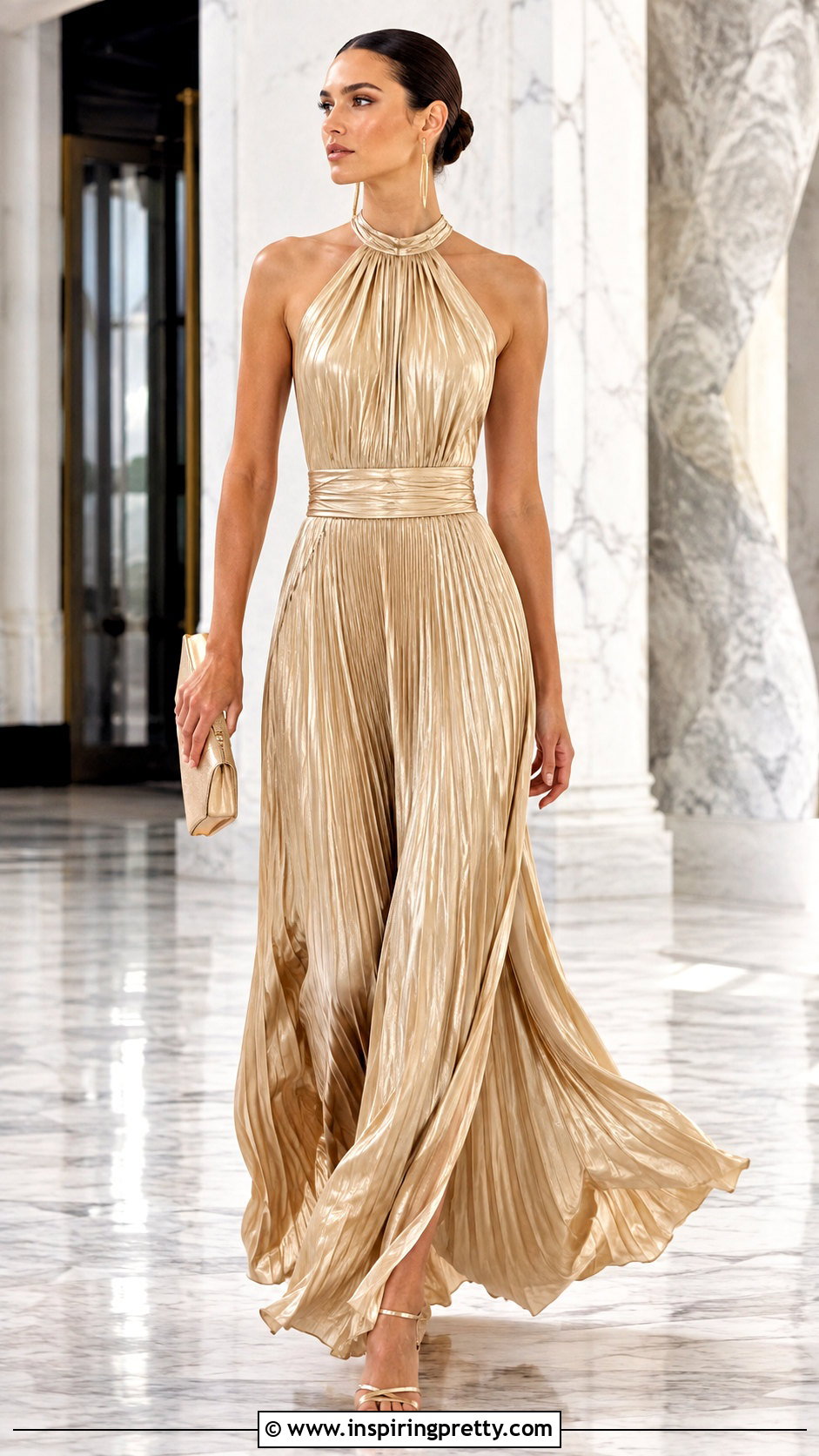
Fine pleats in metallic fabric catch light on every fold and still let the skirt move. A defined waistband keeps all that fabric under control, and a wrap or halter bodice keeps the top light. Narrow pleats suit petite frames better; broad folds need height to carry them. Match the sandals closely to the metal tone and keep the clutch smooth satin so textures don't fight. Heat-set pleats can relax if steamed hard, so I steam these from a distance or not at all.
10. Tiered Tulle Couture Gown
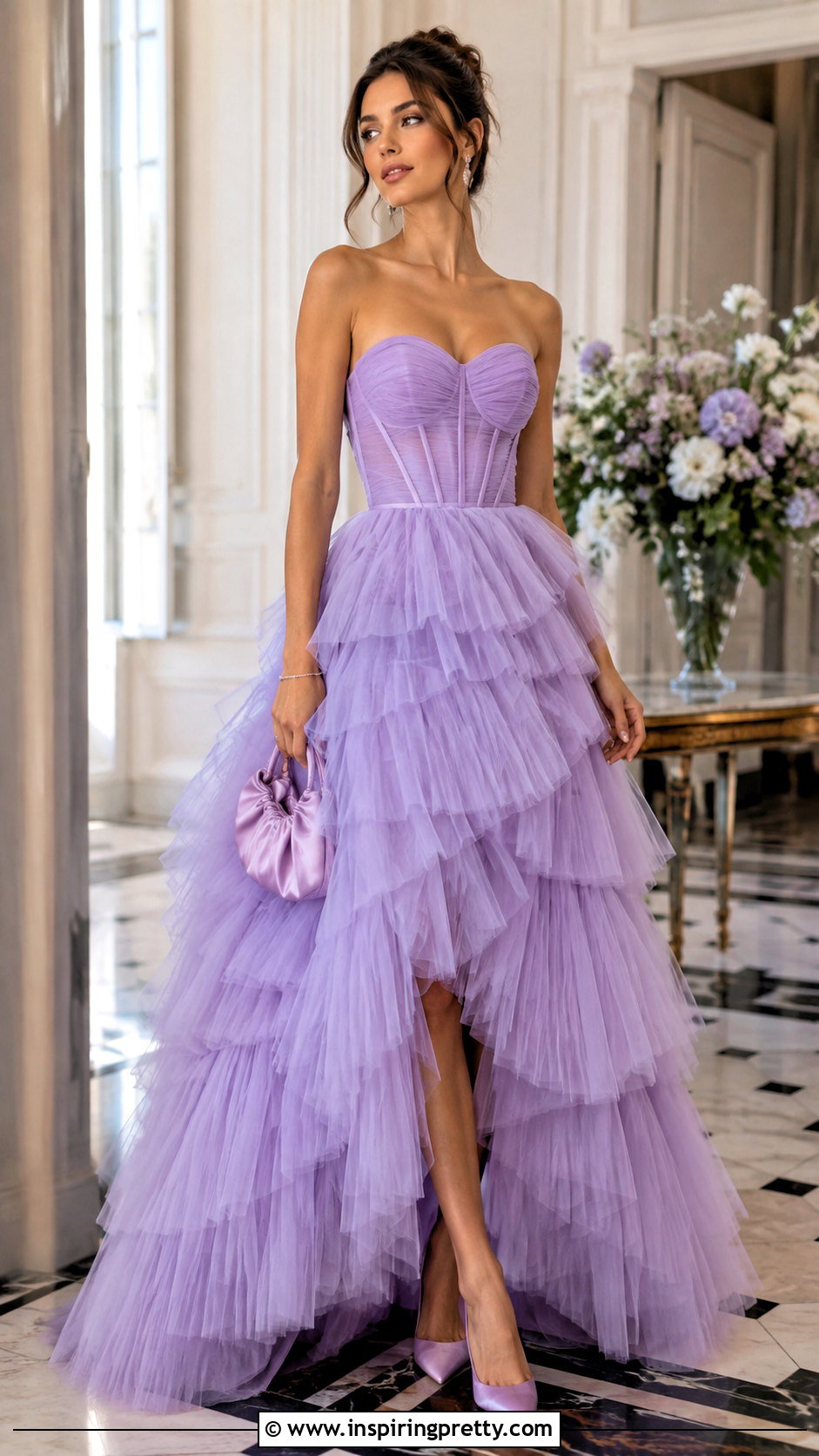
Tulle is weightless, which makes it easy to overdo. A tiered skirt where each layer falls softly looks floaty; stiff tulle stacked too thick looks like a costume. Graduated tiers that widen toward the hem are easier to wear than full volume from the waist. Soft gray, blush or muted blue feel refined, and darker tulle turns dramatic. The bodice must be firmly supported, because it's the only anchor for all that air. Tulle snags on jewelry and rough nails, so keep bracelets simple.
11. Ivory Couture Pantsuit
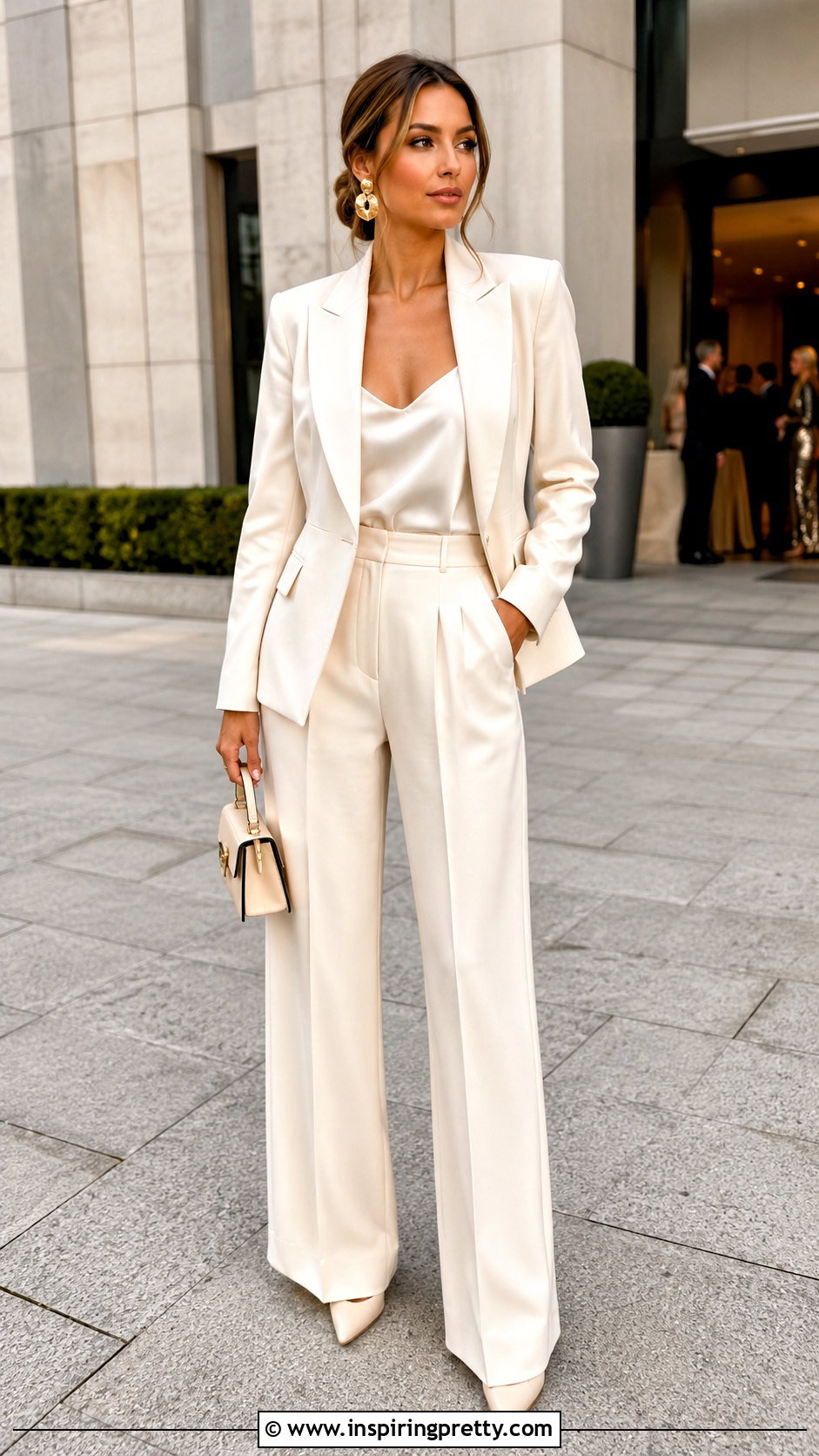
An ivory pantsuit is a strong alternative to a gown, and its real advantage is that jacket and trousers can be fitted separately. The jacket should have a defined waist and a precise shoulder; that's where tailoring money is best spent. High-rise trousers fall straight or wide, hemmed for the exact heel you'll wear. A silk camisole or tonal bodysuit sits smoothly underneath. A little crystal along one lapel adds detail without breaking the clean color. Ivory marks easily, so plan for a careful day.
12. Embroidered Blazer Couture Outfit
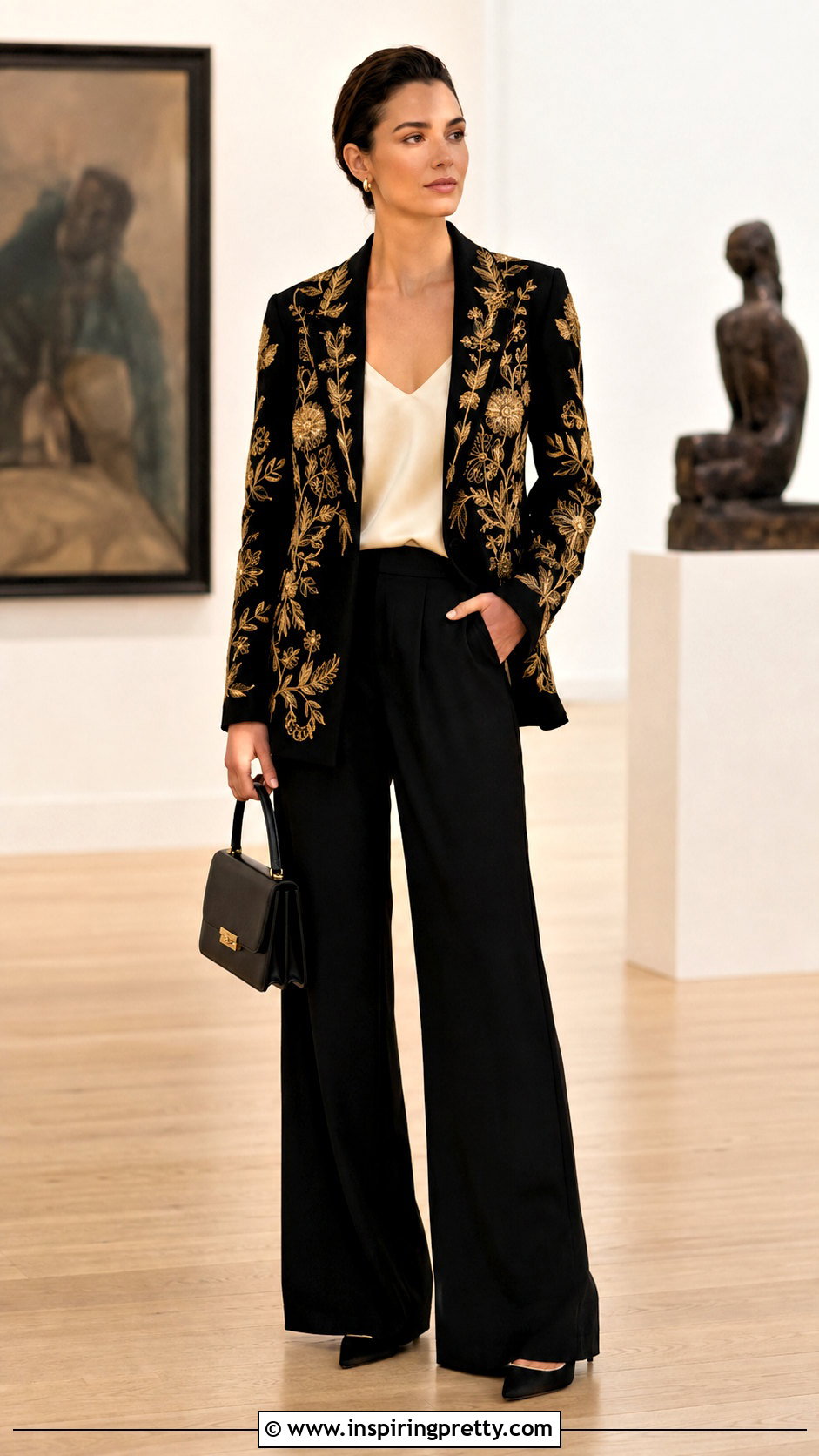
An embroidered blazer is the whole outfit, so everything else should be plain: a silk shell and high-waisted wide-leg trousers in black, navy or a deep jewel tone. Metallic thread and beads sit on top of the cloth and add stiffness, so the sleeve length has to be right; pushing the sleeves up crushes the work. Pick earrings in one color from the embroidery. Afterward, the blazer can go over a slip dress or dark jeans, which is a good reason to invest in one.
13. Peplum Couture Skirt Suit
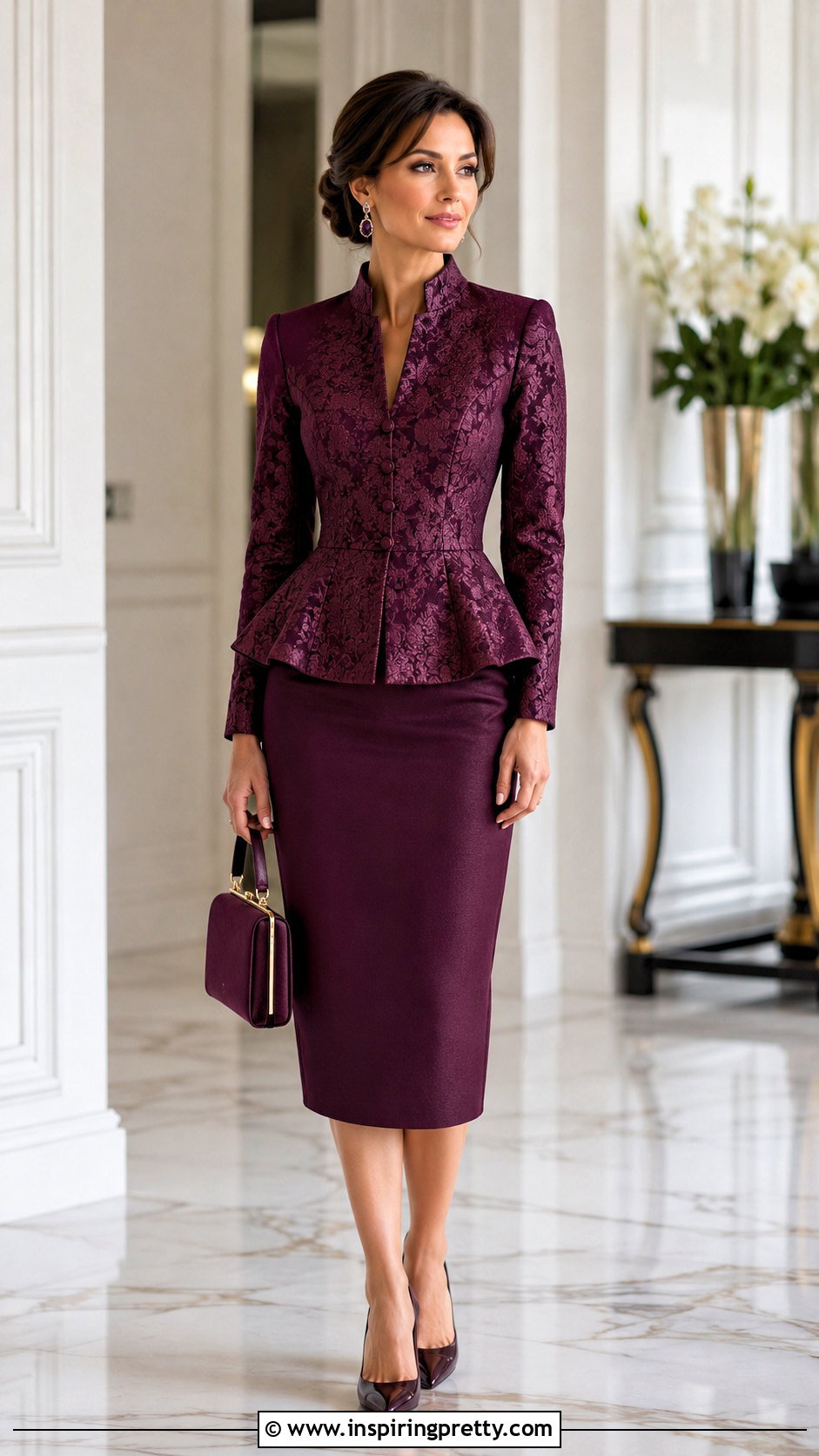
A peplum is a short flared panel sewn at the waist, and where it sits changes everything. A short peplum highlights the waist; a longer one covers more of the hip. Silk wool, brocade and jacquard hold the flare, while soft jersey peplums droop. Keep jacket and skirt in one color for a long line. I wouldn't add a belt unless the peplum is very subtle, since two waist details compete. Pointed pumps and pearl earrings keep it formal.
14. Tuxedo Couture Jumpsuit
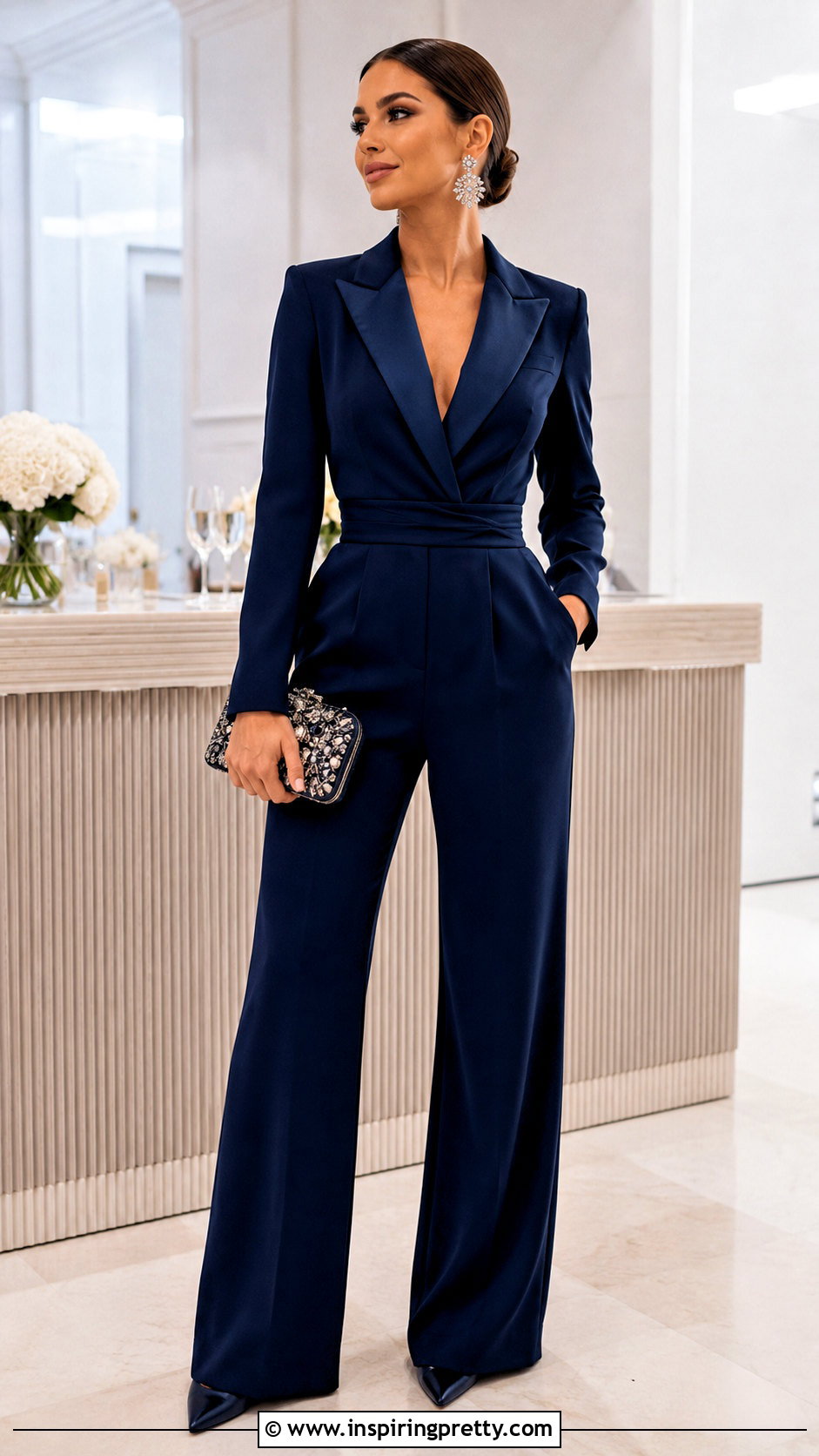
A tuxedo jumpsuit looks like tailoring but has one fitting problem a suit doesn't: torso length. If the body is too short it pulls at the crotch and shoulders when you sit; too long and it sags. Sit, bend and reach in it before buying. Satin lapels and a defined waist carry the tuxedo reference. A plunging front needs a fitted camisole or mesh insert for security. Black is classic, but midnight blue reads richer under evening light. Hem it so the trouser just skims the shoe.
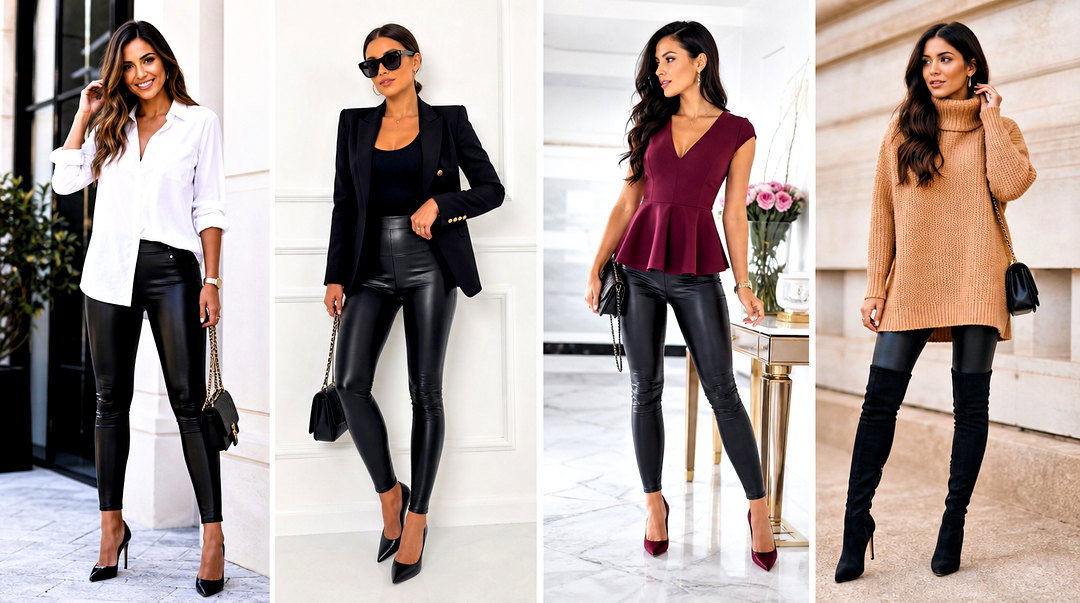
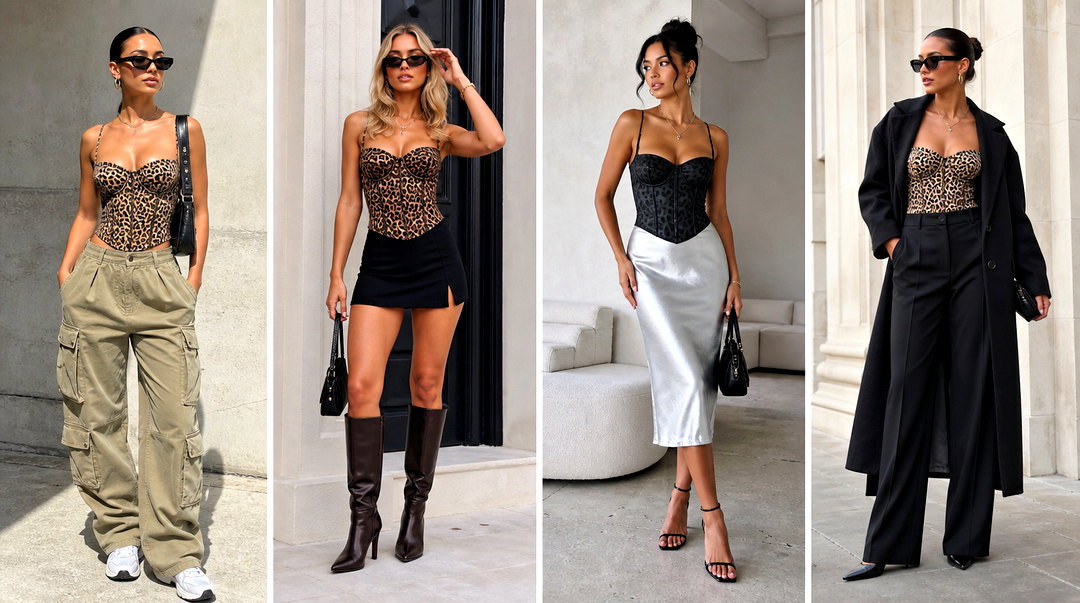
15. Corset Top And Tailored Pants Couture Outfit
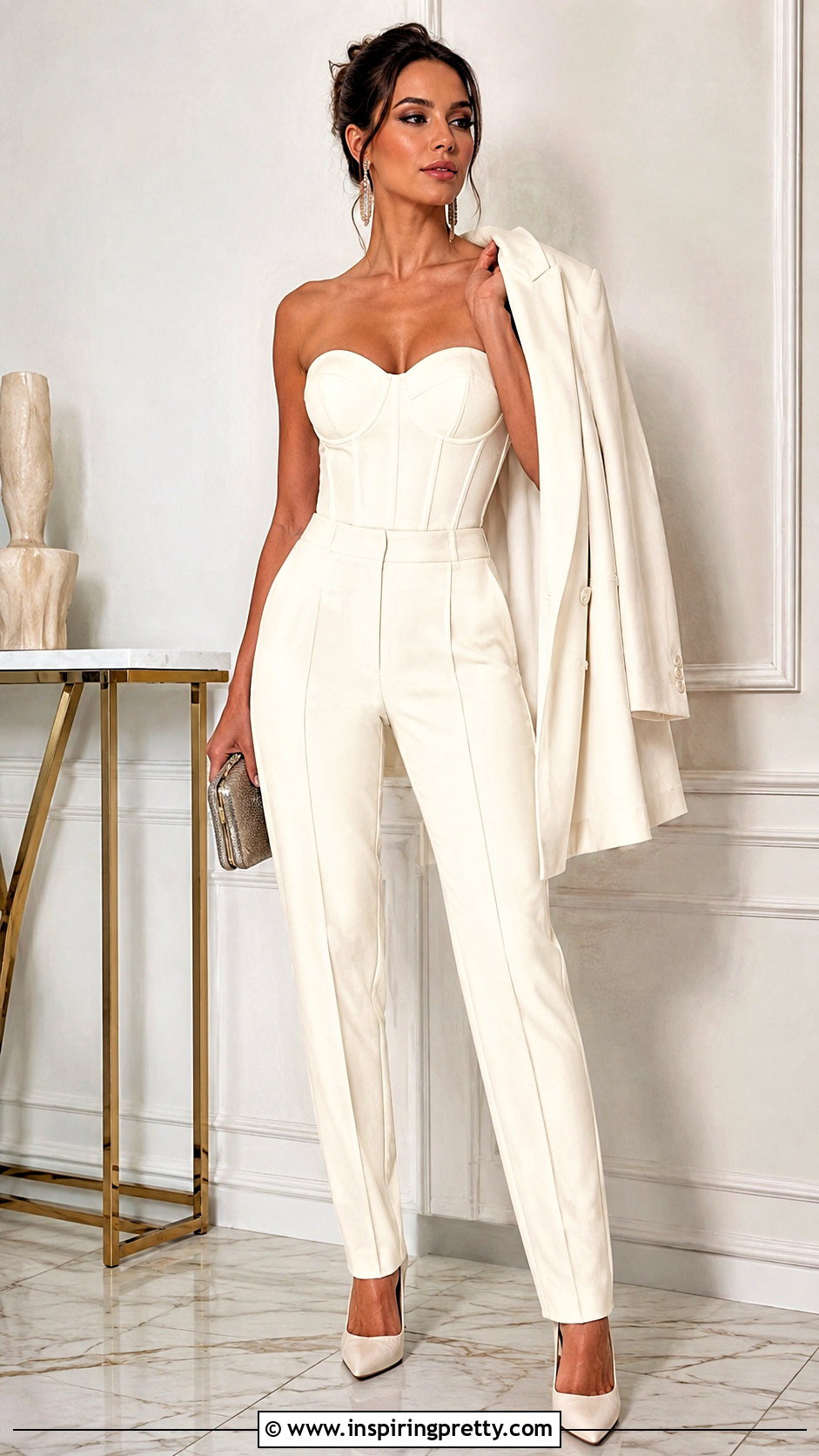
A corset top with tailored trousers gives you evening structure on top and ease below. I look for spiral or flexible boning that bends as you sit, smooth cups and a hem that meets or slightly overlaps the waistband so no skin flashes when you move. High-rise wide-leg pants balance the fitted bodice. Tonal colors make the separates read as one design. A blazer over the shoulders makes it right for more formal rooms. If you can't take a full breath, it's laced too tight or cut too small.
16. Embellished Denim Couture Outfit
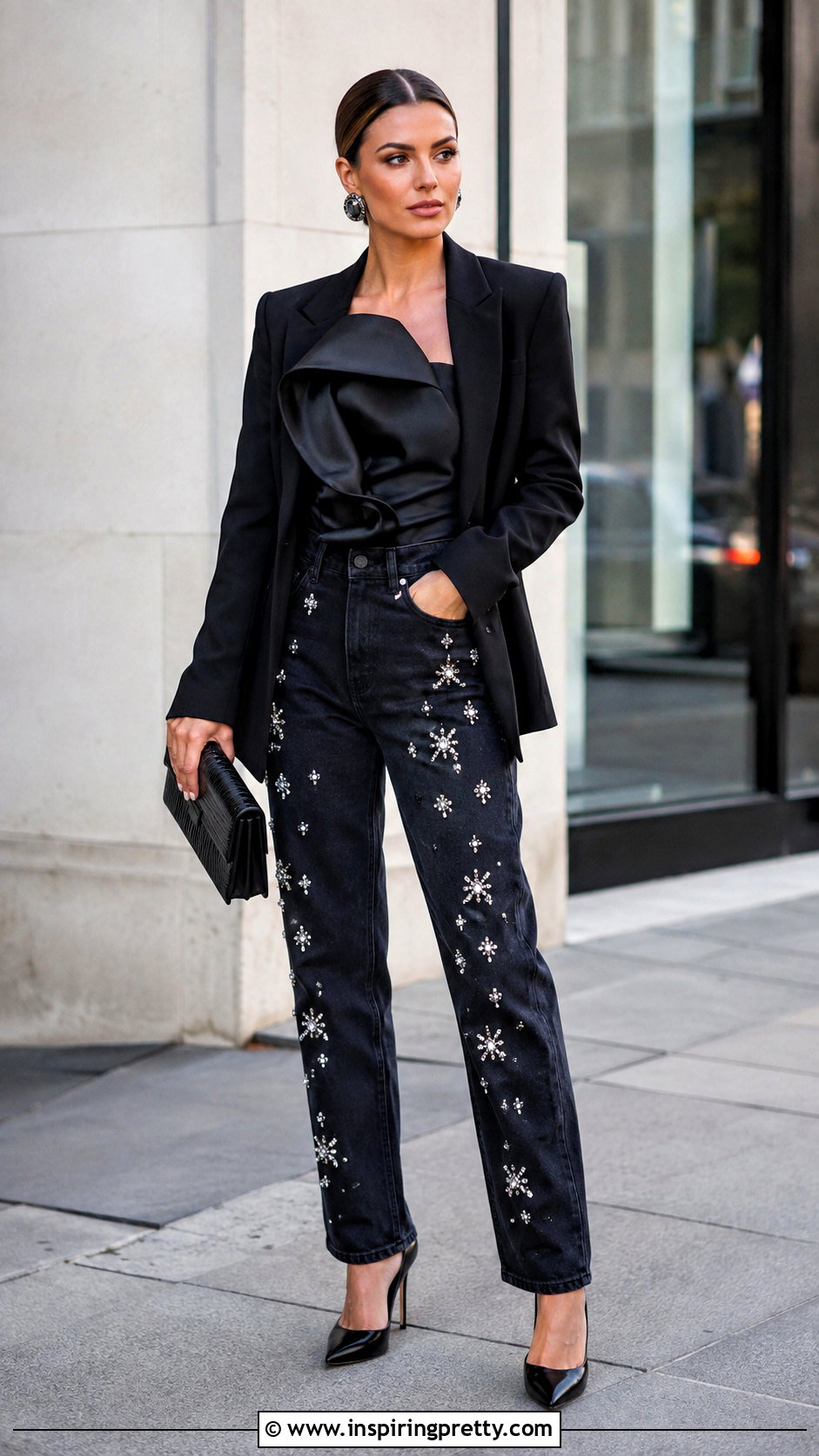
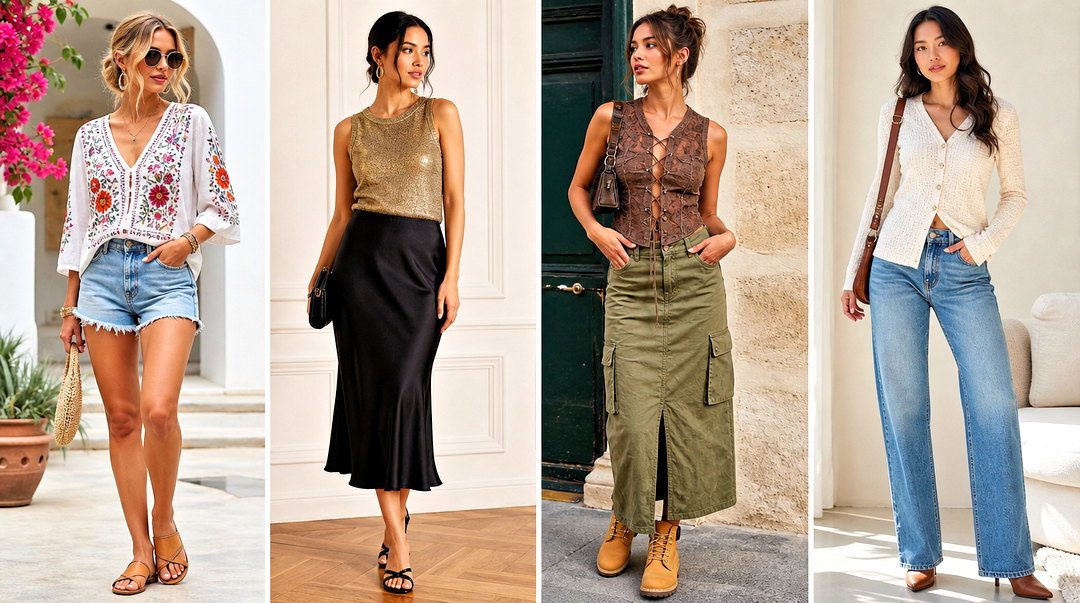
Denim gets couture treatment when the embellishment is precise: crystal embroidery along a seam, beaded side stripes, hand-stitched appliqué. Pair dark straight or flared jeans with a satin blouse, corset or feather-trimmed evening top. Pointed pumps and a structured clutch push the jeans out of casual territory. Keep distressing to a minimum, since rips next to handwork look careless. A high rise helps a tucked top sit cleanly. This high-low mix suits a creative dinner or a fashion event better than a strict black-tie one.
17. Tweed Couture Skirt Suit
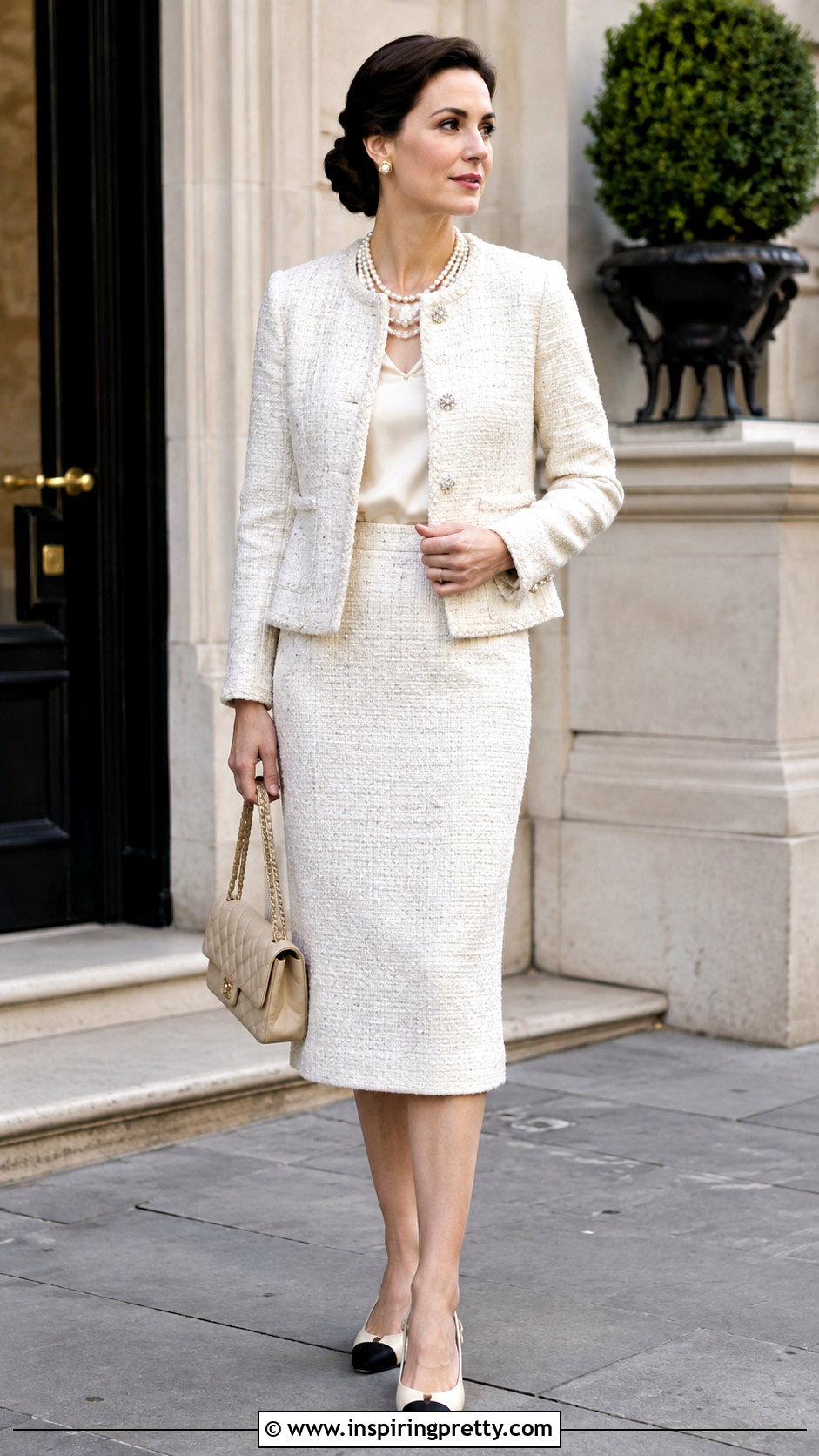
Tweed is a loosely woven wool, so it frays and moves, which is why the best tweed jackets are lined and often finished with braid or fringe at the edges. A collarless jacket with clean shoulders and a matching skirt gives an enduring outline. Jeweled buttons or metallic threads in the weave add detail. Layer a silk shell underneath and add slingbacks and pearls. Textured wool bulks up easily, so alterations at shoulder and waist matter. A shorter skirt with ankle boots looks younger; a midi hem gives more coverage.
18. Silk Shirt And Ball Skirt Couture Outfit
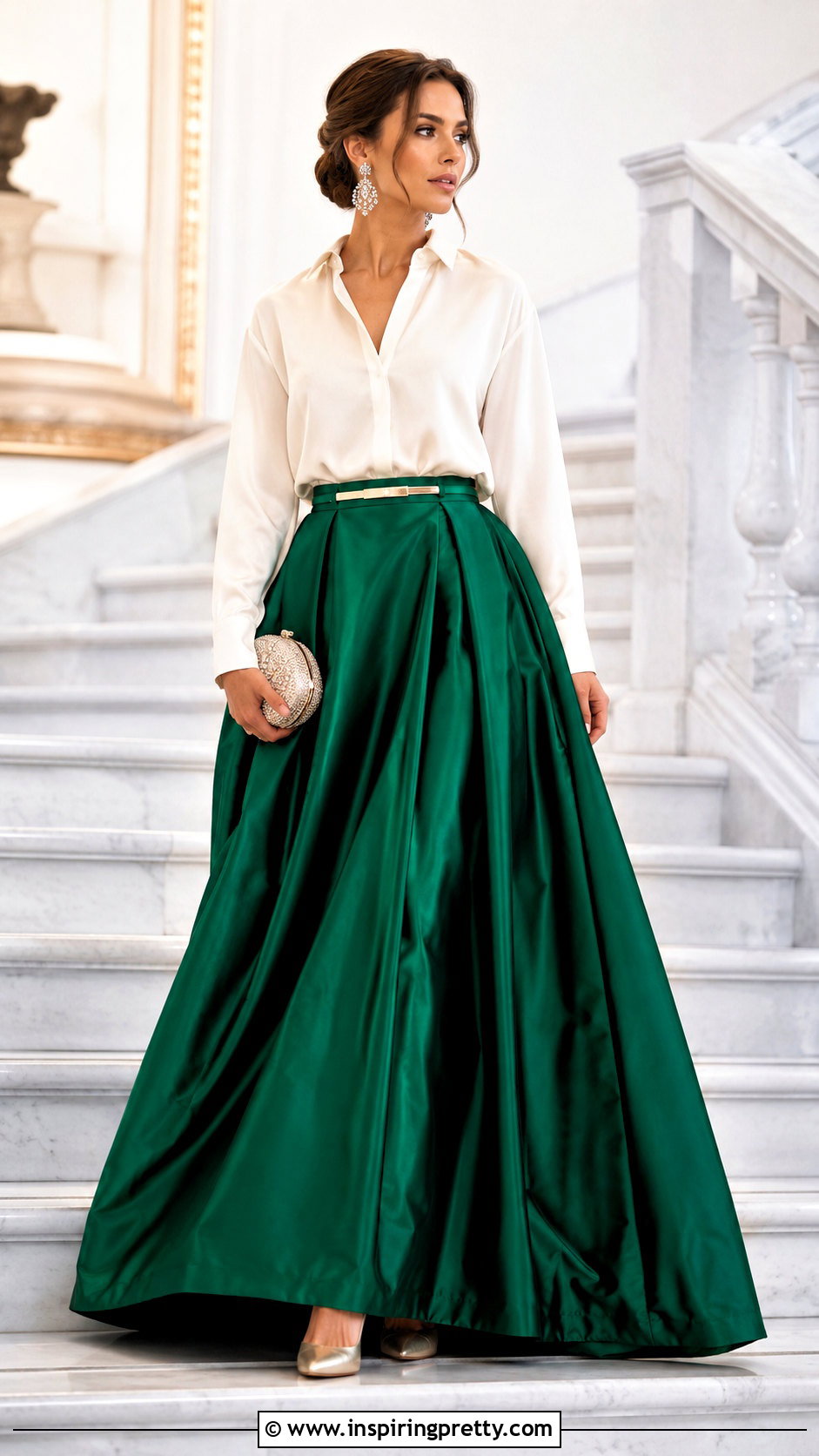
A plain silk shirt tucked into a huge ball skirt is one of my favorite contrasts: the shirt says ordinary and the skirt says gala. Choose a fluid button-front in ivory, black or a jewel tone, and a high-waisted skirt in taffeta, satin or embroidered organza. Roll the sleeves for ease or button the collar for sharpness. The skirt must clear the floor enough to walk safely. Both pieces work separately later, which makes this smarter than a single-use gown.
19. Crystal Top And Jeans Couture Outfit
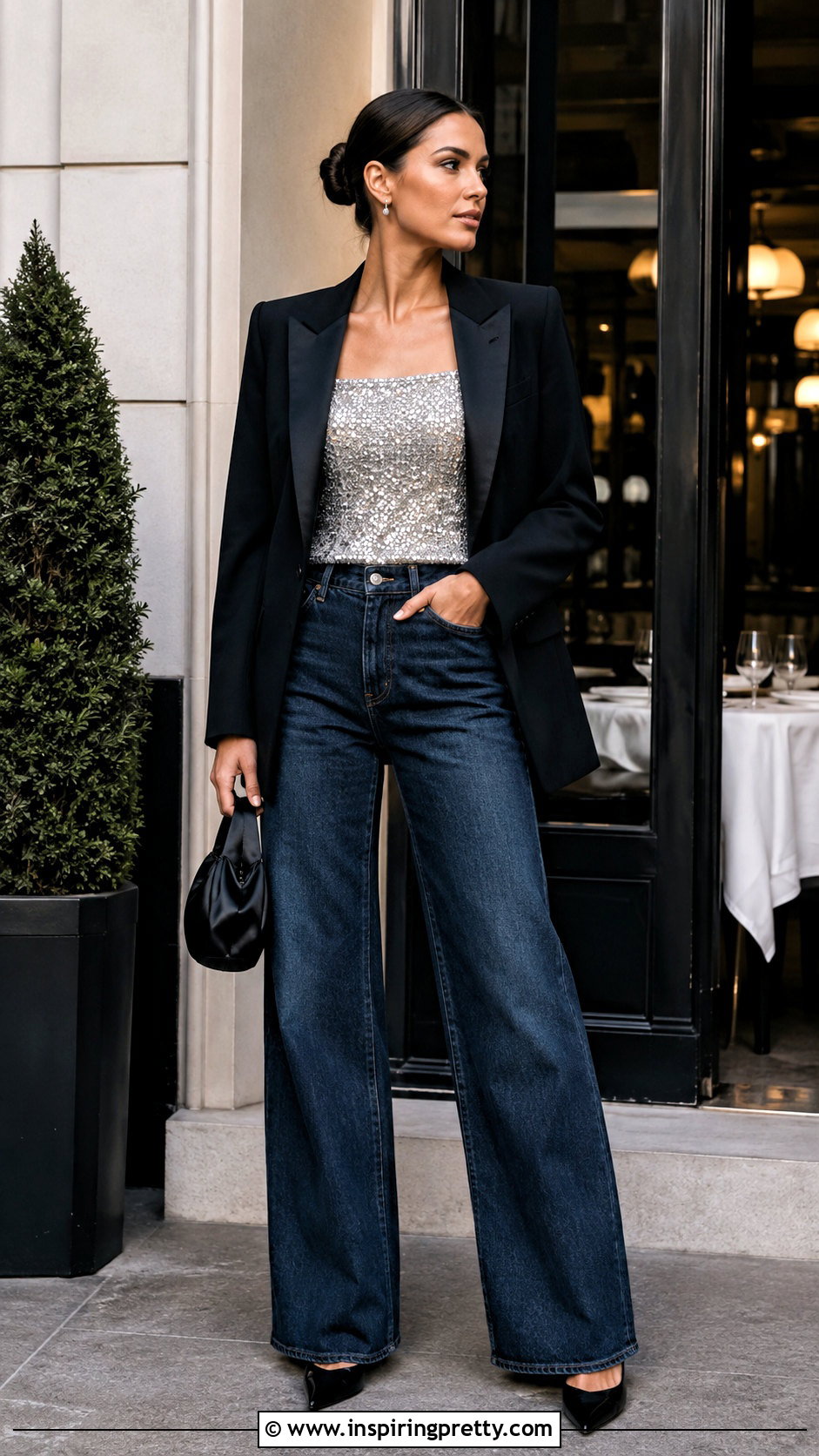
A crystal top with good jeans is the best way I know to wear sparkle without a full gown. Pick a beaded tank, crystal-covered blouse or jeweled corset, then clean dark-wash jeans without rips. Heavy beaded tops pull downward, so look for a firm lining and sturdy straps. The top already works as jewelry, so one pair of simple earrings is enough. A black tuxedo jacket adds structure. Hem the jeans for your heels.
20. Cape Blazer And Trousers Couture Outfit
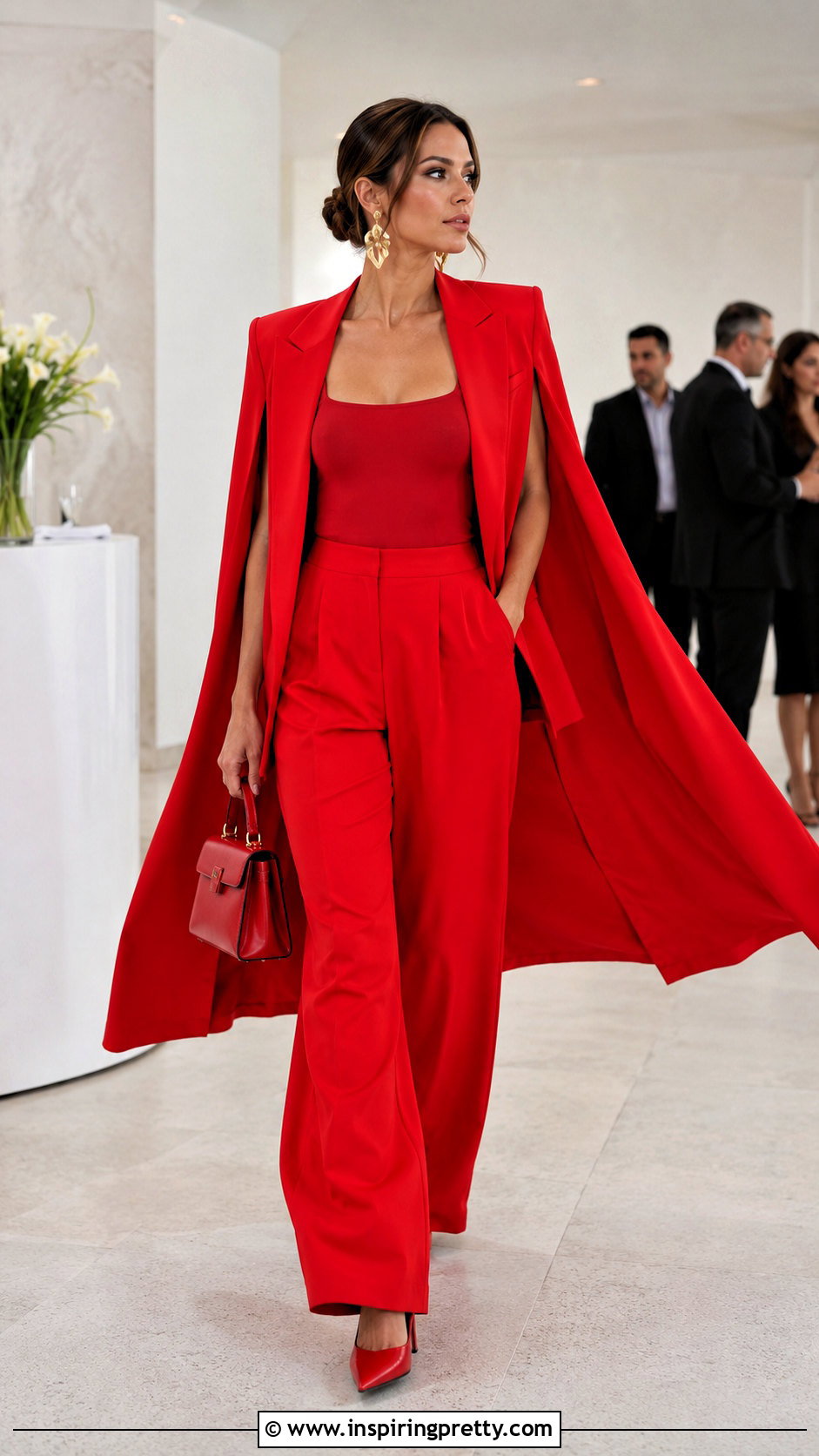
A cape blazer is a tailored jacket with a cape built in, usually with arm slits so you can move. Pair it with matching straight or wide trousers and a smooth base like a silk cami or mock-neck. Monochrome black, white, red or cobalt makes the shape look most architectural. Carry a clutch, never a shoulder bag, since the strap ruins the cape's fall. The trousers should skim the floor without pooling. It covers the arms while feeling lighter than a jacket.
21. Little Black Couture Dress
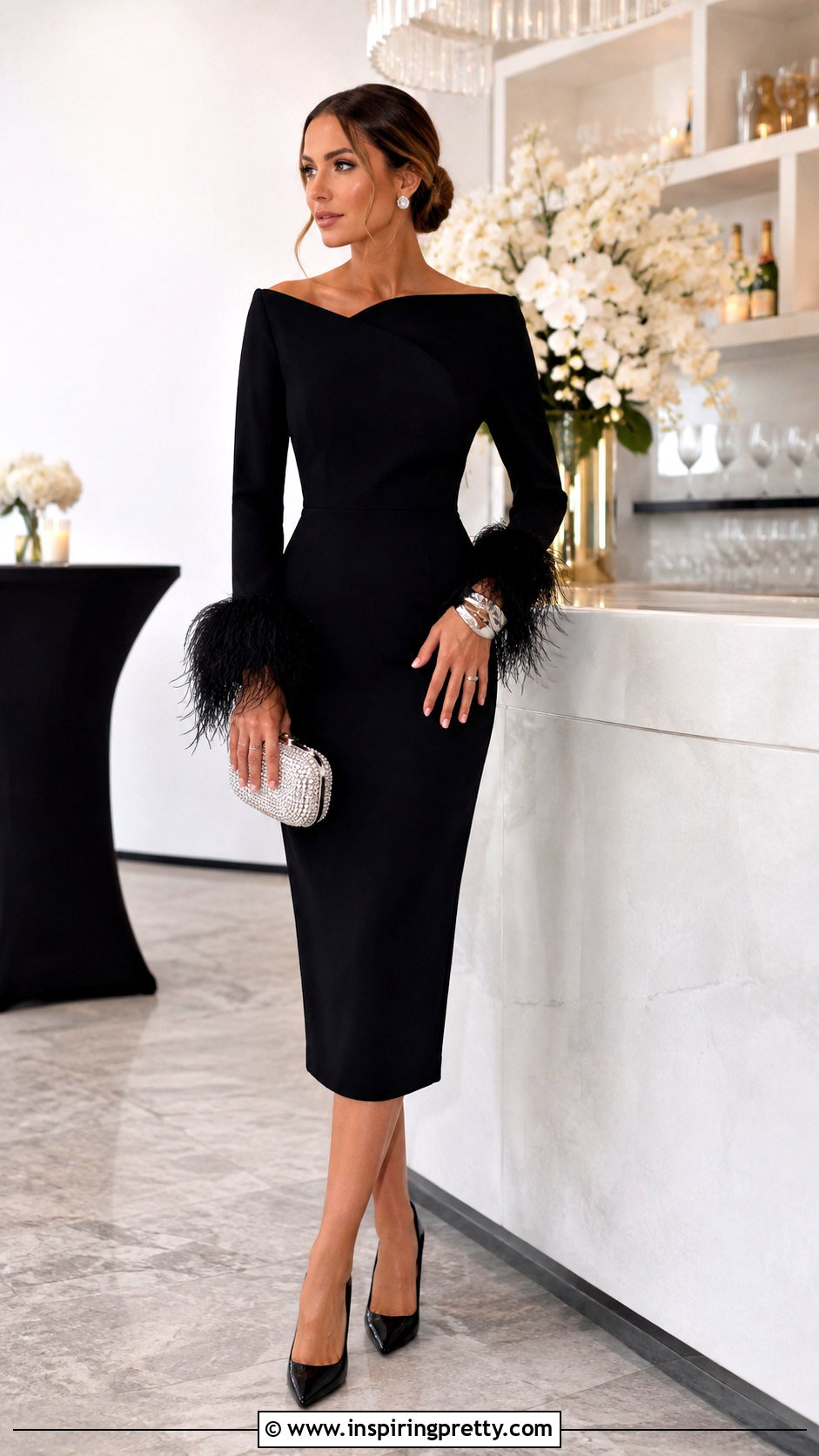
A little black dress becomes couture through construction: a neckline that sits flat, seams placed to shape the body, a hem at the right point for your legs. Black shows every pull and wrinkle in a way prints hide, so fit is the first thing to fix. Add one standout detail, a bow, a crystal strap or a sculpted sleeve, not several. Sheer tights add polish in cold weather. Then either bold earrings or a cuff, not both.
22. Red Satin Couture Gown
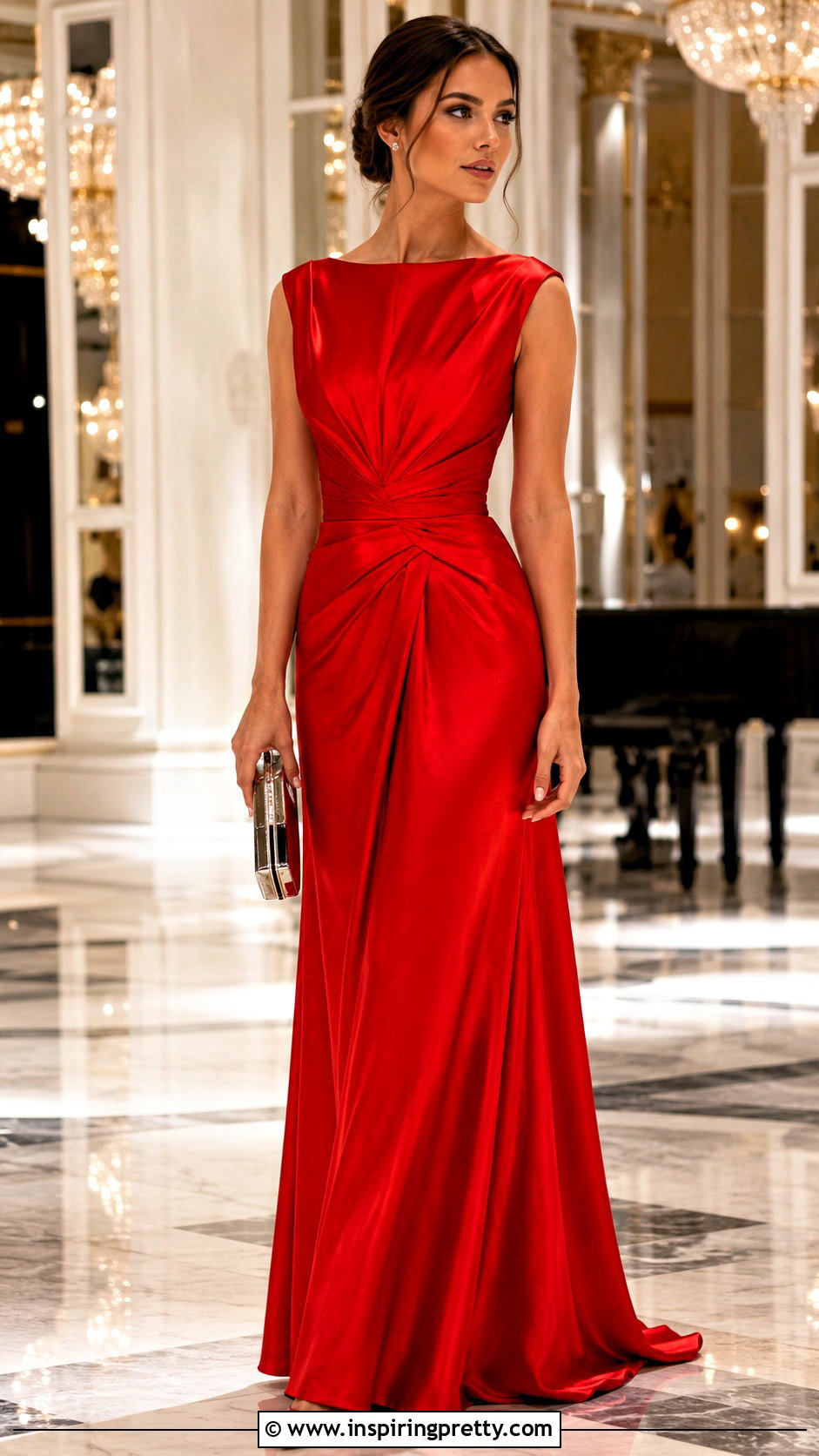
Red satin gets attention before anything else, so keep the shape sleek. A bias-cut column follows the body closely, which is lovely but very revealing; a structured mermaid or full skirt hides more. Blue-based reds look crisp, deeper crimson richer. Satin highlights every seam and every line underneath it, so smooth foundations and careful steaming are non-negotiable. I'd check the dress under bright light before the event. Studs or one cuff are enough jewelry.
23. Emerald Velvet Couture Gown
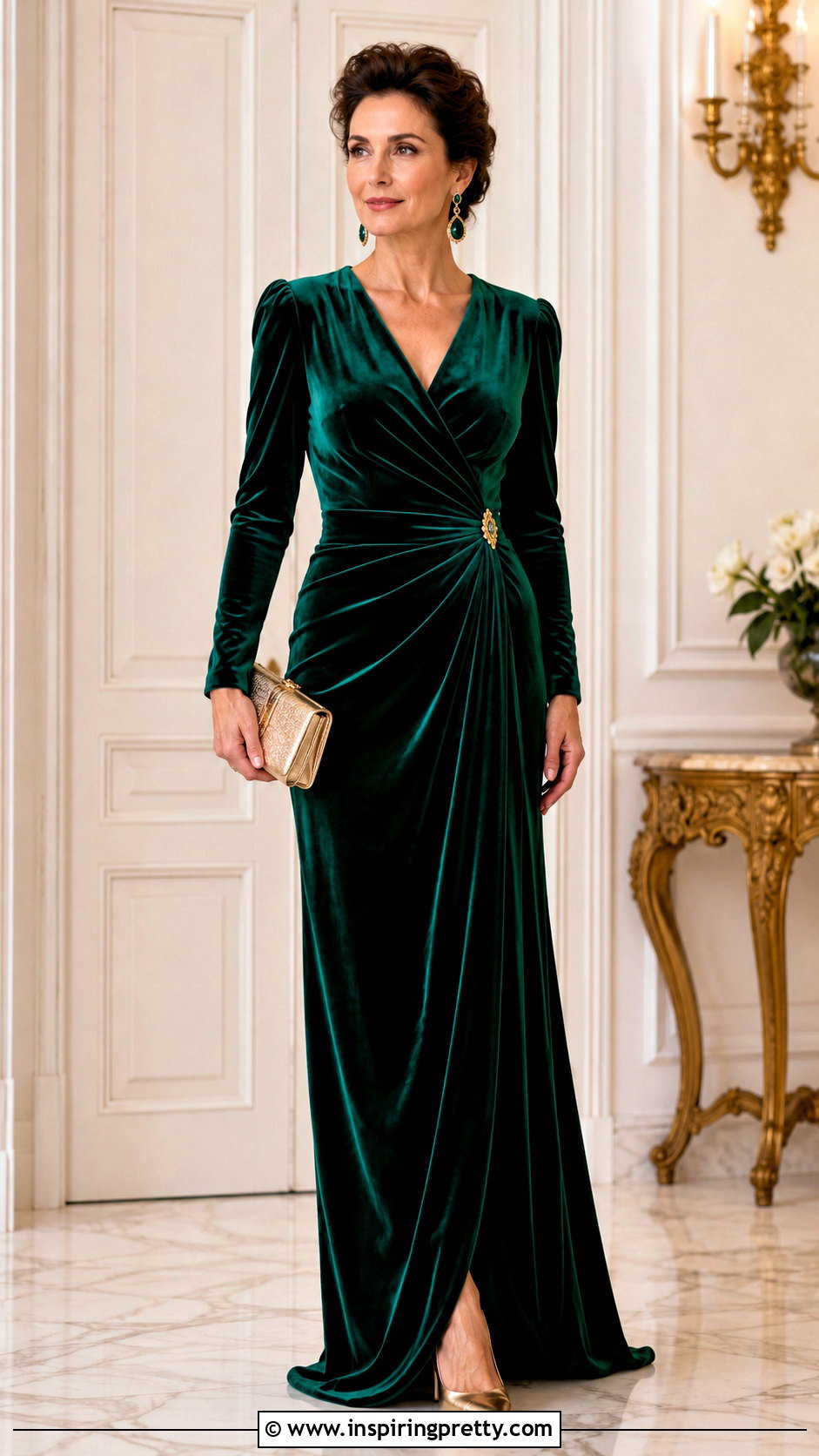
Emerald velvet shifts in color as it moves, deep green in shadow, brighter where the pile catches light. A long-sleeved column or fitted wrap suits it, with a defined waist so the heavy fabric doesn't swamp you. Gold heels or plain black pumps both work. An updo keeps hair off the pile, where it would cling. If full velvet feels too warm, look for a gown with velvet panels set into lighter crepe. Pearl or emerald earrings keep the focus on the color.
24. Cobalt Blue Architectural Couture Dress
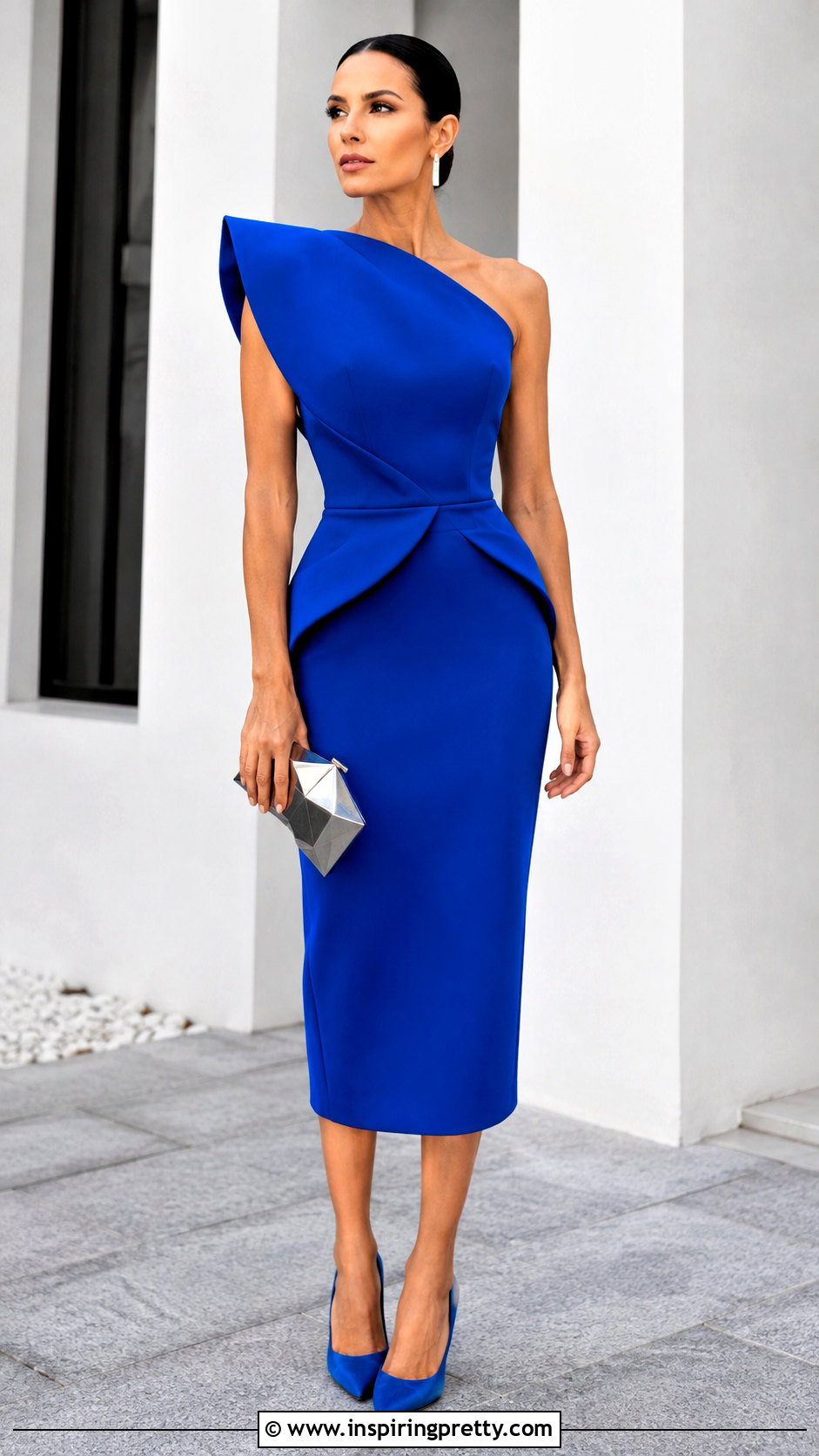
Cobalt is a color that shows construction clearly, so every line of an architectural dress needs to be exact. Sculpted shoulders, folded panels or a curved skirt hold their shape in crepe, mikado or bonded satin. The rule I follow is one volume at a time: big shoulders want a narrow skirt, and a sculptural skirt wants a close bodice. Simple pointed pumps in blue, silver or black. Hair pulled away from the shoulders lets the shape show.
25. Blush Rosette Couture Gown
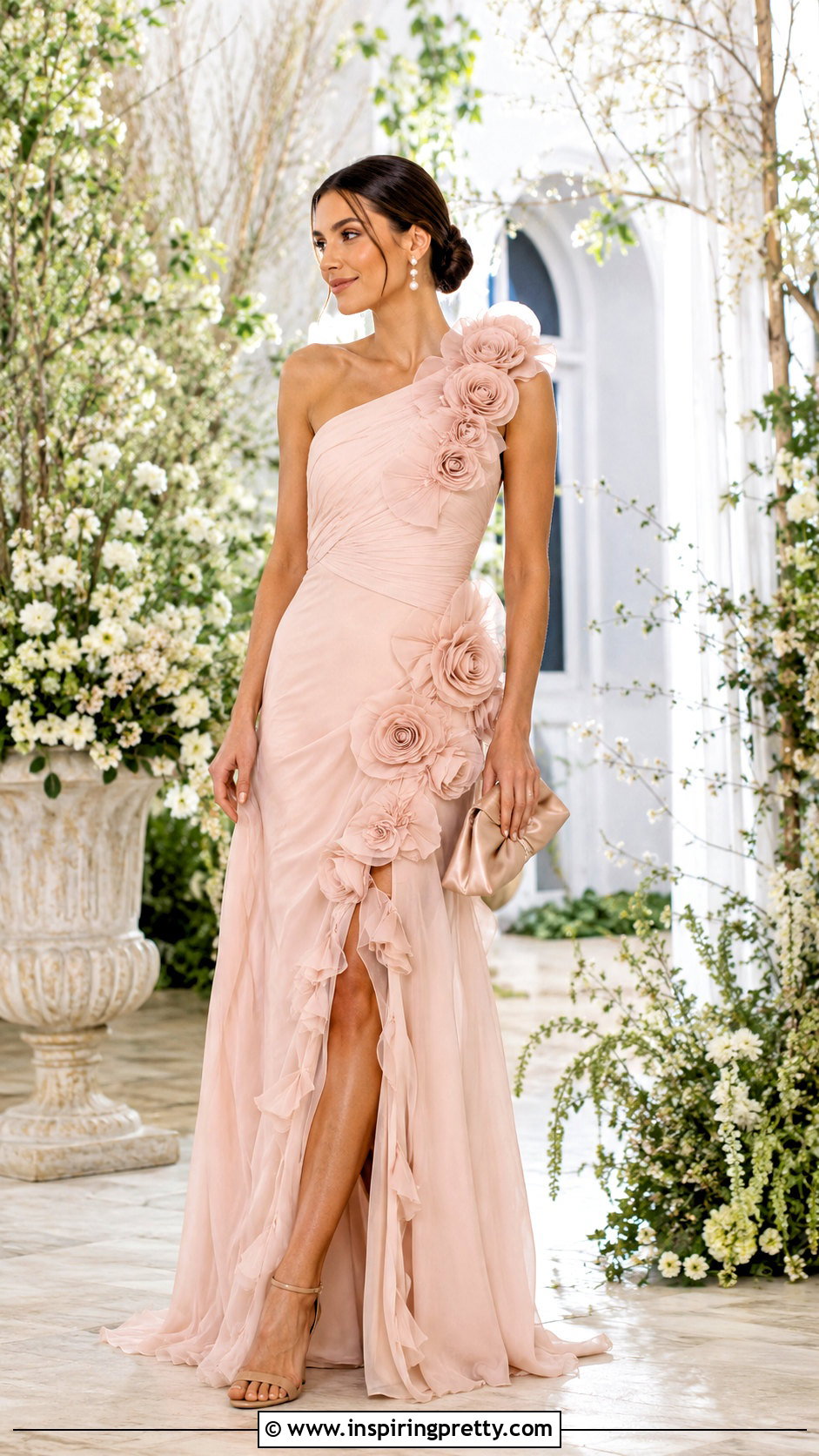
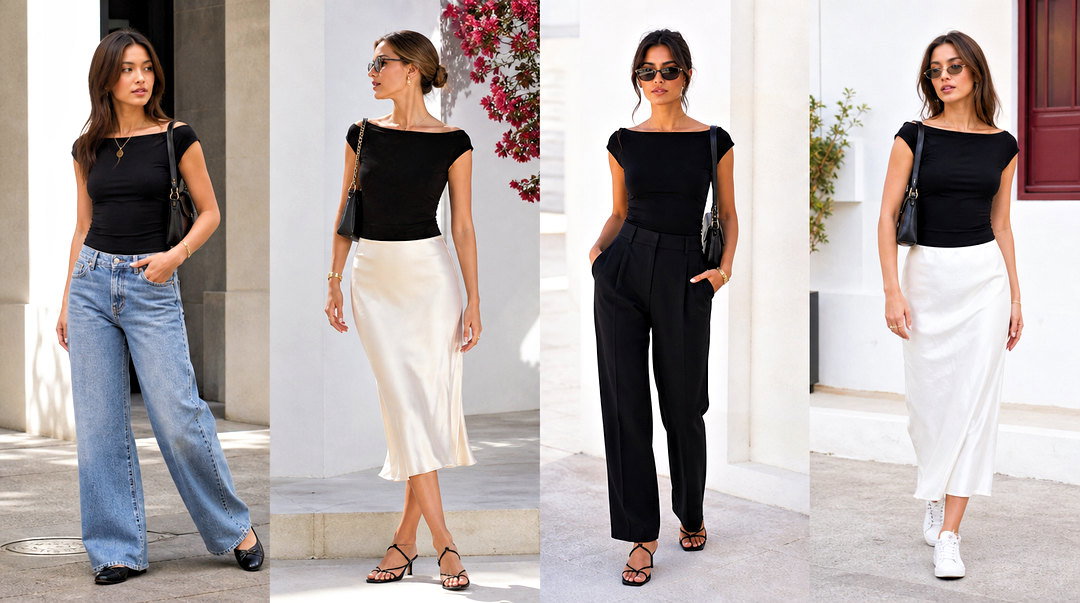
Fabric rosettes are made by hand, folded or rolled, then stitched on, and too many turn sweet very fast. Concentrate them along one shoulder or across the bodice and leave the rest of the gown plain. Pick a blush that suits your skin: cool ballet pink or warm peachy rose. Rosettes add volume where they sit, so they can create curves or draw the eye up. Pearl drops and a low bun keep it refined, and the textured flowers photograph well.
26. Gold Draped Couture Gown
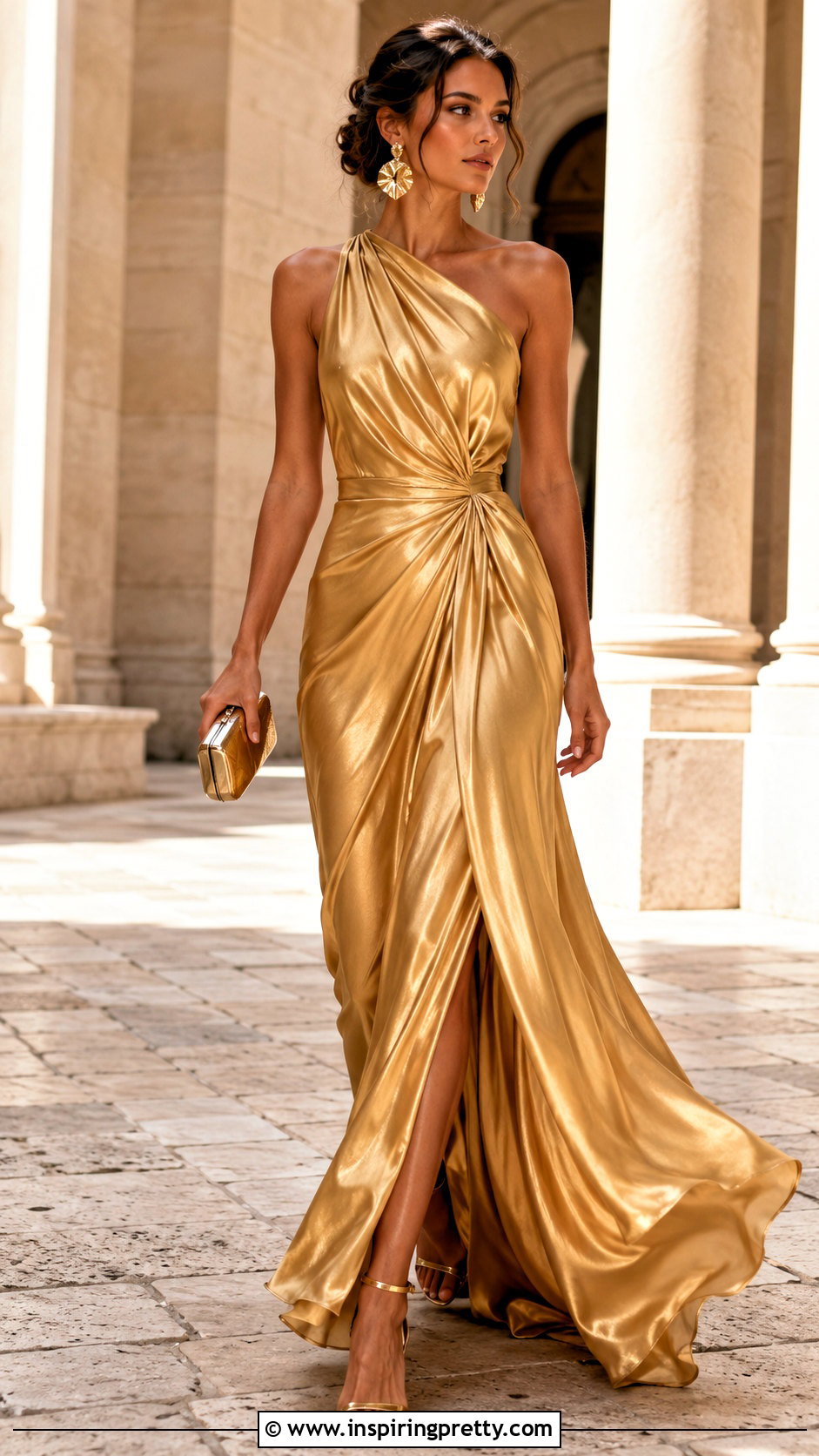
Gold drape looks luminous rather than flashy when the fabric is liquid enough to fall in soft folds: metallic jersey, liquid satin or fine lamé. A one-shoulder bodice or gathered waist adds movement. Leave enough ease to walk freely. I'd keep every gold the same tone, because shoes, clutch and earrings in three different golds look like an accident. Ruching at the waist helps define it and softens the middle. Hair in a low knot keeps the neckline clear.
27. Silver Futuristic Couture Dress
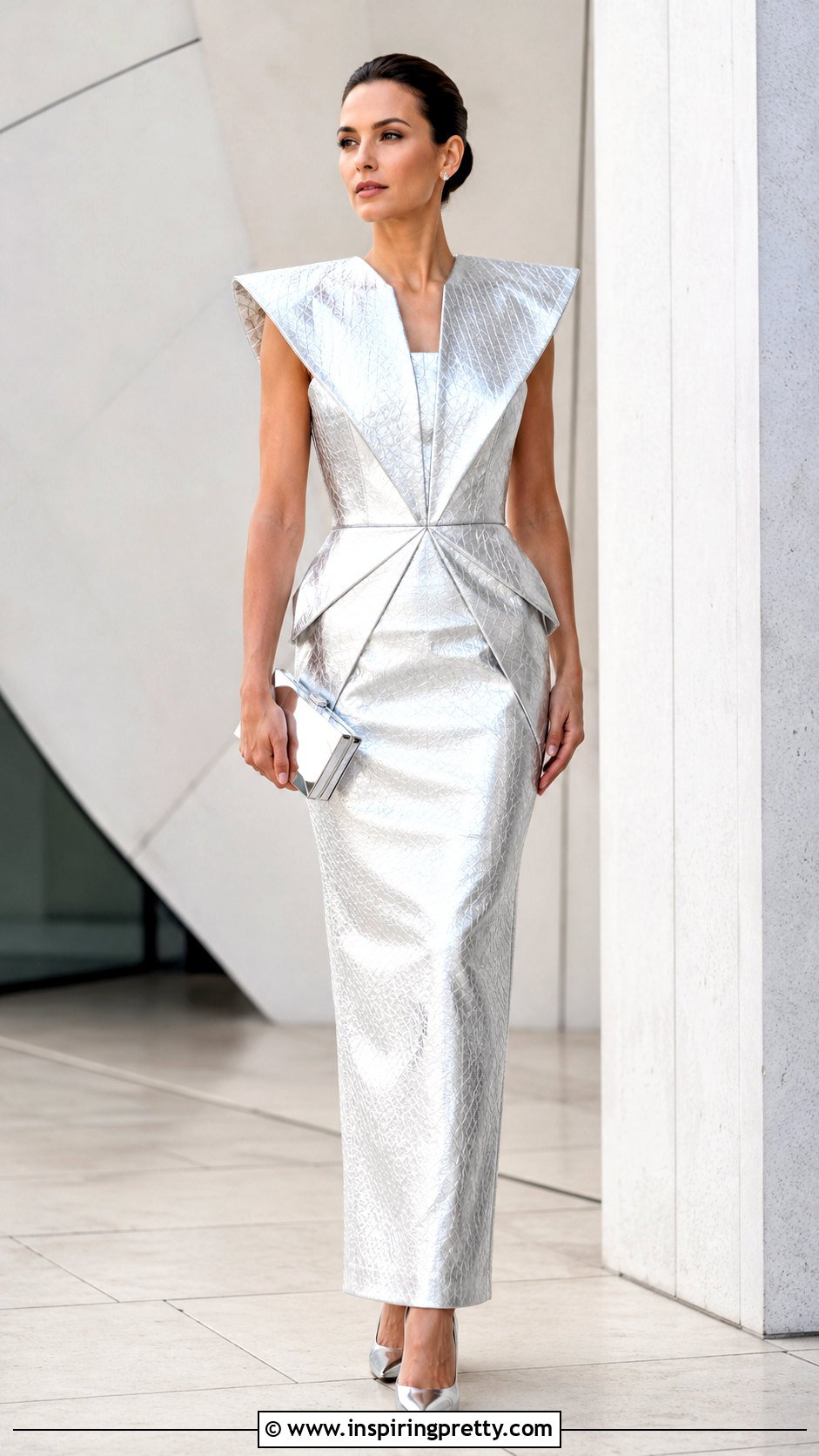
Silver and geometric seams look futuristic because they reflect light on hard edges. Metallic satin, reflective jacquard or fine beading all work in a column, structured mini or ankle-length gown. Angular shoulders or an asymmetric hem push the idea further. Metallic fabrics can feel scratchy, so a soft lining matters a lot here. One reflective accessory is plenty; stacking mirrored bags, silver shoes and chrome jewelry looks busy. Slicked-back hair keeps it clean.
28. Monochrome White Couture Outfit
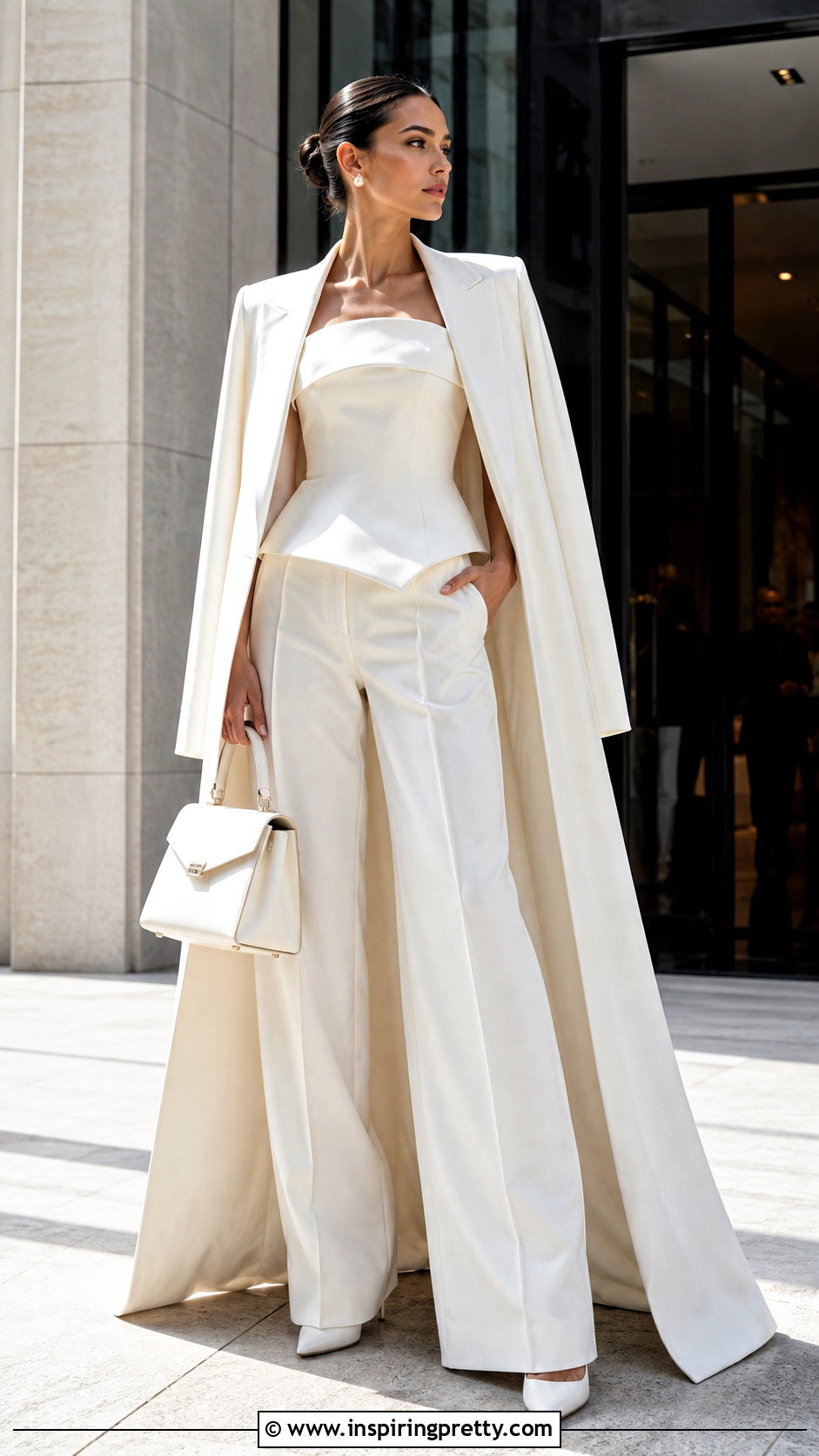
All white is about texture: matte crepe trousers, a glossy satin top, a little embroidery. Start with an ivory corset or silk blouse, add matching wide-leg trousers or a full satin skirt, and a white coat or cape. Whites come in warm and cool shades, and two clashing whites look dirty next to each other, so I compare them in daylight. Pearl or silver accessories add quiet contrast. Opaque, skin-toned underpinnings are essential.
29. Monochrome Black Couture Outfit
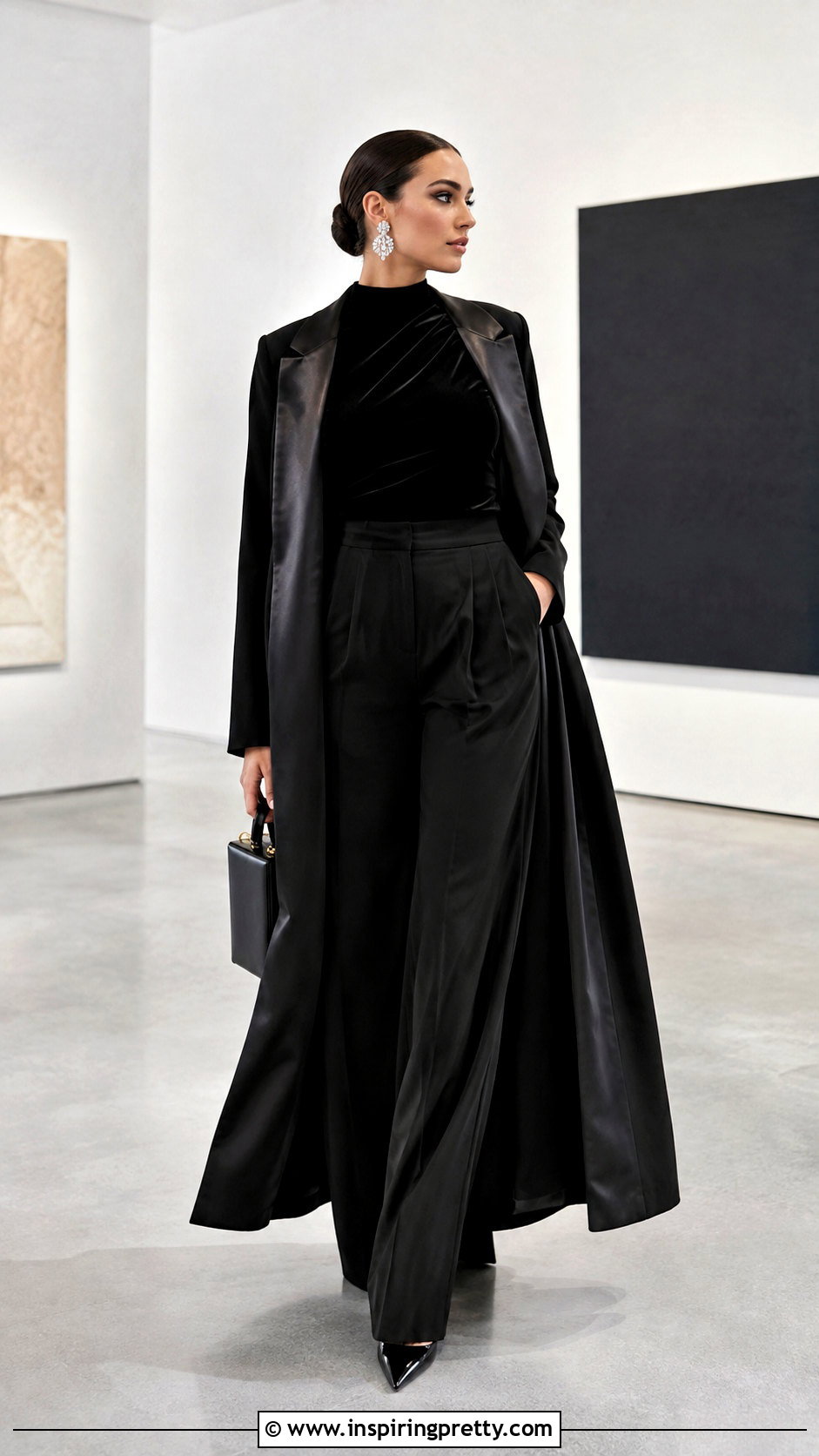
Black on black depends on proportion and texture, since color can't do any work. Pair velvet or satin on top with crepe trousers, a sculptural skirt or a long coat. Lace, feathers or beading add depth. Choose one dominant shape, strong shoulders, a narrow waist or a sweeping hem, so the outfit has a focus. Blacks vary from warm to blue-black, and I always compare them in daylight before putting them together. Pointed black heels and a small structured bag.
30. Seafoam Organza Couture Gown
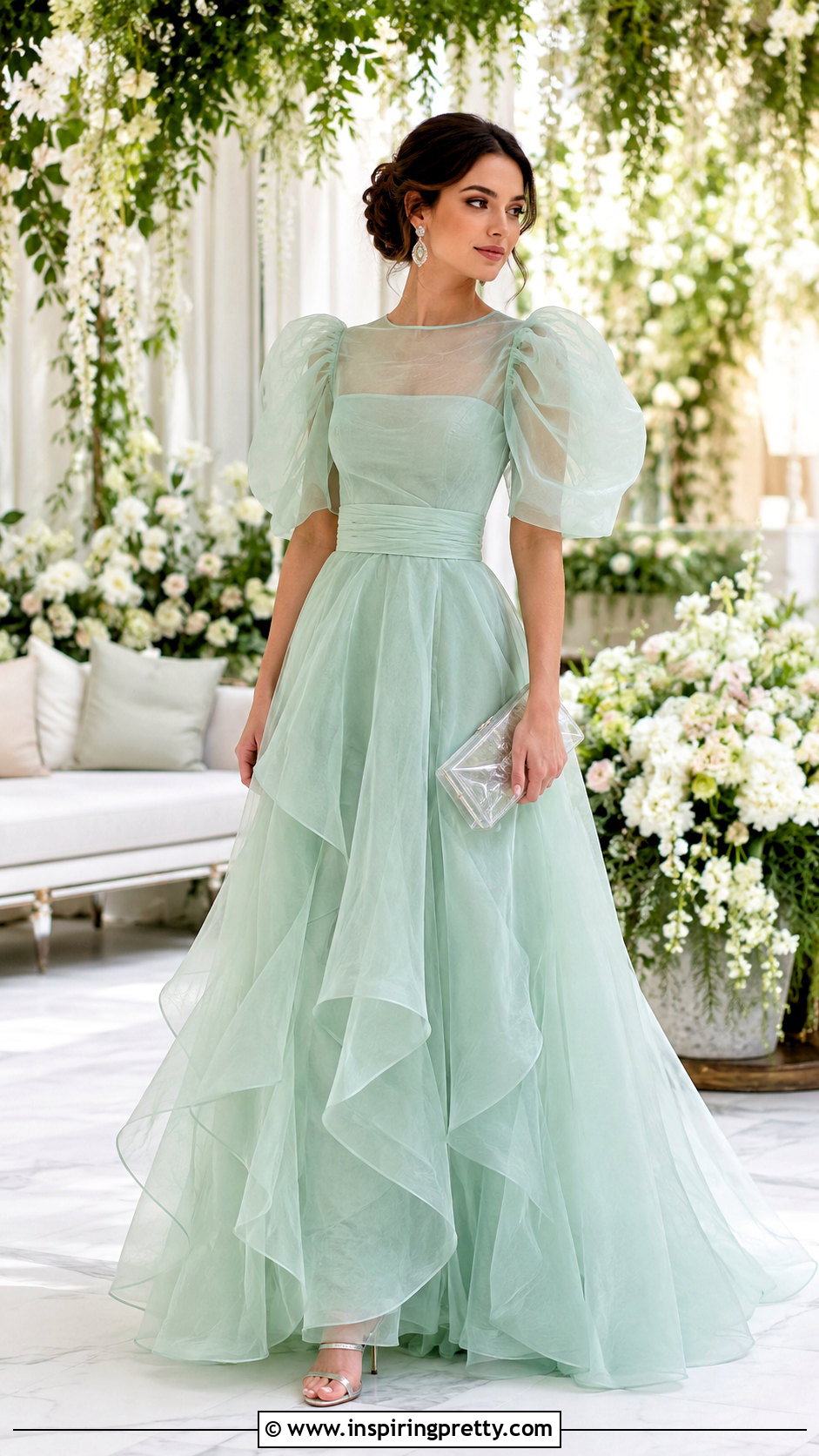
Organza is sheer, crisp and holds its shape, which makes it perfect for volume that doesn't weigh anything. Over a fitted lining, a seafoam overlay lets the body show through the airy outline. Puff sleeves or a layered skirt add drama, but one big feature is enough. Organza creases sharply and frays at raw edges, so look for neat rolled or bound hems. A defined waist balances wide sleeves. Silver heels and hair worn up let the sheer shoulders show.
31. High Neck Lace Couture Gown
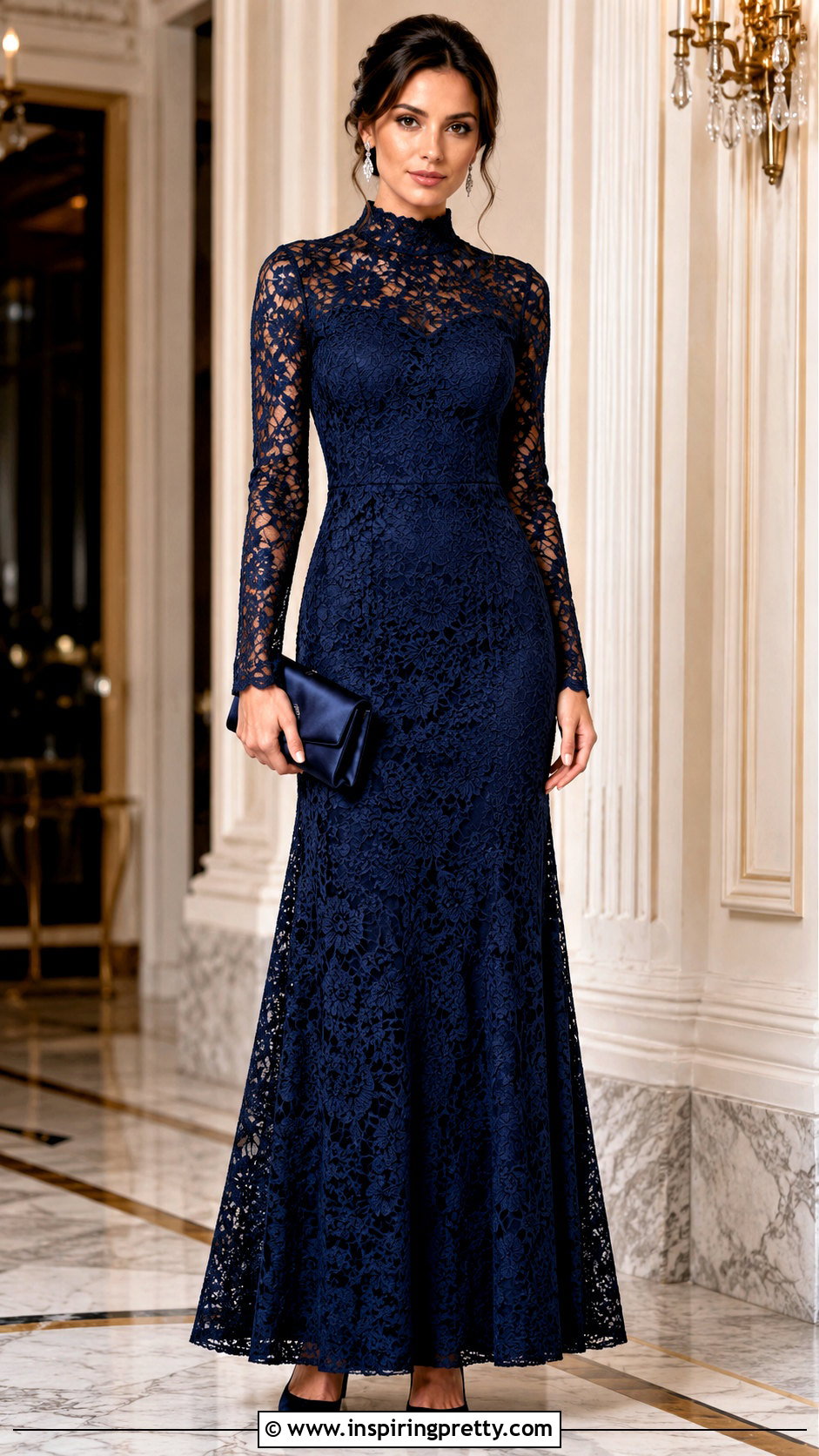
A high-neck lace gown covers a lot and still looks delicate. Choose lace with a clear, defined pattern and a lining matched to either the lace or your skin; a contrasting lining looks dated. In good lace gowns the motifs are cut around and overlapped at the seams so you can't see a straight seam line. A high collar with beading can scratch, so sit and turn your head in it before deciding. Skip the necklace. Hair up shows the lacework.
32. Off Shoulder Brocade Couture Gown
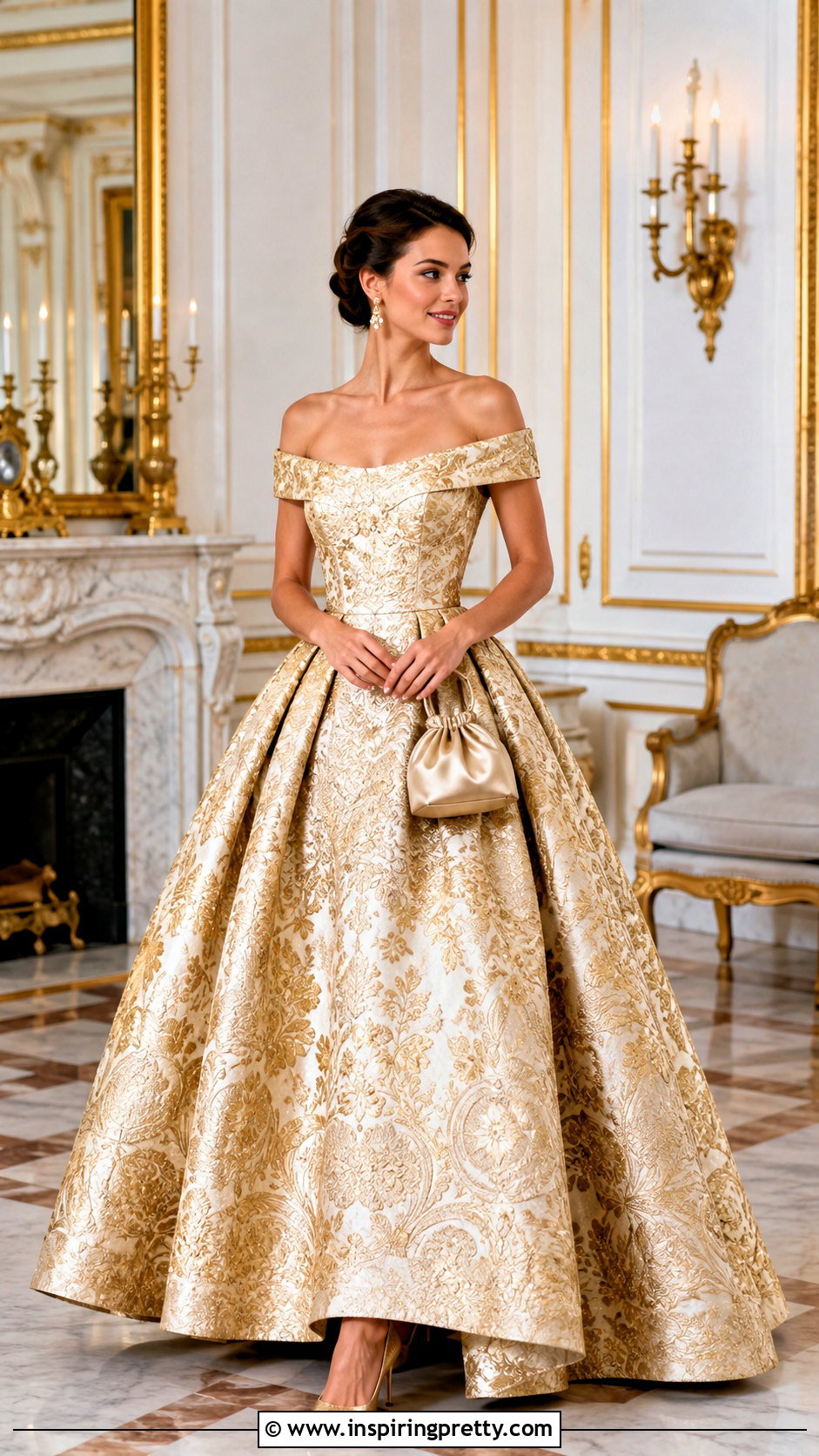
Brocade has its pattern woven in, often with metallic threads, and it's stiff enough to hold a dramatic shape. An off-the-shoulder bodice needs firm internal support, because brocade's weight pulls it down. Match the earrings to one color in the weave. Brocade bulks up at seams, so precise seaming and controlled gathering keep it from widening the waist. Plain pumps and a smooth satin bag let the fabric lead. Hair up or to one side shows the shoulders.
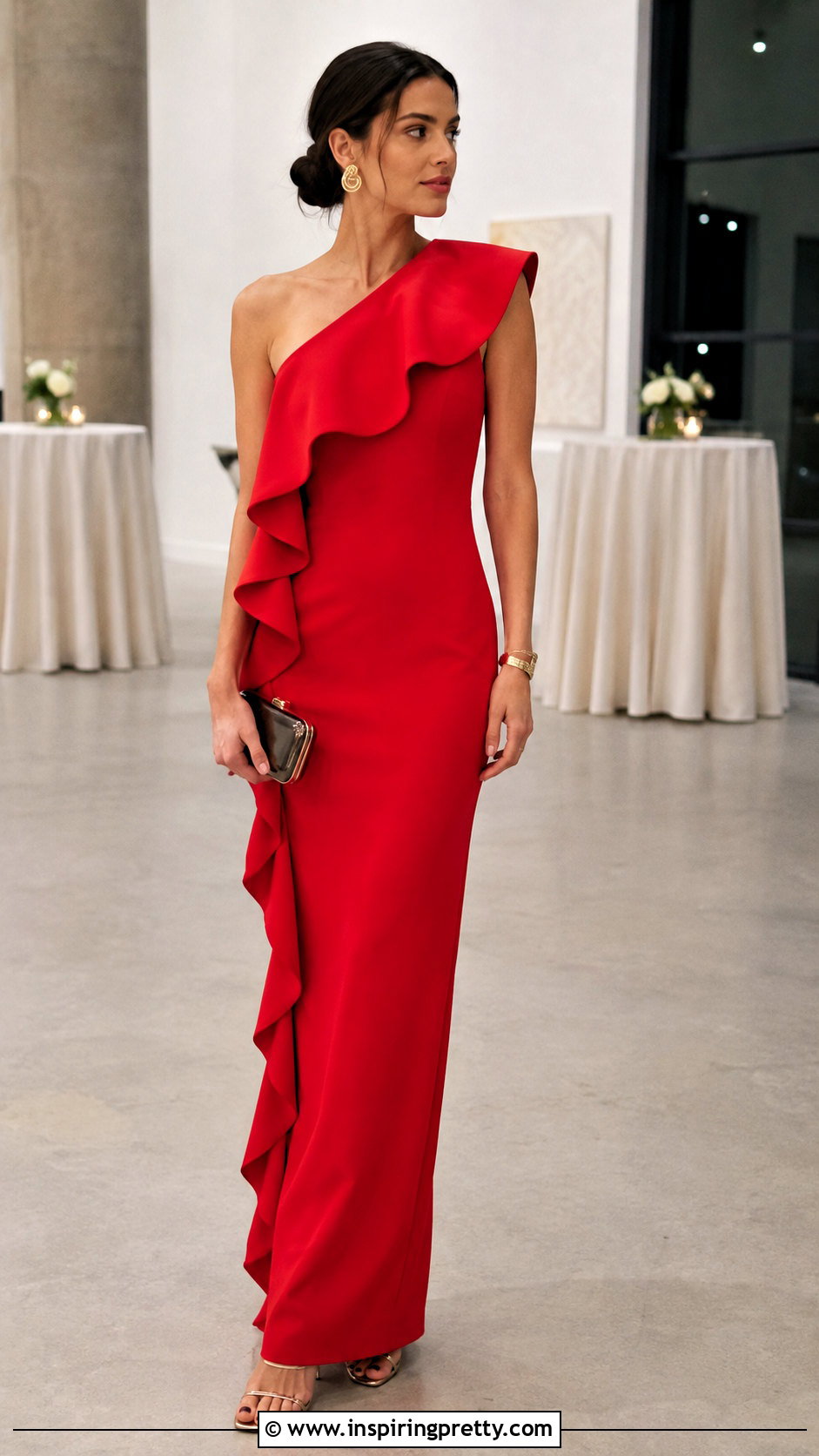
33. One Shoulder Ruffle Couture Dress
A ruffle that runs diagonally across one shoulder frames the upper body without crowding the face. Make sure it falls softly rather than standing stiff near the ear. Balance it below with a slim column or mermaid skirt. Solid red, black or white keeps the outline easy to read. Wear a bracelet on the bare arm, and skip big earrings if the ruffle sits close to the ear. Shoulder support inside the bodice keeps the neckline from slipping as the evening goes on.
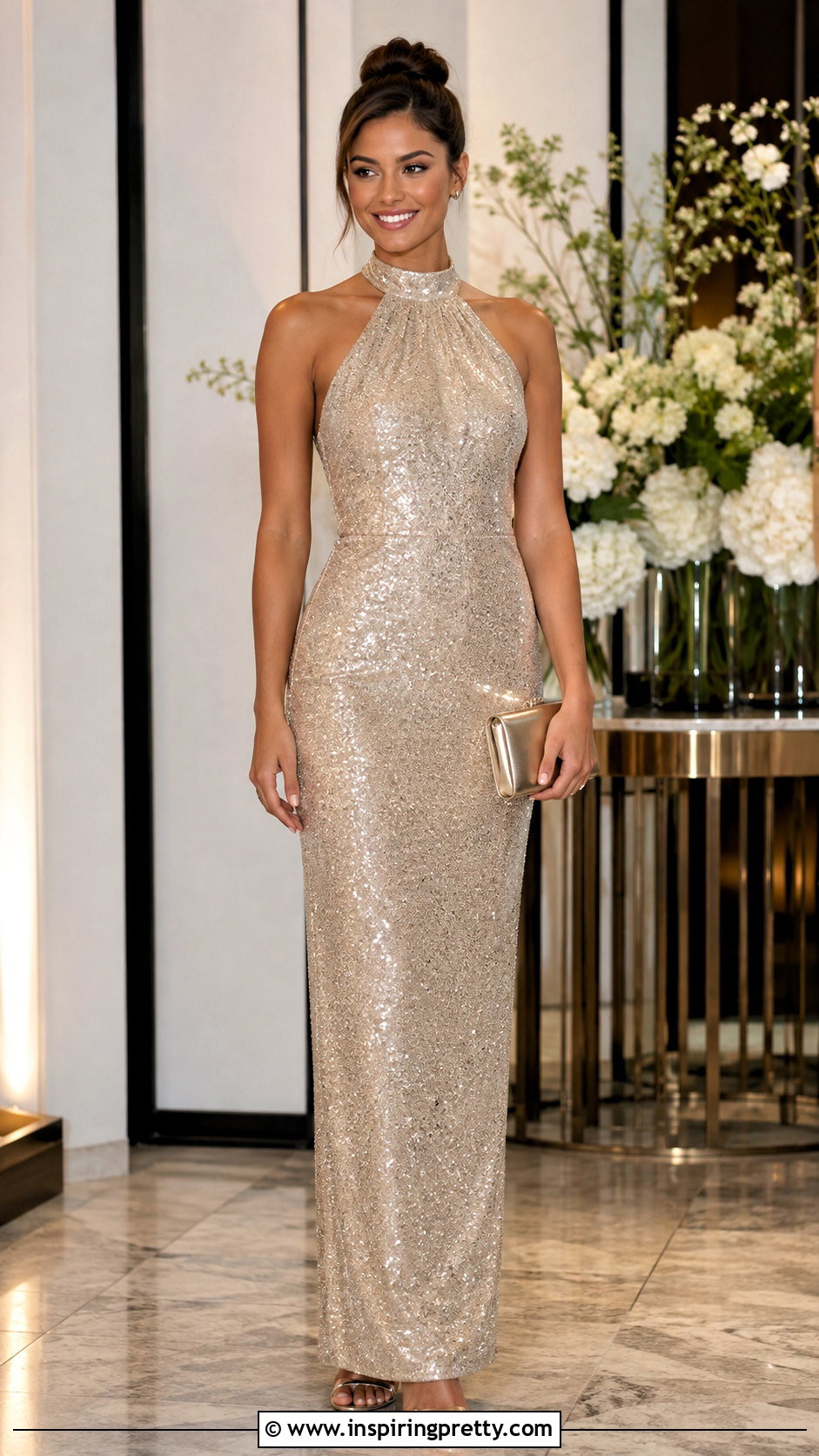
34. Halter Sequin Couture Gown
Halter necklines make a long line from shoulder to floor, and small, closely set sequins keep the surface smooth; big paillettes look bulky on a slim column. The armholes need a proper lining because sequin edges scratch the inner arm. Stretch backing helps when sitting. No necklace, since the halter already structures the neck. A high bun shows the back. Sequins snag on delicate fabrics, so keep wraps and bags smooth.
35. Strapless Bow Couture Gown
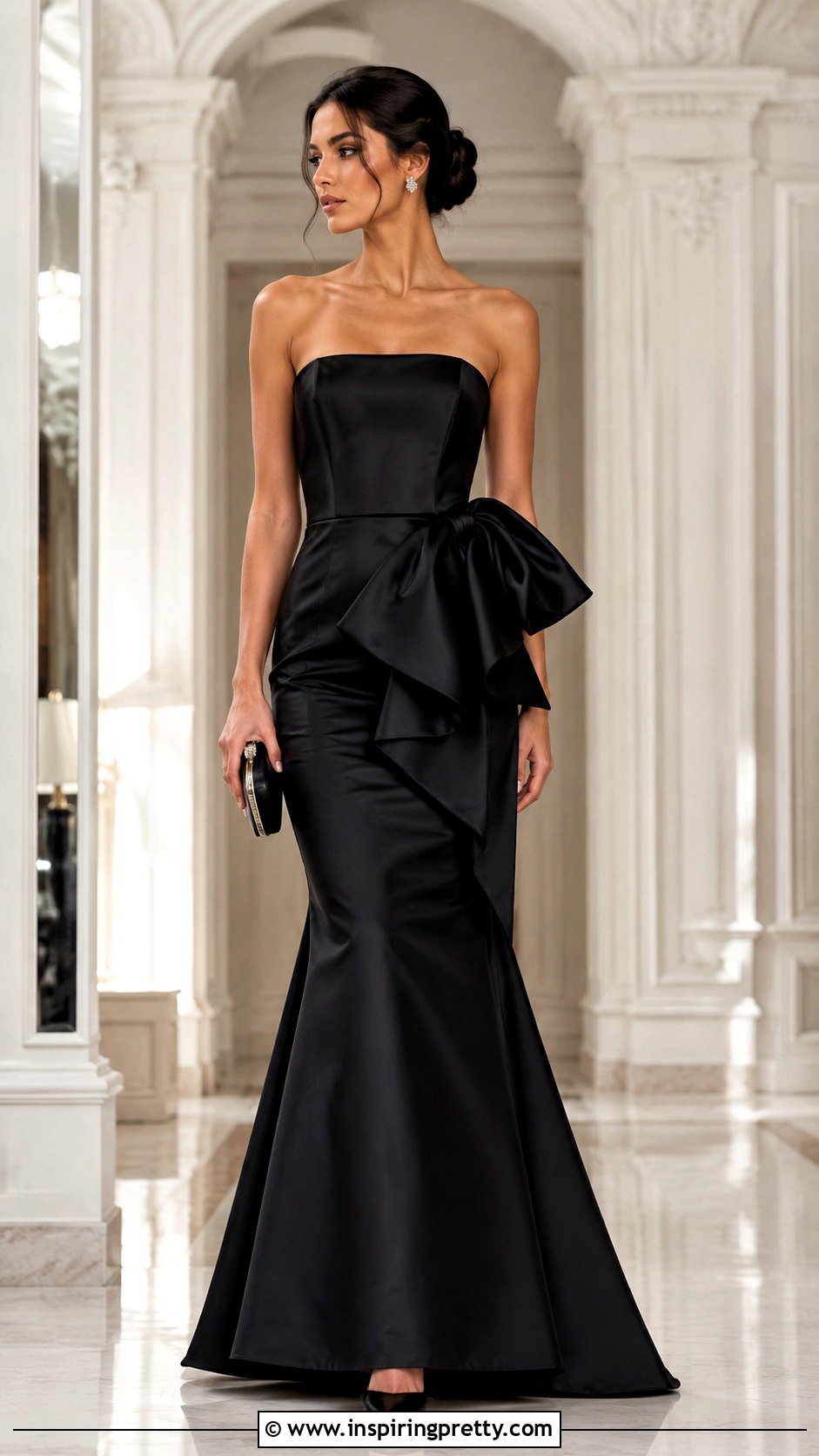
One big bow can turn a simple strapless gown into the one people remember. One bow, though, not several. Satin, taffeta and mikado hold a bow's loops; soft fabrics flop. The strapless bodice needs boning, cups and a waist stay to stay up without hitching. Where the bow sits changes the effect: at the shoulder it lifts the eye, at the waist it defines the middle, at the back it gives a moment when you walk away. Keep the earrings understated.
36. Long Sleeve Crystal Couture Gown
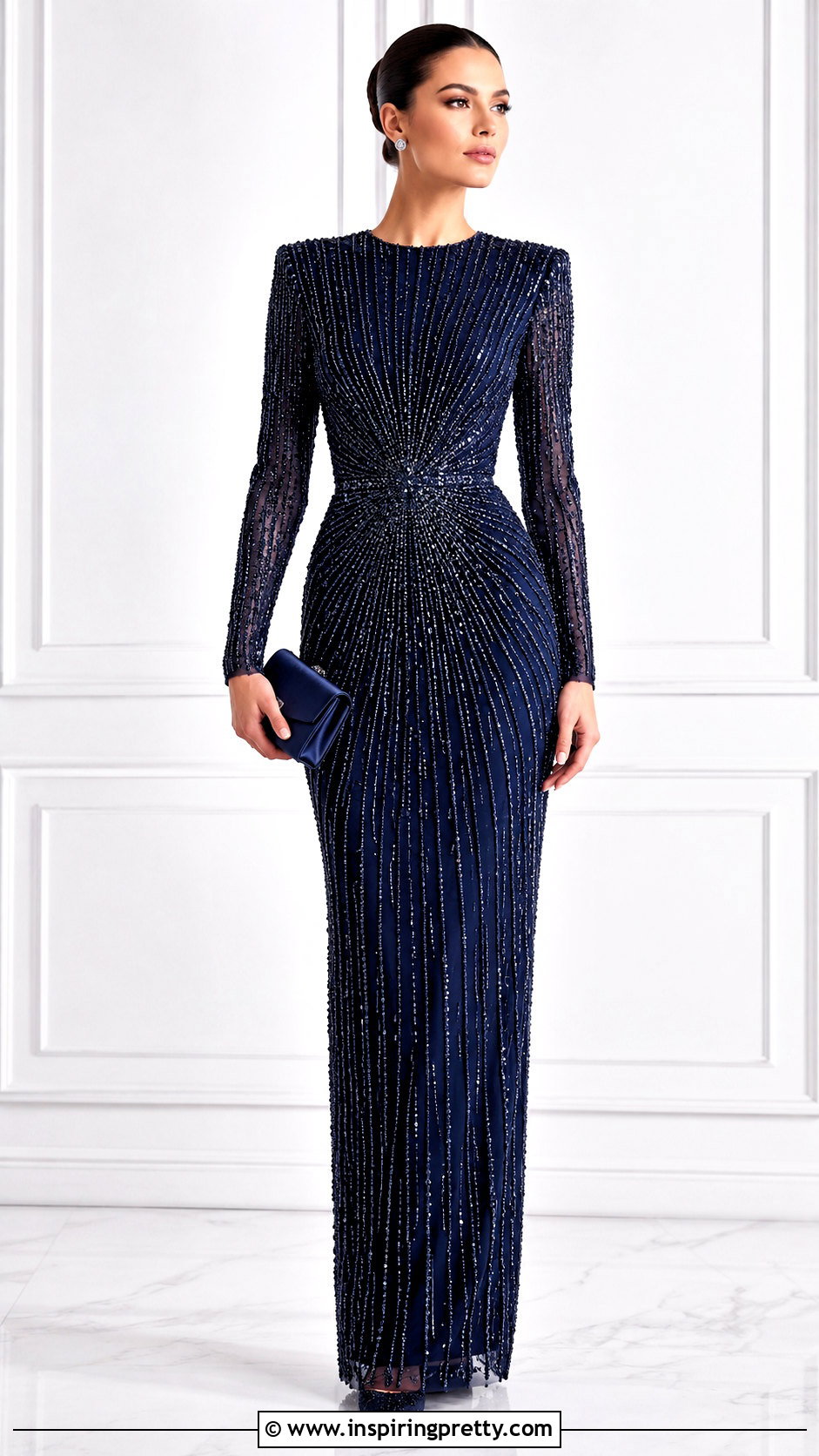
Long sleeves covered in crystals give full coverage with all the sparkle of an evening gown. A fitted mesh or crepe base with tonal stones looks richer than a riot of colors. Check the insides of the sleeves and seams, since exposed bead threads and stone settings scratch. Correctly fitted shoulders matter more than usual because crystals are heavy and drag a badly fitted sleeve down. Hair pulled back stops strands catching. A plain satin clutch and small earrings let the gown carry the sparkle.
37. High Low Couture Dress
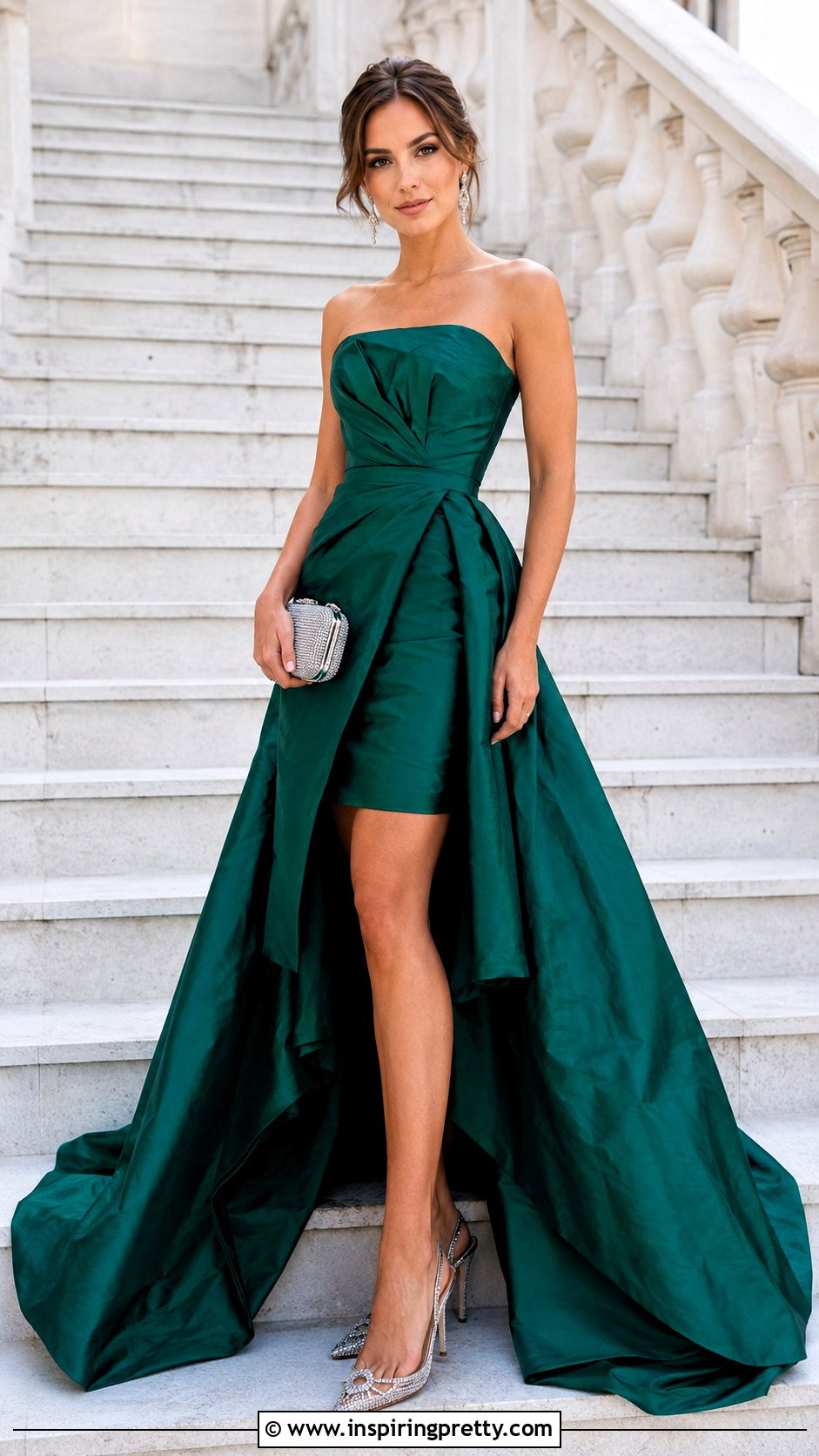
A high-low hem shows your shoes at the front while the back keeps a long sweep. Taffeta, organza and mikado give crisp volume; chiffon gives softness. Because the shoes are on display, this is the place for embellished pumps or satin slingbacks. Keep the bodice fitted so the changing hem has a stable anchor. I check the back hem in the shoes you'll wear, since a train that's only slightly too long gets stepped on all night.
38. Tea Length Couture Dress
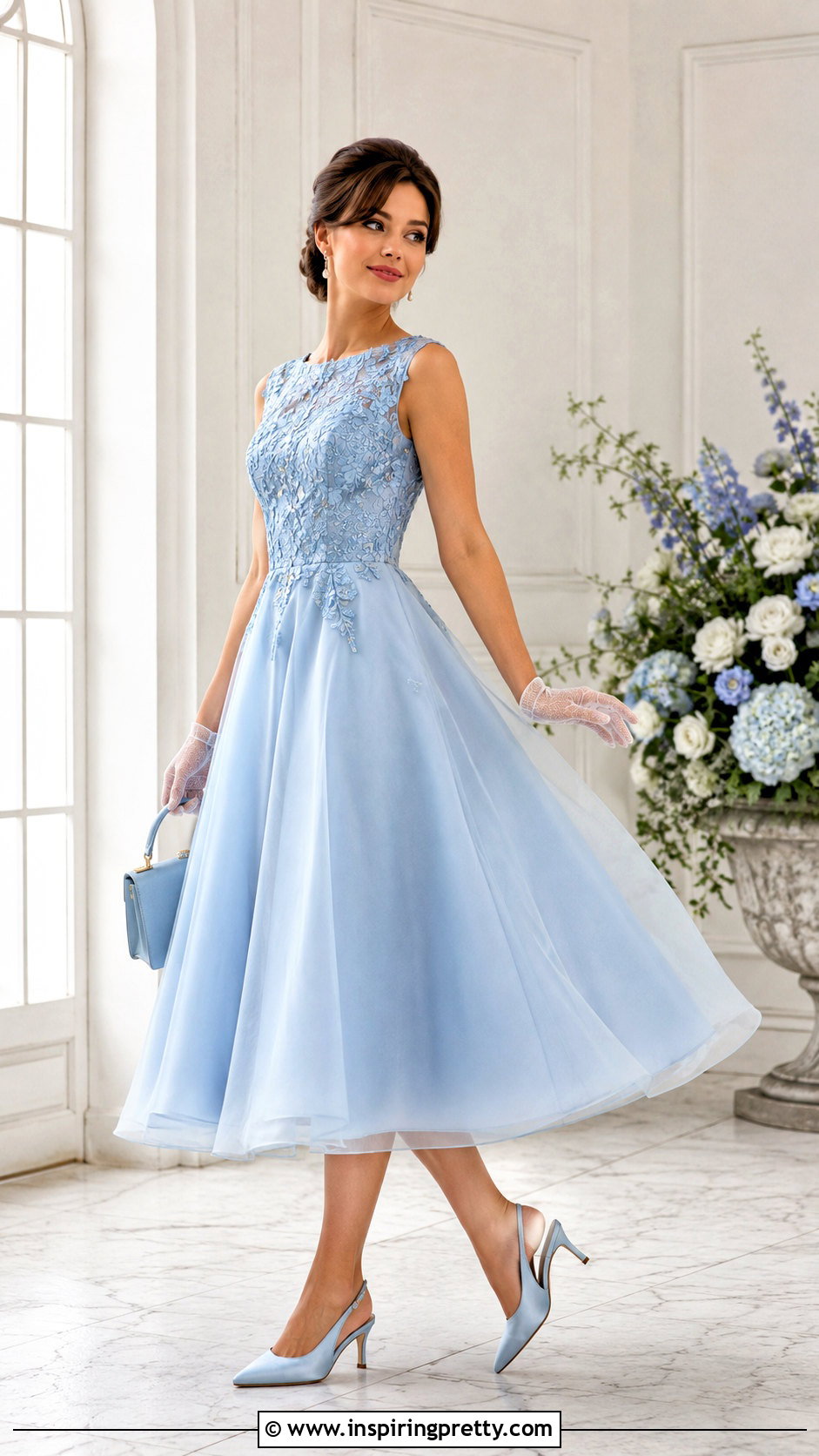
Tea length, ending between lower calf and ankle, is the most practical formal hem: dressy enough for a reception, easy to walk and dance in. A fitted bodice with satin, organza, brocade or tulle below gives structure. The hem shows the lower leg, so shoes matter: pointed pumps or delicate sandals. Petite women usually suit a slightly higher hem; taller women carry a fuller skirt. Gloves add a vintage touch.
39. Couture Mini Dress With Opera Gloves
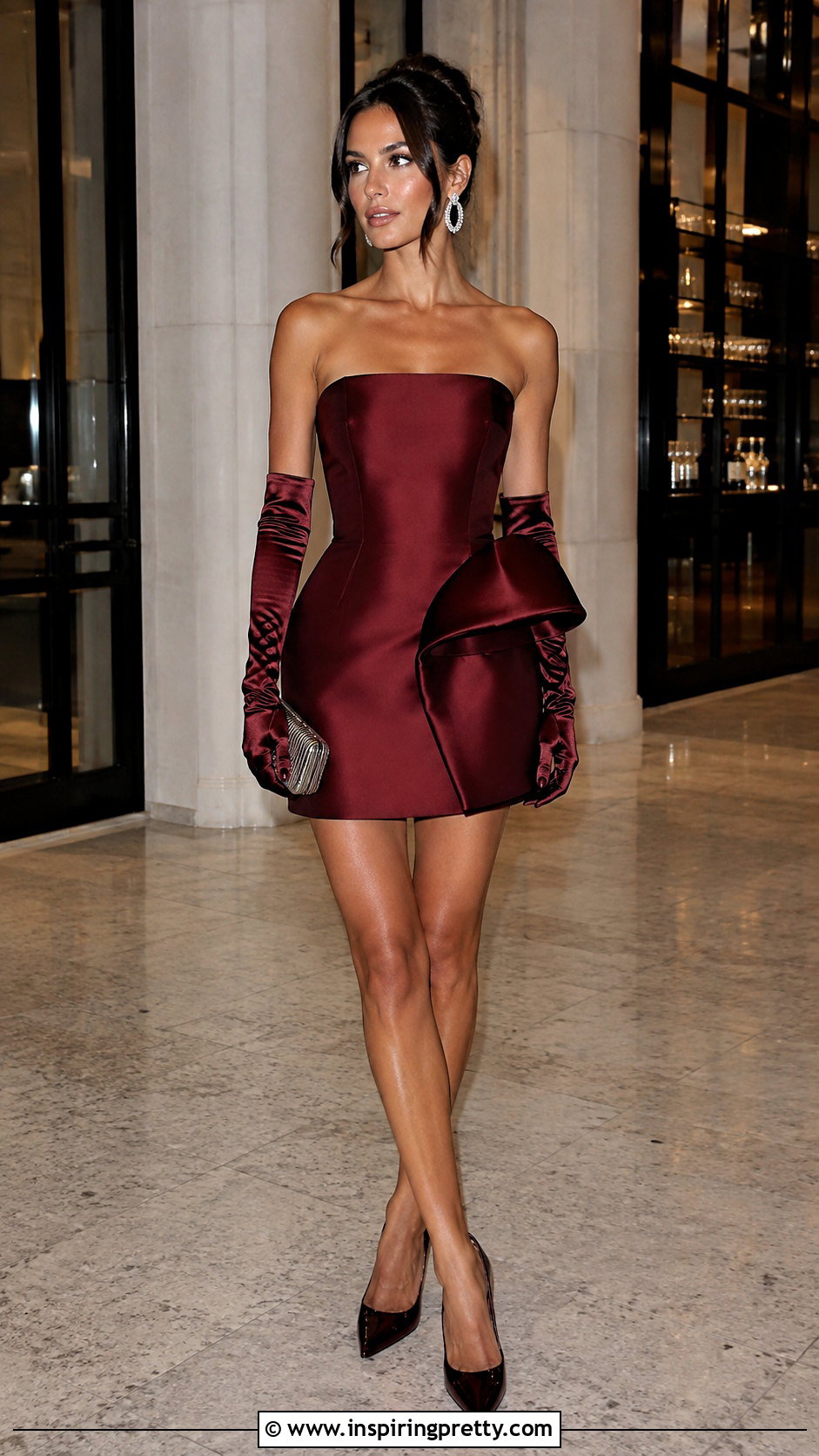
A short structured dress with opera gloves is bold because it mixes a modern hem with a very old-fashioned accessory. Satin, velvet or brocade gives the mini enough weight to look formal. Opera gloves traditionally reach above the elbow; make sure they fit snugly so they don't slide down. Earrings should sit clear of the neckline, and no necklace if the dress already has detail. Sit in the mini before the event to check coverage.
40. Structured Couture Coatdress
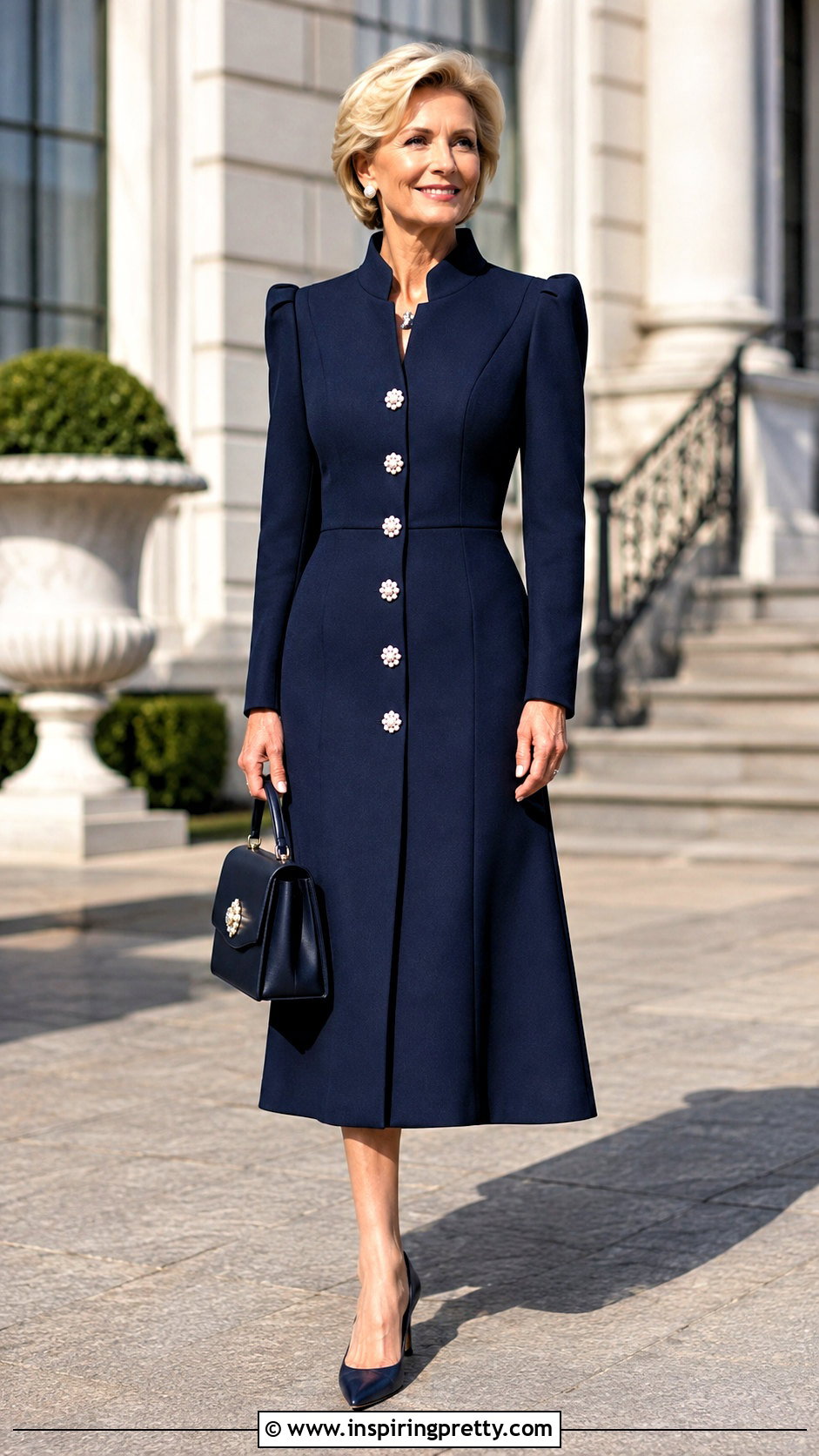
A coatdress is cut like a coat, with defined shoulders and a front closure, but worn as a dress. Wool crepe or silk faille works year-round; brocade suits winter. Covered or jeweled buttons are where the detail goes. A lightweight slip underneath helps it hang and stops the front from gaping between buttons. A narrow belt can sharpen a straight cut. Pumps, a top-handle bag and pearls keep it polished for a daytime ceremony.
41. Cocoon Coat And Slip Dress Couture Outfit
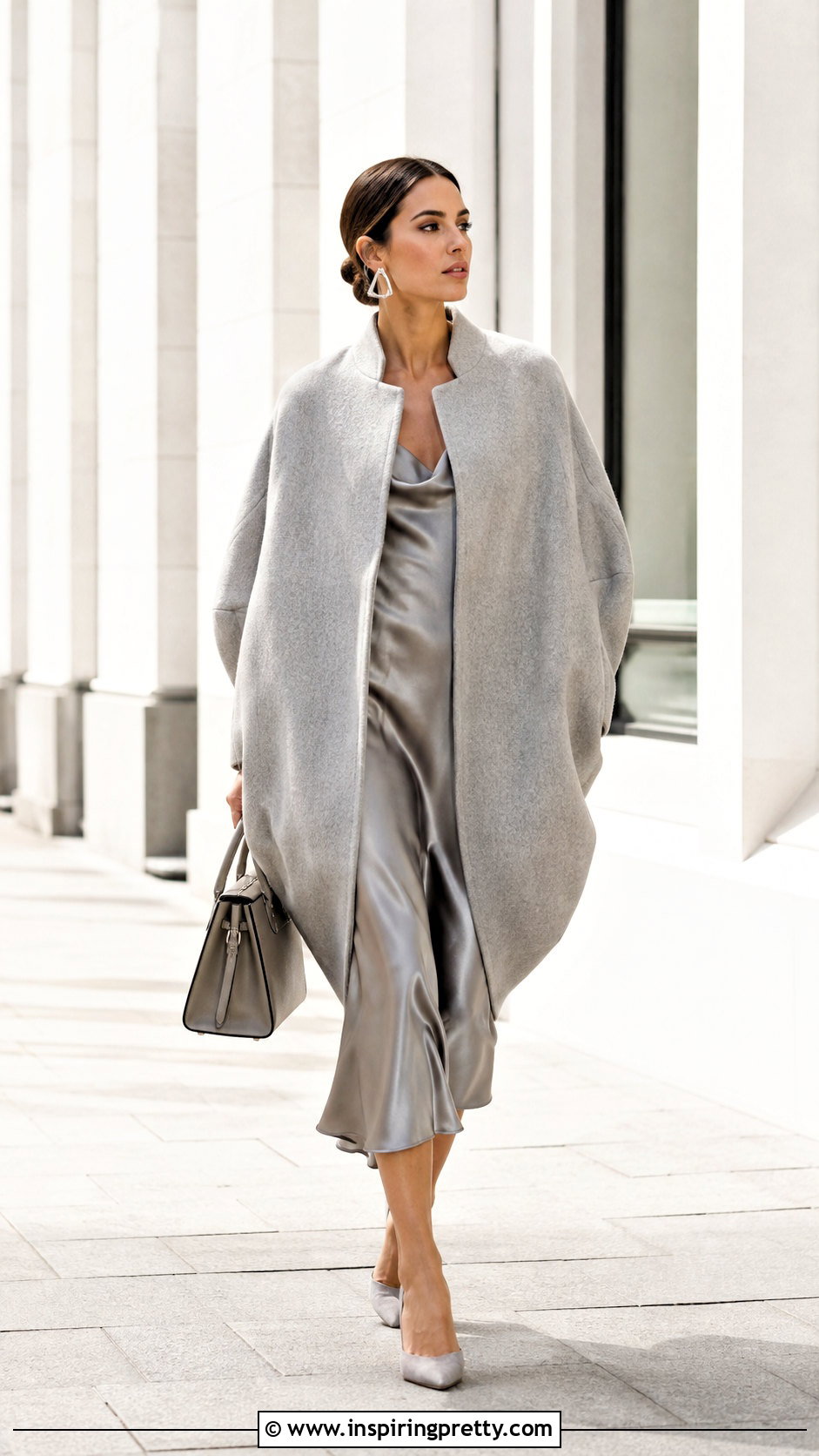
A cocoon coat curves outward at the back and in at the hem, so all its volume sits around the body. Under it, keep everything narrow: a silk or satin slip dress that follows the body. Same color family for both looks most designed. Wear the coat open to show the contrast. On a petite frame, a cocoon that ends at the knee is easier than a long one, and sleeve length matters: too long and the whole thing looks borrowed.
42. Couture Trench Gown
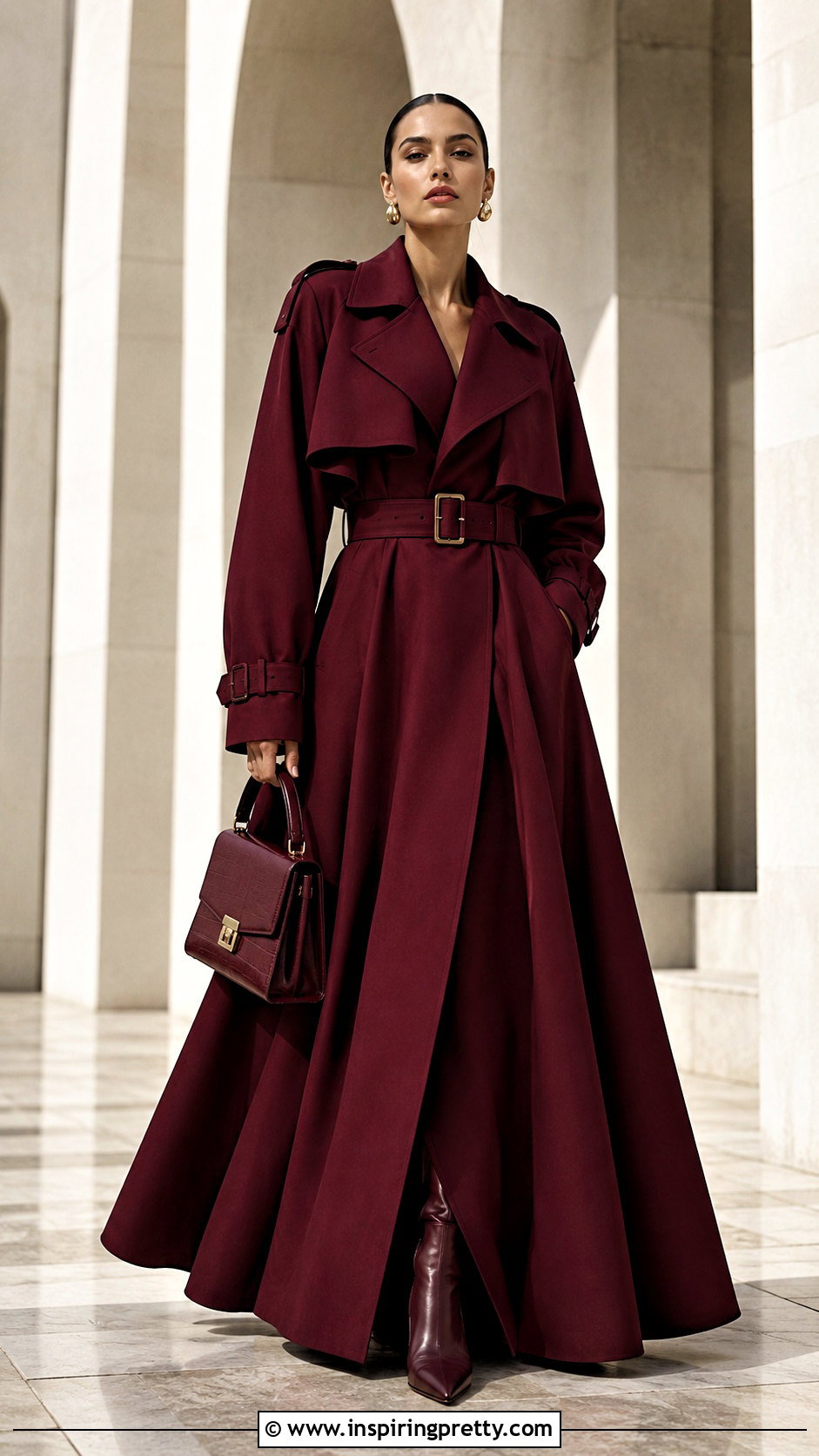
A trench gown takes the familiar trench details, lapels, storm flaps, cuff straps and a belt, and runs them to the floor. Satin or silk faille makes it formal; lightweight wool or cotton makes it daytime. Wear it closed as a dress or open over a fitted slip. Tie the belt at front or side to keep the waist defined. Camel is classic; black or burgundy feels more evening. The hem should clear the floor, as a long trench skirt collects dust quickly.
43. Knit Couture Skirt Set
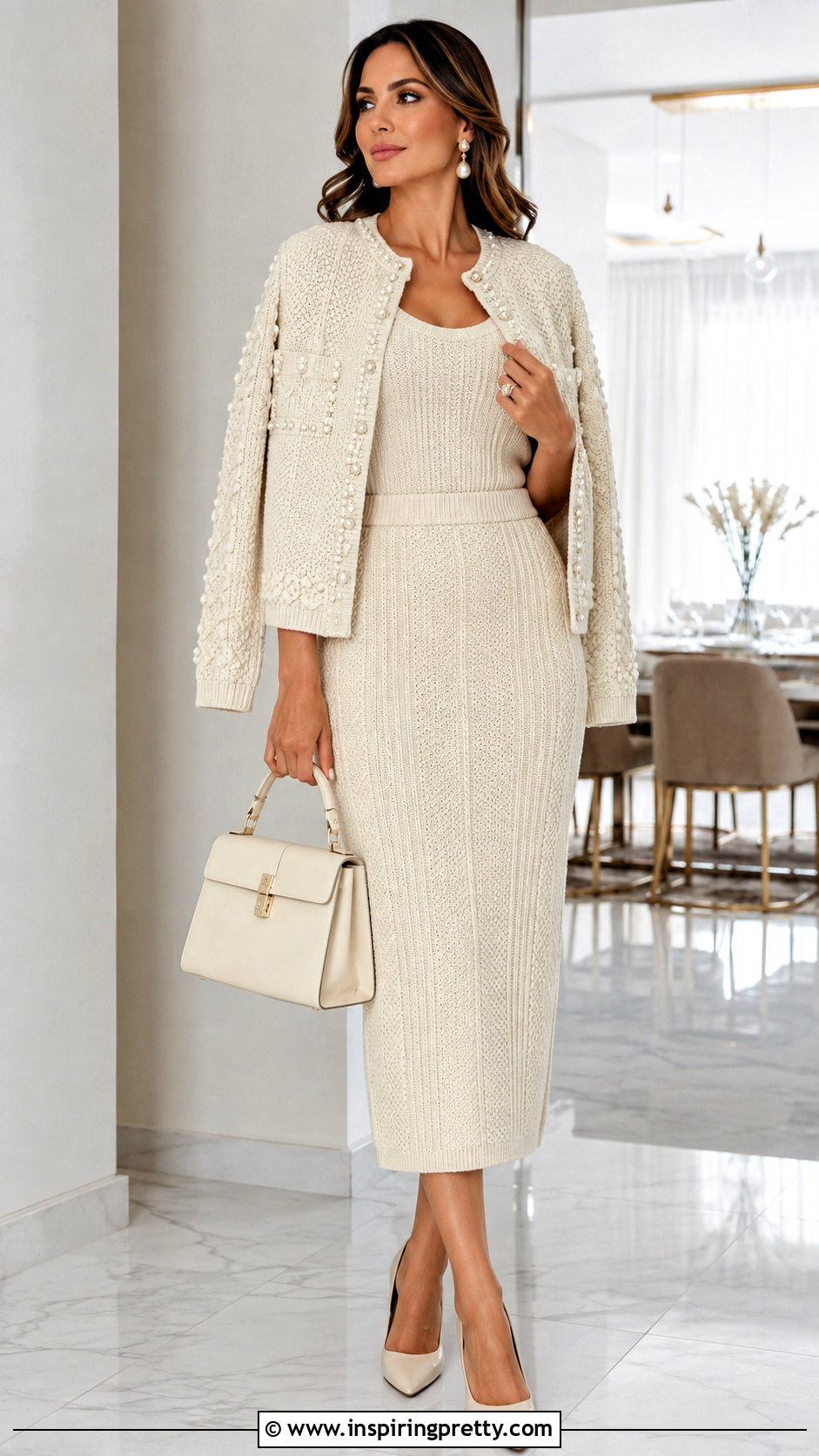
A knit set looks couture when the finishing is exact: neat ribbing, dimensional stitches, beaded trim or hand-applied flowers. A fitted cardigan or peplum sweater with a matching midi skirt is the base. Knit needs good recovery, or the skirt seat bags out after a few hours of sitting. A narrow belt defines a soft knit. Monochrome cream or a strong jewel tone keeps it cohesive. Store knit sets folded, never on hangers.
44. Crochet Couture Maxi Dress
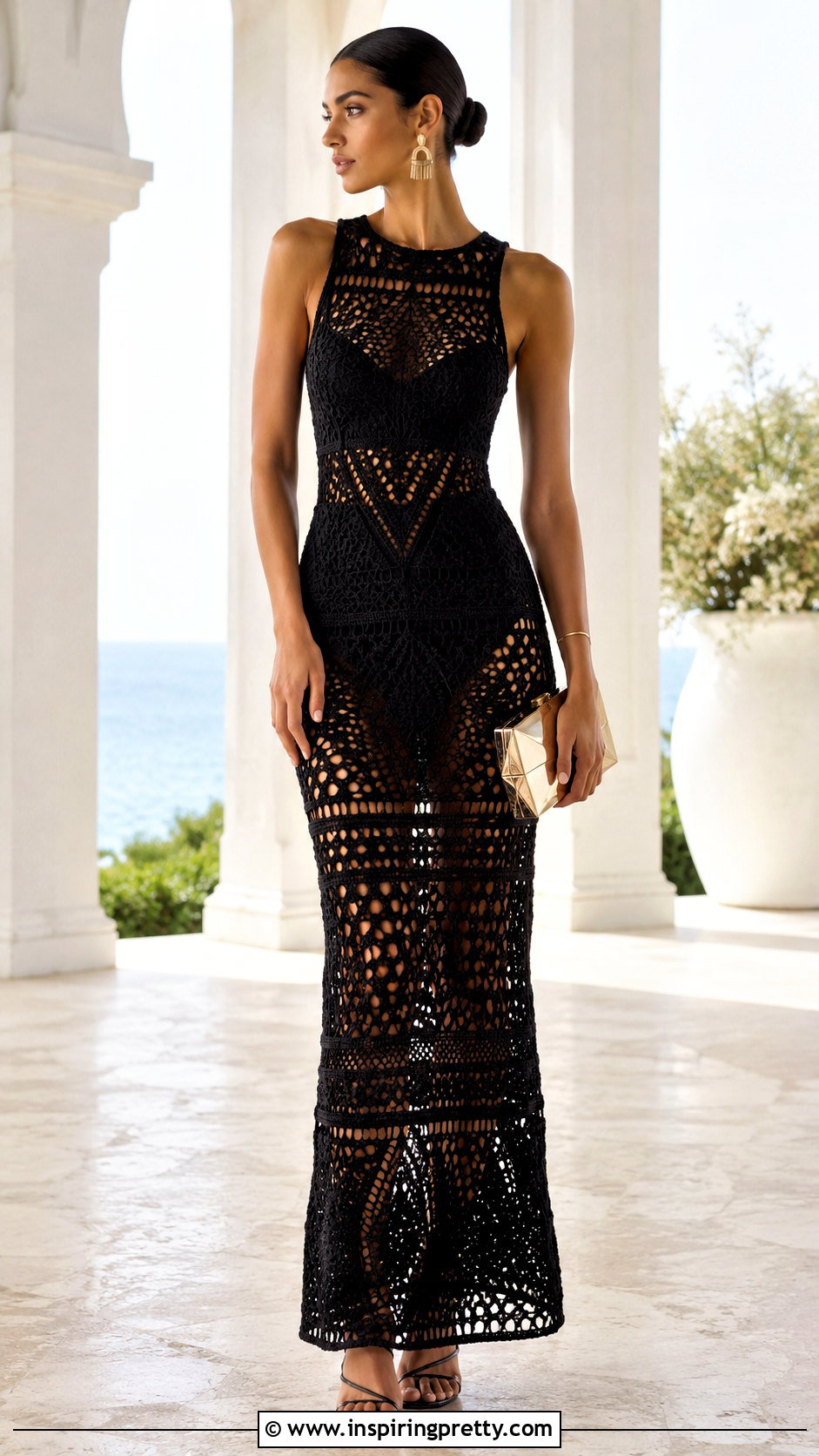
Crochet becomes evening wear with a proper lining and sharp accessories. Medallion or floral crochet in ivory, black or metallic yarn looks deliberate; a tonal slip underneath gives coverage without hiding the work. Crochet stretches downward under its own weight, so a floor-length crochet dress can grow in length over an evening. I'd hem it slightly shorter than you think. Minimal sandals and a structured clutch. Keep the hair clean so the texture leads.
45. Sculptural Leather Couture Outfit
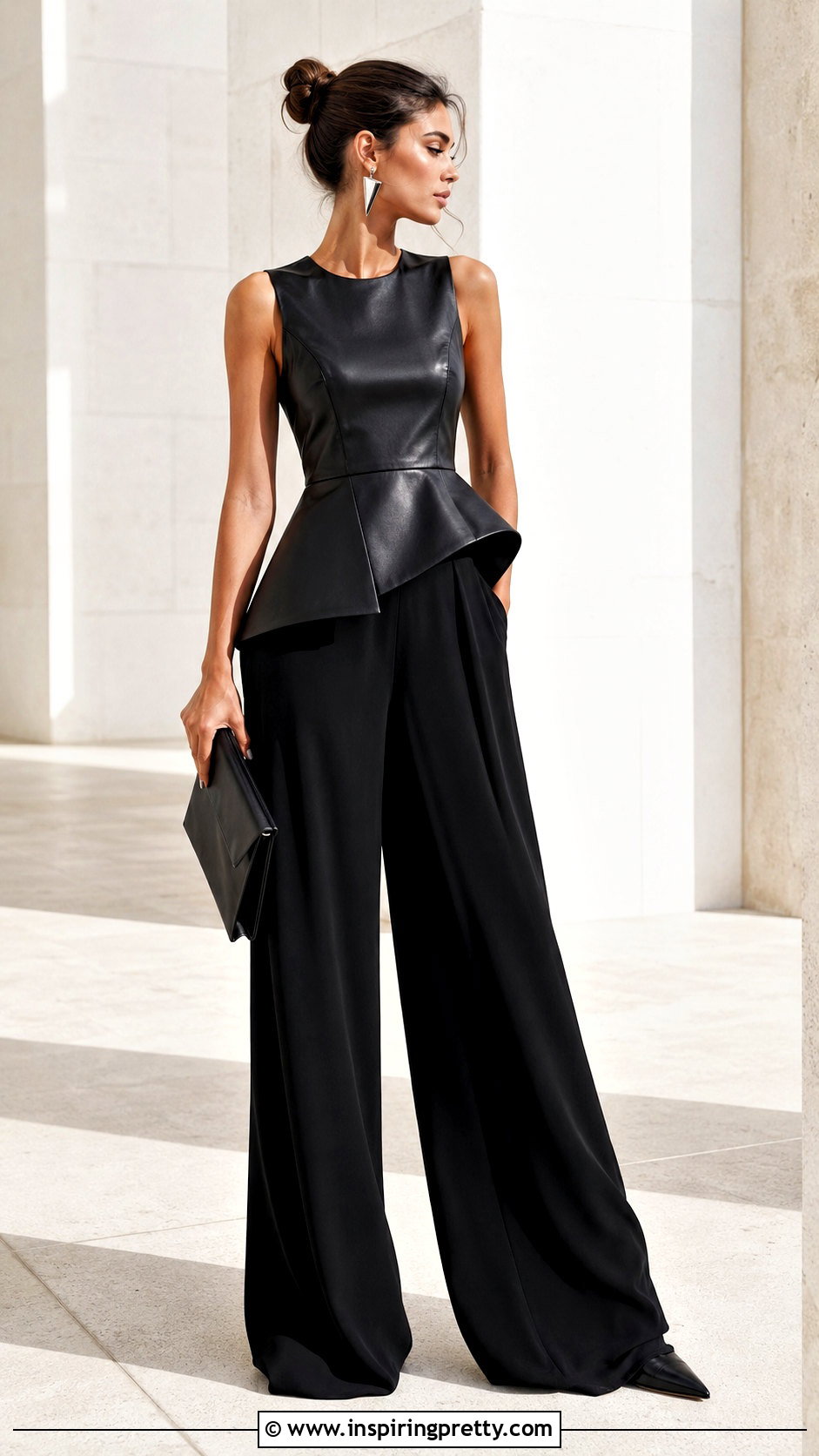
Leather can be molded and stitched into shapes fabric can't hold: a bustier, a peplum, a sharply cut jacket. Pair it with something soft, long crepe skirts or fluid trousers, so it feels sculptural rather than severe. Monochrome lets the different surfaces read together. Leather doesn't stretch much, so stretch panels at waist or shoulder make a big difference to comfort. Keep hardware minimal. A sleek bun or simple bob suits the clean lines.
46. Fringe Couture Gown
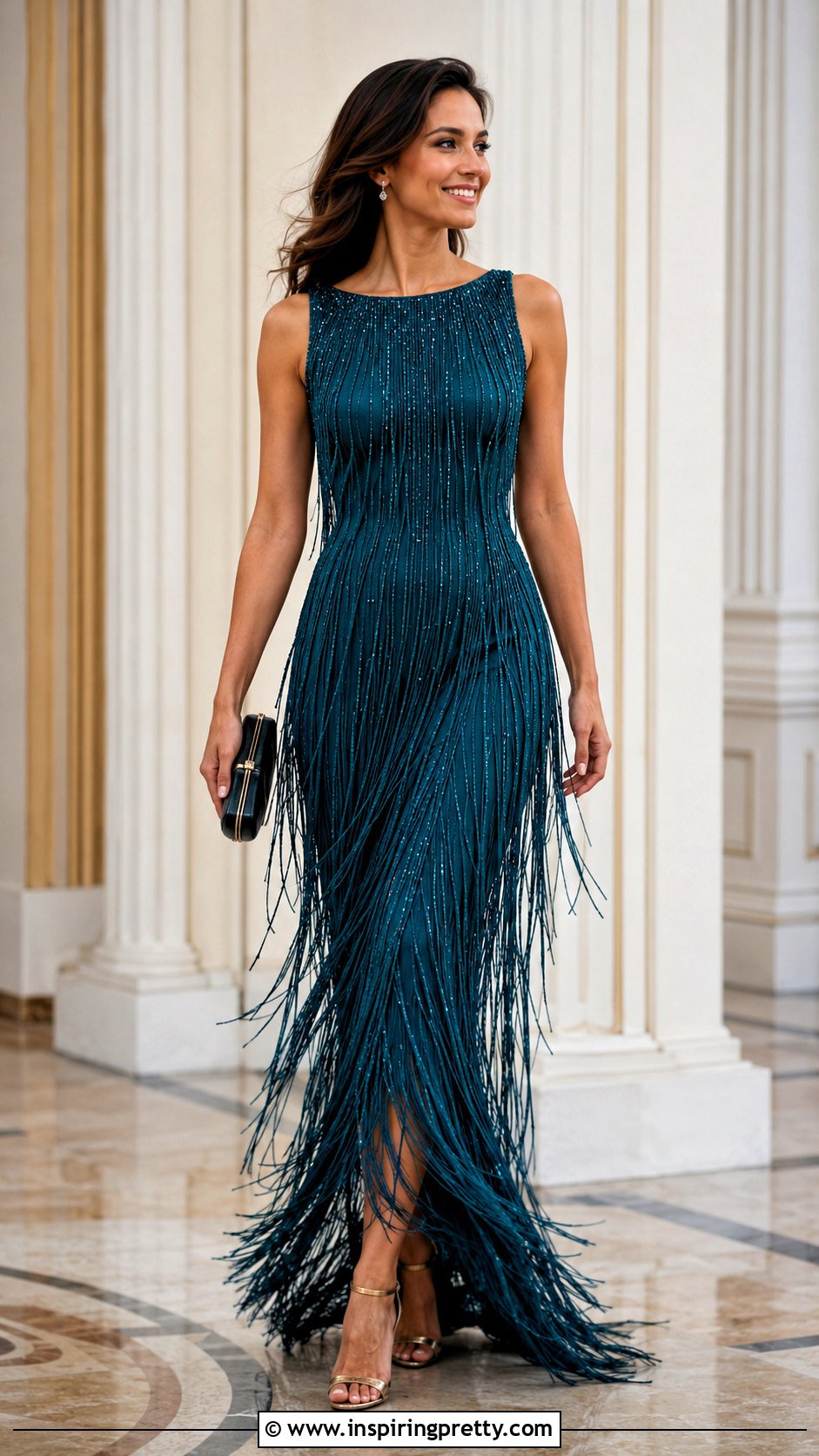
Fringe only makes sense in motion. Fine beaded, silk or metallic strands on a fitted base dress swing as you walk. Vertical fringe lengthens; layered or diagonal fringe adds volume. Test it walking and sitting, since long fringe at the hem can catch under heels. Hair up keeps strands from tangling in shoulder fringe. If a full fringe gown feels like too much, keep it to the sleeves or hem.
47. Art Deco Beaded Couture Gown
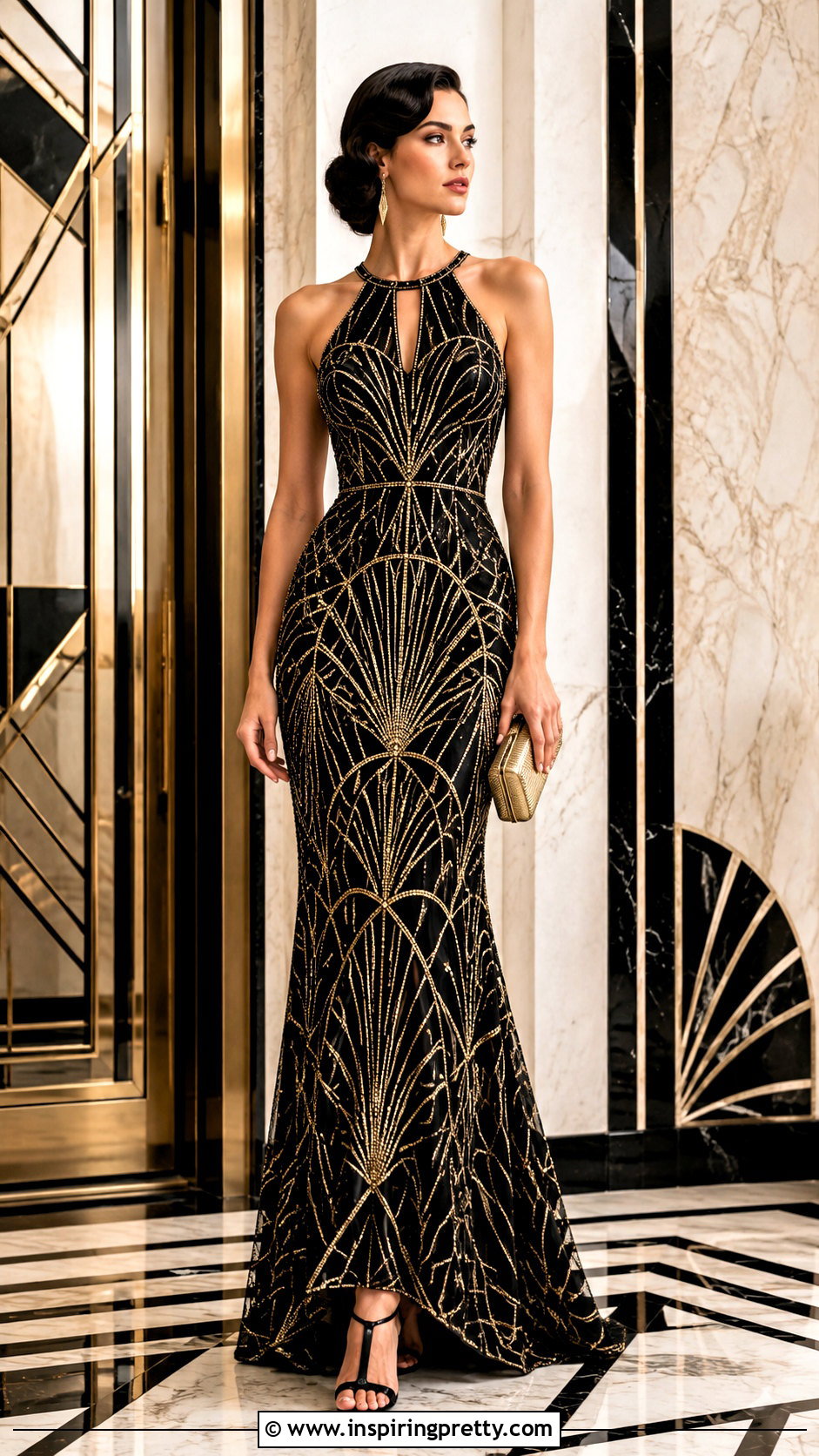
Art Deco beadwork is geometric: fans, stepped lines, vertical panels. A straight column or gentle flare suits that graphic surface. The pattern must line up at the seams and waist, and that's a quick way to judge quality, since cheap versions break the motif at every seam. Black and gold looks dramatic; champagne and silver are softer. T-strap heels and a sleek bob nod to the era. Heavy beading needs a firm lining to carry the weight.
48. Botanical Print Couture Gown
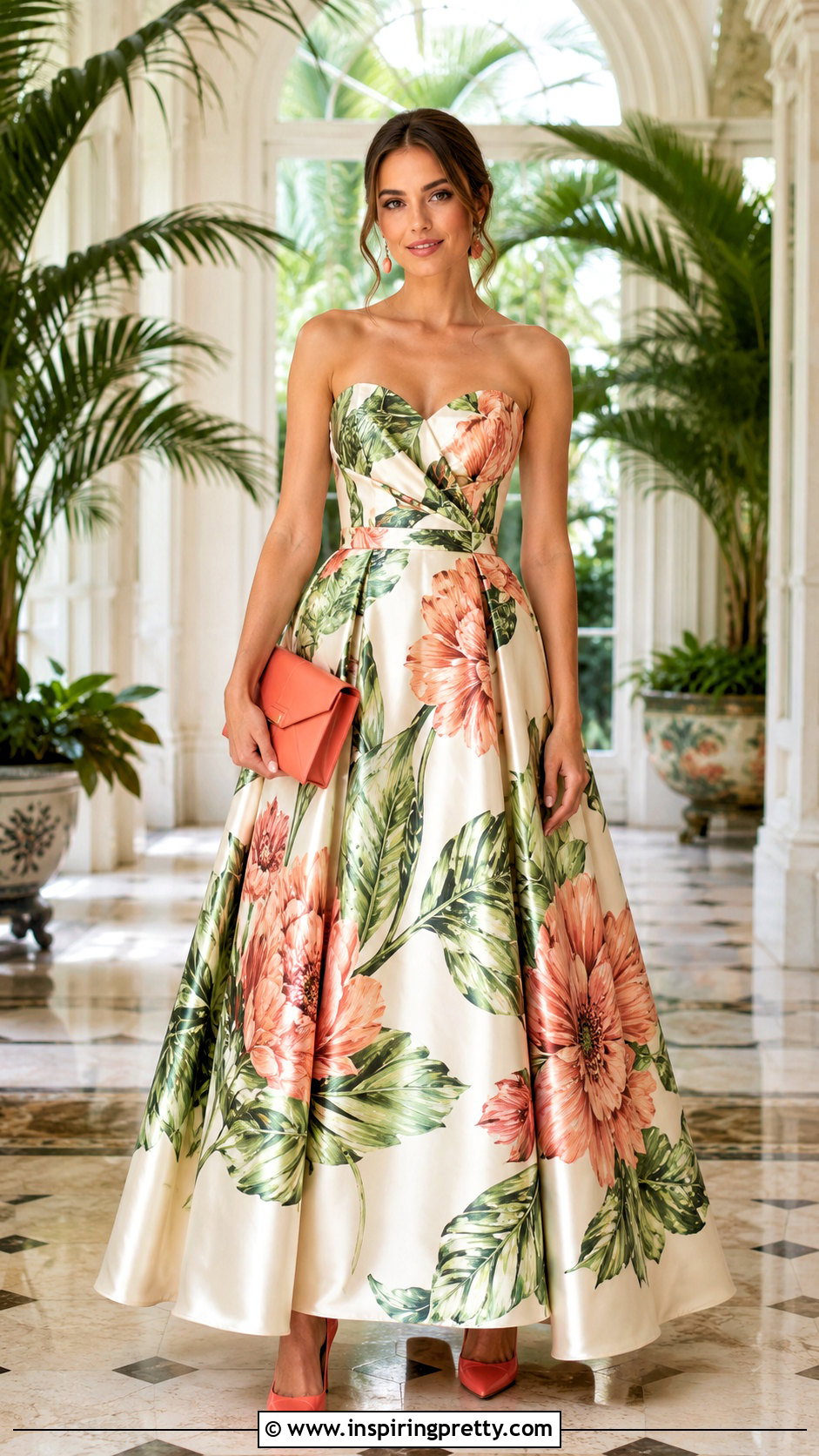
A botanical print gown puts color and pattern ahead of embellishment. Choose a clean silhouette so the print can be seen: a fitted bodice with an A-line skirt, or a one-shoulder column. Where the print falls matters; a good maker places the biggest flowers deliberately rather than letting them land on the bust or hip by chance. Pull one shade from the print for the shoes or clutch. Structured satin or organza gives the print presence.
49. Plus Size Draped Couture Gown
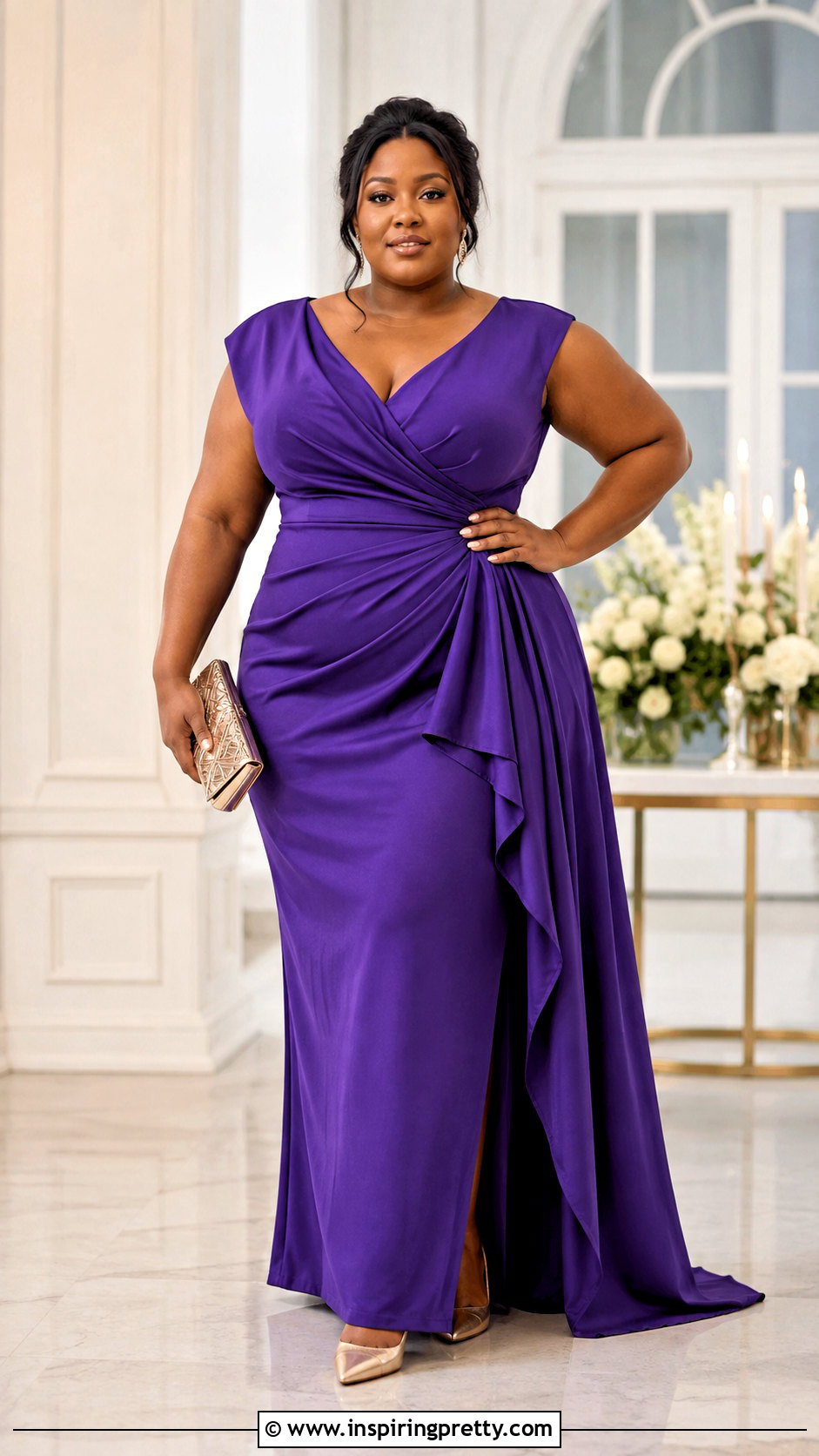
Drape follows a fuller figure instead of fighting it. A wrap bodice, gathered waist or diagonal panel creates intentional lines across the body. Fluid crepe, matte jersey and silk blends move without stiffness. A secure foundation, a supportive neckline and a waist set in the right place matter far more than hiding anything. Tailoring the shoulders, bust and hem lets the drape fall the way it was designed. Stable block heels and earrings that frame the face complete it.
50. Mature Woman Tailored Couture Outfit
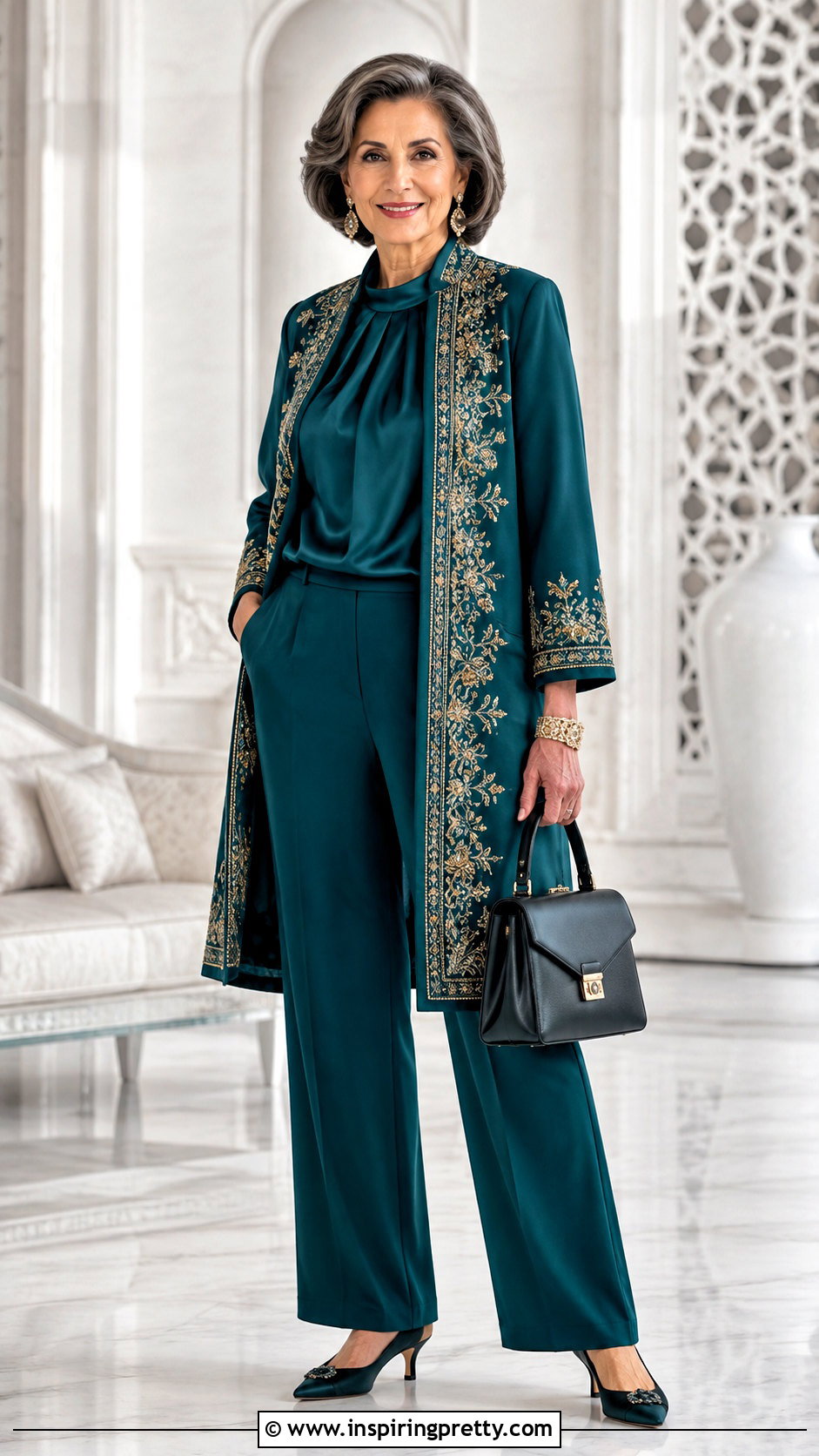
For a mature woman, couture means fit and fabric, not age rules. A longline jacket with a silk blouse and fluid trousers, or a sculpted coat over a coordinating midi dress, gives structure and ease. I always prioritize sleeve length, smooth linings and supportive fabrics, because they decide if you'll still be comfortable hours later. Drama is still welcome in one place: an embroidered lapel, a cape sleeve or a sculptural collar. Comfortable pointed pumps or low block heels, a structured bag and one bracelet you love.
Alterations That Make Ready-to-Wear Look Made for You
Most of these looks depend on fit, and a good alterations tailor gets ready-to-wear surprisingly close. Here's what's easy and what isn't.
Usually straightforward
Hemming to your exact heel height (bring the shoes to every fitting), taking in side seams, shortening straps at the shoulder, adding a waist stay or bra cups, and tacking a wrap or drape in place so it stops shifting.
Harder, slower and more expensive
Letting a dress out depends on spare seam allowance, and many cheaper gowns have very little. Beaded and sequined fabric has to be unpicked by hand where the seam moves, then re-beaded, which takes time. Bias-cut dresses stretch while being altered and need a confident tailor. For anything heavily embellished, I'd book the first fitting several weeks before the event, not the week of it.
Beaded Gowns Should Never Hang
A heavy beaded or sequined dress stretches on a hanger, because the weight pulls the fabric down day after day. Fold it loosely with acid-free tissue between the layers and store it flat in a box. Lighter gowns can hang from the inner hanging loops at the waist, which take the strain off the shoulders. Use a breathable cotton garment bag rather than plastic, which traps moisture.
Velvet should be steamed from the wrong side and never pressed with an iron, which flattens the pile for good. Satin can water-spot under a steamer, so test on an inside seam first. Feathers and fringe need space in storage so they don't crush.
Couture Is a Way of Fitting, Not a Price Tag
The best couture-inspired outfits mix imagination with good construction and a clear sense of proportion. A ball gown is only one route; tailored suits, embellished denim, knit sets, strong coats and sculptural separates can feel just as special when every detail is deliberate. Start with the shape you feel best in, then adjust color, fabric, coverage and shoes for your body and the occasion. A skilled tailor will do more for an affordable dress than any accessory. Use these as ideas, not rules.
Related posts:


Leave a Reply