
A lace bodice over a plain skirt is the gown shape I suggest most often to brides who can't decide between romantic and clean. The detail sits near your face, where photos focus, and the smooth skirt keeps the whole dress from looking busy. The pairing also gives you two separate choices to make: which lace suits you, and which skirt fabric suits your venue. Below I go through 25 versions by silhouette and neckline, from a quiet A-line to a full ball gown, with what I check at fittings for each one.
Matching the Lace to the Skirt Fabric
Not every lace suits every skirt. Lace types differ in weight and texture, and the skirt fabric should share that character. Here's how I pair them.
- Chantilly is fine and flat with delicate outlines. It looks best over soft chiffon or crepe; a stiff Mikado can make it look flimsy.
- Alençon has a raised cord outlining each motif, so it reads richer. It holds its own with satin and Mikado.
- Guipure is heavy lace with no net background. It suits structured crepe and Mikado, and it's warm, so think twice for summer.
- Embroidered tulle is light and three-dimensional. It pairs well with chiffon or organza for an airy gown.
Check the Shades Side by Side
Ivory lace and ivory satin from different mills rarely match exactly. Take both fabrics to a window and look at them in daylight. A slight difference can look deliberate; a lace that's warmer or pinker than the skirt looks like two dresses joined at the waist in photographs.
1. A-Line Wedding Dress With Lace Top And Satin Skirt
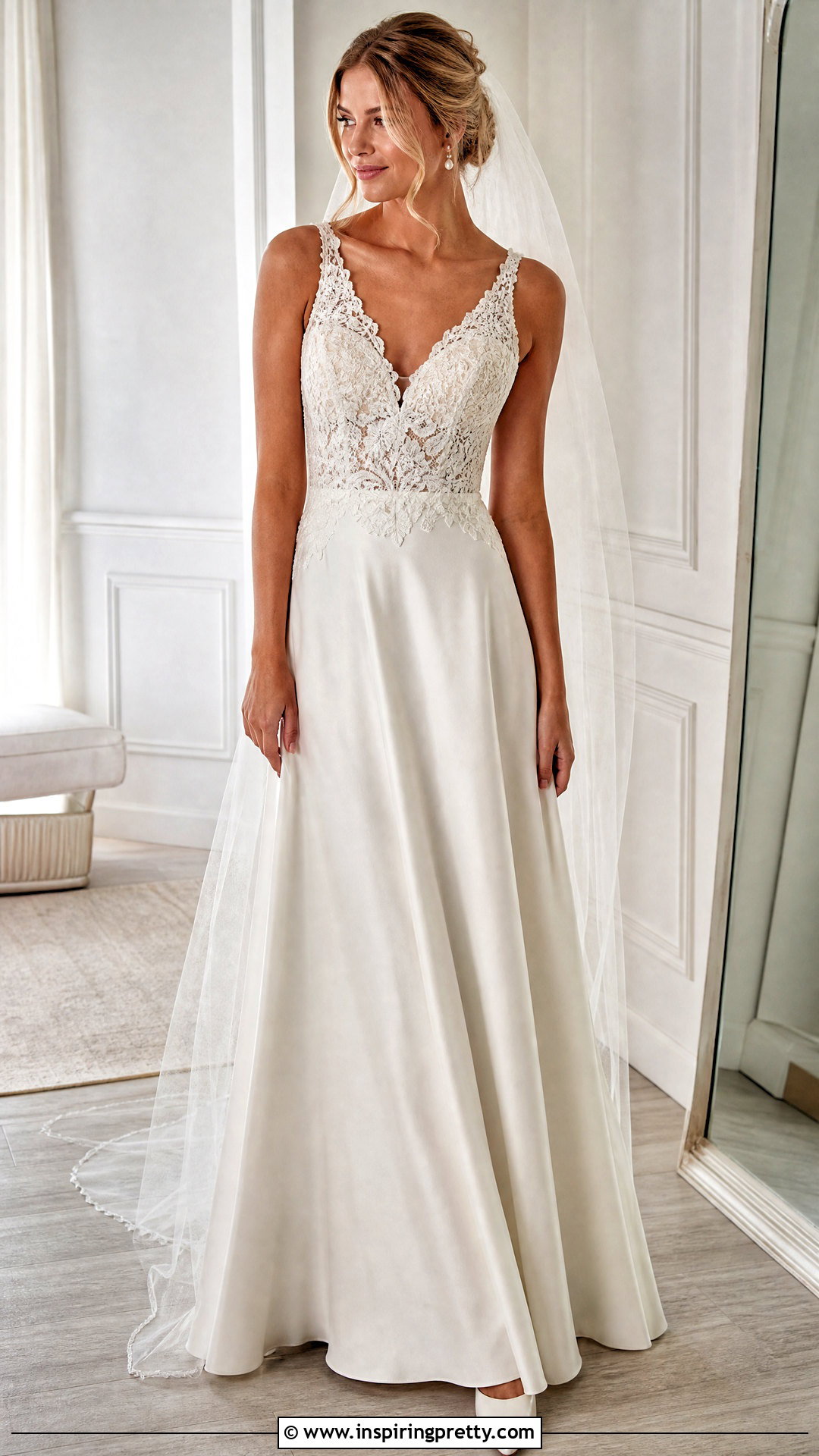
If you're unsure where to start, try on an A-line with a lace top and satin skirt first. It flatters almost everyone, because the skirt widens gradually from the waist instead of all at once. A V-neck lengthens the neck; a bateau gives more coverage. Where the lace meets the satin, I like a sash or at least a clean seam, since a ragged join between two fabrics shows in close-up photos. Keep the veil plain with a raw edge so it doesn't add a second lace pattern.
2. Ball Gown Wedding Dress With Lace Bodice And Plain Skirt
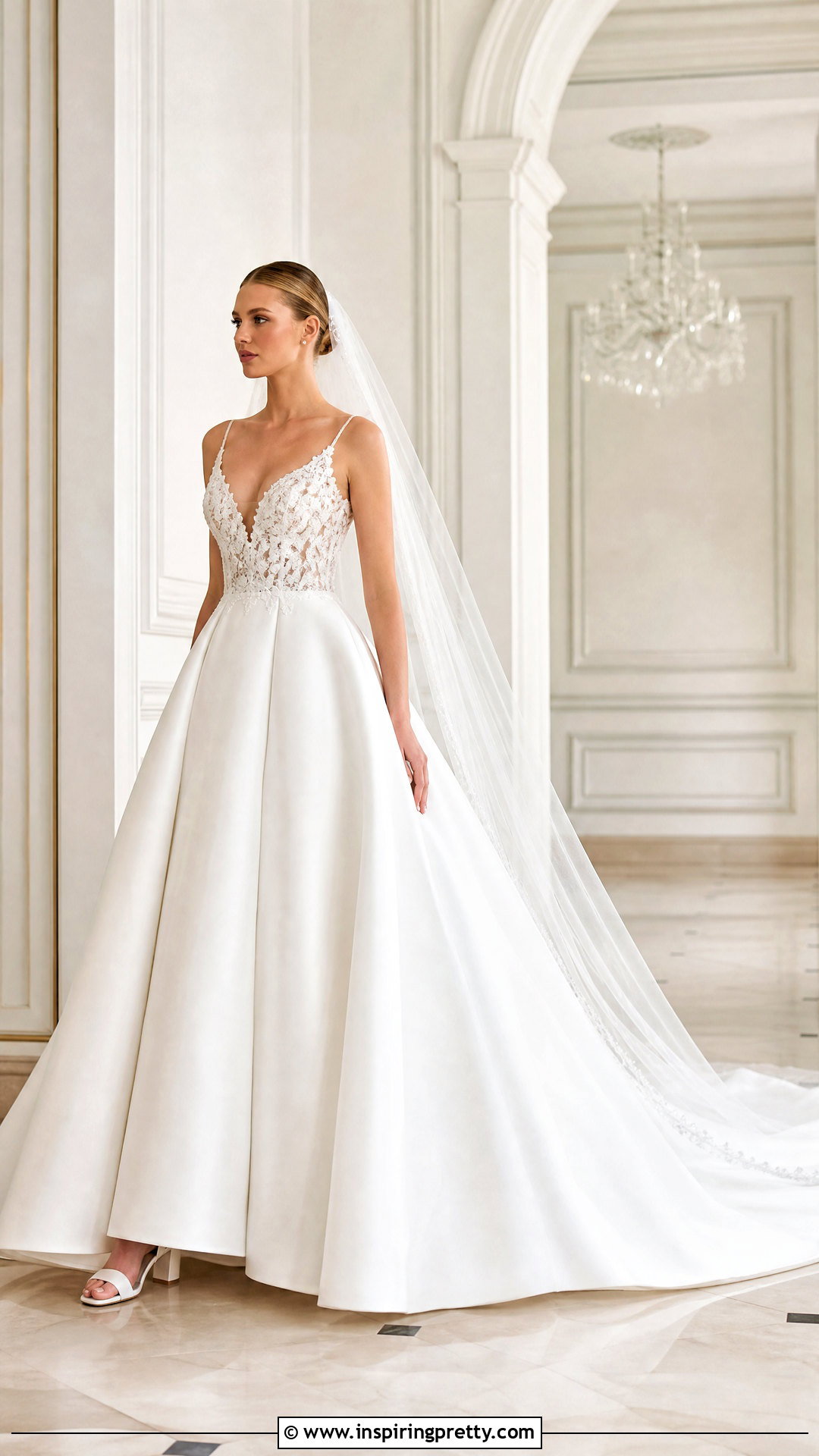
A ball gown wedding dress with a lace bodice is the most dramatic version, and the skirt fabric decides whether it works. Satin or Mikado hold the volume on their own; softer fabrics need layers of petticoat underneath, which add weight. Think about the train before you fall in love: a cathedral train looks wonderful in a church aisle and becomes a lot to manage at a crowded reception. I'd usually skip a beaded belt here, because a clean waist looks more current.
3. Long Sleeve Wedding Dress With Lace Top And Crepe Skirt
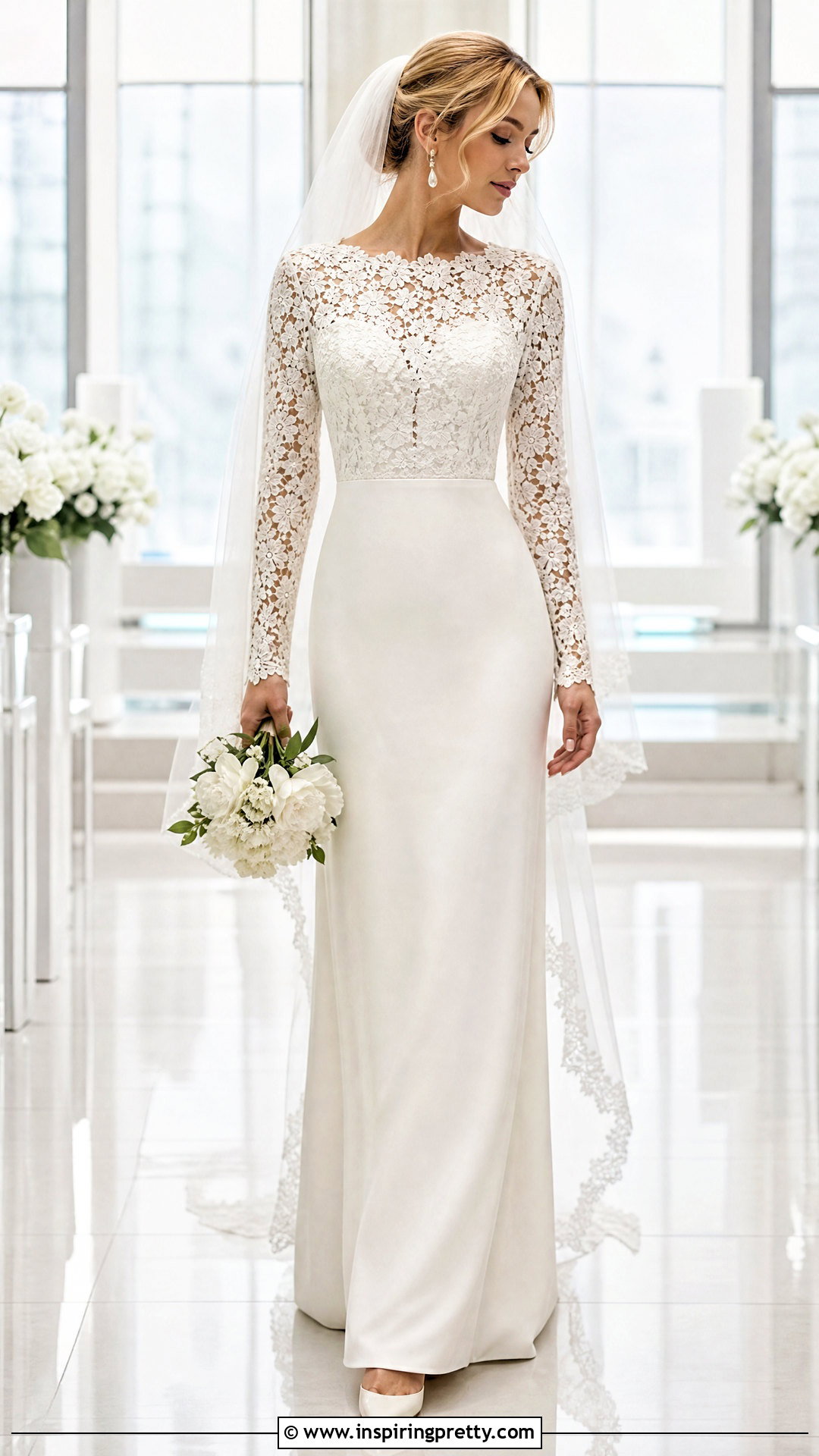
Long lace sleeves and a crepe skirt make the best cool-weather gown I know. Crepe has a matte surface, so the lace stands out against it instead of competing. Lined sleeves are warmer and more modest; unlined sleeves look lighter but can be scratchy against bare arms, so try them on for a full hour if you can. A fitted crepe skirt that falls into a soft train gives a long column shape. Pearl drops and a low chignon keep the neckline clear.
4. Cap Sleeve Wedding Dress With Lace Top And Chiffon Skirt
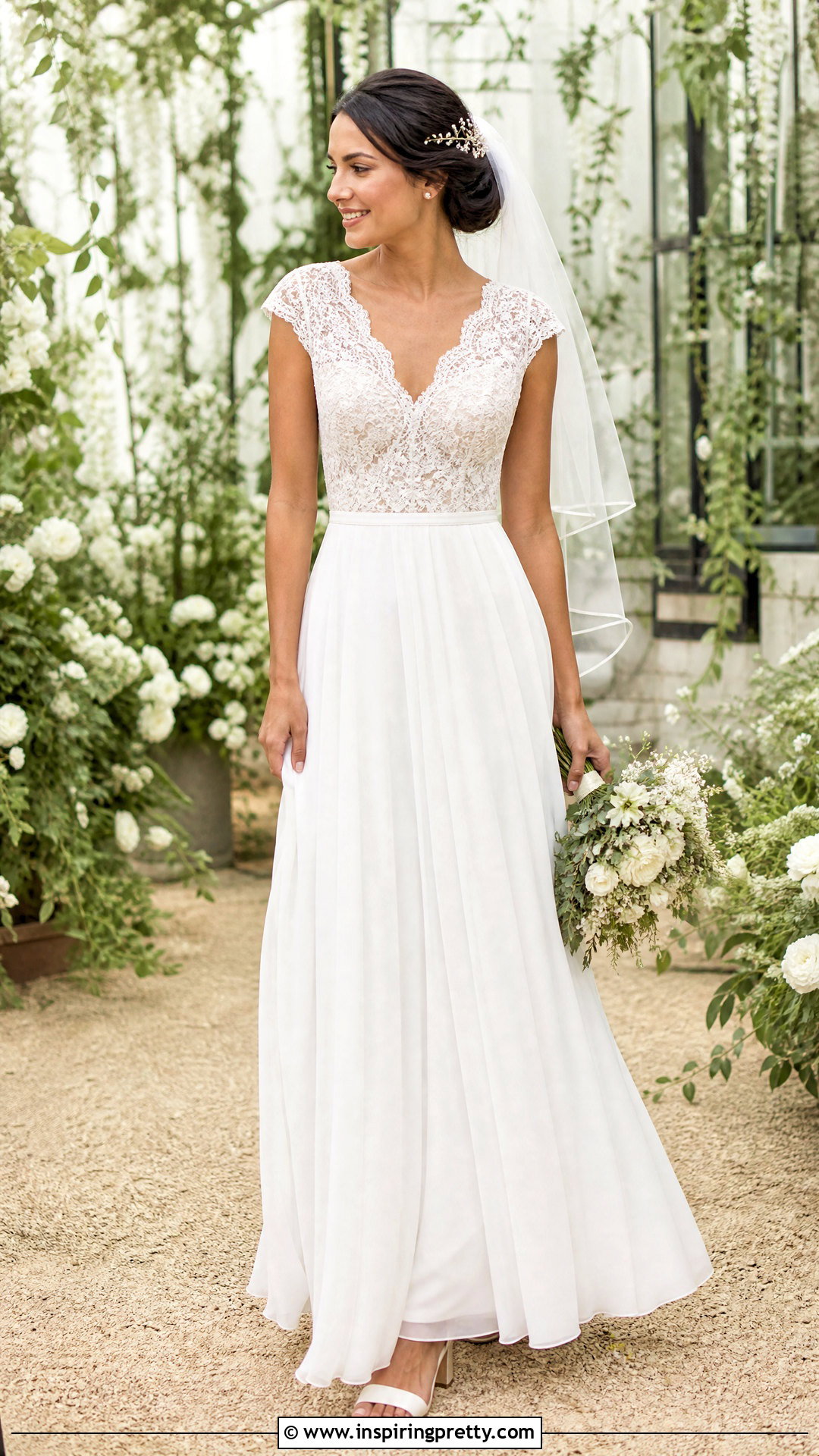
Cap sleeves and a chiffon skirt suit a garden or beach wedding, where a heavy, structured gown feels wrong. Chiffon is sheer as a single layer, so check that the skirt has several layers or a lining; in bright sun a thin skirt shows your legs in photos. The cap sleeve should sit flat on the shoulder without cutting into the arm when you raise it. Low block heels are my choice on grass, since stilettos sink. Keep jewelry fine and let the shoulders show.
5. Off Shoulder Wedding Dress With Lace Top And Satin Skirt
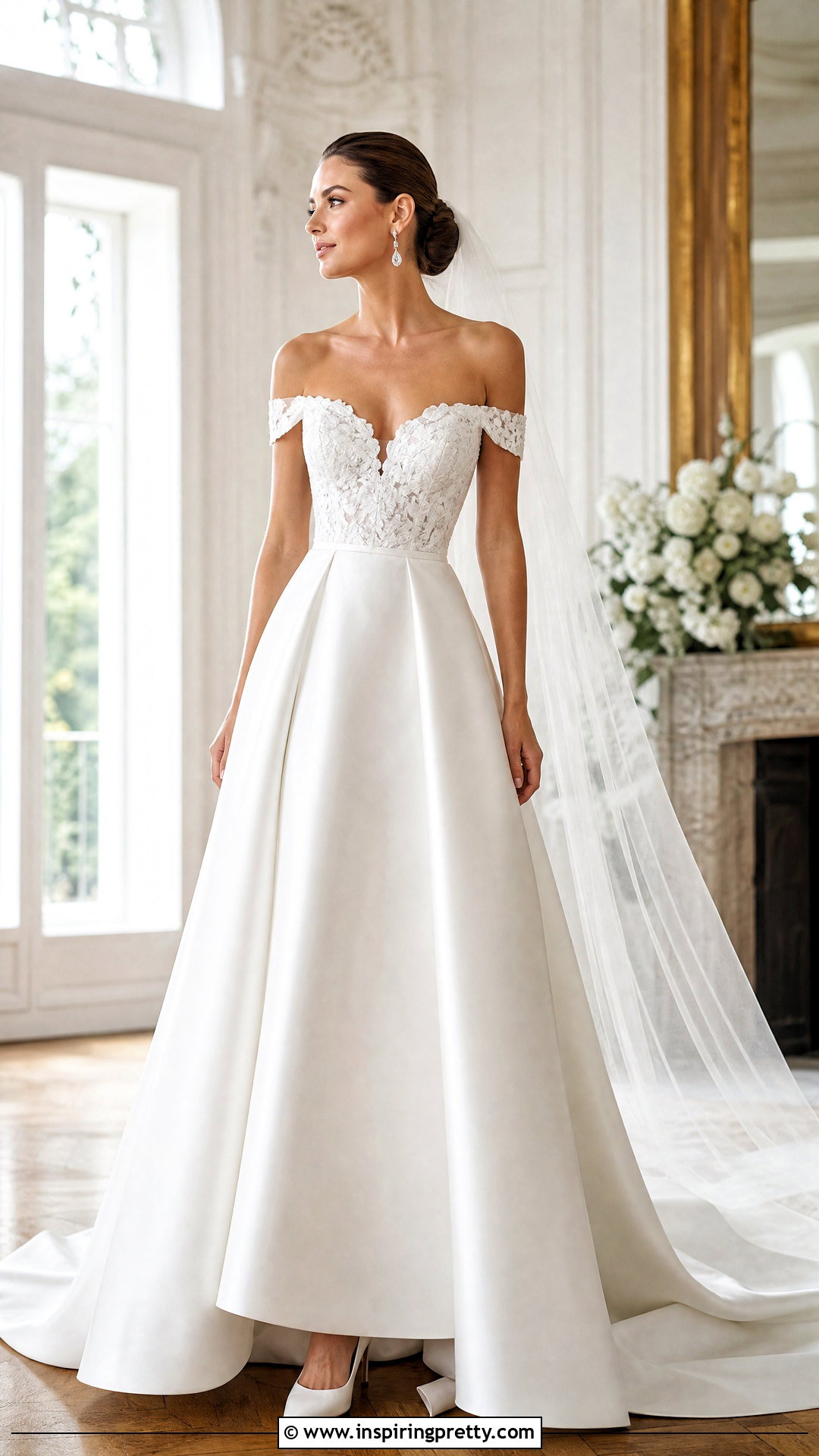
Off-shoulder lace looks soft, but it only stays put if the bodice is built underneath. I always ask whether there's boning or a corset base inside, because without it the neckline slides down every time you hug someone. The bands across the arms are the other problem: they can stop you lifting your arms. At alterations, ask for a little elastic or detachable bands so you can dance. Skip the necklace and wear drop earrings.
6. V-Neck Wedding Dress With Lace Bodice And Plain Skirt
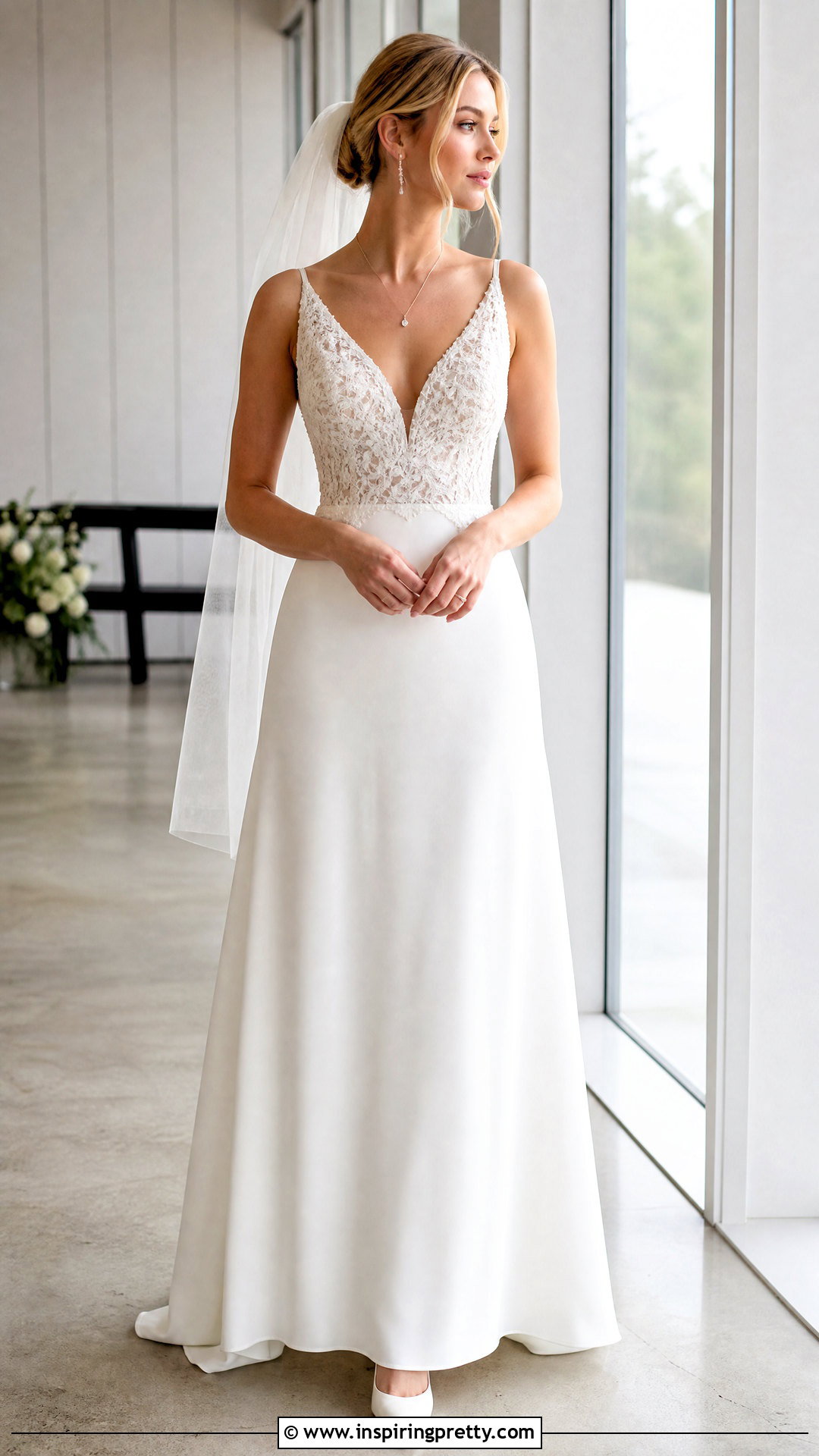
A V-neck lace bodice draws one long vertical line, which lengthens the upper body. With a plain skirt, the neckline looks clean rather than ornate. For less exposure, an illusion tulle insert fills in the V. A deep V needs firm construction inside; if you have to adjust it in the mirror, it'll shift all day. A pendant should end above the point of the V, not inside it, or it competes with the lace.
7. High Neck Wedding Dress With Lace Top And Plain Skirt
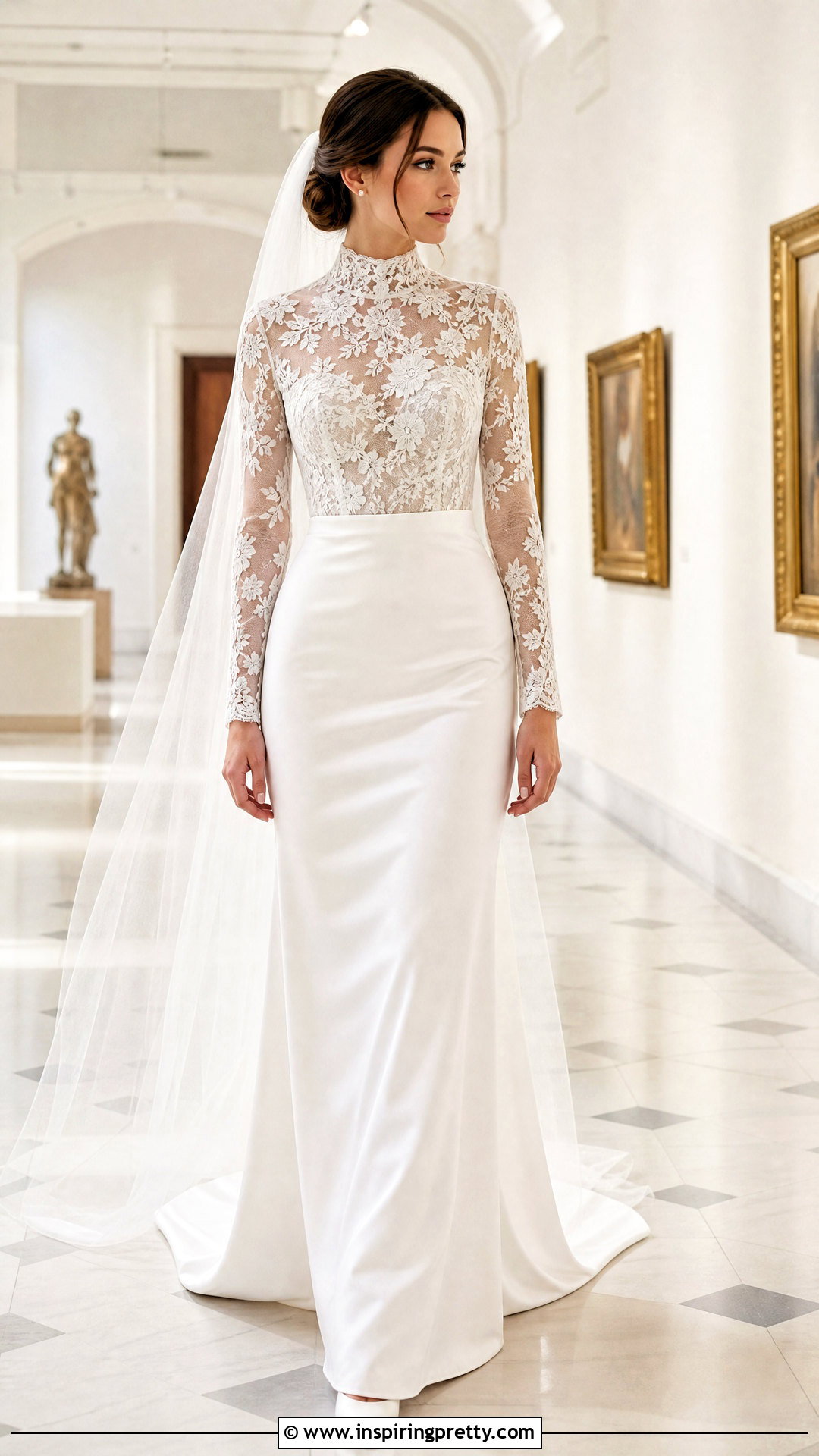
High-neck lace gives full coverage without feeling heavy, because the lace lets skin show through. I like it with a plain crepe or satin skirt and a defined waist. Hair goes up so the neckline is visible. High necklines can feel warm in summer, so check how breathable the lining is. Skip necklaces completely; pearl studs and a small comb are enough with this much lace near the face.
8. Illusion Neckline Wedding Dress With Lace Top And Satin Skirt
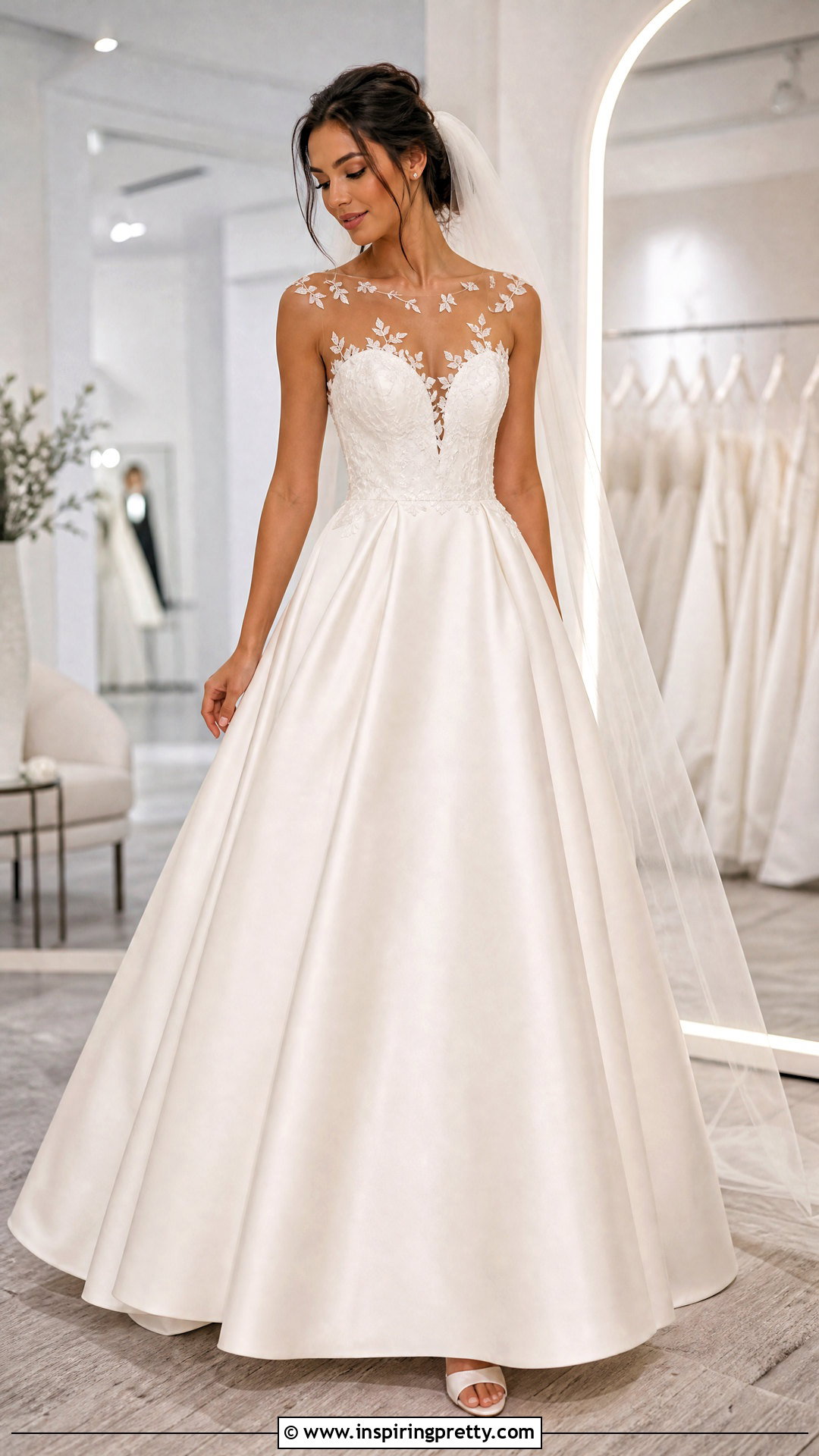
An illusion neckline is mesh that blends into your skin so the lace seems to sit on it. The mesh color matters more than anything else here. At fittings, I look at it under daylight and indoor light, because a shade that matches in the shop can look gray or pink in photos. A plain satin skirt gives a nice contrast in shine. The tailor should make sure the mesh doesn't pull at the armholes or wrinkle at the shoulders.
9. Sweetheart Wedding Dress With Lace Bodice And Plain Skirt
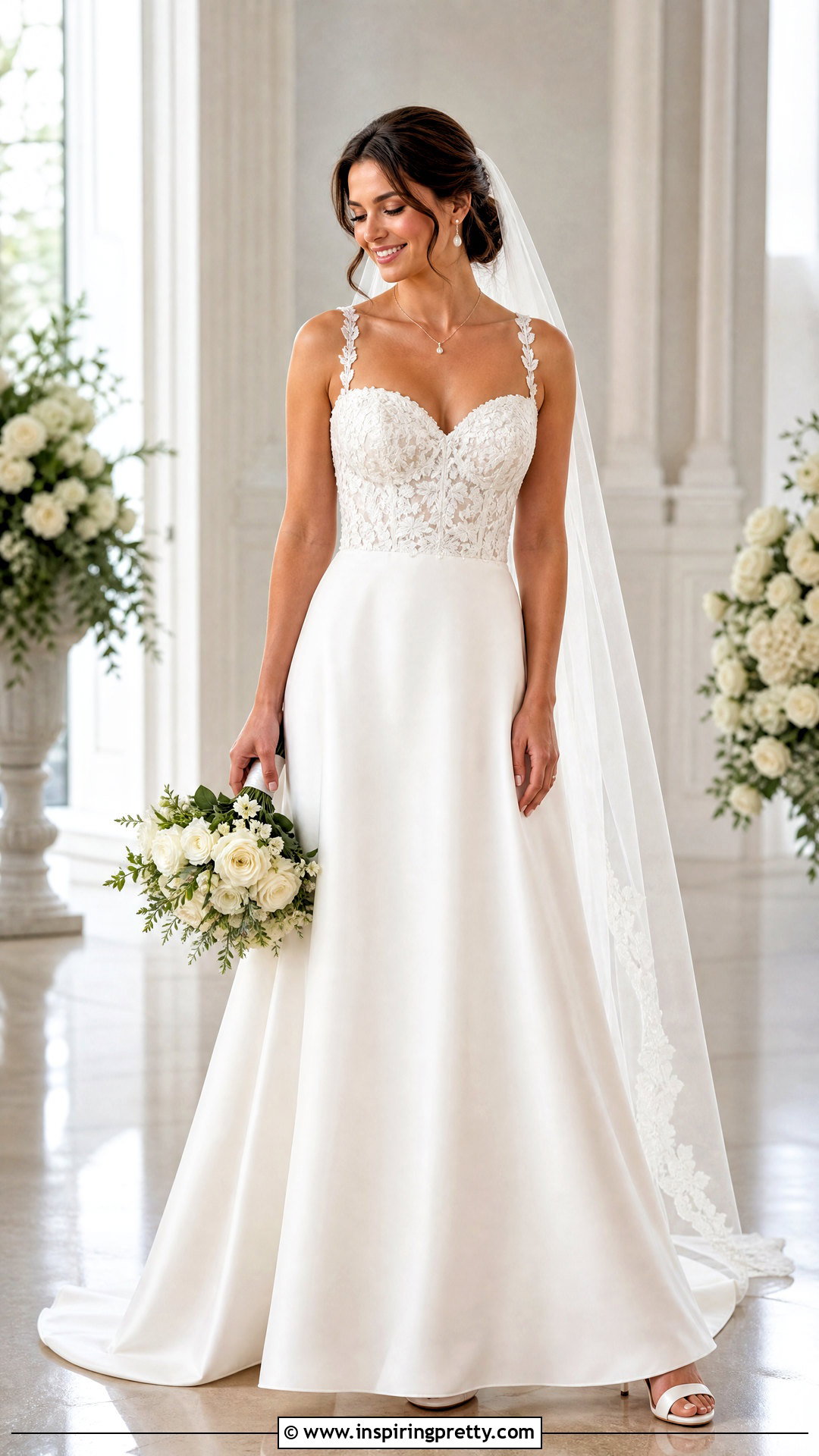
Sweetheart lace bodices give a soft curve across the bust, and a plain skirt balances that. Structured satin suits a formal ball gown; a lighter A-line fits a relaxed venue. Strapless sweethearts rely completely on inner structure, which is why I like detachable lace straps that you can take off after the ceremony. At the fitting, sit, bend forward and lift your arms; the neckline should stay put through all three.
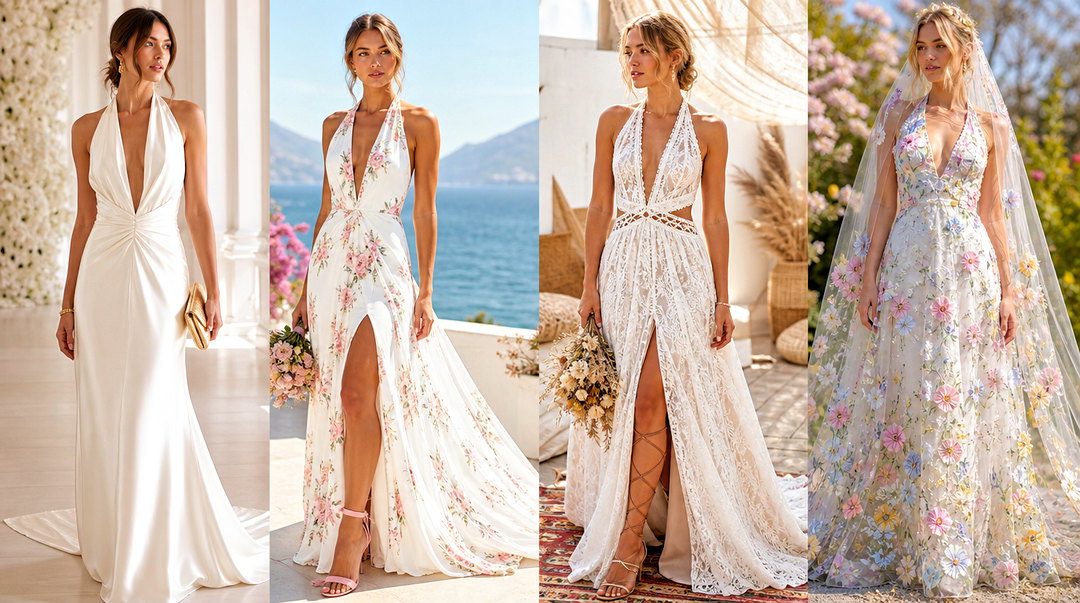
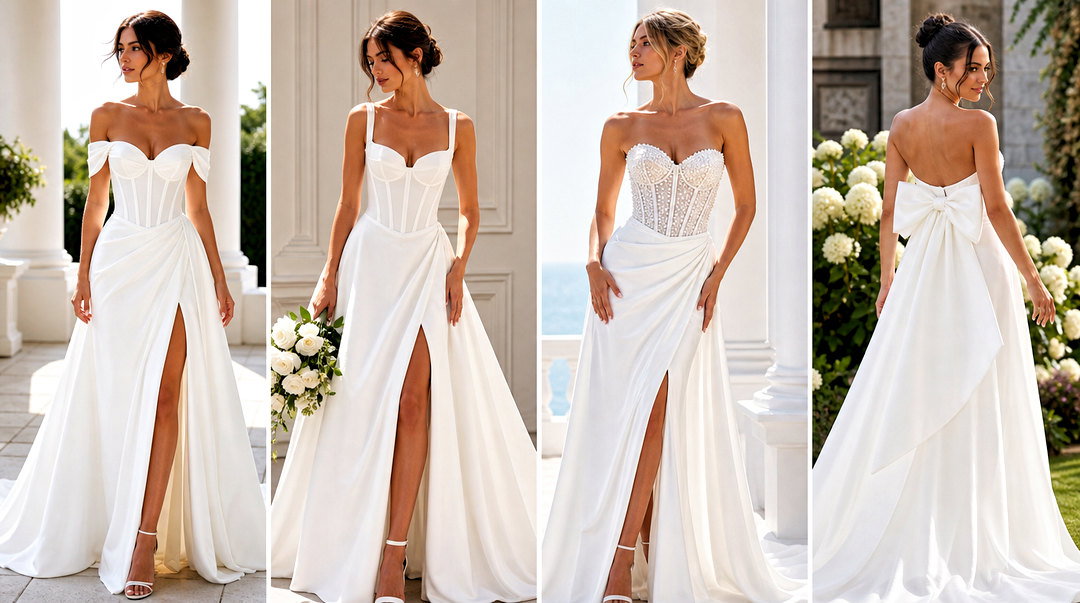
10. Square Neck Wedding Dress With Lace Top And Crepe Skirt
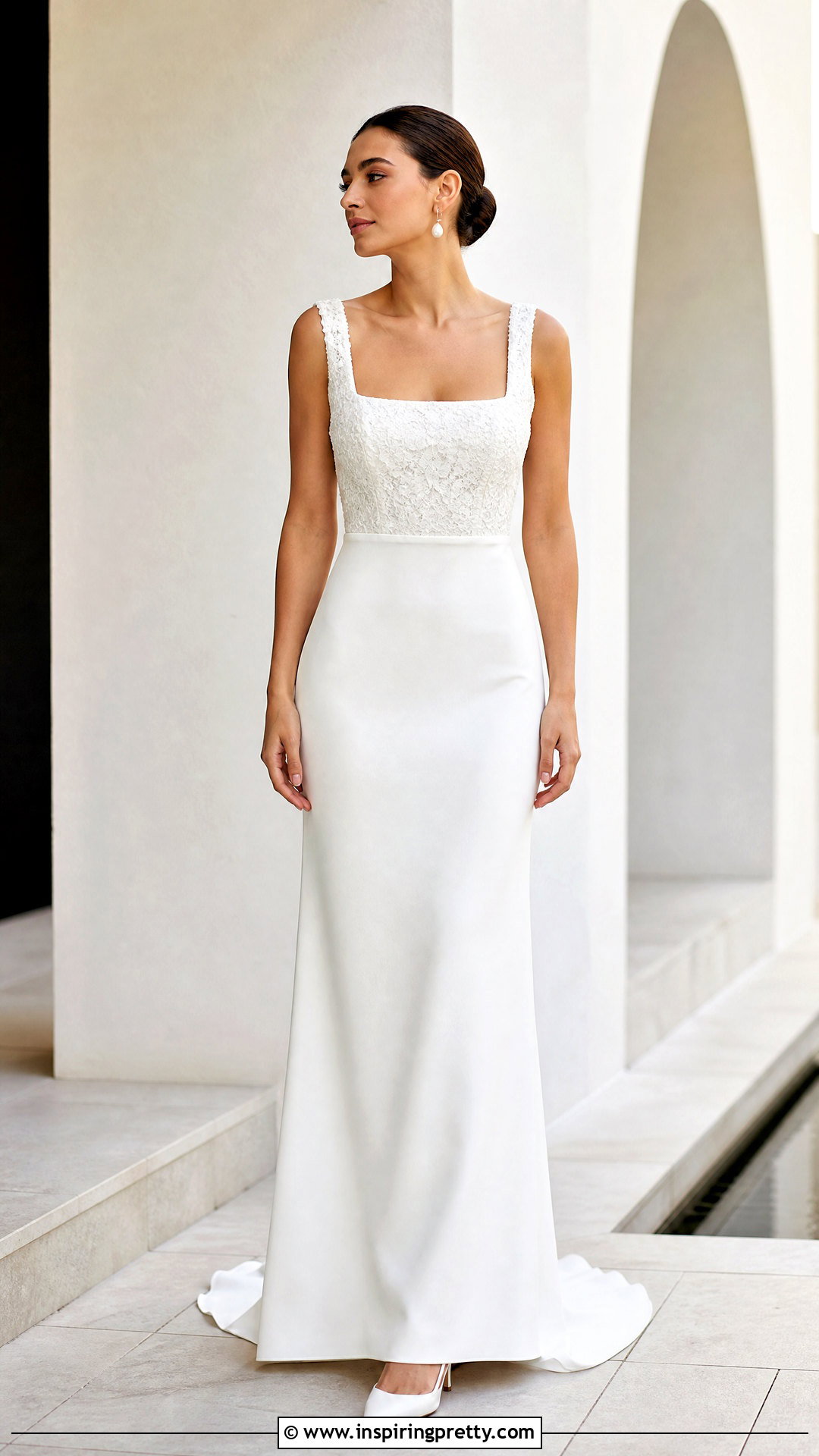
Square necklines look modern with lace, and wider straps or short sleeves give real support. A plain crepe skirt keeps the outline clean. The thing I watch at alterations is the corners. They should lie flat and even on both sides; a square neck that bows or wrinkles at one corner looks crooked in every photo. A neat low bun and pearl drops finish it without crowding the neckline.
11. Scoop Neck Wedding Dress With Lace Top And Chiffon Skirt
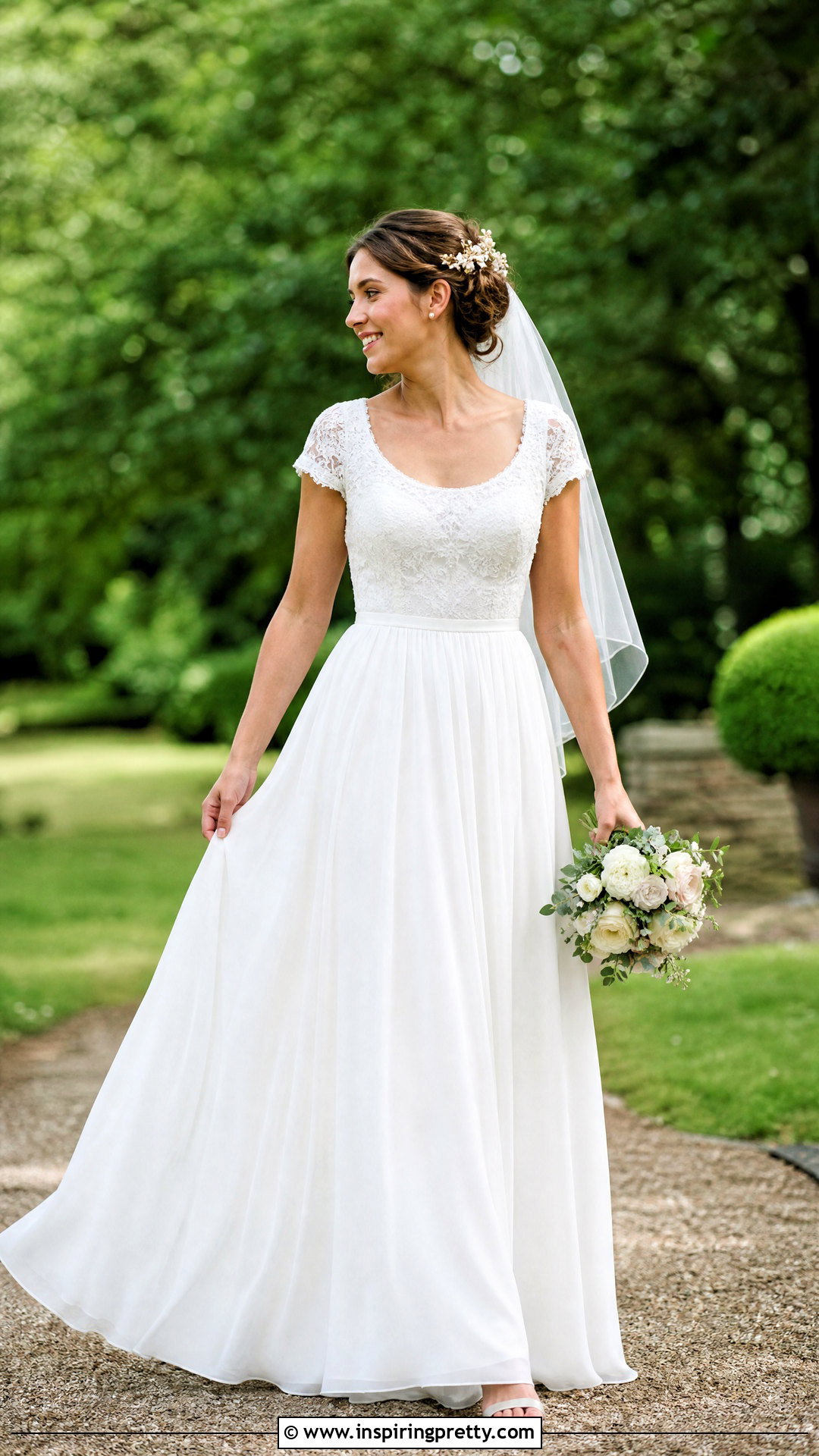
A scoop neck is relaxed and easy to wear, and with a lace top and plain chiffon skirt it suits a daytime or outdoor ceremony. Scoops can slip outward toward the shoulders, so check that it sits securely when you move your arms. A lightly gathered chiffon skirt gives room through the hips. If the lace has a scalloped border, ask whether the same edge can finish the sleeves, which makes the bodice look complete.
12. Corset Wedding Dress With Lace Top And Satin Skirt
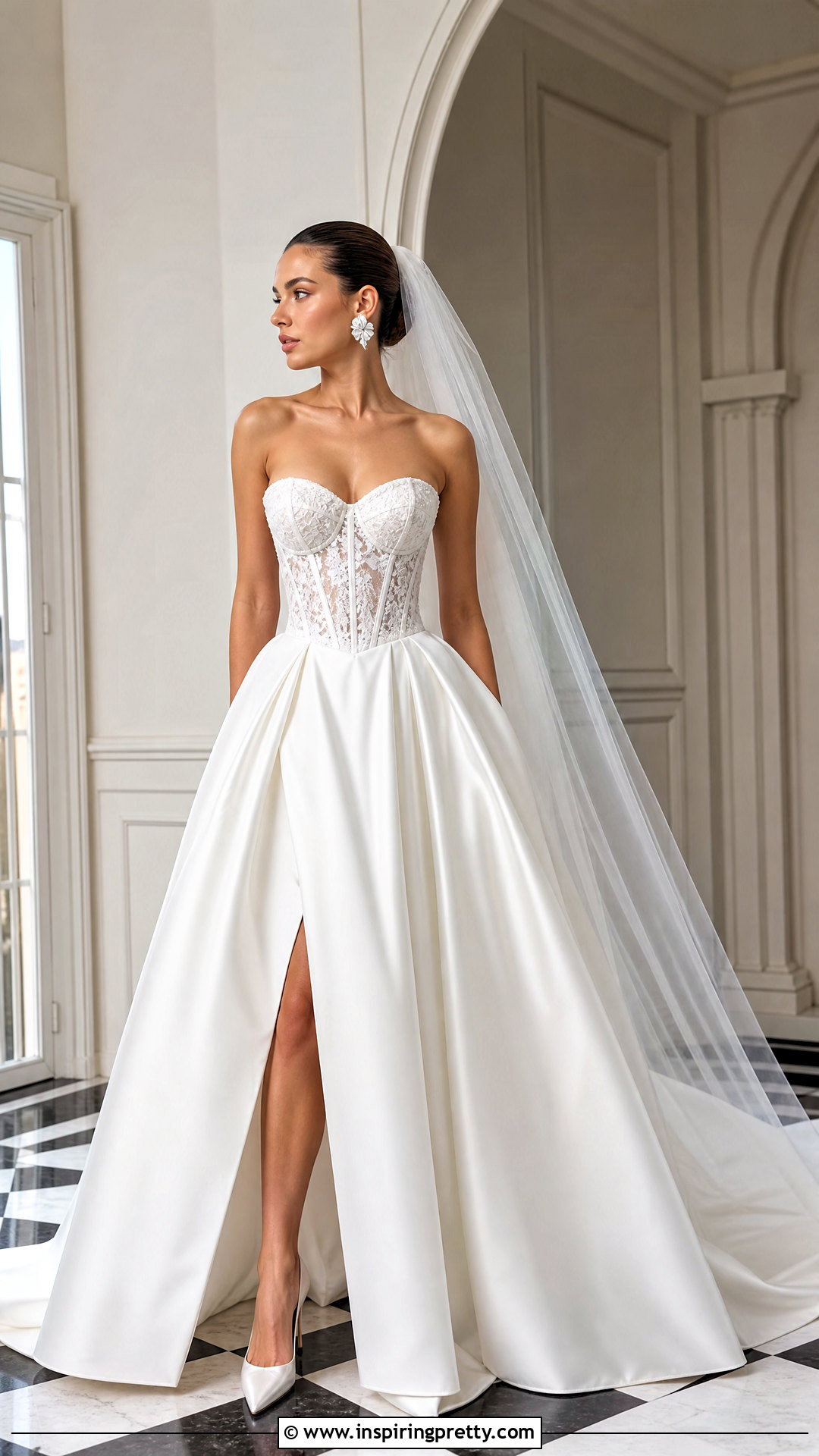
A lace corset bodice shows its structure on purpose. The boning shapes the waist and supports the bust, so you may not need a bra at all. Lined panels with appliqués look softer; exposed seams and sheer sections look more fashion-led. The real test is comfort. At your last fitting, sit down for ten minutes and take a few deep breaths; a corset that's too tight will be hard to eat in.
13. Basque Waist Wedding Dress With Lace Bodice And Plain Skirt
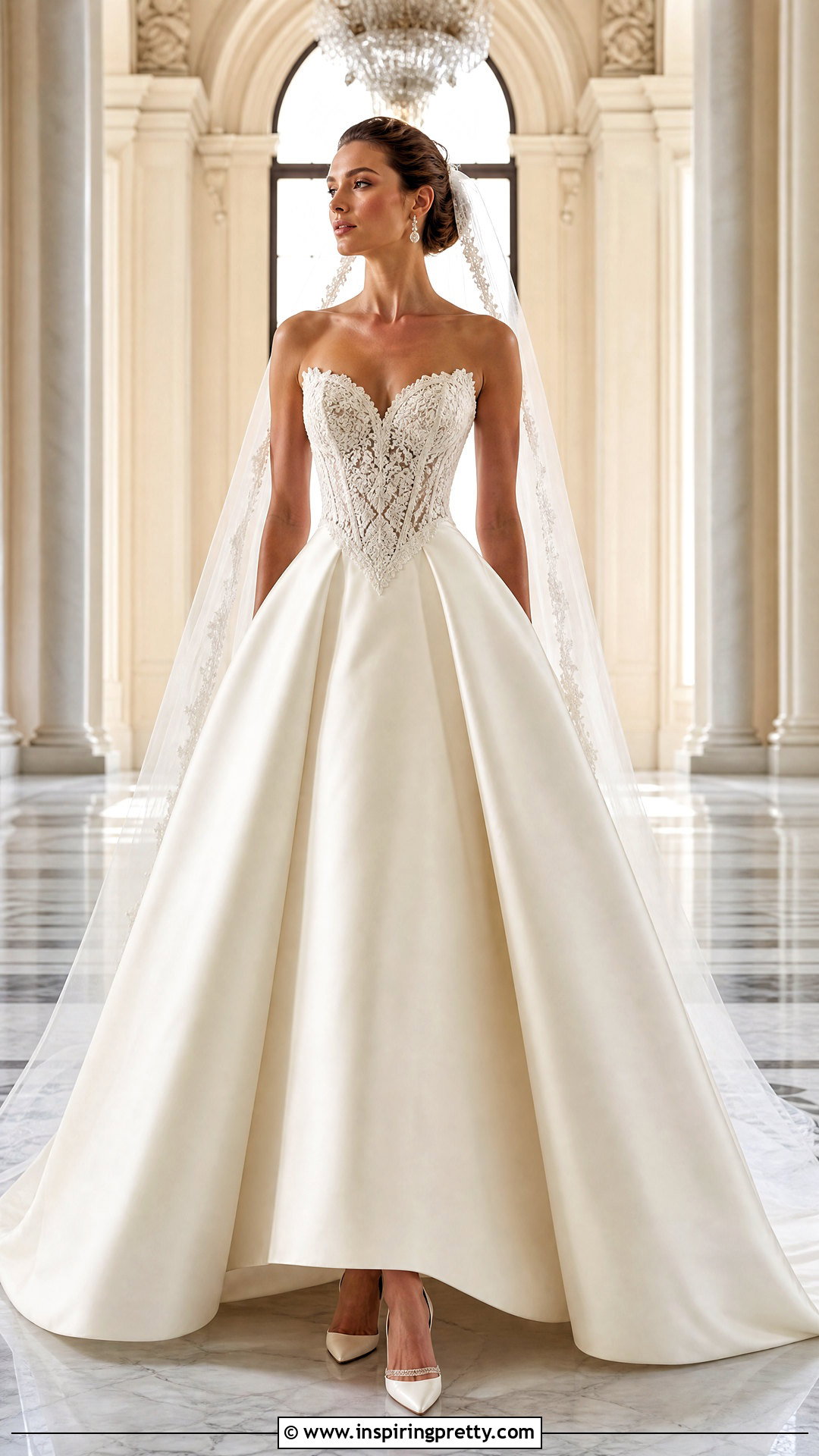
The basque waist dips to a point at the center front, which makes the torso look longer and the waist smaller. Lace across the bodice shows that shape off. Structured satin or Mikado below holds the sculpted line; soft fabric collapses under the point. During alterations, I check that the point sits exactly at the center, because even a slight shift looks lopsided. A full skirt gives it a regal feel.
14. Empire Waist Wedding Dress With Lace Top And Chiffon Skirt
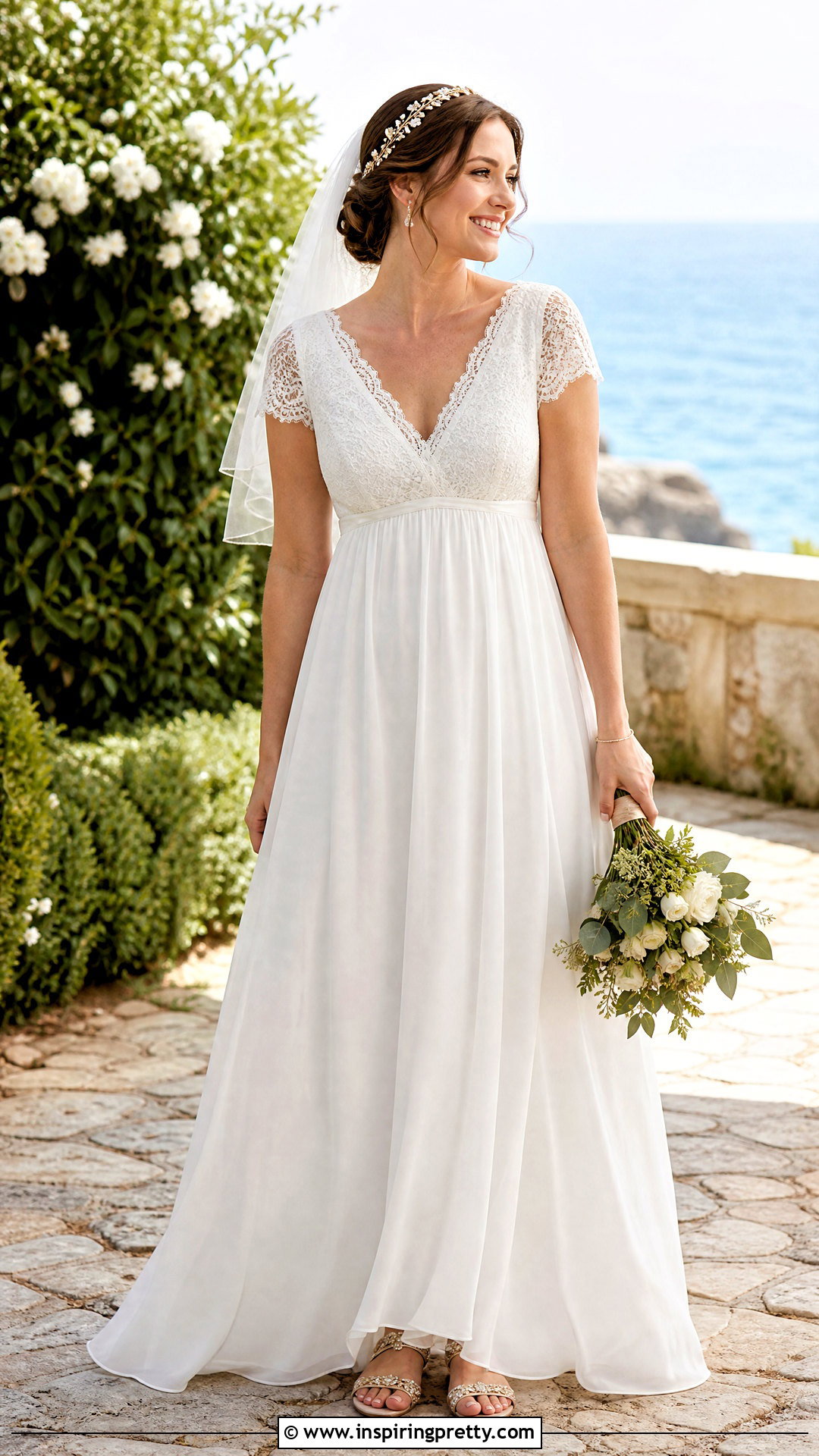
Empire waists put the seam just under the bust and let the skirt fall from there. That's comfortable and suits brides who don't want anything snug at the natural waist. Chiffon drapes well from that high seam; stiff fabric pushes out and adds bulk. I check that the gathers fall evenly all the way around. A short airy veil and low sandals keep it light.
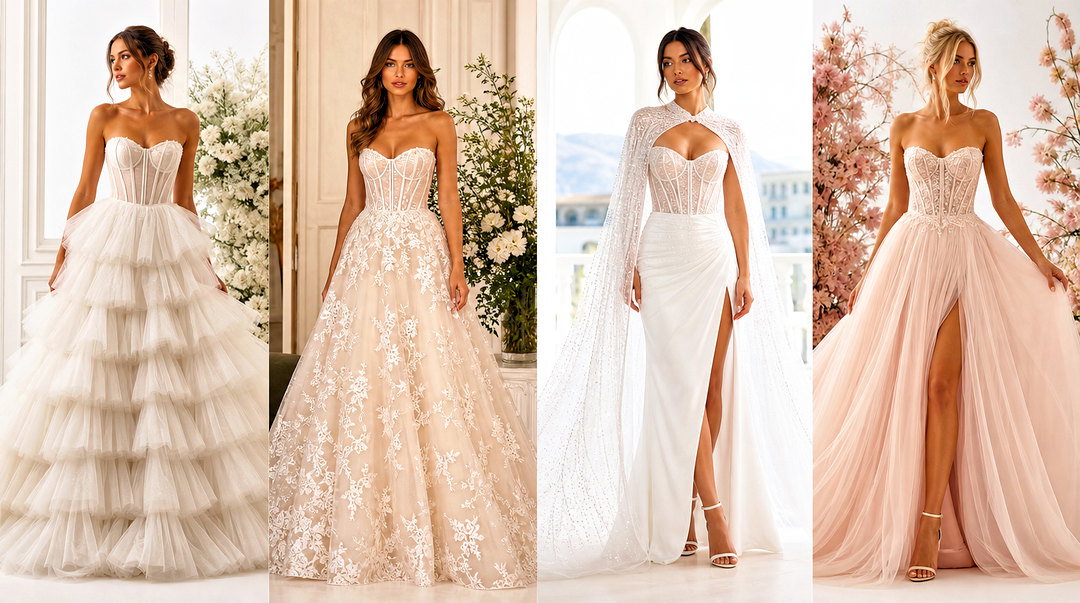
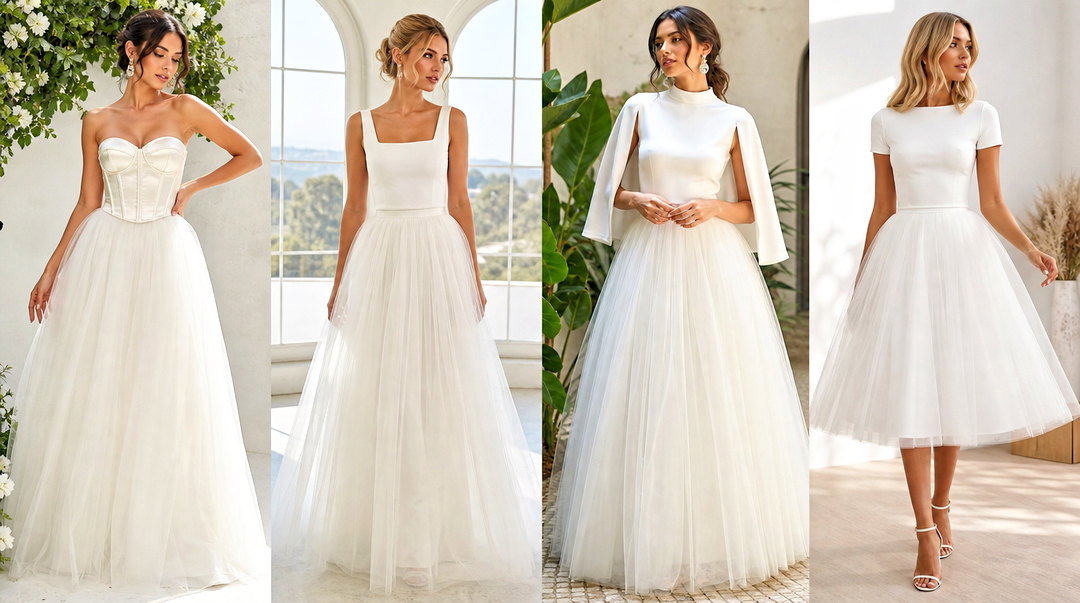
15. Drop Waist Wedding Dress With Lace Top And Satin Skirt
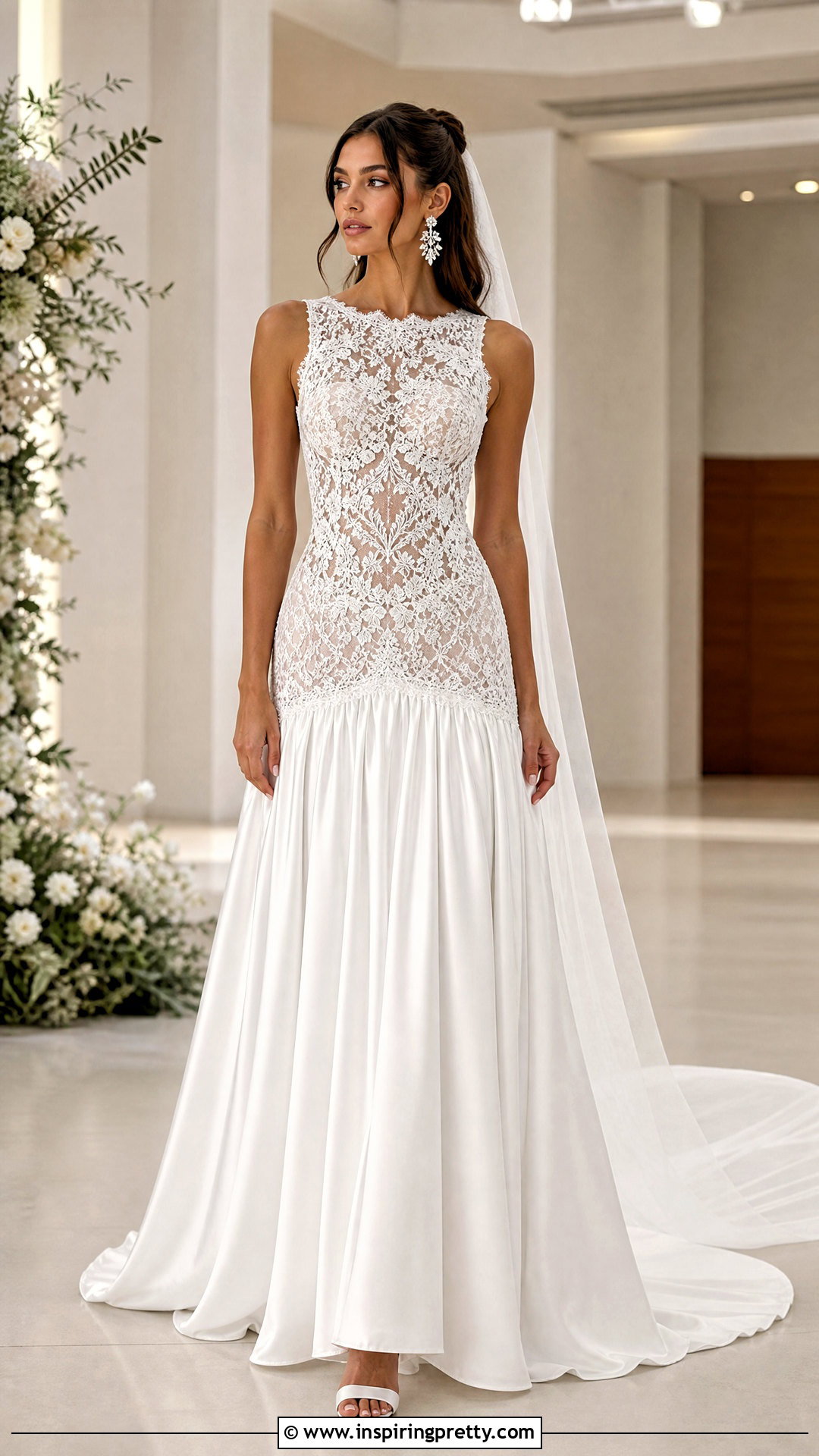
A drop waist runs the fitted bodice past your natural waist, giving the lace more space across the torso. It's the least forgiving shape on this list, because extra fabric at the hips interrupts the long line. Professional tailoring is a must. Practice sitting in it before the day: a long bodice can press into your stomach when you sit for dinner. Statement earrings suit the clean neckline.
16. Tea Length Wedding Dress With Lace Top And Plain Skirt
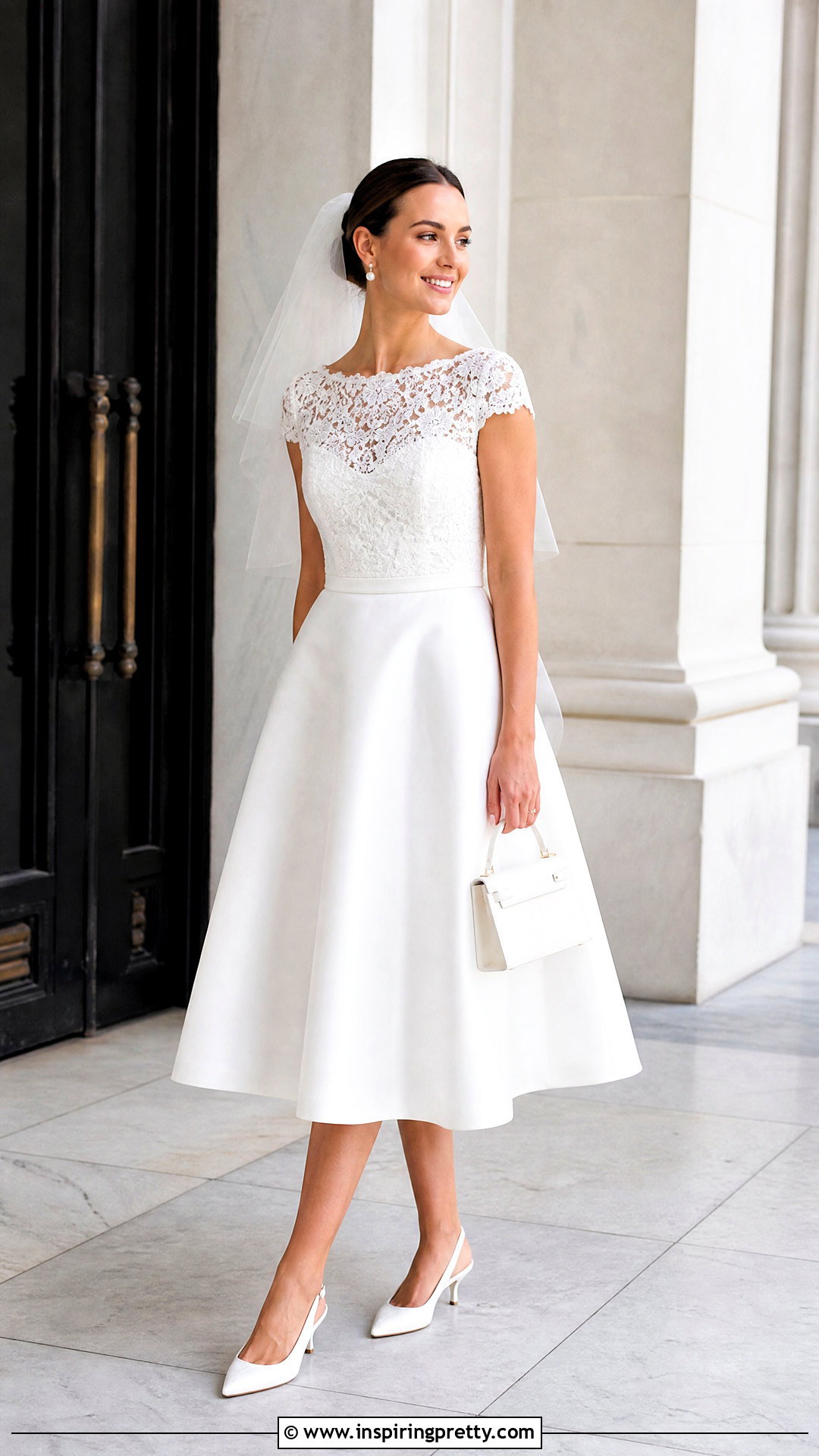
Tea-length dresses end between the knee and ankle, which means your shoes become part of the outfit. A plain satin or Mikado skirt holds a soft flare at that length. I like pointed slingbacks or pumps with it. It's easy to walk and dance in, and it suits a courthouse ceremony or a small venue. Keep the waist defined so the fuller skirt doesn't overpower a petite frame.
17. Short Wedding Dress With Lace Top And Plain Skirt
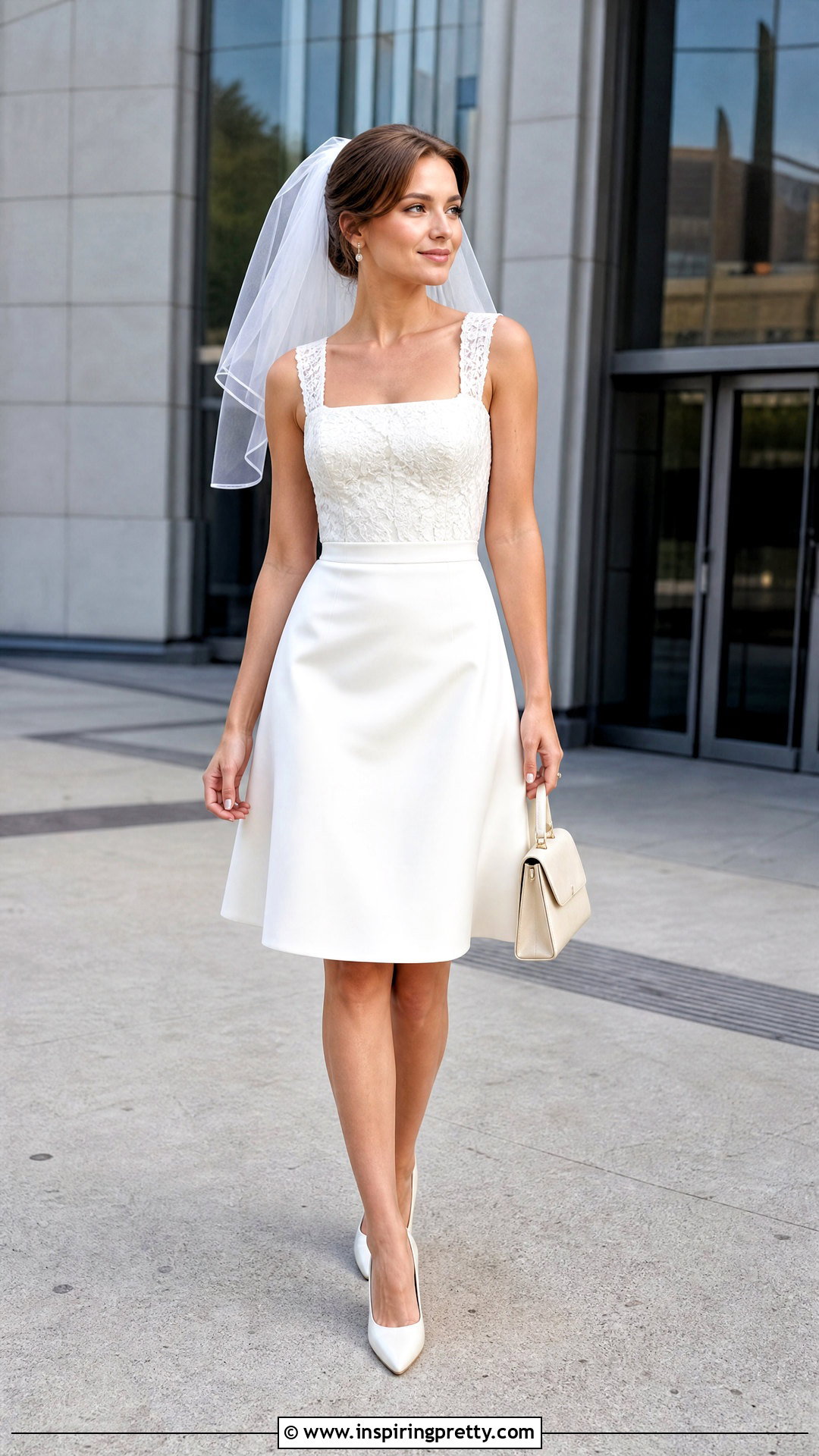
A short wedding dress needs to look bridal, not like a party dress, and lace plus formal accessories does that. I'd pick a fitted lace bodice with a plain A-line or pencil skirt near the knee. Because the hem is so visible, it has to hang level front and back; check in a mirror and climb some stairs. Elegant pumps and a short veil or hair bow keep it clearly a wedding outfit.
18. Mermaid Wedding Dress With Lace Top And Crepe Skirt
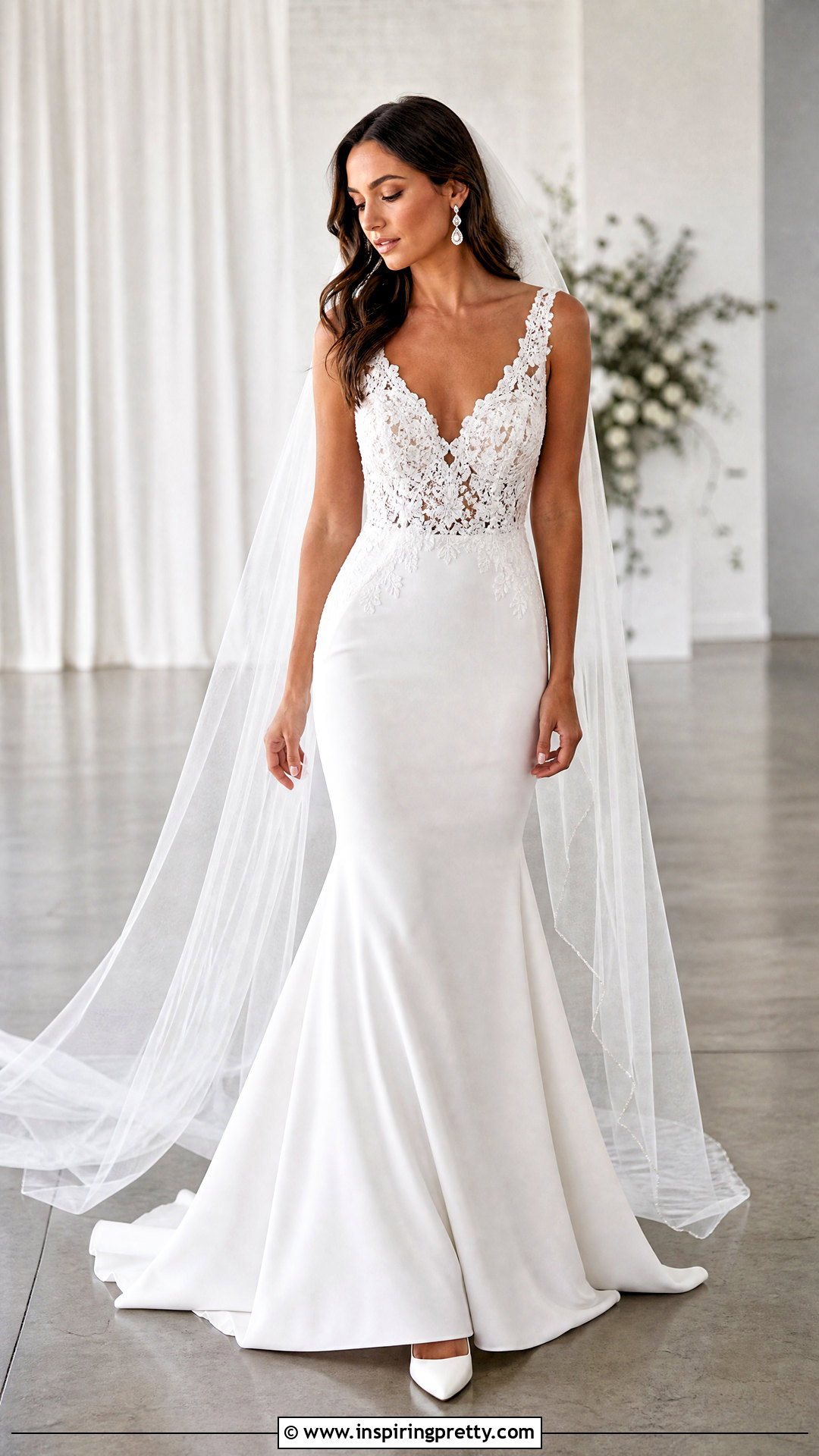
A mermaid gown fits through the hips and flares near the knee. A lace top keeps texture at the face; a plain crepe skirt keeps the fitted part sleek. Where the flare starts decides how well you can walk, so I ask brides to walk briskly and sit on chairs of different heights during fittings. If there's a train, a bustle is a must for the reception. A V-neck or off-shoulder bodice balances the narrow skirt.
19. Fit And Flare Wedding Dress With Lace Top And Plain Skirt
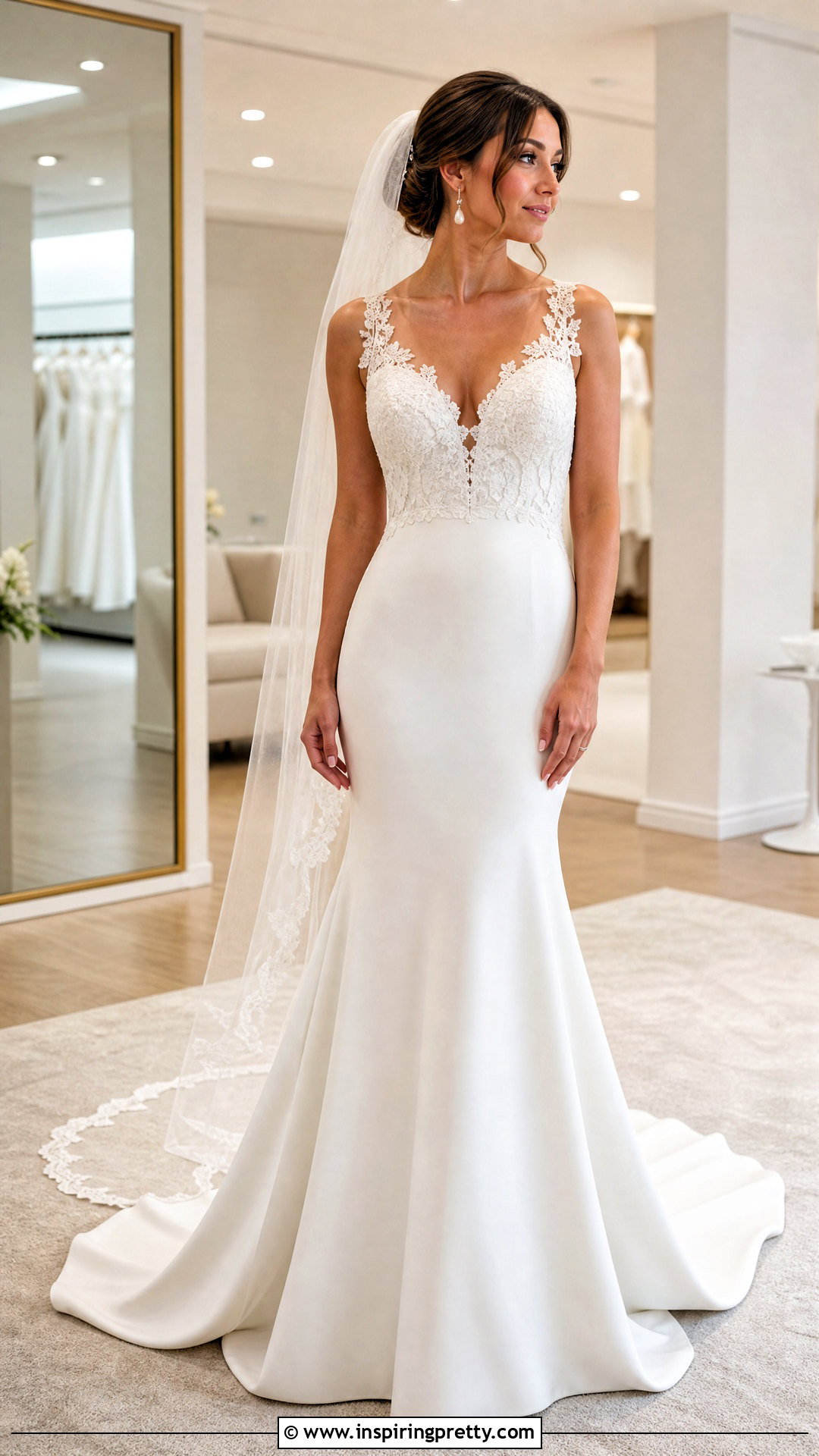
Brides who want shape without the tight knees of a mermaid gown often end up loving fit-and-flare. The lace top and upper skirt follow the body, then the skirt widens gradually from mid-thigh. Crepe drapes cleanly here and photographs well from any side. Smooth, no-show underwear matters, since crepe shows every line. I check the flare point from front, side and back, because this shape depends on balanced seams.
20. Strapless Wedding Dress With Lace Bodice And Mikado Skirt
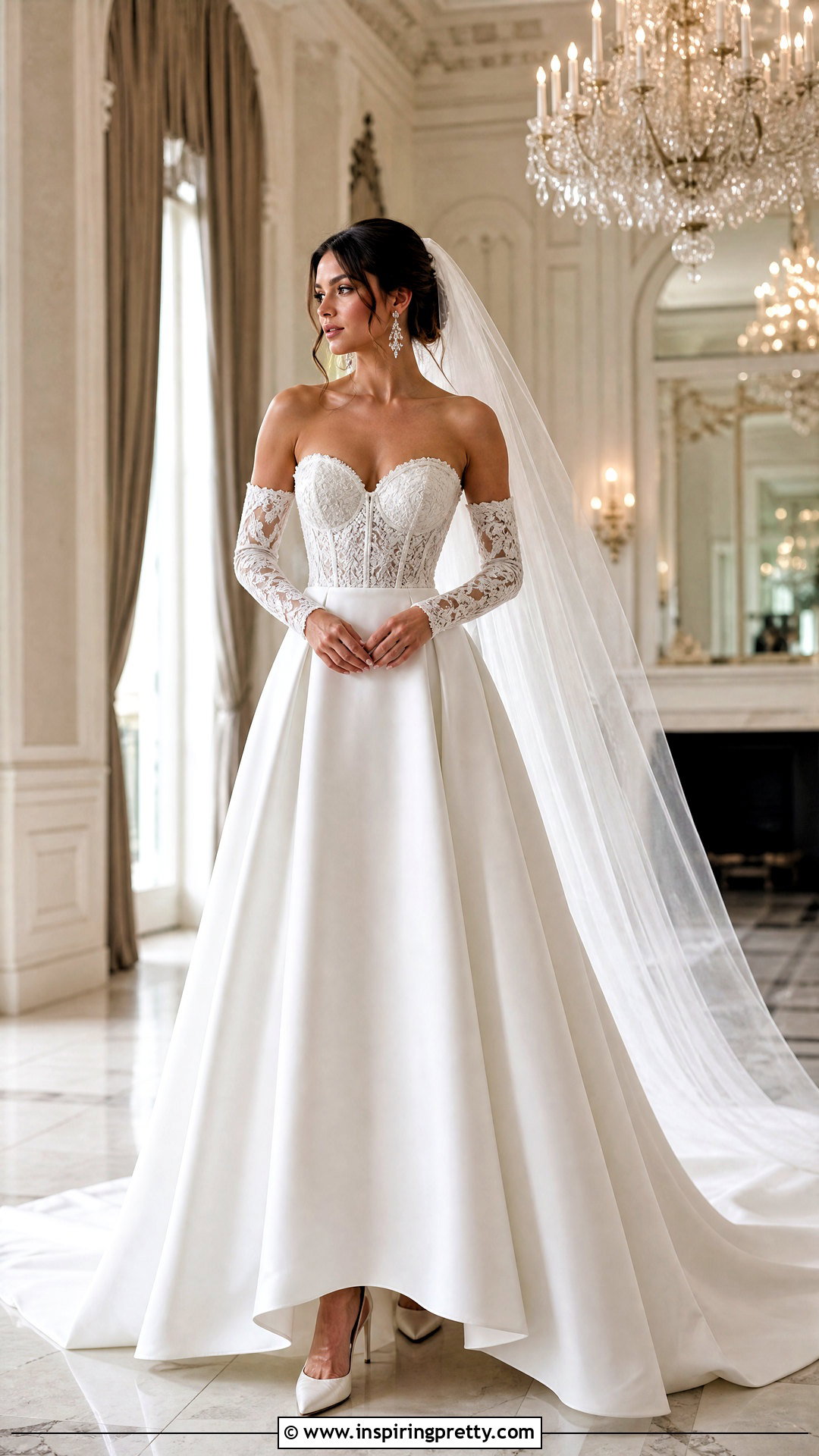
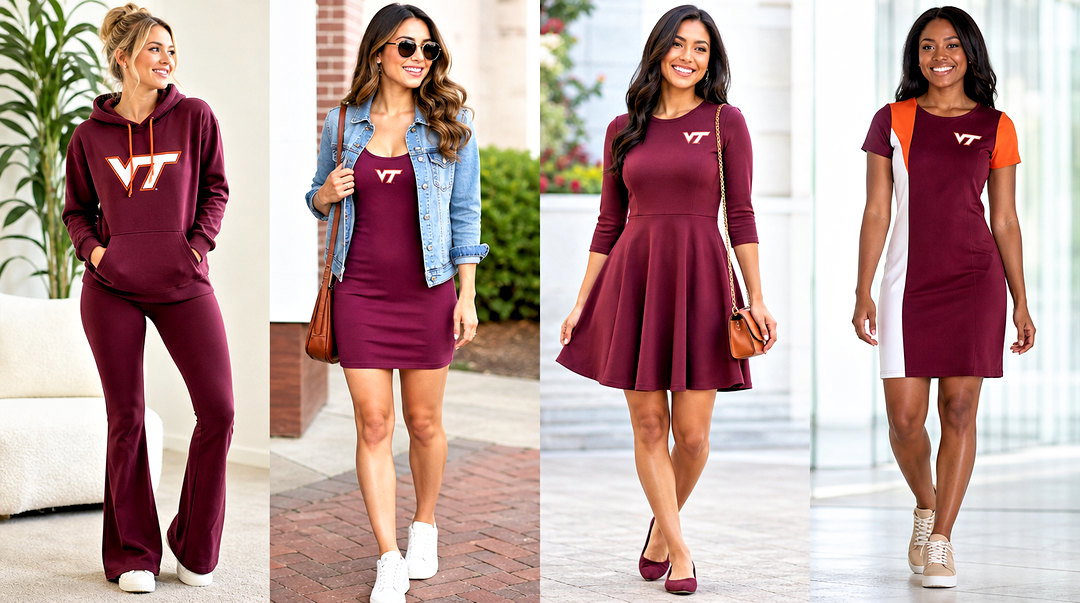
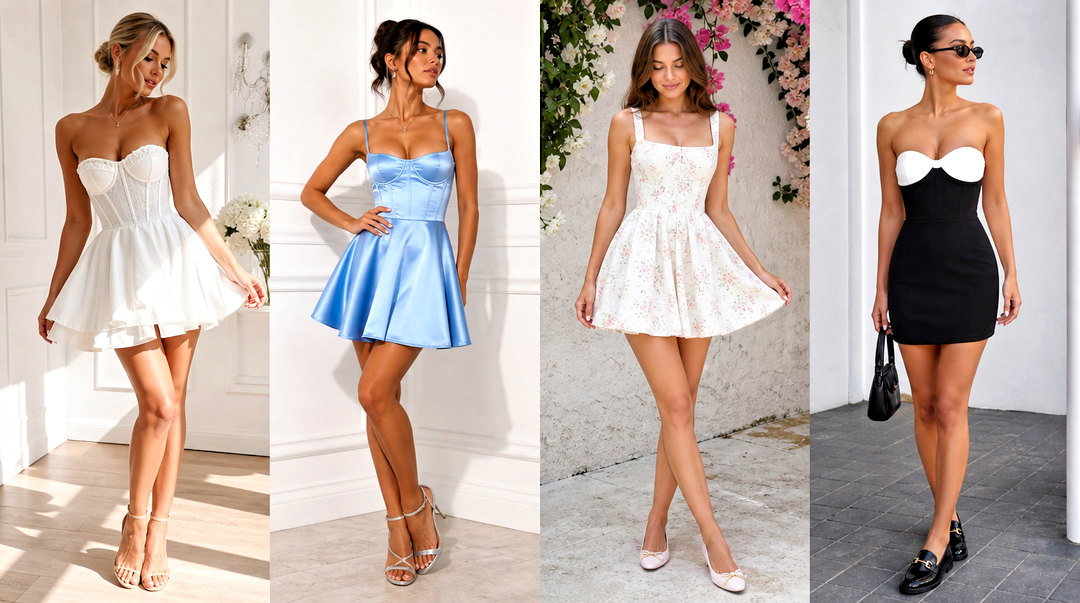
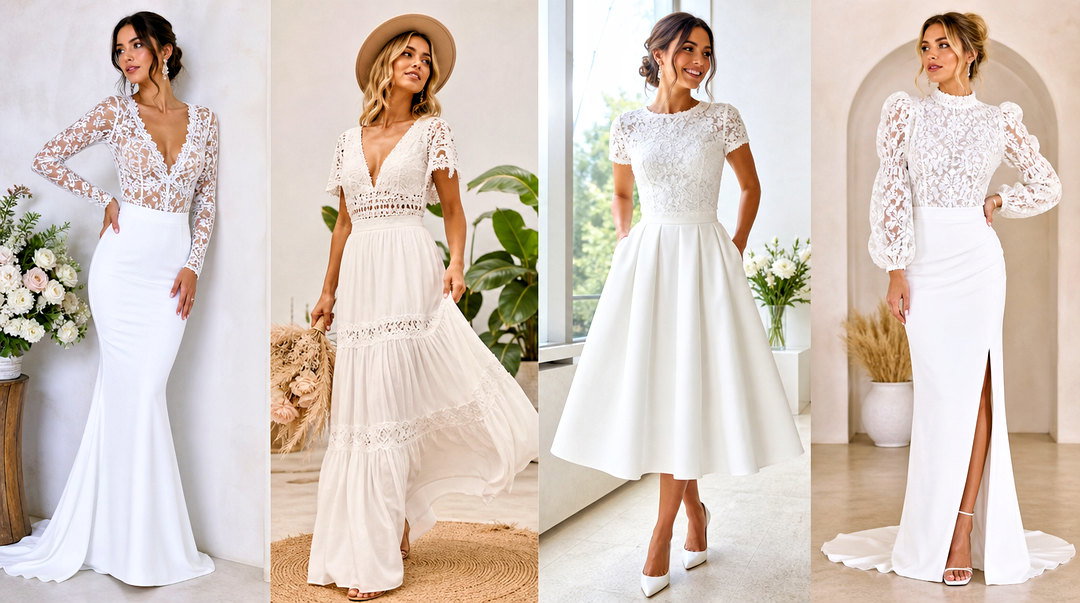
Strapless lace over a Mikado skirt is the most architectural pairing here. Mikado is stiff enough to hold deep pleats and big volume. A straight neckline is minimal; a sweetheart neckline is softer. With no straps, internal boning and a snug waist do all the work, so test the fit while dancing and raising your arms, not standing still. Detachable lace sleeves can cover you for the ceremony and come off later.
21. Boat Neck Wedding Dress With Lace Top And Plain Skirt
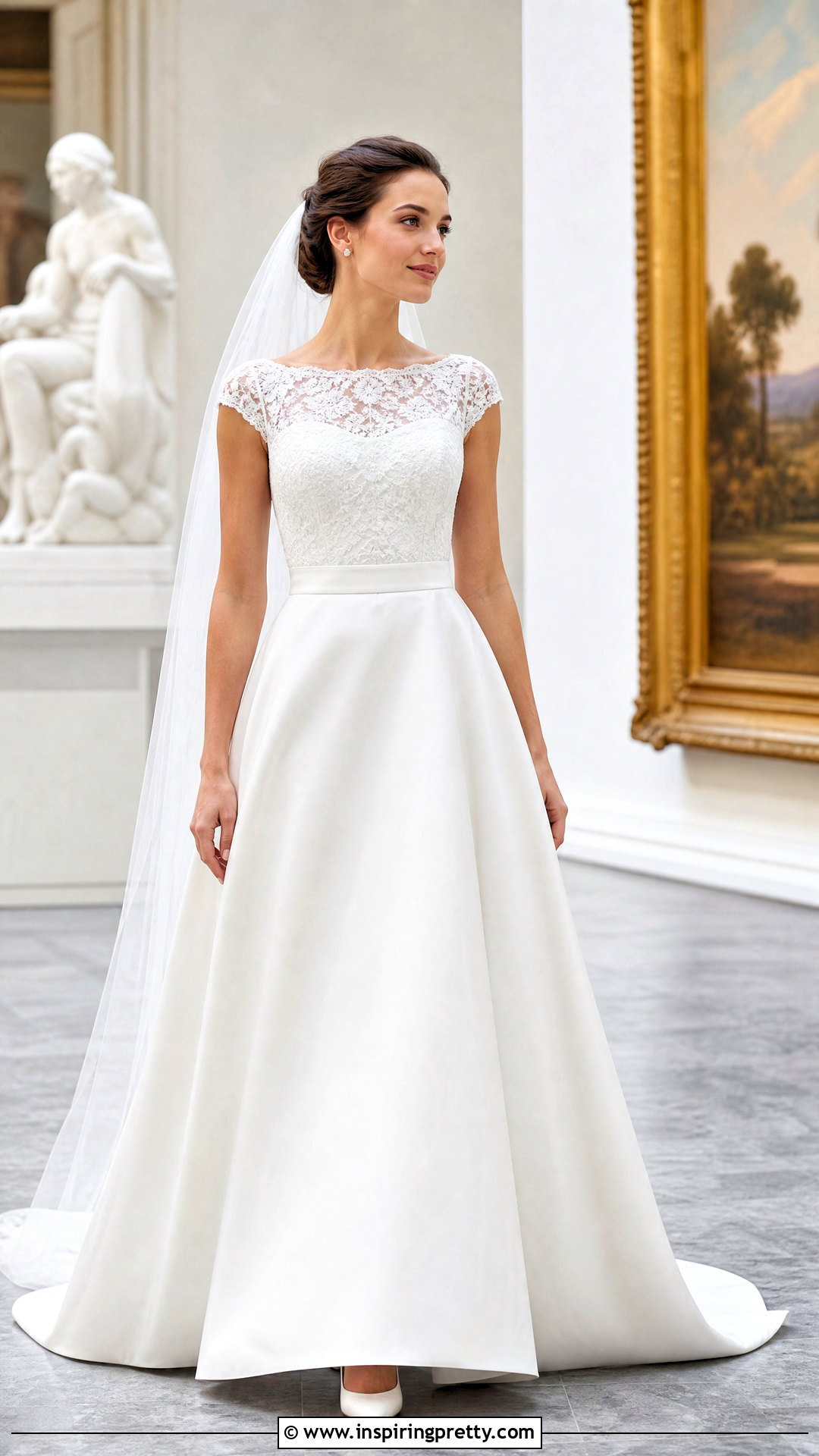
A boat neckline runs wide across the collarbones and frames the face well in photos. In lace, it softens the line. It can continue into cap or three-quarter sleeves for more coverage. A satin A-line gives classic shape; a crepe column looks sleeker. Boat necks can restrict arm movement, so at the last fitting I ask brides to reach forward as if hugging someone. Skip the necklace.
22. Three Quarter Sleeve Wedding Dress With Lace Top And Satin Skirt
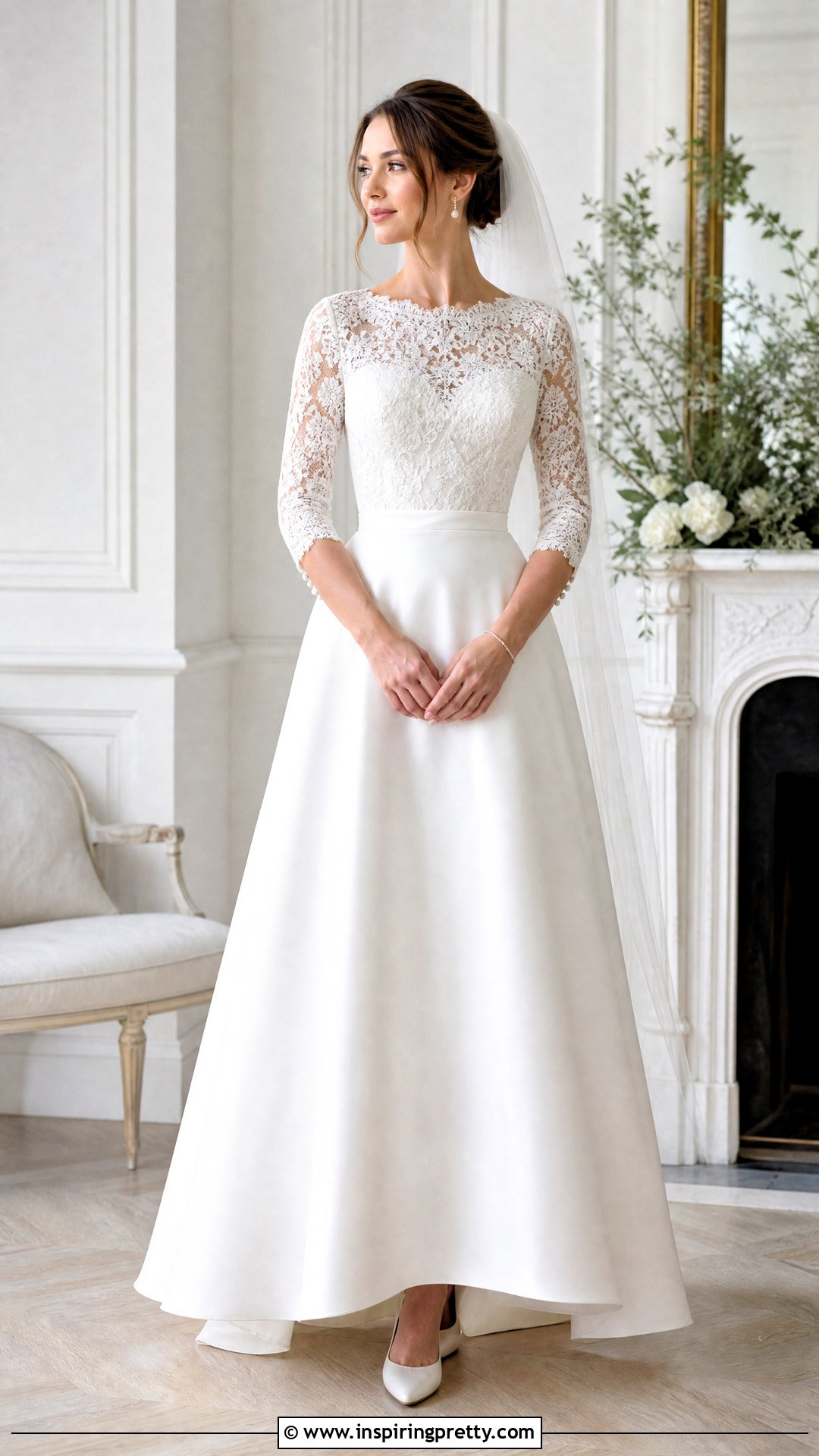
Three-quarter lace sleeves cover the arms while leaving the wrists free for a bracelet or a meaningful piece of jewelry. They pair well with a plain satin skirt and a defined waist. Lace needs some give at the elbow, or the seams strain when you bend your arm to eat or hug. Small covered buttons at the cuffs make getting dressed easier. A low bun keeps the sleeves and neckline visible.
23. Lace Halter Wedding Dress With Plain Crepe Skirt
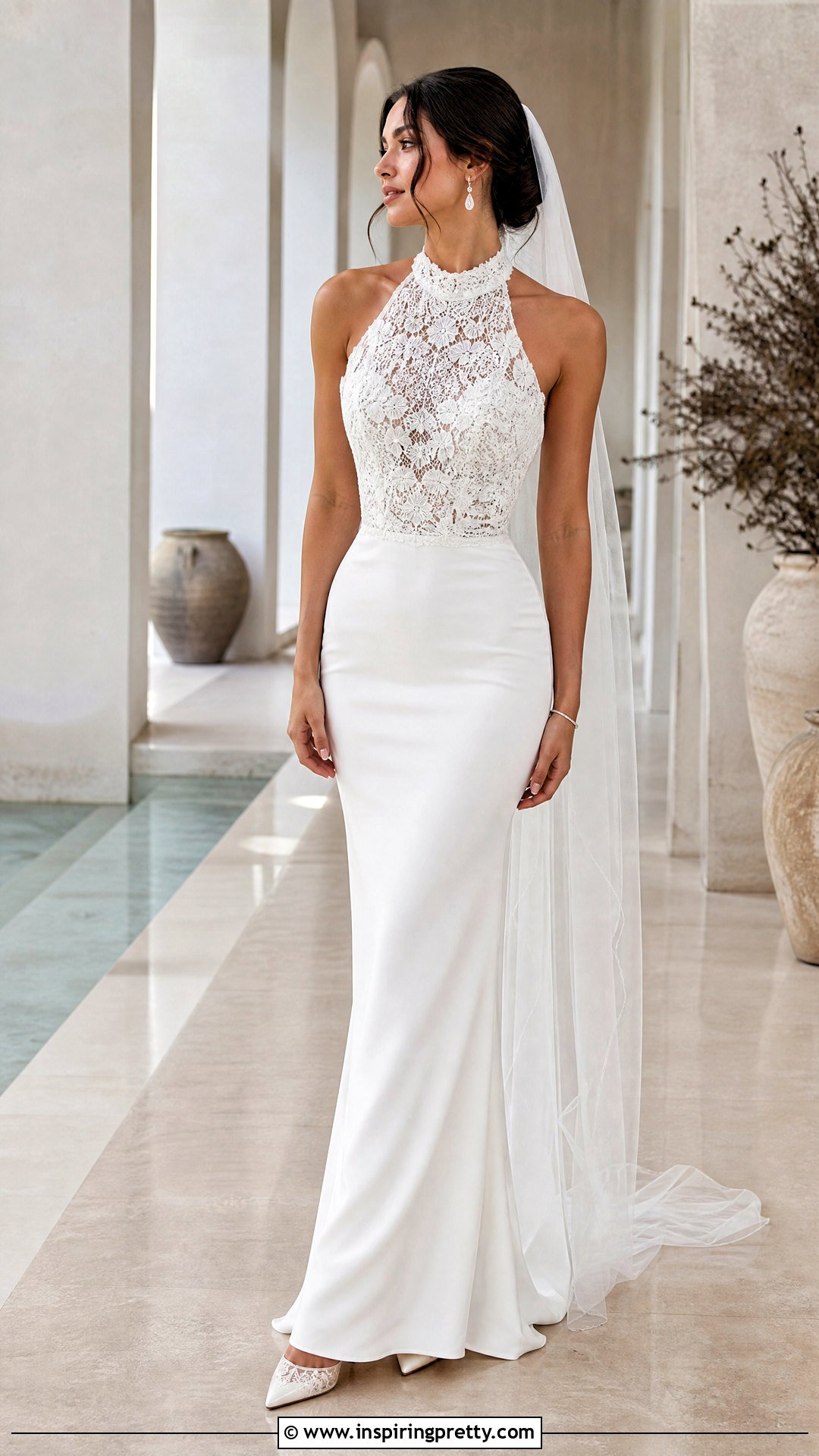
A lace halter with a plain crepe skirt gives a confident, modern line. The halter pulls focus to the shoulders, so I suggest it for brides who like their arms and back. A fitted column or soft fit-and-flare suits it. Hair up or swept to one side shows the back. The neck strap shouldn't carry the bodice's weight; if it presses on the neck at the fitting, ask for the support to be built into the bodice.
24. Lace Back Wedding Dress With Plain Satin Skirt
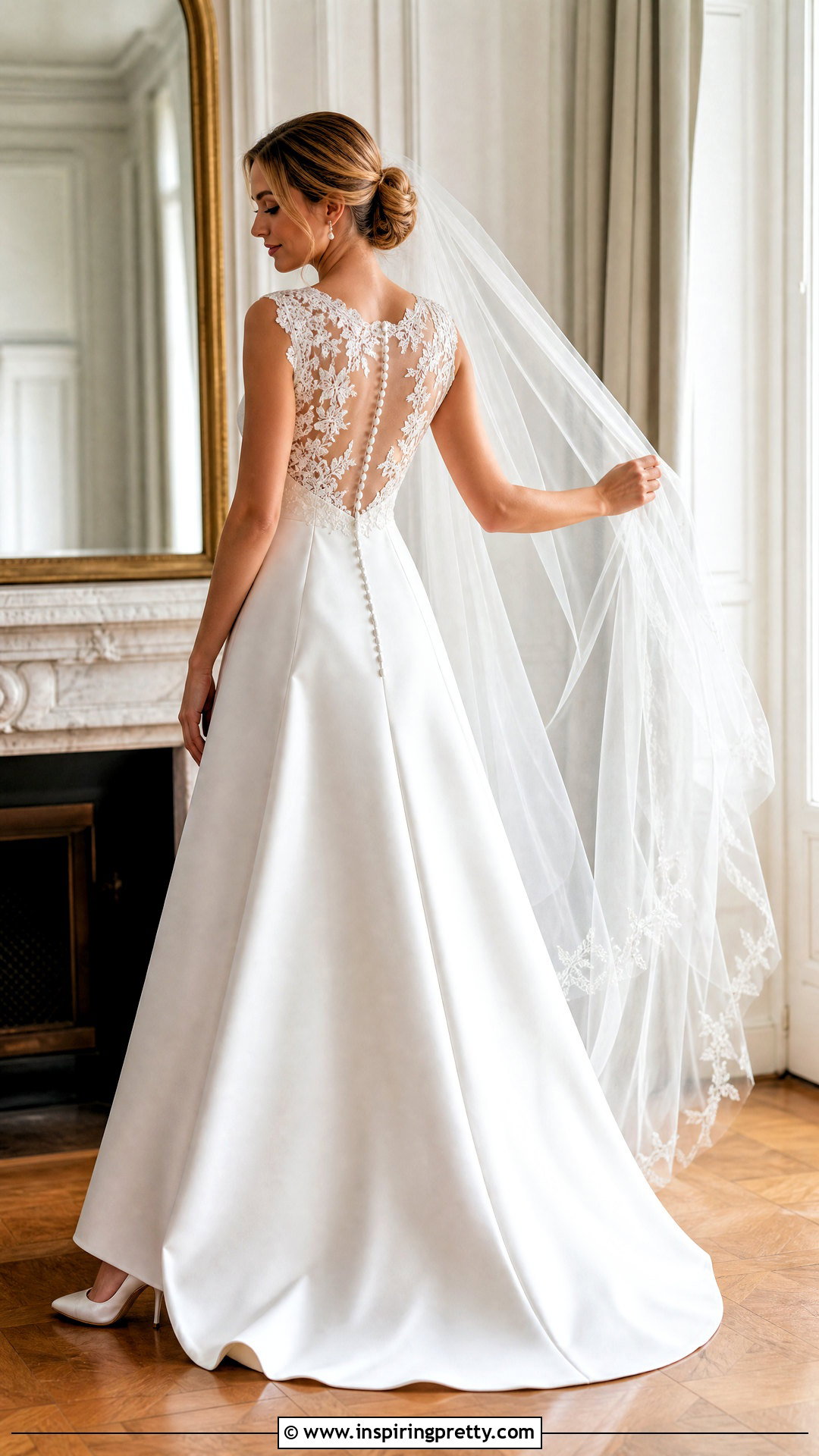
A plain front and a lace back give you a quiet look walking toward the altar and a reveal when you turn. The back might be illusion mesh, a keyhole, buttons or a low V framed with appliqués. Keep the front simple so there's one focal point. Covered buttons should run straight down the spine; ask the tailor to check the line after every adjustment. A sheer veil lets the back show through.
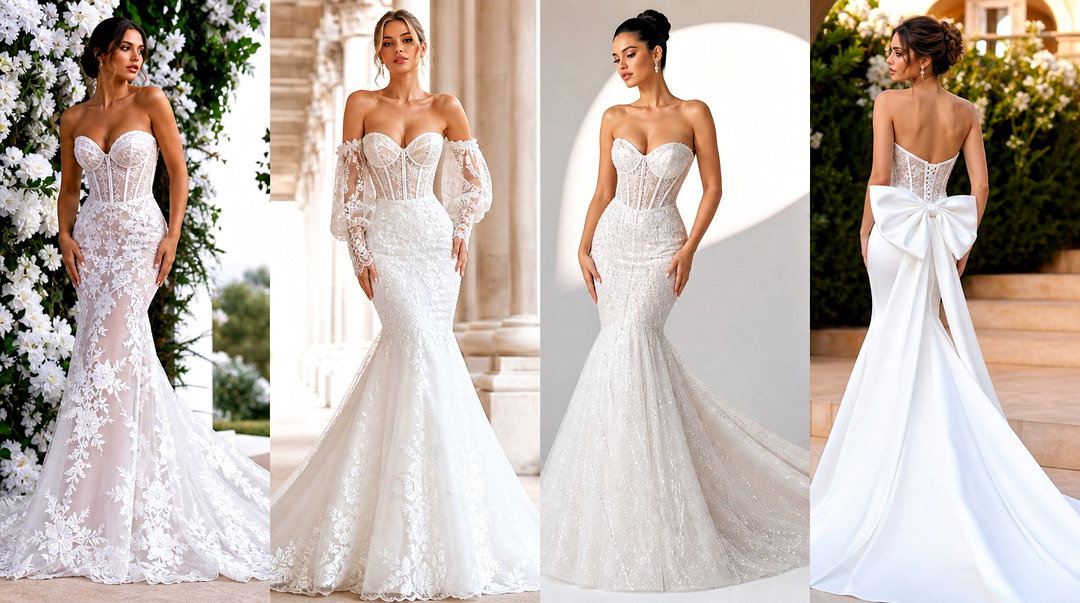
25. Plus Size Wedding Dress With Lace Top And Plain Skirt
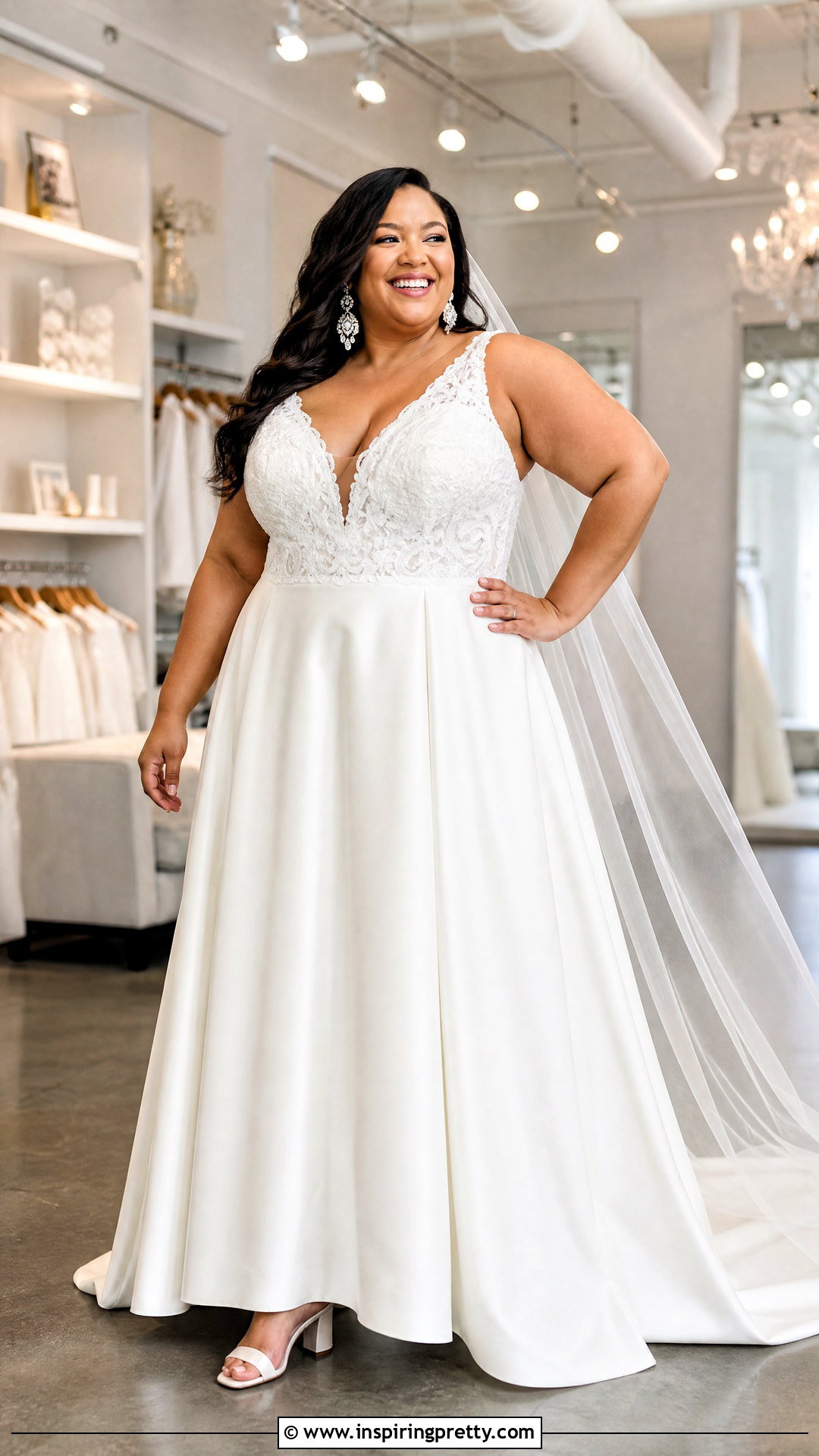
For plus-size brides, I start with support and work outward. A structured lace bodice with wider straps, built-in cups and firm side panels holds you without a separate bra. The skirt should fall from the waist without extra layers at the hips. Satin and Mikado add volume; chiffon and crepe drape closer. I don't follow body-type rules. If a gown sits securely, lets you move freely and makes you feel good, it's the right one.
How Alterations Work on This Kind of Gown
Almost every wedding dress needs alterations, and the lace-and-plain style has some advantages. A plain skirt is much easier to hem than one finished with a lace scalloped edge, which has to be removed and reapplied by hand. Most seamstresses suggest starting about two to three months before the wedding, with two or three fittings; timing and costs vary widely, so ask early.
What to Bring and Check
- Bring your wedding shoes and undergarments to the first fitting. The hem is set to your heel height, and the bodice is fitted over what you'll actually wear.
- Ask about letting out before you buy small. Satin and Mikado show old needle holes, so there's little room to make them bigger.
- Decide on a bustle type. An over bustle lifts the train onto the back of the skirt; an under bustle tucks it beneath. Try both on a long skirt.
- At the last fitting, walk, sit, dance and hug. If anything pinches or slips, fix it then.
- Have someone who'll help you dress on the day attend one fitting, to learn the buttons and the bustle.
Lace Above, Quiet Fabric Below
The appeal of combining lace tops with plain skirts is balance: detail up near your face, calm below. Start with the silhouette you feel easiest in, then choose a neckline, sleeve coverage and skirt fabric to suit your venue and season. Accessories should support the gown, not add more pattern. Above all, walk, sit and raise your arms in every dress you try. Good alterations make a gown that stays put from the ceremony to the last dance.
Related posts:


Leave a Reply