
A bubu is one of the most forgiving garments I cut. It descends from the West African boubou: a wide piece of cloth, a neckline, and openings at the sides, with no fitted bodice to fight. That simplicity is why it carries Ankara, Adire, lace, chiffon, silk and brocade equally well, and why it moves from a school run to a wedding depending on the fabric. What decides whether it looks polished or swamped is the bottom half, the shoes, and how much the neckline already does. Below are fifty pairings, each with what I'd watch for when you wear it or have it made.

How a Bubu Is Cut, and Why It Changes What Goes Underneath
Most bubus start as a wide rectangle of cloth, folded at the shoulder, with a neckline cut in and the sides stitched only partway so the arms come out through the openings. There's no set-in sleeve and usually no shaping at the waist. That means the width you see is decided by the cloth, not by your body, and it's why the bottom half matters so much.
When I cut one, three measurements shape every outfit you'll build from it:
- Length, measured from the shoulder. Hip length shows the bottoms; mid-thigh covers the seat and suits wide trousers; knee length becomes almost a dress and wants slim pants.
- Span, the width from one arm opening to the other. Wider span means more drama and more fabric falling over your hips.
- Side seam depth. Stitching the sides further down gives a narrower, tidier shape; a short seam gives that floating, cape-like effect.
The rule I use: the more width and length up top, the slimmer and plainer the trouser. A short, neat bubu can take palazzos or a full skirt. A long, wide one needs cigarette pants or leggings, or the whole outfit becomes a cloud.
1. Ankara Bubu Top With Wide-Leg Pants
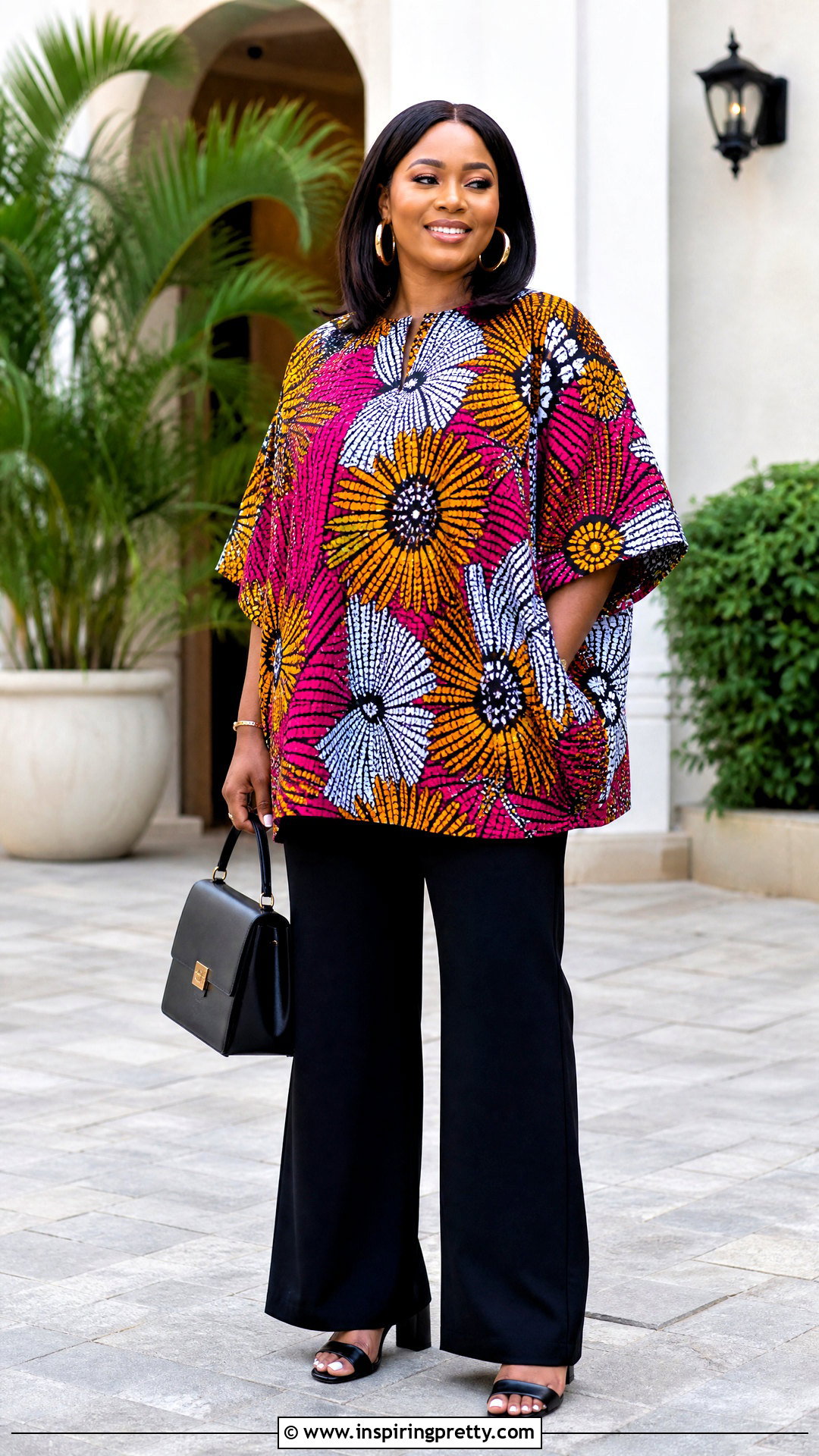
A loud Ankara bubu top needs a quiet trouser. I pull the darkest ground color out of the print, usually black, navy or brown, and use that for wide-leg pants, so the eye reads one outfit rather than two arguments. Mid-thigh is the length I'd cut for this: long enough to cover the seat, short enough that the trouser still swings. Keep the sandals and bag plain if the wax print is very bright.
2. White Bubu Top With Black Trousers
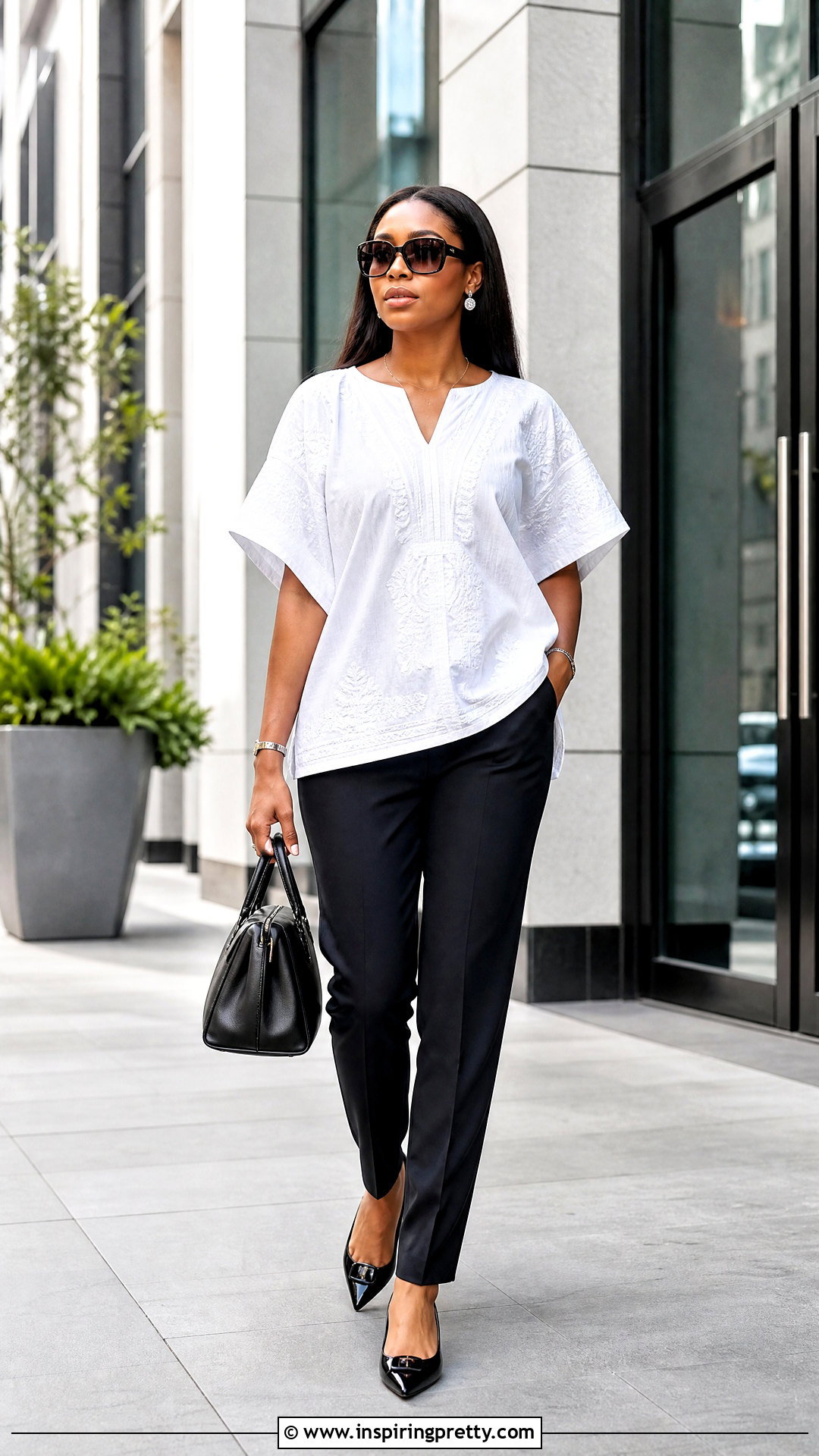
White over black is the easiest bubu outfit to get right and the easiest to get wrong. Plain white cotton can look like a nightshirt, so I add something to the neckline, piping or a little self-colored embroidery, before I worry about anything else. Straight or slightly tapered black trousers give the volume a base. Hold the fabric up to a window before you buy: if you can see your hand through it, it needs a lining or a smooth camisole.
3. Adire Bubu Top With White Pants
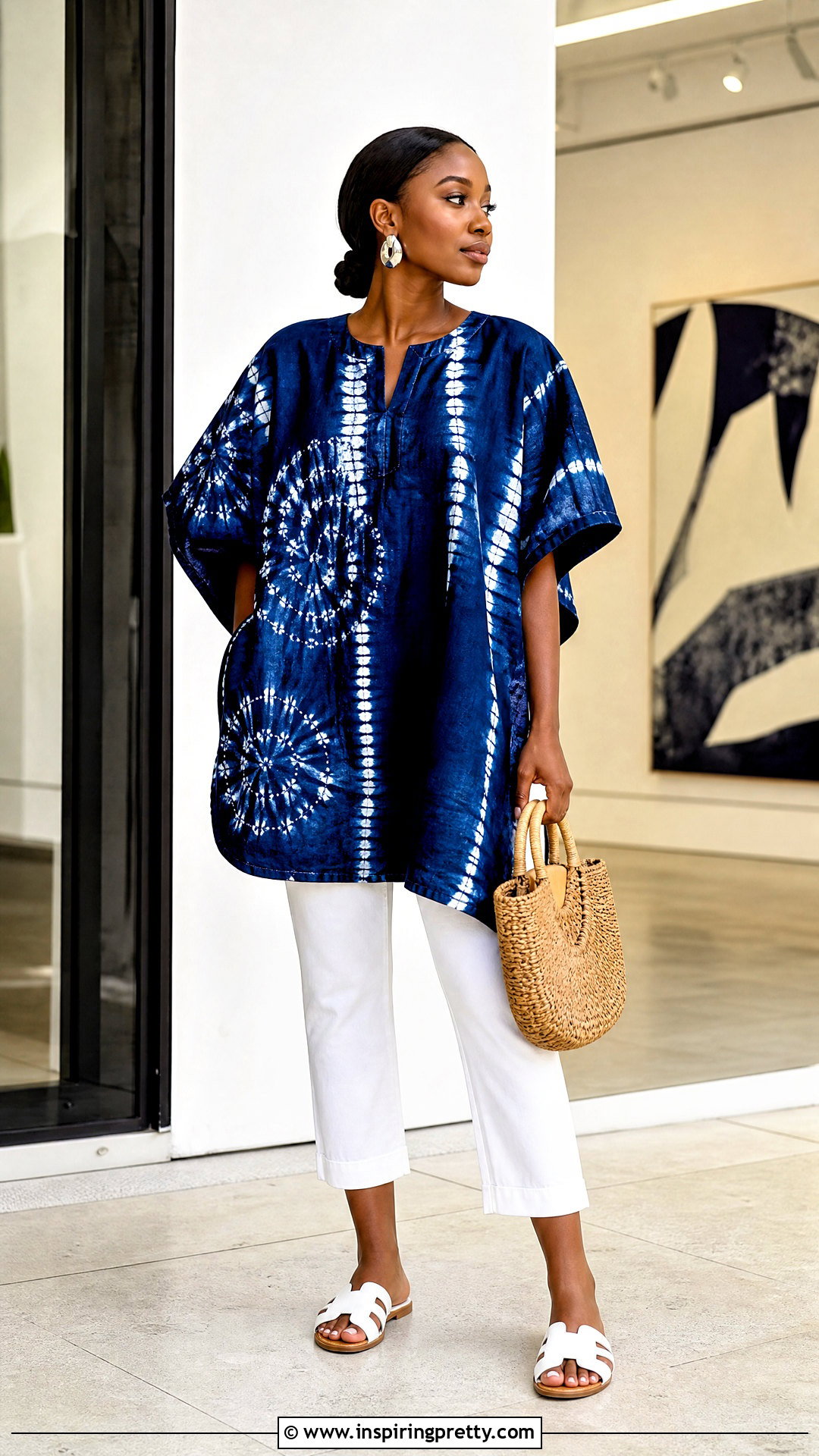
Fresh white trousers make indigo Adire look deeper than it does against anything else. The catch is that hand-dyed indigo can rub off, especially when new, and white trousers are where you'll see it first. I always rub a damp white cloth on the inside seam before letting a client wear this pairing. Cropped straight legs keep it light; full palazzos turn it into an evening look.
4. Lace Bubu Top With Satin Pants
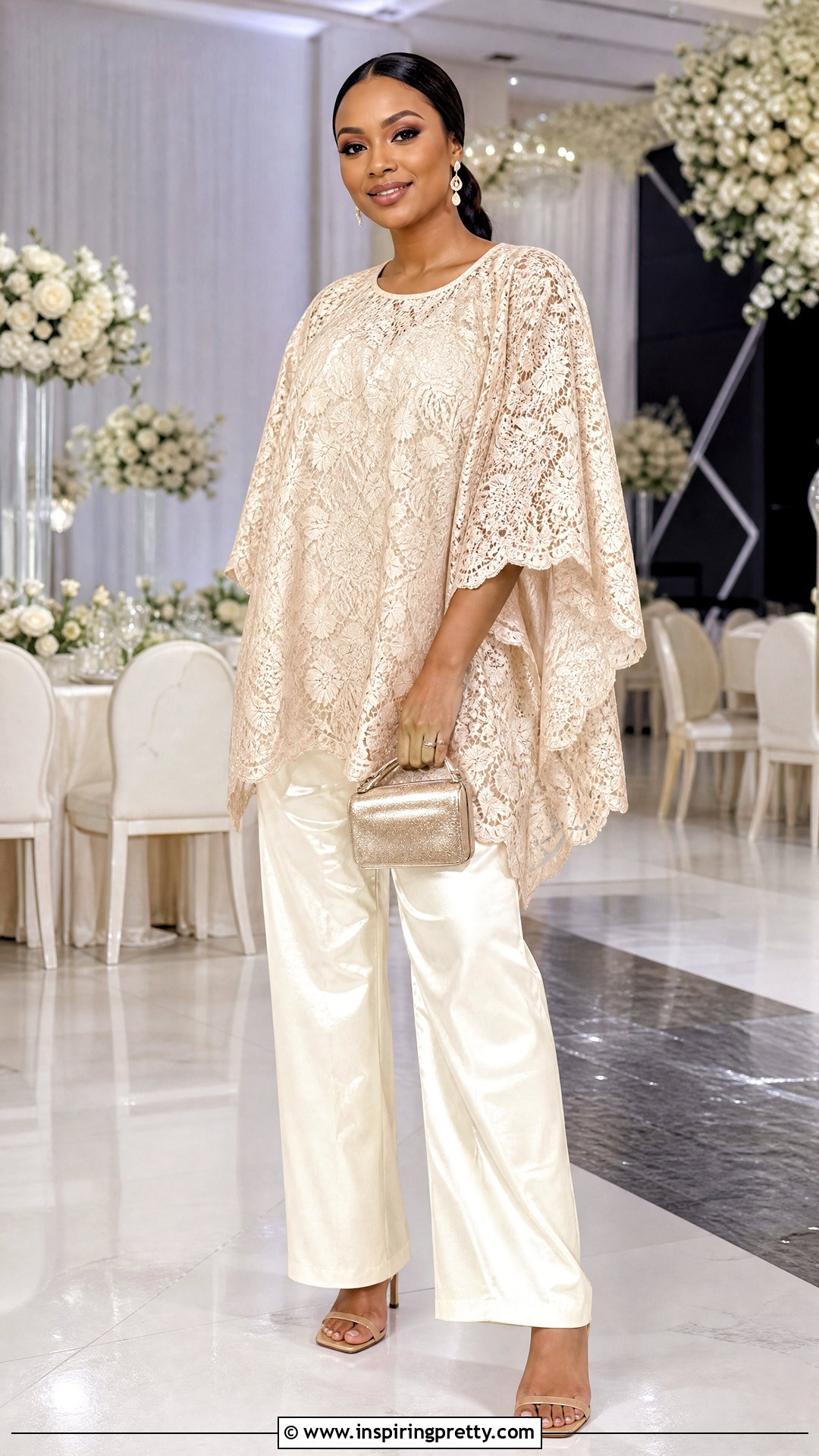
Lace over satin is about two textures, not two colors, so I keep them in one family: champagne with cream, emerald with a deeper green. A lined lace bubu gives coverage and stops the satin from showing every line of what's underneath. If the lace has a scalloped or beaded edge at the neck, that is your necklace already. Satin trousers crease where you sit, so steam them right before you leave rather than the night before.
5. Short Bubu Top With Skinny Jeans
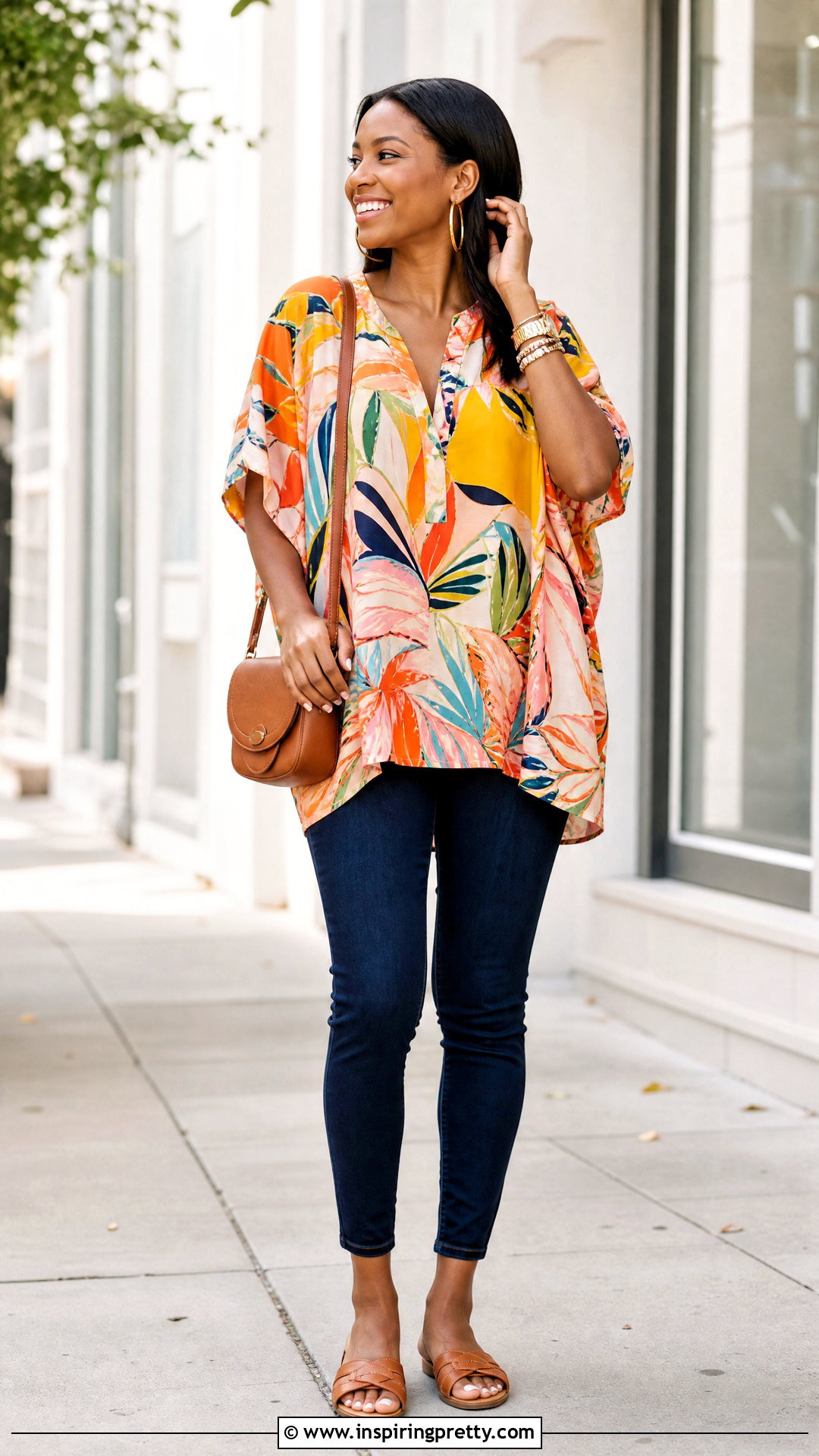
Skinny jeans under a short bubu only works if the top keeps its width. Once the hem rises to the waist it stops being a bubu and becomes a boxy blouse, so I cut these to the upper thigh. Dark or black denim lets a printed top carry the outfit. If you want shape, ask for small side ties inside the openings instead of reaching for a thick belt that bunches the fabric.
6. Chiffon Bubu Top With Cigarette Pants
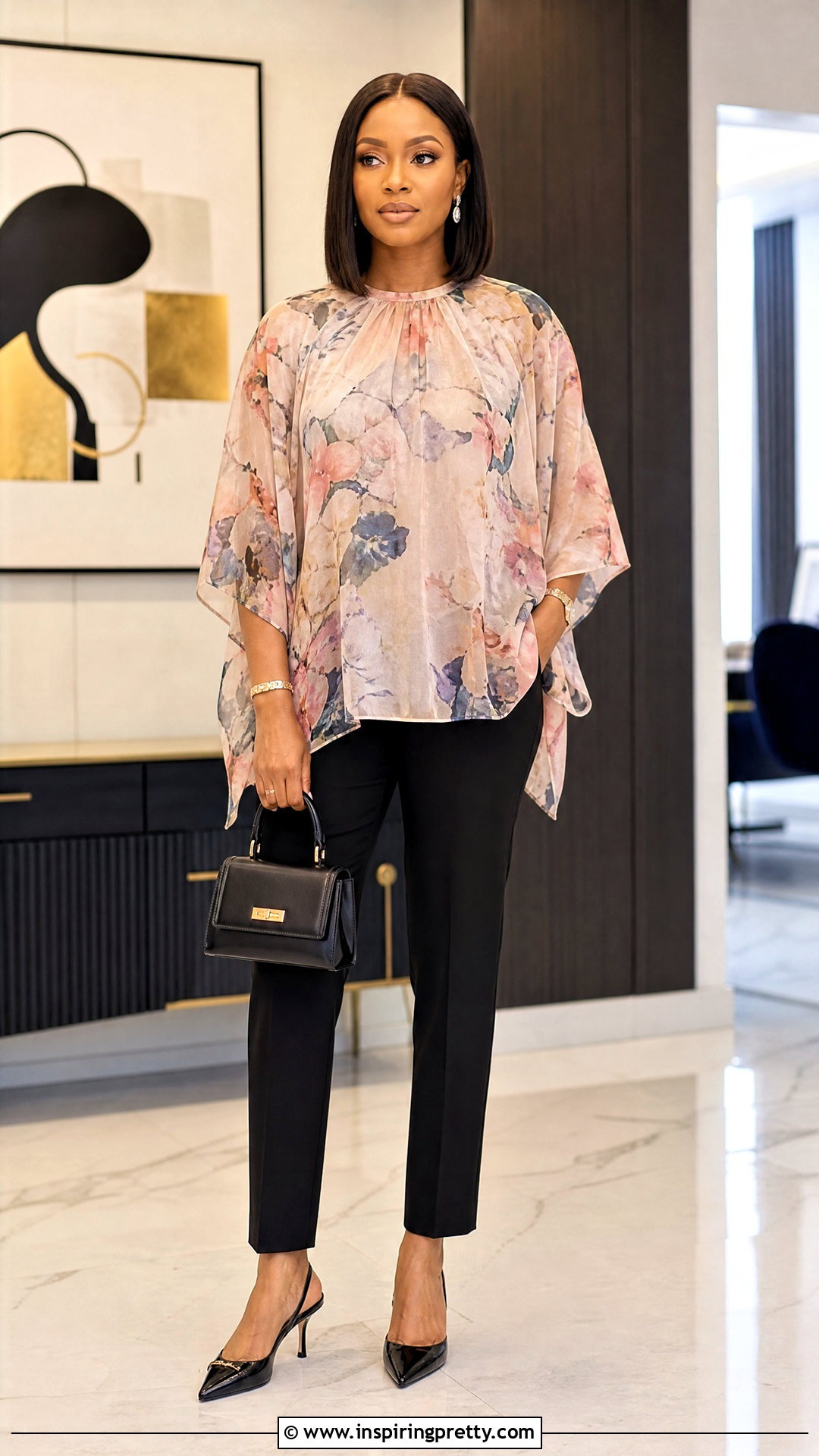
Chiffon is the fabric that teaches you to respect linings. It floats beautifully over cigarette pants, but in daylight most printed chiffons show the bra line, so I either attach a lining at the neck or tell the wearer to plan a camisole in the same tone. The trouser should skim, not grip, or the contrast looks accidental. This one is light enough for hot afternoons and neat enough for a relaxed office.
7. Silk Bubu Top With Palazzo Pants
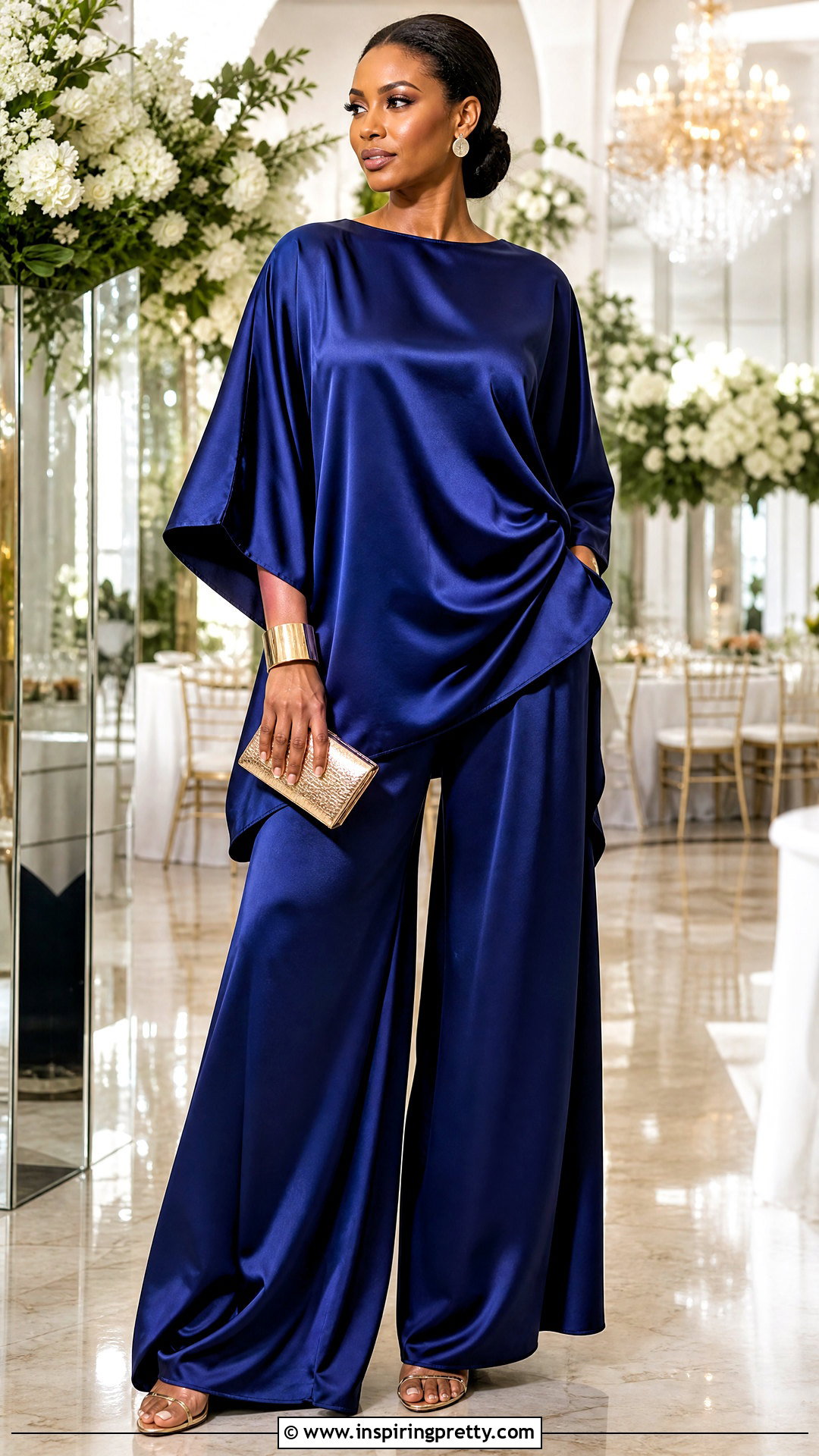
A matching silk set reads as one long column, which is why it flatters almost everyone. The risk is that a very wide top melts into very wide palazzos and the figure disappears, so I trim the top's width a little for sets. Jewel tones carry the sheen best. Silk snags on rough bag hardware and chunky bracelets, so I'd carry a smooth clutch.
8. Embroidered Bubu Top With Tailored Pants
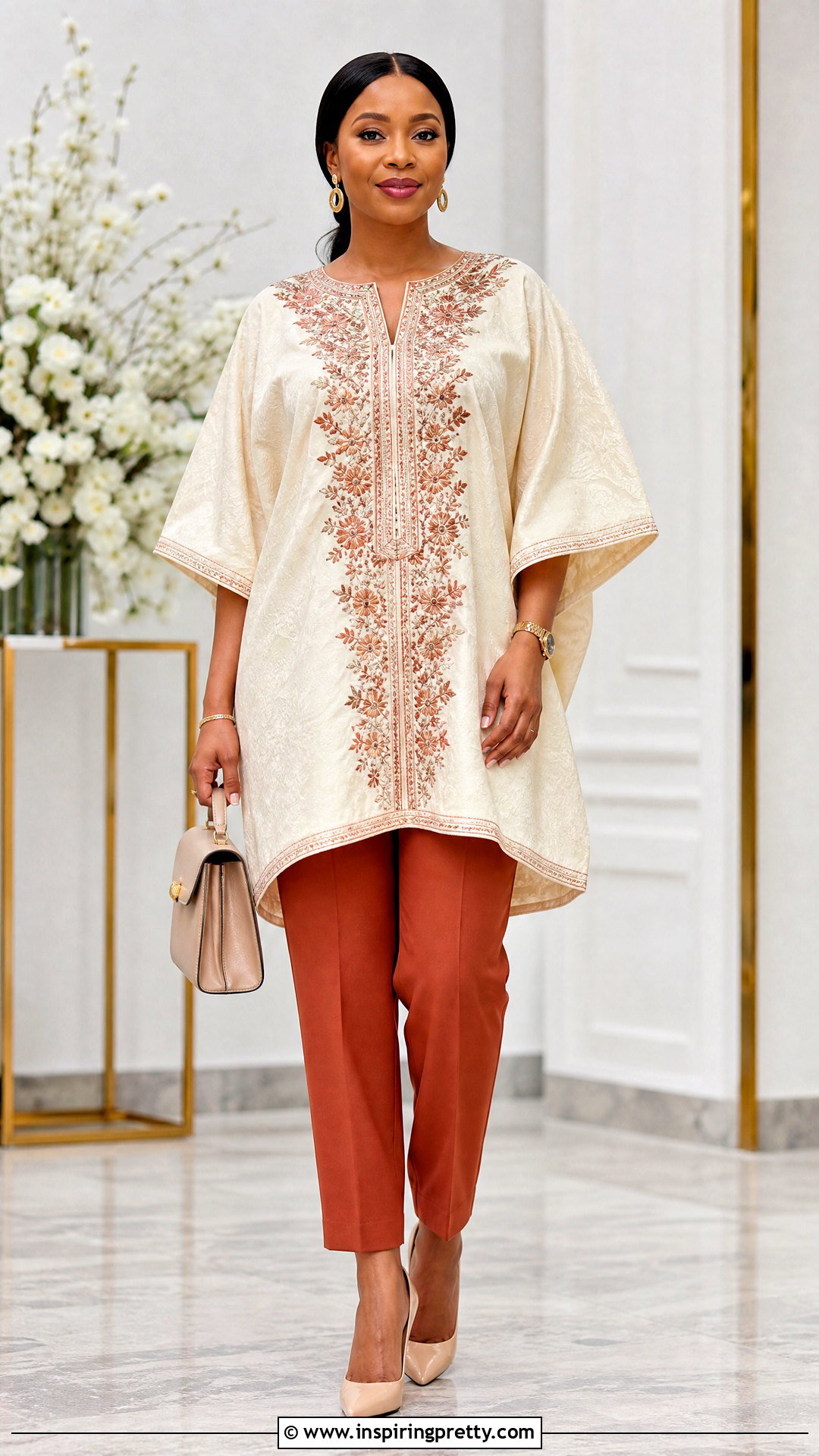
Embroidery deserves a plain, well-cut trouser underneath it. I pick the trouser color from one thread in the work: rust, olive or cream feel more considered than default black. When I place embroidery on a custom bubu, I keep heavy stitching off the shoulder fold and sleeve edges, because dense thread stiffens the cloth and stops it from draping. If the motif covers the neckline, earrings only.
9. Peplum Bubu Top With Straight-Leg Pants
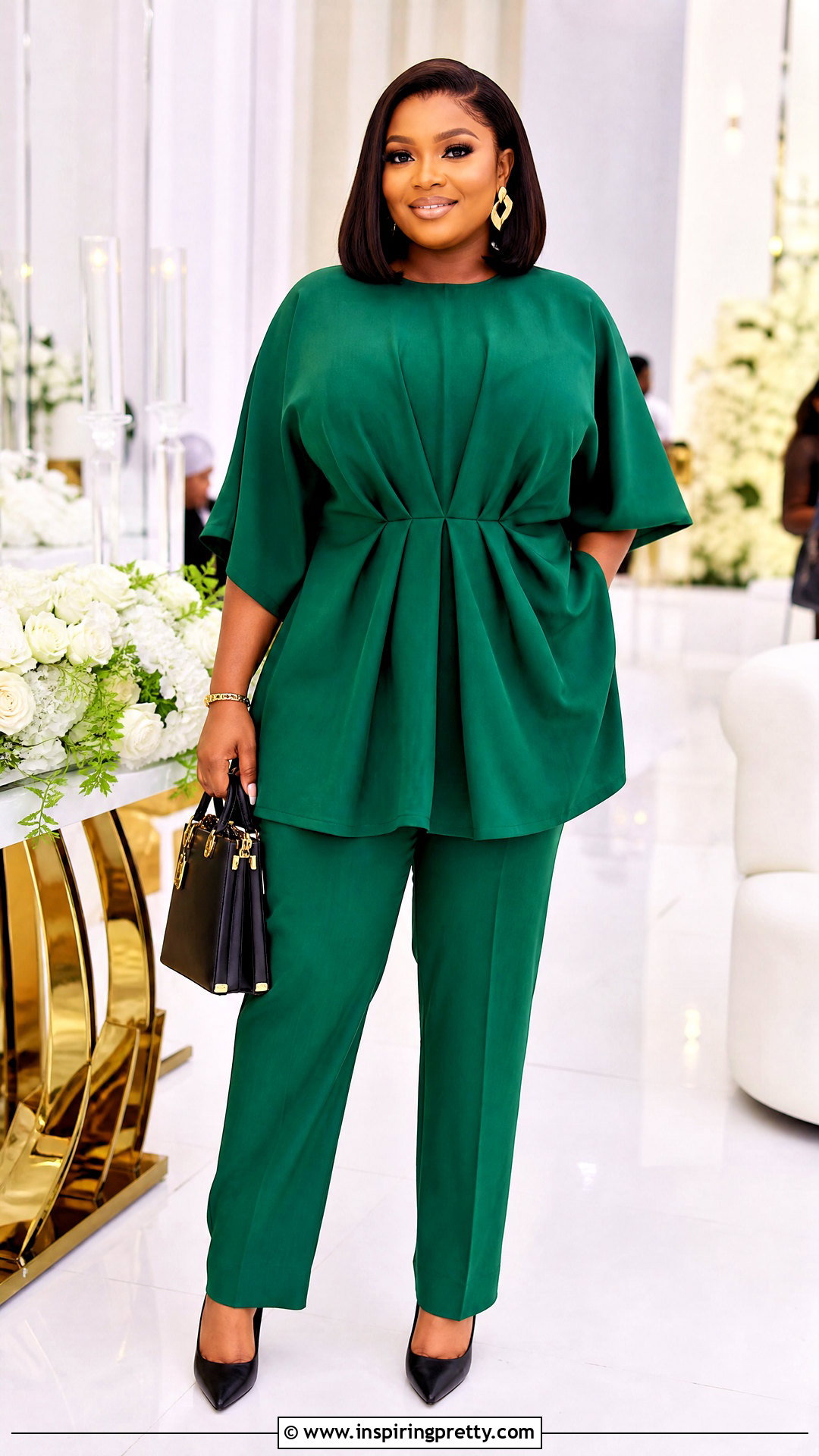
A peplum bubu gives a waist without a fitted blouse, but only if the gathered panel starts at your natural waist. Set it too low and it adds a ledge at the hip; set it too high and it looks maternity. I prefer a soft gather over a stiff flare here. Straight-leg pants underneath stop the outfit from turning into two layers of volume.
10. Off-Shoulder Bubu Top With Flared Pants
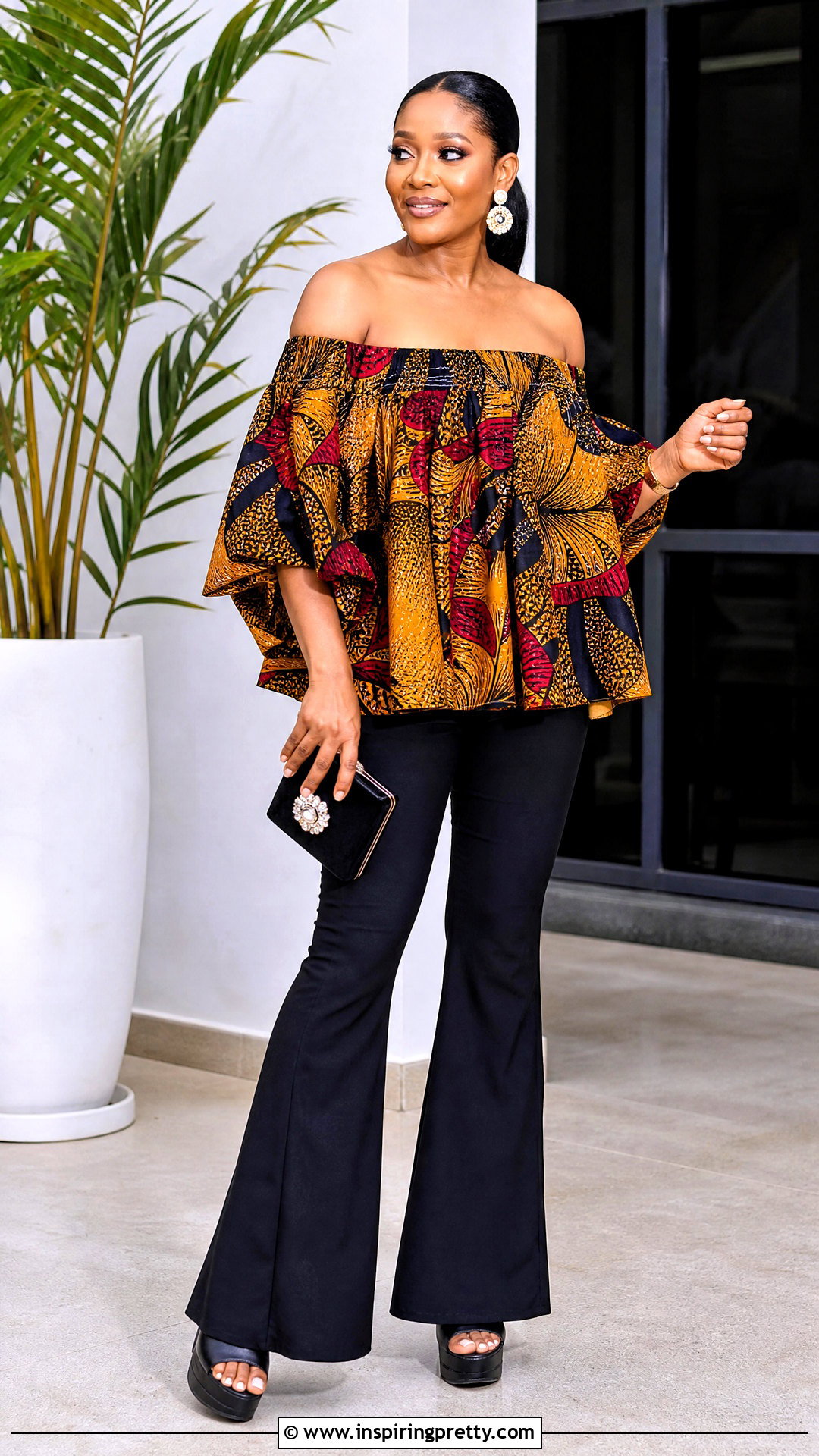
Off-shoulder bubus live or die on the elastic. I use a firm, wide elastic channel so the neckline stays where you put it when you lift your arms to dance. Flared pants balance the width across the shoulders, and a handheld clutch keeps straps off the bare skin. Under this neckline you need a strapless bra that genuinely fits; a slipping one ruins the line within an hour.
11. One-Shoulder Bubu Top With Slim Pants
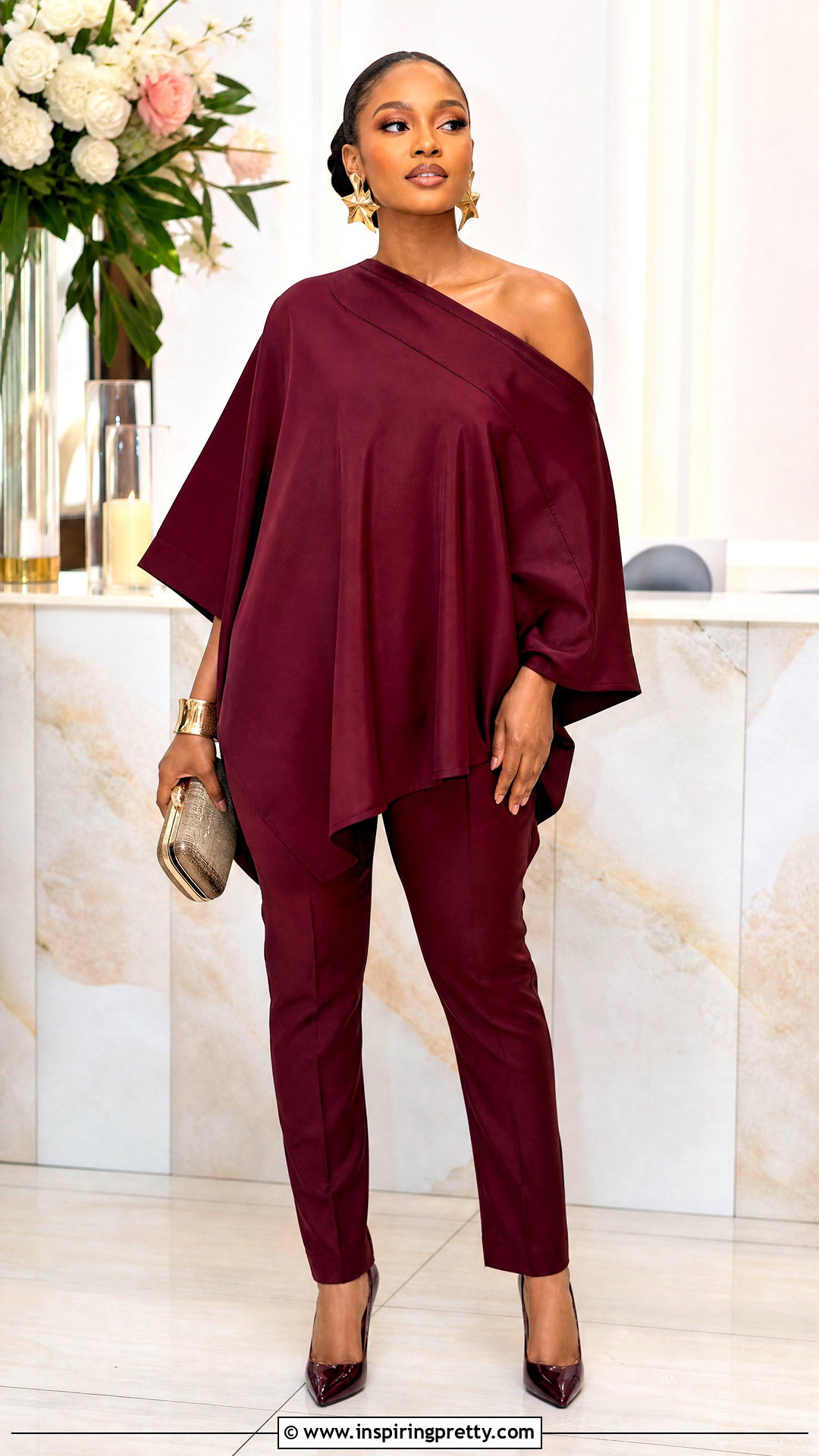
One bare shoulder creates a diagonal line that does most of the styling for you. I keep the trousers slim and solid so that line stays clear. If there's a draped panel falling from the shoulder, check it while you walk: it should swing, not tangle around your knees. Sweep your hair to the covered side.
12. High-Low Bubu Top With Leggings
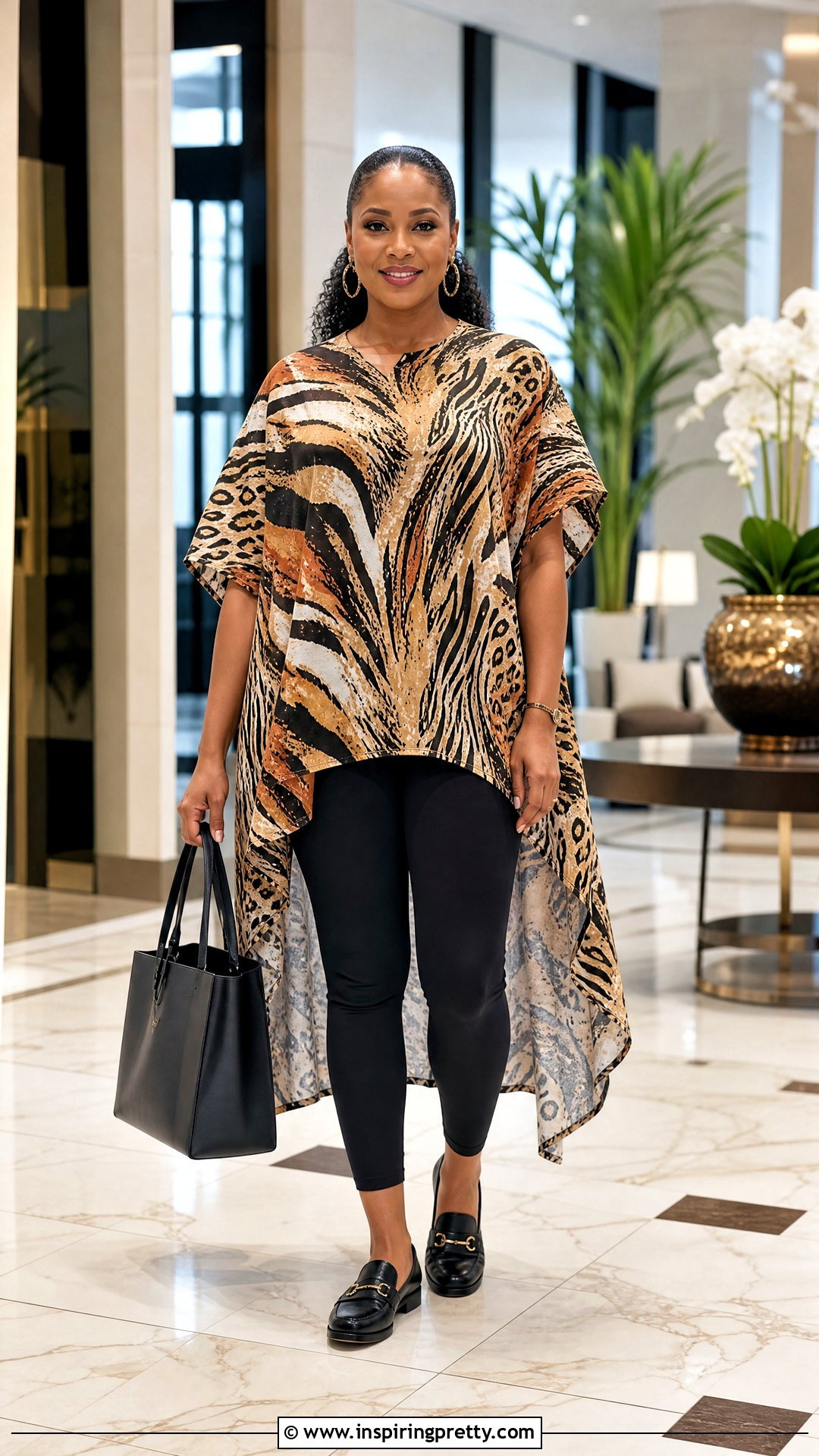
High-low hems need a close, opaque base. I'd never put a printed high-low bubu over thin gym leggings for an event; a thick ponte legging hides lines and looks deliberate. Petite women do better with a gentle drop at the back. Taller women can carry a longer tail, but it should still clear the floor when you climb stairs.
13. Asymmetrical Bubu Top With Cropped Pants
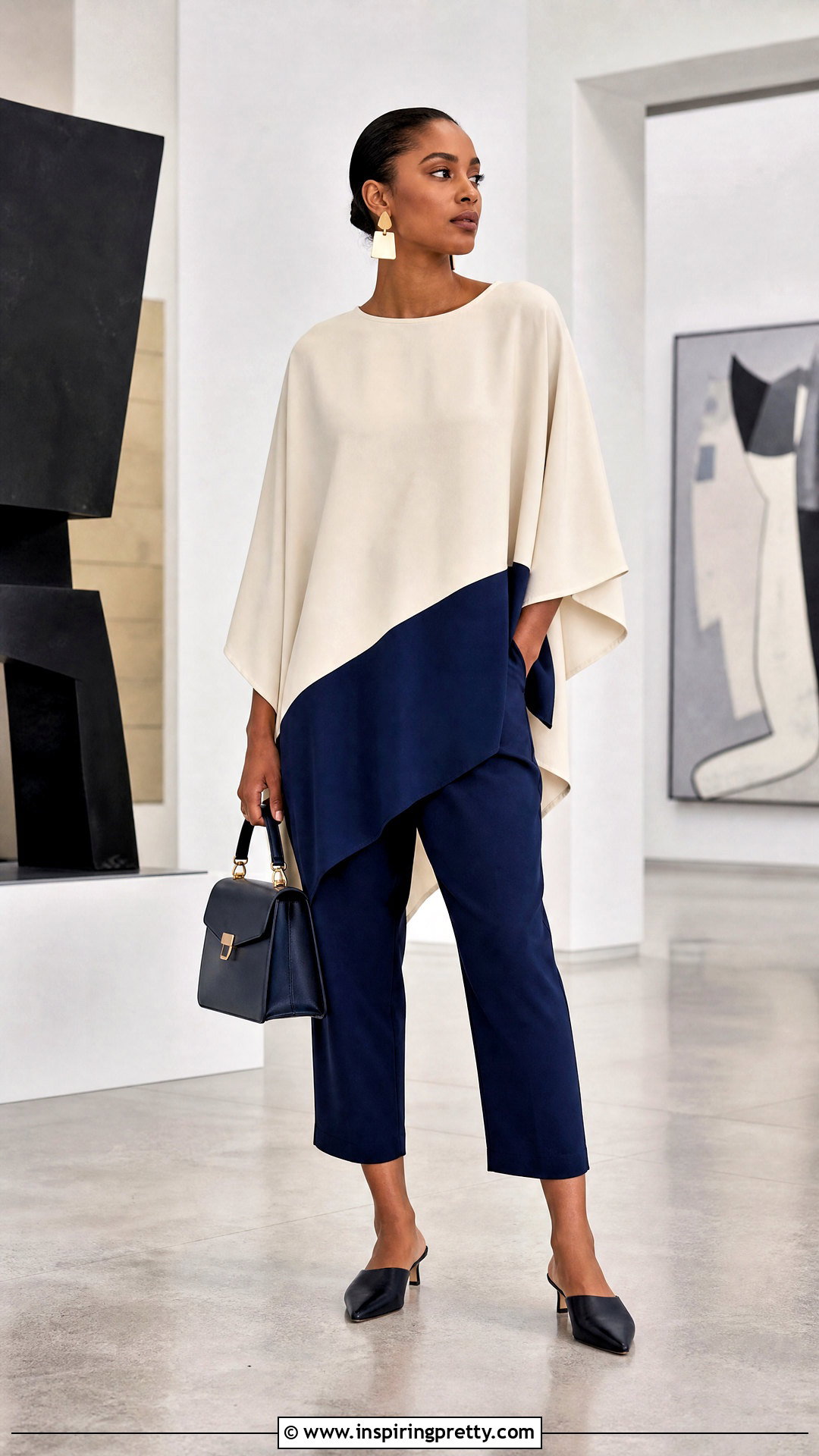
Asymmetric hems look sharpest over cropped trousers that show the ankle. A diagonal edge already gives the eye a direction, so I avoid long pendant necklaces that add a second, competing line. When I fit one of these, I check both side lengths standing and then sitting, because the short side rides up more than people expect.
14. Batwing Bubu Top With Pencil Skirt
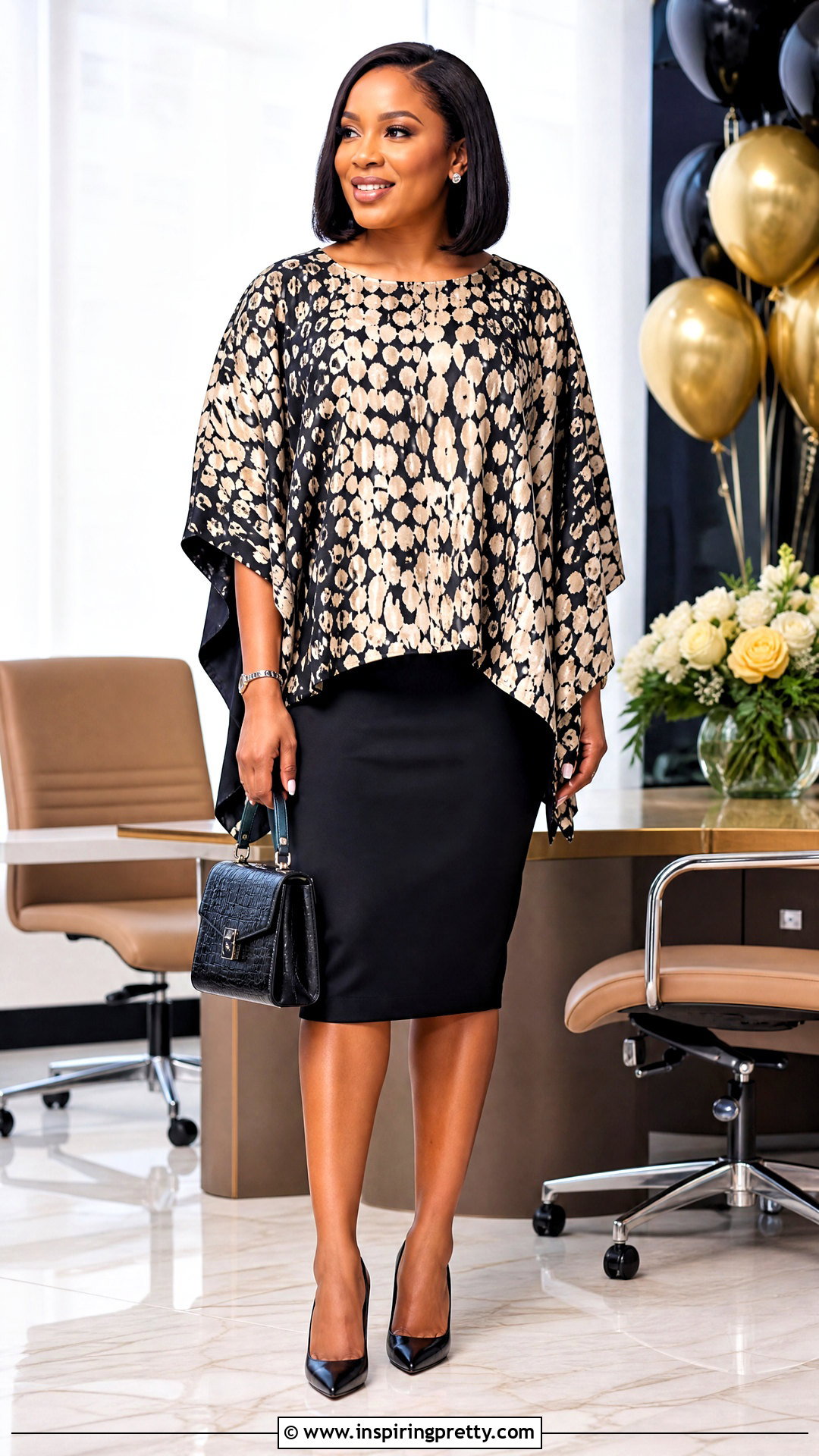
Batwing volume against a pencil skirt is a strong contrast, and I like it for work events. A lighter fabric can be tucked at the center front only; a heavier one should be cut short enough to sit just over the waistband. Very wide sleeves swallow bracelets and catch on them, so put the jewelry in the ears. Choose a skirt with a back vent, since walking in a narrow skirt is the part people forget to test.
15. Kimono Sleeve Bubu Top With Tapered Pants
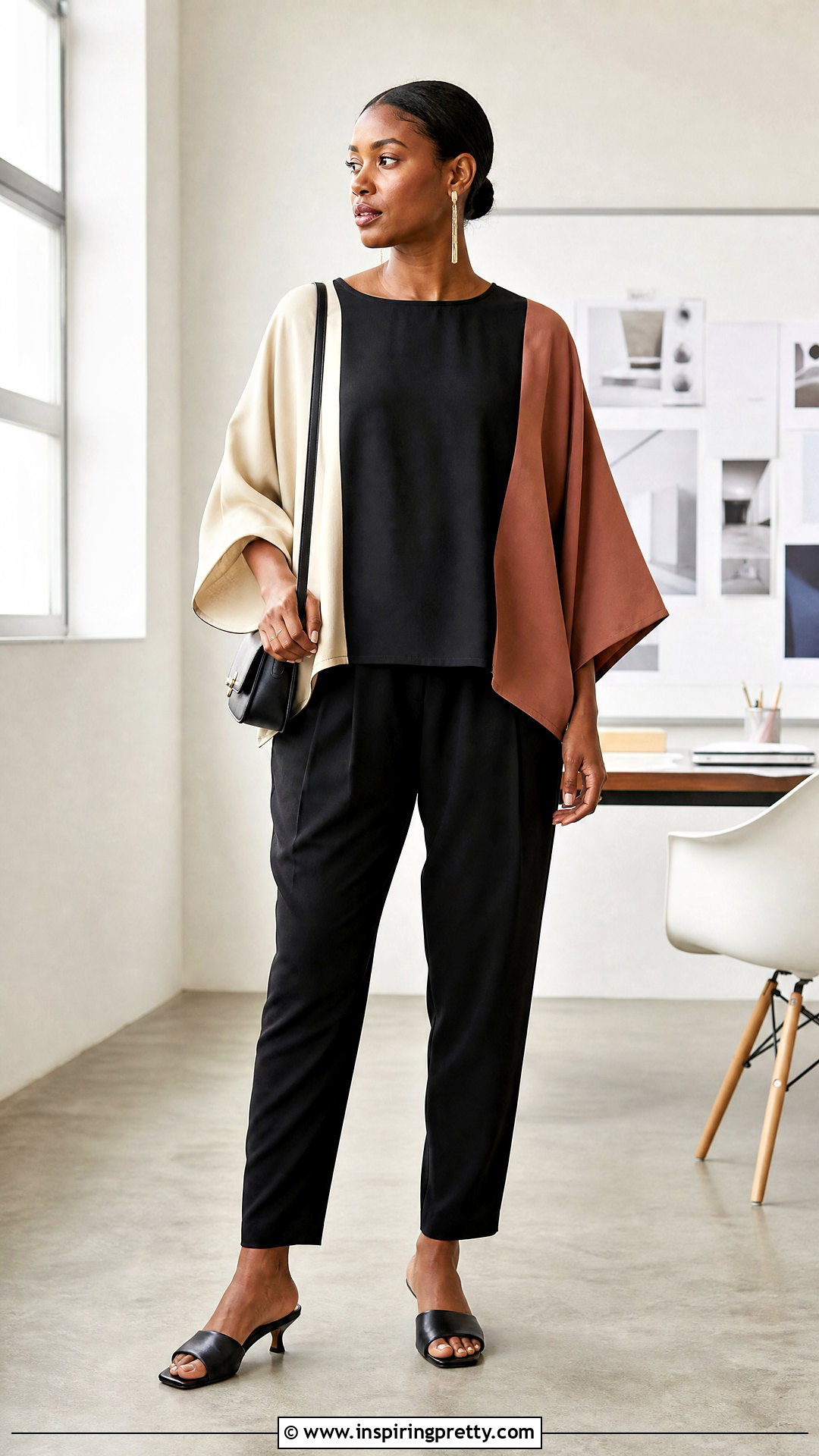
Kimono sleeves are cut as part of the body, which gives a soft, square shape from the shoulder. Tapered pants are the right foil because they narrow where the sleeves are widest. I always ask clients what they'll be doing: if there's food or a lot of carrying, end the sleeve above the wrist. A deep V on this cut usually needs a camisole.
16. Bell Sleeve Bubu Top With Bootcut Pants
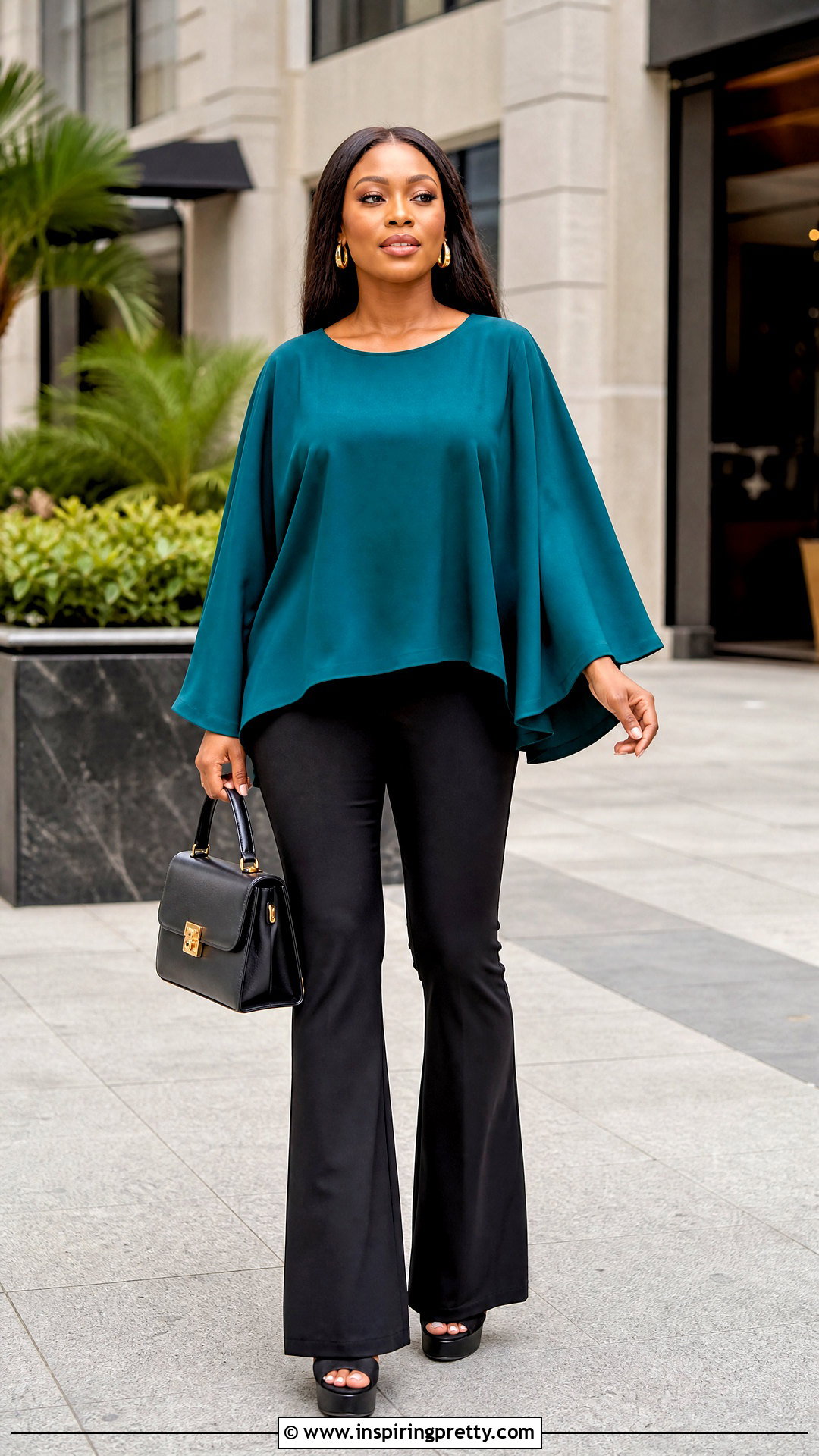
Two flares can share an outfit if they flare in different places. I cut bell sleeves to open below the elbow, so the shoulders stay narrow, and let the bootcut open below the knee. Keep the top at the hip so the trouser shape is visible. Hem the trousers while wearing the actual shoes, or they'll drag by the end of the day.
17. Ruffle Neck Bubu Top With Ankle Pants
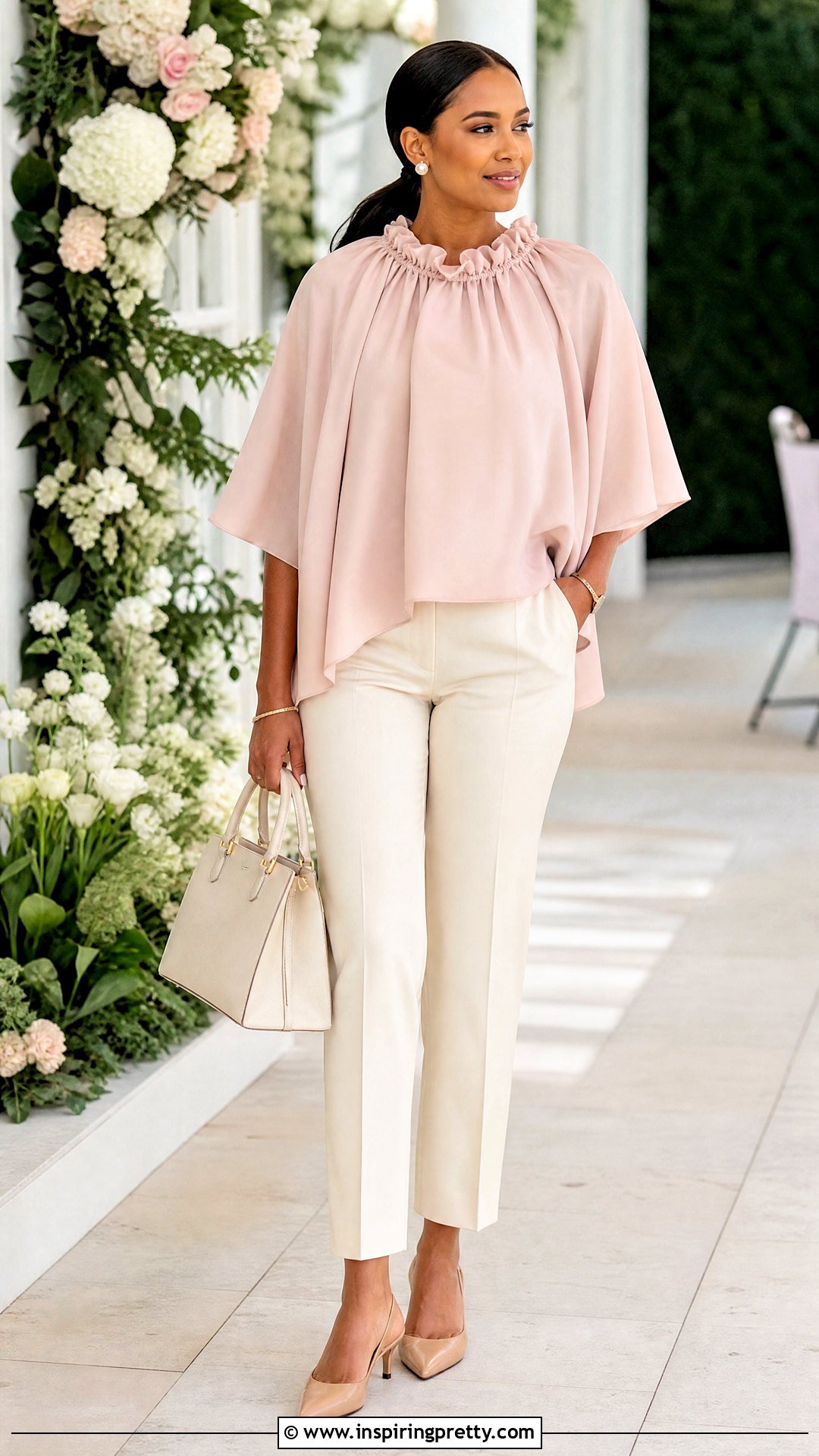
Ruffles at the neck frame the face, so the trousers should stay clean. A white or blush, lavender, or powder-blue top sits fresh against cream or tan ankle pants; deeper shades look better with black. On a fuller bust I use a narrow ruffle cut on the bias so it lies flat. Thick, stiff ruffles add inches exactly where you don't want them.
18. V-Neck Bubu Top With Pleated Skirt
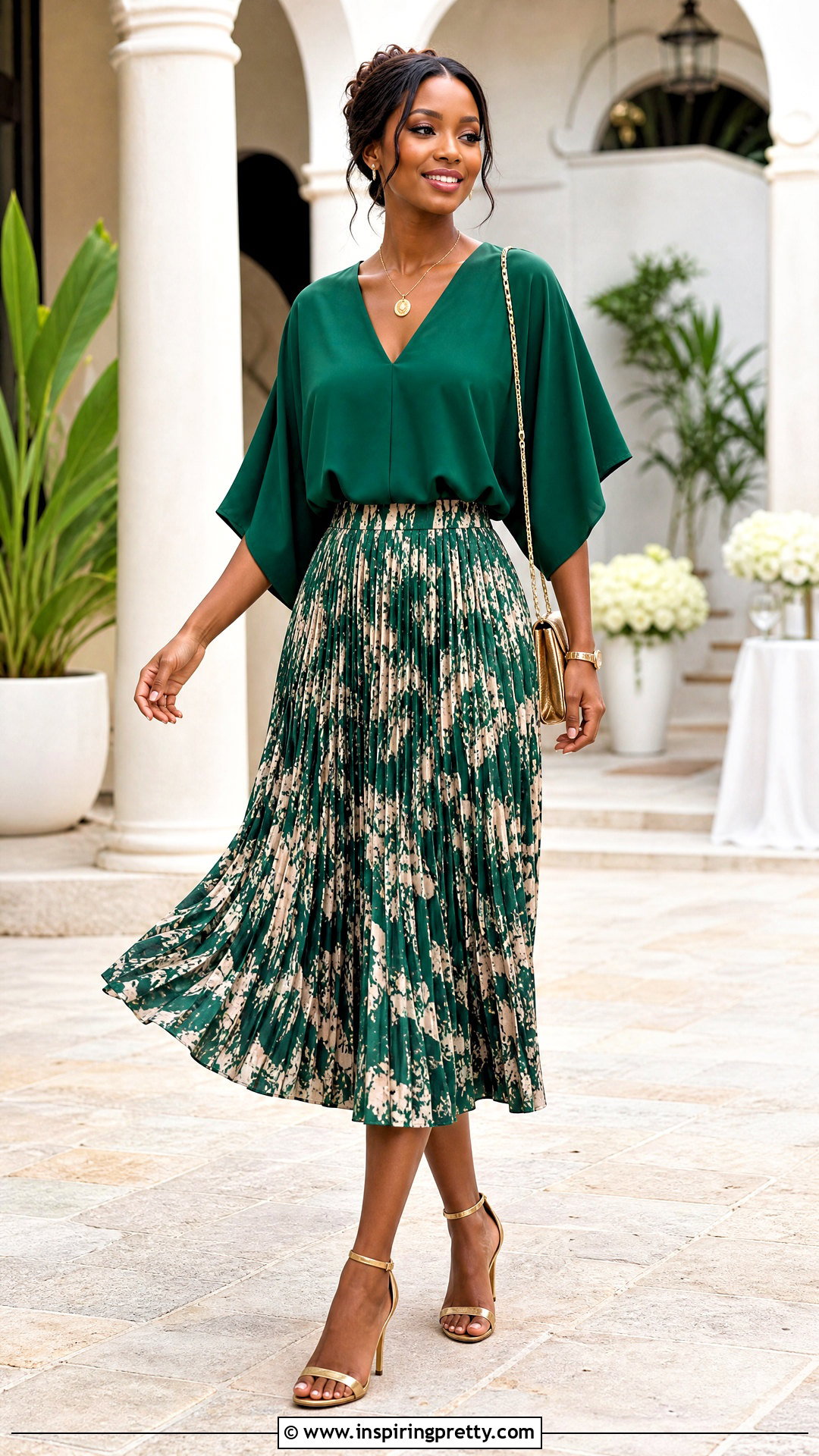
A pleated midi needs its waistline seen, or the pleats lose their reason for being there. I'd pick a V-neck bubu that ends near the waistband or tuck just the front. An Ankara top over a single-color pleated skirt is one of my favorite ways to calm a busy print. Smaller pleats suit petite frames better than deep knife pleats.
19. Round Neck Bubu Top With Maxi Skirt
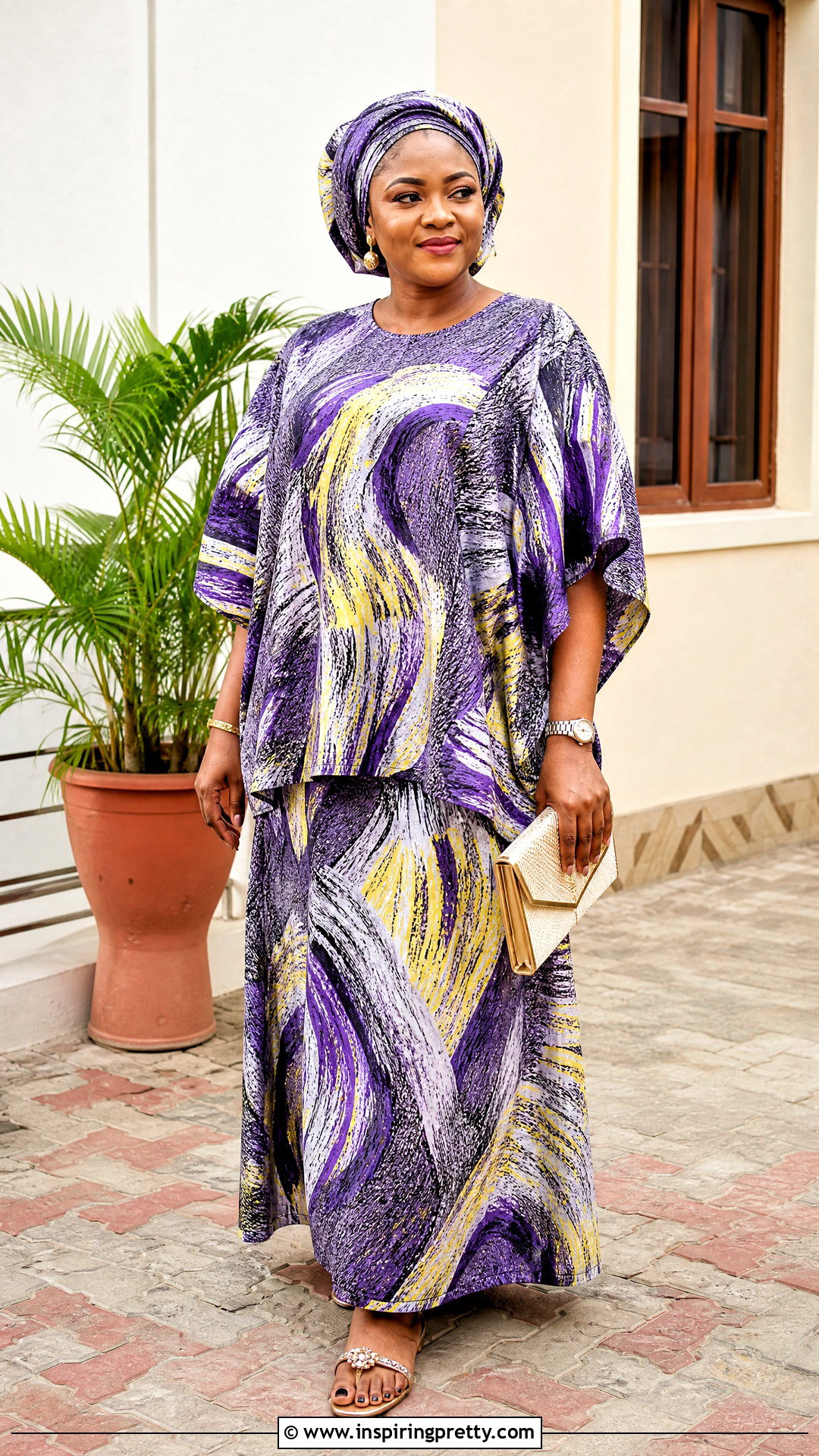
A round neck is the most modest bubu neckline and pairs naturally with a full maxi skirt. The danger is bulk at the waist, so I keep the top at hip length and set the skirt on a flat waistband rather than heavy gathers. Two prints together should share a color and differ in scale. Mark the hem with the shoes on.
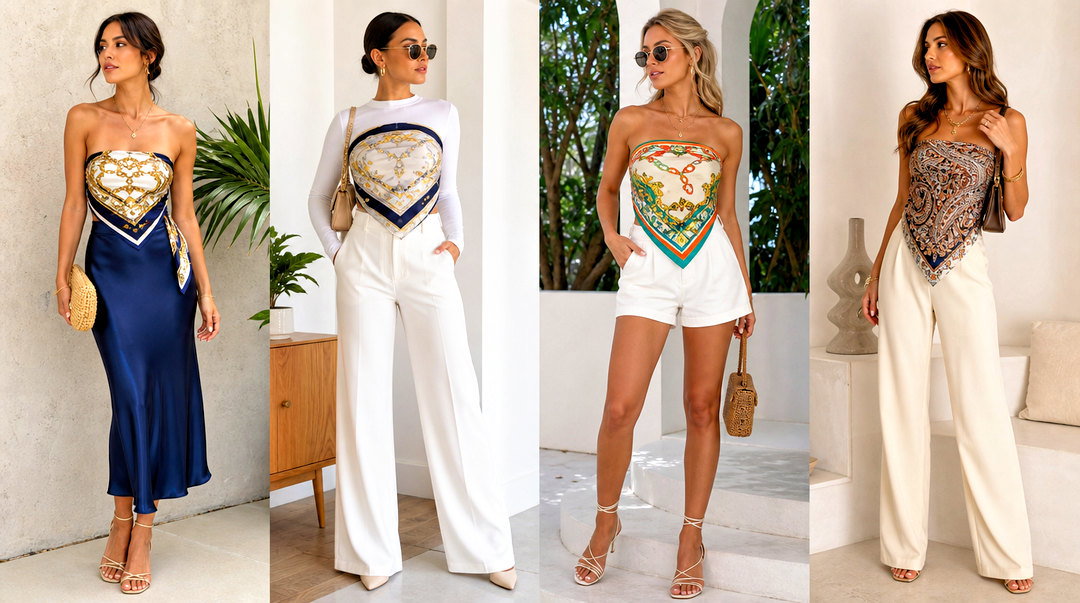
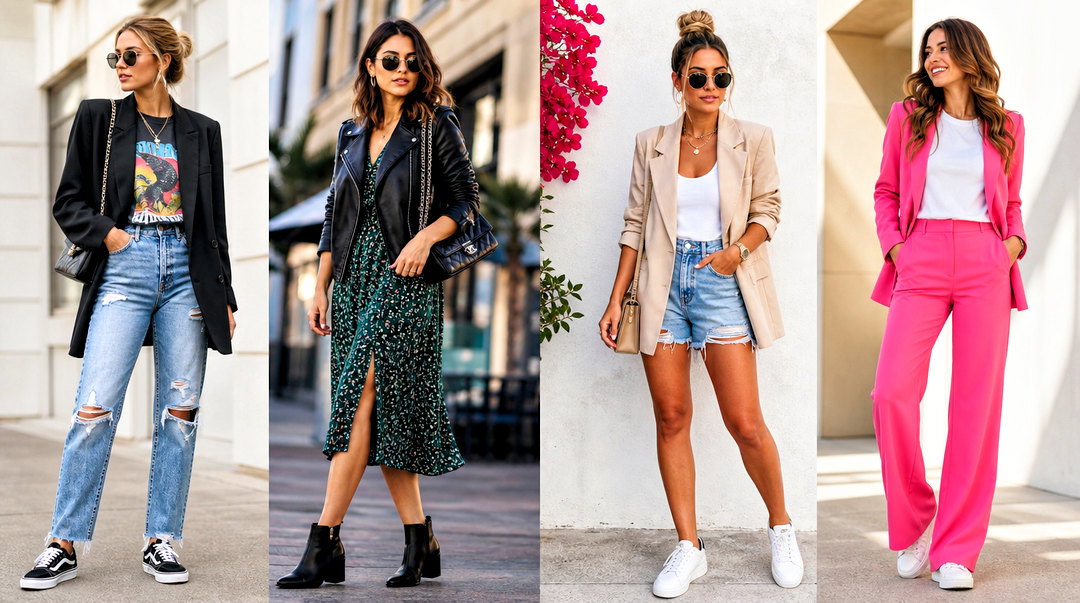
20. Square Neck Bubu Top With A-Line Skirt
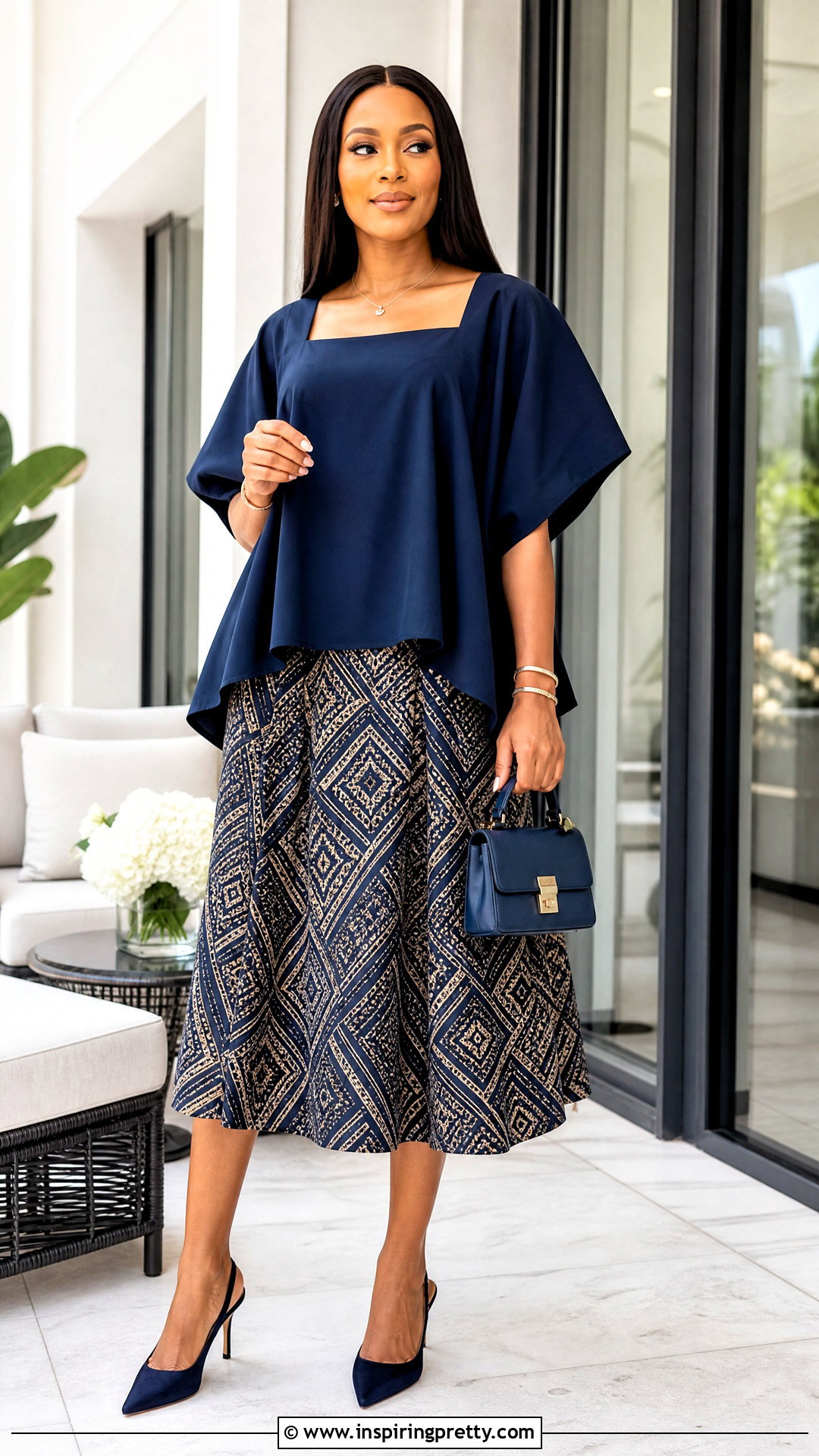
Square necklines frame the collarbone and give a soft garment a bit of architecture. An A-line skirt at the natural waist balances it. I reinforce square necks with a facing or a stay-stitch line, because the corners can gape forward when you lean over. Check that by bending in front of a mirror.
21. Collar Bubu Top With Culottes
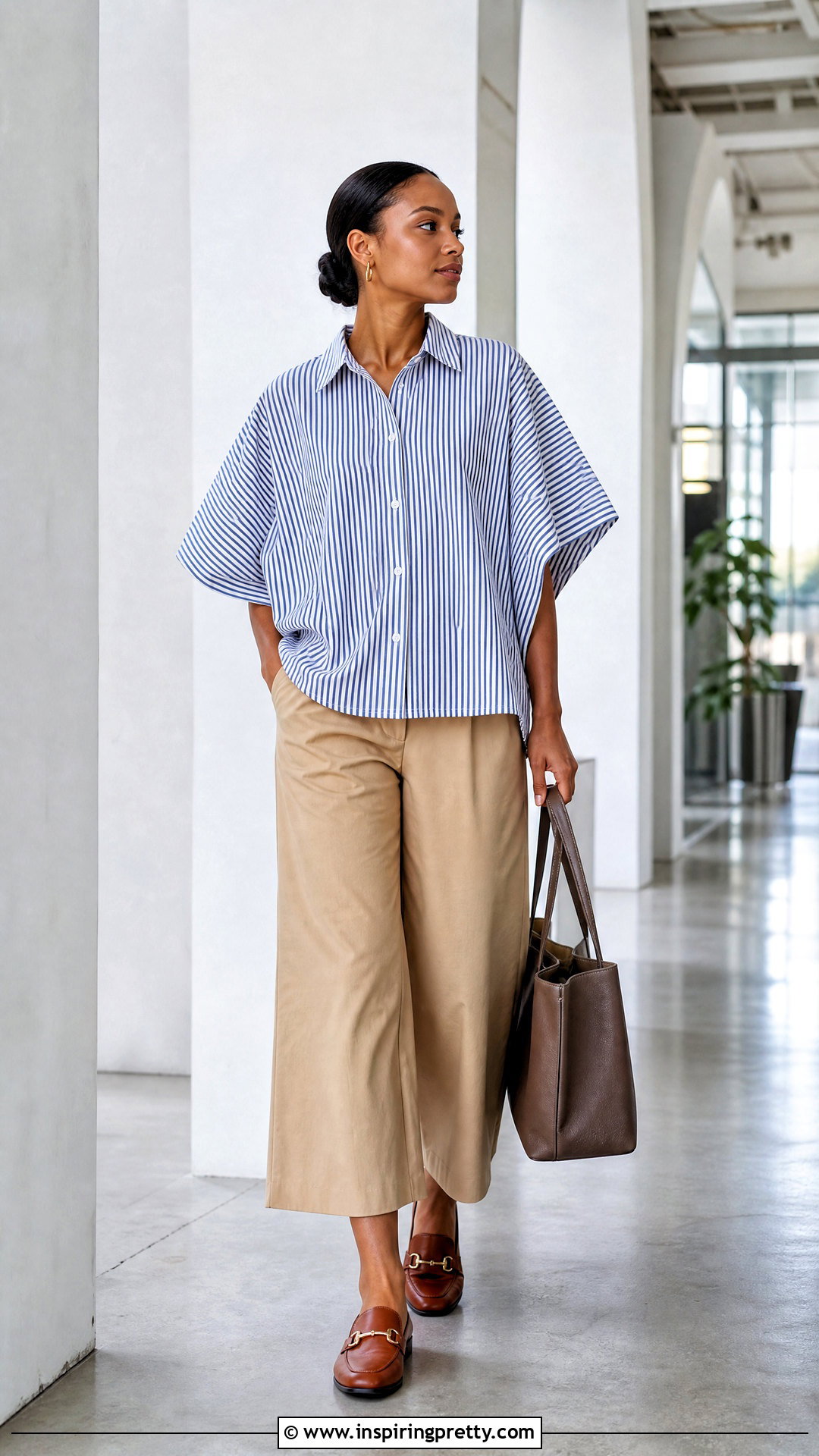
A collar instantly makes a bubu read as smart. I'd pair it with high-waisted culottes and keep the top at the hip so it doesn't cover the whole width of the trouser. Culottes shorten the leg, so a low-cut loafer or mule that shows the top of the foot helps. Roll the sleeves to show the wrist.
22. Button-Front Bubu Top With Linen Pants
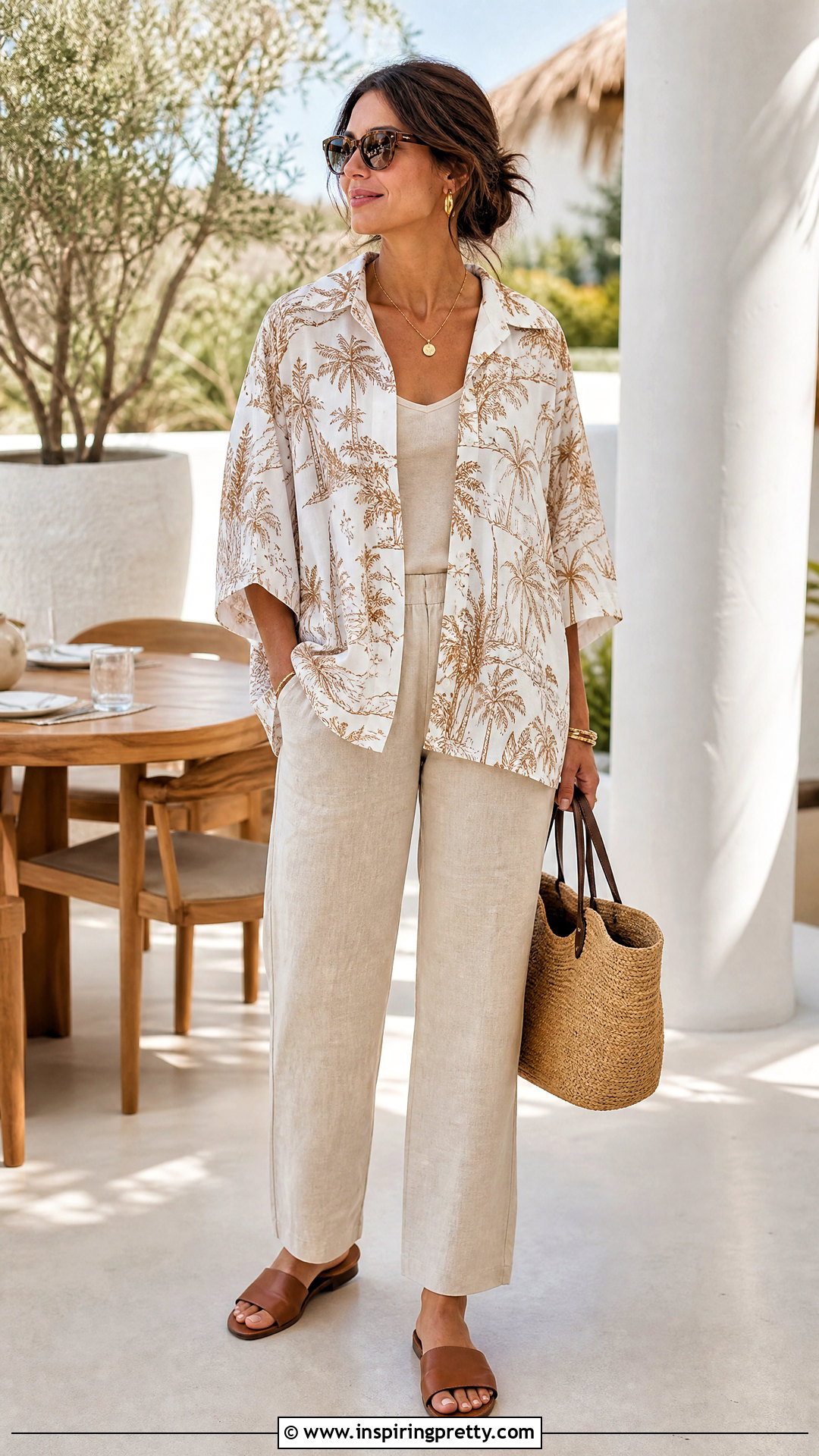
A button-front bubu is basically a wide shirt, which is why it travels so well. Linen trousers keep it cool. I'd choose a linen with some weight; the very light ones go transparent and crumple into deep creases by midday. Leave the top buttons open over a camisole if you like, and roll the sleeves twice.
23. Wrap Bubu Top With Flowy Pants
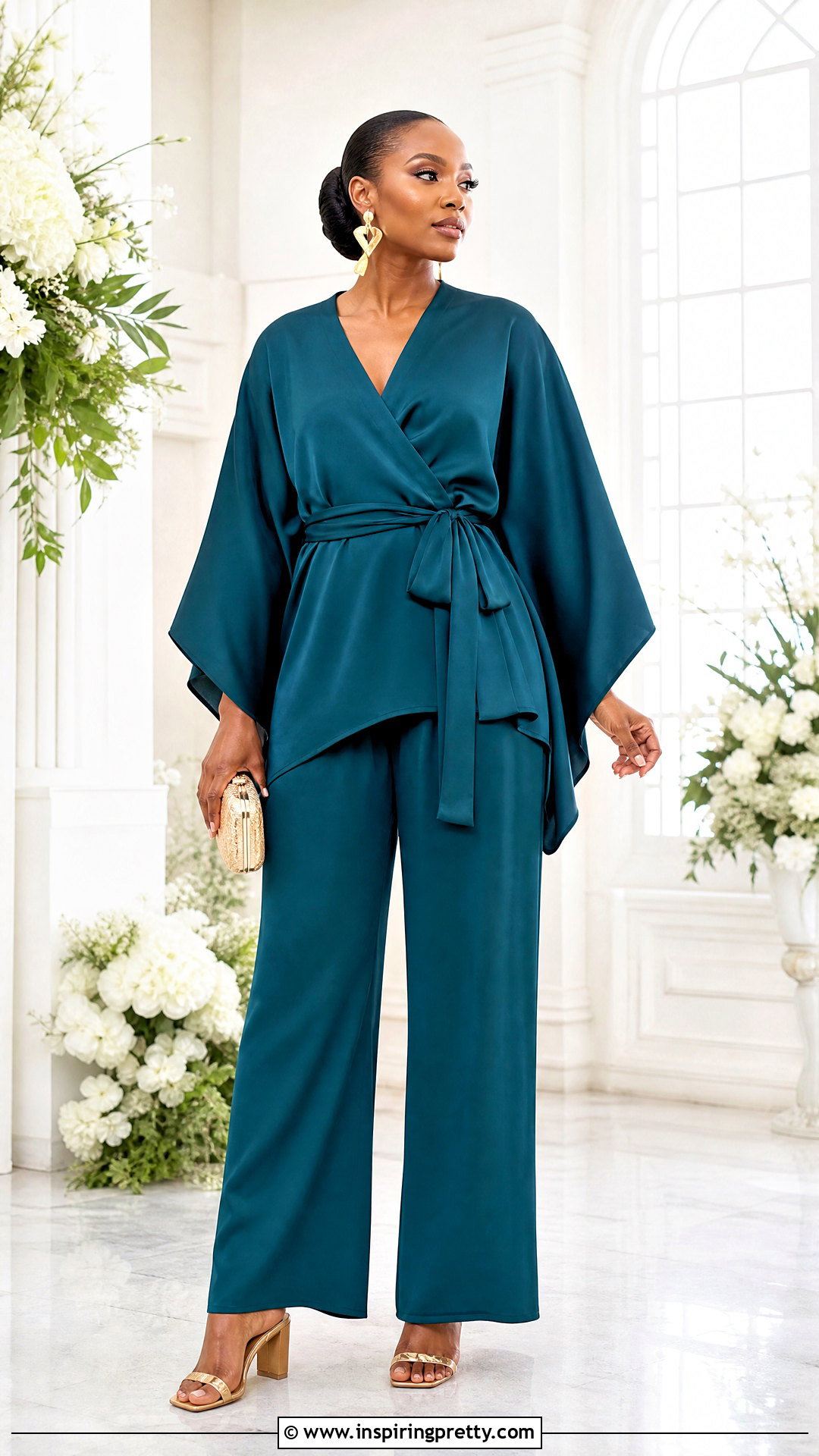
The wrap version is the one I recommend when measurements change, after pregnancy or through the year, because the tie absorbs the difference. Tie it at the natural waist over flowy trousers. Make sure there's an inner tie as well as the outer sash, or the neckline creeps open. A camisole underneath is sensible if the V sits low on you.
24. Belted Bubu Top With Straight Jeans
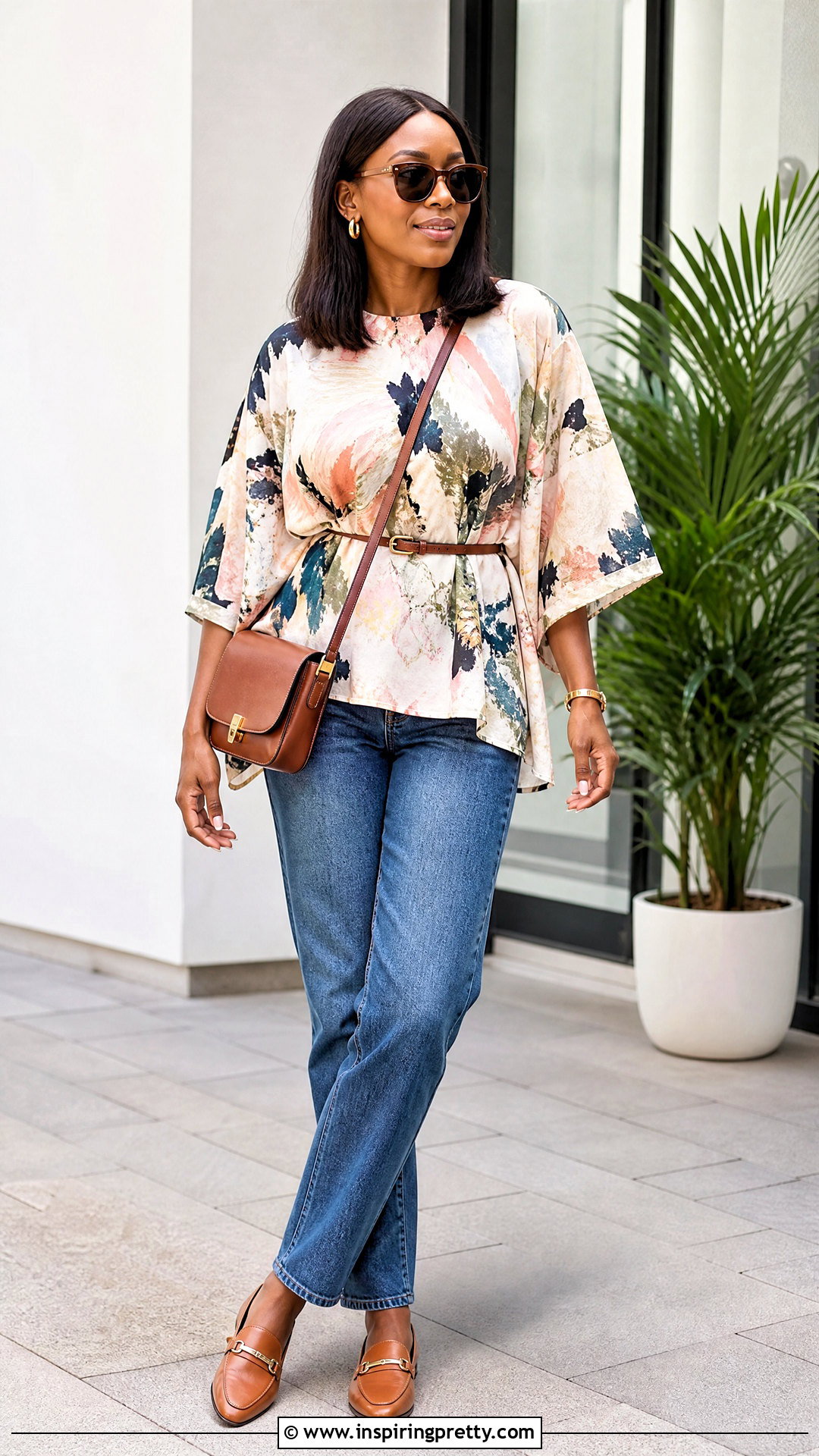
Belting works when there's enough fabric to blouse gently over the belt. Pull a narrow top tight and it looks borrowed. I'd use a slim leather belt with straight jeans, set at or just above the natural waist. Skip the belt on beaded or sequined bubus; the friction rubs the decoration loose.
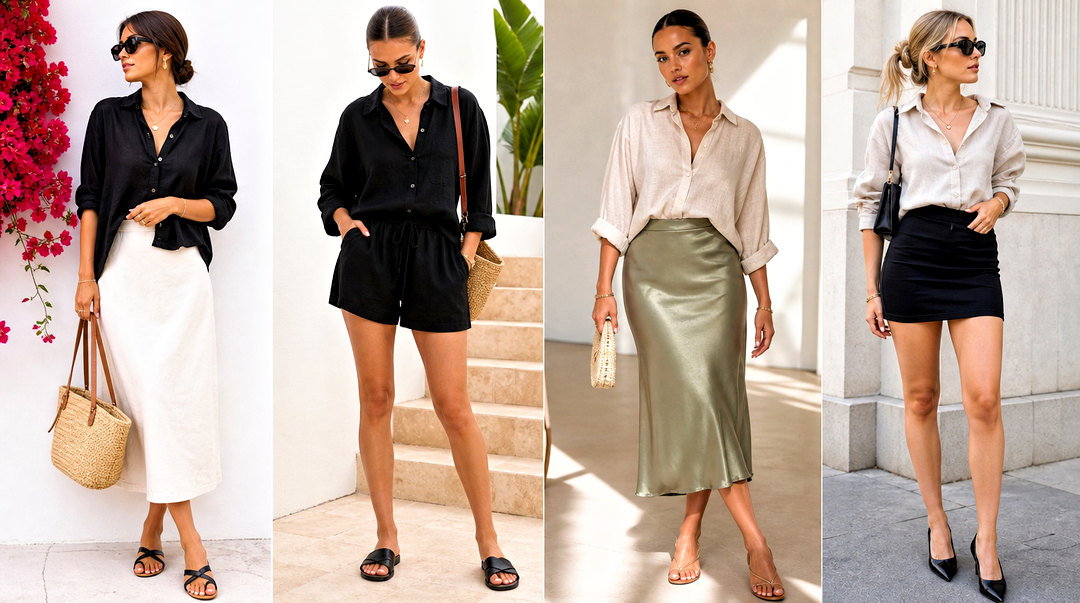
25. Color Block Bubu Top With Black Pants
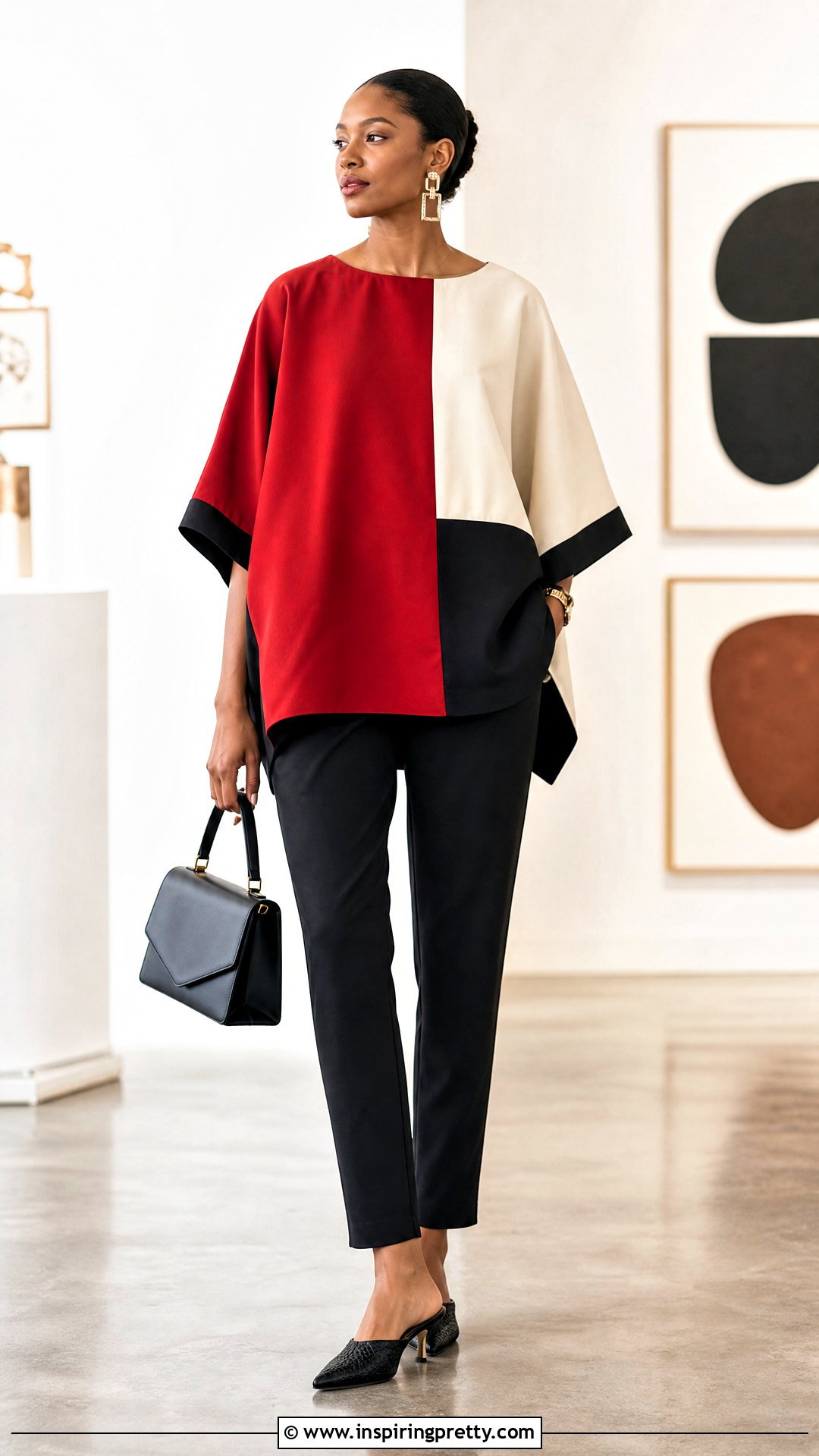
Color blocking is a construction test. Where two strong colors meet, any wobble in the seam shows from across a room, so I take more care with these seams than with any print. Black trousers let the panels do their job. Vertical blocks lengthen; diagonal ones add movement but need precise matching at the side.
26. Monochrome Bubu Top With Matching Pants
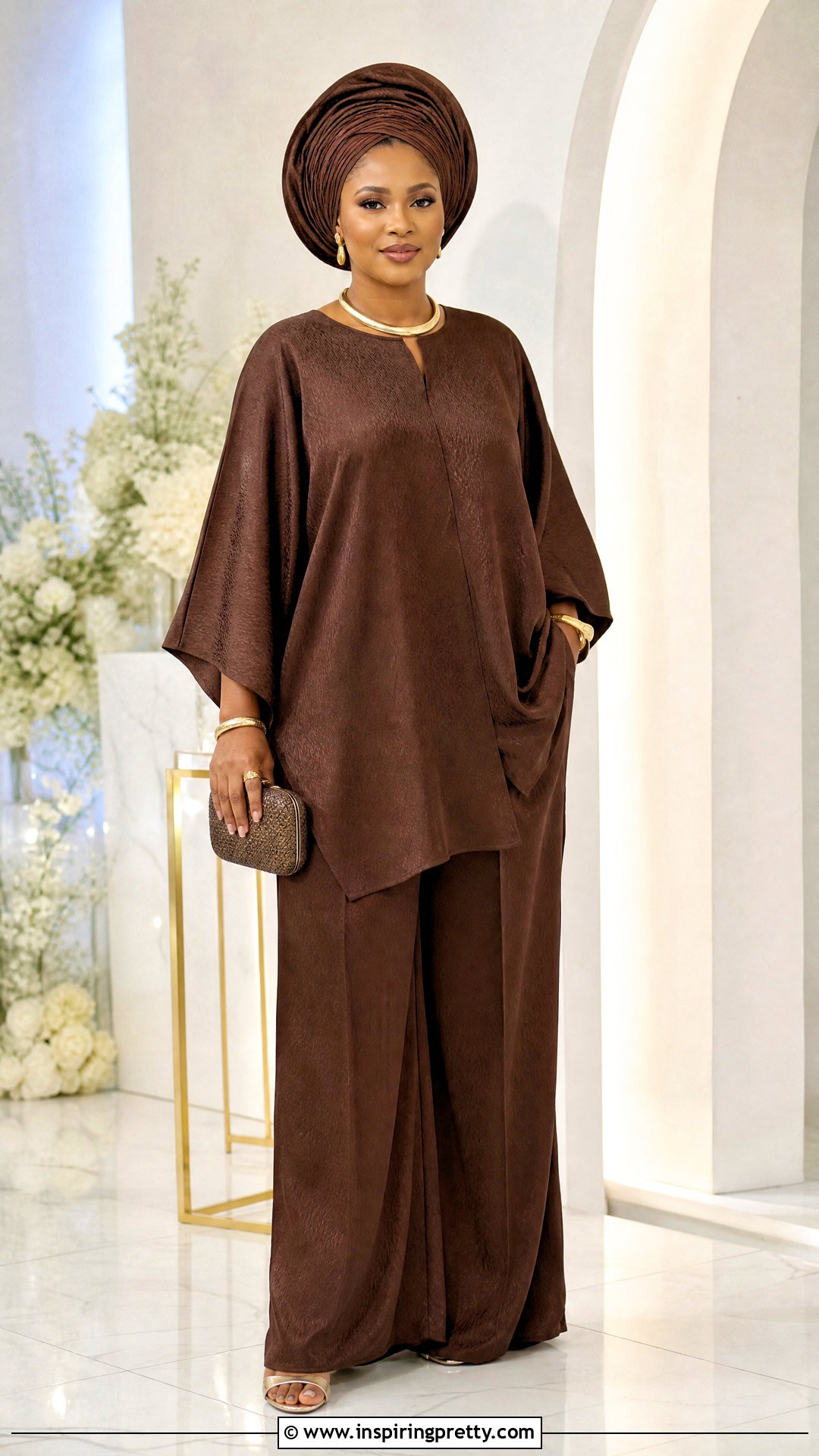
A tonal outfit hides a lot of small fitting issues because the eye travels without stopping. Brown, navy, olive and ivory feel richer than all black. The thing I check every time is the shade in daylight: two pieces that match under shop lighting can drift apart outside, especially when the fabrics are different. Bring contrast in through the shoes or bag only.
27. Pastel Bubu Top With Cream Trousers
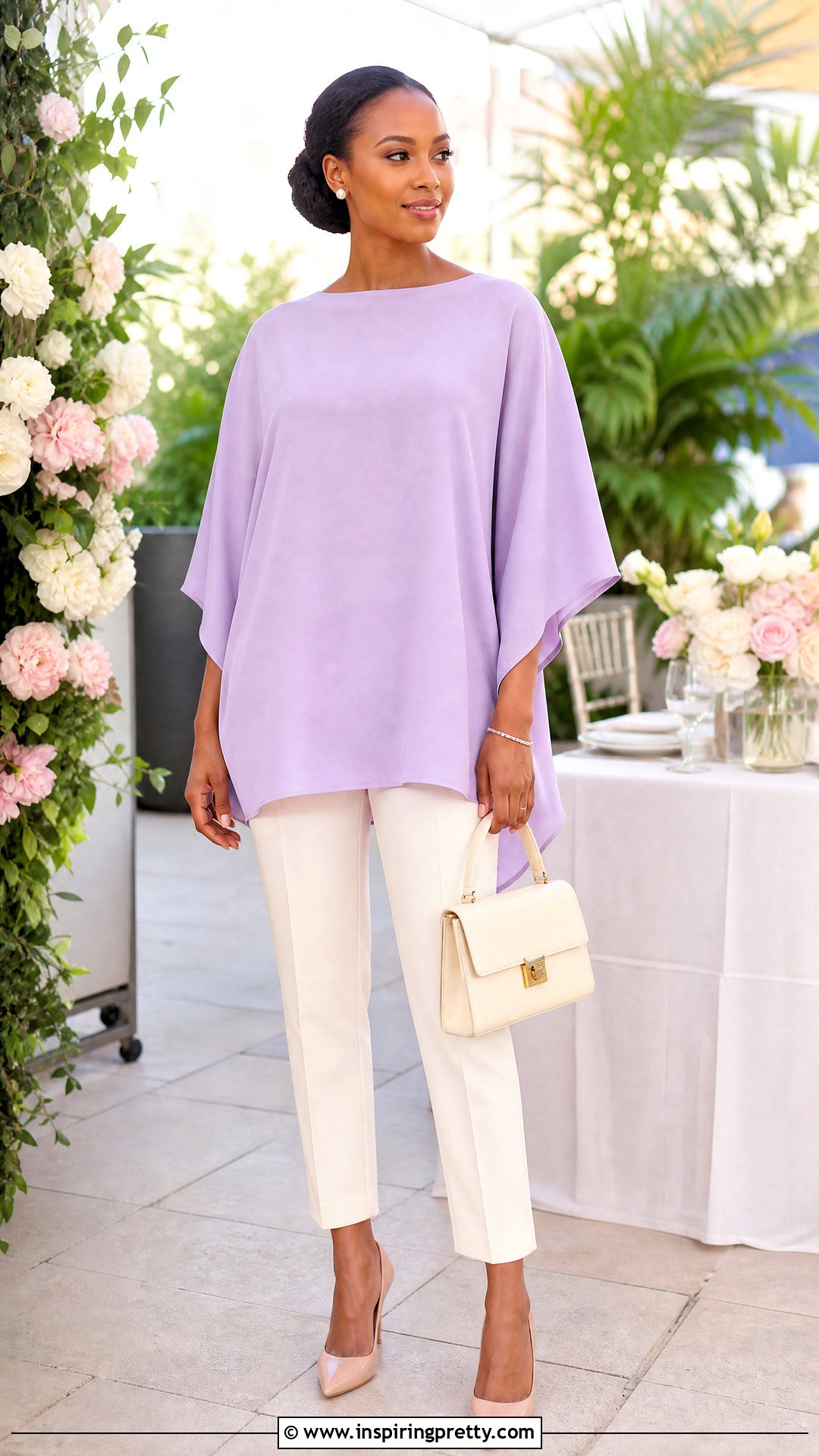
Pastels are gentle, so one is enough. Let the bubu hold the color (lilac, mint, peach) and keep everything else cream. Pale trousers show pocket bags and underwear lines, so I'd choose lined or heavier cream fabric. Pearl studs fit the mood better than gold hoops here.
28. Jewel Tone Bubu Top With Gold Accessories
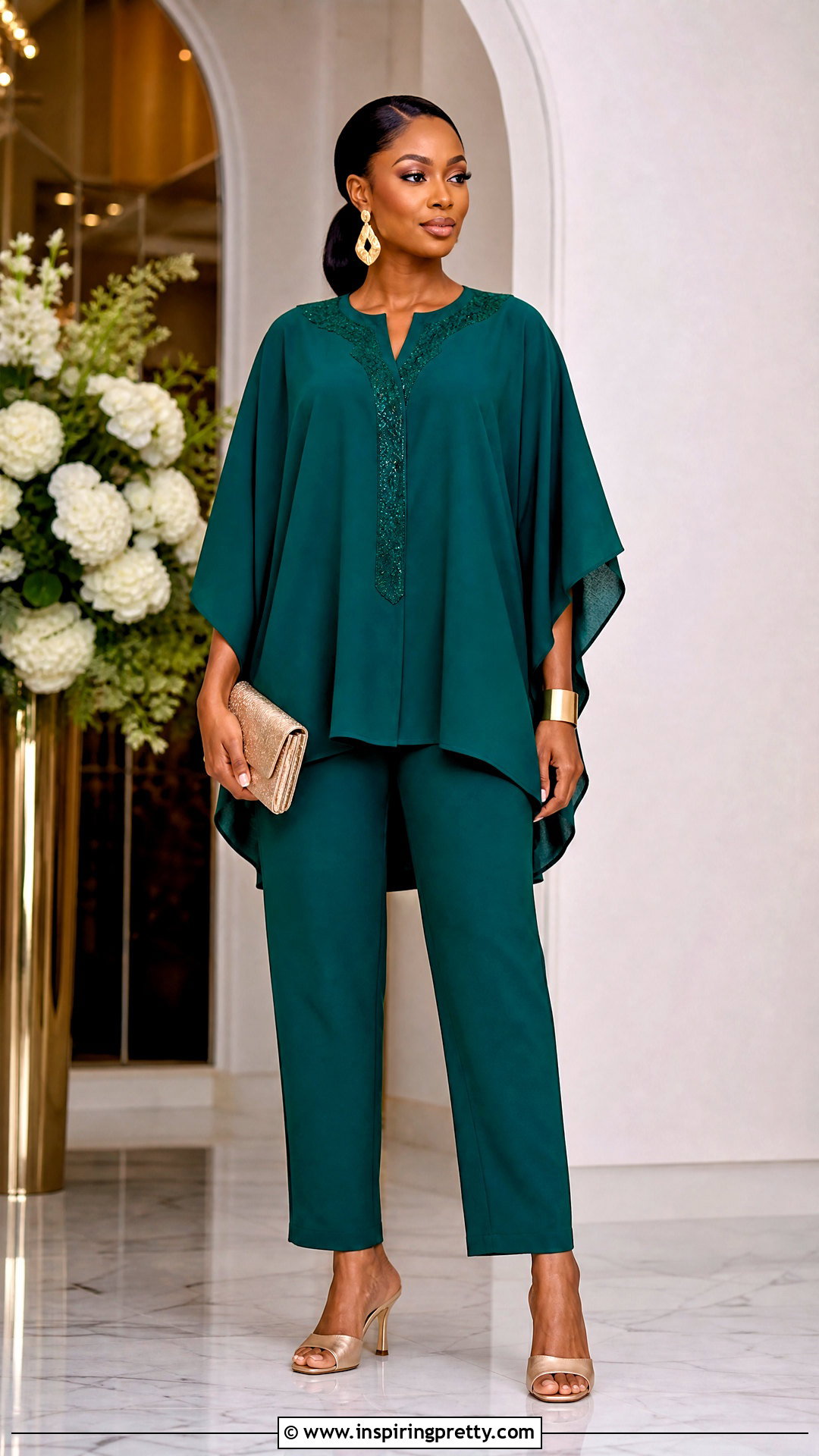
Jewel tones give a plain bubu presence without a print. Emerald and sapphire look richest in crepe, silk-like weaves or chiffon fabrics, which carry color with some depth. Black or matching trousers keep it formal. I'd limit the gold to two pieces; saturated color plus lots of metal tips into heavy.
29. Black Bubu Top With Printed Pants
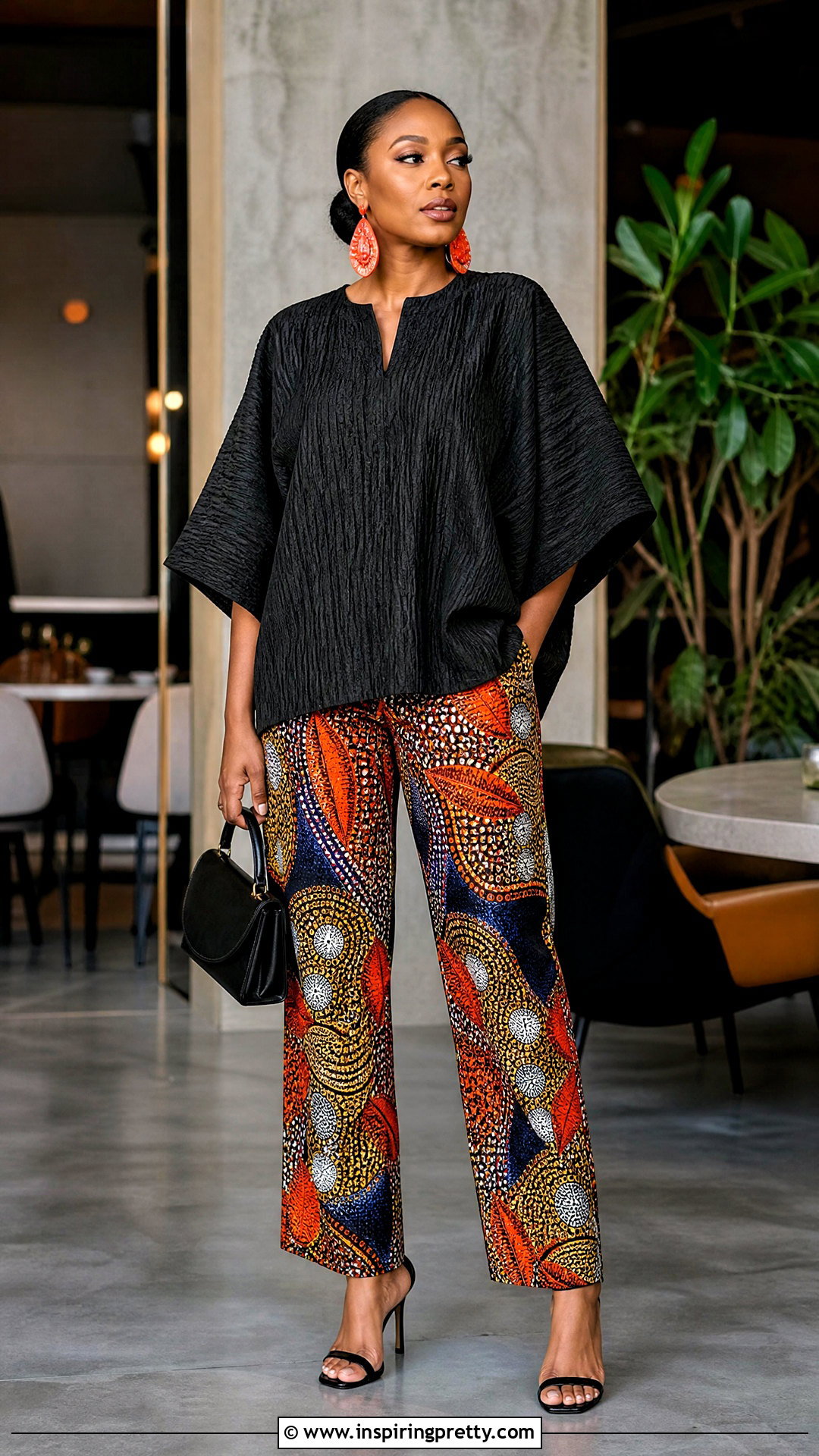
A black bubu calms a loud printed trouser, but only if black actually appears in the print. Without it, the two pieces look unrelated. I like some texture on the black so the top half isn't flat, tonal embroidery or a pleated sleeve. With very wide printed trousers, shorten the top. Step back three meters from a mirror before you decide.
30. Red Bubu Top With White Pants
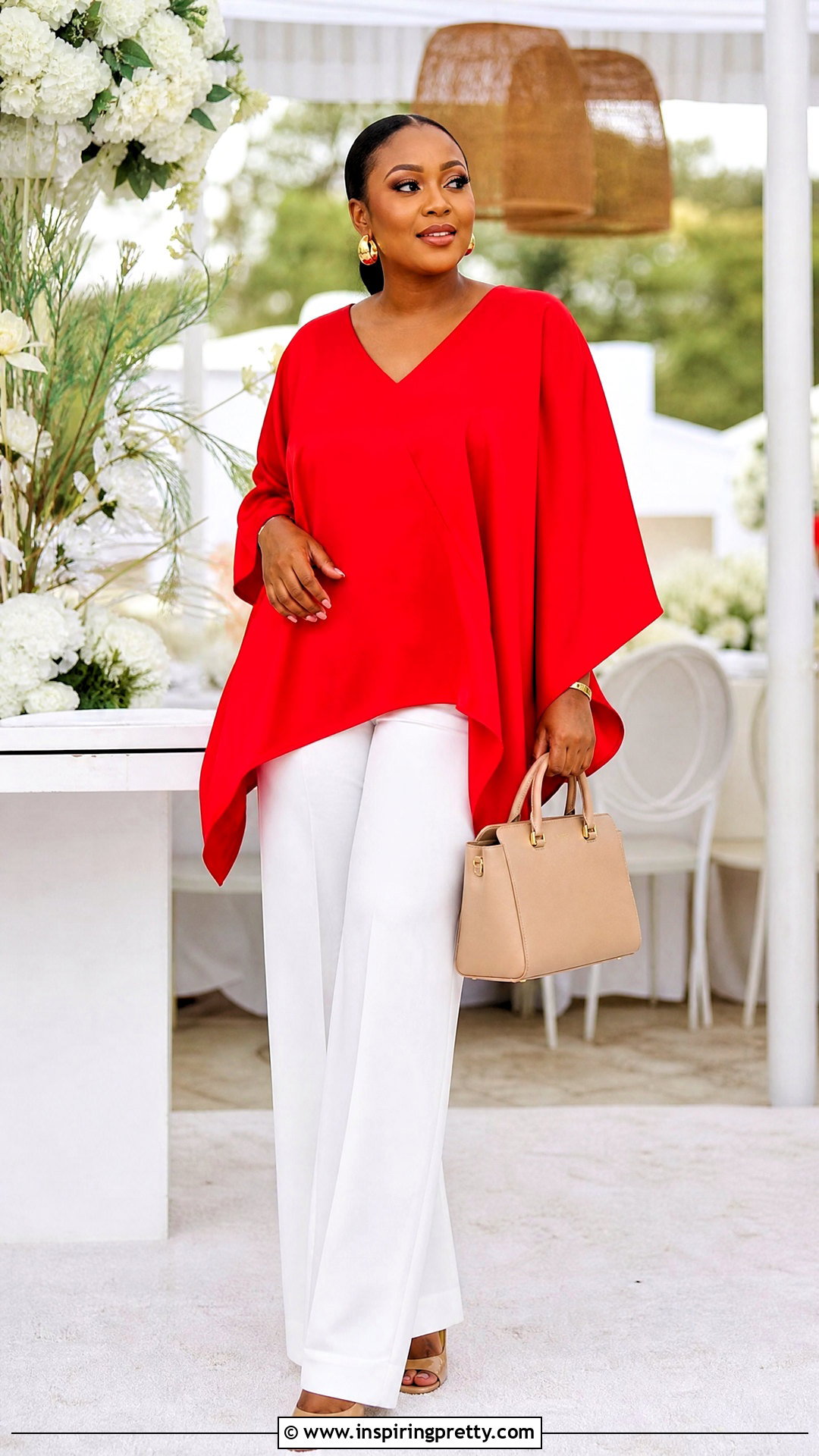
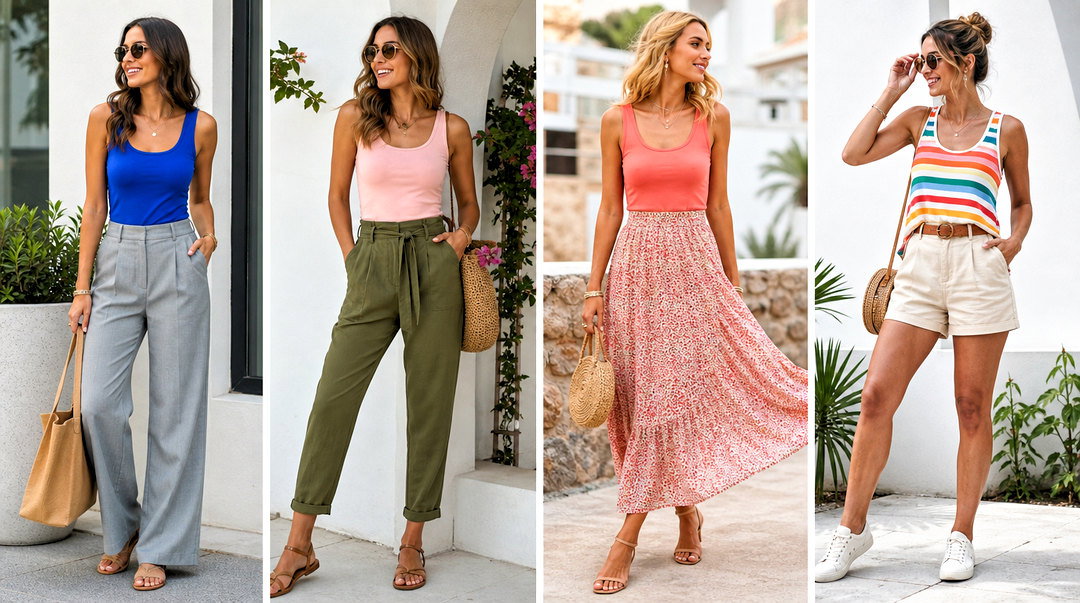
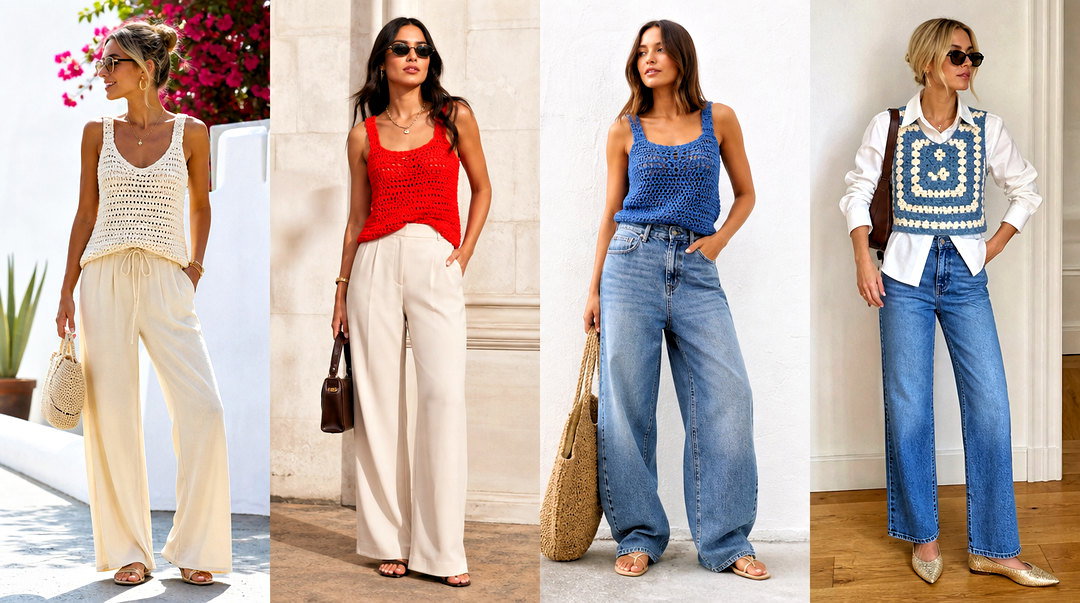
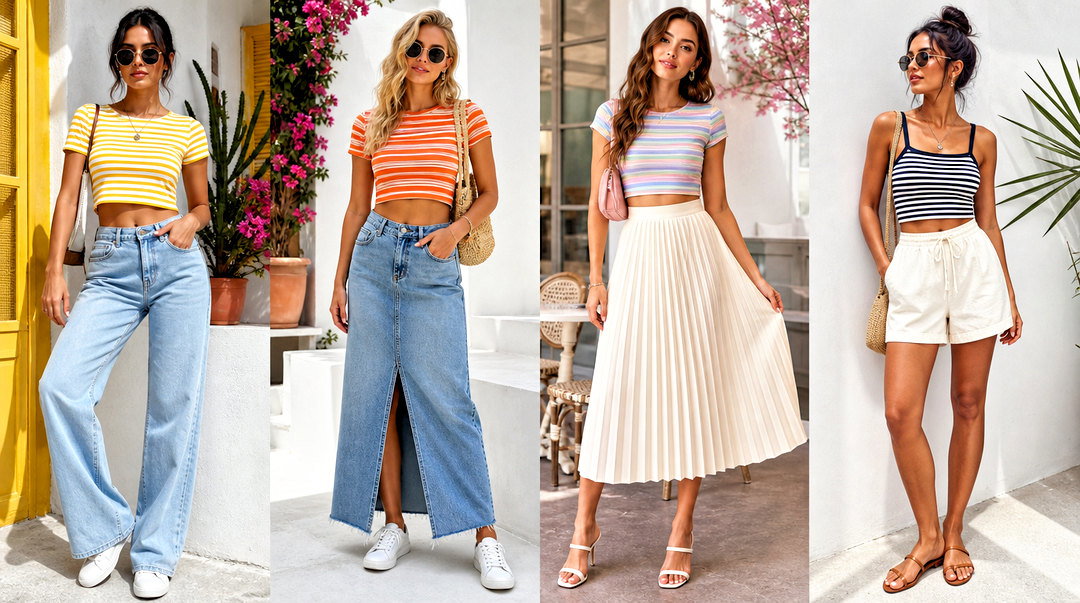
Red over white is crisp and summery. I'd keep the red top simple, with controlled sleeves, and let tan or gold shoes soften the contrast. Red dye is the one I'd test hardest before wearing it over white: dampen a hidden corner and press it on white paper. A slightly longer top helps if you want the hips covered.
31. Blue Bubu Top With Denim Skirt
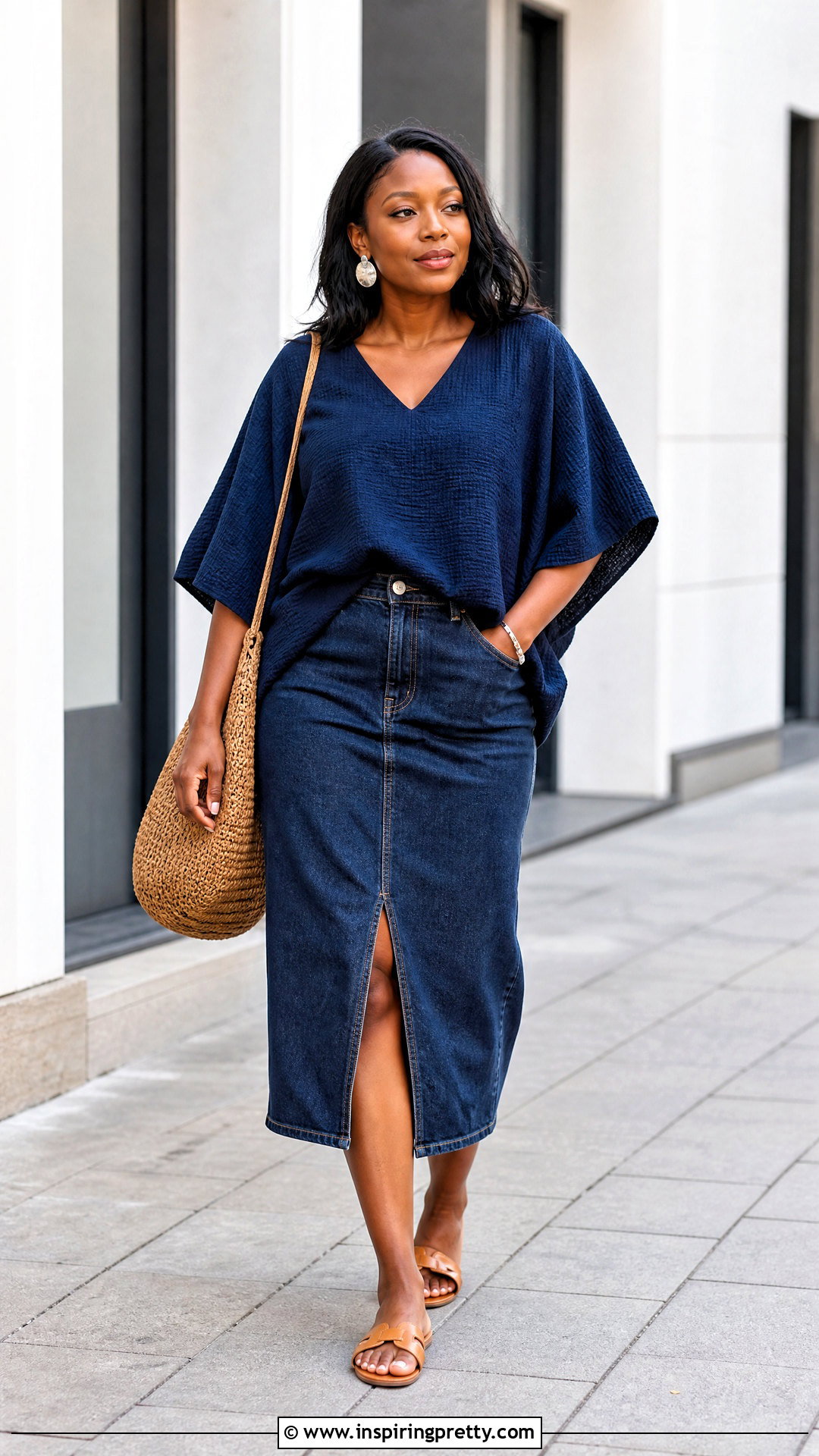
Denim and a blue bubu pull traditional and everyday clothing together comfortably. A clean midi denim skirt with a front slit is easier to walk in than a closed one, since denim doesn't give. I'd avoid distressed denim here. Several blues work together as long as the shades are far enough apart to separate the pieces.
32. Green Bubu Top With Beige Trousers
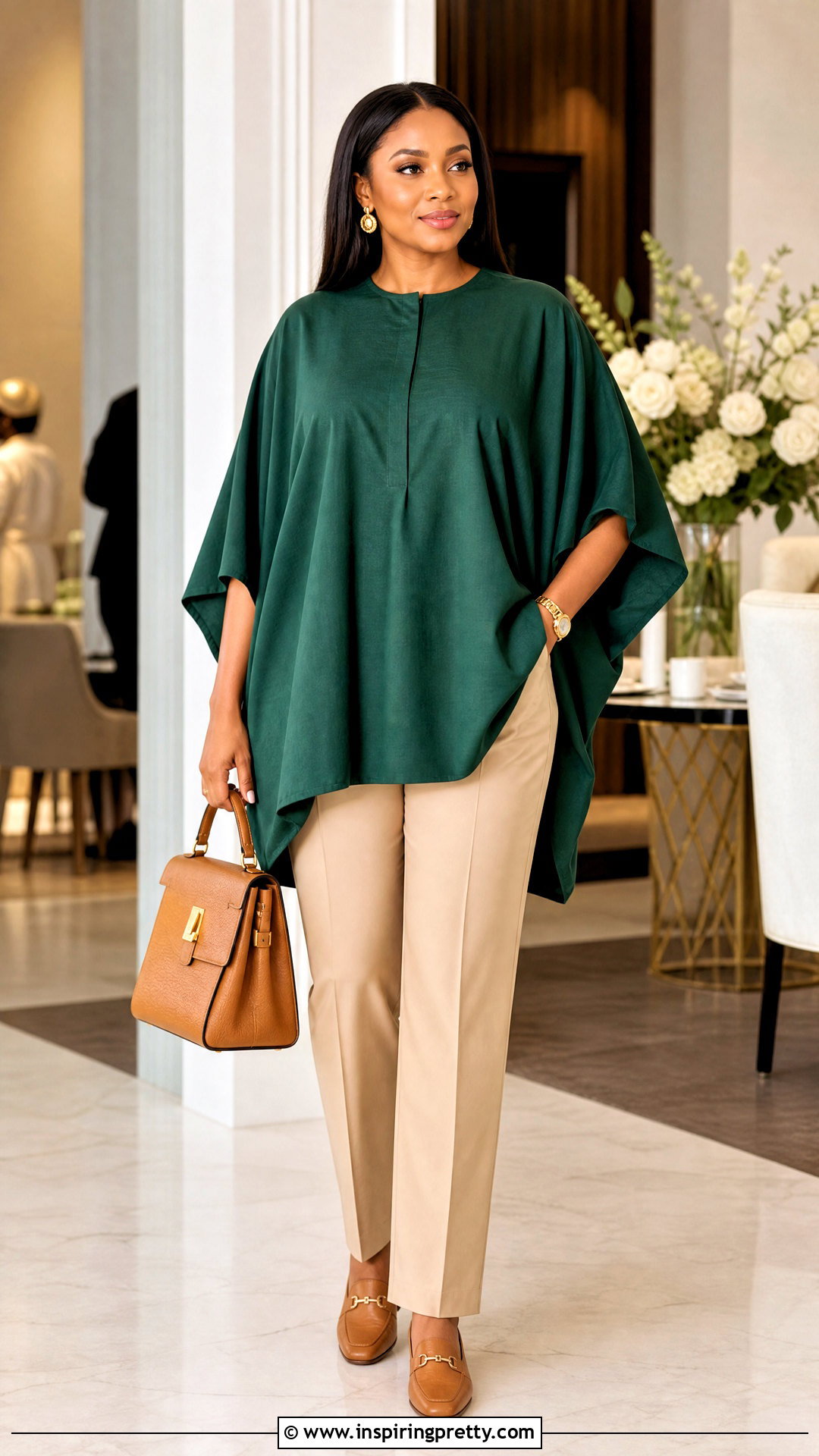
Olive and beige is the calmest pairing in this list, and it suits a lot of skin tones. Emerald turns it dressier. Choose tailored trousers with flat front pockets; cargo pockets show as lumps under a soft, long top. If the green is printed, match the beige to the lightest note in the print.
33. Yellow Bubu Top With Brown Pants
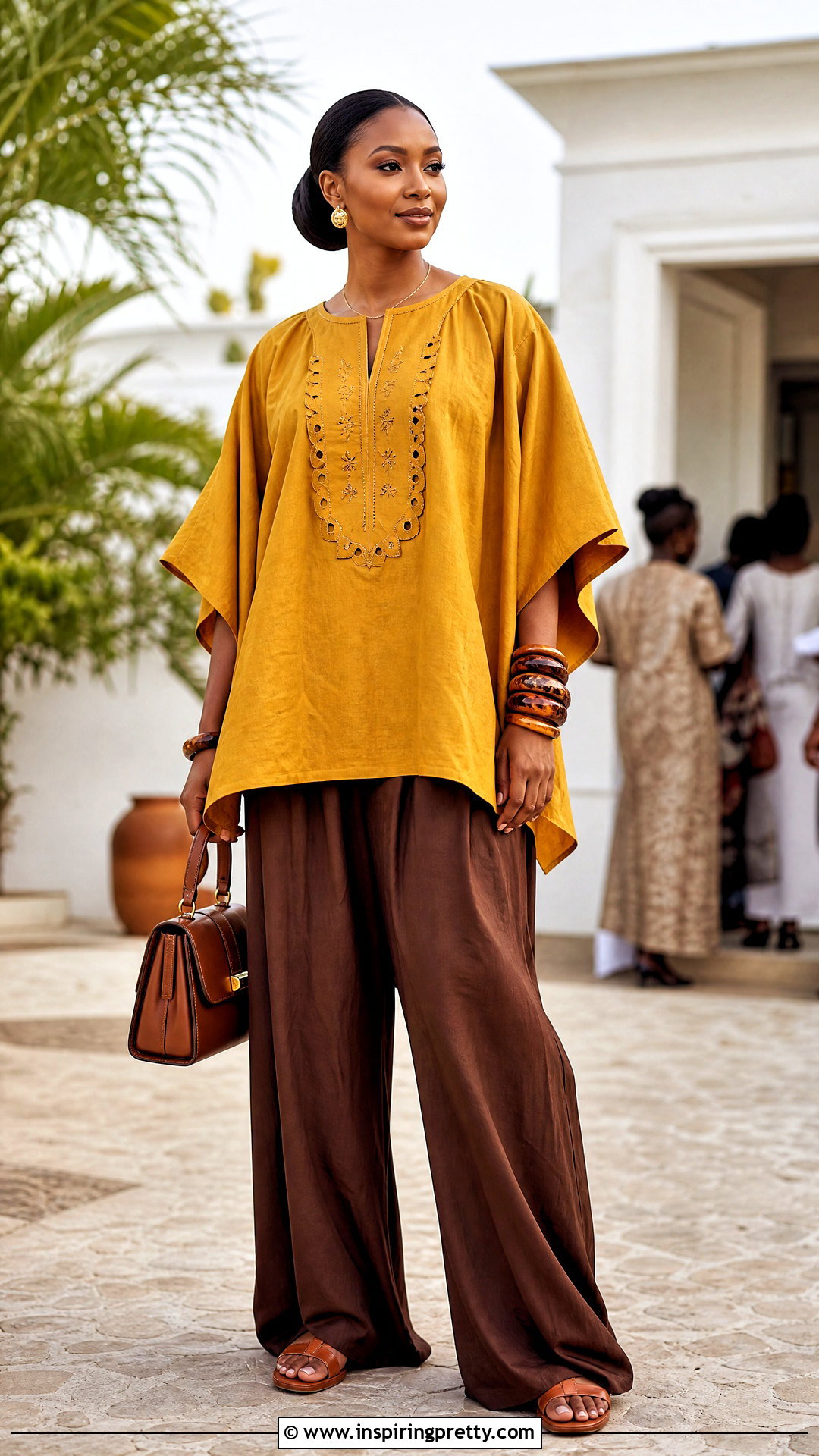
Yellow needs an anchor, and warm brown is the kindest one. Mustard reads grown-up; bright lemon is daytime only. I always choose yellow in daylight, because its undertone shifts dramatically between store lighting and outdoors. Pale yellow is often thin, so a lined top avoids the see-through problem.
34. Orange Bubu Top With Navy Pants
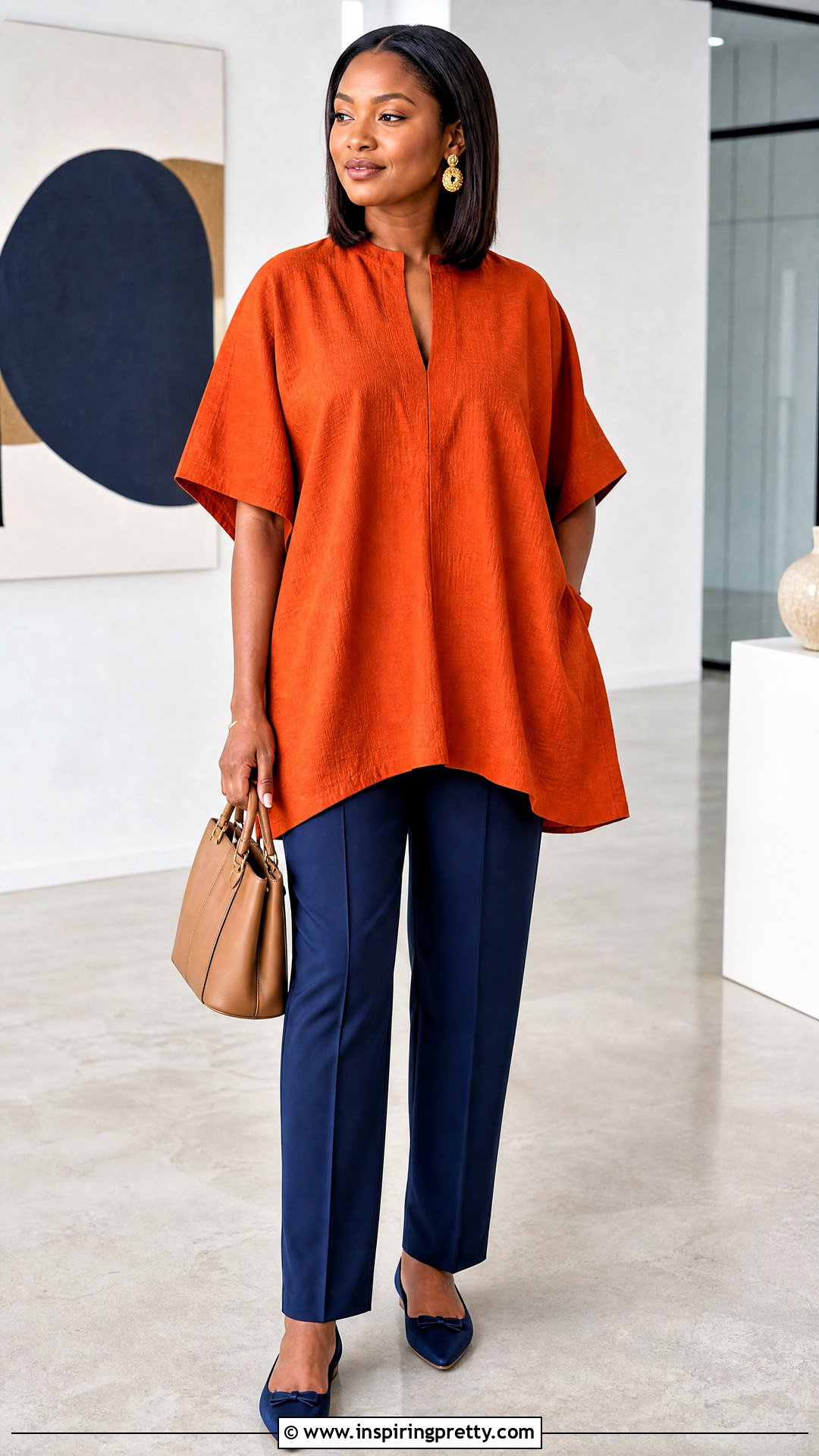
Burnt orange with navy is contrast without the harshness that black brings. I'd use tailored navy trousers and tan accessories to warm it up. If the sleeves are dramatic, keep the trousers narrow. Plain necklines suit this, since the color pair is already the point.
35. Purple Bubu Top With Gray Trousers
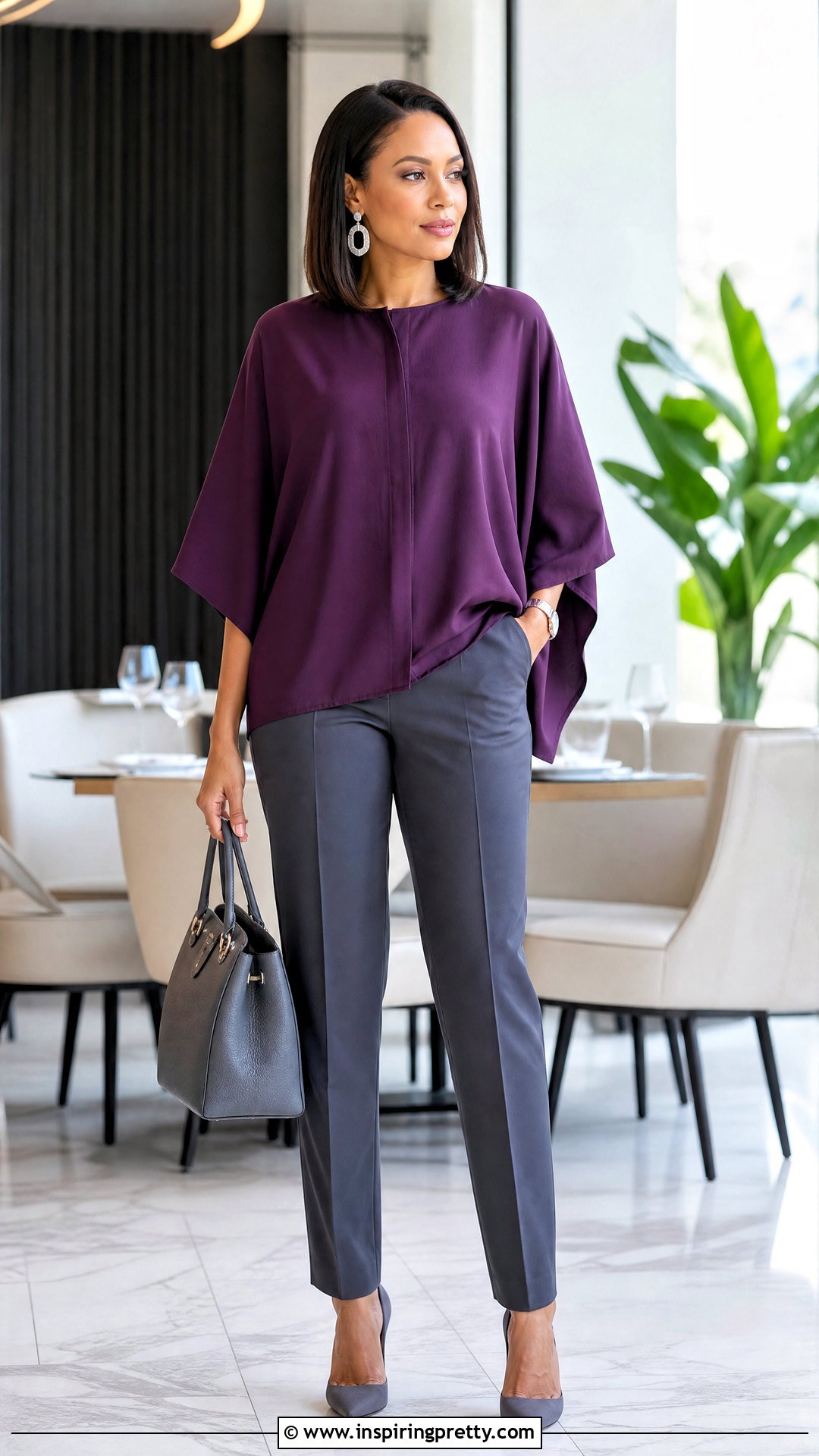
Purple and gray stay cool and quiet together. Charcoal trousers carry plum; pale gray suits lavender. Watch the trouser front: pleats or a bulky zip fly show through lightweight bubu fabric, so I'd pick a flat-front pair. Silver jewelry continues the cool tone.
36. Floral Bubu Top With Solid Culottes
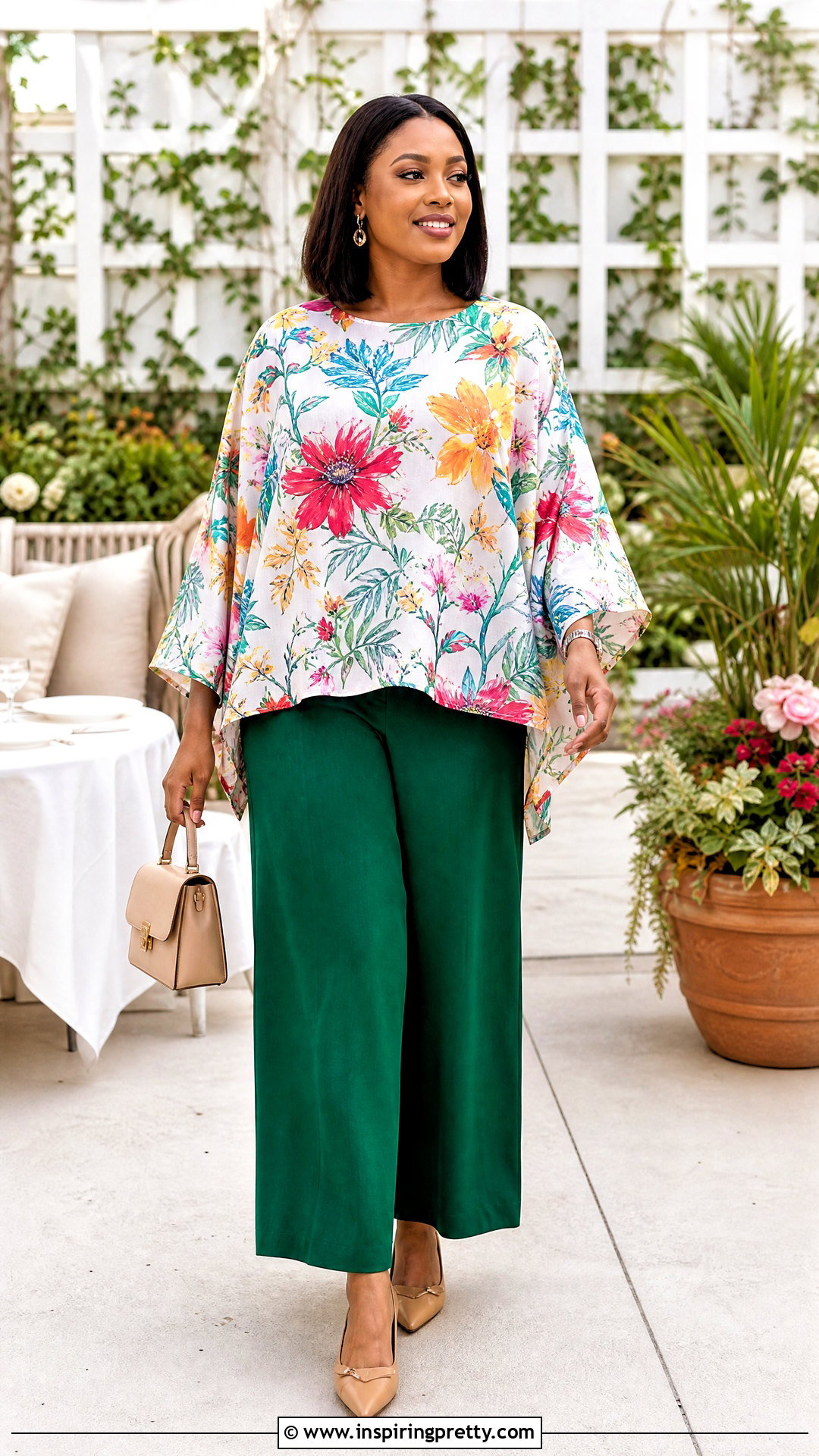
With a floral bubu, I take the trouser color from one of the smaller flowers rather than the background. That small decision makes the print look chosen. The top should end above the widest point of the culottes so both shapes read. When I cut florals, I balance the big motifs across the front and back so a single huge bloom doesn't land on the bust.
37. Striped Bubu Top With White Jeans
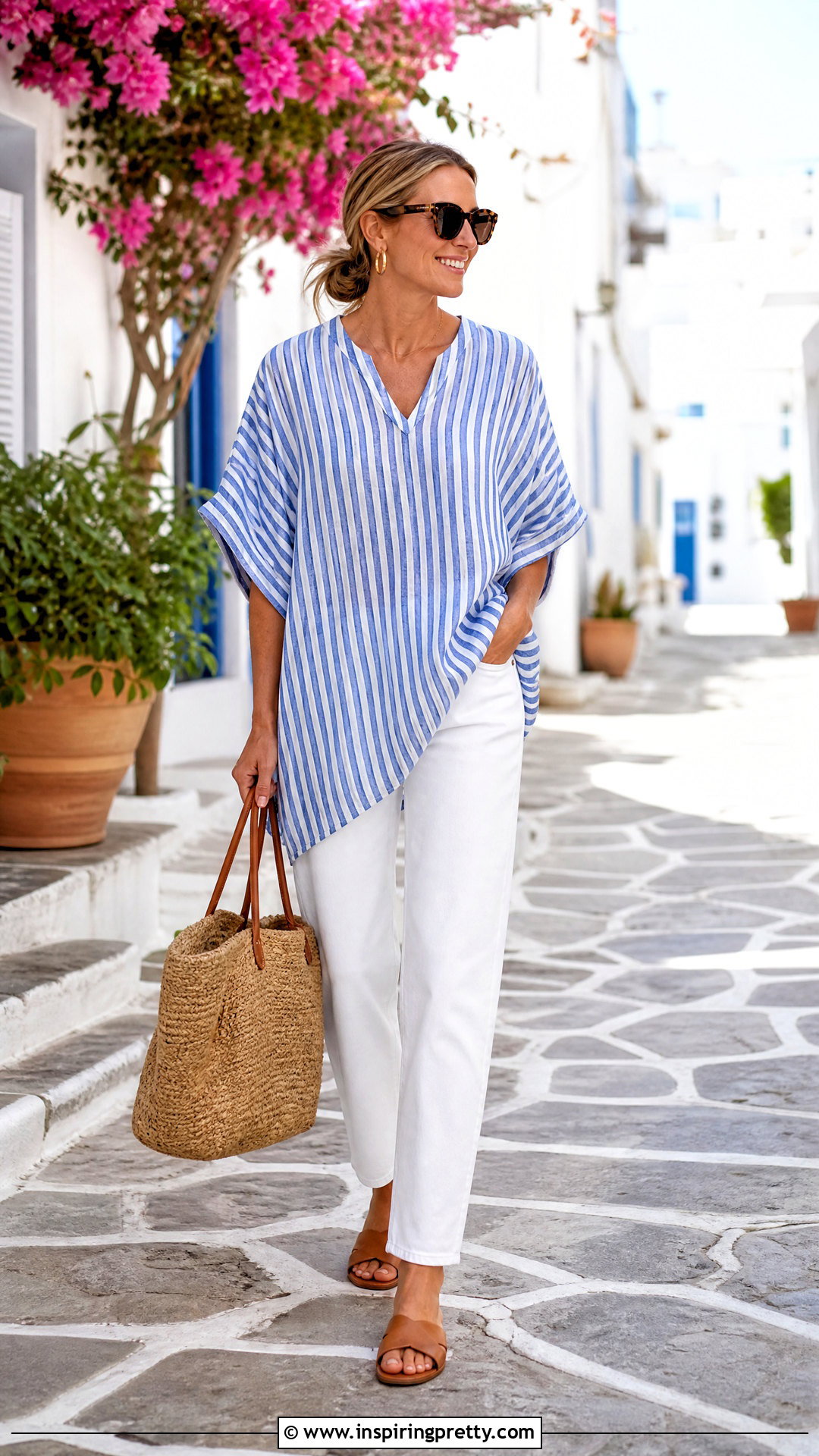
Stripes change what a bubu does to your shape. Vertical ones lengthen; border stripes along the hem and sleeves widen. White jeans keep it fresh, but they should be thick enough not to show pockets. Let the stripes be the only pattern.
38. Geometric Print Bubu Top With Black Culottes
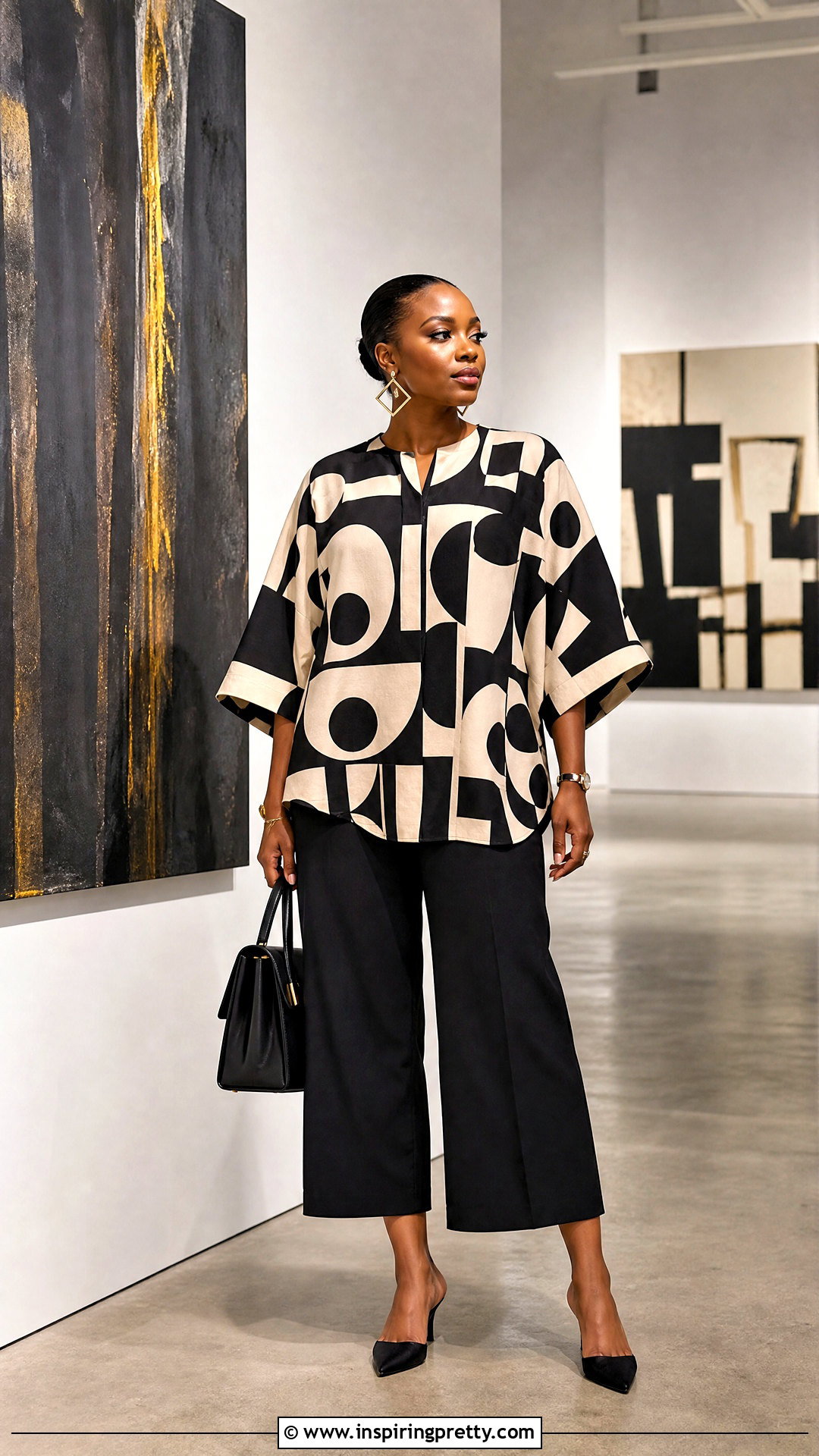
Geometric prints are unforgiving at the center seam. If the lines don't meet, it looks like a mistake, so when I cut these I lay out the print before anything else. Black culottes give a high-contrast pattern room. One shape of earring is enough.
39. Patchwork Bubu Top With Neutral Pants
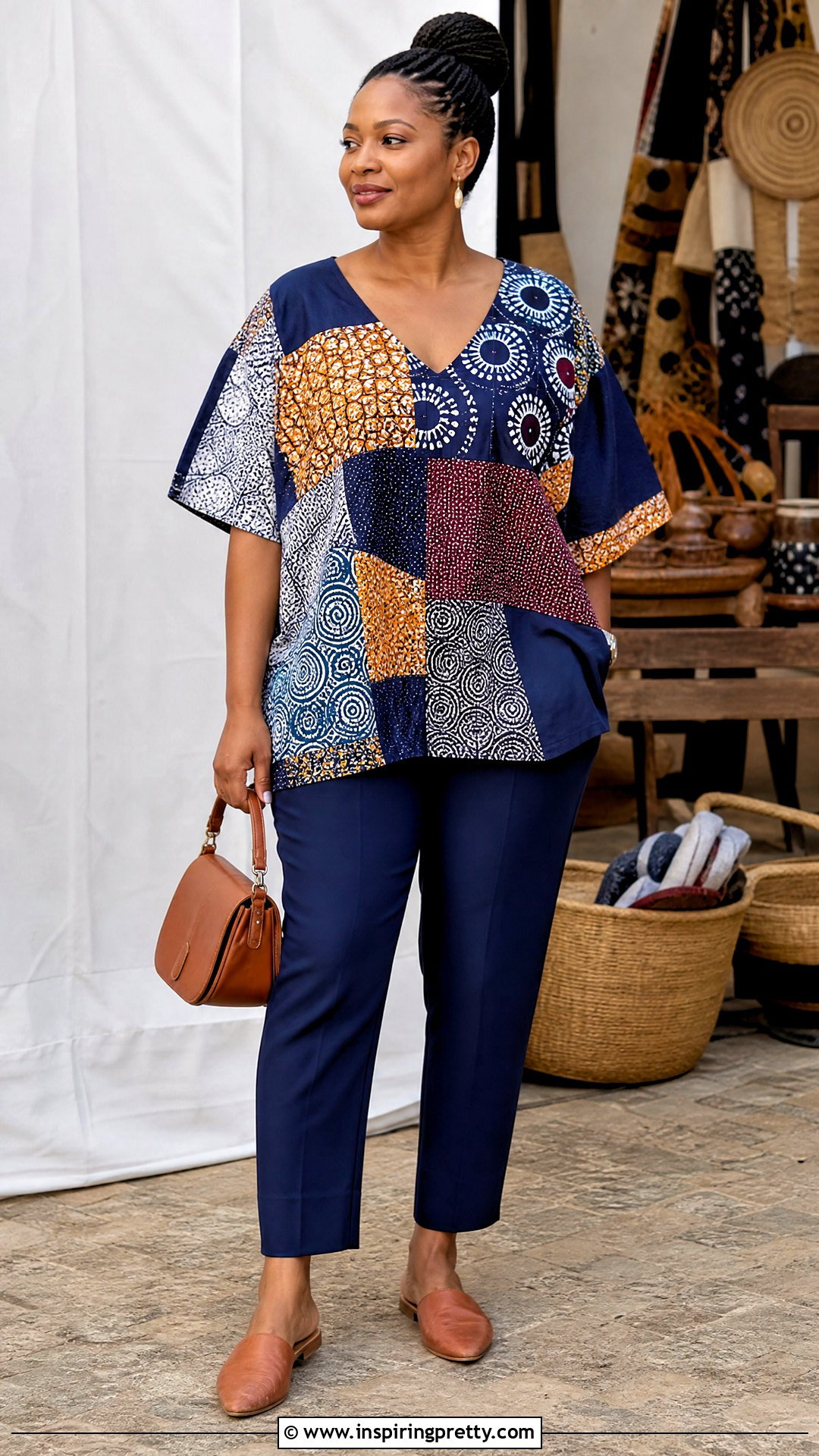
Patchwork can look intentional or random, and the difference is in planning. I keep all patches the same weight so the top hangs evenly; mix a heavy cotton with a light one and the hem twists. Neutral trousers taken from the dominant color calm it down. It is a good way to use leftover fabric from other projects.
40. Brocade Bubu Top With Matching Trousers
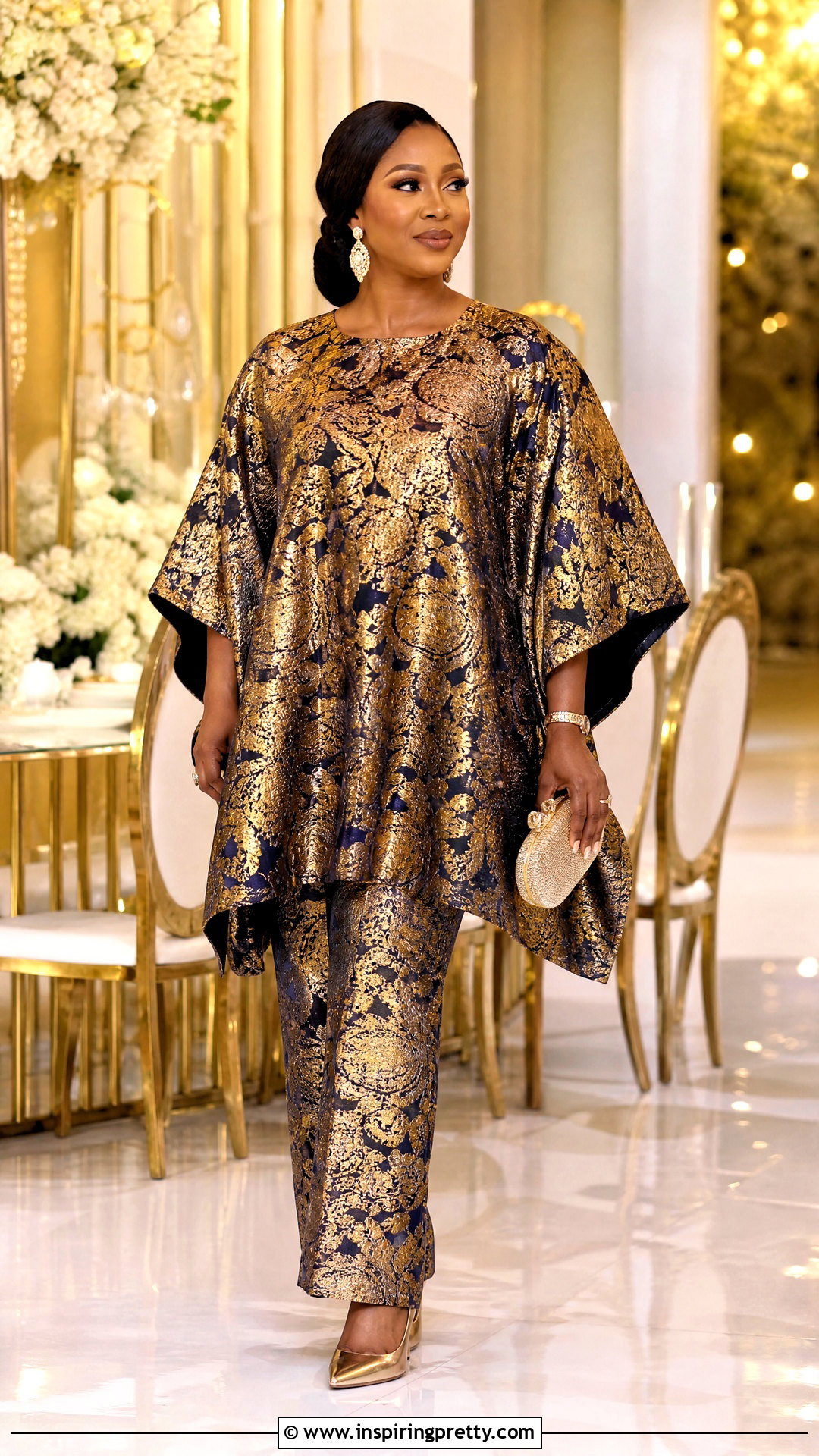
Brocade is stiff, so the bubu cut needs a little restraint. I narrow the sleeves slightly and give extra ease across the shoulders so it doesn't stand away from the body. Straight trousers balance it better than palazzos. Metallic threads scratch, so I line the neck and sleeve edges.
41. Velvet Bubu Top With Satin Skirt
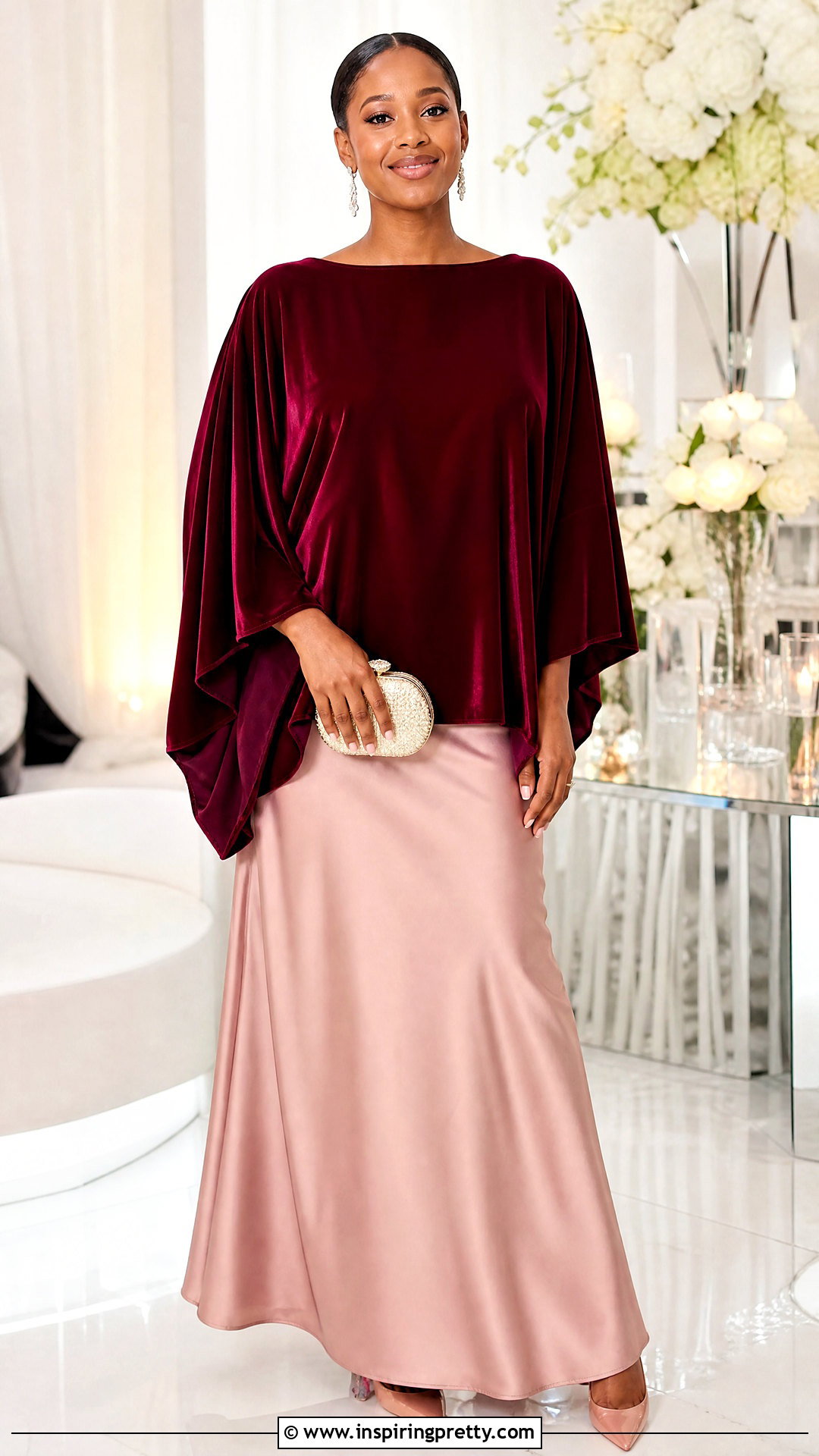
Velvet over satin is an indoor, cool-weather pairing: both fabrics are warm. Keep the skirt waistband smooth, because velvet adds bulk wherever it overlaps. Velvet pile crushes under pressure and doesn't like an iron pressed on it; steam from a distance. One pair of drop earrings is plenty.
42. Organza Bubu Top With Fitted Pants
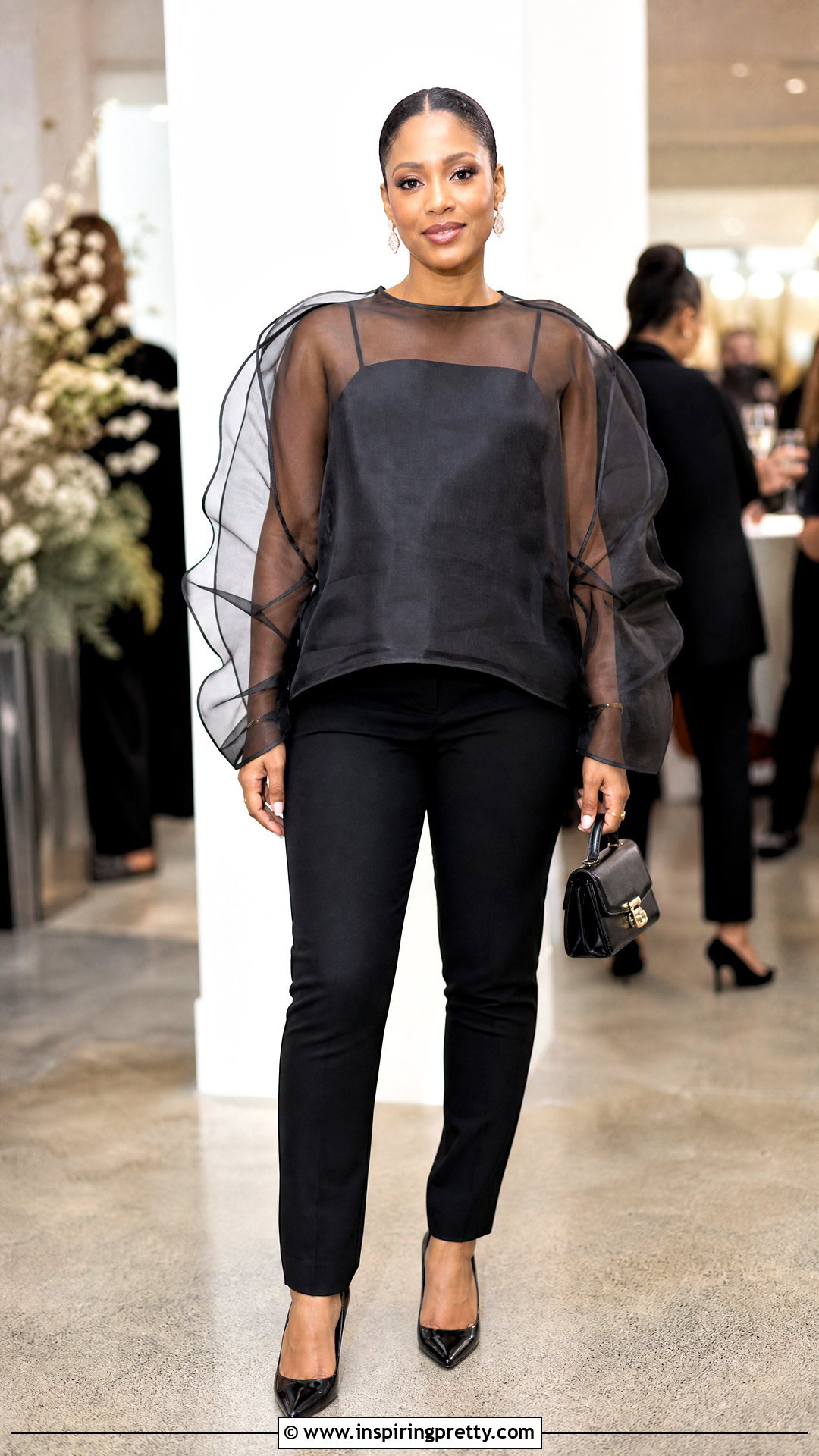
Organza holds its own shape, which makes it ideal for sculptural sleeves and a poor choice for full coverage. I'd plan an opaque bodice or a camisole and keep the trousers slim and dark so the sleeves read clearly. Organza snags on beaded bags and catches on chairs, so watch the sleeves when you sit.
43. Sequined Bubu Top With Plain Trousers
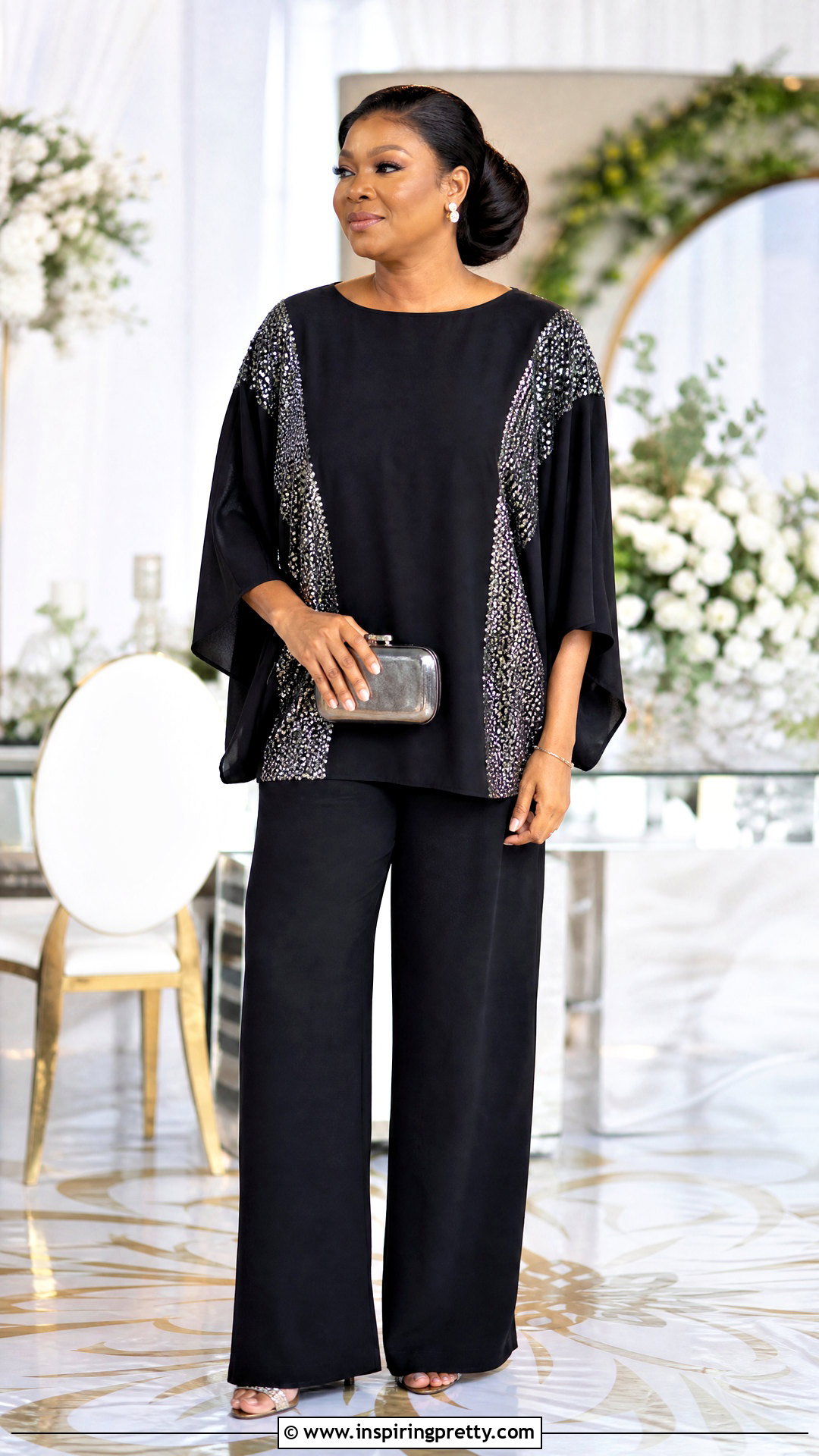
Sequins supply the shine; everything else should be matte. Plain crepe or wool-blend trousers keep it grown-up. I insist on a full lining in sequined bubus because the stitching on the back scratches skin over a long evening. Rings and bracelets catch on sequins, so keep your hands simple.
44. Beaded Bubu Top With Maxi Skirt
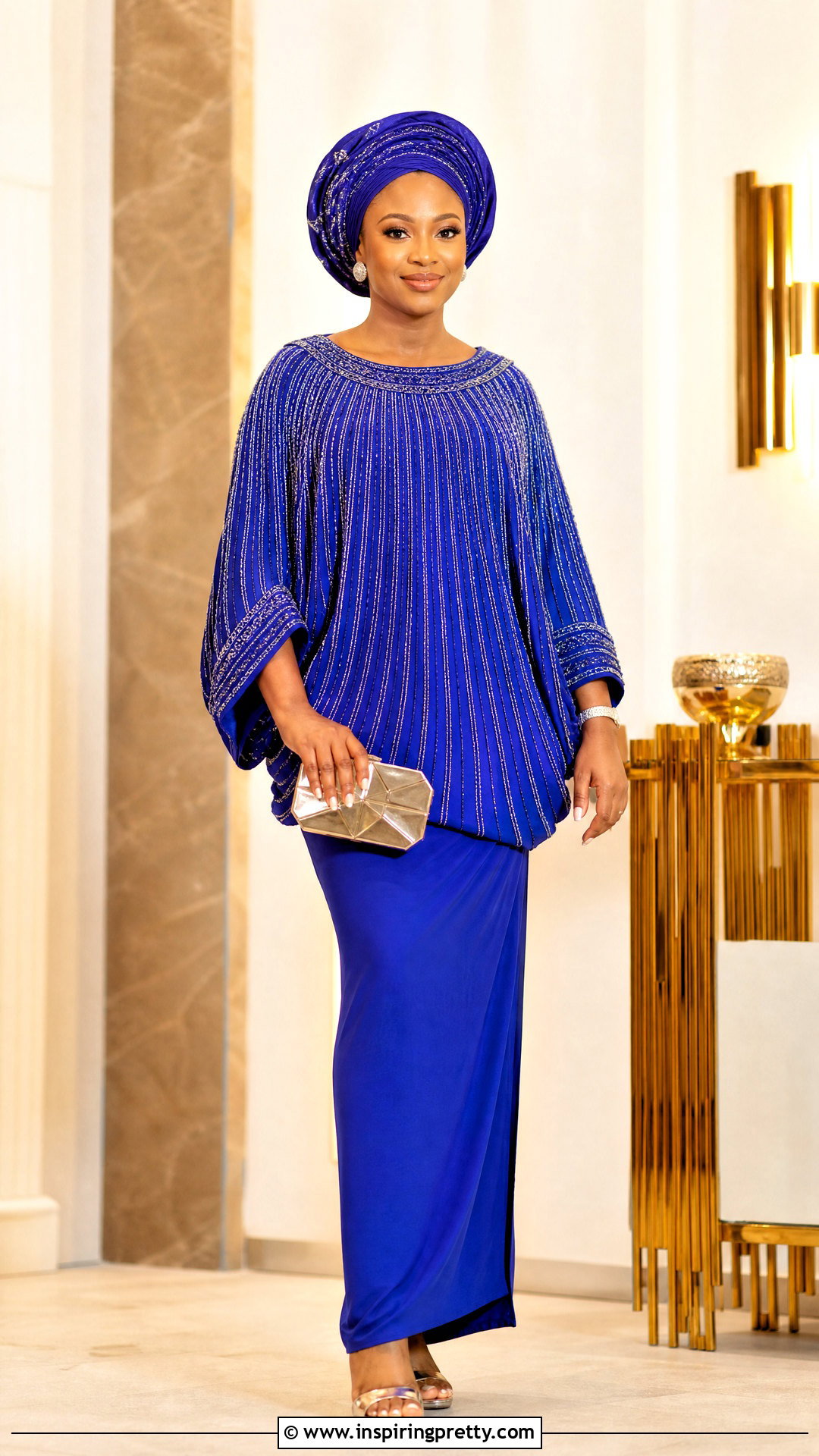
Beadwork works best concentrated: the neckline, the cuffs or a center panel, with plain fabric elsewhere so the bubu still moves. A plain maxi skirt and low heels keep it comfortable through a long ceremony. Before wearing it, I'd run a hand over the beading and secure any loose threads, because one pulled thread can release a whole row.
45. Fringe Bubu Top With Slim Trousers
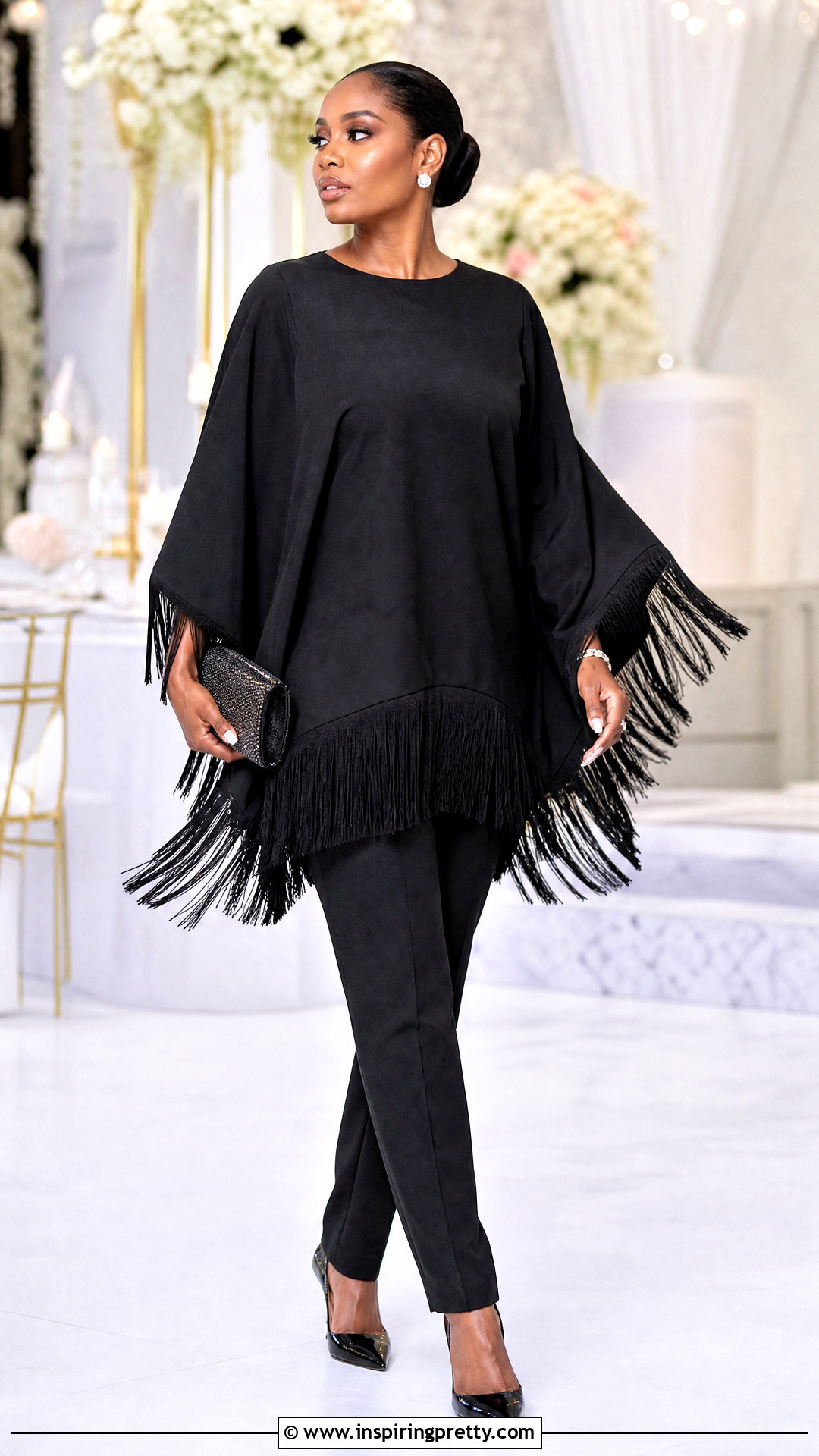
Fringe introduces movement, so the rest of the outfit should be still. I'd put fringe on the sleeve edge or hem only, and wear slim, plain trousers. Fringed bags or shoes compete with it. Good fringe hangs evenly and falls back into place after you move; cheap fringe tangles after the first wear.
46. Two-Tone Bubu Top With Coordinated Pants
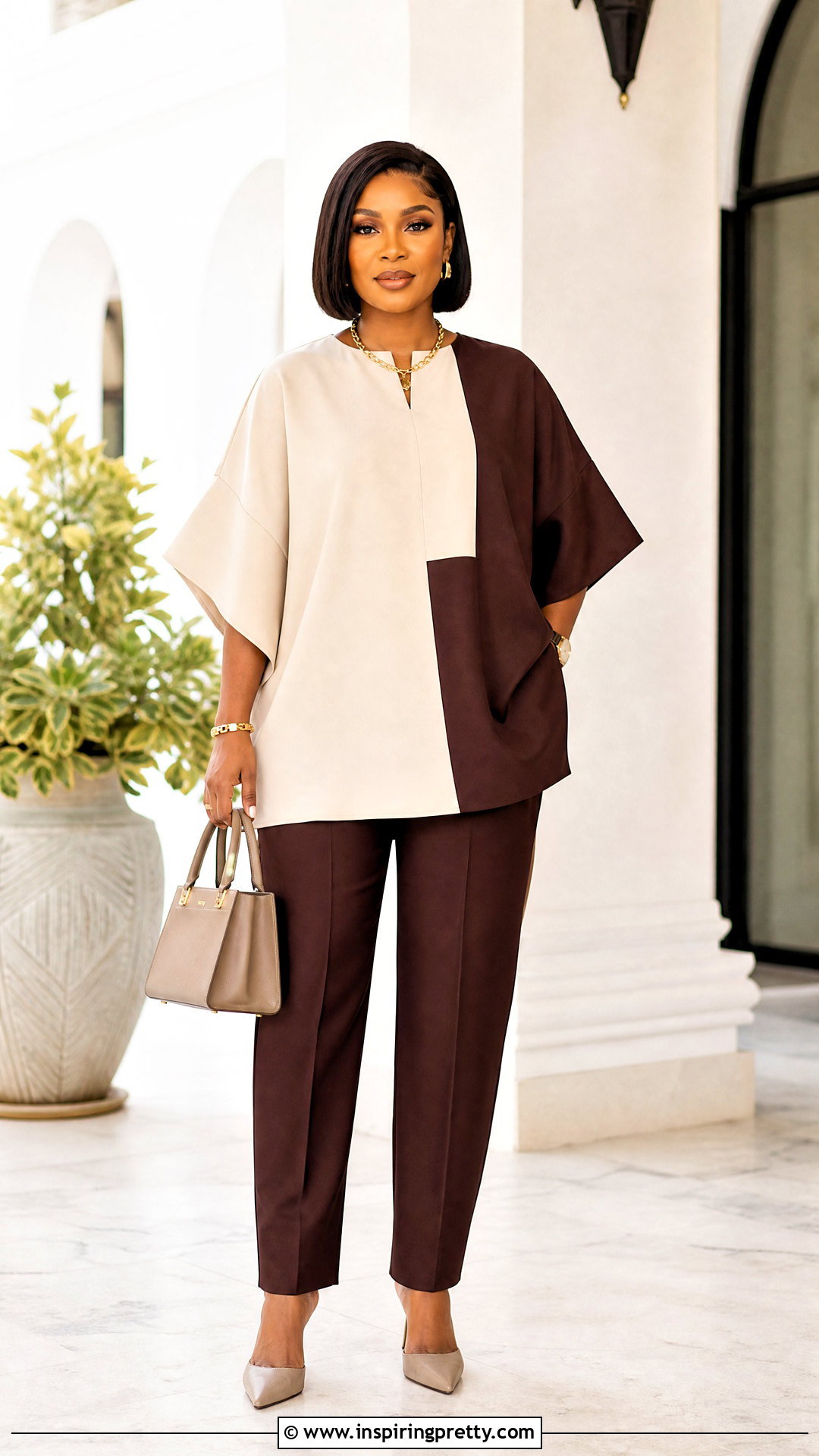
Two-tone tops make trouser color easy: repeat either shade. The lighter or brighter color draws the eye, so put it where you want attention. On these I'm strict about symmetry, since uneven panels show instantly where two colors meet.
47. Denim Bubu Top With White Trousers
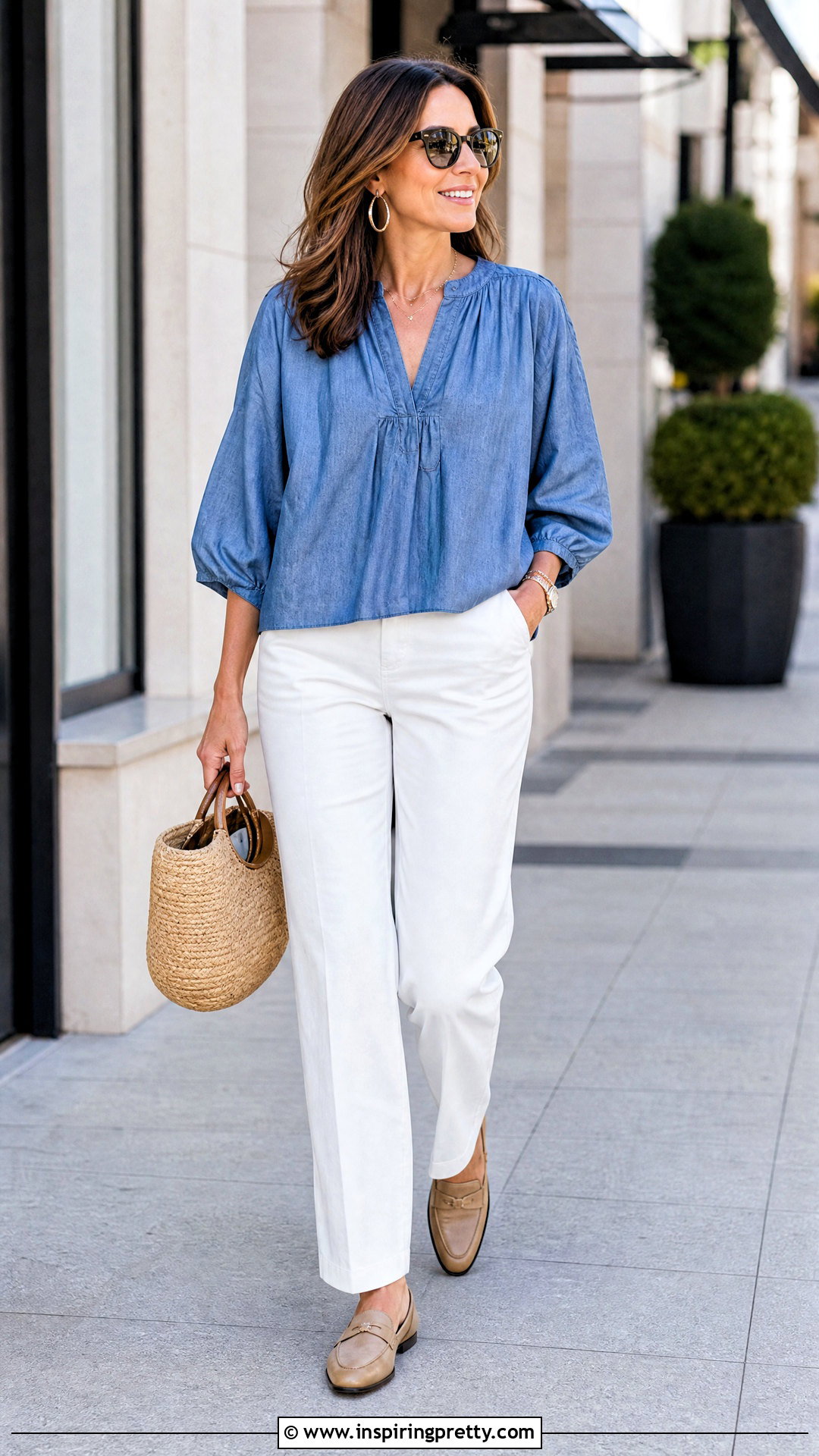
Denim bubus need soft fabric. Stiff denim stands away from the body and won't drape, so I'd use chambray or a washed, light denim. White trousers make it fresh, but new denim can transfer blue onto white, so wash it at least once before pairing. A small front tuck adds shape.
48. Linen Bubu Top With Printed Skirt
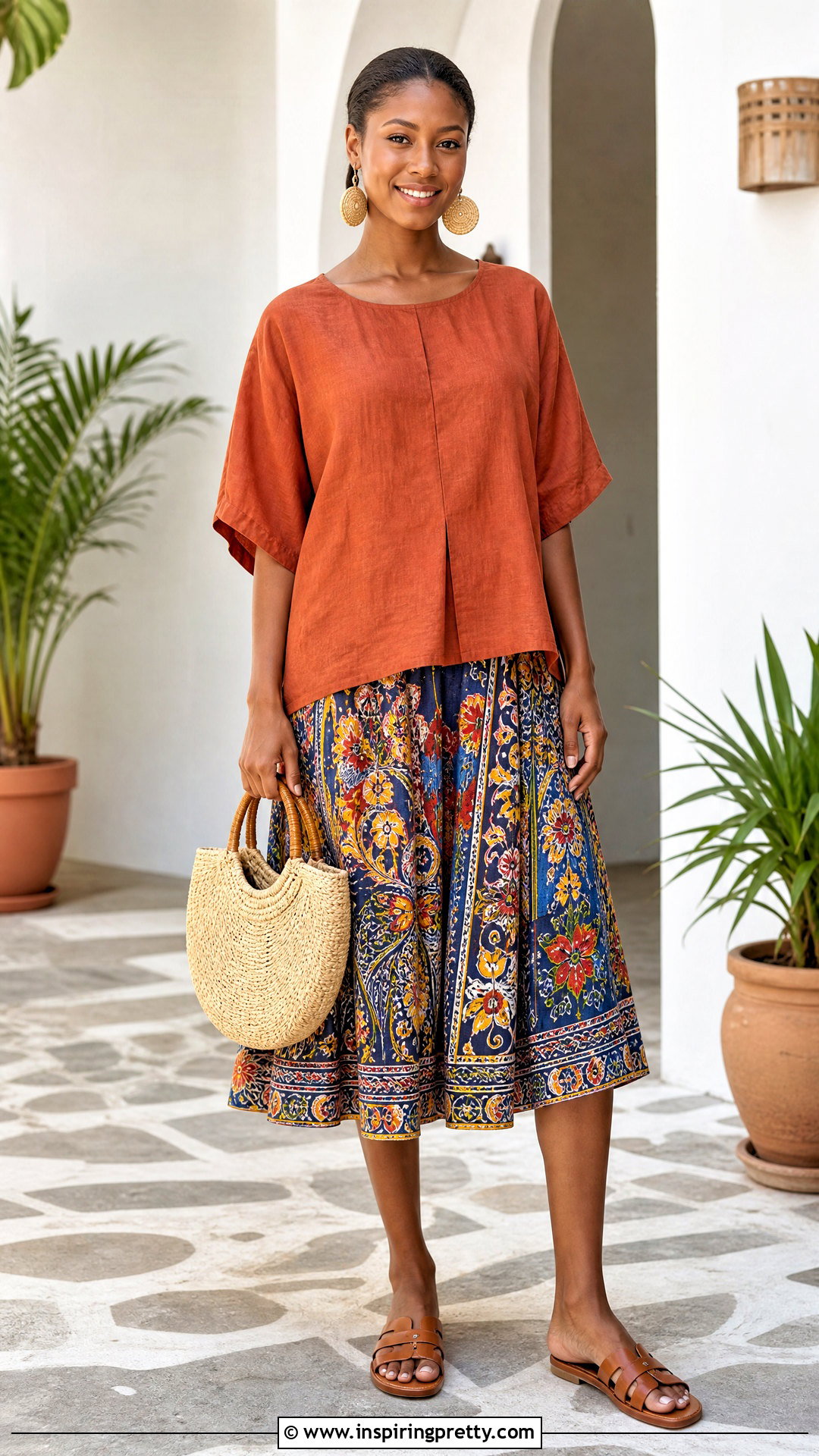
Linen and a printed skirt are a good warm-weather pair. I'd choose a plain linen top in a color from the skirt print and keep it at hip length so the skirt shape shows. Linen creases, which is part of its character, but steam it so the creases look lived-in rather than slept-in. Avoid skirts with thick elastic or tie bows that bulk under the top.
49. Maternity Bubu Top With Stretch Pants
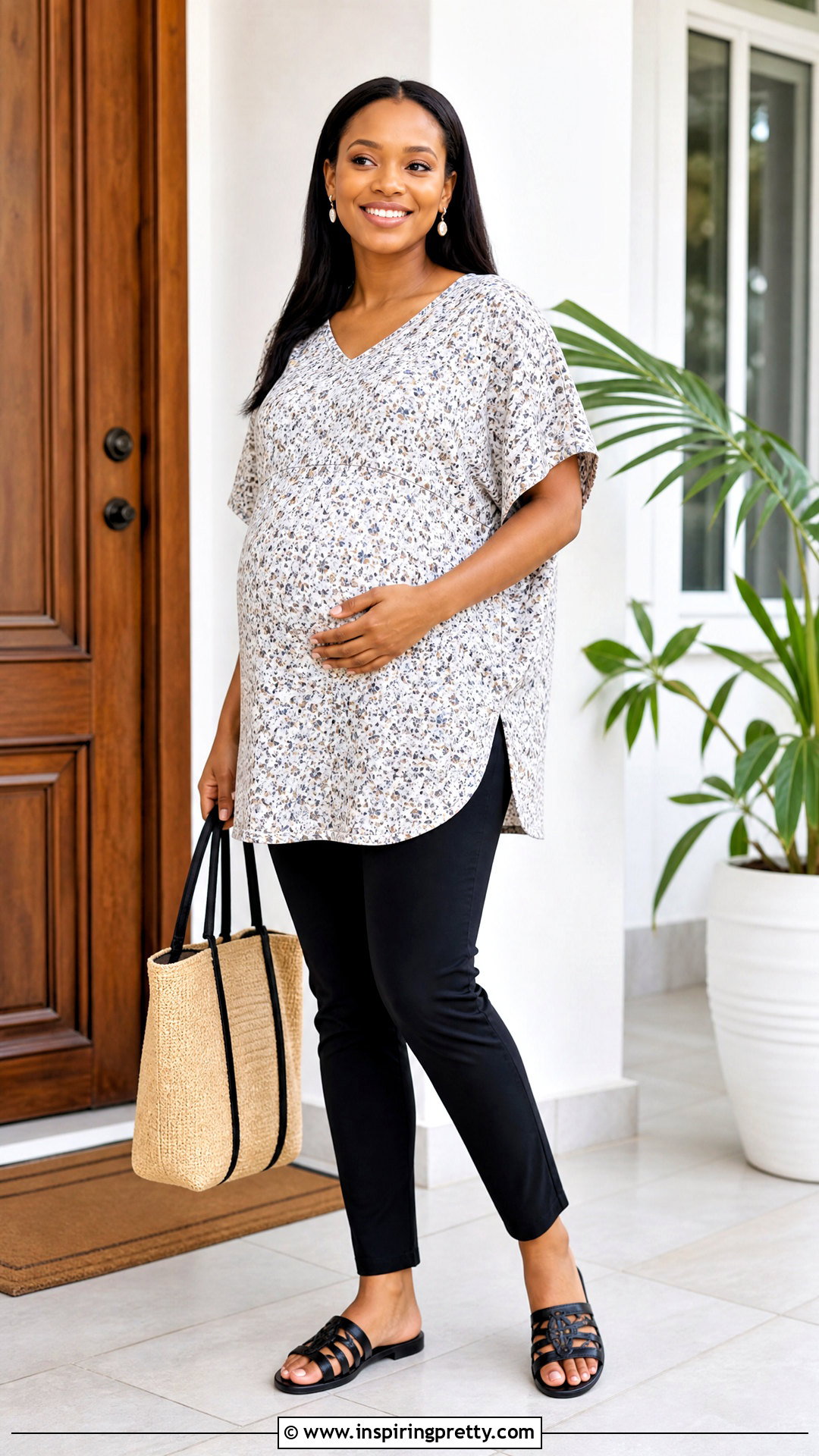
A bubu is one of the most comfortable things to wear during pregnancy because the room is already in the cut. Side slits give extra space as the belly grows. I'd avoid heavy beading at the neckline, which pulls the garment forward. Pair it with stretch trousers you can wear over or under the bump, and cushioned flats.
50. Plus Size Bubu Top With Wide-Leg Trousers
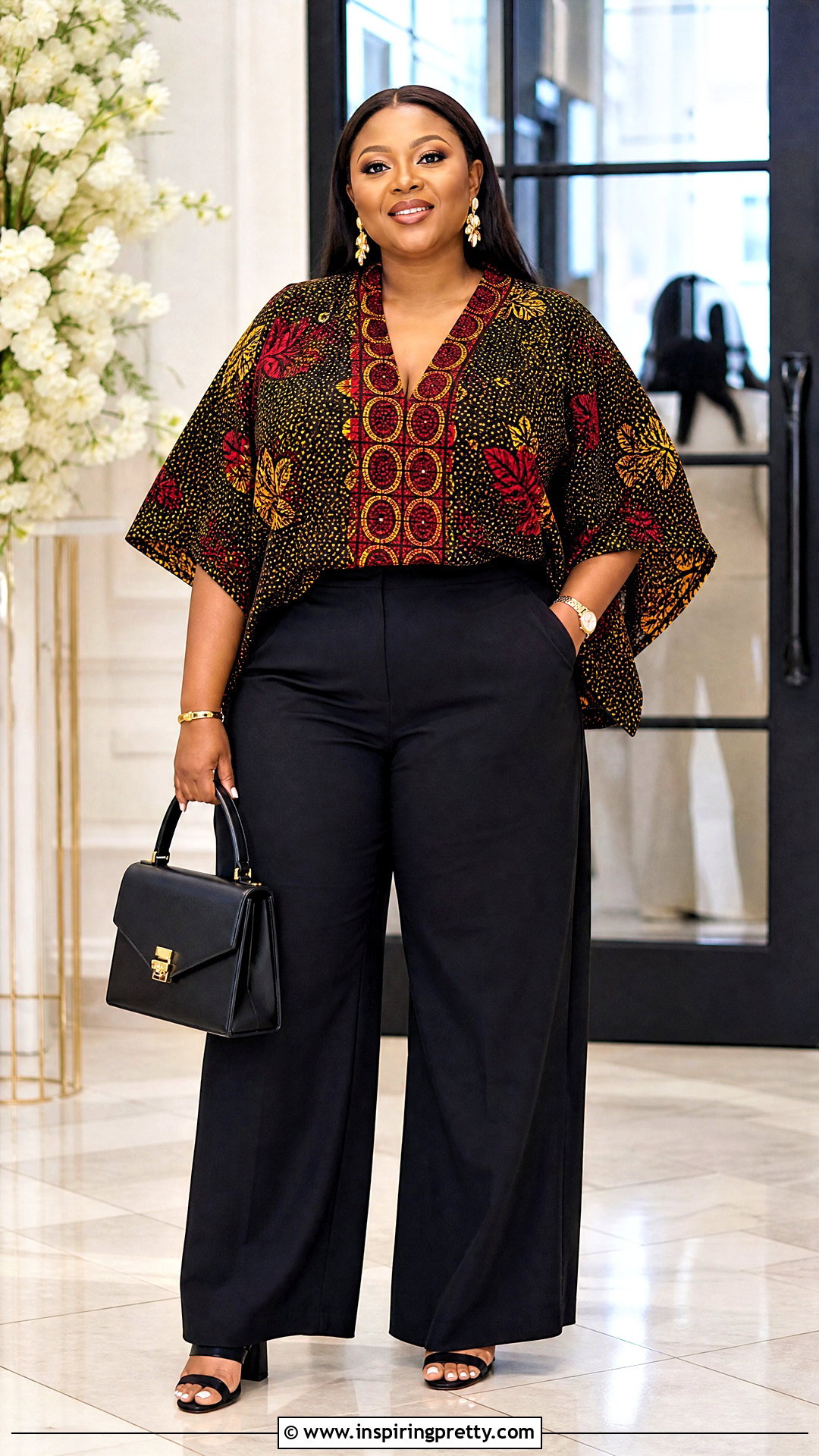
For plus-size clients, the bubu works when it fits at the shoulder. If the shoulder seam is in the right place, the rest drapes; if it isn't, the whole garment looks oversized. A V-neck or a center embroidery panel gives a clear vertical line. I'd pair it with high-rise wide-leg trousers that fall cleanly from the hip and just skim the shoe. Tailor the sleeve length and side openings rather than sizing up.
What I Ask For When a Bubu Is Made to Order
Many bubus are sewn by a local tailor from fabric you bring, which is the best way to get one that fits. A few things I'd settle before the fabric is cut:
- Bring enough cloth. Ankara is often sold by the six-yard piece, which usually covers a bubu with plenty left over; very wide styles or matching trousers may need more, so ask the tailor before buying.
- Agree the length while you stand in the shoes you'll wear it with, and agree the span with your arms out.
- Decide on the lining up front. Chiffon, light lace, pale cotton and organza almost always need one at least through the body.
- Ask for the print to be matched or centered at the front seam if it's geometric or has large motifs.
- Pre-wash cotton wax prints before cutting so the garment doesn't shrink after the first wash.
Washing Wax Prints and Adire So the Color Lasts
Ankara wax prints are cotton, so they are hard-wearing, but the color stays brightest when you wash them cold, inside out, with a mild detergent and dry them away from direct sun. Wash new pieces alone the first couple of times. Hand-dyed Adire indigo is gentler again: rinse it by hand in cool water, don't soak it for long, and expect some blue to transfer while it's new. Silk, lace, brocade and anything beaded should go to a dry cleaner who knows embellished garments.
The Bottom Half Decides How a Bubu Looks
Most of this comes down to the same few checks: the top's length, how wide the sleeves are, the fabric's weight and what the neckline is already doing. Streamlined trousers steady dramatic cuts; skirts and palazzos suit soft ones. Ankara and Adire carry the color, while lace, silk, brocade and beadwork carry the occasion. Get the shoulder fit and hem lengths right and a well styled bubu top will do more work in your wardrobe than almost anything else.
Related posts:


Leave a Reply