
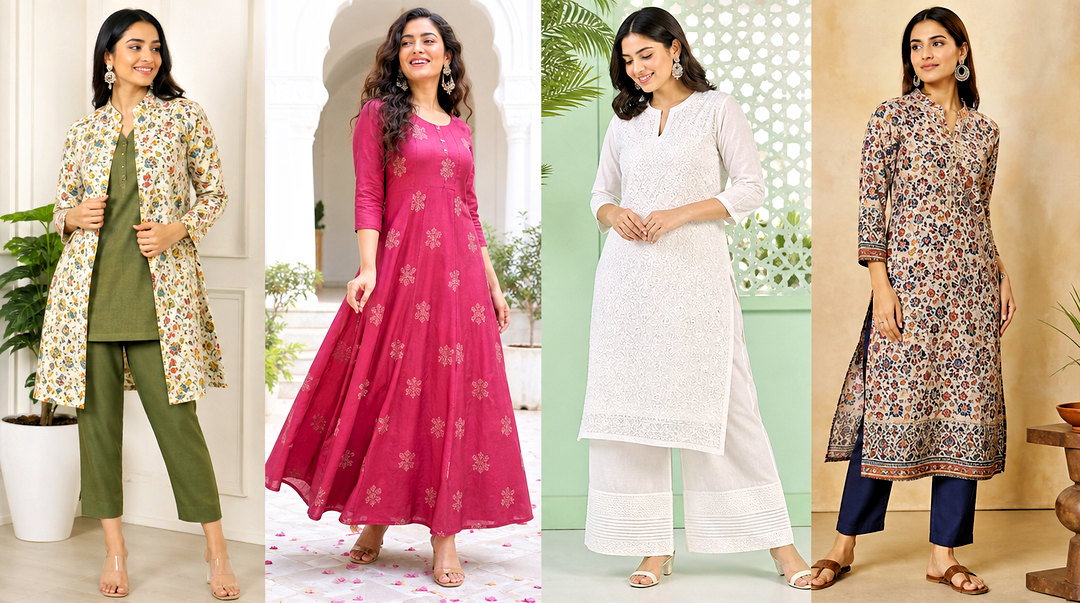
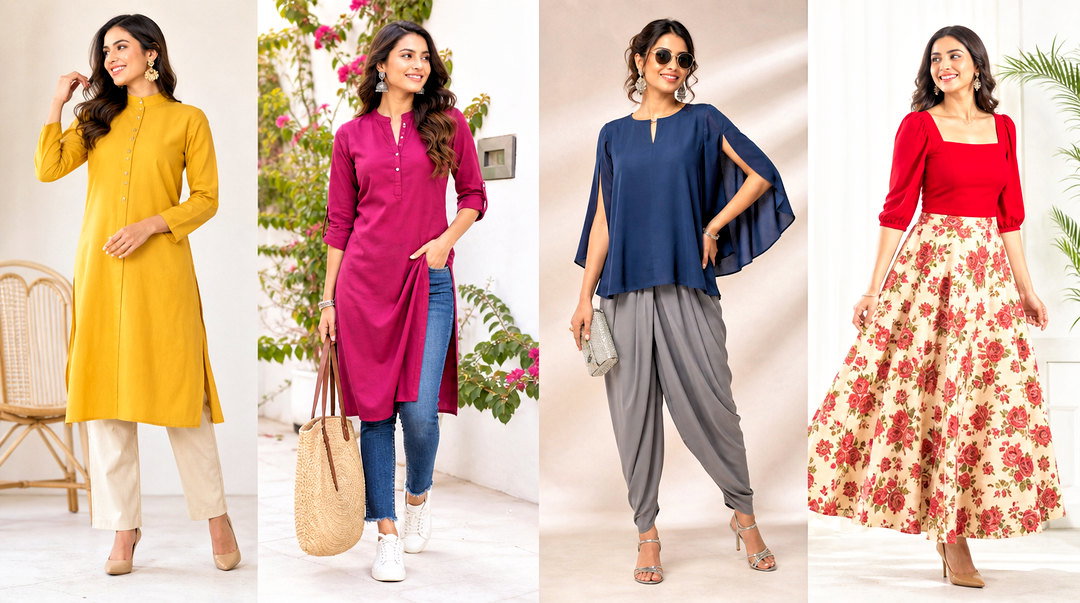
On a kurti, the neckline is the one part of the pattern that sits right under your face, so it decides more of the outfit than the print does. A wide neck broadens the shoulders, a deep V lengthens the neck, a collar makes the whole garment read as office wear. Below are twenty necks I'd actually draft or order, from plain round and notched shapes to collars, wraps and the more modern cuts like V-necks and boat necks, cowls and asymmetric lines. For each one I've paired the bottoms and shoes that suit its shape, and noted what to check in the stitching, because a good neck design badly finished will gape by the third wash.

Matching the Neck to Your Shoulders and Face
Before I sketch a neckline, I look at the shoulders, because a neck design either widens or narrows them. Horizontal shapes like boat necks, square necks and off-shoulder edges add width. Vertical shapes like V necks, keyholes and Angrakha wraps draw the eye down and in.
- Broad shoulders: V, deep scoop, halter or an Angrakha wrap. Avoid wide boat necks.
- Narrow or sloping shoulders: boat, square or a wide round neck, ideally with a little shoulder structure.
- Short neck: open shapes like V, scoop or sweetheart. A high stand collar can make the face look boxed in.
- Long neck: Mandarin collars, high necks and boat necks look balanced on you.
- Full bust: a moderate V or scoop with enough depth to break up the area. Very high or very wide necks make the bust look larger.
These are guides, not rules. If you love a shape that isn't on your list, change the depth, the width or the sleeve until it works for you.
1. Round Neck Kurti With Palazzo Pants
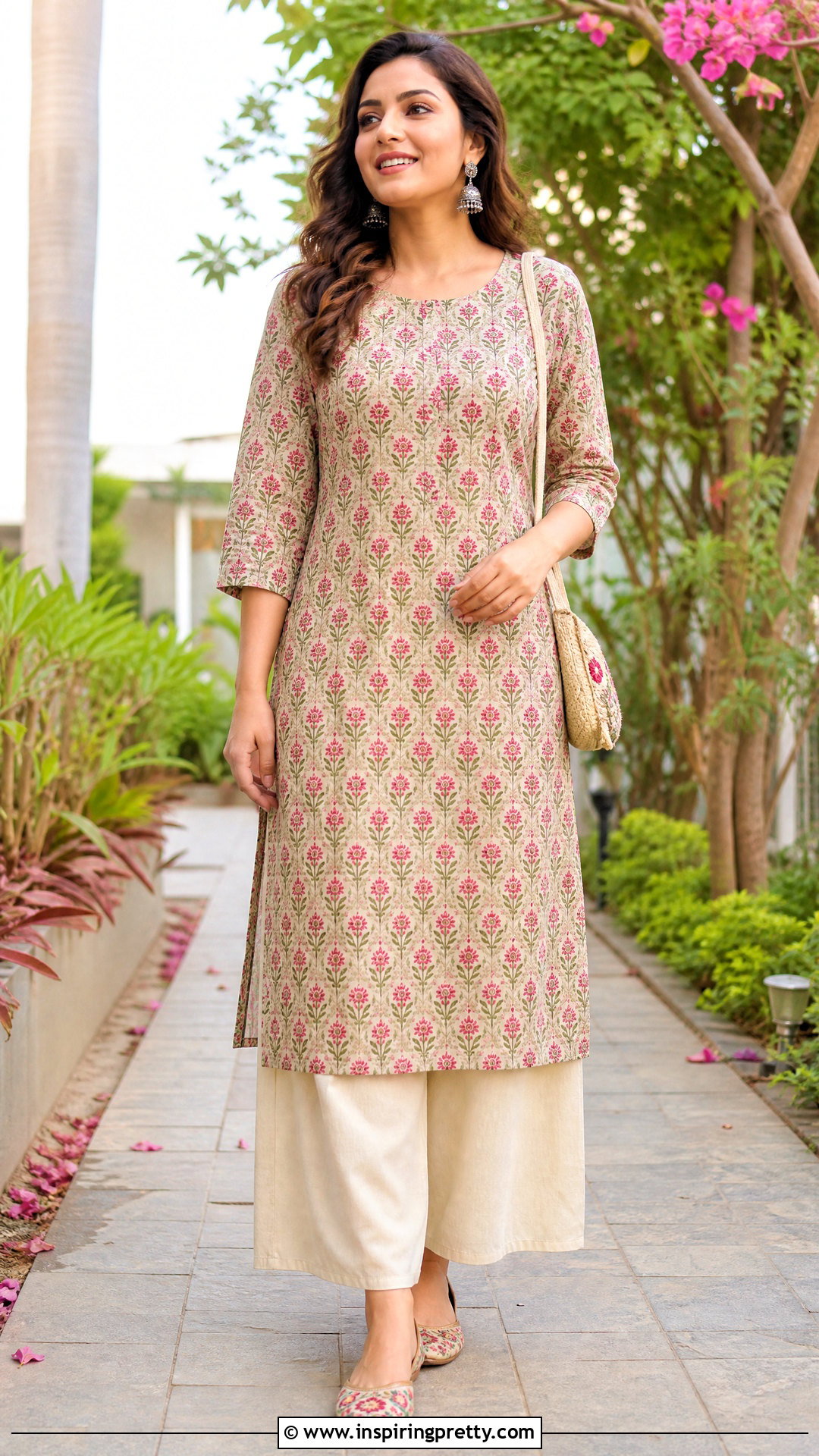
I treat the round neck as the base block for every other design here, and it's the easiest one to get right. A medium depth with narrow piping on a straight or slightly flared cotton kurti, three-quarter sleeves, and solid palazzos that pick up one color from the print. Flat juttis, small silver earrings and a light shoulder bag are enough. If it looks too plain, I'd add the interest at the edge, with a contrast border or fabric-covered buttons, rather than piling on a necklace. It's my default for errands, classes and relaxed family visits in warm weather.
2. V Neck Kurti With Straight Pants
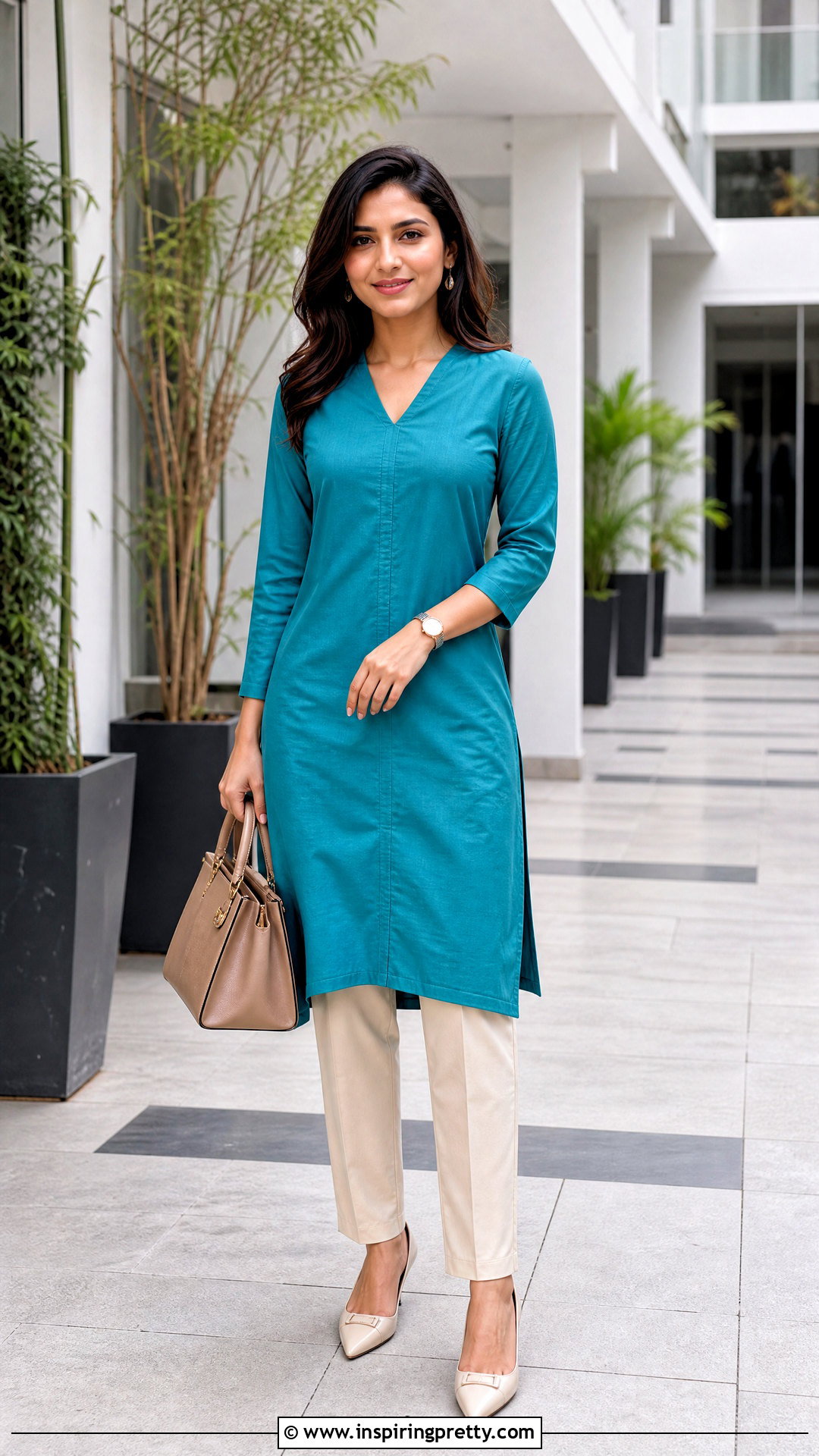
A V neck moves from desk to dinner without changing anything else. I like it on a knee-length linen or soft rayon kurti over tailored straight pants, with the V outlined in tonal threadwork so it reads finished rather than bare. Depth is the thing to settle first: a moderate V flatters most people, and if you want more coverage, ask for a small fabric insert or wear a matching camisole. Keep heavy necklaces off embroidered edges, since they hide the work and drag the point down. Pointed flats, a structured bag and small drops finish it. Ivory, teal and navy show the line best.
3. Boat Neck Kurti With Cigarette Pants
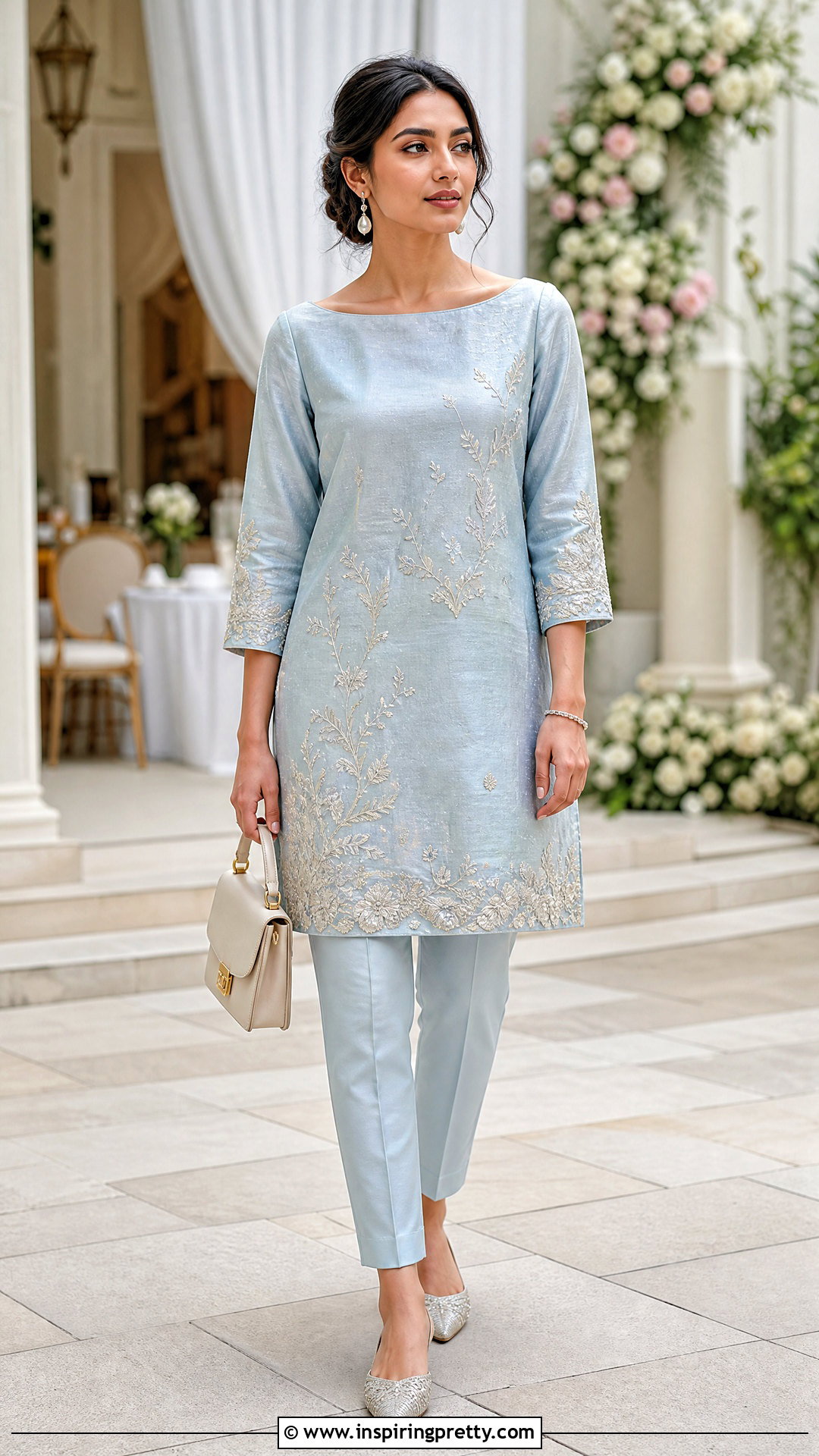
Boat necks run almost straight from shoulder to shoulder, so they widen the frame. That suits narrow or sloping shoulders and is less kind to broad ones. I pair a solid or lightly printed version with fitted cigarette pants and pointed flats to keep the lower half slim against that horizontal line. Three-quarter sleeves help the proportion too. The construction point: a boat neck needs a firm facing or it slides toward one shoulder all day, so check the inside before you buy. Medium earrings, no necklace. Silk-blend with metallic edging for evening events, cotton with contrast piping for daily wear.
4. Square Neck Short Kurti With Jeans
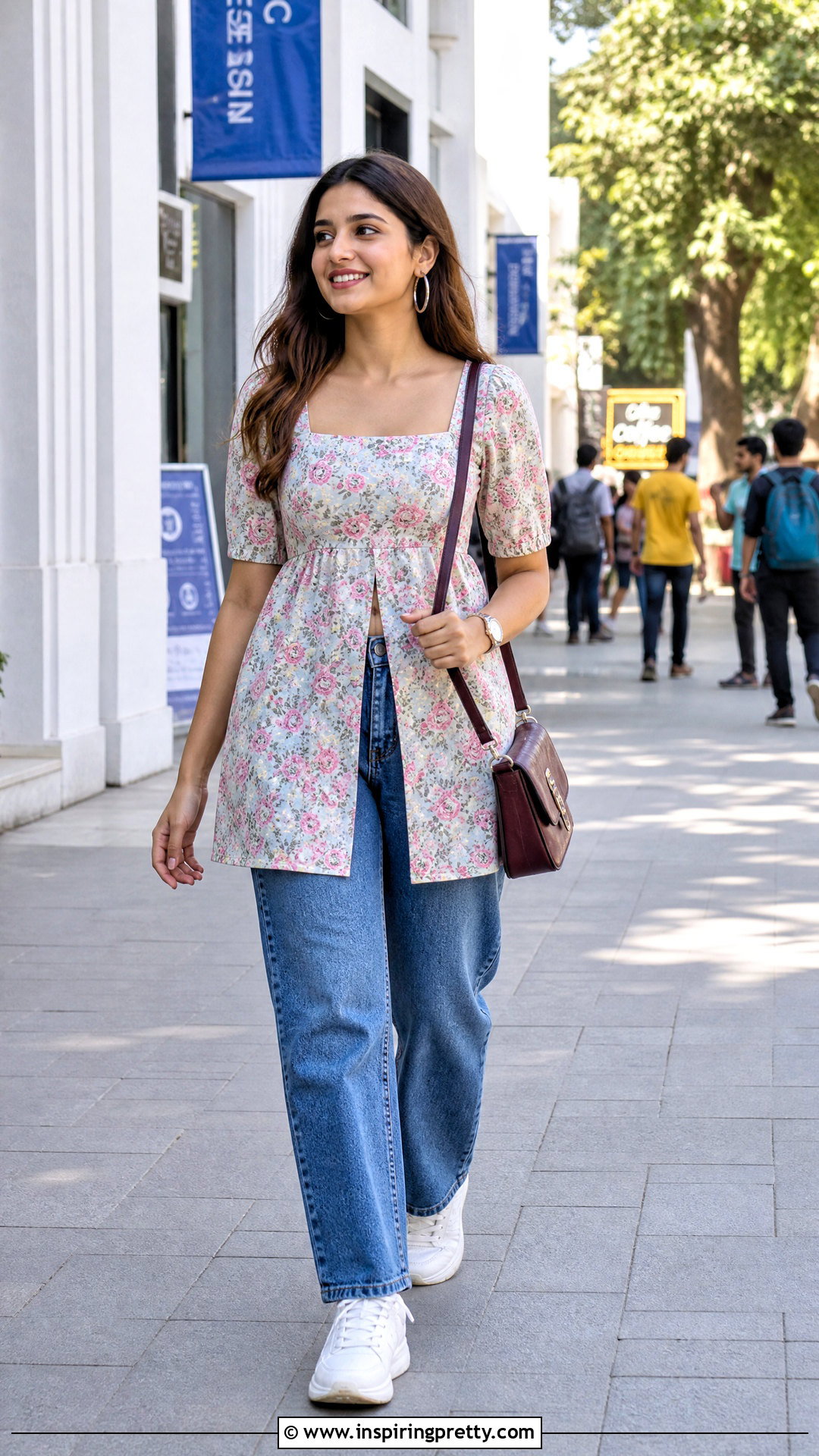
The square neck is the shape I reach for when someone wants ethnic wear that still works with jeans. A short kurti to the upper thigh, fitted or slightly relaxed, with puff or plain elbow sleeves, over clean straight-leg denim and white sneakers. Its corners need to be sharp; if they're rounded off or puckered, the tailor didn't clip and reinforce them, and the neck will never lie flat. Block prints and solid jewel tones suit the geometry. A tiny pendant is fine, silver hoops are better, and I'd skip ripped jeans so the outfit doesn't split into two styles.
5. Keyhole Neck Kurti With Churidar
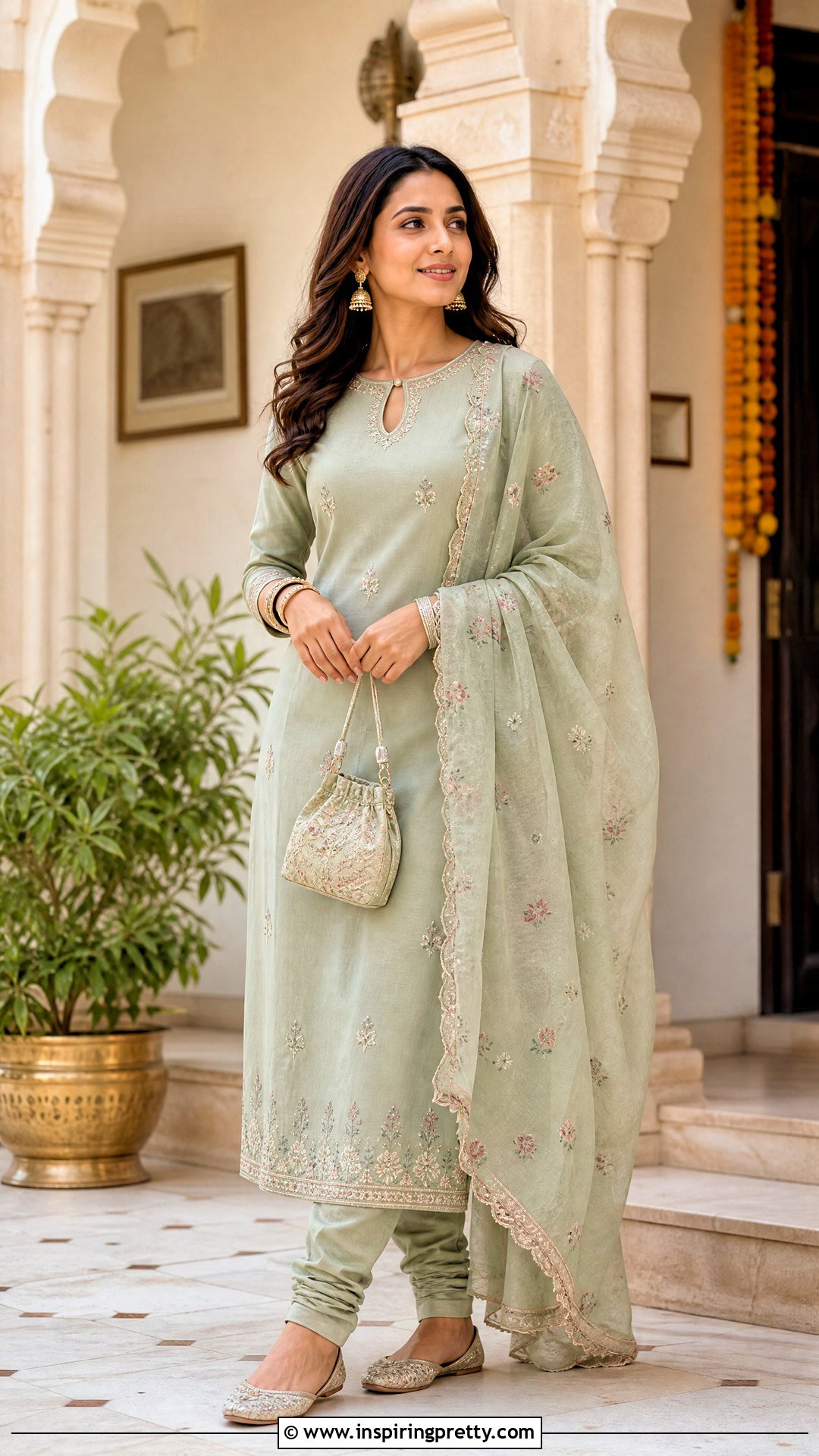
Keyhole openings are a small detail that does a lot, as long as they stay small. For a traditional set I'd pair a calf-length keyhole neck kurti with a fitted churidar and a light dupatta. The opening should close with a loop button or a tassel tie and be faced firmly enough to lie flat; a soft, unfaced keyhole curls outward after a few hours. Embroidered juttis, slim bangles and small jhumkas suit it, and a low bun keeps the detail visible. Cotton-silk, chanderi-style weaves and smooth rayon hold the shape well.
6. Mandarin Collar Kurti With Tapered Pants
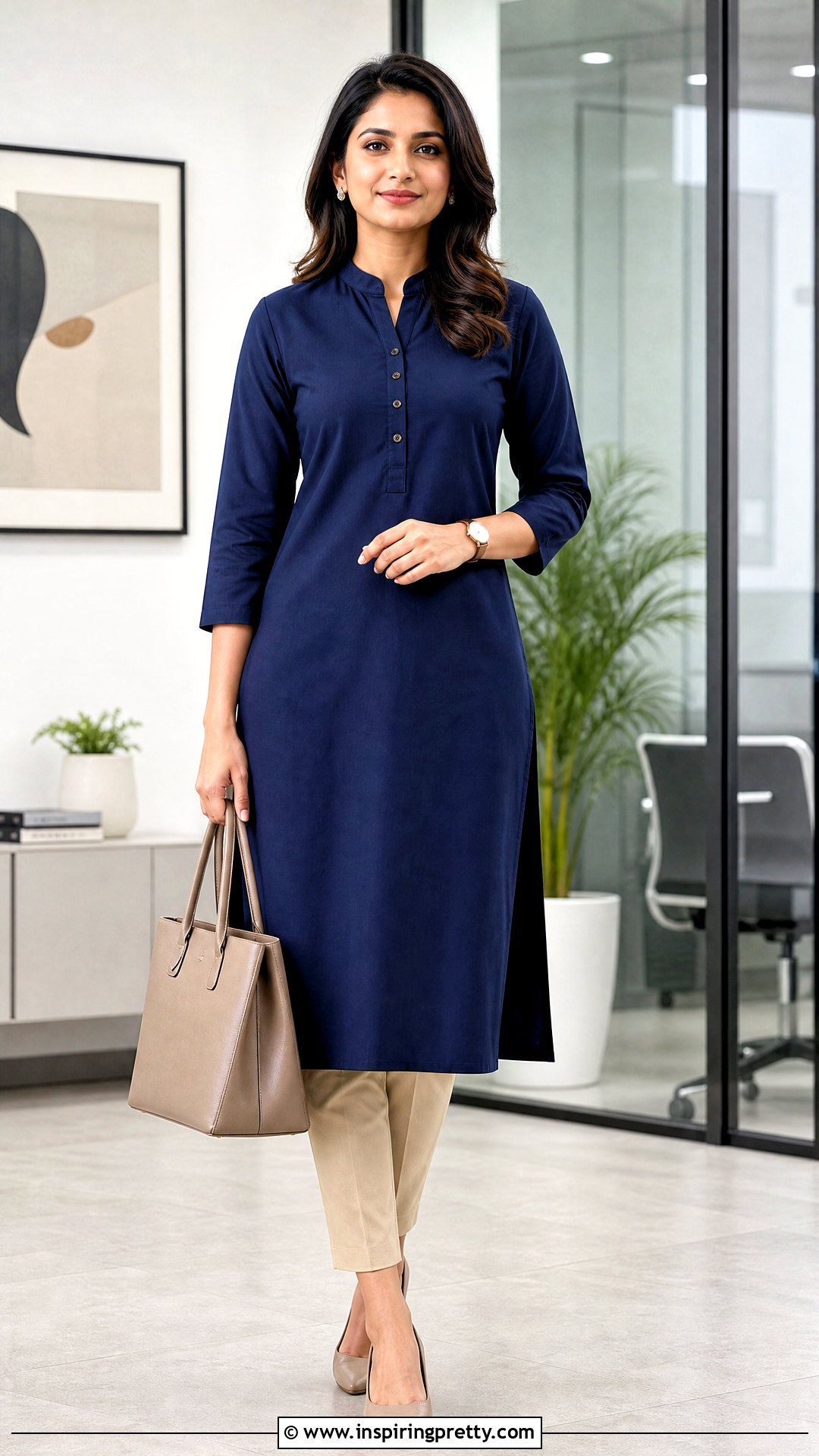
I recommend a Mandarin collar to anyone who wants a kurti that passes as workwear without a second thought. A straight cut, short stand collar, hidden placket and three-quarter sleeves, over ankle-length tapered pants in a neutral. The common mistake is a collar cut too snug; you should fit a finger between collar and neck with the top button done up, or you'll leave it open all day anyway. Loafers or low block heels and a structured tote. The collar already frames the face, so studs and a watch are all the jewelry it needs. Fine stripes and small geometrics look sharp here.
7. Shirt Collar Kurti With Ankle Trousers
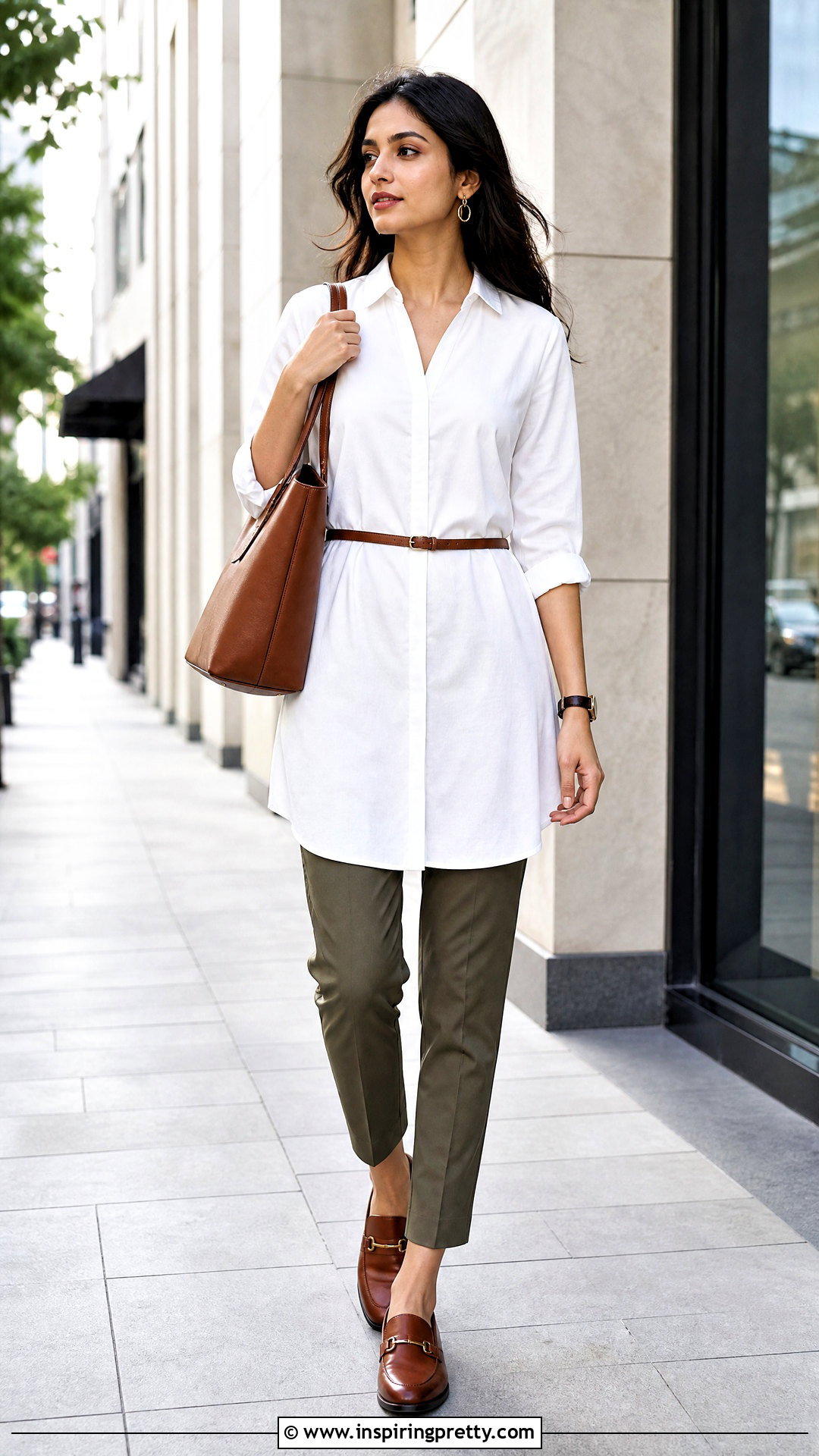
A shirt collar gives the kurti a smart Indo-Western character that suits a relaxed office or a travel day. Knee length, buttons all the way down, worn with ankle trousers. Poplin and linen blends keep the collar crisp; rayon softens it, which some people prefer, though the collar points will curl unless they're interfaced. I'd roll the sleeves for casual days, leave one or two buttons open, and add a narrow belt only if the kurti has loops. Loafers, a medium tote and quiet earrings. It's the least fussy design on this list.
8. Sweetheart Neck Kurti With Sharara Pants
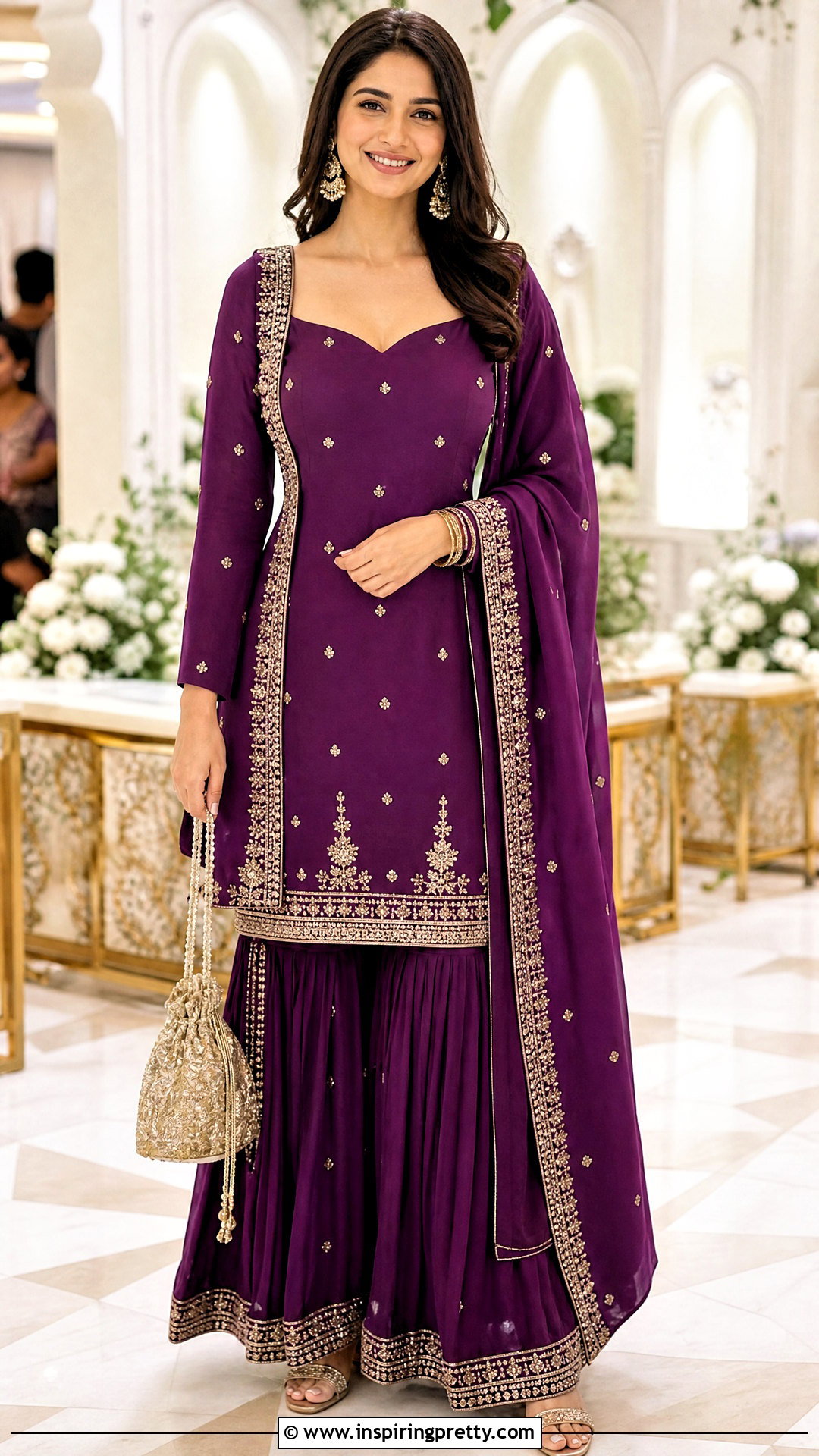
Sweetheart necks belong on festive kurtis, and they depend on a fitted bodice. If the bodice is loose, the curves collapse and the neckline just looks low. I'd choose a shaped bodice with a flared hem over flowing sharara pants, and keep the embroidery following the neck edge rather than covering the whole yoke. For more coverage, ask for a raised sweetheart or a sheer yoke above it. Silk blends, brocade accents and georgette dress it up. Drape a narrow dupatta over one shoulder, add low embellished heels, a potli bag and a few bangles.
9. Scoop Neck Kurti With Wide-Leg Pants
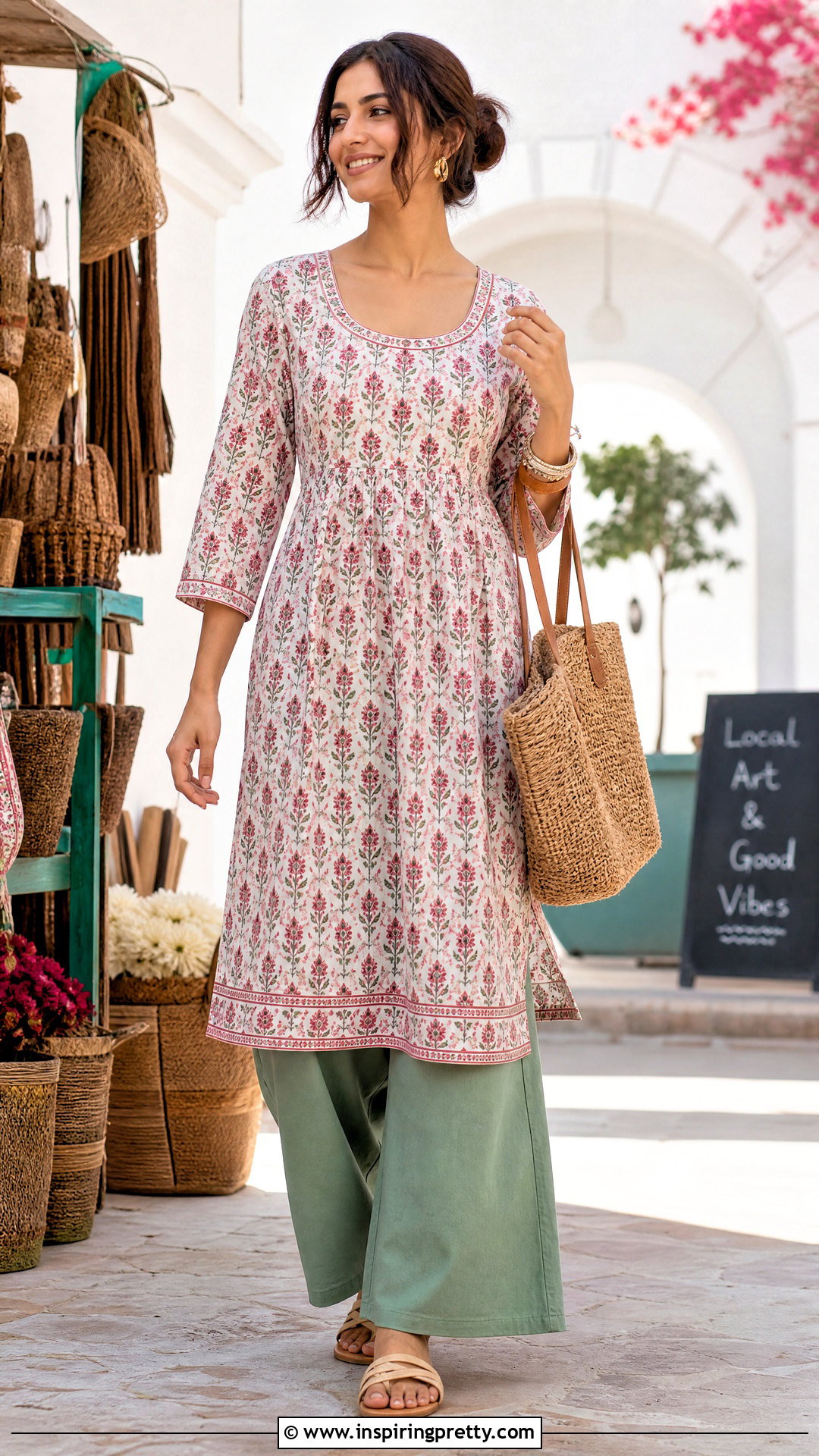
A scoop sits lower and wider than a round neck, which makes it cooler in summer and softer around the collarbone. Pair a printed scoop kurti with wide-leg cotton pants for easy walking. The edge needs to sit above the bust and hold its curve; a scoop on a stretchy, unfaced edge grows wider with every wear. Busy print on top means solid pants and very little jewelry. If the kurti is plain, patterned pants or a contrast hem can carry the interest. Flat sandals, a woven tote and small hoops. Cotton, linen blends and light rayon breathe best for sightseeing days.
10. Halter Neck Short Kurti With Maxi Skirt
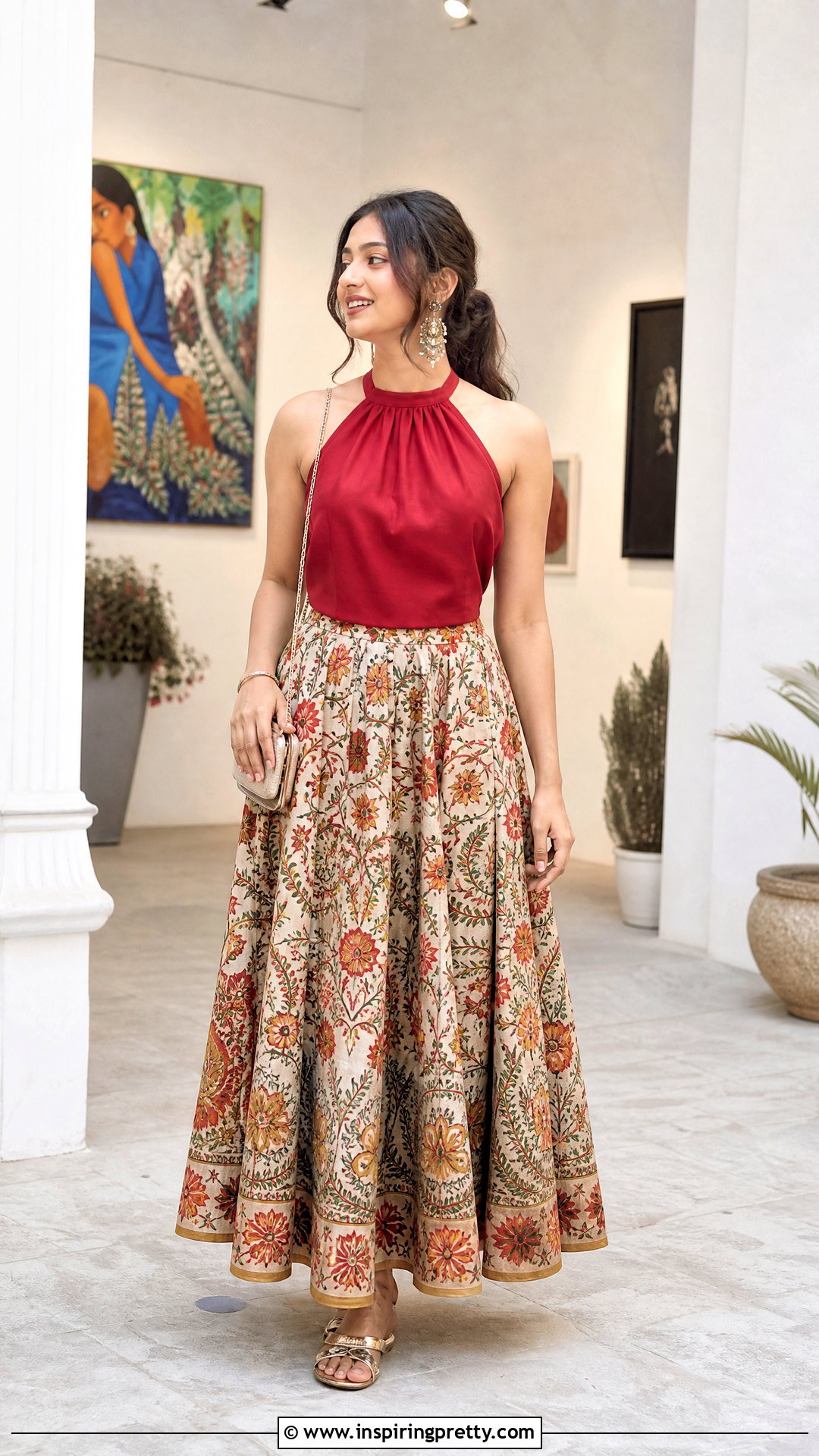
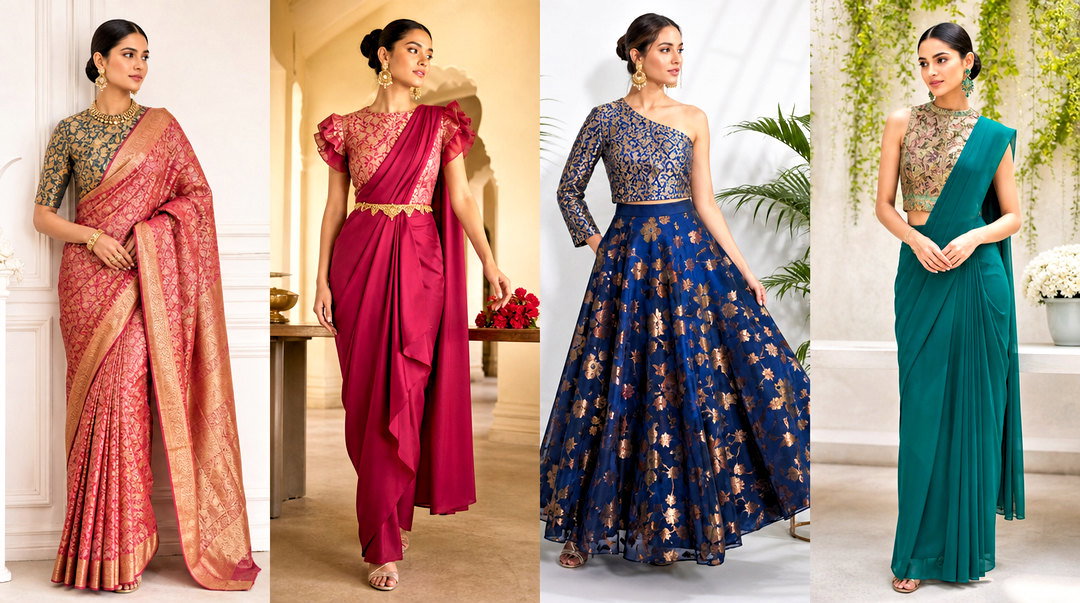
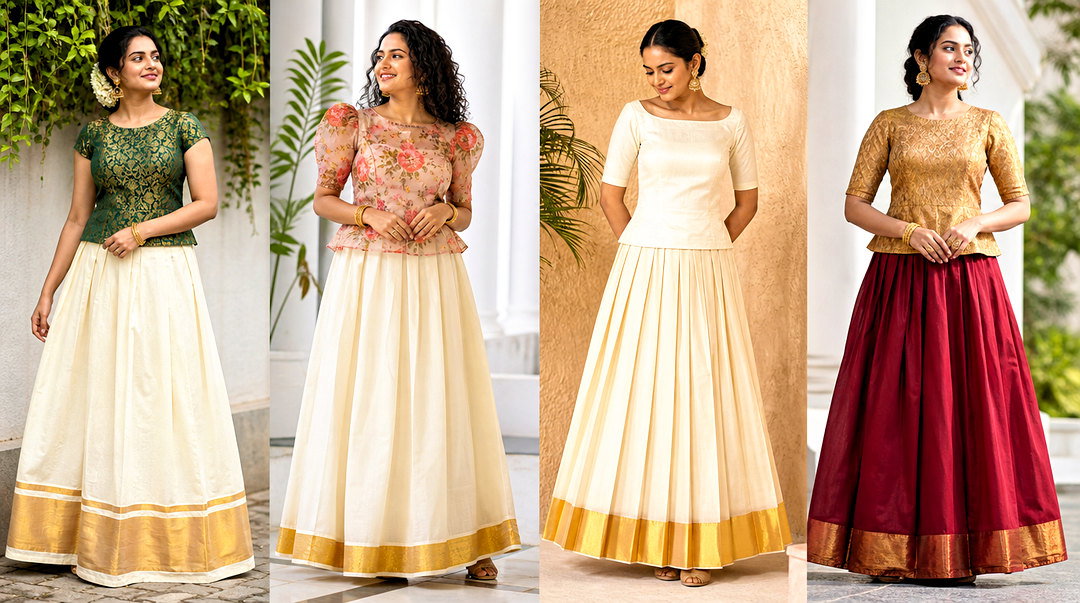
I only recommend a halter short kurti with broad straps and a higher back. Narrow ties pull on the back of the neck and get uncomfortable within an hour, and a deep open back means a tricky bra choice. Over a high-waisted maxi skirt, the halter becomes the focal point of a fusion outfit. Flat metallic sandals, statement earrings and a small clutch; no necklace, and hair up so the cut shows. Solid kurti with printed skirt, or a lightly embroidered top with a plain skirt. Halters also narrow the shoulders visually, so they're a good choice if yours are broad.
11. Asymmetric Neck Kurti With Draped Pants
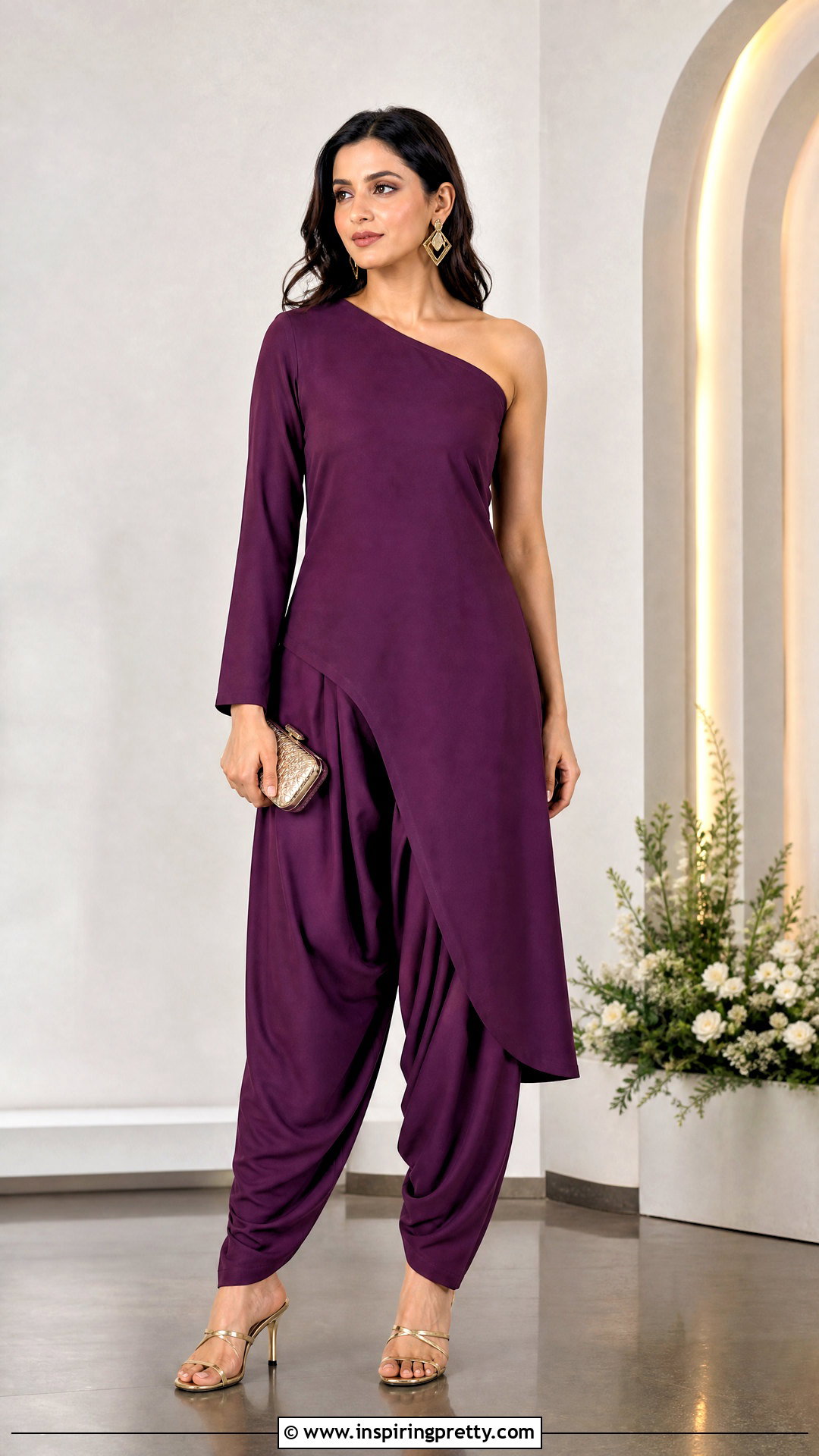
Asymmetric necks need one plain surface around them. A diagonal or one-shoulder-inspired line on a straight kurti, over fluid draped pants, in a single color so the cut is easy to read. I check two things on the hanger: that the high side is anchored securely, and that the hem isn't fighting the neckline with a second set of angles. Crepe, satin blends and smooth rayon fall cleanly against the body; cotton is too stiff and makes the diagonal stick out. Geometric earrings, heeled sandals and a compact clutch. Best for evening events where you want a contemporary edge.
12. Angrakha Neck Kurti With Flared Palazzo Pants
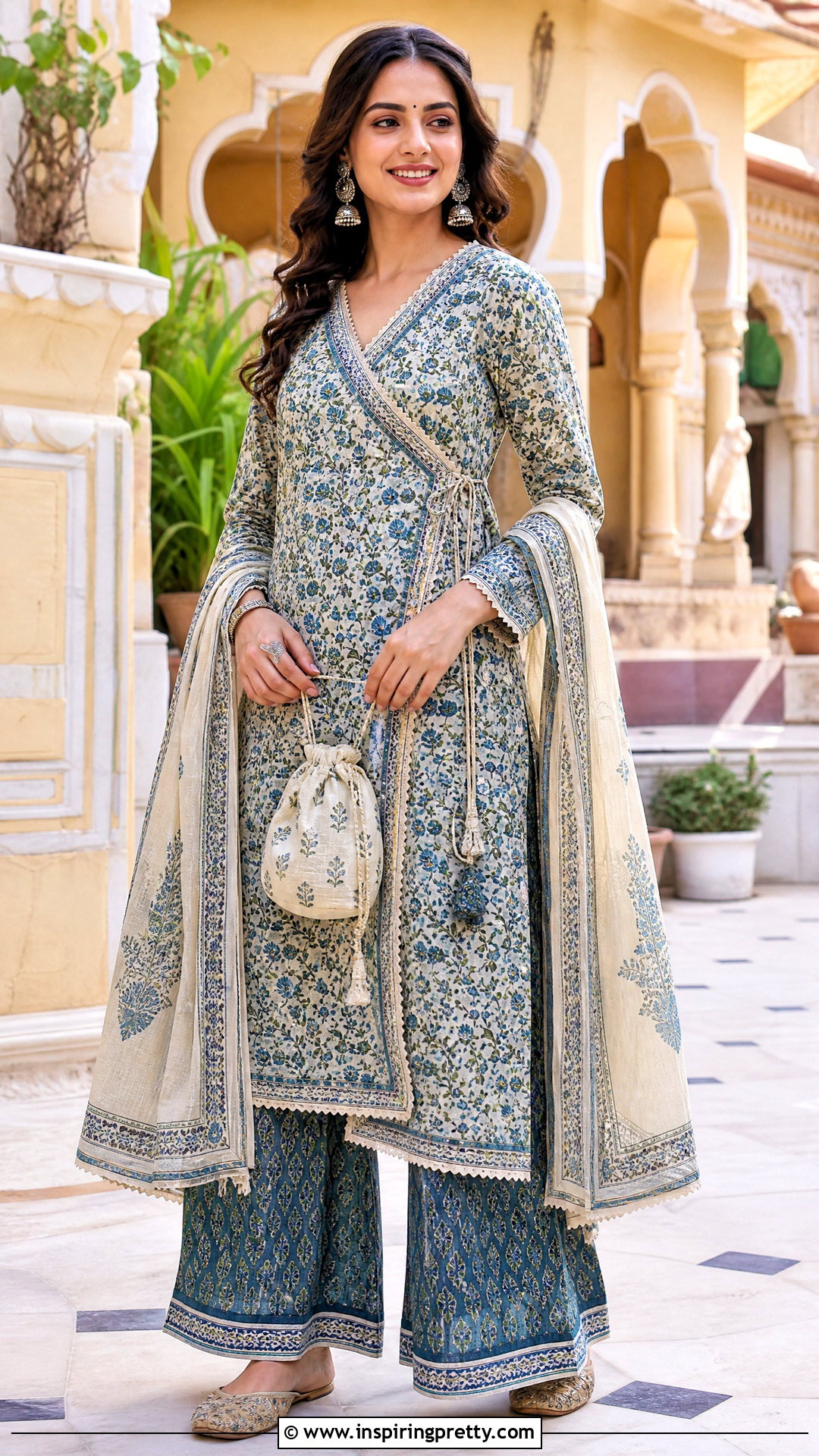
The overlapping front of an Angrakha neck kurti is a centuries-old wrap construction, and its weak point is the inner flap. Before I wear one anywhere, I sit down and walk around in it to see whether the underlap shows; a hidden press stud or an inner tie fixes that. Generously flared palazzos balance the diagonal front. Side ties, fabric buttons or tassels close it. Block-printed cotton works for daytime, and silk blends with zari borders or a little mirror work take it to celebrations. Embroidered juttis, oxidized earrings, a potli bag, and the dupatta over the opposite shoulder.
13. Cowl Neck Kurti With Slim Pants
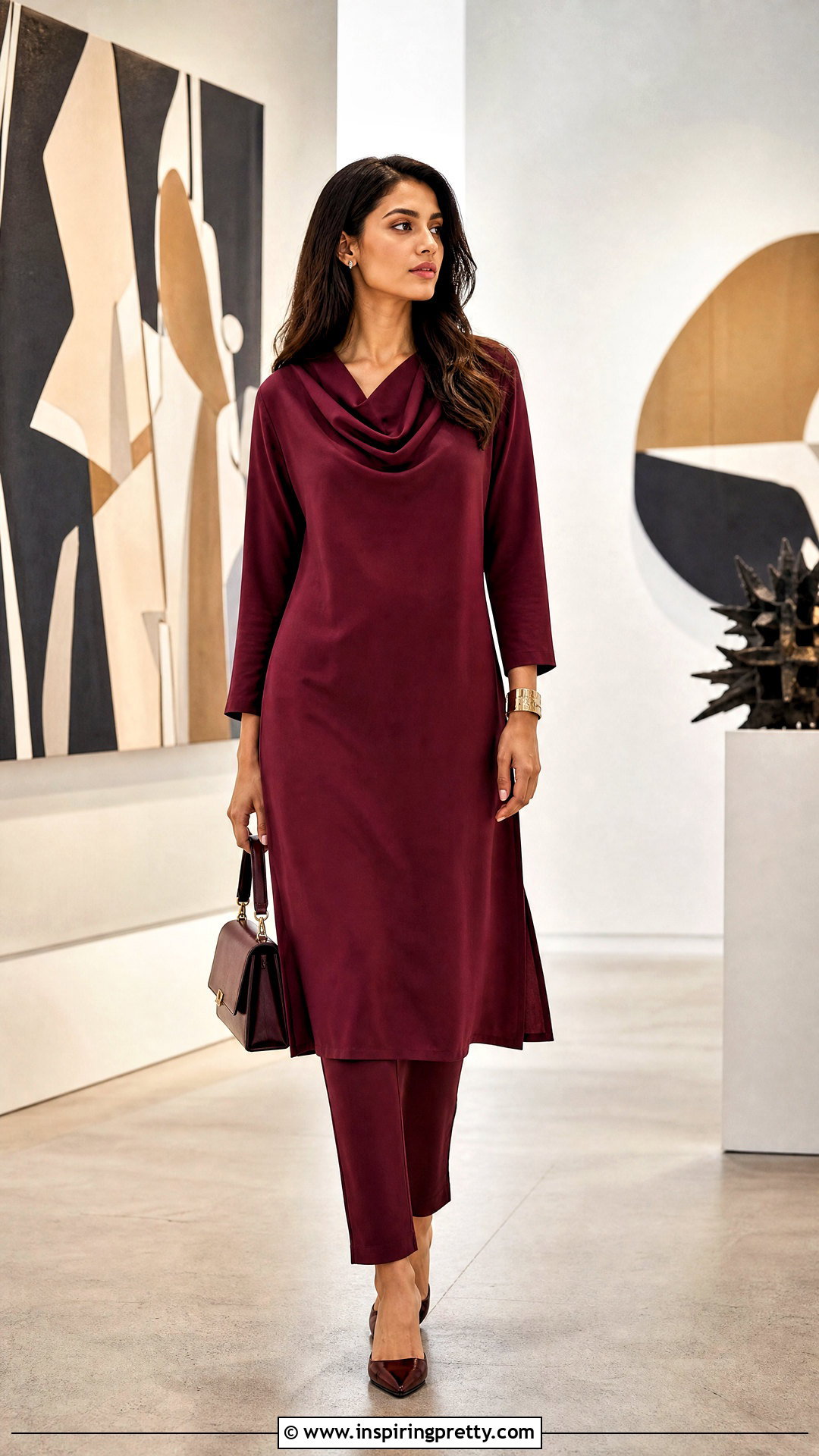
A cowl neck only works in a fabric that drapes under its own weight: crepe, viscose, soft satin or a fine knit. In stiff cotton the folds stand up and look bulky. Because the cowl already adds volume at the top, I keep the bottom half slim, with ankle pants, sleek mules and a small structured bag. Nothing around the neck, not even a light scarf; it competes with the folds. Sleeveless or cap sleeves look more modern, and three-quarter sleeves give coverage. A solid color shows the drape best. I'd wear it to a creative office or an evening dinner.
14. Notched Neck Kurti With Salwar Pants
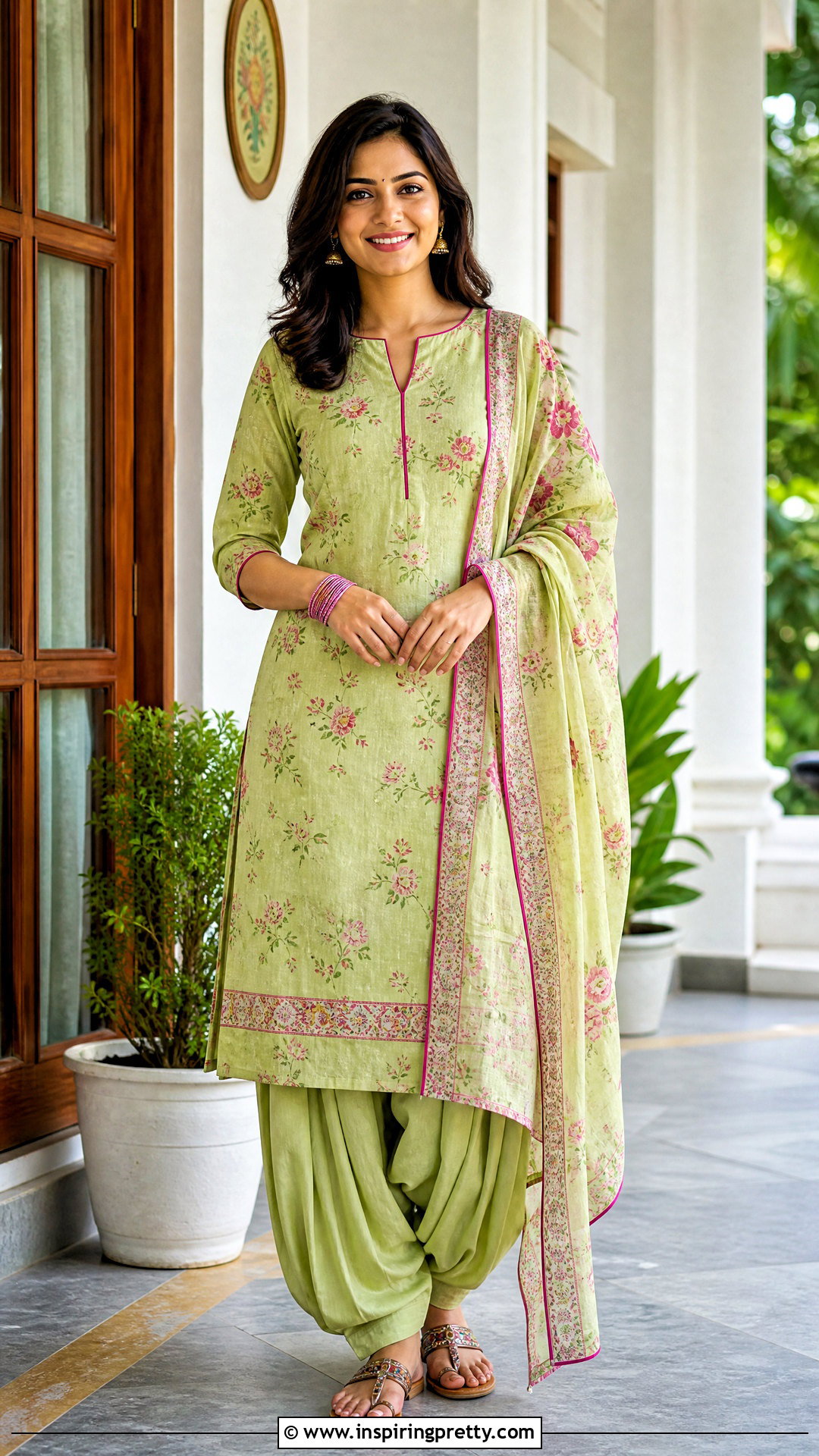
Notched necks are a round neck with a small center slit, which is the easiest way to make a basic kurti look designed. The slit should be faced and finished with a tiny bar tack at its base; without it, the notch tears or pulls open as you move. Pleated salwar pants and flat sandals keep the outfit traditional, and contrast piping around the notch can echo the color of the bottoms. Small jhumkas, glass bangles and a light dupatta. Everyday cotton suits simple stitching, while threadwork or gota-style trim makes a festive version.
15. High Neck Kurti With Culotte Pants
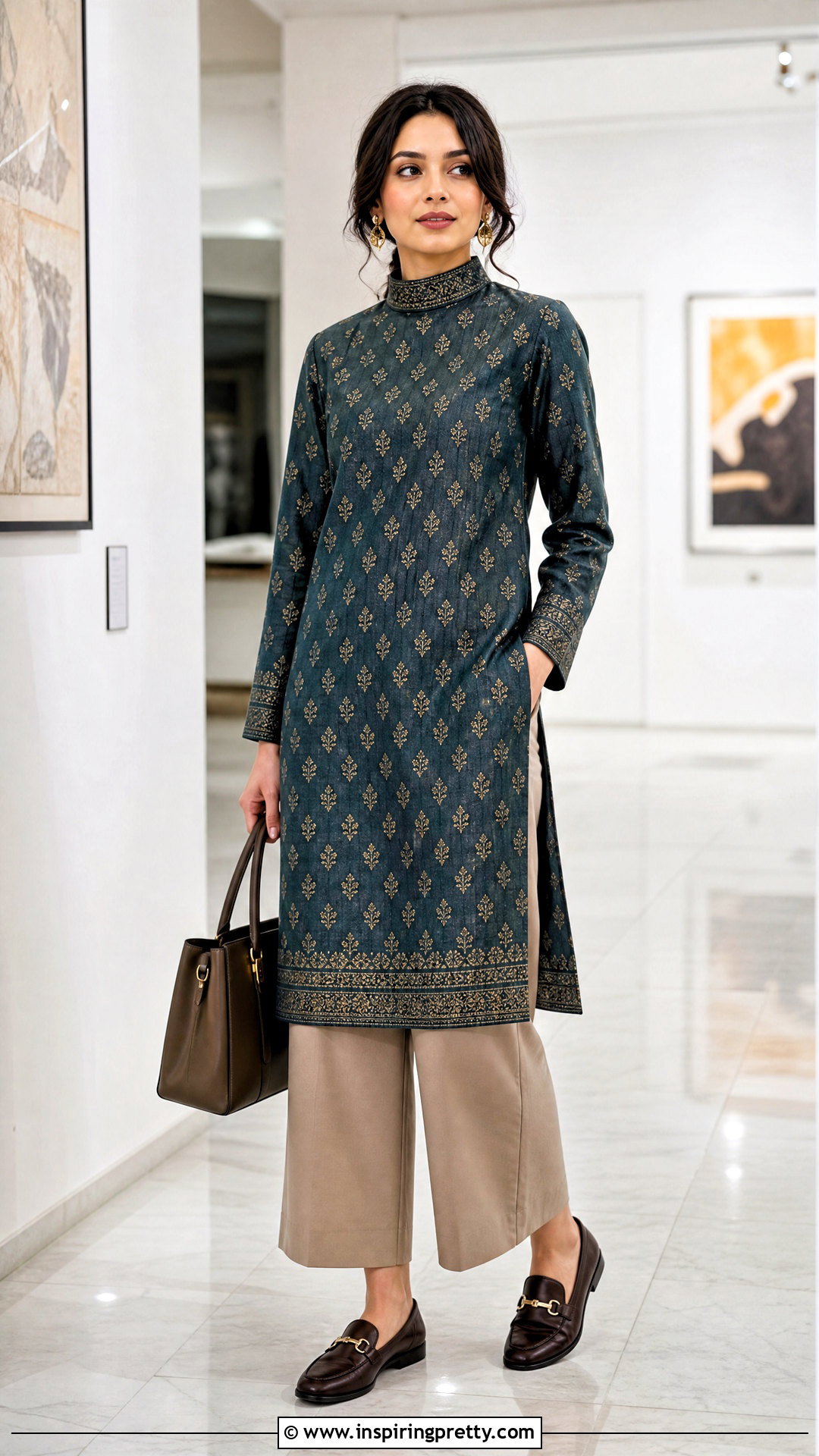
High necks earn their place in cool weather and in air-conditioned offices. I'd wear a sleeveless or long-sleeve version with tailored culottes, ankle boots or closed loafers and a structured bag. A high neck needs an opening somewhere, usually a back zip or a shoulder button, otherwise you stretch it every time you pull it over your head and it never sits close again. Bold earrings, no necklace. Medium-weight cotton blends, jacquard and soft knits feel fine against the skin. People with short necks may prefer a slightly lower stand so the face doesn't look boxed in.
16. Tie-Up Neck Kurti With Lehenga Skirt
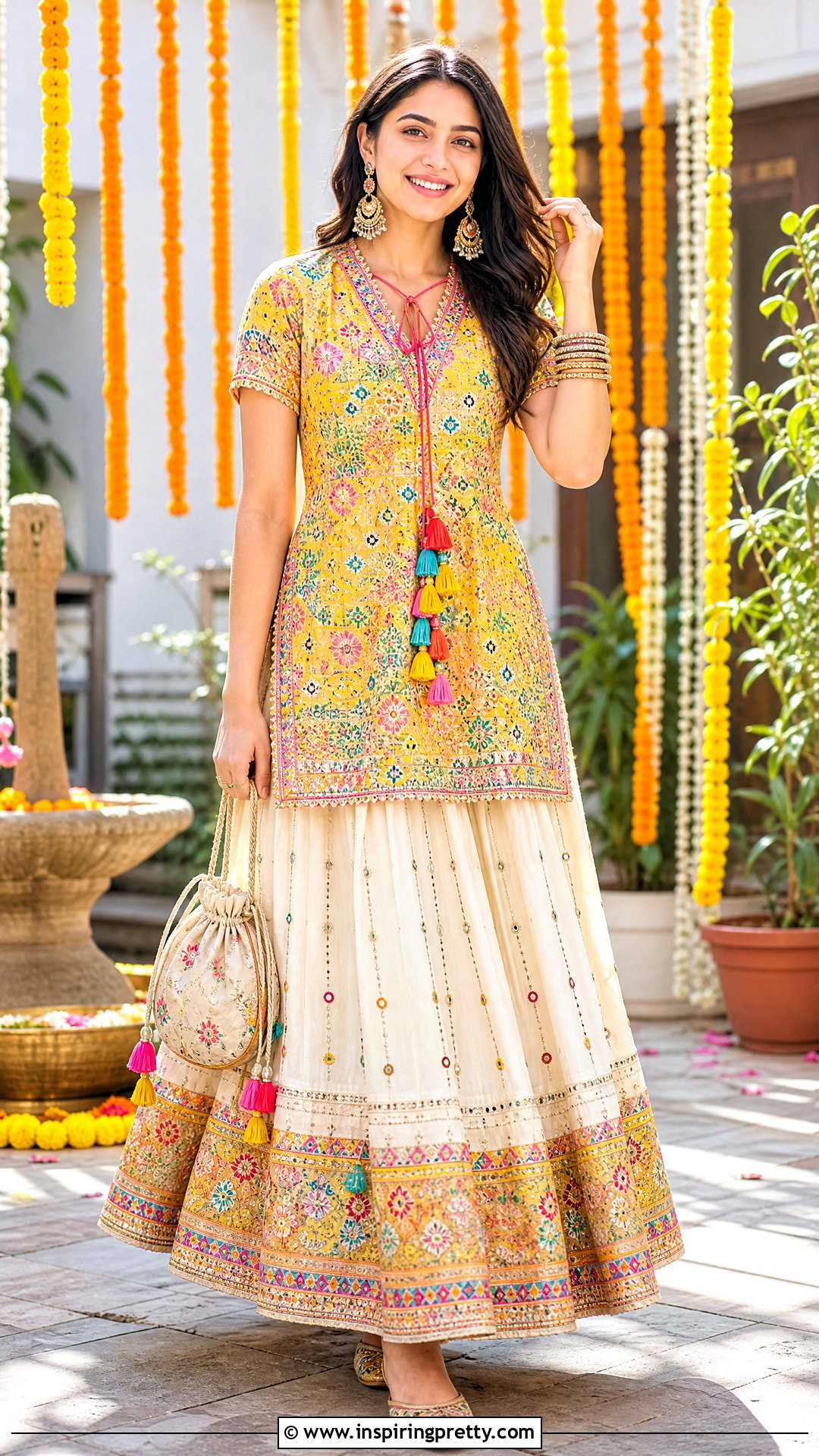
Tie-up necks are about the cords, so I look closely at them. They should be stitched into the seam rather than tacked on top, and the tassels light enough not to drag the neckline open. Wear a tie-up kurti with a coordinated lehenga skirt for a youthful festive set, with the ties at the front, side or back depending on how much you want them seen. Embroidered flats, chandelier earrings, stacked bangles and a drawstring bag. Keep the dupatta away from the ties. Cotton-silk and brocade hold structure; georgette moves more.
17. Cutwork Neck Kurti With Matching Pants
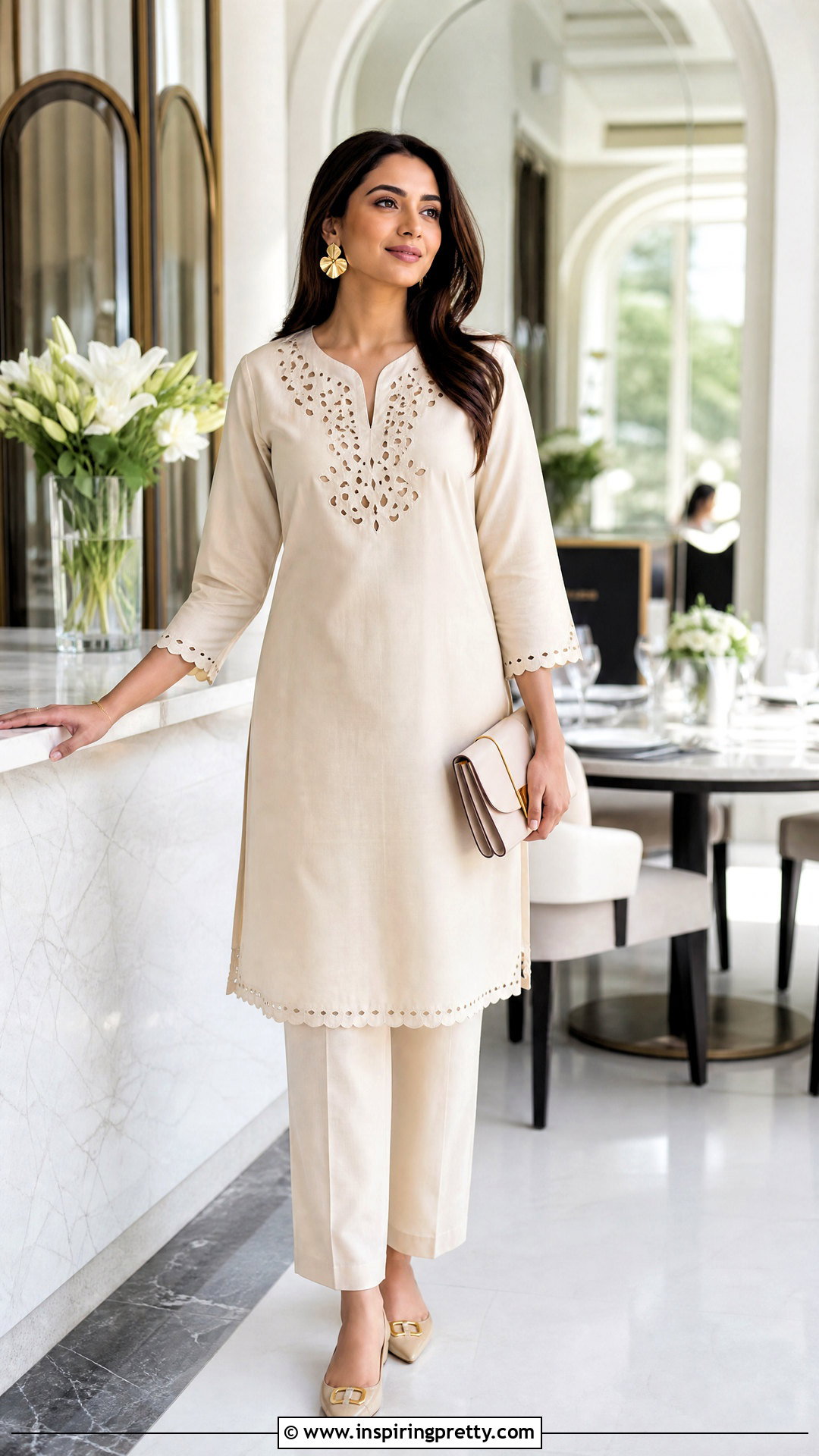
Cutwork around the neck gives a matching kurti set texture without any shine. Same color top and pants, so the open border is the only detail. I always look for a lining behind the cutwork: it stops the edges from fraying, keeps the neck opaque and stops the openings from catching on earrings. If the neck is busy, keep the sleeves and hem plain. Cotton cutwork reads fresh for daytime; silk-blend or organza accents feel more formal. Pointed flats, sculptural earrings, a slim bracelet and a structured clutch suit luncheons and formal visits.
18. Embroidered Deep V Kurti With Gharara Pants
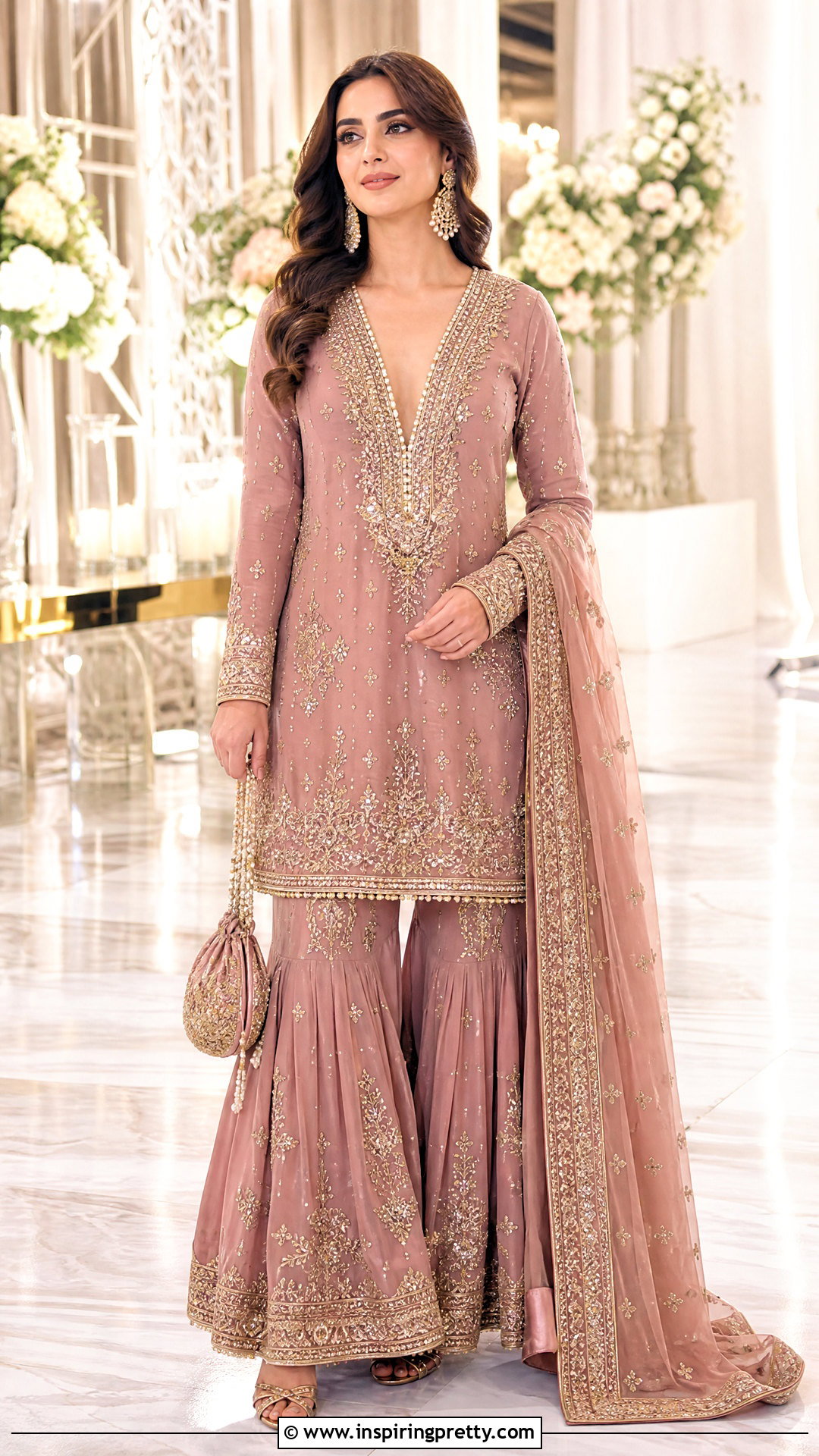
A deep embroidered V with voluminous gharara pants is the dressiest look here, and the depth is a decision to make before stitching, not after. If you want coverage, have a matching fabric panel set in. Embroidery placed along the V, in beads, thread or mirror-style accents, draws the eye to the center; covering the whole kurti weakens that effect. Weight matters too, because heavy work at the point can pull a deep V lower over the evening. Keep the gharara in the same color family. Embellished low heels, a potli bag, statement earrings and a soft dupatta over one arm.
19. Illusion Neck Kurti With Straight Skirt
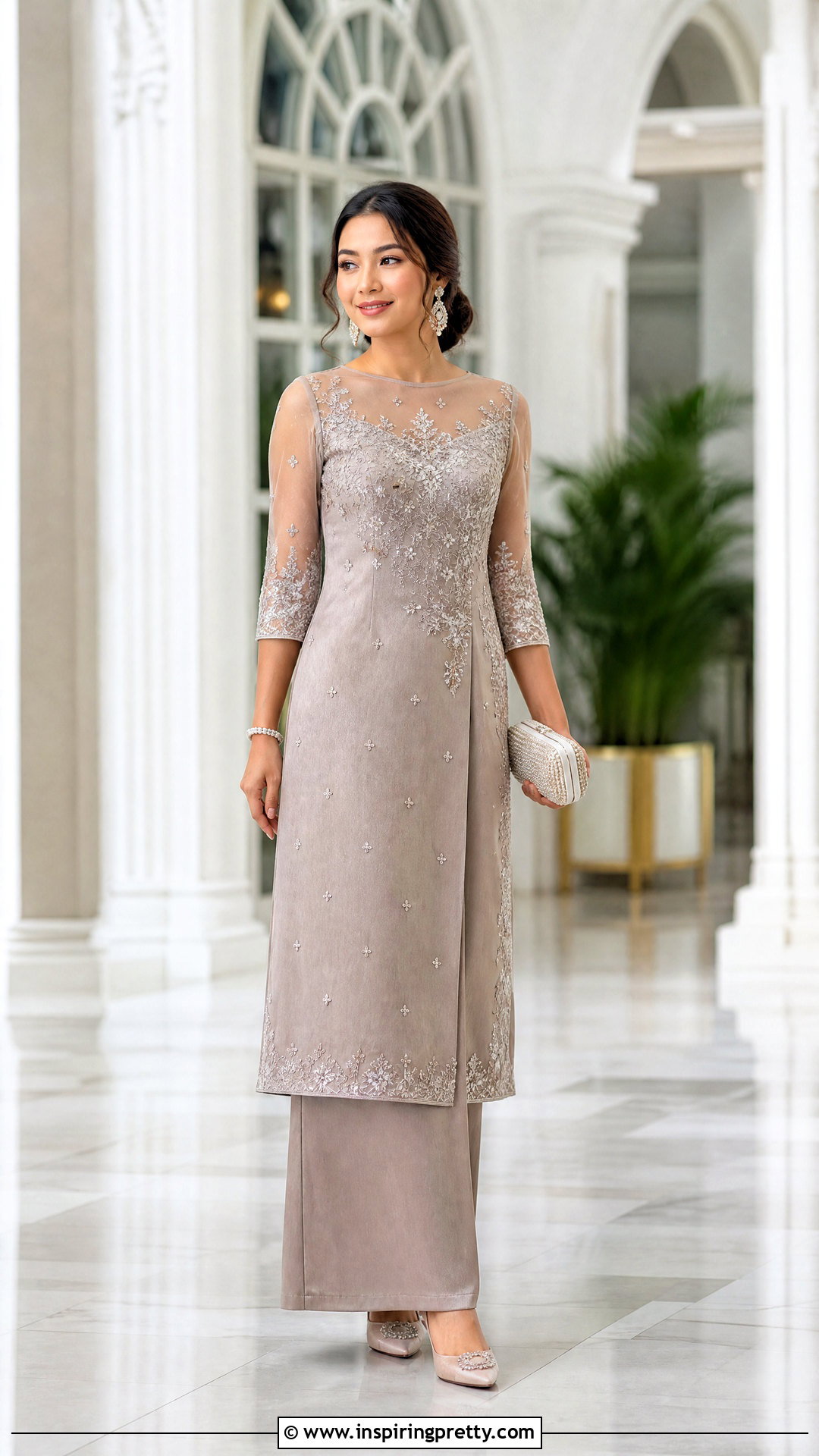
An illusion neck uses a sheer panel to carry the embroidery while keeping you covered. I'd match the mesh or organza to your skin tone or to the kurti itself, then keep the embroidery on it light; heavy motifs on sheer fabric sag and pull the seam. Underlayers and seams need to be smooth, since everything shows through. A fitted bodice with a gently flared lower half balances a long straight skirt. Low heels, crystal-style earrings, a compact clutch and one bracelet. Good for receptions and cultural evenings.
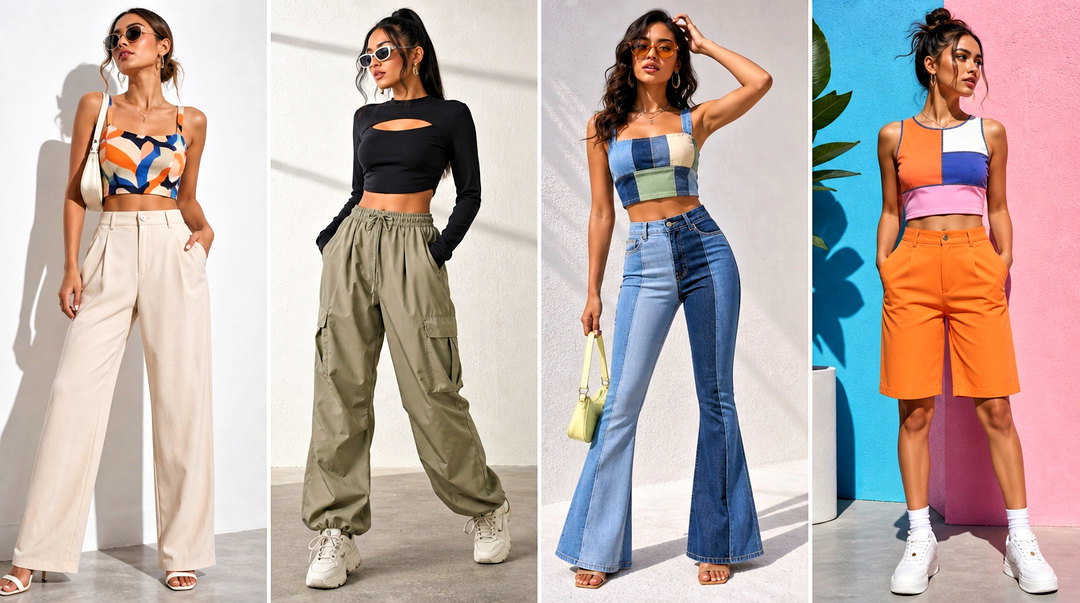
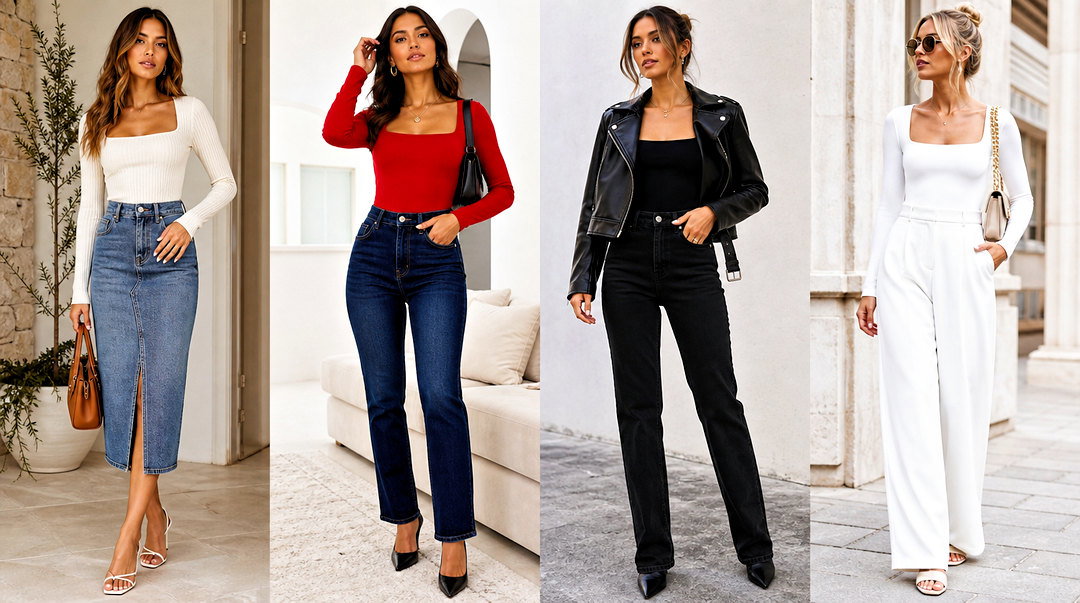
20. Off Shoulder Kurti With Palazzo Pants
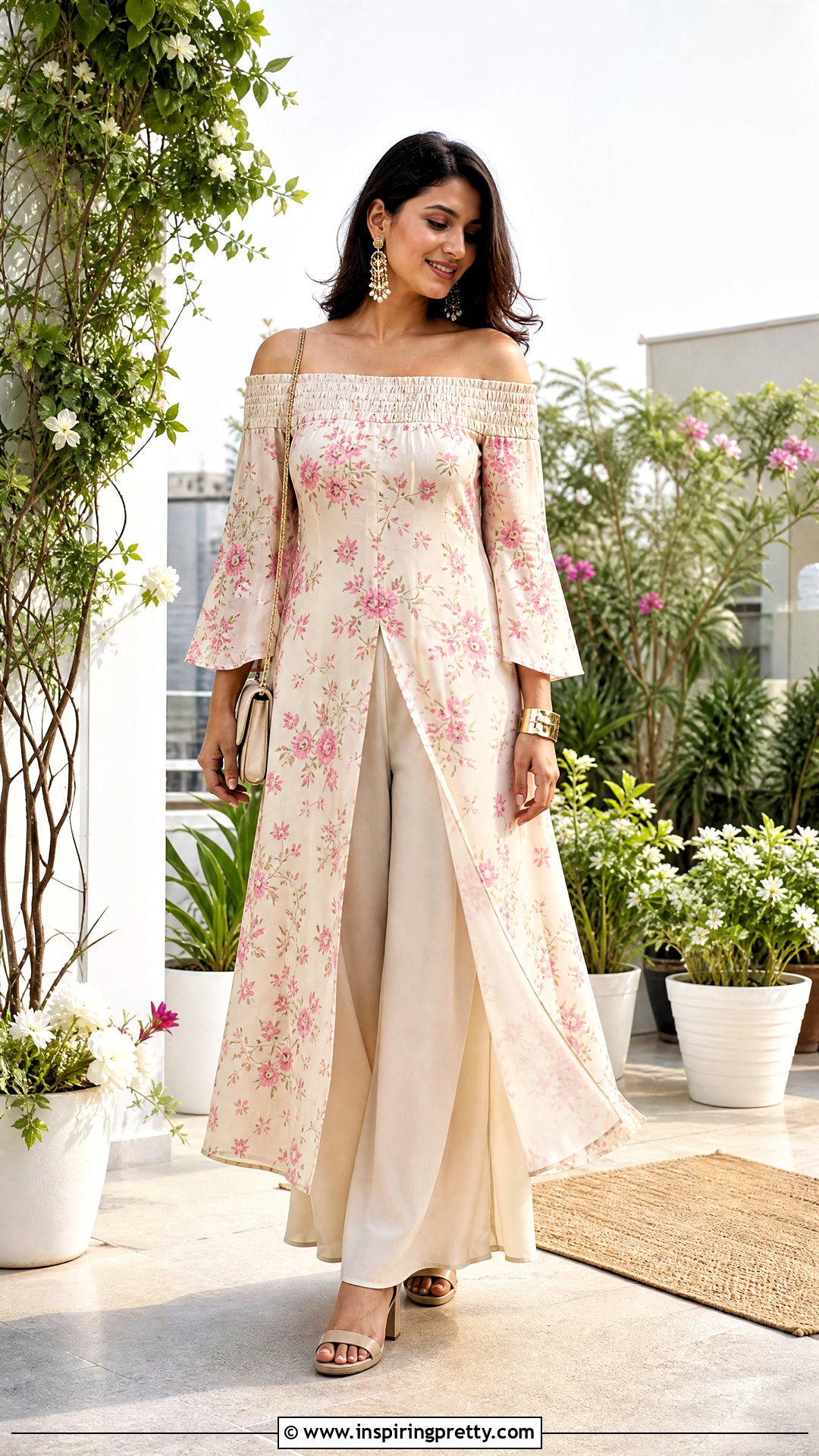
Off-shoulder kurtis are the hardest neck on this list to wear for a whole evening. The edge needs a firm elastic channel or a properly tailored, boned band, and you need a strapless bra that actually stays put. A slightly longer kurti balances relaxed palazzos. Statement earrings, block-heel sandals, a small shoulder bag and a bare neck. Keep the rest of the garment simple: solid color, subtle print or a narrow embroidered border. If you'd rather not keep tugging it up, a wide portrait neckline with short sleeves gives the same open look with far more security.
Instructions I Give a Tailor for Kurti Necks
Most neckline problems start at the cutting table, not on you. When I hand fabric to a tailor, I give the front and back depth separately and say how I want the edge finished. A front depth measured from the shoulder point down the body is easier to get right than "medium", which means something different to every tailor.
- Ask for the neck edge to be stay-stitched right after cutting. Curves are partly on the bias and stretch the moment they're handled.
- Choose the finish: piping for structure, a shaped facing for clean lines, or a bias binding for light fabrics. A narrow rolled hem on a curved neck almost always waves.
- Request light fusible interfacing on facings, collars and keyhole edges, especially in rayon and georgette.
- For deep backs or open fronts, ask for a hook, a dori tie or a small press stud at the right point so the edge can't slip.
- Try the kurti on before the embroidery or trim goes on if you can. Depth is much harder to correct afterward.
Why a Good Neckline Gapes After a Few Washes
Rayon and other viscose fabrics relax when wet, and a neck edge pulled during washing dries larger than it started. I wash embroidered and printed kurtis inside out in cold water, never wring the neck, and press the edge back into shape while it's still slightly damp, working from the shoulder seams toward the center. Hanging a wet kurti by the neck is the fastest way to stretch it, so I dry it flat or over a rail at the waist. Heavy zari or mirror work is safer dry cleaned, or at least hand washed without soaking.
Start With the Neck You'll Wear Most
If I were stitching only one kurti from this list, it would be a round or notched neck in good cotton with neat piping, because it works with every bottom you already own. After that, pick the neck by your shoulders and the occasion: collars for work, wraps and sweetheart necks for family functions, cowls and asymmetric lines for evenings. Wide or heavily worked necks need fewer accessories, and plain ones can take a delicate chain. Whatever you choose, check that the edge lies flat when you sit, reach and turn your head. That's the test most kurtis fail.
Related posts:


Leave a Reply