Seventies menswear only looks like a costume when every piece shouts at once. When I put these outfits together for men, I let the top carry the decade, whether that's a wide collar, an earthy knit or a geometric print, and then decide how much period detail the trousers and shoes should add. Flares, corduroy, platforms and plain sneakers all have a place. The range was huge back then, from 1970s men’s fashion on the disco floor to rugged denim and sporty weekend clothes. Real vintage or new shirts with a retro cut both work. Here are twenty full outfits, from party looks to things you'd wear on a Tuesday.
How a 70s Shirt Should Fit Through the Chest
Shirts from the decade were cut closer than most men are used to, and that close fit is a big part of why they look right. When I fit one, whether it's true vintage or a new retro cut, I go through the same checks in the mirror.
- Shoulder seam: it should sit at the edge of your shoulder bone. Fitted bodies forgive a lot, but a dropped shoulder makes the shirt look modern.
- Buttons: stand with your arms forward. If the placket pulls into little X shapes, the chest is too tight, and that strain shows twice as much on satin or a busy print.
- Length: long enough to stay tucked when you sit and reach. Many vintage shirts were cut shorter, which matters with high-waisted trousers.
- Sleeves: the cuff should end at the wrist bone. Short sleeves should land around mid-bicep.
Vintage sizes also ran smaller than today's labels, so I'd go by your measurements rather than the tag. Measure a shirt you already like flat, armpit to armpit, and compare.
1. 70s Men's Disco Shirt With White Flared Pants
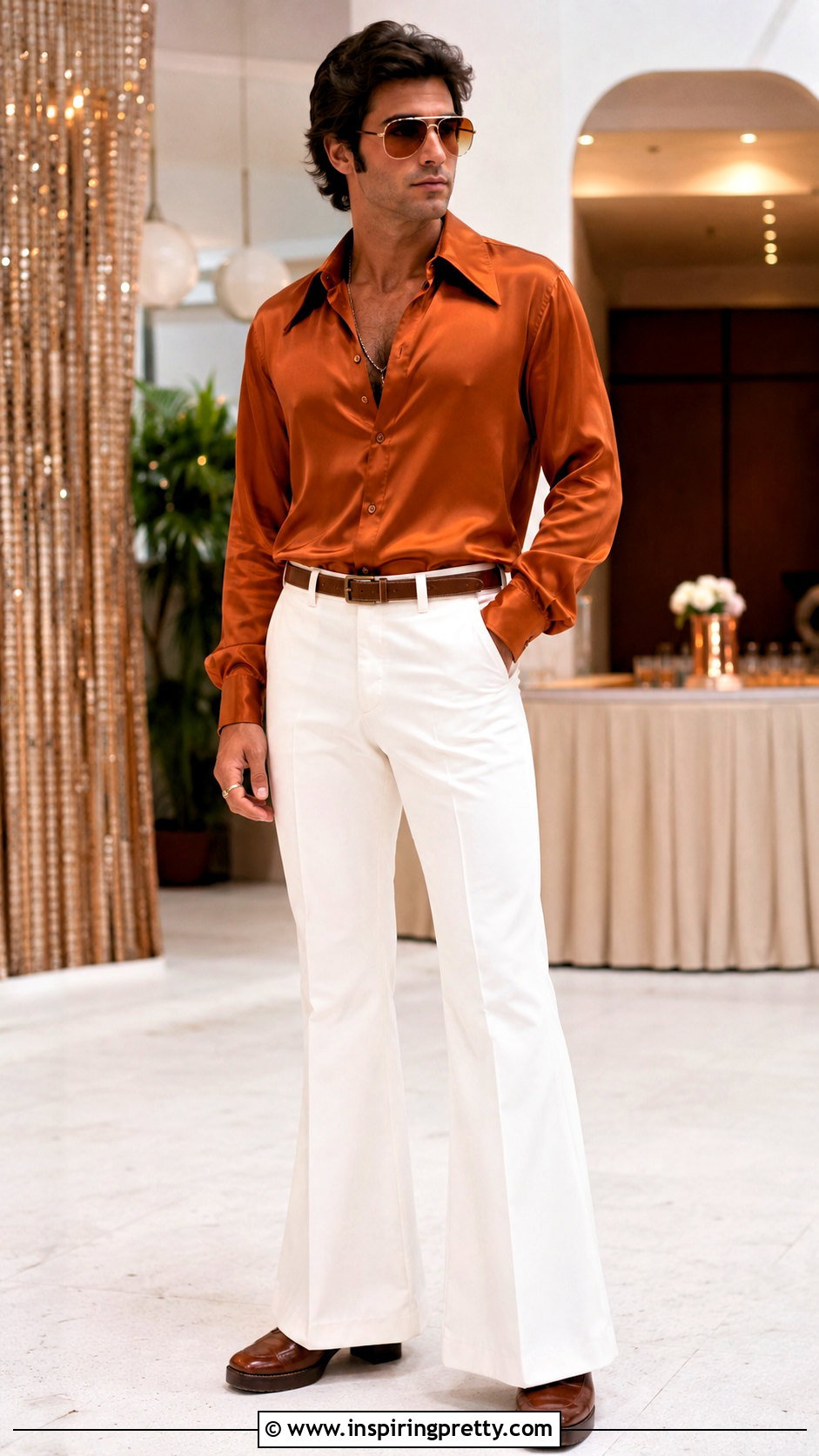
A silky disco shirt is the piece most people picture first. Burnt orange, emerald or electric blue with a big pointed collar, fitted through the body. I open two buttons and stop there; three starts to look like a parody. White high-waisted flares give the long, lean line the era was known for, and brown platform loafers keep the bright shirt from floating. Tinted aviators, one chain and a slim belt finish it. For a party, go glossy. For everyday wear, I'd pick a matte satin over shiny polyester, which picks up every flash on camera.
2. 70s Men's Paisley Shirt With Brown Corduroy Pants
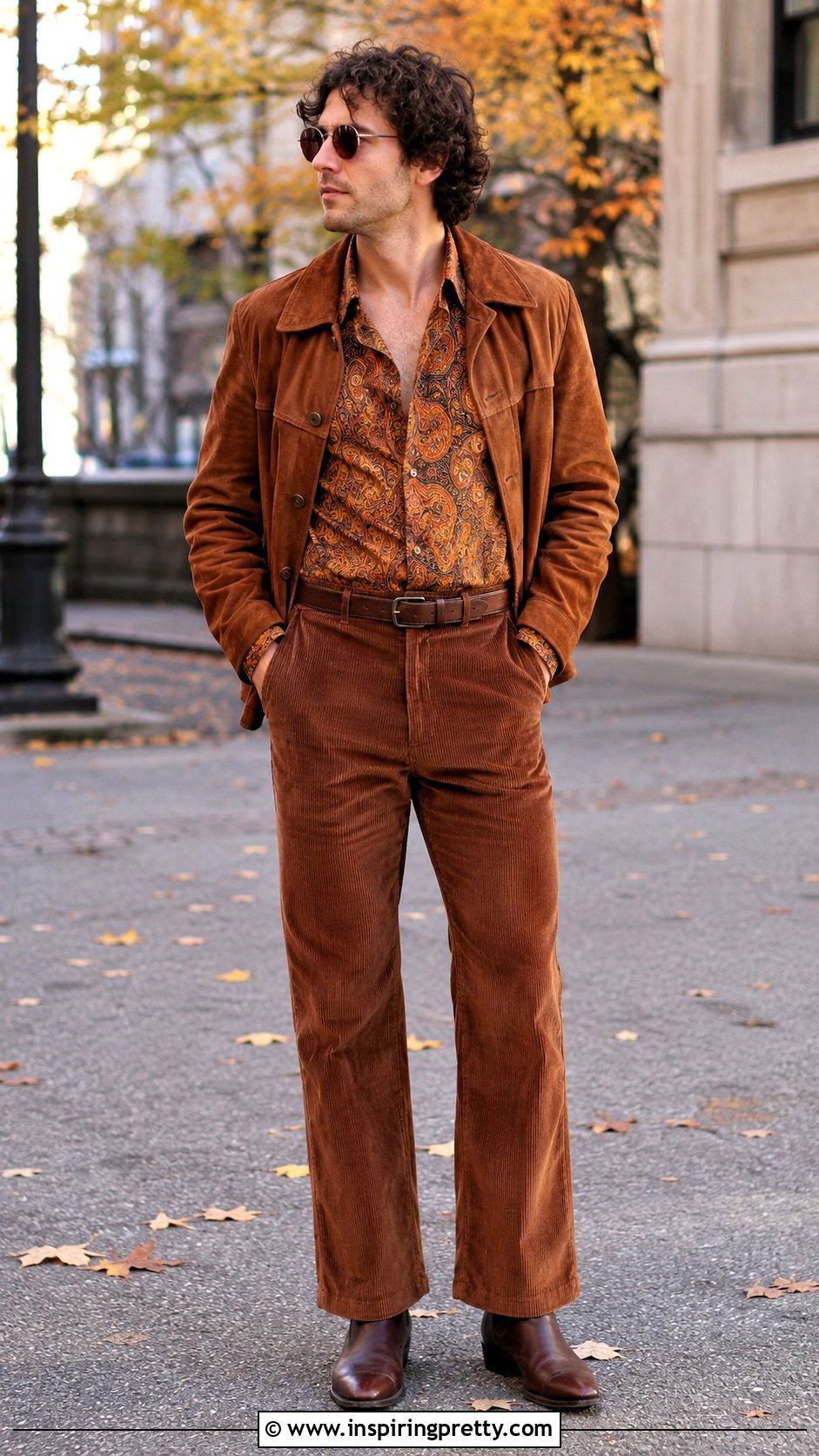
Paisley shows the artier side of the decade. I look for a long-sleeve paisley shirt in rust, mustard, olive and cream, slimmer than a modern button-down and with a collar that has some size to it, because a small collar on a loud print looks oddly modern. Tuck it into high-waisted brown corduroy with a straight or slight flare. Dark brown boots and a matching belt flow from the cord without a hard break. Add a suede jacket worn open when it's cold. The print does all the talking, so I keep the trousers solid and the extras to round sunglasses and a watch.
3. 70s Men's Floral Shirt With Dark Flared Jeans
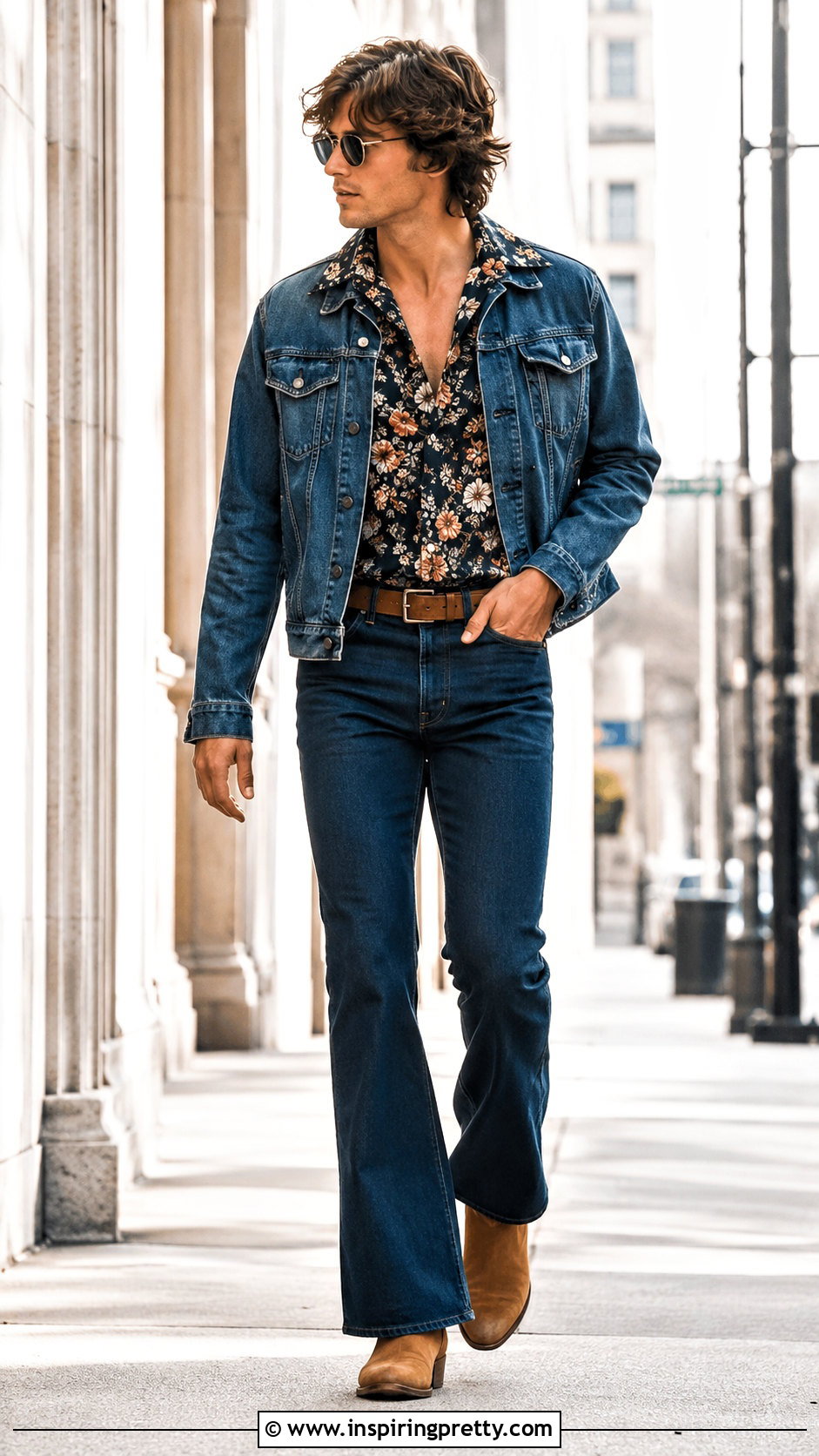
Florals are easier to wear now than they sound. The trick I use is a dark background with medium-sized flowers in orange, gold, green or burgundy; small florals look dainty and very large ones look like a holiday shirt. Dark indigo flares that sit at the natural waist and open below the knee steady the print. Tan suede ankle boots with a low heel and a brown belt with a period-style buckle keep it warm-toned. A denim jacket layers in without fighting the colors. Stick to a watch or one chain, and it reads retro at a concert without tipping into fancy dress.
4. 70s Men's Striped Knit Polo With Beige Trousers
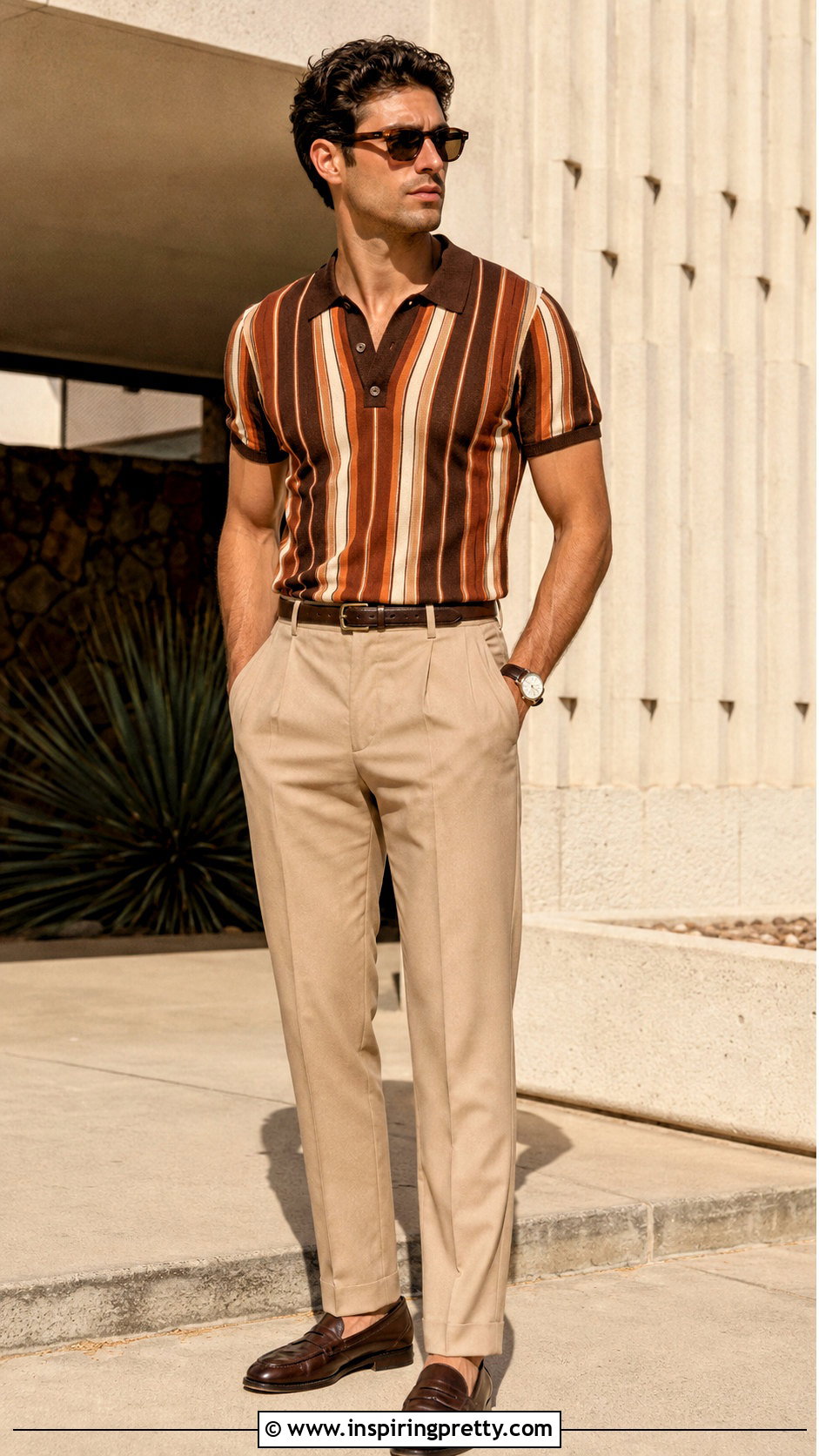
A fitted striped knit polo is the most wearable piece on this list, and it's where I'd start a man who's unsure about the whole decade. Short sleeves, open collar, vertical stripes in brown, cream, rust or muted green. Fine-gauge knit is the detail that matters: it drapes and looks dressier than piqué cotton. Tuck it into flat-front beige trousers with a gentle flare. Brown loafers make it office-friendly; off-white sneakers relax it. A slim belt and square sunglasses add a hint of the period. Keep the trousers plain so the stripes stay the focus.
5. 70s Men's Turtleneck With Plaid Flared Pants
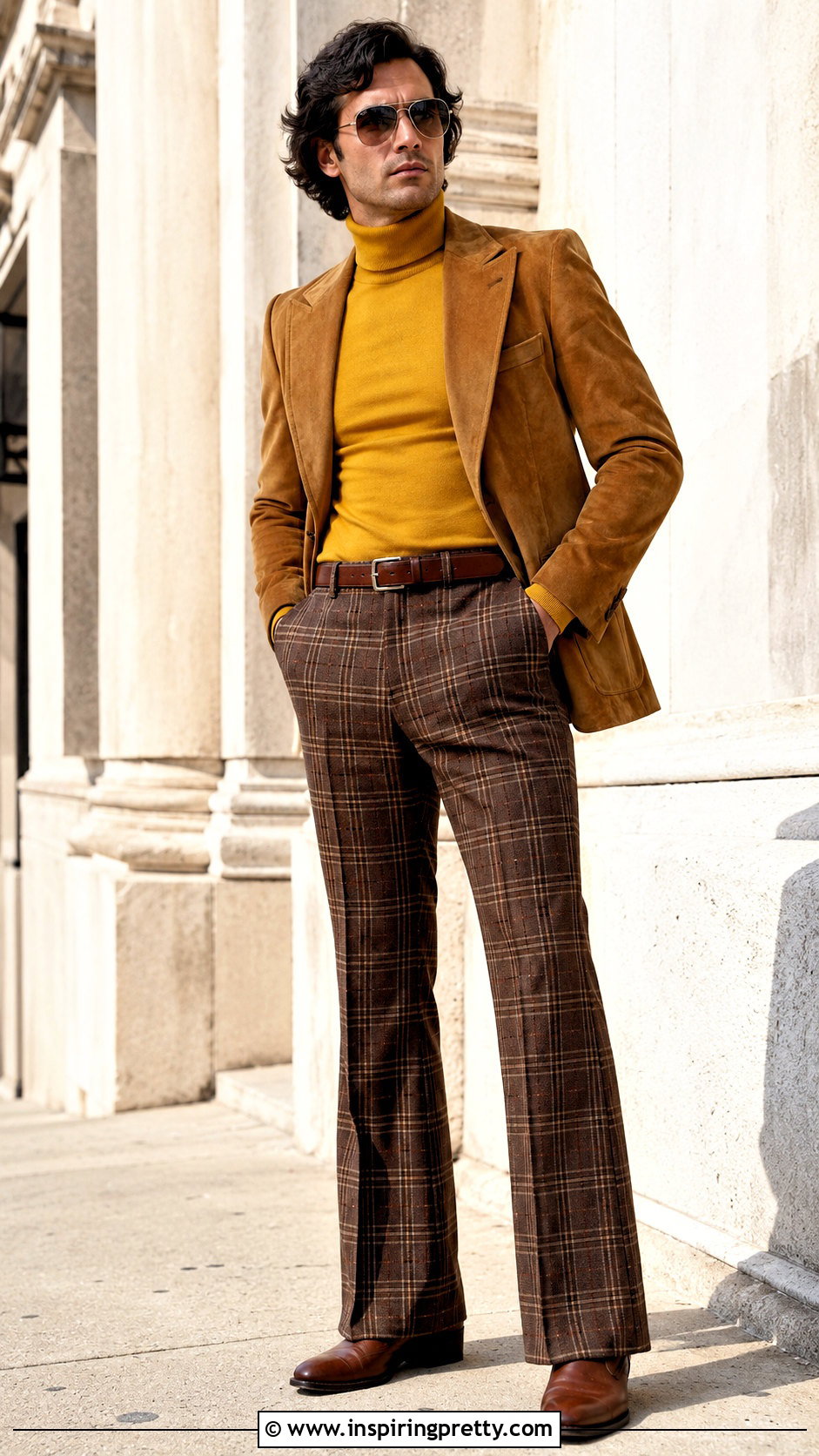
In cold weather, a slim turtleneck gives you warmth and a lot of 70s polish. Mustard, chocolate, cream or burnt orange in a fitted knit. The plaid trousers need a controlled flare; very wide hems swamp the boots and look theatrical. I pull the turtleneck color out of the plaid, so brown, tan and muted red checks pair with almost any of those solids. A suede blazer adds texture and structure. Brown ankle boots, a leather belt and quiet aviators finish it. Have the trousers hemmed so they just skim the boot; dragging flares fray and look careless fast.
6. 70s Men's Sweater Vest With Wide-Leg Trousers
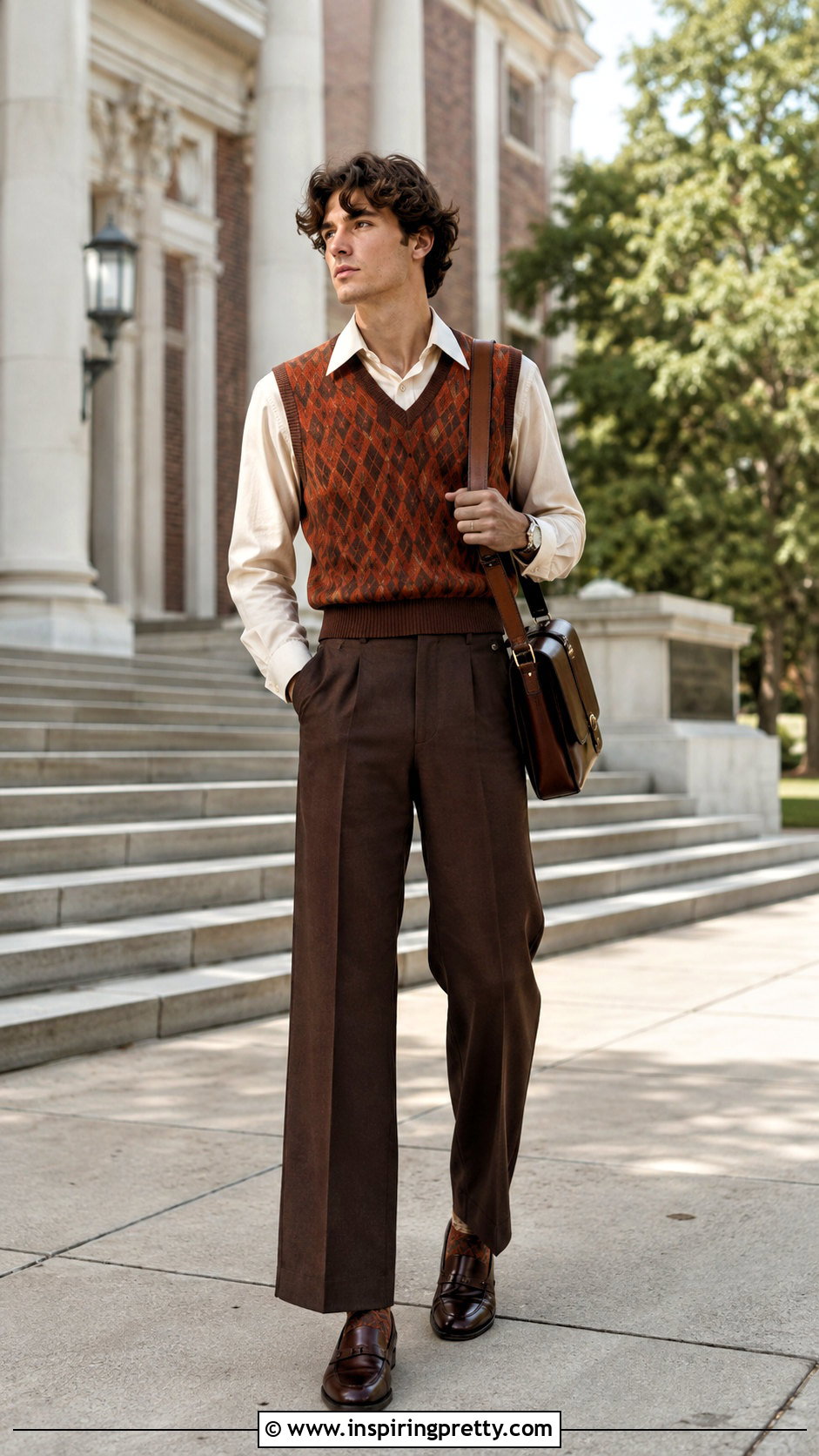
A sweater vest gives a softer, almost academic mood. Fitted V-neck in mustard, rust, forest green or a small geometric knit, over a cream shirt with a pointed collar laid neatly over the neckline. Both get tucked into high-waisted wide-leg trousers in dark brown or charcoal. Loafers and patterned socks keep it vintage, and a structured messenger bag makes it practical. The fit point I watch most is the vest length: it should stop at the waistband. A vest that runs over the hips cuts the leg short and makes the whole outfit look borrowed.
7. 70s Men's Ringer T-Shirt With Flared Jeans
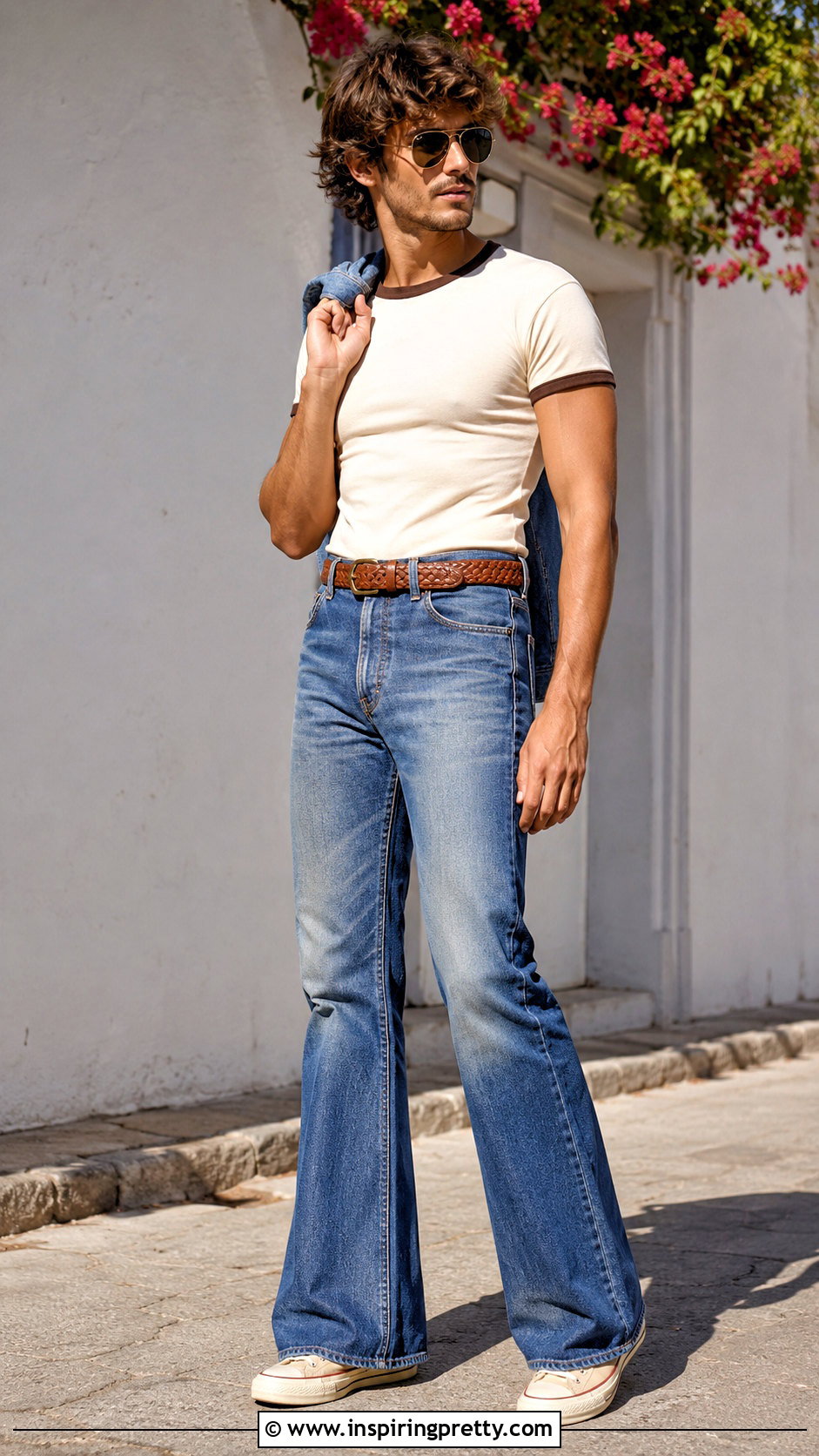
The quickest casual option is a fitted ringer T-shirt, cream or white with brown, navy or red trim at the collar and sleeves. It reads retro without a single print. Tuck it into medium-wash flares, add a braided leather belt and low canvas sneakers. Carry a light bomber or denim jacket for later, and wear aviators and a sports watch. Fit is everything with this tee. I size down from an oversized habit, because the close cut is what gives the high waist and flare their proportion. A baggy ringer just looks like a modern tee.
8. 70s Men's Graphic T-Shirt With Corduroy Pants
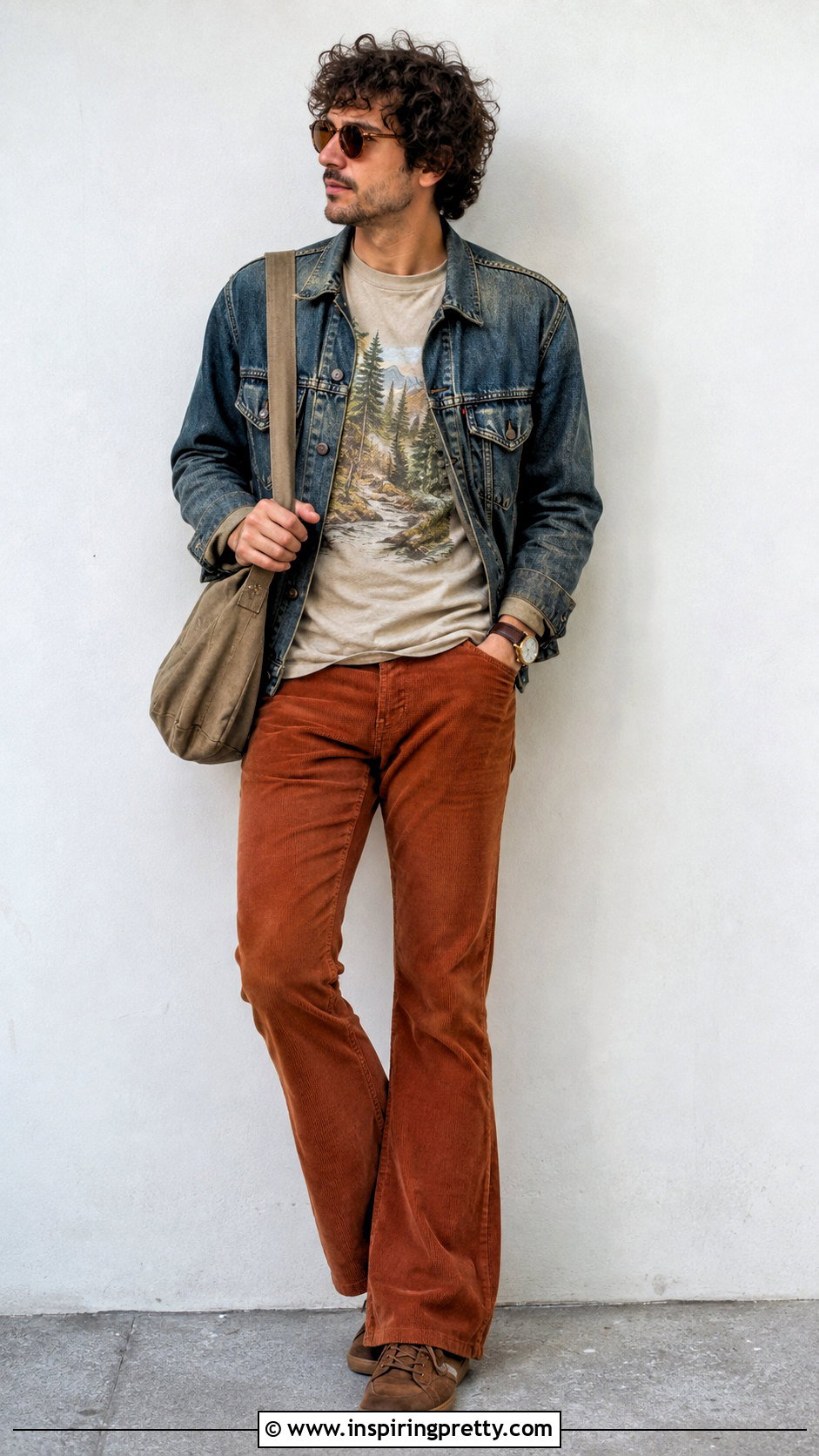
A faded graphic tee brings personality and is still easy to match. Travel, motorsport, nature or abstract prints in muted colors suit the decade best. I pair it with rust, tan or olive corduroy in a straight or bootcut leg, since the cord's texture makes a plain tee look intentional. Brown suede sneakers in spring or desert boots in fall, a worn denim jacket and a canvas shoulder bag round it out. One or two accessories at most. Never stack two big graphics in one outfit; one faded print with earthy trousers already says vintage.
9. 70s Men's Crochet Shirt With Cream Flared Pants
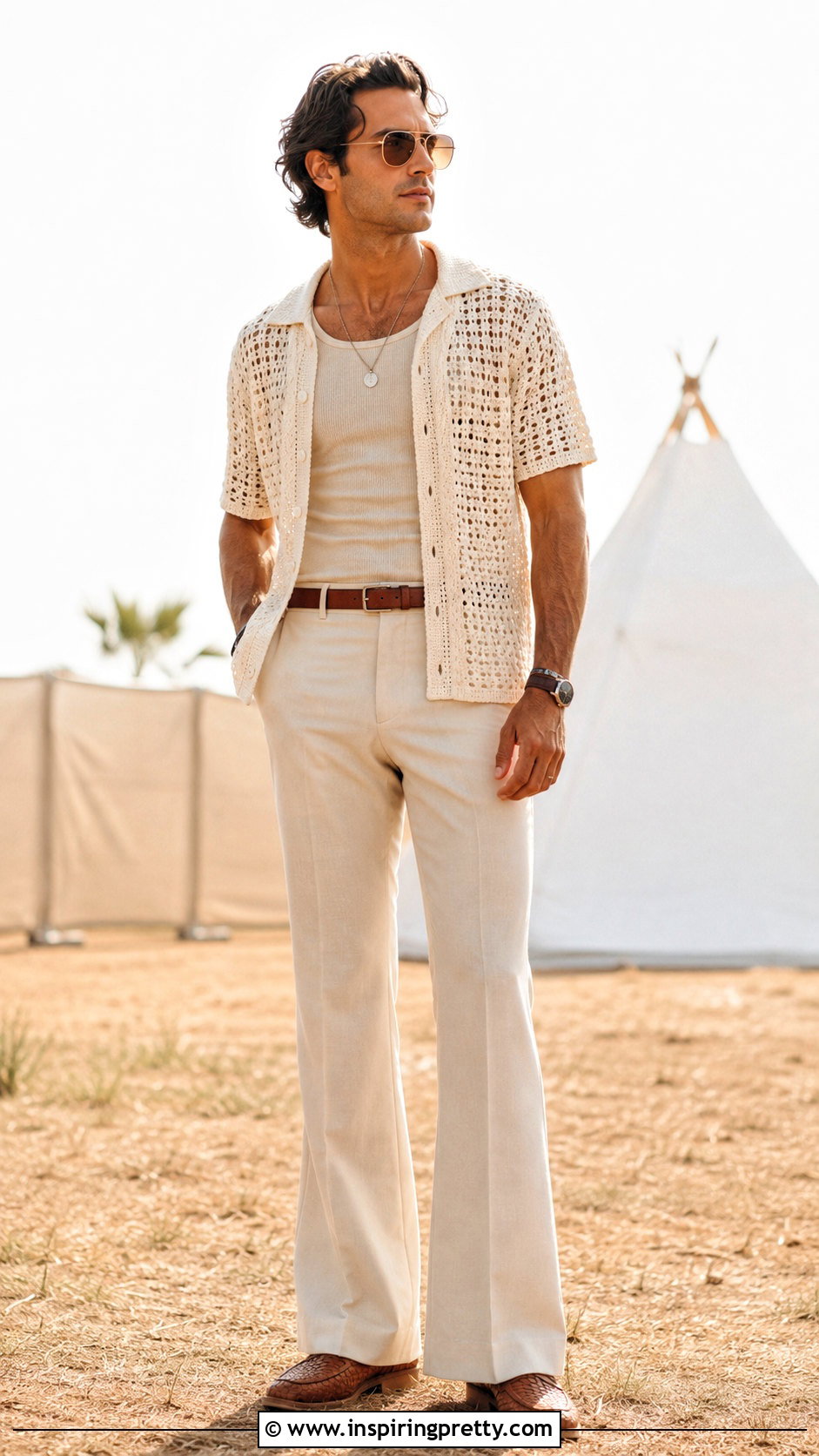
An open-knit crochet shirt takes a bit of confidence, and it's strictly warm-weather. Cream, tan, brown or muted orange with a structured collar. If the stitch is very open, I put a fitted neutral tank underneath; skin through big holes reads more beach than street. Cream or light beige flares make it tonal and airy. Leather sandals for very casual days, woven loafers when you want it neater. A slim belt, a pendant and softly tinted glasses are enough. Check the length: crochet grows when worn, so a shirt that lands at the waistband in the shop may hang lower after a few hours.
10. 70s Men's Denim Shirt With Double Denim
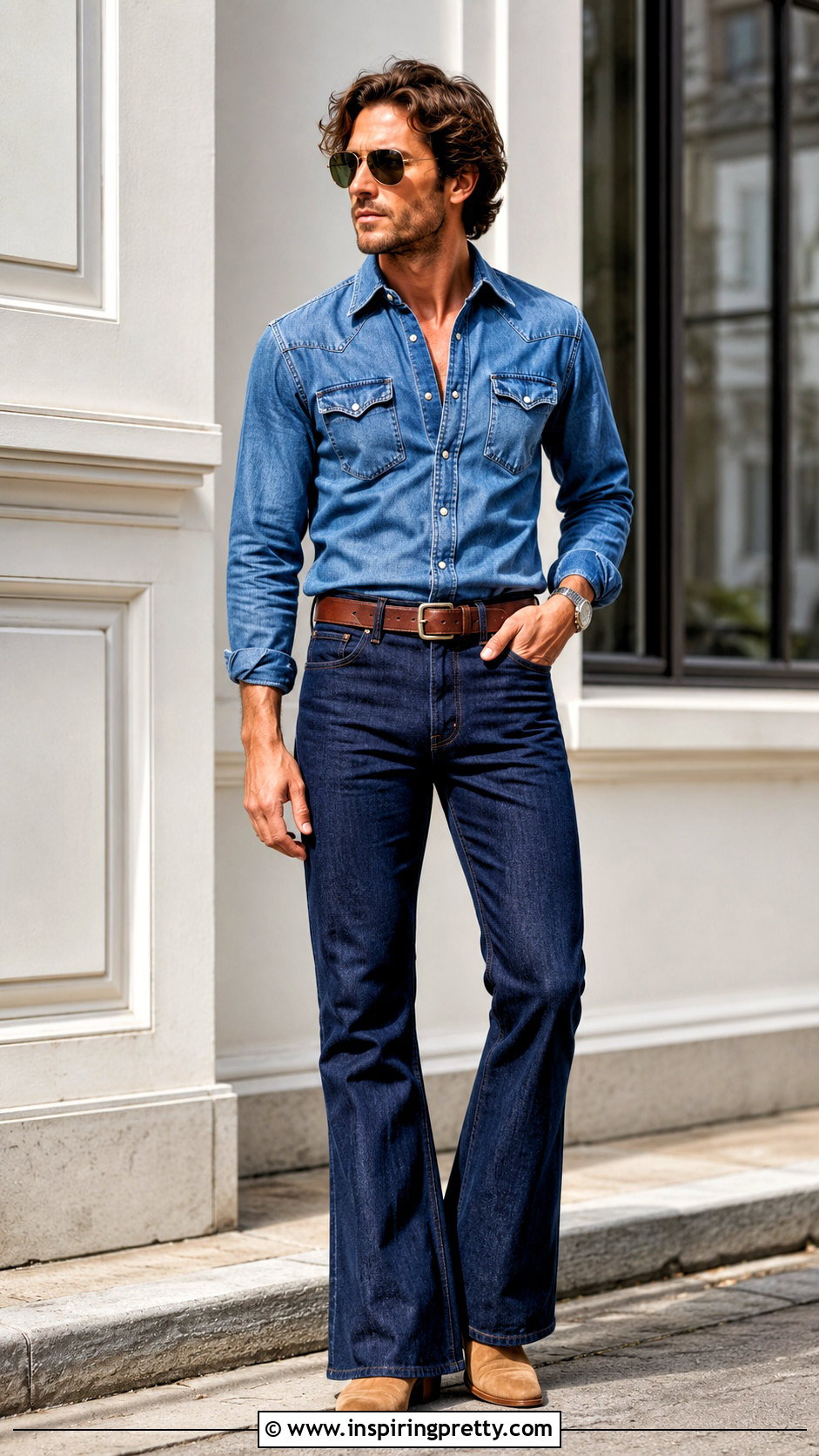
Double denim goes 70s when the cuts and washes are planned rather than matched. A fitted blue snap-front shirt with a pointed collar, tucked into high-rise flares a shade lighter or darker. That visible difference is what I'm after; identical washes look like a uniform unless that's the goal. A wide brown leather belt and tan suede boots break the blue up. In winter, a shearling-lined jacket goes on top with the shirt collar showing at the neck. Aviators and a silver watch keep it clean. The mix of blues, high waist and warm leather produces a rugged outfit with real period character.
11. 70s Men's Western Shirt With Bootcut Jeans
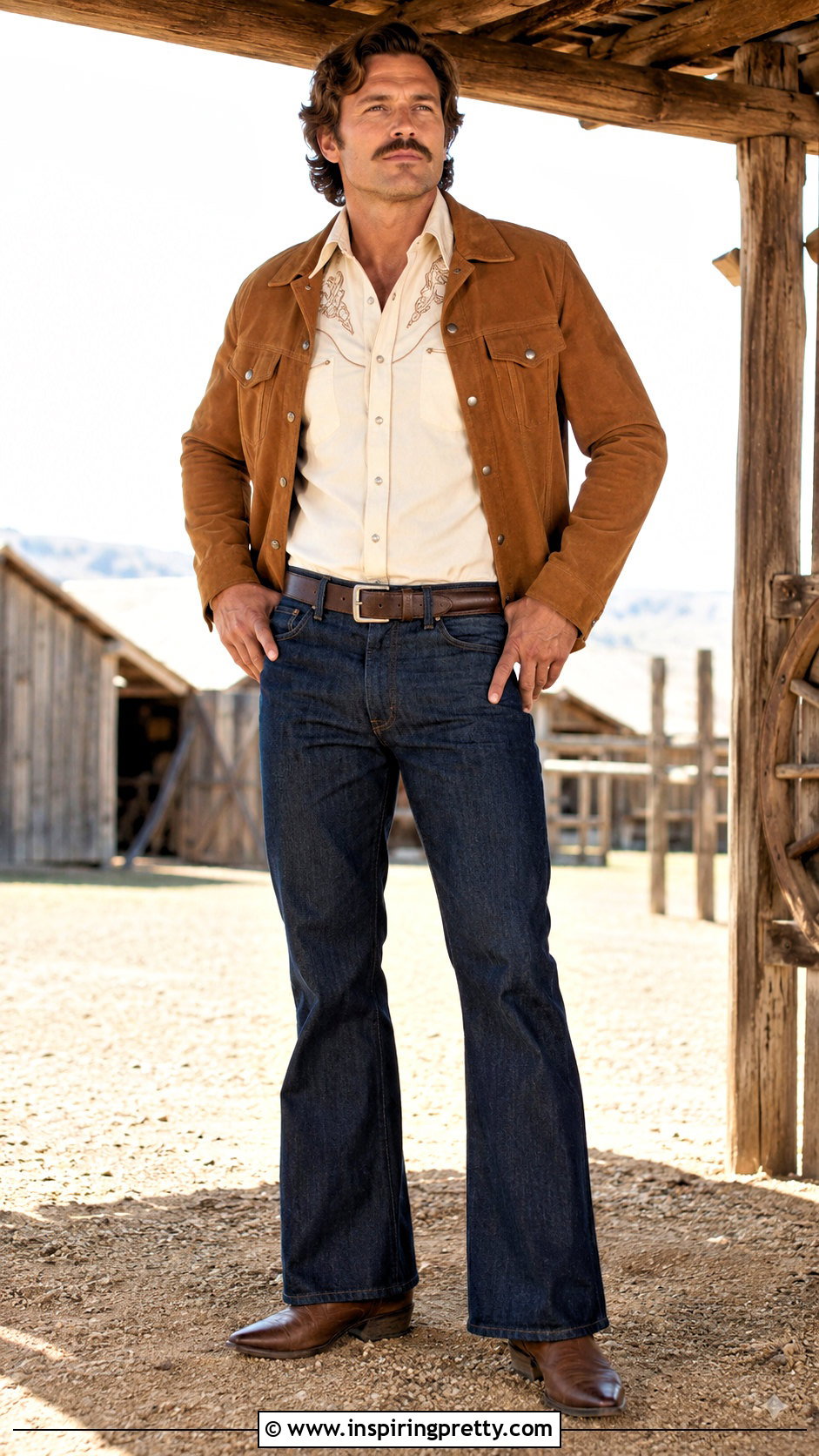
Western shirts are the rugged counterpoint to disco. Snap closures, chest pockets, contrast piping or a little embroidery, in cream, rust, faded blue or chocolate. Tuck into dark bootcut jeans with a solid belt and a plain buckle. I'd choose streamlined brown cowboy boots or square-toe boots; heavily tooled ones push it toward a rodeo theme. A suede trucker jacket handles colder days. A leather watch and lightly tinted aviators finish it. It's relaxed enough for a weekend trip and has just enough western detail to read as a choice.
12. 70s Men's Satin Shirt With Black Flared Trousers
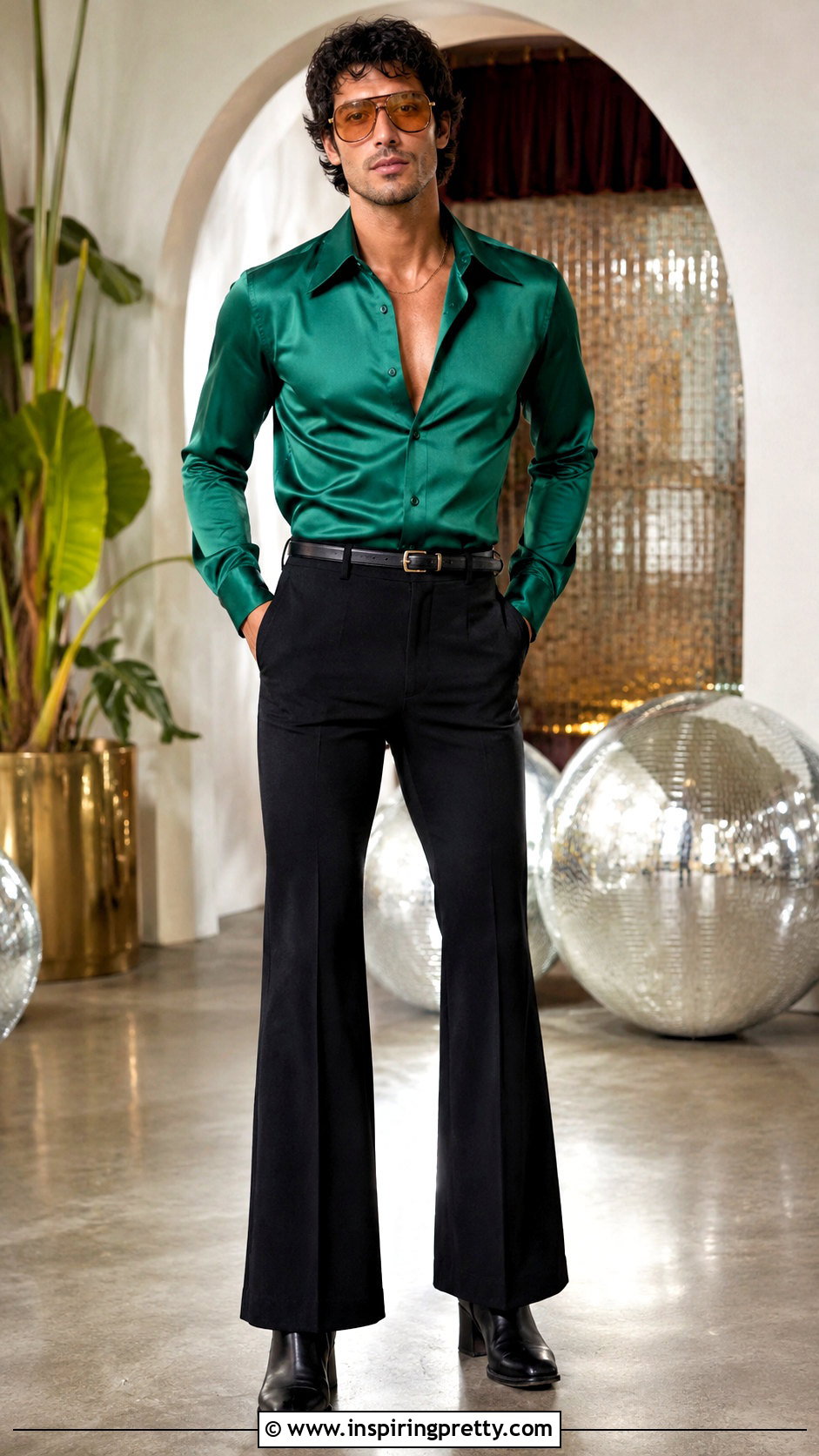
Satin with black flares is the sleek evening version. Jewel tones look richest in satin: burgundy, teal, deep purple, emerald. Before anything else I check the chest, because satin shows every pull at the buttons and any strain there ruins the shine. Tuck it into clean high-waisted black flares. Black leather platform boots stretch the leg line. Add a narrow belt, one simple necklace and lightly tinted glasses. A shirt with real sheen doesn't need a jacket, but if you want one, a fitted black blazer with broad lapels stays in period. Expect satin to crease at the elbows and waist by the end of the night.
13. 70s Men's Earth-Tone Shirt With Olive Flares
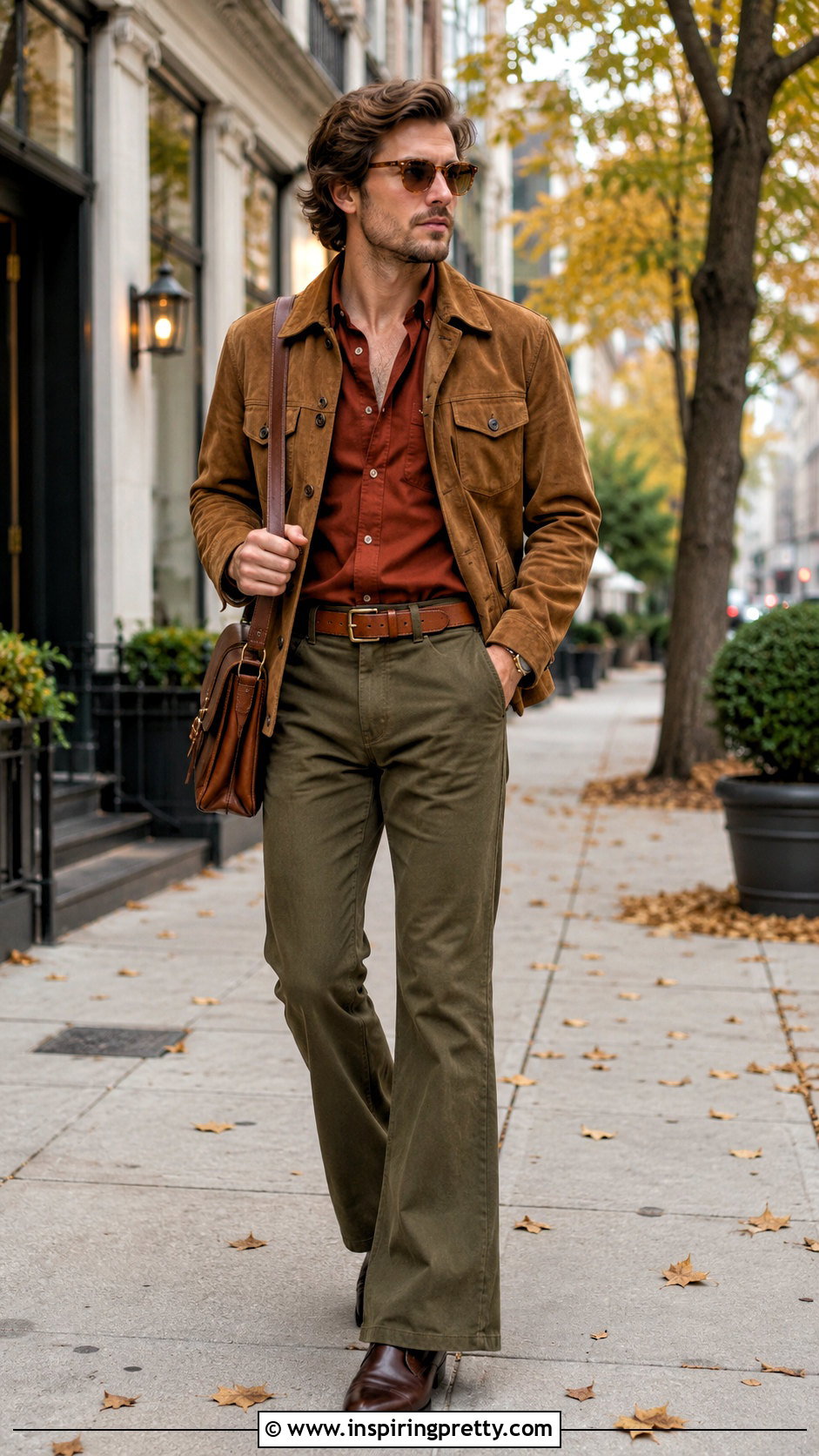
If you want the decade to look natural rather than themed, stay inside earth tones. I start with a fitted button-down in rust, caramel or warm beige; a small geometric texture adds interest without turning the shirt into a statement. High-waisted olive flares and dark brown ankle boots sit right next to it. A cognac belt connects to a compact crossbody or satchel. Add a tan suede jacket in cooler weather, a gold-tone watch and brown-tinted lenses. Because every piece comes from the same warm family, nothing jumps out, which makes it work at a casual office or a gallery.
14. 70s Men's Geometric Shirt With Solid Brown Pants
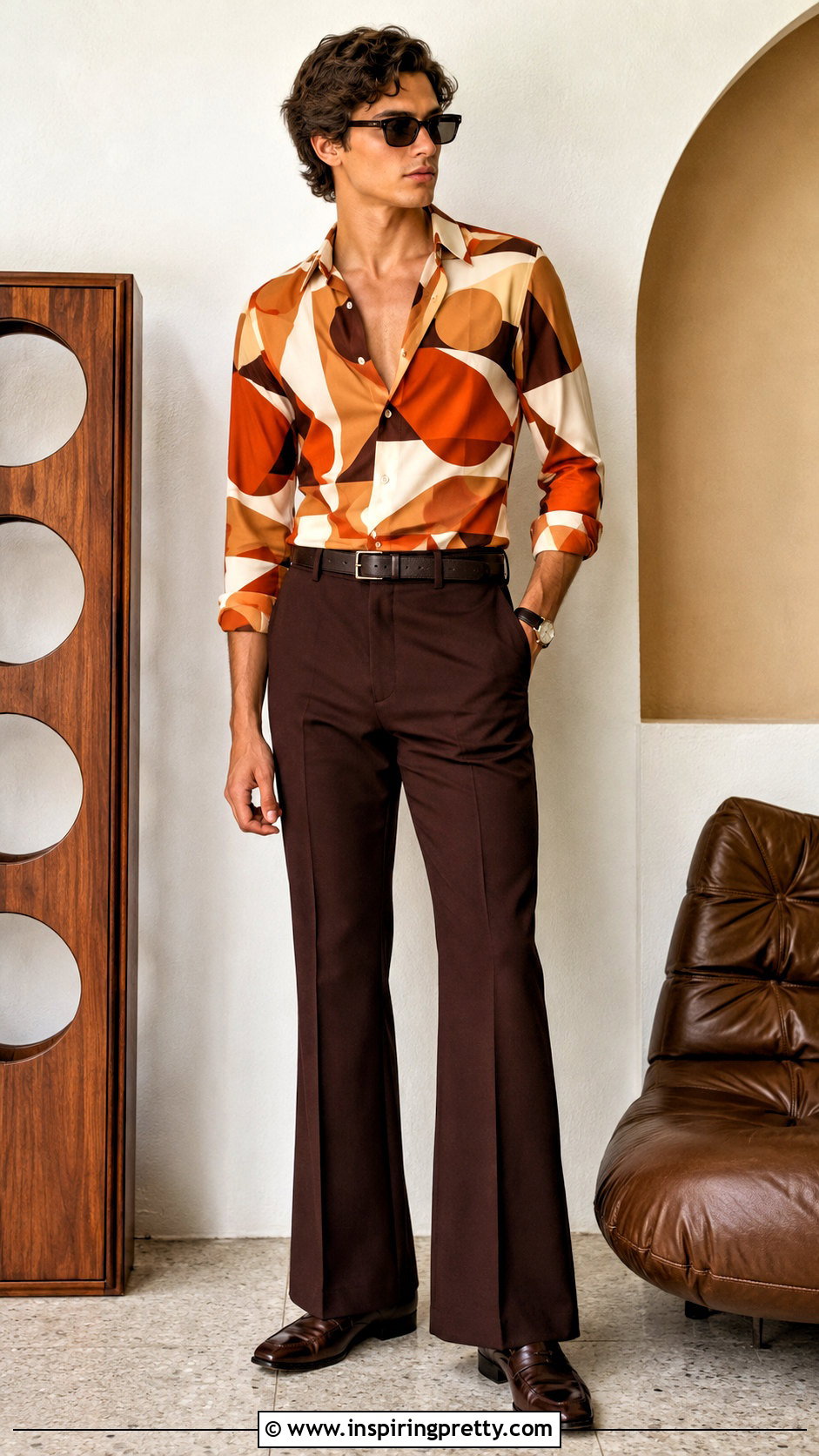
Big geometric prints are the boldest shirts of the decade. Circles, waves, diamonds or abstract shapes in orange, cream, brown and muted yellow. I balance them with solid dark brown trousers, straight or lightly flared, and I always tuck and belt, since a loose busy shirt hides your shape completely. Loafers keep it polished; heeled ankle boots push it more toward the era. Square sunglasses and a simple watch. Skip any patterned jacket or bag. Wear it to a themed party, and on a normal day the solid trousers let it pass as simply a confident shirt.
15. 70s Men's Velour Polo With Cream Trousers
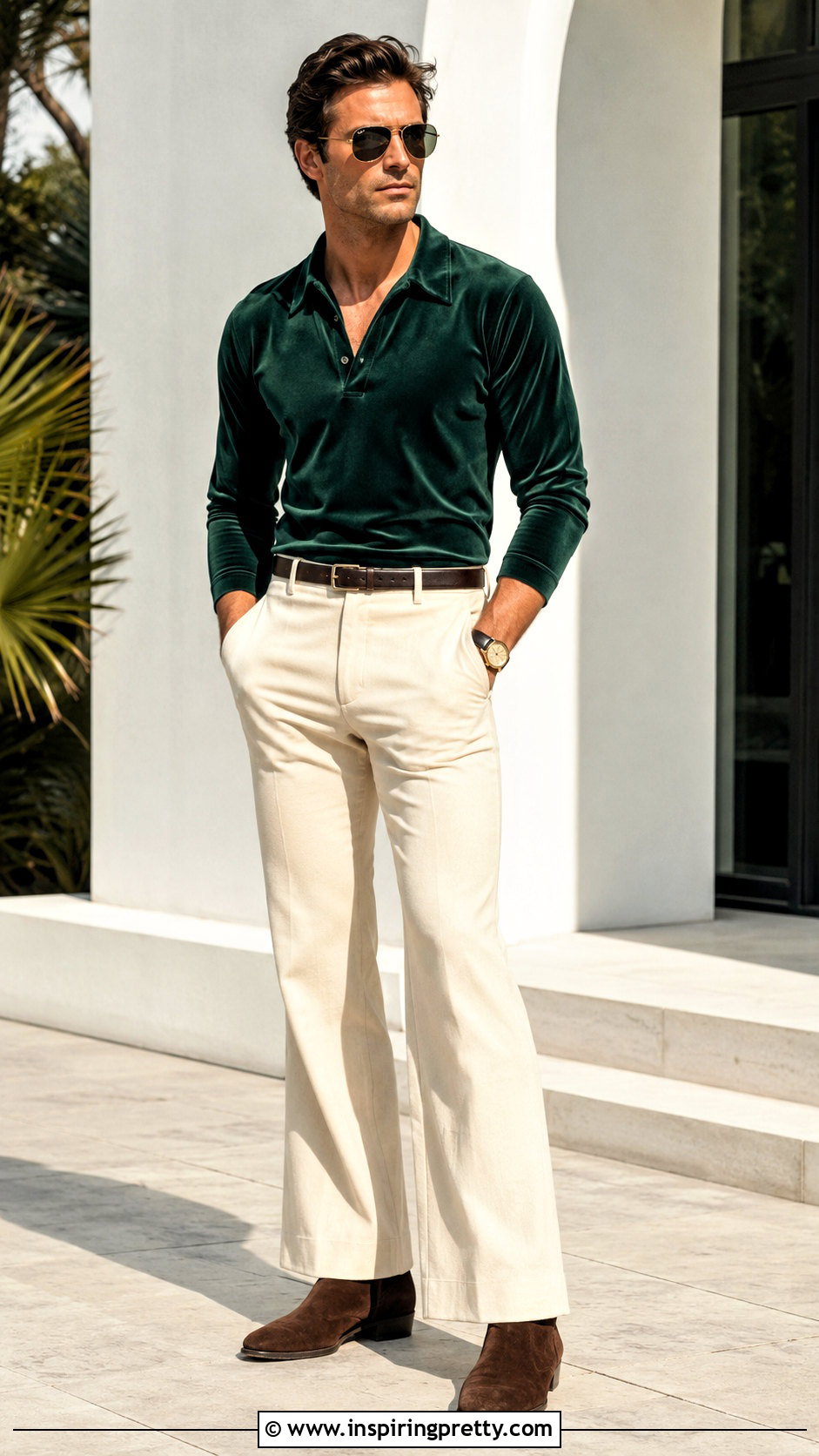
Velour gives a polo depth without any pattern. Rust, dark green, navy or golden brown, fitted, with the collar open. Cream high-waisted trousers, straight or softly flared, are the contrast it needs. Brown loafers or suede ankle boots, a slim belt, tinted aviators and an older-style watch. Velour catches light on its own, so I keep shiny trousers and chunky metal away from it. One honest warning: velour pile crushes where you sit and lean, and it can look worn at the elbows after a long day. A deep top and pale pants keep it clean for a summer evening.
16. 70s Men's Rugby Shirt With Straight-Leg Jeans
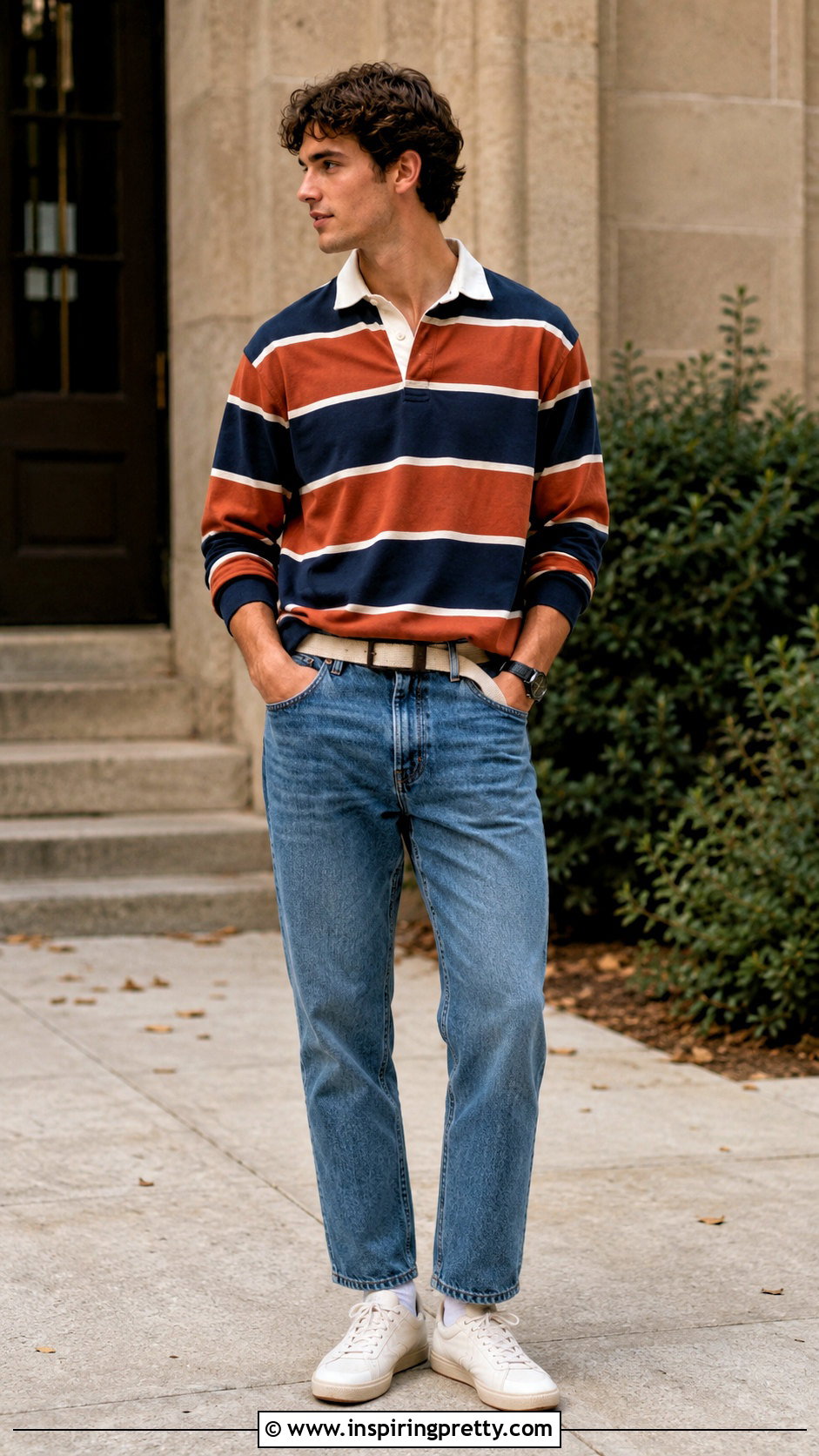
A striped rugby shirt covers the sporty side of the late 70s. Broad horizontal stripes in navy, rust, cream, forest green or mustard, with a crisp white collar to give it structure. Medium-wash straight or slightly bootcut jeans. White leather sneakers keep it athletic; brown desert boots make it rugged. A canvas belt and a sports watch suit it better than dressy extras. Push the sleeves up a little. Rugby shirts are heavy cotton and cut roomy, so I'd size so it skims the torso; a very oversized one swallows the waist and loses the period shape.
17. 70s Men's Henley Shirt With Suede Jacket
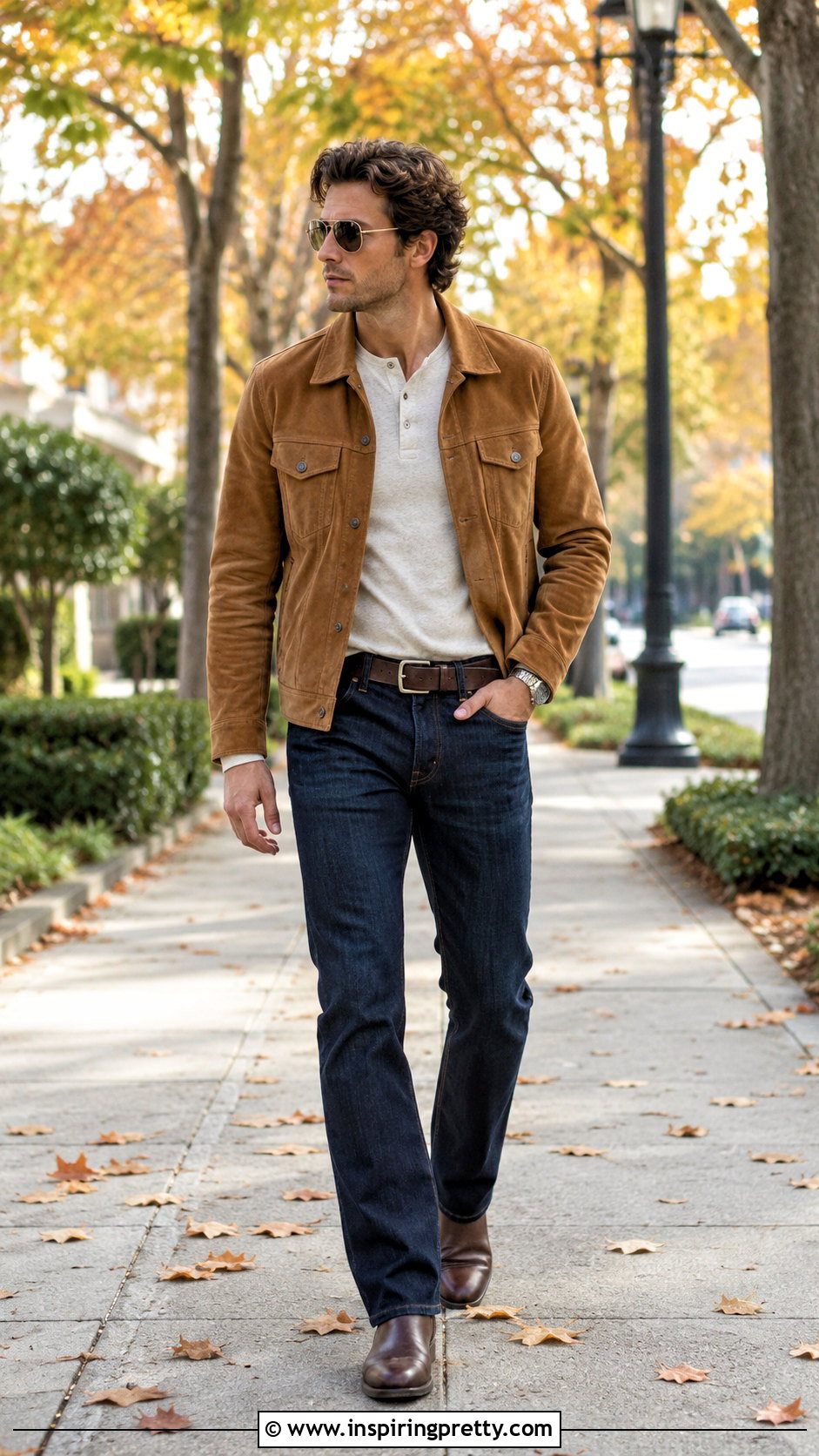
The fitted Henley is my favorite base for layering. Oatmeal, cream, faded green or rust, long-sleeved, with a button or two open. A short, structured tan or chocolate suede jacket goes over it, and dark bootcut jeans cool down all the warm tones up top. Brown ankle boots and a matching belt, aviators and a metal watch. The Henley needs to be long enough to stay tucked yet thin enough to lie flat under the jacket; thick waffle knits bunch at the armholes. Cotton, suede, denim and leather together give the outfit its depth, and it's right for cool fall weekends outdoors.
18. 70s Men's Track Jacket With Flared Track Pants
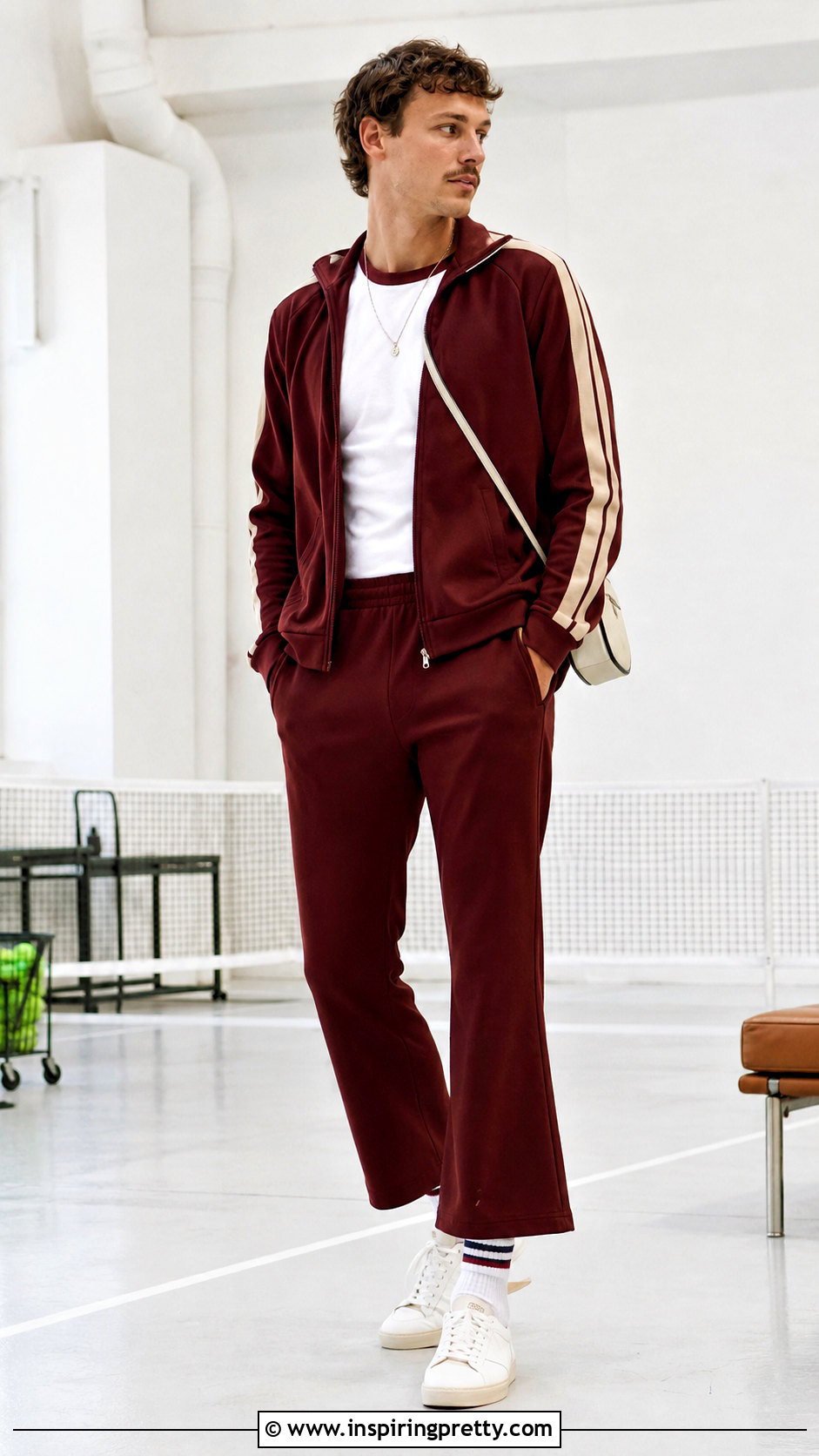
A retro track jacket makes a comfortable everyday 70s outfit. Fitted, zip-front, with contrast stripes down the sleeves, in navy, burgundy, forest green or burnt orange. Pair it with matching flared track pants or straight athletic trousers, and a plain white ringer underneath. Slim white sneakers, striped socks and a small crossbody bag. I'm strict about logos here: one stripe pattern and no extra branding, or it starts looking like modern gym kit. The jacket and pants should look like they belong together without the slick technical feel of a new tracksuit.
19. 70s Men's Mock-Neck Top With Corduroy Suit
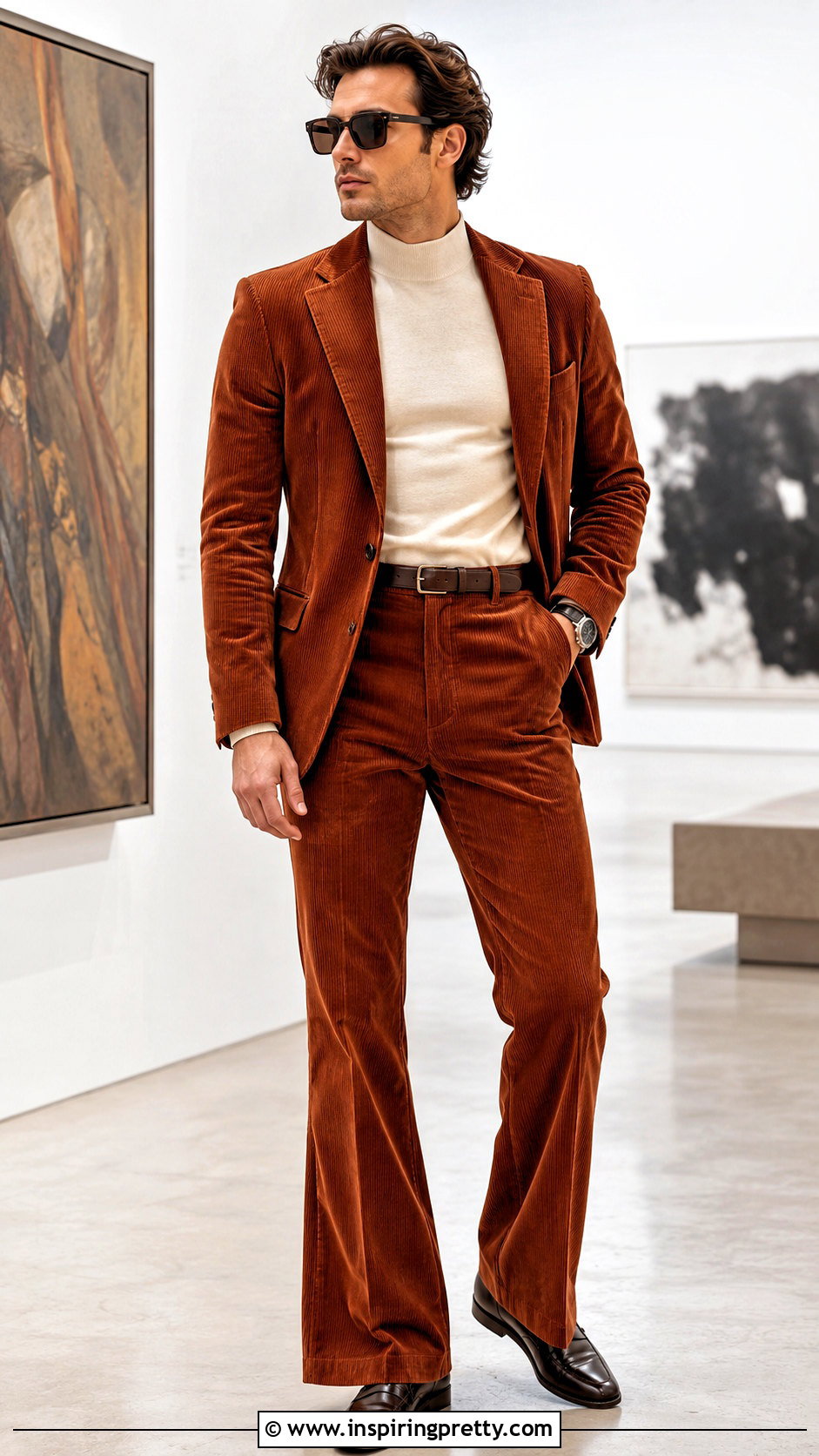
A mock-neck under a corduroy suit takes the stiffness out of tailoring. Fitted cream, mustard or dark brown knit under a rust, olive or chocolate cord blazer, with matching high-waisted trousers in a straight or slight flare. Loafers for polish, ankle boots for more of the era. A slim belt, a quiet watch and square sunglasses are plenty next to the textured suit. I check the neck under the lapels before anything else; a thick mock neck bunches against the collar, so a fine knit is the better pick. Tonal colors and tailored proportions keep it deliberate at a creative office or a daytime party.
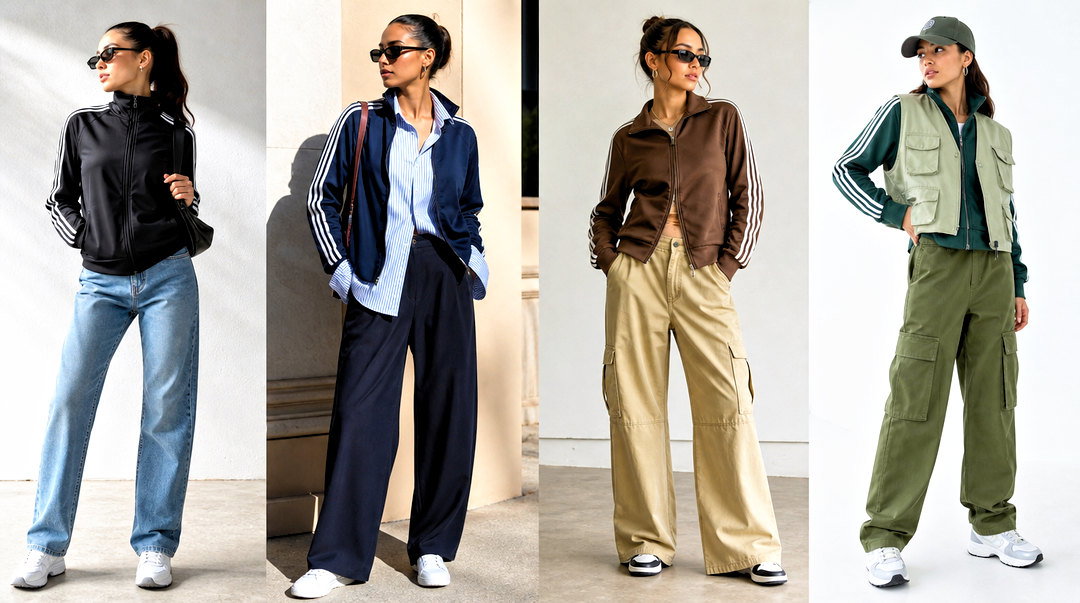
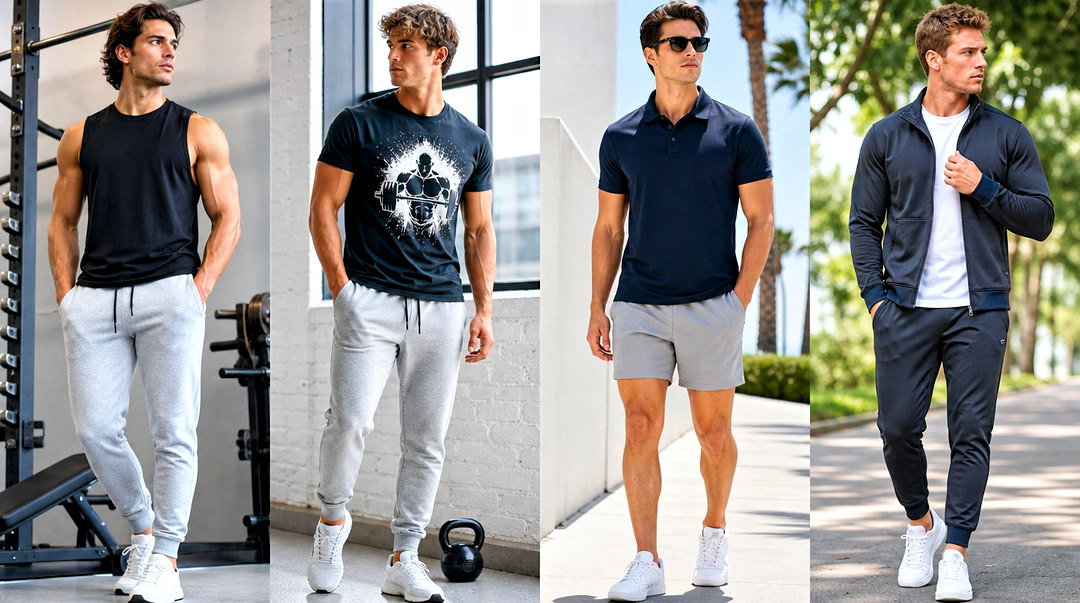
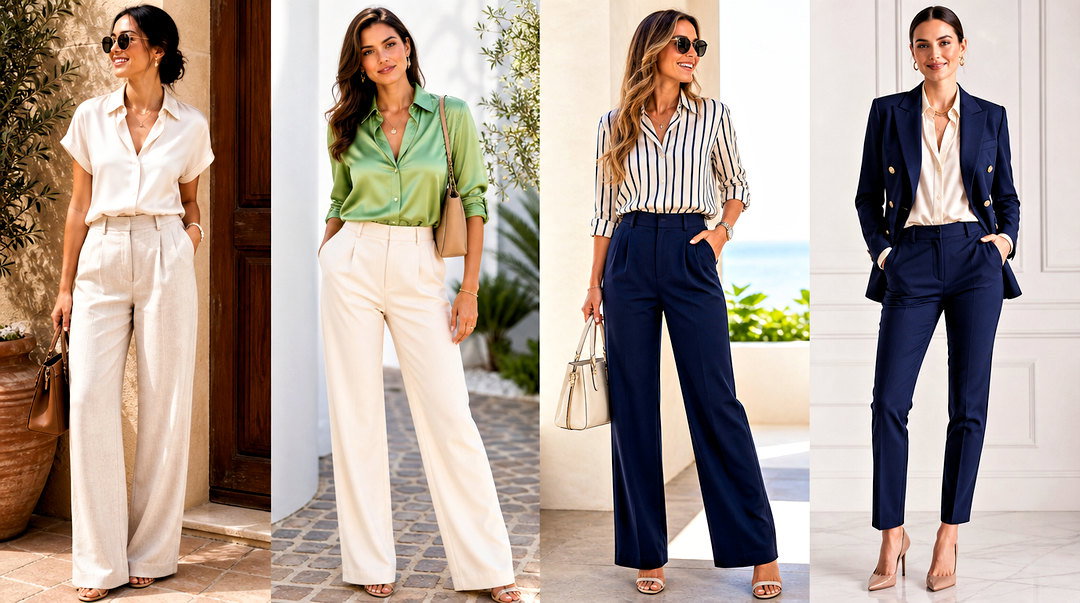
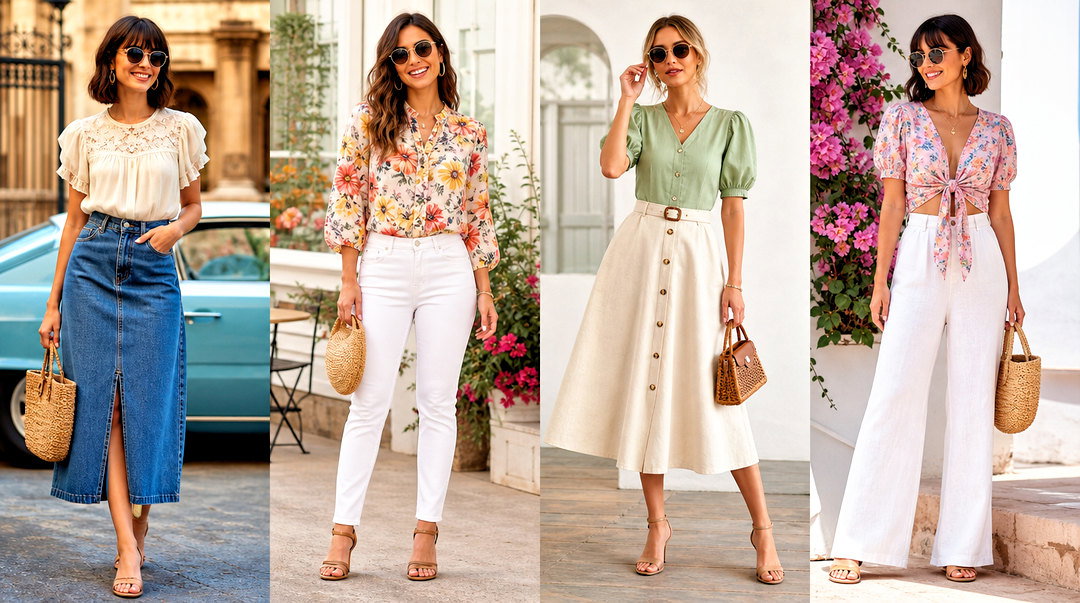
20. 70s Men's Camp Collar Shirt With Flared Chinos
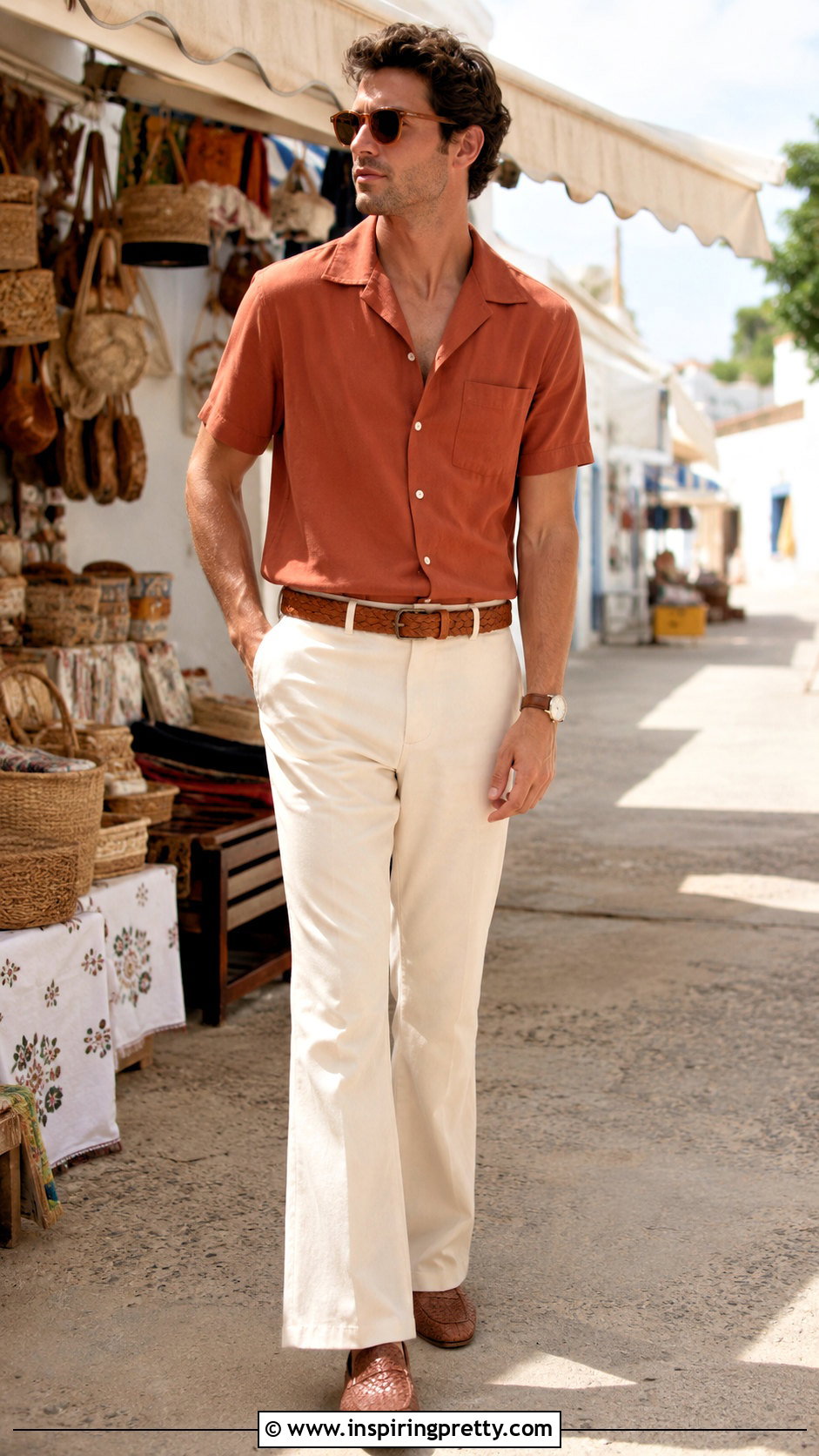
A camp collar shirt is the laid-back summer option. Short sleeves in mustard, terracotta, avocado green or a restrained abstract print, tucked into cream, tan or chocolate flared chinos with a medium-to-high rise. Woven loafers, leather sandals or clean suede sneakers depending on where you're going. A braided belt and tinted square sunglasses are enough period detail. The collar should lie open and flat without spreading toward the shoulders, and the hem needs to sit smoothly in the waistband. I'd avoid oversized tropical prints if you want it to work at a market and a dinner alike.
Party Costume or Tuesday Outfit: Counting the Retro Pieces
The same disco shirt can look like fancy dress or like something a well-dressed man wears to dinner. What changes is how many period signals sit around it. I count them: the shirt, flared trousers, platforms, tinted aviators, a chain, a wide belt.
For daily wear, I stop at two. A paisley shirt with straight dark jeans and plain boots, or a ringer tee with flares and ordinary sneakers. For a themed night, go for four or more and let it be loud. The middle ground of three is where most of these outfits sit, and it's where I'd start if you're not sure how far you want to go.
These fabrics don't all behave the same, and a lot of retro shirts get ruined by being washed like a cotton tee.
Polyester and satin
Old polyester barely shrinks, but it holds onto body odor and can melt or go shiny under a hot iron. Wash cool, hang to dry and iron on low, inside out, or use a steamer.
Velour
Turn it inside out and skip high dryer heat, which flattens the pile for good. Brush the nap gently in one direction once it's dry.
Crochet and open knits
Hand wash or use a mesh bag on a gentle cycle, and always dry flat. Hung on a hanger, the wet weight pulls the stitches longer and the shirt never quite recovers. Fold it to store for the same reason.
One Strong Shirt, Then Keep the Rest Quiet
Across all twenty, one shirt or knit sets the direction and the rest follows. Wide collars, close fits, textured fabrics, earthy colors and confident prints give the decade away; flares, corduroy, platforms, loafers and tinted lenses complete it. For daily wear, I'd keep it to one strong vintage piece and plain everything else. For a party, go period from collar to shoe. Either way, fit decides it, because the high waist and fitted top are what create the 70s balance. Start with whichever shirt you'd wear most often and build out from there.
Related posts:


Leave a Reply