
What Ripstop, Softshell and Stretch Knit Actually Do
Tactical tops are mostly defined by their fabric, and reading the label tells you what a piece is actually good for. These are the ones that come up again and again in the outfits below.
- Ripstop: a woven fabric, usually cotton, nylon or a blend, with thicker threads in a small grid. If it tears, the grid stops the tear spreading. It's tough and holds a crisp shape, but cotton ripstop can feel stiff until it's been washed a few times.
- Softshell: a stretchy woven fabric, often with a water-repellent finish. It blocks wind and light rain while still breathing, but it isn't a rain jacket for a full downpour.
- Performance knit: the polyester or nylon blends used in tactical tees, polos and the body of combat shirts. They wick sweat and dry fast, though they hold odor more than cotton.
- Cotton blends and flannel: softer and more casual, best for everyday wear and cool days. They are slower to dry once wet.
Before buying, I look at three construction details: bar-tacks (short dense stitches) at the pocket corners, gussets under the arms or in the crotch for movement, and whether stretch panels sit where you actually bend. Those details are what make a tactical top worth more than a plain one.
1. Black Tactical Shirt Outfit
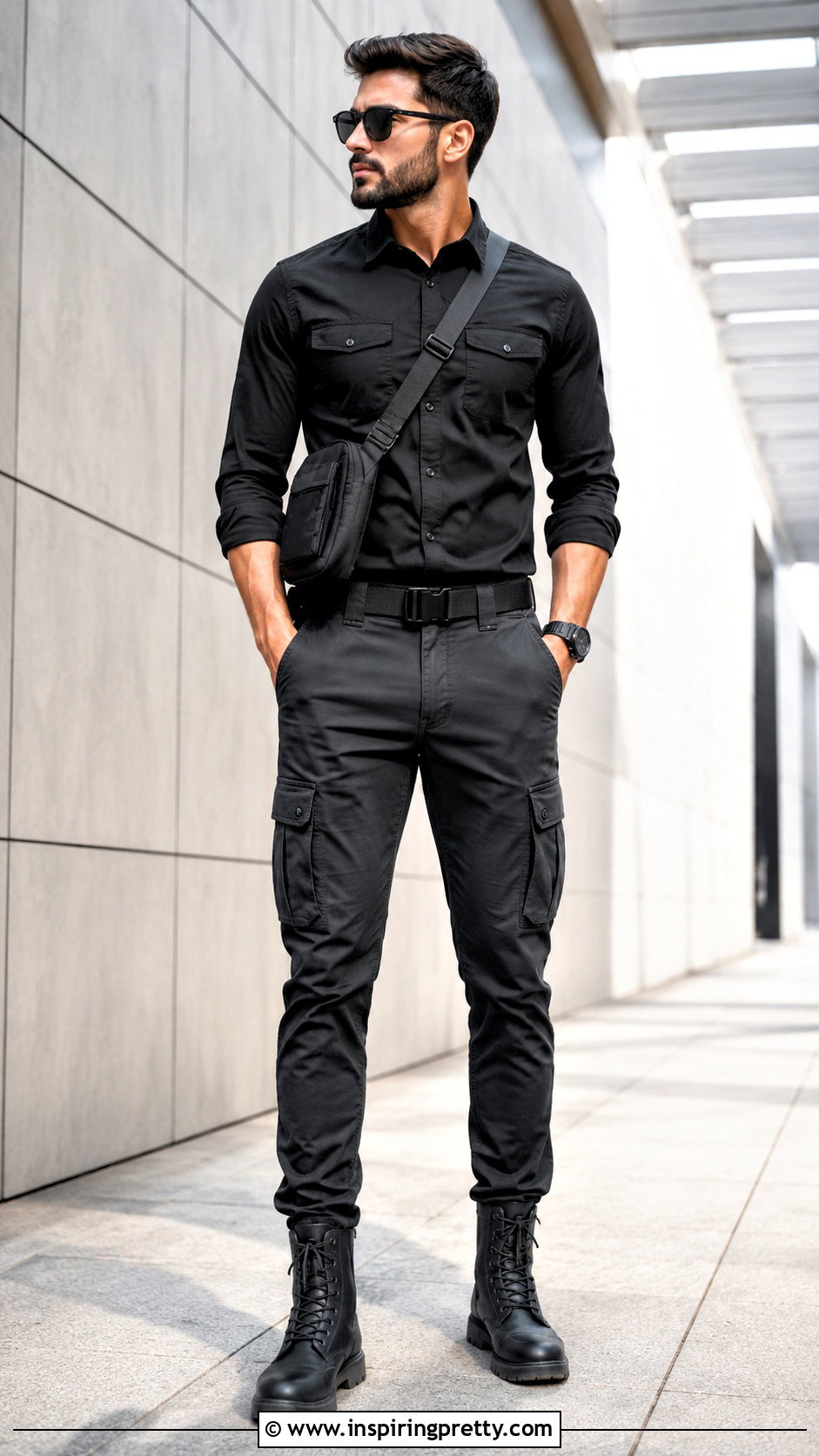
Black is the easiest tactical shirt to wear in town, because the pockets and tabs nearly disappear into the color. I'd choose a streamlined button-up with flat chest pockets and sleeve tabs, so a rolled sleeve stays put. Charcoal tapered cargos keep the practical feel with a little contrast. Black leather boots ground it; minimal trail sneakers lighten it. A black web belt, a sturdy watch and a small crossbody are all it needs. Skip extra patches and attachments. I like a slightly relaxed body here, enough to reach and lift comfortably without the shirt ballooning at the waist.
2. Olive Tactical Shirt Outfit
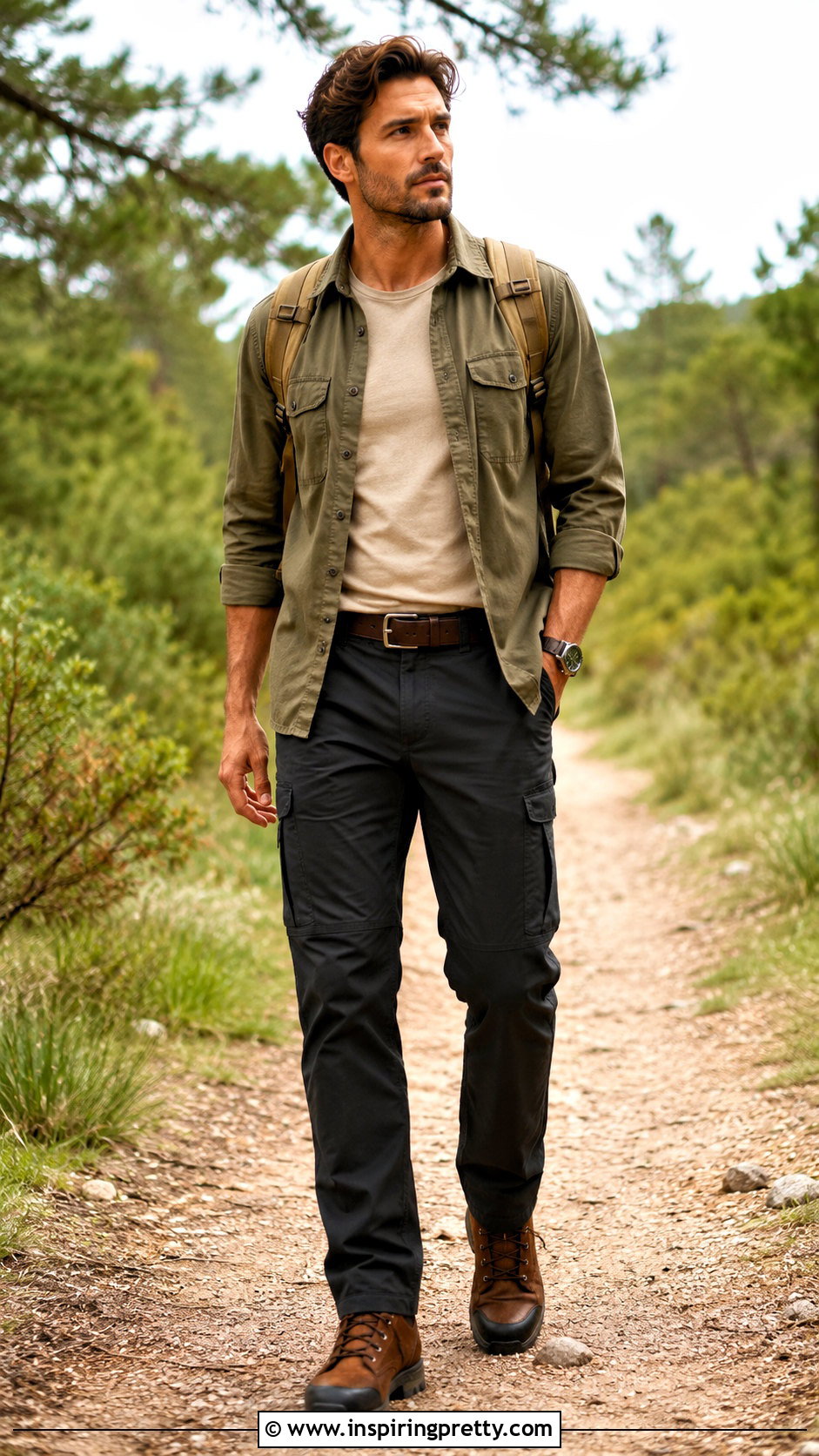
Olive is the color most people picture with tactical clothing, and it sits well with almost every other earthy basic. Wear a long-sleeve ripstop shirt open over a fitted beige tee. Ripstop has a small grid woven into it that stops tears from spreading, so it holds up to rough use and still looks crisp. Straight black utility pants keep it from going all-olive. Brown hiking boots, a matching belt and a canvas backpack finish it. Choose pants with flat pockets, since the shirt already has enough. It's a good fit for road trips, markets and easy trails.
3. Khaki Tactical Shirt Outfit
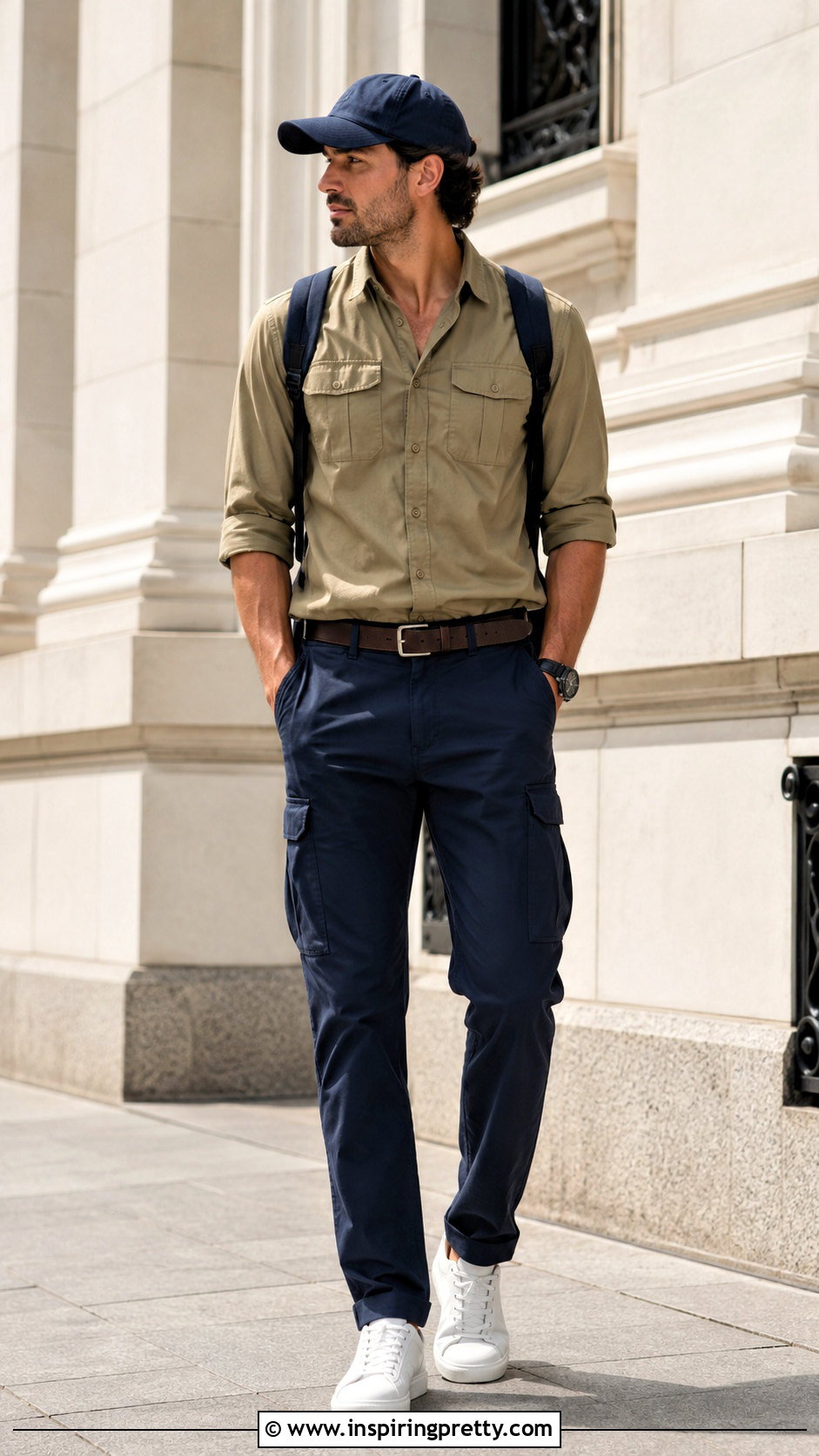
Khaki is the summer answer to black and olive. A structured short-sleeve shirt with clean pockets pairs with navy straight cargos for a crisp contrast, and white leather sneakers pull it toward city wear. A dark brown belt, a field watch and a navy cap tie the colors together. Length is what I check first: worn untucked, the hem should end around the middle of the fly. Any longer and the legs look short; any shorter and it rides up when you sit. A cotton-blend or lightweight ripstop breathes in heat. It reads as tactical without looking like a full field uniform.
4. Tactical Polo Shirt Outfit
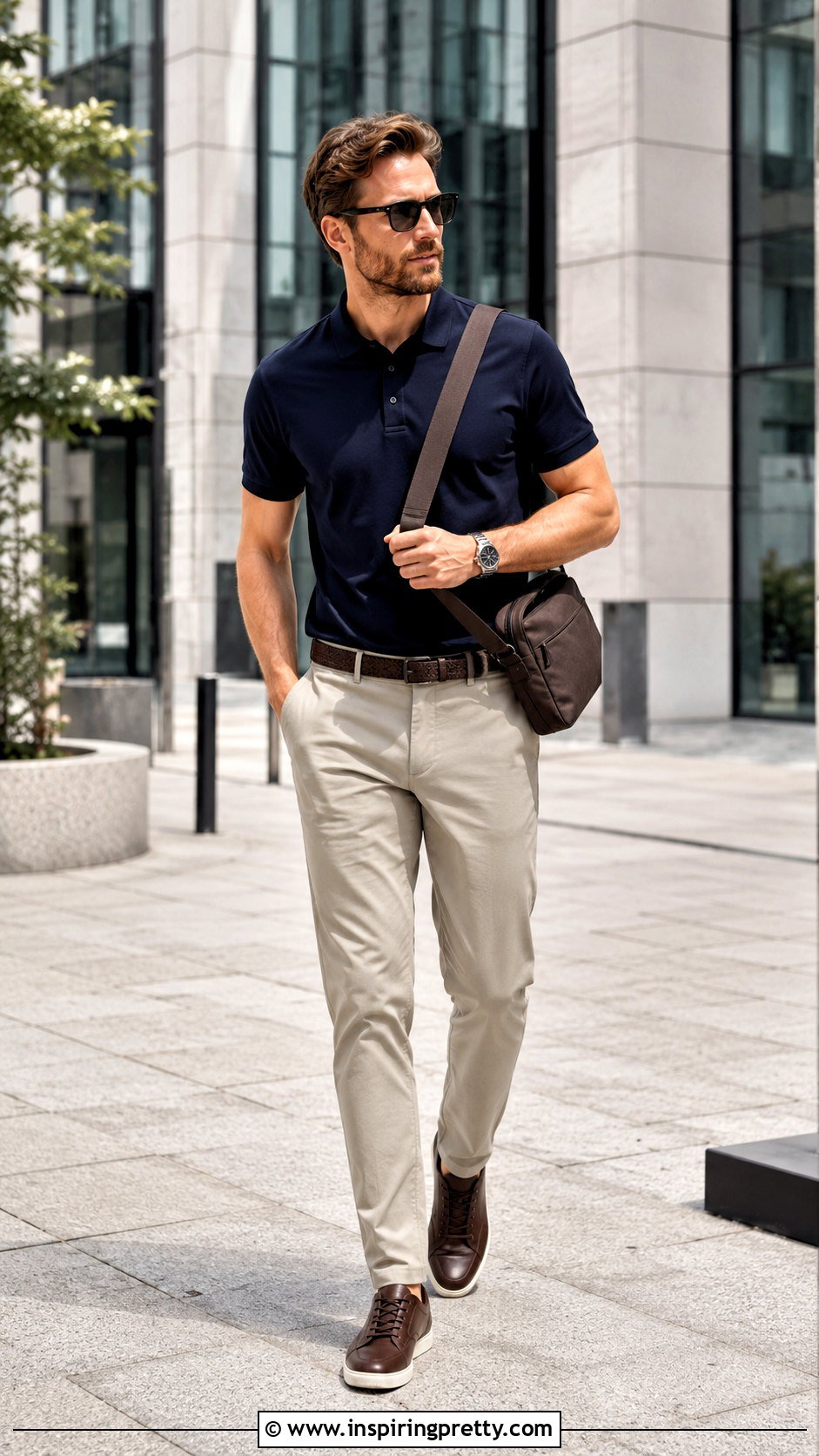
Tactical polos are the cleanest option on the list, and the one I'd wear to a casual office. A fitted navy polo in a sweat-wicking knit with small utility details, worn with stone technical chinos in a straight or gently tapered leg. Dark brown leather sneakers are comfortable enough for walking and look smart. A woven belt, a silver watch and a compact messenger bag finish it. The polo should skim, not grip, the chest. Keep the trousers plain; a pocket-heavy pant under a technical polo fights for attention. Wicking knits snag on velcro, so keep it away from patches and bag straps with hook-and-loop.
5. Tactical Henley Shirt Outfit
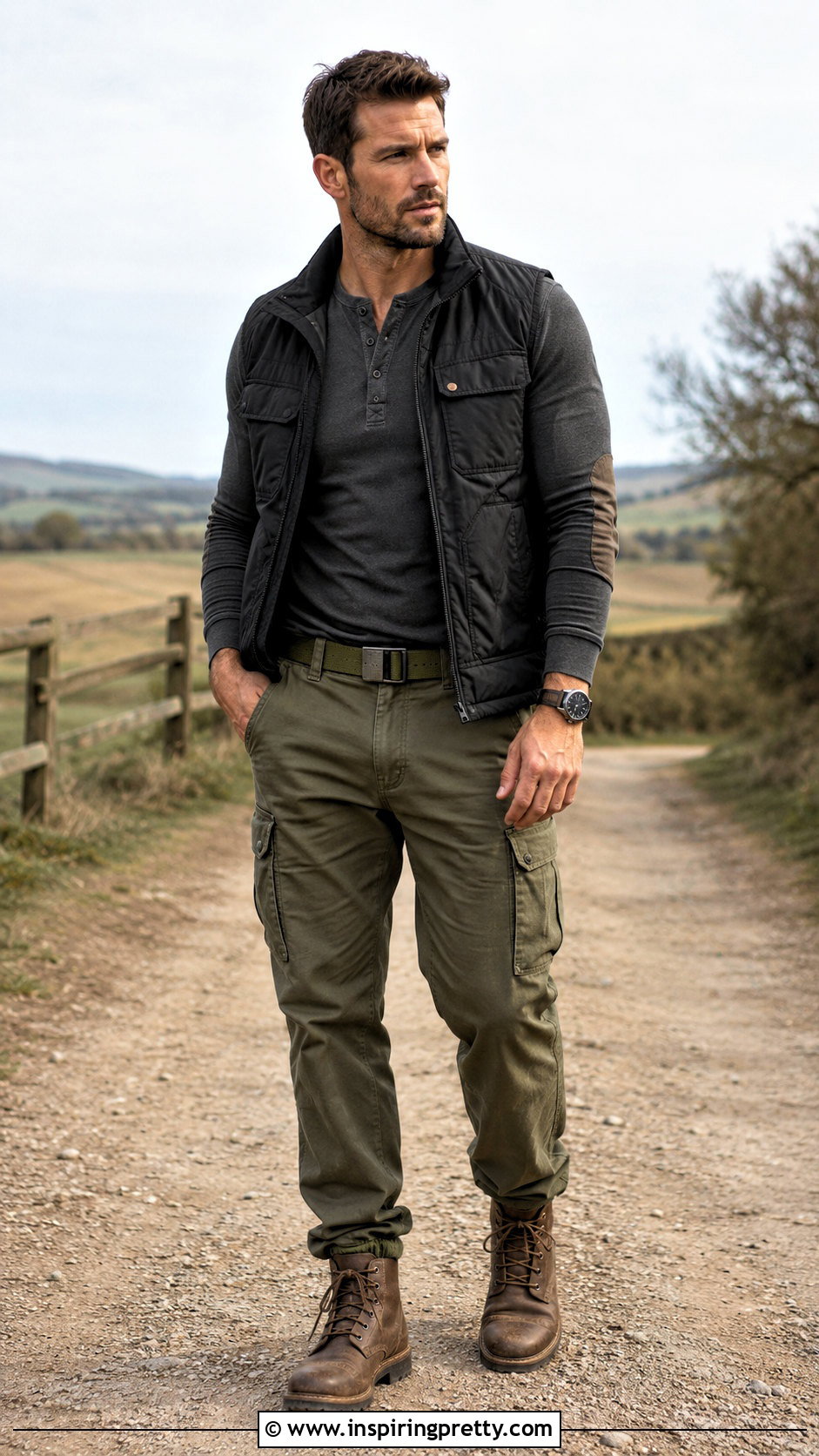
A tactical henley is basically a sturdy long-sleeve tee with a placket, and the reinforced shoulder and elbow panels are what set it apart. Charcoal works best in a breathable performance knit. Olive straight cargos make a quiet outdoor color pairing, and brown lace-up work boots give it weight. A canvas belt and a practical watch are enough. Push the sleeves just above the wrist so it looks relaxed. For cooler days, a light black vest over it, leaving the buttoned neckline visible. Close at the shoulders, easy at the waist. It's the one I'd pick for camping or a day of house projects.
6. Tactical Hoodie Outfit
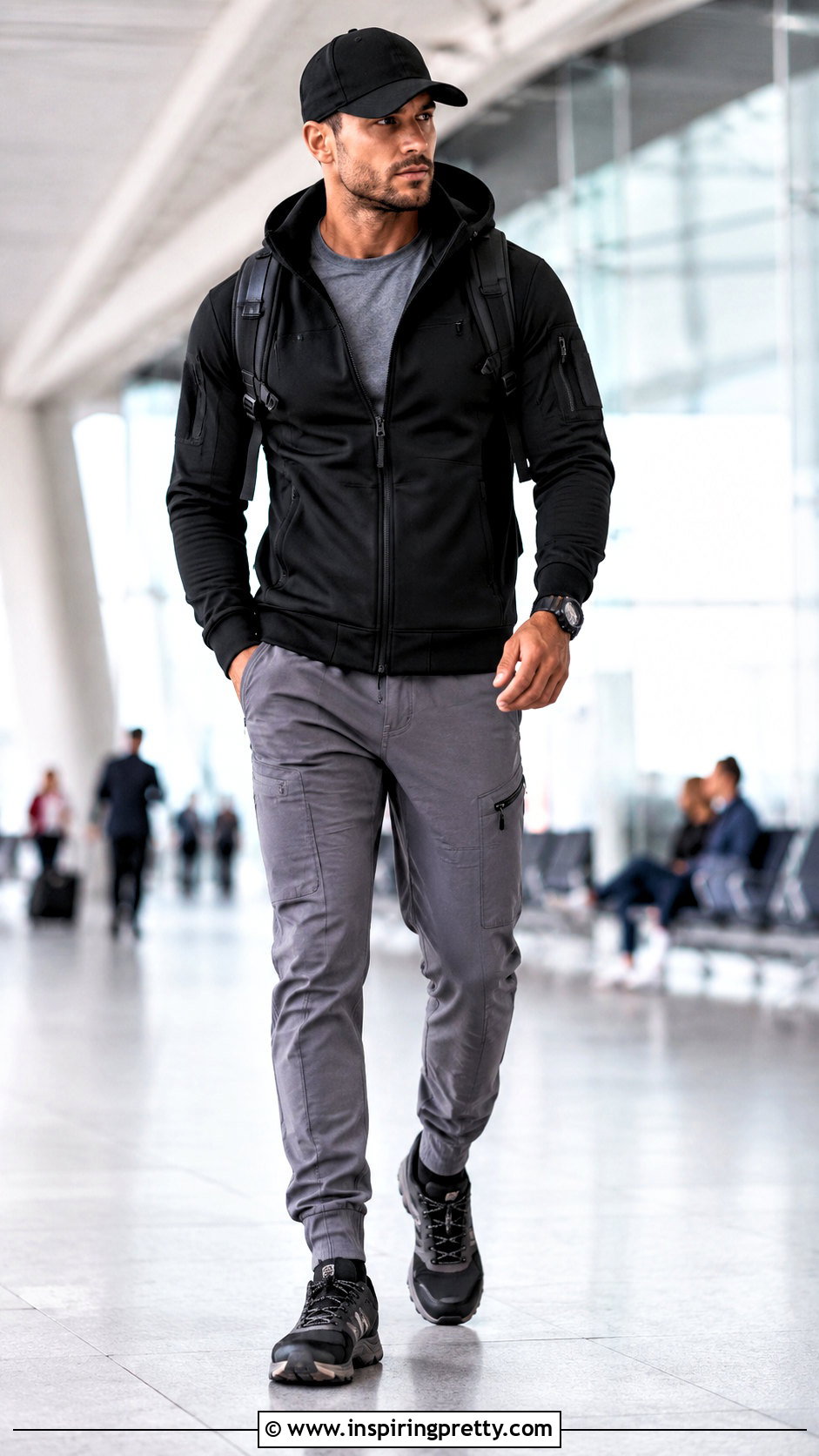
A tactical hoodie keeps you warm without the bulk of a jacket. I'd build around a fitted black zip-up with reinforced panels and a sleeve pocket, then add gray tapered utility joggers to break up the dark top. Trail sneakers suit daily movement better than heavy boots. A light backpack, a black cap and a digital watch finish it. Wear a plain white or heather tee underneath so it still looks finished with the zip open. Avoid big cargo pockets on both pieces at once; two pocket-heavy garments stacked together start to look like kit. I reach for it on airport days and early walks.
7. Tactical Quarter Zip Outfit
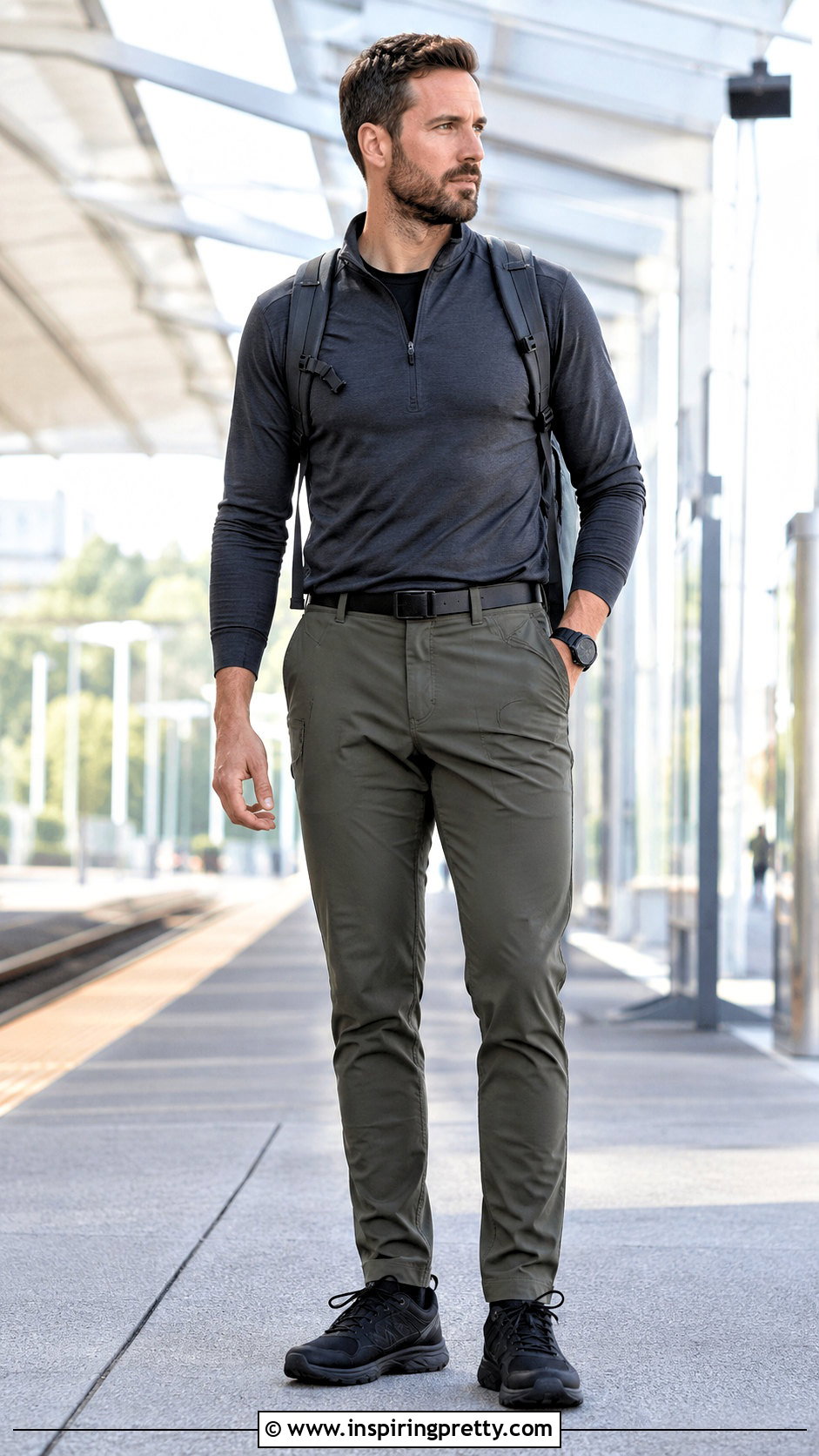
A quarter-zip gives you an athletic shape with a little more structure than a hoodie. Choose a dark gray performance top with a standing collar and subtle shoulder reinforcement. Slim olive utility trousers add storage without bulk, and low black hiking shoes give grip while keeping a slim line. A nylon belt, a tough watch and a charcoal daypack finish it. Wear the zip partly open over a black crew-neck base layer, which also lets you vent heat on a walk. The trousers want a mild taper with room through the thigh. Good for commutes and in-between weather.
8. Tactical Flannel Shirt Outfit
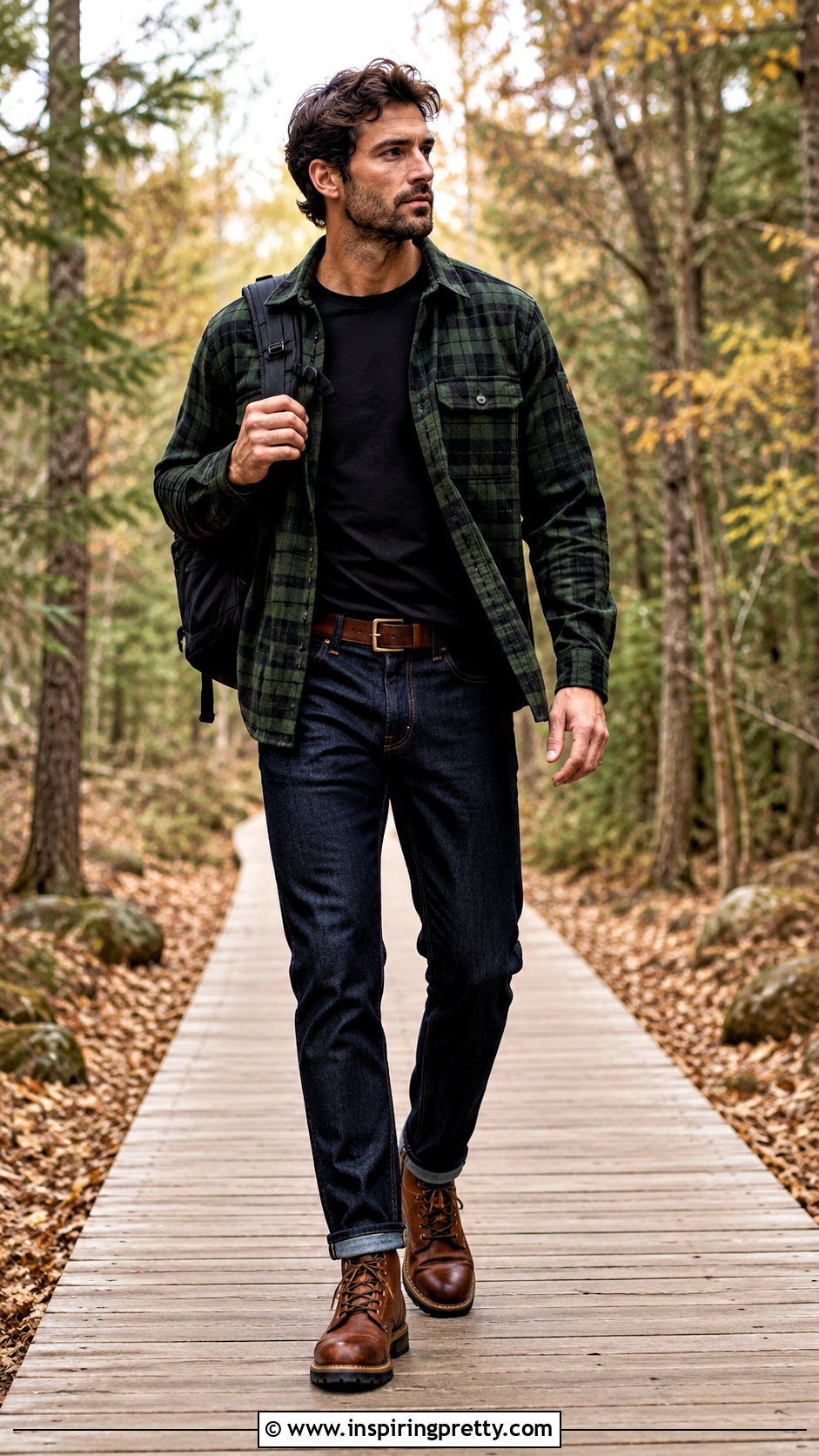
Flannel takes the hard edge off tactical clothing. A green and black check with reinforced elbows and secure chest pockets, worn open over a plain black tee, gives you a relaxed weekend look. Dark straight jeans keep it from reading as outdoor gear. Brown leather hiking boots, a matching belt and a black canvas backpack finish it. If the jeans pile up on the boots, give them one small cuff, never a high roll that shows sock. Flannel is brushed to feel soft and it pills where a bag strap rubs, so I'd carry the pack on alternating shoulders. Fit comfortably at the shoulders without sizing up.
9. Tactical Combat Shirt Outfit
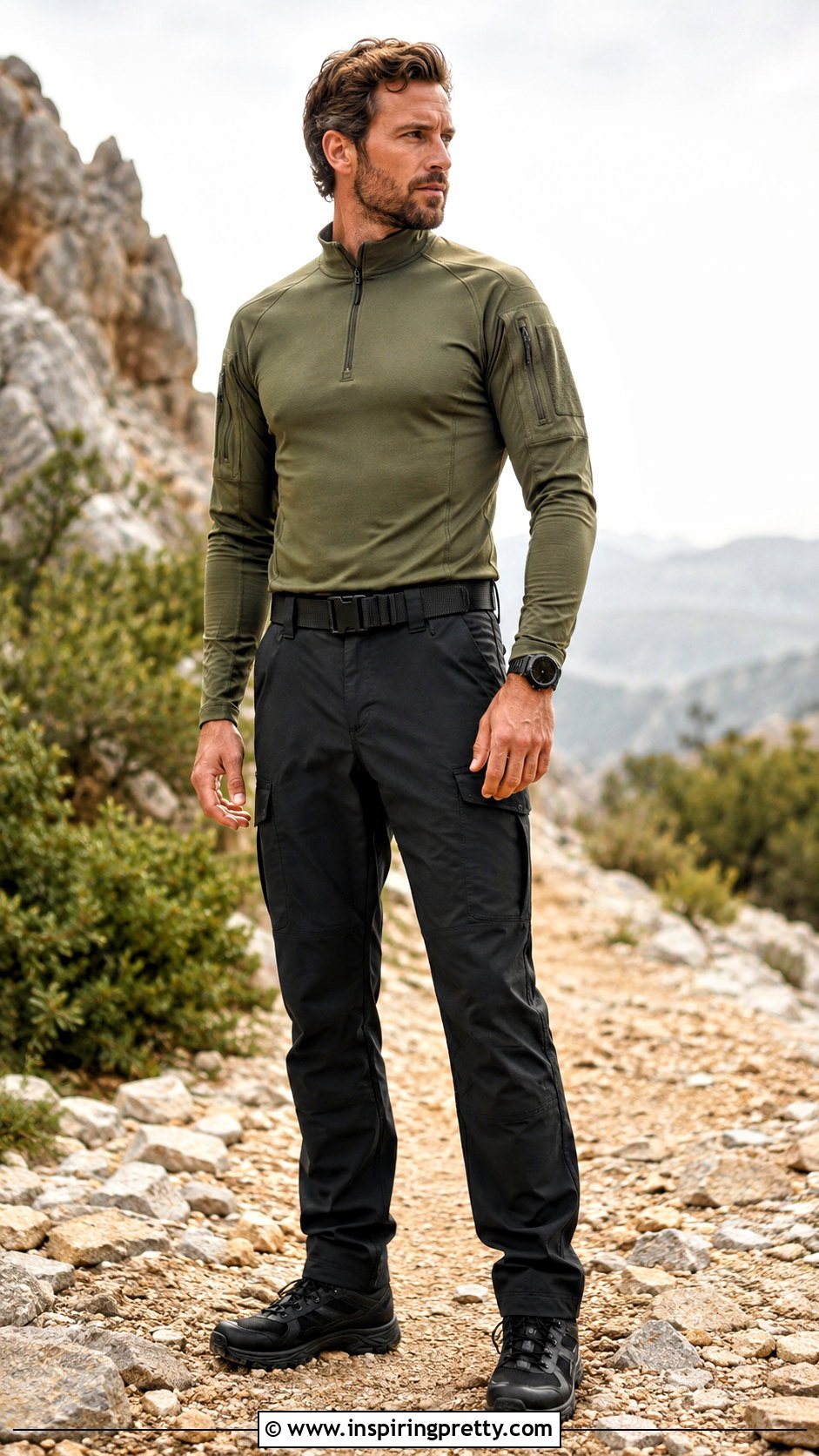
A tactical combat shirt is built in two parts: a stretchy, wicking knit body meant to sit under armor, and tougher woven sleeves. That's why it fits close through the torso. For everyday wear I'd choose solid ranger green and pair it with black straight technical pants, never matching camo bottoms. Black hiking boots, a matte web belt and a plain watch finish it. Leave vests, patches and gear at home. The knit body can look a little thin on its own in town, so it suits training, hard outdoor days and adventure travel better than a café.
10. Camouflage Tactical Shirt Outfit
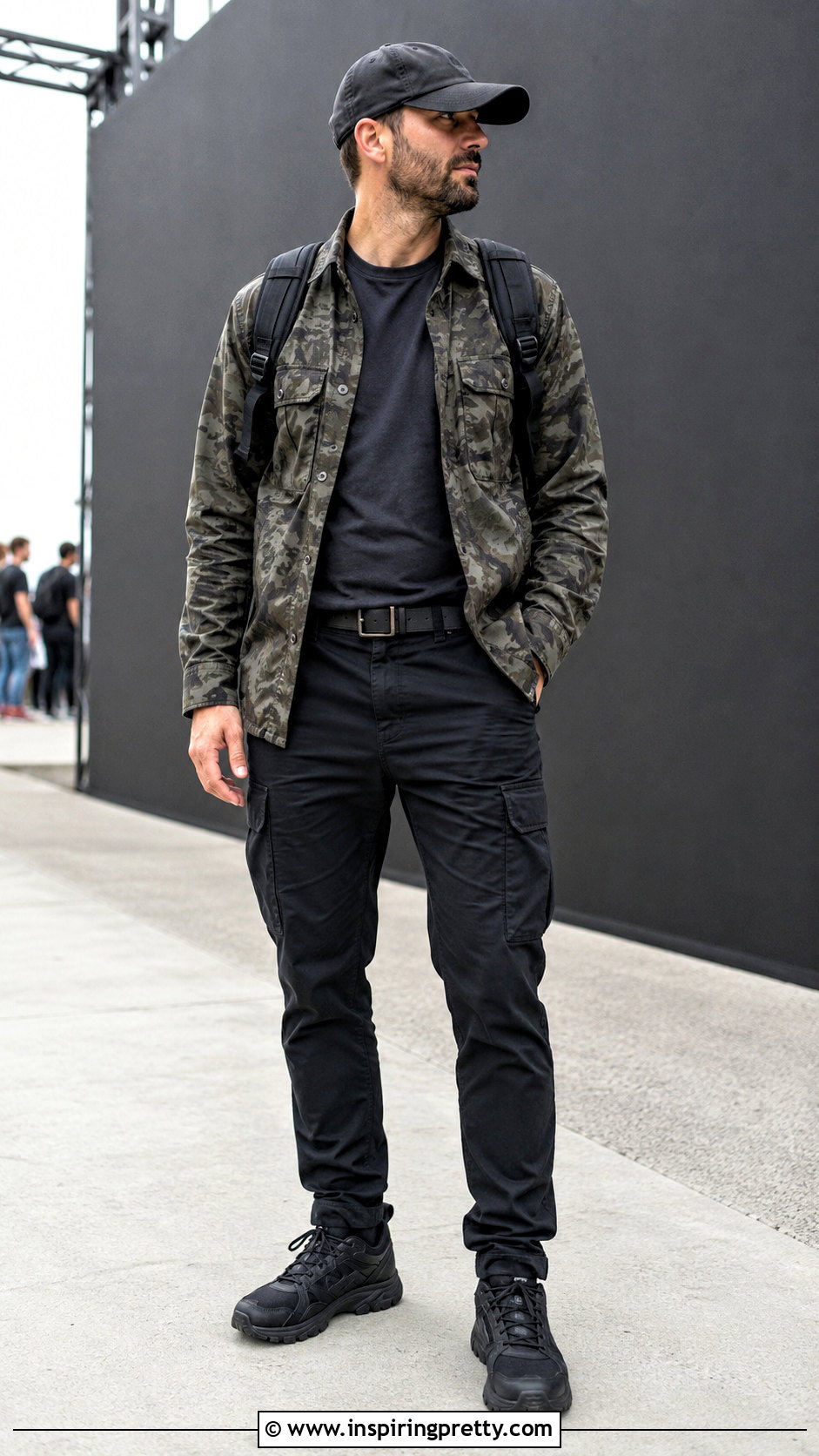
Camouflage works best as one piece, never two. I'd wear a muted camouflage tactical shirt open as an overshirt over a solid dark gray tee, with black tapered cargos with flat pockets. Solid black sneakers or light boots keep attention on the print. A black web belt, a plain cap and a small backpack with no other patterns finish it. Worn open, the shirt reads more streetwear than military. Let the tee show below the hem only if both hems are clean and even. Keeping it to camo, charcoal and black stops it getting busy.
11. White Tactical Shirt Outfit
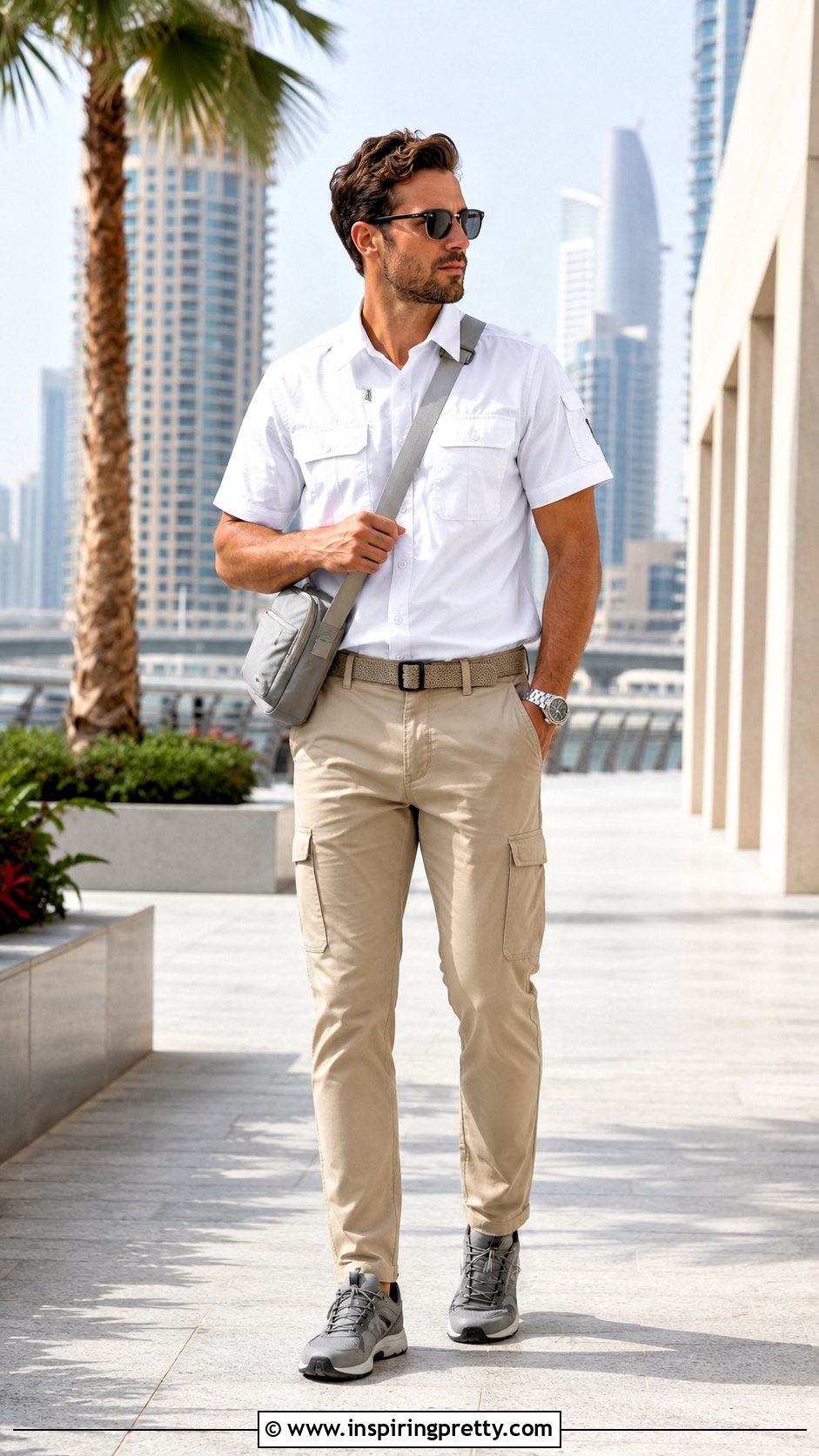
White is unexpected in tactical clothing, and that's the appeal. A lightweight short-sleeve button-up with discreet pockets and a firm collar looks fresh with sand tapered cargos. Gray trail sneakers, a tan woven belt, a silver watch and a light gray crossbody keep it soft and neutral. Untuck it for errands or tuck it in for lunch out. The honest downside is maintenance: white shows sweat and dirt quickly, and pocket flaps collect grime at the edges. I'd pick a quick-drying fabric and keep an undershirt on to protect the underarms. It suits summer travel and daytime plans.
12. Gray Tactical Overshirt Outfit
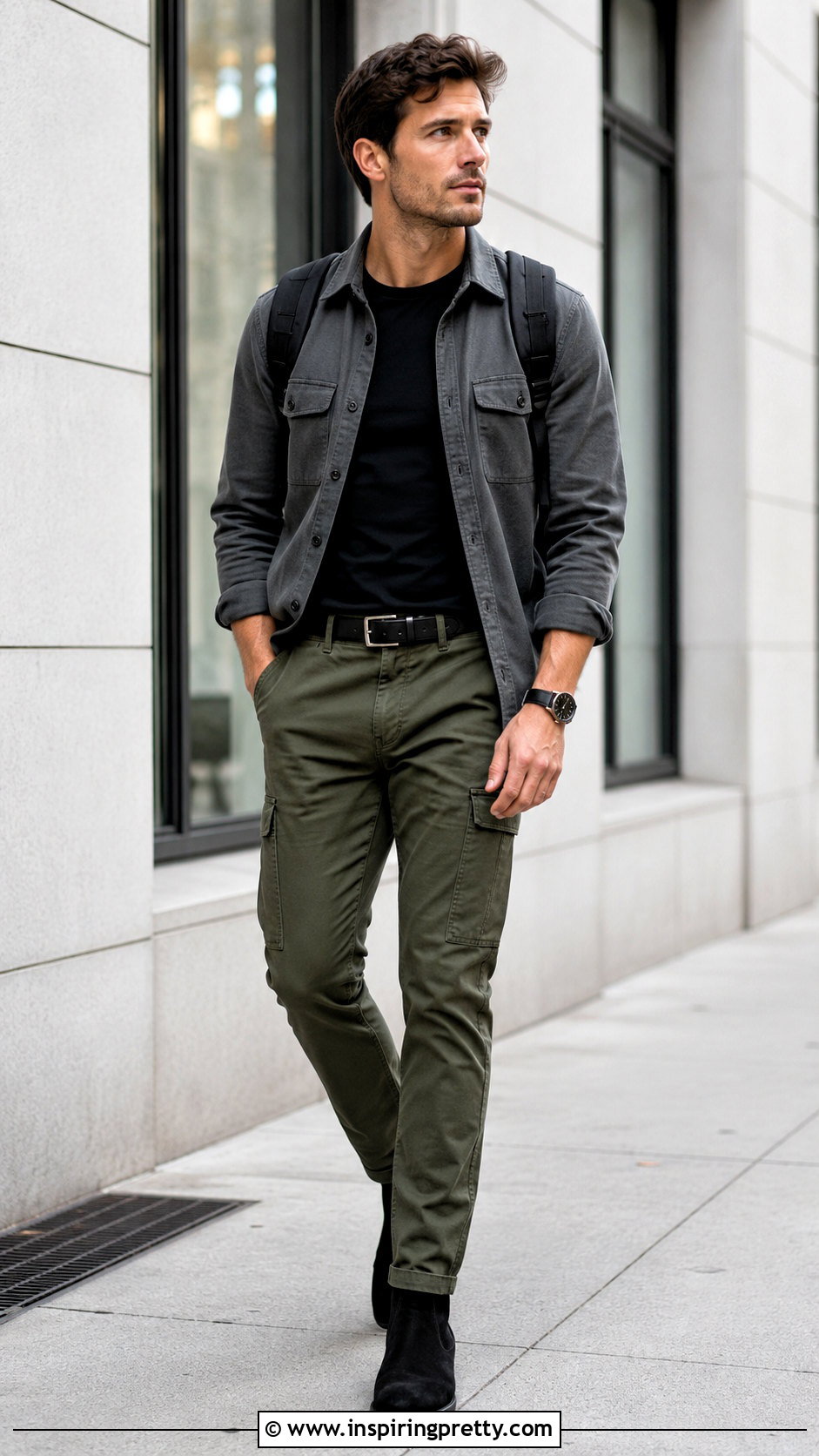
When a jacket is too much, a gray overshirt does the job. A mid-gray ripstop overshirt over a fitted black tee, with dark olive utility trousers for a little color. Black suede boots soften all the technical fabric and make it look at home in the city. A leather belt, a simple watch and a structured black backpack finish it. Open with the sleeves pushed up when it's warm, buttoned with a thermal underneath when it isn't. Size it for layering, but the hem shouldn't fall much past the hip. I'd wear it for the commute and on weekends away.
13. Navy Tactical Shirt Outfit
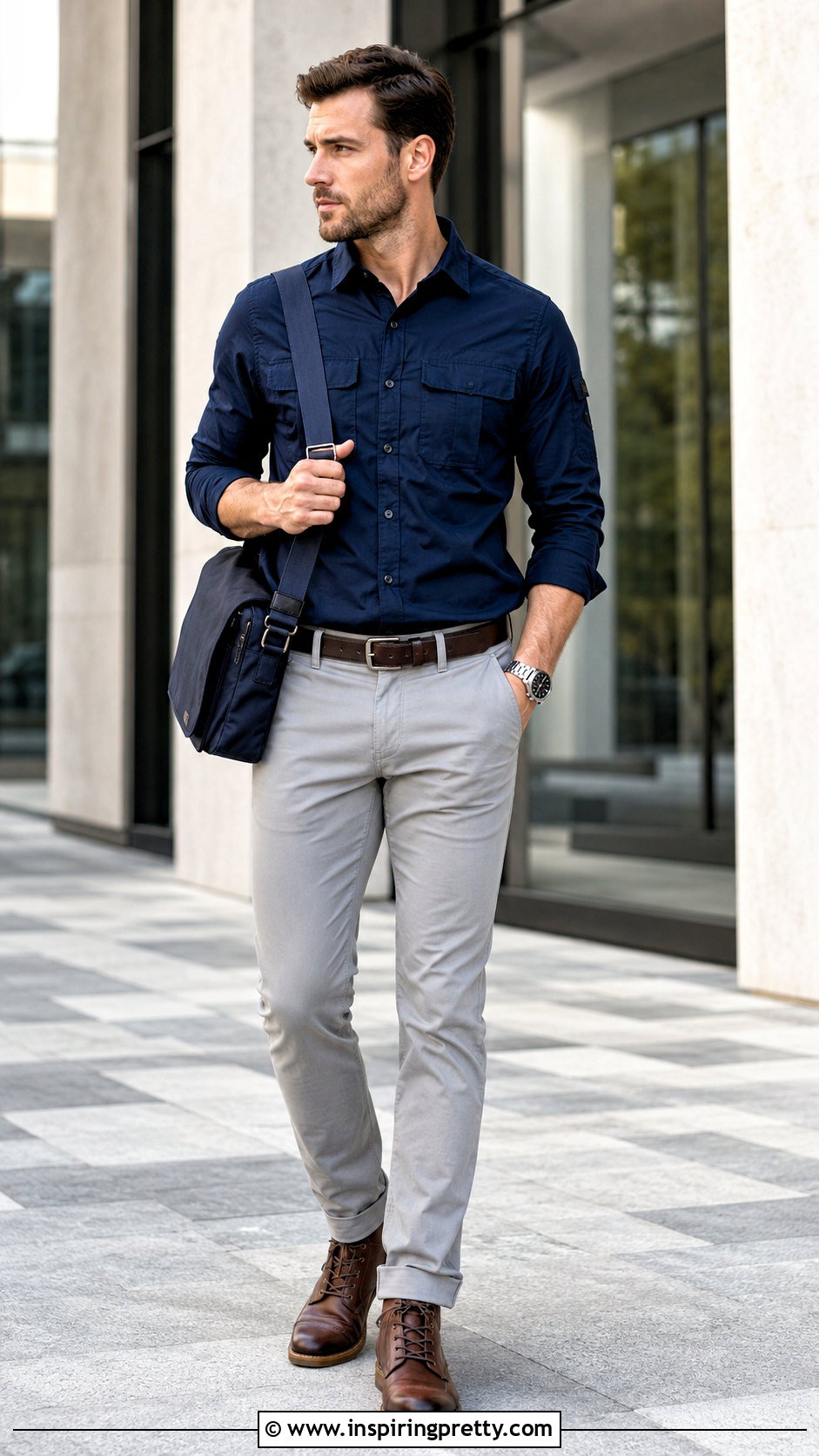
Navy makes a tactical shirt look almost formal, especially next to lighter neutrals. A long-sleeve button-up with hidden chest pockets and a crisp collar works with light gray technical chinos. Brown leather chukkas add warmth, with a matching belt, a steel watch and a compact navy messenger bag. Tuck it in for the office, wear it out for travel. If the sleeves have roll tabs, roll both to the same height; uneven tabs look sloppy. This is the outfit that shows a tactical top doesn't need cargos or combat boots at all. Concealed pockets help it pass in smart-casual settings.
14. Tactical T-Shirt Outfit
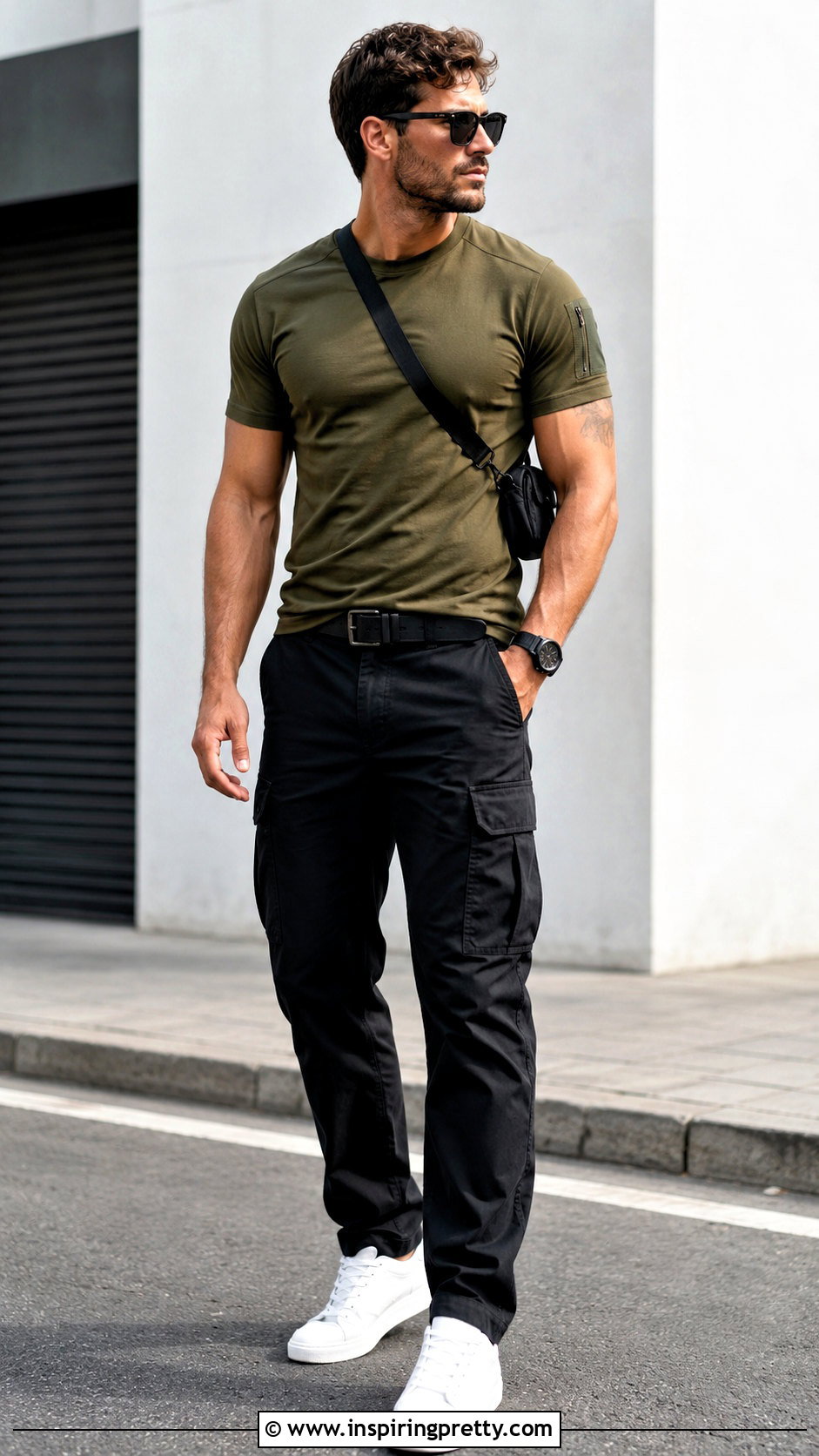
The simplest tactical top is often the most useful. A fitted olive performance tee with reinforced seams, a small sleeve pocket and almost no branding goes with black straight cargos that sit comfortably at the waist. Clean white sneakers push it toward streetwear. A black belt, a quiet watch and a small crossbody bag finish it. Sleeves should end around mid upper arm, and the hem should be short enough to wear out without covering the pockets. Carry a light black overshirt for cooler evenings. It's right for summer walks, errands and laid-back gatherings.
15. Long Sleeve Tactical T-Shirt Outfit
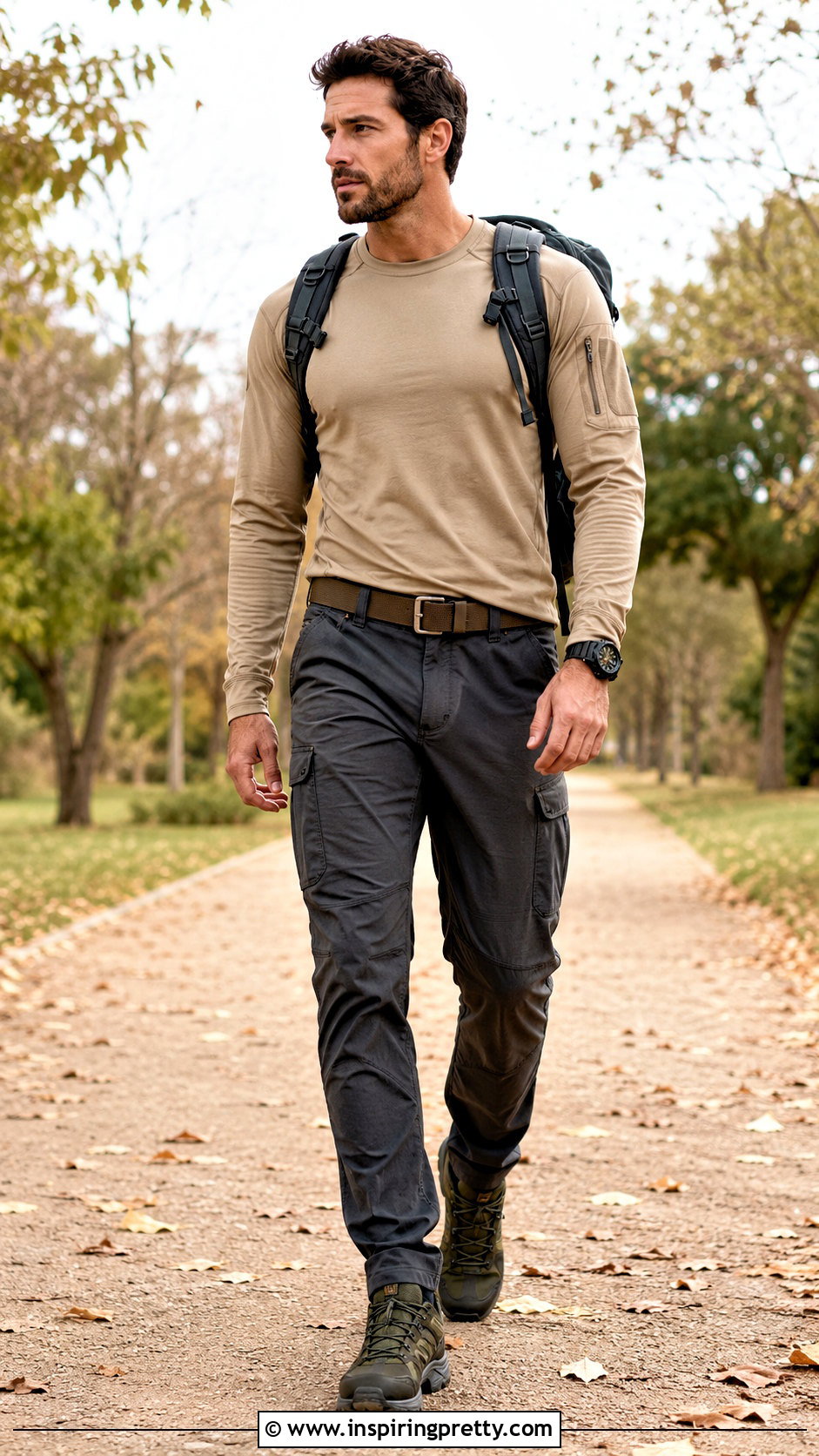
A long-sleeve tactical tee covers mild fall days without the weight of a jacket. I'd choose a fitted sand-colored crew neck with reinforced forearms and breathable stretch, over charcoal cargos in a relaxed taper. Dark olive trail shoes add a bit of color. A brown utility belt, a rugged watch and a charcoal backpack finish it. Push the sleeves up to the forearm casually, but don't drag tight cuffs over your elbows or they'll stay stretched for good. Light on top and dark below makes a balanced line that suits most builds. Solid colors let the reinforced panels show.
16. Tactical Softshell Jacket Outfit
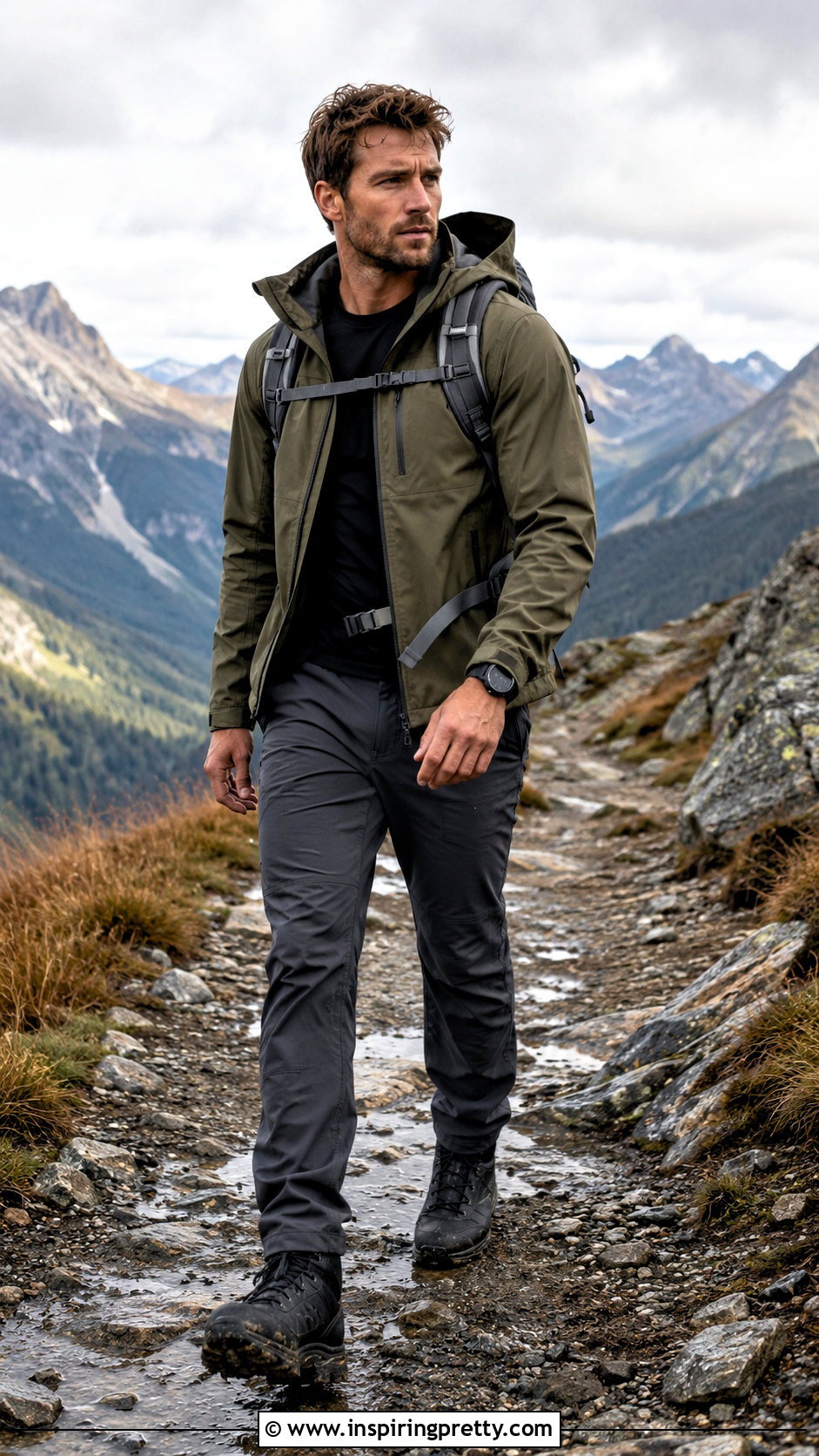
A softshell jacket is a stretchy, wind-resistant layer, usually with a water-repellent finish, built for movement rather than downpours. For windy, unsettled days I'd build the outfit around a streamlined olive one with a high collar and few external pockets. Underneath, a black wicking tee; below, charcoal hiking pants. Black waterproof boots, a gray backpack and a dark watch finish it. Keep the jacket hem near the hip. Articulated knees on the pants help on climbs, but skip big pocket flaps. Half-zipped, the black base layer stops it all becoming one block of olive and gray.
17. Tactical Field Shirt Outfit
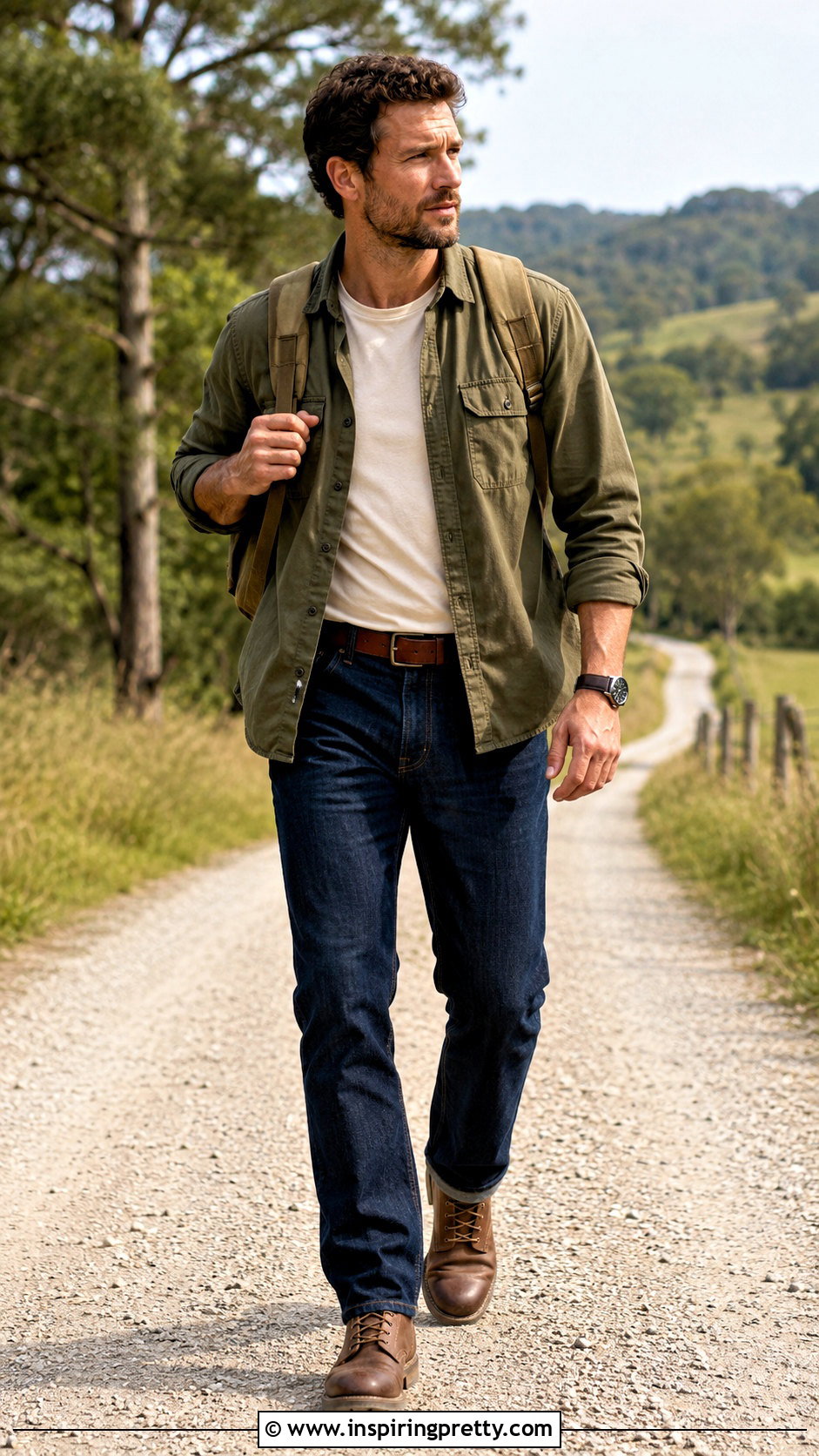
A field shirt is the most classic of the tactical tops, and it looks right with ordinary menswear. I'd choose olive with four flat pockets and a straight, structured cut, layered over a cream tee to lighten it. Dark jeans give familiar contrast, and brown lace-up boots keep it rugged without looking specialist. A brown leather belt, a canvas watch strap and a khaki backpack finish it. Wear it open like a light jacket in spring, buttoned on cooler days. The jeans should be straight or gently tapered and end cleanly above the boot. Natural textures make it feel relaxed.
18. Tactical Vest And Shirt Outfit
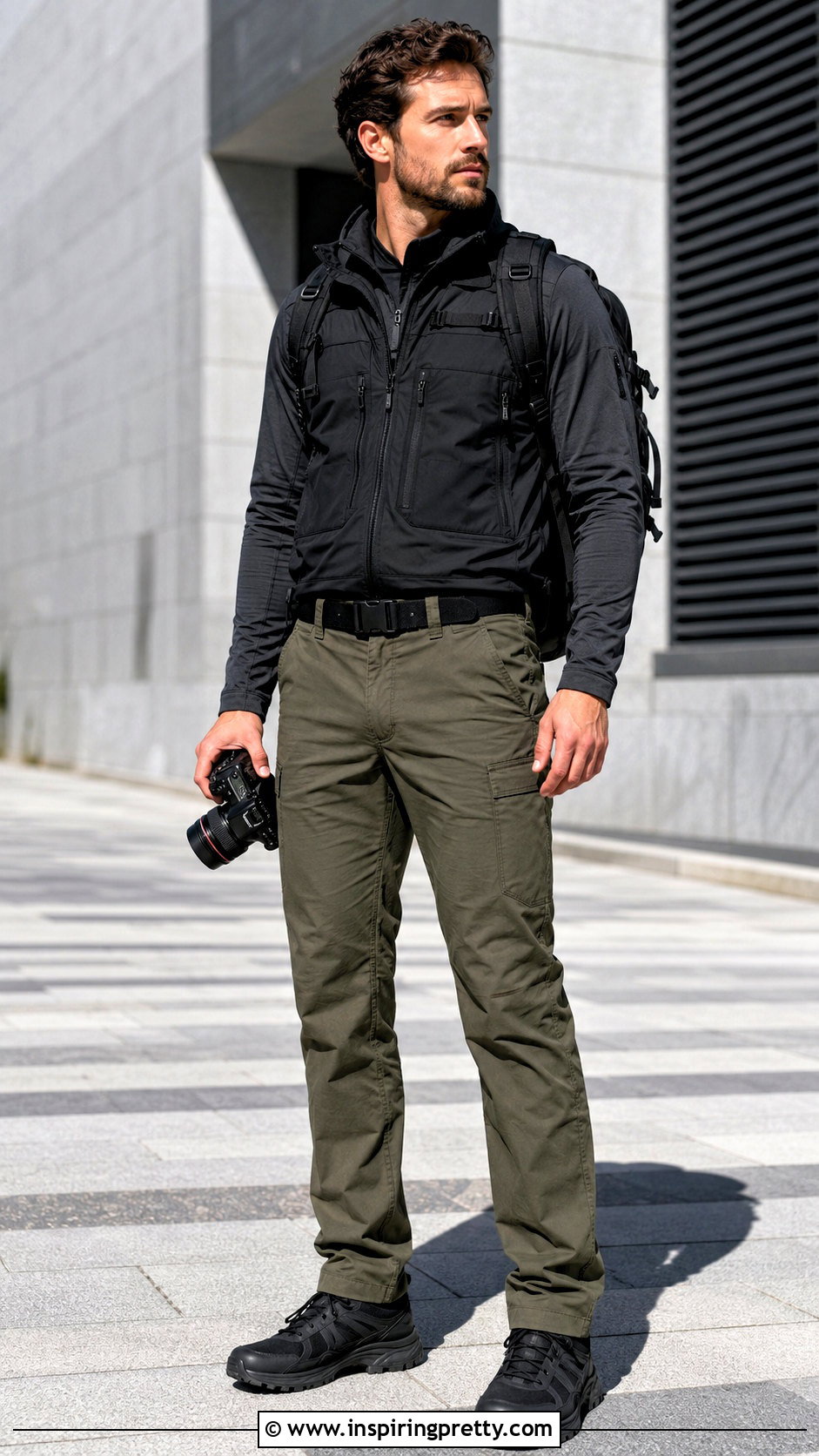
A tactical vest takes over an outfit fast, so I keep everything under it plain. A light black utility vest over a charcoal long-sleeve tactical shirt, with olive straight work pants rather than heavy cargos. Black trail sneakers, a simple nylon belt and a compact backpack finish it. The vest should have flat pockets and almost no webbing or loops, so it reads as outerwear rather than gear. Leave room between the shirt and vest to move, without going loose. It's genuinely handy on photography trips and outdoor projects where you want your hands free. Dark colors keep it from looking like a costume.
19. Tactical Shirt And Cargo Shorts Outfit
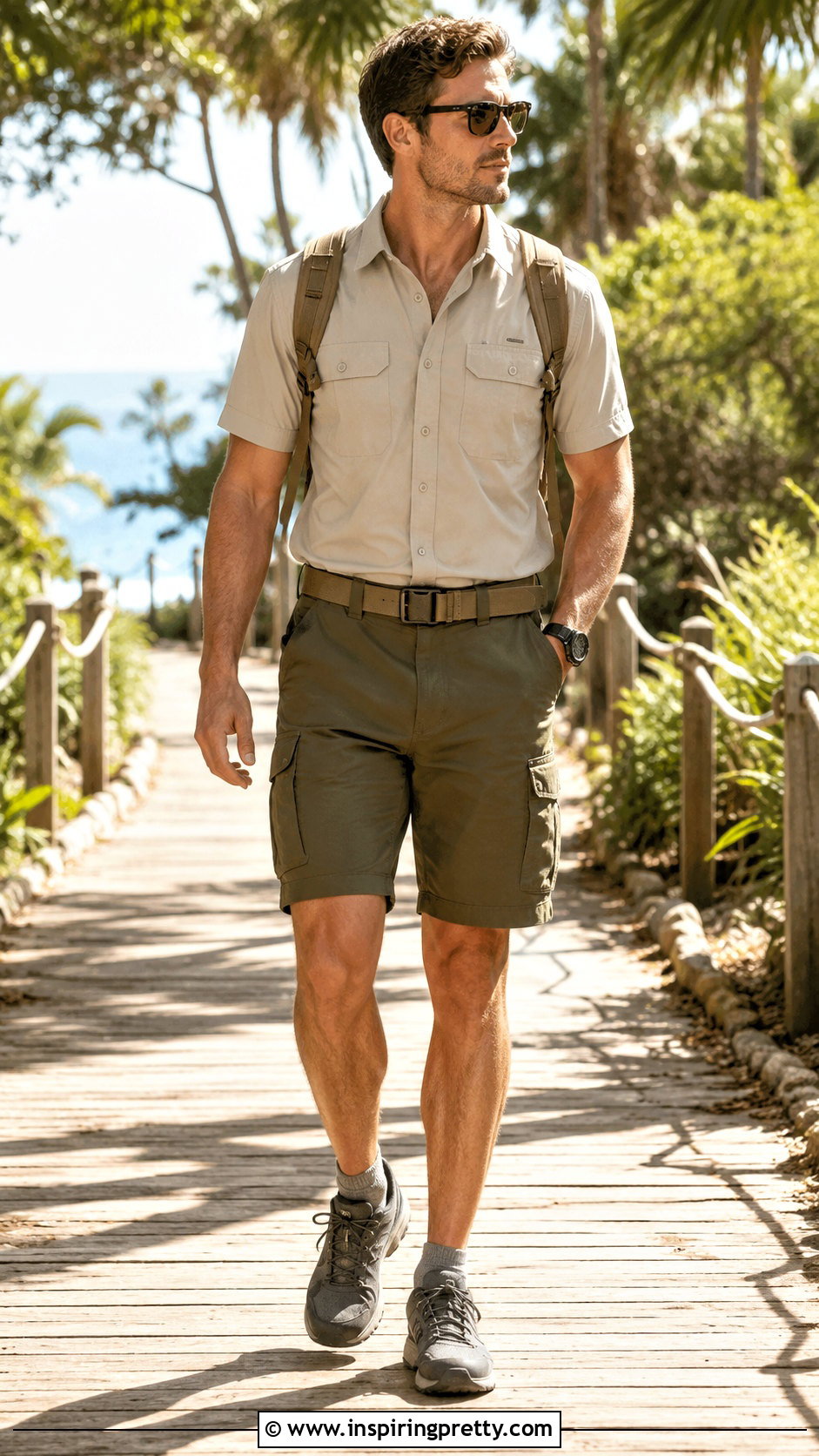
Heat doesn't mean losing the useful details. A light stone short-sleeve tactical shirt worn out over olive cargo shorts is my summer version. Shorts should finish near the knee, with flat pockets that don't flare when they're full; bulging side pockets make the hips look wide. Gray hiking sneakers with low performance socks suit long walks. A tan web belt, a sports watch and a small canvas backpack finish it. Open a button or two for air, and add a white wicking undershirt if you sweat through shirts. Nature walks, markets and active holidays suit it.
20. All Black Tactical Top Outfit
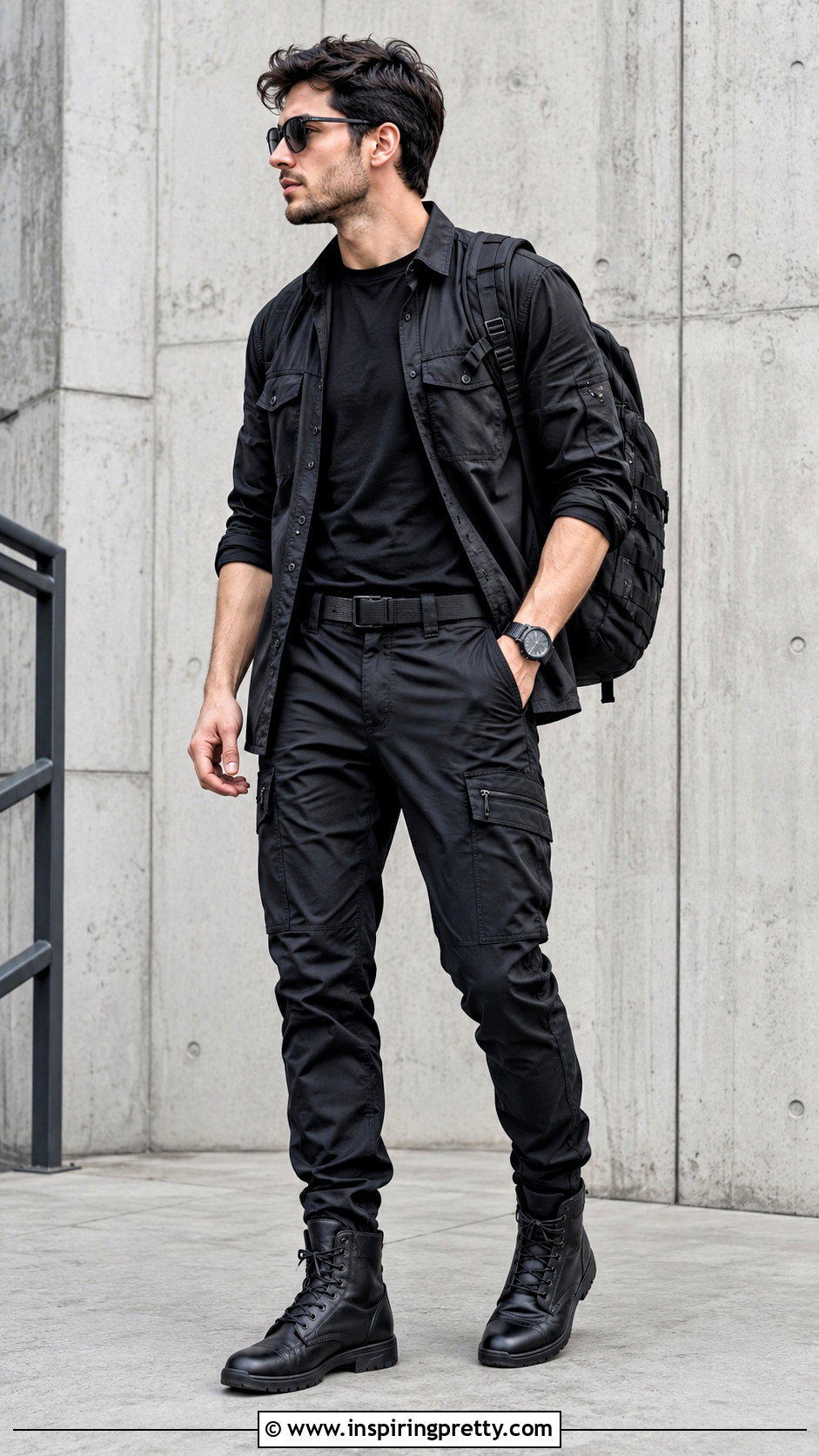
All black only works if the textures differ. Otherwise it's one flat shape. I'd layer a matte black ripstop overshirt over a fitted black tee, with tapered black utility pants with subtle pockets. Clean black leather boots, a black web belt and a structured nylon backpack finish it. So the contrast comes from fabric: smooth knit, textured ripstop, cotton-blend pants and polished leather. Worn open, the overshirt adds vertical lines and relaxes the shape. Black fades at different rates, so I'd wash these pieces inside out in cold water to keep the shades matching. It works for city travel and evenings out.
How Many Pockets Is Too Many for Town
The fastest way for tactical clothing to look like a costume is to stack it. A shirt with four pockets, cargos with six, a vest and a webbing belt add up to a uniform, not an outfit. This is how I keep it wearable.
- Let one piece carry the utility. If the shirt has chest pockets and tabs, choose plain or flat-pocket trousers, and the other way round.
- Keep pockets flat. Full cargo pockets bulge and widen the thigh; empty phones and keys into a small bag instead.
- Skip patches, flags and morale badges for everyday wear, and pick velcro panels you can cover or leave empty.
- Mix in one ordinary piece, such as jeans, chinos, suede boots or a plain tee, so the outfit reads as clothing.
Caring for softshells and ripstop
Wash softshells on a gentle cycle without fabric softener, which clogs the fabric and stops water beading. A short, low-heat tumble or a warm iron through a cloth usually revives the water-repellent finish. Cotton ripstop softens with each wash; close the velcro and zips first so they don't chew the fabric.
One Utility Piece at a Time
Every outfit above follows the same rule I'd give anyone new to this style: one tactical top, and everything around it simple. Streamlined pants, the right shoes for where you're going and very few accessories keep it looking like clothing rather than kit. Black, olive, gray, navy, khaki and brown mix easily, so you can rotate pieces freely. Fit matters most, because clean proportions stop pockets and reinforced panels from adding bulk. From light summer shirts to softshell jackets, these Mens Tactical Tops outfit ideas cover travel, outdoor days, casual work and ordinary weekends.
Related posts:


Leave a Reply