
Most of the layering I do in closet edits uses clothes the person already owns; they just never put those pieces together. Good layering isn't about wearing more, it's about each piece doing one job without adding bulk. My working order is a comfortable base, one or two visible layers, then outerwear that balances the whole shape. Stacked shirts, turtleneck bases, tailored jackets and dresses or skirts worn over trousers all appear below. The formulas adapt to any season, body or dress code once you change the fabric weights and lengths, and I've written them as complete outfits so you can copy one straight from the closet.
Thin to Thick: The Order Layers Go On
When I build a layered outfit in someone's closet, I sort the pieces by weight before I think about color. Nearly every bulky, uncomfortable layered look breaks one of these rules.
- Thinnest next to the skin. Tees, bodysuits, fine merino and thin turtlenecks go first. Each layer after that can be a little heavier, never lighter, or the outer piece clings and shows every seam underneath.
- Every sleeve must fit inside the next. Put on the base, then reach both arms forward in the next layer. If it pulls across the back or the sleeves bind at the elbow, that pairing won't last a day.
- Step the hem lengths. Visible hems should either line up or change by a clear amount, a few inches at least. Two hems an inch apart look like a mistake.
- One relaxed piece, the rest fitted. A slouchy sweater under a slouchy coat over wide trousers loses your shape completely. Pick the one piece allowed to be oversized.
The last check is the take-off test. Remove the outer layer and look in the mirror. If what's left looks finished on its own, the outfit will still work when you walk into a warm room.
1. Turtleneck Shirt And Blazer Layering Outfit
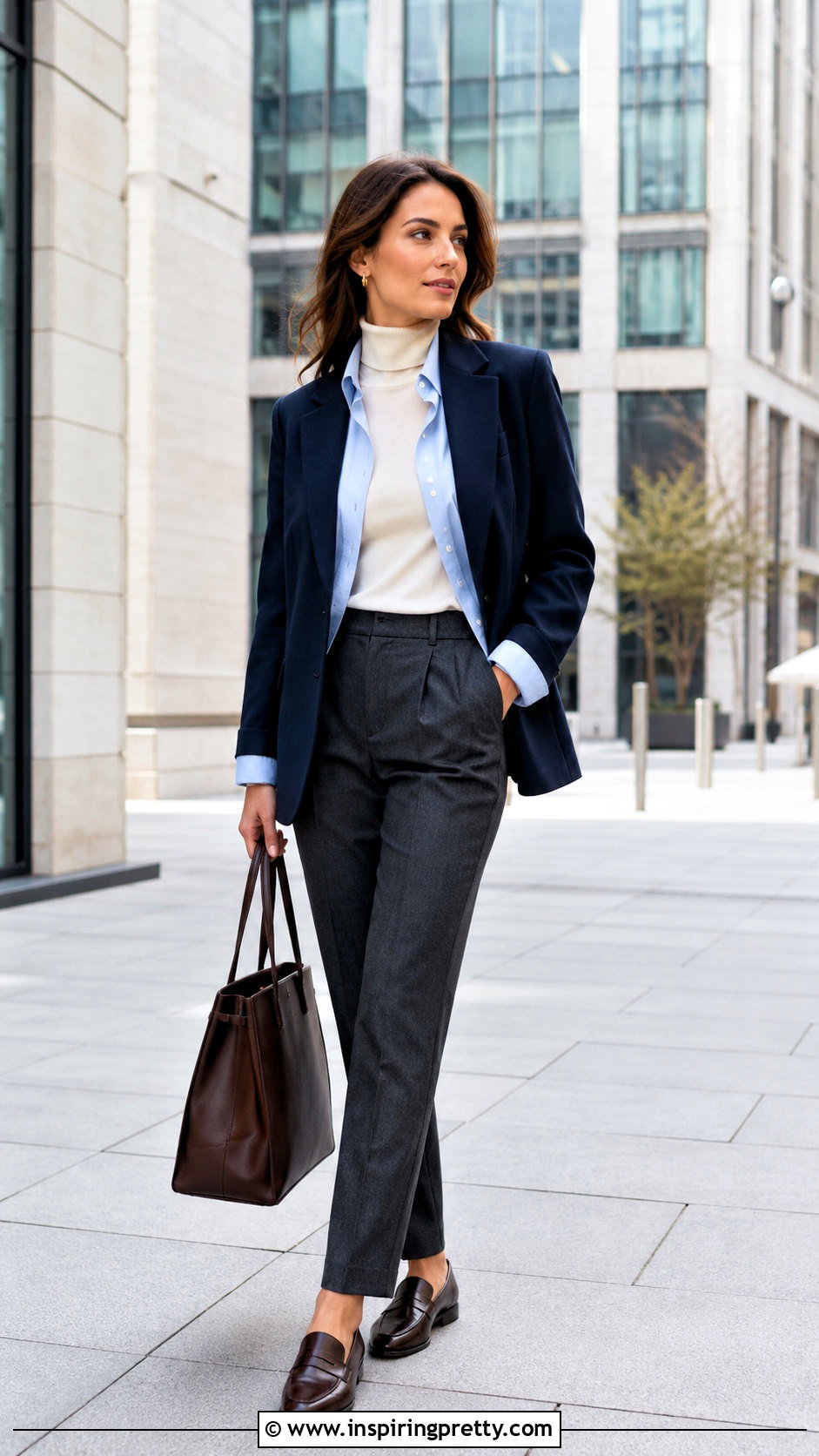
A turtleneck under a button-down under a blazer is three layers at the neck, so the turtleneck has to be thin. Fine cotton, modal or merino sits flat; a chunky knit pushes the shirt collar up and makes the blazer pull at the shoulders. Leave the shirt's top buttons open to show the roll neck, then turn the shirt cuffs back over the blazer sleeves. Straight trousers, loafers, a leather tote and small hoops finish it for work. Cream, pale blue and navy is the classic version; burgundy with charcoal is richer. I size the blazer slightly relaxed for this one.
2. White T-Shirt Cardigan And Trench Coat Layering Outfit
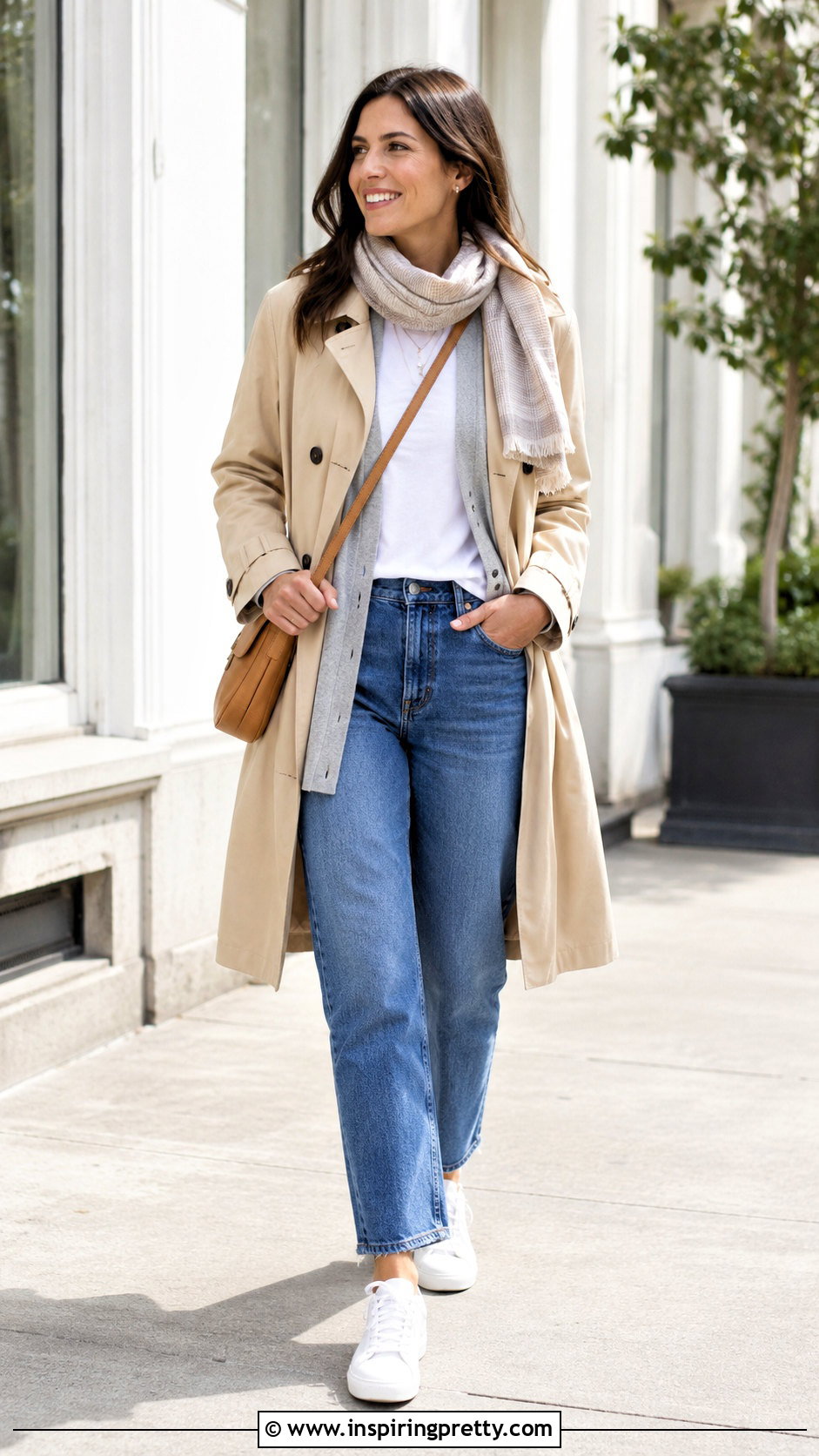
A white tee, a light cardigan and a trench handle the days when spring or fall weather changes by the hour. The trench should be longer than the cardigan so the lengths step down clearly. Straight blue jeans and leather sneakers keep it casual, a crossbody leaves your hands free and a thin scarf can add a color. When it warms up, the coat comes off first, then the cardigan goes over your shoulders. I'd pick a cardigan in a fine knit for this; a bulky one fights the trench's set-in sleeves.
3. Tank Top Striped Shirt And Denim Jacket Layering Outfit
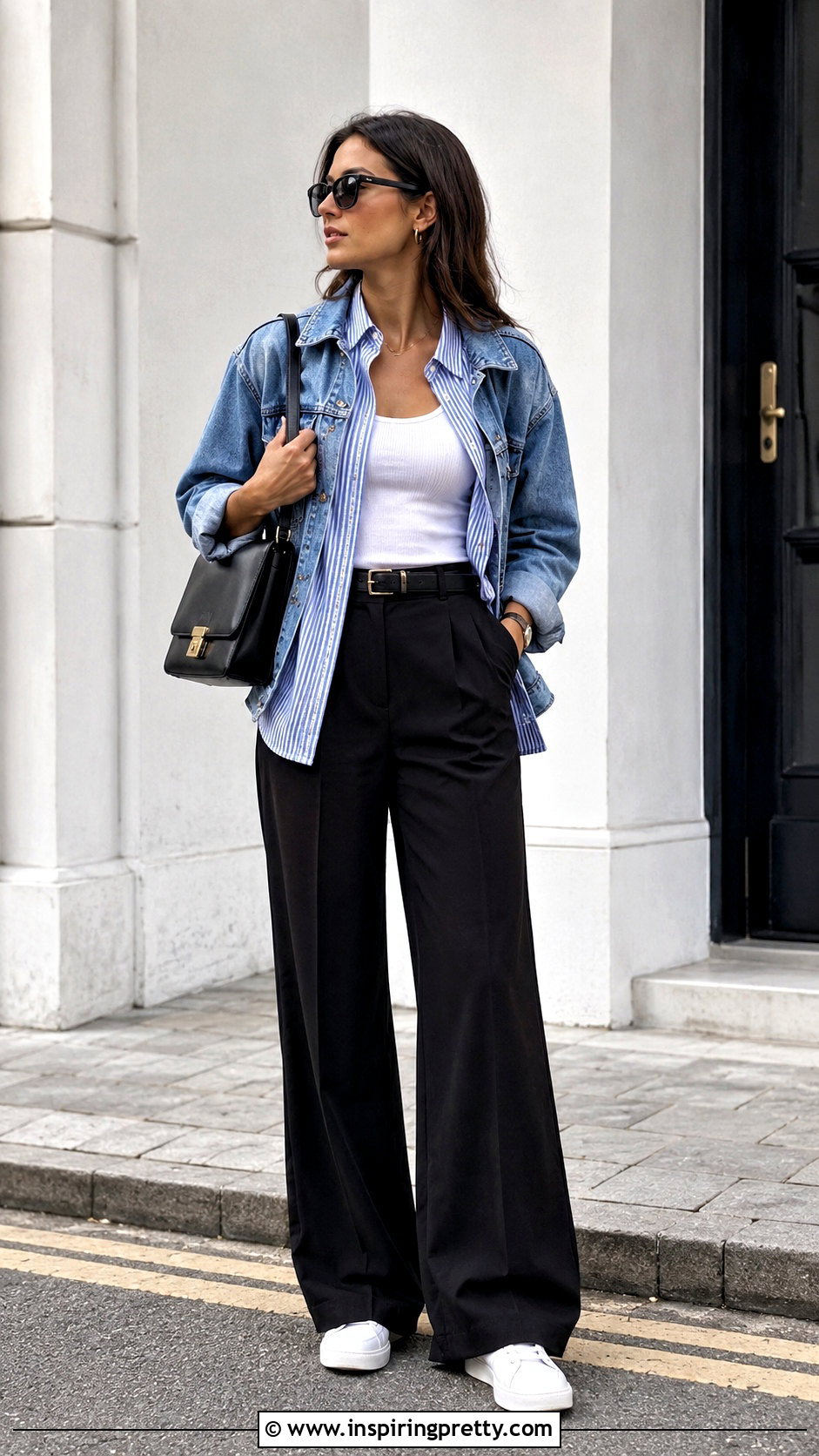
For mild weather, a ribbed tank, an oversized striped shirt worn open and a denim jacket give you three ways to adjust. Check that the jacket has room through the arms and back for the shirt sleeves, which is where this combination usually gets tight. Wide-leg black pants balance all that volume on top. Tuck the tank in for a waist and leave the other layers loose. White sneakers, a medium shoulder bag and sunglasses complete it. Indoors, the jacket comes off and the open shirt over a tank still looks like an outfit.
4. Turtleneck Under Slip Dress Layering Outfit
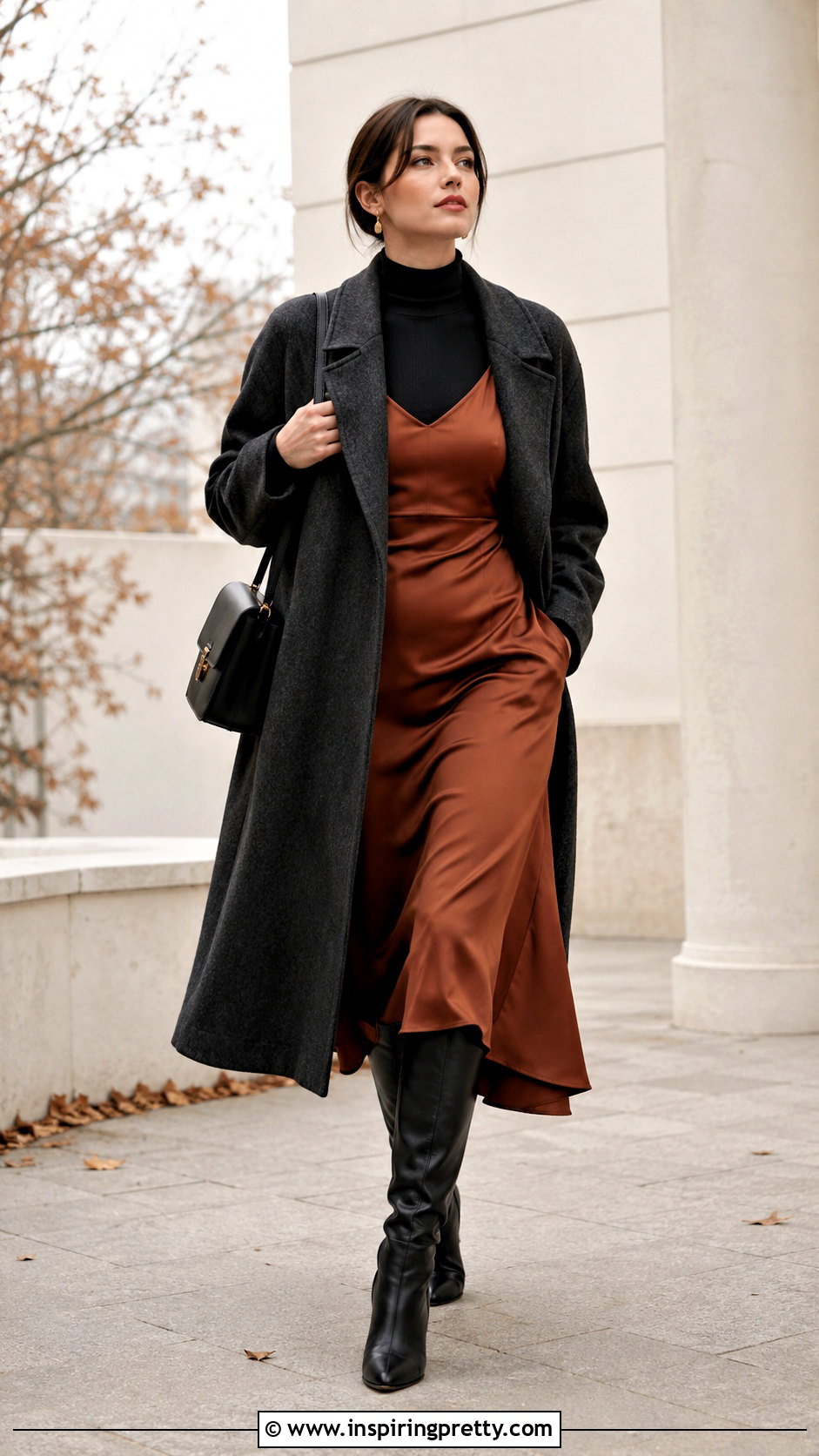
A turtleneck under a slip dress is how I get satin through the cold months. The base needs close sleeves so nothing bunches under the dress straps. Satin or crepe over a matte knit gives a nice contrast, and the knit also stops the slip from clinging. Knee-high boots and a long wool coat keep you warm, with a structured bag and simple earrings. Black on charcoal looks sleek; cream under rust or deep blue is softer. Check that the dress straps lie flat over the knit and don't twist.
5. Sweater Vest Shirt And Pleated Skirt Layering Outfit
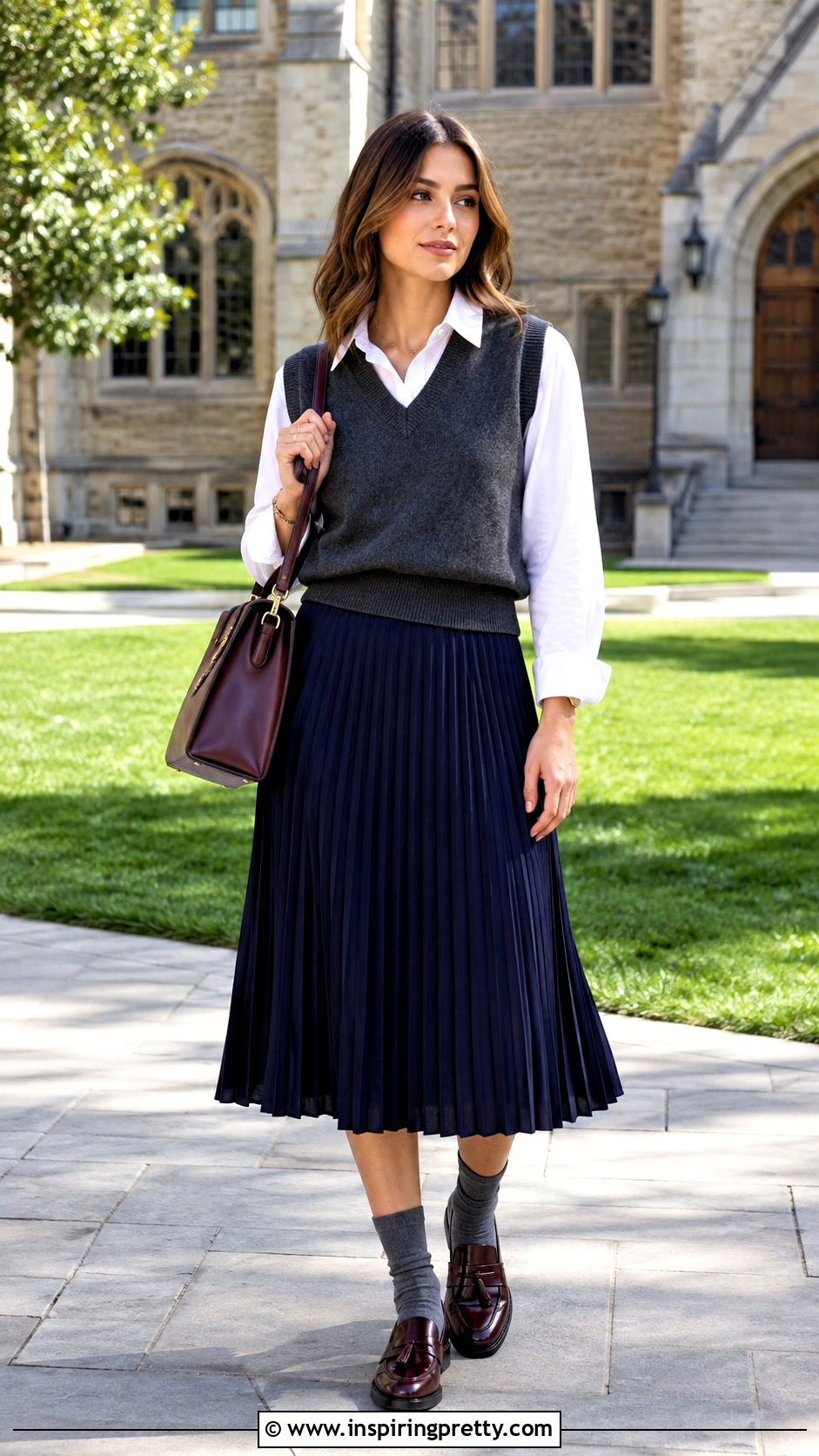
A sweater vest over a poplin shirt and a pleated midi skirt is a proportion exercise. The vest should end near the skirt's waistband, which defines the middle without anything tight. If it lands lower, it covers the waist and the pleats start from your hips. Loafers with ankle socks and a structured bag suit everyday wear. I like a white shirt, gray vest and navy skirt with a burgundy bag. Push the shirt sleeves up a little. On colder days, the coat should fall below the widest part of the pleats, not stop halfway.
6. Hoodie Leggings And Wool Coat Layering Outfit
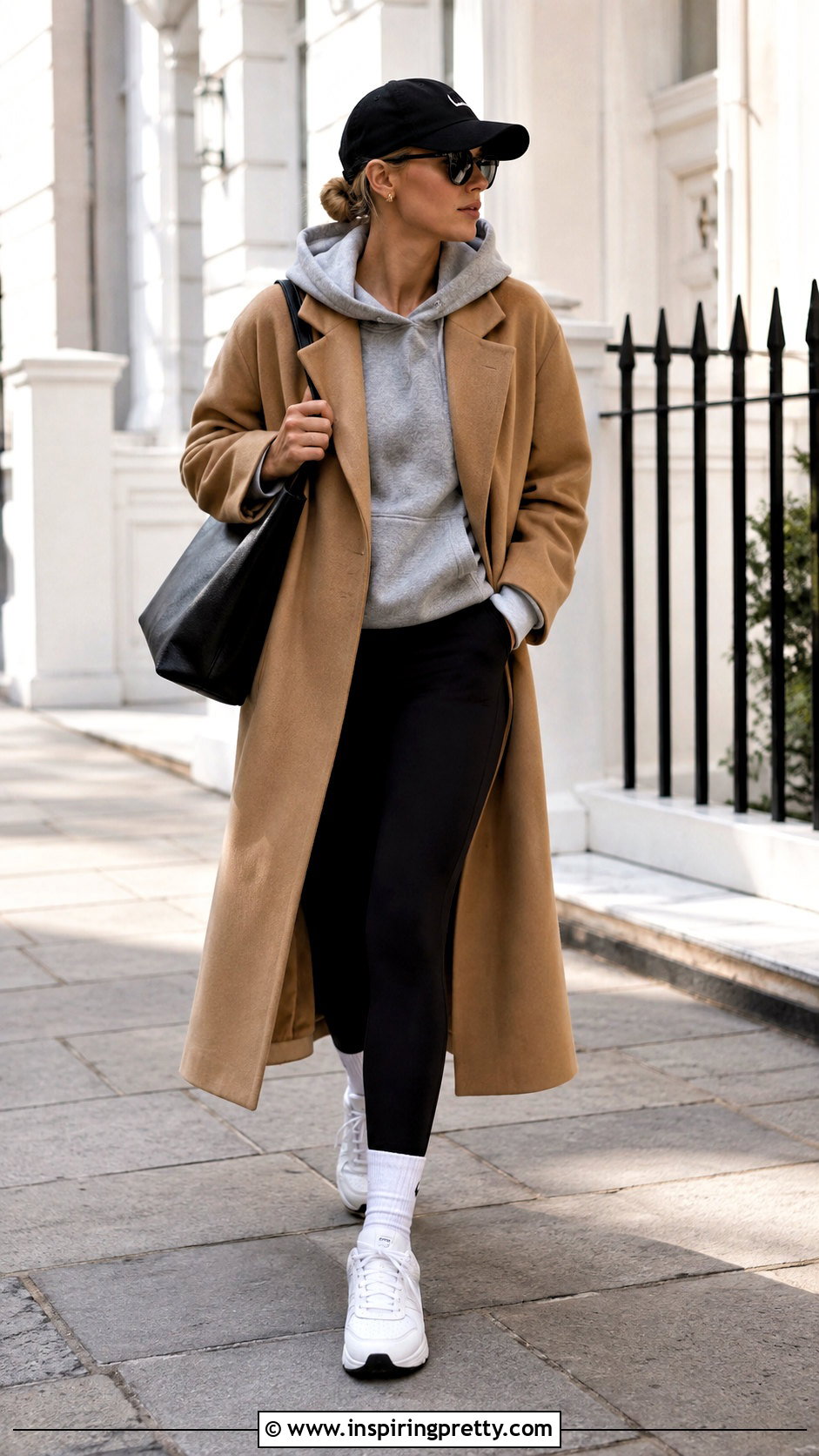
Athletic pieces look intentional under one structured coat. A fitted tee, a streamlined hoodie and a long wool coat with clean lapels, over full-length black leggings and supportive sneakers. The hoodie is the risky piece: a thick fleece one won't fit through a coat with narrow sleeves, so I go for a thin cotton hoodie here. Lay the hood neatly over the coat collar rather than stuffing it inside. A black base lets a camel or olive coat lead. Crew socks, a big tote and a cap finish it for errands or travel.
7. Denim Shirt Sweater And Tailored Pants Layering Outfit
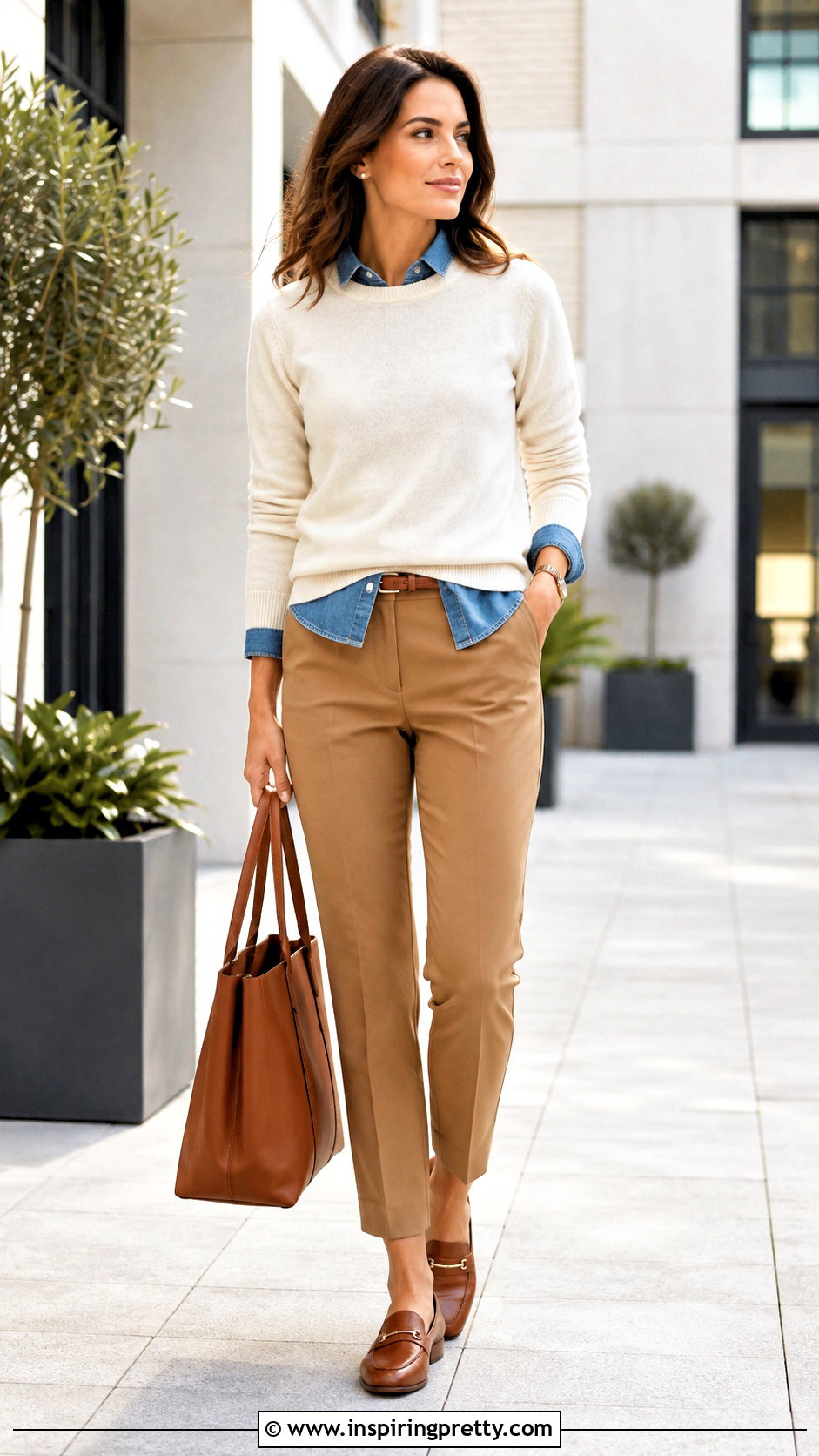
Chambray under a crewneck sweater gives you a collar, cuffs and a hem that peek out with almost no bulk. Heavy denim is too stiff here; it makes the sweater tight across the back. Ankle-length tailored pants sharpen the relaxed top, and loafers or low block heels finish it. Pale chambray suits cream, camel or forest green knitwear. For a longer line, tuck the shirt in fully. If you'd rather let the hem show, keep an even strip on both sides; one side hanging lower looks like an accident.
8. Bodysuit Blazer And Jeans Layering Outfit
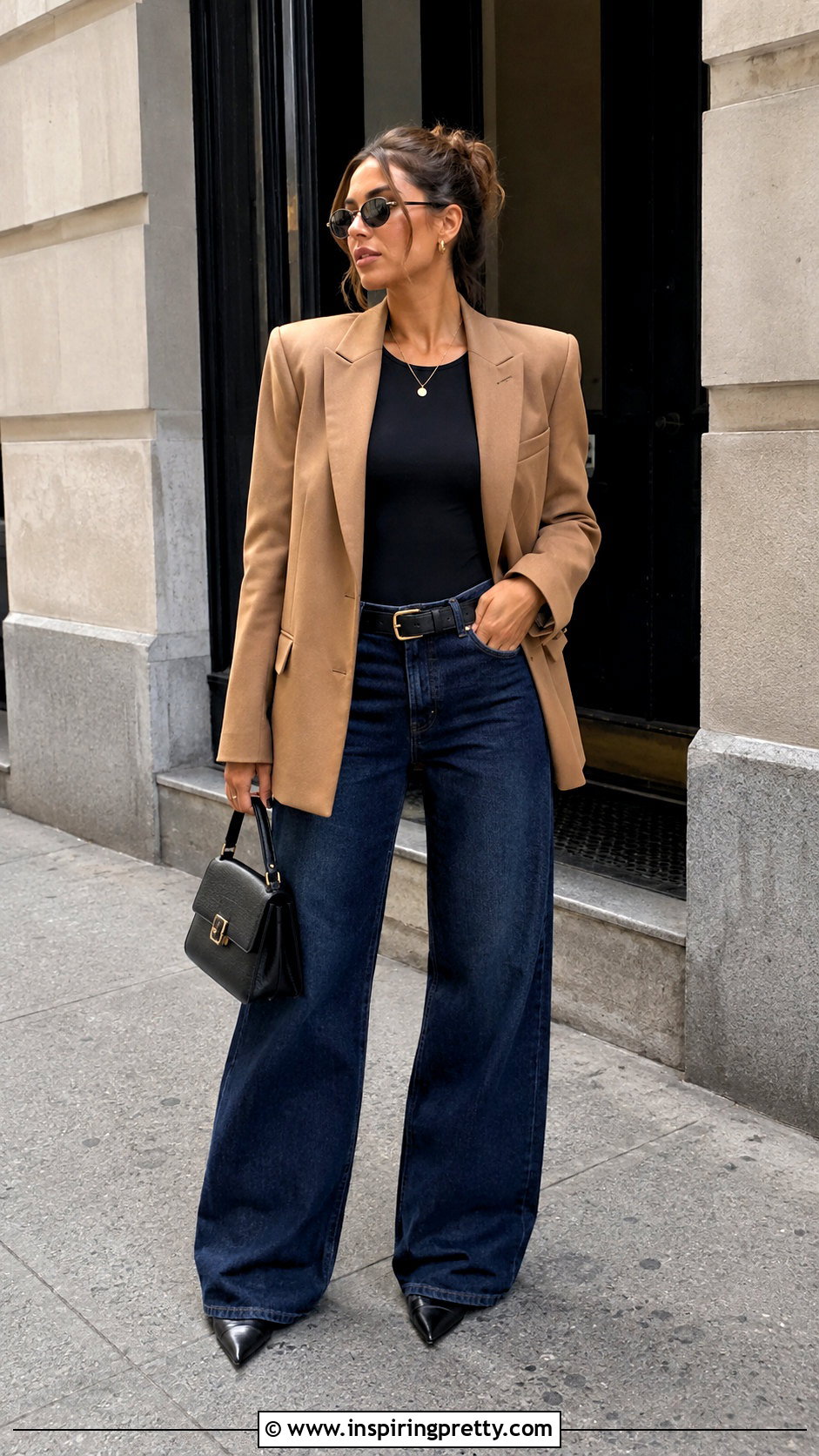
A bodysuit is the base I suggest under an oversized blazer, because it stays smooth and tucked all day; a tucked tee creeps out every time you reach for something. High-rise straight or wide-leg jeans, then pointed flats, slingbacks or sleek ankle boots. A black bodysuit with dark jeans forms one column under a camel or plaid blazer, and deep red gives more color. Add a leather belt, compact bag and simple necklace. Leave the blazer open to show the waist, or do up one button for a sharper look.
9. Long-Sleeve T-Shirt Sweater Vest And Cargo Pants Layering Outfit
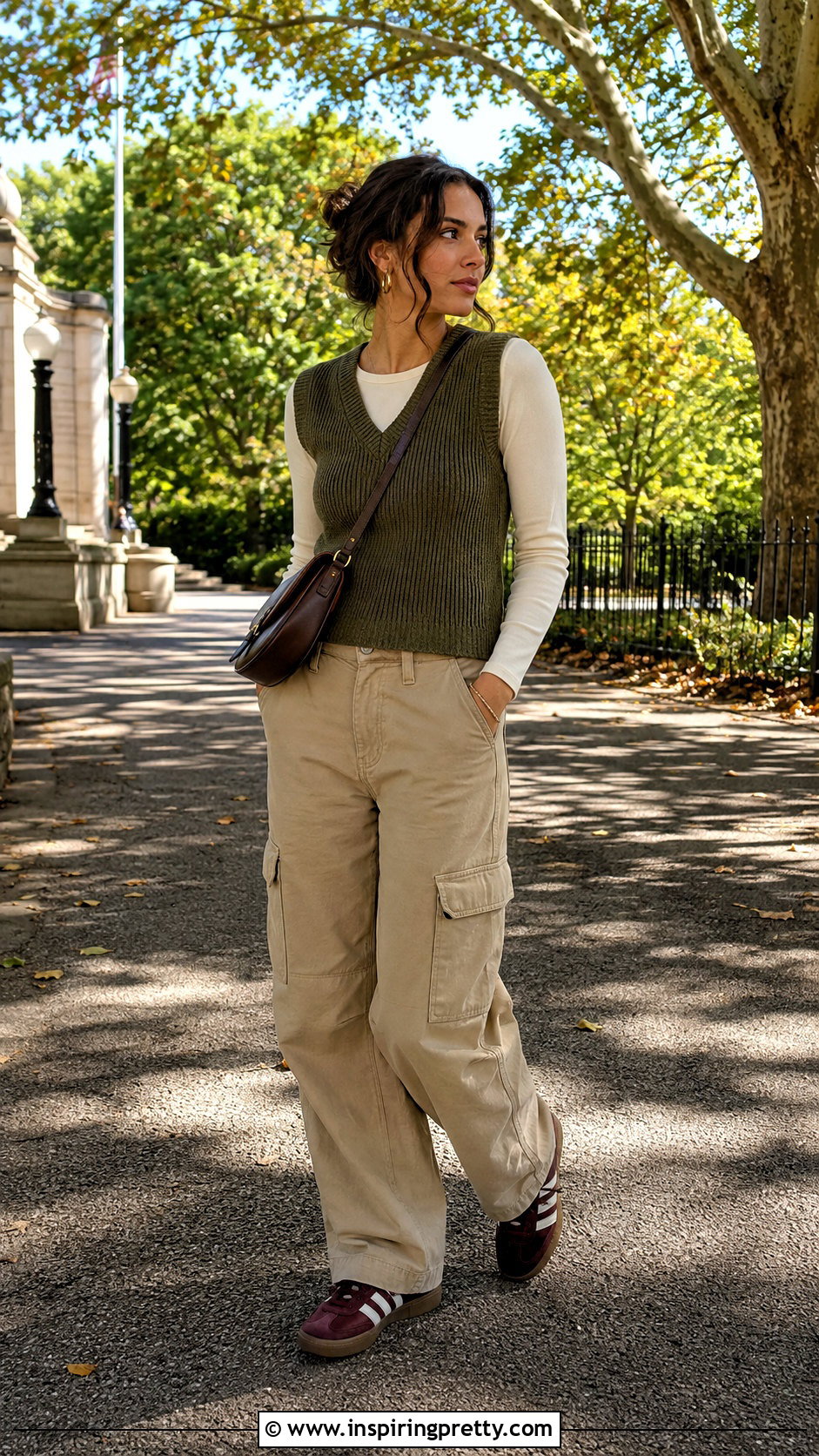
A long-sleeve tee under a sweater vest is an easy first try at casual layering. Use a fitted cotton top in white, gray or stripes, and a slightly roomy vest with a clean neckline. Relaxed cargos and retro sneakers keep it practical. The thing I watch is volume: a very oversized vest over very loose pants turns into one block, so add a partial front tuck or choose a cropped vest. Cream top, olive vest, tan cargos and burgundy sneakers is an easy combination for days too warm for a jacket.
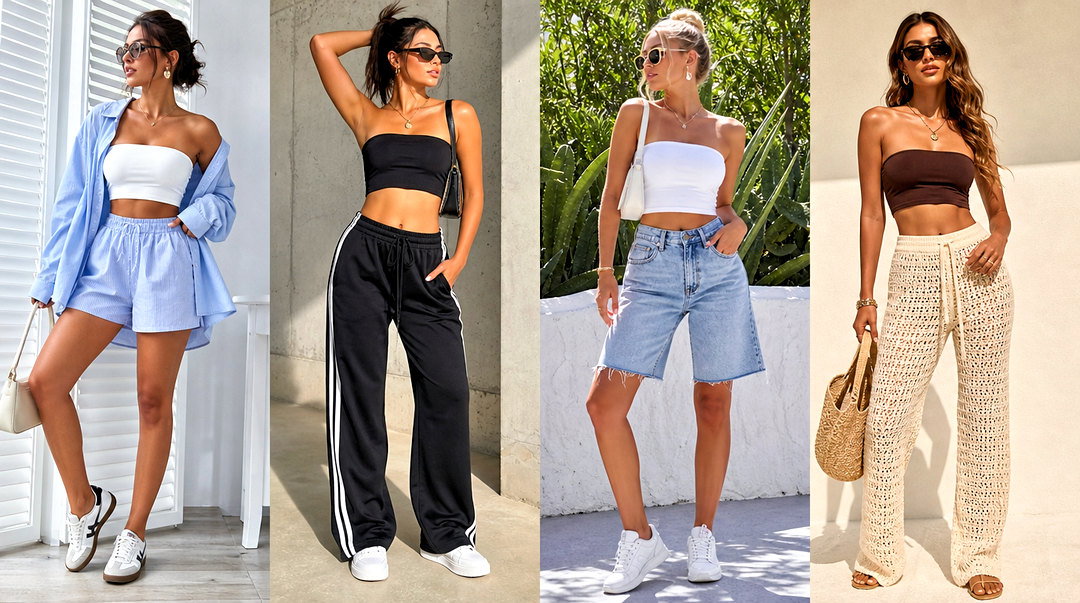
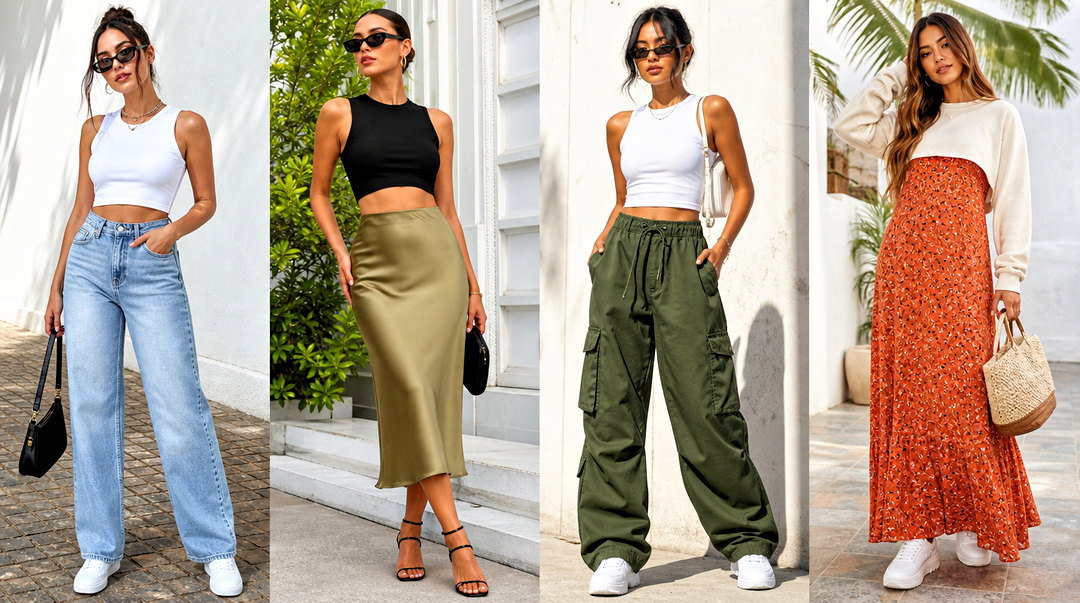
10. Shirt Dress Cardigan And Boots Layering Outfit
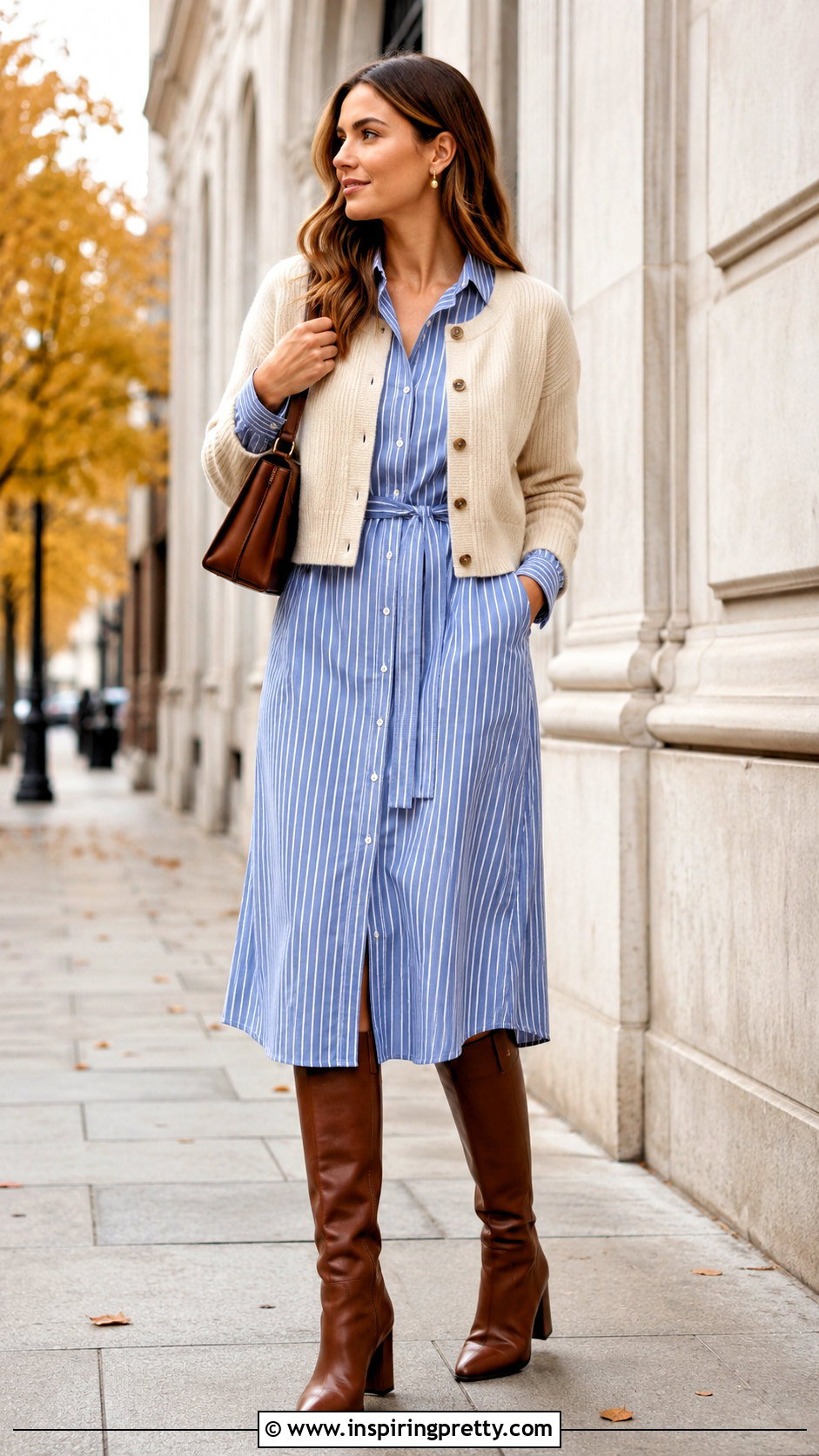
A shirt dress is one of the most flexible pieces in a closet: dress, tunic or light outer layer. Here it's buttoned under a waist-length cardigan with a slim belt and knee-high boots. The cardigan length is what matters; ending at the natural waist lets the dress skirt show, while a hip-length knit swamps it. Ivory, camel and chocolate is a calm set; a print under a solid knit adds energy. Leave the dress collar out and push the sleeves up a little. In cold weather, opaque tights and a plain long coat.
11. Tank Top Linen Shirt And Shorts Layering Outfit
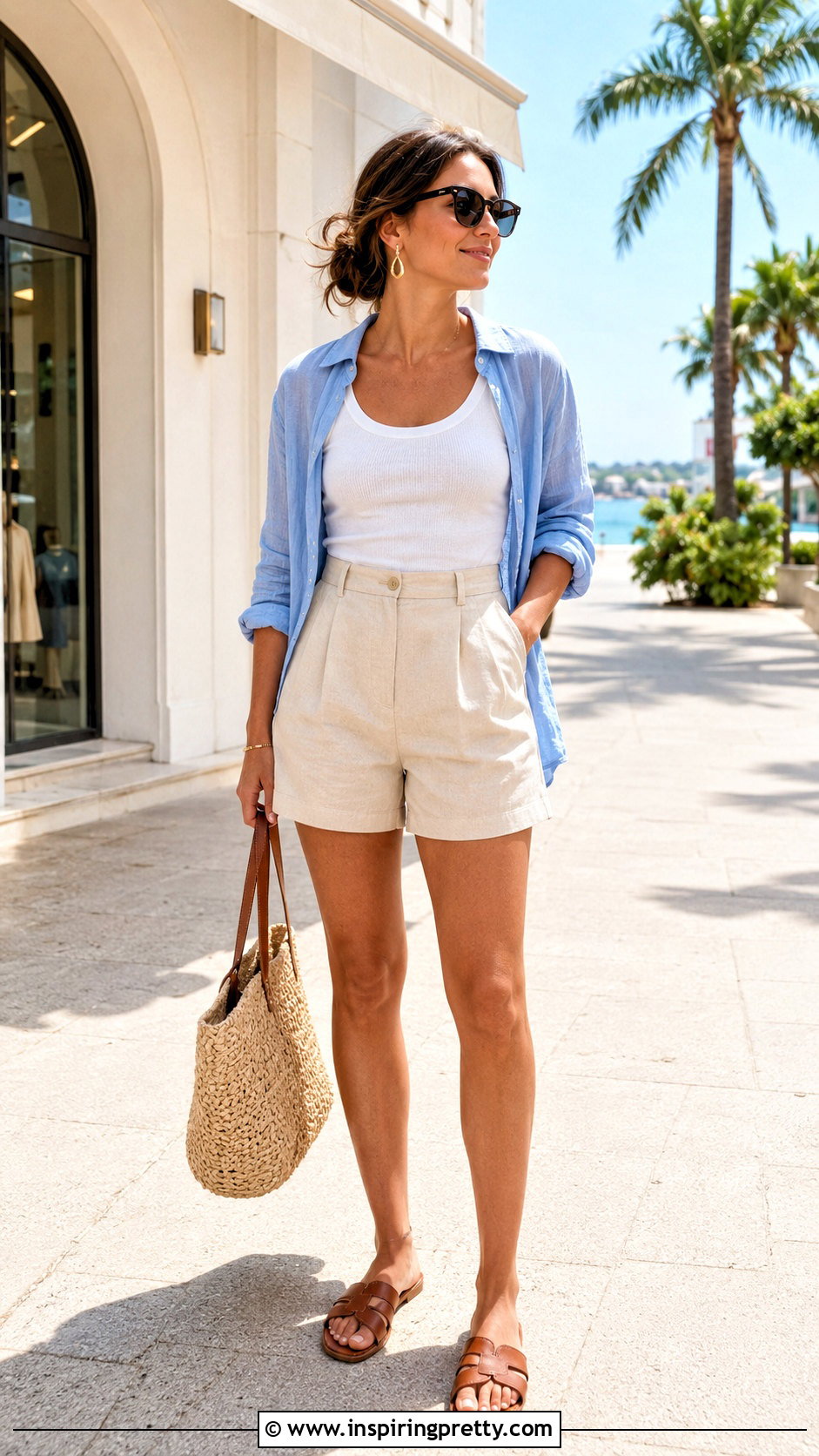
Summer layering has to add coverage without trapping heat, so linen is my first choice for the outer piece. A breathable fitted tank, a relaxed linen shirt worn open, and high-rise tailored shorts, which look more grown-up than beach shorts. Roll the sleeves neatly to the forearm and tuck the tank in. The shirt should reach just past the shorts' waistband without hiding them. Flat leather sandals, a woven tote, sunglasses and small gold earrings. White, sand and soft blue are easy; one bright shirt can lead instead.
12. Mesh Top Tank And Jeans Layering Outfit
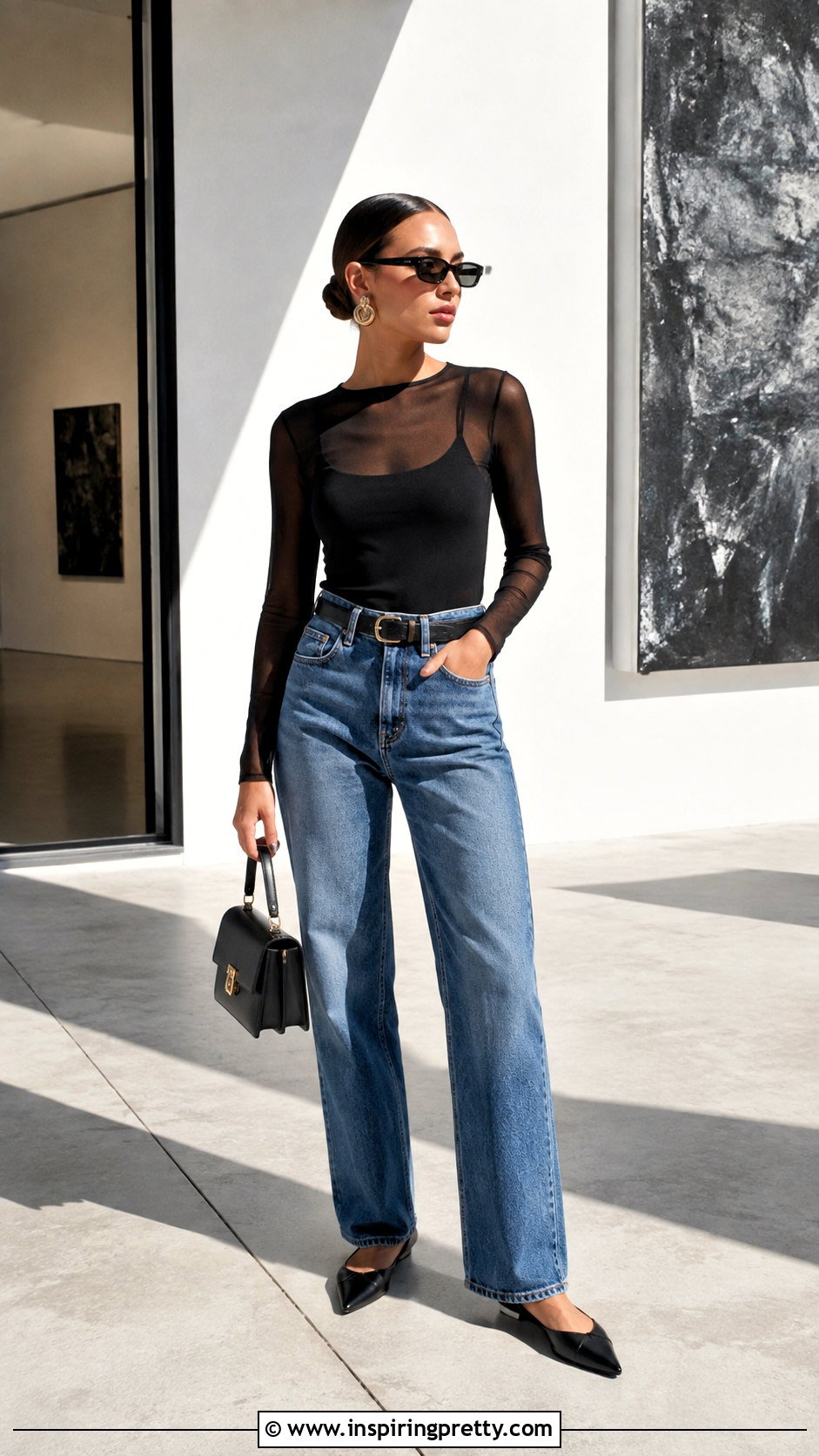
Fine mesh over an opaque tank gives texture with very little weight. Keep the two pieces in matching or close colors; a contrasting tank under mesh tends to look like underwear showing through. High-rise jeans ground the delicate top, with pointed flats or low heels. A structured mini bag, sculptural earrings and a slim belt. Black on black is easiest, but chocolate or deep green look polished too. Check that the tank straps and neckline line up neatly under the mesh. Keep the jeans clean rather than distressed.
13. Striped T-Shirt Utility Jacket And Chinos Layering Outfit
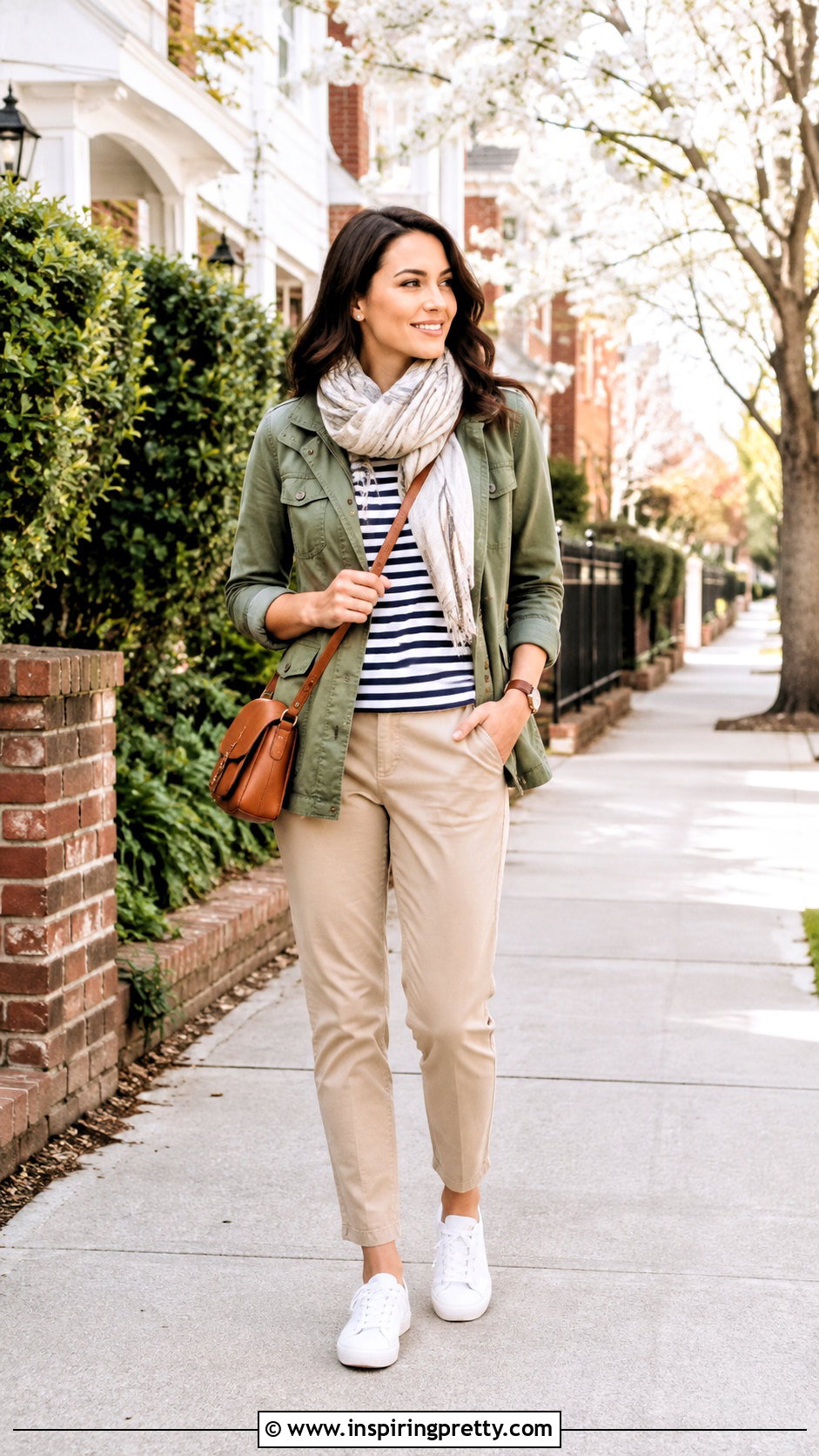
A striped tee and a cotton utility jacket work for at least three seasons in most climates. Use a slim or straight tee and an olive, navy or tan jacket left open, so the stripes form a vertical strip down the center. Ankle-length chinos and low sneakers keep it practical. Balance the shapes: an oversized jacket wants slimmer chinos, while a cropped, structured jacket can take relaxed pants. A canvas tote, leather watch and light scarf add a little personality without clutter.
14. Turtleneck Knit Dress And Long Coat Layering Outfit
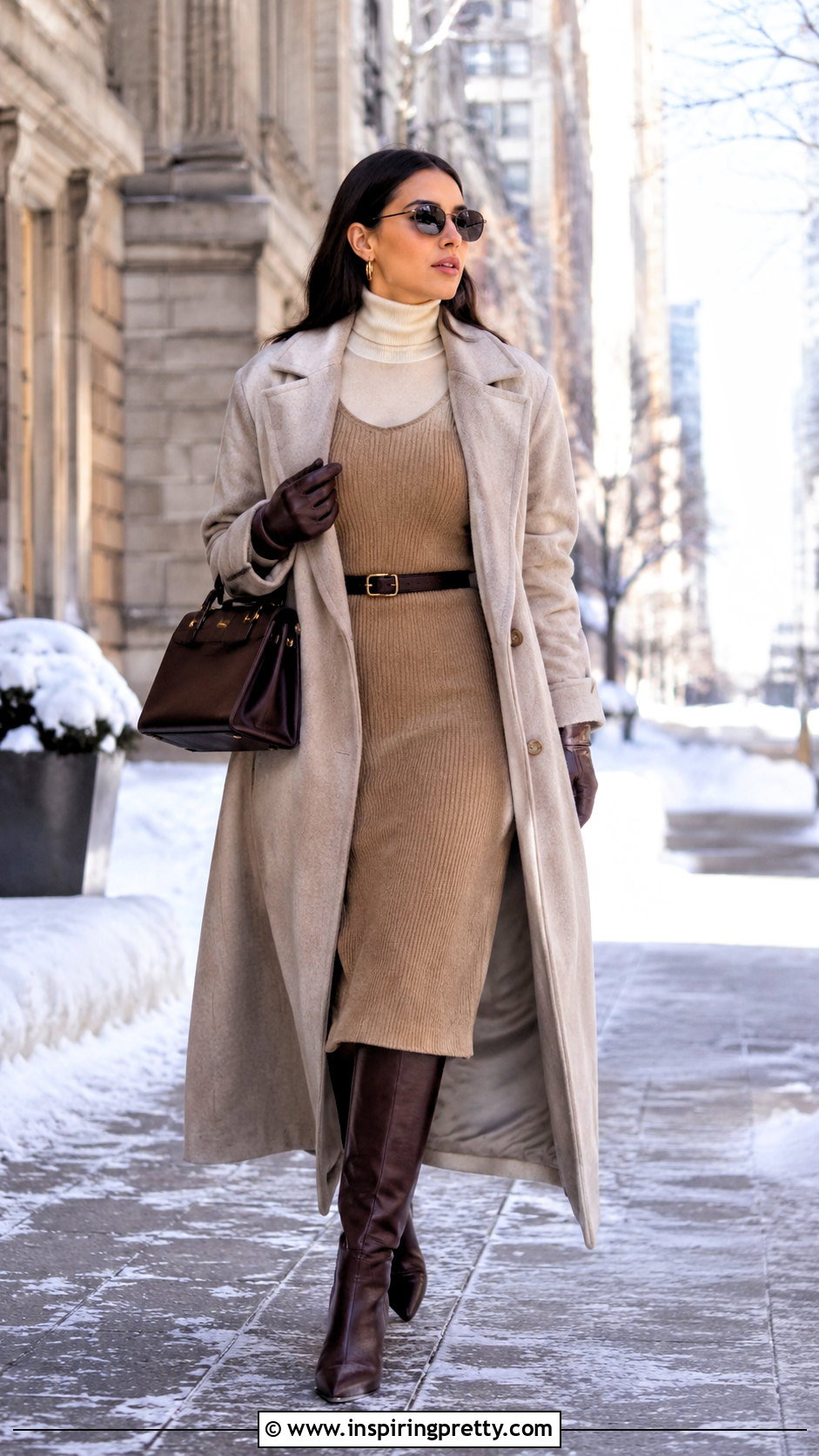
A thin turtleneck under a sleeveless knit midi dress, with a long tailored coat, is a cold-morning outfit where every layer earns its place. The coat should reach the dress hem or fall just below it; a coat that stops a few inches above the hem cuts the line awkwardly. Knee-high boots, a structured bag and leather gloves. A tonal palette of cream, oatmeal, camel and chocolate shows off texture instead of contrast. Keep the turtleneck thin. Thick knit under a fitted knit dress makes it stretch and ride up.
15. Blouse Cardigan And Midi Skirt Layering Outfit
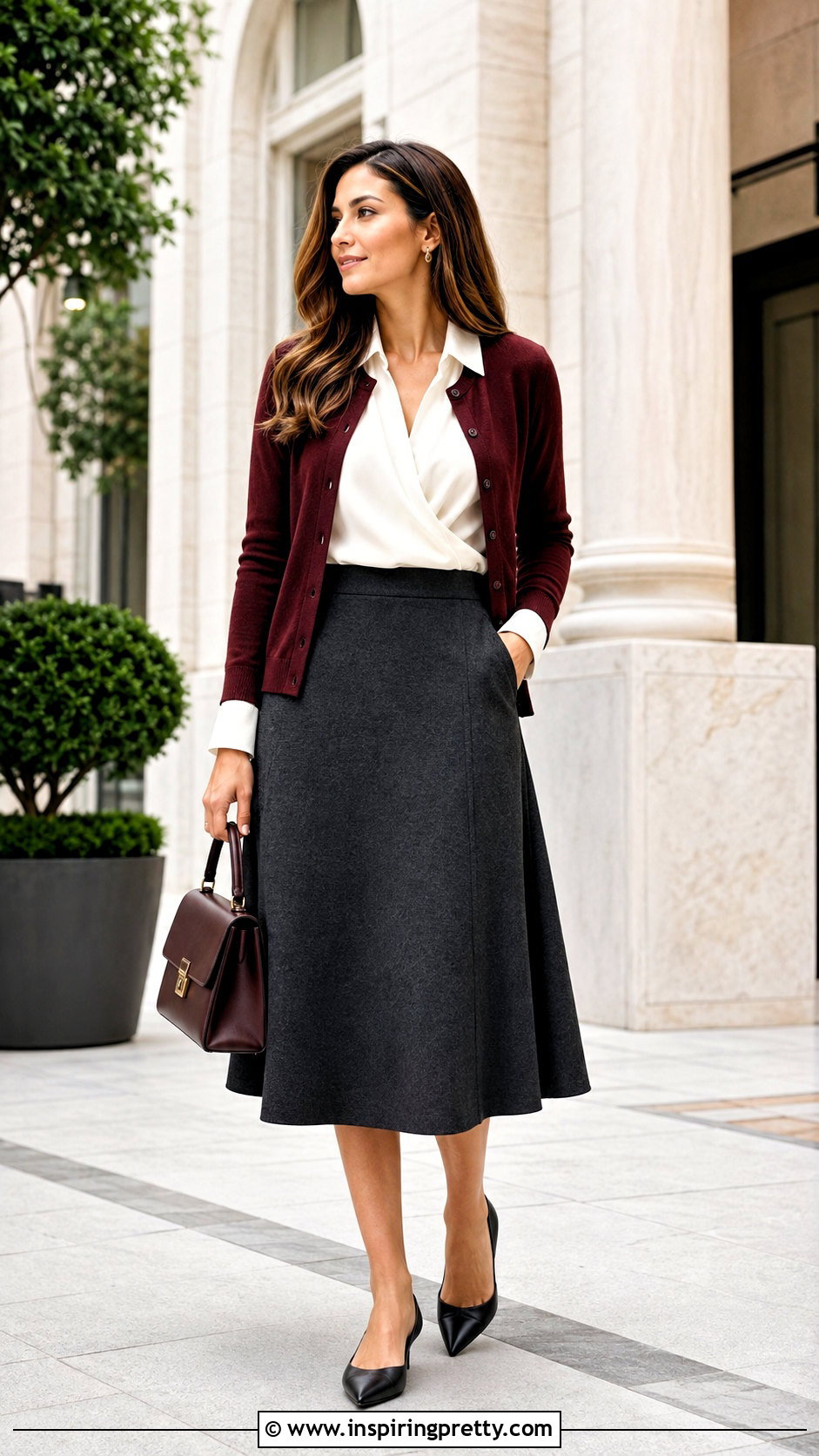
A soft blouse under a fine-gauge cardigan suits work or a lunch where jeans feel too casual. Choose a simple collar or a small tie neck, and a cardigan you can wear open or with a few buttons done. A-line or bias-cut midi skirts both suit it. Tuck the blouse in so the extra fabric doesn't pile up under the knit. I always let the blouse cuffs show below the cardigan sleeves; that small detail tells people the layering is on purpose. Ivory, burgundy and charcoal with black accessories is a balanced palette.
16. Graphic T-Shirt Flannel And Leather Jacket Layering Outfit
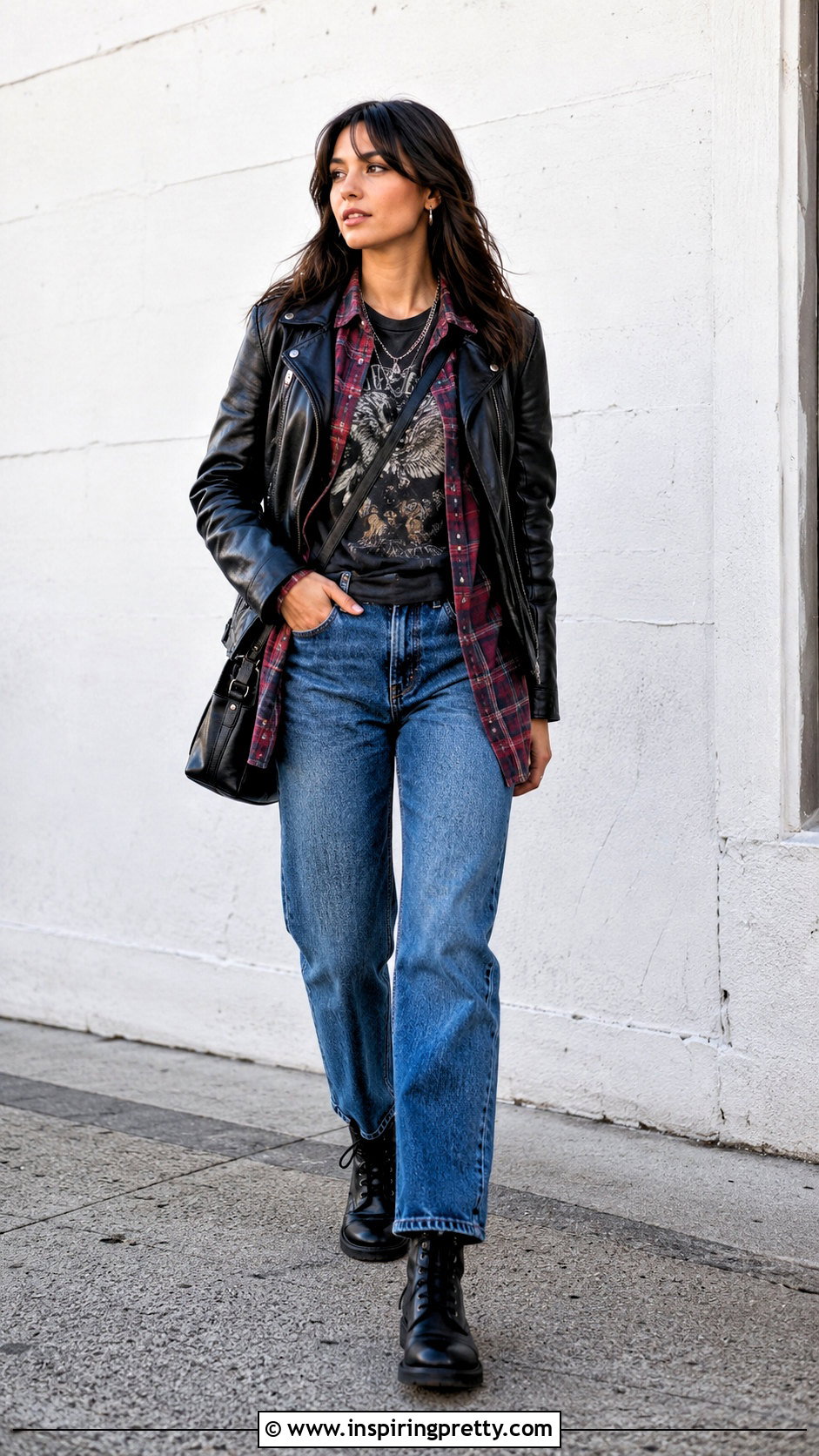
A graphic tee, an open flannel and a leather jacket give lots of texture for a casual day. Keep the graphic simple, because it shares space with plaid. Black jeans or relaxed blue denim, lace-up boots, a crossbody and simple metal jewelry. Choose a lightweight flannel; a heavy one won't fit through leather sleeves, which have almost no stretch. Black, gray, burgundy and cream tie the three layers together. When it warms up, the flannel ties around the waist. Skip extra prints.
17. Monochrome Neutral Layering Outfit
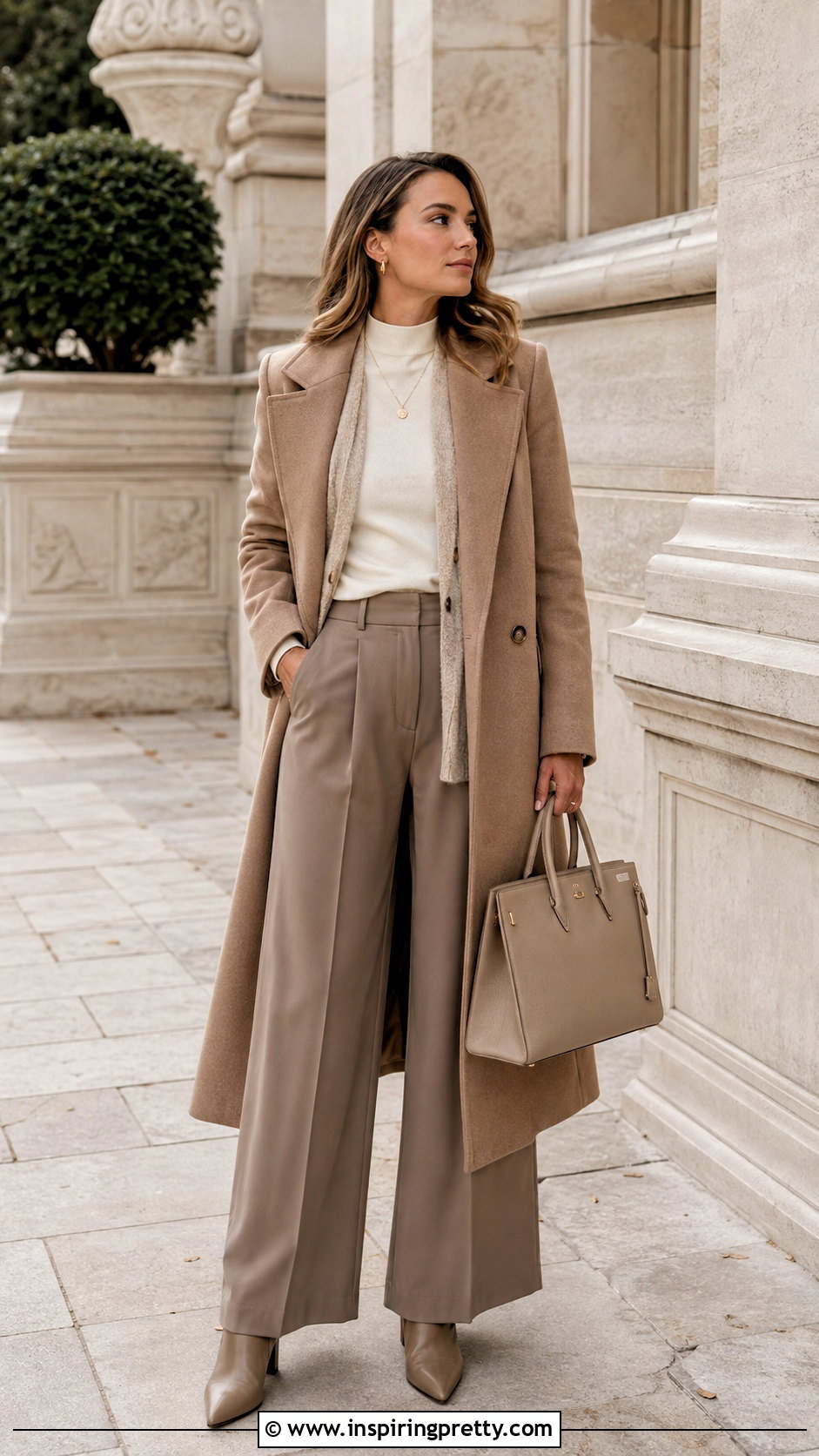
One color family makes several layers look calm. A fitted cream mock neck, an oatmeal cardigan and a camel wool coat, over wide-leg trousers a shade deeper. The trick is varying texture and depth instead of matching exactly: rib, smooth tailoring, brushed wool and polished leather all read as different layers even in one color. I keep the lightest shade near the face, which brightens the complexion. Petite women may prefer a short cardigan under the long coat; taller women can stack long layers. Taupe boots, a beige bag and minimal gold.
18. Double Button-Down Shirt Layering Outfit
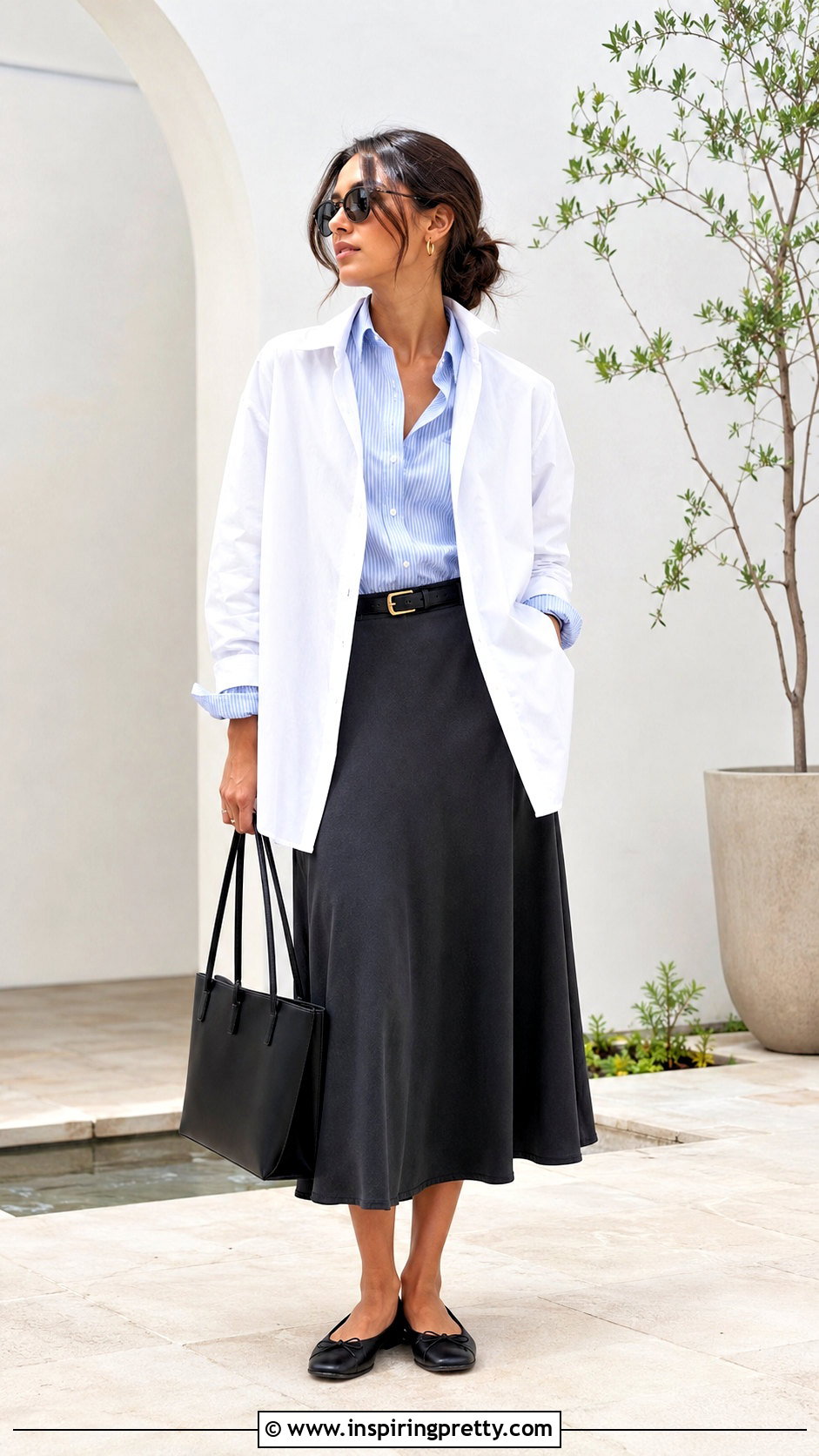
Two shirts at once sounds strange and turns out practical. Start with a fitted striped or colored shirt, then a slightly bigger white poplin one over it, with several buttons open to show the collar and placket underneath. Both shirts should be lightweight; two stiff cottons make it hard to lift your arms. Different lengths or sleeve colors make it clearly intentional, and rolling both cuffs together shows a contrast stripe. A flowing midi skirt, ballet flats, a tote and a slim belt keep the bottom half quiet.
19. Dress Over Pants Layering Outfit
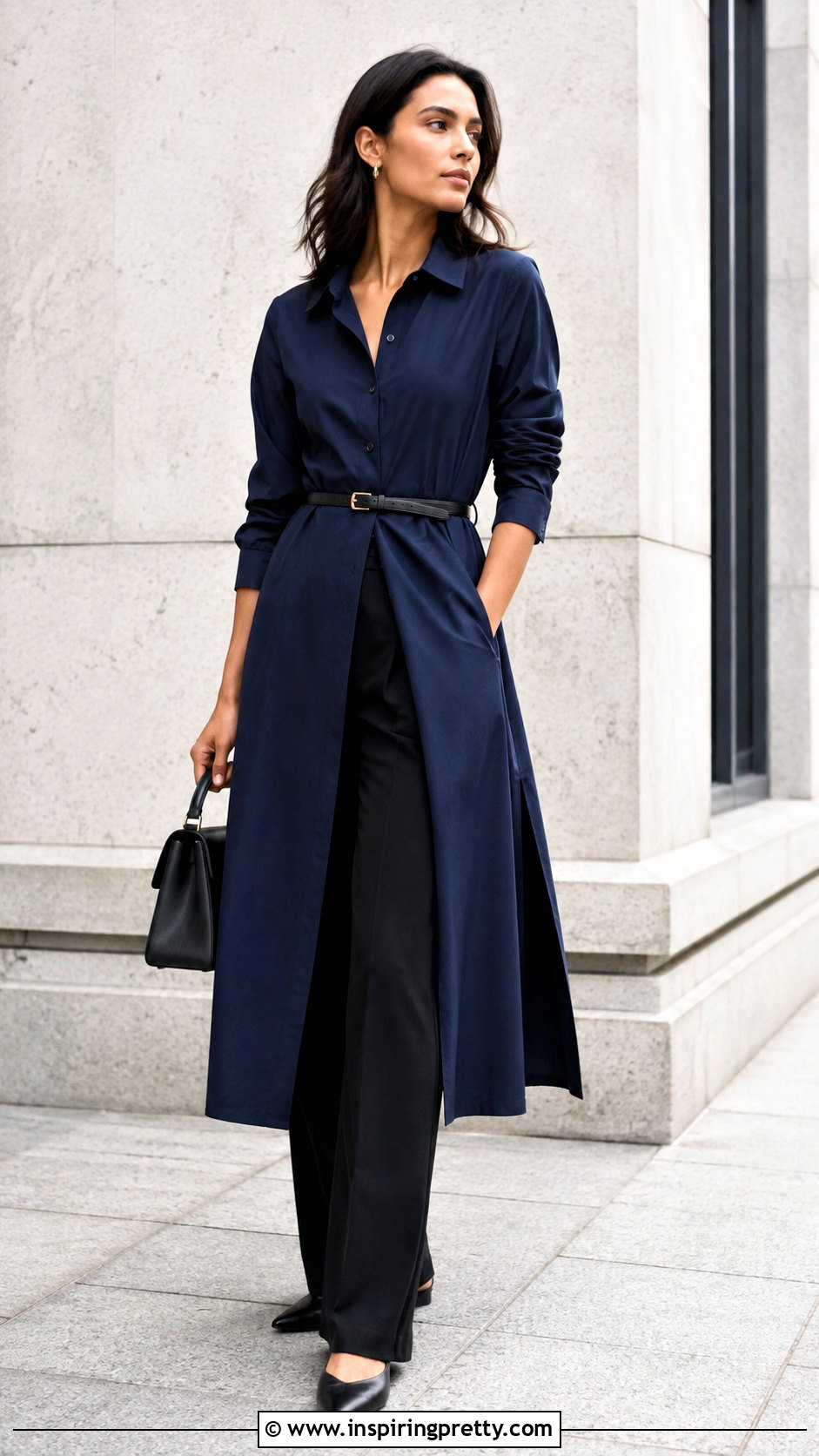
A dress over trousers makes a longer, more architectural shape. Choose a midi shirt dress with side slits or a button front so your legs can move. Over straight or gently flared trousers, add pointed flats or low boots. I keep the two in related colors at first, navy over dark denim or cream over beige, because it's an unusual look and close colors make it easier to wear. The trousers need a flat front; pockets and bulky waistbands show through. Fluid dress fabric, clean trousers, small earrings and a structured bag.
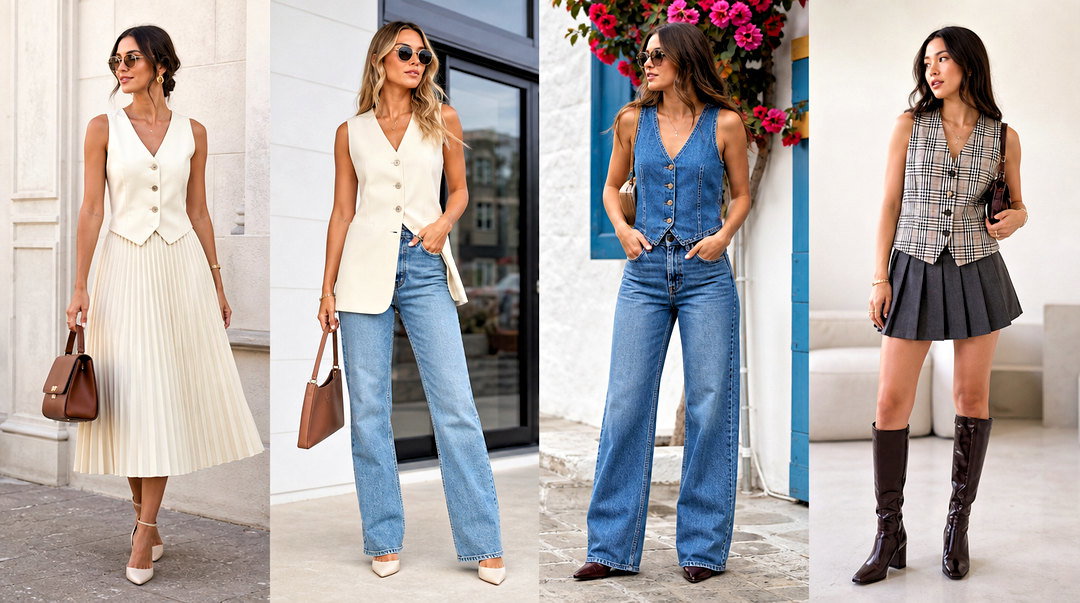
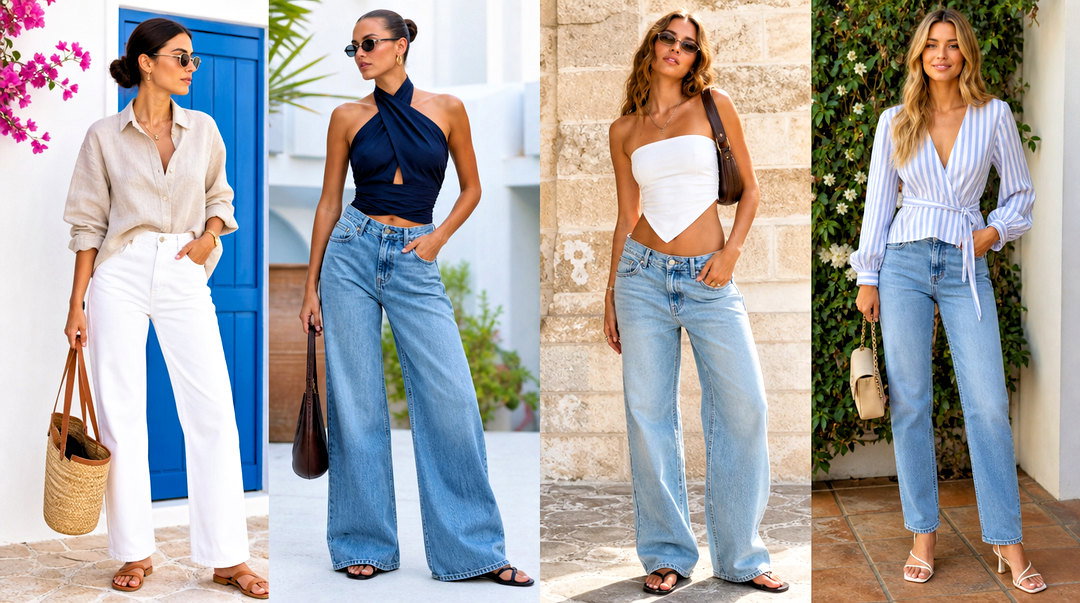
20. Skirt Over Jeans Layering Outfit
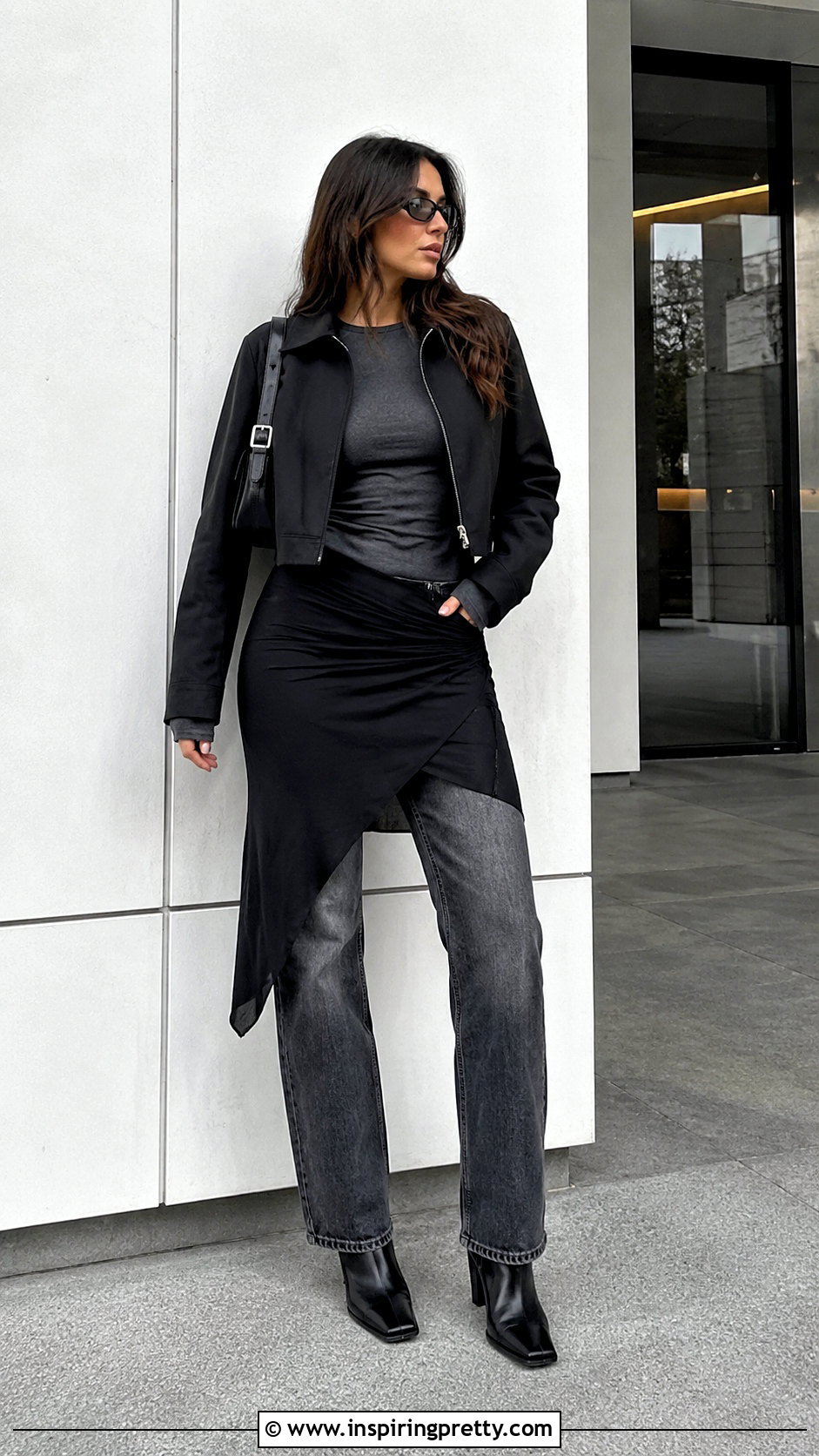
A wrap skirt over jeans adds movement to everyday denim, but it only works if the jeans stay visible. Choose a midi wrap with an opening, sheer panel or asymmetric hem. A fitted long sleeve or plain tee on top and a cropped jacket balance the long lower half. Sleek ankle boots, a small shoulder bag and minimal jewelry. Stick to a tight palette, such as black, charcoal and faded blue. Skip embellished jeans and very full skirts. Clean pieces make this look deliberate; busy ones make it look like you forgot to change.
21. Collared Shirt Sweatshirt And Mini Skirt Layering Outfit
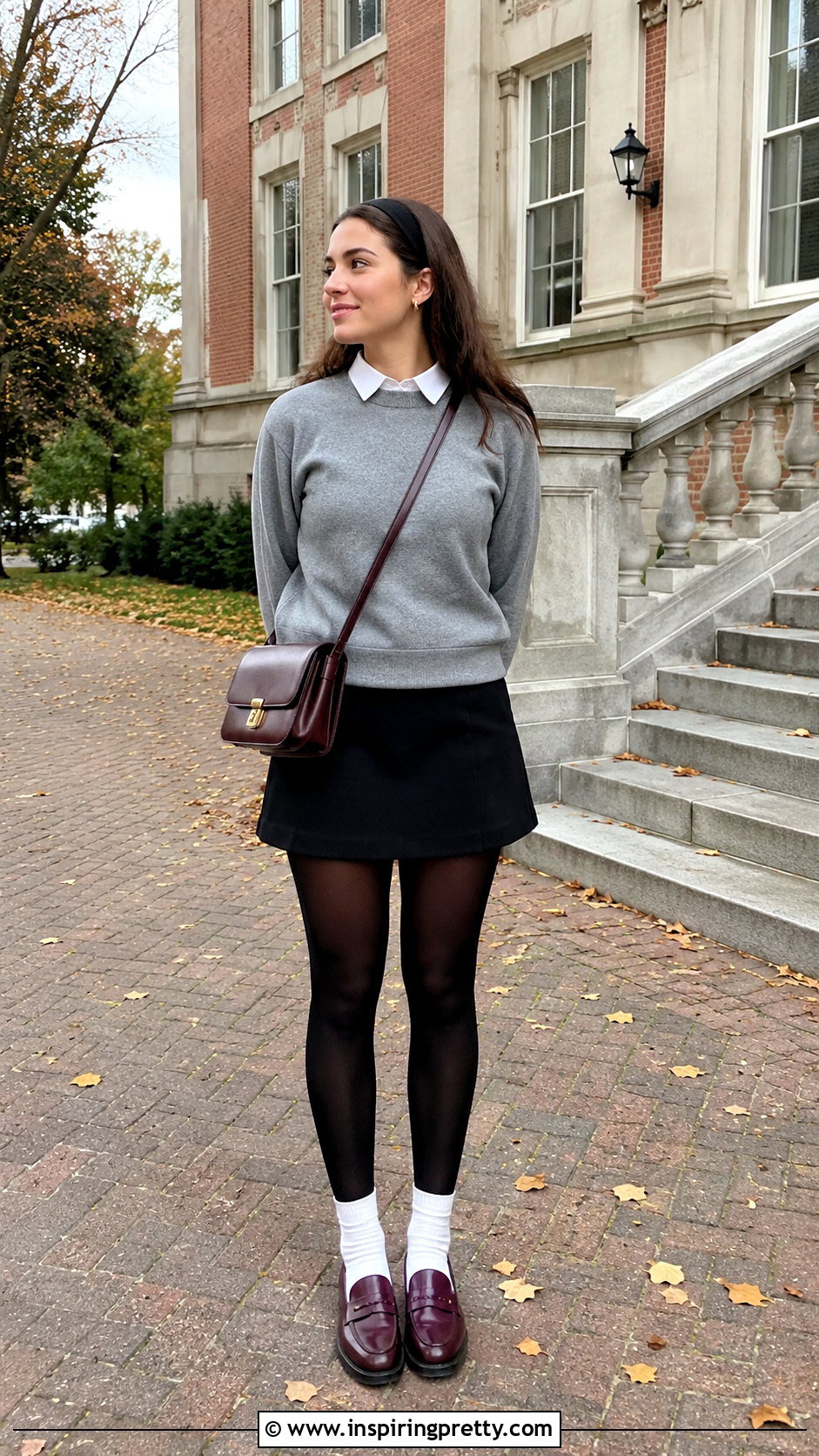
A collared shirt under a crewneck sweatshirt is sporty with a clean edge. Let the collar and cuffs show. An A-line mini, opaque tights and loafers go below, and crew socks over the tights add warmth. A white shirt, gray sweatshirt, black skirt and burgundy accessories make an easy set. The sweatshirt length matters: relaxed is fine, but long enough to cover the skirt hides it entirely, so I go for one that ends at the high hip or tuck the front. A trench handles cool or rainy weather.
22. T-Shirt Under Sleeveless Dress Layering Outfit
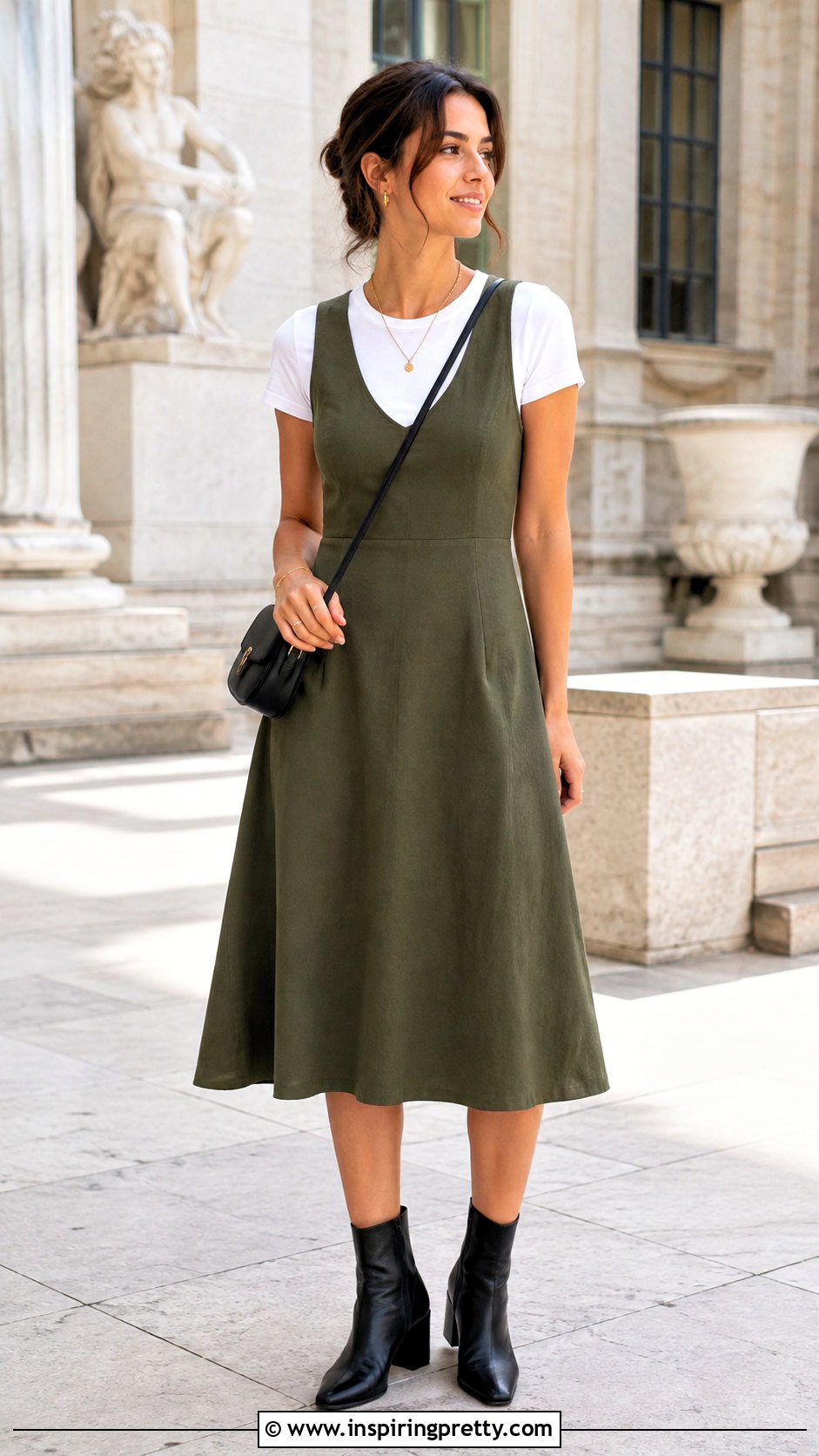
A fitted tee under a sleeveless dress gives coverage and makes a summer dress useful for longer. A crew or mock neck with smooth sleeves works under a pinafore, denim midi or simple A-line. Check the dress armholes; if they're cut tight, the tee sleeves bunch into a lump at the shoulder. White under black or plaid gives contrast, and matching colors look sleeker. Ankle boots, loafers or sneakers, plus a crossbody. In winter, swap the tee for a thin turtleneck and add tights.
23. Cardigan Tank And Slip Skirt Layering Outfit
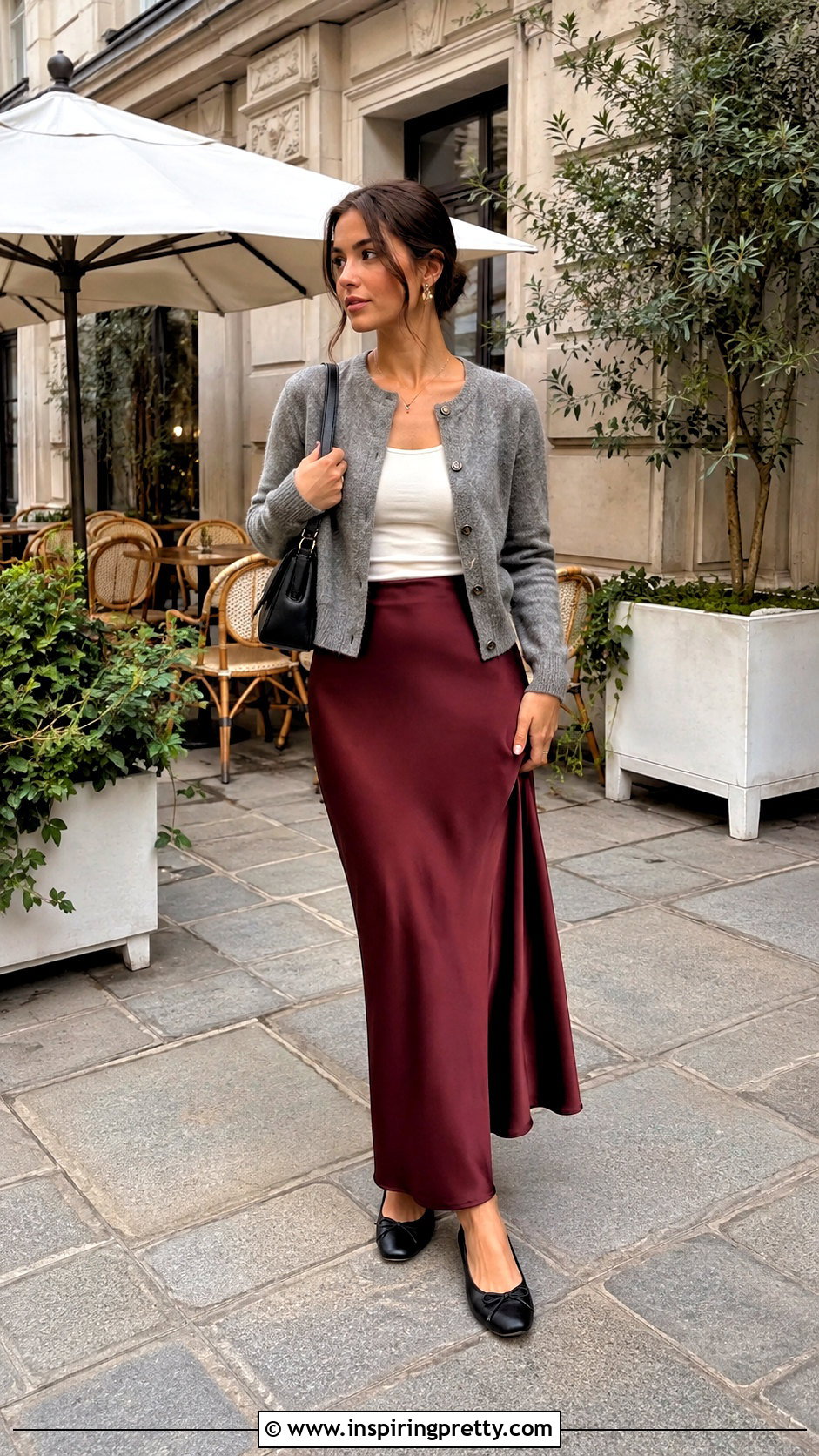
A satin slip skirt relaxes with a fitted tank and a textured cardigan. Tuck the tank in and wear the cardigan open or with only the middle buttons done, which shows the waist without hiding the skirt's drape. Ballet flats, low heels or sleek sneakers decide how dressed up it feels. Cream, gray and burgundy is gently contrasting; several browns give a tonal look. Keep the cardigan at the waist or upper hip. A long knit covers the best part of the satin unless it's belted. Satin also creases where you sit, so I hang the skirt the night before.
24. Long Shirt Cropped Jacket And Leggings Layering Outfit
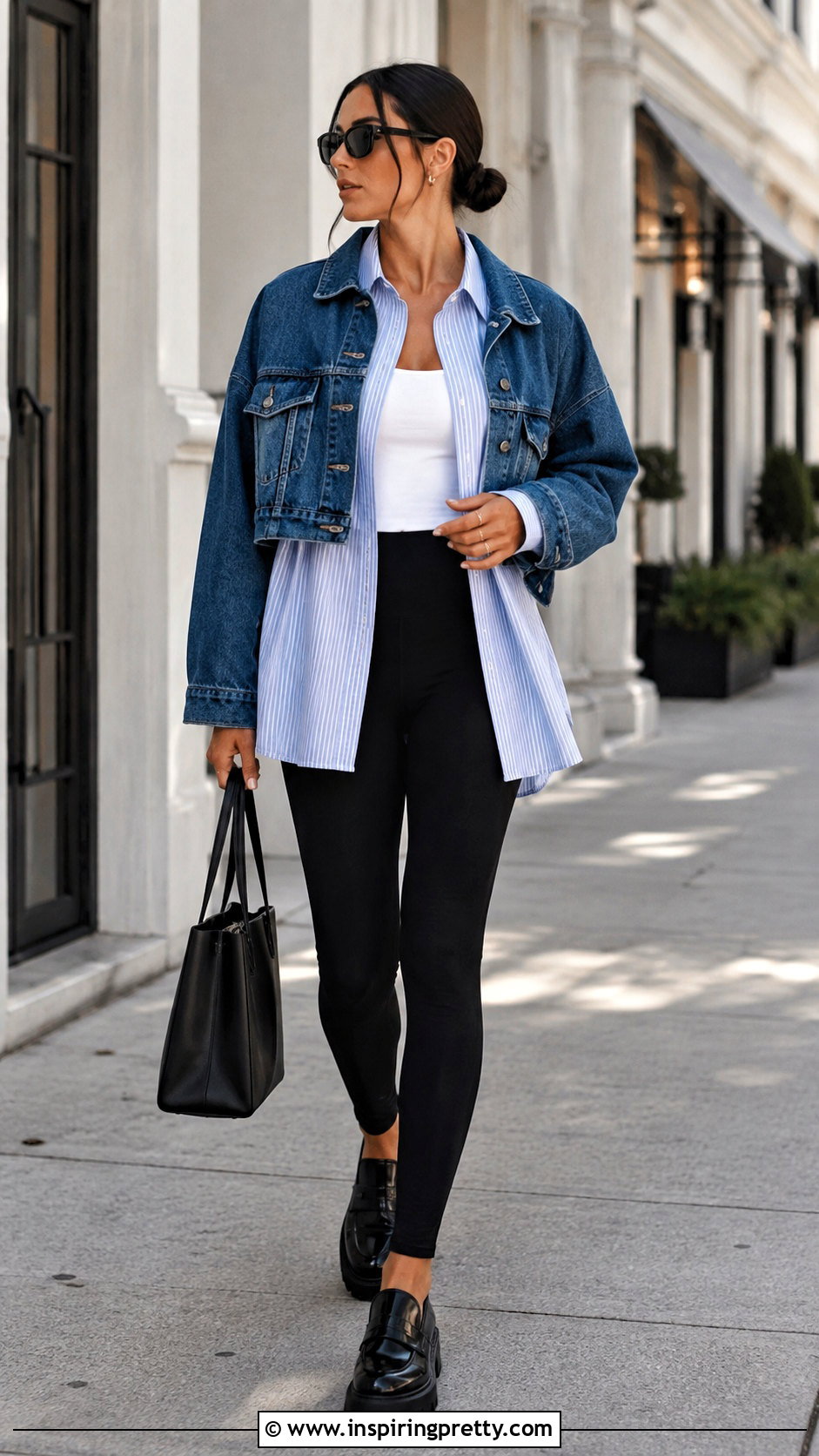
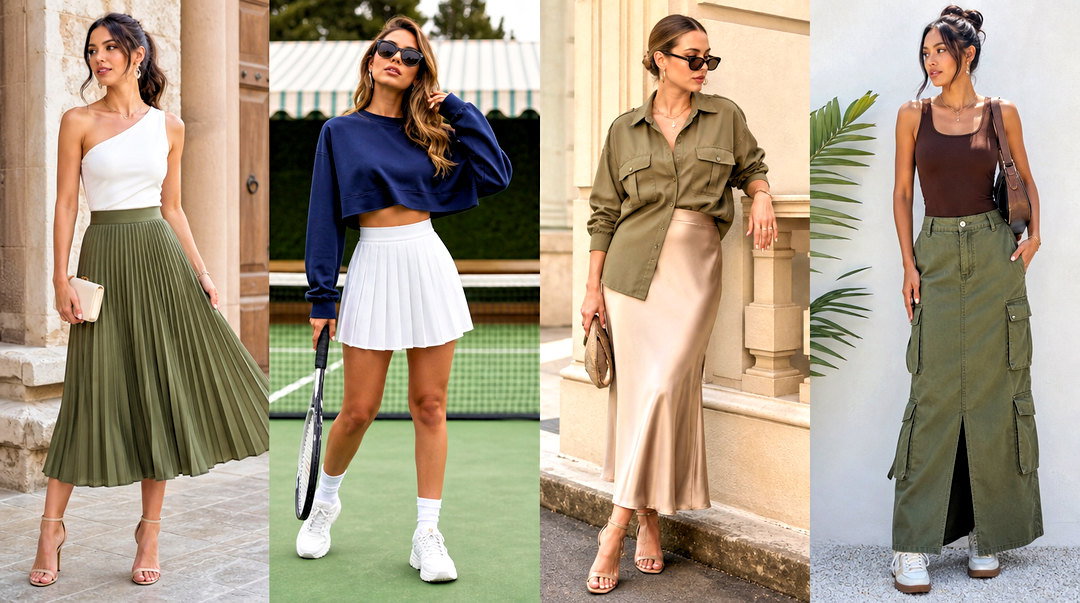
Mixing hem lengths makes plain pieces interesting. A long white or striped button-down over a fitted tank, then a cropped denim, suede or utility jacket, with black leggings and chunky loafers or sleek sneakers. The shirt hem should show clearly below the jacket to create a deliberate high-low line. Choose a jacket with roomy armholes so the shirt sleeves don't bunch. If the shirt is very oversized, keep the jacket structured. It covers the hips while the short jacket keeps the outfit shapely.
25. Hoodie Blazer And Tailored Pants Layering Outfit
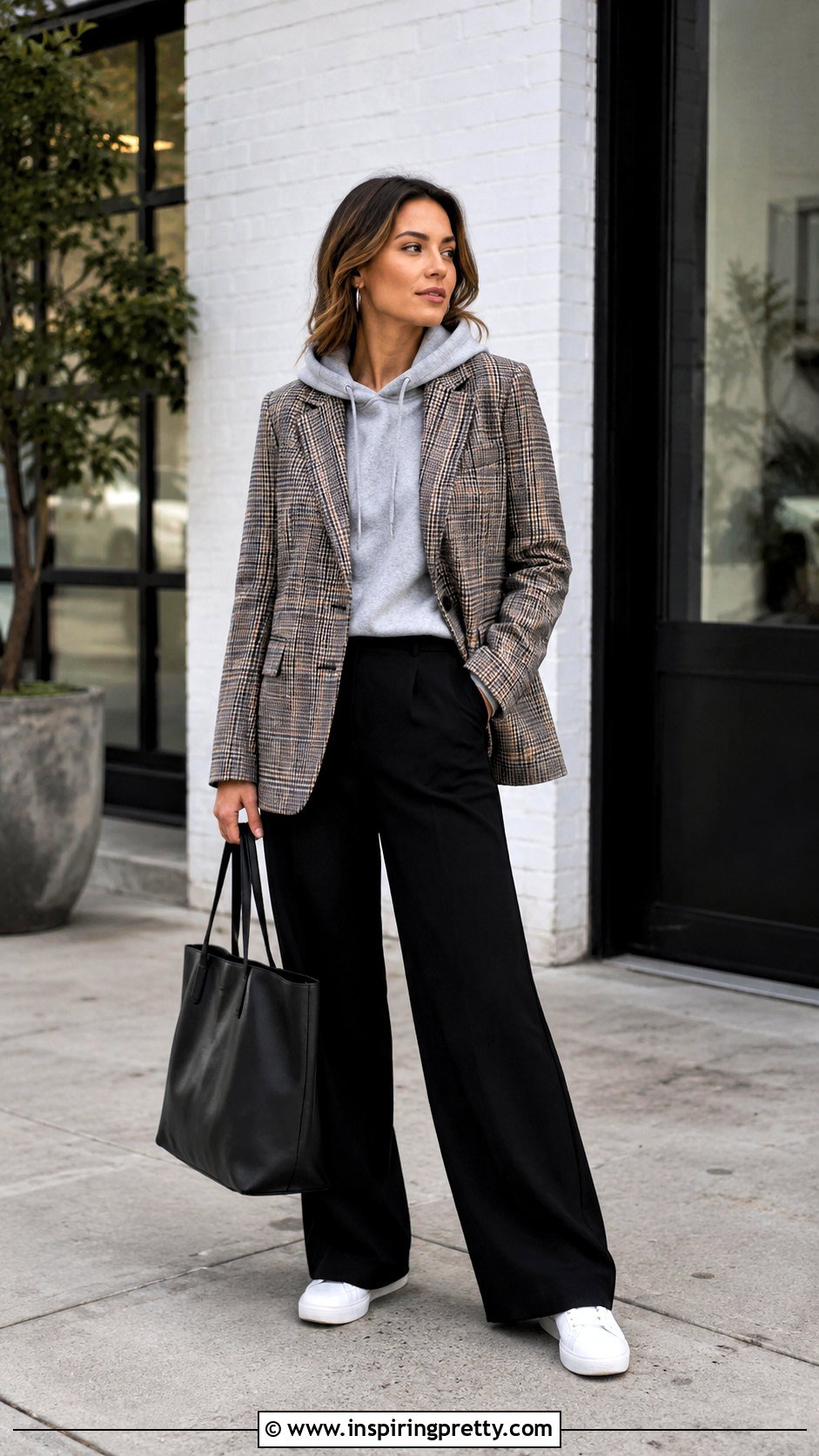
A hoodie under a blazer mixes comfort with tailoring, and the hoodie weight decides whether it works. A lightweight gray, cream or navy hoodie under a relaxed blazer with room in the shoulders and sleeves; a thick fleece distorts the blazer and pushes the lapels open. Straight or wide-leg tailored pants keep it out of gym territory. Lay the hood over the blazer collar and trim or tuck the drawstrings. Leather sneakers, a structured tote and simple hoops. A checked or camel blazer adds contrast over a dark hoodie.
26. Sweater Vest Over Midi Dress Layering Outfit
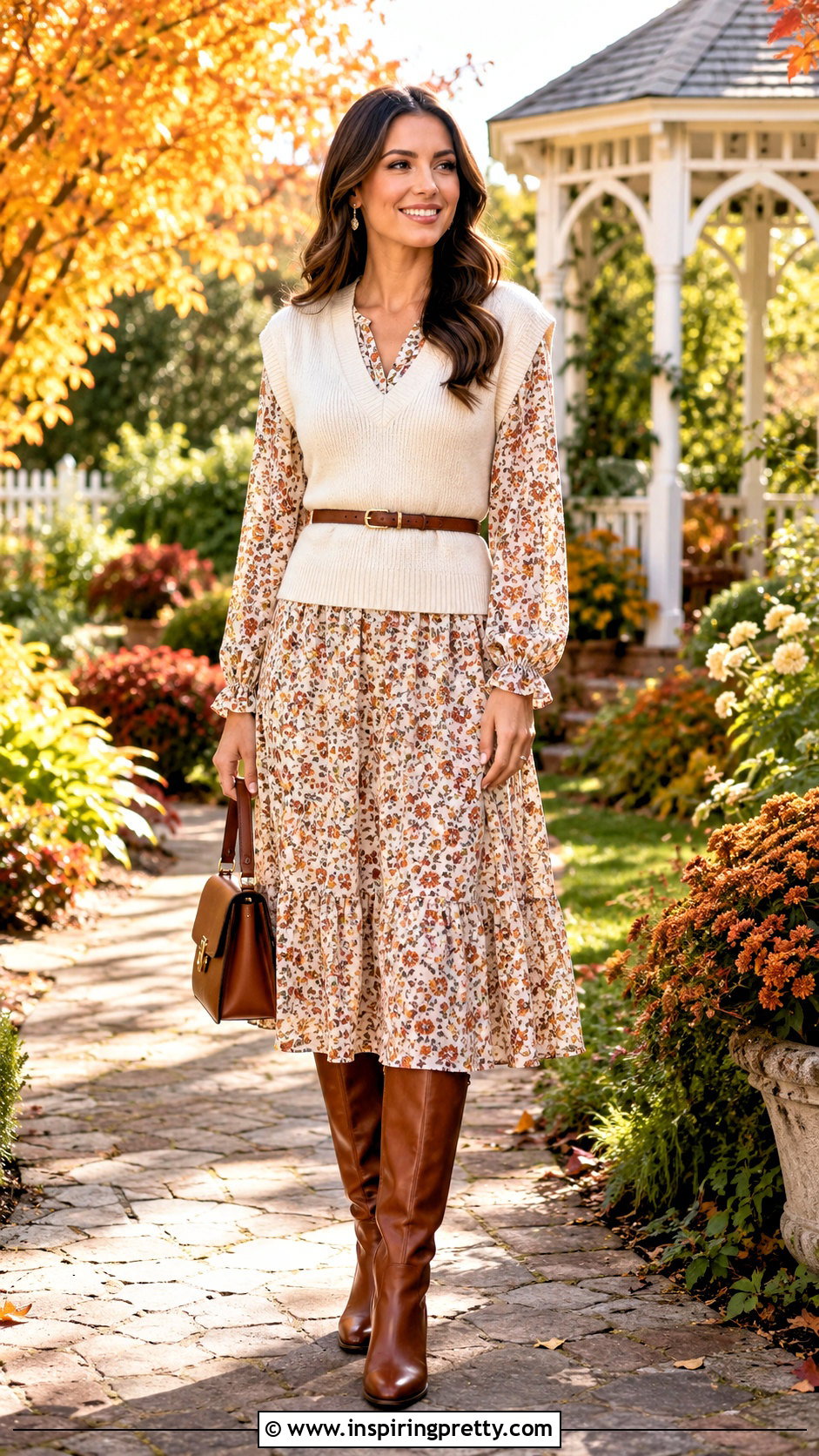
A sweater vest changes the shape of a long-sleeve midi dress completely. Choose a fine or medium vest that ends at the natural waist or upper hip, over a printed or solid dress, and belt it if you want more definition. The dress sleeves should be fairly slim, because the vest already adds volume at the torso. A V-neck vest helps if the neckline feels crowded. Cream over florals is soft; charcoal over black is understated. Knee-high boots and a structured bag finish it, and a long coat goes on top without spoiling the proportions.
27. Poncho Turtleneck And Jeans Layering Outfit
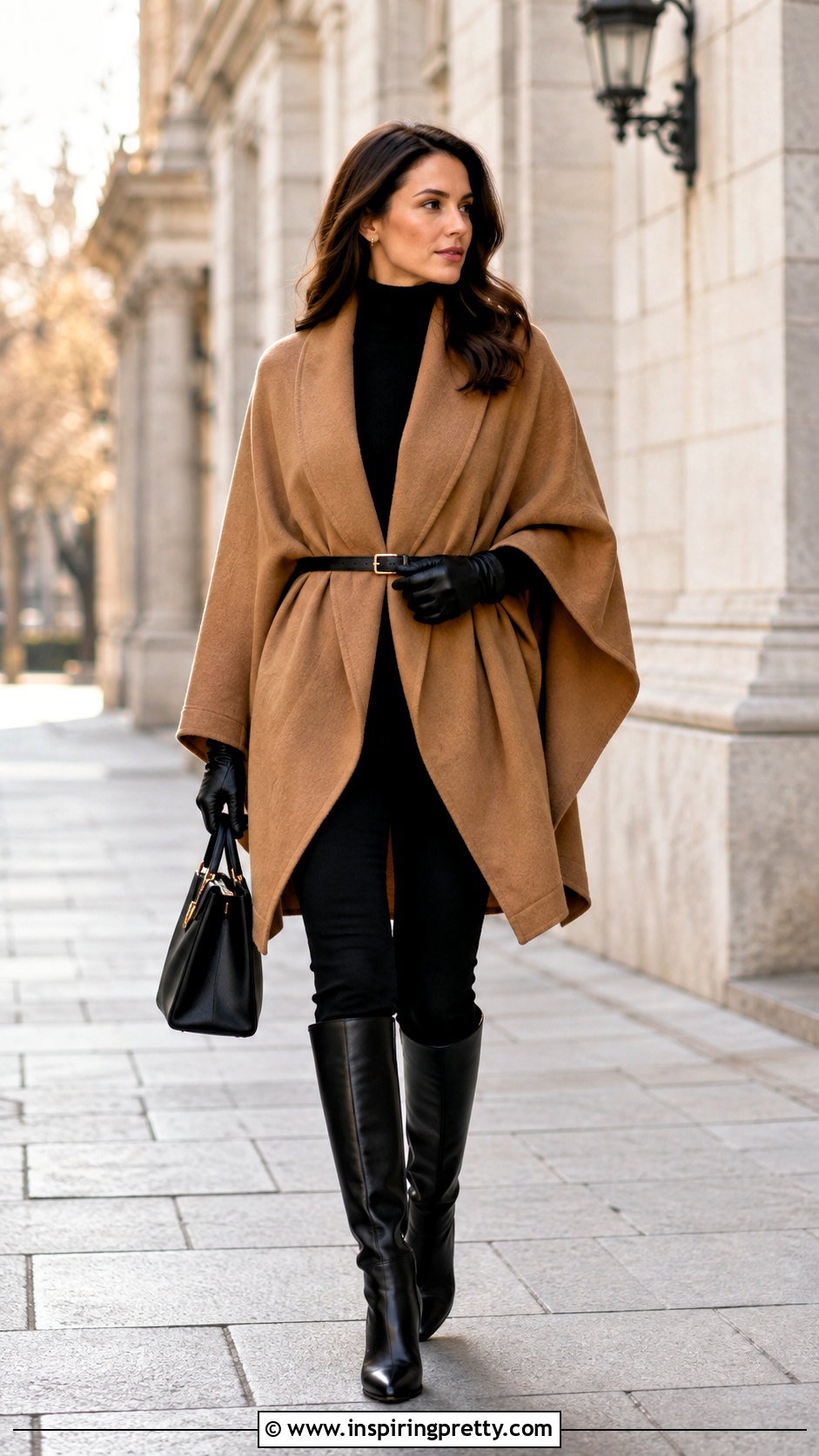
A poncho gives warmth and movement without a jacket's close fit, so the base has to be fitted. A slim turtleneck and straight jeans with knee-high or ankle boots. I'd choose a poncho that ends at the upper thigh; one that reaches toward the knees with flat shoes cuts the leg off. A belt at the waist pulls in a loose shape. Black jeans and boots under camel or deep green wool make a clean base. A structured bag balances the soft outer layer, with leather gloves and small earrings.
28. Quilted Vest Sweatshirt And Joggers Layering Outfit
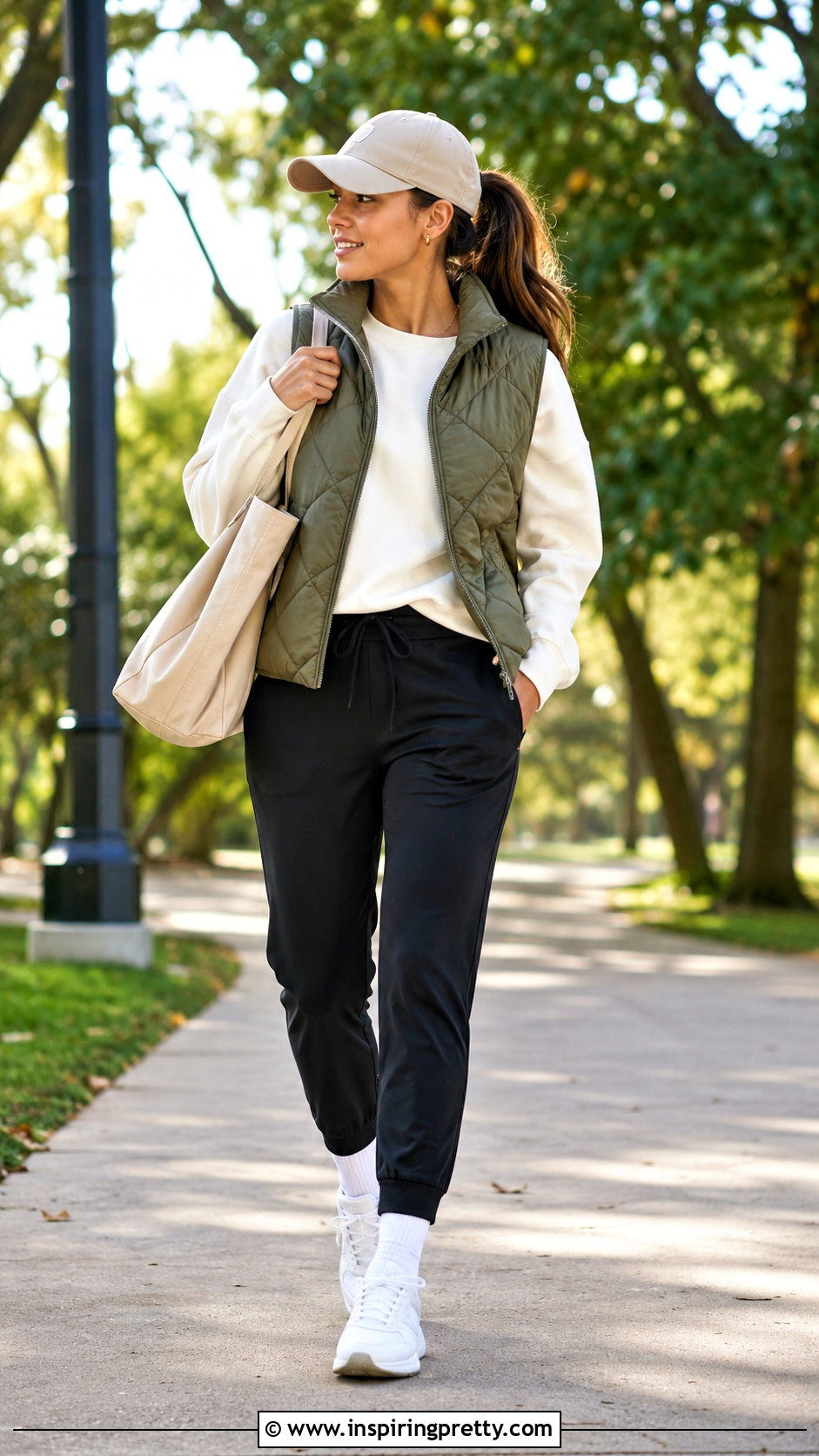
A quilted vest warms your core and leaves your arms free. Wear it over a crewneck sweatshirt and fitted T-shirt, with tapered joggers or straight athletic pants, clean sneakers and crew socks. Cream, taupe, olive and black make sporty pieces look tidier. The sweatshirt should end just below the vest or at the same point. A very short vest over a long sweatshirt looks like the vest shrank, unless you clearly mean it. A cap or beanie is the extra layer for walks and travel days.
29. Puffer Vest Sweater And Jeans Layering Outfit
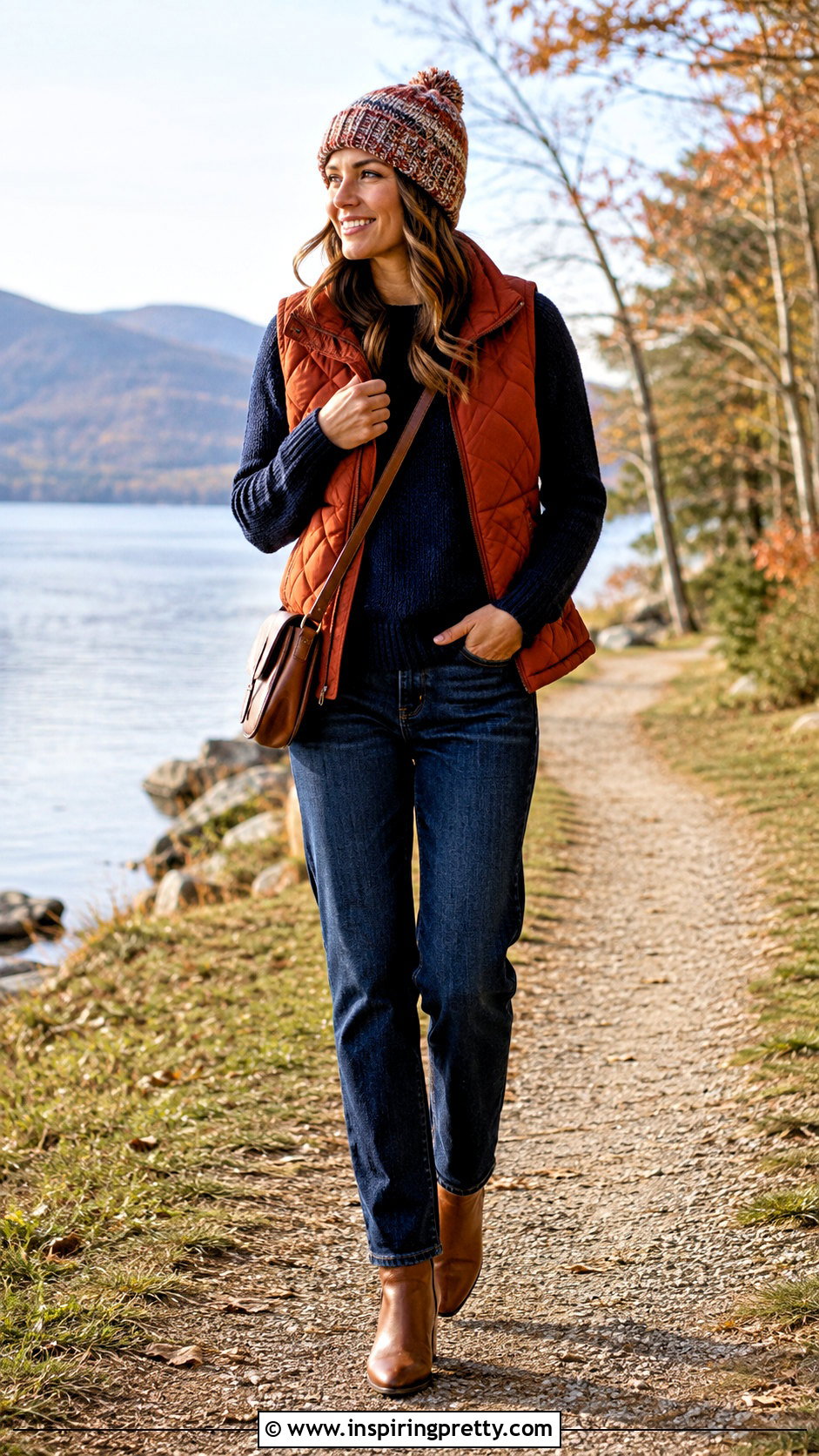
A puffer vest adds bulk, so the rest of the outfit needs a clean shape. A fine-knit crewneck, straight or slim bootcut jeans, and a lightly padded vest with narrow quilting that stops near the hip; wide channels and a long hem make the torso look boxy. Ankle boots or weatherproof sneakers, a crossbody and a knit beanie. A navy sweater and dark jeans let a rust or forest-green vest stand out. Keep the sweater sleeves visible and skip an oversized scarf unless it's truly cold.
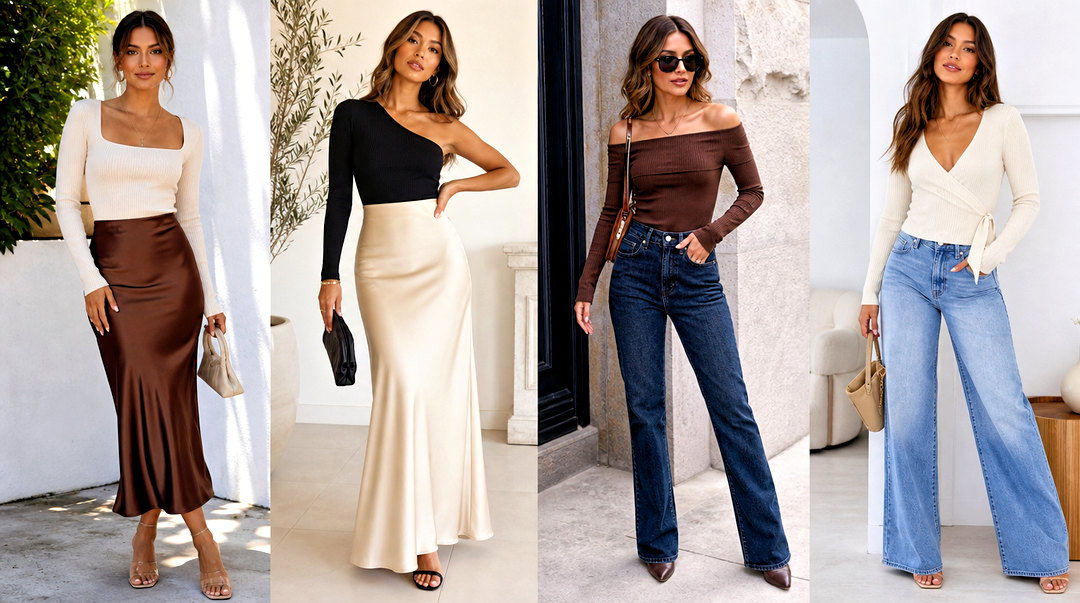
30. Denim Jacket Under Long Coat Layering Outfit
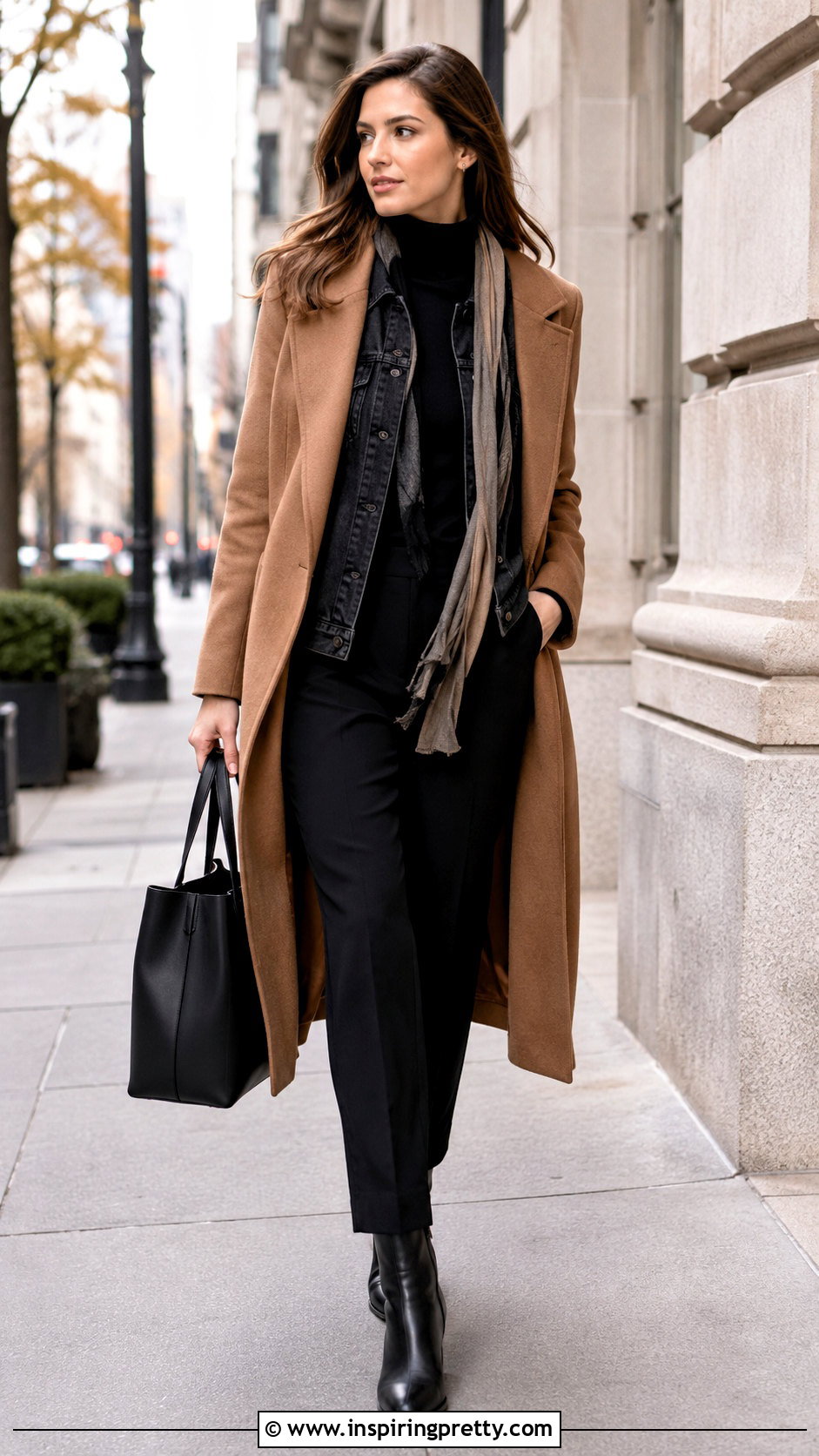
A denim jacket under a long coat adds warmth and texture, but only an unlined jacket fits. Sherpa-lined denim is too thick to go under most coats. Start with a fitted tee or turtleneck, then the denim, then a roomy wool coat. Straight trousers or black jeans and ankle boots keep the bottom simple. The coat has to extend well below the denim hem, or the two lengths look mismatched. Leave both open for strong vertical lines. Dark denim under camel is classic; light denim under charcoal is more casual.
31. Blazer Under Trench Coat Layering Outfit
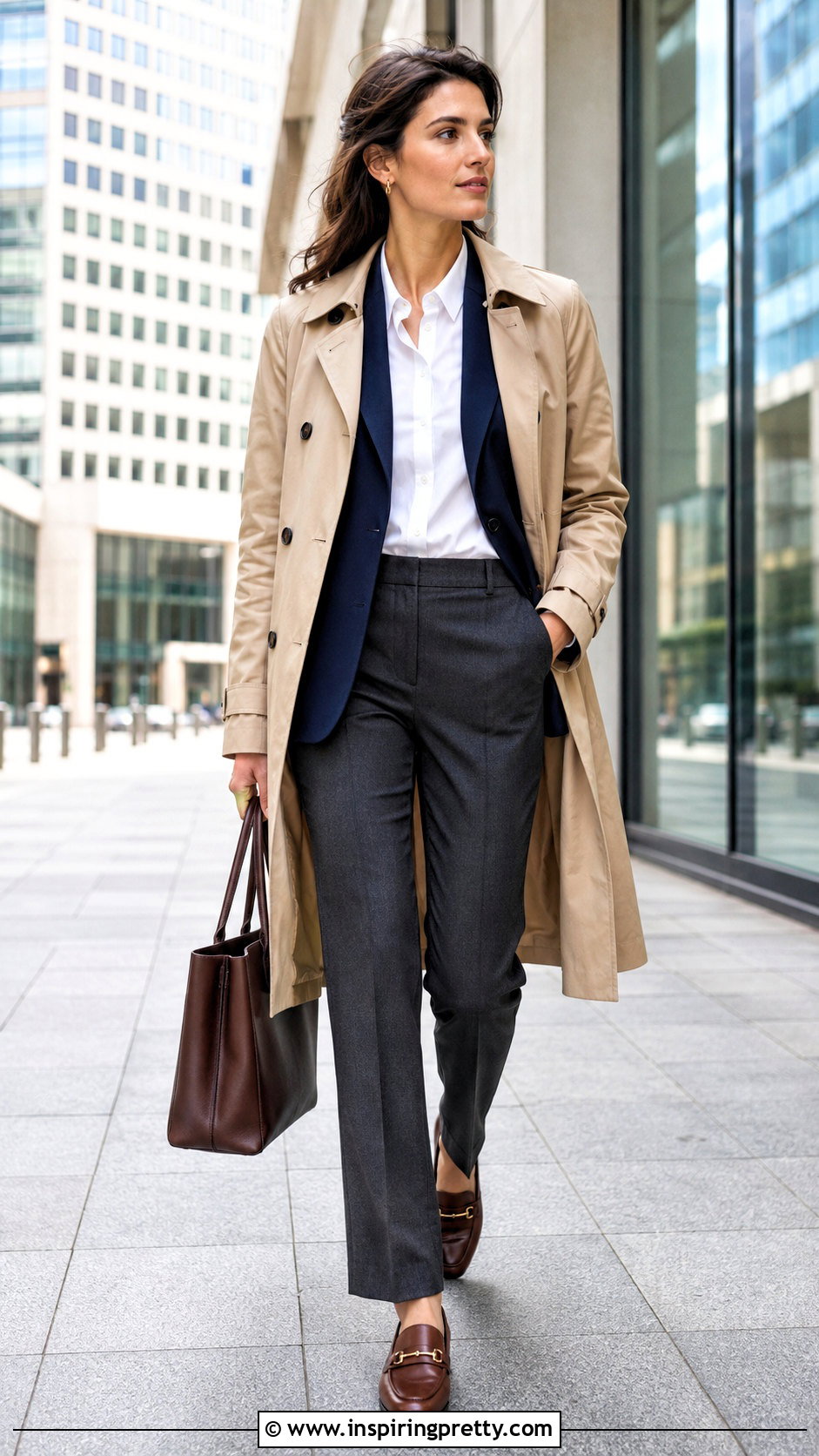
A blazer under a trench is a commuting outfit for changeable weather. A light knit or button-down, a tailored blazer and a relaxed trench. Before buying a trench for this, I try it on over a blazer; many are cut close in the shoulder and pull across the back with a jacket underneath. Keep the blazer shorter than the coat and leave the trench open where you can. Straight trousers and loafers for work, jeans and leather sneakers on weekends. White shirt, navy blazer, beige trench and charcoal pants.
32. Cardigan Under Blazer Layering Outfit
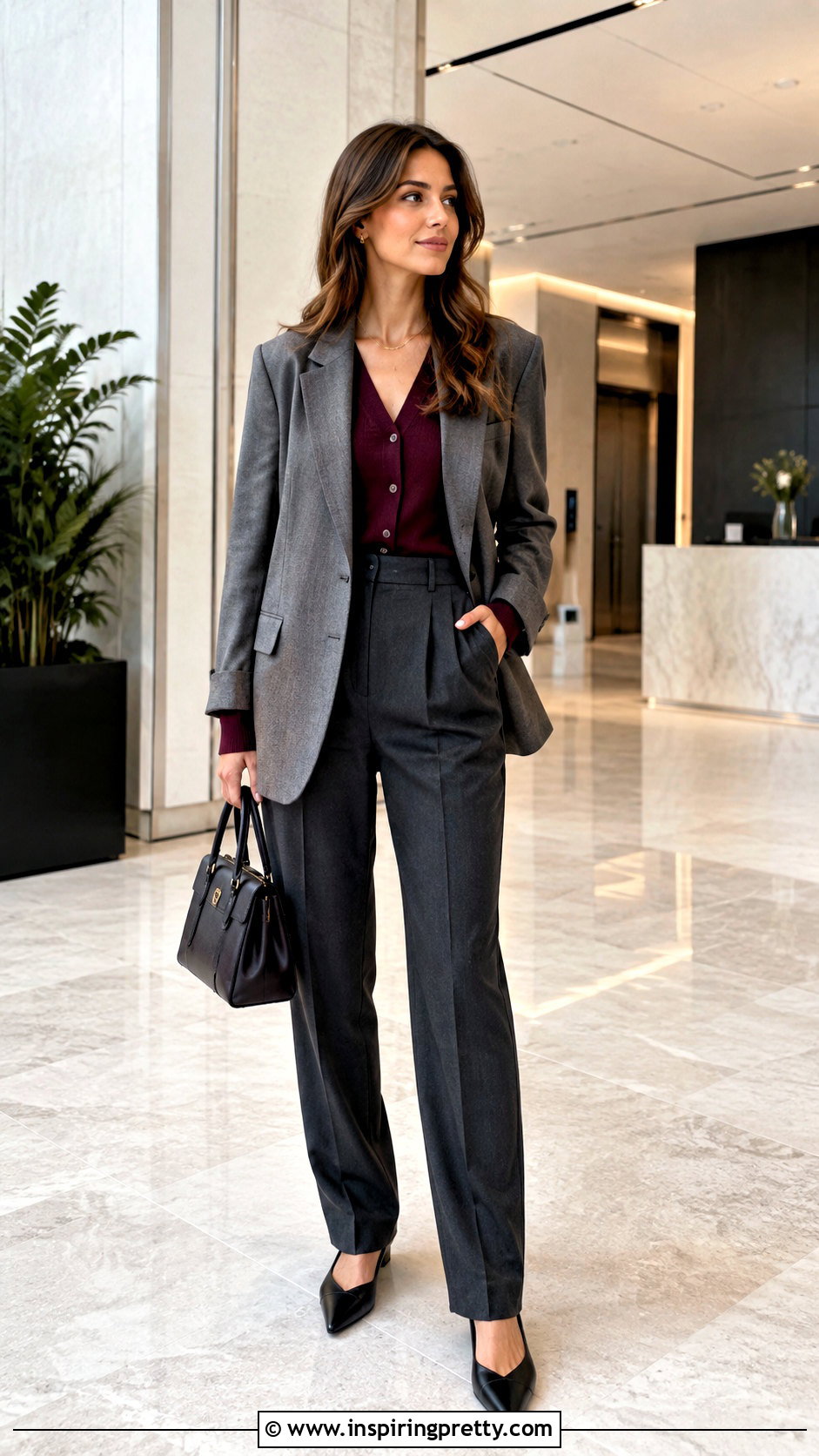
A thin cardigan can act as a soft shirt under a blazer. Button it fully and tuck it into high-rise trousers, or open the top buttons for a relaxed neckline. Only fine-gauge knits work here; cables or a chunky cardigan bunch inside the jacket sleeves. Contrast gently, burgundy under charcoal or pale blue under navy. A fine necklace can sit in the open neckline. Pointed flats and a structured bag finish it, and it works with straight jeans in casual offices. Push the blazer sleeves up slightly to show the knit cuffs.
33. Hoodie Under Leather Jacket Layering Outfit
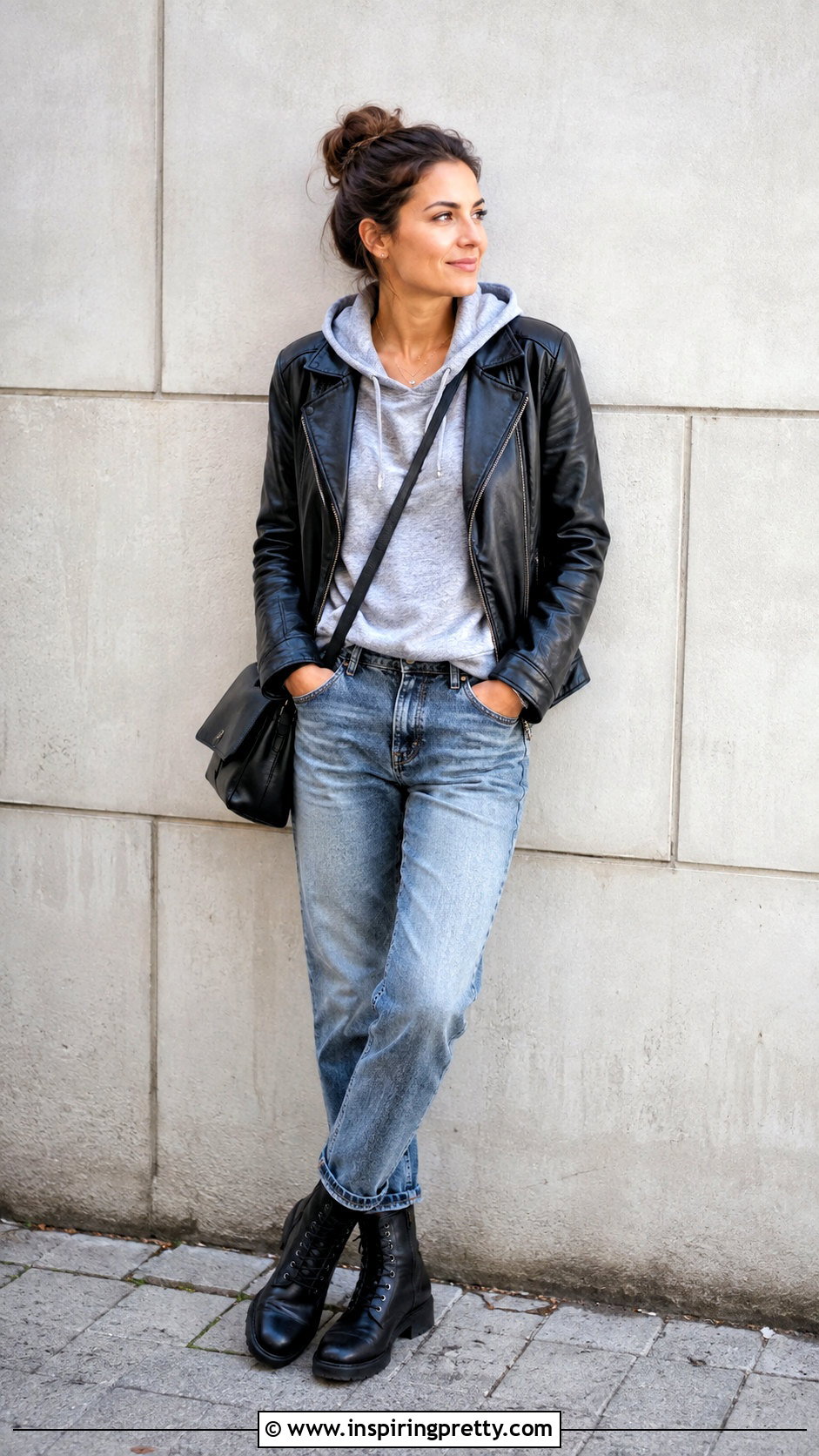
A hoodie under a leather jacket is practical with a slightly edgy finish. Start with a fitted tank or tee, add a lightweight hoodie, then a roomy leather or faux-leather jacket. Leather doesn't stretch, so I test this one by reaching both arms forward; if the hoodie sleeves bind, the hoodie is too thick or the jacket too small. Let the hood sit outside the collar and keep the jacket open. Straight jeans rather than skinny balance the bulk on top. Lace-up boots and a crossbody finish it.
34. Turtleneck Shacket And Leggings Layering Outfit
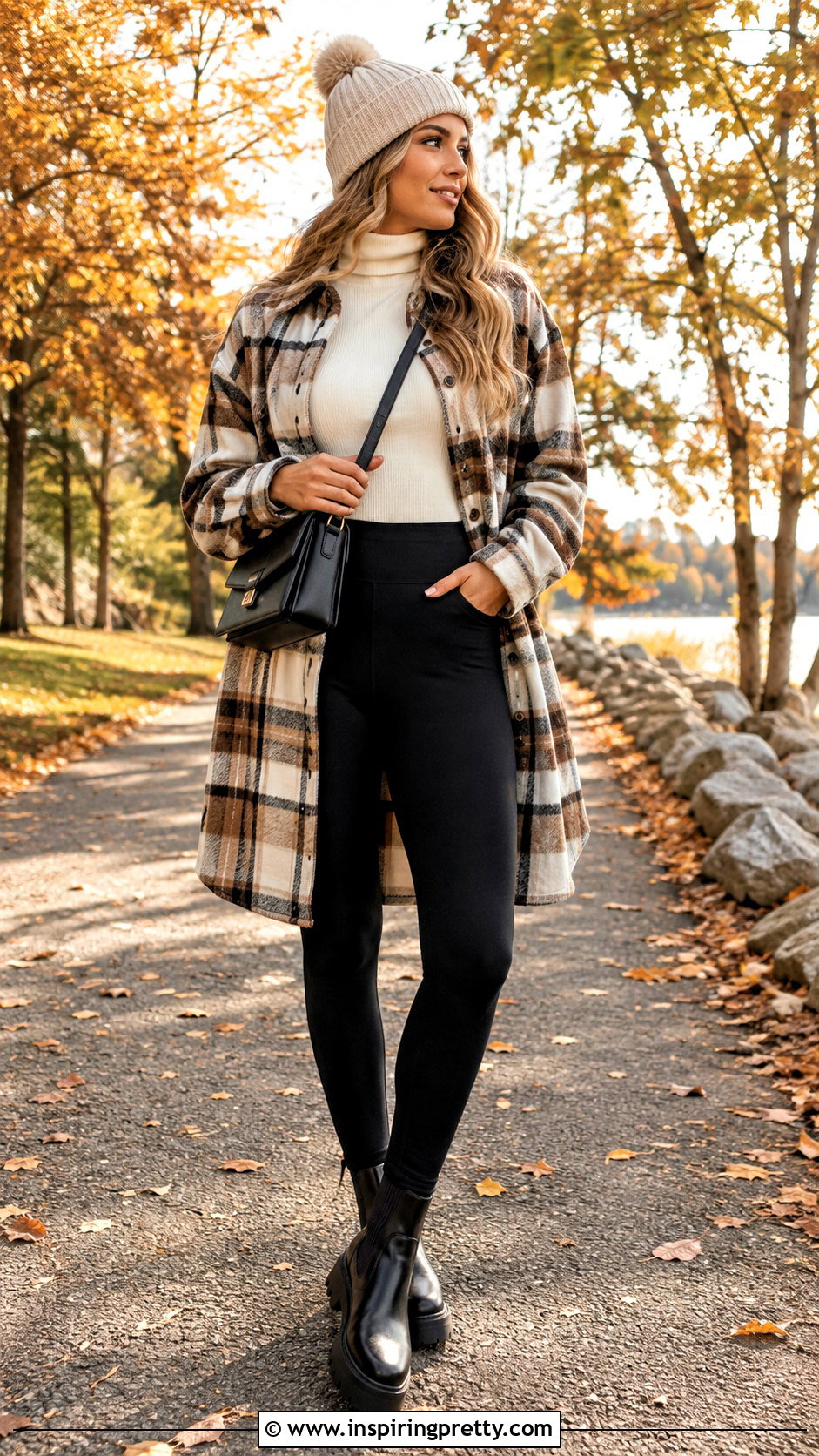
A shacket sits between a shirt and a jacket, warmer than one and lighter than the other. A fitted turtleneck underneath, then a wool-blend, corduroy or brushed cotton shacket over thick black leggings or slim ponte pants, with chunky boots for weight at the bottom. A plaid shacket looks best over a solid base; a solid shacket can take a striped turtleneck. Pick a length that covers the upper hip if you want coverage with leggings. Push the cuffs back to show the base. Wear it open, buttoned or belted.
35. Bomber Jacket Over Knit Dress Layering Outfit
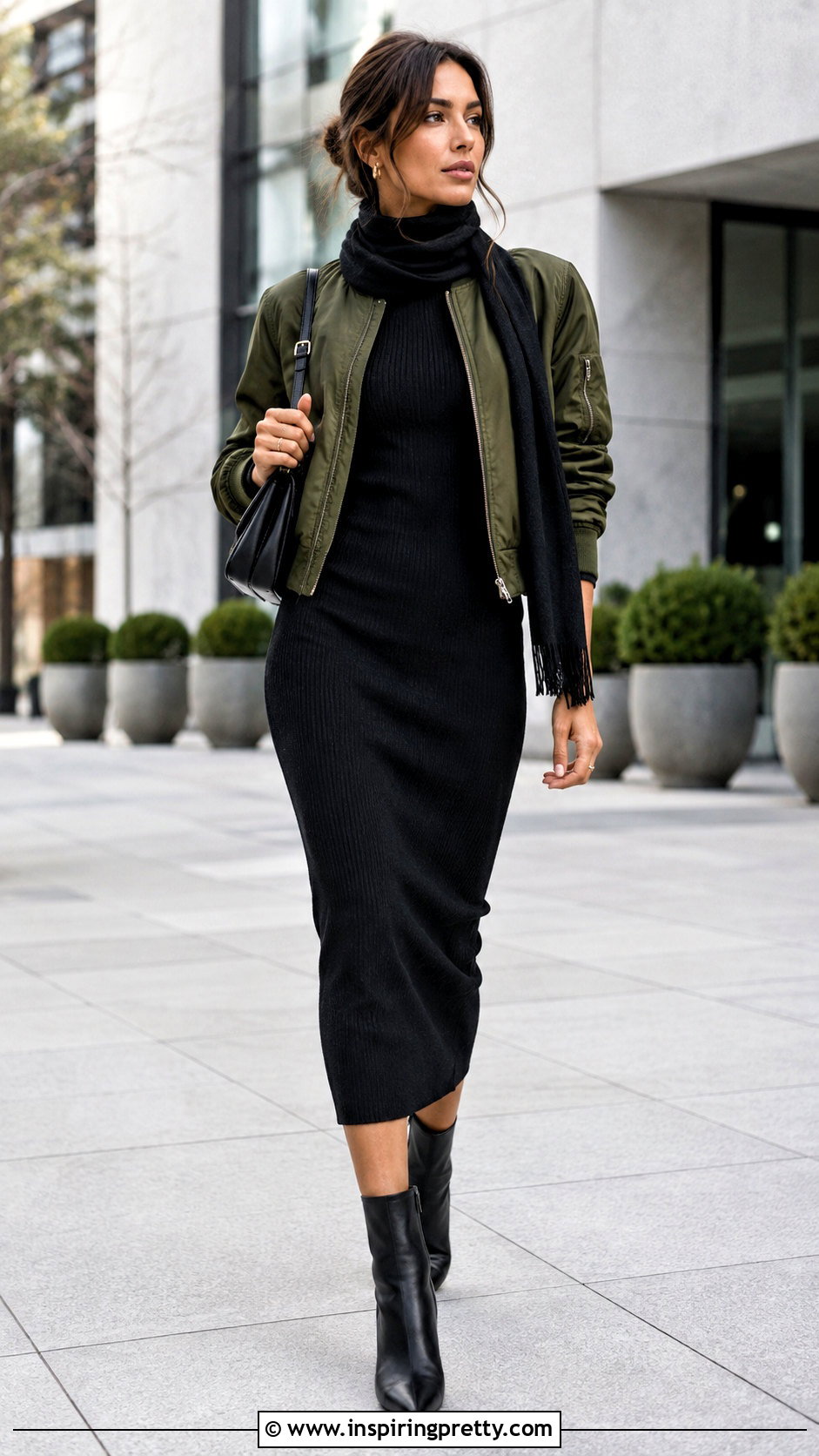
A bomber makes a knit dress casual. Choose a midi dress with a simple neckline and a cropped or waist-length bomber; the short jacket marks the waist and stops the knit looking shapeless. Ankle boots or sleek sneakers and a compact bag. A black dress with an olive bomber is the everyday version, and navy or chocolate work too. Under a sleeveless knit dress, add a thin turtleneck for warmth. I'd avoid a heavily padded bomber over a thick sweater dress; the two together restrict your arms and look bulky.
36. Sweatshirt Raincoat And Jeans Layering Outfit
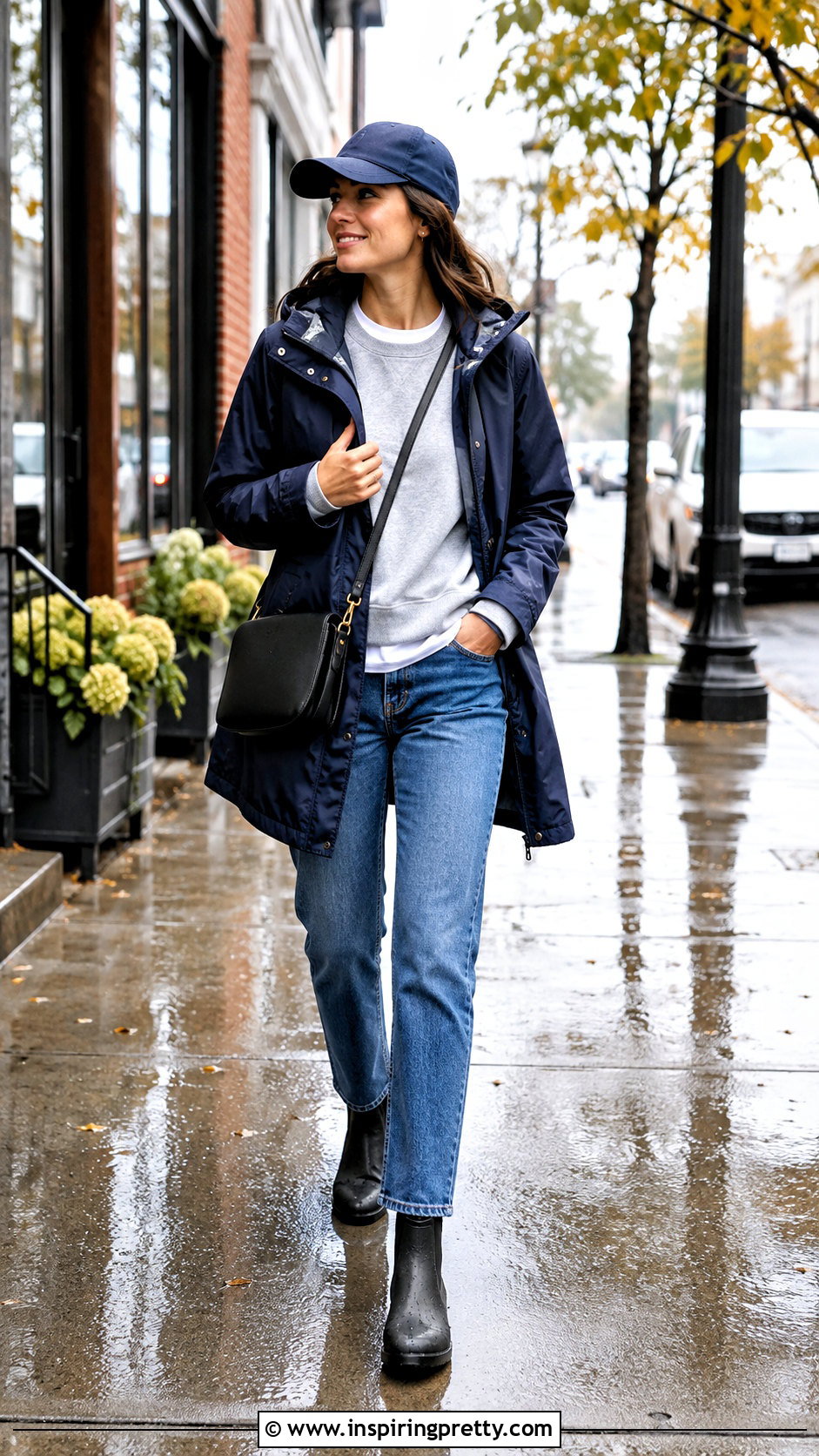
Rainy days still deserve a put-together outfit. A cotton tee, a crewneck sweatshirt and a lightweight waterproof raincoat with room for the sweatshirt but not so much it swamps you. A sweatshirt without a hood lets the raincoat's own hood and collar sit properly. Straight jeans and waterproof ankle boots, with a compact crossbody under the coat. Roll the jeans above the boots if puddles are likely. A bright raincoat lifts a neutral base; navy or olive is more versatile. A cap under the hood keeps rain off your face.
37. Faux Fur Coat Knit And Tailored Pants Layering Outfit
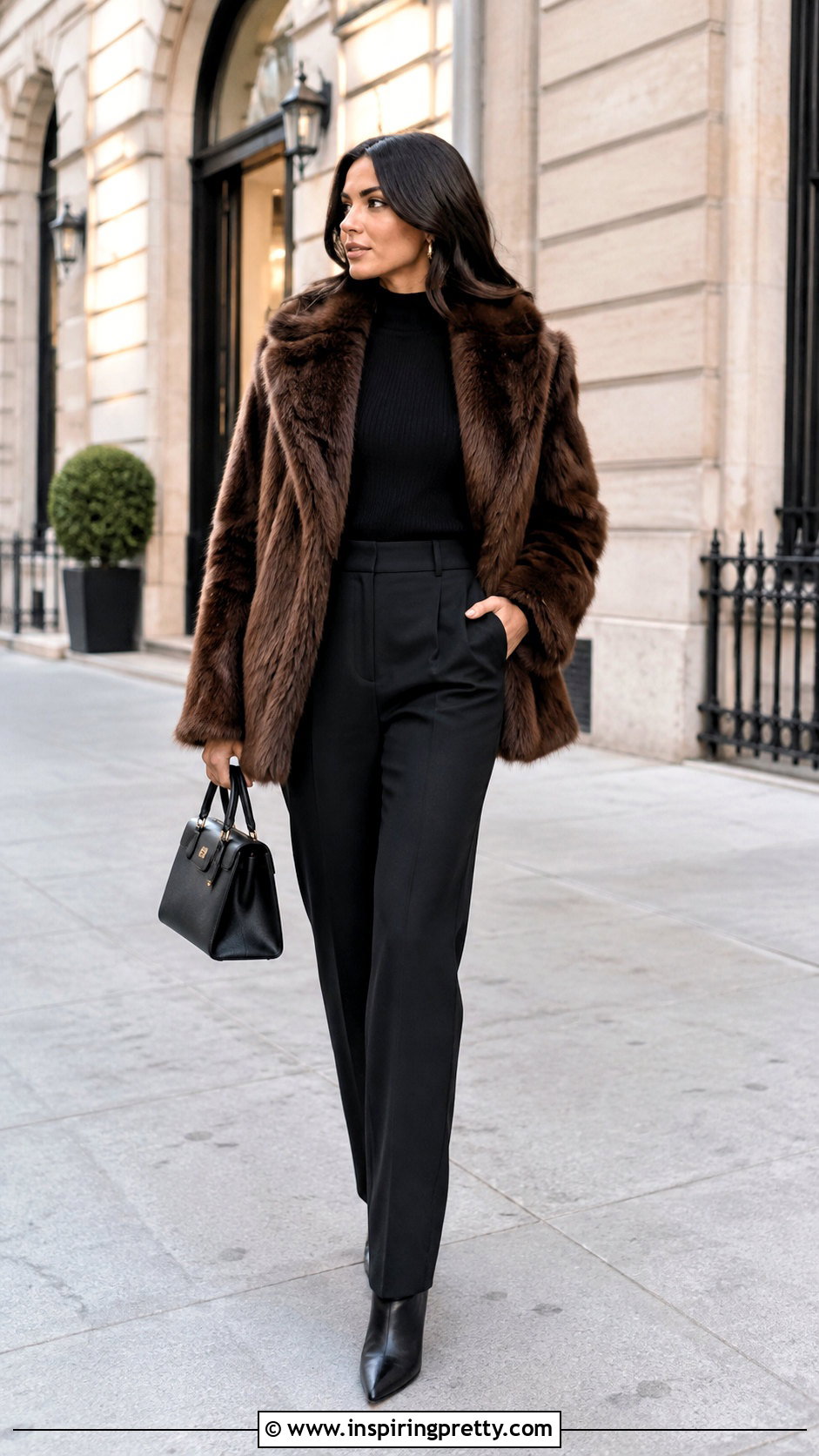
A faux fur coat is the whole statement, so everything underneath stays simple. A fitted mock-neck knit, high-rise tailored trousers and a waist- or hip-length coat. One color underneath, black, cream or chocolate, lets the texture lead. Choose a coat with room in the shoulders but a controlled overall shape. If the fur is voluminous, straight or gently wide trousers balance it better than very wide ones. Pointed ankle boots and a structured bag, minimal jewelry and no bulky scarf. Faux fur mats where a bag strap rubs, so I carry the bag by hand.
38. Cape Over Sweater Dress Layering Outfit
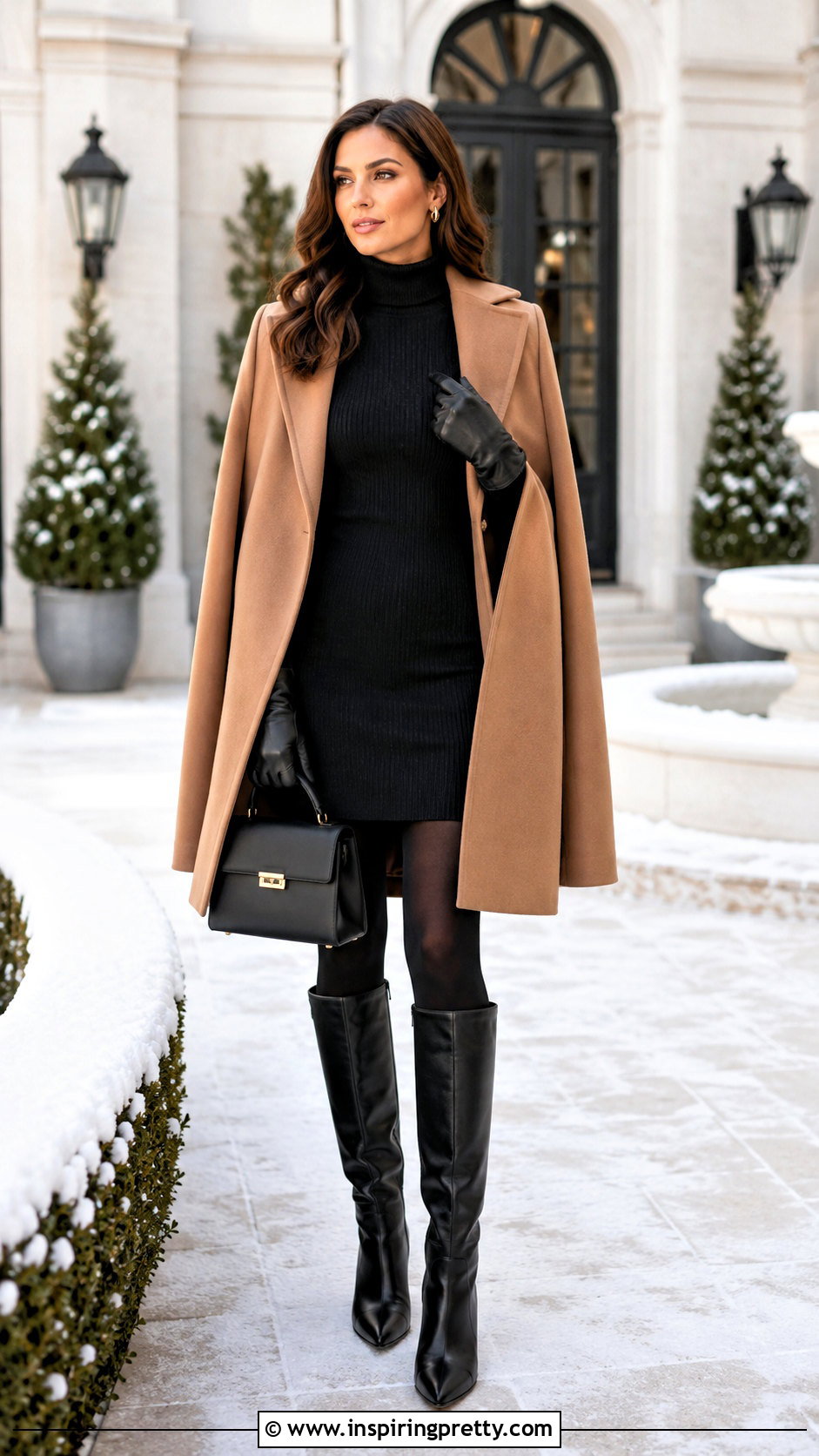
A cape gives you outerwear without hiding the dress beneath. A fitted or straight knit dress, opaque tights and knee-high boots, then a tailored wool cape over the shoulders with the dress hem showing. With a midi dress, a cape that ends at or above the hips keeps the proportions right. Longer capes need a slimmer dress. The dress sleeves stay visible through the cape's arm slits, so their color and fit matter. Camel over black is classic; burgundy over cream is richer. A top-handle bag and leather gloves.
39. Blazer Scarf And Wide-Leg Pants Layering Outfit
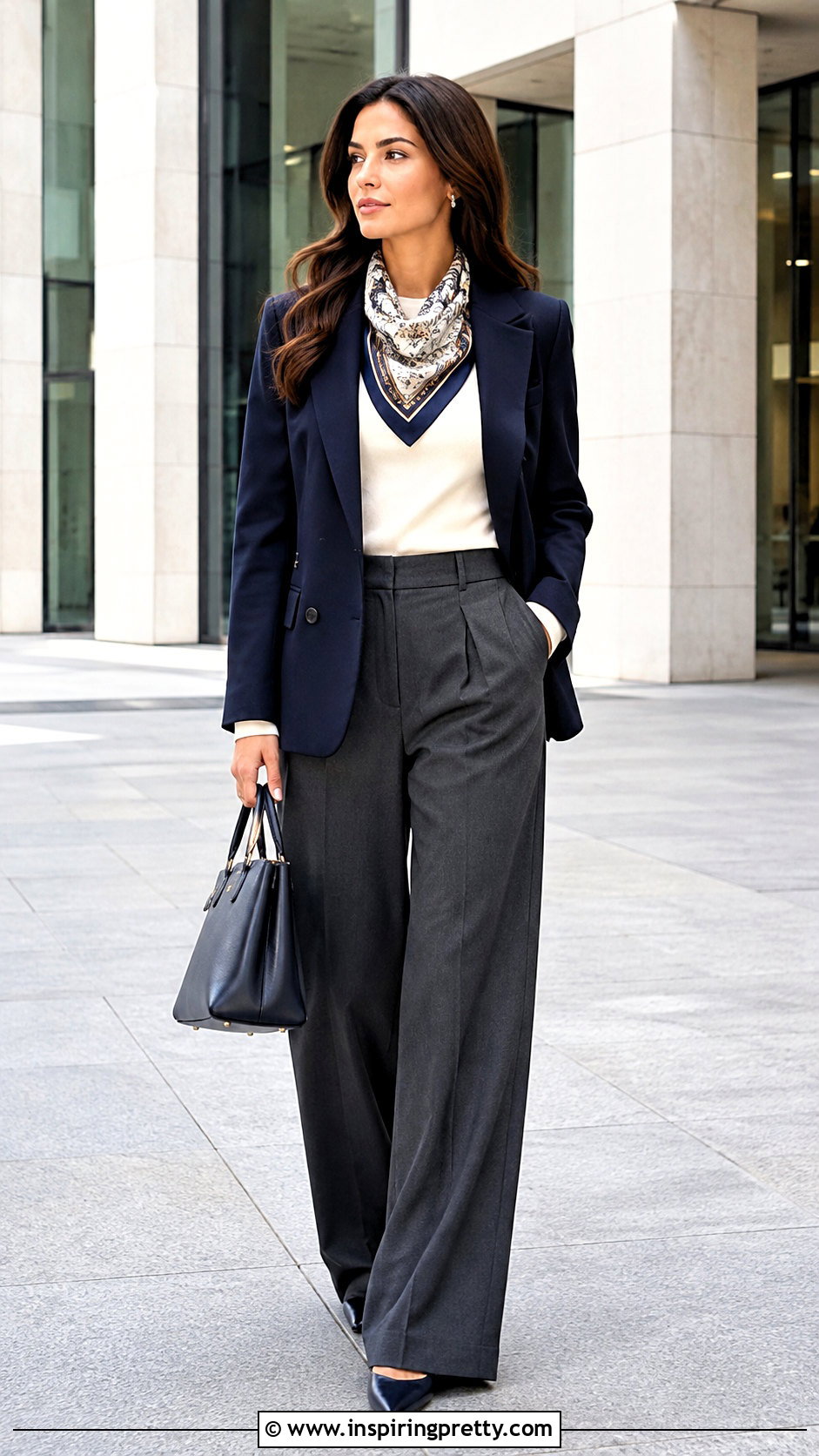
A big scarf can be a real layer, not just an accessory. Start with a fitted long sleeve and wide-leg tailored pants, add a relaxed blazer, then drape a large silk or light wool scarf around the neck, under the lapels or over one shoulder held by a belt. A printed scarf can pull together colors from the rest of the outfit. Keep the base plain. Petite women do better with a narrower scarf and shorter ends; taller women can carry a long drape. Pair a large scarf with a very oversized blazer only if both fabrics are light.
40. Crochet Vest Tank And Linen Pants Layering Outfit
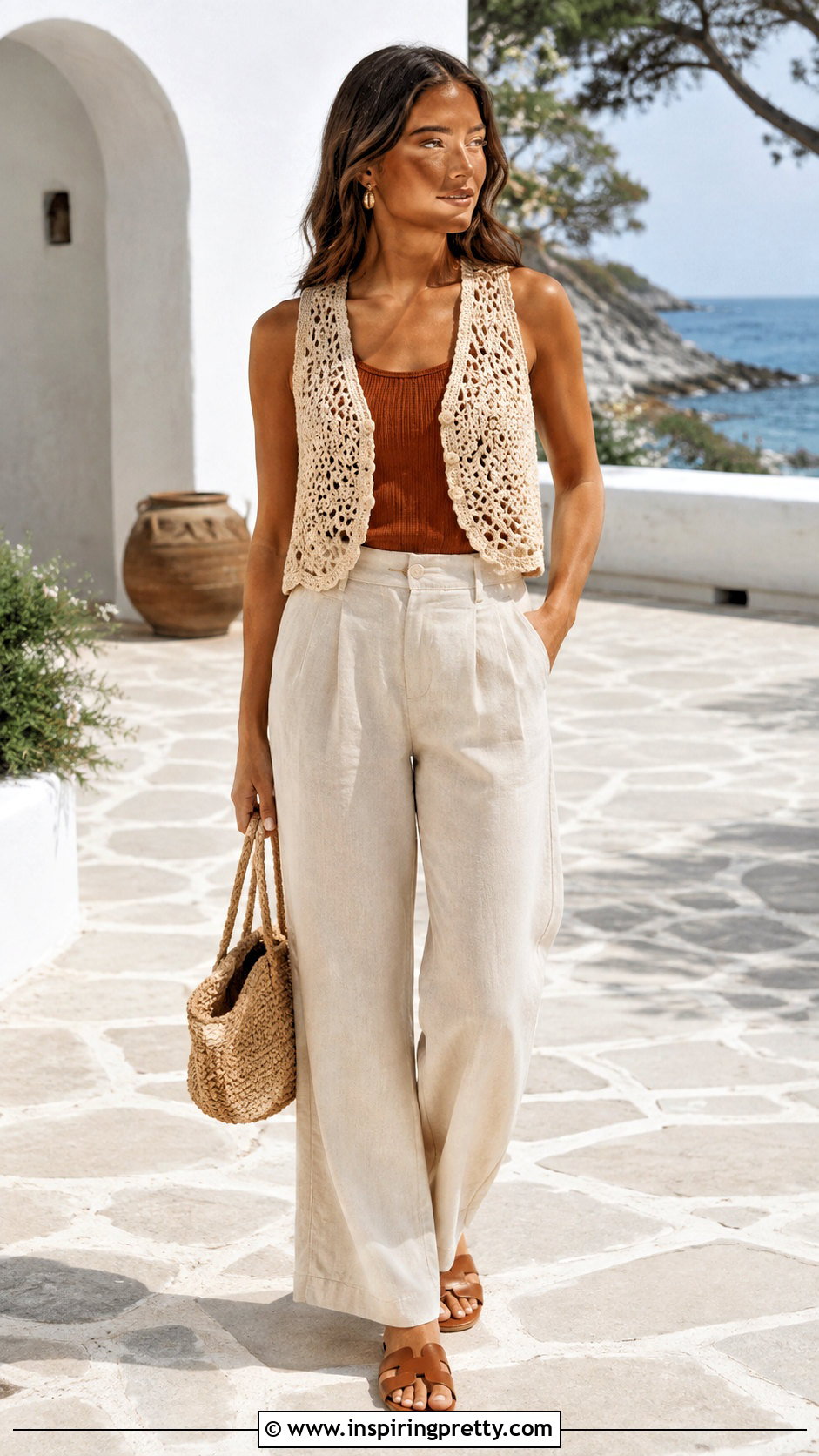
Hot-weather layers have to breathe and come off easily. A fitted cotton tank under a crochet vest, with high-rise linen trousers. Choose a vest with a defined shape rather than lots of fringe. If the crochet is very open, match the tank to the vest color; a contrasting tank shows through every gap and looks busy. Cream over white or rust is summery. Tuck the tank in and let the vest sit over the waistband. Flat sandals, a woven bag and simple earrings. Crochet stretches on a hanger, so fold it.
41. Matching Vest Blazer And Trouser Layering Outfit
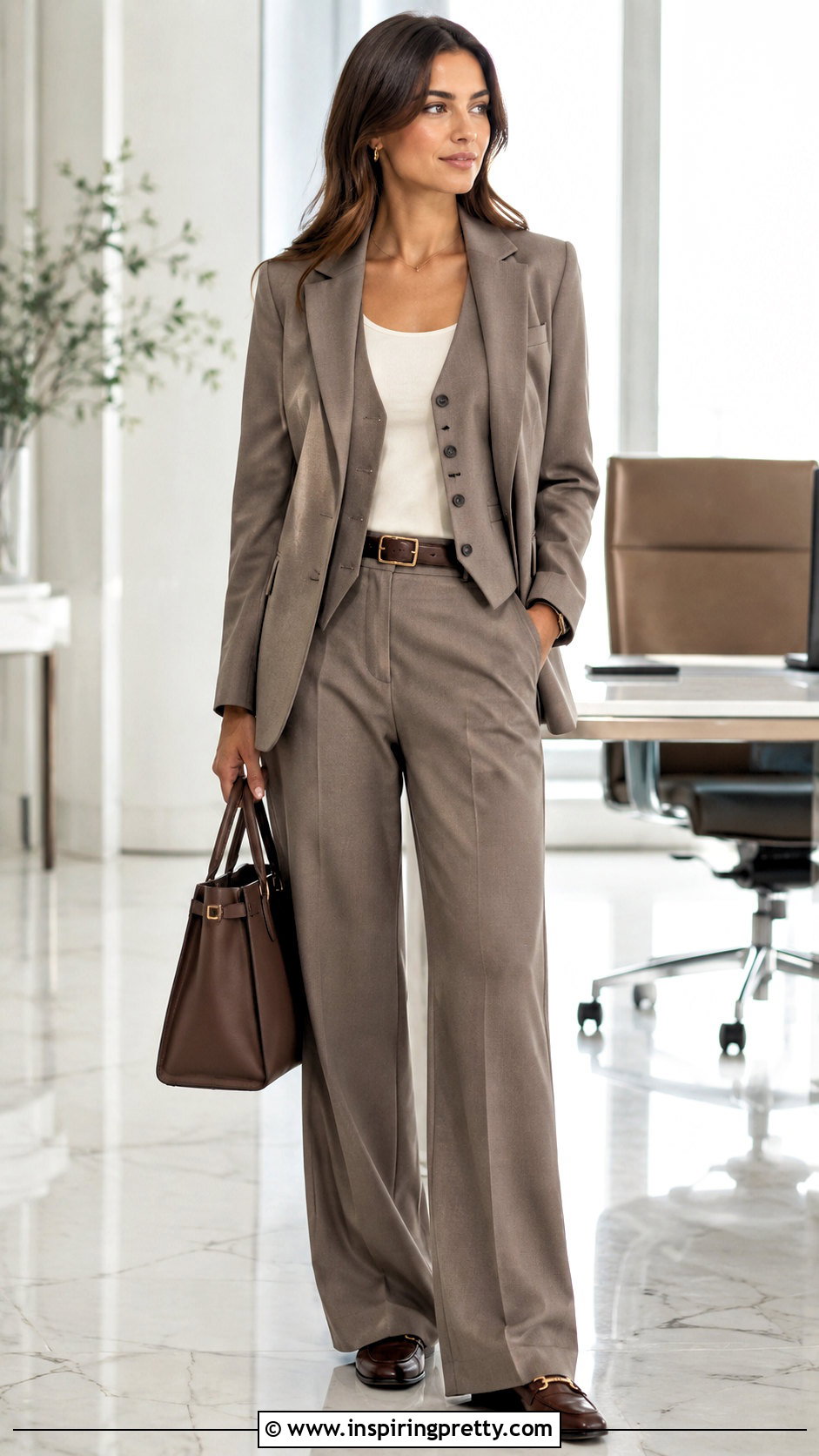
A matching vest, blazer and trousers give you three layers that each look finished alone. A fitted tank, short-sleeve knit or crisp shirt underneath, the vest buttoned, then the blazer. Check that the blazer closes over the vest without pulling across the front; many suit vests are cut a little fuller. One color looks long and sleek; a contrasting base adds depth at the neck. When the jacket comes off, the vest keeps the structure. Cream, navy, olive and chocolate all suit it. Loafers or pointed heels, a work bag and a leather belt.
42. Sheer Blouse Tank And Midi Skirt Layering Outfit
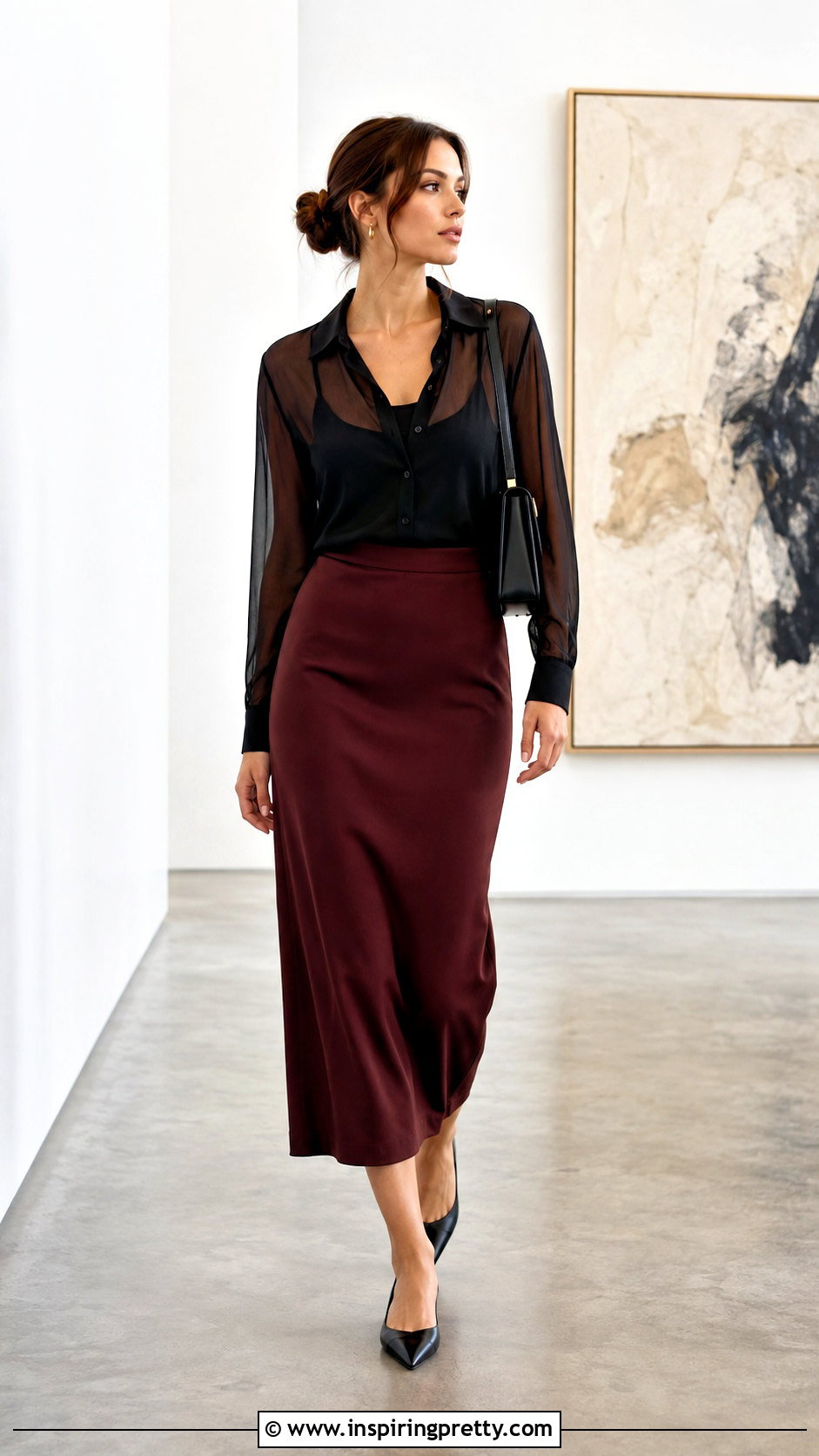
A sheer blouse over an opaque tank is office-appropriate when the tank is chosen well. Match the tank to the blouse or the skirt, and pick one with smooth seams and no lace, since every line shows through sheer fabric. Tuck both into a high-rise midi skirt. Black under a patterned sheer gives definition; tonal layers give softer coverage. The blouse should skim, not cling. Voluminous sleeves want a slim skirt. Pointed flats or low block heels, a structured bag and small earrings, with a blazer for extra coverage.
43. Long Kimono Tank And Wide-Leg Pants Layering Outfit
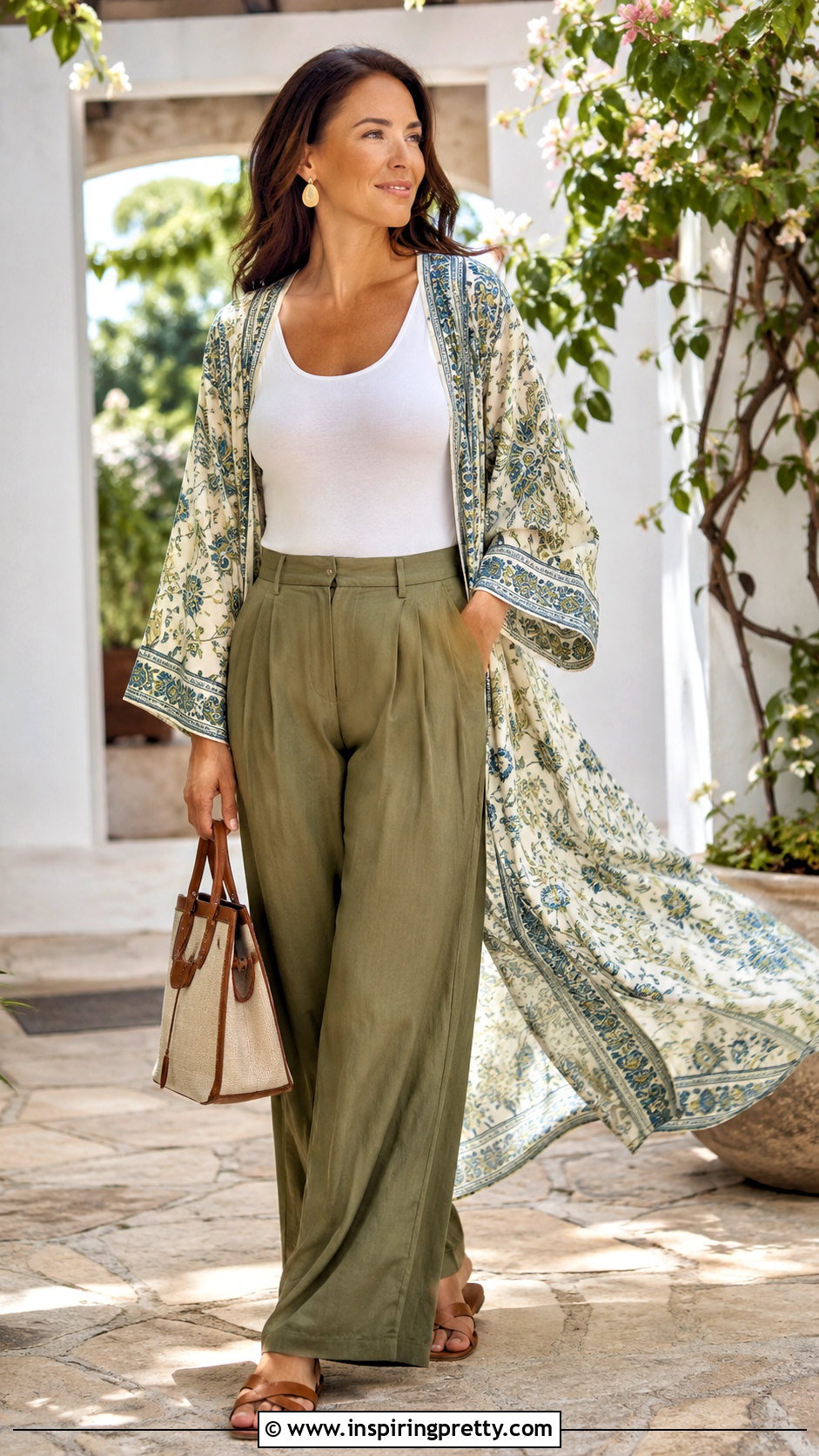
A long kimono or duster adds movement to a tank and trousers. Tuck a fitted tank into high-rise wide-leg pants, then add a light open layer that falls between knee and ankle. It shouldn't reach the ground, or the hem catches on steps and car doors. Flat sandals or low mules keep the line flowing, and a structured bag keeps it from going too loose. A print over solids or one color for a tonal look. The waistband showing in the opening adds shape. Simple jewelry if the fabric is busy.
44. Turtleneck Overalls And Coat Layering Outfit
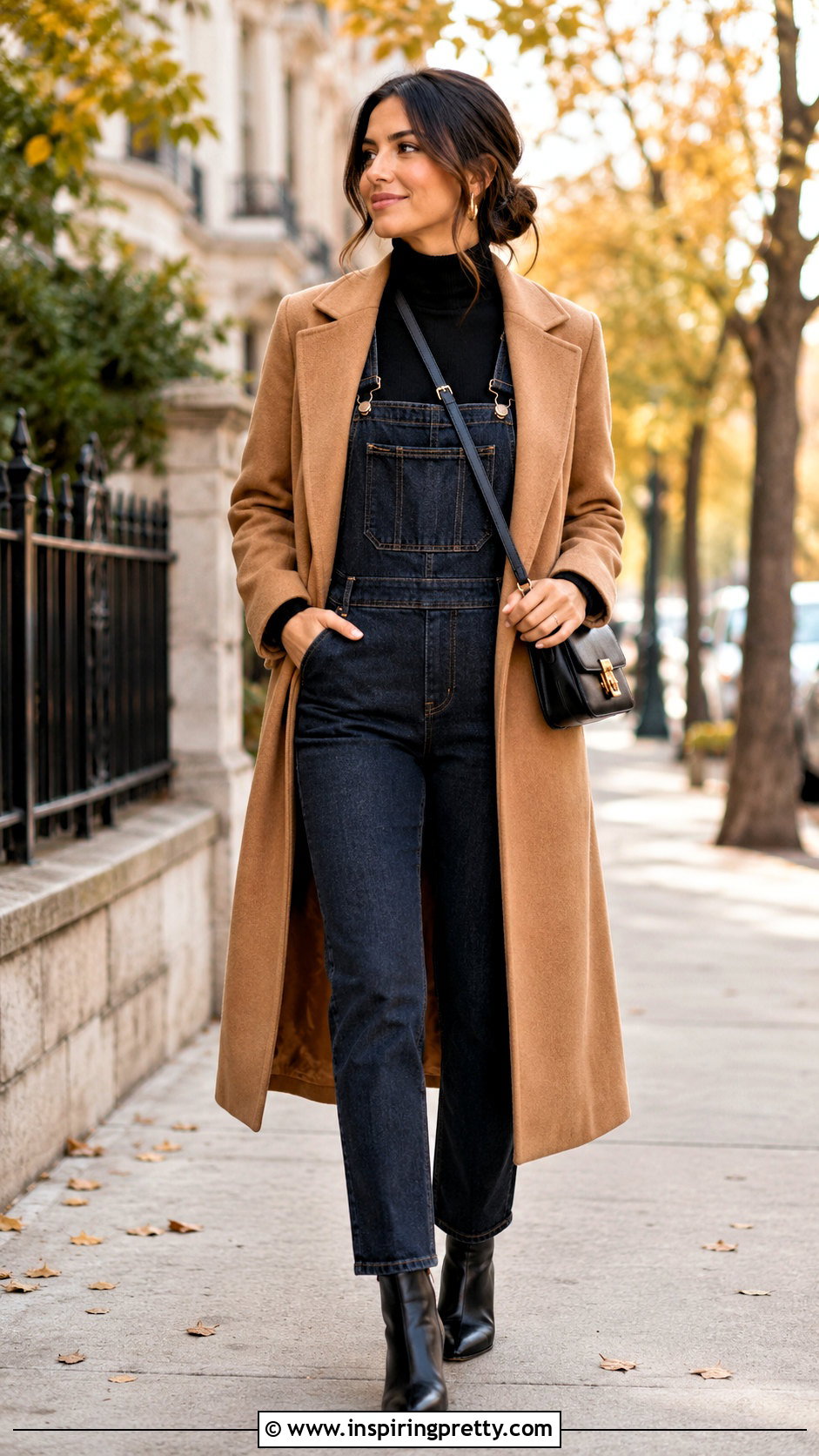
Overalls move into cold weather with a fitted turtleneck and a long wool coat. Dark denim with a black turtleneck and camel coat is the cleanest version; cream or corduroy overalls suit warmer autumn colors. Adjust the straps so the bib lies flat without pulling at the waist. A thick sweater under a narrow bib bunches at the sides, so I stick to fine knits. Ankle boots or loafers, a crossbody and small hoops. Roll the hems once to show the boots.
45. Turtleneck Jumpsuit And Blazer Layering Outfit
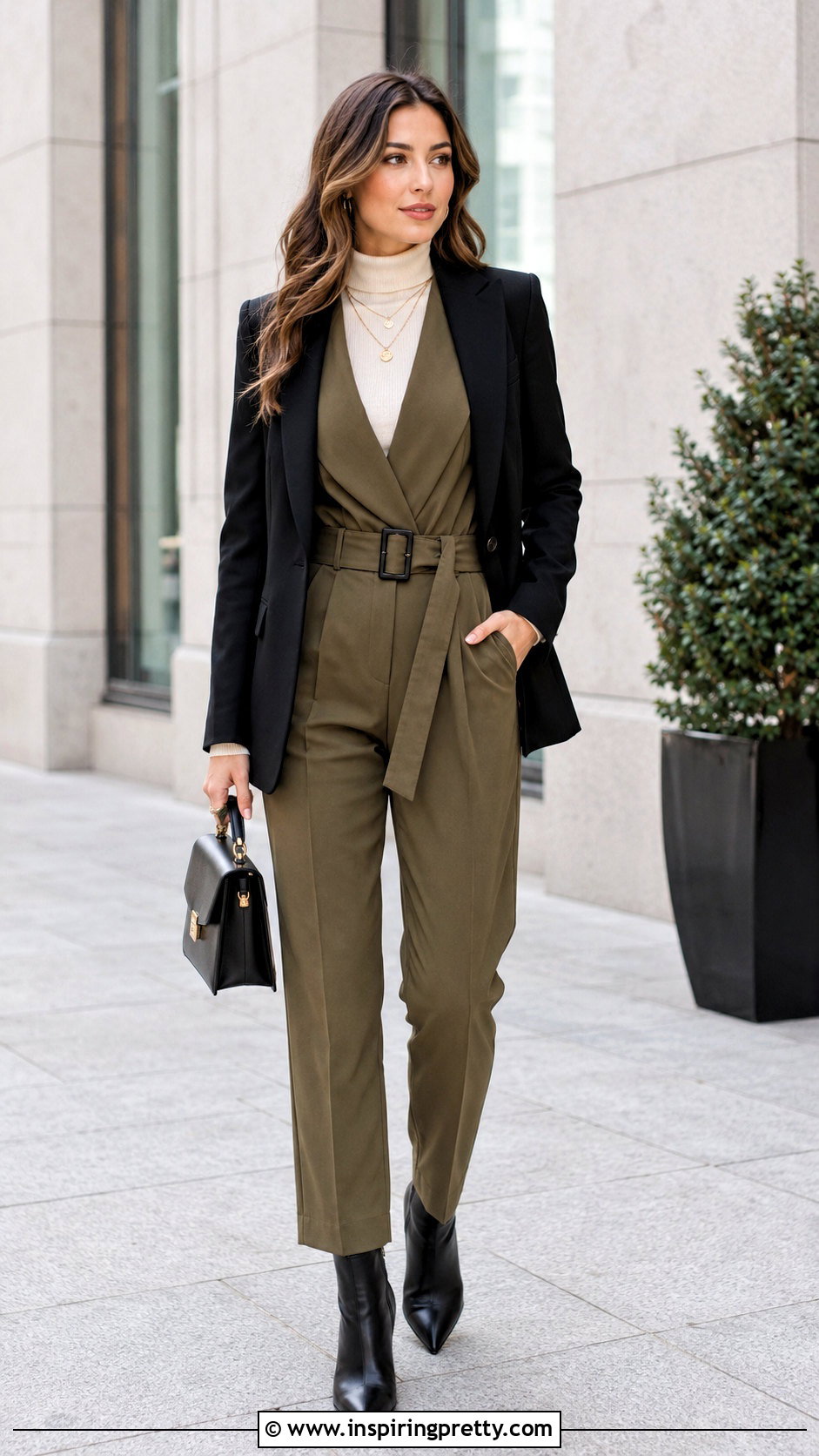
A sleeveless jumpsuit can last into cooler seasons over a thin turtleneck. Choose a streamlined jumpsuit with a defined waist and enough torso length; a short torso pulls uncomfortably with a layer underneath. Add a tailored blazer, ankle boots or pointed flats, a compact bag and minimal jewelry. Black, navy or olive jumpsuits make an easy base, and a cream or striped turtleneck adds contrast. The blazer can match for a suit effect. Skip thick knits under a fitted jumpsuit. One more practical point: test the bathroom question before a long day.
46. Zip Jacket Shirt And Slip Skirt Layering Outfit
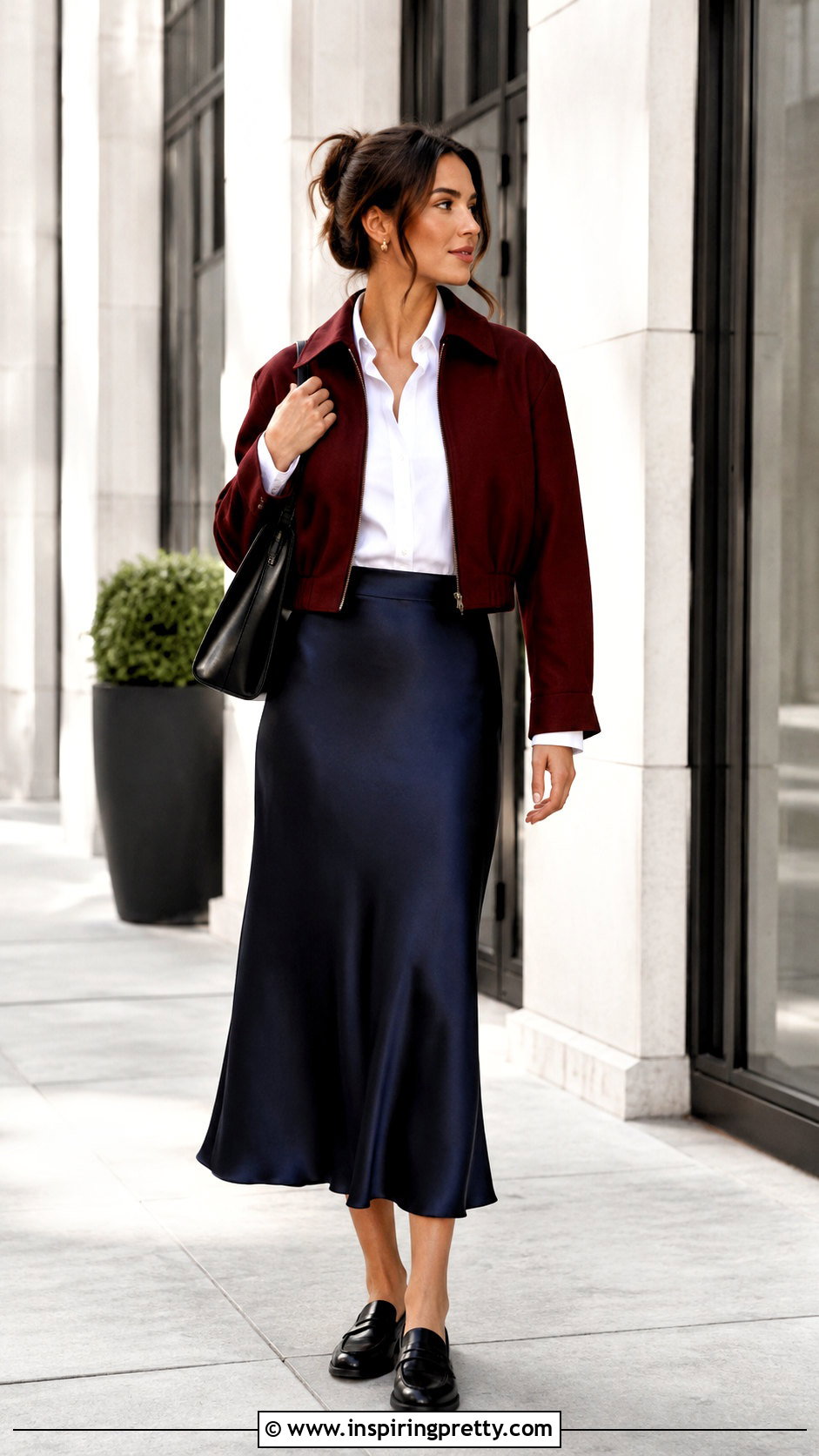
A zip-front track-style jacket looks surprisingly polished with a button-down and a slip skirt. Tuck a light shirt into the skirt, add a sleek jacket that ends near the waist, and leave it half open so the collar shows. Loafers or simple sneakers and a structured bag. Navy, white, burgundy and silver balance the sporty and dressy pieces. Avoid big logos and technical details. Push the jacket sleeves up to show the shirt cuffs. Crisp cotton, smooth satin and a sporty knit together give the outfit its contrast.
47. Blouse Vest Blazer And Trouser Work Layering Outfit
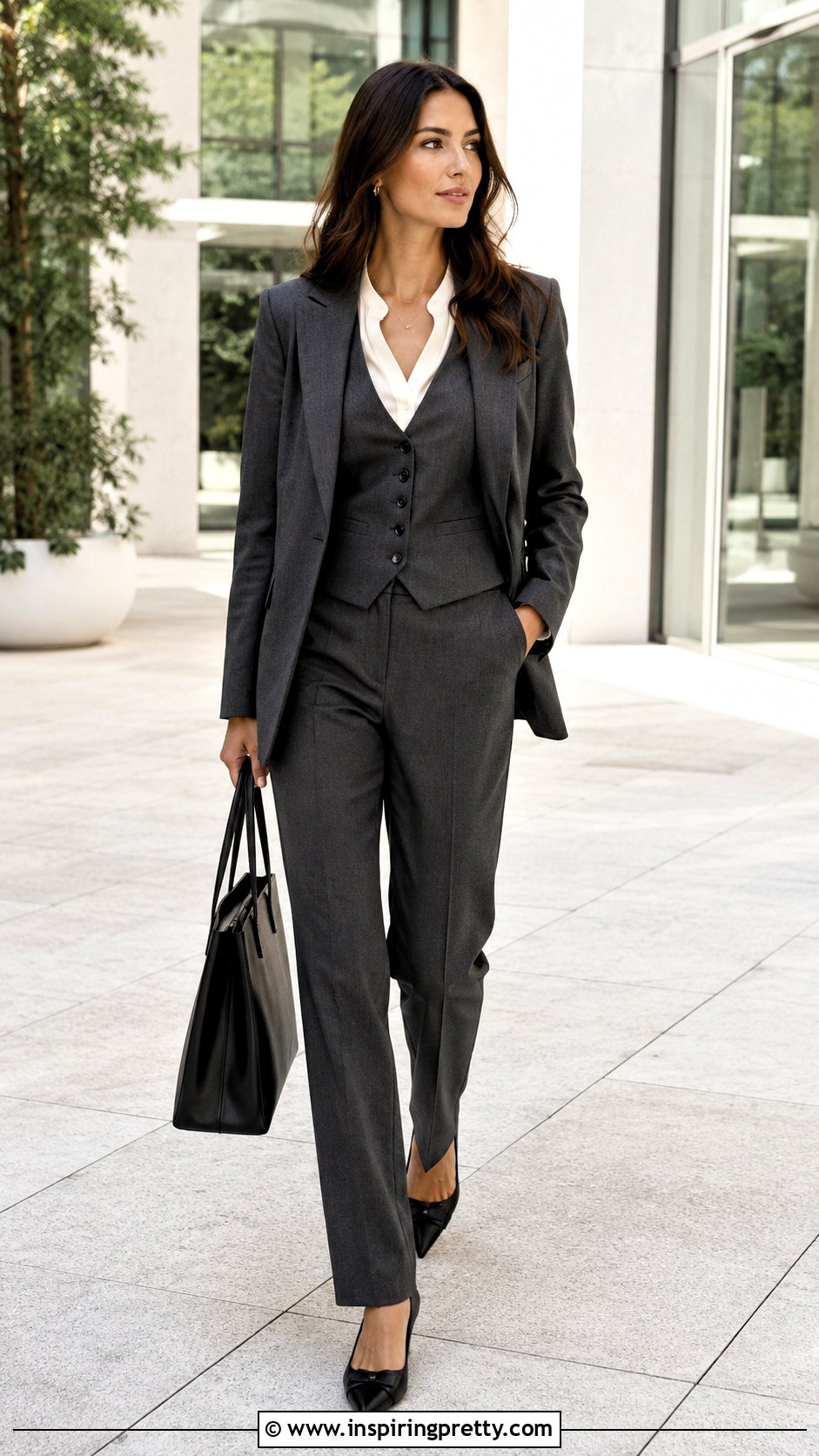
Four layers for work, blouse, vest, blazer and trousers, only work if the blouse is the thinnest thing you own. Button the vest to define the torso and leave the blazer open to show the front. A matching vest and trousers with a slightly different blazer is one approach; a full three-piece set is another. Keep the blouse collar flat and avoid big bows under narrow lapels. Each layer should stand alone, so you can drop the blazer or vest as the office warms up. Pointed flats or low heels and a structured tote.
48. Tank Cardigan Trench And Jogger Travel Layering Outfit
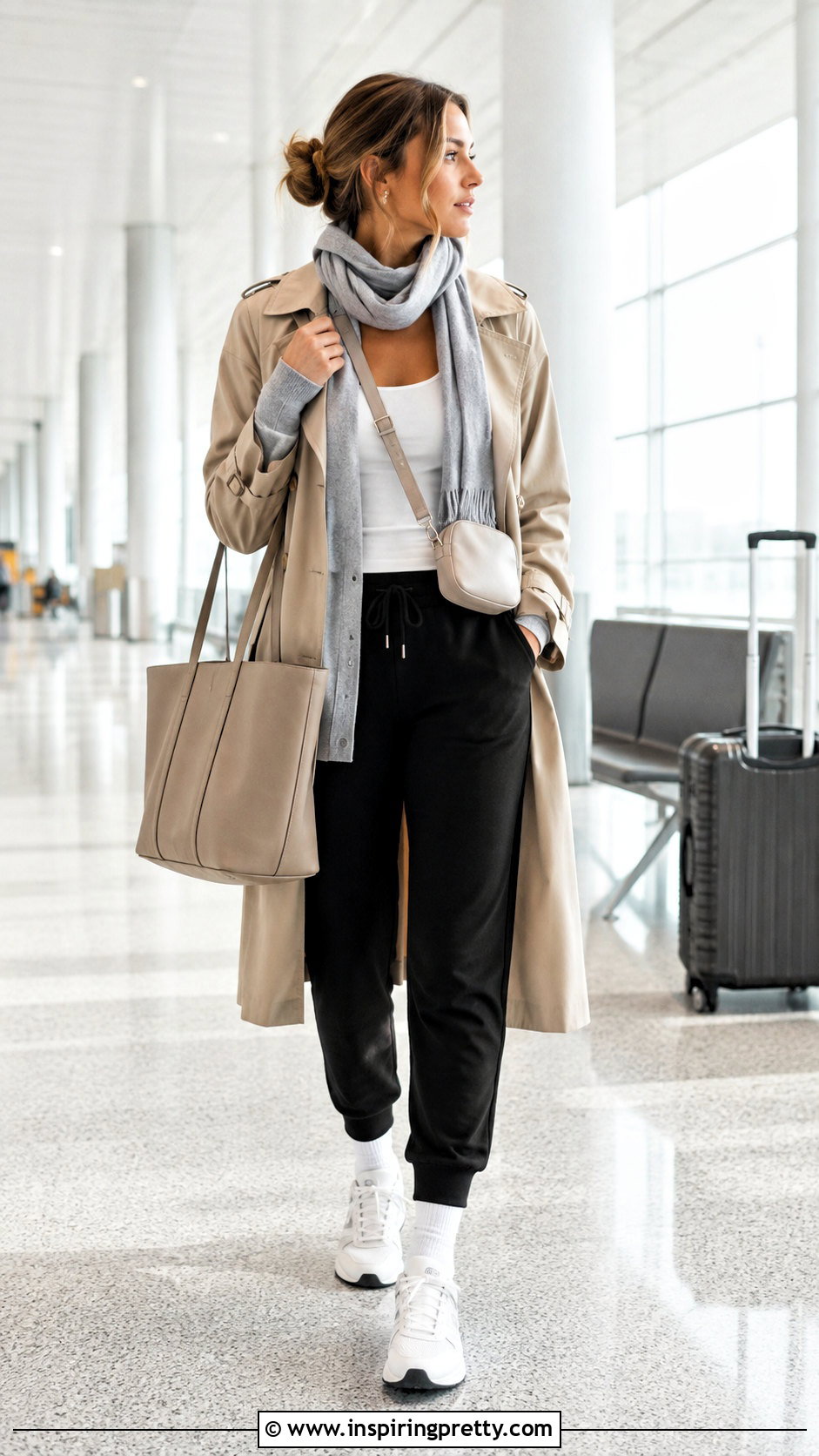
A travel outfit has to handle cold terminals, warm cabins and hours of sitting. A fitted tank, a soft cardigan and a lightweight trench, with tailored joggers or wide-leg knit pants and a smooth waistband. Supportive sneakers and crew socks. The cardigan should fold small enough to fit in your bag. Keep the palette neutral so relaxed pieces look tidy. Leave out stiff pants, heavy belts and coats with lots of metal hardware; they slow you down at security. A big tote, a crossbody pouch and a light scarf.
49. Wrap Dress Duster And Boots Layering Outfit
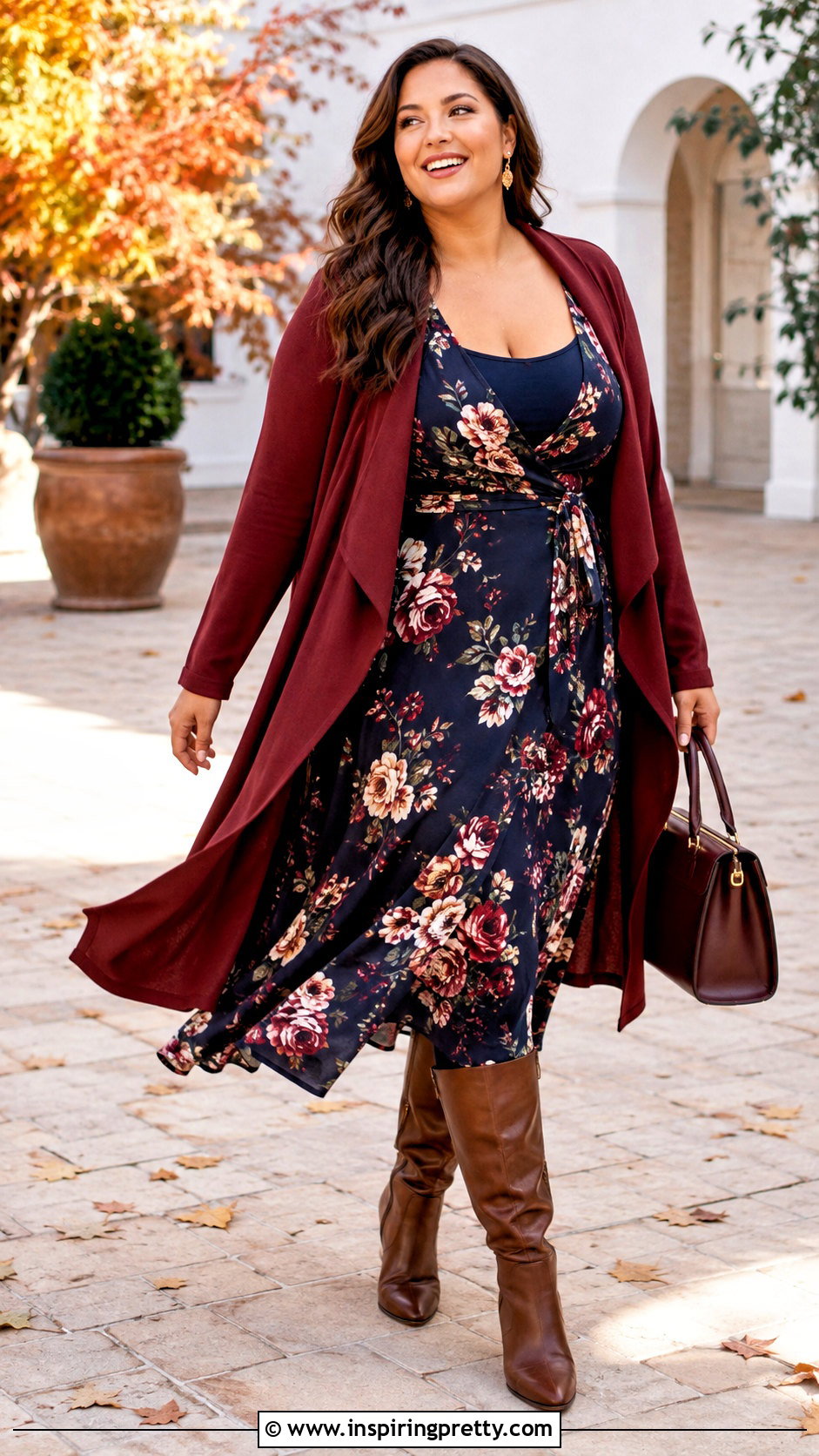
A wrap dress and a long duster suit many body types because both create long vertical lines. For more neckline coverage, wear a smooth cami or fitted short-sleeve top under the dress. Tie the wrap at your natural waist, then add an open duster that follows the dress line. Knee-high or sleek ankle boots and a structured bag. Choose a duster in a color pulled from the dress print, or tonal neutrals to lengthen. I always check the duster hangs freely past the wrap tie; if the bow catches the lining, it pulls the dress open.
50. Classic Shirt Sweater Blazer And Jeans Layering Outfit
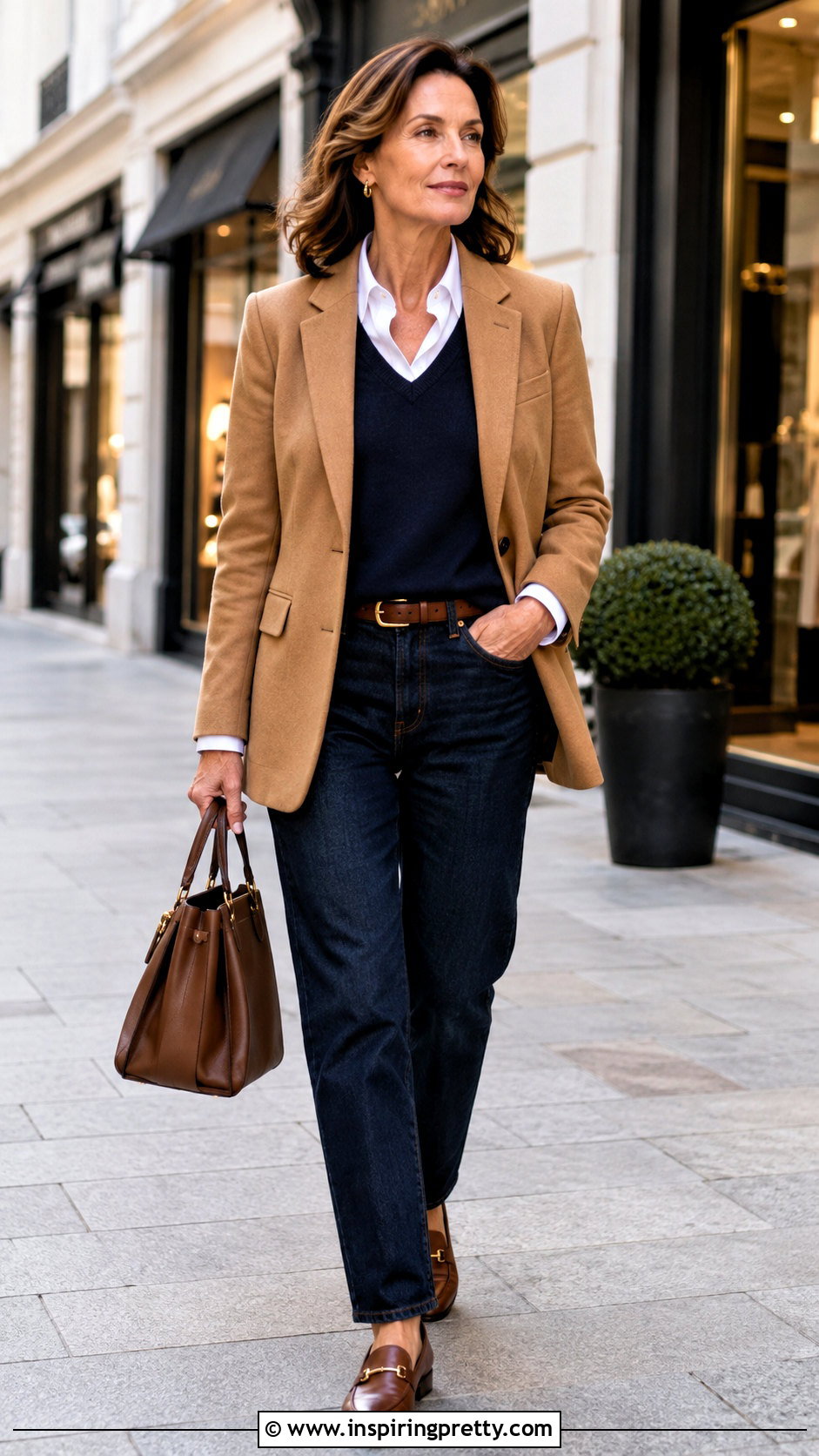
A shirt, a V-neck sweater, a blazer and jeans is the combination I'd give anyone starting a work-casual closet. A crisp button-down with a fine-knit sweater over it so the collar and cuffs show, then a relaxed blazer, straight jeans and leather loafers. The V-neck should frame the shirt collar rather than crush it; a deep V lets the collar lie flat on top. Every layer must be lightweight to move comfortably. White shirt, navy sweater, camel blazer and dark denim is a reliable formula for offices, lunches or travel.
Sleeves, Collars and Cuffs Fighting Under a Coat
The fiddly part of layering happens at the arms and neck. A few habits prevent most of it.
- Hold the cuff of the inner sleeve in your fingers while you push your arm into the next layer. It stops the sleeve riding up into a lump at the elbow.
- Decide where each collar lives. Shirt collars usually sit outside a crewneck sweater and inside a blazer lapel. Hoods go outside a coat collar, never stuffed in.
- Stack cuffs on purpose. Either roll every layer together into one neat band, or let each sleeve show a little below the one above it. A random mix looks messy.
- Check the back in a mirror. Bunched fabric between the shoulder blades is invisible to you and obvious to everyone else.
Dressing for the Room You'll End Up In
Most layered outfits are planned for the walk outside and then worn for eight hours in a heated office or a warm train. I plan from the inside out instead: the base layer and the first visible layer have to be comfortable indoors for the whole day, and only the outer layers deal with the weather.
Fiber matters here more than thickness. Wool and merino breathe and handle a change of temperature well, while a polyester base under a wool sweater traps heat and dampness. If you know the room runs hot, choose cotton or merino against the skin, and make sure your outer layer is easy to carry, folded over a bag or across your shoulders, once it comes off.
Every Layer Should Survive Being Taken Off
Layering comes down to pieces that work together, not more pieces. Start with light, fitted foundations, then add texture, structure and outerwear. Before you leave the house, check the neckline, the sleeves and the hem lengths; those three decide whether the outfit looks coordinated or bulky. Mixing fitted and relaxed shapes balances most heights and sizes. The test I use for every outfit here is simple: each visible layer should still look right if the one above it comes off. Adjust the fabrics and colors to your own climate and routine.
Related posts:


Leave a Reply