
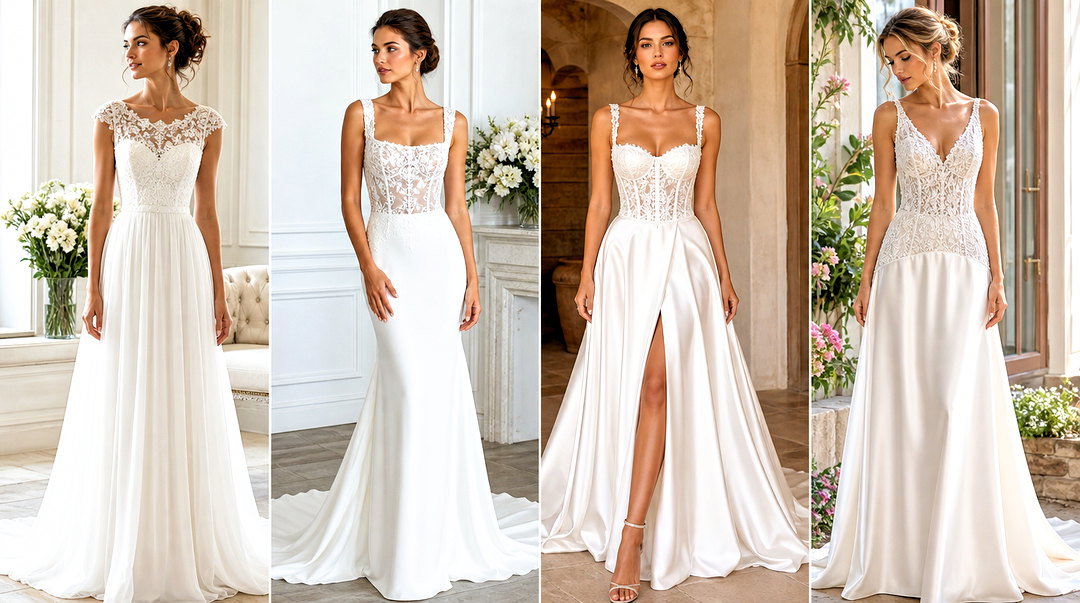
A lace bodice over a soft, moving skirt is the wedding dress shape I see brides relax into most quickly. The lace does the detailed work up near the face, and the skirt lets you walk, sit and dance without fighting fabric all day. The choices that really change the dress are the neckline, where the waist sits, and which sheer fabric falls from it: chiffon, tulle, organza and georgette all move differently. Below are 25 versions, from classic A-lines and bohemian separates to corset bodices, each with what I'd check at a fitting and how I'd keep the veil, shoes and jewelry from crowding the lace.
How Chiffon, Tulle, Organza and Georgette Each Move
These four fabrics all look sheer on a hanger, but they behave very differently once you're wearing them, and the choice changes the whole dress more than most brides expect.
- Chiffon is soft and drapes close to the body. It floats in a breeze and suits beach and garden weddings, but it shows creases after sitting and snags easily on rough surfaces.
- Tulle is a net. Fine bridal tulle is soft and settles nicely; stiffer tulle stands away from the body and adds volume. It hides creases well, but catches on beading, jewelry and Velcro.
- Organza is crisp with a slight sheen. It holds shape better than chiffon, so a skirt keeps its volume, but it can crush and show creases if packed badly.
- Georgette has a slightly grainy, matte surface and more weight than chiffon. It hangs straighter and suits sleek, bias-cut and pleated skirts.
When I help a bride choose, I ask her to walk in each fabric. The one that moves the way she pictures herself moving down the aisle usually wins, and it often isn't the one she expected.
1. Sweetheart Lace Top Chiffon Wedding Dress
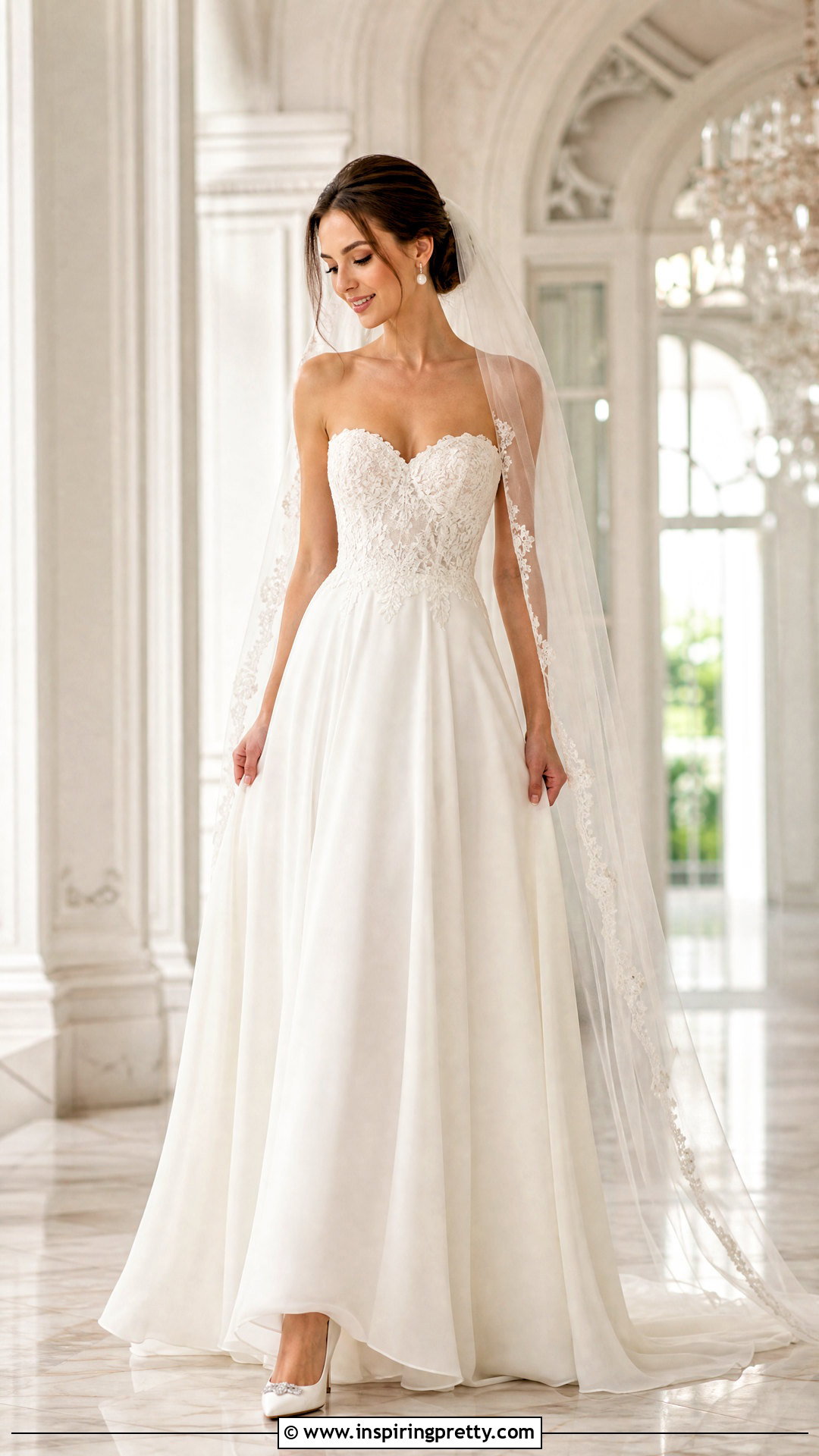
The sweetheart neckline is where light boning earns its keep. Without it, the curved edge folds forward the moment you bend to hug someone, so I always press on the bodice at the first fitting to see if it holds. Delicate floral lace keeps the top from looking heavy over a chiffon skirt. A plain fingertip veil and pearl drops leave the neckline alone. Pick a low chignon or side-swept waves so nothing hangs over the lace. Ask for a lined chiffon skirt with a short train; unlined chiffon clings to legs and tights.
2. Long Sleeve Lace Top Tulle Wedding Dress
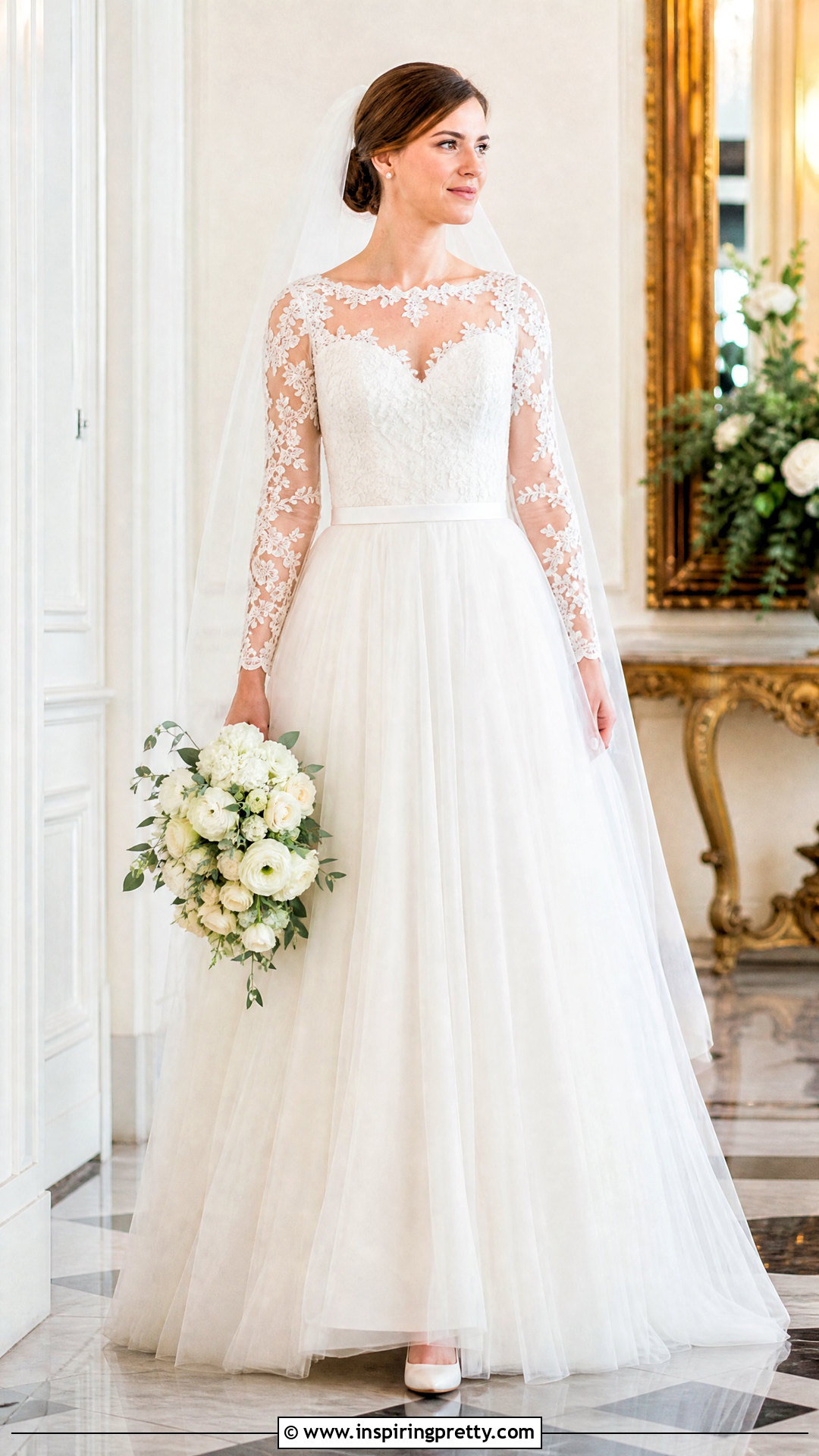
Long lace sleeves give coverage while still looking light, provided the lace is fine and the sleeve has a little ease. Tight lace sleeves restrict how high you can lift your arms, and you'll be hugging and waving all day, so I have brides raise both arms over their head in the fitting room. A softly layered tulle skirt moves better here than a stiff ball-gown net. An illusion neckline links the sleeves and bodice. If the sleeves are full of motifs, choose a veil with a plain edge. This one suits cold-season and indoor ceremonies.
3. Off Shoulder Lace Top Organza Wedding Dress
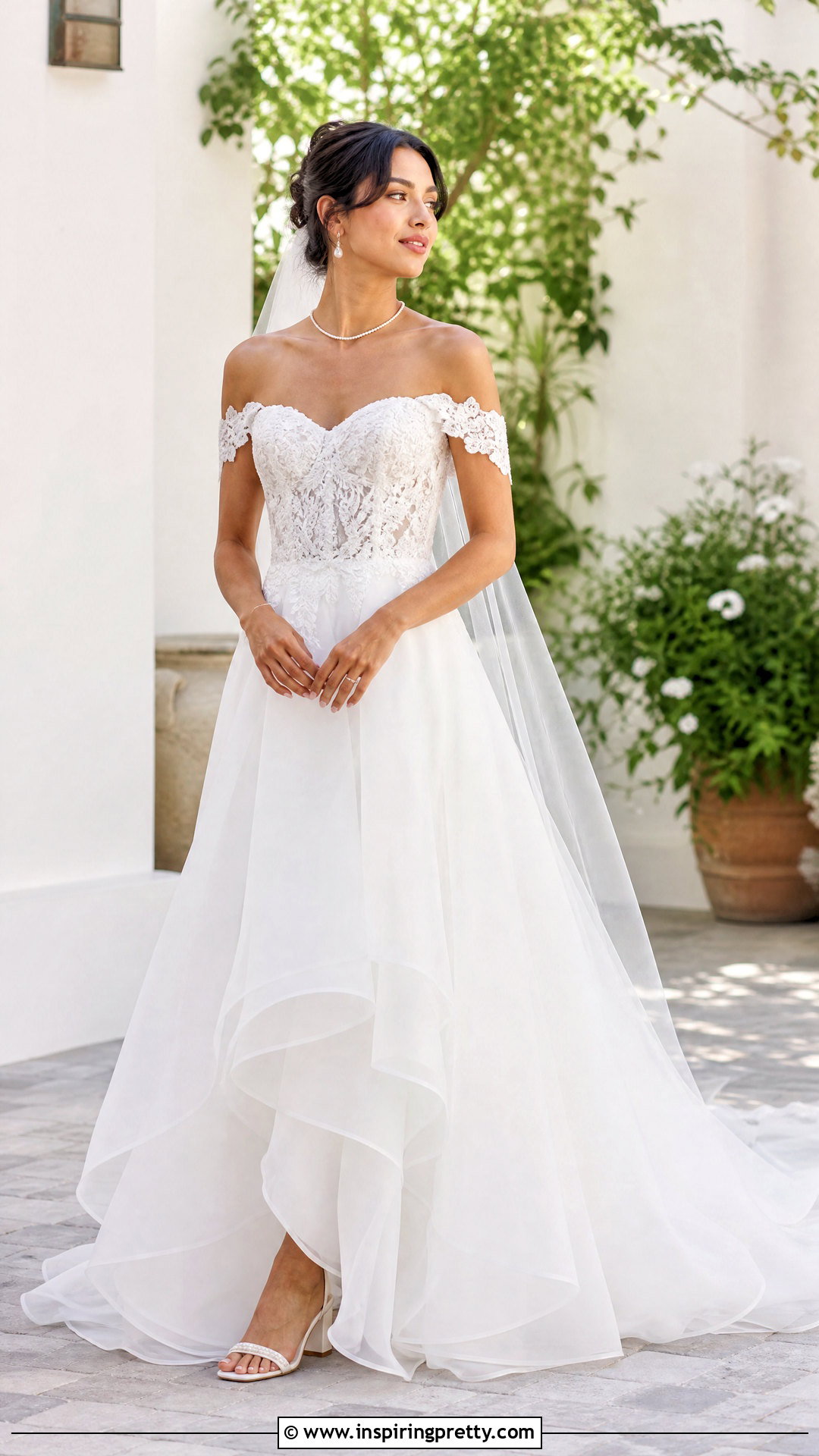
Off-the-shoulder lace shows the collarbone, but it only stays put if there's internal structure holding the bodice up from below. The lace band on the arm should rest, not grip; if it leaves a red line after ten minutes, it's too tight and will feel worse by the reception. Lightweight organza layers give volume that still floats when you walk. I keep jewelry small here, maybe a fine pendant, because the bare shoulders are the feature. A sheer chapel veil with little trim and a loose updo finish it, and low block heels are a kindness for garden lawns.
4. Illusion Lace Top Chiffon Wedding Dress
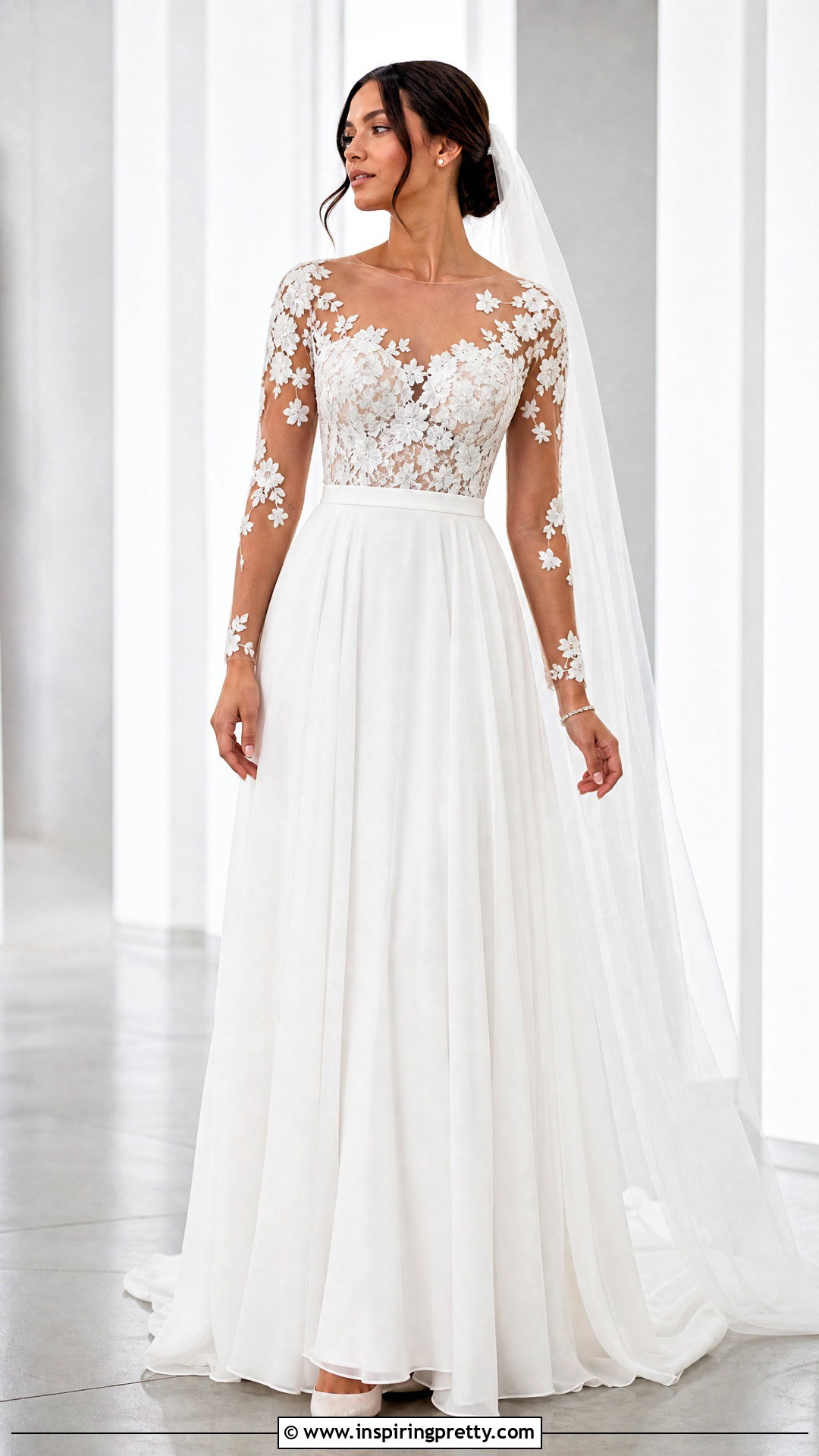
An illusion lace top puts lace appliqués on sheer mesh so the motifs look like they float on the skin. Everything depends on the mesh matching your skin tone. Too pale and it reads as a gray film in photos; too dark and it looks like a sweater under the lace. I bring swatches into daylight before deciding. A plain chiffon skirt and a clean natural waist let the bodice carry the detail. Keep earrings tiny and hair up so the back appliqués show from every angle.
5. High Neck Lace Top Pleated Wedding Dress
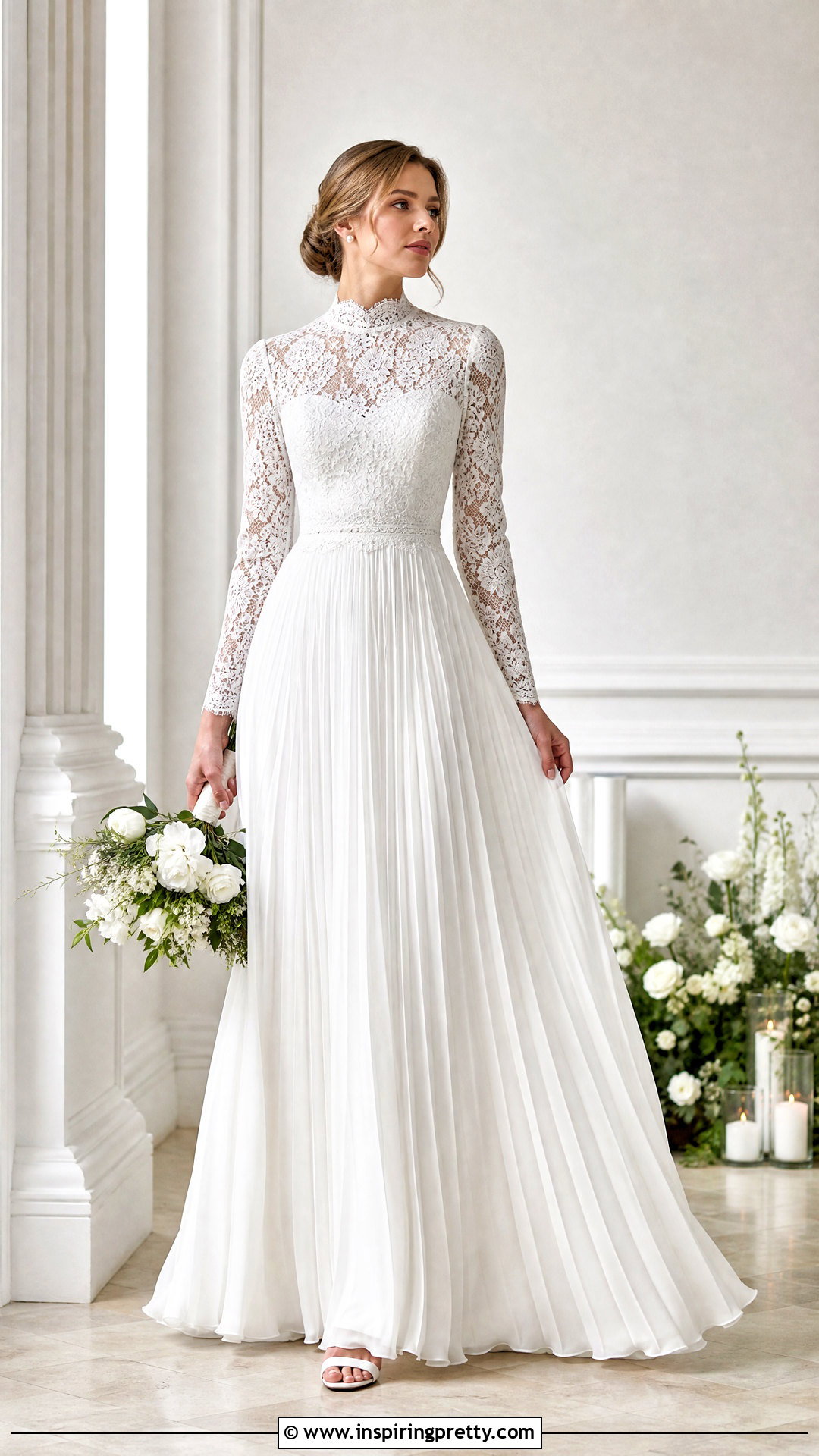
A high neck frames the face, and it only works in lace that's light enough to show some skin through it. Dense lace up to the chin can look heavy, so I'd look for fine Chantilly-style lace. Because the neck is covered, skip the necklace altogether; pearl studs and a smooth bun or ponytail are plenty. A softly pleated chiffon or georgette skirt adds vertical lines that lengthen the body. Make sure the collar closes with room for a finger inside. A tight collar is the thing brides complain about first after the ceremony.
6. Cap Sleeve Lace Top Georgette Wedding Dress
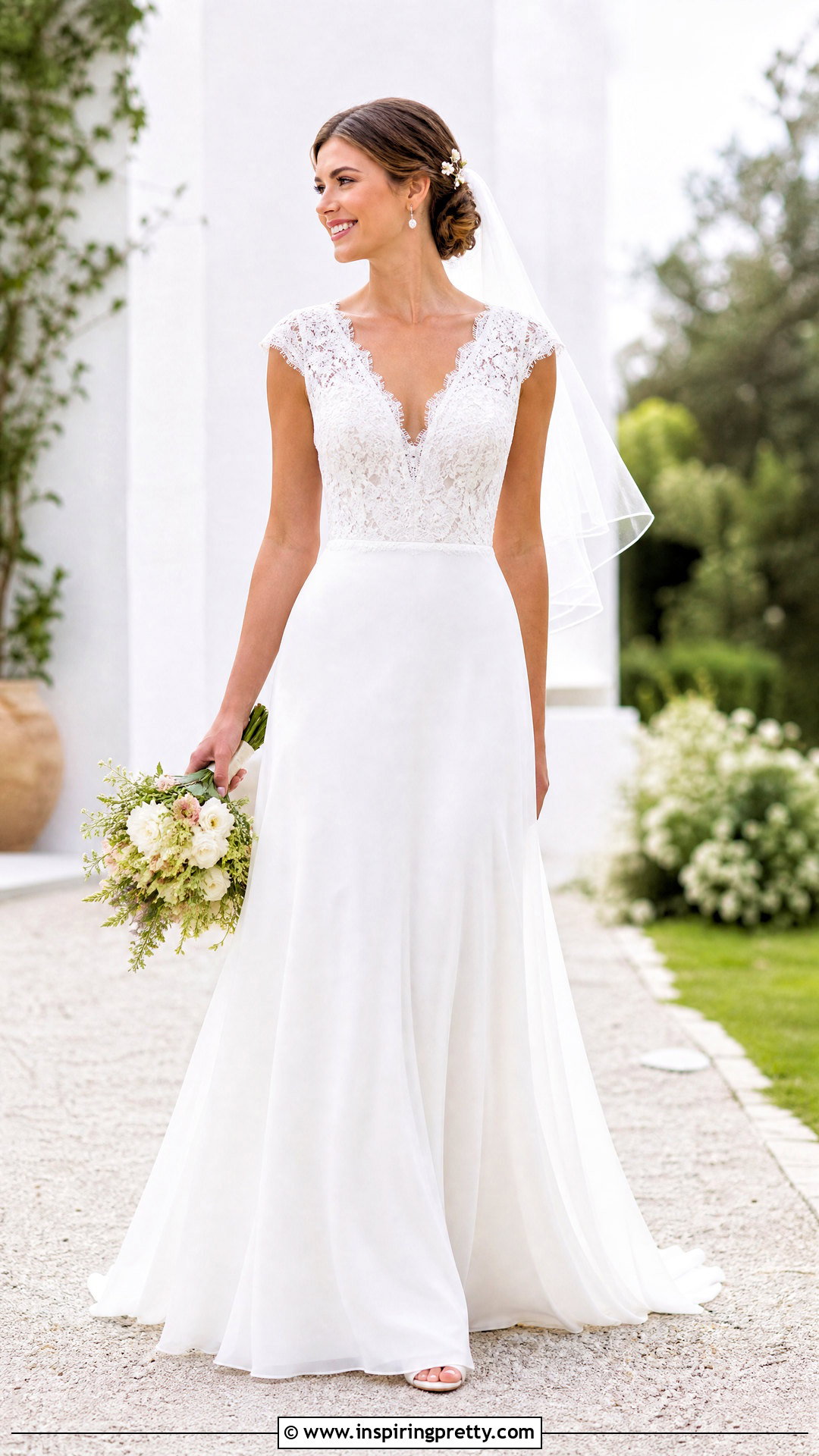
Cap sleeves sit at the very top of the arm and give just enough coverage for a church or a cooler day. They can dig in if the armhole is cut too high, so lift your arms and hug yourself in the fitting. A georgette skirt drops straight from the waist with little volume, which keeps the dress easy to move in. A shallow V or soft scoop stops the upper half from looking busy. I'd keep the bouquet on the smaller side; a huge one hides the bodice and waist in most photos. Small floral pins and kitten heels finish it.
7. V Neck Lace Top A Line Wedding Dress
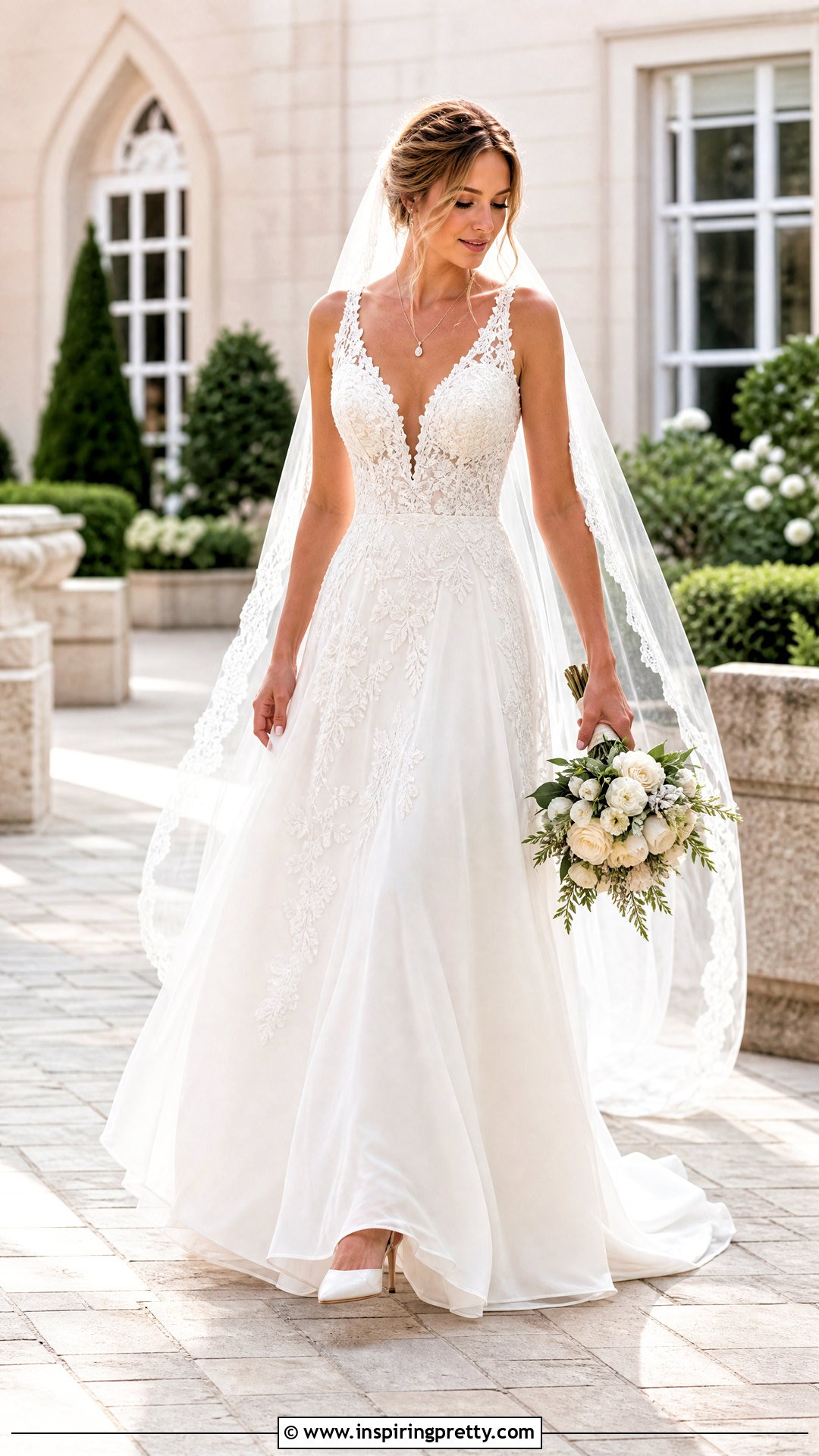
A V-neck lace bodice draws the eye up and down, and an A-line skirt widens gradually from the waist, so the whole dress reads long. The thing I check is how deep the V can go before it gapes when you lean forward or sit; a small clear stitch or fashion tape in the center fixes most issues. A veil with a thin lace edge can echo the bodice without competing. Look for appliqués that spill just past the waist seam, because they hide the join between lace and skirt. Loose waves or a low ponytail keep the mood relaxed.
8. Square Neck Lace Top Chiffon Wedding Dress
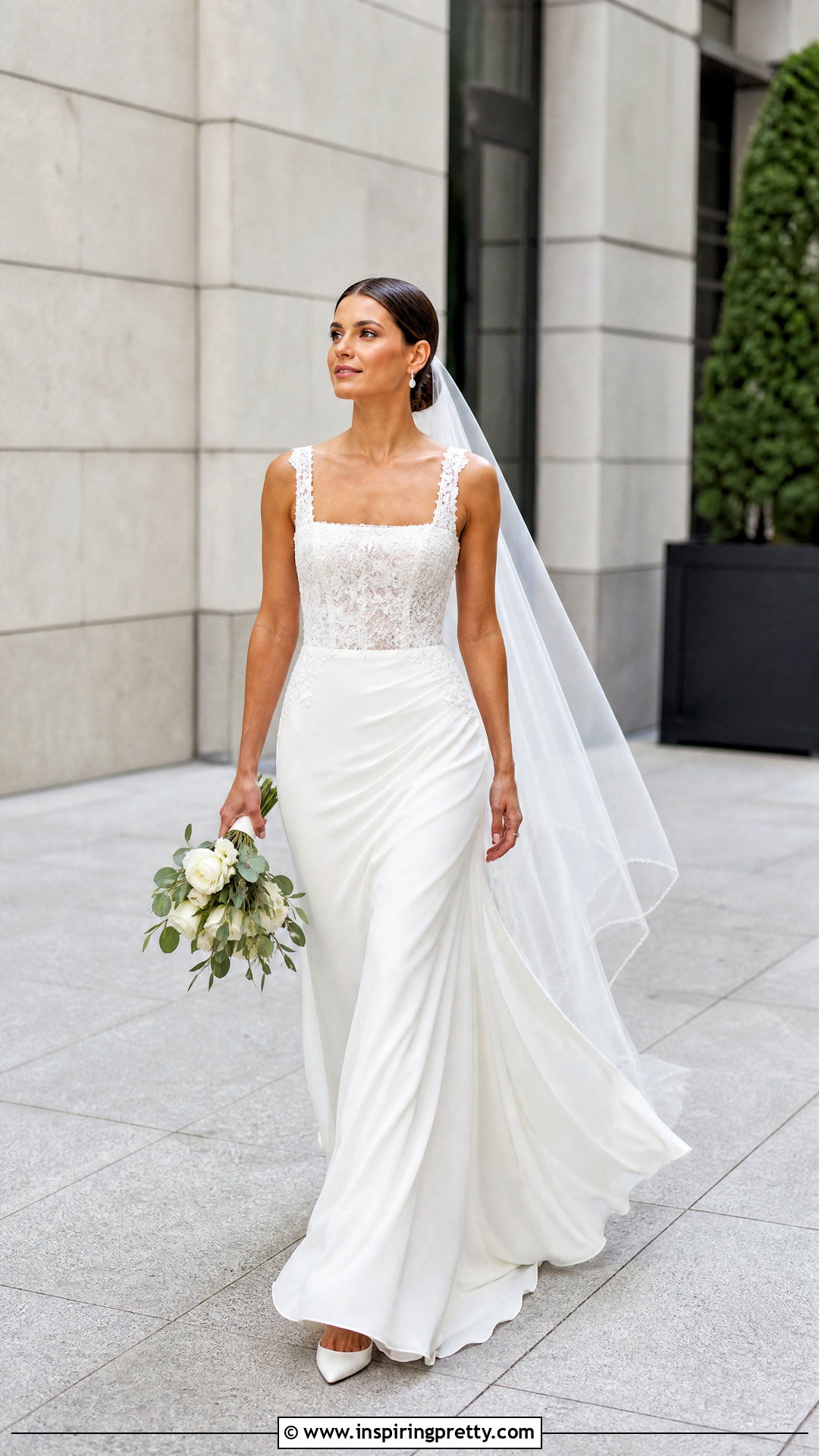
The square neckline is crisp and a little vintage, and it suits brides with a defined collarbone and broader shoulders. Wider lace straps help it stay flat; thin straps let the corners of the square pull open. A chiffon skirt from the natural waist falls in clean folds that match the neckline's straight lines. I'd go with a plain veil with a narrow raw edge and keep jewelry slim. A sleek center-part bun or a curled bob echoes the geometry. It sits easily in a city hall or a minimal modern venue.
9. Scoop Neck Lace Top Tulle Wedding Dress
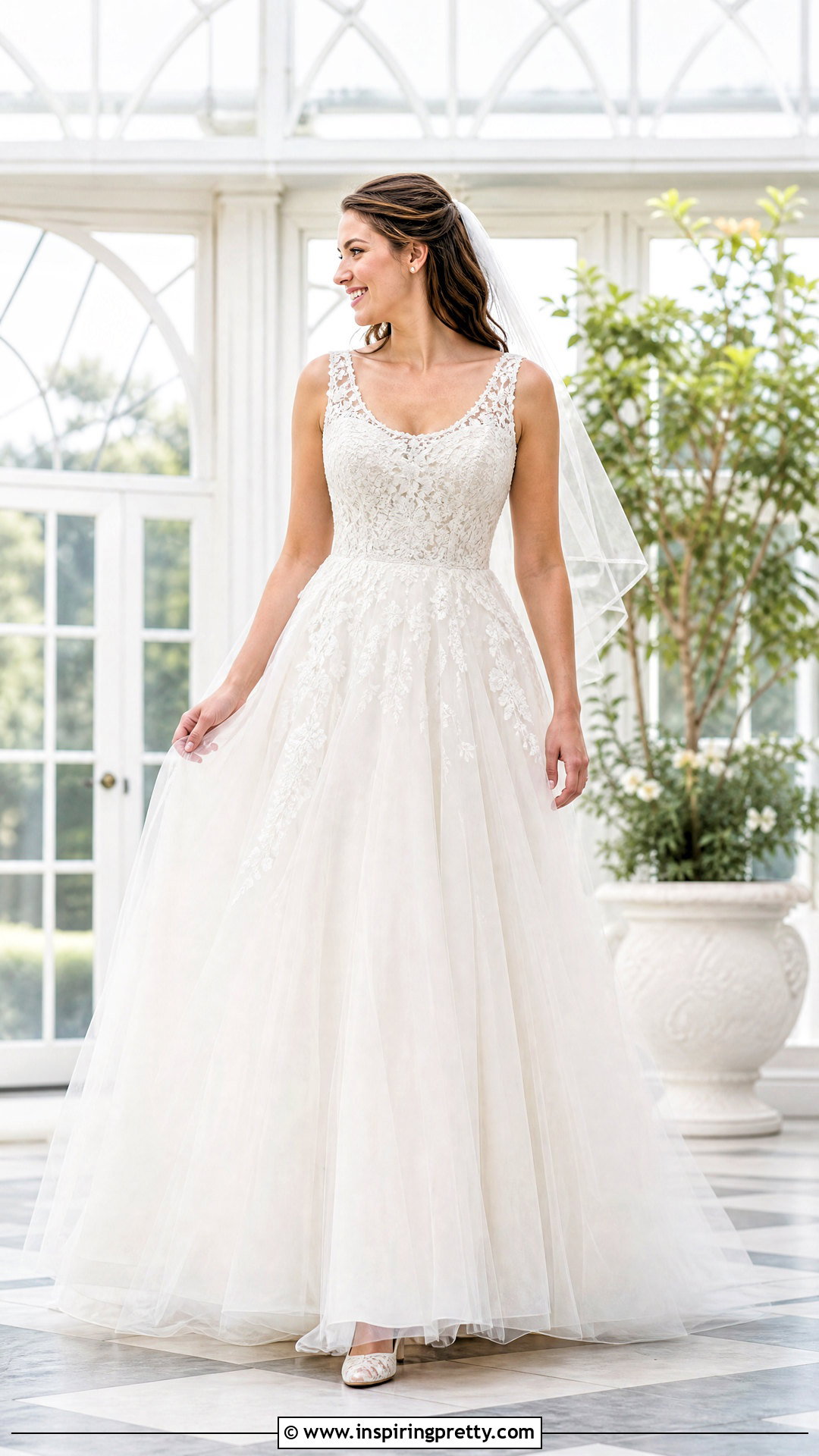
A scoop neck opens the upper body without the depth of a V, which makes it one of the most forgiving necklines for different bust sizes. I'd make sure the lace continues around the back, since the back is what guests see for the whole ceremony. Fine, soft tulle settles and moves; stiff netting stands away from the body and crackles when you sit. Half-up hair and a comb accessory keep it relaxed, and bridal flats make sense for a long day of standing and dancing.
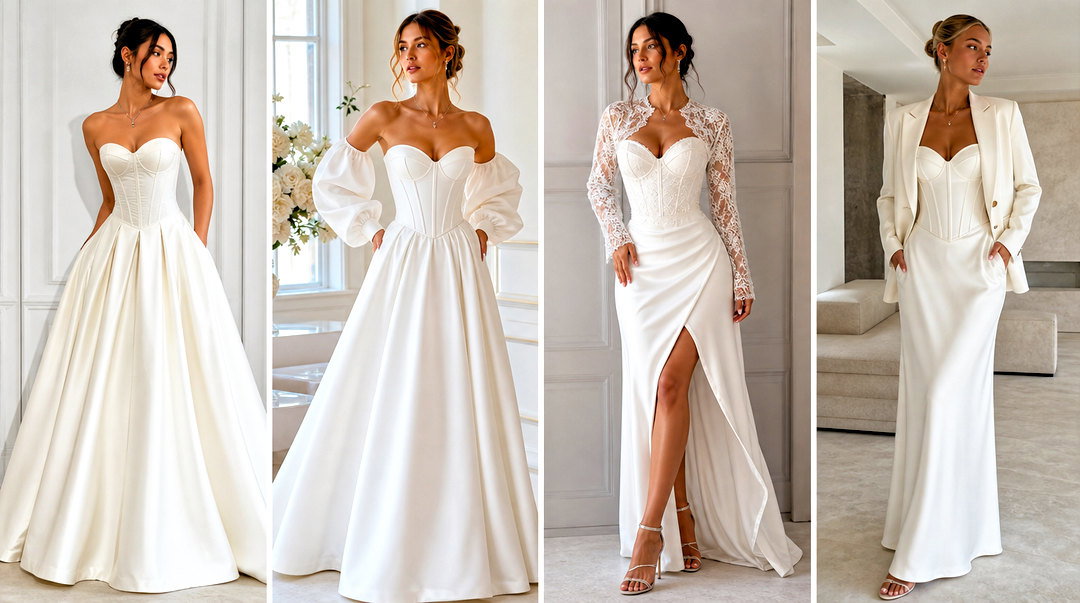
10. Halter Lace Top Flowy Wedding Dress
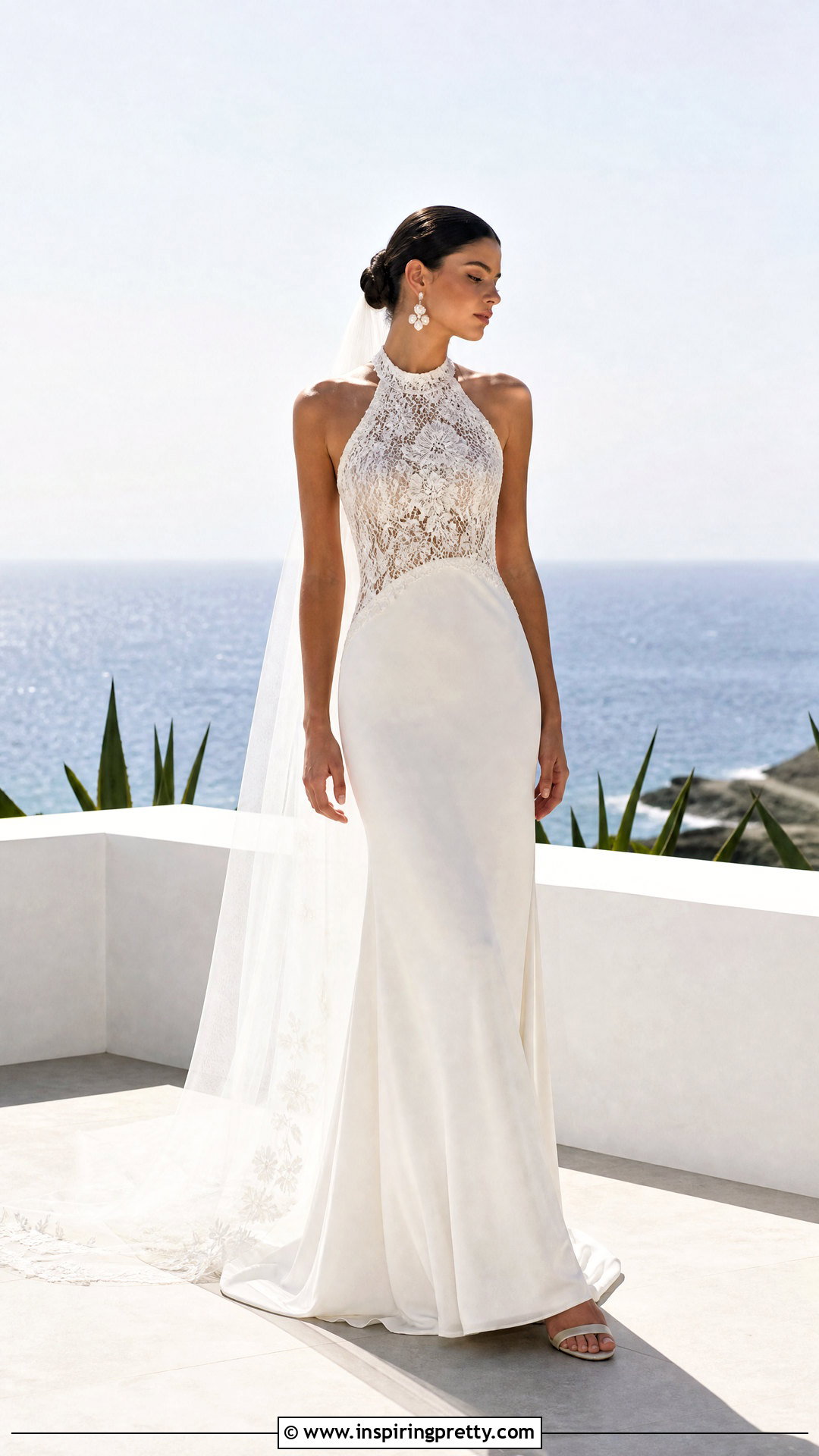
A halter lace top is cleaner and more modern than straps, and it supports better than spaghetti straps do. The weight of the bodice hangs from the neck, though, so I ask brides to wear it for a while at the fitting; a halter tie that pulls will give a headache by evening. A bias-cut chiffon or georgette skirt follows the body and then drops freely. With a halter, statement earrings take the place of a necklace. Attach a narrow veil below the bun so the open back stays visible.
11. Corset Lace Top Tulle Wedding Dress
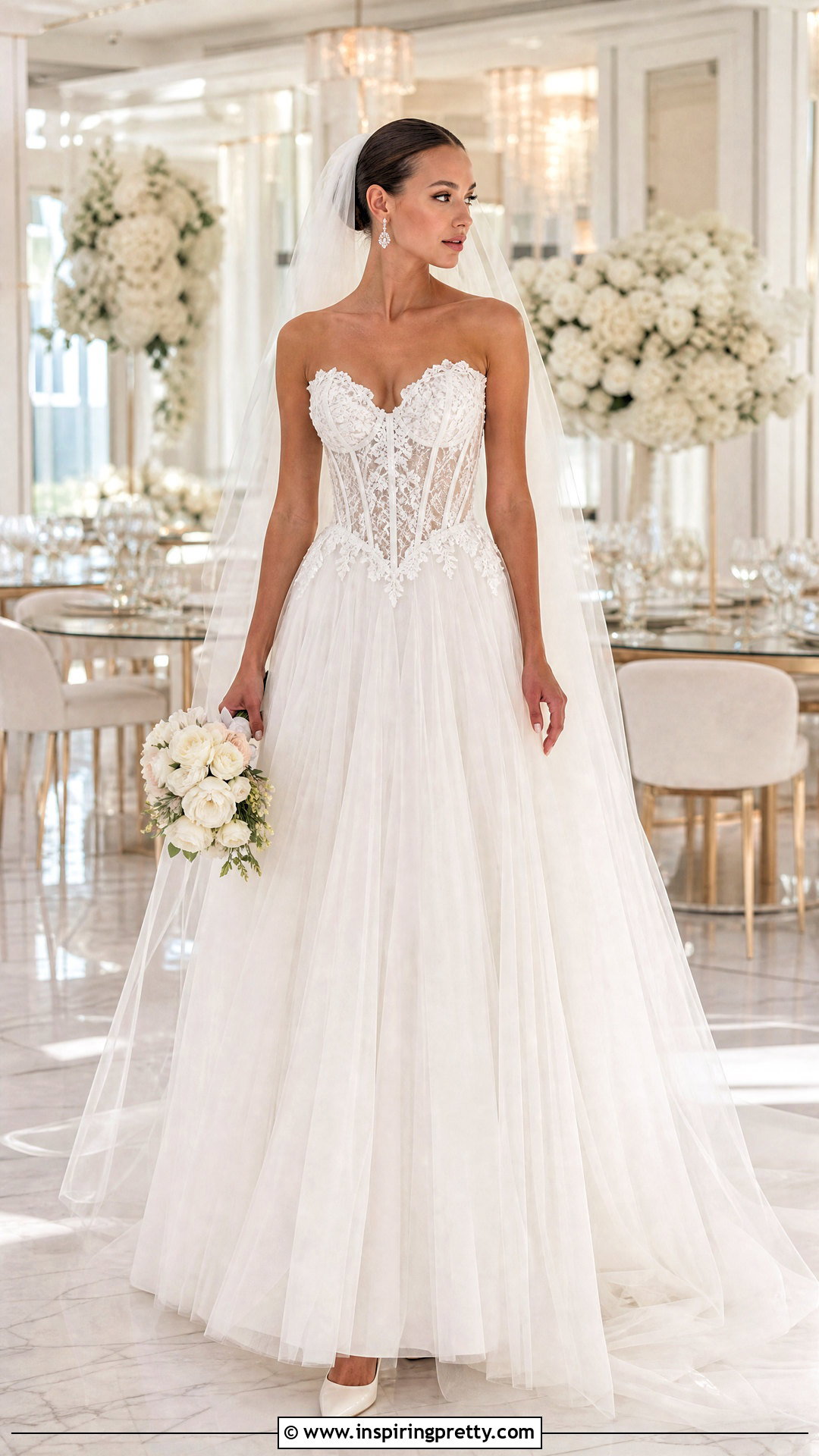
A lace corset bodice gives the most support of any top here, and it's the one that most needs proper fitting. I look at where the boning ends on the hip: too long and it digs in when you sit. A basque or slight dip at the waist lengthens the torso into the tulle skirt. Lace-up backs allow some adjustment on the day if your body changes a little before the wedding. If the bodice is heavily textured, keep the tulle plain, with no glitter or extra appliqués, so the two halves don't fight.
12. Boho Lace Top Chiffon Wedding Dress
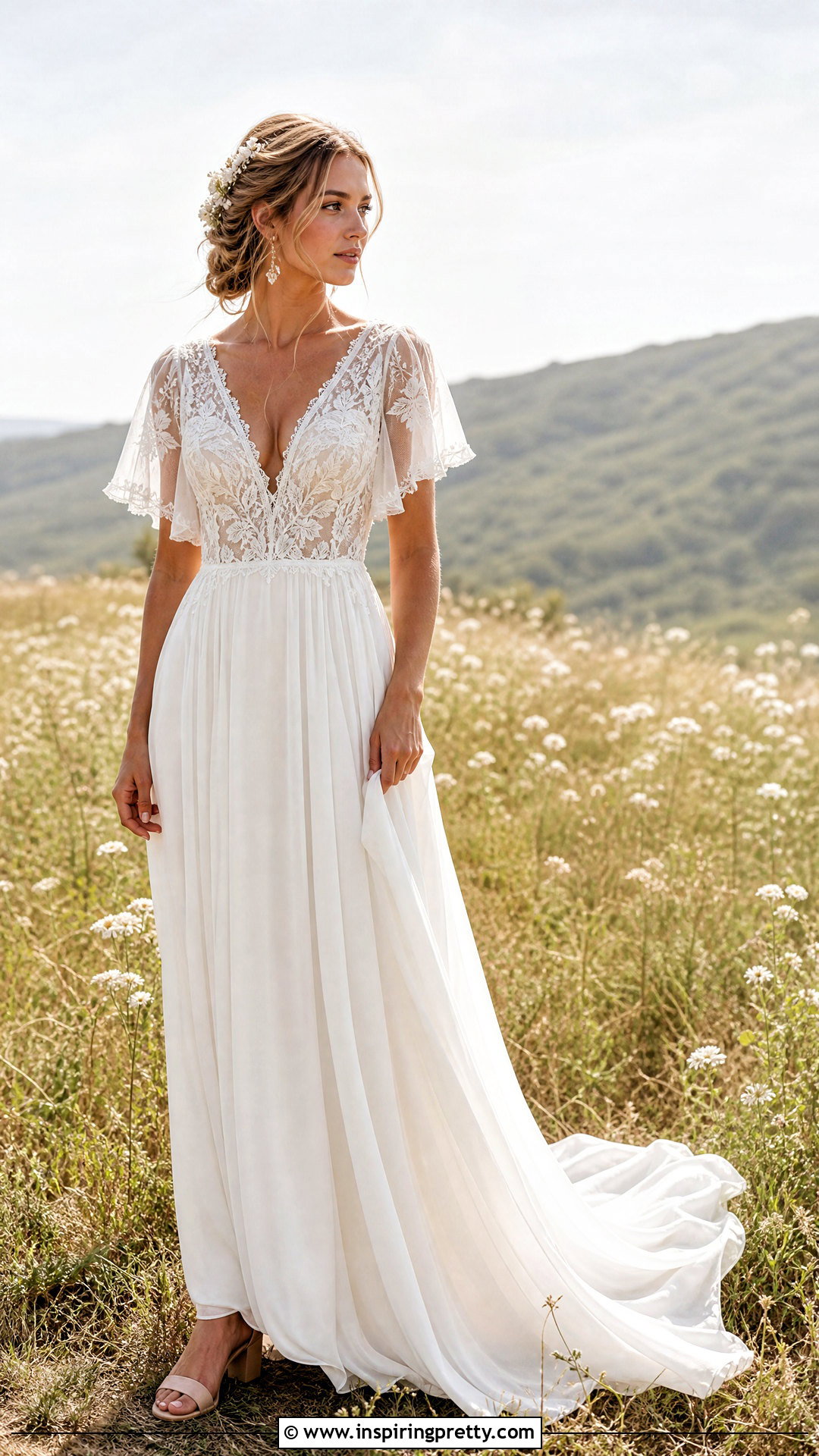
Boho bridal still needs to look like a wedding dress, which is why I keep the lace intricate and the skirt simple. Botanical lace, flutter sleeves and a slightly raised waist give comfort and movement. Chiffon should skim the body and end in a small sweep train, not a big stiff one that catches grass. Textured waves and a few floral pins suit it. Choose one rustic accessory, not five. A plain veil or a sheer cape adds ceremony without hiding the lace. This dress belongs outdoors where the chiffon can catch a breeze.
13. Floral Lace Top Organza Wedding Dress
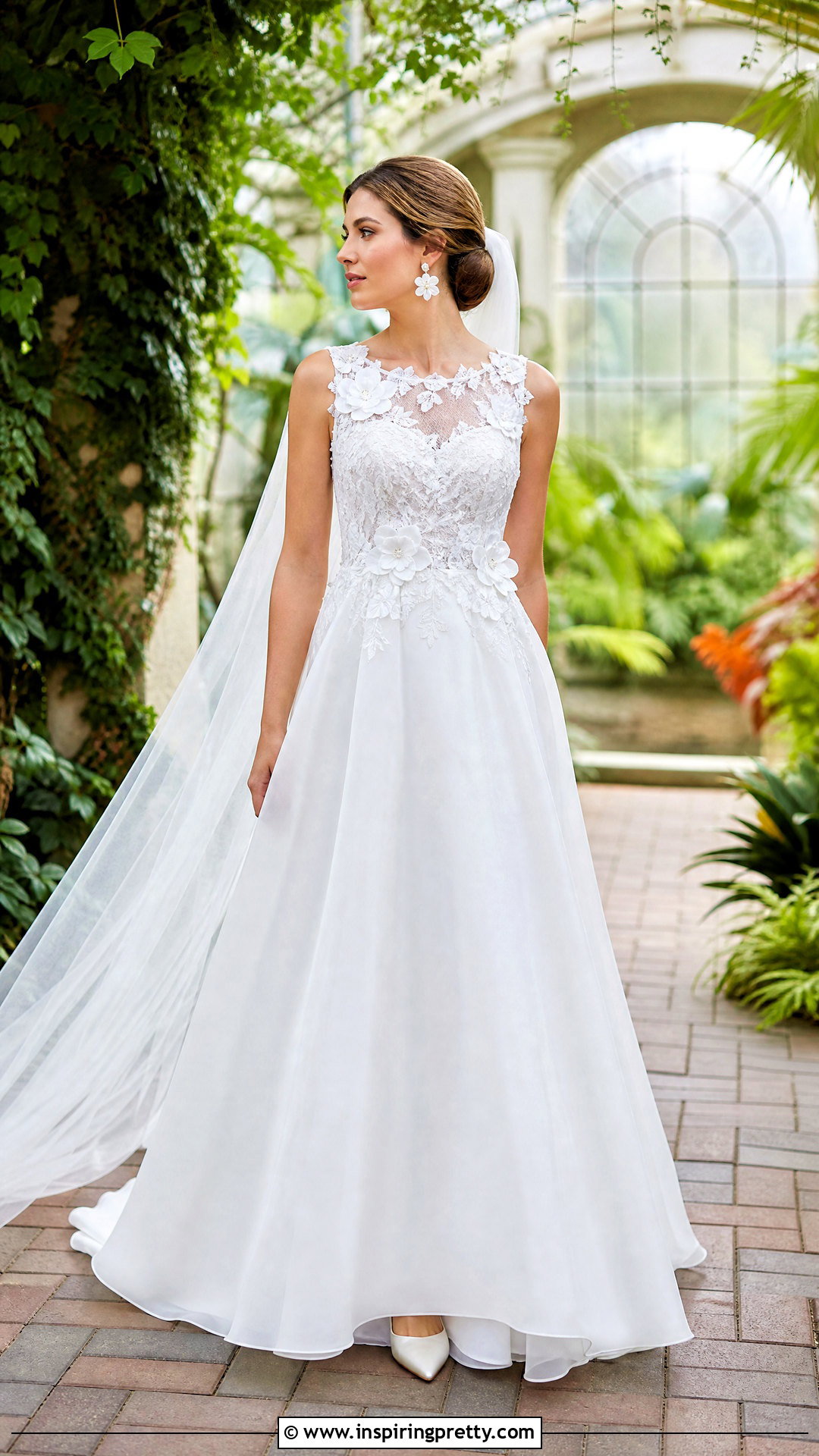
Big floral lace motifs make a bodice distinctive, but placement matters more than the lace itself. I look for motifs cut and laid around the neckline, waist and back, rather than lace cut straight across, which chops flowers in half at the seams. A few motifs running past the waist link the bodice to a clean organza skirt. Skip any embellished belt, since the lace is already busy. A low bun with a few face-framing pieces keeps the eye near the neckline.
14. Beaded Lace Top Chiffon Wedding Dress
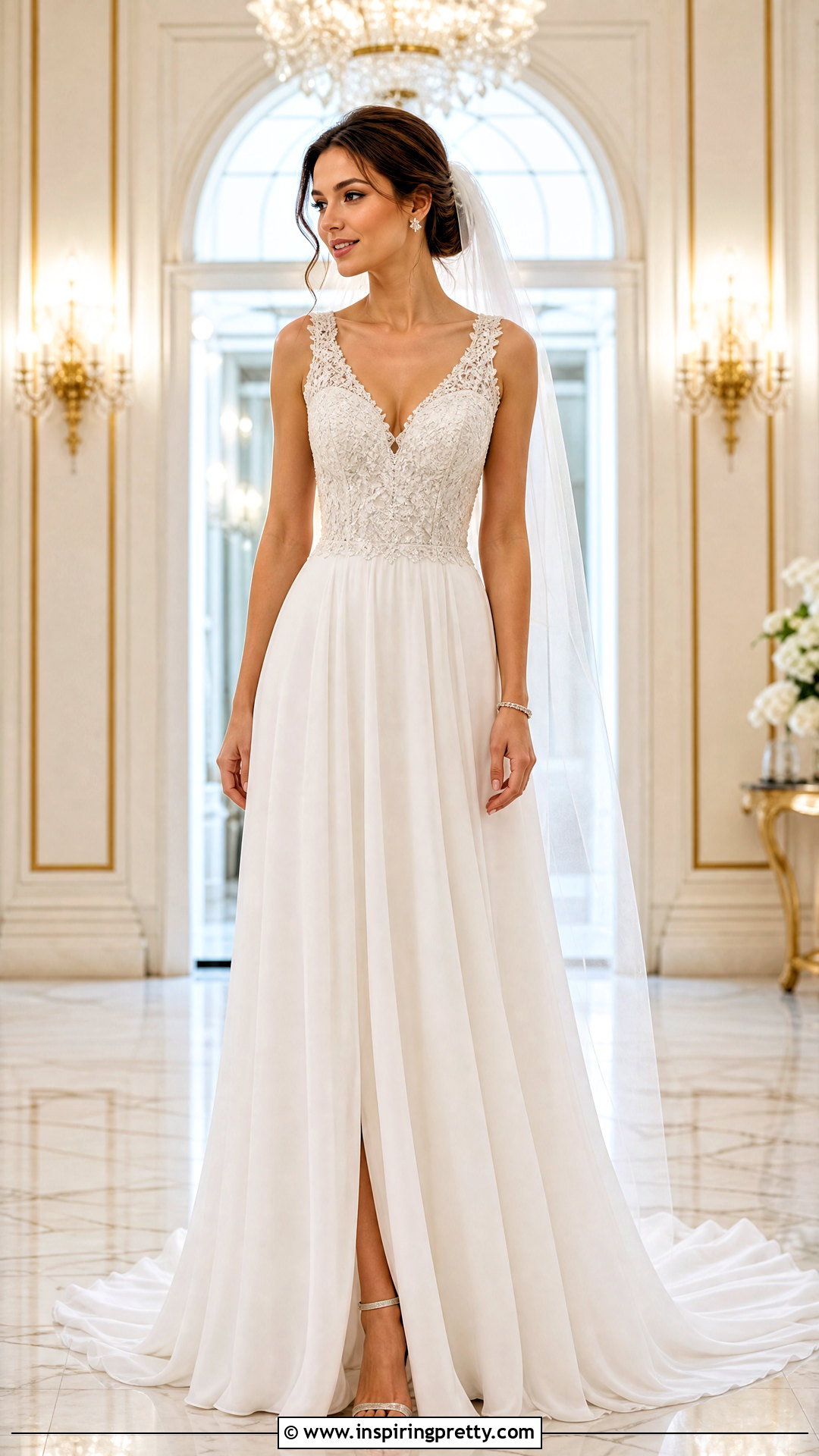
Beading on lace catches light at the ceremony and in evening photos, and a little goes a long way. The first thing I check is the inside of the arms and the side seams, where beads rub against skin all day; rough beading there leaves raw spots. A plain chiffon skirt keeps the dress light. Match your metal to the beads: silver beads with silver jewelry, warm beads with gold. An undecorated veil and a low chignon give the bodice room.
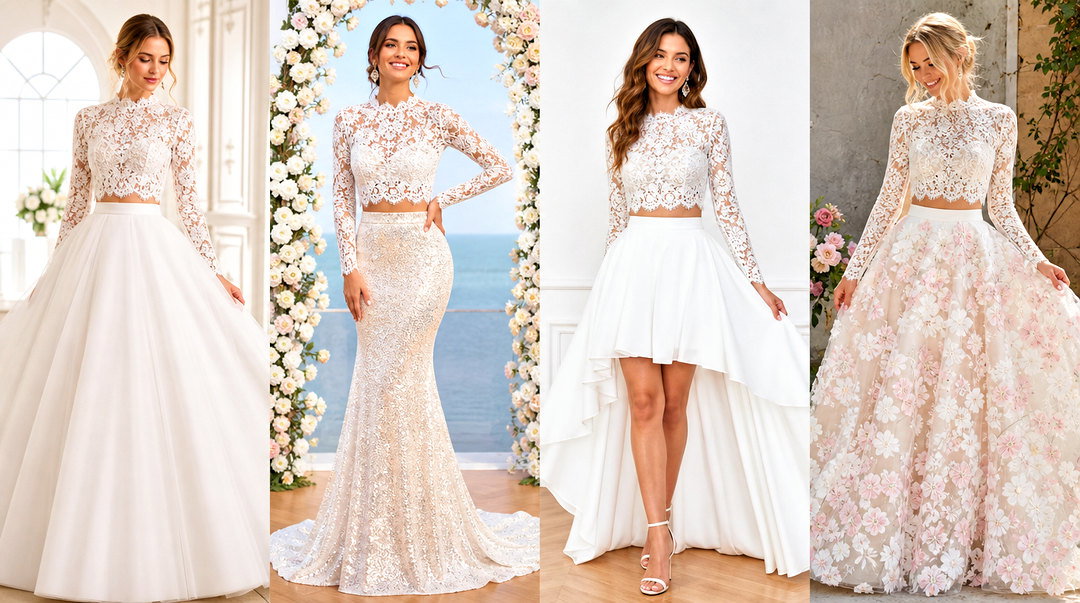
15. Pearl Lace Top Tulle Wedding Dress
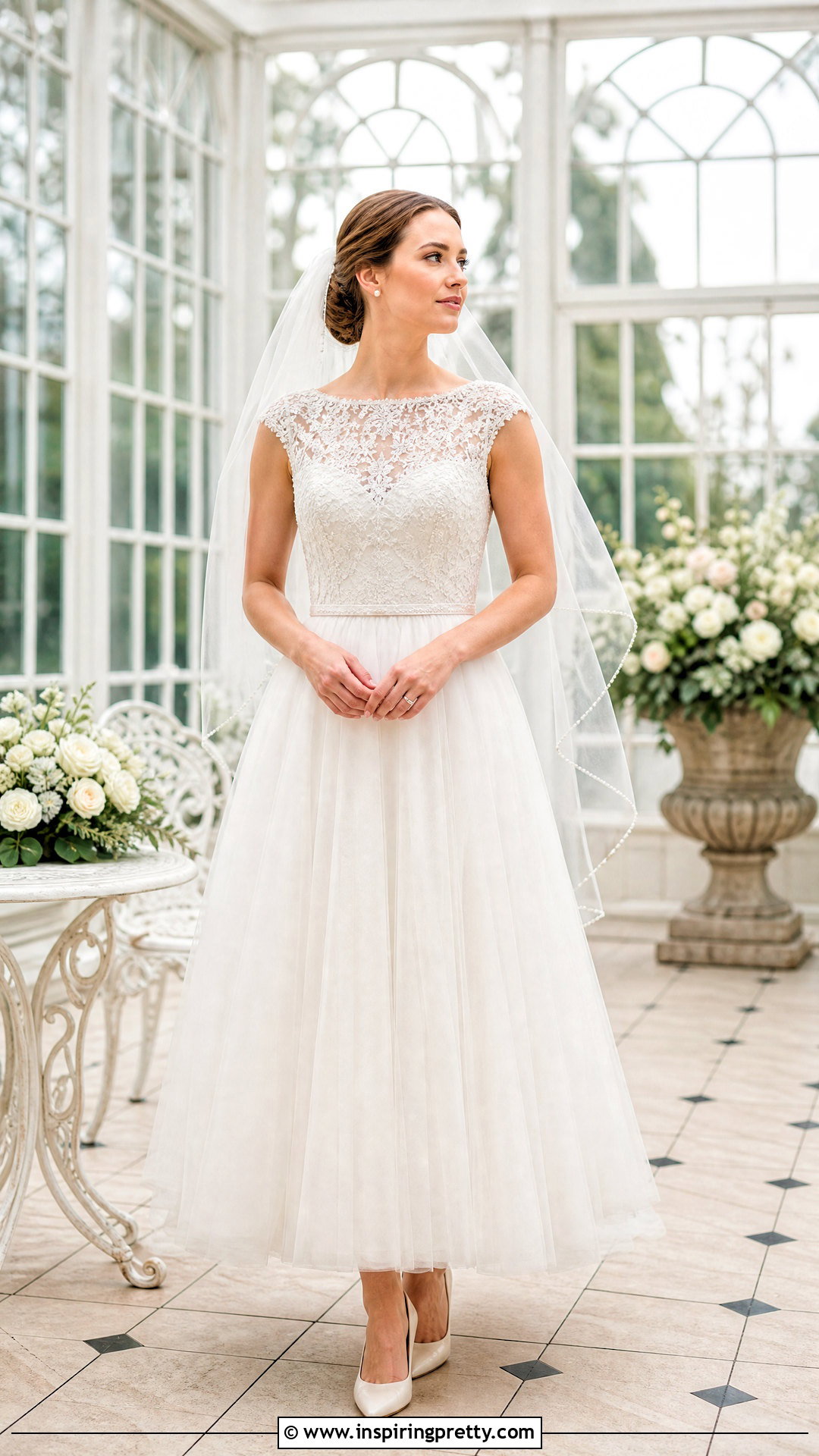
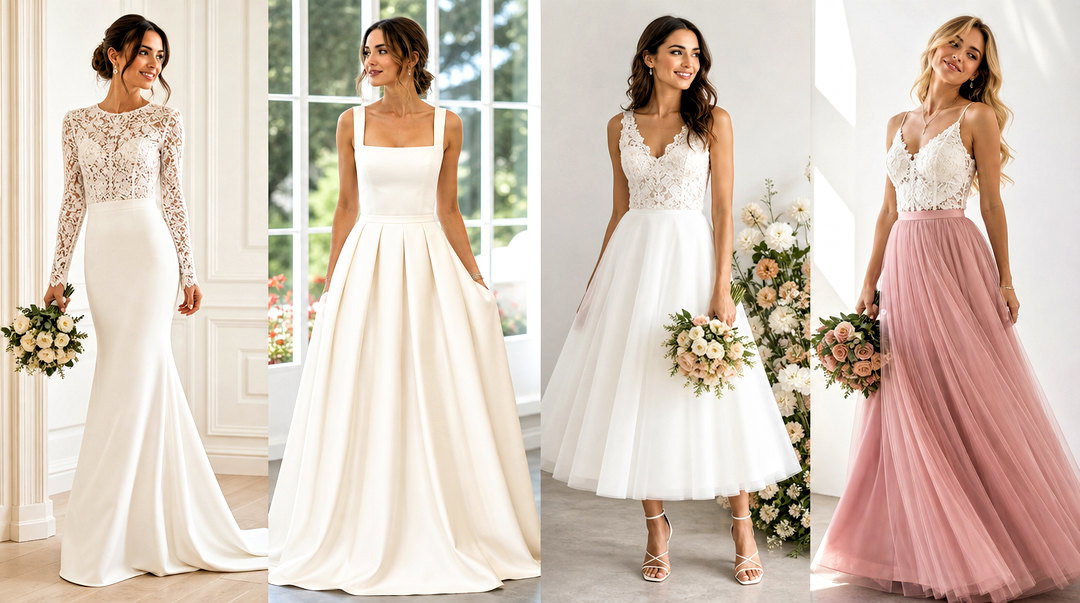
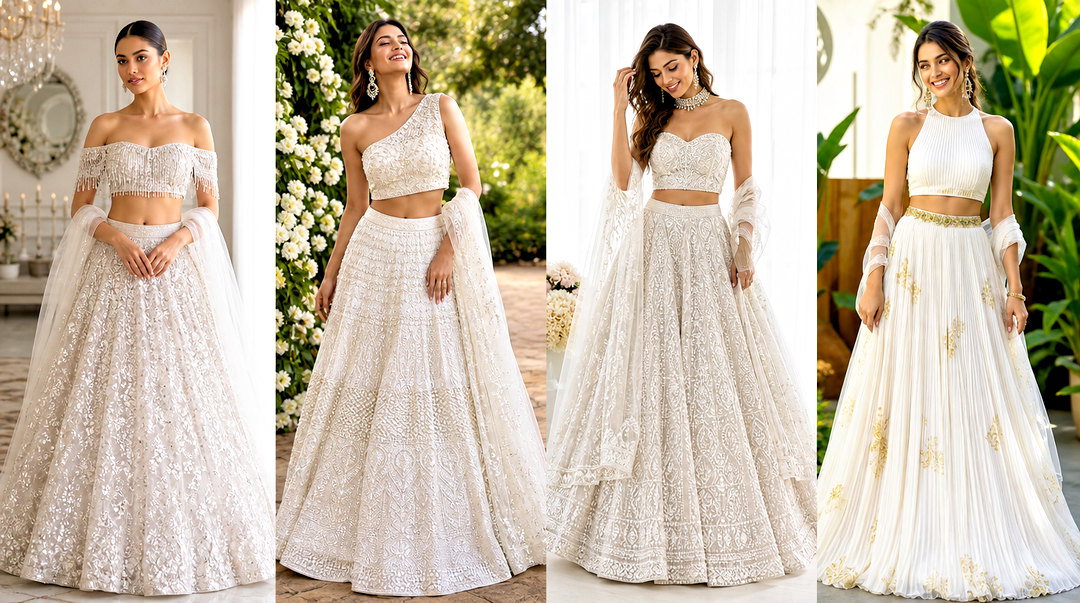
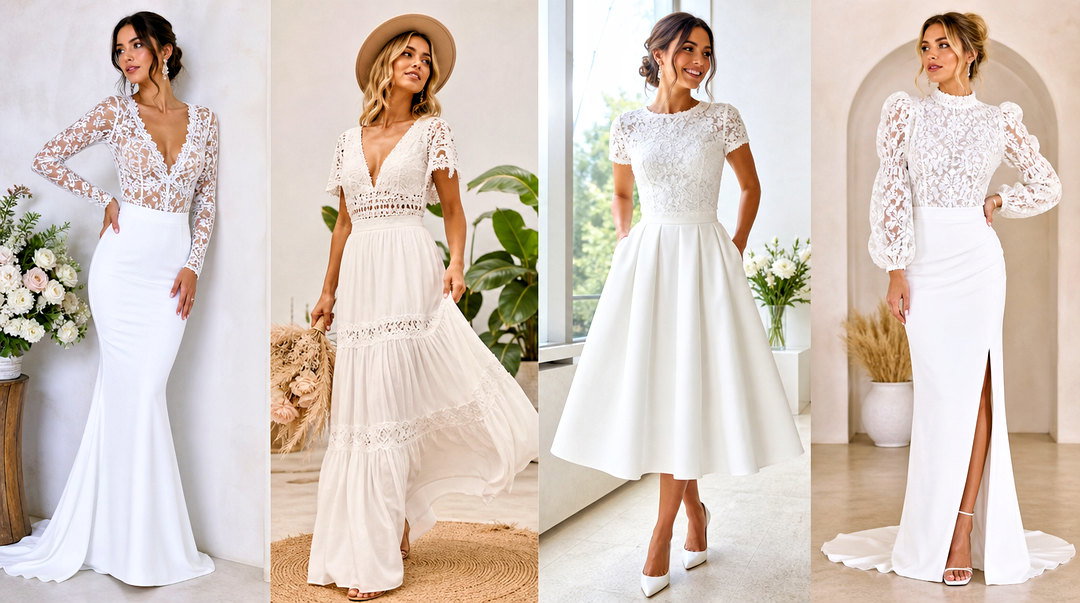
Pearls on lace give a soft glow rather than sparkle, which suits brides who find crystals too much. Let the tulle skirt stay completely plain so the pearls have space. A bateau or scoop neck shows them well. I'd avoid matching every accessory to the pearls; pearl studs and a veil with a few pearls near the edge are enough. One practical detail: pearl beads are heavier than seed beads, so a heavily pearled bodice needs a sturdy lining and good straps. Fine tulle layers keep the skirt from looking stiff.
16. Ivory Lace Top Champagne Wedding Dress
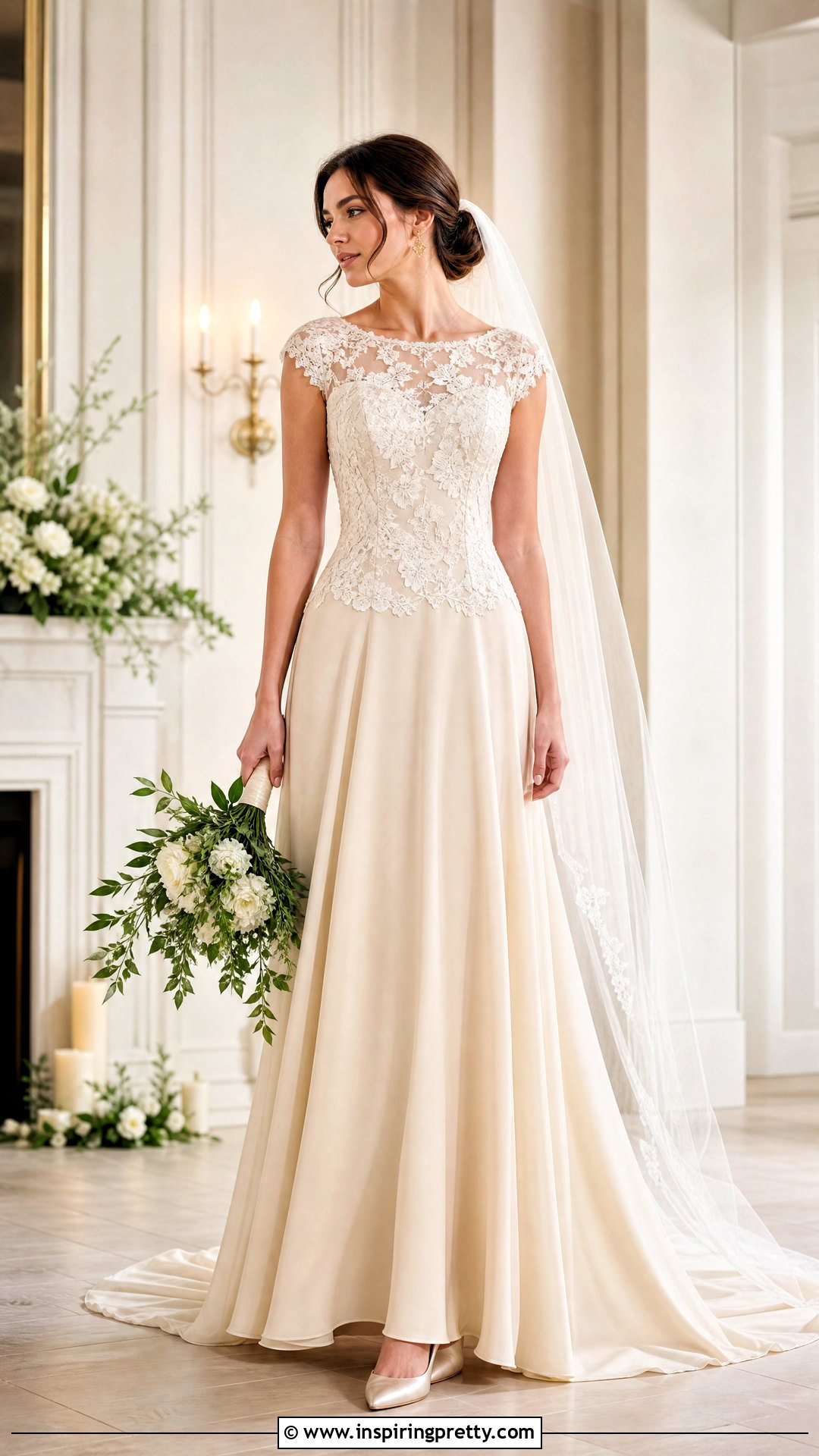
An ivory lace bodice over champagne lining shows the lace pattern clearly, because the darker layer gives the motifs a background. Carry the warm tone into a champagne chiffon or tulle skirt. Pale gold or champagne accessories sit better than bright silver here. Champagne fabrics vary a lot, and some look pink in indoor light and gray outdoors, so I check every sample by a window and under the venue's lighting before matching anything. It's a warmer choice than bright white that still reads clearly as bridal.
17. Blush Lace Top Tulle Wedding Dress
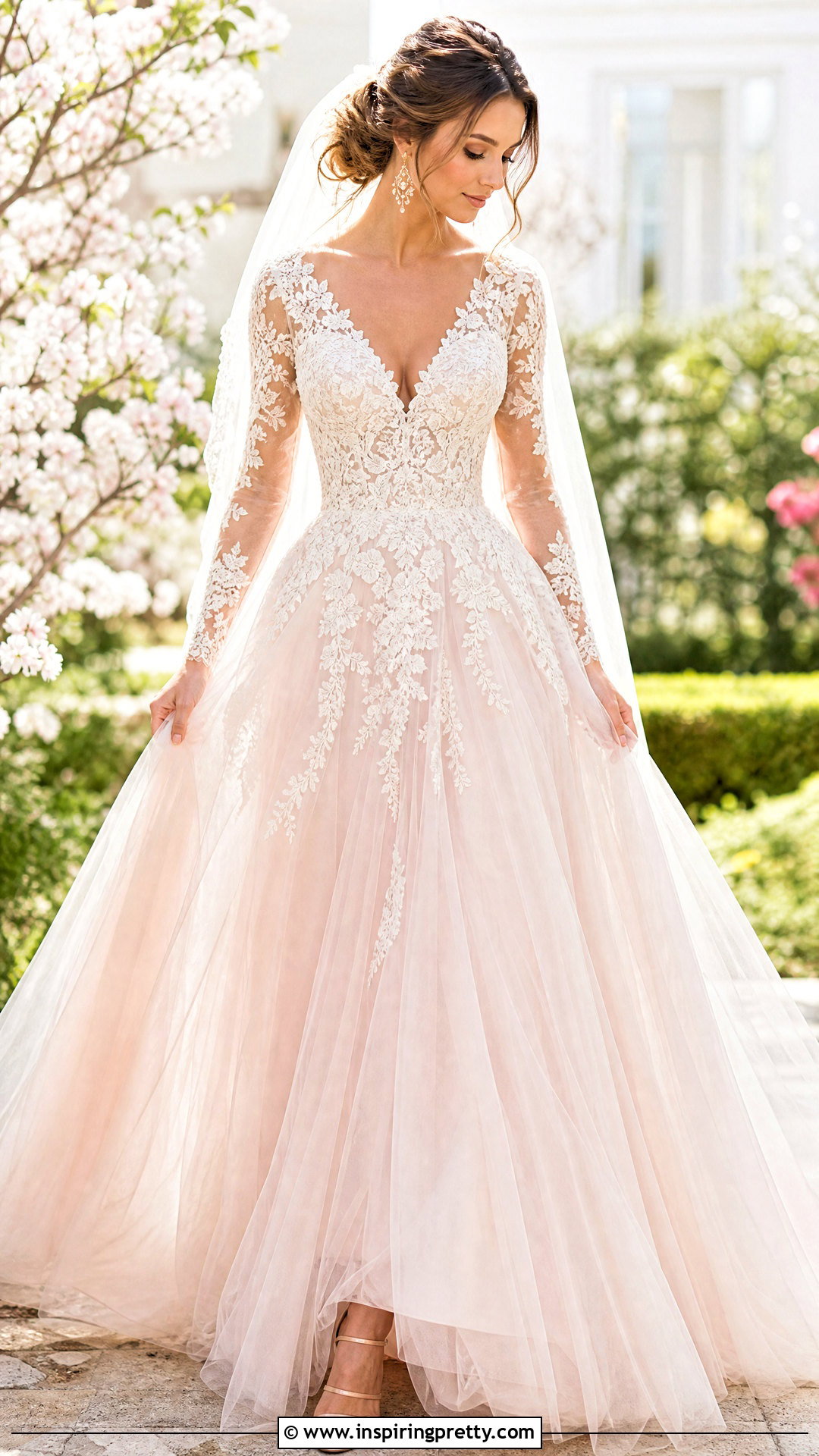
Blush lining under ivory lace is a gentle step away from all-white. I always steer brides to a muted pink-beige, since a saturated pink can look like a bridesmaid dress next to the wedding party. The ivory lace on top makes each motif stand out against the lining. Rose-gold earrings and a sheer ivory veil suit it, and a bouquet of cream and pale pink connects the colors. If the skirt has several tulle layers, check them together in daylight; slightly different dye lots make the hem look patchy.
18. Plus Size Lace Top A Line Wedding Dress
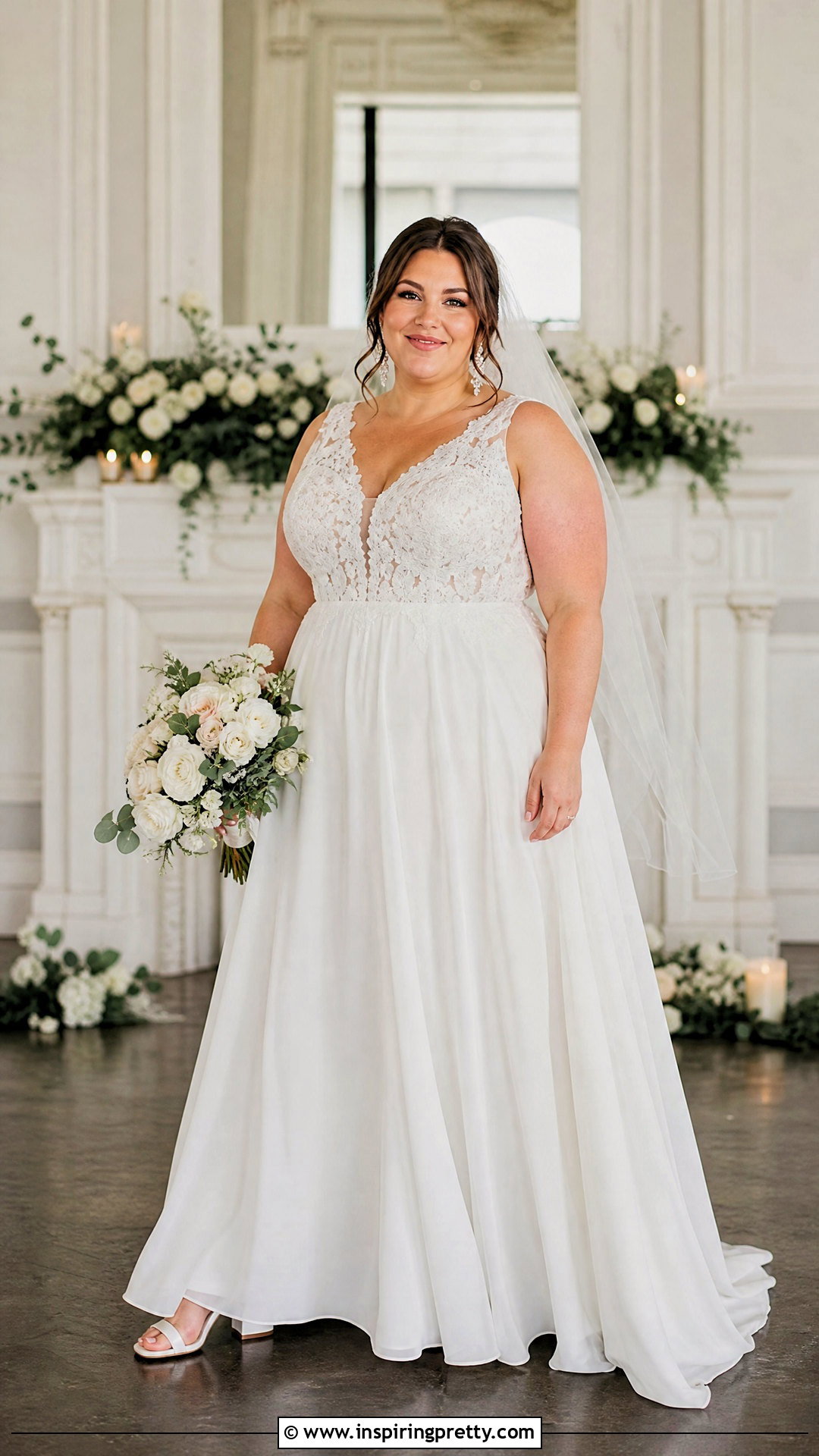
For a plus-size bride, the bodice construction matters more than any other detail. I look for real boning, wide or reinforced straps, and cups built to your measurements, since standard cup sizing in bridal rarely matches bra sizing. A natural or slightly raised waist lets the A-line fall without clinging at the tummy or hips. Lace appliqués that run a little past the waist hide the join into the chiffon or tulle. Budget for tailoring at the bust, armholes and waist. The dress should let you breathe deeply, sit and dance, and you should test all three before the last fitting.
19. Petite Lace Top Flowy Wedding Dress
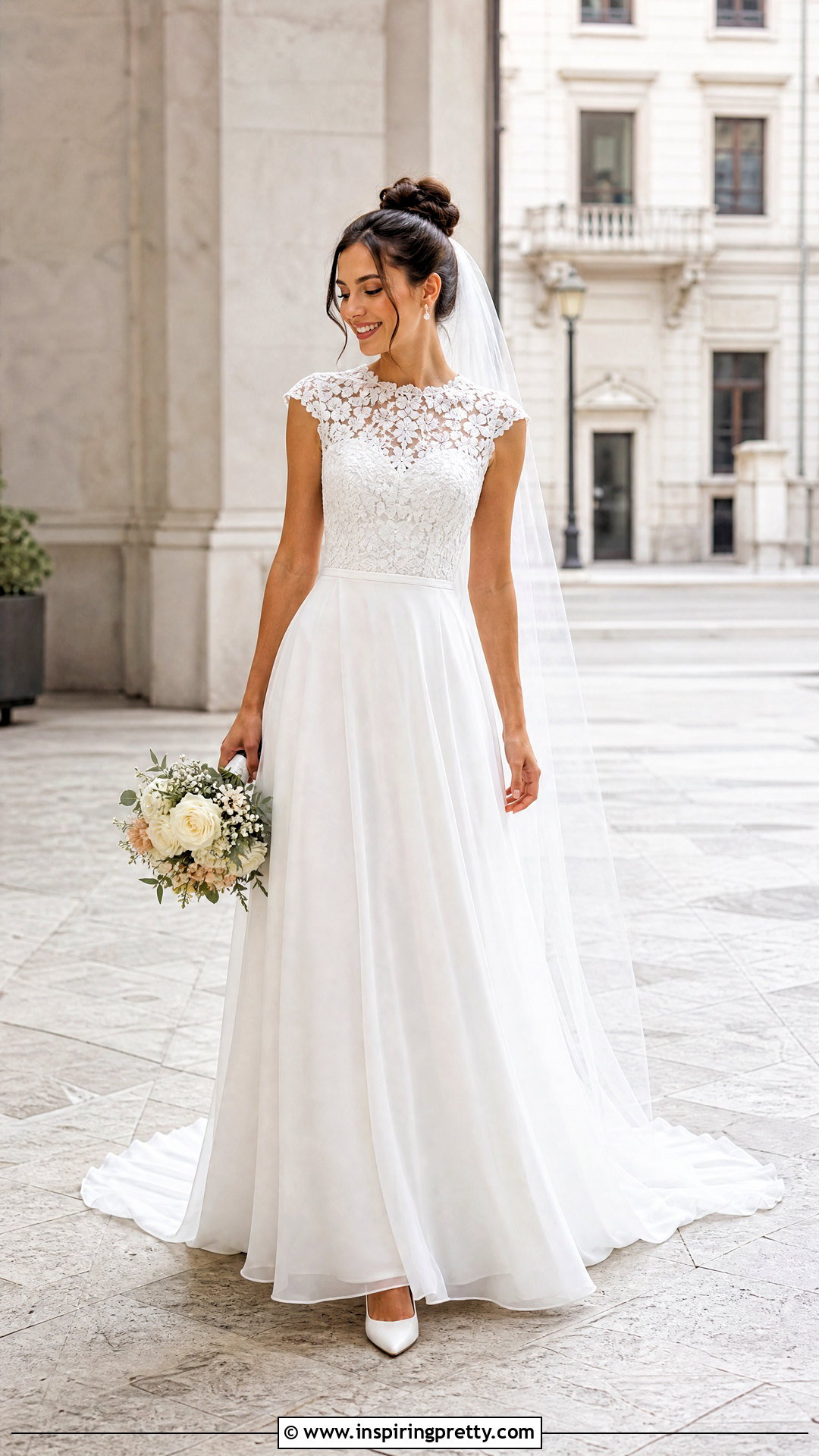
On a petite frame, a flowing skirt works when the volume is controlled. A fitted lace bodice with a clear waist and a moderate A-line keeps your proportions visible. I look for smaller lace motifs, narrower straps and a short train, because large motifs and a long train can swamp a short bride. Pointed shoes and a narrow veil add length; a high bun adds height. Too many skirt layers hide the waist entirely. Get the hem done professionally, with your wedding shoes on, so the front clears the floor and you won't trip on the steps.
20. Empire Waist Lace Top Wedding Dress
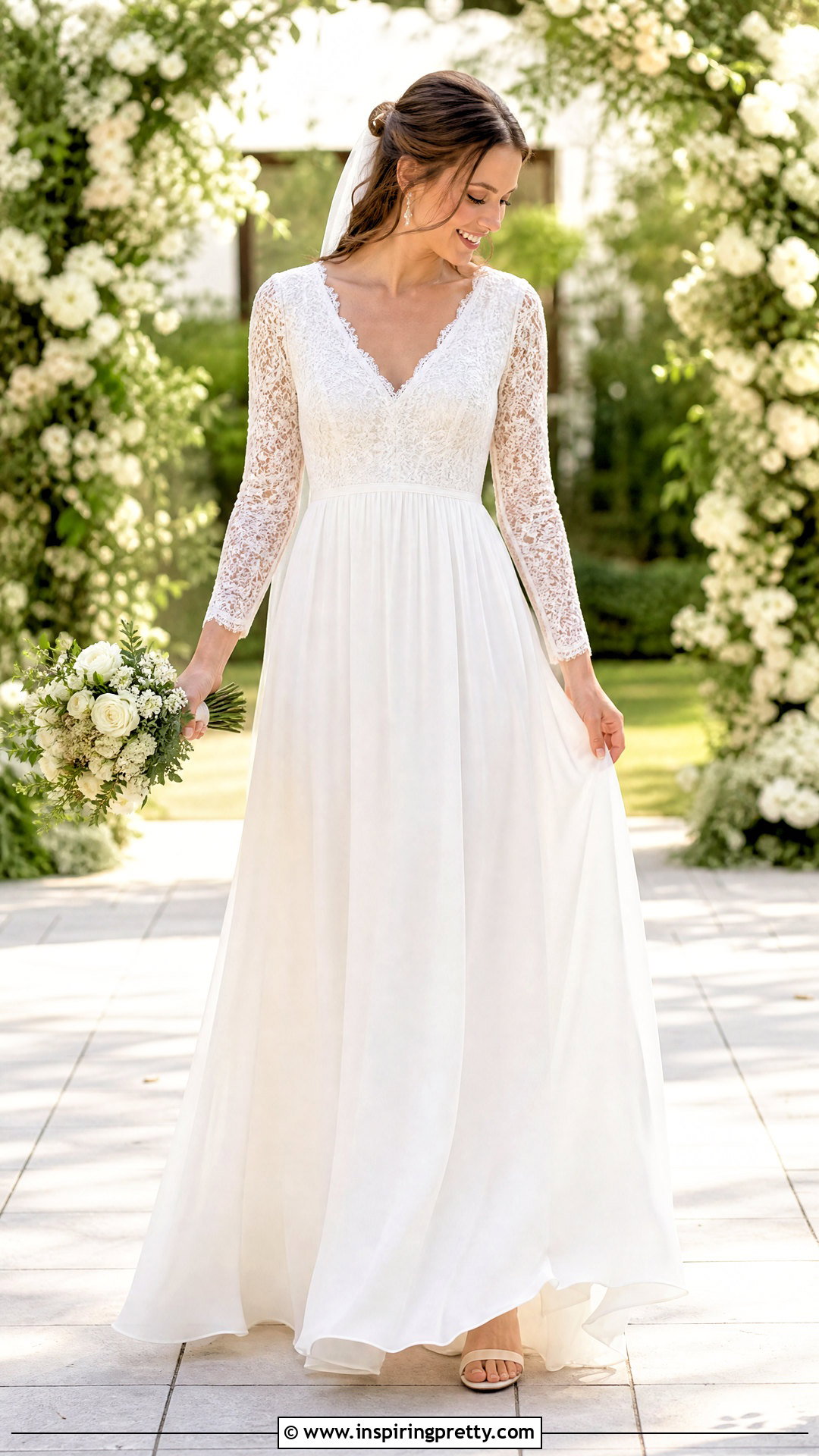
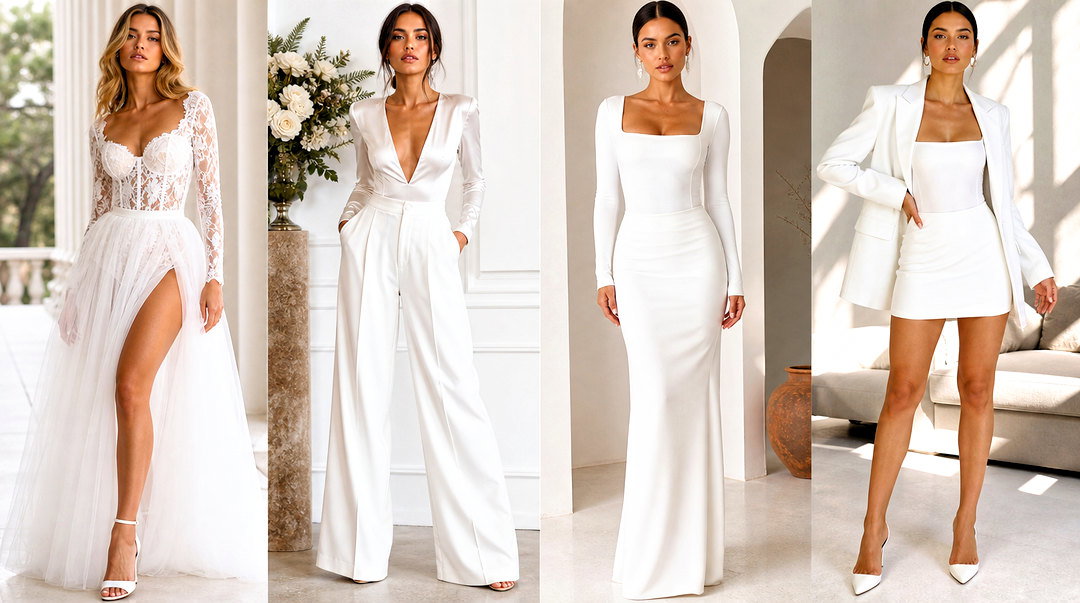
An empire waist sits just under the bust and lets the skirt fall from there, so nothing presses on the midsection. It's the shape I suggest to brides who want total comfort through the stomach, including those who are expecting. The lace top defines the bust; chiffon or georgette below stays light. The seam must sit flat under the bust and not cut in. Lace motifs that drift onto the skirt soften the line. Hold the bouquet a little lower, below the seam, so it doesn't hide the shape.
21. Beach Lace Top Chiffon Wedding Dress
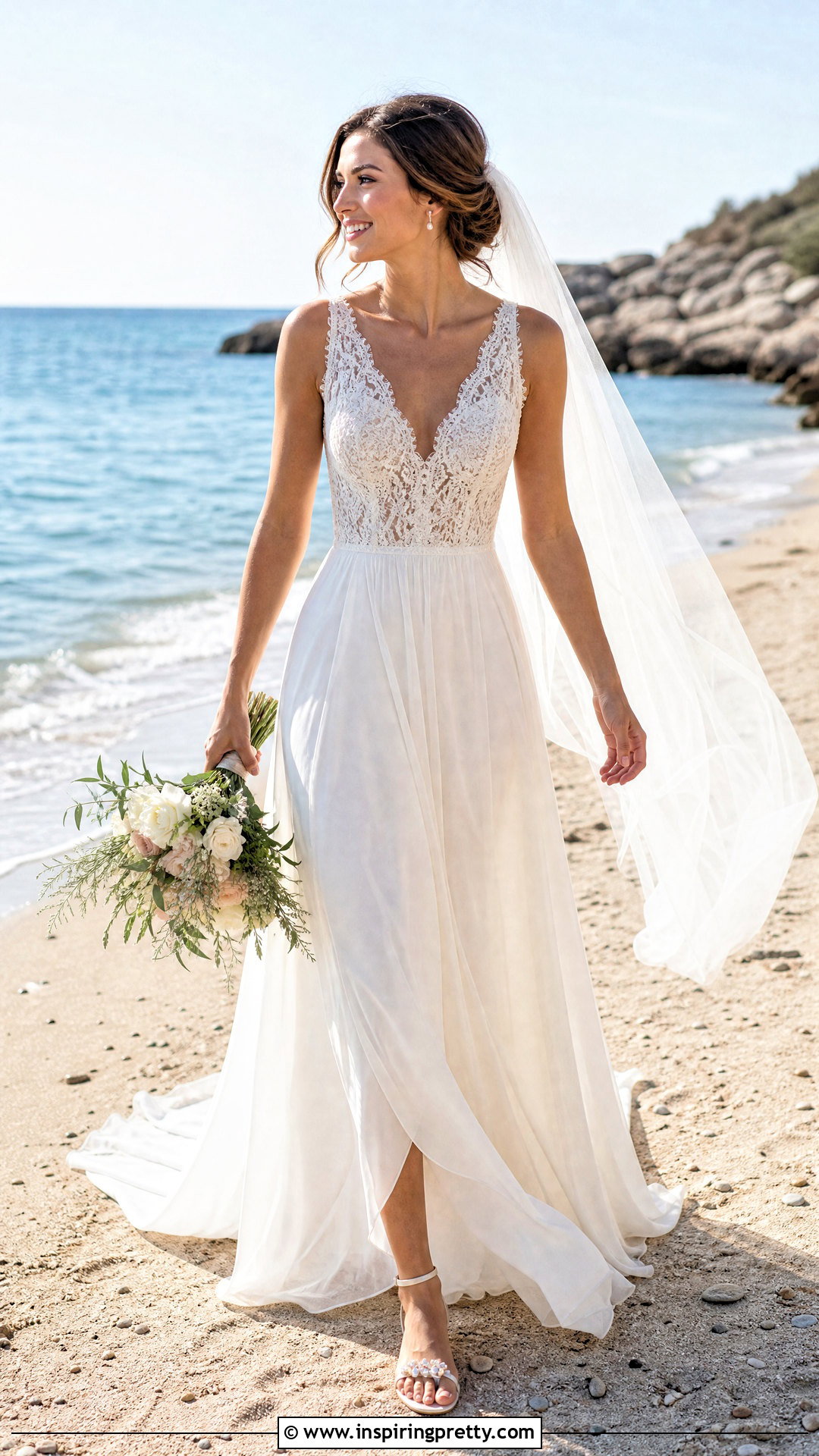
Sand, wind and heat are what a beach dress has to survive. I'd pick light lace with little beading, a chiffon skirt with a short sweep train, and skip stiff petticoats, which trap heat and pick up sand. Flat sandals or low block heels are the only sensible shoes; stilettos sink. A plain veil you can take off when the wind picks up saves a lot of stress. Pin hair firmly. The chiffon will blow around, which is half the charm in photos by the water.
22. Garden Lace Top Tulle Wedding Dress
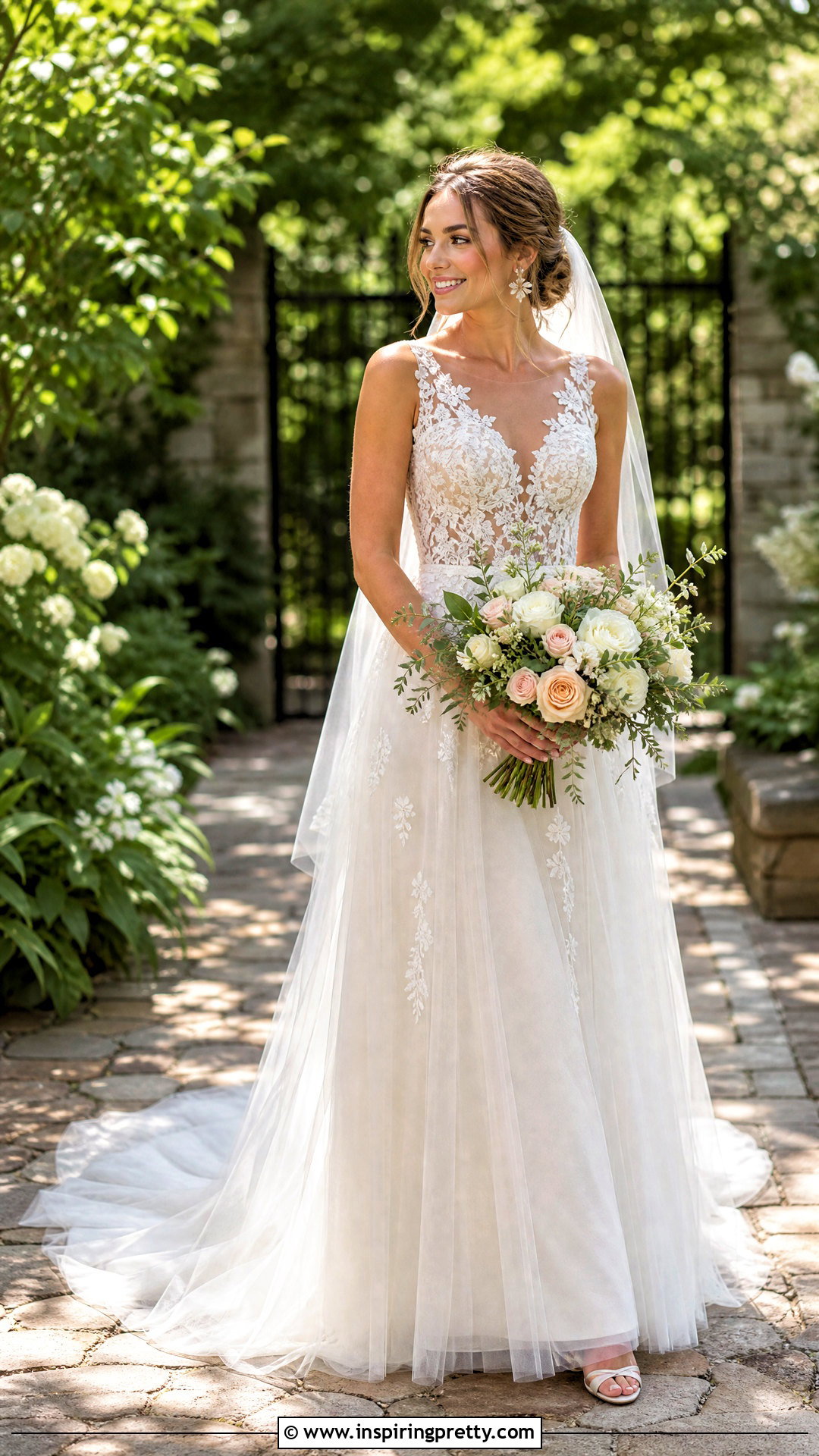
Botanical lace with leaves and vines fits a garden setting. Keep the tulle lightly layered and the train medium length so it doesn't drag through wet grass. Two practical things I always add for a garden wedding: a bustle for after the ceremony, and a plan for the hem during outdoor photos, such as someone ready to lift the train between shots. Stable block heels won't sink into a lawn. A low textured updo keeps hair off the lace on the back.
23. Fall Long Sleeve Lace Wedding Dress
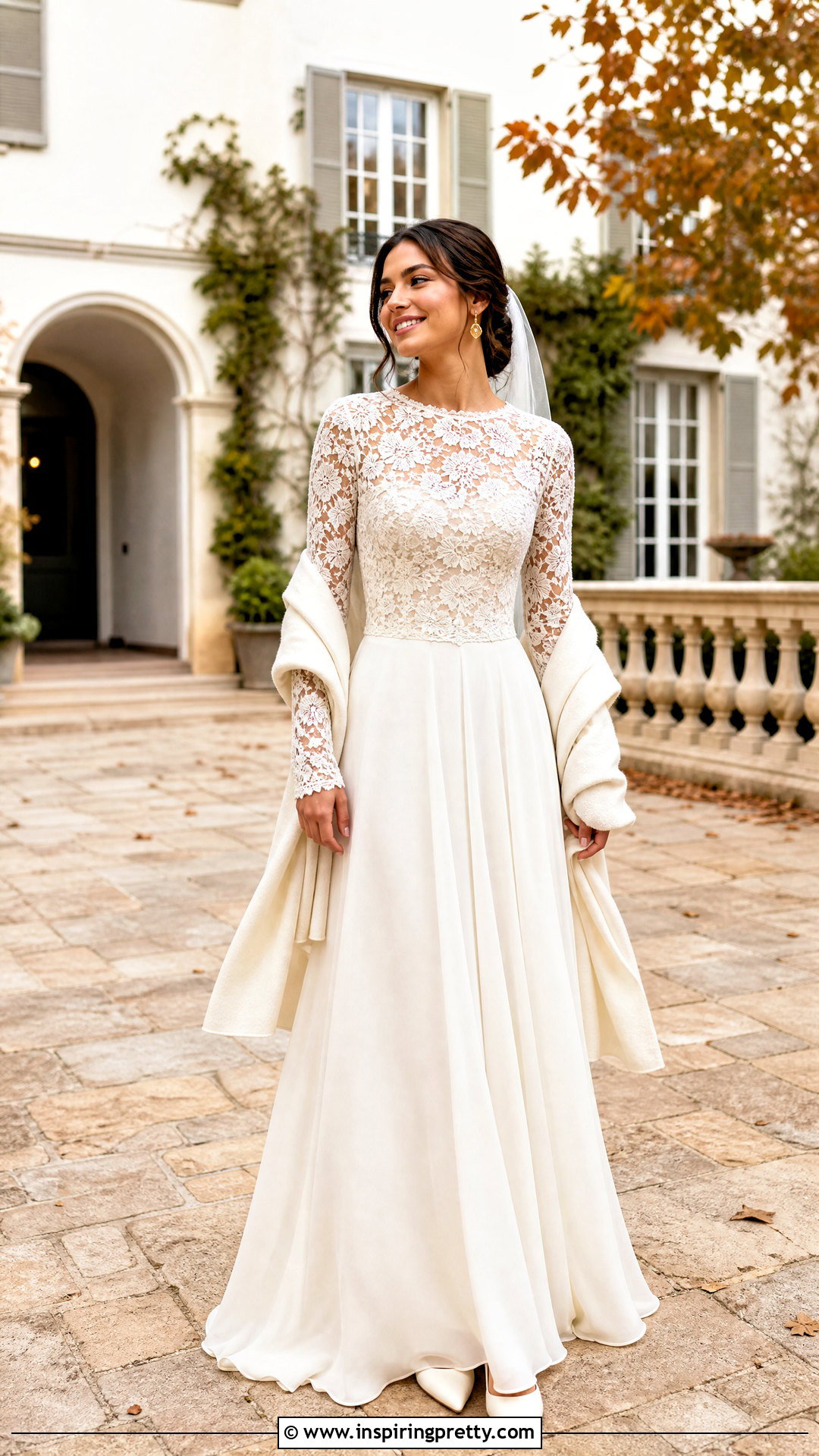
Long lace sleeves suit a fall wedding and keep you warmer at outdoor moments. I look for a stretch lining through the bodice so the sleeves don't bind. Stick with ivory, cream or light champagne; darker shades can look heavy against autumn colors. A removable ivory wrap handles the walk between photo spots. Lining in the chiffon or georgette skirt adds a little warmth while still letting it move. A low bun keeps the neckline and sleeves visible.
24. Winter Lace Top Organza Wedding Dress
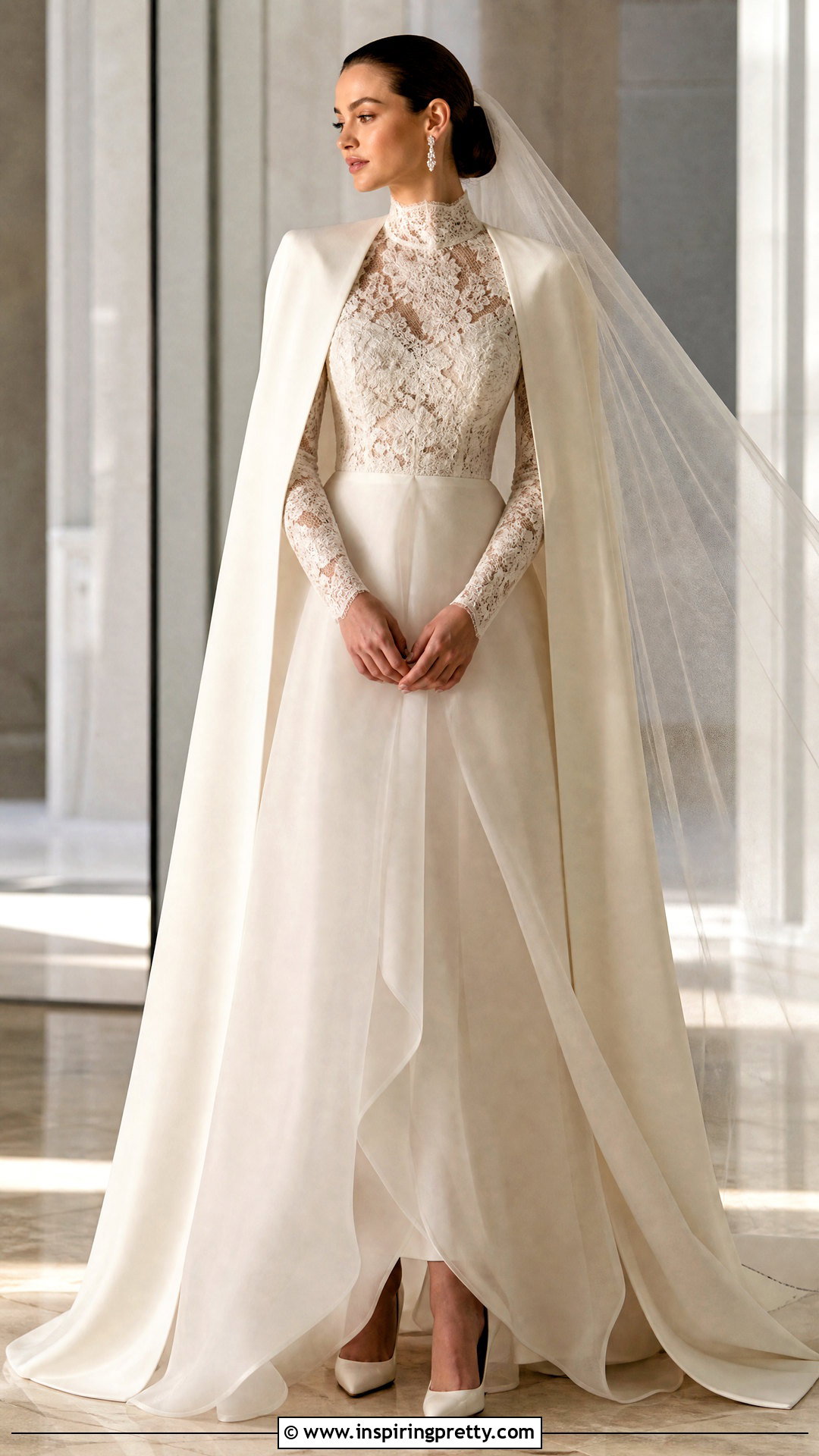
Winter dresses need some weight, and organza gives that while still moving. It holds more shape than chiffon and glows under indoor lights. A long sleeve or higher neck helps, and a smooth lining stops the lace from scratching. A tailored ivory cape or coat for moving between venues is worth buying properly rather than as an afterthought. I'd skip seasonal props on the dress itself; let the fabric and lace set the mood. A polished chignon and crystal earrings suit an evening ceremony.
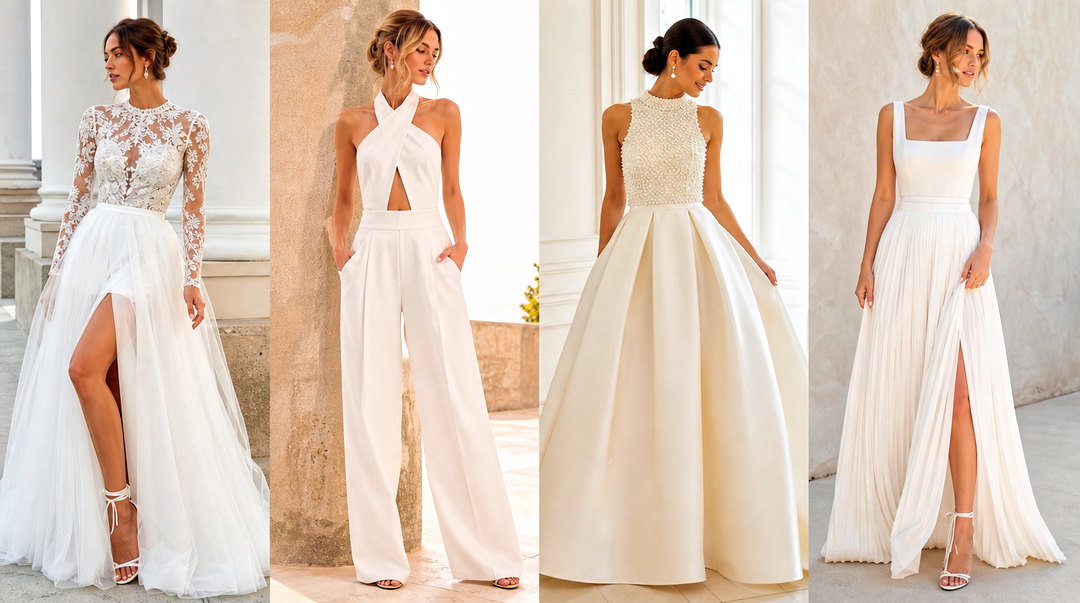
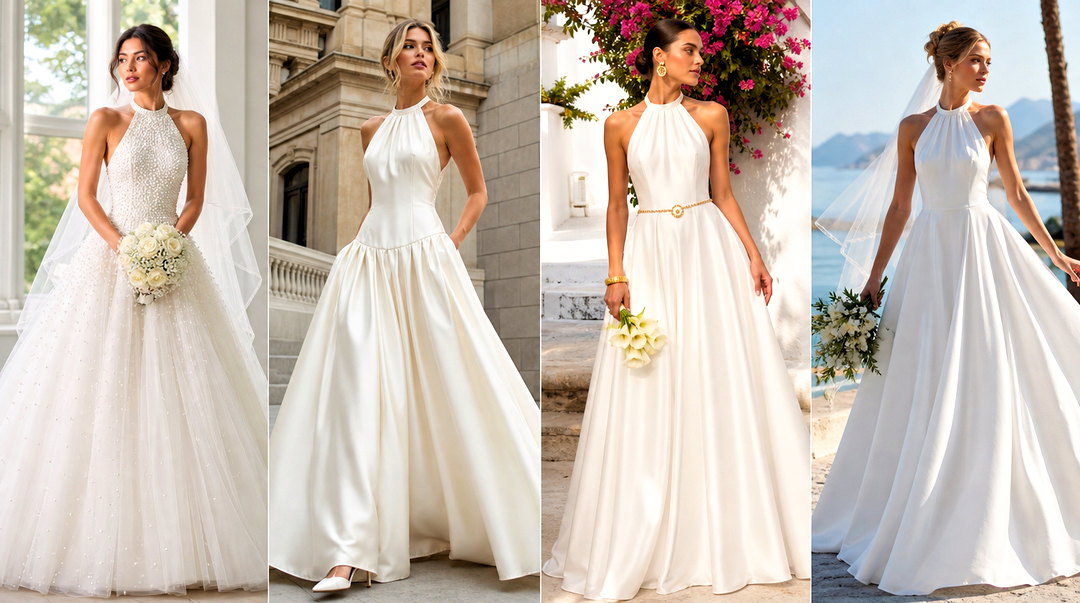
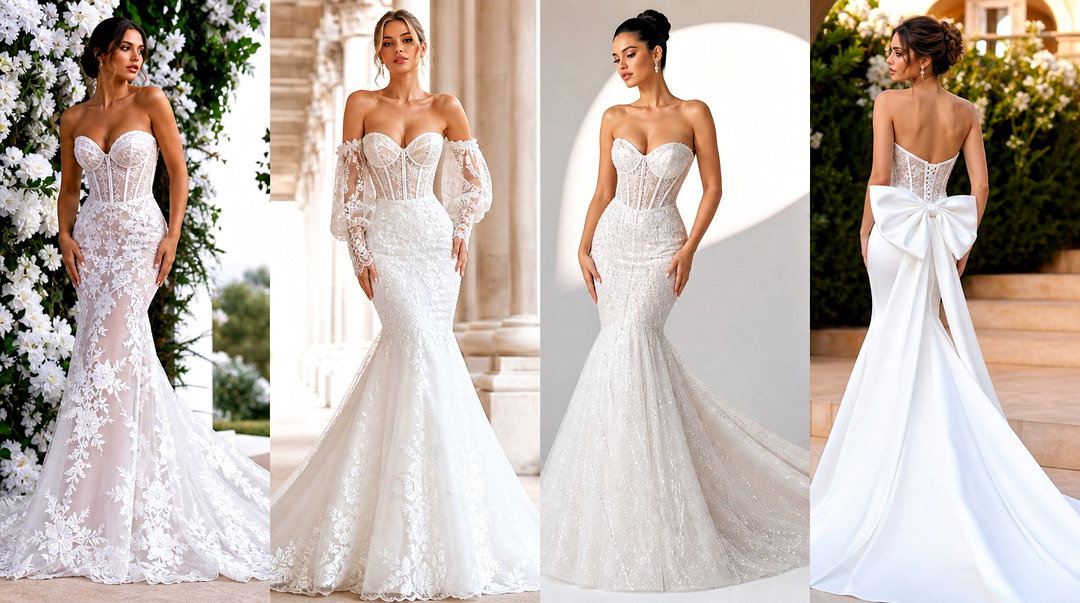
25. Detachable Lace Top Overskirt Wedding Dress
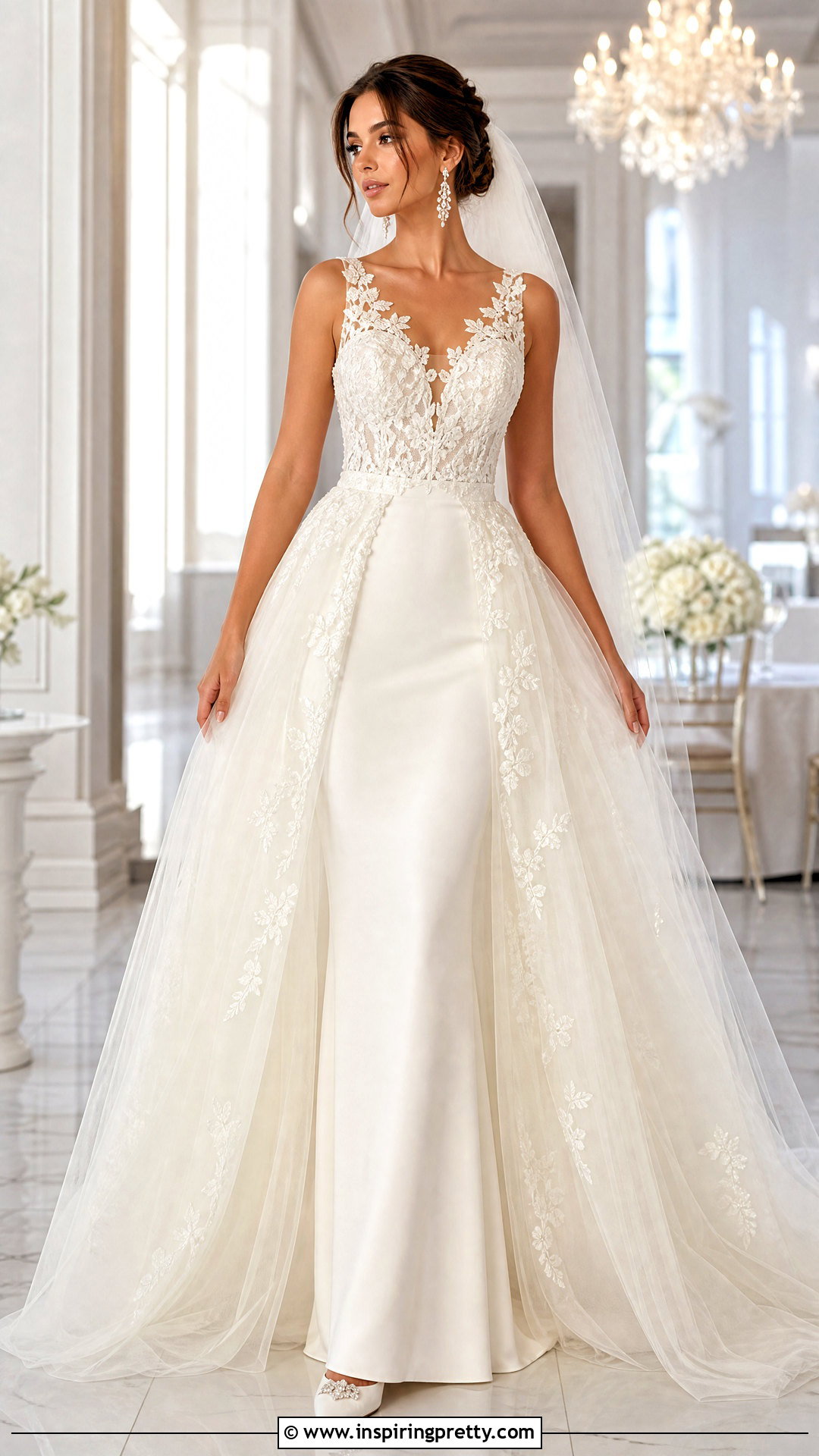
A detachable overskirt gives you two dresses. Start with a fitted lace bodice and a slim column or A-line underdress, then add a chiffon or tulle overskirt for the ceremony. The waistband needs to sit flat and fasten securely; I test it by having the bride walk and sit with it on. After the ceremony, take off the overskirt and swap to a shorter veil or bolder earrings. Check that the hooks or snaps don't show once the overskirt is off. Practice removing it with whoever will help you on the day.
Fittings, Bustles and the Hem You'll Actually Walk In
A lace bodice and soft skirt only look right if the tailoring is done around the real day. These are the things I plan for every bride wearing this shape.
- Bring your wedding shoes and the exact bra or shapewear you'll wear to every fitting. Hem length and bodice fit both change with them.
- Book fittings early. Most dresses need more than one, with the final one close to the date so the fit reflects your body then.
- Ask for a bustle if there's a train. An over-bustle lifts the train with hooks to the back of the dress; an under-bustle tucks it underneath. Lighter chiffon and tulle trains often bustle well with just a few points.
- Have someone learn the bustle at the last fitting. It's usually done in a rush right after the ceremony.
- Hem the front so it clears the floor with your shoes on. A dragging front hem is the main reason brides trip on steps.
What Lace Needs on the Day
Lace snags. Watch for bracelets with prongs, a groom's cufflinks, and beaded bags. Steam a sheer skirt rather than ironing it, and keep the dress hanging in a breathable bag until you put it on. Pack a small kit with clear thread, a needle, safety pins and fashion tape; a loose appliqué or a strap that starts slipping can be fixed in minutes with it.
Sit, Dance and Hug in It Before You Say Yes
Start with the bodice: the neckline, sleeves and waist that support you without pinching. Then choose the skirt fabric by how much movement and volume you want. Keep accessories quiet so the lace stays in front, and let tailoring make the join between top and skirt look like one dress. Most important, wear it like you will on the day. Sit, raise your arms, walk a few steps and lean in for a hug. The dress that still feels right after all that is the one to choose.
Related posts:


Leave a Reply