
A button-up shirt with proper sleeves is one of the most carefully engineered garments most of us own: a collar, a yoke, a placket, two cuffs, and a sleeve set at an exact angle. When those parts fit, the shirt goes anywhere, from a meeting to a weekend market to a long flight. The combinations below cover crisp cotton, relaxed linen, satin, cropped and oversized cuts, and a few layered ideas for cooler months. Most of them can be put together from what's already in your closet, and I've noted where a fit or proportion change helps different bodies.
Shoulder Seams and Sleeve Length Tell You the Size
When I fit a shirt, I look at the shoulders before anything else, because they're the hardest part to alter. On a classic set-in sleeve, the shoulder seam should sit right at the edge of your shoulder bone. If it lands on top of the shoulder, the shirt is too small; if it slides down the arm, it's too big, unless the shirt is designed with a dropped shoulder, which is cut to sit lower on purpose.
Then check the sleeve. With your arm relaxed, the cuff should land around the wrist bone. Bend your elbow and reach forward: if the cuff pulls halfway up the forearm, the sleeve is short or the armhole is set too high. Finally, button it and sit down to see whether the placket gapes at the bust.
- Easy for a tailor: shortening sleeves without a placket, taking in the side seams, raising the hem.
- Harder or expensive: changing shoulder width, lengthening sleeves, fixing a collar that stands away from the neck.
- So buy to fit the shoulders and bust, and alter the rest.
1. White Button-Up Top With Wide-Leg Jeans
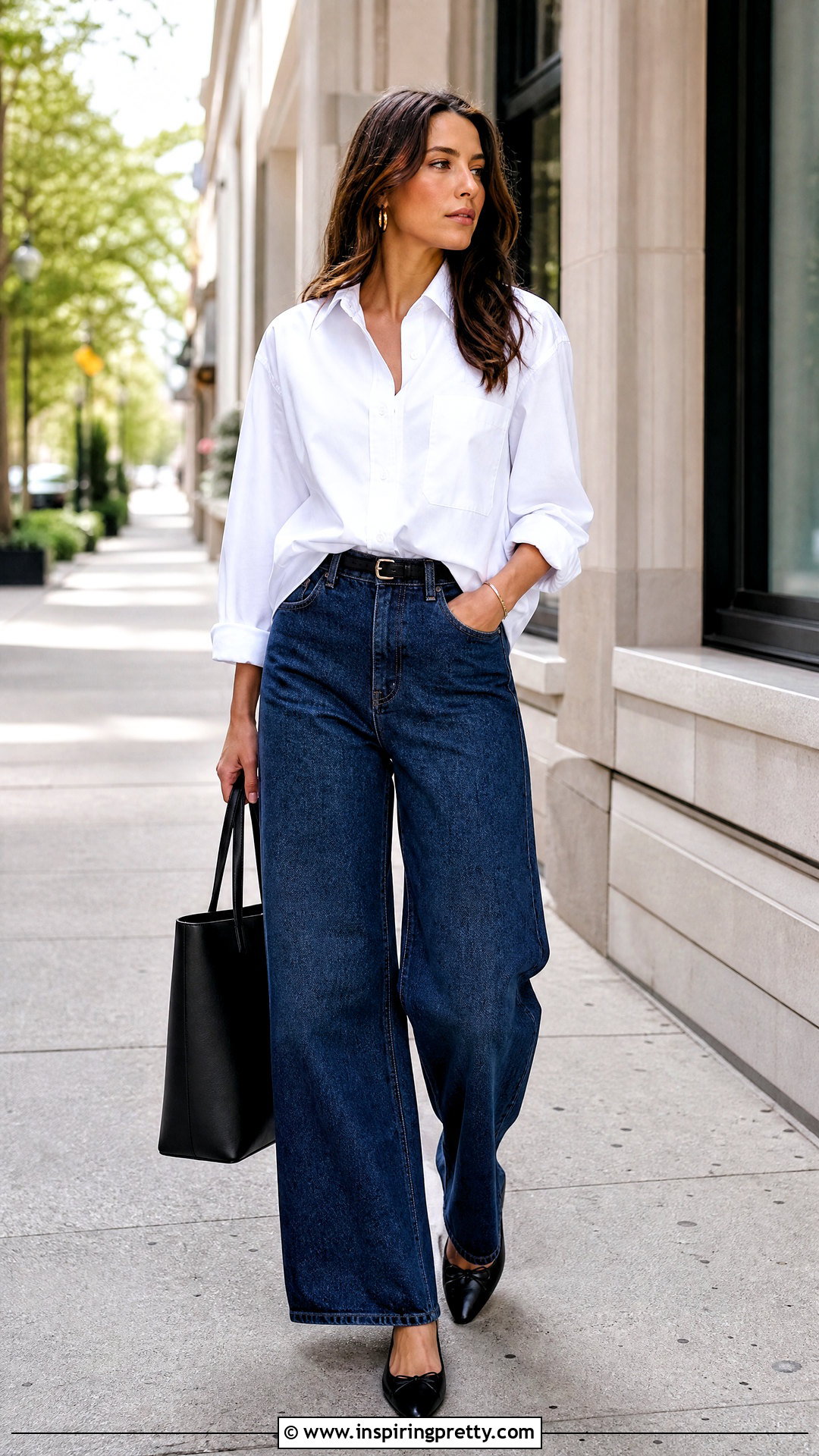
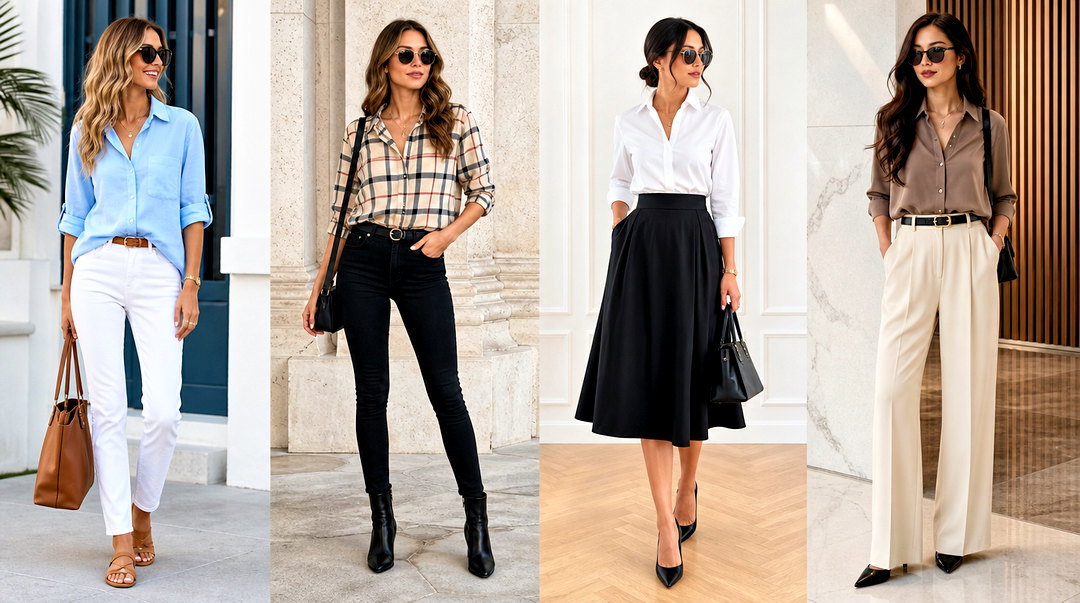
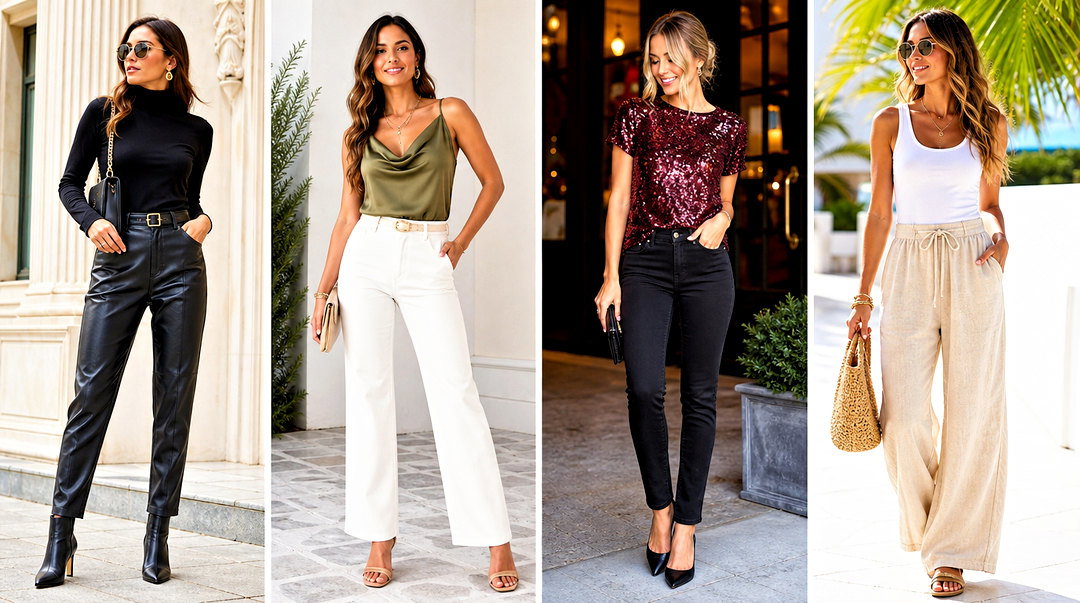
With wide-leg jeans, a white shirt needs room across the shoulders and bust, so I size it to sit easily rather than snugly. Tuck just the front into high-rise denim and let the back hang; that keeps the waist visible without the stiff look of a full tuck. Dark wash reads polished and faded wash relaxed. Pointed flats, loafers or low block heels all suit it, with a structured tote and small hoops. Petite women can look for a shorter shirt and jeans long enough to nearly reach the floor in the shoes they'll wear.
2. Blue Striped Button-Up Top With Black Trousers
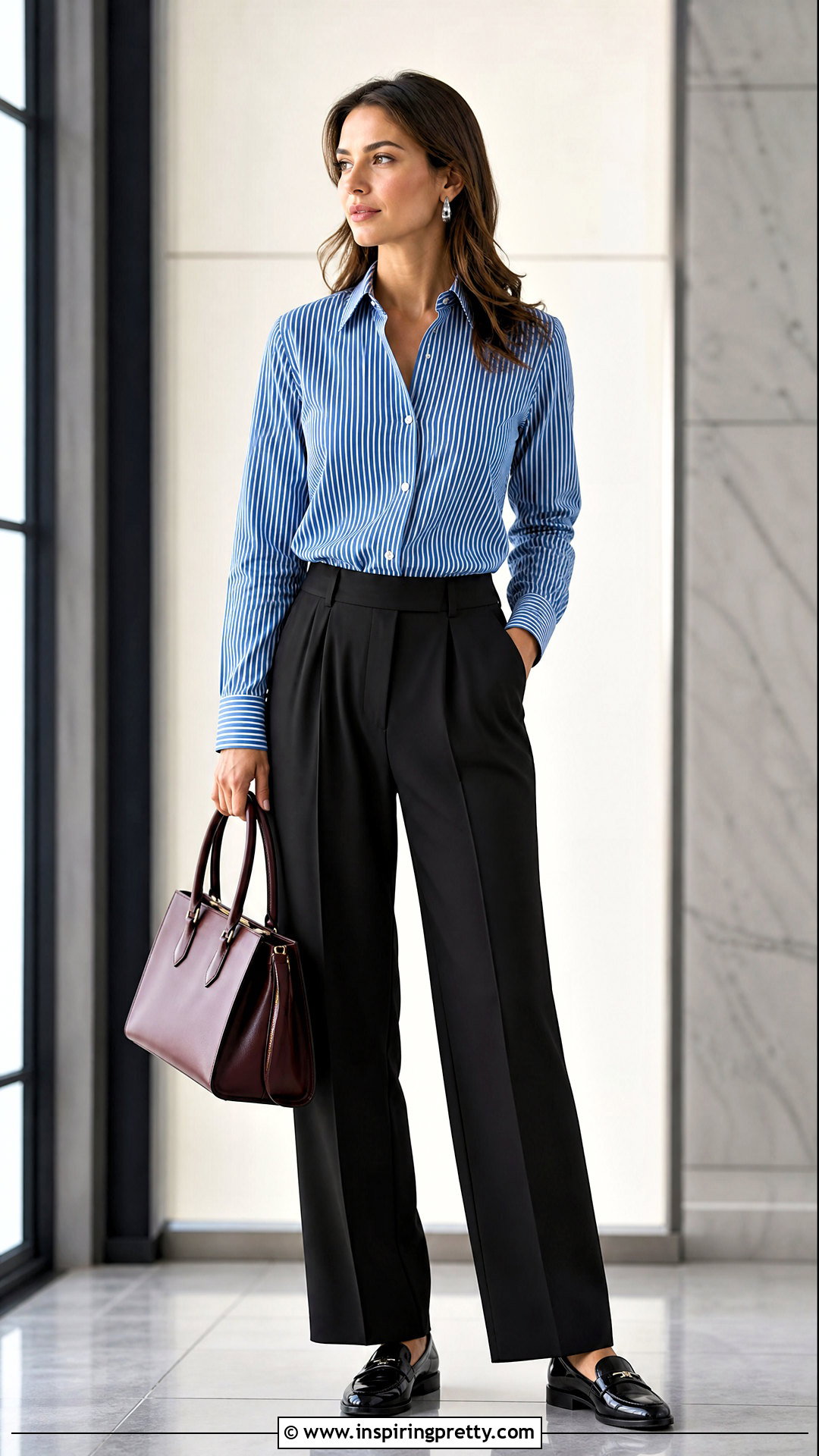
What do you wear when an office outfit needs to be professional but not predictable? I'd go with a blue striped shirt over fluid black trousers. Narrow vertical stripes add pattern without complicating anything else. Tuck it fully into high-waisted pants for a defined waist, or half-tuck it in a relaxed workplace. Black loafers are classic and pointed slingbacks dressier. Silver suits the cool blue. If the shirt is oversized, the trousers must be tailored; two loose pieces together just look unplanned.
3. Linen Button-Up Top With Matching Shorts
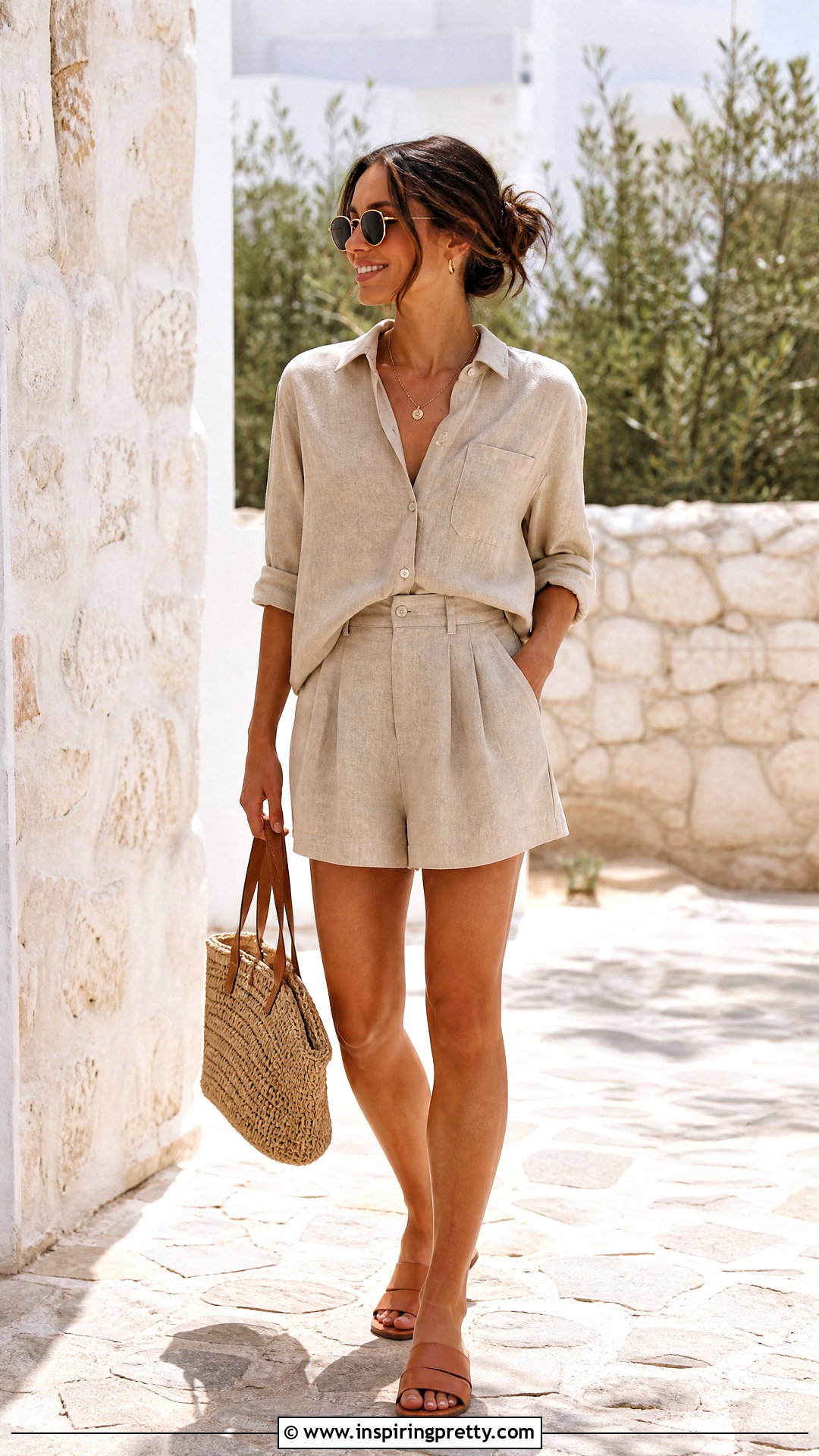
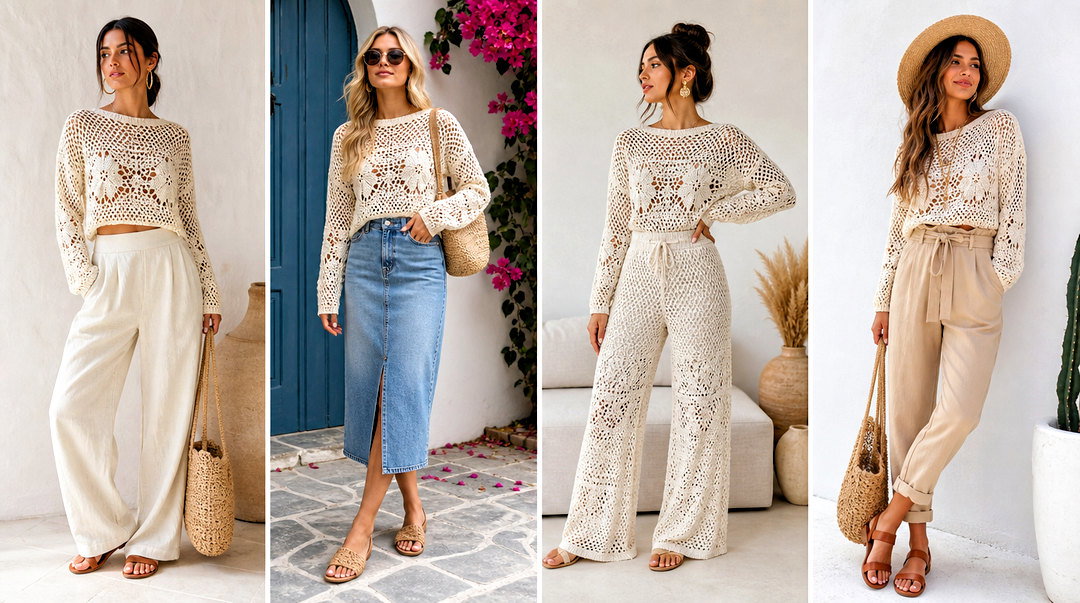
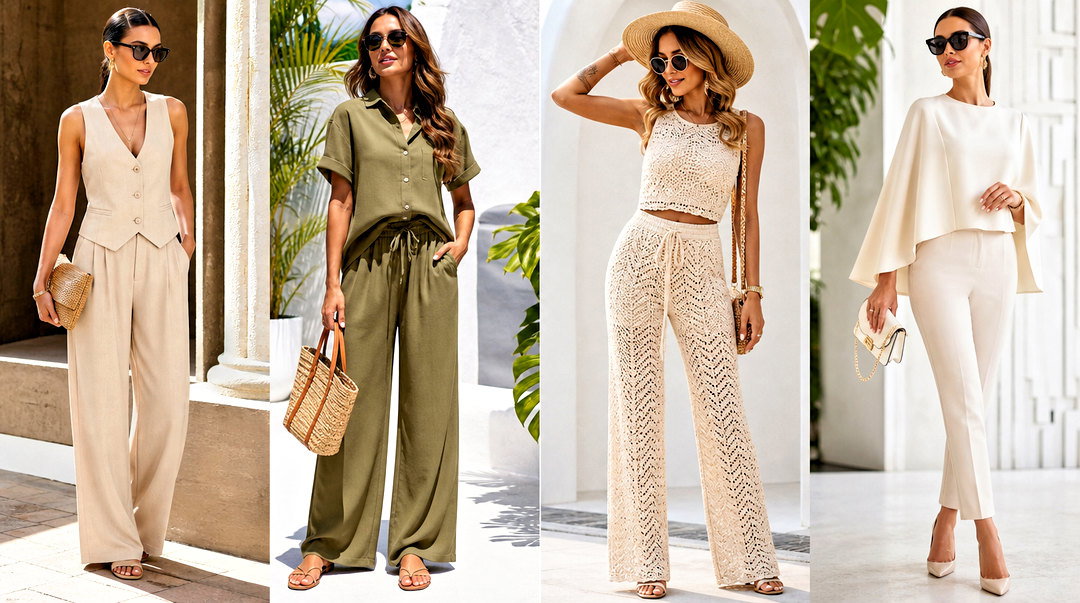
Long sleeves in summer sound odd until you wear linen. The loose weave lets air through, and covered arms stay cooler in direct sun than bare ones. Pair a long-sleeve linen shirt with matching high-rise shorts in white, sand, olive or pale blue, leave two buttons open, and roll the cuffs loosely. A partial tuck adds shape. If you want more room through the thigh, pick a wider leg opening or a longer inseam. Flat leather sandals, a woven tote and small gold hoops are all it needs.
4. Satin Button-Up Top With Midi Skirt
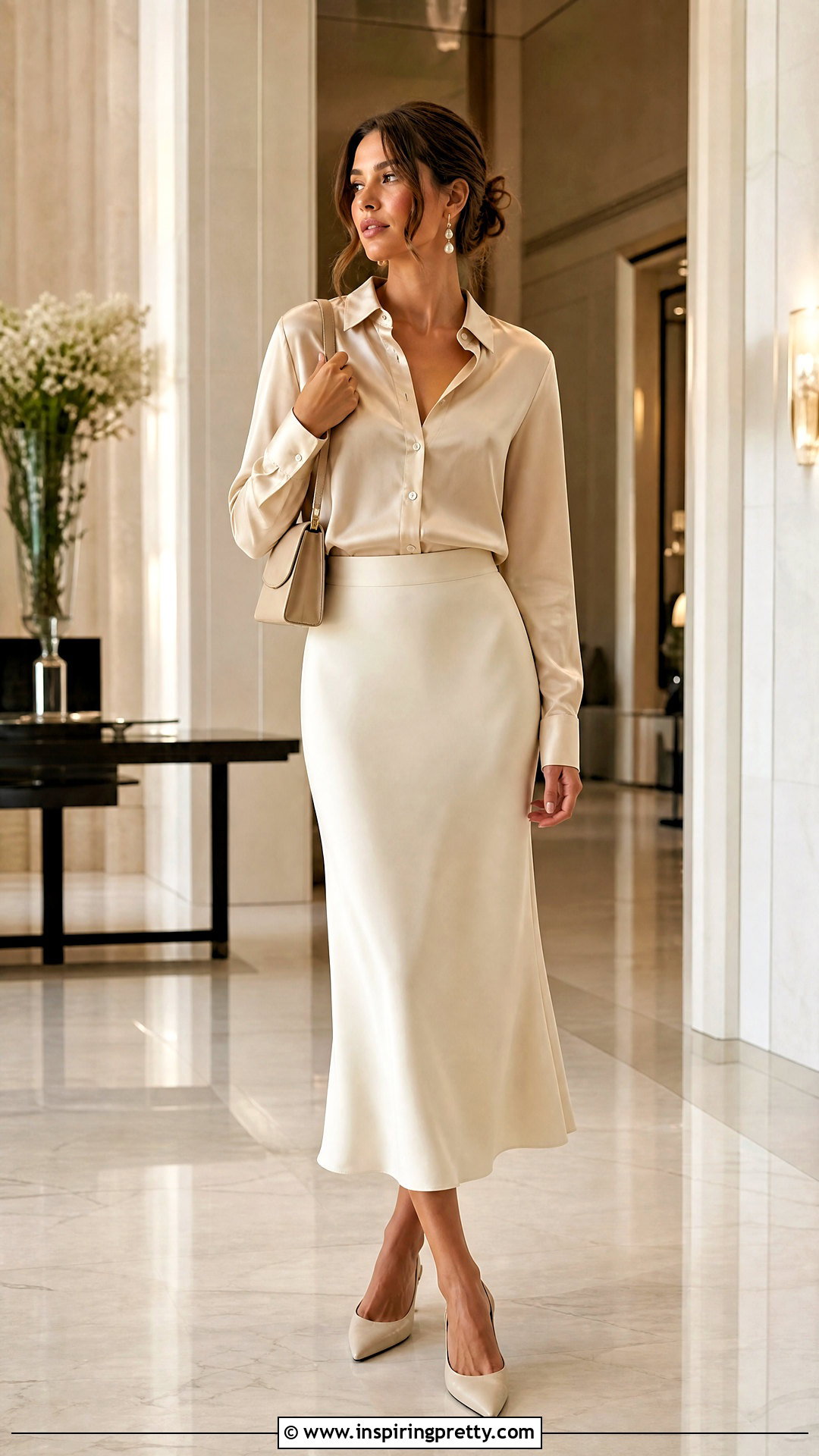
Satin shows everything: creases, water spots, the outline of a seam allowance underneath. That's why I pair a satin long-sleeve shirt with a matte midi skirt, so the shine has something quiet to sit against. Bias-cut skirts flow; A-line gives more structure at the hips. Tuck the shirt smoothly, then ease a little out above the waistband so it doesn't strain when you lift your arms. Champagne with cream is tonal, emerald with black is bolder. If the satin clings, a thin camisole underneath and a size with more room through the torso both help.
5. Oversized Button-Up Top With Leggings
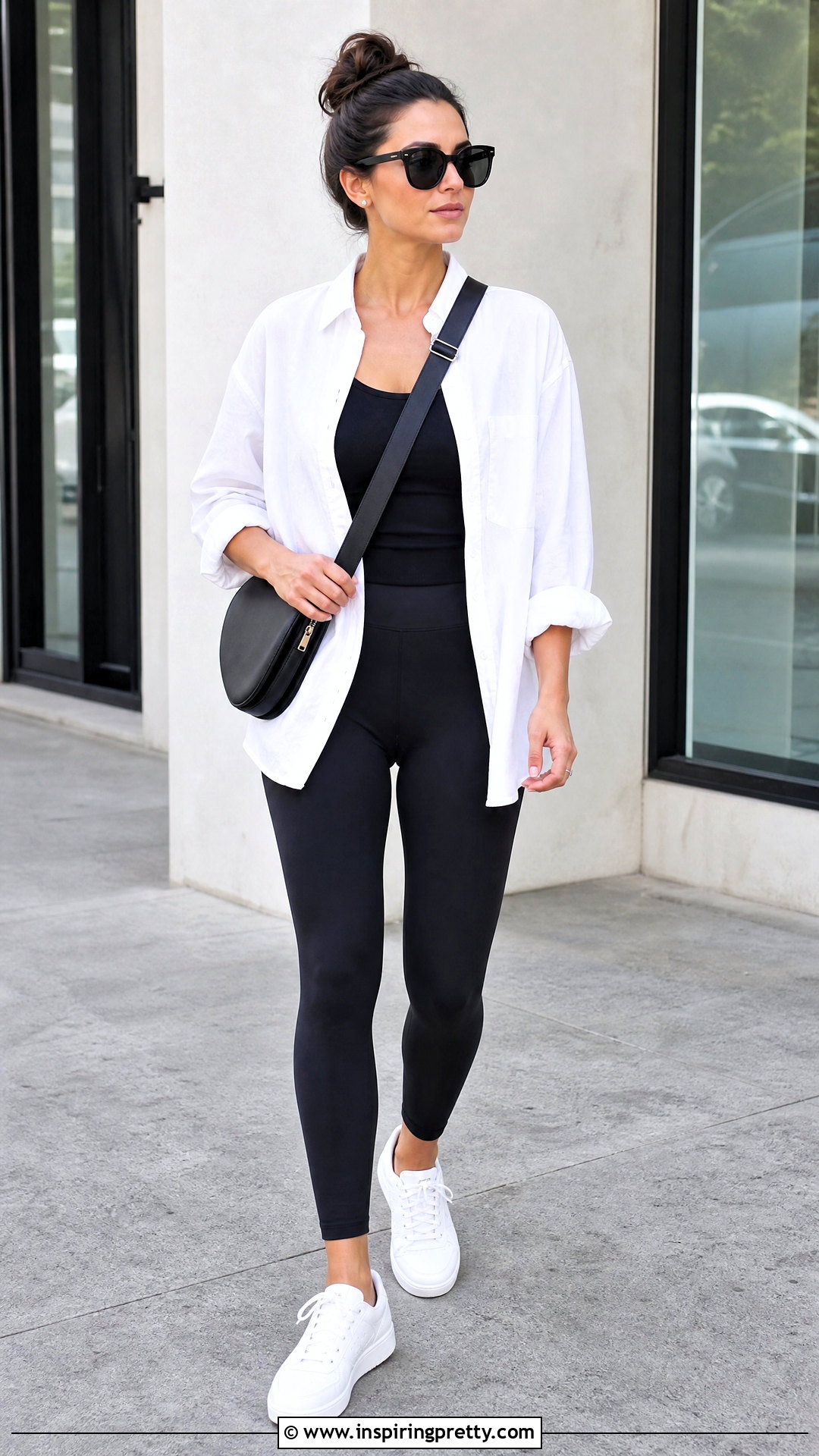
Leggings on their own can feel unfinished; an oversized shirt fixes that. Start with a long cotton or poplin shirt that covers the hips, worn over truly opaque black leggings. Do a squat test in front of a mirror before relying on any pair. Wear the shirt partly open over a fitted tank for depth. If an oversized cut swallows you, push the sleeves to the elbows and unbutton the lowest buttons, which shows more of your shape without losing the relaxed feel. White sneakers or chunky loafers finish it.
6. Cropped Button-Up Top With High-Waisted Jeans
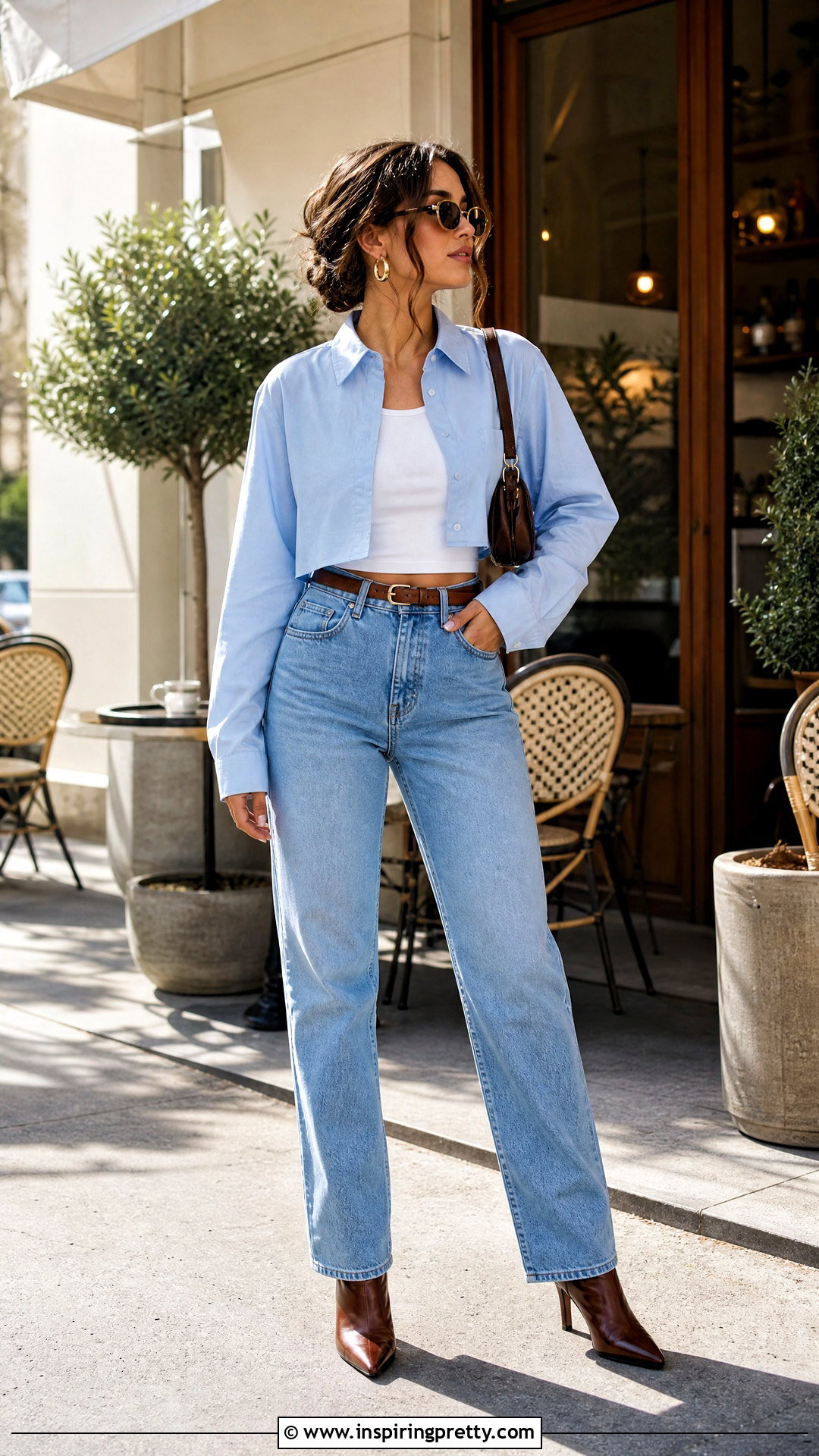
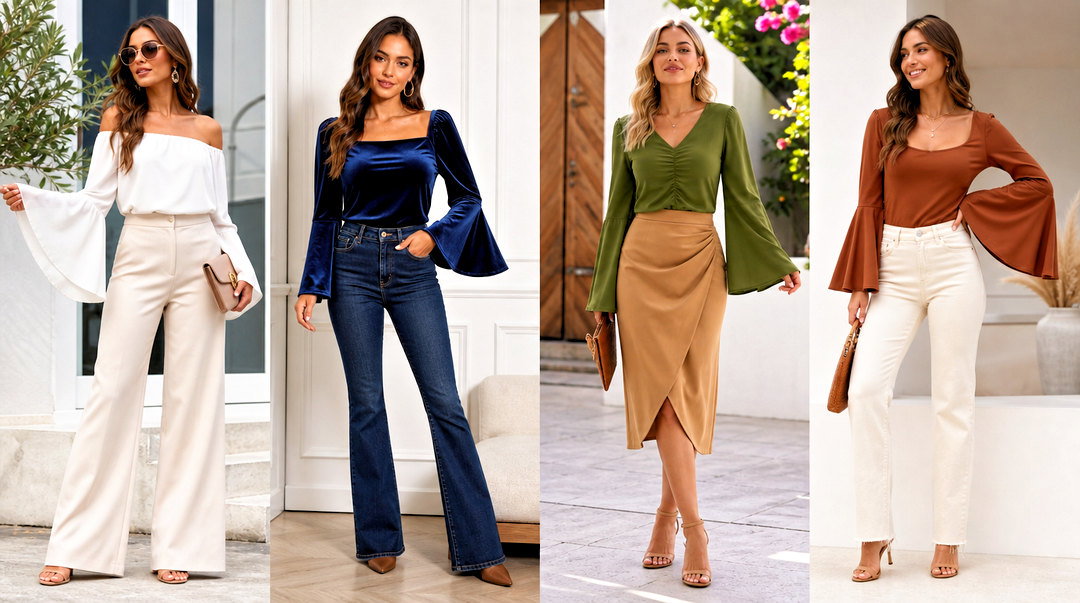
Cropped shirts are cut to end at the waist, which is why high-waisted jeans meet them so neatly. Look for a hem that touches the waistband rather than one that floats above it. Straight, barrel or relaxed jeans all work if the waist sits flat underneath. Low sneakers are right for daytime and pointed ankle boots for cooler evenings. A simple belt can connect the two. For more coverage, put a fitted tank underneath and leave the bottom buttons open; you keep the short shape without showing skin.
7. Denim Button-Up Top With White Pants
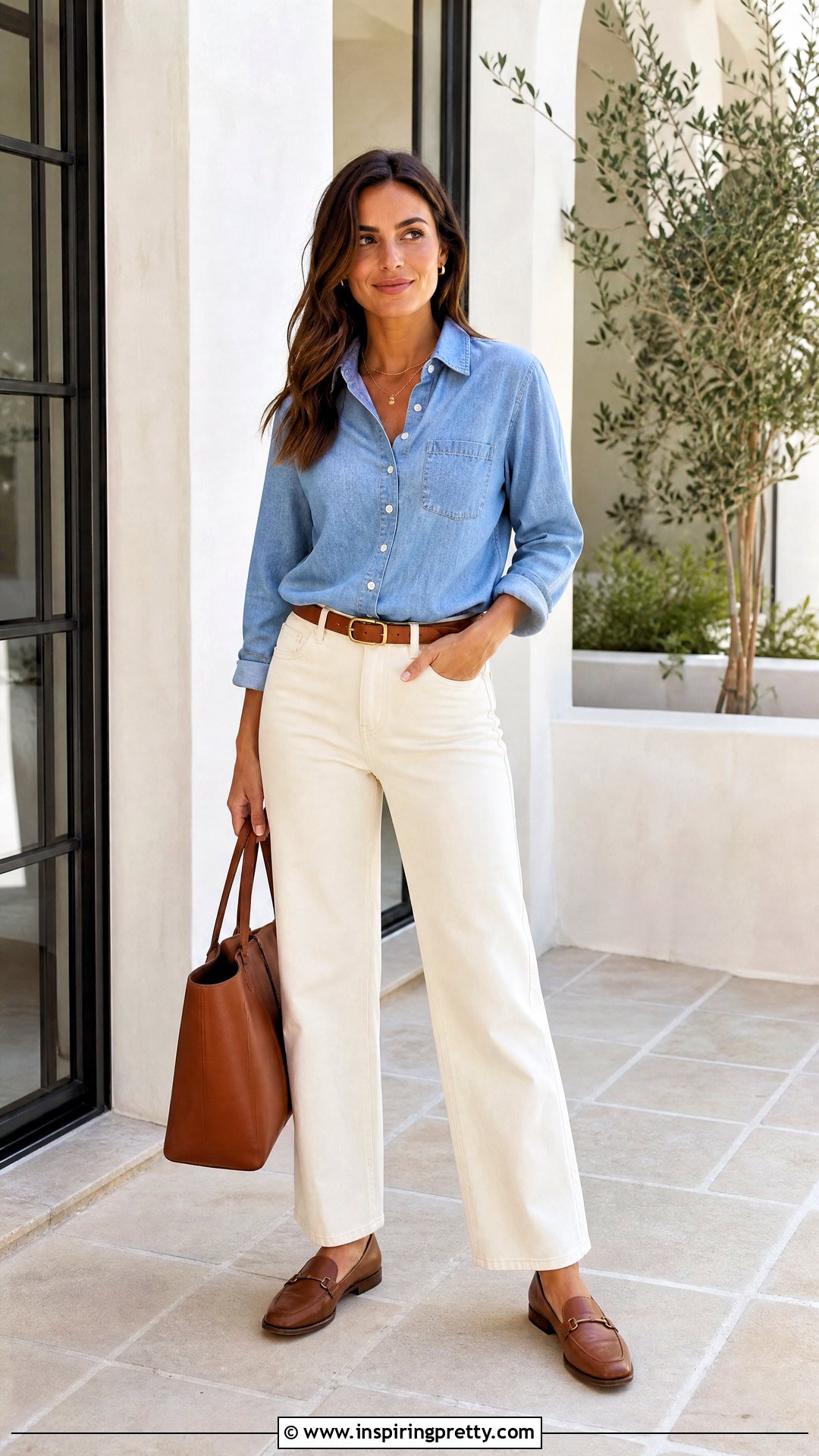
Blue against white always looks clean. Choose a lightweight chambray button-up for softness, or a heavier denim shirt that behaves almost like a jacket. Tuck it into white straight jeans or tailored trousers and add a tan belt to separate the colors. Brown loafers and a cognac tote warm it up, and cream or ecru bottoms are easier to keep clean than bright white. Fuller busts do better in fluid chambray with hidden snaps or extra room at the chest; heavy denim plackets bow open under strain.
8. Plaid Button-Up Top With Straight-Leg Jeans
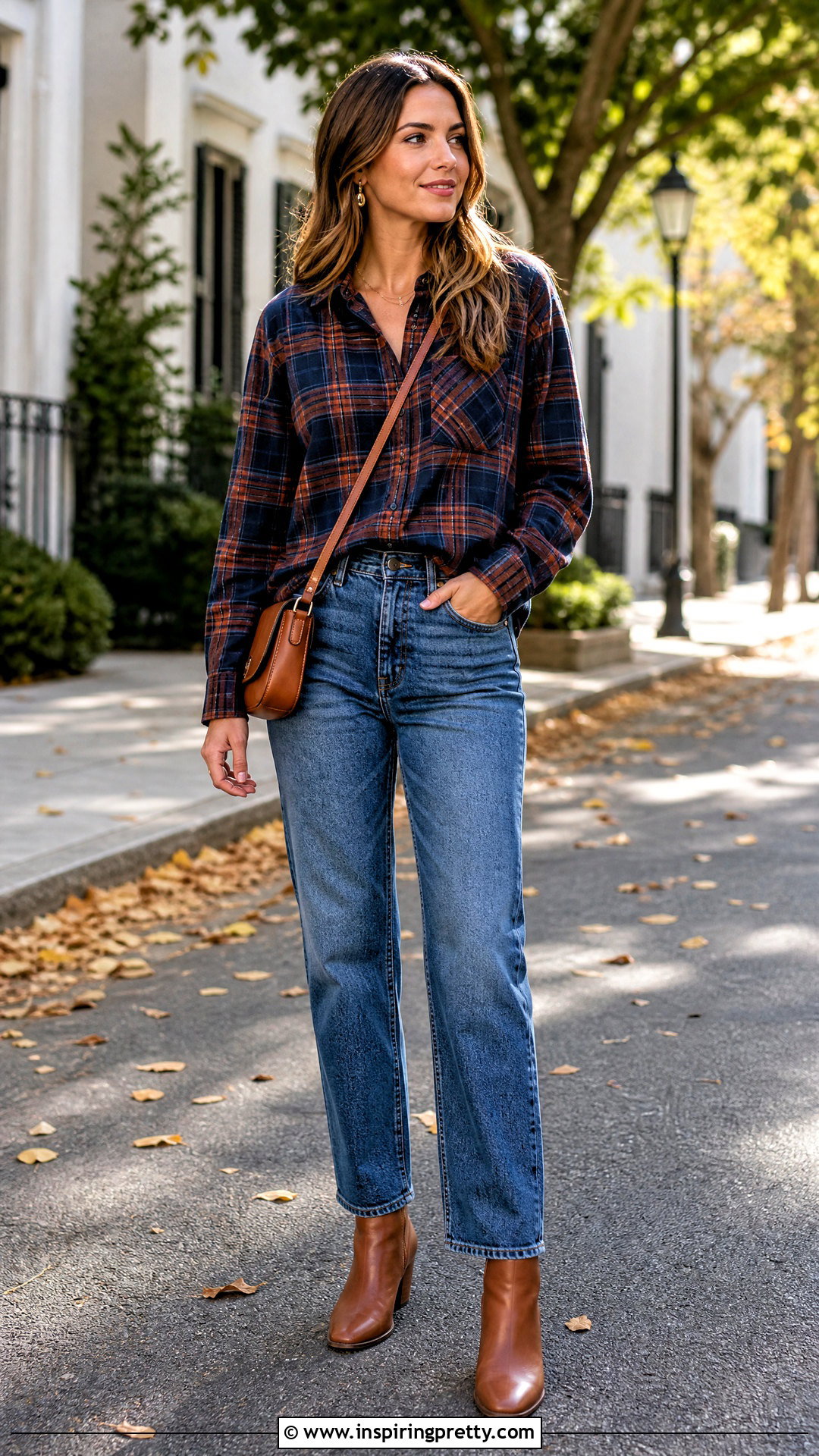
A relaxed plaid shirt with straight jeans is about as comfortable as dressing gets. I'd avoid very fitted plaid, because the checks distort where the fabric pulls and make the strain obvious. Button it with a front tuck, or wear it open over a plain fitted tee. Medium wash is casual, dark wash a little smarter. Ankle boots, retro sneakers or chunky loafers suit cooler months. When buying plaid, choose colors already in your wardrobe; navy, cream, rust or forest green go with denim and most outerwear.
9. Black Button-Up Top With Beige Trousers
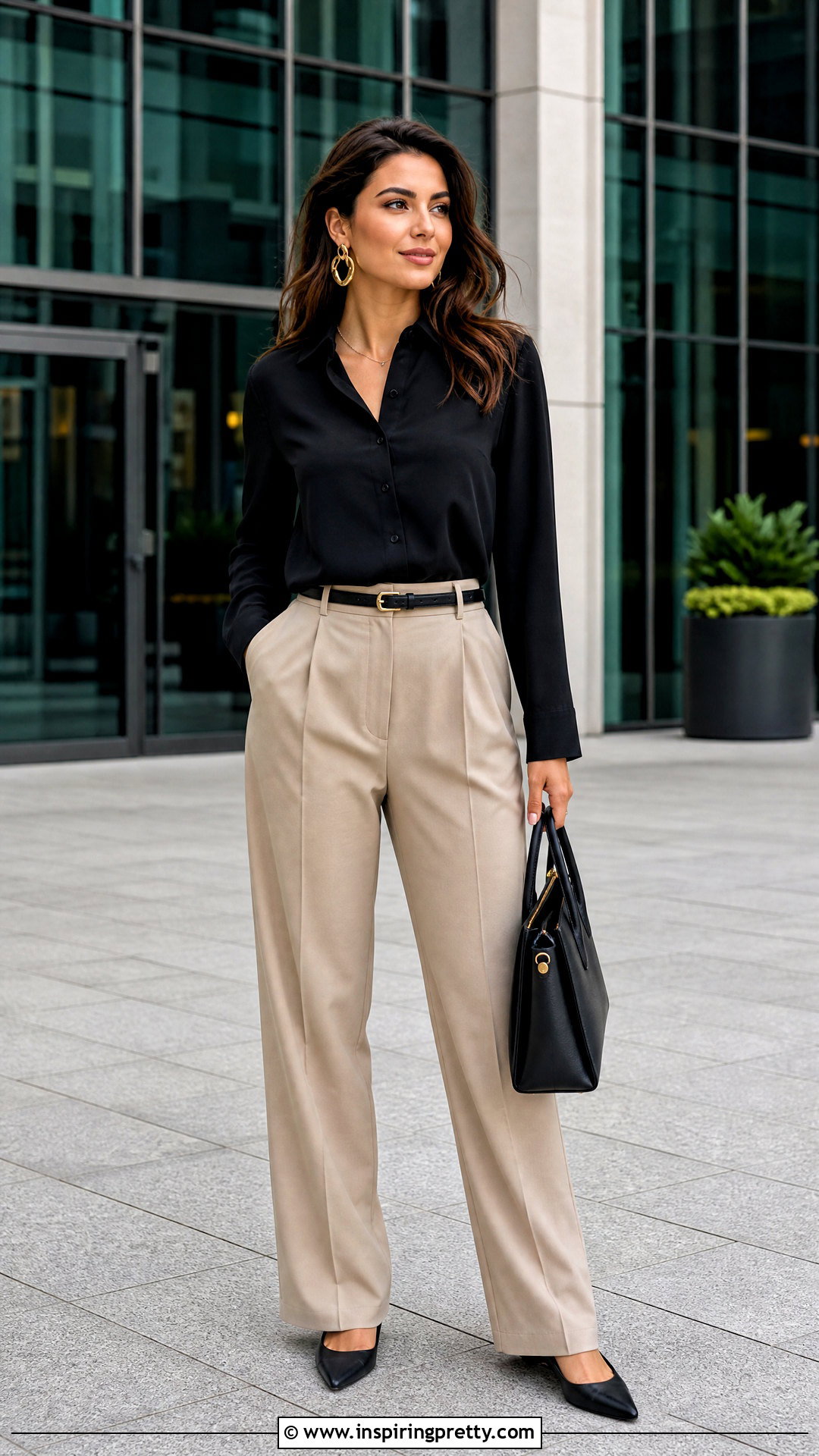
Black and beige is a softer route than all-black, and it suits most offices. A fluid black shirt with sleeves you can button at the wrist or push up pairs with high-waisted pleated beige trousers, which give room through the hip and lengthen the leg. Tuck in the shirt and add a slim black belt. If solid black feels harsh near your face, open the collar and add a warm-toned necklace. Black pointed flats or loafers and sculptural gold earrings finish it for presentations and lunches.
10. Pink Button-Up Top With Cream Jeans
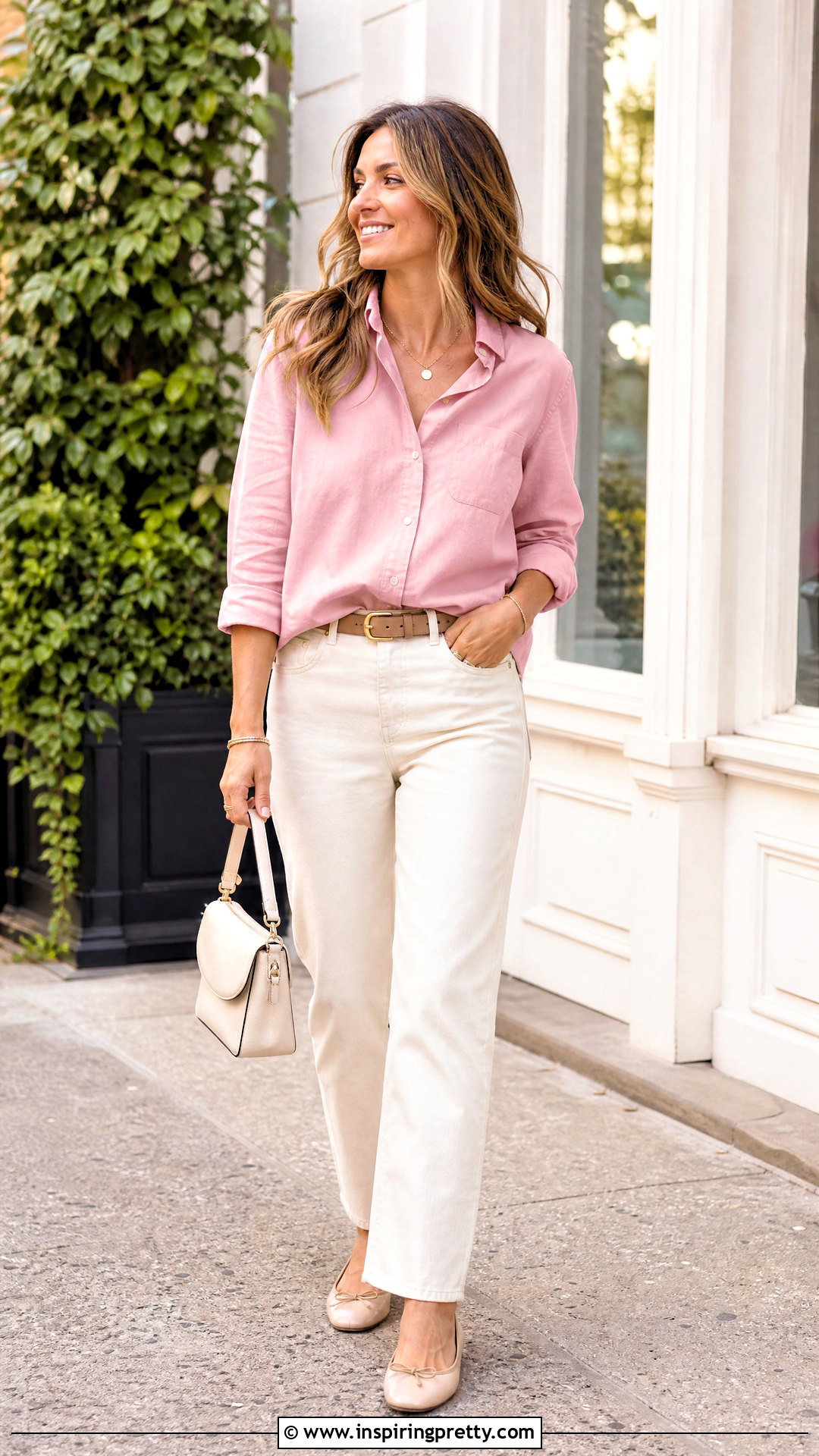
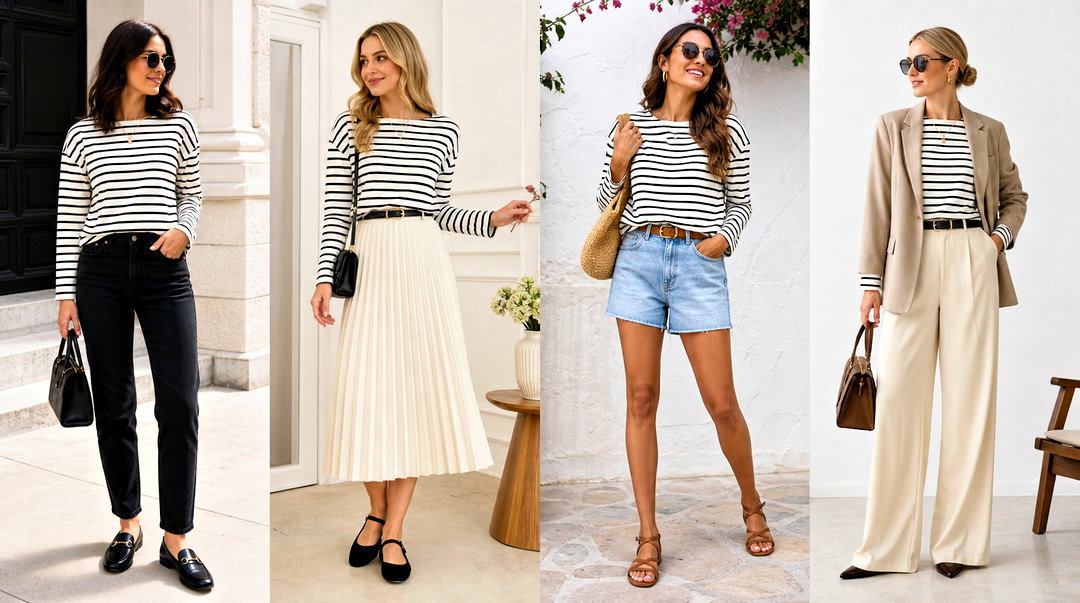
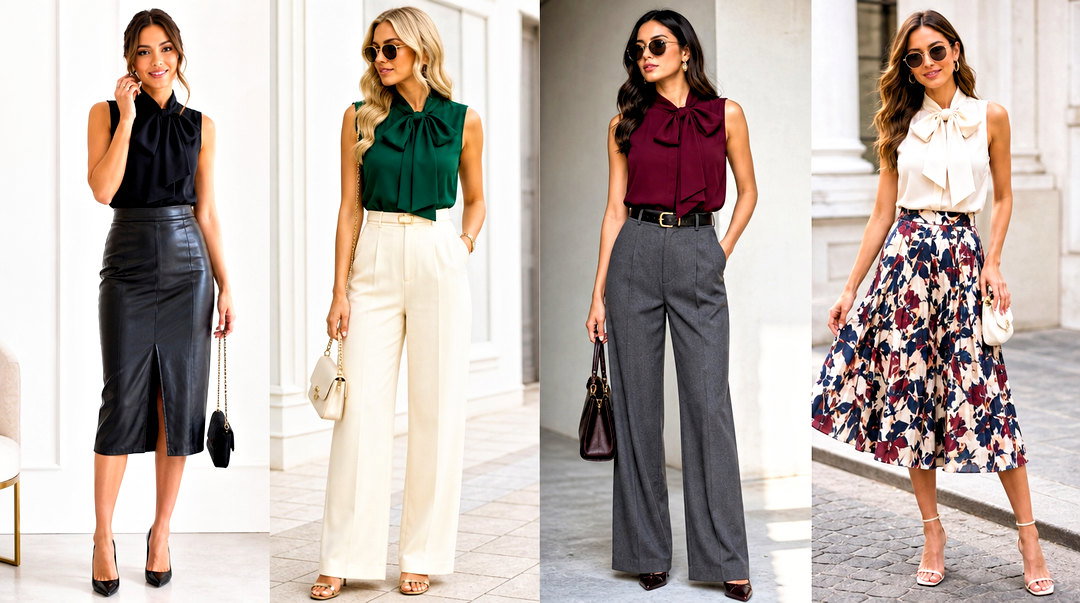
Pink is an easy first color for people who mostly wear neutrals. Blush, dusty rose or a brighter pink all sit well with cream straight jeans. A relaxed cotton shirt is casual; a fitted poplin version looks tailored. Hold the shade against your face in daylight: if it nearly matches your skin, the shirt will wash you out, so go a step brighter or deeper. Tuck the front, add a tan belt and ballet flats. A camel coat carries it into autumn.
11. Sheer Button-Up Top With Tank and Maxi Skirt
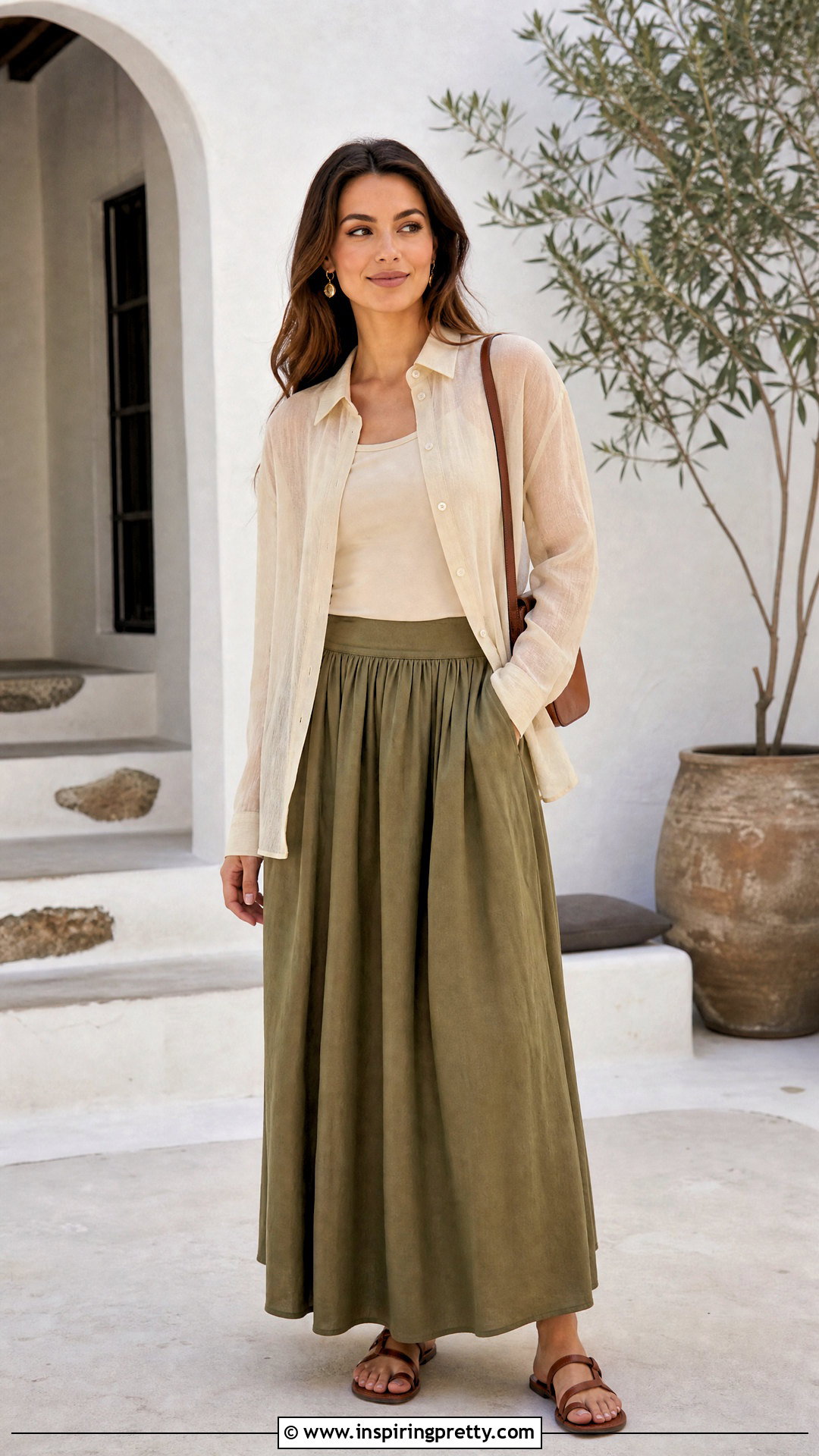
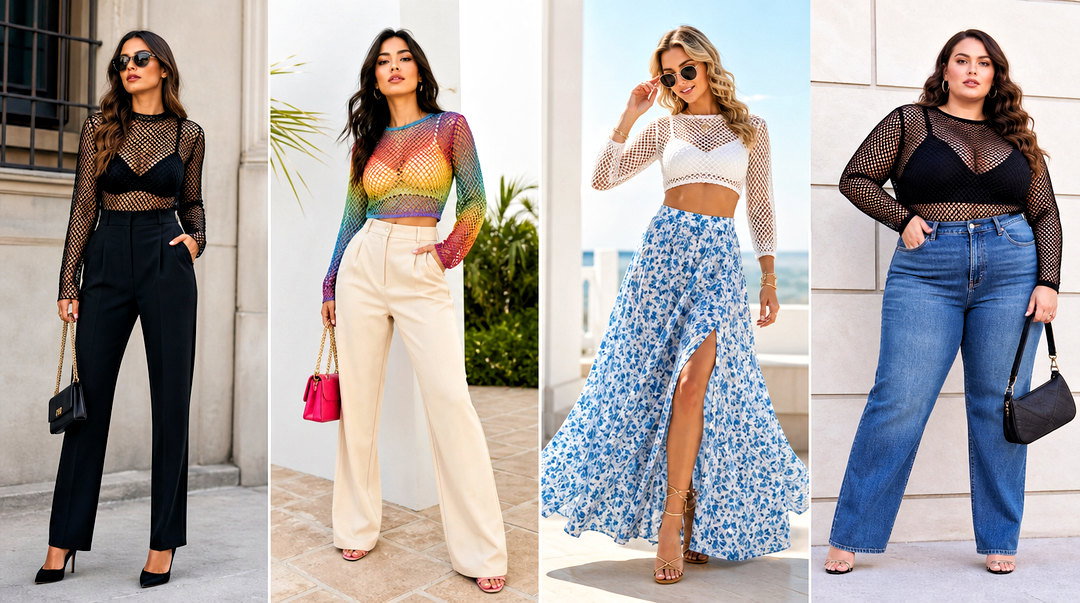
Sheer shirts are easiest when the layer underneath is planned rather than an afterthought. I choose a smooth, fitted tank matched either to the shirt or to your skin, never a contrasting one with lace or seams. Then add a translucent long-sleeve button-up over a high-waisted maxi skirt. A flowing skirt softens it; a straight denim maxi gives structure. Wear the shirt open for ease or buttoned and tucked for polish. Simple sandals or flats and a compact bag let the sheer texture stand out.
12. Button-Up Top With Sweater Vest and Trousers
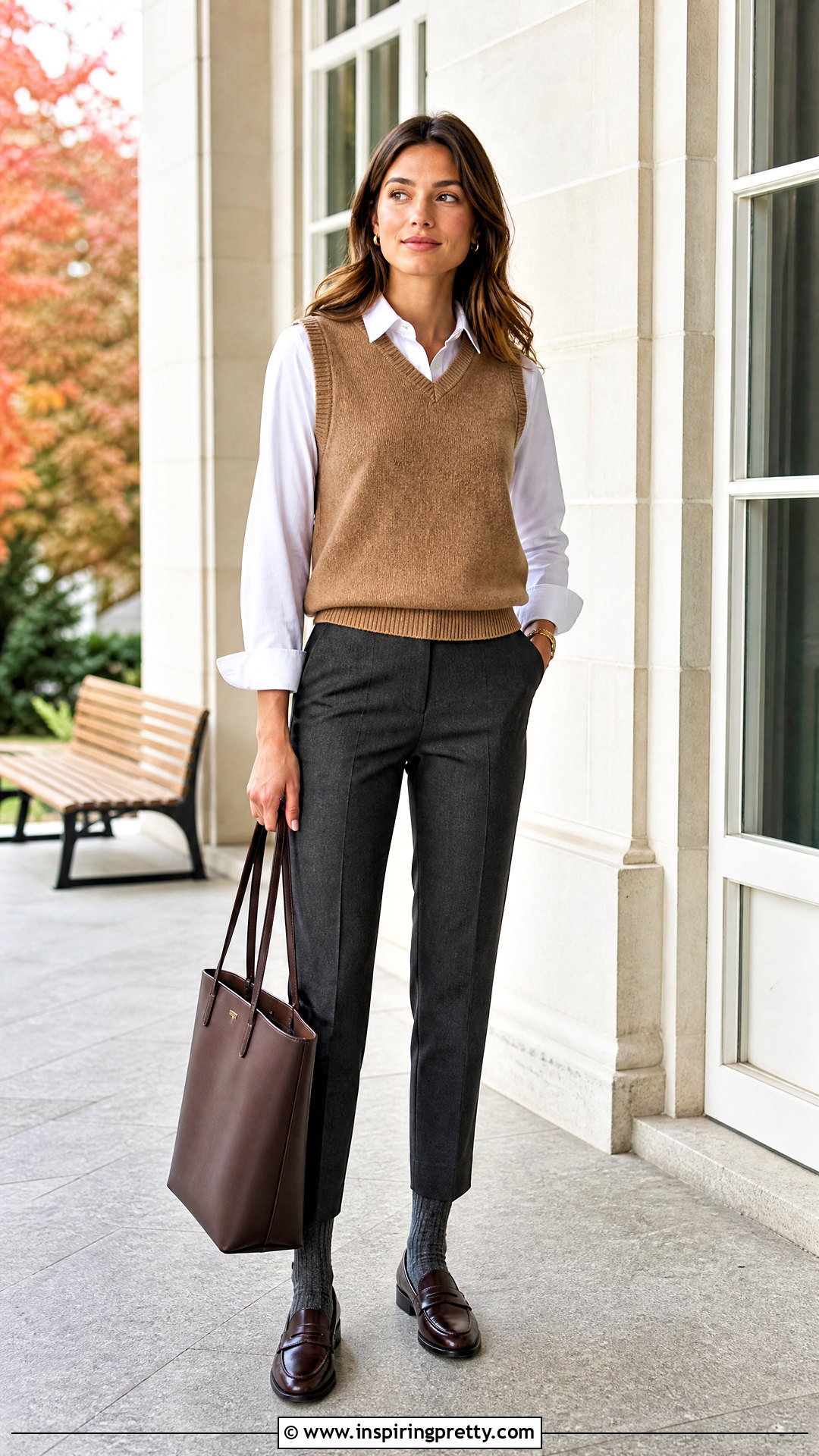
A shirt under a sweater vest is a layering trick borrowed from menswear, and it's handy on cold mornings because the vest comes off by noon. Let the collar and cuffs show. Proportion is the thing to watch: an oversized vest wants a fitted shirt, and a close vest suits a relaxed one. Smooth the shirt hem flat before pulling the vest on, or it bunches at the waist. Tailored ankle trousers, loafers with ribbed socks and a structured tote keep it neat. White, camel, navy and gray repeat easily.
13. Button-Up Top With Blazer and Pencil Skirt
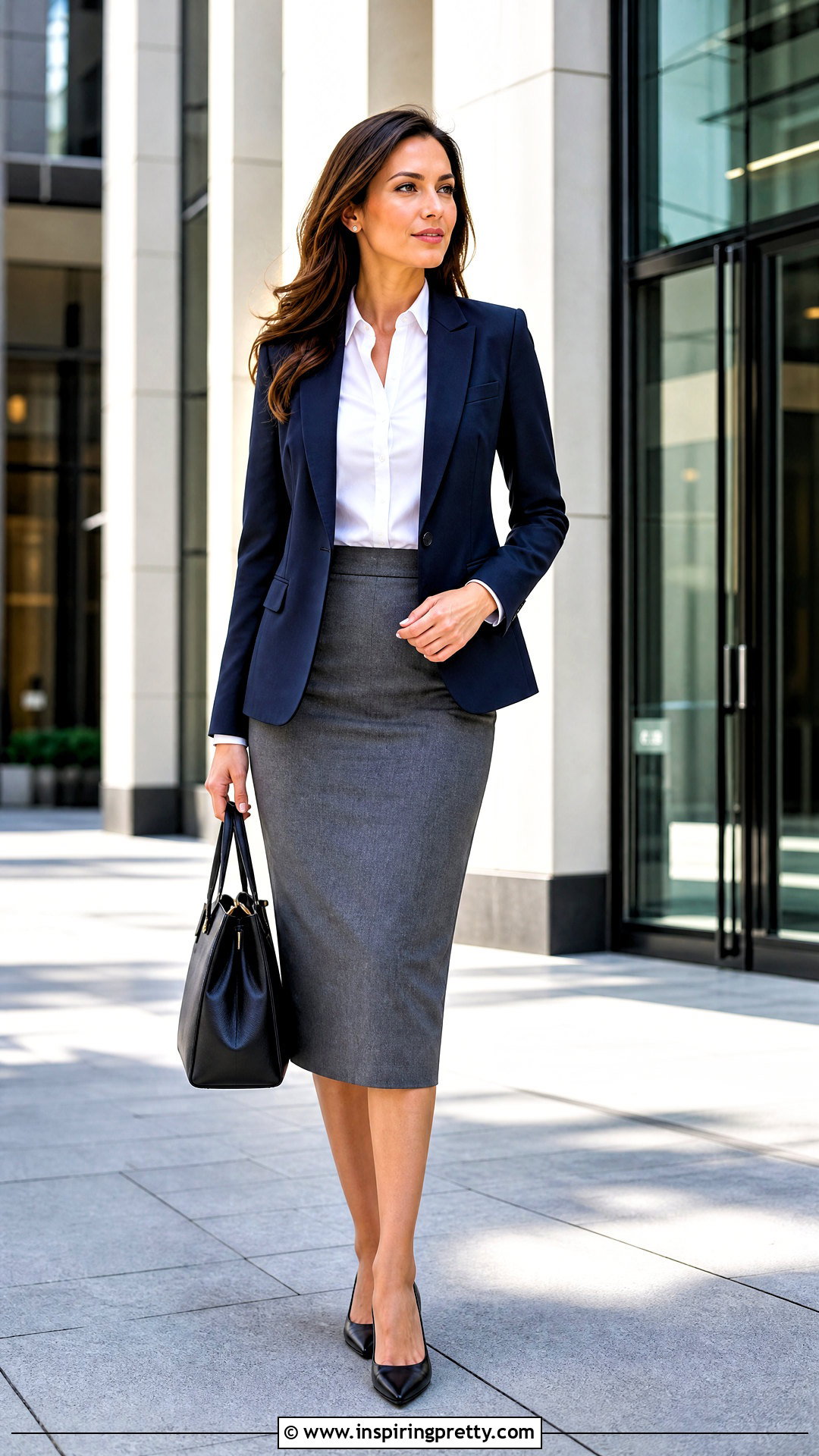
For an important day, a button-up, blazer, and pencil skirt is the outfit I'd trust. Pick smooth cotton or stretch poplin, since a little stretch keeps the shirt from pulling under the jacket when you reach. The pencil skirt needs a vent or enough ease to walk normally. The blazer should follow your shoulder line; if it pulls across the back when you hug yourself, it's too small. Mixing colors, say a white shirt with a navy blazer and gray skirt, keeps it from looking like a rigid suit.
14. Button-Up Top With Cargo Pants
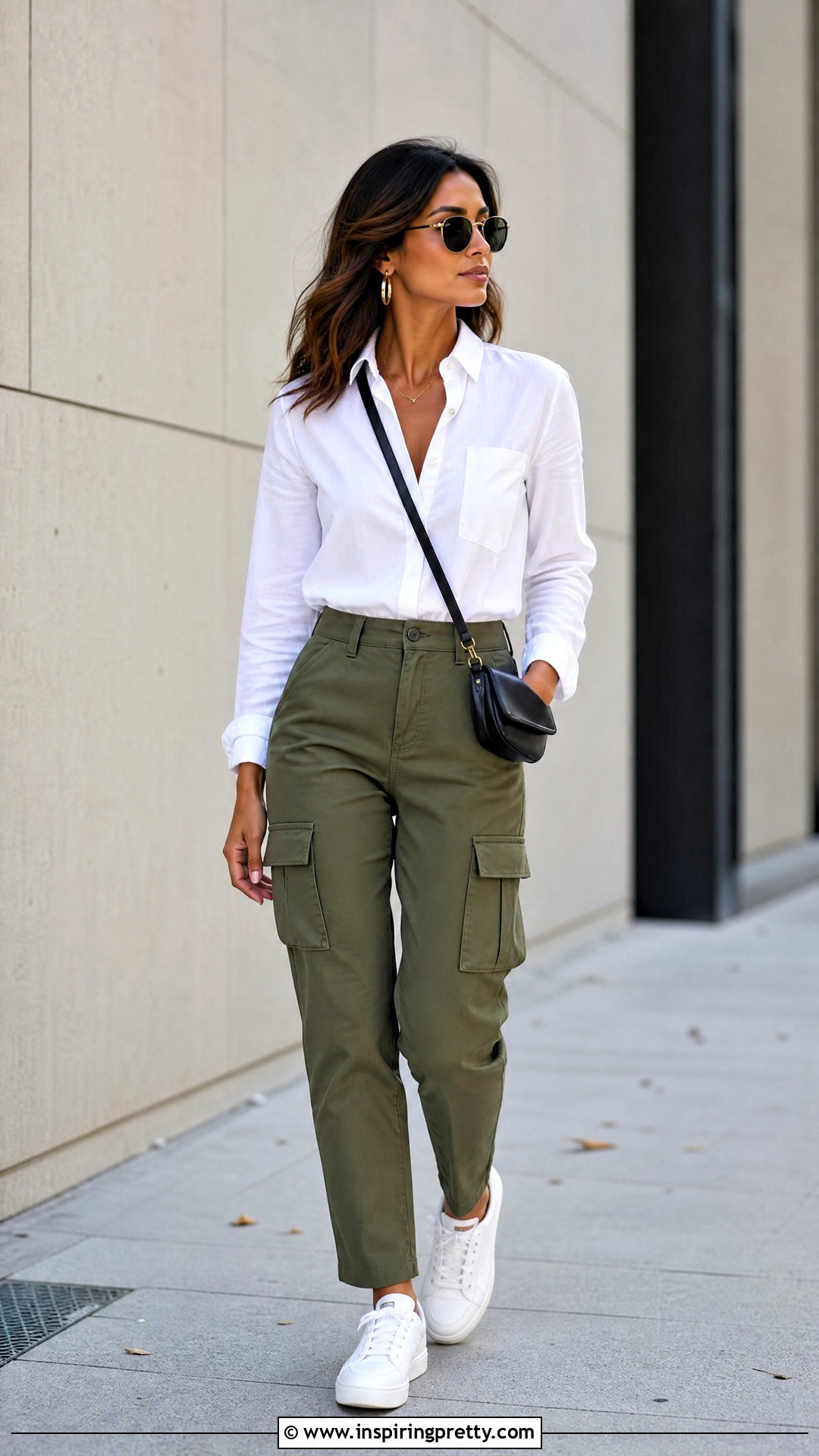
Cargo pants relax a crisp shirt, which is fun as long as the pants stay slim. A straight or softly tapered leg keeps the side pockets from adding bulk at the hip. A fitted white, blue or black shirt balances them; an oversized shirt pushes it toward streetwear. Full tuck for definition, or open over a ribbed tank. If cargos feel too sporty, tailored versions in black, olive or stone with flat pockets and minimal hardware pair far more easily with structured shirts.
15. Button-Up Top With Capri Pants
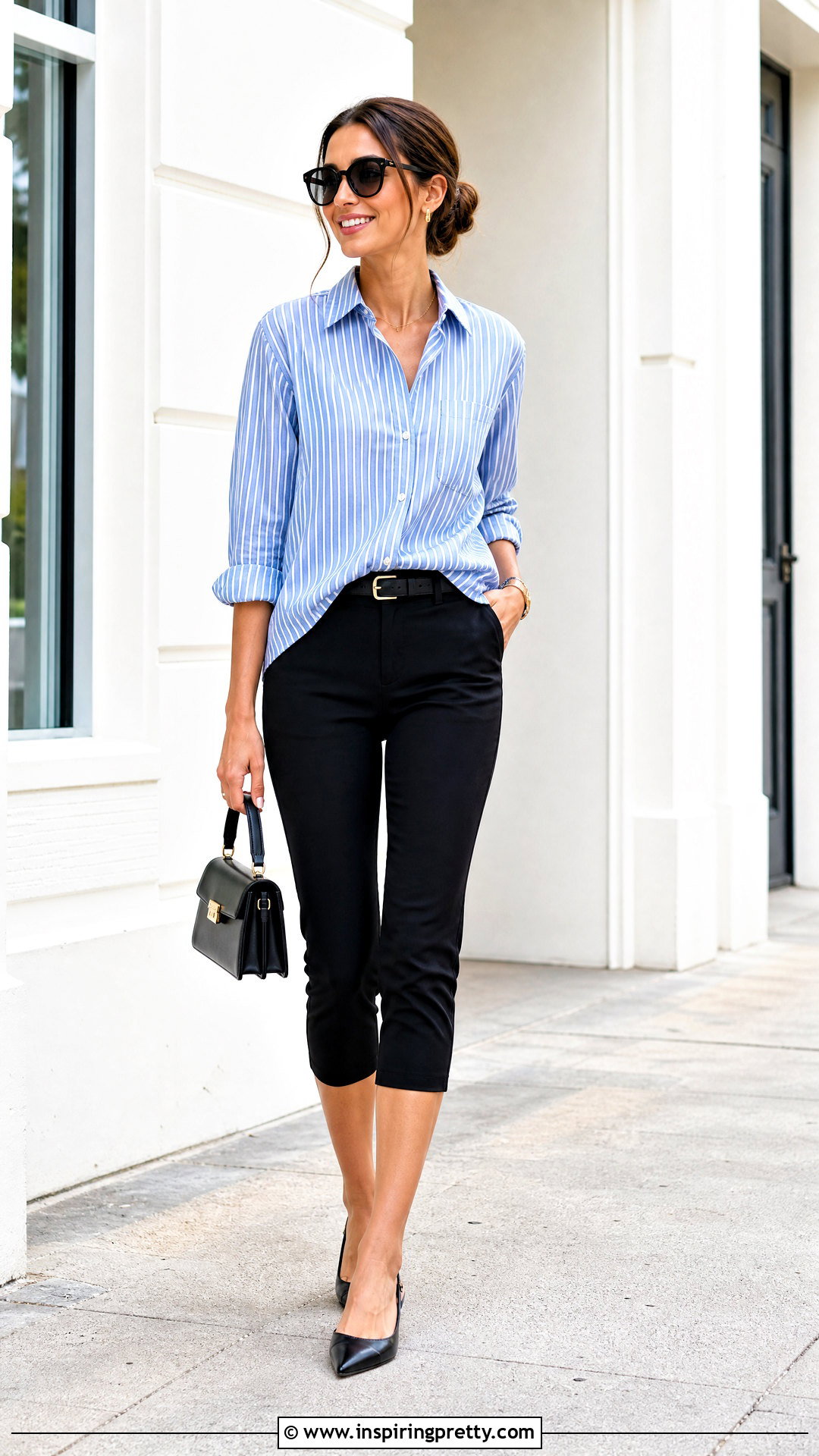
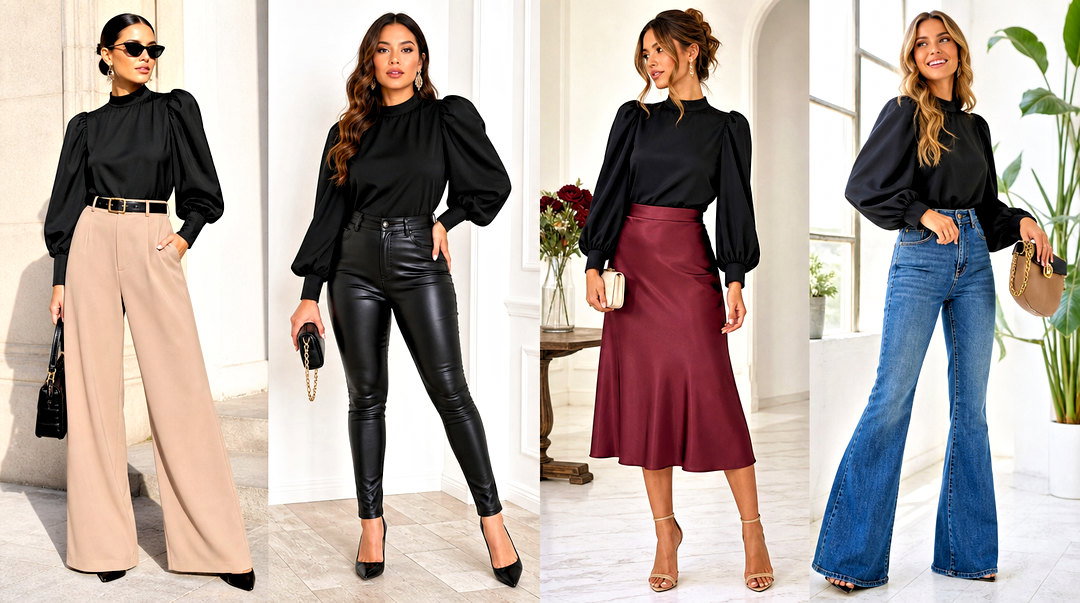
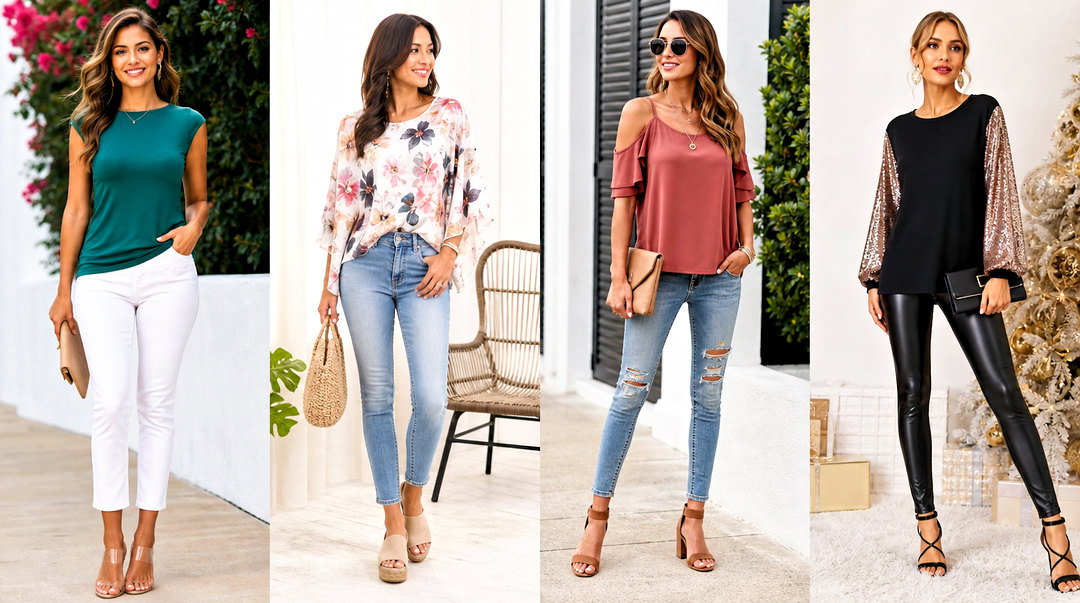
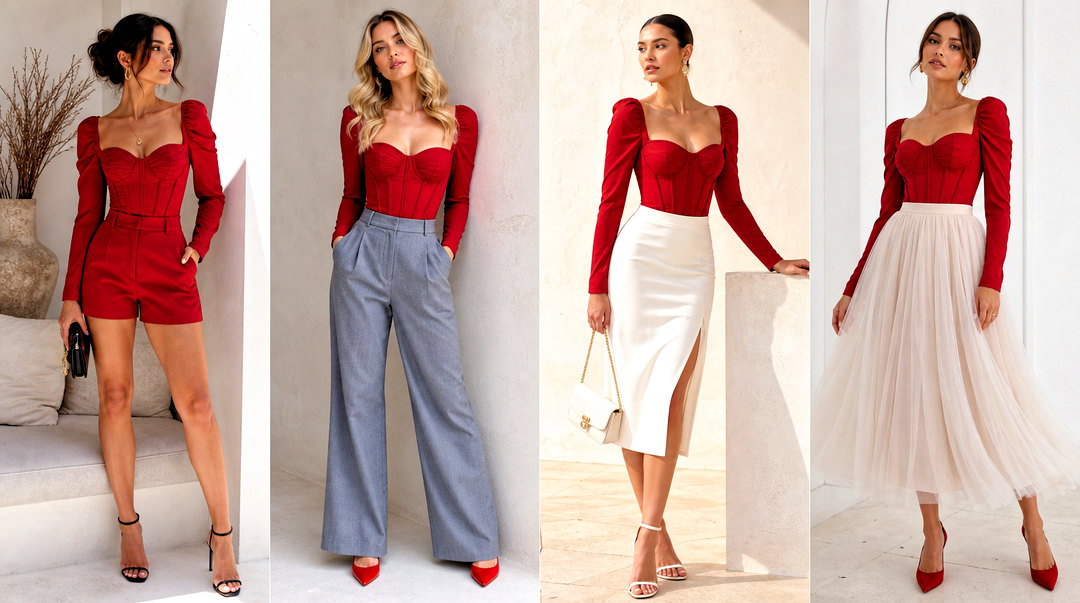
Ankle-baring trousers need a shirt that doesn't drag the eye down. Slim or straight Capri pants ending around the lower calf work with a relaxed white or striped shirt, front-tucked so it doesn't compete with the shorter leg. Slingback flats, kitten heels or narrow loafers keep the exposed leg streamlined; chunky shoes make capris look stumpy. If you'd rather leave the shirt out, pick a hem that stops above the widest part of the hips. Black capris are the most versatile, with cream, navy or olive close behind.
16. Button-Up Top With Denim Midi Skirt
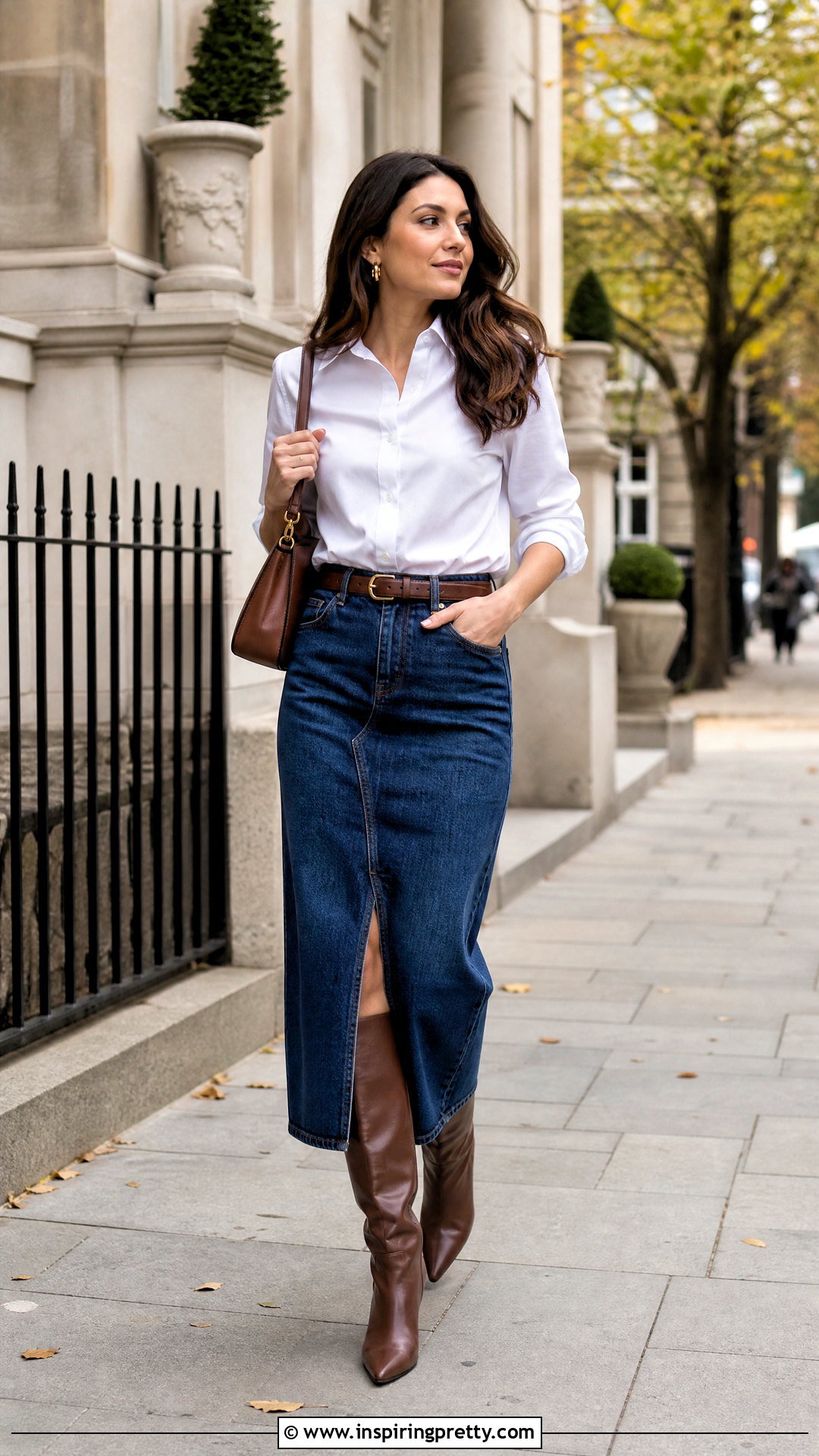
A denim midi skirt covers more than shorts and still goes with almost every shirt. Choose a high-waisted one with a front slit so you can walk properly. I balance volume here: a fitted skirt wants a slightly relaxed shirt, while an A-line skirt looks better with a closer fit on top. Tuck fully. Knee-high boots carry it into autumn; sandals or ballet flats suit warm months. Dark denim is polished and faded denim casual. If you add a belt, keep it plain so it doesn't fight the skirt's topstitching.
17. Button-Up Top With Tailored Shorts
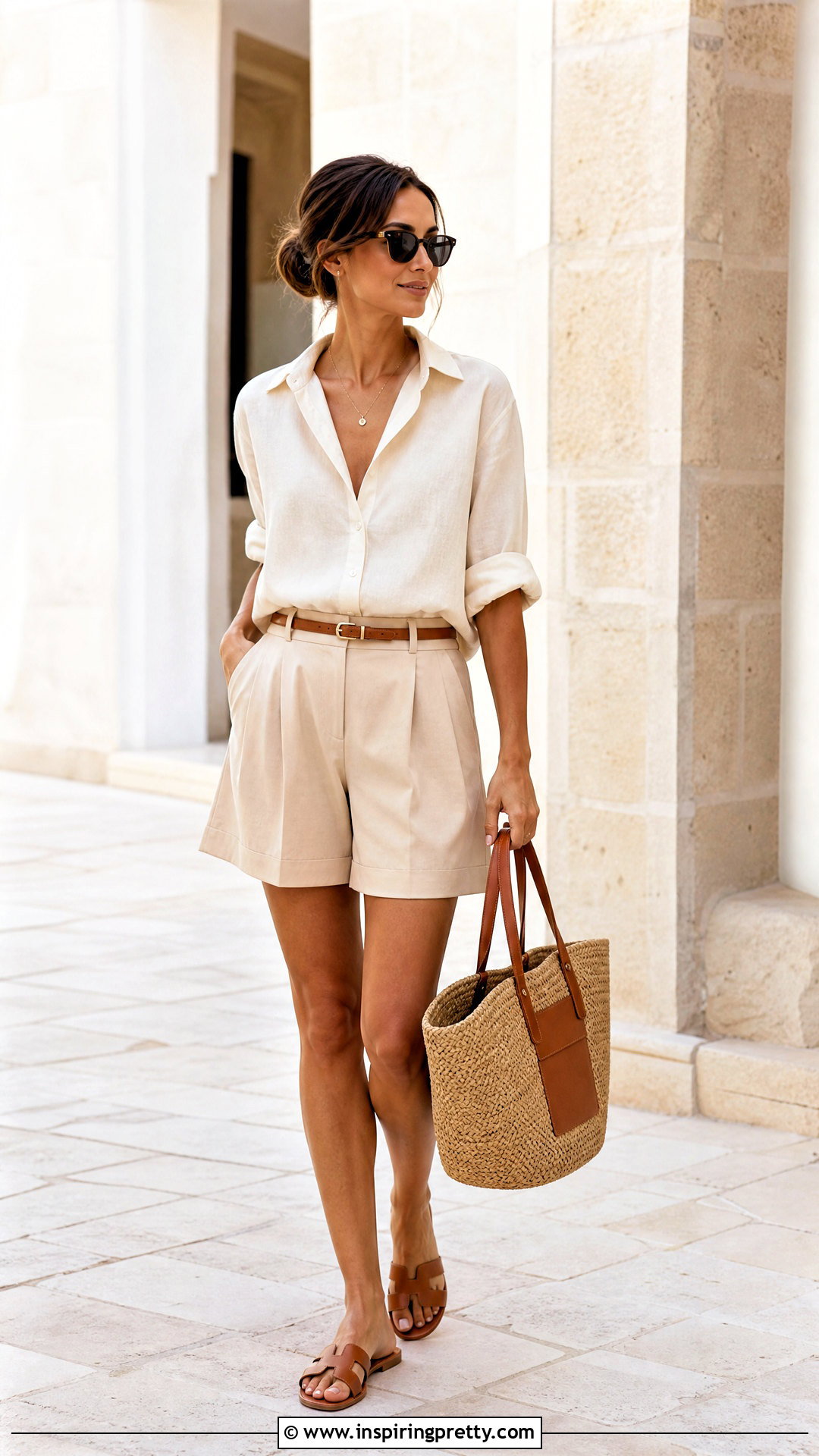
Tailored shorts with a long-sleeve shirt give coverage on the arms while keeping legs cool, a balance I like for city summers. Look for a defined waistband and a length you're comfortable sitting in. Tuck in a light cotton, linen or striped shirt and roll the sleeves neatly to the forearm. If pleats puff out at the front, switch to flat-front shorts with a slightly wider leg. Cream with beige is a quiet tonal pairing. Sandals or loafers, plus a structured tote for work or a woven bag for weekends.
18. Button-Up Top Over a Slip Dress
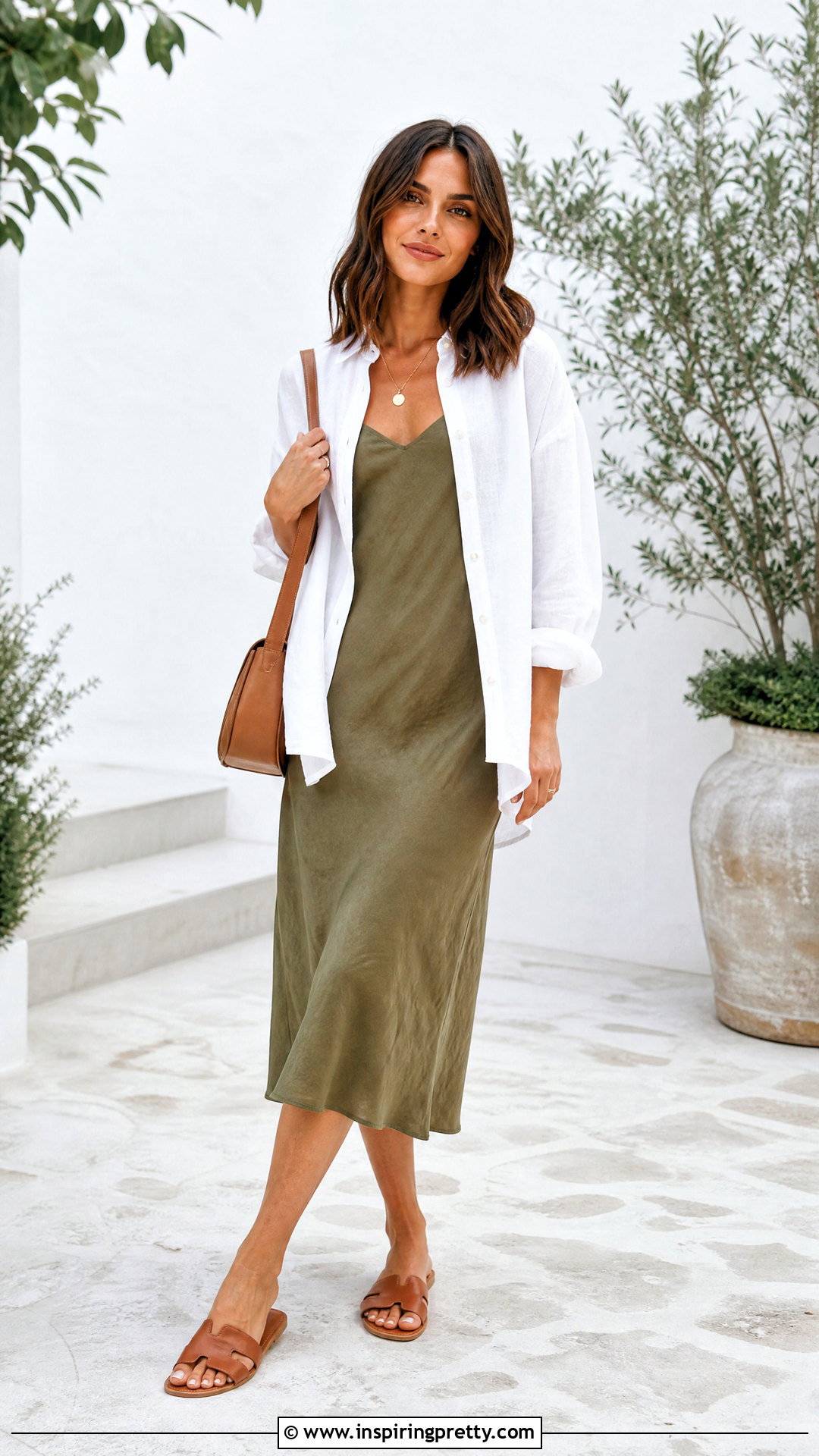
Throwing a button-up over a slip dress takes it from evening to daytime in one move. Use a relaxed cotton or linen shirt open like a jacket, or tie it at the natural waist for shape without a belt. A midi slip works best, because its fluid drape contrasts with the crisp shirt. Keep the colors related: white with olive, blue with cream, black with soft gray. If the dress is printed, the shirt should be plain. Flat sandals or sneakers and a shoulder bag make it walkable.
19. Button-Up Top With Faux Leather Pants
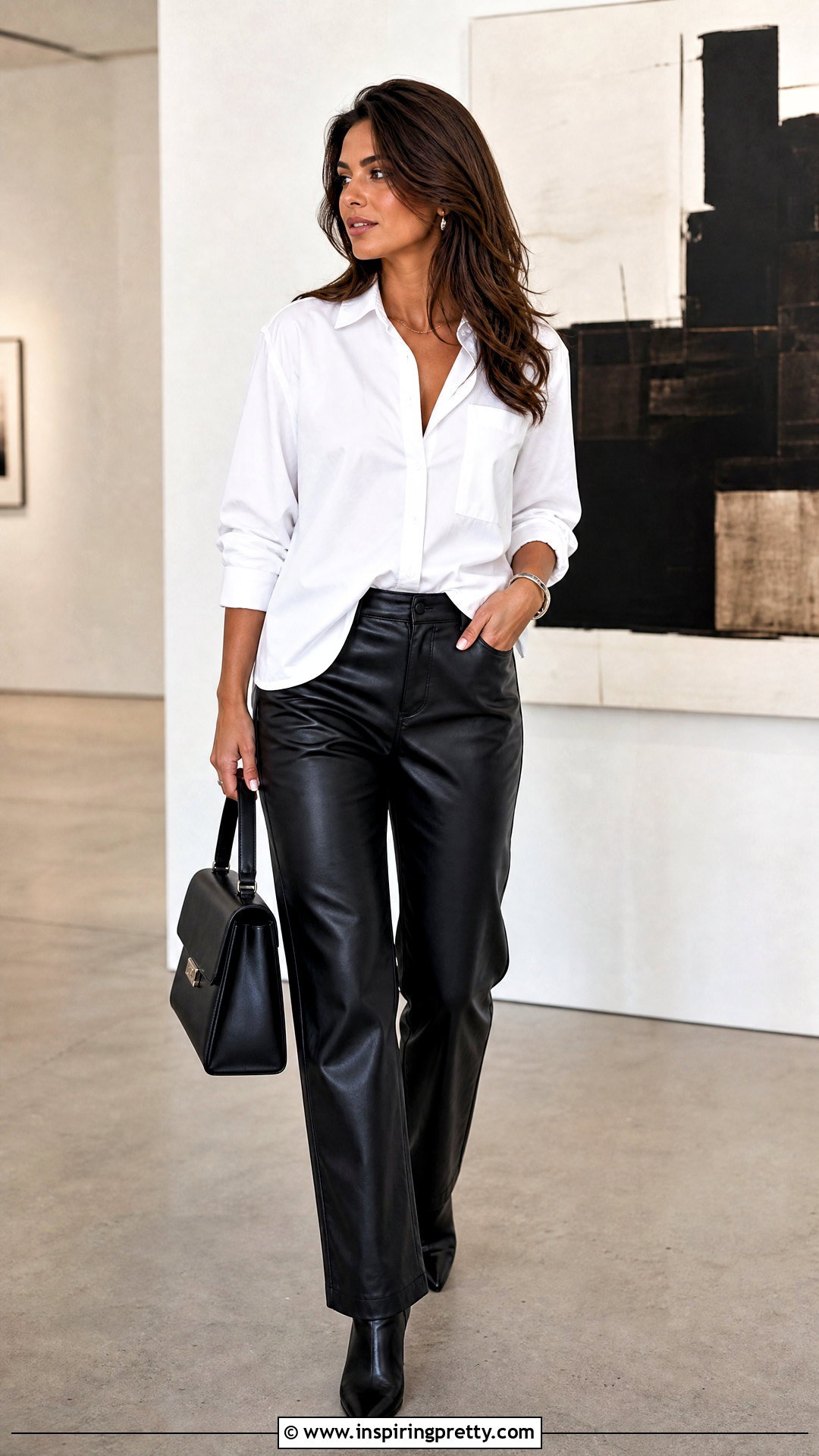
Faux leather pants are shiny and a little stiff, and a crisp shirt gives them a sense of order. Choose straight or relaxed legs over very tight ones, since faux leather doesn't stretch or breathe much. White makes a bold contrast; beige, gray or blue is quieter. Shine plus shine looks costume-like, so keep the shirt matte cotton. A partial tuck lets it drape over the waistband. Pointed ankle boots or loafers and a structured bag suit creative offices and dinners alike.
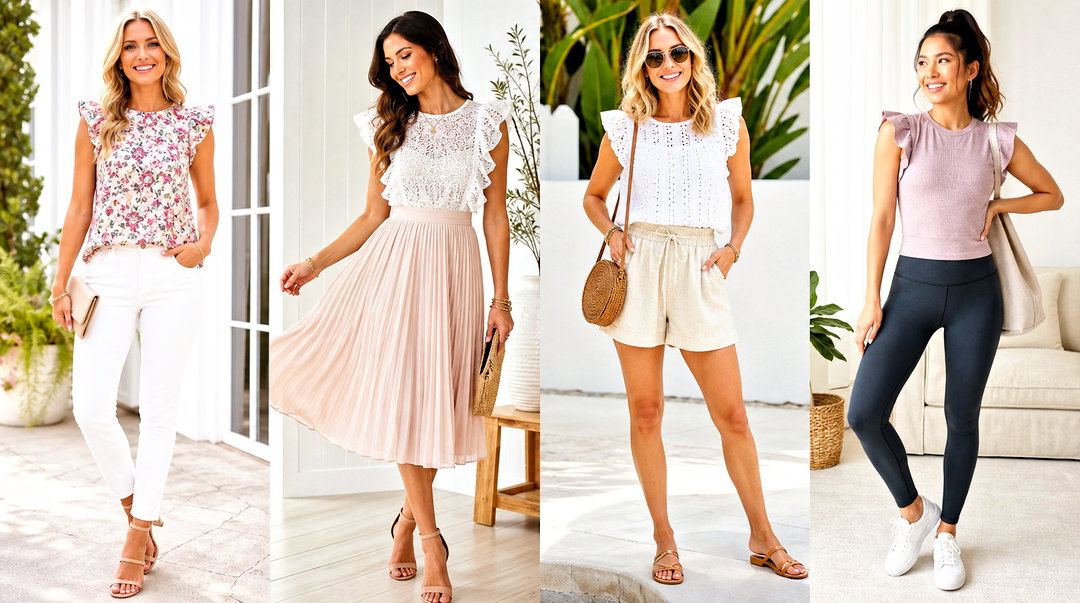
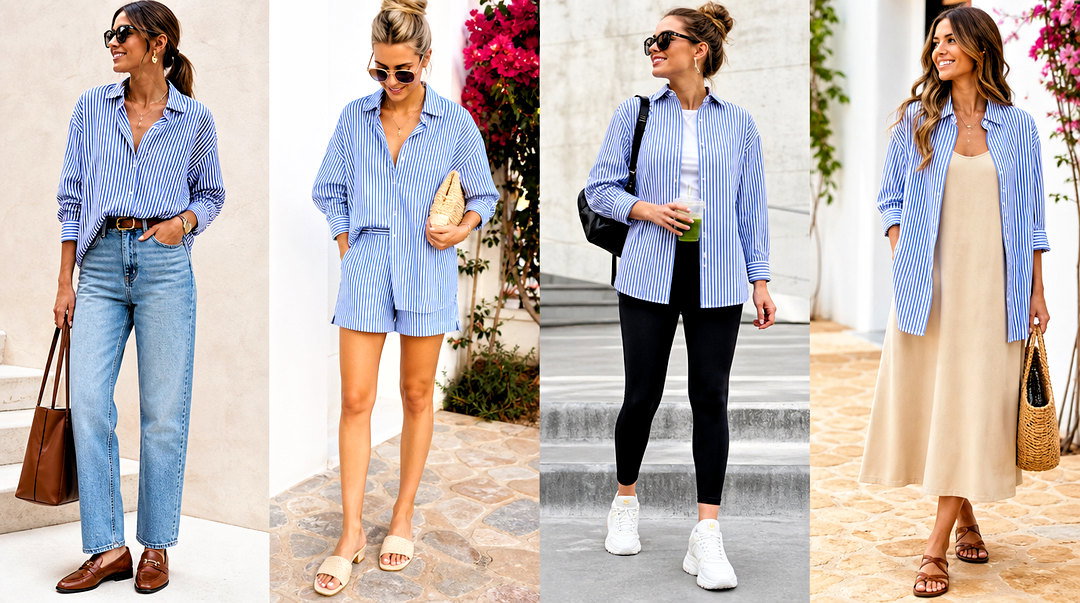
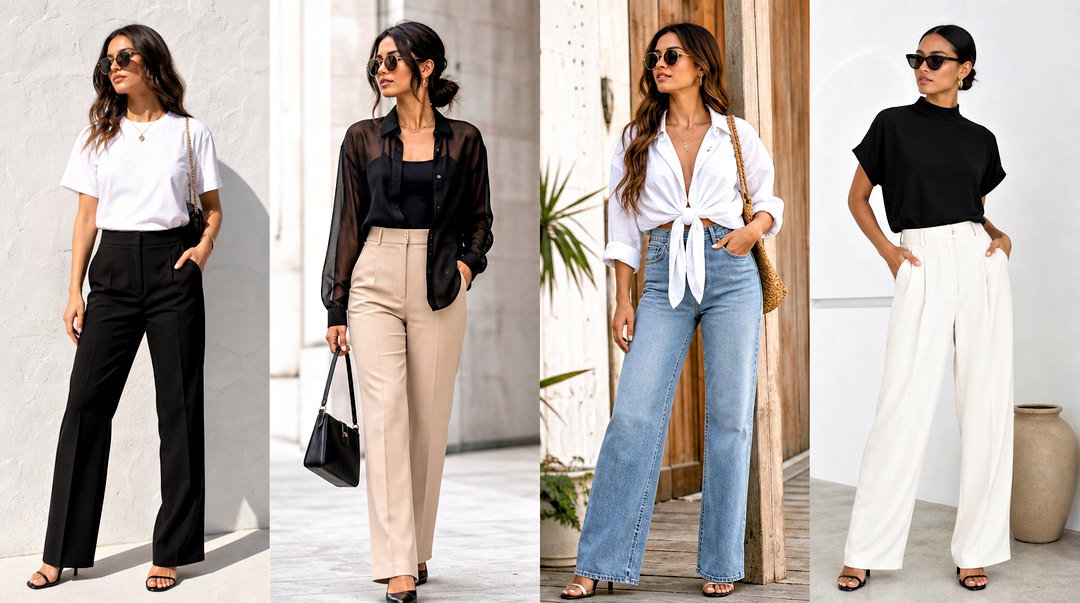
20. Monochrome Button-Up Top With Wide-Leg Pants
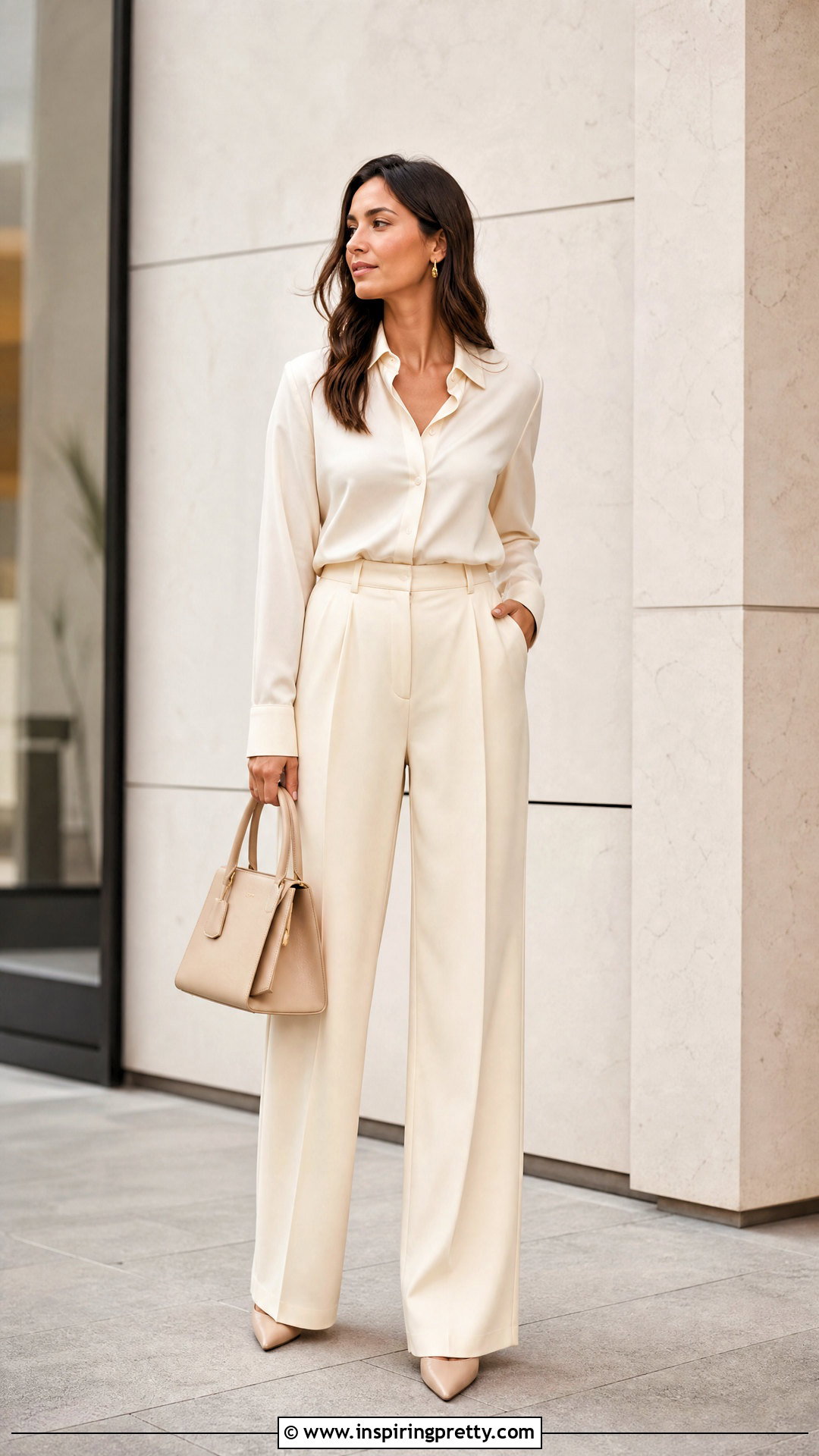
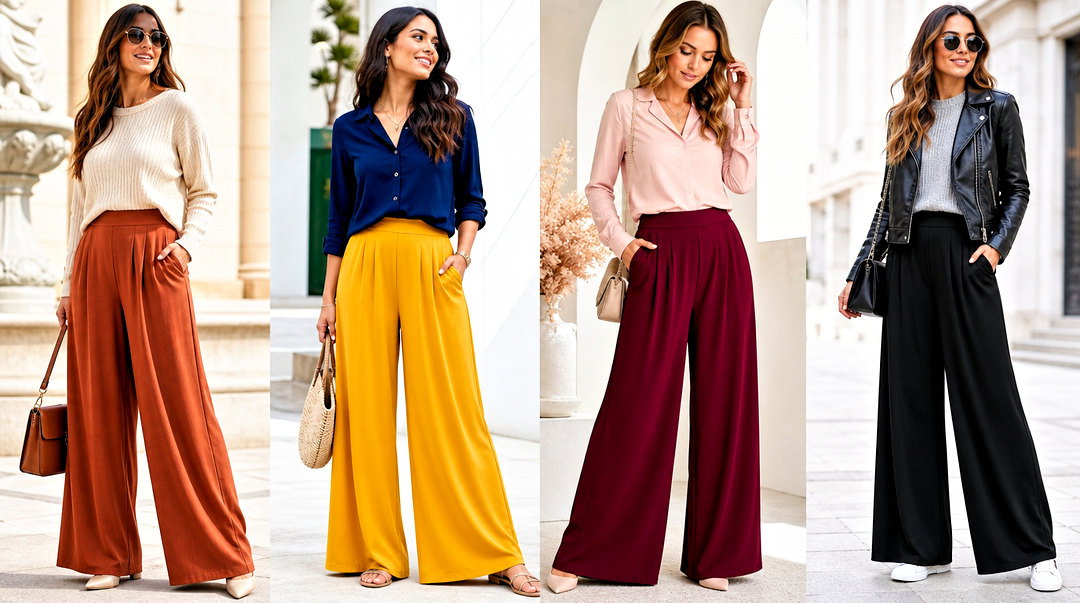
Monochrome works because nothing interrupts the eye from collar to hem. Choose a long-sleeve shirt and wide-leg pants in one color family: cream, navy, chocolate, charcoal or soft blue. They don't have to match exactly; a slight shift in shade or a cotton shirt against wool trousers adds depth. Tuck it in, or wear it open over a tank in the same tone. Shoes should stay close in color to keep the line long. Petite women benefit from a higher waist and pointed shoes, while taller women can carry a longer shirt and floor-skimming trousers.
Rolling Sleeves So They Stay Up
Rolled sleeves appear in half these outfits, and a sloppy roll that slides down by lunchtime is the usual problem. Unbutton the cuff and the small sleeve placket button first; trying to roll a buttoned cuff just bunches it.
The roll that holds
Fold the sleeve up inside out until the bottom of the cuff sits just below your elbow. Then fold the lower part of the sleeve up once, stopping so the top edge of the cuff still peeks out. The cuff locks the roll in place, and it looks tidy rather than wadded. It works best on cotton and chambray with a firm cuff.
When to push instead
Soft fabrics like satin, viscose and drapey linen won't hold a crisp roll. With those, I simply push the sleeve up to the forearm and let it gather. On sheer shirts, keep the roll narrow, since thick folds of fabric show as dark bands.
Collars and Cuffs Wear Out First
The collar and cuffs touch skin all day, so they collect body oils, makeup and grime long before the rest of the shirt looks dirty. Rub a little liquid detergent into the inside of the collar and cuffs before washing, and button the shirt so it keeps its shape in the drum.
When I iron, I follow the order shirtmakers use: collar first, then cuffs, then sleeves, then the yoke across the shoulders, and the body last. Doing the small parts first means you don't crease the big panels while working on them. Hang shirts on wide, shaped hangers; thin wire leaves bumps in the shoulders that show under a sweater vest or blazer.
A Good Shirt Changes With the Tuck and the Cuff
Every outfit here comes down to balancing the shirt's fit against the shape of what's below it. Relaxed shirts pair with structured pants and skirts; fitted shirts suit wider, more fluid bottoms. Rolling the cuffs, changing the tuck or wearing the shirt open over a simple layer changes its proportions in seconds. Use these combinations as patterns rather than rules, and swap colors, fabrics and shoes to suit your body, your routine and the weather.
Related posts:


Leave a Reply