
Fifties clothes were built around the waist. Blouses were cut short and darted, knits were fitted, and nearly everything was meant to be tucked into a high waistband. That's why the decade's tops still look so tidy: the construction does the work. The classics include fitted button-downs, twin sets, halters, Peter Pan collars, boat necks and knit polos, worn with circle skirts, capris and tailored shorts. Below I've put together twenty outfits that keep those shapes, some faithful to the period and some with modern denim or shoes, along with what I'd look for in how each top is made.
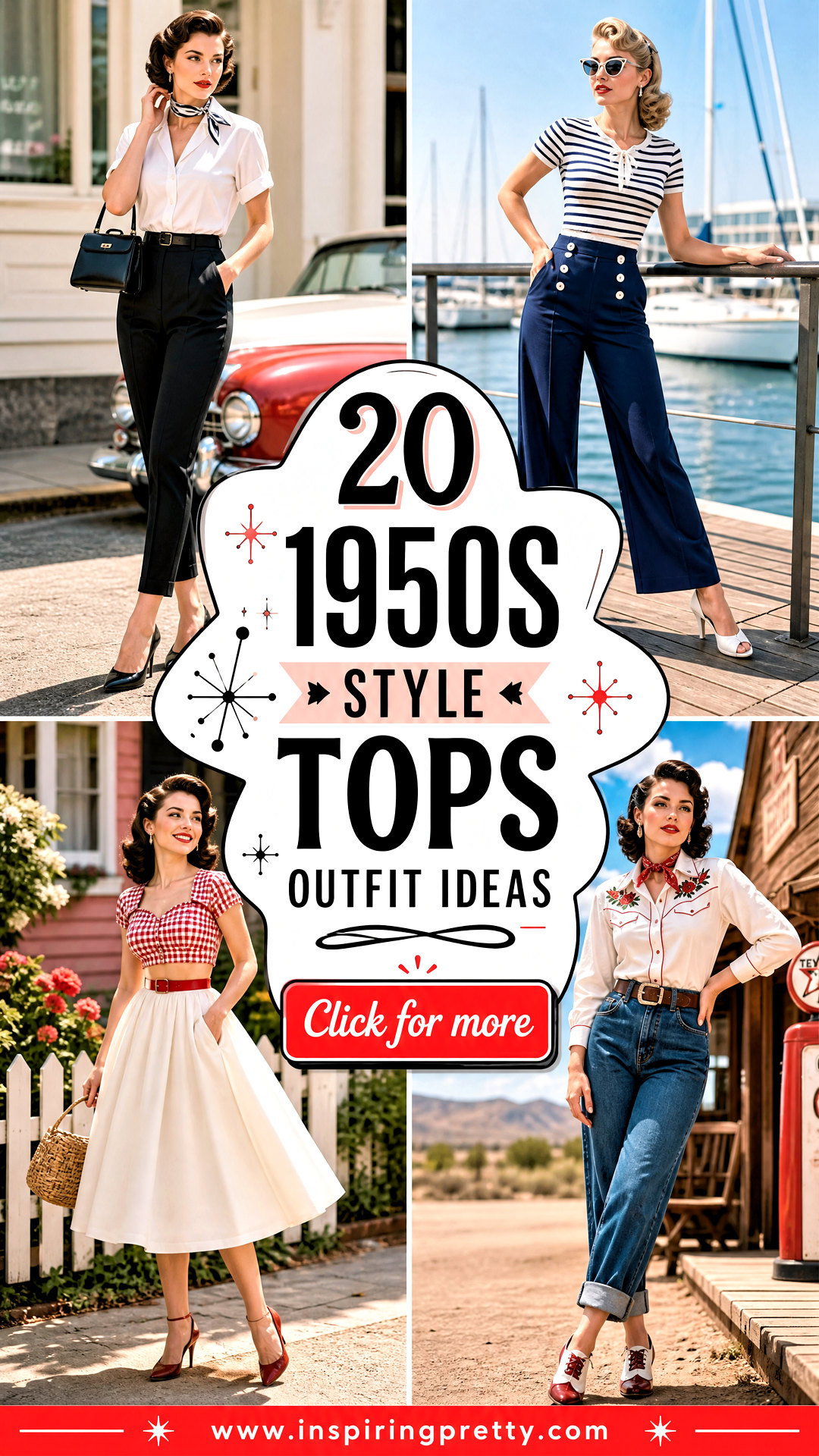
Getting a Clean Tuck Into a High Waist
Almost every outfit below depends on a tucked top, and a messy tuck undoes the whole silhouette. These are the steps I use to get it flat.
- Start with the right length. A blouse that reaches only the high hip tucks neatly; a long modern shirt ends up as a wad of fabric in your waistband.
- Tuck the top in, then pull the excess fabric to the sides and fold it backward along your side seams, almost like a pleat. This is often called a military tuck, and it keeps the front smooth.
- Raise your arms once and let the top blouse out by a finger's width. That small give stops it pulling loose every time you move.
- Check the back in a mirror. Most bunching collects there, especially with skirts, so smooth it down before you fasten the belt.
If you hate retucking all day, a bodysuit in the same shape is the cheat: it stays put and leaves no ridge. With knits, choose a fine gauge, since a thick sweater tucked into a high waist adds visible bulk exactly where these outfits try to look narrow.
1. 1950s Peter Pan Collar Blouse With Circle Skirt
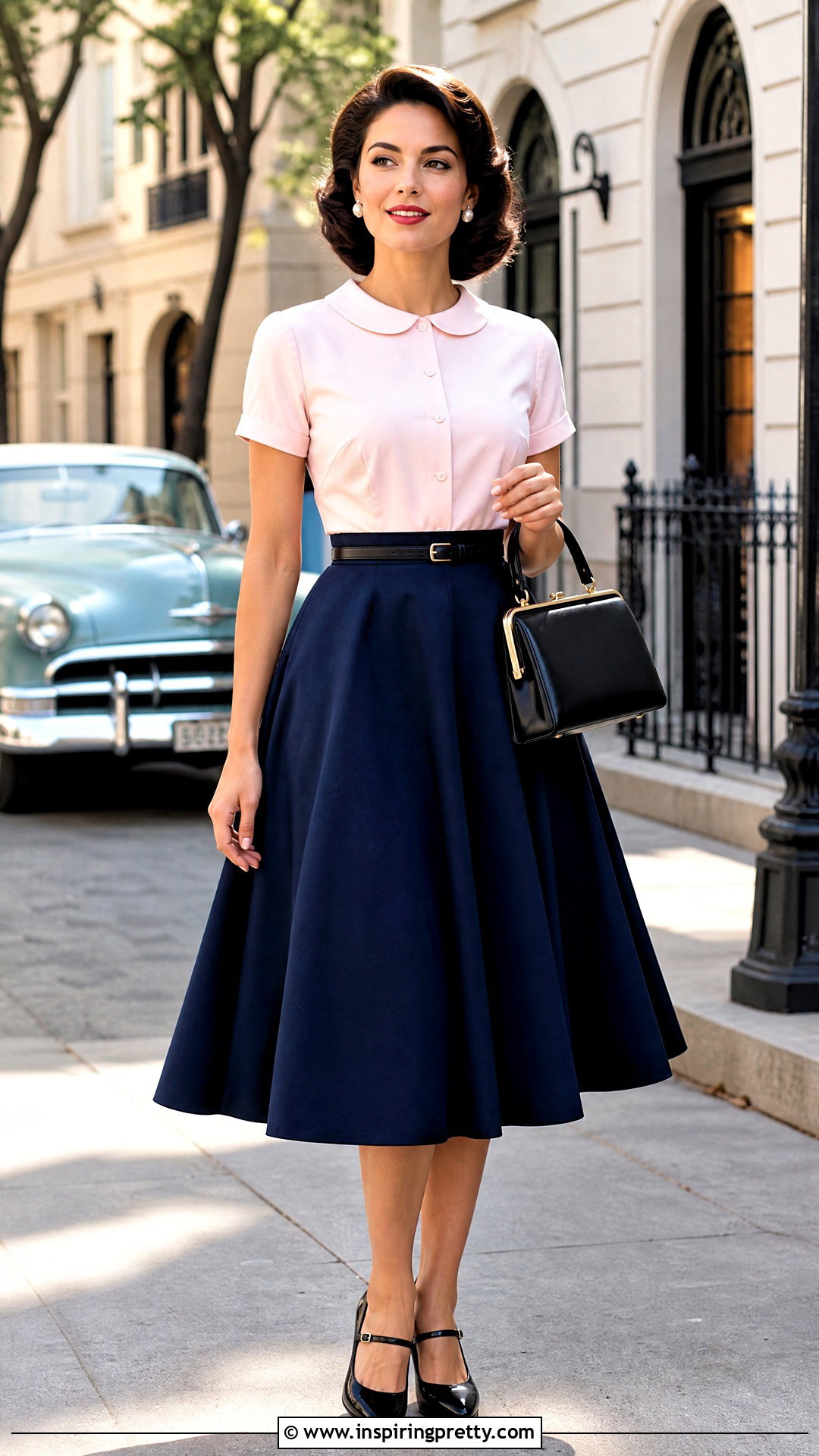
A Peter Pan collar with a circle skirt is the first image most people have of the decade. A good one has a collar that lies completely flat, with its two rounded ends meeting neatly at center front; a collar that curls up at the edges usually means flimsy interfacing. White, pale pink or mint all work. Tuck it into a high-waisted circle skirt ending mid-calf and add a slim belt to mark the join. Ballet flats or Mary Janes keep it grounded, and pearl studs suit the small collar. For a modern take, I'd choose a plain skirt and let the collar alone carry the period feel.
2. 1950s Boat Neck Top With Capri Pants
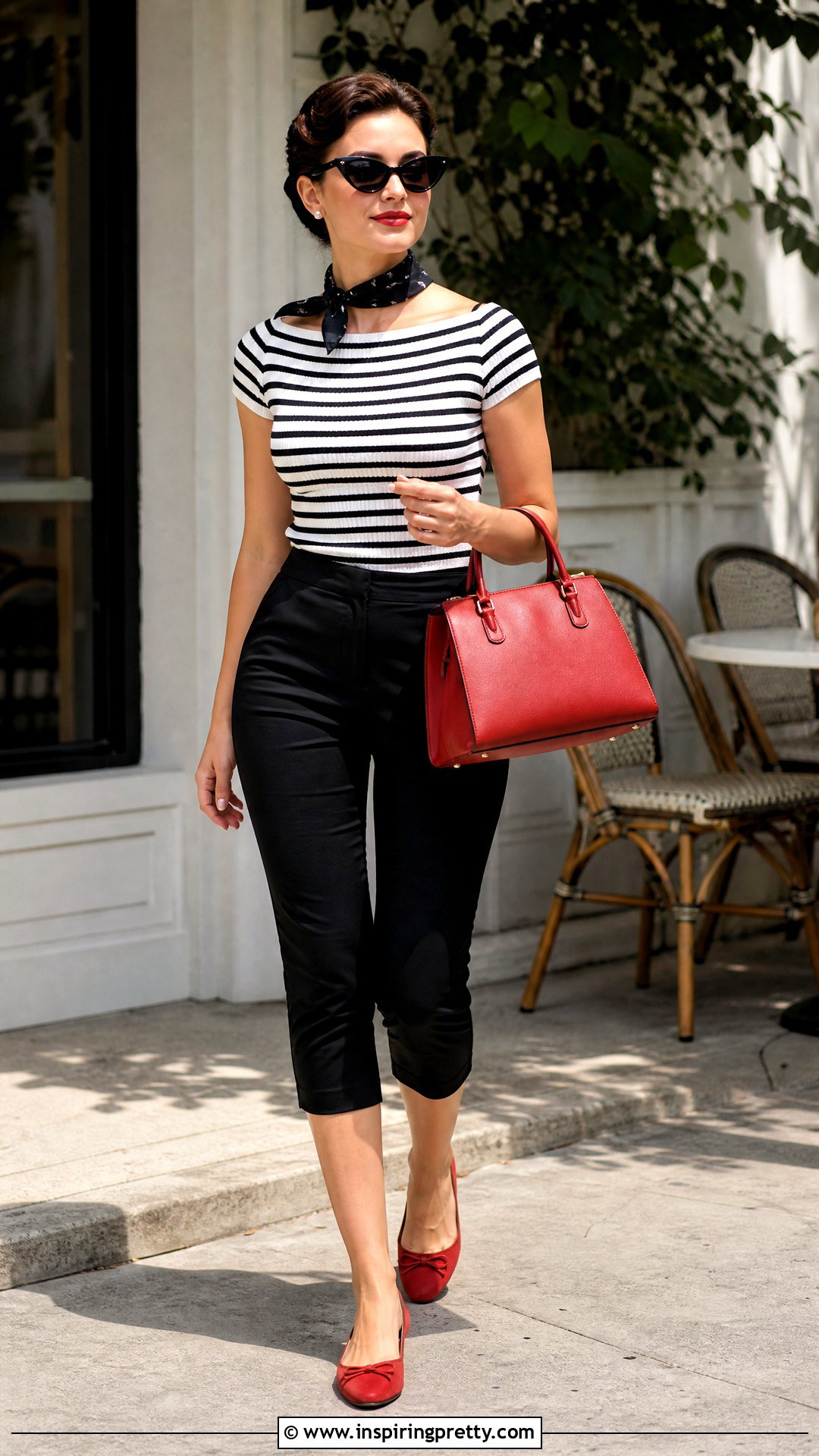
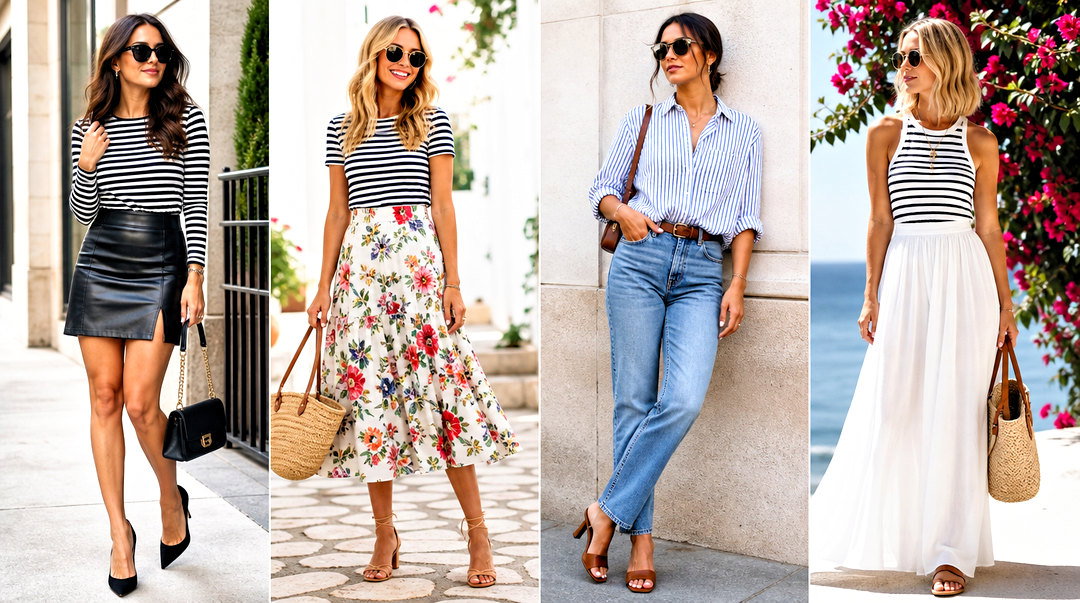
A fitted boat neck top with slim capris is relaxed and polished at once. The boat neck runs nearly straight from shoulder to shoulder, which widens the upper body visually; that's flattering on narrow or sloping shoulders and less so if yours are already broad. Black, cream or a Breton stripe in a soft knit is the classic choice. High-waisted capris should end just below the knee or at the lower calf. Black cigarette capris go with everything, gingham feels playful. Ballet flats or loafers, cat-eye sunglasses and a small neck scarf finish it, with little jewelry so the neckline shows.
3. 1950s Halter Top With High Waisted Shorts
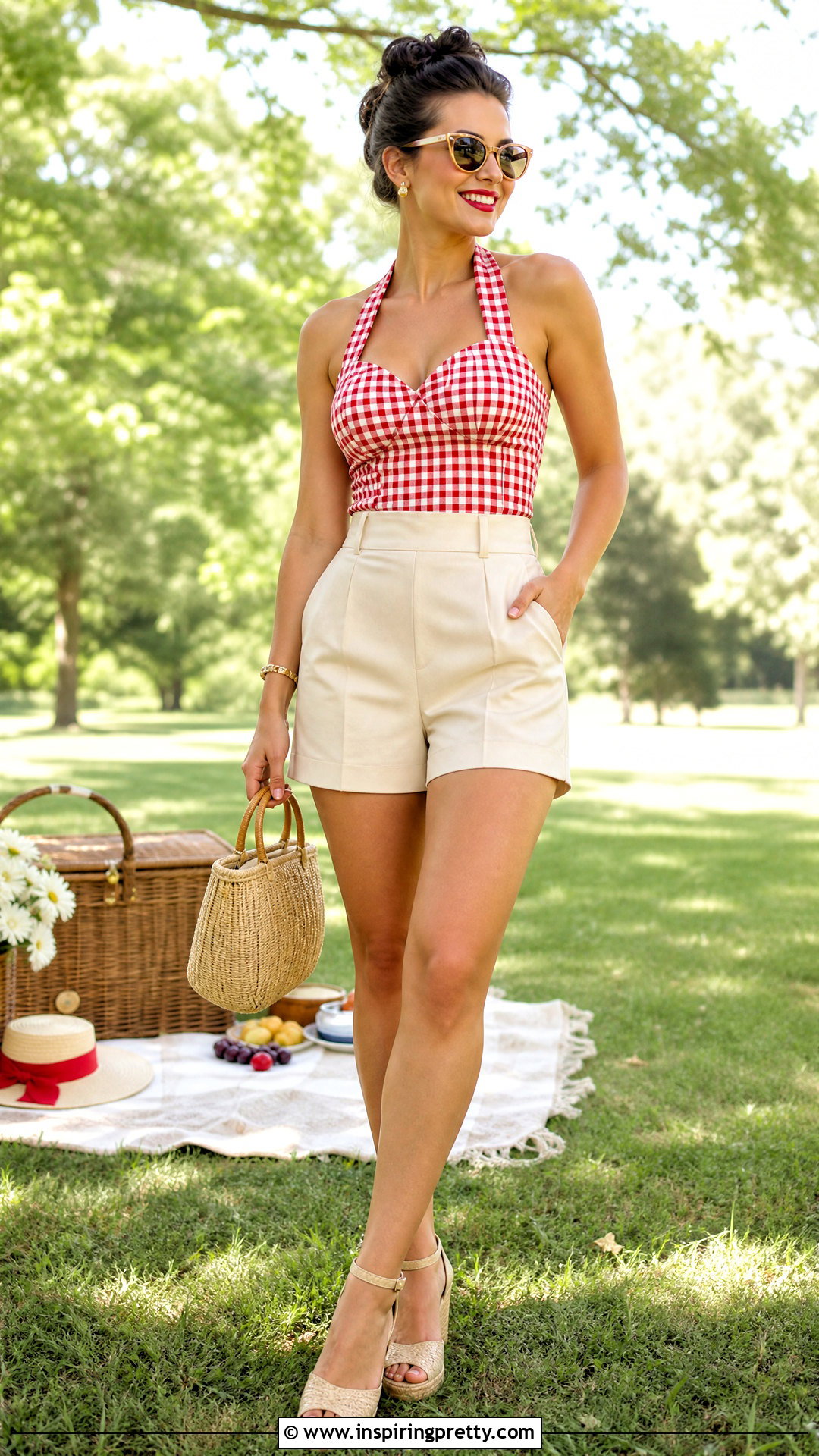
Halters and high-waisted shorts are the fifties on a hot day. I look at the bodice before the print: a shaped halter with darts or princess seams sits flat and supports far better than a loose triangle, and it should be long enough to meet the waistband. Red, gingham, polka dots and tropical prints all suit it. Tailored shorts with a defined waist and slightly wide leg keep the structure but stay comfortable when you sit. Espadrille wedges or canvas sneakers are practical. A woven bag and cat-eye sunglasses finish it, with a short cardigan for when the breeze picks up.
4. 1950s Button Down Blouse With Cigarette Pants
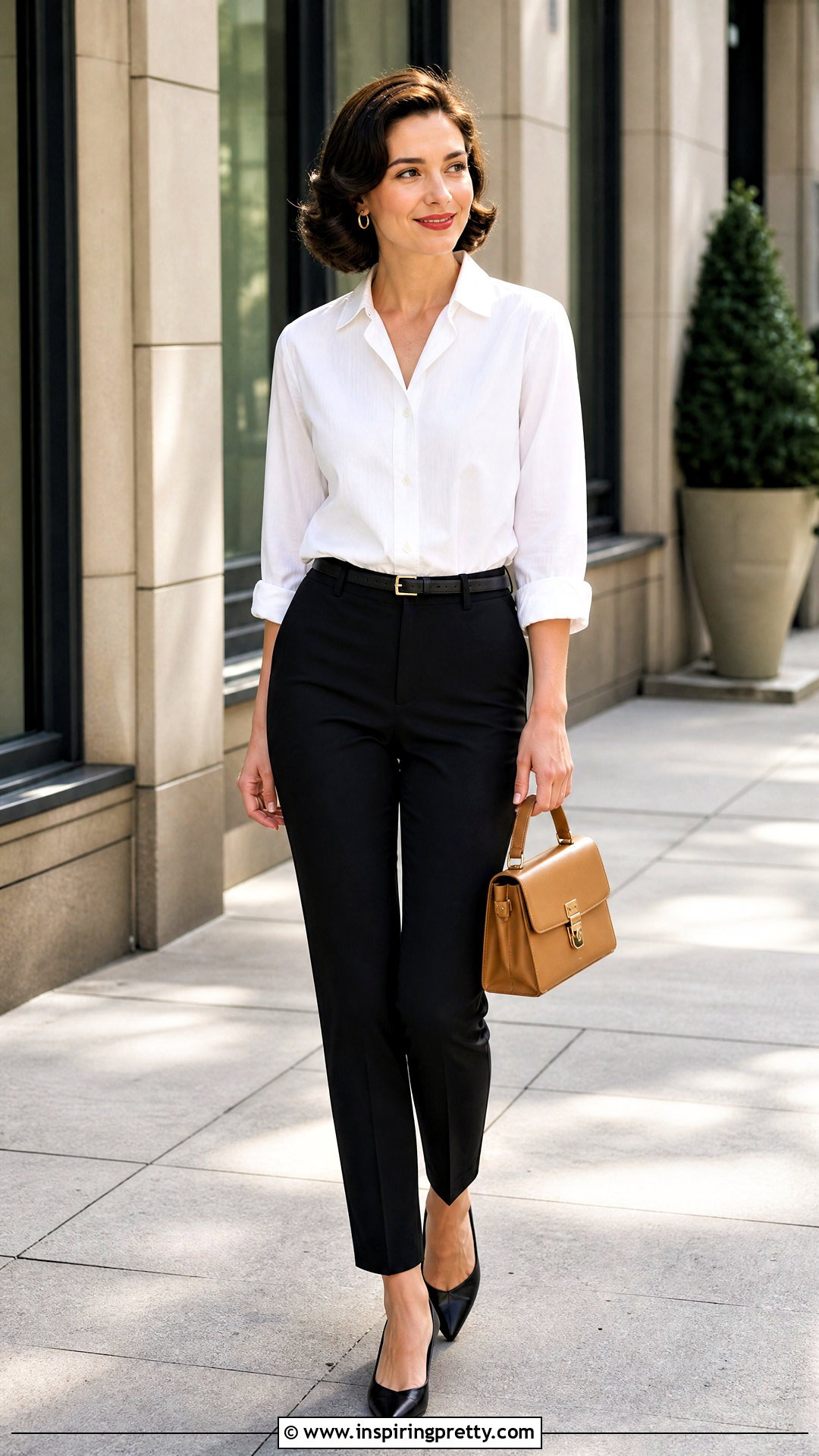
A fitted button-down with cigarette pants goes from desk to dinner with no change. Check the side seams of the blouse: fifties-style shirts have bust and waist darts, and those darts are what let it tuck flat instead of ballooning above the waistband. A crisp white is the easy choice; a pastel or tiny print adds personality. Roll short sleeves into neat cuffs. High-rise ankle-length pants in black, navy or a small check keep the waist visible. Loafers or kitten heels, a narrow belt and a structured satchel finish it. I leave the top button open so it never looks stiff.
5. 1950s Sweater Set With Pleated Midi Skirt
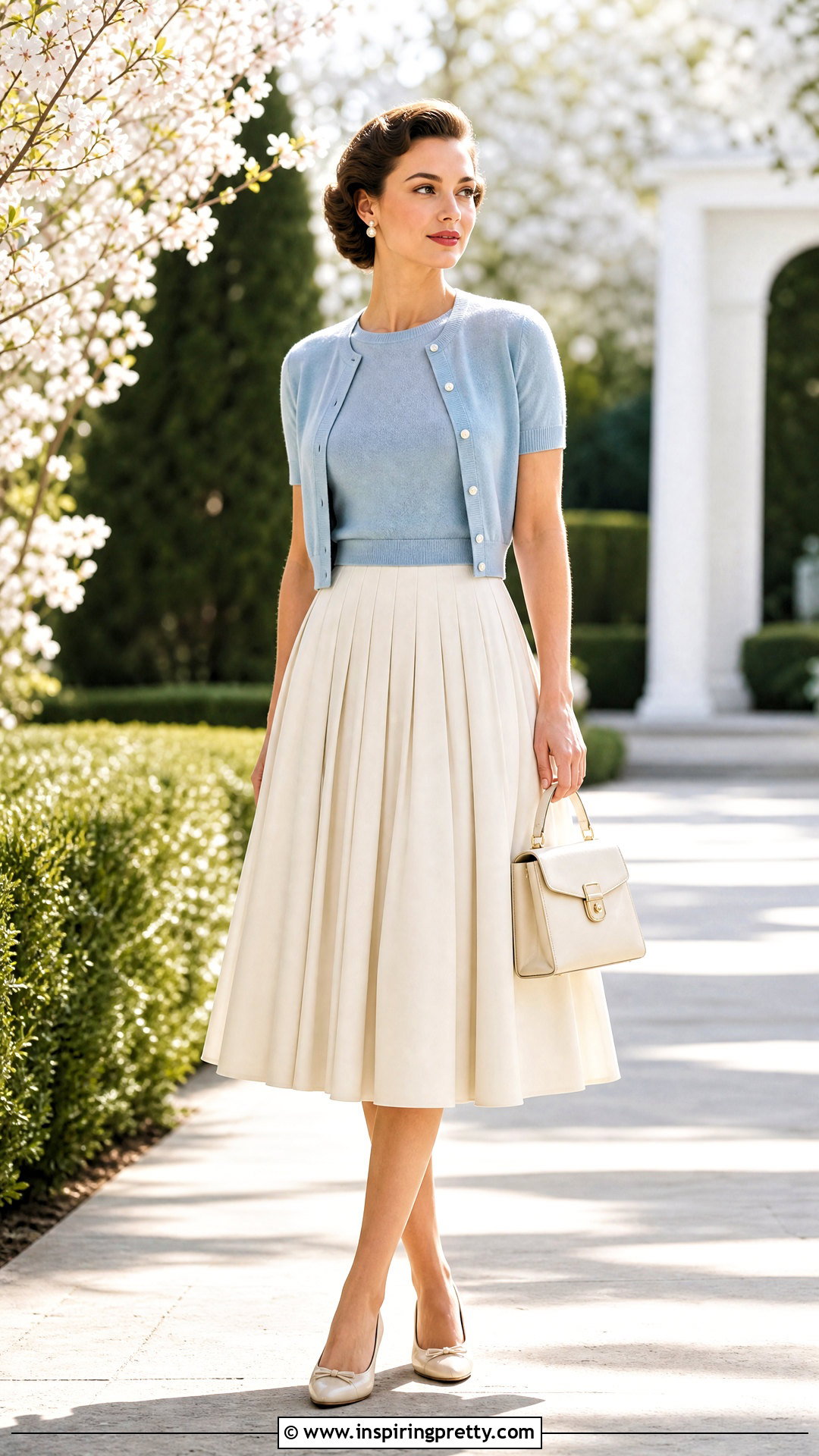
A twin set, a short-sleeve shell with its matching cardigan, is one of the most useful pieces the decade gave us. You can button the cardigan fully and wear it as the top, or leave it open over the shell. Fine-gauge knit in cream, powder blue or cherry red looks most authentic; chunky knits lose the neat outline. Pair it with a high-waisted pleated skirt that moves without adding bulk at the hips. Ballet flats or low pumps and a brooch near the collar suit it. Fine knits pill at friction points, under the arms and where a bag rubs, so de-pill them gently and fold rather than hang.
6. 1950s Polka Dot Blouse With Pencil Skirt
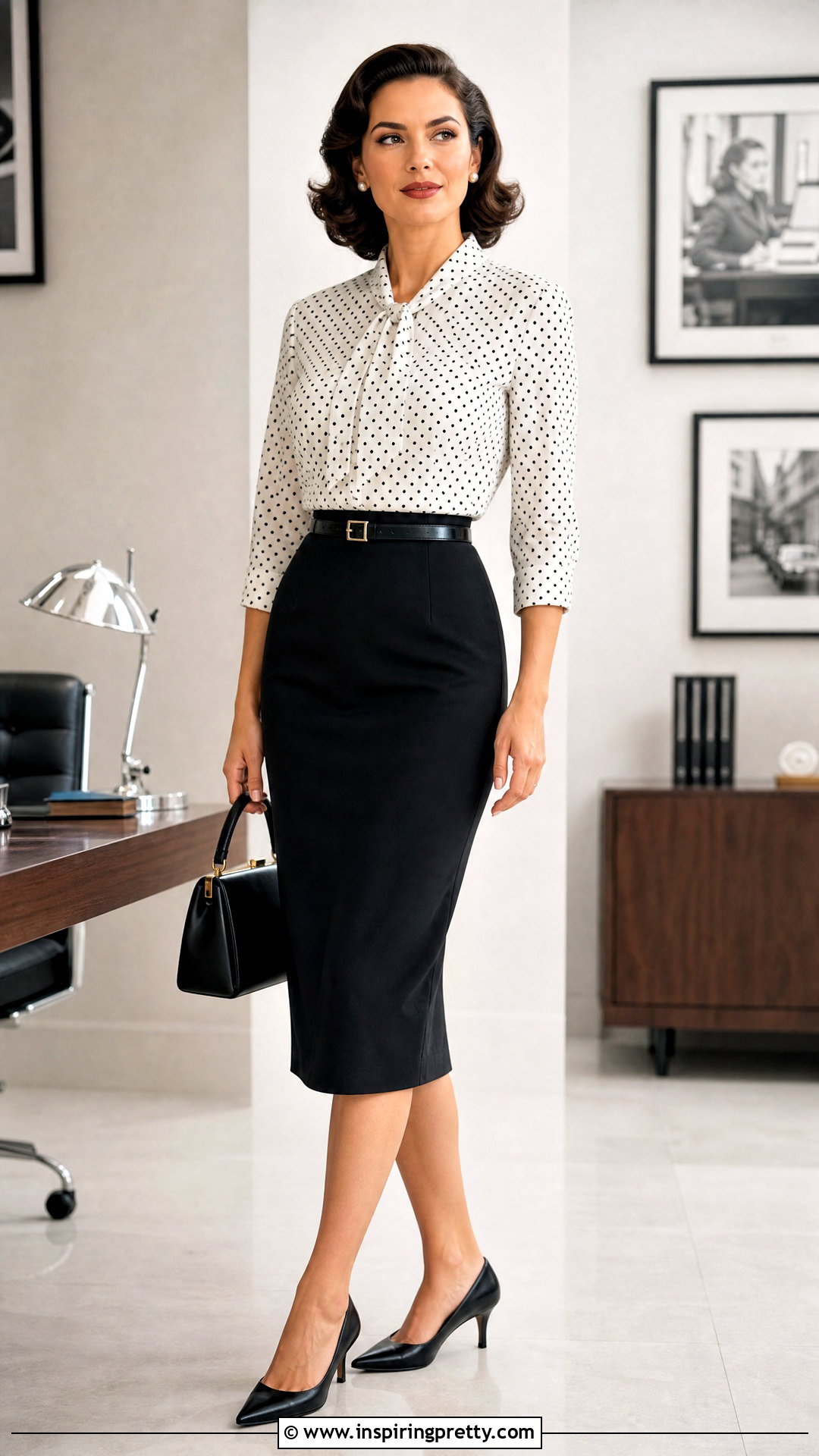
A polka dot blouse brings energy to a sleek pencil skirt. Dot size changes the mood: small dots look quiet and businesslike, big ones louder and more playful. A tie neck or small pointed collar keeps it in period. Tuck it into a high-waisted pencil skirt cut to follow the body; I always check there's a back vent or kick pleat, since a pencil skirt without one restricts your stride badly. Kitten heels or slingbacks lengthen the line. A slim belt and a compact bag finish it, with no second print anywhere. It holds its shape through a full working day.
7. 1950s Striped Knit Top With Sailor Pants
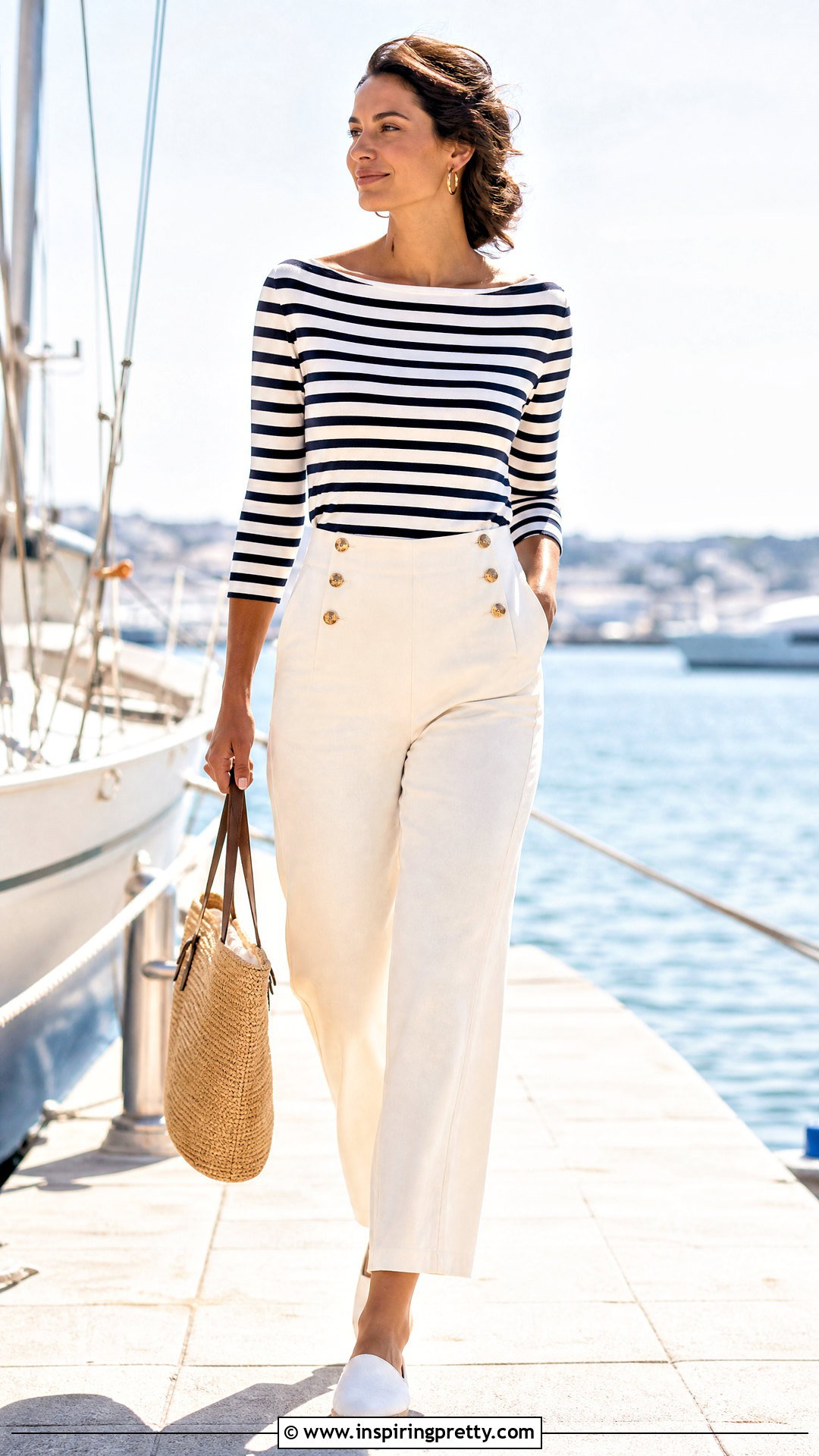
Stripes with sailor pants make a nautical 1950s outfit I come back to every summer. Choose a fitted short-sleeve knit with a boat or crew neck, in navy and white or a brighter red. Sailor pants traditionally have a buttoned front panel and a wide leg, and that long trouser line balances the snug top. Tuck it in fully. White sneakers, espadrilles or low wedges depend on the day. Limit the anchors and rope details to one at most, because nautical overload is what makes this look like a costume. A woven tote and small gold hoops are plenty for a harbor walk.
8. 1950s Gingham Crop Top With Full Midi Skirt
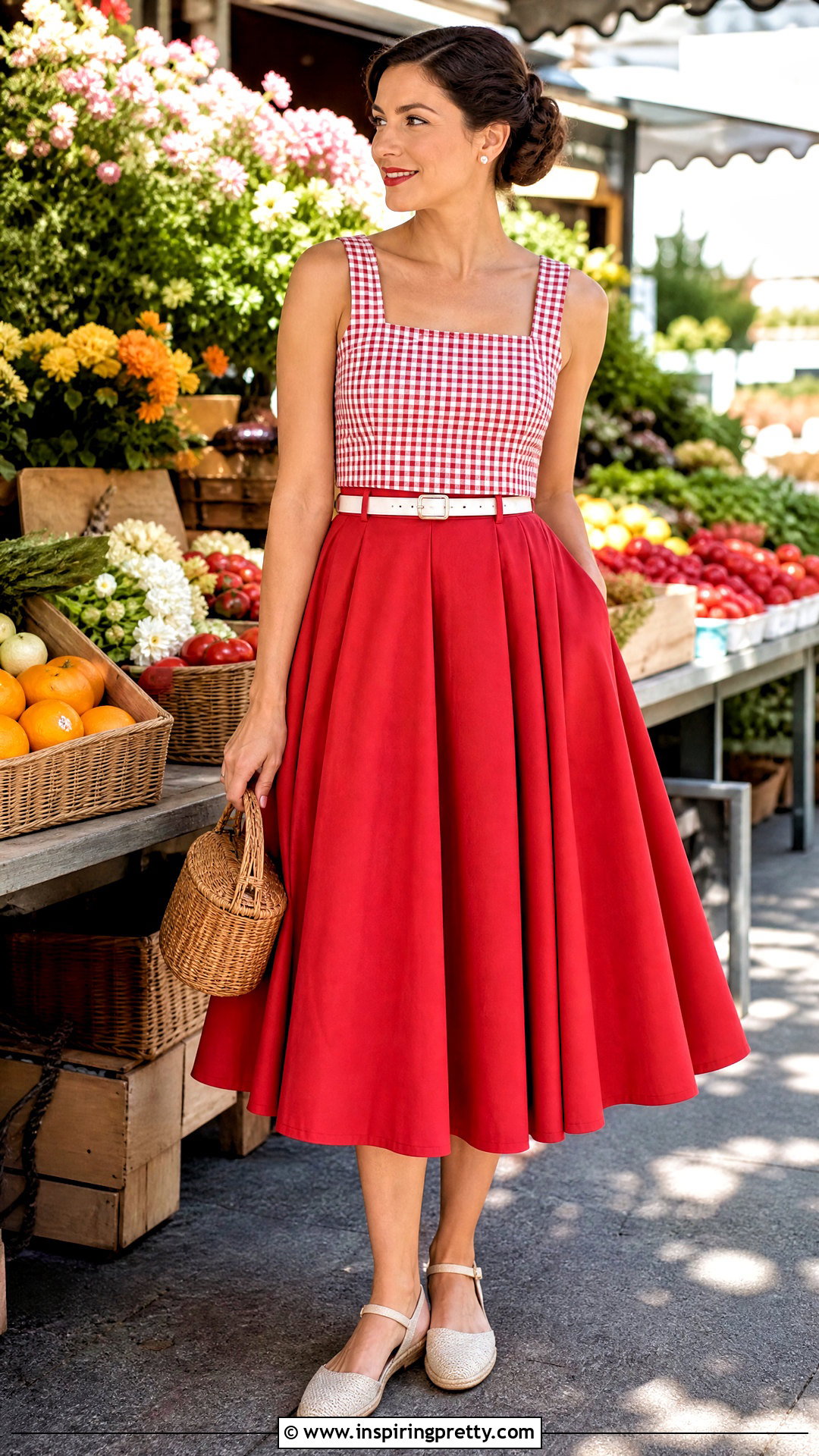
Gingham reads instantly as fifties. I like it on a structured crop top with wide straps or short sleeves, cut so the hem meets a high waistband and shows little or no skin. Boning or a fitted bodice keeps a crop like this from riding up. Pair it with a solid cotton midi skirt in white, navy or red picked from the check. A slim belt connects the two pieces. Canvas sneakers keep it casual; low espadrilles add a bit of height. Cotton gingham creases easily but also irons crisply, so press it before you go. A basket bag suits summer markets and picnics.
9. 1950s Peasant Blouse With Pedal Pushers
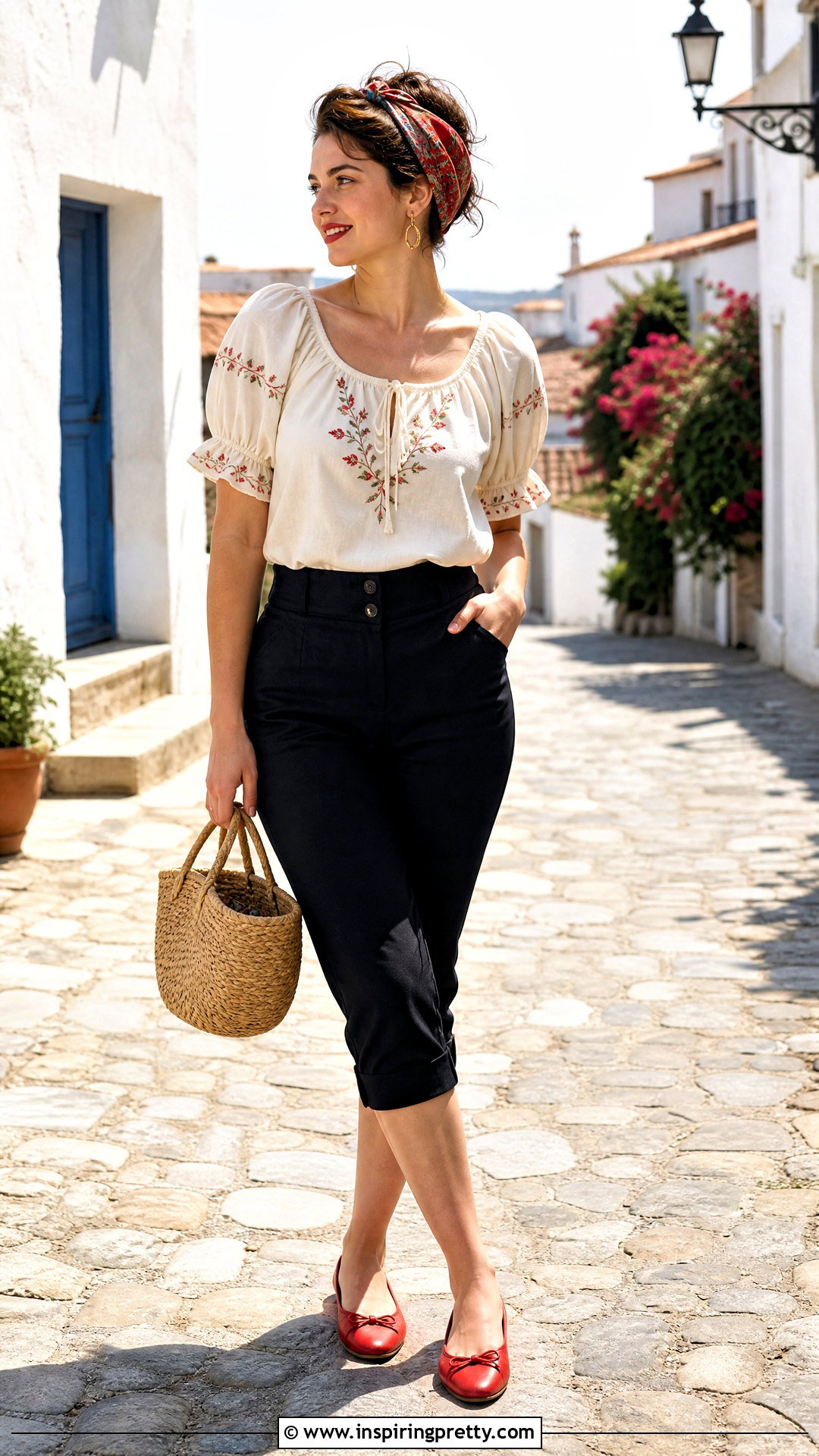
A gathered peasant blouse softens slim pedal pushers. Cotton with a wide neckline, short puff sleeves and some embroidery is the version I'd choose. Wear the neckline up on the shoulders for coverage; elastic necklines that slide off the shoulder look more seventies than fifties anyway. Tuck the blouse into high-waisted pedal pushers in black, navy or dark denim, so the narrow pants frame its volume. Make sure the tuck is smooth, because gathered fabric bunches above a waistband if there's too much of it. Ballet flats or canvas sneakers, a head scarf and a straw bag finish it for a travel day.
10. 1950s Polo Knit Top With A-Line Skirt
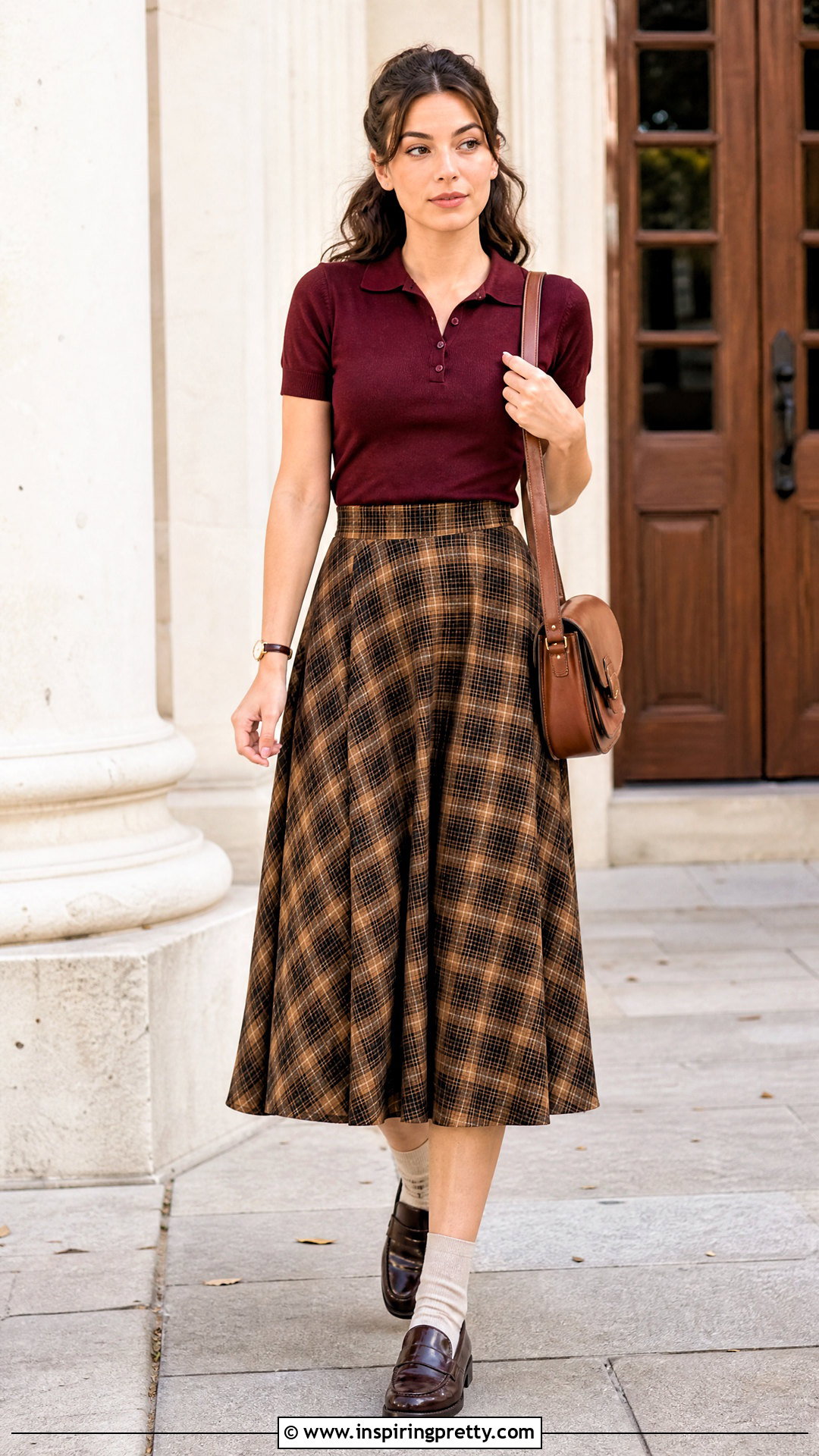
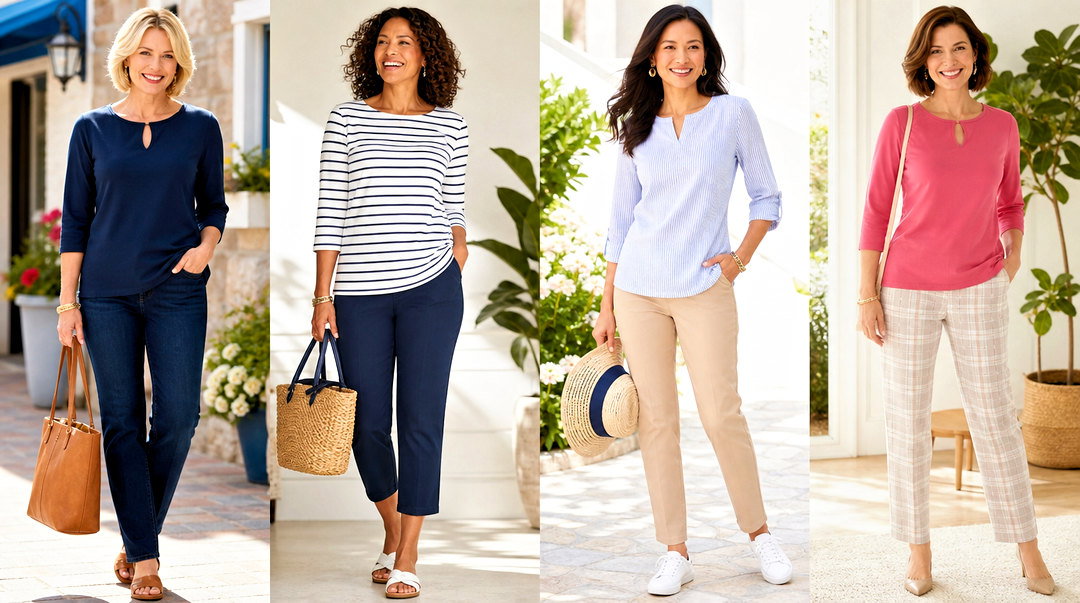
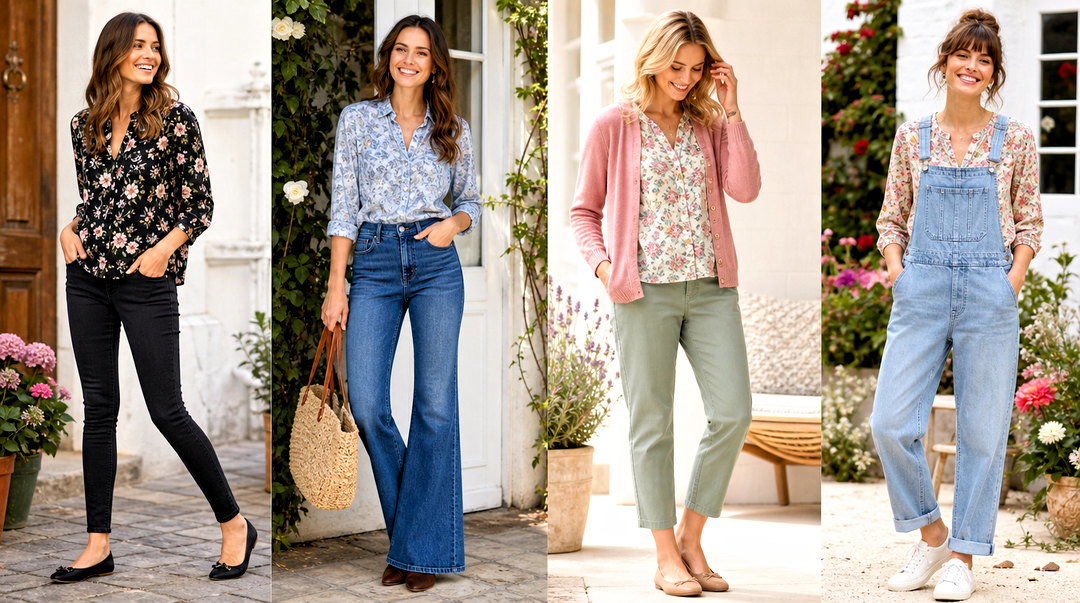
A fitted knit polo is the sporty fifties option. Look for a small collar and a short, neat placket in cream, navy, burgundy or green. Fit it close rather than oversized; a loose polo tucked into a skirt leaves folds of fabric around the waist. Tuck it into a high-waisted A-line skirt in plaid, solid wool or structured cotton that falls below the knee. Penny loafers or saddle-style shoes suit it, with ankle socks for a youthful touch or bare ankles for a modern one. A leather satchel and a simple watch keep it practical for classes or a casual office.
11. 1950s Bardot Top With High Waisted Jeans
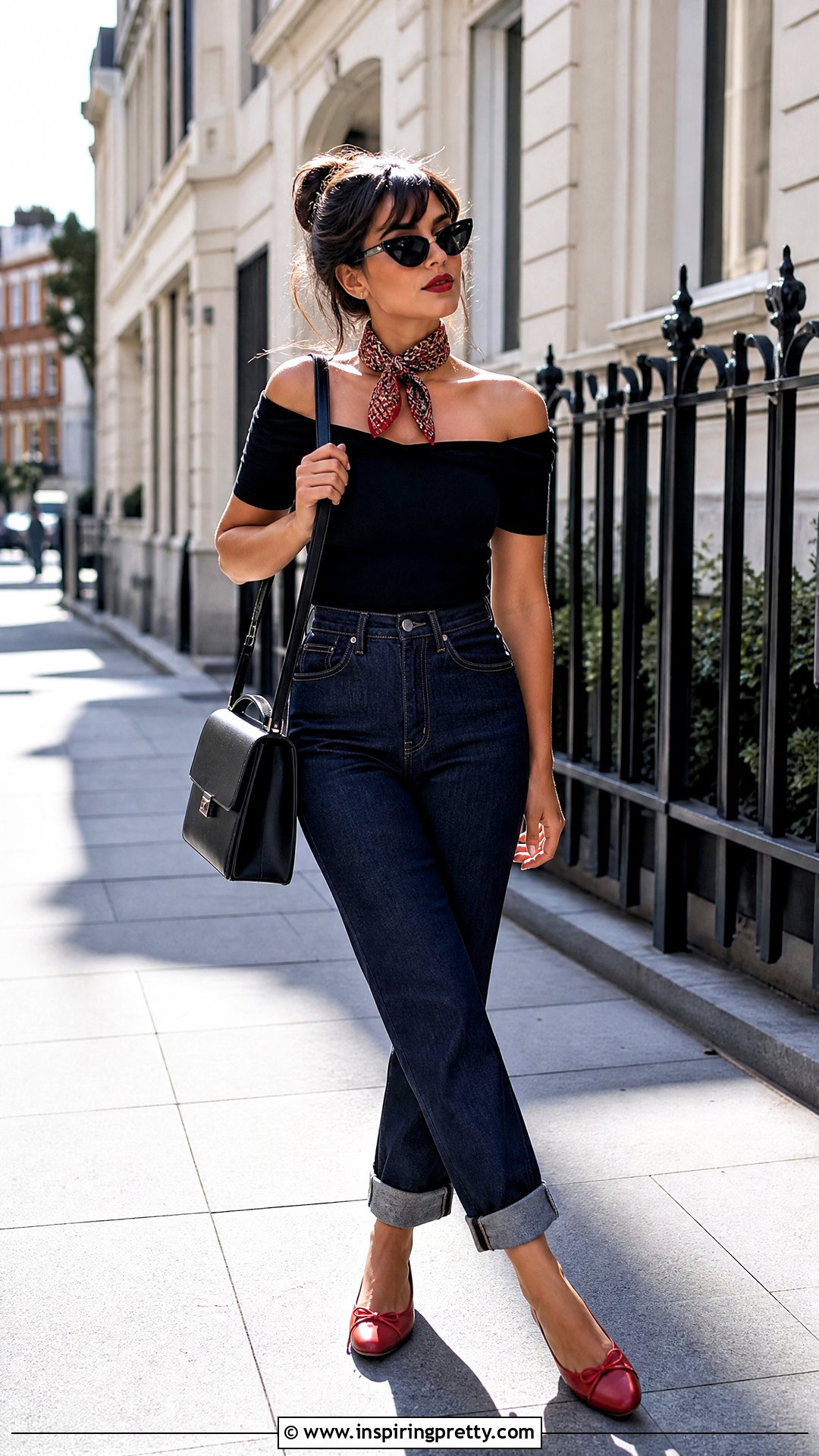
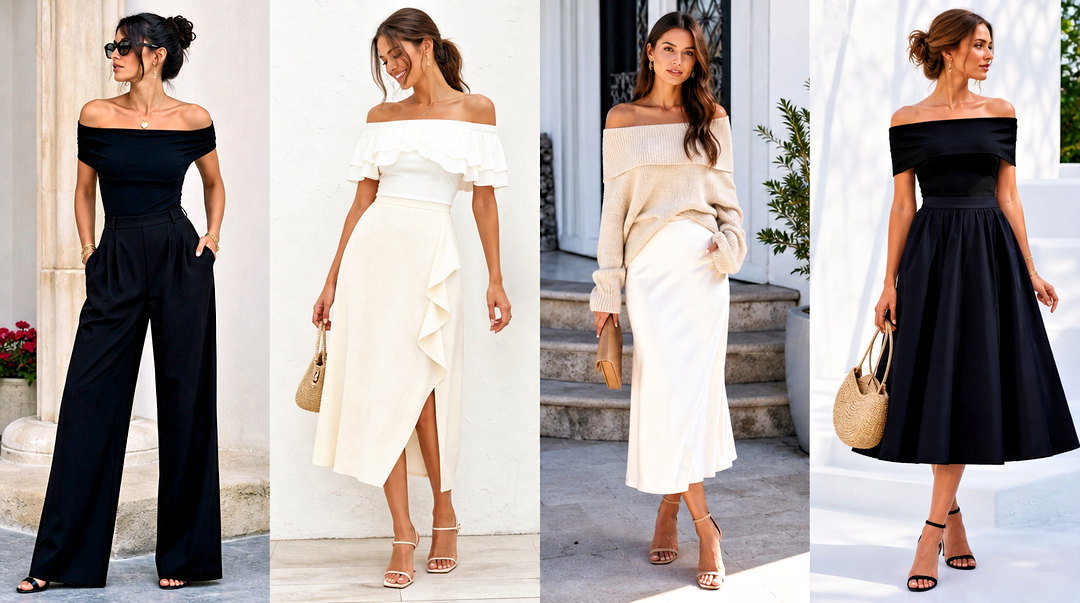
If you'd like something fifties that still works on an ordinary day, try a fitted Bardot top with high-waisted jeans. The neckline is what to test: a well-made Bardot has a firm band or elastic inside the neckline that holds it across the shoulders; a flimsy one needs pulling up all day. Black, red, cream or stripes all work. Dark straight-leg jeans with a neat turn-up at the hem add retro character. Ballet flats, loafers or white sneakers and a bandana in the hair finish it. Skip distressed denim for a cleaner result at a café or weekend lunch.
12. 1950s Satin Shell Top With Tailored Trousers
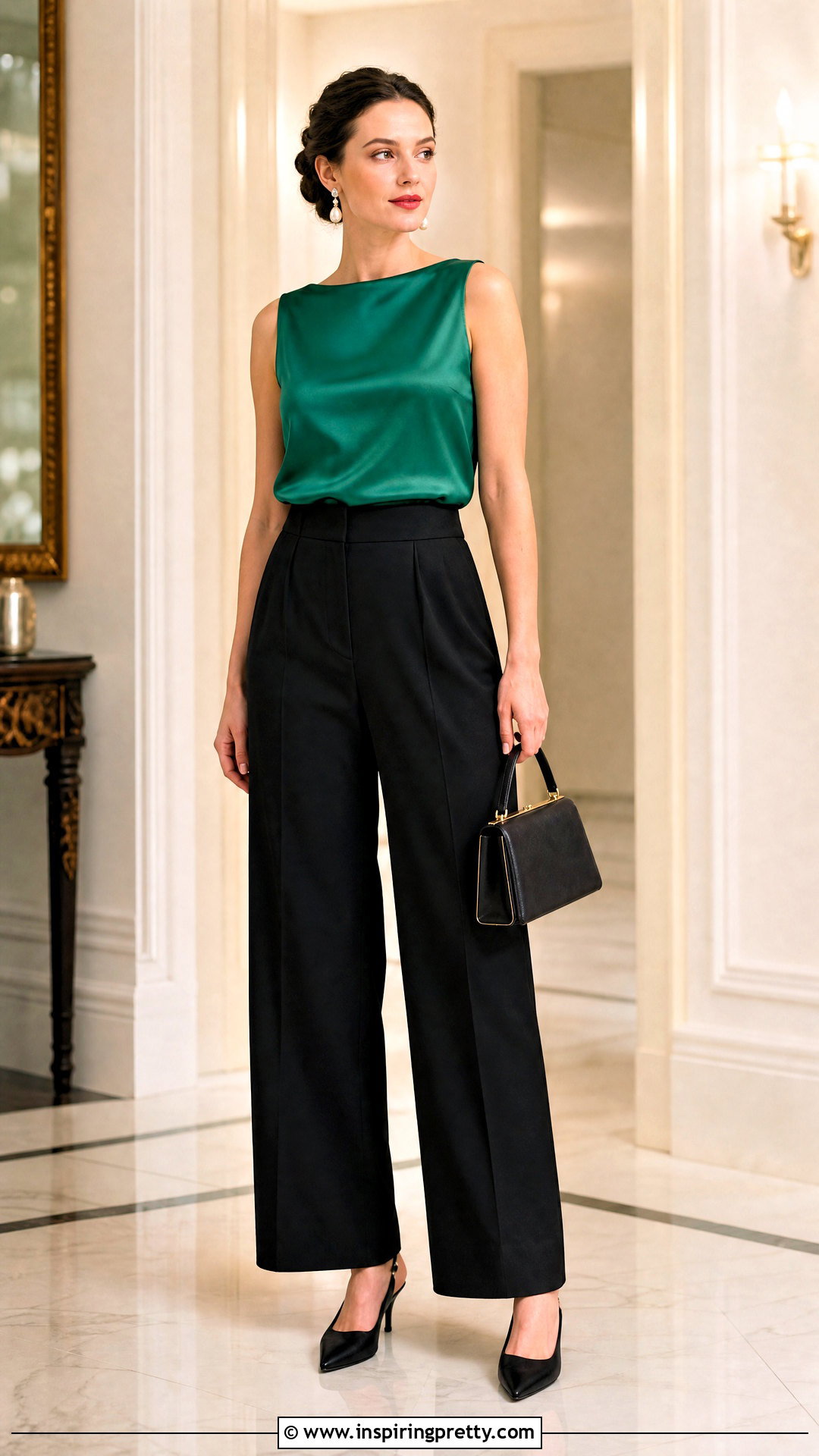
A satin shell with tailored trousers is an evening outfit for anyone who doesn't want a dress. A sleeveless shell with a high scoop, a soft drape or light gathering is the shape to look for. Satin shows every pull and stress line, so I make sure the shell isn't tight across the bust; a little ease lets it drape the way it should. Jewel tones, champagne or black all work. Tuck it into high-rise trousers with a clean waistband. Pointed pumps, a small top-handle bag and pearl drops finish it. A cropped cardigan or fitted blazer adds coverage for a dinner or performance.
13. 1950s Floral Blouse With Solid Circle Skirt
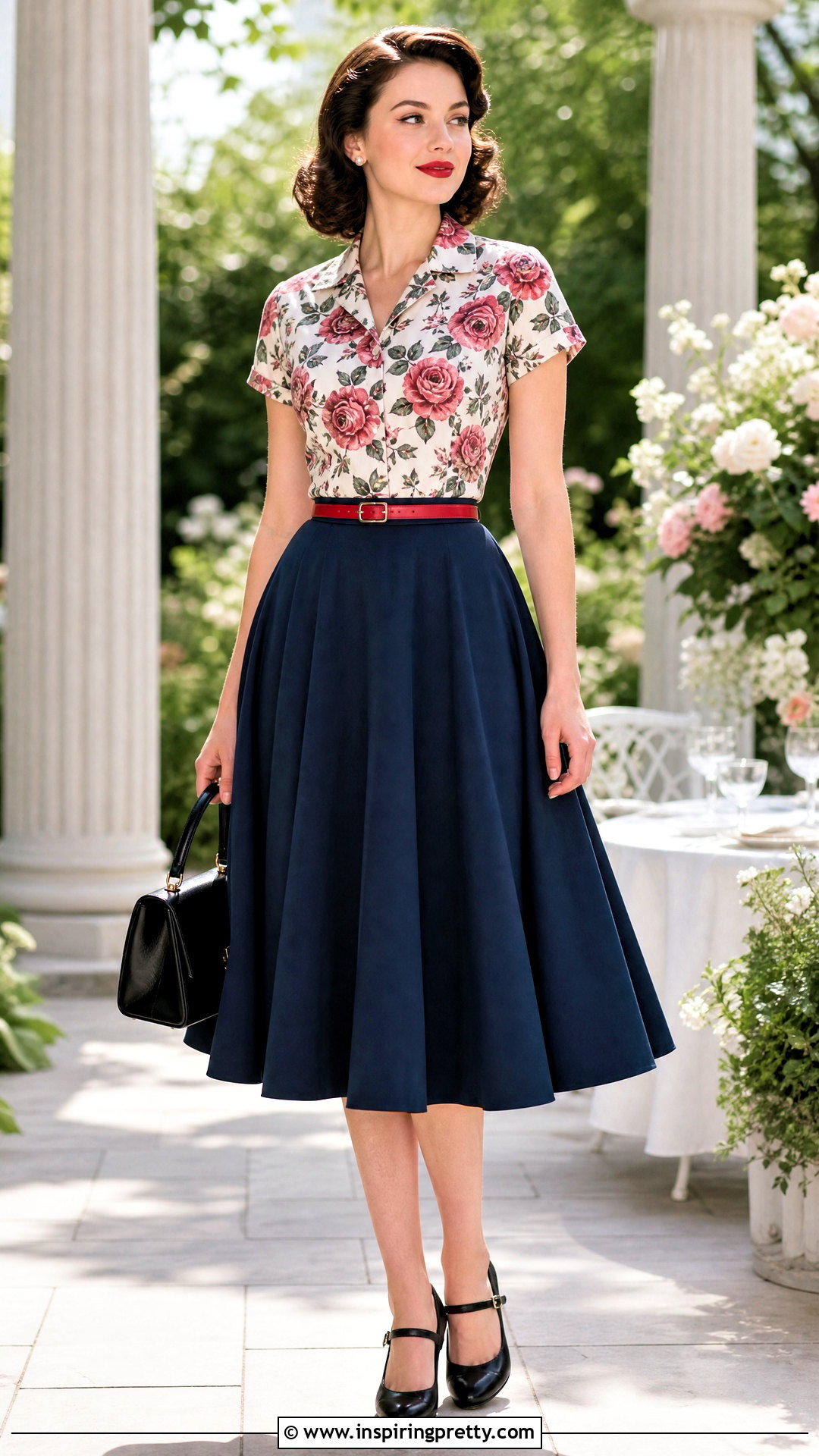
A floral blouse makes a circle skirt outfit more personal. Fitted button fronts with small roses, daisies or botanical shapes suit the period. Pull one color from the print and repeat it in a solid, high-waisted midi skirt; that one step makes the whole outfit look considered. Mary Janes, ballet flats or kitten heels all work, and a plain bag keeps the print in charge. For modern wear, choose a skirt with moderate fullness and skip the petticoat, which adds a lot of volume and reads more like a themed party. A narrow belt helps if the waistband is plain.
14. 1950s Sleeveless Collared Top With Bermuda Shorts
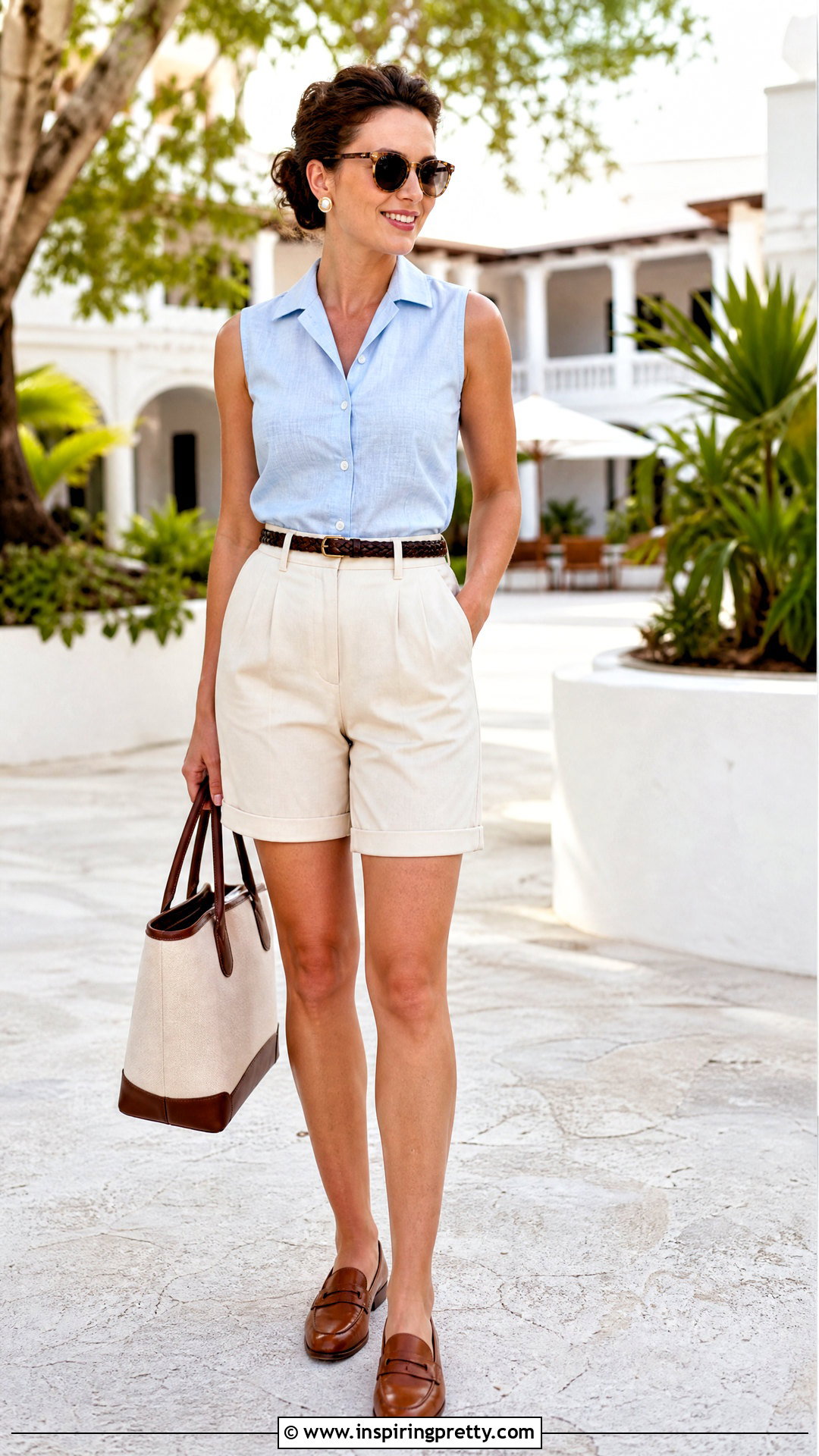
Bermuda shorts give more coverage than short shorts and still feel like summer. A sleeveless collared top buttoned through the front goes neatly with them. White, pastels, gingham or a small novelty print all point to the fifties. Tuck it into high-waisted shorts with a straight or slightly flared leg, and add a braided belt for texture. The fit of the shirt matters most: Bermudas already add length and width below the waist, so a loose shirt on top makes the outfit bulky. Sleeveless armholes should sit close without gaping at the sides. Loafers or flat sandals and a structured tote finish it.
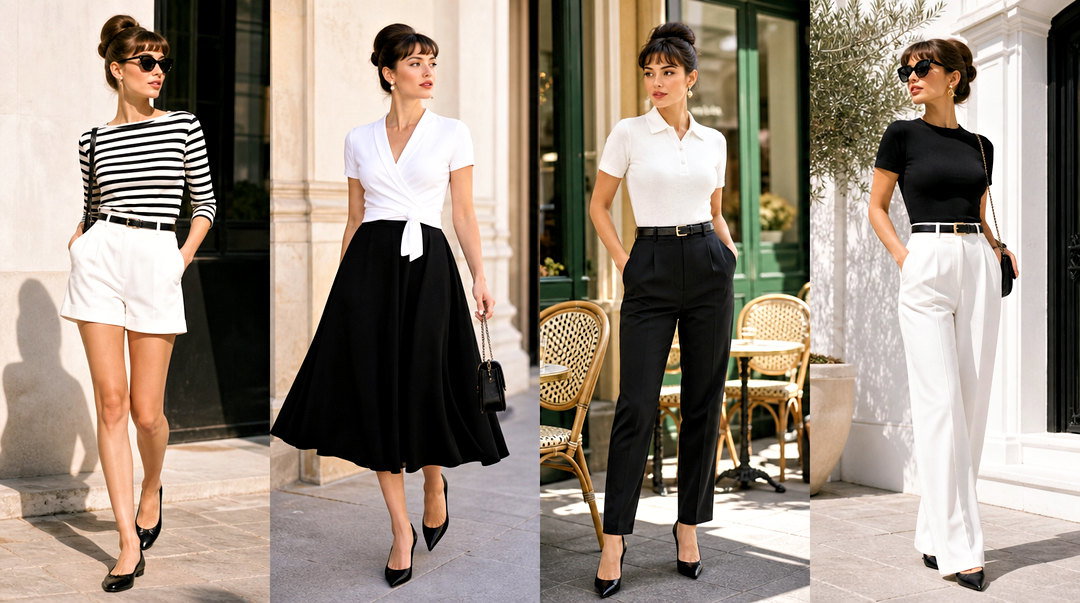
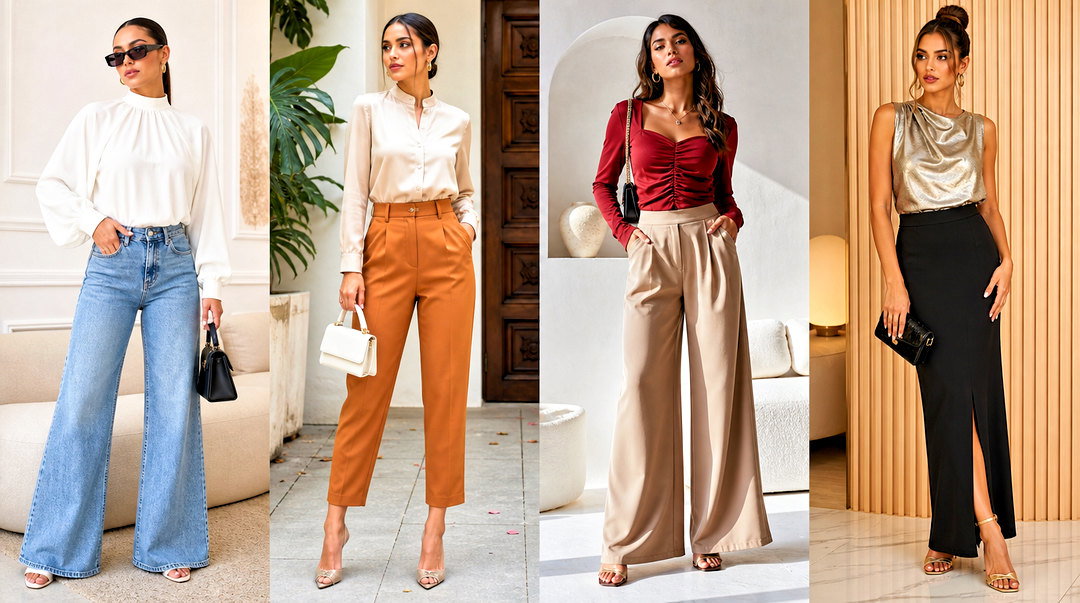
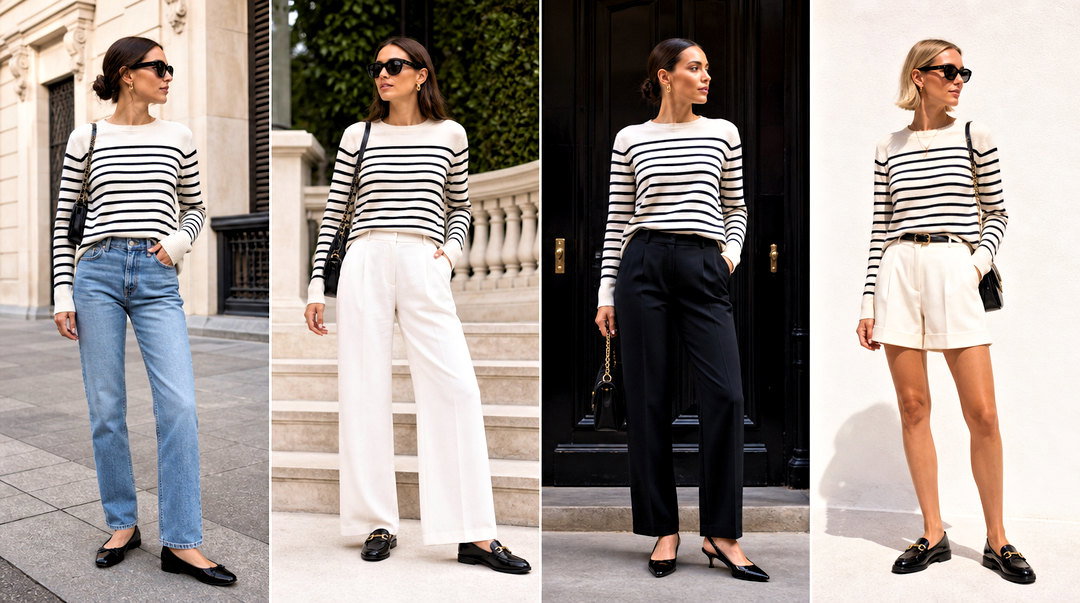
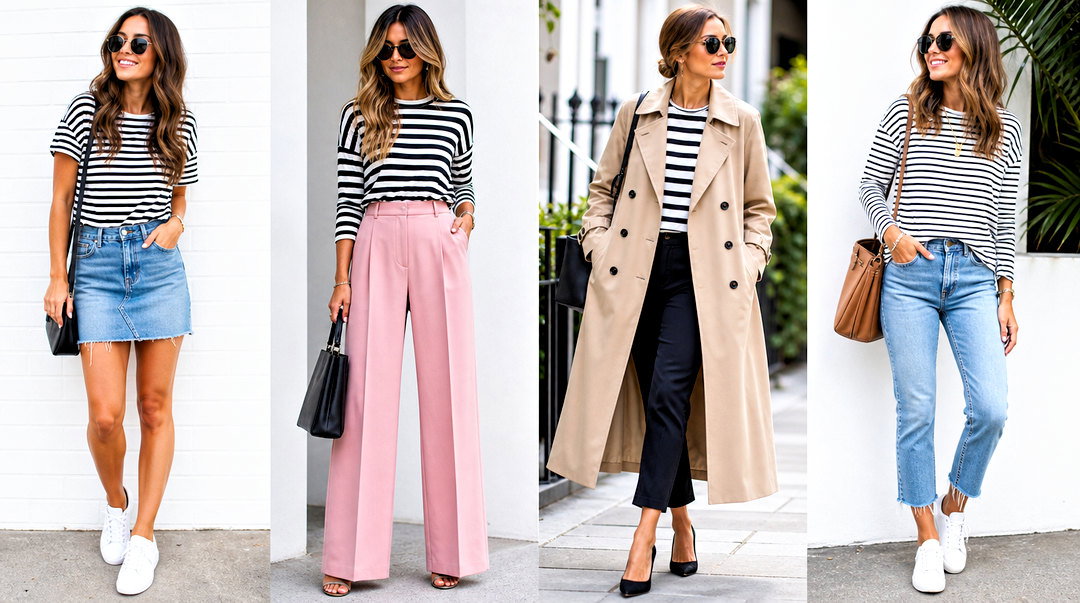
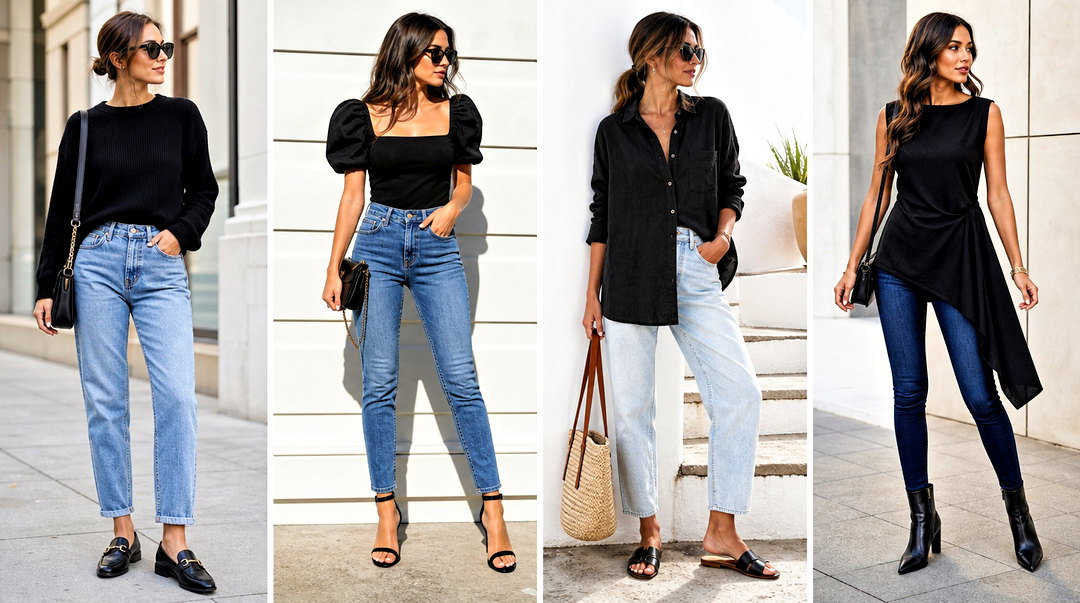
15. 1950s Turtleneck Top With Plaid Midi Skirt
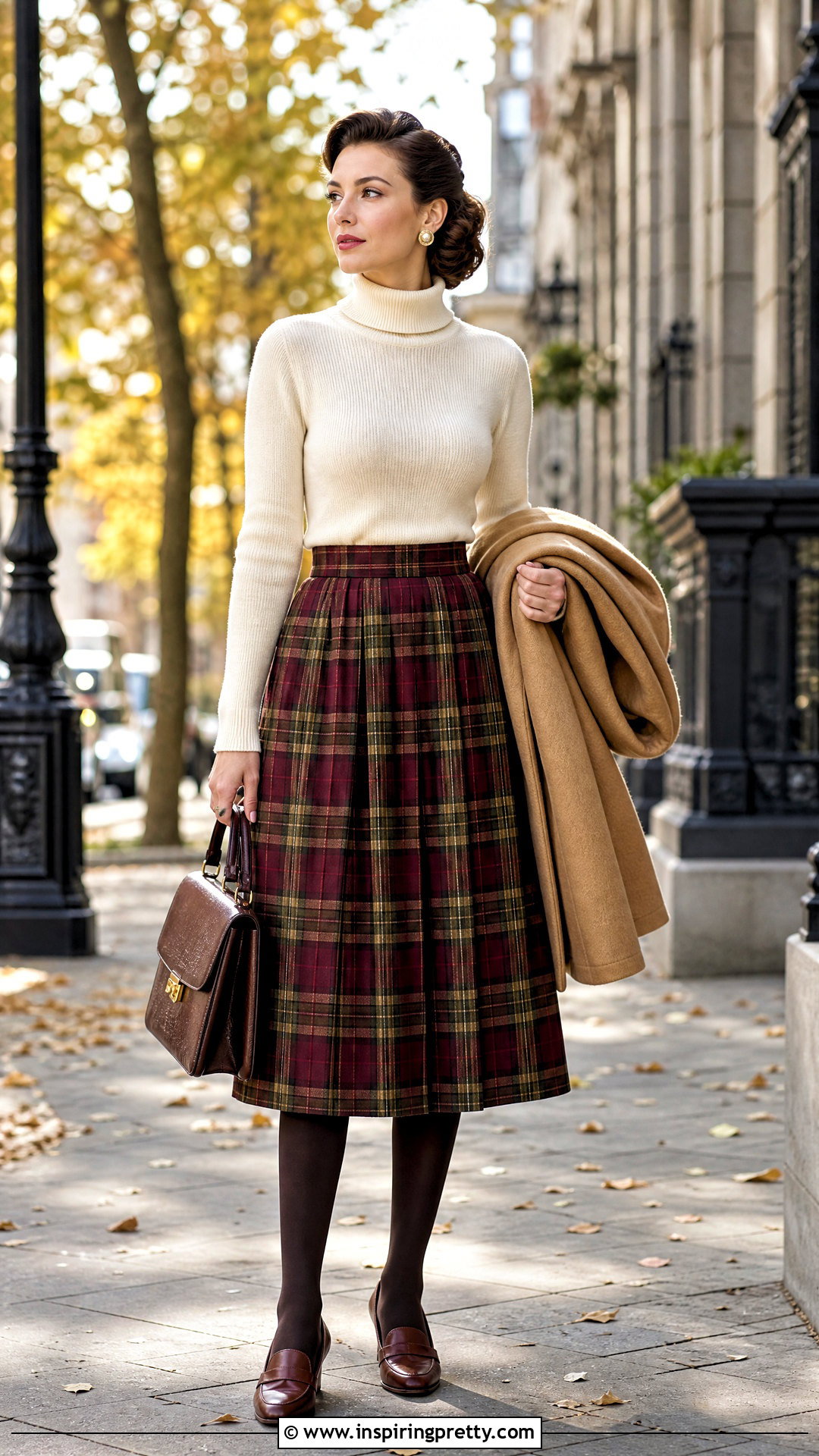
A fitted turtleneck and plaid midi is my default fifties look for cold weather. A lightweight knit in black, cream, burgundy, forest green or mustard tucks smoothly; a heavy one creates a ridge at the waist. If the plaid has many colors, I repeat one of its quieter shades in the top rather than the brightest. A high-waisted A-line or softly pleated skirt lets the pattern move. Loafers, low pumps or ankle boots with opaque tights keep it warm. A cropped cardigan or a belted wool coat adds warmth without hiding the waist. I wear it to work as readily as to a museum.
16. 1950s Western Shirt With Cuffed Jeans
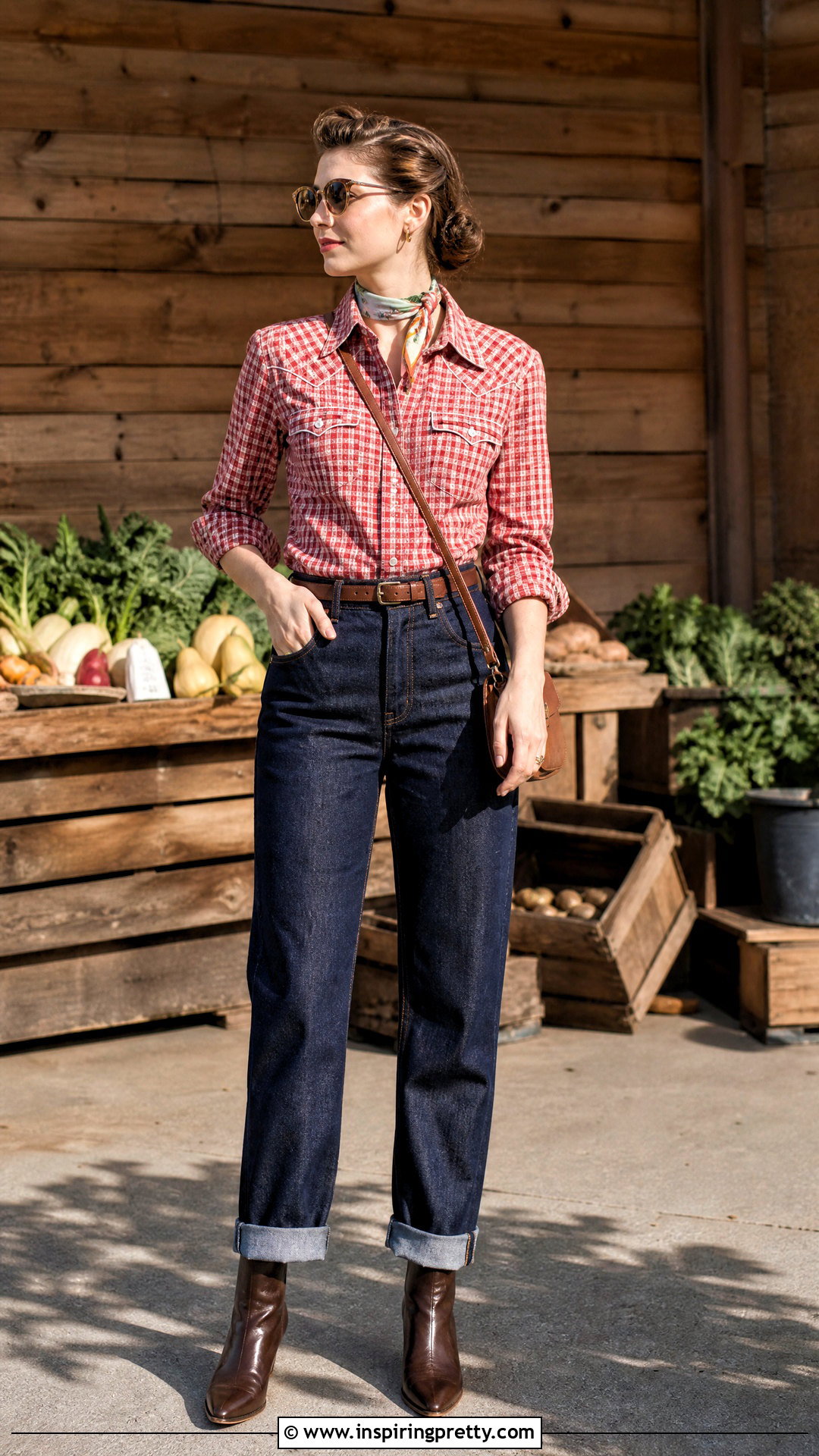
A western shirt with cuffed jeans is the casual side of the fifties. Choose a fitted shirt with snaps, contrast piping or a small check, and tuck it into dark, high-waisted straight jeans with neat cuffs at the hem. The denim should be structured but comfortable rather than skin-tight. Snap fronts can pull open across a full bust, so I'd size the shirt to fit the chest and have the waist taken in if needed. Loafers or simple ankle boots and a narrow belt connect the pieces, and a neck scarf adds color. One themed detail is enough for a road trip or a county fair.
17. 1950s Lace Trim Blouse With Pencil Pants
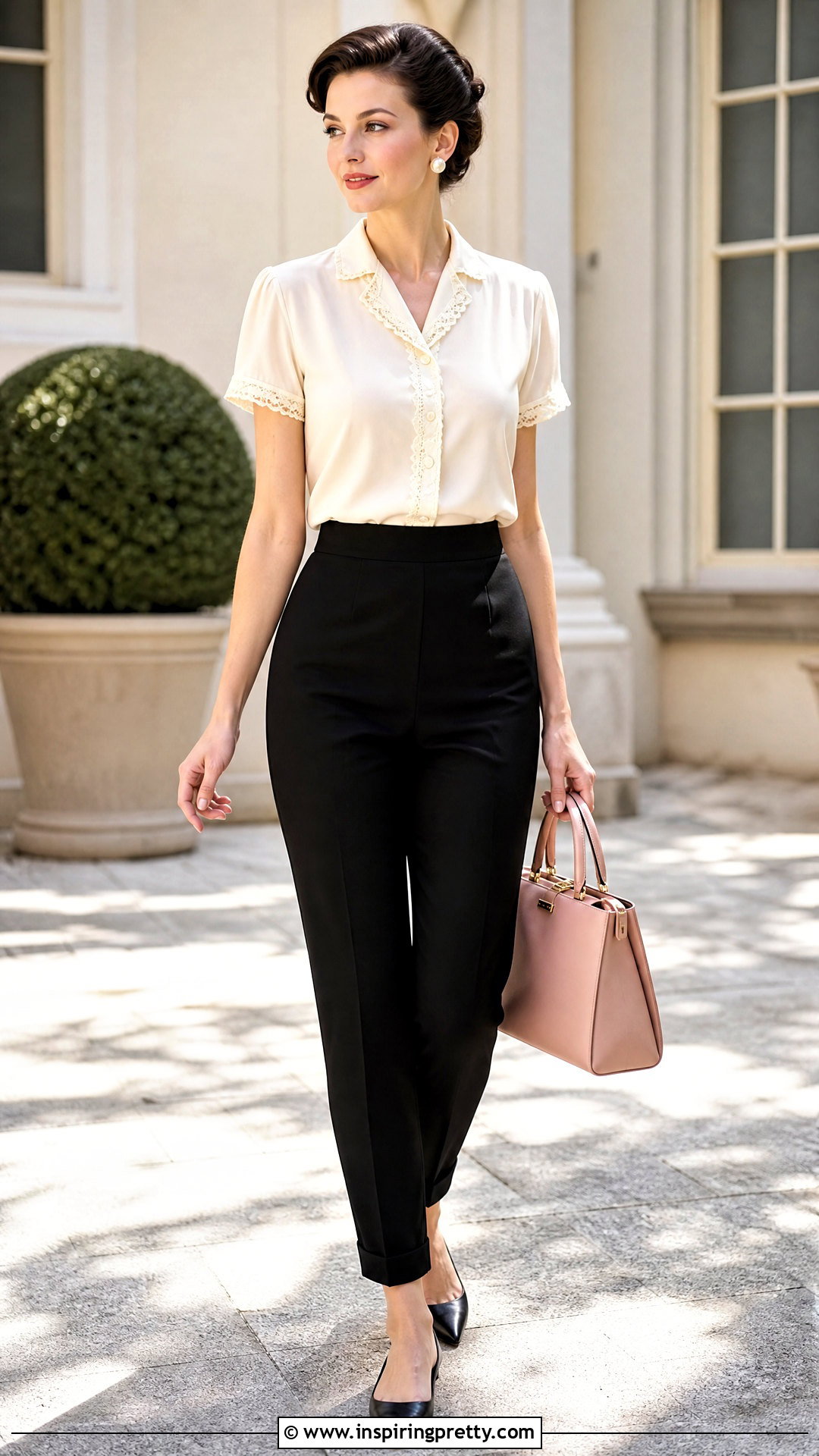
Lace is easier to wear when the rest of the outfit is clean, and narrow pencil pants give it that frame. Choose a short-sleeve blouse with lace at the collar, front panel or sleeve edges, in ivory, blush or black. Lace trim is only as good as its attachment: check that it's stitched flat and not puckering where it meets the body fabric. Tuck it into high-waisted ankle pants with few pockets. Pointed flats or kitten heels keep the line streamlined. A fitted camisole under lightweight fabric gives reliable coverage. Simple hair and makeup keep it current for a smart lunch or the office.
18. 1950s Bow Blouse With Suspender Skirt
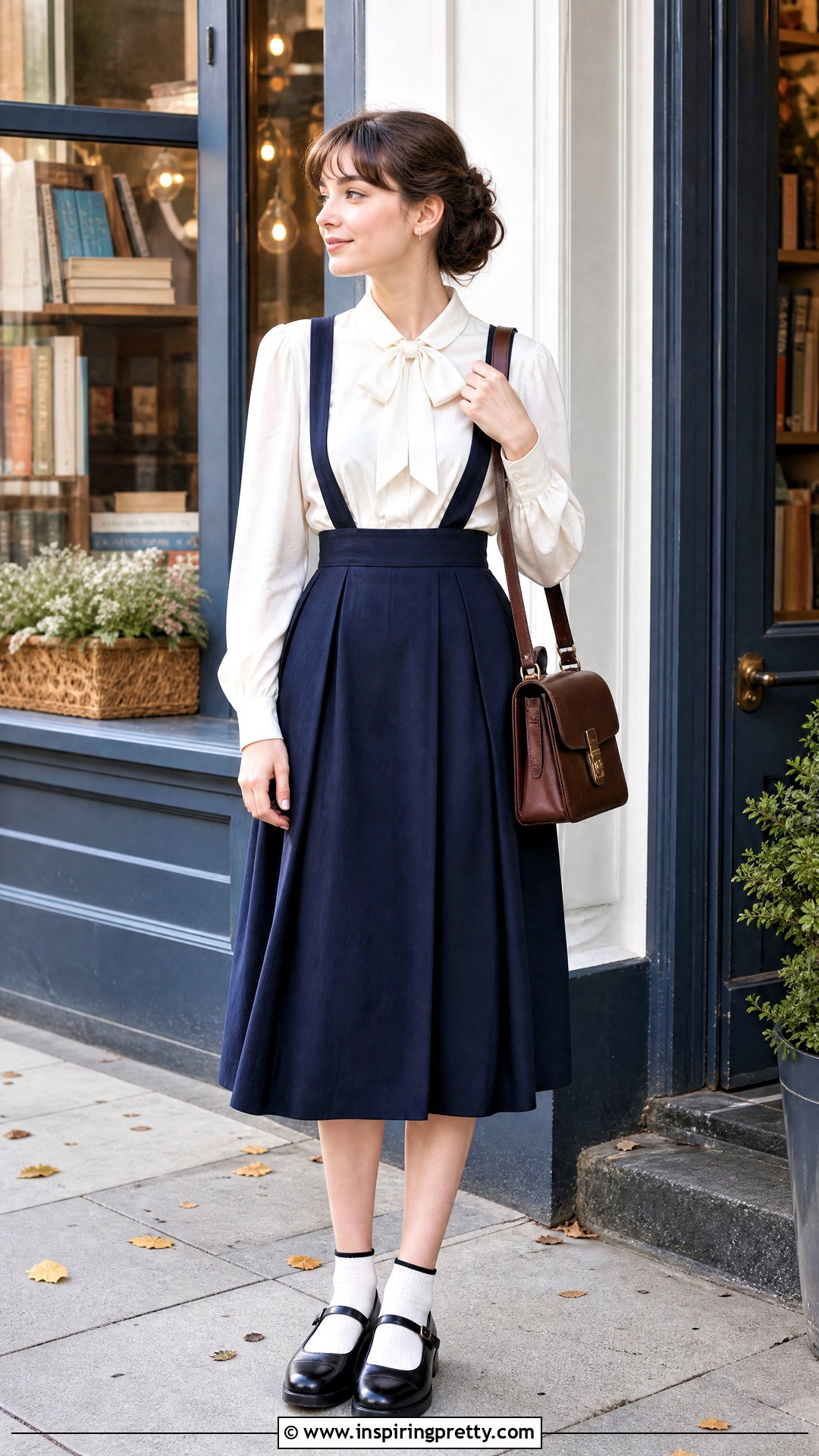
A bow blouse under a suspender skirt is neat and a little playful. Choose a blouse with a modest neck bow, slightly puffed sleeves or a small round collar, and a high-waisted suspender skirt in black, navy, plaid or brown. Adjustable straps are worth insisting on, because fixed ones are almost never the right length and pull the waistband up or the blouse out of shape. Mary Janes or loafers suit it, with ankle socks or opaque tights. Keep the blouse plain when the skirt is patterned. It's modest and clearly waisted, which makes it good for creative workplaces or campus days.
19. 1950s Embroidered Cardigan With Straight Skirt
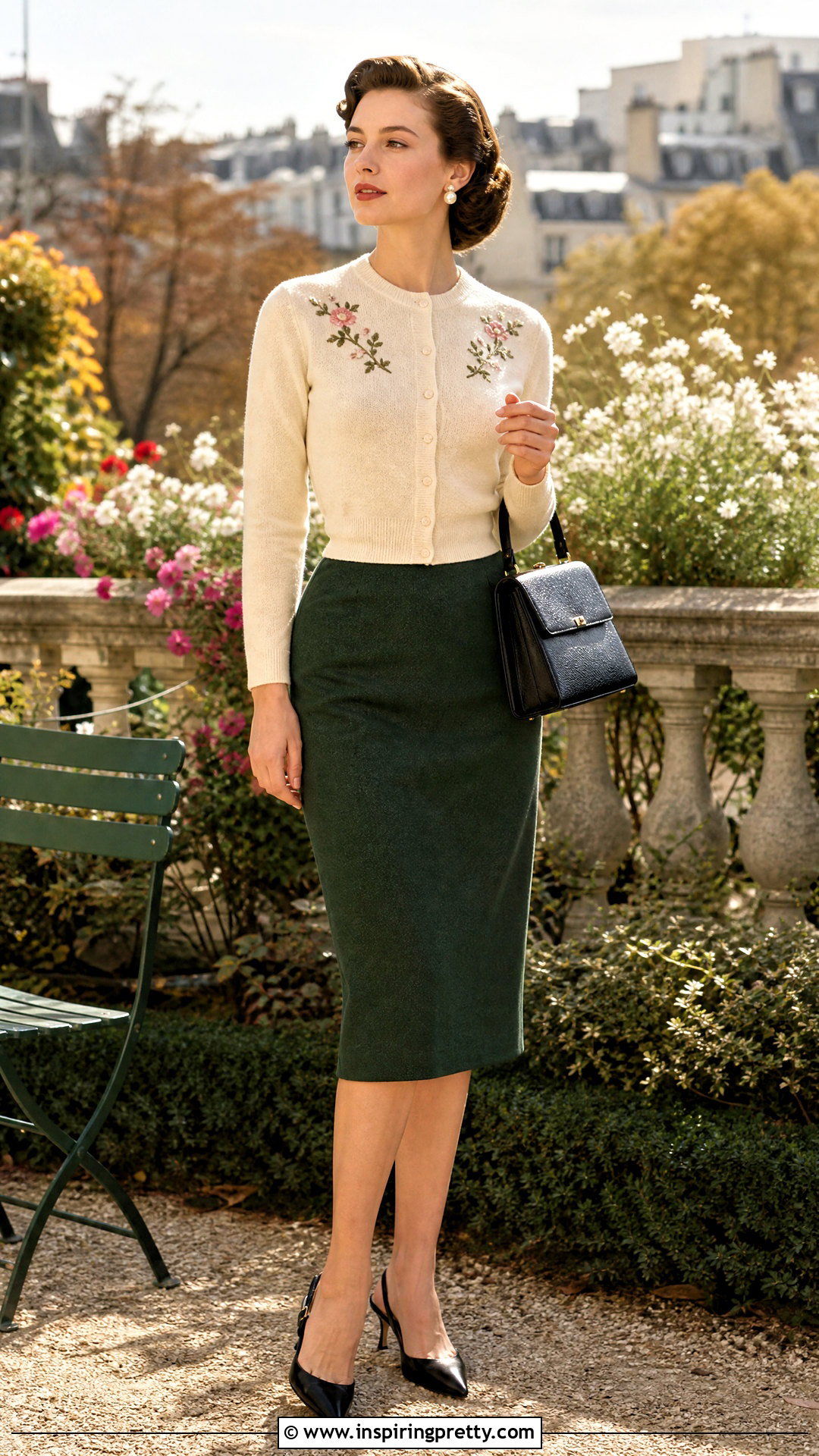
Button an embroidered cardigan all the way and it becomes the top. A fitted, waist-length knit with floral embroidery or pearl-style buttons pairs with a high-waisted straight skirt reaching the knee or lower calf. A plain skirt in black, navy, gray or cream lets the decoration lead. Length is critical here: the cardigan should meet the waistband, not bunch below it. Buttoned knits gape between buttons across the bust, which a thin camisole underneath hides. Beaded or embroidered knits snag, so I'd wash them inside out by hand. Slingbacks or loafers and one bracelet finish it for work or an afternoon event.
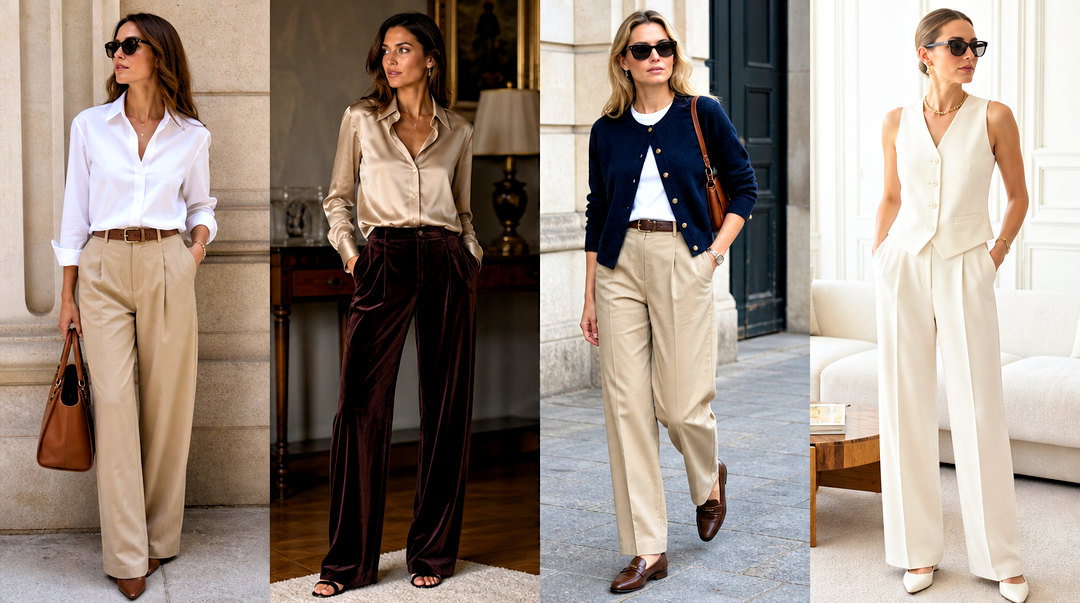
20. 1950s Ruffle Blouse With Wide Leg Trousers
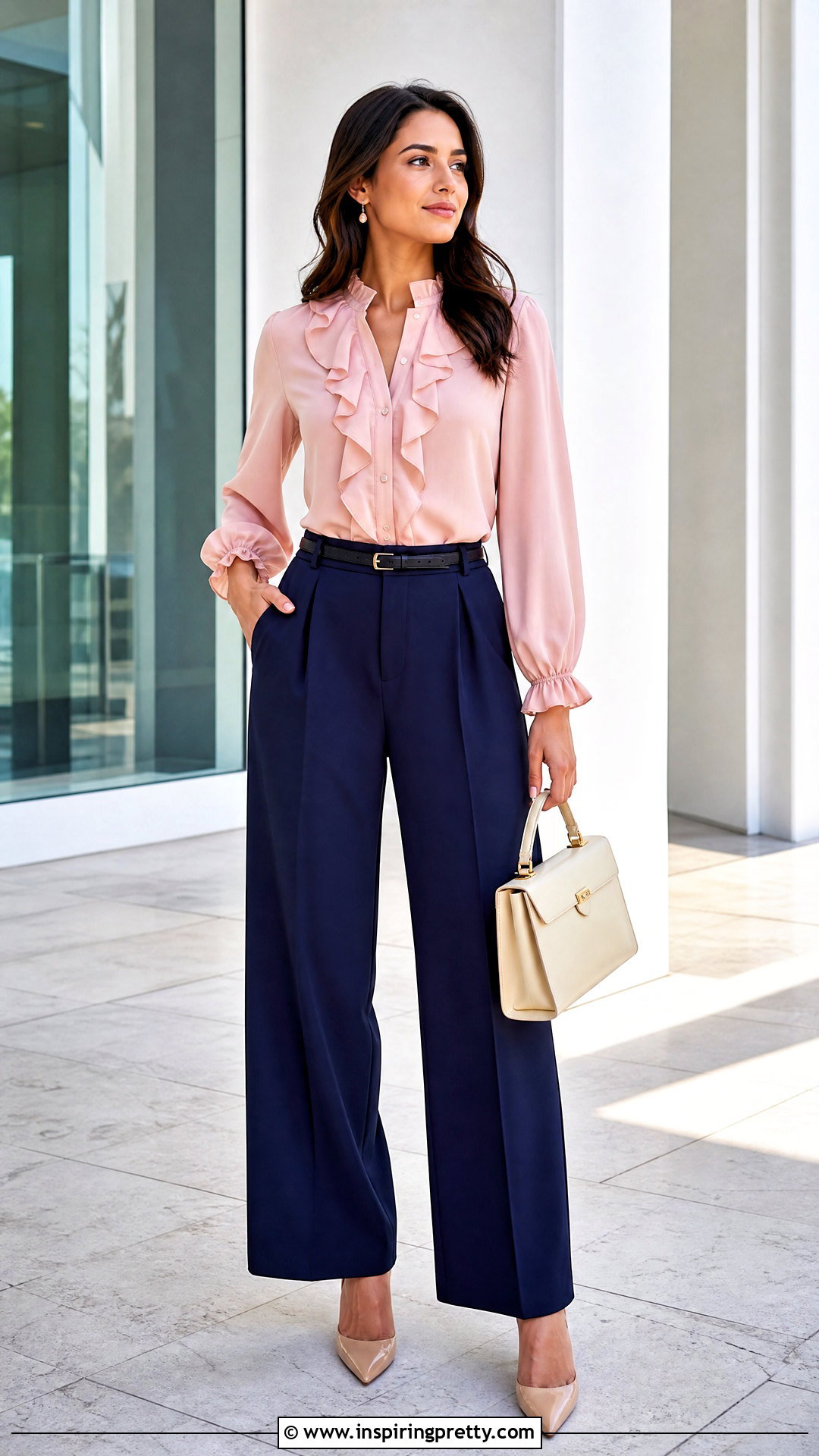
A ruffle blouse with wide-leg trousers is soft and practical, and a good option for anyone who prefers trousers to skirts. Keep the ruffles controlled, along the neckline, placket or sleeves, rather than layers of them. Tuck it fully into high-waisted, flat-front trousers with a fluid leg; when both pieces are loose, the full tuck is what restores the shape. Cream, blush, navy or a soft print all work. Pointed flats or pumps let the hems fall cleanly. A slim belt and small earrings keep attention on the blouse. It's polished enough for a presentation and comfortable enough for dinner afterward.
How a Good Fifties Blouse Should Fit
Reproduction and original fifties tops are cut closer to the body than most modern shirts, so fit decides whether they look crisp or sloppy. Here's what I check on the body.
Shoulders and sleeves
The shoulder seam should sit on the edge of your shoulder, not hang past it. Many blouses of the era used cut-on or kimono sleeves with no armhole seam; those are forgiving across the shoulders but can pull under the arm if the top is too small.
Bust and buttons
Gaping between buttons means the blouse is too tight across the bust. Buy for the bust and have a tailor take in the waist or add darts; that's a simple alteration, while adding room at the bust is rarely possible.
Size labels on real vintage
Original pieces use older sizing, which generally runs much smaller than today's labels. Ignore the number and shop by measurement: bust, waist and shoulder width, compared against a shirt you already own that fits well.
The Waist Is What Makes It Fifties
Look back over these outfits and the shared thread is the waistline, more than any print or collar. Polished blouses, fitted knits, polos, halters, embroidered cardigans and twin sets all look right because they meet a high-waisted skirt, capri, pair of jeans or shorts in a clean line. Within that, adjust everything to your body, climate and routine. Choose breathable fabrics, necklines that stay put and shoes you can walk in. If I were starting from nothing, I'd buy a darted white blouse and high-waisted cigarette pants first, then add one retro detail at a time until the look feels like yours.
Related posts:


Leave a Reply