
Medieval-inspired fashion can feel romantic, powerful, and surprisingly wearable when every piece has a clear purpose. This guide to **25 Medieval Style Tops outfit ideas** explores complete looks built around peasant blouses, lace-up bodices, tunics, corset tops, velvet layers, and dramatic sleeves. Rather than creating a heavy costume, each outfit balances one strong medieval reference with practical skirts, trousers, boots, and accessories. Current styling guidance favors breathable textures, adjustable layers, simple leather details, and comfortable footwear that can handle extended walking. () You will find choices for Renaissance fairs, fantasy festivals, themed events, creative photos, and everyday outfits. Different colors, proportions, and layering methods also make these combinations adaptable across body types and seasons. Use the complete looks below as your guide to **25 Medieval Style Tops outfit ideas**.
1. Medieval Peasant Top With Maxi Skirt
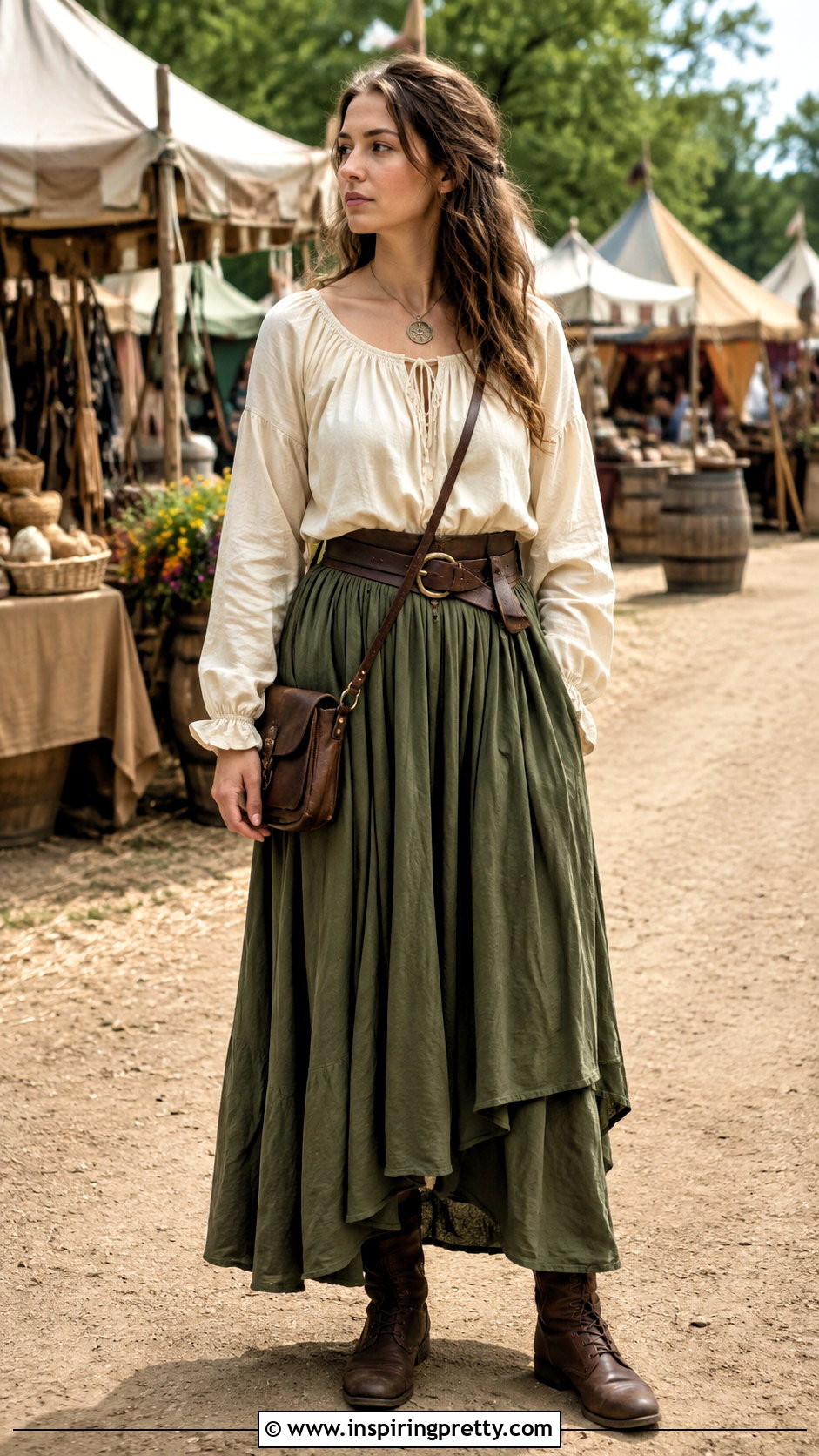
An ivory peasant top creates an easy foundation for a classic medieval outfit. Choose a design with a gathered neckline, roomy sleeves, and softly fitted cuffs. Tuck it into a brown or moss-green maxi skirt with enough volume for comfortable movement. A wide leather belt defines the waist and connects the lighter top to the deeper skirt color. Complete the look with flat lace-up boots, a small crossbody pouch, and a simple bronze pendant. A loose side braid adds a soft historical touch without feeling too formal. For hot outdoor events, select cotton or linen-blend fabric and avoid excessive layers. This balanced outfit works especially well for first-time fair visitors because it feels recognizable, flattering, and easy to wear all day.
2. Medieval Corset Top With Tiered Skirt
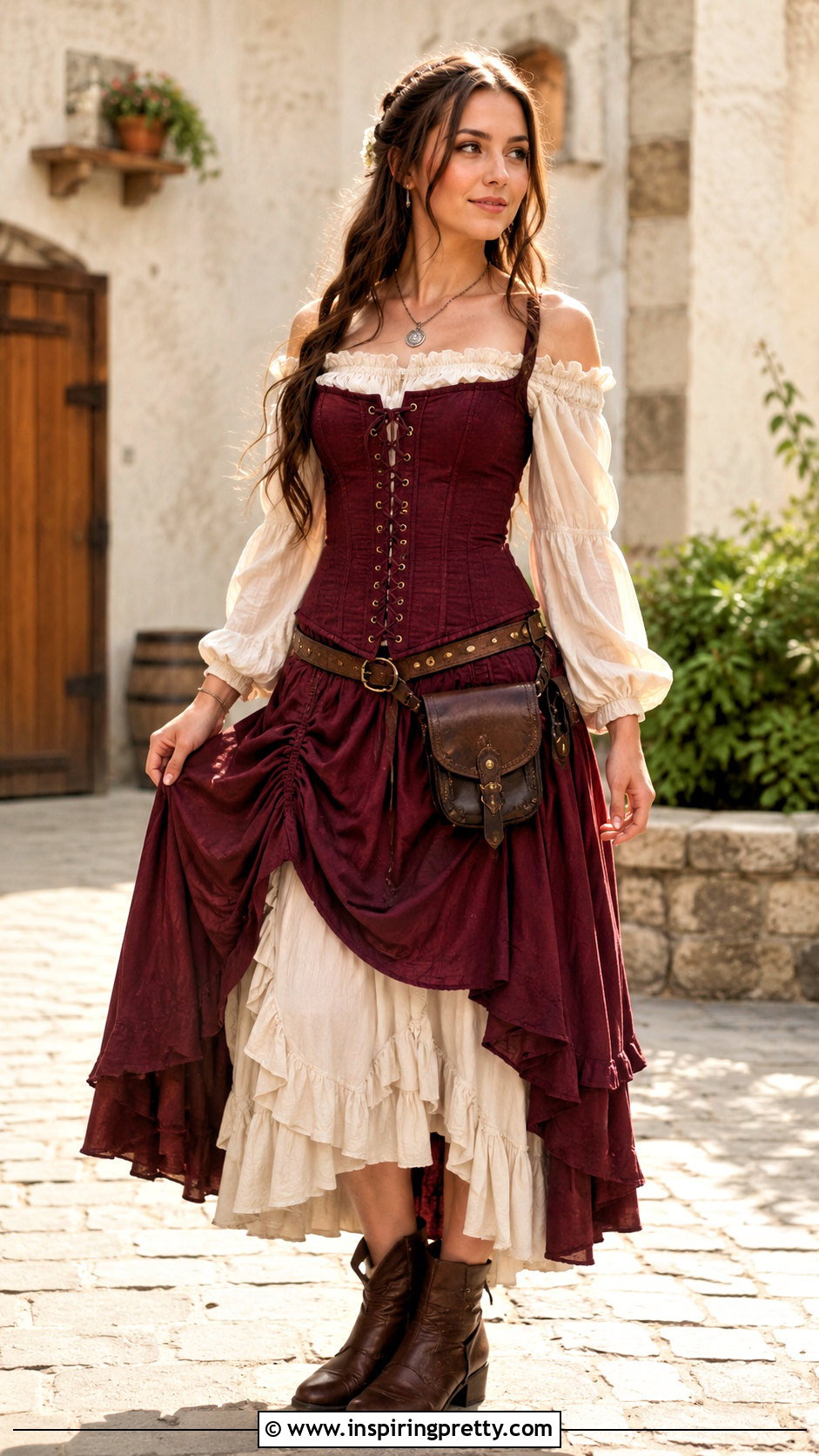
A structured corset top and tiered skirt create a bold silhouette without requiring a complicated costume. Begin with a black, burgundy, or dark brown corset featuring wide straps and practical front lacing. Pair it with a flowing cream tiered skirt to introduce softness and movement. If more coverage is preferred, layer the corset over a lightweight off-the-shoulder blouse. Ground the outfit with sturdy brown ankle boots and add a belt pouch for small essentials. A pendant necklace or subtle ear cuff can provide detail without making the outfit feel overloaded. Keep the corset comfortably fitted rather than tightly cinched, especially for an event involving walking and sitting. The finished look feels romantic, confident, and suitable for medieval festivals or fantasy-themed photographs.
3. Medieval Bell Sleeve Top With Long Skirt
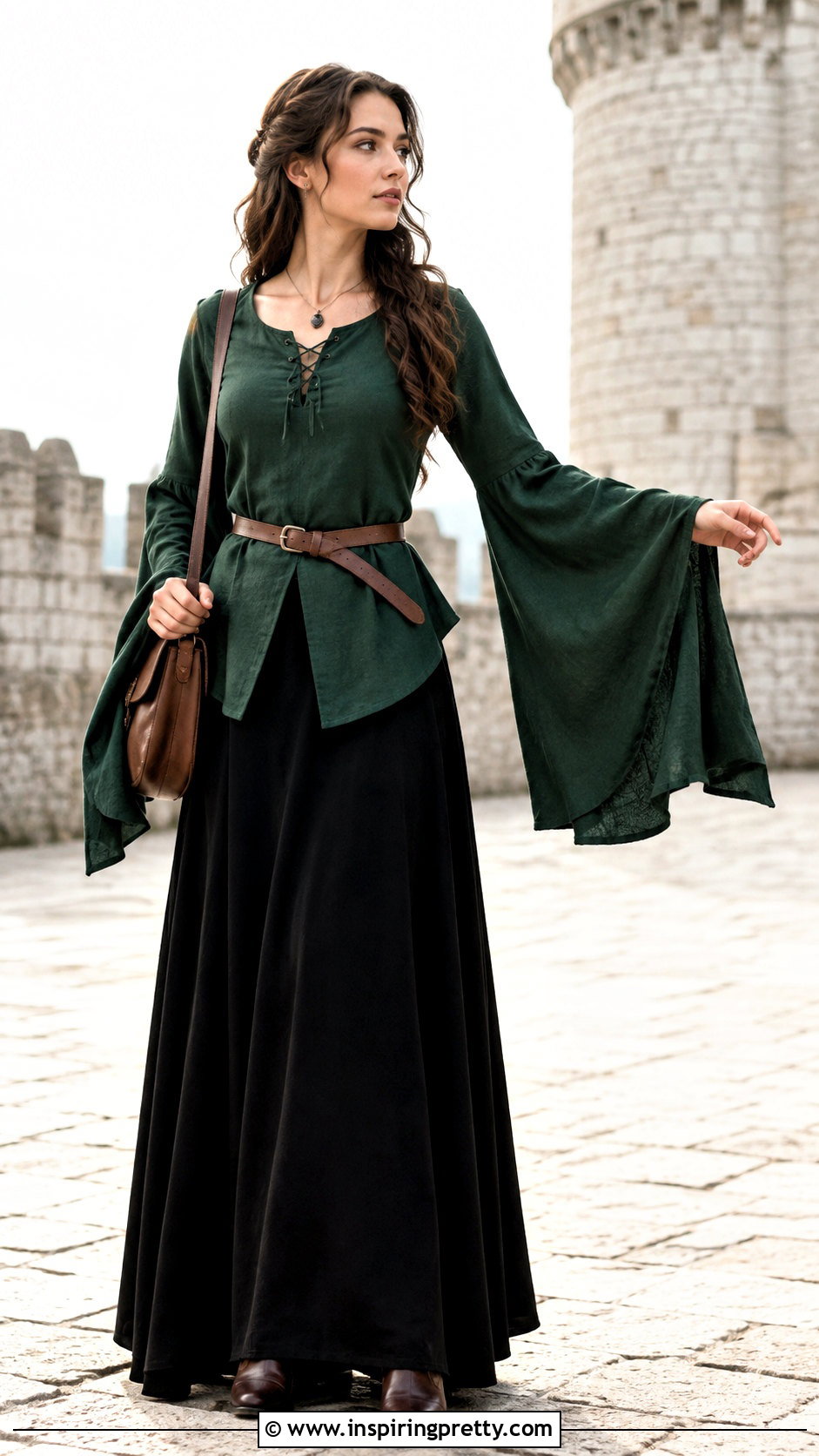
Flowing bell sleeves immediately bring movement and drama to a medieval-inspired outfit. Select a fitted top in forest green, plum, or charcoal with sleeves that widen below the elbow. Combine it with a plain black or deep brown floor-length skirt so the sleeve shape remains the main feature. A slim leather belt can emphasize the waist without competing with the fabric. Finish with low-heeled boots, a structured satchel, and a small stone pendant. Keep bracelets minimal because wide cuffs may catch on bulky jewelry. For a practical finish, choose sleeves that stop near the wrist instead of extending over the hands. This outfit offers an elegant fantasy mood while remaining comfortable enough for seasonal festivals, indoor gatherings, and creative outdoor photo sessions.
4. Medieval Lace-Up Top With Brown Trousers
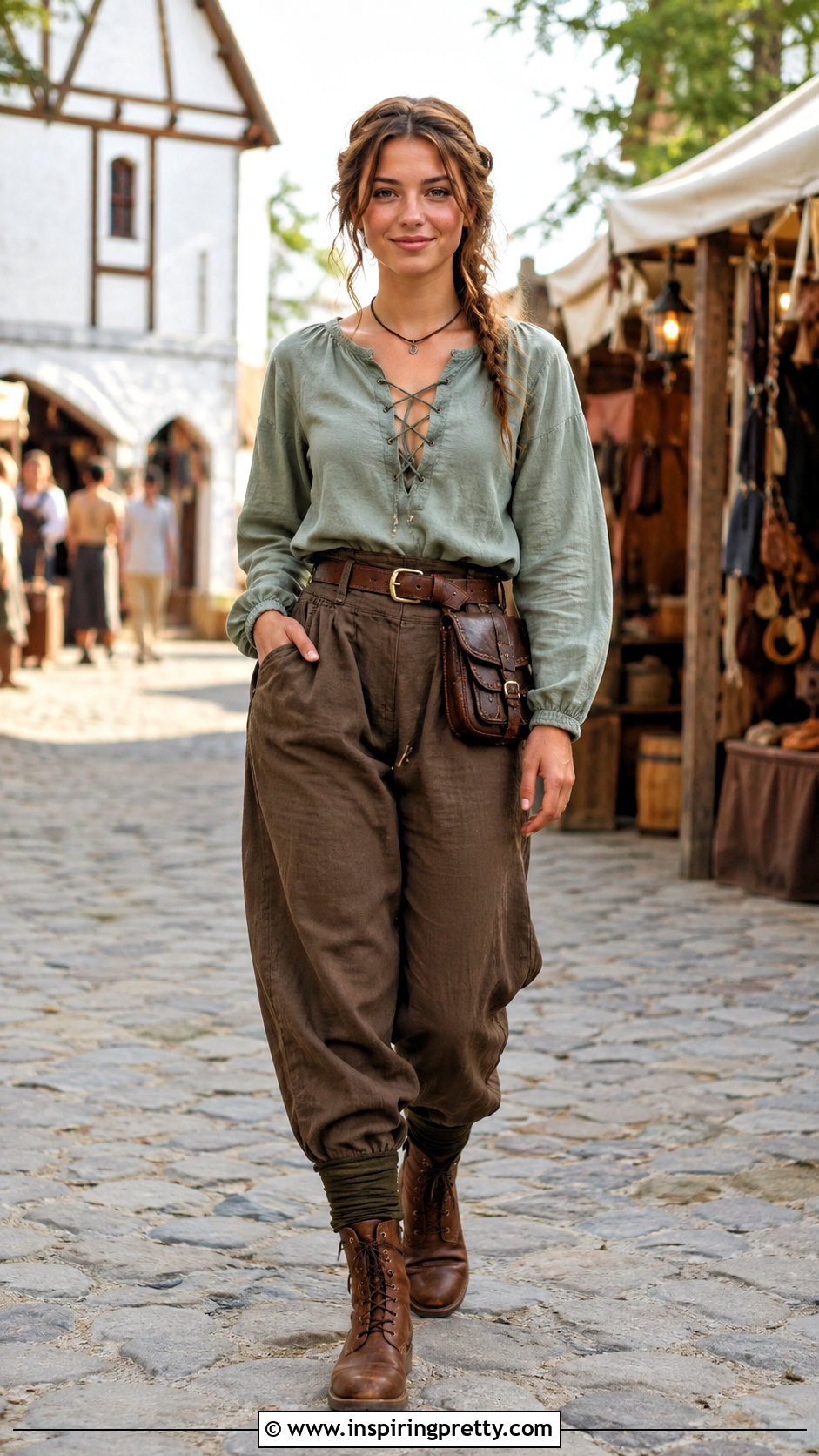
For a practical alternative to long skirts, wear a medieval lace-up top with relaxed brown trousers. A cream or muted sage top with a modest lace-up neckline creates the right historical reference while remaining versatile. Choose high-waisted tapered trousers made from soft cotton, linen, or textured woven fabric. Tuck in the front of the top, then add a medium-width belt and compact waist pouch. Brown lace-up boots maintain the rustic color palette and provide a sturdy finish. Roll or push up the sleeves when the weather feels warm. A low ponytail, natural makeup, and small hoop earrings keep the styling approachable. This head-to-toe combination suits active festival days because it provides coverage and freedom of movement without losing its recognizable medieval character.
5. Medieval Off-Shoulder Top With Corset Belt
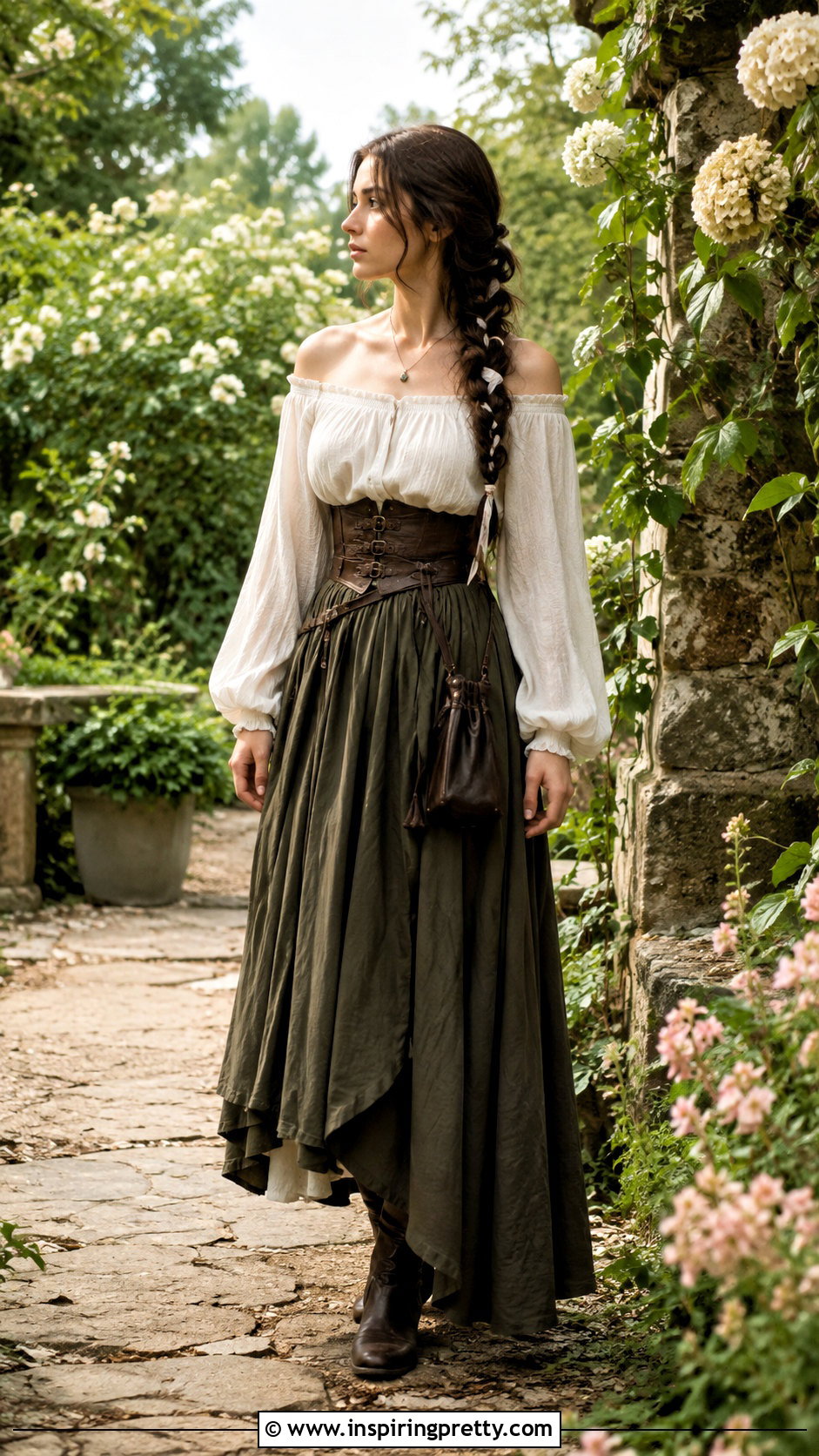
A softly gathered off-shoulder top creates a romantic base for an outfit centered on a corset belt. Start with a loose white or oatmeal blouse featuring full sleeves and elasticized cuffs. Wear a wide brown underbust belt over the blouse, keeping the fit supportive but flexible. A dark olive maxi skirt adds earthy color and complements brown leather accessories. Choose flat riding boots or rounded ankle boots depending on the skirt length. Add a drawstring pouch, a delicate pendant, and a simple ribbon woven into a loose braid. Adjust the neckline so it sits securely and offers the coverage you want. This combination delivers a strong medieval appearance through layering and shape, yet every piece can be separated and reused in modern bohemian outfits.
6. Medieval Tunic Top With Leggings
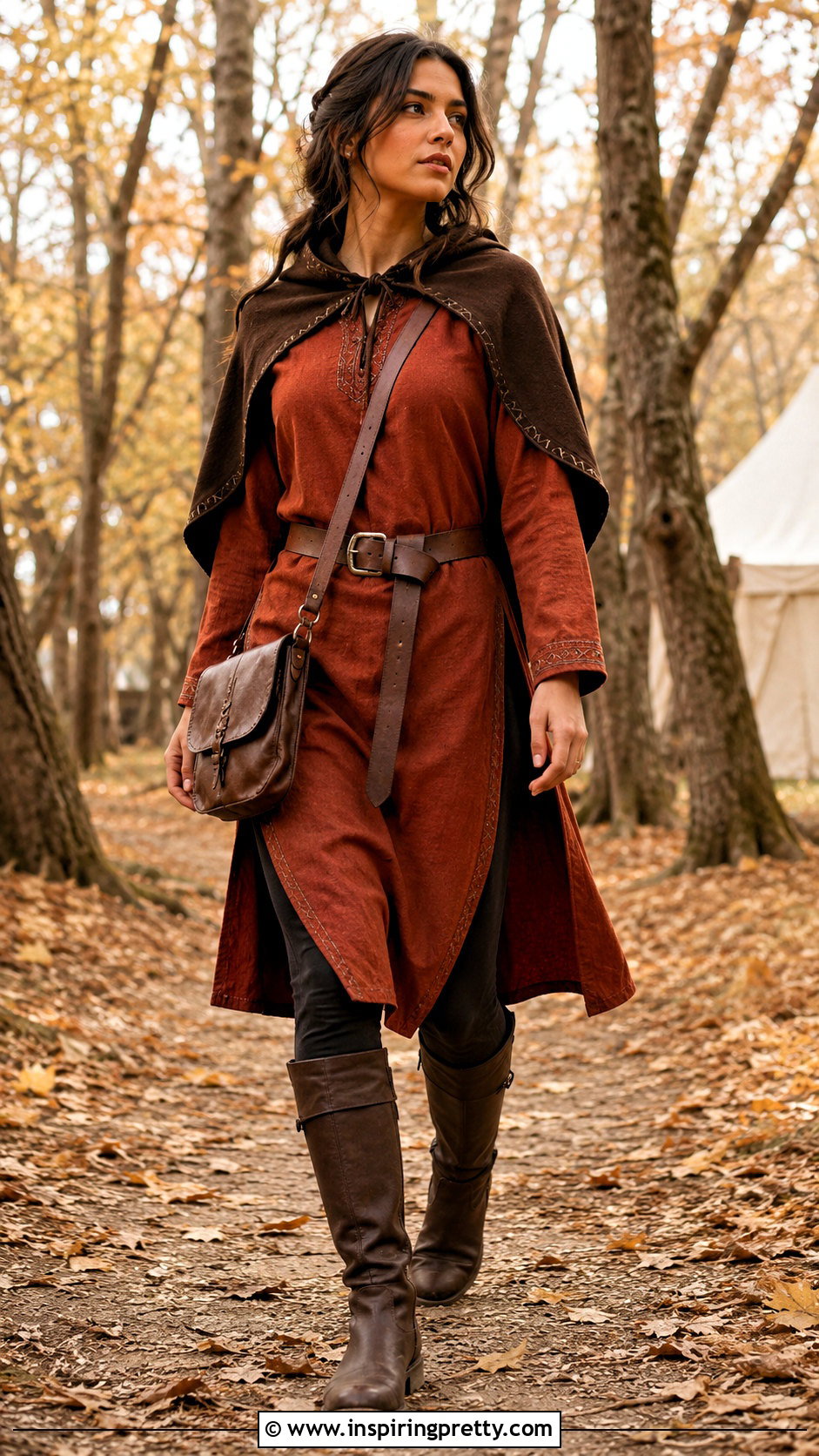
A long medieval tunic offers comfortable coverage and creates a strong vertical silhouette. Look for a rust, charcoal, or deep green tunic that reaches the upper thigh and includes side slits for easier movement. Wear it over thick black leggings or slim stretch trousers for a clean foundation. Cinch the waist loosely with a leather belt, allowing a small amount of fabric to drape over the top. Knee-high riding boots give the outfit structure, while a hooded capelet adds warmth during cooler weather. Complete the look with a crossbody satchel and a simple metal pendant. Avoid overly thin leggings because the tunic and boots already have visual weight. This outfit is especially practical for outdoor fairs, travel, and casual medieval-themed gatherings in fall.
7. Medieval Puff Sleeve Top With Velvet Skirt
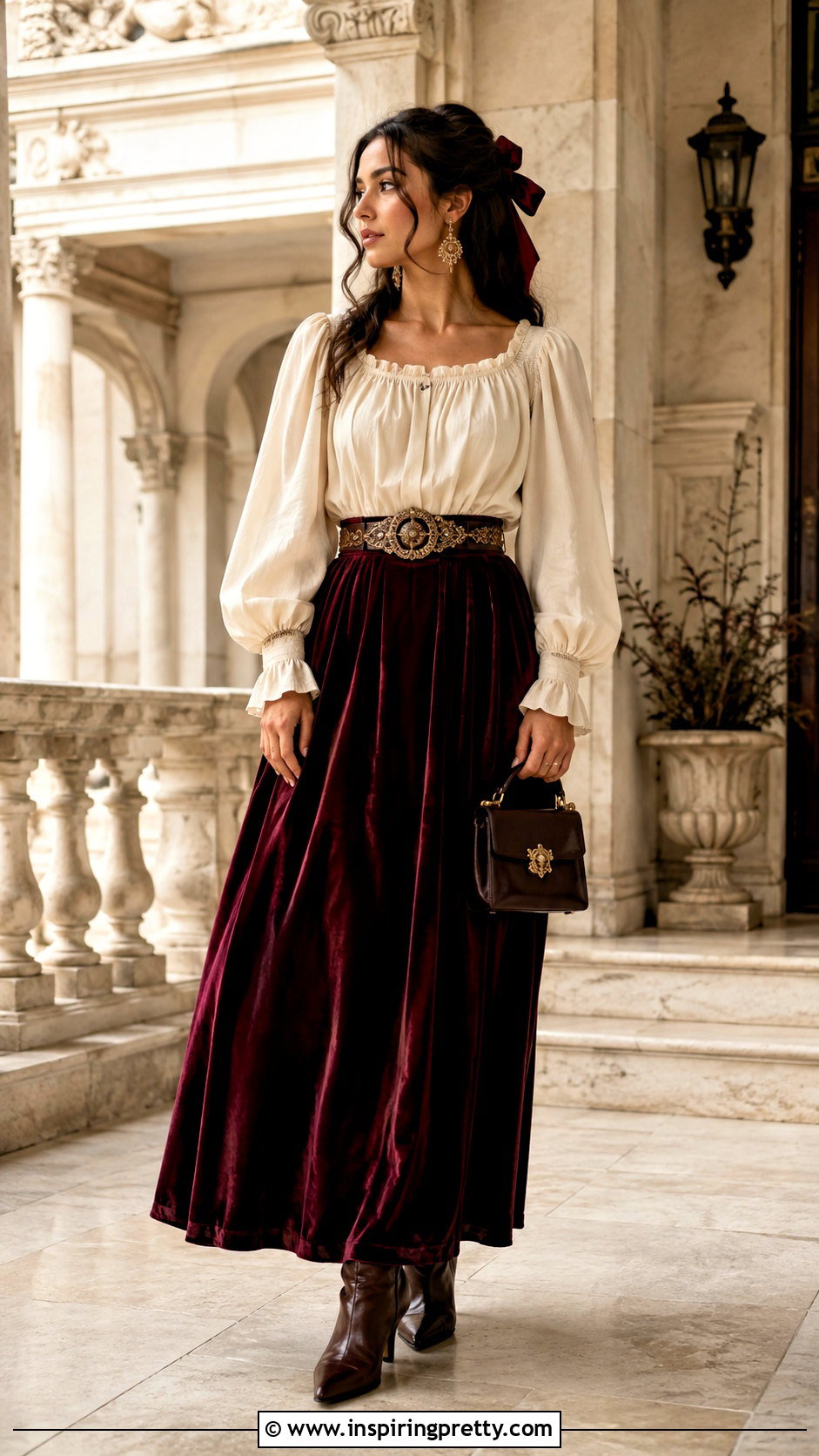
Rich velvet gives a puff-sleeve top a more refined and noble appearance. Choose a cream, dusty rose, or pale gray blouse with volume through the shoulders and fitted wrist cuffs. Pair it with a burgundy or emerald velvet maxi skirt that falls smoothly rather than creating excessive bulk. A decorative belt placed at the natural waist brings definition to the outfit. Add pointed ankle boots, a small structured handbag, and antique-inspired drop earrings. A half-up hairstyle with a thin ribbon reinforces the romantic mood. Because velvet can feel visually heavy, keep the blouse light and the accessories controlled. This complete look works beautifully for cooler indoor events, elegant festival settings, and fantasy portraits where texture, graceful movement, and rich color matter.
8. Medieval Ruffle Top With Black Maxi Skirt
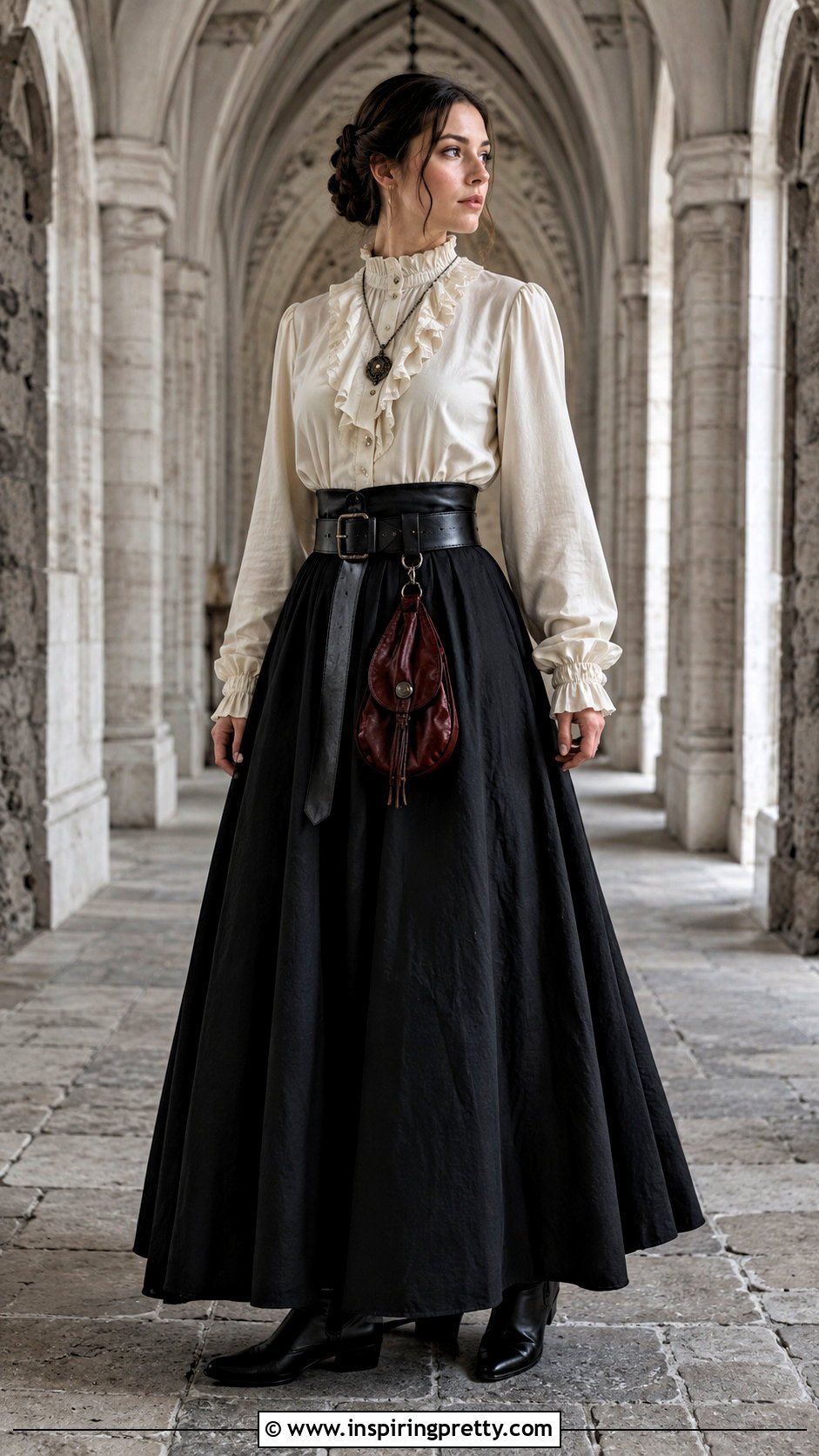
A high-neck ruffle top can create a dark medieval outfit with a polished finish. Select a cream or muted beige blouse featuring a modest ruffled neckline, gathered shoulders, and long sleeves. Tuck it into a sweeping black maxi skirt with a simple A-line shape. Add a wide black belt with understated metal hardware to define the waist. Sleek black ankle boots keep the outfit cohesive, while a deep red pouch introduces a small accent color. Finish with a matte silver pendant and a low braided bun. Avoid too many ornate details because the ruffles already provide visual interest around the face. This look is ideal for anyone who enjoys gothic influence but wants an outfit that remains graceful, covered, and easy to coordinate.
9. Medieval Linen Top With Wrap Skirt
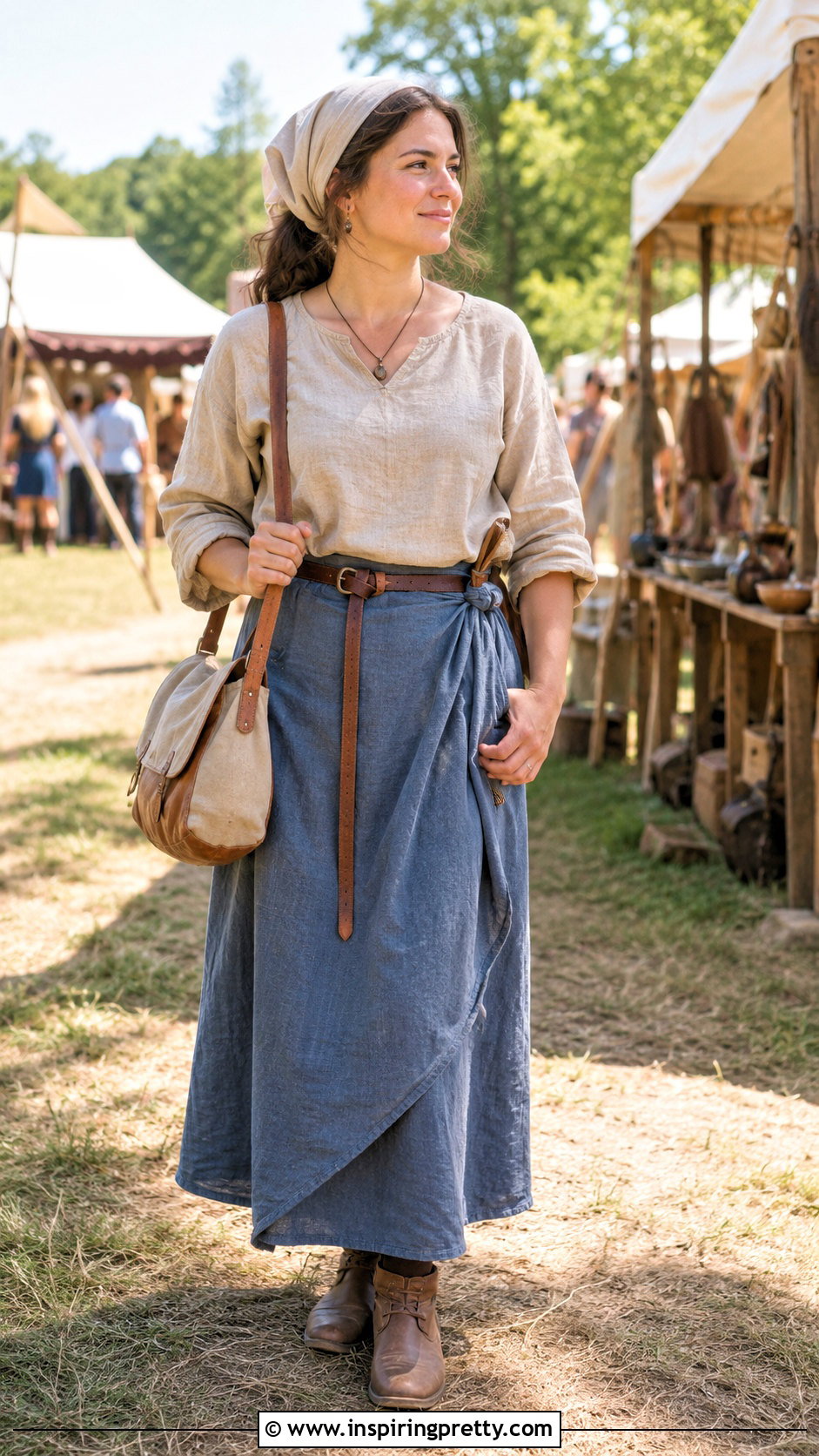
Nothing feels more relaxed than a loose linen top paired with an adjustable wrap skirt. Choose a natural beige, ivory, or soft clay blouse with dropped shoulders and lightly gathered sleeves. Tuck it into a dark brown or muted blue wrap skirt, then secure the waist with hidden ties and a separate leather belt. Flat ankle boots make walking easier, while a canvas-and-leather satchel adds useful storage. Keep jewelry simple with a small pendant or single signet ring. A head scarf or loose braid can provide extra sun protection and visual interest. Allow a few natural creases in the fabric because an overly pressed finish may look too formal. The result is an earthy medieval outfit suited to warm-weather festivals and casual daytime events.
10. Medieval Velvet Top With Wide-Leg Pants
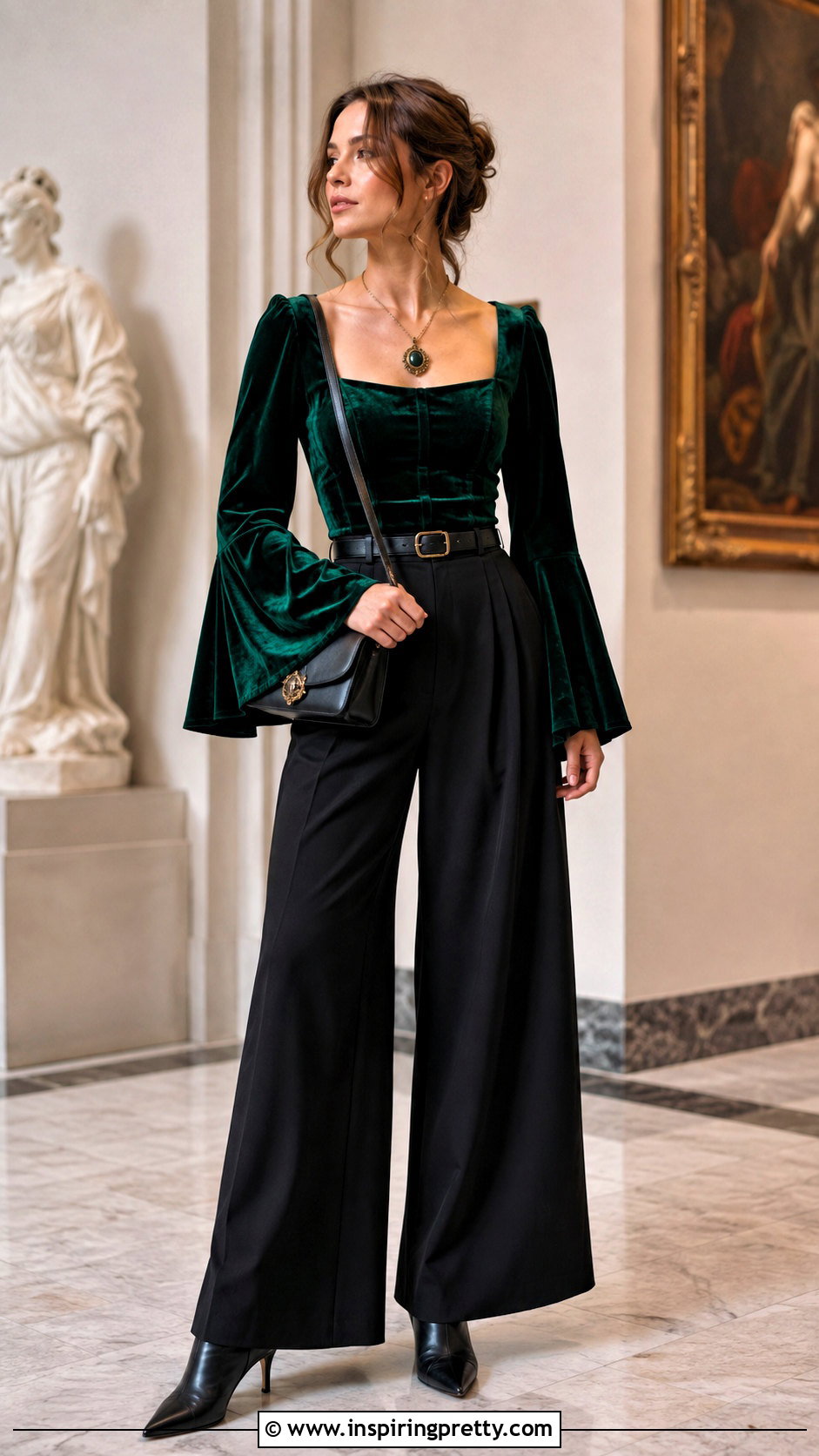
A fitted velvet top gains a modern edge when it is paired with wide-leg pants. Choose an emerald, midnight blue, or wine-colored top with a square neckline and slightly flared sleeves. Add black high-waisted trousers that fall cleanly over pointed ankle boots. A narrow leather belt defines the transition between the rich velvet and simple pants. Carry a structured crossbody bag with minimal hardware and wear one antique-inspired pendant. The trousers should remain fluid rather than sharply tailored, which keeps the silhouette connected to the medieval theme. If the top has a low neckline, layer a lightweight mesh or cotton insert underneath for coverage. This outfit works for indoor celebrations, cool evening events, or anyone seeking medieval influence without wearing a full skirt.
11. Medieval Square Neck Top With Plaid Skirt
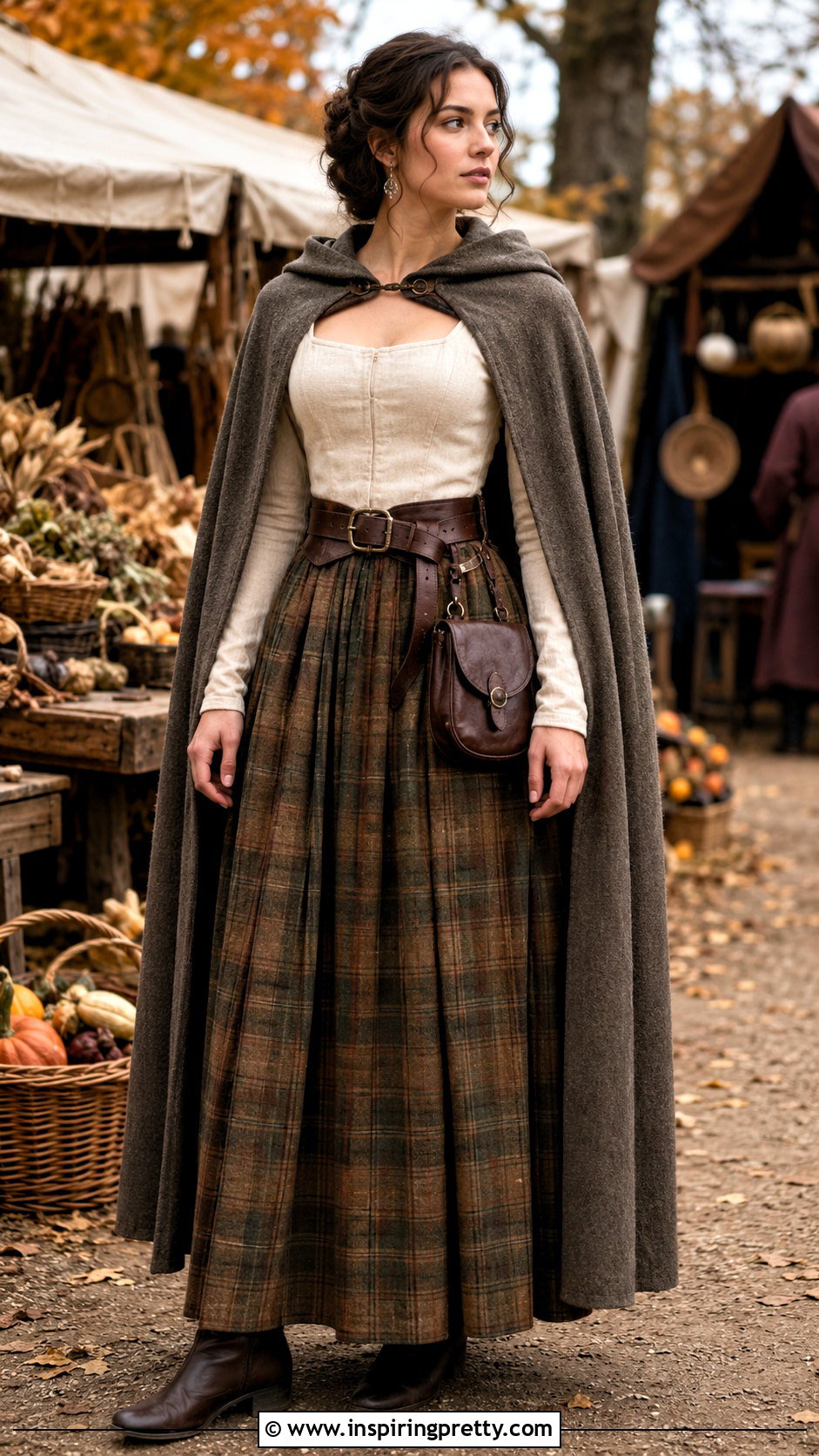
A square neckline brings subtle historical character to an outfit featuring a rustic plaid skirt. Begin with a fitted black or cream top with long sleeves and minimal trim. Pair it with a high-waisted plaid maxi skirt in brown, olive, charcoal, or muted burgundy. Add a wide belt at the waist and choose practical leather boots with a low heel. A small shoulder pouch and plain metal earrings complete the look without distracting from the pattern. For cold weather, layer a wool cape or long neutral cardigan over the outfit. Keep the skirt pattern subdued rather than bright so it supports the medieval color palette. This combination is easy to assemble from wearable separates and provides enough texture for autumn fairs, outdoor markets, and casual themed events.
12. Medieval Hooded Top With Cargo Pants
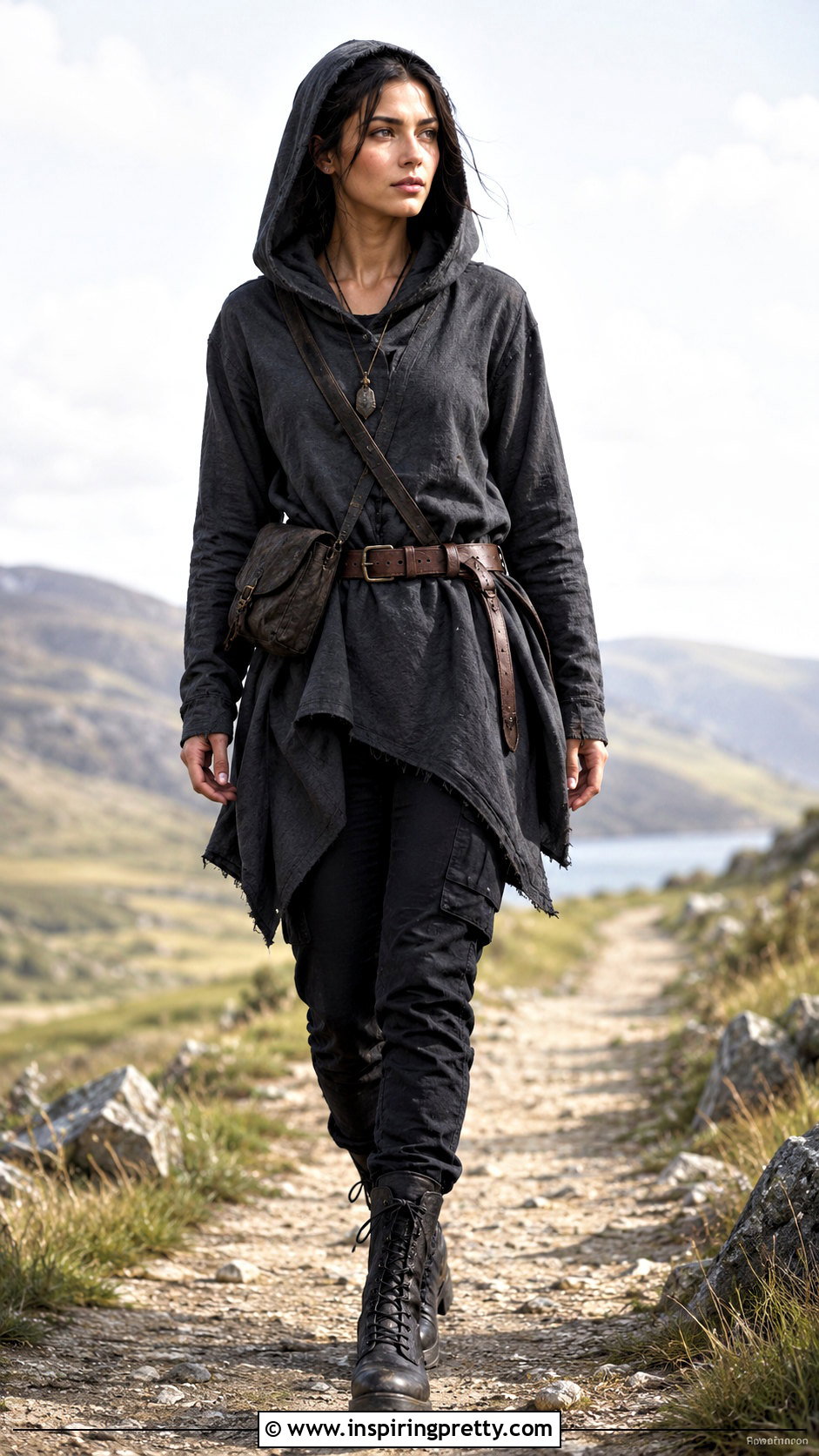
A hooded medieval top can blend naturally with modern utility clothing. Choose a charcoal or dark olive tunic-style top with a soft hood, uneven hem, and relaxed sleeves. Pair it with tapered black cargo pants that have streamlined pockets rather than bulky details. Add rugged lace-up boots and a wide brown belt worn over the tunic. A compact crossbody pouch keeps the outfit practical and reinforces the traveler-inspired theme. Limit jewelry to a simple cord necklace or small metal ring. The hood should drape loosely around the shoulders when it is not being worn. This combination suits fantasy festivals and active outdoor events because it feels adventurous without restricting movement. It is also a useful choice for anyone who prefers pants, functional layers, and a darker color scheme.
13. Medieval Lace Blouse With Green Skirt
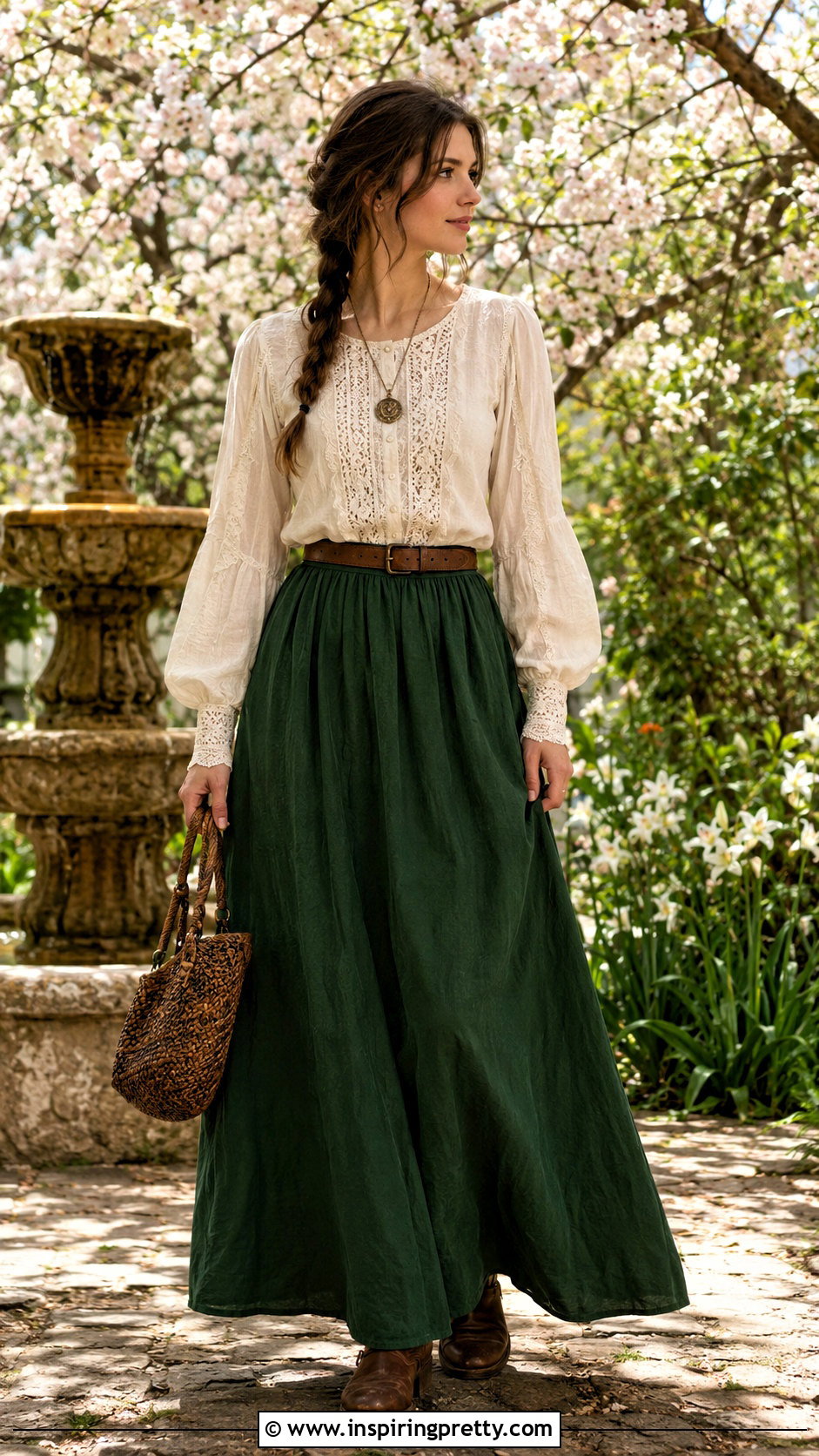
Delicate lace can soften an earthy medieval outfit when it is used in small amounts. Choose an ivory blouse with lace panels along the neckline or sleeves rather than an entirely sheer design. Tuck it into a deep green maxi skirt with a gently gathered waist and fluid shape. A narrow brown belt creates definition while allowing the blouse details to remain visible. Complete the look with rounded leather boots, a woven handbag, and a subtle bronze pendant. Wear a camisole beneath the blouse if the lace sections reveal more than desired. A loose low braid gives the outfit an unfussy finish. This pairing feels feminine and timeless without becoming overly formal, making it suitable for spring fairs, garden photographs, and relaxed medieval-themed celebrations.
14. Medieval Pirate Top With Striped Trousers
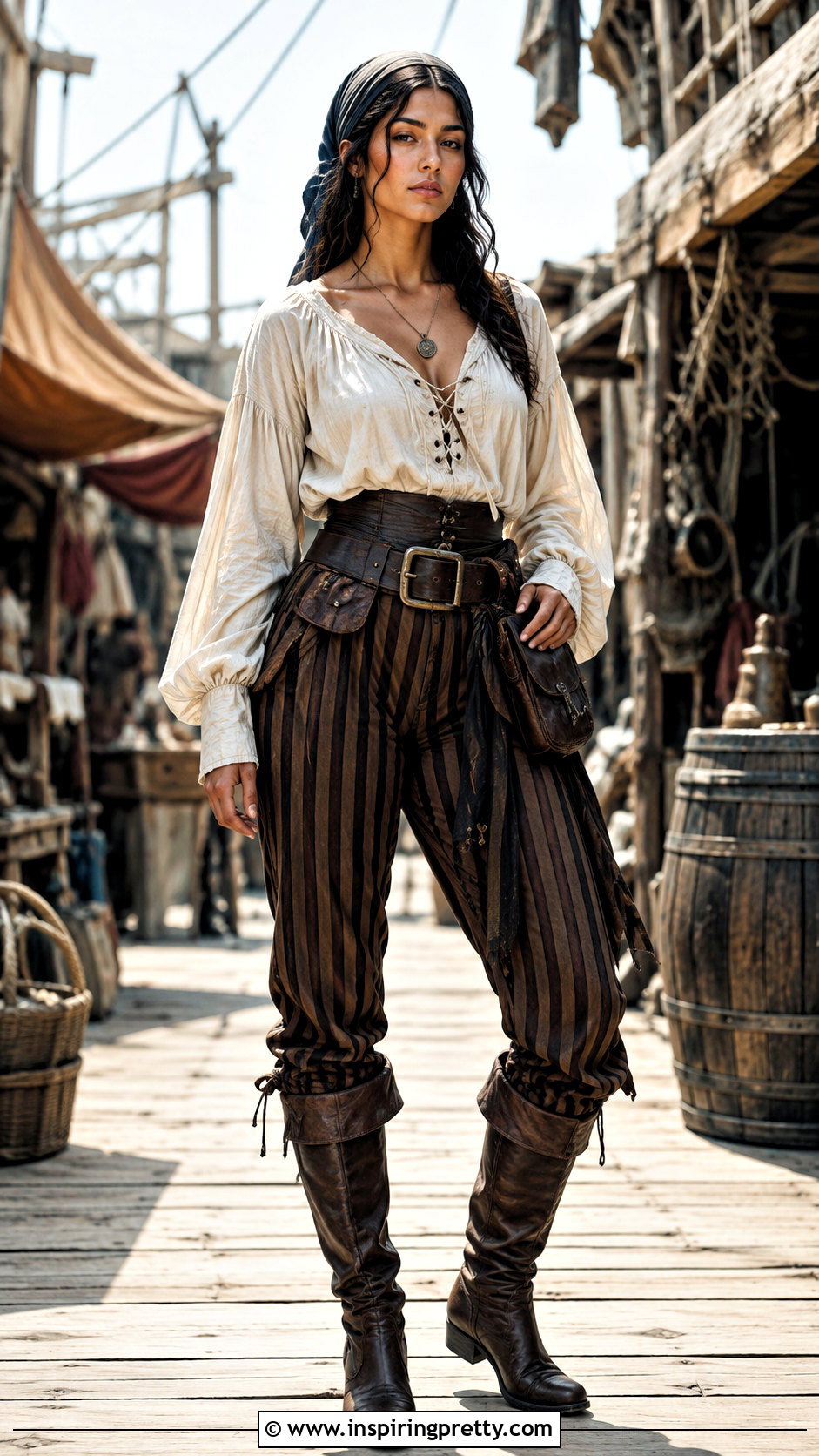
A loose pirate-style top can support a playful medieval fantasy outfit when paired with understated striped trousers. Select an ivory blouse with a lace-up neckline, gathered sleeves, and relaxed cuffs. Add high-waisted brown-and-black striped pants in a straight or slightly tapered cut. A wide leather belt and hip pouch help shape the roomy pieces. Finish with mid-calf boots and a dark head scarf tied securely behind the hair. Skip oversized props and excessive jewelry so the outfit remains practical. One metal pendant or simple hoop earring is enough. The blouse can be partially tucked for a casual, asymmetric finish. This outfit offers excellent movement and visual personality, making it a strong choice for outdoor festivals, themed group events, and adventurous fashion photography.
15. Medieval Wrap Top With A-Line Skirt
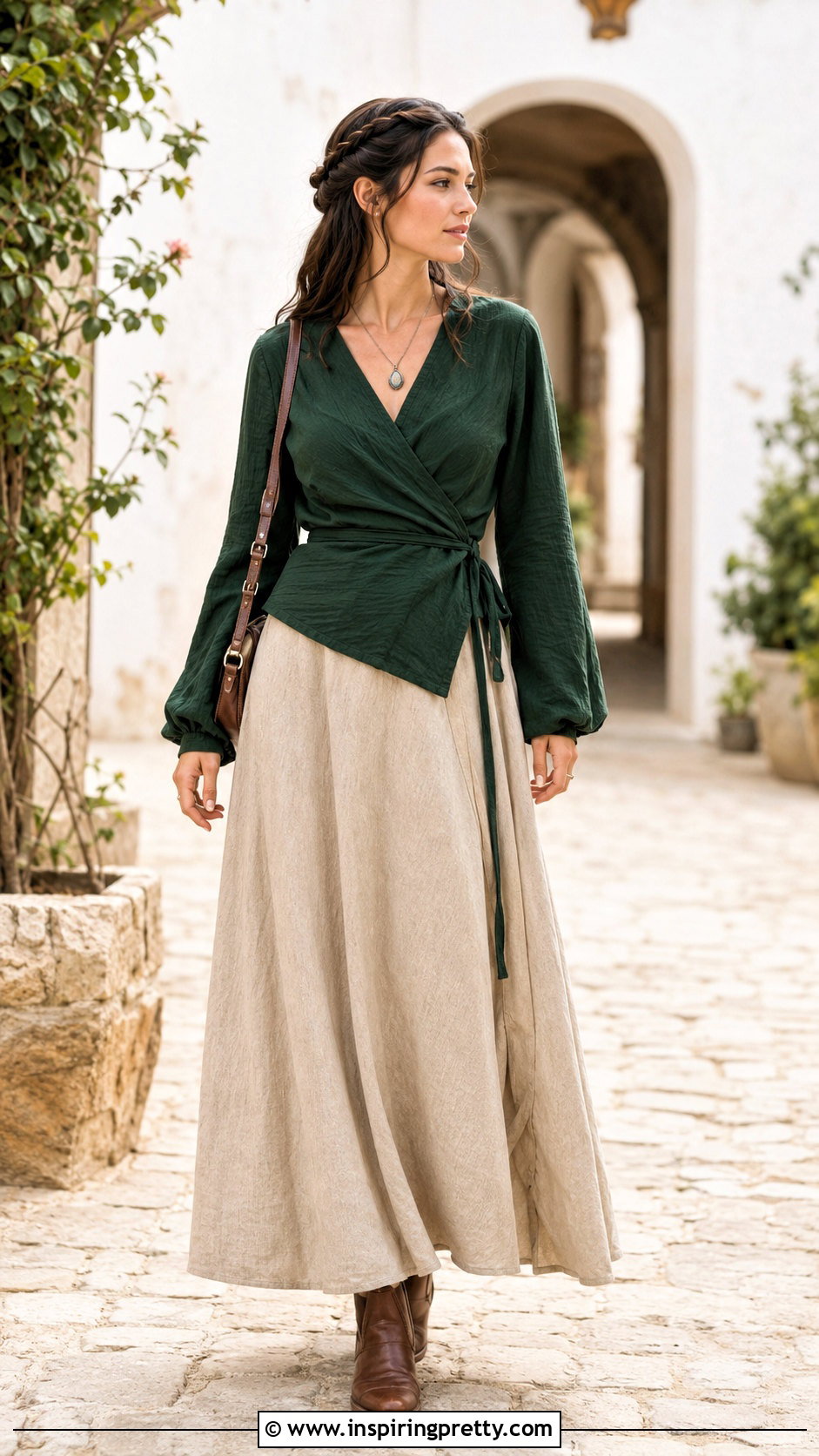
A wrap top creates adjustable waist definition and works well with a simple A-line skirt. Choose a deep red, forest green, or warm brown top with long sleeves and secure inner ties. Pair it with a plain black or oatmeal maxi skirt that falls away from the body without excessive gathering. Wear the wrap ties flat so they do not form a bulky knot beneath a belt. Add low leather boots, a small shoulder bag, and a teardrop pendant. For additional coverage, layer a fitted cotton tank underneath. A half-up braid keeps the neckline visible and complements the outfit’s soft shape. This look can flatter many proportions because both the neckline and waist placement are adjustable, making it useful for fairs, performances, and fantasy-inspired everyday dressing.
16. Medieval Brocade Top With Black Trousers
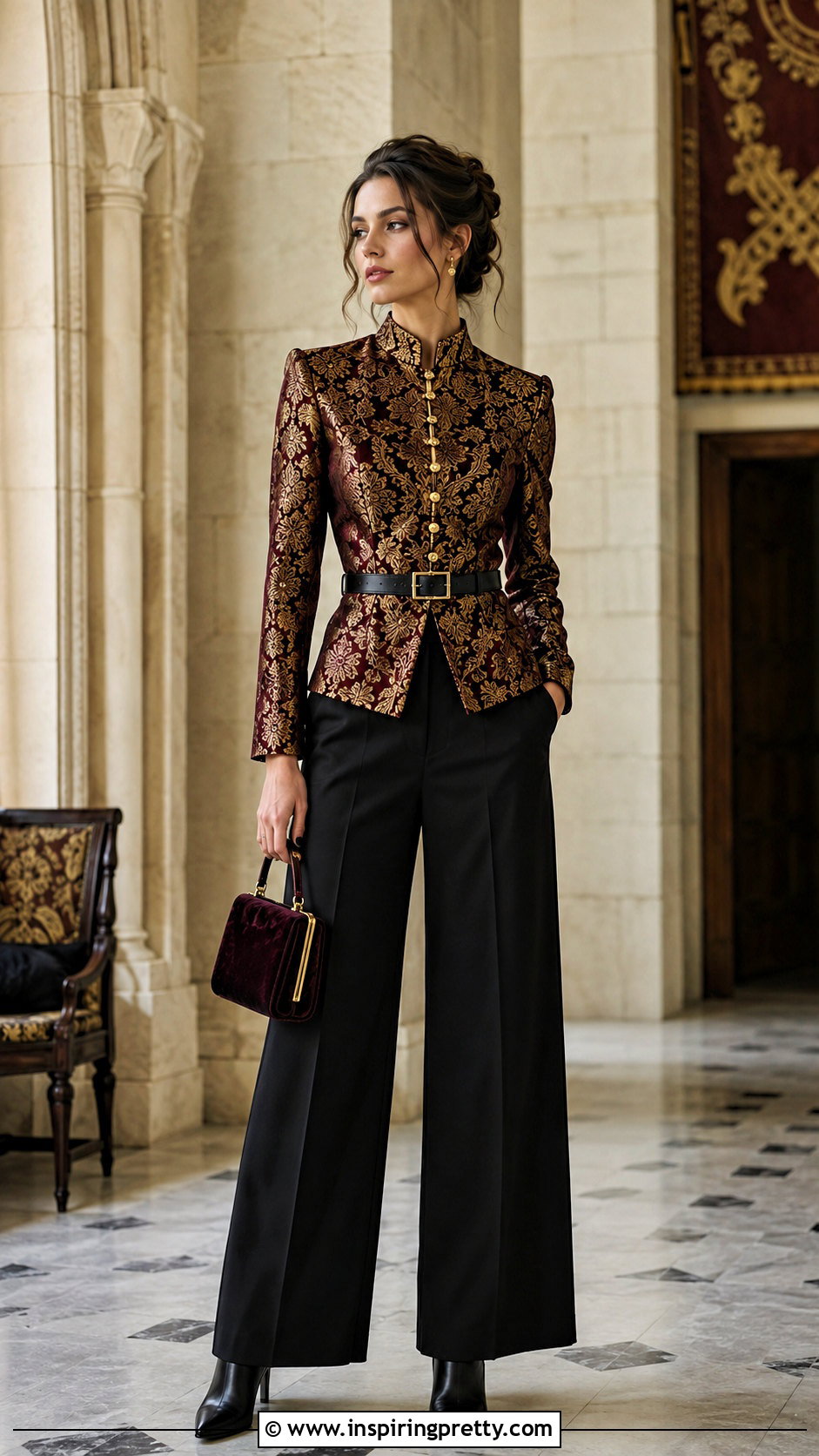
A brocade top makes a strong statement, so the rest of the outfit should remain clean and controlled. Choose a fitted design in gold and black, burgundy, or deep navy with a square neckline and structured seams. Pair it with plain black wide-leg trousers that balance the decorative fabric. Add sleek ankle boots and a simple belt without oversized hardware. Carry a compact velvet or leather bag and limit jewelry to small drop earrings. If the brocade feels stiff, look for a top with stretch panels or an adjustable back. The trousers should skim the body and offer comfortable movement when sitting or walking. This polished medieval outfit is well suited to indoor themed events, elegant festival dinners, staged portraits, and occasions where a noble-inspired appearance feels appropriate.
17. Medieval Crochet Top With Layered Skirts
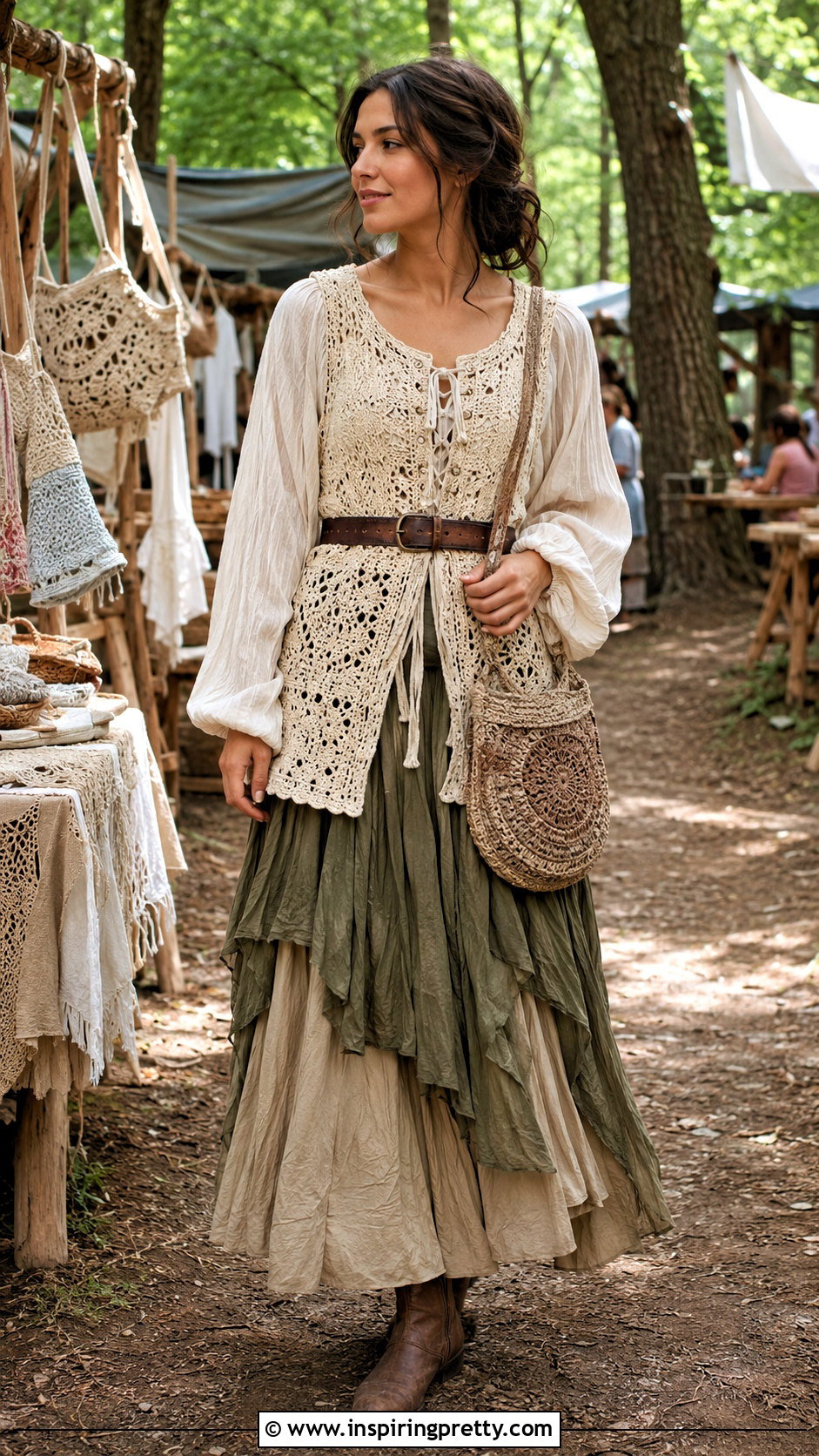
A textured crochet top introduces handcrafted character to a relaxed medieval outfit. Wear a cream or muted brown crochet vest over a long-sleeve cotton blouse, ensuring the underlayer provides full coverage. Combine it with two lightweight skirts in complementary earthy colors, such as olive over beige or rust over brown. Arrange the top skirt slightly to one side so both layers remain visible. A leather belt, flat boots, and a woven crossbody bag complete the rustic combination. Choose minimal jewelry because the crochet pattern already adds detail. For warm weather, replace the long-sleeve blouse with a short-sleeve peasant top. This layered look feels creative and approachable, making it suitable for craft fairs, fantasy festivals, casual events, and woodland-inspired photo settings.
18. Medieval Leather Bodice With Cream Blouse
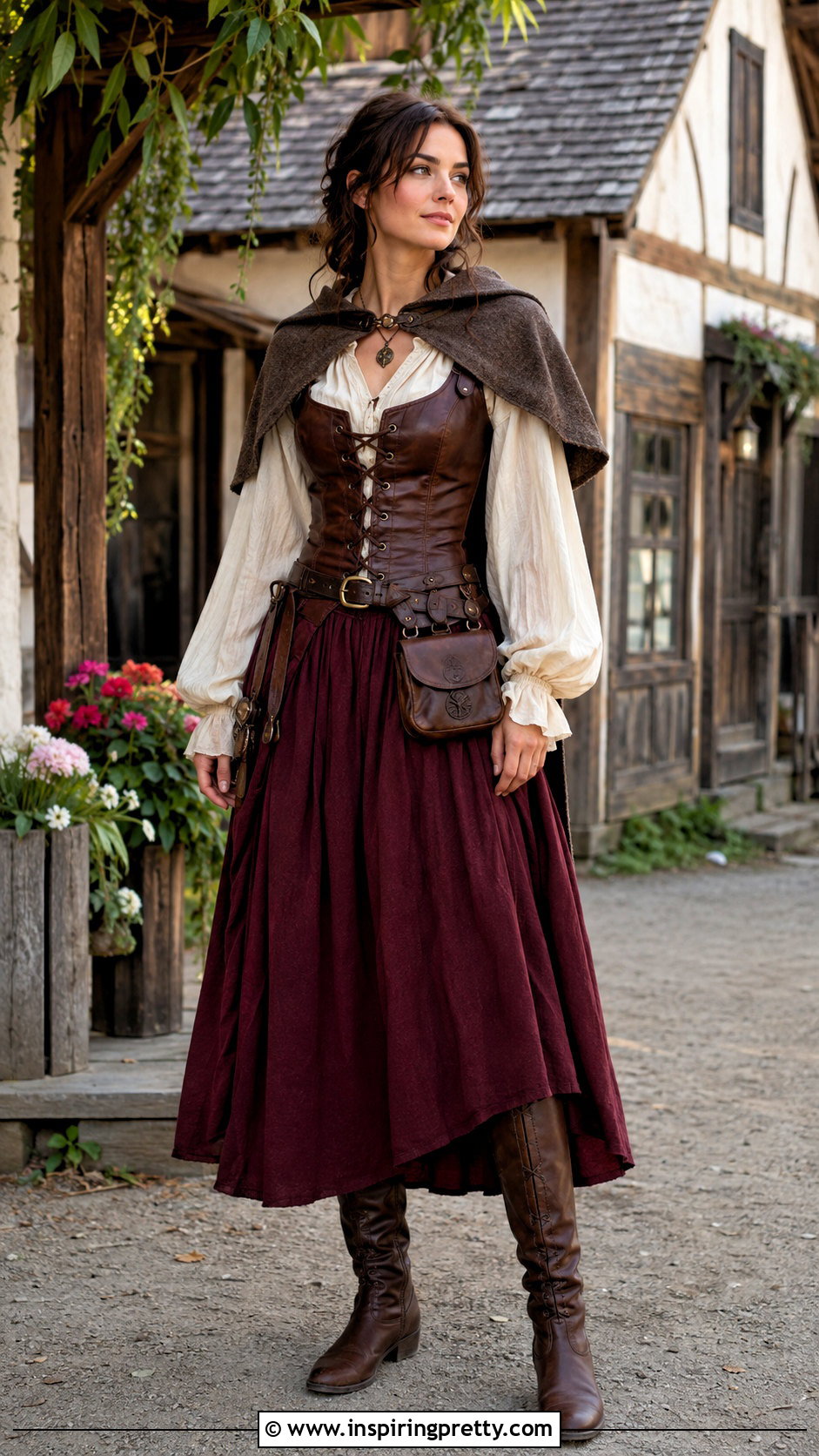
A leather bodice over a cream blouse creates one of the most recognizable medieval outfit combinations. Choose a soft brown bodice with adjustable side or front lacing rather than a rigid, restrictive design. Layer it over a billowy cotton blouse with a secure neckline and wrist-length sleeves. Add a dark green or burgundy maxi skirt for rich contrast. Flat knee-high boots, a belt pouch, and a small pendant provide a functional finish. Keep the bodice hem above the widest part of the skirt to avoid bulky overlapping layers. If extra warmth is needed, add a short wool cape that leaves the waist visible. This outfit works especially well for Renaissance fairs because it feels detailed and traditional while still allowing comfortable movement throughout the day.
19. Medieval Asymmetrical Top With Leggings
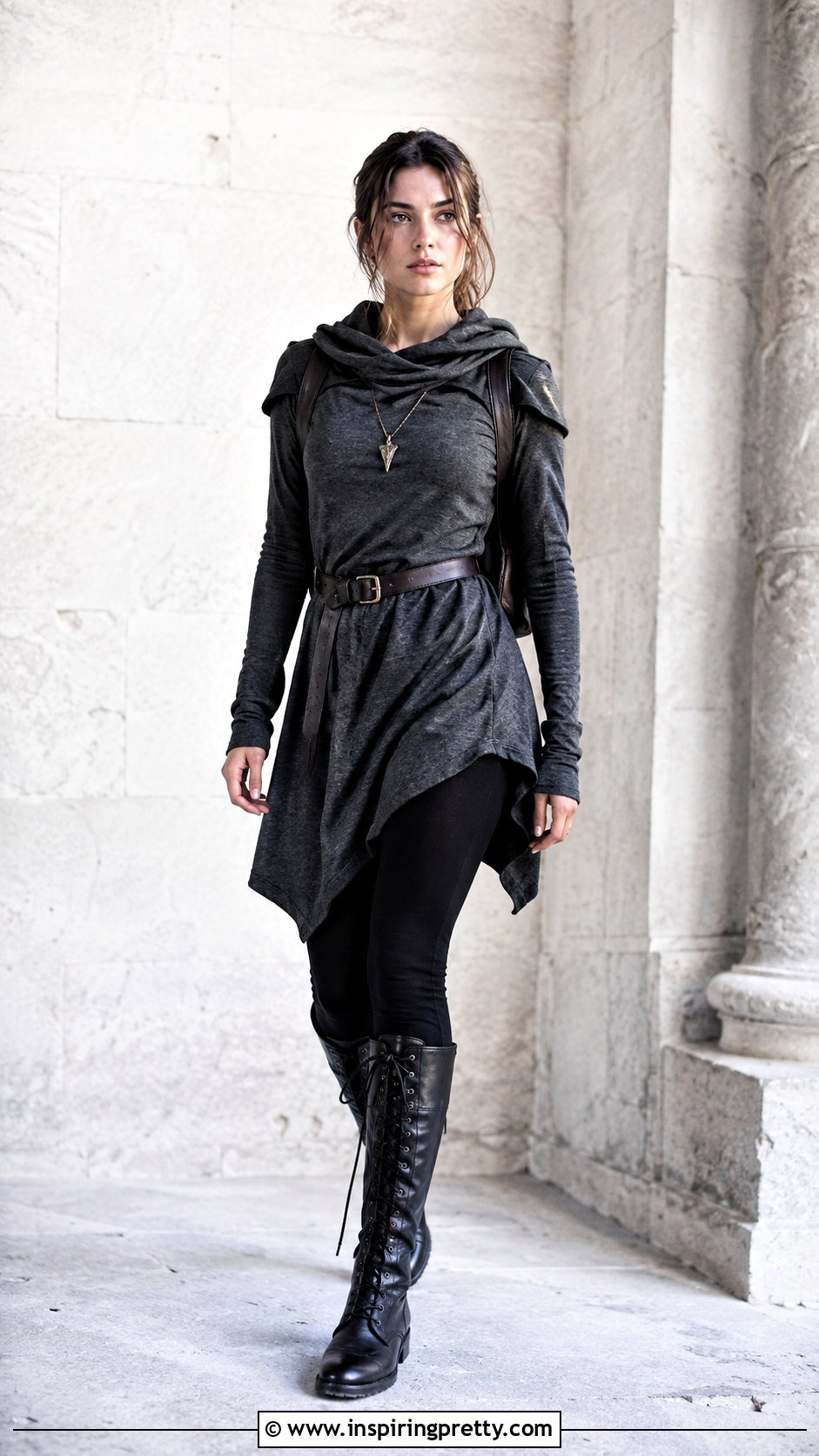
An asymmetrical medieval top brings movement to a sleek outfit built around dark leggings. Look for a charcoal, olive, or muted burgundy tunic with a pointed hem and fitted upper body. Pair it with thick black leggings or stretch trousers and knee-high lace-up boots. A slim belt worn at the natural waist can add shape without interrupting the uneven hem. Finish with a small leather backpack, a simple pendant, and a hooded shoulder wrap. Avoid combining too many angled layers because the top should remain the outfit’s main visual feature. The longer hem offers useful coverage, while the fitted bottoms balance its drape. This practical combination suits active events, cool-weather festivals, fantasy gaming gatherings, and modern wardrobes with a medieval Y2K influence.
20. Medieval Bard Top With Suede Vest
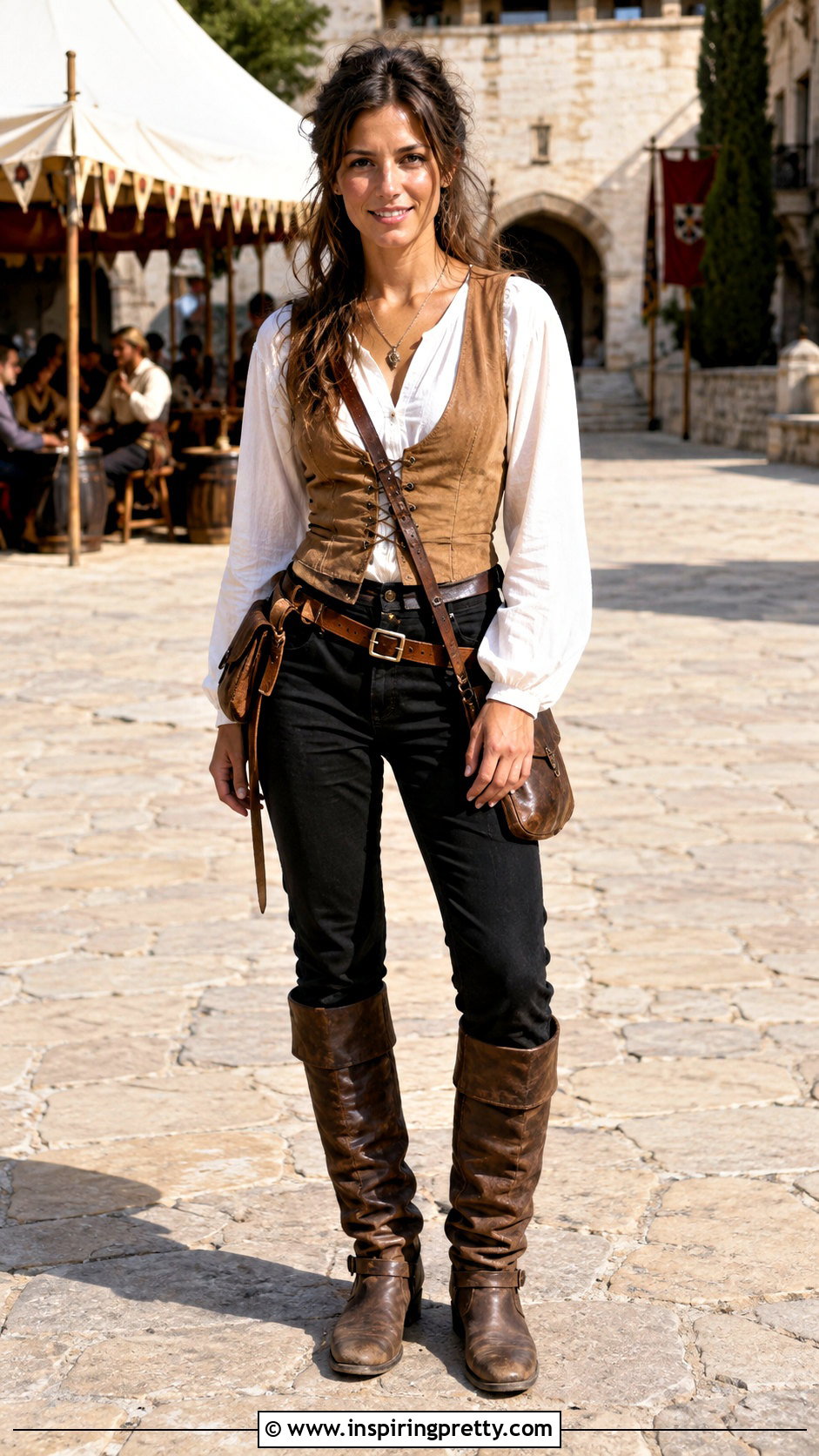
A bard-inspired outfit starts with a loose white shirt and gains structure from a fitted suede vest. Choose a blouse with a soft V-neck, gathered sleeves, and simple ties at the collar. Layer a tan, brown, or dark green vest over it, leaving enough room through the shoulders for movement. Pair these pieces with slim black trousers and tall brown boots. Add a crossbody satchel and a narrow belt worn beneath the vest. A small pendant or plain metal cuff supplies a final decorative touch. Roll the sleeves slightly for a casual, traveled appearance. This complete look avoids heavy costume pieces but still has clear medieval character. It is comfortable for performances, festivals, group outings, and creative events where mobility matters.
21. Medieval Gothic Top With Burgundy Skirt
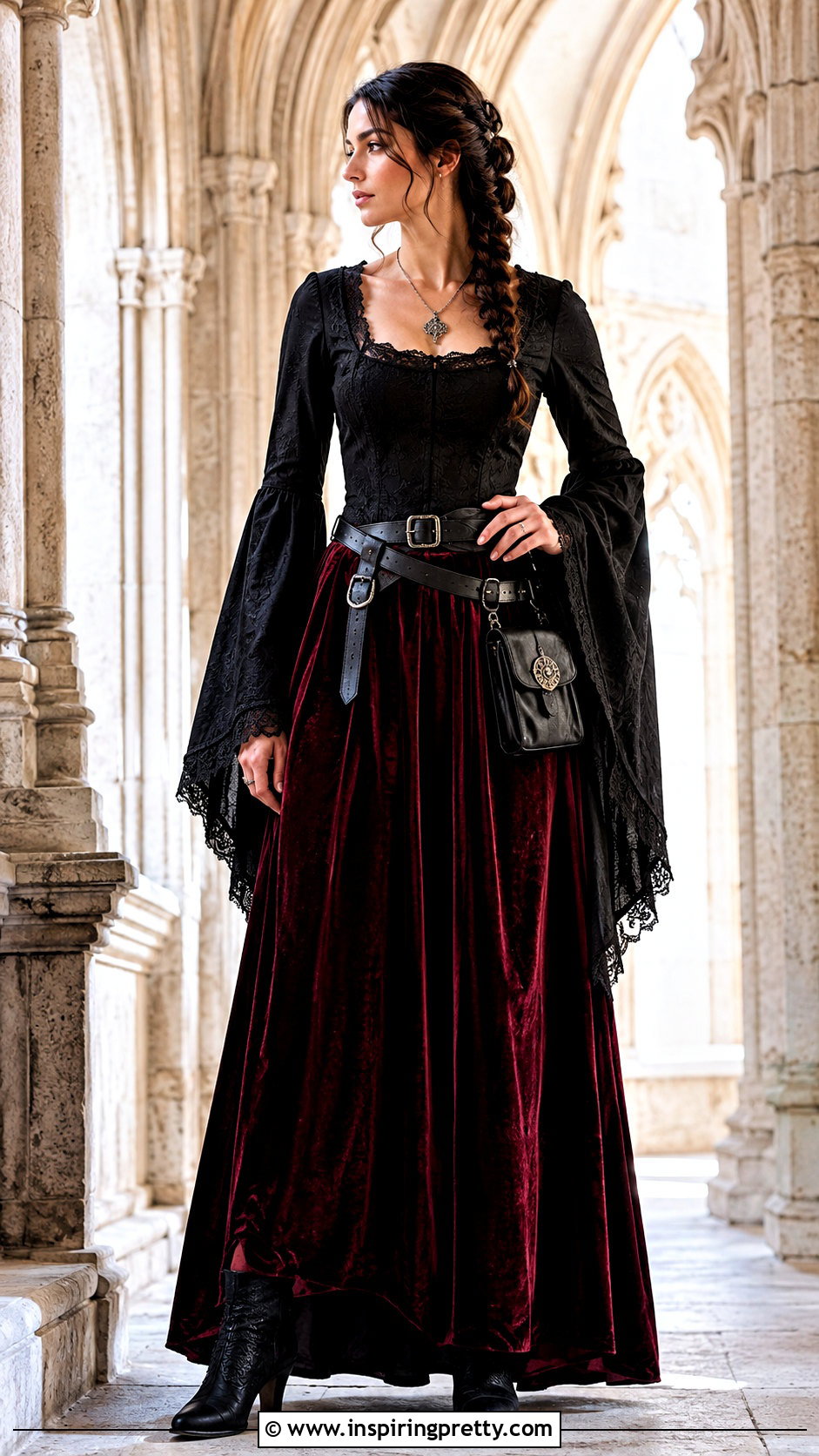
A black gothic top and burgundy skirt create a dramatic medieval palette without relying on elaborate accessories. Select a fitted top with a square neckline, subtle lace trim, and long flared sleeves. Combine it with a deep burgundy maxi skirt in matte cotton, velvet, or softly textured fabric. Add a black waist belt and matching ankle boots to anchor the darker colors. A silver pendant provides contrast near the neckline, while a compact black pouch keeps the styling functional. Wear the hair in a low braid or simple half-up arrangement. Avoid adding several bold gothic details at once, since the strong color pairing already commands attention. The finished outfit feels elegant, mysterious, and appropriate for evening festivals, fantasy portraits, or cool seasonal gatherings.
22. Medieval Embroidered Top With Brown Skirt
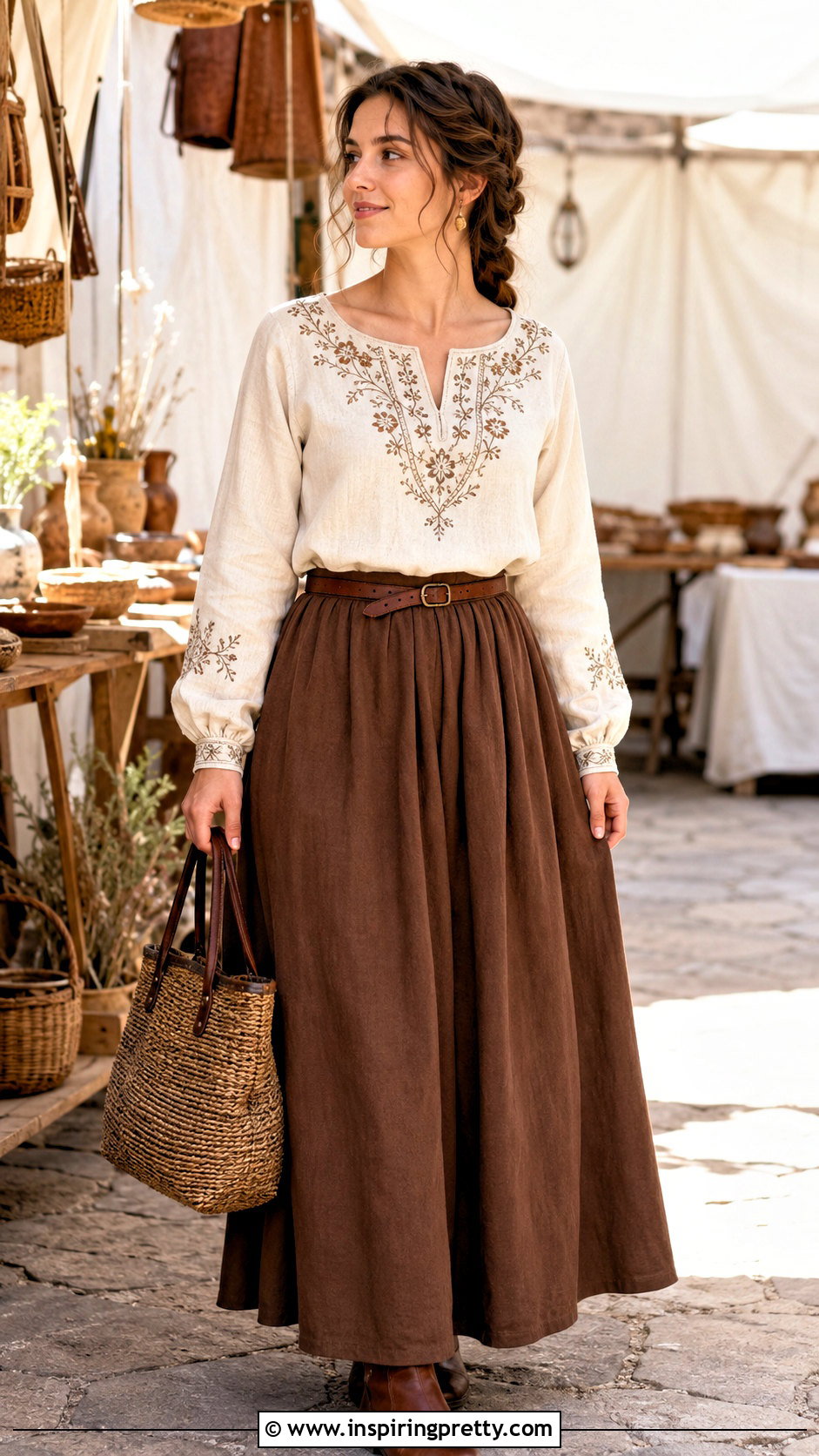
An embroidered blouse can become the centerpiece of a detailed yet approachable medieval outfit. Choose an ivory, mustard, or muted blue top with modest embroidery around the neckline, cuffs, or front opening. Pair it with a plain brown A-line maxi skirt to prevent the outfit from feeling too busy. A narrow belt highlights the waist and gives the blouse a clean tucked finish. Add rounded ankle boots, a woven bag, and small bronze earrings. If the embroidery uses several colors, select accessories that repeat only one of those shades. Keep additional patterns out of the look so the craftsmanship remains visible. This warm, grounded outfit works for daytime fairs, artisan markets, seasonal photographs, and anyone drawn to folk-influenced medieval clothing.
23. Medieval Crop Top With High-Waisted Skirt
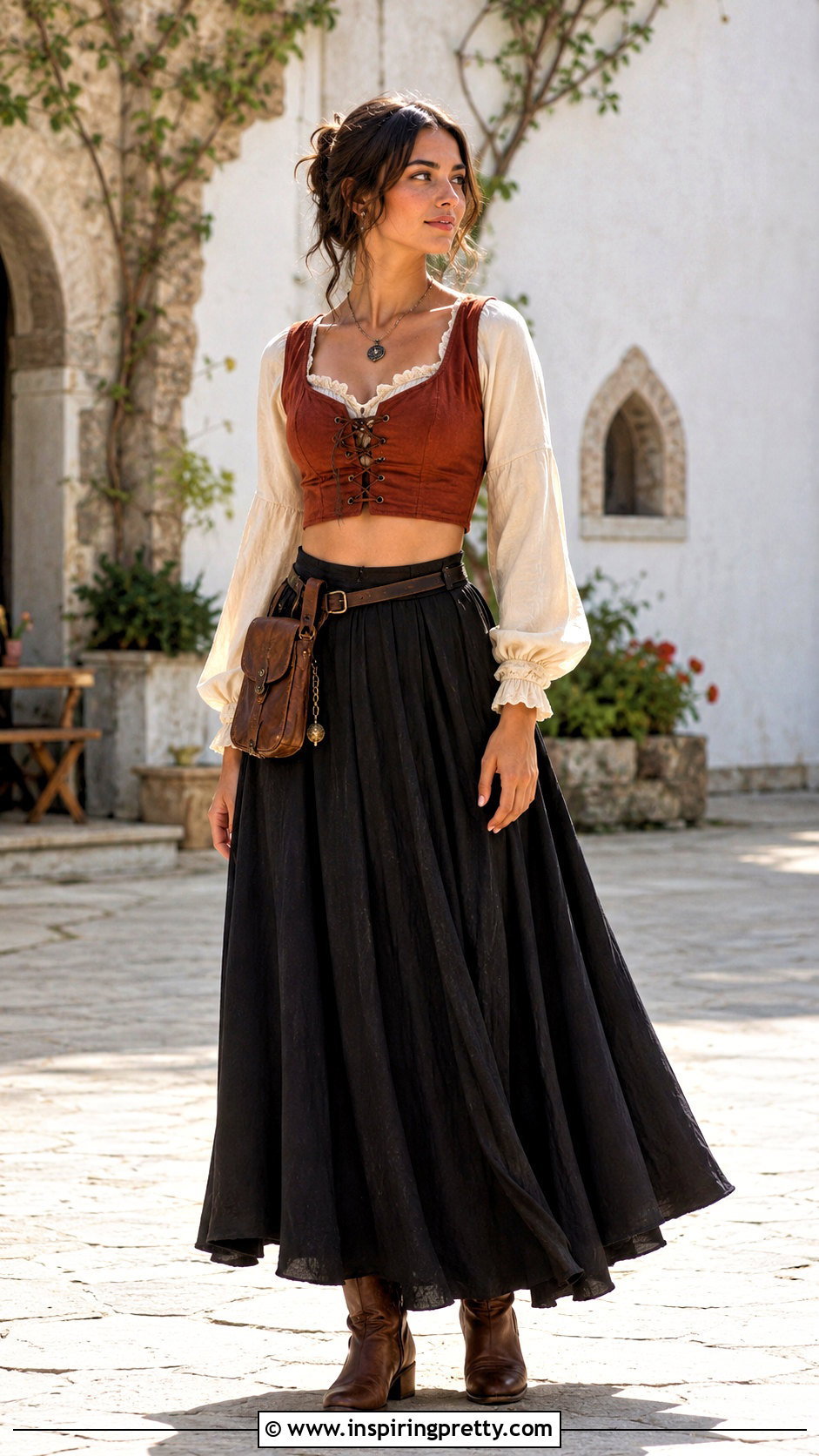
A cropped medieval top can look balanced and wearable when paired with a truly high-waisted skirt. Choose a lace-up top in black, rust, or deep green that ends at or just above the skirt waistband. Add a flowing maxi skirt with enough rise to provide the coverage you prefer. A lightweight blouse or fitted mesh layer can be worn beneath the crop top for cooler weather and a more traditional layered effect. Finish with ankle boots, a waist pouch, and a simple choker-length pendant. Avoid adding a wide belt if it competes with the top’s lacing. This outfit combines modern proportions with medieval details, making it appealing for music festivals, Renaissance fairs, fantasy gatherings, and confident photo-ready styling.
24. Medieval Cape Sleeve Top With Slim Pants
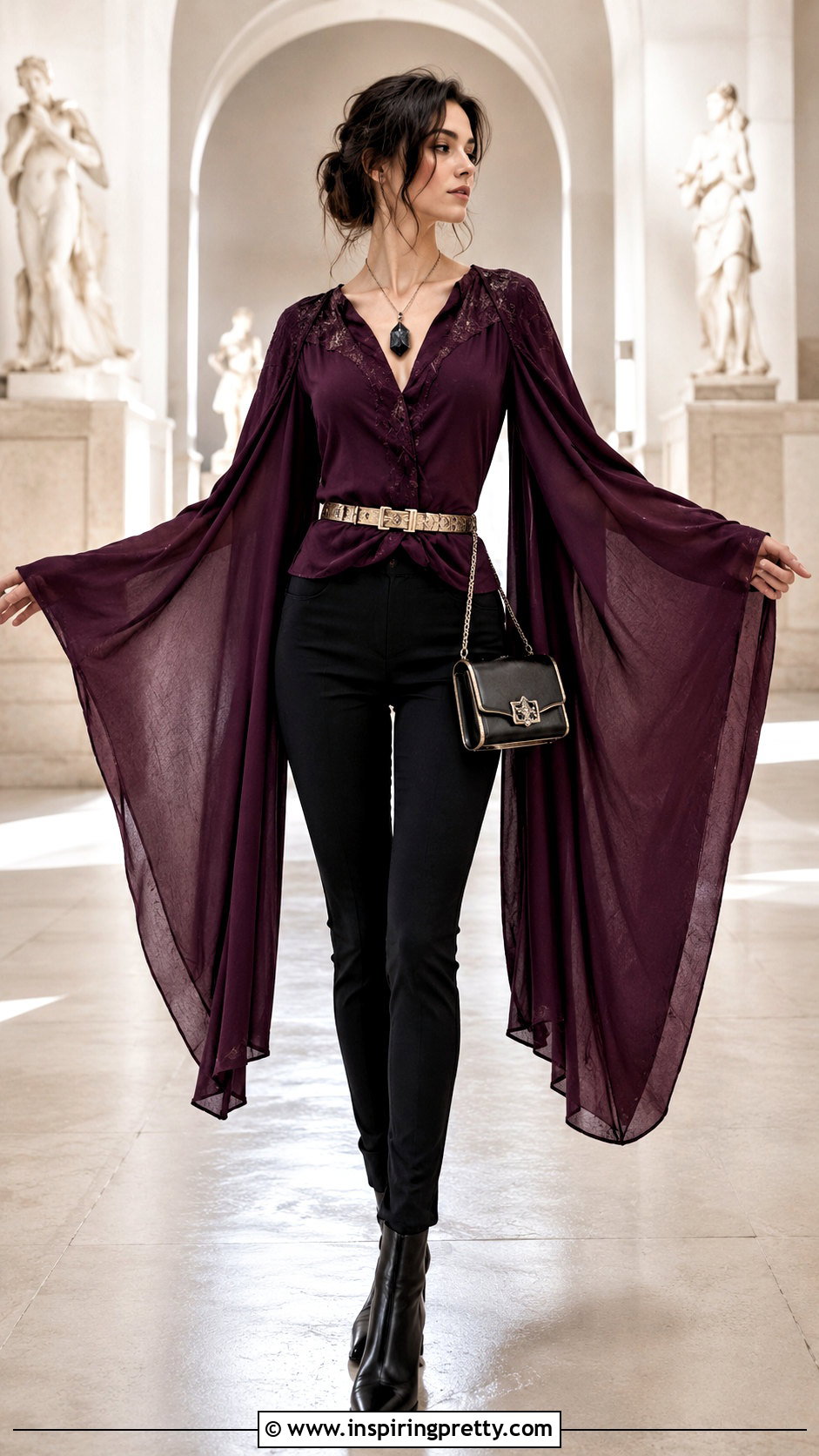
A cape-sleeve top delivers dramatic movement while keeping the outfit streamlined underneath. Select a black, navy, or deep plum design with open draped sleeves and a fitted bodice. Pair it with slim black trousers and pointed ankle boots to create a long, uninterrupted line. A narrow metallic belt can define the waist, but choose a simple finish rather than oversized ornamentation. Add a structured mini satchel and one stone pendant. Because cape sleeves require extra space, avoid wearing a bulky outer layer over the top. Secure loose fabric before eating, crafting, or moving through crowded areas. This sophisticated combination works best for indoor events, staged fantasy photography, and cool evenings when you want a powerful medieval look without wearing a floor-length skirt.
25. Medieval Layered Top With Patchwork Skirt
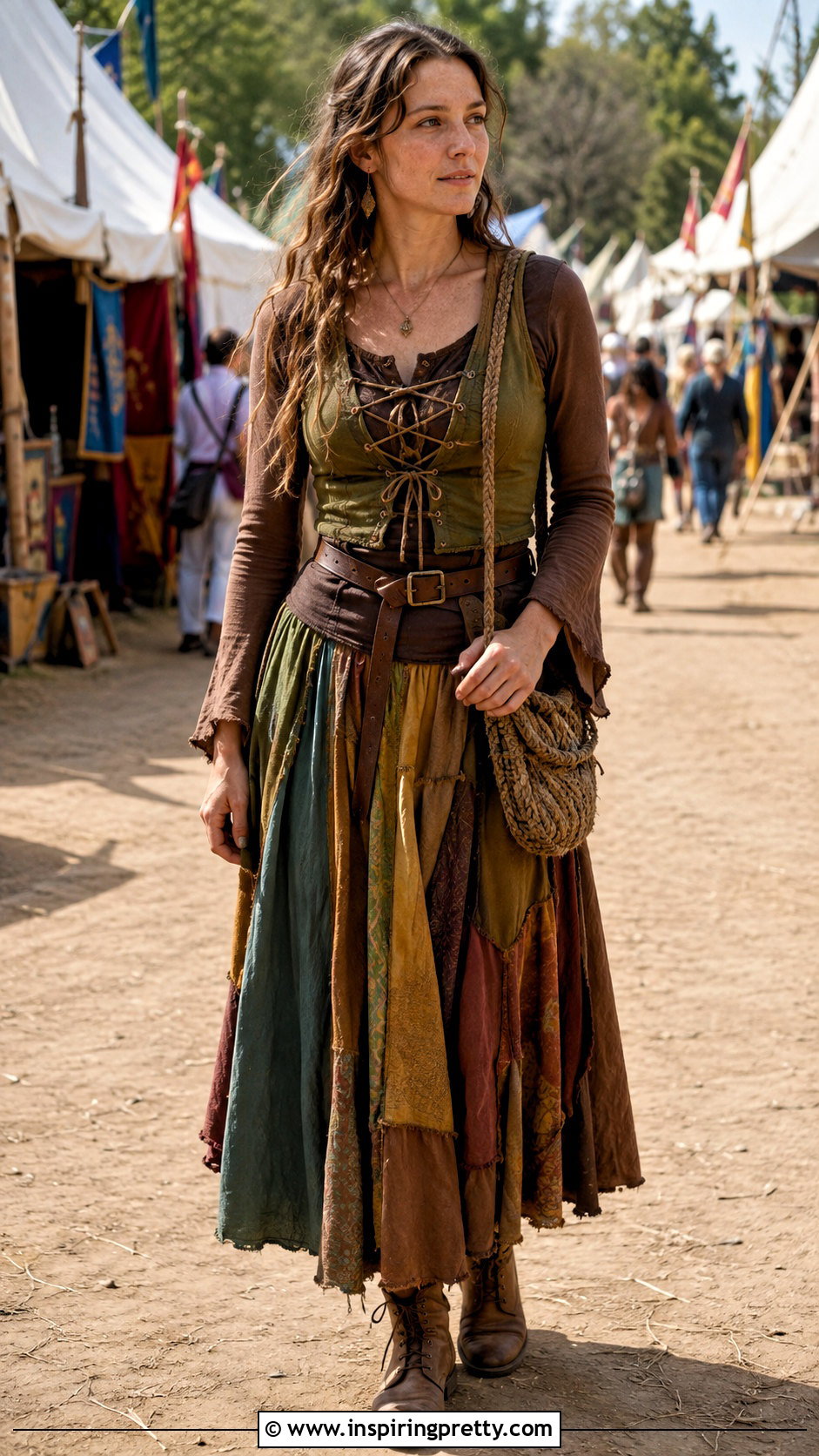
A layered medieval top and patchwork skirt create a richly textured outfit with an artisan-made feeling. Begin with a fitted brown or black base top, then add a short lace-up vest or cropped overdress in olive, rust, or muted blue. Pair the layers with an ankle-length patchwork skirt made from coordinated earthy fabrics. A plain leather belt helps organize the different textures and creates a clear waistline. Complete the look with rugged ankle boots, a woven shoulder pouch, and minimal metal jewelry. Keep the color palette limited to three or four shades so the outfit appears cohesive rather than random. This expressive combination is ideal for creative festivals, outdoor markets, fantasy photos, and anyone who enjoys distinctive clothing built around layering and handcrafted details.
Conclusion:
These **25 Medieval Style Tops outfit ideas** show how peasant blouses, tunics, bodices, velvet tops, and dramatic sleeves can anchor complete head-to-toe looks. The most wearable outfits balance one noticeable medieval feature with simple skirts, trousers, boots, and practical accessories. Earthy colors create a rustic mood, while burgundy, emerald, black, and brocade offer a more noble or gothic direction. Comfort should remain part of the plan, especially when dressing for long festivals or outdoor events. Select adjustable layers, secure necklines, supportive footwear, and fabrics suited to the weather. Whether you prefer a historically inspired ensemble or a modern fantasy interpretation, thoughtful coordination will make your medieval top feel intentional, flattering, and genuinely enjoyable to wear.
Related posts:


Leave a Reply