
A formal bustier is a different garment from the lace-up corset tops people wear to brunch. The evening versions are cut in satin, velvet or beaded fabric, with real boning, lined cups and often a longline hem, and that structure is what lets you wear separates to an event that would usually call for a dress. When I put one together for a client, the bodice is the fixed point and everything else answers to it: a calm bottom, one layer for arrivals and air conditioning, jewelry that doesn't fight the neckline. Below are the pairings I'd use, from black tuxedo trousers to a full taffeta midi, with notes on fit and coverage for each.
How Much Structure a Bustier Needs to Stay Put
The difference between a bustier you forget about and one you hitch up all evening is inside the garment. I check the construction before I look at color or trim.
- Boning: run your fingers along the seams. Flat plastic boning bends and creases after a few wears; spiral or flat steel bones hold the shape and stop the top from rolling down at the hem.
- Waist tape: a firm tape stitched inside at the waist anchors the top, so the weight sits on your waist and not your bust.
- Cups: lined or molded cups mean you can usually skip a bra. Without them, plan a strapless or adhesive bra and try both together.
- Closure: a back zip with a hook at the top is easier to get into alone; laced backs let you adjust the fit through the evening.
Fit it snug at the ribs, not the bust. If you can slide two fingers in at the top edge, it will slip once you sit. If it leaves deep red marks after ten minutes, it is too small, and the boning will dig harder as the night goes on.
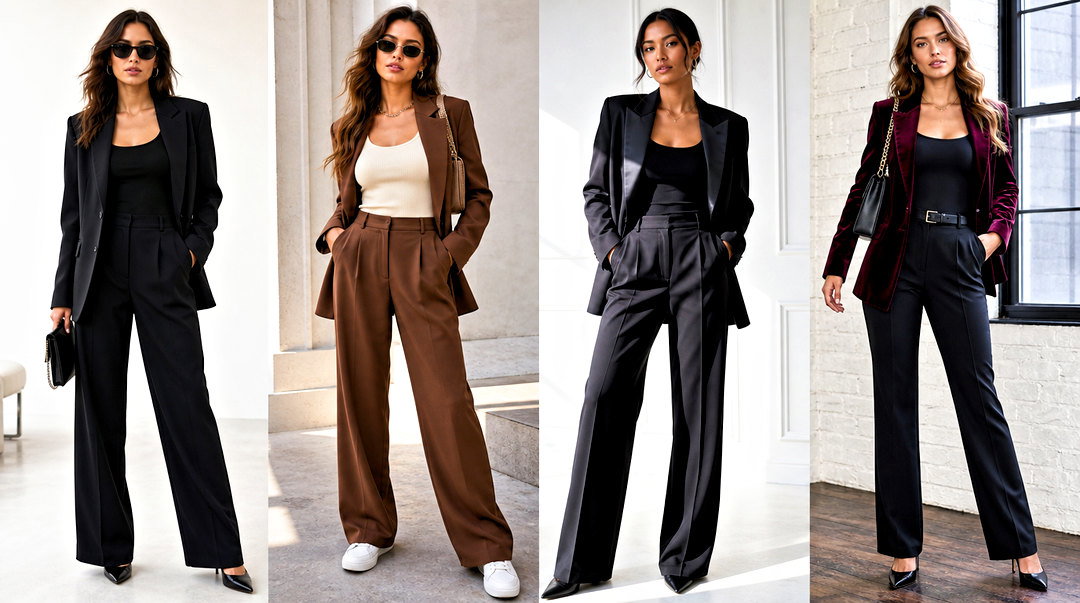
1. Black Formal Bustier Top With Wide-Leg Trousers
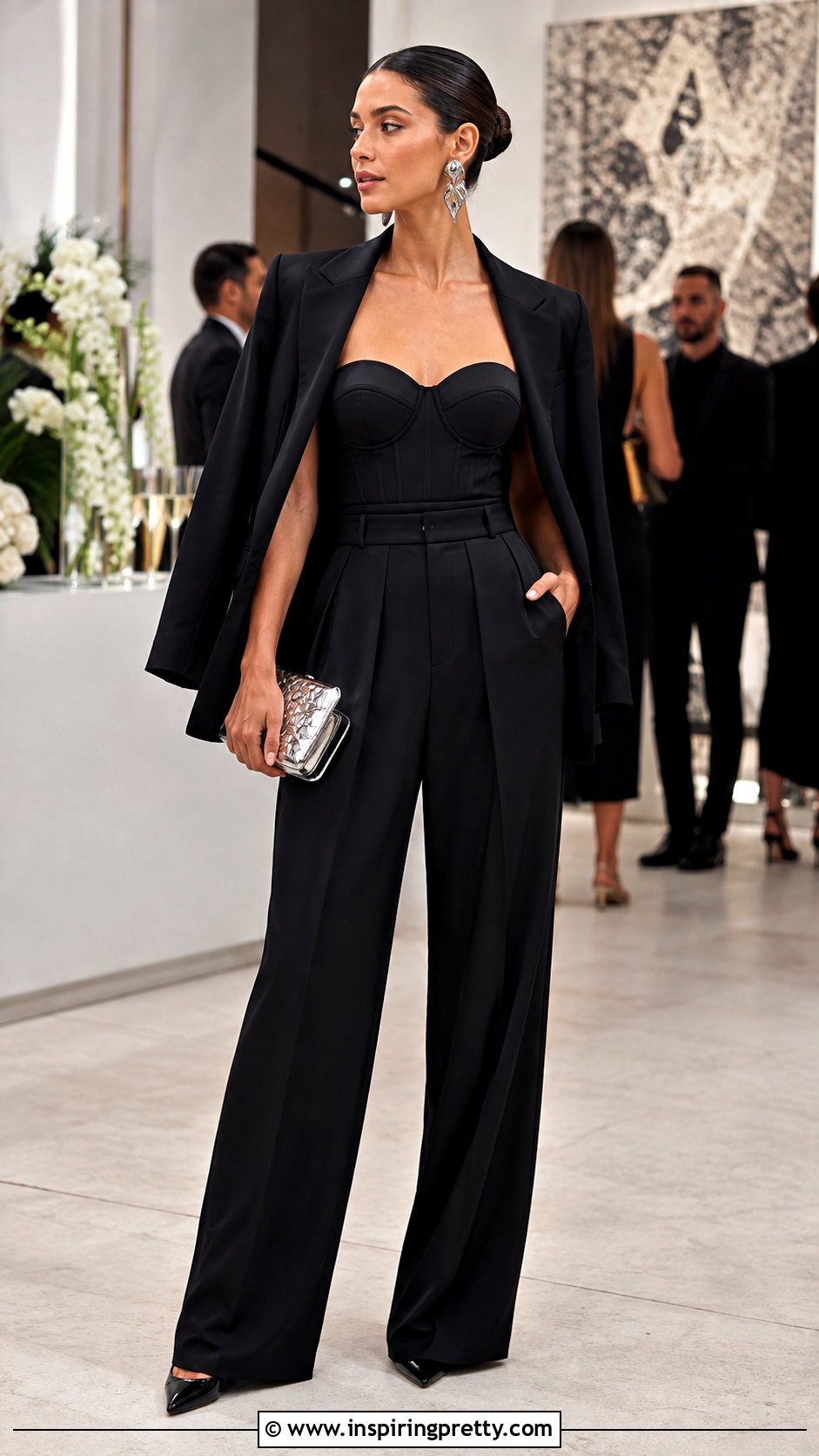
Black on black is where I'd start anyone nervous about a bustier. The detail I care about most is the meeting point: the top's hem should land on a high trouser waistband with no strip of skin between, so the body reads as one long line. Fluid crepe wide-leg trousers soften the hard shape above. Pointed pumps and a small metallic clutch are enough. Bring a black blazer for arrivals and cold rooms, and add one silver or pearl accent so all that black doesn't go flat in photos.
2. Satin Formal Bustier Top With Maxi Skirt
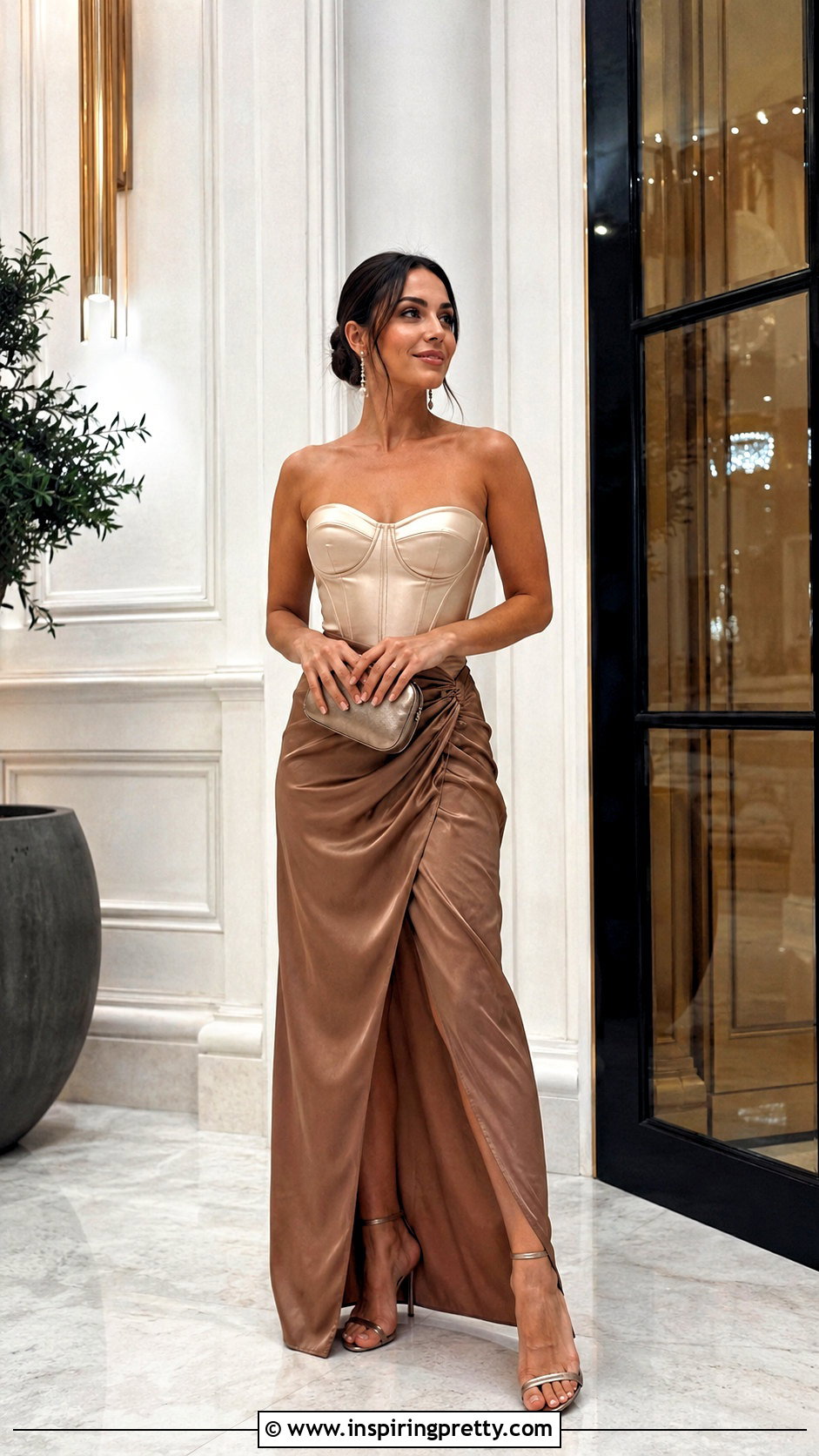
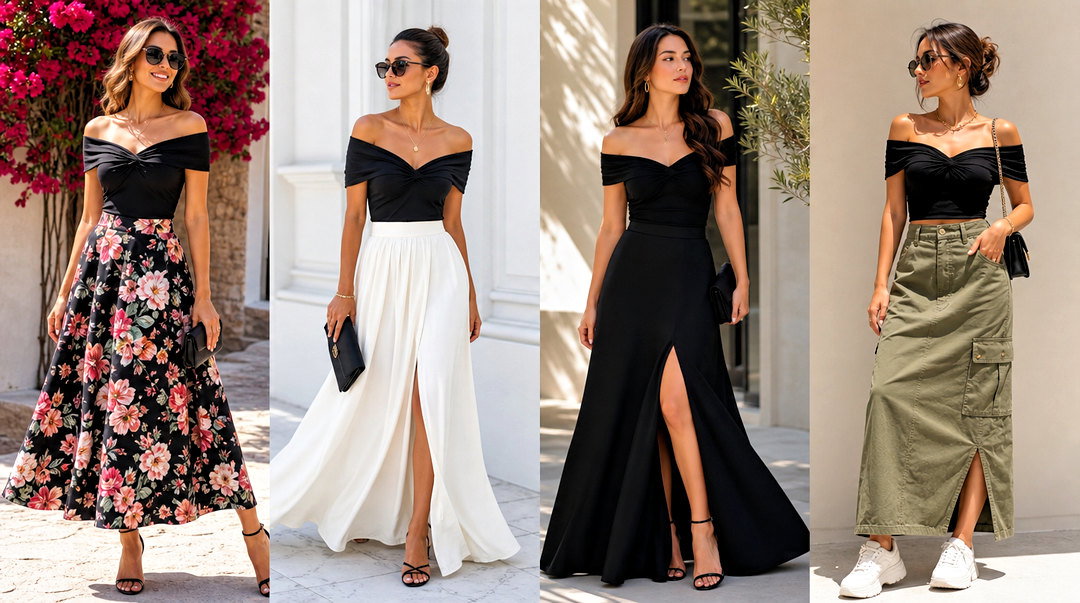
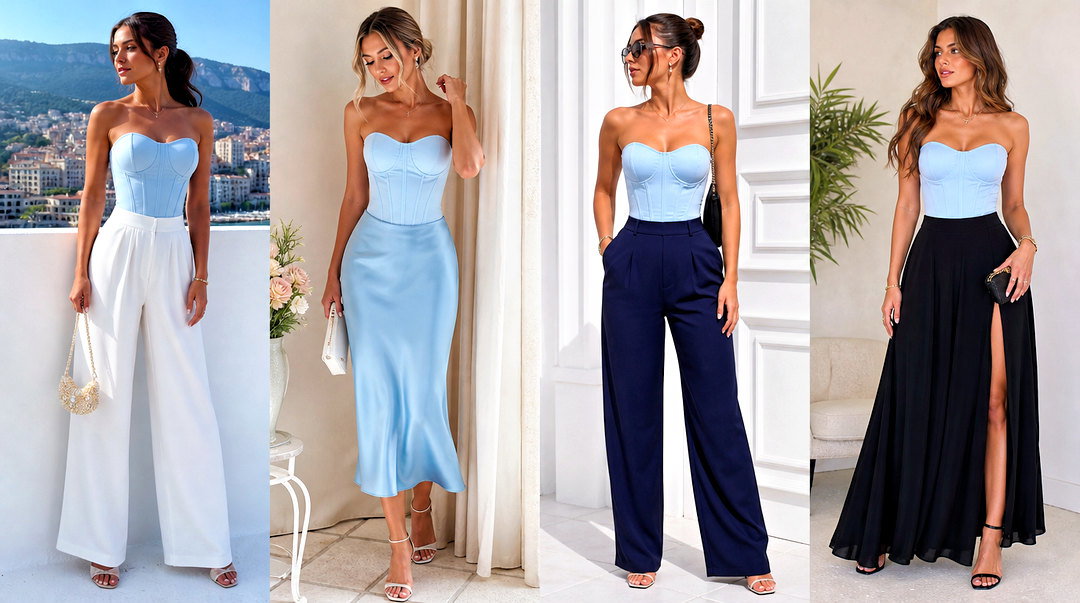
Satin bounces light, which is why it looks so good at night and why it shows every wrinkle. With a satin bustier I pick a high-waisted maxi in the same color family, champagne with bronze or navy with pale blue, and keep the skirt draped rather than full so the bodice stays the focus. Glossy satin needs very little jewelry; small drops are plenty. One practical warning: satin marks with water and sweat, so blot, don't rub, if anything spills.
3. White Formal Bustier Top With Black Suit
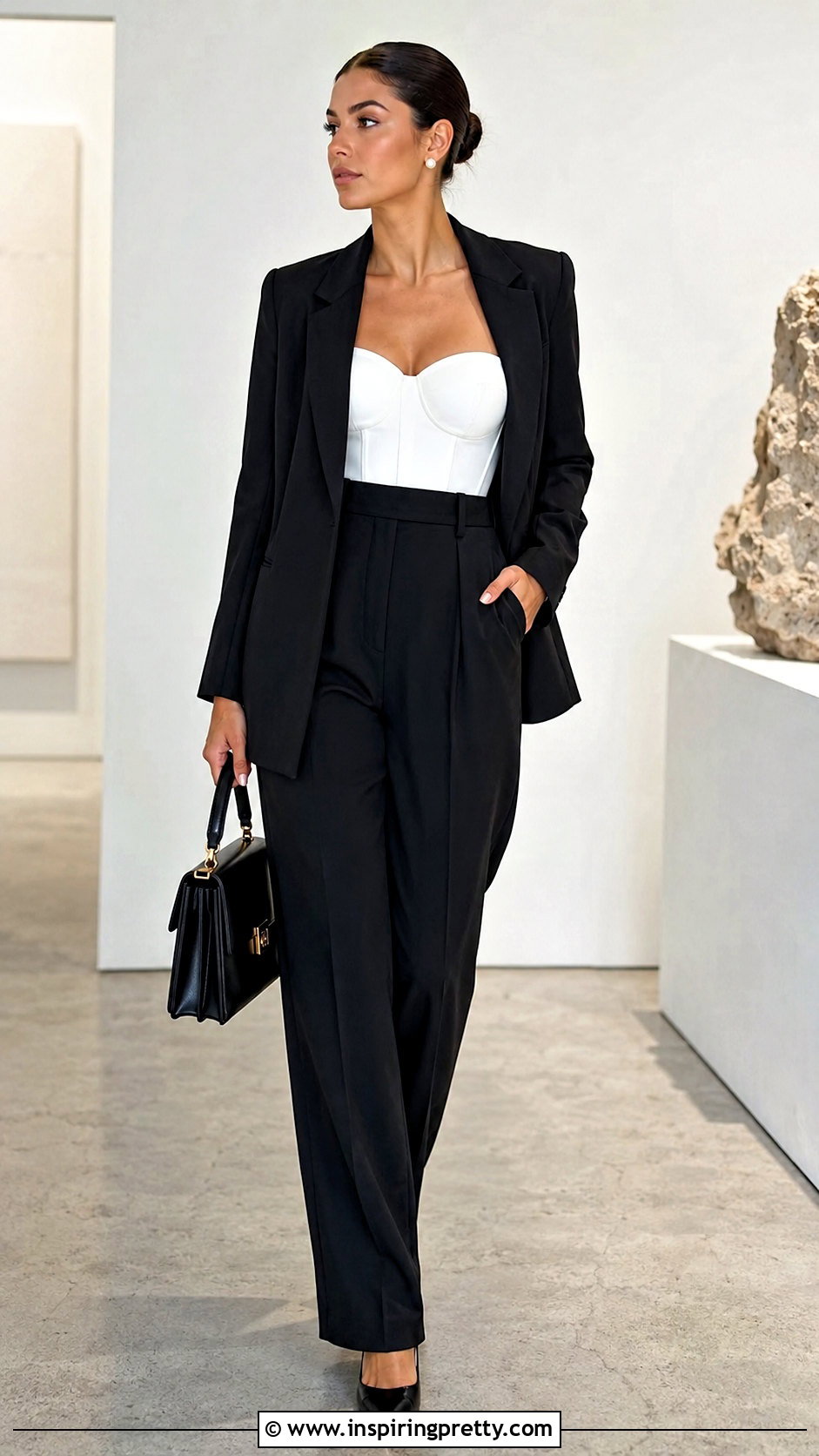
A white bustier under a black suit is sharp and modern, and it suits people who'd never wear a gown. I check two things first. White has to be lined, or the boning channels and cups show through under flash. And the blazer should frame the bustier, open at the front, rather than hiding it. Matching high-waisted trousers, pointed black heels and pearl studs finish it. If you want more coverage, choose a longer bustier that reaches the waistband and button the jacket for the formal part of the evening.
4. Velvet Formal Bustier Top With Tailored Pants
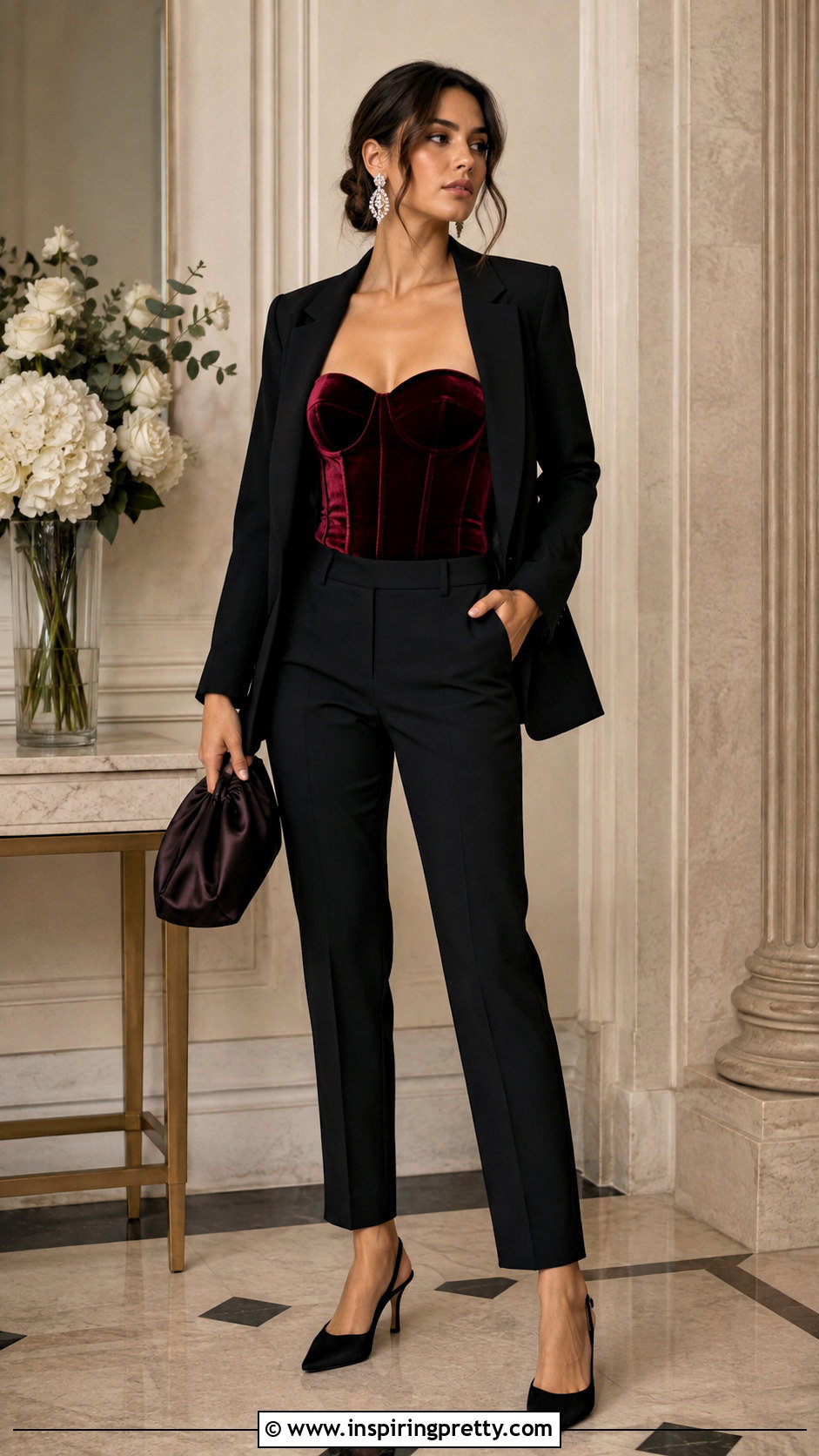
For winter events, a velvet bustier top does most of the work on its own. Burgundy, midnight blue and forest green have the depth velvet needs. I pair it with matte crepe or wool-blend trousers so the plush bodice has something clean to sit against; velvet on velvet gets heavy fast. Closed-toe slingbacks and crystal studs are enough. Velvet crushes where you lean on it, so hang it overnight before the event and steam it from the back, never press it flat.
5. Beaded Formal Bustier Top With Column Skirt
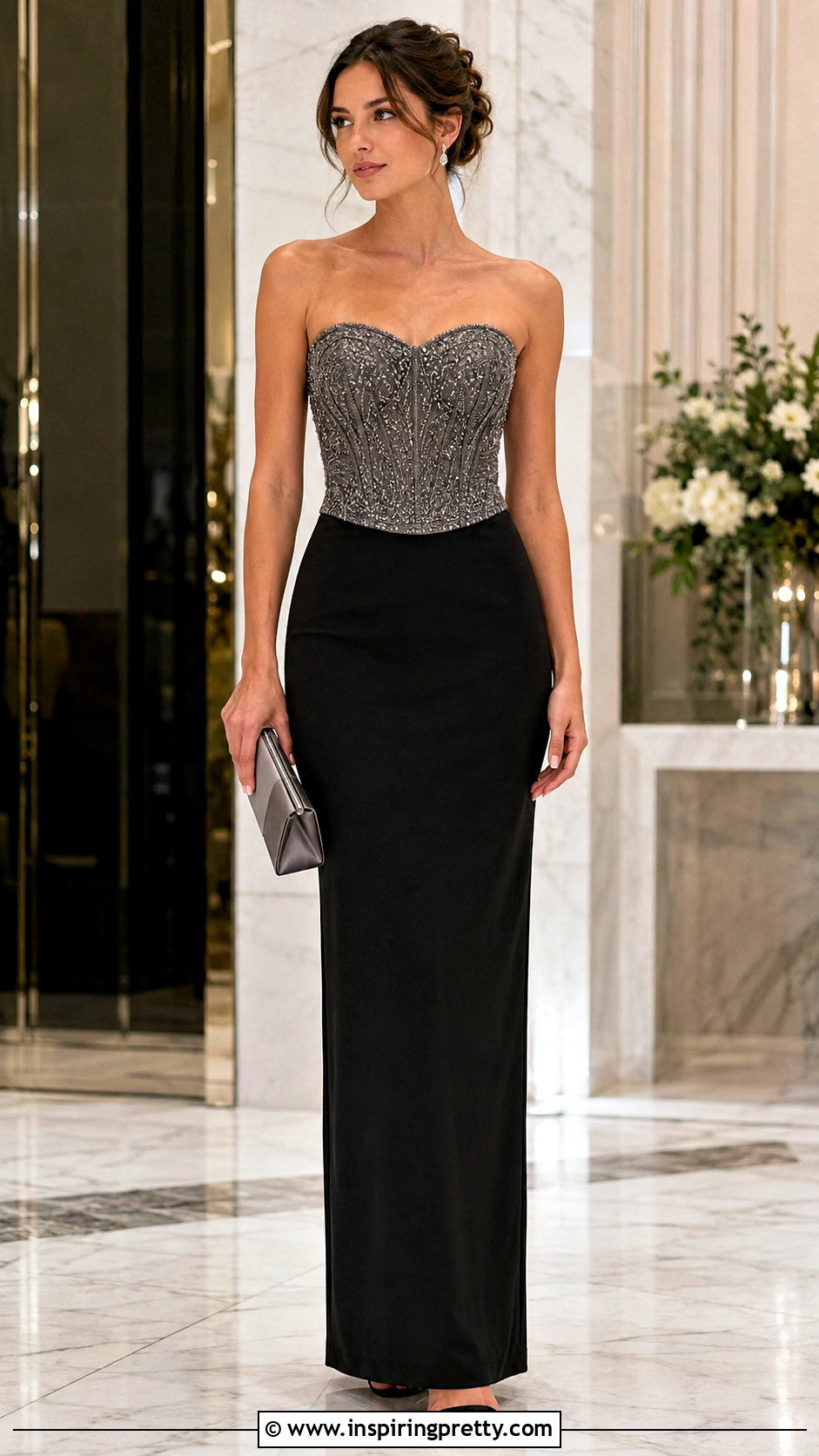
A beaded bustier is the centerpiece, so the skirt should be close to invisible. I'd pair it with a plain column skirt from waist to ankle in black, navy, pewter or plum, high enough to meet the top so the two read as one dress. Beadwork is heavy and catches on things. A plain satin clutch and small earrings that pick up one bead color are safer than a necklace, which will snag and scratch against the beads. Pull the hair back so the neckline shows.
6. Lace Formal Bustier Top With Tuxedo Pants
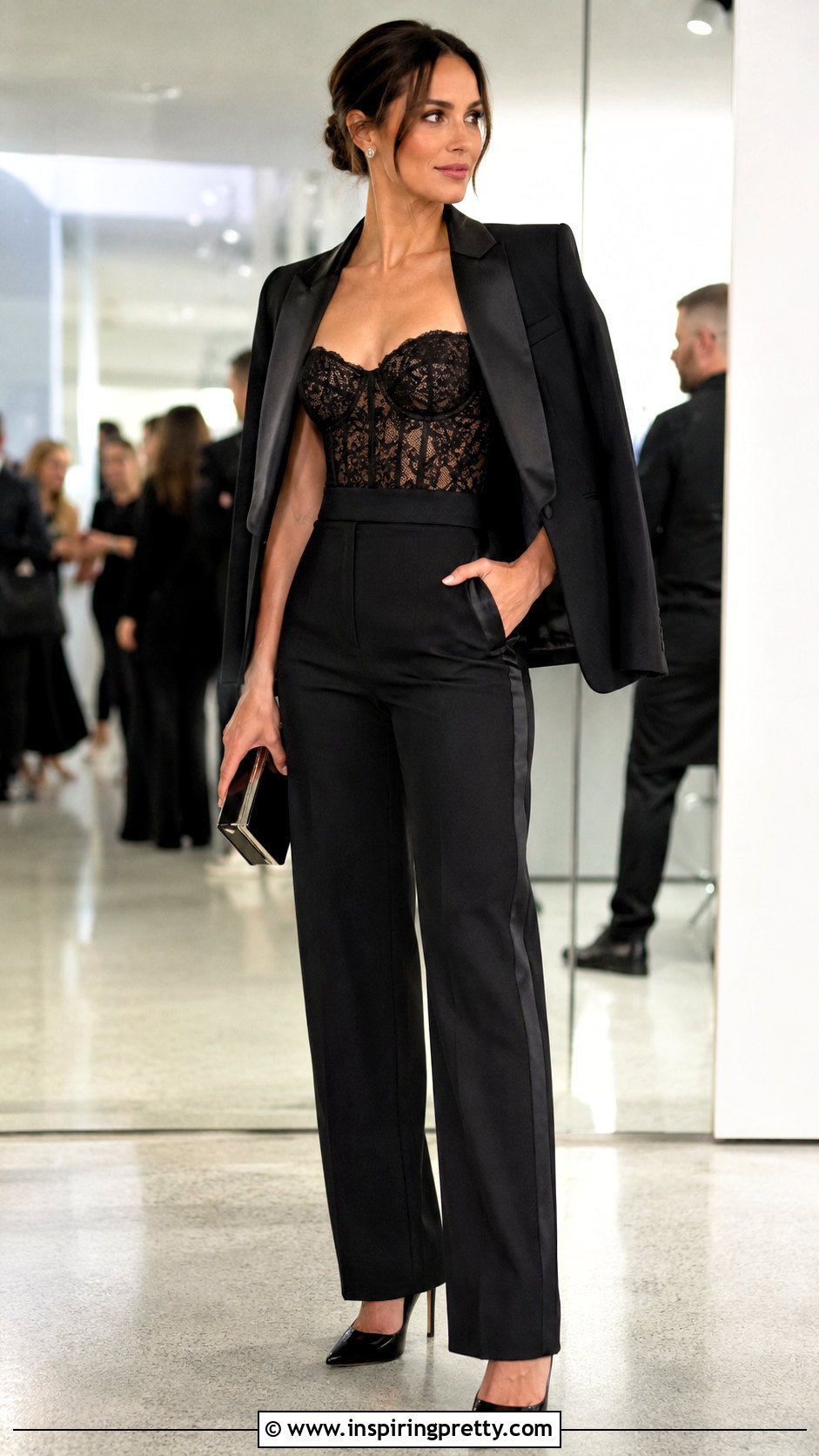
Lace gets sharper and more modern next to tuxedo trousers. The bustier must be fully lined, because unlined lace over boning looks unfinished up close. Black lace with black satin-stripe trousers is the classic; ivory lace with navy is softer. A pressed crease down the front of the trouser keeps the menswear side crisp. Lace is already pattern and texture, so I keep the accessories plain, and a tuxedo jacket on the shoulders covers you between dinner and dancing.
7. Strapless Formal Bustier Top With Full Midi Skirt
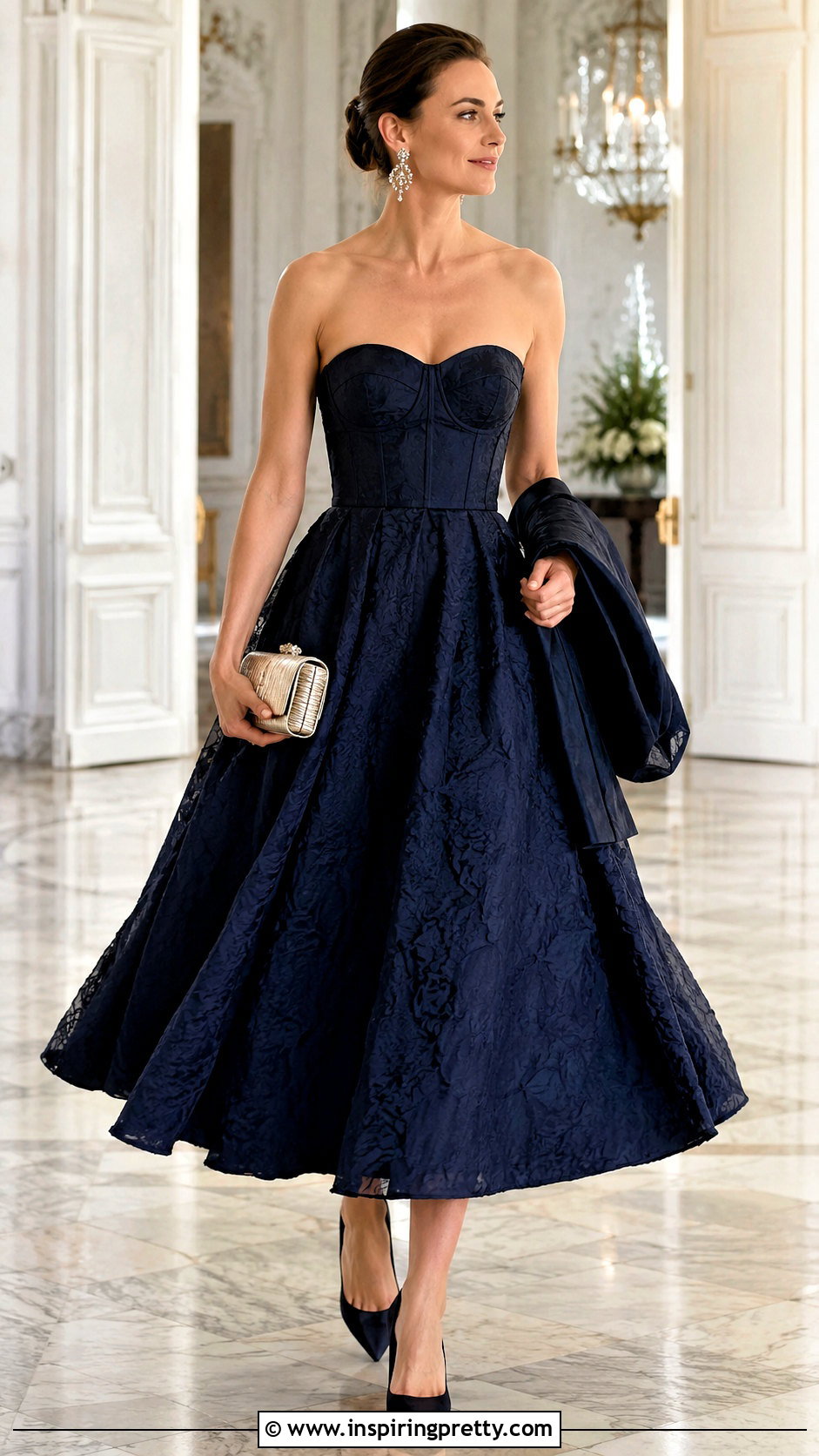
A strapless bustier with a full midi skirt is the classic event silhouette, and it lives or dies on whether the top stays up. Before I'd say yes to one, the wearer sits, walks and raises both arms; if it slides, it isn't the right size or it lacks enough boning. Satin, taffeta or jacquard skirts hold their volume best. Pick the hem by height and dress code, below the knee for cocktail, near the ankle for something dressier. A cropped bolero handles coverage without covering the waist.
8. Longline Formal Bustier Top With Palazzo Pants
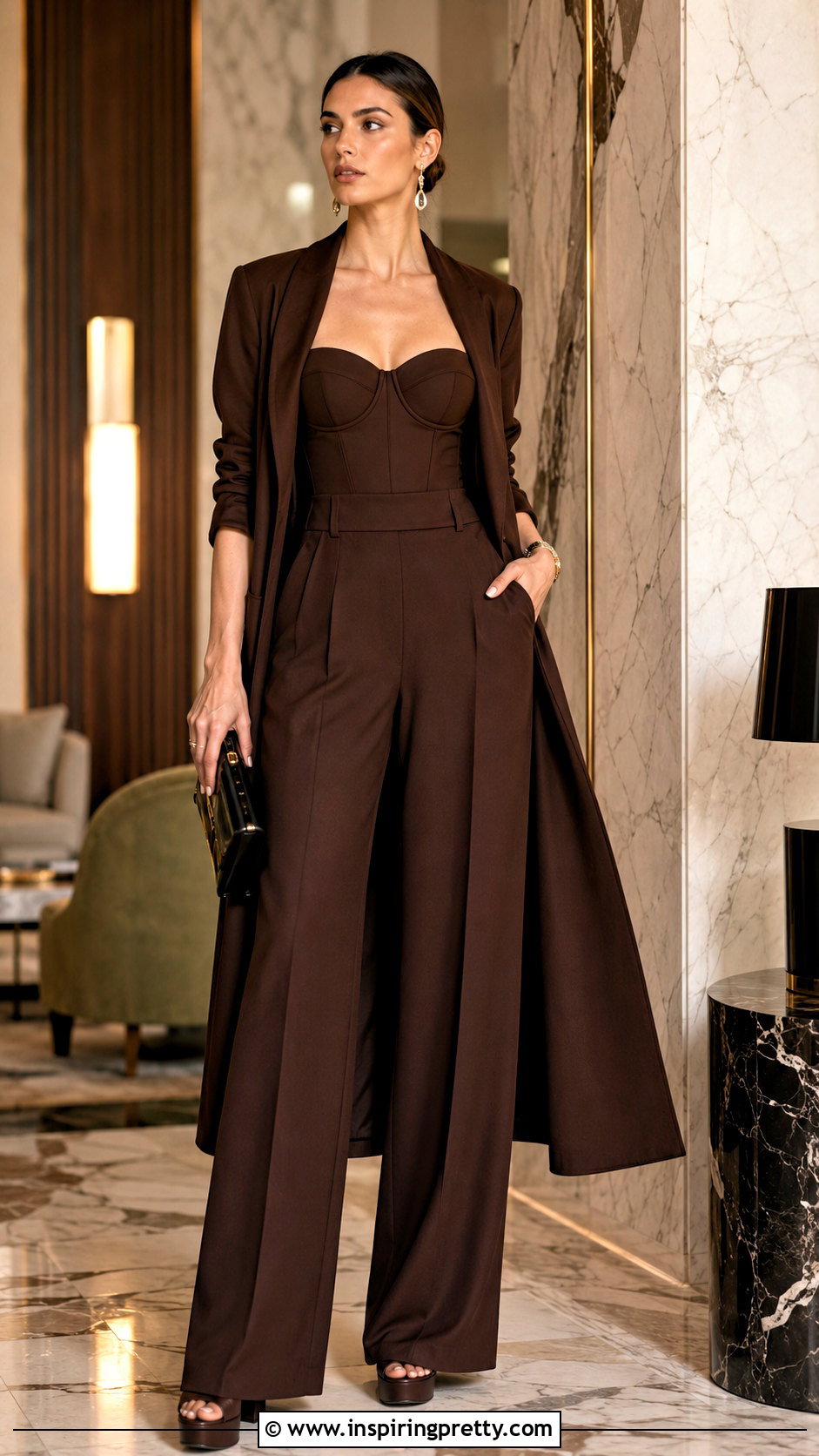
Longline bustiers extend to the natural waist, so they sit over the tummy instead of stopping at the ribs. That extra length is what makes palazzo pants work: the top meets the high rise cleanly and the outfit reads almost like a jumpsuit. Look for flexible boning and pants that skim the hip before widening. Palazzos drag on hard floors, so hem them for platforms or a block heel, which are also steadier for a long evening on your feet.
9. Corset Formal Bustier Top With Pleated Maxi Skirt
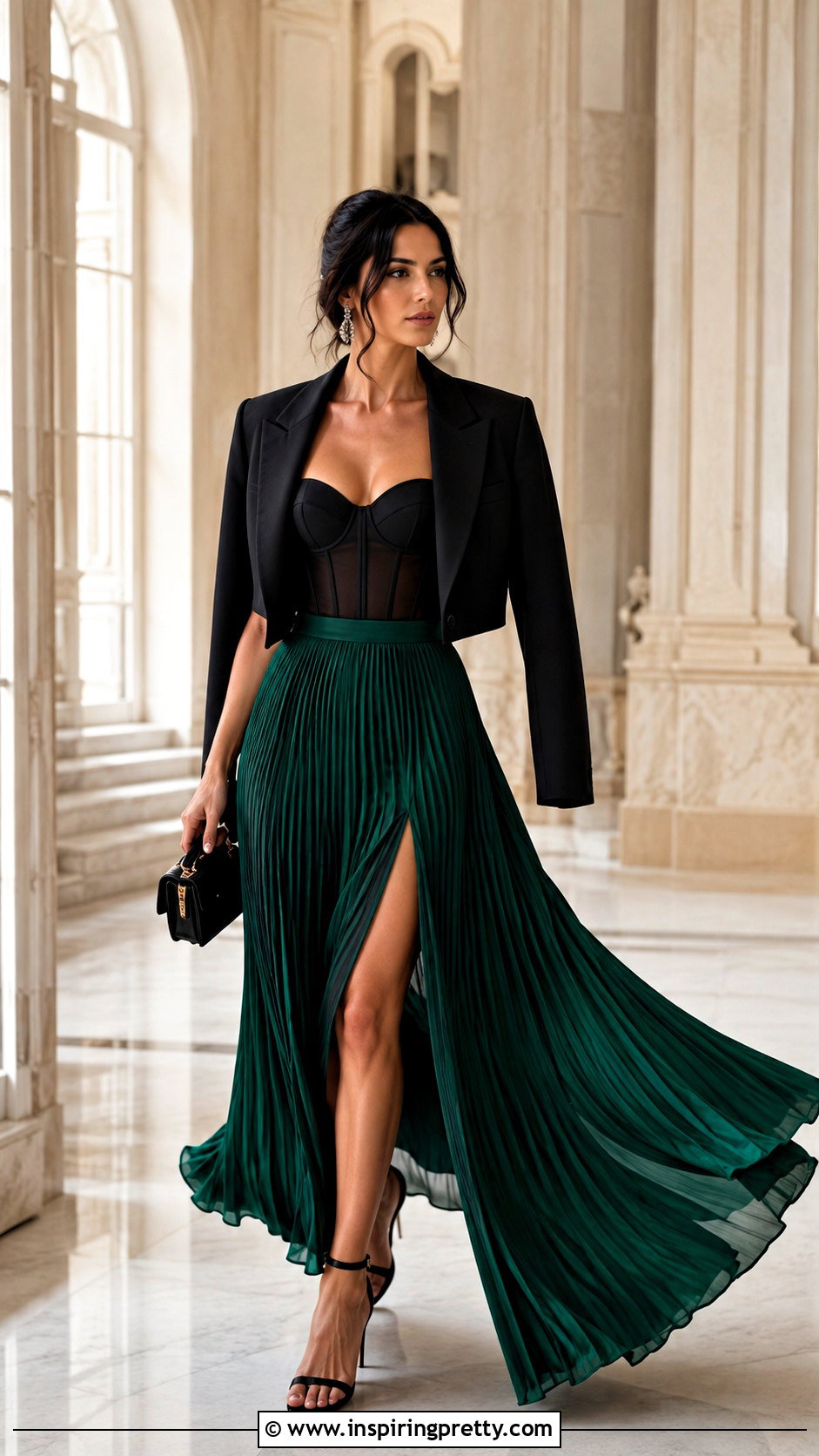
Fine pleats move, and a corset bodice doesn't, so the two make a good contrast. For formal wear I'd choose a satin or brocade corset over a casual lace-up style. The pleated maxi should start right at the lower edge of the top so nothing gaps. Black with emerald is dramatic; blush with burgundy is softer. Leave out the belt, since the corset seams already define the waist. Stitched-down pleats keep their line better through a night of sitting than loose knife pleats.
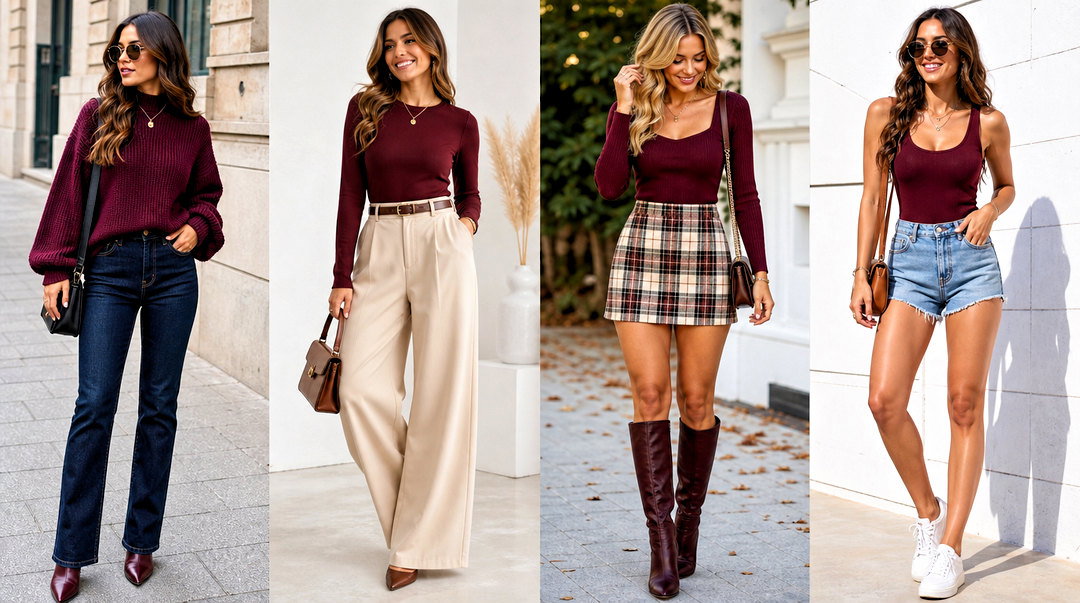
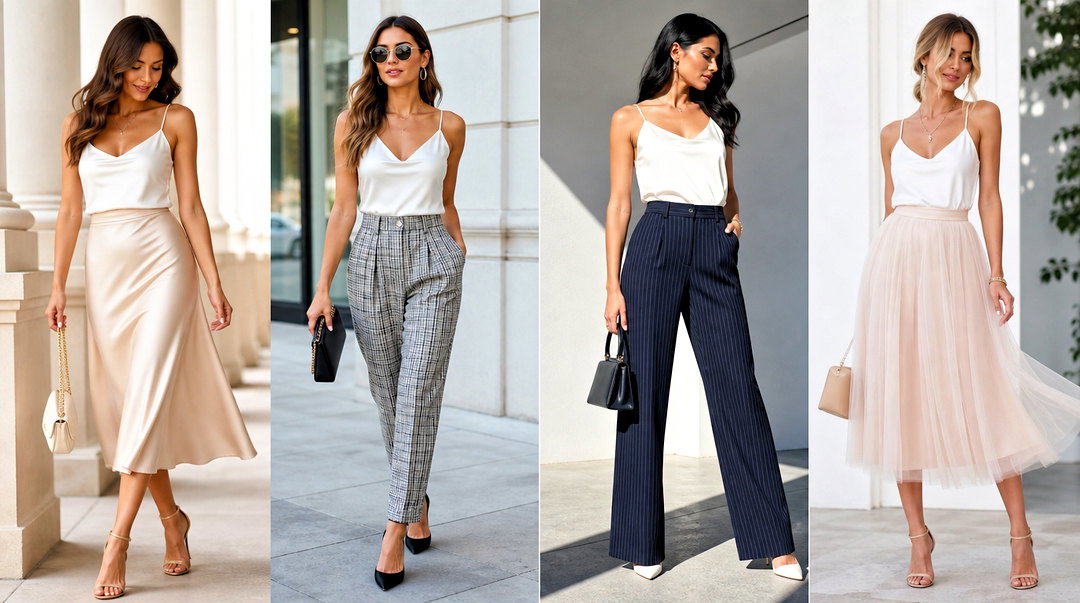
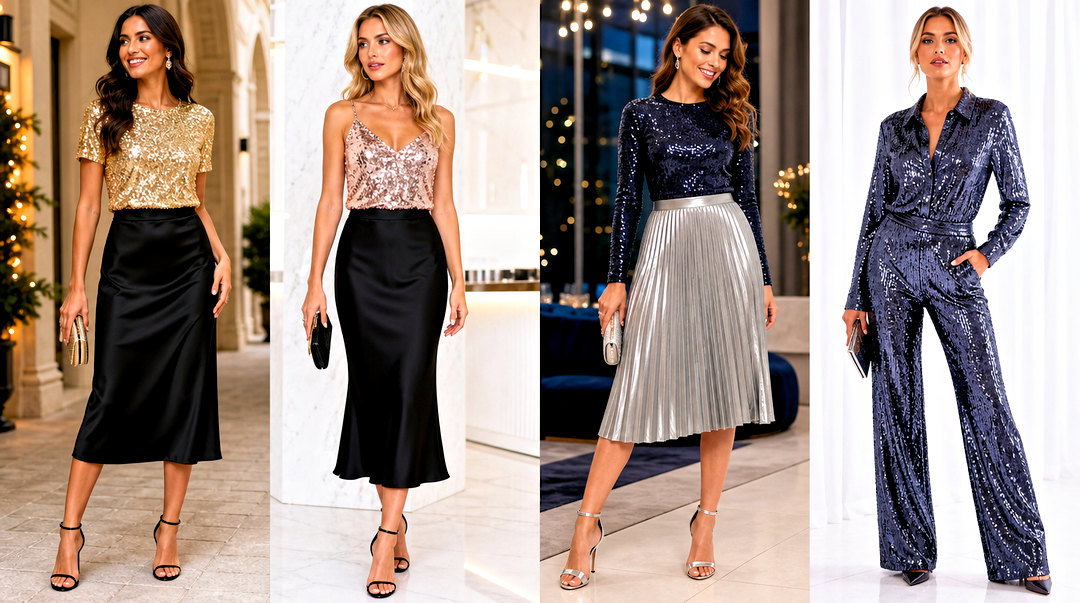
10. Sequin Formal Bustier Top With Black Trousers
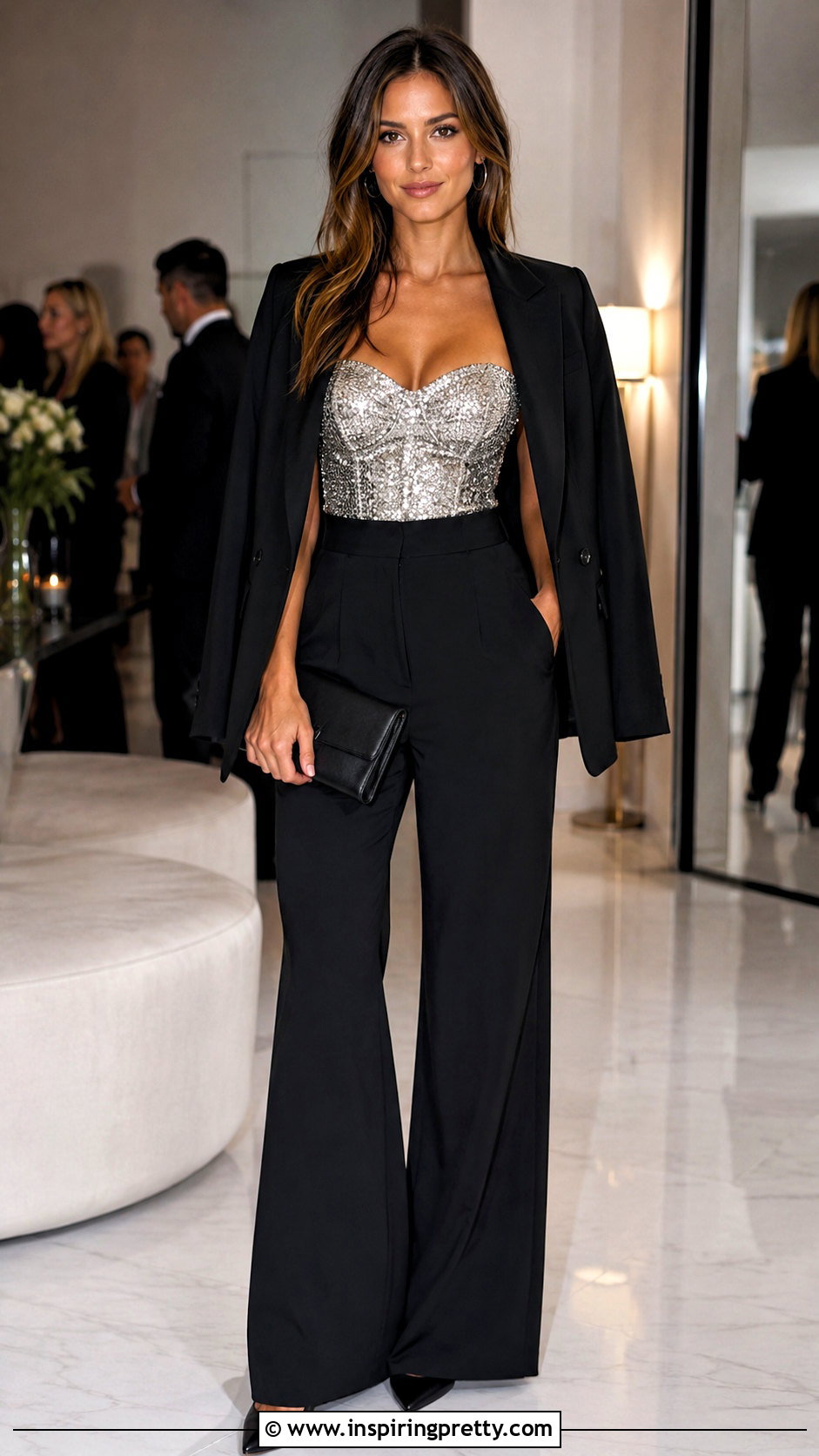
A sequin bustier with plain black trousers looks more formal than a full sequin set, because the trousers calm the shine down. My first check is the lining. Sequin seams scratch the underarm by the second hour, so a soft, full lining matters more than the sequin pattern. Straight or wide-leg black trousers, black pumps and one small metallic piece are all it needs. Sequins snag delicate fabrics, so keep a silk wrap or chiffon scarf away from the bodice.
11. Floral Formal Bustier Top With Satin Skirt
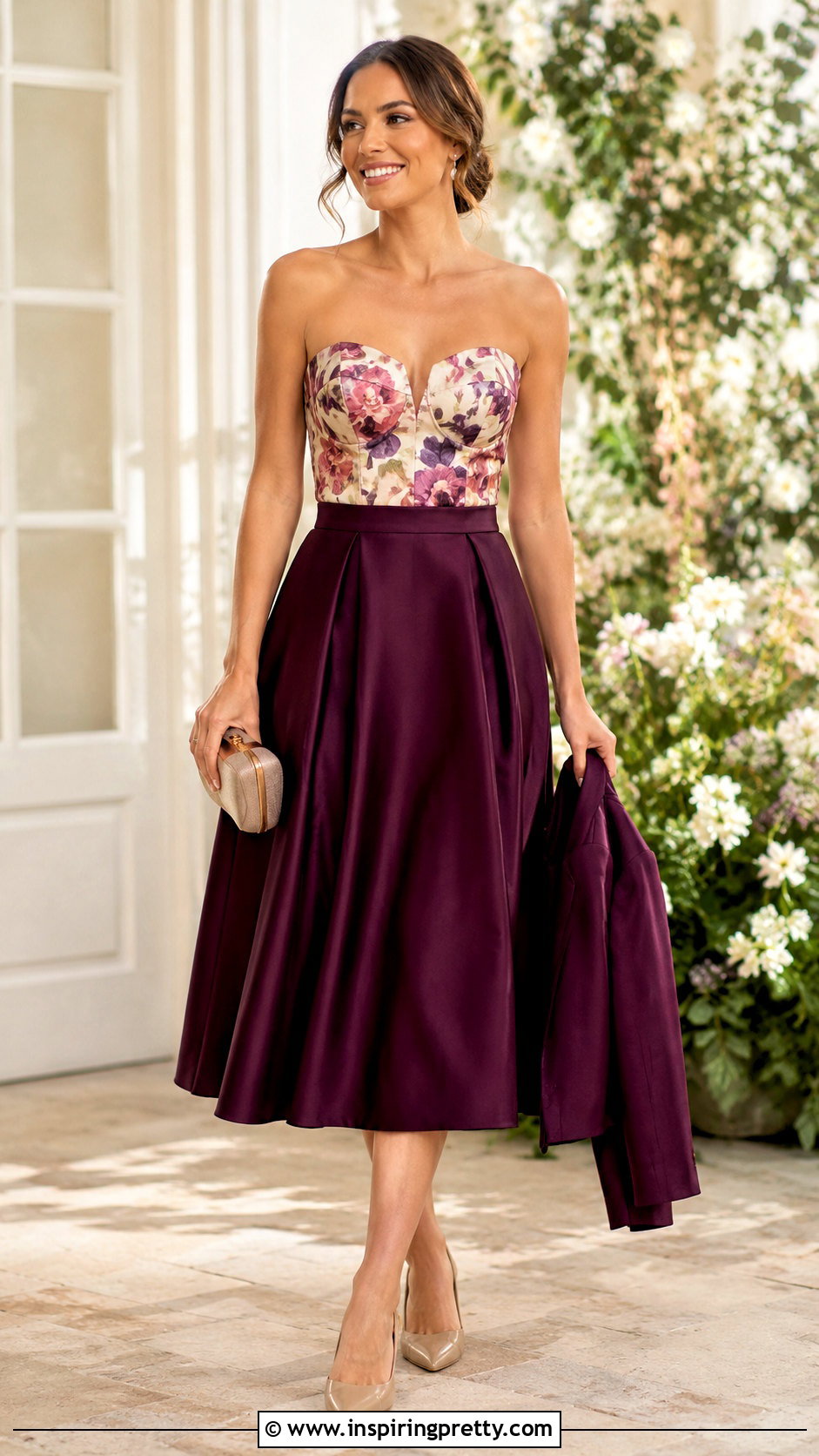
A floral bustier can pass at a formal event if the print is painterly or embroidered rather than small and cotton-casual. I match the satin skirt to one of the darker colors in the print; that ties the two pieces together. A softly flared midi or floor-length skirt suits the fitted bodice. If the flowers are colorful, don't add another accent color in the shoes. For a garden or daytime event, a tailored wrap handles the temperature drop after sunset.
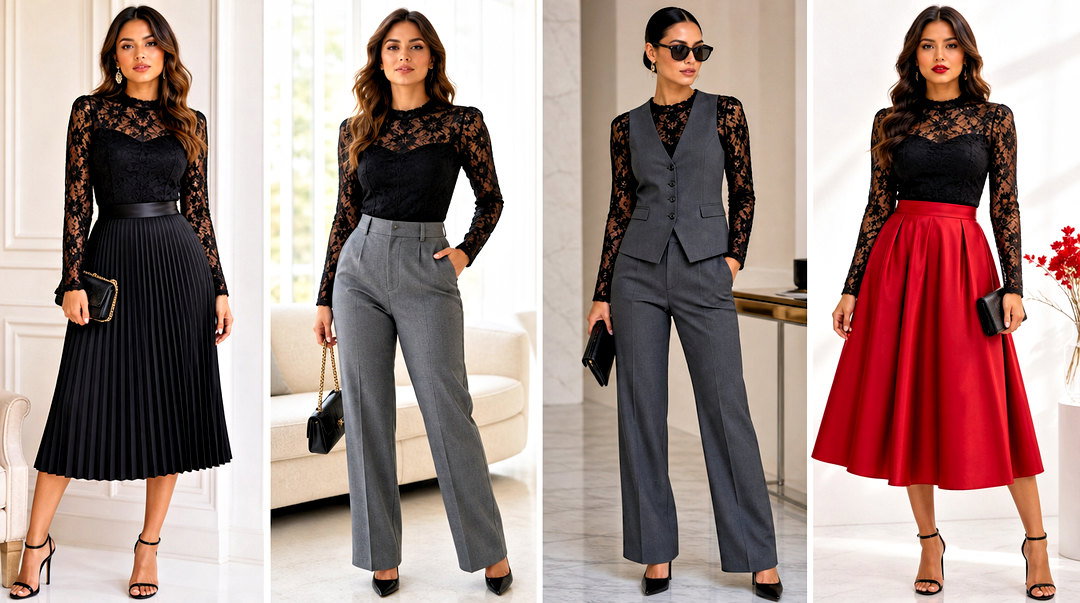
12. Red Formal Bustier Top With Black Maxi Skirt
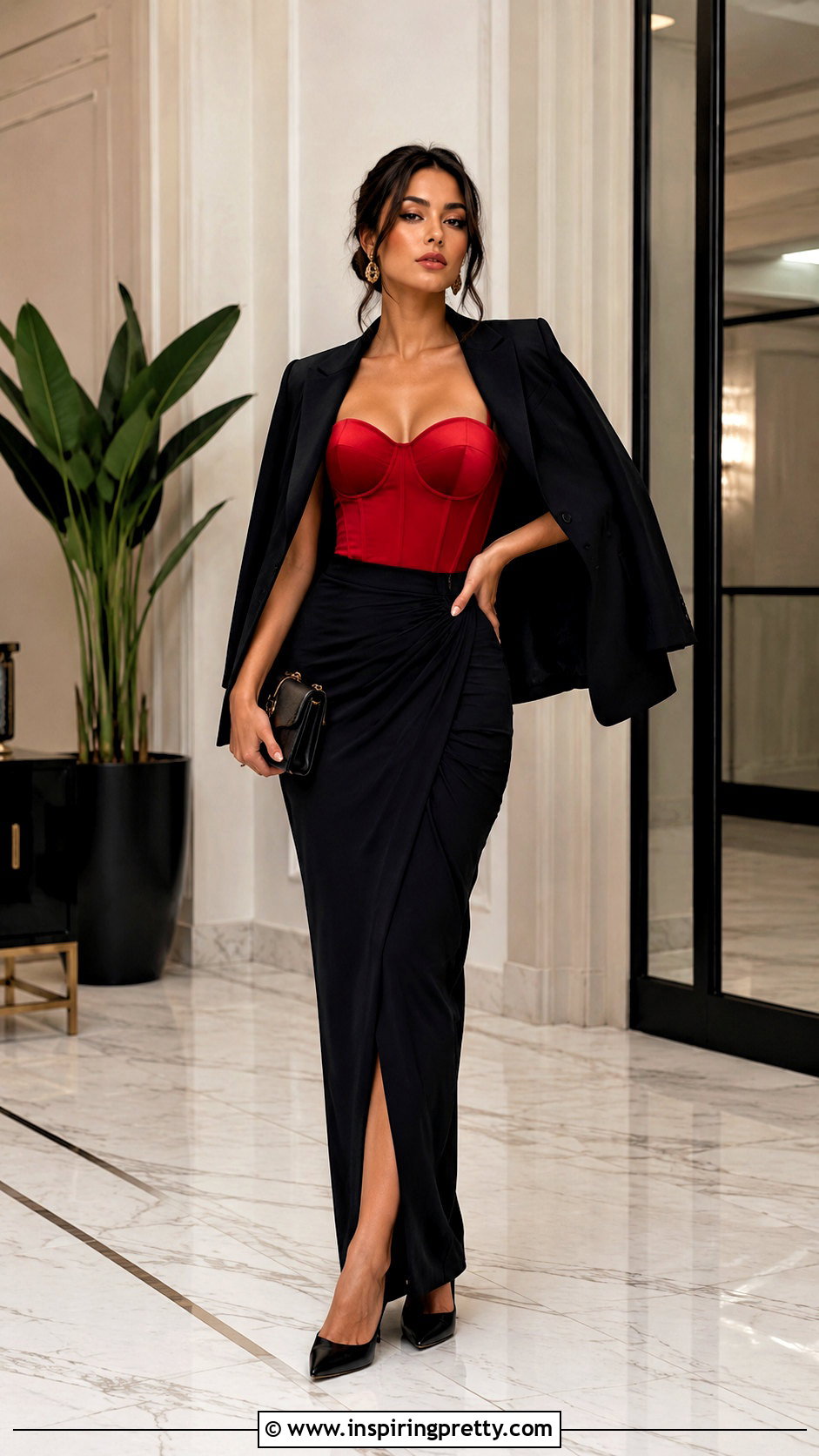
Red is confident, and a plain black maxi skirt keeps it from tipping into costume. Pick the red by your coloring: blue-based crimson and garnet suit cool skin, while warmer, orange-leaning reds suit warm skin. A structured satin or velvet top looks far more formal than a stretchy knit one. Gold earrings warm the outfit; silver sharpens it. I'd skip red shoes and a red bag together, since repeating the color twice makes the whole outfit look matched rather than chosen.
13. Navy Formal Bustier Top With Matching Suit
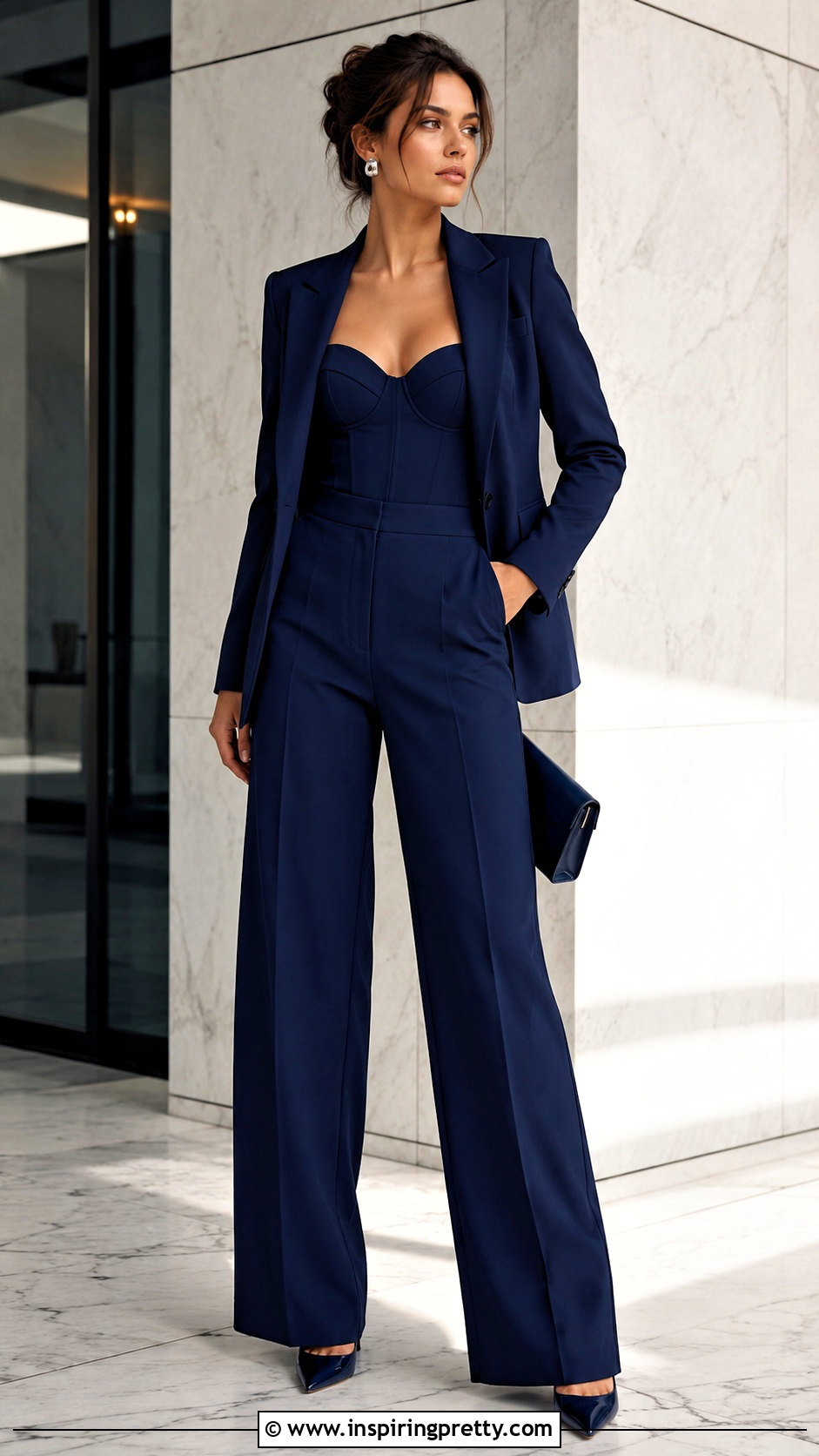
A navy suit over a matching bustier is softer than black tailoring and photographs with more depth. The three pieces should come from the same fabric family, or the navies won't quite match in daylight. Open blazer for the evening, buttoned for the ceremony or speeches. Fit is everything with a suit, so check that the jacket shoulders lie flat and that the trouser hem was set for the exact heel you'll wear, not a guess.
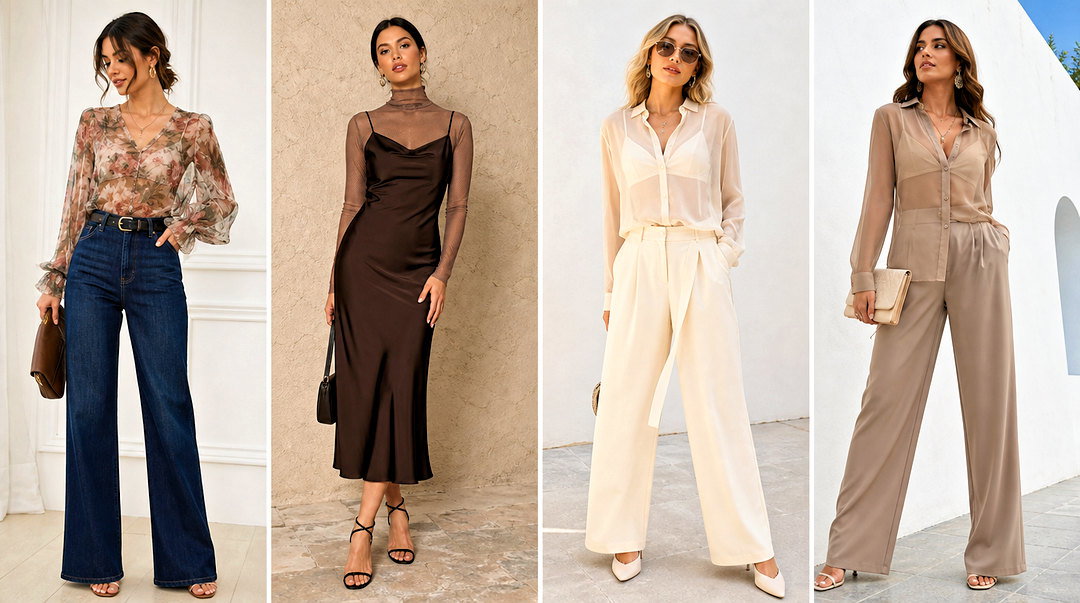
14. Ivory Formal Bustier Top With Champagne Trousers
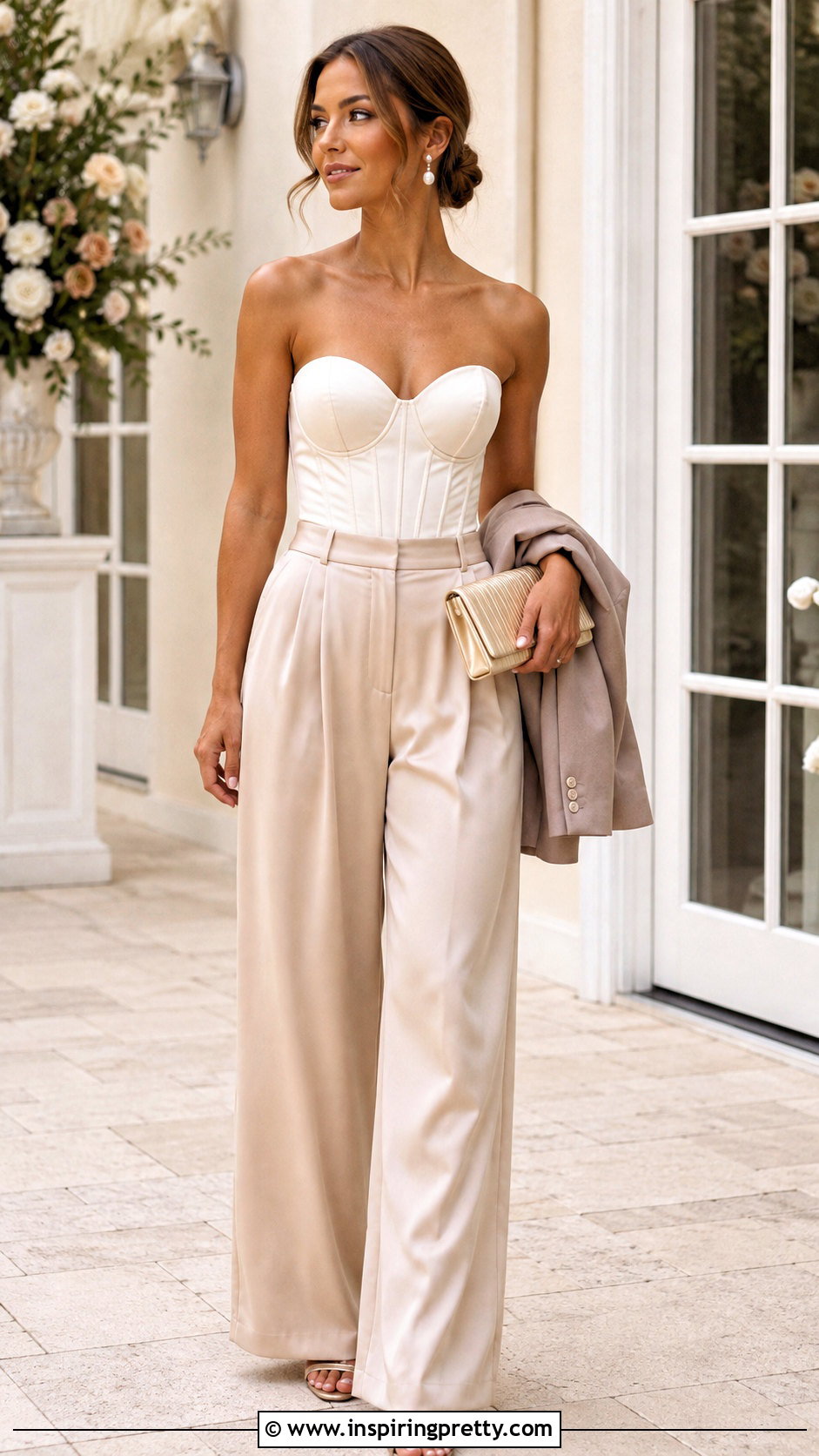
Ivory and champagne is a tonal pairing that glows without the starkness of pure white, which matters at weddings, where you don't want to look bridal. Choose an ivory bustier with clean seaming and champagne wide-leg trousers in satin-backed crepe. These pale shades shift under different light, so check them together in daylight and under warm indoor bulbs before the day. Nude metallic heels and a pale gold clutch suit it. A taupe wrap adds a little contrast.
15. Emerald Formal Bustier Top With Velvet Skirt
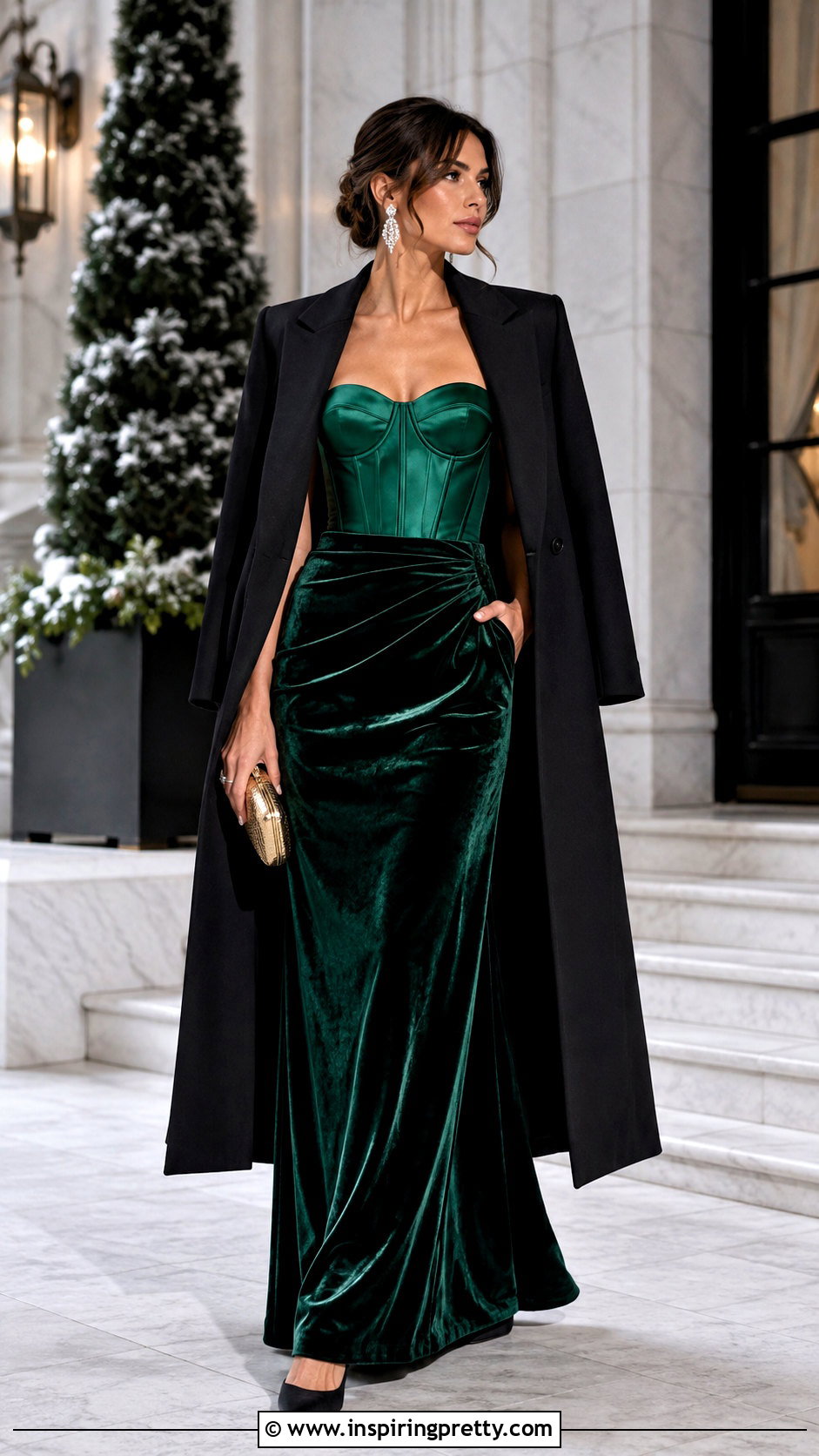
Emerald against a dark velvet skirt is one of my favorite winter combinations. A structured satin or crepe bustier on top, a high-waisted black or deep green velvet maxi below; straight for length or softly flared for movement. Black closed-toe heels keep the focus on the color. If the bustier has a sweetheart neckline, a fine pendant can sit in the open space without crowding it. A tailored black coat over the top handles the walk in.
16. Plus Size Formal Bustier Top With Draped Pants
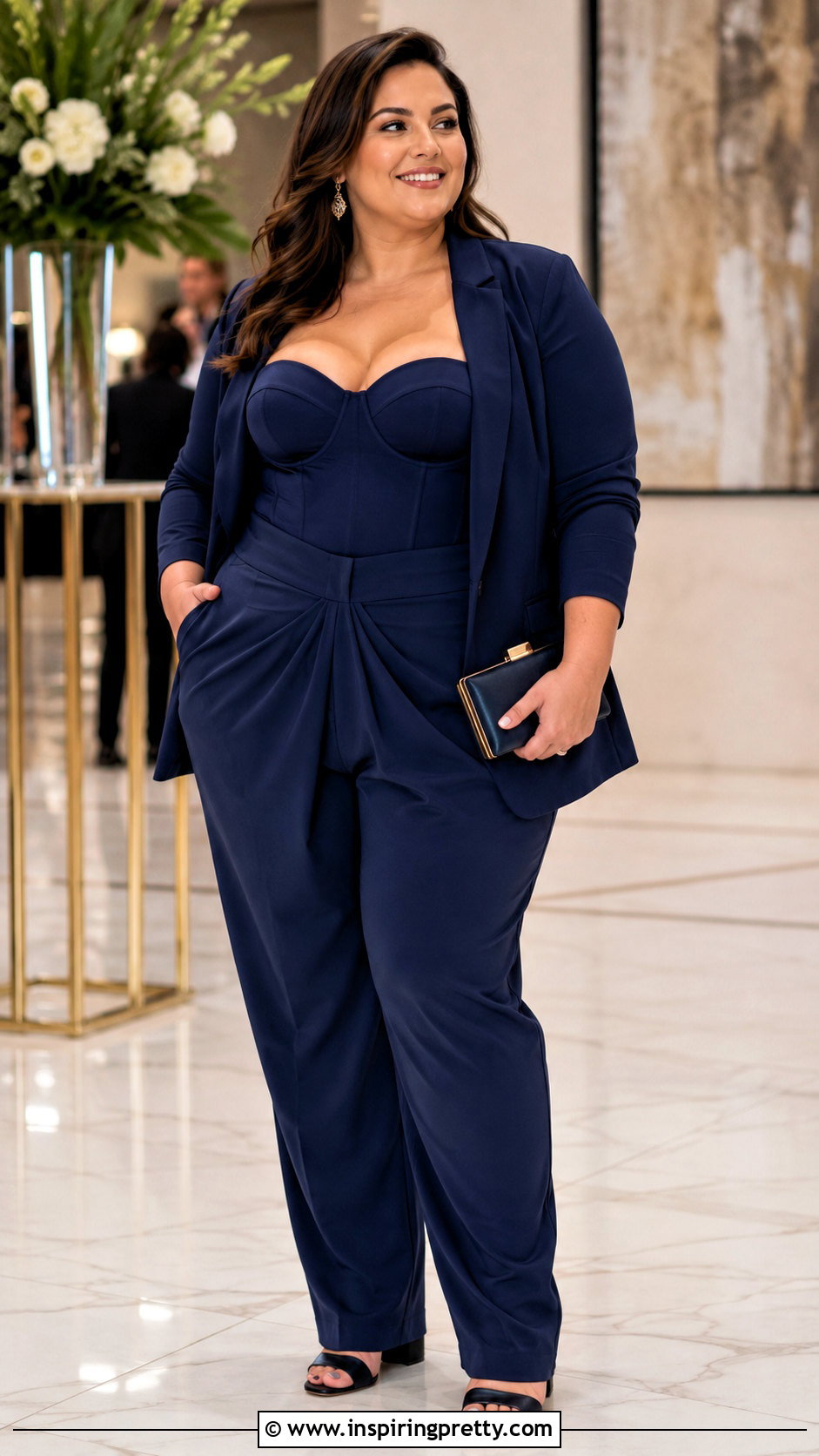
On a plus-size figure, a formal bustier works when the support is real. Buy for fit, not the label size: wider straps, flexible boning, adjustable closures, lined cups and a longline hem are the features I'd look for. Draped high-waisted trousers that skim rather than cling balance the structure up top. The blazer has to close without pulling across the bust; if it pulls, size the jacket up and have the shoulders taken in. Wear the whole outfit for an hour at home, sitting and reaching, before the event.
17. Petite Formal Bustier Top With High-Waisted Trousers
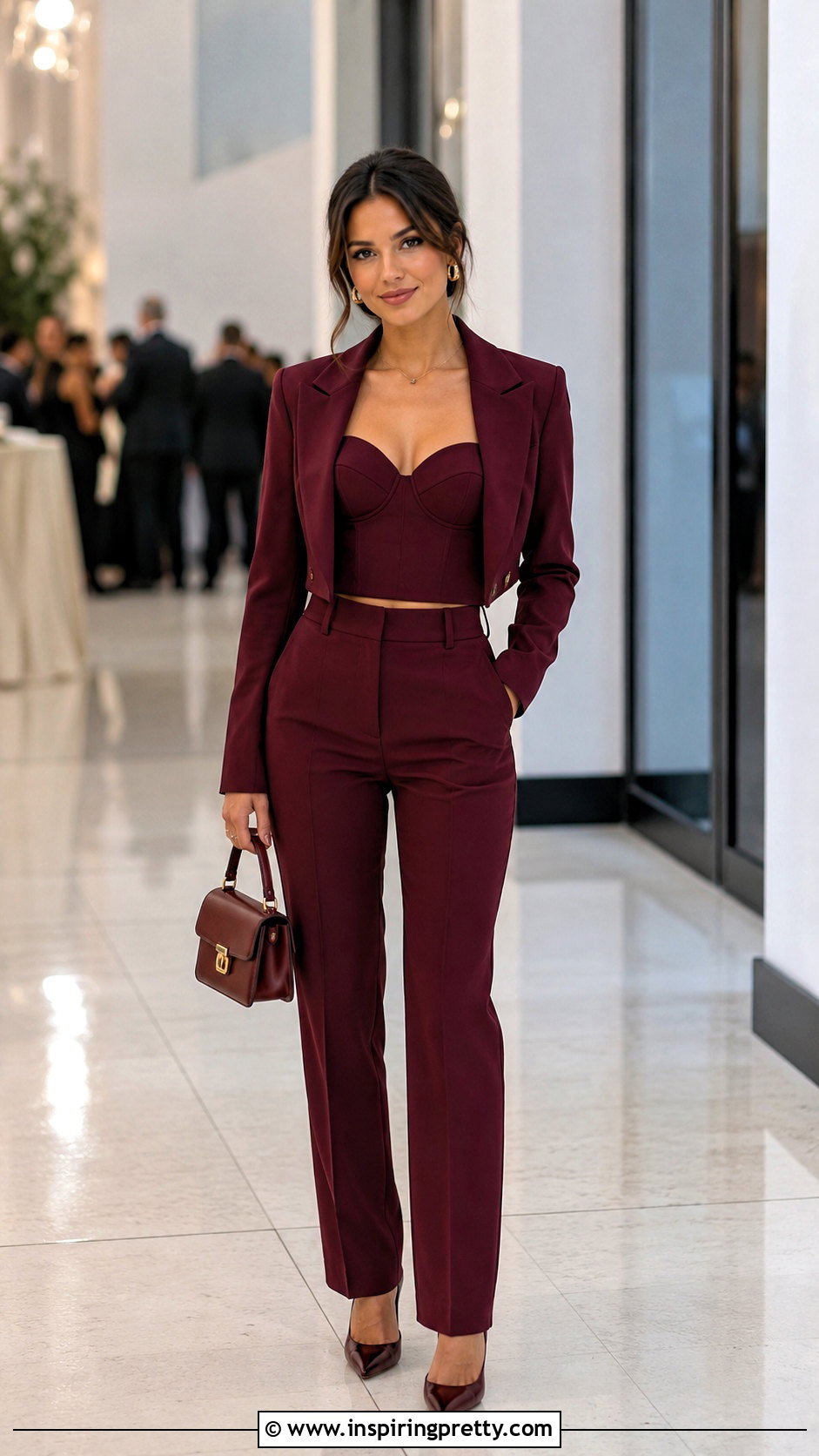
For petite frames I'd choose a shorter bustier that stops at the natural waist and trousers hemmed precisely to the shoe. A top that runs too far down a short torso hides the waist and cuts the leg line. One color head to toe gives an unbroken vertical line, and pointed heels extend it. A cropped blazer suits petites better than a long one, because it keeps the waist visible. Tailoring the trouser rise as well as the hem makes the biggest difference.
18. Formal Bustier Top With Sheer Long-Sleeve Layer
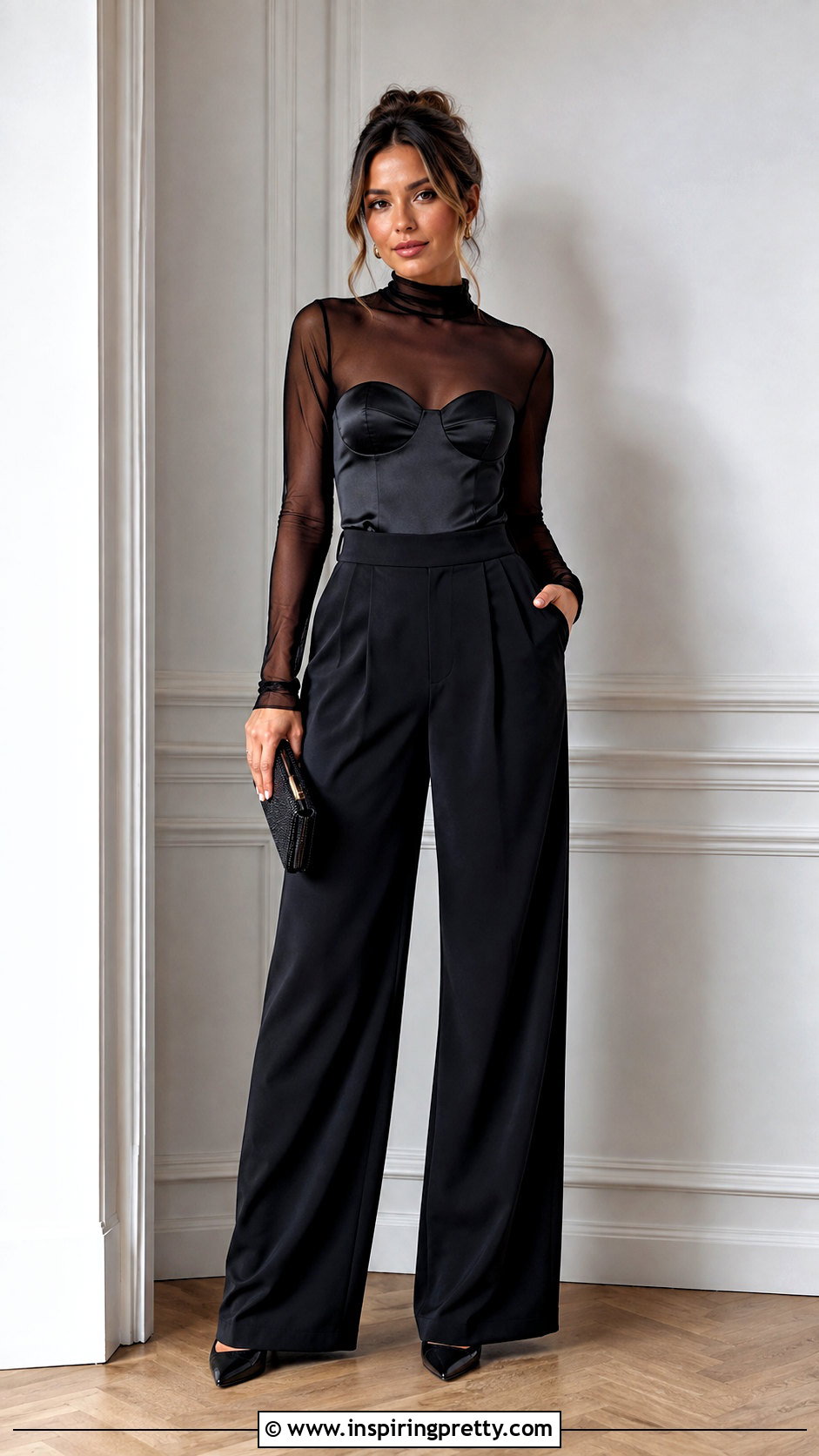
A sheer long-sleeve layer under a bustier adds coverage without hiding it, and it's how I'd adapt a strapless top for a religious ceremony or a conservative crowd. Choose fine mesh or chiffon in black, ivory or the bustier's own color, with a plain neckline. It goes underneath, so check that the sleeves lie flat at the armholes with no bunching. The mesh also gives a strapless bodice something to grip, which helps it stay in place. Wide-leg trousers or a column skirt finish it.
19. Formal Bustier Top With Cropped Blazer And Midi Skirt
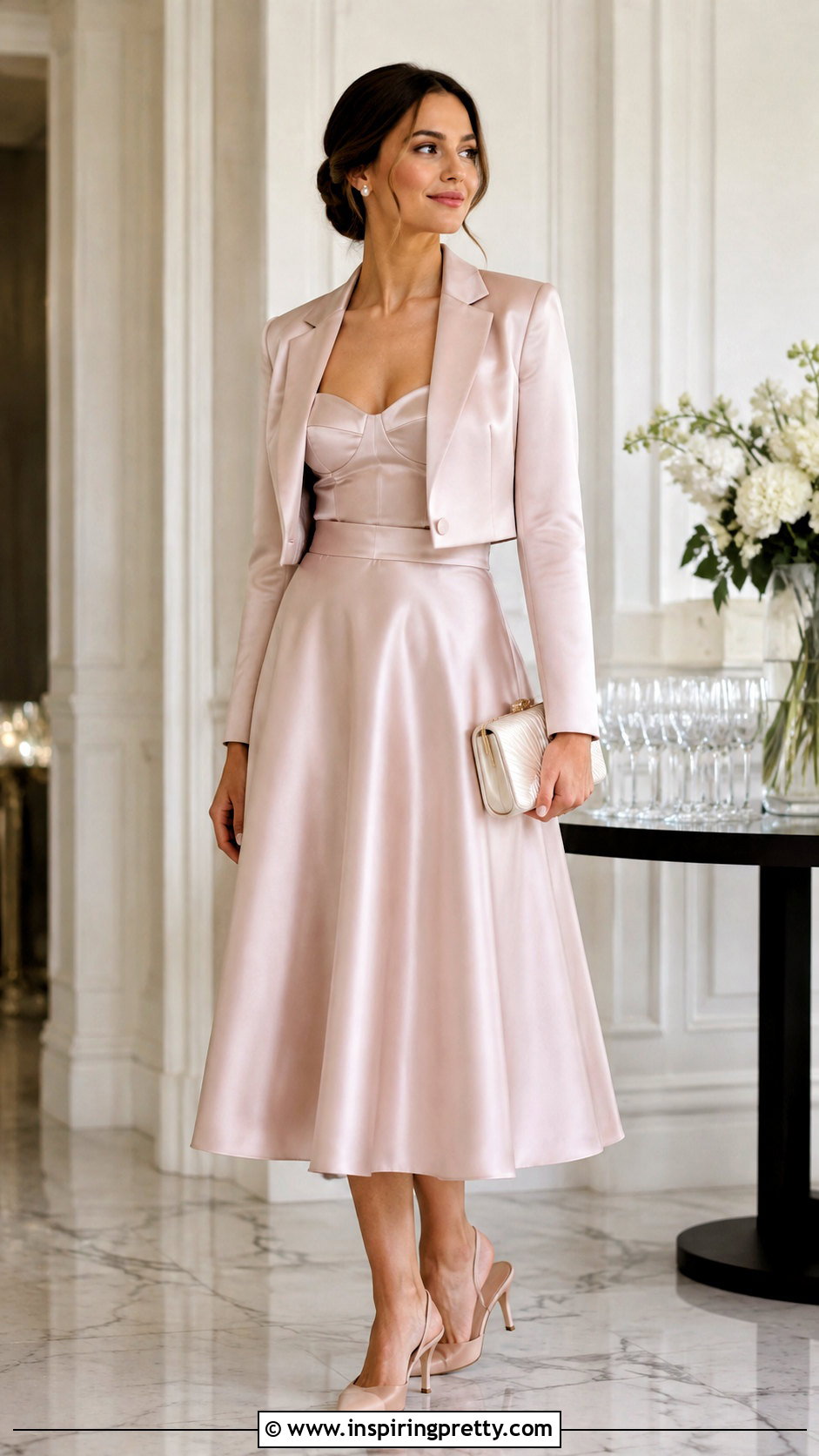
A cropped blazer bridges a stiff bustier and a soft midi skirt. It needs to end around the natural waist, or it covers the bodice and fights the skirt. A satin or crepe bustier underneath, then a high-waisted A-line midi you can walk in. Matching the blazer to the skirt makes a suit; a contrasting one feels bolder. Keep the three pieces in a narrow palette so the layers don't look stacked.
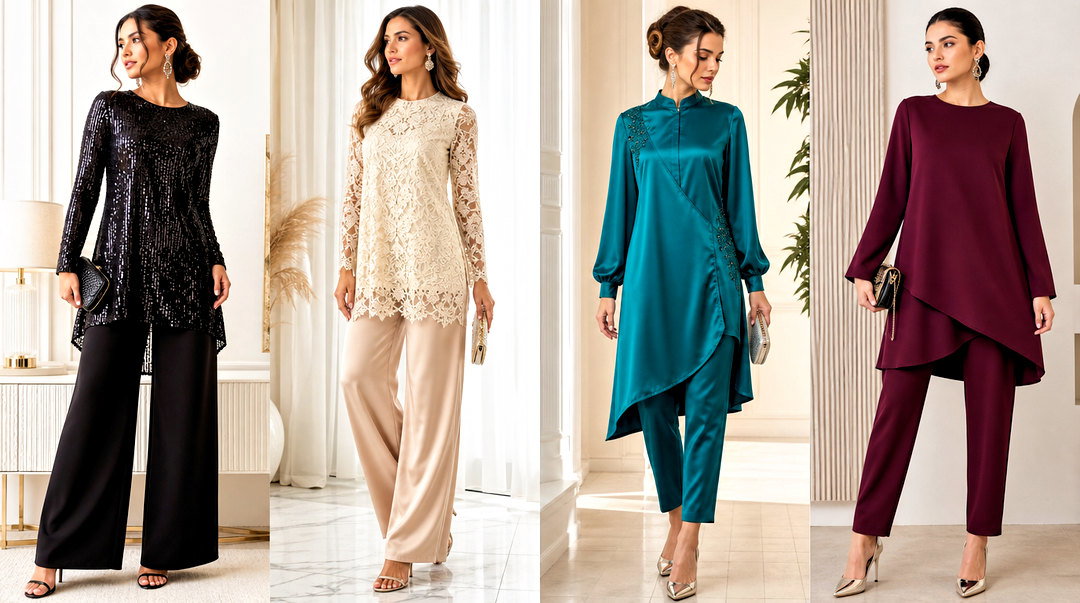
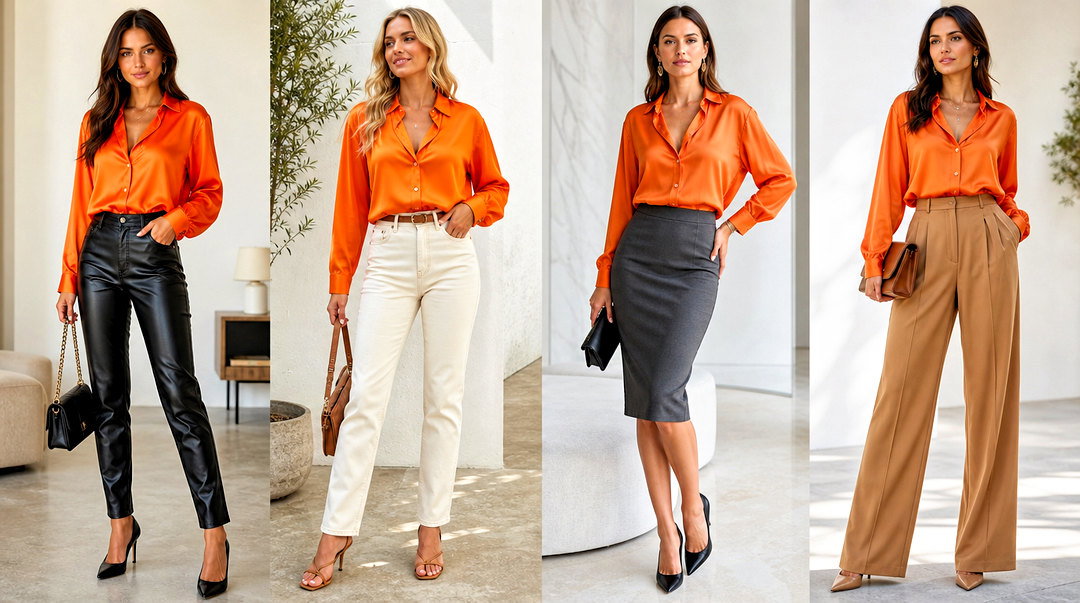
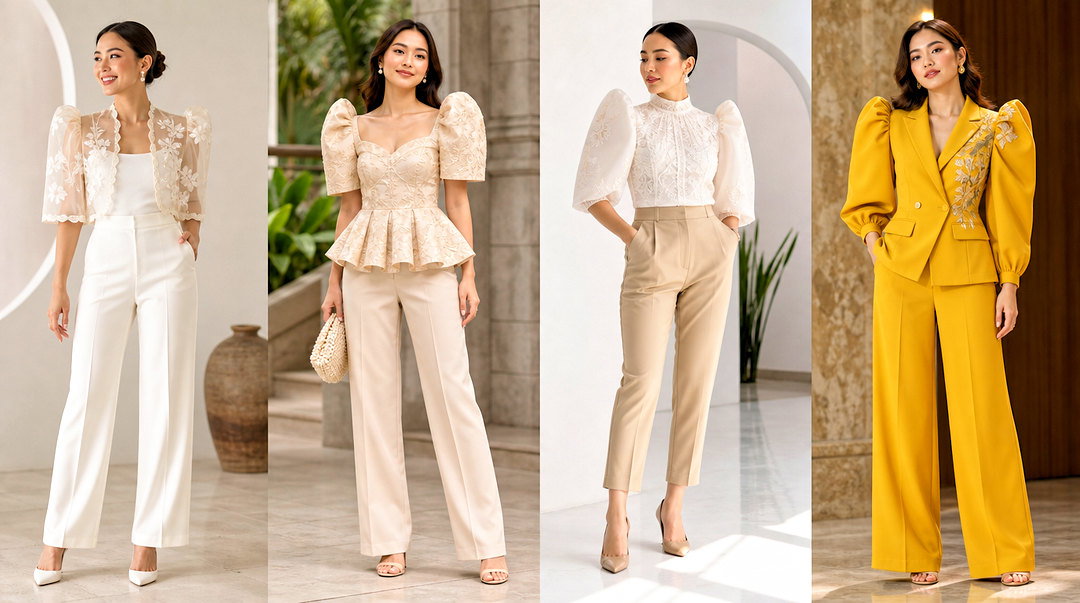
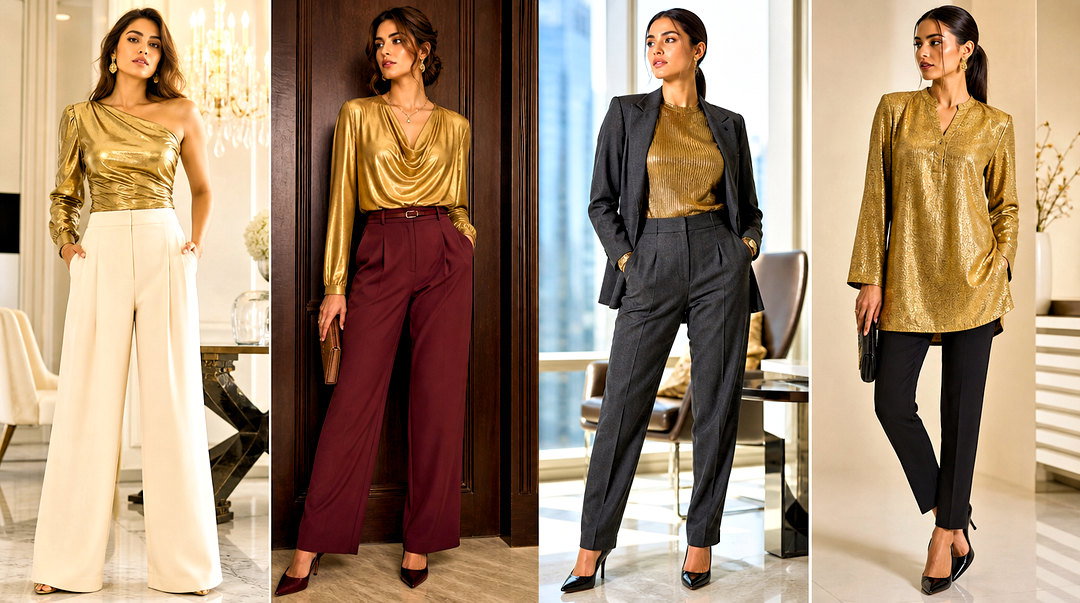
20. Peplum Formal Bustier Top With Pencil Skirt
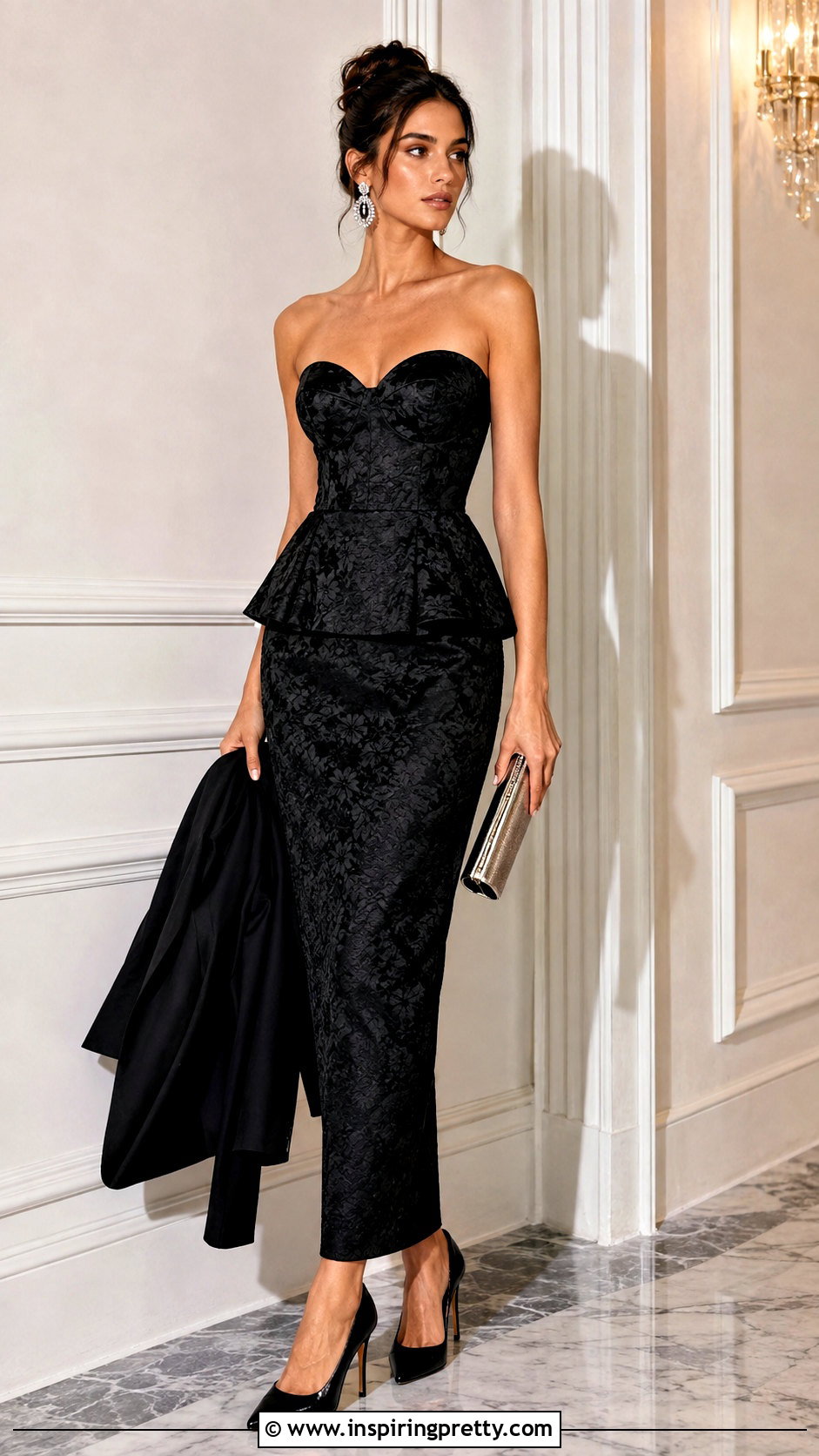
A peplum bustier covers a little more than a cropped one and marks the waist on its own. The pencil skirt should begin under the peplum's lower edge, so you see two shapes rather than a bulky overlap. Satin, jacquard or structured crepe looks most formal. Skip the necklace if the neckline already has architectural detail. If you add a jacket, its hem must land clearly above or below the peplum, never right across it.
21. Metallic Formal Bustier Top With Black Suit
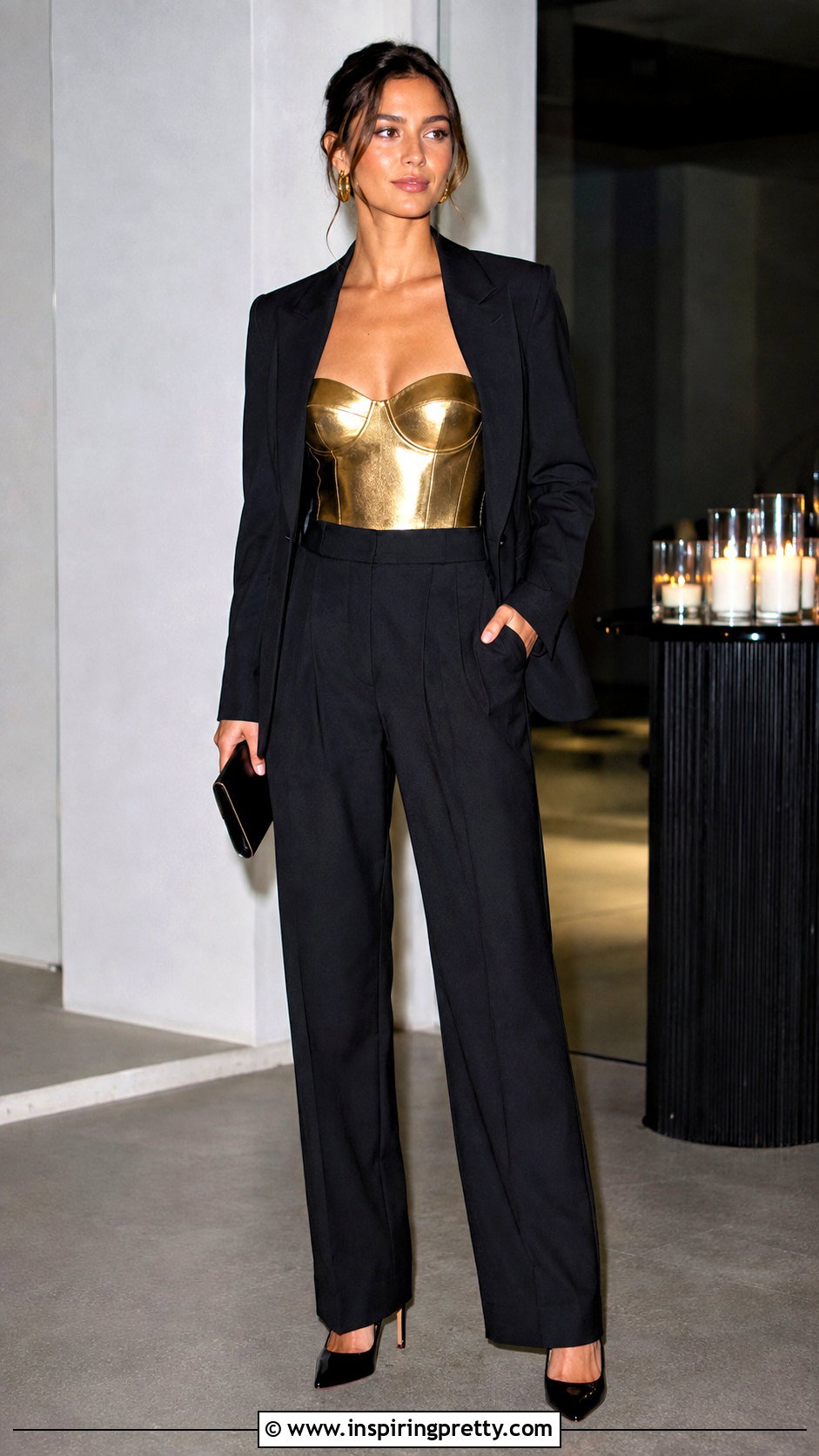
A metallic bustier inside a black suit gives you shine with an off switch: button the blazer and it nearly disappears. Brushed gold, pewter or bronze looks richer than mirror-bright foil, which shows every crease under flash. Match the jewelry to the top's undertone and stop at one piece. I'd never mix two metallic colors in this outfit; the suit is there to simplify, so keep the trousers and blazer plain.
22. Off-Shoulder Formal Bustier Top With A-Line Skirt
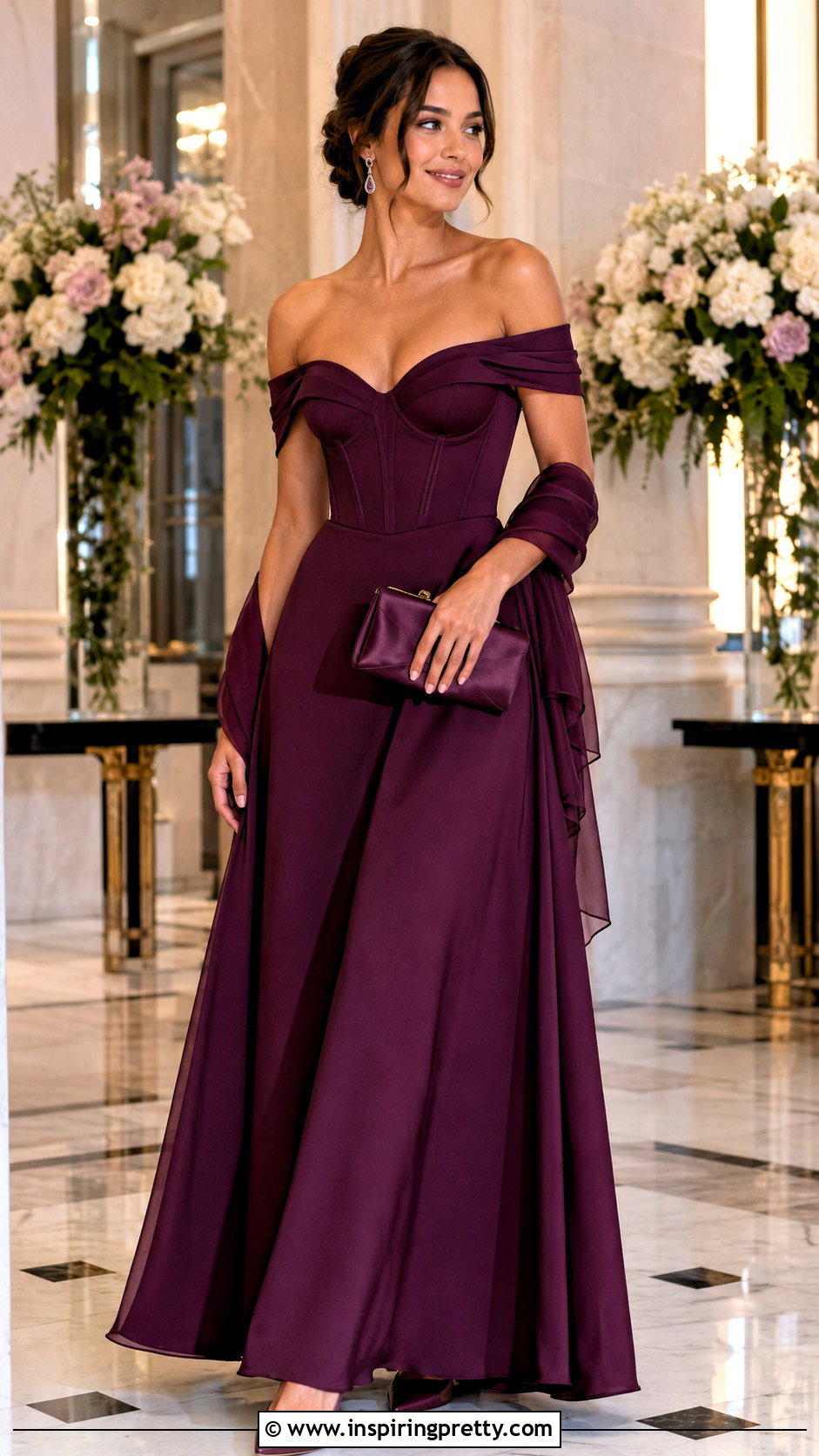
An off-shoulder bustier frames the collarbones, and an A-line skirt balances that open neckline. The important thing is internal structure: the bodice itself has to hold the top up, not the shoulder bands, or you'll be pulling them up all night. Drop earrings draw the eye up; a necklace usually breaks the line across the shoulders. Before the event, test raising your arms to hug someone. That's the movement that pulls off-shoulder bands up.
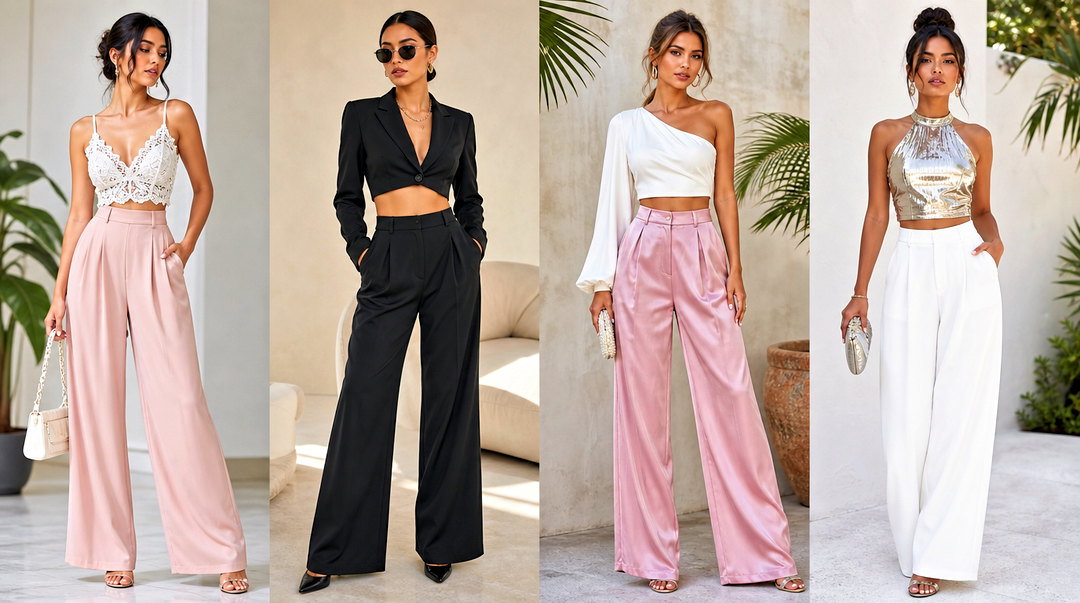
23. One-Shoulder Formal Bustier Top With Wide-Leg Pants
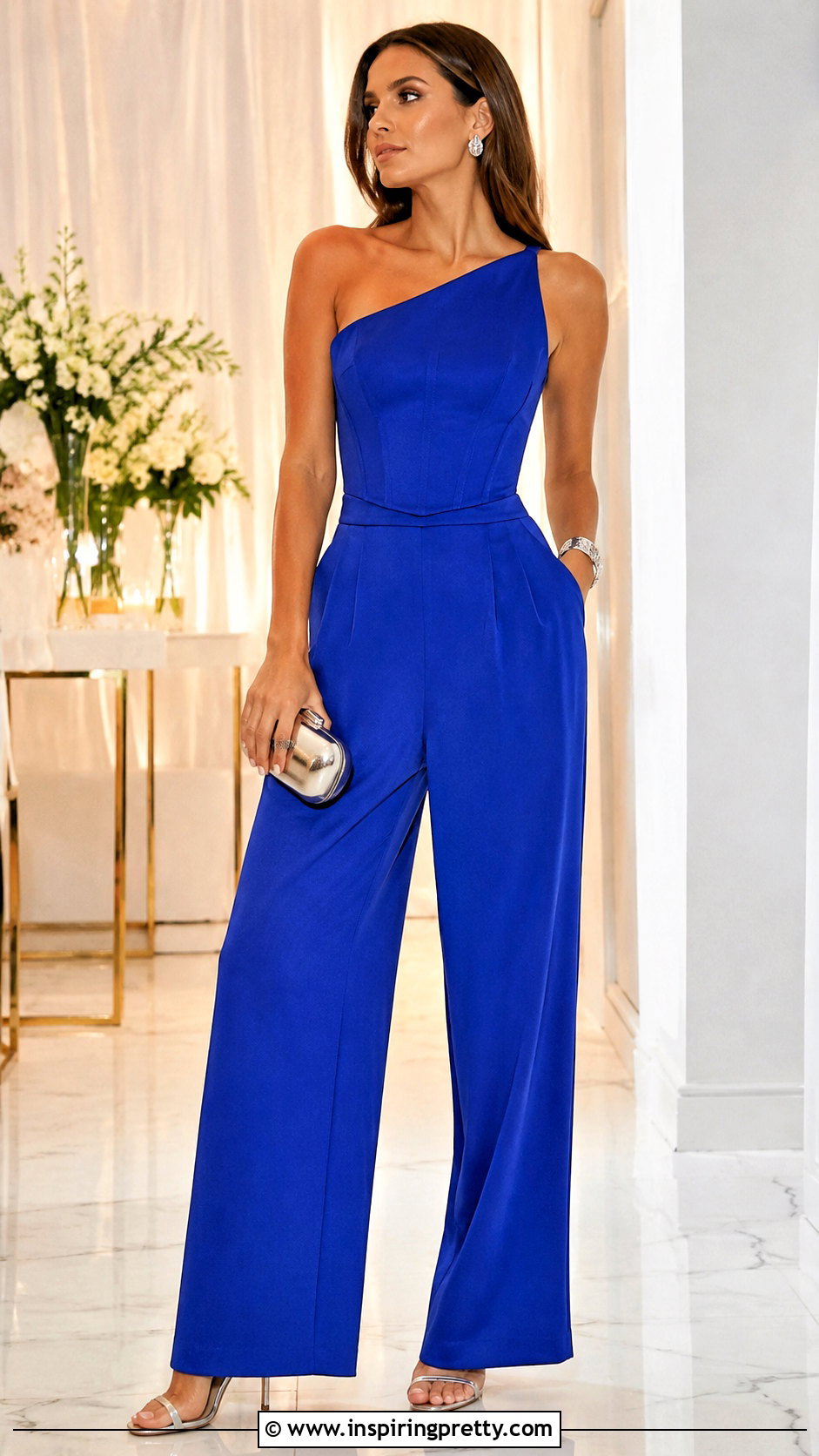
A one-shoulder bustier gives the outfit a diagonal line, and simple wide-leg trousers keep it modern. Same color top and bottom reads like a jumpsuit; black trousers ground a brighter top. I put one bracelet on the bare arm, which balances the asymmetry, and skip the necklace entirely because it fights the angled neckline. Pull the hair back or over the covered shoulder so the cut shows.
24. Formal Bustier Top With Cape And Trousers
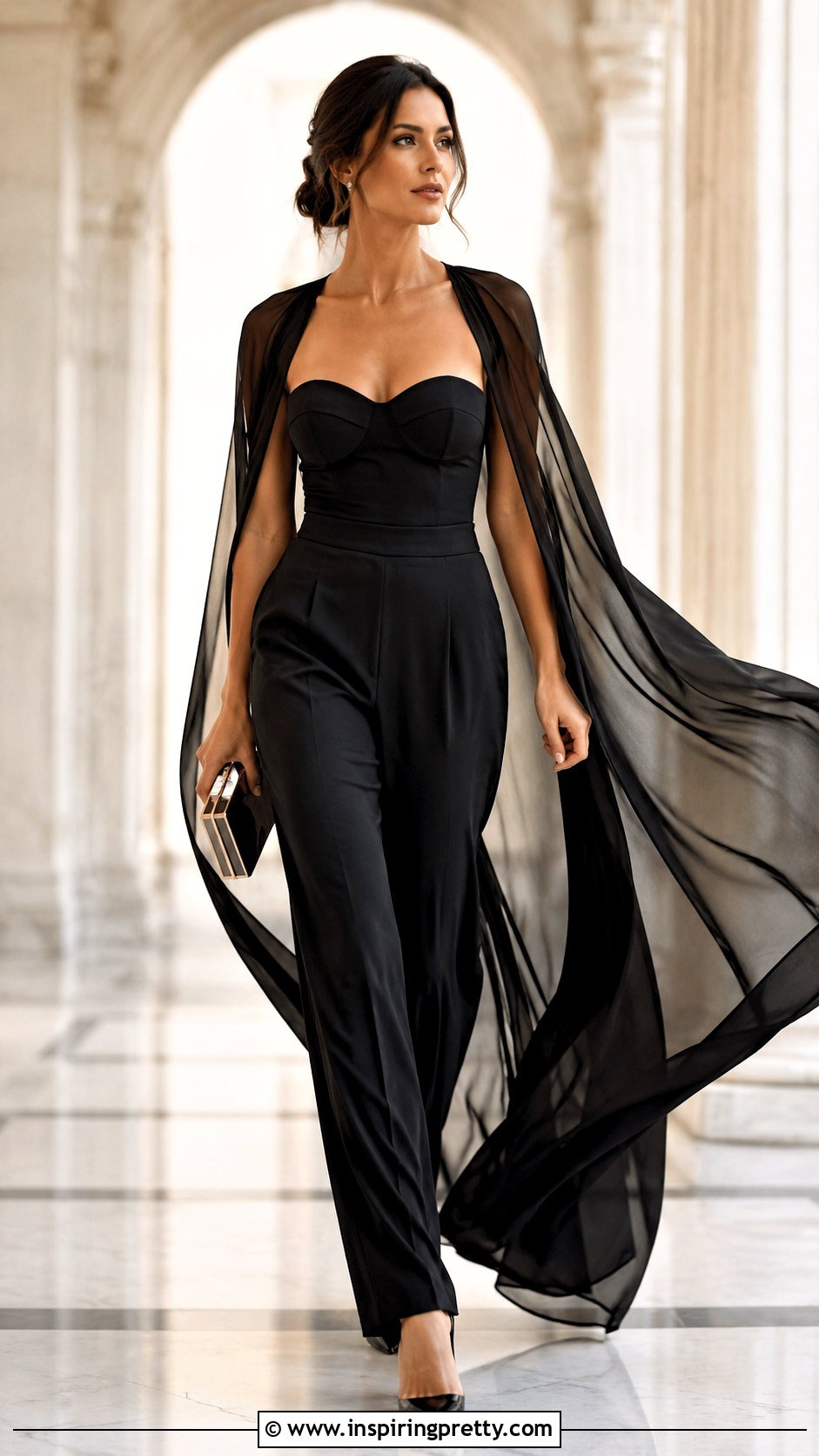
A cape gives drama without a gown. Layer a lightweight formal cape over a fitted bustier and tailored trousers, all close in color so it reads as one set. Crepe and chiffon move well; heavy satin capes swing less and can feel like a costume. Small earrings matter here, since drops catch on the cape fabric every time you turn your head. A detachable cape is the most useful, because you can take it off for dinner and put it back on for photos outside.
25. Monochrome Formal Bustier Top With Maxi Skirt
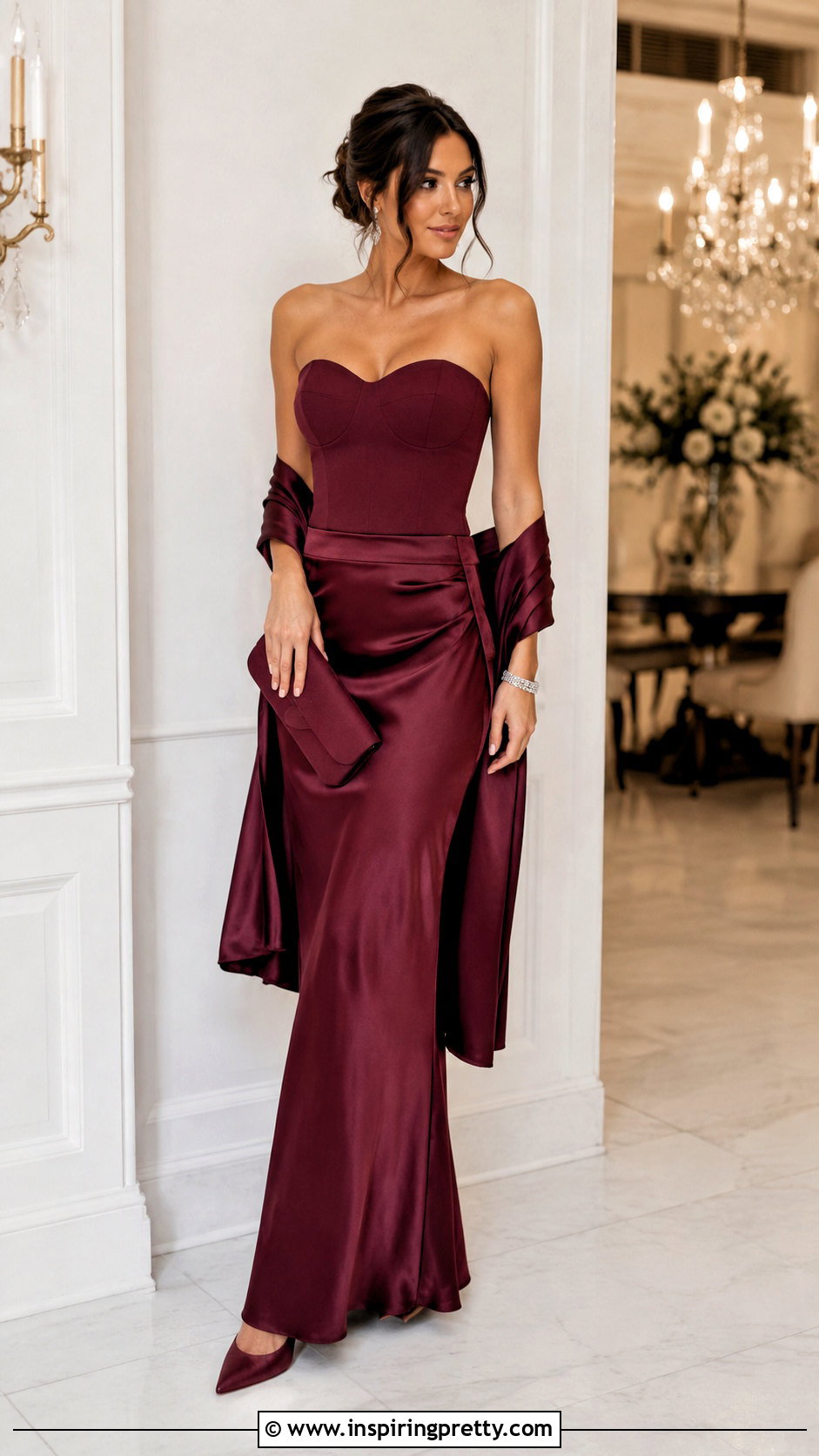
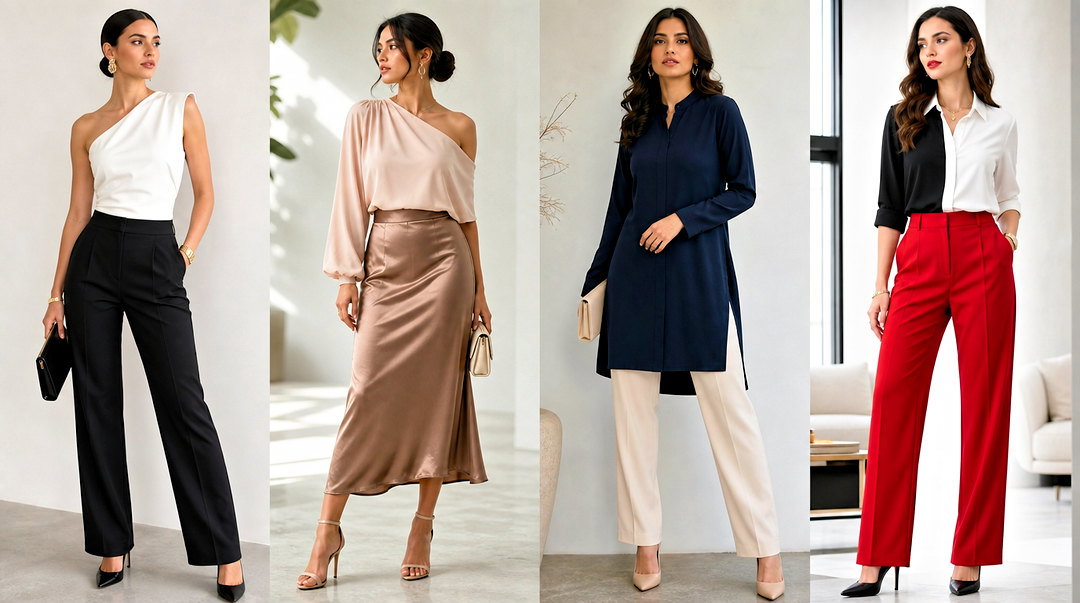
Monochrome is the quickest route to something that looks like a dress. Pick one color, then vary the texture so it doesn't fall flat: matte crepe over a satin skirt, or velvet over smooth wool. The waistlines must meet neatly and stay that way when you sit. Dark shades suit evening; muted pastels suit a daytime wedding. A tonal blazer or wrap is the only extra I'd add.
Reading the Invitation for Separates
Separates are welcome at most events now, but the dress code still decides the length and fabric. This is how I'd map it.
- Black tie: floor-length is safest. A full maxi skirt or wide-leg trousers in satin, velvet or heavy crepe, worn with a bodice that matches in richness. Short skirts read underdressed.
- Black tie optional or formal: the same, though a dressy midi or a tuxedo-style trouser suit also fits.
- Cocktail: knee to midi length, more room for prints, sequins and color.
- Daytime or garden formal: lighter fabrics, softer colors, and a wrap or cropped jacket for the ceremony.
For a wedding, steer clear of a head-to-toe ivory or white bustier outfit unless the couple has asked for it. In a house of worship, assume shoulders should be covered for the ceremony, which is when the sheer sleeve, bolero or cape from the list above earns its place.
Test It Sitting Down Before the Night
Every outfit here starts from the same place: a bustier that actually supports you, sitting on a bottom that meets it cleanly. Trousers give structure, midi and maxi skirts give movement, and a blazer, cape or sheer layer covers you when the room or the ceremony calls for it. Tailoring is the cheapest way to make inexpensive separates look formal. Before any event, put the whole outfit on and sit, walk and raise your arms; most problems show up in those three minutes, not on the night.
Related posts:


Leave a Reply