
A tunic with pockets is the top I hand people who are tired of carrying a bag to the kitchen and back. The longer hem covers the hips and seat, and the pockets hold keys, a card or lip balm so your hands stay free. What makes one look polished rather than sloppy is proportion. A flowing tunic wants slim pants; a more structured one can sit over relaxed jeans or wide trousers. Fabric changes the mood too: linen for heat, cotton for errands, a soft knit for cold months. And where the pockets are sewn in changes the outline more than most people expect, so that's where I'll start before the twenty outfits.

Where the Pockets Sit Changes the Whole Outline
When I go through someone's closet, pocket placement is one of the first things I look at on a tunic, because it decides where the garment adds bulk. There are three common types, and each behaves differently once there's something in it.
- Side-seam pockets are sewn into the seam and hidden. They give the smoothest front, but when loaded they push outward at the hip, so they're best for light things.
- Patch pockets are stitched on the outside. They're casual and strong, and they add a visible layer exactly where they sit, so a patch on the hip makes the hip look wider.
- Kangaroo pockets run across the front of hoodie-style tunics. Comfortable for your hands, but anything heavy makes the front sag in a pouch.
Two quick checks before you buy. Put your phone in the pocket and look sideways in a mirror; if the hem dips or the hip pokes out, that pocket is for tissues only. Then look at the pocket bag inside. On pale or thin fabric a white pocket lining shows through, and a matching or skin-tone one doesn't.
1. White Tunic Top With Pockets And Straight Leg Jeans
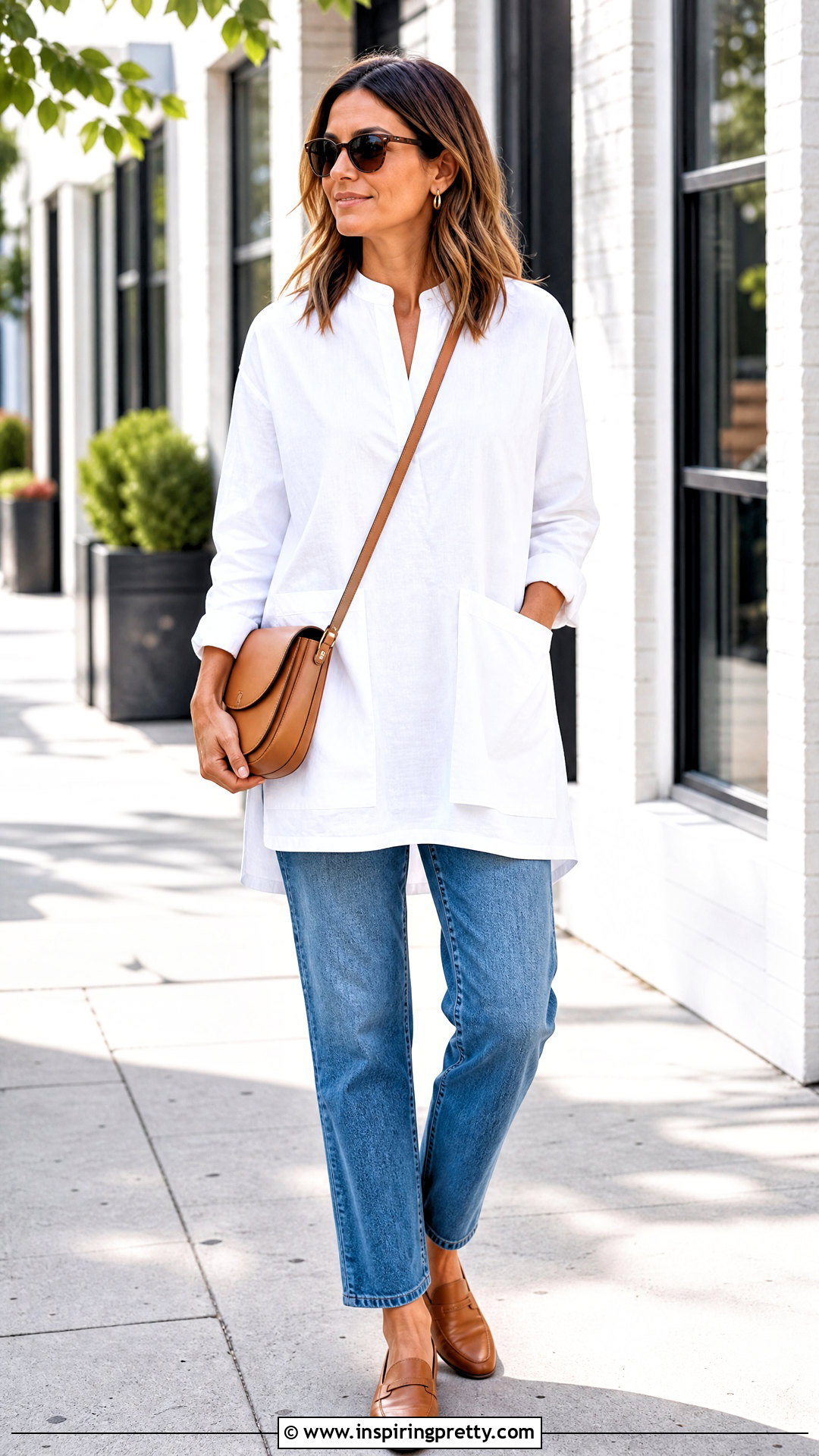
Start with a crisp white tunic and medium-wash straight jeans. I'd look for a cotton or cotton-poplin tunic with side pockets, a curved hem and sleeves that roll neatly. Poplin is firm enough that the pockets don't sag, which a thin voile can't promise. The jeans should skim the leg without gripping it. Tan loafers or low white sneakers, a camel crossbody and small gold hoops warm up the white. If the tunic runs big, leave it untucked and open the neckline a button further. That small V draws a longer line and stops all that fabric swallowing a petite or short-waisted frame.
2. Black Tunic Top With Pockets And Leggings
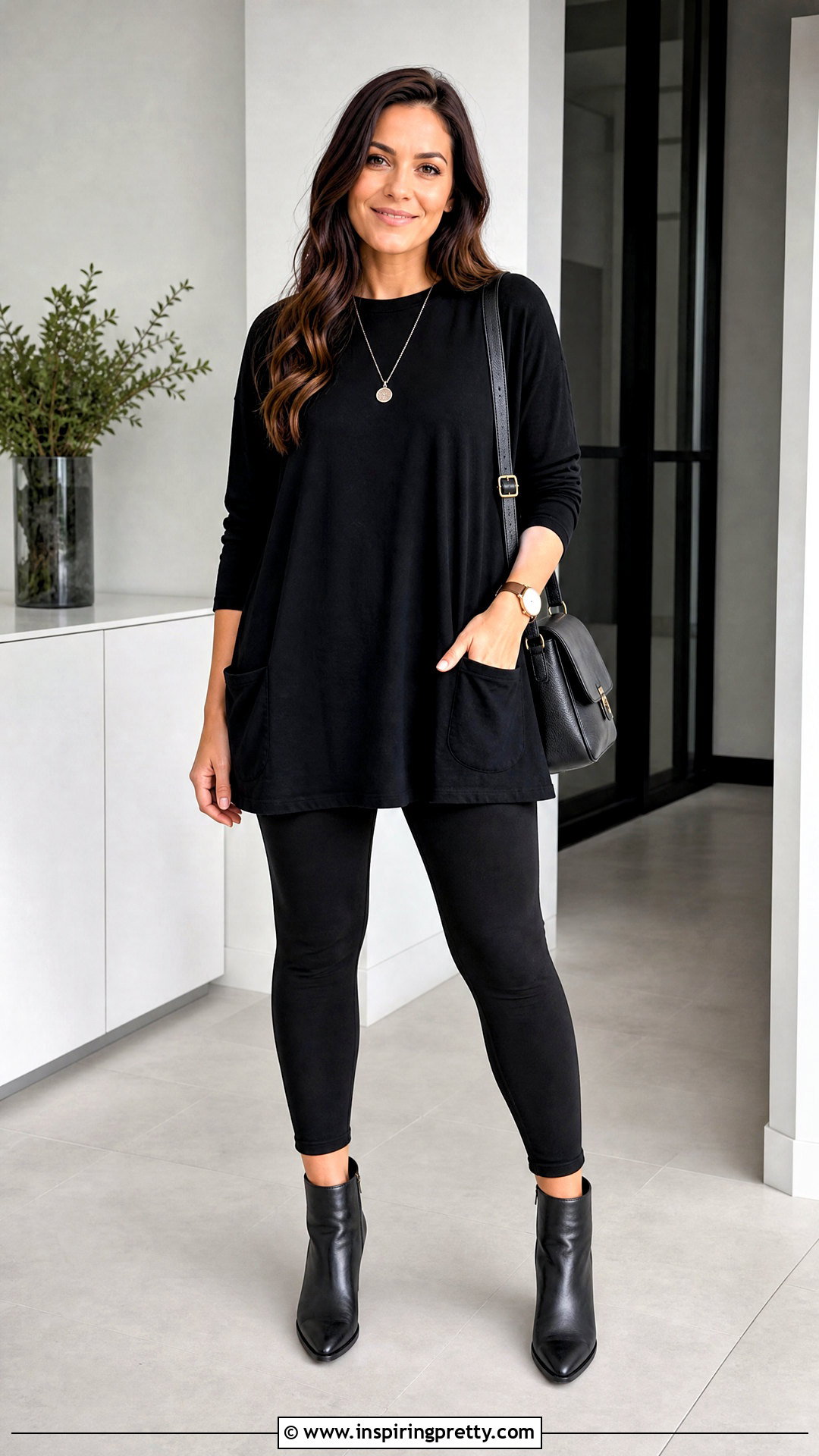
Black tunic, black leggings: about as comfortable as getting dressed gets. The difference between this looking deliberate and looking like loungewear is the weight of the fabric. A substantial knit tunic that falls below the hips, with side-seam pockets rather than bulky front ones, and ponte or thick cotton leggings that don't go sheer when you bend. Black ankle boots keep the leg line unbroken; white sneakers give a casual contrast. A long silver pendant and a compact shoulder bag add some shape. I'd also look for a V-neck or side slits, because a plain black block with no break anywhere is where this outfit goes flat.
3. Linen Tunic Top With Pockets And Cropped Pants
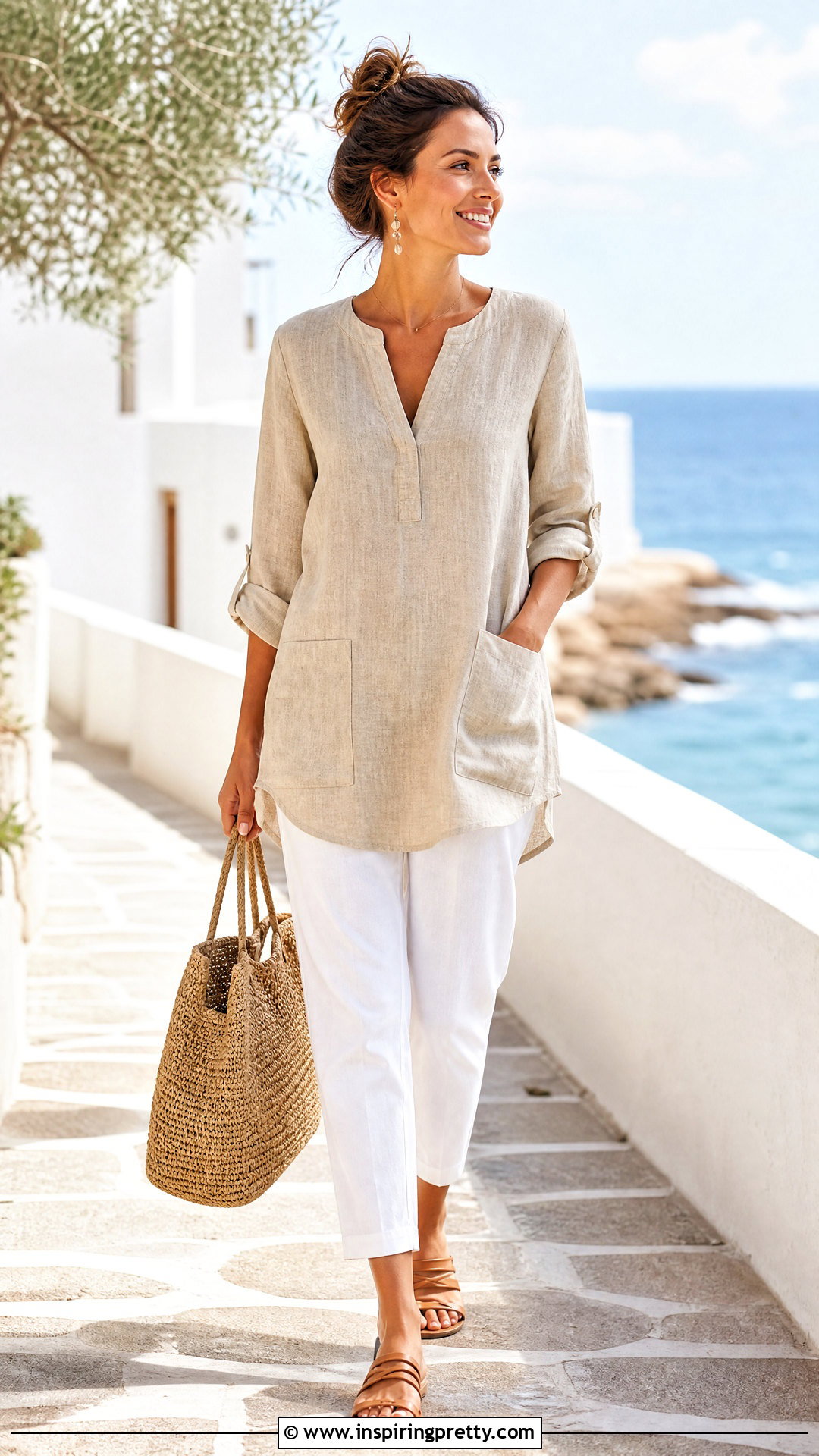
A linen tunic on a warm afternoon is hard to beat. I'd pick natural beige or pale blue and wear it with ankle-length cropped pants in a neighboring neutral. Patch pockets, dropped shoulders and side slits give it an easy shape that isn't sack-like. Tapered cotton pants add definition; wide crops are more relaxed. Flat leather sandals, a woven tote and delicate earrings are plenty. Roll the sleeves once or twice so the wrist shows. Pale linen is often more transparent than you'd think, so a light camisole underneath is worth it, and it stops the pocket bags showing through as two shadows at the hip.
4. Denim Tunic Top With Pockets And Black Pants
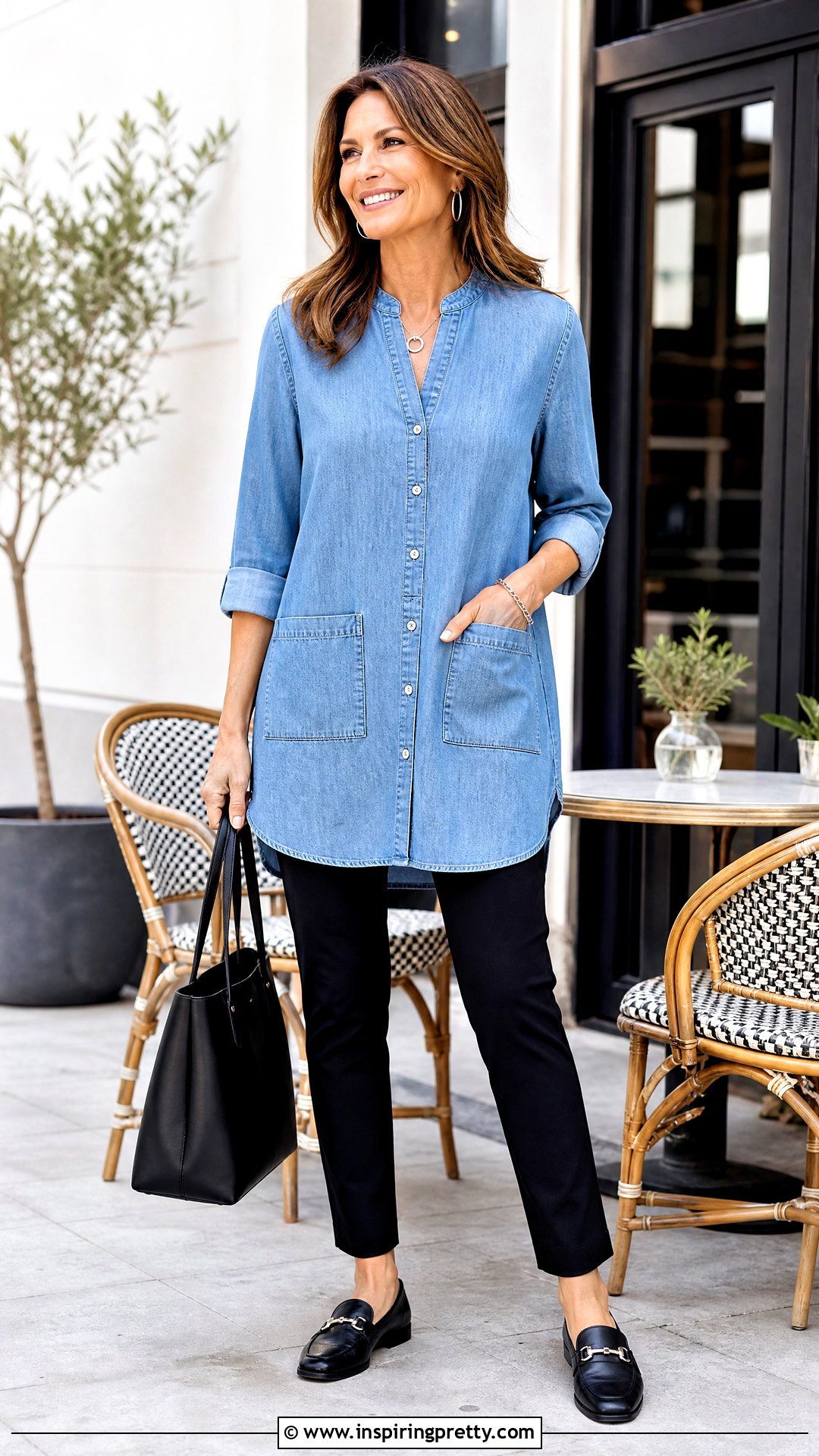
A denim tunic gives you structure without a jacket. Soft chambray or lightweight denim is what I'd choose, with a button front, a chest pocket and roomy side pockets. Over slim black ankle pants, the blue top and dark bottom make a clean contrast. Black loafers or streamlined sneakers keep it practical, with a black leather tote and understated silver jewelry. Button it fully for a shirt look, or leave the top few open over a white tank. Skip stiff, heavy denim here. Paired with full pants it adds bulk everywhere, while a softer denim with a curved hem actually moves.
5. Floral Tunic Top With Pockets And White Jeans
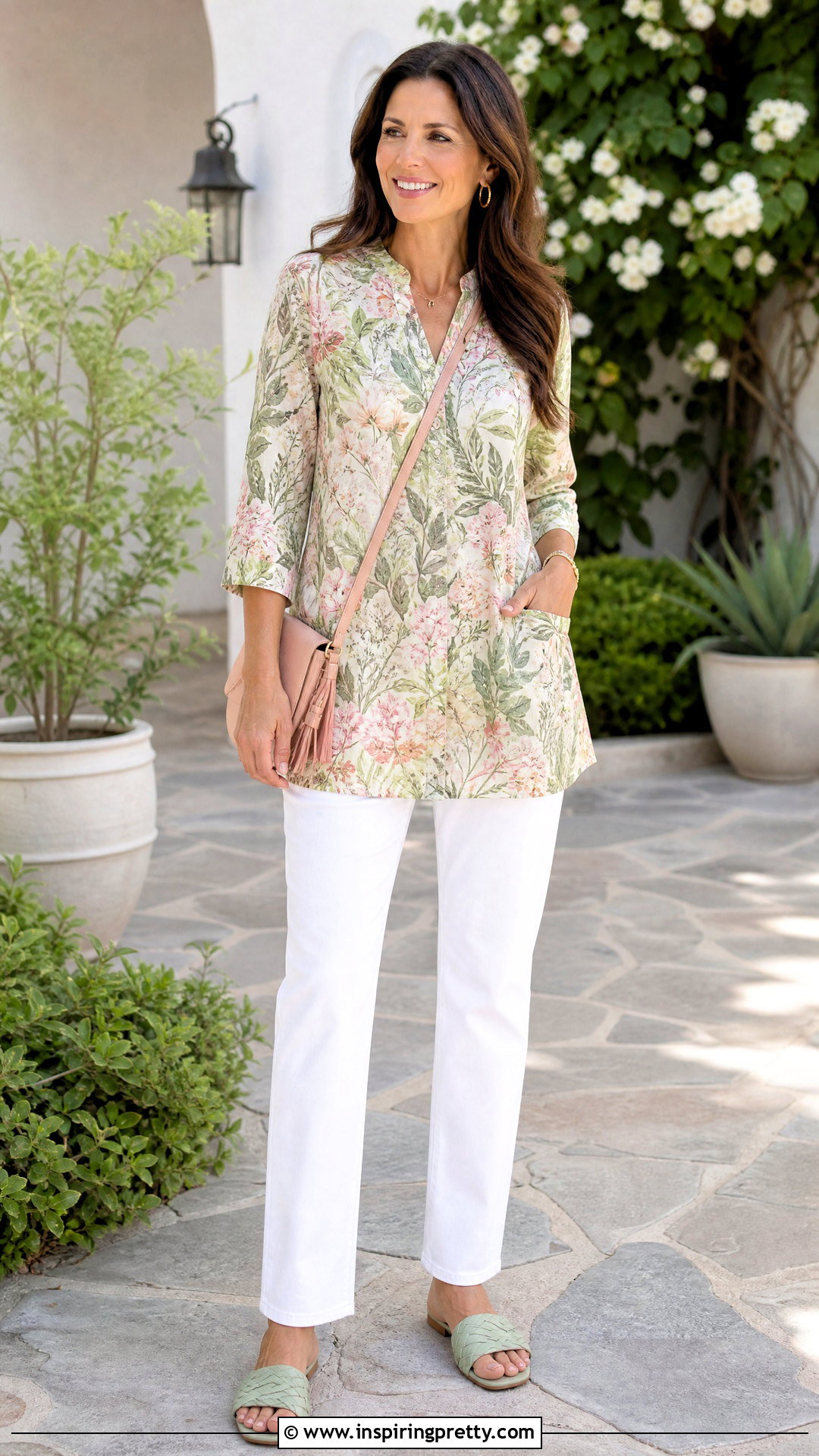
Florals look freshest against white denim. I'd choose a medium-scale botanical print that covers the hips, with hidden pockets that don't interrupt the pattern; a patch pocket on a busy print looks like a mistake from across the room. White straight or slim jeans brighten everything. Pull one accent shade from the flowers for your shoes or bag, say soft blue flats. Keep jewelry delicate. A V-neck or open split neckline frames the face and keeps a flowing top from looking heavy. For shape, choose gentle waist seaming or side slits instead of belting over the pockets, which just bunches them.
6. Plaid Tunic Top With Pockets And Skinny Jeans
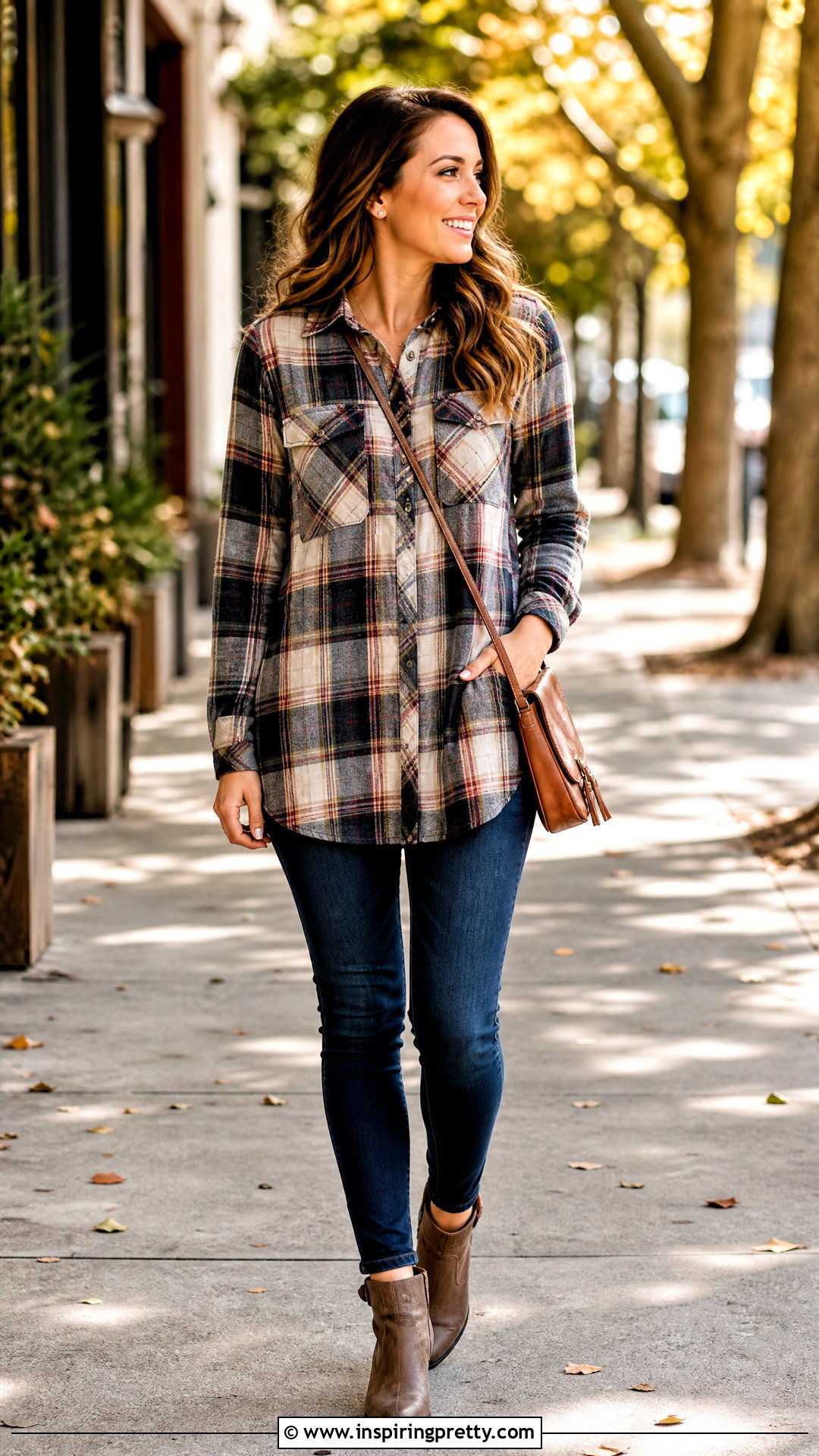
Cool mornings call for a soft plaid tunic over denim. Brushed cotton or lightweight flannel with real chest and side pockets, a button front and a hem at the upper thigh. Dark skinny or narrow straight jeans contrast nicely with the relaxed shirt shape. Brown ankle boots, a leather crossbody and stud earrings. Wear it open over a fitted neutral tee as a layer, or buttoned with a half-roll at the sleeve. A plaid in two or three related shades goes with far more coats and scarves than a loud one. Flannel pills where the bag strap rubs, so I'd wear the crossbody across the opposite shoulder to the pockets you use most.
7. Striped Tunic Top With Pockets And Navy Trousers
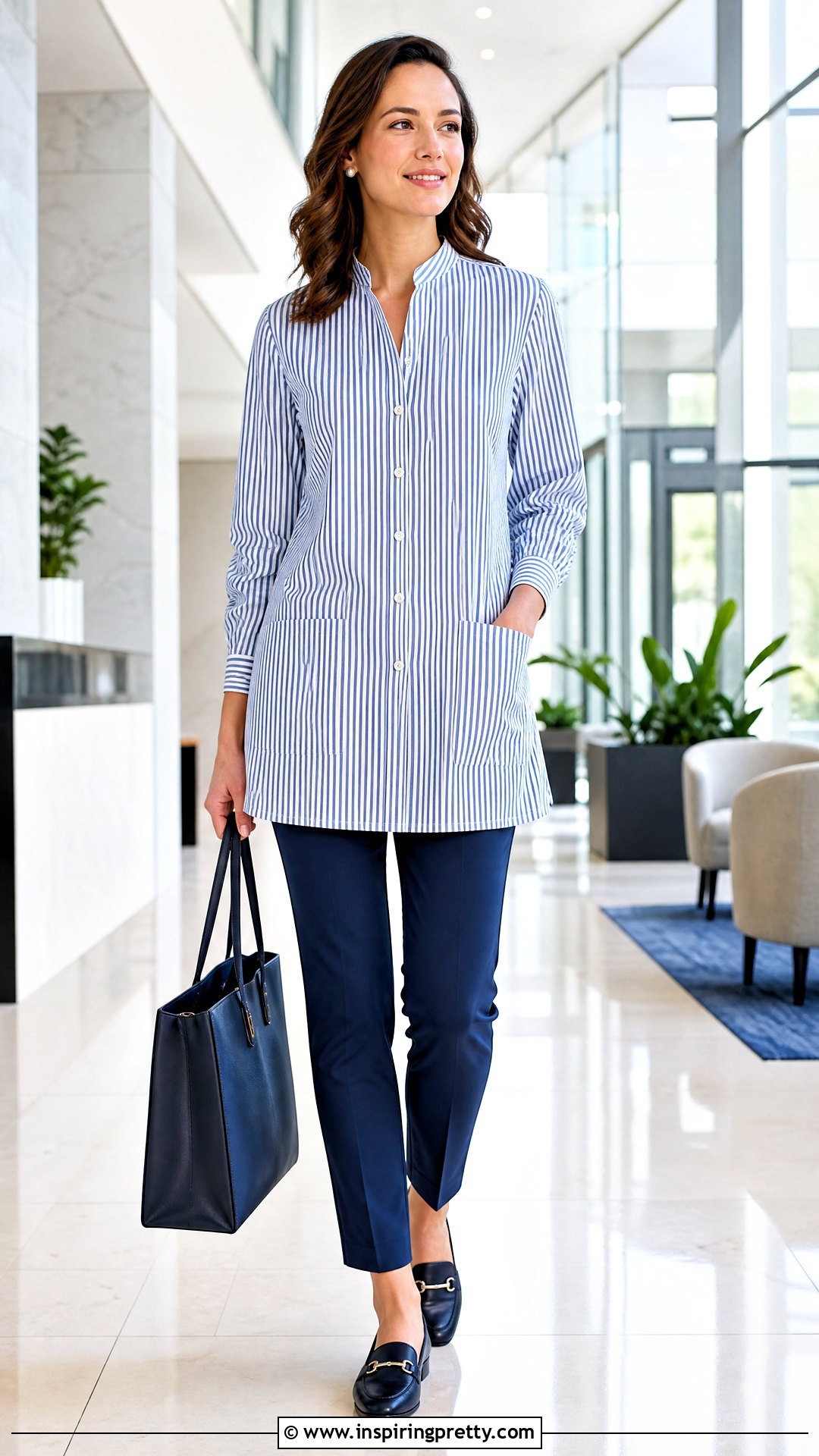
Need something comfortable that still looks ready for work? A striped tunic with navy trousers does it. Narrow vertical stripes lengthen, especially on a button-front cotton. Side-seam pockets keep the front smooth, and a curved or stepped hem adds a little movement. Tailored ankle trousers give structure underneath. Navy loafers or pointed flats, a structured tote, pearl studs. The one thing I check: where the hem ends. If it stops right at the widest part of your hips, it draws a line across them. A slightly longer hem, past that point, looks cleaner.
8. Hooded Tunic Top With Pockets And Joggers
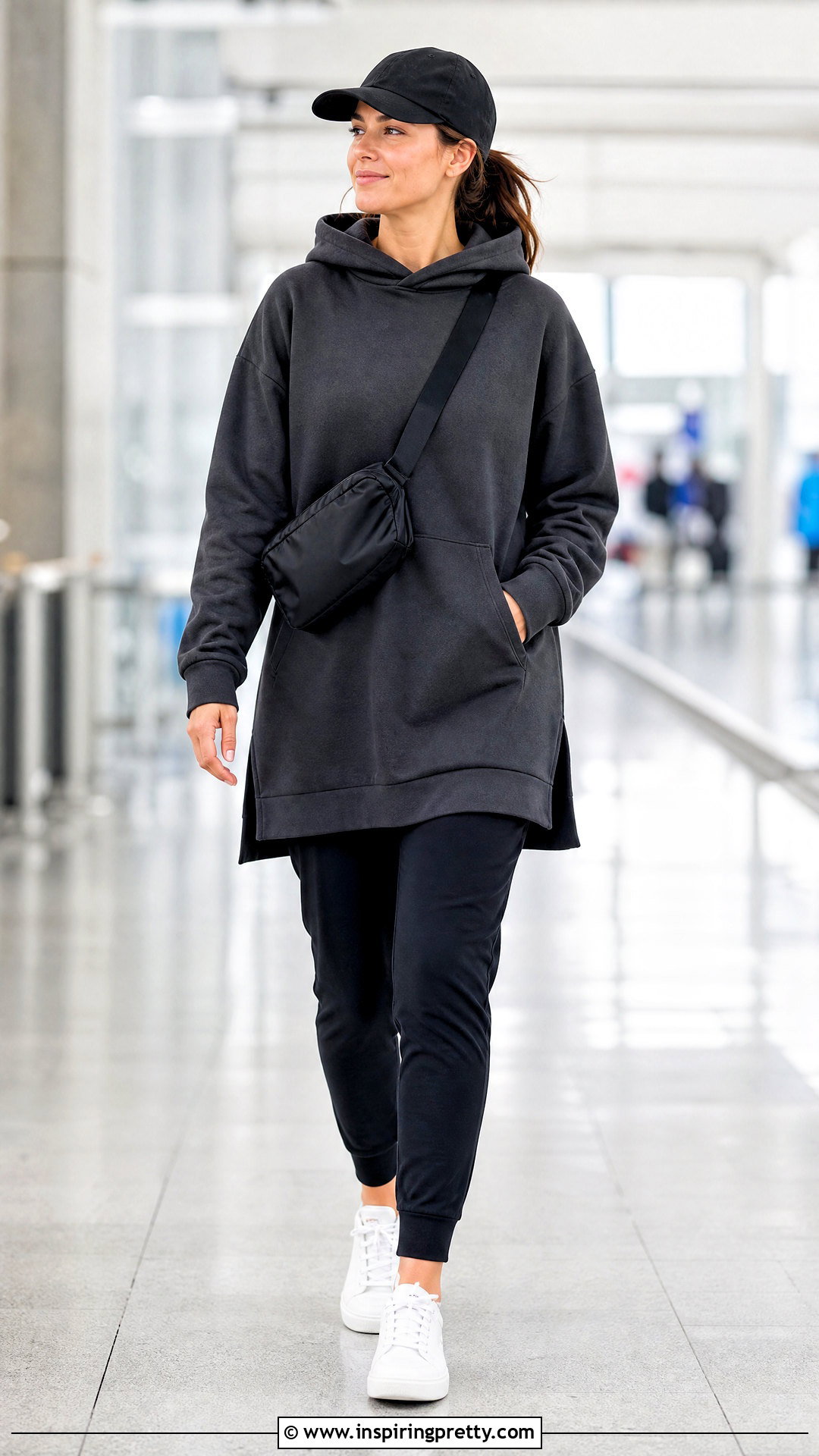
A hooded tunic can carry a relaxed outfit without looking like sleepwear, if the knit is smooth and the logos are minimal. A longline sweatshirt knit with a kangaroo or side pockets, worn with tapered joggers in the same color family: charcoal with black works, so does cream with taupe. Sleek leather sneakers, a nylon crossbody and a cap. The joggers need to narrow at the ankle, because two oversized pieces together look heavy. Kangaroo pockets bag out quickly if you load them, so I keep the phone in the crossbody and use the pocket for cold hands. A quilted vest adds structure on a cold run to the shops.
9. Sweater Tunic Top With Pockets And Tall Boots
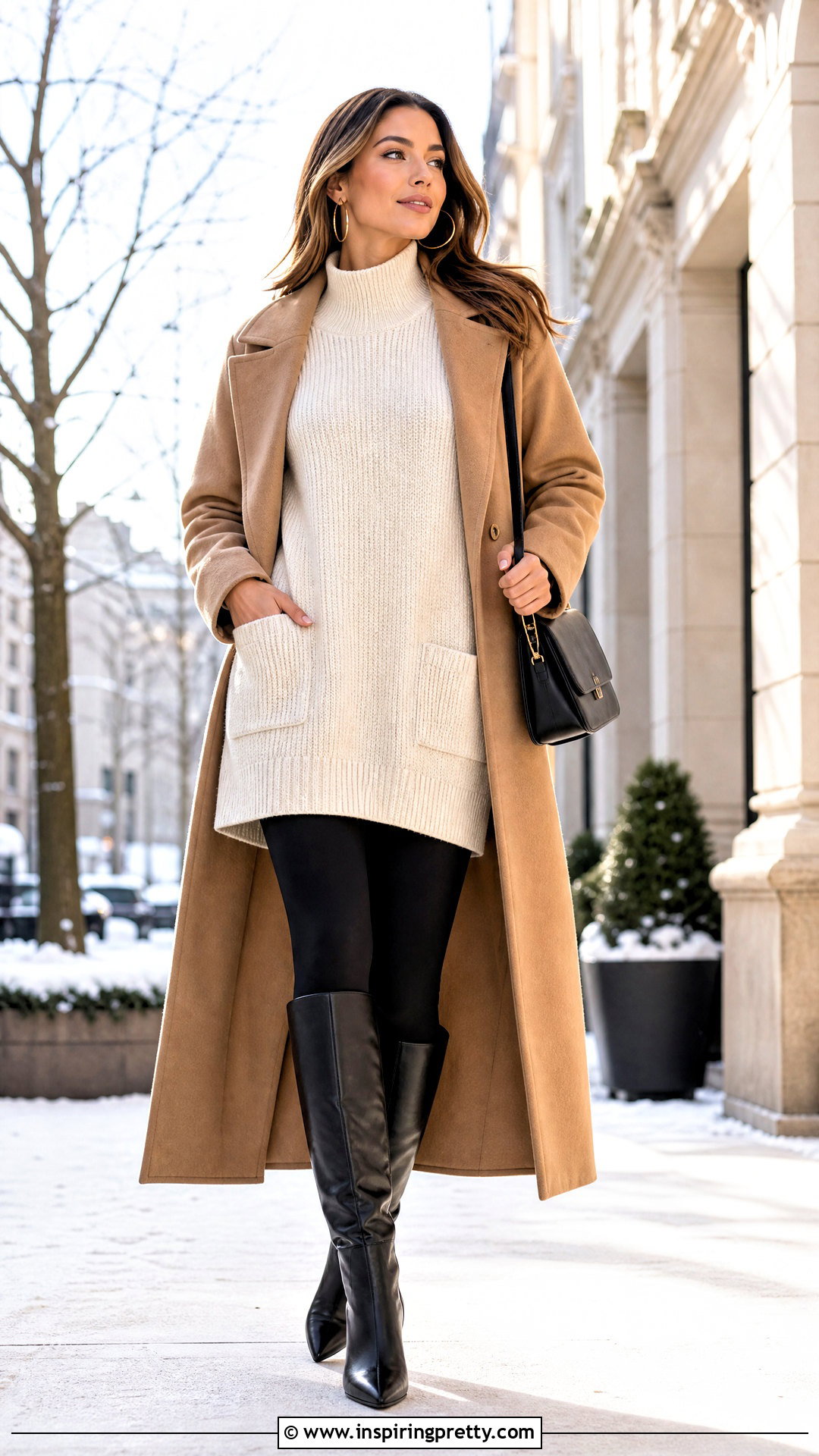
In winter, a sweater tunic is the one I'd live in. Choose a midweight knit with a mock neck, side pockets and enough length to cover leggings properly. Opaque black leggings and knee-high leather or suede boots make the lower half smooth and unbroken, and a long wool coat repeats the tunic's vertical line. A structured shoulder bag and medium hoops finish it. Please don't stuff the pockets with anything heavy. Knit stretches, and a weighted pocket pulls the side seam down until the hem hangs uneven and the hips look wider. Light things only, or just your hands.
10. Cowl Neck Tunic Top With Pockets And Ponte Pants
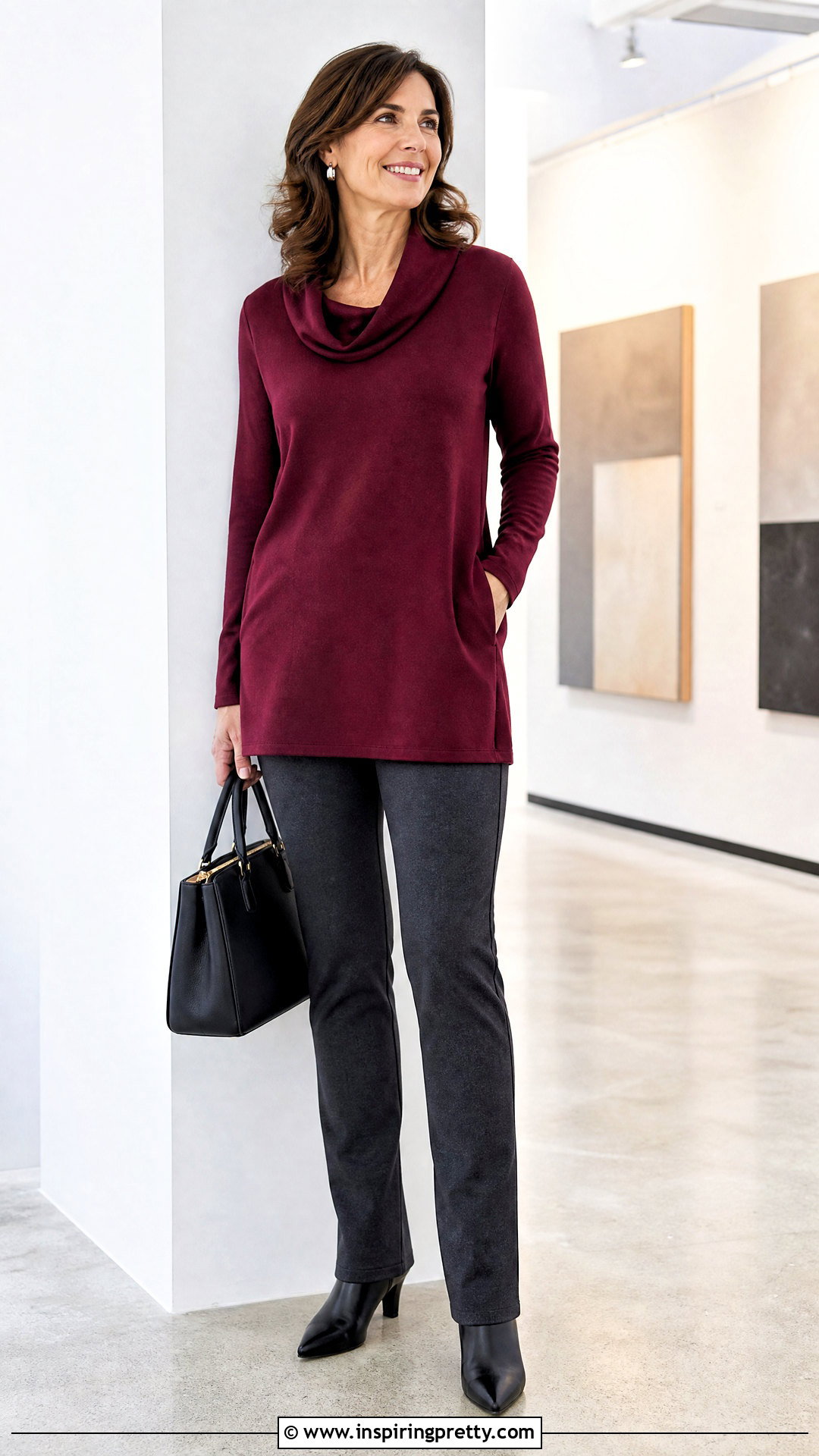
The soft folds of a cowl neckline give a simple tunic some depth. Jersey or a fine knit drapes best, with subtle side pockets and a slightly tapered body. Black or charcoal ponte pants have more structure than leggings and still stretch. Pointed flats or low-heeled ankle boots sharpen it. Skip the necklace entirely; the cowl already does that job. With a fuller bust, a shallow cowl that falls softly is better than a deep one, which piles fabric exactly where you don't want more. Mid-thigh length suits narrow pants, and side slits make sitting easier.
11. Button Front Tunic Top With Pockets And Ankle Pants
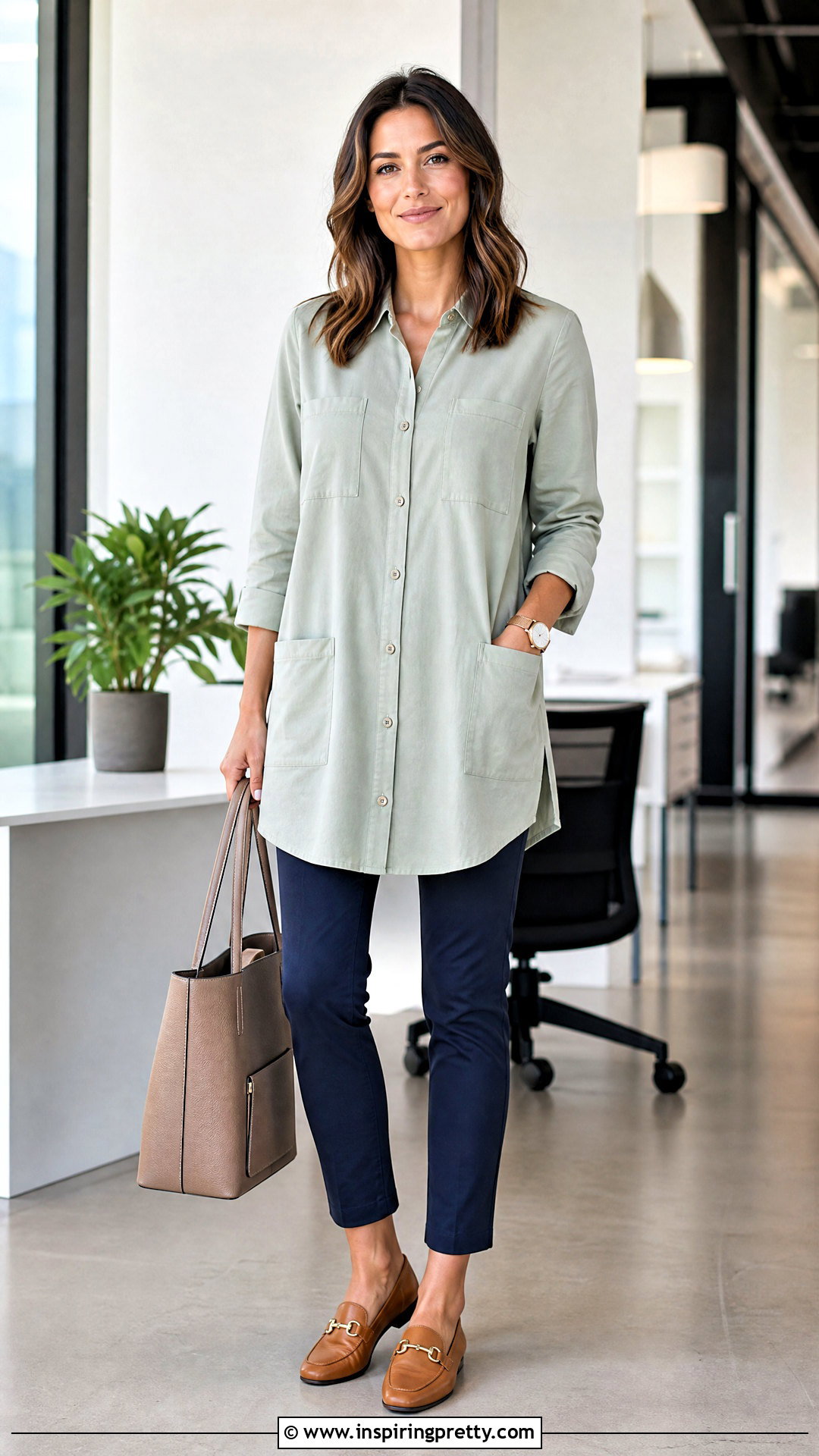
A button-front tunic gives you several outfits in one. Sage or pale blue with fitted ankle pants in navy or cream is my favorite pairing. Chest pockets and concealed side pockets combine shirt tailoring with real function. Roll the sleeves, open one or two buttons at the neck, and add leather loafers, a structured tote and a slim watch for a casual office. You can also leave the lowest buttons undone so the hem moves when you walk. Then check the front in a mirror: if the fabric pulls into little horizontal creases between buttons at the bust or hip, size up or try a different cut.
12. Short Sleeve Tunic Top With Pockets And Capri Pants
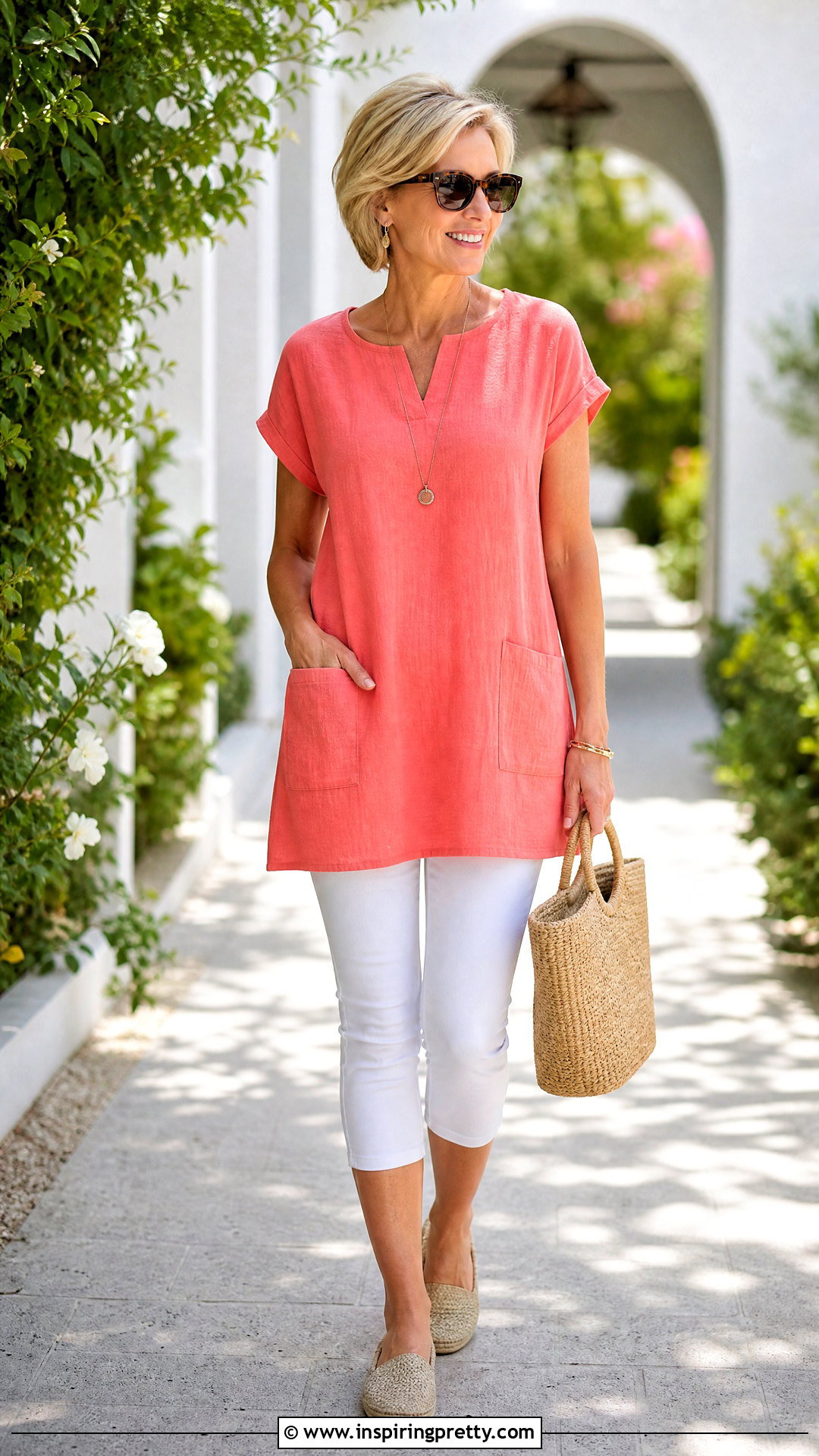
Hot days are much easier in a breathable short-sleeve tunic with pockets. Cotton, a linen blend or gauze in a bright solid works well. Pair it with slim capris that end at the narrow part of the calf, not the widest point, which makes the leg look heavier. Flat sandals or espadrilles, a small straw tote and sunglasses. Give the tunic room through the arms and body, but keep the hem above the knee, or it starts to look like a dress worn over pants. A shallow V or split neckline adds definition. Side-seam pockets are the right choice here, since a breezy top shows every bulge a patch pocket makes.
13. Long Sleeve Tunic Top With Pockets And Cargo Pants
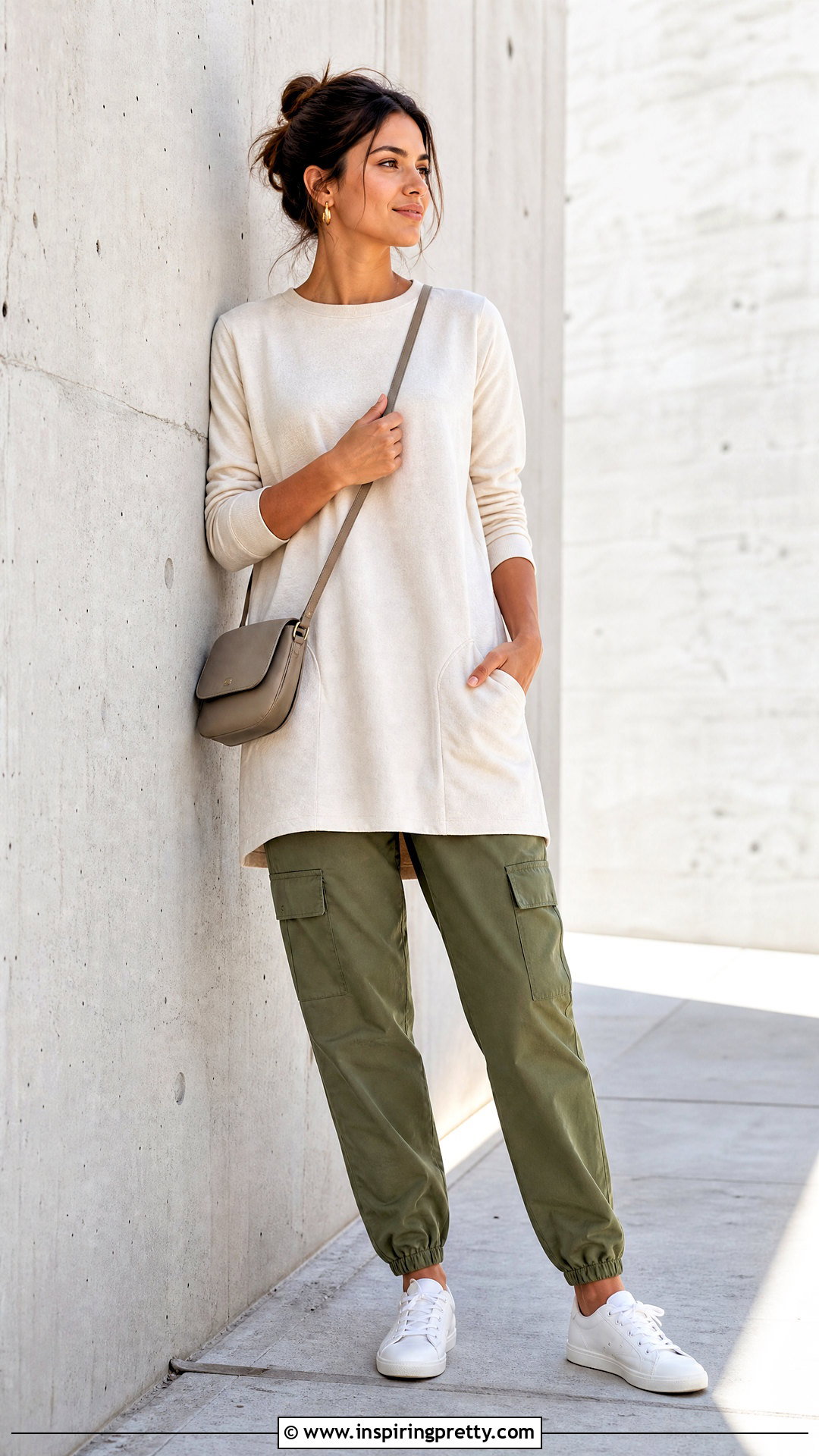
Tunic and cargos sounds like a lot of utility, and it can be. The fix is to let only one piece have big pockets. I'd pick a streamlined long-sleeve tunic in olive or rust with flat side pockets, then tapered cargos with low-profile pockets and a clean ankle. Minimalist sneakers, a compact crossbody and simple metal earrings. Push the sleeves to the elbow to take some weight off. If the tunic is long, the cargo leg has to be narrow. A shorter, structured tunic can work with relaxed cargos, but only if the hem stops high enough to show the waistband area.
14. V Neck Tunic Top With Pockets And Wide Leg Pants
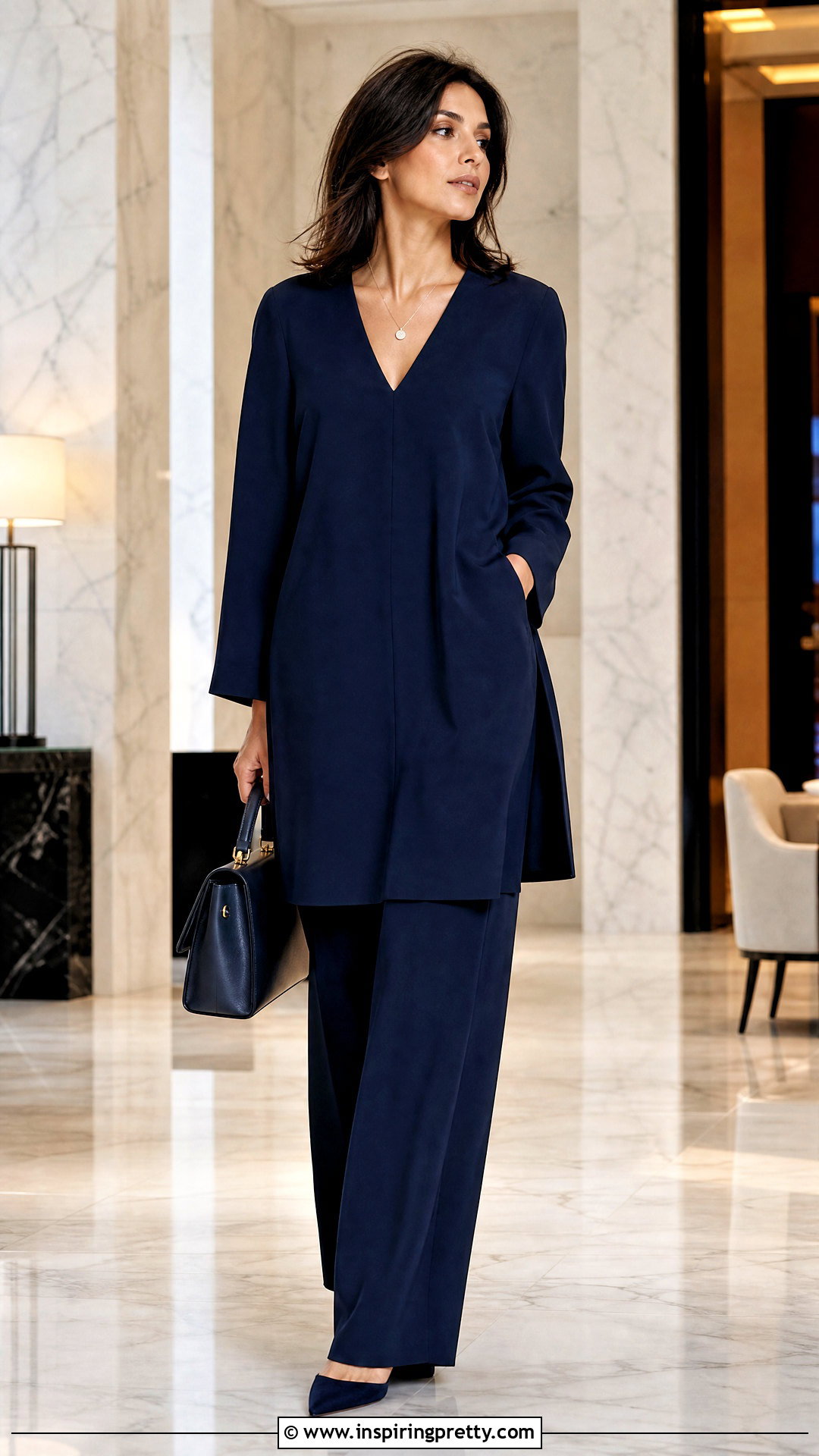
A V-neck tunic and wide-leg pants can look graceful when the colors are close. Ivory over oatmeal, or navy over deep blue. Choose a tunic with a moderate V, long side slits and seam pockets, and pair it with high-rise flowing trousers. The slits matter more than they seem: they show the trouser beneath and stop the whole outfit becoming one block of fabric. Pointed flats or sleek mules give a defined finish. A structured handbag and a short pendant that sits inside the V. Choose fabrics with some weight so they hang instead of clinging. If you're petite, one color head to toe and a slightly shorter tunic hem help the most.
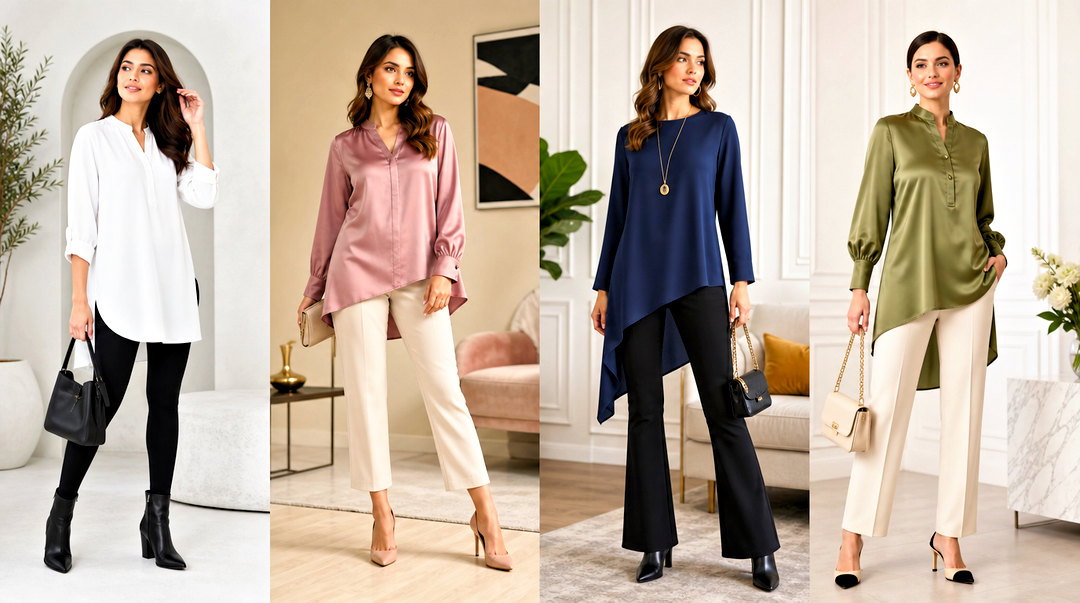
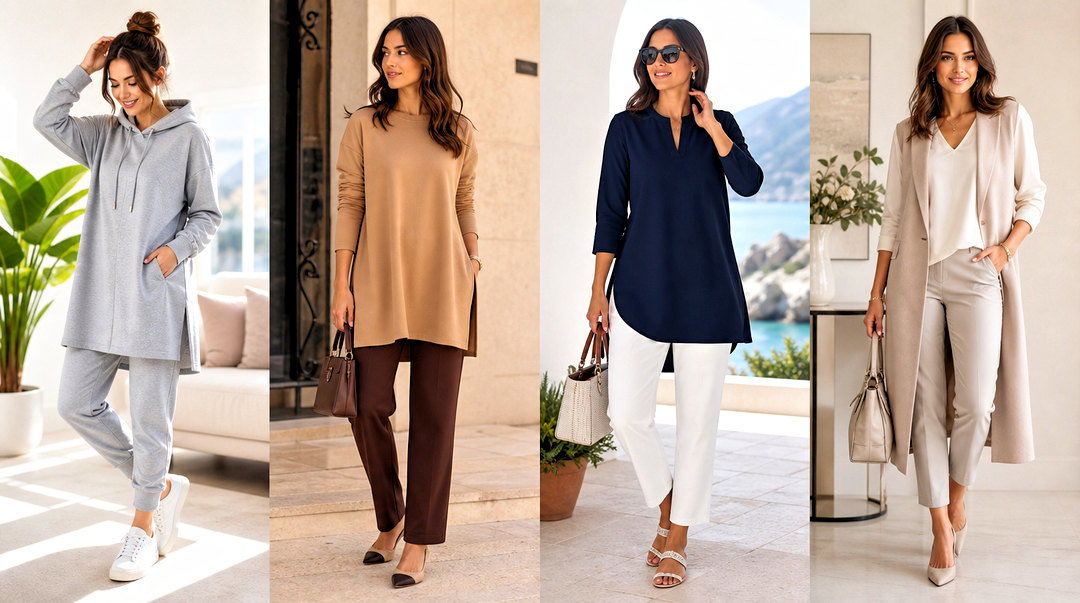
15. Asymmetrical Tunic Top With Pockets And Slim Pants
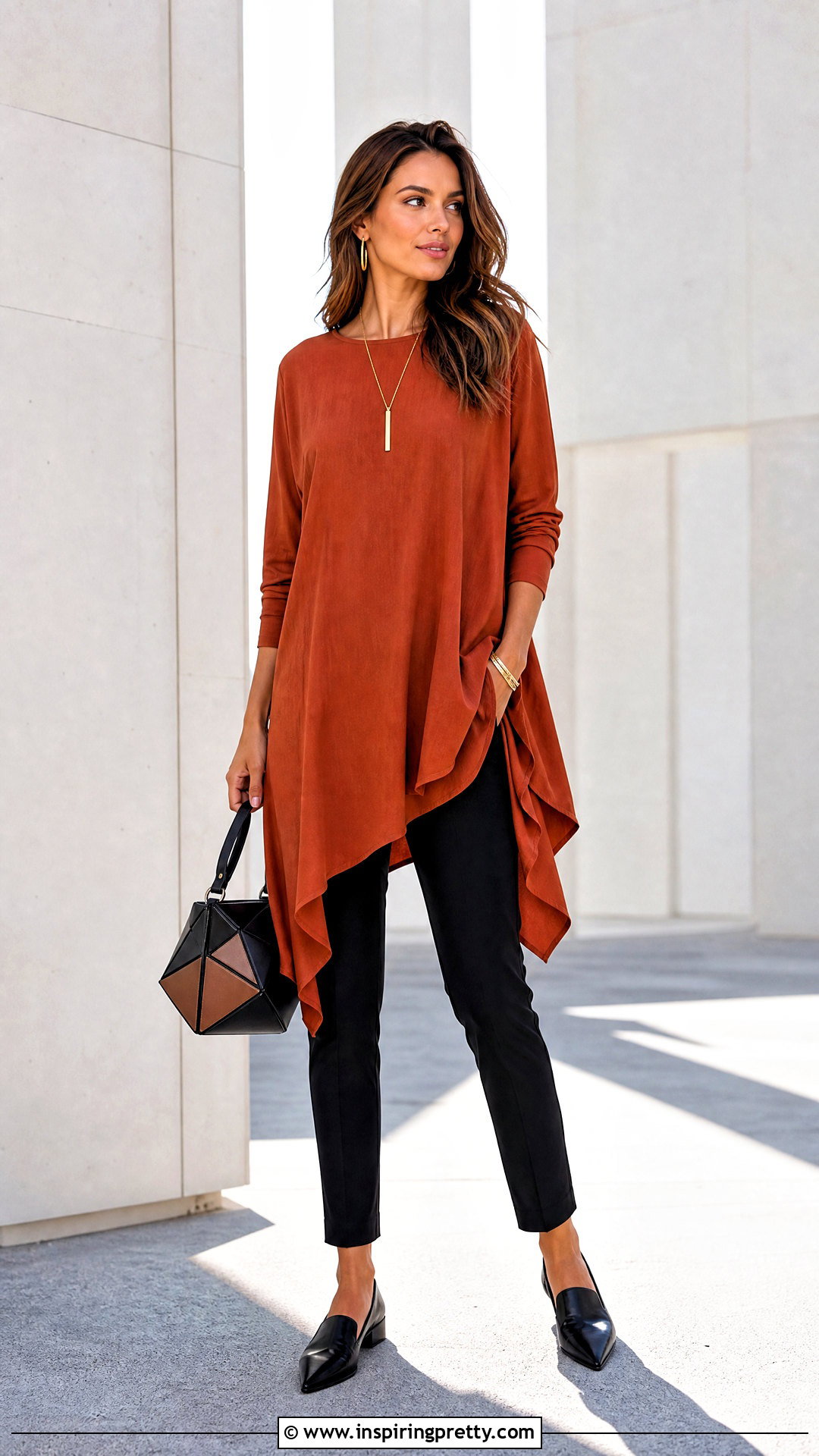
An asymmetrical hem gives a plain tunic real shape. I'd go with a solid color that has one longer side, a little draping and a pocket worked into the lower seam. Slim ankle pants keep the hem visible; black goes with almost any tunic color, while a tonal trouser lengthens more softly. Pointed loafers or ankle boots, a geometric bag and clean metal jewelry. Don't layer much on top, as the hem is already the interest. Watch the longest point: if it hangs much past the knee, it catches your stride and starts to look like an uneven dress. Jersey and crepe drape best and let the pocket lie flat.
16. Plus Size Tunic Top With Pockets And Dark Jeans
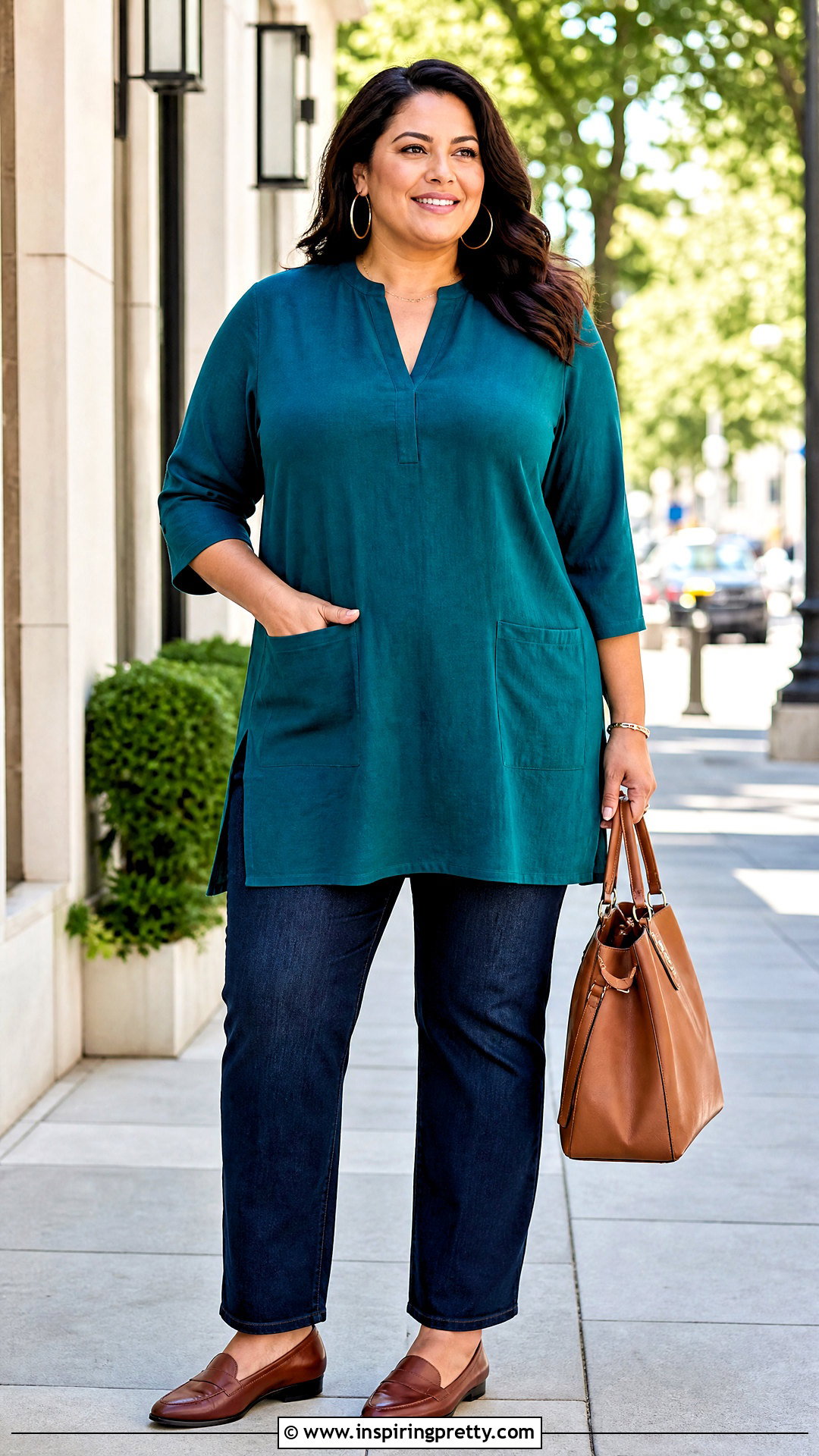
A good plus-size tunic should follow the body, not hide it under yards of fabric. I look for a defined shoulder seam, an open neckline, side slits and pockets that lie flat when empty. Dark straight jeans make it easy to repeat. A small print, a saturated color or a vertical detail down the center gives a focal point. Supportive loafers or ankle boots, and a medium structured bag. Don't size up by habit. Too much volume blurs the shape the tunic was designed to have. Check the shoulders, upper arms and bust first, then sit down: the fabric should skim the hips without the pockets pulling open.
17. Petite Tunic Top With Pockets And Cropped Jeans
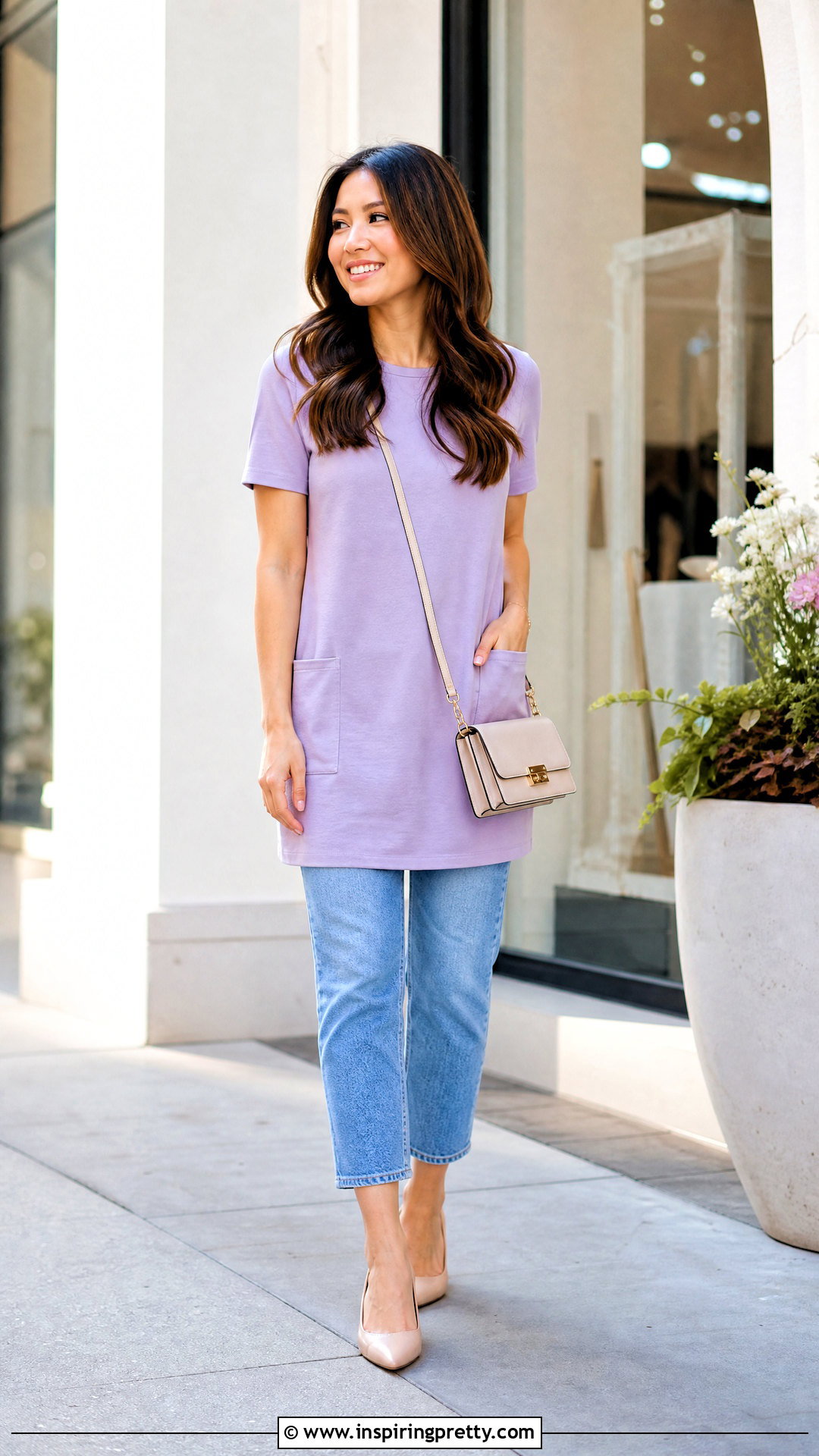
On a petite frame, length decides everything. A tunic that ends at the upper to mid-thigh keeps your proportions; one near the knee cuts your legs in half. Petite cuts with small side pockets, a narrower neckline and sleeves that stop at the wrist are worth seeking out. High-rise cropped straight jeans keep the legs visible. Pointed flats or low sneakers add length without a heel. Keep the bag small. A column of similar colors also helps. And if a tunic fits well everywhere except the hem, have it shortened. A tailor can do that easily, as long as the pockets sit high enough not to be cut through.
18. Cotton Tunic Top With Pockets And Pull On Pants
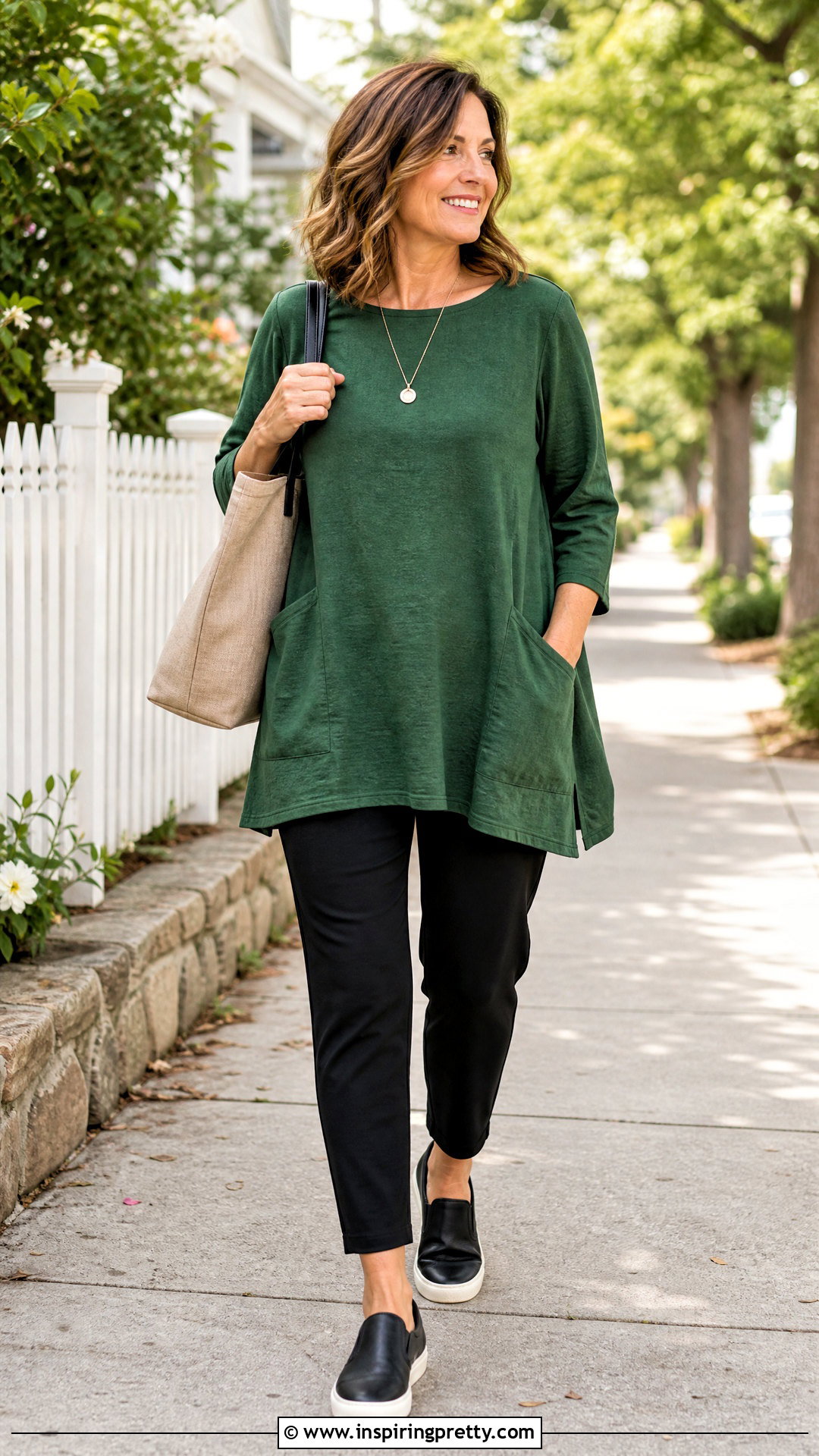
Some days just call for soft cotton from morning to afternoon. Pair a breathable cotton tunic in dusty blue or forest green with pull-on pants that have a flat front and a tapered leg. Roomy side pockets, a crew or split neckline and a curved hem are what I'd look for. Slip-on sneakers or cushioned loafers, a light tote and a simple pendant. The pants make or break this: they should look like casual trousers, not pajama bottoms, so pick a substantial fabric with minimal gathering at the waist. It travels well, too.
19. Embroidered Tunic Top With Pockets And Neutral Trousers
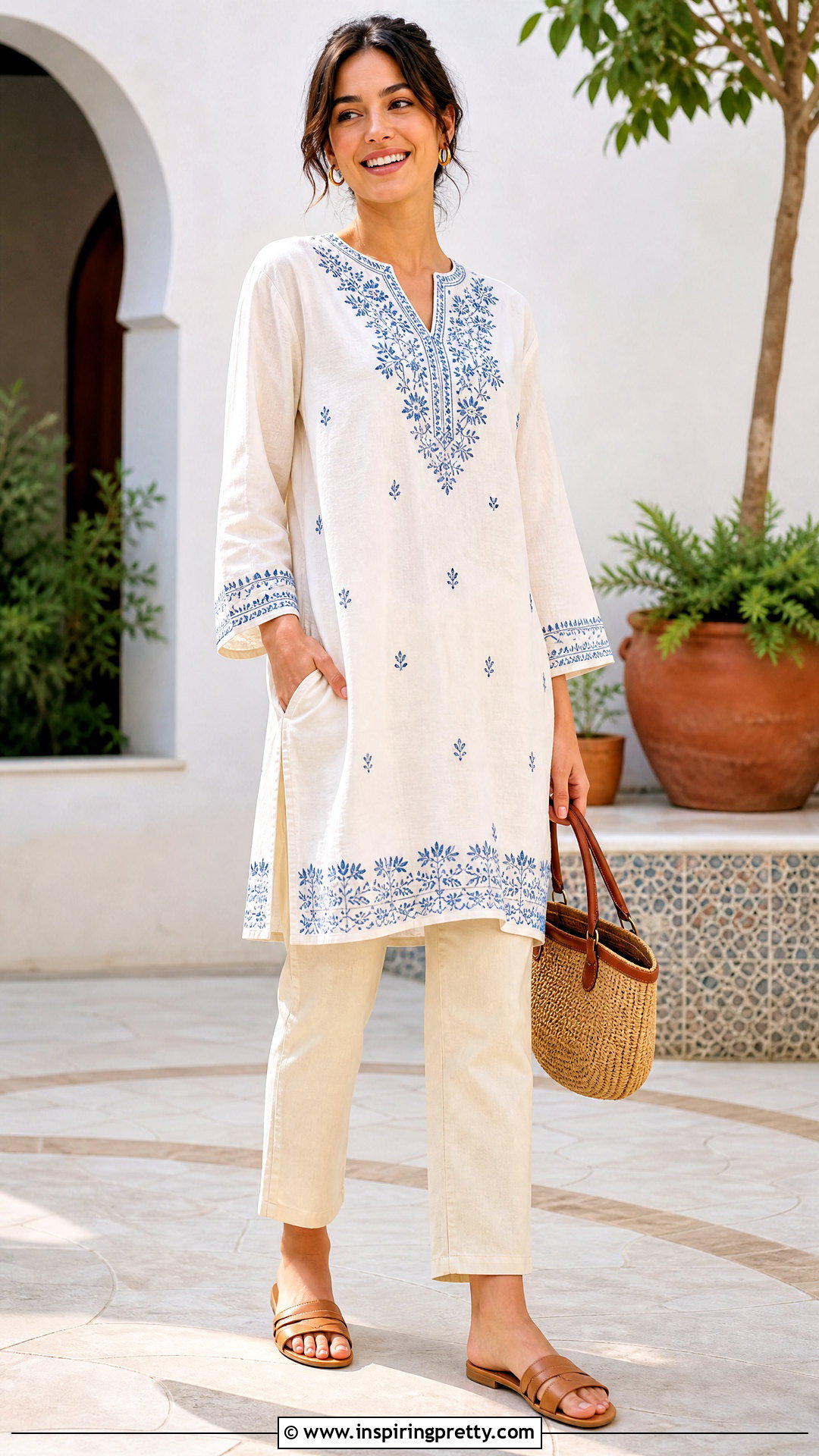
Embroidery turns a practical tunic into the main event. Cotton or linen with stitching around the neckline, cuffs or hem, and pockets set well away from the decorative work. Neutral ankle trousers that suit the tunic's base color sit underneath without competing. Simple leather sandals or pointed flats keep attention on the handwork. A woven bag and one restrained piece of jewelry. No bold prints below. Before buying, feel the embroidery from the inside. Dense stitching can make the fabric stiff at the bust or shoulders, and if the pocket opening is caught in it, the pocket won't open properly.
20. Travel Tunic Top With Pockets And Stretch Pants
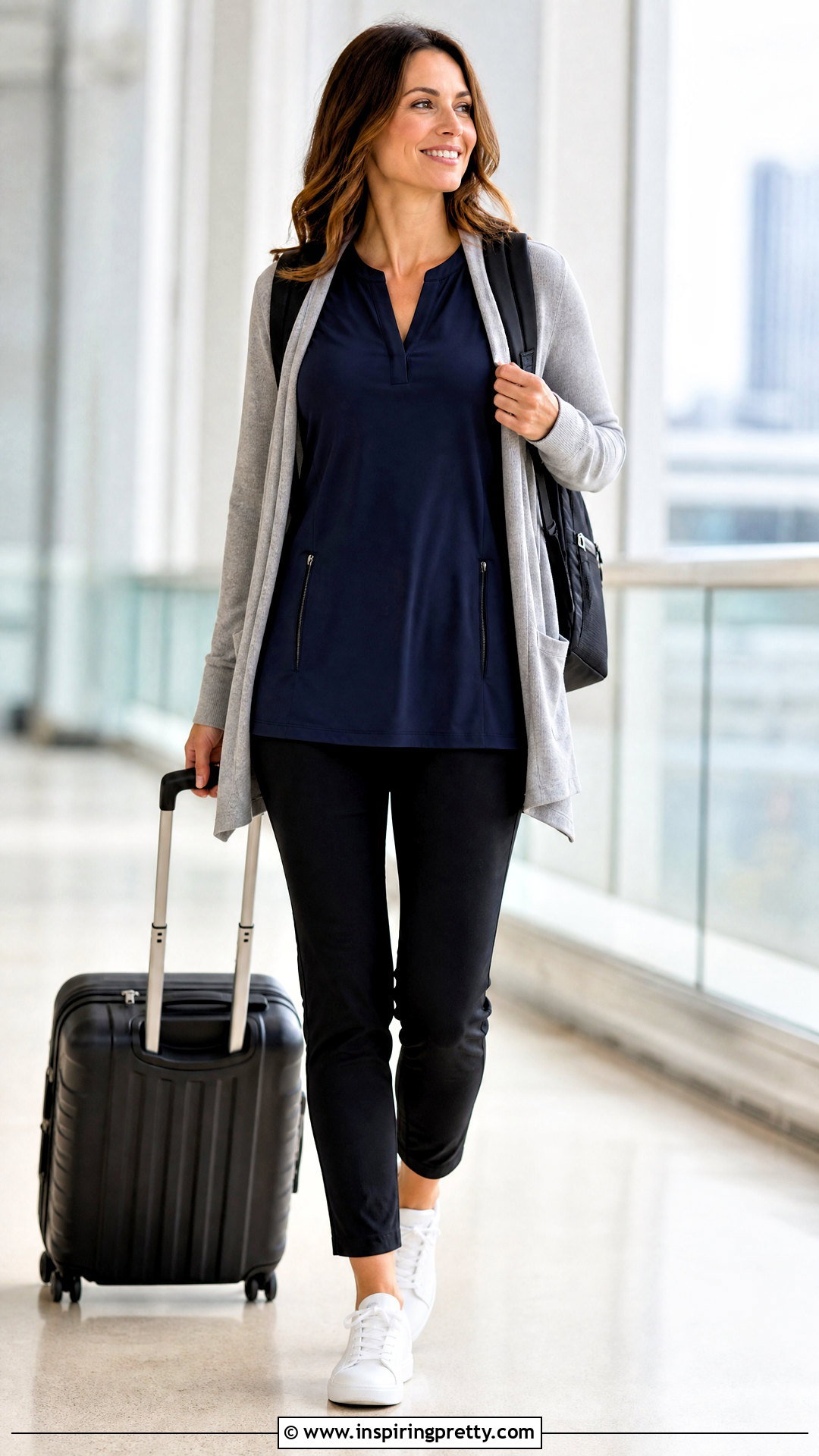
A long travel day asks a lot of one outfit: comfort, changing temperatures and somewhere to keep your passport. Choose a wrinkle-resistant tunic with zippered or deep side pockets, a soft neckline and enough length to cover you when seated. Stretch ankle pants with a smooth waistband. Supportive sneakers, compression socks if you wear them on flights, and a light cardigan for the cold cabin. A zip-top tote or small backpack. Keep only light things in the tunic pockets so the hem hangs evenly. Dark neutrals hide marks, and a scarf adds color and warmth for when you land and go straight on to your plans.
Living With Pockets You Actually Use
Pockets that get used wear out at the corners first. The top of the opening takes the strain every time your hand goes in, and on cheaper tunics it's held by a single line of stitching that eventually tears. A small bar tack, a few tight stitches across the corner, prevents that, and any tailor can add one in minutes. If you sew, you can do it yourself. And if a corner has already started to split, mend it before the next wash, because the drum widens a small tear into a hole very quickly.
Washing matters too. Empty every pocket and turn the pocket bags out before the tunic goes in, so lint and tissue fragments don't bake into the seams. Close any zipped pockets so the teeth don't snag the fabric. Knit tunics should dry flat; hanging a wet sweater tunic lets the weight of the damp pockets stretch the sides. Press the pocket bags flat afterward from the inside, or they curl and show as a ridge under the top.
Shoulders First, Pockets Second
A tunic with pockets earns its place when it holds a few small things, covers you comfortably and still looks like a finished outfit. Think of it as a garment with its own shape, not an oversized top: the fabric, the hemline, where the pockets sit and how it meets the bottoms all count. Slim jeans and ankle pants balance flowing tunics, and side slits let you wear wider trousers. Sneakers for travel, loafers for work, sandals in the heat. Most of all, get the fit right through the shoulders and make sure it moves over the hips. Do that, and it'll go with most of your closet.
Related posts:


Leave a Reply